

@universalcrypto
41Universal Crypto provides bespoke consultancy services (physical & virtual), along with Blockchain and Cryptocurrency research and solutions.
steemit.com/@universalcryptoVOTING POWER100.00%
DOWNVOTE POWER100.00%
RESOURCE CREDITS100.00%
REPUTATION PROGRESS7.69%
Net Worth
0.716USD
STEEM
1.877STEEM
SBD
1.109SBD
Effective Power
5.001SP
├── Own SP
1.239SP
└── Incoming DelegationsDeleg
+3.762SP
Detailed Balance
| STEEM | ||
| balance | 0.033STEEM | STEEM |
| market_balance | 0.000STEEM | STEEM |
| savings_balance | 0.000STEEM | STEEM |
| reward_steem_balance | 1.844STEEM | STEEM |
| STEEM POWER | ||
| Own SP | 1.239SP | SP |
| Delegated Out | 0.000SP | SP |
| Delegation In | 3.762SP | SP |
| Effective Power | 5.001SP | SP |
| Reward SP (pending) | 1.913SP | SP |
| SBD | ||
| sbd_balance | 1.109SBD | SBD |
| sbd_conversions | 0.000SBD | SBD |
| sbd_market_balance | 0.000SBD | SBD |
| savings_sbd_balance | 0.000SBD | SBD |
| reward_sbd_balance | 0.000SBD | SBD |
{
  "balance": "0.033 STEEM",
  "savings_balance": "0.000 STEEM",
  "reward_steem_balance": "1.844 STEEM",
  "vesting_shares": "2017.233928 VESTS",
  "delegated_vesting_shares": "0.000000 VESTS",
  "received_vesting_shares": "6126.425878 VESTS",
  "sbd_balance": "1.109 SBD",
  "savings_sbd_balance": "0.000 SBD",
  "reward_sbd_balance": "0.000 SBD",
  "conversions": []
}
Account Info
| name | universalcrypto |
| id | 506138 |
| rank | 481,346 |
| reputation | 61139804908 |
| created | 2017-12-18T12:41:39 |
| recovery_account | steem |
| proxy | None |
| post_count | 26 |
| comment_count | 0 |
| lifetime_vote_count | 0 |
| witnesses_voted_for | 0 |
| last_post | 2018-09-18T11:56:03 |
| last_root_post | 2018-09-18T11:56:03 |
| last_vote_time | 2018-09-06T10:57:30 |
| proxied_vsf_votes | 0, 0, 0, 0 |
| can_vote | 1 |
| voting_power | 0 |
| delayed_votes | 0 |
| balance | 0.033 STEEM |
| savings_balance | 0.000 STEEM |
| sbd_balance | 1.109 SBD |
| savings_sbd_balance | 0.000 SBD |
| vesting_shares | 2017.233928 VESTS |
| delegated_vesting_shares | 0.000000 VESTS |
| received_vesting_shares | 6126.425878 VESTS |
| reward_vesting_balance | 3872.760994 VESTS |
| vesting_balance | 0.000 STEEM |
| vesting_withdraw_rate | 0.000000 VESTS |
| next_vesting_withdrawal | 1969-12-31T23:59:59 |
| withdrawn | 0 |
| to_withdraw | 0 |
| withdraw_routes | 0 |
| savings_withdraw_requests | 0 |
| last_account_recovery | 1970-01-01T00:00:00 |
| reset_account | null |
| last_owner_update | 1970-01-01T00:00:00 |
| last_account_update | 2018-05-29T10:04:42 |
| mined | No |
| sbd_seconds | 454,537,611 |
| sbd_last_interest_payment | 2018-08-10T13:01:09 |
| savings_sbd_last_interest_payment | 1970-01-01T00:00:00 |
{
  "id": 506138,
  "name": "universalcrypto",
  "owner": {
    "weight_threshold": 1,
    "account_auths": [],
    "key_auths": [
      [
        "STM8iqvJbBMU8FEmz2MhLtu7L6jDVhwU2EWrSePSde5FGEurrA51c",
        1
      ]
    ]
  },
  "active": {
    "weight_threshold": 1,
    "account_auths": [],
    "key_auths": [
      [
        "STM6T1LWBfXJrajNWrqkTBvLQ1DmKdEtCrRcfWbVmfP7xcgwtt1gd",
        1
      ]
    ]
  },
  "posting": {
    "weight_threshold": 1,
    "account_auths": [],
    "key_auths": [
      [
        "STM8X9hThB33cFYic1VQ35EUiRo5JSH2ZLChph11gWtcggFAzTaeL",
        1
      ]
    ]
  },
  "memo_key": "STM7gTx9DNquN5RsSHonZSzbthHdRpDYiENKiBiY6mqhmr7hi9sWE",
  "json_metadata": "{\"profile\":{\"profile_image\":\"https://cdn.steemitimages.com/DQmcgAjMuoN377na5E5LJMeRuFJCX16zjqQpdwB7wS694rj/UniversalCrypto.png\",\"name\":\"UniversalCrypto\",\"about\":\"Universal Crypto provides bespoke consultancy services (physical & virtual), along with Blockchain and Cryptocurrency research and solutions.\",\"location\":\"Limassol, Cyprus\",\"website\":\"http://www.universalcrypto.org\"}}",
  "posting_json_metadata": "{\"profile\":{\"profile_image\":\"https://cdn.steemitimages.com/DQmcgAjMuoN377na5E5LJMeRuFJCX16zjqQpdwB7wS694rj/UniversalCrypto.png\",\"name\":\"UniversalCrypto\",\"about\":\"Universal Crypto provides bespoke consultancy services (physical & virtual), along with Blockchain and Cryptocurrency research and solutions.\",\"location\":\"Limassol, Cyprus\",\"website\":\"http://www.universalcrypto.org\"}}",
  "proxy": "",
  "last_owner_update": "1970-01-01T00:00:00",
  "last_account_update": "2018-05-29T10:04:42",
  "created": "2017-12-18T12:41:39",
  "mined": false,
  "recovery_account": "steem",
  "last_account_recovery": "1970-01-01T00:00:00",
  "reset_account": "null",
  "comment_count": 0,
  "lifetime_vote_count": 0,
  "post_count": 26,
  "can_vote": true,
  "voting_manabar": {
    "current_mana": "8143659806",
    "last_update_time": 1779090525
  },
  "downvote_manabar": {
    "current_mana": 2035914951,
    "last_update_time": 1779090525
  },
  "voting_power": 0,
  "balance": "0.033 STEEM",
  "savings_balance": "0.000 STEEM",
  "sbd_balance": "1.109 SBD",
  "sbd_seconds": "454537611",
  "sbd_seconds_last_update": "2018-08-15T07:08:48",
  "sbd_last_interest_payment": "2018-08-10T13:01:09",
  "savings_sbd_balance": "0.000 SBD",
  "savings_sbd_seconds": "0",
  "savings_sbd_seconds_last_update": "1970-01-01T00:00:00",
  "savings_sbd_last_interest_payment": "1970-01-01T00:00:00",
  "savings_withdraw_requests": 0,
  "reward_sbd_balance": "0.000 SBD",
  "reward_steem_balance": "1.844 STEEM",
  "reward_vesting_balance": "3872.760994 VESTS",
  "reward_vesting_steem": "1.913 STEEM",
  "vesting_shares": "2017.233928 VESTS",
  "delegated_vesting_shares": "0.000000 VESTS",
  "received_vesting_shares": "6126.425878 VESTS",
  "vesting_withdraw_rate": "0.000000 VESTS",
  "next_vesting_withdrawal": "1969-12-31T23:59:59",
  "withdrawn": 0,
  "to_withdraw": 0,
  "withdraw_routes": 0,
  "curation_rewards": 7,
  "posting_rewards": 4718,
  "proxied_vsf_votes": [
    0,
    0,
    0,
    0
  ],
  "witnesses_voted_for": 0,
  "last_post": "2018-09-18T11:56:03",
  "last_root_post": "2018-09-18T11:56:03",
  "last_vote_time": "2018-09-06T10:57:30",
  "post_bandwidth": 0,
  "pending_claimed_accounts": 0,
  "vesting_balance": "0.000 STEEM",
  "reputation": "61139804908",
  "transfer_history": [],
  "market_history": [],
  "post_history": [],
  "vote_history": [],
  "other_history": [],
  "witness_votes": [],
  "tags_usage": [],
  "guest_bloggers": [],
  "rank": 481346
}
Withdraw Routes
| Incoming | Outgoing |
|---|---|
Empty | Empty |
{
  "incoming": [],
  "outgoing": []
}From Date
To Date
steemdelegated 3.762 SP to @universalcrypto2026/05/18 07:48:45
steemdelegated 3.762 SP to @universalcrypto
2026/05/18 07:48:45
| delegator | steem |
| delegatee | universalcrypto |
| vesting shares | 6126.425878 VESTS |
| Transaction Info | Block #106152482/Trx ee1a4fb09bd29eb1ef807330280522fbbd25a5ab |
View Raw JSON Data
{
  "trx_id": "ee1a4fb09bd29eb1ef807330280522fbbd25a5ab",
  "block": 106152482,
  "trx_in_block": 0,
  "op_in_trx": 0,
  "virtual_op": 0,
  "timestamp": "2026-05-18T07:48:45",
  "op": [
    "delegate_vesting_shares",
    {
      "delegator": "steem",
      "delegatee": "universalcrypto",
      "vesting_shares": "6126.425878 VESTS"
    }
  ]
}steemdelegated 2.097 SP to @universalcrypto2026/05/13 10:30:18
steemdelegated 2.097 SP to @universalcrypto
2026/05/13 10:30:18
| delegator | steem |
| delegatee | universalcrypto |
| vesting shares | 3414.215473 VESTS |
| Transaction Info | Block #106012421/Trx 10095a01558e71b96e355484a7f3bf7c1a770b53 |
View Raw JSON Data
{
  "trx_id": "10095a01558e71b96e355484a7f3bf7c1a770b53",
  "block": 106012421,
  "trx_in_block": 0,
  "op_in_trx": 0,
  "virtual_op": 0,
  "timestamp": "2026-05-13T10:30:18",
  "op": [
    "delegate_vesting_shares",
    {
      "delegator": "steem",
      "delegatee": "universalcrypto",
      "vesting_shares": "3414.215473 VESTS"
    }
  ]
}steemdelegated 3.770 SP to @universalcrypto2026/04/26 06:58:39
steemdelegated 3.770 SP to @universalcrypto
2026/04/26 06:58:39
| delegator | steem |
| delegatee | universalcrypto |
| vesting shares | 6138.941634 VESTS |
| Transaction Info | Block #105519929/Trx 9a141b19d44e8e9dfe69a10ec9f2db298416304e |
View Raw JSON Data
{
  "trx_id": "9a141b19d44e8e9dfe69a10ec9f2db298416304e",
  "block": 105519929,
  "trx_in_block": 0,
  "op_in_trx": 0,
  "virtual_op": 0,
  "timestamp": "2026-04-26T06:58:39",
  "op": [
    "delegate_vesting_shares",
    {
      "delegator": "steem",
      "delegatee": "universalcrypto",
      "vesting_shares": "6138.941634 VESTS"
    }
  ]
}steemdelegated 2.122 SP to @universalcrypto2026/01/24 04:06:24
steemdelegated 2.122 SP to @universalcrypto
2026/01/24 04:06:24
| delegator | steem |
| delegatee | universalcrypto |
| vesting shares | 3455.762292 VESTS |
| Transaction Info | Block #102876126/Trx 24668e102d98269f5d9d01451d769b7156e41b2d |
View Raw JSON Data
{
  "trx_id": "24668e102d98269f5d9d01451d769b7156e41b2d",
  "block": 102876126,
  "trx_in_block": 1,
  "op_in_trx": 0,
  "virtual_op": 0,
  "timestamp": "2026-01-24T04:06:24",
  "op": [
    "delegate_vesting_shares",
    {
      "delegator": "steem",
      "delegatee": "universalcrypto",
      "vesting_shares": "3455.762292 VESTS"
    }
  ]
}steemdelegated 2.223 SP to @universalcrypto2024/12/17 23:15:00
steemdelegated 2.223 SP to @universalcrypto
2024/12/17 23:15:00
| delegator | steem |
| delegatee | universalcrypto |
| vesting shares | 3619.981489 VESTS |
| Transaction Info | Block #91322319/Trx 64b316dd3adfcdcb1b19268cf9b5bedb618a6a69 |
View Raw JSON Data
{
  "trx_id": "64b316dd3adfcdcb1b19268cf9b5bedb618a6a69",
  "block": 91322319,
  "trx_in_block": 6,
  "op_in_trx": 0,
  "virtual_op": 0,
  "timestamp": "2024-12-17T23:15:00",
  "op": [
    "delegate_vesting_shares",
    {
      "delegator": "steem",
      "delegatee": "universalcrypto",
      "vesting_shares": "3619.981489 VESTS"
    }
  ]
}steemdelegated 2.327 SP to @universalcrypto2023/11/14 14:53:36
steemdelegated 2.327 SP to @universalcrypto
2023/11/14 14:53:36
| delegator | steem |
| delegatee | universalcrypto |
| vesting shares | 3789.115021 VESTS |
| Transaction Info | Block #79876405/Trx b3e290a16d5f4c33f7a2780e74670308ee075740 |
View Raw JSON Data
{
  "trx_id": "b3e290a16d5f4c33f7a2780e74670308ee075740",
  "block": 79876405,
  "trx_in_block": 4,
  "op_in_trx": 0,
  "virtual_op": 0,
  "timestamp": "2023-11-14T14:53:36",
  "op": [
    "delegate_vesting_shares",
    {
      "delegator": "steem",
      "delegatee": "universalcrypto",
      "vesting_shares": "3789.115021 VESTS"
    }
  ]
}steemdelegated 4.131 SP to @universalcrypto2023/09/22 12:10:45
steemdelegated 4.131 SP to @universalcrypto
2023/09/22 12:10:45
| delegator | steem |
| delegatee | universalcrypto |
| vesting shares | 6726.023807 VESTS |
| Transaction Info | Block #78365002/Trx 09f05c583ef1a622fcec03d802046cae4b79f713 |
View Raw JSON Data
{
  "trx_id": "09f05c583ef1a622fcec03d802046cae4b79f713",
  "block": 78365002,
  "trx_in_block": 2,
  "op_in_trx": 0,
  "virtual_op": 0,
  "timestamp": "2023-09-22T12:10:45",
  "op": [
    "delegate_vesting_shares",
    {
      "delegator": "steem",
      "delegatee": "universalcrypto",
      "vesting_shares": "6726.023807 VESTS"
    }
  ]
}steemdelegated 4.267 SP to @universalcrypto2022/11/03 19:26:12
steemdelegated 4.267 SP to @universalcrypto
2022/11/03 19:26:12
| delegator | steem |
| delegatee | universalcrypto |
| vesting shares | 6948.075245 VESTS |
| Transaction Info | Block #69122498/Trx 3944065be71fe67fd990dcc29e23d76a51da0d67 |
View Raw JSON Data
{
  "trx_id": "3944065be71fe67fd990dcc29e23d76a51da0d67",
  "block": 69122498,
  "trx_in_block": 2,
  "op_in_trx": 0,
  "virtual_op": 0,
  "timestamp": "2022-11-03T19:26:12",
  "op": [
    "delegate_vesting_shares",
    {
      "delegator": "steem",
      "delegatee": "universalcrypto",
      "vesting_shares": "6948.075245 VESTS"
    }
  ]
}steemdelegated 4.402 SP to @universalcrypto2022/01/18 00:29:21
steemdelegated 4.402 SP to @universalcrypto
2022/01/18 00:29:21
| delegator | steem |
| delegatee | universalcrypto |
| vesting shares | 7168.182846 VESTS |
| Transaction Info | Block #60825572/Trx 1ab240c6f0f67cb3dad85bfe668b33b4fb62727d |
View Raw JSON Data
{
  "trx_id": "1ab240c6f0f67cb3dad85bfe668b33b4fb62727d",
  "block": 60825572,
  "trx_in_block": 63,
  "op_in_trx": 0,
  "virtual_op": 0,
  "timestamp": "2022-01-18T00:29:21",
  "op": [
    "delegate_vesting_shares",
    {
      "delegator": "steem",
      "delegatee": "universalcrypto",
      "vesting_shares": "7168.182846 VESTS"
    }
  ]
}steemdelegated 4.515 SP to @universalcrypto2021/06/14 07:36:24
steemdelegated 4.515 SP to @universalcrypto
2021/06/14 07:36:24
| delegator | steem |
| delegatee | universalcrypto |
| vesting shares | 7352.377134 VESTS |
| Transaction Info | Block #54615814/Trx 77092f96924c358cbc371f8ea0710bd8ff756af3 |
View Raw JSON Data
{
  "trx_id": "77092f96924c358cbc371f8ea0710bd8ff756af3",
  "block": 54615814,
  "trx_in_block": 1,
  "op_in_trx": 0,
  "virtual_op": 0,
  "timestamp": "2021-06-14T07:36:24",
  "op": [
    "delegate_vesting_shares",
    {
      "delegator": "steem",
      "delegatee": "universalcrypto",
      "vesting_shares": "7352.377134 VESTS"
    }
  ]
}steemdelegated 4.630 SP to @universalcrypto2020/12/11 17:47:15
steemdelegated 4.630 SP to @universalcrypto
2020/12/11 17:47:15
| delegator | steem |
| delegatee | universalcrypto |
| vesting shares | 7539.799108 VESTS |
| Transaction Info | Block #49363031/Trx bf3538c0a3364e5b11d7dd52e77c827cb3fd23dd |
View Raw JSON Data
{
  "trx_id": "bf3538c0a3364e5b11d7dd52e77c827cb3fd23dd",
  "block": 49363031,
  "trx_in_block": 4,
  "op_in_trx": 0,
  "virtual_op": 0,
  "timestamp": "2020-12-11T17:47:15",
  "op": [
    "delegate_vesting_shares",
    {
      "delegator": "steem",
      "delegatee": "universalcrypto",
      "vesting_shares": "7539.799108 VESTS"
    }
  ]
}steemdelegated 1.175 SP to @universalcrypto2020/12/06 11:22:30
steemdelegated 1.175 SP to @universalcrypto
2020/12/06 11:22:30
| delegator | steem |
| delegatee | universalcrypto |
| vesting shares | 1912.543513 VESTS |
| Transaction Info | Block #49214546/Trx ea4e08116af6d6a493e830fc3a5a024612732bd4 |
View Raw JSON Data
{
  "trx_id": "ea4e08116af6d6a493e830fc3a5a024612732bd4",
  "block": 49214546,
  "trx_in_block": 3,
  "op_in_trx": 0,
  "virtual_op": 0,
  "timestamp": "2020-12-06T11:22:30",
  "op": [
    "delegate_vesting_shares",
    {
      "delegator": "steem",
      "delegatee": "universalcrypto",
      "vesting_shares": "1912.543513 VESTS"
    }
  ]
}steemdelegated 4.634 SP to @universalcrypto2020/12/05 21:25:09
steemdelegated 4.634 SP to @universalcrypto
2020/12/05 21:25:09
| delegator | steem |
| delegatee | universalcrypto |
| vesting shares | 7546.006962 VESTS |
| Transaction Info | Block #49198115/Trx ebe4cf0f4fb27dc07b0d69c1172f9466b45c5fed |
View Raw JSON Data
{
  "trx_id": "ebe4cf0f4fb27dc07b0d69c1172f9466b45c5fed",
  "block": 49198115,
  "trx_in_block": 2,
  "op_in_trx": 0,
  "virtual_op": 0,
  "timestamp": "2020-12-05T21:25:09",
  "op": [
    "delegate_vesting_shares",
    {
      "delegator": "steem",
      "delegatee": "universalcrypto",
      "vesting_shares": "7546.006962 VESTS"
    }
  ]
}steemdelegated 1.179 SP to @universalcrypto2020/11/03 05:25:09
steemdelegated 1.179 SP to @universalcrypto
2020/11/03 05:25:09
| delegator | steem |
| delegatee | universalcrypto |
| vesting shares | 1920.017158 VESTS |
| Transaction Info | Block #48274025/Trx ed7e600edf605e552b04d41cbda733fd4862f67b |
View Raw JSON Data
{
  "trx_id": "ed7e600edf605e552b04d41cbda733fd4862f67b",
  "block": 48274025,
  "trx_in_block": 0,
  "op_in_trx": 0,
  "virtual_op": 0,
  "timestamp": "2020-11-03T05:25:09",
  "op": [
    "delegate_vesting_shares",
    {
      "delegator": "steem",
      "delegatee": "universalcrypto",
      "vesting_shares": "1920.017158 VESTS"
    }
  ]
}steemdelegated 4.759 SP to @universalcrypto2020/05/09 12:26:54
steemdelegated 4.759 SP to @universalcrypto
2020/05/09 12:26:54
| delegator | steem |
| delegatee | universalcrypto |
| vesting shares | 7748.812321 VESTS |
| Transaction Info | Block #43224896/Trx eaea0a1b2af447c7ec303adf1319599b5218e154 |
View Raw JSON Data
{
  "trx_id": "eaea0a1b2af447c7ec303adf1319599b5218e154",
  "block": 43224896,
  "trx_in_block": 20,
  "op_in_trx": 0,
  "virtual_op": 0,
  "timestamp": "2020-05-09T12:26:54",
  "op": [
    "delegate_vesting_shares",
    {
      "delegator": "steem",
      "delegatee": "universalcrypto",
      "vesting_shares": "7748.812321 VESTS"
    }
  ]
}steemdelegated 1.200 SP to @universalcrypto2020/05/08 17:03:15
steemdelegated 1.200 SP to @universalcrypto
2020/05/08 17:03:15
| delegator | steem |
| delegatee | universalcrypto |
| vesting shares | 1953.311140 VESTS |
| Transaction Info | Block #43202169/Trx 500c1638f71f8e36c700cc976d19dc682a8f0c26 |
View Raw JSON Data
{
  "trx_id": "500c1638f71f8e36c700cc976d19dc682a8f0c26",
  "block": 43202169,
  "trx_in_block": 47,
  "op_in_trx": 0,
  "virtual_op": 0,
  "timestamp": "2020-05-08T17:03:15",
  "op": [
    "delegate_vesting_shares",
    {
      "delegator": "steem",
      "delegatee": "universalcrypto",
      "vesting_shares": "1953.311140 VESTS"
    }
  ]
}2019/12/18 13:48:48
2019/12/18 13:48:48
| parent author | universalcrypto |
| parent permlink | the-evolution-of-distributed-ledger-technologies-part-4-of-4 |
| author | steemitboard |
| permlink | steemitboard-notify-universalcrypto-20191218t134848000z |
| title | |
| body | Congratulations @universalcrypto! You received a personal award! <table><tr><td>https://steemitimages.com/70x70/http://steemitboard.com/@universalcrypto/birthday2.png</td><td>Happy Birthday! - You are on the Steem blockchain for 2 years!</td></tr></table> <sub>_You can view [your badges on your Steem Board](https://steemitboard.com/@universalcrypto) and compare to others on the [Steem Ranking](https://steemitboard.com/ranking/index.php?name=universalcrypto)_</sub> ###### [Vote for @Steemitboard as a witness](https://v2.steemconnect.com/sign/account-witness-vote?witness=steemitboard&approve=1) to get one more award and increased upvotes! |
| json metadata | {"image":["https://steemitboard.com/img/notify.png"]} |
| Transaction Info | Block #39146403/Trx 7be7d2faab067598bcb1e1e9814eb35733c010c0 |
View Raw JSON Data
{
  "trx_id": "7be7d2faab067598bcb1e1e9814eb35733c010c0",
  "block": 39146403,
  "trx_in_block": 4,
  "op_in_trx": 0,
  "virtual_op": 0,
  "timestamp": "2019-12-18T13:48:48",
  "op": [
    "comment",
    {
      "parent_author": "universalcrypto",
      "parent_permlink": "the-evolution-of-distributed-ledger-technologies-part-4-of-4",
      "author": "steemitboard",
      "permlink": "steemitboard-notify-universalcrypto-20191218t134848000z",
      "title": "",
      "body": "Congratulations @universalcrypto! You received a personal award!\n\n<table><tr><td>https://steemitimages.com/70x70/http://steemitboard.com/@universalcrypto/birthday2.png</td><td>Happy Birthday! - You are on the Steem blockchain for 2 years!</td></tr></table>\n\n<sub>_You can view [your badges on your Steem Board](https://steemitboard.com/@universalcrypto) and compare to others on the [Steem Ranking](https://steemitboard.com/ranking/index.php?name=universalcrypto)_</sub>\n\n\n###### [Vote for @Steemitboard as a witness](https://v2.steemconnect.com/sign/account-witness-vote?witness=steemitboard&approve=1) to get one more award and increased upvotes!",
      "json_metadata": "{\"image\":[\"https://steemitboard.com/img/notify.png\"]}"
    }
  ]
}steemdelegated 4.817 SP to @universalcrypto2019/11/21 17:43:24
steemdelegated 4.817 SP to @universalcrypto
2019/11/21 17:43:24
| delegator | steem |
| delegatee | universalcrypto |
| vesting shares | 7843.151839 VESTS |
| Transaction Info | Block #38374908/Trx d3fe6f75f917022a5779fe180c207df38b3510c9 |
View Raw JSON Data
{
  "trx_id": "d3fe6f75f917022a5779fe180c207df38b3510c9",
  "block": 38374908,
  "trx_in_block": 11,
  "op_in_trx": 0,
  "virtual_op": 0,
  "timestamp": "2019-11-21T17:43:24",
  "op": [
    "delegate_vesting_shares",
    {
      "delegator": "steem",
      "delegatee": "universalcrypto",
      "vesting_shares": "7843.151839 VESTS"
    }
  ]
}steemdelegated 4.938 SP to @universalcrypto2018/12/18 13:47:45
steemdelegated 4.938 SP to @universalcrypto
2018/12/18 13:47:45
| delegator | steem |
| delegatee | universalcrypto |
| vesting shares | 8040.416242 VESTS |
| Transaction Info | Block #28672764/Trx c23a012a93b6f5288259df8587c71f9c4a3f4b86 |
View Raw JSON Data
{
  "trx_id": "c23a012a93b6f5288259df8587c71f9c4a3f4b86",
  "block": 28672764,
  "trx_in_block": 10,
  "op_in_trx": 0,
  "virtual_op": 0,
  "timestamp": "2018-12-18T13:47:45",
  "op": [
    "delegate_vesting_shares",
    {
      "delegator": "steem",
      "delegatee": "universalcrypto",
      "vesting_shares": "8040.416242 VESTS"
    }
  ]
}2018/12/18 13:25:36
2018/12/18 13:25:36
| parent author | universalcrypto |
| parent permlink | the-evolution-of-distributed-ledger-technologies-part-4-of-4 |
| author | steemitboard |
| permlink | steemitboard-notify-universalcrypto-20181218t132536000z |
| title | |
| body | Congratulations @universalcrypto! You received a personal award! <table><tr><td>https://steemitimages.com/70x70/http://steemitboard.com/@universalcrypto/birthday1.png</td><td>1 Year on Steemit</td></tr></table> <sub>_[Click here to view your Board of Honor](https://steemitboard.com/@universalcrypto)_</sub> > Support [SteemitBoard's project](https://steemit.com/@steemitboard)! **[Vote for its witness](https://v2.steemconnect.com/sign/account-witness-vote?witness=steemitboard&approve=1)** and **get one more award**! |
| json metadata | {"image":["https://steemitboard.com/img/notify.png"]} |
| Transaction Info | Block #28672322/Trx b313a0283e97224c0a3dcf302e4f1e28bb6771c3 |
View Raw JSON Data
{
  "trx_id": "b313a0283e97224c0a3dcf302e4f1e28bb6771c3",
  "block": 28672322,
  "trx_in_block": 7,
  "op_in_trx": 0,
  "virtual_op": 0,
  "timestamp": "2018-12-18T13:25:36",
  "op": [
    "comment",
    {
      "parent_author": "universalcrypto",
      "parent_permlink": "the-evolution-of-distributed-ledger-technologies-part-4-of-4",
      "author": "steemitboard",
      "permlink": "steemitboard-notify-universalcrypto-20181218t132536000z",
      "title": "",
      "body": "Congratulations @universalcrypto! You received a personal award!\n\n<table><tr><td>https://steemitimages.com/70x70/http://steemitboard.com/@universalcrypto/birthday1.png</td><td>1 Year on Steemit</td></tr></table>\n\n<sub>_[Click here to view your Board of Honor](https://steemitboard.com/@universalcrypto)_</sub>\n\n\n> Support [SteemitBoard's project](https://steemit.com/@steemitboard)! **[Vote for its witness](https://v2.steemconnect.com/sign/account-witness-vote?witness=steemitboard&approve=1)** and **get one more award**!",
      "json_metadata": "{\"image\":[\"https://steemitboard.com/img/notify.png\"]}"
    }
  ]
}steemdelegated 17.298 SP to @universalcrypto2018/12/11 22:04:15
steemdelegated 17.298 SP to @universalcrypto
2018/12/11 22:04:15
| delegator | steem |
| delegatee | universalcrypto |
| vesting shares | 28166.868943 VESTS |
| Transaction Info | Block #28481221/Trx e7f486393b2a3adabbea2ce981bc9afb913d8420 |
View Raw JSON Data
{
  "trx_id": "e7f486393b2a3adabbea2ce981bc9afb913d8420",
  "block": 28481221,
  "trx_in_block": 17,
  "op_in_trx": 0,
  "virtual_op": 0,
  "timestamp": "2018-12-11T22:04:15",
  "op": [
    "delegate_vesting_shares",
    {
      "delegator": "steem",
      "delegatee": "universalcrypto",
      "vesting_shares": "28166.868943 VESTS"
    }
  ]
}universalcryptofollowed @tlc2018/10/15 21:28:54
universalcryptofollowed @tlc
2018/10/15 21:28:54
| required auths | [] |
| required posting auths | ["universalcrypto"] |
| id | follow |
| json | ["follow",{"follower":"universalcrypto","following":"tlc","what":["blog"]}] |
| Transaction Info | Block #26839948/Trx 291f05c083bb721af1577a7ad86d072e4c162822 |
View Raw JSON Data
{
  "trx_id": "291f05c083bb721af1577a7ad86d072e4c162822",
  "block": 26839948,
  "trx_in_block": 4,
  "op_in_trx": 0,
  "virtual_op": 0,
  "timestamp": "2018-10-15T21:28:54",
  "op": [
    "custom_json",
    {
      "required_auths": [],
      "required_posting_auths": [
        "universalcrypto"
      ],
      "id": "follow",
      "json": "[\"follow\",{\"follower\":\"universalcrypto\",\"following\":\"tlc\",\"what\":[\"blog\"]}]"
    }
  ]
}universalcryptoreceived 0.045 STEEM, 0.057 SP author reward for @universalcrypto / the-evolution-of-distributed-ledger-technologies-part-4-of-42018/09/25 11:56:03
universalcryptoreceived 0.045 STEEM, 0.057 SP author reward for @universalcrypto / the-evolution-of-distributed-ledger-technologies-part-4-of-4
2018/09/25 11:56:03
| author | universalcrypto |
| permlink | the-evolution-of-distributed-ledger-technologies-part-4-of-4 |
| sbd payout | 0.000 SBD |
| steem payout | 0.045 STEEM |
| vesting payout | 92.956128 VESTS |
| Transaction Info | Block #26253066/Virtual Operation #11 |
View Raw JSON Data
{
  "trx_id": "0000000000000000000000000000000000000000",
  "block": 26253066,
  "trx_in_block": 4294967295,
  "op_in_trx": 0,
  "virtual_op": 11,
  "timestamp": "2018-09-25T11:56:03",
  "op": [
    "author_reward",
    {
      "author": "universalcrypto",
      "permlink": "the-evolution-of-distributed-ledger-technologies-part-4-of-4",
      "sbd_payout": "0.000 SBD",
      "steem_payout": "0.045 STEEM",
      "vesting_payout": "92.956128 VESTS"
    }
  ]
}2018/09/18 23:54:06
2018/09/18 23:54:06
| parent author | universalcrypto |
| parent permlink | the-evolution-of-distributed-ledger-technologies-part-4-of-4 |
| author | genecic |
| permlink | re-universalcrypto-the-evolution-of-distributed-ledger-technologies-part-4-of-4-20180918t235407509z |
| title | |
| body | Very nice article |
| json metadata | {"tags":["cryptography"],"app":"steemit/0.1"} |
| Transaction Info | Block #26066007/Trx 4d05dd1ff428d939d871093b8a5997e6771b6c54 |
View Raw JSON Data
{
  "trx_id": "4d05dd1ff428d939d871093b8a5997e6771b6c54",
  "block": 26066007,
  "trx_in_block": 17,
  "op_in_trx": 0,
  "virtual_op": 0,
  "timestamp": "2018-09-18T23:54:06",
  "op": [
    "comment",
    {
      "parent_author": "universalcrypto",
      "parent_permlink": "the-evolution-of-distributed-ledger-technologies-part-4-of-4",
      "author": "genecic",
      "permlink": "re-universalcrypto-the-evolution-of-distributed-ledger-technologies-part-4-of-4-20180918t235407509z",
      "title": "",
      "body": "Very nice article",
      "json_metadata": "{\"tags\":[\"cryptography\"],\"app\":\"steemit/0.1\"}"
    }
  ]
}2018/09/18 13:56:30
2018/09/18 13:56:30
| voter | sensation |
| author | universalcrypto |
| permlink | the-evolution-of-distributed-ledger-technologies-part-4-of-4 |
| weight | 10000 (100.00%) |
| Transaction Info | Block #26054156/Trx fcc066bc7d348205732601c21a43a20f46cdb6ea |
View Raw JSON Data
{
  "trx_id": "fcc066bc7d348205732601c21a43a20f46cdb6ea",
  "block": 26054156,
  "trx_in_block": 12,
  "op_in_trx": 0,
  "virtual_op": 0,
  "timestamp": "2018-09-18T13:56:30",
  "op": [
    "vote",
    {
      "voter": "sensation",
      "author": "universalcrypto",
      "permlink": "the-evolution-of-distributed-ledger-technologies-part-4-of-4",
      "weight": 10000
    }
  ]
}2018/09/18 12:34:54
2018/09/18 12:34:54
| parent author | universalcrypto |
| parent permlink | the-evolution-of-distributed-ledger-technologies-part-4-of-4 |
| author | costasentiment |
| permlink | re-universalcrypto-the-evolution-of-distributed-ledger-technologies-part-4-of-4-20180918t123446905z |
| title | |
| body | Powerful! |
| json metadata | {"tags":["cryptography"],"app":"steemit/0.1"} |
| Transaction Info | Block #26052545/Trx 1f2221a35ee2c1cbe74e86401aaf208a587449a3 |
View Raw JSON Data
{
  "trx_id": "1f2221a35ee2c1cbe74e86401aaf208a587449a3",
  "block": 26052545,
  "trx_in_block": 4,
  "op_in_trx": 0,
  "virtual_op": 0,
  "timestamp": "2018-09-18T12:34:54",
  "op": [
    "comment",
    {
      "parent_author": "universalcrypto",
      "parent_permlink": "the-evolution-of-distributed-ledger-technologies-part-4-of-4",
      "author": "costasentiment",
      "permlink": "re-universalcrypto-the-evolution-of-distributed-ledger-technologies-part-4-of-4-20180918t123446905z",
      "title": "",
      "body": "Powerful!",
      "json_metadata": "{\"tags\":[\"cryptography\"],\"app\":\"steemit/0.1\"}"
    }
  ]
}2018/09/18 12:34:42
2018/09/18 12:34:42
| parent author | universalcrypto |
| parent permlink | the-evolution-of-distributed-ledger-technologies-part-4-of-4 |
| author | baglady |
| permlink | re-universalcrypto-the-evolution-of-distributed-ledger-technologies-part-4-of-4-20180918t123445051z |
| title | |
| body | People need to see how important the crypto revolution is in our lifetime and give it the value ti deserves. |
| json metadata | {"tags":["cryptography"],"app":"steemit/0.1"} |
| Transaction Info | Block #26052541/Trx 55b1510f3af70115db018e85d8b8a4fffbdf3410 |
View Raw JSON Data
{
  "trx_id": "55b1510f3af70115db018e85d8b8a4fffbdf3410",
  "block": 26052541,
  "trx_in_block": 29,
  "op_in_trx": 0,
  "virtual_op": 0,
  "timestamp": "2018-09-18T12:34:42",
  "op": [
    "comment",
    {
      "parent_author": "universalcrypto",
      "parent_permlink": "the-evolution-of-distributed-ledger-technologies-part-4-of-4",
      "author": "baglady",
      "permlink": "re-universalcrypto-the-evolution-of-distributed-ledger-technologies-part-4-of-4-20180918t123445051z",
      "title": "",
      "body": "People need to see how important the crypto revolution is in our lifetime and give it the value ti deserves.",
      "json_metadata": "{\"tags\":[\"cryptography\"],\"app\":\"steemit/0.1\"}"
    }
  ]
}2018/09/18 12:34:27
2018/09/18 12:34:27
| voter | costasentiment |
| author | universalcrypto |
| permlink | the-evolution-of-distributed-ledger-technologies-part-4-of-4 |
| weight | 10000 (100.00%) |
| Transaction Info | Block #26052537/Trx c27b0411a85c8c6b42012cbdad223eaebe1b6e23 |
View Raw JSON Data
{
  "trx_id": "c27b0411a85c8c6b42012cbdad223eaebe1b6e23",
  "block": 26052537,
  "trx_in_block": 29,
  "op_in_trx": 0,
  "virtual_op": 0,
  "timestamp": "2018-09-18T12:34:27",
  "op": [
    "vote",
    {
      "voter": "costasentiment",
      "author": "universalcrypto",
      "permlink": "the-evolution-of-distributed-ledger-technologies-part-4-of-4",
      "weight": 10000
    }
  ]
}bagladyupvoted (100.00%) @universalcrypto / the-evolution-of-distributed-ledger-technologies-part-4-of-42018/09/18 12:34:18
bagladyupvoted (100.00%) @universalcrypto / the-evolution-of-distributed-ledger-technologies-part-4-of-4
2018/09/18 12:34:18
| voter | baglady |
| author | universalcrypto |
| permlink | the-evolution-of-distributed-ledger-technologies-part-4-of-4 |
| weight | 10000 (100.00%) |
| Transaction Info | Block #26052534/Trx 8ad5dabb22e1932f860204ffa283355f811c6452 |
View Raw JSON Data
{
  "trx_id": "8ad5dabb22e1932f860204ffa283355f811c6452",
  "block": 26052534,
  "trx_in_block": 31,
  "op_in_trx": 0,
  "virtual_op": 0,
  "timestamp": "2018-09-18T12:34:18",
  "op": [
    "vote",
    {
      "voter": "baglady",
      "author": "universalcrypto",
      "permlink": "the-evolution-of-distributed-ledger-technologies-part-4-of-4",
      "weight": 10000
    }
  ]
}2018/09/18 12:34:12
2018/09/18 12:34:12
| voter | georgetprofit |
| author | universalcrypto |
| permlink | the-evolution-of-distributed-ledger-technologies-part-4-of-4 |
| weight | 10000 (100.00%) |
| Transaction Info | Block #26052533/Trx 88b5acf63d645ef458b55f84cea64f587be7049e |
View Raw JSON Data
{
  "trx_id": "88b5acf63d645ef458b55f84cea64f587be7049e",
  "block": 26052533,
  "trx_in_block": 13,
  "op_in_trx": 0,
  "virtual_op": 0,
  "timestamp": "2018-09-18T12:34:12",
  "op": [
    "vote",
    {
      "voter": "georgetprofit",
      "author": "universalcrypto",
      "permlink": "the-evolution-of-distributed-ledger-technologies-part-4-of-4",
      "weight": 10000
    }
  ]
}2018/09/18 12:32:30
2018/09/18 12:32:30
| parent author | universalcrypto |
| parent permlink | the-evolution-of-distributed-ledger-technologies-part-4-of-4 |
| author | ardasnails |
| permlink | re-universalcrypto-the-evolution-of-distributed-ledger-technologies-part-4-of-4-20180918t123228880z |
| title | |
| body | Nice article Brother! |
| json metadata | {"tags":["cryptography"],"app":"steemit/0.1"} |
| Transaction Info | Block #26052499/Trx 3ee104cab1bcaa8f3a20392e8599e8ed697e8bb8 |
View Raw JSON Data
{
  "trx_id": "3ee104cab1bcaa8f3a20392e8599e8ed697e8bb8",
  "block": 26052499,
  "trx_in_block": 18,
  "op_in_trx": 0,
  "virtual_op": 0,
  "timestamp": "2018-09-18T12:32:30",
  "op": [
    "comment",
    {
      "parent_author": "universalcrypto",
      "parent_permlink": "the-evolution-of-distributed-ledger-technologies-part-4-of-4",
      "author": "ardasnails",
      "permlink": "re-universalcrypto-the-evolution-of-distributed-ledger-technologies-part-4-of-4-20180918t123228880z",
      "title": "",
      "body": "Nice article Brother!",
      "json_metadata": "{\"tags\":[\"cryptography\"],\"app\":\"steemit/0.1\"}"
    }
  ]
}2018/09/18 12:32:03
2018/09/18 12:32:03
| voter | ardasnails |
| author | universalcrypto |
| permlink | the-evolution-of-distributed-ledger-technologies-part-4-of-4 |
| weight | 10000 (100.00%) |
| Transaction Info | Block #26052490/Trx 9e0a768f06953d2bdff67f515b76a4a7cd9649f5 |
View Raw JSON Data
{
  "trx_id": "9e0a768f06953d2bdff67f515b76a4a7cd9649f5",
  "block": 26052490,
  "trx_in_block": 1,
  "op_in_trx": 0,
  "virtual_op": 0,
  "timestamp": "2018-09-18T12:32:03",
  "op": [
    "vote",
    {
      "voter": "ardasnails",
      "author": "universalcrypto",
      "permlink": "the-evolution-of-distributed-ledger-technologies-part-4-of-4",
      "weight": 10000
    }
  ]
}2018/09/18 12:27:51
2018/09/18 12:27:51
| parent author | universalcrypto |
| parent permlink | the-evolution-of-distributed-ledger-technologies-part-4-of-4 |
| author | patrickm |
| permlink | re-universalcrypto-the-evolution-of-distributed-ledger-technologies-part-4-of-4-20180918t122744303z |
| title | |
| body | wow, very thorough! |
| json metadata | {"tags":["cryptography"],"app":"steemit/0.1"} |
| Transaction Info | Block #26052409/Trx 0006ffde45601fe91fa27de28680e9f7948d5f08 |
View Raw JSON Data
{
  "trx_id": "0006ffde45601fe91fa27de28680e9f7948d5f08",
  "block": 26052409,
  "trx_in_block": 8,
  "op_in_trx": 0,
  "virtual_op": 0,
  "timestamp": "2018-09-18T12:27:51",
  "op": [
    "comment",
    {
      "parent_author": "universalcrypto",
      "parent_permlink": "the-evolution-of-distributed-ledger-technologies-part-4-of-4",
      "author": "patrickm",
      "permlink": "re-universalcrypto-the-evolution-of-distributed-ledger-technologies-part-4-of-4-20180918t122744303z",
      "title": "",
      "body": "wow, very thorough!",
      "json_metadata": "{\"tags\":[\"cryptography\"],\"app\":\"steemit/0.1\"}"
    }
  ]
}patrickmupvoted (100.00%) @universalcrypto / the-evolution-of-distributed-ledger-technologies-part-4-of-42018/09/18 12:27:27
patrickmupvoted (100.00%) @universalcrypto / the-evolution-of-distributed-ledger-technologies-part-4-of-4
2018/09/18 12:27:27
| voter | patrickm |
| author | universalcrypto |
| permlink | the-evolution-of-distributed-ledger-technologies-part-4-of-4 |
| weight | 10000 (100.00%) |
| Transaction Info | Block #26052401/Trx e64bd64656273d52e4d38db1bc89aa5891bacf92 |
View Raw JSON Data
{
  "trx_id": "e64bd64656273d52e4d38db1bc89aa5891bacf92",
  "block": 26052401,
  "trx_in_block": 14,
  "op_in_trx": 0,
  "virtual_op": 0,
  "timestamp": "2018-09-18T12:27:27",
  "op": [
    "vote",
    {
      "voter": "patrickm",
      "author": "universalcrypto",
      "permlink": "the-evolution-of-distributed-ledger-technologies-part-4-of-4",
      "weight": 10000
    }
  ]
}2018/09/18 12:18:09
2018/09/18 12:18:09
| voter | nfc |
| author | universalcrypto |
| permlink | the-evolution-of-distributed-ledger-technologies-part-4-of-4 |
| weight | 100 (1.00%) |
| Transaction Info | Block #26052217/Trx 550fc0f8d6fff229c5e915b6f2c313bb0e9cc152 |
View Raw JSON Data
{
  "trx_id": "550fc0f8d6fff229c5e915b6f2c313bb0e9cc152",
  "block": 26052217,
  "trx_in_block": 24,
  "op_in_trx": 0,
  "virtual_op": 0,
  "timestamp": "2018-09-18T12:18:09",
  "op": [
    "vote",
    {
      "voter": "nfc",
      "author": "universalcrypto",
      "permlink": "the-evolution-of-distributed-ledger-technologies-part-4-of-4",
      "weight": 100
    }
  ]
}2018/09/18 12:15:06
2018/09/18 12:15:06
| voter | coin.info |
| author | universalcrypto |
| permlink | the-evolution-of-distributed-ledger-technologies-part-4-of-4 |
| weight | 694 (6.94%) |
| Transaction Info | Block #26052156/Trx ac2257f84f8faee40d534e1c3d8da7ce75de5463 |
View Raw JSON Data
{
  "trx_id": "ac2257f84f8faee40d534e1c3d8da7ce75de5463",
  "block": 26052156,
  "trx_in_block": 4,
  "op_in_trx": 0,
  "virtual_op": 0,
  "timestamp": "2018-09-18T12:15:06",
  "op": [
    "vote",
    {
      "voter": "coin.info",
      "author": "universalcrypto",
      "permlink": "the-evolution-of-distributed-ledger-technologies-part-4-of-4",
      "weight": 694
    }
  ]
}2018/09/18 12:15:00
2018/09/18 12:15:00
| parent author | universalcrypto |
| parent permlink | the-evolution-of-distributed-ledger-technologies-part-4-of-4 |
| author | coin.info |
| permlink | re-universalcrypto-the-evolution-of-distributed-ledger-technologies-part-4-of-4-20180918t121457944z |
| title | |
| body | **Coins mentioned in post:** Coin | | Price (USD) | 📉 24h | 📉 7d - | - | - | - | - **BTC** | Bitcoin | 6298.303$ | _-2.82%_ | _-0.46%_ **ETH** | Ethereum | 200.584$ | _-8.53%_ | _4.77%_ **GNO** | Gnosis | 26.736$ | _-7.38%_ | _-9.93%_ **REP** | Augur | 12.491$ | _-8.08%_ | _-15.28%_ **SEN** | Consensus | 0.003$ | _-3.17%_ | _-5.39%_ |
| json metadata | {"app":"coininfo/1.0.0","format":"markdown"} |
| Transaction Info | Block #26052154/Trx 3a332a4db0f40e56b17e77033de189a76384d00b |
View Raw JSON Data
{
  "trx_id": "3a332a4db0f40e56b17e77033de189a76384d00b",
  "block": 26052154,
  "trx_in_block": 10,
  "op_in_trx": 0,
  "virtual_op": 0,
  "timestamp": "2018-09-18T12:15:00",
  "op": [
    "comment",
    {
      "parent_author": "universalcrypto",
      "parent_permlink": "the-evolution-of-distributed-ledger-technologies-part-4-of-4",
      "author": "coin.info",
      "permlink": "re-universalcrypto-the-evolution-of-distributed-ledger-technologies-part-4-of-4-20180918t121457944z",
      "title": "",
      "body": "**Coins mentioned in post:**\n\nCoin | | Price (USD) | 📉 24h | 📉 7d\n- | - | - | - | -\n**BTC** | Bitcoin | 6298.303$ | _-2.82%_ | _-0.46%_\n**ETH** | Ethereum | 200.584$ | _-8.53%_ | _4.77%_\n**GNO** | Gnosis | 26.736$ | _-7.38%_ | _-9.93%_\n**REP** | Augur | 12.491$ | _-8.08%_ | _-15.28%_\n**SEN** | Consensus | 0.003$ | _-3.17%_ | _-5.39%_",
      "json_metadata": "{\"app\":\"coininfo/1.0.0\",\"format\":\"markdown\"}"
    }
  ]
}universalcryptopublished a new post: the-evolution-of-distributed-ledger-technologies-part-4-of-42018/09/18 12:10:57
universalcryptopublished a new post: the-evolution-of-distributed-ledger-technologies-part-4-of-4
2018/09/18 12:10:57
| parent author | |
| parent permlink | cryptography |
| author | universalcrypto |
| permlink | the-evolution-of-distributed-ledger-technologies-part-4-of-4 |
| title | The evolution of Distributed Ledger Technologies - Part 4 of 4 |
| body | @@ -10487,17 +10487,16 @@ ng.png)%0A -_ Hashrate @@ -10581,18 +10581,16 @@ g pools. - _ %0A%0AOnce w |
| json metadata | {"tags":["cryptography","oss","p2p","bitcoin","cryptoeconomics"],"image":["https://cdn.steemitimages.com/DQmVho3pEvw7zbivgfrPeTYPmsZfyA4QfsqDo8WoJ75vqXr/centralization%20mining.png","https://img.youtube.com/vi/pKqdjaH1dRo/0.jpg","https://img.youtube.com/vi/GGberGnxiJk/0.jpg"],"links":["https://www.linkedin.com/in/georgetakeprofitagathangelou/","https://steemit.com/cryptography/@universalcrypto/the-evolution-of-distributed-ledger-technologies-or-blockchain-part-1-of-4","https://steemit.com/bitcoin/@universalcrypto/the-evolution-of-distributed-ledger-technologies-part-2","https://steemit.com/bitcoin/@universalcrypto/the-evolution-of-distributed-ledger-technologies-or-blockchain-part-3-of-4","https://bitcoin.org/bitcoin.pdf","http://www.gwern.net/docs/bitcoin/2008-nakamoto","https://github.com/bitcoin/bitcoin","https://digiconomist.net/bitcoin-energy-consumption","https://bitcoinexchangeguide.com/bitcoin-energy-consumption-index/","https://blockgeeks.com/guides/what-is-cryptoeconomics/","https://thecontrol.co/cryptoeconomics-101-e5c883e9a8ff","https://www.microsoft.com/en-us/research/publication/byzantine-generals-problem/","https://medium.com/@anaminguyen/intro-to-cryptoeconomics-part-1-b2527775bc9c","https://www.coindesk.com/making-sense-cryptoeconomics/","https://hackernoon.com/what-i-learned-by-joining-a-panel-on-institutional-cryptoeconomics-460b157dc38a","https://www.coindesk.com/institutional-cryptoeconomics/","https://www.slideshare.net/dinisguarda/a-financial-tech-tsunami-driven-by-blockchain-ai-crypto-economics-82541146","http://hlwiki.slais.ubc.ca/index.php/Open_source_software","https://www.gnu.org/gnu/thegnuproject.en.html","https://vitalik.ca/files/intro_cryptoeconomics.pdf","https://hackernoon.com/introduction-to-cryptoeconomics-through-bitcoin-818e21d4cbfa","https://blockchainatberkeley.blog/introduction-to-blockchain-through-cryptoeconomics-part-1-bitcoin-369f245067f9","https://medium.com/jump-genesis/jump-genesis-cryptoeconomics-52313f0a60c9","https://medium.com/cryptoweek/an-introduction-to-cryptoeconomics-41973f3ecf67","https://medium.com/blockchannel/cryptoeconomic-theory-game-theory-basics-fb3a49aab1a8","https://en.wikipedia.org/wiki/Mechanism_design","https://medium.com/@viktorwrites/cryptoeconomic-theory-table-of-contents-311fcf30bc2b","https://medium.com/blockchannel/cryptoeconomic-theory-basics-of-social-order-2be4c1be89c1","https://medium.com/blockchannel/cryptoeconomic-theory-markets-vs-planning-85a76bb2c038","https://medium.com/blockchannel/cryptoeconomic-theory-pareto-efficiency-89d34664f9d","https://www.youtube.com/watch?v=pKqdjaH1dRo","https://www.youtube.com/watch?v=GGberGnxiJk","https://ocw.mit.edu/courses/economics/14-12-economic-applications-of-game-theory-fall-2012/lecture-notes/","https://www.coindesk.com/theres-a-problem-with-crypto-funding-and-vitalik-might-have-a-solution/","https://www.coindesk.com/experimental-voting-effort-aims-break-ethereum-governance-gridlock/","https://papers.ssrn.com/sol3/papers.cfm?abstract_id=3243656","https://blog.ethereum.org/2015/09/14/on-slow-and-fast-block-times/","https://ethereum.stackexchange.com/questions/16811/is-ethereum-asic-resistant","https://www.coindesk.com/making-sense-smart-contracts/","https://www.augur.net/","https://blog.gnosis.pm/introducing-the-gnosis-tokens-gno-and-wiz-5295a65c3822","https://github.com/ethereum/mist/releases","https://metamask.io/","https://medium.com/l4-media/making-sense-of-ethereums-layer-2-scaling-solutions-state-channels-plasma-and-truebit-22cb40dcc2f4","https://www.jeffcoleman.ca/state-channels/","https://www.blockchain.com/pools"],"app":"steemit/0.1","format":"markdown"} |
| Transaction Info | Block #26052074/Trx 119b2e084151c42aa5bd1d9138e7412da95d96be |
View Raw JSON Data
{
  "trx_id": "119b2e084151c42aa5bd1d9138e7412da95d96be",
  "block": 26052074,
  "trx_in_block": 9,
  "op_in_trx": 0,
  "virtual_op": 0,
  "timestamp": "2018-09-18T12:10:57",
  "op": [
    "comment",
    {
      "parent_author": "",
      "parent_permlink": "cryptography",
      "author": "universalcrypto",
      "permlink": "the-evolution-of-distributed-ledger-technologies-part-4-of-4",
      "title": "The evolution of Distributed Ledger Technologies - Part 4 of 4",
      "body": "@@ -10487,17 +10487,16 @@\n ng.png)%0A\n-_\n Hashrate\n@@ -10581,18 +10581,16 @@\n g pools.\n- _\n %0A%0AOnce w\n",
      "json_metadata": "{\"tags\":[\"cryptography\",\"oss\",\"p2p\",\"bitcoin\",\"cryptoeconomics\"],\"image\":[\"https://cdn.steemitimages.com/DQmVho3pEvw7zbivgfrPeTYPmsZfyA4QfsqDo8WoJ75vqXr/centralization%20mining.png\",\"https://img.youtube.com/vi/pKqdjaH1dRo/0.jpg\",\"https://img.youtube.com/vi/GGberGnxiJk/0.jpg\"],\"links\":[\"https://www.linkedin.com/in/georgetakeprofitagathangelou/\",\"https://steemit.com/cryptography/@universalcrypto/the-evolution-of-distributed-ledger-technologies-or-blockchain-part-1-of-4\",\"https://steemit.com/bitcoin/@universalcrypto/the-evolution-of-distributed-ledger-technologies-part-2\",\"https://steemit.com/bitcoin/@universalcrypto/the-evolution-of-distributed-ledger-technologies-or-blockchain-part-3-of-4\",\"https://bitcoin.org/bitcoin.pdf\",\"http://www.gwern.net/docs/bitcoin/2008-nakamoto\",\"https://github.com/bitcoin/bitcoin\",\"https://digiconomist.net/bitcoin-energy-consumption\",\"https://bitcoinexchangeguide.com/bitcoin-energy-consumption-index/\",\"https://blockgeeks.com/guides/what-is-cryptoeconomics/\",\"https://thecontrol.co/cryptoeconomics-101-e5c883e9a8ff\",\"https://www.microsoft.com/en-us/research/publication/byzantine-generals-problem/\",\"https://medium.com/@anaminguyen/intro-to-cryptoeconomics-part-1-b2527775bc9c\",\"https://www.coindesk.com/making-sense-cryptoeconomics/\",\"https://hackernoon.com/what-i-learned-by-joining-a-panel-on-institutional-cryptoeconomics-460b157dc38a\",\"https://www.coindesk.com/institutional-cryptoeconomics/\",\"https://www.slideshare.net/dinisguarda/a-financial-tech-tsunami-driven-by-blockchain-ai-crypto-economics-82541146\",\"http://hlwiki.slais.ubc.ca/index.php/Open_source_software\",\"https://www.gnu.org/gnu/thegnuproject.en.html\",\"https://vitalik.ca/files/intro_cryptoeconomics.pdf\",\"https://hackernoon.com/introduction-to-cryptoeconomics-through-bitcoin-818e21d4cbfa\",\"https://blockchainatberkeley.blog/introduction-to-blockchain-through-cryptoeconomics-part-1-bitcoin-369f245067f9\",\"https://medium.com/jump-genesis/jump-genesis-cryptoeconomics-52313f0a60c9\",\"https://medium.com/cryptoweek/an-introduction-to-cryptoeconomics-41973f3ecf67\",\"https://medium.com/blockchannel/cryptoeconomic-theory-game-theory-basics-fb3a49aab1a8\",\"https://en.wikipedia.org/wiki/Mechanism_design\",\"https://medium.com/@viktorwrites/cryptoeconomic-theory-table-of-contents-311fcf30bc2b\",\"https://medium.com/blockchannel/cryptoeconomic-theory-basics-of-social-order-2be4c1be89c1\",\"https://medium.com/blockchannel/cryptoeconomic-theory-markets-vs-planning-85a76bb2c038\",\"https://medium.com/blockchannel/cryptoeconomic-theory-pareto-efficiency-89d34664f9d\",\"https://www.youtube.com/watch?v=pKqdjaH1dRo\",\"https://www.youtube.com/watch?v=GGberGnxiJk\",\"https://ocw.mit.edu/courses/economics/14-12-economic-applications-of-game-theory-fall-2012/lecture-notes/\",\"https://www.coindesk.com/theres-a-problem-with-crypto-funding-and-vitalik-might-have-a-solution/\",\"https://www.coindesk.com/experimental-voting-effort-aims-break-ethereum-governance-gridlock/\",\"https://papers.ssrn.com/sol3/papers.cfm?abstract_id=3243656\",\"https://blog.ethereum.org/2015/09/14/on-slow-and-fast-block-times/\",\"https://ethereum.stackexchange.com/questions/16811/is-ethereum-asic-resistant\",\"https://www.coindesk.com/making-sense-smart-contracts/\",\"https://www.augur.net/\",\"https://blog.gnosis.pm/introducing-the-gnosis-tokens-gno-and-wiz-5295a65c3822\",\"https://github.com/ethereum/mist/releases\",\"https://metamask.io/\",\"https://medium.com/l4-media/making-sense-of-ethereums-layer-2-scaling-solutions-state-channels-plasma-and-truebit-22cb40dcc2f4\",\"https://www.jeffcoleman.ca/state-channels/\",\"https://www.blockchain.com/pools\"],\"app\":\"steemit/0.1\",\"format\":\"markdown\"}"
    }
  ]
}2018/09/18 12:08:33
2018/09/18 12:08:33
| voter | hdu |
| author | universalcrypto |
| permlink | the-evolution-of-distributed-ledger-technologies-part-4-of-4 |
| weight | 200 (2.00%) |
| Transaction Info | Block #26052027/Trx 42200432eeab5e66490e7d77fa4aa1a74486676c |
View Raw JSON Data
{
  "trx_id": "42200432eeab5e66490e7d77fa4aa1a74486676c",
  "block": 26052027,
  "trx_in_block": 0,
  "op_in_trx": 0,
  "virtual_op": 0,
  "timestamp": "2018-09-18T12:08:33",
  "op": [
    "vote",
    {
      "voter": "hdu",
      "author": "universalcrypto",
      "permlink": "the-evolution-of-distributed-ledger-technologies-part-4-of-4",
      "weight": 200
    }
  ]
}universalcryptopublished a new post: the-evolution-of-distributed-ledger-technologies-part-4-of-42018/09/18 12:07:24
universalcryptopublished a new post: the-evolution-of-distributed-ledger-technologies-part-4-of-4
2018/09/18 12:07:24
| parent author | |
| parent permlink | cryptography |
| author | universalcrypto |
| permlink | the-evolution-of-distributed-ledger-technologies-part-4-of-4 |
| title | The evolution of Distributed Ledger Technologies - Part 4 of 4 |
| body | @@ -5804,27 +5804,16 @@ inventor - of Bitcoin , Satosh |
| json metadata | {"tags":["cryptography","oss","p2p","bitcoin","cryptoeconomics"],"image":["https://cdn.steemitimages.com/DQmVho3pEvw7zbivgfrPeTYPmsZfyA4QfsqDo8WoJ75vqXr/centralization%20mining.png","https://img.youtube.com/vi/pKqdjaH1dRo/0.jpg","https://img.youtube.com/vi/GGberGnxiJk/0.jpg"],"links":["https://www.linkedin.com/in/georgetakeprofitagathangelou/","https://steemit.com/cryptography/@universalcrypto/the-evolution-of-distributed-ledger-technologies-or-blockchain-part-1-of-4","https://steemit.com/bitcoin/@universalcrypto/the-evolution-of-distributed-ledger-technologies-part-2","https://steemit.com/bitcoin/@universalcrypto/the-evolution-of-distributed-ledger-technologies-or-blockchain-part-3-of-4","https://bitcoin.org/bitcoin.pdf","http://www.gwern.net/docs/bitcoin/2008-nakamoto","https://github.com/bitcoin/bitcoin","https://digiconomist.net/bitcoin-energy-consumption","https://bitcoinexchangeguide.com/bitcoin-energy-consumption-index/","https://blockgeeks.com/guides/what-is-cryptoeconomics/","https://thecontrol.co/cryptoeconomics-101-e5c883e9a8ff","https://www.microsoft.com/en-us/research/publication/byzantine-generals-problem/","https://medium.com/@anaminguyen/intro-to-cryptoeconomics-part-1-b2527775bc9c","https://www.coindesk.com/making-sense-cryptoeconomics/","https://hackernoon.com/what-i-learned-by-joining-a-panel-on-institutional-cryptoeconomics-460b157dc38a","https://www.coindesk.com/institutional-cryptoeconomics/","https://www.slideshare.net/dinisguarda/a-financial-tech-tsunami-driven-by-blockchain-ai-crypto-economics-82541146","http://hlwiki.slais.ubc.ca/index.php/Open_source_software","https://www.gnu.org/gnu/thegnuproject.en.html","https://vitalik.ca/files/intro_cryptoeconomics.pdf","https://hackernoon.com/introduction-to-cryptoeconomics-through-bitcoin-818e21d4cbfa","https://blockchainatberkeley.blog/introduction-to-blockchain-through-cryptoeconomics-part-1-bitcoin-369f245067f9","https://medium.com/jump-genesis/jump-genesis-cryptoeconomics-52313f0a60c9","https://medium.com/cryptoweek/an-introduction-to-cryptoeconomics-41973f3ecf67","https://medium.com/blockchannel/cryptoeconomic-theory-game-theory-basics-fb3a49aab1a8","https://en.wikipedia.org/wiki/Mechanism_design","https://medium.com/@viktorwrites/cryptoeconomic-theory-table-of-contents-311fcf30bc2b","https://medium.com/blockchannel/cryptoeconomic-theory-basics-of-social-order-2be4c1be89c1","https://medium.com/blockchannel/cryptoeconomic-theory-markets-vs-planning-85a76bb2c038","https://medium.com/blockchannel/cryptoeconomic-theory-pareto-efficiency-89d34664f9d","https://www.youtube.com/watch?v=pKqdjaH1dRo","https://www.youtube.com/watch?v=GGberGnxiJk","https://ocw.mit.edu/courses/economics/14-12-economic-applications-of-game-theory-fall-2012/lecture-notes/","https://www.coindesk.com/theres-a-problem-with-crypto-funding-and-vitalik-might-have-a-solution/","https://www.coindesk.com/experimental-voting-effort-aims-break-ethereum-governance-gridlock/","https://papers.ssrn.com/sol3/papers.cfm?abstract_id=3243656","https://blog.ethereum.org/2015/09/14/on-slow-and-fast-block-times/","https://ethereum.stackexchange.com/questions/16811/is-ethereum-asic-resistant","https://www.coindesk.com/making-sense-smart-contracts/","https://www.augur.net/","https://blog.gnosis.pm/introducing-the-gnosis-tokens-gno-and-wiz-5295a65c3822","https://github.com/ethereum/mist/releases","https://metamask.io/","https://medium.com/l4-media/making-sense-of-ethereums-layer-2-scaling-solutions-state-channels-plasma-and-truebit-22cb40dcc2f4","https://www.jeffcoleman.ca/state-channels/","https://www.blockchain.com/pools"],"app":"steemit/0.1","format":"markdown"} |
| Transaction Info | Block #26052004/Trx 4c14bd7c34fc4d26a49e0a77b8095364235c35b2 |
View Raw JSON Data
{
  "trx_id": "4c14bd7c34fc4d26a49e0a77b8095364235c35b2",
  "block": 26052004,
  "trx_in_block": 16,
  "op_in_trx": 0,
  "virtual_op": 0,
  "timestamp": "2018-09-18T12:07:24",
  "op": [
    "comment",
    {
      "parent_author": "",
      "parent_permlink": "cryptography",
      "author": "universalcrypto",
      "permlink": "the-evolution-of-distributed-ledger-technologies-part-4-of-4",
      "title": "The evolution of Distributed Ledger Technologies - Part 4 of 4",
      "body": "@@ -5804,27 +5804,16 @@\n inventor\n- of Bitcoin\n , Satosh\n",
      "json_metadata": "{\"tags\":[\"cryptography\",\"oss\",\"p2p\",\"bitcoin\",\"cryptoeconomics\"],\"image\":[\"https://cdn.steemitimages.com/DQmVho3pEvw7zbivgfrPeTYPmsZfyA4QfsqDo8WoJ75vqXr/centralization%20mining.png\",\"https://img.youtube.com/vi/pKqdjaH1dRo/0.jpg\",\"https://img.youtube.com/vi/GGberGnxiJk/0.jpg\"],\"links\":[\"https://www.linkedin.com/in/georgetakeprofitagathangelou/\",\"https://steemit.com/cryptography/@universalcrypto/the-evolution-of-distributed-ledger-technologies-or-blockchain-part-1-of-4\",\"https://steemit.com/bitcoin/@universalcrypto/the-evolution-of-distributed-ledger-technologies-part-2\",\"https://steemit.com/bitcoin/@universalcrypto/the-evolution-of-distributed-ledger-technologies-or-blockchain-part-3-of-4\",\"https://bitcoin.org/bitcoin.pdf\",\"http://www.gwern.net/docs/bitcoin/2008-nakamoto\",\"https://github.com/bitcoin/bitcoin\",\"https://digiconomist.net/bitcoin-energy-consumption\",\"https://bitcoinexchangeguide.com/bitcoin-energy-consumption-index/\",\"https://blockgeeks.com/guides/what-is-cryptoeconomics/\",\"https://thecontrol.co/cryptoeconomics-101-e5c883e9a8ff\",\"https://www.microsoft.com/en-us/research/publication/byzantine-generals-problem/\",\"https://medium.com/@anaminguyen/intro-to-cryptoeconomics-part-1-b2527775bc9c\",\"https://www.coindesk.com/making-sense-cryptoeconomics/\",\"https://hackernoon.com/what-i-learned-by-joining-a-panel-on-institutional-cryptoeconomics-460b157dc38a\",\"https://www.coindesk.com/institutional-cryptoeconomics/\",\"https://www.slideshare.net/dinisguarda/a-financial-tech-tsunami-driven-by-blockchain-ai-crypto-economics-82541146\",\"http://hlwiki.slais.ubc.ca/index.php/Open_source_software\",\"https://www.gnu.org/gnu/thegnuproject.en.html\",\"https://vitalik.ca/files/intro_cryptoeconomics.pdf\",\"https://hackernoon.com/introduction-to-cryptoeconomics-through-bitcoin-818e21d4cbfa\",\"https://blockchainatberkeley.blog/introduction-to-blockchain-through-cryptoeconomics-part-1-bitcoin-369f245067f9\",\"https://medium.com/jump-genesis/jump-genesis-cryptoeconomics-52313f0a60c9\",\"https://medium.com/cryptoweek/an-introduction-to-cryptoeconomics-41973f3ecf67\",\"https://medium.com/blockchannel/cryptoeconomic-theory-game-theory-basics-fb3a49aab1a8\",\"https://en.wikipedia.org/wiki/Mechanism_design\",\"https://medium.com/@viktorwrites/cryptoeconomic-theory-table-of-contents-311fcf30bc2b\",\"https://medium.com/blockchannel/cryptoeconomic-theory-basics-of-social-order-2be4c1be89c1\",\"https://medium.com/blockchannel/cryptoeconomic-theory-markets-vs-planning-85a76bb2c038\",\"https://medium.com/blockchannel/cryptoeconomic-theory-pareto-efficiency-89d34664f9d\",\"https://www.youtube.com/watch?v=pKqdjaH1dRo\",\"https://www.youtube.com/watch?v=GGberGnxiJk\",\"https://ocw.mit.edu/courses/economics/14-12-economic-applications-of-game-theory-fall-2012/lecture-notes/\",\"https://www.coindesk.com/theres-a-problem-with-crypto-funding-and-vitalik-might-have-a-solution/\",\"https://www.coindesk.com/experimental-voting-effort-aims-break-ethereum-governance-gridlock/\",\"https://papers.ssrn.com/sol3/papers.cfm?abstract_id=3243656\",\"https://blog.ethereum.org/2015/09/14/on-slow-and-fast-block-times/\",\"https://ethereum.stackexchange.com/questions/16811/is-ethereum-asic-resistant\",\"https://www.coindesk.com/making-sense-smart-contracts/\",\"https://www.augur.net/\",\"https://blog.gnosis.pm/introducing-the-gnosis-tokens-gno-and-wiz-5295a65c3822\",\"https://github.com/ethereum/mist/releases\",\"https://metamask.io/\",\"https://medium.com/l4-media/making-sense-of-ethereums-layer-2-scaling-solutions-state-channels-plasma-and-truebit-22cb40dcc2f4\",\"https://www.jeffcoleman.ca/state-channels/\",\"https://www.blockchain.com/pools\"],\"app\":\"steemit/0.1\",\"format\":\"markdown\"}"
    }
  ]
}universalcryptopublished a new post: the-evolution-of-distributed-ledger-technologies-part-4-of-42018/09/18 11:56:03
universalcryptopublished a new post: the-evolution-of-distributed-ledger-technologies-part-4-of-4
2018/09/18 11:56:03
| parent author | |
| parent permlink | cryptography |
| author | universalcrypto |
| permlink | the-evolution-of-distributed-ledger-technologies-part-4-of-4 |
| title | The evolution of Distributed Ledger Technologies - Part 4 of 4 |
| body | *by [George Agathangelou](https://www.linkedin.com/in/georgetakeprofitagathangelou/)* In previous articles, we had a look at the [early days of Cryptography](https://steemit.com/cryptography/@universalcrypto/the-evolution-of-distributed-ledger-technologies-or-blockchain-part-1-of-4), the principles on which [Open Source Software](https://steemit.com/bitcoin/@universalcrypto/the-evolution-of-distributed-ledger-technologies-part-2) operates and the relevant tradeoffs, and looked at case studies of [P2P sharing networks](https://steemit.com/bitcoin/@universalcrypto/the-evolution-of-distributed-ledger-technologies-or-blockchain-part-3-of-4) with built-in incentive mechanisms, the way they are structured and how the trust factor is taken away from middlemen to be given to the software, as in the case of Decentralized Exchanges. In this article, we will attempt to summarize what Crypto-Economics are and how they are used in the context of distributed consensus protocols. ## Crypto-Economics # The term “Crypto- Economics” has been defined in different ways. Common definitions state that Crypto-Economics include the use of cryptography and incentives to create networks, applications and systems. Cryptography helps maintain networks secure, and economic incentives provide participants reasons to participate in the network and maintain a good behavior within it. Relative to traditional economics, Crypto-Economics is all about building systems that have certain desired properties, by using cryptography to prove properties about messages that happened in the past, and at the same time create these systems around incentives to preserve these desired properties in the future. As in traditional Economics, Crypto-Economics is subject to limitations. The problem lies in the assumptions about human behavior when designing economic incentive designs. The models rely essentially on speculation about the human future mental states, corresponding belief systems and ignore many possible motives beyond proximate incentives. According to Ethereum developer Vlad Zamfir, Crypto-Economics is _“A formal discipline that studies protocols that govern the production, distribution, and consumption of goods and services in a decentralized digital economy. Crypto-Economics is a practical science that focuses on the design and characterization of these protocols.”_ Crypto-Economics is a combination of various disciplines and analyses necessary to build decentralized economic incentive designs. Crypto-Economics combine Cryptography, Economics, Finance, Law, Behavioral Economics, Game Theory, Computer Science, Distributed Systems and Network Security, to create these economic designs for distributed systems. Crypto-Economics can be considered closely related to mechanism design, a field related to game theory. Mechanism design is often referred to as reverse game theory because we start with a desired outcome and then work backwards to design a game that, if players pursue their own self interest, will produce the outcome we want. The innovation and development observed in the field of blockchain-based technologies has provided a sandbox environment to experiment with various economic models, stability mechanisms and other policy tools. These incentive designs in decentralized systems allow us to study economic incentive design on human behavior and token prices, by creating completely new systems, with currencies that have unique monetary characteristics and are governed solely by code. _*“Cryptography is inherently backwards facing. Incentives are inherently forwards facing.” - Vlad Zamfir, January 2015.*_ ## Macro Vs Micro Crypto-Economics # Macroeconomics in traditional Economics is primarily the study of the overall economy, employment, gross domestic product and inflation while Microeconomics is the study of supply and demand in markets of particular goods and services. Macroeconomics in Crypto-Economics evolve around the context of token metrics in decentralized economic systems. In the same way the Central Banks function as decision makers in fiat centralized economic systems, token designers can act as virtual central bankers for their respective token economy, allowing in some cases, for a democratization of the monetary policy design. In other words, Macroeconomics define the total amount of tokens to be produced, the method, the time and the structure or rules to be followed. Microeconomics in Crypto-Economics evolve around the context of value and incentives for the token holders. Questions like the unique selling proposition, how does the token interact in the system and what are the incentives to hold or use it in the most fair and honest way, arise. Bitcoin also relies on cryptographic protocols, like the Public-private key that uses encryption to keep individuals safe and maintain exclusive control of their coins. Hash functions act like digital fingerprints and are used to "link" each block in the bitcoin blockchain, proving an order of events and the integrity of past data. Cryptographic protocols like these, provide us the basic tools necessary to design and build reliable, secure systems like Bitcoin. They are foundational pillars to ensure security to the protocol, confidence to the true occurrence of events and value out of incentives to reward an industry of miners. We can say that Crypto-Economics are about solving an information security problem in economic terms, for a given distributed system. Plainly, it is the study of how to get people to participate on the public internet and incentivize them to run nodes that follow distributed protocols. ## Satoshi Nakamoto # The first person or group to apply economic incentives in the peer-to-peer systems was the creator of Bitcoin, the unknown inventor of Bitcoin, Satoshi Nakamoto, and because of it, he is considered the father of Crypto-Economics. Satoshi solved a major problem of distributed data processing. The problem was, that a reliable computer system should be able to cope with the failure of one or more of its components. A failed component could exhibit a type of behavior that was often overlooked, like sending conflicting information to different parts of the system. The problem of coping with this type of failure is expressed abstractly as the “Byzantine Generals Problem”. By solving this problem, it was possible to achieve consensus among nodes to create a decentralized digital cash system. Satoshi’s implementation of a proof-of-work consensus mechanism, combined with economic incentives to solve the previously unsolvable problem, on a designed system that relies on both, economic incentives and penalties. In this way, economic rewards are provided to miners that contribute their resources in hardware and electricity in order to produce new blocks, with new bitcoins. At the same time, if someone tries to defraud the system by attacking the blockchain to control the majority of the network’s hashing rate, something known as a “51 percent attack”, he would come to realize that in order to do so, he would have to spent a very considerable amount of capital to purchase the specific hardware for this purpose, plus spend enormous amounts of electricity during this attempt, making it practically impossible or irrational to do so. ## Consensus Protocols # The basic power of a public blockchain is in its crypto-economic consensus. By carefully aligning incentives and securing them with software & cryptography, we can create networks of computers that reliably come to agreement about the internal state of a system. This is the key insight of Satoshi’s whitepaper, which has now been applied in the design of many different public blockchains including bitcoin and ethereum. Blockchains are able to reach reliable consensus without having to rely on a central trusted party, and this a product of crypto-economic design. With Bitcoin’s “Proof of Work” consensus protocol, bitcoins are mined using the Hashcash proof-of-work function by individual miners and verified by the decentralized nodes in the P2P bitcoin network. The Proof of Work system’s critics, emphasize on the amount of electricity consumption of the Bitcoin network. Other systems also incentivize good behavior and speaking the “truth”. For example. the prediction market Augur, uses its native token REP, to create a system of incentives that rewards users for reporting the "truth" to the application, which is then used to settle bets in the prediction market. REP is a cryptocurrency, used by reporters during market dispute phases of Augur. REP holders must perform work, in the form of staking their REP on correct outcomes, to receive a portion of the markets settlement fees. If you do not report correctly, you do not get the fees. If you report incorrectly, you lose your REP. The treatment of REP within the Augur protocol is governed by the protocols smart contracts as described in the Augur white paper and documentation. Crypto-Economics is also applied to design token sales or ICOs. Gnosis, for instance, used a "Dutch auction" as a model for its token auction, on the theory that this would result in a fairer distribution, although this experiment had mixed results. Antidumping mechanisms via escrow for early investors, token burns and other elements can be applied in these mechanism designs. Building these applications requires an understanding of how incentives shape users' behavior and careful design of economic mechanisms that can reliably produce a certain result. They also require an understanding of the capabilities and limitations of the underlying blockchain on which the application is built. Many blockchain applications are not products of Crypto-Economics; for instance, applications like Mist and Metamask – wallets or platforms that let users interact with the ethereum blockchain. These do not involve any additional crypto-economic mechanisms beyond those that are already part of the underlying blockchain. Improving proof-of-work systems and designing alternatives to them, is one active field of Crypto-Economics. Ethereum's current proof-of-work consensus mechanism includes many variations and improvements on the original design, enabling faster block times and being more resistant to the mining centralization that can result from ASICs. 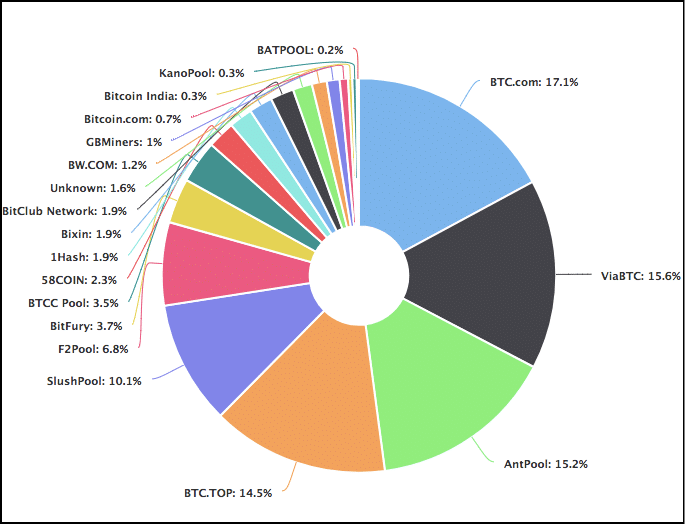 _Hashrate Distribution - An estimation of hashrate distribution among the largest mining pools. _ Once we have solved the fundamental problem of blockchain consensus, we are able to build applications that sit "on top" of a blockchain like ethereum. The underlying blockchain gives us a unit of value that can be used to create incentives and penalties, as well as a toolbox with which we can define specific rules in the form of "smart contract code." The applications we build with these tools can also be a product of crypto-economic design. Crypto-Economics also includes the practice of designing much smaller sets of interactions between individuals. For example, state channels. State channels are not an application but a valuable technique that can be used by most blockchain applications to become more efficient. The most commonly discussed scaling challenge is transaction throughput. Currently, ethereum can process roughly 15 transactions per second, while in comparison Visa processes approximately 45,000/tps. State channels approach is one that not every node has to process every operation. An approach in which the network is divided into two sections that operate semi-independently. One section processes one batch of transactions, while another section processes another batch. Another example is the Lightning Network, which is a "second layer" payment protocol that operates on top of a blockchain, most commonly Bitcoin. It enables fast transactions between participating nodes and has been touted as a solution to the bitcoin scalability problem. It features a peer-to-peer system for making micropayments of digital cryptocurrency through a network of bidirectional payment channels without delegating custody of funds. The other notable state channels project for ethereum is Raiden, which is currently focused on building a network of payment channels, using a similar paradigm as the lightning network. This means that rather than have to open up a channel with the specific person you want to transact with, you can open up a single channel with an entity connected to a much larger network of channels, enabling you to make payments to anyone else connected to the same network without additional fees. Imagine A and B want to exchange a large number of small payments of cryptocurrency. The normal way, for them to do this would be to send transactions to the blockchain. This is inefficient as it requires paying transaction fees and waiting for the confirmation of new blocks. Instead, imagine that they can sign transactions that could be submitted to the blockchain, but are not. They only pass these, back and forth between one another, as fast as they want, without fees, because nothing is actually reaching the blockchain yet. With each new transaction, the balance between the parties is updated, and when they have finished exchanging small payments, they can "close out" the channel by submitting the most recent signed transaction to the blockchain, paying only a single transaction fee for an unlimited number of transactions between themselves. They can trust this process because both A and B know that each update passed between them could be sent to the blockchain and any of the parties can “close out” the channel. This technique is not just useful for payments, but for any update to the state of an ethereum program. Instead of sending payments back and forth, we can send updates to a smart contract back and forth. Like state channels, Plasma is a technique for conducting off-chain transactions while relying on the underlying ethereum blockchain to ground its security. But Plasma takes the idea in a new direction, by allowing for the creation of “child” blockchains attached to the “main” ethereum blockchain. These child-chains can, in turn, spawn their own child-chains, who can spawn their own child-chains, and so on. Plasma and Raiden, are also known as Layer 2 solutions because they are built “on top of” the ethereum main-chain. They do not require changes to the base level protocol, and exist simply as smart contracts on ethereum that interacts with the off-chain software. The principle behind state channels is that we build more efficient blockchain by transacting off-chain, while still retaining a blockchain's characteristic trustworthiness, through the use of crypto-economic design. Similarly, if we can split a blockchain into many different sections, then we can increase the throughput of a blockchain by many multiples. This is the insight behind “sharding”, a scaling solution being pursued by Vitalik’s Ethereum Research group and others. A blockchain is split into different sections called shards, each of which can independently process transactions. Sharding is often referred to as a Layer 1 or “first layer” scaling solution because it is implemented at the base-level protocol of ethereum itself. In an ideal scenario, we could have Plasma and Raiden protocols working intraoperatively, by having Plasma handling the smart contracts and triggering the raiden network to execute those payments. Moreover, Sharding would achieve the consensus between the main chain and Plasma chain faster, since the nodes have smaller groups of transactions to verify. In the future, ethereum plans to migrate to a long-term scaling solution that utilizes a crossbreed “proof of work” and "proof-of-stake" consensus protocol called Casper. Currently, like Bitcoin, Ethereum exclusively depends on the PoW consensus protocol to maintain the network and to confirm, this is an alternative to proof-of-work that does not require "mining" in the usual sense: there is no need for specialized mining hardware or huge expenditures of electricity. Proof of stake will make the entire mining process virtual and replace miners with validators. Validators will have to lock up some of their coins as stake and after that, they can start validating the blocks. When they discover a block which they think can be added to the chain, they will validate it by placing a bet on it. If the block gets appended, then the validators will get a reward proportionate to their bets. With Casper, if a validator acts in a malicious manner, they will immediately be reprimanded, and all of their stake is going to be lost. Just like in proof-of-work, this raises the cost of a 51 percent attack – an attacker would have to commit a very large amount of ether to successfully attack the network, which they would then lose forever. In the future, most blockchain applications will use state channels in some form. It is almost always a strict improvement to require less on-chain operation, and many things done on-chain today can be moved into state channels while still preserving a sufficiently high guarantee to be useful. ## Conclusion # Thinking about the blockchain space through the lens of crypto-economics is helpful. Once you understand the idea, it helps to clarify many of the controversies and debates in our industry. For instance, "permissioned" blockchains that are centrally managed and do not use proof-of-work have been a source of constant controversy since they were first proposed. This area of work is often referred to as "distributed ledger technology" and is focused on financial and enterprise use cases. Many partisans of blockchain technology dislike them, and perhaps for a good reason. It seems like they are rejecting what many people see as the true notion and actual point of blockchain technology. To be able to reach consensus without relying on any central party. Perhaps a better way is to make a distinction between blockchains that are products of Crypto-Economics and blockchains that are not. Blockchains that are simply distributed ledgers and do not rely on crypto-economic design to produce consensus or align incentives might be useful for some applications. These are distinct from blockchains whose purpose is to use cryptography and economic incentives to produce consensus that could not exist before, like bitcoin and ethereum. These are two different technologies, and the clearest way of distinguishing between them is whether or not they are products of Crypto-Economics. Furthermore, we should expect that there will be crypto-economic consensus protocols that do not rely on a literal chain of blocks. Obviously, such a technology would have something in common with blockchain technology as we call it today, but labelling them blockchains again would not be accurate. Again, the relevant organizing concept is whether such a protocol is the product of Crypto-Economics, not whether it is a blockchain. The ICO hype has also focused attention on this distinction, though few have articulated it in a clear way. Many people state that one of the strongest indicators over a token's value is whether it forms a integral component of the application to which it is connected. To put this in clearer terms, the question should be: is the token part of a necessary crypto-economic mechanism in the application? Understanding the mechanism design of a project holding an ICO is an essential tool in determining that token's utility and likely value. We need to rethink in terms of Crypto-Economics, just like Satoshi did, and find a unified approach to solving problems. Bitcoin has changed everything and its importance as an evolution in money and banking cannot be overstated. It has spawned through a global social movement with utopian ambitions. The notion of a new digital currency, maintained by the computers of people around the world has grown into a technology worth billions of dollars, and embraces the potential for a financial system free of banks and governments. It has gone through various booms and busts throughout its genesis, and has provided one of the most interesting tests of the concept of money, and what it might look in the future. It is the best example to date, as to the brilliance of its economic design. It ensures first of all trust between parties that have never met each other without the need for an intermediary. It also distributes these incentives in a way that ensures a single truth, an ever-growing indestructible ledger that is available and transparent to all. And up to date, although it has sustained multiple boom and busts cycles, has been declared dead more than 300 times, it holds more than 55% of the total market share of cryptocurrencies with a market cap of more than $111 billion as of the time of writing. What is important to remember that it's through technology and collective innovation from a few brilliant minds in the history of the world, that we are able today to address the most important human matters, such as privacy and how we define money. It seems that the future is bright as these technologies become mainstream and provide an alternative financial model for the next generations together with a decentralized alternative to central banking and censorship. As it challenges the most sacred of government monopolies, fiat money, Bitcoin and cryptocurrencies shift the pendulum of sovereignty away from corrupted politicians in favor of the people and providing a strong possibility of a world where money is completely detached from politics and unlimited by any border, and all this, thanks to the understated influence and contribution from a handful of brilliant minds. The future of crypto-economics is still too early to predict but it is almost certain that they will play an even important role on how our society and world functions in the next few years. Sources: https://bitcoin.org/bitcoin.pdf http://www.gwern.net/docs/bitcoin/2008-nakamoto https://github.com/bitcoin/bitcoin https://digiconomist.net/bitcoin-energy-consumption https://bitcoinexchangeguide.com/bitcoin-energy-consumption-index/ https://blockgeeks.com/guides/what-is-cryptoeconomics/ https://thecontrol.co/cryptoeconomics-101-e5c883e9a8ff https://www.microsoft.com/en-us/research/publication/byzantine-generals-problem/ https://medium.com/@anaminguyen/intro-to-cryptoeconomics-part-1-b2527775bc9c https://www.coindesk.com/making-sense-cryptoeconomics/ https://hackernoon.com/what-i-learned-by-joining-a-panel-on-institutional-cryptoeconomics-460b157dc38a https://www.coindesk.com/institutional-cryptoeconomics/ https://www.slideshare.net/dinisguarda/a-financial-tech-tsunami-driven-by-blockchain-ai-crypto-economics-82541146 http://hlwiki.slais.ubc.ca/index.php/Open_source_software https://www.gnu.org/gnu/thegnuproject.en.html https://vitalik.ca/files/intro_cryptoeconomics.pdf https://hackernoon.com/introduction-to-cryptoeconomics-through-bitcoin-818e21d4cbfa https://blockchainatberkeley.blog/introduction-to-blockchain-through-cryptoeconomics-part-1-bitcoin-369f245067f9 https://medium.com/jump-genesis/jump-genesis-cryptoeconomics-52313f0a60c9 https://medium.com/cryptoweek/an-introduction-to-cryptoeconomics-41973f3ecf67 https://medium.com/blockchannel/cryptoeconomic-theory-game-theory-basics-fb3a49aab1a8 https://en.wikipedia.org/wiki/Mechanism_design https://medium.com/@viktorwrites/cryptoeconomic-theory-table-of-contents-311fcf30bc2b https://medium.com/blockchannel/cryptoeconomic-theory-basics-of-social-order-2be4c1be89c1 https://medium.com/blockchannel/cryptoeconomic-theory-markets-vs-planning-85a76bb2c038 https://medium.com/blockchannel/cryptoeconomic-theory-pareto-efficiency-89d34664f9d https://medium.com/blockchannel/cryptoeconomic-theory-game-theory-basics-fb3a49aab1a8 https://www.youtube.com/watch?v=pKqdjaH1dRo https://www.youtube.com/watch?v=GGberGnxiJk https://medium.com/blockchannel/cryptoeconomic-theory-basics-of-social-order-2be4c1be89c1 https://ocw.mit.edu/courses/economics/14-12-economic-applications-of-game-theory-fall-2012/lecture-notes/ https://medium.com/jump-genesis/jump-genesis-cryptoeconomics-52313f0a60c9 https://blockchainatberkeley.blog/introduction-to-blockchain-through-cryptoeconomics-part-1-bitcoin-369f245067f9 https://vitalik.ca/files/intro_cryptoeconomics.pdf https://medium.com/blockchannel/cryptoeconomic-theory-basics-of-social-order-2be4c1be89c1 https://medium.com/blockchannel/cryptoeconomic-theory-pareto-efficiency-89d34664f9d https://medium.com/blockchannel/cryptoeconomic-theory-game-theory-basics-fb3a49aab1a8 https://medium.com/@viktorwrites/cryptoeconomic-theory-table-of-contents-311fcf30bc2b https://www.coindesk.com/theres-a-problem-with-crypto-funding-and-vitalik-might-have-a-solution/ https://www.coindesk.com/theres-a-problem-with-crypto-funding-and-vitalik-might-have-a-solution/ https://www.coindesk.com/experimental-voting-effort-aims-break-ethereum-governance-gridlock/ https://papers.ssrn.com/sol3/papers.cfm?abstract_id=3243656 https://blog.ethereum.org/2015/09/14/on-slow-and-fast-block-times/ https://ethereum.stackexchange.com/questions/16811/is-ethereum-asic-resistant https://www.coindesk.com/making-sense-smart-contracts/ https://www.augur.net/ https://blog.gnosis.pm/introducing-the-gnosis-tokens-gno-and-wiz-5295a65c3822 https://github.com/ethereum/mist/releases https://metamask.io/ https://medium.com/l4-media/making-sense-of-ethereums-layer-2-scaling-solutions-state-channels-plasma-and-truebit-22cb40dcc2f4 https://www.jeffcoleman.ca/state-channels/ https://www.blockchain.com/pools |
| json metadata | {"tags":["cryptography","oss","p2p","bitcoin","cryptoeconomics"],"image":["https://cdn.steemitimages.com/DQmVho3pEvw7zbivgfrPeTYPmsZfyA4QfsqDo8WoJ75vqXr/centralization%20mining.png","https://img.youtube.com/vi/pKqdjaH1dRo/0.jpg","https://img.youtube.com/vi/GGberGnxiJk/0.jpg"],"links":["https://www.linkedin.com/in/georgetakeprofitagathangelou/","https://steemit.com/cryptography/@universalcrypto/the-evolution-of-distributed-ledger-technologies-or-blockchain-part-1-of-4","https://steemit.com/bitcoin/@universalcrypto/the-evolution-of-distributed-ledger-technologies-part-2","https://steemit.com/bitcoin/@universalcrypto/the-evolution-of-distributed-ledger-technologies-or-blockchain-part-3-of-4","https://bitcoin.org/bitcoin.pdf","http://www.gwern.net/docs/bitcoin/2008-nakamoto","https://github.com/bitcoin/bitcoin","https://digiconomist.net/bitcoin-energy-consumption","https://bitcoinexchangeguide.com/bitcoin-energy-consumption-index/","https://blockgeeks.com/guides/what-is-cryptoeconomics/","https://thecontrol.co/cryptoeconomics-101-e5c883e9a8ff","https://www.microsoft.com/en-us/research/publication/byzantine-generals-problem/","https://medium.com/@anaminguyen/intro-to-cryptoeconomics-part-1-b2527775bc9c","https://www.coindesk.com/making-sense-cryptoeconomics/","https://hackernoon.com/what-i-learned-by-joining-a-panel-on-institutional-cryptoeconomics-460b157dc38a","https://www.coindesk.com/institutional-cryptoeconomics/","https://www.slideshare.net/dinisguarda/a-financial-tech-tsunami-driven-by-blockchain-ai-crypto-economics-82541146","http://hlwiki.slais.ubc.ca/index.php/Open_source_software","https://www.gnu.org/gnu/thegnuproject.en.html","https://vitalik.ca/files/intro_cryptoeconomics.pdf","https://hackernoon.com/introduction-to-cryptoeconomics-through-bitcoin-818e21d4cbfa","https://blockchainatberkeley.blog/introduction-to-blockchain-through-cryptoeconomics-part-1-bitcoin-369f245067f9","https://medium.com/jump-genesis/jump-genesis-cryptoeconomics-52313f0a60c9","https://medium.com/cryptoweek/an-introduction-to-cryptoeconomics-41973f3ecf67","https://medium.com/blockchannel/cryptoeconomic-theory-game-theory-basics-fb3a49aab1a8","https://en.wikipedia.org/wiki/Mechanism_design","https://medium.com/@viktorwrites/cryptoeconomic-theory-table-of-contents-311fcf30bc2b","https://medium.com/blockchannel/cryptoeconomic-theory-basics-of-social-order-2be4c1be89c1","https://medium.com/blockchannel/cryptoeconomic-theory-markets-vs-planning-85a76bb2c038","https://medium.com/blockchannel/cryptoeconomic-theory-pareto-efficiency-89d34664f9d","https://www.youtube.com/watch?v=pKqdjaH1dRo","https://www.youtube.com/watch?v=GGberGnxiJk","https://ocw.mit.edu/courses/economics/14-12-economic-applications-of-game-theory-fall-2012/lecture-notes/","https://www.coindesk.com/theres-a-problem-with-crypto-funding-and-vitalik-might-have-a-solution/","https://www.coindesk.com/experimental-voting-effort-aims-break-ethereum-governance-gridlock/","https://papers.ssrn.com/sol3/papers.cfm?abstract_id=3243656","https://blog.ethereum.org/2015/09/14/on-slow-and-fast-block-times/","https://ethereum.stackexchange.com/questions/16811/is-ethereum-asic-resistant","https://www.coindesk.com/making-sense-smart-contracts/","https://www.augur.net/","https://blog.gnosis.pm/introducing-the-gnosis-tokens-gno-and-wiz-5295a65c3822","https://github.com/ethereum/mist/releases","https://metamask.io/","https://medium.com/l4-media/making-sense-of-ethereums-layer-2-scaling-solutions-state-channels-plasma-and-truebit-22cb40dcc2f4","https://www.jeffcoleman.ca/state-channels/","https://www.blockchain.com/pools"],"app":"steemit/0.1","format":"markdown"} |
| Transaction Info | Block #26051781/Trx d2d3c6f14e71c4cbb348b0d4250b51d553cee46d |
View Raw JSON Data
{
"trx_id": "d2d3c6f14e71c4cbb348b0d4250b51d553cee46d",
"block": 26051781,
"trx_in_block": 29,
"op_in_trx": 0,
"virtual_op": 0,
"timestamp": "2018-09-18T11:56:03",
"op": [
"comment",
{
"parent_author": "",
"parent_permlink": "cryptography",
"author": "universalcrypto",
"permlink": "the-evolution-of-distributed-ledger-technologies-part-4-of-4",
"title": "The evolution of Distributed Ledger Technologies - Part 4 of 4",
"body": "*by [George Agathangelou](https://www.linkedin.com/in/georgetakeprofitagathangelou/)*\n\nIn previous articles, we had a look at the [early days of Cryptography](https://steemit.com/cryptography/@universalcrypto/the-evolution-of-distributed-ledger-technologies-or-blockchain-part-1-of-4), the principles on which [Open Source Software](https://steemit.com/bitcoin/@universalcrypto/the-evolution-of-distributed-ledger-technologies-part-2) operates and the relevant tradeoffs, and looked at case studies of [P2P sharing networks](https://steemit.com/bitcoin/@universalcrypto/the-evolution-of-distributed-ledger-technologies-or-blockchain-part-3-of-4) with built-in incentive mechanisms, the way they are structured and how the trust factor is taken away from middlemen to be given to the software, as in the case of Decentralized Exchanges. In this article, we will attempt to summarize what Crypto-Economics are and how they are used in the context of distributed consensus protocols.\n\n## Crypto-Economics\n#\n\nThe term “Crypto- Economics” has been defined in different ways. Common definitions state that Crypto-Economics include the use of cryptography and incentives to create networks, applications and systems. Cryptography helps maintain networks secure, and economic incentives provide participants reasons to participate in the network and maintain a good behavior within it. Relative to traditional economics, Crypto-Economics is all about building systems that have certain desired properties, by using cryptography to prove properties about messages that happened in the past, and at the same time create these systems around incentives to preserve these desired properties in the future. \n\nAs in traditional Economics, Crypto-Economics is subject to limitations. The problem lies in the assumptions about human behavior when designing economic incentive designs. The models rely essentially on speculation about the human future mental states, corresponding belief systems and ignore many possible motives beyond proximate incentives. \n\nAccording to Ethereum developer Vlad Zamfir, Crypto-Economics is _“A formal discipline that studies protocols that govern the production, distribution, and consumption of goods and services in a decentralized digital economy. Crypto-Economics is a practical science that focuses on the design and characterization of these protocols.”_\n\nCrypto-Economics is a combination of various disciplines and analyses necessary to build decentralized economic incentive designs. Crypto-Economics combine Cryptography, Economics, Finance, Law, Behavioral Economics, Game Theory, Computer Science, Distributed Systems and Network Security, to create these economic designs for distributed systems. Crypto-Economics can be considered closely related to mechanism design, a field related to game theory. Mechanism design is often referred to as reverse game theory because we start with a desired outcome and then work backwards to design a game that, if players pursue their own self interest, will produce the outcome we want. \n\nThe innovation and development observed in the field of blockchain-based technologies has provided a sandbox environment to experiment with various economic models, stability mechanisms and other policy tools. These incentive designs in decentralized systems allow us to study economic incentive design on human behavior and token prices, by creating completely new systems, with currencies that have unique monetary characteristics and are governed solely by code. \n\n_*“Cryptography is inherently backwards facing. Incentives are inherently forwards facing.” - Vlad Zamfir, January 2015.*_\n\n## Macro Vs Micro Crypto-Economics\n#\n\nMacroeconomics in traditional Economics is primarily the study of the overall economy, employment, gross domestic product and inflation while Microeconomics is the study of supply and demand in markets of particular goods and services. Macroeconomics in Crypto-Economics evolve around the context of token metrics in decentralized economic systems. In the same way the Central Banks function as decision makers in fiat centralized economic systems, token designers can act as virtual central bankers for their respective token economy, allowing in some cases, for a democratization of the monetary policy design. In other words, Macroeconomics define the total amount of tokens to be produced, the method, the time and the structure or rules to be followed. Microeconomics in Crypto-Economics evolve around the context of value and incentives for the token holders. Questions like the unique selling proposition, how does the token interact in the system and what are the incentives to hold or use it in the most fair and honest way, arise. \n\nBitcoin also relies on cryptographic protocols, like the Public-private key that uses encryption to keep individuals safe and maintain exclusive control of their coins. Hash functions act like digital fingerprints and are used to \"link\" each block in the bitcoin blockchain, proving an order of events and the integrity of past data. Cryptographic protocols like these, provide us the basic tools necessary to design and build reliable, secure systems like Bitcoin. They are foundational pillars to ensure security to the protocol, confidence to the true occurrence of events and value out of incentives to reward an industry of miners. We can say that Crypto-Economics are about solving an information security problem in economic terms, for a given distributed system. Plainly, it is the study of how to get people to participate on the public internet and incentivize them to run nodes that follow distributed protocols.\n\n## Satoshi Nakamoto\n#\n\nThe first person or group to apply economic incentives in the peer-to-peer systems was the creator of Bitcoin, the unknown inventor of Bitcoin, Satoshi Nakamoto, and because of it, he is considered the father of Crypto-Economics. Satoshi solved a major problem of distributed data processing. The problem was, that a reliable computer system should be able to cope with the failure of one or more of its components. A failed component could exhibit a type of behavior that was often overlooked, like sending conflicting information to different parts of the system. The problem of coping with this type of failure is expressed abstractly as the “Byzantine Generals Problem”. By solving this problem, it was possible to achieve consensus among nodes to create a decentralized digital cash system. Satoshi’s implementation of a proof-of-work consensus mechanism, combined with economic incentives to solve the previously unsolvable problem, on a designed system that relies on both, economic incentives and penalties. In this way, economic rewards are provided to miners that contribute their resources in hardware and electricity in order to produce new blocks, with new bitcoins. At the same time, if someone tries to defraud the system by attacking the blockchain to control the majority of the network’s hashing rate, something known as a “51 percent attack”, he would come to realize that in order to do so, he would have to spent a very considerable amount of capital to purchase the specific hardware for this purpose, plus spend enormous amounts of electricity during this attempt, making it practically impossible or irrational to do so. \n\n## Consensus Protocols\n#\n\nThe basic power of a public blockchain is in its crypto-economic consensus. By carefully aligning incentives and securing them with software & cryptography, we can create networks of computers that reliably come to agreement about the internal state of a system. This is the key insight of Satoshi’s whitepaper, which has now been applied in the design of many different public blockchains including bitcoin and ethereum.\n\nBlockchains are able to reach reliable consensus without having to rely on a central trusted party, and this a product of crypto-economic design. With Bitcoin’s “Proof of Work” consensus protocol, bitcoins are mined using the Hashcash proof-of-work function by individual miners and verified by the decentralized nodes in the P2P bitcoin network. The Proof of Work system’s critics, emphasize on the amount of electricity consumption of the Bitcoin network. \n\n \nOther systems also incentivize good behavior and speaking the “truth”. For example. the prediction market Augur, uses its native token REP, to create a system of incentives that rewards users for reporting the \"truth\" to the application, which is then used to settle bets in the prediction market. REP is a cryptocurrency, used by reporters during market dispute phases of Augur. REP holders must perform work, in the form of staking their REP on correct outcomes, to receive a portion of the markets settlement fees. If you do not report correctly, you do not get the fees. If you report incorrectly, you lose your REP. The treatment of REP within the Augur protocol is governed by the protocols smart contracts as described in the Augur white paper and documentation. \n\nCrypto-Economics is also applied to design token sales or ICOs. Gnosis, for instance, used a \"Dutch auction\" as a model for its token auction, on the theory that this would result in a fairer distribution, although this experiment had mixed results. Antidumping mechanisms via escrow for early investors, token burns and other elements can be applied in these mechanism designs. Building these applications requires an understanding of how incentives shape users' behavior and careful design of economic mechanisms that can reliably produce a certain result. They also require an understanding of the capabilities and limitations of the underlying blockchain on which the application is built. Many blockchain applications are not products of Crypto-Economics; for instance, applications like Mist and Metamask – wallets or platforms that let users interact with the ethereum blockchain. These do not involve any additional crypto-economic mechanisms beyond those that are already part of the underlying blockchain.\n\nImproving proof-of-work systems and designing alternatives to them, is one active field of Crypto-Economics. Ethereum's current proof-of-work consensus mechanism includes many variations and improvements on the original design, enabling faster block times and being more resistant to the mining centralization that can result from ASICs.\n\n \n\n_Hashrate Distribution - An estimation of hashrate distribution among the largest mining pools. _\n\nOnce we have solved the fundamental problem of blockchain consensus, we are able to build applications that sit \"on top\" of a blockchain like ethereum. The underlying blockchain gives us a unit of value that can be used to create incentives and penalties, as well as a toolbox with which we can define specific rules in the form of \"smart contract code.\" The applications we build with these tools can also be a product of crypto-economic design. \n\nCrypto-Economics also includes the practice of designing much smaller sets of interactions between individuals. For example, state channels. State channels are not an application but a valuable technique that can be used by most blockchain applications to become more efficient. The most commonly discussed scaling challenge is transaction throughput. Currently, ethereum can process roughly 15 transactions per second, while in comparison Visa processes approximately 45,000/tps. State channels approach is one that not every node has to process every operation. An approach in which the network is divided into two sections that operate semi-independently. One section processes one batch of transactions, while another section processes another batch. \n\nAnother example is the Lightning Network, which is a \"second layer\" payment protocol that operates on top of a blockchain, most commonly Bitcoin. It enables fast transactions between participating nodes and has been touted as a solution to the bitcoin scalability problem. It features a peer-to-peer system for making micropayments of digital cryptocurrency through a network of bidirectional payment channels without delegating custody of funds.\n\nThe other notable state channels project for ethereum is Raiden, which is currently focused on building a network of payment channels, using a similar paradigm as the lightning network. This means that rather than have to open up a channel with the specific person you want to transact with, you can open up a single channel with an entity connected to a much larger network of channels, enabling you to make payments to anyone else connected to the same network without additional fees.\n\n \nImagine A and B want to exchange a large number of small payments of cryptocurrency. The normal way, for them to do this would be to send transactions to the blockchain. This is inefficient as it requires paying transaction fees and waiting for the confirmation of new blocks. Instead, imagine that they can sign transactions that could be submitted to the blockchain, but are not. They only pass these, back and forth between one another, as fast as they want, without fees, because nothing is actually reaching the blockchain yet. With each new transaction, the balance between the parties is updated, and when they have finished exchanging small payments, they can \"close out\" the channel by submitting the most recent signed transaction to the blockchain, paying only a single transaction fee for an unlimited number of transactions between themselves. They can trust this process because both A and B know that each update passed between them could be sent to the blockchain and any of the parties can “close out” the channel. This technique is not just useful for payments, but for any update to the state of an ethereum program. Instead of sending payments back and forth, we can send updates to a smart contract back and forth. \n\nLike state channels, Plasma is a technique for conducting off-chain transactions while relying on the underlying ethereum blockchain to ground its security. But Plasma takes the idea in a new direction, by allowing for the creation of “child” blockchains attached to the “main” ethereum blockchain. These child-chains can, in turn, spawn their own child-chains, who can spawn their own child-chains, and so on. Plasma and Raiden, are also known as Layer 2 solutions because they are built “on top of” the ethereum main-chain. They do not require changes to the base level protocol, and exist simply as smart contracts on ethereum that interacts with the off-chain software. The principle behind state channels is that we build more efficient blockchain by transacting off-chain, while still retaining a blockchain's characteristic trustworthiness, through the use of crypto-economic design.\n\n\nSimilarly, if we can split a blockchain into many different sections, then we can increase the throughput of a blockchain by many multiples. This is the insight behind “sharding”, a scaling solution being pursued by Vitalik’s Ethereum Research group and others. A blockchain is split into different sections called shards, each of which can independently process transactions. Sharding is often referred to as a Layer 1 or “first layer” scaling solution because it is implemented at the base-level protocol of ethereum itself. \n\nIn an ideal scenario, we could have Plasma and Raiden protocols working intraoperatively, by having Plasma handling the smart contracts and triggering the raiden network to execute those payments. Moreover, Sharding would achieve the consensus between the main chain and Plasma chain faster, since the nodes have smaller groups of transactions to verify.\n\nIn the future, ethereum plans to migrate to a long-term scaling solution that utilizes a crossbreed “proof of work” and \"proof-of-stake\" consensus protocol called Casper. Currently, like Bitcoin, Ethereum exclusively depends on the PoW consensus protocol to maintain the network and to confirm, this is an alternative to proof-of-work that does not require \"mining\" in the usual sense: there is no need for specialized mining hardware or huge expenditures of electricity. Proof of stake will make the entire mining process virtual and replace miners with validators. Validators will have to lock up some of their coins as stake and after that, they can start validating the blocks. When they discover a block which they think can be added to the chain, they will validate it by placing a bet on it. If the block gets appended, then the validators will get a reward proportionate to their bets. With Casper, if a validator acts in a malicious manner, they will immediately be reprimanded, and all of their stake is going to be lost. Just like in proof-of-work, this raises the cost of a 51 percent attack – an attacker would have to commit a very large amount of ether to successfully attack the network, which they would then lose forever.\n\nIn the future, most blockchain applications will use state channels in some form. It is almost always a strict improvement to require less on-chain operation, and many things done on-chain today can be moved into state channels while still preserving a sufficiently high guarantee to be useful.\n\n## Conclusion\n# \n\nThinking about the blockchain space through the lens of crypto-economics is helpful. Once you understand the idea, it helps to clarify many of the controversies and debates in our industry. For instance, \"permissioned\" blockchains that are centrally managed and do not use proof-of-work have been a source of constant controversy since they were first proposed. This area of work is often referred to as \"distributed ledger technology\" and is focused on financial and enterprise use cases. Many partisans of blockchain technology dislike them, and perhaps for a good reason. It seems like they are rejecting what many people see as the true notion and actual point of blockchain technology. To be able to reach consensus without relying on any central party.\n\nPerhaps a better way is to make a distinction between blockchains that are products of Crypto-Economics and blockchains that are not. Blockchains that are simply distributed ledgers and do not rely on crypto-economic design to produce consensus or align incentives might be useful for some applications. These are distinct from blockchains whose purpose is to use cryptography and economic incentives to produce consensus that could not exist before, like bitcoin and ethereum. These are two different technologies, and the clearest way of distinguishing between them is whether or not they are products of Crypto-Economics.\n\nFurthermore, we should expect that there will be crypto-economic consensus protocols that do not rely on a literal chain of blocks. Obviously, such a technology would have something in common with blockchain technology as we call it today, but labelling them blockchains again would not be accurate. Again, the relevant organizing concept is whether such a protocol is the product of Crypto-Economics, not whether it is a blockchain. The ICO hype has also focused attention on this distinction, though few have articulated it in a clear way. Many people state that one of the strongest indicators over a token's value is whether it forms a integral component of the application to which it is connected. To put this in clearer terms, the question should be: is the token part of a necessary crypto-economic mechanism in the application? Understanding the mechanism design of a project holding an ICO is an essential tool in determining that token's utility and likely value. We need to rethink in terms of Crypto-Economics, just like Satoshi did, and find a unified approach to solving problems.\n\nBitcoin has changed everything and its importance as an evolution in money and banking cannot be overstated. It has spawned through a global social movement with utopian ambitions. The notion of a new digital currency, maintained by the computers of people around the world has grown into a technology worth billions of dollars, and embraces the potential for a financial system free of banks and governments. It has gone through various booms and busts throughout its genesis, and has provided one of the most interesting tests of the concept of money, and what it might look in the future. It is the best example to date, as to the brilliance of its economic design. It ensures first of all trust between parties that have never met each other without the need for an intermediary. It also distributes these incentives in a way that ensures a single truth, an ever-growing indestructible ledger that is available and transparent to all. And up to date, although it has sustained multiple boom and busts cycles, has been declared dead more than 300 times, it holds more than 55% of the total market share of cryptocurrencies with a market cap of more than $111 billion as of the time of writing. \n\nWhat is important to remember that it's through technology and collective innovation from a few brilliant minds in the history of the world, that we are able today to address the most important human matters, such as privacy and how we define money. It seems that the future is bright as these technologies become mainstream and provide an alternative financial model for the next generations together with a decentralized alternative to central banking and censorship. As it challenges the most sacred of government monopolies, fiat money, Bitcoin and cryptocurrencies shift the pendulum of sovereignty away from corrupted politicians in favor of the people and providing a strong possibility of a world where money is completely detached from politics and unlimited by any border, and all this, thanks to the understated influence and contribution from a handful of brilliant minds. The future of crypto-economics is still too early to predict but it is almost certain that they will play an even important role on how our society and world functions in the next few years. \n\n\nSources:\nhttps://bitcoin.org/bitcoin.pdf\nhttp://www.gwern.net/docs/bitcoin/2008-nakamoto\nhttps://github.com/bitcoin/bitcoin\nhttps://digiconomist.net/bitcoin-energy-consumption\nhttps://bitcoinexchangeguide.com/bitcoin-energy-consumption-index/\nhttps://blockgeeks.com/guides/what-is-cryptoeconomics/\nhttps://thecontrol.co/cryptoeconomics-101-e5c883e9a8ff\nhttps://www.microsoft.com/en-us/research/publication/byzantine-generals-problem/\nhttps://medium.com/@anaminguyen/intro-to-cryptoeconomics-part-1-b2527775bc9c\nhttps://www.coindesk.com/making-sense-cryptoeconomics/\nhttps://hackernoon.com/what-i-learned-by-joining-a-panel-on-institutional-cryptoeconomics-460b157dc38a\nhttps://www.coindesk.com/institutional-cryptoeconomics/\nhttps://www.slideshare.net/dinisguarda/a-financial-tech-tsunami-driven-by-blockchain-ai-crypto-economics-82541146\nhttp://hlwiki.slais.ubc.ca/index.php/Open_source_software\nhttps://www.gnu.org/gnu/thegnuproject.en.html\nhttps://vitalik.ca/files/intro_cryptoeconomics.pdf\nhttps://hackernoon.com/introduction-to-cryptoeconomics-through-bitcoin-818e21d4cbfa\nhttps://blockchainatberkeley.blog/introduction-to-blockchain-through-cryptoeconomics-part-1-bitcoin-369f245067f9\nhttps://medium.com/jump-genesis/jump-genesis-cryptoeconomics-52313f0a60c9\nhttps://medium.com/cryptoweek/an-introduction-to-cryptoeconomics-41973f3ecf67\nhttps://medium.com/blockchannel/cryptoeconomic-theory-game-theory-basics-fb3a49aab1a8\nhttps://en.wikipedia.org/wiki/Mechanism_design\nhttps://medium.com/@viktorwrites/cryptoeconomic-theory-table-of-contents-311fcf30bc2b\nhttps://medium.com/blockchannel/cryptoeconomic-theory-basics-of-social-order-2be4c1be89c1\nhttps://medium.com/blockchannel/cryptoeconomic-theory-markets-vs-planning-85a76bb2c038\nhttps://medium.com/blockchannel/cryptoeconomic-theory-pareto-efficiency-89d34664f9d\nhttps://medium.com/blockchannel/cryptoeconomic-theory-game-theory-basics-fb3a49aab1a8\nhttps://www.youtube.com/watch?v=pKqdjaH1dRo\nhttps://www.youtube.com/watch?v=GGberGnxiJk\nhttps://medium.com/blockchannel/cryptoeconomic-theory-basics-of-social-order-2be4c1be89c1\nhttps://ocw.mit.edu/courses/economics/14-12-economic-applications-of-game-theory-fall-2012/lecture-notes/\nhttps://medium.com/jump-genesis/jump-genesis-cryptoeconomics-52313f0a60c9\nhttps://blockchainatberkeley.blog/introduction-to-blockchain-through-cryptoeconomics-part-1-bitcoin-369f245067f9\nhttps://vitalik.ca/files/intro_cryptoeconomics.pdf\nhttps://medium.com/blockchannel/cryptoeconomic-theory-basics-of-social-order-2be4c1be89c1\nhttps://medium.com/blockchannel/cryptoeconomic-theory-pareto-efficiency-89d34664f9d\nhttps://medium.com/blockchannel/cryptoeconomic-theory-game-theory-basics-fb3a49aab1a8\nhttps://medium.com/@viktorwrites/cryptoeconomic-theory-table-of-contents-311fcf30bc2b\nhttps://www.coindesk.com/theres-a-problem-with-crypto-funding-and-vitalik-might-have-a-solution/\nhttps://www.coindesk.com/theres-a-problem-with-crypto-funding-and-vitalik-might-have-a-solution/\nhttps://www.coindesk.com/experimental-voting-effort-aims-break-ethereum-governance-gridlock/\nhttps://papers.ssrn.com/sol3/papers.cfm?abstract_id=3243656\nhttps://blog.ethereum.org/2015/09/14/on-slow-and-fast-block-times/\nhttps://ethereum.stackexchange.com/questions/16811/is-ethereum-asic-resistant\nhttps://www.coindesk.com/making-sense-smart-contracts/\nhttps://www.augur.net/ \nhttps://blog.gnosis.pm/introducing-the-gnosis-tokens-gno-and-wiz-5295a65c3822\nhttps://github.com/ethereum/mist/releases\nhttps://metamask.io/\nhttps://medium.com/l4-media/making-sense-of-ethereums-layer-2-scaling-solutions-state-channels-plasma-and-truebit-22cb40dcc2f4\nhttps://www.jeffcoleman.ca/state-channels/\nhttps://www.blockchain.com/pools",
"json_metadata": "{\"tags\":[\"cryptography\",\"oss\",\"p2p\",\"bitcoin\",\"cryptoeconomics\"],\"image\":[\"https://cdn.steemitimages.com/DQmVho3pEvw7zbivgfrPeTYPmsZfyA4QfsqDo8WoJ75vqXr/centralization%20mining.png\",\"https://img.youtube.com/vi/pKqdjaH1dRo/0.jpg\",\"https://img.youtube.com/vi/GGberGnxiJk/0.jpg\"],\"links\":[\"https://www.linkedin.com/in/georgetakeprofitagathangelou/\",\"https://steemit.com/cryptography/@universalcrypto/the-evolution-of-distributed-ledger-technologies-or-blockchain-part-1-of-4\",\"https://steemit.com/bitcoin/@universalcrypto/the-evolution-of-distributed-ledger-technologies-part-2\",\"https://steemit.com/bitcoin/@universalcrypto/the-evolution-of-distributed-ledger-technologies-or-blockchain-part-3-of-4\",\"https://bitcoin.org/bitcoin.pdf\",\"http://www.gwern.net/docs/bitcoin/2008-nakamoto\",\"https://github.com/bitcoin/bitcoin\",\"https://digiconomist.net/bitcoin-energy-consumption\",\"https://bitcoinexchangeguide.com/bitcoin-energy-consumption-index/\",\"https://blockgeeks.com/guides/what-is-cryptoeconomics/\",\"https://thecontrol.co/cryptoeconomics-101-e5c883e9a8ff\",\"https://www.microsoft.com/en-us/research/publication/byzantine-generals-problem/\",\"https://medium.com/@anaminguyen/intro-to-cryptoeconomics-part-1-b2527775bc9c\",\"https://www.coindesk.com/making-sense-cryptoeconomics/\",\"https://hackernoon.com/what-i-learned-by-joining-a-panel-on-institutional-cryptoeconomics-460b157dc38a\",\"https://www.coindesk.com/institutional-cryptoeconomics/\",\"https://www.slideshare.net/dinisguarda/a-financial-tech-tsunami-driven-by-blockchain-ai-crypto-economics-82541146\",\"http://hlwiki.slais.ubc.ca/index.php/Open_source_software\",\"https://www.gnu.org/gnu/thegnuproject.en.html\",\"https://vitalik.ca/files/intro_cryptoeconomics.pdf\",\"https://hackernoon.com/introduction-to-cryptoeconomics-through-bitcoin-818e21d4cbfa\",\"https://blockchainatberkeley.blog/introduction-to-blockchain-through-cryptoeconomics-part-1-bitcoin-369f245067f9\",\"https://medium.com/jump-genesis/jump-genesis-cryptoeconomics-52313f0a60c9\",\"https://medium.com/cryptoweek/an-introduction-to-cryptoeconomics-41973f3ecf67\",\"https://medium.com/blockchannel/cryptoeconomic-theory-game-theory-basics-fb3a49aab1a8\",\"https://en.wikipedia.org/wiki/Mechanism_design\",\"https://medium.com/@viktorwrites/cryptoeconomic-theory-table-of-contents-311fcf30bc2b\",\"https://medium.com/blockchannel/cryptoeconomic-theory-basics-of-social-order-2be4c1be89c1\",\"https://medium.com/blockchannel/cryptoeconomic-theory-markets-vs-planning-85a76bb2c038\",\"https://medium.com/blockchannel/cryptoeconomic-theory-pareto-efficiency-89d34664f9d\",\"https://www.youtube.com/watch?v=pKqdjaH1dRo\",\"https://www.youtube.com/watch?v=GGberGnxiJk\",\"https://ocw.mit.edu/courses/economics/14-12-economic-applications-of-game-theory-fall-2012/lecture-notes/\",\"https://www.coindesk.com/theres-a-problem-with-crypto-funding-and-vitalik-might-have-a-solution/\",\"https://www.coindesk.com/experimental-voting-effort-aims-break-ethereum-governance-gridlock/\",\"https://papers.ssrn.com/sol3/papers.cfm?abstract_id=3243656\",\"https://blog.ethereum.org/2015/09/14/on-slow-and-fast-block-times/\",\"https://ethereum.stackexchange.com/questions/16811/is-ethereum-asic-resistant\",\"https://www.coindesk.com/making-sense-smart-contracts/\",\"https://www.augur.net/\",\"https://blog.gnosis.pm/introducing-the-gnosis-tokens-gno-and-wiz-5295a65c3822\",\"https://github.com/ethereum/mist/releases\",\"https://metamask.io/\",\"https://medium.com/l4-media/making-sense-of-ethereums-layer-2-scaling-solutions-state-channels-plasma-and-truebit-22cb40dcc2f4\",\"https://www.jeffcoleman.ca/state-channels/\",\"https://www.blockchain.com/pools\"],\"app\":\"steemit/0.1\",\"format\":\"markdown\"}"
}
]
}universalcryptoreceived 0.047 STEEM, 0.060 SP author reward for @universalcrypto / re-universalcrypto-the-evolution-of-distributed-ledger-technologies-or-blockchain-part-3-of-4-20180906t105819280z2018/09/13 10:58:18
universalcryptoreceived 0.047 STEEM, 0.060 SP author reward for @universalcrypto / re-universalcrypto-the-evolution-of-distributed-ledger-technologies-or-blockchain-part-3-of-4-20180906t105819280z
2018/09/13 10:58:18
| author | universalcrypto |
| permlink | re-universalcrypto-the-evolution-of-distributed-ledger-technologies-or-blockchain-part-3-of-4-20180906t105819280z |
| sbd payout | 0.000 SBD |
| steem payout | 0.047 STEEM |
| vesting payout | 97.057856 VESTS |
| Transaction Info | Block #25922097/Virtual Operation #8 |
View Raw JSON Data
{
  "trx_id": "0000000000000000000000000000000000000000",
  "block": 25922097,
  "trx_in_block": 4294967295,
  "op_in_trx": 0,
  "virtual_op": 8,
  "timestamp": "2018-09-13T10:58:18",
  "op": [
    "author_reward",
    {
      "author": "universalcrypto",
      "permlink": "re-universalcrypto-the-evolution-of-distributed-ledger-technologies-or-blockchain-part-3-of-4-20180906t105819280z",
      "sbd_payout": "0.000 SBD",
      "steem_payout": "0.047 STEEM",
      "vesting_payout": "97.057856 VESTS"
    }
  ]
}universalcryptoreceived 0.040 STEEM, 0.051 SP author reward for @universalcrypto / the-evolution-of-distributed-ledger-technologies-or-blockchain-part-3-of-42018/09/13 10:08:51
universalcryptoreceived 0.040 STEEM, 0.051 SP author reward for @universalcrypto / the-evolution-of-distributed-ledger-technologies-or-blockchain-part-3-of-4
2018/09/13 10:08:51
| author | universalcrypto |
| permlink | the-evolution-of-distributed-ledger-technologies-or-blockchain-part-3-of-4 |
| sbd payout | 0.000 SBD |
| steem payout | 0.040 STEEM |
| vesting payout | 82.903739 VESTS |
| Transaction Info | Block #25921109/Virtual Operation #5 |
View Raw JSON Data
{
  "trx_id": "0000000000000000000000000000000000000000",
  "block": 25921109,
  "trx_in_block": 4294967295,
  "op_in_trx": 0,
  "virtual_op": 5,
  "timestamp": "2018-09-13T10:08:51",
  "op": [
    "author_reward",
    {
      "author": "universalcrypto",
      "permlink": "the-evolution-of-distributed-ledger-technologies-or-blockchain-part-3-of-4",
      "sbd_payout": "0.000 SBD",
      "steem_payout": "0.040 STEEM",
      "vesting_payout": "82.903739 VESTS"
    }
  ]
}universalcryptoreceived 0.049 STEEM, 0.062 SP author reward for @universalcrypto / re-universalcrypto-the-evolution-of-distributed-ledger-technologies-part-2-20180903t142228903z2018/09/10 14:22:18
universalcryptoreceived 0.049 STEEM, 0.062 SP author reward for @universalcrypto / re-universalcrypto-the-evolution-of-distributed-ledger-technologies-part-2-20180903t142228903z
2018/09/10 14:22:18
| author | universalcrypto |
| permlink | re-universalcrypto-the-evolution-of-distributed-ledger-technologies-part-2-20180903t142228903z |
| sbd payout | 0.000 SBD |
| steem payout | 0.049 STEEM |
| vesting payout | 101.117533 VESTS |
| Transaction Info | Block #25839805/Virtual Operation #3 |
View Raw JSON Data
{
  "trx_id": "0000000000000000000000000000000000000000",
  "block": 25839805,
  "trx_in_block": 4294967295,
  "op_in_trx": 0,
  "virtual_op": 3,
  "timestamp": "2018-09-10T14:22:18",
  "op": [
    "author_reward",
    {
      "author": "universalcrypto",
      "permlink": "re-universalcrypto-the-evolution-of-distributed-ledger-technologies-part-2-20180903t142228903z",
      "sbd_payout": "0.000 SBD",
      "steem_payout": "0.049 STEEM",
      "vesting_payout": "101.117533 VESTS"
    }
  ]
}universalcryptoreceived 0.048 STEEM, 0.061 SP author reward for @universalcrypto / the-evolution-of-distributed-ledger-technologies-part-22018/09/10 13:47:39
universalcryptoreceived 0.048 STEEM, 0.061 SP author reward for @universalcrypto / the-evolution-of-distributed-ledger-technologies-part-2
2018/09/10 13:47:39
| author | universalcrypto |
| permlink | the-evolution-of-distributed-ledger-technologies-part-2 |
| sbd payout | 0.000 SBD |
| steem payout | 0.048 STEEM |
| vesting payout | 99.095311 VESTS |
| Transaction Info | Block #25839112/Virtual Operation #19 |
View Raw JSON Data
{
  "trx_id": "0000000000000000000000000000000000000000",
  "block": 25839112,
  "trx_in_block": 4294967295,
  "op_in_trx": 0,
  "virtual_op": 19,
  "timestamp": "2018-09-10T13:47:39",
  "op": [
    "author_reward",
    {
      "author": "universalcrypto",
      "permlink": "the-evolution-of-distributed-ledger-technologies-part-2",
      "sbd_payout": "0.000 SBD",
      "steem_payout": "0.048 STEEM",
      "vesting_payout": "99.095311 VESTS"
    }
  ]
}universalcryptoreceived 0.017 STEEM, 0.022 SP author reward for @universalcrypto / re-universalcrypto-the-evolution-of-distributed-ledger-technologies-or-blockchain-part-1-of-4-20180831t145456240z2018/09/07 14:54:51
universalcryptoreceived 0.017 STEEM, 0.022 SP author reward for @universalcrypto / re-universalcrypto-the-evolution-of-distributed-ledger-technologies-or-blockchain-part-1-of-4-20180831t145456240z
2018/09/07 14:54:51
| author | universalcrypto |
| permlink | re-universalcrypto-the-evolution-of-distributed-ledger-technologies-or-blockchain-part-1-of-4-20180831t145456240z |
| sbd payout | 0.000 SBD |
| steem payout | 0.017 STEEM |
| vesting payout | 36.408135 VESTS |
| Transaction Info | Block #25754080/Virtual Operation #12 |
View Raw JSON Data
{
  "trx_id": "0000000000000000000000000000000000000000",
  "block": 25754080,
  "trx_in_block": 4294967295,
  "op_in_trx": 0,
  "virtual_op": 12,
  "timestamp": "2018-09-07T14:54:51",
  "op": [
    "author_reward",
    {
      "author": "universalcrypto",
      "permlink": "re-universalcrypto-the-evolution-of-distributed-ledger-technologies-or-blockchain-part-1-of-4-20180831t145456240z",
      "sbd_payout": "0.000 SBD",
      "steem_payout": "0.017 STEEM",
      "vesting_payout": "36.408135 VESTS"
    }
  ]
}universalcryptoreceived 0.054 STEEM, 0.068 SP author reward for @universalcrypto / the-evolution-of-distributed-ledger-technologies-or-blockchain-part-1-of-42018/09/07 14:13:15
universalcryptoreceived 0.054 STEEM, 0.068 SP author reward for @universalcrypto / the-evolution-of-distributed-ledger-technologies-or-blockchain-part-1-of-4
2018/09/07 14:13:15
| author | universalcrypto |
| permlink | the-evolution-of-distributed-ledger-technologies-or-blockchain-part-1-of-4 |
| sbd payout | 0.000 SBD |
| steem payout | 0.054 STEEM |
| vesting payout | 111.247254 VESTS |
| Transaction Info | Block #25753248/Virtual Operation #7 |
View Raw JSON Data
{
  "trx_id": "0000000000000000000000000000000000000000",
  "block": 25753248,
  "trx_in_block": 4294967295,
  "op_in_trx": 0,
  "virtual_op": 7,
  "timestamp": "2018-09-07T14:13:15",
  "op": [
    "author_reward",
    {
      "author": "universalcrypto",
      "permlink": "the-evolution-of-distributed-ledger-technologies-or-blockchain-part-1-of-4",
      "sbd_payout": "0.000 SBD",
      "steem_payout": "0.054 STEEM",
      "vesting_payout": "111.247254 VESTS"
    }
  ]
}2018/09/06 11:22:57
2018/09/06 11:22:57
| voter | costasentiment |
| author | universalcrypto |
| permlink | the-evolution-of-distributed-ledger-technologies-or-blockchain-part-3-of-4 |
| weight | 10000 (100.00%) |
| Transaction Info | Block #25721056/Trx 028c2b061936b2daf5d3b661a6558c4ae2dd1d78 |
View Raw JSON Data
{
  "trx_id": "028c2b061936b2daf5d3b661a6558c4ae2dd1d78",
  "block": 25721056,
  "trx_in_block": 15,
  "op_in_trx": 0,
  "virtual_op": 0,
  "timestamp": "2018-09-06T11:22:57",
  "op": [
    "vote",
    {
      "voter": "costasentiment",
      "author": "universalcrypto",
      "permlink": "the-evolution-of-distributed-ledger-technologies-or-blockchain-part-3-of-4",
      "weight": 10000
    }
  ]
}2018/09/06 11:17:51
2018/09/06 11:17:51
| voter | georgetprofit |
| author | universalcrypto |
| permlink | re-universalcrypto-the-evolution-of-distributed-ledger-technologies-or-blockchain-part-3-of-4-20180906t105819280z |
| weight | 10000 (100.00%) |
| Transaction Info | Block #25720954/Trx b5c651420959dc80b9adca6af04fc1dacff28b17 |
View Raw JSON Data
{
  "trx_id": "b5c651420959dc80b9adca6af04fc1dacff28b17",
  "block": 25720954,
  "trx_in_block": 12,
  "op_in_trx": 0,
  "virtual_op": 0,
  "timestamp": "2018-09-06T11:17:51",
  "op": [
    "vote",
    {
      "voter": "georgetprofit",
      "author": "universalcrypto",
      "permlink": "re-universalcrypto-the-evolution-of-distributed-ledger-technologies-or-blockchain-part-3-of-4-20180906t105819280z",
      "weight": 10000
    }
  ]
}2018/09/06 11:10:33
2018/09/06 11:10:33
| parent author | universalcrypto |
| parent permlink | the-evolution-of-distributed-ledger-technologies-or-blockchain-part-3-of-4 |
| author | patrickm |
| permlink | re-universalcrypto-the-evolution-of-distributed-ledger-technologies-or-blockchain-part-3-of-4-20180906t111031265z |
| title | |
| body | Wow taking us back to the days of napster. I just missed napster, i found kazaa, limewire, frostwire etc |
| json metadata | {"tags":["bitcoin"],"app":"steemit/0.1"} |
| Transaction Info | Block #25720808/Trx 4bde81c79c1ab50cee3a334c158e3ca68adf6384 |
View Raw JSON Data
{
  "trx_id": "4bde81c79c1ab50cee3a334c158e3ca68adf6384",
  "block": 25720808,
  "trx_in_block": 28,
  "op_in_trx": 0,
  "virtual_op": 0,
  "timestamp": "2018-09-06T11:10:33",
  "op": [
    "comment",
    {
      "parent_author": "universalcrypto",
      "parent_permlink": "the-evolution-of-distributed-ledger-technologies-or-blockchain-part-3-of-4",
      "author": "patrickm",
      "permlink": "re-universalcrypto-the-evolution-of-distributed-ledger-technologies-or-blockchain-part-3-of-4-20180906t111031265z",
      "title": "",
      "body": "Wow taking us back to the days of napster.  I just missed napster, i found kazaa, limewire, frostwire etc",
      "json_metadata": "{\"tags\":[\"bitcoin\"],\"app\":\"steemit/0.1\"}"
    }
  ]
}2018/09/06 11:08:00
2018/09/06 11:08:00
| voter | patrickm |
| author | universalcrypto |
| permlink | the-evolution-of-distributed-ledger-technologies-or-blockchain-part-3-of-4 |
| weight | 10000 (100.00%) |
| Transaction Info | Block #25720757/Trx 7ed8806264c9e1fb6f98d858e6e818ad35fd4079 |
View Raw JSON Data
{
  "trx_id": "7ed8806264c9e1fb6f98d858e6e818ad35fd4079",
  "block": 25720757,
  "trx_in_block": 16,
  "op_in_trx": 0,
  "virtual_op": 0,
  "timestamp": "2018-09-06T11:08:00",
  "op": [
    "vote",
    {
      "voter": "patrickm",
      "author": "universalcrypto",
      "permlink": "the-evolution-of-distributed-ledger-technologies-or-blockchain-part-3-of-4",
      "weight": 10000
    }
  ]
}2018/09/06 11:07:51
2018/09/06 11:07:51
| voter | patrickm |
| author | universalcrypto |
| permlink | re-universalcrypto-the-evolution-of-distributed-ledger-technologies-or-blockchain-part-3-of-4-20180906t105819280z |
| weight | 10000 (100.00%) |
| Transaction Info | Block #25720754/Trx 6ded8f6d798e1b4ad6a82139ecb710631051bc56 |
View Raw JSON Data
{
  "trx_id": "6ded8f6d798e1b4ad6a82139ecb710631051bc56",
  "block": 25720754,
  "trx_in_block": 7,
  "op_in_trx": 0,
  "virtual_op": 0,
  "timestamp": "2018-09-06T11:07:51",
  "op": [
    "vote",
    {
      "voter": "patrickm",
      "author": "universalcrypto",
      "permlink": "re-universalcrypto-the-evolution-of-distributed-ledger-technologies-or-blockchain-part-3-of-4-20180906t105819280z",
      "weight": 10000
    }
  ]
}2018/09/06 11:05:18
2018/09/06 11:05:18
| parent author | universalcrypto |
| parent permlink | the-evolution-of-distributed-ledger-technologies-or-blockchain-part-3-of-4 |
| author | universalcrypto |
| permlink | re-universalcrypto-the-evolution-of-distributed-ledger-technologies-or-blockchain-part-3-of-4-20180906t105819280z |
| title | |
| body | @@ -71,17 +71,12 @@ sed +so on - Friday ! St |
| json metadata | {"tags":["bitcoin"],"app":"steemit/0.1"} |
| Transaction Info | Block #25720703/Trx af6ee9c5d52f1ec403fcb3f6c08f9ed9424d58e7 |
View Raw JSON Data
{
  "trx_id": "af6ee9c5d52f1ec403fcb3f6c08f9ed9424d58e7",
  "block": 25720703,
  "trx_in_block": 15,
  "op_in_trx": 0,
  "virtual_op": 0,
  "timestamp": "2018-09-06T11:05:18",
  "op": [
    "comment",
    {
      "parent_author": "universalcrypto",
      "parent_permlink": "the-evolution-of-distributed-ledger-technologies-or-blockchain-part-3-of-4",
      "author": "universalcrypto",
      "permlink": "re-universalcrypto-the-evolution-of-distributed-ledger-technologies-or-blockchain-part-3-of-4-20180906t105819280z",
      "title": "",
      "body": "@@ -71,17 +71,12 @@\n sed \n+so\n on\n- Friday\n ! St\n",
      "json_metadata": "{\"tags\":[\"bitcoin\"],\"app\":\"steemit/0.1\"}"
    }
  ]
}2018/09/06 10:58:18
2018/09/06 10:58:18
| parent author | universalcrypto |
| parent permlink | the-evolution-of-distributed-ledger-technologies-or-blockchain-part-3-of-4 |
| author | universalcrypto |
| permlink | re-universalcrypto-the-evolution-of-distributed-ledger-technologies-or-blockchain-part-3-of-4-20180906t105819280z |
| title | |
| body | We hope everyone enjoy's Part 3, and we have the final one being released on Friday! Stay tuned! :) |
| json metadata | {"tags":["bitcoin"],"app":"steemit/0.1"} |
| Transaction Info | Block #25720563/Trx dc121d2e87903d3c579a1ddbc0a32f341d929543 |
View Raw JSON Data
{
  "trx_id": "dc121d2e87903d3c579a1ddbc0a32f341d929543",
  "block": 25720563,
  "trx_in_block": 34,
  "op_in_trx": 0,
  "virtual_op": 0,
  "timestamp": "2018-09-06T10:58:18",
  "op": [
    "comment",
    {
      "parent_author": "universalcrypto",
      "parent_permlink": "the-evolution-of-distributed-ledger-technologies-or-blockchain-part-3-of-4",
      "author": "universalcrypto",
      "permlink": "re-universalcrypto-the-evolution-of-distributed-ledger-technologies-or-blockchain-part-3-of-4-20180906t105819280z",
      "title": "",
      "body": "We hope everyone enjoy's Part 3, and we have the final one being released on Friday! Stay tuned! :)",
      "json_metadata": "{\"tags\":[\"bitcoin\"],\"app\":\"steemit/0.1\"}"
    }
  ]
}2018/09/06 10:57:30
2018/09/06 10:57:30
| voter | universalcrypto |
| author | universalcrypto |
| permlink | the-evolution-of-distributed-ledger-technologies-or-blockchain-part-3-of-4 |
| weight | 10000 (100.00%) |
| Transaction Info | Block #25720547/Trx a238ccba1f2368cd8e5c2a53a48207de60ce10c5 |
View Raw JSON Data
{
  "trx_id": "a238ccba1f2368cd8e5c2a53a48207de60ce10c5",
  "block": 25720547,
  "trx_in_block": 13,
  "op_in_trx": 0,
  "virtual_op": 0,
  "timestamp": "2018-09-06T10:57:30",
  "op": [
    "vote",
    {
      "voter": "universalcrypto",
      "author": "universalcrypto",
      "permlink": "the-evolution-of-distributed-ledger-technologies-or-blockchain-part-3-of-4",
      "weight": 10000
    }
  ]
}2018/09/06 10:51:21
2018/09/06 10:51:21
| voter | georgetprofit |
| author | universalcrypto |
| permlink | the-evolution-of-distributed-ledger-technologies-or-blockchain-part-3-of-4 |
| weight | 10000 (100.00%) |
| Transaction Info | Block #25720424/Trx c15d73b335968f68991119c18d34d120cc725b1b |
View Raw JSON Data
{
  "trx_id": "c15d73b335968f68991119c18d34d120cc725b1b",
  "block": 25720424,
  "trx_in_block": 14,
  "op_in_trx": 0,
  "virtual_op": 0,
  "timestamp": "2018-09-06T10:51:21",
  "op": [
    "vote",
    {
      "voter": "georgetprofit",
      "author": "universalcrypto",
      "permlink": "the-evolution-of-distributed-ledger-technologies-or-blockchain-part-3-of-4",
      "weight": 10000
    }
  ]
}universalcryptopublished a new post: the-evolution-of-distributed-ledger-technologies-part-22018/09/06 10:10:09
universalcryptopublished a new post: the-evolution-of-distributed-ledger-technologies-part-2
2018/09/06 10:10:09
| parent author | |
| parent permlink | bitcoin |
| author | universalcrypto |
| permlink | the-evolution-of-distributed-ledger-technologies-part-2 |
| title | The evolution of Distributed Ledger Technologies or Blockchain - Part 2 of 4 |
| body | @@ -5562,23 +5562,146 @@ he next +%5B article +%5D(https://steemit.com/bitcoin/@universalcrypto/the-evolution-of-distributed-ledger-technologies-or-blockchain-part-3-of-4) !%0A%0AI thi |
| json metadata | {"tags":["bitcoin","crypto","blockchain","cryptography","oss"],"image":["https://cdn.steemitimages.com/DQmW6588btSr44DhUd3CAMjm1NantBwjVcGVXL1vV3cAePu/Desktop-Linux-Mint.png","https://cdn.steemitimages.com/DQmSUrTGc9JgLZUDkMjfe1a2WmhVNQYXchvYfR1PhzHUg7Y/Capture.JPG","https://cdn.steemitimages.com/DQmbjehYgfRHBguEMpqfACUVtSwyx1DtCmz7eqZ3RmHRa1K/Capture1.JPG"],"links":["https://www.linkedin.com/in/georgetakeprofitagathangelou/","https://steemit.com/cryptography/@universalcrypto/the-evolution-of-distributed-ledger-technologies-or-blockchain-part-1-of-4","https://steemit.com/bitcoin/@universalcrypto/the-evolution-of-distributed-ledger-technologies-or-blockchain-part-3-of-4","https://blockonomi.com/cryptography-cypherpunks/","https://en.wikipedia.org/wiki/Richard_Stallman","https://en.wikipedia.org/wiki/Brian_Reid_","https://en.wikipedia.org/wiki/Time_bomb_","https://www.gnu.org/gnu/manifesto.en.html","https://en.wikipedia.org/wiki/GNU","https://en.wikipedia.org/wiki/Usenet","https://en.wikipedia.org/wiki/Monolithic_kernel","https://en.wikipedia.org/wiki/Linux_kernel","https://en.wikipedia.org/wiki/Unix","https://en.wikipedia.org/wiki/Linus_Torvalds","https://en.wikipedia.org/wiki/GitHub","http://hlwiki.slais.ubc.ca/index.php/Open_source_software","https://www.gnu.org/gnu/thegnuproject.en.html"],"app":"steemit/0.1","format":"markdown"} |
| Transaction Info | Block #25719600/Trx 6c8a9673ee80ea41e2691d2023673ff0c2acee85 |
View Raw JSON Data
{
  "trx_id": "6c8a9673ee80ea41e2691d2023673ff0c2acee85",
  "block": 25719600,
  "trx_in_block": 7,
  "op_in_trx": 0,
  "virtual_op": 0,
  "timestamp": "2018-09-06T10:10:09",
  "op": [
    "comment",
    {
      "parent_author": "",
      "parent_permlink": "bitcoin",
      "author": "universalcrypto",
      "permlink": "the-evolution-of-distributed-ledger-technologies-part-2",
      "title": "The evolution of Distributed Ledger Technologies or Blockchain - Part 2 of 4",
      "body": "@@ -5562,23 +5562,146 @@\n he next \n+%5B\n article\n+%5D(https://steemit.com/bitcoin/@universalcrypto/the-evolution-of-distributed-ledger-technologies-or-blockchain-part-3-of-4)\n !%0A%0AI thi\n",
      "json_metadata": "{\"tags\":[\"bitcoin\",\"crypto\",\"blockchain\",\"cryptography\",\"oss\"],\"image\":[\"https://cdn.steemitimages.com/DQmW6588btSr44DhUd3CAMjm1NantBwjVcGVXL1vV3cAePu/Desktop-Linux-Mint.png\",\"https://cdn.steemitimages.com/DQmSUrTGc9JgLZUDkMjfe1a2WmhVNQYXchvYfR1PhzHUg7Y/Capture.JPG\",\"https://cdn.steemitimages.com/DQmbjehYgfRHBguEMpqfACUVtSwyx1DtCmz7eqZ3RmHRa1K/Capture1.JPG\"],\"links\":[\"https://www.linkedin.com/in/georgetakeprofitagathangelou/\",\"https://steemit.com/cryptography/@universalcrypto/the-evolution-of-distributed-ledger-technologies-or-blockchain-part-1-of-4\",\"https://steemit.com/bitcoin/@universalcrypto/the-evolution-of-distributed-ledger-technologies-or-blockchain-part-3-of-4\",\"https://blockonomi.com/cryptography-cypherpunks/\",\"https://en.wikipedia.org/wiki/Richard_Stallman\",\"https://en.wikipedia.org/wiki/Brian_Reid_\",\"https://en.wikipedia.org/wiki/Time_bomb_\",\"https://www.gnu.org/gnu/manifesto.en.html\",\"https://en.wikipedia.org/wiki/GNU\",\"https://en.wikipedia.org/wiki/Usenet\",\"https://en.wikipedia.org/wiki/Monolithic_kernel\",\"https://en.wikipedia.org/wiki/Linux_kernel\",\"https://en.wikipedia.org/wiki/Unix\",\"https://en.wikipedia.org/wiki/Linus_Torvalds\",\"https://en.wikipedia.org/wiki/GitHub\",\"http://hlwiki.slais.ubc.ca/index.php/Open_source_software\",\"https://www.gnu.org/gnu/thegnuproject.en.html\"],\"app\":\"steemit/0.1\",\"format\":\"markdown\"}"
    }
  ]
}universalcryptopublished a new post: the-evolution-of-distributed-ledger-technologies-part-22018/09/06 10:09:24
universalcryptopublished a new post: the-evolution-of-distributed-ledger-technologies-part-2
2018/09/06 10:09:24
| parent author | |
| parent permlink | bitcoin |
| author | universalcrypto |
| permlink | the-evolution-of-distributed-ledger-technologies-part-2 |
| title | The evolution of Distributed Ledger Technologies or Blockchain - Part 2 of 4 |
| body | *by [George Agathangelou](https://www.linkedin.com/in/georgetakeprofitagathangelou/)* In our previous [article](https://steemit.com/cryptography/@universalcrypto/the-evolution-of-distributed-ledger-technologies-or-blockchain-part-1-of-4), we explored how cryptography evolved over the years to be a paramount part of what we call today Distributed Ledger Technologies or Blockchain. In this article we will see how Open Source Software facilitated in the development of this new technology, which experts agree it has the potential to change the world around us. ## Open Source Software # Open-source software is a type of computer software whose source code is released under a license in which the copyright holder grants users the rights to study, change, and distribute the software to anyone and for any purpose. Open source software invite collaboration as it developed in a transparent and public manner. 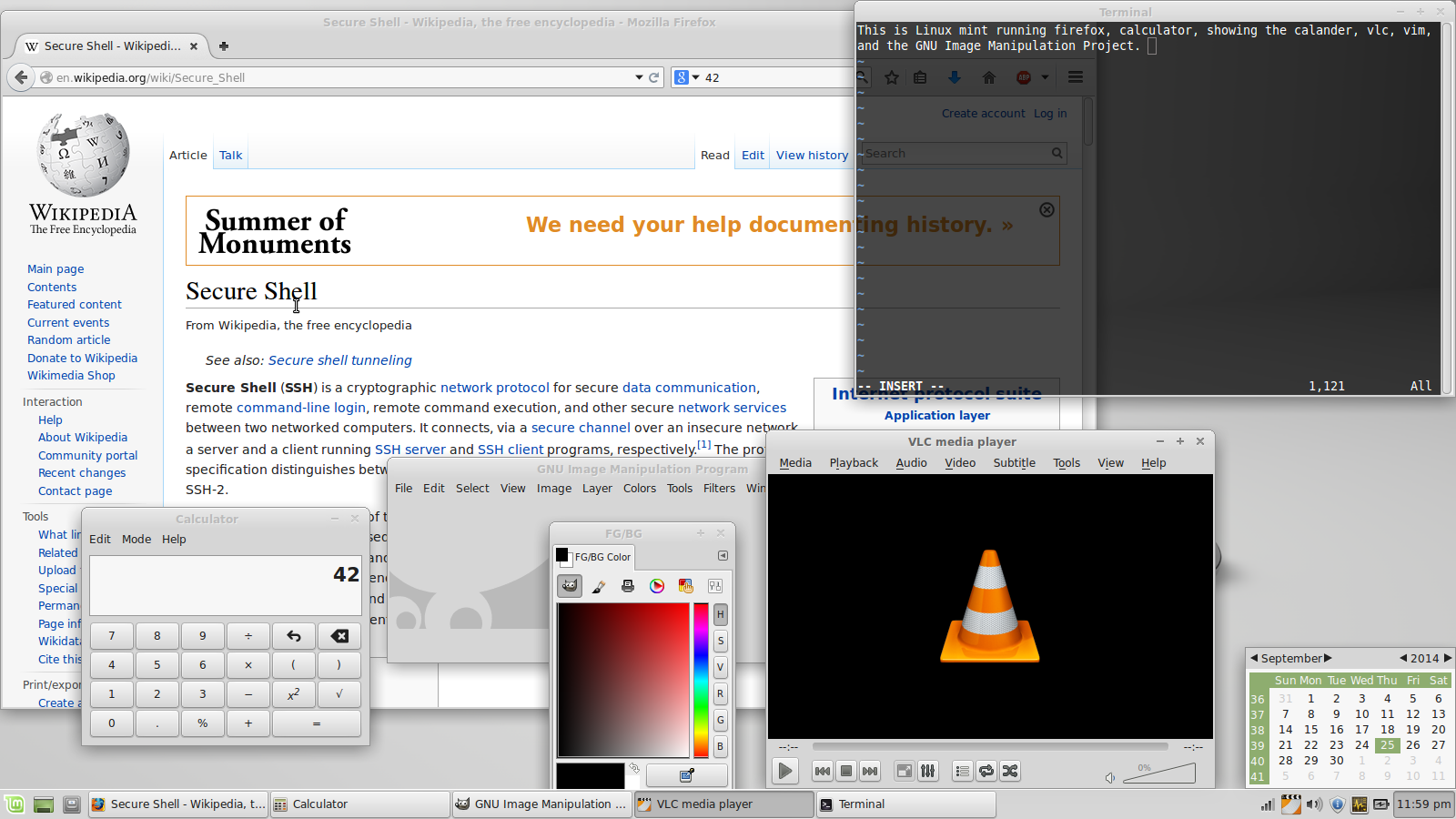 _A screenshot of Linux Mint running the Xfce desktop environment, Mozilla Firefox browsing Wikipedia powered by MediaWiki, a calculator program, the built in calendar, Vim, GIMP, and the VLC media player, all of which are open-source software._ It might surprising to most people, but software was once only open-source and free for use. Software was downloaded and edited to suit one's needs, up until 1979 when Brian Reid placed time bombs in his software to restrict access to it without a license. A programmer working at the MIT AI labs, Richard Stallman quit his job there and started the GNU project. The name “GNU” is a recursive acronym for “GNU's Not Unix.” Stallman announced the plan for the GNU operating system in September 1983 on several ARPANET mailing lists and USENET. In 1985, Stallman published the GNU Manifesto, which outlined his motivation for creating a free operating system called GNU . Stallman envisioned a better world and advocated on the social aspects of software and how Free Software can create community and social justice. In 1991, the same year the PGP was released, Linus Torvalds, a Finnish student, used the GNU's development tools to produce the free monolithic Linux kernel, an open source system that runs on most smartphones and tablet computers, and in any point in time has up to 10,000 people working on its code. In 2005, Linus Torvalds created a version control system called GIT for tracking changes in computer files and coordinating work on those files among groups of people. This lead the foreground for sites like GitHub, which are used for the public development and review of all software changes made to Bitcoin. 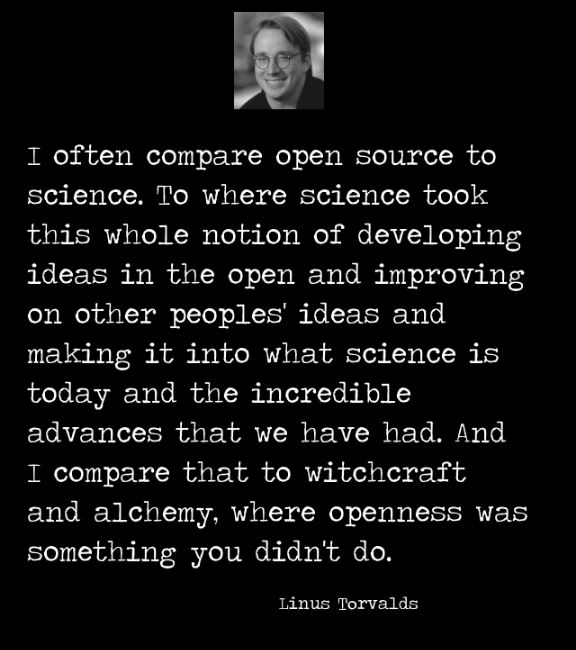 Open source software advocates evangelize that it is usually easier to obtain than software and as a result more people use it. Moreover, they can help build developer loyalty as developers feel empowered and have a sense of ownership of the end product. It practically lays the ground for a more flexible technology and quicker innovation and it is also said to be more reliable since it typically has thousands of independent programmers testing and fixing bugs constantly. Open source is not dependent on the company or author that originally created it. Even if the company fails, the code continues to exist and be developed by its users. To an extent open standards are accessible to everyone; thus, it solves the problem of incompatible formats that exist in proprietary software. Open source software allows flexibility since modular systems allow programmers to build custom interfaces, or add new abilities to it and it promote innovation, as open source programs are the collective product among a large number of different programmers. The mix of coding insights, perspectives, objectives, and personal goals speed up innovation, without additional commercial pressure that often degrades the quality of the software. Commercial pressures make traditional software developers focus on customers requests than to security requirements, since these features are often invisible to the customer. It is sometimes said that the open source development process may not be well defined and orchestrated and in some cases, the stages in the development process, such as system testing and documentation may be ignored. However this is only true for small projects. Larger, successful projects do define and enforce at least some rules as they need them to make the teamwork possible. In the most complex projects these rules may be as strict as reviewing even minor change by two independent developers at a time. 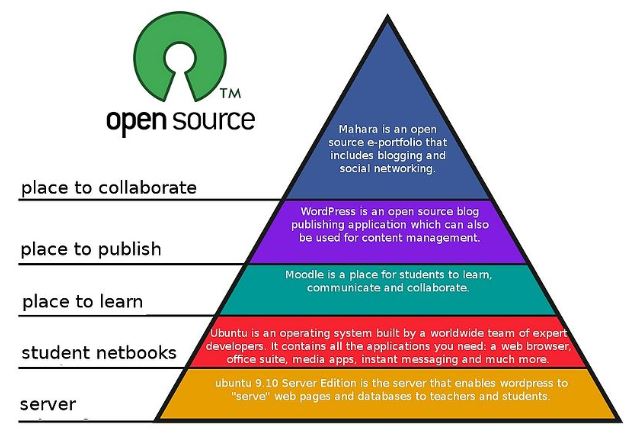 On the other hand, not all Open Source initiatives have been successful. Software experts and researchers who are not convinced by open source's ability to produce quality systems identify the unclear process, the late defect discovery and the lack of any empirical evidence as the most important problems around Open Source Software. Moreover, it is also difficult to design a commercially sound business model around the open source paradigm, as only technical requirements may be satisfied and not the ones of the market. In terms of security, open source may allow hackers to know about the weaknesses or loopholes of the software more easily than closed-source software. See you in the next article! I think that’s enough condensed knowledge until the next part. In the upcoming article we’ll look at Peer to Peer Sharing networks to understand their role and importance in Distributed Ledger Technologies. ## End of Part II Sources: https://blockonomi.com/cryptography-cypherpunks/ https://en.wikipedia.org/wiki/Richard_Stallman https://en.wikipedia.org/wiki/Brian_Reid_(computer_scientist) https://en.wikipedia.org/wiki/Time_bomb_(software) https://www.gnu.org/gnu/manifesto.en.html https://en.wikipedia.org/wiki/GNU https://en.wikipedia.org/wiki/Usenet https://en.wikipedia.org/wiki/Monolithic_kernel https://en.wikipedia.org/wiki/Linux_kernel https://en.wikipedia.org/wiki/Unix https://en.wikipedia.org/wiki/Linus_Torvalds https://en.wikipedia.org/wiki/GitHub http://hlwiki.slais.ubc.ca/index.php/Open_source_software https://www.gnu.org/gnu/thegnuproject.en.html |
| json metadata | {"tags":["bitcoin","crypto","blockchain","cryptography","oss"],"image":["https://cdn.steemitimages.com/DQmW6588btSr44DhUd3CAMjm1NantBwjVcGVXL1vV3cAePu/Desktop-Linux-Mint.png","https://cdn.steemitimages.com/DQmSUrTGc9JgLZUDkMjfe1a2WmhVNQYXchvYfR1PhzHUg7Y/Capture.JPG","https://cdn.steemitimages.com/DQmbjehYgfRHBguEMpqfACUVtSwyx1DtCmz7eqZ3RmHRa1K/Capture1.JPG"],"links":["https://www.linkedin.com/in/georgetakeprofitagathangelou/","https://steemit.com/cryptography/@universalcrypto/the-evolution-of-distributed-ledger-technologies-or-blockchain-part-1-of-4","https://blockonomi.com/cryptography-cypherpunks/","https://en.wikipedia.org/wiki/Richard_Stallman","https://en.wikipedia.org/wiki/Brian_Reid_","https://en.wikipedia.org/wiki/Time_bomb_","https://www.gnu.org/gnu/manifesto.en.html","https://en.wikipedia.org/wiki/GNU","https://en.wikipedia.org/wiki/Usenet","https://en.wikipedia.org/wiki/Monolithic_kernel","https://en.wikipedia.org/wiki/Linux_kernel","https://en.wikipedia.org/wiki/Unix","https://en.wikipedia.org/wiki/Linus_Torvalds","https://en.wikipedia.org/wiki/GitHub","http://hlwiki.slais.ubc.ca/index.php/Open_source_software","https://www.gnu.org/gnu/thegnuproject.en.html"],"app":"steemit/0.1","format":"markdown"} |
| Transaction Info | Block #25719585/Trx dfd654866f91ed3613cd872d4b2d6a9897777d03 |
View Raw JSON Data
{
"trx_id": "dfd654866f91ed3613cd872d4b2d6a9897777d03",
"block": 25719585,
"trx_in_block": 53,
"op_in_trx": 0,
"virtual_op": 0,
"timestamp": "2018-09-06T10:09:24",
"op": [
"comment",
{
"parent_author": "",
"parent_permlink": "bitcoin",
"author": "universalcrypto",
"permlink": "the-evolution-of-distributed-ledger-technologies-part-2",
"title": "The evolution of Distributed Ledger Technologies or Blockchain - Part 2 of 4",
"body": "*by [George Agathangelou](https://www.linkedin.com/in/georgetakeprofitagathangelou/)*\n\nIn our previous [article](https://steemit.com/cryptography/@universalcrypto/the-evolution-of-distributed-ledger-technologies-or-blockchain-part-1-of-4), we explored how cryptography evolved over the years to be a paramount part of what we call today Distributed Ledger Technologies or Blockchain. \n\nIn this article we will see how Open Source Software facilitated in the development of this new technology, which experts agree it has the potential to change the world around us.\n\n## Open Source Software\n#\n\nOpen-source software is a type of computer software whose source code is released under a license in which the copyright holder grants users the rights to study, change, and distribute the software to anyone and for any purpose. Open source software invite collaboration as it developed in a transparent and public manner.\n\n \n\n_A screenshot of Linux Mint running the Xfce desktop environment, Mozilla Firefox browsing Wikipedia powered by MediaWiki, a calculator program, the built in calendar, Vim, GIMP, and the VLC media player, all of which are open-source software._\n \nIt might surprising to most people, but software was once only open-source and free for use. Software was downloaded and edited to suit one's needs, up until 1979 when Brian Reid placed time bombs in his software to restrict access to it without a license. \n\nA programmer working at the MIT AI labs, Richard Stallman quit his job there and started the GNU project. The name “GNU” is a recursive acronym for “GNU's Not Unix.” Stallman announced the plan for the GNU operating system in September 1983 on several ARPANET mailing lists and USENET. In 1985, Stallman published the GNU Manifesto, which outlined his motivation for creating a free operating system called GNU . Stallman envisioned a better world and advocated on the social aspects of software and how Free Software can create community and social justice. \n\nIn 1991, the same year the PGP was released, Linus Torvalds, a Finnish student, used the GNU's development tools to produce the free monolithic Linux kernel, an open source system that runs on most smartphones and tablet computers, and in any point in time has up to 10,000 people working on its code. In 2005, Linus Torvalds created a version control system called GIT for tracking changes in computer files and coordinating work on those files among groups of people. This lead the foreground for sites like GitHub, which are used for the public development and review of all software changes made to Bitcoin. \n\n\n\nOpen source software advocates evangelize that it is usually easier to obtain than software and as a result more people use it. Moreover, they can help build developer loyalty as developers feel empowered and have a sense of ownership of the end product. It practically lays the ground for a more flexible technology and quicker innovation and it is also said to be more reliable since it typically has thousands of independent programmers testing and fixing bugs constantly. Open source is not dependent on the company or author that originally created it. Even if the company fails, the code continues to exist and be developed by its users. \n\nTo an extent open standards are accessible to everyone; thus, it solves the problem of incompatible formats that exist in proprietary software. Open source software allows flexibility since modular systems allow programmers to build custom interfaces, or add new abilities to it and it promote innovation, as open source programs are the collective product among a large number of different programmers. The mix of coding insights, perspectives, objectives, and personal goals speed up innovation, without additional commercial pressure that often degrades the quality of the software. Commercial pressures make traditional software developers focus on customers requests than to security requirements, since these features are often invisible to the customer. It is sometimes said that the open source development process may not be well defined and orchestrated and in some cases, the stages in the development process, such as system testing and documentation may be ignored. However this is only true for small projects. Larger, successful projects do define and enforce at least some rules as they need them to make the teamwork possible. In the most complex projects these rules may be as strict as reviewing even minor change by two independent developers at a time.\n \n\n\nOn the other hand, not all Open Source initiatives have been successful. Software experts and researchers who are not convinced by open source's ability to produce quality systems identify the unclear process, the late defect discovery and the lack of any empirical evidence as the most important problems around Open Source Software. Moreover, it is also difficult to design a commercially sound business model around the open source paradigm, as only technical requirements may be satisfied and not the ones of the market. In terms of security, open source may allow hackers to know about the weaknesses or loopholes of the software more easily than closed-source software. \n \nSee you in the next article!\n\nI think that’s enough condensed knowledge until the next part. In the upcoming article we’ll look at Peer to Peer Sharing networks to understand their role and importance in Distributed Ledger Technologies.\n \n## End of Part II\n\nSources:\nhttps://blockonomi.com/cryptography-cypherpunks/ \nhttps://en.wikipedia.org/wiki/Richard_Stallman\nhttps://en.wikipedia.org/wiki/Brian_Reid_(computer_scientist)\nhttps://en.wikipedia.org/wiki/Time_bomb_(software)\nhttps://www.gnu.org/gnu/manifesto.en.html\nhttps://en.wikipedia.org/wiki/GNU\nhttps://en.wikipedia.org/wiki/Usenet\nhttps://en.wikipedia.org/wiki/Monolithic_kernel\nhttps://en.wikipedia.org/wiki/Linux_kernel \nhttps://en.wikipedia.org/wiki/Unix\nhttps://en.wikipedia.org/wiki/Linus_Torvalds\nhttps://en.wikipedia.org/wiki/GitHub\nhttp://hlwiki.slais.ubc.ca/index.php/Open_source_software\nhttps://www.gnu.org/gnu/thegnuproject.en.html",
"json_metadata": "{\"tags\":[\"bitcoin\",\"crypto\",\"blockchain\",\"cryptography\",\"oss\"],\"image\":[\"https://cdn.steemitimages.com/DQmW6588btSr44DhUd3CAMjm1NantBwjVcGVXL1vV3cAePu/Desktop-Linux-Mint.png\",\"https://cdn.steemitimages.com/DQmSUrTGc9JgLZUDkMjfe1a2WmhVNQYXchvYfR1PhzHUg7Y/Capture.JPG\",\"https://cdn.steemitimages.com/DQmbjehYgfRHBguEMpqfACUVtSwyx1DtCmz7eqZ3RmHRa1K/Capture1.JPG\"],\"links\":[\"https://www.linkedin.com/in/georgetakeprofitagathangelou/\",\"https://steemit.com/cryptography/@universalcrypto/the-evolution-of-distributed-ledger-technologies-or-blockchain-part-1-of-4\",\"https://blockonomi.com/cryptography-cypherpunks/\",\"https://en.wikipedia.org/wiki/Richard_Stallman\",\"https://en.wikipedia.org/wiki/Brian_Reid_\",\"https://en.wikipedia.org/wiki/Time_bomb_\",\"https://www.gnu.org/gnu/manifesto.en.html\",\"https://en.wikipedia.org/wiki/GNU\",\"https://en.wikipedia.org/wiki/Usenet\",\"https://en.wikipedia.org/wiki/Monolithic_kernel\",\"https://en.wikipedia.org/wiki/Linux_kernel\",\"https://en.wikipedia.org/wiki/Unix\",\"https://en.wikipedia.org/wiki/Linus_Torvalds\",\"https://en.wikipedia.org/wiki/GitHub\",\"http://hlwiki.slais.ubc.ca/index.php/Open_source_software\",\"https://www.gnu.org/gnu/thegnuproject.en.html\"],\"app\":\"steemit/0.1\",\"format\":\"markdown\"}"
}
]
}2018/09/06 10:08:51
2018/09/06 10:08:51
| parent author | |
| parent permlink | bitcoin |
| author | universalcrypto |
| permlink | the-evolution-of-distributed-ledger-technologies-or-blockchain-part-3-of-4 |
| title | The evolution of Distributed Ledger Technologies or Blockchain - Part 3 of 4 |
| body | *by [George Agathangelou](https://www.linkedin.com/in/georgetakeprofitagathangelou/)* In our previous articles we travelled the journey of early cryptographers ([Part 1](https://steemit.com/cryptography/@universalcrypto/the-evolution-of-distributed-ledger-technologies-or-blockchain-part-1-of-4)) and introduce ourselves to Open Source Software ([Part 2](https://steemit.com/bitcoin/@universalcrypto/the-evolution-of-distributed-ledger-technologies-part-2)) and their significance in developing the world’s first cryptocurrency, Bitcoin. In this article we will look deeper into P2P sharing networks and how they enable us to make resilient blockchains that not even governments are able to stop. ## Peer to Peer Sharing Networks # Peer to peer sharing is a technological breakthrough that It allows for the distribution and sharing of information, using a P2P software program for searches for other connected computers on the network, to locate the desired information. In 1999, the first P2P Sharing network was Napster, and consisted of a file sharing application and a set of central servers. The central servers indexed the users and their shared content and and allowed for searches of available copies of that file and presented them to the user. The files would be transferred directly between the two private computers. Because this process occurred on a central server, however, Napster was held liable for copyright infringement and shut down in July 2001. 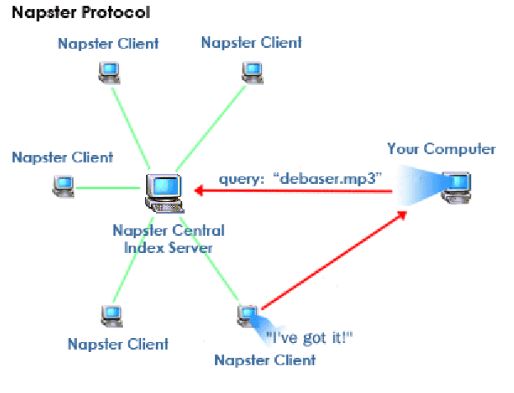 In the same year, a programmer called Bram Cohen, released a program called Bittorrent, a communication protocol for peer-to-peer file sharing (P2P) which is used to distribute data and electronic files over the Internet. To send or receive files, a person uses a BitTorrent client on their Internet-connected computer. A BitTorrent client is a computer program that implements the BitTorrent protocol. BitTorrent trackers provide a list of files available for transfer, and allow the client to find peer users known as seeds who may transfer the files. In principle, it is a file sharing protocol, relying on central servers called trackers to coordinate users. However, it does not form a network in the traditional sense. Instead new, separate networks of coordinating users are created for every set of files, called a torrent. 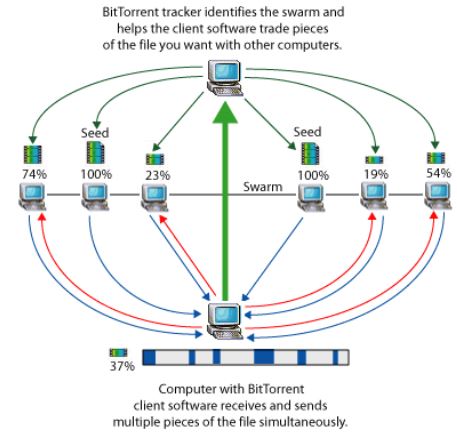 P2P Sharing quickly become the rival of the entire movie and music industry as it became the one stop shop to illegally download any movie, series or song. Despite numerous lawsuits and raids against websites, like The Pirate Bay, the gigantic entertainment industry has still not been able to stop this technology. The network became truly resilient to any form of censorship or manipulation as each user was part of the network instead of having a centralised model with all information stored on one central server. The same concept is used in Blockchain and Bitcoin, in which anyone who holds a copy of the ledger history and shares it with the rest of the network. To shut such a system down, you will need to shut down all the nodes at the same time, which is nearly impossible. 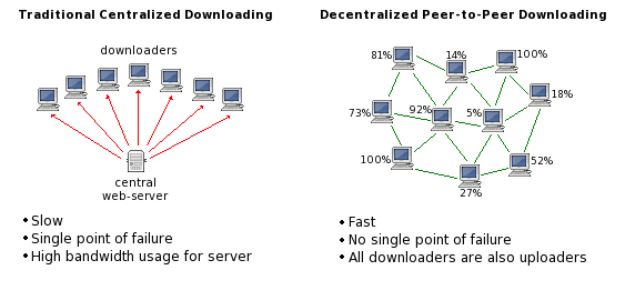 BitTorrent is a particularly interesting case as it has a built-in incentive mechanism. The more files peers seed the faster their downloads are, while peers that seed fewer or no files will find that the frequency of file segments they can download from another peer are artificially limited, so essentially they are rewarded to behave honestly and contribute to the health and value (content) of this system. There is a downside to this though. This incentive mechanism leaves new peers with a problem, in the case they have nothing to seed, so their downloads may be slower. Another interesting incentive that also includes the concept of randomness, is the use of 'optimistic unchoking', in which a random peer is selected for unthrottled downloads, on the assumption that it may pay off. Overall, the BitTorrent network consists of volunteers and would work better with monetary incentives. For example, a peer without file segments wanting to download faster could potentially pay a seeding peer to unchoke it, increasing its download performance, and using the blockchain to track it all. Bram Cohen, the founder of BitTorrent, left BitTorrent, Inc. in a day to day capacity to co-found Chia.Network in the fall of 2017. The idea behind Chia is to utilize the already widely distributed sunk cost of unutilized storage space with the combination of a proof of space and proof of time protocol as a greener solution than Bitcoin. We recently seen a trend of increasing P2P decentralized exchanges being built or being operated and maintained exclusively from software, such as IDEX, OpenLedger, district0x, Bisq, Airswap, Raiden and many more. Decentralized exchanges, run on top of the Ethereum network use smart contracts or a combination of smart contracts and payment channels to facilitate the trade of crypto assets. There is no middleman or single trusted entity involved and the trust is provided to the immutable and decentralized aspect of a smart contract. They often provide fully decentralized trades that do not require any name, email ID or verification. Moreover they often use Tor to provide a truly anonymous peer-to-peer network, and don’t hold fiat or bitcoins on their servers or in their account. Every aspect of this new generation of exchanges is decentralized from placing the order, to matching the order, to executing it. These Peer to Peer exchanges are practically invulnerable to government interference, because they don’t have any central point of authority which could be coerced. On the other hand, since it is a relatively new kind of service, P2P exchanges are still less intuitive to use, have lower trading volumes because very few people actually do use them currently, and trade time can take much longer to be executed. Moreover, it is very unlikely that any professional traders would ever use it as they require fast settlement to make timely deals. In their current state the advantages they offer a resilience, privacy, security and freedom of payments. Perhaps the solution to this problem would be to have open order books from all the DEXs and doing intra-DEX transactions while also allowing a centralized exchange to use this open order books for their own matching. Exchanges is only one application of P2P decentralized network of trust. The new generation of dApps, decentralized applications aim to solve real world problems in eCommerce, IoT, AI, FinTech, Identity Verification, Media Copywriting, Content Distribution, Bookings, and Gaming industry among others. 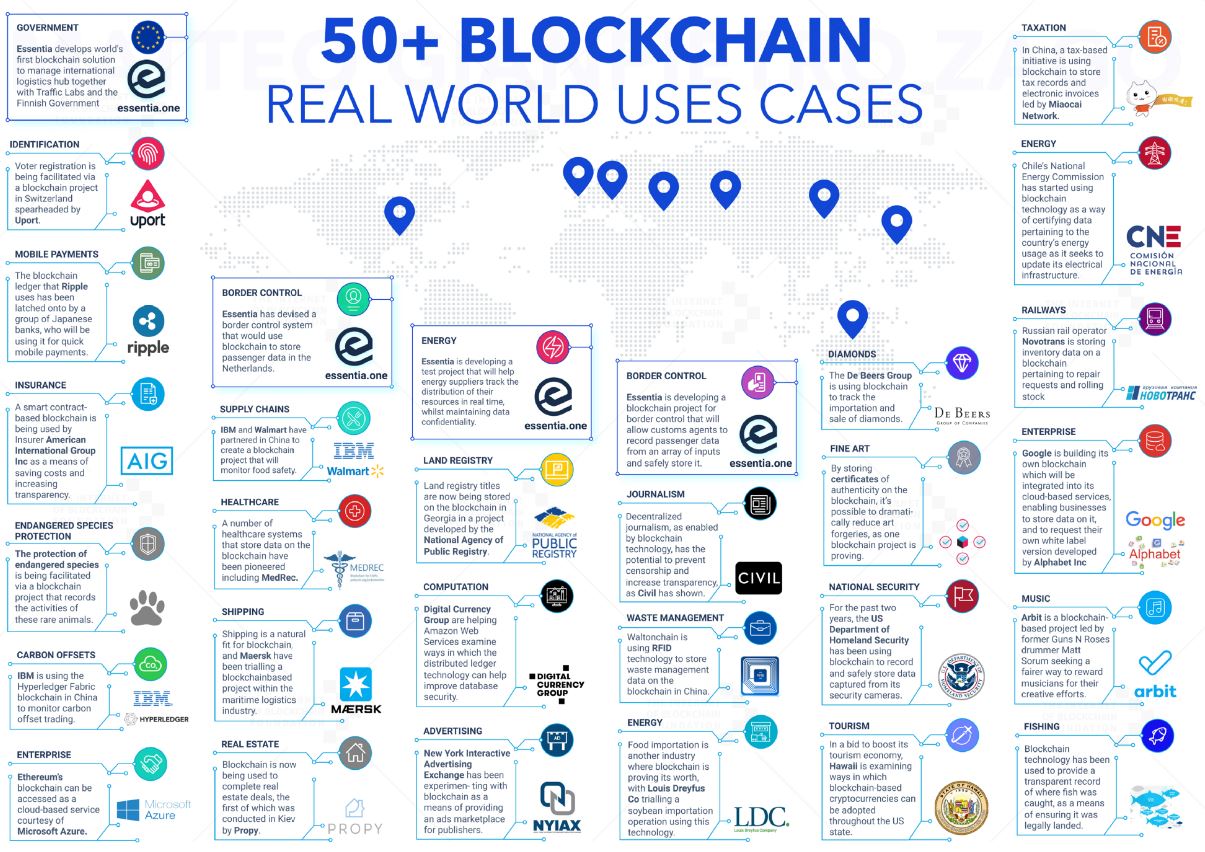 See you in the next article! At this point we will take a break to digest the information. On our next article, we will be looking deeper into how these protocols, system and incentives all work together to provide the foundation on which new decentralized digital economies are created, and the formation of a new chapter in Economics, called Crypto-Economics. ## End of Part III Sources: https://www.researchgate.net/figure/The-Napster-protocol_fig6_242320308 https://chia.net/ http://www.bittorrent.org/bittorrentecon.pdf https://en.wikipedia.org/wiki/Bram_Cohen http://p2pfoundation.ning.com/forum/topics/project-kleinrock-making-the https://view.publitas.com/chia-network/chia-1/page/2 https://coinsutra.com/best-decentralized-exchanges-dex/ https://idex.market/eth/aura https://openledger.io/welcome https://wallet.crypto-bridge.org https://bisq.network/ https://cointelegraph.com/explained/p2p-cryptocurrency-exchanges-explained https://medium.com/herdius/decentralized-vs-centralized-exchanges-bdcda191f767 https://trinity.tech/ https://neonexchange.org/ https://www.adex.network/ https://www.zeepin.io/ https://www.apexnetwork.io/ https://medium.com/@matteozago/50-examples-of-how-blockchains-are-taking-over-the-world-4276bf488a4b |
| json metadata | {"tags":["bitcoin","crypto","blockchain","p2p","dex"],"image":["https://cdn.steemitimages.com/DQmNgVA6QvWpjgPmcXYoSteidHRp42EJfCZa9ZNTaV2qxRK/napster.JPG","https://cdn.steemitimages.com/DQmVjKgXmv1MP4NKR4vtGocCr1vwySj256KzQqvwC69rXtK/bittorrent.JPG","https://cdn.steemitimages.com/DQmSsCvE2vcAUyWJy1yYwu1XToEn1VJ968yns8feAmiLg8N/decentra.JPG","https://cdn.steemitimages.com/DQmYtwuPwR3QQghSndo86svNP2NXscMk2apTJrrpB23CkbG/real%20world%20case.JPG"],"links":["https://www.linkedin.com/in/georgetakeprofitagathangelou/","https://steemit.com/cryptography/@universalcrypto/the-evolution-of-distributed-ledger-technologies-or-blockchain-part-1-of-4","https://steemit.com/bitcoin/@universalcrypto/the-evolution-of-distributed-ledger-technologies-part-2","https://www.researchgate.net/figure/The-Napster-protocol_fig6_242320308","https://chia.net/","http://www.bittorrent.org/bittorrentecon.pdf","https://en.wikipedia.org/wiki/Bram_Cohen","http://p2pfoundation.ning.com/forum/topics/project-kleinrock-making-the","https://view.publitas.com/chia-network/chia-1/page/2","https://coinsutra.com/best-decentralized-exchanges-dex/","https://idex.market/eth/aura","https://openledger.io/welcome","https://wallet.crypto-bridge.org","https://bisq.network/","https://cointelegraph.com/explained/p2p-cryptocurrency-exchanges-explained","https://medium.com/herdius/decentralized-vs-centralized-exchanges-bdcda191f767","https://trinity.tech/","https://neonexchange.org/","https://www.adex.network/","https://www.zeepin.io/","https://www.apexnetwork.io/","https://medium.com/@matteozago/50-examples-of-how-blockchains-are-taking-over-the-world-4276bf488a4b"],"app":"steemit/0.1","format":"markdown"} |
| Transaction Info | Block #25719574/Trx 604c87efe2f7a8addacc0f67eba8fdc17eaf0bbc |
View Raw JSON Data
{
"trx_id": "604c87efe2f7a8addacc0f67eba8fdc17eaf0bbc",
"block": 25719574,
"trx_in_block": 7,
"op_in_trx": 0,
"virtual_op": 0,
"timestamp": "2018-09-06T10:08:51",
"op": [
"comment",
{
"parent_author": "",
"parent_permlink": "bitcoin",
"author": "universalcrypto",
"permlink": "the-evolution-of-distributed-ledger-technologies-or-blockchain-part-3-of-4",
"title": "The evolution of Distributed Ledger Technologies or Blockchain - Part 3 of 4",
"body": "*by [George Agathangelou](https://www.linkedin.com/in/georgetakeprofitagathangelou/)*\n\n\nIn our previous articles we travelled the journey of early cryptographers ([Part 1](https://steemit.com/cryptography/@universalcrypto/the-evolution-of-distributed-ledger-technologies-or-blockchain-part-1-of-4)) and introduce ourselves to Open Source Software ([Part 2](https://steemit.com/bitcoin/@universalcrypto/the-evolution-of-distributed-ledger-technologies-part-2)) and their significance in developing the world’s first cryptocurrency, Bitcoin. In this article we will look deeper into P2P sharing networks and how they enable us to make resilient blockchains that not even governments are able to stop.\n\n## Peer to Peer Sharing Networks\n#\n\nPeer to peer sharing is a technological breakthrough that It allows for the distribution and sharing of information, using a P2P software program for searches for other connected computers on the network, to locate the desired information. In 1999, the first P2P Sharing network was Napster, and consisted of a file sharing application and a set of central servers. The central servers indexed the users and their shared content and and allowed for searches of available copies of that file and presented them to the user. The files would be transferred directly between the two private computers. Because this process occurred on a central server, however, Napster was held liable for copyright infringement and shut down in July 2001. \n\n\n\nIn the same year, a programmer called Bram Cohen, released a program called Bittorrent, a communication protocol for peer-to-peer file sharing (P2P) which is used to distribute data and electronic files over the Internet. To send or receive files, a person uses a BitTorrent client on their Internet-connected computer. A BitTorrent client is a computer program that implements the BitTorrent protocol. BitTorrent trackers provide a list of files available for transfer, and allow the client to find peer users known as seeds who may transfer the files. In principle, it is a file sharing protocol, relying on central servers called trackers to coordinate users. However, it does not form a network in the traditional sense. Instead new, separate networks of coordinating users are created for every set of files, called a torrent.\n\n\n\nP2P Sharing quickly become the rival of the entire movie and music industry as it became the one stop shop to illegally download any movie, series or song. Despite numerous lawsuits and raids against websites, like The Pirate Bay, the gigantic entertainment industry has still not been able to stop this technology. The network became truly resilient to any form of censorship or manipulation as each user was part of the network instead of having a centralised model with all information stored on one central server. The same concept is used in Blockchain and Bitcoin, in which anyone who holds a copy of the ledger history and shares it with the rest of the network. To shut such a system down, you will need to shut down all the nodes at the same time, which is nearly impossible. \n\n\n\nBitTorrent is a particularly interesting case as it has a built-in incentive mechanism. The more files peers seed the faster their downloads are, while peers that seed fewer or no files will find that the frequency of file segments they can download from another peer are artificially limited, so essentially they are rewarded to behave honestly and contribute to the health and value (content) of this system. There is a downside to this though. This incentive mechanism leaves new peers with a problem, in the case they have nothing to seed, so their downloads may be slower. Another interesting incentive that also includes the concept of randomness, is the use of 'optimistic unchoking', in which a random peer is selected for unthrottled downloads, on the assumption that it may pay off. Overall, the BitTorrent network consists of volunteers and would work better with monetary incentives. For example, a peer without file segments wanting to download faster could potentially pay a seeding peer to unchoke it, increasing its download performance, and using the blockchain to track it all. \n\nBram Cohen, the founder of BitTorrent, left BitTorrent, Inc. in a day to day capacity to co-found Chia.Network in the fall of 2017. The idea behind Chia is to utilize the already widely distributed sunk cost of unutilized storage space with the combination of a proof of space and proof of time protocol as a greener solution than Bitcoin.\n\nWe recently seen a trend of increasing P2P decentralized exchanges being built or being operated and maintained exclusively from software, such as IDEX, OpenLedger, district0x, Bisq, Airswap, Raiden and many more. Decentralized exchanges, run on top of the Ethereum network use smart contracts or a combination of smart contracts and payment channels to facilitate the trade of crypto assets. There is no middleman or single trusted entity involved and the trust is provided to the immutable and decentralized aspect of a smart contract. They often provide fully decentralized trades that do not require any name, email ID or verification. Moreover they often use Tor to provide a truly anonymous peer-to-peer network, and don’t hold fiat or bitcoins on their servers or in their account. Every aspect of this new generation of exchanges is decentralized from placing the order, to matching the order, to executing it. These Peer to Peer exchanges are practically invulnerable to government interference, because they don’t have any central point of authority which could be coerced. \n\nOn the other hand, since it is a relatively new kind of service, P2P exchanges are still less intuitive to use, have lower trading volumes because very few people actually do use them currently, and trade time can take much longer to be executed. Moreover, it is very unlikely that any professional traders would ever use it as they require fast settlement to make timely deals. In their current state the advantages they offer a resilience, privacy, security and freedom of payments. Perhaps the solution to this problem would be to have open order books from all the DEXs and doing intra-DEX transactions while also allowing a centralized exchange to use this open order books for their own matching.\n\nExchanges is only one application of P2P decentralized network of trust. The new generation of dApps, decentralized applications aim to solve real world problems in eCommerce, IoT, AI, FinTech, Identity Verification, Media Copywriting, Content Distribution, Bookings, and Gaming industry among others.\n\n\n\nSee you in the next article!\n\nAt this point we will take a break to digest the information. On our next article, we will be looking deeper into how these protocols, system and incentives all work together to provide the foundation on which new decentralized digital economies are created, and the formation of a new chapter in Economics, called Crypto-Economics.\n\n## End of Part III\n\nSources:\nhttps://www.researchgate.net/figure/The-Napster-protocol_fig6_242320308\nhttps://chia.net/\nhttp://www.bittorrent.org/bittorrentecon.pdf\nhttps://en.wikipedia.org/wiki/Bram_Cohen\nhttp://p2pfoundation.ning.com/forum/topics/project-kleinrock-making-the\nhttps://view.publitas.com/chia-network/chia-1/page/2\nhttps://coinsutra.com/best-decentralized-exchanges-dex/\nhttps://idex.market/eth/aura\nhttps://openledger.io/welcome\nhttps://wallet.crypto-bridge.org\nhttps://bisq.network/\nhttps://cointelegraph.com/explained/p2p-cryptocurrency-exchanges-explained\nhttps://medium.com/herdius/decentralized-vs-centralized-exchanges-bdcda191f767\nhttps://trinity.tech/\nhttps://neonexchange.org/\nhttps://www.adex.network/\nhttps://www.zeepin.io/\nhttps://www.apexnetwork.io/\nhttps://medium.com/@matteozago/50-examples-of-how-blockchains-are-taking-over-the-world-4276bf488a4b",
"json_metadata": "{\"tags\":[\"bitcoin\",\"crypto\",\"blockchain\",\"p2p\",\"dex\"],\"image\":[\"https://cdn.steemitimages.com/DQmNgVA6QvWpjgPmcXYoSteidHRp42EJfCZa9ZNTaV2qxRK/napster.JPG\",\"https://cdn.steemitimages.com/DQmVjKgXmv1MP4NKR4vtGocCr1vwySj256KzQqvwC69rXtK/bittorrent.JPG\",\"https://cdn.steemitimages.com/DQmSsCvE2vcAUyWJy1yYwu1XToEn1VJ968yns8feAmiLg8N/decentra.JPG\",\"https://cdn.steemitimages.com/DQmYtwuPwR3QQghSndo86svNP2NXscMk2apTJrrpB23CkbG/real%20world%20case.JPG\"],\"links\":[\"https://www.linkedin.com/in/georgetakeprofitagathangelou/\",\"https://steemit.com/cryptography/@universalcrypto/the-evolution-of-distributed-ledger-technologies-or-blockchain-part-1-of-4\",\"https://steemit.com/bitcoin/@universalcrypto/the-evolution-of-distributed-ledger-technologies-part-2\",\"https://www.researchgate.net/figure/The-Napster-protocol_fig6_242320308\",\"https://chia.net/\",\"http://www.bittorrent.org/bittorrentecon.pdf\",\"https://en.wikipedia.org/wiki/Bram_Cohen\",\"http://p2pfoundation.ning.com/forum/topics/project-kleinrock-making-the\",\"https://view.publitas.com/chia-network/chia-1/page/2\",\"https://coinsutra.com/best-decentralized-exchanges-dex/\",\"https://idex.market/eth/aura\",\"https://openledger.io/welcome\",\"https://wallet.crypto-bridge.org\",\"https://bisq.network/\",\"https://cointelegraph.com/explained/p2p-cryptocurrency-exchanges-explained\",\"https://medium.com/herdius/decentralized-vs-centralized-exchanges-bdcda191f767\",\"https://trinity.tech/\",\"https://neonexchange.org/\",\"https://www.adex.network/\",\"https://www.zeepin.io/\",\"https://www.apexnetwork.io/\",\"https://medium.com/@matteozago/50-examples-of-how-blockchains-are-taking-over-the-world-4276bf488a4b\"],\"app\":\"steemit/0.1\",\"format\":\"markdown\"}"
}
]
}universalcryptopublished a new post: the-evolution-of-distributed-ledger-technologies-part-22018/09/06 09:53:24
universalcryptopublished a new post: the-evolution-of-distributed-ledger-technologies-part-2
2018/09/06 09:53:24
| parent author | |
| parent permlink | bitcoin |
| author | universalcrypto |
| permlink | the-evolution-of-distributed-ledger-technologies-part-2 |
| title | The evolution of Distributed Ledger Technologies or Blockchain - Part 2 of 4 |
| body | *by [George Agathangelou](https://www.linkedin.com/in/georgetakeprofitagathangelou/)* In our previous [article](https://steemit.com/cryptography/@universalcrypto/the-evolution-of-distributed-ledger-technologies-or-blockchain-part-1-of-4), we explored how cryptography evolved over the years to be a paramount part of what we call today Distributed Ledger Technologies or Blockchain. In this article we will see how Open Source Software facilitated in the development of this new technology, which experts agree it has the potential to change the world around us. ## Open Source Software # Open-source software is a type of computer software whose source code is released under a license in which the copyright holder grants users the rights to study, change, and distribute the software to anyone and for any purpose. Open source software invite collaboration as it developed in a transparent and public manner.  _A screenshot of Linux Mint running the Xfce desktop environment, Mozilla Firefox browsing Wikipedia powered by MediaWiki, a calculator program, the built in calendar, Vim, GIMP, and the VLC media player, all of which are open-source software._ It might surprising to most people, but software was once only open-source and free for use. Software was downloaded and edited to suit one's needs, up until 1979 when Brian Reid placed time bombs in his software to restrict access to it without a license. A programmer working at the MIT AI labs, Richard Stallman quit his job there and started the GNU project. The name “GNU” is a recursive acronym for “GNU's Not Unix.” Stallman announced the plan for the GNU operating system in September 1983 on several ARPANET mailing lists and USENET. In 1985, Stallman published the GNU Manifesto, which outlined his motivation for creating a free operating system called GNU . Stallman envisioned a better world and advocated on the social aspects of software and how Free Software can create community and social justice. In 1991, the same year the PGP was released, Linus Torvalds, a Finnish student, used the GNU's development tools to produce the free monolithic Linux kernel, an open source system that runs on most smartphones and tablet computers, and in any point in time has up to 10,000 people working on its code. In 2005, Linus Torvalds created a version control system called GIT for tracking changes in computer files and coordinating work on those files among groups of people. This lead the foreground for sites like GitHub, which are used for the public development and review of all software changes made to Bitcoin.  Open source software advocates evangelize that it is usually easier to obtain than software and as a result more people use it. Moreover, they can help build developer loyalty as developers feel empowered and have a sense of ownership of the end product. It practically lays the ground for a more flexible technology and quicker innovation and it is also said to be more reliable since it typically has thousands of independent programmers testing and fixing bugs constantly. Open source is not dependent on the company or author that originally created it. Even if the company fails, the code continues to exist and be developed by its users. To an extent open standards are accessible to everyone; thus, it solves the problem of incompatible formats that exist in proprietary software. Open source software allows flexibility since modular systems allow programmers to build custom interfaces, or add new abilities to it and it promote innovation, as open source programs are the collective product among a large number of different programmers. The mix of coding insights, perspectives, objectives, and personal goals speed up innovation, without additional commercial pressure that often degrades the quality of the software. Commercial pressures make traditional software developers focus on customers requests than to security requirements, since these features are often invisible to the customer. It is sometimes said that the open source development process may not be well defined and orchestrated and in some cases, the stages in the development process, such as system testing and documentation may be ignored. However this is only true for small projects. Larger, successful projects do define and enforce at least some rules as they need them to make the teamwork possible. In the most complex projects these rules may be as strict as reviewing even minor change by two independent developers at a time.  On the other hand, not all Open Source initiatives have been successful. Software experts and researchers who are not convinced by open source's ability to produce quality systems identify the unclear process, the late defect discovery and the lack of any empirical evidence as the most important problems around Open Source Software. Moreover, it is also difficult to design a commercially sound business model around the open source paradigm, as only technical requirements may be satisfied and not the ones of the market. In terms of security, open source may allow hackers to know about the weaknesses or loopholes of the software more easily than closed-source software. See you in the next article! I think that’s enough condensed knowledge until the next part. In the upcoming article we’ll look at Peer to Peer Sharing networks to understand their role and importance in Distributed Ledger Technologies. ## End of Part II Sources: https://blockonomi.com/cryptography-cypherpunks/ https://en.wikipedia.org/wiki/Richard_Stallman https://en.wikipedia.org/wiki/Brian_Reid_(computer_scientist) https://en.wikipedia.org/wiki/Time_bomb_(software) https://www.gnu.org/gnu/manifesto.en.html https://en.wikipedia.org/wiki/GNU https://en.wikipedia.org/wiki/Usenet https://en.wikipedia.org/wiki/Monolithic_kernel https://en.wikipedia.org/wiki/Linux_kernel https://en.wikipedia.org/wiki/Unix https://en.wikipedia.org/wiki/Linus_Torvalds https://en.wikipedia.org/wiki/GitHub http://hlwiki.slais.ubc.ca/index.php/Open_source_software https://www.gnu.org/gnu/thegnuproject.en.html |
| json metadata | {"tags":["bitcoin","crypto","blockchain","cryptography","oss"],"image":["https://cdn.steemitimages.com/DQmW6588btSr44DhUd3CAMjm1NantBwjVcGVXL1vV3cAePu/Desktop-Linux-Mint.png","https://cdn.steemitimages.com/DQmSUrTGc9JgLZUDkMjfe1a2WmhVNQYXchvYfR1PhzHUg7Y/Capture.JPG","https://cdn.steemitimages.com/DQmbjehYgfRHBguEMpqfACUVtSwyx1DtCmz7eqZ3RmHRa1K/Capture1.JPG"],"links":["https://www.linkedin.com/in/georgetakeprofitagathangelou/","https://steemit.com/cryptography/@universalcrypto/the-evolution-of-distributed-ledger-technologies-or-blockchain-part-1-of-4","https://blockonomi.com/cryptography-cypherpunks/","https://en.wikipedia.org/wiki/Richard_Stallman","https://en.wikipedia.org/wiki/Brian_Reid_","https://en.wikipedia.org/wiki/Time_bomb_","https://www.gnu.org/gnu/manifesto.en.html","https://en.wikipedia.org/wiki/GNU","https://en.wikipedia.org/wiki/Usenet","https://en.wikipedia.org/wiki/Monolithic_kernel","https://en.wikipedia.org/wiki/Linux_kernel","https://en.wikipedia.org/wiki/Unix","https://en.wikipedia.org/wiki/Linus_Torvalds","https://en.wikipedia.org/wiki/GitHub","http://hlwiki.slais.ubc.ca/index.php/Open_source_software","https://www.gnu.org/gnu/thegnuproject.en.html"],"app":"steemit/0.1","format":"markdown"} |
| Transaction Info | Block #25719265/Trx c562e65565a0b5154f787dd5c924881408d6f4a0 |
View Raw JSON Data
{
"trx_id": "c562e65565a0b5154f787dd5c924881408d6f4a0",
"block": 25719265,
"trx_in_block": 25,
"op_in_trx": 0,
"virtual_op": 0,
"timestamp": "2018-09-06T09:53:24",
"op": [
"comment",
{
"parent_author": "",
"parent_permlink": "bitcoin",
"author": "universalcrypto",
"permlink": "the-evolution-of-distributed-ledger-technologies-part-2",
"title": "The evolution of Distributed Ledger Technologies or Blockchain - Part 2 of 4",
"body": "*by [George Agathangelou](https://www.linkedin.com/in/georgetakeprofitagathangelou/)*\n\nIn our previous [article](https://steemit.com/cryptography/@universalcrypto/the-evolution-of-distributed-ledger-technologies-or-blockchain-part-1-of-4), we explored how cryptography evolved over the years to be a paramount part of what we call today Distributed Ledger Technologies or Blockchain. \n\nIn this article we will see how Open Source Software facilitated in the development of this new technology, which experts agree it has the potential to change the world around us.\n\n## Open Source Software\n#\n\nOpen-source software is a type of computer software whose source code is released under a license in which the copyright holder grants users the rights to study, change, and distribute the software to anyone and for any purpose. Open source software invite collaboration as it developed in a transparent and public manner.\n\n \n\n_A screenshot of Linux Mint running the Xfce desktop environment, Mozilla Firefox browsing Wikipedia powered by MediaWiki, a calculator program, the built in calendar, Vim, GIMP, and the VLC media player, all of which are open-source software._\n \nIt might surprising to most people, but software was once only open-source and free for use. Software was downloaded and edited to suit one's needs, up until 1979 when Brian Reid placed time bombs in his software to restrict access to it without a license. \n\nA programmer working at the MIT AI labs, Richard Stallman quit his job there and started the GNU project. The name “GNU” is a recursive acronym for “GNU's Not Unix.” Stallman announced the plan for the GNU operating system in September 1983 on several ARPANET mailing lists and USENET. In 1985, Stallman published the GNU Manifesto, which outlined his motivation for creating a free operating system called GNU . Stallman envisioned a better world and advocated on the social aspects of software and how Free Software can create community and social justice. \n\nIn 1991, the same year the PGP was released, Linus Torvalds, a Finnish student, used the GNU's development tools to produce the free monolithic Linux kernel, an open source system that runs on most smartphones and tablet computers, and in any point in time has up to 10,000 people working on its code. In 2005, Linus Torvalds created a version control system called GIT for tracking changes in computer files and coordinating work on those files among groups of people. This lead the foreground for sites like GitHub, which are used for the public development and review of all software changes made to Bitcoin. \n\n\n\nOpen source software advocates evangelize that it is usually easier to obtain than software and as a result more people use it. Moreover, they can help build developer loyalty as developers feel empowered and have a sense of ownership of the end product. It practically lays the ground for a more flexible technology and quicker innovation and it is also said to be more reliable since it typically has thousands of independent programmers testing and fixing bugs constantly. Open source is not dependent on the company or author that originally created it. Even if the company fails, the code continues to exist and be developed by its users. \n\nTo an extent open standards are accessible to everyone; thus, it solves the problem of incompatible formats that exist in proprietary software. Open source software allows flexibility since modular systems allow programmers to build custom interfaces, or add new abilities to it and it promote innovation, as open source programs are the collective product among a large number of different programmers. The mix of coding insights, perspectives, objectives, and personal goals speed up innovation, without additional commercial pressure that often degrades the quality of the software. Commercial pressures make traditional software developers focus on customers requests than to security requirements, since these features are often invisible to the customer. It is sometimes said that the open source development process may not be well defined and orchestrated and in some cases, the stages in the development process, such as system testing and documentation may be ignored. However this is only true for small projects. Larger, successful projects do define and enforce at least some rules as they need them to make the teamwork possible. In the most complex projects these rules may be as strict as reviewing even minor change by two independent developers at a time.\n \n\n\nOn the other hand, not all Open Source initiatives have been successful. Software experts and researchers who are not convinced by open source's ability to produce quality systems identify the unclear process, the late defect discovery and the lack of any empirical evidence as the most important problems around Open Source Software. Moreover, it is also difficult to design a commercially sound business model around the open source paradigm, as only technical requirements may be satisfied and not the ones of the market. In terms of security, open source may allow hackers to know about the weaknesses or loopholes of the software more easily than closed-source software. \n \nSee you in the next article!\n\nI think that’s enough condensed knowledge until the next part. In the upcoming article we’ll look at Peer to Peer Sharing networks to understand their role and importance in Distributed Ledger Technologies.\n \n## End of Part II\n\nSources:\nhttps://blockonomi.com/cryptography-cypherpunks/ \nhttps://en.wikipedia.org/wiki/Richard_Stallman\nhttps://en.wikipedia.org/wiki/Brian_Reid_(computer_scientist)\nhttps://en.wikipedia.org/wiki/Time_bomb_(software)\nhttps://www.gnu.org/gnu/manifesto.en.html\nhttps://en.wikipedia.org/wiki/GNU\nhttps://en.wikipedia.org/wiki/Usenet\nhttps://en.wikipedia.org/wiki/Monolithic_kernel\nhttps://en.wikipedia.org/wiki/Linux_kernel \nhttps://en.wikipedia.org/wiki/Unix\nhttps://en.wikipedia.org/wiki/Linus_Torvalds\nhttps://en.wikipedia.org/wiki/GitHub\nhttp://hlwiki.slais.ubc.ca/index.php/Open_source_software\nhttps://www.gnu.org/gnu/thegnuproject.en.html",
"json_metadata": "{\"tags\":[\"bitcoin\",\"crypto\",\"blockchain\",\"cryptography\",\"oss\"],\"image\":[\"https://cdn.steemitimages.com/DQmW6588btSr44DhUd3CAMjm1NantBwjVcGVXL1vV3cAePu/Desktop-Linux-Mint.png\",\"https://cdn.steemitimages.com/DQmSUrTGc9JgLZUDkMjfe1a2WmhVNQYXchvYfR1PhzHUg7Y/Capture.JPG\",\"https://cdn.steemitimages.com/DQmbjehYgfRHBguEMpqfACUVtSwyx1DtCmz7eqZ3RmHRa1K/Capture1.JPG\"],\"links\":[\"https://www.linkedin.com/in/georgetakeprofitagathangelou/\",\"https://steemit.com/cryptography/@universalcrypto/the-evolution-of-distributed-ledger-technologies-or-blockchain-part-1-of-4\",\"https://blockonomi.com/cryptography-cypherpunks/\",\"https://en.wikipedia.org/wiki/Richard_Stallman\",\"https://en.wikipedia.org/wiki/Brian_Reid_\",\"https://en.wikipedia.org/wiki/Time_bomb_\",\"https://www.gnu.org/gnu/manifesto.en.html\",\"https://en.wikipedia.org/wiki/GNU\",\"https://en.wikipedia.org/wiki/Usenet\",\"https://en.wikipedia.org/wiki/Monolithic_kernel\",\"https://en.wikipedia.org/wiki/Linux_kernel\",\"https://en.wikipedia.org/wiki/Unix\",\"https://en.wikipedia.org/wiki/Linus_Torvalds\",\"https://en.wikipedia.org/wiki/GitHub\",\"http://hlwiki.slais.ubc.ca/index.php/Open_source_software\",\"https://www.gnu.org/gnu/thegnuproject.en.html\"],\"app\":\"steemit/0.1\",\"format\":\"markdown\"}"
}
]
}universalcryptopublished a new post: the-evolution-of-distributed-ledger-technologies-part-22018/09/06 09:52:30
universalcryptopublished a new post: the-evolution-of-distributed-ledger-technologies-part-2
2018/09/06 09:52:30
| parent author | |
| parent permlink | bitcoin |
| author | universalcrypto |
| permlink | the-evolution-of-distributed-ledger-technologies-part-2 |
| title | The evolution of Distributed Ledger Technologies - Part 2 of 4 |
| body | *by [George Agathangelou](https://www.linkedin.com/in/georgetakeprofitagathangelou/)* In our previous [article](https://steemit.com/cryptography/@universalcrypto/the-evolution-of-distributed-ledger-technologies-or-blockchain-part-1-of-4), we explored how cryptography evolved over the years to be a paramount part of what we call today Distributed Ledger Technologies or Blockchain. In this article we will see how Open Source Software facilitated in the development of this new technology, which experts agree it has the potential to change the world around us. ## Open Source Software # Open-source software is a type of computer software whose source code is released under a license in which the copyright holder grants users the rights to study, change, and distribute the software to anyone and for any purpose. Open source software invite collaboration as it developed in a transparent and public manner.  _A screenshot of Linux Mint running the Xfce desktop environment, Mozilla Firefox browsing Wikipedia powered by MediaWiki, a calculator program, the built in calendar, Vim, GIMP, and the VLC media player, all of which are open-source software._ It might surprising to most people, but software was once only open-source and free for use. Software was downloaded and edited to suit one's needs, up until 1979 when Brian Reid placed time bombs in his software to restrict access to it without a license. A programmer working at the MIT AI labs, Richard Stallman quit his job there and started the GNU project. The name “GNU” is a recursive acronym for “GNU's Not Unix.” Stallman announced the plan for the GNU operating system in September 1983 on several ARPANET mailing lists and USENET. In 1985, Stallman published the GNU Manifesto, which outlined his motivation for creating a free operating system called GNU . Stallman envisioned a better world and advocated on the social aspects of software and how Free Software can create community and social justice. In 1991, the same year the PGP was released, Linus Torvalds, a Finnish student, used the GNU's development tools to produce the free monolithic Linux kernel, an open source system that runs on most smartphones and tablet computers, and in any point in time has up to 10,000 people working on its code. In 2005, Linus Torvalds created a version control system called GIT for tracking changes in computer files and coordinating work on those files among groups of people. This lead the foreground for sites like GitHub, which are used for the public development and review of all software changes made to Bitcoin.  Open source software advocates evangelize that it is usually easier to obtain than software and as a result more people use it. Moreover, they can help build developer loyalty as developers feel empowered and have a sense of ownership of the end product. It practically lays the ground for a more flexible technology and quicker innovation and it is also said to be more reliable since it typically has thousands of independent programmers testing and fixing bugs constantly. Open source is not dependent on the company or author that originally created it. Even if the company fails, the code continues to exist and be developed by its users. To an extent open standards are accessible to everyone; thus, it solves the problem of incompatible formats that exist in proprietary software. Open source software allows flexibility since modular systems allow programmers to build custom interfaces, or add new abilities to it and it promote innovation, as open source programs are the collective product among a large number of different programmers. The mix of coding insights, perspectives, objectives, and personal goals speed up innovation, without additional commercial pressure that often degrades the quality of the software. Commercial pressures make traditional software developers focus on customers requests than to security requirements, since these features are often invisible to the customer. It is sometimes said that the open source development process may not be well defined and orchestrated and in some cases, the stages in the development process, such as system testing and documentation may be ignored. However this is only true for small projects. Larger, successful projects do define and enforce at least some rules as they need them to make the teamwork possible. In the most complex projects these rules may be as strict as reviewing even minor change by two independent developers at a time.  On the other hand, not all Open Source initiatives have been successful. Software experts and researchers who are not convinced by open source's ability to produce quality systems identify the unclear process, the late defect discovery and the lack of any empirical evidence as the most important problems around Open Source Software. Moreover, it is also difficult to design a commercially sound business model around the open source paradigm, as only technical requirements may be satisfied and not the ones of the market. In terms of security, open source may allow hackers to know about the weaknesses or loopholes of the software more easily than closed-source software. See you in the next article! I think that’s enough condensed knowledge until the next part. In the upcoming article we’ll look at Peer to Peer Sharing networks to understand their role and importance in Distributed Ledger Technologies. ## End of Part II Sources: https://blockonomi.com/cryptography-cypherpunks/ https://en.wikipedia.org/wiki/Richard_Stallman https://en.wikipedia.org/wiki/Brian_Reid_(computer_scientist) https://en.wikipedia.org/wiki/Time_bomb_(software) https://www.gnu.org/gnu/manifesto.en.html https://en.wikipedia.org/wiki/GNU https://en.wikipedia.org/wiki/Usenet https://en.wikipedia.org/wiki/Monolithic_kernel https://en.wikipedia.org/wiki/Linux_kernel https://en.wikipedia.org/wiki/Unix https://en.wikipedia.org/wiki/Linus_Torvalds https://en.wikipedia.org/wiki/GitHub http://hlwiki.slais.ubc.ca/index.php/Open_source_software https://www.gnu.org/gnu/thegnuproject.en.html |
| json metadata | {"tags":["bitcoin","crypto","blockchain","cryptography","oss"],"image":["https://cdn.steemitimages.com/DQmW6588btSr44DhUd3CAMjm1NantBwjVcGVXL1vV3cAePu/Desktop-Linux-Mint.png","https://cdn.steemitimages.com/DQmSUrTGc9JgLZUDkMjfe1a2WmhVNQYXchvYfR1PhzHUg7Y/Capture.JPG","https://cdn.steemitimages.com/DQmbjehYgfRHBguEMpqfACUVtSwyx1DtCmz7eqZ3RmHRa1K/Capture1.JPG"],"links":["https://www.linkedin.com/in/georgetakeprofitagathangelou/","https://steemit.com/cryptography/@universalcrypto/the-evolution-of-distributed-ledger-technologies-or-blockchain-part-1-of-4","https://blockonomi.com/cryptography-cypherpunks/","https://en.wikipedia.org/wiki/Richard_Stallman","https://en.wikipedia.org/wiki/Brian_Reid_","https://en.wikipedia.org/wiki/Time_bomb_","https://www.gnu.org/gnu/manifesto.en.html","https://en.wikipedia.org/wiki/GNU","https://en.wikipedia.org/wiki/Usenet","https://en.wikipedia.org/wiki/Monolithic_kernel","https://en.wikipedia.org/wiki/Linux_kernel","https://en.wikipedia.org/wiki/Unix","https://en.wikipedia.org/wiki/Linus_Torvalds","https://en.wikipedia.org/wiki/GitHub","http://hlwiki.slais.ubc.ca/index.php/Open_source_software","https://www.gnu.org/gnu/thegnuproject.en.html"],"app":"steemit/0.1","format":"markdown"} |
| Transaction Info | Block #25719247/Trx f446c4b08805d1e7eeb7a49f3790e4ce07eaae34 |
View Raw JSON Data
{
"trx_id": "f446c4b08805d1e7eeb7a49f3790e4ce07eaae34",
"block": 25719247,
"trx_in_block": 30,
"op_in_trx": 0,
"virtual_op": 0,
"timestamp": "2018-09-06T09:52:30",
"op": [
"comment",
{
"parent_author": "",
"parent_permlink": "bitcoin",
"author": "universalcrypto",
"permlink": "the-evolution-of-distributed-ledger-technologies-part-2",
"title": "The evolution of Distributed Ledger Technologies - Part 2 of 4",
"body": "*by [George Agathangelou](https://www.linkedin.com/in/georgetakeprofitagathangelou/)*\n\nIn our previous [article](https://steemit.com/cryptography/@universalcrypto/the-evolution-of-distributed-ledger-technologies-or-blockchain-part-1-of-4), we explored how cryptography evolved over the years to be a paramount part of what we call today Distributed Ledger Technologies or Blockchain. \n\nIn this article we will see how Open Source Software facilitated in the development of this new technology, which experts agree it has the potential to change the world around us.\n\n## Open Source Software\n#\n\nOpen-source software is a type of computer software whose source code is released under a license in which the copyright holder grants users the rights to study, change, and distribute the software to anyone and for any purpose. Open source software invite collaboration as it developed in a transparent and public manner.\n\n \n\n_A screenshot of Linux Mint running the Xfce desktop environment, Mozilla Firefox browsing Wikipedia powered by MediaWiki, a calculator program, the built in calendar, Vim, GIMP, and the VLC media player, all of which are open-source software._\n \nIt might surprising to most people, but software was once only open-source and free for use. Software was downloaded and edited to suit one's needs, up until 1979 when Brian Reid placed time bombs in his software to restrict access to it without a license. \n\nA programmer working at the MIT AI labs, Richard Stallman quit his job there and started the GNU project. The name “GNU” is a recursive acronym for “GNU's Not Unix.” Stallman announced the plan for the GNU operating system in September 1983 on several ARPANET mailing lists and USENET. In 1985, Stallman published the GNU Manifesto, which outlined his motivation for creating a free operating system called GNU . Stallman envisioned a better world and advocated on the social aspects of software and how Free Software can create community and social justice. \n\nIn 1991, the same year the PGP was released, Linus Torvalds, a Finnish student, used the GNU's development tools to produce the free monolithic Linux kernel, an open source system that runs on most smartphones and tablet computers, and in any point in time has up to 10,000 people working on its code. In 2005, Linus Torvalds created a version control system called GIT for tracking changes in computer files and coordinating work on those files among groups of people. This lead the foreground for sites like GitHub, which are used for the public development and review of all software changes made to Bitcoin. \n\n\n\nOpen source software advocates evangelize that it is usually easier to obtain than software and as a result more people use it. Moreover, they can help build developer loyalty as developers feel empowered and have a sense of ownership of the end product. It practically lays the ground for a more flexible technology and quicker innovation and it is also said to be more reliable since it typically has thousands of independent programmers testing and fixing bugs constantly. Open source is not dependent on the company or author that originally created it. Even if the company fails, the code continues to exist and be developed by its users. \n\nTo an extent open standards are accessible to everyone; thus, it solves the problem of incompatible formats that exist in proprietary software. Open source software allows flexibility since modular systems allow programmers to build custom interfaces, or add new abilities to it and it promote innovation, as open source programs are the collective product among a large number of different programmers. The mix of coding insights, perspectives, objectives, and personal goals speed up innovation, without additional commercial pressure that often degrades the quality of the software. Commercial pressures make traditional software developers focus on customers requests than to security requirements, since these features are often invisible to the customer. It is sometimes said that the open source development process may not be well defined and orchestrated and in some cases, the stages in the development process, such as system testing and documentation may be ignored. However this is only true for small projects. Larger, successful projects do define and enforce at least some rules as they need them to make the teamwork possible. In the most complex projects these rules may be as strict as reviewing even minor change by two independent developers at a time.\n \n\n\nOn the other hand, not all Open Source initiatives have been successful. Software experts and researchers who are not convinced by open source's ability to produce quality systems identify the unclear process, the late defect discovery and the lack of any empirical evidence as the most important problems around Open Source Software. Moreover, it is also difficult to design a commercially sound business model around the open source paradigm, as only technical requirements may be satisfied and not the ones of the market. In terms of security, open source may allow hackers to know about the weaknesses or loopholes of the software more easily than closed-source software. \n \nSee you in the next article!\n\nI think that’s enough condensed knowledge until the next part. In the upcoming article we’ll look at Peer to Peer Sharing networks to understand their role and importance in Distributed Ledger Technologies.\n \n## End of Part II\n\nSources:\nhttps://blockonomi.com/cryptography-cypherpunks/ \nhttps://en.wikipedia.org/wiki/Richard_Stallman\nhttps://en.wikipedia.org/wiki/Brian_Reid_(computer_scientist)\nhttps://en.wikipedia.org/wiki/Time_bomb_(software)\nhttps://www.gnu.org/gnu/manifesto.en.html\nhttps://en.wikipedia.org/wiki/GNU\nhttps://en.wikipedia.org/wiki/Usenet\nhttps://en.wikipedia.org/wiki/Monolithic_kernel\nhttps://en.wikipedia.org/wiki/Linux_kernel \nhttps://en.wikipedia.org/wiki/Unix\nhttps://en.wikipedia.org/wiki/Linus_Torvalds\nhttps://en.wikipedia.org/wiki/GitHub\nhttp://hlwiki.slais.ubc.ca/index.php/Open_source_software\nhttps://www.gnu.org/gnu/thegnuproject.en.html",
"json_metadata": "{\"tags\":[\"bitcoin\",\"crypto\",\"blockchain\",\"cryptography\",\"oss\"],\"image\":[\"https://cdn.steemitimages.com/DQmW6588btSr44DhUd3CAMjm1NantBwjVcGVXL1vV3cAePu/Desktop-Linux-Mint.png\",\"https://cdn.steemitimages.com/DQmSUrTGc9JgLZUDkMjfe1a2WmhVNQYXchvYfR1PhzHUg7Y/Capture.JPG\",\"https://cdn.steemitimages.com/DQmbjehYgfRHBguEMpqfACUVtSwyx1DtCmz7eqZ3RmHRa1K/Capture1.JPG\"],\"links\":[\"https://www.linkedin.com/in/georgetakeprofitagathangelou/\",\"https://steemit.com/cryptography/@universalcrypto/the-evolution-of-distributed-ledger-technologies-or-blockchain-part-1-of-4\",\"https://blockonomi.com/cryptography-cypherpunks/\",\"https://en.wikipedia.org/wiki/Richard_Stallman\",\"https://en.wikipedia.org/wiki/Brian_Reid_\",\"https://en.wikipedia.org/wiki/Time_bomb_\",\"https://www.gnu.org/gnu/manifesto.en.html\",\"https://en.wikipedia.org/wiki/GNU\",\"https://en.wikipedia.org/wiki/Usenet\",\"https://en.wikipedia.org/wiki/Monolithic_kernel\",\"https://en.wikipedia.org/wiki/Linux_kernel\",\"https://en.wikipedia.org/wiki/Unix\",\"https://en.wikipedia.org/wiki/Linus_Torvalds\",\"https://en.wikipedia.org/wiki/GitHub\",\"http://hlwiki.slais.ubc.ca/index.php/Open_source_software\",\"https://www.gnu.org/gnu/thegnuproject.en.html\"],\"app\":\"steemit/0.1\",\"format\":\"markdown\"}"
}
]
}2018/09/05 20:08:27
2018/09/05 20:08:27
| parent author | universalcrypto |
| parent permlink | the-evolution-of-distributed-ledger-technologies-part-2 |
| author | renat |
| permlink | re-universalcrypto-the-evolution-of-distributed-ledger-technologies-part-2-20180905t200826552z |
| title | |
| body | @universalcrypto |
| json metadata | {"tags":["bitcoin"],"users":["universalcrypto"],"app":"steemit/0.1"} |
| Transaction Info | Block #25702767/Trx 8964cd30d9d288c3117fd1eb805210e2af0c6195 |
View Raw JSON Data
{
  "trx_id": "8964cd30d9d288c3117fd1eb805210e2af0c6195",
  "block": 25702767,
  "trx_in_block": 34,
  "op_in_trx": 0,
  "virtual_op": 0,
  "timestamp": "2018-09-05T20:08:27",
  "op": [
    "comment",
    {
      "parent_author": "universalcrypto",
      "parent_permlink": "the-evolution-of-distributed-ledger-technologies-part-2",
      "author": "renat",
      "permlink": "re-universalcrypto-the-evolution-of-distributed-ledger-technologies-part-2-20180905t200826552z",
      "title": "",
      "body": "@universalcrypto",
      "json_metadata": "{\"tags\":[\"bitcoin\"],\"users\":[\"universalcrypto\"],\"app\":\"steemit/0.1\"}"
    }
  ]
}universalcryptoreceived 0.075 SP author reward for @universalcrypto / top-10-altcoins-for-this-semester-part-1-august-2018-edition2018/09/05 13:37:48
universalcryptoreceived 0.075 SP author reward for @universalcrypto / top-10-altcoins-for-this-semester-part-1-august-2018-edition
2018/09/05 13:37:48
| author | universalcrypto |
| permlink | top-10-altcoins-for-this-semester-part-1-august-2018-edition |
| sbd payout | 0.000 SBD |
| steem payout | 0.000 STEEM |
| vesting payout | 121.373736 VESTS |
| Transaction Info | Block #25694957/Virtual Operation #11 |
View Raw JSON Data
{
  "trx_id": "0000000000000000000000000000000000000000",
  "block": 25694957,
  "trx_in_block": 4294967295,
  "op_in_trx": 0,
  "virtual_op": 11,
  "timestamp": "2018-09-05T13:37:48",
  "op": [
    "author_reward",
    {
      "author": "universalcrypto",
      "permlink": "top-10-altcoins-for-this-semester-part-1-august-2018-edition",
      "sbd_payout": "0.000 SBD",
      "steem_payout": "0.000 STEEM",
      "vesting_payout": "121.373736 VESTS"
    }
  ]
}2018/09/04 04:30:03
2018/09/04 04:30:03
| voter | r1s2g3 |
| author | universalcrypto |
| permlink | the-evolution-of-distributed-ledger-technologies-or-blockchain-part-1-of-4 |
| weight | 10000 (100.00%) |
| Transaction Info | Block #25655231/Trx fa596c3a690531857680ced16dddb949371126ca |
View Raw JSON Data
{
  "trx_id": "fa596c3a690531857680ced16dddb949371126ca",
  "block": 25655231,
  "trx_in_block": 21,
  "op_in_trx": 0,
  "virtual_op": 0,
  "timestamp": "2018-09-04T04:30:03",
  "op": [
    "vote",
    {
      "voter": "r1s2g3",
      "author": "universalcrypto",
      "permlink": "the-evolution-of-distributed-ledger-technologies-or-blockchain-part-1-of-4",
      "weight": 10000
    }
  ]
}str1derupvoted (100.00%) @universalcrypto / the-evolution-of-distributed-ledger-technologies-part-22018/09/03 16:47:33
str1derupvoted (100.00%) @universalcrypto / the-evolution-of-distributed-ledger-technologies-part-2
2018/09/03 16:47:33
| voter | str1der |
| author | universalcrypto |
| permlink | the-evolution-of-distributed-ledger-technologies-part-2 |
| weight | 10000 (100.00%) |
| Transaction Info | Block #25641181/Trx 3d6b247496f848b1c3948ffa470063b776f02a22 |
View Raw JSON Data
{
  "trx_id": "3d6b247496f848b1c3948ffa470063b776f02a22",
  "block": 25641181,
  "trx_in_block": 5,
  "op_in_trx": 0,
  "virtual_op": 0,
  "timestamp": "2018-09-03T16:47:33",
  "op": [
    "vote",
    {
      "voter": "str1der",
      "author": "universalcrypto",
      "permlink": "the-evolution-of-distributed-ledger-technologies-part-2",
      "weight": 10000
    }
  ]
}steasenbergerupvoted (100.00%) @universalcrypto / the-evolution-of-distributed-ledger-technologies-part-22018/09/03 14:45:03
steasenbergerupvoted (100.00%) @universalcrypto / the-evolution-of-distributed-ledger-technologies-part-2
2018/09/03 14:45:03
| voter | steasenberger |
| author | universalcrypto |
| permlink | the-evolution-of-distributed-ledger-technologies-part-2 |
| weight | 10000 (100.00%) |
| Transaction Info | Block #25638734/Trx cc3c67461c3bb06f053d9f72fe2ef0db03bfdb10 |
View Raw JSON Data
{
  "trx_id": "cc3c67461c3bb06f053d9f72fe2ef0db03bfdb10",
  "block": 25638734,
  "trx_in_block": 4,
  "op_in_trx": 0,
  "virtual_op": 0,
  "timestamp": "2018-09-03T14:45:03",
  "op": [
    "vote",
    {
      "voter": "steasenberger",
      "author": "universalcrypto",
      "permlink": "the-evolution-of-distributed-ledger-technologies-part-2",
      "weight": 10000
    }
  ]
}2018/09/03 14:26:33
2018/09/03 14:26:33
| voter | georgetprofit |
| author | universalcrypto |
| permlink | re-universalcrypto-the-evolution-of-distributed-ledger-technologies-part-2-20180903t142228903z |
| weight | 10000 (100.00%) |
| Transaction Info | Block #25638365/Trx aa28bfaf4336c597b06d5de0b69c373f686e564b |
View Raw JSON Data
{
  "trx_id": "aa28bfaf4336c597b06d5de0b69c373f686e564b",
  "block": 25638365,
  "trx_in_block": 6,
  "op_in_trx": 0,
  "virtual_op": 0,
  "timestamp": "2018-09-03T14:26:33",
  "op": [
    "vote",
    {
      "voter": "georgetprofit",
      "author": "universalcrypto",
      "permlink": "re-universalcrypto-the-evolution-of-distributed-ledger-technologies-part-2-20180903t142228903z",
      "weight": 10000
    }
  ]
}2018/09/03 14:25:33
2018/09/03 14:25:33
| voter | patrickm |
| author | universalcrypto |
| permlink | re-universalcrypto-the-evolution-of-distributed-ledger-technologies-part-2-20180903t142228903z |
| weight | 10000 (100.00%) |
| Transaction Info | Block #25638345/Trx 352d3a5e0be7c2e1d0e8f083fd1dc9aee52dadf1 |
View Raw JSON Data
{
  "trx_id": "352d3a5e0be7c2e1d0e8f083fd1dc9aee52dadf1",
  "block": 25638345,
  "trx_in_block": 9,
  "op_in_trx": 0,
  "virtual_op": 0,
  "timestamp": "2018-09-03T14:25:33",
  "op": [
    "vote",
    {
      "voter": "patrickm",
      "author": "universalcrypto",
      "permlink": "re-universalcrypto-the-evolution-of-distributed-ledger-technologies-part-2-20180903t142228903z",
      "weight": 10000
    }
  ]
}2018/09/03 14:25:15
2018/09/03 14:25:15
| parent author | universalcrypto |
| parent permlink | the-evolution-of-distributed-ledger-technologies-part-2 |
| author | patrickm |
| permlink | re-universalcrypto-the-evolution-of-distributed-ledger-technologies-part-2-20180903t142514713z |
| title | |
| body | Very interesting stuff. I really like the info on GitHub and how it was created and the encryption methods. |
| json metadata | {"tags":["bitcoin"],"app":"steemit/0.1"} |
| Transaction Info | Block #25638339/Trx b06faeefa81894bdbf6c7f6aa0bf436bfe57f8a7 |
View Raw JSON Data
{
  "trx_id": "b06faeefa81894bdbf6c7f6aa0bf436bfe57f8a7",
  "block": 25638339,
  "trx_in_block": 33,
  "op_in_trx": 0,
  "virtual_op": 0,
  "timestamp": "2018-09-03T14:25:15",
  "op": [
    "comment",
    {
      "parent_author": "universalcrypto",
      "parent_permlink": "the-evolution-of-distributed-ledger-technologies-part-2",
      "author": "patrickm",
      "permlink": "re-universalcrypto-the-evolution-of-distributed-ledger-technologies-part-2-20180903t142514713z",
      "title": "",
      "body": "Very interesting stuff. I really like the info on GitHub and how it was created and the encryption methods.",
      "json_metadata": "{\"tags\":[\"bitcoin\"],\"app\":\"steemit/0.1\"}"
    }
  ]
}patrickmupvoted (100.00%) @universalcrypto / the-evolution-of-distributed-ledger-technologies-part-22018/09/03 14:22:21
patrickmupvoted (100.00%) @universalcrypto / the-evolution-of-distributed-ledger-technologies-part-2
2018/09/03 14:22:21
| voter | patrickm |
| author | universalcrypto |
| permlink | the-evolution-of-distributed-ledger-technologies-part-2 |
| weight | 10000 (100.00%) |
| Transaction Info | Block #25638281/Trx 43adc96d2bf4cc06acb57c186f3c465d9652c65a |
View Raw JSON Data
{
  "trx_id": "43adc96d2bf4cc06acb57c186f3c465d9652c65a",
  "block": 25638281,
  "trx_in_block": 9,
  "op_in_trx": 0,
  "virtual_op": 0,
  "timestamp": "2018-09-03T14:22:21",
  "op": [
    "vote",
    {
      "voter": "patrickm",
      "author": "universalcrypto",
      "permlink": "the-evolution-of-distributed-ledger-technologies-part-2",
      "weight": 10000
    }
  ]
}2018/09/03 14:22:18
2018/09/03 14:22:18
| parent author | universalcrypto |
| parent permlink | the-evolution-of-distributed-ledger-technologies-part-2 |
| author | universalcrypto |
| permlink | re-universalcrypto-the-evolution-of-distributed-ledger-technologies-part-2-20180903t142228903z |
| title | |
| body | It is a new week, and here is the second part of Friday's article! :) |
| json metadata | {"tags":["bitcoin"],"app":"steemit/0.1"} |
| Transaction Info | Block #25638280/Trx ce0e24919d463d29d77fc317a0aee37fb77ba2f1 |
View Raw JSON Data
{
  "trx_id": "ce0e24919d463d29d77fc317a0aee37fb77ba2f1",
  "block": 25638280,
  "trx_in_block": 10,
  "op_in_trx": 0,
  "virtual_op": 0,
  "timestamp": "2018-09-03T14:22:18",
  "op": [
    "comment",
    {
      "parent_author": "universalcrypto",
      "parent_permlink": "the-evolution-of-distributed-ledger-technologies-part-2",
      "author": "universalcrypto",
      "permlink": "re-universalcrypto-the-evolution-of-distributed-ledger-technologies-part-2-20180903t142228903z",
      "title": "",
      "body": "It is a new week, and here is the second part of  Friday's article! :)",
      "json_metadata": "{\"tags\":[\"bitcoin\"],\"app\":\"steemit/0.1\"}"
    }
  ]
}2018/09/03 14:19:21
2018/09/03 14:19:21
| voter | universalcrypto |
| author | universalcrypto |
| permlink | the-evolution-of-distributed-ledger-technologies-part-2 |
| weight | 10000 (100.00%) |
| Transaction Info | Block #25638221/Trx 3e1ea67ddc36f71400c04921024409aba858b407 |
View Raw JSON Data
{
  "trx_id": "3e1ea67ddc36f71400c04921024409aba858b407",
  "block": 25638221,
  "trx_in_block": 27,
  "op_in_trx": 0,
  "virtual_op": 0,
  "timestamp": "2018-09-03T14:19:21",
  "op": [
    "vote",
    {
      "voter": "universalcrypto",
      "author": "universalcrypto",
      "permlink": "the-evolution-of-distributed-ledger-technologies-part-2",
      "weight": 10000
    }
  ]
}2018/09/03 14:18:00
2018/09/03 14:18:00
| voter | costasentiment |
| author | universalcrypto |
| permlink | the-evolution-of-distributed-ledger-technologies-part-2 |
| weight | 10000 (100.00%) |
| Transaction Info | Block #25638194/Trx f0e4e9ce9257249d930d7e02568c53916f888602 |
View Raw JSON Data
{
  "trx_id": "f0e4e9ce9257249d930d7e02568c53916f888602",
  "block": 25638194,
  "trx_in_block": 11,
  "op_in_trx": 0,
  "virtual_op": 0,
  "timestamp": "2018-09-03T14:18:00",
  "op": [
    "vote",
    {
      "voter": "costasentiment",
      "author": "universalcrypto",
      "permlink": "the-evolution-of-distributed-ledger-technologies-part-2",
      "weight": 10000
    }
  ]
}georgetprofitupvoted (100.00%) @universalcrypto / the-evolution-of-distributed-ledger-technologies-part-22018/09/03 13:51:27
georgetprofitupvoted (100.00%) @universalcrypto / the-evolution-of-distributed-ledger-technologies-part-2
2018/09/03 13:51:27
| voter | georgetprofit |
| author | universalcrypto |
| permlink | the-evolution-of-distributed-ledger-technologies-part-2 |
| weight | 10000 (100.00%) |
| Transaction Info | Block #25637664/Trx 7c450dfcf622b4e2e105177aedc8e42d5828dd5b |
View Raw JSON Data
{
  "trx_id": "7c450dfcf622b4e2e105177aedc8e42d5828dd5b",
  "block": 25637664,
  "trx_in_block": 12,
  "op_in_trx": 0,
  "virtual_op": 0,
  "timestamp": "2018-09-03T13:51:27",
  "op": [
    "vote",
    {
      "voter": "georgetprofit",
      "author": "universalcrypto",
      "permlink": "the-evolution-of-distributed-ledger-technologies-part-2",
      "weight": 10000
    }
  ]
}2018/09/03 13:49:33
2018/09/03 13:49:33
| parent author | |
| parent permlink | cryptography |
| author | universalcrypto |
| permlink | the-evolution-of-distributed-ledger-technologies-or-blockchain-part-1-of-4 |
| title | The evolution of Distributed Ledger Technologies or Blockchain - Part 1 of 4 |
| body | @@ -6701,23 +6701,127 @@ llowing +%5B article +%5D(https://steemit.com/bitcoin/@universalcrypto/the-evolution-of-distributed-ledger-technologies-part-2) we%E2%80%99ll l |
| json metadata | {"tags":["cryptography","bitcoin","cryptocurrencies","privacy","blockchain"],"image":["https://cdn.steemitimages.com/DQmUeMZkj3wy9vgiSG3qw8XHGYvsaW6s71rhxXrzrqLcjjC/1340285544483_enigma2.jpg","https://cdn.steemitimages.com/DQmdoXf5RU6s5oYnZq2aD9FPnu96AC71pf8bAkxWDYN3dxQ/pol-snowden-130612.jpg","https://cdn.steemitimages.com/DQmYZ8y77x5xU8CT2K4w8RYX1caSVutgqZTVhMAmQb96toZ/hal.JPG"],"links":["https://www.linkedin.com/in/georgetakeprofitagathangelou/","https://steemit.com/bitcoin/@universalcrypto/the-evolution-of-distributed-ledger-technologies-part-2","https://en.wikipedia.org/wiki/Cryptography","https://en.wikipedia.org/wiki/Enigma_machine","https://www.activism.net/cypherpunk/manifesto.html","https://www.bitcoinwednesday.com/speakers/phil-zimmermann-creator-pgp-cypherpunk/","https://en.wikipedia.org/wiki/Phil_Zimmermann","https://www.coindesk.com/the-rise-of-the-cypherpunks/","https://en.wikipedia.org/wiki/First_Amendment_to_the_United_States_Constitution","http://www.hashcash.org/papers/announce.txt","http://www.weidai.com/bmoney.txt","https://bitcoin.org/bitcoin.pdf","http://www.gwern.net/docs/bitcoin/2008-nakamoto","https://medium.com/swlh/the-untold-history-of-bitcoin-enter-the-cypherpunks-f764dee962a1"],"app":"steemit/0.1","format":"markdown"} |
| Transaction Info | Block #25637626/Trx 355a3e23c388195748fe264ce1b3c93fc9442e04 |
View Raw JSON Data
{
  "trx_id": "355a3e23c388195748fe264ce1b3c93fc9442e04",
  "block": 25637626,
  "trx_in_block": 23,
  "op_in_trx": 0,
  "virtual_op": 0,
  "timestamp": "2018-09-03T13:49:33",
  "op": [
    "comment",
    {
      "parent_author": "",
      "parent_permlink": "cryptography",
      "author": "universalcrypto",
      "permlink": "the-evolution-of-distributed-ledger-technologies-or-blockchain-part-1-of-4",
      "title": "The evolution of Distributed Ledger Technologies or Blockchain - Part 1 of 4",
      "body": "@@ -6701,23 +6701,127 @@\n llowing \n+%5B\n article\n+%5D(https://steemit.com/bitcoin/@universalcrypto/the-evolution-of-distributed-ledger-technologies-part-2)\n  we%E2%80%99ll l\n",
      "json_metadata": "{\"tags\":[\"cryptography\",\"bitcoin\",\"cryptocurrencies\",\"privacy\",\"blockchain\"],\"image\":[\"https://cdn.steemitimages.com/DQmUeMZkj3wy9vgiSG3qw8XHGYvsaW6s71rhxXrzrqLcjjC/1340285544483_enigma2.jpg\",\"https://cdn.steemitimages.com/DQmdoXf5RU6s5oYnZq2aD9FPnu96AC71pf8bAkxWDYN3dxQ/pol-snowden-130612.jpg\",\"https://cdn.steemitimages.com/DQmYZ8y77x5xU8CT2K4w8RYX1caSVutgqZTVhMAmQb96toZ/hal.JPG\"],\"links\":[\"https://www.linkedin.com/in/georgetakeprofitagathangelou/\",\"https://steemit.com/bitcoin/@universalcrypto/the-evolution-of-distributed-ledger-technologies-part-2\",\"https://en.wikipedia.org/wiki/Cryptography\",\"https://en.wikipedia.org/wiki/Enigma_machine\",\"https://www.activism.net/cypherpunk/manifesto.html\",\"https://www.bitcoinwednesday.com/speakers/phil-zimmermann-creator-pgp-cypherpunk/\",\"https://en.wikipedia.org/wiki/Phil_Zimmermann\",\"https://www.coindesk.com/the-rise-of-the-cypherpunks/\",\"https://en.wikipedia.org/wiki/First_Amendment_to_the_United_States_Constitution\",\"http://www.hashcash.org/papers/announce.txt\",\"http://www.weidai.com/bmoney.txt\",\"https://bitcoin.org/bitcoin.pdf\",\"http://www.gwern.net/docs/bitcoin/2008-nakamoto\",\"https://medium.com/swlh/the-untold-history-of-bitcoin-enter-the-cypherpunks-f764dee962a1\"],\"app\":\"steemit/0.1\",\"format\":\"markdown\"}"
    }
  ]
}Manabar
Voting Power100.00%
Downvote Power100.00%
Resource Credits100.00%
Reputation Progress7.69%
{
  "voting_manabar": {
    "current_mana": "8143659806",
    "last_update_time": 1779090525
  },
  "downvote_manabar": {
    "current_mana": 2035914951,
    "last_update_time": 1779090525
  },
  "rc_account": {
    "account": "universalcrypto",
    "rc_manabar": {
      "current_mana": "10164408779",
      "last_update_time": 1779090525
    },
    "max_rc_creation_adjustment": {
      "amount": "2020748973",
      "precision": 6,
      "nai": "@@000000037"
    },
    "max_rc": "10164408779"
  }
}
Account Metadata
| POSTING JSON METADATA | |
| profile | {"profile_image":"https://cdn.steemitimages.com/DQmcgAjMuoN377na5E5LJMeRuFJCX16zjqQpdwB7wS694rj/UniversalCrypto.png","name":"UniversalCrypto","about":"Universal Crypto provides bespoke consultancy services (physical & virtual), along with Blockchain and Cryptocurrency research and solutions.","location":"Limassol, Cyprus","website":"http://www.universalcrypto.org"} |
| JSON METADATA | |
| profile | {"profile_image":"https://cdn.steemitimages.com/DQmcgAjMuoN377na5E5LJMeRuFJCX16zjqQpdwB7wS694rj/UniversalCrypto.png","name":"UniversalCrypto","about":"Universal Crypto provides bespoke consultancy services (physical & virtual), along with Blockchain and Cryptocurrency research and solutions.","location":"Limassol, Cyprus","website":"http://www.universalcrypto.org"} |
{
  "posting_json_metadata": {
    "profile": {
      "profile_image": "https://cdn.steemitimages.com/DQmcgAjMuoN377na5E5LJMeRuFJCX16zjqQpdwB7wS694rj/UniversalCrypto.png",
      "name": "UniversalCrypto",
      "about": "Universal Crypto provides bespoke consultancy services (physical & virtual), along with Blockchain and Cryptocurrency research and solutions.",
      "location": "Limassol, Cyprus",
      "website": "http://www.universalcrypto.org"
    }
  },
  "json_metadata": {
    "profile": {
      "profile_image": "https://cdn.steemitimages.com/DQmcgAjMuoN377na5E5LJMeRuFJCX16zjqQpdwB7wS694rj/UniversalCrypto.png",
      "name": "UniversalCrypto",
      "about": "Universal Crypto provides bespoke consultancy services (physical & virtual), along with Blockchain and Cryptocurrency research and solutions.",
      "location": "Limassol, Cyprus",
      "website": "http://www.universalcrypto.org"
    }
  }
}
Auth Keys
Owner
Single Signature
Public Keys
STM8iqvJbBMU8FEmz2MhLtu7L6jDVhwU2EWrSePSde5FGEurrA51c1/1
Active
Single Signature
Public Keys
STM6T1LWBfXJrajNWrqkTBvLQ1DmKdEtCrRcfWbVmfP7xcgwtt1gd1/1
Posting
Single Signature
Public Keys
STM8X9hThB33cFYic1VQ35EUiRo5JSH2ZLChph11gWtcggFAzTaeL1/1
Memo
STM7gTx9DNquN5RsSHonZSzbthHdRpDYiENKiBiY6mqhmr7hi9sWE
{
  "owner": {
    "weight_threshold": 1,
    "account_auths": [],
    "key_auths": [
      [
        "STM8iqvJbBMU8FEmz2MhLtu7L6jDVhwU2EWrSePSde5FGEurrA51c",
        1
      ]
    ]
  },
  "active": {
    "weight_threshold": 1,
    "account_auths": [],
    "key_auths": [
      [
        "STM6T1LWBfXJrajNWrqkTBvLQ1DmKdEtCrRcfWbVmfP7xcgwtt1gd",
        1
      ]
    ]
  },
  "posting": {
    "weight_threshold": 1,
    "account_auths": [],
    "key_auths": [
      [
        "STM8X9hThB33cFYic1VQ35EUiRo5JSH2ZLChph11gWtcggFAzTaeL",
        1
      ]
    ]
  },
  "memo": "STM7gTx9DNquN5RsSHonZSzbthHdRpDYiENKiBiY6mqhmr7hi9sWE"
}
Witness Votes
0 / 30
No active witness votes.
[]