

VOTING POWER100.00%
DOWNVOTE POWER100.00%
RESOURCE CREDITS100.00%
REPUTATION PROGRESS24.50%
Net Worth
0.025USD
STEEM
0.434STEEM
SBD
0.000SBD
Effective Power
3.437SP
├── Own SP
0.000SP
└── Incoming DelegationsDeleg
+3.437SP
Detailed Balance
| STEEM | ||
| balance | 0.008STEEM | STEEM |
| market_balance | 0.000STEEM | STEEM |
| savings_balance | 0.000STEEM | STEEM |
| reward_steem_balance | 0.426STEEM | STEEM |
| STEEM POWER | ||
| Own SP | 0.000SP | SP |
| Delegated Out | 0.000SP | SP |
| Delegation In | 3.437SP | SP |
| Effective Power | 3.437SP | SP |
| Reward SP (pending) | 0.430SP | SP |
| SBD | ||
| sbd_balance | 0.000SBD | SBD |
| sbd_conversions | 0.000SBD | SBD |
| sbd_market_balance | 0.000SBD | SBD |
| savings_sbd_balance | 0.000SBD | SBD |
| reward_sbd_balance | 0.000SBD | SBD |
{
  "balance": "0.008 STEEM",
  "savings_balance": "0.000 STEEM",
  "reward_steem_balance": "0.426 STEEM",
  "vesting_shares": "0.000000 VESTS",
  "delegated_vesting_shares": "0.000000 VESTS",
  "received_vesting_shares": "5589.008736 VESTS",
  "sbd_balance": "0.000 SBD",
  "savings_sbd_balance": "0.000 SBD",
  "reward_sbd_balance": "0.000 SBD",
  "conversions": []
}
Account Info
| name | scottrollins |
| id | 1458065 |
| rank | 1,074,070 |
| reputation | 38263203831 |
| created | 2020-12-18T09:48:21 |
| recovery_account | steem |
| proxy | None |
| post_count | 63 |
| comment_count | 0 |
| lifetime_vote_count | 0 |
| witnesses_voted_for | 0 |
| last_post | 2026-06-01T13:34:15 |
| last_root_post | 2026-06-01T13:34:15 |
| last_vote_time | 2022-01-08T12:53:06 |
| proxied_vsf_votes | 0, 0, 0, 0 |
| can_vote | 1 |
| voting_power | 0 |
| delayed_votes | 0 |
| balance | 0.008 STEEM |
| savings_balance | 0.000 STEEM |
| sbd_balance | 0.000 SBD |
| savings_sbd_balance | 0.000 SBD |
| vesting_shares | 0.000000 VESTS |
| delegated_vesting_shares | 0.000000 VESTS |
| received_vesting_shares | 5589.008736 VESTS |
| reward_vesting_balance | 748.031986 VESTS |
| vesting_balance | 0.000 STEEM |
| vesting_withdraw_rate | 0.000000 VESTS |
| next_vesting_withdrawal | 1969-12-31T23:59:59 |
| withdrawn | 0 |
| to_withdraw | 0 |
| withdraw_routes | 0 |
| savings_withdraw_requests | 0 |
| last_account_recovery | 1970-01-01T00:00:00 |
| reset_account | null |
| last_owner_update | 1970-01-01T00:00:00 |
| last_account_update | 2026-03-27T06:44:42 |
| mined | No |
| sbd_seconds | 0 |
| sbd_last_interest_payment | 1970-01-01T00:00:00 |
| savings_sbd_last_interest_payment | 1970-01-01T00:00:00 |
{
  "active": {
    "account_auths": [],
    "key_auths": [
      [
        "STM6wKiSzMXZgud625FzqgiPquHMizWtSbxF2jfs5Znc4ACirGiPH",
        1
      ]
    ],
    "weight_threshold": 1
  },
  "balance": "0.008 STEEM",
  "can_vote": true,
  "comment_count": 0,
  "created": "2020-12-18T09:48:21",
  "curation_rewards": 0,
  "delegated_vesting_shares": "0.000000 VESTS",
  "downvote_manabar": {
    "current_mana": 1397252184,
    "last_update_time": 1744381032
  },
  "guest_bloggers": [],
  "id": 1458065,
  "json_metadata": "{}",
  "last_account_recovery": "1970-01-01T00:00:00",
  "last_account_update": "2026-03-27T06:44:42",
  "last_owner_update": "1970-01-01T00:00:00",
  "last_post": "2026-06-01T13:34:15",
  "last_root_post": "2026-06-01T13:34:15",
  "last_vote_time": "2022-01-08T12:53:06",
  "lifetime_vote_count": 0,
  "market_history": [],
  "memo_key": "STM89mVUGyHfFZjvp2KArmE4ro7Aodbo5rwuiXH248w7MaWKsfXYu",
  "mined": false,
  "name": "scottrollins",
  "next_vesting_withdrawal": "1969-12-31T23:59:59",
  "other_history": [],
  "owner": {
    "account_auths": [],
    "key_auths": [
      [
        "STM5iAzFc2umnp3yYcsV2bVXb1LjmeVnU7CGw4Kdh9ucireMDqzg9",
        1
      ]
    ],
    "weight_threshold": 1
  },
  "pending_claimed_accounts": 0,
  "post_bandwidth": 0,
  "post_count": 63,
  "post_history": [],
  "posting": {
    "account_auths": [],
    "key_auths": [
      [
        "STM7hv3TUdpkx7BDDRhDNZd3YCKyTxzoELFN7XCQh211Jkd2VpjeB",
        1
      ]
    ],
    "weight_threshold": 1
  },
  "posting_json_metadata": "{\"profile\":{\"profile_image\":\"https://cdn.steemitimages.com/DQmZ6MNSSH5qdePuRmhvZLgcPwdabZNuvxESsUkUH42Fbec/Scott%20Rollins.jpg\",\"name\":\"Scott Rollins\",\"about\":\"Crypto Token Developer.\",\"website\":\"https://www.blockchainappfactory.com/token-development\",\"version\":2,\"location\":\"San Francisco, CA\"}}",
  "posting_rewards": 856,
  "proxied_vsf_votes": [
    0,
    0,
    0,
    0
  ],
  "proxy": "",
  "received_vesting_shares": "5589.008736 VESTS",
  "recovery_account": "steem",
  "reputation": "38263203831",
  "reset_account": "null",
  "reward_sbd_balance": "0.000 SBD",
  "reward_steem_balance": "0.426 STEEM",
  "reward_vesting_balance": "748.031986 VESTS",
  "reward_vesting_steem": "0.430 STEEM",
  "savings_balance": "0.000 STEEM",
  "savings_sbd_balance": "0.000 SBD",
  "savings_sbd_last_interest_payment": "1970-01-01T00:00:00",
  "savings_sbd_seconds": "0",
  "savings_sbd_seconds_last_update": "1970-01-01T00:00:00",
  "savings_withdraw_requests": 0,
  "sbd_balance": "0.000 SBD",
  "sbd_last_interest_payment": "1970-01-01T00:00:00",
  "sbd_seconds": "0",
  "sbd_seconds_last_update": "1970-01-01T00:00:00",
  "tags_usage": [],
  "to_withdraw": 0,
  "transfer_history": [],
  "vesting_balance": "0.000 STEEM",
  "vesting_shares": "0.000000 VESTS",
  "vesting_withdraw_rate": "0.000000 VESTS",
  "vote_history": [],
  "voting_manabar": {
    "current_mana": "5589008736",
    "last_update_time": 1744381032
  },
  "voting_power": 0,
  "withdraw_routes": 0,
  "withdrawn": 0,
  "witness_votes": [],
  "witnesses_voted_for": 0,
  "rank": 1074070
}
Withdraw Routes
| Incoming | Outgoing |
|---|---|
Empty | Empty |
{
  "incoming": [],
  "outgoing": []
}From Date
To Date
hootsc92upvoted (100.00%) @scottrollins / token-launch-strategy-for-founders-who-want-long-term-growth2026/06/02 20:45:24
hootsc92upvoted (100.00%) @scottrollins / token-launch-strategy-for-founders-who-want-long-term-growth
2026/06/02 20:45:24
| author | scottrollins |
| permlink | token-launch-strategy-for-founders-who-want-long-term-growth |
| voter | hootsc92 |
| weight | 10000 (100.00%) |
| Transaction Info | Block #106597999/Trx bcb60c36b30eed1610561d05115af5c8d6643f5d |
View Raw JSON Data
{
  "block": 106597999,
  "op": [
    "vote",
    {
      "author": "scottrollins",
      "permlink": "token-launch-strategy-for-founders-who-want-long-term-growth",
      "voter": "hootsc92",
      "weight": 10000
    }
  ],
  "op_in_trx": 0,
  "timestamp": "2026-06-02T20:45:24",
  "trx_id": "bcb60c36b30eed1610561d05115af5c8d6643f5d",
  "trx_in_block": 0,
  "virtual_op": 0
}scottrollinsreceived 0.095 STEEM, 0.095 SP author reward for @scottrollins / what-makes-an-ico-launch-work-in-2026-product-proof-and-positioning2026/06/02 12:53:33
scottrollinsreceived 0.095 STEEM, 0.095 SP author reward for @scottrollins / what-makes-an-ico-launch-work-in-2026-product-proof-and-positioning
2026/06/02 12:53:33
| author | scottrollins |
| permlink | what-makes-an-ico-launch-work-in-2026-product-proof-and-positioning |
| sbd payout | 0.000 SBD |
| steem payout | 0.095 STEEM |
| vesting payout | 154.605619 VESTS |
| Transaction Info | Block #106588644/Virtual Operation #3 |
View Raw JSON Data
{
  "block": 106588644,
  "op": [
    "author_reward",
    {
      "author": "scottrollins",
      "permlink": "what-makes-an-ico-launch-work-in-2026-product-proof-and-positioning",
      "sbd_payout": "0.000 SBD",
      "steem_payout": "0.095 STEEM",
      "vesting_payout": "154.605619 VESTS"
    }
  ],
  "op_in_trx": 0,
  "timestamp": "2026-06-02T12:53:33",
  "trx_id": "0000000000000000000000000000000000000000",
  "trx_in_block": 4294967295,
  "virtual_op": 3
}executive-boardsent 0.001 STEEM to @scottrollins- "❗ Hello @scottrollins, great that you are using the STEEM blockchain. The Executive Board sends you, as a small token of appreciation, an exclusive voucher worth up to 1000 Euros, which you can redeem..."2026/06/01 13:36:00
executive-boardsent 0.001 STEEM to @scottrollins- "❗ Hello @scottrollins, great that you are using the STEEM blockchain. The Executive Board sends you, as a small token of appreciation, an exclusive voucher worth up to 1000 Euros, which you can redeem..."
2026/06/01 13:36:00
| amount | 0.001 STEEM |
| from | executive-board |
| memo | ❗ Hello @scottrollins, great that you are using the STEEM blockchain. The Executive Board sends you, as a small token of appreciation, an exclusive voucher worth up to 1000 Euros, which you can redeem via the following link: https://zcash-innovation.blogspot.com/?voucher=QkVGRktfWQRHS0RMWE9Oak1HS0NGBElFRw |
| to | scottrollins |
| Transaction Info | Block #106560989/Trx 261e7f7160daf6fabc9d9c3c326cb160df76146a |
View Raw JSON Data
{
  "block": 106560989,
  "op": [
    "transfer",
    {
      "amount": "0.001 STEEM",
      "from": "executive-board",
      "memo": "❗ Hello @scottrollins, great that you are using the STEEM blockchain. The Executive Board sends you, as a small token of appreciation, an exclusive voucher worth up to 1000 Euros, which you can redeem via the following link: https://zcash-innovation.blogspot.com/?voucher=QkVGRktfWQRHS0RMWE9Oak1HS0NGBElFRw",
      "to": "scottrollins"
    }
  ],
  "op_in_trx": 0,
  "timestamp": "2026-06-01T13:36:00",
  "trx_id": "261e7f7160daf6fabc9d9c3c326cb160df76146a",
  "trx_in_block": 0,
  "virtual_op": 0
}scottrollinspublished a new post: token-launch-strategy-for-founders-who-want-long-term-growth2026/06/01 13:34:15
scottrollinspublished a new post: token-launch-strategy-for-founders-who-want-long-term-growth
2026/06/01 13:34:15
| author | scottrollins |
| body | Launching a token is no longer about creating noise for a few weeks and hoping the market does the rest. Founders are entering a much more selective crypto environment, where users check product activity, token design, liquidity, community quality, legal posture, and post-launch execution before they decide whether a project deserves attention. The pressure is higher, but that is not a bad thing. It means serious founders can stand out faster when they build a token launch around real demand instead of surface-level hype. In 2026, strong launches are not judged only by the opening candle or the number of influencers involved. They are judged by what happens after the first wave of attention fades.  A long-term token launch strategy needs three things working together: a meaningful reason for the token to exist, a market that already understands the project’s value, and a post-launch system that keeps usage, liquidity, and trust moving. ## Why Token Launches Need a Different Strategy Now A few years ago, many token launches could survive on aggressive marketing, influencer buzz, and exchange listing excitement. That window has narrowed. Users are more experienced, regulators are watching more closely, and capital is moving toward projects that can show usage, asset backing, revenue logic, or strong community participation. The market is still active. Stablecoins are holding around the $300 billion range, tokenized real-world assets are in the tens of billions, and strong DeFi projects still attract deep user attention. But the money is not moving blindly. Founders need to respect that shift. ### The Market Wants Proof Before Price Price alone is not a launch strategy. If a token rises without product traction, it usually invites short-term traders instead of long-term users. Strong launches now start with visible proof. That proof can include: - Active users before TGE - Real transaction volume - A working product or testnet - Clear token utility - Strong community contribution - Credible partners or integrations Hyperliquid is a good example of this shift. Its token launch became a major crypto talking point because users had already interacted with the product before the token arrived. The market was not just buying a pitch. It was reacting to existing activity. ### Hype Still Matters, But It Cannot Lead Alone Attention is useful. No founder should ignore marketing, PR, KOLs, community campaigns, or launch storytelling. The issue begins when hype becomes the entire plan. A token can trend for a week and still fail if: - Users do not know why the token matters - Liquidity dries up after listing - Community channels become silent - Rewards attract farmers instead of contributors - The project has no reason for repeat interaction The smarter move is to use hype as an amplifier, not as the foundation. ## Start With the Token’s Real Purpose Before launch mechanics, founders need to answer one hard question: why should this token exist? That question sounds basic, but many weak launches fail right there. A token should not be added because investors expect one or because competitors have one. It should solve a coordination, access, incentive, governance, payment, ownership, or participation problem inside the project’s ecosystem. A token with no job becomes a speculation object. ### Define the Token’s Role Clearly A strong token usually fits one or more practical roles: - Access to platform features - Payment inside the ecosystem - Governance participation - Staking for security or commitment - Incentives for useful user actions - Fee discounts or reward logic - Asset-linked utility in RWA models The role must be simple enough for the market to understand. If users need a 30-page document to understand why the token matters, the positioning is probably too complex. ### Avoid Fake Utility Weak utility is easy to spot. “Holding for future benefits” is not enough. “Community rewards” without a clear reward source is not enough. “Governance” without actual decision power is not enough. Founders should ask: - Does the token make the product better? - Does the product work without the token? - Who needs the token after launch? - What creates repeat demand? - What stops the token from becoming a one-time trade? If the answers are weak, the launch should slow down until the model is stronger. For founders who need structured support across token design, launch planning, smart contract execution, and post-launch growth, [token development services](https://www.blockchainappfactory.com/token-development) can help projects move from token concept to market-ready execution with stronger technical and strategic planning. ## Build Demand Before the TGE A TGE should not be the first time the market hears about the project. Long-term growth starts months earlier, when the team begins shaping awareness, user education, community habits, and demand signals. Good launches are warmed up before they are announced. ### Create a Pre-Launch Demand Map Founders should know exactly who they are trying to attract before spending money on campaigns. A DeFi protocol, RWA project, gaming token, AI infrastructure project, and exchange token do not need the same audience. A demand map should clarify: - Primary user groups - Investor profile - Community geography - Platform behavior - Education gaps - Objections users may have - Channels where the audience already spends time This prevents the common mistake of marketing everywhere without being remembered anywhere. ### Use Education as a Growth Tool Crypto users are tired of vague promises. They respond better when the project explains how the model works, why the token matters, and what users can actually do with it. Strong pre-launch content can include: - Token utility explainers - Product walkthroughs - Founder posts - Community AMAs - Ecosystem diagrams - Reward model breakdowns - Risk-aware FAQs Education builds confidence before the market is asked to take action. ### Turn Early Users Into Proof The best early supporters are not just followers. They are proof that the project has a market. Founders can build this proof through beta access, testnet campaigns, waitlists, product demos, referral programs, contributor roles, developer participation, ambassador groups, or early community tasks. The goal is not to inflate numbers. The goal is to show that people are willing to participate before liquidity appears. That matters more than a large but passive community. ## Design Tokenomics for Staying Power Tokenomics can either protect long-term growth or quietly damage it from day one. Founders often focus too much on allocation percentages and not enough on behavior. The real question is how the token model influences holding, selling, participation, liquidity, and trust over time. Bad tokenomics create pressure. Good tokenomics create discipline. ### Avoid Heavy Early Unlock Pressure Large unlocks too early can weaken market confidence, especially when users believe insiders may exit before the ecosystem matures. Founders need vesting schedules that match the time required to build real value. A healthier structure usually includes: - Longer team and advisor vesting - Clear cliff periods - Transparent treasury use - Gradual ecosystem emissions - Controlled liquidity incentives - Public unlock calendars The market does not hate unlocks. It hates surprise, imbalance, and unclear insider advantage. ### Match Rewards With Useful Behavior Reward systems are powerful, but they can attract the wrong participants if designed poorly. If users are rewarded only for volume, clicks, or short-term farming, the project may look active without building real loyalty. Better reward systems focus on: - Product usage - Liquidity contribution - Governance participation - Developer activity - Referrals with quality filters - Long-term staking or contribution - Community support and education Rewards should build habits, not just temporary activity. ### Keep Treasury Strategy Practical Treasury planning is often ignored until after launch. That is risky. The treasury should support market-making, product development, ecosystem grants, community programs, audits, partnerships, and post-launch marketing. A founder-friendly treasury plan answers: - What expenses will the treasury cover? - Who controls treasury movement? - How will spending be reported? - What portion supports ecosystem growth? - How are emergency reserves handled? Treasury discipline tells the market that the team is thinking past launch week. ## Plan Liquidity Like a Long-Term System Liquidity is one of the most misunderstood parts of token launches. Many founders treat liquidity as a listing requirement. In reality, liquidity affects trust, price stability, user confidence, and market access. A token that users cannot enter or exit cleanly will struggle to grow. ### Choose Listing Paths Carefully Not every token needs the same listing route. Some projects begin with a DEX launch to build community access. Others pursue centralized exchange listings for wider market exposure. Some need both, but in a phased sequence. The right decision depends on: - User geography - Regulatory posture - Market-making budget - Community readiness - Token category - Liquidity depth - Listing costs and obligations Founders should avoid chasing exchange names purely for status. A poorly timed listing can create more pressure than benefit. ### Support Liquidity After Launch Launch liquidity is only the beginning. The harder job is maintaining a market where users feel comfortable participating. That may involve: - Responsible market-making - Liquidity pool planning - Incentive controls - Treasury-backed liquidity support - Listing communication - Volume quality checks - Clear updates during volatile periods A quiet market with real holders can be healthier than a noisy market filled with short-term exits. ## Build Compliance Into the Launch Early Legal and compliance planning should not be treated as paperwork at the end. Token launches now operate in a market where regulators, exchanges, investors, and payment partners ask harder questions. A weak legal structure can slow down listings, block partnerships, or damage credibility. ### Clarify Token Rights Founders must be precise about what the token gives and what it does not give. Does it represent utility, governance, access, rewards, asset exposure, or something else? Does it create financial claims? Does it involve revenue sharing? Are there restrictions on transfer? These details matter because they affect: - Legal classification - Marketing claims - Investor access - Exchange review - Custody requirements - Regional restrictions Unclear rights create risk. ### Avoid Dangerous Marketing Claims Founders should avoid language that promises returns, guaranteed appreciation, passive income, or price growth. Even when the project has strong upside potential, careless wording can create serious problems. Safer communication focuses on: - Product access - Ecosystem function - User participation - Governance design - Platform growth - Technical progress - Risk disclosures A strong launch does not need reckless claims to sound exciting. ## Make Marketing Match the Token’s Real Stage Many token campaigns fail because marketing gets ahead of reality. The project talks like a mature ecosystem while the product is still early. Users notice that gap quickly. Good token marketing should match the stage of the project. ### Pre-Launch Marketing At this stage, the goal is not to shout the loudest. The goal is to make the market understand the problem, the product, the token role, and the reason to keep watching. Useful activities include: - Founder positioning - Educational content - Community formation - PR groundwork - KOL planning - Waitlist campaigns - Testnet or beta activation This is where the market starts forming an opinion. ### Launch Marketing During the launch window, speed and clarity matter. The audience should know where to participate, what the token does, what the timeline looks like, and what risks they should understand. Launch marketing may include: - TGE announcements - Listing communication - KOL campaigns - AMAs and spaces - Community support - Paid campaigns - PR coverage - Exchange visibility campaigns This stage needs coordination. Confused messaging during launch can cost trust fast. ### Post-Launch Marketing Post-launch is where many projects become quiet. That is a major mistake. Once the token is live, users expect updates, traction, product progress, liquidity visibility, and proof that the project still has momentum. Post-launch marketing should focus on: - Product adoption updates - User growth metrics - Ecosystem partnerships - Governance participation - Content and SEO - Community retention - Case studies and usage proof This is where long-term credibility is built. ## Use Case Studies as Launch Lessons The best token launches usually have one thing in common: the token did not arrive in isolation. It came after users, activity, liquidity, product value, or market narrative had already formed. ### Hyperliquid: Usage Before Token Hyperliquid showed how powerful a usage-led token launch can be. Users were already trading, engaging, and building familiarity with the platform before the token became the headline. The lesson for founders is clear: - Build activity before token release - Reward real users, not only attention - Let the product create the story - Make the token feel earned, not forced Airdrops work better when they recognize contribution instead of randomly buying visibility. ### RWA Tokens: Trust Before Liquidity RWA projects show a different lesson. Here, long-term growth depends less on hype and more on asset proof, custody, valuation, reporting, and compliance. For RWA founders, the launch strategy should focus on: - Asset documentation - Custody clarity - Investor eligibility - Transfer rules - Reporting cadence - Legal structure In this category, credibility is the growth engine. ### Stablecoin Projects: Use Case Before Promotion Stablecoins continue to attract attention because they solve a clear market need: settlement, payments, liquidity movement, and digital dollar access. The strongest stablecoin-related launches are not just promoting a token. They are showing where the token is used. The lesson is simple. If the use case is frequent, the token has a stronger chance of staying relevant. ## Track the Right Metrics After Launch A founder who only watches price will miss the bigger story. Price matters, but it is not the only health signal. Long-term growth depends on whether the ecosystem is becoming more useful, more trusted, and more active. Good founders track the market and the product together. ### Metrics That Actually Matter Post-launch tracking should include: - Active wallets - Transaction count - Holder distribution - Liquidity depth - Trading volume quality - Community retention - Product usage - Staking participation - Governance turnout - Developer or partner activity These signals help founders understand whether the token is becoming part of a real ecosystem or just moving between traders. ### Avoid Vanity Metrics Follower counts, post impressions, and short-term volume can look impressive, but they do not always prove quality. Founders should be careful with: - Bot-heavy communities - Paid engagement spikes - Empty volume - Influencer posts with no conversion - Airdrop users who vanish after claiming - Overstated partnership announcements The goal is not to look active. The goal is to become useful. ## Build a 12-Month Token Launch Roadmap A serious token launch should be planned as a 12-month growth cycle, not a one-day event. The strongest founders think in phases. ### Phase 1: Foundation This phase focuses on token purpose, legal review, product readiness, tokenomics, community positioning, technical audits, and early market research. Key priorities: - Define token function - Validate market need - Prepare smart contracts - Build launch narrative - Form early community - Map legal and compliance risks ### Phase 2: Demand Building This phase turns the project from a private build into a public conversation. Key priorities: - Publish educational content - Run AMAs - Start KOL relationships - Open waitlists or beta access - Grow community channels - Collect early feedback ### Phase 3: Launch Execution This is the high-pressure window where every detail must align. Key priorities: - TGE coordination - Listing preparation - Liquidity setup - Community support - PR and announcement flow - Wallet and claim guidance ### Phase 4: Post-Launch Growth This phase decides whether the token becomes stronger or fades. Key priorities: - Product adoption - Governance activity - Ecosystem partnerships - Holder communication - Treasury reporting - Ongoing marketing - Utility expansion Long-term growth comes from this phase more than any other. ## Final Thoughts A strong token launch is not about avoiding hype completely. It is about making sure hype has something real to point toward. Founders who want long-term growth need to think beyond the TGE. They need a token with a clear role, a community that understands the value, tokenomics that do not punish patience, liquidity that supports participation, and communication that continues after the launch window closes. The market has changed, but the opportunity is still there. The projects that win are not always the loudest. They are the ones that make the token feel necessary, useful, and credible long after the first announcement. |
| json metadata | {"tags":["crypto"],"image":["https://cdn.steemitimages.com/DQmVKY1VNFQYhraq5PFq37uTzriQT7uGQXimAkRBw7GmKFQ/Sprout_growing_from_blockchain_node_202605281826.jpg"],"links":["https://www.blockchainappfactory.com/token-development"],"app":"steemit/0.2","format":"markdown"} |
| parent author | |
| parent permlink | hive-108451 |
| permlink | token-launch-strategy-for-founders-who-want-long-term-growth |
| title | Token Launch Strategy for Founders Who Want Long-Term Growth |
| Transaction Info | Block #106560954/Trx 52f8e513421fd200c54796176fb9e05e3066b922 |
View Raw JSON Data
{
"block": 106560954,
"op": [
"comment",
{
"author": "scottrollins",
"body": "Launching a token is no longer about creating noise for a few weeks and hoping the market does the rest. Founders are entering a much more selective crypto environment, where users check product activity, token design, liquidity, community quality, legal posture, and post-launch execution before they decide whether a project deserves attention.\n\nThe pressure is higher, but that is not a bad thing.\n\nIt means serious founders can stand out faster when they build a token launch around real demand instead of surface-level hype. In 2026, strong launches are not judged only by the opening candle or the number of influencers involved. They are judged by what happens after the first wave of attention fades.\n\n\n\n\n\nA long-term token launch strategy needs three things working together: a meaningful reason for the token to exist, a market that already understands the project’s value, and a post-launch system that keeps usage, liquidity, and trust moving.\n\n## Why Token Launches Need a Different Strategy Now\n\nA few years ago, many token launches could survive on aggressive marketing, influencer buzz, and exchange listing excitement. That window has narrowed. Users are more experienced, regulators are watching more closely, and capital is moving toward projects that can show usage, asset backing, revenue logic, or strong community participation.\n\nThe market is still active. Stablecoins are holding around the $300 billion range, tokenized real-world assets are in the tens of billions, and strong DeFi projects still attract deep user attention. But the money is not moving blindly.\n\nFounders need to respect that shift.\n\n### The Market Wants Proof Before Price\n\nPrice alone is not a launch strategy. If a token rises without product traction, it usually invites short-term traders instead of long-term users. Strong launches now start with visible proof.\n\nThat proof can include:\n\n- Active users before TGE\n- Real transaction volume\n- A working product or testnet\n- Clear token utility\n- Strong community contribution\n- Credible partners or integrations\n\nHyperliquid is a good example of this shift. Its token launch became a major crypto talking point because users had already interacted with the product before the token arrived. The market was not just buying a pitch. It was reacting to existing activity.\n\n### Hype Still Matters, But It Cannot Lead Alone\n\nAttention is useful. No founder should ignore marketing, PR, KOLs, community campaigns, or launch storytelling. The issue begins when hype becomes the entire plan.\n\nA token can trend for a week and still fail if:\n\n- Users do not know why the token matters\n- Liquidity dries up after listing\n- Community channels become silent\n- Rewards attract farmers instead of contributors\n- The project has no reason for repeat interaction\n\nThe smarter move is to use hype as an amplifier, not as the foundation.\n\n## Start With the Token’s Real Purpose\n\nBefore launch mechanics, founders need to answer one hard question: why should this token exist?\n\nThat question sounds basic, but many weak launches fail right there. A token should not be added because investors expect one or because competitors have one. It should solve a coordination, access, incentive, governance, payment, ownership, or participation problem inside the project’s ecosystem.\n\nA token with no job becomes a speculation object.\n\n### Define the Token’s Role Clearly\n\nA strong token usually fits one or more practical roles:\n\n- Access to platform features\n- Payment inside the ecosystem\n- Governance participation\n- Staking for security or commitment\n- Incentives for useful user actions\n- Fee discounts or reward logic\n- Asset-linked utility in RWA models\n\nThe role must be simple enough for the market to understand. If users need a 30-page document to understand why the token matters, the positioning is probably too complex.\n\n### Avoid Fake Utility\n\nWeak utility is easy to spot. “Holding for future benefits” is not enough. “Community rewards” without a clear reward source is not enough. “Governance” without actual decision power is not enough.\n\nFounders should ask:\n\n- Does the token make the product better?\n- Does the product work without the token?\n- Who needs the token after launch?\n- What creates repeat demand?\n- What stops the token from becoming a one-time trade?\n\nIf the answers are weak, the launch should slow down until the model is stronger.\n\nFor founders who need structured support across token design, launch planning, smart contract execution, and post-launch growth, [token development services](https://www.blockchainappfactory.com/token-development) can help projects move from token concept to market-ready execution with stronger technical and strategic planning.\n\n## Build Demand Before the TGE\n\nA TGE should not be the first time the market hears about the project. Long-term growth starts months earlier, when the team begins shaping awareness, user education, community habits, and demand signals.\n\nGood launches are warmed up before they are announced.\n\n### Create a Pre-Launch Demand Map\n\nFounders should know exactly who they are trying to attract before spending money on campaigns. A DeFi protocol, RWA project, gaming token, AI infrastructure project, and exchange token do not need the same audience.\n\nA demand map should clarify:\n\n- Primary user groups\n- Investor profile\n- Community geography\n- Platform behavior\n- Education gaps\n- Objections users may have\n- Channels where the audience already spends time\n\nThis prevents the common mistake of marketing everywhere without being remembered anywhere.\n\n### Use Education as a Growth Tool\n\nCrypto users are tired of vague promises. They respond better when the project explains how the model works, why the token matters, and what users can actually do with it.\n\nStrong pre-launch content can include:\n\n- Token utility explainers\n- Product walkthroughs\n- Founder posts\n- Community AMAs\n- Ecosystem diagrams\n- Reward model breakdowns\n- Risk-aware FAQs\n\nEducation builds confidence before the market is asked to take action.\n\n### Turn Early Users Into Proof\n\nThe best early supporters are not just followers. They are proof that the project has a market.\n\nFounders can build this proof through beta access, testnet campaigns, waitlists, product demos, referral programs, contributor roles, developer participation, ambassador groups, or early community tasks. The goal is not to inflate numbers. The goal is to show that people are willing to participate before liquidity appears.\n\nThat matters more than a large but passive community.\n\n## Design Tokenomics for Staying Power\n\nTokenomics can either protect long-term growth or quietly damage it from day one. Founders often focus too much on allocation percentages and not enough on behavior. The real question is how the token model influences holding, selling, participation, liquidity, and trust over time.\n\nBad tokenomics create pressure. Good tokenomics create discipline.\n\n### Avoid Heavy Early Unlock Pressure\n\nLarge unlocks too early can weaken market confidence, especially when users believe insiders may exit before the ecosystem matures. Founders need vesting schedules that match the time required to build real value.\n\nA healthier structure usually includes:\n\n- Longer team and advisor vesting\n- Clear cliff periods\n- Transparent treasury use\n- Gradual ecosystem emissions\n- Controlled liquidity incentives\n- Public unlock calendars\n\nThe market does not hate unlocks. It hates surprise, imbalance, and unclear insider advantage.\n\n### Match Rewards With Useful Behavior\n\nReward systems are powerful, but they can attract the wrong participants if designed poorly. If users are rewarded only for volume, clicks, or short-term farming, the project may look active without building real loyalty.\n\nBetter reward systems focus on:\n\n- Product usage\n- Liquidity contribution\n- Governance participation\n- Developer activity\n- Referrals with quality filters\n- Long-term staking or contribution\n- Community support and education\n\nRewards should build habits, not just temporary activity.\n\n### Keep Treasury Strategy Practical\n\nTreasury planning is often ignored until after launch. That is risky. The treasury should support market-making, product development, ecosystem grants, community programs, audits, partnerships, and post-launch marketing.\n\nA founder-friendly treasury plan answers:\n\n- What expenses will the treasury cover?\n- Who controls treasury movement?\n- How will spending be reported?\n- What portion supports ecosystem growth?\n- How are emergency reserves handled?\n\nTreasury discipline tells the market that the team is thinking past launch week.\n\n## Plan Liquidity Like a Long-Term System\n\nLiquidity is one of the most misunderstood parts of token launches. Many founders treat liquidity as a listing requirement. In reality, liquidity affects trust, price stability, user confidence, and market access.\n\nA token that users cannot enter or exit cleanly will struggle to grow.\n\n### Choose Listing Paths Carefully\n\nNot every token needs the same listing route. Some projects begin with a DEX launch to build community access. Others pursue centralized exchange listings for wider market exposure. Some need both, but in a phased sequence.\n\nThe right decision depends on:\n\n- User geography\n- Regulatory posture\n- Market-making budget\n- Community readiness\n- Token category\n- Liquidity depth\n- Listing costs and obligations\n\nFounders should avoid chasing exchange names purely for status. A poorly timed listing can create more pressure than benefit.\n\n### Support Liquidity After Launch\n\nLaunch liquidity is only the beginning. The harder job is maintaining a market where users feel comfortable participating.\n\nThat may involve:\n\n- Responsible market-making\n- Liquidity pool planning\n- Incentive controls\n- Treasury-backed liquidity support\n- Listing communication\n- Volume quality checks\n- Clear updates during volatile periods\n\nA quiet market with real holders can be healthier than a noisy market filled with short-term exits.\n\n## Build Compliance Into the Launch Early\n\nLegal and compliance planning should not be treated as paperwork at the end. Token launches now operate in a market where regulators, exchanges, investors, and payment partners ask harder questions.\n\nA weak legal structure can slow down listings, block partnerships, or damage credibility.\n\n### Clarify Token Rights\n\nFounders must be precise about what the token gives and what it does not give. Does it represent utility, governance, access, rewards, asset exposure, or something else? Does it create financial claims? Does it involve revenue sharing? Are there restrictions on transfer?\n\nThese details matter because they affect:\n\n- Legal classification\n- Marketing claims\n- Investor access\n- Exchange review\n- Custody requirements\n- Regional restrictions\n\nUnclear rights create risk.\n\n### Avoid Dangerous Marketing Claims\n\nFounders should avoid language that promises returns, guaranteed appreciation, passive income, or price growth. Even when the project has strong upside potential, careless wording can create serious problems.\n\nSafer communication focuses on:\n\n- Product access\n- Ecosystem function\n- User participation\n- Governance design\n- Platform growth\n- Technical progress\n- Risk disclosures\n\nA strong launch does not need reckless claims to sound exciting.\n\n## Make Marketing Match the Token’s Real Stage\n\nMany token campaigns fail because marketing gets ahead of reality. The project talks like a mature ecosystem while the product is still early. Users notice that gap quickly.\n\nGood token marketing should match the stage of the project.\n\n### Pre-Launch Marketing\n\nAt this stage, the goal is not to shout the loudest. The goal is to make the market understand the problem, the product, the token role, and the reason to keep watching.\n\nUseful activities include:\n\n- Founder positioning\n- Educational content\n- Community formation\n- PR groundwork\n- KOL planning\n- Waitlist campaigns\n- Testnet or beta activation\n\nThis is where the market starts forming an opinion.\n\n### Launch Marketing\n\nDuring the launch window, speed and clarity matter. The audience should know where to participate, what the token does, what the timeline looks like, and what risks they should understand.\n\nLaunch marketing may include:\n\n- TGE announcements\n- Listing communication\n- KOL campaigns\n- AMAs and spaces\n- Community support\n- Paid campaigns\n- PR coverage\n- Exchange visibility campaigns\n\nThis stage needs coordination. Confused messaging during launch can cost trust fast.\n\n### Post-Launch Marketing\n\nPost-launch is where many projects become quiet. That is a major mistake. Once the token is live, users expect updates, traction, product progress, liquidity visibility, and proof that the project still has momentum.\n\nPost-launch marketing should focus on:\n\n- Product adoption updates\n- User growth metrics\n- Ecosystem partnerships\n- Governance participation\n- Content and SEO\n- Community retention\n- Case studies and usage proof\n\nThis is where long-term credibility is built.\n\n\n## Use Case Studies as Launch Lessons\n\nThe best token launches usually have one thing in common: the token did not arrive in isolation. It came after users, activity, liquidity, product value, or market narrative had already formed.\n\n### Hyperliquid: Usage Before Token\n\nHyperliquid showed how powerful a usage-led token launch can be. Users were already trading, engaging, and building familiarity with the platform before the token became the headline.\n\nThe lesson for founders is clear:\n\n- Build activity before token release\n- Reward real users, not only attention\n- Let the product create the story\n- Make the token feel earned, not forced\n\nAirdrops work better when they recognize contribution instead of randomly buying visibility.\n\n### RWA Tokens: Trust Before Liquidity\n\nRWA projects show a different lesson. Here, long-term growth depends less on hype and more on asset proof, custody, valuation, reporting, and compliance.\n\nFor RWA founders, the launch strategy should focus on:\n\n- Asset documentation\n- Custody clarity\n- Investor eligibility\n- Transfer rules\n- Reporting cadence\n- Legal structure\n\nIn this category, credibility is the growth engine.\n\n### Stablecoin Projects: Use Case Before Promotion\n\nStablecoins continue to attract attention because they solve a clear market need: settlement, payments, liquidity movement, and digital dollar access. The strongest stablecoin-related launches are not just promoting a token. They are showing where the token is used.\n\nThe lesson is simple. If the use case is frequent, the token has a stronger chance of staying relevant.\n\n## Track the Right Metrics After Launch\n\nA founder who only watches price will miss the bigger story. Price matters, but it is not the only health signal. Long-term growth depends on whether the ecosystem is becoming more useful, more trusted, and more active.\n\nGood founders track the market and the product together.\n\n### Metrics That Actually Matter\n\nPost-launch tracking should include:\n\n- Active wallets\n- Transaction count\n- Holder distribution\n- Liquidity depth\n- Trading volume quality\n- Community retention\n- Product usage\n- Staking participation\n- Governance turnout\n- Developer or partner activity\n\nThese signals help founders understand whether the token is becoming part of a real ecosystem or just moving between traders.\n\n### Avoid Vanity Metrics\n\nFollower counts, post impressions, and short-term volume can look impressive, but they do not always prove quality.\n\nFounders should be careful with:\n\n- Bot-heavy communities\n- Paid engagement spikes\n- Empty volume\n- Influencer posts with no conversion\n- Airdrop users who vanish after claiming\n- Overstated partnership announcements\n\nThe goal is not to look active. The goal is to become useful.\n\n## Build a 12-Month Token Launch Roadmap\n\nA serious token launch should be planned as a 12-month growth cycle, not a one-day event. The strongest founders think in phases.\n\n### Phase 1: Foundation\n\nThis phase focuses on token purpose, legal review, product readiness, tokenomics, community positioning, technical audits, and early market research.\n\nKey priorities:\n\n- Define token function\n- Validate market need\n- Prepare smart contracts\n- Build launch narrative\n- Form early community\n- Map legal and compliance risks\n\n### Phase 2: Demand Building\n\nThis phase turns the project from a private build into a public conversation.\n\nKey priorities:\n\n- Publish educational content\n- Run AMAs\n- Start KOL relationships\n- Open waitlists or beta access\n- Grow community channels\n- Collect early feedback\n\n### Phase 3: Launch Execution\n\nThis is the high-pressure window where every detail must align.\n\nKey priorities:\n\n- TGE coordination\n- Listing preparation\n- Liquidity setup\n- Community support\n- PR and announcement flow\n- Wallet and claim guidance\n\n### Phase 4: Post-Launch Growth\n\nThis phase decides whether the token becomes stronger or fades.\n\nKey priorities:\n\n- Product adoption\n- Governance activity\n- Ecosystem partnerships\n- Holder communication\n- Treasury reporting\n- Ongoing marketing\n- Utility expansion\n\nLong-term growth comes from this phase more than any other.\n\n## Final Thoughts\n\nA strong token launch is not about avoiding hype completely. It is about making sure hype has something real to point toward.\n\nFounders who want long-term growth need to think beyond the TGE. They need a token with a clear role, a community that understands the value, tokenomics that do not punish patience, liquidity that supports participation, and communication that continues after the launch window closes.\n\nThe market has changed, but the opportunity is still there.\n\nThe projects that win are not always the loudest. They are the ones that make the token feel necessary, useful, and credible long after the first announcement.",
"json_metadata": "{\"tags\":[\"crypto\"],\"image\":[\"https://cdn.steemitimages.com/DQmVKY1VNFQYhraq5PFq37uTzriQT7uGQXimAkRBw7GmKFQ/Sprout_growing_from_blockchain_node_202605281826.jpg\"],\"links\":[\"https://www.blockchainappfactory.com/token-development\"],\"app\":\"steemit/0.2\",\"format\":\"markdown\"}",
"parent_author": "",
"parent_permlink": "hive-108451",
"permlink": "token-launch-strategy-for-founders-who-want-long-term-growth",
"title": "Token Launch Strategy for Founders Who Want Long-Term Growth"
}
],
"op_in_trx": 0,
"timestamp": "2026-06-01T13:34:15",
"trx_id": "52f8e513421fd200c54796176fb9e05e3066b922",
"trx_in_block": 0,
"virtual_op": 0
}2026/05/30 15:30:00
2026/05/30 15:30:00
| author | scottrollins |
| permlink | what-makes-an-ico-launch-work-in-2026-product-proof-and-positioning |
| voter | azeemgru |
| weight | 10000 (100.00%) |
| Transaction Info | Block #106505882/Trx 3e85dd2ee0a8b1dd37628601d152f12d0f420100 |
View Raw JSON Data
{
  "block": 106505882,
  "op": [
    "vote",
    {
      "author": "scottrollins",
      "permlink": "what-makes-an-ico-launch-work-in-2026-product-proof-and-positioning",
      "voter": "azeemgru",
      "weight": 10000
    }
  ],
  "op_in_trx": 0,
  "timestamp": "2026-05-30T15:30:00",
  "trx_id": "3e85dd2ee0a8b1dd37628601d152f12d0f420100",
  "trx_in_block": 3,
  "virtual_op": 0
}scottrollinspublished a new post: token-presale-development-for-projects-building-around-timing-and-demand2026/05/29 09:45:33
scottrollinspublished a new post: token-presale-development-for-projects-building-around-timing-and-demand
2026/05/29 09:45:33
| author | scottrollins |
| body | Token presales have changed from simple early-sale pages into structured launch systems. In earlier market cycles, many projects could open a sale, announce a discount, run a few promotions, and still attract buyers. That approach feels weaker now because crypto audiences have become more selective. They want timing, logic, proof, allocation discipline, and a reason to believe demand will continue after the sale closes.  A strong token presale is no longer just about selling tokens before listing. It is about reading market appetite, designing a fair entry path, controlling supply release, building confidence before the public market sees the token, and giving early participants a clear role in the project’s growth. Timing creates attention. Demand gives that attention value. ## Why Token Presale Development Matters More in 2026 The crypto market has become more crowded, more regulated, and more data-driven. Founders are not only competing with other token launches. They are competing with stablecoin growth, RWA adoption, AI token narratives, DePIN projects, gaming tokens, and stronger launch platforms. Presale development helps projects prepare before they face the open market. It gives the team space to test demand, organize early buyers, prove community interest, and raise launch capital without rushing straight into exchange pressure. ### Buyers Expect More Proof Before Entry Early participants now look beyond low prices. They check tokenomics, vesting, roadmap quality, community behavior, founder visibility, audit readiness, and liquidity planning. If the sale structure feels random, they step back. A presale should answer one simple question: Why should someone enter before the wider market? The answer cannot only be “lower price.” It must include access, timing, utility, allocation logic, and trust. ### Launch Windows Are Shorter Market attention moves fast. A token can gain attention for a week and lose it within days if the campaign has no follow-through. Presale development allows teams to prepare demand before the public launch window opens. That means the presale is not just a fundraising period. It becomes the warm-up stage for market entry. ### Poor Presale Design Can Damage the Listing A messy presale often creates listing pressure. If early buyers receive too much supply at a deep discount with weak vesting, they may sell quickly after listing. That can harm price stability, community morale, and public trust. Good presale development reduces this risk through staged allocations, lockups, claim schedules, and better participant targeting. ## The Link Between Timing and Demand Timing and demand are connected, but they are not the same. Timing is about when a project enters the market. Demand is about whether people care enough to participate. A project can launch during a strong market and still fail if its demand is weak. Another project can launch in a quieter market and perform well if it has a strong user base, clear use case, and controlled supply structure. ### Market Timing Market timing looks at external conditions. These may include Bitcoin movement, sector narratives, investor appetite, launchpad activity, exchange volume, regulatory news, and competing token events. For example, RWA tokens often attract more interest when institutional tokenization stories are strong. AI tokens gain attention when model access, compute, or automation narratives are trending. Gaming tokens perform better when the product has users before token entry. A presale should not happen just because the website is ready. It should happen when the market has a reason to listen. ### Product Timing Product timing is about internal readiness. Has the project reached a stage where the token makes sense? Is there a working platform, beta, waitlist, marketplace, app, staking model, game, protocol, or community activity? A presale launched too early can feel speculative. A presale launched after visible progress feels more believable. ### Community Timing Community timing checks whether enough people are paying attention before the sale opens. A project with silent Telegram groups, weak X activity, and no founder communication will struggle to convert traffic into buyers. Demand has to be prepared before the sale page goes live. ## What Token Presale Development Actually Includes Token presale development is the process of creating the technical, economic, and user-facing system that supports early token sales. It covers more than a sale contract. A complete setup includes pricing, allocation, vesting, wallet access, payment support, compliance filters, dashboards, claim logic, and analytics. Blockchain App Factory provides **[token presale development](https://www.blockchainappfactory.com/token-development)** for projects that need sale infrastructure, token setup, smart contract logic, investor dashboards, payment flow, and launch-stage technical support. ### Presale Smart Contract Development The smart contract controls how tokens are sold, who can participate, how much they can buy, and when they can claim. Weak contract logic can create serious problems, especially when large funds move through the sale. A presale contract may include: - Round-based pricing - Minimum and maximum purchase limits - Whitelist access - Vesting and claim rules - Refund logic where required - Hard cap and soft cap settings The contract must match the business plan. If the whitepaper says one thing and the contract behaves differently, buyers will notice. ### Investor Dashboard The dashboard is where buyers connect wallets, view token price, check allocation, make payments, and track claim schedules. A clean dashboard builds confidence because users can understand their position without asking support every few minutes. A good dashboard should show: - Current round status - Token price - Amount purchased - Vesting or claim date - Wallet connection status - Transaction history Presales lose conversions when the buying process feels confusing. ### Payment Integration Most presales support stablecoins such as USDT or USDC because buyers want predictable pricing. Some projects also accept ETH, BNB, SOL, or native chain assets depending on where the token is issued. Payment support should match the target audience. A BSC-focused meme project may prefer BNB and USDT. An Ethereum RWA project may prefer USDC and wallet whitelisting. A Solana project may need a completely different user flow. ### Whitelist and Access Control Whitelist systems help projects manage early access. They are useful when the team wants to reward community members, partners, KOL-driven audiences, early users, or private contributors. Whitelist logic also prevents random wallet inflow from taking over the allocation before the right audience participates. ## Building Presale Demand Before the Sale Opens A presale should not begin with a cold audience. The strongest campaigns start demand formation weeks or months earlier. People need time to understand the project, follow updates, compare it with alternatives, and decide whether the early entry makes sense. Presale demand is built through repetition, proof, and social activity. ### A Clear Market Narrative The project needs a simple reason to exist. Not a long technical explanation. Not a generic “future of Web3” statement. A real narrative that tells buyers what the token supports and why the timing matters. Strong narratives often connect to: - A growing market category - A product users already understand - A clear token utility - A pain point in the current system - A visible community or user base For example, an RWA presale should explain the asset, custody, reporting, and access logic. An AI token presale should show usage, data flow, model access, or enterprise relevance. A gaming token presale should show game activity, player incentives, and in-game demand. ### Community Warm-Up Community activity should start before the presale announcement. People need to see discussions, updates, AMAs, founder posts, product previews, and campaign milestones. Good community warm-up includes: - Founder-led updates - Short product explainers - AMA sessions - Waitlist campaigns - Educational posts - Community missions The goal is not noise. It is familiarity. ### Social Proof Buyers look for signs that others are paying attention. This does not mean fake engagement or inflated numbers. It means visible proof that the project is being discussed, tested, reviewed, or followed by relevant groups. Useful social proof may include: - Beta user numbers - Partner announcements - Audit progress - Community growth data - Media mentions - Product screenshots - Testnet or platform activity People trust what they can verify. ## Pricing Strategy for Token Presales Presale pricing can attract buyers, but it can also create future selling pressure. If the discount is too large, early participants may treat the token as a quick exit. If the price is too close to listing price, buyers may not see enough reason to enter early. The pricing model should balance reward and stability. ### Fixed Price Presale A fixed price model keeps the token price the same throughout the presale. It is simple and easy for buyers to understand. This works well when the project wants clean communication and does not need several rounds. However, it may not create urgency unless allocation is limited. ### Tiered Price Rounds Tiered pricing increases the token price across rounds. Early participants receive better pricing, while later buyers enter at higher levels. This model works when demand is expected to build over time. It also creates a natural reason for buyers to act earlier. Common structure: - Seed or strategic round - Private round - Community presale - Public presale - Listing or TGE price The gap between each round should be reasonable. Huge differences can create tension between buyer groups. ### Dynamic Demand-Based Pricing Some projects use sale mechanics where price or allocation changes based on demand. This can work for experienced teams, but it requires careful explanation. If buyers do not understand how pricing works, they may avoid the sale. Simple beats clever when public trust matters. ## Tokenomics Must Support the Presale Tokenomics can make or break a presale. A good sale campaign may bring buyers in, but poor tokenomics can push them away before purchase. People now check supply distribution more carefully because they have seen too many launches collapse under poor allocation design. ### Presale Allocation The presale allocation should be large enough to support fundraising but not so large that early buyers control too much circulating supply. Questions founders should answer: - How much supply goes to the presale? - How much unlocks at TGE? - How much remains vested? - Who else receives tokens? - What happens to unsold tokens? A clean answer improves buyer confidence. ### Vesting and Claim Schedules Vesting protects the market from sudden selling. It also shows that the team is thinking beyond the sale. Early buyers may still accept vesting if the project gives them a fair entry price and a strong reason to stay. Common vesting choices include: - Small TGE unlock with monthly vesting - Cliff period followed by linear release - Different vesting for private and public rounds - Longer team and advisor vesting The claim schedule should be visible in the dashboard. ### Liquidity Planning A token needs liquidity after listing. Presale funds are often used to support DEX liquidity, CEX listing preparation, market-making arrangements, audits, development, marketing, and treasury needs. The project should be careful with how it explains fund use. Buyers do not need vague promises. They need a practical breakdown that shows launch readiness. ## Compliance and Buyer Protection Presales sit close to regulatory risk because they involve selling tokens before public market entry. A project cannot rely on disclaimers alone. It must think about jurisdiction, buyer eligibility, marketing language, KYC needs, refund terms, and token classification. Compliance planning is not a formality. It protects the launch from avoidable damage. ### Token Classification The project must understand whether the token looks like a utility token, governance token, payment token, security-like instrument, or reward asset. The legal position depends on rights, economics, marketing claims, buyer expectations, and platform readiness. A token promoted mainly around profit expectations carries more risk. ### KYC and Whitelisting Some presales require KYC, especially when the project targets regulated categories, RWA structures, financial products, or larger investor participation. KYC can reduce friction with exchanges, partners, and institutional buyers later. It also helps prevent restricted participation from regions where the sale may create legal issues. ### Marketing Claims Presale marketing should avoid guaranteed returns, fixed profit language, misleading scarcity claims, and exaggerated listing promises. The safer approach is to explain utility, access, product progress, token mechanics, and project milestones. Trust grows when the language is specific. ## Presale Marketing and Technical Development Must Work Together Many projects treat presale development and marketing as separate tracks. That creates problems. Marketing brings traffic, but the sale platform must convert that traffic. The contract may work, but if the message is weak, buyers will not act. Both sides must move together. ### Campaigns Need Technical Accuracy Marketing teams must understand the contract logic, vesting, token supply, claim dates, accepted payments, and round structure. If posts say one thing and the dashboard shows another, the project loses credibility. ### The Dashboard Should Match the Campaign If the campaign promotes urgency, the dashboard should show round progress. If the campaign promotes community access, the whitelist flow should be simple. If the campaign promotes vesting discipline, the claim schedule should be visible. Every message should connect to the user journey. ### Analytics Should Guide Adjustments Presale campaigns should track wallet connects, purchase attempts, completed transactions, failed payments, traffic sources, KYC drop-offs, and round conversion. This helps the team see whether demand is real or only surface-level attention. ## Real-World Launch Lessons Founders Should Study Successful token launches often share one habit: they build demand before the token becomes widely tradable. The exact model may differ, but the pattern stays visible. ### Hyperliquid Showed the Value of Product-Led Demand Hyperliquid gained strong attention because users had already interacted with the product before the token became a major market story. It was not only a token event. It was a reward moment tied to visible platform usage. The lesson for presales is simple. When users already care about the product, the token has a stronger foundation. ### Jupiter Proved the Power of Ecosystem Positioning Jupiter’s token launch attracted attention because the product already had a meaningful role in Solana trading activity. The token entered a living ecosystem rather than trying to create one from scratch. Presale projects can learn from this by building relevance before selling access. ### RWA Projects Show Why Proof Matters RWA token projects are gaining attention because investors can understand the connection between assets and on-chain ownership. But they also face higher trust requirements. Custody, valuation, reporting, legal structure, and redemption rules must be explained clearly. For RWA presales, demand comes from proof, not just category hype. ## Common Token Presale Mistakes Many presales fail because the project focuses on launch excitement while ignoring structure. Buyers may enter once, but they will not stay if the design feels careless. ### Starting the Sale Too Early A presale should not begin before the project has a clear story, technical plan, sale contract, tokenomics, community activity, and marketing calendar. Early launch creates weak first impressions. ### Giving Too Much Discount Deep discounts may bring quick money, but they can also attract buyers who only want to sell after listing. A healthier presale rewards early belief without damaging post-listing stability. ### Ignoring Vesting No vesting or weak vesting creates sell pressure. Strong vesting gives the market more room to form after listing. ### Making the Buying Flow Difficult If users struggle to connect wallets, understand pricing, complete payment, or track claims, conversion drops. A presale dashboard should feel simple even if the backend is complex. ### Using Vague Marketing Statements like “massive growth ahead” or “limited chance to join the future” do not help serious buyers. Specifics work better. Explain what the token does, why the sale exists, and how the project plans to use funds. ## How to Build a Strong Token Presale Roadmap A strong roadmap gives buyers confidence that the presale fits into a larger plan. It should not be overloaded with promises. It should show the next practical steps after funds are raised. ### Before Presale This stage prepares the foundation. Focus areas: - Tokenomics finalization - Smart contract development - Website and dashboard setup - Audit preparation - Community warm-up - Whitelist campaign - Legal review - Marketing calendar The goal is to enter the sale with structure, not improvisation. ### During Presale This stage is about conversion and communication. Focus areas: - Round status updates - Buyer support - AMA sessions - Campaign tracking - KYC flow management - Partner announcements - Content distribution - Technical monitoring The team must stay visible during the sale. Silence creates doubt. ### After Presale This stage protects trust. Focus areas: - Claim schedule communication - Liquidity setup - Exchange or DEX preparation - Product updates - Treasury reporting - Community retention - Post-launch marketing - Token utility activation The sale closing is not the end. It is the point where buyer expectations become sharper. ## What Founders Should Prioritize First Not every presale needs the same structure. A meme token, RWA platform, DeFi protocol, AI tool, gaming project, and infrastructure token will all need different sale logic. Still, some priorities apply to almost every project. ### Build the Token Around a Real Reason Do not add the token only because fundraising is needed. The token should have a role in access, incentives, governance, payments, staking, rewards, usage, or network coordination. ### Keep the Sale Structure Easy to Understand If buyers cannot explain the sale in one minute, the structure may be too complicated. Clear pricing, allocation, vesting, and claim rules improve trust. ### Match Marketing With Readiness A presale campaign should not create more attention than the project can handle. If the dashboard, contract, documents, or support systems are weak, heavy promotion can expose the gaps faster. ### Think Beyond the First Purchase The best presale buyers are not only early buyers. They are future community members, users, liquidity supporters, advocates, and product testers. Design the sale for participation, not just payment. ## Conclusion Token presale development has become a serious part of crypto launch planning because timing and demand now matter as much as the token itself. A project needs more than a sale page. It needs clean contracts, practical tokenomics, clear pricing, buyer protection, community readiness, and a campaign that explains why early participation makes sense. The best presales are not rushed. They are planned around market conditions, product readiness, buyer psychology, and post-launch stability. When the structure is right, a presale can do more than raise funds. It can test market appetite, organize early believers, prepare liquidity, and give the project a stronger position before public trading begins. For founders, the real question is not “How fast can we open the sale?” It is “Have we created enough reason for the right people to enter early and stay after launch?” |
| json metadata | {"tags":["crypto"],"image":["https://cdn.steemitimages.com/DQmccn63a9bN59ZgBZ1SPQJii7fkrtyyYWfe68eQqaC137E/Gemini_Generated_Image_wd6c5bwd6c5bwd6c%20%281%29.jpg"],"links":["https://www.blockchainappfactory.com/token-development"],"app":"steemit/0.2","format":"markdown"} |
| parent author | |
| parent permlink | crypto |
| permlink | token-presale-development-for-projects-building-around-timing-and-demand |
| title | Token Presale Development for Projects Building Around Timing and Demand |
| Transaction Info | Block #106470324/Trx a2ddd66e6c5aab6329b59d534cd03c79f303831f |
View Raw JSON Data
{
"block": 106470324,
"op": [
"comment",
{
"author": "scottrollins",
"body": "Token presales have changed from simple early-sale pages into structured launch systems. In earlier market cycles, many projects could open a sale, announce a discount, run a few promotions, and still attract buyers. That approach feels weaker now because crypto audiences have become more selective. They want timing, logic, proof, allocation discipline, and a reason to believe demand will continue after the sale closes.\n\n\n\n\n\nA strong token presale is no longer just about selling tokens before listing. It is about reading market appetite, designing a fair entry path, controlling supply release, building confidence before the public market sees the token, and giving early participants a clear role in the project’s growth.\n\nTiming creates attention.\n\nDemand gives that attention value.\n\n## Why Token Presale Development Matters More in 2026\n\nThe crypto market has become more crowded, more regulated, and more data-driven. Founders are not only competing with other token launches. They are competing with stablecoin growth, RWA adoption, AI token narratives, DePIN projects, gaming tokens, and stronger launch platforms.\n\nPresale development helps projects prepare before they face the open market. It gives the team space to test demand, organize early buyers, prove community interest, and raise launch capital without rushing straight into exchange pressure.\n\n### Buyers Expect More Proof Before Entry\n\nEarly participants now look beyond low prices. They check tokenomics, vesting, roadmap quality, community behavior, founder visibility, audit readiness, and liquidity planning. If the sale structure feels random, they step back.\n\nA presale should answer one simple question:\n\nWhy should someone enter before the wider market?\n\nThe answer cannot only be “lower price.” It must include access, timing, utility, allocation logic, and trust.\n\n### Launch Windows Are Shorter\n\nMarket attention moves fast. A token can gain attention for a week and lose it within days if the campaign has no follow-through. Presale development allows teams to prepare demand before the public launch window opens.\n\nThat means the presale is not just a fundraising period. It becomes the warm-up stage for market entry.\n\n### Poor Presale Design Can Damage the Listing\n\nA messy presale often creates listing pressure. If early buyers receive too much supply at a deep discount with weak vesting, they may sell quickly after listing. That can harm price stability, community morale, and public trust.\n\nGood presale development reduces this risk through staged allocations, lockups, claim schedules, and better participant targeting.\n\n## The Link Between Timing and Demand\n\nTiming and demand are connected, but they are not the same. Timing is about when a project enters the market. Demand is about whether people care enough to participate.\n\nA project can launch during a strong market and still fail if its demand is weak. Another project can launch in a quieter market and perform well if it has a strong user base, clear use case, and controlled supply structure.\n\n### Market Timing\n\nMarket timing looks at external conditions. These may include Bitcoin movement, sector narratives, investor appetite, launchpad activity, exchange volume, regulatory news, and competing token events.\n\nFor example, RWA tokens often attract more interest when institutional tokenization stories are strong. AI tokens gain attention when model access, compute, or automation narratives are trending. Gaming tokens perform better when the product has users before token entry.\n\nA presale should not happen just because the website is ready. It should happen when the market has a reason to listen.\n\n### Product Timing\n\nProduct timing is about internal readiness. Has the project reached a stage where the token makes sense? Is there a working platform, beta, waitlist, marketplace, app, staking model, game, protocol, or community activity?\n\nA presale launched too early can feel speculative. A presale launched after visible progress feels more believable.\n\n### Community Timing\n\nCommunity timing checks whether enough people are paying attention before the sale opens. A project with silent Telegram groups, weak X activity, and no founder communication will struggle to convert traffic into buyers.\n\nDemand has to be prepared before the sale page goes live.\n\n## What Token Presale Development Actually Includes\n\nToken presale development is the process of creating the technical, economic, and user-facing system that supports early token sales. It covers more than a sale contract. A complete setup includes pricing, allocation, vesting, wallet access, payment support, compliance filters, dashboards, claim logic, and analytics.\n\nBlockchain App Factory provides **[token presale development](https://www.blockchainappfactory.com/token-development)** for projects that need sale infrastructure, token setup, smart contract logic, investor dashboards, payment flow, and launch-stage technical support.\n\n### Presale Smart Contract Development\n\nThe smart contract controls how tokens are sold, who can participate, how much they can buy, and when they can claim. Weak contract logic can create serious problems, especially when large funds move through the sale.\n\nA presale contract may include:\n\n- Round-based pricing\n- Minimum and maximum purchase limits\n- Whitelist access\n- Vesting and claim rules\n- Refund logic where required\n- Hard cap and soft cap settings\n\nThe contract must match the business plan. If the whitepaper says one thing and the contract behaves differently, buyers will notice.\n\n### Investor Dashboard\n\nThe dashboard is where buyers connect wallets, view token price, check allocation, make payments, and track claim schedules. A clean dashboard builds confidence because users can understand their position without asking support every few minutes.\n\nA good dashboard should show:\n\n- Current round status\n- Token price\n- Amount purchased\n- Vesting or claim date\n- Wallet connection status\n- Transaction history\n\nPresales lose conversions when the buying process feels confusing.\n\n### Payment Integration\n\nMost presales support stablecoins such as USDT or USDC because buyers want predictable pricing. Some projects also accept ETH, BNB, SOL, or native chain assets depending on where the token is issued.\n\nPayment support should match the target audience. A BSC-focused meme project may prefer BNB and USDT. An Ethereum RWA project may prefer USDC and wallet whitelisting. A Solana project may need a completely different user flow.\n\n### Whitelist and Access Control\n\nWhitelist systems help projects manage early access. They are useful when the team wants to reward community members, partners, KOL-driven audiences, early users, or private contributors.\n\nWhitelist logic also prevents random wallet inflow from taking over the allocation before the right audience participates.\n\n## Building Presale Demand Before the Sale Opens\n\nA presale should not begin with a cold audience. The strongest campaigns start demand formation weeks or months earlier. People need time to understand the project, follow updates, compare it with alternatives, and decide whether the early entry makes sense.\n\nPresale demand is built through repetition, proof, and social activity.\n\n### A Clear Market Narrative\n\nThe project needs a simple reason to exist. Not a long technical explanation. Not a generic “future of Web3” statement. A real narrative that tells buyers what the token supports and why the timing matters.\n\nStrong narratives often connect to:\n\n- A growing market category\n- A product users already understand\n- A clear token utility\n- A pain point in the current system\n- A visible community or user base\n\nFor example, an RWA presale should explain the asset, custody, reporting, and access logic. An AI token presale should show usage, data flow, model access, or enterprise relevance. A gaming token presale should show game activity, player incentives, and in-game demand.\n\n### Community Warm-Up\n\nCommunity activity should start before the presale announcement. People need to see discussions, updates, AMAs, founder posts, product previews, and campaign milestones.\n\nGood community warm-up includes:\n\n- Founder-led updates\n- Short product explainers\n- AMA sessions\n- Waitlist campaigns\n- Educational posts\n- Community missions\n\nThe goal is not noise. It is familiarity.\n\n### Social Proof\n\nBuyers look for signs that others are paying attention. This does not mean fake engagement or inflated numbers. It means visible proof that the project is being discussed, tested, reviewed, or followed by relevant groups.\n\nUseful social proof may include:\n\n- Beta user numbers\n- Partner announcements\n- Audit progress\n- Community growth data\n- Media mentions\n- Product screenshots\n- Testnet or platform activity\n\nPeople trust what they can verify.\n\n## Pricing Strategy for Token Presales\n\nPresale pricing can attract buyers, but it can also create future selling pressure. If the discount is too large, early participants may treat the token as a quick exit. If the price is too close to listing price, buyers may not see enough reason to enter early.\n\nThe pricing model should balance reward and stability.\n\n### Fixed Price Presale\n\nA fixed price model keeps the token price the same throughout the presale. It is simple and easy for buyers to understand.\n\nThis works well when the project wants clean communication and does not need several rounds. However, it may not create urgency unless allocation is limited.\n\n### Tiered Price Rounds\n\nTiered pricing increases the token price across rounds. Early participants receive better pricing, while later buyers enter at higher levels.\n\nThis model works when demand is expected to build over time. It also creates a natural reason for buyers to act earlier.\n\nCommon structure:\n\n- Seed or strategic round\n- Private round\n- Community presale\n- Public presale\n- Listing or TGE price\n\nThe gap between each round should be reasonable. Huge differences can create tension between buyer groups.\n\n### Dynamic Demand-Based Pricing\n\nSome projects use sale mechanics where price or allocation changes based on demand. This can work for experienced teams, but it requires careful explanation. If buyers do not understand how pricing works, they may avoid the sale.\n\nSimple beats clever when public trust matters.\n\n## Tokenomics Must Support the Presale\n\nTokenomics can make or break a presale. A good sale campaign may bring buyers in, but poor tokenomics can push them away before purchase. People now check supply distribution more carefully because they have seen too many launches collapse under poor allocation design.\n\n### Presale Allocation\n\nThe presale allocation should be large enough to support fundraising but not so large that early buyers control too much circulating supply.\n\nQuestions founders should answer:\n\n- How much supply goes to the presale?\n- How much unlocks at TGE?\n- How much remains vested?\n- Who else receives tokens?\n- What happens to unsold tokens?\n\nA clean answer improves buyer confidence.\n\n### Vesting and Claim Schedules\n\nVesting protects the market from sudden selling. It also shows that the team is thinking beyond the sale. Early buyers may still accept vesting if the project gives them a fair entry price and a strong reason to stay.\n\nCommon vesting choices include:\n\n- Small TGE unlock with monthly vesting\n- Cliff period followed by linear release\n- Different vesting for private and public rounds\n- Longer team and advisor vesting\n\nThe claim schedule should be visible in the dashboard.\n\n### Liquidity Planning\n\nA token needs liquidity after listing. Presale funds are often used to support DEX liquidity, CEX listing preparation, market-making arrangements, audits, development, marketing, and treasury needs.\n\nThe project should be careful with how it explains fund use. Buyers do not need vague promises. They need a practical breakdown that shows launch readiness.\n\n## Compliance and Buyer Protection\n\nPresales sit close to regulatory risk because they involve selling tokens before public market entry. A project cannot rely on disclaimers alone. It must think about jurisdiction, buyer eligibility, marketing language, KYC needs, refund terms, and token classification.\n\nCompliance planning is not a formality.\n\nIt protects the launch from avoidable damage.\n\n### Token Classification\n\nThe project must understand whether the token looks like a utility token, governance token, payment token, security-like instrument, or reward asset. The legal position depends on rights, economics, marketing claims, buyer expectations, and platform readiness.\n\nA token promoted mainly around profit expectations carries more risk.\n\n### KYC and Whitelisting\n\nSome presales require KYC, especially when the project targets regulated categories, RWA structures, financial products, or larger investor participation. KYC can reduce friction with exchanges, partners, and institutional buyers later.\n\nIt also helps prevent restricted participation from regions where the sale may create legal issues.\n\n### Marketing Claims\n\nPresale marketing should avoid guaranteed returns, fixed profit language, misleading scarcity claims, and exaggerated listing promises. The safer approach is to explain utility, access, product progress, token mechanics, and project milestones.\n\nTrust grows when the language is specific.\n\n## Presale Marketing and Technical Development Must Work Together\n\nMany projects treat presale development and marketing as separate tracks. That creates problems. Marketing brings traffic, but the sale platform must convert that traffic. The contract may work, but if the message is weak, buyers will not act.\n\nBoth sides must move together.\n\n### Campaigns Need Technical Accuracy\n\nMarketing teams must understand the contract logic, vesting, token supply, claim dates, accepted payments, and round structure. If posts say one thing and the dashboard shows another, the project loses credibility.\n\n### The Dashboard Should Match the Campaign\n\nIf the campaign promotes urgency, the dashboard should show round progress. If the campaign promotes community access, the whitelist flow should be simple. If the campaign promotes vesting discipline, the claim schedule should be visible.\n\nEvery message should connect to the user journey.\n\n### Analytics Should Guide Adjustments\n\nPresale campaigns should track wallet connects, purchase attempts, completed transactions, failed payments, traffic sources, KYC drop-offs, and round conversion.\n\nThis helps the team see whether demand is real or only surface-level attention.\n\n## Real-World Launch Lessons Founders Should Study\n\nSuccessful token launches often share one habit: they build demand before the token becomes widely tradable. The exact model may differ, but the pattern stays visible.\n\n### Hyperliquid Showed the Value of Product-Led Demand\n\nHyperliquid gained strong attention because users had already interacted with the product before the token became a major market story. It was not only a token event. It was a reward moment tied to visible platform usage.\n\nThe lesson for presales is simple. When users already care about the product, the token has a stronger foundation.\n\n### Jupiter Proved the Power of Ecosystem Positioning\n\nJupiter’s token launch attracted attention because the product already had a meaningful role in Solana trading activity. The token entered a living ecosystem rather than trying to create one from scratch.\n\nPresale projects can learn from this by building relevance before selling access.\n\n### RWA Projects Show Why Proof Matters\n\nRWA token projects are gaining attention because investors can understand the connection between assets and on-chain ownership. But they also face higher trust requirements. Custody, valuation, reporting, legal structure, and redemption rules must be explained clearly.\n\nFor RWA presales, demand comes from proof, not just category hype.\n\n## Common Token Presale Mistakes\n\nMany presales fail because the project focuses on launch excitement while ignoring structure. Buyers may enter once, but they will not stay if the design feels careless.\n\n### Starting the Sale Too Early\n\nA presale should not begin before the project has a clear story, technical plan, sale contract, tokenomics, community activity, and marketing calendar. Early launch creates weak first impressions.\n\n### Giving Too Much Discount\n\nDeep discounts may bring quick money, but they can also attract buyers who only want to sell after listing. A healthier presale rewards early belief without damaging post-listing stability.\n\n### Ignoring Vesting\n\nNo vesting or weak vesting creates sell pressure. Strong vesting gives the market more room to form after listing.\n\n### Making the Buying Flow Difficult\n\nIf users struggle to connect wallets, understand pricing, complete payment, or track claims, conversion drops. A presale dashboard should feel simple even if the backend is complex.\n\n### Using Vague Marketing\n\nStatements like “massive growth ahead” or “limited chance to join the future” do not help serious buyers. Specifics work better. Explain what the token does, why the sale exists, and how the project plans to use funds.\n\n## How to Build a Strong Token Presale Roadmap\n\nA strong roadmap gives buyers confidence that the presale fits into a larger plan. It should not be overloaded with promises. It should show the next practical steps after funds are raised.\n\n### Before Presale\n\nThis stage prepares the foundation.\n\nFocus areas:\n\n- Tokenomics finalization\n- Smart contract development\n- Website and dashboard setup\n- Audit preparation\n- Community warm-up\n- Whitelist campaign\n- Legal review\n- Marketing calendar\n\nThe goal is to enter the sale with structure, not improvisation.\n\n### During Presale\n\nThis stage is about conversion and communication.\n\nFocus areas:\n\n- Round status updates\n- Buyer support\n- AMA sessions\n- Campaign tracking\n- KYC flow management\n- Partner announcements\n- Content distribution\n- Technical monitoring\n\nThe team must stay visible during the sale. Silence creates doubt.\n\n### After Presale\n\nThis stage protects trust.\n\nFocus areas:\n\n- Claim schedule communication\n- Liquidity setup\n- Exchange or DEX preparation\n- Product updates\n- Treasury reporting\n- Community retention\n- Post-launch marketing\n- Token utility activation\n\nThe sale closing is not the end. It is the point where buyer expectations become sharper.\n\n## What Founders Should Prioritize First\n\nNot every presale needs the same structure. A meme token, RWA platform, DeFi protocol, AI tool, gaming project, and infrastructure token will all need different sale logic. Still, some priorities apply to almost every project.\n\n### Build the Token Around a Real Reason\n\nDo not add the token only because fundraising is needed. The token should have a role in access, incentives, governance, payments, staking, rewards, usage, or network coordination.\n\n### Keep the Sale Structure Easy to Understand\n\nIf buyers cannot explain the sale in one minute, the structure may be too complicated. Clear pricing, allocation, vesting, and claim rules improve trust.\n\n### Match Marketing With Readiness\n\nA presale campaign should not create more attention than the project can handle. If the dashboard, contract, documents, or support systems are weak, heavy promotion can expose the gaps faster.\n\n### Think Beyond the First Purchase\n\nThe best presale buyers are not only early buyers. They are future community members, users, liquidity supporters, advocates, and product testers. Design the sale for participation, not just payment.\n\n## Conclusion\n\nToken presale development has become a serious part of crypto launch planning because timing and demand now matter as much as the token itself. A project needs more than a sale page. It needs clean contracts, practical tokenomics, clear pricing, buyer protection, community readiness, and a campaign that explains why early participation makes sense.\n\nThe best presales are not rushed. They are planned around market conditions, product readiness, buyer psychology, and post-launch stability. When the structure is right, a presale can do more than raise funds. It can test market appetite, organize early believers, prepare liquidity, and give the project a stronger position before public trading begins.\n\nFor founders, the real question is not “How fast can we open the sale?”\n\nIt is “Have we created enough reason for the right people to enter early and stay after launch?”",
"json_metadata": "{\"tags\":[\"crypto\"],\"image\":[\"https://cdn.steemitimages.com/DQmccn63a9bN59ZgBZ1SPQJii7fkrtyyYWfe68eQqaC137E/Gemini_Generated_Image_wd6c5bwd6c5bwd6c%20%281%29.jpg\"],\"links\":[\"https://www.blockchainappfactory.com/token-development\"],\"app\":\"steemit/0.2\",\"format\":\"markdown\"}",
"parent_author": "",
"parent_permlink": "crypto",
"permlink": "token-presale-development-for-projects-building-around-timing-and-demand",
"title": "Token Presale Development for Projects Building Around Timing and Demand"
}
],
"op_in_trx": 0,
"timestamp": "2026-05-29T09:45:33",
"trx_id": "a2ddd66e6c5aab6329b59d534cd03c79f303831f",
"trx_in_block": 1,
"virtual_op": 0
}2026/05/27 08:53:54
2026/05/27 08:53:54
| author | greece-lover |
| body | [](https://welako.app/) @scottrollins Hello @scottrollins, first of all, I'd like to apologize for simply commenting under your post to promote something. There are no direct messages on Steem, and I developed my new platform specifically for the Steem community — so this is the only way I can actually reach users. Welako connects Steem with external apps and databases — via the blockchain, but as comfortable as a familiar social media experience. You can log in with your existing Steem account; all you need is your Posting Key. Feel free to take a look at [welako.app](https://welako.app). As a small thank-you for your attention, I've already given you a vote. Anyone who tests Welako and provides feedback — reports bugs or publishes a review — will receive more. In the coming weeks, a tester program will also launch with a total reward pool of **1,000 STEEM** for those who extensively test the system and offer suggestions on how we can make it more user-friendly. Thank you very much for reading this comment. Warm greetings from the Thuringian Forest in Germany. --- For several months now, I have also been active on Steem as a Witness — currently ranked #42, with my own server and backup. My goal is to work together with others to improve the system, so that the price rises sustainably and we all have a future on this blockchain. If you like my commitment, I would be delighted to receive your Witness vote. [Vote with one click ↗](https://steemlogin.com/sign/account-witness-vote?witness=greece-lover&approve=1) --- *If you don't want to receive more comments like this, you can opt out here: https://welako.app/welpromo/optout?token=f900088aac510daeb478c8ed1430d84cc5e914d07776632285eb6bfb1c4088f8&u=scottrollins* *Not interested? Click the link above or simply reply **STOP** under this comment.* |
| json metadata | {} |
| parent author | scottrollins |
| parent permlink | what-makes-an-ico-launch-work-in-2026-product-proof-and-positioning |
| permlink | welpromo-1-scottrollins-1779871890 |
| title | |
| Transaction Info | Block #106411970/Trx 3abdf0cedc2f0dd92a00ed77f7536896cd487339 |
View Raw JSON Data
{
"block": 106411970,
"op": [
"comment",
{
"author": "greece-lover",
"body": "[](https://welako.app/)\n\n@scottrollins\n\nHello @scottrollins,\n\nfirst of all, I'd like to apologize for simply commenting under your post to promote something. There are no direct messages on Steem, and I developed my new platform specifically for the Steem community — so this is the only way I can actually reach users.\n\nWelako connects Steem with external apps and databases — via the blockchain, but as comfortable as a familiar social media experience. You can log in with your existing Steem account; all you need is your Posting Key. Feel free to take a look at [welako.app](https://welako.app).\n\nAs a small thank-you for your attention, I've already given you a vote. Anyone who tests Welako and provides feedback — reports bugs or publishes a review — will receive more.\n\nIn the coming weeks, a tester program will also launch with a total reward pool of **1,000 STEEM** for those who extensively test the system and offer suggestions on how we can make it more user-friendly.\n\nThank you very much for reading this comment. Warm greetings from the Thuringian Forest in Germany.\n\n---\n\nFor several months now, I have also been active on Steem as a Witness — currently ranked #42, with my own server and backup. My goal is to work together with others to improve the system, so that the price rises sustainably and we all have a future on this blockchain. If you like my commitment, I would be delighted to receive your Witness vote.\n\n[Vote with one click ↗](https://steemlogin.com/sign/account-witness-vote?witness=greece-lover&approve=1)\n\n---\n\n*If you don't want to receive more comments like this, you can opt out here: https://welako.app/welpromo/optout?token=f900088aac510daeb478c8ed1430d84cc5e914d07776632285eb6bfb1c4088f8&u=scottrollins*\n\n*Not interested? Click the link above or simply reply **STOP** under this comment.*",
"json_metadata": "{}",
"parent_author": "scottrollins",
"parent_permlink": "what-makes-an-ico-launch-work-in-2026-product-proof-and-positioning",
"permlink": "welpromo-1-scottrollins-1779871890",
"title": ""
}
],
"op_in_trx": 0,
"timestamp": "2026-05-27T08:53:54",
"trx_id": "3abdf0cedc2f0dd92a00ed77f7536896cd487339",
"trx_in_block": 0,
"virtual_op": 0
}2026/05/27 08:51:30
2026/05/27 08:51:30
| author | scottrollins |
| permlink | what-makes-an-ico-launch-work-in-2026-product-proof-and-positioning |
| voter | greece-lover |
| weight | 500 (5.00%) |
| Transaction Info | Block #106411924/Trx 98605023353bb0a8c2e305437d1a98d43cb085b4 |
View Raw JSON Data
{
  "block": 106411924,
  "op": [
    "vote",
    {
      "author": "scottrollins",
      "permlink": "what-makes-an-ico-launch-work-in-2026-product-proof-and-positioning",
      "voter": "greece-lover",
      "weight": 500
    }
  ],
  "op_in_trx": 0,
  "timestamp": "2026-05-27T08:51:30",
  "trx_id": "98605023353bb0a8c2e305437d1a98d43cb085b4",
  "trx_in_block": 0,
  "virtual_op": 0
}scottrollinspublished a new post: what-makes-an-ico-launch-work-in-2026-product-proof-and-positioning2026/05/26 12:53:33
scottrollinspublished a new post: what-makes-an-ico-launch-work-in-2026-product-proof-and-positioning
2026/05/26 12:53:33
| author | scottrollins |
| body | An ICO launch in 2026 is no longer judged by the same rules that shaped token fundraising during earlier market cycles. A few years ago, many projects could create attention with a whitepaper, a website, influencer posts, and a promise that the product would arrive later. That approach looks weak now. Founders are entering a market where investors, communities, exchanges, regulators, and launch partners ask harder questions before they commit attention or capital. 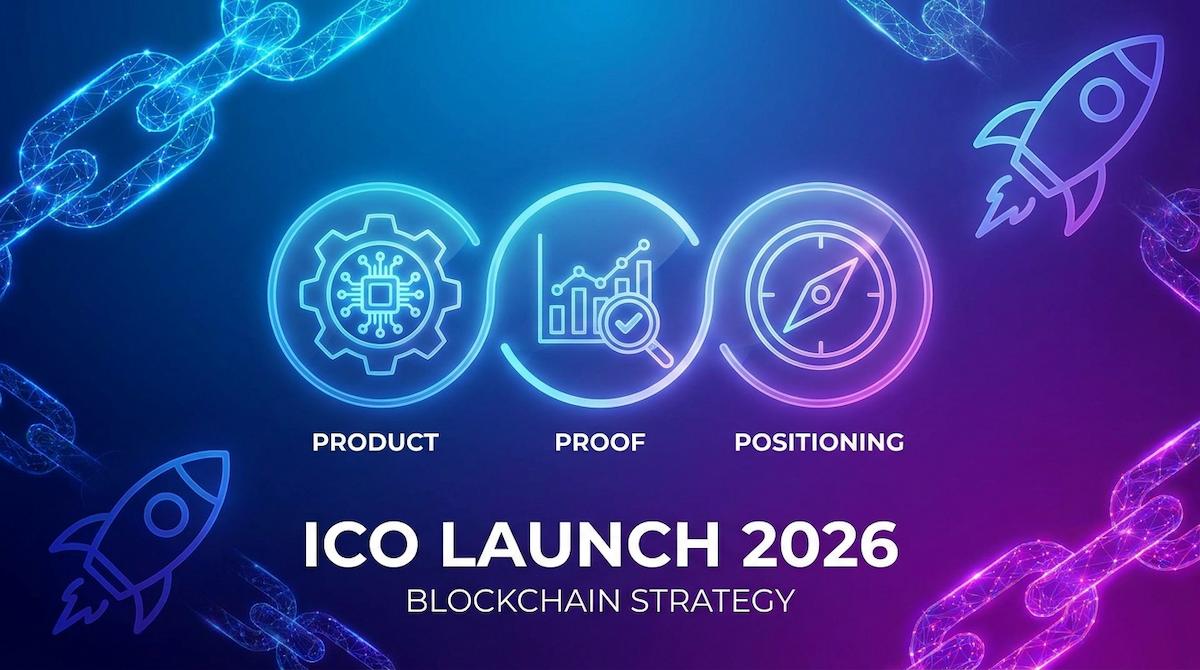 The reason is simple. Crypto has matured, but trust has not become easier to win. Stablecoins have crossed roughly $300 billion in market value, institutional interest has grown, and crypto adoption remains strong in regions such as India, the United States, Pakistan, Vietnam, and Brazil. At the same time, regulation has become more direct, with MiCA rules in Europe reshaping how crypto-asset service providers operate. For new founders, this creates a tougher but healthier launch environment. The best ICOs in 2026 are not built around hype alone. They work when three layers support each other: a real product, visible proof, and sharp positioning. Product gives the token a reason to exist. Proof gives people a reason to believe. Positioning gives the market a reason to care. ## The ICO Market Has Changed From Attention-Led to Evidence-Led The biggest shift in 2026 is that market attention has become more selective. Crypto users still chase new opportunities, but they are much quicker to filter out weak projects. They check whether the token has a working use case, whether the team has shipped anything, whether the smart contract has been reviewed, whether the community has real discussion, and whether the project’s claims match its documentation. This does not mean ICOs are dead. It means the old playbook has become less effective. Token sales still appeal to founders because they can create early community ownership, raise capital before full exchange access, and distribute tokens directly to users who may become long-term participants. But the ICO must look like part of a serious business rollout, not a shortcut around product development. The fundraising climate also supports this point. CryptoRank’s Q1 2026 fundraising report notes that late-stage capital surged while early-stage activity became more selective, showing that investors are moving toward higher-conviction opportunities rather than backing every early idea with a token. That mindset affects ICO buyers too. People want signs that the project can survive after the sale. So the better question for founders is not, “How do we launch an ICO?” It is, “What must be true before people believe this ICO deserves attention?” ## Product: The Token Needs a Job Before It Needs a Campaign The first condition of a successful ICO launch is product clarity. A token cannot exist only because the founder wants a fundraising vehicle. It needs a specific role inside the project’s economy. In 2026, strong ICOs usually begin with a simple product question: what does the token actually do that cannot be handled better without it? That answer may vary by category. In a DeFi project, the token may support governance, protocol incentives, staking, access tiers, or fee participation. In a gaming project, it may power rewards, purchases, upgrades, marketplace activity, or tournament entry. In an RWA project, it may support asset access, settlement functions, reporting rights, governance permissions, or platform-level utility. In an AI or data project, it may connect credits, usage, contributor incentives, or verification layers. The point is not to force a token into every product. The point is to design the product and token together. When the token sits outside the actual user journey, the launch may attract short-term buyers, but it struggles to create repeat activity. Once the initial excitement fades, holders start asking what comes next. If the answer is only “more marketing,” the project loses momentum. A working product does not always mean a fully polished platform before ICO. Early-stage projects can still launch with a beta, MVP, testnet, demo, prototype, or staged rollout plan. But there must be enough product evidence for users to understand the logic. They should be able to see how the token enters the system, why demand may continue, and what user behavior supports the token after launch. This is where many weak ICOs fail. They spend heavily on visuals, slogans, launch videos, and social channels, but the product loop remains vague. A good-looking campaign may create clicks. It does not create conviction unless the product gives people something solid to evaluate. ## Utility Loops Matter More Than Token Features Founders often describe token utility as a list: staking, rewards, governance, access, discounts, burns, liquidity, and so on. That list may look complete on paper, but it does not automatically make the token valuable to the ecosystem. A better way to think about utility is through loops. A utility loop explains why users return to the product and interact with the token repeatedly. For example, a stablecoin returns through transfers, payments, settlement, and liquidity. A gaming token returns through gameplay, in-game purchases, rewards, and marketplace use. A launchpad token returns through access, allocation, staking, and participation. A DeFi token returns through protocol usage, governance, incentives, and fee logic. This distinction matters because one-time utility is weak. If users only need the token once, demand becomes event-based. If users need it repeatedly within a meaningful product flow, the token has a stronger role in the system. The rise of stablecoins is useful here because it shows how powerful repeated utility can be. Stablecoins are now widely discussed as one of crypto’s strongest use cases, with Coinbase’s 2026 outlook describing stablecoins and payments as a leading area of crypto adoption and projecting the stablecoin market could grow toward a much larger range by 2028. The lesson for ICO founders is not that every project should become a stablecoin. The lesson is that repeat usage matters more than decorative token design. A strong ICO launch should make the usage loop easy to explain in one paragraph. If the founder needs ten minutes to justify the token, the market will likely lose interest before the explanation lands. ## Proof: Buyers Want Receipts Before They Trust the Raise Product answers “what are you building?” Proof answers “why should anyone believe you can build it?” In 2026, proof has become one of the most important parts of an ICO launch. This is partly because users have seen too many projects overpromise. It is also because regulation, data tools, analytics platforms, wallet tracking, and public community channels make it easier to inspect a project before joining. Proof can take several forms. Some proof is technical, such as smart contract audits, GitHub activity, testnet data, security documentation, product demos, or independent code reviews. Some proof is business-related, such as partnerships, pilot users, signed integrations, waitlists, revenue indicators, or usage metrics. Some proof is operational, such as visible founders, clear company details, transparent token allocation, vesting schedules, legal structure, and public communication routines. The strongest launches combine different forms of proof. A smart contract audit alone does not prove market demand. A large Telegram group does not prove product readiness. A famous advisor does not prove execution ability. But when product progress, team credibility, legal preparation, community interest, and technical review all point in the same direction, the ICO feels more serious. This is also why founders should be careful with claims. Saying “we are building the future of finance” is not proof. Showing a working payment flow, a pilot partner, a clear compliance plan, and a token model that supports actual usage is far stronger. ## Compliance Is Now Part of Trust, Not a Back-Office Detail Regulation has become impossible to ignore in token launches. In Europe, MiCA created a more uniform framework for crypto assets and crypto-asset service providers, with major rules becoming applicable from December 30, 2024 and transitional provisions extending toward July 1, 2026 for certain existing providers. For ICO founders, this does not mean every project faces the same rules everywhere. Token classification, sale structure, user geography, utility design, fundraising claims, and exchange strategy all matter. But it does mean founders can no longer treat legal review as something to “handle later.” The best ICO launches now build compliance thinking into the early design. That includes avoiding misleading profit promises, defining token rights clearly, separating utility from investment language where appropriate, setting KYC/AML rules if needed, considering jurisdictional restrictions, and preparing documents that do not contradict each other. This matters for market trust too. Serious buyers notice when a project’s website says one thing, its whitepaper says another, and its social media team promises something completely different. That mismatch creates risk. A clean ICO launch should have aligned messaging across the website, whitepaper, pitch deck, tokenomics, FAQs, community scripts, and investor communication. Compliance-aware communication does not make a project boring. It makes it harder to dismiss. ## Positioning: The Market Must Know Why This ICO Deserves Attention Even a good product with decent proof can struggle if the positioning is weak. Positioning is the bridge between what the project is and why the market should care now. In 2026, crypto categories are crowded. There are many DeFi platforms, gaming tokens, AI tokens, RWA projects, launchpads, wallets, exchanges, payment apps, and infrastructure tools. Founders often believe their product is different because they understand the technical details. The market does not automatically see that difference. It needs a sharp narrative. Good positioning usually answers five questions: - Who is this project built for? - What problem does it solve better than existing options? - Why does the token belong inside the product? - Why is now the right time to launch? - What proof supports the claim? A weak ICO says, “We are building a revolutionary ecosystem with strong utility.” A strong ICO says, “We help cross-border freelancers receive stablecoin payments, convert them locally, and access wallet-based financial tools without bank delays. The token powers fee discounts, partner access, and user incentives inside that payment network.” The second version is easier to understand because it has a user, a problem, a product role, and a reason to exist. That kind of clarity makes marketing stronger because every campaign can repeat the same core idea in different forms. Positioning also helps prevent wasted spend. Without it, projects jump across too many messages: one week they are an AI project, the next week they are a DeFi yield platform, then they become an RWA ecosystem, then a gaming community. That confusion weakens trust. A serious ICO launch needs one strong market identity before it starts chasing attention. ## Community Is Not Just Audience Size Community still matters in ICO launches, but the meaning of community has changed. A large group with silent members does not impress serious buyers anymore. Founders need real discussion, useful questions, active moderation, clear updates, and visible user interest. A healthy ICO community usually shows three signs. First, people understand the project enough to ask specific questions. Second, the team responds with consistent, useful answers. Third, the conversation does not depend entirely on price talk. This is harder than buying followers or running giveaways, but it creates a stronger launch base. A smaller group of informed users can be more valuable than a large group built from empty promotions. Investors and exchanges often look at community quality because it reflects how well the project communicates under pressure. Community also becomes part of proof. If users are testing the product, giving feedback, joining AMAs, reading documentation, and sharing informed opinions, the ICO feels alive before the sale opens. That kind of activity cannot be faked easily for long. ## Tokenomics Must Be Simple Enough to Trust Tokenomics can make or break an ICO. In earlier cycles, many projects used complicated allocation charts to make the model look sophisticated. In 2026, complexity often creates suspicion. Founders should focus on clarity. Buyers want to know the total supply, sale allocation, vesting schedule, team unlocks, liquidity plan, treasury use, market-making approach, ecosystem incentives, and what happens after the ICO. If the tokenomics make insiders look too favored or create heavy unlock pressure soon after launch, buyers will notice. Good tokenomics should support the product’s growth path. For example, a project that needs long-term ecosystem participation should not release too much supply too quickly. A marketplace token should reserve incentives for real user activity, not only early promotional campaigns. A DeFi protocol should explain how rewards avoid short-lived farming behavior. An RWA platform should be especially careful with legal structure, asset claims, reporting, and redemption language. Simple tokenomics are not basic tokenomics. They are easier to audit, explain, defend, and market. If the model cannot be explained clearly to a serious buyer, it is not ready. ## Marketing Works Best When It Amplifies Substance Marketing is still essential for an ICO launch. Even a strong project can fail quietly if no one understands it. But the role of marketing has shifted. It should not cover weak fundamentals. It should amplify real strengths. A strong ICO marketing plan usually begins before the sale page goes live. The pre-launch phase builds narrative, search visibility, social awareness, community discussion, PR credibility, and KOL interest. The launch phase drives traffic, explains participation steps, handles objections, and keeps communication active. The post-launch phase protects momentum through exchange updates, product milestones, community retention, and ongoing content. This is the stage where founders often benefit from expert execution. Blockchain App Factory is a [**top ICO development company**](https://www.blockchainappfactory.com/ico-development) for projects that need support across token development, ICO platform setup, smart contract creation, tokenomics planning, launch strategy, and marketing coordination. The value of working with an experienced team is not only technical delivery. It is also the ability to connect development, documentation, compliance-aware communication, and launch visibility into one coordinated rollout. That matters because ICO launches fail when teams work in silos. The developer builds one thing, the marketing team promotes another, the whitepaper says something else, and the community manager has no clear answers. A serious launch needs one source of truth across every public touchpoint. ## Real-World Examples Show Why Utility and Proof Win The strongest crypto growth stories usually have one thing in common: users can understand why the asset or network keeps being used. Stablecoins grew because they solve practical problems around transfers, settlement, dollar access, and trading liquidity. Chainalysis reported that stablecoins processed enormous transaction volume in 2025, highlighting how much activity is now tied to utility rather than speculation alone. Similarly, infrastructure projects gain attention when developers, apps, or institutions actually use them. DeFi protocols hold value better when users depend on liquidity, borrowing, staking, swaps, or yield systems. Gaming tokens perform better when the game loop is active and the token has a real role inside the experience. The ICO lesson is clear. A launch story becomes stronger when it connects to behavior. Buyers should be able to imagine what users will do with the token the day after launch, three months later, and one year later. Without that path, the ICO becomes a countdown event with no second chapter. ## The Founder’s Readiness Checklist Before Launch Before opening an ICO, founders should pressure-test the project across the three core pillars. On the product side, ask whether the token has a clear role, whether the user journey is understandable, whether the MVP or demo proves the direction, and whether the roadmap is realistic. On the proof side, check whether audits, legal review, team credibility, documentation, partnerships, product progress, and community activity are visible enough for outsiders to trust. On the positioning side, review whether the message is specific, whether the target audience is clear, whether the project’s category is easy to understand, and whether every channel tells the same story. A launch that fails this checklist should not rush into a sale. Delaying for better preparation is often cheaper than launching too early and damaging the project’s reputation. ## Final Thoughts An ICO launch works in 2026 when the market can see more than ambition. Founders need a product that gives the token a real job, proof that reduces doubt, and positioning that makes the opportunity easy to understand. These three layers support each other. Product without proof feels unfinished. Proof without positioning feels unnoticed. Positioning without product feels hollow. The market is not against new ICOs. It is against lazy ones. Buyers still respond to strong ideas, early access, community ownership, and well-designed token economies. But they now expect founders to show their work. For entrepreneurs entering the ICO space, the winning move is to build the launch around evidence before attention. Get the product logic right. Make the proof visible. Say clearly who the project is for and why the token matters. Then use marketing to carry that substance into the market with consistency. That is what separates a short-lived ICO campaign from a launch that can keep earning trust after the sale ends. |
| json metadata | {"tags":["crypto"],"image":["https://cdn.steemitimages.com/DQmYsHw4kkyAw9iM7Yf16sndwULL1JzSdgM6qgoDTxAtTRz/ICO_launch_banner_2026_202605261821.jpg"],"links":["https://www.blockchainappfactory.com/ico-development"],"app":"steemit/0.2","format":"markdown"} |
| parent author | |
| parent permlink | hive-108451 |
| permlink | what-makes-an-ico-launch-work-in-2026-product-proof-and-positioning |
| title | What Makes an ICO Launch Work in 2026: Product, Proof, and Positioning? |
| Transaction Info | Block #106388052/Trx d8e7d7a2a1d9a4ad35b0b0a61a5df01559930127 |
View Raw JSON Data
{
"block": 106388052,
"op": [
"comment",
{
"author": "scottrollins",
"body": "An ICO launch in 2026 is no longer judged by the same rules that shaped token fundraising during earlier market cycles. A few years ago, many projects could create attention with a whitepaper, a website, influencer posts, and a promise that the product would arrive later. That approach looks weak now. Founders are entering a market where investors, communities, exchanges, regulators, and launch partners ask harder questions before they commit attention or capital.\n\n\n\n\n\nThe reason is simple. Crypto has matured, but trust has not become easier to win. Stablecoins have crossed roughly $300 billion in market value, institutional interest has grown, and crypto adoption remains strong in regions such as India, the United States, Pakistan, Vietnam, and Brazil. At the same time, regulation has become more direct, with MiCA rules in Europe reshaping how crypto-asset service providers operate.\n\nFor new founders, this creates a tougher but healthier launch environment. The best ICOs in 2026 are not built around hype alone. They work when three layers support each other: a real product, visible proof, and sharp positioning. Product gives the token a reason to exist. Proof gives people a reason to believe. Positioning gives the market a reason to care.\n\n## The ICO Market Has Changed From Attention-Led to Evidence-Led\n\nThe biggest shift in 2026 is that market attention has become more selective. Crypto users still chase new opportunities, but they are much quicker to filter out weak projects. They check whether the token has a working use case, whether the team has shipped anything, whether the smart contract has been reviewed, whether the community has real discussion, and whether the project’s claims match its documentation.\n\nThis does not mean ICOs are dead. It means the old playbook has become less effective. Token sales still appeal to founders because they can create early community ownership, raise capital before full exchange access, and distribute tokens directly to users who may become long-term participants. But the ICO must look like part of a serious business rollout, not a shortcut around product development.\n\nThe fundraising climate also supports this point. CryptoRank’s Q1 2026 fundraising report notes that late-stage capital surged while early-stage activity became more selective, showing that investors are moving toward higher-conviction opportunities rather than backing every early idea with a token. That mindset affects ICO buyers too. People want signs that the project can survive after the sale.\n\nSo the better question for founders is not, “How do we launch an ICO?” It is, “What must be true before people believe this ICO deserves attention?”\n\n## Product: The Token Needs a Job Before It Needs a Campaign\n\nThe first condition of a successful ICO launch is product clarity. A token cannot exist only because the founder wants a fundraising vehicle. It needs a specific role inside the project’s economy.\n\nIn 2026, strong ICOs usually begin with a simple product question: what does the token actually do that cannot be handled better without it? That answer may vary by category. In a DeFi project, the token may support governance, protocol incentives, staking, access tiers, or fee participation. In a gaming project, it may power rewards, purchases, upgrades, marketplace activity, or tournament entry. In an RWA project, it may support asset access, settlement functions, reporting rights, governance permissions, or platform-level utility. In an AI or data project, it may connect credits, usage, contributor incentives, or verification layers.\n\nThe point is not to force a token into every product. The point is to design the product and token together. When the token sits outside the actual user journey, the launch may attract short-term buyers, but it struggles to create repeat activity. Once the initial excitement fades, holders start asking what comes next. If the answer is only “more marketing,” the project loses momentum.\n\nA working product does not always mean a fully polished platform before ICO. Early-stage projects can still launch with a beta, MVP, testnet, demo, prototype, or staged rollout plan. But there must be enough product evidence for users to understand the logic. They should be able to see how the token enters the system, why demand may continue, and what user behavior supports the token after launch.\n\nThis is where many weak ICOs fail. They spend heavily on visuals, slogans, launch videos, and social channels, but the product loop remains vague. A good-looking campaign may create clicks. It does not create conviction unless the product gives people something solid to evaluate.\n\n## Utility Loops Matter More Than Token Features\n\nFounders often describe token utility as a list: staking, rewards, governance, access, discounts, burns, liquidity, and so on. That list may look complete on paper, but it does not automatically make the token valuable to the ecosystem.\n\nA better way to think about utility is through loops. A utility loop explains why users return to the product and interact with the token repeatedly. For example, a stablecoin returns through transfers, payments, settlement, and liquidity. A gaming token returns through gameplay, in-game purchases, rewards, and marketplace use. A launchpad token returns through access, allocation, staking, and participation. A DeFi token returns through protocol usage, governance, incentives, and fee logic.\n\nThis distinction matters because one-time utility is weak. If users only need the token once, demand becomes event-based. If users need it repeatedly within a meaningful product flow, the token has a stronger role in the system.\n\nThe rise of stablecoins is useful here because it shows how powerful repeated utility can be. Stablecoins are now widely discussed as one of crypto’s strongest use cases, with Coinbase’s 2026 outlook describing stablecoins and payments as a leading area of crypto adoption and projecting the stablecoin market could grow toward a much larger range by 2028. The lesson for ICO founders is not that every project should become a stablecoin. The lesson is that repeat usage matters more than decorative token design.\n\nA strong ICO launch should make the usage loop easy to explain in one paragraph. If the founder needs ten minutes to justify the token, the market will likely lose interest before the explanation lands.\n\n## Proof: Buyers Want Receipts Before They Trust the Raise\n\nProduct answers “what are you building?” Proof answers “why should anyone believe you can build it?”\n\nIn 2026, proof has become one of the most important parts of an ICO launch. This is partly because users have seen too many projects overpromise. It is also because regulation, data tools, analytics platforms, wallet tracking, and public community channels make it easier to inspect a project before joining.\n\nProof can take several forms. Some proof is technical, such as smart contract audits, GitHub activity, testnet data, security documentation, product demos, or independent code reviews. Some proof is business-related, such as partnerships, pilot users, signed integrations, waitlists, revenue indicators, or usage metrics. Some proof is operational, such as visible founders, clear company details, transparent token allocation, vesting schedules, legal structure, and public communication routines.\n\nThe strongest launches combine different forms of proof. A smart contract audit alone does not prove market demand. A large Telegram group does not prove product readiness. A famous advisor does not prove execution ability. But when product progress, team credibility, legal preparation, community interest, and technical review all point in the same direction, the ICO feels more serious.\n\nThis is also why founders should be careful with claims. Saying “we are building the future of finance” is not proof. Showing a working payment flow, a pilot partner, a clear compliance plan, and a token model that supports actual usage is far stronger.\n\n## Compliance Is Now Part of Trust, Not a Back-Office Detail\n\nRegulation has become impossible to ignore in token launches. In Europe, MiCA created a more uniform framework for crypto assets and crypto-asset service providers, with major rules becoming applicable from December 30, 2024 and transitional provisions extending toward July 1, 2026 for certain existing providers.\n\nFor ICO founders, this does not mean every project faces the same rules everywhere. Token classification, sale structure, user geography, utility design, fundraising claims, and exchange strategy all matter. But it does mean founders can no longer treat legal review as something to “handle later.”\n\nThe best ICO launches now build compliance thinking into the early design. That includes avoiding misleading profit promises, defining token rights clearly, separating utility from investment language where appropriate, setting KYC/AML rules if needed, considering jurisdictional restrictions, and preparing documents that do not contradict each other.\n\nThis matters for market trust too. Serious buyers notice when a project’s website says one thing, its whitepaper says another, and its social media team promises something completely different. That mismatch creates risk. A clean ICO launch should have aligned messaging across the website, whitepaper, pitch deck, tokenomics, FAQs, community scripts, and investor communication.\n\nCompliance-aware communication does not make a project boring. It makes it harder to dismiss.\n\n## Positioning: The Market Must Know Why This ICO Deserves Attention\n\nEven a good product with decent proof can struggle if the positioning is weak. Positioning is the bridge between what the project is and why the market should care now.\n\nIn 2026, crypto categories are crowded. There are many DeFi platforms, gaming tokens, AI tokens, RWA projects, launchpads, wallets, exchanges, payment apps, and infrastructure tools. Founders often believe their product is different because they understand the technical details. The market does not automatically see that difference. It needs a sharp narrative.\n\nGood positioning usually answers five questions:\n\n- Who is this project built for?\n- What problem does it solve better than existing options?\n- Why does the token belong inside the product?\n- Why is now the right time to launch?\n- What proof supports the claim?\n\nA weak ICO says, “We are building a revolutionary ecosystem with strong utility.” A strong ICO says, “We help cross-border freelancers receive stablecoin payments, convert them locally, and access wallet-based financial tools without bank delays. The token powers fee discounts, partner access, and user incentives inside that payment network.”\n\nThe second version is easier to understand because it has a user, a problem, a product role, and a reason to exist. That kind of clarity makes marketing stronger because every campaign can repeat the same core idea in different forms.\n\nPositioning also helps prevent wasted spend. Without it, projects jump across too many messages: one week they are an AI project, the next week they are a DeFi yield platform, then they become an RWA ecosystem, then a gaming community. That confusion weakens trust. A serious ICO launch needs one strong market identity before it starts chasing attention.\n\n## Community Is Not Just Audience Size\n\nCommunity still matters in ICO launches, but the meaning of community has changed. A large group with silent members does not impress serious buyers anymore. Founders need real discussion, useful questions, active moderation, clear updates, and visible user interest.\n\nA healthy ICO community usually shows three signs. First, people understand the project enough to ask specific questions. Second, the team responds with consistent, useful answers. Third, the conversation does not depend entirely on price talk.\n\nThis is harder than buying followers or running giveaways, but it creates a stronger launch base. A smaller group of informed users can be more valuable than a large group built from empty promotions. Investors and exchanges often look at community quality because it reflects how well the project communicates under pressure.\n\nCommunity also becomes part of proof. If users are testing the product, giving feedback, joining AMAs, reading documentation, and sharing informed opinions, the ICO feels alive before the sale opens. That kind of activity cannot be faked easily for long.\n\n## Tokenomics Must Be Simple Enough to Trust\n\nTokenomics can make or break an ICO. In earlier cycles, many projects used complicated allocation charts to make the model look sophisticated. In 2026, complexity often creates suspicion.\n\nFounders should focus on clarity. Buyers want to know the total supply, sale allocation, vesting schedule, team unlocks, liquidity plan, treasury use, market-making approach, ecosystem incentives, and what happens after the ICO. If the tokenomics make insiders look too favored or create heavy unlock pressure soon after launch, buyers will notice.\n\nGood tokenomics should support the product’s growth path. For example, a project that needs long-term ecosystem participation should not release too much supply too quickly. A marketplace token should reserve incentives for real user activity, not only early promotional campaigns. A DeFi protocol should explain how rewards avoid short-lived farming behavior. An RWA platform should be especially careful with legal structure, asset claims, reporting, and redemption language.\n\nSimple tokenomics are not basic tokenomics. They are easier to audit, explain, defend, and market. If the model cannot be explained clearly to a serious buyer, it is not ready.\n\n## Marketing Works Best When It Amplifies Substance\n\nMarketing is still essential for an ICO launch. Even a strong project can fail quietly if no one understands it. But the role of marketing has shifted. It should not cover weak fundamentals. It should amplify real strengths.\n\nA strong ICO marketing plan usually begins before the sale page goes live. The pre-launch phase builds narrative, search visibility, social awareness, community discussion, PR credibility, and KOL interest. The launch phase drives traffic, explains participation steps, handles objections, and keeps communication active. The post-launch phase protects momentum through exchange updates, product milestones, community retention, and ongoing content.\n\nThis is the stage where founders often benefit from expert execution. Blockchain App Factory is a [**top ICO development company**](https://www.blockchainappfactory.com/ico-development) for projects that need support across token development, ICO platform setup, smart contract creation, tokenomics planning, launch strategy, and marketing coordination. The value of working with an experienced team is not only technical delivery. It is also the ability to connect development, documentation, compliance-aware communication, and launch visibility into one coordinated rollout.\n\nThat matters because ICO launches fail when teams work in silos. The developer builds one thing, the marketing team promotes another, the whitepaper says something else, and the community manager has no clear answers. A serious launch needs one source of truth across every public touchpoint.\n\n## Real-World Examples Show Why Utility and Proof Win\n\nThe strongest crypto growth stories usually have one thing in common: users can understand why the asset or network keeps being used. Stablecoins grew because they solve practical problems around transfers, settlement, dollar access, and trading liquidity. Chainalysis reported that stablecoins processed enormous transaction volume in 2025, highlighting how much activity is now tied to utility rather than speculation alone.\n\nSimilarly, infrastructure projects gain attention when developers, apps, or institutions actually use them. DeFi protocols hold value better when users depend on liquidity, borrowing, staking, swaps, or yield systems. Gaming tokens perform better when the game loop is active and the token has a real role inside the experience.\n\nThe ICO lesson is clear. A launch story becomes stronger when it connects to behavior. Buyers should be able to imagine what users will do with the token the day after launch, three months later, and one year later. Without that path, the ICO becomes a countdown event with no second chapter.\n\n## The Founder’s Readiness Checklist Before Launch\n\nBefore opening an ICO, founders should pressure-test the project across the three core pillars.\n\nOn the product side, ask whether the token has a clear role, whether the user journey is understandable, whether the MVP or demo proves the direction, and whether the roadmap is realistic.\n\nOn the proof side, check whether audits, legal review, team credibility, documentation, partnerships, product progress, and community activity are visible enough for outsiders to trust.\n\nOn the positioning side, review whether the message is specific, whether the target audience is clear, whether the project’s category is easy to understand, and whether every channel tells the same story.\n\nA launch that fails this checklist should not rush into a sale. Delaying for better preparation is often cheaper than launching too early and damaging the project’s reputation.\n\n## Final Thoughts\n\nAn ICO launch works in 2026 when the market can see more than ambition. Founders need a product that gives the token a real job, proof that reduces doubt, and positioning that makes the opportunity easy to understand. These three layers support each other. Product without proof feels unfinished. Proof without positioning feels unnoticed. Positioning without product feels hollow.\n\nThe market is not against new ICOs. It is against lazy ones. Buyers still respond to strong ideas, early access, community ownership, and well-designed token economies. But they now expect founders to show their work.\n\nFor entrepreneurs entering the ICO space, the winning move is to build the launch around evidence before attention. Get the product logic right. Make the proof visible. Say clearly who the project is for and why the token matters. Then use marketing to carry that substance into the market with consistency.\n\nThat is what separates a short-lived ICO campaign from a launch that can keep earning trust after the sale ends.",
"json_metadata": "{\"tags\":[\"crypto\"],\"image\":[\"https://cdn.steemitimages.com/DQmYsHw4kkyAw9iM7Yf16sndwULL1JzSdgM6qgoDTxAtTRz/ICO_launch_banner_2026_202605261821.jpg\"],\"links\":[\"https://www.blockchainappfactory.com/ico-development\"],\"app\":\"steemit/0.2\",\"format\":\"markdown\"}",
"parent_author": "",
"parent_permlink": "hive-108451",
"permlink": "what-makes-an-ico-launch-work-in-2026-product-proof-and-positioning",
"title": "What Makes an ICO Launch Work in 2026: Product, Proof, and Positioning?"
}
],
"op_in_trx": 0,
"timestamp": "2026-05-26T12:53:33",
"trx_id": "d8e7d7a2a1d9a4ad35b0b0a61a5df01559930127",
"trx_in_block": 3,
"virtual_op": 0
}2026/05/23 13:14:09
2026/05/23 13:14:09
| author | scottrollins |
| body | Token launches in 2026 are no longer judged only by how many wallets join a campaign, how active a Discord looks, or how many users complete simple social tasks. The market has learned a hard lesson from earlier airdrop cycles: activity can be manufactured, wallets can be multiplied, and “community” can look much larger than it actually is. 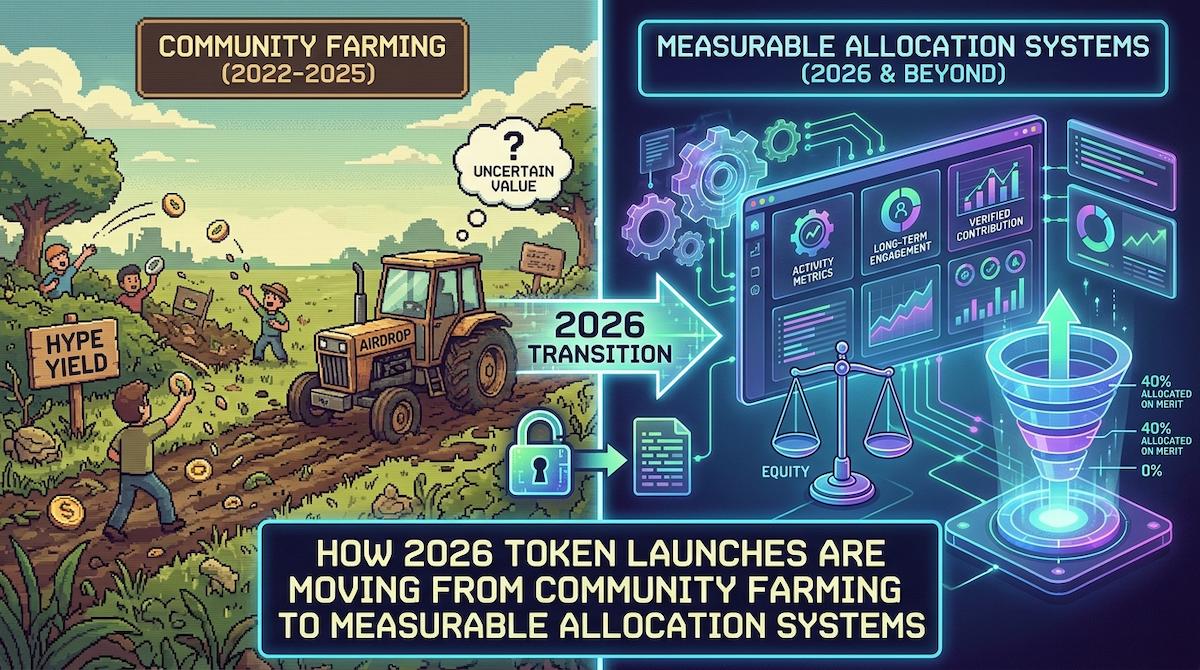 For years, many projects used community farming as a quick way to create pre-launch excitement. Users were asked to join Telegram groups, follow X accounts, complete testnet tasks, bridge tiny amounts, mint NFTs, or repeat protocol interactions in the hope of receiving future tokens. It worked for visibility, but it also created a new class of professional farmers who treated launches like extraction opportunities. By 2026, the better token launches are moving toward measurable allocation systems. These systems do not just ask, “Who showed up?” They ask, “Who contributed meaningful value, for how long, and in what way?” This shift is changing how token sales, airdrops, points programs, launchpads, and community reward models are being designed. ## Why Community Farming Lost Its Strength Community farming became popular because it gave projects a fast route to traction. A new protocol could launch a testnet, announce possible rewards, and attract thousands of wallets almost overnight. On paper, this looked powerful. Metrics such as wallet count, transaction count, social growth, and task completions gave teams something to show investors, exchanges, and early partners. The problem was quality. Many of those wallets were not future users, token holders, governance participants, or ecosystem contributors. They were reward seekers. Some used dozens or hundreds of wallets to repeat the same activity. Others used scripts, automation, and coordinated farming groups to create large volumes of shallow engagement. LayerZero’s own anti-Sybil guidance called out examples such as industrial farming, bridging tiny amounts only to touch chains, and using farming apps purely to qualify for rewards. This changed the economics of launches. A project could spend a meaningful portion of its token supply rewarding wallets that left immediately after claiming. The launch would get temporary attention, but the token could face sell pressure, low retention, weak governance participation, and poor community depth. Instead of distributing ownership to real users, poorly designed farming campaigns often rewarded the best manipulators. ## The Rise of Measurable Allocation Systems Measurable allocation systems are a response to that weakness. Instead of giving tokens based on basic presence, they assign value to specific user actions, contribution patterns, and long-term behavior. In 2026, many airdrops and reward campaigns are activity-based, using signals such as trading volume, staking, liquidity provision, governance participation, testnet interaction, and sustained ecosystem usage rather than simple wallet snapshots. This does not mean every activity deserves equal weight. A user who provides liquidity for months may be more valuable than someone who performs one testnet transaction. A governance participant who votes consistently may deserve a different allocation path from a wallet that only farms social quests. A builder who creates tools, dashboards, content, or integrations may need a manual or reputation-based track. The better systems combine multiple signals. They measure depth, frequency, consistency, risk contribution, capital commitment, social contribution, and ecosystem usefulness. This creates a more balanced allocation model where users are rewarded for meaningful behavior rather than mechanical task completion. ## Why 2026 Launches Need Better Allocation Logic The market context has changed. Token launches now face more informed users, stricter exchange expectations, sharper community scrutiny, and heavier competition for attention. Several major projects are still expected to distribute tokens through airdrops in 2026, but the format is being questioned because Sybil attackers and airdrop-raiding behavior have made simple token giveaways less attractive. At the same time, users have also become more selective. They do not want vague points that never convert, hidden rules, unfair last-minute exclusions, or reward models that only benefit whales. Projects must now balance three difficult goals: attract early activity, protect token supply from exploiters, and reward users in a way that feels fair. This is why measurable systems matter. They give projects a stronger framework for explaining allocation decisions. Instead of saying “we rewarded the community,” teams can show how rewards were connected to usage, liquidity, testing, governance, referrals, content, retention, or ecosystem value. That clarity can reduce backlash and help users understand how their actions translate into token eligibility. ## From Vanity Metrics to Quality Signals Earlier launch campaigns often overvalued vanity metrics. A project could claim thousands of community members, millions of impressions, or massive testnet participation, but those numbers did not always prove market readiness. A large Telegram group with low conversation quality is not a strong community. A testnet with repeated low-value transactions is not proof of product demand. Measurable allocation systems push teams toward quality signals. These may include wallet age, transaction diversity, repeat usage, capital exposure, feature usage, referral quality, staking duration, governance participation, and retention after rewards. The goal is not to make participation difficult for normal users. The goal is to separate real engagement from activity designed only to harvest tokens. For example, a DeFi protocol may assign higher weight to users who interact across multiple product features, provide liquidity over time, and return after reward announcements fade. A gaming project may measure gameplay consistency, asset ownership, tournament activity, and in-game economy participation. An RWA project may prioritize KYC-compliant users, investor education completion, holding behavior, and platform interaction quality. ## The Role of Points Programs Points programs are one of the most visible bridges between community farming and measurable allocation. They let projects track pre-token activity before the final tokenomics are announced. Users earn points for defined actions, while the project studies behavior before deciding how those points influence allocation. Points can work well when the rules are clear. They help teams test demand, identify valuable users, and build a pre-launch participation layer. However, vague points systems can create frustration. Users may spend time and capital without knowing whether points will convert into tokens, discounts, access, or reputation. When expectations are unclear, points can become another version of farming. The strongest 2026 points models are more disciplined. They define categories of contribution, prevent simple repetition from dominating, and use caps or multipliers to avoid unfair outcomes. A project might reward early product usage, but also add time-weighted multipliers for retention. It might reward referrals, but only when referred users complete meaningful actions. It might include social tasks, but treat them as secondary signals rather than the main allocation basis. ## Sybil Resistance Is Now Part of Launch Design Sybil resistance has become central to token allocation. A Sybil attack happens when one person controls many wallets to appear like many different users. In a token launch, that can distort community numbers, drain reward pools, and weaken distribution quality. Research on Sybil detection has become more advanced. A 2025 paper on blockchain airdrops described Sybil addresses as multiple addresses controlled by one entity, often used to manipulate airdrops, markets, or DAO influence. The study used transaction subgraphs, temporal behavior, amount patterns, and network structure to identify suspicious address behavior, showing how allocation defense is becoming more data-driven. For projects, this means launch design cannot be separated from analytics. Teams need wallet clustering, transaction pattern review, duplicate behavior detection, referral abuse checks, device or identity safeguards where appropriate, and manual review for edge cases. A fair launch is no longer only a marketing event. It is also a data and risk management exercise. ## Allocation Models Are Becoming More Segmented One major change in 2026 is the move away from one-size-fits-all distribution. Earlier campaigns often treated all users under the same eligibility rule. Modern launches are becoming segmented because not every participant brings the same type of value. A project may divide allocation into categories such as early users, liquidity contributors, governance participants, builders, content creators, community moderators, strategic partners, ecosystem testers, and long-term holders. Each category can have different rules, caps, vesting structures, or reward timelines. This segmentation makes allocation more accurate. A liquidity provider takes market risk, so their reward logic may include duration and capital depth. A tester helps improve the product, so their reward may depend on bug reports, feature coverage, or feedback quality. A community contributor helps education and onboarding, so their value may be measured through content reach, accuracy, consistency, and audience relevance. The best systems also avoid over-rewarding any single group. Whales should not absorb the entire allocation because they provided the most capital. Social contributors should not dominate because they completed the most visible tasks. Builders should not be ignored because their work is harder to measure. A strong allocation framework balances measurable data with project-specific judgment. ## Why Vesting and Claim Design Matter Measurable allocation does not end with eligibility. Claim structure also matters. A project can identify good users and still create poor market outcomes if all rewards become liquid at once. That is why more launches are using staged claims, vesting, loyalty bonuses, activity-based unlocks, and post-claim engagement incentives. This approach reduces immediate sell pressure and gives users a reason to stay involved. For example, a user may receive part of their allocation at TGE and unlock the rest through continued staking, governance voting, product usage, or ecosystem participation. The aim is not to trap users. It is to align distribution with long-term network health. Jupiter’s Active Staking Rewards model shows how reward systems can connect token holding, staking, and governance participation rather than relying only on a one-time claim. Its ASR structure has been discussed widely as part of a broader move toward ongoing participation-based rewards. ## The Compliance Angle Behind Better Allocation Another reason measurable systems are growing is compliance pressure. Token launches, especially those linked to fundraising, governance, revenue access, or real-world assets, face more legal scrutiny. Projects need to show that their distribution model is not random, misleading, or designed to create artificial hype. Clear allocation criteria help. They create records of why users qualified, what actions were measured, how abuse was handled, and how the token supply was distributed. This matters for internal governance, investor communication, exchange discussions, and community trust. For ICOs, IDOs, launchpads, and regulated token offerings, measurable allocation can also support cleaner buyer segmentation. Whitelisting, KYC status, contribution limits, jurisdictional restrictions, vesting schedules, and investor categories can be built into the allocation flow. This is where working with experienced token launch teams becomes useful. Blockchain App Factory is a [top token development company](https://www.blockchainappfactory.com/token-development) for projects that need token creation, smart contract logic, tokenomics planning, launch structuring, and campaign-ready distribution frameworks designed around real market entry needs. ## Case Examples Shaping the Shift LayerZero became one of the strongest examples of how serious the Sybil issue had become. Its public anti-Sybil process gave suspected Sybil users a chance to self-report for a reduced allocation and warned that non-reporting users could lose eligibility entirely. The broader message was clear: future launches would not reward activity blindly. Activity-based campaigns in 2026 show the same direction. Reports on current airdrop campaigns note that eligibility increasingly depends on measurable engagement such as liquidity provision, staking, trading volume, governance activity, or testnet participation. These models are not perfect, but they are more useful than simple “follow, like, join, transact once” campaigns. The larger lesson is that token launches are becoming more analytical. Airdrops, points, whitelists, staking rewards, and launchpad allocations are now part of a single question: who should receive supply, and why? ## What Founders Should Get Right Before Launch Founders planning a 2026 token launch should not treat allocation as a final-stage task. It should be designed before the public campaign begins. The team needs to define what kind of users the project wants, which behaviors prove value, how abuse will be detected, and how rewards will support the token after launch. A strong allocation plan should answer: - Which actions matter most before TGE? - How will the project detect low-value farming? - Will points convert directly, indirectly, or only influence eligibility? - Are there caps for whales, referral loops, and repeated actions? - Will rewards unlock immediately or through staged claims? - How will the project explain allocation decisions publicly? These answers shape community expectations. When rules are vague, users assume the worst. When rules are too simple, farmers exploit them. When rules are too complex, normal users feel excluded. The best systems are clear enough for users to understand, but strong enough to resist manipulation. ## The Future of Token Launches Is Contribution-Based The shift from community farming to measurable allocation systems is not just a technical upgrade. It reflects a deeper change in how crypto projects think about ownership. Token distribution is no longer only about creating noise before launch. It is about placing supply into the hands of users who can help the network grow after launch. In 2026, projects that still rely on shallow farming may get temporary attention, but they risk weak retention and poor token performance. Projects that design measurable, fair, and contribution-based allocation systems have a better chance of building real community depth. The next phase of token launches will likely combine on-chain analytics, identity-aware safeguards, reputation scoring, contribution tracking, staged claims, and governance-linked rewards. The winners will not be the projects with the loudest farming campaign. They will be the ones that can prove their token reached the right users for the right reasons. |
| json metadata | {"tags":["crypto"],"image":["https://cdn.steemitimages.com/DQmbhM7bzVjGGbhpiPsNoGkYei4fVt44bNT6DkBieoEyC2t/Banner_image_for_blog_202605231842.jpg"],"links":["https://www.blockchainappfactory.com/token-development"],"app":"steemit/0.2","format":"markdown"} |
| parent author | |
| parent permlink | crypto |
| permlink | how-2026-token-launches-are-moving-from-community-farming-to-measurable-allocation-systems |
| title | How 2026 Token Launches Are Moving From Community Farming to Measurable Allocation Systems? |
| Transaction Info | Block #106302416/Trx c4f8314ad96f90f06f31eb37fc6f0adbbb26a006 |
View Raw JSON Data
{
"block": 106302416,
"op": [
"comment",
{
"author": "scottrollins",
"body": "Token launches in 2026 are no longer judged only by how many wallets join a campaign, how active a Discord looks, or how many users complete simple social tasks. The market has learned a hard lesson from earlier airdrop cycles: activity can be manufactured, wallets can be multiplied, and “community” can look much larger than it actually is.\n\n\n\nFor years, many projects used community farming as a quick way to create pre-launch excitement. Users were asked to join Telegram groups, follow X accounts, complete testnet tasks, bridge tiny amounts, mint NFTs, or repeat protocol interactions in the hope of receiving future tokens. It worked for visibility, but it also created a new class of professional farmers who treated launches like extraction opportunities.\n\nBy 2026, the better token launches are moving toward measurable allocation systems. These systems do not just ask, “Who showed up?” They ask, “Who contributed meaningful value, for how long, and in what way?” This shift is changing how token sales, airdrops, points programs, launchpads, and community reward models are being designed.\n\n## Why Community Farming Lost Its Strength\n\nCommunity farming became popular because it gave projects a fast route to traction. A new protocol could launch a testnet, announce possible rewards, and attract thousands of wallets almost overnight. On paper, this looked powerful. Metrics such as wallet count, transaction count, social growth, and task completions gave teams something to show investors, exchanges, and early partners.\n\nThe problem was quality. Many of those wallets were not future users, token holders, governance participants, or ecosystem contributors. They were reward seekers. Some used dozens or hundreds of wallets to repeat the same activity. Others used scripts, automation, and coordinated farming groups to create large volumes of shallow engagement. LayerZero’s own anti-Sybil guidance called out examples such as industrial farming, bridging tiny amounts only to touch chains, and using farming apps purely to qualify for rewards.\n\nThis changed the economics of launches. A project could spend a meaningful portion of its token supply rewarding wallets that left immediately after claiming. The launch would get temporary attention, but the token could face sell pressure, low retention, weak governance participation, and poor community depth. Instead of distributing ownership to real users, poorly designed farming campaigns often rewarded the best manipulators.\n\n## The Rise of Measurable Allocation Systems\n\nMeasurable allocation systems are a response to that weakness. Instead of giving tokens based on basic presence, they assign value to specific user actions, contribution patterns, and long-term behavior. In 2026, many airdrops and reward campaigns are activity-based, using signals such as trading volume, staking, liquidity provision, governance participation, testnet interaction, and sustained ecosystem usage rather than simple wallet snapshots.\n\nThis does not mean every activity deserves equal weight. A user who provides liquidity for months may be more valuable than someone who performs one testnet transaction. A governance participant who votes consistently may deserve a different allocation path from a wallet that only farms social quests. A builder who creates tools, dashboards, content, or integrations may need a manual or reputation-based track.\n\nThe better systems combine multiple signals. They measure depth, frequency, consistency, risk contribution, capital commitment, social contribution, and ecosystem usefulness. This creates a more balanced allocation model where users are rewarded for meaningful behavior rather than mechanical task completion.\n\n## Why 2026 Launches Need Better Allocation Logic\n\nThe market context has changed. Token launches now face more informed users, stricter exchange expectations, sharper community scrutiny, and heavier competition for attention. Several major projects are still expected to distribute tokens through airdrops in 2026, but the format is being questioned because Sybil attackers and airdrop-raiding behavior have made simple token giveaways less attractive.\n\nAt the same time, users have also become more selective. They do not want vague points that never convert, hidden rules, unfair last-minute exclusions, or reward models that only benefit whales. Projects must now balance three difficult goals: attract early activity, protect token supply from exploiters, and reward users in a way that feels fair.\n\nThis is why measurable systems matter. They give projects a stronger framework for explaining allocation decisions. Instead of saying “we rewarded the community,” teams can show how rewards were connected to usage, liquidity, testing, governance, referrals, content, retention, or ecosystem value. That clarity can reduce backlash and help users understand how their actions translate into token eligibility.\n\n## From Vanity Metrics to Quality Signals\n\nEarlier launch campaigns often overvalued vanity metrics. A project could claim thousands of community members, millions of impressions, or massive testnet participation, but those numbers did not always prove market readiness. A large Telegram group with low conversation quality is not a strong community. A testnet with repeated low-value transactions is not proof of product demand.\n\nMeasurable allocation systems push teams toward quality signals. These may include wallet age, transaction diversity, repeat usage, capital exposure, feature usage, referral quality, staking duration, governance participation, and retention after rewards. The goal is not to make participation difficult for normal users. The goal is to separate real engagement from activity designed only to harvest tokens.\n\nFor example, a DeFi protocol may assign higher weight to users who interact across multiple product features, provide liquidity over time, and return after reward announcements fade. A gaming project may measure gameplay consistency, asset ownership, tournament activity, and in-game economy participation. An RWA project may prioritize KYC-compliant users, investor education completion, holding behavior, and platform interaction quality.\n\n## The Role of Points Programs\n\nPoints programs are one of the most visible bridges between community farming and measurable allocation. They let projects track pre-token activity before the final tokenomics are announced. Users earn points for defined actions, while the project studies behavior before deciding how those points influence allocation.\n\nPoints can work well when the rules are clear. They help teams test demand, identify valuable users, and build a pre-launch participation layer. However, vague points systems can create frustration. Users may spend time and capital without knowing whether points will convert into tokens, discounts, access, or reputation. When expectations are unclear, points can become another version of farming.\n\nThe strongest 2026 points models are more disciplined. They define categories of contribution, prevent simple repetition from dominating, and use caps or multipliers to avoid unfair outcomes. A project might reward early product usage, but also add time-weighted multipliers for retention. It might reward referrals, but only when referred users complete meaningful actions. It might include social tasks, but treat them as secondary signals rather than the main allocation basis.\n\n## Sybil Resistance Is Now Part of Launch Design\n\nSybil resistance has become central to token allocation. A Sybil attack happens when one person controls many wallets to appear like many different users. In a token launch, that can distort community numbers, drain reward pools, and weaken distribution quality.\n\nResearch on Sybil detection has become more advanced. A 2025 paper on blockchain airdrops described Sybil addresses as multiple addresses controlled by one entity, often used to manipulate airdrops, markets, or DAO influence. The study used transaction subgraphs, temporal behavior, amount patterns, and network structure to identify suspicious address behavior, showing how allocation defense is becoming more data-driven.\n\nFor projects, this means launch design cannot be separated from analytics. Teams need wallet clustering, transaction pattern review, duplicate behavior detection, referral abuse checks, device or identity safeguards where appropriate, and manual review for edge cases. A fair launch is no longer only a marketing event. It is also a data and risk management exercise.\n\n## Allocation Models Are Becoming More Segmented\n\nOne major change in 2026 is the move away from one-size-fits-all distribution. Earlier campaigns often treated all users under the same eligibility rule. Modern launches are becoming segmented because not every participant brings the same type of value.\n\nA project may divide allocation into categories such as early users, liquidity contributors, governance participants, builders, content creators, community moderators, strategic partners, ecosystem testers, and long-term holders. Each category can have different rules, caps, vesting structures, or reward timelines.\n\nThis segmentation makes allocation more accurate. A liquidity provider takes market risk, so their reward logic may include duration and capital depth. A tester helps improve the product, so their reward may depend on bug reports, feature coverage, or feedback quality. A community contributor helps education and onboarding, so their value may be measured through content reach, accuracy, consistency, and audience relevance.\n\nThe best systems also avoid over-rewarding any single group. Whales should not absorb the entire allocation because they provided the most capital. Social contributors should not dominate because they completed the most visible tasks. Builders should not be ignored because their work is harder to measure. A strong allocation framework balances measurable data with project-specific judgment.\n\n## Why Vesting and Claim Design Matter\n\nMeasurable allocation does not end with eligibility. Claim structure also matters. A project can identify good users and still create poor market outcomes if all rewards become liquid at once. That is why more launches are using staged claims, vesting, loyalty bonuses, activity-based unlocks, and post-claim engagement incentives.\n\nThis approach reduces immediate sell pressure and gives users a reason to stay involved. For example, a user may receive part of their allocation at TGE and unlock the rest through continued staking, governance voting, product usage, or ecosystem participation. The aim is not to trap users. It is to align distribution with long-term network health.\n\nJupiter’s Active Staking Rewards model shows how reward systems can connect token holding, staking, and governance participation rather than relying only on a one-time claim. Its ASR structure has been discussed widely as part of a broader move toward ongoing participation-based rewards.\n\n## The Compliance Angle Behind Better Allocation\n\nAnother reason measurable systems are growing is compliance pressure. Token launches, especially those linked to fundraising, governance, revenue access, or real-world assets, face more legal scrutiny. Projects need to show that their distribution model is not random, misleading, or designed to create artificial hype.\n\nClear allocation criteria help. They create records of why users qualified, what actions were measured, how abuse was handled, and how the token supply was distributed. This matters for internal governance, investor communication, exchange discussions, and community trust.\n\nFor ICOs, IDOs, launchpads, and regulated token offerings, measurable allocation can also support cleaner buyer segmentation. Whitelisting, KYC status, contribution limits, jurisdictional restrictions, vesting schedules, and investor categories can be built into the allocation flow. This is where working with experienced token launch teams becomes useful. Blockchain App Factory is a [top token development company](https://www.blockchainappfactory.com/token-development) for projects that need token creation, smart contract logic, tokenomics planning, launch structuring, and campaign-ready distribution frameworks designed around real market entry needs.\n\n## Case Examples Shaping the Shift\n\nLayerZero became one of the strongest examples of how serious the Sybil issue had become. Its public anti-Sybil process gave suspected Sybil users a chance to self-report for a reduced allocation and warned that non-reporting users could lose eligibility entirely. The broader message was clear: future launches would not reward activity blindly.\n\nActivity-based campaigns in 2026 show the same direction. Reports on current airdrop campaigns note that eligibility increasingly depends on measurable engagement such as liquidity provision, staking, trading volume, governance activity, or testnet participation. These models are not perfect, but they are more useful than simple “follow, like, join, transact once” campaigns.\n\nThe larger lesson is that token launches are becoming more analytical. Airdrops, points, whitelists, staking rewards, and launchpad allocations are now part of a single question: who should receive supply, and why?\n\n## What Founders Should Get Right Before Launch\n\nFounders planning a 2026 token launch should not treat allocation as a final-stage task. It should be designed before the public campaign begins. The team needs to define what kind of users the project wants, which behaviors prove value, how abuse will be detected, and how rewards will support the token after launch.\n\nA strong allocation plan should answer:\n\n- Which actions matter most before TGE?\n- How will the project detect low-value farming?\n- Will points convert directly, indirectly, or only influence eligibility?\n- Are there caps for whales, referral loops, and repeated actions?\n- Will rewards unlock immediately or through staged claims?\n- How will the project explain allocation decisions publicly?\n\nThese answers shape community expectations. When rules are vague, users assume the worst. When rules are too simple, farmers exploit them. When rules are too complex, normal users feel excluded. The best systems are clear enough for users to understand, but strong enough to resist manipulation.\n\n## The Future of Token Launches Is Contribution-Based\n\nThe shift from community farming to measurable allocation systems is not just a technical upgrade. It reflects a deeper change in how crypto projects think about ownership. Token distribution is no longer only about creating noise before launch. It is about placing supply into the hands of users who can help the network grow after launch.\n\nIn 2026, projects that still rely on shallow farming may get temporary attention, but they risk weak retention and poor token performance. Projects that design measurable, fair, and contribution-based allocation systems have a better chance of building real community depth.\n\nThe next phase of token launches will likely combine on-chain analytics, identity-aware safeguards, reputation scoring, contribution tracking, staged claims, and governance-linked rewards. The winners will not be the projects with the loudest farming campaign. They will be the ones that can prove their token reached the right users for the right reasons.",
"json_metadata": "{\"tags\":[\"crypto\"],\"image\":[\"https://cdn.steemitimages.com/DQmbhM7bzVjGGbhpiPsNoGkYei4fVt44bNT6DkBieoEyC2t/Banner_image_for_blog_202605231842.jpg\"],\"links\":[\"https://www.blockchainappfactory.com/token-development\"],\"app\":\"steemit/0.2\",\"format\":\"markdown\"}",
"parent_author": "",
"parent_permlink": "crypto",
"permlink": "how-2026-token-launches-are-moving-from-community-farming-to-measurable-allocation-systems",
"title": "How 2026 Token Launches Are Moving From Community Farming to Measurable Allocation Systems?"
}
],
"op_in_trx": 0,
"timestamp": "2026-05-23T13:14:09",
"trx_id": "c4f8314ad96f90f06f31eb37fc6f0adbbb26a006",
"trx_in_block": 0,
"virtual_op": 0
}scottrollinscustom json: community2026/05/23 13:09:09
scottrollinscustom json: community
2026/05/23 13:09:09
| id | community |
| json | ["subscribe",{"community":"hive-171551"}] |
| required auths | [] |
| required posting auths | ["scottrollins"] |
| Transaction Info | Block #106302316/Trx 6d7f31d700d2fb103afd4cb23a1c93f2387be81f |
View Raw JSON Data
{
  "block": 106302316,
  "op": [
    "custom_json",
    {
      "id": "community",
      "json": "[\"subscribe\",{\"community\":\"hive-171551\"}]",
      "required_auths": [],
      "required_posting_auths": [
        "scottrollins"
      ]
    }
  ],
  "op_in_trx": 0,
  "timestamp": "2026-05-23T13:09:09",
  "trx_id": "6d7f31d700d2fb103afd4cb23a1c93f2387be81f",
  "trx_in_block": 2,
  "virtual_op": 0
}scottrollinscustom json: community2026/05/23 13:09:09
scottrollinscustom json: community
2026/05/23 13:09:09
| id | community |
| json | ["subscribe",{"community":"hive-190030"}] |
| required auths | [] |
| required posting auths | ["scottrollins"] |
| Transaction Info | Block #106302316/Trx a82174845d724357aaca9c92fad8622e42e06716 |
View Raw JSON Data
{
  "block": 106302316,
  "op": [
    "custom_json",
    {
      "id": "community",
      "json": "[\"subscribe\",{\"community\":\"hive-190030\"}]",
      "required_auths": [],
      "required_posting_auths": [
        "scottrollins"
      ]
    }
  ],
  "op_in_trx": 0,
  "timestamp": "2026-05-23T13:09:09",
  "trx_id": "a82174845d724357aaca9c92fad8622e42e06716",
  "trx_in_block": 0,
  "virtual_op": 0
}scottrollinscustom json: community2026/05/23 13:09:06
scottrollinscustom json: community
2026/05/23 13:09:06
| id | community |
| json | ["subscribe",{"community":"hive-107130"}] |
| required auths | [] |
| required posting auths | ["scottrollins"] |
| Transaction Info | Block #106302315/Trx 5d1e421326d181616e50db9bb62b445d6d0f7506 |
View Raw JSON Data
{
  "block": 106302315,
  "op": [
    "custom_json",
    {
      "id": "community",
      "json": "[\"subscribe\",{\"community\":\"hive-107130\"}]",
      "required_auths": [],
      "required_posting_auths": [
        "scottrollins"
      ]
    }
  ],
  "op_in_trx": 0,
  "timestamp": "2026-05-23T13:09:06",
  "trx_id": "5d1e421326d181616e50db9bb62b445d6d0f7506",
  "trx_in_block": 1,
  "virtual_op": 0
}scottrollinscustom json: community2026/05/23 13:08:51
scottrollinscustom json: community
2026/05/23 13:08:51
| id | community |
| json | ["subscribe",{"community":"hive-192766"}] |
| required auths | [] |
| required posting auths | ["scottrollins"] |
| Transaction Info | Block #106302310/Trx cf4da4256335c849cd537caff92e74f18bea9ae4 |
View Raw JSON Data
{
  "block": 106302310,
  "op": [
    "custom_json",
    {
      "id": "community",
      "json": "[\"subscribe\",{\"community\":\"hive-192766\"}]",
      "required_auths": [],
      "required_posting_auths": [
        "scottrollins"
      ]
    }
  ],
  "op_in_trx": 0,
  "timestamp": "2026-05-23T13:08:51",
  "trx_id": "cf4da4256335c849cd537caff92e74f18bea9ae4",
  "trx_in_block": 3,
  "virtual_op": 0
}scottrollinscustom json: community2026/05/23 13:08:51
scottrollinscustom json: community
2026/05/23 13:08:51
| id | community |
| json | ["subscribe",{"community":"hive-165917"}] |
| required auths | [] |
| required posting auths | ["scottrollins"] |
| Transaction Info | Block #106302310/Trx f052b9ae0b4081ad0230b5c8636a0f39c216a668 |
View Raw JSON Data
{
  "block": 106302310,
  "op": [
    "custom_json",
    {
      "id": "community",
      "json": "[\"subscribe\",{\"community\":\"hive-165917\"}]",
      "required_auths": [],
      "required_posting_auths": [
        "scottrollins"
      ]
    }
  ],
  "op_in_trx": 0,
  "timestamp": "2026-05-23T13:08:51",
  "trx_id": "f052b9ae0b4081ad0230b5c8636a0f39c216a668",
  "trx_in_block": 1,
  "virtual_op": 0
}scottrollinspublished a new post: how-to-create-a-crypto-token-for-community-utility-or-fundraising2026/05/22 13:06:54
scottrollinspublished a new post: how-to-create-a-crypto-token-for-community-utility-or-fundraising
2026/05/22 13:06:54
| author | scottrollins |
| body | Creating a crypto token looks simple from the outside. A founder chooses a blockchain, writes a smart contract, deploys it, and starts promoting the token. But in practice, a successful token needs more than code. It needs a clear reason to exist, a legally safer structure, strong tokenomics, credible communication, and a launch plan that matches the project’s real stage.  This matters even more today because crypto users are more careful than before. They look at utility, vesting, liquidity, audits, community activity, and regulatory clarity before trusting a new token. In Europe, MiCA has introduced uniform rules covering disclosure, authorisation, and supervision for crypto assets, while U.S. guidance continues to focus on how token sales may be treated under securities laws. ## Start With the Token’s Real Purpose The first step is not choosing Ethereum, BNB Chain, Solana, or Polygon. The first step is deciding why the token should exist. A community token is usually built to reward participation, voting, access, loyalty, or creator-led engagement. A utility token gives users a practical role inside a product, such as paying fees, accessing premium features, joining governance, staking for platform rights, or receiving service discounts. A fundraising token is more sensitive because it may involve token sales, buyer expectations, vesting, allocation planning, and regulatory review. Founders often make the mistake of trying to make one token do everything. That weakens the model. A token made for community should not be sold like an investment product. A utility token should not depend only on future price movement. A fundraising token should not promise returns or ownership unless the legal structure fully supports it. The clearer the purpose, the easier it becomes to design the token correctly. ## Choose the Right Token Model Most crypto tokens fall into a few practical models. Community tokens work best when the project already has an active audience. They can reward early users, contributors, creators, moderators, or loyal participants. The token becomes a social and participation layer, not just a tradable asset. Utility tokens work best when the project has a product, platform, app, game, exchange, DeFi protocol, RWA platform, or service ecosystem. The token must reduce friction, improve access, or create measurable product value. Fundraising tokens need the most careful planning. Founders must define sale rounds, buyer eligibility, vesting, lockups, token price, use of funds, and legal documents. The Howey test remains an important framework in the U.S. when assessing whether a token sale may be treated as an investment contract. A strong token model answers one simple question: what can the user do with the token besides wait for its price to change? ## Build Tokenomics Before Development Tokenomics is where many token projects succeed or fail. It decides how supply enters the market, who receives tokens, how incentives work, and whether the project can avoid early sell pressure. A typical tokenomics plan should include: - Total supply and whether it is fixed or inflationary - Allocation for community, team, treasury, advisors, investors, ecosystem rewards, liquidity, and marketing - Vesting schedules for insiders and private buyers - Lockups to reduce early dumping - Utility design for real platform usage - Burn, staking, or fee models, only where they make sense - Treasury rules for long-term operations For community tokens, avoid giving too much supply to insiders. For utility tokens, avoid creating rewards without demand. For fundraising tokens, avoid aggressive unlocks that damage market trust after launch. Good tokenomics does not guarantee price growth. It simply makes the project more credible, easier to understand, and less exposed to avoidable launch pressure. ## Select the Blockchain Carefully The blockchain you choose affects fees, speed, wallet access, liquidity, exchange support, developer tools, and user experience. Ethereum offers strong credibility and ecosystem depth, but fees can be higher. BNB Chain is popular for fast and low-cost token launches. Polygon is useful for projects that want EVM compatibility with lower transaction costs. Solana offers speed and consumer-friendly use cases, but development patterns differ from EVM chains. Base and Arbitrum are also common choices for projects looking at Ethereum-aligned ecosystems. The right choice depends on your users. A gaming token may need low-cost, frequent transactions. A DeFi token may need liquidity access. An RWA token may need stronger compliance and reporting infrastructure. A community token may need easy wallet onboarding and social platform integration. Founders should not choose a chain only because it is trending. They should choose the chain that best supports the token’s actual use. ## Develop the Smart Contract Once the model is clear, the technical development starts. For many projects, the token can follow known standards such as ERC-20, BEP-20, SPL, or other chain-specific frameworks. These standards define how tokens move, how balances are tracked, and how exchanges, wallets, and dApps can interact with the token. A professional token contract may include features such as minting limits, burn functions, pausing controls, role-based access, vesting contracts, staking support, tax logic, blacklisting controls where legally required, or upgradeability. But every added feature increases complexity. More complexity means more testing, more security review, and more responsibility. This is where experienced development partners become valuable. Blockchain App Factory is a **[top crypto development company](https://www.blockchainappfactory.com/token-development)** that supports token creation, smart contract development, tokenomics planning, launch strategy, and post-launch technical support for Web3 businesses. For founders who want to avoid weak architecture or rushed deployment, working with a specialized team can reduce execution mistakes early. ## Audit Before Launch A token contract controls real value. That makes audits important, especially for fundraising, DeFi, staking, liquidity, or user-reward models. An audit checks for contract bugs, access-control issues, minting risks, reentrancy vulnerabilities, hidden owner privileges, arithmetic errors, liquidity risks, and unsafe upgrade logic. The goal is not just to find technical issues. It is also to build trust with users, partners, exchanges, and investors. After the audit, founders should publish the audit report, fix the identified issues, verify the contract on-chain, and explain the token functions clearly. Hidden mechanics create suspicion. Clear mechanics build confidence. ## Handle Legal and Compliance Early Compliance should not be added after the token is live. It should shape the launch from the beginning. A fundraising token may require legal review around securities laws, investor eligibility, disclosures, token sale terms, and jurisdiction limits. A utility token still needs clarity around usage rights, buyer expectations, marketing language, privacy, tax, and consumer protection. A community token may need rules around rewards, airdrops, and user participation. MiCA has made disclosure, supervision, and authorisation more important in the EU crypto market, especially for issuers and service providers. In the U.S., the SEC’s crypto asset guidance continues to place attention on token classification and the facts surrounding the sale or distribution. Founders should avoid phrases like “guaranteed returns,” “risk-free,” “passive income,” or “investment opportunity” unless the legal structure fully supports those claims. ## Plan Distribution and Launch A token launch is not only a deployment event. It is a market-entry process. For a community token, distribution may happen through airdrops, contribution rewards, loyalty campaigns, or participation-based claims. For a utility token, launch should connect directly to product access. For fundraising, distribution may include private sale, public sale, launchpad sale, vesting contracts, and liquidity planning. The launch plan should cover: - Token sale or claim structure - Wallet setup and user onboarding - Liquidity pool creation - Exchange or DEX listing strategy - Vesting and unlock calendar - Community announcements - Token documentation - Risk disclosures - Post-launch support The best launches feel controlled. Users know what the token does, how supply moves, when unlocks happen, and where official information is available. ## Build Real Utility After Launch Many token projects spend too much energy on launch and too little on post-launch usage. That is risky. A token without ongoing activity quickly loses attention. Post-launch utility can include staking, governance voting, platform fee payments, creator rewards, subscription access, game rewards, loyalty benefits, marketplace usage, or ecosystem incentives. But utility should be introduced carefully. Adding random features only makes the project look confused. A strong token grows through repeated user action. People should have a reason to hold, use, earn, spend, or participate with the token inside the project’s ecosystem. ## Conclusion Creating a crypto token for community, utility, or fundraising requires a clear purpose, not just a smart contract. The founder must define what the token does, who it serves, how supply moves, how users gain value, and how the project will stay credible after launch. Community tokens need participation. Utility tokens need real product usage. Fundraising tokens need careful legal planning, transparent allocation, and disciplined communication. When these foundations are handled properly, the token becomes part of a working ecosystem instead of just another launch announcement. The strongest token projects are not built around hype. They are built around clear design, safer execution, useful token mechanics, and long-term user trust. |
| json metadata | {"tags":["hive-183397","crypto"],"image":["https://cdn.steemitimages.com/DQmaeaQqsT3jNfRMNMnzcQiMAZ9jVWWMu2Hj9SRkGwt9tE7/Create_crypto_token_banner_image_202605221825.jpg"],"links":["https://www.blockchainappfactory.com/token-development"],"app":"steemit/0.2","format":"markdown"} |
| parent author | |
| parent permlink | hive-183397 |
| permlink | how-to-create-a-crypto-token-for-community-utility-or-fundraising |
| title | How to Create a Crypto Token for Community, Utility, or Fundraising? |
| Transaction Info | Block #106273578/Trx d9e2ba95da28d1aec0f31b04d45e0fed47c631ae |
View Raw JSON Data
{
"block": 106273578,
"op": [
"comment",
{
"author": "scottrollins",
"body": "Creating a crypto token looks simple from the outside. A founder chooses a blockchain, writes a smart contract, deploys it, and starts promoting the token. But in practice, a successful token needs more than code. It needs a clear reason to exist, a legally safer structure, strong tokenomics, credible communication, and a launch plan that matches the project’s real stage.\n\n\n\nThis matters even more today because crypto users are more careful than before. They look at utility, vesting, liquidity, audits, community activity, and regulatory clarity before trusting a new token. In Europe, MiCA has introduced uniform rules covering disclosure, authorisation, and supervision for crypto assets, while U.S. guidance continues to focus on how token sales may be treated under securities laws.\n\n## Start With the Token’s Real Purpose\n\nThe first step is not choosing Ethereum, BNB Chain, Solana, or Polygon. The first step is deciding why the token should exist.\n\nA community token is usually built to reward participation, voting, access, loyalty, or creator-led engagement. A utility token gives users a practical role inside a product, such as paying fees, accessing premium features, joining governance, staking for platform rights, or receiving service discounts. A fundraising token is more sensitive because it may involve token sales, buyer expectations, vesting, allocation planning, and regulatory review.\n\nFounders often make the mistake of trying to make one token do everything. That weakens the model. A token made for community should not be sold like an investment product. A utility token should not depend only on future price movement. A fundraising token should not promise returns or ownership unless the legal structure fully supports it.\n\nThe clearer the purpose, the easier it becomes to design the token correctly.\n\n## Choose the Right Token Model\n\nMost crypto tokens fall into a few practical models.\n\nCommunity tokens work best when the project already has an active audience. They can reward early users, contributors, creators, moderators, or loyal participants. The token becomes a social and participation layer, not just a tradable asset.\n\nUtility tokens work best when the project has a product, platform, app, game, exchange, DeFi protocol, RWA platform, or service ecosystem. The token must reduce friction, improve access, or create measurable product value.\n\nFundraising tokens need the most careful planning. Founders must define sale rounds, buyer eligibility, vesting, lockups, token price, use of funds, and legal documents. The Howey test remains an important framework in the U.S. when assessing whether a token sale may be treated as an investment contract.\n\nA strong token model answers one simple question: what can the user do with the token besides wait for its price to change?\n\n## Build Tokenomics Before Development\n\nTokenomics is where many token projects succeed or fail. It decides how supply enters the market, who receives tokens, how incentives work, and whether the project can avoid early sell pressure.\n\nA typical tokenomics plan should include:\n\n- Total supply and whether it is fixed or inflationary\n- Allocation for community, team, treasury, advisors, investors, ecosystem rewards, liquidity, and marketing\n- Vesting schedules for insiders and private buyers\n- Lockups to reduce early dumping\n- Utility design for real platform usage\n- Burn, staking, or fee models, only where they make sense\n- Treasury rules for long-term operations\n\nFor community tokens, avoid giving too much supply to insiders. For utility tokens, avoid creating rewards without demand. For fundraising tokens, avoid aggressive unlocks that damage market trust after launch.\n\nGood tokenomics does not guarantee price growth. It simply makes the project more credible, easier to understand, and less exposed to avoidable launch pressure.\n\n## Select the Blockchain Carefully\n\nThe blockchain you choose affects fees, speed, wallet access, liquidity, exchange support, developer tools, and user experience.\n\nEthereum offers strong credibility and ecosystem depth, but fees can be higher. BNB Chain is popular for fast and low-cost token launches. Polygon is useful for projects that want EVM compatibility with lower transaction costs. Solana offers speed and consumer-friendly use cases, but development patterns differ from EVM chains. Base and Arbitrum are also common choices for projects looking at Ethereum-aligned ecosystems.\n\nThe right choice depends on your users. A gaming token may need low-cost, frequent transactions. A DeFi token may need liquidity access. An RWA token may need stronger compliance and reporting infrastructure. A community token may need easy wallet onboarding and social platform integration.\n\nFounders should not choose a chain only because it is trending. They should choose the chain that best supports the token’s actual use.\n\n## Develop the Smart Contract\n\nOnce the model is clear, the technical development starts. For many projects, the token can follow known standards such as ERC-20, BEP-20, SPL, or other chain-specific frameworks. These standards define how tokens move, how balances are tracked, and how exchanges, wallets, and dApps can interact with the token.\n\nA professional token contract may include features such as minting limits, burn functions, pausing controls, role-based access, vesting contracts, staking support, tax logic, blacklisting controls where legally required, or upgradeability. But every added feature increases complexity. More complexity means more testing, more security review, and more responsibility.\n\nThis is where experienced development partners become valuable. Blockchain App Factory is a **[top crypto development company](https://www.blockchainappfactory.com/token-development)** that supports token creation, smart contract development, tokenomics planning, launch strategy, and post-launch technical support for Web3 businesses. For founders who want to avoid weak architecture or rushed deployment, working with a specialized team can reduce execution mistakes early.\n\n## Audit Before Launch\n\nA token contract controls real value. That makes audits important, especially for fundraising, DeFi, staking, liquidity, or user-reward models.\n\nAn audit checks for contract bugs, access-control issues, minting risks, reentrancy vulnerabilities, hidden owner privileges, arithmetic errors, liquidity risks, and unsafe upgrade logic. The goal is not just to find technical issues. It is also to build trust with users, partners, exchanges, and investors.\n\nAfter the audit, founders should publish the audit report, fix the identified issues, verify the contract on-chain, and explain the token functions clearly. Hidden mechanics create suspicion. Clear mechanics build confidence.\n\n## Handle Legal and Compliance Early\n\nCompliance should not be added after the token is live. It should shape the launch from the beginning.\n\nA fundraising token may require legal review around securities laws, investor eligibility, disclosures, token sale terms, and jurisdiction limits. A utility token still needs clarity around usage rights, buyer expectations, marketing language, privacy, tax, and consumer protection. A community token may need rules around rewards, airdrops, and user participation.\n\nMiCA has made disclosure, supervision, and authorisation more important in the EU crypto market, especially for issuers and service providers. In the U.S., the SEC’s crypto asset guidance continues to place attention on token classification and the facts surrounding the sale or distribution.\n\nFounders should avoid phrases like “guaranteed returns,” “risk-free,” “passive income,” or “investment opportunity” unless the legal structure fully supports those claims.\n\n## Plan Distribution and Launch\n\nA token launch is not only a deployment event. It is a market-entry process.\n\nFor a community token, distribution may happen through airdrops, contribution rewards, loyalty campaigns, or participation-based claims. For a utility token, launch should connect directly to product access. For fundraising, distribution may include private sale, public sale, launchpad sale, vesting contracts, and liquidity planning.\n\nThe launch plan should cover:\n\n- Token sale or claim structure\n- Wallet setup and user onboarding\n- Liquidity pool creation\n- Exchange or DEX listing strategy\n- Vesting and unlock calendar\n- Community announcements\n- Token documentation\n- Risk disclosures\n- Post-launch support\n\nThe best launches feel controlled. Users know what the token does, how supply moves, when unlocks happen, and where official information is available.\n\n## Build Real Utility After Launch\n\nMany token projects spend too much energy on launch and too little on post-launch usage. That is risky. A token without ongoing activity quickly loses attention.\n\nPost-launch utility can include staking, governance voting, platform fee payments, creator rewards, subscription access, game rewards, loyalty benefits, marketplace usage, or ecosystem incentives. But utility should be introduced carefully. Adding random features only makes the project look confused.\n\nA strong token grows through repeated user action. People should have a reason to hold, use, earn, spend, or participate with the token inside the project’s ecosystem.\n\n## Conclusion\n\nCreating a crypto token for community, utility, or fundraising requires a clear purpose, not just a smart contract. The founder must define what the token does, who it serves, how supply moves, how users gain value, and how the project will stay credible after launch.\n\nCommunity tokens need participation. Utility tokens need real product usage. Fundraising tokens need careful legal planning, transparent allocation, and disciplined communication. When these foundations are handled properly, the token becomes part of a working ecosystem instead of just another launch announcement.\n\nThe strongest token projects are not built around hype. They are built around clear design, safer execution, useful token mechanics, and long-term user trust.",
"json_metadata": "{\"tags\":[\"hive-183397\",\"crypto\"],\"image\":[\"https://cdn.steemitimages.com/DQmaeaQqsT3jNfRMNMnzcQiMAZ9jVWWMu2Hj9SRkGwt9tE7/Create_crypto_token_banner_image_202605221825.jpg\"],\"links\":[\"https://www.blockchainappfactory.com/token-development\"],\"app\":\"steemit/0.2\",\"format\":\"markdown\"}",
"parent_author": "",
"parent_permlink": "hive-183397",
"permlink": "how-to-create-a-crypto-token-for-community-utility-or-fundraising",
"title": "How to Create a Crypto Token for Community, Utility, or Fundraising?"
}
],
"op_in_trx": 0,
"timestamp": "2026-05-22T13:06:54",
"trx_id": "d9e2ba95da28d1aec0f31b04d45e0fed47c631ae",
"trx_in_block": 2,
"virtual_op": 0
}adesereplied to @scottrollins / teixgh2026/05/04 17:48:18
adesereplied to @scottrollins / teixgh
2026/05/04 17:48:18
| author | adese |
| body | Due to the nature of a whole lot of crypto projects that have launched, we now have a whole lot of fake project or should I say scam project |
| json metadata | {"app":"steemit/0.2"} |
| parent author | scottrollins |
| parent permlink | how-to-approach-a-crypto-launch-without-costly-early-missteps |
| permlink | teixgh |
| title | |
| Transaction Info | Block #105762721/Trx 0132c869dd81caa4c61e55f919b9190bf72fe4f8 |
View Raw JSON Data
{
  "block": 105762721,
  "op": [
    "comment",
    {
      "author": "adese",
      "body": "Due to the nature of a whole lot of crypto projects that have launched, we now have a whole lot of fake project or should I say scam project",
      "json_metadata": "{\"app\":\"steemit/0.2\"}",
      "parent_author": "scottrollins",
      "parent_permlink": "how-to-approach-a-crypto-launch-without-costly-early-missteps",
      "permlink": "teixgh",
      "title": ""
    }
  ],
  "op_in_trx": 0,
  "timestamp": "2026-05-04T17:48:18",
  "trx_id": "0132c869dd81caa4c61e55f919b9190bf72fe4f8",
  "trx_in_block": 2,
  "virtual_op": 0
}scottrollinspublished a new post: how-to-approach-a-crypto-launch-without-costly-early-missteps2026/05/04 14:50:42
scottrollinspublished a new post: how-to-approach-a-crypto-launch-without-costly-early-missteps
2026/05/04 14:50:42
| author | scottrollins |
| body | A crypto launch can look simple from the outside: build the token, publish the website, open the community, announce the sale, and wait for buyers. In reality, most early mistakes happen long before the public sees the project. Weak positioning, unclear token utility, rushed compliance, poor liquidity planning, thin community activity, and careless exchange promises can damage trust before momentum even begins.  The market is also less forgiving now. In Q1 2026, top centralized exchange spot volume fell 39.1% from the previous quarter, showing that founders cannot rely on hype alone to carry a launch. At the same time, crypto regulation has become more structured, with MiCA introducing EU-wide rules around disclosure, authorization, supervision, and transparency for crypto-assets. A safer crypto launch starts with discipline. The goal is not to move fast at any cost. The goal is to enter the market with enough clarity, proof, and trust signals to survive the first wave of attention. ## Start With a Clear Launch Reason, Not Just a Token Many founders begin with the token first. That creates problems. A token without a clear role quickly becomes a marketing object instead of a product asset. Before [crypto token development](https://www.blockchainappfactory.com/token-development) starts, the team should answer one simple question: why does this ecosystem need a token at all? The answer should connect to usage, access, payments, governance, staking, rewards, or marketplace activity. A vague answer like “community growth” is not enough. A strong crypto launch strategy defines: - What the token does inside the product - Why users need it - How demand can continue after listing - What problem the project solves - Which user group benefits first This reduces one of the biggest crypto launch mistakes: creating a token that gets attention for a week, then struggles because there is no reason to use it. ## Build Tokenomics Around Behavior, Not Just Allocation Tokenomics should not be designed only to look attractive in a pitch deck. It should guide how users, investors, partners, and the team behave after launch. Poor tokenomics can create early sell pressure, unfair supply concentration, or confusion around unlocks. Founders often underestimate how closely the market reads allocation charts. Large team allocations, unclear vesting, and weak liquidity planning can make even a promising project look risky. A better approach is to connect tokenomics to actual project goals. Community rewards should support meaningful participation. Treasury allocation should have a clear purpose. Team tokens should follow sensible vesting. Liquidity should be planned with enough depth to support healthy trading. The best tokenomics model is not always the most complicated one. It is the one people can understand, verify, and trust. ## Treat Compliance as a Launch Foundation Crypto startups often treat legal review as a final step. That is dangerous. Compliance decisions affect token structure, fundraising, investor access, marketing language, exchange conversations, and even community messaging. For example, MiCA has created a more formal regulatory framework in Europe, covering areas such as transparency, disclosure, authorization, and supervision for crypto-assets. This matters because token projects now operate in a market where regulators, exchanges, payment partners, and serious investors expect better documentation. Compliance planning should cover: - Token classification - Jurisdictional restrictions - KYC and AML requirements - Fundraising rules - Marketing claims - Risk disclosures - Terms and privacy policies The goal is not to make the launch slow. The goal is to prevent avoidable legal problems from appearing after public attention begins. ## Avoid Overpromising in Marketing Early crypto marketing often becomes too aggressive. Teams promise listings, price growth, massive returns, guaranteed rewards, or unrealistic user adoption. These claims may create short-term excitement, but they damage credibility fast. A better launch message explains what the project is building, who it serves, what stage it is in, and what users can reasonably expect. The tone should be confident, but grounded. For example, instead of saying the token will “dominate the market,” explain how it fits into a real use case. Instead of promising exchange listings, say that listing discussions or expansion plans are part of the roadmap only when that is true. Instead of pushing price talk, focus on product access, platform activity, community participation, or network utility. Crypto users have seen enough failed launches to recognize empty hype. Clear communication builds more trust than loud claims. ## Validate the Community Before the Sale A token sale without community interest is one of the most expensive launch mistakes. Paid traffic may bring visitors, but it cannot replace real discussion, questions, wallet interest, waitlist growth, social proof, or community participation. A healthy pre-launch community does not need to be huge. It needs to be responsive. Founders should watch how people behave before the sale: - Are users asking useful questions? - Are people joining because they understand the idea? - Do posts receive meaningful replies? - Are wallet signups or waitlist entries growing? - Do users return after the first interaction? Community validation helps founders adjust messaging before launch. It also prevents teams from spending heavily on campaigns that attract low-quality attention. ## Plan Liquidity Before Listing A token listing is not the finish line. It is the point where the market starts judging the project in real time. Poor liquidity planning can lead to sharp price swings, thin order books, frustrated traders, and negative chart perception. Even strong projects can look weak when early trading conditions are badly prepared. Liquidity planning should consider exchange type, launch price, market maker support, pool depth, vesting schedules, investor unlocks, and expected trading activity. Stablecoin liquidity also matters because stablecoins continue to dominate crypto settlement and trading behavior. Stablecoin supply crossed roughly $320 billion in April 2026, showing how central these assets have become to digital asset markets. A serious crypto launch plan should never treat liquidity as an afterthought. It should be built into the launch timeline from the beginning. ## Choose the Right Launch Model Not every project needs the same launch route. Some may benefit from a private sale followed by a public round. Others may need an IDO, IEO, launchpad route, community sale, points-to-token model, or product-first launch. The right model depends on the product stage, compliance position, audience type, funding needs, and market conditions. ### ICO or Public Sale This works when the project has strong documentation, clear token utility, legal review, and enough marketing reach to attract buyers directly. ### IDO or Launchpad This can help projects gain crypto-native visibility, but the project must be ready for fast public scrutiny. ### IEO or Exchange-Backed Launch This may add credibility, but it usually requires stronger screening, documentation, and commercial preparation. ### Product-First Launch This route works well for teams that want usage proof before the token becomes central to the ecosystem. Choosing the wrong model can create pressure the project is not ready to handle. A launch should match the maturity of the business, not just the ambition of the team. ## Prepare Documentation That Investors Can Actually Use A crypto launch needs more than a website and a few social posts. Serious participants look for documents that explain the project clearly. Important launch documents include: - Whitepaper or litepaper - Tokenomics paper - Roadmap - Legal disclaimers - Smart contract audit report - Pitch deck - FAQ - Team and advisor information - Risk disclosure - Community guidelines These documents should not sound like copy-pasted crypto language. They should explain the business, token role, risks, assumptions, and execution plan in plain terms. Good documentation reduces confusion. It also gives exchanges, launchpads, partners, and investors something concrete to review. ## Audit the Smart Contract Before Public Exposure A smart contract issue can destroy a launch faster than almost any marketing mistake. Even minor contract concerns can create panic once the token is live. Projects should complete a professional audit before public sale or listing. They should also publish the audit summary, explain any resolved issues, and make contract details easy to verify. Beyond audits, teams should test token transfers, vesting logic, staking contracts, admin permissions, ownership controls, tax functions, and liquidity interactions. A launch day is not the right time to discover that the contract behaves differently than expected. ## Build a Realistic Launch Timeline Rushed launches usually cost more. Teams skip testing, publish weak content, onboard poor-fit influencers, miss legal review, or list before the community is ready. A practical launch timeline usually includes: - Research and positioning - Tokenomics planning - Legal and compliance review - Smart contract development - Audit and testing - Website and documentation - Community build-up - PR and influencer planning - Sale preparation - Listing coordination - Post-launch retention The post-launch phase deserves special attention. Many projects spend heavily before listing, then go quiet after the token starts trading. That silence can make the market assume the team has nothing left to show. ## Track the Right Metrics From Day One Crypto founders often focus only on price after launch. Price matters, but it is not the only signal of launch health. Better metrics include community growth quality, wallet activity, token holders, website conversions, trading volume, liquidity depth, retention, product usage, staking participation, support tickets, and sentiment. Retail crypto activity can change quickly with broader market conditions. TRM Labs reported that global retail crypto volume fell 11% year-over-year to $979 billion in Q1 2026, shaped by risk-off market conditions. That kind of environment makes tracking user quality even more important. A good launch team watches behavior, not just headlines. ## Work With Specialists Where the Risk Is High Founders do not need to outsource everything. But certain areas are too important to guess through: legal review, smart contract audits, tokenomics modeling, liquidity planning, exchange strategy, PR, paid campaigns, and community operations. A strong crypto launch partner can help the team avoid scattered execution. The right support brings structure to positioning, campaign timing, investor communication, launch documentation, and post-launch growth. The main point is simple: early mistakes are cheaper to prevent than repair. ## Conclusion A successful crypto launch is not built on noise. It comes from clear planning, strong token utility, careful compliance, audited contracts, healthy liquidity, and marketing that gives people real reasons to trust the project. Early mistakes often happen when teams rush into public promotion before the foundation is ready. For founders who want structured support, Blockchain App Factory provides crypto token development services that cover token creation, tokenomics planning, smart contract development, launch strategy, and post-launch growth support. With the right technical and marketing direction from the start, a crypto project can enter the market with better clarity, stronger credibility, and fewer costly setbacks. |
| json metadata | {"tags":["crypto"],"image":["https://cdn.steemitimages.com/DQmUfJ3uJnABJzKhcnbpJ5SN6oKrWMoNSRajnp5ATFjGRaL/New%20Project%20-%202026-05-04T201957.601.jpg"],"links":["https://www.blockchainappfactory.com/token-development"],"app":"steemit/0.2","format":"markdown"} |
| parent author | |
| parent permlink | hive-183397 |
| permlink | how-to-approach-a-crypto-launch-without-costly-early-missteps |
| title | How to Approach a Crypto Launch Without Costly Early Missteps? |
| Transaction Info | Block #105759175/Trx f0438f925c5e2cc248f3b61dbbfeb730305f79cd |
View Raw JSON Data
{
"block": 105759175,
"op": [
"comment",
{
"author": "scottrollins",
"body": "A crypto launch can look simple from the outside: build the token, publish the website, open the community, announce the sale, and wait for buyers. In reality, most early mistakes happen long before the public sees the project. Weak positioning, unclear token utility, rushed compliance, poor liquidity planning, thin community activity, and careless exchange promises can damage trust before momentum even begins.\n\n\n\n\n\nThe market is also less forgiving now. In Q1 2026, top centralized exchange spot volume fell 39.1% from the previous quarter, showing that founders cannot rely on hype alone to carry a launch. At the same time, crypto regulation has become more structured, with MiCA introducing EU-wide rules around disclosure, authorization, supervision, and transparency for crypto-assets.\n\nA safer crypto launch starts with discipline. The goal is not to move fast at any cost. The goal is to enter the market with enough clarity, proof, and trust signals to survive the first wave of attention.\n\n## Start With a Clear Launch Reason, Not Just a Token\n\nMany founders begin with the token first. That creates problems. A token without a clear role quickly becomes a marketing object instead of a product asset.\n\nBefore [crypto token development](https://www.blockchainappfactory.com/token-development) starts, the team should answer one simple question: why does this ecosystem need a token at all? The answer should connect to usage, access, payments, governance, staking, rewards, or marketplace activity. A vague answer like “community growth” is not enough.\n\nA strong crypto launch strategy defines:\n\n- What the token does inside the product\n- Why users need it\n- How demand can continue after listing\n- What problem the project solves\n- Which user group benefits first\n\nThis reduces one of the biggest crypto launch mistakes: creating a token that gets attention for a week, then struggles because there is no reason to use it.\n\n## Build Tokenomics Around Behavior, Not Just Allocation\n\nTokenomics should not be designed only to look attractive in a pitch deck. It should guide how users, investors, partners, and the team behave after launch.\n\nPoor tokenomics can create early sell pressure, unfair supply concentration, or confusion around unlocks. Founders often underestimate how closely the market reads allocation charts. Large team allocations, unclear vesting, and weak liquidity planning can make even a promising project look risky.\n\nA better approach is to connect tokenomics to actual project goals. Community rewards should support meaningful participation. Treasury allocation should have a clear purpose. Team tokens should follow sensible vesting. Liquidity should be planned with enough depth to support healthy trading.\n\nThe best tokenomics model is not always the most complicated one. It is the one people can understand, verify, and trust.\n\n## Treat Compliance as a Launch Foundation\n\nCrypto startups often treat legal review as a final step. That is dangerous. Compliance decisions affect token structure, fundraising, investor access, marketing language, exchange conversations, and even community messaging.\n\nFor example, MiCA has created a more formal regulatory framework in Europe, covering areas such as transparency, disclosure, authorization, and supervision for crypto-assets. This matters because token projects now operate in a market where regulators, exchanges, payment partners, and serious investors expect better documentation.\n\nCompliance planning should cover:\n\n- Token classification\n- Jurisdictional restrictions\n- KYC and AML requirements\n- Fundraising rules\n- Marketing claims\n- Risk disclosures\n- Terms and privacy policies\n\nThe goal is not to make the launch slow. The goal is to prevent avoidable legal problems from appearing after public attention begins.\n\n## Avoid Overpromising in Marketing\n\nEarly crypto marketing often becomes too aggressive. Teams promise listings, price growth, massive returns, guaranteed rewards, or unrealistic user adoption. These claims may create short-term excitement, but they damage credibility fast.\n\nA better launch message explains what the project is building, who it serves, what stage it is in, and what users can reasonably expect. The tone should be confident, but grounded.\n\nFor example, instead of saying the token will “dominate the market,” explain how it fits into a real use case. Instead of promising exchange listings, say that listing discussions or expansion plans are part of the roadmap only when that is true. Instead of pushing price talk, focus on product access, platform activity, community participation, or network utility.\n\nCrypto users have seen enough failed launches to recognize empty hype. Clear communication builds more trust than loud claims.\n\n## Validate the Community Before the Sale\n\nA token sale without community interest is one of the most expensive launch mistakes. Paid traffic may bring visitors, but it cannot replace real discussion, questions, wallet interest, waitlist growth, social proof, or community participation.\n\nA healthy pre-launch community does not need to be huge. It needs to be responsive. Founders should watch how people behave before the sale:\n\n- Are users asking useful questions?\n- Are people joining because they understand the idea?\n- Do posts receive meaningful replies?\n- Are wallet signups or waitlist entries growing?\n- Do users return after the first interaction?\n\nCommunity validation helps founders adjust messaging before launch. It also prevents teams from spending heavily on campaigns that attract low-quality attention.\n\n## Plan Liquidity Before Listing\n\nA token listing is not the finish line. It is the point where the market starts judging the project in real time.\n\nPoor liquidity planning can lead to sharp price swings, thin order books, frustrated traders, and negative chart perception. Even strong projects can look weak when early trading conditions are badly prepared.\n\nLiquidity planning should consider exchange type, launch price, market maker support, pool depth, vesting schedules, investor unlocks, and expected trading activity. Stablecoin liquidity also matters because stablecoins continue to dominate crypto settlement and trading behavior. Stablecoin supply crossed roughly $320 billion in April 2026, showing how central these assets have become to digital asset markets.\n\nA serious crypto launch plan should never treat liquidity as an afterthought. It should be built into the launch timeline from the beginning.\n\n## Choose the Right Launch Model\n\nNot every project needs the same launch route. Some may benefit from a private sale followed by a public round. Others may need an IDO, IEO, launchpad route, community sale, points-to-token model, or product-first launch.\n\nThe right model depends on the product stage, compliance position, audience type, funding needs, and market conditions.\n\n### ICO or Public Sale\n\nThis works when the project has strong documentation, clear token utility, legal review, and enough marketing reach to attract buyers directly.\n\n### IDO or Launchpad\n\nThis can help projects gain crypto-native visibility, but the project must be ready for fast public scrutiny.\n\n### IEO or Exchange-Backed Launch\n\nThis may add credibility, but it usually requires stronger screening, documentation, and commercial preparation.\n\n### Product-First Launch\n\nThis route works well for teams that want usage proof before the token becomes central to the ecosystem.\n\nChoosing the wrong model can create pressure the project is not ready to handle. A launch should match the maturity of the business, not just the ambition of the team.\n\n## Prepare Documentation That Investors Can Actually Use\n\nA crypto launch needs more than a website and a few social posts. Serious participants look for documents that explain the project clearly.\n\nImportant launch documents include:\n\n- Whitepaper or litepaper\n- Tokenomics paper\n- Roadmap\n- Legal disclaimers\n- Smart contract audit report\n- Pitch deck\n- FAQ\n- Team and advisor information\n- Risk disclosure\n- Community guidelines\n\nThese documents should not sound like copy-pasted crypto language. They should explain the business, token role, risks, assumptions, and execution plan in plain terms.\n\nGood documentation reduces confusion. It also gives exchanges, launchpads, partners, and investors something concrete to review.\n\n## Audit the Smart Contract Before Public Exposure\n\nA smart contract issue can destroy a launch faster than almost any marketing mistake. Even minor contract concerns can create panic once the token is live.\n\nProjects should complete a professional audit before public sale or listing. They should also publish the audit summary, explain any resolved issues, and make contract details easy to verify.\n\nBeyond audits, teams should test token transfers, vesting logic, staking contracts, admin permissions, ownership controls, tax functions, and liquidity interactions. A launch day is not the right time to discover that the contract behaves differently than expected.\n\n## Build a Realistic Launch Timeline\n\nRushed launches usually cost more. Teams skip testing, publish weak content, onboard poor-fit influencers, miss legal review, or list before the community is ready.\n\nA practical launch timeline usually includes:\n\n- Research and positioning\n- Tokenomics planning\n- Legal and compliance review\n- Smart contract development\n- Audit and testing\n- Website and documentation\n- Community build-up\n- PR and influencer planning\n- Sale preparation\n- Listing coordination\n- Post-launch retention\n\nThe post-launch phase deserves special attention. Many projects spend heavily before listing, then go quiet after the token starts trading. That silence can make the market assume the team has nothing left to show.\n\n## Track the Right Metrics From Day One\n\nCrypto founders often focus only on price after launch. Price matters, but it is not the only signal of launch health.\n\nBetter metrics include community growth quality, wallet activity, token holders, website conversions, trading volume, liquidity depth, retention, product usage, staking participation, support tickets, and sentiment.\n\nRetail crypto activity can change quickly with broader market conditions. TRM Labs reported that global retail crypto volume fell 11% year-over-year to $979 billion in Q1 2026, shaped by risk-off market conditions. That kind of environment makes tracking user quality even more important.\n\nA good launch team watches behavior, not just headlines.\n\n## Work With Specialists Where the Risk Is High\n\nFounders do not need to outsource everything. But certain areas are too important to guess through: legal review, smart contract audits, tokenomics modeling, liquidity planning, exchange strategy, PR, paid campaigns, and community operations.\n\nA strong crypto launch partner can help the team avoid scattered execution. The right support brings structure to positioning, campaign timing, investor communication, launch documentation, and post-launch growth.\n\nThe main point is simple: early mistakes are cheaper to prevent than repair.\n\n## Conclusion\n\nA successful crypto launch is not built on noise. It comes from clear planning, strong token utility, careful compliance, audited contracts, healthy liquidity, and marketing that gives people real reasons to trust the project. Early mistakes often happen when teams rush into public promotion before the foundation is ready.\n\nFor founders who want structured support, Blockchain App Factory provides crypto token development services that cover token creation, tokenomics planning, smart contract development, launch strategy, and post-launch growth support. With the right technical and marketing direction from the start, a crypto project can enter the market with better clarity, stronger credibility, and fewer costly setbacks.",
"json_metadata": "{\"tags\":[\"crypto\"],\"image\":[\"https://cdn.steemitimages.com/DQmUfJ3uJnABJzKhcnbpJ5SN6oKrWMoNSRajnp5ATFjGRaL/New%20Project%20-%202026-05-04T201957.601.jpg\"],\"links\":[\"https://www.blockchainappfactory.com/token-development\"],\"app\":\"steemit/0.2\",\"format\":\"markdown\"}",
"parent_author": "",
"parent_permlink": "hive-183397",
"permlink": "how-to-approach-a-crypto-launch-without-costly-early-missteps",
"title": "How to Approach a Crypto Launch Without Costly Early Missteps?"
}
],
"op_in_trx": 0,
"timestamp": "2026-05-04T14:50:42",
"trx_id": "f0438f925c5e2cc248f3b61dbbfeb730305f79cd",
"trx_in_block": 1,
"virtual_op": 0
}adesereplied to @scottrollins / tea5mj2026/04/30 00:06:21
adesereplied to @scottrollins / tea5mj
2026/04/30 00:06:21
| author | adese |
| body | I prefer utility coin much more than meme coin and I am really loving it. Meme coin can really fluctuate |
| json metadata | {"app":"steemit/0.2"} |
| parent author | scottrollins |
| parent permlink | meme-coin-vs-utility-token-what-should-you-launch |
| permlink | tea5mj |
| title | |
| Transaction Info | Block #105626595/Trx 2d1dfbc4354cff0e62526177a5223e01fb75eb9e |
View Raw JSON Data
{
  "block": 105626595,
  "op": [
    "comment",
    {
      "author": "adese",
      "body": "I prefer utility coin much more than meme coin and I am really loving it. Meme coin can really fluctuate",
      "json_metadata": "{\"app\":\"steemit/0.2\"}",
      "parent_author": "scottrollins",
      "parent_permlink": "meme-coin-vs-utility-token-what-should-you-launch",
      "permlink": "tea5mj",
      "title": ""
    }
  ],
  "op_in_trx": 0,
  "timestamp": "2026-04-30T00:06:21",
  "trx_id": "2d1dfbc4354cff0e62526177a5223e01fb75eb9e",
  "trx_in_block": 1,
  "virtual_op": 0
}scottrollinspublished a new post: meme-coin-vs-utility-token-what-should-you-launch2026/04/29 15:17:57
scottrollinspublished a new post: meme-coin-vs-utility-token-what-should-you-launch
2026/04/29 15:17:57
| author | scottrollins |
| body | Crypto founders today face one of the most important early decisions in token planning: should the project launch as a meme coin or as a utility token? Both models can attract attention, build communities, and enter public markets, but they work in very different ways. A meme coin usually grows through culture, humor, identity, speculation, and community energy. A utility token, on the other hand, is tied to product access, platform activity, governance, rewards, payments, or ecosystem functions.  This choice matters because token type shapes everything that follows: branding, tokenomics, community strategy, compliance planning, exchange positioning, investor expectations, and long-term survival. In 2026, the market is no longer judging tokens only by hype. Meme coins still hold strong cultural power, but users, exchanges, and regulators are paying closer attention to supply design, disclosures, product value, and real demand. CoinGecko reported that meme coins reached a historic peak market cap of $150.6 billion in 2024, while also noting a market shift toward stronger utility and quality narratives in 2026. ## Understanding the Difference Between Meme Coins and Utility Tokens A meme coin is usually built around a cultural idea rather than a direct product function. Its value often comes from community belief, viral content, online identity, social sharing, and trading momentum. Dogecoin, Shiba Inu, Pepe, Bonk, and other meme assets show how internet culture can become a market force when enough people rally around a symbol. These tokens often move faster than utility-led projects because they are easy to understand, easy to share, and emotionally simple. A utility token is different. It is created to perform a role inside a platform, protocol, game, marketplace, payment system, DeFi product, AI ecosystem, RWA platform, or Web3 application. Users may need it for transaction fees, staking, governance, access, discounts, rewards, marketplace participation, or in-app usage. The strongest utility tokens are not just “tokens with a roadmap.” They are tied to real usage loops where demand can grow as the product grows. The difference is not only technical. It is strategic. A meme coin sells attention first. A utility token sells function first. A meme coin asks, “Can people rally around this?” A utility token asks, “Will people need this to use the ecosystem?” ## Why Meme Coins Still Attract Founders Meme coins remain attractive because they can reach the market quickly and create strong community movement with a simple narrative. A meme coin does not need a complex product explanation in the beginning. Its strength comes from being instantly recognizable, entertaining, and easy to repeat across X, Telegram, TikTok, Reddit, and Discord. This matters because crypto attention moves fast. A clever meme, strong ticker, catchy mascot, active community, and coordinated content push can create visibility far faster than a technical whitepaper. For new founders with limited resources, meme coins can feel like the fastest route to market because the early campaign depends more on story, community, and timing than product depth. However, this speed comes with risk. Meme coins are highly exposed to market mood. When the joke stops spreading or traders move to the next trend, liquidity can dry up quickly. Binance Square’s 2025 meme coin market research cited high failure rates and manipulation risks in parts of the meme coin market, including concentration concerns and short-term volatility. So, meme coins work best when founders understand that community is not a side activity. It is the product. Without constant communication, content, community participation, and liquidity awareness, the token can fade quickly. ## Why Utility Tokens Appeal to Serious Builders **[Utility token development](https://www.blockchainappfactory.com/token-development)** is better suited for founders who want to build a product, platform, or digital economy around the token. Unlike meme coins, utility tokens need a reason to exist beyond market attention. A token that supports payments, staking, marketplace access, gaming rewards, governance, or protocol activity can create a more durable foundation. For example, a gaming project may use its token for in-game assets, tournament rewards, marketplace payments, and player incentives. A DeFi platform may use a token for governance, staking, liquidity rewards, or fee benefits. An RWA platform may use a token for platform access, fee reduction, or participation rights without linking it to ownership claims. In each case, the token becomes part of how users interact with the product. This gives utility tokens a stronger long-term story. Instead of depending only on hype, they can point to users, transactions, integrations, product releases, revenue channels, retention, and ecosystem activity. That makes them easier to position for serious investors, partners, exchanges, and long-term communities. The challenge is that utility tokens take more planning. Founders need tokenomics, legal review, smart contract design, product logic, user demand mapping, compliance structure, and clear messaging. A weak utility token can look worse than a meme coin because it promises function but fails to create real usage. ## Market Reality: Hype Wins Attention, Utility Holds Value Longer The biggest mistake founders make is treating meme coins and utility tokens as opposites where one is “good” and the other is “bad.” The real question is what kind of market behavior the founder wants to create. Meme coins are powerful at winning attention. They can grow quickly because they tap into humor, culture, and speculation. A good meme coin feels like a movement people want to join before it becomes too big. This creates urgency. Traders do not want to miss the next viral asset. Communities compete to push visibility. Content spreads because it is simple and emotionally charged. Utility tokens are stronger at building retention. A user may buy a meme coin because it is trending, but they use a utility token because it gives them access, benefits, or participation. That difference matters after the first wave of attention fades. Utility creates reasons for users to return. This is why many successful modern tokens blend both ideas. They use meme-style branding to attract attention, then add utility to retain the audience. Shiba Inu started as a meme-driven asset but later expanded into broader ecosystem efforts. Bonk gained traction through Solana community identity. Newer meme projects increasingly add games, staking, launchpads, AI tools, or platform features because pure hype alone is harder to defend over time. ## Tokenomics: Where the Two Models Differ Most Tokenomics can make or break both models, but the pressure points are different. For meme coins, simplicity often works best. Most users want to understand supply, taxes, liquidity, ownership controls, and distribution quickly. If the token has hidden taxes, unclear wallets, aggressive insider allocation, or suspicious contract controls, the community may lose trust fast. Meme coin buyers often move quickly, but they also watch for red flags. Strong meme coin tokenomics usually include: - Fixed or clearly explained supply - Fair or widely understood distribution - Locked liquidity or credible liquidity planning - Minimal complicated mechanics - Clear ownership and contract control disclosures - Community rewards that do not create heavy sell pressure For utility tokens, tokenomics must connect to product design. Supply allocation, vesting, staking rewards, ecosystem incentives, treasury usage, fee models, and unlock schedules all need to support long-term activity. Utility tokens fail when rewards are too high, unlocks are too aggressive, or demand depends only on new buyers. A well-designed utility token should answer one core question: why will users need this token after launch? If the answer is only “staking rewards,” the model is weak. Real utility needs recurring use, such as payments, access, discounts, governance, marketplace functions, collateral usage, or service credits. ## Community Strategy: Meme Coins Need Culture, Utility Tokens Need Trust Meme coin communities are built around energy. Humor, memes, inside jokes, raids, influencer posts, leaderboards, viral hashtags, and mascot identity can all matter. The community needs to feel alive every day. Silence hurts meme coins because attention is the asset. Utility token communities need a different rhythm. They still need excitement, but trust matters more. Users expect product updates, roadmap progress, partnership details, token usage explanations, documentation, security updates, and transparent communication. The community wants to know whether the project is moving from promise to adoption. This difference affects marketing. A meme coin campaign may focus heavily on virality, social raids, KOL posts, meme contests, Telegram growth, and cultural positioning. A utility token campaign needs deeper education: explainers, product demos, use-case content, ecosystem updates, founder AMAs, investor decks, PR, SEO content, and exchange-facing credibility. ## Compliance and Regulation: Utility Tokens Need Extra Care Regulation has become a bigger factor for token launches. In the EU, MiCA creates uniform rules for crypto assets, covering transparency, disclosure, authorization, and supervision for issuers and service providers. ESMA notes that MiCA covers crypto assets not already regulated under existing financial services law. This matters more for utility tokens because they often involve formal claims about access, rights, rewards, governance, fees, or ecosystem participation. Founders must be careful with language. Promising profit, revenue share, guaranteed returns, or asset ownership can create legal risk. Even meme coins need responsible disclosures, but utility tokens usually require deeper legal review because the token’s function may affect how it is classified. In simple terms, meme coins may carry market and consumer-risk concerns, while utility tokens carry product, disclosure, and regulatory-design concerns. A founder planning a serious utility token should involve legal, tokenomics, and compliance advisors before public sale, not after. ## Which Token Should You Launch? A meme coin may be the better choice when the main strength is culture, community, humor, social identity, and viral storytelling. It works well when the founder has a strong brand concept, understands online communities, and can maintain constant attention. It is also suitable when the project does not want to make complex utility claims early. A utility token may be the better choice when the project has a real platform, product, marketplace, app, game, DeFi system, AI tool, RWA model, or user economy. It works better when the token has a clear role inside the system and the team can show how demand may grow through usage. The smartest answer for many founders may be a hybrid model: launch with a strong cultural identity, but support it with real utility over time. This does not mean forcing random features into a meme coin. It means designing a brand people enjoy and a token model people can actually use. ## Final Verdict Meme coins are easier to understand, faster to market, and stronger at capturing attention. Utility tokens are harder to design, but they can create deeper value when tied to real product usage. The right choice depends on the founder’s strengths, budget, timeline, legal readiness, product maturity, and growth plan. Launch a meme coin when culture is your strongest asset. Launch a utility token when product usage is your strongest asset. Build a hybrid only when both sides are real, not when utility is added as decoration. The crypto market in 2026 rewards attention, but it respects proof. A meme coin can win the crowd. A utility token can keep the users. The best launch decision is the one that matches what the project can honestly deliver after the first wave of hype. |
| json metadata | {"tags":["hive-183397","crypto"],"image":["https://cdn.steemitimages.com/DQmRBSQRHJ5V1AaHx7KRVAx723WtaJEF4Vj3dcCcondVheV/75e49cc0-1311-4d54-830d-f4301ac7ab76.jpg"],"links":["https://www.blockchainappfactory.com/token-development"],"app":"steemit/0.2","format":"markdown"} |
| parent author | |
| parent permlink | hive-183397 |
| permlink | meme-coin-vs-utility-token-what-should-you-launch |
| title | Meme Coin vs Utility Token: What Should You Launch? |
| Transaction Info | Block #105616058/Trx de356d372c3a688950df6c3713bc83abf9bb62eb |
View Raw JSON Data
{
"block": 105616058,
"op": [
"comment",
{
"author": "scottrollins",
"body": "Crypto founders today face one of the most important early decisions in token planning: should the project launch as a meme coin or as a utility token? Both models can attract attention, build communities, and enter public markets, but they work in very different ways. A meme coin usually grows through culture, humor, identity, speculation, and community energy. A utility token, on the other hand, is tied to product access, platform activity, governance, rewards, payments, or ecosystem functions.\n\n\n\n\n\nThis choice matters because token type shapes everything that follows: branding, tokenomics, community strategy, compliance planning, exchange positioning, investor expectations, and long-term survival. In 2026, the market is no longer judging tokens only by hype. Meme coins still hold strong cultural power, but users, exchanges, and regulators are paying closer attention to supply design, disclosures, product value, and real demand. CoinGecko reported that meme coins reached a historic peak market cap of $150.6 billion in 2024, while also noting a market shift toward stronger utility and quality narratives in 2026.\n\n## Understanding the Difference Between Meme Coins and Utility Tokens\n\nA meme coin is usually built around a cultural idea rather than a direct product function. Its value often comes from community belief, viral content, online identity, social sharing, and trading momentum. Dogecoin, Shiba Inu, Pepe, Bonk, and other meme assets show how internet culture can become a market force when enough people rally around a symbol. These tokens often move faster than utility-led projects because they are easy to understand, easy to share, and emotionally simple.\n\nA utility token is different. It is created to perform a role inside a platform, protocol, game, marketplace, payment system, DeFi product, AI ecosystem, RWA platform, or Web3 application. Users may need it for transaction fees, staking, governance, access, discounts, rewards, marketplace participation, or in-app usage. The strongest utility tokens are not just “tokens with a roadmap.” They are tied to real usage loops where demand can grow as the product grows.\n\nThe difference is not only technical. It is strategic. A meme coin sells attention first. A utility token sells function first. A meme coin asks, “Can people rally around this?” A utility token asks, “Will people need this to use the ecosystem?”\n\n## Why Meme Coins Still Attract Founders\n\nMeme coins remain attractive because they can reach the market quickly and create strong community movement with a simple narrative. A meme coin does not need a complex product explanation in the beginning. Its strength comes from being instantly recognizable, entertaining, and easy to repeat across X, Telegram, TikTok, Reddit, and Discord.\n\nThis matters because crypto attention moves fast. A clever meme, strong ticker, catchy mascot, active community, and coordinated content push can create visibility far faster than a technical whitepaper. For new founders with limited resources, meme coins can feel like the fastest route to market because the early campaign depends more on story, community, and timing than product depth.\n\nHowever, this speed comes with risk. Meme coins are highly exposed to market mood. When the joke stops spreading or traders move to the next trend, liquidity can dry up quickly. Binance Square’s 2025 meme coin market research cited high failure rates and manipulation risks in parts of the meme coin market, including concentration concerns and short-term volatility.\n\nSo, meme coins work best when founders understand that community is not a side activity. It is the product. Without constant communication, content, community participation, and liquidity awareness, the token can fade quickly.\n\n## Why Utility Tokens Appeal to Serious Builders\n\n**[Utility token development](https://www.blockchainappfactory.com/token-development)** is better suited for founders who want to build a product, platform, or digital economy around the token. Unlike meme coins, utility tokens need a reason to exist beyond market attention. A token that supports payments, staking, marketplace access, gaming rewards, governance, or protocol activity can create a more durable foundation.\n\nFor example, a gaming project may use its token for in-game assets, tournament rewards, marketplace payments, and player incentives. A DeFi platform may use a token for governance, staking, liquidity rewards, or fee benefits. An RWA platform may use a token for platform access, fee reduction, or participation rights without linking it to ownership claims. In each case, the token becomes part of how users interact with the product.\n\nThis gives utility tokens a stronger long-term story. Instead of depending only on hype, they can point to users, transactions, integrations, product releases, revenue channels, retention, and ecosystem activity. That makes them easier to position for serious investors, partners, exchanges, and long-term communities.\n\nThe challenge is that utility tokens take more planning. Founders need tokenomics, legal review, smart contract design, product logic, user demand mapping, compliance structure, and clear messaging. A weak utility token can look worse than a meme coin because it promises function but fails to create real usage.\n\n## Market Reality: Hype Wins Attention, Utility Holds Value Longer\n\nThe biggest mistake founders make is treating meme coins and utility tokens as opposites where one is “good” and the other is “bad.” The real question is what kind of market behavior the founder wants to create.\n\nMeme coins are powerful at winning attention. They can grow quickly because they tap into humor, culture, and speculation. A good meme coin feels like a movement people want to join before it becomes too big. This creates urgency. Traders do not want to miss the next viral asset. Communities compete to push visibility. Content spreads because it is simple and emotionally charged.\n\nUtility tokens are stronger at building retention. A user may buy a meme coin because it is trending, but they use a utility token because it gives them access, benefits, or participation. That difference matters after the first wave of attention fades. Utility creates reasons for users to return.\n\nThis is why many successful modern tokens blend both ideas. They use meme-style branding to attract attention, then add utility to retain the audience. Shiba Inu started as a meme-driven asset but later expanded into broader ecosystem efforts. Bonk gained traction through Solana community identity. Newer meme projects increasingly add games, staking, launchpads, AI tools, or platform features because pure hype alone is harder to defend over time.\n\n## Tokenomics: Where the Two Models Differ Most\n\nTokenomics can make or break both models, but the pressure points are different.\n\nFor meme coins, simplicity often works best. Most users want to understand supply, taxes, liquidity, ownership controls, and distribution quickly. If the token has hidden taxes, unclear wallets, aggressive insider allocation, or suspicious contract controls, the community may lose trust fast. Meme coin buyers often move quickly, but they also watch for red flags.\n\nStrong meme coin tokenomics usually include:\n\n- Fixed or clearly explained supply\n- Fair or widely understood distribution\n- Locked liquidity or credible liquidity planning\n- Minimal complicated mechanics\n- Clear ownership and contract control disclosures\n- Community rewards that do not create heavy sell pressure\n\nFor utility tokens, tokenomics must connect to product design. Supply allocation, vesting, staking rewards, ecosystem incentives, treasury usage, fee models, and unlock schedules all need to support long-term activity. Utility tokens fail when rewards are too high, unlocks are too aggressive, or demand depends only on new buyers.\n\nA well-designed utility token should answer one core question: why will users need this token after launch? If the answer is only “staking rewards,” the model is weak. Real utility needs recurring use, such as payments, access, discounts, governance, marketplace functions, collateral usage, or service credits.\n\n## Community Strategy: Meme Coins Need Culture, Utility Tokens Need Trust\n\nMeme coin communities are built around energy. Humor, memes, inside jokes, raids, influencer posts, leaderboards, viral hashtags, and mascot identity can all matter. The community needs to feel alive every day. Silence hurts meme coins because attention is the asset.\n\nUtility token communities need a different rhythm. They still need excitement, but trust matters more. Users expect product updates, roadmap progress, partnership details, token usage explanations, documentation, security updates, and transparent communication. The community wants to know whether the project is moving from promise to adoption.\n\nThis difference affects marketing. A meme coin campaign may focus heavily on virality, social raids, KOL posts, meme contests, Telegram growth, and cultural positioning. A utility token campaign needs deeper education: explainers, product demos, use-case content, ecosystem updates, founder AMAs, investor decks, PR, SEO content, and exchange-facing credibility.\n\n## Compliance and Regulation: Utility Tokens Need Extra Care\n\nRegulation has become a bigger factor for token launches. In the EU, MiCA creates uniform rules for crypto assets, covering transparency, disclosure, authorization, and supervision for issuers and service providers. ESMA notes that MiCA covers crypto assets not already regulated under existing financial services law.\n\nThis matters more for utility tokens because they often involve formal claims about access, rights, rewards, governance, fees, or ecosystem participation. Founders must be careful with language. Promising profit, revenue share, guaranteed returns, or asset ownership can create legal risk. Even meme coins need responsible disclosures, but utility tokens usually require deeper legal review because the token’s function may affect how it is classified.\n\nIn simple terms, meme coins may carry market and consumer-risk concerns, while utility tokens carry product, disclosure, and regulatory-design concerns. A founder planning a serious utility token should involve legal, tokenomics, and compliance advisors before public sale, not after.\n\n## Which Token Should You Launch?\n\nA meme coin may be the better choice when the main strength is culture, community, humor, social identity, and viral storytelling. It works well when the founder has a strong brand concept, understands online communities, and can maintain constant attention. It is also suitable when the project does not want to make complex utility claims early.\n\nA utility token may be the better choice when the project has a real platform, product, marketplace, app, game, DeFi system, AI tool, RWA model, or user economy. It works better when the token has a clear role inside the system and the team can show how demand may grow through usage.\n\nThe smartest answer for many founders may be a hybrid model: launch with a strong cultural identity, but support it with real utility over time. This does not mean forcing random features into a meme coin. It means designing a brand people enjoy and a token model people can actually use.\n\n## Final Verdict\n\nMeme coins are easier to understand, faster to market, and stronger at capturing attention. Utility tokens are harder to design, but they can create deeper value when tied to real product usage. The right choice depends on the founder’s strengths, budget, timeline, legal readiness, product maturity, and growth plan.\n\nLaunch a meme coin when culture is your strongest asset. Launch a utility token when product usage is your strongest asset. Build a hybrid only when both sides are real, not when utility is added as decoration.\n\nThe crypto market in 2026 rewards attention, but it respects proof. A meme coin can win the crowd. A utility token can keep the users. The best launch decision is the one that matches what the project can honestly deliver after the first wave of hype.",
"json_metadata": "{\"tags\":[\"hive-183397\",\"crypto\"],\"image\":[\"https://cdn.steemitimages.com/DQmRBSQRHJ5V1AaHx7KRVAx723WtaJEF4Vj3dcCcondVheV/75e49cc0-1311-4d54-830d-f4301ac7ab76.jpg\"],\"links\":[\"https://www.blockchainappfactory.com/token-development\"],\"app\":\"steemit/0.2\",\"format\":\"markdown\"}",
"parent_author": "",
"parent_permlink": "hive-183397",
"permlink": "meme-coin-vs-utility-token-what-should-you-launch",
"title": "Meme Coin vs Utility Token: What Should You Launch?"
}
],
"op_in_trx": 0,
"timestamp": "2026-04-29T15:17:57",
"trx_id": "de356d372c3a688950df6c3713bc83abf9bb62eb",
"trx_in_block": 0,
"virtual_op": 0
}scottrollinspublished a new post: ai-driven-cryptocurrency-development-what-s-changing2026/04/20 14:30:54
scottrollinspublished a new post: ai-driven-cryptocurrency-development-what-s-changing
2026/04/20 14:30:54
| author | scottrollins |
| body | Artificial intelligence is no longer a side topic in crypto product conversations. It is starting to shape how blockchain applications are designed, coded, tested, secured, monitored, and even operated after launch. That shift is happening at a useful moment. Crypto development has matured beyond simple token deployment. Teams now build wallets, payment rails, staking systems, exchanges, RWA platforms, compliance layers, and on-chain business logic that need stronger security, faster iteration, and better operational discipline. At the same time, AI-assisted software development has moved firmly into the mainstream. GitHub’s Octoverse findings show rapid growth in AI-related developer activity, including a 98% year-over-year increase in public generative AI projects in 2024, while GitHub’s earlier controlled study found developers using Copilot completed a coding task 55% faster on average than those without it.  In cryptocurrency development, that matters for a simple reason. Blockchain systems are expensive to get wrong. A bug in a traditional SaaS product can often be patched quietly. A bug in a smart contract can lock funds, misprice assets, expose governance, or trigger irreversible losses. Research surveying AI-powered smart contract security analysis notes that AI methods are now being used across vulnerability detection, anomaly detection, reverse engineering, and security-analysis enhancement, but also warns that current tools still show room for improvement in precision compared with traditional methods. That is exactly why AI is becoming important in crypto development: not as a replacement for engineering judgment, but as a force multiplier inside a domain where speed and caution have to coexist. ## The biggest shift is not code generation alone A lot of discussion around AI in development still focuses too narrowly on code completion. That is only one part of the change. In cryptocurrency product teams, AI is beginning to influence the full development lifecycle. It helps draft smart contract scaffolding, suggest tests, review architecture choices, summarize protocol documentation, inspect attack surfaces, monitor on-chain anomalies, and support post-launch operations. The change is less about “AI writes the contract” and more about “AI compresses the distance between idea, prototype, review, and iteration.” GitHub’s 2025 enterprise white paper reflects that broader transition by pointing not only to rising AI project activity but also to the growing role of agentic systems that can plan, generate, and validate code or fixes across workflows. That matters more in crypto than in many other sectors because crypto systems are unusually layered. A single launch may involve token logic, vesting, treasury permissions, multisig workflows, staking mechanics, front-end wallet connections, off-chain indexing, analytics, and compliance checks. AI is changing development by reducing friction between those layers. Teams can move faster from protocol concept to technical spec, from spec to prototype, and from prototype to structured review. That does not eliminate complexity, but it changes where teams spend human energy. Less time goes to repetitive implementation and first-pass analysis. More time can go to business logic, adversarial review, economic design, and risk controls. ## Smart contract security is becoming more automated, but not fully automated Security is where AI’s impact is easiest to understand. Smart contracts remain one of the costliest failure points in crypto systems, and the industry is putting more structure around secure development. OWASP’s Smart Contract Top 10 for 2026 describes itself as a forward-looking awareness document built from 2025 incident and survey data, while its 2025 breakdown highlights recurring issues such as access control vulnerabilities, price oracle manipulation, logic errors, lack of input validation, reentrancy, unchecked external calls, and flash-loan attacks. In other words, the problem set is familiar, but still very active. AI is changing how teams respond to that reality. The research literature now treats AI-powered smart contract analysis as a real field rather than an experiment. The 2024 survey by Yang, Niu, and Zhang identifies four major research directions: vulnerability detection, anomalous contract detection, security-analysis enhancement, and reverse engineering. It also notes a clear change after the arrival of large language models, with growing interest in composite systems that combine AI techniques with traditional program analysis rather than relying on either one alone. That hybrid model is especially important for crypto teams, because pure LLM output can sound correct while missing program flow, execution context, or exploitability. The tooling market is already reflecting that hybrid reality. OpenZeppelin’s Defender documentation, for example, now includes Code Inspector for automatic code analysis powered by AI models and expert-built tools, alongside deployment, monitoring, access control, and audit workflows. That signals a wider industry direction: AI is increasingly being embedded into secure release processes, not bolted on as a novelty feature. Developers are using it earlier in the lifecycle, before formal audits, to catch obvious flaws, enforce patterns, and reduce avoidable review cycles. But there is an equally important caution here. Benchmarks such as OpenAI’s EVMbench exist precisely because smart contract evaluation is hard and the stakes are high. EVMbench is built from high-severity vulnerabilities taken from real-world audits and evaluates agents across detection, patching, and live exploit tasks in realistic environments. The existence of such a benchmark tells us something important: the industry is moving from vague claims about AI security capability to measurable testing against severe, financially relevant vulnerabilities. That is progress, but it also underlines that the right question is not whether AI can help. It is where it helps reliably enough to trust, and where human review must still dominate. ## AI is pushing crypto teams toward faster prototyping Another major change is the speed of product experimentation. In earlier cycles, many crypto projects launched with weak architecture because teams rushed from concept to token sale without enough product depth. **[AI-assisted crypto development](https://www.blockchainappfactory.com/cryptocurrency-development)** can improve that part of the process when used properly. Teams can now generate technical documentation drafts, produce internal architecture maps, prototype staking flows, simulate user journeys, and build front-end integrations faster than before. GitHub’s data on developer productivity and the rapid expansion of AI-related projects suggest that this is not a marginal workflow improvement. It is becoming a normal part of modern engineering. For crypto founders, the practical consequence is significant. The barrier to producing a functioning prototype has dropped. That means stronger teams can validate more ideas before committing to a full launch. They can test token utility assumptions, wallet UX, governance flows, or payment use cases before they spend heavily on audits, liquidity, listings, or large-scale community growth. In a healthier market, that should improve project quality. In an unhealthy one, it may simply increase the number of weak projects launching faster. The technology itself does not solve that problem. It raises the premium on product discipline. ## Autonomous agents are starting to become crypto builders and crypto users One of the most interesting changes is that AI is no longer being used only by developers behind the scenes. It is also becoming part of the product surface itself. Coinbase’s AgentKit documentation describes a toolkit that lets AI agents interact with blockchain networks through secure wallet management and on-chain actions, including transfers, swaps, and smart contract deployments. Coinbase’s newer Agentic Wallet product goes further by giving agents their own wallet infrastructure, built-in spending limits, trading capability, and machine-to-machine payment functionality through x402. This is a meaningful shift. In older crypto applications, automation mostly meant scripts, bots, or protocol-defined actions. In AI-driven systems, the software can reason over context, choose among tools, and execute multi-step behavior. That opens a new design space for crypto development. Wallets can become agent-assisted operators. Treasury tools can run conditional routines. On-chain commerce can support machine-to-machine payments. Customer-facing products can translate natural language into blockchain actions. Development teams are no longer just building for humans who click buttons. They are beginning to build for software agents that can initiate, monitor, and complete actions on-chain. That does not mean autonomous finance is suddenly risk-free or mature. It means cryptocurrency development is moving toward a world where AI capability is part of the application architecture itself. Products will increasingly need agent permissions, spending boundaries, audit logs, fallback controls, and policy engines. In other words, AI is not just changing how crypto software gets built. It is changing what crypto software needs to support. ## Data, analytics, and post-launch operations are becoming more important AI’s role in crypto development also grows after launch. This matters because a live token or protocol is not a finished product. It is an operating system for users, capital, incentives, and governance. Stablecoin and payment infrastructure show why. Artemis’ 2025 stablecoin report says roughly 10 million blockchain addresses make a stablecoin transaction every day and more than 150 million addresses hold a nonzero stablecoin balance. At the same time, McKinsey warns that headline stablecoin volumes can be misleading because a large share of activity still reflects trading, internal fund shuffling, and automated blockchain activity rather than true end-user payments. The Federal Reserve similarly noted in April 2026 that stablecoins saw major growth in 2025, with greater institutional participation and deeper integration with traditional financial infrastructure, while also introducing new vulnerabilities. For developers, that means post-launch intelligence is becoming central. AI can help detect behavioral anomalies, classify user flows, identify suspicious transaction patterns, summarize governance sentiment, and support treasury or liquidity monitoring. The development task does not end at deployment. It extends into feedback loops. Teams that can combine on-chain data, product telemetry, and AI-assisted analysis should be better positioned to refine incentives, catch problems early, and understand whether their token or protocol is being used as intended. ## Compliance and governance are moving closer to the development process As AI becomes more deeply embedded in software production, governance questions get harder, not easier. UNCTAD’s Technology and Innovation Report 2025 argues that AI diffusion is outpacing many governments’ ability to respond, while the European Commission’s AI Act framework positions trustworthiness, transparency, and risk management at the center of AI regulation. NIST’s AI Risk Management Framework for generative AI similarly emphasizes structured governance and risk handling rather than blind adoption. In crypto development, this means the old separation between engineering, security, and compliance is getting weaker. If a team uses AI to generate contract logic, review code, automate treasury actions, or operate agentic wallets, governance can no longer be an afterthought. Teams need model-use policies, human approval boundaries, dataset controls, auditability, and clear accountability for what is machine-suggested versus human-approved. Even the Linux community’s recent guidance allowing AI-assisted code while keeping humans fully responsible reflects the broader direction: AI can participate in the workflow, but responsibility does not shift to the model. ## What is actually changing for builders? For serious crypto teams, the changes are practical rather than abstract: - AI is reducing the time needed to move from concept to prototype. - Security review is becoming more layered, with AI assisting earlier and more often. - Development is expanding beyond human interfaces toward agent-capable systems. - Post-launch operations are becoming more data-rich and more intelligence-driven. - Governance, documentation, and accountability are becoming part of the technical stack itself. The strongest teams will treat AI as infrastructure, not magic. They will use it to accelerate engineering, improve visibility, and strengthen operations, while keeping human review at the points where crypto systems are most fragile: permissions, economic logic, attack surfaces, upgradeability, and treasury control. The weaker teams will use AI to produce more code, more features, and more launch noise without enough validation. The market will likely expose that difference quickly. ## Conclusion AI-driven cryptocurrency development is changing the industry in a deeper way than simple automation headlines suggest. It is speeding up prototyping, reshaping secure development practices, enabling agent-based wallets and on-chain actions, improving operational analytics, and pushing compliance and governance closer to day-to-day engineering. The real transformation is not that AI can write Solidity or generate docs. It is that crypto products are becoming systems where intelligence, automation, and on-chain execution increasingly interact in the same workflow. The winners will not be the teams that use the most AI. They will be the teams that use it with the most discipline. |
| json metadata | {"tags":["crypto"],"image":["https://cdn.steemitimages.com/DQmXzfxTcrsKus2DbkZK7kAmFC7SethrydvDVQhbtfK3vCC/New%20Project%20-%202026-04-20T200028.777.jpg"],"links":["https://www.blockchainappfactory.com/cryptocurrency-development"],"app":"steemit/0.2","format":"markdown"} |
| parent author | |
| parent permlink | hive-183397 |
| permlink | ai-driven-cryptocurrency-development-what-s-changing |
| title | AI-Driven Cryptocurrency Development: What’s Changing? |
| Transaction Info | Block #105356548/Trx 797bd2968c440e854c5a58439933cc4d0fc01a9a |
View Raw JSON Data
{
"block": 105356548,
"op": [
"comment",
{
"author": "scottrollins",
"body": "Artificial intelligence is no longer a side topic in crypto product conversations. It is starting to shape how blockchain applications are designed, coded, tested, secured, monitored, and even operated after launch. That shift is happening at a useful moment. Crypto development has matured beyond simple token deployment. Teams now build wallets, payment rails, staking systems, exchanges, RWA platforms, compliance layers, and on-chain business logic that need stronger security, faster iteration, and better operational discipline. At the same time, AI-assisted software development has moved firmly into the mainstream. GitHub’s Octoverse findings show rapid growth in AI-related developer activity, including a 98% year-over-year increase in public generative AI projects in 2024, while GitHub’s earlier controlled study found developers using Copilot completed a coding task 55% faster on average than those without it.\n\n\n\n\n\nIn cryptocurrency development, that matters for a simple reason. Blockchain systems are expensive to get wrong. A bug in a traditional SaaS product can often be patched quietly. A bug in a smart contract can lock funds, misprice assets, expose governance, or trigger irreversible losses. Research surveying AI-powered smart contract security analysis notes that AI methods are now being used across vulnerability detection, anomaly detection, reverse engineering, and security-analysis enhancement, but also warns that current tools still show room for improvement in precision compared with traditional methods. That is exactly why AI is becoming important in crypto development: not as a replacement for engineering judgment, but as a force multiplier inside a domain where speed and caution have to coexist.\n\n## The biggest shift is not code generation alone\n\nA lot of discussion around AI in development still focuses too narrowly on code completion. That is only one part of the change. In cryptocurrency product teams, AI is beginning to influence the full development lifecycle. It helps draft smart contract scaffolding, suggest tests, review architecture choices, summarize protocol documentation, inspect attack surfaces, monitor on-chain anomalies, and support post-launch operations. The change is less about “AI writes the contract” and more about “AI compresses the distance between idea, prototype, review, and iteration.” GitHub’s 2025 enterprise white paper reflects that broader transition by pointing not only to rising AI project activity but also to the growing role of agentic systems that can plan, generate, and validate code or fixes across workflows.\n\nThat matters more in crypto than in many other sectors because crypto systems are unusually layered. A single launch may involve token logic, vesting, treasury permissions, multisig workflows, staking mechanics, front-end wallet connections, off-chain indexing, analytics, and compliance checks. AI is changing development by reducing friction between those layers. Teams can move faster from protocol concept to technical spec, from spec to prototype, and from prototype to structured review. That does not eliminate complexity, but it changes where teams spend human energy. Less time goes to repetitive implementation and first-pass analysis. More time can go to business logic, adversarial review, economic design, and risk controls.\n\n## Smart contract security is becoming more automated, but not fully automated\n\nSecurity is where AI’s impact is easiest to understand. Smart contracts remain one of the costliest failure points in crypto systems, and the industry is putting more structure around secure development. OWASP’s Smart Contract Top 10 for 2026 describes itself as a forward-looking awareness document built from 2025 incident and survey data, while its 2025 breakdown highlights recurring issues such as access control vulnerabilities, price oracle manipulation, logic errors, lack of input validation, reentrancy, unchecked external calls, and flash-loan attacks. In other words, the problem set is familiar, but still very active.\n\nAI is changing how teams respond to that reality. The research literature now treats AI-powered smart contract analysis as a real field rather than an experiment. The 2024 survey by Yang, Niu, and Zhang identifies four major research directions: vulnerability detection, anomalous contract detection, security-analysis enhancement, and reverse engineering. It also notes a clear change after the arrival of large language models, with growing interest in composite systems that combine AI techniques with traditional program analysis rather than relying on either one alone. That hybrid model is especially important for crypto teams, because pure LLM output can sound correct while missing program flow, execution context, or exploitability.\n\nThe tooling market is already reflecting that hybrid reality. OpenZeppelin’s Defender documentation, for example, now includes Code Inspector for automatic code analysis powered by AI models and expert-built tools, alongside deployment, monitoring, access control, and audit workflows. That signals a wider industry direction: AI is increasingly being embedded into secure release processes, not bolted on as a novelty feature. Developers are using it earlier in the lifecycle, before formal audits, to catch obvious flaws, enforce patterns, and reduce avoidable review cycles.\n\nBut there is an equally important caution here. Benchmarks such as OpenAI’s EVMbench exist precisely because smart contract evaluation is hard and the stakes are high. EVMbench is built from high-severity vulnerabilities taken from real-world audits and evaluates agents across detection, patching, and live exploit tasks in realistic environments. The existence of such a benchmark tells us something important: the industry is moving from vague claims about AI security capability to measurable testing against severe, financially relevant vulnerabilities. That is progress, but it also underlines that the right question is not whether AI can help. It is where it helps reliably enough to trust, and where human review must still dominate.\n\n## AI is pushing crypto teams toward faster prototyping\n\nAnother major change is the speed of product experimentation. In earlier cycles, many crypto projects launched with weak architecture because teams rushed from concept to token sale without enough product depth. **[AI-assisted crypto development](https://www.blockchainappfactory.com/cryptocurrency-development)** can improve that part of the process when used properly. Teams can now generate technical documentation drafts, produce internal architecture maps, prototype staking flows, simulate user journeys, and build front-end integrations faster than before. GitHub’s data on developer productivity and the rapid expansion of AI-related projects suggest that this is not a marginal workflow improvement. It is becoming a normal part of modern engineering.\n\nFor crypto founders, the practical consequence is significant. The barrier to producing a functioning prototype has dropped. That means stronger teams can validate more ideas before committing to a full launch. They can test token utility assumptions, wallet UX, governance flows, or payment use cases before they spend heavily on audits, liquidity, listings, or large-scale community growth. In a healthier market, that should improve project quality. In an unhealthy one, it may simply increase the number of weak projects launching faster. The technology itself does not solve that problem. It raises the premium on product discipline.\n\n## Autonomous agents are starting to become crypto builders and crypto users\n\nOne of the most interesting changes is that AI is no longer being used only by developers behind the scenes. It is also becoming part of the product surface itself. Coinbase’s AgentKit documentation describes a toolkit that lets AI agents interact with blockchain networks through secure wallet management and on-chain actions, including transfers, swaps, and smart contract deployments. Coinbase’s newer Agentic Wallet product goes further by giving agents their own wallet infrastructure, built-in spending limits, trading capability, and machine-to-machine payment functionality through x402.\n\nThis is a meaningful shift. In older crypto applications, automation mostly meant scripts, bots, or protocol-defined actions. In AI-driven systems, the software can reason over context, choose among tools, and execute multi-step behavior. That opens a new design space for crypto development. Wallets can become agent-assisted operators. Treasury tools can run conditional routines. On-chain commerce can support machine-to-machine payments. Customer-facing products can translate natural language into blockchain actions. Development teams are no longer just building for humans who click buttons. They are beginning to build for software agents that can initiate, monitor, and complete actions on-chain.\n\nThat does not mean autonomous finance is suddenly risk-free or mature. It means cryptocurrency development is moving toward a world where AI capability is part of the application architecture itself. Products will increasingly need agent permissions, spending boundaries, audit logs, fallback controls, and policy engines. In other words, AI is not just changing how crypto software gets built. It is changing what crypto software needs to support.\n\n## Data, analytics, and post-launch operations are becoming more important\n\nAI’s role in crypto development also grows after launch. This matters because a live token or protocol is not a finished product. It is an operating system for users, capital, incentives, and governance. Stablecoin and payment infrastructure show why. Artemis’ 2025 stablecoin report says roughly 10 million blockchain addresses make a stablecoin transaction every day and more than 150 million addresses hold a nonzero stablecoin balance. At the same time, McKinsey warns that headline stablecoin volumes can be misleading because a large share of activity still reflects trading, internal fund shuffling, and automated blockchain activity rather than true end-user payments. The Federal Reserve similarly noted in April 2026 that stablecoins saw major growth in 2025, with greater institutional participation and deeper integration with traditional financial infrastructure, while also introducing new vulnerabilities.\n\nFor developers, that means post-launch intelligence is becoming central. AI can help detect behavioral anomalies, classify user flows, identify suspicious transaction patterns, summarize governance sentiment, and support treasury or liquidity monitoring. The development task does not end at deployment. It extends into feedback loops. Teams that can combine on-chain data, product telemetry, and AI-assisted analysis should be better positioned to refine incentives, catch problems early, and understand whether their token or protocol is being used as intended.\n\n## Compliance and governance are moving closer to the development process\n\nAs AI becomes more deeply embedded in software production, governance questions get harder, not easier. UNCTAD’s Technology and Innovation Report 2025 argues that AI diffusion is outpacing many governments’ ability to respond, while the European Commission’s AI Act framework positions trustworthiness, transparency, and risk management at the center of AI regulation. NIST’s AI Risk Management Framework for generative AI similarly emphasizes structured governance and risk handling rather than blind adoption.\n\nIn crypto development, this means the old separation between engineering, security, and compliance is getting weaker. If a team uses AI to generate contract logic, review code, automate treasury actions, or operate agentic wallets, governance can no longer be an afterthought. Teams need model-use policies, human approval boundaries, dataset controls, auditability, and clear accountability for what is machine-suggested versus human-approved. Even the Linux community’s recent guidance allowing AI-assisted code while keeping humans fully responsible reflects the broader direction: AI can participate in the workflow, but responsibility does not shift to the model.\n\n## What is actually changing for builders?\n\nFor serious crypto teams, the changes are practical rather than abstract:\n\n- AI is reducing the time needed to move from concept to prototype.\n- Security review is becoming more layered, with AI assisting earlier and more often.\n- Development is expanding beyond human interfaces toward agent-capable systems.\n- Post-launch operations are becoming more data-rich and more intelligence-driven.\n- Governance, documentation, and accountability are becoming part of the technical stack itself.\n\nThe strongest teams will treat AI as infrastructure, not magic. They will use it to accelerate engineering, improve visibility, and strengthen operations, while keeping human review at the points where crypto systems are most fragile: permissions, economic logic, attack surfaces, upgradeability, and treasury control. The weaker teams will use AI to produce more code, more features, and more launch noise without enough validation. The market will likely expose that difference quickly.\n\n## Conclusion\n\nAI-driven cryptocurrency development is changing the industry in a deeper way than simple automation headlines suggest. It is speeding up prototyping, reshaping secure development practices, enabling agent-based wallets and on-chain actions, improving operational analytics, and pushing compliance and governance closer to day-to-day engineering. The real transformation is not that AI can write Solidity or generate docs. It is that crypto products are becoming systems where intelligence, automation, and on-chain execution increasingly interact in the same workflow. The winners will not be the teams that use the most AI. They will be the teams that use it with the most discipline.",
"json_metadata": "{\"tags\":[\"crypto\"],\"image\":[\"https://cdn.steemitimages.com/DQmXzfxTcrsKus2DbkZK7kAmFC7SethrydvDVQhbtfK3vCC/New%20Project%20-%202026-04-20T200028.777.jpg\"],\"links\":[\"https://www.blockchainappfactory.com/cryptocurrency-development\"],\"app\":\"steemit/0.2\",\"format\":\"markdown\"}",
"parent_author": "",
"parent_permlink": "hive-183397",
"permlink": "ai-driven-cryptocurrency-development-what-s-changing",
"title": "AI-Driven Cryptocurrency Development: What’s Changing?"
}
],
"op_in_trx": 0,
"timestamp": "2026-04-20T14:30:54",
"trx_id": "797bd2968c440e854c5a58439933cc4d0fc01a9a",
"trx_in_block": 0,
"virtual_op": 0
}scottrollinscustom json: community2026/04/20 14:27:39
scottrollinscustom json: community
2026/04/20 14:27:39
| id | community |
| json | ["subscribe",{"community":"hive-183397"}] |
| required auths | [] |
| required posting auths | ["scottrollins"] |
| Transaction Info | Block #105356483/Trx f4cd9d18af5bf4027bae7abd61757a9784f6566b |
View Raw JSON Data
{
  "block": 105356483,
  "op": [
    "custom_json",
    {
      "id": "community",
      "json": "[\"subscribe\",{\"community\":\"hive-183397\"}]",
      "required_auths": [],
      "required_posting_auths": [
        "scottrollins"
      ]
    }
  ],
  "op_in_trx": 0,
  "timestamp": "2026-04-20T14:27:39",
  "trx_id": "f4cd9d18af5bf4027bae7abd61757a9784f6566b",
  "trx_in_block": 1,
  "virtual_op": 0
}2026/04/07 12:08:48
2026/04/07 12:08:48
| author | scottrollins |
| body | For a long time, most crypto projects picked one blockchain and built everything around it. It made sense in the early days. Each network had its own users, tools, and liquidity, and staying focused on one ecosystem helped teams move faster. But that approach is starting to feel limiting. Users today don’t stay on a single chain. Liquidity moves across networks. Communities spread across different ecosystems. A project that exists only on one blockchain often struggles to reach users who are active elsewhere. This is where multi-chain token development starts to make sense, not as a trend, but as a practical response to how the market behaves now. Instead of being tied to one network, projects are building tokens that can operate across multiple blockchains. This shift changes how tokens are used, how liquidity flows, and how growth happens over time.  ## What Multi-Chain Token Development Actually Means Multi-chain token development refers to creating and managing tokens that exist across more than one blockchain network. Instead of launching only on Ethereum or only on BNB Chain, a project can have its token available on multiple chains at the same time. This does not simply mean copying the same token contract on different networks. It involves a structured system where tokens can move, sync, or be represented across chains through bridging mechanisms or native deployments. In practice, this can take different forms: - A token is locked on one chain and minted on another through a bridge - Separate token contracts exist on each chain with supply coordination - A primary chain handles issuance while other chains provide access and usage Each model comes with its own trade-offs, especially around security, liquidity fragmentation, and control. What matters is the outcome: users on different blockchains can interact with the same token without being restricted to a single ecosystem. ## Why Single-Chain Projects Are Starting to Hit Limits At first glance, staying on one blockchain seems simpler. Development is easier, costs are predictable, and the ecosystem is well understood. However, once a project starts growing, certain limitations begin to show. ### Limited User Reach Every blockchain has its own user base. Ethereum attracts a certain type of user, while Solana or BNB Chain attracts others. A single-chain project is automatically limited to the users within that ecosystem. This becomes a problem when growth depends on reaching new audiences. If users are active on another chain, asking them to switch networks creates friction, and most won’t do it. ### Liquidity Gets Trapped Liquidity is one of the most important factors for any token. In a single-chain setup, liquidity pools are confined to that network. This can lead to shallow markets, higher slippage, and reduced trading activity. Meanwhile, liquidity on other chains remains inaccessible. ### Rising Costs and Network Congestion On networks like Ethereum, transaction fees can rise significantly during periods of high activity. This directly affects user participation, especially for applications that require frequent interactions. Projects that rely on micro-transactions, gaming, or frequent rewards distribution often find this unsustainable. ### Ecosystem Dependency When a project is tied to one blockchain, its performance becomes closely linked to that ecosystem. If the network slows down, faces technical issues, or loses user interest, the project feels the impact immediately. Multi-chain development reduces this dependency by spreading presence across multiple environments. ## The Shift Toward Multi-Chain Thinking The move toward multi-chain token development did not happen overnight. It grew gradually as projects started to observe user behavior more closely. Users began holding assets on multiple chains. Developers started building applications that interact across networks. Liquidity providers looked for opportunities beyond a single ecosystem. Instead of forcing everything into one chain, projects began adapting to this distributed environment. Multi-chain is not just about technology. It reflects how users actually engage with crypto today. ## Key Benefits of Multi-Chain Token Development ### Broader Market Access Launching a token across multiple chains allows projects to tap into different user bases simultaneously. Instead of competing within one ecosystem, they expand their reach across several. This improves visibility, adoption, and overall participation. ### Improved Liquidity Distribution Multi-chain tokens can access liquidity pools on different networks. This creates deeper markets and more trading opportunities. Rather than concentrating liquidity in one place, it becomes distributed, which can improve price stability over time. ### Flexibility in Use Cases Different blockchains are optimized for different purposes. Some are better for DeFi, others for gaming, and some for low-cost transactions. By operating across chains, a token can adapt to multiple use cases without being restricted by the limitations of a single network. ### Reduced Cost Pressure High transaction fees on one chain can be offset by lower-cost alternatives on others. For example, users may interact with a token on BNB Chain for frequent transactions while still maintaining presence on Ethereum for broader market exposure. This balance allows projects to maintain usability without sacrificing reach. ### Risk Diversification Relying on one blockchain introduces a single point of failure. Multi-chain presence spreads that risk. If one network experiences downtime or congestion, users can still interact with the token on other chains. ## How Multi-Chain Token Systems Work in Practice ### Bridging Mechanisms Bridges allow tokens to move between blockchains. When a user transfers a token from one chain to another, the original token is locked, and a corresponding token is minted on the destination chain. This process keeps the total supply consistent while enabling cross-chain movement. ### Wrapped Tokens Wrapped tokens represent assets from one chain on another. For example, a token originally issued on Ethereum can be wrapped and used on another network. This approach makes it easier to integrate tokens into different ecosystems without changing their underlying structure. ### Native Multi-Chain Deployment Some projects deploy their tokens natively on multiple chains from the start. Instead of relying entirely on bridges, they manage supply across chains through internal mechanisms. This approach offers more control but requires careful coordination to avoid inconsistencies. ## Real-World Examples of Multi-Chain Expansion Many established projects have already moved in this direction. Tokens that started on Ethereum have expanded to other networks to reduce fees and increase accessibility. For instance, ecosystems built around platforms like Polygon and Solana have attracted projects looking for faster transactions and lower costs while maintaining links to Ethereum. This is not about abandoning one chain for another. It is about building presence where users already are. ## Challenges That Come With Multi-Chain Development While the benefits are clear, multi-chain token development introduces its own set of challenges. ### Security Risks Bridges are often targeted by attackers. If a bridge is compromised, it can lead to significant losses. Ensuring secure cross-chain communication remains one of the biggest concerns. ### Liquidity Fragmentation Spreading liquidity across multiple chains can sometimes reduce efficiency if not managed properly. Without coordination, liquidity can become thin across all networks instead of strong in one. ### Complexity in Management Handling token supply, updates, and governance across multiple chains requires careful planning. Mistakes can lead to inconsistencies or user confusion. ### User Experience Gaps Not all users are familiar with cross-chain interactions. Managing wallets, bridges, and different networks can be overwhelming, especially for new users. ## Cost Considerations in Multi-Chain Token Development Cost becomes a key factor once projects move beyond a single chain. While the core logic of token development remains similar, expanding across multiple networks adds layers that directly affect budgeting. ### Development and Deployment Costs Smart contract development does not change drastically across chains if the same language and standards are used. For example, tokens built on Ethereum and BNB Chain often use Solidity, which keeps development effort relatively consistent. However, deployment costs vary significantly. On Ethereum, deploying a token contract can range from a few hundred to several thousand dollars depending on network congestion. On lower-cost networks like BNB Chain or Polygon, the same deployment is often completed at a fraction of that cost. When a project launches across multiple chains, these costs multiply. Each deployment requires testing, verification, and integration. ### Bridge and Infrastructure Costs Multi-chain systems often depend on bridges or cross-chain infrastructure. These are not simple plug-and-play components. Projects may either: - Integrate with existing bridge providers - Build custom bridging logic - Use third-party cross-chain messaging protocols Each option introduces additional costs, both in development and ongoing maintenance. Security audits also become more expensive because cross-chain systems increase the attack surface. ### Operational Costs After Launch Once the token is live, costs continue to accumulate. - Transactions on high-fee chains impact user activity - Liquidity provisioning across multiple chains requires capital allocation - Monitoring and maintaining cross-chain consistency adds operational overhead Projects need to plan not just for launch, but for sustained operation across ecosystems. ## Choosing the Right Blockchains for Multi-Chain Strategy Not every blockchain needs to be part of your strategy. The goal is not to be everywhere, but to be where it actually matters. ### Matching Chains to Use Cases Each blockchain has its strengths. - Ethereum remains a strong choice for liquidity, institutional exposure, and DeFi integration - BNB Chain offers lower transaction costs and faster execution for high-frequency interactions - Polygon provides a balance between cost efficiency and compatibility with Ethereum-based tools - Solana supports high-throughput applications such as gaming and real-time systems Projects need to align their token usage with the strengths of each chain rather than making random expansions. ### Understanding User Behavior Choosing chains is not just a technical decision. It depends heavily on where users are active. If a project targets retail traders, DeFi users, or gaming communities, the chain selection should reflect those patterns. Expanding to a new chain without an active user base rarely delivers meaningful results. ### Avoiding Over-Expansion One of the most common mistakes is trying to launch on too many chains too early. Each additional chain increases complexity. Without proper liquidity and user activity, expansion can dilute rather than strengthen the project. A focused approach often works better. Start with two or three chains that align with your goals, then expand gradually. ## Building a Multi-Chain Token: Step-by-Step Approach ### Step 1: Define the Role of the Token Before thinking about chains, the purpose of the token must be clear. Is it used for payments, governance, rewards, or access? Does it require frequent transactions or occasional interactions? The answers shape the entire multi-chain strategy. ### Step 2: Select the Primary Chain Most projects still anchor their token on a primary chain. This is where initial issuance, governance, or core logic resides. The primary chain acts as the reference point for supply and control. ### Step 3: Plan Cross-Chain Movement Decide how tokens will move between chains. - Will you use a bridge? - Will tokens be wrapped or natively issued? - How will supply consistency be maintained? This step requires both technical and economic planning. ### Step 4: Deploy on Secondary Chains Once the system is defined, tokens are deployed on selected secondary chains. This involves contract deployment, testing, and integration with wallets, exchanges, and applications. ### Step 5: Set Up Liquidity Across Chains Liquidity needs to be seeded on each chain where the token exists. Without liquidity, users cannot trade or interact effectively. Projects often partner with market makers or liquidity providers at this stage. ### Step 6: Monitor and Adjust After launch, the system needs continuous monitoring. - Are users actively moving between chains? - Is liquidity balanced? - Are transaction costs affecting usage? Multi-chain systems are dynamic. Adjustments are part of the process, not an exception. ## Designing a Multi-Chain Strategy That Actually Works Multi-chain success does not come from simply being present on multiple networks. It comes from designing how those networks interact with each other. ### Focus on User Flow Think about how users move across chains. If the process involves too many steps, delays, or confusion, adoption drops. Simplifying cross-chain interactions improves retention and engagement. ### Maintain Supply Integrity Supply consistency is critical. If tokens are incorrectly minted, burned, or bridged, it can affect pricing and trust. A clear system for managing supply across chains is essential. ### Align Incentives Across Ecosystems Different chains may attract different types of users. Incentives such as rewards, staking, or fee structures should reflect the behavior of users on each chain. A uniform approach does not always work. ### Prioritize Security at Every Layer Security should not be treated as a final step. Cross-chain systems introduce multiple points of interaction. Each of these points needs to be secured, tested, and audited. Projects that overlook this often face serious risks later. ## Where Multi-Chain Token Development Is Heading The direction is becoming clearer. Instead of choosing one chain, projects are designing systems that operate across ecosystems from the beginning. Interoperability is gradually becoming part of the default expectation rather than an advanced feature. New protocols are working toward smoother cross-chain communication. Wallets are improving how users interact with multiple networks. Infrastructure is evolving to reduce complexity behind the scenes. As these improvements continue, multi-chain token development will likely move from being a competitive advantage to a baseline requirement. ## Conclusion Multi-chain token development is not just about expanding reach. It is about adapting to how the crypto ecosystem actually functions today. Users move across chains. Liquidity shifts between networks. Applications operate in multiple environments. Projects that stay limited to one blockchain often struggle to keep up with this movement. By building tokens that exist across chains, projects gain access to broader markets, improve liquidity, and reduce dependency on a single ecosystem. At the same time, they take on new challenges that require careful planning and execution. For teams looking to build in this space, working with a reliable [multi-chain token development company](https://www.blockchainappfactory.com/token-development) becomes an important step. The complexity involved in cross-chain systems, security, and liquidity coordination requires experience and structured execution. The shift toward multi-chain is already underway. The question is no longer whether projects should expand beyond one blockchain, but how effectively they can do it. |
| json metadata | {"image":["https://cdn.steemitimages.com/DQmQ1jbt2s1Cm4sXpc5Eirx182cRAvBo3j99W3tsSRKiTsu/New%20Project%20%2888%29.jpg"],"links":["https://www.blockchainappfactory.com/token-development"],"app":"steemit/0.2","format":"markdown"} |
| parent author | |
| parent permlink | hive-120861 |
| permlink | multi-chain-token-development-why-projects-are-expanding-beyond-one-blockchain |
| title | Multi-Chain Token Development: Why Projects Are Expanding Beyond One Blockchain |
| Transaction Info | Block #104980197/Trx d8e37a0b855136409e200a2b7e72ffd9748b27ac |
View Raw JSON Data
{
"block": 104980197,
"op": [
"comment",
{
"author": "scottrollins",
"body": "For a long time, most crypto projects picked one blockchain and built everything around it. It made sense in the early days. Each network had its own users, tools, and liquidity, and staying focused on one ecosystem helped teams move faster.\n\nBut that approach is starting to feel limiting.\n\nUsers today don’t stay on a single chain. Liquidity moves across networks. Communities spread across different ecosystems. A project that exists only on one blockchain often struggles to reach users who are active elsewhere. This is where multi-chain token development starts to make sense, not as a trend, but as a practical response to how the market behaves now.\n\nInstead of being tied to one network, projects are building tokens that can operate across multiple blockchains. This shift changes how tokens are used, how liquidity flows, and how growth happens over time.\n\n\n\n\n\n## What Multi-Chain Token Development Actually Means\n\nMulti-chain token development refers to creating and managing tokens that exist across more than one blockchain network. Instead of launching only on Ethereum or only on BNB Chain, a project can have its token available on multiple chains at the same time.\n\nThis does not simply mean copying the same token contract on different networks. It involves a structured system where tokens can move, sync, or be represented across chains through bridging mechanisms or native deployments.\n\nIn practice, this can take different forms:\n\n- A token is locked on one chain and minted on another through a bridge\n \n- Separate token contracts exist on each chain with supply coordination\n \n- A primary chain handles issuance while other chains provide access and usage\n \n\nEach model comes with its own trade-offs, especially around security, liquidity fragmentation, and control.\n\nWhat matters is the outcome: users on different blockchains can interact with the same token without being restricted to a single ecosystem.\n\n## Why Single-Chain Projects Are Starting to Hit Limits\n\nAt first glance, staying on one blockchain seems simpler. Development is easier, costs are predictable, and the ecosystem is well understood. However, once a project starts growing, certain limitations begin to show.\n\n### Limited User Reach\n\nEvery blockchain has its own user base. Ethereum attracts a certain type of user, while Solana or BNB Chain attracts others. A single-chain project is automatically limited to the users within that ecosystem.\n\nThis becomes a problem when growth depends on reaching new audiences. If users are active on another chain, asking them to switch networks creates friction, and most won’t do it.\n\n### Liquidity Gets Trapped\n\nLiquidity is one of the most important factors for any token. In a single-chain setup, liquidity pools are confined to that network. This can lead to shallow markets, higher slippage, and reduced trading activity.\n\nMeanwhile, liquidity on other chains remains inaccessible.\n\n### Rising Costs and Network Congestion\n\nOn networks like Ethereum, transaction fees can rise significantly during periods of high activity. This directly affects user participation, especially for applications that require frequent interactions.\n\nProjects that rely on micro-transactions, gaming, or frequent rewards distribution often find this unsustainable.\n\n### Ecosystem Dependency\n\nWhen a project is tied to one blockchain, its performance becomes closely linked to that ecosystem. If the network slows down, faces technical issues, or loses user interest, the project feels the impact immediately.\n\nMulti-chain development reduces this dependency by spreading presence across multiple environments.\n\n## The Shift Toward Multi-Chain Thinking\n\nThe move toward multi-chain token development did not happen overnight. It grew gradually as projects started to observe user behavior more closely.\n\nUsers began holding assets on multiple chains. Developers started building applications that interact across networks. Liquidity providers looked for opportunities beyond a single ecosystem.\n\nInstead of forcing everything into one chain, projects began adapting to this distributed environment.\n\nMulti-chain is not just about technology. It reflects how users actually engage with crypto today.\n\n## Key Benefits of Multi-Chain Token Development\n\n### Broader Market Access\n\nLaunching a token across multiple chains allows projects to tap into different user bases simultaneously. Instead of competing within one ecosystem, they expand their reach across several.\n\nThis improves visibility, adoption, and overall participation.\n\n### Improved Liquidity Distribution\n\nMulti-chain tokens can access liquidity pools on different networks. This creates deeper markets and more trading opportunities.\n\nRather than concentrating liquidity in one place, it becomes distributed, which can improve price stability over time.\n\n### Flexibility in Use Cases\n\nDifferent blockchains are optimized for different purposes. Some are better for DeFi, others for gaming, and some for low-cost transactions.\n\nBy operating across chains, a token can adapt to multiple use cases without being restricted by the limitations of a single network.\n\n### Reduced Cost Pressure\n\nHigh transaction fees on one chain can be offset by lower-cost alternatives on others. For example, users may interact with a token on BNB Chain for frequent transactions while still maintaining presence on Ethereum for broader market exposure.\n\nThis balance allows projects to maintain usability without sacrificing reach.\n\n### Risk Diversification\n\nRelying on one blockchain introduces a single point of failure. Multi-chain presence spreads that risk.\n\nIf one network experiences downtime or congestion, users can still interact with the token on other chains.\n\n## How Multi-Chain Token Systems Work in Practice\n\n### Bridging Mechanisms\n\nBridges allow tokens to move between blockchains. When a user transfers a token from one chain to another, the original token is locked, and a corresponding token is minted on the destination chain.\n\nThis process keeps the total supply consistent while enabling cross-chain movement.\n\n### Wrapped Tokens\n\nWrapped tokens represent assets from one chain on another. For example, a token originally issued on Ethereum can be wrapped and used on another network.\n\nThis approach makes it easier to integrate tokens into different ecosystems without changing their underlying structure.\n\n### Native Multi-Chain Deployment\n\nSome projects deploy their tokens natively on multiple chains from the start. Instead of relying entirely on bridges, they manage supply across chains through internal mechanisms.\n\nThis approach offers more control but requires careful coordination to avoid inconsistencies.\n\n## Real-World Examples of Multi-Chain Expansion\n\nMany established projects have already moved in this direction. Tokens that started on Ethereum have expanded to other networks to reduce fees and increase accessibility.\n\nFor instance, ecosystems built around platforms like Polygon and Solana have attracted projects looking for faster transactions and lower costs while maintaining links to Ethereum.\n\nThis is not about abandoning one chain for another. It is about building presence where users already are.\n\n## Challenges That Come With Multi-Chain Development\n\nWhile the benefits are clear, multi-chain token development introduces its own set of challenges.\n\n### Security Risks\n\nBridges are often targeted by attackers. If a bridge is compromised, it can lead to significant losses. Ensuring secure cross-chain communication remains one of the biggest concerns.\n\n### Liquidity Fragmentation\n\nSpreading liquidity across multiple chains can sometimes reduce efficiency if not managed properly. Without coordination, liquidity can become thin across all networks instead of strong in one.\n\n### Complexity in Management\n\nHandling token supply, updates, and governance across multiple chains requires careful planning. Mistakes can lead to inconsistencies or user confusion.\n\n### User Experience Gaps\n\nNot all users are familiar with cross-chain interactions. Managing wallets, bridges, and different networks can be overwhelming, especially for new users.\n\n## Cost Considerations in Multi-Chain Token Development\n\nCost becomes a key factor once projects move beyond a single chain. While the core logic of token development remains similar, expanding across multiple networks adds layers that directly affect budgeting.\n\n### Development and Deployment Costs\n\nSmart contract development does not change drastically across chains if the same language and standards are used. For example, tokens built on Ethereum and BNB Chain often use Solidity, which keeps development effort relatively consistent.\n\nHowever, deployment costs vary significantly.\n\nOn Ethereum, deploying a token contract can range from a few hundred to several thousand dollars depending on network congestion. On lower-cost networks like BNB Chain or Polygon, the same deployment is often completed at a fraction of that cost.\n\nWhen a project launches across multiple chains, these costs multiply. Each deployment requires testing, verification, and integration.\n\n### Bridge and Infrastructure Costs\n\nMulti-chain systems often depend on bridges or cross-chain infrastructure. These are not simple plug-and-play components.\n\nProjects may either:\n\n- Integrate with existing bridge providers\n \n- Build custom bridging logic\n \n- Use third-party cross-chain messaging protocols\n \n\nEach option introduces additional costs, both in development and ongoing maintenance.\n\nSecurity audits also become more expensive because cross-chain systems increase the attack surface.\n\n### Operational Costs After Launch\n\nOnce the token is live, costs continue to accumulate.\n\n- Transactions on high-fee chains impact user activity\n \n- Liquidity provisioning across multiple chains requires capital allocation\n \n- Monitoring and maintaining cross-chain consistency adds operational overhead\n \n\nProjects need to plan not just for launch, but for sustained operation across ecosystems.\n\n## Choosing the Right Blockchains for Multi-Chain Strategy\n\nNot every blockchain needs to be part of your strategy. The goal is not to be everywhere, but to be where it actually matters.\n\n### Matching Chains to Use Cases\n\nEach blockchain has its strengths.\n\n- Ethereum remains a strong choice for liquidity, institutional exposure, and DeFi integration\n \n- BNB Chain offers lower transaction costs and faster execution for high-frequency interactions\n \n- Polygon provides a balance between cost efficiency and compatibility with Ethereum-based tools\n \n- Solana supports high-throughput applications such as gaming and real-time systems\n \n\nProjects need to align their token usage with the strengths of each chain rather than making random expansions.\n\n### Understanding User Behavior\n\nChoosing chains is not just a technical decision. It depends heavily on where users are active.\n\nIf a project targets retail traders, DeFi users, or gaming communities, the chain selection should reflect those patterns.\n\nExpanding to a new chain without an active user base rarely delivers meaningful results.\n\n### Avoiding Over-Expansion\n\nOne of the most common mistakes is trying to launch on too many chains too early.\n\nEach additional chain increases complexity. Without proper liquidity and user activity, expansion can dilute rather than strengthen the project.\n\nA focused approach often works better. Start with two or three chains that align with your goals, then expand gradually.\n\n## Building a Multi-Chain Token: Step-by-Step Approach\n\n### Step 1: Define the Role of the Token\n\nBefore thinking about chains, the purpose of the token must be clear.\n\nIs it used for payments, governance, rewards, or access? \nDoes it require frequent transactions or occasional interactions?\n\nThe answers shape the entire multi-chain strategy.\n\n### Step 2: Select the Primary Chain\n\nMost projects still anchor their token on a primary chain. This is where initial issuance, governance, or core logic resides.\n\nThe primary chain acts as the reference point for supply and control.\n\n### Step 3: Plan Cross-Chain Movement\n\nDecide how tokens will move between chains.\n\n- Will you use a bridge?\n \n- Will tokens be wrapped or natively issued?\n \n- How will supply consistency be maintained?\n \n\nThis step requires both technical and economic planning.\n\n### Step 4: Deploy on Secondary Chains\n\nOnce the system is defined, tokens are deployed on selected secondary chains.\n\nThis involves contract deployment, testing, and integration with wallets, exchanges, and applications.\n\n### Step 5: Set Up Liquidity Across Chains\n\nLiquidity needs to be seeded on each chain where the token exists.\n\nWithout liquidity, users cannot trade or interact effectively.\n\nProjects often partner with market makers or liquidity providers at this stage.\n\n### Step 6: Monitor and Adjust\n\nAfter launch, the system needs continuous monitoring.\n\n- Are users actively moving between chains?\n \n- Is liquidity balanced?\n \n- Are transaction costs affecting usage?\n \n\nMulti-chain systems are dynamic. Adjustments are part of the process, not an exception.\n\n## Designing a Multi-Chain Strategy That Actually Works\n\nMulti-chain success does not come from simply being present on multiple networks. It comes from designing how those networks interact with each other.\n\n### Focus on User Flow\n\nThink about how users move across chains.\n\nIf the process involves too many steps, delays, or confusion, adoption drops. Simplifying cross-chain interactions improves retention and engagement.\n\n### Maintain Supply Integrity\n\nSupply consistency is critical.\n\nIf tokens are incorrectly minted, burned, or bridged, it can affect pricing and trust. A clear system for managing supply across chains is essential.\n\n### Align Incentives Across Ecosystems\n\nDifferent chains may attract different types of users.\n\nIncentives such as rewards, staking, or fee structures should reflect the behavior of users on each chain. A uniform approach does not always work.\n\n### Prioritize Security at Every Layer\n\nSecurity should not be treated as a final step.\n\nCross-chain systems introduce multiple points of interaction. Each of these points needs to be secured, tested, and audited.\n\nProjects that overlook this often face serious risks later.\n\n## Where Multi-Chain Token Development Is Heading\n\nThe direction is becoming clearer.\n\nInstead of choosing one chain, projects are designing systems that operate across ecosystems from the beginning. Interoperability is gradually becoming part of the default expectation rather than an advanced feature.\n\nNew protocols are working toward smoother cross-chain communication. Wallets are improving how users interact with multiple networks. Infrastructure is evolving to reduce complexity behind the scenes.\n\nAs these improvements continue, multi-chain token development will likely move from being a competitive advantage to a baseline requirement.\n\n## Conclusion\n\nMulti-chain token development is not just about expanding reach. It is about adapting to how the crypto ecosystem actually functions today.\n\nUsers move across chains. Liquidity shifts between networks. Applications operate in multiple environments. Projects that stay limited to one blockchain often struggle to keep up with this movement.\n\nBy building tokens that exist across chains, projects gain access to broader markets, improve liquidity, and reduce dependency on a single ecosystem. At the same time, they take on new challenges that require careful planning and execution.\n\nFor teams looking to build in this space, working with a reliable [multi-chain token development company](https://www.blockchainappfactory.com/token-development) becomes an important step. The complexity involved in cross-chain systems, security, and liquidity coordination requires experience and structured execution.\n\nThe shift toward multi-chain is already underway. The question is no longer whether projects should expand beyond one blockchain, but how effectively they can do it.",
"json_metadata": "{\"image\":[\"https://cdn.steemitimages.com/DQmQ1jbt2s1Cm4sXpc5Eirx182cRAvBo3j99W3tsSRKiTsu/New%20Project%20%2888%29.jpg\"],\"links\":[\"https://www.blockchainappfactory.com/token-development\"],\"app\":\"steemit/0.2\",\"format\":\"markdown\"}",
"parent_author": "",
"parent_permlink": "hive-120861",
"permlink": "multi-chain-token-development-why-projects-are-expanding-beyond-one-blockchain",
"title": "Multi-Chain Token Development: Why Projects Are Expanding Beyond One Blockchain"
}
],
"op_in_trx": 0,
"timestamp": "2026-04-07T12:08:48",
"trx_id": "d8e37a0b855136409e200a2b7e72ffd9748b27ac",
"trx_in_block": 0,
"virtual_op": 0
}2026/03/27 06:57:57
2026/03/27 06:57:57
| author | scottrollins |
| body | ## Understanding the Journey From Idea to Token Launch Most non-technical founders don’t struggle with ideas. They struggle with turning those ideas into something real, structured, and launch-ready in the Web3 space. A token launch is not just about writing a whitepaper and deploying a smart contract. It is a sequence of decisions that affect funding, credibility, community growth, and long-term survival. When you look closely at successful token launches, a pattern starts to emerge. Projects that perform well do not rush into development. They take time to align three critical elements early on: token utility, market positioning, and execution strategy. Without this alignment, even technically sound projects fail to gain traction. This guide walks through the actual process founders follow when moving from concept to Token Generation Event (TGE), focusing on what matters from a non-technical perspective.  ## Defining the Token’s Purpose Before Anything Else ### Why clarity at this stage shapes everything that follows A token without a clear purpose becomes difficult to market, harder to price, and nearly impossible to sustain. Before thinking about blockchain networks or smart contracts, founders need to answer a simple question: why does this token need to exist? This is where many early-stage projects go wrong. They design tokens first and figure out utility later. That approach leads to weak narratives and poor investor confidence. A well-defined token purpose for [token development services](https://www.blockchainappfactory.com/token-development) usually falls into one or more of these categories: - Access: granting users entry to a platform, feature set, or ecosystem - Incentives: rewarding participation, activity, or contribution - Governance: enabling decision-making within a decentralized system - Payments: acting as a medium of exchange within a closed ecosystem The key is not choosing all of them, but selecting what fits your product naturally. When the utility feels forced, it shows immediately in both marketing and user adoption. ## Translating Your Idea Into a Structured Whitepaper ### Moving from concept to a document investors actually understand A whitepaper is often treated as a formality, but in reality, it acts as the foundation of your entire token launch. It is where your idea becomes structured, testable, and presentable. For non-technical founders, the goal is not to write something overly complex. It is to communicate clearly. A strong whitepaper answers practical questions: - What problem are you solving - How your solution works in simple terms - Where the token fits into the system - How value flows within the ecosystem - Why users and investors should care Instead of filling the document with technical jargon, focus on clarity and logical flow. Investors today are quick to filter out projects that sound impressive but fail to explain basic mechanics. A useful approach is to think of your whitepaper as a bridge between your vision and investor understanding. If someone reads it and still cannot explain your project in simple terms, it needs refinement. ## Choosing the Right Blockchain Without Getting Overwhelmed ### Matching your use case with the right ecosystem One of the most confusing steps for non-technical founders is choosing a blockchain. With options like Ethereum, BNB Chain, Solana, and Polygon, it is easy to feel stuck before even starting. The decision becomes easier when you stop thinking in terms of popularity and start focusing on practical requirements: - Transaction costs: important for high-frequency applications - Speed: critical for gaming, trading, or real-time systems - Ecosystem support: availability of wallets, exchanges, and users - Developer and tooling support: important for long-term scalability For example, a DeFi protocol might lean toward Ethereum or Polygon due to liquidity and tooling, while a gaming ecosystem might prefer Solana for speed and cost efficiency. You do not need to become an expert in blockchain architecture. What matters is choosing a network that supports your product experience without adding unnecessary friction. ## Designing Tokenomics That Actually Make Sense ### Turning supply and distribution into a strategic advantage Tokenomics is where many projects either build long-term value or create future problems. It is not just about assigning percentages. It is about controlling behavior. A well-designed token model answers three key questions: - Who gets the token and why - When they receive it - What they are likely to do with it Consider this scenario. If a large portion of tokens unlocks early for private investors, selling pressure becomes inevitable. If rewards are too aggressive, inflation dilutes value. If utility is unclear, demand never builds. Strong tokenomics usually include: - Balanced allocation between team, community, and investors - Clear vesting schedules to prevent early dumping - Incentive structures that encourage long-term holding or usage - Mechanisms like staking, rewards, or utility-driven demand What matters most is internal consistency. Every part of the token economy should reinforce the same goal, whether it is growth, retention, or ecosystem expansion. ## Working With Developers Without Needing to Code ### Bridging the gap between vision and execution Non-technical founders often worry about not being able to code. In reality, your role is not to write smart contracts. It is to guide the product and ensure the technical team builds what the project actually needs. This requires clarity, not technical depth. Start by breaking your project into simple components: - Token contract - Dashboard or platform interface - Wallet integrations - Smart contract interactions When communicating with developers, avoid abstract ideas. Instead, describe outcomes. For example, instead of saying “build staking,” explain how users deposit tokens, what rewards they earn, and how they withdraw. Working with experienced development teams or agencies helps reduce friction. They translate your requirements into technical execution while guiding you through decisions that affect security and scalability. ## Smart Contract Development and Security Considerations ### Why security becomes a trust signal, not just a technical step Once your token is ready to be built, smart contract development becomes the core technical layer. This is where your token logic, supply rules, and interactions are coded. For founders, the most important concept here is not how contracts are written, but how they are validated. Security issues in smart contracts can lead to irreversible losses. This is why audits are considered essential before launch. An audit reviews your contract for vulnerabilities, logical flaws, and potential exploits. Projects that skip this step often face credibility issues, even if no exploit occurs. Investors and users now expect visible proof that contracts have been reviewed. Think of smart contract security as part of your brand trust. It directly affects how seriously your project is taken. ## Preparing for Pre-Launch Momentum ### Building attention before the token goes live A token launch without pre-launch visibility rarely performs well. By the time you reach TGE, your audience should already be aware, engaged, and interested. This phase focuses on: - Community building through platforms like Telegram and Discord - Content and narrative development - Influencer and KOL outreach - PR and media placements - Whitelist campaigns What separates effective campaigns from average ones is consistency. Instead of pushing random updates, successful projects build a narrative over time. They show progress, share insights, and create anticipation. A practical way to approach this is to treat your token launch like a product release. People should feel like they are discovering something early, not being introduced to it at the last moment. ## Understanding What a Token Generation Event Really Means ### More than just a launch day The Token Generation Event (TGE) is often misunderstood as the finish line. In reality, it is the beginning of public exposure. At TGE, your token becomes accessible to users and investors. This includes distribution, listing preparations, and initial trading activity. Everything leading up to this point determines how the market responds. Projects that perform well during TGE usually have: - Strong pre-launch demand - Clear communication of token utility - Structured allocation and pricing - Coordinated marketing and listing strategy On the other hand, projects that rush into TGE without preparation often see short-lived spikes followed by decline. ## Exchange Listings and Liquidity Planning After TGE ### Why listing strategy influences early price behavior Once your token goes live, the next visible milestone is getting listed. Many founders assume listings are a simple submission process, but in reality, listing strategy directly affects liquidity, volatility, and investor confidence. There are two primary routes to consider: - Decentralized exchanges (DEXs) like Uniswap or PancakeSwap - Centralized exchanges (CEXs) such as Binance, KuCoin, or Bybit Most projects begin with DEX listings because they are faster and permissionless. However, simply listing on a DEX is not enough. You also need to provide liquidity. This means allocating a portion of your tokens and pairing them with assets like ETH, BNB, or USDT. Without sufficient liquidity, even strong demand leads to unstable price movements. Sharp spikes followed by steep drops can damage early trust. CEX listings, on the other hand, require stricter due diligence. Exchanges evaluate your project’s credibility, community strength, and trading potential before approving listings. While more complex, they often bring higher visibility and structured trading environments. A balanced approach works best. Start with controlled liquidity on DEXs, then move toward CEX listings once your project demonstrates traction. ## Post-TGE Growth: What Keeps a Token Alive ### Sustaining interest after the initial hype fades The period immediately after TGE reveals the real strength of your project. Early hype may drive initial trading, but long-term growth depends on continued engagement and utility. Projects that survive beyond the first few months focus on consistent activity: - Expanding use cases for the token within the ecosystem - Introducing staking, rewards, or participation incentives - Rolling out product features that reinforce token demand - Maintaining active communication with the community One pattern becomes clear when you observe long-term projects. They do not rely on constant promotion. Instead, they create reasons for users to return, interact, and stay involved. For example, platforms that integrate tokens into actual usage flows, such as payments, access, or rewards, naturally generate ongoing demand. In contrast, projects that rely only on speculative trading tend to lose momentum quickly. ## Building Trust Through Transparency and Communication ### Why visibility matters more than promises Trust is one of the most undervalued aspects of a token launch. Founders often focus heavily on technology and marketing while overlooking communication. In practice, users pay attention to how openly a project operates: - Regular updates on progress and milestones - Clear explanations of delays or changes - Visibility into token allocations and unlock schedules - Public interaction with the community Transparency reduces uncertainty. When people understand what is happening, they are more likely to stay engaged even during slower phases. Silence, on the other hand, creates doubt. Even strong projects can lose credibility if communication breaks down. A simple rule helps here. If your community has to guess what is happening, something is missing in your communication strategy. ## Legal and Compliance Considerations Founders Should Not Ignore ### Avoiding risks that can disrupt your project later Legal clarity is often pushed aside during early development, but it becomes critical as your project grows. Regulations around tokens vary across regions, and ignoring them can create long-term complications. Founders should consider: - Whether the token could be classified as a security - KYC and AML requirements for participants - Restrictions on marketing in certain jurisdictions - Legal structuring of the project entity For example, frameworks like MiCA in Europe are shaping how tokens are issued and marketed. Similar regulatory attention is increasing globally. Working with legal advisors early helps avoid costly changes later. It also adds credibility when dealing with exchanges, investors, and partners. ## Managing Community Expectations and Market Behavior ### Understanding how perception shapes price movement Crypto markets react quickly to perception. A small change in sentiment can lead to large price movements, especially in the early stages of a token’s life. Non-technical founders need to understand this dynamic, even if they are not actively trading. Some practical observations: - Overpromising creates unrealistic expectations that are hard to meet - Delayed updates without explanation lead to speculation - Sudden token unlocks can trigger selling pressure - Lack of visible progress reduces confidence Managing expectations does not mean controlling the market. It means aligning communication with reality. When your messaging reflects actual progress, the market response becomes more stable over time. ## Scaling the Ecosystem Beyond the Token ### Turning a token into a functioning product environment A token alone does not create value. The ecosystem around it does. This includes platforms, integrations, partnerships, and user experiences that make the token useful. As your project grows, focus shifts toward expansion: - Integrating the token into applications or services - Partnering with other projects or platforms - Enabling real-world or cross-platform use cases - Creating additional layers of utility Projects that evolve into ecosystems tend to retain users longer. They move beyond trading and become part of a broader experience. This transition usually takes time. It requires consistent execution rather than rapid expansion. Rushing into too many features without a clear structure often leads to fragmentation. ## Common Mistakes Non-Technical Founders Should Avoid ### Learning from patterns seen across multiple token launches Across different token launches, certain mistakes appear repeatedly. Recognizing them early helps avoid unnecessary setbacks. - Launching without clear utility, leading to weak adoption - Overallocating tokens to early investors without proper vesting - Ignoring liquidity planning, causing unstable price action - Treating marketing as a last-minute activity instead of a continuous process - Skipping audits or security reviews, affecting credibility - Failing to maintain consistent communication with the community Each of these issues may seem small individually, but together they can significantly impact the success of a project. ## Final Thoughts on Going From Whitepaper to TGE A successful token launch is not built on a single decision. It is the result of multiple aligned steps executed over time. For non-technical founders, the focus should remain on clarity, structure, and consistency. You do not need to understand every line of code to build a strong Web3 project. What matters is knowing how each part of the process connects. From defining your token’s purpose to managing post-launch growth, every stage contributes to how your project is perceived and adopted. The projects that stand out are not always the most complex. They are the ones that make sense, communicate clearly, and continue delivering beyond the initial launch. If you approach token creation as a long-term build rather than a one-time event, the path from whitepaper to TGE becomes far more structured and far more achievable. |
| json metadata | {"tags":["crypto"],"image":["https://cdn.steemitimages.com/DQmdyhC774Xp5UxN6V32rxmJ8sLZDfzZLh8o7agsJVKq4Zr/New%20Project%20%2854%29.jpg"],"links":["https://www.blockchainappfactory.com/token-development"],"app":"steemit/0.2","format":"markdown"} |
| parent author | |
| parent permlink | hive-108451 |
| permlink | crypto-token-creation-for-non-technical-founders-a-practical-guide-to-going-from-whitepaper-to-tge |
| title | Crypto Token Creation for Non-Technical Founders - A Practical Guide to Going From Whitepaper to TGE |
| Transaction Info | Block #104658292/Trx 9630819f7614dc24aceedfef94361d0390e942d5 |
View Raw JSON Data
{
"block": 104658292,
"op": [
"comment",
{
"author": "scottrollins",
"body": "## Understanding the Journey From Idea to Token Launch\n\nMost non-technical founders don’t struggle with ideas. They struggle with turning those ideas into something real, structured, and launch-ready in the Web3 space. A token launch is not just about writing a whitepaper and deploying a smart contract. It is a sequence of decisions that affect funding, credibility, community growth, and long-term survival.\n\nWhen you look closely at successful token launches, a pattern starts to emerge. Projects that perform well do not rush into development. They take time to align three critical elements early on: token utility, market positioning, and execution strategy. Without this alignment, even technically sound projects fail to gain traction.\n\nThis guide walks through the actual process founders follow when moving from concept to Token Generation Event (TGE), focusing on what matters from a non-technical perspective.\n\n\n\n\n## Defining the Token’s Purpose Before Anything Else\n\n### Why clarity at this stage shapes everything that follows\n\nA token without a clear purpose becomes difficult to market, harder to price, and nearly impossible to sustain. Before thinking about blockchain networks or smart contracts, founders need to answer a simple question: why does this token need to exist?\n\nThis is where many early-stage projects go wrong. They design tokens first and figure out utility later. That approach leads to weak narratives and poor investor confidence.\n\nA well-defined token purpose for [token development services](https://www.blockchainappfactory.com/token-development) usually falls into one or more of these categories:\n\n- Access: granting users entry to a platform, feature set, or ecosystem\n \n- Incentives: rewarding participation, activity, or contribution\n \n- Governance: enabling decision-making within a decentralized system\n \n- Payments: acting as a medium of exchange within a closed ecosystem\n \n\nThe key is not choosing all of them, but selecting what fits your product naturally. When the utility feels forced, it shows immediately in both marketing and user adoption.\n\n## Translating Your Idea Into a Structured Whitepaper\n\n### Moving from concept to a document investors actually understand\n\nA whitepaper is often treated as a formality, but in reality, it acts as the foundation of your entire token launch. It is where your idea becomes structured, testable, and presentable.\n\nFor non-technical founders, the goal is not to write something overly complex. It is to communicate clearly. A strong whitepaper answers practical questions:\n\n- What problem are you solving\n \n- How your solution works in simple terms\n \n- Where the token fits into the system\n \n- How value flows within the ecosystem\n \n- Why users and investors should care\n \n\nInstead of filling the document with technical jargon, focus on clarity and logical flow. Investors today are quick to filter out projects that sound impressive but fail to explain basic mechanics.\n\nA useful approach is to think of your whitepaper as a bridge between your vision and investor understanding. If someone reads it and still cannot explain your project in simple terms, it needs refinement.\n\n## Choosing the Right Blockchain Without Getting Overwhelmed\n\n### Matching your use case with the right ecosystem\n\nOne of the most confusing steps for non-technical founders is choosing a blockchain. With options like Ethereum, BNB Chain, Solana, and Polygon, it is easy to feel stuck before even starting.\n\nThe decision becomes easier when you stop thinking in terms of popularity and start focusing on practical requirements:\n\n- Transaction costs: important for high-frequency applications\n \n- Speed: critical for gaming, trading, or real-time systems\n \n- Ecosystem support: availability of wallets, exchanges, and users\n \n- Developer and tooling support: important for long-term scalability\n \n\nFor example, a DeFi protocol might lean toward Ethereum or Polygon due to liquidity and tooling, while a gaming ecosystem might prefer Solana for speed and cost efficiency.\n\nYou do not need to become an expert in blockchain architecture. What matters is choosing a network that supports your product experience without adding unnecessary friction.\n\n## Designing Tokenomics That Actually Make Sense\n\n### Turning supply and distribution into a strategic advantage\n\nTokenomics is where many projects either build long-term value or create future problems. It is not just about assigning percentages. It is about controlling behavior.\n\nA well-designed token model answers three key questions:\n\n- Who gets the token and why\n \n- When they receive it\n \n- What they are likely to do with it\n \n\nConsider this scenario. If a large portion of tokens unlocks early for private investors, selling pressure becomes inevitable. If rewards are too aggressive, inflation dilutes value. If utility is unclear, demand never builds.\n\nStrong tokenomics usually include:\n\n- Balanced allocation between team, community, and investors\n \n- Clear vesting schedules to prevent early dumping\n \n- Incentive structures that encourage long-term holding or usage\n \n- Mechanisms like staking, rewards, or utility-driven demand\n \n\nWhat matters most is internal consistency. Every part of the token economy should reinforce the same goal, whether it is growth, retention, or ecosystem expansion.\n\n## Working With Developers Without Needing to Code\n\n### Bridging the gap between vision and execution\n\nNon-technical founders often worry about not being able to code. In reality, your role is not to write smart contracts. It is to guide the product and ensure the technical team builds what the project actually needs.\n\nThis requires clarity, not technical depth.\n\nStart by breaking your project into simple components:\n\n- Token contract\n \n- Dashboard or platform interface\n \n- Wallet integrations\n \n- Smart contract interactions\n \n\nWhen communicating with developers, avoid abstract ideas. Instead, describe outcomes. For example, instead of saying “build staking,” explain how users deposit tokens, what rewards they earn, and how they withdraw.\n\nWorking with experienced development teams or agencies helps reduce friction. They translate your requirements into technical execution while guiding you through decisions that affect security and scalability.\n\n## Smart Contract Development and Security Considerations\n\n### Why security becomes a trust signal, not just a technical step\n\nOnce your token is ready to be built, smart contract development becomes the core technical layer. This is where your token logic, supply rules, and interactions are coded.\n\nFor founders, the most important concept here is not how contracts are written, but how they are validated.\n\nSecurity issues in smart contracts can lead to irreversible losses. This is why audits are considered essential before launch. An audit reviews your contract for vulnerabilities, logical flaws, and potential exploits.\n\nProjects that skip this step often face credibility issues, even if no exploit occurs. Investors and users now expect visible proof that contracts have been reviewed.\n\nThink of smart contract security as part of your brand trust. It directly affects how seriously your project is taken.\n\n## Preparing for Pre-Launch Momentum\n\n### Building attention before the token goes live\n\nA token launch without pre-launch visibility rarely performs well. By the time you reach TGE, your audience should already be aware, engaged, and interested.\n\nThis phase focuses on:\n\n- Community building through platforms like Telegram and Discord\n \n- Content and narrative development\n \n- Influencer and KOL outreach\n \n- PR and media placements\n \n- Whitelist campaigns\n \n\nWhat separates effective campaigns from average ones is consistency. Instead of pushing random updates, successful projects build a narrative over time. They show progress, share insights, and create anticipation.\n\nA practical way to approach this is to treat your token launch like a product release. People should feel like they are discovering something early, not being introduced to it at the last moment.\n\n## Understanding What a Token Generation Event Really Means\n\n### More than just a launch day\n\nThe Token Generation Event (TGE) is often misunderstood as the finish line. In reality, it is the beginning of public exposure.\n\nAt TGE, your token becomes accessible to users and investors. This includes distribution, listing preparations, and initial trading activity. Everything leading up to this point determines how the market responds.\n\nProjects that perform well during TGE usually have:\n\n- Strong pre-launch demand\n \n- Clear communication of token utility\n \n- Structured allocation and pricing\n \n- Coordinated marketing and listing strategy\n \n\nOn the other hand, projects that rush into TGE without preparation often see short-lived spikes followed by decline.\n\n## Exchange Listings and Liquidity Planning After TGE\n\n### Why listing strategy influences early price behavior\n\nOnce your token goes live, the next visible milestone is getting listed. Many founders assume listings are a simple submission process, but in reality, listing strategy directly affects liquidity, volatility, and investor confidence.\n\nThere are two primary routes to consider:\n\n- Decentralized exchanges (DEXs) like Uniswap or PancakeSwap\n \n- Centralized exchanges (CEXs) such as Binance, KuCoin, or Bybit\n \n\nMost projects begin with DEX listings because they are faster and permissionless. However, simply listing on a DEX is not enough. You also need to provide liquidity. This means allocating a portion of your tokens and pairing them with assets like ETH, BNB, or USDT.\n\nWithout sufficient liquidity, even strong demand leads to unstable price movements. Sharp spikes followed by steep drops can damage early trust.\n\nCEX listings, on the other hand, require stricter due diligence. Exchanges evaluate your project’s credibility, community strength, and trading potential before approving listings. While more complex, they often bring higher visibility and structured trading environments.\n\nA balanced approach works best. Start with controlled liquidity on DEXs, then move toward CEX listings once your project demonstrates traction.\n\n## Post-TGE Growth: What Keeps a Token Alive\n\n### Sustaining interest after the initial hype fades\n\nThe period immediately after TGE reveals the real strength of your project. Early hype may drive initial trading, but long-term growth depends on continued engagement and utility.\n\nProjects that survive beyond the first few months focus on consistent activity:\n\n- Expanding use cases for the token within the ecosystem\n \n- Introducing staking, rewards, or participation incentives\n \n- Rolling out product features that reinforce token demand\n \n- Maintaining active communication with the community\n \n\nOne pattern becomes clear when you observe long-term projects. They do not rely on constant promotion. Instead, they create reasons for users to return, interact, and stay involved.\n\nFor example, platforms that integrate tokens into actual usage flows, such as payments, access, or rewards, naturally generate ongoing demand. In contrast, projects that rely only on speculative trading tend to lose momentum quickly.\n\n## Building Trust Through Transparency and Communication\n\n### Why visibility matters more than promises\n\nTrust is one of the most undervalued aspects of a token launch. Founders often focus heavily on technology and marketing while overlooking communication.\n\nIn practice, users pay attention to how openly a project operates:\n\n- Regular updates on progress and milestones\n \n- Clear explanations of delays or changes\n \n- Visibility into token allocations and unlock schedules\n \n- Public interaction with the community\n \n\nTransparency reduces uncertainty. When people understand what is happening, they are more likely to stay engaged even during slower phases.\n\nSilence, on the other hand, creates doubt. Even strong projects can lose credibility if communication breaks down.\n\nA simple rule helps here. If your community has to guess what is happening, something is missing in your communication strategy.\n\n## Legal and Compliance Considerations Founders Should Not Ignore\n\n### Avoiding risks that can disrupt your project later\n\nLegal clarity is often pushed aside during early development, but it becomes critical as your project grows. Regulations around tokens vary across regions, and ignoring them can create long-term complications.\n\nFounders should consider:\n\n- Whether the token could be classified as a security\n \n- KYC and AML requirements for participants\n \n- Restrictions on marketing in certain jurisdictions\n \n- Legal structuring of the project entity\n \n\nFor example, frameworks like MiCA in Europe are shaping how tokens are issued and marketed. Similar regulatory attention is increasing globally.\n\nWorking with legal advisors early helps avoid costly changes later. It also adds credibility when dealing with exchanges, investors, and partners.\n\n## Managing Community Expectations and Market Behavior\n\n### Understanding how perception shapes price movement\n\nCrypto markets react quickly to perception. A small change in sentiment can lead to large price movements, especially in the early stages of a token’s life.\n\nNon-technical founders need to understand this dynamic, even if they are not actively trading.\n\nSome practical observations:\n\n- Overpromising creates unrealistic expectations that are hard to meet\n \n- Delayed updates without explanation lead to speculation\n \n- Sudden token unlocks can trigger selling pressure\n \n- Lack of visible progress reduces confidence\n \n\nManaging expectations does not mean controlling the market. It means aligning communication with reality.\n\nWhen your messaging reflects actual progress, the market response becomes more stable over time.\n\n## Scaling the Ecosystem Beyond the Token\n\n### Turning a token into a functioning product environment\n\nA token alone does not create value. The ecosystem around it does. This includes platforms, integrations, partnerships, and user experiences that make the token useful.\n\nAs your project grows, focus shifts toward expansion:\n\n- Integrating the token into applications or services\n \n- Partnering with other projects or platforms\n \n- Enabling real-world or cross-platform use cases\n \n- Creating additional layers of utility\n \n\nProjects that evolve into ecosystems tend to retain users longer. They move beyond trading and become part of a broader experience.\n\nThis transition usually takes time. It requires consistent execution rather than rapid expansion. Rushing into too many features without a clear structure often leads to fragmentation.\n\n## Common Mistakes Non-Technical Founders Should Avoid\n\n### Learning from patterns seen across multiple token launches\n\nAcross different token launches, certain mistakes appear repeatedly. Recognizing them early helps avoid unnecessary setbacks.\n\n- Launching without clear utility, leading to weak adoption\n \n- Overallocating tokens to early investors without proper vesting\n \n- Ignoring liquidity planning, causing unstable price action\n \n- Treating marketing as a last-minute activity instead of a continuous process\n \n- Skipping audits or security reviews, affecting credibility\n \n- Failing to maintain consistent communication with the community\n \n\nEach of these issues may seem small individually, but together they can significantly impact the success of a project.\n\n## Final Thoughts on Going From Whitepaper to TGE\n\nA successful token launch is not built on a single decision. It is the result of multiple aligned steps executed over time. For non-technical founders, the focus should remain on clarity, structure, and consistency.\n\nYou do not need to understand every line of code to build a strong Web3 project. What matters is knowing how each part of the process connects. From defining your token’s purpose to managing post-launch growth, every stage contributes to how your project is perceived and adopted.\n\nThe projects that stand out are not always the most complex. They are the ones that make sense, communicate clearly, and continue delivering beyond the initial launch.\n\nIf you approach token creation as a long-term build rather than a one-time event, the path from whitepaper to TGE becomes far more structured and far more achievable.",
"json_metadata": "{\"tags\":[\"crypto\"],\"image\":[\"https://cdn.steemitimages.com/DQmdyhC774Xp5UxN6V32rxmJ8sLZDfzZLh8o7agsJVKq4Zr/New%20Project%20%2854%29.jpg\"],\"links\":[\"https://www.blockchainappfactory.com/token-development\"],\"app\":\"steemit/0.2\",\"format\":\"markdown\"}",
"parent_author": "",
"parent_permlink": "hive-108451",
"permlink": "crypto-token-creation-for-non-technical-founders-a-practical-guide-to-going-from-whitepaper-to-tge",
"title": "Crypto Token Creation for Non-Technical Founders - A Practical Guide to Going From Whitepaper to TGE"
}
],
"op_in_trx": 0,
"timestamp": "2026-03-27T06:57:57",
"trx_id": "9630819f7614dc24aceedfef94361d0390e942d5",
"trx_in_block": 0,
"virtual_op": 0
}scottrollinsupdated their account properties2026/03/27 06:44:42
scottrollinsupdated their account properties
2026/03/27 06:44:42
| account | scottrollins |
| extensions | [] |
| json metadata | |
| posting json metadata | {"profile":{"profile_image":"https://cdn.steemitimages.com/DQmZ6MNSSH5qdePuRmhvZLgcPwdabZNuvxESsUkUH42Fbec/Scott%20Rollins.jpg","name":"Scott Rollins","about":"Crypto Token Developer.","website":"https://www.blockchainappfactory.com/token-development","version":2,"location":"San Francisco, CA"}} |
| Transaction Info | Block #104658029/Trx a5cc7e93935efd75c311107fcb374be31bd72b4c |
View Raw JSON Data
{
  "block": 104658029,
  "op": [
    "account_update2",
    {
      "account": "scottrollins",
      "extensions": [],
      "json_metadata": "",
      "posting_json_metadata": "{\"profile\":{\"profile_image\":\"https://cdn.steemitimages.com/DQmZ6MNSSH5qdePuRmhvZLgcPwdabZNuvxESsUkUH42Fbec/Scott%20Rollins.jpg\",\"name\":\"Scott Rollins\",\"about\":\"Crypto Token Developer.\",\"website\":\"https://www.blockchainappfactory.com/token-development\",\"version\":2,\"location\":\"San Francisco, CA\"}}"
    }
  ],
  "op_in_trx": 0,
  "timestamp": "2026-03-27T06:44:42",
  "trx_id": "a5cc7e93935efd75c311107fcb374be31bd72b4c",
  "trx_in_block": 0,
  "virtual_op": 0
}scottrollinsupdated their account properties2026/03/27 06:44:00
scottrollinsupdated their account properties
2026/03/27 06:44:00
| account | scottrollins |
| extensions | [] |
| json metadata | |
| posting json metadata | {"profile":{"profile_image":"https://cdn.steemitimages.com/DQmZ6MNSSH5qdePuRmhvZLgcPwdabZNuvxESsUkUH42Fbec/Scott%20Rollins.jpg","name":"Scott Rollins","about":"Crypto Token Developer","website":"https://www.blockchainappfactory.com/token-development","version":2,"location":"San Francisco, CA"}} |
| Transaction Info | Block #104658015/Trx 3a2e4361f95225e466b83734be77f878b580114b |
View Raw JSON Data
{
  "block": 104658015,
  "op": [
    "account_update2",
    {
      "account": "scottrollins",
      "extensions": [],
      "json_metadata": "",
      "posting_json_metadata": "{\"profile\":{\"profile_image\":\"https://cdn.steemitimages.com/DQmZ6MNSSH5qdePuRmhvZLgcPwdabZNuvxESsUkUH42Fbec/Scott%20Rollins.jpg\",\"name\":\"Scott Rollins\",\"about\":\"Crypto Token Developer\",\"website\":\"https://www.blockchainappfactory.com/token-development\",\"version\":2,\"location\":\"San Francisco, CA\"}}"
    }
  ],
  "op_in_trx": 0,
  "timestamp": "2026-03-27T06:44:00",
  "trx_id": "3a2e4361f95225e466b83734be77f878b580114b",
  "trx_in_block": 0,
  "virtual_op": 0
}scottrollinsupdated their account properties2026/03/27 06:43:45
scottrollinsupdated their account properties
2026/03/27 06:43:45
| account | scottrollins |
| extensions | [] |
| json metadata | |
| posting json metadata | {"profile":{"profile_image":"https://cdn.steemitimages.com/DQmZ6MNSSH5qdePuRmhvZLgcPwdabZNuvxESsUkUH42Fbec/Scott%20Rollins.jpg","name":"Scott Rollins","about":"NFT Marketplace Developer","website":"https://www.blockchainappfactory.com/token-development","version":2,"location":"San Francisco, CA"}} |
| Transaction Info | Block #104658010/Trx 5787303391c0c3c45ef0b2a8d23e55d3bc18d594 |
View Raw JSON Data
{
  "block": 104658010,
  "op": [
    "account_update2",
    {
      "account": "scottrollins",
      "extensions": [],
      "json_metadata": "",
      "posting_json_metadata": "{\"profile\":{\"profile_image\":\"https://cdn.steemitimages.com/DQmZ6MNSSH5qdePuRmhvZLgcPwdabZNuvxESsUkUH42Fbec/Scott%20Rollins.jpg\",\"name\":\"Scott Rollins\",\"about\":\"NFT Marketplace Developer\",\"website\":\"https://www.blockchainappfactory.com/token-development\",\"version\":2,\"location\":\"San Francisco, CA\"}}"
    }
  ],
  "op_in_trx": 0,
  "timestamp": "2026-03-27T06:43:45",
  "trx_id": "5787303391c0c3c45ef0b2a8d23e55d3bc18d594",
  "trx_in_block": 1,
  "virtual_op": 0
}scottrollinspublished a new post: how-to-get-your-token-listed-on-top-exchanges-in-20262026/02/26 14:54:45
scottrollinspublished a new post: how-to-get-your-token-listed-on-top-exchanges-in-2026
2026/02/26 14:54:45
| author | scottrollins |
| body |  A top-tier exchange listing is not a form you submit. It is a risk decision they accept. In 2026, the big exchanges behave more like regulated market operators than growth hackers. They protect users, protect liquidity, and protect their licenses. That means your “listing story” must look like an operating business. It must look safe under legal review. It must trade cleanly on day one. And it must stay clean after the first hype cycle. ### Exchanges start with legal and compliance risk Top exchanges now treat compliance as a product gate, not a checkbox. They want to know who controls the project, who benefits, and where the token gets marketed. They check sanctions exposure, source of funds, and real ownership of the issuing entity. They ask for clear disclosures, not marketing copy. In the EU, this gets stricter in practice under MiCA, which sets uniform rules around transparency, disclosure, and supervision for crypto-assets, tied to how tokens get offered and admitted to trading. National regulators and supervisors highlight that MiCA obligations apply from late 2024 for many admission-to-trading cases, so exchanges operating in Europe take these duties seriously. You will feel this in the listing process. Expect questions on: - Issuer entity details and control - Token distribution history and wallet concentration - Marketing jurisdictions and access restrictions - Public disclosures and version history Some exchanges accept strong third-party legal memos. Many still run their own review, then compare it against your memo. ### Security review looks deeper than “we audited” A single audit PDF does not close security concerns. Exchanges look for repeated signals that your code behaves as intended and that the team can respond fast. They want: - Audit reports from reputable firms, plus proof that fixes shipped - A clear admin-key story, with time locks and limits - Upgrade controls and emergency pause logic, stated plainly - Incident response contacts, runbooks, and SLA-style commitments Your job is to reduce unknowns. Unknowns turn into “not now.” ### Liquidity is a core acceptance test, not a post-listing task [**Crypto exchange listing services**](https://www.blockchainappfactory.com/listing-service?utm_source=medium&utm_medium=blog&utm_campaign=elavarasan) work best when your token launches with a healthy market from the first hour. Exchanges look for stable trading, tight spreads, and real order books, since that keeps users confident and keeps support load low. Binance publicly describes deep due diligence that includes fundamentals, contract review, utility, and distribution. It also publishes criteria tied to market making and liquidity health, like order book depth and price stability, and it flags poor or unclear market maker allocations as a delisting risk. So you need a liquidity plan that looks engineered, not improvised: - Named market makers, signed mandates, and clear inventory rules - A launch-day depth target for top book levels - A volatility plan that avoids artificial prints - A budget that covers months, not days If your plan depends on organic retail buys to create the first real book, you are not ready for a top exchange. ### Demand and traction still matter, but they must be measurable Exchanges want proof that users will trade your token. They do not rely on your “community size” alone. They look at signals like trading interest, holder count, app traction, and how token demand forms. Coinbase states that listings follow legal, compliance, and technical security standards, plus additional business assessments using quantitative and qualitative signals. It also describes business criteria such as demand (trading volume, market cap), application traction (token holders), anticipated liquidity, distribution information, contributor history, and social sentiment patterns. That tells you how to prepare. Bring data that matches how they score: - Monthly active users for your app or protocol - On-chain holders split by cohort, not a single vanity number - Repeat usage metrics, not one-time wallet spikes - Organic attention that persists after campaigns end One question founders ask is simple: do exchanges care more about product or hype? They care about risk first, then liquidity, then demand. Hype counts only when it holds. ### Your token design must not look like a future support nightmare Top exchanges hate messy token economics. Not for moral reasons. They hate it for operational reasons. Common red flags: - Huge unlock cliffs without a clear market plan - Concentrated holdings that can flip the chart in minutes - Transfer restrictions that block deposits and withdrawals - Confusing tax logic, rebase behavior, or fee-on-transfer traps A clean token is easy to custody, easy to settle, and easy to support. That is the standard you should design for. ## A practical listing playbook for 2026 This segment gives you an execution plan you can run. It assumes your token exists or is close to launch. It also assumes you want a “top exchange” path, not a small one-off listing. ### Build a listing-ready data room first Before you message any exchange contact, prepare a data room that answers the questions they will ask in week one. Make it tidy. Make it versioned. Make it fast to review. Core folders that speed review: - **Corporate and control** - Incorporation docs, cap table, directors, signing authority - Token issuing entity and any foundation structure - Key personnel background summaries and public profiles - **Token and contracts** - Contract addresses, chain IDs, upgrade status, admin keys - Audit reports, fix commits, and re-audit notes - Token supply, mint rights, freeze rights, and role map - **Distribution and unlocks** - Allocation table with wallet links for major buckets - Vesting contracts, unlock schedule, and expected flows - Market maker allocation policy and custody method - **Compliance and disclosures** - Legal memo on token classification and marketing limits - Risk disclosures, whitepaper, and change log - Sanctions screening process for partners and vendors - **Market readiness** - Liquidity plan, market maker mandates, and depth targets - Listing budget and runway for market operations - Incident response plan and 24/7 contacts This makes you look serious. It saves weeks of back-and-forth. It lowers the reviewer’s effort, and effort is a hidden gate. ### Pick the right listing sequence Founders often aim straight for the biggest exchange. That can backfire. A smarter sequence builds verified trading history, then upgrades the venue. A common 2026 path looks like this: - Start with one credible venue that will list you quickly - Prove stable trading, deposits, withdrawals, and liquidity support - Use that history as evidence in top-tier discussions - Expand to more venues once you can support multiple books Top exchanges like clean history. They dislike “first market ever” risk. ### Treat liquidity as an engineering problem with targets Write targets down. Numbers create accountability. Set launch targets such as: - Spread bands for the first 30 days - Depth at key price intervals - Daily volume expectations based on realistic demand - Inventory limits for market makers to reduce distortion Then fund the plan. Binance points to order book health, price stability, and balanced market maker allocation as core factors for maintaining a listing. If you want a top exchange to say yes, you must show you can run those conditions, not just hope for them. ### Align your disclosures to where you will be traded If you plan to push into the EU market, treat MiCA-related disclosures as a real deliverable, not a blog post. Public regulators and supervisors describe MiCA as a framework tied to transparency and disclosure for issuing and trading crypto-assets. That changes your prep work: - Write risk sections in plain language - Publish token control facts, not vague claims - Keep a public change log for token terms and key docs - Document how you restrict access in sensitive jurisdictions If you operate in India or serve Indian users, expect stronger AML duties across platforms, including Travel Rule style data collection for transfers in some contexts. Even when rules vary by venue, exchanges will ask how you handle compliance requests. ### Plan your “exchange-grade” operations Exchanges look for teams that will not vanish after listing. They want fast responses to incidents, chain issues, and user problems. Build operational basics that exchanges respect: - 24/7 escalation channel with named owners - Deposit and withdrawal monitoring with alert rules - A public status page plan for incidents - A clear policy for contract upgrades and announcements This is boring work. It wins listings. ### Negotiate terms with a clear yes/no boundary A listing is not only a fee. Terms can include: - Market maker obligations and reporting - Token incentives tied to trading milestones - Marketing placements and calendar commitments - Security deposit rules for market operations Write your boundaries before negotiation starts. Protect your token float. Protect your treasury. Protect your reputation. ### Use proof through credible examples, not claims Your application improves when you show real third-party validation: - Audit firm reputation and fix discipline - Public traction metrics from dashboards - Transparent token distribution evidence - Clean history on prior venues Exchanges compare projects. Your proof must stand out as clean, calm, and measurable. ## How to approach each exchange tier and what to send first Your outreach strategy should match the exchange tier you target. Each tier looks at risk, liquidity, and demand. The weighting changes. ### Tier 1: Global “top exchanges” with strict gates This group includes Binance, Coinbase, and Kraken. Their processes lean on formal review groups, security checks, and ongoing monitoring. Coinbase describes legal, compliance, and technical security standards, plus business assessments that use quantitative and qualitative signals. It also lists demand signals like volume and market cap, traction signals like token holders, plus anticipated liquidity and distribution details. Binance publishes ongoing evaluation criteria tied to team activity, security, market performance, and liquidity health. It highlights market maker distribution, order book depth, and price stability as core signals. Kraken puts a visible focus on regulatory posture across jurisdictions, and it references MiCA whitepaper requirements for assets listed in the EEA. **What to send first to Tier 1** Send a short package that makes review easy. Keep it tight, factual, and linked to a clean data room. - One-page project summary with token purpose, chain, and current status - Token mechanics sheet with supply, mint rights, upgrade status, and admin controls - Distribution overview with top holder concentration and vesting schedule - Security pack with audit reports, fix proofs, and monitoring plan - Liquidity plan with named market maker partners, budget, and depth targets - Compliance pack with legal memo, entity ownership, and marketing geos - Market proof with on-chain holders, app usage, and prior venue history Avoid long decks. Review teams scan. They click. They decide. **Who do you contact** Tier 1 exchanges route listings through internal programs. Some offer formal intake channels. Others work through BD contacts. The best path still starts with official intake where available, then uses a warm intro only to speed the loop, not to bypass it. ### Tier 2: Large exchanges with faster cycles and clearer playbooks This tier often moves faster than Tier 1. It still demands strong security and liquidity support. It may accept earlier-stage traction, as long as your market plan looks real. Your goal here is simple. Prove you can run stable markets for 60 to 90 days. Then you carry that proof upward. **What to send first to Tier 2** Use the same pack as Tier 1, plus: - List of planned trading pairs and target regions - Launch calendar with marketing windows and risk controls - Support readiness plan with a 24/7 escalation contact ### Tier 3: Regional and mid-size venues that help you build history These venues can be useful if you treat them as a proving ground. They give you trading history, deposit and withdrawal data, and operational reps. The risk is brand damage from a messy first market. Pick one venue you can support properly. Run it well. Then expand. **What to send first to Tier 3** Keep it simple: - Token info, contract address, and chain details - Basic compliance memo and entity details - Proof of audit and basic liquidity plan - A clear plan for user support and announcements ### Timing and cadence that gets replies A listing review is a queue. Your job is to remove friction. Send one clear email. Include: - What you want: spot listing, futures, or both - Your target month and why that month fits readiness - A data room link with a short table of contents - One point of contact who replies fast One question founders ask is this: should you pitch hard or stay clinical? Stay clinical. The reviewer wants proof, not slogans. ## Common listing mistakes that trigger rejections or silent delays Most rejections in 2026 look quiet. You get no direct “no.” You get slow replies, extra questions, then a pause. These patterns cause it. ### 1) Token control looks unclear or too powerful If one wallet can mint, freeze, or upgrade without limits, review teams get nervous. They picture a support disaster. They picture user harm. Fix it with clear controls: - Time locks for upgrades - Multi-sig governance for sensitive roles - Public documentation of admin powers - A written policy on when upgrades happen ### 2) Distribution looks concentrated and hard to defend Exchanges look at holder concentration and vesting cliffs. A small set of wallets that can move price fast creates risk. This does not mean every token needs perfect distribution. It means you need a defensible story, supported by data. Show: - Wallet mapping for team, treasury, and market operations - Vesting contracts that match your public schedule - Plans for unlock days, including liquidity support ### 3) Liquidity plans rely on hope, not targets A plan that says “community will provide liquidity” reads like a warning sign. Top venues want engineered liquidity. Binance calls out deep order books, market maker distribution relative to circulating supply, and price stability as signals tied to listing health. If you cannot run those conditions, you invite surveillance and delisting risk. Write numbers. Fund the numbers. Track the numbers. ### 4) Audit exists, but fixes look sloppy Reviewers do not only want an audit. They want evidence that you shipped fixes and reduced risk over time. Clean signals: - Audit report plus a remediation summary - Git commits linked to findings - A follow-up review or re-audit for major issues - Monitoring tools and alert policies ### 5) Your disclosures read like marketing Regulated venues want plain facts. In the EEA, MiCA pushes formal disclosure expectations, and Kraken states that MiCA-compliant whitepapers are required for many listings in the region, with specific formatting requirements tied to the ESMA timeline. So write disclosures like an operator: - Risks stated clearly - Token rights stated clearly - Control and governance stated clearly - Changes tracked in a public log ### 6) Deposit and withdrawal support gets treated as an afterthought Users blame the exchange when deposits fail. Exchanges blame the project when integrations break. Projects get delayed when they cannot provide: - Stable nodes or reliable RPC endpoints - Clear chain reorg and finality guidance - A tested deposit confirmation policy - Fast incident response contacts Treat integration as a product launch, not a ticket. ### 7) Market behavior triggers surveillance signals early Wash trading, fake volume, and coordinated prints can break your listing path. Exchanges now describe ongoing monitoring tied to market integrity and performance. A short-term volume spike can cost a long-term listing. Keep your market clean. Let real demand build over weeks, not hours. ### 8) You try to run too many listings at once Multiple venues mean multiple order books, multiple deposit flows, and multiple support loops. Teams that stretch too early create outages, spread thin liquidity, and miss response times. Pick one venue. Run it well. Then add the next. ## A timeline you can run without chaos Teams lose listings in the prep phase, not at the final call. They miss deadlines, send incomplete answers, or patch gaps late. A simple timeline fixes most of that. ### 90 to 120 days before target listing Start with the items that take the longest to stabilize. **Lock your token control story.** Exchanges will ask who can upgrade contracts, pause transfers, mint supply, or change fees. If you still debate these items, the review drags. Set roles, limit powers, and document them in plain words. **Build the data room and run an internal “exchange review.”** Take your own pack and ask a fresh person to find gaps in 30 minutes. If they get stuck, an exchange analyst will get stuck too. **Draft your disclosure set with jurisdiction in mind.** If you want EEA listings, treat MiCA readiness as a real deliverable. ESMA describes MiCA as a framework that covers transparency and disclosure duties for issuing and trading crypto-assets. ### 60 to 90 days before target listing This is the liquidity and integration window. **Sign market maker mandates and set numeric targets.** Binance lists order book health, market maker allocation versus circulating supply, and price stability as key signals for liquidity health. Use that as your template. Put targets on paper. Fund the plan for months. **Run deposit and withdrawal rehearsals.** Test confirmations, memo tags, and edge cases. Document how your chain behaves under congestion. Exchanges want fewer unknowns for user deposits. **Prepare your operations layer.** Set a 24/7 escalation contact. Write a short incident runbook. Publish a public status page plan. These steps reduce perceived risk. ### 30 to 60 days before target listing This is where many teams slip. They chase marketing and ignore execution. **Freeze major contract changes.** Stop large upgrades close to listing. Upgrades create new review work and new risk. **Update distribution proof.** Refresh wallet concentration numbers. Confirm vesting contracts match public schedules. Present it clearly. Coinbase lists distribution and holder traction as part of the business assessment signals it reviews. **Align your launch calendar with liquidity capacity.** A listing is not a single day event. It is a multi-week market operation. Plan support staffing and market making coverage around your biggest traffic spikes. ### Listing week Treat it like a release week for a fintech product. - Assign one owner for exchange coordination. - Assign one owner for market operations. - Assign one owner for incident response. - Run hourly health checks on deposits, withdrawals, and book depth. - Log every major event with timestamps for post-mortems. ### Two composite case studies that match real listing patterns **Composite Case A: The project that passed review, then stalled.** A DeFi token had a clean audit and strong community size. The exchange asked for a liquidity plan. The team offered “organic depth from users” and a small budget for market making. The exchange paused the process. The token later listed on a smaller venue, traded with wide spreads, then took months to recover credibility. The fix was simple. The team signed a professional market maker mandate, set depth targets, and proved stable trading for 90 days. The next review cycle moved faster. **Composite Case B: The project that got accepted, then faced surveillance.** A gaming token listed with strong volume. Early trading showed sharp prints and thin order books outside peak hours. The exchange flagged liquidity health. Binance’s own guidance links poor order book health, unclear market maker allocation, and unstable price behavior with monitored status and delisting risk. The team fixed it by reducing promotional trading tactics, rebalancing market maker inventory rules, and improving off-peak depth. The market calmed, then retention improved. These composites highlight a simple rule. Exchanges reward stability over spikes. ## What keeps you listed after the first month Many founders treat listing as the finish line. Top exchanges treat listing as the start of ongoing evaluation. ### Keep liquidity healthy, not just active Binance spells out liquidity health signals like market maker allocation versus circulating supply, order book health, and price stability. It also publishes delisting guidance that notes it can delist tokens or pairs that no longer meet its standards, framed around user protection. So set a maintenance plan: - Weekly depth and spread reporting - A playbook for unlock days and major announcements - A budget reserve for market operations - A policy that blocks wash-style tactics and fake prints Exchanges can tolerate volatility. They dislike disorder. ### Treat disclosures as a living artifact Coinbase states that listed assets follow legal, compliance, and technical security standards, then go through additional business assessments. That implies you should keep your public disclosures current. When token terms change, publish the update and keep a clear version history. In regulated markets, this matters more. Kraken states that in the EEA, MiCA requires a MiCA-compliant whitepaper for crypto-assets listed from January 1, 2025 onward, and it adds that whitepapers must be produced in XBRL format from December 23, 2025 under ESMA’s timeline. ESMA also published a statement that notes the ITS on whitepaper form and format applies from December 23, 2025 and references the XBRL taxonomy. If you target EEA venues, plan for: - Whitepaper content that matches MiCA expectations - XBRL production capability and review workflows - A compliance owner who tracks changes and deadlines ### Keep security posture visible and disciplined Security work should look steady, not reactive. Strong signals include: - A remediation log tied to audit findings - Monitoring alerts for contract events and treasury movements - Clear rules for upgrades and emergency actions - A fast patch process with public notes Exchanges want teams that respond quickly, then document clearly. ### Manage unlocks like market events, not internal dates Unlock days can break order books. Even a fair vesting plan can trigger panic. Prepare for unlocks in public and in private. Run these steps: - Publish an unlock schedule with exact dates and amounts - Explain how unlocked tokens can be used - Coordinate liquidity coverage for expected sell pressure - Avoid surprise marketing pushes that amplify volatility This improves trust and reduces exchange concern. ### Watch the delisting triggers you control You cannot control macro markets. You control operational discipline. Common triggers you can control: - Poor support response times during deposit issues - Repeated contract instability - Thin books during off-hours - Confusing market maker inventory behavior - Lack of public communication during incidents Binance frames delisting as a user protection tool when standards fall. Act like a project that respects that premise. Your odds rise. ### A practical “stay listed” checklist for 2026 - Maintain weekly liquidity reports and act on them - Keep your disclosure log current and easy to find - Publish incident notes fast and fact-first - Treat unlock days as planned market events - Keep a dedicated exchange liaison contact - Avoid volume gimmicks that trigger surveillance flags ### Wrap Top exchanges list tokens that look safe, trade cleanly, and operate like real products. Your best strategy is simple. Reduce risk, run stable liquidity, show real demand, and keep your disclosures and operations tight after listing. |
| json metadata | {"tags":["crypto"],"image":["https://cdn.steemitimages.com/DQmQG6S4FUu8WSCxPN4bGbZKQmGdRk3uLD1MUj9sQXwdVDt/Token%20Listing%20on%20Top%20Exchanges.jpg"],"links":["https://www.blockchainappfactory.com/listing-service?utm_source=medium&utm_medium=blog&utm_campaign=elavarasan"],"app":"steemit/0.2","format":"markdown"} |
| parent author | |
| parent permlink | crypto |
| permlink | how-to-get-your-token-listed-on-top-exchanges-in-2026 |
| title | How to Get Your Token Listed on Top Exchanges in 2026? |
| Transaction Info | Block #103837231/Trx f135ec3aa1b35601e2d41d2e82d318c938f3374f |
View Raw JSON Data
{
"block": 103837231,
"op": [
"comment",
{
"author": "scottrollins",
"body": "\n\n\nA top-tier exchange listing is not a form you submit. It is a risk decision they accept. In 2026, the big exchanges behave more like regulated market operators than growth hackers. They protect users, protect liquidity, and protect their licenses.\n\nThat means your “listing story” must look like an operating business. It must look safe under legal review. It must trade cleanly on day one. And it must stay clean after the first hype cycle.\n\n### Exchanges start with legal and compliance risk\n\nTop exchanges now treat compliance as a product gate, not a checkbox. They want to know who controls the project, who benefits, and where the token gets marketed. They check sanctions exposure, source of funds, and real ownership of the issuing entity. They ask for clear disclosures, not marketing copy.\n\nIn the EU, this gets stricter in practice under MiCA, which sets uniform rules around transparency, disclosure, and supervision for crypto-assets, tied to how tokens get offered and admitted to trading. National regulators and supervisors highlight that MiCA obligations apply from late 2024 for many admission-to-trading cases, so exchanges operating in Europe take these duties seriously.\n\nYou will feel this in the listing process. Expect questions on:\n\n- Issuer entity details and control\n \n- Token distribution history and wallet concentration\n \n- Marketing jurisdictions and access restrictions\n \n- Public disclosures and version history\n \n\nSome exchanges accept strong third-party legal memos. Many still run their own review, then compare it against your memo.\n\n### Security review looks deeper than “we audited”\n\nA single audit PDF does not close security concerns. Exchanges look for repeated signals that your code behaves as intended and that the team can respond fast.\n\nThey want:\n\n- Audit reports from reputable firms, plus proof that fixes shipped\n \n- A clear admin-key story, with time locks and limits\n \n- Upgrade controls and emergency pause logic, stated plainly\n \n- Incident response contacts, runbooks, and SLA-style commitments\n \n\nYour job is to reduce unknowns. Unknowns turn into “not now.”\n\n### Liquidity is a core acceptance test, not a post-listing task\n\n[**Crypto exchange listing services**](https://www.blockchainappfactory.com/listing-service?utm_source=medium&utm_medium=blog&utm_campaign=elavarasan) work best when your token launches with a healthy market from the first hour. Exchanges look for stable trading, tight spreads, and real order books, since that keeps users confident and keeps support load low.\n\nBinance publicly describes deep due diligence that includes fundamentals, contract review, utility, and distribution. It also publishes criteria tied to market making and liquidity health, like order book depth and price stability, and it flags poor or unclear market maker allocations as a delisting risk.\n\nSo you need a liquidity plan that looks engineered, not improvised:\n\n- Named market makers, signed mandates, and clear inventory rules\n \n- A launch-day depth target for top book levels\n \n- A volatility plan that avoids artificial prints\n \n- A budget that covers months, not days\n \n\nIf your plan depends on organic retail buys to create the first real book, you are not ready for a top exchange.\n\n### Demand and traction still matter, but they must be measurable\n\nExchanges want proof that users will trade your token. They do not rely on your “community size” alone. They look at signals like trading interest, holder count, app traction, and how token demand forms.\n\nCoinbase states that listings follow legal, compliance, and technical security standards, plus additional business assessments using quantitative and qualitative signals. It also describes business criteria such as demand (trading volume, market cap), application traction (token holders), anticipated liquidity, distribution information, contributor history, and social sentiment patterns.\n\nThat tells you how to prepare. Bring data that matches how they score:\n\n- Monthly active users for your app or protocol\n \n- On-chain holders split by cohort, not a single vanity number\n \n- Repeat usage metrics, not one-time wallet spikes\n \n- Organic attention that persists after campaigns end\n \n\nOne question founders ask is simple: do exchanges care more about product or hype? They care about risk first, then liquidity, then demand. Hype counts only when it holds.\n\n### Your token design must not look like a future support nightmare\n\nTop exchanges hate messy token economics. Not for moral reasons. They hate it for operational reasons.\n\nCommon red flags:\n\n- Huge unlock cliffs without a clear market plan\n \n- Concentrated holdings that can flip the chart in minutes\n \n- Transfer restrictions that block deposits and withdrawals\n \n- Confusing tax logic, rebase behavior, or fee-on-transfer traps\n \n\nA clean token is easy to custody, easy to settle, and easy to support. That is the standard you should design for.\n\n## A practical listing playbook for 2026\n\nThis segment gives you an execution plan you can run. It assumes your token exists or is close to launch. It also assumes you want a “top exchange” path, not a small one-off listing.\n\n### Build a listing-ready data room first\n\nBefore you message any exchange contact, prepare a data room that answers the questions they will ask in week one. Make it tidy. Make it versioned. Make it fast to review.\n\nCore folders that speed review:\n\n- **Corporate and control**\n \n - Incorporation docs, cap table, directors, signing authority\n \n - Token issuing entity and any foundation structure\n \n - Key personnel background summaries and public profiles\n \n- **Token and contracts**\n \n - Contract addresses, chain IDs, upgrade status, admin keys\n \n - Audit reports, fix commits, and re-audit notes\n \n - Token supply, mint rights, freeze rights, and role map\n \n- **Distribution and unlocks**\n \n - Allocation table with wallet links for major buckets\n \n - Vesting contracts, unlock schedule, and expected flows\n \n - Market maker allocation policy and custody method\n \n- **Compliance and disclosures**\n \n - Legal memo on token classification and marketing limits\n \n - Risk disclosures, whitepaper, and change log\n \n - Sanctions screening process for partners and vendors\n \n- **Market readiness**\n \n - Liquidity plan, market maker mandates, and depth targets\n \n - Listing budget and runway for market operations\n \n - Incident response plan and 24/7 contacts\n \n\nThis makes you look serious. It saves weeks of back-and-forth. It lowers the reviewer’s effort, and effort is a hidden gate.\n\n### Pick the right listing sequence\n\nFounders often aim straight for the biggest exchange. That can backfire. A smarter sequence builds verified trading history, then upgrades the venue.\n\nA common 2026 path looks like this:\n\n- Start with one credible venue that will list you quickly\n \n- Prove stable trading, deposits, withdrawals, and liquidity support\n \n- Use that history as evidence in top-tier discussions\n \n- Expand to more venues once you can support multiple books\n \n\nTop exchanges like clean history. They dislike “first market ever” risk.\n\n### Treat liquidity as an engineering problem with targets\n\nWrite targets down. Numbers create accountability.\n\nSet launch targets such as:\n\n- Spread bands for the first 30 days\n \n- Depth at key price intervals\n \n- Daily volume expectations based on realistic demand\n \n- Inventory limits for market makers to reduce distortion\n \n\nThen fund the plan. Binance points to order book health, price stability, and balanced market maker allocation as core factors for maintaining a listing. If you want a top exchange to say yes, you must show you can run those conditions, not just hope for them.\n\n### Align your disclosures to where you will be traded\n\nIf you plan to push into the EU market, treat MiCA-related disclosures as a real deliverable, not a blog post. Public regulators and supervisors describe MiCA as a framework tied to transparency and disclosure for issuing and trading crypto-assets.\n\nThat changes your prep work:\n\n- Write risk sections in plain language\n \n- Publish token control facts, not vague claims\n \n- Keep a public change log for token terms and key docs\n \n- Document how you restrict access in sensitive jurisdictions\n \n\nIf you operate in India or serve Indian users, expect stronger AML duties across platforms, including Travel Rule style data collection for transfers in some contexts. Even when rules vary by venue, exchanges will ask how you handle compliance requests.\n\n### Plan your “exchange-grade” operations\n\nExchanges look for teams that will not vanish after listing. They want fast responses to incidents, chain issues, and user problems.\n\nBuild operational basics that exchanges respect:\n\n- 24/7 escalation channel with named owners\n \n- Deposit and withdrawal monitoring with alert rules\n \n- A public status page plan for incidents\n \n- A clear policy for contract upgrades and announcements\n \n\nThis is boring work. It wins listings.\n\n### Negotiate terms with a clear yes/no boundary\n\nA listing is not only a fee. Terms can include:\n\n- Market maker obligations and reporting\n \n- Token incentives tied to trading milestones\n \n- Marketing placements and calendar commitments\n \n- Security deposit rules for market operations\n \n\nWrite your boundaries before negotiation starts. Protect your token float. Protect your treasury. Protect your reputation.\n\n### Use proof through credible examples, not claims\n\nYour application improves when you show real third-party validation:\n\n- Audit firm reputation and fix discipline\n \n- Public traction metrics from dashboards\n \n- Transparent token distribution evidence\n \n- Clean history on prior venues\n \n\nExchanges compare projects. Your proof must stand out as clean, calm, and measurable.\n\n## How to approach each exchange tier and what to send first\n\nYour outreach strategy should match the exchange tier you target. Each tier looks at risk, liquidity, and demand. The weighting changes.\n\n### Tier 1: Global “top exchanges” with strict gates\n\nThis group includes Binance, Coinbase, and Kraken. Their processes lean on formal review groups, security checks, and ongoing monitoring.\n\nCoinbase describes legal, compliance, and technical security standards, plus business assessments that use quantitative and qualitative signals. It also lists demand signals like volume and market cap, traction signals like token holders, plus anticipated liquidity and distribution details.\n\nBinance publishes ongoing evaluation criteria tied to team activity, security, market performance, and liquidity health. It highlights market maker distribution, order book depth, and price stability as core signals.\n\nKraken puts a visible focus on regulatory posture across jurisdictions, and it references MiCA whitepaper requirements for assets listed in the EEA.\n\n**What to send first to Tier 1**\n\nSend a short package that makes review easy. Keep it tight, factual, and linked to a clean data room.\n\n- One-page project summary with token purpose, chain, and current status\n \n- Token mechanics sheet with supply, mint rights, upgrade status, and admin controls\n \n- Distribution overview with top holder concentration and vesting schedule\n \n- Security pack with audit reports, fix proofs, and monitoring plan\n \n- Liquidity plan with named market maker partners, budget, and depth targets\n \n- Compliance pack with legal memo, entity ownership, and marketing geos\n \n- Market proof with on-chain holders, app usage, and prior venue history\n \n\nAvoid long decks. Review teams scan. They click. They decide.\n\n**Who do you contact**\n\nTier 1 exchanges route listings through internal programs. Some offer formal intake channels. Others work through BD contacts. The best path still starts with official intake where available, then uses a warm intro only to speed the loop, not to bypass it.\n\n### Tier 2: Large exchanges with faster cycles and clearer playbooks\n\nThis tier often moves faster than Tier 1. It still demands strong security and liquidity support. It may accept earlier-stage traction, as long as your market plan looks real.\n\nYour goal here is simple. Prove you can run stable markets for 60 to 90 days. Then you carry that proof upward.\n\n**What to send first to Tier 2**\n\nUse the same pack as Tier 1, plus:\n\n- List of planned trading pairs and target regions\n \n- Launch calendar with marketing windows and risk controls\n \n- Support readiness plan with a 24/7 escalation contact\n \n\n### Tier 3: Regional and mid-size venues that help you build history\n\nThese venues can be useful if you treat them as a proving ground. They give you trading history, deposit and withdrawal data, and operational reps.\n\nThe risk is brand damage from a messy first market. Pick one venue you can support properly. Run it well. Then expand.\n\n**What to send first to Tier 3**\n\nKeep it simple:\n\n- Token info, contract address, and chain details\n \n- Basic compliance memo and entity details\n \n- Proof of audit and basic liquidity plan\n \n- A clear plan for user support and announcements\n \n\n### Timing and cadence that gets replies\n\nA listing review is a queue. Your job is to remove friction.\n\nSend one clear email. Include:\n\n- What you want: spot listing, futures, or both\n \n- Your target month and why that month fits readiness\n \n- A data room link with a short table of contents\n \n- One point of contact who replies fast\n \n\nOne question founders ask is this: should you pitch hard or stay clinical? Stay clinical. The reviewer wants proof, not slogans.\n\n## Common listing mistakes that trigger rejections or silent delays\n\nMost rejections in 2026 look quiet. You get no direct “no.” You get slow replies, extra questions, then a pause. These patterns cause it.\n\n### 1) Token control looks unclear or too powerful\n\nIf one wallet can mint, freeze, or upgrade without limits, review teams get nervous. They picture a support disaster. They picture user harm.\n\nFix it with clear controls:\n\n- Time locks for upgrades\n \n- Multi-sig governance for sensitive roles\n \n- Public documentation of admin powers\n \n- A written policy on when upgrades happen\n \n\n### 2) Distribution looks concentrated and hard to defend\n\nExchanges look at holder concentration and vesting cliffs. A small set of wallets that can move price fast creates risk.\n\nThis does not mean every token needs perfect distribution. It means you need a defensible story, supported by data.\n\nShow:\n\n- Wallet mapping for team, treasury, and market operations\n \n- Vesting contracts that match your public schedule\n \n- Plans for unlock days, including liquidity support\n \n\n### 3) Liquidity plans rely on hope, not targets\n\nA plan that says “community will provide liquidity” reads like a warning sign. Top venues want engineered liquidity.\n\nBinance calls out deep order books, market maker distribution relative to circulating supply, and price stability as signals tied to listing health. If you cannot run those conditions, you invite surveillance and delisting risk.\n\nWrite numbers. Fund the numbers. Track the numbers.\n\n### 4) Audit exists, but fixes look sloppy\n\nReviewers do not only want an audit. They want evidence that you shipped fixes and reduced risk over time.\n\nClean signals:\n\n- Audit report plus a remediation summary\n \n- Git commits linked to findings\n \n- A follow-up review or re-audit for major issues\n \n- Monitoring tools and alert policies\n \n\n### 5) Your disclosures read like marketing\n\nRegulated venues want plain facts. In the EEA, MiCA pushes formal disclosure expectations, and Kraken states that MiCA-compliant whitepapers are required for many listings in the region, with specific formatting requirements tied to the ESMA timeline.\n\nSo write disclosures like an operator:\n\n- Risks stated clearly\n \n- Token rights stated clearly\n \n- Control and governance stated clearly\n \n- Changes tracked in a public log\n \n\n### 6) Deposit and withdrawal support gets treated as an afterthought\n\nUsers blame the exchange when deposits fail. Exchanges blame the project when integrations break.\n\nProjects get delayed when they cannot provide:\n\n- Stable nodes or reliable RPC endpoints\n \n- Clear chain reorg and finality guidance\n \n- A tested deposit confirmation policy\n \n- Fast incident response contacts\n \n\nTreat integration as a product launch, not a ticket.\n\n### 7) Market behavior triggers surveillance signals early\n\nWash trading, fake volume, and coordinated prints can break your listing path. Exchanges now describe ongoing monitoring tied to market integrity and performance.\n\nA short-term volume spike can cost a long-term listing. Keep your market clean. Let real demand build over weeks, not hours.\n\n### 8) You try to run too many listings at once\n\nMultiple venues mean multiple order books, multiple deposit flows, and multiple support loops. Teams that stretch too early create outages, spread thin liquidity, and miss response times.\n\nPick one venue. Run it well. Then add the next.\n\n## A timeline you can run without chaos\n\nTeams lose listings in the prep phase, not at the final call. They miss deadlines, send incomplete answers, or patch gaps late. A simple timeline fixes most of that.\n\n### 90 to 120 days before target listing\n\nStart with the items that take the longest to stabilize.\n\n**Lock your token control story.** \nExchanges will ask who can upgrade contracts, pause transfers, mint supply, or change fees. If you still debate these items, the review drags. Set roles, limit powers, and document them in plain words.\n\n**Build the data room and run an internal “exchange review.”** \nTake your own pack and ask a fresh person to find gaps in 30 minutes. If they get stuck, an exchange analyst will get stuck too.\n\n**Draft your disclosure set with jurisdiction in mind.** \nIf you want EEA listings, treat MiCA readiness as a real deliverable. ESMA describes MiCA as a framework that covers transparency and disclosure duties for issuing and trading crypto-assets.\n\n### 60 to 90 days before target listing\n\nThis is the liquidity and integration window.\n\n**Sign market maker mandates and set numeric targets.** \nBinance lists order book health, market maker allocation versus circulating supply, and price stability as key signals for liquidity health. \nUse that as your template. Put targets on paper. Fund the plan for months.\n\n**Run deposit and withdrawal rehearsals.** \nTest confirmations, memo tags, and edge cases. Document how your chain behaves under congestion. Exchanges want fewer unknowns for user deposits.\n\n**Prepare your operations layer.** \nSet a 24/7 escalation contact. Write a short incident runbook. Publish a public status page plan. These steps reduce perceived risk.\n\n### 30 to 60 days before target listing\n\nThis is where many teams slip. They chase marketing and ignore execution.\n\n**Freeze major contract changes.** \nStop large upgrades close to listing. Upgrades create new review work and new risk.\n\n**Update distribution proof.** \nRefresh wallet concentration numbers. Confirm vesting contracts match public schedules. Present it clearly. Coinbase lists distribution and holder traction as part of the business assessment signals it reviews.\n\n**Align your launch calendar with liquidity capacity.** \nA listing is not a single day event. It is a multi-week market operation. Plan support staffing and market making coverage around your biggest traffic spikes.\n\n### Listing week\n\nTreat it like a release week for a fintech product.\n\n- Assign one owner for exchange coordination.\n \n- Assign one owner for market operations.\n \n- Assign one owner for incident response.\n \n- Run hourly health checks on deposits, withdrawals, and book depth.\n \n- Log every major event with timestamps for post-mortems.\n \n\n### Two composite case studies that match real listing patterns\n\n**Composite Case A: The project that passed review, then stalled.** \nA DeFi token had a clean audit and strong community size. The exchange asked for a liquidity plan. The team offered “organic depth from users” and a small budget for market making. The exchange paused the process. The token later listed on a smaller venue, traded with wide spreads, then took months to recover credibility. The fix was simple. The team signed a professional market maker mandate, set depth targets, and proved stable trading for 90 days. The next review cycle moved faster.\n\n**Composite Case B: The project that got accepted, then faced surveillance.** \nA gaming token listed with strong volume. Early trading showed sharp prints and thin order books outside peak hours. The exchange flagged liquidity health. Binance’s own guidance links poor order book health, unclear market maker allocation, and unstable price behavior with monitored status and delisting risk. \nThe team fixed it by reducing promotional trading tactics, rebalancing market maker inventory rules, and improving off-peak depth. The market calmed, then retention improved.\n\nThese composites highlight a simple rule. Exchanges reward stability over spikes.\n\n## What keeps you listed after the first month\n\nMany founders treat listing as the finish line. Top exchanges treat listing as the start of ongoing evaluation.\n\n### Keep liquidity healthy, not just active\n\nBinance spells out liquidity health signals like market maker allocation versus circulating supply, order book health, and price stability. \nIt also publishes delisting guidance that notes it can delist tokens or pairs that no longer meet its standards, framed around user protection.\n\nSo set a maintenance plan:\n\n- Weekly depth and spread reporting\n \n- A playbook for unlock days and major announcements\n \n- A budget reserve for market operations\n \n- A policy that blocks wash-style tactics and fake prints\n \n\nExchanges can tolerate volatility. They dislike disorder.\n\n### Treat disclosures as a living artifact\n\nCoinbase states that listed assets follow legal, compliance, and technical security standards, then go through additional business assessments. \nThat implies you should keep your public disclosures current. When token terms change, publish the update and keep a clear version history.\n\nIn regulated markets, this matters more. Kraken states that in the EEA, MiCA requires a MiCA-compliant whitepaper for crypto-assets listed from January 1, 2025 onward, and it adds that whitepapers must be produced in XBRL format from December 23, 2025 under ESMA’s timeline. \nESMA also published a statement that notes the ITS on whitepaper form and format applies from December 23, 2025 and references the XBRL taxonomy.\n\nIf you target EEA venues, plan for:\n\n- Whitepaper content that matches MiCA expectations\n \n- XBRL production capability and review workflows\n \n- A compliance owner who tracks changes and deadlines\n \n\n### Keep security posture visible and disciplined\n\nSecurity work should look steady, not reactive.\n\nStrong signals include:\n\n- A remediation log tied to audit findings\n \n- Monitoring alerts for contract events and treasury movements\n \n- Clear rules for upgrades and emergency actions\n \n- A fast patch process with public notes\n \n\nExchanges want teams that respond quickly, then document clearly.\n\n### Manage unlocks like market events, not internal dates\n\nUnlock days can break order books. Even a fair vesting plan can trigger panic. Prepare for unlocks in public and in private.\n\nRun these steps:\n\n- Publish an unlock schedule with exact dates and amounts\n \n- Explain how unlocked tokens can be used\n \n- Coordinate liquidity coverage for expected sell pressure\n \n- Avoid surprise marketing pushes that amplify volatility\n \n\nThis improves trust and reduces exchange concern.\n\n### Watch the delisting triggers you control\n\nYou cannot control macro markets. You control operational discipline.\n\nCommon triggers you can control:\n\n- Poor support response times during deposit issues\n \n- Repeated contract instability\n \n- Thin books during off-hours\n \n- Confusing market maker inventory behavior\n \n- Lack of public communication during incidents\n \n\nBinance frames delisting as a user protection tool when standards fall. \nAct like a project that respects that premise. Your odds rise.\n\n### A practical “stay listed” checklist for 2026\n\n- Maintain weekly liquidity reports and act on them\n \n- Keep your disclosure log current and easy to find\n \n- Publish incident notes fast and fact-first\n \n- Treat unlock days as planned market events\n \n- Keep a dedicated exchange liaison contact\n \n- Avoid volume gimmicks that trigger surveillance flags\n \n\n### Wrap\n\nTop exchanges list tokens that look safe, trade cleanly, and operate like real products. Your best strategy is simple. Reduce risk, run stable liquidity, show real demand, and keep your disclosures and operations tight after listing.",
"json_metadata": "{\"tags\":[\"crypto\"],\"image\":[\"https://cdn.steemitimages.com/DQmQG6S4FUu8WSCxPN4bGbZKQmGdRk3uLD1MUj9sQXwdVDt/Token%20Listing%20on%20Top%20Exchanges.jpg\"],\"links\":[\"https://www.blockchainappfactory.com/listing-service?utm_source=medium&utm_medium=blog&utm_campaign=elavarasan\"],\"app\":\"steemit/0.2\",\"format\":\"markdown\"}",
"parent_author": "",
"parent_permlink": "crypto",
"permlink": "how-to-get-your-token-listed-on-top-exchanges-in-2026",
"title": "How to Get Your Token Listed on Top Exchanges in 2026?"
}
],
"op_in_trx": 0,
"timestamp": "2026-02-26T14:54:45",
"trx_id": "f135ec3aa1b35601e2d41d2e82d318c938f3374f",
"trx_in_block": 1,
"virtual_op": 0
}steemdelegated 3.437 SP to @scottrollins2025/04/11 14:17:12
steemdelegated 3.437 SP to @scottrollins
2025/04/11 14:17:12
| delegatee | scottrollins |
| delegator | steem |
| vesting shares | 5589.008736 VESTS |
| Transaction Info | Block #94614331/Trx 04f378cdf9401d97134a477ae2e71dddf248f7e4 |
View Raw JSON Data
{
  "block": 94614331,
  "op": [
    "delegate_vesting_shares",
    {
      "delegatee": "scottrollins",
      "delegator": "steem",
      "vesting_shares": "5589.008736 VESTS"
    }
  ],
  "op_in_trx": 0,
  "timestamp": "2025-04-11T14:17:12",
  "trx_id": "04f378cdf9401d97134a477ae2e71dddf248f7e4",
  "trx_in_block": 0,
  "virtual_op": 0
}2024/07/08 13:04:15
2024/07/08 13:04:15
| author | scottrollins |
| body |  Social tokens, a fascinating innovation in the Web3 ecosystem, are transforming how communities and creators interact with their audiences. As the digital landscape evolves, these tokens are emerging as powerful tools to build, engage, and monetize communities. In this comprehensive guide, we’ll delve into what social tokens are, their benefits, how they work, and practical strategies for growing a Web3 community through social token development. We will also explore how to launch a social token, ensuring a step-by-step approach for those interested in diving into this exciting frontier. ### Understanding Social Tokens #### Definition and Concept Social tokens are blockchain-based digital assets that represent value within a specific community. Unlike cryptocurrencies like Bitcoin or Ethereum, which are universally applicable, social tokens are unique to particular creators, brands, or communities. They are often used to grant access to exclusive content, experiences, or governance rights within the community. #### Types of Social Tokens 1. **Creator Tokens**: Issued by individual creators, these tokens offer fans unique ways to engage with their favorite artists, influencers, or thought leaders. 2. **Community Tokens**: These are managed by a group or organization and are designed to foster participation and reward community members. 3. **Platform Tokens**: Issued by social media or content platforms to incentivize user activity and engagement. #### Examples of Social Tokens 1. **Rally (RLY)**: A platform that allows creators to launch their own branded cryptocurrency. 2. **Whale (WHALE)**: A social token backed by rare NFT assets, providing holders access to exclusive content and community benefits. 3. **Friends With Benefits (FWB)**: A social club where membership is tokenized, offering access to events, content, and networking opportunities. ### Benefits of Social Tokens #### Enhanced Community Engagement Social tokens incentivize community members to participate actively. By holding tokens, members gain access to exclusive content, voting rights, and special events, fostering a deeper connection with the community. #### Monetization for Creators Creators can monetize their work directly through token sales. Fans purchase tokens to access premium content or experiences, providing a new revenue stream for creators. #### Decentralized Governance Social tokens can be used to implement decentralized governance models. Token holders can vote on key decisions, such as content direction or community rules, ensuring that the community's voice is heard. #### Value Appreciation As the community grows and becomes more active, the demand for social tokens can increase, potentially driving up their value. Early adopters and active participants can benefit from this appreciation. ### How Social Tokens Work #### Issuance and Distribution Creators or community leaders issue social tokens using blockchain platforms like Ethereum or Binance Smart Chain. The tokens are then distributed through various mechanisms, such as sales, airdrops, or rewards for participation. #### Utility and Functionality Social tokens typically have multiple utilities within the community. These can include: - **Access**: Granting entry to exclusive content, events, or chat groups. - **Rewards**: Offering incentives for community participation, such as contributing content or inviting new members. - **Governance**: Allowing token holders to vote on community decisions or proposed changes. #### Smart Contracts Smart contracts play a crucial role in managing social tokens. They automate the issuance, distribution, and governance processes, ensuring transparency and reducing the risk of manipulation. ### Growing a Web3 Community with Social Token Development #### Establishing a Clear Vision A clear and compelling vision is essential for attracting and retaining community members. Define the purpose of your social token, the value it provides, and the long-term goals of the community. #### Building a Strong Foundation 1. **Choose the Right Platform**: Select a blockchain platform that aligns with your community’s needs. Ethereum is popular for its robust ecosystem, but other platforms like Solana or Binance Smart Chain may offer lower transaction fees and faster processing times. 2. **Develop a Whitepaper**: A well-crafted whitepaper outlines the token's purpose, functionality, and governance model. It serves as a foundational document that communicates your vision to potential community members and investors. #### Community Onboarding 1. **Education and Awareness**: Educate your audience about the benefits and functionalities of your social token. Use blogs, videos, webinars, and social media to spread awareness. 2. **Simplified Onboarding Process**: Make it easy for new members to join the community and acquire tokens. Offer user-friendly interfaces and step-by-step guides. #### Incentivizing Participation 1. **Rewards and Airdrops**: Distribute tokens as rewards for active participation, such as content creation, event attendance, or community engagement. 2. **Exclusive Access**: Provide token holders with access to exclusive content, events, or experiences, enhancing their sense of belonging and value. #### Fostering Engagement 1. **Regular Interaction**: Maintain active communication channels through social media, forums, and chat groups. Regularly engage with your community, addressing their concerns and feedback. 2. **Collaborative Projects**: Encourage collaborative projects and initiatives within the community. This not only boosts engagement but also fosters a sense of ownership and pride among members. #### Leveraging Decentralized Governance Implement decentralized governance models that allow token holders to vote on key decisions. This not only empowers the community but also ensures that the project evolves in line with the collective vision. ### Case Studies of Successful Social Token Communities #### Rally **Overview**: Rally allows creators to launch their own branded cryptocurrencies, providing fans with exclusive access and experiences. **Success Factors**: - **Strong Creator Involvement**: Rally’s success is driven by the active involvement of creators who engage regularly with their communities. - **Diverse Use Cases**: The platform supports a wide range of use cases, from exclusive content access to community governance. #### Friends With Benefits (FWB) **Overview**: FWB is a social club where membership is tokenized, offering access to events, content, and networking opportunities. **Success Factors**: - **Exclusive Access**: FWB offers exclusive events and content that attract high-profile members. - **Community-driven Governance**: Members have a say in key decisions, fostering a sense of ownership and belonging. #### Whale **Overview**: Whale is a social token backed by rare NFT assets, providing holders access to exclusive content and community benefits. **Success Factors**: - **Unique Value Proposition**: Whale’s backing by valuable NFT assets creates intrinsic value for the token. - **Active Community Engagement**: The Whale community is highly active, with regular events and content that keep members engaged. ### How to Launch a Social Token #### Step 1: Define Your Vision and Purpose Before **[launching a social token](https://bit.ly/3T16NLF)**, clearly define your vision and the purpose of the token. What value will it provide to the community? How will it enhance engagement and participation? #### Step 2: Choose the Right Blockchain Platform Select a blockchain platform that aligns with your needs. Consider factors such as transaction fees, processing times, and the platform's ecosystem. Ethereum is a popular choice, but other platforms like Solana or Binance Smart Chain may offer advantages depending on your requirements. #### Step 3: Develop the Tokenomics Tokenomics refers to the economic model of your token. Define key aspects such as: - **Total Supply**: The maximum number of tokens that will be issued. - **Distribution**: How tokens will be distributed, including allocations for founders, team members, and the community. - **Utility**: The various use cases for the token within the community. #### Step 4: Create the Token 1. **Smart Contract Development**: Develop a smart contract that will manage the issuance and distribution of your token. You can use existing standards like ERC-20 (Ethereum) or BEP-20 (Binance Smart Chain) to simplify the process. 2. **Testing**: Thoroughly test the smart contract to ensure it functions as intended and is secure. #### Step 5: Build the Community 1. **Pre-launch Campaigns**: Create buzz and excitement around your token launch through pre-launch campaigns. Use social media, blogs, and influencers to spread the word. 2. **Onboarding Process**: Develop a user-friendly onboarding process that makes it easy for new members to join and acquire tokens. #### Step 6: Token Distribution 1. **Initial Distribution**: Distribute tokens through mechanisms such as sales, airdrops, or rewards for early supporters. 2. **Ongoing Distribution**: Implement ongoing distribution strategies, such as rewarding active participation or holding community events. #### Step 7: Foster Engagement and Participation 1. **Regular Communication**: Maintain active communication channels and engage with your community regularly. 2. **Incentives and Rewards**: Continuously incentivize participation through rewards, exclusive access, and other benefits. #### Step 8: Implement Governance 1. **Decentralized Governance**: Implement a governance model that allows token holders to vote on key decisions. 2. **Transparency**: Ensure transparency in the decision-making process to build trust and credibility within the community. #### Step 9: Monitor and Evolve 1. **Feedback and Adaptation**: Continuously gather feedback from the community and adapt your strategies accordingly. 2. **Growth and Expansion**: As your community grows, explore new opportunities for expansion and enhancement. ### Conclusion Social tokens represent a revolutionary way to build, engage, and monetize communities in the Web3 ecosystem. By understanding their benefits, functionalities, and best practices for development, creators and community leaders can unlock new opportunities for growth and engagement. Launching a social token requires careful planning and execution, but with the right strategies, it can lead to a vibrant and thriving community. As the digital landscape continues to evolve, social tokens are set to play an increasingly important role in shaping the future of online communities. |
| json metadata | {"tags":["web3"],"image":["https://cdn.steemitimages.com/DQmWq7B51NHj23q5H8Ki8LVyDSaxXwA5X3eTcY47USvVjrN/what-is-social-token.png"],"links":["https://bit.ly/3T16NLF"],"app":"steemit/0.2","format":"markdown"} |
| parent author | |
| parent permlink | web3 |
| permlink | what-is-a-social-token-how-to-grow-web3-community-with-social-token-development |
| title | What is a Social Token? How to Grow Web3 Community With Social Token Development? |
| Transaction Info | Block #86661948/Trx 03eb25e5e59ad3a2e9a47b5bcb1f5b88dcd3efdb |
View Raw JSON Data
{
"block": 86661948,
"op": [
"comment",
{
"author": "scottrollins",
"body": "\n\n\nSocial tokens, a fascinating innovation in the Web3 ecosystem, are transforming how communities and creators interact with their audiences. As the digital landscape evolves, these tokens are emerging as powerful tools to build, engage, and monetize communities. In this comprehensive guide, we’ll delve into what social tokens are, their benefits, how they work, and practical strategies for growing a Web3 community through social token development. We will also explore how to launch a social token, ensuring a step-by-step approach for those interested in diving into this exciting frontier.\n\n### Understanding Social Tokens\n\n#### Definition and Concept\n\nSocial tokens are blockchain-based digital assets that represent value within a specific community. Unlike cryptocurrencies like Bitcoin or Ethereum, which are universally applicable, social tokens are unique to particular creators, brands, or communities. They are often used to grant access to exclusive content, experiences, or governance rights within the community.\n\n#### Types of Social Tokens\n\n1. **Creator Tokens**: Issued by individual creators, these tokens offer fans unique ways to engage with their favorite artists, influencers, or thought leaders.\n2. **Community Tokens**: These are managed by a group or organization and are designed to foster participation and reward community members.\n3. **Platform Tokens**: Issued by social media or content platforms to incentivize user activity and engagement.\n\n#### Examples of Social Tokens\n\n1. **Rally (RLY)**: A platform that allows creators to launch their own branded cryptocurrency.\n2. **Whale (WHALE)**: A social token backed by rare NFT assets, providing holders access to exclusive content and community benefits.\n3. **Friends With Benefits (FWB)**: A social club where membership is tokenized, offering access to events, content, and networking opportunities.\n\n### Benefits of Social Tokens\n\n#### Enhanced Community Engagement\n\nSocial tokens incentivize community members to participate actively. By holding tokens, members gain access to exclusive content, voting rights, and special events, fostering a deeper connection with the community.\n\n#### Monetization for Creators\n\nCreators can monetize their work directly through token sales. Fans purchase tokens to access premium content or experiences, providing a new revenue stream for creators.\n\n#### Decentralized Governance\n\nSocial tokens can be used to implement decentralized governance models. Token holders can vote on key decisions, such as content direction or community rules, ensuring that the community's voice is heard.\n\n#### Value Appreciation\n\nAs the community grows and becomes more active, the demand for social tokens can increase, potentially driving up their value. Early adopters and active participants can benefit from this appreciation.\n\n### How Social Tokens Work\n\n#### Issuance and Distribution\n\nCreators or community leaders issue social tokens using blockchain platforms like Ethereum or Binance Smart Chain. The tokens are then distributed through various mechanisms, such as sales, airdrops, or rewards for participation.\n\n#### Utility and Functionality\n\nSocial tokens typically have multiple utilities within the community. These can include:\n\n- **Access**: Granting entry to exclusive content, events, or chat groups.\n- **Rewards**: Offering incentives for community participation, such as contributing content or inviting new members.\n- **Governance**: Allowing token holders to vote on community decisions or proposed changes.\n\n#### Smart Contracts\n\nSmart contracts play a crucial role in managing social tokens. They automate the issuance, distribution, and governance processes, ensuring transparency and reducing the risk of manipulation.\n\n### Growing a Web3 Community with Social Token Development\n\n#### Establishing a Clear Vision\n\nA clear and compelling vision is essential for attracting and retaining community members. Define the purpose of your social token, the value it provides, and the long-term goals of the community.\n\n#### Building a Strong Foundation\n\n1. **Choose the Right Platform**: Select a blockchain platform that aligns with your community’s needs. Ethereum is popular for its robust ecosystem, but other platforms like Solana or Binance Smart Chain may offer lower transaction fees and faster processing times.\n2. **Develop a Whitepaper**: A well-crafted whitepaper outlines the token's purpose, functionality, and governance model. It serves as a foundational document that communicates your vision to potential community members and investors.\n\n#### Community Onboarding\n\n1. **Education and Awareness**: Educate your audience about the benefits and functionalities of your social token. Use blogs, videos, webinars, and social media to spread awareness.\n2. **Simplified Onboarding Process**: Make it easy for new members to join the community and acquire tokens. Offer user-friendly interfaces and step-by-step guides.\n\n#### Incentivizing Participation\n\n1. **Rewards and Airdrops**: Distribute tokens as rewards for active participation, such as content creation, event attendance, or community engagement.\n2. **Exclusive Access**: Provide token holders with access to exclusive content, events, or experiences, enhancing their sense of belonging and value.\n\n#### Fostering Engagement\n\n1. **Regular Interaction**: Maintain active communication channels through social media, forums, and chat groups. Regularly engage with your community, addressing their concerns and feedback.\n2. **Collaborative Projects**: Encourage collaborative projects and initiatives within the community. This not only boosts engagement but also fosters a sense of ownership and pride among members.\n\n#### Leveraging Decentralized Governance\n\nImplement decentralized governance models that allow token holders to vote on key decisions. This not only empowers the community but also ensures that the project evolves in line with the collective vision.\n\n### Case Studies of Successful Social Token Communities\n\n#### Rally\n\n**Overview**: Rally allows creators to launch their own branded cryptocurrencies, providing fans with exclusive access and experiences.\n\n**Success Factors**:\n\n- **Strong Creator Involvement**: Rally’s success is driven by the active involvement of creators who engage regularly with their communities.\n- **Diverse Use Cases**: The platform supports a wide range of use cases, from exclusive content access to community governance.\n\n#### Friends With Benefits (FWB)\n\n**Overview**: FWB is a social club where membership is tokenized, offering access to events, content, and networking opportunities.\n\n**Success Factors**:\n\n- **Exclusive Access**: FWB offers exclusive events and content that attract high-profile members.\n- **Community-driven Governance**: Members have a say in key decisions, fostering a sense of ownership and belonging.\n\n#### Whale\n\n**Overview**: Whale is a social token backed by rare NFT assets, providing holders access to exclusive content and community benefits.\n\n**Success Factors**:\n\n- **Unique Value Proposition**: Whale’s backing by valuable NFT assets creates intrinsic value for the token.\n- **Active Community Engagement**: The Whale community is highly active, with regular events and content that keep members engaged.\n\n### How to Launch a Social Token\n\n#### Step 1: Define Your Vision and Purpose\n\nBefore **[launching a social token](https://bit.ly/3T16NLF)**, clearly define your vision and the purpose of the token. What value will it provide to the community? How will it enhance engagement and participation?\n\n#### Step 2: Choose the Right Blockchain Platform\n\nSelect a blockchain platform that aligns with your needs. Consider factors such as transaction fees, processing times, and the platform's ecosystem. Ethereum is a popular choice, but other platforms like Solana or Binance Smart Chain may offer advantages depending on your requirements.\n\n#### Step 3: Develop the Tokenomics\n\nTokenomics refers to the economic model of your token. Define key aspects such as:\n\n- **Total Supply**: The maximum number of tokens that will be issued.\n- **Distribution**: How tokens will be distributed, including allocations for founders, team members, and the community.\n- **Utility**: The various use cases for the token within the community.\n\n#### Step 4: Create the Token\n\n1. **Smart Contract Development**: Develop a smart contract that will manage the issuance and distribution of your token. You can use existing standards like ERC-20 (Ethereum) or BEP-20 (Binance Smart Chain) to simplify the process.\n2. **Testing**: Thoroughly test the smart contract to ensure it functions as intended and is secure.\n\n#### Step 5: Build the Community\n\n1. **Pre-launch Campaigns**: Create buzz and excitement around your token launch through pre-launch campaigns. Use social media, blogs, and influencers to spread the word.\n2. **Onboarding Process**: Develop a user-friendly onboarding process that makes it easy for new members to join and acquire tokens.\n\n#### Step 6: Token Distribution\n\n1. **Initial Distribution**: Distribute tokens through mechanisms such as sales, airdrops, or rewards for early supporters.\n2. **Ongoing Distribution**: Implement ongoing distribution strategies, such as rewarding active participation or holding community events.\n\n#### Step 7: Foster Engagement and Participation\n\n1. **Regular Communication**: Maintain active communication channels and engage with your community regularly.\n2. **Incentives and Rewards**: Continuously incentivize participation through rewards, exclusive access, and other benefits.\n\n#### Step 8: Implement Governance\n\n1. **Decentralized Governance**: Implement a governance model that allows token holders to vote on key decisions.\n2. **Transparency**: Ensure transparency in the decision-making process to build trust and credibility within the community.\n\n#### Step 9: Monitor and Evolve\n\n1. **Feedback and Adaptation**: Continuously gather feedback from the community and adapt your strategies accordingly.\n2. **Growth and Expansion**: As your community grows, explore new opportunities for expansion and enhancement.\n\n### Conclusion\n\nSocial tokens represent a revolutionary way to build, engage, and monetize communities in the Web3 ecosystem. By understanding their benefits, functionalities, and best practices for development, creators and community leaders can unlock new opportunities for growth and engagement. Launching a social token requires careful planning and execution, but with the right strategies, it can lead to a vibrant and thriving community. As the digital landscape continues to evolve, social tokens are set to play an increasingly important role in shaping the future of online communities.",
"json_metadata": "{\"tags\":[\"web3\"],\"image\":[\"https://cdn.steemitimages.com/DQmWq7B51NHj23q5H8Ki8LVyDSaxXwA5X3eTcY47USvVjrN/what-is-social-token.png\"],\"links\":[\"https://bit.ly/3T16NLF\"],\"app\":\"steemit/0.2\",\"format\":\"markdown\"}",
"parent_author": "",
"parent_permlink": "web3",
"permlink": "what-is-a-social-token-how-to-grow-web3-community-with-social-token-development",
"title": "What is a Social Token? How to Grow Web3 Community With Social Token Development?"
}
],
"op_in_trx": 0,
"timestamp": "2024-07-08T13:04:15",
"trx_id": "03eb25e5e59ad3a2e9a47b5bcb1f5b88dcd3efdb",
"trx_in_block": 4,
"virtual_op": 0
}scottrollinspublished a new post: from-gaming-to-real-estate-nft-marketplaces-and-their-diverse-applications2024/06/26 11:07:27
scottrollinspublished a new post: from-gaming-to-real-estate-nft-marketplaces-and-their-diverse-applications
2024/06/26 11:07:27
| author | scottrollins |
| body |  NFTs have been making waves across various industries, captivating the attention of gamers, collectors, artists, investors, real estate enthusiasts, and brands alike. These unique digital assets have found a home in NFT marketplaces, where they are bought, sold, and traded. In this blog, we’ll explore the broad range of applications for NFTs and how they have revolutionized industries beyond gaming. #### **NFTs in the Gaming Industry** NFTs first gained popularity in the gaming industry, where they were initially used to represent in-game assets and digital collectibles. Gamers and collectors now form a significant target audience for NFT marketplaces. They seek to acquire unique digital items, such as skins, virtual real estate, weapons, and rare in-game items. NFTs have given gamers a sense of ownership and exclusivity, allowing them to personalize their gaming experiences. Marketplaces like OpenSea and Rarible have emerged as go-to platforms for gamers and collectors to explore and acquire NFTs. #### NFTs for Artists and Creators Artists and creators have also embraced the potential of NFTs, finding new opportunities to monetize their digital artwork and creations. By tokenizing their work, artists can directly sell their pieces to buyers on NFT marketplaces, eliminating the need for intermediaries. This shift provides greater control and ownership rights, empowering artists to connect directly with their audience. Notable success stories include digital artists like Beeple, whose NFT artwork sold for millions of dollars. NFT marketplaces like SuperRare and Foundation have become hubs for artists to showcase and sell their unique digital creations. #### NFTs as Investment Opportunities The rise of NFTs has attracted the attention of investors and speculators who recognize the potential value and returns in the market. Some NFTs have sold for staggering amounts, fueling the interest of those intrigued by the digital asset space. The factors driving the value of NFTs can vary, including scarcity, uniqueness, and the reputation of the creator. However, investing in NFTs comes with its own set of considerations and risks. Potential investors must research the market, understand the underlying technology, and evaluate the long-term sustainability of NFTs. Marketplaces like Nifty Gateway and NBA Top Shot have catered to the needs of investors and speculators, providing a platform to engage in NFT trading. #### NFTs in the Real Estate Industry NFTs have also made their way into the real estate industry, transforming the way properties are owned and traded. Virtual properties and even physical properties can be tokenized, allowing for seamless transactions on blockchain-based platforms. Real estate enthusiasts interested in exploring new technologies and digital assets have become part of the target audience for NFT marketplaces focusing on real estate. These platforms offer opportunities to buy, sell, and trade virtual land, buildings, and even fractional ownership of physical properties. Marketplaces like Decentraland and Propy have paved the way for the tokenization of real estate assets, providing a glimpse into the future of property ownership. #### NFTs for Brands and Marketers NFTs offer exciting opportunities for brands and marketers to engage with their audiences in innovative ways. Limited-edition digital items or experiences can be created, fostering brand loyalty and generating additional revenue streams. Brands can collaborate with artists, athletes, or influencers to release exclusive NFTs that fans can collect or participate in. This interaction strengthens the bond between the brand and its customers while leveraging the unique properties of NFTs. Several brands, including Taco Bell and the NBA, have already ventured into the world of NFTs, showcasing the potential for creative marketing campaigns. Marketplaces such as OpenSea and Mintable have recognized the demand from brands and marketers and have integrated features to support their NFT initiatives. **Conclusion** The diverse applications of NFTs across different industries have transformed the way we think about digital assets. From gaming to real estate, **[NFT marketplace development](https://bit.ly/3JTN8Z6)** have opened up new avenues for gamers, collectors, artists, investors, real estate enthusiasts, brands, and marketers to participate in this emerging ecosystem. NFTs have provided gamers with a sense of ownership and exclusivity, artists with new monetization opportunities, investors with potential returns, real estate enthusiasts with innovative ownership models, and brands with engaging marketing campaigns. As the NFT market continues to evolve, there will undoubtedly be new opportunities and challenges to navigate. However, the potential for growth and innovation within the NFT space remains promising. |
| json metadata | {"tags":["nft"],"image":["https://cdn.steemitimages.com/DQmRVsCPCu3wz7dbNJ1z34tozgaLDLYNFMVsMmcCmhwWEH6/1716786681.png"],"links":["https://bit.ly/3JTN8Z6"],"app":"steemit/0.2","format":"markdown"} |
| parent author | |
| parent permlink | nft |
| permlink | from-gaming-to-real-estate-nft-marketplaces-and-their-diverse-applications |
| title | From Gaming to Real Estate: NFT Marketplaces and Their Diverse Applications |
| Transaction Info | Block #86315149/Trx d656b8837a2781683ea82ff91fa50328c4f2839a |
View Raw JSON Data
{
"block": 86315149,
"op": [
"comment",
{
"author": "scottrollins",
"body": "\n\n\nNFTs have been making waves across various industries, captivating the attention of gamers, collectors, artists, investors, real estate enthusiasts, and brands alike. These unique digital assets have found a home in NFT marketplaces, where they are bought, sold, and traded. In this blog, we’ll explore the broad range of applications for NFTs and how they have revolutionized industries beyond gaming.\n\n#### **NFTs in the Gaming Industry**\n\nNFTs first gained popularity in the gaming industry, where they were initially used to represent in-game assets and digital collectibles. Gamers and collectors now form a significant target audience for NFT marketplaces. They seek to acquire unique digital items, such as skins, virtual real estate, weapons, and rare in-game items. NFTs have given gamers a sense of ownership and exclusivity, allowing them to personalize their gaming experiences. Marketplaces like OpenSea and Rarible have emerged as go-to platforms for gamers and collectors to explore and acquire NFTs.\n\n#### NFTs for Artists and Creators\n\nArtists and creators have also embraced the potential of NFTs, finding new opportunities to monetize their digital artwork and creations. By tokenizing their work, artists can directly sell their pieces to buyers on NFT marketplaces, eliminating the need for intermediaries. This shift provides greater control and ownership rights, empowering artists to connect directly with their audience. Notable success stories include digital artists like Beeple, whose NFT artwork sold for millions of dollars. NFT marketplaces like SuperRare and Foundation have become hubs for artists to showcase and sell their unique digital creations.\n\n#### NFTs as Investment Opportunities\n\nThe rise of NFTs has attracted the attention of investors and speculators who recognize the potential value and returns in the market. Some NFTs have sold for staggering amounts, fueling the interest of those intrigued by the digital asset space. The factors driving the value of NFTs can vary, including scarcity, uniqueness, and the reputation of the creator. However, investing in NFTs comes with its own set of considerations and risks. Potential investors must research the market, understand the underlying technology, and evaluate the long-term sustainability of NFTs. Marketplaces like Nifty Gateway and NBA Top Shot have catered to the needs of investors and speculators, providing a platform to engage in NFT trading.\n\n#### NFTs in the Real Estate Industry\n\nNFTs have also made their way into the real estate industry, transforming the way properties are owned and traded. Virtual properties and even physical properties can be tokenized, allowing for seamless transactions on blockchain-based platforms. Real estate enthusiasts interested in exploring new technologies and digital assets have become part of the target audience for NFT marketplaces focusing on real estate. These platforms offer opportunities to buy, sell, and trade virtual land, buildings, and even fractional ownership of physical properties. Marketplaces like Decentraland and Propy have paved the way for the tokenization of real estate assets, providing a glimpse into the future of property ownership.\n\n#### NFTs for Brands and Marketers\n\nNFTs offer exciting opportunities for brands and marketers to engage with their audiences in innovative ways. Limited-edition digital items or experiences can be created, fostering brand loyalty and generating additional revenue streams. Brands can collaborate with artists, athletes, or influencers to release exclusive NFTs that fans can collect or participate in. This interaction strengthens the bond between the brand and its customers while leveraging the unique properties of NFTs. Several brands, including Taco Bell and the NBA, have already ventured into the world of NFTs, showcasing the potential for creative marketing campaigns. Marketplaces such as OpenSea and Mintable have recognized the demand from brands and marketers and have integrated features to support their NFT initiatives.\n\n**Conclusion**\n\nThe diverse applications of NFTs across different industries have transformed the way we think about digital assets. From gaming to real estate, **[NFT marketplace development](https://bit.ly/3JTN8Z6)** have opened up new avenues for gamers, collectors, artists, investors, real estate enthusiasts, brands, and marketers to participate in this emerging ecosystem. NFTs have provided gamers with a sense of ownership and exclusivity, artists with new monetization opportunities, investors with potential returns, real estate enthusiasts with innovative ownership models, and brands with engaging marketing campaigns. As the NFT market continues to evolve, there will undoubtedly be new opportunities and challenges to navigate. However, the potential for growth and innovation within the NFT space remains promising.",
"json_metadata": "{\"tags\":[\"nft\"],\"image\":[\"https://cdn.steemitimages.com/DQmRVsCPCu3wz7dbNJ1z34tozgaLDLYNFMVsMmcCmhwWEH6/1716786681.png\"],\"links\":[\"https://bit.ly/3JTN8Z6\"],\"app\":\"steemit/0.2\",\"format\":\"markdown\"}",
"parent_author": "",
"parent_permlink": "nft",
"permlink": "from-gaming-to-real-estate-nft-marketplaces-and-their-diverse-applications",
"title": "From Gaming to Real Estate: NFT Marketplaces and Their Diverse Applications"
}
],
"op_in_trx": 0,
"timestamp": "2024-06-26T11:07:27",
"trx_id": "d656b8837a2781683ea82ff91fa50328c4f2839a",
"trx_in_block": 13,
"virtual_op": 0
}scottrollinspublished a new post: a-complete-guide-on-blockchain-marketplace-for-non-fungible-assets2024/06/19 13:46:15
scottrollinspublished a new post: a-complete-guide-on-blockchain-marketplace-for-non-fungible-assets
2024/06/19 13:46:15
| author | scottrollins |
| body |  ### What are Non-Fungible Assets? Non-fungible assets are unique digital items that cannot be replaced with something else of the same value. Unlike cryptocurrencies like Bitcoin or Ethereum, which are interchangeable, non-fungible assets are distinct and irreplaceable. #### Understanding Non-Fungible Assets Imagine owning a rare baseball card signed by your favorite player—it's valuable because it's one-of-a-kind, not something you can swap for another card of similar value. In the digital realm, these assets are transformed into Non-Fungible Tokens (NFTs), each with its own unique properties and proof of ownership. #### Examples of Non-Fungible Assets Non-fungible assets span a wide range of digital creations, including digital art, music albums, virtual real estate, collectible items in video games, and even tweets. Each NFT is backed by blockchain technology, ensuring its authenticity and scarcity in the digital marketplace. #### Unique Characteristics of Non-Fungible Assets What sets non-fungible assets apart is their indivisibility and uniqueness. Each NFT is verifiably one-of-a-kind, with metadata stored on the blockchain detailing its origin, ownership history, and other pertinent information. This transparency builds trust among buyers and collectors, fostering a robust market for digital collectibles and creations. ---------- ### Why Non-Fungible Tokens (NFTs)? Non-Fungible Tokens (NFTs) represent a revolution in how we perceive and trade digital assets. They provide artists and creators with a way to authenticate and monetize their digital creations directly, without relying on traditional intermediaries like galleries or auction houses. #### Definition and Concept of NFTs NFTs are digital tokens that represent ownership or proof of authenticity of a unique item or piece of content. Unlike fungible tokens like cryptocurrencies, each NFT is unique and cannot be exchanged on a one-to-one basis with another token. #### How NFTs Are Created Creating an NFT involves minting it on a blockchain platform. This process typically involves uploading a digital file (such as an artwork, video, or music file) to an NFT marketplace that supports the chosen blockchain (e.g., Ethereum). The file is then tokenized into an NFT with a unique identifier and metadata, ensuring its uniqueness and authenticity. #### Benefits of NFTs in the Digital Age NFTs offer several advantages, including: 1. **Direct Monetization:** Artists can sell their work directly to collectors, eliminating the need for intermediaries and potentially earning royalties on secondary sales through smart contracts. 2. **Global Reach:** Digital creators can reach a global audience of collectors and fans, democratizing access to art and digital goods. 3. **Proof of Ownership:** Blockchain technology ensures secure and transparent ownership records, preventing fraud and counterfeiting. ---------- ### The Role of Blockchain in NFTs Blockchain technology underpins the security and transparency of NFT transactions, revolutionizing digital ownership and commerce. #### How Blockchain Secures NFT Transactions Blockchain technology uses cryptographic principles to secure transactions and records them in a decentralized ledger. Each NFT transaction is immutable and transparent, ensuring that ownership history and provenance are verifiable by anyone. #### Transparency and Immutability in Blockchain NFTs The decentralized nature of blockchain ensures that NFT transactions cannot be altered or manipulated after they are recorded. This transparency builds trust among buyers, collectors, and creators, enhancing the value and authenticity of NFTs in the marketplace. #### Scalability Issues and Potential Solutions While blockchain technology offers robust security and transparency, scalability remains a challenge for NFT marketplaces. High transaction fees and network congestion on popular blockchains like Ethereum can limit the growth of the NFT market. Solutions such as layer-2 scaling solutions and alternative blockchains (e.g., Solana, Binance Smart Chain) are being explored to address these scalability issues and improve user experience. ### Applications of NFTs Beyond Art While NFTs gained popularity initially in the art world, their applications extend far beyond paintings and digital art. They are revolutionizing various industries by enabling unique digital ownership and interaction. #### NFTs in Gaming and Virtual Realities In the gaming industry, NFTs are used to represent in-game items, characters, and virtual real estate. Players can buy, sell, and trade these digital assets securely on blockchain-based marketplaces. This ownership extends beyond the game itself, allowing gamers to build valuable collections and monetize their gameplay. #### NFTs in Music and Entertainment Musicians and entertainers are leveraging NFTs to tokenize their work, including albums, concert tickets, and exclusive experiences. NFTs provide artists with new revenue streams through direct sales and royalties on secondary market transactions. Fans benefit from unique digital collectibles and enhanced engagement with their favorite artists. #### NFTs in Sports and Collectibles Sports leagues and athletes are embracing NFTs to offer fans exclusive access to memorable moments, collectible cards, and limited-edition merchandise. NFTs enable sports enthusiasts to own a piece of their favorite team's history or player's career, fostering deeper fan engagement and loyalty. ---------- ### How to Create a Blockchain Marketplace for NFTs **[Creating a blockchain marketplace for NFTs](https://bit.ly/3JTN8Z6)** involves strategic planning, development, and launch to ensure a successful platform for digital asset trading. #### Planning and Conceptualization Identifying the target audience and niche market is the first step in creating a successful NFT marketplace. Understanding the needs of artists, collectors, and investors will guide the platform's design and functionality. Researching market trends and competitor analysis will help differentiate the marketplace in a competitive landscape. #### Development and Implementation Choosing the right blockchain technology is critical for the performance and scalability of the NFT marketplace. Ethereum is the most popular blockchain for NFTs due to its established infrastructure and widespread adoption. However, newer blockchains like Solana and Binance Smart Chain offer lower transaction fees and faster processing times, making them viable alternatives for launching an NFT marketplace. Developing the marketplace involves designing a user-friendly interface that simplifies the minting, buying, and selling of NFTs. Integrating secure payment gateways and digital wallets ensures smooth and secure transactions for users. Implementing robust security measures, such as encryption and multi-factor authentication, protects users' digital assets and personal information. #### Launching and Marketing Building a community of artists, collectors, and enthusiasts is essential for the success of an NFT marketplace. Effective marketing strategies, including social media campaigns, influencer partnerships, and educational content, will attract initial users and drive platform growth. Hosting virtual events, exhibitions, and auctions can showcase featured NFT collections and generate buzz within the community. ### Investing in NFTs Understanding the dynamics of investing in NFTs involves assessing their valuation, risks, and potential rewards in the digital asset market. #### Understanding NFT Valuation Valuing NFTs involves considering factors such as the rarity, demand, and historical sales data of similar assets. Unique features, provenance, and the reputation of the creator can influence the perceived value of an NFT. Market trends and investor sentiment also play significant roles in determining NFT prices. #### Risks and Rewards of NFT Investments Investing in NFTs offers potential rewards through appreciation in asset value, royalties from secondary market sales, and opportunities for portfolio diversification. However, risks include market volatility, regulatory uncertainties, and the potential for technological disruptions in blockchain technology. #### Tips for Navigating the NFT Market as an Investor For investors entering the NFT market, conducting thorough research and due diligence is crucial. Understanding the underlying blockchain technology, assessing the credibility of NFT projects and marketplaces, and diversifying investments across different asset types can mitigate risks and maximize returns. Staying informed about market trends, attending industry events, and consulting with financial advisors can also provide valuable insights and strategic guidance. ---------- ### Environmental Impact of NFTs Debates surrounding the environmental impact of NFTs highlight concerns about energy consumption and sustainability in blockchain technology. #### Debate Over NFTs and Energy Consumption Critics argue that blockchain networks, such as Ethereum, consume significant amounts of energy due to the computational power required for transaction processing and validation. The carbon footprint of blockchain mining activities has raised questions about the environmental sustainability of NFTs and their long-term implications. #### Sustainability Efforts in the NFT Space Efforts to address the environmental impact of NFTs include exploring alternative blockchain technologies with lower energy consumption, implementing proof-of-stake (PoS) consensus mechanisms, and supporting initiatives for carbon offsetting and renewable energy sources. Innovations in blockchain technology aim to reduce energy-intensive processes while maintaining the security and scalability of NFT transactions. #### Balancing Growth with Environmental Responsibility Balancing the growth of the NFT market with environmental responsibility requires industry-wide collaboration and innovation. Adopting sustainable practices, promoting transparency in energy consumption data, and supporting green blockchain initiatives can mitigate the environmental impact of NFTs while fostering continued growth and innovation in digital asset markets. ### The Future of NFTs Exploring the future trends and innovations shaping the evolution of NFTs provides insights into the potential growth and development of digital asset marketplaces. #### Trends Shaping the Future of NFTs Future trends in NFTs include advancements in blockchain technology, such as scalability solutions and interoperability between different blockchain networks. Integration with decentralized finance (DeFi) platforms and the emergence of NFT marketplaces tailored to specific industries, such as fashion, real estate, and education, are also anticipated. #### Innovations in NFT Technology Innovations in NFT technology are expected to enhance user experience, security, and functionality. This includes improvements in user interfaces for minting and trading NFTs, enhanced smart contract capabilities for automated royalties and licensing agreements, and developments in digital identity and authentication protocols to combat fraud and ensure provenance. #### Predictions for the Evolution of NFT Marketplaces Predictions for the future evolution of NFT marketplaces include increased mainstream adoption, regulatory clarity, and the integration of augmented reality (AR) and virtual reality (VR) technologies for immersive digital experiences. The democratization of digital ownership and the expansion of global marketplaces are also expected to drive innovation and growth in the NFT ecosystem. ---------- ### Conclusion In conclusion, the blockchain marketplace for non-fungible assets represents a transformative shift in digital ownership and creative expression. NFTs empower artists, musicians, gamers, and collectors to monetize and engage with digital content in unprecedented ways. While challenges such as environmental impact and market volatility exist, ongoing innovations and sustainable practices are shaping a promising future for NFTs. By understanding the fundamentals of non-fungible assets, the role of blockchain technology, and the diverse applications across industries, stakeholders can navigate the complexities of creating, investing in, and leveraging NFTs effectively. As the NFT ecosystem continues to evolve, staying informed about market trends, technological advancements, and regulatory developments will be key to maximizing opportunities and mitigating risks in this dynamic digital landscape. |
| json metadata | {"tags":["hive-108451","nft"],"image":["https://cdn.steemitimages.com/DQmWrDeQgENQSp5jeYaGG2T297YDzwPeDjxKHKunFg6gbkr/LooksRare2.jpg"],"links":["https://bit.ly/3JTN8Z6"],"app":"steemit/0.2","format":"markdown"} |
| parent author | |
| parent permlink | hive-108451 |
| permlink | a-complete-guide-on-blockchain-marketplace-for-non-fungible-assets |
| title | A Complete Guide on Blockchain Marketplace for Non-Fungible Assets |
| Transaction Info | Block #86117356/Trx 9646d955db10dd00f5fec1ad1ba6fa1fe567897c |
View Raw JSON Data
{
"block": 86117356,
"op": [
"comment",
{
"author": "scottrollins",
"body": "\n\n\n\n### What are Non-Fungible Assets?\n\nNon-fungible assets are unique digital items that cannot be replaced with something else of the same value. Unlike cryptocurrencies like Bitcoin or Ethereum, which are interchangeable, non-fungible assets are distinct and irreplaceable.\n\n#### Understanding Non-Fungible Assets\n\nImagine owning a rare baseball card signed by your favorite player—it's valuable because it's one-of-a-kind, not something you can swap for another card of similar value. In the digital realm, these assets are transformed into Non-Fungible Tokens (NFTs), each with its own unique properties and proof of ownership.\n\n#### Examples of Non-Fungible Assets\n\nNon-fungible assets span a wide range of digital creations, including digital art, music albums, virtual real estate, collectible items in video games, and even tweets. Each NFT is backed by blockchain technology, ensuring its authenticity and scarcity in the digital marketplace.\n\n#### Unique Characteristics of Non-Fungible Assets\n\nWhat sets non-fungible assets apart is their indivisibility and uniqueness. Each NFT is verifiably one-of-a-kind, with metadata stored on the blockchain detailing its origin, ownership history, and other pertinent information. This transparency builds trust among buyers and collectors, fostering a robust market for digital collectibles and creations.\n\n----------\n\n### Why Non-Fungible Tokens (NFTs)?\n\nNon-Fungible Tokens (NFTs) represent a revolution in how we perceive and trade digital assets. They provide artists and creators with a way to authenticate and monetize their digital creations directly, without relying on traditional intermediaries like galleries or auction houses.\n\n#### Definition and Concept of NFTs\n\nNFTs are digital tokens that represent ownership or proof of authenticity of a unique item or piece of content. Unlike fungible tokens like cryptocurrencies, each NFT is unique and cannot be exchanged on a one-to-one basis with another token.\n\n#### How NFTs Are Created\n\nCreating an NFT involves minting it on a blockchain platform. This process typically involves uploading a digital file (such as an artwork, video, or music file) to an NFT marketplace that supports the chosen blockchain (e.g., Ethereum). The file is then tokenized into an NFT with a unique identifier and metadata, ensuring its uniqueness and authenticity.\n\n#### Benefits of NFTs in the Digital Age\n\nNFTs offer several advantages, including:\n\n1. **Direct Monetization:** Artists can sell their work directly to collectors, eliminating the need for intermediaries and potentially earning royalties on secondary sales through smart contracts.\n \n2. **Global Reach:** Digital creators can reach a global audience of collectors and fans, democratizing access to art and digital goods.\n \n3. **Proof of Ownership:** Blockchain technology ensures secure and transparent ownership records, preventing fraud and counterfeiting.\n \n\n----------\n\n### The Role of Blockchain in NFTs\n\nBlockchain technology underpins the security and transparency of NFT transactions, revolutionizing digital ownership and commerce.\n\n#### How Blockchain Secures NFT Transactions\n\nBlockchain technology uses cryptographic principles to secure transactions and records them in a decentralized ledger. Each NFT transaction is immutable and transparent, ensuring that ownership history and provenance are verifiable by anyone.\n\n#### Transparency and Immutability in Blockchain NFTs\n\nThe decentralized nature of blockchain ensures that NFT transactions cannot be altered or manipulated after they are recorded. This transparency builds trust among buyers, collectors, and creators, enhancing the value and authenticity of NFTs in the marketplace.\n\n#### Scalability Issues and Potential Solutions\n\nWhile blockchain technology offers robust security and transparency, scalability remains a challenge for NFT marketplaces. High transaction fees and network congestion on popular blockchains like Ethereum can limit the growth of the NFT market. Solutions such as layer-2 scaling solutions and alternative blockchains (e.g., Solana, Binance Smart Chain) are being explored to address these scalability issues and improve user experience.\n\n### Applications of NFTs Beyond Art\n\nWhile NFTs gained popularity initially in the art world, their applications extend far beyond paintings and digital art. They are revolutionizing various industries by enabling unique digital ownership and interaction.\n\n#### NFTs in Gaming and Virtual Realities\n\nIn the gaming industry, NFTs are used to represent in-game items, characters, and virtual real estate. Players can buy, sell, and trade these digital assets securely on blockchain-based marketplaces. This ownership extends beyond the game itself, allowing gamers to build valuable collections and monetize their gameplay.\n\n#### NFTs in Music and Entertainment\n\nMusicians and entertainers are leveraging NFTs to tokenize their work, including albums, concert tickets, and exclusive experiences. NFTs provide artists with new revenue streams through direct sales and royalties on secondary market transactions. Fans benefit from unique digital collectibles and enhanced engagement with their favorite artists.\n\n#### NFTs in Sports and Collectibles\n\nSports leagues and athletes are embracing NFTs to offer fans exclusive access to memorable moments, collectible cards, and limited-edition merchandise. NFTs enable sports enthusiasts to own a piece of their favorite team's history or player's career, fostering deeper fan engagement and loyalty.\n\n----------\n\n### How to Create a Blockchain Marketplace for NFTs\n\n**[Creating a blockchain marketplace for NFTs](https://bit.ly/3JTN8Z6)** involves strategic planning, development, and launch to ensure a successful platform for digital asset trading.\n\n#### Planning and Conceptualization\n\nIdentifying the target audience and niche market is the first step in creating a successful NFT marketplace. Understanding the needs of artists, collectors, and investors will guide the platform's design and functionality. Researching market trends and competitor analysis will help differentiate the marketplace in a competitive landscape.\n\n#### Development and Implementation\n\nChoosing the right blockchain technology is critical for the performance and scalability of the NFT marketplace. Ethereum is the most popular blockchain for NFTs due to its established infrastructure and widespread adoption. However, newer blockchains like Solana and Binance Smart Chain offer lower transaction fees and faster processing times, making them viable alternatives for launching an NFT marketplace.\n\nDeveloping the marketplace involves designing a user-friendly interface that simplifies the minting, buying, and selling of NFTs. Integrating secure payment gateways and digital wallets ensures smooth and secure transactions for users. Implementing robust security measures, such as encryption and multi-factor authentication, protects users' digital assets and personal information.\n\n#### Launching and Marketing\n\nBuilding a community of artists, collectors, and enthusiasts is essential for the success of an NFT marketplace. Effective marketing strategies, including social media campaigns, influencer partnerships, and educational content, will attract initial users and drive platform growth. Hosting virtual events, exhibitions, and auctions can showcase featured NFT collections and generate buzz within the community.\n\n### Investing in NFTs\n\nUnderstanding the dynamics of investing in NFTs involves assessing their valuation, risks, and potential rewards in the digital asset market.\n\n#### Understanding NFT Valuation\n\nValuing NFTs involves considering factors such as the rarity, demand, and historical sales data of similar assets. Unique features, provenance, and the reputation of the creator can influence the perceived value of an NFT. Market trends and investor sentiment also play significant roles in determining NFT prices.\n\n#### Risks and Rewards of NFT Investments\n\nInvesting in NFTs offers potential rewards through appreciation in asset value, royalties from secondary market sales, and opportunities for portfolio diversification. However, risks include market volatility, regulatory uncertainties, and the potential for technological disruptions in blockchain technology.\n\n#### Tips for Navigating the NFT Market as an Investor\n\nFor investors entering the NFT market, conducting thorough research and due diligence is crucial. Understanding the underlying blockchain technology, assessing the credibility of NFT projects and marketplaces, and diversifying investments across different asset types can mitigate risks and maximize returns. Staying informed about market trends, attending industry events, and consulting with financial advisors can also provide valuable insights and strategic guidance.\n\n----------\n\n### Environmental Impact of NFTs\n\nDebates surrounding the environmental impact of NFTs highlight concerns about energy consumption and sustainability in blockchain technology.\n\n#### Debate Over NFTs and Energy Consumption\n\nCritics argue that blockchain networks, such as Ethereum, consume significant amounts of energy due to the computational power required for transaction processing and validation. The carbon footprint of blockchain mining activities has raised questions about the environmental sustainability of NFTs and their long-term implications.\n\n#### Sustainability Efforts in the NFT Space\n\nEfforts to address the environmental impact of NFTs include exploring alternative blockchain technologies with lower energy consumption, implementing proof-of-stake (PoS) consensus mechanisms, and supporting initiatives for carbon offsetting and renewable energy sources. Innovations in blockchain technology aim to reduce energy-intensive processes while maintaining the security and scalability of NFT transactions.\n\n#### Balancing Growth with Environmental Responsibility\n\nBalancing the growth of the NFT market with environmental responsibility requires industry-wide collaboration and innovation. Adopting sustainable practices, promoting transparency in energy consumption data, and supporting green blockchain initiatives can mitigate the environmental impact of NFTs while fostering continued growth and innovation in digital asset markets.\n\n### The Future of NFTs\n\nExploring the future trends and innovations shaping the evolution of NFTs provides insights into the potential growth and development of digital asset marketplaces.\n\n#### Trends Shaping the Future of NFTs\n\nFuture trends in NFTs include advancements in blockchain technology, such as scalability solutions and interoperability between different blockchain networks. Integration with decentralized finance (DeFi) platforms and the emergence of NFT marketplaces tailored to specific industries, such as fashion, real estate, and education, are also anticipated.\n\n#### Innovations in NFT Technology\n\nInnovations in NFT technology are expected to enhance user experience, security, and functionality. This includes improvements in user interfaces for minting and trading NFTs, enhanced smart contract capabilities for automated royalties and licensing agreements, and developments in digital identity and authentication protocols to combat fraud and ensure provenance.\n\n#### Predictions for the Evolution of NFT Marketplaces\n\nPredictions for the future evolution of NFT marketplaces include increased mainstream adoption, regulatory clarity, and the integration of augmented reality (AR) and virtual reality (VR) technologies for immersive digital experiences. The democratization of digital ownership and the expansion of global marketplaces are also expected to drive innovation and growth in the NFT ecosystem.\n\n----------\n\n### Conclusion\n\nIn conclusion, the blockchain marketplace for non-fungible assets represents a transformative shift in digital ownership and creative expression. NFTs empower artists, musicians, gamers, and collectors to monetize and engage with digital content in unprecedented ways. While challenges such as environmental impact and market volatility exist, ongoing innovations and sustainable practices are shaping a promising future for NFTs.\n\nBy understanding the fundamentals of non-fungible assets, the role of blockchain technology, and the diverse applications across industries, stakeholders can navigate the complexities of creating, investing in, and leveraging NFTs effectively. As the NFT ecosystem continues to evolve, staying informed about market trends, technological advancements, and regulatory developments will be key to maximizing opportunities and mitigating risks in this dynamic digital landscape.",
"json_metadata": "{\"tags\":[\"hive-108451\",\"nft\"],\"image\":[\"https://cdn.steemitimages.com/DQmWrDeQgENQSp5jeYaGG2T297YDzwPeDjxKHKunFg6gbkr/LooksRare2.jpg\"],\"links\":[\"https://bit.ly/3JTN8Z6\"],\"app\":\"steemit/0.2\",\"format\":\"markdown\"}",
"parent_author": "",
"parent_permlink": "hive-108451",
"permlink": "a-complete-guide-on-blockchain-marketplace-for-non-fungible-assets",
"title": "A Complete Guide on Blockchain Marketplace for Non-Fungible Assets"
}
],
"op_in_trx": 0,
"timestamp": "2024-06-19T13:46:15",
"trx_id": "9646d955db10dd00f5fec1ad1ba6fa1fe567897c",
"trx_in_block": 3,
"virtual_op": 0
}danish578replied to @scottrollins / sca6c12024/04/21 07:04:51
danish578replied to @scottrollins / sca6c1
2024/04/21 07:04:51
| author | danish578 |
| body | Nowadays the demand for NFT (Non-Fungible Tokens) is increasing rapidly and do you want to make a successful connection with it? Then you should read this guide to step into this very interesting and new field. Here is complete information on how to create and sell NFT. |
| json metadata | {"app":"steemit/0.2"} |
| parent author | scottrollins |
| parent permlink | nft-101-a-beginner-s-guide-to-creating-and-selling-your-digital-masterpieces |
| permlink | sca6c1 |
| title | |
| Transaction Info | Block #84418311/Trx 99d86d9f5e06983ab88dfc232e51482be24cc801 |
View Raw JSON Data
{
  "block": 84418311,
  "op": [
    "comment",
    {
      "author": "danish578",
      "body": "Nowadays the demand for NFT (Non-Fungible Tokens) is increasing rapidly and do you want to make a successful connection with it? Then you should read this guide to step into this very interesting and new field. Here is complete information on how to create and sell NFT.",
      "json_metadata": "{\"app\":\"steemit/0.2\"}",
      "parent_author": "scottrollins",
      "parent_permlink": "nft-101-a-beginner-s-guide-to-creating-and-selling-your-digital-masterpieces",
      "permlink": "sca6c1",
      "title": ""
    }
  ],
  "op_in_trx": 0,
  "timestamp": "2024-04-21T07:04:51",
  "trx_id": "99d86d9f5e06983ab88dfc232e51482be24cc801",
  "trx_in_block": 7,
  "virtual_op": 0
}scottrollinspublished a new post: nft-101-a-beginner-s-guide-to-creating-and-selling-your-digital-masterpieces2024/04/18 13:35:15
scottrollinspublished a new post: nft-101-a-beginner-s-guide-to-creating-and-selling-your-digital-masterpieces
2024/04/18 13:35:15
| author | scottrollins |
| body |  Let's start with the basics: NFT stands for non-fungible token. But what does that even mean? Well, think of it this way: while cryptocurrencies like Bitcoin or Ethereum are interchangeable, meaning you can trade one for another without any difference in value, NFTs are unique. Each NFT is one-of-a-kind, like a rare Pokémon card or a piece of original artwork. This uniqueness is what makes NFTs so special in the digital world. **The Rise of NFTs** Now, let's talk about the incredible rise of NFTs. It's been nothing short of meteoric. From artists selling digital art for millions of dollars to everyday people minting their own pieces of digital history, NFTs have taken the world by storm. But why all the fuss? Well, it's simple really. NFTs have completely revolutionized the way we think about ownership in the digital age. They've opened up new avenues for artists, creators, and collectors alike, allowing them to buy, sell, and trade digital assets like never before. ## **Getting Started with NFT Creation** So, you're ready to dip your toes into the exciting world of NFTs? Fantastic! Let's get you started on your journey to creating and selling your very own digital masterpieces. **Choosing Your Canvas** Before you dive in headfirst, you need to decide where **[you'll be creating your NFTs](https://bit.ly/46KgKSs)**. Think of it like choosing the perfect canvas for your artwork. There are plenty of platforms out there, each with its own set of tools and features. Some popular options include OpenSea, Rarible, and Foundation. Take some time to explore each platform and see which one aligns best with your goals and creative vision. **Crafting Your Masterpiece** Now that you've chosen your canvas, it's time to let your creativity run wild. Whether you're a seasoned artist or a total newbie, creating digital art for NFTs is all about expressing yourself and telling your story. Don't be afraid to experiment with different styles, mediums, and techniques. Remember, the beauty of digital art lies in its endless possibilities. **Minting Your NFT** Once you've created your masterpiece, it's time to mint it as an NFT. Minting is the process of turning your digital artwork into a unique, non-fungible token that can be bought, sold, and traded on the blockchain. It may sound complicated, but fear not – it's actually pretty straightforward. Most NFT platforms offer step-by-step guides to help you through the process, so you'll be minting like a pro in no time. ## **Navigating the NFT Marketplace** So, you've crafted your digital masterpiece, and now it's time to share it with the world. But where do you start? Let's dive into the exciting world of NFT marketplaces and discover how to effectively navigate them to showcase and sell your creations. **Choosing the Right Marketplace** With a plethora of NFT marketplaces available, it's essential to find the perfect fit for your artwork. Each platform has its own unique features, audience, and community, so take some time to explore your options. Platforms like OpenSea, Rarible, and Foundation are popular choices, offering user-friendly interfaces and a wide range of digital assets. Consider factors such as fees, community engagement, and marketplace policies when making your decision. **Listing Your NFT for Sale** Once you've selected a marketplace, it's time to list your NFT for sale. This is where strategic pricing and presentation come into play. Take a close look at similar NFTs on the platform to gauge market value and set your price accordingly. Additionally, pay attention to your artwork's title, description, and accompanying visuals. These elements play a crucial role in attracting potential buyers and conveying the value of your creation. **Marketing Your NFT** Now that your NFT is live on the marketplace, it's time to spread the word and maximize exposure. Social media platforms like Twitter, Instagram, and TikTok are powerful tools for reaching a wider audience and generating buzz around your artwork. Share behind-the-scenes glimpses of your creative process, engage with your followers, and leverage relevant hashtags to increase visibility. Additionally, consider collaborating with influencers or joining online communities dedicated to NFTs to further amplify your reach. ## **Selling Your Digital Assets** Alright, so you've created your digital masterpiece, and now it's time to cash in on your hard work. But how do you go about selling your NFTs in the most profitable way possible? Let's dive into the world of NFT sales strategies and explore how you can maximize your returns. **Setting Your Sales Strategy** First things first, you need to decide how you want to sell your NFT. There are a few different approaches you can take, each with its own pros and cons. You could opt for a fixed price, setting a specific amount for your NFT and waiting for a buyer to come along. Or, you could go for an auction-style sale, allowing potential buyers to bid on your NFT until the highest offer wins. Alternatively, you could offer your NFT for sale exclusively to a select group of buyers, creating a sense of exclusivity and scarcity. The key is to choose a strategy that aligns with your goals and maximizes your chances of success. **Closing the Deal** Once you've decided on your sales strategy, it's time to close the deal. This typically involves finalizing the transaction and transferring ownership of your NFT to the buyer. Most NFT marketplaces provide tools and guidelines to help facilitate this process, making it as seamless as possible. Be sure to communicate clearly with the buyer and address any questions or concerns they may have. After all, transparency and trust are key when it comes to completing a successful NFT sale. **Maximizing Your Returns** Now that you've sold your NFT, it's time to think about how you can maximize your returns and build a successful NFT portfolio. One strategy is to reinvest your earnings back into your art, creating more NFTs and expanding your portfolio. Another option is to diversify your holdings by investing in other artists' NFTs or exploring different types of digital assets. Additionally, staying informed about market trends and developments can help you make informed decisions and stay ahead of the curve. By continually refining your sales strategies and staying proactive, you can maximize your earnings and build a thriving NFT portfolio that stands the test of time. ## **Approaching NFT Development Agency to Create and Sell Out Your NFT** So, you've got your eye on the NFT game, but you're not quite sure where to start? Well, let me tell you about a little secret weapon that could make all the difference: **[NFT development agencies](https://bit.ly/46KgKSs)**. These guys are like the Swiss Army knives of the NFT world, offering a range of services to help artists and creators bring their digital masterpieces to life. **Understanding the Role of NFT Development Agencies** First things first, let's talk about what exactly NFT development agencies do. Essentially, they're a one-stop shop for all things NFT-related. From helping you conceptualize and create your NFTs to guiding you through the selling process, these agencies have got your back every step of the way. They understand the ins and outs of the NFT landscape and can offer valuable insights and expertise to help you succeed. **Finding the Right Agency** Now that you know what NFT development agencies are all about, the next step is finding the right one for you. With so many options out there, it can feel a bit overwhelming. But fear not! I've got some tips to help you narrow down your search. First off, do your homework. Take the time to research different agencies, read reviews, and ask for recommendations from fellow artists and creators. Pay attention to factors like experience, reputation, and pricing when making your decision. **Collaborating with Experts** Once you've found the perfect NFT development agency, it's time to roll up your sleeves and get to work. Collaborating with experts in the field can be incredibly rewarding, as you'll benefit from their knowledge, skills, and industry connections. Be sure to communicate openly and effectively with your chosen agency, sharing your vision and goals for your NFTs. By working closely together, you can streamline the creation and selling process and maximize your chances of success in the competitive world of NFTs. In conclusion, diving into the world of NFTs offers artists and creators a unique opportunity to showcase their digital masterpieces, connect with a global audience, and potentially earn significant income. From understanding the fundamentals of NFTs to navigating the marketplace and collaborating with NFT development agencies, this beginner's guide has provided valuable insights and practical tips to help individuals embark on their NFT journey with confidence. Whether you're a seasoned artist or a newcomer to the digital art scene, embracing the possibilities of NFTs can open doors to new creative avenues and financial opportunities. So, don't hesitate to unleash your creativity, explore the exciting world of NFTs, and turn your digital dreams into reality. |
| json metadata | {"tags":["nft"],"image":["https://cdn.steemitimages.com/DQmZdoMXSPBDWeRJKeW8ziwuMGDqBDCDYDw6RPAKemFRa9M/Guide%20to%20create%20and%20sell%20your%20NFT.png"],"links":["https://bit.ly/46KgKSs"],"app":"steemit/0.2","format":"markdown"} |
| parent author | |
| parent permlink | hive-108451 |
| permlink | nft-101-a-beginner-s-guide-to-creating-and-selling-your-digital-masterpieces |
| title | NFT 101: A Beginner's Guide to Creating and Selling Your Digital Masterpieces |
| Transaction Info | Block #84339974/Trx 529cd6f77f759b024ab941068b4a715c3f74bee6 |
View Raw JSON Data
{
"block": 84339974,
"op": [
"comment",
{
"author": "scottrollins",
"body": "\n\n\nLet's start with the basics: NFT stands for non-fungible token. But what does that even mean? Well, think of it this way: while cryptocurrencies like Bitcoin or Ethereum are interchangeable, meaning you can trade one for another without any difference in value, NFTs are unique. Each NFT is one-of-a-kind, like a rare Pokémon card or a piece of original artwork. This uniqueness is what makes NFTs so special in the digital world.\n\n**The Rise of NFTs**\n\nNow, let's talk about the incredible rise of NFTs. It's been nothing short of meteoric. From artists selling digital art for millions of dollars to everyday people minting their own pieces of digital history, NFTs have taken the world by storm. But why all the fuss? Well, it's simple really. NFTs have completely revolutionized the way we think about ownership in the digital age. They've opened up new avenues for artists, creators, and collectors alike, allowing them to buy, sell, and trade digital assets like never before.\n\n## **Getting Started with NFT Creation**\n\nSo, you're ready to dip your toes into the exciting world of NFTs? Fantastic! Let's get you started on your journey to creating and selling your very own digital masterpieces.\n\n**Choosing Your Canvas**\n\nBefore you dive in headfirst, you need to decide where **[you'll be creating your NFTs](https://bit.ly/46KgKSs)**. Think of it like choosing the perfect canvas for your artwork. There are plenty of platforms out there, each with its own set of tools and features. Some popular options include OpenSea, Rarible, and Foundation. Take some time to explore each platform and see which one aligns best with your goals and creative vision.\n\n**Crafting Your Masterpiece**\n\nNow that you've chosen your canvas, it's time to let your creativity run wild. Whether you're a seasoned artist or a total newbie, creating digital art for NFTs is all about expressing yourself and telling your story. Don't be afraid to experiment with different styles, mediums, and techniques. Remember, the beauty of digital art lies in its endless possibilities.\n\n**Minting Your NFT**\n\nOnce you've created your masterpiece, it's time to mint it as an NFT. Minting is the process of turning your digital artwork into a unique, non-fungible token that can be bought, sold, and traded on the blockchain. It may sound complicated, but fear not – it's actually pretty straightforward. Most NFT platforms offer step-by-step guides to help you through the process, so you'll be minting like a pro in no time.\n\n## **Navigating the NFT Marketplace**\n\nSo, you've crafted your digital masterpiece, and now it's time to share it with the world. But where do you start? Let's dive into the exciting world of NFT marketplaces and discover how to effectively navigate them to showcase and sell your creations.\n\n**Choosing the Right Marketplace**\n\nWith a plethora of NFT marketplaces available, it's essential to find the perfect fit for your artwork. Each platform has its own unique features, audience, and community, so take some time to explore your options. Platforms like OpenSea, Rarible, and Foundation are popular choices, offering user-friendly interfaces and a wide range of digital assets. Consider factors such as fees, community engagement, and marketplace policies when making your decision.\n\n**Listing Your NFT for Sale**\n\nOnce you've selected a marketplace, it's time to list your NFT for sale. This is where strategic pricing and presentation come into play. Take a close look at similar NFTs on the platform to gauge market value and set your price accordingly. Additionally, pay attention to your artwork's title, description, and accompanying visuals. These elements play a crucial role in attracting potential buyers and conveying the value of your creation.\n\n**Marketing Your NFT**\n\nNow that your NFT is live on the marketplace, it's time to spread the word and maximize exposure. Social media platforms like Twitter, Instagram, and TikTok are powerful tools for reaching a wider audience and generating buzz around your artwork. Share behind-the-scenes glimpses of your creative process, engage with your followers, and leverage relevant hashtags to increase visibility. Additionally, consider collaborating with influencers or joining online communities dedicated to NFTs to further amplify your reach.\n\n## **Selling Your Digital Assets**\n\nAlright, so you've created your digital masterpiece, and now it's time to cash in on your hard work. But how do you go about selling your NFTs in the most profitable way possible? Let's dive into the world of NFT sales strategies and explore how you can maximize your returns.\n\n**Setting Your Sales Strategy**\n\nFirst things first, you need to decide how you want to sell your NFT. There are a few different approaches you can take, each with its own pros and cons. You could opt for a fixed price, setting a specific amount for your NFT and waiting for a buyer to come along. Or, you could go for an auction-style sale, allowing potential buyers to bid on your NFT until the highest offer wins. Alternatively, you could offer your NFT for sale exclusively to a select group of buyers, creating a sense of exclusivity and scarcity. The key is to choose a strategy that aligns with your goals and maximizes your chances of success.\n\n**Closing the Deal**\n\nOnce you've decided on your sales strategy, it's time to close the deal. This typically involves finalizing the transaction and transferring ownership of your NFT to the buyer. Most NFT marketplaces provide tools and guidelines to help facilitate this process, making it as seamless as possible. Be sure to communicate clearly with the buyer and address any questions or concerns they may have. After all, transparency and trust are key when it comes to completing a successful NFT sale.\n\n**Maximizing Your Returns**\n\nNow that you've sold your NFT, it's time to think about how you can maximize your returns and build a successful NFT portfolio. One strategy is to reinvest your earnings back into your art, creating more NFTs and expanding your portfolio. Another option is to diversify your holdings by investing in other artists' NFTs or exploring different types of digital assets. Additionally, staying informed about market trends and developments can help you make informed decisions and stay ahead of the curve. By continually refining your sales strategies and staying proactive, you can maximize your earnings and build a thriving NFT portfolio that stands the test of time.\n\n## **Approaching NFT Development Agency to Create and Sell Out Your NFT**\n\nSo, you've got your eye on the NFT game, but you're not quite sure where to start? Well, let me tell you about a little secret weapon that could make all the difference: **[NFT development agencies](https://bit.ly/46KgKSs)**. These guys are like the Swiss Army knives of the NFT world, offering a range of services to help artists and creators bring their digital masterpieces to life.\n\n**Understanding the Role of NFT Development Agencies**\n\nFirst things first, let's talk about what exactly NFT development agencies do. Essentially, they're a one-stop shop for all things NFT-related. From helping you conceptualize and create your NFTs to guiding you through the selling process, these agencies have got your back every step of the way. They understand the ins and outs of the NFT landscape and can offer valuable insights and expertise to help you succeed.\n\n**Finding the Right Agency**\n\nNow that you know what NFT development agencies are all about, the next step is finding the right one for you. With so many options out there, it can feel a bit overwhelming. But fear not! I've got some tips to help you narrow down your search. First off, do your homework. Take the time to research different agencies, read reviews, and ask for recommendations from fellow artists and creators. Pay attention to factors like experience, reputation, and pricing when making your decision.\n\n**Collaborating with Experts**\n\nOnce you've found the perfect NFT development agency, it's time to roll up your sleeves and get to work. Collaborating with experts in the field can be incredibly rewarding, as you'll benefit from their knowledge, skills, and industry connections. Be sure to communicate openly and effectively with your chosen agency, sharing your vision and goals for your NFTs. By working closely together, you can streamline the creation and selling process and maximize your chances of success in the competitive world of NFTs.\n\nIn conclusion, diving into the world of NFTs offers artists and creators a unique opportunity to showcase their digital masterpieces, connect with a global audience, and potentially earn significant income. From understanding the fundamentals of NFTs to navigating the marketplace and collaborating with NFT development agencies, this beginner's guide has provided valuable insights and practical tips to help individuals embark on their NFT journey with confidence. Whether you're a seasoned artist or a newcomer to the digital art scene, embracing the possibilities of NFTs can open doors to new creative avenues and financial opportunities. So, don't hesitate to unleash your creativity, explore the exciting world of NFTs, and turn your digital dreams into reality.",
"json_metadata": "{\"tags\":[\"nft\"],\"image\":[\"https://cdn.steemitimages.com/DQmZdoMXSPBDWeRJKeW8ziwuMGDqBDCDYDw6RPAKemFRa9M/Guide%20to%20create%20and%20sell%20your%20NFT.png\"],\"links\":[\"https://bit.ly/46KgKSs\"],\"app\":\"steemit/0.2\",\"format\":\"markdown\"}",
"parent_author": "",
"parent_permlink": "hive-108451",
"permlink": "nft-101-a-beginner-s-guide-to-creating-and-selling-your-digital-masterpieces",
"title": "NFT 101: A Beginner's Guide to Creating and Selling Your Digital Masterpieces"
}
],
"op_in_trx": 0,
"timestamp": "2024-04-18T13:35:15",
"trx_id": "529cd6f77f759b024ab941068b4a715c3f74bee6",
"trx_in_block": 3,
"virtual_op": 0
}danish578replied to @scottrollins / sb4r452024/03/29 22:14:33
danish578replied to @scottrollins / sb4r45
2024/03/29 22:14:33
| author | danish578 |
| body | Thank you @scottrollins, you made a great contribution through the article explaining the growing volatility of the RWA token and its huge importance to major institutions. Your description enriches the knowledge and understanding regarding the RWA tokenization. Thank you for your consistency and clear description |
| json metadata | {"users":["scottrollins"],"app":"steemit/0.2"} |
| parent author | scottrollins |
| parent permlink | rwa-tokens-experience-a-whopping-81-surge-in-just-one-week-as-big-players-dive-deeper-into-on-chain-finance |
| permlink | sb4r45 |
| title | |
| Transaction Info | Block #83779600/Trx e5c135b186e767b65003d7ddc1bb0288fb19aecb |
View Raw JSON Data
{
  "block": 83779600,
  "op": [
    "comment",
    {
      "author": "danish578",
      "body": "Thank you @scottrollins, you made a great contribution through the article explaining the growing volatility of the RWA token and its huge importance to major institutions. Your description enriches the knowledge and understanding regarding the RWA tokenization. Thank you for your consistency and clear description",
      "json_metadata": "{\"users\":[\"scottrollins\"],\"app\":\"steemit/0.2\"}",
      "parent_author": "scottrollins",
      "parent_permlink": "rwa-tokens-experience-a-whopping-81-surge-in-just-one-week-as-big-players-dive-deeper-into-on-chain-finance",
      "permlink": "sb4r45",
      "title": ""
    }
  ],
  "op_in_trx": 0,
  "timestamp": "2024-03-29T22:14:33",
  "trx_id": "e5c135b186e767b65003d7ddc1bb0288fb19aecb",
  "trx_in_block": 0,
  "virtual_op": 0
}2024/03/28 06:23:48
2024/03/28 06:23:48
| author | scottrollins |
| permlink | rwa-tokens-experience-a-whopping-81-surge-in-just-one-week-as-big-players-dive-deeper-into-on-chain-finance |
| voter | ambar |
| weight | 10000 (100.00%) |
| Transaction Info | Block #83731936/Trx 58f6ceca9d263dec546365cea87ce74608efa7ba |
View Raw JSON Data
{
  "block": 83731936,
  "op": [
    "vote",
    {
      "author": "scottrollins",
      "permlink": "rwa-tokens-experience-a-whopping-81-surge-in-just-one-week-as-big-players-dive-deeper-into-on-chain-finance",
      "voter": "ambar",
      "weight": 10000
    }
  ],
  "op_in_trx": 0,
  "timestamp": "2024-03-28T06:23:48",
  "trx_id": "58f6ceca9d263dec546365cea87ce74608efa7ba",
  "trx_in_block": 4,
  "virtual_op": 0
}2024/03/27 18:08:24
2024/03/27 18:08:24
| author | scottrollins |
| permlink | rwa-tokens-experience-a-whopping-81-surge-in-just-one-week-as-big-players-dive-deeper-into-on-chain-finance |
| voter | amekhan |
| weight | 10000 (100.00%) |
| Transaction Info | Block #83717272/Trx db21281a66b876c6fb532547c95ebeb1ee5d8926 |
View Raw JSON Data
{
  "block": 83717272,
  "op": [
    "vote",
    {
      "author": "scottrollins",
      "permlink": "rwa-tokens-experience-a-whopping-81-surge-in-just-one-week-as-big-players-dive-deeper-into-on-chain-finance",
      "voter": "amekhan",
      "weight": 10000
    }
  ],
  "op_in_trx": 0,
  "timestamp": "2024-03-27T18:08:24",
  "trx_id": "db21281a66b876c6fb532547c95ebeb1ee5d8926",
  "trx_in_block": 2,
  "virtual_op": 0
}2024/03/27 18:07:03
2024/03/27 18:07:03
| author | scottrollins |
| permlink | rwa-tokens-experience-a-whopping-81-surge-in-just-one-week-as-big-players-dive-deeper-into-on-chain-finance |
| voter | amekhan |
| weight | 0 (0.00%) |
| Transaction Info | Block #83717245/Trx fca08bb8a2142a01628d8efbb2f11702bbcf98c7 |
View Raw JSON Data
{
  "block": 83717245,
  "op": [
    "vote",
    {
      "author": "scottrollins",
      "permlink": "rwa-tokens-experience-a-whopping-81-surge-in-just-one-week-as-big-players-dive-deeper-into-on-chain-finance",
      "voter": "amekhan",
      "weight": 0
    }
  ],
  "op_in_trx": 0,
  "timestamp": "2024-03-27T18:07:03",
  "trx_id": "fca08bb8a2142a01628d8efbb2f11702bbcf98c7",
  "trx_in_block": 0,
  "virtual_op": 0
}2024/03/27 18:06:51
2024/03/27 18:06:51
| author | scottrollins |
| permlink | rwa-tokens-experience-a-whopping-81-surge-in-just-one-week-as-big-players-dive-deeper-into-on-chain-finance |
| voter | amekhan |
| weight | 10000 (100.00%) |
| Transaction Info | Block #83717241/Trx a032c19380862d0568a90e3c70929b85240f54d8 |
View Raw JSON Data
{
  "block": 83717241,
  "op": [
    "vote",
    {
      "author": "scottrollins",
      "permlink": "rwa-tokens-experience-a-whopping-81-surge-in-just-one-week-as-big-players-dive-deeper-into-on-chain-finance",
      "voter": "amekhan",
      "weight": 10000
    }
  ],
  "op_in_trx": 0,
  "timestamp": "2024-03-27T18:06:51",
  "trx_id": "a032c19380862d0568a90e3c70929b85240f54d8",
  "trx_in_block": 1,
  "virtual_op": 0
}2024/03/27 15:32:00
2024/03/27 15:32:00
| author | scottrollins |
| permlink | rwa-tokens-experience-a-whopping-81-surge-in-just-one-week-as-big-players-dive-deeper-into-on-chain-finance |
| voter | adrin |
| weight | 10000 (100.00%) |
| Transaction Info | Block #83714156/Trx 85ce8610b3e48ab75a3f9d61a6296da082eceb22 |
View Raw JSON Data
{
  "block": 83714156,
  "op": [
    "vote",
    {
      "author": "scottrollins",
      "permlink": "rwa-tokens-experience-a-whopping-81-surge-in-just-one-week-as-big-players-dive-deeper-into-on-chain-finance",
      "voter": "adrin",
      "weight": 10000
    }
  ],
  "op_in_trx": 0,
  "timestamp": "2024-03-27T15:32:00",
  "trx_id": "85ce8610b3e48ab75a3f9d61a6296da082eceb22",
  "trx_in_block": 1,
  "virtual_op": 0
}2024/03/27 13:41:27
2024/03/27 13:41:27
| author | scottrollins |
| body |  Welcome to the forefront of the financial revolution! In the ever-evolving landscape of cryptocurrency and blockchain technology, there's a new player in town making some serious waves – RWA tokens. These digital assets, backed by real-world assets, have been on a meteoric rise, capturing the attention of both seasoned investors and institutional giants alike. Join us as we delve into the heart of this phenomenon, uncovering the secrets behind the monumental surge of RWA tokens and exploring the pivotal role they play in shaping the future of on-chain finance. **Riding the Wave: Exploring the Phenomenal Surge of RWA Tokens** Buckle up, because we're about to witness something truly extraordinary. Picture this: in just one week, RWA tokens have experienced an astonishing surge of 81%. That's right – an 81% surge! It's like watching a rocket launch into the stratosphere, leaving bystanders in awe of its monumental ascent. But what's driving this unprecedented surge? Well, it's all thanks to the big players entering the arena of on-chain finance. **Surging Ahead** Imagine waking up to find your investments have skyrocketed by over 80% in just seven days. It's the kind of news that sends shockwaves through the financial world, sparking excitement and speculation among investors worldwide. From seasoned traders to newcomers looking to dip their toes into the world of cryptocurrency, everyone's eyes are on RWA tokens as they continue to defy expectations and push the boundaries of what's possible in the realm of digital assets. **Big Players Enter the Arena** But who exactly are these "big players" fueling the frenzy behind RWA tokens? We're talking about major institutions – the heavyweights of Wall Street and beyond – who are diving deeper into on-chain finance in search of new opportunities and untapped potential. From traditional banks to investment firms, these institutions are recognizing the transformative power of blockchain technology and are eager to explore its possibilities. And as they pour capital into RWA tokens, they're not just driving up prices – they're reshaping the entire landscape of the cryptocurrency market. Ready to make your mark in the RWA token market? It's time to seize the opportunity and **[launch your own RWA tokenization project](https://www.blockchainappfactory.com/asset-tokenization?utm_source=vocalmedia&utm_medium=blog&utm_campaign=elavarasan)**. Dive into the world of decentralized finance and unlock the potential of real-world assets on the blockchain. **Demystifying RWA Tokens: Understanding the Backbone of On-Chain Finance** Now that we've witnessed the surge of RWA tokens, it's time to peel back the layers and uncover the inner workings of these digital assets. What exactly are RWA tokens, and how do they bridge the gap between the physical world and the digital realm? Let's dive in and find out. **What Are RWA Tokens?** At their core, RWA tokens are digital assets that represent ownership or entitlement to real-world assets. Think of them as digital keys that unlock access to a vast array of tangible assets, from real estate and commodities to stocks and bonds. But here's the kicker – unlike traditional assets, which are bound by geographical constraints and bureaucratic red tape, RWA tokens are borderless, frictionless, and accessible to anyone with an internet connection. It's like having a virtual passport to the global economy, allowing investors to diversify their portfolios and access new markets with ease. **The Mechanics Behind RWA Protocols** But how do RWA tokens actually work? It all comes down to the underlying protocols that govern their creation, issuance, and transfer. These protocols – often built on blockchain technology – provide a secure and transparent framework for tokenizing real-world assets, ensuring that each token is backed by a corresponding physical asset held in custody. Through smart contracts and decentralized networks, RWA tokens enable seamless peer-to-peer transactions, fractional ownership, and automated asset management, revolutionizing the way we buy, sell, and trade assets in the digital age. **The Thriving Ecosystem: Spotlight on Top Performers in the RWA Token Market** Let's take a closer look at the stars of the show – the top performers in the ever-growing world of RWA tokens. These digital assets have been making waves with their jaw-dropping gains, leaving investors eager to learn more about their secrets to success. **The Titans of the RWA World** Imagine waking up to find your investments have skyrocketed by over 100% in just one week. It's the kind of news that sends excitement rippling through the financial community. Well, that's precisely what's been happening with some of the top RWA tokens. These standout performers have seen their value more than double in just seven days, capturing the attention of investors worldwide. From Ondo (OND) to Polymesh (POLYX), these tokens are leading the charge in reshaping the landscape of on-chain finance. **Key Players and Their Impact** But who are the key players behind these remarkable gains, and what impact are they having on the world of on-chain finance? These leading RWA tokens aren't just making headlines – they're shaping the future of digital assets as we know it. Whether it's through innovative technology, strategic partnerships, or visionary leadership, these tokens are driving the surge in RWA tokenization and paving the way for a new era of decentralized finance. **Pioneering Innovation: Case Studies in RWA Tokenization** Now, let's dive into the real-world examples of how RWA tokenization is revolutionizing the financial landscape. **ANZ and Chainlink Collaboration** One of the most notable collaborations in the realm of RWA tokenization is the partnership between Australia and New Zealand Bank (ANZ) and Chainlink. This groundbreaking alliance is paving the way for on-chain value transfer, offering a glimpse into the future of capital markets enhanced by blockchain technology. By leveraging Chainlink's cross-chain interoperability protocol (CCIP), ANZ is pioneering the seamless transfer of tokenized assets between public networks, unlocking new possibilities for efficiency, transparency, and accessibility in the financial sector. **Harnessing the Potential: Opportunities in RWA Tokenization** Let's delve into the exciting opportunities that RWA tokenization presents for investors and financial institutions alike. **Unlocking New Possibilities** RWA tokens aren't just another trend in the crypto world – they're opening up a whole new world of possibilities. Imagine being able to invest in real estate properties halfway across the globe without ever leaving your living room. With RWA tokens, that dream is becoming a reality. These digital assets allow investors to gain exposure to a diverse range of assets, from real estate and commodities to stocks and bonds, all with the click of a button. And with the market for RWA tokens experiencing explosive growth, the potential for profit is greater than ever before. **Exploring Institutional Adoption** But it's not just individual investors who are jumping on the RWA token bandwagon – traditional financial institutions are also getting in on the action. Banks, investment firms, and asset managers are recognizing the value of RWA tokenization in enhancing capital markets and streamlining asset management. By digitizing real-world assets and leveraging blockchain technology, these institutions are able to reduce costs, increase efficiency, and unlock new revenue streams. It's a win-win for everyone involved, and the opportunities for innovation are endless. **How to Get into RWA Tokenization?** Ready to dip your toes into the world of RWA tokenization? Here's everything you need to know to get started. **Understanding the Basics** First things first, let's cover the fundamentals of RWA tokenization. At its core, RWA tokenization involves representing ownership or entitlement to real-world assets through digital tokens on a blockchain network. These tokens are backed by physical assets held in custody, ensuring transparency, security, and immutability. By understanding the basics of RWA tokenization, investors can gain confidence in navigating this exciting new frontier of finance. **Navigating the Market** Once you've got a handle on the basics, it's time to explore the market for RWA tokens. This means doing your research, conducting due diligence, and making informed investment decisions. Look for reputable platforms and exchanges that offer a wide range of RWA tokens, and consider diversifying your portfolio to minimize risk. And remember, while the potential for profit is high, so too is the potential for loss. By approaching the market with caution and diligence, you can maximize your chances of success in the world of RWA tokenization. In conclusion, the surge of RWA tokens by a whopping 81% in just one week, coupled with the increasing involvement of major institutions, underscores the immense potential of on-chain finance. As we've explored the thriving ecosystem of RWA tokens and delved into real-world case studies of innovation, it's evident that we're at the forefront of a transformative era in finance. With opportunities abound for investors and institutions alike, RWA tokenization represents a paradigm shift in how we perceive and interact with real-world assets. As we continue to ride the wave of innovation, one thing is certain – the era of RWA tokens is here to stay, and the possibilities are endless. |
| json metadata | {"tags":["crypto"],"image":["https://cdn.steemitimages.com/DQmfJbPsFuUFNUNPjeYox21J6K1vfZCgCKw9EFbwELLxY7W/RWA%20Tokens%20Surge.jpg"],"links":["https://www.blockchainappfactory.com/asset-tokenization?utm_source=vocalmedia&utm_medium=blog&utm_campaign=elavarasan"],"app":"steemit/0.2","format":"markdown"} |
| parent author | |
| parent permlink | hive-108451 |
| permlink | rwa-tokens-experience-a-whopping-81-surge-in-just-one-week-as-big-players-dive-deeper-into-on-chain-finance |
| title | RWA Tokens Experience a Whopping 81% Surge in Just One Week as Big Players Dive Deeper into On-Chain Finance |
| Transaction Info | Block #83711951/Trx 511fb0b83c25479eb8620ef9f8076d2d5422c7b3 |
View Raw JSON Data
{
"block": 83711951,
"op": [
"comment",
{
"author": "scottrollins",
"body": "\n\n\n\nWelcome to the forefront of the financial revolution! In the ever-evolving landscape of cryptocurrency and blockchain technology, there's a new player in town making some serious waves – RWA tokens. These digital assets, backed by real-world assets, have been on a meteoric rise, capturing the attention of both seasoned investors and institutional giants alike. Join us as we delve into the heart of this phenomenon, uncovering the secrets behind the monumental surge of RWA tokens and exploring the pivotal role they play in shaping the future of on-chain finance.\n\n**Riding the Wave: Exploring the Phenomenal Surge of RWA Tokens**\n\nBuckle up, because we're about to witness something truly extraordinary. Picture this: in just one week, RWA tokens have experienced an astonishing surge of 81%. That's right – an 81% surge! It's like watching a rocket launch into the stratosphere, leaving bystanders in awe of its monumental ascent. But what's driving this unprecedented surge? Well, it's all thanks to the big players entering the arena of on-chain finance.\n\n**Surging Ahead**\n\nImagine waking up to find your investments have skyrocketed by over 80% in just seven days. It's the kind of news that sends shockwaves through the financial world, sparking excitement and speculation among investors worldwide. From seasoned traders to newcomers looking to dip their toes into the world of cryptocurrency, everyone's eyes are on RWA tokens as they continue to defy expectations and push the boundaries of what's possible in the realm of digital assets.\n\n**Big Players Enter the Arena**\n\nBut who exactly are these \"big players\" fueling the frenzy behind RWA tokens? We're talking about major institutions – the heavyweights of Wall Street and beyond – who are diving deeper into on-chain finance in search of new opportunities and untapped potential. From traditional banks to investment firms, these institutions are recognizing the transformative power of blockchain technology and are eager to explore its possibilities. And as they pour capital into RWA tokens, they're not just driving up prices – they're reshaping the entire landscape of the cryptocurrency market.\n\nReady to make your mark in the RWA token market? It's time to seize the opportunity and **[launch your own RWA tokenization project](https://www.blockchainappfactory.com/asset-tokenization?utm_source=vocalmedia&utm_medium=blog&utm_campaign=elavarasan)**. Dive into the world of decentralized finance and unlock the potential of real-world assets on the blockchain.\n\n**Demystifying RWA Tokens: Understanding the Backbone of On-Chain Finance**\n\nNow that we've witnessed the surge of RWA tokens, it's time to peel back the layers and uncover the inner workings of these digital assets. What exactly are RWA tokens, and how do they bridge the gap between the physical world and the digital realm? Let's dive in and find out.\n\n**What Are RWA Tokens?**\n\nAt their core, RWA tokens are digital assets that represent ownership or entitlement to real-world assets. Think of them as digital keys that unlock access to a vast array of tangible assets, from real estate and commodities to stocks and bonds. But here's the kicker – unlike traditional assets, which are bound by geographical constraints and bureaucratic red tape, RWA tokens are borderless, frictionless, and accessible to anyone with an internet connection. It's like having a virtual passport to the global economy, allowing investors to diversify their portfolios and access new markets with ease.\n\n**The Mechanics Behind RWA Protocols**\n\nBut how do RWA tokens actually work? It all comes down to the underlying protocols that govern their creation, issuance, and transfer. These protocols – often built on blockchain technology – provide a secure and transparent framework for tokenizing real-world assets, ensuring that each token is backed by a corresponding physical asset held in custody. Through smart contracts and decentralized networks, RWA tokens enable seamless peer-to-peer transactions, fractional ownership, and automated asset management, revolutionizing the way we buy, sell, and trade assets in the digital age.\n\n**The Thriving Ecosystem: Spotlight on Top Performers in the RWA Token Market**\n\nLet's take a closer look at the stars of the show – the top performers in the ever-growing world of RWA tokens. These digital assets have been making waves with their jaw-dropping gains, leaving investors eager to learn more about their secrets to success.\n\n**The Titans of the RWA World**\n\nImagine waking up to find your investments have skyrocketed by over 100% in just one week. It's the kind of news that sends excitement rippling through the financial community. Well, that's precisely what's been happening with some of the top RWA tokens. These standout performers have seen their value more than double in just seven days, capturing the attention of investors worldwide. From Ondo (OND) to Polymesh (POLYX), these tokens are leading the charge in reshaping the landscape of on-chain finance.\n\n**Key Players and Their Impact**\n\nBut who are the key players behind these remarkable gains, and what impact are they having on the world of on-chain finance? These leading RWA tokens aren't just making headlines – they're shaping the future of digital assets as we know it. Whether it's through innovative technology, strategic partnerships, or visionary leadership, these tokens are driving the surge in RWA tokenization and paving the way for a new era of decentralized finance.\n**Pioneering Innovation: Case Studies in RWA Tokenization**\n\nNow, let's dive into the real-world examples of how RWA tokenization is revolutionizing the financial landscape.\n\n**ANZ and Chainlink Collaboration**\n\nOne of the most notable collaborations in the realm of RWA tokenization is the partnership between Australia and New Zealand Bank (ANZ) and Chainlink. This groundbreaking alliance is paving the way for on-chain value transfer, offering a glimpse into the future of capital markets enhanced by blockchain technology. By leveraging Chainlink's cross-chain interoperability protocol (CCIP), ANZ is pioneering the seamless transfer of tokenized assets between public networks, unlocking new possibilities for efficiency, transparency, and accessibility in the financial sector.\n\n**Harnessing the Potential: Opportunities in RWA Tokenization**\n\nLet's delve into the exciting opportunities that RWA tokenization presents for investors and financial institutions alike.\n\n**Unlocking New Possibilities**\n\nRWA tokens aren't just another trend in the crypto world – they're opening up a whole new world of possibilities. Imagine being able to invest in real estate properties halfway across the globe without ever leaving your living room. With RWA tokens, that dream is becoming a reality. These digital assets allow investors to gain exposure to a diverse range of assets, from real estate and commodities to stocks and bonds, all with the click of a button. And with the market for RWA tokens experiencing explosive growth, the potential for profit is greater than ever before.\n\n**Exploring Institutional Adoption**\n\nBut it's not just individual investors who are jumping on the RWA token bandwagon – traditional financial institutions are also getting in on the action. Banks, investment firms, and asset managers are recognizing the value of RWA tokenization in enhancing capital markets and streamlining asset management. By digitizing real-world assets and leveraging blockchain technology, these institutions are able to reduce costs, increase efficiency, and unlock new revenue streams. It's a win-win for everyone involved, and the opportunities for innovation are endless.\n\n**How to Get into RWA Tokenization?**\n\nReady to dip your toes into the world of RWA tokenization? Here's everything you need to know to get started.\n\n**Understanding the Basics**\n\nFirst things first, let's cover the fundamentals of RWA tokenization. At its core, RWA tokenization involves representing ownership or entitlement to real-world assets through digital tokens on a blockchain network. These tokens are backed by physical assets held in custody, ensuring transparency, security, and immutability. By understanding the basics of RWA tokenization, investors can gain confidence in navigating this exciting new frontier of finance.\n\n**Navigating the Market**\n\nOnce you've got a handle on the basics, it's time to explore the market for RWA tokens. This means doing your research, conducting due diligence, and making informed investment decisions. Look for reputable platforms and exchanges that offer a wide range of RWA tokens, and consider diversifying your portfolio to minimize risk. And remember, while the potential for profit is high, so too is the potential for loss. By approaching the market with caution and diligence, you can maximize your chances of success in the world of RWA tokenization.\n \nIn conclusion, the surge of RWA tokens by a whopping 81% in just one week, coupled with the increasing involvement of major institutions, underscores the immense potential of on-chain finance. As we've explored the thriving ecosystem of RWA tokens and delved into real-world case studies of innovation, it's evident that we're at the forefront of a transformative era in finance. With opportunities abound for investors and institutions alike, RWA tokenization represents a paradigm shift in how we perceive and interact with real-world assets. As we continue to ride the wave of innovation, one thing is certain – the era of RWA tokens is here to stay, and the possibilities are endless.",
"json_metadata": "{\"tags\":[\"crypto\"],\"image\":[\"https://cdn.steemitimages.com/DQmfJbPsFuUFNUNPjeYox21J6K1vfZCgCKw9EFbwELLxY7W/RWA%20Tokens%20Surge.jpg\"],\"links\":[\"https://www.blockchainappfactory.com/asset-tokenization?utm_source=vocalmedia&utm_medium=blog&utm_campaign=elavarasan\"],\"app\":\"steemit/0.2\",\"format\":\"markdown\"}",
"parent_author": "",
"parent_permlink": "hive-108451",
"permlink": "rwa-tokens-experience-a-whopping-81-surge-in-just-one-week-as-big-players-dive-deeper-into-on-chain-finance",
"title": "RWA Tokens Experience a Whopping 81% Surge in Just One Week as Big Players Dive Deeper into On-Chain Finance"
}
],
"op_in_trx": 0,
"timestamp": "2024-03-27T13:41:27",
"trx_id": "511fb0b83c25479eb8620ef9f8076d2d5422c7b3",
"trx_in_block": 1,
"virtual_op": 0
}steemdelegated 3.540 SP to @scottrollins2024/03/06 12:12:57
steemdelegated 3.540 SP to @scottrollins
2024/03/06 12:12:57
| delegatee | scottrollins |
| delegator | steem |
| vesting shares | 5756.705505 VESTS |
| Transaction Info | Block #83108317/Trx 14beb1655dfab157ad848bd7347fed9ea8cd807b |
View Raw JSON Data
{
  "block": 83108317,
  "op": [
    "delegate_vesting_shares",
    {
      "delegatee": "scottrollins",
      "delegator": "steem",
      "vesting_shares": "5756.705505 VESTS"
    }
  ],
  "op_in_trx": 0,
  "timestamp": "2024-03-06T12:12:57",
  "trx_id": "14beb1655dfab157ad848bd7347fed9ea8cd807b",
  "trx_in_block": 6,
  "virtual_op": 0
}davidosikreplied to @scottrollins / s5iel62023/12/11 15:48:42
davidosikreplied to @scottrollins / s5iel6
2023/12/11 15:48:42
| author | davidosik |
| body | Hello there. The trading platform is not only the territory of famous brands, it is a breeding ground for aspiring entrepreneurs and small businesses. Amazon's low barriers to entry, global reach, and support services provide unprecedented opportunities for sellers to scale their businesses. You can read about how to sell on this trading platform in their extensive help, and if you have any questions, you can always <a href="https://amazon.pissedconsumer.com/customer-service.html">contact amazon</a> and a support representative will always provide the necessary assistance. |
| json metadata | {"links":["https://amazon.pissedconsumer.com/customer-service.html"],"app":"steemit/0.2"} |
| parent author | scottrollins |
| parent permlink | amazon-enters-the-nft-market-with-a-phygital-marketplace-what-to-expect |
| permlink | s5iel6 |
| title | |
| Transaction Info | Block #80645942/Trx 21f1cc5d189a9fc5f9822a87ffa9fe7309baf869 |
View Raw JSON Data
{
  "block": 80645942,
  "op": [
    "comment",
    {
      "author": "davidosik",
      "body": "Hello there. The trading platform is not only the territory of famous brands, it is a breeding ground for aspiring entrepreneurs and small businesses. Amazon's low barriers to entry, global reach, and support services provide unprecedented opportunities for sellers to scale their businesses. You can read about how to sell on this trading platform in their extensive help, and if you have any questions, you can always <a href=\"https://amazon.pissedconsumer.com/customer-service.html\">contact amazon</a> and a support representative will always provide the necessary assistance.",
      "json_metadata": "{\"links\":[\"https://amazon.pissedconsumer.com/customer-service.html\"],\"app\":\"steemit/0.2\"}",
      "parent_author": "scottrollins",
      "parent_permlink": "amazon-enters-the-nft-market-with-a-phygital-marketplace-what-to-expect",
      "permlink": "s5iel6",
      "title": ""
    }
  ],
  "op_in_trx": 0,
  "timestamp": "2023-12-11T15:48:42",
  "trx_id": "21f1cc5d189a9fc5f9822a87ffa9fe7309baf869",
  "trx_in_block": 1,
  "virtual_op": 0
}scottrollinspublished a new post: top-4-memecoins-strategies-that-set-them-apart-in-the-crypto-craze2023/12/06 10:53:06
scottrollinspublished a new post: top-4-memecoins-strategies-that-set-them-apart-in-the-crypto-craze
2023/12/06 10:53:06
| author | scottrollins |
| body |  **Riding the Wave of Crypto and Memes** Cryptocurrency and memes—a pairing that's turned heads and wallets. Imagine diving into the virtual ocean where the tide of crypto meets the surf of internet humor. It's a wild ride, and we're about to explore the strategies propelling four memecoins to the forefront of this exhilarating wave. **The Unlikely Union: Memes and Cryptocurrencies** Who would've thought memes and cryptocurrencies could be partners in the digital dance? But here we are, witnessing the fusion of internet culture and blockchain technology. It's not just about laughing at cleverly captioned images anymore; it's about making money moves. Let's delve into the intriguing world where **[Memecoin development](https://bit.ly/3PSS2cu)** - Shiba Inu, Floki Inu, Dogecoin, and Pepe carve their paths. ---------- **I. Shiba Inu: Beyond Memes** **The Birth of Shiba Inu and Its Evolution** Picture this: It's August 2020, and a memecoin named Shiba Inu enters the crypto arena. What started as a joke gains momentum, evolving into a complex ecosystem. Shiba Inu isn't just about memes anymore; it's a digital powerhouse with a vision. Fast forward to August 2023, and enter Shibarium, a dedicated layer-2 network that adds layers of complexity, making Shiba Inu a player in decentralized finance (DeFi), the metaverse, Web3, and gaming. **Shibarium: Unraveling the Layers** Shibarium isn't just a buzzword; it's a blockchain innovation. Think of it as Shiba Inu's personal launchpad, operating atop Ethereum. This move isn't just for show—it's a strategic step to scale up and fortify Shiba Inu's presence in various digital realms. NFTs, gaming assets, digital real estate—Shibarium is the bridge to a new dimension of possibilities. **NFTs, DeFi, and Gaming: Shiba Inu's Ambitious Horizon** But wait, there's more! Shiba Inu isn't stopping at blockchain layers; it's eyeing NFTs, DeFi, and the gaming arena. The introduction of Shib Name Service (SNS) in October is a game-changer. It replaces those complex alphanumeric SHIB addresses with user-friendly domains, simplifying transactions. And the team is dreaming big, talking about Shibdentity—a decentralized identity platform. It's not just about memes anymore; it's about creating a digital universe. **Decentralized Governance: Doggy DAO's Rule** Hold on, we're not done. In Shiba Inu's world, decisions aren't made by a central authority but by the holders of tBONE tokens, part of the Doggy DAO. It's democracy in action, where token holders have the power to vote on the ecosystem's development. It's not just about buying and selling; it's about having a say in the future of the memecoin. **II. Floki Inu: Diversifying the Game** **Floki Inu's Meteoric Rise** So, let's talk about Floki Inu—the underdog that skyrocketed to fame. It's not just a memecoin; it's a digital sensation. Think of it as the overnight success story in the crypto world. From obscurity to the limelight, Floki Inu's journey is like a thrilling rollercoaster ride. The community behind it is not just investors; they're passionate advocates riding the wave of Floki's ascent. **TokenFi: Tokenizing Real-World Assets** Now, enter TokenFi—an ambitious move by the Floki team. It's not just about digital tokens anymore; it's about bringing real-world assets into the crypto space. Tokenizing securities, real estate, art—you name it. This is not just innovation; it's a bold step towards making Floki Inu a versatile player in the financial landscape. The crypto game just got a whole lot more interesting. **FlokiFi: Safeguarding Crypto Assets** Security is the name of the game, and Floki Inu plays it well with FlokiFi. Imagine a fortress guarding your crypto assets—it's not a dream; it's FlokiFi in action. In the volatile crypto world, safeguarding your investments is crucial. Floki Inu understands that, and FlokiFi is their answer. It's not just a feature; it's a commitment to the safety of your digital wealth. **Staking Solutions: Bridging the Gap to DeFi** Now, let's delve into the realm of decentralized finance (DeFi). Staking is the buzzword, and Floki Inu is in the game. It's not just about holding coins; it's about actively participating in the network and earning rewards. The concept may sound complex, but Floki Inu simplifies it. Staking with Floki Inu is not just an investment; it's a strategic move to align with the future of finance. **Education at the University of Floki: Attracting New Users** Education is empowerment, and Floki Inu takes it seriously. Imagine a crypto university, but it's not in the traditional sense. The University of Floki is not about degrees; it's about educating users. It's not just a community; it's a learning hub where crypto enthusiasts gather. Floki Inu doesn't just attract investors; it welcomes learners, making the crypto space more accessible to everyone. **III. Dogecoin: The OG Meme Pioneer** **From Joke to Top 10 Crypto Asset** Let's shift gears and talk about Dogecoin—the OG, the original meme pioneer. Imagine a coin born out of an internet joke in 2013, and now, it sits proudly in the top 10 crypto assets. Dogecoin's journey is not just a story; it's a testament to the unpredictable and dynamic nature of the crypto world. It's not just a coin; it's a digital legacy. **Dogecoin's Simplicity Amid Complexity** In a space where complexity often reigns, Dogecoin keeps it simple. It's not about intricate blockchain technologies or revolutionary features. Dogecoin positions itself as a digital currency, plain and simple. It's not just a choice; it's a deliberate move to maintain accessibility for everyone. While others complicate, Dogecoin stays true to its roots. **Merchant Adoption Worldwide: The Ultimate Goal** Now, let's talk about Dogecoin's ambition—global adoption. Picture a world where Dogecoin is not just a digital asset but a widely accepted form of payment. It's not just a dream; it's Dogecoin's ultimate goal. The community is not just a group of investors; they're ambassadors advocating for Dogecoin's integration into the mainstream. It's not just a coin; it's a vision for a new financial era. **Lunar Aspirations: Dogecoin's Commitment** And here's the kicker—Dogecoin is reaching for the stars, quite literally. Imagine a crypto project funding a lunar mission. It's not a sci-fi plot; it's Dogecoin's commitment to something bigger than the digital realm. It's not just a coin; it's a symbol of reaching beyond boundaries, turning dreams into reality. **IV. Pepe: Speculation as a Strategy** **Pepe's Provocative Roadmap** Now, let's talk about Pepe—the memecoin that's flipping the script. It's not just about cute dog-themed tokens; Pepe has a roadmap that raises eyebrows. Think of it as a treasure map, charting a course through the crypto wilderness. But instead of seeking hidden chests, Pepe's path is all about speculation. It's not just a plan; it's a bold journey into the unknown. **Beyond Dog-Themed Tokens: Pepe's Ambition** Most memecoins stick to the familiar—dogs, cats, you name it. But Pepe? It's aiming for the stars. It's not just about dog-themed tokens; it's about breaking the mold. Picture a memecoin that transcends the usual suspects, and you've got Pepe. It's not just an ambition; it's a statement. Pepe isn't following trends; it's setting them. **Simplicity in Speculation: A Bold Approach** In a world where complexity often reigns, Pepe chooses simplicity. It's not about intricate technologies or convoluted strategies. Pepe's approach to speculation is straightforward, almost daring. It's not just a memecoin; it's a declaration that simplicity can be powerful. While others get lost in the noise, Pepe stands tall, speaking a language everyone can understand. ## How to Launch Your Memecoin and Market It? **Crafting a Memorable Memecoin: Lessons from the Top 4** So, you've got memecoin dreams—now what? **[Crafting a memorable memecoin](https://bit.ly/3PSS2cu)** isn't just about slapping a catchy name and logo together. It's an art, and the Top 4 memecoins have mastered it. Each has a unique story, a journey that resonates with its community. It's not just about launching a coin; it's about creating an identity that people want to be a part of. **Strategies for Successful Launches** Launching a memecoin isn't a sprint; it's a marathon. It's not just about making noise on day one; it's about sustaining momentum. What's the secret sauce? Well, it involves strategic planning, community engagement, and a dash of unpredictability. It's not just about launching; it's about making a splash that ripples through the crypto pond. **Navigating the Crypto Craze: Marketing Tips and Tricks** The crypto world can be a maze, and your memecoin needs a map. It's not just about creating a coin; it's about navigating the craze strategically. Marketing isn't just a buzzword; it's a lifeline. From social media blitzes to strategic partnerships, the Top 4 memecoins know the ropes. It's not just about marketing; it's about creating a buzz that echoes beyond the crypto community. **Community Building: The Heart of Memecoin Success** In the world of memecoins, community is king. It's not just about transactions; it's about building a family. The Top 4 memecoins didn't just gather users; they nurtured a community. It's not just about having holders; it's about having advocates. A strong community is the backbone of memecoin success, a force that propels your coin beyond the digital realm. **Avoiding the Pitfalls: Lessons from Memecoin Giants** Pitfalls are part of the journey, but the giants of memecoins have left breadcrumbs to help you navigate. It's not just about success stories; it's about learning from mistakes. From market volatility to regulatory challenges, the Top 4 memecoins have weathered storms. It's not just about avoiding pitfalls; it's about turning them into stepping stones toward success. **Conclusion** In the ever-evolving world of memecoins, it's not just about trends; it's about strategies. The Top 4 memecoins have shown us that it's not just about being a digital asset; it's about being a phenomenon. It's not just about following the wave; it's about creating ripples. As you venture into the realm of memecoins, remember—it's not just about the coin; it's about the story you tell and the community you build. So, what's your memecoin story going to be? |
| json metadata | {"tags":["crypto"],"image":["https://cdn.steemitimages.com/DQmWg1SuANS9DL4yQHGuA6c1fsYyEVD8PgG9dFucaGRT8rJ/What-are-meme-coins-.jpg"],"links":["https://bit.ly/3PSS2cu"],"app":"steemit/0.2","format":"markdown"} |
| parent author | |
| parent permlink | crypto |
| permlink | top-4-memecoins-strategies-that-set-them-apart-in-the-crypto-craze |
| title | Top 4 Memecoins: Strategies That Set Them Apart in the Crypto Craze |
| Transaction Info | Block #80496643/Trx aa74d2b4a77a16667dc7662710c5ea30d6c725a7 |
View Raw JSON Data
{
"block": 80496643,
"op": [
"comment",
{
"author": "scottrollins",
"body": "\n\n**Riding the Wave of Crypto and Memes**\n\nCryptocurrency and memes—a pairing that's turned heads and wallets. Imagine diving into the virtual ocean where the tide of crypto meets the surf of internet humor. It's a wild ride, and we're about to explore the strategies propelling four memecoins to the forefront of this exhilarating wave.\n\n**The Unlikely Union: Memes and Cryptocurrencies**\n\nWho would've thought memes and cryptocurrencies could be partners in the digital dance? But here we are, witnessing the fusion of internet culture and blockchain technology. It's not just about laughing at cleverly captioned images anymore; it's about making money moves. Let's delve into the intriguing world where **[Memecoin development](https://bit.ly/3PSS2cu)** - Shiba Inu, Floki Inu, Dogecoin, and Pepe carve their paths.\n\n----------\n\n**I. Shiba Inu: Beyond Memes**\n\n**The Birth of Shiba Inu and Its Evolution**\n\nPicture this: It's August 2020, and a memecoin named Shiba Inu enters the crypto arena. What started as a joke gains momentum, evolving into a complex ecosystem. Shiba Inu isn't just about memes anymore; it's a digital powerhouse with a vision. Fast forward to August 2023, and enter Shibarium, a dedicated layer-2 network that adds layers of complexity, making Shiba Inu a player in decentralized finance (DeFi), the metaverse, Web3, and gaming.\n\n**Shibarium: Unraveling the Layers**\n\nShibarium isn't just a buzzword; it's a blockchain innovation. Think of it as Shiba Inu's personal launchpad, operating atop Ethereum. This move isn't just for show—it's a strategic step to scale up and fortify Shiba Inu's presence in various digital realms. NFTs, gaming assets, digital real estate—Shibarium is the bridge to a new dimension of possibilities.\n\n**NFTs, DeFi, and Gaming: Shiba Inu's Ambitious Horizon**\n\nBut wait, there's more! Shiba Inu isn't stopping at blockchain layers; it's eyeing NFTs, DeFi, and the gaming arena. The introduction of Shib Name Service (SNS) in October is a game-changer. It replaces those complex alphanumeric SHIB addresses with user-friendly domains, simplifying transactions. And the team is dreaming big, talking about Shibdentity—a decentralized identity platform. It's not just about memes anymore; it's about creating a digital universe.\n\n**Decentralized Governance: Doggy DAO's Rule**\n\nHold on, we're not done. In Shiba Inu's world, decisions aren't made by a central authority but by the holders of tBONE tokens, part of the Doggy DAO. It's democracy in action, where token holders have the power to vote on the ecosystem's development. It's not just about buying and selling; it's about having a say in the future of the memecoin.\n\n**II. Floki Inu: Diversifying the Game**\n\n**Floki Inu's Meteoric Rise**\n\nSo, let's talk about Floki Inu—the underdog that skyrocketed to fame. It's not just a memecoin; it's a digital sensation. Think of it as the overnight success story in the crypto world. From obscurity to the limelight, Floki Inu's journey is like a thrilling rollercoaster ride. The community behind it is not just investors; they're passionate advocates riding the wave of Floki's ascent.\n\n**TokenFi: Tokenizing Real-World Assets**\n\nNow, enter TokenFi—an ambitious move by the Floki team. It's not just about digital tokens anymore; it's about bringing real-world assets into the crypto space. Tokenizing securities, real estate, art—you name it. This is not just innovation; it's a bold step towards making Floki Inu a versatile player in the financial landscape. The crypto game just got a whole lot more interesting.\n\n**FlokiFi: Safeguarding Crypto Assets**\n\nSecurity is the name of the game, and Floki Inu plays it well with FlokiFi. Imagine a fortress guarding your crypto assets—it's not a dream; it's FlokiFi in action. In the volatile crypto world, safeguarding your investments is crucial. Floki Inu understands that, and FlokiFi is their answer. It's not just a feature; it's a commitment to the safety of your digital wealth.\n\n**Staking Solutions: Bridging the Gap to DeFi**\n\nNow, let's delve into the realm of decentralized finance (DeFi). Staking is the buzzword, and Floki Inu is in the game. It's not just about holding coins; it's about actively participating in the network and earning rewards. The concept may sound complex, but Floki Inu simplifies it. Staking with Floki Inu is not just an investment; it's a strategic move to align with the future of finance.\n\n**Education at the University of Floki: Attracting New Users**\n\nEducation is empowerment, and Floki Inu takes it seriously. Imagine a crypto university, but it's not in the traditional sense. The University of Floki is not about degrees; it's about educating users. It's not just a community; it's a learning hub where crypto enthusiasts gather. Floki Inu doesn't just attract investors; it welcomes learners, making the crypto space more accessible to everyone.\n\n**III. Dogecoin: The OG Meme Pioneer**\n\n**From Joke to Top 10 Crypto Asset**\n\nLet's shift gears and talk about Dogecoin—the OG, the original meme pioneer. Imagine a coin born out of an internet joke in 2013, and now, it sits proudly in the top 10 crypto assets. Dogecoin's journey is not just a story; it's a testament to the unpredictable and dynamic nature of the crypto world. It's not just a coin; it's a digital legacy.\n\n**Dogecoin's Simplicity Amid Complexity**\n\nIn a space where complexity often reigns, Dogecoin keeps it simple. It's not about intricate blockchain technologies or revolutionary features. Dogecoin positions itself as a digital currency, plain and simple. It's not just a choice; it's a deliberate move to maintain accessibility for everyone. While others complicate, Dogecoin stays true to its roots.\n\n**Merchant Adoption Worldwide: The Ultimate Goal**\n\nNow, let's talk about Dogecoin's ambition—global adoption. Picture a world where Dogecoin is not just a digital asset but a widely accepted form of payment. It's not just a dream; it's Dogecoin's ultimate goal. The community is not just a group of investors; they're ambassadors advocating for Dogecoin's integration into the mainstream. It's not just a coin; it's a vision for a new financial era.\n\n**Lunar Aspirations: Dogecoin's Commitment**\n\nAnd here's the kicker—Dogecoin is reaching for the stars, quite literally. Imagine a crypto project funding a lunar mission. It's not a sci-fi plot; it's Dogecoin's commitment to something bigger than the digital realm. It's not just a coin; it's a symbol of reaching beyond boundaries, turning dreams into reality.\n\n**IV. Pepe: Speculation as a Strategy**\n\n**Pepe's Provocative Roadmap**\n\nNow, let's talk about Pepe—the memecoin that's flipping the script. It's not just about cute dog-themed tokens; Pepe has a roadmap that raises eyebrows. Think of it as a treasure map, charting a course through the crypto wilderness. But instead of seeking hidden chests, Pepe's path is all about speculation. It's not just a plan; it's a bold journey into the unknown.\n\n**Beyond Dog-Themed Tokens: Pepe's Ambition**\n\nMost memecoins stick to the familiar—dogs, cats, you name it. But Pepe? It's aiming for the stars. It's not just about dog-themed tokens; it's about breaking the mold. Picture a memecoin that transcends the usual suspects, and you've got Pepe. It's not just an ambition; it's a statement. Pepe isn't following trends; it's setting them.\n\n**Simplicity in Speculation: A Bold Approach**\n\nIn a world where complexity often reigns, Pepe chooses simplicity. It's not about intricate technologies or convoluted strategies. Pepe's approach to speculation is straightforward, almost daring. It's not just a memecoin; it's a declaration that simplicity can be powerful. While others get lost in the noise, Pepe stands tall, speaking a language everyone can understand.\n\n## How to Launch Your Memecoin and Market It?\n\n**Crafting a Memorable Memecoin: Lessons from the Top 4**\n\nSo, you've got memecoin dreams—now what? **[Crafting a memorable memecoin](https://bit.ly/3PSS2cu)** isn't just about slapping a catchy name and logo together. It's an art, and the Top 4 memecoins have mastered it. Each has a unique story, a journey that resonates with its community. It's not just about launching a coin; it's about creating an identity that people want to be a part of.\n\n**Strategies for Successful Launches**\n\nLaunching a memecoin isn't a sprint; it's a marathon. It's not just about making noise on day one; it's about sustaining momentum. What's the secret sauce? Well, it involves strategic planning, community engagement, and a dash of unpredictability. It's not just about launching; it's about making a splash that ripples through the crypto pond.\n\n**Navigating the Crypto Craze: Marketing Tips and Tricks**\n\nThe crypto world can be a maze, and your memecoin needs a map. It's not just about creating a coin; it's about navigating the craze strategically. Marketing isn't just a buzzword; it's a lifeline. From social media blitzes to strategic partnerships, the Top 4 memecoins know the ropes. It's not just about marketing; it's about creating a buzz that echoes beyond the crypto community.\n\n**Community Building: The Heart of Memecoin Success**\n\nIn the world of memecoins, community is king. It's not just about transactions; it's about building a family. The Top 4 memecoins didn't just gather users; they nurtured a community. It's not just about having holders; it's about having advocates. A strong community is the backbone of memecoin success, a force that propels your coin beyond the digital realm.\n\n**Avoiding the Pitfalls: Lessons from Memecoin Giants**\n\nPitfalls are part of the journey, but the giants of memecoins have left breadcrumbs to help you navigate. It's not just about success stories; it's about learning from mistakes. From market volatility to regulatory challenges, the Top 4 memecoins have weathered storms. It's not just about avoiding pitfalls; it's about turning them into stepping stones toward success.\n\n**Conclusion**\n\nIn the ever-evolving world of memecoins, it's not just about trends; it's about strategies. The Top 4 memecoins have shown us that it's not just about being a digital asset; it's about being a phenomenon. It's not just about following the wave; it's about creating ripples. As you venture into the realm of memecoins, remember—it's not just about the coin; it's about the story you tell and the community you build. So, what's your memecoin story going to be?",
"json_metadata": "{\"tags\":[\"crypto\"],\"image\":[\"https://cdn.steemitimages.com/DQmWg1SuANS9DL4yQHGuA6c1fsYyEVD8PgG9dFucaGRT8rJ/What-are-meme-coins-.jpg\"],\"links\":[\"https://bit.ly/3PSS2cu\"],\"app\":\"steemit/0.2\",\"format\":\"markdown\"}",
"parent_author": "",
"parent_permlink": "crypto",
"permlink": "top-4-memecoins-strategies-that-set-them-apart-in-the-crypto-craze",
"title": "Top 4 Memecoins: Strategies That Set Them Apart in the Crypto Craze"
}
],
"op_in_trx": 0,
"timestamp": "2023-12-06T10:53:06",
"trx_id": "aa74d2b4a77a16667dc7662710c5ea30d6c725a7",
"trx_in_block": 3,
"virtual_op": 0
}2023/09/29 10:07:21
2023/09/29 10:07:21
| author | scottrollins |
| body |  In recent years, the world has witnessed a digital revolution that extends far beyond cryptocurrency. Non-fungible tokens, or NFTs, have taken center stage, captivating the imagination of artists, collectors, and innovators. But can NFTs do more than just digitize art? Can they transform the way we perceive and interact with tangible assets like real estate properties? In this exploration of NFTs for real estate, we dive deep into the concept of fractional ownership through NFTs, uncovering the potential they hold to reshape the property market._ # The Rise of NFTs in Real Estate The real estate industry has always been regarded as a realm of physical ownership, where holding a deed or a title symbolizes your stake in a property. However, the advent of blockchain technology and NFTs has given rise to a new way of thinking. Imagine owning a piece of a luxurious beachfront villa in Bali, a skyscraper in New York City, or a cozy cottage in the Swiss Alps - all through digital tokens. This is the fascinating concept of fractional ownership made possible by NFTs. Fractional ownership, in essence, means dividing ownership rights into smaller, more affordable portions. When applied to real estate, it means that several individuals can collectively own a property, each represented by their share of NFTs. This democratization of property ownership is nothing short of revolutionary. ## Breaking Down Fractional Ownership with NFTs ### How Does It Work? Fractional ownership through NFTs operates on the principle of smart contracts. These contracts are self-executing, meaning they automatically enforce the terms and conditions agreed upon by the parties involved. When a property is tokenized into NFTs, each NFT represents a share of that property, and the smart contract ensures the proper distribution of profits and responsibilities among the fractional owners. ### Benefits of Fractional Ownership Fractional ownership through NFTs brings several compelling benefits to the real estate market: 1. **Accessibility**: It opens the doors of high-end real estate to a broader range of investors, reducing the financial barrier to entry. 2. **Liquidity**: NFTs are highly divisible and can be traded easily on various digital marketplaces, enhancing liquidity in the real estate market. 3. **Transparency**: Blockchain technology ensures transparent ownership records, reducing the chances of disputes and fraud. 4. **Global Reach**: Investors from around the world can participate in fractional ownership without the hassle of international property laws. # The NFTs and Real Estate Synergy The marriage of NFTs and real estate is not a simple union; it's a synergy that has the potential to redefine property transactions. Here's how NFTs can seamlessly integrate with the real estate ecosystem: ## Property Tokenization Property tokenization is the process of converting a real-world property into a series of NFTs. These tokens represent ownership, and their value is directly tied to the underlying asset. For instance, a luxury penthouse could be divided into 100 NFTs, each granting the holder a 1% stake in the property. ## Democratizing Luxury Imagine having the chance to own a portion of an opulent mansion in Beverly Hills or a historic castle in the English countryside. NFTs make this dream a reality for a much wider audience. You no longer need millions in your bank account; you can invest in fractions of these prestigious properties. ## Effortless Investment Diversification NFTs for real estate allow you to diversify your investment portfolio effortlessly. Instead of committing all your capital to a single property, you can spread your investments across a range of real estate assets, reducing risk and increasing potential returns. ## Secondary Markets One of the most exciting aspects of NFTs is their potential for trading on secondary markets. If you decide to sell your share of a property, you can do so easily by listing your NFT on digital marketplaces. This liquidity is a game-changer for the traditionally illiquid real estate market. # Challenges and Considerations While the concept of NFTs for real estate is captivating, it's not without its challenges and considerations: 1. **Regulatory Hurdles**: Governments worldwide are still catching up with the regulation of digital assets. Navigating the legal landscape can be complex. 2. **Market Volatility**: Like any investment, the value of NFTs can be volatile, and property markets can fluctuate as well. 3. **Smart Contract Risks**: While smart contracts offer security, they are not foolproof. Coding errors or vulnerabilities can lead to issues. 4. **Cultural Shift**: Acceptance and adoption of NFTs in the real estate industry may take time, as it requires a significant cultural shift. # Conclusion In a world where digital innovation continues to reshape traditional industries, **[NFT development for real estate](https://www.blockchainappfactory.com/nft-development-services)** offer a glimpse into the future. The concept of fractional ownership through NFTs has the potential to democratize the property market, making luxurious assets accessible to a broader audience. However, it's important to proceed with caution, considering the regulatory landscape and potential risks. The fusion of NFTs and real estate is still in its early stages, but the possibilities are endless. As technology continues to evolve, it will be fascinating to see how NFTs shape the way we buy, sell, and invest in real estate. # FAQs **1. Are NFTs for real estate legally recognized?** - While the legal recognition of NFTs in real estate varies by jurisdiction, many governments are actively exploring regulatory frameworks to accommodate this emerging technology. **2. How can I invest in fractional ownership of real estate through NFTs?** - You can participate in fractional ownership through NFTs by joining platforms that specialize in tokenizing real estate properties and purchasing NFT shares. **3. What happens if I want to sell my NFT share of a property?** - You can sell your NFT share on secondary NFT marketplaces. The price will depend on market demand and the perceived value of the property. **4. What are the tax implications of owning NFTs representing real estate?** - Taxation of NFTs for real estate can vary widely depending on your location. It's essential to consult with a tax professional for guidance. **5. Can NFTs for real estate be used for commercial properties, such as office buildings or shopping centers?** - Yes, NFTs can represent ownership in a wide range of real estate, including commercial properties, offering investment opportunities in diverse real estate assets. |
| json metadata | {"tags":["nft"],"image":["https://cdn.steemitimages.com/DQmSbuVew5Gxifxnoc6ArDPaq6QDW8xwAS75tPsTyeDhFxe/NFTs%20for%20Real%20Estate.jpg"],"links":["https://www.blockchainappfactory.com/nft-development-services"],"app":"steemit/0.2","format":"markdown"} |
| parent author | |
| parent permlink | nft |
| permlink | nfts-for-real-estate-revolutionizing-property-ownership-through-digital-tokens |
| title | NFTs for Real Estate: Revolutionizing Property Ownership Through Digital Tokens |
| Transaction Info | Block #78563374/Trx 72b12eb6251df205f853dad6eaaf266b99dfccb6 |
View Raw JSON Data
{
"block": 78563374,
"op": [
"comment",
{
"author": "scottrollins",
"body": "\n\n\nIn recent years, the world has witnessed a digital revolution that extends far beyond cryptocurrency. Non-fungible tokens, or NFTs, have taken center stage, captivating the imagination of artists, collectors, and innovators. But can NFTs do more than just digitize art? Can they transform the way we perceive and interact with tangible assets like real estate properties? In this exploration of NFTs for real estate, we dive deep into the concept of fractional ownership through NFTs, uncovering the potential they hold to reshape the property market._\n\n# The Rise of NFTs in Real Estate\n\nThe real estate industry has always been regarded as a realm of physical ownership, where holding a deed or a title symbolizes your stake in a property. However, the advent of blockchain technology and NFTs has given rise to a new way of thinking. Imagine owning a piece of a luxurious beachfront villa in Bali, a skyscraper in New York City, or a cozy cottage in the Swiss Alps - all through digital tokens. This is the fascinating concept of fractional ownership made possible by NFTs.\n\nFractional ownership, in essence, means dividing ownership rights into smaller, more affordable portions. When applied to real estate, it means that several individuals can collectively own a property, each represented by their share of NFTs. This democratization of property ownership is nothing short of revolutionary.\n\n## Breaking Down Fractional Ownership with NFTs\n\n### How Does It Work?\n\nFractional ownership through NFTs operates on the principle of smart contracts. These contracts are self-executing, meaning they automatically enforce the terms and conditions agreed upon by the parties involved. When a property is tokenized into NFTs, each NFT represents a share of that property, and the smart contract ensures the proper distribution of profits and responsibilities among the fractional owners.\n\n### Benefits of Fractional Ownership\n\nFractional ownership through NFTs brings several compelling benefits to the real estate market:\n\n1. **Accessibility**: It opens the doors of high-end real estate to a broader range of investors, reducing the financial barrier to entry.\n \n2. **Liquidity**: NFTs are highly divisible and can be traded easily on various digital marketplaces, enhancing liquidity in the real estate market.\n \n3. **Transparency**: Blockchain technology ensures transparent ownership records, reducing the chances of disputes and fraud.\n \n4. **Global Reach**: Investors from around the world can participate in fractional ownership without the hassle of international property laws.\n \n\n# The NFTs and Real Estate Synergy\n\nThe marriage of NFTs and real estate is not a simple union; it's a synergy that has the potential to redefine property transactions. Here's how NFTs can seamlessly integrate with the real estate ecosystem:\n\n## Property Tokenization\n\nProperty tokenization is the process of converting a real-world property into a series of NFTs. These tokens represent ownership, and their value is directly tied to the underlying asset. For instance, a luxury penthouse could be divided into 100 NFTs, each granting the holder a 1% stake in the property.\n\n## Democratizing Luxury\n\nImagine having the chance to own a portion of an opulent mansion in Beverly Hills or a historic castle in the English countryside. NFTs make this dream a reality for a much wider audience. You no longer need millions in your bank account; you can invest in fractions of these prestigious properties.\n\n## Effortless Investment Diversification\n\nNFTs for real estate allow you to diversify your investment portfolio effortlessly. Instead of committing all your capital to a single property, you can spread your investments across a range of real estate assets, reducing risk and increasing potential returns.\n\n## Secondary Markets\n\nOne of the most exciting aspects of NFTs is their potential for trading on secondary markets. If you decide to sell your share of a property, you can do so easily by listing your NFT on digital marketplaces. This liquidity is a game-changer for the traditionally illiquid real estate market.\n\n# Challenges and Considerations\n\nWhile the concept of NFTs for real estate is captivating, it's not without its challenges and considerations:\n\n1. **Regulatory Hurdles**: Governments worldwide are still catching up with the regulation of digital assets. Navigating the legal landscape can be complex.\n \n2. **Market Volatility**: Like any investment, the value of NFTs can be volatile, and property markets can fluctuate as well.\n \n3. **Smart Contract Risks**: While smart contracts offer security, they are not foolproof. Coding errors or vulnerabilities can lead to issues.\n \n4. **Cultural Shift**: Acceptance and adoption of NFTs in the real estate industry may take time, as it requires a significant cultural shift.\n \n\n# Conclusion\n\nIn a world where digital innovation continues to reshape traditional industries, **[NFT development for real estate](https://www.blockchainappfactory.com/nft-development-services)** offer a glimpse into the future. The concept of fractional ownership through NFTs has the potential to democratize the property market, making luxurious assets accessible to a broader audience. However, it's important to proceed with caution, considering the regulatory landscape and potential risks.\n\nThe fusion of NFTs and real estate is still in its early stages, but the possibilities are endless. As technology continues to evolve, it will be fascinating to see how NFTs shape the way we buy, sell, and invest in real estate.\n\n# FAQs\n\n**1. Are NFTs for real estate legally recognized?**\n\n- While the legal recognition of NFTs in real estate varies by jurisdiction, many governments are actively exploring regulatory frameworks to accommodate this emerging technology.\n\n**2. How can I invest in fractional ownership of real estate through NFTs?**\n\n- You can participate in fractional ownership through NFTs by joining platforms that specialize in tokenizing real estate properties and purchasing NFT shares.\n\n**3. What happens if I want to sell my NFT share of a property?**\n\n- You can sell your NFT share on secondary NFT marketplaces. The price will depend on market demand and the perceived value of the property.\n\n**4. What are the tax implications of owning NFTs representing real estate?**\n\n- Taxation of NFTs for real estate can vary widely depending on your location. It's essential to consult with a tax professional for guidance.\n\n**5. Can NFTs for real estate be used for commercial properties, such as office buildings or shopping centers?**\n\n- Yes, NFTs can represent ownership in a wide range of real estate, including commercial properties, offering investment opportunities in diverse real estate assets.",
"json_metadata": "{\"tags\":[\"nft\"],\"image\":[\"https://cdn.steemitimages.com/DQmSbuVew5Gxifxnoc6ArDPaq6QDW8xwAS75tPsTyeDhFxe/NFTs%20for%20Real%20Estate.jpg\"],\"links\":[\"https://www.blockchainappfactory.com/nft-development-services\"],\"app\":\"steemit/0.2\",\"format\":\"markdown\"}",
"parent_author": "",
"parent_permlink": "nft",
"permlink": "nfts-for-real-estate-revolutionizing-property-ownership-through-digital-tokens",
"title": "NFTs for Real Estate: Revolutionizing Property Ownership Through Digital Tokens"
}
],
"op_in_trx": 0,
"timestamp": "2023-09-29T10:07:21",
"trx_id": "72b12eb6251df205f853dad6eaaf266b99dfccb6",
"trx_in_block": 7,
"virtual_op": 0
}scottrollinsupdated their account properties2023/09/29 07:26:39
scottrollinsupdated their account properties
2023/09/29 07:26:39
| account | scottrollins |
| extensions | [] |
| json metadata | |
| posting json metadata | {"profile":{"profile_image":"https://cdn.steemitimages.com/DQmZ6MNSSH5qdePuRmhvZLgcPwdabZNuvxESsUkUH42Fbec/Scott%20Rollins.jpg","name":"Scott Rollins","about":"NFT Marketplace Developer","website":"https://www.blockchainappfactory.com/nft-marketplace-development","version":2,"location":"San Francisco, CA"}} |
| Transaction Info | Block #78560165/Trx 8ee71c293e44773c4814a57b4afe3ac694f3cea2 |
View Raw JSON Data
{
  "block": 78560165,
  "op": [
    "account_update2",
    {
      "account": "scottrollins",
      "extensions": [],
      "json_metadata": "",
      "posting_json_metadata": "{\"profile\":{\"profile_image\":\"https://cdn.steemitimages.com/DQmZ6MNSSH5qdePuRmhvZLgcPwdabZNuvxESsUkUH42Fbec/Scott%20Rollins.jpg\",\"name\":\"Scott Rollins\",\"about\":\"NFT Marketplace Developer\",\"website\":\"https://www.blockchainappfactory.com/nft-marketplace-development\",\"version\":2,\"location\":\"San Francisco, CA\"}}"
    }
  ],
  "op_in_trx": 0,
  "timestamp": "2023-09-29T07:26:39",
  "trx_id": "8ee71c293e44773c4814a57b4afe3ac694f3cea2",
  "trx_in_block": 1,
  "virtual_op": 0
}steemdelegated 5.376 SP to @scottrollins2023/09/22 10:21:27
steemdelegated 5.376 SP to @scottrollins
2023/09/22 10:21:27
| delegatee | scottrollins |
| delegator | steem |
| vesting shares | 8743.257735 VESTS |
| Transaction Info | Block #78362824/Trx 53ac5652a8991cd40d37e2f67ebd5ba938f32a19 |
View Raw JSON Data
{
  "block": 78362824,
  "op": [
    "delegate_vesting_shares",
    {
      "delegatee": "scottrollins",
      "delegator": "steem",
      "vesting_shares": "8743.257735 VESTS"
    }
  ],
  "op_in_trx": 0,
  "timestamp": "2023-09-22T10:21:27",
  "trx_id": "53ac5652a8991cd40d37e2f67ebd5ba938f32a19",
  "trx_in_block": 2,
  "virtual_op": 0
}pandikannan7replied to @scottrollins / s0z5p92023/09/14 12:08:00
pandikannan7replied to @scottrollins / s0z5p9
2023/09/14 12:08:00
| author | pandikannan7 |
| body | Hi, This is Pandi from <b>SpotnRides</b> Great article on starting an Uber-like app! Your insights on customer satisfaction and user experience are spot on. It's inspiring and informative. Thanks for sharing! |
| json metadata | {"app":"steemit/0.2"} |
| parent author | scottrollins |
| parent permlink | on-demand-uber-clone-app-startup-your-very-own-taxi-app |
| permlink | s0z5p9 |
| title | |
| Transaction Info | Block #78135356/Trx ba529a9968871b5fc630fa84d8dae162436dbc5f |
View Raw JSON Data
{
  "block": 78135356,
  "op": [
    "comment",
    {
      "author": "pandikannan7",
      "body": "Hi, This is Pandi from <b>SpotnRides</b>\n\nGreat article on starting an Uber-like app! Your insights on customer satisfaction and user experience are spot on. It's inspiring and informative. Thanks for sharing!",
      "json_metadata": "{\"app\":\"steemit/0.2\"}",
      "parent_author": "scottrollins",
      "parent_permlink": "on-demand-uber-clone-app-startup-your-very-own-taxi-app",
      "permlink": "s0z5p9",
      "title": ""
    }
  ],
  "op_in_trx": 0,
  "timestamp": "2023-09-14T12:08:00",
  "trx_id": "ba529a9968871b5fc630fa84d8dae162436dbc5f",
  "trx_in_block": 0,
  "virtual_op": 0
}2023/06/05 19:22:18
2023/06/05 19:22:18
| author | scottrollins |
| permlink | blur-dominates-nft-market-leaving-opensea-struggling-to-keep-up |
| voter | rezvan |
| weight | 500 (5.00%) |
| Transaction Info | Block #75251359/Trx 42870b693fae66c6bb8222c37ffef20e3d0c0ebe |
View Raw JSON Data
{
  "block": 75251359,
  "op": [
    "vote",
    {
      "author": "scottrollins",
      "permlink": "blur-dominates-nft-market-leaving-opensea-struggling-to-keep-up",
      "voter": "rezvan",
      "weight": 500
    }
  ],
  "op_in_trx": 0,
  "timestamp": "2023-06-05T19:22:18",
  "trx_id": "42870b693fae66c6bb8222c37ffef20e3d0c0ebe",
  "trx_in_block": 4,
  "virtual_op": 0
}artist1111replied to @scottrollins / rvs2e22023/06/05 11:24:48
artist1111replied to @scottrollins / rvs2e2
2023/06/05 11:24:48
| author | artist1111 |
| body | Dear you need to verify yourself from new comer community before posting here . - Verification skipped ❎ |
| json metadata | {"app":"steemit/0.2"} |
| parent author | scottrollins |
| parent permlink | blur-dominates-nft-market-leaving-opensea-struggling-to-keep-up |
| permlink | rvs2e2 |
| title | |
| Transaction Info | Block #75241845/Trx 1caa4888e77e3caa60350dcd4d8bfa8acaf000b6 |
View Raw JSON Data
{
  "block": 75241845,
  "op": [
    "comment",
    {
      "author": "artist1111",
      "body": "Dear you need to verify yourself from new comer community before posting here .\n\n- Verification skipped ❎",
      "json_metadata": "{\"app\":\"steemit/0.2\"}",
      "parent_author": "scottrollins",
      "parent_permlink": "blur-dominates-nft-market-leaving-opensea-struggling-to-keep-up",
      "permlink": "rvs2e2",
      "title": ""
    }
  ],
  "op_in_trx": 0,
  "timestamp": "2023-06-05T11:24:48",
  "trx_id": "1caa4888e77e3caa60350dcd4d8bfa8acaf000b6",
  "trx_in_block": 2,
  "virtual_op": 0
}beemenginesent 0.001 STEEM to @scottrollins- "⚡️Supercharge your content's reach and engagement with Beemengine! Boost your visibility, attract a larger audience, and skyrocket your upvotes 🚀 . Join now at just 1 HIVE/STEEM per month for 24/7 au..."2023/06/05 06:31:45
beemenginesent 0.001 STEEM to @scottrollins- "⚡️Supercharge your content's reach and engagement with Beemengine! Boost your visibility, attract a larger audience, and skyrocket your upvotes 🚀 . Join now at just 1 HIVE/STEEM per month for 24/7 au..."
2023/06/05 06:31:45
| amount | 0.001 STEEM |
| from | beemengine |
| memo | ⚡️Supercharge your content's reach and engagement with Beemengine! Boost your visibility, attract a larger audience, and skyrocket your upvotes 🚀 . Join now at just 1 HIVE/STEEM per month for 24/7 auto voting, a thriving 🌐 community of 1.5k+ interactions, up to 100K boosted posts, tens of dedicated curators, and effortless passive earnings 💰 . Don't miss out - subscribe today at beemengine.com or reply 'subscribe' for a one-month subscription for just 1 HIVE/STEEM |
| to | scottrollins |
| Transaction Info | Block #75236016/Trx 871481a48df28fb2c80a0a7c0106b6226b56f42f |
View Raw JSON Data
{
  "block": 75236016,
  "op": [
    "transfer",
    {
      "amount": "0.001 STEEM",
      "from": "beemengine",
      "memo": "⚡️Supercharge your content's reach and engagement with Beemengine! Boost your visibility, attract a larger audience, and skyrocket your upvotes 🚀 . Join now at just 1 HIVE/STEEM per month for 24/7 auto voting, a thriving 🌐 community of 1.5k+ interactions, up to 100K boosted posts, tens of dedicated curators, and effortless passive earnings 💰 . Don't miss out - subscribe today at beemengine.com or reply 'subscribe' for a one-month subscription for just 1 HIVE/STEEM",
      "to": "scottrollins"
    }
  ],
  "op_in_trx": 0,
  "timestamp": "2023-06-05T06:31:45",
  "trx_id": "871481a48df28fb2c80a0a7c0106b6226b56f42f",
  "trx_in_block": 8,
  "virtual_op": 0
}scottrollinspublished a new post: blur-dominates-nft-market-leaving-opensea-struggling-to-keep-up2023/06/05 06:30:42
scottrollinspublished a new post: blur-dominates-nft-market-leaving-opensea-struggling-to-keep-up
2023/06/05 06:30:42
| author | scottrollins |
| body |  ## The Rise of Blur: Shaking Up the NFT Marketplace Hold on tight, folks, because there's a new sheriff in town. Blur, with its daring and disruptive approach, has swooped in and claimed the throne in the NFT marketplace. With a staggering 65% market share and an eye-popping $442 million in sales, Blur has left its competitors scratching their heads and scrambling to catch up. So, what makes Blur stand out from the crowd? Well, for starters, they've thrown out the traditional playbook by introducing a zero royalty fee model. In other words, they're saying, "Hey, artists, you deserve to keep every penny you earn." This bold move has resonated with the NFT community, empowering creators and making Blur the talk of the town. But that's not all! Blur has also unleashed a flurry of airdrop campaigns, luring even more users into its NFT universe. Picture this: free money raining down on eager participants. It's like a digital treasure hunt where everyone has a chance to strike it big. These airdrop campaigns have not only attracted traders but also caught the attention of influential individuals who are looking to make a quick buck. With zero royalty fees and tempting incentives, Blur has become an unstoppable force, leaving its rivals in the dust. ## OpenSea's Struggle to Keep Pace Meanwhile, over at OpenSea, the once-mighty heavyweight of the NFT realm, things haven't been going so smoothly. Despite their respectable 27% market share and $183 million in revenue, OpenSea has been left scrambling to keep up with Blur's disruptive tactics. At first, OpenSea hesitated to lower creator royalties, fearing the wrath of the industry. But as Blur's popularity soared and traders flocked to its platform, OpenSea found itself backed into a corner. Faced with the pressure to compete, they reluctantly adopted the zero royalty fee model, hoping to level the playing field. Little did they know that this decision would backfire in a big way. The NFT community unleashed their fury, accusing OpenSea of selling out and turning their backs on the creators they once championed. The backlash against OpenSea only intensified as Blur's airdrop campaigns continued to entice users, making it an uphill battle for OpenSea to regain its footing. **But here's the interesting part:** even though Blur has snatched the lion's share of the market, OpenSea still boasts a significantly larger number of traders. Imagine that! Despite the flashy allure of Blur's incentives, OpenSea manages to draw in a whopping 377,087 traders compared to Blur's modest 36,673. It's like the tortoise and the hare all over again. OpenSea's ability to attract traders speaks volumes about the loyalty and trust they've built over time. Sure, Blur may have fewer traders, but its trading volume continues to outshine OpenSea's, thanks to those enticing offers of free moolah. ## The Battle for NFT Supremacy: Who Will Emerge Victorious? As the smoke clears and the dust settles, one burning question remains: who will come out on top in this epic showdown between Blur and OpenSea? The answer, my friends, remains as elusive as ever. Blur's meteoric rise from obscurity to reigning champ underscores the ever-evolving and unpredictable nature of the NFT industry. In this fast-paced world of Web3 technology, no one can rest on their laurels. The game can change in the blink of an eye, and those who fail to adapt will be left in the digital dust. So, what lies ahead for OpenSea and Blur? Only time will tell. Are you inspired by Blur's incredible success in the NFT market? Ready to make your mark in this exciting and ever-evolving industry? Well, look no further because it's time for you to [**create your very own NFT marketplace**](https://www.appdupe.com/nft-marketplace-development), just like Blur! |
| json metadata | {"tags":["hive-109435","nft"],"image":["https://cdn.steemitimages.com/DQmfKTqNwqQAvDqU5BcBjvsHec8sLmim6heykkn71zkXKE8/a6f0904e4d184e678561fbb79f49c9de.png"],"links":["https://www.appdupe.com/nft-marketplace-development"],"app":"steemit/0.2","format":"markdown"} |
| parent author | |
| parent permlink | hive-109435 |
| permlink | blur-dominates-nft-market-leaving-opensea-struggling-to-keep-up |
| title | Blur Dominates NFT Market, Leaving OpenSea Struggling to Keep Up |
| Transaction Info | Block #75235995/Trx c504f65f5c3c22ec8705dec58da784ed020a1b0e |
View Raw JSON Data
{
"block": 75235995,
"op": [
"comment",
{
"author": "scottrollins",
"body": "\n\n## The Rise of Blur: Shaking Up the NFT Marketplace\n\nHold on tight, folks, because there's a new sheriff in town. Blur, with its daring and disruptive approach, has swooped in and claimed the throne in the NFT marketplace. With a staggering 65% market share and an eye-popping $442 million in sales, Blur has left its competitors scratching their heads and scrambling to catch up.\n\nSo, what makes Blur stand out from the crowd? Well, for starters, they've thrown out the traditional playbook by introducing a zero royalty fee model. In other words, they're saying, \"Hey, artists, you deserve to keep every penny you earn.\" This bold move has resonated with the NFT community, empowering creators and making Blur the talk of the town.\n\nBut that's not all! Blur has also unleashed a flurry of airdrop campaigns, luring even more users into its NFT universe. Picture this: free money raining down on eager participants. It's like a digital treasure hunt where everyone has a chance to strike it big. These airdrop campaigns have not only attracted traders but also caught the attention of influential individuals who are looking to make a quick buck. With zero royalty fees and tempting incentives, Blur has become an unstoppable force, leaving its rivals in the dust.\n\n## OpenSea's Struggle to Keep Pace\n\nMeanwhile, over at OpenSea, the once-mighty heavyweight of the NFT realm, things haven't been going so smoothly. Despite their respectable 27% market share and $183 million in revenue, OpenSea has been left scrambling to keep up with Blur's disruptive tactics.\n\nAt first, OpenSea hesitated to lower creator royalties, fearing the wrath of the industry. But as Blur's popularity soared and traders flocked to its platform, OpenSea found itself backed into a corner. Faced with the pressure to compete, they reluctantly adopted the zero royalty fee model, hoping to level the playing field.\n\nLittle did they know that this decision would backfire in a big way. The NFT community unleashed their fury, accusing OpenSea of selling out and turning their backs on the creators they once championed. The backlash against OpenSea only intensified as Blur's airdrop campaigns continued to entice users, making it an uphill battle for OpenSea to regain its footing.\n\n**But here's the interesting part:** even though Blur has snatched the lion's share of the market, OpenSea still boasts a significantly larger number of traders. Imagine that! Despite the flashy allure of Blur's incentives, OpenSea manages to draw in a whopping 377,087 traders compared to Blur's modest 36,673. It's like the tortoise and the hare all over again. OpenSea's ability to attract traders speaks volumes about the loyalty and trust they've built over time. Sure, Blur may have fewer traders, but its trading volume continues to outshine OpenSea's, thanks to those enticing offers of free moolah.\n\n## The Battle for NFT Supremacy: Who Will Emerge Victorious?\n\nAs the smoke clears and the dust settles, one burning question remains: who will come out on top in this epic showdown between Blur and OpenSea? The answer, my friends, remains as elusive as ever.\n\nBlur's meteoric rise from obscurity to reigning champ underscores the ever-evolving and unpredictable nature of the NFT industry. In this fast-paced world of Web3 technology, no one can rest on their laurels. The game can change in the blink of an eye, and those who fail to adapt will be left in the digital dust.\n\nSo, what lies ahead for OpenSea and Blur? Only time will tell.\n\nAre you inspired by Blur's incredible success in the NFT market? Ready to make your mark in this exciting and ever-evolving industry? Well, look no further because it's time for you to [**create your very own NFT marketplace**](https://www.appdupe.com/nft-marketplace-development), just like Blur!",
"json_metadata": "{\"tags\":[\"hive-109435\",\"nft\"],\"image\":[\"https://cdn.steemitimages.com/DQmfKTqNwqQAvDqU5BcBjvsHec8sLmim6heykkn71zkXKE8/a6f0904e4d184e678561fbb79f49c9de.png\"],\"links\":[\"https://www.appdupe.com/nft-marketplace-development\"],\"app\":\"steemit/0.2\",\"format\":\"markdown\"}",
"parent_author": "",
"parent_permlink": "hive-109435",
"permlink": "blur-dominates-nft-market-leaving-opensea-struggling-to-keep-up",
"title": "Blur Dominates NFT Market, Leaving OpenSea Struggling to Keep Up"
}
],
"op_in_trx": 0,
"timestamp": "2023-06-05T06:30:42",
"trx_id": "c504f65f5c3c22ec8705dec58da784ed020a1b0e",
"trx_in_block": 2,
"virtual_op": 0
}2023/05/27 15:31:09
2023/05/27 15:31:09
| author | scottrollins |
| permlink | bitcoin-ordinals-are-revolutionizing-nft-trading-amidst-soaring-popularity |
| voter | rezvan |
| weight | 600 (6.00%) |
| Transaction Info | Block #74988683/Trx 5070c5a63e83b5101b8092f0d3933fd534349dd6 |
View Raw JSON Data
{
  "block": 74988683,
  "op": [
    "vote",
    {
      "author": "scottrollins",
      "permlink": "bitcoin-ordinals-are-revolutionizing-nft-trading-amidst-soaring-popularity",
      "voter": "rezvan",
      "weight": 600
    }
  ],
  "op_in_trx": 0,
  "timestamp": "2023-05-27T15:31:09",
  "trx_id": "5070c5a63e83b5101b8092f0d3933fd534349dd6",
  "trx_in_block": 2,
  "virtual_op": 0
}alexmove.witnesssent 0.001 STEEM to @scottrollins- "Hi, scottrollins! If you like contests, then I invite you to take part in a series of contests "Workplace" from SelfDevelopment Club. Total prize fund: 375 STEEM. Details in the SelfDevelopment Club c..."2023/05/24 13:41:06
alexmove.witnesssent 0.001 STEEM to @scottrollins- "Hi, scottrollins! If you like contests, then I invite you to take part in a series of contests "Workplace" from SelfDevelopment Club. Total prize fund: 375 STEEM. Details in the SelfDevelopment Club c..."
2023/05/24 13:41:06
| amount | 0.001 STEEM |
| from | alexmove.witness |
| memo | Hi, scottrollins! If you like contests, then I invite you to take part in a series of contests "Workplace" from SelfDevelopment Club. Total prize fund: 375 STEEM. Details in the SelfDevelopment Club community. Have a good day, scottrollins! Good luck! 20230524 |
| to | scottrollins |
| Transaction Info | Block #74900457/Trx 68de88c4bf3f9a3cfb8da33b5bbf6f09267fe7bf |
View Raw JSON Data
{
  "block": 74900457,
  "op": [
    "transfer",
    {
      "amount": "0.001 STEEM",
      "from": "alexmove.witness",
      "memo": "Hi, scottrollins! If you like contests, then I invite you to take part in a series of contests \"Workplace\" from SelfDevelopment Club. Total prize fund: 375 STEEM. Details in the SelfDevelopment Club community. Have a good day, scottrollins! Good luck! 20230524",
      "to": "scottrollins"
    }
  ],
  "op_in_trx": 0,
  "timestamp": "2023-05-24T13:41:06",
  "trx_id": "68de88c4bf3f9a3cfb8da33b5bbf6f09267fe7bf",
  "trx_in_block": 13,
  "virtual_op": 0
}scottrollinspublished a new post: bitcoin-ordinals-are-revolutionizing-nft-trading-amidst-soaring-popularity2023/05/24 13:15:54
scottrollinspublished a new post: bitcoin-ordinals-are-revolutionizing-nft-trading-amidst-soaring-popularity
2023/05/24 13:15:54
| author | scottrollins |
| body |  The world of non-fungible tokens (NFTs) has been set ablaze with the emergence of Bitcoin Ordinals, minted on the world's most valuable blockchain. These unique digital assets have swiftly risen to prominence, posing serious competition to other networks and transforming the way people trade. While Ethereum has long reigned supreme as the dominant blockchain for NFTs in terms of trading volume, Bitcoin has firmly secured its position in second place for over three weeks now. This significant shift in the NFT space not only frustrates rival chains like Solana and Polygon, which have consistently occupied the second and third spots for months, but it also has the potential to combat a pervasive issue in the industry: wash trading. Wash trading refers to artificial trading practices that artificially inflate trading volumes, distorting market dynamics by creating a false impression of supply and demand. However, when it comes to NFT trading on the Bitcoin network, this manipulative practice becomes significantly more challenging to execute. The Block's Director of Research, Steven Zheng, highlighted the limitations of wash trading on Bitcoin, stating, "You can't really create tokens and advance smart contracts on Bitcoin, thus making token incentives for trading near impossible and wash trading less likely." Unlike Ethereum, which has allowed exchanges like LooksRare and Blur to introduce ambitious token-incentive programs, Bitcoin lacks the infrastructure to facilitate such incentives, at least for now. Prior to the emergence of these token-incentive programs, wash trading was minimal. However, with the introduction of Blur's rewards system, which grants tokens to traders based on their total trading value, the landscape has changed. For instance, Blur's platform enticed traders by awarding BLUR tokens based on the value of the NFTs they traded. The allure of these incentives prompted traders to sell high-valued NFTs from collections like Bored Ape Yacht Club and CryptoPunks. During the peak of Blur's program in February, its token reached a price of $1.24, with over $600 million in trading volume on the NFT marketplace. While trading activity can make the NFT market appear more robust than it actually is, it is essential to recognize that weekly trading volumes remain more than 90% lower than during the peak of the 2021 bull run. Nonetheless, many industry participants argue that wash trading casts a dark cloud over the NFT space for various reasons. According to web3 advocate kouk_web3, wash trading distorts the NFT market, creating an illusion of demand and value. This deceptive practice erodes trust, exposes genuine investors to potential losses, and may even trigger regulatory crackdowns. Leading blockchain analytics firm Chainanalysis echoed these concerns in a 2022 report, suggesting that NFT wash trading exists in a legal gray area. Although wash trading is prohibited in conventional securities and futures markets, regulatory enforcement actions specific to NFTs have yet to materialize. However, with regulators shifting their focus and considering applying existing anti-fraud authorities to new NFT markets, this landscape could soon change. **Why Entrepreneurs Should Consider Creating a Bitcoin Ordinals Marketplace** With Bitcoin Ordinals making waves in the NFT trading arena and the potential to address the wash trading issue, entrepreneurs should take note of the opportunities presented by this emerging market. Here are a few reasons why [creating a Bitcoin Ordinals marketplace](https://www.appdupe.com/bitcoin-ordinals-marketplace-development) is worth considering: 1. **Building Legitimacy**: The rise of Bitcoin Ordinals offers an opportunity to restore legitimacy to the NFT market. By leveraging the unique properties of the Bitcoin network, entrepreneurs can create a transparent and trustworthy trading environment that discourages wash trading practices. 2. **Attracting Authentic Investors**: A Bitcoin Ordinals marketplace can attract genuine investors who seek to engage in NFT trading without the risk of falling victim to manipulative practices. By emphasizing a fair and secure platform, entrepreneurs can cultivate an investor community focused on long-term value and growth. 3. **Regulatory Compliance**: With regulators increasingly eyeing the NFT space, entrepreneurs have the chance to establish a Bitcoin Ordinals marketplace that adheres to regulatory requirements from the outset. By prioritizing compliance, entrepreneurs can position their platform favorably, mitigating the risk of future regulatory challenges. 4. **Expanding Market Reach**: Bitcoin's brand recognition and widespread adoption provide a strong foundation for entrepreneurs aiming to create a thriving marketplace. Leveraging the popularity and liquidity of Bitcoin can help attract a larger user base, increasing trading volumes and liquidity on the platform. 5. **Exploring Innovative Features**: The nascent nature of Bitcoin Ordinals presents an exciting opportunity for entrepreneurs to experiment and introduce novel features to enhance the user experience. By pushing the boundaries of what is possible on the Bitcoin network, entrepreneurs can differentiate their marketplace and offer unique value propositions. In conclusion, Bitcoin Ordinals have emerged as a force to be reckoned with in the world of NFT trading. Their rise to prominence has introduced competition to established networks and has the potential to curb wash trading practices. Entrepreneurs should recognize the opportunities presented by Bitcoin Ordinals and consider creating a marketplace that not only leverages the benefits of the Bitcoin network but also fosters legitimacy, attracts authentic investors, prioritizes regulatory compliance, expands market reach, and explores innovative features. By doing so, they can carve a niche in the evolving landscape of NFT trading and position themselves for success. |
| json metadata | {"tags":["nft"],"image":["https://cdn.steemitimages.com/DQmUP5qsjcyuZcPu8FhiRxVaqsoZTyKo2dc8YqpFEPrZi7H/What-are-Bitcoin-Ordinals.jpg"],"links":["https://www.appdupe.com/bitcoin-ordinals-marketplace-development"],"app":"steemit/0.2","format":"markdown"} |
| parent author | |
| parent permlink | hive-109435 |
| permlink | bitcoin-ordinals-are-revolutionizing-nft-trading-amidst-soaring-popularity |
| title | Bitcoin Ordinals are Revolutionizing NFT Trading Amidst Soaring Popularity |
| Transaction Info | Block #74899955/Trx 7d6f54d0b331c453e711c86139b67989e96db7b6 |
View Raw JSON Data
{
"block": 74899955,
"op": [
"comment",
{
"author": "scottrollins",
"body": "\n\nThe world of non-fungible tokens (NFTs) has been set ablaze with the emergence of Bitcoin Ordinals, minted on the world's most valuable blockchain. These unique digital assets have swiftly risen to prominence, posing serious competition to other networks and transforming the way people trade. While Ethereum has long reigned supreme as the dominant blockchain for NFTs in terms of trading volume, Bitcoin has firmly secured its position in second place for over three weeks now.\n\nThis significant shift in the NFT space not only frustrates rival chains like Solana and Polygon, which have consistently occupied the second and third spots for months, but it also has the potential to combat a pervasive issue in the industry: wash trading.\n\nWash trading refers to artificial trading practices that artificially inflate trading volumes, distorting market dynamics by creating a false impression of supply and demand. However, when it comes to NFT trading on the Bitcoin network, this manipulative practice becomes significantly more challenging to execute.\n\nThe Block's Director of Research, Steven Zheng, highlighted the limitations of wash trading on Bitcoin, stating, \"You can't really create tokens and advance smart contracts on Bitcoin, thus making token incentives for trading near impossible and wash trading less likely.\" Unlike Ethereum, which has allowed exchanges like LooksRare and Blur to introduce ambitious token-incentive programs, Bitcoin lacks the infrastructure to facilitate such incentives, at least for now.\n\nPrior to the emergence of these token-incentive programs, wash trading was minimal. However, with the introduction of Blur's rewards system, which grants tokens to traders based on their total trading value, the landscape has changed. For instance, Blur's platform enticed traders by awarding BLUR tokens based on the value of the NFTs they traded. The allure of these incentives prompted traders to sell high-valued NFTs from collections like Bored Ape Yacht Club and CryptoPunks. During the peak of Blur's program in February, its token reached a price of $1.24, with over $600 million in trading volume on the NFT marketplace.\n\nWhile trading activity can make the NFT market appear more robust than it actually is, it is essential to recognize that weekly trading volumes remain more than 90% lower than during the peak of the 2021 bull run. Nonetheless, many industry participants argue that wash trading casts a dark cloud over the NFT space for various reasons.\n\nAccording to web3 advocate kouk_web3, wash trading distorts the NFT market, creating an illusion of demand and value. This deceptive practice erodes trust, exposes genuine investors to potential losses, and may even trigger regulatory crackdowns. Leading blockchain analytics firm Chainanalysis echoed these concerns in a 2022 report, suggesting that NFT wash trading exists in a legal gray area. Although wash trading is prohibited in conventional securities and futures markets, regulatory enforcement actions specific to NFTs have yet to materialize. However, with regulators shifting their focus and considering applying existing anti-fraud authorities to new NFT markets, this landscape could soon change.\n\n**Why Entrepreneurs Should Consider Creating a Bitcoin Ordinals Marketplace**\n\nWith Bitcoin Ordinals making waves in the NFT trading arena and the potential to address the wash trading issue, entrepreneurs should take note of the opportunities presented by this emerging market. Here are a few reasons why [creating a Bitcoin Ordinals marketplace](https://www.appdupe.com/bitcoin-ordinals-marketplace-development) is worth considering:\n\n1. **Building Legitimacy**: The rise of Bitcoin Ordinals offers an opportunity to restore legitimacy to the NFT market. By leveraging the unique properties of the Bitcoin network, entrepreneurs can create a transparent and trustworthy trading environment that discourages wash trading practices.\n \n2. **Attracting Authentic Investors**: A Bitcoin Ordinals marketplace can attract genuine investors who seek to engage in NFT trading without the risk of falling victim to manipulative practices. By emphasizing a fair and secure platform, entrepreneurs can cultivate an investor community focused on long-term value and growth.\n \n3. **Regulatory Compliance**: With regulators increasingly eyeing the NFT space, entrepreneurs have the chance to establish a Bitcoin Ordinals marketplace that adheres to regulatory requirements from the outset. By prioritizing compliance, entrepreneurs can position their platform favorably, mitigating the risk of future regulatory challenges.\n \n4. **Expanding Market Reach**: Bitcoin's brand recognition and widespread adoption provide a strong foundation for entrepreneurs aiming to create a thriving marketplace. Leveraging the popularity and liquidity of Bitcoin can help attract a larger user base, increasing trading volumes and liquidity on the platform.\n \n5. **Exploring Innovative Features**: The nascent nature of Bitcoin Ordinals presents an exciting opportunity for entrepreneurs to experiment and introduce novel features to enhance the user experience. By pushing the boundaries of what is possible on the Bitcoin network, entrepreneurs can differentiate their marketplace and offer unique value propositions.\n \n\nIn conclusion, Bitcoin Ordinals have emerged as a force to be reckoned with in the world of NFT trading. Their rise to prominence has introduced competition to established networks and has the potential to curb wash trading practices. Entrepreneurs should recognize the opportunities presented by Bitcoin Ordinals and consider creating a marketplace that not only leverages the benefits of the Bitcoin network but also fosters legitimacy, attracts authentic investors, prioritizes regulatory compliance, expands market reach, and explores innovative features. By doing so, they can carve a niche in the evolving landscape of NFT trading and position themselves for success.",
"json_metadata": "{\"tags\":[\"nft\"],\"image\":[\"https://cdn.steemitimages.com/DQmUP5qsjcyuZcPu8FhiRxVaqsoZTyKo2dc8YqpFEPrZi7H/What-are-Bitcoin-Ordinals.jpg\"],\"links\":[\"https://www.appdupe.com/bitcoin-ordinals-marketplace-development\"],\"app\":\"steemit/0.2\",\"format\":\"markdown\"}",
"parent_author": "",
"parent_permlink": "hive-109435",
"permlink": "bitcoin-ordinals-are-revolutionizing-nft-trading-amidst-soaring-popularity",
"title": "Bitcoin Ordinals are Revolutionizing NFT Trading Amidst Soaring Popularity"
}
],
"op_in_trx": 0,
"timestamp": "2023-05-24T13:15:54",
"trx_id": "7d6f54d0b331c453e711c86139b67989e96db7b6",
"trx_in_block": 6,
"virtual_op": 0
}scottrollinspublished a new post: the-bright-future-of-nft-based-games2023/04/22 13:59:30
scottrollinspublished a new post: the-bright-future-of-nft-based-games
2023/04/22 13:59:30
| author | scottrollins |
| body |  At a time when digital ownership and unique experiences are highly valued, NFT-based games are gaining momentum and changing the gaming industry as we know it. In this article, we explore the potential of NFT-based games and their impact on gamers, developers, and investors alike. ## What are NFT-Based Games? NFT-based games are games that use non-fungible tokens (NFTs) as in-game assets, rewards, or even game mechanics. NFTs are unique, digital assets that are stored on a blockchain, enabling ownership and transferability. In NFT-based games, players can collect, trade, and use NFTs in various ways, such as customizing their characters, unlocking new levels, or earning real money. ## The Rise of NFTs in the Gaming Industry The gaming industry has been quick to adopt NFTs, as they offer a new way for developers to monetize their games. NFTs can be used to represent in-game items, such as weapons, armor, and even characters. These items can be bought and sold on marketplaces, allowing players to earn real money from playing games. ## The Advantages of NFT-Based Games NFT-based games offer several advantages over traditional games, both for players and developers. For players, NFT-based games provide a sense of ownership and control over their in-game assets, which can be worth real money. Players can also earn rewards for their achievements that are not limited to the game itself, but can be traded on various NFT marketplaces. Moreover, NFT-based games can offer unique and personalized experiences that are not available in traditional games. For developers, NFT-based games offer a new revenue stream and a way to engage with their community of players. Developers can sell their NFTs to players or hold auctions, creating a demand for their games and building a loyal player base. Developers can also use NFTs to fundraise for their game development or reward their investors with exclusive NFTs. ## What kind of NFT based games are expected to grow in future? There are several types of NFT-based games that are expected to grow in the future. Some of the most promising ones include: **Collectible games**: These are games where players collect and trade unique NFTs, such as characters, weapons, or virtual real estate. Collectible games can offer a sense of ownership and control over in-game assets, as well as a way to earn real money by selling or trading NFTs on various marketplaces. **Role-playing games**: These are games where players create and customize their own characters, using NFTs as a way to enhance their skills or appearance. Role-playing games can offer a personalized and immersive experience, where players can interact with other players and participate in quests or battles. **Sports games**: These are games where players can collect and trade NFTs representing sports players or teams, as well as participate in virtual sports events or tournaments. Sports games can offer a way to engage with fans and create a new revenue stream for sports organizations. **Strategy games**: These are games where players can use NFTs as a way to strategize and compete against other players, using unique NFTs to gain an advantage or unlock new levels. Strategy games can offer a challenging and rewarding experience, where players can test their skills and creativity. **Blockchain games**: These are games that use blockchain technology to create a decentralized and transparent ecosystem, where players can earn rewards and own their in-game assets. Blockchain games can offer a way to promote fairness and trust in gaming, as well as a way to fundraise for game development or charity causes. Overall, NFT-based games have the potential to create a new gaming economy that empowers players, developers, and investors alike. As more people discover the benefits of NFT-based games, we can expect to see a growing demand for these innovative and exciting games in the future. ## Creating an NFT Based Game Let's dive into the details of [**creating an NFT-based game**](https://www.appdupe.com/nft-gaming-development). The first step in creating an NFT based game is to come up with a concept. The game should have a unique selling point that sets it apart from other games in the market. The game's mechanics and gameplay should be designed around the use of NFTs, creating a seamless integration between the game and the blockchain. Once the concept is finalized, the development team can start working on the game. The game should be built on a blockchain platform, such as Ethereum or EOS, which allows for the creation and verification of NFTs. The game should also have a marketplace where players can buy and sell in-game items using NFTs. ## Marketing an NFT Based Game Marketing an NFT based game requires a different approach than traditional games. The game's marketing should focus on the unique selling point of using NFTs, as well as the potential for players to earn real money by playing the game. Social media platforms, such as Twitter and Discord, are great places to promote the game and connect with the gaming community. Influencer marketing can also be a powerful tool for promoting an NFT based game. Partnering with popular gaming influencers and YouTubers can help generate buzz around the game and attract new players. ## The Future of NFT-Based Games The future of NFT-based games is promising, as more developers and players embrace this new gaming trend. NFT-based games can offer a sustainable and decentralized ecosystem that empowers gamers and creators alike. NFT-based games can also promote diversity and inclusion, as they enable players from all over the world to participate and benefit from the same opportunities. Moreover, NFT-based games can integrate with other emerging technologies, such as virtual reality and artificial intelligence, creating immersive and interactive experiences that blur the line between reality and fantasy. NFT-based games can also have real-world impacts, such as contributing to social causes or environmental sustainability, by donating a portion of their revenue to charity or using NFTs as proof of ownership for physical assets. ## Conclusion NFT-based games are not just a passing fad, but a new paradigm of gaming that has the potential to change the gaming industry and beyond. NFT-based games can offer unique and personalized experiences, ownership and control over in-game assets, and a new revenue stream for developers. NFT-based games can also promote diversity and inclusion, and integrate with other emerging technologies, creating a bright and exciting future for gamers and creators alike. |
| json metadata | {"tags":["nft"],"image":["https://cdn.steemitimages.com/DQmfVoTSCZoa66b3U2jNa4n8aMft3iVKG3r1WjFnomb9kFA/dl.beatsnoop.com-high-52e3cb820509169162.jpg"],"links":["https://www.appdupe.com/nft-gaming-development"],"app":"steemit/0.2","format":"markdown"} |
| parent author | |
| parent permlink | nft |
| permlink | the-bright-future-of-nft-based-games |
| title | The Bright Future of NFT-Based Games |
| Transaction Info | Block #73985978/Trx a474e4d7b5b7ac7dc92eb8aeb7e12007228fa825 |
View Raw JSON Data
{
"block": 73985978,
"op": [
"comment",
{
"author": "scottrollins",
"body": "\n\n\nAt a time when digital ownership and unique experiences are highly valued, NFT-based games are gaining momentum and changing the gaming industry as we know it. In this article, we explore the potential of NFT-based games and their impact on gamers, developers, and investors alike.\n\n## What are NFT-Based Games?\n\nNFT-based games are games that use non-fungible tokens (NFTs) as in-game assets, rewards, or even game mechanics. NFTs are unique, digital assets that are stored on a blockchain, enabling ownership and transferability. In NFT-based games, players can collect, trade, and use NFTs in various ways, such as customizing their characters, unlocking new levels, or earning real money.\n\n## The Rise of NFTs in the Gaming Industry\n\nThe gaming industry has been quick to adopt NFTs, as they offer a new way for developers to monetize their games. NFTs can be used to represent in-game items, such as weapons, armor, and even characters. These items can be bought and sold on marketplaces, allowing players to earn real money from playing games.\n\n## The Advantages of NFT-Based Games\n\nNFT-based games offer several advantages over traditional games, both for players and developers. For players, NFT-based games provide a sense of ownership and control over their in-game assets, which can be worth real money. Players can also earn rewards for their achievements that are not limited to the game itself, but can be traded on various NFT marketplaces. Moreover, NFT-based games can offer unique and personalized experiences that are not available in traditional games.\n\nFor developers, NFT-based games offer a new revenue stream and a way to engage with their community of players. Developers can sell their NFTs to players or hold auctions, creating a demand for their games and building a loyal player base. Developers can also use NFTs to fundraise for their game development or reward their investors with exclusive NFTs.\n\n## What kind of NFT based games are expected to grow in future?\n\nThere are several types of NFT-based games that are expected to grow in the future. Some of the most promising ones include:\n\n**Collectible games**: These are games where players collect and trade unique NFTs, such as characters, weapons, or virtual real estate. Collectible games can offer a sense of ownership and control over in-game assets, as well as a way to earn real money by selling or trading NFTs on various marketplaces.\n\n**Role-playing games**: These are games where players create and customize their own characters, using NFTs as a way to enhance their skills or appearance. Role-playing games can offer a personalized and immersive experience, where players can interact with other players and participate in quests or battles.\n\n**Sports games**: These are games where players can collect and trade NFTs representing sports players or teams, as well as participate in virtual sports events or tournaments. Sports games can offer a way to engage with fans and create a new revenue stream for sports organizations.\n\n**Strategy games**: These are games where players can use NFTs as a way to strategize and compete against other players, using unique NFTs to gain an advantage or unlock new levels. Strategy games can offer a challenging and rewarding experience, where players can test their skills and creativity.\n\n**Blockchain games**: These are games that use blockchain technology to create a decentralized and transparent ecosystem, where players can earn rewards and own their in-game assets. Blockchain games can offer a way to promote fairness and trust in gaming, as well as a way to fundraise for game development or charity causes.\n\nOverall, NFT-based games have the potential to create a new gaming economy that empowers players, developers, and investors alike. As more people discover the benefits of NFT-based games, we can expect to see a growing demand for these innovative and exciting games in the future.\n\n## Creating an NFT Based Game\n\nLet's dive into the details of [**creating an NFT-based game**](https://www.appdupe.com/nft-gaming-development). The first step in creating an NFT based game is to come up with a concept. The game should have a unique selling point that sets it apart from other games in the market. The game's mechanics and gameplay should be designed around the use of NFTs, creating a seamless integration between the game and the blockchain.\n\nOnce the concept is finalized, the development team can start working on the game. The game should be built on a blockchain platform, such as Ethereum or EOS, which allows for the creation and verification of NFTs. The game should also have a marketplace where players can buy and sell in-game items using NFTs.\n\n## Marketing an NFT Based Game\n\nMarketing an NFT based game requires a different approach than traditional games. The game's marketing should focus on the unique selling point of using NFTs, as well as the potential for players to earn real money by playing the game. Social media platforms, such as Twitter and Discord, are great places to promote the game and connect with the gaming community.\n\nInfluencer marketing can also be a powerful tool for promoting an NFT based game. Partnering with popular gaming influencers and YouTubers can help generate buzz around the game and attract new players.\n\n## The Future of NFT-Based Games\n\nThe future of NFT-based games is promising, as more developers and players embrace this new gaming trend. NFT-based games can offer a sustainable and decentralized ecosystem that empowers gamers and creators alike. NFT-based games can also promote diversity and inclusion, as they enable players from all over the world to participate and benefit from the same opportunities.\n\nMoreover, NFT-based games can integrate with other emerging technologies, such as virtual reality and artificial intelligence, creating immersive and interactive experiences that blur the line between reality and fantasy. NFT-based games can also have real-world impacts, such as contributing to social causes or environmental sustainability, by donating a portion of their revenue to charity or using NFTs as proof of ownership for physical assets.\n\n## Conclusion\nNFT-based games are not just a passing fad, but a new paradigm of gaming that has the potential to change the gaming industry and beyond. NFT-based games can offer unique and personalized experiences, ownership and control over in-game assets, and a new revenue stream for developers. NFT-based games can also promote diversity and inclusion, and integrate with other emerging technologies, creating a bright and exciting future for gamers and creators alike.",
"json_metadata": "{\"tags\":[\"nft\"],\"image\":[\"https://cdn.steemitimages.com/DQmfVoTSCZoa66b3U2jNa4n8aMft3iVKG3r1WjFnomb9kFA/dl.beatsnoop.com-high-52e3cb820509169162.jpg\"],\"links\":[\"https://www.appdupe.com/nft-gaming-development\"],\"app\":\"steemit/0.2\",\"format\":\"markdown\"}",
"parent_author": "",
"parent_permlink": "nft",
"permlink": "the-bright-future-of-nft-based-games",
"title": "The Bright Future of NFT-Based Games"
}
],
"op_in_trx": 0,
"timestamp": "2023-04-22T13:59:30",
"trx_id": "a474e4d7b5b7ac7dc92eb8aeb7e12007228fa825",
"trx_in_block": 1,
"virtual_op": 0
}scottrollinspublished a new post: the-most-expensive-nfts-of-all-time-a-look-at-the-top-10-digital-artworks2023/04/20 09:13:33
scottrollinspublished a new post: the-most-expensive-nfts-of-all-time-a-look-at-the-top-10-digital-artworks
2023/04/20 09:13:33
| author | scottrollins |
| body |  NFTs) may not be making headlines as frequently as they did in 2021, but these digital assets are still generating billions of dollars in trading volume in 2023. Despite the market cooling down, sales of certain NFTs continue to break the million-dollar mark. This year alone, Yuga Labs' “Golden Key” sold for $1.6 million, while CryptoPunk 5066 was bought for $1.4 million and a Bored Ape was purchased for $1.3 million. In 2022, CryptoPunk 5822 made history when it was sold for 800 ETH, which was worth a whopping $23.7 million at the time. In this article, we will limit the all-time list of the most expensive NFTs to single-edition NFTs, rather than open-edition NFTs. The Merge by Pak, which is a collection of 312,686 NFTs sold to 28,983 collectors over a few days in December 2021 for $91.8 million, may appear in some rankings, but it will not be featured here. Will any sales break into the top 10 most expensive NFTs? Let's take a closer look at each of these pricey digital artworks and find out. ## Everydays: The First 5000 Days by Beeple – $69.3 million  Everydays: The First 5000 Days is a digital collage consisting of 5,000 individual images that Beeple created every day for over 13 years. It was sold for $69.3 million in March 2021 at Christie's auction house, making it the most expensive NFT ever sold. The buyer, MetaKovan, said he sees the piece as a significant milestone in the history of digital art and a sign of things to come. ## Clock by Pak – $52.7 million  Clock by Pak is a clock that tracks the number of days that WikiLeaks' founder Julian Assange has been imprisoned and raised funds towards Assange’s legal defense. The piece was sold for $52.7 million in November 2021 to AssangeDAO, a decentralized autonomous organization that collectively raised the money to buy the artwork. ## Human One by Beeple - $28.9 million  Human One is a unique NFT that has both a physical side and a digital component that changes according to Beeple’s input and will continue to change throughout the artist’s life. The artwork was sold for $28.9 million in November 2021. ## CryptoPunk 5822 – $23.7 million  CryptoPunk 5822, created by Larva Labs, is a rare "alien" punk, one of only nine CryptoPunks with this trait out of 10,000 unique characters created in 2017. The NFT was sold for $23.7 million in February 2022. ## CryptoPunk 7523 – $11.75 million  Another rare CryptoPunk on this list is CryptoPunk 7523, which was also sold at a Sotheby’s auction in June 2021. This avatar has the "alien" trait and was sold for $11.75 million. ## TPunk 3442 by TPunks – $10.5 million  TPunk 3442 is part of a collection of 10,000 NFTs created in 2021 and known as “the first NFT on Tron Blockchain.” It was sold for $10.5 million in December 2021 to Tron Blockchain founder Justin Sun. ## Crossroad by Beeple - $6.6 million  Crossroad is a political statement created by Beeple following the US presidential election in 2020. The artwork depicts Donald Trump lying on the ground while protesters hold signs with phrases like "Loser" and "Fake News." It was sold for $6.6 million in December 2020. ## The First Supper by Mad Dog Jones – $6.6 million  The First Supper is a digital artwork created by Mad Dog Jones that depicts a virtual dinner party of influential tech industry figures. The piece was sold for $6.6 million in February 2021. ## Ocean Front by XCOPY – $6.6 million  Ocean Front is a piece of digital art created by XCOPY that depicts a futuristic cityscape. It was sold for $6.6 million in December 2021. ## Right Place & Right Time by Tyler Hobbs – $3.3 million  Right Place & Right Time is a generative artwork created by Tyler Hobbs that explores the relationship between chaos and order. It was sold for $3.3 million in March 2021. ## Genesis by Trevor Jones and Alotta Money – $3.2 million  Genesis is a collaboration between Trevor Jones and Alotta Money that depicts a digital portrait of Satoshi Nakamoto, the anonymous creator of Bitcoin. The artwork was sold for $3.2 million in February 2021. These NFTs have made history with their high sales prices, showcasing the growing interest in digital art and the potential of blockchain technology to revolutionize the art industry. With the market constantly evolving, it will be interesting to see what new records will be set in the coming years. ## How to Create NFT That Will Sell For an Expensive Price? [**Creating an NFT or NFT collection**](https://www.appdupe.com/nft-development-services) that will sell for an expensive price requires careful planning, execution, and promotion. Here are some tips to help increase the chances of creating an NFT that will sell for a high price: **Focus on uniqueness**: Create something that stands out from the crowd. The more unique and one-of-a-kind the NFT, the more likely it is to fetch a high price. **Quality**: Ensure that the artwork, music, or any other digital asset is of high quality. Poor quality assets may not be attractive to buyers. **Build a community**: Creating a community around the NFT or NFT collection can help increase interest and engagement, which can lead to higher prices. **Rarity**: Consider limiting the number of NFTs created. The more scarce the NFTs, the higher the demand and price. **Collaboration**: Consider collaborating with other artists, musicians, or influencers. Collaborations can help increase exposure and create buzz around the NFT. **Promote the NFT**: Promote the NFT on social media and other platforms to reach a wider audience. Consider working with a marketing agency or PR firm to help with promotion. **Hold auctions**: Hold auctions to sell the NFTs to the highest bidder. Auctions can create a sense of competition and drive up prices. **Choose the right platform**: Choose a reputable NFT marketplace to sell the NFT. Popular marketplaces like OpenSea, Nifty Gateway, and SuperRare can attract more buyers and lead to higher prices. [**Creating an NFT that sells for an expensive price**](https://www.appdupe.com/nft-development-services) is not an easy task, but by following these tips and putting in the effort, it is possible to create an NFT that becomes highly valuable. |
| json metadata | {"tags":["hive-120861","nft"],"image":["https://cdn.steemitimages.com/DQmVEngusYE66tapKGxSTR9Kqa8KF8PJ9H3JSCws5H84SJM/The-Most-Expensive-NFTs-Ever-Sold.jpg","https://cdn.steemitimages.com/DQmNRPrAJLjXW2Ys4Z1qonoaJxiKG8rZQaTz3rRR4tApd8V/Beeple-NFT-1-800x500.jpg","https://cdn.steemitimages.com/DQmNrKvt1CT6eH2UnZb3iRQUis9hq5uTAsmCzAcbiKeJ8kE/21343e69ed81b0ab585de644e5d5e634.png","https://cdn.steemitimages.com/DQmS318JXXQ4jHXC7Eqwjf1FMPrdzj2Va1XoWnTxQ5emM9x/beeple-human.jpg","https://cdn.steemitimages.com/DQmY9ugxzJpcDfgs4tg2zooXiJwr3hC6FG6kJVyah7NWEHZ/content_5_CryptoPunk__5822.png","https://cdn.steemitimages.com/DQmca2Z72FMMegcwEvfTGhLSUL5hAk4EYbJ6zCHdVykqBmM/content_6_CryptoPunk__7523.png","https://cdn.steemitimages.com/DQmZG41M9TLz8beKsC2EVuv9UrScfZG5PgcLCLtRwaN3iAh/content_7_TPunk__3442.png","https://cdn.steemitimages.com/DQmQFdySwWQiTQjKp1HWvd3F5Pdrhmcpk2i7JbrM3xCUyPr/20220803232116-2022-08-03news231903.jpg","https://cdn.steemitimages.com/DQmSRhkaTLW3Qwptad4ttwC4aMCNBKd175AMwxK56m5X23S/300000129-21_700x.png","https://cdn.steemitimages.com/DQmYRXL5aKrXtZxhDuaP6KwD5LnjhYPzTYicTMMpVLSiUgp/Beeple_-_Ocean_Front_1.jpg","https://cdn.steemitimages.com/DQmY4emYhU1ptizXDjXYLVP6rtwpiZKTS9ZM9shtG4eimp8/H_313-copy.jpg","https://cdn.steemitimages.com/DQmcnCnDDWRCuKwF8UukvBGm7Z4qK8r7YyVETpW84e7eNYM/EthBoy-async-art-Trevor-Jones-Alotta-Money.png"],"links":["https://www.appdupe.com/nft-development-services"],"app":"steemit/0.2","format":"markdown"} |
| parent author | |
| parent permlink | hive-120861 |
| permlink | the-most-expensive-nfts-of-all-time-a-look-at-the-top-10-digital-artworks |
| title | The Most Expensive NFTs of All Time: A Look at the Top 10 Digital Artworks |
| Transaction Info | Block #73922946/Trx 478a88fb34aaa40eea1e8a218814cb9a9ed05365 |
View Raw JSON Data
{
"block": 73922946,
"op": [
"comment",
{
"author": "scottrollins",
"body": "\n\nNFTs) may not be making headlines as frequently as they did in 2021, but these digital assets are still generating billions of dollars in trading volume in 2023. Despite the market cooling down, sales of certain NFTs continue to break the million-dollar mark. This year alone, Yuga Labs' “Golden Key” sold for $1.6 million, while CryptoPunk 5066 was bought for $1.4 million and a Bored Ape was purchased for $1.3 million. In 2022, CryptoPunk 5822 made history when it was sold for 800 ETH, which was worth a whopping $23.7 million at the time.\n\nIn this article, we will limit the all-time list of the most expensive NFTs to single-edition NFTs, rather than open-edition NFTs. The Merge by Pak, which is a collection of 312,686 NFTs sold to 28,983 collectors over a few days in December 2021 for $91.8 million, may appear in some rankings, but it will not be featured here.\n\nWill any sales break into the top 10 most expensive NFTs? Let's take a closer look at each of these pricey digital artworks and find out.\n\n## Everydays: The First 5000 Days by Beeple – $69.3 million\n\n\n\nEverydays: The First 5000 Days is a digital collage consisting of 5,000 individual images that Beeple created every day for over 13 years. It was sold for $69.3 million in March 2021 at Christie's auction house, making it the most expensive NFT ever sold. The buyer, MetaKovan, said he sees the piece as a significant milestone in the history of digital art and a sign of things to come.\n\n## Clock by Pak – $52.7 million\n\n\n\nClock by Pak is a clock that tracks the number of days that WikiLeaks' founder Julian Assange has been imprisoned and raised funds towards Assange’s legal defense. The piece was sold for $52.7 million in November 2021 to AssangeDAO, a decentralized autonomous organization that collectively raised the money to buy the artwork.\n\n## Human One by Beeple - $28.9 million\n\n\n\n\nHuman One is a unique NFT that has both a physical side and a digital component that changes according to Beeple’s input and will continue to change throughout the artist’s life. The artwork was sold for $28.9 million in November 2021.\n\n## CryptoPunk 5822 – $23.7 million\n\n\n\n\nCryptoPunk 5822, created by Larva Labs, is a rare \"alien\" punk, one of only nine CryptoPunks with this trait out of 10,000 unique characters created in 2017. The NFT was sold for $23.7 million in February 2022.\n\n## CryptoPunk 7523 – $11.75 million\n\n\n\n\nAnother rare CryptoPunk on this list is CryptoPunk 7523, which was also sold at a Sotheby’s auction in June 2021. This avatar has the \"alien\" trait and was sold for $11.75 million.\n\n## TPunk 3442 by TPunks – $10.5 million\n\n\n\n\nTPunk 3442 is part of a collection of 10,000 NFTs created in 2021 and known as “the first NFT on Tron Blockchain.” It was sold for $10.5 million in December 2021 to Tron Blockchain founder Justin Sun.\n\n## Crossroad by Beeple - $6.6 million\n\n\n\nCrossroad is a political statement created by Beeple following the US presidential election in 2020. The artwork depicts Donald Trump lying on the ground while protesters hold signs with phrases like \"Loser\" and \"Fake News.\" It was sold for $6.6 million in December 2020.\n\n## The First Supper by Mad Dog Jones – $6.6 million\n\n\n\n\nThe First Supper is a digital artwork created by Mad Dog Jones that depicts a virtual dinner party of influential tech industry figures. The piece was sold for $6.6 million in February 2021.\n\n## Ocean Front by XCOPY – $6.6 million\n\n\n\n\nOcean Front is a piece of digital art created by XCOPY that depicts a futuristic cityscape. It was sold for $6.6 million in December 2021.\n\n## Right Place & Right Time by Tyler Hobbs – $3.3 million\n\n\n\n\nRight Place & Right Time is a generative artwork created by Tyler Hobbs that explores the relationship between chaos and order. It was sold for $3.3 million in March 2021.\n\n## Genesis by Trevor Jones and Alotta Money – $3.2 million\n\n\n\n\nGenesis is a collaboration between Trevor Jones and Alotta Money that depicts a digital portrait of Satoshi Nakamoto, the anonymous creator of Bitcoin. The artwork was sold for $3.2 million in February 2021.\n\nThese NFTs have made history with their high sales prices, showcasing the growing interest in digital art and the potential of blockchain technology to revolutionize the art industry. With the market constantly evolving, it will be interesting to see what new records will be set in the coming years.\n\n## How to Create NFT That Will Sell For an Expensive Price?\n\n[**Creating an NFT or NFT collection**](https://www.appdupe.com/nft-development-services) that will sell for an expensive price requires careful planning, execution, and promotion. Here are some tips to help increase the chances of creating an NFT that will sell for a high price:\n\n**Focus on uniqueness**: Create something that stands out from the crowd. The more unique and one-of-a-kind the NFT, the more likely it is to fetch a high price.\n\n**Quality**: Ensure that the artwork, music, or any other digital asset is of high quality. Poor quality assets may not be attractive to buyers.\n\n**Build a community**: Creating a community around the NFT or NFT collection can help increase interest and engagement, which can lead to higher prices.\n\n**Rarity**: Consider limiting the number of NFTs created. The more scarce the NFTs, the higher the demand and price.\n\n**Collaboration**: Consider collaborating with other artists, musicians, or influencers. Collaborations can help increase exposure and create buzz around the NFT.\n\n**Promote the NFT**: Promote the NFT on social media and other platforms to reach a wider audience. Consider working with a marketing agency or PR firm to help with promotion.\n\n**Hold auctions**: Hold auctions to sell the NFTs to the highest bidder. Auctions can create a sense of competition and drive up prices.\n\n**Choose the right platform**: Choose a reputable NFT marketplace to sell the NFT. Popular marketplaces like OpenSea, Nifty Gateway, and SuperRare can attract more buyers and lead to higher prices.\n\n[**Creating an NFT that sells for an expensive price**](https://www.appdupe.com/nft-development-services) is not an easy task, but by following these tips and putting in the effort, it is possible to create an NFT that becomes highly valuable.",
"json_metadata": "{\"tags\":[\"hive-120861\",\"nft\"],\"image\":[\"https://cdn.steemitimages.com/DQmVEngusYE66tapKGxSTR9Kqa8KF8PJ9H3JSCws5H84SJM/The-Most-Expensive-NFTs-Ever-Sold.jpg\",\"https://cdn.steemitimages.com/DQmNRPrAJLjXW2Ys4Z1qonoaJxiKG8rZQaTz3rRR4tApd8V/Beeple-NFT-1-800x500.jpg\",\"https://cdn.steemitimages.com/DQmNrKvt1CT6eH2UnZb3iRQUis9hq5uTAsmCzAcbiKeJ8kE/21343e69ed81b0ab585de644e5d5e634.png\",\"https://cdn.steemitimages.com/DQmS318JXXQ4jHXC7Eqwjf1FMPrdzj2Va1XoWnTxQ5emM9x/beeple-human.jpg\",\"https://cdn.steemitimages.com/DQmY9ugxzJpcDfgs4tg2zooXiJwr3hC6FG6kJVyah7NWEHZ/content_5_CryptoPunk__5822.png\",\"https://cdn.steemitimages.com/DQmca2Z72FMMegcwEvfTGhLSUL5hAk4EYbJ6zCHdVykqBmM/content_6_CryptoPunk__7523.png\",\"https://cdn.steemitimages.com/DQmZG41M9TLz8beKsC2EVuv9UrScfZG5PgcLCLtRwaN3iAh/content_7_TPunk__3442.png\",\"https://cdn.steemitimages.com/DQmQFdySwWQiTQjKp1HWvd3F5Pdrhmcpk2i7JbrM3xCUyPr/20220803232116-2022-08-03news231903.jpg\",\"https://cdn.steemitimages.com/DQmSRhkaTLW3Qwptad4ttwC4aMCNBKd175AMwxK56m5X23S/300000129-21_700x.png\",\"https://cdn.steemitimages.com/DQmYRXL5aKrXtZxhDuaP6KwD5LnjhYPzTYicTMMpVLSiUgp/Beeple_-_Ocean_Front_1.jpg\",\"https://cdn.steemitimages.com/DQmY4emYhU1ptizXDjXYLVP6rtwpiZKTS9ZM9shtG4eimp8/H_313-copy.jpg\",\"https://cdn.steemitimages.com/DQmcnCnDDWRCuKwF8UukvBGm7Z4qK8r7YyVETpW84e7eNYM/EthBoy-async-art-Trevor-Jones-Alotta-Money.png\"],\"links\":[\"https://www.appdupe.com/nft-development-services\"],\"app\":\"steemit/0.2\",\"format\":\"markdown\"}",
"parent_author": "",
"parent_permlink": "hive-120861",
"permlink": "the-most-expensive-nfts-of-all-time-a-look-at-the-top-10-digital-artworks",
"title": "The Most Expensive NFTs of All Time: A Look at the Top 10 Digital Artworks"
}
],
"op_in_trx": 0,
"timestamp": "2023-04-20T09:13:33",
"trx_id": "478a88fb34aaa40eea1e8a218814cb9a9ed05365",
"trx_in_block": 4,
"virtual_op": 0
}2023/04/19 17:45:00
2023/04/19 17:45:00
| author | scottrollins |
| permlink | ultimate-guide-to-reddit-nfts-how-its-digital-collectibles-became-a-huge-hit |
| voter | fucho80 |
| weight | 10000 (100.00%) |
| Transaction Info | Block #73904457/Trx 36dc99238fd0b22a030314ad25020352d6ed7c52 |
View Raw JSON Data
{
  "block": 73904457,
  "op": [
    "vote",
    {
      "author": "scottrollins",
      "permlink": "ultimate-guide-to-reddit-nfts-how-its-digital-collectibles-became-a-huge-hit",
      "voter": "fucho80",
      "weight": 10000
    }
  ],
  "op_in_trx": 0,
  "timestamp": "2023-04-19T17:45:00",
  "trx_id": "36dc99238fd0b22a030314ad25020352d6ed7c52",
  "trx_in_block": 3,
  "virtual_op": 0
}scottrollinspublished a new post: ultimate-guide-to-reddit-nfts-how-its-digital-collectibles-became-a-huge-hit2023/04/19 13:35:15
scottrollinspublished a new post: ultimate-guide-to-reddit-nfts-how-its-digital-collectibles-became-a-huge-hit
2023/04/19 13:35:15
| author | scottrollins |
| body |  Are you new to the world of Reddit NFTs and want to learn more? Then, you’ve come to the right place. Reddit’s Collectible Avatar collection is onboarding millions of people to NFTs with the help of over 100 leading artists, creating NFTs based on the popular website’s mascot, a small alien named “Snoo”. However, despite the massive interest in the collection, the project has faced some controversy since launching in August 2022. Nonetheless, it has already sold over seven million unique wallets and has overwhelmed Reddit’s NFT marketplace with demand. If you’re interested in investing in Reddit NFTs, you may have some questions, such as what are the best NFTs to invest in, how much are Reddit NFTs, or how do you sell Reddit NFTs? We’ve got you covered, though. To learn more about Reddit NFTs and the biggest new NFT project on the blockchain, continue reading below. ## Elevate Your Collection with Reddit Avatars - Non Fungible Tokens or Digital Collectibles? Reddit's digital collectibles have stirred up some controversy since their release last year. To combat their users' dislike for NFTs, Reddit chose to downvote the term "NFT" and refer to them as "digital collectibles" instead. The decision proved successful, as the community bought into it, in part because they were buying "digital collectibles" and not NFTs. ## How Reddit Onboarded 3 Million Users with NFTs? In its first NFT drop, Reddit released 90 different designs with a total of 40,000 individual NFTs, selling out within a month. Mint prices ranged from $9.99 to $99.99, and strong secondary sales followed as users paid premiums for artwork from their favorite artists. Reddit stuck to the first rule of Web3 and continued to offer free NFTs, airdropping them to its most loyal users. The move was so popular that over 3 million Reddit users have signed up for crypto wallets to date, and the Reddit Avatars quickly reached the top 10 list for OpenSea volume rankings. Reddit partnered with the NFL to release Super Bowl-themed Collectible Avatars, with football fans claiming one NFT per account for free. Redditors minted over 2.1 million Avatars, and the project had an astounding 99% unique owner count. In short, Reddit's NFT project has quickly become one of the biggest Web3 communities, and its massive brand potential has been on full display. However, the controversy surrounding Reddit NFTs has led to confusion among many aspiring NFT collectors. But, we hope this guide has cleared things up for you. ## Unveiling the Hottest Reddit NFTs to Invest In Looking for the Best NFTs to Invest in on Reddit? Rojom's NFTs are currently commanding the highest prices on the platform. His dark and somewhat creepy aesthetic has won the hearts of many Redditors. As of today, a handful of his NFTs have standing offers of 2.75 ETH. Other highly-sought-after collections include the Midas Touch series by poieeeyee, the Diamond Diablo avatars by Shutter, and The Assembler NFTs by Conall Murray. Each of these collections has wETH offers ready to accept over .5 ETH. ## Buy and Sell NFTs on Reddit: A Step-by-Step Guide To buy Reddit NFTs, anyone can head to OpenSea, but buyers can also purchase Collectible Avatars on Reddit's own marketplace after creating a Reddit account. Reddit's ability to simplify the onboarding process has contributed to the success of the Collectible Avatars. Reddit offers a built-in crypto wallet called a Vault that functions much like MetaMask and other Web3 wallets but also connects to users' profiles. It also allows users to purchase NFTs using credit cards, which is a significant breakthrough for those unfamiliar with handling crypto and NFTs. To make the buying process even more accessible, Reddit has partnered with layer 2 blockchain Polygon to keep gas costs low. Avoiding expensive gas fees helps incentivize many small purchases. Reddit's digital collectibles have been a great success, and the company recently released the third generation of Collectible Avatars. The newest drop was the biggest one yet, with collections from over 100 artists, including one from "Nyan Cat" creator Chris Torres. Reddit has already made $74 million in revenue from NFTs alone, making up 17% of the company's total revenue. Despite the success, Reddit's CEO Steve Huffman clarified that the goal is not to "sell NFTs to crypto people to make a bunch of money." Instead, the company's motivation is to build "identity and reputation" into the community. As part of this approach, Reddit has introduced an avatar builder, allowing users to customize their favorite Collectible Avatar with hats, accessories, hair, jackets, and more. This strategy is foundational to Reddit's Web3 strategy moving forward, and the company is proving to be a significant player in Web3. ## How to Create a NFT Collection Like Reddit and Make it Go Viral? If you're interested in [**creating an NFT collection like Reddit**](https://www.appdupe.com/nft-development-services) and making it go viral, there are a few things you can do to increase your chances of success. Here are some tips to get you started: - **Create a unique and compelling concept**: Your NFT collection should have a unique and compelling concept that sets it apart from other collections. Whether it's a particular style of art or a specific theme, make sure your collection has a clear identity that resonates with your target audience. - **Collaborate with popular artists or creators**: Collaborating with popular artists or creators can help give your collection more exposure and credibility. Reach out to artists or creators who have a strong following and who align with your collection's concept. - **Build a community around your collection**: Building a community around your collection is essential to its success. Create social media accounts and engage with your audience to build a loyal following. Encourage them to share your collection with their own networks. - **Use effective marketing tactics**: Use effective marketing tactics to promote your collection. This could include creating a website, running ads, or partnering with influencers or media outlets to get the word out. - **Offer unique benefits or rewards**: Offering unique benefits or rewards to those who purchase your NFTs can help increase interest and engagement. Consider offering exclusive access to future releases or events, or providing early access to new content. By following these [**NFT marketing strategies**](https://www.appdupe.com/nft-marketing-services), you can increase your chances of creating a successful NFT collection like Reddit and making it go viral. Remember to stay true to your concept and engage with your community to build a loyal following. |
| json metadata | {"tags":["nft"],"image":["https://cdn.steemitimages.com/DQmNmuPJ1ncee7q118KDfb5PMgoo54cYeckrjjJjtQaNPzu/nft-Reddit.jpeg"],"links":["https://www.appdupe.com/nft-development-services","https://www.appdupe.com/nft-marketing-services"],"app":"steemit/0.2","format":"markdown"} |
| parent author | |
| parent permlink | hive-120861 |
| permlink | ultimate-guide-to-reddit-nfts-how-its-digital-collectibles-became-a-huge-hit |
| title | Ultimate Guide to Reddit NFTs: How Reddit's Digital Collectibles Became a Huge Hit? |
| Transaction Info | Block #73899486/Trx 856e0a5f03ad7085ef763d62e6ae79d490d1b313 |
View Raw JSON Data
{
"block": 73899486,
"op": [
"comment",
{
"author": "scottrollins",
"body": "\n\n\nAre you new to the world of Reddit NFTs and want to learn more? Then, you’ve come to the right place. Reddit’s Collectible Avatar collection is onboarding millions of people to NFTs with the help of over 100 leading artists, creating NFTs based on the popular website’s mascot, a small alien named “Snoo”. However, despite the massive interest in the collection, the project has faced some controversy since launching in August 2022. Nonetheless, it has already sold over seven million unique wallets and has overwhelmed Reddit’s NFT marketplace with demand.\n\nIf you’re interested in investing in Reddit NFTs, you may have some questions, such as what are the best NFTs to invest in, how much are Reddit NFTs, or how do you sell Reddit NFTs? We’ve got you covered, though. To learn more about Reddit NFTs and the biggest new NFT project on the blockchain, continue reading below.\n\n## Elevate Your Collection with Reddit Avatars - Non Fungible Tokens or Digital Collectibles?\n\nReddit's digital collectibles have stirred up some controversy since their release last year. To combat their users' dislike for NFTs, Reddit chose to downvote the term \"NFT\" and refer to them as \"digital collectibles\" instead. The decision proved successful, as the community bought into it, in part because they were buying \"digital collectibles\" and not NFTs.\n\n## How Reddit Onboarded 3 Million Users with NFTs?\n\nIn its first NFT drop, Reddit released 90 different designs with a total of 40,000 individual NFTs, selling out within a month. Mint prices ranged from $9.99 to $99.99, and strong secondary sales followed as users paid premiums for artwork from their favorite artists. Reddit stuck to the first rule of Web3 and continued to offer free NFTs, airdropping them to its most loyal users.\n\nThe move was so popular that over 3 million Reddit users have signed up for crypto wallets to date, and the Reddit Avatars quickly reached the top 10 list for OpenSea volume rankings. Reddit partnered with the NFL to release Super Bowl-themed Collectible Avatars, with football fans claiming one NFT per account for free. Redditors minted over 2.1 million Avatars, and the project had an astounding 99% unique owner count.\n\nIn short, Reddit's NFT project has quickly become one of the biggest Web3 communities, and its massive brand potential has been on full display. However, the controversy surrounding Reddit NFTs has led to confusion among many aspiring NFT collectors. But, we hope this guide has cleared things up for you.\n\n## Unveiling the Hottest Reddit NFTs to Invest In\n\nLooking for the Best NFTs to Invest in on Reddit? Rojom's NFTs are currently commanding the highest prices on the platform. His dark and somewhat creepy aesthetic has won the hearts of many Redditors. As of today, a handful of his NFTs have standing offers of 2.75 ETH. Other highly-sought-after collections include the Midas Touch series by poieeeyee, the Diamond Diablo avatars by Shutter, and The Assembler NFTs by Conall Murray. Each of these collections has wETH offers ready to accept over .5 ETH.\n\n## Buy and Sell NFTs on Reddit: A Step-by-Step Guide\n\nTo buy Reddit NFTs, anyone can head to OpenSea, but buyers can also purchase Collectible Avatars on Reddit's own marketplace after creating a Reddit account. Reddit's ability to simplify the onboarding process has contributed to the success of the Collectible Avatars. Reddit offers a built-in crypto wallet called a Vault that functions much like MetaMask and other Web3 wallets but also connects to users' profiles. It also allows users to purchase NFTs using credit cards, which is a significant breakthrough for those unfamiliar with handling crypto and NFTs.\n\nTo make the buying process even more accessible, Reddit has partnered with layer 2 blockchain Polygon to keep gas costs low. Avoiding expensive gas fees helps incentivize many small purchases. Reddit's digital collectibles have been a great success, and the company recently released the third generation of Collectible Avatars. The newest drop was the biggest one yet, with collections from over 100 artists, including one from \"Nyan Cat\" creator Chris Torres.\n\nReddit has already made $74 million in revenue from NFTs alone, making up 17% of the company's total revenue. Despite the success, Reddit's CEO Steve Huffman clarified that the goal is not to \"sell NFTs to crypto people to make a bunch of money.\" Instead, the company's motivation is to build \"identity and reputation\" into the community. As part of this approach, Reddit has introduced an avatar builder, allowing users to customize their favorite Collectible Avatar with hats, accessories, hair, jackets, and more. This strategy is foundational to Reddit's Web3 strategy moving forward, and the company is proving to be a significant player in Web3.\n\n## How to Create a NFT Collection Like Reddit and Make it Go Viral?\n\nIf you're interested in [**creating an NFT collection like Reddit**](https://www.appdupe.com/nft-development-services) and making it go viral, there are a few things you can do to increase your chances of success. Here are some tips to get you started:\n\n- **Create a unique and compelling concept**: Your NFT collection should have a unique and compelling concept that sets it apart from other collections. Whether it's a particular style of art or a specific theme, make sure your collection has a clear identity that resonates with your target audience.\n\n- **Collaborate with popular artists or creators**: Collaborating with popular artists or creators can help give your collection more exposure and credibility. Reach out to artists or creators who have a strong following and who align with your collection's concept.\n\n- **Build a community around your collection**: Building a community around your collection is essential to its success. Create social media accounts and engage with your audience to build a loyal following. Encourage them to share your collection with their own networks.\n\n- **Use effective marketing tactics**: Use effective marketing tactics to promote your collection. This could include creating a website, running ads, or partnering with influencers or media outlets to get the word out.\n\n- **Offer unique benefits or rewards**: Offering unique benefits or rewards to those who purchase your NFTs can help increase interest and engagement. Consider offering exclusive access to future releases or events, or providing early access to new content.\n\nBy following these [**NFT marketing strategies**](https://www.appdupe.com/nft-marketing-services), you can increase your chances of creating a successful NFT collection like Reddit and making it go viral. Remember to stay true to your concept and engage with your community to build a loyal following.",
"json_metadata": "{\"tags\":[\"nft\"],\"image\":[\"https://cdn.steemitimages.com/DQmNmuPJ1ncee7q118KDfb5PMgoo54cYeckrjjJjtQaNPzu/nft-Reddit.jpeg\"],\"links\":[\"https://www.appdupe.com/nft-development-services\",\"https://www.appdupe.com/nft-marketing-services\"],\"app\":\"steemit/0.2\",\"format\":\"markdown\"}",
"parent_author": "",
"parent_permlink": "hive-120861",
"permlink": "ultimate-guide-to-reddit-nfts-how-its-digital-collectibles-became-a-huge-hit",
"title": "Ultimate Guide to Reddit NFTs: How Reddit's Digital Collectibles Became a Huge Hit?"
}
],
"op_in_trx": 0,
"timestamp": "2023-04-19T13:35:15",
"trx_id": "856e0a5f03ad7085ef763d62e6ae79d490d1b313",
"trx_in_block": 8,
"virtual_op": 0
}scottrollinspublished a new post: ultimate-guide-to-reddit-nfts-how-its-digital-collectibles-became-a-huge-hit2023/04/19 13:35:12
scottrollinspublished a new post: ultimate-guide-to-reddit-nfts-how-its-digital-collectibles-became-a-huge-hit
2023/04/19 13:35:12
| author | scottrollins |
| body |  Are you new to the world of Reddit NFTs and want to learn more? Then, you’ve come to the right place. Reddit’s Collectible Avatar collection is onboarding millions of people to NFTs with the help of over 100 leading artists, creating NFTs based on the popular website’s mascot, a small alien named “Snoo”. However, despite the massive interest in the collection, the project has faced some controversy since launching in August 2022. Nonetheless, it has already sold over seven million unique wallets and has overwhelmed Reddit’s NFT marketplace with demand. If you’re interested in investing in Reddit NFTs, you may have some questions, such as what are the best NFTs to invest in, how much are Reddit NFTs, or how do you sell Reddit NFTs? We’ve got you covered, though. To learn more about Reddit NFTs and the biggest new NFT project on the blockchain, continue reading below. ## Elevate Your Collection with Reddit Avatars - Non Fungible Tokens or Digital Collectibles? Reddit's digital collectibles have stirred up some controversy since their release last year. To combat their users' dislike for NFTs, Reddit chose to downvote the term "NFT" and refer to them as "digital collectibles" instead. The decision proved successful, as the community bought into it, in part because they were buying "digital collectibles" and not NFTs. ## How Reddit Onboarded 3 Million Users with NFTs? In its first NFT drop, Reddit released 90 different designs with a total of 40,000 individual NFTs, selling out within a month. Mint prices ranged from $9.99 to $99.99, and strong secondary sales followed as users paid premiums for artwork from their favorite artists. Reddit stuck to the first rule of Web3 and continued to offer free NFTs, airdropping them to its most loyal users. The move was so popular that over 3 million Reddit users have signed up for crypto wallets to date, and the Reddit Avatars quickly reached the top 10 list for OpenSea volume rankings. Reddit partnered with the NFL to release Super Bowl-themed Collectible Avatars, with football fans claiming one NFT per account for free. Redditors minted over 2.1 million Avatars, and the project had an astounding 99% unique owner count. In short, Reddit's NFT project has quickly become one of the biggest Web3 communities, and its massive brand potential has been on full display. However, the controversy surrounding Reddit NFTs has led to confusion among many aspiring NFT collectors. But, we hope this guide has cleared things up for you. ## Unveiling the Hottest Reddit NFTs to Invest In Looking for the Best NFTs to Invest in on Reddit? Rojom's NFTs are currently commanding the highest prices on the platform. His dark and somewhat creepy aesthetic has won the hearts of many Redditors. As of today, a handful of his NFTs have standing offers of 2.75 ETH. Other highly-sought-after collections include the Midas Touch series by poieeeyee, the Diamond Diablo avatars by Shutter, and The Assembler NFTs by Conall Murray. Each of these collections has wETH offers ready to accept over .5 ETH. ## Buy and Sell NFTs on Reddit: A Step-by-Step Guide To buy Reddit NFTs, anyone can head to OpenSea, but buyers can also purchase Collectible Avatars on Reddit's own marketplace after creating a Reddit account. Reddit's ability to simplify the onboarding process has contributed to the success of the Collectible Avatars. Reddit offers a built-in crypto wallet called a Vault that functions much like MetaMask and other Web3 wallets but also connects to users' profiles. It also allows users to purchase NFTs using credit cards, which is a significant breakthrough for those unfamiliar with handling crypto and NFTs. To make the buying process even more accessible, Reddit has partnered with layer 2 blockchain Polygon to keep gas costs low. Avoiding expensive gas fees helps incentivize many small purchases. Reddit's digital collectibles have been a great success, and the company recently released the third generation of Collectible Avatars. The newest drop was the biggest one yet, with collections from over 100 artists, including one from "Nyan Cat" creator Chris Torres. Reddit has already made $74 million in revenue from NFTs alone, making up 17% of the company's total revenue. Despite the success, Reddit's CEO Steve Huffman clarified that the goal is not to "sell NFTs to crypto people to make a bunch of money." Instead, the company's motivation is to build "identity and reputation" into the community. As part of this approach, Reddit has introduced an avatar builder, allowing users to customize their favorite Collectible Avatar with hats, accessories, hair, jackets, and more. This strategy is foundational to Reddit's Web3 strategy moving forward, and the company is proving to be a significant player in Web3. ## How to Create a NFT Collection Like Reddit and Make it Go Viral? If you're interested in [**creating an NFT collection like Reddit**](https://www.appdupe.com/nft-development-services) and making it go viral, there are a few things you can do to increase your chances of success. Here are some tips to get you started: - **Create a unique and compelling concept**: Your NFT collection should have a unique and compelling concept that sets it apart from other collections. Whether it's a particular style of art or a specific theme, make sure your collection has a clear identity that resonates with your target audience. - **Collaborate with popular artists or creators**: Collaborating with popular artists or creators can help give your collection more exposure and credibility. Reach out to artists or creators who have a strong following and who align with your collection's concept. - **Build a community around your collection**: Building a community around your collection is essential to its success. Create social media accounts and engage with your audience to build a loyal following. Encourage them to share your collection with their own networks. - **Use effective marketing tactics**: Use effective marketing tactics to promote your collection. This could include creating a website, running ads, or partnering with influencers or media outlets to get the word out. - **Offer unique benefits or rewards**: Offering unique benefits or rewards to those who purchase your NFTs can help increase interest and engagement. Consider offering exclusive access to future releases or events, or providing early access to new content. By following these [**NFT marketing strategies**](https://www.appdupe.com/nft-marketing-services), you can increase your chances of creating a successful NFT collection like Reddit and making it go viral. Remember to stay true to your concept and engage with your community to build a loyal following. |
| json metadata | {"tags":["nft"],"image":["https://cdn.steemitimages.com/DQmNmuPJ1ncee7q118KDfb5PMgoo54cYeckrjjJjtQaNPzu/nft-Reddit.jpeg"],"links":["https://www.appdupe.com/nft-development-services","https://www.appdupe.com/nft-marketing-services"],"app":"steemit/0.2","format":"markdown"} |
| parent author | |
| parent permlink | hive-120861 |
| permlink | ultimate-guide-to-reddit-nfts-how-its-digital-collectibles-became-a-huge-hit |
| title | Ultimate Guide to Reddit NFTs: How Reddit's Digital Collectibles Became a Huge Hit? |
| Transaction Info | Block #73899485/Trx 9e596a4dc53a101882223d617f14565ae2106f12 |
View Raw JSON Data
{
"block": 73899485,
"op": [
"comment",
{
"author": "scottrollins",
"body": "\n\n\nAre you new to the world of Reddit NFTs and want to learn more? Then, you’ve come to the right place. Reddit’s Collectible Avatar collection is onboarding millions of people to NFTs with the help of over 100 leading artists, creating NFTs based on the popular website’s mascot, a small alien named “Snoo”. However, despite the massive interest in the collection, the project has faced some controversy since launching in August 2022. Nonetheless, it has already sold over seven million unique wallets and has overwhelmed Reddit’s NFT marketplace with demand.\n\nIf you’re interested in investing in Reddit NFTs, you may have some questions, such as what are the best NFTs to invest in, how much are Reddit NFTs, or how do you sell Reddit NFTs? We’ve got you covered, though. To learn more about Reddit NFTs and the biggest new NFT project on the blockchain, continue reading below.\n\n## Elevate Your Collection with Reddit Avatars - Non Fungible Tokens or Digital Collectibles?\n\nReddit's digital collectibles have stirred up some controversy since their release last year. To combat their users' dislike for NFTs, Reddit chose to downvote the term \"NFT\" and refer to them as \"digital collectibles\" instead. The decision proved successful, as the community bought into it, in part because they were buying \"digital collectibles\" and not NFTs.\n\n## How Reddit Onboarded 3 Million Users with NFTs?\n\nIn its first NFT drop, Reddit released 90 different designs with a total of 40,000 individual NFTs, selling out within a month. Mint prices ranged from $9.99 to $99.99, and strong secondary sales followed as users paid premiums for artwork from their favorite artists. Reddit stuck to the first rule of Web3 and continued to offer free NFTs, airdropping them to its most loyal users.\n\nThe move was so popular that over 3 million Reddit users have signed up for crypto wallets to date, and the Reddit Avatars quickly reached the top 10 list for OpenSea volume rankings. Reddit partnered with the NFL to release Super Bowl-themed Collectible Avatars, with football fans claiming one NFT per account for free. Redditors minted over 2.1 million Avatars, and the project had an astounding 99% unique owner count.\n\nIn short, Reddit's NFT project has quickly become one of the biggest Web3 communities, and its massive brand potential has been on full display. However, the controversy surrounding Reddit NFTs has led to confusion among many aspiring NFT collectors. But, we hope this guide has cleared things up for you.\n\n## Unveiling the Hottest Reddit NFTs to Invest In\n\nLooking for the Best NFTs to Invest in on Reddit? Rojom's NFTs are currently commanding the highest prices on the platform. His dark and somewhat creepy aesthetic has won the hearts of many Redditors. As of today, a handful of his NFTs have standing offers of 2.75 ETH. Other highly-sought-after collections include the Midas Touch series by poieeeyee, the Diamond Diablo avatars by Shutter, and The Assembler NFTs by Conall Murray. Each of these collections has wETH offers ready to accept over .5 ETH.\n\n## Buy and Sell NFTs on Reddit: A Step-by-Step Guide\n\nTo buy Reddit NFTs, anyone can head to OpenSea, but buyers can also purchase Collectible Avatars on Reddit's own marketplace after creating a Reddit account. Reddit's ability to simplify the onboarding process has contributed to the success of the Collectible Avatars. Reddit offers a built-in crypto wallet called a Vault that functions much like MetaMask and other Web3 wallets but also connects to users' profiles. It also allows users to purchase NFTs using credit cards, which is a significant breakthrough for those unfamiliar with handling crypto and NFTs.\n\nTo make the buying process even more accessible, Reddit has partnered with layer 2 blockchain Polygon to keep gas costs low. Avoiding expensive gas fees helps incentivize many small purchases. Reddit's digital collectibles have been a great success, and the company recently released the third generation of Collectible Avatars. The newest drop was the biggest one yet, with collections from over 100 artists, including one from \"Nyan Cat\" creator Chris Torres.\n\nReddit has already made $74 million in revenue from NFTs alone, making up 17% of the company's total revenue. Despite the success, Reddit's CEO Steve Huffman clarified that the goal is not to \"sell NFTs to crypto people to make a bunch of money.\" Instead, the company's motivation is to build \"identity and reputation\" into the community. As part of this approach, Reddit has introduced an avatar builder, allowing users to customize their favorite Collectible Avatar with hats, accessories, hair, jackets, and more. This strategy is foundational to Reddit's Web3 strategy moving forward, and the company is proving to be a significant player in Web3.\n\n## How to Create a NFT Collection Like Reddit and Make it Go Viral?\n\nIf you're interested in [**creating an NFT collection like Reddit**](https://www.appdupe.com/nft-development-services) and making it go viral, there are a few things you can do to increase your chances of success. Here are some tips to get you started:\n\n- **Create a unique and compelling concept**: Your NFT collection should have a unique and compelling concept that sets it apart from other collections. Whether it's a particular style of art or a specific theme, make sure your collection has a clear identity that resonates with your target audience.\n\n- **Collaborate with popular artists or creators**: Collaborating with popular artists or creators can help give your collection more exposure and credibility. Reach out to artists or creators who have a strong following and who align with your collection's concept.\n\n- **Build a community around your collection**: Building a community around your collection is essential to its success. Create social media accounts and engage with your audience to build a loyal following. Encourage them to share your collection with their own networks.\n\n- **Use effective marketing tactics**: Use effective marketing tactics to promote your collection. This could include creating a website, running ads, or partnering with influencers or media outlets to get the word out.\n\n- **Offer unique benefits or rewards**: Offering unique benefits or rewards to those who purchase your NFTs can help increase interest and engagement. Consider offering exclusive access to future releases or events, or providing early access to new content.\n\nBy following these [**NFT marketing strategies**](https://www.appdupe.com/nft-marketing-services), you can increase your chances of creating a successful NFT collection like Reddit and making it go viral. Remember to stay true to your concept and engage with your community to build a loyal following.",
"json_metadata": "{\"tags\":[\"nft\"],\"image\":[\"https://cdn.steemitimages.com/DQmNmuPJ1ncee7q118KDfb5PMgoo54cYeckrjjJjtQaNPzu/nft-Reddit.jpeg\"],\"links\":[\"https://www.appdupe.com/nft-development-services\",\"https://www.appdupe.com/nft-marketing-services\"],\"app\":\"steemit/0.2\",\"format\":\"markdown\"}",
"parent_author": "",
"parent_permlink": "hive-120861",
"permlink": "ultimate-guide-to-reddit-nfts-how-its-digital-collectibles-became-a-huge-hit",
"title": "Ultimate Guide to Reddit NFTs: How Reddit's Digital Collectibles Became a Huge Hit?"
}
],
"op_in_trx": 0,
"timestamp": "2023-04-19T13:35:12",
"trx_id": "9e596a4dc53a101882223d617f14565ae2106f12",
"trx_in_block": 1,
"virtual_op": 0
}scottrollinspublished a new post: ultimate-guide-to-reddit-nfts-how-its-digital-collectibles-became-a-huge-hit2023/04/19 13:34:36
scottrollinspublished a new post: ultimate-guide-to-reddit-nfts-how-its-digital-collectibles-became-a-huge-hit
2023/04/19 13:34:36
| author | scottrollins |
| body |  Are you new to the world of Reddit NFTs and want to learn more? Then, you’ve come to the right place. Reddit’s Collectible Avatar collection is onboarding millions of people to NFTs with the help of over 100 leading artists, creating NFTs based on the popular website’s mascot, a small alien named “Snoo”. However, despite the massive interest in the collection, the project has faced some controversy since launching in August 2022. Nonetheless, it has already sold over seven million unique wallets and has overwhelmed Reddit’s NFT marketplace with demand. If you’re interested in investing in Reddit NFTs, you may have some questions, such as what are the best NFTs to invest in, how much are Reddit NFTs, or how do you sell Reddit NFTs? We’ve got you covered, though. To learn more about Reddit NFTs and the biggest new NFT project on the blockchain, continue reading below. ## Elevate Your Collection with Reddit Avatars - Non Fungible Tokens or Digital Collectibles? Reddit's digital collectibles have stirred up some controversy since their release last year. To combat their users' dislike for NFTs, Reddit chose to downvote the term "NFT" and refer to them as "digital collectibles" instead. The decision proved successful, as the community bought into it, in part because they were buying "digital collectibles" and not NFTs. ## How Reddit Onboarded 3 Million Users with NFTs? In its first NFT drop, Reddit released 90 different designs with a total of 40,000 individual NFTs, selling out within a month. Mint prices ranged from $9.99 to $99.99, and strong secondary sales followed as users paid premiums for artwork from their favorite artists. Reddit stuck to the first rule of Web3 and continued to offer free NFTs, airdropping them to its most loyal users. The move was so popular that over 3 million Reddit users have signed up for crypto wallets to date, and the Reddit Avatars quickly reached the top 10 list for OpenSea volume rankings. Reddit partnered with the NFL to release Super Bowl-themed Collectible Avatars, with football fans claiming one NFT per account for free. Redditors minted over 2.1 million Avatars, and the project had an astounding 99% unique owner count. In short, Reddit's NFT project has quickly become one of the biggest Web3 communities, and its massive brand potential has been on full display. However, the controversy surrounding Reddit NFTs has led to confusion among many aspiring NFT collectors. But, we hope this guide has cleared things up for you. ## Unveiling the Hottest Reddit NFTs to Invest In Looking for the Best NFTs to Invest in on Reddit? Rojom's NFTs are currently commanding the highest prices on the platform. His dark and somewhat creepy aesthetic has won the hearts of many Redditors. As of today, a handful of his NFTs have standing offers of 2.75 ETH. Other highly-sought-after collections include the Midas Touch series by poieeeyee, the Diamond Diablo avatars by Shutter, and The Assembler NFTs by Conall Murray. Each of these collections has wETH offers ready to accept over .5 ETH. ## Buy and Sell NFTs on Reddit: A Step-by-Step Guide To buy Reddit NFTs, anyone can head to OpenSea, but buyers can also purchase Collectible Avatars on Reddit's own marketplace after creating a Reddit account. Reddit's ability to simplify the onboarding process has contributed to the success of the Collectible Avatars. Reddit offers a built-in crypto wallet called a Vault that functions much like MetaMask and other Web3 wallets but also connects to users' profiles. It also allows users to purchase NFTs using credit cards, which is a significant breakthrough for those unfamiliar with handling crypto and NFTs. To make the buying process even more accessible, Reddit has partnered with layer 2 blockchain Polygon to keep gas costs low. Avoiding expensive gas fees helps incentivize many small purchases. Reddit's digital collectibles have been a great success, and the company recently released the third generation of Collectible Avatars. The newest drop was the biggest one yet, with collections from over 100 artists, including one from "Nyan Cat" creator Chris Torres. Reddit has already made $74 million in revenue from NFTs alone, making up 17% of the company's total revenue. Despite the success, Reddit's CEO Steve Huffman clarified that the goal is not to "sell NFTs to crypto people to make a bunch of money." Instead, the company's motivation is to build "identity and reputation" into the community. As part of this approach, Reddit has introduced an avatar builder, allowing users to customize their favorite Collectible Avatar with hats, accessories, hair, jackets, and more. This strategy is foundational to Reddit's Web3 strategy moving forward, and the company is proving to be a significant player in Web3. ## How to Create a NFT Collection Like Reddit and Make it Go Viral? If you're interested in [**creating an NFT collection like Reddit**](https://www.appdupe.com/nft-development-services) and making it go viral, there are a few things you can do to increase your chances of success. Here are some tips to get you started: - **Create a unique and compelling concept**: Your NFT collection should have a unique and compelling concept that sets it apart from other collections. Whether it's a particular style of art or a specific theme, make sure your collection has a clear identity that resonates with your target audience. - **Collaborate with popular artists or creators**: Collaborating with popular artists or creators can help give your collection more exposure and credibility. Reach out to artists or creators who have a strong following and who align with your collection's concept. - **Build a community around your collection**: Building a community around your collection is essential to its success. Create social media accounts and engage with your audience to build a loyal following. Encourage them to share your collection with their own networks. - **Use effective marketing tactics**: Use effective marketing tactics to promote your collection. This could include creating a website, running ads, or partnering with influencers or media outlets to get the word out. - **Offer unique benefits or rewards**: Offering unique benefits or rewards to those who purchase your NFTs can help increase interest and engagement. Consider offering exclusive access to future releases or events, or providing early access to new content. By following these [**NFT marketing strategies**](https://www.appdupe.com/nft-marketing-services), you can increase your chances of creating a successful NFT collection like Reddit and making it go viral. Remember to stay true to your concept and engage with your community to build a loyal following. |
| json metadata | {"tags":["nft"],"image":["https://cdn.steemitimages.com/DQmNmuPJ1ncee7q118KDfb5PMgoo54cYeckrjjJjtQaNPzu/nft-Reddit.jpeg"],"links":["https://www.appdupe.com/nft-development-services","https://www.appdupe.com/nft-marketing-services"],"app":"steemit/0.2","format":"markdown"} |
| parent author | |
| parent permlink | hive-120861 |
| permlink | ultimate-guide-to-reddit-nfts-how-its-digital-collectibles-became-a-huge-hit |
| title | Ultimate Guide to Reddit NFTs: How its Digital Collectibles Became a Huge Hit? |
| Transaction Info | Block #73899473/Trx 2983962832fc44e389c564e4adc03edfe5add118 |
View Raw JSON Data
{
"block": 73899473,
"op": [
"comment",
{
"author": "scottrollins",
"body": "\n\n\nAre you new to the world of Reddit NFTs and want to learn more? Then, you’ve come to the right place. Reddit’s Collectible Avatar collection is onboarding millions of people to NFTs with the help of over 100 leading artists, creating NFTs based on the popular website’s mascot, a small alien named “Snoo”. However, despite the massive interest in the collection, the project has faced some controversy since launching in August 2022. Nonetheless, it has already sold over seven million unique wallets and has overwhelmed Reddit’s NFT marketplace with demand.\n\nIf you’re interested in investing in Reddit NFTs, you may have some questions, such as what are the best NFTs to invest in, how much are Reddit NFTs, or how do you sell Reddit NFTs? We’ve got you covered, though. To learn more about Reddit NFTs and the biggest new NFT project on the blockchain, continue reading below.\n\n## Elevate Your Collection with Reddit Avatars - Non Fungible Tokens or Digital Collectibles?\n\nReddit's digital collectibles have stirred up some controversy since their release last year. To combat their users' dislike for NFTs, Reddit chose to downvote the term \"NFT\" and refer to them as \"digital collectibles\" instead. The decision proved successful, as the community bought into it, in part because they were buying \"digital collectibles\" and not NFTs.\n\n## How Reddit Onboarded 3 Million Users with NFTs?\n\nIn its first NFT drop, Reddit released 90 different designs with a total of 40,000 individual NFTs, selling out within a month. Mint prices ranged from $9.99 to $99.99, and strong secondary sales followed as users paid premiums for artwork from their favorite artists. Reddit stuck to the first rule of Web3 and continued to offer free NFTs, airdropping them to its most loyal users.\n\nThe move was so popular that over 3 million Reddit users have signed up for crypto wallets to date, and the Reddit Avatars quickly reached the top 10 list for OpenSea volume rankings. Reddit partnered with the NFL to release Super Bowl-themed Collectible Avatars, with football fans claiming one NFT per account for free. Redditors minted over 2.1 million Avatars, and the project had an astounding 99% unique owner count.\n\nIn short, Reddit's NFT project has quickly become one of the biggest Web3 communities, and its massive brand potential has been on full display. However, the controversy surrounding Reddit NFTs has led to confusion among many aspiring NFT collectors. But, we hope this guide has cleared things up for you.\n\n## Unveiling the Hottest Reddit NFTs to Invest In\n\nLooking for the Best NFTs to Invest in on Reddit? Rojom's NFTs are currently commanding the highest prices on the platform. His dark and somewhat creepy aesthetic has won the hearts of many Redditors. As of today, a handful of his NFTs have standing offers of 2.75 ETH. Other highly-sought-after collections include the Midas Touch series by poieeeyee, the Diamond Diablo avatars by Shutter, and The Assembler NFTs by Conall Murray. Each of these collections has wETH offers ready to accept over .5 ETH.\n\n## Buy and Sell NFTs on Reddit: A Step-by-Step Guide\n\nTo buy Reddit NFTs, anyone can head to OpenSea, but buyers can also purchase Collectible Avatars on Reddit's own marketplace after creating a Reddit account. Reddit's ability to simplify the onboarding process has contributed to the success of the Collectible Avatars. Reddit offers a built-in crypto wallet called a Vault that functions much like MetaMask and other Web3 wallets but also connects to users' profiles. It also allows users to purchase NFTs using credit cards, which is a significant breakthrough for those unfamiliar with handling crypto and NFTs.\n\nTo make the buying process even more accessible, Reddit has partnered with layer 2 blockchain Polygon to keep gas costs low. Avoiding expensive gas fees helps incentivize many small purchases. Reddit's digital collectibles have been a great success, and the company recently released the third generation of Collectible Avatars. The newest drop was the biggest one yet, with collections from over 100 artists, including one from \"Nyan Cat\" creator Chris Torres.\n\nReddit has already made $74 million in revenue from NFTs alone, making up 17% of the company's total revenue. Despite the success, Reddit's CEO Steve Huffman clarified that the goal is not to \"sell NFTs to crypto people to make a bunch of money.\" Instead, the company's motivation is to build \"identity and reputation\" into the community. As part of this approach, Reddit has introduced an avatar builder, allowing users to customize their favorite Collectible Avatar with hats, accessories, hair, jackets, and more. This strategy is foundational to Reddit's Web3 strategy moving forward, and the company is proving to be a significant player in Web3.\n\n## How to Create a NFT Collection Like Reddit and Make it Go Viral?\n\nIf you're interested in [**creating an NFT collection like Reddit**](https://www.appdupe.com/nft-development-services) and making it go viral, there are a few things you can do to increase your chances of success. Here are some tips to get you started:\n\n- **Create a unique and compelling concept**: Your NFT collection should have a unique and compelling concept that sets it apart from other collections. Whether it's a particular style of art or a specific theme, make sure your collection has a clear identity that resonates with your target audience.\n\n- **Collaborate with popular artists or creators**: Collaborating with popular artists or creators can help give your collection more exposure and credibility. Reach out to artists or creators who have a strong following and who align with your collection's concept.\n\n- **Build a community around your collection**: Building a community around your collection is essential to its success. Create social media accounts and engage with your audience to build a loyal following. Encourage them to share your collection with their own networks.\n\n- **Use effective marketing tactics**: Use effective marketing tactics to promote your collection. This could include creating a website, running ads, or partnering with influencers or media outlets to get the word out.\n\n- **Offer unique benefits or rewards**: Offering unique benefits or rewards to those who purchase your NFTs can help increase interest and engagement. Consider offering exclusive access to future releases or events, or providing early access to new content.\n\nBy following these [**NFT marketing strategies**](https://www.appdupe.com/nft-marketing-services), you can increase your chances of creating a successful NFT collection like Reddit and making it go viral. Remember to stay true to your concept and engage with your community to build a loyal following.",
"json_metadata": "{\"tags\":[\"nft\"],\"image\":[\"https://cdn.steemitimages.com/DQmNmuPJ1ncee7q118KDfb5PMgoo54cYeckrjjJjtQaNPzu/nft-Reddit.jpeg\"],\"links\":[\"https://www.appdupe.com/nft-development-services\",\"https://www.appdupe.com/nft-marketing-services\"],\"app\":\"steemit/0.2\",\"format\":\"markdown\"}",
"parent_author": "",
"parent_permlink": "hive-120861",
"permlink": "ultimate-guide-to-reddit-nfts-how-its-digital-collectibles-became-a-huge-hit",
"title": "Ultimate Guide to Reddit NFTs: How its Digital Collectibles Became a Huge Hit?"
}
],
"op_in_trx": 0,
"timestamp": "2023-04-19T13:34:36",
"trx_id": "2983962832fc44e389c564e4adc03edfe5add118",
"trx_in_block": 0,
"virtual_op": 0
}scottrollinspublished a new post: nft-launchpad-how-to-launch-your-next-successful-nft-project2023/04/18 10:48:18
scottrollinspublished a new post: nft-launchpad-how-to-launch-your-next-successful-nft-project
2023/04/18 10:48:18
| author | scottrollins |
| body |  As the world of blockchain and cryptocurrency continues to evolve, Non-Fungible Tokens (NFTs) have emerged as one of the most exciting and promising developments in recent years. These unique digital assets allow creators and collectors alike to own and trade one-of-a-kind items, ranging from artwork and music to virtual real estate and more. With the growing popularity of NFTs, more and more individuals and companies are looking to launch their own NFT projects. However, getting started in the world of NFTs can be overwhelming, especially for those who are new to the space. That's where NFT launchpads come in. In this article, we will take a deep dive into NFT launchpads and how they can help you launch your next successful NFT project. We will explore what NFT launchpads are, how they work, and the benefits they offer. Let's get started! ## What is an NFT Launchpad? An NFT launchpad is a platform that allows creators and collectors to launch and invest in new NFT projects. These platforms typically offer a range of services and features, such as token creation, fundraising, marketing, and more. Launchpads can be thought of as a one-stop-shop for all things NFT-related, providing everything you need to get your project off the ground. ## How Do NFT Launchpads Work? NFT launchpads work by providing a range of tools and services to help creators and investors launch successful NFT projects. Let's take a look at some of the key features and benefits of NFT launchpads: **Token Creation**: One of the most important features of an NFT launchpad is the ability to create tokens. Most launchpads offer easy-to-use token creation tools that allow you to create your own unique NFTs with just a few clicks. **Fundraising**: Launchpads also offer fundraising tools, such as Initial DEX Offerings (IDO) or Initial Coin Offerings (ICO), to help creators raise funds for their projects. This can be a great way to generate buzz and excitement around your NFT project while also raising capital to support development and marketing efforts. **Marketing and Promotion**: NFT launchpads often have large communities of NFT enthusiasts and investors, making them a great place to promote your project and gain exposure. Launchpads can also offer marketing services, such as social media and email campaigns, to help you reach a wider audience. **Investment Opportunities**: In addition to offering tools and services for creators, NFT launchpads also provide investment opportunities for individuals looking to invest in new NFT projects. This can be a great way to get in on the ground floor of a promising new project and potentially earn a high return on your investment. ## Benefits of NFT Launchpads Now that we've covered what NFT launchpads are and how they work, let's take a look at some of the key benefits they offer: **Access to Tools and Services**: NFT launchpads provide creators with all the tools and services they need to launch a successful NFT project, from token creation to fundraising and marketing. This can save a significant amount of time and effort compared to trying to launch a project on your own. **Community Support**: NFT launchpads have large and active communities of NFT enthusiasts and investors, providing a built-in support system for creators. These communities can offer valuable feedback, support, and promotion for your project. **Increased Exposure**: Launching your project on an NFT launchpad can help you reach a wider audience and gain exposure to potential investors and customers. This can be especially valuable for new creators who are still building their brand and reputation in the NFT Space. **Trust and Credibility**: Launching your NFT project on a reputable launchpad can help build trust and credibility with potential investors and customers. This is particularly important in the world of cryptocurrency and blockchain, where scams and fraud are not uncommon. **Potential for Higher Returns**: Launching your project on an NFT launchpad can increase its visibility and attract a larger pool of investors, potentially leading to higher returns on your investment. ## Conclusion [**NFT launchpad development**](https://www.appdupe.com/nft-launchpad-development) provide a valuable resource for creators and investors looking to launch and invest in new NFT projects. They offer a range of tools and services to help simplify the launch process and increase the chances of success. With the popularity of NFTs on the rise, utilizing a launchpad can be a smart strategy for anyone looking to get involved in this exciting new space. |
| json metadata | {"tags":["hive-120861","nft"],"image":["https://cdn.steemitimages.com/DQmYfsuquoRABiizh2isgypkaB7VwaYyUyzU3cpobwt4aD1/dl.beatsnoop.com-high-04d6576530d28e6bab.jpg"],"links":["https://www.appdupe.com/nft-launchpad-development"],"app":"steemit/0.2","format":"markdown"} |
| parent author | |
| parent permlink | hive-120861 |
| permlink | nft-launchpad-how-to-launch-your-next-successful-nft-project |
| title | NFT Launchpad: How to Launch Your Next Successful NFT Project? |
| Transaction Info | Block #73867492/Trx e8893e0068f180c28a3c5b25c9c62bd7b9d9c3ae |
View Raw JSON Data
{
"block": 73867492,
"op": [
"comment",
{
"author": "scottrollins",
"body": "\n\n\nAs the world of blockchain and cryptocurrency continues to evolve, Non-Fungible Tokens (NFTs) have emerged as one of the most exciting and promising developments in recent years. These unique digital assets allow creators and collectors alike to own and trade one-of-a-kind items, ranging from artwork and music to virtual real estate and more.\n\nWith the growing popularity of NFTs, more and more individuals and companies are looking to launch their own NFT projects. However, getting started in the world of NFTs can be overwhelming, especially for those who are new to the space. That's where NFT launchpads come in.\n\nIn this article, we will take a deep dive into NFT launchpads and how they can help you launch your next successful NFT project. We will explore what NFT launchpads are, how they work, and the benefits they offer. Let's get started!\n\n## What is an NFT Launchpad?\n\nAn NFT launchpad is a platform that allows creators and collectors to launch and invest in new NFT projects. These platforms typically offer a range of services and features, such as token creation, fundraising, marketing, and more. Launchpads can be thought of as a one-stop-shop for all things NFT-related, providing everything you need to get your project off the ground.\n\n## How Do NFT Launchpads Work?\n\nNFT launchpads work by providing a range of tools and services to help creators and investors launch successful NFT projects. Let's take a look at some of the key features and benefits of NFT launchpads:\n\n**Token Creation**: One of the most important features of an NFT launchpad is the ability to create tokens. Most launchpads offer easy-to-use token creation tools that allow you to create your own unique NFTs with just a few clicks.\n\n**Fundraising**: Launchpads also offer fundraising tools, such as Initial DEX Offerings (IDO) or Initial Coin Offerings (ICO), to help creators raise funds for their projects. This can be a great way to generate buzz and excitement around your NFT project while also raising capital to support development and marketing efforts.\n\n**Marketing and Promotion**: NFT launchpads often have large communities of NFT enthusiasts and investors, making them a great place to promote your project and gain exposure. Launchpads can also offer marketing services, such as social media and email campaigns, to help you reach a wider audience.\n\n**Investment Opportunities**: In addition to offering tools and services for creators, NFT launchpads also provide investment opportunities for individuals looking to invest in new NFT projects. This can be a great way to get in on the ground floor of a promising new project and potentially earn a high return on your investment.\n\n## Benefits of NFT Launchpads\n\nNow that we've covered what NFT launchpads are and how they work, let's take a look at some of the key benefits they offer:\n\n**Access to Tools and Services**: NFT launchpads provide creators with all the tools and services they need to launch a successful NFT project, from token creation to fundraising and marketing. This can save a significant amount of time and effort compared to trying to launch a project on your own.\n\n**Community Support**: NFT launchpads have large and active communities of NFT enthusiasts and investors, providing a built-in support system for creators. These communities can offer valuable feedback, support, and promotion for your project.\n\n**Increased Exposure**: Launching your project on an NFT launchpad can help you reach a wider audience and gain exposure to potential investors and customers. This can be especially valuable for new creators who are still building their brand and reputation in the NFT Space.\n\n**Trust and Credibility**: Launching your NFT project on a reputable launchpad can help build trust and credibility with potential investors and customers. This is particularly important in the world of cryptocurrency and blockchain, where scams and fraud are not uncommon.\n\n**Potential for Higher Returns**: Launching your project on an NFT launchpad can increase its visibility and attract a larger pool of investors, potentially leading to higher returns on your investment.\n\n## Conclusion\n\n[**NFT launchpad development**](https://www.appdupe.com/nft-launchpad-development) provide a valuable resource for creators and investors looking to launch and invest in new NFT projects. They offer a range of tools and services to help simplify the launch process and increase the chances of success. With the popularity of NFTs on the rise, utilizing a launchpad can be a smart strategy for anyone looking to get involved in this exciting new space.",
"json_metadata": "{\"tags\":[\"hive-120861\",\"nft\"],\"image\":[\"https://cdn.steemitimages.com/DQmYfsuquoRABiizh2isgypkaB7VwaYyUyzU3cpobwt4aD1/dl.beatsnoop.com-high-04d6576530d28e6bab.jpg\"],\"links\":[\"https://www.appdupe.com/nft-launchpad-development\"],\"app\":\"steemit/0.2\",\"format\":\"markdown\"}",
"parent_author": "",
"parent_permlink": "hive-120861",
"permlink": "nft-launchpad-how-to-launch-your-next-successful-nft-project",
"title": "NFT Launchpad: How to Launch Your Next Successful NFT Project?"
}
],
"op_in_trx": 0,
"timestamp": "2023-04-18T10:48:18",
"trx_id": "e8893e0068f180c28a3c5b25c9c62bd7b9d9c3ae",
"trx_in_block": 11,
"virtual_op": 0
}scottrollinsreceived 0.071 STEEM, 0.077 SP author reward for @scottrollins / bitcoin-ordinals-the-next-big-thing-in-collectibles2023/04/18 08:52:48
scottrollinsreceived 0.071 STEEM, 0.077 SP author reward for @scottrollins / bitcoin-ordinals-the-next-big-thing-in-collectibles
2023/04/18 08:52:48
| author | scottrollins |
| permlink | bitcoin-ordinals-the-next-big-thing-in-collectibles |
| sbd payout | 0.000 SBD |
| steem payout | 0.071 STEEM |
| vesting payout | 125.672145 VESTS |
| Transaction Info | Block #73865191/Virtual Operation #4 |
View Raw JSON Data
{
  "block": 73865191,
  "op": [
    "author_reward",
    {
      "author": "scottrollins",
      "permlink": "bitcoin-ordinals-the-next-big-thing-in-collectibles",
      "sbd_payout": "0.000 SBD",
      "steem_payout": "0.071 STEEM",
      "vesting_payout": "125.672145 VESTS"
    }
  ],
  "op_in_trx": 0,
  "timestamp": "2023-04-18T08:52:48",
  "trx_id": "0000000000000000000000000000000000000000",
  "trx_in_block": 4294967295,
  "virtual_op": 4
}khokhar43upvoted (100.00%) @scottrollins / bitcoin-ordinals-the-next-big-thing-in-collectibles2023/04/14 12:49:15
khokhar43upvoted (100.00%) @scottrollins / bitcoin-ordinals-the-next-big-thing-in-collectibles
2023/04/14 12:49:15
| author | scottrollins |
| permlink | bitcoin-ordinals-the-next-big-thing-in-collectibles |
| voter | khokhar43 |
| weight | 10000 (100.00%) |
| Transaction Info | Block #73755233/Trx 47d6848daf3c68f4f8bf3138f7012f780236b810 |
View Raw JSON Data
{
  "block": 73755233,
  "op": [
    "vote",
    {
      "author": "scottrollins",
      "permlink": "bitcoin-ordinals-the-next-big-thing-in-collectibles",
      "voter": "khokhar43",
      "weight": 10000
    }
  ],
  "op_in_trx": 0,
  "timestamp": "2023-04-14T12:49:15",
  "trx_id": "47d6848daf3c68f4f8bf3138f7012f780236b810",
  "trx_in_block": 1,
  "virtual_op": 0
}scottrollinsreceived 0.048 STEEM, 0.053 SP author reward for @scottrollins / the-role-of-nft-technology-in-combating-climate-change2023/04/13 12:55:12
scottrollinsreceived 0.048 STEEM, 0.053 SP author reward for @scottrollins / the-role-of-nft-technology-in-combating-climate-change
2023/04/13 12:55:12
| author | scottrollins |
| permlink | the-role-of-nft-technology-in-combating-climate-change |
| sbd payout | 0.000 SBD |
| steem payout | 0.048 STEEM |
| vesting payout | 86.763796 VESTS |
| Transaction Info | Block #73726681/Virtual Operation #4 |
View Raw JSON Data
{
  "block": 73726681,
  "op": [
    "author_reward",
    {
      "author": "scottrollins",
      "permlink": "the-role-of-nft-technology-in-combating-climate-change",
      "sbd_payout": "0.000 SBD",
      "steem_payout": "0.048 STEEM",
      "vesting_payout": "86.763796 VESTS"
    }
  ],
  "op_in_trx": 0,
  "timestamp": "2023-04-13T12:55:12",
  "trx_id": "0000000000000000000000000000000000000000",
  "trx_in_block": 4294967295,
  "virtual_op": 4
}cherrypineupvoted (100.00%) @scottrollins / bitcoin-ordinals-the-next-big-thing-in-collectibles2023/04/11 19:41:51
cherrypineupvoted (100.00%) @scottrollins / bitcoin-ordinals-the-next-big-thing-in-collectibles
2023/04/11 19:41:51
| author | scottrollins |
| permlink | bitcoin-ordinals-the-next-big-thing-in-collectibles |
| voter | cherrypine |
| weight | 10000 (100.00%) |
| Transaction Info | Block #73677462/Trx 96aed5adcb5d2e0509883c84006a5be13d68ccb8 |
View Raw JSON Data
{
  "block": 73677462,
  "op": [
    "vote",
    {
      "author": "scottrollins",
      "permlink": "bitcoin-ordinals-the-next-big-thing-in-collectibles",
      "voter": "cherrypine",
      "weight": 10000
    }
  ],
  "op_in_trx": 0,
  "timestamp": "2023-04-11T19:41:51",
  "trx_id": "96aed5adcb5d2e0509883c84006a5be13d68ccb8",
  "trx_in_block": 8,
  "virtual_op": 0
}harferriupvoted (15.00%) @scottrollins / bitcoin-ordinals-the-next-big-thing-in-collectibles2023/04/11 16:22:36
harferriupvoted (15.00%) @scottrollins / bitcoin-ordinals-the-next-big-thing-in-collectibles
2023/04/11 16:22:36
| author | scottrollins |
| permlink | bitcoin-ordinals-the-next-big-thing-in-collectibles |
| voter | harferri |
| weight | 1500 (15.00%) |
| Transaction Info | Block #73673493/Trx 04a672de2c715c9eb74fb57180d858d648651632 |
View Raw JSON Data
{
  "block": 73673493,
  "op": [
    "vote",
    {
      "author": "scottrollins",
      "permlink": "bitcoin-ordinals-the-next-big-thing-in-collectibles",
      "voter": "harferri",
      "weight": 1500
    }
  ],
  "op_in_trx": 0,
  "timestamp": "2023-04-11T16:22:36",
  "trx_id": "04a672de2c715c9eb74fb57180d858d648651632",
  "trx_in_block": 2,
  "virtual_op": 0
}steempreneurshipupvoted (15.00%) @scottrollins / bitcoin-ordinals-the-next-big-thing-in-collectibles2023/04/11 13:19:18
steempreneurshipupvoted (15.00%) @scottrollins / bitcoin-ordinals-the-next-big-thing-in-collectibles
2023/04/11 13:19:18
| author | scottrollins |
| permlink | bitcoin-ordinals-the-next-big-thing-in-collectibles |
| voter | steempreneurship |
| weight | 1500 (15.00%) |
| Transaction Info | Block #73669847/Trx 8035eabb98c99d71e1ccb2d6602b633b582dbd68 |
View Raw JSON Data
{
  "block": 73669847,
  "op": [
    "vote",
    {
      "author": "scottrollins",
      "permlink": "bitcoin-ordinals-the-next-big-thing-in-collectibles",
      "voter": "steempreneurship",
      "weight": 1500
    }
  ],
  "op_in_trx": 0,
  "timestamp": "2023-04-11T13:19:18",
  "trx_id": "8035eabb98c99d71e1ccb2d6602b633b582dbd68",
  "trx_in_block": 3,
  "virtual_op": 0
}scottrollinspublished a new post: bitcoin-ordinals-the-next-big-thing-in-collectibles2023/04/11 08:52:48
scottrollinspublished a new post: bitcoin-ordinals-the-next-big-thing-in-collectibles
2023/04/11 08:52:48
| author | scottrollins |
| body | .png) When it comes to collectibles, people are always on the hunt for something unique, rare, and valuable. And in the world of cryptocurrency, Bitcoin Ordinals may just be the new holy grail. ## What Are Bitcoin Ordinals? Bitcoin Ordinals are a new type of collectible created using the blockchain technology that powers Bitcoin. These digital tokens are unique in that they represent a specific order in the blockchain, which is essentially a decentralized ledger that records all Bitcoin transactions. In simpler terms, Bitcoin Ordinals are like digital trading cards, each with their own unique number and history. And just like with physical trading cards, the rarer the Ordinal, the more valuable it becomes. Bitcoin is known as the “digital gold” and it has been a great store of value for a while now. But did you know that you don't spend your gold? That means there are no fees generated. The current mining of 900 Bitcoin per day equates to $25 million worth of new money that needs to enter the Bitcoin ecosystem every day to keep its price from falling. While the transaction fees are expected to replace mining subsidies, it is a problem that does not solve itself. This is where ordinals come in. They are the least interesting yet most important part of the launch of ordinals. With the benefits that ordinals bring, such as sustainability, security, and economics, it can help solve the fee problem. Ordinals have a neutral, censorship-resistant publishing layer built directly on top of the world’s longest-standing, most decentralized, and unassailable powerful blockchain. But, what’s more interesting is that we have a neutral, censorship-resistant publishing layer built directly on top of the world’s longest-standing, most decentralized, and unassailably powerful blockchain. This has profound implications, especially in the world of art. Ordinals are embedded directly on-chain, which means that the files get downloaded in the 470gb file needed to set up Bitcoin core. Bitcoin's branding is also elite, and it is likely that “top shelf” artists like Hirst and Murakami will migrate one by one to the OG of OGs, and the big brands will follow suit. Creating and minting ordinals is more straightforward than creating NFTs on Ethereum. A bitcoin transaction with a four-word command [ord wallet inscribe FILE] or using an automation tool like ordinalsbot.com will do the trick. The simplicity of the process enables profound composability, much like Twitter character count forces us to cut to the marrow of a thought. With regulators vulturing around DeFi, there's little or no risk that Bitcoin will be labelled a security by the U.S. government. Bitcoin is cryptoland’s greenest pasture. NFTs on Bitcoin require a transaction fee and inclusion in a bitcoin block, imbuing them with scarcity or sacredness that's absent on other platforms. The odds are growing that ALL of the world's most expensive and sought-after digital artwork ends up on Bitcoin, and not on Ethereum, Solana, or any L2. The implications of ordinals are profound, and we are witnessing one of the most important moments in crypto history. ## The "Slurpening" One of the most exciting things about Bitcoin Ordinals is the way they are acquired. Rather than simply purchasing them outright, collectors must compete in what's known as the "Slurpening." During the Slurpening, collectors race to be the first to find and claim a specific Ordinal. The catch? The only way to find it is by solving a complex mathematical puzzle, which can take anywhere from minutes to days to complete. This not only adds an element of excitement and competition to collecting Bitcoin Ordinals but also ensures that each one is truly unique and valuable. ## Why Bitcoin Ordinals May Be the Greatest Collectibles Ever Created? So, what makes Bitcoin Ordinals so special? For starters, they are incredibly rare. There are only 21 million Bitcoin in existence, and each one can be divided into 100 million smaller units called Satoshis. This means that there are potentially trillions of Ordinals that could be created, but only a tiny fraction of them will ever exist. Furthermore, Bitcoin Ordinals are completely decentralized and tamper-proof, meaning that they cannot be duplicated or counterfeited. And since they exist entirely online, they can be easily transferred between collectors without the need for physical storage or transportation. But perhaps the most exciting aspect of Bitcoin Ordinals is their potential to appreciate in value over time. As more collectors enter the market and the supply of Ordinals dwindles, their value is likely to increase, making them a potentially lucrative investment for those who are able to acquire them. ## Sub-10k Ordinals: The Next Big Thing in Collectibles? If you're a fan of collectibles, then you'll definitely want to know about the new trend in town – sub-10k ordinals. These unique pieces are quickly gaining popularity among collectors, and it's not hard to see why. Ordinals are a series of sequential numbers, with each number representing a different piece of digital art. These numbers are stamped into humanity’s timechain at a verifiable moment – one that will always be represented by an ever-ascending ordinal number. This serialized nature of ordinals grounds them in time, imbuing them with a chronological significance that sets them apart from other types of collectibles. Sub-10k ordinals, in particular, are worth noting. These are ordinals that have a number less than 10,000. According to collectors, these pieces are the perfect size for a collection, with just the right amount of variety. The first 10,000 ordinals are better than any 10k Ethereum collection, though, because of the staggering variety. Within the first 10,000 ordinals, there are 2 dozen+ projects of say between 69 and 200ish pieces. That means there’s something for anyone (memes, homages, original 1 of 1 art pieces, micro-PFP collections, music, videos, games, etc.). In addition, sub-10k ordinals are rare and hard to obtain. Currently, only 3.5% of the Bored Ape supply is listed on OpenSea and 10.3% of cryptopunks. So, maybe 350 to 1,000ish of the earliest ordinals will be up for sale at any given time, and that number will likely shrink over time. This rarity factor is part of what makes these collectibles so appealing to investors. The potential for sub-10k ordinals to become the greatest collectibles of all time is not unfounded. In a world of cross-chain NFTs, the fundamentals begin to matter… and being part of a hallowed collection (like the first 10k ordinals) is a sacred absolute. Crosschain-i-fication also means ordinals can be a part of the broader movement toward financializing NFTs via NFT lending protocols like BendDao. The future looks bright for sub-10k ordinals. In this future, I think it’s increasingly likely that a single ordinals collection (probably sub-10ks, which are already listed as a standalone collection on many ordinals exchanges) will flip Ethereum’s most valuable collections and never look back. Of course, it's still early days, and there's no telling where the market for sub-10k ordinals will go. But one thing is for sure – if you're looking for a unique and rare collectible that could potentially skyrocket in value in the coming years, then you should definitely keep an eye on sub-10k ordinals. ## Creating an NFT marketplace for Bitcoin Ordinals [**Creating an NFT marketplace for Bitcoin Ordinals**](https://www.appdupe.com/nft-marketplace-development) has the potential to open up new possibilities for their usage and ownership. It would create a new market for Bitcoin Ordinals as they would be tradable as NFTs, provide fractional ownership, and increase their security and authenticity. While it would require collaboration with experts in blockchain technology and NFT marketplaces, it's a promising opportunity that could add even more value to Bitcoin Ordinals as a collectible and investment asset. ## How an NFT marketplace for Bitcoin Ordinals would work? An NFT marketplace for Bitcoin Ordinals would allow users to buy, sell, and trade Bitcoin Ordinals as NFTs. This would involve creating a platform that utilizes smart contracts to ensure the authenticity and ownership of the Bitcoin Ordinals. Buyers would be able to purchase Bitcoin Ordinals in the form of NFTs, which would represent their ownership of the underlying ordinal position on the Bitcoin blockchain. Creating an NFT marketplace for Bitcoin Ordinals would require collaboration with experts in blockchain technology and NFT marketplaces. It would also require a thorough understanding of the legal and regulatory landscape surrounding NFTs and cryptocurrency trading. ## Benefits of creating an NFT marketplace for Bitcoin Ordinals There are several benefits to creating an NFT marketplace for Bitcoin Ordinals. Firstly, it would provide a new market for Bitcoin Ordinals as they would be tradable as NFTs. This would increase their visibility and potentially attract new buyers who may not have been interested in Bitcoin Ordinals before. Secondly, an NFT marketplace for Bitcoin Ordinals would allow for fractional ownership of Bitcoin Ordinals. This means that buyers could purchase a percentage of a Bitcoin Ordinal, which would make it more affordable for those who may not be able to purchase a full Bitcoin Ordinal. Finally, creating an NFT marketplace for Bitcoin Ordinals would add another layer of security to the ownership and authenticity of Bitcoin Ordinals. Smart contracts could be used to ensure that only the true owner of the Bitcoin Ordinal can trade it, thus reducing the risk of fraud or theft. ## Final Thoughts While Bitcoin Ordinals may not be for everyone, there's no denying their potential as a new and exciting collectible. With their unique origins, rarity, and potential for appreciation, they may just be the next big thing in the world of collectibles. So, if you're looking for something truly special to add to your collection, it may be worth diving into the world of Bitcoin Ordinals. |
| json metadata | {"tags":["nft"],"image":["https://cdn.steemitimages.com/DQmXoysQ1BVDbT3hdp6tPBajY3vTFX9BtCoNQp3pP65uk4z/63fdf7250e89502f51e9ee6f_what-is-bitcoin-ordinal%20(1).png"],"links":["https://www.appdupe.com/nft-marketplace-development"],"app":"steemit/0.2","format":"markdown"} |
| parent author | |
| parent permlink | hive-120861 |
| permlink | bitcoin-ordinals-the-next-big-thing-in-collectibles |
| title | Bitcoin Ordinals: The Next Big Thing in Collectibles? |
| Transaction Info | Block #73664537/Trx a7becbb0e82dfa300da8acfe474a37a7a78ed124 |
View Raw JSON Data
{
"block": 73664537,
"op": [
"comment",
{
"author": "scottrollins",
"body": ".png)\n\n\nWhen it comes to collectibles, people are always on the hunt for something unique, rare, and valuable. And in the world of cryptocurrency, Bitcoin Ordinals may just be the new holy grail.\n\n## What Are Bitcoin Ordinals?\n\nBitcoin Ordinals are a new type of collectible created using the blockchain technology that powers Bitcoin. These digital tokens are unique in that they represent a specific order in the blockchain, which is essentially a decentralized ledger that records all Bitcoin transactions.\n\nIn simpler terms, Bitcoin Ordinals are like digital trading cards, each with their own unique number and history. And just like with physical trading cards, the rarer the Ordinal, the more valuable it becomes.\n\nBitcoin is known as the “digital gold” and it has been a great store of value for a while now. But did you know that you don't spend your gold? That means there are no fees generated. The current mining of 900 Bitcoin per day equates to $25 million worth of new money that needs to enter the Bitcoin ecosystem every day to keep its price from falling. While the transaction fees are expected to replace mining subsidies, it is a problem that does not solve itself.\n\nThis is where ordinals come in. They are the least interesting yet most important part of the launch of ordinals. With the benefits that ordinals bring, such as sustainability, security, and economics, it can help solve the fee problem. Ordinals have a neutral, censorship-resistant publishing layer built directly on top of the world’s longest-standing, most decentralized, and unassailable powerful blockchain.\n\nBut, what’s more interesting is that we have a neutral, censorship-resistant publishing layer built directly on top of the world’s longest-standing, most decentralized, and unassailably powerful blockchain. This has profound implications, especially in the world of art.\n\nOrdinals are embedded directly on-chain, which means that the files get downloaded in the 470gb file needed to set up Bitcoin core. Bitcoin's branding is also elite, and it is likely that “top shelf” artists like Hirst and Murakami will migrate one by one to the OG of OGs, and the big brands will follow suit.\n\nCreating and minting ordinals is more straightforward than creating NFTs on Ethereum. A bitcoin transaction with a four-word command [ord wallet inscribe FILE] or using an automation tool like ordinalsbot.com will do the trick. The simplicity of the process enables profound composability, much like Twitter character count forces us to cut to the marrow of a thought.\n\nWith regulators vulturing around DeFi, there's little or no risk that Bitcoin will be labelled a security by the U.S. government. Bitcoin is cryptoland’s greenest pasture. NFTs on Bitcoin require a transaction fee and inclusion in a bitcoin block, imbuing them with scarcity or sacredness that's absent on other platforms.\n\nThe odds are growing that ALL of the world's most expensive and sought-after digital artwork ends up on Bitcoin, and not on Ethereum, Solana, or any L2. The implications of ordinals are profound, and we are witnessing one of the most important moments in crypto history.\n\n## The \"Slurpening\"\n\nOne of the most exciting things about Bitcoin Ordinals is the way they are acquired. Rather than simply purchasing them outright, collectors must compete in what's known as the \"Slurpening.\"\n\nDuring the Slurpening, collectors race to be the first to find and claim a specific Ordinal. The catch? The only way to find it is by solving a complex mathematical puzzle, which can take anywhere from minutes to days to complete.\n\nThis not only adds an element of excitement and competition to collecting Bitcoin Ordinals but also ensures that each one is truly unique and valuable.\n\n## Why Bitcoin Ordinals May Be the Greatest Collectibles Ever Created?\n\nSo, what makes Bitcoin Ordinals so special? For starters, they are incredibly rare. There are only 21 million Bitcoin in existence, and each one can be divided into 100 million smaller units called Satoshis. This means that there are potentially trillions of Ordinals that could be created, but only a tiny fraction of them will ever exist.\n\nFurthermore, Bitcoin Ordinals are completely decentralized and tamper-proof, meaning that they cannot be duplicated or counterfeited. And since they exist entirely online, they can be easily transferred between collectors without the need for physical storage or transportation.\n\nBut perhaps the most exciting aspect of Bitcoin Ordinals is their potential to appreciate in value over time. As more collectors enter the market and the supply of Ordinals dwindles, their value is likely to increase, making them a potentially lucrative investment for those who are able to acquire them.\n\n## Sub-10k Ordinals: The Next Big Thing in Collectibles?\n\nIf you're a fan of collectibles, then you'll definitely want to know about the new trend in town – sub-10k ordinals. These unique pieces are quickly gaining popularity among collectors, and it's not hard to see why.\n\nOrdinals are a series of sequential numbers, with each number representing a different piece of digital art. These numbers are stamped into humanity’s timechain at a verifiable moment – one that will always be represented by an ever-ascending ordinal number. This serialized nature of ordinals grounds them in time, imbuing them with a chronological significance that sets them apart from other types of collectibles.\n\nSub-10k ordinals, in particular, are worth noting. These are ordinals that have a number less than 10,000. According to collectors, these pieces are the perfect size for a collection, with just the right amount of variety. The first 10,000 ordinals are better than any 10k Ethereum collection, though, because of the staggering variety. Within the first 10,000 ordinals, there are 2 dozen+ projects of say between 69 and 200ish pieces. That means there’s something for anyone (memes, homages, original 1 of 1 art pieces, micro-PFP collections, music, videos, games, etc.).\n\nIn addition, sub-10k ordinals are rare and hard to obtain. Currently, only 3.5% of the Bored Ape supply is listed on OpenSea and 10.3% of cryptopunks. So, maybe 350 to 1,000ish of the earliest ordinals will be up for sale at any given time, and that number will likely shrink over time. This rarity factor is part of what makes these collectibles so appealing to investors.\n\nThe potential for sub-10k ordinals to become the greatest collectibles of all time is not unfounded. In a world of cross-chain NFTs, the fundamentals begin to matter… and being part of a hallowed collection (like the first 10k ordinals) is a sacred absolute. Crosschain-i-fication also means ordinals can be a part of the broader movement toward financializing NFTs via NFT lending protocols like BendDao.\n\nThe future looks bright for sub-10k ordinals. In this future, I think it’s increasingly likely that a single ordinals collection (probably sub-10ks, which are already listed as a standalone collection on many ordinals exchanges) will flip Ethereum’s most valuable collections and never look back.\n\nOf course, it's still early days, and there's no telling where the market for sub-10k ordinals will go. But one thing is for sure – if you're looking for a unique and rare collectible that could potentially skyrocket in value in the coming years, then you should definitely keep an eye on sub-10k ordinals.\n\n## Creating an NFT marketplace for Bitcoin Ordinals\n\n[**Creating an NFT marketplace for Bitcoin Ordinals**](https://www.appdupe.com/nft-marketplace-development) has the potential to open up new possibilities for their usage and ownership. It would create a new market for Bitcoin Ordinals as they would be tradable as NFTs, provide fractional ownership, and increase their security and authenticity. While it would require collaboration with experts in blockchain technology and NFT marketplaces, it's a promising opportunity that could add even more value to Bitcoin Ordinals as a collectible and investment asset.\n\n## How an NFT marketplace for Bitcoin Ordinals would work?\n\nAn NFT marketplace for Bitcoin Ordinals would allow users to buy, sell, and trade Bitcoin Ordinals as NFTs. This would involve creating a platform that utilizes smart contracts to ensure the authenticity and ownership of the Bitcoin Ordinals. Buyers would be able to purchase Bitcoin Ordinals in the form of NFTs, which would represent their ownership of the underlying ordinal position on the Bitcoin blockchain.\n\nCreating an NFT marketplace for Bitcoin Ordinals would require collaboration with experts in blockchain technology and NFT marketplaces. It would also require a thorough understanding of the legal and regulatory landscape surrounding NFTs and cryptocurrency trading.\n\n## Benefits of creating an NFT marketplace for Bitcoin Ordinals\n\nThere are several benefits to creating an NFT marketplace for Bitcoin Ordinals. Firstly, it would provide a new market for Bitcoin Ordinals as they would be tradable as NFTs. This would increase their visibility and potentially attract new buyers who may not have been interested in Bitcoin Ordinals before.\n\nSecondly, an NFT marketplace for Bitcoin Ordinals would allow for fractional ownership of Bitcoin Ordinals. This means that buyers could purchase a percentage of a Bitcoin Ordinal, which would make it more affordable for those who may not be able to purchase a full Bitcoin Ordinal.\n\nFinally, creating an NFT marketplace for Bitcoin Ordinals would add another layer of security to the ownership and authenticity of Bitcoin Ordinals. Smart contracts could be used to ensure that only the true owner of the Bitcoin Ordinal can trade it, thus reducing the risk of fraud or theft.\n\n## Final Thoughts\n\nWhile Bitcoin Ordinals may not be for everyone, there's no denying their potential as a new and exciting collectible. With their unique origins, rarity, and potential for appreciation, they may just be the next big thing in the world of collectibles. So, if you're looking for something truly special to add to your collection, it may be worth diving into the world of Bitcoin Ordinals.",
"json_metadata": "{\"tags\":[\"nft\"],\"image\":[\"https://cdn.steemitimages.com/DQmXoysQ1BVDbT3hdp6tPBajY3vTFX9BtCoNQp3pP65uk4z/63fdf7250e89502f51e9ee6f_what-is-bitcoin-ordinal%20(1).png\"],\"links\":[\"https://www.appdupe.com/nft-marketplace-development\"],\"app\":\"steemit/0.2\",\"format\":\"markdown\"}",
"parent_author": "",
"parent_permlink": "hive-120861",
"permlink": "bitcoin-ordinals-the-next-big-thing-in-collectibles",
"title": "Bitcoin Ordinals: The Next Big Thing in Collectibles?"
}
],
"op_in_trx": 0,
"timestamp": "2023-04-11T08:52:48",
"trx_id": "a7becbb0e82dfa300da8acfe474a37a7a78ed124",
"trx_in_block": 1,
"virtual_op": 0
}2023/04/10 12:00:45
2023/04/10 12:00:45
| author | scottrollins |
| permlink | how-to-build-an-nft-launchpad-platform-a-comprehensive-guide |
| voter | greysioliveira |
| weight | 10000 (100.00%) |
| Transaction Info | Block #73639612/Trx ac7dfbabfab20b0c443b3c34d21e4dabae4408ed |
View Raw JSON Data
{
  "block": 73639612,
  "op": [
    "vote",
    {
      "author": "scottrollins",
      "permlink": "how-to-build-an-nft-launchpad-platform-a-comprehensive-guide",
      "voter": "greysioliveira",
      "weight": 10000
    }
  ],
  "op_in_trx": 0,
  "timestamp": "2023-04-10T12:00:45",
  "trx_id": "ac7dfbabfab20b0c443b3c34d21e4dabae4408ed",
  "trx_in_block": 1,
  "virtual_op": 0
}scottrollinspublished a new post: how-to-build-an-nft-launchpad-platform-a-comprehensive-guide2023/04/10 11:33:42
scottrollinspublished a new post: how-to-build-an-nft-launchpad-platform-a-comprehensive-guide
2023/04/10 11:33:42
| author | scottrollins |
| body |  As a blockchain enthusiast, you're probably familiar with NFTs (Non-Fungible Tokens) and the various use cases they bring to the table. However, launching an NFT project can be daunting, especially if you're unfamiliar with the process. That's where an NFT launchpad platform comes in handy. In this guide, we'll explain how to build an NFT launchpad platform, step by step. ## Step 1: Define Your Objectives Before you begin building your NFT launchpad platform, it's crucial to define your objectives. What problem are you solving? Who is your target audience? What features do you want your platform to have? By answering these questions, you'll have a better idea of what your platform should look like and how it can stand out in the crowded NFT market. ## Step 2: Choose Your Blockchain The blockchain you choose will determine the development process and the features you can offer. Ethereum is the most popular choice for NFTs, but it's also the most expensive. Binance Smart Chain and Polygon are more affordable alternatives that offer similar functionality. Choose the blockchain that best suits your needs and budget. ## Step 3: Design Your Platform Now that you have a clear idea of what your platform should accomplish, it's time to design it. Your platform should be user-friendly, visually appealing, and easy to navigate. Here are some key features your NFT launchpad platform should have: - User registration and KYC (Know Your Customer) verification - A dashboard that displays upcoming NFT launches, as well as ongoing and completed sales - A marketplace that enables users to buy and sell NFTs - A feature that enables users to stake tokens and earn rewards - Integration with popular wallets like Metamask, Trust Wallet, and MyEtherWallet ## Step 4: Develop Your Smart Contracts The heart of your NFT launchpad platform is the smart contracts that power it. These contracts are responsible for managing the creation, sale, and distribution of NFTs. You'll need to hire a blockchain developer to create your smart contracts. Here are some of the contracts you'll need: - A token contract that creates the NFTs - A sale contract that handles the sale of the NFTs - A distribution contract that distributes the NFTs to buyers - A reward contract that distributes rewards to stakers ## Step 5: Test Your Platform Before launching your platform, you'll need to test it thoroughly. Test every feature to ensure that it works as intended. You should also conduct a security audit to identify and fix any vulnerabilities. ## Step 6: Launch Your Platform Once you've tested your platform, it's time to launch it. Spread the word on social media, forums, and other channels. Encourage people to sign up, create NFTs, and participate in sales. Continuously gather feedback and make improvements to your platform to ensure its success. ## Conclusion [**Building an NFT launchpad platform**](https://www.appdupe.com/nft-launchpad-development) requires careful planning, design, and development. By following the steps outlined in this guide, you'll be well on your way to launching a successful NFT project. Remember to keep your users in mind and stay up to date with the latest developments in the NFT space. Good luck! |
| json metadata | {"tags":["nft"],"image":["https://cdn.steemitimages.com/DQmTMSRmJg8wE4GMzF26mEx1TMZcitNiKVwyiPRRBfGv5o3/banner-img.png"],"links":["https://www.appdupe.com/nft-launchpad-development"],"app":"steemit/0.2","format":"markdown"} |
| parent author | |
| parent permlink | nft |
| permlink | how-to-build-an-nft-launchpad-platform-a-comprehensive-guide |
| title | How to Build an NFT Launchpad Platform? A Comprehensive Guide |
| Transaction Info | Block #73639074/Trx 97c50ea0d0ddc8b6d92a6d1fca44da2246670fab |
View Raw JSON Data
{
"block": 73639074,
"op": [
"comment",
{
"author": "scottrollins",
"body": "\n\nAs a blockchain enthusiast, you're probably familiar with NFTs (Non-Fungible Tokens) and the various use cases they bring to the table. However, launching an NFT project can be daunting, especially if you're unfamiliar with the process. That's where an NFT launchpad platform comes in handy. In this guide, we'll explain how to build an NFT launchpad platform, step by step.\n\n## Step 1: Define Your Objectives\n\nBefore you begin building your NFT launchpad platform, it's crucial to define your objectives. What problem are you solving? Who is your target audience? What features do you want your platform to have? By answering these questions, you'll have a better idea of what your platform should look like and how it can stand out in the crowded NFT market.\n\n## Step 2: Choose Your Blockchain\n\nThe blockchain you choose will determine the development process and the features you can offer. Ethereum is the most popular choice for NFTs, but it's also the most expensive. Binance Smart Chain and Polygon are more affordable alternatives that offer similar functionality. Choose the blockchain that best suits your needs and budget.\n\n## Step 3: Design Your Platform\n\nNow that you have a clear idea of what your platform should accomplish, it's time to design it. Your platform should be user-friendly, visually appealing, and easy to navigate. Here are some key features your NFT launchpad platform should have:\n\n- User registration and KYC (Know Your Customer) verification\n- A dashboard that displays upcoming NFT launches, as well as ongoing and completed sales\n- A marketplace that enables users to buy and sell NFTs\n- A feature that enables users to stake tokens and earn rewards\n- Integration with popular wallets like Metamask, Trust Wallet, and MyEtherWallet\n\n## Step 4: Develop Your Smart Contracts\n\nThe heart of your NFT launchpad platform is the smart contracts that power it. These contracts are responsible for managing the creation, sale, and distribution of NFTs. You'll need to hire a blockchain developer to create your smart contracts. Here are some of the contracts you'll need:\n\n- A token contract that creates the NFTs\n- A sale contract that handles the sale of the NFTs\n- A distribution contract that distributes the NFTs to buyers\n- A reward contract that distributes rewards to stakers\n\n## Step 5: Test Your Platform\n\nBefore launching your platform, you'll need to test it thoroughly. Test every feature to ensure that it works as intended. You should also conduct a security audit to identify and fix any vulnerabilities.\n\n## Step 6: Launch Your Platform\n\nOnce you've tested your platform, it's time to launch it. Spread the word on social media, forums, and other channels. Encourage people to sign up, create NFTs, and participate in sales. Continuously gather feedback and make improvements to your platform to ensure its success.\n\n## Conclusion\n\n[**Building an NFT launchpad platform**](https://www.appdupe.com/nft-launchpad-development) requires careful planning, design, and development. By following the steps outlined in this guide, you'll be well on your way to launching a successful NFT project. Remember to keep your users in mind and stay up to date with the latest developments in the NFT space. Good luck!",
"json_metadata": "{\"tags\":[\"nft\"],\"image\":[\"https://cdn.steemitimages.com/DQmTMSRmJg8wE4GMzF26mEx1TMZcitNiKVwyiPRRBfGv5o3/banner-img.png\"],\"links\":[\"https://www.appdupe.com/nft-launchpad-development\"],\"app\":\"steemit/0.2\",\"format\":\"markdown\"}",
"parent_author": "",
"parent_permlink": "nft",
"permlink": "how-to-build-an-nft-launchpad-platform-a-comprehensive-guide",
"title": "How to Build an NFT Launchpad Platform? A Comprehensive Guide"
}
],
"op_in_trx": 0,
"timestamp": "2023-04-10T11:33:42",
"trx_id": "97c50ea0d0ddc8b6d92a6d1fca44da2246670fab",
"trx_in_block": 7,
"virtual_op": 0
}scottrollinsfollowed @thekeywow2023/04/10 08:43:42
scottrollinsfollowed @thekeywow
2023/04/10 08:43:42
| id | follow |
| json | ["follow",{"follower":"scottrollins","following":"thekeywow","what":["blog",""]}] |
| required auths | [] |
| required posting auths | ["scottrollins"] |
| Transaction Info | Block #73635688/Trx 80e5c80ec4cc90df3b1865791b2ec817aa007e12 |
View Raw JSON Data
{
  "block": 73635688,
  "op": [
    "custom_json",
    {
      "id": "follow",
      "json": "[\"follow\",{\"follower\":\"scottrollins\",\"following\":\"thekeywow\",\"what\":[\"blog\",\"\"]}]",
      "required_auths": [],
      "required_posting_auths": [
        "scottrollins"
      ]
    }
  ],
  "op_in_trx": 0,
  "timestamp": "2023-04-10T08:43:42",
  "trx_id": "80e5c80ec4cc90df3b1865791b2ec817aa007e12",
  "trx_in_block": 1,
  "virtual_op": 0
}scottrollinsreceived 0.033 STEEM, 0.037 SP author reward for @scottrollins / nft-marketplace-with-decentralized-identity-verification2023/04/08 11:24:24
scottrollinsreceived 0.033 STEEM, 0.037 SP author reward for @scottrollins / nft-marketplace-with-decentralized-identity-verification
2023/04/08 11:24:24
| author | scottrollins |
| permlink | nft-marketplace-with-decentralized-identity-verification |
| sbd payout | 0.000 SBD |
| steem payout | 0.033 STEEM |
| vesting payout | 60.226968 VESTS |
| Transaction Info | Block #73581545/Virtual Operation #5 |
View Raw JSON Data
{
  "block": 73581545,
  "op": [
    "author_reward",
    {
      "author": "scottrollins",
      "permlink": "nft-marketplace-with-decentralized-identity-verification",
      "sbd_payout": "0.000 SBD",
      "steem_payout": "0.033 STEEM",
      "vesting_payout": "60.226968 VESTS"
    }
  ],
  "op_in_trx": 0,
  "timestamp": "2023-04-08T11:24:24",
  "trx_id": "0000000000000000000000000000000000000000",
  "trx_in_block": 4294967295,
  "virtual_op": 5
}2023/04/08 00:04:39
2023/04/08 00:04:39
| author | scottrollins |
| permlink | the-role-of-nft-technology-in-combating-climate-change |
| voter | afrizalbinalka |
| weight | 2500 (25.00%) |
| Transaction Info | Block #73568021/Trx 30dda6388cdee0dda15ce4431060b4a2d8902304 |
View Raw JSON Data
{
  "block": 73568021,
  "op": [
    "vote",
    {
      "author": "scottrollins",
      "permlink": "the-role-of-nft-technology-in-combating-climate-change",
      "voter": "afrizalbinalka",
      "weight": 2500
    }
  ],
  "op_in_trx": 0,
  "timestamp": "2023-04-08T00:04:39",
  "trx_id": "30dda6388cdee0dda15ce4431060b4a2d8902304",
  "trx_in_block": 1,
  "virtual_op": 0
}scottrollinsreceived 0.067 STEEM, 0.074 SP author reward for @scottrollins / how-web3-technology-is-revolutionizing-the-music-industry-a-comparison-between-traditional-record-deals-and-the-1-000-true-fans2023/04/07 11:18:57
scottrollinsreceived 0.067 STEEM, 0.074 SP author reward for @scottrollins / how-web3-technology-is-revolutionizing-the-music-industry-a-comparison-between-traditional-record-deals-and-the-1-000-true-fans
2023/04/07 11:18:57
| author | scottrollins |
| permlink | how-web3-technology-is-revolutionizing-the-music-industry-a-comparison-between-traditional-record-deals-and-the-1-000-true-fans |
| sbd payout | 0.000 SBD |
| steem payout | 0.067 STEEM |
| vesting payout | 120.463272 VESTS |
| Transaction Info | Block #73552774/Virtual Operation #5 |
View Raw JSON Data
{
  "block": 73552774,
  "op": [
    "author_reward",
    {
      "author": "scottrollins",
      "permlink": "how-web3-technology-is-revolutionizing-the-music-industry-a-comparison-between-traditional-record-deals-and-the-1-000-true-fans",
      "sbd_payout": "0.000 SBD",
      "steem_payout": "0.067 STEEM",
      "vesting_payout": "120.463272 VESTS"
    }
  ],
  "op_in_trx": 0,
  "timestamp": "2023-04-07T11:18:57",
  "trx_id": "0000000000000000000000000000000000000000",
  "trx_in_block": 4294967295,
  "virtual_op": 5
}Manabar
Voting Power100.00%
Downvote Power100.00%
Resource Credits100.00%
Reputation Progress24.50%
{
  "voting_manabar": {
    "current_mana": "5589008736",
    "last_update_time": 1744381032
  },
  "downvote_manabar": {
    "current_mana": 1397252184,
    "last_update_time": 1744381032
  },
  "rc_account": {
    "account": "scottrollins",
    "max_rc": "11318618511",
    "max_rc_creation_adjustment": {
      "amount": "5729609775",
      "nai": "@@000000037",
      "precision": 6
    },
    "rc_manabar": {
      "current_mana": 3086031366,
      "last_update_time": 1780404813
    }
  }
}
Account Metadata
| POSTING JSON METADATA | |
| profile | {"profile_image":"https://cdn.steemitimages.com/DQmZ6MNSSH5qdePuRmhvZLgcPwdabZNuvxESsUkUH42Fbec/Scott%20Rollins.jpg","name":"Scott Rollins","about":"Crypto Token Developer.","website":"https://www.blockchainappfactory.com/token-development","version":2,"location":"San Francisco, CA"} |
| JSON METADATA | |
| None | |
{
  "posting_json_metadata": {
    "profile": {
      "profile_image": "https://cdn.steemitimages.com/DQmZ6MNSSH5qdePuRmhvZLgcPwdabZNuvxESsUkUH42Fbec/Scott%20Rollins.jpg",
      "name": "Scott Rollins",
      "about": "Crypto Token Developer.",
      "website": "https://www.blockchainappfactory.com/token-development",
      "version": 2,
      "location": "San Francisco, CA"
    }
  },
  "json_metadata": {}
}
Auth Keys
Owner
Single Signature
Public Keys
STM5iAzFc2umnp3yYcsV2bVXb1LjmeVnU7CGw4Kdh9ucireMDqzg91/1
Active
Single Signature
Public Keys
STM6wKiSzMXZgud625FzqgiPquHMizWtSbxF2jfs5Znc4ACirGiPH1/1
Posting
Single Signature
Public Keys
STM7hv3TUdpkx7BDDRhDNZd3YCKyTxzoELFN7XCQh211Jkd2VpjeB1/1
Memo
STM89mVUGyHfFZjvp2KArmE4ro7Aodbo5rwuiXH248w7MaWKsfXYu
{
  "owner": {
    "account_auths": [],
    "key_auths": [
      [
        "STM5iAzFc2umnp3yYcsV2bVXb1LjmeVnU7CGw4Kdh9ucireMDqzg9",
        1
      ]
    ],
    "weight_threshold": 1
  },
  "active": {
    "account_auths": [],
    "key_auths": [
      [
        "STM6wKiSzMXZgud625FzqgiPquHMizWtSbxF2jfs5Znc4ACirGiPH",
        1
      ]
    ],
    "weight_threshold": 1
  },
  "posting": {
    "account_auths": [],
    "key_auths": [
      [
        "STM7hv3TUdpkx7BDDRhDNZd3YCKyTxzoELFN7XCQh211Jkd2VpjeB",
        1
      ]
    ],
    "weight_threshold": 1
  },
  "memo": "STM89mVUGyHfFZjvp2KArmE4ro7Aodbo5rwuiXH248w7MaWKsfXYu"
}
Witness Votes
0 / 30
No active witness votes.
[]