

VOTING POWER100.00%
DOWNVOTE POWER100.00%
RESOURCE CREDITS100.00%
REPUTATION PROGRESS0.00%
Net Worth
0.000USD
STEEM
0.002STEEM
SBD
0.000SBD
Effective Power
1.201SP
├── Own SP
0.000SP
└── Incoming DelegationsDeleg
+1.201SP
Detailed Balance
| STEEM | ||
| balance | 0.002STEEM | STEEM |
| market_balance | 0.000STEEM | STEEM |
| savings_balance | 0.000STEEM | STEEM |
| reward_steem_balance | 0.000STEEM | STEEM |
| STEEM POWER | ||
| Own SP | 0.000SP | SP |
| Delegated Out | 0.000SP | SP |
| Delegation In | 1.201SP | SP |
| Effective Power | 1.201SP | SP |
| Reward SP (pending) | 0.000SP | SP |
| SBD | ||
| sbd_balance | 0.000SBD | SBD |
| sbd_conversions | 0.000SBD | SBD |
| sbd_market_balance | 0.000SBD | SBD |
| savings_sbd_balance | 0.000SBD | SBD |
| reward_sbd_balance | 0.000SBD | SBD |
{
  "balance": "0.002 STEEM",
  "savings_balance": "0.000 STEEM",
  "reward_steem_balance": "0.000 STEEM",
  "vesting_shares": "0.000000 VESTS",
  "delegated_vesting_shares": "0.000000 VESTS",
  "received_vesting_shares": "1953.311140 VESTS",
  "sbd_balance": "0.000 SBD",
  "savings_sbd_balance": "0.000 SBD",
  "reward_sbd_balance": "0.000 SBD",
  "conversions": []
}
Account Info
| name | samradilshad |
| id | 1341984 |
| rank | 1,493,202 |
| reputation | 18485038 |
| created | 2019-11-27T18:07:54 |
| recovery_account | steem |
| proxy | None |
| post_count | 2 |
| comment_count | 0 |
| lifetime_vote_count | 0 |
| witnesses_voted_for | 0 |
| last_post | 2020-01-23T10:27:27 |
| last_root_post | 2020-01-23T10:27:27 |
| last_vote_time | 2020-01-23T10:27:45 |
| proxied_vsf_votes | 0, 0, 0, 0 |
| can_vote | 1 |
| voting_power | 0 |
| delayed_votes | 0 |
| balance | 0.002 STEEM |
| savings_balance | 0.000 STEEM |
| sbd_balance | 0.000 SBD |
| savings_sbd_balance | 0.000 SBD |
| vesting_shares | 0.000000 VESTS |
| delegated_vesting_shares | 0.000000 VESTS |
| received_vesting_shares | 1953.311140 VESTS |
| reward_vesting_balance | 0.000000 VESTS |
| vesting_balance | 0.000 STEEM |
| vesting_withdraw_rate | 0.000000 VESTS |
| next_vesting_withdrawal | 1969-12-31T23:59:59 |
| withdrawn | 0 |
| to_withdraw | 0 |
| withdraw_routes | 0 |
| savings_withdraw_requests | 0 |
| last_account_recovery | 1970-01-01T00:00:00 |
| reset_account | null |
| last_owner_update | 1970-01-01T00:00:00 |
| last_account_update | 1970-01-01T00:00:00 |
| mined | No |
| sbd_seconds | 0 |
| sbd_last_interest_payment | 1970-01-01T00:00:00 |
| savings_sbd_last_interest_payment | 1970-01-01T00:00:00 |
{
  "id": 1341984,
  "name": "samradilshad",
  "owner": {
    "weight_threshold": 1,
    "account_auths": [],
    "key_auths": [
      [
        "STM8AoxmXToFuuu3HYXxtt6QxUzPFvXg8C1C2Np8kubBxySvUfSU5",
        1
      ]
    ]
  },
  "active": {
    "weight_threshold": 1,
    "account_auths": [],
    "key_auths": [
      [
        "STM5QqQgqEBVyZ9Y1Z7ugp5aVa5M5yM1mPyQkEPZRrjw31gZ6575Y",
        1
      ]
    ]
  },
  "posting": {
    "weight_threshold": 1,
    "account_auths": [],
    "key_auths": [
      [
        "STM8WP4W4Qew5JzhUm4E96HhjoWGUo2TZY8PFf2Y5qb3KTzyjor8m",
        1
      ]
    ]
  },
  "memo_key": "STM7n21MdCMRGqRgbcHKkkTbQuKhjfXB5hYVskEQ2SXpYQWmEu81m",
  "json_metadata": "{}",
  "posting_json_metadata": "",
  "proxy": "",
  "last_owner_update": "1970-01-01T00:00:00",
  "last_account_update": "1970-01-01T00:00:00",
  "created": "2019-11-27T18:07:54",
  "mined": false,
  "recovery_account": "steem",
  "last_account_recovery": "1970-01-01T00:00:00",
  "reset_account": "null",
  "comment_count": 0,
  "lifetime_vote_count": 0,
  "post_count": 2,
  "can_vote": true,
  "voting_manabar": {
    "current_mana": 1953311140,
    "last_update_time": 1588951104
  },
  "downvote_manabar": {
    "current_mana": 488327785,
    "last_update_time": 1588951104
  },
  "voting_power": 0,
  "balance": "0.002 STEEM",
  "savings_balance": "0.000 STEEM",
  "sbd_balance": "0.000 SBD",
  "sbd_seconds": "0",
  "sbd_seconds_last_update": "1970-01-01T00:00:00",
  "sbd_last_interest_payment": "1970-01-01T00:00:00",
  "savings_sbd_balance": "0.000 SBD",
  "savings_sbd_seconds": "0",
  "savings_sbd_seconds_last_update": "1970-01-01T00:00:00",
  "savings_sbd_last_interest_payment": "1970-01-01T00:00:00",
  "savings_withdraw_requests": 0,
  "reward_sbd_balance": "0.000 SBD",
  "reward_steem_balance": "0.000 STEEM",
  "reward_vesting_balance": "0.000000 VESTS",
  "reward_vesting_steem": "0.000 STEEM",
  "vesting_shares": "0.000000 VESTS",
  "delegated_vesting_shares": "0.000000 VESTS",
  "received_vesting_shares": "1953.311140 VESTS",
  "vesting_withdraw_rate": "0.000000 VESTS",
  "next_vesting_withdrawal": "1969-12-31T23:59:59",
  "withdrawn": 0,
  "to_withdraw": 0,
  "withdraw_routes": 0,
  "curation_rewards": 0,
  "posting_rewards": 0,
  "proxied_vsf_votes": [
    0,
    0,
    0,
    0
  ],
  "witnesses_voted_for": 0,
  "last_post": "2020-01-23T10:27:27",
  "last_root_post": "2020-01-23T10:27:27",
  "last_vote_time": "2020-01-23T10:27:45",
  "post_bandwidth": 0,
  "pending_claimed_accounts": 0,
  "vesting_balance": "0.000 STEEM",
  "reputation": 18485038,
  "transfer_history": [],
  "market_history": [],
  "post_history": [],
  "vote_history": [],
  "other_history": [],
  "witness_votes": [],
  "tags_usage": [],
  "guest_bloggers": [],
  "rank": 1493202
}
Withdraw Routes
| Incoming | Outgoing |
|---|---|
Empty | Empty |
{
  "incoming": [],
  "outgoing": []
}From Date
To Date
ph-supportsent 0.001 STEEM to @samradilshad2022/08/18 05:12:18
ph-supportsent 0.001 STEEM to @samradilshad
2022/08/18 05:12:18
| from | ph-support |
| to | samradilshad |
| amount | 0.001 STEEM |
| memo | |
| Transaction Info | Block #66901666/Trx 649e90086d926a3bc2360b8c2849e45ac9ad8445 |
View Raw JSON Data
{
  "trx_id": "649e90086d926a3bc2360b8c2849e45ac9ad8445",
  "block": 66901666,
  "trx_in_block": 4,
  "op_in_trx": 0,
  "virtual_op": 0,
  "timestamp": "2022-08-18T05:12:18",
  "op": [
    "transfer",
    {
      "from": "ph-support",
      "to": "samradilshad",
      "amount": "0.001 STEEM",
      "memo": ""
    }
  ]
}steemdelegated 1.201 SP to @samradilshad2020/05/08 15:18:24
steemdelegated 1.201 SP to @samradilshad
2020/05/08 15:18:24
| delegator | steem |
| delegatee | samradilshad |
| vesting shares | 1953.311140 VESTS |
| Transaction Info | Block #43200125/Trx 0ff1a8237321a617bd945caca401fea13ef7576b |
View Raw JSON Data
{
  "trx_id": "0ff1a8237321a617bd945caca401fea13ef7576b",
  "block": 43200125,
  "trx_in_block": 18,
  "op_in_trx": 0,
  "virtual_op": 0,
  "timestamp": "2020-05-08T15:18:24",
  "op": [
    "delegate_vesting_shares",
    {
      "delegator": "steem",
      "delegatee": "samradilshad",
      "vesting_shares": "1953.311140 VESTS"
    }
  ]
}steemdelegated 6.010 SP to @samradilshad2020/04/23 12:37:06
steemdelegated 6.010 SP to @samradilshad
2020/04/23 12:37:06
| delegator | steem |
| delegatee | samradilshad |
| vesting shares | 9774.872245 VESTS |
| Transaction Info | Block #42775782/Trx e20885ffda68e058117a3bc65af88211503e9905 |
View Raw JSON Data
{
  "trx_id": "e20885ffda68e058117a3bc65af88211503e9905",
  "block": 42775782,
  "trx_in_block": 1,
  "op_in_trx": 0,
  "virtual_op": 0,
  "timestamp": "2020-04-23T12:37:06",
  "op": [
    "delegate_vesting_shares",
    {
      "delegator": "steem",
      "delegatee": "samradilshad",
      "vesting_shares": "9774.872245 VESTS"
    }
  ]
}steemdelegated 18.062 SP to @samradilshad2020/03/21 23:02:15
steemdelegated 18.062 SP to @samradilshad
2020/03/21 23:02:15
| delegator | steem |
| delegatee | samradilshad |
| vesting shares | 29374.540784 VESTS |
| Transaction Info | Block #41857526/Trx 41d78e6612cec198f518ea5244ed396abb44d5e3 |
View Raw JSON Data
{
  "trx_id": "41d78e6612cec198f518ea5244ed396abb44d5e3",
  "block": 41857526,
  "trx_in_block": 11,
  "op_in_trx": 0,
  "virtual_op": 0,
  "timestamp": "2020-03-21T23:02:15",
  "op": [
    "delegate_vesting_shares",
    {
      "delegator": "steem",
      "delegatee": "samradilshad",
      "vesting_shares": "29374.540784 VESTS"
    }
  ]
}samradilshadpublished a new post: transparency-and-privacy-is-dlt-really-the-trust-technology2020/01/26 20:19:27
samradilshadpublished a new post: transparency-and-privacy-is-dlt-really-the-trust-technology
2020/01/26 20:19:27
| parent author | |
| parent permlink | blockchain |
| author | samradilshad |
| permlink | transparency-and-privacy-is-dlt-really-the-trust-technology |
| title | Transparency and Privacy – Is DLT Really the Trust Technology? |
| body | @@ -592,238 +592,8 @@ %5D.%0A%0A -*%E2%80%9CI think that blockchain is nothing less than the second generation of the Internet. It will change every institution, in some ways more so than the first generation did.%E2%80%9D (Don Tapscott, author of Blockchain Revolution (2016)).*%0A %0AAlt @@ -1881,14 +1881,9 @@ zero - %5B3%5D.%0A +. %0ABlo @@ -2519,17 +2519,16 @@ kchain.%0A -%0A The inna @@ -2908,15 +2908,9 @@ hain - %5B4%5D. %0A +. %0A%0A** @@ -4691,17 +4691,16 @@ ctions.%0A -%0A There ar @@ -5491,46 +5491,8 @@ ions - (time, electricity, computing power), as @@ -5530,13 +5530,12 @@ rk %5B -5 +3 %5D.%0A -%0A It i @@ -6688,17 +6688,17 @@ rights %5B -6 +4 %5D. %0A%0A%0A%0A* @@ -7469,13 +7469,12 @@ me %5B -7 +5 %5D.%0A -%0A Alth @@ -8473,17 +8473,16 @@ kchain.%0A -%0A Cryptogr @@ -8966,17 +8966,16 @@ proof. %0A -%0A As the i @@ -9569,13 +9569,12 @@ ns %5B -8 +6 %5D.%0A -%0A Bloc @@ -10065,17 +10065,17 @@ egrity %5B -9 +7 %5D. It gu @@ -10782,17 +10782,16 @@ onment.%0A -%0A In addit @@ -11633,17 +11633,16 @@ ecure. %0A -%0A The secu @@ -13153,18 +13153,17 @@ utside %5B -10 +8 %5D. %0A%0A%0A%0A* @@ -15134,558 +15134,8 @@ %0A%5B3%5D - %09IBRAHIM, A. (n.d.). https://accid.org/wp-content/uploads/2019/04/Does_Blockchain_mean_higher_transparency_in_the_financial_sectorlogo.pdf. Retrieved from https://accid.org/wp-content/uploads/2019/04/Does_Blockchain_mean_higher_transparency_in_the_financial_sectorlogo.pdf%0A%5B4%5D %09Jung, T. (2019, April 15). How transparency through blockchain helps the cybersecurity community. Retrieved from Blockchain Pulse: IBM Blockchain Blog: https://www.ibm.com/blogs/blockchain/2019/04/how-transparency-through-blockchain-helps-the-cybersecurity-community/%0A%5B5%5D %09Ya @@ -15250,17 +15250,17 @@ merce.%0A%5B -6 +4 %5D %09Bouch @@ -15368,17 +15368,17 @@ sment.%0A%5B -7 +5 %5D %09Kriti @@ -15526,17 +15526,17 @@ rvice.%0A%5B -8 +6 %5D %09OmniT @@ -15681,17 +15681,17 @@ chain/%0A%5B -9 +7 %5D %09Gazde @@ -15875,18 +15875,17 @@ 3572f0%0A%5B -10 +8 %5D %09Miles |
| json metadata | {"tags":["blockchaintech","blockchainrevolution","blockchaintechnology","blockchains","dlt"],"links":["https://www.rolandberger.com/en/Point-of-View/Blockchain-The-future-of-the-finance-industry.html","https://omnitude.tech/what-are-the-advantages-of-blockchain/","https://www.forbes.com/sites/forbestechcouncil/2018/10/12/how-secure-is-blockchain-technology/#5904aa3572f0","https://www.ibm.com/blogs/blockchain/2017/12/blockchain-security-what-keeps-your-transaction-data-safe/"],"app":"steemit/0.1","format":"markdown"} |
| Transaction Info | Block #40275275/Trx 20cd3b9ab6eb4f630be9a605533ad922abb04062 |
View Raw JSON Data
{
  "trx_id": "20cd3b9ab6eb4f630be9a605533ad922abb04062",
  "block": 40275275,
  "trx_in_block": 30,
  "op_in_trx": 0,
  "virtual_op": 0,
  "timestamp": "2020-01-26T20:19:27",
  "op": [
    "comment",
    {
      "parent_author": "",
      "parent_permlink": "blockchain",
      "author": "samradilshad",
      "permlink": "transparency-and-privacy-is-dlt-really-the-trust-technology",
      "title": "Transparency and Privacy – Is DLT Really the Trust Technology?",
      "body": "@@ -592,238 +592,8 @@\n %5D.%0A%0A\n-*%E2%80%9CI think that blockchain is nothing less than the second generation of the Internet. It will change every institution, in some ways more so than the first generation did.%E2%80%9D (Don Tapscott, author of Blockchain Revolution (2016)).*%0A\n %0AAlt\n@@ -1881,14 +1881,9 @@\n zero\n- %5B3%5D.%0A\n+.\n %0ABlo\n@@ -2519,17 +2519,16 @@\n kchain.%0A\n-%0A\n The inna\n@@ -2908,15 +2908,9 @@\n hain\n- %5B4%5D. %0A\n+.\n %0A%0A**\n@@ -4691,17 +4691,16 @@\n ctions.%0A\n-%0A\n There ar\n@@ -5491,46 +5491,8 @@\n ions\n- (time, electricity, computing power),\n  as \n@@ -5530,13 +5530,12 @@\n rk %5B\n-5\n+3\n %5D.%0A\n-%0A\n It i\n@@ -6688,17 +6688,17 @@\n rights %5B\n-6\n+4\n %5D. %0A%0A%0A%0A*\n@@ -7469,13 +7469,12 @@\n me %5B\n-7\n+5\n %5D.%0A\n-%0A\n Alth\n@@ -8473,17 +8473,16 @@\n kchain.%0A\n-%0A\n Cryptogr\n@@ -8966,17 +8966,16 @@\n proof. %0A\n-%0A\n As the i\n@@ -9569,13 +9569,12 @@\n ns %5B\n-8\n+6\n %5D.%0A\n-%0A\n Bloc\n@@ -10065,17 +10065,17 @@\n egrity %5B\n-9\n+7\n %5D. It gu\n@@ -10782,17 +10782,16 @@\n onment.%0A\n-%0A\n In addit\n@@ -11633,17 +11633,16 @@\n ecure. %0A\n-%0A\n The secu\n@@ -13153,18 +13153,17 @@\n utside %5B\n-10\n+8\n %5D. %0A%0A%0A%0A*\n@@ -15134,558 +15134,8 @@\n %0A%5B3%5D\n- %09IBRAHIM, A. (n.d.). https://accid.org/wp-content/uploads/2019/04/Does_Blockchain_mean_higher_transparency_in_the_financial_sectorlogo.pdf. Retrieved from https://accid.org/wp-content/uploads/2019/04/Does_Blockchain_mean_higher_transparency_in_the_financial_sectorlogo.pdf%0A%5B4%5D %09Jung, T. (2019, April 15). How transparency through blockchain helps the cybersecurity community. Retrieved from Blockchain Pulse: IBM Blockchain Blog: https://www.ibm.com/blogs/blockchain/2019/04/how-transparency-through-blockchain-helps-the-cybersecurity-community/%0A%5B5%5D\n  %09Ya\n@@ -15250,17 +15250,17 @@\n merce.%0A%5B\n-6\n+4\n %5D %09Bouch\n@@ -15368,17 +15368,17 @@\n sment.%0A%5B\n-7\n+5\n %5D %09Kriti\n@@ -15526,17 +15526,17 @@\n rvice.%0A%5B\n-8\n+6\n %5D %09OmniT\n@@ -15681,17 +15681,17 @@\n chain/%0A%5B\n-9\n+7\n %5D %09Gazde\n@@ -15875,18 +15875,17 @@\n 3572f0%0A%5B\n-10\n+8\n %5D %09Miles\n",
      "json_metadata": "{\"tags\":[\"blockchaintech\",\"blockchainrevolution\",\"blockchaintechnology\",\"blockchains\",\"dlt\"],\"links\":[\"https://www.rolandberger.com/en/Point-of-View/Blockchain-The-future-of-the-finance-industry.html\",\"https://omnitude.tech/what-are-the-advantages-of-blockchain/\",\"https://www.forbes.com/sites/forbestechcouncil/2018/10/12/how-secure-is-blockchain-technology/#5904aa3572f0\",\"https://www.ibm.com/blogs/blockchain/2017/12/blockchain-security-what-keeps-your-transaction-data-safe/\"],\"app\":\"steemit/0.1\",\"format\":\"markdown\"}"
    }
  ]
}samradilshadpublished a new post: transparency-and-privacy-is-dlt-really-the-trust-technology2020/01/25 17:09:51
samradilshadpublished a new post: transparency-and-privacy-is-dlt-really-the-trust-technology
2020/01/25 17:09:51
| parent author | |
| parent permlink | blockchain |
| author | samradilshad |
| permlink | transparency-and-privacy-is-dlt-really-the-trust-technology |
| title | Transparency and Privacy – Is DLT Really the Trust Technology? |
| body | **ABSTRACT** DLT (Distributed Ledger Technology) is the underlying technology of a number of today's applications, which is now commonly referred to as “Blockchain Technology” in the media these days. Blockchain offers a disruptive approach to store information, make safe transactions, perform functions and enable trust in an open environment. It is also seen as a technological breakthrough for security and cryptography. Use cases of blockchain range from globally implemented cryptocurrency systems such as Bitcoin to smart contracts, smart networks via the Internet of Things, etc. [1]. *“I think that blockchain is nothing less than the second generation of the Internet. It will change every institution, in some ways more so than the first generation did.” (Don Tapscott, author of Blockchain Revolution (2016)).* Although blockchain technology has found increasing interest in recent years, data transparency, privacy and trust remain at the center of the discussion when the blockchain is used in several applications. The element of privacy is one of the frequently asked questions when it comes to transparency of blockchain technology. How it is transparent when the participants of the blockchain are pseudonyms? This paper describes the fundamental security features that are supported as basic requirements and building blocks for blockchain-based systems and provides an overview of how blockchains has the capability to build trust among unknown participants while maintaining a sufficient level of privacy and transparency at the same time. **INTRODUCTION** Since “Satoshi Nakamoto” published a white paper on Bitcoin and blockchain technology in 2008, it has been used as a tool to tackle trust issues and create transparency in transactions between independent participants [2]. Blockchain technology was developed as a method to verify the Bitcoin ownership of virtual currency. The original idea behind the creation of a blockchain is the digitization of trust, agreements and value, as well as a significant reduction in the time and cost of processing transactions to almost zero [3]. Blockchain is a shared and immutable digital ledger system that is implemented in a distributed manner and functions as a mechanism for the secure transfer of assets without intermediaries. In simple words, blockchain is a data structure that contains records of transactions and digital events while ensuring data transparency, security and decentralization. Once data is recorded on the digital ledger which is distributed over a network, it is almost impossible to corrupt it. It is a technology that facilitates the digital exchange of any valuable thing like land or cars can be stored and exchanged as a transaction on a blockchain. The innate properties of the blockchain are unlike any other technology, so it is often revered as a revolutionary technology. When the characteristics of decentralization, immutability, transparency and auditability are combined, the term “trustlessness” emerges. This trust, which is normally expected of suppliers to sell their services, is no longer necessary, thanks to blockchain [4]. **HOW DOES THE BLOCKCHAIN TECHNOLOGY WORKS?** To better understand blockchain, it is worth taking a look at traditional ledgers. These traditional ledgers are centralized and black-boxed, in which data is not completely visible to users and the central authority has complete control of the system and mediates each transaction. Blockchain allows the same record-keeping functionality but without the central authority. The question is how to guarantee that a blockchain transaction is valid if there is no central authority to confirm it. Blockchain solves this problem by decentralizing the ledger. The ledger is stored in several copies on a network of computers. Each time a transaction takes place on the blockchain, it is validated by all the participants. Each new transaction to be recorded is combined with other new transactions to form a block which is added as the most recent link in a long chain of transactions. This chain is the blockchain ledger which is maintained by all participants called nodes. This work of adding blocks is called "mining". There are two features which makes this system theoretically tamper-proof: a unique cryptographic fingerprint called Hash and a Consensus Protocol. To add a block into the blockchain, a hash which is unique to the block needs to be created by solving the extremely difficult mathematical puzzle. The miner who finds the eligible signature of block first, broadcast this block along with signature. All the network participants must validate and agree on the content of the distributed ledger. Therefore, a consensus model is required in each blockchain which ensures the validity of block and transactions in it. Consensus mechanism in the blockchain are used to avoid a central authority and track all transactions. There are various consensus models, one of them is proof-of-work which allows all miners in the blockchain to generate the next block in the chain. This is mainly done by solving extremely difficult cryptographic puzzles. The only node that solves the puzzle can first propose the next block, which is then checked by the other nodes to check the validity and the correct solution of the puzzle. The miner receives a reward for solving this puzzle and using a lot of computing/ electrical energy. Another consensus model called proof-of-stake is based on the idea that the more amount of stake a user has in the system, the more the system is likely to succeed and the less likely it is to undermine it. With this consensus protocol, it is not necessary to perform resource-intensive calculations (time, electricity, computing power), as can be found in the proof of work [5]. It is important to keep in mind that block chains are categorized in two main categories called public and private blockchains, with several variants. The most important difference is that no authority in public blockchain can deny permission to participate. They can also be described as the embodiment of social and political values such as transparency and the distribution of power. Public blockchains often use a consensus method that requires more than a trivial effort to prevent bad users from easily undermining the system. The reason these blockchains can work is that there are rewards for participating in the process. In private blockchains, a limited group of actors is allowed to access the ledger, verify it and add transactions. Private Blockchain is less transparent and decentralized than public ones. This allows conventional players like banks and governments to keep control of their blockchains. Another important characteristic of public blockchains which differentiate them with private blockchains is that they are created on “principle of anonymity”, while latter use participant’s identity to verify membership and access rights [6]. **BLOCKCHAIN: TRANSPARENCY AND PRIVACY** The degree of transparency offered by blockchain technology is one of its hallmarks. Its unique feature of transparency provides an unprecedented level of accountability. As every block of information is traceable, it obstructs any attempt to modify information singly, thereby having the potential to improve various processes employed in different industries. However, the ready availability of information to everyone, being one of the distinguishing characteristic of this technology, raises a question of privacy. For that, there are provisions in blockchain technology that safeguards the privacy of individuals and control over data. In that way, blockchain technology ensures transparency and privacy at the same time [7]. Although the technology is extremely private, the blockchain network offers unprecedented transparency in the case of its auditable and valid ledger of transactions. Once the network validates the transaction, it can no longer be manipulated, amended or removed and thus guarantee the immutability of the digital ledger. Since each block is linked to all blocks before and after it, the process of modifying the data in a block would require a lot of computational power, which makes it tremendously difficult to alter the record, because not only block with this record needs to be altered but all the blocks associated with it to avoid detection and it has to be done before any other node can add new blocks in the chain. So if hacker does not have more powerful computers than the rest of the nodes combined then adding blocks will conflict with the existing ones and changes will automatically be rejected by other nodes. Therefore, records are permanent and impossible to modify in the blockchain. Cryptography in the blockchain ensures secure data record. Each transaction in a blockchain is secured with a digital signature which confirms its authenticity. Once the network seals and validates each block cryptographically, it can no longer be tampered. If someone tries to change it, digital signature will no longer be valid and network will know that someone has attempted to alter it. The use of encryption and digital signatures makes the stored data on the blockchain tamper-proof. As the identity of the participant remains confidential, everyone can freely deal with the other person via the secure network. One of the main benefits of blockchain technology is complete anonymity and secure transactions. For many reasons, it is essential that participants maintain confidentiality and anonymity. For each transaction in centralized networks, the address is given out meaning that hackers can find the user's details. The blockchain protects addresses in a specific wallet by constantly changing addresses, which makes it difficult for hackers to track payments or transactions [8]. Blockchain is a decentralized technology in which there is no central control point. Instead, to validate the transactions to be added, blockchain uses consensus protocol across the network of nodes. In blockchain, all data is digitally recorded and shares a common history which is available to all participants in the blockchain network. All the participants must approve unanimously that it is the only version of truth in order to add a new block and must do it while ensuring its integrity [9]. It guarantees that the data mining nodes cannot play the system by always being able to solve the puzzles and thus control the blockchain and the transactions added to it. While manipulation of a traditional ledger requires an attack on the intermediary, a blockchain requires a simultaneous attack on each copy of the ledger. There can be no "fake ledger" because all users have their own original version, which they can use to verify the transaction. This eliminates the risk of fraudulent activity without the need to involve a third party. Since none of participants owns the source of information, blockchain technology increases trust and integrity in the flow of information in the trustless environment. In addition to the decentralization, blockchains are also distributed across peer-to-peer (P2P) network that is kept constantly synchronized and updated. Due to the very nature of network decentralization, there can never be any central points of failures within the system and a single computer cannot change them. If there is no hacking vulnerability in the system, there is no risk that the network will become malicious, which increases the reliability of the network. To hack a blockchain, a huge amount of computational power is required to access each instance (at least a 51% majority) of that blockchain and change all those instances simultaneously. There has been a debate that this makes small blockchain network vulnerable to attack but no verdict has been made yet. In any case, if the network is large, blockchain will be more secure. The security of a blockchain network depends on its infrastructure. Blockchain’s architecture includes public and private options, which differ on certain key points that result in the different level of security of blockchain. When evaluating the blockchains, it is very crucial to choose right blockchain architecture depending on the business type and the area where it is to be implemented, as different architecture provides different security level. In the public blockchain, anyone can participate and read. Public blockchain can be secured by only allowing authorized participants to write. Whereas in a private blockchain ownership model, only authorized participants can participate and read. Again, the writing option can only be assigned to a few. As there are many ways in which blockchain technology can be deployed, utmost care must be undertaken while deploying a private blockchain setup because despite its inherent security features, attackers can manipulate the vulnerabilities present in its infrastructure. Therefore, it demands an infrastructure with in-built security features that limit all users, including root-users and administrators, from accessing confidential information. Moreover, any attempt to alter data or encryption keys by any unauthorized person should be prevented at all costs by incorporating latest security features. Hence, with the aid of these features, blockchain network will have the required protection to prevent malicious activities from inside as well as outside [10]. **CONCLUSION** Considering all the features blockchain technology offers, it is a much better solution for storing and exchanging digital value than any existing technology as blockchain technology offers a way to reunite transparency and privacy. It’s the pseudonomity of the blockchain that allows it to remain transparent, because users are much more open in their way of interacting with technology, because actions cannot be traced back to an identity. While it is possible to verify and track all transactions in the decentralized ledger, the privacy offered by technology is one of the main reasons for its increasing acceptance among the general public. Cryptography, along with other practical methods of data security and privacy, is a key technology for the future advancement of the blockchain and its applications. Blockchain has proven itself robust and tamper-proof technology and brings more reliable and convenient services. However, immaturity and complexity of the technology can lead to security vulnerabilities and difficulties in the development and practical use. As it is already discussed that blockchain transparency and privacy also depends on its architecture chosen for deployment, but with properly implementation of technology, blockchain definitely provides wider and positive implications. These transparency and privacy properties of blockchain play a very important part in increasing level of trust that the blockchain can offer. As technology is still in its development phase, new features will likely to be introduced as it grows, this is where transparency, privacy and security will really begin to matter. **REFERENCES** [1] Blockchain: The future of the finance industry? (n.d.). Retrieved from Roland Berger: https://www.rolandberger.com/en/Point-of-View/Blockchain-The-future-of-the-finance-industry.html [2] Security and Privacy on Blockchain. (2019, January). ACM Computing Surveys, Vol. 1, No. 1, Article 1. [3] IBRAHIM, A. (n.d.). https://accid.org/wp-content/uploads/2019/04/Does_Blockchain_mean_higher_transparency_in_the_financial_sectorlogo.pdf. Retrieved from https://accid.org/wp-content/uploads/2019/04/Does_Blockchain_mean_higher_transparency_in_the_financial_sectorlogo.pdf [4] Jung, T. (2019, April 15). How transparency through blockchain helps the cybersecurity community. Retrieved from Blockchain Pulse: IBM Blockchain Blog: https://www.ibm.com/blogs/blockchain/2019/04/how-transparency-through-blockchain-helps-the-cybersecurity-community/ [5] Yaga, D., Mell, P., & Roby, N. &. (2018, January). Blockchain Technology Overview. NIST U.S. Department of Commerce. [6] Boucher, P. (2017). How blockchain technology could change our lives. Science and Technology Options Assessment. [7] Kritikos, M. (2018, September). What if blockchain offered a way to reconcile privacy with transparency? EPRS | European Parliamentary Research Service. [8] OmniTude. (2019, 01 17). What are the advantages of Blockchain? Retrieved from OmniTude: https://omnitude.tech/what-are-the-advantages-of-blockchain/ [9] Gazdecki, A. (n.d.). How Secure Is Blockchain Technology? Retrieved from Forbes: https://www.forbes.com/sites/forbestechcouncil/2018/10/12/how-secure-is-blockchain-technology/#5904aa3572f0 [10] Miles, C. (2017, December). Blockchain security: What keeps your transaction data safe? Retrieved from IBMBlockchain: https://www.ibm.com/blogs/blockchain/2017/12/blockchain-security-what-keeps-your-transaction-data-safe/ |
| json metadata | {"tags":["blockchaintech","blockchainrevolution","blockchaintechnology","blockchains","dlt"],"links":["https://www.rolandberger.com/en/Point-of-View/Blockchain-The-future-of-the-finance-industry.html","https://accid.org/wp-content/uploads/2019/04/Does_Blockchain_mean_higher_transparency_in_the_financial_sectorlogo.pdf","https://www.ibm.com/blogs/blockchain/2019/04/how-transparency-through-blockchain-helps-the-cybersecurity-community/","https://omnitude.tech/what-are-the-advantages-of-blockchain/","https://www.forbes.com/sites/forbestechcouncil/2018/10/12/how-secure-is-blockchain-technology/#5904aa3572f0","https://www.ibm.com/blogs/blockchain/2017/12/blockchain-security-what-keeps-your-transaction-data-safe/"],"app":"steemit/0.1","format":"markdown"} |
| Transaction Info | Block #40242745/Trx 9824eb006c379573856dabe8fc91dbc41a8ff725 |
View Raw JSON Data
{
  "trx_id": "9824eb006c379573856dabe8fc91dbc41a8ff725",
  "block": 40242745,
  "trx_in_block": 25,
  "op_in_trx": 0,
  "virtual_op": 0,
  "timestamp": "2020-01-25T17:09:51",
  "op": [
    "comment",
    {
      "parent_author": "",
      "parent_permlink": "blockchain",
      "author": "samradilshad",
      "permlink": "transparency-and-privacy-is-dlt-really-the-trust-technology",
      "title": "Transparency and Privacy – Is DLT Really the Trust Technology?",
      "body": "**ABSTRACT**\n\nDLT (Distributed Ledger Technology) is the underlying technology of a number of today's applications, which is now commonly referred to as “Blockchain Technology” in the media these days. Blockchain offers a disruptive approach to store information, make safe transactions, perform functions and enable trust in an open environment. It is also seen as a technological breakthrough for security and cryptography. Use cases of blockchain range from globally implemented cryptocurrency systems such as Bitcoin to smart contracts, smart networks via the Internet of Things, etc. [1].\n\n*“I think that blockchain is nothing less than the second generation of the Internet. It will change every institution, in some ways more so than the first generation did.” (Don Tapscott, author of Blockchain Revolution (2016)).*\n\nAlthough blockchain technology has found increasing interest in recent years, data transparency, privacy and trust remain at the center of the discussion when the blockchain is used in several applications. The element of privacy is one of the frequently asked questions when it comes to transparency of blockchain technology. How it is transparent when the participants of the blockchain are pseudonyms?  This paper describes the fundamental security features that are supported as basic requirements and building blocks for blockchain-based systems and provides an overview of how blockchains has the capability to build trust among unknown participants while maintaining a sufficient level of privacy and transparency at the same time.  \n\n\n**INTRODUCTION**\n\nSince “Satoshi Nakamoto” published a white paper on Bitcoin and blockchain technology in 2008, it has been used as a tool to tackle trust issues and create transparency in transactions between independent participants [2]. Blockchain technology was developed as a method to verify the Bitcoin ownership of virtual currency. The original idea behind the creation of a blockchain is the digitization of trust, agreements and value, as well as a significant reduction in the time and cost of processing transactions to almost zero [3].\n\nBlockchain is a shared and immutable digital ledger system that is implemented in a distributed manner and functions as a mechanism for the secure transfer of assets without intermediaries. In simple words, blockchain is a data structure that contains records of transactions and digital events while ensuring data transparency, security and decentralization. Once data is recorded on the digital ledger which is distributed over a network, it is almost impossible to corrupt it.  It is a technology that facilitates the digital exchange of any valuable thing like land or cars can be stored and exchanged as a transaction on a blockchain.\n\nThe innate properties of the blockchain are unlike any other technology, so it is often revered as a revolutionary technology. When the characteristics of decentralization, immutability, transparency and auditability are combined, the term “trustlessness” emerges. This trust, which is normally expected of suppliers to sell their services, is no longer necessary, thanks to blockchain [4]. \n\n\n**HOW DOES THE BLOCKCHAIN TECHNOLOGY WORKS?**\n\nTo better understand blockchain, it is worth taking a look at traditional ledgers. These traditional ledgers are centralized and black-boxed, in which data is not completely visible to users and the central authority has complete control of the system and mediates each transaction.  Blockchain allows the same record-keeping functionality but without the central authority. The question is how to guarantee that a blockchain transaction is valid if there is no central authority to confirm it. Blockchain solves this problem by decentralizing the ledger. The ledger is stored in several copies on a network of computers. Each time a transaction takes place on the blockchain, it is validated by all the participants. \nEach new transaction to be recorded is combined with other new transactions to form a block which is added as the most recent link in a long chain of transactions. This chain is the blockchain ledger which is maintained by all participants called nodes. This work of adding blocks is called \"mining\". There are two features which makes this system theoretically tamper-proof: a unique cryptographic fingerprint called Hash and a Consensus Protocol. To add a block into the blockchain, a hash which is unique to the block needs to be created by solving the extremely difficult mathematical puzzle. The miner who finds the eligible signature of block first, broadcast this block along with signature. All the network participants must validate and agree on the content of the distributed ledger. Therefore, a consensus model is required in each blockchain which ensures the validity of block and transactions in it. Consensus mechanism in the blockchain are used to avoid a central authority and track all transactions.\n\nThere are various consensus models, one of them is proof-of-work which allows all miners in the blockchain to generate the next block in the chain. This is mainly done by solving extremely difficult cryptographic puzzles. The only node that solves the puzzle can first propose the next block, which is then checked by the other nodes to check the validity and the correct solution of the puzzle. The miner receives a reward for solving this puzzle and using a lot of computing/ electrical energy. Another consensus model called proof-of-stake is based on the idea that the more amount of stake a user has in the system, the more the system is likely to succeed and the less likely it is to undermine it. With this consensus protocol, it is not necessary to perform resource-intensive calculations (time, electricity, computing power), as can be found in the proof of work [5].\n\nIt is important to keep in mind that block chains are categorized in two main categories called public and private blockchains, with several variants. The most important difference is that no authority in public blockchain can deny permission to participate. They can also be described as the embodiment of social and political values such as transparency and the distribution of power. Public blockchains often use a consensus method that requires more than a trivial effort to prevent bad users from easily undermining the system. The reason these blockchains can work is that there are rewards for participating in the process. In private blockchains, a limited group of actors is allowed to access the ledger, verify it and add transactions. Private Blockchain is less transparent and decentralized than public ones. This allows conventional players like banks and governments to keep control of their blockchains. Another important characteristic of public blockchains which differentiate them with private blockchains is that they are created on “principle of anonymity”, while latter use participant’s identity to verify membership and access rights [6]. \n\n\n\n**BLOCKCHAIN: TRANSPARENCY AND PRIVACY**\n\nThe degree of transparency offered by blockchain technology is one of its hallmarks. Its unique feature of transparency provides an unprecedented level of accountability. As every block of information is traceable, it obstructs any attempt to modify information singly, thereby having the potential to improve various processes employed in different industries. However, the ready availability of information to everyone, being one of the distinguishing characteristic of this technology, raises a question of privacy. For that, there are provisions in blockchain technology that safeguards the privacy of individuals and control over data. In that way, blockchain technology ensures transparency and privacy at the same time [7].\n\nAlthough the technology is extremely private, the blockchain network offers unprecedented transparency in the case of its auditable and valid ledger of transactions. Once the network validates the transaction, it can no longer be manipulated, amended or removed and thus guarantee the immutability of the digital ledger. Since each block is linked to all blocks before and after it, the process of modifying the data in a block would require a lot of computational power, which makes it tremendously difficult to alter the record, because not only block with this record needs to be altered but all the blocks associated with it to avoid detection and it has to be done before any other node can add new blocks in the chain. So if hacker does not have more powerful computers than the rest of the nodes combined then adding blocks will conflict with the existing ones and changes will automatically be rejected by other nodes. Therefore, records are permanent and impossible to modify in the blockchain.\n\nCryptography in the blockchain ensures secure data record. Each transaction in a blockchain is secured with a digital signature which confirms its authenticity. Once the network seals and validates each block cryptographically, it can no longer be tampered. If someone tries to change it, digital signature will no longer be valid and network will know that someone has attempted to alter it. The use of encryption and digital signatures makes the stored data on the blockchain tamper-proof. \n\nAs the identity of the participant remains confidential, everyone can freely deal with the other person via the secure network. One of the main benefits of blockchain technology is complete anonymity and secure transactions. For many reasons, it is essential that participants maintain confidentiality and anonymity. For each transaction in centralized networks, the address is given out meaning that hackers can find the user's details. The blockchain protects addresses in a specific wallet by constantly changing addresses, which makes it difficult for hackers to track payments or transactions [8].\n\nBlockchain is a decentralized technology in which there is no central control point. Instead, to validate the transactions to be added, blockchain uses consensus protocol across the network of nodes. In blockchain, all data is digitally recorded and shares a common history which is available to all participants in the blockchain network. All the participants must approve unanimously that it is the only version of truth in order to add a new block and must do it while ensuring its integrity [9]. It guarantees that the data mining nodes cannot play the system by always being able to solve the puzzles and thus control the blockchain and the transactions added to it. While manipulation of a traditional ledger requires an attack on the intermediary, a blockchain requires a simultaneous attack on each copy of the ledger. There can be no \"fake ledger\" because all users have their own original version, which they can use to verify the transaction. This eliminates the risk of fraudulent activity without the need to involve a third party. Since none of participants owns the source of information, blockchain technology increases trust and integrity in the flow of information in the trustless environment.\n\nIn addition to the decentralization, blockchains are also distributed across peer-to-peer (P2P) network that is kept constantly synchronized and updated. Due to the very nature of network decentralization, there can never be any central points of failures within the system and a single computer cannot change them. If there is no hacking vulnerability in the system, there is no risk that the network will become malicious, which increases the reliability of the network. To hack a blockchain, a huge amount of computational power is required to access each instance (at least a 51% majority) of that blockchain and change all those instances simultaneously. There has been a debate that this makes small blockchain network vulnerable to attack but no verdict has been made yet. In any case, if the network is large, blockchain will be more secure. \n\nThe security of a blockchain network depends on its infrastructure. Blockchain’s architecture includes public and private options, which differ on certain key points that result in the different level of security of blockchain. When evaluating the blockchains, it is very crucial to choose right blockchain architecture depending on the business type and the area where it is to be implemented, as different architecture provides different security level.  In the public blockchain, anyone can participate and read. Public blockchain can be secured by only allowing authorized participants to write. Whereas in a private blockchain ownership model, only authorized participants can participate and read. Again, the writing option can only be assigned to a few. As there are many ways in which blockchain technology can be deployed, utmost care must be undertaken while deploying a private blockchain setup because despite its inherent security features, attackers can manipulate the vulnerabilities present in its infrastructure. Therefore, it demands an infrastructure with in-built security features that limit all users, including root-users and administrators, from accessing confidential information. Moreover, any attempt to alter data or encryption keys by any unauthorized person should be prevented at all costs by incorporating latest security features. Hence, with the aid of these features, blockchain network will have the required protection to prevent malicious activities from inside as well as outside [10]. \n\n\n\n**CONCLUSION**\n\nConsidering all the features blockchain technology offers, it is a much better solution for storing and exchanging digital value than any existing technology as blockchain technology offers a way to reunite transparency and privacy. It’s the pseudonomity of the blockchain that allows it to remain transparent, because users are much more open in their way of interacting with technology, because actions cannot be traced back to an identity. While it is possible to verify and track all transactions in the decentralized ledger, the privacy offered by technology is one of the main reasons for its increasing acceptance among the general public. Cryptography, along with other practical methods of data security and privacy, is a key technology for the future advancement of the blockchain and its applications.\n\nBlockchain has proven itself robust and tamper-proof technology and brings more reliable and convenient services. However, immaturity and complexity of the technology can lead to security vulnerabilities and difficulties in the development and practical use. As it is already discussed that blockchain transparency and privacy also depends on its architecture chosen for deployment, but with properly implementation of technology, blockchain definitely provides wider and positive implications. These transparency and privacy properties of blockchain play a very important part in increasing level of trust that the blockchain can offer. As technology is still in its development phase, new features will likely to be introduced as it grows, this is where transparency, privacy and security will really begin to matter.\n\n \n\n\n**REFERENCES**\n\n[1] \tBlockchain: The future of the finance industry? (n.d.). Retrieved from Roland Berger: https://www.rolandberger.com/en/Point-of-View/Blockchain-The-future-of-the-finance-industry.html\n[2] \tSecurity and Privacy on Blockchain. (2019, January). ACM Computing Surveys, Vol. 1, No. 1, Article 1.\n[3] \tIBRAHIM, A. (n.d.). https://accid.org/wp-content/uploads/2019/04/Does_Blockchain_mean_higher_transparency_in_the_financial_sectorlogo.pdf. Retrieved from https://accid.org/wp-content/uploads/2019/04/Does_Blockchain_mean_higher_transparency_in_the_financial_sectorlogo.pdf\n[4] \tJung, T. (2019, April 15). How transparency through blockchain helps the cybersecurity community. Retrieved from Blockchain Pulse: IBM Blockchain Blog: https://www.ibm.com/blogs/blockchain/2019/04/how-transparency-through-blockchain-helps-the-cybersecurity-community/\n[5] \tYaga, D., Mell, P., & Roby, N. &. (2018, January). Blockchain Technology Overview. NIST U.S. Department of Commerce.\n[6] \tBoucher, P. (2017). How blockchain technology could change our lives. Science and Technology Options Assessment.\n[7] \tKritikos, M. (2018, September). What if blockchain offered a way to reconcile privacy with transparency? EPRS | European Parliamentary Research Service.\n[8] \tOmniTude. (2019, 01 17). What are the advantages of Blockchain? Retrieved from OmniTude: https://omnitude.tech/what-are-the-advantages-of-blockchain/\n[9] \tGazdecki, A. (n.d.). How Secure Is Blockchain Technology? Retrieved from Forbes: https://www.forbes.com/sites/forbestechcouncil/2018/10/12/how-secure-is-blockchain-technology/#5904aa3572f0\n[10] \tMiles, C. (2017, December). Blockchain security: What keeps your transaction data safe? Retrieved from IBMBlockchain: https://www.ibm.com/blogs/blockchain/2017/12/blockchain-security-what-keeps-your-transaction-data-safe/",
      "json_metadata": "{\"tags\":[\"blockchaintech\",\"blockchainrevolution\",\"blockchaintechnology\",\"blockchains\",\"dlt\"],\"links\":[\"https://www.rolandberger.com/en/Point-of-View/Blockchain-The-future-of-the-finance-industry.html\",\"https://accid.org/wp-content/uploads/2019/04/Does_Blockchain_mean_higher_transparency_in_the_financial_sectorlogo.pdf\",\"https://www.ibm.com/blogs/blockchain/2019/04/how-transparency-through-blockchain-helps-the-cybersecurity-community/\",\"https://omnitude.tech/what-are-the-advantages-of-blockchain/\",\"https://www.forbes.com/sites/forbestechcouncil/2018/10/12/how-secure-is-blockchain-technology/#5904aa3572f0\",\"https://www.ibm.com/blogs/blockchain/2017/12/blockchain-security-what-keeps-your-transaction-data-safe/\"],\"app\":\"steemit/0.1\",\"format\":\"markdown\"}"
    }
  ]
}miragmupvoted (100.00%) @samradilshad / autolog-executive-summary2020/01/25 10:05:30
miragmupvoted (100.00%) @samradilshad / autolog-executive-summary
2020/01/25 10:05:30
| voter | miragm |
| author | samradilshad |
| permlink | autolog-executive-summary |
| weight | 10000 (100.00%) |
| Transaction Info | Block #40234275/Trx 3ca950bce32261d83cb474c428de8ee8d78d1d65 |
View Raw JSON Data
{
  "trx_id": "3ca950bce32261d83cb474c428de8ee8d78d1d65",
  "block": 40234275,
  "trx_in_block": 11,
  "op_in_trx": 0,
  "virtual_op": 0,
  "timestamp": "2020-01-25T10:05:30",
  "op": [
    "vote",
    {
      "voter": "miragm",
      "author": "samradilshad",
      "permlink": "autolog-executive-summary",
      "weight": 10000
    }
  ]
}samradilshadpublished a new post: autolog-executive-summary2020/01/24 20:10:03
samradilshadpublished a new post: autolog-executive-summary
2020/01/24 20:10:03
| parent author | |
| parent permlink | blockchain |
| author | samradilshad |
| permlink | autolog-executive-summary |
| title | AutoLog: “Be connected and Drive to the Future” |
| body | **Introduction** AutoLog is a startup company that will offer a digital logbook based on a block chain solution to store all data and history of a car; from mileage to car services, maintenance and repairs. Our objective is to provide a transparent and secure platform in order to improve vehicle information management and sharing across the industry. At the beginning, the company will enter the German market, and once underway, the scope will expand to include other parts of Europe and Asia. **The Company and the management** The company will be located in Munich, the capital of Bavaria. The first reason is that many German car manufacturers are located in the south, around 26% of cars sold in Germany are produced in Bavaria (1). The company is owned and managed by the six partners, Mira Mondo as Chief Executive Officer, Samra Dilshad as Chief Operating Officer, Beyza Cirit as Chief Financial Officer, Shakeeb Qazi as Chief Information Officer, Laura Alejandra Salinas Acosta as Chief Marketing Officer and Tayyab Hashmi as Chief Research and Development Officer. 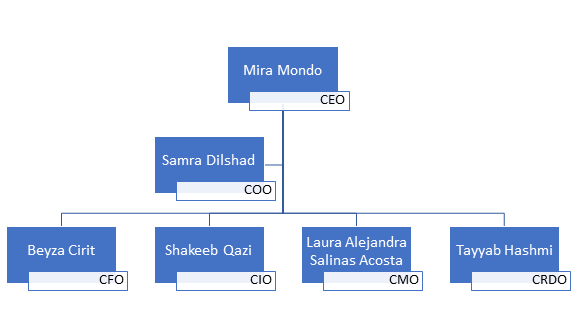 **R&D for Product/Service** AutLog business model primarily operates on Block chain as a service(Baas) whereby a software will be provided to the car manufacturers to be installed in the cars. It will only be installed in the new cars produced as they have the capability and sophisticated technology to integrate this service. The important area to be considered is the extraction of the data from the cars. IoT is a relatively emerging technology in this area. With IoT it is possible to extract the relevant car data and store it on a platform. Our product leverages this technology in transmitting the data to the platform in order to maintain the human intervention to the bare minimum. In terms of platform, a private block chain will be developed. A dashboard will be available for car manufacturers whereby they can view the mileage history and repairs and maintenance of the cars. A unique car ID will be assigned to each car for tracking purposes. For the private sellers and dealers, an app will be available on both iOS and Android. Private sellers can share the certified car information with their prospective buyers. This information of mileage and repairs will be synchronized with the information available to car manufacturers in order to avoid any discrepancy AutoLog's product development model follows agile methodology whereby we will continuously take input from our customers to tailor the product as per the customers needs and market development. **Market Analysis** One of the characteristics of the automotive industry is that it will be disrupted by the block chain technology. The revenue from the car manufacturers in Germany have been increasing during the last 5 years (2). As well as the revenue from car dealers in Germany (3). It can be inferred that there is a promising potential for this industry. (See Fig.1 and Fig.2) 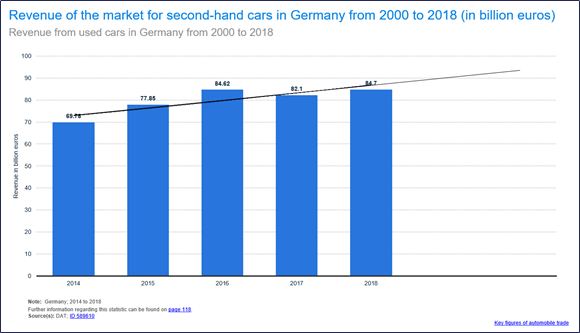 Figure 1 Revenue of market of Second-Hand cars in Germnay 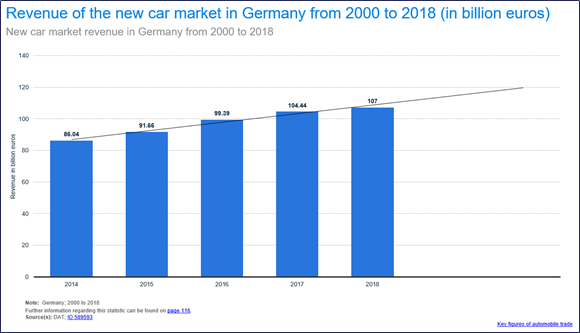 Figure 2 Revenue of new car market in Germany Car manufacturers and car dealers are the potential customers. Therefore, the calculation of TAM, SAM and SOM was made on the total number of cars produced by car manufacturers. 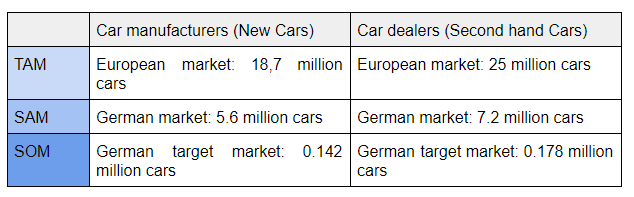 There are three identified competitors. The first one is Blocko a Korean startup offering a block chain enterprise platform, one of their services are for car manufacturing companies. The next two are direct competitors. Vechain a european company, their main focus is on tracking the life cycle of the car by using block chain. Their service is limited to manufacturing companies. The third one is Carvertical, which is verifying the car's history by block chain, this company offers the solution to the drivers and works in collaboration with third parties, such as the police. AutoLog’s competitive advantage is that it integrates the car manufacturer, car owners, car dealers and third parties all in one service. As AutoLog Team is based in Germany and there is no competitor in German Market, therefore, AutoLog’s first target is to capture German Market and then expand in Europe sequentially. **Sales and Marketing** AutoLog’s revenue stream comes from car manufacturers, car dealers and car users who want to sell their cars and receive an authorized form of car data for sharing purpose. Car Manufacturers are charged with subscription fee in return for Ease of Tracking Car Performance. Car Dealers are also charged with subscription fee and Car users are charged with one time data transfer fee in return for Fair Trade Immutable car history. Pricing strategy is based on different price brackets for each customer group. Price brackets for Car Manufacturers is based on number of Cars Manufactured, for Car dealers is based on number of Cars sold and for car users there is a flat data transfer fee. **Financial data** AutoLog's main revenue streams are subscription fee from car manufacturers, subscription fee from car dealer and data transfer fee from private sellers. Subscription fee for car manufacturers is €200,00 , €450,000 and €600,000 for car volume respectively 0-200,000 , 200,001-400,000 and 400,000+. Subscription fee for car manufacturers is €300 , €500 and €650 for car volume respectively 0-200 , 201-400 and 400+. Data transfer fee is €3 for private sellers. Since increasing transaction volume is expected in coming years, the revenue volume is also increasing. According to our estimations, we start to get revenue in the 1st year from the car manufacturer side. The new produced cars, in which our technology is integrated, are supposed to be in the 2nd hand car market after 2 years. Therefore, we start getting revenue from dealers and individual car users in the 3rd year. In the 3rd year we are expecting to capture the 1% of our target market. In the 4th year, we estimate that our capture will increase by 3% and then by 2% in the 5th year. In the 1st and the 2nd year we are expecting € 206,250 and € 494,000 revenue from the car manufacturers. In the 3rd, 4th, 5th years we are expecting sharp increasing up to € 828,000 , € 1,497,000 , € 1,998,000 respectively with the data transfer fee and the subscription fee from the car dealers. AutoLog's main cost items are initial platform cost, onboarding deployment cost, cloud cost, onboarding maintenance cost, salary and rent. We are estimating increasing trend in out cost structure as our total number of transaction increases. In the first year we are expecting € 517,000 total cost to initiate our operations. In the 1st and 2nd year, our total cost will decrease slightly respectively to € 412,460 and € 428,945. In the 3rd, 4th and 5th year our cost will increase to € 650,297, € 673,188 and €697,483, respectively with the increasing transaction volume. After 2 years, 8 months we are expecting profit, which means that our break-even point is 2 year, 8 months. In this year and the 1st year, we are expecting € 517,000 and € 206,210 loss, while from the 2nd year we are expecting € 66,054, € 177,702, € 823,811, € 1,300,516 profit respectively **References** (1) https://www.invest-in-bavaria.com/en/range-of-sectors/automotive-industry.html (2) Koptyug, Evgeniya . (2019). Total revenue generated by German automobile manufacturers from 2004 to 2017 (in billion euros). 12.12.2019, from Statista Website: https://www.statista.com/statistics/810360/german-automobile-manufacturers-revenue/ (3) Koptyug,Evgeniya . (2019). Revenue of the market for second-hand cars in Germany from 2000 to 2018 (in billion euros). 12.12.2019, from Statista website: https://www.statista.com/statistics/589610/revenue-used-cars-germany/ |
| json metadata | {"tags":["blockchaintech","blockchaintechnology","dlt","blockchainrevolution"],"image":["https://cdn.steemitimages.com/DQmZsFseVuR6KpNDBNfFeZuKYNAfa6ryma8ctzNrSySaMuS/image.png","https://cdn.steemitimages.com/DQmRDmLXg9PjUe1BhpNyt8uxacQi5CjwoMWMHTM2eDeANfp/Figure%201%20Revenue%20of%20market%20of%20Second-Hand%20cars%20in%20Germnay.png","https://cdn.steemitimages.com/DQmcqgRVtfGkpgHXgPKPFHnPm8EWPatKsFfHEN7zr7xY1oh/Figure%202%20Revenue%20of%20new%20car%20market%20in%20Germany.png","https://cdn.steemitimages.com/DQmaJSyq8HqL7ktLwfcijobiFwa7KBKy5Uyvho4R1oHgYVY/TAM%20SAM%20SOM%20Table.PNG"],"links":["https://www.invest-in-bavaria.com/en/range-of-sectors/automotive-industry.html","https://www.statista.com/statistics/810360/german-automobile-manufacturers-revenue/","https://www.statista.com/statistics/589610/revenue-used-cars-germany/"],"app":"steemit/0.1","format":"markdown"} |
| Transaction Info | Block #40217601/Trx f8a39b818facc4932ef449ada6e1ef86614e3d18 |
View Raw JSON Data
{
"trx_id": "f8a39b818facc4932ef449ada6e1ef86614e3d18",
"block": 40217601,
"trx_in_block": 33,
"op_in_trx": 0,
"virtual_op": 0,
"timestamp": "2020-01-24T20:10:03",
"op": [
"comment",
{
"parent_author": "",
"parent_permlink": "blockchain",
"author": "samradilshad",
"permlink": "autolog-executive-summary",
"title": "AutoLog: “Be connected and Drive to the Future”",
"body": "**Introduction**\nAutoLog is a startup company that will offer a digital logbook based on a block chain solution to store all data and history of a car; from mileage to car services, maintenance and repairs. Our objective is to provide a transparent and secure platform in order to improve vehicle information management and sharing across the industry.\n\nAt the beginning, the company will enter the German market, and once underway, the scope will expand to include other parts of Europe and Asia.\n\n**The Company and the management**\nThe company will be located in Munich, the capital of Bavaria. The first reason is that many German car manufacturers are located in the south, around 26% of cars sold in Germany are produced in Bavaria (1). \n\nThe company is owned and managed by the six partners, Mira Mondo as Chief Executive Officer, Samra Dilshad as Chief Operating Officer, Beyza Cirit as Chief Financial Officer, Shakeeb Qazi as Chief Information Officer, Laura Alejandra Salinas Acosta as Chief Marketing Officer and Tayyab Hashmi as Chief Research and Development Officer.\n \n\n\n**R&D for Product/Service**\nAutLog business model primarily operates on Block chain as a service(Baas) whereby a software will be provided to the car manufacturers to be installed in the cars. It will only be installed in the new cars produced as they have the capability and sophisticated technology to integrate this service. \n\nThe important area to be considered is the extraction of the data from the cars. IoT is a relatively emerging technology in this area. With IoT it is possible to extract the relevant car data and store it on a platform. Our product leverages this technology in transmitting the data to the platform in order to maintain the human intervention to the bare minimum. \n\nIn terms of platform, a private block chain will be developed. A dashboard will be available for car manufacturers whereby they can view the mileage history and repairs and maintenance of the cars. A unique car ID will be assigned to each car for tracking purposes. \n\nFor the private sellers and dealers, an app will be available on both iOS and Android. Private sellers can share the certified car information with their prospective buyers. This information of mileage and repairs will be synchronized with the information available to car manufacturers in order to avoid any discrepancy\n\nAutoLog's product development model follows agile methodology whereby we will continuously take input from our customers to tailor the product as per the customers needs and market development. \n\n**Market Analysis**\nOne of the characteristics of the automotive industry is that it will be disrupted by the block chain technology. The revenue from the car manufacturers in Germany have been increasing during the last 5 years (2). As well as the revenue from car dealers in Germany (3). It can be inferred that there is a promising potential for this industry. (See Fig.1 and Fig.2)\n\n\nFigure 1 Revenue of market of Second-Hand cars in Germnay\n\n\nFigure 2 Revenue of new car market in Germany\n\nCar manufacturers and car dealers are the potential customers. Therefore, the calculation of TAM, SAM and SOM was made on the total number of cars produced by car manufacturers. \n\n\nThere are three identified competitors. The first one is Blocko a Korean startup offering a block chain enterprise platform, one of their services are for car manufacturing companies. The next two are direct competitors. Vechain a european company, their main focus is on tracking the life cycle of the car by using block chain. Their service is limited to manufacturing companies. The third one is Carvertical, which is verifying the car's history by block chain, this company offers the solution to the drivers and works in collaboration with third parties, such as the police. \nAutoLog’s competitive advantage is that it integrates the car manufacturer, car owners, car dealers and third parties all in one service. As AutoLog Team is based in Germany and there is no competitor in German Market, therefore, AutoLog’s first target is to capture German Market and then expand in Europe sequentially. \n\n**Sales and Marketing**\nAutoLog’s revenue stream comes from car manufacturers, car dealers and car users who want to sell their cars and receive an authorized form of car data for sharing purpose. Car Manufacturers are charged with subscription fee in return for Ease of Tracking Car Performance. Car Dealers are also charged with subscription fee and Car users are charged with one time data transfer fee in return for Fair Trade Immutable car history. \nPricing strategy is based on different price brackets for each customer group. Price brackets for Car Manufacturers is based on number of Cars Manufactured, for Car dealers is based on number of Cars sold and for car users there is a flat data transfer fee.\n\n**Financial data**\nAutoLog's main revenue streams are subscription fee from car manufacturers, subscription fee from car dealer and data transfer fee from private sellers. Subscription fee for car manufacturers is €200,00 , €450,000 and €600,000 for car volume respectively 0-200,000 , 200,001-400,000 and 400,000+. Subscription fee for car manufacturers is €300 , €500 and €650 for car volume respectively 0-200 , 201-400 and 400+. Data transfer fee is €3 for private sellers. Since increasing transaction volume is expected in coming years, the revenue volume is also increasing. According to our estimations, we start to get revenue in the 1st year from the car manufacturer side. The new produced cars, in which our technology is integrated, are supposed to be in the 2nd hand car market after 2 years. Therefore, we start getting revenue from dealers and individual car users in the 3rd year. In the 3rd year we are expecting to capture the 1% of our target market. In the 4th year, we estimate that our capture will increase by 3% and then by 2% in the 5th year. In the 1st and the 2nd year we are expecting € 206,250 and € 494,000 revenue from the car manufacturers. In the 3rd, 4th, 5th years we are expecting sharp increasing up to € 828,000 , € 1,497,000 , € 1,998,000 respectively with the data transfer fee and the subscription fee from the car dealers. \nAutoLog's main cost items are initial platform cost, onboarding deployment cost, cloud cost, onboarding maintenance cost, salary and rent. We are estimating increasing trend in out cost structure as our total number of transaction increases. In the first year we are expecting € 517,000 total cost to initiate our operations. In the 1st and 2nd year, our total cost will decrease slightly respectively to € 412,460 and € 428,945. In the 3rd, 4th and 5th year our cost will increase to € 650,297, € 673,188 and €697,483, respectively with the increasing transaction volume. \nAfter 2 years, 8 months we are expecting profit, which means that our break-even point is 2 year, 8 months. In this year and the 1st year, we are expecting € 517,000 and € 206,210 loss, while from the 2nd year we are expecting € 66,054, € 177,702, € 823,811, € 1,300,516 profit respectively\n\n\n\n\n**References** \n(1)\thttps://www.invest-in-bavaria.com/en/range-of-sectors/automotive-industry.html\n\n(2)\tKoptyug, Evgeniya . (2019). Total revenue generated by German automobile manufacturers from 2004 to 2017 (in billion euros). 12.12.2019, from Statista Website: https://www.statista.com/statistics/810360/german-automobile-manufacturers-revenue/\n\n(3)\tKoptyug,Evgeniya . (2019). Revenue of the market for second-hand cars in Germany from 2000 to 2018 (in billion euros). 12.12.2019, from Statista website: https://www.statista.com/statistics/589610/revenue-used-cars-germany/",
"json_metadata": "{\"tags\":[\"blockchaintech\",\"blockchaintechnology\",\"dlt\",\"blockchainrevolution\"],\"image\":[\"https://cdn.steemitimages.com/DQmZsFseVuR6KpNDBNfFeZuKYNAfa6ryma8ctzNrSySaMuS/image.png\",\"https://cdn.steemitimages.com/DQmRDmLXg9PjUe1BhpNyt8uxacQi5CjwoMWMHTM2eDeANfp/Figure%201%20Revenue%20of%20market%20of%20Second-Hand%20cars%20in%20Germnay.png\",\"https://cdn.steemitimages.com/DQmcqgRVtfGkpgHXgPKPFHnPm8EWPatKsFfHEN7zr7xY1oh/Figure%202%20Revenue%20of%20new%20car%20market%20in%20Germany.png\",\"https://cdn.steemitimages.com/DQmaJSyq8HqL7ktLwfcijobiFwa7KBKy5Uyvho4R1oHgYVY/TAM%20SAM%20SOM%20Table.PNG\"],\"links\":[\"https://www.invest-in-bavaria.com/en/range-of-sectors/automotive-industry.html\",\"https://www.statista.com/statistics/810360/german-automobile-manufacturers-revenue/\",\"https://www.statista.com/statistics/589610/revenue-used-cars-germany/\"],\"app\":\"steemit/0.1\",\"format\":\"markdown\"}"
}
]
}samradilshadpublished a new post: autolog-executive-summary2020/01/24 20:08:24
samradilshadpublished a new post: autolog-executive-summary
2020/01/24 20:08:24
| parent author | |
| parent permlink | blockchain |
| author | samradilshad |
| permlink | autolog-executive-summary |
| title | AutoLog: “Be connected and Drive to the Future” |
| body | **Introduction** AutoLog is a startup company that will offer a digital logbook based on a block chain solution to store all data and history of a car; from mileage to car services, maintenance and repairs. Our objective is to provide a transparent and secure platform in order to improve vehicle information management and sharing across the industry. At the beginning, the company will enter the German market, and once underway, the scope will expand to include other parts of Europe and Asia. **The Company and the management** The company will be located in Munich, the capital of Bavaria. The first reason is that many German car manufacturers are located in the south, around 26% of cars sold in Germany are produced in Bavaria (1). The company is owned and managed by the six partners, Mira Mondo as Chief Executive Officer, Samra Dilshad as Chief Operating Officer, Beyza Cirit as Chief Financial Officer, Shakeeb Qazi as Chief Information Officer, Laura Alejandra Salinas Acosta as Chief Marketing Officer and Tayyab Hashmi as Chief Research and Development Officer.  **R&D for Product/Service** AutLog business model primarily operates on Block chain as a service(Baas) whereby a software will be provided to the car manufacturers to be installed in the cars. It will only be installed in the new cars produced as they have the capability and sophisticated technology to integrate this service. The important area to be considered is the extraction of the data from the cars. IoT is a relatively emerging technology in this area. With IoT it is possible to extract the relevant car data and store it on a platform. Our product leverages this technology in transmitting the data to the platform in order to maintain the human intervention to the bare minimum. In terms of platform, a private block chain will be developed. A dashboard will be available for car manufacturers whereby they can view the mileage history and repairs and maintenance of the cars. A unique car ID will be assigned to each car for tracking purposes. For the private sellers and dealers, an app will be available on both iOS and Android. Private sellers can share the certified car information with their prospective buyers. This information of mileage and repairs will be synchronized with the information available to car manufacturers in order to avoid any discrepancy AutoLog's product development model follows agile methodology whereby we will continuously take input from our customers to tailor the product as per the customers needs and market development. **Market Analysis** One of the characteristics of the automotive industry is that it will be disrupted by the block chain technology. The revenue from the car manufacturers in Germany have been increasing during the last 5 years (2). As well as the revenue from car dealers in Germany (3). It can be inferred that there is a promising potential for this industry. (See Fig.1 and Fig.2)  Figure 1 Revenue of market of Second-Hand cars in Germnay  Figure 2 Revenue of new car market in Germany Car manufacturers and car dealers are the potential customers. Therefore, the calculation of TAM, SAM and SOM was made on the total number of cars produced by car manufacturers.  There are three identified competitors. The first one is Blocko a Korean startup offering a block chain enterprise platform, one of their services are for car manufacturing companies. The next two are direct competitors. Vechain a european company, their main focus is on tracking the life cycle of the car by using block chain. Their service is limited to manufacturing companies. The third one is Carvertical, which is verifying the car's history by block chain, this company offers the solution to the drivers and works in collaboration with third parties, such as the police. AutoLog’s competitive advantage is that it integrates the car manufacturer, car owners, car dealers and third parties all in one service. As AutoLog Team is based in Germany and there is no competitor in German Market, therefore, AutoLog’s first target is to capture German Market and then expand in Europe sequentially. **Sales and Marketing** AutoLog’s revenue stream comes from car manufacturers, car dealers and car users who want to sell their cars and receive an authorized form of car data for sharing purpose. Car Manufacturers are charged with subscription fee in return for Ease of Tracking Car Performance. Car Dealers are also charged with subscription fee and Car users are charged with one time data transfer fee in return for Fair Trade Immutable car history. Pricing strategy is based on different price brackets for each customer group. Price brackets for Car Manufacturers is based on number of Cars Manufactured, for Car dealers is based on number of Cars sold and for car users there is a flat data transfer fee. **Financial data** AutoLog's main revenue streams are subscription fee from car manufacturers, subscription fee from car dealer and data transfer fee from private sellers. Subscription fee for car manufacturers is €200,00 , €450,000 and €600,000 for car volume respectively 0-200,000 , 200,001-400,000 and 400,000+. Subscription fee for car manufacturers is €300 , €500 and €650 for car volume respectively 0-200 , 201-400 and 400+. Data transfer fee is €3 for private sellers. Since increasing transaction volume is expected in coming years, the revenue volume is also increasing. According to our estimations, we start to get revenue in the 1st year from the car manufacturer side. The new produced cars, in which our technology is integrated, are supposed to be in the 2nd hand car market after 2 years. Therefore, we start getting revenue from dealers and individual car users in the 3rd year. In the 3rd year we are expecting to capture the 1% of our target market. In the 4th year, we estimate that our capture will increase by 3% and then by 2% in the 5th year. In the 1st and the 2nd year we are expecting € 206,250 and € 494,000 revenue from the car manufacturers. In the 3rd, 4th, 5th years we are expecting sharp increasing up to € 828,000 , € 1,497,000 , € 1,998,000 respectively with the data transfer fee and the subscription fee from the car dealers. AutoLog's main cost items are initial platform cost, onboarding deployment cost, cloud cost, onboarding maintenance cost, salary and rent. We are estimating increasing trend in out cost structure as our total number of transaction increases. In the first year we are expecting € 517,000 total cost to initiate our operations. In the 1st and 2nd year, our total cost will decrease slightly respectively to € 412,460 and € 428,945. In the 3rd, 4th and 5th year our cost will increase to € 650,297, € 673,188 and €697,483, respectively with the increasing transaction volume. After 2 years, 8 months we are expecting profit, which means that our break-even point is 2 year, 8 months. In this year and the 1st year, we are expecting € 517,000 and € 206,210 loss, while from the 2nd year we are expecting € 66,054, € 177,702, € 823,811, € 1,300,516 profit respectively **References** (1) https://www.invest-in-bavaria.com/en/range-of-sectors/automotive-industry.html (2) Koptyug, Evgeniya . (2019). Total revenue generated by German automobile manufacturers from 2004 to 2017 (in billion euros). 12.12.2019, from Statista Website: https://www.statista.com/statistics/810360/german-automobile-manufacturers-revenue/ (3) Koptyug,Evgeniya . (2019). Revenue of the market for second-hand cars in Germany from 2000 to 2018 (in billion euros). 12.12.2019, from Statista website: https://www.statista.com/statistics/589610/revenue-used-cars-germany/ |
| json metadata | {"tags":["blockchains","blockchaintech","blockchaintechnology","dlt","blockchainrevolution"],"image":["https://cdn.steemitimages.com/DQmZsFseVuR6KpNDBNfFeZuKYNAfa6ryma8ctzNrSySaMuS/image.png","https://cdn.steemitimages.com/DQmRDmLXg9PjUe1BhpNyt8uxacQi5CjwoMWMHTM2eDeANfp/Figure%201%20Revenue%20of%20market%20of%20Second-Hand%20cars%20in%20Germnay.png","https://cdn.steemitimages.com/DQmcqgRVtfGkpgHXgPKPFHnPm8EWPatKsFfHEN7zr7xY1oh/Figure%202%20Revenue%20of%20new%20car%20market%20in%20Germany.png","https://cdn.steemitimages.com/DQmaJSyq8HqL7ktLwfcijobiFwa7KBKy5Uyvho4R1oHgYVY/TAM%20SAM%20SOM%20Table.PNG"],"links":["https://www.invest-in-bavaria.com/en/range-of-sectors/automotive-industry.html","https://www.statista.com/statistics/810360/german-automobile-manufacturers-revenue/","https://www.statista.com/statistics/589610/revenue-used-cars-germany/"],"app":"steemit/0.1","format":"markdown"} |
| Transaction Info | Block #40217568/Trx 495107916a3813fcdc4ac5fb89da3af1e912f62a |
View Raw JSON Data
{
"trx_id": "495107916a3813fcdc4ac5fb89da3af1e912f62a",
"block": 40217568,
"trx_in_block": 37,
"op_in_trx": 0,
"virtual_op": 0,
"timestamp": "2020-01-24T20:08:24",
"op": [
"comment",
{
"parent_author": "",
"parent_permlink": "blockchain",
"author": "samradilshad",
"permlink": "autolog-executive-summary",
"title": "AutoLog: “Be connected and Drive to the Future”",
"body": "**Introduction**\nAutoLog is a startup company that will offer a digital logbook based on a block chain solution to store all data and history of a car; from mileage to car services, maintenance and repairs. Our objective is to provide a transparent and secure platform in order to improve vehicle information management and sharing across the industry.\n\nAt the beginning, the company will enter the German market, and once underway, the scope will expand to include other parts of Europe and Asia.\n\n**The Company and the management**\nThe company will be located in Munich, the capital of Bavaria. The first reason is that many German car manufacturers are located in the south, around 26% of cars sold in Germany are produced in Bavaria (1). \n\nThe company is owned and managed by the six partners, Mira Mondo as Chief Executive Officer, Samra Dilshad as Chief Operating Officer, Beyza Cirit as Chief Financial Officer, Shakeeb Qazi as Chief Information Officer, Laura Alejandra Salinas Acosta as Chief Marketing Officer and Tayyab Hashmi as Chief Research and Development Officer.\n \n\n\n**R&D for Product/Service**\nAutLog business model primarily operates on Block chain as a service(Baas) whereby a software will be provided to the car manufacturers to be installed in the cars. It will only be installed in the new cars produced as they have the capability and sophisticated technology to integrate this service. \n\nThe important area to be considered is the extraction of the data from the cars. IoT is a relatively emerging technology in this area. With IoT it is possible to extract the relevant car data and store it on a platform. Our product leverages this technology in transmitting the data to the platform in order to maintain the human intervention to the bare minimum. \n\nIn terms of platform, a private block chain will be developed. A dashboard will be available for car manufacturers whereby they can view the mileage history and repairs and maintenance of the cars. A unique car ID will be assigned to each car for tracking purposes. \n\nFor the private sellers and dealers, an app will be available on both iOS and Android. Private sellers can share the certified car information with their prospective buyers. This information of mileage and repairs will be synchronized with the information available to car manufacturers in order to avoid any discrepancy\n\nAutoLog's product development model follows agile methodology whereby we will continuously take input from our customers to tailor the product as per the customers needs and market development. \n\n**Market Analysis**\nOne of the characteristics of the automotive industry is that it will be disrupted by the block chain technology. The revenue from the car manufacturers in Germany have been increasing during the last 5 years (2). As well as the revenue from car dealers in Germany (3). It can be inferred that there is a promising potential for this industry. (See Fig.1 and Fig.2)\n\n\nFigure 1 Revenue of market of Second-Hand cars in Germnay\n\n\nFigure 2 Revenue of new car market in Germany\n\nCar manufacturers and car dealers are the potential customers. Therefore, the calculation of TAM, SAM and SOM was made on the total number of cars produced by car manufacturers. \n\n\nThere are three identified competitors. The first one is Blocko a Korean startup offering a block chain enterprise platform, one of their services are for car manufacturing companies. The next two are direct competitors. Vechain a european company, their main focus is on tracking the life cycle of the car by using block chain. Their service is limited to manufacturing companies. The third one is Carvertical, which is verifying the car's history by block chain, this company offers the solution to the drivers and works in collaboration with third parties, such as the police. \nAutoLog’s competitive advantage is that it integrates the car manufacturer, car owners, car dealers and third parties all in one service. As AutoLog Team is based in Germany and there is no competitor in German Market, therefore, AutoLog’s first target is to capture German Market and then expand in Europe sequentially. \n\n**Sales and Marketing**\nAutoLog’s revenue stream comes from car manufacturers, car dealers and car users who want to sell their cars and receive an authorized form of car data for sharing purpose. Car Manufacturers are charged with subscription fee in return for Ease of Tracking Car Performance. Car Dealers are also charged with subscription fee and Car users are charged with one time data transfer fee in return for Fair Trade Immutable car history. \nPricing strategy is based on different price brackets for each customer group. Price brackets for Car Manufacturers is based on number of Cars Manufactured, for Car dealers is based on number of Cars sold and for car users there is a flat data transfer fee.\n\n**Financial data**\nAutoLog's main revenue streams are subscription fee from car manufacturers, subscription fee from car dealer and data transfer fee from private sellers. Subscription fee for car manufacturers is €200,00 , €450,000 and €600,000 for car volume respectively 0-200,000 , 200,001-400,000 and 400,000+. Subscription fee for car manufacturers is €300 , €500 and €650 for car volume respectively 0-200 , 201-400 and 400+. Data transfer fee is €3 for private sellers. Since increasing transaction volume is expected in coming years, the revenue volume is also increasing. According to our estimations, we start to get revenue in the 1st year from the car manufacturer side. The new produced cars, in which our technology is integrated, are supposed to be in the 2nd hand car market after 2 years. Therefore, we start getting revenue from dealers and individual car users in the 3rd year. In the 3rd year we are expecting to capture the 1% of our target market. In the 4th year, we estimate that our capture will increase by 3% and then by 2% in the 5th year. In the 1st and the 2nd year we are expecting € 206,250 and € 494,000 revenue from the car manufacturers. In the 3rd, 4th, 5th years we are expecting sharp increasing up to € 828,000 , € 1,497,000 , € 1,998,000 respectively with the data transfer fee and the subscription fee from the car dealers. \nAutoLog's main cost items are initial platform cost, onboarding deployment cost, cloud cost, onboarding maintenance cost, salary and rent. We are estimating increasing trend in out cost structure as our total number of transaction increases. In the first year we are expecting € 517,000 total cost to initiate our operations. In the 1st and 2nd year, our total cost will decrease slightly respectively to € 412,460 and € 428,945. In the 3rd, 4th and 5th year our cost will increase to € 650,297, € 673,188 and €697,483, respectively with the increasing transaction volume. \nAfter 2 years, 8 months we are expecting profit, which means that our break-even point is 2 year, 8 months. In this year and the 1st year, we are expecting € 517,000 and € 206,210 loss, while from the 2nd year we are expecting € 66,054, € 177,702, € 823,811, € 1,300,516 profit respectively\n\n\n\n\n**References** \n(1)\thttps://www.invest-in-bavaria.com/en/range-of-sectors/automotive-industry.html\n\n(2)\tKoptyug, Evgeniya . (2019). Total revenue generated by German automobile manufacturers from 2004 to 2017 (in billion euros). 12.12.2019, from Statista Website: https://www.statista.com/statistics/810360/german-automobile-manufacturers-revenue/\n\n(3)\tKoptyug,Evgeniya . (2019). Revenue of the market for second-hand cars in Germany from 2000 to 2018 (in billion euros). 12.12.2019, from Statista website: https://www.statista.com/statistics/589610/revenue-used-cars-germany/",
"json_metadata": "{\"tags\":[\"blockchains\",\"blockchaintech\",\"blockchaintechnology\",\"dlt\",\"blockchainrevolution\"],\"image\":[\"https://cdn.steemitimages.com/DQmZsFseVuR6KpNDBNfFeZuKYNAfa6ryma8ctzNrSySaMuS/image.png\",\"https://cdn.steemitimages.com/DQmRDmLXg9PjUe1BhpNyt8uxacQi5CjwoMWMHTM2eDeANfp/Figure%201%20Revenue%20of%20market%20of%20Second-Hand%20cars%20in%20Germnay.png\",\"https://cdn.steemitimages.com/DQmcqgRVtfGkpgHXgPKPFHnPm8EWPatKsFfHEN7zr7xY1oh/Figure%202%20Revenue%20of%20new%20car%20market%20in%20Germany.png\",\"https://cdn.steemitimages.com/DQmaJSyq8HqL7ktLwfcijobiFwa7KBKy5Uyvho4R1oHgYVY/TAM%20SAM%20SOM%20Table.PNG\"],\"links\":[\"https://www.invest-in-bavaria.com/en/range-of-sectors/automotive-industry.html\",\"https://www.statista.com/statistics/810360/german-automobile-manufacturers-revenue/\",\"https://www.statista.com/statistics/589610/revenue-used-cars-germany/\"],\"app\":\"steemit/0.1\",\"format\":\"markdown\"}"
}
]
}samradilshadpublished a new post: autolog-executive-summary2020/01/24 20:06:36
samradilshadpublished a new post: autolog-executive-summary
2020/01/24 20:06:36
| parent author | |
| parent permlink | blockchain |
| author | samradilshad |
| permlink | autolog-executive-summary |
| title | AutoLog: “Be connected and drive to the future” |
| body | @@ -1,16 +1,33 @@ +**Introduction**%0A AutoLog is a sta @@ -492,16 +492,50 @@ Asia.%0A%0A - +**The Company and the management** %0AThe com @@ -1076,16 +1076,137 @@ icer.%0A %0A - +!%5B%5D(https://cdn.steemitimages.com/DQmZsFseVuR6KpNDBNfFeZuKYNAfa6ryma8ctzNrSySaMuS/image.png)%0A%0A**R&D for Product/Service** %0AAutLog @@ -2652,16 +2652,36 @@ ment. %0A%0A +**Market Analysis**%0A One of t @@ -4783,16 +4783,39 @@ ally. %0A%0A - +**Sales and Marketing** %0AAutoLog @@ -5497,16 +5497,34 @@ r fee.%0A%0A - +**Financial data** %0AAutoLog @@ -7735,17 +7735,18 @@ ely%0A%0A%0A%0A%0A -%0A +** Referenc @@ -7747,16 +7747,18 @@ ferences +** %0A(1)%09ht |
| json metadata | {"tags":["blockchains","blockchaintech","blockchaintechnology","dlt","blockchainrevolution"],"image":["https://cdn.steemitimages.com/DQmZsFseVuR6KpNDBNfFeZuKYNAfa6ryma8ctzNrSySaMuS/image.png","https://cdn.steemitimages.com/DQmRDmLXg9PjUe1BhpNyt8uxacQi5CjwoMWMHTM2eDeANfp/Figure%201%20Revenue%20of%20market%20of%20Second-Hand%20cars%20in%20Germnay.png","https://cdn.steemitimages.com/DQmcqgRVtfGkpgHXgPKPFHnPm8EWPatKsFfHEN7zr7xY1oh/Figure%202%20Revenue%20of%20new%20car%20market%20in%20Germany.png","https://cdn.steemitimages.com/DQmaJSyq8HqL7ktLwfcijobiFwa7KBKy5Uyvho4R1oHgYVY/TAM%20SAM%20SOM%20Table.PNG"],"links":["https://www.invest-in-bavaria.com/en/range-of-sectors/automotive-industry.html","https://www.statista.com/statistics/810360/german-automobile-manufacturers-revenue/","https://www.statista.com/statistics/589610/revenue-used-cars-germany/"],"app":"steemit/0.1","format":"markdown"} |
| Transaction Info | Block #40217532/Trx 5b45a4d53f5b69e0a3c5bff222161a60481809b1 |
View Raw JSON Data
{
  "trx_id": "5b45a4d53f5b69e0a3c5bff222161a60481809b1",
  "block": 40217532,
  "trx_in_block": 20,
  "op_in_trx": 0,
  "virtual_op": 0,
  "timestamp": "2020-01-24T20:06:36",
  "op": [
    "comment",
    {
      "parent_author": "",
      "parent_permlink": "blockchain",
      "author": "samradilshad",
      "permlink": "autolog-executive-summary",
      "title": "AutoLog: “Be connected and drive to the future”",
      "body": "@@ -1,16 +1,33 @@\n+**Introduction**%0A\n AutoLog is a sta\n@@ -492,16 +492,50 @@\n  Asia.%0A%0A\n-\n \n+**The Company and the management**\n %0AThe com\n@@ -1076,16 +1076,137 @@\n icer.%0A %0A\n-\n \n+!%5B%5D(https://cdn.steemitimages.com/DQmZsFseVuR6KpNDBNfFeZuKYNAfa6ryma8ctzNrSySaMuS/image.png)%0A%0A**R&D for Product/Service**\n %0AAutLog \n@@ -2652,16 +2652,36 @@\n ment. %0A%0A\n+**Market Analysis**%0A\n One of t\n@@ -4783,16 +4783,39 @@\n ally. %0A%0A\n-\n \n+**Sales and Marketing**\n %0AAutoLog\n@@ -5497,16 +5497,34 @@\n r fee.%0A%0A\n-\n \n+**Financial data**\n %0AAutoLog\n@@ -7735,17 +7735,18 @@\n ely%0A%0A%0A%0A%0A\n-%0A\n+**\n Referenc\n@@ -7747,16 +7747,18 @@\n ferences\n+**\n  %0A(1)%09ht\n",
      "json_metadata": "{\"tags\":[\"blockchains\",\"blockchaintech\",\"blockchaintechnology\",\"dlt\",\"blockchainrevolution\"],\"image\":[\"https://cdn.steemitimages.com/DQmZsFseVuR6KpNDBNfFeZuKYNAfa6ryma8ctzNrSySaMuS/image.png\",\"https://cdn.steemitimages.com/DQmRDmLXg9PjUe1BhpNyt8uxacQi5CjwoMWMHTM2eDeANfp/Figure%201%20Revenue%20of%20market%20of%20Second-Hand%20cars%20in%20Germnay.png\",\"https://cdn.steemitimages.com/DQmcqgRVtfGkpgHXgPKPFHnPm8EWPatKsFfHEN7zr7xY1oh/Figure%202%20Revenue%20of%20new%20car%20market%20in%20Germany.png\",\"https://cdn.steemitimages.com/DQmaJSyq8HqL7ktLwfcijobiFwa7KBKy5Uyvho4R1oHgYVY/TAM%20SAM%20SOM%20Table.PNG\"],\"links\":[\"https://www.invest-in-bavaria.com/en/range-of-sectors/automotive-industry.html\",\"https://www.statista.com/statistics/810360/german-automobile-manufacturers-revenue/\",\"https://www.statista.com/statistics/589610/revenue-used-cars-germany/\"],\"app\":\"steemit/0.1\",\"format\":\"markdown\"}"
    }
  ]
}samradilshadpublished a new post: autolog-executive-summary2020/01/24 20:02:45
samradilshadpublished a new post: autolog-executive-summary
2020/01/24 20:02:45
| parent author | |
| parent permlink | blockchain |
| author | samradilshad |
| permlink | autolog-executive-summary |
| title | AutoLog: “Be connected and drive to the future” |
| body | @@ -475,16 +475,17 @@ Asia.%0A%0A +%0A The comp |
| json metadata | {"tags":["autolog","automotive","securedata","vehiclerecord"],"image":["https://cdn.steemitimages.com/DQmRDmLXg9PjUe1BhpNyt8uxacQi5CjwoMWMHTM2eDeANfp/Figure%201%20Revenue%20of%20market%20of%20Second-Hand%20cars%20in%20Germnay.png","https://cdn.steemitimages.com/DQmcqgRVtfGkpgHXgPKPFHnPm8EWPatKsFfHEN7zr7xY1oh/Figure%202%20Revenue%20of%20new%20car%20market%20in%20Germany.png","https://cdn.steemitimages.com/DQmaJSyq8HqL7ktLwfcijobiFwa7KBKy5Uyvho4R1oHgYVY/TAM%20SAM%20SOM%20Table.PNG"],"links":["https://www.invest-in-bavaria.com/en/range-of-sectors/automotive-industry.html","https://www.statista.com/statistics/810360/german-automobile-manufacturers-revenue/","https://www.statista.com/statistics/589610/revenue-used-cars-germany/"],"app":"steemit/0.1","format":"markdown"} |
| Transaction Info | Block #40217455/Trx 248344975b9e0bfb8b3ed2322b140eb26ca8fd57 |
View Raw JSON Data
{
  "trx_id": "248344975b9e0bfb8b3ed2322b140eb26ca8fd57",
  "block": 40217455,
  "trx_in_block": 59,
  "op_in_trx": 0,
  "virtual_op": 0,
  "timestamp": "2020-01-24T20:02:45",
  "op": [
    "comment",
    {
      "parent_author": "",
      "parent_permlink": "blockchain",
      "author": "samradilshad",
      "permlink": "autolog-executive-summary",
      "title": "AutoLog: “Be connected and drive to the future”",
      "body": "@@ -475,16 +475,17 @@\n  Asia.%0A%0A\n+%0A\n The comp\n",
      "json_metadata": "{\"tags\":[\"autolog\",\"automotive\",\"securedata\",\"vehiclerecord\"],\"image\":[\"https://cdn.steemitimages.com/DQmRDmLXg9PjUe1BhpNyt8uxacQi5CjwoMWMHTM2eDeANfp/Figure%201%20Revenue%20of%20market%20of%20Second-Hand%20cars%20in%20Germnay.png\",\"https://cdn.steemitimages.com/DQmcqgRVtfGkpgHXgPKPFHnPm8EWPatKsFfHEN7zr7xY1oh/Figure%202%20Revenue%20of%20new%20car%20market%20in%20Germany.png\",\"https://cdn.steemitimages.com/DQmaJSyq8HqL7ktLwfcijobiFwa7KBKy5Uyvho4R1oHgYVY/TAM%20SAM%20SOM%20Table.PNG\"],\"links\":[\"https://www.invest-in-bavaria.com/en/range-of-sectors/automotive-industry.html\",\"https://www.statista.com/statistics/810360/german-automobile-manufacturers-revenue/\",\"https://www.statista.com/statistics/589610/revenue-used-cars-germany/\"],\"app\":\"steemit/0.1\",\"format\":\"markdown\"}"
    }
  ]
}steembeemsent 0.001 STEEM to @samradilshad- "💎 Awesome Community Service Offer, get all your upcoming posts automatically fully boosted, guaranteed tens of extra votes, passive curation earning and more, checkout http://www.steembeem.com 🤙 or ..."2020/01/24 19:53:12
steembeemsent 0.001 STEEM to @samradilshad- "💎 Awesome Community Service Offer, get all your upcoming posts automatically fully boosted, guaranteed tens of extra votes, passive curation earning and more, checkout http://www.steembeem.com 🤙 or ..."
2020/01/24 19:53:12
| from | steembeem |
| to | samradilshad |
| amount | 0.001 STEEM |
| memo | 💎 Awesome Community Service Offer, get all your upcoming posts automatically fully boosted, guaranteed tens of extra votes, passive curation earning and more, checkout http://www.steembeem.com 🤙 or activate it for one month by sending with only 1 STEEM 🤯 to @steembeem with memo: subscribe |
| Transaction Info | Block #40217264/Trx c6dfd37a586e9021ca96f41f8d5a76d09d81036e |
View Raw JSON Data
{
  "trx_id": "c6dfd37a586e9021ca96f41f8d5a76d09d81036e",
  "block": 40217264,
  "trx_in_block": 34,
  "op_in_trx": 0,
  "virtual_op": 0,
  "timestamp": "2020-01-24T19:53:12",
  "op": [
    "transfer",
    {
      "from": "steembeem",
      "to": "samradilshad",
      "amount": "0.001 STEEM",
      "memo": "💎 Awesome Community Service Offer, get all your upcoming posts automatically fully boosted, guaranteed tens of extra votes, passive curation earning and more, checkout http://www.steembeem.com 🤙 or activate it for one month by sending with only 1 STEEM 🤯 to @steembeem with memo: subscribe"
    }
  ]
}samradilshadpublished a new post: transparency-and-privacy-is-dlt-really-the-trust-technology2020/01/24 19:52:21
samradilshadpublished a new post: transparency-and-privacy-is-dlt-really-the-trust-technology
2020/01/24 19:52:21
| parent author | |
| parent permlink | blockchain |
| author | samradilshad |
| permlink | transparency-and-privacy-is-dlt-really-the-trust-technology |
| title | Transparency and Privacy – Is DLT Really the Trust Technology? |
| body | **ABSTRACT** DLT (Distributed Ledger Technology) is the underlying technology of a number of today's applications, which is now commonly referred to as “Blockchain Technology” in the media these days. Blockchain offers a disruptive approach to store information, make safe transactions, perform functions and enable trust in an open environment. It is also seen as a technological breakthrough for security and cryptography. Use cases of blockchain range from globally implemented cryptocurrency systems such as Bitcoin to smart contracts, smart networks via the Internet of Things, etc. [1]. *“I think that blockchain is nothing less than the second generation of the Internet. It will change every institution, in some ways more so than the first generation did.” (Don Tapscott, author of Blockchain Revolution (2016)).* Although blockchain technology has found increasing interest in recent years, data transparency, privacy and trust remain at the center of the discussion when the blockchain is used in several applications. The element of privacy is one of the frequently asked questions when it comes to transparency of blockchain technology. How it is transparent when the participants of the blockchain are pseudonyms? This paper describes the fundamental security features that are supported as basic requirements and building blocks for blockchain-based systems and provides an overview of how blockchains has the capability to build trust among unknown participants while maintaining a sufficient level of privacy and transparency at the same time. **INTRODUCTION** Since “Satoshi Nakamoto” published a white paper on Bitcoin and blockchain technology in 2008, it has been used as a tool to tackle trust issues and create transparency in transactions between independent participants [2]. Blockchain technology was developed as a method to verify the Bitcoin ownership of virtual currency. The original idea behind the creation of a blockchain is the digitization of trust, agreements and value, as well as a significant reduction in the time and cost of processing transactions to almost zero [3]. Blockchain is a shared and immutable digital ledger system that is implemented in a distributed manner and functions as a mechanism for the secure transfer of assets without intermediaries. In simple words, blockchain is a data structure that contains records of transactions and digital events while ensuring data transparency, security and decentralization. Once data is recorded on the digital ledger which is distributed over a network, it is almost impossible to corrupt it. It is a technology that facilitates the digital exchange of any valuable thing like land or cars can be stored and exchanged as a transaction on a blockchain. The innate properties of the blockchain are unlike any other technology, so it is often revered as a revolutionary technology. When the characteristics of decentralization, immutability, transparency and auditability are combined, the term “trustlessness” emerges. This trust, which is normally expected of suppliers to sell their services, is no longer necessary, thanks to blockchain [4]. **HOW DOES THE BLOCKCHAIN TECHNOLOGY WORKS?** To better understand blockchain, it is worth taking a look at traditional ledgers. These traditional ledgers are centralized and black-boxed, in which data is not completely visible to users and the central authority has complete control of the system and mediates each transaction. Blockchain allows the same record-keeping functionality but without the central authority. The question is how to guarantee that a blockchain transaction is valid if there is no central authority to confirm it. Blockchain solves this problem by decentralizing the ledger. The ledger is stored in several copies on a network of computers. Each time a transaction takes place on the blockchain, it is validated by all the participants. Each new transaction to be recorded is combined with other new transactions to form a block which is added as the most recent link in a long chain of transactions. This chain is the blockchain ledger which is maintained by all participants called nodes. This work of adding blocks is called "mining". There are two features which makes this system theoretically tamper-proof: a unique cryptographic fingerprint called Hash and a Consensus Protocol. To add a block into the blockchain, a hash which is unique to the block needs to be created by solving the extremely difficult mathematical puzzle. The miner who finds the eligible signature of block first, broadcast this block along with signature. All the network participants must validate and agree on the content of the distributed ledger. Therefore, a consensus model is required in each blockchain which ensures the validity of block and transactions in it. Consensus mechanism in the blockchain are used to avoid a central authority and track all transactions. There are various consensus models, one of them is proof-of-work which allows all miners in the blockchain to generate the next block in the chain. This is mainly done by solving extremely difficult cryptographic puzzles. The only node that solves the puzzle can first propose the next block, which is then checked by the other nodes to check the validity and the correct solution of the puzzle. The miner receives a reward for solving this puzzle and using a lot of computing/ electrical energy. Another consensus model called proof-of-stake is based on the idea that the more amount of stake a user has in the system, the more the system is likely to succeed and the less likely it is to undermine it. With this consensus protocol, it is not necessary to perform resource-intensive calculations (time, electricity, computing power), as can be found in the proof of work [5]. It is important to keep in mind that block chains are categorized in two main categories called public and private blockchains, with several variants. The most important difference is that no authority in public blockchain can deny permission to participate. They can also be described as the embodiment of social and political values such as transparency and the distribution of power. Public blockchains often use a consensus method that requires more than a trivial effort to prevent bad users from easily undermining the system. The reason these blockchains can work is that there are rewards for participating in the process. In private blockchains, a limited group of actors is allowed to access the ledger, verify it and add transactions. Private Blockchain is less transparent and decentralized than public ones. This allows conventional players like banks and governments to keep control of their blockchains. Another important characteristic of public blockchains which differentiate them with private blockchains is that they are created on “principle of anonymity”, while latter use participant’s identity to verify membership and access rights [6]. **BLOCKCHAIN: TRANSPARENCY AND PRIVACY** The degree of transparency offered by blockchain technology is one of its hallmarks. Its unique feature of transparency provides an unprecedented level of accountability. As every block of information is traceable, it obstructs any attempt to modify information singly, thereby having the potential to improve various processes employed in different industries. However, the ready availability of information to everyone, being one of the distinguishing characteristic of this technology, raises a question of privacy. For that, there are provisions in blockchain technology that safeguards the privacy of individuals and control over data. In that way, blockchain technology ensures transparency and privacy at the same time [7]. Although the technology is extremely private, the blockchain network offers unprecedented transparency in the case of its auditable and valid ledger of transactions. Once the network validates the transaction, it can no longer be manipulated, amended or removed and thus guarantee the immutability of the digital ledger. Since each block is linked to all blocks before and after it, the process of modifying the data in a block would require a lot of computational power, which makes it tremendously difficult to alter the record, because not only block with this record needs to be altered but all the blocks associated with it to avoid detection and it has to be done before any other node can add new blocks in the chain. So if hacker does not have more powerful computers than the rest of the nodes combined then adding blocks will conflict with the existing ones and changes will automatically be rejected by other nodes. Therefore, records are permanent and impossible to modify in the blockchain. Cryptography in the blockchain ensures secure data record. Each transaction in a blockchain is secured with a digital signature which confirms its authenticity. Once the network seals and validates each block cryptographically, it can no longer be tampered. If someone tries to change it, digital signature will no longer be valid and network will know that someone has attempted to alter it. The use of encryption and digital signatures makes the stored data on the blockchain tamper-proof. As the identity of the participant remains confidential, everyone can freely deal with the other person via the secure network. One of the main benefits of blockchain technology is complete anonymity and secure transactions. For many reasons, it is essential that participants maintain confidentiality and anonymity. For each transaction in centralized networks, the address is given out meaning that hackers can find the user's details. The blockchain protects addresses in a specific wallet by constantly changing addresses, which makes it difficult for hackers to track payments or transactions [8]. Blockchain is a decentralized technology in which there is no central control point. Instead, to validate the transactions to be added, blockchain uses consensus protocol across the network of nodes. In blockchain, all data is digitally recorded and shares a common history which is available to all participants in the blockchain network. All the participants must approve unanimously that it is the only version of truth in order to add a new block and must do it while ensuring its integrity [9]. It guarantees that the data mining nodes cannot play the system by always being able to solve the puzzles and thus control the blockchain and the transactions added to it. While manipulation of a traditional ledger requires an attack on the intermediary, a blockchain requires a simultaneous attack on each copy of the ledger. There can be no "fake ledger" because all users have their own original version, which they can use to verify the transaction. This eliminates the risk of fraudulent activity without the need to involve a third party. Since none of participants owns the source of information, blockchain technology increases trust and integrity in the flow of information in the trustless environment. In addition to the decentralization, blockchains are also distributed across peer-to-peer (P2P) network that is kept constantly synchronized and updated. Due to the very nature of network decentralization, there can never be any central points of failures within the system and a single computer cannot change them. If there is no hacking vulnerability in the system, there is no risk that the network will become malicious, which increases the reliability of the network. To hack a blockchain, a huge amount of computational power is required to access each instance (at least a 51% majority) of that blockchain and change all those instances simultaneously. There has been a debate that this makes small blockchain network vulnerable to attack but no verdict has been made yet. In any case, if the network is large, blockchain will be more secure. The security of a blockchain network depends on its infrastructure. Blockchain’s architecture includes public and private options, which differ on certain key points that result in the different level of security of blockchain. When evaluating the blockchains, it is very crucial to choose right blockchain architecture depending on the business type and the area where it is to be implemented, as different architecture provides different security level. In the public blockchain, anyone can participate and read. Public blockchain can be secured by only allowing authorized participants to write. Whereas in a private blockchain ownership model, only authorized participants can participate and read. Again, the writing option can only be assigned to a few. As there are many ways in which blockchain technology can be deployed, utmost care must be undertaken while deploying a private blockchain setup because despite its inherent security features, attackers can manipulate the vulnerabilities present in its infrastructure. Therefore, it demands an infrastructure with in-built security features that limit all users, including root-users and administrators, from accessing confidential information. Moreover, any attempt to alter data or encryption keys by any unauthorized person should be prevented at all costs by incorporating latest security features. Hence, with the aid of these features, blockchain network will have the required protection to prevent malicious activities from inside as well as outside [10]. **CONCLUSION** Considering all the features blockchain technology offers, it is a much better solution for storing and exchanging digital value than any existing technology as blockchain technology offers a way to reunite transparency and privacy. It’s the pseudonomity of the blockchain that allows it to remain transparent, because users are much more open in their way of interacting with technology, because actions cannot be traced back to an identity. While it is possible to verify and track all transactions in the decentralized ledger, the privacy offered by technology is one of the main reasons for its increasing acceptance among the general public. Cryptography, along with other practical methods of data security and privacy, is a key technology for the future advancement of the blockchain and its applications. Blockchain has proven itself robust and tamper-proof technology and brings more reliable and convenient services. However, immaturity and complexity of the technology can lead to security vulnerabilities and difficulties in the development and practical use. As it is already discussed that blockchain transparency and privacy also depends on its architecture chosen for deployment, but with properly implementation of technology, blockchain definitely provides wider and positive implications. These transparency and privacy properties of blockchain play a very important part in increasing level of trust that the blockchain can offer. As technology is still in its development phase, new features will likely to be introduced as it grows, this is where transparency, privacy and security will really begin to matter. **REFERENCES** [1] Blockchain: The future of the finance industry? (n.d.). Retrieved from Roland Berger: https://www.rolandberger.com/en/Point-of-View/Blockchain-The-future-of-the-finance-industry.html [2] Security and Privacy on Blockchain. (2019, January). ACM Computing Surveys, Vol. 1, No. 1, Article 1. [3] IBRAHIM, A. (n.d.). https://accid.org/wp-content/uploads/2019/04/Does_Blockchain_mean_higher_transparency_in_the_financial_sectorlogo.pdf. Retrieved from https://accid.org/wp-content/uploads/2019/04/Does_Blockchain_mean_higher_transparency_in_the_financial_sectorlogo.pdf [4] Jung, T. (2019, April 15). How transparency through blockchain helps the cybersecurity community. Retrieved from Blockchain Pulse: IBM Blockchain Blog: https://www.ibm.com/blogs/blockchain/2019/04/how-transparency-through-blockchain-helps-the-cybersecurity-community/ [5] Yaga, D., Mell, P., & Roby, N. &. (2018, January). Blockchain Technology Overview. NIST U.S. Department of Commerce. [6] Boucher, P. (2017). How blockchain technology could change our lives. Science and Technology Options Assessment. [7] Kritikos, M. (2018, September). What if blockchain offered a way to reconcile privacy with transparency? EPRS | European Parliamentary Research Service. [8] OmniTude. (2019, 01 17). What are the advantages of Blockchain? Retrieved from OmniTude: https://omnitude.tech/what-are-the-advantages-of-blockchain/ [9] Gazdecki, A. (n.d.). How Secure Is Blockchain Technology? Retrieved from Forbes: https://www.forbes.com/sites/forbestechcouncil/2018/10/12/how-secure-is-blockchain-technology/#5904aa3572f0 [10] Miles, C. (2017, December). Blockchain security: What keeps your transaction data safe? Retrieved from IBMBlockchain: https://www.ibm.com/blogs/blockchain/2017/12/blockchain-security-what-keeps-your-transaction-data-safe/ |
| json metadata | {"tags":["blockchaintech","blockchainrevolution","blockchaintechnology","blockchains","btc"],"links":["https://www.rolandberger.com/en/Point-of-View/Blockchain-The-future-of-the-finance-industry.html","https://accid.org/wp-content/uploads/2019/04/Does_Blockchain_mean_higher_transparency_in_the_financial_sectorlogo.pdf","https://www.ibm.com/blogs/blockchain/2019/04/how-transparency-through-blockchain-helps-the-cybersecurity-community/","https://omnitude.tech/what-are-the-advantages-of-blockchain/","https://www.forbes.com/sites/forbestechcouncil/2018/10/12/how-secure-is-blockchain-technology/#5904aa3572f0","https://www.ibm.com/blogs/blockchain/2017/12/blockchain-security-what-keeps-your-transaction-data-safe/"],"app":"steemit/0.1","format":"markdown"} |
| Transaction Info | Block #40217247/Trx 59fa2b9e2c575108eb1a28b1d771aa7e2d99d77f |
View Raw JSON Data
{
  "trx_id": "59fa2b9e2c575108eb1a28b1d771aa7e2d99d77f",
  "block": 40217247,
  "trx_in_block": 7,
  "op_in_trx": 0,
  "virtual_op": 0,
  "timestamp": "2020-01-24T19:52:21",
  "op": [
    "comment",
    {
      "parent_author": "",
      "parent_permlink": "blockchain",
      "author": "samradilshad",
      "permlink": "transparency-and-privacy-is-dlt-really-the-trust-technology",
      "title": "Transparency and Privacy – Is DLT Really the Trust Technology?",
      "body": "**ABSTRACT**\n\nDLT (Distributed Ledger Technology) is the underlying technology of a number of today's applications, which is now commonly referred to as “Blockchain Technology” in the media these days. Blockchain offers a disruptive approach to store information, make safe transactions, perform functions and enable trust in an open environment. It is also seen as a technological breakthrough for security and cryptography. Use cases of blockchain range from globally implemented cryptocurrency systems such as Bitcoin to smart contracts, smart networks via the Internet of Things, etc. [1].\n\n*“I think that blockchain is nothing less than the second generation of the Internet. It will change every institution, in some ways more so than the first generation did.” (Don Tapscott, author of Blockchain Revolution (2016)).*\n\nAlthough blockchain technology has found increasing interest in recent years, data transparency, privacy and trust remain at the center of the discussion when the blockchain is used in several applications. The element of privacy is one of the frequently asked questions when it comes to transparency of blockchain technology. How it is transparent when the participants of the blockchain are pseudonyms?  This paper describes the fundamental security features that are supported as basic requirements and building blocks for blockchain-based systems and provides an overview of how blockchains has the capability to build trust among unknown participants while maintaining a sufficient level of privacy and transparency at the same time.  \n\n\n**INTRODUCTION**\n\nSince “Satoshi Nakamoto” published a white paper on Bitcoin and blockchain technology in 2008, it has been used as a tool to tackle trust issues and create transparency in transactions between independent participants [2]. Blockchain technology was developed as a method to verify the Bitcoin ownership of virtual currency. The original idea behind the creation of a blockchain is the digitization of trust, agreements and value, as well as a significant reduction in the time and cost of processing transactions to almost zero [3].\n\nBlockchain is a shared and immutable digital ledger system that is implemented in a distributed manner and functions as a mechanism for the secure transfer of assets without intermediaries. In simple words, blockchain is a data structure that contains records of transactions and digital events while ensuring data transparency, security and decentralization. Once data is recorded on the digital ledger which is distributed over a network, it is almost impossible to corrupt it.  It is a technology that facilitates the digital exchange of any valuable thing like land or cars can be stored and exchanged as a transaction on a blockchain.\n\nThe innate properties of the blockchain are unlike any other technology, so it is often revered as a revolutionary technology. When the characteristics of decentralization, immutability, transparency and auditability are combined, the term “trustlessness” emerges. This trust, which is normally expected of suppliers to sell their services, is no longer necessary, thanks to blockchain [4]. \n\n\n**HOW DOES THE BLOCKCHAIN TECHNOLOGY WORKS?**\n\nTo better understand blockchain, it is worth taking a look at traditional ledgers. These traditional ledgers are centralized and black-boxed, in which data is not completely visible to users and the central authority has complete control of the system and mediates each transaction.  Blockchain allows the same record-keeping functionality but without the central authority. The question is how to guarantee that a blockchain transaction is valid if there is no central authority to confirm it. Blockchain solves this problem by decentralizing the ledger. The ledger is stored in several copies on a network of computers. Each time a transaction takes place on the blockchain, it is validated by all the participants. \nEach new transaction to be recorded is combined with other new transactions to form a block which is added as the most recent link in a long chain of transactions. This chain is the blockchain ledger which is maintained by all participants called nodes. This work of adding blocks is called \"mining\". There are two features which makes this system theoretically tamper-proof: a unique cryptographic fingerprint called Hash and a Consensus Protocol. To add a block into the blockchain, a hash which is unique to the block needs to be created by solving the extremely difficult mathematical puzzle. The miner who finds the eligible signature of block first, broadcast this block along with signature. All the network participants must validate and agree on the content of the distributed ledger. Therefore, a consensus model is required in each blockchain which ensures the validity of block and transactions in it. Consensus mechanism in the blockchain are used to avoid a central authority and track all transactions.\n\nThere are various consensus models, one of them is proof-of-work which allows all miners in the blockchain to generate the next block in the chain. This is mainly done by solving extremely difficult cryptographic puzzles. The only node that solves the puzzle can first propose the next block, which is then checked by the other nodes to check the validity and the correct solution of the puzzle. The miner receives a reward for solving this puzzle and using a lot of computing/ electrical energy. Another consensus model called proof-of-stake is based on the idea that the more amount of stake a user has in the system, the more the system is likely to succeed and the less likely it is to undermine it. With this consensus protocol, it is not necessary to perform resource-intensive calculations (time, electricity, computing power), as can be found in the proof of work [5].\n\nIt is important to keep in mind that block chains are categorized in two main categories called public and private blockchains, with several variants. The most important difference is that no authority in public blockchain can deny permission to participate. They can also be described as the embodiment of social and political values such as transparency and the distribution of power. Public blockchains often use a consensus method that requires more than a trivial effort to prevent bad users from easily undermining the system. The reason these blockchains can work is that there are rewards for participating in the process. In private blockchains, a limited group of actors is allowed to access the ledger, verify it and add transactions. Private Blockchain is less transparent and decentralized than public ones. This allows conventional players like banks and governments to keep control of their blockchains. Another important characteristic of public blockchains which differentiate them with private blockchains is that they are created on “principle of anonymity”, while latter use participant’s identity to verify membership and access rights [6]. \n\n\n\n**BLOCKCHAIN: TRANSPARENCY AND PRIVACY**\n\nThe degree of transparency offered by blockchain technology is one of its hallmarks. Its unique feature of transparency provides an unprecedented level of accountability. As every block of information is traceable, it obstructs any attempt to modify information singly, thereby having the potential to improve various processes employed in different industries. However, the ready availability of information to everyone, being one of the distinguishing characteristic of this technology, raises a question of privacy. For that, there are provisions in blockchain technology that safeguards the privacy of individuals and control over data. In that way, blockchain technology ensures transparency and privacy at the same time [7].\n\nAlthough the technology is extremely private, the blockchain network offers unprecedented transparency in the case of its auditable and valid ledger of transactions. Once the network validates the transaction, it can no longer be manipulated, amended or removed and thus guarantee the immutability of the digital ledger. Since each block is linked to all blocks before and after it, the process of modifying the data in a block would require a lot of computational power, which makes it tremendously difficult to alter the record, because not only block with this record needs to be altered but all the blocks associated with it to avoid detection and it has to be done before any other node can add new blocks in the chain. So if hacker does not have more powerful computers than the rest of the nodes combined then adding blocks will conflict with the existing ones and changes will automatically be rejected by other nodes. Therefore, records are permanent and impossible to modify in the blockchain.\n\nCryptography in the blockchain ensures secure data record. Each transaction in a blockchain is secured with a digital signature which confirms its authenticity. Once the network seals and validates each block cryptographically, it can no longer be tampered. If someone tries to change it, digital signature will no longer be valid and network will know that someone has attempted to alter it. The use of encryption and digital signatures makes the stored data on the blockchain tamper-proof. \n\nAs the identity of the participant remains confidential, everyone can freely deal with the other person via the secure network. One of the main benefits of blockchain technology is complete anonymity and secure transactions. For many reasons, it is essential that participants maintain confidentiality and anonymity. For each transaction in centralized networks, the address is given out meaning that hackers can find the user's details. The blockchain protects addresses in a specific wallet by constantly changing addresses, which makes it difficult for hackers to track payments or transactions [8].\n\nBlockchain is a decentralized technology in which there is no central control point. Instead, to validate the transactions to be added, blockchain uses consensus protocol across the network of nodes. In blockchain, all data is digitally recorded and shares a common history which is available to all participants in the blockchain network. All the participants must approve unanimously that it is the only version of truth in order to add a new block and must do it while ensuring its integrity [9]. It guarantees that the data mining nodes cannot play the system by always being able to solve the puzzles and thus control the blockchain and the transactions added to it. While manipulation of a traditional ledger requires an attack on the intermediary, a blockchain requires a simultaneous attack on each copy of the ledger. There can be no \"fake ledger\" because all users have their own original version, which they can use to verify the transaction. This eliminates the risk of fraudulent activity without the need to involve a third party. Since none of participants owns the source of information, blockchain technology increases trust and integrity in the flow of information in the trustless environment.\n\nIn addition to the decentralization, blockchains are also distributed across peer-to-peer (P2P) network that is kept constantly synchronized and updated. Due to the very nature of network decentralization, there can never be any central points of failures within the system and a single computer cannot change them. If there is no hacking vulnerability in the system, there is no risk that the network will become malicious, which increases the reliability of the network. To hack a blockchain, a huge amount of computational power is required to access each instance (at least a 51% majority) of that blockchain and change all those instances simultaneously. There has been a debate that this makes small blockchain network vulnerable to attack but no verdict has been made yet. In any case, if the network is large, blockchain will be more secure. \n\nThe security of a blockchain network depends on its infrastructure. Blockchain’s architecture includes public and private options, which differ on certain key points that result in the different level of security of blockchain. When evaluating the blockchains, it is very crucial to choose right blockchain architecture depending on the business type and the area where it is to be implemented, as different architecture provides different security level.  In the public blockchain, anyone can participate and read. Public blockchain can be secured by only allowing authorized participants to write. Whereas in a private blockchain ownership model, only authorized participants can participate and read. Again, the writing option can only be assigned to a few. As there are many ways in which blockchain technology can be deployed, utmost care must be undertaken while deploying a private blockchain setup because despite its inherent security features, attackers can manipulate the vulnerabilities present in its infrastructure. Therefore, it demands an infrastructure with in-built security features that limit all users, including root-users and administrators, from accessing confidential information. Moreover, any attempt to alter data or encryption keys by any unauthorized person should be prevented at all costs by incorporating latest security features. Hence, with the aid of these features, blockchain network will have the required protection to prevent malicious activities from inside as well as outside [10]. \n\n\n\n**CONCLUSION**\n\nConsidering all the features blockchain technology offers, it is a much better solution for storing and exchanging digital value than any existing technology as blockchain technology offers a way to reunite transparency and privacy. It’s the pseudonomity of the blockchain that allows it to remain transparent, because users are much more open in their way of interacting with technology, because actions cannot be traced back to an identity. While it is possible to verify and track all transactions in the decentralized ledger, the privacy offered by technology is one of the main reasons for its increasing acceptance among the general public. Cryptography, along with other practical methods of data security and privacy, is a key technology for the future advancement of the blockchain and its applications.\n\nBlockchain has proven itself robust and tamper-proof technology and brings more reliable and convenient services. However, immaturity and complexity of the technology can lead to security vulnerabilities and difficulties in the development and practical use. As it is already discussed that blockchain transparency and privacy also depends on its architecture chosen for deployment, but with properly implementation of technology, blockchain definitely provides wider and positive implications. These transparency and privacy properties of blockchain play a very important part in increasing level of trust that the blockchain can offer. As technology is still in its development phase, new features will likely to be introduced as it grows, this is where transparency, privacy and security will really begin to matter.\n\n \n\n\n**REFERENCES**\n\n[1] \tBlockchain: The future of the finance industry? (n.d.). Retrieved from Roland Berger: https://www.rolandberger.com/en/Point-of-View/Blockchain-The-future-of-the-finance-industry.html\n[2] \tSecurity and Privacy on Blockchain. (2019, January). ACM Computing Surveys, Vol. 1, No. 1, Article 1.\n[3] \tIBRAHIM, A. (n.d.). https://accid.org/wp-content/uploads/2019/04/Does_Blockchain_mean_higher_transparency_in_the_financial_sectorlogo.pdf. Retrieved from https://accid.org/wp-content/uploads/2019/04/Does_Blockchain_mean_higher_transparency_in_the_financial_sectorlogo.pdf\n[4] \tJung, T. (2019, April 15). How transparency through blockchain helps the cybersecurity community. Retrieved from Blockchain Pulse: IBM Blockchain Blog: https://www.ibm.com/blogs/blockchain/2019/04/how-transparency-through-blockchain-helps-the-cybersecurity-community/\n[5] \tYaga, D., Mell, P., & Roby, N. &. (2018, January). Blockchain Technology Overview. NIST U.S. Department of Commerce.\n[6] \tBoucher, P. (2017). How blockchain technology could change our lives. Science and Technology Options Assessment.\n[7] \tKritikos, M. (2018, September). What if blockchain offered a way to reconcile privacy with transparency? EPRS | European Parliamentary Research Service.\n[8] \tOmniTude. (2019, 01 17). What are the advantages of Blockchain? Retrieved from OmniTude: https://omnitude.tech/what-are-the-advantages-of-blockchain/\n[9] \tGazdecki, A. (n.d.). How Secure Is Blockchain Technology? Retrieved from Forbes: https://www.forbes.com/sites/forbestechcouncil/2018/10/12/how-secure-is-blockchain-technology/#5904aa3572f0\n[10] \tMiles, C. (2017, December). Blockchain security: What keeps your transaction data safe? Retrieved from IBMBlockchain: https://www.ibm.com/blogs/blockchain/2017/12/blockchain-security-what-keeps-your-transaction-data-safe/",
      "json_metadata": "{\"tags\":[\"blockchaintech\",\"blockchainrevolution\",\"blockchaintechnology\",\"blockchains\",\"btc\"],\"links\":[\"https://www.rolandberger.com/en/Point-of-View/Blockchain-The-future-of-the-finance-industry.html\",\"https://accid.org/wp-content/uploads/2019/04/Does_Blockchain_mean_higher_transparency_in_the_financial_sectorlogo.pdf\",\"https://www.ibm.com/blogs/blockchain/2019/04/how-transparency-through-blockchain-helps-the-cybersecurity-community/\",\"https://omnitude.tech/what-are-the-advantages-of-blockchain/\",\"https://www.forbes.com/sites/forbestechcouncil/2018/10/12/how-secure-is-blockchain-technology/#5904aa3572f0\",\"https://www.ibm.com/blogs/blockchain/2017/12/blockchain-security-what-keeps-your-transaction-data-safe/\"],\"app\":\"steemit/0.1\",\"format\":\"markdown\"}"
    }
  ]
}baldpapaflagged (-100.00%) @samradilshad / transparency-and-privacy-is-dlt-really-the-trust-technology2020/01/24 14:10:24
baldpapaflagged (-100.00%) @samradilshad / transparency-and-privacy-is-dlt-really-the-trust-technology
2020/01/24 14:10:24
| voter | baldpapa |
| author | samradilshad |
| permlink | transparency-and-privacy-is-dlt-really-the-trust-technology |
| weight | -10000 (-100.00%) |
| Transaction Info | Block #40210426/Trx 64478c59109ee1019052223eeb63df4790218c74 |
View Raw JSON Data
{
  "trx_id": "64478c59109ee1019052223eeb63df4790218c74",
  "block": 40210426,
  "trx_in_block": 34,
  "op_in_trx": 0,
  "virtual_op": 0,
  "timestamp": "2020-01-24T14:10:24",
  "op": [
    "vote",
    {
      "voter": "baldpapa",
      "author": "samradilshad",
      "permlink": "transparency-and-privacy-is-dlt-really-the-trust-technology",
      "weight": -10000
    }
  ]
}salinasalejandraupvoted (100.00%) @samradilshad / autolog-executive-summary2020/01/23 22:20:57
salinasalejandraupvoted (100.00%) @samradilshad / autolog-executive-summary
2020/01/23 22:20:57
| voter | salinasalejandra |
| author | samradilshad |
| permlink | autolog-executive-summary |
| weight | 10000 (100.00%) |
| Transaction Info | Block #40191475/Trx 728f8804dca28bd559de412529d13b4d0ea698f0 |
View Raw JSON Data
{
  "trx_id": "728f8804dca28bd559de412529d13b4d0ea698f0",
  "block": 40191475,
  "trx_in_block": 23,
  "op_in_trx": 0,
  "virtual_op": 0,
  "timestamp": "2020-01-23T22:20:57",
  "op": [
    "vote",
    {
      "voter": "salinasalejandra",
      "author": "samradilshad",
      "permlink": "autolog-executive-summary",
      "weight": 10000
    }
  ]
}2020/01/23 10:52:39
2020/01/23 10:52:39
| voter | laissez-faire |
| author | samradilshad |
| permlink | transparency-and-privacy-is-dlt-really-the-trust-technology |
| weight | 10000 (100.00%) |
| Transaction Info | Block #40177738/Trx 7e00a51f1e9079aea70fd86d3c7b123f431ce2b8 |
View Raw JSON Data
{
  "trx_id": "7e00a51f1e9079aea70fd86d3c7b123f431ce2b8",
  "block": 40177738,
  "trx_in_block": 2,
  "op_in_trx": 0,
  "virtual_op": 0,
  "timestamp": "2020-01-23T10:52:39",
  "op": [
    "vote",
    {
      "voter": "laissez-faire",
      "author": "samradilshad",
      "permlink": "transparency-and-privacy-is-dlt-really-the-trust-technology",
      "weight": 10000
    }
  ]
}2020/01/23 10:52:33
2020/01/23 10:52:33
| voter | raise-me-up |
| author | samradilshad |
| permlink | transparency-and-privacy-is-dlt-really-the-trust-technology |
| weight | 1 (0.01%) |
| Transaction Info | Block #40177736/Trx 42da02ed3e0a3c8fff8a720e68a00c943834e834 |
View Raw JSON Data
{
  "trx_id": "42da02ed3e0a3c8fff8a720e68a00c943834e834",
  "block": 40177736,
  "trx_in_block": 43,
  "op_in_trx": 0,
  "virtual_op": 0,
  "timestamp": "2020-01-23T10:52:33",
  "op": [
    "vote",
    {
      "voter": "raise-me-up",
      "author": "samradilshad",
      "permlink": "transparency-and-privacy-is-dlt-really-the-trust-technology",
      "weight": 1
    }
  ]
}samradilshadupvoted (100.00%) @samradilshad / transparency-and-privacy-is-dlt-really-the-trust-technology2020/01/23 10:27:45
samradilshadupvoted (100.00%) @samradilshad / transparency-and-privacy-is-dlt-really-the-trust-technology
2020/01/23 10:27:45
| voter | samradilshad |
| author | samradilshad |
| permlink | transparency-and-privacy-is-dlt-really-the-trust-technology |
| weight | 10000 (100.00%) |
| Transaction Info | Block #40177241/Trx 02d4961ed1efbda72a50deb8a0bc77319558ac6c |
View Raw JSON Data
{
  "trx_id": "02d4961ed1efbda72a50deb8a0bc77319558ac6c",
  "block": 40177241,
  "trx_in_block": 16,
  "op_in_trx": 0,
  "virtual_op": 0,
  "timestamp": "2020-01-23T10:27:45",
  "op": [
    "vote",
    {
      "voter": "samradilshad",
      "author": "samradilshad",
      "permlink": "transparency-and-privacy-is-dlt-really-the-trust-technology",
      "weight": 10000
    }
  ]
}samradilshadpublished a new post: transparency-and-privacy-is-dlt-really-the-trust-technology2020/01/23 10:27:27
samradilshadpublished a new post: transparency-and-privacy-is-dlt-really-the-trust-technology
2020/01/23 10:27:27
| parent author | |
| parent permlink | blockchain |
| author | samradilshad |
| permlink | transparency-and-privacy-is-dlt-really-the-trust-technology |
| title | Transparency and Privacy – Is DLT Really the Trust Technology? |
| body | **ABSTRACT** DLT (Distributed Ledger Technology) is the underlying technology of a number of today's applications, which is now commonly referred to as “Blockchain Technology” in the media these days. Blockchain offers a disruptive approach to store information, make safe transactions, perform functions and enable trust in an open environment. It is also seen as a technological breakthrough for security and cryptography. Use cases of blockchain range from globally implemented cryptocurrency systems such as Bitcoin to smart contracts, smart networks via the Internet of Things, etc. [1]. *“I think that blockchain is nothing less than the second generation of the Internet. It will change every institution, in some ways more so than the first generation did.” (Don Tapscott, author of Blockchain Revolution (2016)).* Although blockchain technology has found increasing interest in recent years, data transparency, privacy and trust remain at the center of the discussion when the blockchain is used in several applications. The element of privacy is one of the frequently asked questions when it comes to transparency of blockchain technology. How it is transparent when the participants of the blockchain are pseudonyms? This paper describes the fundamental security features that are supported as basic requirements and building blocks for blockchain-based systems and provides an overview of how blockchains has the capability to build trust among unknown participants while maintaining a sufficient level of privacy and transparency at the same time. **INTRODUCTION** Since “Satoshi Nakamoto” published a white paper on Bitcoin and blockchain technology in 2008, it has been used as a tool to tackle trust issues and create transparency in transactions between independent participants [2]. Blockchain technology was developed as a method to verify the Bitcoin ownership of virtual currency. The original idea behind the creation of a blockchain is the digitization of trust, agreements and value, as well as a significant reduction in the time and cost of processing transactions to almost zero [3]. Blockchain is a shared and immutable digital ledger system that is implemented in a distributed manner and functions as a mechanism for the secure transfer of assets without intermediaries. In simple words, blockchain is a data structure that contains records of transactions and digital events while ensuring data transparency, security and decentralization. Once data is recorded on the digital ledger which is distributed over a network, it is almost impossible to corrupt it. It is a technology that facilitates the digital exchange of any valuable thing like land or cars can be stored and exchanged as a transaction on a blockchain. The innate properties of the blockchain are unlike any other technology, so it is often revered as a revolutionary technology. When the characteristics of decentralization, immutability, transparency and auditability are combined, the term “trustlessness” emerges. This trust, which is normally expected of suppliers to sell their services, is no longer necessary, thanks to blockchain [4]. **HOW DOES THE BLOCKCHAIN TECHNOLOGY WORKS?** To better understand blockchain, it is worth taking a look at traditional ledgers. These traditional ledgers are centralized and black-boxed, in which data is not completely visible to users and the central authority has complete control of the system and mediates each transaction. Blockchain allows the same record-keeping functionality but without the central authority. The question is how to guarantee that a blockchain transaction is valid if there is no central authority to confirm it. Blockchain solves this problem by decentralizing the ledger. The ledger is stored in several copies on a network of computers. Each time a transaction takes place on the blockchain, it is validated by all the participants. Each new transaction to be recorded is combined with other new transactions to form a block which is added as the most recent link in a long chain of transactions. This chain is the blockchain ledger which is maintained by all participants called nodes. This work of adding blocks is called "mining". There are two features which makes this system theoretically tamper-proof: a unique cryptographic fingerprint called Hash and a Consensus Protocol. To add a block into the blockchain, a hash which is unique to the block needs to be created by solving the extremely difficult mathematical puzzle. The miner who finds the eligible signature of block first, broadcast this block along with signature. All the network participants must validate and agree on the content of the distributed ledger. Therefore, a consensus model is required in each blockchain which ensures the validity of block and transactions in it. Consensus mechanism in the blockchain are used to avoid a central authority and track all transactions. There are various consensus models, one of them is proof-of-work which allows all miners in the blockchain to generate the next block in the chain. This is mainly done by solving extremely difficult cryptographic puzzles. The only node that solves the puzzle can first propose the next block, which is then checked by the other nodes to check the validity and the correct solution of the puzzle. The miner receives a reward for solving this puzzle and using a lot of computing/ electrical energy. Another consensus model called proof-of-stake is based on the idea that the more amount of stake a user has in the system, the more the system is likely to succeed and the less likely it is to undermine it. With this consensus protocol, it is not necessary to perform resource-intensive calculations (time, electricity, computing power), as can be found in the proof of work [5]. It is important to keep in mind that block chains are categorized in two main categories called public and private blockchains, with several variants. The most important difference is that no authority in public blockchain can deny permission to participate. They can also be described as the embodiment of social and political values such as transparency and the distribution of power. Public blockchains often use a consensus method that requires more than a trivial effort to prevent bad users from easily undermining the system. The reason these blockchains can work is that there are rewards for participating in the process. In private blockchains, a limited group of actors is allowed to access the ledger, verify it and add transactions. Private Blockchain is less transparent and decentralized than public ones. This allows conventional players like banks and governments to keep control of their blockchains. Another important characteristic of public blockchains which differentiate them with private blockchains is that they are created on “principle of anonymity”, while latter use participant’s identity to verify membership and access rights [6]. **BLOCKCHAIN: TRANSPARENCY AND PRIVACY** The degree of transparency offered by blockchain technology is one of its hallmarks. Its unique feature of transparency provides an unprecedented level of accountability. As every block of information is traceable, it obstructs any attempt to modify information singly, thereby having the potential to improve various processes employed in different industries. However, the ready availability of information to everyone, being one of the distinguishing characteristic of this technology, raises a question of privacy. For that, there are provisions in blockchain technology that safeguards the privacy of individuals and control over data. In that way, blockchain technology ensures transparency and privacy at the same time [7]. Although the technology is extremely private, the blockchain network offers unprecedented transparency in the case of its auditable and valid ledger of transactions. Once the network validates the transaction, it can no longer be manipulated, amended or removed and thus guarantee the immutability of the digital ledger. Since each block is linked to all blocks before and after it, the process of modifying the data in a block would require a lot of computational power, which makes it tremendously difficult to alter the record, because not only block with this record needs to be altered but all the blocks associated with it to avoid detection and it has to be done before any other node can add new blocks in the chain. So if hacker does not have more powerful computers than the rest of the nodes combined then adding blocks will conflict with the existing ones and changes will automatically be rejected by other nodes. Therefore, records are permanent and impossible to modify in the blockchain. Cryptography in the blockchain ensures secure data record. Each transaction in a blockchain is secured with a digital signature which confirms its authenticity. Once the network seals and validates each block cryptographically, it can no longer be tampered. If someone tries to change it, digital signature will no longer be valid and network will know that someone has attempted to alter it. The use of encryption and digital signatures makes the stored data on the blockchain tamper-proof. As the identity of the participant remains confidential, everyone can freely deal with the other person via the secure network. One of the main benefits of blockchain technology is complete anonymity and secure transactions. For many reasons, it is essential that participants maintain confidentiality and anonymity. For each transaction in centralized networks, the address is given out meaning that hackers can find the user's details. The blockchain protects addresses in a specific wallet by constantly changing addresses, which makes it difficult for hackers to track payments or transactions [8]. Blockchain is a decentralized technology in which there is no central control point. Instead, to validate the transactions to be added, blockchain uses consensus protocol across the network of nodes. In blockchain, all data is digitally recorded and shares a common history which is available to all participants in the blockchain network. All the participants must approve unanimously that it is the only version of truth in order to add a new block and must do it while ensuring its integrity [9]. It guarantees that the data mining nodes cannot play the system by always being able to solve the puzzles and thus control the blockchain and the transactions added to it. While manipulation of a traditional ledger requires an attack on the intermediary, a blockchain requires a simultaneous attack on each copy of the ledger. There can be no "fake ledger" because all users have their own original version, which they can use to verify the transaction. This eliminates the risk of fraudulent activity without the need to involve a third party. Since none of participants owns the source of information, blockchain technology increases trust and integrity in the flow of information in the trustless environment. In addition to the decentralization, blockchains are also distributed across peer-to-peer (P2P) network that is kept constantly synchronized and updated. Due to the very nature of network decentralization, there can never be any central points of failures within the system and a single computer cannot change them. If there is no hacking vulnerability in the system, there is no risk that the network will become malicious, which increases the reliability of the network. To hack a blockchain, a huge amount of computational power is required to access each instance (at least a 51% majority) of that blockchain and change all those instances simultaneously. There has been a debate that this makes small blockchain network vulnerable to attack but no verdict has been made yet. In any case, if the network is large, blockchain will be more secure. The security of a blockchain network depends on its infrastructure. Blockchain’s architecture includes public and private options, which differ on certain key points that result in the different level of security of blockchain. When evaluating the blockchains, it is very crucial to choose right blockchain architecture depending on the business type and the area where it is to be implemented, as different architecture provides different security level. In the public blockchain, anyone can participate and read. Public blockchain can be secured by only allowing authorized participants to write. Whereas in a private blockchain ownership model, only authorized participants can participate and read. Again, the writing option can only be assigned to a few. As there are many ways in which blockchain technology can be deployed, utmost care must be undertaken while deploying a private blockchain setup because despite its inherent security features, attackers can manipulate the vulnerabilities present in its infrastructure. Therefore, it demands an infrastructure with in-built security features that limit all users, including root-users and administrators, from accessing confidential information. Moreover, any attempt to alter data or encryption keys by any unauthorized person should be prevented at all costs by incorporating latest security features. Hence, with the aid of these features, blockchain network will have the required protection to prevent malicious activities from inside as well as outside [10]. **CONCLUSION** Considering all the features blockchain technology offers, it is a much better solution for storing and exchanging digital value than any existing technology as blockchain technology offers a way to reunite transparency and privacy. It’s the pseudonomity of the blockchain that allows it to remain transparent, because users are much more open in their way of interacting with technology, because actions cannot be traced back to an identity. While it is possible to verify and track all transactions in the decentralized ledger, the privacy offered by technology is one of the main reasons for its increasing acceptance among the general public. Cryptography, along with other practical methods of data security and privacy, is a key technology for the future advancement of the blockchain and its applications. Blockchain has proven itself robust and tamper-proof technology and brings more reliable and convenient services. However, immaturity and complexity of the technology can lead to security vulnerabilities and difficulties in the development and practical use. As it is already discussed that blockchain transparency and privacy also depends on its architecture chosen for deployment, but with properly implementation of technology, blockchain definitely provides wider and positive implications. These transparency and privacy properties of blockchain play a very important part in increasing level of trust that the blockchain can offer. As technology is still in its development phase, new features will likely to be introduced as it grows, this is where transparency, privacy and security will really begin to matter. **REFERENCES** [1] Blockchain: The future of the finance industry? (n.d.). Retrieved from Roland Berger: https://www.rolandberger.com/en/Point-of-View/Blockchain-The-future-of-the-finance-industry.html [2] Security and Privacy on Blockchain. (2019, January). ACM Computing Surveys, Vol. 1, No. 1, Article 1. [3] IBRAHIM, A. (n.d.). https://accid.org/wp-content/uploads/2019/04/Does_Blockchain_mean_higher_transparency_in_the_financial_sectorlogo.pdf. Retrieved from https://accid.org/wp-content/uploads/2019/04/Does_Blockchain_mean_higher_transparency_in_the_financial_sectorlogo.pdf [4] Jung, T. (2019, April 15). How transparency through blockchain helps the cybersecurity community. Retrieved from Blockchain Pulse: IBM Blockchain Blog: https://www.ibm.com/blogs/blockchain/2019/04/how-transparency-through-blockchain-helps-the-cybersecurity-community/ [5] Yaga, D., Mell, P., & Roby, N. &. (2018, January). Blockchain Technology Overview. NIST U.S. Department of Commerce. [6] Boucher, P. (2017). How blockchain technology could change our lives. Science and Technology Options Assessment. [7] Kritikos, M. (2018, September). What if blockchain offered a way to reconcile privacy with transparency? EPRS | European Parliamentary Research Service. [8] OmniTude. (2019, 01 17). What are the advantages of Blockchain? Retrieved from OmniTude: https://omnitude.tech/what-are-the-advantages-of-blockchain/ [9] Gazdecki, A. (n.d.). How Secure Is Blockchain Technology? Retrieved from Forbes: https://www.forbes.com/sites/forbestechcouncil/2018/10/12/how-secure-is-blockchain-technology/#5904aa3572f0 [10] Miles, C. (2017, December). Blockchain security: What keeps your transaction data safe? Retrieved from IBMBlockchain: https://www.ibm.com/blogs/blockchain/2017/12/blockchain-security-what-keeps-your-transaction-data-safe/ |
| json metadata | {"tags":["blockchain","blockchaintransparency","blockchainprivacy","trustinblockchain","dlt"],"links":["https://www.rolandberger.com/en/Point-of-View/Blockchain-The-future-of-the-finance-industry.html","https://accid.org/wp-content/uploads/2019/04/Does_Blockchain_mean_higher_transparency_in_the_financial_sectorlogo.pdf","https://www.ibm.com/blogs/blockchain/2019/04/how-transparency-through-blockchain-helps-the-cybersecurity-community/","https://omnitude.tech/what-are-the-advantages-of-blockchain/","https://www.forbes.com/sites/forbestechcouncil/2018/10/12/how-secure-is-blockchain-technology/#5904aa3572f0","https://www.ibm.com/blogs/blockchain/2017/12/blockchain-security-what-keeps-your-transaction-data-safe/"],"app":"steemit/0.1","format":"markdown"} |
| Transaction Info | Block #40177235/Trx dcfa7ee023b99cc7a4f2c424e24411ae71cd04c0 |
View Raw JSON Data
{
  "trx_id": "dcfa7ee023b99cc7a4f2c424e24411ae71cd04c0",
  "block": 40177235,
  "trx_in_block": 29,
  "op_in_trx": 0,
  "virtual_op": 0,
  "timestamp": "2020-01-23T10:27:27",
  "op": [
    "comment",
    {
      "parent_author": "",
      "parent_permlink": "blockchain",
      "author": "samradilshad",
      "permlink": "transparency-and-privacy-is-dlt-really-the-trust-technology",
      "title": "Transparency and Privacy – Is DLT Really the Trust Technology?",
      "body": "**ABSTRACT**\n\nDLT (Distributed Ledger Technology) is the underlying technology of a number of today's applications, which is now commonly referred to as “Blockchain Technology” in the media these days. Blockchain offers a disruptive approach to store information, make safe transactions, perform functions and enable trust in an open environment. It is also seen as a technological breakthrough for security and cryptography. Use cases of blockchain range from globally implemented cryptocurrency systems such as Bitcoin to smart contracts, smart networks via the Internet of Things, etc. [1].\n\n*“I think that blockchain is nothing less than the second generation of the Internet. It will change every institution, in some ways more so than the first generation did.” (Don Tapscott, author of Blockchain Revolution (2016)).*\n\nAlthough blockchain technology has found increasing interest in recent years, data transparency, privacy and trust remain at the center of the discussion when the blockchain is used in several applications. The element of privacy is one of the frequently asked questions when it comes to transparency of blockchain technology. How it is transparent when the participants of the blockchain are pseudonyms?  This paper describes the fundamental security features that are supported as basic requirements and building blocks for blockchain-based systems and provides an overview of how blockchains has the capability to build trust among unknown participants while maintaining a sufficient level of privacy and transparency at the same time.  \n\n\n**INTRODUCTION**\n\nSince “Satoshi Nakamoto” published a white paper on Bitcoin and blockchain technology in 2008, it has been used as a tool to tackle trust issues and create transparency in transactions between independent participants [2]. Blockchain technology was developed as a method to verify the Bitcoin ownership of virtual currency. The original idea behind the creation of a blockchain is the digitization of trust, agreements and value, as well as a significant reduction in the time and cost of processing transactions to almost zero [3].\n\nBlockchain is a shared and immutable digital ledger system that is implemented in a distributed manner and functions as a mechanism for the secure transfer of assets without intermediaries. In simple words, blockchain is a data structure that contains records of transactions and digital events while ensuring data transparency, security and decentralization. Once data is recorded on the digital ledger which is distributed over a network, it is almost impossible to corrupt it.  It is a technology that facilitates the digital exchange of any valuable thing like land or cars can be stored and exchanged as a transaction on a blockchain.\n\nThe innate properties of the blockchain are unlike any other technology, so it is often revered as a revolutionary technology. When the characteristics of decentralization, immutability, transparency and auditability are combined, the term “trustlessness” emerges. This trust, which is normally expected of suppliers to sell their services, is no longer necessary, thanks to blockchain [4]. \n\n\n**HOW DOES THE BLOCKCHAIN TECHNOLOGY WORKS?**\n\nTo better understand blockchain, it is worth taking a look at traditional ledgers. These traditional ledgers are centralized and black-boxed, in which data is not completely visible to users and the central authority has complete control of the system and mediates each transaction.  Blockchain allows the same record-keeping functionality but without the central authority. The question is how to guarantee that a blockchain transaction is valid if there is no central authority to confirm it. Blockchain solves this problem by decentralizing the ledger. The ledger is stored in several copies on a network of computers. Each time a transaction takes place on the blockchain, it is validated by all the participants. \nEach new transaction to be recorded is combined with other new transactions to form a block which is added as the most recent link in a long chain of transactions. This chain is the blockchain ledger which is maintained by all participants called nodes. This work of adding blocks is called \"mining\". There are two features which makes this system theoretically tamper-proof: a unique cryptographic fingerprint called Hash and a Consensus Protocol. To add a block into the blockchain, a hash which is unique to the block needs to be created by solving the extremely difficult mathematical puzzle. The miner who finds the eligible signature of block first, broadcast this block along with signature. All the network participants must validate and agree on the content of the distributed ledger. Therefore, a consensus model is required in each blockchain which ensures the validity of block and transactions in it. Consensus mechanism in the blockchain are used to avoid a central authority and track all transactions.\n\nThere are various consensus models, one of them is proof-of-work which allows all miners in the blockchain to generate the next block in the chain. This is mainly done by solving extremely difficult cryptographic puzzles. The only node that solves the puzzle can first propose the next block, which is then checked by the other nodes to check the validity and the correct solution of the puzzle. The miner receives a reward for solving this puzzle and using a lot of computing/ electrical energy. Another consensus model called proof-of-stake is based on the idea that the more amount of stake a user has in the system, the more the system is likely to succeed and the less likely it is to undermine it. With this consensus protocol, it is not necessary to perform resource-intensive calculations (time, electricity, computing power), as can be found in the proof of work [5].\n\nIt is important to keep in mind that block chains are categorized in two main categories called public and private blockchains, with several variants. The most important difference is that no authority in public blockchain can deny permission to participate. They can also be described as the embodiment of social and political values such as transparency and the distribution of power. Public blockchains often use a consensus method that requires more than a trivial effort to prevent bad users from easily undermining the system. The reason these blockchains can work is that there are rewards for participating in the process. In private blockchains, a limited group of actors is allowed to access the ledger, verify it and add transactions. Private Blockchain is less transparent and decentralized than public ones. This allows conventional players like banks and governments to keep control of their blockchains. Another important characteristic of public blockchains which differentiate them with private blockchains is that they are created on “principle of anonymity”, while latter use participant’s identity to verify membership and access rights [6]. \n\n\n\n**BLOCKCHAIN: TRANSPARENCY AND PRIVACY**\n\nThe degree of transparency offered by blockchain technology is one of its hallmarks. Its unique feature of transparency provides an unprecedented level of accountability. As every block of information is traceable, it obstructs any attempt to modify information singly, thereby having the potential to improve various processes employed in different industries. However, the ready availability of information to everyone, being one of the distinguishing characteristic of this technology, raises a question of privacy. For that, there are provisions in blockchain technology that safeguards the privacy of individuals and control over data. In that way, blockchain technology ensures transparency and privacy at the same time [7].\n\nAlthough the technology is extremely private, the blockchain network offers unprecedented transparency in the case of its auditable and valid ledger of transactions. Once the network validates the transaction, it can no longer be manipulated, amended or removed and thus guarantee the immutability of the digital ledger. Since each block is linked to all blocks before and after it, the process of modifying the data in a block would require a lot of computational power, which makes it tremendously difficult to alter the record, because not only block with this record needs to be altered but all the blocks associated with it to avoid detection and it has to be done before any other node can add new blocks in the chain. So if hacker does not have more powerful computers than the rest of the nodes combined then adding blocks will conflict with the existing ones and changes will automatically be rejected by other nodes. Therefore, records are permanent and impossible to modify in the blockchain.\n\nCryptography in the blockchain ensures secure data record. Each transaction in a blockchain is secured with a digital signature which confirms its authenticity. Once the network seals and validates each block cryptographically, it can no longer be tampered. If someone tries to change it, digital signature will no longer be valid and network will know that someone has attempted to alter it. The use of encryption and digital signatures makes the stored data on the blockchain tamper-proof. \n\nAs the identity of the participant remains confidential, everyone can freely deal with the other person via the secure network. One of the main benefits of blockchain technology is complete anonymity and secure transactions. For many reasons, it is essential that participants maintain confidentiality and anonymity. For each transaction in centralized networks, the address is given out meaning that hackers can find the user's details. The blockchain protects addresses in a specific wallet by constantly changing addresses, which makes it difficult for hackers to track payments or transactions [8].\n\nBlockchain is a decentralized technology in which there is no central control point. Instead, to validate the transactions to be added, blockchain uses consensus protocol across the network of nodes. In blockchain, all data is digitally recorded and shares a common history which is available to all participants in the blockchain network. All the participants must approve unanimously that it is the only version of truth in order to add a new block and must do it while ensuring its integrity [9]. It guarantees that the data mining nodes cannot play the system by always being able to solve the puzzles and thus control the blockchain and the transactions added to it. While manipulation of a traditional ledger requires an attack on the intermediary, a blockchain requires a simultaneous attack on each copy of the ledger. There can be no \"fake ledger\" because all users have their own original version, which they can use to verify the transaction. This eliminates the risk of fraudulent activity without the need to involve a third party. Since none of participants owns the source of information, blockchain technology increases trust and integrity in the flow of information in the trustless environment.\n\nIn addition to the decentralization, blockchains are also distributed across peer-to-peer (P2P) network that is kept constantly synchronized and updated. Due to the very nature of network decentralization, there can never be any central points of failures within the system and a single computer cannot change them. If there is no hacking vulnerability in the system, there is no risk that the network will become malicious, which increases the reliability of the network. To hack a blockchain, a huge amount of computational power is required to access each instance (at least a 51% majority) of that blockchain and change all those instances simultaneously. There has been a debate that this makes small blockchain network vulnerable to attack but no verdict has been made yet. In any case, if the network is large, blockchain will be more secure. \n\nThe security of a blockchain network depends on its infrastructure. Blockchain’s architecture includes public and private options, which differ on certain key points that result in the different level of security of blockchain. When evaluating the blockchains, it is very crucial to choose right blockchain architecture depending on the business type and the area where it is to be implemented, as different architecture provides different security level.  In the public blockchain, anyone can participate and read. Public blockchain can be secured by only allowing authorized participants to write. Whereas in a private blockchain ownership model, only authorized participants can participate and read. Again, the writing option can only be assigned to a few. As there are many ways in which blockchain technology can be deployed, utmost care must be undertaken while deploying a private blockchain setup because despite its inherent security features, attackers can manipulate the vulnerabilities present in its infrastructure. Therefore, it demands an infrastructure with in-built security features that limit all users, including root-users and administrators, from accessing confidential information. Moreover, any attempt to alter data or encryption keys by any unauthorized person should be prevented at all costs by incorporating latest security features. Hence, with the aid of these features, blockchain network will have the required protection to prevent malicious activities from inside as well as outside [10]. \n\n\n\n**CONCLUSION**\n\nConsidering all the features blockchain technology offers, it is a much better solution for storing and exchanging digital value than any existing technology as blockchain technology offers a way to reunite transparency and privacy. It’s the pseudonomity of the blockchain that allows it to remain transparent, because users are much more open in their way of interacting with technology, because actions cannot be traced back to an identity. While it is possible to verify and track all transactions in the decentralized ledger, the privacy offered by technology is one of the main reasons for its increasing acceptance among the general public. Cryptography, along with other practical methods of data security and privacy, is a key technology for the future advancement of the blockchain and its applications.\n\nBlockchain has proven itself robust and tamper-proof technology and brings more reliable and convenient services. However, immaturity and complexity of the technology can lead to security vulnerabilities and difficulties in the development and practical use. As it is already discussed that blockchain transparency and privacy also depends on its architecture chosen for deployment, but with properly implementation of technology, blockchain definitely provides wider and positive implications. These transparency and privacy properties of blockchain play a very important part in increasing level of trust that the blockchain can offer. As technology is still in its development phase, new features will likely to be introduced as it grows, this is where transparency, privacy and security will really begin to matter.\n\n \n\n\n**REFERENCES**\n\n[1] \tBlockchain: The future of the finance industry? (n.d.). Retrieved from Roland Berger: https://www.rolandberger.com/en/Point-of-View/Blockchain-The-future-of-the-finance-industry.html\n[2] \tSecurity and Privacy on Blockchain. (2019, January). ACM Computing Surveys, Vol. 1, No. 1, Article 1.\n[3] \tIBRAHIM, A. (n.d.). https://accid.org/wp-content/uploads/2019/04/Does_Blockchain_mean_higher_transparency_in_the_financial_sectorlogo.pdf. Retrieved from https://accid.org/wp-content/uploads/2019/04/Does_Blockchain_mean_higher_transparency_in_the_financial_sectorlogo.pdf\n[4] \tJung, T. (2019, April 15). How transparency through blockchain helps the cybersecurity community. Retrieved from Blockchain Pulse: IBM Blockchain Blog: https://www.ibm.com/blogs/blockchain/2019/04/how-transparency-through-blockchain-helps-the-cybersecurity-community/\n[5] \tYaga, D., Mell, P., & Roby, N. &. (2018, January). Blockchain Technology Overview. NIST U.S. Department of Commerce.\n[6] \tBoucher, P. (2017). How blockchain technology could change our lives. Science and Technology Options Assessment.\n[7] \tKritikos, M. (2018, September). What if blockchain offered a way to reconcile privacy with transparency? EPRS | European Parliamentary Research Service.\n[8] \tOmniTude. (2019, 01 17). What are the advantages of Blockchain? Retrieved from OmniTude: https://omnitude.tech/what-are-the-advantages-of-blockchain/\n[9] \tGazdecki, A. (n.d.). How Secure Is Blockchain Technology? Retrieved from Forbes: https://www.forbes.com/sites/forbestechcouncil/2018/10/12/how-secure-is-blockchain-technology/#5904aa3572f0\n[10] \tMiles, C. (2017, December). Blockchain security: What keeps your transaction data safe? Retrieved from IBMBlockchain: https://www.ibm.com/blogs/blockchain/2017/12/blockchain-security-what-keeps-your-transaction-data-safe/",
      "json_metadata": "{\"tags\":[\"blockchain\",\"blockchaintransparency\",\"blockchainprivacy\",\"trustinblockchain\",\"dlt\"],\"links\":[\"https://www.rolandberger.com/en/Point-of-View/Blockchain-The-future-of-the-finance-industry.html\",\"https://accid.org/wp-content/uploads/2019/04/Does_Blockchain_mean_higher_transparency_in_the_financial_sectorlogo.pdf\",\"https://www.ibm.com/blogs/blockchain/2019/04/how-transparency-through-blockchain-helps-the-cybersecurity-community/\",\"https://omnitude.tech/what-are-the-advantages-of-blockchain/\",\"https://www.forbes.com/sites/forbestechcouncil/2018/10/12/how-secure-is-blockchain-technology/#5904aa3572f0\",\"https://www.ibm.com/blogs/blockchain/2017/12/blockchain-security-what-keeps-your-transaction-data-safe/\"],\"app\":\"steemit/0.1\",\"format\":\"markdown\"}"
    }
  ]
}krissefflagged (-100.00%) @samradilshad / autolog-executive-summary2019/12/20 02:24:03
krissefflagged (-100.00%) @samradilshad / autolog-executive-summary
2019/12/20 02:24:03
| voter | krissef |
| author | samradilshad |
| permlink | autolog-executive-summary |
| weight | -10000 (-100.00%) |
| Transaction Info | Block #39190223/Trx 0c7718c7eb286a60aa3d00e43ca75764ab5bc334 |
View Raw JSON Data
{
  "trx_id": "0c7718c7eb286a60aa3d00e43ca75764ab5bc334",
  "block": 39190223,
  "trx_in_block": 0,
  "op_in_trx": 0,
  "virtual_op": 0,
  "timestamp": "2019-12-20T02:24:03",
  "op": [
    "vote",
    {
      "voter": "krissef",
      "author": "samradilshad",
      "permlink": "autolog-executive-summary",
      "weight": -10000
    }
  ]
}fabriolflagged (-100.00%) @samradilshad / autolog-executive-summary2019/12/19 21:53:18
fabriolflagged (-100.00%) @samradilshad / autolog-executive-summary
2019/12/19 21:53:18
| voter | fabriol |
| author | samradilshad |
| permlink | autolog-executive-summary |
| weight | -10000 (-100.00%) |
| Transaction Info | Block #39184818/Trx e4d9d3e77265e384af7b3fc37a0bc7e303e9a38b |
View Raw JSON Data
{
  "trx_id": "e4d9d3e77265e384af7b3fc37a0bc7e303e9a38b",
  "block": 39184818,
  "trx_in_block": 2,
  "op_in_trx": 0,
  "virtual_op": 0,
  "timestamp": "2019-12-19T21:53:18",
  "op": [
    "vote",
    {
      "voter": "fabriol",
      "author": "samradilshad",
      "permlink": "autolog-executive-summary",
      "weight": -10000
    }
  ]
}filipinoupvoted (10.00%) @samradilshad / autolog-executive-summary2019/12/18 20:31:21
filipinoupvoted (10.00%) @samradilshad / autolog-executive-summary
2019/12/18 20:31:21
| voter | filipino |
| author | samradilshad |
| permlink | autolog-executive-summary |
| weight | 1000 (10.00%) |
| Transaction Info | Block #39154439/Trx 5ec3b9856f29e7059590c2aeba6d6ba69abe9566 |
View Raw JSON Data
{
  "trx_id": "5ec3b9856f29e7059590c2aeba6d6ba69abe9566",
  "block": 39154439,
  "trx_in_block": 0,
  "op_in_trx": 0,
  "virtual_op": 0,
  "timestamp": "2019-12-18T20:31:21",
  "op": [
    "vote",
    {
      "voter": "filipino",
      "author": "samradilshad",
      "permlink": "autolog-executive-summary",
      "weight": 1000
    }
  ]
}samradilshadupvoted (100.00%) @samradilshad / autolog-executive-summary2019/12/18 19:45:51
samradilshadupvoted (100.00%) @samradilshad / autolog-executive-summary
2019/12/18 19:45:51
| voter | samradilshad |
| author | samradilshad |
| permlink | autolog-executive-summary |
| weight | 10000 (100.00%) |
| Transaction Info | Block #39153530/Trx 82a88783ab9f46f8b36ac2f8b42bebc900239c1e |
View Raw JSON Data
{
  "trx_id": "82a88783ab9f46f8b36ac2f8b42bebc900239c1e",
  "block": 39153530,
  "trx_in_block": 3,
  "op_in_trx": 0,
  "virtual_op": 0,
  "timestamp": "2019-12-18T19:45:51",
  "op": [
    "vote",
    {
      "voter": "samradilshad",
      "author": "samradilshad",
      "permlink": "autolog-executive-summary",
      "weight": 10000
    }
  ]
}samradilshadpublished a new post: autolog-executive-summary2019/12/18 19:44:39
samradilshadpublished a new post: autolog-executive-summary
2019/12/18 19:44:39
| parent author | |
| parent permlink | blockchain |
| author | samradilshad |
| permlink | autolog-executive-summary |
| title | AutoLog - Executive Summary |
| body | AutoLog is a startup company that will offer a digital logbook based on a block chain solution to store all data and history of a car; from mileage to car services, maintenance and repairs. Our objective is to provide a transparent and secure platform in order to improve vehicle information management and sharing across the industry. At the beginning, the company will enter the German market, and once underway, the scope will expand to include other parts of Europe and Asia. The company will be located in Munich, the capital of Bavaria. The first reason is that many German car manufacturers are located in the south, around 26% of cars sold in Germany are produced in Bavaria (1). The company is owned and managed by the six partners, Mira Mondo as Chief Executive Officer, Samra Dilshad as Chief Operating Officer, Beyza Cirit as Chief Financial Officer, Shakeeb Qazi as Chief Information Officer, Laura Alejandra Salinas Acosta as Chief Marketing Officer and Tayyab Hashmi as Chief Research and Development Officer. AutLog business model primarily operates on Block chain as a service(Baas) whereby a software will be provided to the car manufacturers to be installed in the cars. It will only be installed in the new cars produced as they have the capability and sophisticated technology to integrate this service. The important area to be considered is the extraction of the data from the cars. IoT is a relatively emerging technology in this area. With IoT it is possible to extract the relevant car data and store it on a platform. Our product leverages this technology in transmitting the data to the platform in order to maintain the human intervention to the bare minimum. In terms of platform, a private block chain will be developed. A dashboard will be available for car manufacturers whereby they can view the mileage history and repairs and maintenance of the cars. A unique car ID will be assigned to each car for tracking purposes. For the private sellers and dealers, an app will be available on both iOS and Android. Private sellers can share the certified car information with their prospective buyers. This information of mileage and repairs will be synchronized with the information available to car manufacturers in order to avoid any discrepancy AutoLog's product development model follows agile methodology whereby we will continuously take input from our customers to tailor the product as per the customers needs and market development. One of the characteristics of the automotive industry is that it will be disrupted by the block chain technology. The revenue from the car manufacturers in Germany have been increasing during the last 5 years (2). As well as the revenue from car dealers in Germany (3). It can be inferred that there is a promising potential for this industry. (See Fig.1 and Fig.2)  Figure 1 Revenue of market of Second-Hand cars in Germnay  Figure 2 Revenue of new car market in Germany Car manufacturers and car dealers are the potential customers. Therefore, the calculation of TAM, SAM and SOM was made on the total number of cars produced by car manufacturers.  There are three identified competitors. The first one is Blocko a Korean startup offering a block chain enterprise platform, one of their services are for car manufacturing companies. The next two are direct competitors. Vechain a european company, their main focus is on tracking the life cycle of the car by using block chain. Their service is limited to manufacturing companies. The third one is Carvertical, which is verifying the car's history by block chain, this company offers the solution to the drivers and works in collaboration with third parties, such as the police. AutoLog’s competitive advantage is that it integrates the car manufacturer, car owners, car dealers and third parties all in one service. As AutoLog Team is based in Germany and there is no competitor in German Market, therefore, AutoLog’s first target is to capture German Market and then expand in Europe sequentially. AutoLog’s revenue stream comes from car manufacturers, car dealers and car users who want to sell their cars and receive an authorized form of car data for sharing purpose. Car Manufacturers are charged with subscription fee in return for Ease of Tracking Car Performance. Car Dealers are also charged with subscription fee and Car users are charged with one time data transfer fee in return for Fair Trade Immutable car history. Pricing strategy is based on different price brackets for each customer group. Price brackets for Car Manufacturers is based on number of Cars Manufactured, for Car dealers is based on number of Cars sold and for car users there is a flat data transfer fee. AutoLog's main revenue streams are subscription fee from car manufacturers, subscription fee from car dealer and data transfer fee from private sellers. Subscription fee for car manufacturers is €200,00 , €450,000 and €600,000 for car volume respectively 0-200,000 , 200,001-400,000 and 400,000+. Subscription fee for car manufacturers is €300 , €500 and €650 for car volume respectively 0-200 , 201-400 and 400+. Data transfer fee is €3 for private sellers. Since increasing transaction volume is expected in coming years, the revenue volume is also increasing. According to our estimations, we start to get revenue in the 1st year from the car manufacturer side. The new produced cars, in which our technology is integrated, are supposed to be in the 2nd hand car market after 2 years. Therefore, we start getting revenue from dealers and individual car users in the 3rd year. In the 3rd year we are expecting to capture the 1% of our target market. In the 4th year, we estimate that our capture will increase by 3% and then by 2% in the 5th year. In the 1st and the 2nd year we are expecting € 206,250 and € 494,000 revenue from the car manufacturers. In the 3rd, 4th, 5th years we are expecting sharp increasing up to € 828,000 , € 1,497,000 , € 1,998,000 respectively with the data transfer fee and the subscription fee from the car dealers. AutoLog's main cost items are initial platform cost, onboarding deployment cost, cloud cost, onboarding maintenance cost, salary and rent. We are estimating increasing trend in out cost structure as our total number of transaction increases. In the first year we are expecting € 517,000 total cost to initiate our operations. In the 1st and 2nd year, our total cost will decrease slightly respectively to € 412,460 and € 428,945. In the 3rd, 4th and 5th year our cost will increase to € 650,297, € 673,188 and €697,483, respectively with the increasing transaction volume. After 2 years, 8 months we are expecting profit, which means that our break-even point is 2 year, 8 months. In this year and the 1st year, we are expecting € 517,000 and € 206,210 loss, while from the 2nd year we are expecting € 66,054, € 177,702, € 823,811, € 1,300,516 profit respectively References (1) https://www.invest-in-bavaria.com/en/range-of-sectors/automotive-industry.html (2) Koptyug, Evgeniya . (2019). Total revenue generated by German automobile manufacturers from 2004 to 2017 (in billion euros). 12.12.2019, from Statista Website: https://www.statista.com/statistics/810360/german-automobile-manufacturers-revenue/ (3) Koptyug,Evgeniya . (2019). Revenue of the market for second-hand cars in Germany from 2000 to 2018 (in billion euros). 12.12.2019, from Statista website: https://www.statista.com/statistics/589610/revenue-used-cars-germany/ |
| json metadata | {"tags":["blockchain","autolog","automotive","securedata","vehiclerecord"],"image":["https://cdn.steemitimages.com/DQmRDmLXg9PjUe1BhpNyt8uxacQi5CjwoMWMHTM2eDeANfp/Figure%201%20Revenue%20of%20market%20of%20Second-Hand%20cars%20in%20Germnay.png","https://cdn.steemitimages.com/DQmcqgRVtfGkpgHXgPKPFHnPm8EWPatKsFfHEN7zr7xY1oh/Figure%202%20Revenue%20of%20new%20car%20market%20in%20Germany.png","https://cdn.steemitimages.com/DQmaJSyq8HqL7ktLwfcijobiFwa7KBKy5Uyvho4R1oHgYVY/TAM%20SAM%20SOM%20Table.PNG"],"links":["https://www.invest-in-bavaria.com/en/range-of-sectors/automotive-industry.html","https://www.statista.com/statistics/810360/german-automobile-manufacturers-revenue/","https://www.statista.com/statistics/589610/revenue-used-cars-germany/"],"app":"steemit/0.1","format":"markdown"} |
| Transaction Info | Block #39153506/Trx 4a44623f9050087d9c90d89e1328ba336844df21 |
View Raw JSON Data
{
"trx_id": "4a44623f9050087d9c90d89e1328ba336844df21",
"block": 39153506,
"trx_in_block": 1,
"op_in_trx": 0,
"virtual_op": 0,
"timestamp": "2019-12-18T19:44:39",
"op": [
"comment",
{
"parent_author": "",
"parent_permlink": "blockchain",
"author": "samradilshad",
"permlink": "autolog-executive-summary",
"title": "AutoLog - Executive Summary",
"body": "AutoLog is a startup company that will offer a digital logbook based on a block chain solution to store all data and history of a car; from mileage to car services, maintenance and repairs. Our objective is to provide a transparent and secure platform in order to improve vehicle information management and sharing across the industry.\n\nAt the beginning, the company will enter the German market, and once underway, the scope will expand to include other parts of Europe and Asia.\n\nThe company will be located in Munich, the capital of Bavaria. The first reason is that many German car manufacturers are located in the south, around 26% of cars sold in Germany are produced in Bavaria (1). \n\nThe company is owned and managed by the six partners, Mira Mondo as Chief Executive Officer, Samra Dilshad as Chief Operating Officer, Beyza Cirit as Chief Financial Officer, Shakeeb Qazi as Chief Information Officer, Laura Alejandra Salinas Acosta as Chief Marketing Officer and Tayyab Hashmi as Chief Research and Development Officer.\n \n\nAutLog business model primarily operates on Block chain as a service(Baas) whereby a software will be provided to the car manufacturers to be installed in the cars. It will only be installed in the new cars produced as they have the capability and sophisticated technology to integrate this service. \n\nThe important area to be considered is the extraction of the data from the cars. IoT is a relatively emerging technology in this area. With IoT it is possible to extract the relevant car data and store it on a platform. Our product leverages this technology in transmitting the data to the platform in order to maintain the human intervention to the bare minimum. \n\nIn terms of platform, a private block chain will be developed. A dashboard will be available for car manufacturers whereby they can view the mileage history and repairs and maintenance of the cars. A unique car ID will be assigned to each car for tracking purposes. \n\nFor the private sellers and dealers, an app will be available on both iOS and Android. Private sellers can share the certified car information with their prospective buyers. This information of mileage and repairs will be synchronized with the information available to car manufacturers in order to avoid any discrepancy\n\nAutoLog's product development model follows agile methodology whereby we will continuously take input from our customers to tailor the product as per the customers needs and market development. \n\nOne of the characteristics of the automotive industry is that it will be disrupted by the block chain technology. The revenue from the car manufacturers in Germany have been increasing during the last 5 years (2). As well as the revenue from car dealers in Germany (3). It can be inferred that there is a promising potential for this industry. (See Fig.1 and Fig.2)\n\n\nFigure 1 Revenue of market of Second-Hand cars in Germnay\n\n\nFigure 2 Revenue of new car market in Germany\n\nCar manufacturers and car dealers are the potential customers. Therefore, the calculation of TAM, SAM and SOM was made on the total number of cars produced by car manufacturers. \n\n\nThere are three identified competitors. The first one is Blocko a Korean startup offering a block chain enterprise platform, one of their services are for car manufacturing companies. The next two are direct competitors. Vechain a european company, their main focus is on tracking the life cycle of the car by using block chain. Their service is limited to manufacturing companies. The third one is Carvertical, which is verifying the car's history by block chain, this company offers the solution to the drivers and works in collaboration with third parties, such as the police. \nAutoLog’s competitive advantage is that it integrates the car manufacturer, car owners, car dealers and third parties all in one service. As AutoLog Team is based in Germany and there is no competitor in German Market, therefore, AutoLog’s first target is to capture German Market and then expand in Europe sequentially. \n\n\nAutoLog’s revenue stream comes from car manufacturers, car dealers and car users who want to sell their cars and receive an authorized form of car data for sharing purpose. Car Manufacturers are charged with subscription fee in return for Ease of Tracking Car Performance. Car Dealers are also charged with subscription fee and Car users are charged with one time data transfer fee in return for Fair Trade Immutable car history. \nPricing strategy is based on different price brackets for each customer group. Price brackets for Car Manufacturers is based on number of Cars Manufactured, for Car dealers is based on number of Cars sold and for car users there is a flat data transfer fee.\n\n\nAutoLog's main revenue streams are subscription fee from car manufacturers, subscription fee from car dealer and data transfer fee from private sellers. Subscription fee for car manufacturers is €200,00 , €450,000 and €600,000 for car volume respectively 0-200,000 , 200,001-400,000 and 400,000+. Subscription fee for car manufacturers is €300 , €500 and €650 for car volume respectively 0-200 , 201-400 and 400+. Data transfer fee is €3 for private sellers. Since increasing transaction volume is expected in coming years, the revenue volume is also increasing. According to our estimations, we start to get revenue in the 1st year from the car manufacturer side. The new produced cars, in which our technology is integrated, are supposed to be in the 2nd hand car market after 2 years. Therefore, we start getting revenue from dealers and individual car users in the 3rd year. In the 3rd year we are expecting to capture the 1% of our target market. In the 4th year, we estimate that our capture will increase by 3% and then by 2% in the 5th year. In the 1st and the 2nd year we are expecting € 206,250 and € 494,000 revenue from the car manufacturers. In the 3rd, 4th, 5th years we are expecting sharp increasing up to € 828,000 , € 1,497,000 , € 1,998,000 respectively with the data transfer fee and the subscription fee from the car dealers. \nAutoLog's main cost items are initial platform cost, onboarding deployment cost, cloud cost, onboarding maintenance cost, salary and rent. We are estimating increasing trend in out cost structure as our total number of transaction increases. In the first year we are expecting € 517,000 total cost to initiate our operations. In the 1st and 2nd year, our total cost will decrease slightly respectively to € 412,460 and € 428,945. In the 3rd, 4th and 5th year our cost will increase to € 650,297, € 673,188 and €697,483, respectively with the increasing transaction volume. \nAfter 2 years, 8 months we are expecting profit, which means that our break-even point is 2 year, 8 months. In this year and the 1st year, we are expecting € 517,000 and € 206,210 loss, while from the 2nd year we are expecting € 66,054, € 177,702, € 823,811, € 1,300,516 profit respectively\n\n\n\n\n\nReferences \n(1)\thttps://www.invest-in-bavaria.com/en/range-of-sectors/automotive-industry.html\n\n(2)\tKoptyug, Evgeniya . (2019). Total revenue generated by German automobile manufacturers from 2004 to 2017 (in billion euros). 12.12.2019, from Statista Website: https://www.statista.com/statistics/810360/german-automobile-manufacturers-revenue/\n\n(3)\tKoptyug,Evgeniya . (2019). Revenue of the market for second-hand cars in Germany from 2000 to 2018 (in billion euros). 12.12.2019, from Statista website: https://www.statista.com/statistics/589610/revenue-used-cars-germany/",
"json_metadata": "{\"tags\":[\"blockchain\",\"autolog\",\"automotive\",\"securedata\",\"vehiclerecord\"],\"image\":[\"https://cdn.steemitimages.com/DQmRDmLXg9PjUe1BhpNyt8uxacQi5CjwoMWMHTM2eDeANfp/Figure%201%20Revenue%20of%20market%20of%20Second-Hand%20cars%20in%20Germnay.png\",\"https://cdn.steemitimages.com/DQmcqgRVtfGkpgHXgPKPFHnPm8EWPatKsFfHEN7zr7xY1oh/Figure%202%20Revenue%20of%20new%20car%20market%20in%20Germany.png\",\"https://cdn.steemitimages.com/DQmaJSyq8HqL7ktLwfcijobiFwa7KBKy5Uyvho4R1oHgYVY/TAM%20SAM%20SOM%20Table.PNG\"],\"links\":[\"https://www.invest-in-bavaria.com/en/range-of-sectors/automotive-industry.html\",\"https://www.statista.com/statistics/810360/german-automobile-manufacturers-revenue/\",\"https://www.statista.com/statistics/589610/revenue-used-cars-germany/\"],\"app\":\"steemit/0.1\",\"format\":\"markdown\"}"
}
]
}steemdelegated 18.182 SP to @samradilshad2019/11/27 18:49:18
steemdelegated 18.182 SP to @samradilshad
2019/11/27 18:49:18
| delegator | steem |
| delegatee | samradilshad |
| vesting shares | 29570.448077 VESTS |
| Transaction Info | Block #38548709/Trx c568181244203a206741a739299e4f21ac2cefd1 |
View Raw JSON Data
{
  "trx_id": "c568181244203a206741a739299e4f21ac2cefd1",
  "block": 38548709,
  "trx_in_block": 14,
  "op_in_trx": 0,
  "virtual_op": 0,
  "timestamp": "2019-11-27T18:49:18",
  "op": [
    "delegate_vesting_shares",
    {
      "delegator": "steem",
      "delegatee": "samradilshad",
      "vesting_shares": "29570.448077 VESTS"
    }
  ]
}steemdelegated 18.631 SP to @samradilshad2019/11/27 18:07:54
steemdelegated 18.631 SP to @samradilshad
2019/11/27 18:07:54
| delegator | steem |
| delegatee | samradilshad |
| vesting shares | 30300.000000 VESTS |
| Transaction Info | Block #38547883/Trx d8b79b45022d213ab421772652e084b2e818e0c7 |
View Raw JSON Data
{
  "trx_id": "d8b79b45022d213ab421772652e084b2e818e0c7",
  "block": 38547883,
  "trx_in_block": 26,
  "op_in_trx": 0,
  "virtual_op": 0,
  "timestamp": "2019-11-27T18:07:54",
  "op": [
    "delegate_vesting_shares",
    {
      "delegator": "steem",
      "delegatee": "samradilshad",
      "vesting_shares": "30300.000000 VESTS"
    }
  ]
}steemcreated a new account: @samradilshad2019/11/27 18:07:54
steemcreated a new account: @samradilshad
2019/11/27 18:07:54
| creator | steem |
| new account name | samradilshad |
| owner | {"weight_threshold":1,"account_auths":[],"key_auths":[["STM8AoxmXToFuuu3HYXxtt6QxUzPFvXg8C1C2Np8kubBxySvUfSU5",1]]} |
| active | {"weight_threshold":1,"account_auths":[],"key_auths":[["STM5QqQgqEBVyZ9Y1Z7ugp5aVa5M5yM1mPyQkEPZRrjw31gZ6575Y",1]]} |
| posting | {"weight_threshold":1,"account_auths":[],"key_auths":[["STM8WP4W4Qew5JzhUm4E96HhjoWGUo2TZY8PFf2Y5qb3KTzyjor8m",1]]} |
| memo key | STM7n21MdCMRGqRgbcHKkkTbQuKhjfXB5hYVskEQ2SXpYQWmEu81m |
| json metadata | {} |
| extensions | [] |
| Transaction Info | Block #38547883/Trx d8b79b45022d213ab421772652e084b2e818e0c7 |
View Raw JSON Data
{
  "trx_id": "d8b79b45022d213ab421772652e084b2e818e0c7",
  "block": 38547883,
  "trx_in_block": 26,
  "op_in_trx": 0,
  "virtual_op": 0,
  "timestamp": "2019-11-27T18:07:54",
  "op": [
    "create_claimed_account",
    {
      "creator": "steem",
      "new_account_name": "samradilshad",
      "owner": {
        "weight_threshold": 1,
        "account_auths": [],
        "key_auths": [
          [
            "STM8AoxmXToFuuu3HYXxtt6QxUzPFvXg8C1C2Np8kubBxySvUfSU5",
            1
          ]
        ]
      },
      "active": {
        "weight_threshold": 1,
        "account_auths": [],
        "key_auths": [
          [
            "STM5QqQgqEBVyZ9Y1Z7ugp5aVa5M5yM1mPyQkEPZRrjw31gZ6575Y",
            1
          ]
        ]
      },
      "posting": {
        "weight_threshold": 1,
        "account_auths": [],
        "key_auths": [
          [
            "STM8WP4W4Qew5JzhUm4E96HhjoWGUo2TZY8PFf2Y5qb3KTzyjor8m",
            1
          ]
        ]
      },
      "memo_key": "STM7n21MdCMRGqRgbcHKkkTbQuKhjfXB5hYVskEQ2SXpYQWmEu81m",
      "json_metadata": "{}",
      "extensions": []
    }
  ]
}Manabar
Voting Power100.00%
Downvote Power100.00%
Resource Credits100.00%
Reputation Progress0.00%
{
  "voting_manabar": {
    "current_mana": 1953311140,
    "last_update_time": 1588951104
  },
  "downvote_manabar": {
    "current_mana": 488327785,
    "last_update_time": 1588951104
  },
  "rc_account": {
    "account": "samradilshad",
    "rc_manabar": {
      "current_mana": "15688968767",
      "last_update_time": 1588951104
    },
    "max_rc_creation_adjustment": {
      "amount": "5914096522",
      "precision": 6,
      "nai": "@@000000037"
    },
    "max_rc": "7867407662"
  }
}
Account Metadata
| POSTING JSON METADATA | |
| None | |
| JSON METADATA | |
| None |
{
  "posting_json_metadata": {},
  "json_metadata": {}
}
Auth Keys
Owner
Single Signature
Public Keys
STM8AoxmXToFuuu3HYXxtt6QxUzPFvXg8C1C2Np8kubBxySvUfSU51/1
Active
Single Signature
Public Keys
STM5QqQgqEBVyZ9Y1Z7ugp5aVa5M5yM1mPyQkEPZRrjw31gZ6575Y1/1
Posting
Single Signature
Public Keys
STM8WP4W4Qew5JzhUm4E96HhjoWGUo2TZY8PFf2Y5qb3KTzyjor8m1/1
Memo
STM7n21MdCMRGqRgbcHKkkTbQuKhjfXB5hYVskEQ2SXpYQWmEu81m
{
  "owner": {
    "weight_threshold": 1,
    "account_auths": [],
    "key_auths": [
      [
        "STM8AoxmXToFuuu3HYXxtt6QxUzPFvXg8C1C2Np8kubBxySvUfSU5",
        1
      ]
    ]
  },
  "active": {
    "weight_threshold": 1,
    "account_auths": [],
    "key_auths": [
      [
        "STM5QqQgqEBVyZ9Y1Z7ugp5aVa5M5yM1mPyQkEPZRrjw31gZ6575Y",
        1
      ]
    ]
  },
  "posting": {
    "weight_threshold": 1,
    "account_auths": [],
    "key_auths": [
      [
        "STM8WP4W4Qew5JzhUm4E96HhjoWGUo2TZY8PFf2Y5qb3KTzyjor8m",
        1
      ]
    ]
  },
  "memo": "STM7n21MdCMRGqRgbcHKkkTbQuKhjfXB5hYVskEQ2SXpYQWmEu81m"
}
Witness Votes
0 / 30
No active witness votes.
[]