

VOTING POWER100.00%
DOWNVOTE POWER100.00%
RESOURCE CREDITS100.00%
REPUTATION PROGRESS0.00%
Net Worth
0.038USD
STEEM
0.001STEEM
SBD
0.009SBD
Effective Power
5.001SP
├── Own SP
0.628SP
└── Incoming DelegationsDeleg
+4.373SP
Detailed Balance
| STEEM | ||
| balance | 0.001STEEM | STEEM |
| market_balance | 0.000STEEM | STEEM |
| savings_balance | 0.000STEEM | STEEM |
| reward_steem_balance | 0.000STEEM | STEEM |
| STEEM POWER | ||
| Own SP | 0.628SP | SP |
| Delegated Out | 0.000SP | SP |
| Delegation In | 4.373SP | SP |
| Effective Power | 5.001SP | SP |
| Reward SP (pending) | 0.012SP | SP |
| SBD | ||
| sbd_balance | 0.001SBD | SBD |
| sbd_conversions | 0.000SBD | SBD |
| sbd_market_balance | 0.000SBD | SBD |
| savings_sbd_balance | 0.000SBD | SBD |
| reward_sbd_balance | 0.008SBD | SBD |
{
  "balance": "0.001 STEEM",
  "savings_balance": "0.000 STEEM",
  "reward_steem_balance": "0.000 STEEM",
  "vesting_shares": "1023.413082 VESTS",
  "delegated_vesting_shares": "0.000000 VESTS",
  "received_vesting_shares": "7120.246724 VESTS",
  "sbd_balance": "0.001 SBD",
  "savings_sbd_balance": "0.000 SBD",
  "reward_sbd_balance": "0.008 SBD",
  "conversions": []
}
Account Info
| name | wallyycc |
| id | 656136 |
| rank | 1,369,230 |
| reputation | 543655839 |
| created | 2018-01-24T07:10:54 |
| recovery_account | steem |
| proxy | None |
| post_count | 42 |
| comment_count | 0 |
| lifetime_vote_count | 0 |
| witnesses_voted_for | 0 |
| last_post | 2018-10-25T17:25:21 |
| last_root_post | 2018-10-25T17:25:21 |
| last_vote_time | 2018-06-16T01:36:39 |
| proxied_vsf_votes | 0, 0, 0, 0 |
| can_vote | 1 |
| voting_power | 0 |
| delayed_votes | 0 |
| balance | 0.001 STEEM |
| savings_balance | 0.000 STEEM |
| sbd_balance | 0.001 SBD |
| savings_sbd_balance | 0.000 SBD |
| vesting_shares | 1023.413082 VESTS |
| delegated_vesting_shares | 0.000000 VESTS |
| received_vesting_shares | 7120.246724 VESTS |
| reward_vesting_balance | 24.203503 VESTS |
| vesting_balance | 0.000 STEEM |
| vesting_withdraw_rate | 0.000000 VESTS |
| next_vesting_withdrawal | 1969-12-31T23:59:59 |
| withdrawn | 0 |
| to_withdraw | 0 |
| withdraw_routes | 0 |
| savings_withdraw_requests | 0 |
| last_account_recovery | 1970-01-01T00:00:00 |
| reset_account | null |
| last_owner_update | 1970-01-01T00:00:00 |
| last_account_update | 2018-06-13T23:50:48 |
| mined | No |
| sbd_seconds | 0 |
| sbd_last_interest_payment | 1970-01-01T00:00:00 |
| savings_sbd_last_interest_payment | 1970-01-01T00:00:00 |
{
  "id": 656136,
  "name": "wallyycc",
  "owner": {
    "weight_threshold": 1,
    "account_auths": [],
    "key_auths": [
      [
        "STM8B9odfBxuUPmemrFUFtS27qiAmbcXFiGhorgWaDMsn3o29FTHQ",
        1
      ]
    ]
  },
  "active": {
    "weight_threshold": 1,
    "account_auths": [],
    "key_auths": [
      [
        "STM6YE9Re3hV2cQweguoM6RNX6nLj12c4VUpmrinUfRp32XAuLcMb",
        1
      ]
    ]
  },
  "posting": {
    "weight_threshold": 1,
    "account_auths": [
      [
        "busy.app",
        1
      ],
      [
        "dtube.app",
        1
      ]
    ],
    "key_auths": [
      [
        "STM8bnZPE4V8jnVdTJxZhnQQrN7Wer4rRL9z52AHFf13BLvbcFKgm",
        1
      ]
    ]
  },
  "memo_key": "STM61mSUP8PvPZXdaSvgQ9R96F3DtkKQQPXrjj7aHvewX9MX6QNSR",
  "json_metadata": "{\"profile\":{\"profile_image\":\"https://cdn.steemitimages.com/DQmYMmkarWX44r4p4J6pRSvq1bWUGEathZELVJPvRJLSz2k/dos.JPG\",\"cover_image\":\"https://cdn.steemitimages.com/DQmYMmkarWX44r4p4J6pRSvq1bWUGEathZELVJPvRJLSz2k/dos.JPG\"}}",
  "posting_json_metadata": "{\"profile\":{\"profile_image\":\"https://cdn.steemitimages.com/DQmYMmkarWX44r4p4J6pRSvq1bWUGEathZELVJPvRJLSz2k/dos.JPG\",\"cover_image\":\"https://cdn.steemitimages.com/DQmYMmkarWX44r4p4J6pRSvq1bWUGEathZELVJPvRJLSz2k/dos.JPG\"}}",
  "proxy": "",
  "last_owner_update": "1970-01-01T00:00:00",
  "last_account_update": "2018-06-13T23:50:48",
  "created": "2018-01-24T07:10:54",
  "mined": false,
  "recovery_account": "steem",
  "last_account_recovery": "1970-01-01T00:00:00",
  "reset_account": "null",
  "comment_count": 0,
  "lifetime_vote_count": 0,
  "post_count": 42,
  "can_vote": true,
  "voting_manabar": {
    "current_mana": "8143659806",
    "last_update_time": 1779091587
  },
  "downvote_manabar": {
    "current_mana": 2035914951,
    "last_update_time": 1779091587
  },
  "voting_power": 0,
  "balance": "0.001 STEEM",
  "savings_balance": "0.000 STEEM",
  "sbd_balance": "0.001 SBD",
  "sbd_seconds": "0",
  "sbd_seconds_last_update": "2018-08-04T12:02:39",
  "sbd_last_interest_payment": "1970-01-01T00:00:00",
  "savings_sbd_balance": "0.000 SBD",
  "savings_sbd_seconds": "0",
  "savings_sbd_seconds_last_update": "1970-01-01T00:00:00",
  "savings_sbd_last_interest_payment": "1970-01-01T00:00:00",
  "savings_withdraw_requests": 0,
  "reward_sbd_balance": "0.008 SBD",
  "reward_steem_balance": "0.000 STEEM",
  "reward_vesting_balance": "24.203503 VESTS",
  "reward_vesting_steem": "0.012 STEEM",
  "vesting_shares": "1023.413082 VESTS",
  "delegated_vesting_shares": "0.000000 VESTS",
  "received_vesting_shares": "7120.246724 VESTS",
  "vesting_withdraw_rate": "0.000000 VESTS",
  "next_vesting_withdrawal": "1969-12-31T23:59:59",
  "withdrawn": 0,
  "to_withdraw": 0,
  "withdraw_routes": 0,
  "curation_rewards": 0,
  "posting_rewards": 23,
  "proxied_vsf_votes": [
    0,
    0,
    0,
    0
  ],
  "witnesses_voted_for": 0,
  "last_post": "2018-10-25T17:25:21",
  "last_root_post": "2018-10-25T17:25:21",
  "last_vote_time": "2018-06-16T01:36:39",
  "post_bandwidth": 0,
  "pending_claimed_accounts": 0,
  "vesting_balance": "0.000 STEEM",
  "reputation": 543655839,
  "transfer_history": [],
  "market_history": [],
  "post_history": [],
  "vote_history": [],
  "other_history": [],
  "witness_votes": [],
  "tags_usage": [],
  "guest_bloggers": [],
  "rank": 1369230
}
Withdraw Routes
| Incoming | Outgoing |
|---|---|
Empty | Empty |
{
  "incoming": [],
  "outgoing": []
}From Date
To Date
2026/05/18 08:06:27
2026/05/18 08:06:27
| delegator | steem |
| delegatee | wallyycc |
| vesting shares | 7120.246724 VESTS |
| Transaction Info | Block #106152834/Trx 5f7199b4ee277958a70590e52f6b0258afbb0ea7 |
View Raw JSON Data
{
  "trx_id": "5f7199b4ee277958a70590e52f6b0258afbb0ea7",
  "block": 106152834,
  "trx_in_block": 0,
  "op_in_trx": 0,
  "virtual_op": 0,
  "timestamp": "2026-05-18T08:06:27",
  "op": [
    "delegate_vesting_shares",
    {
      "delegator": "steem",
      "delegatee": "wallyycc",
      "vesting_shares": "7120.246724 VESTS"
    }
  ]
}2026/05/13 11:44:45
2026/05/13 11:44:45
| delegator | steem |
| delegatee | wallyycc |
| vesting shares | 4408.036319 VESTS |
| Transaction Info | Block #106013909/Trx 9197712ca4948392bbe1c4b7b47b28053a625f67 |
View Raw JSON Data
{
  "trx_id": "9197712ca4948392bbe1c4b7b47b28053a625f67",
  "block": 106013909,
  "trx_in_block": 0,
  "op_in_trx": 0,
  "virtual_op": 0,
  "timestamp": "2026-05-13T11:44:45",
  "op": [
    "delegate_vesting_shares",
    {
      "delegator": "steem",
      "delegatee": "wallyycc",
      "vesting_shares": "4408.036319 VESTS"
    }
  ]
}2026/04/26 07:15:42
2026/04/26 07:15:42
| delegator | steem |
| delegatee | wallyycc |
| vesting shares | 7132.762480 VESTS |
| Transaction Info | Block #105520269/Trx bb70ea33fbc3a4dbb1c5b4e52649fa915b78d8fc |
View Raw JSON Data
{
  "trx_id": "bb70ea33fbc3a4dbb1c5b4e52649fa915b78d8fc",
  "block": 105520269,
  "trx_in_block": 0,
  "op_in_trx": 0,
  "virtual_op": 0,
  "timestamp": "2026-04-26T07:15:42",
  "op": [
    "delegate_vesting_shares",
    {
      "delegator": "steem",
      "delegatee": "wallyycc",
      "vesting_shares": "7132.762480 VESTS"
    }
  ]
}2026/01/24 04:55:24
2026/01/24 04:55:24
| delegator | steem |
| delegatee | wallyycc |
| vesting shares | 4449.583138 VESTS |
| Transaction Info | Block #102877104/Trx c30357641155a4ad988ffb04d6c75adf673db7aa |
View Raw JSON Data
{
  "trx_id": "c30357641155a4ad988ffb04d6c75adf673db7aa",
  "block": 102877104,
  "trx_in_block": 1,
  "op_in_trx": 0,
  "virtual_op": 0,
  "timestamp": "2026-01-24T04:55:24",
  "op": [
    "delegate_vesting_shares",
    {
      "delegator": "steem",
      "delegatee": "wallyycc",
      "vesting_shares": "4449.583138 VESTS"
    }
  ]
}2024/12/18 00:04:06
2024/12/18 00:04:06
| delegator | steem |
| delegatee | wallyycc |
| vesting shares | 4613.802335 VESTS |
| Transaction Info | Block #91323296/Trx 733e8565bb918abdb6b91285e6324730cce5d22b |
View Raw JSON Data
{
  "trx_id": "733e8565bb918abdb6b91285e6324730cce5d22b",
  "block": 91323296,
  "trx_in_block": 3,
  "op_in_trx": 0,
  "virtual_op": 0,
  "timestamp": "2024-12-18T00:04:06",
  "op": [
    "delegate_vesting_shares",
    {
      "delegator": "steem",
      "delegatee": "wallyycc",
      "vesting_shares": "4613.802335 VESTS"
    }
  ]
}2023/11/14 15:43:09
2023/11/14 15:43:09
| delegator | steem |
| delegatee | wallyycc |
| vesting shares | 4782.935867 VESTS |
| Transaction Info | Block #79877393/Trx d37fe0c1c6aecf35315340172441d4f6331682bb |
View Raw JSON Data
{
  "trx_id": "d37fe0c1c6aecf35315340172441d4f6331682bb",
  "block": 79877393,
  "trx_in_block": 3,
  "op_in_trx": 0,
  "virtual_op": 0,
  "timestamp": "2023-11-14T15:43:09",
  "op": [
    "delegate_vesting_shares",
    {
      "delegator": "steem",
      "delegatee": "wallyycc",
      "vesting_shares": "4782.935867 VESTS"
    }
  ]
}2023/09/22 12:32:36
2023/09/22 12:32:36
| delegator | steem |
| delegatee | wallyycc |
| vesting shares | 7719.844653 VESTS |
| Transaction Info | Block #78365439/Trx 512bc39e0a643bfbdc2cad081274009fd2d96512 |
View Raw JSON Data
{
  "trx_id": "512bc39e0a643bfbdc2cad081274009fd2d96512",
  "block": 78365439,
  "trx_in_block": 3,
  "op_in_trx": 0,
  "virtual_op": 0,
  "timestamp": "2023-09-22T12:32:36",
  "op": [
    "delegate_vesting_shares",
    {
      "delegator": "steem",
      "delegatee": "wallyycc",
      "vesting_shares": "7719.844653 VESTS"
    }
  ]
}2022/11/03 19:44:18
2022/11/03 19:44:18
| delegator | steem |
| delegatee | wallyycc |
| vesting shares | 7941.896091 VESTS |
| Transaction Info | Block #69122859/Trx 7202d1ea4942bce3062381163e82f1a66b6d607d |
View Raw JSON Data
{
  "trx_id": "7202d1ea4942bce3062381163e82f1a66b6d607d",
  "block": 69122859,
  "trx_in_block": 0,
  "op_in_trx": 0,
  "virtual_op": 0,
  "timestamp": "2022-11-03T19:44:18",
  "op": [
    "delegate_vesting_shares",
    {
      "delegator": "steem",
      "delegatee": "wallyycc",
      "vesting_shares": "7941.896091 VESTS"
    }
  ]
}2022/01/18 00:45:33
2022/01/18 00:45:33
| delegator | steem |
| delegatee | wallyycc |
| vesting shares | 8162.003692 VESTS |
| Transaction Info | Block #60825894/Trx b9178f8543df3f4573186afae6042080316b1722 |
View Raw JSON Data
{
  "trx_id": "b9178f8543df3f4573186afae6042080316b1722",
  "block": 60825894,
  "trx_in_block": 13,
  "op_in_trx": 0,
  "virtual_op": 0,
  "timestamp": "2022-01-18T00:45:33",
  "op": [
    "delegate_vesting_shares",
    {
      "delegator": "steem",
      "delegatee": "wallyycc",
      "vesting_shares": "8162.003692 VESTS"
    }
  ]
}2021/06/14 07:51:51
2021/06/14 07:51:51
| delegator | steem |
| delegatee | wallyycc |
| vesting shares | 8346.197980 VESTS |
| Transaction Info | Block #54616121/Trx 4e0f13b09c553fbeff883ad5d974ec1d3e52afc1 |
View Raw JSON Data
{
  "trx_id": "4e0f13b09c553fbeff883ad5d974ec1d3e52afc1",
  "block": 54616121,
  "trx_in_block": 5,
  "op_in_trx": 0,
  "virtual_op": 0,
  "timestamp": "2021-06-14T07:51:51",
  "op": [
    "delegate_vesting_shares",
    {
      "delegator": "steem",
      "delegatee": "wallyycc",
      "vesting_shares": "8346.197980 VESTS"
    }
  ]
}2020/12/11 18:02:18
2020/12/11 18:02:18
| delegator | steem |
| delegatee | wallyycc |
| vesting shares | 8533.619954 VESTS |
| Transaction Info | Block #49363324/Trx 07b8c45761e927bf9a36a3677be8a2c85f3d9edb |
View Raw JSON Data
{
  "trx_id": "07b8c45761e927bf9a36a3677be8a2c85f3d9edb",
  "block": 49363324,
  "trx_in_block": 2,
  "op_in_trx": 0,
  "virtual_op": 0,
  "timestamp": "2020-12-11T18:02:18",
  "op": [
    "delegate_vesting_shares",
    {
      "delegator": "steem",
      "delegatee": "wallyycc",
      "vesting_shares": "8533.619954 VESTS"
    }
  ]
}2020/12/06 11:37:24
2020/12/06 11:37:24
| delegator | steem |
| delegatee | wallyycc |
| vesting shares | 1912.543513 VESTS |
| Transaction Info | Block #49214839/Trx eeca46dc5f855cdee36114512d21be448438412f |
View Raw JSON Data
{
  "trx_id": "eeca46dc5f855cdee36114512d21be448438412f",
  "block": 49214839,
  "trx_in_block": 5,
  "op_in_trx": 0,
  "virtual_op": 0,
  "timestamp": "2020-12-06T11:37:24",
  "op": [
    "delegate_vesting_shares",
    {
      "delegator": "steem",
      "delegatee": "wallyycc",
      "vesting_shares": "1912.543513 VESTS"
    }
  ]
}2020/12/05 21:40:06
2020/12/05 21:40:06
| delegator | steem |
| delegatee | wallyycc |
| vesting shares | 8539.827808 VESTS |
| Transaction Info | Block #49198410/Trx db743dc1057c35587a2a77d3dedf1769238413b8 |
View Raw JSON Data
{
  "trx_id": "db743dc1057c35587a2a77d3dedf1769238413b8",
  "block": 49198410,
  "trx_in_block": 0,
  "op_in_trx": 0,
  "virtual_op": 0,
  "timestamp": "2020-12-05T21:40:06",
  "op": [
    "delegate_vesting_shares",
    {
      "delegator": "steem",
      "delegatee": "wallyycc",
      "vesting_shares": "8539.827808 VESTS"
    }
  ]
}2020/11/03 05:59:30
2020/11/03 05:59:30
| delegator | steem |
| delegatee | wallyycc |
| vesting shares | 1920.017158 VESTS |
| Transaction Info | Block #48274702/Trx 3b07e3af0450356bc8330ab941f4978389b00a1b |
View Raw JSON Data
{
  "trx_id": "3b07e3af0450356bc8330ab941f4978389b00a1b",
  "block": 48274702,
  "trx_in_block": 0,
  "op_in_trx": 0,
  "virtual_op": 0,
  "timestamp": "2020-11-03T05:59:30",
  "op": [
    "delegate_vesting_shares",
    {
      "delegator": "steem",
      "delegatee": "wallyycc",
      "vesting_shares": "1920.017158 VESTS"
    }
  ]
}2020/05/09 12:42:12
2020/05/09 12:42:12
| delegator | steem |
| delegatee | wallyycc |
| vesting shares | 8742.633167 VESTS |
| Transaction Info | Block #43225196/Trx d0f8800ab61ad2f9921ee6576ecbdaf72bf8f6c2 |
View Raw JSON Data
{
  "trx_id": "d0f8800ab61ad2f9921ee6576ecbdaf72bf8f6c2",
  "block": 43225196,
  "trx_in_block": 56,
  "op_in_trx": 0,
  "virtual_op": 0,
  "timestamp": "2020-05-09T12:42:12",
  "op": [
    "delegate_vesting_shares",
    {
      "delegator": "steem",
      "delegatee": "wallyycc",
      "vesting_shares": "8742.633167 VESTS"
    }
  ]
}2020/05/08 17:21:06
2020/05/08 17:21:06
| delegator | steem |
| delegatee | wallyycc |
| vesting shares | 1953.311140 VESTS |
| Transaction Info | Block #43202516/Trx 930022cebcc5fe2e6a8857dc73c9f2b513dac88d |
View Raw JSON Data
{
  "trx_id": "930022cebcc5fe2e6a8857dc73c9f2b513dac88d",
  "block": 43202516,
  "trx_in_block": 47,
  "op_in_trx": 0,
  "virtual_op": 0,
  "timestamp": "2020-05-08T17:21:06",
  "op": [
    "delegate_vesting_shares",
    {
      "delegator": "steem",
      "delegatee": "wallyycc",
      "vesting_shares": "1953.311140 VESTS"
    }
  ]
}2020/01/24 08:33:00
2020/01/24 08:33:00
| parent author | wallyycc |
| parent permlink | macronutrients-micronutrients-and-regulation-of-gene-expression |
| author | steemitboard |
| permlink | steemitboard-notify-wallyycc-20200124t083300000z |
| title | |
| body | Congratulations @wallyycc! You received a personal award! <table><tr><td>https://steemitimages.com/70x70/http://steemitboard.com/@wallyycc/birthday2.png</td><td>Happy Birthday! - You are on the Steem blockchain for 2 years!</td></tr></table> <sub>_You can view [your badges on your Steem Board](https://steemitboard.com/@wallyycc) and compare to others on the [Steem Ranking](https://steemitboard.com/ranking/index.php?name=wallyycc)_</sub> ###### [Vote for @Steemitboard as a witness](https://v2.steemconnect.com/sign/account-witness-vote?witness=steemitboard&approve=1) to get one more award and increased upvotes! |
| json metadata | {"image":["https://steemitboard.com/img/notify.png"]} |
| Transaction Info | Block #40203692/Trx 4a1f8fcd4f133fb8019e9eaea6ea9241c09e9aa0 |
View Raw JSON Data
{
  "trx_id": "4a1f8fcd4f133fb8019e9eaea6ea9241c09e9aa0",
  "block": 40203692,
  "trx_in_block": 6,
  "op_in_trx": 0,
  "virtual_op": 0,
  "timestamp": "2020-01-24T08:33:00",
  "op": [
    "comment",
    {
      "parent_author": "wallyycc",
      "parent_permlink": "macronutrients-micronutrients-and-regulation-of-gene-expression",
      "author": "steemitboard",
      "permlink": "steemitboard-notify-wallyycc-20200124t083300000z",
      "title": "",
      "body": "Congratulations @wallyycc! You received a personal award!\n\n<table><tr><td>https://steemitimages.com/70x70/http://steemitboard.com/@wallyycc/birthday2.png</td><td>Happy Birthday! - You are on the Steem blockchain for 2 years!</td></tr></table>\n\n<sub>_You can view [your badges on your Steem Board](https://steemitboard.com/@wallyycc) and compare to others on the [Steem Ranking](https://steemitboard.com/ranking/index.php?name=wallyycc)_</sub>\n\n\n###### [Vote for @Steemitboard as a witness](https://v2.steemconnect.com/sign/account-witness-vote?witness=steemitboard&approve=1) to get one more award and increased upvotes!",
      "json_metadata": "{\"image\":[\"https://steemitboard.com/img/notify.png\"]}"
    }
  ]
}2019/12/26 07:33:12
2019/12/26 07:33:12
| delegator | steem |
| delegatee | wallyycc |
| vesting shares | 8816.624654 VESTS |
| Transaction Info | Block #39368881/Trx 231b3cd8af48aea2a12af7caf4935ca37c1da6b9 |
View Raw JSON Data
{
  "trx_id": "231b3cd8af48aea2a12af7caf4935ca37c1da6b9",
  "block": 39368881,
  "trx_in_block": 32,
  "op_in_trx": 0,
  "virtual_op": 0,
  "timestamp": "2019-12-26T07:33:12",
  "op": [
    "delegate_vesting_shares",
    {
      "delegator": "steem",
      "delegatee": "wallyycc",
      "vesting_shares": "8816.624654 VESTS"
    }
  ]
}2019/08/22 16:35:06
2019/08/22 16:35:06
| from | dtube |
| to | wallyycc |
| amount | 0.001 STEEM |
| memo | Time is running out, claim your DTube account now before anyone else can! Login at https://d.tube |
| Transaction Info | Block #35779911/Trx 5eff36a160639ce09deba5268c812546cd1b71d8 |
View Raw JSON Data
{
  "trx_id": "5eff36a160639ce09deba5268c812546cd1b71d8",
  "block": 35779911,
  "trx_in_block": 0,
  "op_in_trx": 0,
  "virtual_op": 0,
  "timestamp": "2019-08-22T16:35:06",
  "op": [
    "transfer",
    {
      "from": "dtube",
      "to": "wallyycc",
      "amount": "0.001 STEEM",
      "memo": "Time is running out, claim your DTube account now before anyone else can! Login at https://d.tube"
    }
  ]
}2019/01/24 19:41:39
2019/01/24 19:41:39
| delegator | steem |
| delegatee | wallyycc |
| vesting shares | 9013.435511 VESTS |
| Transaction Info | Block #29744518/Trx c49d5a4616f3120628486a8a68117adfde40ad53 |
View Raw JSON Data
{
  "trx_id": "c49d5a4616f3120628486a8a68117adfde40ad53",
  "block": 29744518,
  "trx_in_block": 35,
  "op_in_trx": 0,
  "virtual_op": 0,
  "timestamp": "2019-01-24T19:41:39",
  "op": [
    "delegate_vesting_shares",
    {
      "delegator": "steem",
      "delegatee": "wallyycc",
      "vesting_shares": "9013.435511 VESTS"
    }
  ]
}2019/01/24 09:05:27
2019/01/24 09:05:27
| parent author | wallyycc |
| parent permlink | macronutrients-micronutrients-and-regulation-of-gene-expression |
| author | steemitboard |
| permlink | steemitboard-notify-wallyycc-20190124t090527000z |
| title | |
| body | Congratulations @wallyycc! You received a personal award! <table><tr><td>https://steemitimages.com/70x70/http://steemitboard.com/@wallyycc/birthday1.png</td><td>Happy Birthday! - You are on the Steem blockchain for 1 year!</td></tr></table> <sub>_[Click here to view your Board](https://steemitboard.com/@wallyycc)_</sub> > Support [SteemitBoard's project](https://steemit.com/@steemitboard)! **[Vote for its witness](https://v2.steemconnect.com/sign/account-witness-vote?witness=steemitboard&approve=1)** and **get one more award**! |
| json metadata | {"image":["https://steemitboard.com/img/notify.png"]} |
| Transaction Info | Block #29731818/Trx 20d9ac9bbcfd061ac7b66fdeda3e54de2774f013 |
View Raw JSON Data
{
  "trx_id": "20d9ac9bbcfd061ac7b66fdeda3e54de2774f013",
  "block": 29731818,
  "trx_in_block": 10,
  "op_in_trx": 0,
  "virtual_op": 0,
  "timestamp": "2019-01-24T09:05:27",
  "op": [
    "comment",
    {
      "parent_author": "wallyycc",
      "parent_permlink": "macronutrients-micronutrients-and-regulation-of-gene-expression",
      "author": "steemitboard",
      "permlink": "steemitboard-notify-wallyycc-20190124t090527000z",
      "title": "",
      "body": "Congratulations @wallyycc! You received a personal award!\n\n<table><tr><td>https://steemitimages.com/70x70/http://steemitboard.com/@wallyycc/birthday1.png</td><td>Happy Birthday! - You are on the Steem blockchain for 1 year!</td></tr></table>\n\n<sub>_[Click here to view your Board](https://steemitboard.com/@wallyycc)_</sub>\n\n\n> Support [SteemitBoard's project](https://steemit.com/@steemitboard)! **[Vote for its witness](https://v2.steemconnect.com/sign/account-witness-vote?witness=steemitboard&approve=1)** and **get one more award**!",
      "json_metadata": "{\"image\":[\"https://steemitboard.com/img/notify.png\"]}"
    }
  ]
}wallyyccreceived 0.008 SBD, 0.015 SP author reward for @wallyycc / cells-the-units-of-life2018/10/30 18:20:45
wallyyccreceived 0.008 SBD, 0.015 SP author reward for @wallyycc / cells-the-units-of-life
2018/10/30 18:20:45
| author | wallyycc |
| permlink | cells-the-units-of-life |
| sbd payout | 0.008 SBD |
| steem payout | 0.000 STEEM |
| vesting payout | 24.203503 VESTS |
| Transaction Info | Block #27267861/Virtual Operation #12 |
View Raw JSON Data
{
  "trx_id": "0000000000000000000000000000000000000000",
  "block": 27267861,
  "trx_in_block": 4294967295,
  "op_in_trx": 0,
  "virtual_op": 12,
  "timestamp": "2018-10-30T18:20:45",
  "op": [
    "author_reward",
    {
      "author": "wallyycc",
      "permlink": "cells-the-units-of-life",
      "sbd_payout": "0.008 SBD",
      "steem_payout": "0.000 STEEM",
      "vesting_payout": "24.203503 VESTS"
    }
  ]
}2018/10/25 18:02:06
2018/10/25 18:02:06
| voter | introduce.bot |
| author | wallyycc |
| permlink | carbohydrates-how-are-they-the-same-how-are-they-different |
| weight | 100 (1.00%) |
| Transaction Info | Block #27123592/Trx 9aedeb983b8600170649e91984d5d9df13ec5431 |
View Raw JSON Data
{
  "trx_id": "9aedeb983b8600170649e91984d5d9df13ec5431",
  "block": 27123592,
  "trx_in_block": 44,
  "op_in_trx": 0,
  "virtual_op": 0,
  "timestamp": "2018-10-25T18:02:06",
  "op": [
    "vote",
    {
      "voter": "introduce.bot",
      "author": "wallyycc",
      "permlink": "carbohydrates-how-are-they-the-same-how-are-they-different",
      "weight": 100
    }
  ]
}wallyyccpublished a new post: water-day-15-wow-picture-of-my-face-looks-shocking2018/10/25 17:33:45
wallyyccpublished a new post: water-day-15-wow-picture-of-my-face-looks-shocking
2018/10/25 17:33:45
| parent author | |
| parent permlink | fast |
| author | wallyycc |
| permlink | water-day-15-wow-picture-of-my-face-looks-shocking |
| title | Water Fast Day 15 |
| body |  |
| json metadata | {"tags":["fast","waterfast","fasting"],"image":["https://cdn.steemitimages.com/DQmR4GXYrnMvsZxjV2v7Y1kbKCTKnPKsPd9BNDXnKngPLPX/FB50A2DA-8EE4-4B9E-BB3A-E115CB516D91.png","https://cdn.steemitimages.com/DQmXAgJ9Nu1AZ6f7PaSSW2WDqxiCB3JNYhRWy8g2Da8vCry/1E092BED-E216-4C3B-82F2-DB1F94AF3D4F.png"],"app":"steemit/0.1","format":"markdown"} |
| Transaction Info | Block #27123025/Trx 10652f78e809d7ce54fe58722d3da851b51656d9 |
View Raw JSON Data
{
"trx_id": "10652f78e809d7ce54fe58722d3da851b51656d9",
"block": 27123025,
"trx_in_block": 5,
"op_in_trx": 0,
"virtual_op": 0,
"timestamp": "2018-10-25T17:33:45",
"op": [
"comment",
{
"parent_author": "",
"parent_permlink": "fast",
"author": "wallyycc",
"permlink": "water-day-15-wow-picture-of-my-face-looks-shocking",
"title": "Water Fast Day 15",
"body": "",
"json_metadata": "{\"tags\":[\"fast\",\"waterfast\",\"fasting\"],\"image\":[\"https://cdn.steemitimages.com/DQmR4GXYrnMvsZxjV2v7Y1kbKCTKnPKsPd9BNDXnKngPLPX/FB50A2DA-8EE4-4B9E-BB3A-E115CB516D91.png\",\"https://cdn.steemitimages.com/DQmXAgJ9Nu1AZ6f7PaSSW2WDqxiCB3JNYhRWy8g2Da8vCry/1E092BED-E216-4C3B-82F2-DB1F94AF3D4F.png\"],\"app\":\"steemit/0.1\",\"format\":\"markdown\"}"
}
]
}wallyyccpublished a new post: macronutrients-micronutrients-and-regulation-of-gene-expression2018/10/25 17:25:21
wallyyccpublished a new post: macronutrients-micronutrients-and-regulation-of-gene-expression
2018/10/25 17:25:21
| parent author | |
| parent permlink | fasting |
| author | wallyycc |
| permlink | macronutrients-micronutrients-and-regulation-of-gene-expression |
| title | Macronutrients, micronutrients and regulation of gene expression |
| body | In gene expression, a gene is used to synthesize a product such as a protein, rRNA, or even tRNA. If a cell is able to digest the nutrients from food such as a piece of cheese, you can figure out what gene is responsible for the digestion of this piece of cheese. In order to figure this out, what we can do is get an idea of what gene it may be and then just knock-out that gene. If we knock out the gene that plays an effect on the digestion of cheese, and then we eat cheese and we have a hard time digesting it, then we know that that certain gene played a role on its digestion (We can call this the knock-out process; we are knocking out a gene and then trying to figure out the true function of that gene, and this can work in other macro/micronutrients as well and that can help us study its effects). In reverse genetics you start with a gene and then you figure out what is the sequence of that gene. Afterwards you can look for other gene sequences somewhere else in the genome that share an equal sequence. Sequence it and then look for a homologous sequence somewhere else in the genome. If you know what that homologous sequence does, then odds are your accuracy is going to be more precise when it comes to finding out what that gene can express. If there is a homologous sequence, somewhere else in the genome and it goes for a specific protein and you are aware of the function of that protein, then it is most likely that the gene of interest has the ability to create a protein that has a similar function. Nutrigenetics aims to comprehend how your genetic makeup coordinates your response to a certain diet whereas Nutrigenomics studies how naturally occurring chemicals in the foods we consume alter molecular expression of genetic information within us individually. This leads to the production (even miss-production or no production at all if you are lacking a certain micro/macro nutrient vitamin or mineral) of different proteins in the body. There is a lot of different ways that a gene being activated or expressed vs inhibited or turned off can change the way your body functions. Our genetics alone do not determine our future health. In reality it is the interaction between genes and our environment. Genes are unique proteins that perform specialized functions in the cell. Our human genome has been identified to contain thousands upon thousands of different genes. There can be different levels of interaction between nutrition and genes. Nutrients that interact with a receptor may behave as transcription factors that can bind to DNA and acutely induce gene expression with or without the input of your body. This can lead to over expression of certain proteins that you may or necessarily not want. In Epigenetic interactions, nutrients have the ability to alter the structure of DNA so that gene expression is chronologically altered (this epigenetic change has the potential to be passed on to their offspring who’s never had that exposure). Common genetic variations such as SNPs (Single-nucleotide polymorphisms) can alter the expression or functionality of your genes. Nutrients such as folate, Vitamin B12, and even methionine have the potential to affect DNA transcription which affects the turning on and off of genes. 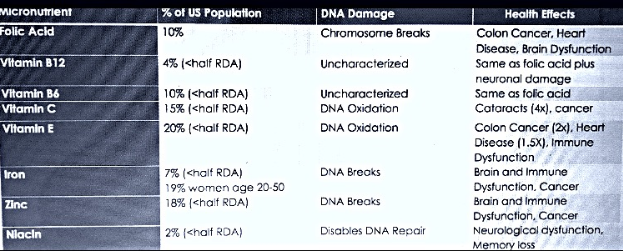 It is also important to discuss about selenium (Brazilian Nuts are my favorite when it comes to acquiring this nutrient); Not having enough selenium in the diet can affect DNA repair, adhesion and invasion (the ability of a cancer cell to stick on and set a base/framework as it spreads through the tissues). It can also affect signal transduction meaning it can take an impact on the signals being sent from the genes the proteins. It also acts as a tumor suppressor so selenium can fight against us acquiring a tumor. It can affect protein synthesis, growth factors, the cell cycle in apoptosis, angiogenesis (growth of new blood vessels. For a cancer cell to grow it needs a vast amount of nutrients ergo a higher blood supply to support that tumorous growth. One simple mineral not just selenium nut many others can affect so many different aspects of one of the most notable disease such as cancer. Polyunsaturated fatty acids known as your EPA and your DHA can affect your growth, neurological development, lean body mass, fat mass, reproduction, immunity, infectious pathologies of viruses, bacteria and parasites as well as several chronic and degenerative diseases. 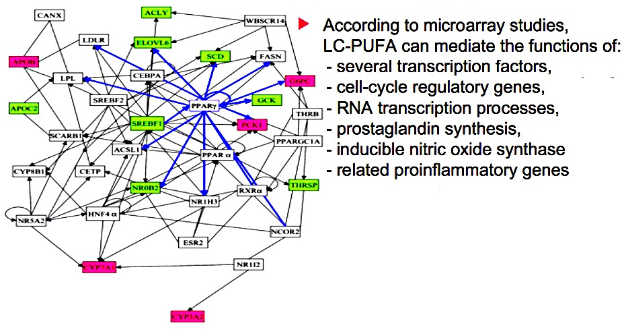 The giant web in the graph above shows us the different ways that the long-chain polyunsaturated fatty acids can affect different genes in the body. These genes connect to a low microscopic level, that being the connection to the nucleus of our cells. The green are indicative of a down regulation while the red portray an up regulation. The clear portrays no regulation for a given gene in the picture above. It is notable that both sides up regulate and down regulate depending on the gene that it is impacting. Peer reviewed article: Sikalidis, A K. "From Food for Survival to Food for Personalized Optimal Health: A Historical Perspective of How Food and Nutrition Gave Rise to Nutrigenomics." Journal of the American College of Nutrition. U.S. National Library of Medicine, n.d. Web. 15 Oct. 2018. Additional information for this topic was found in https://www.genome.gov/ |
| json metadata | {"tags":["fasting","waterfast","nutritarian"],"image":["https://cdn.steemitimages.com/DQmbQPA17iYx4Jipo6JEJpTiqyNUD3kHYNp57F3HZbY7ixJ/graph%201.png","https://cdn.steemitimages.com/DQmWxKA6RBKgtzEbAdenXWfqtHJCsgBVigtorMJZZKWF86F/Graph%202.png"],"links":["https://www.genome.gov/"],"app":"steemit/0.1","format":"markdown"} |
| Transaction Info | Block #27122857/Trx 59df23b8eed48391452e5a190a4b0dec066e489f |
View Raw JSON Data
{
"trx_id": "59df23b8eed48391452e5a190a4b0dec066e489f",
"block": 27122857,
"trx_in_block": 22,
"op_in_trx": 0,
"virtual_op": 0,
"timestamp": "2018-10-25T17:25:21",
"op": [
"comment",
{
"parent_author": "",
"parent_permlink": "fasting",
"author": "wallyycc",
"permlink": "macronutrients-micronutrients-and-regulation-of-gene-expression",
"title": "Macronutrients, micronutrients and regulation of gene expression",
"body": "In gene expression, a gene is used to synthesize a product such as a protein, rRNA, or even tRNA. If a cell is able to digest the nutrients from food such as a piece of cheese, you can figure out what gene is responsible for the digestion of this piece of cheese. In order to figure this out, what we can do is get an idea of what gene it may be and then just knock-out that gene. If we knock out the gene that plays an effect on the digestion of cheese, and then we eat cheese and we have a hard time digesting it, then we know that that certain gene played a role on its digestion (We can call this the knock-out process; we are knocking out a gene and then trying to figure out the true function of that gene, and this can work in other macro/micronutrients as well and that can help us study its effects). In reverse genetics you start with a gene and then you figure out what is the sequence of that gene. Afterwards you can look for other gene sequences somewhere else in the genome that share an equal sequence. Sequence it and then look for a homologous sequence somewhere else in the genome. If you know what that homologous sequence does, then odds are your accuracy is going to be more precise when it comes to finding out what that gene can express. If there is a homologous sequence, somewhere else in the genome and it goes for a specific protein and you are aware of the function of that protein, then it is most likely that the gene of interest has the ability to create a protein that has a similar function. Nutrigenetics aims to comprehend how your genetic makeup coordinates your response to a certain diet whereas Nutrigenomics studies how naturally occurring chemicals in the foods we consume alter molecular expression of genetic information within us individually. This leads to the production (even miss-production or no production at all if you are lacking a certain micro/macro nutrient vitamin or mineral) of different proteins in the body. There is a lot of different ways that a gene being activated or expressed vs inhibited or turned off can change the way your body functions. Our genetics alone do not determine our future health. In reality it is the interaction between genes and our environment. Genes are unique proteins that perform specialized functions in the cell. Our human genome has been identified to contain thousands upon thousands of different genes. There can be different levels of interaction between nutrition and genes. Nutrients that interact with a receptor may behave as transcription factors that can bind to DNA and acutely induce gene expression with or without the input of your body. This can lead to over expression of certain proteins that you may or necessarily not want. In Epigenetic interactions, nutrients have the ability to alter the structure of DNA so that gene expression is chronologically altered (this epigenetic change has the potential to be passed on to their offspring who’s never had that exposure). Common genetic variations such as SNPs (Single-nucleotide polymorphisms) can alter the expression or functionality of your genes. Nutrients such as folate, Vitamin B12, and even methionine have the potential to affect DNA transcription which affects the turning on and off of genes. \n\n\n\n\nIt is also important to discuss about selenium (Brazilian Nuts are my favorite when it comes to acquiring this nutrient); Not having enough selenium in the diet can affect DNA repair, adhesion and invasion (the ability of a cancer cell to stick on and set a base/framework as it spreads through the tissues). It can also affect signal transduction meaning it can take an impact on the signals being sent from the genes the proteins. It also acts as a tumor suppressor so selenium can fight against us acquiring a tumor. It can affect protein synthesis, growth factors, the cell cycle in apoptosis, angiogenesis (growth of new blood vessels. For a cancer cell to grow it needs a vast amount of nutrients ergo a higher blood supply to support that tumorous growth. One simple mineral not just selenium nut many others can affect so many different aspects of one of the most notable disease such as cancer. Polyunsaturated fatty acids known as your EPA and your DHA can affect your growth, neurological development, lean body mass, fat mass, reproduction, immunity, infectious pathologies of viruses, bacteria and parasites as well as several chronic and degenerative diseases. \n\n\n\nThe giant web in the graph above shows us the different ways that the long-chain polyunsaturated fatty acids can affect different genes in the body. These genes connect to a low microscopic level, that being the connection to the nucleus of our cells. The green are indicative of a down regulation while the red portray an up regulation. The clear portrays no regulation for a given gene in the picture above. It is notable that both sides up regulate and down regulate depending on the gene that it is impacting. \n\nPeer reviewed article:\n\nSikalidis, A K. \"From Food for Survival to Food for Personalized Optimal Health: A Historical Perspective of How Food and Nutrition Gave Rise to Nutrigenomics.\" Journal of the American College of Nutrition. U.S. National Library of Medicine, n.d. Web. 15 Oct. 2018.\n\n\nAdditional information for this topic was found in https://www.genome.gov/",
"json_metadata": "{\"tags\":[\"fasting\",\"waterfast\",\"nutritarian\"],\"image\":[\"https://cdn.steemitimages.com/DQmbQPA17iYx4Jipo6JEJpTiqyNUD3kHYNp57F3HZbY7ixJ/graph%201.png\",\"https://cdn.steemitimages.com/DQmWxKA6RBKgtzEbAdenXWfqtHJCsgBVigtorMJZZKWF86F/Graph%202.png\"],\"links\":[\"https://www.genome.gov/\"],\"app\":\"steemit/0.1\",\"format\":\"markdown\"}"
}
]
}kotdwarupvoted (100.00%) @wallyycc / tissue-specific-differences-in-metabolism2018/10/25 17:19:30
kotdwarupvoted (100.00%) @wallyycc / tissue-specific-differences-in-metabolism
2018/10/25 17:19:30
| voter | kotdwar |
| author | wallyycc |
| permlink | tissue-specific-differences-in-metabolism |
| weight | 10000 (100.00%) |
| Transaction Info | Block #27122740/Trx dcba6bb27b0a4b3868d203ff5652dd220c713ab2 |
View Raw JSON Data
{
  "trx_id": "dcba6bb27b0a4b3868d203ff5652dd220c713ab2",
  "block": 27122740,
  "trx_in_block": 14,
  "op_in_trx": 0,
  "virtual_op": 0,
  "timestamp": "2018-10-25T17:19:30",
  "op": [
    "vote",
    {
      "voter": "kotdwar",
      "author": "wallyycc",
      "permlink": "tissue-specific-differences-in-metabolism",
      "weight": 10000
    }
  ]
}wallyyccpublished a new post: tissue-specific-differences-in-metabolism2018/10/25 17:16:27
wallyyccpublished a new post: tissue-specific-differences-in-metabolism
2018/10/25 17:16:27
| parent author | |
| parent permlink | fasting |
| author | wallyycc |
| permlink | tissue-specific-differences-in-metabolism |
| title | Tissue‐specific differences in metabolism |
| body | Glucose in the liver can be stored as glycogen or they can also be converted into triglycerides (in order to store fat). In order to convert glucose to fatty acids it has to go through pyruvate and Acetyl-CoA to form the Palmitate, a fatty acid synthesizable by us. Glycerol and fatty acids can be combined to form triglycerides. In the liver, we do not store Triglycerides rather we store them mostly in adipose tissue. Triglycerides cannot be transported in the blood. As a result, they have to be converted into VLDLs (Very low-density lipoproteins). We can then export VLDL out of the liver into the blood. Amino acids taken by the liver will be broken down into Keto Acids. These alpha-keto acids give off ammonia (eventually becomes urea and it is excreted as waste). Keto acids can be converted to fatty acids and then triglycerides to be stored in adipose tissue. Keto acids can be broken down into Acetyl-CoA, go through the Krebs cycle, the ETC and then produce ATP for energy. Glucose in adipose tissue is converted to glycerol and fatty acids and then going to be broken down into triglycerides (The storage form of our fats). Fatty acids can be combined with glycerol to form fatty acids as well. In our muscles, glucose can be stored as glycogen, or it can also be converted into pyruvate and as we know through cellular respiration, we have the ability to create ATP, giving our muscles usable energy. Muscles can also take up amino acids from proteins we eat in the absorptive state. These amino acids can be stored as protein in our muscle. As recently discussed, during the absorptive state we can store energy as glycogen, triglycerides as well as protein, but the brain is a bit of a different scenario. Glucose in the brain is converted to pyruvate, and it goes through cellular respiration to produce ATP for the brain to work. It is also good to note that in the post absorvative state keto acids in the liver are going to be used directly to create glucose. Allowing that glucose to be exported to other parts of the body. Some of these keto acids are still going to be broken down into Acetyl-CoA to produce ATP. Glycerol fatty acids can also be converted into glucose in the post-absorvative state. These fatty acids can also be broken down to form Ketones. Ketones are one of the very few types of energy that can be used by the brain. For the post absorvative state in Adipose tissue, glycerol and fatty acids can just be exported into the blood, and travel to the liver in order to make more glucose. The proteins in our muscles can also be broken down into amino acids and through the bloodstream reach the liver where they can be converted to alpha keto acids and then converted into glucose for energy. In the post absorvative state, we can convert glycogen in our muscles to glucose and then it can be converted into pyruvate, which will then continue to make Acetyl-CoA and create energy through the ETC. Glucose in our muscles can also be broken down into lactate to produce ATP without the necessity of oxygen. Cellular respiration is more efficient and will produce more ATPs in comparison to breaking glucose down into lactate. Lactate is an acid and it can destabilize the pH levels in our blood. |
| json metadata | {"tags":["fasting","waterfast","nutritarian"],"app":"steemit/0.1","format":"markdown"} |
| Transaction Info | Block #27122679/Trx 0e078e88770358c26ad554340863e0d0e00e0ecf |
View Raw JSON Data
{
  "trx_id": "0e078e88770358c26ad554340863e0d0e00e0ecf",
  "block": 27122679,
  "trx_in_block": 10,
  "op_in_trx": 0,
  "virtual_op": 0,
  "timestamp": "2018-10-25T17:16:27",
  "op": [
    "comment",
    {
      "parent_author": "",
      "parent_permlink": "fasting",
      "author": "wallyycc",
      "permlink": "tissue-specific-differences-in-metabolism",
      "title": "Tissue‐specific differences in metabolism",
      "body": "Glucose in the liver can be stored as glycogen or they can also be converted into triglycerides (in order to store fat). In order to convert glucose to fatty acids it has to go through pyruvate and Acetyl-CoA to form the Palmitate, a fatty acid synthesizable by us. Glycerol and fatty acids can be combined to form triglycerides. In the liver, we do not store Triglycerides rather we store them mostly in adipose tissue. Triglycerides cannot be transported in the blood. As a result, they have to be converted into VLDLs (Very low-density lipoproteins).  We can then export VLDL out of the liver into the blood. Amino acids taken by the liver will be broken down into Keto Acids. These alpha-keto acids give off ammonia (eventually becomes urea and it is excreted as waste).  Keto acids can be converted to fatty acids and then triglycerides to be stored in adipose tissue. Keto acids can be broken down into Acetyl-CoA, go through the Krebs cycle, the ETC and then produce ATP for energy. Glucose in adipose tissue is converted to glycerol and fatty acids and then going to be broken down into triglycerides (The storage form of our fats).  Fatty acids can be combined with glycerol to form fatty acids as well. In our muscles, glucose can be stored as glycogen, or it can also be converted into pyruvate and as we know through cellular respiration, we have the ability to create ATP, giving our muscles usable energy. Muscles can also take up amino acids from proteins we eat in the absorptive state. These amino acids can be stored as protein in our muscle. As recently discussed, during the absorptive state we can store energy as glycogen, triglycerides as well as protein, but the brain is a bit of a different scenario. Glucose in the brain is converted to pyruvate, and it goes through cellular respiration to produce ATP for the brain to work. It is also good to note that in the post absorvative state keto acids in the liver are going to be used directly to create glucose. Allowing that glucose to be exported to other parts of the body. Some of these keto acids are still going to be broken down into Acetyl-CoA to produce ATP. Glycerol fatty acids can also be converted into glucose in the post-absorvative state. These fatty acids can also be broken down to form Ketones. Ketones are one of the very few types of energy that can be used by the brain. For the post absorvative state in Adipose tissue, glycerol and fatty acids can just be exported into the blood, and travel to the liver in order to make more glucose. The proteins in our muscles can also be broken down into amino acids and through the bloodstream reach the liver where they can be converted to alpha keto acids and then converted into glucose for energy. In the post absorvative state, we can convert glycogen in our muscles to glucose and then it can be converted into pyruvate, which will then continue to make Acetyl-CoA and create energy through the ETC. Glucose in our muscles can also be broken down into lactate to produce ATP without the necessity of oxygen. Cellular respiration is more efficient and will produce more ATPs in comparison to breaking glucose down into lactate. Lactate is an acid and it can destabilize the pH levels in our blood.",
      "json_metadata": "{\"tags\":[\"fasting\",\"waterfast\",\"nutritarian\"],\"app\":\"steemit/0.1\",\"format\":\"markdown\"}"
    }
  ]
}2018/10/25 17:02:21
2018/10/25 17:02:21
| parent author | wallyycc |
| parent permlink | carbohydrates-how-are-they-the-same-how-are-they-different |
| author | cheetah |
| permlink | cheetah-re-wallyycccarbohydrates-how-are-they-the-same-how-are-they-different |
| title | |
| body | Hi! I am a robot. I just upvoted you! I found similar content that readers might be interested in: https://en.wikibooks.org/wiki/Structural_Biochemistry/Carbohydrates/Polysaccharides |
| json metadata | |
| Transaction Info | Block #27122397/Trx 0780bb92abf933777adef9ffaf86bb121ff3a743 |
View Raw JSON Data
{
  "trx_id": "0780bb92abf933777adef9ffaf86bb121ff3a743",
  "block": 27122397,
  "trx_in_block": 23,
  "op_in_trx": 0,
  "virtual_op": 0,
  "timestamp": "2018-10-25T17:02:21",
  "op": [
    "comment",
    {
      "parent_author": "wallyycc",
      "parent_permlink": "carbohydrates-how-are-they-the-same-how-are-they-different",
      "author": "cheetah",
      "permlink": "cheetah-re-wallyycccarbohydrates-how-are-they-the-same-how-are-they-different",
      "title": "",
      "body": "Hi! I am a robot. I just upvoted you! I found similar content that readers might be interested in:\nhttps://en.wikibooks.org/wiki/Structural_Biochemistry/Carbohydrates/Polysaccharides",
      "json_metadata": ""
    }
  ]
}cheetahupvoted (0.08%) @wallyycc / carbohydrates-how-are-they-the-same-how-are-they-different2018/10/25 17:02:15
cheetahupvoted (0.08%) @wallyycc / carbohydrates-how-are-they-the-same-how-are-they-different
2018/10/25 17:02:15
| voter | cheetah |
| author | wallyycc |
| permlink | carbohydrates-how-are-they-the-same-how-are-they-different |
| weight | 8 (0.08%) |
| Transaction Info | Block #27122395/Trx d479cb1827c4382091ff14ef753a0e56691092d9 |
View Raw JSON Data
{
  "trx_id": "d479cb1827c4382091ff14ef753a0e56691092d9",
  "block": 27122395,
  "trx_in_block": 64,
  "op_in_trx": 0,
  "virtual_op": 0,
  "timestamp": "2018-10-25T17:02:15",
  "op": [
    "vote",
    {
      "voter": "cheetah",
      "author": "wallyycc",
      "permlink": "carbohydrates-how-are-they-the-same-how-are-they-different",
      "weight": 8
    }
  ]
}wallyyccpublished a new post: carbohydrates-how-are-they-the-same-how-are-they-different2018/10/25 17:02:06
wallyyccpublished a new post: carbohydrates-how-are-they-the-same-how-are-they-different
2018/10/25 17:02:06
| parent author | |
| parent permlink | fasting |
| author | wallyycc |
| permlink | carbohydrates-how-are-they-the-same-how-are-they-different |
| title | carbohydrates? How are they the same? How are they different? |
| body | 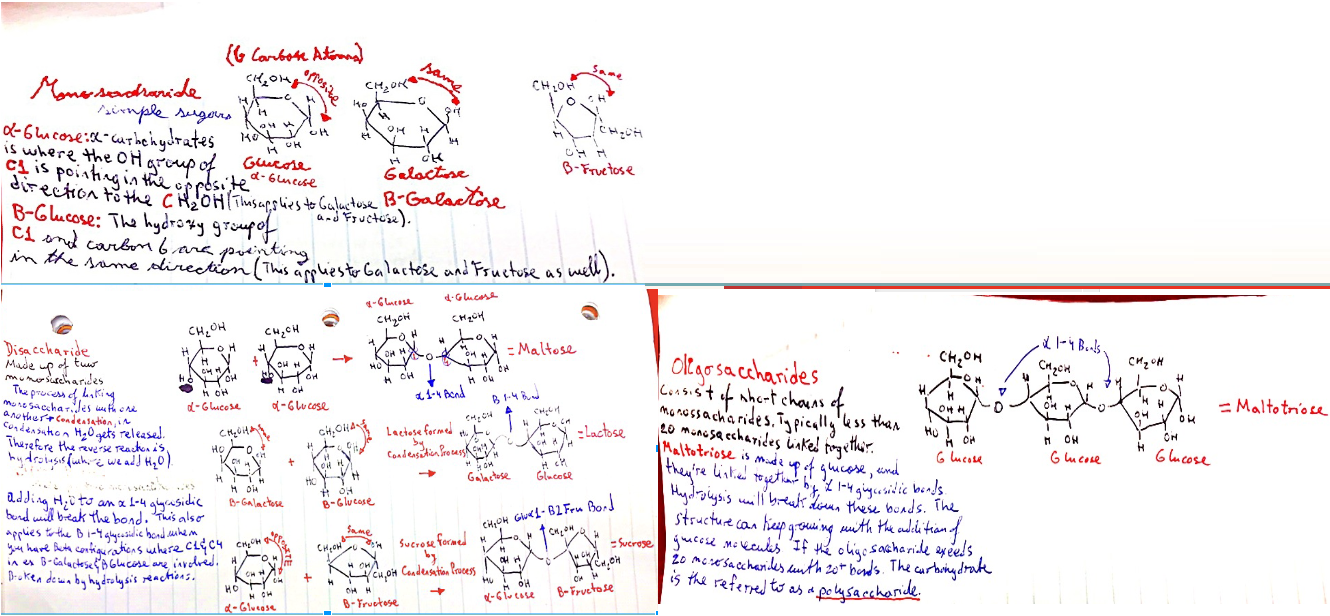 Carbohydrates are the main source of energy for us and they serve as structural components. They mainly contain carbon, hydrogen and oxygen atoms in a molar ratio of 1 carbon: 2 hydrogens: 1 oxygen. We have Monosaccharides, Disaccharides, Oligosaccharides, and Polysaccharides. Polysaccharides also known as glycans can be labeled as polysaccharides or heteropolysaccharides. A homopolysaccharide meaning the polysaccharide has only a single type of monosaccharide (ex: only glucose molecules linked together). A heteropolysaccharide means that the polysaccharide contains two or more different monosaccharides (ex: a chain of fructose and glucose molecules). A polysaccharide can also be unbranched or it can be branched. This goes for both homo polysaccharides as well as heteropolysaccharides. Heteropolysaccharides can also be unbranched or branched. Homopolysaccharides serve as storage forms of monosaccharides in both humans and plants as well as bacteria. Starch is a storage form of monosaccharides in plants. Starch as we recall is one of the most popular carbohydrates in our diets as well. It is made up of glucose and as stated, it is a homopolysaccharide. If starch is unbranched (a chain of glucose linked together by alpha 1-4 glycosidic bonds), it can be called amylose. If starch is branched, (contains alpha 1-4, and alpha 1-6 glycosidic bonds between glucose), it is said to be amylopectin. Amylose and amylopectin are two forms of glucose polymers. Glycogen is a homopolysaccharide as it is composed of glucose. It can be branched or unbranched as well and it is a storage form of glucose in animals. Starch and glycogen are both composed of glucose and can also be branched or unbranched (meaning they both contain amylose and amylopectin but Glycogen has branch points occurring every eight to twelve glucose residues whereas in starch it occurs every 24 to 30 glucose residues and this influences the structure). Cellulose is an interesting structural component to discuss as it is made up of Beta 1-4 glycosidic bonds. We do not possess the enzymes to hydrolyze (break down) Beta 1-4 glycosidic bonds of cellulose and as a result, we cannot digest it. |
| json metadata | {"tags":["fasting","waterfast","diet"],"image":["https://cdn.steemitimages.com/DQmZtfht9nC6NVF2PrTKLYjbedvnZ1QmzTgkUmSwDgfRXSZ/glucose.png"],"app":"steemit/0.1","format":"markdown"} |
| Transaction Info | Block #27122392/Trx bc71e66ed76faa7eb3072e36ef48b356cbee1683 |
View Raw JSON Data
{
"trx_id": "bc71e66ed76faa7eb3072e36ef48b356cbee1683",
"block": 27122392,
"trx_in_block": 21,
"op_in_trx": 0,
"virtual_op": 0,
"timestamp": "2018-10-25T17:02:06",
"op": [
"comment",
{
"parent_author": "",
"parent_permlink": "fasting",
"author": "wallyycc",
"permlink": "carbohydrates-how-are-they-the-same-how-are-they-different",
"title": "carbohydrates? How are they the same? How are they different?",
"body": "\n\n\n\n\nCarbohydrates are the main source of energy for us and they serve as structural components.\nThey mainly contain carbon, hydrogen and oxygen atoms in a molar ratio of 1 carbon: 2\nhydrogens: 1 oxygen. We have Monosaccharides, Disaccharides, Oligosaccharides, and\nPolysaccharides.\nPolysaccharides also known as glycans can be labeled as polysaccharides or\nheteropolysaccharides. A homopolysaccharide meaning the polysaccharide has only a single type\nof monosaccharide (ex: only glucose molecules linked together). A heteropolysaccharide means\nthat the polysaccharide contains two or more different monosaccharides (ex: a chain of fructose\nand glucose molecules). A polysaccharide can also be unbranched or it can be branched. This\ngoes for both homo polysaccharides as well as heteropolysaccharides. Heteropolysaccharides can\nalso be unbranched or branched. Homopolysaccharides serve as storage forms of\nmonosaccharides in both humans and plants as well as bacteria. Starch is a storage form of\n\nmonosaccharides in plants. Starch as we recall is one of the most popular carbohydrates in our\ndiets as well. It is made up of glucose and as stated, it is a homopolysaccharide. If starch is\nunbranched (a chain of glucose linked together by alpha 1-4 glycosidic bonds), it can be called\namylose. If starch is branched, (contains alpha 1-4, and alpha 1-6 glycosidic bonds between\nglucose), it is said to be amylopectin. Amylose and amylopectin are two forms of glucose\npolymers. Glycogen is a homopolysaccharide as it is composed of glucose. It can be branched or\nunbranched as well and it is a storage form of glucose in animals. Starch and glycogen are both\ncomposed of glucose and can also be branched or unbranched (meaning they both contain\namylose and amylopectin but Glycogen has branch points occurring every eight to twelve\nglucose residues whereas in starch it occurs every 24 to 30 glucose residues and this influences\nthe structure). Cellulose is an interesting structural component to discuss as it is made up of Beta\n1-4 glycosidic bonds. We do not possess the enzymes to hydrolyze (break down) Beta 1-4\nglycosidic bonds of cellulose and as a result, we cannot digest it.",
"json_metadata": "{\"tags\":[\"fasting\",\"waterfast\",\"diet\"],\"image\":[\"https://cdn.steemitimages.com/DQmZtfht9nC6NVF2PrTKLYjbedvnZ1QmzTgkUmSwDgfRXSZ/glucose.png\"],\"app\":\"steemit/0.1\",\"format\":\"markdown\"}"
}
]
}sensationupvoted (100.00%) @wallyycc / digestion-of-starch2018/10/25 16:55:36
sensationupvoted (100.00%) @wallyycc / digestion-of-starch
2018/10/25 16:55:36
| voter | sensation |
| author | wallyycc |
| permlink | digestion-of-starch |
| weight | 10000 (100.00%) |
| Transaction Info | Block #27122262/Trx 113a7ee7ffc028e147b5a59aba9bdca651331f7b |
View Raw JSON Data
{
  "trx_id": "113a7ee7ffc028e147b5a59aba9bdca651331f7b",
  "block": 27122262,
  "trx_in_block": 10,
  "op_in_trx": 0,
  "virtual_op": 0,
  "timestamp": "2018-10-25T16:55:36",
  "op": [
    "vote",
    {
      "voter": "sensation",
      "author": "wallyycc",
      "permlink": "digestion-of-starch",
      "weight": 10000
    }
  ]
}councilupvoted (10.00%) @wallyycc / glycolysis-glycogenolysis-and-gluconeogenesis2018/10/25 16:33:15
councilupvoted (10.00%) @wallyycc / glycolysis-glycogenolysis-and-gluconeogenesis
2018/10/25 16:33:15
| voter | council |
| author | wallyycc |
| permlink | glycolysis-glycogenolysis-and-gluconeogenesis |
| weight | 1000 (10.00%) |
| Transaction Info | Block #27121817/Trx 75681b366b4d44101f42fb3eb225634f238555a5 |
View Raw JSON Data
{
  "trx_id": "75681b366b4d44101f42fb3eb225634f238555a5",
  "block": 27121817,
  "trx_in_block": 4,
  "op_in_trx": 0,
  "virtual_op": 0,
  "timestamp": "2018-10-25T16:33:15",
  "op": [
    "vote",
    {
      "voter": "council",
      "author": "wallyycc",
      "permlink": "glycolysis-glycogenolysis-and-gluconeogenesis",
      "weight": 1000
    }
  ]
}wallyyccpublished a new post: low-glycemic-diet-and-regular-exercise-aids-in-type-2-diabetes-treatment2018/10/25 16:20:00
wallyyccpublished a new post: low-glycemic-diet-and-regular-exercise-aids-in-type-2-diabetes-treatment
2018/10/25 16:20:00
| parent author | |
| parent permlink | fasting |
| author | wallyycc |
| permlink | low-glycemic-diet-and-regular-exercise-aids-in-type-2-diabetes-treatment |
| title | Low glycemic diet and regular exercise aids in type 2 diabetes treatment. |
| body | High blood sugar in type 2 diabetes is due to a condition called insulin resistance. As the body becomes more and more insulin resistant, the pancreas responds by releasing more and more insulin. This higher-than-normal level of insulin in the bloodstream is called hyperinsulinemia. Insulin resistance sends your pancreas into overdrive, and while it may be able to keep up with the bodies increased demand for insulin for a while, this ability diminishes. When it does, your blood sugar levels will elevate leading to type two diabetes. Consumption of low carbohydrate diets is can be beneficial in weight management and can combat type two diabetes. Low carbohydrate diets reduce glucose and insulin level giving the body glycemic control reducing metabolic risks. Type 2 diabetes victims have to take control of the carbohydrate intake in their diet because all carbs ultimately break down into sugar. A low glycemic index based on a low carb & receiving energy from healthy fats will help the patient take control of their blood sugar levels. The glycemic index is a ranking of carbs on a scale from zero to 100 according to the extent to which they raise the blood sugar levels after eating. Foods with a GI of 55 or less are low GI foods. Foods with a GI of 56-69 are medium GI foods. Foods with a GI food of 70 or higher is a high GI food. Foods with high GI are digested fast and absorbed faster than Low-GI foods whom are digested and absorbed in a gradual way. This gradual absorption produces a much more even rise in blood sugar and insulin levels. Low GI diets can improve glucose and lipid levels as well as manage weight in individuals with diabetes. Slow digestion helps you stay fuller for longer. The impact on your blood sugar is minute because there will be a reduction of insulin levels and insulin resistance if the diet is based on a low Glycemic diet. Exercise stimulates depletion of glycogen in muscles and liver cells as well as simultaneously building up your muscle cells. That creates more space for any excess sugar and excess insulin to store glucose properly. |
| json metadata | {"tags":["fasting","diet","waterfast"],"app":"steemit/0.1","format":"markdown"} |
| Transaction Info | Block #27121552/Trx ffceda42490a4ef86a1437acc8a091187e836a6f |
View Raw JSON Data
{
  "trx_id": "ffceda42490a4ef86a1437acc8a091187e836a6f",
  "block": 27121552,
  "trx_in_block": 19,
  "op_in_trx": 0,
  "virtual_op": 0,
  "timestamp": "2018-10-25T16:20:00",
  "op": [
    "comment",
    {
      "parent_author": "",
      "parent_permlink": "fasting",
      "author": "wallyycc",
      "permlink": "low-glycemic-diet-and-regular-exercise-aids-in-type-2-diabetes-treatment",
      "title": "Low glycemic diet and regular exercise aids in type 2 diabetes treatment.",
      "body": "High blood sugar in type 2 diabetes is due to a condition called insulin resistance. As the body\nbecomes more and more insulin resistant, the pancreas responds by releasing more and more\ninsulin. This higher-than-normal level of insulin in the bloodstream is called hyperinsulinemia.\nInsulin resistance sends your pancreas into overdrive, and while it may be able to keep up with\nthe bodies increased demand for insulin for a while, this ability diminishes. When it does, your\nblood sugar levels will elevate leading to type two diabetes. Consumption of low carbohydrate\ndiets is can be beneficial in weight management and can combat type two diabetes. Low\ncarbohydrate diets reduce glucose and insulin level giving the body glycemic control reducing\nmetabolic risks. Type 2 diabetes victims have to take control of the carbohydrate intake in their\ndiet because all carbs ultimately break down into sugar. A low glycemic index based on a low\ncarb & receiving energy from healthy fats will help the patient take control of their blood sugar\nlevels. The glycemic index is a ranking of carbs on a scale from zero to 100 according to the\nextent to which they raise the blood sugar levels after eating. Foods with a GI of 55 or less are\nlow GI foods. Foods with a GI of 56-69 are medium GI foods. Foods with a GI food of 70 or\nhigher is a high GI food. Foods with high GI are digested fast and absorbed faster than Low-GI\nfoods whom are digested and absorbed in a gradual way. This gradual absorption produces a\nmuch more even rise in blood sugar and insulin levels. Low GI diets can improve glucose and\nlipid levels as well as manage weight in individuals with diabetes. Slow digestion helps you stay\nfuller for longer. The impact on your blood sugar is minute because there will be a reduction of\ninsulin levels and insulin resistance if the diet is based on a low Glycemic diet. Exercise\nstimulates depletion of glycogen in muscles and liver cells as well as simultaneously building up\nyour muscle cells. That creates more space for any excess sugar and excess insulin to store\nglucose properly.",
      "json_metadata": "{\"tags\":[\"fasting\",\"diet\",\"waterfast\"],\"app\":\"steemit/0.1\",\"format\":\"markdown\"}"
    }
  ]
}wallyyccpublished a new post: glycolysis-glycogenolysis-and-gluconeogenesis2018/10/25 16:12:27
wallyyccpublished a new post: glycolysis-glycogenolysis-and-gluconeogenesis
2018/10/25 16:12:27
| parent author | |
| parent permlink | fasting |
| author | wallyycc |
| permlink | glycolysis-glycogenolysis-and-gluconeogenesis |
| title | glycolysis, glycogenolysis, and gluconeogenesis |
| body | While on a fasted state, the organs and tissues are on a high necessity for energy. In this scenario the liver will go through the steps of glycogenolysis. There is a non-reducing end at every end of every branch in glycogen and this sugar along with the others in its chain are connected through a 1-4 glycosidic bond. This bond is then sequentially cleaved by glycogen phosphorylase, and that is going to add an inorganic phosphate at the end of the alpha 1-4 position. To make glucose 1-phosphate. This enzyme cannot cleave past that alpha 1-6 branch point. An enzyme known as Glucan Transferase will remove three glucose residues from the non-reducing end of a branch and it is going to transfer them to another nearby non-reducing end. This is going to leave one glucose remaining from the original branch and that’s going to be connected through a 1-6 glycosidic bond. The single glucose 1-6 bond is going to be hydrolyzed by the alpha 1-6 glucosidase activity of the debranching enzyme. Glycogen phosphorylases are going to keep on cleaving individual non-reducing glucoses from other branches. They reduce to four glucoses of the branching point and this will trigger transferase activity. The individual glucoses can undergo isomerization, which transfers it from a glucose-1-phosphate to a glucose-6- phosphate allowing these molecules to now enter into glycolysis. Glycolysis, a series of enzymatic actions, Takes glucose and breaks it down to NADH and ATP. Can be considered an anaerobic cytoplasmic pathway organized into three phases. Investment, cleavage and energy harvest. Invest two ATPs, which act as an activation energy yield. Enzymes take phosphates from ATPs, moving them to glucose and causing a fructose rearrangement (This leaves Fructose 1-6 bisphosphate along with two phosphates, which makes it highly unstable). Then we have the cleaving of fructose bisphosphate. Cleaving leaves two Glyceraldehyde 3-phosphate, G3P. During energy harvest, G3P is rearranged and oxidized by an enzymatic assembly line that harvests energy from each G3P. One NADH and two ATPs double this yield per G3P to two NADH and four ATPs. Two ATPs were invested in phase one so you net just two. Put two in get four as a result for a net gain of two ATPs. Pyruvate has different fates depending on the metabolic pathway it is sent to. If it is anaerobic, it will be fermented. In aerobic cells, pyruvate’s termination will be the Krebs cycle and total oxidation. Glycolysis will work most optimally on a fed state preferably with a good consumption of carbohydrates. During gluconeogenesis, we make new glucose and it is the reserve of glycolysis. An amino acid can convert to pyruvate to initiate gluconeogenesis. Glycerol from fat tissues such as adipose tissues can also be a source for gluconeogenesis. Starting with the conversion of phosphoenolpyruvate to pyruvate by pyruvate kinase. To yield PEP from pyruvate from gluconeogenesis we need enzymes pyruvate carboxylase, and PEP carboxykinase. Pyruvate carboxylase carboxylates pyruvate in the mitochondria to form oxaloacetate. Oxaloacetate, a TCA cycle intermediate cannot pass through the mitochondrial membrane into the cytoplasm. It is reduced to malate, which leaves the mitochondria through the malate shuttle, and enters the cytoplasm, where it becomes reoxidized back to oxaloacetate. Oxaloacetate is then decarboxylated and phosphorylated by PEP carboxyl kinase to form PEP. PEP is then acted on by the reactions of glycolysis going in the opposite direction until it becomes fructose 1,6-biphosphate. Then we have the phosphorylation of fructose-6-phosphate into fructose-1,6-bisphosphate. We are just adding another phosphate to the molecule. It is good to note that this is an irreversible step catalyzed by the enzyme phosphofructosekinase-1 in glycolysis. In gluconeogenesis, phosphofructokinase 1 (PKF1) is replaced by fructose 1,6-bisphosphatase. This will hydrolyze fructose 1,6-bisphosphate to form fructose-6-phosphate. Which is then converted to glucose-6-phosphate. Glucose 6-phosphatase replaces hexokinase. Glucose 6-phosphate is transported from the cytosol into the endoplasmic reticulum, where it is hydrolyzed by glucose-6-phosphatase to create free glucose. This free glucose will re- enter the cytosol from which it leaves the cell. Glucose-6-phosphatase is a hepatic enzyme, meaning you can only really find it in the liver. The absence of this enzyme from skeletal muscle accounts for the fact that muscle glycogen cannot serve as a source of blood glucose. It is also important to note that once the liver forms glucose through gluconeogenesis, this cannot really be used as an energy source for the liver. |
| json metadata | {"tags":["fasting","ketosis","waterfast"],"app":"steemit/0.1","format":"markdown"} |
| Transaction Info | Block #27121401/Trx ca07d663b80783790419244f19d21c38986aa425 |
View Raw JSON Data
{
  "trx_id": "ca07d663b80783790419244f19d21c38986aa425",
  "block": 27121401,
  "trx_in_block": 2,
  "op_in_trx": 0,
  "virtual_op": 0,
  "timestamp": "2018-10-25T16:12:27",
  "op": [
    "comment",
    {
      "parent_author": "",
      "parent_permlink": "fasting",
      "author": "wallyycc",
      "permlink": "glycolysis-glycogenolysis-and-gluconeogenesis",
      "title": "glycolysis, glycogenolysis, and gluconeogenesis",
      "body": "While on a fasted state, the organs and tissues are on a high necessity for energy. In this\nscenario the liver will go through the steps of glycogenolysis. There is a non-reducing\nend at every end of every branch in glycogen and this sugar along with the others in its\nchain are connected through a 1-4 glycosidic bond. This bond is then sequentially cleaved\nby glycogen phosphorylase, and that is going to add an inorganic phosphate at the end of\n\nthe alpha 1-4 position. To make glucose 1-phosphate. This enzyme cannot cleave past\nthat alpha 1-6 branch point. An enzyme known as Glucan Transferase will remove three\nglucose residues from the non-reducing end of a branch and it is going to transfer them to\nanother nearby non-reducing end. This is going to leave one glucose remaining from the\noriginal branch and that’s going to be connected through a 1-6 glycosidic bond. The\nsingle glucose 1-6 bond is going to be hydrolyzed by the alpha 1-6 glucosidase activity of\nthe debranching enzyme. Glycogen phosphorylases are going to keep on cleaving\nindividual non-reducing glucoses from other branches. They reduce to four glucoses of\nthe branching point and this will trigger transferase activity. The individual glucoses can\nundergo isomerization, which transfers it from a glucose-1-phosphate to a glucose-6-\nphosphate allowing these molecules to now enter into glycolysis. Glycolysis, a series of\nenzymatic actions, Takes glucose and breaks it down to NADH and ATP. Can be\nconsidered an anaerobic cytoplasmic pathway organized into three phases. Investment,\ncleavage and energy harvest. Invest two ATPs, which act as an activation energy yield.\nEnzymes take phosphates from ATPs, moving them to glucose and causing a fructose\nrearrangement (This leaves Fructose 1-6 bisphosphate along with two phosphates, which\nmakes it highly unstable). Then we have the cleaving of fructose bisphosphate. Cleaving\nleaves two Glyceraldehyde 3-phosphate, G3P. During energy harvest, G3P is rearranged\nand oxidized by an enzymatic assembly line that harvests energy from each G3P. One\nNADH and two ATPs double this yield per G3P to two NADH and four ATPs. Two\nATPs were invested in phase one so you net just two. Put two in get four as a result for a\nnet gain of two ATPs. Pyruvate has different fates depending on the metabolic pathway it\nis sent to. If it is anaerobic, it will be fermented. In aerobic cells, pyruvate’s termination\nwill be the Krebs cycle and total oxidation. Glycolysis will work most optimally on a fed\nstate preferably with a good consumption of carbohydrates. During gluconeogenesis, we\nmake new glucose and it is the reserve of glycolysis. An amino acid can convert to\npyruvate to initiate gluconeogenesis. Glycerol from fat tissues such as adipose tissues can\nalso be a source for gluconeogenesis. Starting with the conversion of\nphosphoenolpyruvate to pyruvate by pyruvate kinase. To yield PEP from pyruvate from\ngluconeogenesis we need enzymes pyruvate carboxylase, and PEP carboxykinase.\nPyruvate carboxylase carboxylates pyruvate in the mitochondria to form oxaloacetate.\nOxaloacetate, a TCA cycle intermediate cannot pass through the mitochondrial\nmembrane into the cytoplasm. It is reduced to malate, which leaves the mitochondria\nthrough the malate shuttle, and enters the cytoplasm, where it becomes reoxidized back to\noxaloacetate. Oxaloacetate is then decarboxylated and phosphorylated by PEP carboxyl\nkinase to form PEP. PEP is then acted on by the reactions of glycolysis going in the\nopposite direction until it becomes fructose 1,6-biphosphate. Then we have the\nphosphorylation of fructose-6-phosphate into fructose-1,6-bisphosphate. We are just\nadding another phosphate to the molecule. It is good to note that this is an irreversible\nstep catalyzed by the enzyme phosphofructosekinase-1 in glycolysis. In gluconeogenesis,\nphosphofructokinase 1 (PKF1) is replaced by fructose 1,6-bisphosphatase. This will\nhydrolyze fructose 1,6-bisphosphate to form fructose-6-phosphate. Which is then\nconverted to glucose-6-phosphate. Glucose 6-phosphatase replaces hexokinase. Glucose\n6-phosphate is transported from the cytosol into the endoplasmic reticulum, where it is\nhydrolyzed by glucose-6-phosphatase to create free glucose. This free glucose will re-\nenter the cytosol from which it leaves the cell. Glucose-6-phosphatase is a hepatic\n\nenzyme, meaning you can only really find it in the liver. The absence of this enzyme\nfrom skeletal muscle accounts for the fact that muscle glycogen cannot serve as a source\nof blood glucose. It is also important to note that once the liver forms glucose through\ngluconeogenesis, this cannot really be used as an energy source for the liver.",
      "json_metadata": "{\"tags\":[\"fasting\",\"ketosis\",\"waterfast\"],\"app\":\"steemit/0.1\",\"format\":\"markdown\"}"
    }
  ]
}davidfnckupvoted (30.00%) @wallyycc / digestion-of-starch2018/10/25 16:02:33
davidfnckupvoted (30.00%) @wallyycc / digestion-of-starch
2018/10/25 16:02:33
| voter | davidfnck |
| author | wallyycc |
| permlink | digestion-of-starch |
| weight | 3000 (30.00%) |
| Transaction Info | Block #27121203/Trx cac92ce3b0b36fafaf7e3ebacac557c02479f018 |
View Raw JSON Data
{
  "trx_id": "cac92ce3b0b36fafaf7e3ebacac557c02479f018",
  "block": 27121203,
  "trx_in_block": 1,
  "op_in_trx": 0,
  "virtual_op": 0,
  "timestamp": "2018-10-25T16:02:33",
  "op": [
    "vote",
    {
      "voter": "davidfnck",
      "author": "wallyycc",
      "permlink": "digestion-of-starch",
      "weight": 3000
    }
  ]
}cheetahreplied to @wallyycc / cheetah-re-wallyyccdigestion-of-starch2018/10/25 15:34:33
cheetahreplied to @wallyycc / cheetah-re-wallyyccdigestion-of-starch
2018/10/25 15:34:33
| parent author | wallyycc |
| parent permlink | digestion-of-starch |
| author | cheetah |
| permlink | cheetah-re-wallyyccdigestion-of-starch |
| title | |
| body | Hi! I am a robot. I just upvoted you! I found similar content that readers might be interested in: https://www.khanacademy.org/science/biology/crash-course-bio-ecology/crash-course-biology-science/v/crash-course-biology-107 |
| json metadata | |
| Transaction Info | Block #27120644/Trx f976835055386cdb265641cf89ddb6920d800894 |
View Raw JSON Data
{
  "trx_id": "f976835055386cdb265641cf89ddb6920d800894",
  "block": 27120644,
  "trx_in_block": 13,
  "op_in_trx": 0,
  "virtual_op": 0,
  "timestamp": "2018-10-25T15:34:33",
  "op": [
    "comment",
    {
      "parent_author": "wallyycc",
      "parent_permlink": "digestion-of-starch",
      "author": "cheetah",
      "permlink": "cheetah-re-wallyyccdigestion-of-starch",
      "title": "",
      "body": "Hi! I am a robot. I just upvoted you! I found similar content that readers might be interested in:\nhttps://www.khanacademy.org/science/biology/crash-course-bio-ecology/crash-course-biology-science/v/crash-course-biology-107",
      "json_metadata": ""
    }
  ]
}cheetahupvoted (0.08%) @wallyycc / digestion-of-starch2018/10/25 15:34:30
cheetahupvoted (0.08%) @wallyycc / digestion-of-starch
2018/10/25 15:34:30
| voter | cheetah |
| author | wallyycc |
| permlink | digestion-of-starch |
| weight | 8 (0.08%) |
| Transaction Info | Block #27120643/Trx d267ca0e5bf9623a7b845bb5370091d4db4a0713 |
View Raw JSON Data
{
  "trx_id": "d267ca0e5bf9623a7b845bb5370091d4db4a0713",
  "block": 27120643,
  "trx_in_block": 3,
  "op_in_trx": 0,
  "virtual_op": 0,
  "timestamp": "2018-10-25T15:34:30",
  "op": [
    "vote",
    {
      "voter": "cheetah",
      "author": "wallyycc",
      "permlink": "digestion-of-starch",
      "weight": 8
    }
  ]
}wallyyccpublished a new post: digestion-of-starch2018/10/25 15:34:21
wallyyccpublished a new post: digestion-of-starch
2018/10/25 15:34:21
| parent author | |
| parent permlink | fasting |
| author | wallyycc |
| permlink | digestion-of-starch |
| title | Digestion of starch |
| body | Starch is made up of two forms of glucose polymers. These are the linear sequenced amylose and the branched out tree-like amylopectin. Amylose is a linear chain of glucose linked together by alpha 1-4 glycosidic bonds. In amylopectin, the glucose molecules are also linked by alpha 1- 4 glycosidic bonds, but the branched points are linked by alpha 1-6 glycosidic bonds. The mouth will break down the starch physically by the jaws teeth and tongue and chemically by the salivary glands. The job of the salivary glands is not only to secrete saliva but also the enzyme within it called salivary-alpha amylase. Alpha-amylase hydrolyzes (breaks down) alpha 1-4 glycosidic bonds. Amylase only breaks down starch partially. From the mouth the starch travels to the pharynx and by means of a segment of contractions known as peristalsis, the esophagus delivers the consumed starch into the stomach. Starch is only hydrolyzed partially into oligosaccharides and shorter polysaccharides once it reaches the stomach. Starch is only hydrolyzed partially because once the starch comes down to the esophagus into the stomach, the amylase becomes inactivated. This is because the acidic environment of the stomach actually inactivates the salivary amylase. So starch digestion does not occur within the stomach. The stomach will only mix the content around and allow the starch to slowly reach the small intestine. It is within the small intestine where most of the digestion and absorption of starch takes place. Within the lumen of the small intestine we can find the cells of the intestine known as enterocytes. The enterocytes are also called the absorptive cells hence they absorb the nutrients. The enterocytes also contain brush border enzymes that play a role in the digestion of starch. Below the enterocytes we have the bloodstream. So when starch reaches the small intestine, it is already in a partially hydrolyzed form. When the starch reaches the small intestine, the pancreas will begin to secrete alpha-amylase. The pancreatic alpha-amylase will be secreted into the small intestine where it will break down the alpha 1-4 glycosidic bonds (Just as what the salivary amylase did) breaking down the starch further. The enterocytes have brush border enzymes that participate in the digestion of starch. One enzyme known as maltase hydrolyzes two glucose molecules linked together also known as maltose. You also have another brush border enzyme called sucrase-isomoltase. Isomoltase will hydrolyze both the alpha 1-4 glycosidic bonds and alpha 1-6 glycosidic bonds. Because of this, we are going to end up with many glucose molecules conceived from starch digestion in the small intestine. Within the lumen of the small intestine, we also have many sodium ions that actually play a critical role in the absorption of glucose into the body. Sodium-glucose linked transporters are found in the apical surface of the enterocytes. These transporters function as cotransporters for sodium and glucose. Two sodium ions will enter for one glucose molecule. Once glucose is within the cell, it can be reabsorbed by the bloodstream through a GLUT 2 transporter. The GLUT 2 transporter is found on the basal surface of the enterocyte. When glucose is in the bloodstream it will increase blood glucose levels. The glucose can be used as energy by tissues or it can be stored away in the liver as glycogen. It is also good to note that insulin helps control blood glucose levels by signaling the liver and muscle and fat cells to take in glucose from the blood. Insulin help cells take in glucose. Insulin can also signal the liver to take up glucose and store it as glycogen. A muscle contraction requires the muscle cells to have energy. In our bodies this energy is stored in a specific molecule called Adenosine Triphosphate. ATP is a large molecule, not to mention it is unstable in water, which is bad news. Since we are made mostly of water. ATP makes up for these drawbacks though, through the fact that if the third phosphate chain is released. It provides the power for a muscular contraction. Since ATP is a large and unstable molecule, our muscles can only store enough to power around 10 seconds worth of a contraction before they run out. Since only about 10 seconds of ATP is stored, the body has three-generation systems (Glycolysis, Krebs/Citric acid Cycle, Electron transport Chain) which work in real time to keep ATP levels topped off. Powering these generation systems and stored in your muscles is glucose. It is this glucose, which the first generation system (Glycolysis) turns into ATP. Glycolysis (which occurs in the cytoplasm of our cells) is basically the lysing of glucose’s 6-carbon ring into two 3-carbon molecules called pyruvic acids or pyruvates. Using two ATPs as a source of fuel in our investment stage, what we generate out of Glycolysis is a net pay off of two ATPs net and 2 NADHs net. In the absence of oxygen (anaerobic), the pyruvates formed through glycolysis get rerouted into a process called fermentation. Unlike Glycolysis, The Krebs cycle and Electron Transport chain are both aerobic processes; they require oxygen to function. The Krebs cycle takes place in the matrix of the mitochondria. One of the pyruvates is oxidized, one of the carbons of the three carbon chain bonds with an oxygen molecule and leaves the cell as CO2. What is left is a two-carbon compound called Acetyl-coenzyme A. Another NAD+ comes along, picks up a hydrogen and becomes NADH. The two pyruvates create another 2 molecules of NADH to be used later (Pyruvate oxidation). Enzymes bring together a phosphate with ADP to create another ATP molecule for each pyruvate. Enzymes also help join the two-carbon acetyl CoA and a 4-carbon molecule called oxaloacetic acid in which they form a 6-carbon molecule known as citric acid. Each pyruvate yields 3 NADHs and 1 FADH2 per citric acid cycle for a total of 6 NADHs and 2FADH2s for both pyruvates that were once a glucose molecule. After Glycolysis and the citric acid cycle we end up with a total of 4 ATPs (2ATPs from Glycolysis and 2ATPs from the Krebs Cycle) 10 NADHs (2NADHs from Glycolysis 2NADHs from both pyruvate oxidation and 6NADHs from both pyruvates oxidized into Acetyl-CoA merging with oxaloacetic acid and undergoing the Citric Acid Cycle.) and 2 FADH2s (one per each citric acid cycle, 2 pyruvates generate a total of 2FADH2s). During the Electron Transport Chain, each NADH is going to be responsible for the production of three ATPs and each FADH2 will be responsible for the production of two ATPs. The electrons of the NADHs and FADH2s we made in the Krebs cycle are going to provide the energy that will work as a pump along a chain of channel proteins across the inner membrane of the mitochondria where the Krebs cycle occurred. These proteins will swap these electrons to send hydrogen protons from inside the very center of the mitochondria, across its inner membrane to the outer compartment of the mitochondria and once they are out, the protons will want to get back to the other side of the inner membrane. This is because there is many other protons out there. What we want in the end is equilibrium on both sides of the membrane. These protons are allowed back in through the protein ATP synthase. The energy of this proton flow drives this spinning mechanism that squeezes some ADP and some phosphates together to form ATP. The electrons from the 10 NADHs that come out of the Krebs cycle have just enough energy to produce three ATPs each and also do not forget that the 2 FADH2s we have will make 2 ATPs each for a total of the average result of 38 ATP. Insoluble fiber appears to speed the passage of foods through the stomach and intestines and adds bulk to the stool. The portion of starch that resists digestion in the small intestine are known as resistant starch. And this fraction of starch will essentially reach the colon. So what happens to this resistant starch when it reaches the colon. The colon is also known as a large intestine. The resistant starch will reach the colon after escaping digestion in the small intestine. Now within the colon, the resistant starch will actually undergo fermentation by the gut microbiota. Through bacterial fermentation, the bacteria will produce a byproduct such as short-chain fatty acids which will be subsequently used by the human body. Starch that is not fermented, absorbed or digested will be waste and excreted by the human body. |
| json metadata | {"tags":["fasting","ketosis","waterfast"],"app":"steemit/0.1","format":"markdown"} |
| Transaction Info | Block #27120640/Trx bb2eadfee7e7fad5d8f1e9a34925db619602fa78 |
View Raw JSON Data
{
  "trx_id": "bb2eadfee7e7fad5d8f1e9a34925db619602fa78",
  "block": 27120640,
  "trx_in_block": 0,
  "op_in_trx": 0,
  "virtual_op": 0,
  "timestamp": "2018-10-25T15:34:21",
  "op": [
    "comment",
    {
      "parent_author": "",
      "parent_permlink": "fasting",
      "author": "wallyycc",
      "permlink": "digestion-of-starch",
      "title": "Digestion of starch",
      "body": "Starch is made up of two forms of glucose polymers. These are the linear sequenced amylose\nand the branched out tree-like amylopectin. Amylose is a linear chain of glucose linked together\nby alpha 1-4 glycosidic bonds. In amylopectin, the glucose molecules are also linked by alpha 1-\n4 glycosidic bonds, but the branched points are linked by alpha 1-6 glycosidic bonds. The mouth\nwill break down the starch physically by the jaws teeth and tongue and chemically by the\nsalivary glands. The job of the salivary glands is not only to secrete saliva but also the enzyme\nwithin it called salivary-alpha amylase. Alpha-amylase hydrolyzes (breaks down) alpha 1-4\nglycosidic bonds. Amylase only breaks down starch partially. From the mouth the starch travels\nto the pharynx and by means of a segment of contractions known as peristalsis, the esophagus\ndelivers the consumed starch into the stomach. Starch is only hydrolyzed partially into\n\noligosaccharides and shorter polysaccharides once it reaches the stomach. Starch is only\nhydrolyzed partially because once the starch comes down to the esophagus into the stomach, the\namylase becomes inactivated. This is because the acidic environment of the stomach actually\ninactivates the salivary amylase. So starch digestion does not occur within the stomach. The\nstomach will only mix the content around and allow the starch to slowly reach the small\nintestine. It is within the small intestine where most of the digestion and absorption of starch\ntakes place. Within the lumen of the small intestine we can find the cells of the intestine known\nas enterocytes. The enterocytes are also called the absorptive cells hence they absorb the\nnutrients. The enterocytes also contain brush border enzymes that play a role in the digestion of\nstarch. Below the enterocytes we have the bloodstream. So when starch reaches the small\nintestine, it is already in a partially hydrolyzed form. When the starch reaches the small intestine,\nthe pancreas will begin to secrete alpha-amylase. The pancreatic alpha-amylase will be secreted\ninto the small intestine where it will break down the alpha 1-4 glycosidic bonds (Just as what the\nsalivary amylase did) breaking down the starch further. The enterocytes have brush border\nenzymes that participate in the digestion of starch. One enzyme known as maltase hydrolyzes\ntwo glucose molecules linked together also known as maltose. You also have another brush\nborder enzyme called sucrase-isomoltase. Isomoltase will hydrolyze both the alpha 1-4\nglycosidic bonds and alpha 1-6 glycosidic bonds. Because of this, we are going to end up with\nmany glucose molecules conceived from starch digestion in the small intestine. Within the lumen\nof the small intestine, we also have many sodium ions that actually play a critical role in the\nabsorption of glucose into the body. Sodium-glucose linked transporters are found in the apical\nsurface of the enterocytes. These transporters function as cotransporters for sodium and glucose.\nTwo sodium ions will enter for one glucose molecule. Once glucose is within the cell, it can be\nreabsorbed by the bloodstream through a GLUT 2 transporter. The GLUT 2 transporter is found\non the basal surface of the enterocyte. When glucose is in the bloodstream it will increase blood\nglucose levels. The glucose can be used as energy by tissues or it can be stored away in the liver\nas glycogen. It is also good to note that insulin helps control blood glucose levels by signaling\nthe liver and muscle and fat cells to take in glucose from the blood. Insulin help cells take in\nglucose. Insulin can also signal the liver to take up glucose and store it as glycogen. A muscle\ncontraction requires the muscle cells to have energy. In our bodies this energy is stored in a\nspecific molecule called Adenosine Triphosphate. ATP is a large molecule, not to mention it is\nunstable in water, which is bad news. Since we are made mostly of water. ATP makes up for\nthese drawbacks though, through the fact that if the third phosphate chain is released. It provides\nthe power for a muscular contraction. Since ATP is a large and unstable molecule, our muscles\ncan only store enough to power around 10 seconds worth of a contraction before they run out.\nSince only about 10 seconds of ATP is stored, the body has three-generation systems\n(Glycolysis, Krebs/Citric acid Cycle, Electron transport Chain) which work in real time to keep\nATP levels topped off. Powering these generation systems and stored in your muscles is glucose.\nIt is this glucose, which the first generation system (Glycolysis) turns into ATP. Glycolysis\n(which occurs in the cytoplasm of our cells) is basically the lysing of glucose’s 6-carbon ring\ninto two 3-carbon molecules called pyruvic acids or pyruvates. Using two ATPs as a source of\nfuel in our investment stage, what we generate out of Glycolysis is a net pay off of two ATPs net\nand 2 NADHs net. In the absence of oxygen (anaerobic), the pyruvates formed through\nglycolysis get rerouted into a process called fermentation. Unlike Glycolysis, The Krebs cycle\nand Electron Transport chain are both aerobic processes; they require oxygen to function. The\nKrebs cycle takes place in the matrix of the mitochondria. One of the pyruvates is oxidized, one\n\nof the carbons of the three carbon chain bonds with an oxygen molecule and leaves the cell as\nCO2. What is left is a two-carbon compound called Acetyl-coenzyme A. Another NAD+ comes\nalong, picks up a hydrogen and becomes NADH. The two pyruvates create another 2 molecules\nof NADH to be used later (Pyruvate oxidation). Enzymes bring together a phosphate with ADP\nto create another ATP molecule for each pyruvate. Enzymes also help join the two-carbon acetyl\nCoA and a 4-carbon molecule called oxaloacetic acid in which they form a 6-carbon molecule\nknown as citric acid. Each pyruvate yields 3 NADHs and 1 FADH2 per citric acid cycle for a\ntotal of 6 NADHs and 2FADH2s for both pyruvates that were once a glucose molecule. After\nGlycolysis and the citric acid cycle we end up with a total of 4 ATPs (2ATPs from Glycolysis\nand 2ATPs from the Krebs Cycle) 10 NADHs (2NADHs from Glycolysis 2NADHs from both\npyruvate oxidation and 6NADHs from both pyruvates oxidized into Acetyl-CoA merging with\noxaloacetic acid and undergoing the Citric Acid Cycle.) and 2 FADH2s (one per each citric acid\ncycle, 2 pyruvates generate a total of 2FADH2s). During the Electron Transport Chain, each\nNADH is going to be responsible for the production of three ATPs and each FADH2 will be\nresponsible for the production of two ATPs. The electrons of the NADHs and FADH2s we made\nin the Krebs cycle are going to provide the energy that will work as a pump along a chain of\nchannel proteins across the inner membrane of the mitochondria where the Krebs cycle occurred.\nThese proteins will swap these electrons to send hydrogen protons from inside the very center of\nthe mitochondria, across its inner membrane to the outer compartment of the mitochondria and\nonce they are out, the protons will want to get back to the other side of the inner membrane. This\nis because there is many other protons out there. What we want in the end is equilibrium on both\nsides of the membrane. These protons are allowed back in through the protein ATP synthase.\nThe energy of this proton flow drives this spinning mechanism that squeezes some ADP and\nsome phosphates together to form ATP. The electrons from the 10 NADHs that come out of the\nKrebs cycle have just enough energy to produce three ATPs each and also do not forget that the\n2 FADH2s we have will make 2 ATPs each for a total of the average result of 38 ATP. Insoluble\nfiber appears to speed the passage of foods through the stomach and intestines and adds bulk to\nthe stool. The portion of starch that resists digestion in the small intestine are known as resistant\nstarch. And this fraction of starch will essentially reach the colon. So what happens to this\nresistant starch when it reaches the colon. The colon is also known as a large intestine. The\nresistant starch will reach the colon after escaping digestion in the small intestine. Now within\nthe colon, the resistant starch will actually undergo fermentation by the gut microbiota. Through\nbacterial fermentation, the bacteria will produce a byproduct such as short-chain fatty acids\nwhich will be subsequently used by the human body. Starch that is not fermented, absorbed or\ndigested will be waste and excreted by the human body.",
      "json_metadata": "{\"tags\":[\"fasting\",\"ketosis\",\"waterfast\"],\"app\":\"steemit/0.1\",\"format\":\"markdown\"}"
    }
  ]
}wallyyccpublished a new post: glut-1-glut-2-glut-3-glut-4-transporters2018/10/25 15:15:51
wallyyccpublished a new post: glut-1-glut-2-glut-3-glut-4-transporters
2018/10/25 15:15:51
| parent author | |
| parent permlink | life |
| author | wallyycc |
| permlink | glut-1-glut-2-glut-3-glut-4-transporters |
| title | GLUT 1, GLUT 2, GLUT 3, GLUT 4 transporters. |
| body | Glucose has many hydroxyl groups which makes it very hydrophilic. There are two types of transporters. The GLUTs are all sodium and ATP-independent and are found all throughout the body in all cell types. The other type of glucose transporter is known as the sodium-dependent glucose transporters or the SGLTs. These are sodium-dependent and require ATP. They can be found in the intestine, renal tubules as well as the blood brain barrier. We have five very important glucose transporters in the body known as GLUT1, GLUT2, GLUT3, GLUT4, GLUT5. GLUT1 transporters are found in the blood (when RBCs are erythrocytes). They’re also found in the blood brain barrier and we even have some in the heart. The red blood cells use GLUT1 heavily to uptake glucose. The main important key point for GLUT1 is that they are insulin independent. Red Blood Cells never need insulin to uptake glucose so they always use glucose even when insulin is not present. GLUT2 transporters are found in the liver, the pancreas and in the small intestine as well. These are also insulin independent and they have a high Km which means they have a very low affinity for glucose. That means that the liver, the pancreas and small intestine only uptake glucose through GLUT2 when glucose concentrations are very high. A lot of times the liver won’t take up any glucose, it’ll let the rest of the body take glucose for other usage. The liver will uptake glucose through GLUT2 when glucose concentrations are very high. It’ll uptake glucose to store it as glycogen. The pancreas does this as well with beta-cells. Beta-cells will uptake glucose when glucose concentrations are relatively high. Which means that beta-cells uptake glucose and then the beta cells will release insulin to compensate for the high glucose level. The next glucose transporter is GLUT3 which found in the brain in the neurons as well as the sperm. It is insulin independent and the key point with GLUT3 is that it has a low Km giving it a high affinity for glucose (always saturated with glucose). This tells us that the brain and the neurons in the brain always take up glucose which is done with a high affinity. If there’s any glucose present at all they will make sure that they take up the glucose. The brain makes sure that it takes up its required energy substrates. It makes sure it maintains its metabolism at a constant state regardless of what’s going on in the rest of the body. GLUT4 are found in the skeletal muscle, adipose tissue, and the heart. It is also good to recall that the heart has GLUT1 (insulin independency). GLUT4 outnumbers GLUT1 in the heart by a 3 to1 ratio, which makes GLUT4 very significant for heart metabolism. It is also good to note that GLUT4 is insulin dependent so when insulin is released, it allows the translocation and the incorporation of GLUT4 into the cell membrane of skeletal muscle adipose tissue in the heart to allow those organs to uptake glucose. This is why insulin allows uptake of glucose because it acts through GLUT4. GLUT4 has a moderate Km giving it a moderate affinity for glucose. GLUT5 transporters are found in the enterocytes of the intestinal epithelium. They’re particularly on the luminal side so they face the lumen of the small intestines and they are insulin independent as well. They are important for fructose transport (fructose uptake through GLUT5, fructose is always taken up by GLUT5). SGLT1 are found in the enterocytes of the intestinal epithelium (as well as the luminal side facing the lumen of the small intestine). SGLT1 is Insulin-independent and ATP/Na-dependent as well as important for glucose absorption. In SGLT2 is found in the proximal tubule of a nephron. The nephron is the functional unit of the kidney. SGLT2s are also insulin independent and ATP and sodium dependent and very important for glucose retention. This prevents the loss of glucose in our urine and can come into play big time when we start talking about diabetes when levels of glucose are so high that these transporters become saturated and you actually lose some of your glucose in your urine. |
| json metadata | {"tags":["life","fasting","faterfast"],"app":"steemit/0.1","format":"markdown"} |
| Transaction Info | Block #27120270/Trx 9e5aa9f320c4065f6e7dd2c3cbacf7a484e6acac |
View Raw JSON Data
{
  "trx_id": "9e5aa9f320c4065f6e7dd2c3cbacf7a484e6acac",
  "block": 27120270,
  "trx_in_block": 12,
  "op_in_trx": 0,
  "virtual_op": 0,
  "timestamp": "2018-10-25T15:15:51",
  "op": [
    "comment",
    {
      "parent_author": "",
      "parent_permlink": "life",
      "author": "wallyycc",
      "permlink": "glut-1-glut-2-glut-3-glut-4-transporters",
      "title": "GLUT 1, GLUT 2, GLUT 3, GLUT 4 transporters.",
      "body": "Glucose has many hydroxyl groups which makes it very hydrophilic. There are two types\nof transporters. The GLUTs are all sodium and ATP-independent and are found all\nthroughout the body in all cell types. The other type of glucose transporter is known as\nthe sodium-dependent glucose transporters or the SGLTs. These are sodium-dependent\nand require ATP. They can be found in the intestine, renal tubules as well as the blood\nbrain barrier. We have five very important glucose transporters in the body known as\nGLUT1, GLUT2, GLUT3, GLUT4, GLUT5. GLUT1 transporters are found in the blood\n(when RBCs are erythrocytes). They’re also found in the blood brain barrier and we even\nhave some in the heart. The red blood cells use GLUT1 heavily to uptake glucose. The\nmain important key point for GLUT1 is that they are insulin independent. Red Blood\nCells never need insulin to uptake glucose so they always use glucose even when insulin\nis not present. GLUT2 transporters are found in the liver, the pancreas and in the small\nintestine as well. These are also insulin independent and they have a high Km which\nmeans they have a very low affinity for glucose. That means that the liver, the pancreas\nand small intestine only uptake glucose through GLUT2 when glucose concentrations are\nvery high. A lot of times the liver won’t take up any glucose, it’ll let the rest of the body\ntake glucose for other usage. The liver will uptake glucose through GLUT2 when glucose\nconcentrations are very high. It’ll uptake glucose to store it as glycogen. The pancreas\ndoes this as well with beta-cells. Beta-cells will uptake glucose when glucose\nconcentrations are relatively high. Which means that beta-cells uptake glucose and then\n\nthe beta cells will release insulin to compensate for the high glucose level. The next\nglucose transporter is GLUT3 which found in the brain in the neurons as well as the\nsperm. It is insulin independent and the key point with GLUT3 is that it has a low Km\ngiving it a high affinity for glucose (always saturated with glucose). This tells us that the\nbrain and the neurons in the brain always take up glucose which is done with a high\naffinity. If there’s any glucose present at all they will make sure that they take up the\nglucose. The brain makes sure that it takes up its required energy substrates. It makes\nsure it maintains its metabolism at a constant state regardless of what’s going on in the\nrest of the body. GLUT4 are found in the skeletal muscle, adipose tissue, and the heart. It\nis also good to recall that the heart has GLUT1 (insulin independency). GLUT4\noutnumbers GLUT1 in the heart by a 3 to1 ratio, which makes GLUT4 very significant\nfor heart metabolism. It is also good to note that GLUT4 is insulin dependent so when\ninsulin is released, it allows the translocation and the incorporation of GLUT4 into the\ncell membrane of skeletal muscle adipose tissue in the heart to allow those organs to\nuptake glucose. This is why insulin allows uptake of glucose because it acts through\nGLUT4. GLUT4 has a moderate Km giving it a moderate affinity for glucose. GLUT5\ntransporters are found in the enterocytes of the intestinal epithelium. They’re particularly\non the luminal side so they face the lumen of the small intestines and they are insulin\nindependent as well. They are important for fructose transport (fructose uptake through\nGLUT5, fructose is always taken up by GLUT5). SGLT1 are found in the enterocytes of\nthe intestinal epithelium (as well as the luminal side facing the lumen of the small\nintestine). SGLT1 is Insulin-independent and ATP/Na-dependent as well as important for\nglucose absorption. In SGLT2 is found in the proximal tubule of a nephron. The nephron\nis the functional unit of the kidney. SGLT2s are also insulin independent and ATP and\nsodium dependent and very important for glucose retention. This prevents the loss of\nglucose in our urine and can come into play big time when we start talking about diabetes\nwhen levels of glucose are so high that these transporters become saturated and you\nactually lose some of your glucose in your urine.",
      "json_metadata": "{\"tags\":[\"life\",\"fasting\",\"faterfast\"],\"app\":\"steemit/0.1\",\"format\":\"markdown\"}"
    }
  ]
}2018/10/25 15:08:00
2018/10/25 15:08:00
| parent author | wallyycc |
| parent permlink | 21-day-water-fast-picture-i-finally-did-it |
| author | wallyycc |
| permlink | re-wallyycc-21-day-water-fast-picture-i-finally-did-it-20181025t150802098z |
| title | |
| body | If I have shared this blog with you, I would also like to say that prior to commencing and finishing this 21 day water fast. I did attempt an 8 day water fast prior to this and that is the picture on the left prior to commencing the 8 day failed water fast. Do not try this alone without any medical supervision. I am grateful I had my father, a retired Orthopedic surgeon and Family Doctor by my side. I wish I could find more pictures but it was an spiritual and mental process for me ( I believe in life after death and God that is why I'm writing this to keep my conscience clear) and the picture on the left is all I could find of how I looked prior to my failed 8 day Water fast and taking a couple days off before the actual process of the 21 Day water fast. Never stop believing on a Better brighter future, and always set realistic goals to make your dreams a reality. #itsallamindset |
| json metadata | {"tags":["fasting","itsallamindset"],"app":"steemit/0.1"} |
| Transaction Info | Block #27120113/Trx 0070b1dd4ed79ba8f6fff45edfb1a2bb1bbc7c04 |
View Raw JSON Data
{
  "trx_id": "0070b1dd4ed79ba8f6fff45edfb1a2bb1bbc7c04",
  "block": 27120113,
  "trx_in_block": 7,
  "op_in_trx": 0,
  "virtual_op": 0,
  "timestamp": "2018-10-25T15:08:00",
  "op": [
    "comment",
    {
      "parent_author": "wallyycc",
      "parent_permlink": "21-day-water-fast-picture-i-finally-did-it",
      "author": "wallyycc",
      "permlink": "re-wallyycc-21-day-water-fast-picture-i-finally-did-it-20181025t150802098z",
      "title": "",
      "body": "If I have shared this blog with you, I would also like to say that prior to commencing and finishing this 21 day water fast. I did attempt an 8 day water fast prior to this and that is the picture on the left prior to commencing the 8 day failed water fast. Do not try this alone without any medical supervision. I am grateful I had my father, a retired Orthopedic surgeon and Family Doctor by my side. I wish I could find more pictures but it was an spiritual and mental process for me ( I believe in life after death and God that is why I'm writing this to keep my conscience clear) and the picture on the left is all I could find of how I looked prior to my failed 8 day Water fast and taking a couple days off before the actual process of the 21 Day water fast. Never stop believing on a Better brighter future, and always set realistic goals to make your dreams a reality. #itsallamindset",
      "json_metadata": "{\"tags\":[\"fasting\",\"itsallamindset\"],\"app\":\"steemit/0.1\"}"
    }
  ]
}2018/10/24 07:19:21
2018/10/24 07:19:21
| delegator | steem |
| delegatee | wallyycc |
| vesting shares | 29241.109581 VESTS |
| Transaction Info | Block #27081980/Trx 7f7baa2a0d6f7d73d276d7e7a9aac91552e07921 |
View Raw JSON Data
{
  "trx_id": "7f7baa2a0d6f7d73d276d7e7a9aac91552e07921",
  "block": 27081980,
  "trx_in_block": 5,
  "op_in_trx": 0,
  "virtual_op": 0,
  "timestamp": "2018-10-24T07:19:21",
  "op": [
    "delegate_vesting_shares",
    {
      "delegator": "steem",
      "delegatee": "wallyycc",
      "vesting_shares": "29241.109581 VESTS"
    }
  ]
}sensationupvoted (100.00%) @wallyycc / systems-of-energy2018/10/23 19:56:33
sensationupvoted (100.00%) @wallyycc / systems-of-energy
2018/10/23 19:56:33
| voter | sensation |
| author | wallyycc |
| permlink | systems-of-energy |
| weight | 10000 (100.00%) |
| Transaction Info | Block #27068339/Trx 64e527a38d7b9e51717627ebe103ce07dd49605a |
View Raw JSON Data
{
  "trx_id": "64e527a38d7b9e51717627ebe103ce07dd49605a",
  "block": 27068339,
  "trx_in_block": 4,
  "op_in_trx": 0,
  "virtual_op": 0,
  "timestamp": "2018-10-23T19:56:33",
  "op": [
    "vote",
    {
      "voter": "sensation",
      "author": "wallyycc",
      "permlink": "systems-of-energy",
      "weight": 10000
    }
  ]
}introduce.botupvoted (1.00%) @wallyycc / transport-mechanisms-of-the-cell2018/10/23 19:06:24
introduce.botupvoted (1.00%) @wallyycc / transport-mechanisms-of-the-cell
2018/10/23 19:06:24
| voter | introduce.bot |
| author | wallyycc |
| permlink | transport-mechanisms-of-the-cell |
| weight | 100 (1.00%) |
| Transaction Info | Block #27067336/Trx 998a5ca63f51180cff4709def9ed2f046e75af01 |
View Raw JSON Data
{
  "trx_id": "998a5ca63f51180cff4709def9ed2f046e75af01",
  "block": 27067336,
  "trx_in_block": 45,
  "op_in_trx": 0,
  "virtual_op": 0,
  "timestamp": "2018-10-23T19:06:24",
  "op": [
    "vote",
    {
      "voter": "introduce.bot",
      "author": "wallyycc",
      "permlink": "transport-mechanisms-of-the-cell",
      "weight": 100
    }
  ]
}introduce.botupvoted (1.00%) @wallyycc / cells-the-units-of-life2018/10/23 19:01:51
introduce.botupvoted (1.00%) @wallyycc / cells-the-units-of-life
2018/10/23 19:01:51
| voter | introduce.bot |
| author | wallyycc |
| permlink | cells-the-units-of-life |
| weight | 100 (1.00%) |
| Transaction Info | Block #27067245/Trx 67ee29430013ae67f5548703d54d1757b7c30886 |
View Raw JSON Data
{
  "trx_id": "67ee29430013ae67f5548703d54d1757b7c30886",
  "block": 27067245,
  "trx_in_block": 22,
  "op_in_trx": 0,
  "virtual_op": 0,
  "timestamp": "2018-10-23T19:01:51",
  "op": [
    "vote",
    {
      "voter": "introduce.bot",
      "author": "wallyycc",
      "permlink": "cells-the-units-of-life",
      "weight": 100
    }
  ]
}ajuwayaupvoted (100.00%) @wallyycc / cells-the-units-of-life2018/10/23 18:51:18
ajuwayaupvoted (100.00%) @wallyycc / cells-the-units-of-life
2018/10/23 18:51:18
| voter | ajuwaya |
| author | wallyycc |
| permlink | cells-the-units-of-life |
| weight | 10000 (100.00%) |
| Transaction Info | Block #27067034/Trx d6fca19ab2bd68bd8098659ba878e1e174cc1feb |
View Raw JSON Data
{
  "trx_id": "d6fca19ab2bd68bd8098659ba878e1e174cc1feb",
  "block": 27067034,
  "trx_in_block": 47,
  "op_in_trx": 0,
  "virtual_op": 0,
  "timestamp": "2018-10-23T18:51:18",
  "op": [
    "vote",
    {
      "voter": "ajuwaya",
      "author": "wallyycc",
      "permlink": "cells-the-units-of-life",
      "weight": 10000
    }
  ]
}wallyyccpublished a new post: systems-of-energy2018/10/23 18:42:33
wallyyccpublished a new post: systems-of-energy
2018/10/23 18:42:33
| parent author | |
| parent permlink | life |
| author | wallyycc |
| permlink | systems-of-energy |
| title | Systems of Energy |
| body | The Krebs cycle is a biochemical pathway that is used to generate energy through the oxidation of acetyl-coA. It is also used for the synthesis of NADH and for the production of amino acids. Pyruvate is derived through the glycolysis of glucose, which is a six-carbon compound. It is split into two molecules of pyruvate, which is a three-carbon compound. The next step includes the oxidation of pyruvate into acetyl-coA by the enzyme pyruvate dehydrogenase complex. In this reaction, a molecule of carbon dioxide and a molecule of NADH is generated. The acetyl-coA is a two carbon compound. We next have the acetyl-coA combine with oxaloacetate which is a four carbon compound to form citrate. And then we get we get a six carbon compound molecule (Citrate). This reaction gets catalyzed by the enzyme citrate synthase. The citrate then is isomerized into isocitrate by the enzyme aconitase. The isocitrate is oxidized into alpha ketoglutarate (a five carbon compound) by the enzyme isocitrate dehydrogenase and in this reaction a molecule of NAD is reduced to NADH and a molecule of carbon dioxide is generated. Then we have the alpha ketoglutarate converted to succinyl-coA (a four carbon compound) by the enzyme alphaketoglutarate dehydrogenase and we also have a molecule of NAD reduced to NADH during this reaction as well as the release of a molecule of CO2. The enzyme succinyl-coa synthase converts succinyl-coa into succinate. In this reaction a molecule of GTP is generated. Succinate then is converted into fumrate by the enzyme succinate dehydrogenase. In this reaction a molecule of OH2 is generated which is used for the production of FADH2. Fumrate is then converted into malate by the enzyme fumrase. In the last step, the malate is converted into oxaloacetate by malate dehydrogenase. In this reaction NAD is reduced to NADH. Through each cycle of the Krebs cycle we get 3 NADH, 1 FADH2, 1 GTP, 2 CO2. Since Glucose is split into two pyruvate compounds, for each molecule of glucose we have the cycle run twice and we have a total production of 6 NADH, 2 FADH2, 2 GTP, and 4 Carbon Dioxide. All the NADH and FADH2 are then fed to the electron transport chain in order to generate ATP. The inner mitochondrial membrane contains four sets of enzyme complexes. Electrons travel from the first to the fourth electron complex. In this movement energy is generated. This energy is utilized in pumping hydrogen ions into the intermembrane space from the matrix of the mitochondria. This continuous pumping of hydrogen ions into the intermembrane space causes the generation of a higher concentration of hydrogen ions in the intermembrane space as compared to the matrix of the mitochondria. This generates a positive charge in the intermembrane space and a negative charge in the matrix of the mitochondria. This is called the electrochemical gradient. The hydrogen ions cannot cross against this electrochemical gradient because the inner mitochondrial membrane is non-permeable to ions. With the help of a special transporter known as the enzyme ATP synthase. The ATP synthase transports hydrogen ions into the matrix of the mitochondria and uses the energy generated from the flow of hydrogen ions to phosphorylate adenosine diphosphate into adenosine triphosphate. Going back to the electron transport chain complexes, we also have two additional prosthetic groups called the coenzyme Q as well as cytochrome C. Complex one of the electron transport chain is NADH dehydrogenase complex (It’s a dehydrogenase which removes hydrogen from the reduced form of the nicotinamide adenine dinucleotide and it is called a complex because it also contains flavin mononucleotides and iron sulfur compounds). It is also known as the NADH oxido-reductase (Dehydrogenation is an example of oxidation reduction reaction). The first complex is the L-shaped protein complex which is present in the inner mitochondrial membrane. Complex I receives electrons from NADH and transports it further to the electron transport chain. Complex II is known as succinate dehydrogenase complex (It is going to remove hydrogen from the succinate and oxidize it to fumarate, recalling this is a step from the citric acid cycle. In this reaction the reducing equivalent FADH2 is produced, which is utilized for donation of electrons in the electron transport chain). Complex III is called cytochrome reductase and it is also known as Q-cytochrome C oxidoreductase. Cytochromes are a group of proteins which have heme as their complexes. They also have iron core in which the iron can exist in an oxidized or reduced form depending on the electrons it has. Complex III has three types of cytochromes. Cytochrome B, Cytochrome C1 and Cytochrome C. Complex III accepts electrons from the electron transport chain and then transport it to the cytochrome C. The cytochrome C then transports these electrons to the complex IV (Cytochrome C Oxidase) of the electron transport chain. Complex IV is a heme and copper containing complex and it is responsible for the oxidation of cytochrome C (reduction of O2 to H2O). The redox reactions of Complex IV cause the pumping of two hydrogen ions to the intermembrane space. The ATP synthase enzyme uses the flow of hydrogen ions from higher concentration to the lower concentration to generate energy. This energy is used to phosphorylate adenosine diphosphate to adenosine triphosphate. For every four hydrogen ions, which flow through the ATP synthase, one molecule of ATP is generated. One molecule of NADH causes the movement of ten hydrogen ions from the matrix to the intermembrane space. These hydrogen ions then flow back through the ATP synthase and give rise to 2.5 ATPs. One FADH2 causes the movement of six hydrogen ions to the intermembrane space which when moved back, it gives rise to 1.5 ATPs. We can then calculate that 2 NADH from the conversion of glucose to pyruvate will give us five ATPs. Conversion of pyruvate to acetyl-coA will give five ATPs in the ETC. Six NADH from the Krebs cycle will give us fifteen ATPs. The 2FADH2 from the Krebs cycle will give us Three ATPs. We have a total of twenty ATPs from the Krebs cycle, Seven ATPs from the conversion of glucose to pyruvate in glycolysis. We also get Five ATPs from the conversion of pyruvate to acetyl-coA. We can say that we get 32 ATPs per molecule of glucose, which passes through all these biochemical cycles (In some circumstances we can also end up with as much as 38 ATPs). We also have the lactic acid system which is an anaerobic energy system used for moderate exercise that requires around 85 to 90 percent of maximal exercise effort. After 10 to 15 seconds of exercise, the lactic acid system becomes the main producer of ATP within the body lasting for about 30 seconds and up to upwards of 3 minutes (it all varies by intensity). The lactic acid system works by synthesizing new ATP molecules from glycogen. The reaction is known as glycolysis, and because here it does not involve oxygen, it is called anaerobic glycolysis (this occurs when our muscles are working above their lactate threshold, this is unsustainable, as eventually we will need oxygen). As well as ATP being in our muscles, we also have another substance in our muscles known as phosphocreatine or creatine phosphate. We only have enough ATP in our muscles for about two seconds worth of contractions. Phosphocreatine can split to one molecule of Phosphate and one molecule of Creatine (P+C), as well as also releasing energy itself. That energy is used to produce ATP about every 2 seconds. It works when we are pushing our limits (such as sprinting), and it can be considered anaerobic as well (can work upwards to even 10 seconds and it takes about 2-3 minutes to recover the PC system). |
| json metadata | {"tags":["life","fasting","waterfast"],"app":"steemit/0.1","format":"markdown"} |
| Transaction Info | Block #27066859/Trx 2b25413d99a4c735d4bebd0aea066612e11b3a88 |
View Raw JSON Data
{
  "trx_id": "2b25413d99a4c735d4bebd0aea066612e11b3a88",
  "block": 27066859,
  "trx_in_block": 54,
  "op_in_trx": 0,
  "virtual_op": 0,
  "timestamp": "2018-10-23T18:42:33",
  "op": [
    "comment",
    {
      "parent_author": "",
      "parent_permlink": "life",
      "author": "wallyycc",
      "permlink": "systems-of-energy",
      "title": "Systems of Energy",
      "body": "The Krebs cycle is a biochemical pathway that is used to generate energy through the oxidation of acetyl-coA. It is also used for the synthesis of NADH and for the production of amino acids. Pyruvate is derived through the glycolysis of glucose, which is a six-carbon compound. It is split into two molecules of pyruvate, which is a three-carbon compound. The next step includes the oxidation of pyruvate into acetyl-coA by the enzyme pyruvate dehydrogenase complex. In this reaction, a molecule of carbon dioxide and a molecule of NADH is generated. The acetyl-coA is a two carbon compound. We next have the acetyl-coA combine with oxaloacetate which is a four carbon compound to form citrate. And then we get we get a six carbon compound molecule (Citrate). This reaction gets catalyzed by the enzyme citrate synthase. The citrate then is isomerized into isocitrate by the enzyme aconitase. The isocitrate is oxidized into alpha ketoglutarate (a five carbon compound) by the enzyme isocitrate dehydrogenase and in this reaction a molecule of NAD is reduced to NADH and a molecule of carbon dioxide is generated.  Then we have the alpha ketoglutarate converted to succinyl-coA (a four carbon compound) by the enzyme alphaketoglutarate dehydrogenase and we also have a molecule of NAD reduced to NADH during this reaction as well as the release of a molecule of CO2. The enzyme succinyl-coa synthase converts succinyl-coa into succinate. In this reaction a molecule of GTP is generated. Succinate then is converted into fumrate by the enzyme succinate dehydrogenase. In this reaction a molecule of OH2 is generated which is used for the production of FADH2. Fumrate is then converted into malate by the enzyme fumrase. In the last step, the malate is converted into oxaloacetate by malate dehydrogenase. In this reaction NAD is reduced to NADH. Through each cycle of the Krebs cycle we get 3 NADH, 1 FADH2, 1 GTP, 2 CO2.  Since Glucose is split into two pyruvate compounds, for each molecule of glucose we have the cycle run twice and we have a total production of 6 NADH, 2 FADH2, 2 GTP, and 4 Carbon Dioxide. All the NADH and FADH2 are then fed to the electron transport chain in order to generate ATP. The inner mitochondrial membrane contains four sets of enzyme complexes. Electrons travel from the first to the fourth electron complex. In this movement energy is generated. This energy is utilized in pumping hydrogen ions into the intermembrane space from the matrix of the mitochondria. This continuous pumping of hydrogen ions into the intermembrane space causes the generation of a higher concentration of hydrogen ions in the intermembrane space as compared to the matrix of the mitochondria. This generates a positive charge in the intermembrane space and a negative charge in the matrix of the mitochondria. This is called the electrochemical gradient. The hydrogen ions cannot cross against this electrochemical gradient because the inner mitochondrial membrane is non-permeable to ions. With the help of a special transporter known as the enzyme ATP synthase. The ATP synthase transports hydrogen ions into the matrix of the mitochondria and uses the energy generated from the flow of hydrogen ions to phosphorylate adenosine diphosphate into adenosine triphosphate.  Going back to the electron transport chain complexes, we also have two additional prosthetic groups called the coenzyme Q as well as cytochrome C. Complex one of the electron transport chain is NADH dehydrogenase complex (It’s a dehydrogenase which removes hydrogen from the reduced form of the nicotinamide adenine dinucleotide and it is called a complex because it also contains flavin mononucleotides and iron sulfur compounds). It is also known as the NADH oxido-reductase (Dehydrogenation is an example of oxidation reduction reaction). The first complex is the L-shaped protein complex which is present in the inner mitochondrial membrane. Complex I receives electrons from NADH and transports it further to the electron transport chain. Complex II is known as succinate dehydrogenase complex (It is going to remove hydrogen from the succinate and oxidize it to fumarate, recalling this is a step from the citric acid cycle. In this reaction the reducing equivalent FADH2 is produced, which is utilized for donation of electrons in the electron transport chain). Complex III is called cytochrome reductase and it is also known as Q-cytochrome C oxidoreductase. Cytochromes are a group of proteins which have heme as their complexes. They also have iron core in which the iron can exist in an oxidized or reduced form depending on the electrons it has. Complex III has three types of cytochromes. Cytochrome B, Cytochrome C1 and Cytochrome C. Complex III accepts electrons from the electron transport chain and then transport it to the cytochrome C. The cytochrome C then transports these electrons to the complex IV (Cytochrome C Oxidase) of the electron transport chain. Complex IV is a heme and copper containing complex and it is responsible for the oxidation of cytochrome C (reduction of O2 to H2O). The redox reactions of Complex IV cause the pumping of two hydrogen ions to the intermembrane space. The ATP synthase enzyme uses the flow of hydrogen ions from higher concentration to the lower concentration to generate energy. This energy is used to phosphorylate adenosine diphosphate to adenosine triphosphate. For every four hydrogen ions, which flow through the ATP synthase, one molecule of ATP is generated. One molecule of NADH causes the movement of ten hydrogen ions from the matrix to the intermembrane space. These hydrogen ions then flow back through the ATP synthase and give rise to 2.5 ATPs. One FADH2 causes the movement of six hydrogen ions to the intermembrane space which when moved back, it gives rise to 1.5 ATPs. We can then calculate that 2 NADH from the conversion of glucose to pyruvate will give us five ATPs. Conversion of pyruvate to acetyl-coA will give five ATPs in the ETC. Six NADH from the Krebs cycle will give us fifteen ATPs. The 2FADH2 from the Krebs cycle will give us Three ATPs. We have a total of twenty ATPs from the Krebs cycle, Seven ATPs from the conversion of glucose to pyruvate in glycolysis. We also get Five ATPs from the conversion of pyruvate to acetyl-coA. We can say that we get 32 ATPs per molecule of glucose, which passes through all these biochemical cycles (In some circumstances we can also end up with as much as 38 ATPs). We also have the lactic acid system which is an anaerobic energy system used for moderate exercise that requires around 85 to 90 percent of maximal exercise effort. After 10 to 15 seconds of exercise, the lactic acid system becomes the main producer of ATP within the body lasting for about 30 seconds and up to upwards of 3 minutes (it all varies by intensity).  The lactic acid system works by synthesizing new ATP molecules from glycogen. The reaction is known as glycolysis, and because here it does not involve oxygen, it is called anaerobic glycolysis (this occurs when our muscles are working above their lactate threshold, this is unsustainable, as eventually we will need oxygen). As well as ATP being in our muscles, we also have another substance in our muscles known as phosphocreatine or creatine phosphate. We only have enough ATP in our muscles for about two seconds worth of contractions. Phosphocreatine can split to one molecule of Phosphate and one molecule of Creatine (P+C), as well as also releasing energy itself. That energy is used to produce ATP about every 2 seconds. It works when we are pushing our limits (such as sprinting), and it can be considered anaerobic as well (can work upwards to even 10 seconds and it takes about 2-3 minutes to recover the PC system).",
      "json_metadata": "{\"tags\":[\"life\",\"fasting\",\"waterfast\"],\"app\":\"steemit/0.1\",\"format\":\"markdown\"}"
    }
  ]
}yeheyupvoted (10.00%) @wallyycc / cells-the-units-of-life2018/10/23 18:41:06
yeheyupvoted (10.00%) @wallyycc / cells-the-units-of-life
2018/10/23 18:41:06
| voter | yehey |
| author | wallyycc |
| permlink | cells-the-units-of-life |
| weight | 1000 (10.00%) |
| Transaction Info | Block #27066830/Trx ad8a58ecd8f44c4177ca13bfbe0895894730fa7d |
View Raw JSON Data
{
  "trx_id": "ad8a58ecd8f44c4177ca13bfbe0895894730fa7d",
  "block": 27066830,
  "trx_in_block": 14,
  "op_in_trx": 0,
  "virtual_op": 0,
  "timestamp": "2018-10-23T18:41:06",
  "op": [
    "vote",
    {
      "voter": "yehey",
      "author": "wallyycc",
      "permlink": "cells-the-units-of-life",
      "weight": 1000
    }
  ]
}wallyyccpublished a new post: transport-mechanisms-of-the-cell2018/10/23 18:27:30
wallyyccpublished a new post: transport-mechanisms-of-the-cell
2018/10/23 18:27:30
| parent author | |
| parent permlink | life |
| author | wallyycc |
| permlink | transport-mechanisms-of-the-cell |
| title | Transport mechanisms of the cell |
| body | The cell does not allow everything to come in and out making it selectively permeable. A concentration gradient are molecules moving from high to low concentration until equilibrium is reached. When we reach that equilibrium molecules still move at a constant rate in and out of the cell. Diffusion and osmosis are both types of passive transport; Passive transport is movement of molecules without energy. In passive transport, we have no energy use, molecules just move from high to low. Simple diffusion it is just diffusion across the cell membrane. Osmosis is the movement of water from high to low concentration. In Isotonic, the cell is isolated, it does not change its shape and it stays the same size, water moves in and out of the cell at the same rate. The cell shrinks in a hypertonic solution and the cell grows in a hypotonic solution. Cytolysis is the bursting of a cell. During plasmolysis the cell shrinks. During facilitated diffusion, molecules are transported with the help of carrier proteins. Molecules come into a carrier protein and once it binds to it, it changes its shape and it moves the other side. Ion channels are pores that allow ions to pass; Ions open when an electrical current tells it to or when a chemical signal happens. Energy is required during active transport because we need to move the molecules from an area of low to high concentration and it uses energy in the form of ATP. ATP is the fuel that makes the engine go inside the cell. One active pump known as the sodium potassium pump creates a high concentration of both sodium and potassium inside and outside the cell, which makes the cell charged (Na+, K+). Nerve cells move through an electrical current so they need that charge in order for it to happen. In our sodium-potassium pump, three sodium ions bind from inside the cell onto a carrier protein. An ATP comes in and binds to the to the carrier protein to provide energy and as a result the shape of the carrier protein changes causing the 3 NA+ ions to be released out of the cell. This creates a situation of high affinity where potassium wants to bind to the carrier protein as well. Two K+ come in and bind causing the shape of the carrier protein to change again allowing K+ inside the cell. Endocytosis needs energy (ATP) to function properly (substances, usually a molecule, enters the cell via a vesicle. In phagocytosis (cell devourer) and pinocytosis, molecules come in, bind to the cell membrane, the membrane pinches around it, and the food particle then gets sent wherever it needs to go. Same thing in pinocytosis, which is liquid, it requires energy and it is a way to transport things in and out of the cell. White blood cells are known to engulf bacteria through these vesicles. In exocytosis, we have substances exit the cell via vesicles. |
| json metadata | {"tags":["life","fasting","waterfast"],"app":"steemit/0.1","format":"markdown"} |
| Transaction Info | Block #27066558/Trx 2b5f0a863153cfea87a53d9636ab49800464ebb1 |
View Raw JSON Data
{
  "trx_id": "2b5f0a863153cfea87a53d9636ab49800464ebb1",
  "block": 27066558,
  "trx_in_block": 37,
  "op_in_trx": 0,
  "virtual_op": 0,
  "timestamp": "2018-10-23T18:27:30",
  "op": [
    "comment",
    {
      "parent_author": "",
      "parent_permlink": "life",
      "author": "wallyycc",
      "permlink": "transport-mechanisms-of-the-cell",
      "title": "Transport mechanisms of the cell",
      "body": "The cell does not allow everything to come in and out making it selectively permeable. A concentration gradient are molecules moving from high to low concentration until equilibrium is reached. When we reach that equilibrium molecules still move at a constant rate in and out of the cell. Diffusion and osmosis are both types of passive transport; Passive transport is movement of molecules without energy. In passive transport, we have no energy use, molecules just move from high to low. Simple diffusion it is just diffusion across the cell membrane. Osmosis is the movement of water from high to low concentration. In Isotonic, the cell is isolated, it does not change its shape and it stays the same size, water moves in and out of the cell at the same rate. The cell shrinks in a hypertonic solution and the cell grows in a hypotonic solution. Cytolysis is the bursting of a cell. During plasmolysis the cell shrinks. During facilitated diffusion, molecules are transported with the help of carrier proteins. Molecules come into a carrier protein and once it binds to it, it changes its shape and it moves the other side. Ion channels are pores that allow ions to pass; Ions open when an electrical current tells it to or when a chemical signal happens. Energy is required during active transport because we need to move the molecules from an area of low to high concentration and it uses energy in the form of ATP. ATP is the fuel that makes the engine go inside the cell. One active pump known as the sodium potassium pump creates a high concentration of both sodium and potassium inside and outside the cell, which makes the cell charged (Na+, K+). Nerve cells move through an electrical current so they need that charge in order for it to happen. In our sodium-potassium pump, three sodium ions bind from inside the cell onto a carrier protein. An ATP comes in and binds to the to the carrier protein to provide energy and as a result the shape of the carrier protein changes causing the 3 NA+ ions to be released out of the cell. This creates a situation of high affinity where potassium wants to bind to the carrier protein as well. Two K+ come in and bind causing the shape of the carrier protein to change again allowing K+ inside the cell. Endocytosis needs energy (ATP) to function properly (substances, usually a molecule, enters the cell via a vesicle. In phagocytosis (cell devourer) and pinocytosis, molecules come in, bind to the cell membrane, the membrane pinches around it, and the food particle then gets sent wherever it needs to go. Same thing in pinocytosis, which is liquid, it requires energy and it is a way to transport things in and out of the cell. White blood cells are known to engulf bacteria through these vesicles. In exocytosis, we have substances exit the cell via vesicles.",
      "json_metadata": "{\"tags\":[\"life\",\"fasting\",\"waterfast\"],\"app\":\"steemit/0.1\",\"format\":\"markdown\"}"
    }
  ]
}fastresteemupvoted (1.00%) @wallyycc / cells-the-units-of-life2018/10/23 18:20:54
fastresteemupvoted (1.00%) @wallyycc / cells-the-units-of-life
2018/10/23 18:20:54
| voter | fastresteem |
| author | wallyycc |
| permlink | cells-the-units-of-life |
| weight | 100 (1.00%) |
| Transaction Info | Block #27066426/Trx 4f14c1fd6d2b86dd98879b0ccd067ccfcc8ad8b5 |
View Raw JSON Data
{
  "trx_id": "4f14c1fd6d2b86dd98879b0ccd067ccfcc8ad8b5",
  "block": 27066426,
  "trx_in_block": 8,
  "op_in_trx": 0,
  "virtual_op": 0,
  "timestamp": "2018-10-23T18:20:54",
  "op": [
    "vote",
    {
      "voter": "fastresteem",
      "author": "wallyycc",
      "permlink": "cells-the-units-of-life",
      "weight": 100
    }
  ]
}wallyyccpublished a new post: cells-the-units-of-life2018/10/23 18:20:45
wallyyccpublished a new post: cells-the-units-of-life
2018/10/23 18:20:45
| parent author | |
| parent permlink | life |
| author | wallyycc |
| permlink | cells-the-units-of-life |
| title | Cells, the units of life |
| body | All cells have a cell membrane that separates the inside of the cell from its environment. The cytoplasm is a jelly-like fluid and DNA, which is the cells genetic material. The first category is eukaryotic cells. They have organelles, which include the nucleus and other special parts. Eukaryotic cells are more advanced complex cells. They can be found in plants and animals. The second category are prokaryotic cells. They do not have a nucleus or membrane enclosed organelles. They do have genetic material but it is not contained within a nucleus. Prokaryotic cells are always one celled, or unicellular organisms such as bacteria. Organelles are the specialized parts of a cell that have unique jobs to perform. The organelle known as the nucleus is the control center of the cell. The nucleus contains DNA or genetic material. Our DNA dictates what that cell is going to do and how and when it is going to do it. Chromatin is the tangled, spread out form of DNA found inside the nuclear membrane. When a cell is ready to divide, DNA condenses into structures known as chromosomes. The nucleus also contains a nucleolus, which is a structure where ribosomes are made. After ribosomes leave the nucleus, they will have the important job of synthesizing proteins. Outside the nucleus, the ribosomes and the rest of the organelles float around the cytoplasm. A vesicle is a membrane bound container, a vacuole is an example of a vesicle and they have the ability to move material around. Ribosomes can wander around freely within the cytoplasm and some even attach to the endoplasmic reticulum. The rough ER has ribosomes attached to it, while the smooth ER does not. The ER is a membrane enclose passageway for transporting materials such as the proteins synthesized by ribosomes. Proteins and other materials emerge from the ER in small vesicles where the Golgi apparatus (Golgi body) receives these vesicles. As proteins move through the Golgi body, they are customized into forms that the cell can use. The Golgi body does this by folding the proteins into usable shapes. They also have the ability to add other materials onto the proteins such as lipids or carbohydrates. Vacuoles are sac-like structures that store different materials. In a plant cell, the central vacuole stores water. The cytosol is a dissolved material, its fluid and it contains solutes inside it. Picture it as the aqueous part of the cytoplasm. There are concentration gradients within the cell, which tells us that the cytosol is complex. Lysosomes are garbage collectors that take in damaged or worn out cell parts. They are filled with enzymes that break down this cellular debris. We also have the centriole, which is part of what’s called the centrosome. It is important in positioning within the cell. The centrioles can be found in pairs and move towards the opposite ends of the poles of the nucleus when cell division takes place. The mitochondrion is an organelle that is the powerhouse for both animal and plant cells. During cellular respiration, the mitochondria make ATP molecules that provide the energy for all the cells activities. Cells that need more energy have more mitochondria. Meanwhile, the cell maintains its shape through a cytoskeleton. The cytoskeleton includes the thread-like microfilaments, which are made of protein, and microtubules, which are thin hollow tubes. Plants are photoautotrophic and they capture sunlight for energy. They have cells with an organelle known as the chloroplast, which is where photosynthesis takes place. It is green because it has a green pigment called chlorophyll. Plant cells also have a cell wall outside of their cell membranes that shape, support, and protect the plant cell. Animal cells never have a cell wall. There tons of unique structures that some cells have. In humans, the respiratory tract is lined with cells that have cilia. These microscopic hair-like projections move in waves to help trap inhaled particles in the air and expels them when I cough. Another unique feature in some cells is flagella. Some bacteria have flagella and its flagellum is a little tail that can help a cell move or propel itself. The only human cell that has a flagellum is a sperm cell. |
| json metadata | {"tags":["life","fasting","waterfast"],"app":"steemit/0.1","format":"markdown"} |
| Transaction Info | Block #27066423/Trx af6caad838d2a1373a90c701b20d24f19196b53b |
View Raw JSON Data
{
  "trx_id": "af6caad838d2a1373a90c701b20d24f19196b53b",
  "block": 27066423,
  "trx_in_block": 17,
  "op_in_trx": 0,
  "virtual_op": 0,
  "timestamp": "2018-10-23T18:20:45",
  "op": [
    "comment",
    {
      "parent_author": "",
      "parent_permlink": "life",
      "author": "wallyycc",
      "permlink": "cells-the-units-of-life",
      "title": "Cells, the units of life",
      "body": "All cells have a cell membrane that separates the inside of the cell from its environment. The cytoplasm is a jelly-like fluid and DNA, which is the cells genetic material. The first category is eukaryotic cells. They have organelles, which include the nucleus and other special parts. Eukaryotic cells are more advanced complex cells. They can be found in plants and animals. The second category are prokaryotic cells. They do not have a nucleus or membrane enclosed organelles. They do have genetic material but it is not contained within a nucleus. Prokaryotic cells are always one celled, or unicellular organisms such as bacteria. Organelles are the specialized parts of a cell that have unique jobs to perform. The organelle known as the nucleus is the control center of the cell. The nucleus contains DNA or genetic material. Our DNA dictates what that cell is going to do and how and when it is going to do it. Chromatin is the tangled, spread out form of DNA found inside the nuclear membrane. When a cell is ready to divide, DNA condenses into structures known as chromosomes. The nucleus also contains a nucleolus, which is a structure where ribosomes are made. After ribosomes leave the nucleus, they will have the important job of synthesizing proteins. Outside the nucleus, the ribosomes and the rest of the organelles float around the cytoplasm. A vesicle is a membrane bound container, a vacuole is an example of a vesicle and they have the ability to move material around. Ribosomes can wander around freely within the cytoplasm and some even attach to the endoplasmic reticulum. The rough ER has ribosomes attached to it, while the smooth ER does not. The ER is a membrane enclose passageway for transporting materials such as the proteins synthesized by ribosomes. Proteins and other materials emerge from the ER in small vesicles where the Golgi apparatus (Golgi body) receives these vesicles. As proteins move through the Golgi body, they are customized into forms that the cell can use. The Golgi body does this by folding the proteins into usable shapes. They also have the ability to add other materials onto the proteins such as lipids or carbohydrates. Vacuoles are sac-like structures that store different materials. In a plant cell, the central vacuole stores water. The cytosol is a dissolved material, its fluid and it contains solutes inside it. Picture it as the aqueous part of the cytoplasm. There are concentration gradients within the cell, which tells us that the cytosol is complex. Lysosomes are garbage collectors that take in damaged or worn out cell parts. They are filled with enzymes that break down this cellular debris. We also have the centriole, which is part of what’s called the centrosome. It is important in positioning within the cell. The centrioles can be found in pairs and move towards the opposite ends of the poles of the nucleus when cell division takes place. The mitochondrion is an organelle that is the powerhouse for both animal and plant cells. During cellular respiration, the mitochondria make ATP molecules that provide the energy for all the cells activities. Cells that need more energy have more mitochondria. Meanwhile, the cell maintains its shape through a cytoskeleton. The cytoskeleton includes the thread-like microfilaments, which are made of protein, and microtubules, which are thin hollow tubes. Plants are photoautotrophic and they capture sunlight for energy. They have cells with an organelle known as the chloroplast, which is where photosynthesis takes place. It is green because it has a green pigment called chlorophyll. Plant cells also have a cell wall outside of their cell membranes that shape, support, and protect the plant cell. Animal cells never have a cell wall. There tons of unique structures that some cells have. In humans, the respiratory tract is lined with cells that have cilia. These microscopic hair-like projections move in waves to help trap inhaled particles in the air and expels them when I cough.  Another unique feature in some cells is flagella. Some bacteria have flagella and its flagellum is a little tail that can help a cell move or propel itself. The only human cell that has a flagellum is a sperm cell.",
      "json_metadata": "{\"tags\":[\"life\",\"fasting\",\"waterfast\"],\"app\":\"steemit/0.1\",\"format\":\"markdown\"}"
    }
  ]
}2018/10/08 19:43:45
2018/10/08 19:43:45
| delegator | steem |
| delegatee | wallyycc |
| vesting shares | 9073.268509 VESTS |
| Transaction Info | Block #26636398/Trx b32186449ff1e9737e1d9fbab0761e0641781829 |
View Raw JSON Data
{
  "trx_id": "b32186449ff1e9737e1d9fbab0761e0641781829",
  "block": 26636398,
  "trx_in_block": 13,
  "op_in_trx": 0,
  "virtual_op": 0,
  "timestamp": "2018-10-08T19:43:45",
  "op": [
    "delegate_vesting_shares",
    {
      "delegator": "steem",
      "delegatee": "wallyycc",
      "vesting_shares": "9073.268509 VESTS"
    }
  ]
}2018/09/22 02:05:18
2018/09/22 02:05:18
| delegator | steem |
| delegatee | wallyycc |
| vesting shares | 29293.759602 VESTS |
| Transaction Info | Block #26154948/Trx f12c86959a5f3e47a42ec849b9d608d68c2e0a97 |
View Raw JSON Data
{
  "trx_id": "f12c86959a5f3e47a42ec849b9d608d68c2e0a97",
  "block": 26154948,
  "trx_in_block": 74,
  "op_in_trx": 0,
  "virtual_op": 0,
  "timestamp": "2018-09-22T02:05:18",
  "op": [
    "delegate_vesting_shares",
    {
      "delegator": "steem",
      "delegatee": "wallyycc",
      "vesting_shares": "29293.759602 VESTS"
    }
  ]
}2018/08/04 12:02:39
2018/08/04 12:02:39
| from | merlin7 |
| to | wallyycc |
| amount | 0.001 SBD |
| memo | Hi I am lady Merlin...You are awesome.I need your friendship,i am following you, kindly follow me .I can get you FREE UPVOTES JUST FOR FRIENDSHIP..Thank you |
| Transaction Info | Block #24771878/Trx e215e0c89cbc189f10c7d8997c4e796401cf5815 |
View Raw JSON Data
{
  "trx_id": "e215e0c89cbc189f10c7d8997c4e796401cf5815",
  "block": 24771878,
  "trx_in_block": 11,
  "op_in_trx": 0,
  "virtual_op": 0,
  "timestamp": "2018-08-04T12:02:39",
  "op": [
    "transfer",
    {
      "from": "merlin7",
      "to": "wallyycc",
      "amount": "0.001 SBD",
      "memo": "\tHi I am lady Merlin...You are awesome.I need your friendship,i am following you, kindly follow me .I can get you FREE UPVOTES JUST FOR FRIENDSHIP..Thank you"
    }
  ]
}wallyyccfollowed @ceske.palivo2018/07/06 08:10:03
wallyyccfollowed @ceske.palivo
2018/07/06 08:10:03
| required auths | [] |
| required posting auths | ["wallyycc"] |
| id | follow |
| json | ["follow",{"follower":"wallyycc","following":"ceske.palivo","what":["blog"]}] |
| Transaction Info | Block #23932923/Trx 5e1ecb6c4a746598bbb8fc10ae1008f3bddf53e3 |
View Raw JSON Data
{
  "trx_id": "5e1ecb6c4a746598bbb8fc10ae1008f3bddf53e3",
  "block": 23932923,
  "trx_in_block": 9,
  "op_in_trx": 0,
  "virtual_op": 0,
  "timestamp": "2018-07-06T08:10:03",
  "op": [
    "custom_json",
    {
      "required_auths": [],
      "required_posting_auths": [
        "wallyycc"
      ],
      "id": "follow",
      "json": "[\"follow\",{\"follower\":\"wallyycc\",\"following\":\"ceske.palivo\",\"what\":[\"blog\"]}]"
    }
  ]
}ceske.palivoupvoted (100.00%) @wallyycc / happy-4th-of-july-refeed-update2018/07/05 06:39:48
ceske.palivoupvoted (100.00%) @wallyycc / happy-4th-of-july-refeed-update
2018/07/05 06:39:48
| voter | ceske.palivo |
| author | wallyycc |
| permlink | happy-4th-of-july-refeed-update |
| weight | 10000 (100.00%) |
| Transaction Info | Block #23902344/Trx a6a9b4d7bc4f39f85a7441d9157d0b877b0ead17 |
View Raw JSON Data
{
  "trx_id": "a6a9b4d7bc4f39f85a7441d9157d0b877b0ead17",
  "block": 23902344,
  "trx_in_block": 12,
  "op_in_trx": 0,
  "virtual_op": 0,
  "timestamp": "2018-07-05T06:39:48",
  "op": [
    "vote",
    {
      "voter": "ceske.palivo",
      "author": "wallyycc",
      "permlink": "happy-4th-of-july-refeed-update",
      "weight": 10000
    }
  ]
}2018/07/05 06:27:51
2018/07/05 06:27:51
| parent author | wallyycc |
| parent permlink | happy-4th-of-july-refeed-update |
| author | a-0-1 |
| permlink | re-wallyycc-happy-4th-of-july-refeed-update-20180705t062751278z |
| title | |
| body | # # upvote for me please? https://steemit.com/news/@bible.com/2sysip # |
| json metadata | {"tags":["fasting"],"links":["https://steemit.com/news/@bible.com/2sysip"],"app":"steemit/0.1"} |
| Transaction Info | Block #23902105/Trx ffd3926bbafcb8ac34cf990e960cb583304ef5f2 |
View Raw JSON Data
{
  "trx_id": "ffd3926bbafcb8ac34cf990e960cb583304ef5f2",
  "block": 23902105,
  "trx_in_block": 12,
  "op_in_trx": 0,
  "virtual_op": 0,
  "timestamp": "2018-07-05T06:27:51",
  "op": [
    "comment",
    {
      "parent_author": "wallyycc",
      "parent_permlink": "happy-4th-of-july-refeed-update",
      "author": "a-0-1",
      "permlink": "re-wallyycc-happy-4th-of-july-refeed-update-20180705t062751278z",
      "title": "",
      "body": "#\n# upvote for me please? https://steemit.com/news/@bible.com/2sysip\n#",
      "json_metadata": "{\"tags\":[\"fasting\"],\"links\":[\"https://steemit.com/news/@bible.com/2sysip\"],\"app\":\"steemit/0.1\"}"
    }
  ]
}2018/07/05 06:27:18
2018/07/05 06:27:18
| parent author | wallyycc |
| parent permlink | happy-4th-of-july-refeed-update |
| author | a-0-0 |
| permlink | re-wallyycc-happy-4th-of-july-refeed-update-20180705t062718424z |
| title | |
| body | # # upvote for me please? https://steemit.com/news/@bible.com/2sysip # |
| json metadata | {"tags":["fasting"],"links":["https://steemit.com/news/@bible.com/2sysip"],"app":"steemit/0.1"} |
| Transaction Info | Block #23902094/Trx 4674e2cdd7f7afc9fc08f4ee0e76d6829faab78b |
View Raw JSON Data
{
  "trx_id": "4674e2cdd7f7afc9fc08f4ee0e76d6829faab78b",
  "block": 23902094,
  "trx_in_block": 123,
  "op_in_trx": 0,
  "virtual_op": 0,
  "timestamp": "2018-07-05T06:27:18",
  "op": [
    "comment",
    {
      "parent_author": "wallyycc",
      "parent_permlink": "happy-4th-of-july-refeed-update",
      "author": "a-0-0",
      "permlink": "re-wallyycc-happy-4th-of-july-refeed-update-20180705t062718424z",
      "title": "",
      "body": "#\n# upvote for me please? https://steemit.com/news/@bible.com/2sysip\n#",
      "json_metadata": "{\"tags\":[\"fasting\"],\"links\":[\"https://steemit.com/news/@bible.com/2sysip\"],\"app\":\"steemit/0.1\"}"
    }
  ]
}wallyyccpublished a new post: happy-4th-of-july-refeed-update2018/07/05 06:26:51
wallyyccpublished a new post: happy-4th-of-july-refeed-update
2018/07/05 06:26:51
| parent author | |
| parent permlink | fasting |
| author | wallyycc |
| permlink | happy-4th-of-july-refeed-update |
| title | Happy 4th of July! Refeed update! |
| body | Today was unexpected. I didn’t have any plans and somehow it was a good day. I barely get to spend time with my mother so today we spent quality time together. The past few days I have been following Dr.Fuhrmans advice and have been eating tons of fruits and vegetables. It was only yesterday that I introduced Brazilian nuts which are packed with calories and today I introduced Shrimp back into my diet which tasted sooooooo fuxking amazing (Homemade-Almond-Coconut Shrimp!!!). In regards to weight gain believe it or not it has been 5 days and I feel like a whole new human being and my weight has actually dropped down 1lbs which is nuts (Brazilian nuts ;) ). I’m just amazed by that because of the exuberant amount of satisfaction I get from every time I eat and the volume I get from the veggies it’s insaneeeeee, I’m full all the time. I am greatful, life is good, God is loving. I am exited to slowly keep introducing foods into my nutrition as the days go by and eager to continue to increase the volume on my daily exercises. Day by day, Brick by Brick. |
| json metadata | {"tags":["fasting","waterfast","refeed"],"image":["https://cdn.steemitimages.com/DQmP73GsYP3JKKLn3N8ps2nu2yyVVjDocUdtUzeV3GhSWuN/E15C8545-C3D2-4D37-9F37-146500C6F0DB.png"],"app":"steemit/0.1","format":"markdown"} |
| Transaction Info | Block #23902085/Trx bdf66d77d0f921f0334e7cac785ef12ea9f4b431 |
View Raw JSON Data
{
"trx_id": "bdf66d77d0f921f0334e7cac785ef12ea9f4b431",
"block": 23902085,
"trx_in_block": 6,
"op_in_trx": 0,
"virtual_op": 0,
"timestamp": "2018-07-05T06:26:51",
"op": [
"comment",
{
"parent_author": "",
"parent_permlink": "fasting",
"author": "wallyycc",
"permlink": "happy-4th-of-july-refeed-update",
"title": "Happy 4th of July! Refeed update!",
"body": "Today was unexpected. I didn’t have any plans and somehow it was a good day. I barely get to spend time with my mother so today we spent quality time together. The past few days I have been following Dr.Fuhrmans advice and have been eating tons of fruits and vegetables. It was only yesterday that I introduced Brazilian nuts which are packed with calories and today I introduced Shrimp back into my diet which tasted sooooooo fuxking amazing (Homemade-Almond-Coconut Shrimp!!!). In regards to weight gain believe it or not it has been 5 days and I feel like a whole new human being and my weight has actually dropped down 1lbs which is nuts (Brazilian nuts ;) ). I’m just amazed by that because of the exuberant amount of satisfaction I get from every time I eat and the volume I get from the veggies it’s insaneeeeee, I’m full all the time. I am greatful, life is good, God is loving. I am exited to slowly keep introducing foods into my nutrition as the days go by and eager to continue to increase the volume on my daily exercises. Day by day, Brick by Brick.",
"json_metadata": "{\"tags\":[\"fasting\",\"waterfast\",\"refeed\"],\"image\":[\"https://cdn.steemitimages.com/DQmP73GsYP3JKKLn3N8ps2nu2yyVVjDocUdtUzeV3GhSWuN/E15C8545-C3D2-4D37-9F37-146500C6F0DB.png\"],\"app\":\"steemit/0.1\",\"format\":\"markdown\"}"
}
]
}alphabotupvoted (1.00%) @wallyycc / 21-day-water-fast-picture-i-finally-did-it2018/07/01 06:38:03
alphabotupvoted (1.00%) @wallyycc / 21-day-water-fast-picture-i-finally-did-it
2018/07/01 06:38:03
| voter | alphabot |
| author | wallyycc |
| permlink | 21-day-water-fast-picture-i-finally-did-it |
| weight | 100 (1.00%) |
| Transaction Info | Block #23796979/Trx 61a0489143b754bb5fe54c0301b804abf1e13c50 |
View Raw JSON Data
{
  "trx_id": "61a0489143b754bb5fe54c0301b804abf1e13c50",
  "block": 23796979,
  "trx_in_block": 33,
  "op_in_trx": 0,
  "virtual_op": 0,
  "timestamp": "2018-07-01T06:38:03",
  "op": [
    "vote",
    {
      "voter": "alphabot",
      "author": "wallyycc",
      "permlink": "21-day-water-fast-picture-i-finally-did-it",
      "weight": 100
    }
  ]
}wallyyccpublished a new post: 21-day-water-fast-picture-i-finally-did-it2018/07/01 06:37:48
wallyyccpublished a new post: 21-day-water-fast-picture-i-finally-did-it
2018/07/01 06:37:48
| parent author | |
| parent permlink | fasting |
| author | wallyycc |
| permlink | 21-day-water-fast-picture-i-finally-did-it |
| title | 21 Day Water Fast Picture!! I finally did it!!! |
| body | I am greatful, I am Happy, I am Blessed. Video coming soon :) FUCKKKK YEAAAAA LET’S FUCKING GOOOO!!!! #Newbeginnings #NewLifestyle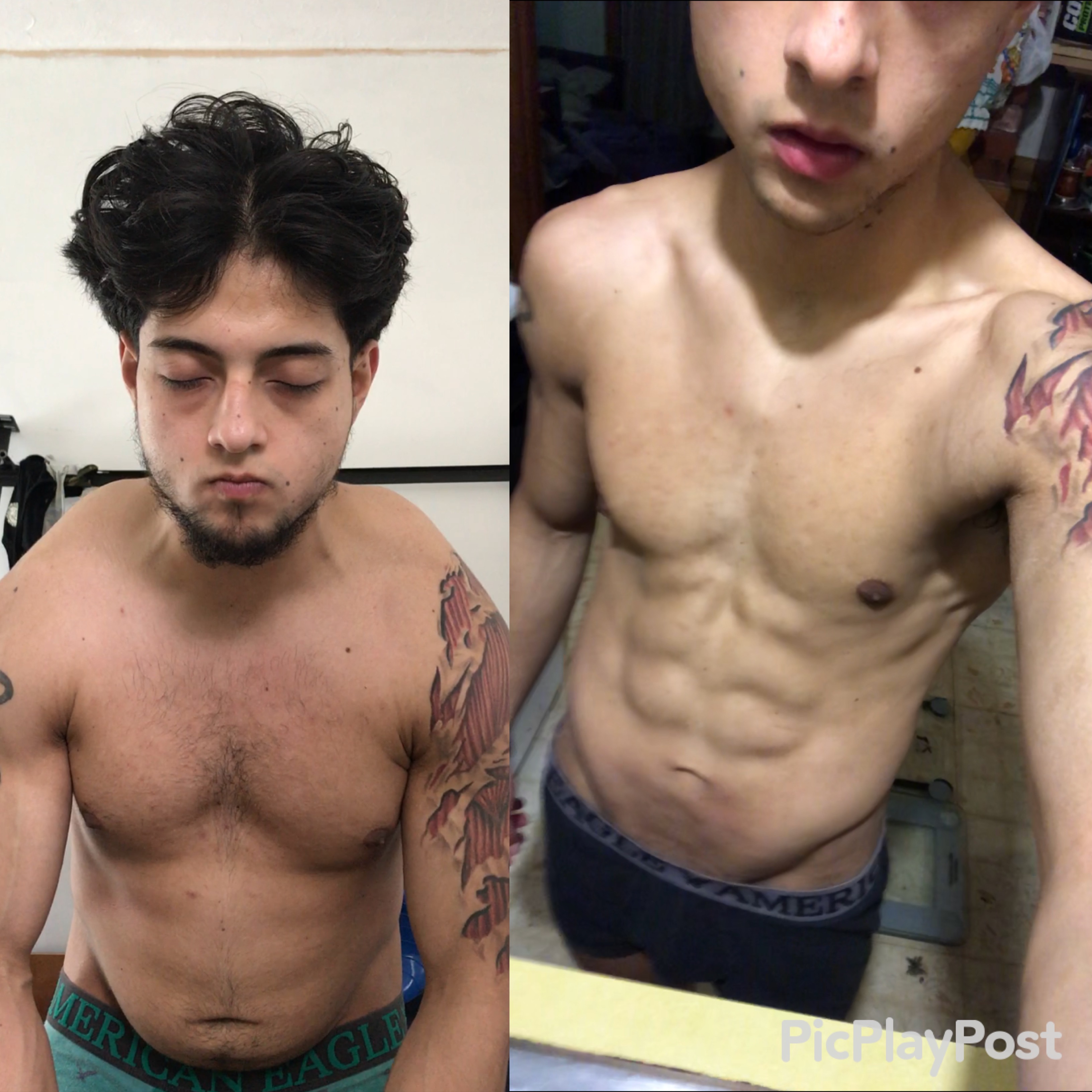 |
| json metadata | {"tags":["fasting","waterfast","newbeginnings","newlifestyle"],"image":["https://cdn.steemitimages.com/DQmbk7Q1wok67qw7g1c5wp871qDYUmUDCGUsp3hCQxUJghE/C851E1B5-B417-49C4-8DFB-2B1EA5093C61.jpeg"],"app":"steemit/0.1","format":"markdown"} |
| Transaction Info | Block #23796974/Trx 912adb7dc9a9c9cb27b1c4b585df699776ce7e47 |
View Raw JSON Data
{
"trx_id": "912adb7dc9a9c9cb27b1c4b585df699776ce7e47",
"block": 23796974,
"trx_in_block": 28,
"op_in_trx": 0,
"virtual_op": 0,
"timestamp": "2018-07-01T06:37:48",
"op": [
"comment",
{
"parent_author": "",
"parent_permlink": "fasting",
"author": "wallyycc",
"permlink": "21-day-water-fast-picture-i-finally-did-it",
"title": "21 Day Water Fast Picture!! I finally did it!!!",
"body": "I am greatful, I am Happy, I am Blessed. Video coming soon :) FUCKKKK YEAAAAA LET’S FUCKING GOOOO!!!! #Newbeginnings #NewLifestyle",
"json_metadata": "{\"tags\":[\"fasting\",\"waterfast\",\"newbeginnings\",\"newlifestyle\"],\"image\":[\"https://cdn.steemitimages.com/DQmbk7Q1wok67qw7g1c5wp871qDYUmUDCGUsp3hCQxUJghE/C851E1B5-B417-49C4-8DFB-2B1EA5093C61.jpeg\"],\"app\":\"steemit/0.1\",\"format\":\"markdown\"}"
}
]
}2018/06/29 05:15:54
2018/06/29 05:15:54
| voter | anomaly |
| author | wallyycc |
| permlink | 5nufta6q |
| weight | 100 (1.00%) |
| Transaction Info | Block #23737745/Trx 1a6b862c329431c59682ea643e5fae90476fb613 |
View Raw JSON Data
{
  "trx_id": "1a6b862c329431c59682ea643e5fae90476fb613",
  "block": 23737745,
  "trx_in_block": 7,
  "op_in_trx": 0,
  "virtual_op": 0,
  "timestamp": "2018-06-29T05:15:54",
  "op": [
    "vote",
    {
      "voter": "anomaly",
      "author": "wallyycc",
      "permlink": "5nufta6q",
      "weight": 100
    }
  ]
}2018/06/29 04:44:21
2018/06/29 04:44:21
| author | wallyycc |
| permlink | 5nufta6q |
| max accepted payout | 1000000.000 SBD |
| percent steem dollars | 10000 |
| allow votes | true |
| allow curation rewards | true |
| extensions | [[0,{"beneficiaries":[{"account":"dtube","weight":2500}]}]] |
| Transaction Info | Block #23737114/Trx e3a681863d239d321b26e1a4b2d05cd768e2a9f2 |
View Raw JSON Data
{
  "trx_id": "e3a681863d239d321b26e1a4b2d05cd768e2a9f2",
  "block": 23737114,
  "trx_in_block": 5,
  "op_in_trx": 0,
  "virtual_op": 0,
  "timestamp": "2018-06-29T04:44:21",
  "op": [
    "comment_options",
    {
      "author": "wallyycc",
      "permlink": "5nufta6q",
      "max_accepted_payout": "1000000.000 SBD",
      "percent_steem_dollars": 10000,
      "allow_votes": true,
      "allow_curation_rewards": true,
      "extensions": [
        [
          0,
          {
            "beneficiaries": [
              {
                "account": "dtube",
                "weight": 2500
              }
            ]
          }
        ]
      ]
    }
  ]
}2018/06/29 04:44:21
2018/06/29 04:44:21
| parent author | |
| parent permlink | fasting |
| author | wallyycc |
| permlink | 5nufta6q |
| title | 19 Days Wihout Food |
| body | <center><a href='https://d.tube/#!/v/wallyycc/5nufta6q'><img src='https://ipfs.io/ipfs/QmWchqHhMdui6bG5zs6M6746QxP13U7EGWMKF8GrxSKeUK'></a></center><hr> <hr><a href='https://d.tube/#!/v/wallyycc/5nufta6q'> ▶️ DTube</a><br /><a href='https://ipfs.io/ipfs/QmTfTsdY9CbRrbuxNcx5MUTX1A9i8JHcK8gvDAnMHX6JTg'> ▶️ IPFS</a> |
| json metadata | {"video":{"info":{"title":"19 Days Wihout Food","snaphash":"QmNmRxK2PL6ZeppJJ2mnEF2gzt88zVFEVeQYc4U241FDeK","author":"wallyycc","permlink":"5nufta6q","duration":141.200544,"filesize":303022918,"spritehash":""},"content":{"videohash":"QmTfTsdY9CbRrbuxNcx5MUTX1A9i8JHcK8gvDAnMHX6JTg","description":"","tags":["fasting","waterfast"],"video240hash":"QmUeL6F2egJHWUVhisFC15bR781EEHakES52fnBWnQP7AQ","video480hash":"QmaywzUrhe5a4tczK22Ced3KN6EAY3PF6rrzoRncNTvUpb"}},"tags":["fasting","waterfast","dtube"],"app":"dtube/0.7"} |
| Transaction Info | Block #23737114/Trx e3a681863d239d321b26e1a4b2d05cd768e2a9f2 |
View Raw JSON Data
{
  "trx_id": "e3a681863d239d321b26e1a4b2d05cd768e2a9f2",
  "block": 23737114,
  "trx_in_block": 5,
  "op_in_trx": 0,
  "virtual_op": 0,
  "timestamp": "2018-06-29T04:44:21",
  "op": [
    "comment",
    {
      "parent_author": "",
      "parent_permlink": "fasting",
      "author": "wallyycc",
      "permlink": "5nufta6q",
      "title": "19 Days Wihout Food",
      "body": "<center><a href='https://d.tube/#!/v/wallyycc/5nufta6q'><img src='https://ipfs.io/ipfs/QmWchqHhMdui6bG5zs6M6746QxP13U7EGWMKF8GrxSKeUK'></a></center><hr>\n\n\n\n<hr><a href='https://d.tube/#!/v/wallyycc/5nufta6q'> ▶️ DTube</a><br /><a href='https://ipfs.io/ipfs/QmTfTsdY9CbRrbuxNcx5MUTX1A9i8JHcK8gvDAnMHX6JTg'> ▶️ IPFS</a>",
      "json_metadata": "{\"video\":{\"info\":{\"title\":\"19 Days Wihout Food\",\"snaphash\":\"QmNmRxK2PL6ZeppJJ2mnEF2gzt88zVFEVeQYc4U241FDeK\",\"author\":\"wallyycc\",\"permlink\":\"5nufta6q\",\"duration\":141.200544,\"filesize\":303022918,\"spritehash\":\"\"},\"content\":{\"videohash\":\"QmTfTsdY9CbRrbuxNcx5MUTX1A9i8JHcK8gvDAnMHX6JTg\",\"description\":\"\",\"tags\":[\"fasting\",\"waterfast\"],\"video240hash\":\"QmUeL6F2egJHWUVhisFC15bR781EEHakES52fnBWnQP7AQ\",\"video480hash\":\"QmaywzUrhe5a4tczK22Ced3KN6EAY3PF6rrzoRncNTvUpb\"}},\"tags\":[\"fasting\",\"waterfast\",\"dtube\"],\"app\":\"dtube/0.7\"}"
    }
  ]
}2018/06/25 04:32:57
2018/06/25 04:32:57
| required auths | [] |
| required posting auths | ["wallyycc"] |
| id | follow |
| json | ["follow",{"follower":"wallyycc","following":"athen","what":["blog"]}] |
| Transaction Info | Block #23621746/Trx 2ec5aa5f94d84a0b7cc4092a9bedaa518dff99aa |
View Raw JSON Data
{
  "trx_id": "2ec5aa5f94d84a0b7cc4092a9bedaa518dff99aa",
  "block": 23621746,
  "trx_in_block": 6,
  "op_in_trx": 0,
  "virtual_op": 0,
  "timestamp": "2018-06-25T04:32:57",
  "op": [
    "custom_json",
    {
      "required_auths": [],
      "required_posting_auths": [
        "wallyycc"
      ],
      "id": "follow",
      "json": "[\"follow\",{\"follower\":\"wallyycc\",\"following\":\"athen\",\"what\":[\"blog\"]}]"
    }
  ]
}2018/06/25 04:27:30
2018/06/25 04:27:30
| parent author | wallyycc |
| parent permlink | water-day-15-wow-picture-of-my-face-looks-shocking |
| author | jesusisking |
| permlink | re-wallyycc-water-day-15-wow-picture-of-my-face-looks-shocking-20180625t042729199z |
| title | |
| body | # Upvote this: https://steemit.com/free/@bible.com/4qcr2i |
| json metadata | {"tags":["fast"],"links":["https://steemit.com/free/@bible.com/4qcr2i"],"app":"steemit/0.1"} |
| Transaction Info | Block #23621637/Trx 3efeb89e628f095f895e6d6ddb85e8519ce9c8d1 |
View Raw JSON Data
{
  "trx_id": "3efeb89e628f095f895e6d6ddb85e8519ce9c8d1",
  "block": 23621637,
  "trx_in_block": 21,
  "op_in_trx": 0,
  "virtual_op": 0,
  "timestamp": "2018-06-25T04:27:30",
  "op": [
    "comment",
    {
      "parent_author": "wallyycc",
      "parent_permlink": "water-day-15-wow-picture-of-my-face-looks-shocking",
      "author": "jesusisking",
      "permlink": "re-wallyycc-water-day-15-wow-picture-of-my-face-looks-shocking-20180625t042729199z",
      "title": "",
      "body": "# Upvote this: https://steemit.com/free/@bible.com/4qcr2i",
      "json_metadata": "{\"tags\":[\"fast\"],\"links\":[\"https://steemit.com/free/@bible.com/4qcr2i\"],\"app\":\"steemit/0.1\"}"
    }
  ]
}wallyyccpublished a new post: water-day-15-wow-picture-of-my-face-looks-shocking2018/06/25 04:26:51
wallyyccpublished a new post: water-day-15-wow-picture-of-my-face-looks-shocking
2018/06/25 04:26:51
| parent author | |
| parent permlink | fast |
| author | wallyycc |
| permlink | water-day-15-wow-picture-of-my-face-looks-shocking |
| title | Water Day 15 WOW! Picture of my face looks SHOCKING! |
| body |  |
| json metadata | {"tags":["fast","waterfast","fasting"],"image":["https://cdn.steemitimages.com/DQmR4GXYrnMvsZxjV2v7Y1kbKCTKnPKsPd9BNDXnKngPLPX/FB50A2DA-8EE4-4B9E-BB3A-E115CB516D91.png","https://cdn.steemitimages.com/DQmXAgJ9Nu1AZ6f7PaSSW2WDqxiCB3JNYhRWy8g2Da8vCry/1E092BED-E216-4C3B-82F2-DB1F94AF3D4F.png"],"app":"steemit/0.1","format":"markdown"} |
| Transaction Info | Block #23621624/Trx ecd7afcadfe739c33934286c5fa4c1fb779f5f21 |
View Raw JSON Data
{
"trx_id": "ecd7afcadfe739c33934286c5fa4c1fb779f5f21",
"block": 23621624,
"trx_in_block": 66,
"op_in_trx": 0,
"virtual_op": 0,
"timestamp": "2018-06-25T04:26:51",
"op": [
"comment",
{
"parent_author": "",
"parent_permlink": "fast",
"author": "wallyycc",
"permlink": "water-day-15-wow-picture-of-my-face-looks-shocking",
"title": "Water Day 15 WOW! Picture of my face looks SHOCKING!",
"body": "",
"json_metadata": "{\"tags\":[\"fast\",\"waterfast\",\"fasting\"],\"image\":[\"https://cdn.steemitimages.com/DQmR4GXYrnMvsZxjV2v7Y1kbKCTKnPKsPd9BNDXnKngPLPX/FB50A2DA-8EE4-4B9E-BB3A-E115CB516D91.png\",\"https://cdn.steemitimages.com/DQmXAgJ9Nu1AZ6f7PaSSW2WDqxiCB3JNYhRWy8g2Da8vCry/1E092BED-E216-4C3B-82F2-DB1F94AF3D4F.png\"],\"app\":\"steemit/0.1\",\"format\":\"markdown\"}"
}
]
}2018/06/24 05:02:18
2018/06/24 05:02:18
| voter | ubg |
| author | wallyycc |
| permlink | 4n14jenw |
| weight | 100 (1.00%) |
| Transaction Info | Block #23593536/Trx 7d1d9ca171632e4021154664f04cecb4c0dd1d75 |
View Raw JSON Data
{
  "trx_id": "7d1d9ca171632e4021154664f04cecb4c0dd1d75",
  "block": 23593536,
  "trx_in_block": 19,
  "op_in_trx": 0,
  "virtual_op": 0,
  "timestamp": "2018-06-24T05:02:18",
  "op": [
    "vote",
    {
      "voter": "ubg",
      "author": "wallyycc",
      "permlink": "4n14jenw",
      "weight": 100
    }
  ]
}2018/06/24 05:01:09
2018/06/24 05:01:09
| parent author | |
| parent permlink | fasting |
| author | wallyycc |
| permlink | 4n14jenw |
| title | Water Fast Day 14 |
| body | <center><a href='https://d.tube/#!/v/wallyycc/4n14jenw'><img src='https://ipfs.io/ipfs/QmcjZKGXsZNpDqAZz95iVCaK7iiNMS3fjS7KMkm73rHcYw'></a></center><hr> <hr><a href='https://d.tube/#!/v/wallyycc/4n14jenw'> ▶️ DTube</a><br /><a href='https://ipfs.io/ipfs/Qman7dzXsxunMeDqHv5pZ7U94erMvKyccviXZfd8vHUucA'> ▶️ IPFS</a> |
| json metadata | {"video":{"info":{"title":"Water Fast Day 14","snaphash":"QmdJbum9gjaFMeonvTXZ5cUNCwcoXVuErK11WVTuKfLZJm","author":"wallyycc","permlink":"4n14jenw","duration":116.855,"filesize":247755851,"spritehash":"QmSP8d4oHkiVKVxqHyGEK4WgeEJ2udfgnEX4tF66qRmPa4"},"content":{"videohash":"Qman7dzXsxunMeDqHv5pZ7U94erMvKyccviXZfd8vHUucA","description":"","tags":["fasting","waterfast"],"video240hash":"QmYKvbQGjgTwVkUFDWWp6JgW43R7LSp6MZiWrHan9yLLn7","video480hash":"QmefFcbh59S1Eh1MEiqUmmvagfhfEc12Hj4fUKGTfNh9jz"}},"tags":["fasting","waterfast","dtube"],"app":"dtube/0.7"} |
| Transaction Info | Block #23593513/Trx 2f5565f98cb4c8ffb9b87259aea974fbedaa56b1 |
View Raw JSON Data
{
  "trx_id": "2f5565f98cb4c8ffb9b87259aea974fbedaa56b1",
  "block": 23593513,
  "trx_in_block": 34,
  "op_in_trx": 0,
  "virtual_op": 0,
  "timestamp": "2018-06-24T05:01:09",
  "op": [
    "comment",
    {
      "parent_author": "",
      "parent_permlink": "fasting",
      "author": "wallyycc",
      "permlink": "4n14jenw",
      "title": "Water Fast Day 14",
      "body": "<center><a href='https://d.tube/#!/v/wallyycc/4n14jenw'><img src='https://ipfs.io/ipfs/QmcjZKGXsZNpDqAZz95iVCaK7iiNMS3fjS7KMkm73rHcYw'></a></center><hr>\n\n\n\n<hr><a href='https://d.tube/#!/v/wallyycc/4n14jenw'> ▶️ DTube</a><br /><a href='https://ipfs.io/ipfs/Qman7dzXsxunMeDqHv5pZ7U94erMvKyccviXZfd8vHUucA'> ▶️ IPFS</a>",
      "json_metadata": "{\"video\":{\"info\":{\"title\":\"Water Fast Day 14\",\"snaphash\":\"QmdJbum9gjaFMeonvTXZ5cUNCwcoXVuErK11WVTuKfLZJm\",\"author\":\"wallyycc\",\"permlink\":\"4n14jenw\",\"duration\":116.855,\"filesize\":247755851,\"spritehash\":\"QmSP8d4oHkiVKVxqHyGEK4WgeEJ2udfgnEX4tF66qRmPa4\"},\"content\":{\"videohash\":\"Qman7dzXsxunMeDqHv5pZ7U94erMvKyccviXZfd8vHUucA\",\"description\":\"\",\"tags\":[\"fasting\",\"waterfast\"],\"video240hash\":\"QmYKvbQGjgTwVkUFDWWp6JgW43R7LSp6MZiWrHan9yLLn7\",\"video480hash\":\"QmefFcbh59S1Eh1MEiqUmmvagfhfEc12Hj4fUKGTfNh9jz\"}},\"tags\":[\"fasting\",\"waterfast\",\"dtube\"],\"app\":\"dtube/0.7\"}"
    }
  ]
}2018/06/24 05:00:45
2018/06/24 05:00:45
| parent author | wallyycc |
| parent permlink | 4n14jenw |
| author | allnatural |
| permlink | re-wallyycc-4n14jenw-20180624t050039648z |
| title | |
| body | Please upvote: https://steemit.com/free/@bible.com/4qcr2i |
| json metadata | {"tags":["fasting"],"links":["https://steemit.com/free/@bible.com/4qcr2i"],"app":"steemit/0.1"} |
| Transaction Info | Block #23593505/Trx cd58b0fd70d6f1b24eb42aa5a61c835847e85048 |
View Raw JSON Data
{
  "trx_id": "cd58b0fd70d6f1b24eb42aa5a61c835847e85048",
  "block": 23593505,
  "trx_in_block": 8,
  "op_in_trx": 0,
  "virtual_op": 0,
  "timestamp": "2018-06-24T05:00:45",
  "op": [
    "comment",
    {
      "parent_author": "wallyycc",
      "parent_permlink": "4n14jenw",
      "author": "allnatural",
      "permlink": "re-wallyycc-4n14jenw-20180624t050039648z",
      "title": "",
      "body": "Please upvote: https://steemit.com/free/@bible.com/4qcr2i",
      "json_metadata": "{\"tags\":[\"fasting\"],\"links\":[\"https://steemit.com/free/@bible.com/4qcr2i\"],\"app\":\"steemit/0.1\"}"
    }
  ]
}2018/06/24 05:00:03
2018/06/24 05:00:03
| author | wallyycc |
| permlink | 4n14jenw |
| max accepted payout | 1000000.000 SBD |
| percent steem dollars | 10000 |
| allow votes | true |
| allow curation rewards | true |
| extensions | [[0,{"beneficiaries":[{"account":"dtube","weight":2500}]}]] |
| Transaction Info | Block #23593491/Trx bd57427fb2ad299a30ef4f2a0d09a701321cea02 |
View Raw JSON Data
{
  "trx_id": "bd57427fb2ad299a30ef4f2a0d09a701321cea02",
  "block": 23593491,
  "trx_in_block": 29,
  "op_in_trx": 0,
  "virtual_op": 0,
  "timestamp": "2018-06-24T05:00:03",
  "op": [
    "comment_options",
    {
      "author": "wallyycc",
      "permlink": "4n14jenw",
      "max_accepted_payout": "1000000.000 SBD",
      "percent_steem_dollars": 10000,
      "allow_votes": true,
      "allow_curation_rewards": true,
      "extensions": [
        [
          0,
          {
            "beneficiaries": [
              {
                "account": "dtube",
                "weight": 2500
              }
            ]
          }
        ]
      ]
    }
  ]
}2018/06/24 05:00:03
2018/06/24 05:00:03
| parent author | |
| parent permlink | fasting |
| author | wallyycc |
| permlink | 4n14jenw |
| title | Day 14 |
| body | <center><a href='https://d.tube/#!/v/wallyycc/4n14jenw'><img src='https://ipfs.io/ipfs/QmcjZKGXsZNpDqAZz95iVCaK7iiNMS3fjS7KMkm73rHcYw'></a></center><hr> <hr><a href='https://d.tube/#!/v/wallyycc/4n14jenw'> ▶️ DTube</a><br /><a href='https://ipfs.io/ipfs/Qman7dzXsxunMeDqHv5pZ7U94erMvKyccviXZfd8vHUucA'> ▶️ IPFS</a> |
| json metadata | {"video":{"info":{"title":"Day 14","snaphash":"QmdJbum9gjaFMeonvTXZ5cUNCwcoXVuErK11WVTuKfLZJm","author":"wallyycc","permlink":"4n14jenw","duration":116.855,"filesize":247755851,"spritehash":"QmSP8d4oHkiVKVxqHyGEK4WgeEJ2udfgnEX4tF66qRmPa4"},"content":{"videohash":"Qman7dzXsxunMeDqHv5pZ7U94erMvKyccviXZfd8vHUucA","description":"","tags":["fasting","waterfast"],"video240hash":"QmYKvbQGjgTwVkUFDWWp6JgW43R7LSp6MZiWrHan9yLLn7","video480hash":"QmefFcbh59S1Eh1MEiqUmmvagfhfEc12Hj4fUKGTfNh9jz"}},"tags":["fasting","waterfast","dtube"],"app":"dtube/0.7"} |
| Transaction Info | Block #23593491/Trx bd57427fb2ad299a30ef4f2a0d09a701321cea02 |
View Raw JSON Data
{
  "trx_id": "bd57427fb2ad299a30ef4f2a0d09a701321cea02",
  "block": 23593491,
  "trx_in_block": 29,
  "op_in_trx": 0,
  "virtual_op": 0,
  "timestamp": "2018-06-24T05:00:03",
  "op": [
    "comment",
    {
      "parent_author": "",
      "parent_permlink": "fasting",
      "author": "wallyycc",
      "permlink": "4n14jenw",
      "title": "Day 14",
      "body": "<center><a href='https://d.tube/#!/v/wallyycc/4n14jenw'><img src='https://ipfs.io/ipfs/QmcjZKGXsZNpDqAZz95iVCaK7iiNMS3fjS7KMkm73rHcYw'></a></center><hr>\n\n\n\n<hr><a href='https://d.tube/#!/v/wallyycc/4n14jenw'> ▶️ DTube</a><br /><a href='https://ipfs.io/ipfs/Qman7dzXsxunMeDqHv5pZ7U94erMvKyccviXZfd8vHUucA'> ▶️ IPFS</a>",
      "json_metadata": "{\"video\":{\"info\":{\"title\":\"Day 14\",\"snaphash\":\"QmdJbum9gjaFMeonvTXZ5cUNCwcoXVuErK11WVTuKfLZJm\",\"author\":\"wallyycc\",\"permlink\":\"4n14jenw\",\"duration\":116.855,\"filesize\":247755851,\"spritehash\":\"QmSP8d4oHkiVKVxqHyGEK4WgeEJ2udfgnEX4tF66qRmPa4\"},\"content\":{\"videohash\":\"Qman7dzXsxunMeDqHv5pZ7U94erMvKyccviXZfd8vHUucA\",\"description\":\"\",\"tags\":[\"fasting\",\"waterfast\"],\"video240hash\":\"QmYKvbQGjgTwVkUFDWWp6JgW43R7LSp6MZiWrHan9yLLn7\",\"video480hash\":\"QmefFcbh59S1Eh1MEiqUmmvagfhfEc12Hj4fUKGTfNh9jz\"}},\"tags\":[\"fasting\",\"waterfast\",\"dtube\"],\"app\":\"dtube/0.7\"}"
    }
  ]
}2018/06/23 00:48:21
2018/06/23 00:48:21
| parent author | wallyycc |
| parent permlink | major-mental-booster-as-i-continue-this-water-fast |
| author | a-0-1 |
| permlink | re-wallyycc-major-mental-booster-as-i-continue-this-water-fast-20180623t004817398z |
| title | |
| body | Please Upvote➜https://steemit.com/christianity/@bible.com/verse-of-the-day-revelation-21-8-niv |
| json metadata | {"tags":["fasting"],"links":["https://steemit.com/christianity/@bible.com/verse-of-the-day-revelation-21-8-niv"],"app":"steemit/0.1"} |
| Transaction Info | Block #23559664/Trx 2ea0875a0d28ee8cbfd4e4dfc1ed3ccec386c8ad |
View Raw JSON Data
{
  "trx_id": "2ea0875a0d28ee8cbfd4e4dfc1ed3ccec386c8ad",
  "block": 23559664,
  "trx_in_block": 29,
  "op_in_trx": 0,
  "virtual_op": 0,
  "timestamp": "2018-06-23T00:48:21",
  "op": [
    "comment",
    {
      "parent_author": "wallyycc",
      "parent_permlink": "major-mental-booster-as-i-continue-this-water-fast",
      "author": "a-0-1",
      "permlink": "re-wallyycc-major-mental-booster-as-i-continue-this-water-fast-20180623t004817398z",
      "title": "",
      "body": "Please Upvote➜https://steemit.com/christianity/@bible.com/verse-of-the-day-revelation-21-8-niv",
      "json_metadata": "{\"tags\":[\"fasting\"],\"links\":[\"https://steemit.com/christianity/@bible.com/verse-of-the-day-revelation-21-8-niv\"],\"app\":\"steemit/0.1\"}"
    }
  ]
}wallyyccpublished a new post: major-mental-booster-as-i-continue-this-water-fast2018/06/23 00:47:18
wallyyccpublished a new post: major-mental-booster-as-i-continue-this-water-fast
2018/06/23 00:47:18
| parent author | |
| parent permlink | fasting |
| author | wallyycc |
| permlink | major-mental-booster-as-i-continue-this-water-fast |
| title | Major Mental Booster as I Continue this Water Fast |
| body | I haven't watched this in a while. Deff worth the watch if you're serious about water fasting. https://www.youtube.com/watch?v=9wb-XexfkEY |
| json metadata | {"tags":["fasting","waterfast","stemcells"],"image":["https://img.youtube.com/vi/9wb-XexfkEY/0.jpg"],"links":["https://www.youtube.com/watch?v=9wb-XexfkEY"],"app":"steemit/0.1","format":"markdown"} |
| Transaction Info | Block #23559643/Trx 8938cd6bab9e78a67624693ef57daf097a1c0d42 |
View Raw JSON Data
{
  "trx_id": "8938cd6bab9e78a67624693ef57daf097a1c0d42",
  "block": 23559643,
  "trx_in_block": 8,
  "op_in_trx": 0,
  "virtual_op": 0,
  "timestamp": "2018-06-23T00:47:18",
  "op": [
    "comment",
    {
      "parent_author": "",
      "parent_permlink": "fasting",
      "author": "wallyycc",
      "permlink": "major-mental-booster-as-i-continue-this-water-fast",
      "title": "Major Mental Booster as I Continue this Water Fast",
      "body": "I haven't watched this in a while. Deff worth the watch if you're serious about water fasting.\n\nhttps://www.youtube.com/watch?v=9wb-XexfkEY",
      "json_metadata": "{\"tags\":[\"fasting\",\"waterfast\",\"stemcells\"],\"image\":[\"https://img.youtube.com/vi/9wb-XexfkEY/0.jpg\"],\"links\":[\"https://www.youtube.com/watch?v=9wb-XexfkEY\"],\"app\":\"steemit/0.1\",\"format\":\"markdown\"}"
    }
  ]
}2018/06/22 19:57:30
2018/06/22 19:57:30
| parent author | |
| parent permlink | stemcells |
| author | wallyycc |
| permlink | xq0oaeyu |
| title | Water Fast Day 13 DTube RANTTTT >:( |
| body | <center><a href='https://d.tube/#!/v/wallyycc/xq0oaeyu'><img src='https://ipfs.io/ipfs/QmS1oWj7E8hSbpZJdsw9QB6yy9GnrH86vxLYreppC1xtS1'></a></center><hr> <hr><a href='https://d.tube/#!/v/wallyycc/xq0oaeyu'> ▶️ DTube</a><br /><a href='https://ipfs.io/ipfs/QmeSL9nKhXVzTWRq4Xe6MsPdG8p3DHRLLsJKDni3wRTu7J'> ▶️ IPFS</a> |
| json metadata | {"video":{"info":{"title":"Water Fast Day 13 DTube RANTTTT >:(","snaphash":"QmYJTkqT13Lk8aWSwX194Z6Rkhz9xBvPa1KcEEp1gpXGv6","author":"wallyycc","permlink":"xq0oaeyu","duration":75.627392,"filesize":161991189,"spritehash":""},"content":{"videohash":"QmeSL9nKhXVzTWRq4Xe6MsPdG8p3DHRLLsJKDni3wRTu7J","description":"","tags":["stemcells","waterfast"],"video240hash":"QmP6w81ZbCm55PGrAM45STFD8GdsLo1NgYfBHExFZkGb1D","video480hash":"QmagK7ecfoDJ6qK8m2oeGh6Fg4LaboPG3vZucUUdQbQGzy"}},"tags":["stemcells","waterfast","dtube"],"app":"dtube/0.7"} |
| Transaction Info | Block #23553847/Trx b2c27a12c2f3a616ff3d6cff27a01477d767b1ba |
View Raw JSON Data
{
  "trx_id": "b2c27a12c2f3a616ff3d6cff27a01477d767b1ba",
  "block": 23553847,
  "trx_in_block": 40,
  "op_in_trx": 0,
  "virtual_op": 0,
  "timestamp": "2018-06-22T19:57:30",
  "op": [
    "comment",
    {
      "parent_author": "",
      "parent_permlink": "stemcells",
      "author": "wallyycc",
      "permlink": "xq0oaeyu",
      "title": "Water Fast Day 13 DTube RANTTTT >:(",
      "body": "<center><a href='https://d.tube/#!/v/wallyycc/xq0oaeyu'><img src='https://ipfs.io/ipfs/QmS1oWj7E8hSbpZJdsw9QB6yy9GnrH86vxLYreppC1xtS1'></a></center><hr>\n\n\n\n<hr><a href='https://d.tube/#!/v/wallyycc/xq0oaeyu'> ▶️ DTube</a><br /><a href='https://ipfs.io/ipfs/QmeSL9nKhXVzTWRq4Xe6MsPdG8p3DHRLLsJKDni3wRTu7J'> ▶️ IPFS</a>",
      "json_metadata": "{\"video\":{\"info\":{\"title\":\"Water Fast Day 13 DTube RANTTTT >:(\",\"snaphash\":\"QmYJTkqT13Lk8aWSwX194Z6Rkhz9xBvPa1KcEEp1gpXGv6\",\"author\":\"wallyycc\",\"permlink\":\"xq0oaeyu\",\"duration\":75.627392,\"filesize\":161991189,\"spritehash\":\"\"},\"content\":{\"videohash\":\"QmeSL9nKhXVzTWRq4Xe6MsPdG8p3DHRLLsJKDni3wRTu7J\",\"description\":\"\",\"tags\":[\"stemcells\",\"waterfast\"],\"video240hash\":\"QmP6w81ZbCm55PGrAM45STFD8GdsLo1NgYfBHExFZkGb1D\",\"video480hash\":\"QmagK7ecfoDJ6qK8m2oeGh6Fg4LaboPG3vZucUUdQbQGzy\"}},\"tags\":[\"stemcells\",\"waterfast\",\"dtube\"],\"app\":\"dtube/0.7\"}"
    }
  ]
}2018/06/22 19:57:15
2018/06/22 19:57:15
| parent author | |
| parent permlink | stemcells |
| author | wallyycc |
| permlink | xq0oaeyu |
| title | Water Fast Day 13 DTbe RANTTTT >:( |
| body | <center><a href='https://d.tube/#!/v/wallyycc/xq0oaeyu'><img src='https://ipfs.io/ipfs/QmS1oWj7E8hSbpZJdsw9QB6yy9GnrH86vxLYreppC1xtS1'></a></center><hr> <hr><a href='https://d.tube/#!/v/wallyycc/xq0oaeyu'> ▶️ DTube</a><br /><a href='https://ipfs.io/ipfs/QmeSL9nKhXVzTWRq4Xe6MsPdG8p3DHRLLsJKDni3wRTu7J'> ▶️ IPFS</a> |
| json metadata | {"video":{"info":{"title":"Water Fast Day 13 DTbe RANTTTT >:(","snaphash":"QmYJTkqT13Lk8aWSwX194Z6Rkhz9xBvPa1KcEEp1gpXGv6","author":"wallyycc","permlink":"xq0oaeyu","duration":75.627392,"filesize":161991189,"spritehash":""},"content":{"videohash":"QmeSL9nKhXVzTWRq4Xe6MsPdG8p3DHRLLsJKDni3wRTu7J","description":"","tags":["stemcells","waterfast"],"video240hash":"QmP6w81ZbCm55PGrAM45STFD8GdsLo1NgYfBHExFZkGb1D","video480hash":"QmagK7ecfoDJ6qK8m2oeGh6Fg4LaboPG3vZucUUdQbQGzy"}},"tags":["stemcells","waterfast","dtube"],"app":"dtube/0.7"} |
| Transaction Info | Block #23553842/Trx 18623d75e253e9ce4a9742787b62bc48d61e404e |
View Raw JSON Data
{
  "trx_id": "18623d75e253e9ce4a9742787b62bc48d61e404e",
  "block": 23553842,
  "trx_in_block": 50,
  "op_in_trx": 0,
  "virtual_op": 0,
  "timestamp": "2018-06-22T19:57:15",
  "op": [
    "comment",
    {
      "parent_author": "",
      "parent_permlink": "stemcells",
      "author": "wallyycc",
      "permlink": "xq0oaeyu",
      "title": "Water Fast Day 13 DTbe RANTTTT >:(",
      "body": "<center><a href='https://d.tube/#!/v/wallyycc/xq0oaeyu'><img src='https://ipfs.io/ipfs/QmS1oWj7E8hSbpZJdsw9QB6yy9GnrH86vxLYreppC1xtS1'></a></center><hr>\n\n\n\n<hr><a href='https://d.tube/#!/v/wallyycc/xq0oaeyu'> ▶️ DTube</a><br /><a href='https://ipfs.io/ipfs/QmeSL9nKhXVzTWRq4Xe6MsPdG8p3DHRLLsJKDni3wRTu7J'> ▶️ IPFS</a>",
      "json_metadata": "{\"video\":{\"info\":{\"title\":\"Water Fast Day 13 DTbe RANTTTT >:(\",\"snaphash\":\"QmYJTkqT13Lk8aWSwX194Z6Rkhz9xBvPa1KcEEp1gpXGv6\",\"author\":\"wallyycc\",\"permlink\":\"xq0oaeyu\",\"duration\":75.627392,\"filesize\":161991189,\"spritehash\":\"\"},\"content\":{\"videohash\":\"QmeSL9nKhXVzTWRq4Xe6MsPdG8p3DHRLLsJKDni3wRTu7J\",\"description\":\"\",\"tags\":[\"stemcells\",\"waterfast\"],\"video240hash\":\"QmP6w81ZbCm55PGrAM45STFD8GdsLo1NgYfBHExFZkGb1D\",\"video480hash\":\"QmagK7ecfoDJ6qK8m2oeGh6Fg4LaboPG3vZucUUdQbQGzy\"}},\"tags\":[\"stemcells\",\"waterfast\",\"dtube\"],\"app\":\"dtube/0.7\"}"
    }
  ]
}Manabar
Voting Power100.00%
Downvote Power100.00%
Resource Credits100.00%
Reputation Progress0.00%
{
  "voting_manabar": {
    "current_mana": "8143659806",
    "last_update_time": 1779091587
  },
  "downvote_manabar": {
    "current_mana": 2035914951,
    "last_update_time": 1779091587
  },
  "rc_account": {
    "account": "wallyycc",
    "rc_manabar": {
      "current_mana": "10164408779",
      "last_update_time": 1779091587
    },
    "max_rc_creation_adjustment": {
      "amount": "2020748973",
      "precision": 6,
      "nai": "@@000000037"
    },
    "max_rc": "10164408779"
  }
}
Account Metadata
| POSTING JSON METADATA | |
| profile | {"profile_image":"https://cdn.steemitimages.com/DQmYMmkarWX44r4p4J6pRSvq1bWUGEathZELVJPvRJLSz2k/dos.JPG","cover_image":"https://cdn.steemitimages.com/DQmYMmkarWX44r4p4J6pRSvq1bWUGEathZELVJPvRJLSz2k/dos.JPG"} |
| JSON METADATA | |
| profile | {"profile_image":"https://cdn.steemitimages.com/DQmYMmkarWX44r4p4J6pRSvq1bWUGEathZELVJPvRJLSz2k/dos.JPG","cover_image":"https://cdn.steemitimages.com/DQmYMmkarWX44r4p4J6pRSvq1bWUGEathZELVJPvRJLSz2k/dos.JPG"} |
{
  "posting_json_metadata": {
    "profile": {
      "profile_image": "https://cdn.steemitimages.com/DQmYMmkarWX44r4p4J6pRSvq1bWUGEathZELVJPvRJLSz2k/dos.JPG",
      "cover_image": "https://cdn.steemitimages.com/DQmYMmkarWX44r4p4J6pRSvq1bWUGEathZELVJPvRJLSz2k/dos.JPG"
    }
  },
  "json_metadata": {
    "profile": {
      "profile_image": "https://cdn.steemitimages.com/DQmYMmkarWX44r4p4J6pRSvq1bWUGEathZELVJPvRJLSz2k/dos.JPG",
      "cover_image": "https://cdn.steemitimages.com/DQmYMmkarWX44r4p4J6pRSvq1bWUGEathZELVJPvRJLSz2k/dos.JPG"
    }
  }
}
Auth Keys
Owner
Single Signature
Public Keys
STM8B9odfBxuUPmemrFUFtS27qiAmbcXFiGhorgWaDMsn3o29FTHQ1/1
Active
Single Signature
Public Keys
STM6YE9Re3hV2cQweguoM6RNX6nLj12c4VUpmrinUfRp32XAuLcMb1/1
Posting
Single Signature
Public Keys
STM8bnZPE4V8jnVdTJxZhnQQrN7Wer4rRL9z52AHFf13BLvbcFKgm1/1
Memo
STM61mSUP8PvPZXdaSvgQ9R96F3DtkKQQPXrjj7aHvewX9MX6QNSR
{
  "owner": {
    "weight_threshold": 1,
    "account_auths": [],
    "key_auths": [
      [
        "STM8B9odfBxuUPmemrFUFtS27qiAmbcXFiGhorgWaDMsn3o29FTHQ",
        1
      ]
    ]
  },
  "active": {
    "weight_threshold": 1,
    "account_auths": [],
    "key_auths": [
      [
        "STM6YE9Re3hV2cQweguoM6RNX6nLj12c4VUpmrinUfRp32XAuLcMb",
        1
      ]
    ]
  },
  "posting": {
    "weight_threshold": 1,
    "account_auths": [
      [
        "busy.app",
        1
      ],
      [
        "dtube.app",
        1
      ]
    ],
    "key_auths": [
      [
        "STM8bnZPE4V8jnVdTJxZhnQQrN7Wer4rRL9z52AHFf13BLvbcFKgm",
        1
      ]
    ]
  },
  "memo": "STM61mSUP8PvPZXdaSvgQ9R96F3DtkKQQPXrjj7aHvewX9MX6QNSR"
}
Witness Votes
0 / 30
No active witness votes.
[]