

VOTING POWER100.00%
DOWNVOTE POWER100.00%
RESOURCE CREDITS100.00%
REPUTATION PROGRESS0.00%
Net Worth
0.099USD
STEEM
0.002STEEM
SBD
0.126SBD
Effective Power
5.008SP
├── Own SP
0.670SP
└── Incoming DelegationsDeleg
+4.337SP
Detailed Balance
| STEEM | ||
| balance | 0.002STEEM | STEEM |
| market_balance | 0.000STEEM | STEEM |
| savings_balance | 0.000STEEM | STEEM |
| reward_steem_balance | 0.000STEEM | STEEM |
| STEEM POWER | ||
| Own SP | 0.670SP | SP |
| Delegated Out | 0.000SP | SP |
| Delegation In | 4.337SP | SP |
| Effective Power | 5.008SP | SP |
| Reward SP (pending) | 0.000SP | SP |
| SBD | ||
| sbd_balance | 0.126SBD | SBD |
| sbd_conversions | 0.000SBD | SBD |
| sbd_market_balance | 0.000SBD | SBD |
| savings_sbd_balance | 0.000SBD | SBD |
| reward_sbd_balance | 0.000SBD | SBD |
{
  "balance": "0.002 STEEM",
  "savings_balance": "0.000 STEEM",
  "reward_steem_balance": "0.000 STEEM",
  "vesting_shares": "1089.913940 VESTS",
  "delegated_vesting_shares": "0.000000 VESTS",
  "received_vesting_shares": "7053.745866 VESTS",
  "sbd_balance": "0.126 SBD",
  "savings_sbd_balance": "0.000 SBD",
  "reward_sbd_balance": "0.000 SBD",
  "conversions": []
}
Account Info
| name | tarmizi82 |
| id | 411403 |
| rank | 851,250 |
| reputation | 991993895 |
| created | 2017-10-18T07:37:06 |
| recovery_account | steem |
| proxy | None |
| post_count | 51 |
| comment_count | 0 |
| lifetime_vote_count | 0 |
| witnesses_voted_for | 0 |
| last_post | 2018-04-17T10:24:15 |
| last_root_post | 2018-04-17T10:24:15 |
| last_vote_time | 2018-02-20T06:36:09 |
| proxied_vsf_votes | 0, 0, 0, 0 |
| can_vote | 1 |
| voting_power | 0 |
| delayed_votes | 0 |
| balance | 0.002 STEEM |
| savings_balance | 0.000 STEEM |
| sbd_balance | 0.126 SBD |
| savings_sbd_balance | 0.000 SBD |
| vesting_shares | 1089.913940 VESTS |
| delegated_vesting_shares | 0.000000 VESTS |
| received_vesting_shares | 7053.745866 VESTS |
| reward_vesting_balance | 0.000000 VESTS |
| vesting_balance | 0.000 STEEM |
| vesting_withdraw_rate | 0.000000 VESTS |
| next_vesting_withdrawal | 1969-12-31T23:59:59 |
| withdrawn | 0 |
| to_withdraw | 0 |
| withdraw_routes | 0 |
| savings_withdraw_requests | 0 |
| last_account_recovery | 1970-01-01T00:00:00 |
| reset_account | null |
| last_owner_update | 1970-01-01T00:00:00 |
| last_account_update | 2018-09-25T10:01:24 |
| mined | No |
| sbd_seconds | 0 |
| sbd_last_interest_payment | 2018-05-26T07:02:39 |
| savings_sbd_last_interest_payment | 1970-01-01T00:00:00 |
{
  "active": {
    "account_auths": [],
    "key_auths": [
      [
        "STM7iY8pLezUYQ1sJzS4CK8H1vX9GhvAYA5B67WmRf6KBwJiM5Xtu",
        1
      ]
    ],
    "weight_threshold": 1
  },
  "balance": "0.002 STEEM",
  "can_vote": true,
  "comment_count": 0,
  "created": "2017-10-18T07:37:06",
  "curation_rewards": 1,
  "delegated_vesting_shares": "0.000000 VESTS",
  "downvote_manabar": {
    "current_mana": 2035914951,
    "last_update_time": 1779088353
  },
  "guest_bloggers": [],
  "id": 411403,
  "json_metadata": "{\"profile\":{\"cover_image\":\"https://img.esteem.ws/3d61w1ciui.jpg\",\"profile_image\":\"https://img.esteem.ws/x23xwfzw5w.jpg\",\"name\":\"Tarmizi Abdul Gani\",\"about\":\"Nanggroe Aceh Bumoe Aulia\",\"location\":\"Langsa -  Aceh\",\"website\":\"https://www.ipteq21.com/\"}}",
  "last_account_recovery": "1970-01-01T00:00:00",
  "last_account_update": "2018-09-25T10:01:24",
  "last_owner_update": "1970-01-01T00:00:00",
  "last_post": "2018-04-17T10:24:15",
  "last_root_post": "2018-04-17T10:24:15",
  "last_vote_time": "2018-02-20T06:36:09",
  "lifetime_vote_count": 0,
  "market_history": [],
  "memo_key": "STM5kegm6AoaBevzPMBFg5DjrBJuPbcG6pjqsRPqHaugDBzMHWtwj",
  "mined": false,
  "name": "tarmizi82",
  "next_vesting_withdrawal": "1969-12-31T23:59:59",
  "other_history": [],
  "owner": {
    "account_auths": [],
    "key_auths": [
      [
        "STM7BZq8DNCYG1z76aafS2c9io3kTkaf6eJnwgJPFQBzHnx2zncQF",
        1
      ]
    ],
    "weight_threshold": 1
  },
  "pending_claimed_accounts": 0,
  "post_bandwidth": 0,
  "post_count": 51,
  "post_history": [],
  "posting": {
    "account_auths": [
      [
        "dtube.app",
        1
      ]
    ],
    "key_auths": [
      [
        "STM6HTBgLRf5m38p9LuE271Vb4GbK2gHPNNo52EFmziDPX6XH45dL",
        1
      ]
    ],
    "weight_threshold": 1
  },
  "posting_json_metadata": "{\"profile\":{\"cover_image\":\"https://img.esteem.ws/3d61w1ciui.jpg\",\"profile_image\":\"https://img.esteem.ws/x23xwfzw5w.jpg\",\"name\":\"Tarmizi Abdul Gani\",\"about\":\"Nanggroe Aceh Bumoe Aulia\",\"location\":\"Langsa -  Aceh\",\"website\":\"https://www.ipteq21.com/\"}}",
  "posting_rewards": 55,
  "proxied_vsf_votes": [
    0,
    0,
    0,
    0
  ],
  "proxy": "",
  "received_vesting_shares": "7053.745866 VESTS",
  "recovery_account": "steem",
  "reputation": 991993895,
  "reset_account": "null",
  "reward_sbd_balance": "0.000 SBD",
  "reward_steem_balance": "0.000 STEEM",
  "reward_vesting_balance": "0.000000 VESTS",
  "reward_vesting_steem": "0.000 STEEM",
  "savings_balance": "0.000 STEEM",
  "savings_sbd_balance": "0.000 SBD",
  "savings_sbd_last_interest_payment": "1970-01-01T00:00:00",
  "savings_sbd_seconds": "0",
  "savings_sbd_seconds_last_update": "1970-01-01T00:00:00",
  "savings_withdraw_requests": 0,
  "sbd_balance": "0.126 SBD",
  "sbd_last_interest_payment": "2018-05-26T07:02:39",
  "sbd_seconds": "0",
  "sbd_seconds_last_update": "2018-05-26T07:02:39",
  "tags_usage": [],
  "to_withdraw": 0,
  "transfer_history": [],
  "vesting_balance": "0.000 STEEM",
  "vesting_shares": "1089.913940 VESTS",
  "vesting_withdraw_rate": "0.000000 VESTS",
  "vote_history": [],
  "voting_manabar": {
    "current_mana": "8143659806",
    "last_update_time": 1779088353
  },
  "voting_power": 0,
  "withdraw_routes": 0,
  "withdrawn": 0,
  "witness_votes": [],
  "witnesses_voted_for": 0,
  "rank": 851250
}
Withdraw Routes
| Incoming | Outgoing |
|---|---|
Empty | Empty |
{
  "incoming": [],
  "outgoing": []
}From Date
To Date
steemdelegated 4.337 SP to @tarmizi822026/05/18 07:12:33
steemdelegated 4.337 SP to @tarmizi82
2026/05/18 07:12:33
| delegatee | tarmizi82 |
| delegator | steem |
| vesting shares | 7053.745866 VESTS |
| Transaction Info | Block #106151761/Trx ac69202bd22e2bad6266798ed51632dbd9c520d3 |
View Raw JSON Data
{
  "block": 106151761,
  "op": [
    "delegate_vesting_shares",
    {
      "delegatee": "tarmizi82",
      "delegator": "steem",
      "vesting_shares": "7053.745866 VESTS"
    }
  ],
  "op_in_trx": 0,
  "timestamp": "2026-05-18T07:12:33",
  "trx_id": "ac69202bd22e2bad6266798ed51632dbd9c520d3",
  "trx_in_block": 9,
  "virtual_op": 0
}steemdelegated 2.670 SP to @tarmizi822026/05/13 08:06:24
steemdelegated 2.670 SP to @tarmizi82
2026/05/13 08:06:24
| delegatee | tarmizi82 |
| delegator | steem |
| vesting shares | 4341.535461 VESTS |
| Transaction Info | Block #106009551/Trx f394fe9bcf683be57a8cfb672338cd75f2dc7663 |
View Raw JSON Data
{
  "block": 106009551,
  "op": [
    "delegate_vesting_shares",
    {
      "delegatee": "tarmizi82",
      "delegator": "steem",
      "vesting_shares": "4341.535461 VESTS"
    }
  ],
  "op_in_trx": 0,
  "timestamp": "2026-05-13T08:06:24",
  "trx_id": "f394fe9bcf683be57a8cfb672338cd75f2dc7663",
  "trx_in_block": 1,
  "virtual_op": 0
}steemdelegated 4.345 SP to @tarmizi822026/04/26 06:23:06
steemdelegated 4.345 SP to @tarmizi82
2026/04/26 06:23:06
| delegatee | tarmizi82 |
| delegator | steem |
| vesting shares | 7066.261622 VESTS |
| Transaction Info | Block #105519220/Trx c593efbd532a9e1bc24c8f8b6025e48e1d9e2e5c |
View Raw JSON Data
{
  "block": 105519220,
  "op": [
    "delegate_vesting_shares",
    {
      "delegatee": "tarmizi82",
      "delegator": "steem",
      "vesting_shares": "7066.261622 VESTS"
    }
  ],
  "op_in_trx": 0,
  "timestamp": "2026-04-26T06:23:06",
  "trx_id": "c593efbd532a9e1bc24c8f8b6025e48e1d9e2e5c",
  "trx_in_block": 0,
  "virtual_op": 0
}steemdelegated 2.695 SP to @tarmizi822026/01/24 02:31:48
steemdelegated 2.695 SP to @tarmizi82
2026/01/24 02:31:48
| delegatee | tarmizi82 |
| delegator | steem |
| vesting shares | 4383.082280 VESTS |
| Transaction Info | Block #102874240/Trx 8f2a7d7cbd3816751a00d3880063cce6b4ea6a55 |
View Raw JSON Data
{
  "block": 102874240,
  "op": [
    "delegate_vesting_shares",
    {
      "delegatee": "tarmizi82",
      "delegator": "steem",
      "vesting_shares": "4383.082280 VESTS"
    }
  ],
  "op_in_trx": 0,
  "timestamp": "2026-01-24T02:31:48",
  "trx_id": "8f2a7d7cbd3816751a00d3880063cce6b4ea6a55",
  "trx_in_block": 0,
  "virtual_op": 0
}steemdelegated 2.796 SP to @tarmizi822024/12/17 21:40:48
steemdelegated 2.796 SP to @tarmizi82
2024/12/17 21:40:48
| delegatee | tarmizi82 |
| delegator | steem |
| vesting shares | 4547.301477 VESTS |
| Transaction Info | Block #91320438/Trx 19fff0bf97523a45178af97c64cdec276127a1b3 |
View Raw JSON Data
{
  "block": 91320438,
  "op": [
    "delegate_vesting_shares",
    {
      "delegatee": "tarmizi82",
      "delegator": "steem",
      "vesting_shares": "4547.301477 VESTS"
    }
  ],
  "op_in_trx": 0,
  "timestamp": "2024-12-17T21:40:48",
  "trx_id": "19fff0bf97523a45178af97c64cdec276127a1b3",
  "trx_in_block": 1,
  "virtual_op": 0
}steemdelegated 2.900 SP to @tarmizi822023/11/14 13:20:09
steemdelegated 2.900 SP to @tarmizi82
2023/11/14 13:20:09
| delegatee | tarmizi82 |
| delegator | steem |
| vesting shares | 4716.435009 VESTS |
| Transaction Info | Block #79874546/Trx 609401965846fadc8d40cc7423c38a5e297779e6 |
View Raw JSON Data
{
  "block": 79874546,
  "op": [
    "delegate_vesting_shares",
    {
      "delegatee": "tarmizi82",
      "delegator": "steem",
      "vesting_shares": "4716.435009 VESTS"
    }
  ],
  "op_in_trx": 0,
  "timestamp": "2023-11-14T13:20:09",
  "trx_id": "609401965846fadc8d40cc7423c38a5e297779e6",
  "trx_in_block": 17,
  "virtual_op": 0
}steemdelegated 4.706 SP to @tarmizi822023/09/22 11:29:06
steemdelegated 4.706 SP to @tarmizi82
2023/09/22 11:29:06
| delegatee | tarmizi82 |
| delegator | steem |
| vesting shares | 7653.343795 VESTS |
| Transaction Info | Block #78364172/Trx d1ade520e19fb01a31ebd89f16d12525c72bc280 |
View Raw JSON Data
{
  "block": 78364172,
  "op": [
    "delegate_vesting_shares",
    {
      "delegatee": "tarmizi82",
      "delegator": "steem",
      "vesting_shares": "7653.343795 VESTS"
    }
  ],
  "op_in_trx": 0,
  "timestamp": "2023-09-22T11:29:06",
  "trx_id": "d1ade520e19fb01a31ebd89f16d12525c72bc280",
  "trx_in_block": 6,
  "virtual_op": 0
}steemdelegated 4.843 SP to @tarmizi822022/11/03 18:48:51
steemdelegated 4.843 SP to @tarmizi82
2022/11/03 18:48:51
| delegatee | tarmizi82 |
| delegator | steem |
| vesting shares | 7875.395233 VESTS |
| Transaction Info | Block #69121753/Trx 940cc33762c95d4d251cc4914b2e8aadf85ba898 |
View Raw JSON Data
{
  "block": 69121753,
  "op": [
    "delegate_vesting_shares",
    {
      "delegatee": "tarmizi82",
      "delegator": "steem",
      "vesting_shares": "7875.395233 VESTS"
    }
  ],
  "op_in_trx": 0,
  "timestamp": "2022-11-03T18:48:51",
  "trx_id": "940cc33762c95d4d251cc4914b2e8aadf85ba898",
  "trx_in_block": 0,
  "virtual_op": 0
}steemdelegated 4.978 SP to @tarmizi822022/01/17 23:55:03
steemdelegated 4.978 SP to @tarmizi82
2022/01/17 23:55:03
| delegatee | tarmizi82 |
| delegator | steem |
| vesting shares | 8095.502834 VESTS |
| Transaction Info | Block #60824892/Trx 366d682d88176da1bb651b8f46cb0c0ad8e1f23b |
View Raw JSON Data
{
  "block": 60824892,
  "op": [
    "delegate_vesting_shares",
    {
      "delegatee": "tarmizi82",
      "delegator": "steem",
      "vesting_shares": "8095.502834 VESTS"
    }
  ],
  "op_in_trx": 0,
  "timestamp": "2022-01-17T23:55:03",
  "trx_id": "366d682d88176da1bb651b8f46cb0c0ad8e1f23b",
  "trx_in_block": 23,
  "virtual_op": 0
}steemdelegated 5.091 SP to @tarmizi822021/06/14 07:03:36
steemdelegated 5.091 SP to @tarmizi82
2021/06/14 07:03:36
| delegatee | tarmizi82 |
| delegator | steem |
| vesting shares | 8279.697122 VESTS |
| Transaction Info | Block #54615163/Trx 305a4f9c84f69e8efbe12140b15808bc05cc8064 |
View Raw JSON Data
{
  "block": 54615163,
  "op": [
    "delegate_vesting_shares",
    {
      "delegatee": "tarmizi82",
      "delegator": "steem",
      "vesting_shares": "8279.697122 VESTS"
    }
  ],
  "op_in_trx": 0,
  "timestamp": "2021-06-14T07:03:36",
  "trx_id": "305a4f9c84f69e8efbe12140b15808bc05cc8064",
  "trx_in_block": 3,
  "virtual_op": 0
}steemdelegated 5.207 SP to @tarmizi822020/12/11 17:15:12
steemdelegated 5.207 SP to @tarmizi82
2020/12/11 17:15:12
| delegatee | tarmizi82 |
| delegator | steem |
| vesting shares | 8467.119096 VESTS |
| Transaction Info | Block #49362403/Trx 9fa5a478977ab1634d30082bc4f24ec1ad54bb5c |
View Raw JSON Data
{
  "block": 49362403,
  "op": [
    "delegate_vesting_shares",
    {
      "delegatee": "tarmizi82",
      "delegator": "steem",
      "vesting_shares": "8467.119096 VESTS"
    }
  ],
  "op_in_trx": 0,
  "timestamp": "2020-12-11T17:15:12",
  "trx_id": "9fa5a478977ab1634d30082bc4f24ec1ad54bb5c",
  "trx_in_block": 0,
  "virtual_op": 0
}steemdelegated 1.176 SP to @tarmizi822020/12/06 10:50:27
steemdelegated 1.176 SP to @tarmizi82
2020/12/06 10:50:27
| delegatee | tarmizi82 |
| delegator | steem |
| vesting shares | 1912.543513 VESTS |
| Transaction Info | Block #49213912/Trx f5b56318ae1f5f40e89610336afb049b06721348 |
View Raw JSON Data
{
  "block": 49213912,
  "op": [
    "delegate_vesting_shares",
    {
      "delegatee": "tarmizi82",
      "delegator": "steem",
      "vesting_shares": "1912.543513 VESTS"
    }
  ],
  "op_in_trx": 0,
  "timestamp": "2020-12-06T10:50:27",
  "trx_id": "f5b56318ae1f5f40e89610336afb049b06721348",
  "trx_in_block": 4,
  "virtual_op": 0
}steemdelegated 5.210 SP to @tarmizi822020/12/05 20:52:57
steemdelegated 5.210 SP to @tarmizi82
2020/12/05 20:52:57
| delegatee | tarmizi82 |
| delegator | steem |
| vesting shares | 8473.326950 VESTS |
| Transaction Info | Block #49197485/Trx 1d22a4bcba7fb1d5f1f06475c9ffe0f5ef5ed880 |
View Raw JSON Data
{
  "block": 49197485,
  "op": [
    "delegate_vesting_shares",
    {
      "delegatee": "tarmizi82",
      "delegator": "steem",
      "vesting_shares": "8473.326950 VESTS"
    }
  ],
  "op_in_trx": 0,
  "timestamp": "2020-12-05T20:52:57",
  "trx_id": "1d22a4bcba7fb1d5f1f06475c9ffe0f5ef5ed880",
  "trx_in_block": 18,
  "virtual_op": 0
}steemdelegated 1.181 SP to @tarmizi822020/11/03 04:23:15
steemdelegated 1.181 SP to @tarmizi82
2020/11/03 04:23:15
| delegatee | tarmizi82 |
| delegator | steem |
| vesting shares | 1920.017158 VESTS |
| Transaction Info | Block #48272810/Trx b541d4cee301e01d97ca6b8f784cb5886f6b9584 |
View Raw JSON Data
{
  "block": 48272810,
  "op": [
    "delegate_vesting_shares",
    {
      "delegatee": "tarmizi82",
      "delegator": "steem",
      "vesting_shares": "1920.017158 VESTS"
    }
  ],
  "op_in_trx": 0,
  "timestamp": "2020-11-03T04:23:15",
  "trx_id": "b541d4cee301e01d97ca6b8f784cb5886f6b9584",
  "trx_in_block": 0,
  "virtual_op": 0
}steemdelegated 5.335 SP to @tarmizi822020/05/09 11:54:30
steemdelegated 5.335 SP to @tarmizi82
2020/05/09 11:54:30
| delegatee | tarmizi82 |
| delegator | steem |
| vesting shares | 8676.132309 VESTS |
| Transaction Info | Block #43224259/Trx d17994ff61a90f59916ccf1fd4ca43791fcb831e |
View Raw JSON Data
{
  "block": 43224259,
  "op": [
    "delegate_vesting_shares",
    {
      "delegatee": "tarmizi82",
      "delegator": "steem",
      "vesting_shares": "8676.132309 VESTS"
    }
  ],
  "op_in_trx": 0,
  "timestamp": "2020-05-09T11:54:30",
  "trx_id": "d17994ff61a90f59916ccf1fd4ca43791fcb831e",
  "trx_in_block": 3,
  "virtual_op": 0
}steemdelegated 1.201 SP to @tarmizi822020/05/08 16:25:51
steemdelegated 1.201 SP to @tarmizi82
2020/05/08 16:25:51
| delegatee | tarmizi82 |
| delegator | steem |
| vesting shares | 1953.311140 VESTS |
| Transaction Info | Block #43201442/Trx c9697e2db85ca0accbc12e7649bb4e5ae5e459aa |
View Raw JSON Data
{
  "block": 43201442,
  "op": [
    "delegate_vesting_shares",
    {
      "delegatee": "tarmizi82",
      "delegator": "steem",
      "vesting_shares": "1953.311140 VESTS"
    }
  ],
  "op_in_trx": 0,
  "timestamp": "2020-05-08T16:25:51",
  "trx_id": "c9697e2db85ca0accbc12e7649bb4e5ae5e459aa",
  "trx_in_block": 36,
  "virtual_op": 0
}steemdelegated 5.401 SP to @tarmizi822019/11/01 09:45:03
steemdelegated 5.401 SP to @tarmizi82
2019/11/01 09:45:03
| delegatee | tarmizi82 |
| delegator | steem |
| vesting shares | 8782.531392 VESTS |
| Transaction Info | Block #37790478/Trx ab699a94c7e3bf7651ccbfcfc8e2104270552d25 |
View Raw JSON Data
{
  "block": 37790478,
  "op": [
    "delegate_vesting_shares",
    {
      "delegatee": "tarmizi82",
      "delegator": "steem",
      "vesting_shares": "8782.531392 VESTS"
    }
  ],
  "op_in_trx": 0,
  "timestamp": "2019-11-01T09:45:03",
  "trx_id": "ab699a94c7e3bf7651ccbfcfc8e2104270552d25",
  "trx_in_block": 16,
  "virtual_op": 0
}2019/10/18 08:42:00
2019/10/18 08:42:00
| author | steemitboard |
| body | Congratulations @tarmizi82! You received a personal award! <table><tr><td>https://steemitimages.com/70x70/http://steemitboard.com/@tarmizi82/birthday2.png</td><td>Happy Birthday! - You are on the Steem blockchain for 2 years!</td></tr></table> <sub>_You can view [your badges on your Steem Board](https://steemitboard.com/@tarmizi82) and compare to others on the [Steem Ranking](https://steemitboard.com/ranking/index.php?name=tarmizi82)_</sub> ###### [Vote for @Steemitboard as a witness](https://v2.steemconnect.com/sign/account-witness-vote?witness=steemitboard&approve=1) to get one more award and increased upvotes! |
| json metadata | {"image":["https://steemitboard.com/img/notify.png"]} |
| parent author | tarmizi82 |
| parent permlink | renungan-paling-sedih-sepanjang-masa |
| permlink | steemitboard-notify-tarmizi82-20191018t084159000z |
| title | |
| Transaction Info | Block #37386807/Trx 087eb84e83dae823280fb5a9ac00932308b29632 |
View Raw JSON Data
{
  "block": 37386807,
  "op": [
    "comment",
    {
      "author": "steemitboard",
      "body": "Congratulations @tarmizi82! You received a personal award!\n\n<table><tr><td>https://steemitimages.com/70x70/http://steemitboard.com/@tarmizi82/birthday2.png</td><td>Happy Birthday! - You are on the Steem blockchain for 2 years!</td></tr></table>\n\n<sub>_You can view [your badges on your Steem Board](https://steemitboard.com/@tarmizi82) and compare to others on the [Steem Ranking](https://steemitboard.com/ranking/index.php?name=tarmizi82)_</sub>\n\n\n###### [Vote for @Steemitboard as a witness](https://v2.steemconnect.com/sign/account-witness-vote?witness=steemitboard&approve=1) to get one more award and increased upvotes!",
      "json_metadata": "{\"image\":[\"https://steemitboard.com/img/notify.png\"]}",
      "parent_author": "tarmizi82",
      "parent_permlink": "renungan-paling-sedih-sepanjang-masa",
      "permlink": "steemitboard-notify-tarmizi82-20191018t084159000z",
      "title": ""
    }
  ],
  "op_in_trx": 0,
  "timestamp": "2019-10-18T08:42:00",
  "trx_id": "087eb84e83dae823280fb5a9ac00932308b29632",
  "trx_in_block": 5,
  "virtual_op": 0
}dtubesent 0.001 STEEM to @tarmizi82- "Time is running out, claim your DTube account now before anyone else can! Login at https://d.tube"2019/08/22 15:58:27
dtubesent 0.001 STEEM to @tarmizi82- "Time is running out, claim your DTube account now before anyone else can! Login at https://d.tube"
2019/08/22 15:58:27
| amount | 0.001 STEEM |
| from | dtube |
| memo | Time is running out, claim your DTube account now before anyone else can! Login at https://d.tube |
| to | tarmizi82 |
| Transaction Info | Block #35779178/Trx 2b883b57bd4cd3c7f4cc73c7efd426d8c80a17b6 |
View Raw JSON Data
{
  "block": 35779178,
  "op": [
    "transfer",
    {
      "amount": "0.001 STEEM",
      "from": "dtube",
      "memo": "Time is running out, claim your DTube account now before anyone else can! Login at https://d.tube",
      "to": "tarmizi82"
    }
  ],
  "op_in_trx": 0,
  "timestamp": "2019-08-22T15:58:27",
  "trx_id": "2b883b57bd4cd3c7f4cc73c7efd426d8c80a17b6",
  "trx_in_block": 14,
  "virtual_op": 0
}steemdelegated 5.522 SP to @tarmizi822018/11/26 19:42:03
steemdelegated 5.522 SP to @tarmizi82
2018/11/26 19:42:03
| delegatee | tarmizi82 |
| delegator | steem |
| vesting shares | 8980.006769 VESTS |
| Transaction Info | Block #28046582/Trx f57129abc901f3dfda0e403213542b502ab760b6 |
View Raw JSON Data
{
  "block": 28046582,
  "op": [
    "delegate_vesting_shares",
    {
      "delegatee": "tarmizi82",
      "delegator": "steem",
      "vesting_shares": "8980.006769 VESTS"
    }
  ],
  "op_in_trx": 0,
  "timestamp": "2018-11-26T19:42:03",
  "trx_id": "f57129abc901f3dfda0e403213542b502ab760b6",
  "trx_in_block": 6,
  "virtual_op": 0
}2018/10/19 01:08:24
2018/10/19 01:08:24
| author | steemitboard |
| body | Congratulations @tarmizi82! You have received a personal award! [](http://steemitboard.com/@tarmizi82) 1 Year on Steemit <sub>_Click on the badge to view your Board of Honor._</sub> > Support [SteemitBoard's project](https://steemit.com/@steemitboard)! **[Vote for its witness](https://v2.steemconnect.com/sign/account-witness-vote?witness=steemitboard&approve=1)** and **get one more award**! |
| json metadata | {"image":["https://steemitboard.com/img/notify.png"]} |
| parent author | tarmizi82 |
| parent permlink | renungan-paling-sedih-sepanjang-masa |
| permlink | steemitboard-notify-tarmizi82-20181019t010826000z |
| title | |
| Transaction Info | Block #26930663/Trx 34de11a0fc037d70a22a097017b3aa4a1acec75c |
View Raw JSON Data
{
"block": 26930663,
"op": [
"comment",
{
"author": "steemitboard",
"body": "Congratulations @tarmizi82! You have received a personal award!\n\n[](http://steemitboard.com/@tarmizi82) 1 Year on Steemit\n<sub>_Click on the badge to view your Board of Honor._</sub>\n\n\n> Support [SteemitBoard's project](https://steemit.com/@steemitboard)! **[Vote for its witness](https://v2.steemconnect.com/sign/account-witness-vote?witness=steemitboard&approve=1)** and **get one more award**!",
"json_metadata": "{\"image\":[\"https://steemitboard.com/img/notify.png\"]}",
"parent_author": "tarmizi82",
"parent_permlink": "renungan-paling-sedih-sepanjang-masa",
"permlink": "steemitboard-notify-tarmizi82-20181019t010826000z",
"title": ""
}
],
"op_in_trx": 0,
"timestamp": "2018-10-19T01:08:24",
"trx_id": "34de11a0fc037d70a22a097017b3aa4a1acec75c",
"trx_in_block": 24,
"virtual_op": 0
}steemdelegated 17.969 SP to @tarmizi822018/09/25 10:03:18
steemdelegated 17.969 SP to @tarmizi82
2018/09/25 10:03:18
| delegatee | tarmizi82 |
| delegator | steem |
| vesting shares | 29221.672367 VESTS |
| Transaction Info | Block #26250814/Trx 91eefd550b5ed65dbbc6cb72d7b03f5ec446eb86 |
View Raw JSON Data
{
  "block": 26250814,
  "op": [
    "delegate_vesting_shares",
    {
      "delegatee": "tarmizi82",
      "delegator": "steem",
      "vesting_shares": "29221.672367 VESTS"
    }
  ],
  "op_in_trx": 0,
  "timestamp": "2018-09-25T10:03:18",
  "trx_id": "91eefd550b5ed65dbbc6cb72d7b03f5ec446eb86",
  "trx_in_block": 28,
  "virtual_op": 0
}tarmizi82updated their account properties2018/09/25 10:01:24
tarmizi82updated their account properties
2018/09/25 10:01:24
| account | tarmizi82 |
| json metadata | {"profile":{"cover_image":"https://img.esteem.ws/3d61w1ciui.jpg","profile_image":"https://img.esteem.ws/x23xwfzw5w.jpg","name":"Tarmizi Abdul Gani","about":"Nanggroe Aceh Bumoe Aulia","location":"Langsa - Aceh","website":"https://www.ipteq21.com/"}} |
| memo key | STM5kegm6AoaBevzPMBFg5DjrBJuPbcG6pjqsRPqHaugDBzMHWtwj |
| Transaction Info | Block #26250776/Trx 87eebe7e55146e9c8fb0cff6070d16ef8aae89c9 |
View Raw JSON Data
{
  "block": 26250776,
  "op": [
    "account_update",
    {
      "account": "tarmizi82",
      "json_metadata": "{\"profile\":{\"cover_image\":\"https://img.esteem.ws/3d61w1ciui.jpg\",\"profile_image\":\"https://img.esteem.ws/x23xwfzw5w.jpg\",\"name\":\"Tarmizi Abdul Gani\",\"about\":\"Nanggroe Aceh Bumoe Aulia\",\"location\":\"Langsa -  Aceh\",\"website\":\"https://www.ipteq21.com/\"}}",
      "memo_key": "STM5kegm6AoaBevzPMBFg5DjrBJuPbcG6pjqsRPqHaugDBzMHWtwj"
    }
  ],
  "op_in_trx": 0,
  "timestamp": "2018-09-25T10:01:24",
  "trx_id": "87eebe7e55146e9c8fb0cff6070d16ef8aae89c9",
  "trx_in_block": 7,
  "virtual_op": 0
}tarmizi82updated their account properties2018/09/25 10:01:06
tarmizi82updated their account properties
2018/09/25 10:01:06
| account | tarmizi82 |
| json metadata | {"profile":{"cover_image":"https://img.esteem.ws/3d61w1ciui.jpg","profile_image":"https://img.esteem.ws/x23xwfzw5w.jpg","name":"Tarmizi Abdul Gani","about":"Nanggroe Aceh Bumoe Aulia","location":"Langsa - Aceh","website":"http://ipteq21.com/"}} |
| memo key | STM5kegm6AoaBevzPMBFg5DjrBJuPbcG6pjqsRPqHaugDBzMHWtwj |
| Transaction Info | Block #26250770/Trx 93d23ceda7fba8d0e50c4b2b410ee6cab2b10a44 |
View Raw JSON Data
{
  "block": 26250770,
  "op": [
    "account_update",
    {
      "account": "tarmizi82",
      "json_metadata": "{\"profile\":{\"cover_image\":\"https://img.esteem.ws/3d61w1ciui.jpg\",\"profile_image\":\"https://img.esteem.ws/x23xwfzw5w.jpg\",\"name\":\"Tarmizi Abdul Gani\",\"about\":\"Nanggroe Aceh Bumoe Aulia\",\"location\":\"Langsa -  Aceh\",\"website\":\"http://ipteq21.com/\"}}",
      "memo_key": "STM5kegm6AoaBevzPMBFg5DjrBJuPbcG6pjqsRPqHaugDBzMHWtwj"
    }
  ],
  "op_in_trx": 0,
  "timestamp": "2018-09-25T10:01:06",
  "trx_id": "93d23ceda7fba8d0e50c4b2b410ee6cab2b10a44",
  "trx_in_block": 26,
  "virtual_op": 0
}steemdelegated 5.553 SP to @tarmizi822018/08/25 08:24:51
steemdelegated 5.553 SP to @tarmizi82
2018/08/25 08:24:51
| delegatee | tarmizi82 |
| delegator | steem |
| vesting shares | 9030.549321 VESTS |
| Transaction Info | Block #25372082/Trx e3367e75dc88c07483e84d302df3bc5571f92ae7 |
View Raw JSON Data
{
  "block": 25372082,
  "op": [
    "delegate_vesting_shares",
    {
      "delegatee": "tarmizi82",
      "delegator": "steem",
      "vesting_shares": "9030.549321 VESTS"
    }
  ],
  "op_in_trx": 0,
  "timestamp": "2018-08-25T08:24:51",
  "trx_id": "e3367e75dc88c07483e84d302df3bc5571f92ae7",
  "trx_in_block": 38,
  "virtual_op": 0
}steemdelegated 18.001 SP to @tarmizi822018/08/23 22:31:36
steemdelegated 18.001 SP to @tarmizi82
2018/08/23 22:31:36
| delegatee | tarmizi82 |
| delegator | steem |
| vesting shares | 29273.786863 VESTS |
| Transaction Info | Block #25331459/Trx 0bf79eedc48f663a7325c8d76688e1edfba89152 |
View Raw JSON Data
{
  "block": 25331459,
  "op": [
    "delegate_vesting_shares",
    {
      "delegatee": "tarmizi82",
      "delegator": "steem",
      "vesting_shares": "29273.786863 VESTS"
    }
  ],
  "op_in_trx": 0,
  "timestamp": "2018-08-23T22:31:36",
  "trx_id": "0bf79eedc48f663a7325c8d76688e1edfba89152",
  "trx_in_block": 23,
  "virtual_op": 0
}tarmizi82claimed reward balance: 0.034 SBD, 0.009 SP2018/05/26 07:02:39
tarmizi82claimed reward balance: 0.034 SBD, 0.009 SP
2018/05/26 07:02:39
| account | tarmizi82 |
| reward sbd | 0.034 SBD |
| reward steem | 0.000 STEEM |
| reward vests | 14.321223 VESTS |
| Transaction Info | Block #22761534/Trx 42636bbb73786b745e2292f26ae303220f203749 |
View Raw JSON Data
{
  "block": 22761534,
  "op": [
    "claim_reward_balance",
    {
      "account": "tarmizi82",
      "reward_sbd": "0.034 SBD",
      "reward_steem": "0.000 STEEM",
      "reward_vests": "14.321223 VESTS"
    }
  ],
  "op_in_trx": 0,
  "timestamp": "2018-05-26T07:02:39",
  "trx_id": "42636bbb73786b745e2292f26ae303220f203749",
  "trx_in_block": 26,
  "virtual_op": 0
}2018/05/13 06:52:00
2018/05/13 06:52:00
| author | ayufitri |
| body | Mantap apa tar |
| json metadata | {"tags":["aceh"],"app":"steemit/0.1"} |
| parent author | tarmizi82 |
| parent permlink | renungan-paling-sedih-sepanjang-masa |
| permlink | re-tarmizi82-renungan-paling-sedih-sepanjang-masa-20180513t065205551z |
| title | |
| Transaction Info | Block #22387353/Trx 06ce0a5503f97f6fd2789b7c29fe6d9e4a37a10d |
View Raw JSON Data
{
  "block": 22387353,
  "op": [
    "comment",
    {
      "author": "ayufitri",
      "body": "Mantap apa tar",
      "json_metadata": "{\"tags\":[\"aceh\"],\"app\":\"steemit/0.1\"}",
      "parent_author": "tarmizi82",
      "parent_permlink": "renungan-paling-sedih-sepanjang-masa",
      "permlink": "re-tarmizi82-renungan-paling-sedih-sepanjang-masa-20180513t065205551z",
      "title": ""
    }
  ],
  "op_in_trx": 0,
  "timestamp": "2018-05-13T06:52:00",
  "trx_id": "06ce0a5503f97f6fd2789b7c29fe6d9e4a37a10d",
  "trx_in_block": 31,
  "virtual_op": 0
}you.dieupvoted (100.00%) @tarmizi82 / renungan-paling-sedih-sepanjang-masa2018/04/30 07:45:24
you.dieupvoted (100.00%) @tarmizi82 / renungan-paling-sedih-sepanjang-masa
2018/04/30 07:45:24
| author | tarmizi82 |
| permlink | renungan-paling-sedih-sepanjang-masa |
| voter | you.die |
| weight | 10000 (100.00%) |
| Transaction Info | Block #22014106/Trx 6156899d7ac3fbcba268b6baaa15ee3d53d7d5b3 |
View Raw JSON Data
{
  "block": 22014106,
  "op": [
    "vote",
    {
      "author": "tarmizi82",
      "permlink": "renungan-paling-sedih-sepanjang-masa",
      "voter": "you.die",
      "weight": 10000
    }
  ],
  "op_in_trx": 0,
  "timestamp": "2018-04-30T07:45:24",
  "trx_id": "6156899d7ac3fbcba268b6baaa15ee3d53d7d5b3",
  "trx_in_block": 21,
  "virtual_op": 0
}steemdelegated 18.126 SP to @tarmizi822018/04/28 07:45:30
steemdelegated 18.126 SP to @tarmizi82
2018/04/28 07:45:30
| delegatee | tarmizi82 |
| delegator | steem |
| vesting shares | 29476.345313 VESTS |
| Transaction Info | Block #21956519/Trx c710828b7d4ee054e40511eebe0677943f6bf4b1 |
View Raw JSON Data
{
  "block": 21956519,
  "op": [
    "delegate_vesting_shares",
    {
      "delegatee": "tarmizi82",
      "delegator": "steem",
      "vesting_shares": "29476.345313 VESTS"
    }
  ],
  "op_in_trx": 0,
  "timestamp": "2018-04-28T07:45:30",
  "trx_id": "c710828b7d4ee054e40511eebe0677943f6bf4b1",
  "trx_in_block": 21,
  "virtual_op": 0
}isnadieupvoted (100.00%) @tarmizi82 / renungan-paling-sedih-sepanjang-masa2018/04/17 10:26:51
isnadieupvoted (100.00%) @tarmizi82 / renungan-paling-sedih-sepanjang-masa
2018/04/17 10:26:51
| author | tarmizi82 |
| permlink | renungan-paling-sedih-sepanjang-masa |
| voter | isnadie |
| weight | 10000 (100.00%) |
| Transaction Info | Block #21643640/Trx f3e149d1fdafaa0df069ce2e3fb4d97008fbbbf2 |
View Raw JSON Data
{
  "block": 21643640,
  "op": [
    "vote",
    {
      "author": "tarmizi82",
      "permlink": "renungan-paling-sedih-sepanjang-masa",
      "voter": "isnadie",
      "weight": 10000
    }
  ],
  "op_in_trx": 0,
  "timestamp": "2018-04-17T10:26:51",
  "trx_id": "f3e149d1fdafaa0df069ce2e3fb4d97008fbbbf2",
  "trx_in_block": 20,
  "virtual_op": 0
}tarmizi82published a new post: renungan-paling-sedih-sepanjang-masa2018/04/17 10:24:15
tarmizi82published a new post: renungan-paling-sedih-sepanjang-masa
2018/04/17 10:24:15
| author | tarmizi82 |
| body | https://www.youtube.com/watch?v=pODnFVovTXg&utm_source=Facebook%20%28PicSee%29&utm_medium=Social Lagu Renungan Aceh Paling Menyentuh Sepanjang Masa, semoga dengan klip dan lyric video ini bisa membawa kita semua ke arah yang lebih baik dan semakin menambah cinta kita semua kepada orang tua kita. Sungguh berat perjuangan orang tua kita untuk membesarkan dan mendidik kita hingga ke jenjang pernikahan. Mohon maaf juga saya haturkan kepada pelantun Asli dari lyric ini, saya berinisiatif membuat beberapa potongan video disini agar sesuai dengan lyric lagunya dan bisa menjadi bahan renungan buat kita semua. Jika Video ini dianggap bermanfaat Silakan klik: https://goo.gl/kexMy7 Subscribe for more video : https://goo.gl/kexMy7 Kunjungi juga Channel "Music Islami": https://goo.gl/ytibwz, Pelajaran Khusus untuk SUAMI - ISTRI : https://goo.gl/EWnAJu Untuk berlangganan dan selalu mendapat video-video dakwah dan Pengajian terbaru, klik Subscribe disini: https://goo.gl/EQL62C Jangan lupa Like, Share & Comment. 1. Shalawat Paling Baper 2018 https://goo.gl/sYjLEB 2. KOLEKSI SHOLAWAT TERLARIS 2018 https://goo.gl/nqXjXb 3. Shalawat Super Merdu 2018 https://goo.gl/Cig3AV \ 4. LAGU ARAB PALING SEDIH 2018 | "MAUJU' QALBY" FULL TEXT INDONESIA https://goo.gl/EFcLDh https://www.facebook.com/TarmiziAbdulGani/ https://www.youtube.com/channel/UCRmtUv5gMwyI6xQwIK07IiA?sub_confirmation=1&via=tb |
| json metadata | {"tags":["aceh","indonesia","life","video","music"],"image":["https://img.youtube.com/vi/pODnFVovTXg/0.jpg"],"links":["https://www.youtube.com/watch?v=pODnFVovTXg&utm_source=Facebook%20%28PicSee%29&utm_medium=Social","https://goo.gl/kexMy7","https://goo.gl/ytibwz","https://goo.gl/EWnAJu","https://goo.gl/EQL62C","https://goo.gl/sYjLEB","https://goo.gl/nqXjXb","https://goo.gl/Cig3AV","https://goo.gl/EFcLDh","https://www.facebook.com/TarmiziAbdulGani/","https://www.youtube.com/channel/UCRmtUv5gMwyI6xQwIK07IiA?sub_confirmation=1&via=tb"],"app":"steemit/0.1","format":"markdown"} |
| parent author | |
| parent permlink | aceh |
| permlink | renungan-paling-sedih-sepanjang-masa |
| title | Renungan Paling Sedih Sepanjang Masa |
| Transaction Info | Block #21643588/Trx 34f50ab3d384ed1a8a27763f87a6d70fff4f1a2c |
View Raw JSON Data
{
  "block": 21643588,
  "op": [
    "comment",
    {
      "author": "tarmizi82",
      "body": "https://www.youtube.com/watch?v=pODnFVovTXg&utm_source=Facebook%20%28PicSee%29&utm_medium=Social\nLagu Renungan Aceh Paling Menyentuh Sepanjang Masa, semoga dengan klip dan lyric video ini bisa membawa kita semua ke arah yang lebih baik dan semakin menambah cinta kita semua kepada orang tua kita. Sungguh berat perjuangan orang tua kita untuk membesarkan dan mendidik kita hingga ke jenjang pernikahan. Mohon maaf juga saya haturkan kepada pelantun Asli dari lyric ini, saya berinisiatif membuat beberapa potongan video disini agar sesuai dengan lyric lagunya dan bisa menjadi bahan renungan buat kita semua. Jika Video ini dianggap bermanfaat Silakan klik: https://goo.gl/kexMy7\nSubscribe for more video : https://goo.gl/kexMy7\nKunjungi juga Channel \"Music Islami\": https://goo.gl/ytibwz,\n\nPelajaran Khusus untuk SUAMI - ISTRI : https://goo.gl/EWnAJu\nUntuk berlangganan dan selalu mendapat video-video dakwah dan Pengajian terbaru, klik Subscribe disini: https://goo.gl/EQL62C\n\nJangan lupa Like, Share & Comment.\n1. Shalawat Paling Baper 2018 https://goo.gl/sYjLEB\n\n2. KOLEKSI SHOLAWAT TERLARIS 2018 https://goo.gl/nqXjXb\n\n3. Shalawat Super Merdu 2018 https://goo.gl/Cig3AV \\\n\n4. LAGU ARAB PALING SEDIH 2018 | \"MAUJU' QALBY\" FULL TEXT INDONESIA https://goo.gl/EFcLDh\n\nhttps://www.facebook.com/TarmiziAbdulGani/\n\nhttps://www.youtube.com/channel/UCRmtUv5gMwyI6xQwIK07IiA?sub_confirmation=1&via=tb",
      "json_metadata": "{\"tags\":[\"aceh\",\"indonesia\",\"life\",\"video\",\"music\"],\"image\":[\"https://img.youtube.com/vi/pODnFVovTXg/0.jpg\"],\"links\":[\"https://www.youtube.com/watch?v=pODnFVovTXg&utm_source=Facebook%20%28PicSee%29&utm_medium=Social\",\"https://goo.gl/kexMy7\",\"https://goo.gl/ytibwz\",\"https://goo.gl/EWnAJu\",\"https://goo.gl/EQL62C\",\"https://goo.gl/sYjLEB\",\"https://goo.gl/nqXjXb\",\"https://goo.gl/Cig3AV\",\"https://goo.gl/EFcLDh\",\"https://www.facebook.com/TarmiziAbdulGani/\",\"https://www.youtube.com/channel/UCRmtUv5gMwyI6xQwIK07IiA?sub_confirmation=1&via=tb\"],\"app\":\"steemit/0.1\",\"format\":\"markdown\"}",
      "parent_author": "",
      "parent_permlink": "aceh",
      "permlink": "renungan-paling-sedih-sepanjang-masa",
      "title": "Renungan Paling Sedih Sepanjang Masa"
    }
  ],
  "op_in_trx": 0,
  "timestamp": "2018-04-17T10:24:15",
  "trx_id": "34f50ab3d384ed1a8a27763f87a6d70fff4f1a2c",
  "trx_in_block": 10,
  "virtual_op": 0
}2018/04/14 00:30:36
2018/04/14 00:30:36
| author | steemitboard |
| body | Congratulations @tarmizi82! You have completed some achievement on Steemit and have been rewarded with new badge(s) : [](http://steemitboard.com/@tarmizi82) Award for the number of upvotes received Click on any badge to view your own Board of Honor on SteemitBoard. For more information about SteemitBoard, click [here](https://steemit.com/@steemitboard) If you no longer want to receive notifications, reply to this comment with the word `STOP` > Upvote this notification to help all Steemit users. Learn why [here](https://steemit.com/steemitboard/@steemitboard/http-i-cubeupload-com-7ciqeo-png)! |
| json metadata | {"image":["https://steemitboard.com/img/notifications.png"]} |
| parent author | tarmizi82 |
| parent permlink | 27-tanda-anda-sudah-menjadi-hamba-dunia |
| permlink | steemitboard-notify-tarmizi82-20180414t003038000z |
| title | |
| Transaction Info | Block #21545334/Trx d39e7648b945b678c553c31ca88d89c6f141746a |
View Raw JSON Data
{
"block": 21545334,
"op": [
"comment",
{
"author": "steemitboard",
"body": "Congratulations @tarmizi82! You have completed some achievement on Steemit and have been rewarded with new badge(s) :\n\n[](http://steemitboard.com/@tarmizi82) Award for the number of upvotes received\n\nClick on any badge to view your own Board of Honor on SteemitBoard.\nFor more information about SteemitBoard, click [here](https://steemit.com/@steemitboard)\n\nIf you no longer want to receive notifications, reply to this comment with the word `STOP`\n\n> Upvote this notification to help all Steemit users. Learn why [here](https://steemit.com/steemitboard/@steemitboard/http-i-cubeupload-com-7ciqeo-png)!",
"json_metadata": "{\"image\":[\"https://steemitboard.com/img/notifications.png\"]}",
"parent_author": "tarmizi82",
"parent_permlink": "27-tanda-anda-sudah-menjadi-hamba-dunia",
"permlink": "steemitboard-notify-tarmizi82-20180414t003038000z",
"title": ""
}
],
"op_in_trx": 0,
"timestamp": "2018-04-14T00:30:36",
"trx_id": "d39e7648b945b678c553c31ca88d89c6f141746a",
"trx_in_block": 50,
"virtual_op": 0
}fresstysupvoted (100.00%) @tarmizi82 / 27-tanda-anda-sudah-menjadi-hamba-dunia2018/04/13 17:57:36
fresstysupvoted (100.00%) @tarmizi82 / 27-tanda-anda-sudah-menjadi-hamba-dunia
2018/04/13 17:57:36
| author | tarmizi82 |
| permlink | 27-tanda-anda-sudah-menjadi-hamba-dunia |
| voter | fresstys |
| weight | 10000 (100.00%) |
| Transaction Info | Block #21537475/Trx 278a1bca81e246f966f7e04469995321b5f1c463 |
View Raw JSON Data
{
  "block": 21537475,
  "op": [
    "vote",
    {
      "author": "tarmizi82",
      "permlink": "27-tanda-anda-sudah-menjadi-hamba-dunia",
      "voter": "fresstys",
      "weight": 10000
    }
  ],
  "op_in_trx": 0,
  "timestamp": "2018-04-13T17:57:36",
  "trx_id": "278a1bca81e246f966f7e04469995321b5f1c463",
  "trx_in_block": 19,
  "virtual_op": 0
}kikiilmuupvoted (100.00%) @tarmizi82 / 27-tanda-anda-sudah-menjadi-hamba-dunia2018/04/13 09:34:18
kikiilmuupvoted (100.00%) @tarmizi82 / 27-tanda-anda-sudah-menjadi-hamba-dunia
2018/04/13 09:34:18
| author | tarmizi82 |
| permlink | 27-tanda-anda-sudah-menjadi-hamba-dunia |
| voter | kikiilmu |
| weight | 10000 (100.00%) |
| Transaction Info | Block #21527417/Trx d38ff32d883ce52e18a5dd36c503c83faa9799d7 |
View Raw JSON Data
{
  "block": 21527417,
  "op": [
    "vote",
    {
      "author": "tarmizi82",
      "permlink": "27-tanda-anda-sudah-menjadi-hamba-dunia",
      "voter": "kikiilmu",
      "weight": 10000
    }
  ],
  "op_in_trx": 0,
  "timestamp": "2018-04-13T09:34:18",
  "trx_id": "d38ff32d883ce52e18a5dd36c503c83faa9799d7",
  "trx_in_block": 3,
  "virtual_op": 0
}tarmizi82published a new post: 27-tanda-anda-sudah-menjadi-hamba-dunia2018/04/13 09:33:24
tarmizi82published a new post: 27-tanda-anda-sudah-menjadi-hamba-dunia
2018/04/13 09:33:24
| author | tarmizi82 |
| body | https://www.youtube.com/watch?v=V2oHzA0AdCU FF/14.png) |
| json metadata | {"tags":["life","art","photography","indonesia","video"],"image":["https://img.youtube.com/vi/V2oHzA0AdCU/0.jpg","https://steemitimages.com/DQmV8GcN3N4YZXeGQsmwJANV329Zv9PzVPWnpnXJkMDsBR9/1.png","https://steemitimages.com/DQmZdFyazS6GXTK5iQ39AgdorVu6YARFtZpo9cTXDxDyK7g/2.png","https://steemitimages.com/DQmTUjQpW2oYdg4KZNdppv946RsSJyjntNqJgWdmrduD2ig/3.png","https://steemitimages.com/DQmRofCeCVNxKW2eFYMvRe2ippW9poLGgNUv4PAN375igut/4.png","https://steemitimages.com/DQmfBKQkwVt3Xqfup5xHUXHkuAB5hzrNKfz42NeAo1DqjMC/5.png","https://steemitimages.com/DQmPu841jzktsA1BcNjWr5g3cSTjf89xQR6hLRpRsPFuhgw/6.png","https://steemitimages.com/DQmZ5HP7EXVEaW6CkWgB5X4NRiWq4wRUb3TxAu5dHBYMEWJ/7.png","https://steemitimages.com/DQmc9j5LAgAnPBb2EGbVkWsrdBRuWBxHKCV47cJk7PtTTTs/8.png","https://steemitimages.com/DQmT7ejg7UkGb67JRXHyR2Nv1YooGqUHBXuQTtBVmpKXQKs/9.png","https://steemitimages.com/DQmYnjVhYegiYrCrksTGL1sBUHWr6KJGXdEt46tKhBFnzXc/10.png","https://steemitimages.com/DQmZDWaH6MiS2YmvxTZrL8qX5ciMtq3rG81y3UiZo19J9no/11.png","https://steemitimages.com/DQmcj8yQKxaQUQsnP2bK5ta6FCPYukb3zVYLJEjBiUasgya/12.png","https://steemitimages.com/DQmZb4p6jsYgh6Qx4gm1Uq63XJmBYLMMvW3eLWaf1wp986d/13.png","https://steemitimages.com/DQmdciTo9NrQ9nCtKdFd1Nbsy1je63Cp8iZbbsJwAWzo1FF/14.png","https://steemitimages.com/DQmcM1vT2aWcHVaUj6m6gTNhgRy5Cyn9smaKUMey1cSEecu/15.png","https://steemitimages.com/DQmbnnXgntRdfRBcR2hPJGNU7DuM4YXR7NV7UDFuDsd3UBz/16.png","https://steemitimages.com/DQmcxBhPL2f5UtaMLusUHeaYUWoSdaFWQZrLBtVxE6vDEdN/17.png","https://steemitimages.com/DQmWWnRYJDaBb69MNKKC4Dw8Q4i8CqToSisSeZjQN7xieXb/18.png","https://steemitimages.com/DQme78KLBVw6qDkhrCrfhkRZ8BT2Lhig9cXD2DyKfR9dfX7/19.png","https://steemitimages.com/DQmTk76Zk1f8v66P8UTgdTVRAeveD3CKL4LXP8v8WvK8Es2/20.png","https://steemitimages.com/DQmcyjTwLFQXUaAnYgVpQPCQcGM27zx3aZeNFFXS9dQxjSp/21.png","https://steemitimages.com/DQmRx4MPLm9B7fimtUD3rvjUDuq2gB9SfZmKdWrLG2NSGnk/22.png","https://steemitimages.com/DQmVWn8ELVJBCgazmXyBaQgqcdTnEw398E4mB3prC5e6BWQ/23.png","https://steemitimages.com/DQmW7ThmUB7yHJtAw9ynSwmKNZ3oNVM4RK2L5gqYuBJrAns/24.png","https://steemitimages.com/DQmQUa7doUAuQJ5WCjnPszEvo5Yp4CAkCsJKKrYfzT8KhWB/25.png","https://steemitimages.com/DQmc6BMRPxJKPYSikaqaAxKNL3SY42cKaNjtNU2jriDcKox/26.png","https://steemitimages.com/DQmPLJDasmyXuKKAQ6KiZju2uynLCawvTKD4PpXG4G9muFo/27.png"],"links":["https://www.youtube.com/watch?v=V2oHzA0AdCU"],"app":"steemit/0.1","format":"markdown"} |
| parent author | |
| parent permlink | life |
| permlink | 27-tanda-anda-sudah-menjadi-hamba-dunia |
| title | 27 Tanda Anda Sudah menjadi Hamba Dunia |
| Transaction Info | Block #21527399/Trx cb93a09ddca213a0c63379afafdaa92d3ea3a33e |
View Raw JSON Data
{
"block": 21527399,
"op": [
"comment",
{
"author": "tarmizi82",
"body": "https://www.youtube.com/watch?v=V2oHzA0AdCU\nFF/14.png)",
"json_metadata": "{\"tags\":[\"life\",\"art\",\"photography\",\"indonesia\",\"video\"],\"image\":[\"https://img.youtube.com/vi/V2oHzA0AdCU/0.jpg\",\"https://steemitimages.com/DQmV8GcN3N4YZXeGQsmwJANV329Zv9PzVPWnpnXJkMDsBR9/1.png\",\"https://steemitimages.com/DQmZdFyazS6GXTK5iQ39AgdorVu6YARFtZpo9cTXDxDyK7g/2.png\",\"https://steemitimages.com/DQmTUjQpW2oYdg4KZNdppv946RsSJyjntNqJgWdmrduD2ig/3.png\",\"https://steemitimages.com/DQmRofCeCVNxKW2eFYMvRe2ippW9poLGgNUv4PAN375igut/4.png\",\"https://steemitimages.com/DQmfBKQkwVt3Xqfup5xHUXHkuAB5hzrNKfz42NeAo1DqjMC/5.png\",\"https://steemitimages.com/DQmPu841jzktsA1BcNjWr5g3cSTjf89xQR6hLRpRsPFuhgw/6.png\",\"https://steemitimages.com/DQmZ5HP7EXVEaW6CkWgB5X4NRiWq4wRUb3TxAu5dHBYMEWJ/7.png\",\"https://steemitimages.com/DQmc9j5LAgAnPBb2EGbVkWsrdBRuWBxHKCV47cJk7PtTTTs/8.png\",\"https://steemitimages.com/DQmT7ejg7UkGb67JRXHyR2Nv1YooGqUHBXuQTtBVmpKXQKs/9.png\",\"https://steemitimages.com/DQmYnjVhYegiYrCrksTGL1sBUHWr6KJGXdEt46tKhBFnzXc/10.png\",\"https://steemitimages.com/DQmZDWaH6MiS2YmvxTZrL8qX5ciMtq3rG81y3UiZo19J9no/11.png\",\"https://steemitimages.com/DQmcj8yQKxaQUQsnP2bK5ta6FCPYukb3zVYLJEjBiUasgya/12.png\",\"https://steemitimages.com/DQmZb4p6jsYgh6Qx4gm1Uq63XJmBYLMMvW3eLWaf1wp986d/13.png\",\"https://steemitimages.com/DQmdciTo9NrQ9nCtKdFd1Nbsy1je63Cp8iZbbsJwAWzo1FF/14.png\",\"https://steemitimages.com/DQmcM1vT2aWcHVaUj6m6gTNhgRy5Cyn9smaKUMey1cSEecu/15.png\",\"https://steemitimages.com/DQmbnnXgntRdfRBcR2hPJGNU7DuM4YXR7NV7UDFuDsd3UBz/16.png\",\"https://steemitimages.com/DQmcxBhPL2f5UtaMLusUHeaYUWoSdaFWQZrLBtVxE6vDEdN/17.png\",\"https://steemitimages.com/DQmWWnRYJDaBb69MNKKC4Dw8Q4i8CqToSisSeZjQN7xieXb/18.png\",\"https://steemitimages.com/DQme78KLBVw6qDkhrCrfhkRZ8BT2Lhig9cXD2DyKfR9dfX7/19.png\",\"https://steemitimages.com/DQmTk76Zk1f8v66P8UTgdTVRAeveD3CKL4LXP8v8WvK8Es2/20.png\",\"https://steemitimages.com/DQmcyjTwLFQXUaAnYgVpQPCQcGM27zx3aZeNFFXS9dQxjSp/21.png\",\"https://steemitimages.com/DQmRx4MPLm9B7fimtUD3rvjUDuq2gB9SfZmKdWrLG2NSGnk/22.png\",\"https://steemitimages.com/DQmVWn8ELVJBCgazmXyBaQgqcdTnEw398E4mB3prC5e6BWQ/23.png\",\"https://steemitimages.com/DQmW7ThmUB7yHJtAw9ynSwmKNZ3oNVM4RK2L5gqYuBJrAns/24.png\",\"https://steemitimages.com/DQmQUa7doUAuQJ5WCjnPszEvo5Yp4CAkCsJKKrYfzT8KhWB/25.png\",\"https://steemitimages.com/DQmc6BMRPxJKPYSikaqaAxKNL3SY42cKaNjtNU2jriDcKox/26.png\",\"https://steemitimages.com/DQmPLJDasmyXuKKAQ6KiZju2uynLCawvTKD4PpXG4G9muFo/27.png\"],\"links\":[\"https://www.youtube.com/watch?v=V2oHzA0AdCU\"],\"app\":\"steemit/0.1\",\"format\":\"markdown\"}",
"parent_author": "",
"parent_permlink": "life",
"permlink": "27-tanda-anda-sudah-menjadi-hamba-dunia",
"title": "27 Tanda Anda Sudah menjadi Hamba Dunia"
}
],
"op_in_trx": 0,
"timestamp": "2018-04-13T09:33:24",
"trx_id": "cb93a09ddca213a0c63379afafdaa92d3ea3a33e",
"trx_in_block": 2,
"virtual_op": 0
}2018/02/22 03:05:54
2018/02/22 03:05:54
| author | sabaru81 |
| body | Nyan berkat bantuan kawan2 IT terutama bung @tarmizi82 |
| json metadata | {"tags":["indonesia"],"users":["tarmizi82"],"app":"steemit/0.1"} |
| parent author | tarmizi82 |
| parent permlink | re-sabaru81-pensyarah-upsi-malaysia-kunjungi-perpustakaan-iain-langsa-20180222t021034869z |
| permlink | re-tarmizi82-re-sabaru81-pensyarah-upsi-malaysia-kunjungi-perpustakaan-iain-langsa-20180222t030533603z |
| title | |
| Transaction Info | Block #20081348/Trx 3fe1606e72d010eb18e76b6b650a771770676c6e |
View Raw JSON Data
{
  "block": 20081348,
  "op": [
    "comment",
    {
      "author": "sabaru81",
      "body": "Nyan berkat bantuan kawan2 IT terutama bung @tarmizi82",
      "json_metadata": "{\"tags\":[\"indonesia\"],\"users\":[\"tarmizi82\"],\"app\":\"steemit/0.1\"}",
      "parent_author": "tarmizi82",
      "parent_permlink": "re-sabaru81-pensyarah-upsi-malaysia-kunjungi-perpustakaan-iain-langsa-20180222t021034869z",
      "permlink": "re-tarmizi82-re-sabaru81-pensyarah-upsi-malaysia-kunjungi-perpustakaan-iain-langsa-20180222t030533603z",
      "title": ""
    }
  ],
  "op_in_trx": 0,
  "timestamp": "2018-02-22T03:05:54",
  "trx_id": "3fe1606e72d010eb18e76b6b650a771770676c6e",
  "trx_in_block": 54,
  "virtual_op": 0
}2018/02/22 02:10:33
2018/02/22 02:10:33
| author | tarmizi82 |
| body | luar biasa... ka ithee u lua nanggari... |
| json metadata | {"tags":["indonesia"],"app":"steemit/0.1"} |
| parent author | sabaru81 |
| parent permlink | pensyarah-upsi-malaysia-kunjungi-perpustakaan-iain-langsa |
| permlink | re-sabaru81-pensyarah-upsi-malaysia-kunjungi-perpustakaan-iain-langsa-20180222t021034869z |
| title | |
| Transaction Info | Block #20080241/Trx 7fa7dd9c45951dcef01c99b803593ae385a727ba |
View Raw JSON Data
{
  "block": 20080241,
  "op": [
    "comment",
    {
      "author": "tarmizi82",
      "body": "luar biasa... ka ithee u lua nanggari...",
      "json_metadata": "{\"tags\":[\"indonesia\"],\"app\":\"steemit/0.1\"}",
      "parent_author": "sabaru81",
      "parent_permlink": "pensyarah-upsi-malaysia-kunjungi-perpustakaan-iain-langsa",
      "permlink": "re-sabaru81-pensyarah-upsi-malaysia-kunjungi-perpustakaan-iain-langsa-20180222t021034869z",
      "title": ""
    }
  ],
  "op_in_trx": 0,
  "timestamp": "2018-02-22T02:10:33",
  "trx_id": "7fa7dd9c45951dcef01c99b803593ae385a727ba",
  "trx_in_block": 47,
  "virtual_op": 0
}2018/02/20 06:37:09
2018/02/20 06:37:09
| id | follow |
| json | ["follow",{"follower":"tarmizi82","following":"sabaru81","what":["blog"]}] |
| required auths | [] |
| required posting auths | ["tarmizi82"] |
| Transaction Info | Block #20027982/Trx ef7d05867f74dabfb7e72be2c7bd7c630435c57a |
View Raw JSON Data
{
  "block": 20027982,
  "op": [
    "custom_json",
    {
      "id": "follow",
      "json": "[\"follow\",{\"follower\":\"tarmizi82\",\"following\":\"sabaru81\",\"what\":[\"blog\"]}]",
      "required_auths": [],
      "required_posting_auths": [
        "tarmizi82"
      ]
    }
  ],
  "op_in_trx": 0,
  "timestamp": "2018-02-20T06:37:09",
  "trx_id": "ef7d05867f74dabfb7e72be2c7bd7c630435c57a",
  "trx_in_block": 37,
  "virtual_op": 0
}tarmizi82upvoted (100.00%) @sabaru81 / perpustakaan-iain-langsa-tingkatkan-layanan2018/02/20 06:36:09
tarmizi82upvoted (100.00%) @sabaru81 / perpustakaan-iain-langsa-tingkatkan-layanan
2018/02/20 06:36:09
| author | sabaru81 |
| permlink | perpustakaan-iain-langsa-tingkatkan-layanan |
| voter | tarmizi82 |
| weight | 10000 (100.00%) |
| Transaction Info | Block #20027962/Trx 7f40b968f0d777f0a3534de81d954bd26dab3115 |
View Raw JSON Data
{
  "block": 20027962,
  "op": [
    "vote",
    {
      "author": "sabaru81",
      "permlink": "perpustakaan-iain-langsa-tingkatkan-layanan",
      "voter": "tarmizi82",
      "weight": 10000
    }
  ],
  "op_in_trx": 0,
  "timestamp": "2018-02-20T06:36:09",
  "trx_id": "7f40b968f0d777f0a3534de81d954bd26dab3115",
  "trx_in_block": 21,
  "virtual_op": 0
}2018/02/03 06:02:51
2018/02/03 06:02:51
| author | hendrasnd |
| body | Meuturi aduen keujeut aduen |
| json metadata | {"tags":["natural"],"app":"steemit/0.1"} |
| parent author | tarmizi82 |
| parent permlink | re-hendrasnd-re-akhywali-menanti-gerhana-bulan-merah-total-langka-di-2018-20180203t020600454z |
| permlink | re-tarmizi82-re-hendrasnd-re-akhywali-menanti-gerhana-bulan-merah-total-langka-di-2018-20180203t060245169z |
| title | |
| Transaction Info | Block #19538335/Trx bd383f232aaef8d4c6e20ca4f602662748e4105a |
View Raw JSON Data
{
  "block": 19538335,
  "op": [
    "comment",
    {
      "author": "hendrasnd",
      "body": "Meuturi aduen keujeut aduen",
      "json_metadata": "{\"tags\":[\"natural\"],\"app\":\"steemit/0.1\"}",
      "parent_author": "tarmizi82",
      "parent_permlink": "re-hendrasnd-re-akhywali-menanti-gerhana-bulan-merah-total-langka-di-2018-20180203t020600454z",
      "permlink": "re-tarmizi82-re-hendrasnd-re-akhywali-menanti-gerhana-bulan-merah-total-langka-di-2018-20180203t060245169z",
      "title": ""
    }
  ],
  "op_in_trx": 0,
  "timestamp": "2018-02-03T06:02:51",
  "trx_id": "bd383f232aaef8d4c6e20ca4f602662748e4105a",
  "trx_in_block": 19,
  "virtual_op": 0
}akhywaliupvoted (100.00%) @tarmizi82 / ringkasan-hasil-muzakarah-ulama-se-aceh-20182018/02/03 02:32:18
akhywaliupvoted (100.00%) @tarmizi82 / ringkasan-hasil-muzakarah-ulama-se-aceh-2018
2018/02/03 02:32:18
| author | tarmizi82 |
| permlink | ringkasan-hasil-muzakarah-ulama-se-aceh-2018 |
| voter | akhywali |
| weight | 10000 (100.00%) |
| Transaction Info | Block #19534127/Trx a7c4ab9afe9c414e9b760c3df6b6652074e837ea |
View Raw JSON Data
{
  "block": 19534127,
  "op": [
    "vote",
    {
      "author": "tarmizi82",
      "permlink": "ringkasan-hasil-muzakarah-ulama-se-aceh-2018",
      "voter": "akhywali",
      "weight": 10000
    }
  ],
  "op_in_trx": 0,
  "timestamp": "2018-02-03T02:32:18",
  "trx_id": "a7c4ab9afe9c414e9b760c3df6b6652074e837ea",
  "trx_in_block": 38,
  "virtual_op": 0
}2018/02/03 02:32:18
2018/02/03 02:32:18
| author | akhywali |
| body | Mantap :) Kaleuh lon vote balek |
| json metadata | {"tags":["aceh"],"app":"steemit/0.1"} |
| parent author | tarmizi82 |
| parent permlink | ringkasan-hasil-muzakarah-ulama-se-aceh-2018 |
| permlink | re-tarmizi82-ringkasan-hasil-muzakarah-ulama-se-aceh-2018-20180203t023205078z |
| title | |
| Transaction Info | Block #19534127/Trx b3b08f92e466862a2a28a5342b95814c09da58a6 |
View Raw JSON Data
{
  "block": 19534127,
  "op": [
    "comment",
    {
      "author": "akhywali",
      "body": "Mantap :) Kaleuh lon vote balek",
      "json_metadata": "{\"tags\":[\"aceh\"],\"app\":\"steemit/0.1\"}",
      "parent_author": "tarmizi82",
      "parent_permlink": "ringkasan-hasil-muzakarah-ulama-se-aceh-2018",
      "permlink": "re-tarmizi82-ringkasan-hasil-muzakarah-ulama-se-aceh-2018-20180203t023205078z",
      "title": ""
    }
  ],
  "op_in_trx": 0,
  "timestamp": "2018-02-03T02:32:18",
  "trx_id": "b3b08f92e466862a2a28a5342b95814c09da58a6",
  "trx_in_block": 22,
  "virtual_op": 0
}akhywaliupvoted (100.00%) @tarmizi82 / tahukah-anda-hai-para-steemian-5e70ce0dd8222018/02/03 02:31:03
akhywaliupvoted (100.00%) @tarmizi82 / tahukah-anda-hai-para-steemian-5e70ce0dd822
2018/02/03 02:31:03
| author | tarmizi82 |
| permlink | tahukah-anda-hai-para-steemian-5e70ce0dd822 |
| voter | akhywali |
| weight | 10000 (100.00%) |
| Transaction Info | Block #19534102/Trx 97eea4e427502ebd096831ecd8fe5dc4234bf331 |
View Raw JSON Data
{
  "block": 19534102,
  "op": [
    "vote",
    {
      "author": "tarmizi82",
      "permlink": "tahukah-anda-hai-para-steemian-5e70ce0dd822",
      "voter": "akhywali",
      "weight": 10000
    }
  ],
  "op_in_trx": 0,
  "timestamp": "2018-02-03T02:31:03",
  "trx_id": "97eea4e427502ebd096831ecd8fe5dc4234bf331",
  "trx_in_block": 37,
  "virtual_op": 0
}2018/02/03 02:07:51
2018/02/03 02:07:51
| author | akhywali |
| permlink | re-tarmizi82-re-akhywali-re-tarmizi82-niyya-islamic-higher-education-and-the-moral-economy-20180131t081219932z |
| voter | tarmizi82 |
| weight | 10000 (100.00%) |
| Transaction Info | Block #19533638/Trx b5a755ae1fe313c8be66035464187493277e5707 |
View Raw JSON Data
{
  "block": 19533638,
  "op": [
    "vote",
    {
      "author": "akhywali",
      "permlink": "re-tarmizi82-re-akhywali-re-tarmizi82-niyya-islamic-higher-education-and-the-moral-economy-20180131t081219932z",
      "voter": "tarmizi82",
      "weight": 10000
    }
  ],
  "op_in_trx": 0,
  "timestamp": "2018-02-03T02:07:51",
  "trx_id": "b5a755ae1fe313c8be66035464187493277e5707",
  "trx_in_block": 11,
  "virtual_op": 0
}2018/02/03 02:07:27
2018/02/03 02:07:27
| author | tarmizi82 |
| body | kalheuh lon voteback beh hehe |
| json metadata | {"tags":["blog"],"app":"steemit/0.1"} |
| parent author | akhywali |
| parent permlink | re-tarmizi82-re-akhywali-re-tarmizi82-niyya-islamic-higher-education-and-the-moral-economy-20180131t081219932z |
| permlink | re-akhywali-re-tarmizi82-re-akhywali-re-tarmizi82-niyya-islamic-higher-education-and-the-moral-economy-20180203t020730338z |
| title | |
| Transaction Info | Block #19533630/Trx ca6db7a0bcf653e13b42f0f64a66ff991eff1481 |
View Raw JSON Data
{
  "block": 19533630,
  "op": [
    "comment",
    {
      "author": "tarmizi82",
      "body": "kalheuh lon voteback beh hehe",
      "json_metadata": "{\"tags\":[\"blog\"],\"app\":\"steemit/0.1\"}",
      "parent_author": "akhywali",
      "parent_permlink": "re-tarmizi82-re-akhywali-re-tarmizi82-niyya-islamic-higher-education-and-the-moral-economy-20180131t081219932z",
      "permlink": "re-akhywali-re-tarmizi82-re-akhywali-re-tarmizi82-niyya-islamic-higher-education-and-the-moral-economy-20180203t020730338z",
      "title": ""
    }
  ],
  "op_in_trx": 0,
  "timestamp": "2018-02-03T02:07:27",
  "trx_id": "ca6db7a0bcf653e13b42f0f64a66ff991eff1481",
  "trx_in_block": 29,
  "virtual_op": 0
}2018/02/03 02:05:57
2018/02/03 02:05:57
| author | tarmizi82 |
| body | jadi awak dro keuh meuturi 2 keuh nyo? hehehe |
| json metadata | {"tags":["natural"],"app":"steemit/0.1"} |
| parent author | hendrasnd |
| parent permlink | re-akhywali-menanti-gerhana-bulan-merah-total-langka-di-2018-20180131t050803598z |
| permlink | re-hendrasnd-re-akhywali-menanti-gerhana-bulan-merah-total-langka-di-2018-20180203t020600454z |
| title | |
| Transaction Info | Block #19533600/Trx 1031a93a2179d6f385a93a063bb196909f8ab46d |
View Raw JSON Data
{
  "block": 19533600,
  "op": [
    "comment",
    {
      "author": "tarmizi82",
      "body": "jadi awak dro keuh meuturi 2 keuh nyo? hehehe",
      "json_metadata": "{\"tags\":[\"natural\"],\"app\":\"steemit/0.1\"}",
      "parent_author": "hendrasnd",
      "parent_permlink": "re-akhywali-menanti-gerhana-bulan-merah-total-langka-di-2018-20180131t050803598z",
      "permlink": "re-hendrasnd-re-akhywali-menanti-gerhana-bulan-merah-total-langka-di-2018-20180203t020600454z",
      "title": ""
    }
  ],
  "op_in_trx": 0,
  "timestamp": "2018-02-03T02:05:57",
  "trx_id": "1031a93a2179d6f385a93a063bb196909f8ab46d",
  "trx_in_block": 86,
  "virtual_op": 0
}tarmizi82upvoted (100.00%) @akhywali / menanti-gerhana-bulan-merah-total-langka-di-20182018/02/03 02:05:18
tarmizi82upvoted (100.00%) @akhywali / menanti-gerhana-bulan-merah-total-langka-di-2018
2018/02/03 02:05:18
| author | akhywali |
| permlink | menanti-gerhana-bulan-merah-total-langka-di-2018 |
| voter | tarmizi82 |
| weight | 10000 (100.00%) |
| Transaction Info | Block #19533587/Trx a2bbe39a01aa79ef96e19e2a13de97ecce401869 |
View Raw JSON Data
{
  "block": 19533587,
  "op": [
    "vote",
    {
      "author": "akhywali",
      "permlink": "menanti-gerhana-bulan-merah-total-langka-di-2018",
      "voter": "tarmizi82",
      "weight": 10000
    }
  ],
  "op_in_trx": 0,
  "timestamp": "2018-02-03T02:05:18",
  "trx_id": "a2bbe39a01aa79ef96e19e2a13de97ecce401869",
  "trx_in_block": 88,
  "virtual_op": 0
}tarmizi82received 0.034 SBD, 0.009 SP author reward for @tarmizi82 / niyya-islamic-higher-education-and-the-moral-economy2018/02/02 07:59:54
tarmizi82received 0.034 SBD, 0.009 SP author reward for @tarmizi82 / niyya-islamic-higher-education-and-the-moral-economy
2018/02/02 07:59:54
| author | tarmizi82 |
| permlink | niyya-islamic-higher-education-and-the-moral-economy |
| sbd payout | 0.034 SBD |
| steem payout | 0.000 STEEM |
| vesting payout | 14.321223 VESTS |
| Transaction Info | Block #19511914/Virtual Operation #13 |
View Raw JSON Data
{
  "block": 19511914,
  "op": [
    "author_reward",
    {
      "author": "tarmizi82",
      "permlink": "niyya-islamic-higher-education-and-the-moral-economy",
      "sbd_payout": "0.034 SBD",
      "steem_payout": "0.000 STEEM",
      "vesting_payout": "14.321223 VESTS"
    }
  ],
  "op_in_trx": 0,
  "timestamp": "2018-02-02T07:59:54",
  "trx_id": "0000000000000000000000000000000000000000",
  "trx_in_block": 4294967295,
  "virtual_op": 13
}2018/01/31 08:12:27
2018/01/31 08:12:27
| author | akhywali |
| body | vote balek bang :) |
| json metadata | {"tags":["blog"],"app":"steemit/0.1"} |
| parent author | tarmizi82 |
| parent permlink | re-akhywali-re-tarmizi82-niyya-islamic-higher-education-and-the-moral-economy-20180131t054131540z |
| permlink | re-tarmizi82-re-akhywali-re-tarmizi82-niyya-islamic-higher-education-and-the-moral-economy-20180131t081219932z |
| title | |
| Transaction Info | Block #19454648/Trx 2768ac313658b967e63c477a317182d492cd55b9 |
View Raw JSON Data
{
  "block": 19454648,
  "op": [
    "comment",
    {
      "author": "akhywali",
      "body": "vote balek bang :)",
      "json_metadata": "{\"tags\":[\"blog\"],\"app\":\"steemit/0.1\"}",
      "parent_author": "tarmizi82",
      "parent_permlink": "re-akhywali-re-tarmizi82-niyya-islamic-higher-education-and-the-moral-economy-20180131t054131540z",
      "permlink": "re-tarmizi82-re-akhywali-re-tarmizi82-niyya-islamic-higher-education-and-the-moral-economy-20180131t081219932z",
      "title": ""
    }
  ],
  "op_in_trx": 0,
  "timestamp": "2018-01-31T08:12:27",
  "trx_id": "2768ac313658b967e63c477a317182d492cd55b9",
  "trx_in_block": 6,
  "virtual_op": 0
}2018/01/31 08:12:12
2018/01/31 08:12:12
| author | tarmizi82 |
| permlink | re-akhywali-re-tarmizi82-niyya-islamic-higher-education-and-the-moral-economy-20180131t054131540z |
| voter | akhywali |
| weight | 10000 (100.00%) |
| Transaction Info | Block #19454643/Trx 3a0d1990640dbc3aba948af90b6e2c4f52ce4e3d |
View Raw JSON Data
{
  "block": 19454643,
  "op": [
    "vote",
    {
      "author": "tarmizi82",
      "permlink": "re-akhywali-re-tarmizi82-niyya-islamic-higher-education-and-the-moral-economy-20180131t054131540z",
      "voter": "akhywali",
      "weight": 10000
    }
  ],
  "op_in_trx": 0,
  "timestamp": "2018-01-31T08:12:12",
  "trx_id": "3a0d1990640dbc3aba948af90b6e2c4f52ce4e3d",
  "trx_in_block": 4,
  "virtual_op": 0
}2018/01/31 05:41:45
2018/01/31 05:41:45
| id | follow |
| json | ["follow",{"follower":"tarmizi82","following":"akhywali","what":["blog"]}] |
| required auths | [] |
| required posting auths | ["tarmizi82"] |
| Transaction Info | Block #19451635/Trx 88028fd0c34ef835fdfbbf4ba34a9e52b9c6c4ba |
View Raw JSON Data
{
  "block": 19451635,
  "op": [
    "custom_json",
    {
      "id": "follow",
      "json": "[\"follow\",{\"follower\":\"tarmizi82\",\"following\":\"akhywali\",\"what\":[\"blog\"]}]",
      "required_auths": [],
      "required_posting_auths": [
        "tarmizi82"
      ]
    }
  ],
  "op_in_trx": 0,
  "timestamp": "2018-01-31T05:41:45",
  "trx_id": "88028fd0c34ef835fdfbbf4ba34a9e52b9c6c4ba",
  "trx_in_block": 24,
  "virtual_op": 0
}2018/01/31 05:41:33
2018/01/31 05:41:33
| author | tarmizi82 |
| body | pane na.. ka raboe2 aju keunan.. hehehe |
| json metadata | {"tags":["blog"],"app":"steemit/0.1"} |
| parent author | akhywali |
| parent permlink | re-tarmizi82-niyya-islamic-higher-education-and-the-moral-economy-20180127t020031057z |
| permlink | re-akhywali-re-tarmizi82-niyya-islamic-higher-education-and-the-moral-economy-20180131t054131540z |
| title | |
| Transaction Info | Block #19451631/Trx 12f2d02c5687536d86028c6bbca476d708c770bd |
View Raw JSON Data
{
  "block": 19451631,
  "op": [
    "comment",
    {
      "author": "tarmizi82",
      "body": "pane na.. ka raboe2 aju keunan.. hehehe",
      "json_metadata": "{\"tags\":[\"blog\"],\"app\":\"steemit/0.1\"}",
      "parent_author": "akhywali",
      "parent_permlink": "re-tarmizi82-niyya-islamic-higher-education-and-the-moral-economy-20180127t020031057z",
      "permlink": "re-akhywali-re-tarmizi82-niyya-islamic-higher-education-and-the-moral-economy-20180131t054131540z",
      "title": ""
    }
  ],
  "op_in_trx": 0,
  "timestamp": "2018-01-31T05:41:33",
  "trx_id": "12f2d02c5687536d86028c6bbca476d708c770bd",
  "trx_in_block": 4,
  "virtual_op": 0
}2018/01/31 05:40:54
2018/01/31 05:40:54
| author | akhywali |
| permlink | re-tarmizi82-niyya-islamic-higher-education-and-the-moral-economy-20180127t020031057z |
| voter | tarmizi82 |
| weight | 10000 (100.00%) |
| Transaction Info | Block #19451618/Trx c32124f06ba1ecff8da3aaf4f3c050577e228cd4 |
View Raw JSON Data
{
  "block": 19451618,
  "op": [
    "vote",
    {
      "author": "akhywali",
      "permlink": "re-tarmizi82-niyya-islamic-higher-education-and-the-moral-economy-20180127t020031057z",
      "voter": "tarmizi82",
      "weight": 10000
    }
  ],
  "op_in_trx": 0,
  "timestamp": "2018-01-31T05:40:54",
  "trx_id": "c32124f06ba1ecff8da3aaf4f3c050577e228cd4",
  "trx_in_block": 16,
  "virtual_op": 0
}tarmizi82upvoted (100.00%) @coretanperak / ujong-blang-beach-pantai-ujong-blang-fc57385cb46722018/01/29 02:13:57
tarmizi82upvoted (100.00%) @coretanperak / ujong-blang-beach-pantai-ujong-blang-fc57385cb4672
2018/01/29 02:13:57
| author | coretanperak |
| permlink | ujong-blang-beach-pantai-ujong-blang-fc57385cb4672 |
| voter | tarmizi82 |
| weight | 10000 (100.00%) |
| Transaction Info | Block #19389940/Trx f3e74ccce1fc13c0e648bed6cca8014b671a580f |
View Raw JSON Data
{
  "block": 19389940,
  "op": [
    "vote",
    {
      "author": "coretanperak",
      "permlink": "ujong-blang-beach-pantai-ujong-blang-fc57385cb4672",
      "voter": "tarmizi82",
      "weight": 10000
    }
  ],
  "op_in_trx": 0,
  "timestamp": "2018-01-29T02:13:57",
  "trx_id": "f3e74ccce1fc13c0e648bed6cca8014b671a580f",
  "trx_in_block": 8,
  "virtual_op": 0
}coretanperakupvoted (100.00%) @tarmizi82 / ringkasan-hasil-muzakarah-ulama-se-aceh-20182018/01/29 02:06:21
coretanperakupvoted (100.00%) @tarmizi82 / ringkasan-hasil-muzakarah-ulama-se-aceh-2018
2018/01/29 02:06:21
| author | tarmizi82 |
| permlink | ringkasan-hasil-muzakarah-ulama-se-aceh-2018 |
| voter | coretanperak |
| weight | 10000 (100.00%) |
| Transaction Info | Block #19389788/Trx 6b26682ff0f1788be42bb28d6a1525670ea064f2 |
View Raw JSON Data
{
  "block": 19389788,
  "op": [
    "vote",
    {
      "author": "tarmizi82",
      "permlink": "ringkasan-hasil-muzakarah-ulama-se-aceh-2018",
      "voter": "coretanperak",
      "weight": 10000
    }
  ],
  "op_in_trx": 0,
  "timestamp": "2018-01-29T02:06:21",
  "trx_id": "6b26682ff0f1788be42bb28d6a1525670ea064f2",
  "trx_in_block": 32,
  "virtual_op": 0
}tarmizi82published a new post: ringkasan-hasil-muzakarah-ulama-se-aceh-20182018/01/29 01:59:21
tarmizi82published a new post: ringkasan-hasil-muzakarah-ulama-se-aceh-2018
2018/01/29 01:59:21
| author | tarmizi82 |
| body | 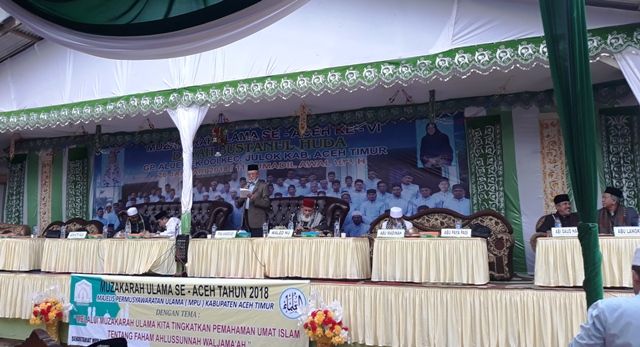 **Ringkasan Muzakarah Ulama Aceh 28 Januari 2018 di Dayah Busnanul Huda Paya Pasi Aceh Timur.** Narasumber: 1. Abu Tu Min Blang Blahdeh 2. Abon Kota Fajar 3. Abu Kruet Lintang 4. Abu Kuta Krueng 5. Abi Lueng Angen 6. Waled NU Samalanga 7. Abu Madinah 8. Abi Daud Hasbi 9. Abu Langkawi 10. Abu Paya Pasi 11. Ayah Cot Trueng 12. Ayah Sop ( Tu sop) 13. Abu Blang Jruen ( Moderator) 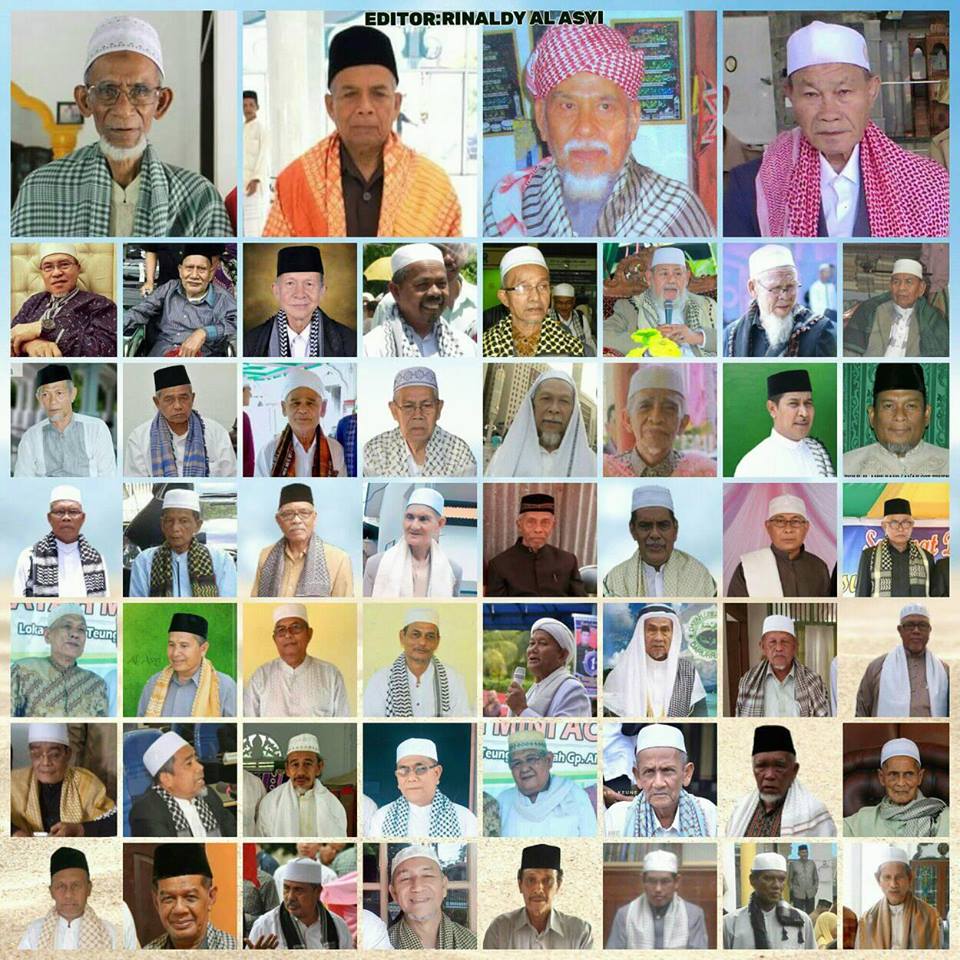 Ada beberapa point kesepakatan ulama se-Aceh, antara lain : 1. Pemahaman Wahdatul Wujud. Jawab: Wahdatul wujud Mahmudah (Boleh) Paham yang menyatakan Allah sebagai pencipta, setiap melihat makhluk maka teringat bahwa Allah menciptakan makhluk itu. Paham ini juga dikatakan sebagai paham wahdatul syuhud. Wahdatul wujud Mazmumah ( Sesat) Paham yang manyatakan bahwa Allah menyatu dengan makhluk, apabila melihat makhluk maka itulah Allah. ( Abu Tu Min, Abon Kota Fajar, Abu Madinah, Abu Krueng Lintang, Waled Nu) 2. Dhamir Hu pada Qulhuwallahu Ahad Jawab: 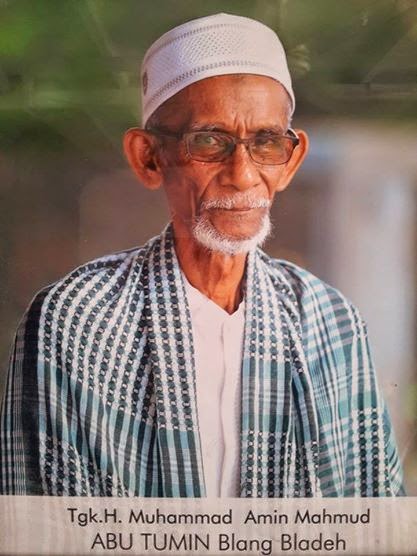 Jumhur mufassirin menyatakan dhamir tersebut kembali kpd Allah, bukan kpd Muhammad SAW sesuai dengan asbab an-nuzulnya. (Abu Tu Min) 3. Aqidah yang wajib dipelajari oleh setiap Muslim agar sempurna Iman Jawab: 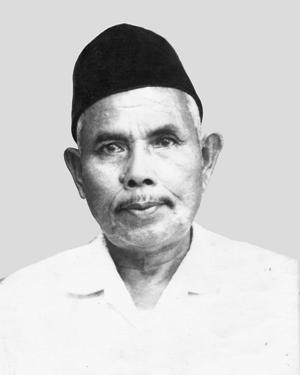 Setiap muslim wajib bisa membedakan antara muhaddas dengan qadim ( Abon Kota Fajar). Setiap muslim wajib mengetahui 'Itiqad 50, dalil ijmali dan dalil tafsili. Sifat Allah tidak terbatas hanya 20 saja tetapi sifat Allah sangat banyak sebagaimana dalam Al Qur an cuma yang wajib minimal dipelajari oleh setiap muslim adalah 20 sifat. (Ayah Cot Trueng) 4. Azan pada saat menguburkan jenazah Dan Talqin Mayat. 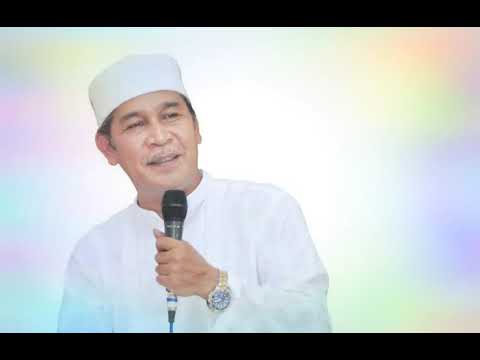 Jawab: Jumhur ulama tidak sunnah azan sa'at memguburkan mayit, tetapi ada pendapat ulama yg membolehkan. Sedangkan Talqin disunnahkan (Ayah Sop Jineib) 5. Bagaimana hukum menikahkan prempuan yg 'azal wali (tidak izin wali) Jawab: Boleh dengan syarat sbb: 1. Yang diajak menikah lakil-laki yg sekufu 2. 'Azal dibawah tiga kali. 3. Bahwa azal sudah ditanda tangani oleh hakim 4. Sudah dipinang oleh sekufu 5. Telah dita'yen oleh si premepuan akan calonnya. Wali tiga kali tidak memberi izin maka dihitung pasek, dan siperempuan harus mencari wali ab'ad. Jika satu atau dua kali saja, mka siperempuan boleh mencari wali sulthan atau hakim/qadhi. (Abon Kota Fajar) 6. Persoalan ayah dan ibu nabi masuk neraka atau syurga. (Inna abi wa abaka finnar) Jawab: Ayah dan ibu Nabi terlepas dari api neraka karena beliau ahli fithrah (masa kekosongan kenabian). Bahkan belia berdua adalah mukmin karena ada hadis Rasulullah yang menyatakan bahwa Rasul berpindah ke sulbi yang suci kepada rahim yang suci, hal ini menunjukkan bahwa orang yg suci itulah orang mukmin. Dan ada hadis dari aisyah bahwa Rasul memohon kpd Allah agar menghidupkan kembeli orang tuanya dan beriman dengannya kemudian meninggal kembali. Dalam kitab Fatawa syekh Muhammad Ramli bahwa hadis yang menyatakan ayah ibu nabi dalam neraka telah mansukh dengan hadis aisyah diatas. 7. Bagaimana istilah Patah Putue dalam warisan harta pusaka. Jawab: 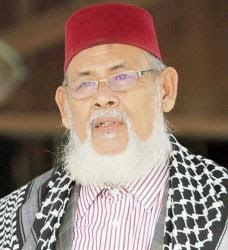 Istilah patah tutue/ hijab dan mahjub dalam harta warisan, boleh diberikan sedikit dengan kesepakatan orang yg hadir atau izin yg bersangkutan. Contoh, seseorang meninggalkan harta yang banyak dan meninggalkan seorang anak laki-laki dan cucu laki laki. Cucu laki laki terhijab dengan anak laki laki, maka boleh oleh anak laki-laki untuk memberikan sedikit harta secara sukarelanya kepada cucu laki-laki. (Waled Nu) 8. Transfusi darah dari orang kafir kpd orang Islam. Jawab: Boleh dilakukan transfusi darah dari non muslim kpd muslim untuk keperluan pengobatan/ darurat. (Abu Krueng Lintang) Haram dan tidak boleh, karena darah si kafir apabila masuk dalam dalam tubuh orang muslim menjadi daging, dan daging menjadi tubuh, sedangkan tubuh kafir hanya layak api neraka. ( Abon Kota Fajar) Tidak ada perbedaan antara dua pendapat diatas, dua2nya benar. Apabila membutuhkan karena darurat niscaya boleh/ shaheh (Abu Tu Min) Catatan. Muzakarah Ulama se-Aceh Januari 2018. Dayah Bustanul Huda (Dayah Abu Paya Pasi), Desa Alue Cek Doi, Kecamatan Julok - Aceh Timur |
| json metadata | {"tags":["aceh","indonesia","news","life","pendidikan"],"image":["https://steemitimages.com/DQmNoQf4zR5sRrWtkr9K7tRL3fpugqygwMMpA6VJyVAwkEZ/muzakarah%202018.jpg","https://steemitimages.com/DQmUp1Tdq7nHRN3KEya4RR1s2EHVLjMmWbNnMNK5Cq3SR7Q/foto%20ulama.jpg","https://steemitimages.com/DQmcEZ3KKUcswoc2vipfRgSGMV8qamuBeBUjohf52SSyghS/Tumin%201.jpg","https://steemitimages.com/DQmZPSD8Nm6reC5X2N8bipn1Cp1fEqxmGJEtdEhjRepXvRx/Abu-Cot-kuta-bagus.jpg","https://steemitimages.com/DQmW3PtbUzGfV7hexte1MQ82PbR8bGgqVkdtZRyJLtBKVsk/ayah%20sop.jpg","https://steemitimages.com/DQmVhTQzP2E9xeL1N166ueod6D4VHw3JKqZPt85vo6UByWZ/waled%20nu.jpg"],"app":"steemit/0.1","format":"markdown"} |
| parent author | |
| parent permlink | aceh |
| permlink | ringkasan-hasil-muzakarah-ulama-se-aceh-2018 |
| title | Ringkasan Hasil Muzakarah Ulama se-Aceh 2018 |
| Transaction Info | Block #19389648/Trx f39af24e62a97d2ba28b49156b66f53914187835 |
View Raw JSON Data
{
"block": 19389648,
"op": [
"comment",
{
"author": "tarmizi82",
"body": "\n**Ringkasan Muzakarah Ulama Aceh 28 Januari 2018 di Dayah Busnanul Huda Paya Pasi Aceh Timur.**\n\nNarasumber:\n1. Abu Tu Min Blang Blahdeh\n2. Abon Kota Fajar\n3. Abu Kruet Lintang\n4. Abu Kuta Krueng\n5. Abi Lueng Angen\n6. Waled NU Samalanga\n7. Abu Madinah\n8. Abi Daud Hasbi\n9. Abu Langkawi\n10. Abu Paya Pasi\n11. Ayah Cot Trueng\n12. Ayah Sop ( Tu sop)\n13. Abu Blang Jruen ( Moderator)\n\nAda beberapa point kesepakatan ulama se-Aceh, antara lain :\n1. Pemahaman Wahdatul Wujud.\nJawab:\n Wahdatul wujud Mahmudah (Boleh)\nPaham yang menyatakan Allah sebagai pencipta, setiap melihat makhluk maka teringat bahwa Allah menciptakan makhluk itu. Paham ini juga dikatakan sebagai paham wahdatul syuhud.\n Wahdatul wujud Mazmumah ( Sesat)\nPaham yang manyatakan bahwa Allah menyatu dengan makhluk, apabila melihat makhluk maka itulah Allah. ( Abu Tu Min, Abon Kota Fajar, Abu Madinah, Abu Krueng Lintang, Waled Nu)\n\n2. Dhamir Hu pada Qulhuwallahu Ahad\nJawab: \n\nJumhur mufassirin menyatakan dhamir tersebut kembali kpd Allah, bukan kpd Muhammad SAW sesuai dengan asbab an-nuzulnya. (Abu Tu Min)\n\n3. Aqidah yang wajib dipelajari oleh setiap Muslim agar sempurna Iman\nJawab: \n\nSetiap muslim wajib bisa membedakan antara muhaddas dengan qadim ( Abon Kota Fajar).\nSetiap muslim wajib mengetahui 'Itiqad 50, dalil ijmali dan dalil tafsili. Sifat Allah tidak terbatas hanya 20 saja tetapi sifat Allah sangat banyak sebagaimana dalam Al Qur an cuma yang wajib minimal dipelajari oleh setiap muslim adalah 20 sifat. (Ayah Cot Trueng)\n\n4. Azan pada saat menguburkan jenazah\nDan Talqin Mayat.\n\nJawab:\nJumhur ulama tidak sunnah azan sa'at memguburkan mayit, tetapi ada pendapat ulama yg membolehkan. Sedangkan Talqin disunnahkan (Ayah Sop Jineib)\n\n5. Bagaimana hukum menikahkan prempuan yg 'azal wali (tidak izin wali)\nJawab:\n\nBoleh dengan syarat sbb:\n1. Yang diajak menikah lakil-laki yg sekufu\n2. 'Azal dibawah tiga kali.\n3. Bahwa azal sudah ditanda tangani oleh hakim\n4. Sudah dipinang oleh sekufu\n5. Telah dita'yen oleh si premepuan akan calonnya.\nWali tiga kali tidak memberi izin maka dihitung pasek, dan siperempuan harus mencari wali ab'ad.\nJika satu atau dua kali saja, mka siperempuan boleh mencari wali sulthan atau hakim/qadhi.\n(Abon Kota Fajar)\n\n6. Persoalan ayah dan ibu nabi masuk neraka atau syurga. (Inna abi wa abaka finnar)\nJawab:\nAyah dan ibu Nabi terlepas dari api neraka karena beliau ahli fithrah (masa kekosongan kenabian). Bahkan belia berdua adalah mukmin karena ada hadis Rasulullah yang menyatakan bahwa Rasul berpindah ke sulbi yang suci kepada rahim yang suci, hal ini menunjukkan bahwa orang yg suci itulah orang mukmin. Dan ada hadis dari aisyah bahwa Rasul memohon kpd Allah agar menghidupkan kembeli orang tuanya dan beriman dengannya kemudian meninggal kembali. Dalam kitab Fatawa syekh Muhammad Ramli bahwa hadis yang menyatakan ayah ibu nabi dalam neraka telah mansukh dengan hadis aisyah diatas.\n\n7. Bagaimana istilah Patah Putue dalam warisan harta pusaka.\nJawab:\n\nIstilah patah tutue/ hijab dan mahjub dalam harta warisan, boleh diberikan sedikit dengan kesepakatan orang yg hadir atau izin yg bersangkutan. \nContoh, seseorang meninggalkan harta yang banyak dan meninggalkan seorang anak laki-laki dan cucu laki laki. Cucu laki laki terhijab dengan anak laki laki, maka boleh oleh anak laki-laki untuk memberikan sedikit harta secara sukarelanya kepada cucu laki-laki. (Waled Nu)\n\n8. Transfusi darah dari orang kafir kpd orang Islam.\nJawab:\nBoleh dilakukan transfusi darah dari non muslim kpd muslim untuk keperluan pengobatan/ darurat. (Abu Krueng Lintang)\n\nHaram dan tidak boleh, karena darah si kafir apabila masuk dalam dalam tubuh orang muslim menjadi daging, dan daging menjadi tubuh, sedangkan tubuh kafir hanya layak api neraka. ( Abon Kota Fajar)\n\nTidak ada perbedaan antara dua pendapat diatas, dua2nya benar. Apabila membutuhkan karena darurat niscaya boleh/ shaheh (Abu Tu Min)\n\nCatatan.\nMuzakarah Ulama se-Aceh Januari 2018. \nDayah Bustanul Huda (Dayah Abu Paya Pasi), Desa Alue Cek Doi, Kecamatan Julok - Aceh Timur",
"json_metadata": "{\"tags\":[\"aceh\",\"indonesia\",\"news\",\"life\",\"pendidikan\"],\"image\":[\"https://steemitimages.com/DQmNoQf4zR5sRrWtkr9K7tRL3fpugqygwMMpA6VJyVAwkEZ/muzakarah%202018.jpg\",\"https://steemitimages.com/DQmUp1Tdq7nHRN3KEya4RR1s2EHVLjMmWbNnMNK5Cq3SR7Q/foto%20ulama.jpg\",\"https://steemitimages.com/DQmcEZ3KKUcswoc2vipfRgSGMV8qamuBeBUjohf52SSyghS/Tumin%201.jpg\",\"https://steemitimages.com/DQmZPSD8Nm6reC5X2N8bipn1Cp1fEqxmGJEtdEhjRepXvRx/Abu-Cot-kuta-bagus.jpg\",\"https://steemitimages.com/DQmW3PtbUzGfV7hexte1MQ82PbR8bGgqVkdtZRyJLtBKVsk/ayah%20sop.jpg\",\"https://steemitimages.com/DQmVhTQzP2E9xeL1N166ueod6D4VHw3JKqZPt85vo6UByWZ/waled%20nu.jpg\"],\"app\":\"steemit/0.1\",\"format\":\"markdown\"}",
"parent_author": "",
"parent_permlink": "aceh",
"permlink": "ringkasan-hasil-muzakarah-ulama-se-aceh-2018",
"title": "Ringkasan Hasil Muzakarah Ulama se-Aceh 2018"
}
],
"op_in_trx": 0,
"timestamp": "2018-01-29T01:59:21",
"trx_id": "f39af24e62a97d2ba28b49156b66f53914187835",
"trx_in_block": 9,
"virtual_op": 0
}tarmizi82published a new post: koleksi-cover-shalawat-terbaik-2018-paling-enak-di-dengar-sepanjang-masa2018/01/28 07:11:57
tarmizi82published a new post: koleksi-cover-shalawat-terbaik-2018-paling-enak-di-dengar-sepanjang-masa
2018/01/28 07:11:57
| author | tarmizi82 |
| body |  Assalamu'alaikum Wr. Wb. Selamat Datang di Channel Resmi Kami: https://goo.gl/ytibwz Terima kasih sudah berlangganan di Channel "Music Islami", Semoga dengan bersholawat kepada Nabi Muhammad SAW insya Allah kita akan mendapat Syafa'atnya kelak di Yaumil Kiamah. https://www.youtube.com/watch?v=BOQkPnU5bJs Pelajaran Khusus untuk SUAMI - ISTRI : https://goo.gl/EWnAJu Untuk berlangganan dan selalu mendapat video-video dakwah dan Pengajian terbaru, klik Subscribe disini: https://goo.gl/EQL62C Jangan lupa Like, Share & Comment. Video Music Islami paling Keren lainnya: 1. KOLEKSI SHOLAWAT TERLARIS 2018 | SUARANYA BIKIN BAPER SEDUNIA https://goo.gl/nqXjXb 2. Shalawat Super Merdu 2018 | Fokus pada Shalawatnya Aja Ya https://goo.gl/Cig3AV 3. LAGU ARAB PALING SEDIH 2018 | "MAUJU' QALBY" FULL TEXT INDONESIA https://goo.gl/EFcLDh Subscribe for more video : https://goo.gl/kexMy7 |
| json metadata | {"tags":["music","life","indonesia","video","nature"],"image":["https://steemitimages.com/DQmVoqQPaV5EgBDaAKVmHG5sTM6KamNvxPDhB2VCKokX5Hf/hjbw.jpg","https://img.youtube.com/vi/BOQkPnU5bJs/0.jpg"],"links":["https://goo.gl/ytibwz","https://www.youtube.com/watch?v=BOQkPnU5bJs","https://goo.gl/EWnAJu","https://goo.gl/EQL62C","https://goo.gl/nqXjXb","https://goo.gl/Cig3AV","https://goo.gl/EFcLDh","https://goo.gl/kexMy7"],"app":"steemit/0.1","format":"markdown"} |
| parent author | |
| parent permlink | music |
| permlink | koleksi-cover-shalawat-terbaik-2018-paling-enak-di-dengar-sepanjang-masa |
| title | KOLEKSI COVER SHALAWAT TERBAIK 2018 PALING ENAK DI DENGAR SEPANJANG MASA |
| Transaction Info | Block #19367107/Trx 51375f9b5794ebb10b98b92ffbcbb68279c1d8b0 |
View Raw JSON Data
{
"block": 19367107,
"op": [
"comment",
{
"author": "tarmizi82",
"body": "\nAssalamu'alaikum Wr. Wb. Selamat Datang di Channel Resmi Kami: https://goo.gl/ytibwz\nTerima kasih sudah berlangganan di Channel \"Music Islami\",\nSemoga dengan bersholawat kepada Nabi Muhammad SAW insya Allah kita akan mendapat Syafa'atnya kelak di Yaumil Kiamah.\nhttps://www.youtube.com/watch?v=BOQkPnU5bJs\nPelajaran Khusus untuk SUAMI - ISTRI : https://goo.gl/EWnAJu\nUntuk berlangganan dan selalu mendapat video-video dakwah dan Pengajian terbaru, klik Subscribe disini: https://goo.gl/EQL62C Jangan lupa Like, Share & Comment.\n\nVideo Music Islami paling Keren lainnya:\n\n1. KOLEKSI SHOLAWAT TERLARIS 2018 | SUARANYA BIKIN BAPER SEDUNIA\nhttps://goo.gl/nqXjXb\n\n2. Shalawat Super Merdu 2018 | Fokus pada Shalawatnya Aja Ya\nhttps://goo.gl/Cig3AV\n\n3. LAGU ARAB PALING SEDIH 2018 | \"MAUJU' QALBY\" FULL TEXT INDONESIA\nhttps://goo.gl/EFcLDh\n\nSubscribe for more video : https://goo.gl/kexMy7",
"json_metadata": "{\"tags\":[\"music\",\"life\",\"indonesia\",\"video\",\"nature\"],\"image\":[\"https://steemitimages.com/DQmVoqQPaV5EgBDaAKVmHG5sTM6KamNvxPDhB2VCKokX5Hf/hjbw.jpg\",\"https://img.youtube.com/vi/BOQkPnU5bJs/0.jpg\"],\"links\":[\"https://goo.gl/ytibwz\",\"https://www.youtube.com/watch?v=BOQkPnU5bJs\",\"https://goo.gl/EWnAJu\",\"https://goo.gl/EQL62C\",\"https://goo.gl/nqXjXb\",\"https://goo.gl/Cig3AV\",\"https://goo.gl/EFcLDh\",\"https://goo.gl/kexMy7\"],\"app\":\"steemit/0.1\",\"format\":\"markdown\"}",
"parent_author": "",
"parent_permlink": "music",
"permlink": "koleksi-cover-shalawat-terbaik-2018-paling-enak-di-dengar-sepanjang-masa",
"title": "KOLEKSI COVER SHALAWAT TERBAIK 2018 PALING ENAK DI DENGAR SEPANJANG MASA"
}
],
"op_in_trx": 0,
"timestamp": "2018-01-28T07:11:57",
"trx_id": "51375f9b5794ebb10b98b92ffbcbb68279c1d8b0",
"trx_in_block": 5,
"virtual_op": 0
}2018/01/27 02:00:51
2018/01/27 02:00:51
| author | akhywali |
| body | #berehthat |
| json metadata | {"tags":["blog","berehthat"],"app":"steemit/0.1"} |
| parent author | tarmizi82 |
| parent permlink | niyya-islamic-higher-education-and-the-moral-economy |
| permlink | re-tarmizi82-niyya-islamic-higher-education-and-the-moral-economy-20180127t020031057z |
| title | |
| Transaction Info | Block #19332103/Trx 36550ae49ff57f6040823705825d701c5d82c033 |
View Raw JSON Data
{
  "block": 19332103,
  "op": [
    "comment",
    {
      "author": "akhywali",
      "body": "#berehthat",
      "json_metadata": "{\"tags\":[\"blog\",\"berehthat\"],\"app\":\"steemit/0.1\"}",
      "parent_author": "tarmizi82",
      "parent_permlink": "niyya-islamic-higher-education-and-the-moral-economy",
      "permlink": "re-tarmizi82-niyya-islamic-higher-education-and-the-moral-economy-20180127t020031057z",
      "title": ""
    }
  ],
  "op_in_trx": 0,
  "timestamp": "2018-01-27T02:00:51",
  "trx_id": "36550ae49ff57f6040823705825d701c5d82c033",
  "trx_in_block": 34,
  "virtual_op": 0
}akhywaliupvoted (100.00%) @tarmizi82 / niyya-islamic-higher-education-and-the-moral-economy2018/01/27 02:00:27
akhywaliupvoted (100.00%) @tarmizi82 / niyya-islamic-higher-education-and-the-moral-economy
2018/01/27 02:00:27
| author | tarmizi82 |
| permlink | niyya-islamic-higher-education-and-the-moral-economy |
| voter | akhywali |
| weight | 10000 (100.00%) |
| Transaction Info | Block #19332095/Trx 5e0facc3a4e2853704b08b7af9dbf038dc3baef6 |
View Raw JSON Data
{
  "block": 19332095,
  "op": [
    "vote",
    {
      "author": "tarmizi82",
      "permlink": "niyya-islamic-higher-education-and-the-moral-economy",
      "voter": "akhywali",
      "weight": 10000
    }
  ],
  "op_in_trx": 0,
  "timestamp": "2018-01-27T02:00:27",
  "trx_id": "5e0facc3a4e2853704b08b7af9dbf038dc3baef6",
  "trx_in_block": 28,
  "virtual_op": 0
}suomibottiupvoted (35.00%) @tarmizi82 / niyya-islamic-higher-education-and-the-moral-economy2018/01/26 08:08:03
suomibottiupvoted (35.00%) @tarmizi82 / niyya-islamic-higher-education-and-the-moral-economy
2018/01/26 08:08:03
| author | tarmizi82 |
| permlink | niyya-islamic-higher-education-and-the-moral-economy |
| voter | suomibotti |
| weight | 3500 (35.00%) |
| Transaction Info | Block #19310671/Trx 3a7c1839356263bacadde2ba1a5934cdc0890582 |
View Raw JSON Data
{
  "block": 19310671,
  "op": [
    "vote",
    {
      "author": "tarmizi82",
      "permlink": "niyya-islamic-higher-education-and-the-moral-economy",
      "voter": "suomibotti",
      "weight": 3500
    }
  ],
  "op_in_trx": 0,
  "timestamp": "2018-01-26T08:08:03",
  "trx_id": "3a7c1839356263bacadde2ba1a5934cdc0890582",
  "trx_in_block": 46,
  "virtual_op": 0
}tarmizi82published a new post: niyya-islamic-higher-education-and-the-moral-economy2018/01/26 07:59:54
tarmizi82published a new post: niyya-islamic-higher-education-and-the-moral-economy
2018/01/26 07:59:54
| author | tarmizi82 |
| body | 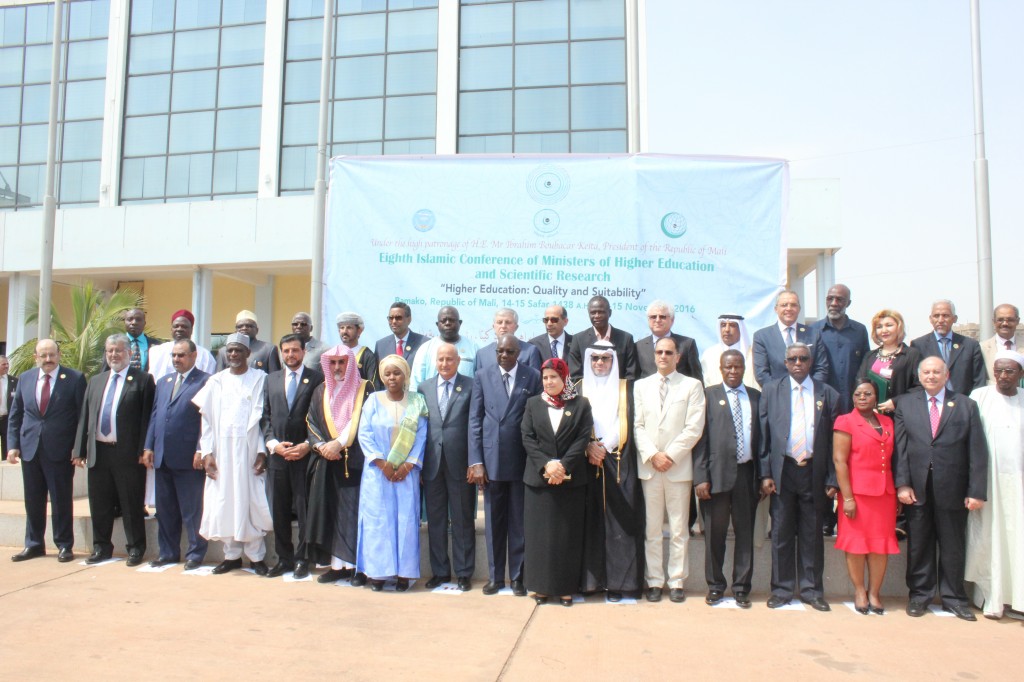 Hasan Hanafi, among many others, has convincingly demonstrated the Islamic sources and model for the establishment of a civil society that neither follows a secular model nor sees a rigid application of sharī’a as camouflage for patriarchy and dictatorship. Founded on a productive tension between the powers of the state and the authority of the ‘ulama and the institutions that navigate that tension between them such as hisba, divan al-mazalim and awqaf, Hanafi envisions an Islamic civil society that is energized by the power of tawhīd to establish a united ummah of free and equal individuals, responsible for one another and accommodating of its non-Muslim citizens as well.[1] Hanafi’s social institutional focus is complemented by a discussion of the individual human being, …naturally drawn toward social solidarity. The importance of civil society derives from the need to balance the desires and needs of the individual with the will and needs of society. Where civil society is present, an individual is part of the body, joined to other members to form an organic whole, as the medieval philosopher al-Farabi describes in his virtuous city.[2] In envisioning the free individual, he insists that Islam has the capacity to create the human personality that is also one, a unity of the inside world of desire and thinking with the external world of saying and doing. In raising this very interesting suggestion, Hanafi makes a wider contribution to theorization of the citizen, aspects of which have in some fundamental ways been under theorized concerning civil society thought more generally.[3] Therefore a discussion of how an Islamic civil society can educate its young and cultivate those attributes of character that create responsible citizens is most worthwhile. This discussion takes place however in three contexts that may call into question Hanafi’s confident vision. The first is critique of the metaphor of ‘organism’ to conceptualize civil society and the way in which the state and its agents can in fact undermine or co-opt civil society when so conceptualized.[4] Envisioning civil society instead as a field of contestation may provide a safer imaginative tool to prevent that co-option of civil society by the state. But here we confront a second problem because such an imaginative shift, usually involves an embrace of a cosmopolitanism that has been under attack in recent decades from two opposing sides, those entranced by various images of a unified and organic society, be it national, racial or religious, and those for whom the uniformity and universalism of ‘globalizaton’ has made cosmopolitanism a vestigial idea.[5] I want to set these two issues aside and turn instead to the implicit philosophical anthropology that Hanafi employs and focus instead on the ‘needs and desires’ vision of the individual human being that he predicates, deepening and elaborating it with the tools of psychoanalysis and in conversation with the history of ethical thought in the last three centuries. This paper will consider three topics to critique Hanafi’s vision of the unity of the human personality envisioned within Islamic civil society, to underscore that the individual like civil society is the site of contestation and that this has important implications for the work of educating citizens in a civil society. My goal is in no way to critique or hinder this process, but instead to make it better able to do its vital work. The three topics are; first, based on the recent work of Terry Eagleton in which he draws upon the psychoanalytic registers of Lacanian analysis, the Imaginary, the Symbolic and the Real, to examine the course of Western ethical thought and to lay the groundwork for articulating and ethics of social responsibility, we will examine the greater complexity that may stand behind Hanafi’s notion of the inner world and to sketch that inside world of each of us. With this more complicated notion the self, we will then examine the Islamic concept of niyya, intention, to explore its capacity to correlate the inside and external worlds. The dual directionality of niyya, outward and inward, makes it an essential bridge to tie together the two worlds and to transform both and thus to educate the Muslim citizen. The paper will then conclude with a some remarks concerning the approach to an ethical education that follow. I am aware that it is useful to distinguish here the range of virtues, personal, intellectual, social and civic virtues that are in fact required for the success of civil society and a fuller paper would explore that issue as well, but for this paper I shall assume that and educational institution not only cultivates the intellectual virtues, but also has a significant impact on the others as well. The goal of this paper is to prepare for a fuller discussion of what role higher Islamic learning can and cannot play in cultivating those virtues. Terry Eagleton’s Trouble with Strangers: A Study of Ethics presents the history of Western ethical thought from the Scottish Enlightenment to post modernism using the lens of Lacanian psychoanalysis. Transforming the Freudian categories of the Ego, the Superego and the Id into fundamentally linguistically Realms of the Imaginary, the Symbolic and the Real, Lacan provided a view of the three Realms that constitute the self through their competition and struggle with one another. While it is obviously impossible to do justice to the complexity of this reading in these short pages, we may draw from it a lens to view the way ethical thought has evolved in Europe in the last three centuries and take the lesson that ethical thought evolves to address the evolving needs of the individual and society. Eagleton’s account begins with the figures of the Scottish enlightenment and their focus on moral sentiments. That movement predicated benevolence as the dominant moral sentiment, with some trepidation to be sure about its genuineness, but as central to its vision of the moral character of care, pity, and fellow-feeling that should dominate the individual members of society in their relation to one another. That humans do care for one another, feel pity for the less fortunate, and are capable of imagining themselves in the position of those others and therefore act to alleviate suffering are all sources for the hoped for dominant moral sentiment of benevolence. In Eagleton’s reading adds is that this notion emerged because there was not yet a full separation of the self from the world. Invoking Lacan’s notion of the mirror stage, what he sees operating here is the fact that a complete border enclosing the self has not yet been built, there is not yet a full distinction between the inside and outside of the self that makes it possible for us to project ourselves so directly into another person’s interior body and imagine the ways in which we, through empathy, might experience the same inner state so that “the inside seems inscribed on the outside.”[6] This led to the cult of sensibility that dominated the eighteenth century and the thought of its major figures, Francis Hutcheson, David Hume, Edmund Burke and Adam Smith, who as Irish or Scots were all significantly on the periphery of British society. Their Imaginary of a community in opposition to a society was certainly informed by their position on the edge of British society, and one tragedy of their work is the way in which their confidence in benevolence was usurped by the incipient colonial project of the United Kingdom that was already underway to which this philosophy lent unwittingly and ironically a philosophical justification. It was not, however, colonialism that gave too much pause to these thinkers, rather it was the haunting concern that maybe the virtue of benevolence was nothing but a disguised form of egoism. Because, in Lacan’s terms, the ego was not fully formed, there were problems that Eagleton suggests might be best understood as threats to the emerging ego. The two most telling ones were the twin moves of expansion and contraction of the ego, expansion as one imagines the rest of the world as oneself and contraction as the ego disappears into the other it imagines itself to be. In the end this sentiment became increasingly privatized into a cult of feeling, a private sphere of home and family, but increasingly complicit in public processes of industrialization. Eagleton concludes that It is no accident that the cult of sentiment reaches its apogee among the dark Satanic mills of the Victorians. The trek from the generous hearted Brownlow in Oliver Twist to the dandyish Harold Skimpole in Bleak House is one from an impassioned apologia for feeling to a disenchanted sense that it can be part of the problem quite as much as the solution.[7] The move from the Imaginary to the Symbolic is the move to the ‘open field of intersubjectivity’[8] that is only possible after the borders of the self has firmly enclosed the sphere of the ego. Here the operation of empathy and sentiment are left behind. For Lacan this is the Realm of the Name of the Father, the Law, experienced by the self as a world of abstraction and alienation created above all by language into which we are now forced to operate. Beyond the narcissism and infantile fantasies of the Imaginary, it is the Realm Realism and regulation that the self experiences as at once Other and supremely dominant over the Self. Spinoza and Kant are the twin representatives of this stage, each, of course, arising also in the context of fundamentally new directions in religious thought and in the face of an increasingly dominant rationality and consequent disenchantment of the world and critique of traditional theological metaphysics. It is important to remind ourselves that the rationality of the nineteenth century begins with its own circumscription. Only God is capable of pure knowledge and our tools of rationality, vital and central as they are, are always shadowed by an incompleteness that only God, or the Thing Itself can overcome. For Spinoza rationality rather than emotion is however the key to self-cultivation, the essential ethical work of constructing ourselves as individuals and cultivating true wisdom and virtue. For Spinoza it as primarily the virtues of self denial and ascetic simplicity attained by the re-education of the flesh by the discipline of philosophy that is the basis for ethics. As Eagleton points out Spinoza’s is a democratic program aimed not only at an elite, but at all human beings who by this virtuous education will require less overt discipline and repression to make them submit to their superiors.[9] Kantian ethics are the supreme example of this moment in Western thought. His rationalist approach to ethics does not reject emotion and feelings in the way Spinoza did because above all we can feel delight in the performance of our moral duty and happiness as the reward for virtuous action, in the next world if not this one. The articulation of that duty is, however, the work of philosophy because moral principles cannot be founded on “sensations, emotions or the pursuit of well-being.”[10] It is as duty, opposed to our inclinations or our happiness, that we perceive our moral obligations and we recognize and judge it by the operation of a universal law. For Kant, moral judgments like aesthetic ones are both irreducibly specific and at the same time abstractly universal. Eagleton argues Moral value, for Kant as much as for Spinoza, springs not from contemplating each other in Imaginary terms, peering at others from within the heated interior of one’s own subjectivity. It depends rather upon regarding oneself from the outside, from the dispassionate vantage-point of the moral law itself—which is to say, regarding oneself as a universal subject, and thus treating oneself as one treats all others. For Kant, there is no hard-and-fast distinction between aliens and intimates. If I deal with others as though they were myself, I also relate to myself as kind of stranger. Ethically speaking, we are most authentically ourselves when we behave as though we were anybody or everybody.[11]  It is important to stress that the three Lacanian registers over lap and interpenetrate one another and the notion of a progressive movement from one to the other is deceptive. Nevertheless it is the insight of Eagleton to see that poststructuralist and postmodernist responses to the legacy of Western philosophy, especially in its supreme formulations in Spinoza and Kant, represents the triumph of the Real over the Symbolic as earlier the Symbolic triumphed over the Imaginary. For Lacan the Real is what resisted being symbolized, universalized in the Symbolic register, a surplus or excess that rumbles with sheer meaninglessness beneath our articulate speech. It is both a redemptive and destructive Realm, whose primary feature Lacan named jouissance, pleasure; it is the operation of desire. This desire is in contrast with the good and is for Lacan the only ethical universal.[12] As Eagleton correctly points out there is a parallel between Lacanian stages and Kierkegaard’s three stages of life, the aesthetic, the ethical and the religious. While the fit is not perfect, this parallel allows us to focus specifically on the tension of ethics and religion that is at the heart of Kierkegaard’s meditation on Abraham, Fear and Trembling. Meditating on Kant’s distinction of duty and happiness in a profoundly innovative manner, Kierkegaard presents the ethical dilemma of the Absolute’s command to Abraham to kill his son in all its paradox and terror. Happiness lies in a father’s love for his son, duty lies in absolute obedience toward God’s command. Abraham lives the tensions between happiness and duty, but with the added feature that he must violate the most basic of ethical commandments, not to kill, so that he will become in our eyes a murderer. At the same time, however, Abraham is willing to become the monster he will become in and after the act of killing his son, he also is confident that he will not have to do it by virtue of the absurd. This moves him beyond the ethical Realm, with its universal operations, into the Realm of the religious and makes him a man of faith. To emphasize again to be religious is to reject the ethical in the individual project of our lives and to live fully desiring that which is impossible In so far as the ethical concerns the public, universal and communitarian, the Protestant individualist Kierkegaard can find little in it worth salvaging. As such, it is no more than collective false consciousness. Yet in so far as it signifies a preoccupation with inwardness, it alludes in some obscure manner to the religious faith which transcends it. Such faith shatters the symmetries of the ethical, subverts the complacently autonomous self, and represents a scandal to all civic virtue. Its intense individual inwardness rebuffs the social and turns its back contemptuously on mass civilization.[13] It is, again, the embrace of a desire that is both infinite and impossible that Abraham operates that characterizes the post modern critique of ethics. In Lacan this is the operation of the Real, operating with its combination of horror and pleasure that both repels and compels. Abraham refuses to give up on his desire for the impossible—for a God whose commands are at one with the decrees of the Symbolic order—in the unthinkable paradox known as ‘faith’, and it is because he clings so tenaciously to the impossible that it comes to pass, as God stays his hand and saves his son. His acceptance of the apparent fruitfulness of his deed is what finally brings him through.[14] However, it is also a central fact for Kierkegaard’s mediation that Abraham cannot speak of what he is doing. Because to speak is to involve oneself in language, the Realm of the universal and to declare himself a murderer. The Abraham of the Hebrew scriptures remains silent for the three days of the journey with his son, except to answer the son’s question of where the sacrificial offering is with an answer that is no answer, a paradoxical statement, that “God will provide.” It is of profound significance for me that the Qur’an’s account of this event is structured differently in two important ways. In the Qur’an the father does speak to tell him what he has seen in a dream, of what will now have to happen and the son also speaks and comforts his father and tells him that he submits to the commandment. فَلَمَّا بَلَغَ مَعَهُ السَّعْيَ قَالَ يَا بُنَيَّ إِنِّي أَرَى فِي الْمَنَامِ أَنِّي أَذْبَحُكَ فَانظُرْ مَاذَا تَرَى قَالَ يَا أَبَتِ افْعَلْ مَا تُؤْمَرُ سَتَجِدُنِي إِن شَاء اللَّهُ مِنَ الصَّابِرِينَ (37:102) We shall return to this issue of speech in the next section to reflect on the ethical dimensions of niyya. In the end four aspects of the idea of ethics have come to be under critique in postmodernist thought. The first is the notion of universal law and the operation of universal rationality to apply that law. Living morally is not the work of application of rules and the exemplification of virtues. Second, the notion of duty and concomitant notions of discipline and self denial as the heart of ethical action have been criticized as far too impoverished a view of acting ethically. Third, the fundamental Realities of the political and economic spheres in which actual ethical decisions are made. In many ways this whole analysis has been a treatment of the idea of ‘interest’ and the recognition that the assumption that ethical choices must be characterized by disinterestedness is both psychologically and politically false. Finally, in rather different forms among the prominent postmodernists, it is the demand of the Other, both as stranger and neighbor, or be more precise, in the collapse of that dyad that the ethical arises or may end. In this context we face the dilemma of what might be an ethical education in the face of these developments. The liberation from the oppressiveness of the burden of the law, the imposition of duty and our movement in a world of strangers all mean that it is not clear what can or should be taught ethically. We have explored here three related questions of relevance for articulating a vision of the self and the problematic in training that self morally and ethically. We have recognized that the problem of establishing a discrete self, autonomous and separate from the world is the first task both in the development of the child and in the development of a notion of an ethic predicated upon a relation of selves in an intersubjective world. Without restrained and bounded selves there is no secure public space in which to move. Second, we have recognized the problems inherent in conceptualizing the work of ethical reflection and the contested places of rationality, emotion, duty, and rules. Finally, we have recognized the turbulent sea that is the internal self, illumined by psychoanalysis, but at the same time I would wager experienced by each of us as we explore our desires over the course of our lives. It would be the height of foolishness to assume that the mission of ethical training must simply be the suppression or repression of desires because that is first impossible and second it is clear that the harnessing of desire in fact energizes and gives life to our activities in the world and in our actions in the intersubjective public space. To quote Eagleton a final time The Symbolic may indeed be too thin an atmosphere in which ethics can flourish. But this is not to say that law, politics, rights, the state and human welfare should be loftily distained as so much inevitable but soul killing technology. Only those who are privileged enough not to require their protection can view law and authority as inherently malign. The Symbolic order is most effective when it has its roots in the body—in palpable human needs and wants, rather than in abstractions.[15] II Given this background, we turn now to a brief consideration to the notion of intention in Islam. Islam’s development of the notion of niyya, gives us tools to conceptualize a doctrine of the person that deserves more exploration. Parallel to the Jewish concept of kawwānā, and possibly influenced by it, niyya developed in the early Islamic centuries as the necessary precondition for the validity for acts of worship (ibādāt). Without it an act of worship was invalid (bāṭil). As the famous hadith in Bukharī makes clear (innama ‘l-‘amāl bi ‘l-niyya) the range of intention might extend to all acts, but it is primarily in acts of worship that the notion has been most fully developed. It is the consensus of the jurists that niyya is required for the validity of ṣalāh, but there are otherwise debates about several important issues. What is agreed is that it has four conditions, the one who pronounces it must be Muslim, of sound mind, acquainted with the act he wants to perform and have the purpose of performing it, i.e. be sincere. The most important feature of the idea is that it establishes that there is a moral or religious criterion superior to that of the law, of the external performance of a ritually obligatory act. [16] It is the criterion for the rewards of the believer, it and jihād are the only two actions available to Muslim since after the recapture of Mecca, since hijra is no longer an option. In several cases intention alone becomes a work of its own. Good intention is taken into account, even if it is not carried out and the intention to avoid an evil act is reckoned a good work. We note here that the notion of intention and action do meld together in a way that still satisfies the needs of the Imaginary. There are four features of the classical discussion of niyya that strike me as relevant for the construction of an Islamic view of the personality in conversation with Lacanian psychoanalysis. The first is the predication of the division between the inside and the outside. We have clearly moved beyond the potential fantastic expansion of the ego typical of the mirror stage of the Imaginary into a firm notion of a bounded self. The division might be read as the difference between thought and action, but I think the division of inside and outside has equally importantly the notion that the boundary of the self has been established and that it is necessary to bring into conformity the inside and the outside. In this we are certainly talking about the central virtue of sincerity (ikhlās). If there are features of the idea that blur the boundary of the self to satisfy the needs of the Imaginary, there is also the strong assertion of the Symbolic and the establishment of the constrained self. The second interesting feature is the debate among the jurists about niyya being a necessary condition for wuḍū’, since it is argued that wuḍū’ has a rational or functional character that might explain its reason and in that it contrasts with rituals like ṣalāh, which are done solely for the pleasure of Allah. Rationality or functionality in short is in some tension with niyya and where it is possible to explain an action in terms of its rationality or usefulness niyya may not strictly speaking be necessary. This tension remains unresolved in fiqh[17] The other disagreement among the jurists is whether there is a difference between ordinary and supererogatory acts of worship. Those acts, above all the fast of Ramadan, because of its long duration and its universal participation and therefore the timing and expiration of niyya is debated. The question of temporal scope adds a diachronic issue to the understanding of niyya and leads to the way in which the rhythm of time impinges on the individual.[18] These two controversies underline several important points relative to our understanding of the self: a tension between practical rationality and the excess of adoration of the divine, the recognition that each person is situated in a larger social and temporal context that impinges on his/her freedom of action and finally, the ways in which the operation of the Symbolic order are always considerably more complicated and less clear than some who would claim the Reality of moral absolutism might acknowledge. Finally, I note the niyya must be spoken. If the paradigmatic moment of the Real is either the unspoken demand of the other or the incapacity of a person in the midst of a horrendous moral dilemma to speak, here it is primarily speech that is confirmed as the necessary bridge between inner and outer, between the Symbolic and the Real. Lacan might argue that the operation of language here means that we are still fully in the Symbolic, but I would argue that the genius of the Islamic conceptualization allows language both to be set free and also to be tamed and made into a tool that provides a human being with the most necessary tool both to reconcile conflicting desires within him/herself and more importantly receive a revelation from the Absolute. It is, of course, in tassawuf that the fullest development of the split between interior bātin and exterior zāhir has been most fully developed. But there are three features of development, while spiritual very rich make it less useful for the task I am proposing here for the construction of an Islamic ethical analysis. First, the interior is fundamentally privileged as the site of authenticity and sincerity, while the exterior is dismissed and often deliberately scorned or ridiculed. Second, the exterior is still part of the person, rather than a way to conceptualize the intersubjective world. It could in fact be perhaps too negatively argued that there is much about the Sufi tradition that remains at the Imaginary level, to be sure to criticize the Symbolic, but not lay the groundwork for structuring civic life. Finally, and of course related, Sufism predicates a spiritual elite and leaves the remaining less cultivated people at the level of the common. The development of niyya outside of the area of religious acts (‘ibādāt) is not as fully developed, but does allow us to view the issue in the larger context of other activities. Here I think interesting work might be done to enrich the usefulness of the concept. Hanbali and Maliki schools do extent the basic principle contained in Bukhari’s first hadith to mu’āmalāt as well. However, there are limits to this as Saleh has recently demonstrated. Neither breach of contract nor abuse of rights require the judge to look at the intention of the perpetrator, only the objective facts of their action are necessary to make a judgment about wrongdoing. Here we have the insistence that in a number of areas it is only the public face that need be addressed juridically. However, in the establishment of contracts niyya is relevant in two important ways. First Hanbali law allows the judge to inquire after the cause of a contract when its intention is not clearly stated. Second, the permission to consider intention prevents the Hanbali school from condoning legal strategems, (hiyal) which may themselves be legal, but result in an unlawful object.[19] The tension that we saw between the public face and the private intent is in this limited context at least maintained and perhaps more importantly it is in recognition of the intersubjective character of contract where the notion of niyya is still productive. To use the notion to develop further an Islamic anthropology that attends to ties of the interior and the exterior, we will also need to attend to these developments as well. III This too brief consideration of the construction of the human personality and how the Islamic notion of niyya has resources for addressing this more complicated vision of the human person now has placed us in a position to examine some aspects of the ethics of citizenship in the Islamic context and also the question of the education of the citizen through Islamic education. I have deliberately chosen to focus on the notion of citizen because the concept has been seen by many as in tension with a Muslim identity. Andrew March has recently surveyed the issue in examining the question of the Muslim’s loyalty to a non-Muslim state.[20] His focus is on Muslim minority populations in Europe and the U.S., but his findings can be expanded to the situation of Muslim majority nations as well. My argument is predicated on the basic idea that dwelling within the intersubjective realm is what one of the things we mean by ‘civil society.’ If the state can best be seen as the most important instantiation of the Symbolic order, then ‘civil society’ stands over and against it as the site of the Real. It should be clear that the notion of ‘citizen’ as the name for the subject in these two realms does not strain the dual references of the term as subject of a state and actor in pursuit of his/her interests in the realm of ‘civil society.’ March argues that there are three traditional sources in Islamic lawthat permit a Muslim to be citizen in a non-Muslim context. The first are ‘statutory/deontological’ principles of the Qur’an and Sunnah requiring the moral recognition of non-Muslims and the general attitude of treating all persons (including non-Muslims) with justice and equity (‘adāla, qisṭ). The second tradition is the ‘contractual’ and the example of making contracts above all guarantees of security (amān) with non-Muslims. Third is the ‘consequentialist-utilitarian’ discourse of Islamic law, which March characterizes as pragmatic, aimed at increasing the welfare of the Islamic community as a whole. To these three traditional discussions March adds a fourth more recent trend he calls “comprehensive-qualitative” mode of ‘theorizing and theologizing the rights and welfare of others.’ He draws specifically on Fayṣal Malawī and recognizes the crucial role of da’wa, not as formal conversion but as witnessing plays. This modes, thus goes beyond considerations of the permissible and the forbidden into the realm of what relationships Muslims might voluntarily choose for themselves noninstrumentally. I suggest that the evidence for this mode of theorizing moral relationships with non-Muslim societies is in greatest evidence in some instances of the copious references to the centrality of the Islamic mission (da’wa) to life in non-Muslim societies, as well as the discussions on the goodness in contributing to non-Muslim welfare because “Islam seeks to bring benefit and improvement to all people and all races,” based on the belief that “God has blessed and honored all the sons of Adam.[21] Da’wa provides Muslim scholars the tools to imagine two distinct kinds of relationship with non-Muslims; a relationship of moral argument and a relationship of civic friendship, which Malawī calls in fact ‘āṭifa, attachment, sympathy and affection. If da’wa legitimates Muslim citizenship in non-Muslim society, can we not also argue that it should be the spirit that constructs the intersubjective realm of ‘civil society’ in Muslim majority countries, where the work of da’wa also must go on. We stress that the same notions of volunteerism and noninstrumentality should apply in this case as well and the explicit notion of care for others and increasing the welfare of others make this the realm in which the Symbolic and the Real blend together. So much then for a construction of ‘civil society,’ how must its citizens be educated? Let me conclude with three brief suggestions that would require considerable elaboration, if there were space. I return first to the fundamentally political character of morality. The ideal of duty and the privileging of disinterestedness are both distractions. The claims of universalism and the insistence on rules serve in fact to as primarily strategies of legitimation for existing powers. It must be the work of education to delegitimize and disenchant the negative consequences of this process. Pierre Bourdieu has articulated the process elegantly. But the disenchantment that sociological analysis of the interest in disinterestedness may produce does not inevitably lead to a morality of pure intentions. Watchful only of usurpations of universality, this morality ignores the fact that the interest in, and the profit of the universal are indisputably the most secure vehicle of progress toward the universal itself.[22] He urges a close attention to the idea of hypocrisy and a practice of deep suspicion toward public moral claims and specifically the appeals to universalism and rationality that often disguises the Real desire behind them. He concludes In short, morality has no chance of entering politics unless one works toward creating institutional means for a politics of morality. The official truth of the official, the cult of public service and of devotion to the common good, cannot resist the critique of suspicion that will endlessly uncover corruption, clientelism, ambitiousness, and at best a private interest in serving a public purpose. … This work of uncovering, disenchantment, or demystification, is anything but disenchanting. On the contrary, it can only be accomplished in the name of the same values of civil virtue (equality, fraternity, and especially disinterestedness and sincerity) with which the unveiled reality is at variance.[23] An approach not of inculcation, but a development of critical skills of investigation and disclosure must be first the skills we give our students. I suspect that in fact they already have them. Recognizing hypocrisy, being suspicious of universalist moral claims, recognition of interests and profits in the appearance of disinterestedness I think come naturally to all. What we must do as educators is nurture and validate those, explore their sources and implications and use those moments of disenchantment not to develop an attitude of nihilism or relativism, but instead to cultivate a more profound and developed moral sense. My second suggestion focuses on training our students to understand the workings of institutions and the operation of power. The context of this is first of all within the economic sphere and the hegemony of global capitalism. Understanding the operation of power in the realms of the economy, the nation-state, and society requires much work. The extremist rejection of this work and construction of an ideal of the ummah free from and resisting these trends is completely understandably, but as the psychoanalyst Fethi Benslama has argued One of the causes of Islamist extremism is the catastrophic collapse of language: language was no longer able to translate for people a particularly intense historical experience, that of the modern era, which entails not only the scientific and industrial transformations of the world but also the conjunction between this furious power of transformation and the desire to an other. Yet “Islamist” extremism is driven by and impulse and this impulse is simply the inverse of the desire to be an other: “the despair that wills to be Itself,” as Kierkegaard expressed it. What is this Self? Its identity is defined by its origin, and its origin is bound by a framework of unique features: one religion (Islam), on language (Arabic), and one text (the Koran), to which is often added the national anthem here and there. The modern era replaced the desire to be an other with the despair that wills to be itself, enclosing us in a confrontation each of whose terms represents the impossible.[24] The construction of an originary plenitude that characterized the early ummah is for Benslama to create a ‘torment of origin’ a never to be satisfied return to the plenitude that once was and obviously an escape from a more judicious confrontation and critique of the modern and understanding of the material and immaterial forces of power that construct our world. It establishes an attitude to the institutions of the community that leave them unexamined. The ideal of the Medinian community still rightly has a compelling pull on Muslim, but as Charles Tripp has pointed out The imaginative construction of society began by way of analogy with the faith-based community of the ummah. Gradually, however, in light of both the vocabulary and the metaphors of positivist sociology, as well as of the social transformations experienced by Muslims, it came to represent something different, both more universal in scope and more mechanical in conception. … The very language and analytic tools upon which they drew were implicitly comparative in nature, laying heavy emphasis on the universality of the underlying functions of any human social organization. The gaze of Muslim intellectuals was thus to a large degree directed towards the observation of that which the functionalist model assumed must be there. It was scarcely surprising, therefore, that these functions were found, but to ensure that the character of the society remained one which was inalienably Islamic, it was necessary to recast the terms of reference in language redolent of Islam.[25] In Benslama’s terms there are three institutional arenas where the deeply modern desire to be an other has operated: education, family law, and economics (most specifically banking). The emergence first of new educational forms, not simply in response to modernity but in a much more complicated relation to the material forces impinging on the Islamic world is highly significant. Here I think of Indonesia’s development of Islamic educational institutions at the primary, secondary and higher level is a wonderful site to examine. We must train our students to understand this sites with a critical eye, both historically and sociologically. This is especially called for since it is the worlds of education, shari’a courts and Islamic banking that so many of our students will occupy. Our task must not simply to prepare functional workers for each of these institutions, though that is part of the work that must be done, but also give to our students the critical skills to operate in these worlds, recognizing the ethical dilemmas and tradeoffs that each will present and through case studies in ethical dilemmas give students an insight into the choices and decisions they will confront. Finally, I return to that centrality of the intersubjective world that I have described as ‘civil society’. That may be a useful way of viewing it, but I would be remiss if I left it there since the most important feature of this world is that it is where we confront others, both a neighbors and as strangers. The discussion of civil society in non-Muslim majority countries we engaged in above may have disguised this, so in conclusion I return to the dyad of stranger/neighbor to emphasize that the interaction with others, in the fully political context of civil society is where the ethical must operate. To quote Eagleton two more times The ethical is a matter of how we may live with each other most rewardingly, while the political is a question of what institutions will best promote this end. The ends of political association, Aristotle remarks in the Politics, are “life and the good life.” If you see ethics and politics as separate sphers, or feel the need to retrieve the former from the grubby clutches of the latter, you are likely to end up denigrating the political and idealizing the ethical. In a politically disenchanted age, the ethical is forced to abandon the polis, and take up its home elsewhere: in art, faith transcendence, the Other, the event, the infinite, the decision or the Real.[26] Symbolic relationships are ones mediated by law, politics and language; and these- Lacan’s Other-are always as much media of division as of solidarity. Such relations can easily lapse into mere utility or contractualism. Yet in giving priority to our relations with strangers, the Symbolic also reminds us that this, and not literal neighbours, is the paradigm of ethical conduct, including our behavior towards literal neighbors. It is not that strangers are simply friends we have not yet made, but that friends are the alien creatures we happen to know. The definitive act of love is not a comingling of souls but taking the place of a stranger in the queue for the gas chamber. One can die for a friend, just as one can love a stranger; but to die for a stranger is the ultimate ethical ‘event.’[27] I have tried in this paper to illustrate first the complexity of the history of ethical thought, the contested roles of rationality, emotion, rule and decision, with some attention to their historical contexts, but more importantly using the lens of Lacanian psychoanalysis argue for the psychological appropriateness of these tensions in the history of ethics. Then I turned to the Islamic notion of niyya to see what resources it might have for the construction of a complex notion of the self. In this my interest was initially in the isolated individual, but we saw even in that the ways in which the intersubjective world impinged on the isolated individual making him or her fundamentally situated in a social and temporal context that acted independently. This was all done to make more complicated a notion of the self in the Islamic context and use that as a way to open up the question of what constitutes the public self that the notion of a Muslim citizen, either in a Muslim majority or Muslim minority country. That led in the end to an outline of three particular implications for the work of educating Muslim citizens. I emphasized three points. The focus should not be on the inculcation of rules and the assertion of the existence of either a confidence that there is a system of laws or at least there once was. Rather the development of the skills of disenchantment and criticism better equip our students for the civic, business, and personal ethical dilemmas they will face. Second, I underlined that we need also to provide the opportunity to critically examine the material forces that constitute power in this world, both political and economic, and to understand the specific Muslim institutional contexts that have emerged. Finally, in attempting to displace once more the centrality of the individual as the object of analysis, I underlined the social and multiple character of society and most specifically the presence of Others with whom one either interacts or whose existence must at least be acknowledge. The binary of neighbor/stranger allows us to break any simple distinction between us and them in thinking about this world and recognize the way our ethical responsibilities to the other predicate a constant movement between the feeling of kinship and suspicion, of friend and foe, in thinking about each of our relations to our fellow human beings. William R. Darrow Cluett Professor of Religion, Williams College, USA Fulbright Senior Scholar IAIN-Sumatera Utara [email protected] BIBLIOGRAPHY Hanafi. Hasan, “Alternative Conceptions of Civil Society: A Reflective Islamic Approach” in Hashmi. Sohail H., ed., (2002). Islamic Political Ethics: Civil Society, Pluralism, and Conflict. Princeton: Princeton University Press. Beiner. Ronald, ed. (1995). Theorizing Citizenship. Albany: SUNY Press. Carens. Joseph H (2000). Culture, citizenship, and community : a contextual exploration of justice as evenhandedness. Oxford: Oxford University Press Brown. Wendy (2010). “The Sacred, the Secular and the Profane” in Michael Warner, et al., Varieties of Secularism in a Secular Age.Cambridge: Harvard University Press. Sami Zubaida. “Cosmopolitan citizenship in the Middle East” accessed July 20, 2010 from Open Democracy http://www.opendemocracy.net/sami-zubaida/cosmopolitan-citizenship-in-middle-east Eagleton. Terry (2009)The Trouble with Strangers; A Study of Ethics. Chichester, West Sussex: Wiley-Blackwell. “Nīyya” in H.A.R. Gibb and J. H. Kramers (1961). Shorter Encyclopedia of Islam. Leiden: E.J. Brill. Ibn Rushd (1994). Bidāyat al-Mujtahid wa Nihāyat al-Muqta’id, The Distinguished Jurists Primer trs. Professor Imran Ahsan Khan Nyazee. Reading, UK: Garnet Publishing. I.1.2.1 Saleh. Nabil (2009). “The Role of Intention (niyya) under Saudi Arabian Hanbali Law” in Arab Law Quarterly 23. March. Andrew F. (2009). Islam and Liberal Citizenship: The Search for an Overlapping Consensus. New York: Oxford University Press. Bourdieu. Pierre (1998). Practical Reason. Stanford: Stanford University Press. Benslama. Fethi (2009). Psychoanalysis and the Challenge of Islam. trs. by Robert Bononno (Minneapolis: University of Minnesota Press. Tripp. Charles (2006). Islam and the Moral Economy: The Challenge of Capitalism. Cambridge: Cambridge University Press. [1] Hasan Hanafi, “Alternative Conceptions of Civil Society: A Reflective Islamic Approach” in Sohail H. Hashmi, ed., Islamic Political Ethics: Civil Society, Pluralism, and Conflict (Princeton: Princeton University Press, 2002), h. 56-75 [2] Ibid., h. 65 [3] Citizenship has of course been well theorized in political theory, e.g. Ronald Beiner, ed. Theorizing Citizenship (Albany: SUNY Press 1995) Joseph H. Carens, Culture, citizenship, and community : a contextual exploration of justice as evenhandedness (Oxford: Oxford University Press, 2000). What I think is under theorized is the psychological structure of the individual agent/citizen. My thanks to my colleague Neil Roberts for help here. [4] Wendy Brown, “The Sacred, the Secular and the Profane” in Michael Warner, et al., Varieties of Secularism in a Secular Age (Cambridge: Harvard University Press, 2010), h. 83-104 [5] Sami Zubaida, “Cosmopolitan citizenship in the Middle East” accessed July 20, 2010 from Open Democracy http://www.opendemocracy.net/sami-zubaida/cosmopolitan-citizenship-in-middle-east [6] Terry Eagleton, The Trouble with Strangers; A Study of Ethics (Chichester, West Sussex: Wiley-Blackwell, 2009). h. 13. [7] Ibid., h. 82 [8] Ibid., h. 83 [9] Ibid., h. 99 [10] Ibid., h. 105 [11] Ibid., h. 117 [12] Ibid., h. 148 [13] Ibid., h. 163-164 [14] Ibid., h. 253-254 [15] Ibid., h. 325 [16] “Nīya” in H.A.R. Gibb and J. H. Kramers, Shorter Encyclopedia of Islam, (Leiden: E.J. Brill 1961) , h. 449-450 [17] Ibn Rushd, Bidāyat al-Mujtahid wa Nihāyat al-Muqtaṣid, The Distinguished Jurists Primer trs. Professor Imran Ahsan Khan Nyazee (Reading, UK: Garnet Publishing, 1994) I.1.2.1 h. 3-4 [18]Ibid., 7.1.1.2.3, h. 341-343 [19] Nabil Saleh, “The Role of Intention (niyya) under Saudi Arabian Hanbali Law” in Arab Law Quarterly 23 (2009), h. 474-475 [20] Andrew F. March, Islam and Liberal Citizenship: The Search for an Overlapping Consensus (New York: Oxford University Press, 2009) [21] Ibid., [22] Pierre Bourdieu, Practical Reason (Stanford: Stanford University Press, 1998), h. 143 [23] Ibid., h. 144-145 [24] Fethi Benslama, Psychoanalysis and the Challenge of Islam, trs. by Robert Bononno (Minneapolis: University of Minnesota Press, 2009), h. 5 [25] Charles Tripp, Islam and the Moral Economy: The Challenge of Capitalism (Cambridge: Cambridge University Press, 2006) [26] Eagleton, The Trouble with Strangers…, h. 324 [27] Ibid., h. 319 |
| json metadata | {"tags":["blog","life","steemit","bitcoin","travel"],"image":["https://steemitimages.com/DQmTEkATbo4Qn8SFFfx4crropVuACH8Ue8N6mH6SY4jLpfu/isl.jpg","https://steemitimages.com/DQmazwq7Q4j9WyNJJTCw4rFvx4fZ16fQjNmpmQ9CRDQx5qg/is.JPG"],"links":["http://www.opendemocracy.net/sami-zubaida/cosmopolitan-citizenship-in-middle-east"],"app":"steemit/0.1","format":"markdown"} |
| parent author | |
| parent permlink | blog |
| permlink | niyya-islamic-higher-education-and-the-moral-economy |
| title | Niyya, Islamic Higher Education and the Moral Economy |
| Transaction Info | Block #19310508/Trx 8d363d459813f8c2f6be282874328291963404ac |
View Raw JSON Data
{
"block": 19310508,
"op": [
"comment",
{
"author": "tarmizi82",
"body": "\nHasan Hanafi, among many others, has convincingly demonstrated the Islamic sources and model for the establishment of a civil society that neither follows a secular model nor sees a rigid application of sharī’a as camouflage for patriarchy and dictatorship. Founded on a productive tension between the powers of the state and the authority of the ‘ulama and the institutions that navigate that tension between them such as hisba, divan al-mazalim and awqaf, Hanafi envisions an Islamic civil society that is energized by the power of tawhīd to establish a united ummah of free and equal individuals, responsible for one another and accommodating of its non-Muslim citizens as well.[1] Hanafi’s social institutional focus is complemented by a discussion of the individual human being,\n …naturally drawn toward social solidarity. The importance of civil society derives from the need to balance the desires and needs of the individual with the will and needs of society. Where civil society is present, an individual is part of the body, joined to other members to form an organic whole, as the medieval philosopher al-Farabi describes in his virtuous city.[2]\n In envisioning the free individual, he insists that Islam has the capacity to create the human personality that is also one, a unity of the inside world of desire and thinking with the external world of saying and doing. In raising this very interesting suggestion, Hanafi makes a wider contribution to theorization of the citizen, aspects of which have in some fundamental ways been under theorized concerning civil society thought more generally.[3] Therefore a discussion of how an Islamic civil society can educate its young and cultivate those attributes of character that create responsible citizens is most worthwhile. This discussion takes place however in three contexts that may call into question Hanafi’s confident vision. The first is critique of the metaphor of ‘organism’ to conceptualize civil society and the way in which the state and its agents can in fact undermine or co-opt civil society when so conceptualized.[4] Envisioning civil society instead as a field of contestation may provide a safer imaginative tool to prevent that co-option of civil society by the state. But here we confront a second problem because such an imaginative shift, usually involves an embrace of a cosmopolitanism that has been under attack in recent decades from two opposing sides, those entranced by various images of a unified and organic society, be it national, racial or religious, and those for whom the uniformity and universalism of ‘globalizaton’ has made cosmopolitanism a vestigial idea.[5] I want to set these two issues aside and turn instead to the implicit philosophical anthropology that Hanafi employs and focus instead on the ‘needs and desires’ vision of the individual human being that he predicates, deepening and elaborating it with the tools of psychoanalysis and in conversation with the history of ethical thought in the last three centuries. \n This paper will consider three topics to critique Hanafi’s vision of the unity of the human personality envisioned within Islamic civil society, to underscore that the individual like civil society is the site of contestation and that this has important implications for the work of educating citizens in a civil society. My goal is in no way to critique or hinder this process, but instead to make it better able to do its vital work. The three topics are; first, based on the recent work of Terry Eagleton in which he draws upon the psychoanalytic registers of Lacanian analysis, the Imaginary, the Symbolic and the Real, to examine the course of Western ethical thought and to lay the groundwork for articulating and ethics of social responsibility, we will examine the greater complexity that may stand behind Hanafi’s notion of the inner world and to sketch that inside world of each of us. With this more complicated notion the self, we will then examine the Islamic concept of niyya, intention, to explore its capacity to correlate the inside and external worlds. The dual directionality of niyya, outward and inward, makes it an essential bridge to tie together the two worlds and to transform both and thus to educate the Muslim citizen. The paper will then conclude with a some remarks concerning the approach to an ethical education that follow. I am aware that it is useful to distinguish here the range of virtues, personal, intellectual, social and civic virtues that are in fact required for the success of civil society and a fuller paper would explore that issue as well, but for this paper I shall assume that and educational institution not only cultivates the intellectual virtues, but also has a significant impact on the others as well. The goal of this paper is to prepare for a fuller discussion of what role higher Islamic learning can and cannot play in cultivating those virtues. \n\nTerry Eagleton’s Trouble with Strangers: A Study of Ethics presents the history of Western ethical thought from the Scottish Enlightenment to post modernism using the lens of Lacanian psychoanalysis. Transforming the Freudian categories of the Ego, the Superego and the Id into fundamentally linguistically Realms of the Imaginary, the Symbolic and the Real, Lacan provided a view of the three Realms that constitute the self through their competition and struggle with one another. While it is obviously impossible to do justice to the complexity of this reading in these short pages, we may draw from it a lens to view the way ethical thought has evolved in Europe in the last three centuries and take the lesson that ethical thought evolves to address the evolving needs of the individual and society.\n Eagleton’s account begins with the figures of the Scottish enlightenment and their focus on moral sentiments. That movement predicated benevolence as the dominant moral sentiment, with some trepidation to be sure about its genuineness, but as central to its vision of the moral character of care, pity, and fellow-feeling that should dominate the individual members of society in their relation to one another. That humans do care for one another, feel pity for the less fortunate, and are capable of imagining themselves in the position of those others and therefore act to alleviate suffering are all sources for the hoped for dominant moral sentiment of benevolence. In Eagleton’s reading adds is that this notion emerged because there was not yet a full separation of the self from the world. Invoking Lacan’s notion of the mirror stage, what he sees operating here is the fact that a complete border enclosing the self has not yet been built, there is not yet a full distinction between the inside and outside of the self that makes it possible for us to project ourselves so directly into another person’s interior body and imagine the ways in which we, through empathy, might experience the same inner state so that “the inside seems inscribed on the outside.”[6] This led to the cult of sensibility that dominated the eighteenth century and the thought of its major figures, Francis Hutcheson, David Hume, Edmund Burke and Adam Smith, who as Irish or Scots were all significantly on the periphery of British society. Their Imaginary of a community in opposition to a society was certainly informed by their position on the edge of British society, and one tragedy of their work is the way in which their confidence in benevolence was usurped by the incipient colonial project of the United Kingdom that was already underway to which this philosophy lent unwittingly and ironically a philosophical justification.\n It was not, however, colonialism that gave too much pause to these thinkers, rather it was the haunting concern that maybe the virtue of benevolence was nothing but a disguised form of egoism. Because, in Lacan’s terms, the ego was not fully formed, there were problems that Eagleton suggests might be best understood as threats to the emerging ego. The two most telling ones were the twin moves of expansion and contraction of the ego, expansion as one imagines the rest of the world as oneself and contraction as the ego disappears into the other it imagines itself to be. In the end this sentiment became increasingly privatized into a cult of feeling, a private sphere of home and family, but increasingly complicit in public processes of industrialization. Eagleton concludes that\n It is no accident that the cult of sentiment reaches its apogee among the dark Satanic mills of the Victorians. The trek from the generous hearted Brownlow in Oliver Twist to the dandyish Harold Skimpole in Bleak House is one from an impassioned apologia for feeling to a disenchanted sense that it can be part of the problem quite as much as the solution.[7]\n The move from the Imaginary to the Symbolic is the move to the ‘open field of intersubjectivity’[8] that is only possible after the borders of the self has firmly enclosed the sphere of the ego. Here the operation of empathy and sentiment are left behind. For Lacan this is the Realm of the Name of the Father, the Law, experienced by the self as a world of abstraction and alienation created above all by language into which we are now forced to operate. Beyond the narcissism and infantile fantasies of the Imaginary, it is the Realm Realism and regulation that the self experiences as at once Other and supremely dominant over the Self. \n Spinoza and Kant are the twin representatives of this stage, each, of course, arising also in the context of fundamentally new directions in religious thought and in the face of an increasingly dominant rationality and consequent disenchantment of the world and critique of traditional theological metaphysics. It is important to remind ourselves that the rationality of the nineteenth century begins with its own circumscription. Only God is capable of pure knowledge and our tools of rationality, vital and central as they are, are always shadowed by an incompleteness that only God, or the Thing Itself can overcome. For Spinoza rationality rather than emotion is however the key to self-cultivation, the essential ethical work of constructing ourselves as individuals and cultivating true wisdom and virtue. For Spinoza it as primarily the virtues of self denial and ascetic simplicity attained by the re-education of the flesh by the discipline of philosophy that is the basis for ethics. As Eagleton points out Spinoza’s is a democratic program aimed not only at an elite, but at all human beings who by this virtuous education will require less overt discipline and repression to make them submit to their superiors.[9]\n Kantian ethics are the supreme example of this moment in Western thought. His rationalist approach to ethics does not reject emotion and feelings in the way Spinoza did because above all we can feel delight in the performance of our moral duty and happiness as the reward for virtuous action, in the next world if not this one. The articulation of that duty is, however, the work of philosophy because moral principles cannot be founded on “sensations, emotions or the pursuit of well-being.”[10] It is as duty, opposed to our inclinations or our happiness, that we perceive our moral obligations and we recognize and judge it by the operation of a universal law. For Kant, moral judgments like aesthetic ones are both irreducibly specific and at the same time abstractly universal. Eagleton argues\n Moral value, for Kant as much as for Spinoza, springs not from contemplating each other in Imaginary terms, peering at others from within the heated interior of one’s own subjectivity. It depends rather upon regarding oneself from the outside, from the dispassionate vantage-point of the moral law itself—which is to say, regarding oneself as a universal subject, and thus treating oneself as one treats all others. For Kant, there is no hard-and-fast distinction between aliens and intimates. If I deal with others as though they were myself, I also relate to myself as kind of stranger. Ethically speaking, we are most authentically ourselves when we behave as though we were anybody or everybody.[11]\n\n It is important to stress that the three Lacanian registers over lap and interpenetrate one another and the notion of a progressive movement from one to the other is deceptive. Nevertheless it is the insight of Eagleton to see that poststructuralist and postmodernist responses to the legacy of Western philosophy, especially in its supreme formulations in Spinoza and Kant, represents the triumph of the Real over the Symbolic as earlier the Symbolic triumphed over the Imaginary. For Lacan the Real is what resisted being symbolized, universalized in the Symbolic register, a surplus or excess that rumbles with sheer meaninglessness beneath our articulate speech. It is both a redemptive and destructive Realm, whose primary feature Lacan named jouissance, pleasure; it is the operation of desire. This desire is in contrast with the good and is for Lacan the only ethical universal.[12]\n As Eagleton correctly points out there is a parallel between Lacanian stages and Kierkegaard’s three stages of life, the aesthetic, the ethical and the religious. While the fit is not perfect, this parallel allows us to focus specifically on the tension of ethics and religion that is at the heart of Kierkegaard’s meditation on Abraham, Fear and Trembling. Meditating on Kant’s distinction of duty and happiness in a profoundly innovative manner, Kierkegaard presents the ethical dilemma of the Absolute’s command to Abraham to kill his son in all its paradox and terror. Happiness lies in a father’s love for his son, duty lies in absolute obedience toward God’s command. Abraham lives the tensions between happiness and duty, but with the added feature that he must violate the most basic of ethical commandments, not to kill, so that he will become in our eyes a murderer. At the same time, however, Abraham is willing to become the monster he will become in and after the act of killing his son, he also is confident that he will not have to do it by virtue of the absurd. This moves him beyond the ethical Realm, with its universal operations, into the Realm of the religious and makes him a man of faith. To emphasize again to be religious is to reject the ethical in the individual project of our lives and to live fully desiring that which is impossible\n In so far as the ethical concerns the public, universal and communitarian, the Protestant individualist Kierkegaard can find little in it worth salvaging. As such, it is no more than collective false consciousness. Yet in so far as it signifies a preoccupation with inwardness, it alludes in some obscure manner to the religious faith which transcends it. Such faith shatters the symmetries of the ethical, subverts the complacently autonomous self, and represents a scandal to all civic virtue. Its intense individual inwardness rebuffs the social and turns its back contemptuously on mass civilization.[13]\n It is, again, the embrace of a desire that is both infinite and impossible that Abraham operates that characterizes the post modern critique of ethics. In Lacan this is the operation of the Real, operating with its combination of horror and pleasure that both repels and compels.\n Abraham refuses to give up on his desire for the impossible—for a God whose commands are at one with the decrees of the Symbolic order—in the unthinkable paradox known as ‘faith’, and it is because he clings so tenaciously to the impossible that it comes to pass, as God stays his hand and saves his son. His acceptance of the apparent fruitfulness of his deed is what finally brings him through.[14] \n However, it is also a central fact for Kierkegaard’s mediation that Abraham cannot speak of what he is doing. Because to speak is to involve oneself in language, the Realm of the universal and to declare himself a murderer. The Abraham of the Hebrew scriptures remains silent for the three days of the journey with his son, except to answer the son’s question of where the sacrificial offering is with an answer that is no answer, a paradoxical statement, that “God will provide.” It is of profound significance for me that the Qur’an’s account of this event is structured differently in two important ways. In the Qur’an the father does speak to tell him what he has seen in a dream, of what will now have to happen and the son also speaks and comforts his father and tells him that he submits to the commandment. \nفَلَمَّا بَلَغَ مَعَهُ السَّعْيَ قَالَ يَا بُنَيَّ إِنِّي أَرَى فِي الْمَنَامِ أَنِّي أَذْبَحُكَ فَانظُرْ مَاذَا تَرَى قَالَ يَا أَبَتِ افْعَلْ مَا تُؤْمَرُ سَتَجِدُنِي إِن شَاء اللَّهُ مِنَ الصَّابِرِينَ (37:102) \n We shall return to this issue of speech in the next section to reflect on the ethical dimensions of niyya. \n In the end four aspects of the idea of ethics have come to be under critique in postmodernist thought. The first is the notion of universal law and the operation of universal rationality to apply that law. Living morally is not the work of application of rules and the exemplification of virtues. Second, the notion of duty and concomitant notions of discipline and self denial as the heart of ethical action have been criticized as far too impoverished a view of acting ethically. Third, the fundamental Realities of the political and economic spheres in which actual ethical decisions are made. In many ways this whole analysis has been a treatment of the idea of ‘interest’ and the recognition that the assumption that ethical choices must be characterized by disinterestedness is both psychologically and politically false. Finally, in rather different forms among the prominent postmodernists, it is the demand of the Other, both as stranger and neighbor, or be more precise, in the collapse of that dyad that the ethical arises or may end. In this context we face the dilemma of what might be an ethical education in the face of these developments. The liberation from the oppressiveness of the burden of the law, the imposition of duty and our movement in a world of strangers all mean that it is not clear what can or should be taught ethically.\n We have explored here three related questions of relevance for articulating a vision of the self and the problematic in training that self morally and ethically. We have recognized that the problem of establishing a discrete self, autonomous and separate from the world is the first task both in the development of the child and in the development of a notion of an ethic predicated upon a relation of selves in an intersubjective world. Without restrained and bounded selves there is no secure public space in which to move. Second, we have recognized the problems inherent in conceptualizing the work of ethical reflection and the contested places of rationality, emotion, duty, and rules. Finally, we have recognized the turbulent sea that is the internal self, illumined by psychoanalysis, but at the same time I would wager experienced by each of us as we explore our desires over the course of our lives. It would be the height of foolishness to assume that the mission of ethical training must simply be the suppression or repression of desires because that is first impossible and second it is clear that the harnessing of desire in fact energizes and gives life to our activities in the world and in our actions in the intersubjective public space. To quote Eagleton a final time\n The Symbolic may indeed be too thin an atmosphere in which ethics can flourish. But this is not to say that law, politics, rights, the state and human welfare should be loftily distained as so much inevitable but soul killing technology. Only those who are privileged enough not to require their protection can view law and authority as inherently malign. The Symbolic order is most effective when it has its roots in the body—in palpable human needs and wants, rather than in abstractions.[15]\n\nII\n Given this background, we turn now to a brief consideration to the notion of intention in Islam. Islam’s development of the notion of niyya, gives us tools to conceptualize a doctrine of the person that deserves more exploration. Parallel to the Jewish concept of kawwānā, and possibly influenced by it, niyya developed in the early Islamic centuries as the necessary precondition for the validity for acts of worship (ibādāt). Without it an act of worship was invalid (bāṭil). As the famous hadith in Bukharī makes clear (innama ‘l-‘amāl bi ‘l-niyya) the range of intention might extend to all acts, but it is primarily in acts of worship that the notion has been most fully developed. It is the consensus of the jurists that niyya is required for the validity of ṣalāh, but there are otherwise debates about several important issues. What is agreed is that it has four conditions, the one who pronounces it must be Muslim, of sound mind, acquainted with the act he wants to perform and have the purpose of performing it, i.e. be sincere. The most important feature of the idea is that it establishes that there is a moral or religious criterion superior to that of the law, of the external performance of a ritually obligatory act. [16] It is the criterion for the rewards of the believer, it and jihād are the only two actions available to Muslim since after the recapture of Mecca, since hijra is no longer an option. In several cases intention alone becomes a work of its own. Good intention is taken into account, even if it is not carried out and the intention to avoid an evil act is reckoned a good work. We note here that the notion of intention and action do meld together in a way that still satisfies the needs of the Imaginary. There are four features of the classical discussion of niyya that strike me as relevant for the construction of an Islamic view of the personality in conversation with Lacanian psychoanalysis.\n The first is the predication of the division between the inside and the outside. We have clearly moved beyond the potential fantastic expansion of the ego typical of the mirror stage of the Imaginary into a firm notion of a bounded self. The division might be read as the difference between thought and action, but I think the division of inside and outside has equally importantly the notion that the boundary of the self has been established and that it is necessary to bring into conformity the inside and the outside. In this we are certainly talking about the central virtue of sincerity (ikhlās). If there are features of the idea that blur the boundary of the self to satisfy the needs of the Imaginary, there is also the strong assertion of the Symbolic and the establishment of the constrained self.\n The second interesting feature is the debate among the jurists about niyya being a necessary condition for wuḍū’, since it is argued that wuḍū’ has a rational or functional character that might explain its reason and in that it contrasts with rituals like ṣalāh, which are done solely for the pleasure of Allah. Rationality or functionality in short is in some tension with niyya and where it is possible to explain an action in terms of its rationality or usefulness niyya may not strictly speaking be necessary. This tension remains unresolved in fiqh[17]\n The other disagreement among the jurists is whether there is a difference between ordinary and supererogatory acts of worship. Those acts, above all the fast of Ramadan, because of its long duration and its universal participation and therefore the timing and expiration of niyya is debated. The question of temporal scope adds a diachronic issue to the understanding of niyya and leads to the way in which the rhythm of time impinges on the individual.[18] These two controversies underline several important points relative to our understanding of the self: a tension between practical rationality and the excess of adoration of the divine, the recognition that each person is situated in a larger social and temporal context that impinges on his/her freedom of action and finally, the ways in which the operation of the Symbolic order are always considerably more complicated and less clear than some who would claim the Reality of moral absolutism might acknowledge.\n Finally, I note the niyya must be spoken. If the paradigmatic moment of the Real is either the unspoken demand of the other or the incapacity of a person in the midst of a horrendous moral dilemma to speak, here it is primarily speech that is confirmed as the necessary bridge between inner and outer, between the Symbolic and the Real. Lacan might argue that the operation of language here means that we are still fully in the Symbolic, but I would argue that the genius of the Islamic conceptualization allows language both to be set free and also to be tamed and made into a tool that provides a human being with the most necessary tool both to reconcile conflicting desires within him/herself and more importantly receive a revelation from the Absolute.\n It is, of course, in tassawuf that the fullest development of the split between interior bātin and exterior zāhir has been most fully developed. But there are three features of development, while spiritual very rich make it less useful for the task I am proposing here for the construction of an Islamic ethical analysis. First, the interior is fundamentally privileged as the site of authenticity and sincerity, while the exterior is dismissed and often deliberately scorned or ridiculed. Second, the exterior is still part of the person, rather than a way to conceptualize the intersubjective world. It could in fact be perhaps too negatively argued that there is much about the Sufi tradition that remains at the Imaginary level, to be sure to criticize the Symbolic, but not lay the groundwork for structuring civic life. Finally, and of course related, Sufism predicates a spiritual elite and leaves the remaining less cultivated people at the level of the common.\n The development of niyya outside of the area of religious acts (‘ibādāt) is not as fully developed, but does allow us to view the issue in the larger context of other activities. Here I think interesting work might be done to enrich the usefulness of the concept. Hanbali and Maliki schools do extent the basic principle contained in Bukhari’s first hadith to mu’āmalāt as well. However, there are limits to this as Saleh has recently demonstrated. Neither breach of contract nor abuse of rights require the judge to look at the intention of the perpetrator, only the objective facts of their action are necessary to make a judgment about wrongdoing. Here we have the insistence that in a number of areas it is only the public face that need be addressed juridically. However, in the establishment of contracts niyya is relevant in two important ways. First Hanbali law allows the judge to inquire after the cause of a contract when its intention is not clearly stated. Second, the permission to consider intention prevents the Hanbali school from condoning legal strategems, (hiyal) which may themselves be legal, but result in an unlawful object.[19] The tension that we saw between the public face and the private intent is in this limited context at least maintained and perhaps more importantly it is in recognition of the intersubjective character of contract where the notion of niyya is still productive. To use the notion to develop further an Islamic anthropology that attends to ties of the interior and the exterior, we will also need to attend to these developments as well.\n\nIII\n This too brief consideration of the construction of the human personality and how the Islamic notion of niyya has resources for addressing this more complicated vision of the human person now has placed us in a position to examine some aspects of the ethics of citizenship in the Islamic context and also the question of the education of the citizen through Islamic education. I have deliberately chosen to focus on the notion of citizen because the concept has been seen by many as in tension with a Muslim identity. Andrew March has recently surveyed the issue in examining the question of the Muslim’s loyalty to a non-Muslim state.[20] His focus is on Muslim minority populations in Europe and the U.S., but his findings can be expanded to the situation of Muslim majority nations as well. My argument is predicated on the basic idea that dwelling within the intersubjective realm is what one of the things we mean by ‘civil society.’ If the state can best be seen as the most important instantiation of the Symbolic order, then ‘civil society’ stands over and against it as the site of the Real. It should be clear that the notion of ‘citizen’ as the name for the subject in these two realms does not strain the dual references of the term as subject of a state and actor in pursuit of his/her interests in the realm of ‘civil society.’\n March argues that there are three traditional sources in Islamic lawthat permit a Muslim to be citizen in a non-Muslim context. The first are ‘statutory/deontological’ principles of the Qur’an and Sunnah requiring the moral recognition of non-Muslims and the general attitude of treating all persons (including non-Muslims) with justice and equity (‘adāla, qisṭ). The second tradition is the ‘contractual’ and the example of making contracts above all guarantees of security (amān) with non-Muslims. Third is the ‘consequentialist-utilitarian’ discourse of Islamic law, which March characterizes as pragmatic, aimed at increasing the welfare of the Islamic community as a whole. To these three traditional discussions March adds a fourth more recent trend he calls “comprehensive-qualitative” mode of ‘theorizing and theologizing the rights and welfare of others.’ He draws specifically on Fayṣal Malawī and recognizes the crucial role of da’wa, not as formal conversion but as witnessing plays.\n This modes, thus goes beyond considerations of the permissible and the forbidden into the realm of what relationships Muslims might voluntarily choose for themselves noninstrumentally. I suggest that the evidence for this mode of theorizing moral relationships with non-Muslim societies is in greatest evidence in some instances of the copious references to the centrality of the Islamic mission (da’wa) to life in non-Muslim societies, as well as the discussions on the goodness in contributing to non-Muslim welfare because “Islam seeks to bring benefit and improvement to all people and all races,” based on the belief that “God has blessed and honored all the sons of Adam.[21]\n Da’wa provides Muslim scholars the tools to imagine two distinct kinds of relationship with non-Muslims; a relationship of moral argument and a relationship of civic friendship, which Malawī calls in fact ‘āṭifa, attachment, sympathy and affection. If da’wa legitimates Muslim citizenship in non-Muslim society, can we not also argue that it should be the spirit that constructs the intersubjective realm of ‘civil society’ in Muslim majority countries, where the work of da’wa also must go on. We stress that the same notions of volunteerism and noninstrumentality should apply in this case as well and the explicit notion of care for others and increasing the welfare of others make this the realm in which the Symbolic and the Real blend together.\n So much then for a construction of ‘civil society,’ how must its citizens be educated? Let me conclude with three brief suggestions that would require considerable elaboration, if there were space. I return first to the fundamentally political character of morality. The ideal of duty and the privileging of disinterestedness are both distractions. The claims of universalism and the insistence on rules serve in fact to as primarily strategies of legitimation for existing powers. It must be the work of education to delegitimize and disenchant the negative consequences of this process. Pierre Bourdieu has articulated the process elegantly.\n But the disenchantment that sociological analysis of the interest in disinterestedness may produce does not inevitably lead to a morality of pure intentions. Watchful only of usurpations of universality, this morality ignores the fact that the interest in, and the profit of the universal are indisputably the most secure vehicle of progress toward the universal itself.[22]\nHe urges a close attention to the idea of hypocrisy and a practice of deep suspicion toward public moral claims and specifically the appeals to universalism and rationality that often disguises the Real desire behind them. He concludes\n In short, morality has no chance of entering politics unless one works toward creating institutional means for a politics of morality. The official truth of the official, the cult of public service and of devotion to the common good, cannot resist the critique of suspicion that will endlessly uncover corruption, clientelism, ambitiousness, and at best a private interest in serving a public purpose. … This work of uncovering, disenchantment, or demystification, is anything but disenchanting. On the contrary, it can only be accomplished in the name of the same values of civil virtue (equality, fraternity, and especially disinterestedness and sincerity) with which the unveiled reality is at variance.[23]\nAn approach not of inculcation, but a development of critical skills of investigation and disclosure must be first the skills we give our students. I suspect that in fact they already have them. Recognizing hypocrisy, being suspicious of universalist moral claims, recognition of interests and profits in the appearance of disinterestedness I think come naturally to all. What we must do as educators is nurture and validate those, explore their sources and implications and use those moments of disenchantment not to develop an attitude of nihilism or relativism, but instead to cultivate a more profound and developed moral sense.\n My second suggestion focuses on training our students to understand the workings of institutions and the operation of power. The context of this is first of all within the economic sphere and the hegemony of global capitalism. Understanding the operation of power in the realms of the economy, the nation-state, and society requires much work. The extremist rejection of this work and construction of an ideal of the ummah free from and resisting these trends is completely understandably, but as the psychoanalyst Fethi Benslama has argued\n One of the causes of Islamist extremism is the catastrophic collapse of language: language was no longer able to translate for people a particularly intense historical experience, that of the modern era, which entails not only the scientific and industrial transformations of the world but also the conjunction between this furious power of transformation and the desire to an other. Yet “Islamist” extremism is driven by and impulse and this impulse is simply the inverse of the desire to be an other: “the despair that wills to be Itself,” as Kierkegaard expressed it. What is this Self? Its identity is defined by its origin, and its origin is bound by a framework of unique features: one religion (Islam), on language (Arabic), and one text (the Koran), to which is often added the national anthem here and there. The modern era replaced the desire to be an other with the despair that wills to be itself, enclosing us in a confrontation each of whose terms represents the impossible.[24] \nThe construction of an originary plenitude that characterized the early ummah is for Benslama to create a ‘torment of origin’ a never to be satisfied return to the plenitude that once was and obviously an escape from a more judicious confrontation and critique of the modern and understanding of the material and immaterial forces of power that construct our world. It establishes an attitude to the institutions of the community that leave them unexamined. The ideal of the Medinian community still rightly has a compelling pull on Muslim, but as Charles Tripp has pointed out\nThe imaginative construction of society began by way of analogy with the faith-based community of the ummah. Gradually, however, in light of both the vocabulary and the metaphors of positivist sociology, as well as of the social transformations experienced by Muslims, it came to represent something different, both more universal in scope and more mechanical in conception. … The very language and analytic tools upon which they drew were implicitly comparative in nature, laying heavy emphasis on the universality of the underlying functions of any human social organization. The gaze of Muslim intellectuals was thus to a large degree directed towards the observation of that which the functionalist model assumed must be there. It was scarcely surprising, therefore, that these functions were found, but to ensure that the character of the society remained one which was inalienably Islamic, it was necessary to recast the terms of reference in language redolent of Islam.[25]\n\n In Benslama’s terms there are three institutional arenas where the deeply modern desire to be an other has operated: education, family law, and economics (most specifically banking). The emergence first of new educational forms, not simply in response to modernity but in a much more complicated relation to the material forces impinging on the Islamic world is highly significant. Here I think of Indonesia’s development of Islamic educational institutions at the primary, secondary and higher level is a wonderful site to examine. We must train our students to understand this sites with a critical eye, both historically and sociologically. This is especially called for since it is the worlds of education, shari’a courts and Islamic banking that so many of our students will occupy. Our task must not simply to prepare functional workers for each of these institutions, though that is part of the work that must be done, but also give to our students the critical skills to operate in these worlds, recognizing the ethical dilemmas and tradeoffs that each will present and through case studies in ethical dilemmas give students an insight into the choices and decisions they will confront.\n Finally, I return to that centrality of the intersubjective world that I have described as ‘civil society’. That may be a useful way of viewing it, but I would be remiss if I left it there since the most important feature of this world is that it is where we confront others, both a neighbors and as strangers. The discussion of civil society in non-Muslim majority countries we engaged in above may have disguised this, so in conclusion I return to the dyad of stranger/neighbor to emphasize that the interaction with others, in the fully political context of civil society is where the ethical must operate. To quote Eagleton two more times\n The ethical is a matter of how we may live with each other most rewardingly, while the political is a question of what institutions will best promote this end. The ends of political association, Aristotle remarks in the Politics, are “life and the good life.” If you see ethics and politics as separate sphers, or feel the need to retrieve the former from the grubby clutches of the latter, you are likely to end up denigrating the political and idealizing the ethical. In a politically disenchanted age, the ethical is forced to abandon the polis, and take up its home elsewhere: in art, faith transcendence, the Other, the event, the infinite, the decision or the Real.[26]\n Symbolic relationships are ones mediated by law, politics and language; and these- Lacan’s Other-are always as much media of division as of solidarity. Such relations can easily lapse into mere utility or contractualism. Yet in giving priority to our relations with strangers, the Symbolic also reminds us that this, and not literal neighbours, is the paradigm of ethical conduct, including our behavior towards literal neighbors. It is not that strangers are simply friends we have not yet made, but that friends are the alien creatures we happen to know. The definitive act of love is not a comingling of souls but taking the place of a stranger in the queue for the gas chamber. One can die for a friend, just as one can love a stranger; but to die for a stranger is the ultimate ethical ‘event.’[27]\n I have tried in this paper to illustrate first the complexity of the history of ethical thought, the contested roles of rationality, emotion, rule and decision, with some attention to their historical contexts, but more importantly using the lens of Lacanian psychoanalysis argue for the psychological appropriateness of these tensions in the history of ethics. Then I turned to the Islamic notion of niyya to see what resources it might have for the construction of a complex notion of the self. In this my interest was initially in the isolated individual, but we saw even in that the ways in which the intersubjective world impinged on the isolated individual making him or her fundamentally situated in a social and temporal context that acted independently. This was all done to make more complicated a notion of the self in the Islamic context and use that as a way to open up the question of what constitutes the public self that the notion of a Muslim citizen, either in a Muslim majority or Muslim minority country. That led in the end to an outline of three particular implications for the work of educating Muslim citizens. I emphasized three points. The focus should not be on the inculcation of rules and the assertion of the existence of either a confidence that there is a system of laws or at least there once was. Rather the development of the skills of disenchantment and criticism better equip our students for the civic, business, and personal ethical dilemmas they will face. Second, I underlined that we need also to provide the opportunity to critically examine the material forces that constitute power in this world, both political and economic, and to understand the specific Muslim institutional contexts that have emerged. Finally, in attempting to displace once more the centrality of the individual as the object of analysis, I underlined the social and multiple character of society and most specifically the presence of Others with whom one either interacts or whose existence must at least be acknowledge. The binary of neighbor/stranger allows us to break any simple distinction between us and them in thinking about this world and recognize the way our ethical responsibilities to the other predicate a constant movement between the feeling of kinship and suspicion, of friend and foe, in thinking about each of our relations to our fellow human beings.\n\n\nWilliam R. Darrow\nCluett Professor of Religion, Williams College, USA\n Fulbright Senior Scholar IAIN-Sumatera Utara\[email protected]\n\n\n\n\n\n\n\n\n\n\nBIBLIOGRAPHY\nHanafi. Hasan, “Alternative Conceptions of Civil Society: A Reflective Islamic Approach” in Hashmi. Sohail H., ed., (2002). Islamic Political Ethics: Civil Society, Pluralism, and Conflict. Princeton: Princeton University Press.\n\nBeiner. Ronald, ed. (1995). Theorizing Citizenship. Albany: SUNY Press.\n\nCarens. Joseph H (2000). Culture, citizenship, and community : a contextual exploration of justice as evenhandedness. Oxford: Oxford University Press\n\nBrown. Wendy (2010). “The Sacred, the Secular and the Profane” in Michael Warner, et al., Varieties of Secularism in a Secular Age.Cambridge: Harvard University Press.\n\nSami Zubaida. “Cosmopolitan citizenship in the Middle East” accessed July 20, 2010 from Open Democracy http://www.opendemocracy.net/sami-zubaida/cosmopolitan-citizenship-in-middle-east\n\nEagleton. Terry (2009)The Trouble with Strangers; A Study of Ethics. Chichester, West Sussex: Wiley-Blackwell.\n\n“Nīyya” in H.A.R. Gibb and J. H. Kramers (1961). Shorter Encyclopedia of Islam. Leiden: E.J. Brill.\n\nIbn Rushd (1994). Bidāyat al-Mujtahid wa Nihāyat al-Muqta’id, The Distinguished Jurists Primer trs. Professor Imran Ahsan Khan Nyazee. Reading, UK: Garnet Publishing. I.1.2.1\n\nSaleh. Nabil (2009). “The Role of Intention (niyya) under Saudi Arabian Hanbali Law” in Arab Law Quarterly 23.\n\nMarch. Andrew F. (2009). Islam and Liberal Citizenship: The Search for an Overlapping Consensus. New York: Oxford University Press.\n\nBourdieu. Pierre (1998). Practical Reason. Stanford: Stanford University Press.\n\nBenslama. Fethi (2009). Psychoanalysis and the Challenge of Islam. trs. by Robert Bononno (Minneapolis: University of Minnesota Press.\n\nTripp. Charles (2006). Islam and the Moral Economy: The Challenge of Capitalism. Cambridge: Cambridge University Press.\n\n\n[1] Hasan Hanafi, “Alternative Conceptions of Civil Society: A Reflective Islamic Approach” in Sohail H. Hashmi, ed., Islamic Political Ethics: Civil Society, Pluralism, and Conflict (Princeton: Princeton University Press, 2002), h. 56-75\n [2] Ibid., h. 65\n[3] Citizenship has of course been well theorized in political theory, e.g. Ronald Beiner, ed. Theorizing Citizenship (Albany: SUNY Press 1995) Joseph H. Carens, Culture, citizenship, and community : a contextual exploration of justice as evenhandedness (Oxford: Oxford University Press, 2000). What I think is under theorized is the psychological structure of the individual agent/citizen. My thanks to my colleague Neil Roberts for help here.\n[4] Wendy Brown, “The Sacred, the Secular and the Profane” in Michael Warner, et al., Varieties of Secularism in a Secular Age (Cambridge: Harvard University Press, 2010), h. 83-104\n[5] Sami Zubaida, “Cosmopolitan citizenship in the Middle East” accessed July 20, 2010 from Open Democracy http://www.opendemocracy.net/sami-zubaida/cosmopolitan-citizenship-in-middle-east\n[6] Terry Eagleton, The Trouble with Strangers; A Study of Ethics (Chichester, West Sussex: Wiley-Blackwell, 2009). h. 13.\n[7] Ibid., h. 82\n[8] Ibid., h. 83\n[9] Ibid., h. 99\n[10] Ibid., h. 105\n[11] Ibid., h. 117\n[12] Ibid., h. 148\n[13] Ibid., h. 163-164\n[14] Ibid., h. 253-254\n[15] Ibid., h. 325\n[16] “Nīya” in H.A.R. Gibb and J. H. Kramers, Shorter Encyclopedia of Islam, (Leiden: E.J. Brill 1961) , h. 449-450\n[17] Ibn Rushd, Bidāyat al-Mujtahid wa Nihāyat al-Muqtaṣid, The Distinguished Jurists Primer trs. Professor Imran Ahsan Khan Nyazee (Reading, UK: Garnet Publishing, 1994) I.1.2.1 h. 3-4\n[18]Ibid., 7.1.1.2.3, h. 341-343\n[19] Nabil Saleh, “The Role of Intention (niyya) under Saudi Arabian Hanbali Law” in Arab Law Quarterly 23 (2009), h. 474-475\n[20] Andrew F. March, Islam and Liberal Citizenship: The Search for an Overlapping Consensus (New York: Oxford University Press, 2009)\n[21] Ibid.,\n[22] Pierre Bourdieu, Practical Reason (Stanford: Stanford University Press, 1998), h. 143\n[23] Ibid., h. 144-145\n[24] Fethi Benslama, Psychoanalysis and the Challenge of Islam, trs. by Robert Bononno (Minneapolis: University of Minnesota Press, 2009), h. 5\n[25] Charles Tripp, Islam and the Moral Economy: The Challenge of Capitalism (Cambridge: Cambridge University Press, 2006)\n[26] Eagleton, The Trouble with Strangers…, h. 324\n[27] Ibid., h. 319",
"json_metadata": "{\"tags\":[\"blog\",\"life\",\"steemit\",\"bitcoin\",\"travel\"],\"image\":[\"https://steemitimages.com/DQmTEkATbo4Qn8SFFfx4crropVuACH8Ue8N6mH6SY4jLpfu/isl.jpg\",\"https://steemitimages.com/DQmazwq7Q4j9WyNJJTCw4rFvx4fZ16fQjNmpmQ9CRDQx5qg/is.JPG\"],\"links\":[\"http://www.opendemocracy.net/sami-zubaida/cosmopolitan-citizenship-in-middle-east\"],\"app\":\"steemit/0.1\",\"format\":\"markdown\"}",
"parent_author": "",
"parent_permlink": "blog",
"permlink": "niyya-islamic-higher-education-and-the-moral-economy",
"title": "Niyya, Islamic Higher Education and the Moral Economy"
}
],
"op_in_trx": 0,
"timestamp": "2018-01-26T07:59:54",
"trx_id": "8d363d459813f8c2f6be282874328291963404ac",
"trx_in_block": 29,
"virtual_op": 0
}tarmizi82published a new post: freedom-of-religion-in-malaysia-a-critical-analysis-of-the-federal-constitution2018/01/26 07:43:09
tarmizi82published a new post: freedom-of-religion-in-malaysia-a-critical-analysis-of-the-federal-constitution
2018/01/26 07:43:09
| author | tarmizi82 |
| body |  1. INTRODUCTION The right to freedom of religion is one of the fundamental rights guaranteed in many international and regional human rights instruments.[1] For example, Article 18 of the Universal Declaration of Human Rights which was introduced in 1948 declares that all individuals have “the right to freedom of thought, conscience and religion”- this includes the freedom to change and to practice their religion or belief. On the other side of the spectrum, the right to freedom of religion in Malaysia is guaranteed under Article 11(1) of the Federal Constitution.[2] However, it is important to note that none attempts to define the term “religion.” It has been observed that the “effort to define religion is as old as the academic study of religion itself.”[3] In fact, “dozens, if not hundreds of proposals have been made, each claiming to solve the definitional problem in a new unique way.[4] Needless to say, no one definition of religion has garnered a consensus, and the definitional enterprise, as well as the debate over the very need for definitions, continues in full vigor.”[5] Although this may be the case, there are those who view religion as a set of beliefs, essentially “an intensely personal matter”.[6] Thus, belief in a religion is frequently manifested in acts of worship and demonstrations of belief, usually in community with others. Looking at the definitional aspect of the term “religion” from a Malaysian perspective, perhaps one would have to ask the question of whether ‘religion’ refers merely to established and ancient religions.[7] Or does it include cults and sects with distinct philosophies and rituals of their own?[8] It has to be acknowledged that the issue is as yet untested in our courts. The practice up to now has been to prosecute any Muslim or non-Muslim who is involved in “deviationist” teachings and practices.[9] Hence it would appear that in a traditional society like Malaysia with an official religion and Rukun Negara which affirms to commitment to belief in God, atheistic practices may not receive much sympathy in the courts although Western theory supports a broad view of the term “religion”.[10] Irrespective of the difficulties involved while faced with this fundamental liberty i.e. like the definitional aspect of the term itself, it has to be noted that the Federal Constitution of Malaysia guarantees freedom of religion, and further proclaims Islam as the official religion.[11] However, the proclamation of Islam as the official religion does not mean that others are denied the right to practise their freedom of religion. For example, Malaysia has a record of religious tolerance that should be the envy of all plural societies. Mosques, temples, churches and gudwaras dot the landscape.[12] 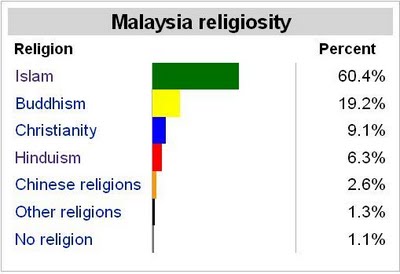 2. FREEDOM OF RELIGION FROM THE PERSPECTIVE OF THE MALAYSIAN FEDERAL CONSTITUTION Freedom of religion as a fundamental right is guaranteed under the Federal Constitution by virtue of Article 11(1). This Article shows a special tenderness for religious liberty. For example, proper understanding of the Art would portray or show that every person has the right to three things: to profess; to practise and subject to Art 11(4) to propagate his religion. This fundamental right is available to citizens and as well as non-citizens. It is also not only available to individuals but also to groups and associations.[13] Apart from Art 11(1) of the Federal Constitution, religious liberty is further guaranteed in many Articles of the Federal Constitution. For example, there is no compulsion on anyone to support a religion other than his own and no person shall be compelled to pay any tax the proceeds of which are specially allocated to a religion other than his own. [14] Also, no person shall be required to receive instructions in or take part in any ceremony or act of worship of a religion other than his/her own.[15] The Federal Constitution also does not allow for discrimination on the ground of religion against employees in the public sector; in the acquisition, holding or disposition of property; and any trade, business or profession.[16] This fundamental right cannot be restricted even in times of emergency by an emergency law.[17] However, it should be noted that although this fundamental right is of paramount importance in a democratic environment and well protected under the Federal Constitution, it is by no means absolute. In other words, like all freedoms, the right to follow one’s conscience cannot be absolute. 3. RESTRICTIONS ON FREEDOM OF RELIGION UNDER THE MALAYSIAN FEDERAL CONSTITUTION There are several constitutional limits on religious liberty or freedom under the Federal Constitution. The restrictions could be in form of: permissible restraints; propagation of religion to Muslims; religion of minors, non-mandatory practises and many more. 3.1 Permissible Restraints Article 11(1) of the Federal Constitution, which guarantees freedom of religion cannot be read in isolation. This Article must be read together with Art 3(1), which states that the practise of religion must not disturb peace and harmony. In other words, one is allowed to exercise his freedom of religion on condition that it would not disturb peace and harmony in any part of the Federation. Another permissible restrain is provided under Art 11(5), which states that the Art does not authorise any act contrary to any general law relating to public order, public health or morality. Thus, the implication of the Art is that all religious conduct is subject to the power of Parliament to restrict it on the grounds stated above. Hence if a speech, conduct, practise or institution is grounded on religious doctrine and if it threatens any of the above three forbidden grounds, it can be exterminated by a parliamentary law.[18] Apart from the permissible restraint under Art 11(5), in the case of Muslims, additional restraints are possible. This is by virtue of Schedule 9, List II, Item 1, which grants power to State Assemblies to punish Muslims for offences against the precepts of Islam.[19] According to Shad Faruqi, this power is used frequently to punish a wide variety of unIslamic conduct like khalwat (close proximity), zina (adultery), gambling, drinking, beauty contest and deviationists activities.[20] 3.2. Propagation of religion to Muslims It has been argued that a persons’ right to propagate religion among people professing Islam is pursuant to Art 11(4) can be restricted by Federal law (Federal Territory) or state law pursuant to Art 11(4).[21] It is important to note that laws controlling propagation are meant not only to prevent Muslims from being exposed to “heretical religious doctrines, be they of Islamic or non-Islamic origin and irrespective of whether the propagators are Muslims or non-Muslims.[22] Some scholars argue that the purpose of Art 11(4) is to insulate Malays against internationally funded and powerful proselytising forces that had become entrenched in the country due to official support from the colonial government.[23] To Harding, Art 11(4) was inserted primarily because of public order considerations. However, Shad Faruqi went further by adding to this rationale the element of ethnicity and political factor by saying that in the context of Malaysia, renunciation of Islam by a Malay would automatically mean abandoning the Malay community. This is because Islam is one of the defining features of a “Malay” in Art 160(2).[24] Still on the issue of propagation of religion to Muslims, it would be safe to suggest that any preaching of religious doctrine to Muslims (whether by non-Muslims or unauthorised Muslims) can be regulated by state law.[25] This is due to the fact that State enactments also make it an offence to convert Muslims. Of recent, this limitation or restriction has generated a heated debate in Malaysia. An acute example of this heated debate is that of conversion, which the author intends to address at the latter part of the discussion. Furthermore, much as we admit that the restriction of propagation of non-Islamic religions among Muslims and state control over the propagation of Islamic doctrine may also serve the purpose of maintaining social stability.[26] The problem with these principles is that they are contrary to the spirit of freedom of religion, and place the adherents of other religions (and Muslims who hold to unorthodox religious tenets) at a disadvantage compared with Muslims (or orthodox Muslims).[27] Thus in the long term the maintenance of these restrictions may have the effect of undermining the overarching principle of religious freedom.[28] 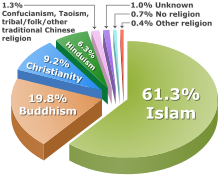 3.3. Religion of minors Although Art 11(1) uses the word ‘person’ as having freedom of religion in the context of professing and practising the said religion, but subject to Clause (4) when it comes to propagation, it becomes vital to read the Art together with Art 12(4) when the “person” we are dealing with happens to be under 18. Thus, in Teoh Eng Huat[29] the court held that in matters of religion, a child below 18 must conform to the wishes of her parents. Based on this line of reasoning, the court ruled that the conversion of a 17-year old Buddhist girl to Islam without her parents consent was of no effect. It would appear that the decision of the then Supreme Court (now Federal Court) diffused a potentially divisive issue, given that there are serious political overtones in the religious exploitation of minors. Hence the Supreme Court was right to over rule the decision of the High Court bearing in mind that within the context of a multi-religious society, Abdul Malek J in the High Court was not right in importing Islamic law in his construction of Art 11(1).[30] 3.4. Non-mandatory practices The contentious issue here is as to whether religious freedom would cover all aspects of practise as far as the said religion is concerned. This is due to the fact that in respect of religion, every person has three rights: to profess; to practice; and subject to Clause 4, to propagate his religion. Practise means to put into practise, to perform, to carry out, to do habitually.[31] Although this is how the word “practise” is understood, it is important to note that in Malaysia it has been held by the courts that freedom of religion extends only to those practises and rituals that are essential and mandatory. In Hjh Halimatussaadiah bte Hj Kamaruddin v Public Service Commission,[32] the issue was whether a female Muslim public servant could wear purdah to work. The apex court was of the view that the government was entitled, “in the interest of the public service”, to forbid in the work place a religious tradition that was non-essential and optional. The same reasoning applied in Fatimah Sihi & Ors v Meor Atiqulrahman bin Ishak & Ors[33] where Muslim schoolboys failed to get court endorsement of their demand to wear serban to school Looking at the line of reasoning given by the courts above, it would appear safe to conclude that in Malaysia freedom of religion in the context of “practise” extends only to those practises and rituals that are essential and mandatory. But such rulings may create problems in other areas as some practises, although not mandatory, are however part and parcel of certain religion.[34] One example is polygamy. Although this is not mandatory to male Muslims, but denying it may be said as denying religious freedom.[35] Looking at the restrictions addressed above, it is inevitable to point out that some of these restrictions could be argued to be in line with the approach of human rights from an Islamic perspective. However, looking at the approach of human rights from a Western perspective, it could equally be argued that some of these restrictions do not echo well with the notion of religious freedom. Take for instance the limitation imposed under Art 11(4) of the Federal Constitution on propagation of religion to Muslims. 4. SOME AREAS OF CONCERN REGARDING FREEDOM OF RELIGION UNDER THE MALAYSIAN FEDERAL CONSTITUTION In recent years, we have witnessed racial and religious polarisation coming into play whenever the issue of freedom of religion is raised under the Federal Constitution. It has to be admitted wholeheartedly that like in all societies, there are areas where religious, cultural and ethnic interests are competing and clashing. Thus, Malaysia being a multiracial society we are bound to face some of these clashes directly or indirectly like the Islamic State controversy, apostasy and many more. 4.1. Controversies over apostasy Although freedom of religion is guaranteed by Art 11(1), in practise this right is fraught with difficulties for Muslims, whether they are “born” into the faith or have converted to Islam.[36] The issue of renunciation of the Islamic faith and embrace of another religion is a controversial question.[37] It is nearly impossible for individuals who have renounced Islam to obtain official recognition of the same. Furthermore, contention over the issue of apostasy, specifically on constitutional provisions for freedom of religion to Muslims, remains unresolved. Legal and constitutional experts hold divergent views on whether the Federal Constitutional allows action to be taken against apostates.[38] Some argue that the freedom of religion guaranteed by Art 11(1) of the Federal Constitution is conditional on Art 3(1), which states that Islam is granted special status as the country’s official religion. Hence, to take legal action against Muslims who choose to depart from Islam or convert to other religions does not contravene the provisions of the Constitution.[39] Those who advocate for this view also draw on Art 11(4) to support this argument. However, detractors hold that the court should “adhere to the spirit of the Constitution.” It is said that Art 11(1) is broad enough to permit change of faith and though Art 11(4) restricts propagation of any religion to Muslims, the law no where forbids voluntary conversion of a Muslim to another faith. In other words, Art 11(4) does not restrict a Muslim from studying other religions and converting to another religion out of his/her own free will.[40] It is also pointed out that many state laws implicitly recognises conversions out of Islam by requiring a register to be kept of those who become murtad (infidels) and a similar register is kept of those who adopt Islamic faith.[41] However, recently we have witnessed some interesting decisions of both civil and Syari’ah courts regarding the issue of apostasy. For example, a former religious teacher and follower of the Sky Kingdom deviant sect Kamariah Ali was jailed for two years for apostasy.[42] 4.2. Conversion and apostasy Although it is universally accepted that freedom of religion includes the right to convert to another faith, it is important to note that the position in Malaysia is not very clear. For example, the right to convert out of one’s faith is not mentioned explicitly in the Malaysian Constitution.[43] However, it is taken for granted that a non-Muslim’s right to opt out of his religion is an implicit part of his religious liberty.[44] As to Muslims, the issue of conversion or apostasy raises significant religious and political considerations. The adoption of Islam as the religion of the Federation and the compulsory subjection of Muslims to the syari‘ah in a number of matters are other reasons why the conversion of a Muslim out of Islam arouses revulsion and anger among the Malays/Muslim citizens.[45] It is equally important to note that as Islam is the religion of the Federation and Malays are, by constitutional definition, required to be of the Muslim faith, all Muslims are liable to prosecution if their conduct is violative of Islamic precepts.[46] No Muslim can lay a claim to opt out of syari‘ah laws-the constitutional guarantee of freedom of religion notwithstanding. Hence, the notion that freedom of believe includes the freedom not to believe is unlikely to be accepted in Malay society.[47] Irrespective of this line of reasoning, some still view Art 11(1) very broad enough to permit change of faith though Art 11(4) restricts propagation of any religion to Muslims, the law nowhere forbids voluntary conversion of a Muslim to another faith.[48] 4.3. Deviationist Islam or activities Although Islam is the official religion of the Federation, it should be noted that the practise of anything other than Sunni Islam is disallowed.[49] There are various laws at state level meant to deal with deviationist teachings or activities. For example, the Administration of Islamic Law Enactment 1989 for Selangor gives exclusive powers to the mufti to issue, amend or revoke fatwa (religious decrees that are binding and enforceable once gazetted).[50] Also the syari’ah criminal offences legislation makes it an offence for anyone to have an opinion or even own books contrary to the fatwa.[51] 4.4. Islamic State controversy The controversy is prompted by lack of in depth understanding of Art 3(1) and its implications. Art 3 (1) proclaims that “Islam” is the religion of the Federation but all other religions may be practised in peace and harmony. It must be pointed out that the adoption of an official faith is not a unique constitutional phenomenon.[52] For example, there are Christian countries like Ireland and Norway with state religion. The implication of adopting Islam as the religion of the Federation is that Islamic education and way of life can be promoted for Muslims; Islamic institutions can be established; Islamic courts can be set up; and Muslims can be subjected to the Syari’ah in areas assigned by the Constitution.[53] Hence adopting Islam as the religion of the Federation does not turn Malaysia into an Islamic State. This is due to the fact that Malaysia’s document of destiny does not contain a preamble.[54] The word “Islamic” or “secular” does not appear anywhere in the Constitution. However, there is strong historical evidence in the Reid Commission papers that the country was meant to be secular.[55] It is, therefore, arguable that the forefathers of the Merdeka Constitution did not intend to launch a theocratic state. This line of reasoning is even favoured by the courts while interpreting Art 3(1). For example, in Che Omar bin Che Soh,[56] the Supreme Court said in unmistakable language that though Islam is the religion of the Federation, it is not the basic law of the land. Although this is the legal position regarding the status of Malaysia as a country, politicians and even some of our leaders have not accepted this line of reasoning. For instance on 29 Sept 2001, then the Prime Minister Mahathir Muhamad asserted that Malaysia is an Islamic country, even though the Constitution and system of governance do not fall neatly into the “norms” of what constitute an “Islamic State.” Mahathir’s declaration was echoed by his successor, Abdullah Badawi, in July 2004. In response to a written question during parliamentary sitting, Badawi said that Malaysia is an Islamic State in that it is acknowledged in the Federal Constitution to have Islamic characteristics and because its state governance and ethnic majority practise Islam. He said the position of Malaysia as an Islamic state is strengthened by Art 3 of the Federal Constitution, which states that Islam is the official religion of the Federation. On 17 July 2007, the Deputy Prime Datuk Seri Najib Abdul Razak said today Malaysia is not a secular state, but an Islamic state driven by the fundamentals of Islam. He went further and proclaimed that: “Islam is the official religion and Malaysia is an Islamic state, an Islamic state that respects the rights of the non-Muslims and we protect them.”[57] From the above paragraph, there seems to be a clash of opinions on the status of Malaysia i.e. whether it is an “Islamic” or “secular” state as a result of adopting Islam as the religion of the Federation under Art 3(1). Since case law is in favour of a secular state argument while faced with the interpretation of Art 3(1), it would be safe to conclude that the Islamic state argument is more of a political reasoning rather than a legal reasoning and thus should be discarded altogether in a multi-racial society like Malaysia. 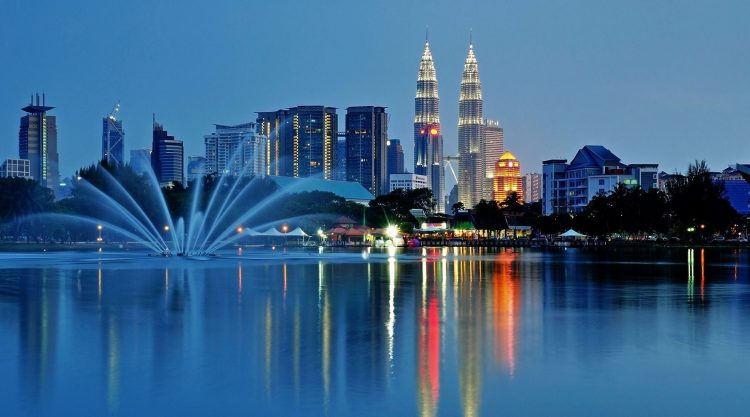 4.5. Issue of jurisdiction between civil and syari’ah courts It may have been a positive move to have come up with the constitutional amendment in 1988, which saw the separation of these two courts i.e. the High Courts (civil courts) were declared to have no jurisdiction in respect of any matter within the jurisdiction of the syari’ah courts. This is due to the fact that the syari’ah is a complex and distinct field that requires expert handling by those trained in the fundamental postulates of Islamic law and jurisprudence.[58] However, the amendment was flawed because it did not create an authoritative machinery for determining questions of conflict of jurisdiction.[59] For example, some disputes involve mixed questions of civil and syari’ah law. There are cases where one part is a Muslim, the other is a non-Muslim. However, of recent, we have witnessed some positive decisions given by the Federal Court on this conflicting issue of jurisdiction.[60] It has to be admitted that this issue of conflict of jurisdiction has been one of the areas in Malaysia where religious polarisation has set in especially when dealing with conversion involving adults and children as well; non-Muslim marriages and many more. For example, it is taken for granted that that a non-Muslim’s right to opt out of his religion is an implicit part of his religious liberty.[61] However, the exercise of this liberty is not free of thorny issues like if a Buddhist husband converts to Christianity, the religion of the children may become a bone of contention.[62] The scenario is even more complicated if the conversion is to Islam. For example, though the marriage is not automatically dissolved, the syari’ah court will have the power to end it. Custody and guardianship of children will become issues. The non-converting spouse will not be eligible for inheritance.[63] From the above foregoing discussion regarding the issue of some areas of concern surrounding religious freedom in Malaysia or under the Federal Constitution, again it could not be denied that we are bound to have different views or opinions as far as these areas of concern are perceived both from Islamic and Western perspective as well. For example, the majority view is that a Muslim cannot come out of Islam and some even suggested for the death penalty. On the other hand, this is not how religious freedom is understood from a Western perspective. In the West, religious freedom is understood to cover conversion to another faith.[64] 5. THE POSITION TAKEN BY MUSLIM JURISTS REGARDING THE PUNISHMENT FOR APOSTASY Muslim jurists made references to the Holy Qur´an and Hadith of the Holy Prophet (Pbuh) to state their positions. Although, Muslim jurists are divided over the issue of apostasy and the right punishment to be meted out, it is still considered a sin and is condemned. The Muslim jurists cited in the Holy Qur´an, Allah declares to the effect, “There shall be no compulsion in religion…”[65] and this is corroborated by another verse revealed to the Holy Prophet (Pbuh) to the effect, “Had Allah willed, everyone on the face of the earth would have professed the faith. Are you then forcing people to become believers?”[66] Notwithstanding the clarity of the Qur´anic proclamations, the subject of freedom of religion, especially concerning apostasy, remains controversial. Some commentators have drawn a conclusion that the Qur´anic passages which validate holy war (jihad) and fighting against disbelievers actually abrogate the Qur´anic proclamations on tolerance and respect for other religions, and that the punishment for the mere renunciation of faith is death. However, in many Muslim countries, their views hold sway regardless of the fact that there has been no consensus on such matters or that the noted Maliki jurist al-Baji also observed that apostasy is a sin which carries no prescribed or had penalty, and that such a sin may be punished under the discretionary punishment of tazir (which is lesser than hudud), or that the renowned Hanbali jurist, Ibn Taymiyyah, has also agreed categorically on the punishment for apostasy being tazir.[67] Apart from the Qur´anic verses cited above, one of the notable Hadith that the Muslim jurists made reference to, is the Hadith which proclaims ‘whoever renounces his religion shall be killed’. Based on this Hadith, ‘Abd al-Hakim al-Ili and Ismail al-Badawi maintained it to be political in character and aimed at the inveterate enemies of Islam.[68] On the other hand, Mahmassani has observed that the death penalty was meant to apply, not to simple act of apostasy from Islam, but when apostasy was linked to an act of political betrayal of the community. According to him, the Prophet never killed anyone solely for apostasy. This being the case, the death penalty was not meant to apply to a simple change of faith but to punish acts such as treason, joining forces with the enemy and sedition.[69] Though this may be the case, can we have apostasy per se? It is submitted that in the context of Islamic jurisprudence there is a likelihood that the phrase ‘…joining forces with the enemy…’ could be interpreted to mean that the issue of apostasy is not left out as well. Still on the same issue regarding the punishment for apostasy, Al-Awa elaborated that the death penalty in the Hadith is not designed for apostasy per se but for high treason, or hirabah, that is, when apostasy is accompanied by hostility and rebellion against the community and its legitimate leadership.[70] To some Muslim jurists, the Hadith is viewed as a general (amm) command which is in need of specification (takhsis). In its general form, it would apply equally to cases that manifestly fall outside its intention, as it would render this same punishment not only to Muslims but also to Christians who convert to Judaism, and vice versa. But according to Al-Shawkani, the general purport of this Hadith has been restricted in the Qur´an so as to exclude a person who changes his religion outwardly under duress but remains faithful otherwise.[71] Thus, taking such a stand prompted Al-Shawkani to criticise the ruling of such Shafii scholars who have followed the literal and general meaning of the Hadith in question and erroneously held that death penalty therein applies equally to non-Muslim who converts from one religion to another. Furthermore, to the Hanafis, they have countered the general interpretation of this Hadith in yet another respect, namely, that a woman apostate is not punished by death but only imprisonment. The basis of this argument of this school of thought is based on the analysis that the masculine pronominal suffix alone occurs in the wording. However, making reference to the rule of interpretation, as expounded in usul al-fiqh, it states that once a decisive (qati) of a text has been specified in some respect, the part which remains unspecified becomes speculative (tanni), and as such, is open to further interpretation and specification (takhsis). It is, thus also suggested that the Hadith in question may be further qualified, and that the death penalty therein may be reserved only for apostasy which is accompanied by high treason (hirabah).[72] Apart from the first Hadith cited above, the other Hadith often quoted in support of death penalty for apostasy states: “The blood of a Muslim who professes that there is no god but Allah and that I am His Messenger, is sacrosanct except in three cases: a married adulterer, a person who has killed another human being; and a person who abandoned his religion while splitting himself off from the community”.[73] From the above quoted Hadith, there is no doubt that there is a clear indication that the apostate must also boycott the community and challenge its legitimate leadership, in order to be subjected to the death penalty. To Ibn Taymiyyah, in attempt to reconcile the terms of the above Hadith with the Qur´an, he was of the view that the crime referred to in the Hadith is that of high treason (hirabah) and not apostasy (riddah) as such.[74] This observation is again supported by the fact that the Prophet never put anyone to death for apostasy alone. For example, affirmative evidence on this point is found in the following incident which appears in the Hadith compilations of al-Bukkari and Muslim: “A Bedouin came to the Holy Prophet and pledged his allegiance to him, professing Islam. The next day he came back, ill with fever and said, ‘Return my pledge to me,’ but the Prophet refused-thrice. Then the Prophet said: al-Madinah is like a bellows which rejects its dross and recognizes its pure”.[75] From the above Hadith compilations of al-Bukkari and Muslim, it could be argued that this was a clear case of apostasy, in which the Prophet made no reference to any punishment at all, and the Bedouin, despite his persistence renunciation of Islam was left to go unharmed. It should therefore be noted that the Prophet did not treat apostasy as a prescribed offence (had), but, on the contrary, pardoned many individuals who had embraced Islam, then renounced it, and then embraced it again. For example, the case of Abdullah ibn Sarh, the foster brother of Uthman ibn Affan, and one time scribe of the Prophet whom the Prophet forgave when ‘Uthman interceded on his behalf. Having addressed the views presented by the Muslim jurists above and coming back to the topic of Muslim apostasy, perhaps the questions to be asked are: Is it Islamically legally acceptable? Should there be a punishment for it in this world? Or should the apostate be left alone because no punishment for apostasy was assigned in the Qur´an? Reacting to these questions, it is inevitable to point out that there seems to be no consensus amongst the Muslim jurists as to the form of punishment for apostasy. Due to the fact that Muslim jurists have not reached a consensus on this heated debate, the author would like to submit that in the context of Malaysia and the laws on apostasy in particular i.e. the ‘Perlis Apostasy Law’ and many others could raise some important constitutional issues as mentioned in the earlier part of the discussion. 5. RECOMMENDATIONS TO SOME OF THE AREAS OF CONCERN REGARDING FREEDOM OF RELIGION UNDER THE MALAYSIAN FEDERAL CONSTITUTION Much as there is an acknowledgement of volatility of religion in any given society, it is vital to note that religion has a peaceful face and greatly valued for various reason. For example, religious freedom is basic to the nature of man and is deeply rooted in our social life. Hence, in the context of this study it becomes inevitable to address some solutions to the areas of concern regarding this fundamental liberty if we were to avoid racial and religious polarisation in Malaysia. The following are some of the recommendations to the pertinent issues raised throughout the discussion: There is an urgent need to look into the issue of conversion and laws on apostasy in Malaysia. The focus of attention here is on the issue or question of whether a Muslim can convert out of Islam. If so, can he/she be punished for apostasy?[76] Will such punishment infringe his/her right under Art 11?[77] It is submitted that the legal scenario is complicated. However, recently we have witnessed some few cases where Muslims have been charged in the syari’ah courts for apostasy and even judgment passed.[78] It must be pointed out that in the context of this study laws on apostasy and other aqidah (faith) laws may raise important constitutional issues.[79] For example, Art 11(1) is broad enough to permit change of faith irrespective of Art 11(4). Hence, a law that violates Art 11(1) may be challenged as unconstitutional. Also forced rehabilitation could be viewed as an interference with personal liberty guaranteed by Art 5(1).[80] This is due to the fact that the term “law” under Art 160(2) of the Federal Constitution does not include “syari’ah law.” So, are these apostasy or aqidah (faith) laws considered syari’ah laws? If the answer is to the affirmative, then such laws could be challenged to be unconstitutional by virtue of Art 160(2) and thus someone who converts out of Islam could still invoke the violation of his constitutional right under Art 5(1) as a result of forced rehabilitation.[81] Irrespective of what is said here, some would still argue that such laws are not unconstitutional on the basis of Art 11(4), which stipulates that state or federal law “may control or restrict the propagation of any religious doctrine or belief among persons professing the religion of Islam.” Probably what is needed is a fair balancing of interests with the list friction and the need to understand the constitutional provisions from the historical perspective as well. In addition to the issue of apostasy, probably when it comes to something like an apostasy law, or a public policy to govern faith, society must debate openly and rationally to be able to decide what is in the best interest of the people.[82] All citizens should have the right to engage in dialogue on religious issues. We should not shun away from discussing racial and religious issues because they are deemed to be “sensitive”. Thus, some have argued that apostasy should be addressed through persuasion rather than criminalisation.[83] For example, it could be argued that apostasy law is a cause for concern on the basis that Islam is a religion of persuasion, not force. Viewed from that perspective, the idea or notion of detaining apostates runs counter to the spirit of Islam which is one of tolerance for the disbeliever. Furthermore, in dealing with apostates the Muslim community, especially its religious leaders, must look within.[84] They must study all apostasy cases; categorise them; analyse the causes; and try to work out the cures.[85] In other words, the authority must seek to win back lost souls through love and persuasion and not through criminalisation. This in fact would reduce the tension built on religious freedom in the context of conversion since Allah (God) recognises the possibility of repentance and reminds us that He is all-forgiving.[86] As to a conversion of a non-Muslim to Islam, probably there is a need to come up with some guidelines if we were to address some of the thorny problems or issues caused by the exercise of this liberty i.e. freedom of religion. For example, it should be made as a requirement that the family of the aspiring convert must be informed and must be heard.[87] Also, no conversion certificate should be issued till the issues of divorce, distribution of property, guardianship and custody of children have been resolved in accordance with the law under which the marriage took place.[88] It has to be admitted wholeheartedly that the restriction on the right to propagate religion among people professing Islam pursuant to Art 11(4) is said to flow logically and necessarily from Islam’s position as the religion of the Federation. However, controlling propagation curtails the position of religionists for whom proselytising is an integral part of worship. Many non-Muslims complain that this amounts to unequal treatment under the law for other religions.[89] Indeed it does. To overcome this intention or clash, it is humbly submitted that the best way of understanding constitutional provisions of any given country especially like that of Malaysia is to make reference to some historical facts or events that led to the inclusion of such provisions into the Constitution. Hence, it must be remembered Art 11(4) was part of the pre-Merdeka social contract between Malays and non-Malays.[90] Though this may be the argument to present, still some have argued that while Art 11(4) permits restriction to propagation of other religions among Muslims, it does not restrict a Muslim from studying other religions and converting to another religion out of his/her own free will.[91] Still the conversion of a Muslim out of Islam is considered a contentious issue because not all share the same view. For example, Harding’s view regarding the restriction on proselytism revolves around the issue of preserving public order than religious priority seems not to be the case based on the Supreme Court’s decision in the case of Mamat bin Daud v Government of Malaysia.[92] Furthermore, although deviationist teachings fall outside the scope of freedom of religion as understood in Malaysia, perhaps there is a need altogether to revisit the approach adopted by the relevant states or authorities in curbing this menace among the Muslims. For example, the deviationists should not be criminalised altogether but rather should be given a full platform or fair opportunity to defend themselves and probably to explain their conduct.[93] Although some may still argue in favour of criminalisation, we ought to know the dangers associated with such a move i.e. use of arbitrary laws and as well as private religious groups with no authority seek to stifle diversity within religious discourse by calling upon government to take action against the proponents of alternative views on the ground that they “insult Islam.” There is an urgent need to understand the implication of the constitutional declaration of Islam as the religion of the Federation. It cannot be denied that “Islam” as a religion is given a special position under the Federal Constitution. For example, the Art is not a mere declaration but imposes a positive obligation on the Federation to protect, defend, promote Islam; give effect by appropriate state action to the injunctions of Islam; and enable, facilitate and encourage Muslims to order their lives and practise according to Islamic injunctions, spiritual and mundane alike. However, this Art should not be read literally and further that the events leading to independence show that Malaysia was intended to be a secular state.[94] The Art was inserted for ceremonial purposes.[95] As to the issue of jurisdiction between the civil and syari‘ah courts, although the original intention of this constitutional amendment was to upgrade the status of the syari‘ah courts and to make them autonomous of the civil courts in maters of Islamic law, it could not be denied or watered down that the amendment was flawed because it did not create an authoritative mechanism for determining questions of conflict of jurisdictions. In order to overcome this problem, probably the syari‘ah courts should have exclusive jurisdiction only when both parties are Muslim.[96] Thus, the civil courts should not be excluded from hearing such a case especially where one of the party’s is non-Muslim. Probably we need to have a mechanism in place like where the High Court have a Syari‘ah Division manned by judges familiar with both civil and syari‘ah laws to adjudicate upon the matter.[97] It could also be possible to invoke the advisory jurisdiction of the Federal Court under Art 130 to address this conflict of jurisdiction. 6. CONCLUSION It may safely be concluded that freedom of religion under the Malaysian Federal Constitution cannot be understood without making reference especially to Articles 3 and 11 of the Federal Constitution. Hence, proper understanding of these Articles is essential while faced with the issue or question of religious freedom from a Malaysian perspective. There is also a need to understand other constitutional provisions related to the discussion of religious freedom as far as the Malaysian Federal Constitution is concerned. However, it is wholly admitted that by understanding these constitutional provisions alone would not solve the problems that we are currently facing in the context of freedom of religion. Thus, there is a dire need for political will to work out satisfactory solutions to some of the problems highlighted above if we were to really address the interests and legitimate expectations of the various religious communities which at present are competing and clashing in some areas. For example, the recent cases of Shamala and Sgn Moorthy Abdullah highlight the pain and anguish a conversion can cause.[98] Apart from the political will that is needed, probably we ought to look into the function of law in relation to religion within a multi-cultural and multi-religious society where religious pluralism is valued. In such a context, law affords equal protection to all religion and refrains from judging the merits of any religion. Equal treatment of religions under the law does not, of course, mean that all religions are of equal truth-validity.[99] That is a matter left to the judgment and choice of the individual. Although this is what is said about the function of law in relation to religion, it is inevitable to suggest that in Malaysia there is a need to have clear laws in place in tackling some of these problems. For example, the Federal Court decision in Latifah Mat Zin[100] was of special importance: Justices Abdul Hamid Mohamed, Arifin Zakaria and Augustine Paul while they clarified some of the conflict in jurisdiction between civil and syari‘ah court, they noted that there were matters that might be outside the jurisdiction of both, resulting in no available remedy in either court. All in all, it is submitted that the efforts at the societal level may be more fruitful in understanding the notion of freedom of religion under the Malaysian Federal Constitution. Thus, freedom of religion may be enshrined in the Malaysian Constitution but Malaysians have much to learn about respecting one another’s faith. Also, although religion is often viewed as a sensitive issue, society should not be afraid to discuss it in a peaceful and tactful manner. What is important in the discussion of freedom of religion in a Malaysian context is for us to strike a balance between being tactful and tolerant with religious issues, and at the same time, be open to allow individuals to seek the faith of their choice. Ahmad Masum Senior lecturer Faculty of Law, Government and International Studies University Utara Malaysia ([email protected]) [1] See Art 18 of the Universal Declaration of Human Rights 1948 and also Art 18 of the International Covenant on Civil and Political Rights 1966. See also Art 9 of the European Convention on Human Rights. [2] Art 11(1) of the Federal Constitution provides that: “Every person has the right to profess and practise his religion and, subject to Clause (4), to propagate it.” [3] As cited by T. Jeremy Guun, “The Complexity of Religion and the Definition of “Religion” in International Law” (2003) vol.16 Harvard Human Rights Journal 191. [4] Ibid. [5] Ibid. [6] Rhona K.M Smith & Carolyn McIntocsh, Freedom of Religion: The Evolution of a Human Right, http://www.derechos.org/koaga/i/smithr.html viewed on 28 August 2006. [7] As stated by Shad Faruqi, “Support for religious liberty,” Sunday Star, 25 February, 2001, 22. See also Shad Faruqi, “The Human Rights and Constitutional Perspective” (2002) INSAF the Journal of Malaysian Bar 9. [8] Ibid. [9] Ibid. [10] Ibid. [11] See Articles 11(1) and 3(1) of the Federal Constitution respectively. [12] Shad Faruqi, n. 7 at p 22. [13] See Articles 11(3) and 12(2) of the Federal Constitution. [14] Art 11(2) of the Federal Constitution. [15] Art 12(3) of the Federal Constitution. [16] Art 8(2) of the Federal Constitution. [17] Art 150(6A) of the Federal Constitution. See also the decision of the Court in the case of Jamaluddin bin Osman [1989] 1 MLJ 369- where the court held that a preventive detention order cannot be issued on the ground that a convert out of Islam is a involved in a programme for propagation of Christianity amongst Malays. In other words, freedom of religion under Art 11 was held to override the power of preventive detention under the Internal Security Act 1960. [18] Shad Faruqi, “Constitutional limits on religious liberty,” The Sun, 25 May, 2006, E6. See also Shad Faruqi, The Human Rights and Constitutional Perspective” (2002) INSAF the Journal of Malaysian Bar 12. [19] Ibid. [20] Ibid. See also the case of Kamariah bte Ali v Kelantan Government [2002] 3 CLJ 766. [21] Kevin YL Tan & Thio Li-Ann, Constitutional Law in Malaysia and Singapore, Butterworth Asia, Malaysia, 1997 at p 941. [22] Ibid. [23] Shad Faruqi, “Support for religious liberty,” Sunday Star, 25 February, 2001, 22. [24] Shad Faruqi, n. 18 at p E6. [25] See Sec 124 of the Council of the Religion of Islam and Malay Custom, Kelantan Enactment 1992 provides: ‘Any person who helps or causes a person who professes the religion of Islam to leave his religion is guilty of an offence and shall, on conviction, be liable to a fine not exceeding four thousand ringgit or to imprisonment for a term not exceeding two years or both.’ See also Sec 4, Non-Islamic Religions (Control of Propagation Amongst Muslims) Selangor Enactment 1 of 1988 and the similarly worded Enactment for Malacca No 1 of 1988 and Kedah No. 11 of 1988). These makes it an offence to persuade a Muslim to change faith, to approach a Muslim to subject him to speech concerning a non-Islamic religion or send him materials on non-Islamic religions, to distribute such publications to Muslims in a public place. [26] As stated by Andrew Harding, Law, Government and the Constitution, Malayan Law Journal Sdn Bhd, Kuala Lumpur, 1996, at p 202. [27] Ibid. [28] Ibid. [29] [1990] 2 MLJ 301. [30] Abdul Hamid cited Art 12(4) and Art 16(4) in support of his decision. In applying the Islamic age of consent (according to the Shari‘ah, this is 15 for boys and on the onset of baligh or menstruation for girls), he held that the age of majority under Art 12 (eighteen years) did not apply to Art 11. [31] See Chambers English Dictionary. [32] [1994] 3 MLJ 61. [33] [2006] 4 CLJ 1. [34] Abdul Aziz Bari & Farid Suffian Shuaib, Constitution of Malaysia-Text & Commentary, 2nd Edition, Prentice Hill, Petaling Jaya, 2004, at p 40. [35] Ibid., at p 41. [36] See Malaysia Human Rights Report 2005-Civil and Political Rights, SUARAM Kommunikasi, Petaling Jaya, 2006, at p 94. [37] Ibid. [38] Ibid. [39] Ibid. [40] Ibid. [41] Shad Faruqi, “The Human Rights and Constitutional Perspective,” (2002) INSAF the Journal of the Malaysian Bar 14. [42] See “Sky Kingdom member gets two years for apostasy,” The Star, 4 March, 2008, N35. [43] Shad Faruqi, “Spotlight on religious freedom,” The Sun, 1 June, 2006, E7. [44] Ibid. [45] Shad Faruqi, Jurisdiction of State Authorities to punish offences against the precepts of Islam: A Constitutional Perspective, www.malaysianbar.org.my viewed on 23 November 2008. [46] Ibid. [47] Ibid. [48] Shad Faruqi, n.41 at p 15. [49] See Malaysia Human Rights Report 2005- Civil and Political Rights, SUARAM Kommunikasi, Petaling Jaya, 2006, at p 95. [50] Ibid. [51] See Sec 9 of the Syari‘ah Criminal Offences Act 1997 for the Federal Territories, which makes it a criminal offence for any person “…acts in contempt of religious authority or defies, disobeys or disputes the orders or directions of the Yang di-Pertuan Agong (King) as Head of the religion of Islam, the Majlis or the Mufti, expressed or given by way of fatwa.” See also Sec 12 of the same Act. It makes it an offence for any person to give, propagate, or disseminate any opinion concerning Islamic teachings, Islamic law, or any issue contrary to any fatwa when it is in force. [52] Shad Faruqi, “Freedom of religion under the constitution,” The Sun, 18 May, 2006, E8. [53] Ibid. [54] Shad Faruqi, “Ours is a hybrid system,” The Sun, 20,July, 2006, E2. [55] Ibid. [56] [1988] 2 MLJ 55. [57] R. Manirajan, Deputy Prime Minister: Malaysia is not a secular state. What the legal experts, politicians’ say/PM: Muslim countries cannot remain mere spectators, <http://sun2surf.com/article.cfm?id=18609> viewed on 22 July 2008. [58] Shad Faruqi, n.43 at p E7. [59] Ibid. [60] See the Federal Court’s decision in the case of Latifah Mat Zin v. Rosmawati Sharibun & Anor [2007] 2 CLJ 253. See also the case of Subashini v Saravanan [2007]2 MLJ 798. In Subashini, the Federal Court ruled that questions of jurisdiction are for the civil courts to determine. The High Court has jurisdiction even if the husband has converted to Islam and even if he had commenced proceedings in the Syari‘ah courts. [61] Shad Faruqi, n.43 at p E7. [62] Ibid. [63] Ibid. [64] See Art 18 of the Universal Declaration of Human Rights 1948. [65] See Surah al-Baqarah, 2: 256 [66] See Surah Yunus, 10: 99 [67] See Muhammad Hashim Kamali, Freedom of Expression in Islam, Ilmiah Publishers Sdn. Bhd., Kuala Lumpur, 1998 at p 94. [68] Ibid. [69] Ibid.; at p 95. [70] Ibid. [71] Ibid. [72] Ibid.; at p 96. [73] Ibid. [74] Ibid. [75] Ibid. [76] Shad Faruqi, n.41 at p 14. [77] Ibid. [78] See the recent decision of the Syari‘ah High Court judge Muhammad Abdullah in Kuala Terengganu regarding a follower of the Sky Kingdom known as Kamariah Ali who was jailed for two years for apostasy. [79] As cited by Shad Faruqi, “The Human Rights and Constitutional Perspective” (2002) INSAF the Journal of Malaysian Bar 15. [80] Ibid. [81] Ibid. [82] Cindy Tham, “God’s words and man’s laws-Lawyers, NGOs call for statutory council to preserve religious freedom and tolerance,” The Sun, 10 December, 2000, 17. [83] Ibid. This view is shared by academics like Shad Faruqi (emphasis added). [84] Shad Faruqi, “Seeking the path of moderation,” The Sun, 8 June, 2006, E8. [85] Ibid. [86] See Surah al-Imran, 3:86-89. [87] Shad Faruqi, “Spotlight of religious freedom,” The Sun, 1 June, 2006, E7. [88] Ibid. [89] Shad Faruqi, n.18 at p E6. [90] Ibid. [91] See Malaysian Human Right Reports 2005-Civil and Political Rights, SUARAM Kommunikasi, Petaling Jaya, 2006, at p 95. [92] [1988] 1 MLJ 119-where the Supreme Court reiterated that the acts prohibited by the sec (sec 298A of the Penal Code) had nothing to do with public order, a federal matter, but directly concerned with religion. [93] Ibid. [94] See the White Paper on the Constitutional Proposals for the Federation of Malaya stating that it is a secular state. See also the clarification made by the then Prime Minister Tunku Abdul Rahman at the Federal Legislative Council in 1958 that “…this country is not an Islamic state as it is generally understood, we merely provide that Islam shall be the official religion of the State.” [95] See the implications that flourish from Art 3(1) of the Federal Constitution i.e. Islamic education and way of life can be promoted by the state; taxpayers’ money can be utilised to promote Islamic Institutions and to build mosques etc. Also, Islamic courts can be established and syari‘ah officials can be hired. [96] Shad Faruqi, n. 86 at p E7. [97] Ibid. [98] Ibid. [99] Kevin YL Tan and Thio Li-Ann, Constitutional Law in Malaysia and Singapore, Butterworth Asia, Malaysia, 1997 at p 877. [100] [2007] 2 CLJ 253. |
| json metadata | {"tags":["life","steemit","blog","travel","indonesia"],"image":["https://steemitimages.com/DQmRkV8q33vTuLihM6Ln7p9nrXr21dhCYDLYx8AHmzhrk1D/kl.jpg","https://steemitimages.com/DQmfMq1hiPVU2K9Q73fBM8CMqB1dJ9AReYqxgABKHPZowG7/Freedom%20Religion.jpg","https://steemitimages.com/DQmeAKwsyGMiFBvpkNwfLKkyZkzLsouy4p198NmzgrSg2pC/mls.png","https://steemitimages.com/DQmSXN2QKwe6ttnLpJ3qvDTfduBoGGCVsdYqrz5Rghe4ygJ/Malaysia-750x417.jpg"],"links":["http://www.derechos.org/koaga/i/smithr.html","http://sun2surf.com/article.cfm?id=18609"],"app":"steemit/0.1","format":"markdown"} |
| parent author | |
| parent permlink | life |
| permlink | freedom-of-religion-in-malaysia-a-critical-analysis-of-the-federal-constitution |
| title | Freedom of Religion in Malaysia- A Critical Analysis of the Federal Constitution |
| Transaction Info | Block #19310173/Trx df71d2473ea25aa2c79c5198c7516d1062247852 |
View Raw JSON Data
{
"block": 19310173,
"op": [
"comment",
{
"author": "tarmizi82",
"body": "\n1. INTRODUCTION \n\nThe right to freedom of religion is one of the fundamental rights guaranteed in many international and regional human rights instruments.[1] For example, Article 18 of the Universal Declaration of Human Rights which was introduced in 1948 declares that all individuals have “the right to freedom of thought, conscience and religion”- this includes the freedom to change and to practice their religion or belief. On the other side of the spectrum, the right to freedom of religion in Malaysia is guaranteed under Article 11(1) of the Federal Constitution.[2] However, it is important to note that none attempts to define the term “religion.” It has been observed that the “effort to define religion is as old as the academic study of religion itself.”[3] In fact, “dozens, if not hundreds of proposals have been made, each claiming to solve the definitional problem in a new unique way.[4] Needless to say, no one definition of religion has garnered a consensus, and the definitional enterprise, as well as the debate over the very need for definitions, continues in full vigor.”[5] Although this may be the case, there are those who view religion as a set of beliefs, essentially “an intensely personal matter”.[6] Thus, belief in a religion is frequently manifested in acts of worship and demonstrations of belief, usually in community with others.\nLooking at the definitional aspect of the term “religion” from a Malaysian perspective, perhaps one would have to ask the question of whether ‘religion’ refers merely to established and ancient religions.[7] Or does it include cults and sects with distinct philosophies and rituals of their own?[8] It has to be acknowledged that the issue is as yet untested in our courts. The practice up to now has been to prosecute any Muslim or non-Muslim who is involved in “deviationist” teachings and practices.[9] Hence it would appear that in a traditional society like Malaysia with an official religion and Rukun Negara which affirms to commitment to belief in God, atheistic practices may not receive much sympathy in the courts although Western theory supports a broad view of the term “religion”.[10] \nIrrespective of the difficulties involved while faced with this fundamental liberty i.e. like the definitional aspect of the term itself, it has to be noted that the Federal Constitution of Malaysia guarantees freedom of religion, and further proclaims Islam as the official religion.[11] However, the proclamation of Islam as the official religion does not mean that others are denied the right to practise their freedom of religion. For example, Malaysia has a record of religious tolerance that should be the envy of all plural societies. Mosques, temples, churches and gudwaras dot the landscape.[12] \n\n\n2. FREEDOM OF RELIGION FROM THE PERSPECTIVE OF THE MALAYSIAN FEDERAL CONSTITUTION\n\nFreedom of religion as a fundamental right is guaranteed under the Federal Constitution by virtue of Article 11(1). This Article shows a special tenderness for religious liberty. For example, proper understanding of the Art would portray or show that every person has the right to three things: to profess; to practise and subject to Art 11(4) to propagate his religion. This fundamental right is available to citizens and as well as non-citizens. It is also not only available to individuals but also to groups and associations.[13]\nApart from Art 11(1) of the Federal Constitution, religious liberty is further guaranteed in many Articles of the Federal Constitution. For example, there is no compulsion on anyone to support a religion other than his own and no person shall be compelled to pay any tax the proceeds of which are specially allocated to a religion other than his own. [14] Also, no person shall be required to receive instructions in or take part in any ceremony or act of worship of a religion other than his/her own.[15] The Federal Constitution also does not allow for discrimination on the ground of religion against employees in the public sector; in the acquisition, holding or disposition of property; and any trade, business or profession.[16] This fundamental right cannot be restricted even in times of emergency by an emergency law.[17] However, it should be noted that although this fundamental right is of paramount importance in a democratic environment and well protected under the Federal Constitution, it is by no means absolute. In other words, like all freedoms, the right to follow one’s conscience cannot be absolute.\n\n3. RESTRICTIONS ON FREEDOM OF RELIGION UNDER THE MALAYSIAN FEDERAL CONSTITUTION\n\nThere are several constitutional limits on religious liberty or freedom under the Federal Constitution. The restrictions could be in form of: permissible restraints; propagation of religion to Muslims; religion of minors, non-mandatory practises and many more.\n\n3.1 Permissible Restraints\nArticle 11(1) of the Federal Constitution, which guarantees freedom of religion cannot be read in isolation. This Article must be read together with Art 3(1), which states that the practise of religion must not disturb peace and harmony. In other words, one is allowed to exercise his freedom of religion on condition that it would not disturb peace and harmony in any part of the Federation. \nAnother permissible restrain is provided under Art 11(5), which states that the Art does not authorise any act contrary to any general law relating to public order, public health or morality. Thus, the implication of the Art is that all religious conduct is subject to the power of Parliament to restrict it on the grounds stated above. Hence if a speech, conduct, practise or institution is grounded on religious doctrine and if it threatens any of the above three forbidden grounds, it can be exterminated by a parliamentary law.[18]\nApart from the permissible restraint under Art 11(5), in the case of Muslims, additional restraints are possible. This is by virtue of Schedule 9, List II, Item 1, which grants power to State Assemblies to punish Muslims for offences against the precepts of Islam.[19] According to Shad Faruqi, this power is used frequently to punish a wide variety of unIslamic conduct like khalwat (close proximity), zina (adultery), gambling, drinking, beauty contest and deviationists activities.[20]\n\n3.2. Propagation of religion to Muslims\nIt has been argued that a persons’ right to propagate religion among people professing Islam is pursuant to Art 11(4) can be restricted by Federal law (Federal Territory) or state law pursuant to Art 11(4).[21] It is important to note that laws controlling propagation are meant not only to prevent Muslims from being exposed to “heretical religious doctrines, be they of Islamic or non-Islamic origin and irrespective of whether the propagators are Muslims or non-Muslims.[22] Some scholars argue that the purpose of Art 11(4) is to insulate Malays against internationally funded and powerful proselytising forces that had become entrenched in the country due to official support from the colonial government.[23] To Harding, Art 11(4) was inserted primarily because of public order considerations. However, Shad Faruqi went further by adding to this rationale the element of ethnicity and political factor by saying that in the context of Malaysia, renunciation of Islam by a Malay would automatically mean abandoning the Malay community. This is because Islam is one of the defining features of a “Malay” in Art 160(2).[24]\nStill on the issue of propagation of religion to Muslims, it would be safe to suggest that any preaching of religious doctrine to Muslims (whether by non-Muslims or unauthorised Muslims) can be regulated by state law.[25] This is due to the fact that State enactments also make it an offence to convert Muslims. Of recent, this limitation or restriction has generated a heated debate in Malaysia. An acute example of this heated debate is that of conversion, which the author intends to address at the latter part of the discussion. \nFurthermore, much as we admit that the restriction of propagation of non-Islamic religions among Muslims and state control over the propagation of Islamic doctrine may also serve the purpose of maintaining social stability.[26] The problem with these principles is that they are contrary to the spirit of freedom of religion, and place the adherents of other religions (and Muslims who hold to unorthodox religious tenets) at a disadvantage compared with Muslims (or orthodox Muslims).[27] Thus in the long term the maintenance of these restrictions may have the effect of undermining the overarching principle of religious freedom.[28] \n \n\n3.3. Religion of minors\nAlthough Art 11(1) uses the word ‘person’ as having freedom of religion in the context of professing and practising the said religion, but subject to Clause (4) when it comes to propagation, it becomes vital to read the Art together with Art 12(4) when the “person” we are dealing with happens to be under 18. Thus, in Teoh Eng Huat[29] the court held that in matters of religion, a child below 18 must conform to the wishes of her parents. Based on this line of reasoning, the court ruled that the conversion of a 17-year old Buddhist girl to Islam without her parents consent was of no effect. It would appear that the decision of the then Supreme Court (now Federal Court) diffused a potentially divisive issue, given that there are serious political overtones in the religious exploitation of minors. Hence the Supreme Court was right to over rule the decision of the High Court bearing in mind that within the context of a multi-religious society, Abdul Malek J in the High Court was not right in importing Islamic law in his construction of Art 11(1).[30]\n\n3.4. Non-mandatory practices\nThe contentious issue here is as to whether religious freedom would cover all aspects of practise as far as the said religion is concerned. This is due to the fact that in respect of religion, every person has three rights: to profess; to practice; and subject to Clause 4, to propagate his religion. Practise means to put into practise, to perform, to carry out, to do habitually.[31] Although this is how the word “practise” is understood, it is important to note that in Malaysia it has been held by the courts that freedom of religion extends only to those practises and rituals that are essential and mandatory. In Hjh Halimatussaadiah bte Hj Kamaruddin v Public Service Commission,[32] the issue was whether a female Muslim public servant could wear purdah to work. The apex court was of the view that the government was entitled, “in the interest of the public service”, to forbid in the work place a religious tradition that was non-essential and optional. The same reasoning applied in Fatimah Sihi & Ors v Meor Atiqulrahman bin Ishak & Ors[33] where Muslim schoolboys failed to get court endorsement of their demand to wear serban to school \nLooking at the line of reasoning given by the courts above, it would appear safe to conclude that in Malaysia freedom of religion in the context of “practise” extends only to those practises and rituals that are essential and mandatory. But such rulings may create problems in other areas as some practises, although not mandatory, are however part and parcel of certain religion.[34] One example is polygamy. Although this is not mandatory to male Muslims, but denying it may be said as denying religious freedom.[35]\nLooking at the restrictions addressed above, it is inevitable to point out that some of these restrictions could be argued to be in line with the approach of human rights from an Islamic perspective. However, looking at the approach of human rights from a Western perspective, it could equally be argued that some of these restrictions do not echo well with the notion of religious freedom. Take for instance the limitation imposed under Art 11(4) of the Federal Constitution on propagation of religion to Muslims. \n\n4. SOME AREAS OF CONCERN REGARDING FREEDOM OF RELIGION UNDER THE MALAYSIAN FEDERAL CONSTITUTION\n\nIn recent years, we have witnessed racial and religious polarisation coming into play whenever the issue of freedom of religion is raised under the Federal Constitution. It has to be admitted wholeheartedly that like in all societies, there are areas where religious, cultural and ethnic interests are competing and clashing. Thus, Malaysia being a multiracial society we are bound to face some of these clashes directly or indirectly like the Islamic State controversy, apostasy and many more.\n\n4.1. Controversies over apostasy\nAlthough freedom of religion is guaranteed by Art 11(1), in practise this right is fraught with difficulties for Muslims, whether they are “born” into the faith or have converted to Islam.[36] The issue of renunciation of the Islamic faith and embrace of another religion is a controversial question.[37] It is nearly impossible for individuals who have renounced Islam to obtain official recognition of the same.\nFurthermore, contention over the issue of apostasy, specifically on constitutional provisions for freedom of religion to Muslims, remains unresolved. Legal and constitutional experts hold divergent views on whether the Federal Constitutional allows action to be taken against apostates.[38] Some argue that the freedom of religion guaranteed by Art 11(1) of the Federal Constitution is conditional on Art 3(1), which states that Islam is granted special status as the country’s official religion. Hence, to take legal action against Muslims who choose to depart from Islam or convert to other religions does not contravene the provisions of the Constitution.[39] Those who advocate for this view also draw on Art 11(4) to support this argument.\nHowever, detractors hold that the court should “adhere to the spirit of the Constitution.” It is said that Art 11(1) is broad enough to permit change of faith and though Art 11(4) restricts propagation of any religion to Muslims, the law no where forbids voluntary conversion of a Muslim to another faith. In other words, Art 11(4) does not restrict a Muslim from studying other religions and converting to another religion out of his/her own free will.[40] It is also pointed out that many state laws implicitly recognises conversions out of Islam by requiring a register to be kept of those who become murtad (infidels) and a similar register is kept of those who adopt Islamic faith.[41] However, recently we have witnessed some interesting decisions of both civil and Syari’ah courts regarding the issue of apostasy. For example, a former religious teacher and follower of the Sky Kingdom deviant sect Kamariah Ali was jailed for two years for apostasy.[42]\n\n4.2. Conversion and apostasy\nAlthough it is universally accepted that freedom of religion includes the right to convert to another faith, it is important to note that the position in Malaysia is not very clear. For example, the right to convert out of one’s faith is not mentioned explicitly in the Malaysian Constitution.[43] However, it is taken for granted that a non-Muslim’s right to opt out of his religion is an implicit part of his religious liberty.[44]\nAs to Muslims, the issue of conversion or apostasy raises significant religious and political considerations. The adoption of Islam as the religion of the Federation and the compulsory subjection of Muslims to the syari‘ah in a number of matters are other reasons why the conversion of a Muslim out of Islam arouses revulsion and anger among the Malays/Muslim citizens.[45] It is equally important to note that as Islam is the religion of the Federation and Malays are, by constitutional definition, required to be of the Muslim faith, all Muslims are liable to prosecution if their conduct is violative of Islamic precepts.[46] No Muslim can lay a claim to opt out of syari‘ah laws-the constitutional guarantee of freedom of religion notwithstanding. Hence, the notion that freedom of believe includes the freedom not to believe is unlikely to be accepted in Malay society.[47]\nIrrespective of this line of reasoning, some still view Art 11(1) very broad enough to permit change of faith though Art 11(4) restricts propagation of any religion to Muslims, the law nowhere forbids voluntary conversion of a Muslim to another faith.[48] \n\n4.3. Deviationist Islam or activities\nAlthough Islam is the official religion of the Federation, it should be noted that the practise of anything other than Sunni Islam is disallowed.[49] There are various laws at state level meant to deal with deviationist teachings or activities. For example, the Administration of Islamic Law Enactment 1989 for Selangor gives exclusive powers to the mufti to issue, amend or revoke fatwa (religious decrees that are binding and enforceable once gazetted).[50] Also the syari’ah criminal offences legislation makes it an offence for anyone to have an opinion or even own books contrary to the fatwa.[51]\n\n\n4.4. Islamic State controversy\nThe controversy is prompted by lack of in depth understanding of Art 3(1) and its implications. Art 3 (1) proclaims that “Islam” is the religion of the Federation but all other religions may be practised in peace and harmony. It must be pointed out that the adoption of an official faith is not a unique constitutional phenomenon.[52] For example, there are Christian countries like Ireland and Norway with state religion.\nThe implication of adopting Islam as the religion of the Federation is that Islamic education and way of life can be promoted for Muslims; Islamic institutions can be established; Islamic courts can be set up; and Muslims can be subjected to the Syari’ah in areas assigned by the Constitution.[53] Hence adopting Islam as the religion of the Federation does not turn Malaysia into an Islamic State. This is due to the fact that Malaysia’s document of destiny does not contain a preamble.[54] The word “Islamic” or “secular” does not appear anywhere in the Constitution. However, there is strong historical evidence in the Reid Commission papers that the country was meant to be secular.[55] It is, therefore, arguable that the forefathers of the Merdeka Constitution did not intend to launch a theocratic state. This line of reasoning is even favoured by the courts while interpreting Art 3(1). For example, in Che Omar bin Che Soh,[56] the Supreme Court said in unmistakable language that though Islam is the religion of the Federation, it is not the basic law of the land.\nAlthough this is the legal position regarding the status of Malaysia as a country, politicians and even some of our leaders have not accepted this line of reasoning. For instance on 29 Sept 2001, then the Prime Minister Mahathir Muhamad asserted that Malaysia is an Islamic country, even though the Constitution and system of governance do not fall neatly into the “norms” of what constitute an “Islamic State.” Mahathir’s declaration was echoed by his successor, Abdullah Badawi, in July 2004. In response to a written question during parliamentary sitting, Badawi said that Malaysia is an Islamic State in that it is acknowledged in the Federal Constitution to have Islamic characteristics and because its state governance and ethnic majority practise Islam. He said the position of Malaysia as an Islamic state is strengthened by Art 3 of the Federal Constitution, which states that Islam is the official religion of the Federation. On 17 July 2007, the Deputy Prime Datuk Seri Najib Abdul Razak said today Malaysia is not a secular state, but an Islamic state driven by the fundamentals of Islam. He went further and proclaimed that: “Islam is the official religion and Malaysia is an Islamic state, an Islamic state that respects the rights of the non-Muslims and we protect them.”[57]\nFrom the above paragraph, there seems to be a clash of opinions on the status of Malaysia i.e. whether it is an “Islamic” or “secular” state as a result of adopting Islam as the religion of the Federation under Art 3(1). Since case law is in favour of a secular state argument while faced with the interpretation of Art 3(1), it would be safe to conclude that the Islamic state argument is more of a political reasoning rather than a legal reasoning and thus should be discarded altogether in a multi-racial society like Malaysia.\n\n\n4.5. Issue of jurisdiction between civil and syari’ah courts\nIt may have been a positive move to have come up with the constitutional amendment in 1988, which saw the separation of these two courts i.e. the High Courts (civil courts) were declared to have no jurisdiction in respect of any matter within the jurisdiction of the syari’ah courts. This is due to the fact that the syari’ah is a complex and distinct field that requires expert handling by those trained in the fundamental postulates of Islamic law and jurisprudence.[58] However, the amendment was flawed because it did not create an authoritative machinery for determining questions of conflict of jurisdiction.[59] For example, some disputes involve mixed questions of civil and syari’ah law. There are cases where one part is a Muslim, the other is a non-Muslim. However, of recent, we have witnessed some positive decisions given by the Federal Court on this conflicting issue of jurisdiction.[60]\nIt has to be admitted that this issue of conflict of jurisdiction has been one of the areas in Malaysia where religious polarisation has set in especially when dealing with conversion involving adults and children as well; non-Muslim marriages and many more. For example, it is taken for granted that that a non-Muslim’s right to opt out of his religion is an implicit part of his religious liberty.[61] However, the exercise of this liberty is not free of thorny issues like if a Buddhist husband converts to Christianity, the religion of the children may become a bone of contention.[62] The scenario is even more complicated if the conversion is to Islam. For example, though the marriage is not automatically dissolved, the syari’ah court will have the power to end it. Custody and guardianship of children will become issues. The non-converting spouse will not be eligible for inheritance.[63]\nFrom the above foregoing discussion regarding the issue of some areas of concern surrounding religious freedom in Malaysia or under the Federal Constitution, again it could not be denied that we are bound to have different views or opinions as far as these areas of concern are perceived both from Islamic and Western perspective as well. For example, the majority view is that a Muslim cannot come out of Islam and some even suggested for the death penalty. On the other hand, this is not how religious freedom is understood from a Western perspective. In the West, religious freedom is understood to cover conversion to another faith.[64] \n\n5. THE POSITION TAKEN BY MUSLIM JURISTS REGARDING THE PUNISHMENT FOR APOSTASY\n\nMuslim jurists made references to the Holy Qur´an and Hadith of the Holy Prophet (Pbuh) to state their positions. Although, Muslim jurists are divided over the issue of apostasy and the right punishment to be meted out, it is still considered a sin and is condemned. The Muslim jurists cited in the Holy Qur´an, Allah declares to the effect, “There shall be no compulsion in religion…”[65] and this is corroborated by another verse revealed to the Holy Prophet (Pbuh) to the effect, “Had Allah willed, everyone on the face of the earth would have professed the faith. Are you then forcing people to become believers?”[66] Notwithstanding the clarity of the Qur´anic proclamations, the subject of freedom of religion, especially concerning apostasy, remains controversial. Some commentators have drawn a conclusion that the Qur´anic passages which validate holy war (jihad) and fighting against disbelievers actually abrogate the Qur´anic proclamations on tolerance and respect for other religions, and that the punishment for the mere renunciation of faith is death. However, in many Muslim countries, their views hold sway regardless of the fact that there has been no consensus on such matters or that the noted Maliki jurist al-Baji also observed that apostasy is a sin which carries no prescribed or had penalty, and that such a sin may be punished under the discretionary punishment of tazir (which is lesser than hudud), or that the renowned Hanbali jurist, Ibn Taymiyyah, has also agreed categorically on the punishment for apostasy being tazir.[67]\nApart from the Qur´anic verses cited above, one of the notable Hadith that the Muslim jurists made reference to, is the Hadith which proclaims ‘whoever renounces his religion shall be killed’. Based on this Hadith, ‘Abd al-Hakim al-Ili and Ismail al-Badawi maintained it to be political in character and aimed at the inveterate enemies of Islam.[68] On the other hand, Mahmassani has observed that the death penalty was meant to apply, not to simple act of apostasy from Islam, but when apostasy was linked to an act of political betrayal of the community. According to him, the Prophet never killed anyone solely for apostasy. This being the case, the death penalty was not meant to apply to a simple change of faith but to punish acts such as treason, joining forces with the enemy and sedition.[69] Though this may be the case, can we have apostasy per se? It is submitted that in the context of Islamic jurisprudence there is a likelihood that the phrase ‘…joining forces with the enemy…’ could be interpreted to mean that the issue of apostasy is not left out as well.\nStill on the same issue regarding the punishment for apostasy, Al-Awa elaborated that the death penalty in the Hadith is not designed for apostasy per se but for high treason, or hirabah, that is, when apostasy is accompanied by hostility and rebellion against the community and its legitimate leadership.[70] To some Muslim jurists, the Hadith is viewed as a general (amm) command which is in need of specification (takhsis). In its general form, it would apply equally to cases that manifestly fall outside its intention, as it would render this same punishment not only to Muslims but also to Christians who convert to Judaism, and vice versa. But according to Al-Shawkani, the general purport of this Hadith has been restricted in the Qur´an so as to exclude a person who changes his religion outwardly under duress but remains faithful otherwise.[71] Thus, taking such a stand prompted Al-Shawkani to criticise the ruling of such Shafii scholars who have followed the literal and general meaning of the Hadith in question and erroneously held that death penalty therein applies equally to non-Muslim who converts from one religion to another.\nFurthermore, to the Hanafis, they have countered the general interpretation of this Hadith in yet another respect, namely, that a woman apostate is not punished by death but only imprisonment. The basis of this argument of this school of thought is based on the analysis that the masculine pronominal suffix alone occurs in the wording. However, making reference to the rule of interpretation, as expounded in usul al-fiqh, it states that once a decisive (qati) of a text has been specified in some respect, the part which remains unspecified becomes speculative (tanni), and as such, is open to further interpretation and specification (takhsis). It is, thus also suggested that the Hadith in question may be further qualified, and that the death penalty therein may be reserved only for apostasy which is accompanied by high treason (hirabah).[72]\nApart from the first Hadith cited above, the other Hadith often quoted in support of death penalty for apostasy states:\n“The blood of a Muslim who professes that there is no god but Allah and that I am His Messenger, is sacrosanct except in three cases: a married adulterer, a person who has killed another human being; and a person who abandoned his religion while splitting himself off from the community”.[73]\nFrom the above quoted Hadith, there is no doubt that there is a clear indication that the apostate must also boycott the community and challenge its legitimate leadership, in order to be subjected to the death penalty. To Ibn Taymiyyah, in attempt to reconcile the terms of the above Hadith with the Qur´an, he was of the view that the crime referred to in the Hadith is that of high treason (hirabah) and not apostasy (riddah) as such.[74] This observation is again supported by the fact that the Prophet never put anyone to death for apostasy alone. For example, affirmative evidence on this point is found in the following incident which appears in the Hadith compilations of al-Bukkari and Muslim:\n“A Bedouin came to the Holy Prophet and pledged his allegiance to him, professing Islam. The next day he came back, ill with fever and said, ‘Return my pledge to me,’ but the Prophet refused-thrice. Then the Prophet said: al-Madinah is like a bellows which rejects its dross and recognizes its pure”.[75]\nFrom the above Hadith compilations of al-Bukkari and Muslim, it could be argued that this was a clear case of apostasy, in which the Prophet made no reference to any punishment at all, and the Bedouin, despite his persistence renunciation of Islam was left to go unharmed. It should therefore be noted that the Prophet did not treat apostasy as a prescribed offence (had), but, on the contrary, pardoned many individuals who had embraced Islam, then renounced it, and then embraced it again. For example, the case of Abdullah ibn Sarh, the foster brother of Uthman ibn Affan, and one time scribe of the Prophet whom the Prophet forgave when ‘Uthman interceded on his behalf.\nHaving addressed the views presented by the Muslim jurists above and coming back to the topic of Muslim apostasy, perhaps the questions to be asked are: Is it Islamically legally acceptable? Should there be a punishment for it in this world? Or should the apostate be left alone because no punishment for apostasy was assigned in the Qur´an? Reacting to these questions, it is inevitable to point out that there seems to be no consensus amongst the Muslim jurists as to the form of punishment for apostasy. Due to the fact that Muslim jurists have not reached a consensus on this heated debate, the author would like to submit that in the context of Malaysia and the laws on apostasy in particular i.e. the ‘Perlis Apostasy Law’ and many others could raise some important constitutional issues as mentioned in the earlier part of the discussion. \n \n5. RECOMMENDATIONS TO SOME OF THE AREAS OF CONCERN REGARDING FREEDOM OF RELIGION UNDER THE MALAYSIAN FEDERAL CONSTITUTION\n\nMuch as there is an acknowledgement of volatility of religion in any given society, it is vital to note that religion has a peaceful face and greatly valued for various reason. For example, religious freedom is basic to the nature of man and is deeply rooted in our social life. Hence, in the context of this study it becomes inevitable to address some solutions to the areas of concern regarding this fundamental liberty if we were to avoid racial and religious polarisation in Malaysia. The following are some of the recommendations to the pertinent issues raised throughout the discussion: \nThere is an urgent need to look into the issue of conversion and laws on apostasy in Malaysia. The focus of attention here is on the issue or question of whether a Muslim can convert out of Islam. If so, can he/she be punished for apostasy?[76] Will such punishment infringe his/her right under Art 11?[77] It is submitted that the legal scenario is complicated. However, recently we have witnessed some few cases where Muslims have been charged in the syari’ah courts for apostasy and even judgment passed.[78] It must be pointed out that in the context of this study laws on apostasy and other aqidah (faith) laws may raise important constitutional issues.[79] For example, Art 11(1) is broad enough to permit change of faith irrespective of Art 11(4). Hence, a law that violates Art 11(1) may be challenged as unconstitutional. Also forced rehabilitation could be viewed as an interference with personal liberty guaranteed by Art 5(1).[80] This is due to the fact that the term “law” under Art 160(2) of the Federal Constitution does not include “syari’ah law.” So, are these apostasy or aqidah (faith) laws considered syari’ah laws? If the answer is to the affirmative, then such laws could be challenged to be unconstitutional by virtue of Art 160(2) and thus someone who converts out of Islam could still invoke the violation of his constitutional right under Art 5(1) as a result of forced rehabilitation.[81] Irrespective of what is said here, some would still argue that such laws are not unconstitutional on the basis of Art 11(4), which stipulates that state or federal law “may control or restrict the propagation of any religious doctrine or belief among persons professing the religion of Islam.” Probably what is needed is a fair balancing of interests with the list friction and the need to understand the constitutional provisions from the historical perspective as well.\nIn addition to the issue of apostasy, probably when it comes to something like an apostasy law, or a public policy to govern faith, society must debate openly and rationally to be able to decide what is in the best interest of the people.[82] All citizens should have the right to engage in dialogue on religious issues. We should not shun away from discussing racial and religious issues because they are deemed to be “sensitive”. Thus, some have argued that apostasy should be addressed through persuasion rather than criminalisation.[83] For example, it could be argued that apostasy law is a cause for concern on the basis that Islam is a religion of persuasion, not force. Viewed from that perspective, the idea or notion of detaining apostates runs counter to the spirit of Islam which is one of tolerance for the disbeliever.\n Furthermore, in dealing with apostates the Muslim community, especially its religious leaders, must look within.[84] They must study all apostasy cases; categorise them; analyse the causes; and try to work out the cures.[85] In other words, the authority must seek to win back lost souls through love and persuasion and not through criminalisation. This in fact would reduce the tension built on religious freedom in the context of conversion since Allah (God) recognises the possibility of repentance and reminds us that He is all-forgiving.[86]\n As to a conversion of a non-Muslim to Islam, probably there is a need to come up with some guidelines if we were to address some of the thorny problems or issues caused by the exercise of this liberty i.e. freedom of religion. For example, it should be made as a requirement that the family of the aspiring convert must be informed and must be heard.[87] Also, no conversion certificate should be issued till the issues of divorce, distribution of property, guardianship and custody of children have been resolved in accordance with the law under which the marriage took place.[88] \nIt has to be admitted wholeheartedly that the restriction on the right to propagate religion among people professing Islam pursuant to Art 11(4) is said to flow logically and necessarily from Islam’s position as the religion of the Federation. However, controlling propagation curtails the position of religionists for whom proselytising is an integral part of worship. Many non-Muslims complain that this amounts to unequal treatment under the law for other religions.[89] Indeed it does. To overcome this intention or clash, it is humbly submitted that the best way of understanding constitutional provisions of any given country especially like that of Malaysia is to make reference to some historical facts or events that led to the inclusion of such provisions into the Constitution. Hence, it must be remembered Art 11(4) was part of the pre-Merdeka social contract between Malays and non-Malays.[90] Though this may be the argument to present, still some have argued that while Art 11(4) permits restriction to propagation of other religions among Muslims, it does not restrict a Muslim from studying other religions and converting to another religion out of his/her own free will.[91] Still the conversion of a Muslim out of Islam is considered a contentious issue because not all share the same view. For example, Harding’s view regarding the restriction on proselytism revolves around the issue of preserving public order than religious priority seems not to be the case based on the Supreme Court’s decision in the case of Mamat bin Daud v Government of Malaysia.[92]\nFurthermore, although deviationist teachings fall outside the scope of freedom of religion as understood in Malaysia, perhaps there is a need altogether to revisit the approach adopted by the relevant states or authorities in curbing this menace among the Muslims. For example, the deviationists should not be criminalised altogether but rather should be given a full platform or fair opportunity to defend themselves and probably to explain their conduct.[93] Although some may still argue in favour of criminalisation, we ought to know the dangers associated with such a move i.e. use of arbitrary laws and as well as private religious groups with no authority seek to stifle diversity within religious discourse by calling upon government to take action against the proponents of alternative views on the ground that they “insult Islam.” \nThere is an urgent need to understand the implication of the constitutional declaration of Islam as the religion of the Federation. It cannot be denied that “Islam” as a religion is given a special position under the Federal Constitution. For example, the Art is not a mere declaration but imposes a positive obligation on the Federation to protect, defend, promote Islam; give effect by appropriate state action to the injunctions of Islam; and enable, facilitate and encourage Muslims to order their lives and practise according to Islamic injunctions, spiritual and mundane alike. However, this Art should not be read literally and further that the events leading to independence show that Malaysia was intended to be a secular state.[94] The Art was inserted for ceremonial purposes.[95]\nAs to the issue of jurisdiction between the civil and syari‘ah courts, although the original intention of this constitutional amendment was to upgrade the status of the syari‘ah courts and to make them autonomous of the civil courts in maters of Islamic law, it could not be denied or watered down that the amendment was flawed because it did not create an authoritative mechanism for determining questions of conflict of jurisdictions. In order to overcome this problem, probably the syari‘ah courts should have exclusive jurisdiction only when both parties are Muslim.[96] Thus, the civil courts should not be excluded from hearing such a case especially where one of the party’s is non-Muslim. Probably we need to have a mechanism in place like where the High Court have a Syari‘ah Division manned by judges familiar with both civil and syari‘ah laws to adjudicate upon the matter.[97] It could also be possible to invoke the advisory jurisdiction of the Federal Court under Art 130 to address this conflict of jurisdiction.\n\n6. CONCLUSION\nIt may safely be concluded that freedom of religion under the Malaysian Federal Constitution cannot be understood without making reference especially to Articles 3 and 11 of the Federal Constitution. Hence, proper understanding of these Articles is essential while faced with the issue or question of religious freedom from a Malaysian perspective. There is also a need to understand other constitutional provisions related to the discussion of religious freedom as far as the Malaysian Federal Constitution is concerned. However, it is wholly admitted that by understanding these constitutional provisions alone would not solve the problems that we are currently facing in the context of freedom of religion. Thus, there is a dire need for political will to work out satisfactory solutions to some of the problems highlighted above if we were to really address the interests and legitimate expectations of the various religious communities which at present are competing and clashing in some areas. For example, the recent cases of Shamala and Sgn Moorthy Abdullah highlight the pain and anguish a conversion can cause.[98] \nApart from the political will that is needed, probably we ought to look into the function of law in relation to religion within a multi-cultural and multi-religious society where religious pluralism is valued. In such a context, law affords equal protection to all religion and refrains from judging the merits of any religion. Equal treatment of religions under the law does not, of course, mean that all religions are of equal truth-validity.[99] That is a matter left to the judgment and choice of the individual. Although this is what is said about the function of law in relation to religion, it is inevitable to suggest that in Malaysia there is a need to have clear laws in place in tackling some of these problems. For example, the Federal Court decision in Latifah Mat Zin[100] was of special importance: Justices Abdul Hamid Mohamed, Arifin Zakaria and Augustine Paul while they clarified some of the conflict in jurisdiction between civil and syari‘ah court, they noted that there were matters that might be outside the jurisdiction of both, resulting in no available remedy in either court.\nAll in all, it is submitted that the efforts at the societal level may be more fruitful in understanding the notion of freedom of religion under the Malaysian Federal Constitution. Thus, freedom of religion may be enshrined in the Malaysian Constitution but Malaysians have much to learn about respecting one another’s faith. Also, although religion is often viewed as a sensitive issue, society should not be afraid to discuss it in a peaceful and tactful manner. What is important in the discussion of freedom of religion in a Malaysian context is for us to strike a balance between being tactful and tolerant with religious issues, and at the same time, be open to allow individuals to seek the faith of their choice. \n\nAhmad Masum\nSenior lecturer Faculty of Law, Government and International Studies\nUniversity Utara Malaysia\n([email protected])\n\n \n\n[1] See Art 18 of the Universal Declaration of Human Rights 1948 and also Art 18 of the International Covenant on Civil and Political Rights 1966. See also Art 9 of the European Convention on Human Rights. \n[2] Art 11(1) of the Federal Constitution provides that: “Every person has the right to profess and practise his religion and, subject to Clause (4), to propagate it.” \n[3] As cited by T. Jeremy Guun, “The Complexity of Religion and the Definition of “Religion” in International Law” (2003) vol.16 Harvard Human Rights Journal 191. \n[4] Ibid.\n[5] Ibid.\n[6] Rhona K.M Smith & Carolyn McIntocsh, Freedom of Religion: The Evolution of a Human Right, http://www.derechos.org/koaga/i/smithr.html viewed on 28 August 2006. \n[7] As stated by Shad Faruqi, “Support for religious liberty,” Sunday Star, 25 February, 2001, 22. See also Shad Faruqi, “The Human Rights and Constitutional Perspective” (2002) INSAF the Journal of Malaysian Bar 9.\n[8] Ibid.\n[9] Ibid.\n[10] Ibid.\n[11] See Articles 11(1) and 3(1) of the Federal Constitution respectively.\n[12] Shad Faruqi, n. 7 at p 22. \n[13] See Articles 11(3) and 12(2) of the Federal Constitution. \n[14] Art 11(2) of the Federal Constitution.\n[15] Art 12(3) of the Federal Constitution.\n[16] Art 8(2) of the Federal Constitution.\n[17] Art 150(6A) of the Federal Constitution. See also the decision of the Court in the case of Jamaluddin bin Osman [1989] 1 MLJ 369- where the court held that a preventive detention order cannot be issued on the ground that a convert out of Islam is a involved in a programme for propagation of Christianity amongst Malays. In other words, freedom of religion under Art 11 was held to override the power of preventive detention under the Internal Security Act 1960. \n[18] Shad Faruqi, “Constitutional limits on religious liberty,” The Sun, 25 May, 2006, E6. See also Shad Faruqi, The Human Rights and Constitutional Perspective” (2002) INSAF the Journal of Malaysian Bar 12. \n[19] Ibid.\n[20] Ibid. See also the case of Kamariah bte Ali v Kelantan Government [2002] 3 CLJ 766. \n[21] Kevin YL Tan & Thio Li-Ann, Constitutional Law in Malaysia and Singapore, Butterworth Asia, Malaysia, 1997 at p 941. \n[22] Ibid.\n[23] Shad Faruqi, “Support for religious liberty,” Sunday Star, 25 February, 2001, 22.\n[24] Shad Faruqi, n. 18 at p E6.\n[25] See Sec 124 of the Council of the Religion of Islam and Malay Custom, Kelantan Enactment 1992 provides: ‘Any person who helps or causes a person who professes the religion of Islam to leave his religion is guilty of an offence and shall, on conviction, be liable to a fine not exceeding four thousand ringgit or to imprisonment for a term not exceeding two years or both.’ See also Sec 4, Non-Islamic Religions (Control of Propagation Amongst Muslims) Selangor Enactment 1 of 1988 and the similarly worded Enactment for Malacca No 1 of 1988 and Kedah No. 11 of 1988). These makes it an offence to persuade a Muslim to change faith, to approach a Muslim to subject him to speech concerning a non-Islamic religion or send him materials on non-Islamic religions, to distribute such publications to Muslims in a public place. \n[26] As stated by Andrew Harding, Law, Government and the Constitution, Malayan Law Journal Sdn Bhd, Kuala Lumpur, 1996, at p 202. \n[27] Ibid.\n[28] Ibid.\n[29] [1990] 2 MLJ 301.\n[30] Abdul Hamid cited Art 12(4) and Art 16(4) in support of his decision. In applying the Islamic age of consent (according to the Shari‘ah, this is 15 for boys and on the onset of baligh or menstruation for girls), he held that the age of majority under Art 12 (eighteen years) did not apply to Art 11. \n[31] See Chambers English Dictionary.\n[32] [1994] 3 MLJ 61.\n[33] [2006] 4 CLJ 1.\n[34] Abdul Aziz Bari & Farid Suffian Shuaib, Constitution of Malaysia-Text & Commentary, 2nd Edition, Prentice Hill, Petaling Jaya, 2004, at p 40. \n[35] Ibid., at p 41.\n[36] See Malaysia Human Rights Report 2005-Civil and Political Rights, SUARAM Kommunikasi, Petaling Jaya, 2006, at p 94. \n[37] Ibid.\n[38] Ibid.\n[39] Ibid.\n[40] Ibid.\n[41] Shad Faruqi, “The Human Rights and Constitutional Perspective,” (2002) INSAF the Journal of the Malaysian Bar 14. \n[42] See “Sky Kingdom member gets two years for apostasy,” The Star, 4 March, 2008, N35. \n[43] Shad Faruqi, “Spotlight on religious freedom,” The Sun, 1 June, 2006, E7. \n[44] Ibid.\n[45] Shad Faruqi, Jurisdiction of State Authorities to punish offences against the precepts of Islam: A Constitutional Perspective, www.malaysianbar.org.my viewed on 23 November 2008. \n[46] Ibid.\n[47] Ibid.\n[48] Shad Faruqi, n.41 at p 15.\n[49] See Malaysia Human Rights Report 2005- Civil and Political Rights, SUARAM Kommunikasi, Petaling Jaya, 2006, at p 95. \n[50] Ibid.\n[51] See Sec 9 of the Syari‘ah Criminal Offences Act 1997 for the Federal Territories, which makes it a criminal offence for any person “…acts in contempt of religious authority or defies, disobeys or disputes the orders or directions of the Yang di-Pertuan Agong (King) as Head of the religion of Islam, the Majlis or the Mufti, expressed or given by way of fatwa.” See also Sec 12 of the same Act. It makes it an offence for any person to give, propagate, or disseminate any opinion concerning Islamic teachings, Islamic law, or any issue contrary to any fatwa when it is in force. \n[52] Shad Faruqi, “Freedom of religion under the constitution,” The Sun, 18 May, 2006, E8.\n[53] Ibid.\n[54] Shad Faruqi, “Ours is a hybrid system,” The Sun, 20,July, 2006, E2.\n[55] Ibid.\n[56] [1988] 2 MLJ 55.\n[57] R. Manirajan, Deputy Prime Minister: Malaysia is not a secular state. What the legal experts, politicians’ say/PM: Muslim countries cannot remain mere spectators, <http://sun2surf.com/article.cfm?id=18609> viewed on 22 July 2008. \n[58] Shad Faruqi, n.43 at p E7.\n[59] Ibid.\n[60] See the Federal Court’s decision in the case of Latifah Mat Zin v. Rosmawati Sharibun & Anor [2007] 2 CLJ 253. See also the case of Subashini v Saravanan [2007]2 MLJ 798. In Subashini, the Federal Court ruled that questions of jurisdiction are for the civil courts to determine. The High Court has jurisdiction even if the husband has converted to Islam and even if he had commenced proceedings in the Syari‘ah courts. \n[61] Shad Faruqi, n.43 at p E7. \n[62] Ibid.\n[63] Ibid.\n[64] See Art 18 of the Universal Declaration of Human Rights 1948. \n[65] See Surah al-Baqarah, 2: 256\n[66] See Surah Yunus, 10: 99 \n[67] See Muhammad Hashim Kamali, Freedom of Expression in Islam, Ilmiah Publishers Sdn. Bhd., Kuala Lumpur, 1998 at p 94.\n[68] Ibid.\n[69] Ibid.; at p 95.\n[70] Ibid.\n[71] Ibid.\n[72] Ibid.; at p 96.\n[73] Ibid.\n[74] Ibid.\n[75] Ibid.\n[76] Shad Faruqi, n.41 at p 14.\n[77] Ibid.\n[78] See the recent decision of the Syari‘ah High Court judge Muhammad Abdullah in Kuala Terengganu regarding a follower of the Sky Kingdom known as Kamariah Ali who was jailed for two years for apostasy. \n[79] As cited by Shad Faruqi, “The Human Rights and Constitutional Perspective” (2002) INSAF the Journal of Malaysian Bar 15.\n[80] Ibid.\n[81] Ibid.\n[82] Cindy Tham, “God’s words and man’s laws-Lawyers, NGOs call for statutory council to preserve religious freedom and tolerance,” The Sun, 10 December, 2000, 17. \n[83] Ibid. This view is shared by academics like Shad Faruqi (emphasis added).\n[84] Shad Faruqi, “Seeking the path of moderation,” The Sun, 8 June, 2006, E8.\n[85] Ibid.\n[86] See Surah al-Imran, 3:86-89.\n[87] Shad Faruqi, “Spotlight of religious freedom,” The Sun, 1 June, 2006, E7.\n[88] Ibid.\n[89] Shad Faruqi, n.18 at p E6.\n[90] Ibid. \n[91] See Malaysian Human Right Reports 2005-Civil and Political Rights, SUARAM Kommunikasi, Petaling Jaya, 2006, at p 95. \n[92] [1988] 1 MLJ 119-where the Supreme Court reiterated that the acts prohibited by the sec (sec 298A of the Penal Code) had nothing to do with public order, a federal matter, but directly concerned with religion. \n[93] Ibid.\n[94] See the White Paper on the Constitutional Proposals for the Federation of Malaya stating that it is a secular state. See also the clarification made by the then Prime Minister Tunku Abdul Rahman at the Federal Legislative Council in 1958 that “…this country is not an Islamic state as it is generally understood, we merely provide that Islam shall be the official religion of the State.” \n[95] See the implications that flourish from Art 3(1) of the Federal Constitution i.e. Islamic education and way of life can be promoted by the state; taxpayers’ money can be utilised to promote Islamic Institutions and to build mosques etc. Also, Islamic courts can be established and syari‘ah officials can be hired. \n[96] Shad Faruqi, n. 86 at p E7. \n[97] Ibid.\n[98] Ibid.\n[99] Kevin YL Tan and Thio Li-Ann, Constitutional Law in Malaysia and Singapore, Butterworth Asia, Malaysia, 1997 at p 877. \n[100] [2007] 2 CLJ 253.",
"json_metadata": "{\"tags\":[\"life\",\"steemit\",\"blog\",\"travel\",\"indonesia\"],\"image\":[\"https://steemitimages.com/DQmRkV8q33vTuLihM6Ln7p9nrXr21dhCYDLYx8AHmzhrk1D/kl.jpg\",\"https://steemitimages.com/DQmfMq1hiPVU2K9Q73fBM8CMqB1dJ9AReYqxgABKHPZowG7/Freedom%20Religion.jpg\",\"https://steemitimages.com/DQmeAKwsyGMiFBvpkNwfLKkyZkzLsouy4p198NmzgrSg2pC/mls.png\",\"https://steemitimages.com/DQmSXN2QKwe6ttnLpJ3qvDTfduBoGGCVsdYqrz5Rghe4ygJ/Malaysia-750x417.jpg\"],\"links\":[\"http://www.derechos.org/koaga/i/smithr.html\",\"http://sun2surf.com/article.cfm?id=18609\"],\"app\":\"steemit/0.1\",\"format\":\"markdown\"}",
"parent_author": "",
"parent_permlink": "life",
"permlink": "freedom-of-religion-in-malaysia-a-critical-analysis-of-the-federal-constitution",
"title": "Freedom of Religion in Malaysia- A Critical Analysis of the Federal Constitution"
}
],
"op_in_trx": 0,
"timestamp": "2018-01-26T07:43:09",
"trx_id": "df71d2473ea25aa2c79c5198c7516d1062247852",
"trx_in_block": 19,
"virtual_op": 0
}2018/01/26 04:52:00
2018/01/26 04:52:00
| allow curation rewards | true |
| allow votes | true |
| author | tarmizi82 |
| extensions | [[0,{"beneficiaries":[{"account":"dtube","weight":2500}]}]] |
| max accepted payout | 1000000.000 SBD |
| percent steem dollars | 10000 |
| permlink | k3ejoho8 |
| Transaction Info | Block #19306751/Trx ce2495eb53e6811a374f6067717b6a2afe20652a |
View Raw JSON Data
{
  "block": 19306751,
  "op": [
    "comment_options",
    {
      "allow_curation_rewards": true,
      "allow_votes": true,
      "author": "tarmizi82",
      "extensions": [
        [
          0,
          {
            "beneficiaries": [
              {
                "account": "dtube",
                "weight": 2500
              }
            ]
          }
        ]
      ],
      "max_accepted_payout": "1000000.000 SBD",
      "percent_steem_dollars": 10000,
      "permlink": "k3ejoho8"
    }
  ],
  "op_in_trx": 0,
  "timestamp": "2018-01-26T04:52:00",
  "trx_id": "ce2495eb53e6811a374f6067717b6a2afe20652a",
  "trx_in_block": 7,
  "virtual_op": 0
}2018/01/26 04:52:00
2018/01/26 04:52:00
| author | tarmizi82 |
| body | <center><a href='https://d.tube/#!/v/tarmizi82/k3ejoho8'><img src='https://ipfs.io/ipfs/QmZKRpknZ5wJNvnXUu2SHyNcBdKtYbwBgonCmjVzCvefzQ'></a></center><hr> Welcome to our Official Channel: https://goo.gl/ytibwz Thank you for subscribing to the "Islamic Music Channel", May Allah be pleased with our Prophet Muhammad SAW if we will get her help in Yaumil Kiamah. Special Lessons from Ustadz Somad: https://goo.gl/EWnAJu To subscribe and always get da'wah videos and latest Studies,klik Subscribe here: https://goo.gl/EQL62C Don't forget Like, Share & Comment. For more best Video Music Islami : 1. SHALAWAT COLLECTION REVIEW 2018 | HIS SOUND MADE COOL WORLD https://goo.gl/nqXjXb 2. The Most Merciful Shalawat 2018 | Focus on Shalawat not on the Singer https://goo.gl/Cig3AV 3. MOST SAD ARABIC SONG 2018 | "MAUJU QALBY" FULL TEXT INDONESIA https://goo.gl/EFcLDh Subscribe for more video : https://goo.gl/kexMy7 <hr><a href='https://d.tube/#!/v/tarmizi82/k3ejoho8'> ▶️ DTube</a><br /><a href='https://ipfs.io/ipfs/QmSTPyEmJwxewa8764nSsNunN6eEoXBgqduiaNjd9robcr'> ▶️ IPFS</a> |
| json metadata | {"video":{"info":{"title":"The Most Gorgeous Shalawat Song 2018 - Beautiful Girl, Her Voice was Amazingly Melodious","snaphash":"QmTprFGxadeERrX7U9EZhsh566oQB6tekb9P6bCR1L7CXN","author":"tarmizi82","permlink":"k3ejoho8","duration":2197.211428,"filesize":548627097,"spritehash":""},"content":{"videohash":"QmSTPyEmJwxewa8764nSsNunN6eEoXBgqduiaNjd9robcr","video480hash":"","magnet":"","description":"Welcome to our Official Channel: https://goo.gl/ytibwz Thank you for subscribing to the \"Islamic Music Channel\", May Allah be pleased with our Prophet Muhammad SAW if we will get her help in Yaumil Kiamah. Special Lessons from Ustadz Somad: https://goo.gl/EWnAJu To subscribe and always get da'wah videos and latest Studies,klik Subscribe here: https://goo.gl/EQL62C Don't forget Like, Share & Comment. For more best Video Music Islami : \n\n1. SHALAWAT COLLECTION REVIEW 2018 | HIS SOUND MADE COOL WORLD \n https://goo.gl/nqXjXb \n\n2. The Most Merciful Shalawat 2018 | Focus on Shalawat not on the Singer \n https://goo.gl/Cig3AV \n\n3. MOST SAD ARABIC SONG 2018 | \"MAUJU QALBY\" FULL TEXT INDONESIA\n https://goo.gl/EFcLDh \n\nSubscribe for more video : https://goo.gl/kexMy7","tags":["life","music","steemit","bitcoin"]},"_id":"8f15119df006ed4852deafdd7e1f6f03"},"tags":["life","music","steemit","bitcoin","dtube"],"app":"dtube/0.6"} |
| parent author | |
| parent permlink | life |
| permlink | k3ejoho8 |
| title | The Most Gorgeous Shalawat Song 2018 - Beautiful Girl, Her Voice was Amazingly Melodious |
| Transaction Info | Block #19306751/Trx ce2495eb53e6811a374f6067717b6a2afe20652a |
View Raw JSON Data
{
  "block": 19306751,
  "op": [
    "comment",
    {
      "author": "tarmizi82",
      "body": "<center><a href='https://d.tube/#!/v/tarmizi82/k3ejoho8'><img src='https://ipfs.io/ipfs/QmZKRpknZ5wJNvnXUu2SHyNcBdKtYbwBgonCmjVzCvefzQ'></a></center><hr>\n\nWelcome to our Official Channel: https://goo.gl/ytibwz Thank you for subscribing to the \"Islamic Music Channel\", May Allah be pleased with our Prophet Muhammad SAW if we will get her help in Yaumil Kiamah. Special Lessons from Ustadz Somad: https://goo.gl/EWnAJu To subscribe and always get da'wah videos and latest Studies,klik Subscribe here: https://goo.gl/EQL62C Don't forget Like, Share & Comment. For more best Video Music Islami : \n\n1. SHALAWAT COLLECTION REVIEW 2018 | HIS SOUND MADE COOL WORLD \n    https://goo.gl/nqXjXb \n\n2. The Most Merciful Shalawat 2018 | Focus on Shalawat not on the Singer \n    https://goo.gl/Cig3AV \n\n3. MOST SAD ARABIC SONG 2018 | \"MAUJU QALBY\"  FULL TEXT INDONESIA\n     https://goo.gl/EFcLDh \n\nSubscribe for more video : https://goo.gl/kexMy7\n\n<hr><a href='https://d.tube/#!/v/tarmizi82/k3ejoho8'> ▶️ DTube</a><br /><a href='https://ipfs.io/ipfs/QmSTPyEmJwxewa8764nSsNunN6eEoXBgqduiaNjd9robcr'> ▶️ IPFS</a>",
      "json_metadata": "{\"video\":{\"info\":{\"title\":\"The Most Gorgeous Shalawat Song 2018 - Beautiful Girl, Her Voice was Amazingly Melodious\",\"snaphash\":\"QmTprFGxadeERrX7U9EZhsh566oQB6tekb9P6bCR1L7CXN\",\"author\":\"tarmizi82\",\"permlink\":\"k3ejoho8\",\"duration\":2197.211428,\"filesize\":548627097,\"spritehash\":\"\"},\"content\":{\"videohash\":\"QmSTPyEmJwxewa8764nSsNunN6eEoXBgqduiaNjd9robcr\",\"video480hash\":\"\",\"magnet\":\"\",\"description\":\"Welcome to our Official Channel: https://goo.gl/ytibwz Thank you for subscribing to the \\\"Islamic Music Channel\\\", May Allah be pleased with our Prophet Muhammad SAW if we will get her help in Yaumil Kiamah. Special Lessons from Ustadz Somad: https://goo.gl/EWnAJu To subscribe and always get da'wah videos and latest Studies,klik Subscribe here: https://goo.gl/EQL62C Don't forget Like, Share & Comment. For more best Video Music Islami : \\n\\n1. SHALAWAT COLLECTION REVIEW 2018 | HIS SOUND MADE COOL WORLD \\n    https://goo.gl/nqXjXb \\n\\n2. The Most Merciful Shalawat 2018 | Focus on Shalawat not on the Singer \\n    https://goo.gl/Cig3AV \\n\\n3. MOST SAD ARABIC SONG 2018 | \\\"MAUJU QALBY\\\"  FULL TEXT INDONESIA\\n     https://goo.gl/EFcLDh \\n\\nSubscribe for more video : https://goo.gl/kexMy7\",\"tags\":[\"life\",\"music\",\"steemit\",\"bitcoin\"]},\"_id\":\"8f15119df006ed4852deafdd7e1f6f03\"},\"tags\":[\"life\",\"music\",\"steemit\",\"bitcoin\",\"dtube\"],\"app\":\"dtube/0.6\"}",
      "parent_author": "",
      "parent_permlink": "life",
      "permlink": "k3ejoho8",
      "title": "The Most Gorgeous Shalawat Song 2018 - Beautiful Girl, Her Voice was Amazingly Melodious"
    }
  ],
  "op_in_trx": 0,
  "timestamp": "2018-01-26T04:52:00",
  "trx_id": "ce2495eb53e6811a374f6067717b6a2afe20652a",
  "trx_in_block": 7,
  "virtual_op": 0
}2018/01/26 04:19:27
2018/01/26 04:19:27
| author | tarmizi82 |
| body | thanks a lot #kbs088, |
| json metadata | {"tags":["life","kbs088"],"app":"steemit/0.1"} |
| parent author | tarmizi82 |
| parent permlink | palm-trees-of-aceh-indonesia |
| permlink | re-tarmizi82-palm-trees-of-aceh-indonesia-20180126t041930117z |
| title | |
| Transaction Info | Block #19306101/Trx a487cf19cf8bd8f61ee9332d4e6928904de8ba82 |
View Raw JSON Data
{
  "block": 19306101,
  "op": [
    "comment",
    {
      "author": "tarmizi82",
      "body": "thanks a lot #kbs088,",
      "json_metadata": "{\"tags\":[\"life\",\"kbs088\"],\"app\":\"steemit/0.1\"}",
      "parent_author": "tarmizi82",
      "parent_permlink": "palm-trees-of-aceh-indonesia",
      "permlink": "re-tarmizi82-palm-trees-of-aceh-indonesia-20180126t041930117z",
      "title": ""
    }
  ],
  "op_in_trx": 0,
  "timestamp": "2018-01-26T04:19:27",
  "trx_id": "a487cf19cf8bd8f61ee9332d4e6928904de8ba82",
  "trx_in_block": 44,
  "virtual_op": 0
}kbs088upvoted (100.00%) @tarmizi82 / palm-trees-of-aceh-indonesia2018/01/26 04:16:00
kbs088upvoted (100.00%) @tarmizi82 / palm-trees-of-aceh-indonesia
2018/01/26 04:16:00
| author | tarmizi82 |
| permlink | palm-trees-of-aceh-indonesia |
| voter | kbs088 |
| weight | 10000 (100.00%) |
| Transaction Info | Block #19306032/Trx 285fd1ea2a175a5468043f31840f701709edbdbd |
View Raw JSON Data
{
  "block": 19306032,
  "op": [
    "vote",
    {
      "author": "tarmizi82",
      "permlink": "palm-trees-of-aceh-indonesia",
      "voter": "kbs088",
      "weight": 10000
    }
  ],
  "op_in_trx": 0,
  "timestamp": "2018-01-26T04:16:00",
  "trx_id": "285fd1ea2a175a5468043f31840f701709edbdbd",
  "trx_in_block": 0,
  "virtual_op": 0
}tarmizi82published a new post: palm-trees-of-aceh-indonesia2018/01/26 04:15:09
tarmizi82published a new post: palm-trees-of-aceh-indonesia
2018/01/26 04:15:09
| author | tarmizi82 |
| body | 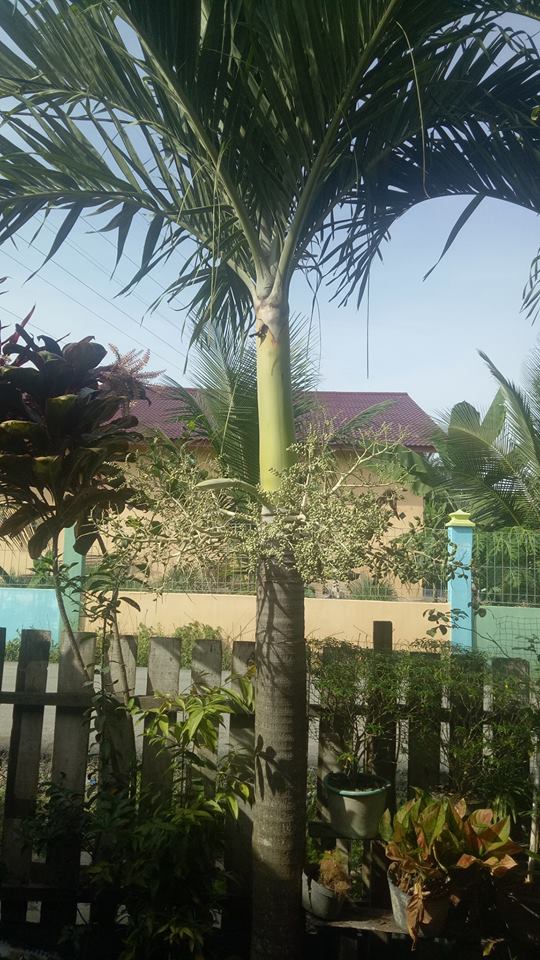 Palm trees of Aceh including the areca tribe or in Latin called Arecaceae is a group of flowering plants that many members have an important value in human life, the utilization of fruit to treat stomach pain and even Chronic Stomach, as which has been proven by some people with chronic stomach in Aceh in particular and in Indonesia generally.  Usually, this tree is planted on the home page only for decoration or just for the beauty of the house. Though behind it all, this tree so many benefits for health. When viewed in terms of the beauty of this tree is very beautiful when it is among the flower plants, especially when this tree has been fruitful, extraordinary beautiful beat the beauty of other flowers. This proof of this tree is very beautiful when complete with fruit.  |
| json metadata | {"tags":["life","aceh","health","bitcoin","steemit"],"image":["https://steemitimages.com/DQmf2gmqtPDSZbiJEeWPokCZsTNqK8BaWSqGtHicUUTdW53/p1.jpg","https://steemitimages.com/DQmWHLxRxYE6U25GfFjfZonxrv6hTX7U4egfSd4yPjGEJsE/p2.jpg","https://steemitimages.com/DQmQvgWozzsVMTuzk4LF9HzwBMw59s4G8YkVudZP8Axc9us/p3.jpg"],"app":"steemit/0.1","format":"markdown"} |
| parent author | |
| parent permlink | life |
| permlink | palm-trees-of-aceh-indonesia |
| title | Palm trees of Aceh - Indonesia |
| Transaction Info | Block #19306015/Trx b6e0f1e1eaaa202e0ee6d4b458f5b679ddd97e90 |
View Raw JSON Data
{
"block": 19306015,
"op": [
"comment",
{
"author": "tarmizi82",
"body": "\nPalm trees of Aceh including the areca tribe or in Latin called Arecaceae is a group of flowering plants that many members have an important value in human life, the utilization of fruit to treat stomach pain and even Chronic Stomach, as which has been proven by some people with chronic stomach in Aceh in particular and in Indonesia generally.\n\nUsually, this tree is planted on the home page only for decoration or just for the beauty of the house. Though behind it all, this tree so many benefits for health. When viewed in terms of the beauty of this tree is very beautiful when it is among the flower plants, especially when this tree has been fruitful, extraordinary beautiful beat the beauty of other flowers.\nThis proof of this tree is very beautiful when complete with fruit.\n",
"json_metadata": "{\"tags\":[\"life\",\"aceh\",\"health\",\"bitcoin\",\"steemit\"],\"image\":[\"https://steemitimages.com/DQmf2gmqtPDSZbiJEeWPokCZsTNqK8BaWSqGtHicUUTdW53/p1.jpg\",\"https://steemitimages.com/DQmWHLxRxYE6U25GfFjfZonxrv6hTX7U4egfSd4yPjGEJsE/p2.jpg\",\"https://steemitimages.com/DQmQvgWozzsVMTuzk4LF9HzwBMw59s4G8YkVudZP8Axc9us/p3.jpg\"],\"app\":\"steemit/0.1\",\"format\":\"markdown\"}",
"parent_author": "",
"parent_permlink": "life",
"permlink": "palm-trees-of-aceh-indonesia",
"title": "Palm trees of Aceh - Indonesia"
}
],
"op_in_trx": 0,
"timestamp": "2018-01-26T04:15:09",
"trx_id": "b6e0f1e1eaaa202e0ee6d4b458f5b679ddd97e90",
"trx_in_block": 33,
"virtual_op": 0
}tarmizi82updated their account properties2018/01/26 03:28:54
tarmizi82updated their account properties
2018/01/26 03:28:54
| account | tarmizi82 |
| json metadata | {"profile":{"cover_image":"https://img.esteem.ws/3d61w1ciui.jpg","profile_image":"https://img.esteem.ws/x23xwfzw5w.jpg","name":"Tarmizi Abdul Gani","about":"Nanggroe Aceh Bumoe Aulia","location":"Langsa - Aceh","website":"http://ipteq21.blogspot.co.id/"}} |
| memo key | STM5kegm6AoaBevzPMBFg5DjrBJuPbcG6pjqsRPqHaugDBzMHWtwj |
| Transaction Info | Block #19305092/Trx b7127da432a7f5bf56d299cc337c198378de20ba |
View Raw JSON Data
{
  "block": 19305092,
  "op": [
    "account_update",
    {
      "account": "tarmizi82",
      "json_metadata": "{\"profile\":{\"cover_image\":\"https://img.esteem.ws/3d61w1ciui.jpg\",\"profile_image\":\"https://img.esteem.ws/x23xwfzw5w.jpg\",\"name\":\"Tarmizi Abdul Gani\",\"about\":\"Nanggroe Aceh Bumoe Aulia\",\"location\":\"Langsa -  Aceh\",\"website\":\"http://ipteq21.blogspot.co.id/\"}}",
      "memo_key": "STM5kegm6AoaBevzPMBFg5DjrBJuPbcG6pjqsRPqHaugDBzMHWtwj"
    }
  ],
  "op_in_trx": 0,
  "timestamp": "2018-01-26T03:28:54",
  "trx_id": "b7127da432a7f5bf56d299cc337c198378de20ba",
  "trx_in_block": 14,
  "virtual_op": 0
}tarmizi82updated their account properties2018/01/26 03:28:39
tarmizi82updated their account properties
2018/01/26 03:28:39
| account | tarmizi82 |
| json metadata | {"profile":{"cover_image":"https://img.esteem.ws/3d61w1ciui.jpg","profile_image":"https://img.esteem.ws/x23xwfzw5w.jpg","name":"Tarmizi Abdul Gani","about":"Nanggroe Aceh Bumoe Aulia","location":"Langsa - Aceh","website":"http://ipteq21.blogspot.co.id/"}} |
| memo key | STM5kegm6AoaBevzPMBFg5DjrBJuPbcG6pjqsRPqHaugDBzMHWtwj |
| Transaction Info | Block #19305087/Trx aa8bc916678ebab63b69ba5e0f7b39620c17db90 |
View Raw JSON Data
{
  "block": 19305087,
  "op": [
    "account_update",
    {
      "account": "tarmizi82",
      "json_metadata": "{\"profile\":{\"cover_image\":\"https://img.esteem.ws/3d61w1ciui.jpg\",\"profile_image\":\"https://img.esteem.ws/x23xwfzw5w.jpg\",\"name\":\"Tarmizi Abdul Gani\",\"about\":\"Nanggroe Aceh Bumoe Aulia\",\"location\":\"Langsa -  Aceh\",\"website\":\"http://ipteq21.blogspot.co.id/\"}}",
      "memo_key": "STM5kegm6AoaBevzPMBFg5DjrBJuPbcG6pjqsRPqHaugDBzMHWtwj"
    }
  ],
  "op_in_trx": 0,
  "timestamp": "2018-01-26T03:28:39",
  "trx_id": "aa8bc916678ebab63b69ba5e0f7b39620c17db90",
  "trx_in_block": 48,
  "virtual_op": 0
}tarmizi82updated their account properties2018/01/26 03:25:24
tarmizi82updated their account properties
2018/01/26 03:25:24
| account | tarmizi82 |
| json metadata | {"profile":{"cover_image":"https://img.esteem.ws/51jcr71irc.jpg","profile_image":"https://img.esteem.ws/x23xwfzw5w.jpg","name":"Tarmizi Abdul Gani","about":"Nanggroe Aceh Bumoe Aulia","location":"Langsa - Aceh","website":"http://ipteq21.blogspot.co.id/"}} |
| memo key | STM5kegm6AoaBevzPMBFg5DjrBJuPbcG6pjqsRPqHaugDBzMHWtwj |
| Transaction Info | Block #19305022/Trx 6c597c96eb9ab8ca2d64053cadc85e6b26ca4b65 |
View Raw JSON Data
{
  "block": 19305022,
  "op": [
    "account_update",
    {
      "account": "tarmizi82",
      "json_metadata": "{\"profile\":{\"cover_image\":\"https://img.esteem.ws/51jcr71irc.jpg\",\"profile_image\":\"https://img.esteem.ws/x23xwfzw5w.jpg\",\"name\":\"Tarmizi Abdul Gani\",\"about\":\"Nanggroe Aceh Bumoe Aulia\",\"location\":\"Langsa -  Aceh\",\"website\":\"http://ipteq21.blogspot.co.id/\"}}",
      "memo_key": "STM5kegm6AoaBevzPMBFg5DjrBJuPbcG6pjqsRPqHaugDBzMHWtwj"
    }
  ],
  "op_in_trx": 0,
  "timestamp": "2018-01-26T03:25:24",
  "trx_id": "6c597c96eb9ab8ca2d64053cadc85e6b26ca4b65",
  "trx_in_block": 10,
  "virtual_op": 0
}tarmizi82updated their account properties2018/01/26 03:20:09
tarmizi82updated their account properties
2018/01/26 03:20:09
| account | tarmizi82 |
| json metadata | {"profile":{"cover_image":"https://img.esteem.ws/xi8hsgjezy.jpg","profile_image":"https://img.esteem.ws/x23xwfzw5w.jpg","name":"Tarmizi Abdul Gani","about":"Nanggroe Aceh Bumoe Aulia","location":"Langsa - Aceh","website":"http://ipteq21.blogspot.co.id/"}} |
| memo key | STM5kegm6AoaBevzPMBFg5DjrBJuPbcG6pjqsRPqHaugDBzMHWtwj |
| Transaction Info | Block #19304917/Trx 402b223c5008d2db53abbb5e94542dc617e8b262 |
View Raw JSON Data
{
  "block": 19304917,
  "op": [
    "account_update",
    {
      "account": "tarmizi82",
      "json_metadata": "{\"profile\":{\"cover_image\":\"https://img.esteem.ws/xi8hsgjezy.jpg\",\"profile_image\":\"https://img.esteem.ws/x23xwfzw5w.jpg\",\"name\":\"Tarmizi Abdul Gani\",\"about\":\"Nanggroe Aceh Bumoe Aulia\",\"location\":\"Langsa -  Aceh\",\"website\":\"http://ipteq21.blogspot.co.id/\"}}",
      "memo_key": "STM5kegm6AoaBevzPMBFg5DjrBJuPbcG6pjqsRPqHaugDBzMHWtwj"
    }
  ],
  "op_in_trx": 0,
  "timestamp": "2018-01-26T03:20:09",
  "trx_id": "402b223c5008d2db53abbb5e94542dc617e8b262",
  "trx_in_block": 21,
  "virtual_op": 0
}tarmizi82claimed reward balance: 0.073 SBD, 0.019 SP2018/01/26 03:19:39
tarmizi82claimed reward balance: 0.073 SBD, 0.019 SP
2018/01/26 03:19:39
| account | tarmizi82 |
| reward sbd | 0.073 SBD |
| reward steem | 0.000 STEEM |
| reward vests | 30.713405 VESTS |
| Transaction Info | Block #19304907/Trx 14107ab4f16c0418b4747f9c5036193b99866211 |
View Raw JSON Data
{
  "block": 19304907,
  "op": [
    "claim_reward_balance",
    {
      "account": "tarmizi82",
      "reward_sbd": "0.073 SBD",
      "reward_steem": "0.000 STEEM",
      "reward_vests": "30.713405 VESTS"
    }
  ],
  "op_in_trx": 0,
  "timestamp": "2018-01-26T03:19:39",
  "trx_id": "14107ab4f16c0418b4747f9c5036193b99866211",
  "trx_in_block": 33,
  "virtual_op": 0
}tarmizi82updated their account properties2018/01/26 03:17:42
tarmizi82updated their account properties
2018/01/26 03:17:42
| account | tarmizi82 |
| json metadata | {"profile":{"cover_image":"https://img.esteem.ws/xi8hsgjezy.jpg","profile_image":"https://img.esteem.ws/x23xwfzw5w.jpg","name":"Tarmizi Abdul Gani","about":"Nanggroe Aceh Bumoe Aulia","location":"Langsa - Aceh","website":"http://ipteq21.blogspot.co.id/"}} |
| memo key | STM5kegm6AoaBevzPMBFg5DjrBJuPbcG6pjqsRPqHaugDBzMHWtwj |
| Transaction Info | Block #19304868/Trx 0e8d2b445161988796fef8c8b953b4e257876ec3 |
View Raw JSON Data
{
  "block": 19304868,
  "op": [
    "account_update",
    {
      "account": "tarmizi82",
      "json_metadata": "{\"profile\":{\"cover_image\":\"https://img.esteem.ws/xi8hsgjezy.jpg\",\"profile_image\":\"https://img.esteem.ws/x23xwfzw5w.jpg\",\"name\":\"Tarmizi Abdul Gani\",\"about\":\"Nanggroe Aceh Bumoe Aulia\",\"location\":\"Langsa -  Aceh\",\"website\":\"http://ipteq21.blogspot.co.id/\"}}",
      "memo_key": "STM5kegm6AoaBevzPMBFg5DjrBJuPbcG6pjqsRPqHaugDBzMHWtwj"
    }
  ],
  "op_in_trx": 0,
  "timestamp": "2018-01-26T03:17:42",
  "trx_id": "0e8d2b445161988796fef8c8b953b4e257876ec3",
  "trx_in_block": 32,
  "virtual_op": 0
}tarmizi82updated their account properties2018/01/26 03:17:00
tarmizi82updated their account properties
2018/01/26 03:17:00
| account | tarmizi82 |
| json metadata | {"profile":{"cover_image":"https://img.esteem.ws/i8dzpm1r8i.jpg","profile_image":"https://img.esteem.ws/x23xwfzw5w.jpg","name":"Tarmizi Abdul Gani","about":"Nanggroe Aceh Bumoe Aulia","location":"Langsa - Aceh","website":"http://ipteq21.blogspot.co.id/"}} |
| memo key | STM5kegm6AoaBevzPMBFg5DjrBJuPbcG6pjqsRPqHaugDBzMHWtwj |
| Transaction Info | Block #19304854/Trx dcb547b499416ffdf7c4acf3322539e31552f107 |
View Raw JSON Data
{
  "block": 19304854,
  "op": [
    "account_update",
    {
      "account": "tarmizi82",
      "json_metadata": "{\"profile\":{\"cover_image\":\"https://img.esteem.ws/i8dzpm1r8i.jpg\",\"profile_image\":\"https://img.esteem.ws/x23xwfzw5w.jpg\",\"name\":\"Tarmizi Abdul Gani\",\"about\":\"Nanggroe Aceh Bumoe Aulia\",\"location\":\"Langsa -  Aceh\",\"website\":\"http://ipteq21.blogspot.co.id/\"}}",
      "memo_key": "STM5kegm6AoaBevzPMBFg5DjrBJuPbcG6pjqsRPqHaugDBzMHWtwj"
    }
  ],
  "op_in_trx": 0,
  "timestamp": "2018-01-26T03:17:00",
  "trx_id": "dcb547b499416ffdf7c4acf3322539e31552f107",
  "trx_in_block": 131,
  "virtual_op": 0
}Manabar
Voting Power100.00%
Downvote Power100.00%
Resource Credits100.00%
Reputation Progress0.00%
{
  "voting_manabar": {
    "current_mana": "8143659806",
    "last_update_time": 1779088353
  },
  "downvote_manabar": {
    "current_mana": 2035914951,
    "last_update_time": 1779088353
  },
  "rc_account": {
    "account": "tarmizi82",
    "max_rc": "10164408779",
    "max_rc_creation_adjustment": {
      "amount": "2020748973",
      "nai": "@@000000037",
      "precision": 6
    },
    "rc_manabar": {
      "current_mana": "10164408779",
      "last_update_time": 1779088353
    }
  }
}
Account Metadata
| POSTING JSON METADATA | |
| profile | {"cover_image":"https://img.esteem.ws/3d61w1ciui.jpg","profile_image":"https://img.esteem.ws/x23xwfzw5w.jpg","name":"Tarmizi Abdul Gani","about":"Nanggroe Aceh Bumoe Aulia","location":"Langsa - Aceh","website":"https://www.ipteq21.com/"} |
| JSON METADATA | |
| profile | {"cover_image":"https://img.esteem.ws/3d61w1ciui.jpg","profile_image":"https://img.esteem.ws/x23xwfzw5w.jpg","name":"Tarmizi Abdul Gani","about":"Nanggroe Aceh Bumoe Aulia","location":"Langsa - Aceh","website":"https://www.ipteq21.com/"} |
{
  "posting_json_metadata": {
    "profile": {
      "cover_image": "https://img.esteem.ws/3d61w1ciui.jpg",
      "profile_image": "https://img.esteem.ws/x23xwfzw5w.jpg",
      "name": "Tarmizi Abdul Gani",
      "about": "Nanggroe Aceh Bumoe Aulia",
      "location": "Langsa -  Aceh",
      "website": "https://www.ipteq21.com/"
    }
  },
  "json_metadata": {
    "profile": {
      "cover_image": "https://img.esteem.ws/3d61w1ciui.jpg",
      "profile_image": "https://img.esteem.ws/x23xwfzw5w.jpg",
      "name": "Tarmizi Abdul Gani",
      "about": "Nanggroe Aceh Bumoe Aulia",
      "location": "Langsa -  Aceh",
      "website": "https://www.ipteq21.com/"
    }
  }
}
Auth Keys
Owner
Single Signature
Public Keys
STM7BZq8DNCYG1z76aafS2c9io3kTkaf6eJnwgJPFQBzHnx2zncQF1/1
Active
Single Signature
Public Keys
STM7iY8pLezUYQ1sJzS4CK8H1vX9GhvAYA5B67WmRf6KBwJiM5Xtu1/1
Posting
Single Signature
Public Keys
STM6HTBgLRf5m38p9LuE271Vb4GbK2gHPNNo52EFmziDPX6XH45dL1/1
App Permissions
@dtube.app1/1
Memo
STM5kegm6AoaBevzPMBFg5DjrBJuPbcG6pjqsRPqHaugDBzMHWtwj
{
  "owner": {
    "account_auths": [],
    "key_auths": [
      [
        "STM7BZq8DNCYG1z76aafS2c9io3kTkaf6eJnwgJPFQBzHnx2zncQF",
        1
      ]
    ],
    "weight_threshold": 1
  },
  "active": {
    "account_auths": [],
    "key_auths": [
      [
        "STM7iY8pLezUYQ1sJzS4CK8H1vX9GhvAYA5B67WmRf6KBwJiM5Xtu",
        1
      ]
    ],
    "weight_threshold": 1
  },
  "posting": {
    "account_auths": [
      [
        "dtube.app",
        1
      ]
    ],
    "key_auths": [
      [
        "STM6HTBgLRf5m38p9LuE271Vb4GbK2gHPNNo52EFmziDPX6XH45dL",
        1
      ]
    ],
    "weight_threshold": 1
  },
  "memo": "STM5kegm6AoaBevzPMBFg5DjrBJuPbcG6pjqsRPqHaugDBzMHWtwj"
}
Witness Votes
0 / 30
No active witness votes.
[]