

VOTING POWER100.00%
DOWNVOTE POWER100.00%
RESOURCE CREDITS100.00%
REPUTATION PROGRESS0.00%
Net Worth
0.000USD
STEEM
0.003STEEM
SBD
0.000SBD
Effective Power
1.200SP
├── Own SP
0.000SP
└── Incoming DelegationsDeleg
+1.200SP
Detailed Balance
| STEEM | ||
| balance | 0.003STEEM | STEEM |
| market_balance | 0.000STEEM | STEEM |
| savings_balance | 0.000STEEM | STEEM |
| reward_steem_balance | 0.000STEEM | STEEM |
| STEEM POWER | ||
| Own SP | 0.000SP | SP |
| Delegated Out | 0.000SP | SP |
| Delegation In | 1.200SP | SP |
| Effective Power | 1.200SP | SP |
| Reward SP (pending) | 0.000SP | SP |
| SBD | ||
| sbd_balance | 0.000SBD | SBD |
| sbd_conversions | 0.000SBD | SBD |
| sbd_market_balance | 0.000SBD | SBD |
| savings_sbd_balance | 0.000SBD | SBD |
| reward_sbd_balance | 0.000SBD | SBD |
{
  "balance": "0.003 STEEM",
  "savings_balance": "0.000 STEEM",
  "reward_steem_balance": "0.000 STEEM",
  "vesting_shares": "0.000000 VESTS",
  "delegated_vesting_shares": "0.000000 VESTS",
  "received_vesting_shares": "1953.311140 VESTS",
  "sbd_balance": "0.000 SBD",
  "savings_sbd_balance": "0.000 SBD",
  "reward_sbd_balance": "0.000 SBD",
  "conversions": []
}
Account Info
| name | taoofrandom |
| id | 1297486 |
| rank | 1,519,826 |
| reputation | 545403602 |
| created | 2019-07-23T16:03:36 |
| recovery_account | steem |
| proxy | None |
| post_count | 11 |
| comment_count | 0 |
| lifetime_vote_count | 0 |
| witnesses_voted_for | 0 |
| last_post | 2019-09-05T00:14:30 |
| last_root_post | 2019-09-05T00:14:30 |
| last_vote_time | 2019-07-23T20:09:18 |
| proxied_vsf_votes | 0, 0, 0, 0 |
| can_vote | 1 |
| voting_power | 0 |
| delayed_votes | 0 |
| balance | 0.003 STEEM |
| savings_balance | 0.000 STEEM |
| sbd_balance | 0.000 SBD |
| savings_sbd_balance | 0.000 SBD |
| vesting_shares | 0.000000 VESTS |
| delegated_vesting_shares | 0.000000 VESTS |
| received_vesting_shares | 1953.311140 VESTS |
| reward_vesting_balance | 0.000000 VESTS |
| vesting_balance | 0.000 STEEM |
| vesting_withdraw_rate | 0.000000 VESTS |
| next_vesting_withdrawal | 1969-12-31T23:59:59 |
| withdrawn | 0 |
| to_withdraw | 0 |
| withdraw_routes | 0 |
| savings_withdraw_requests | 0 |
| last_account_recovery | 1970-01-01T00:00:00 |
| reset_account | null |
| last_owner_update | 1970-01-01T00:00:00 |
| last_account_update | 1970-01-01T00:00:00 |
| mined | No |
| sbd_seconds | 0 |
| sbd_last_interest_payment | 1970-01-01T00:00:00 |
| savings_sbd_last_interest_payment | 1970-01-01T00:00:00 |
{
  "id": 1297486,
  "name": "taoofrandom",
  "owner": {
    "weight_threshold": 1,
    "account_auths": [],
    "key_auths": [
      [
        "STM7LQbhnpTAawMTeQhc7Jea7iUoGYCRjGFpnmXsDEWLq7kKiSqzb",
        1
      ]
    ]
  },
  "active": {
    "weight_threshold": 1,
    "account_auths": [],
    "key_auths": [
      [
        "STM81nv39C9rnicyquZtYMFBgHBQtNxcUuDRXcd8x6meWRkPEdn9v",
        1
      ]
    ]
  },
  "posting": {
    "weight_threshold": 1,
    "account_auths": [],
    "key_auths": [
      [
        "STM6Kov6cdUEiWcerzj74RRf3VoEyC6U219upPKzmm1BTDNLCY1Yo",
        1
      ]
    ]
  },
  "memo_key": "STM5Fq4JmzS2Wxbo72cEHXxRSpCzrrgKYK3TVJtdXBfyuYzA9ijGL",
  "json_metadata": "{}",
  "posting_json_metadata": "",
  "proxy": "",
  "last_owner_update": "1970-01-01T00:00:00",
  "last_account_update": "1970-01-01T00:00:00",
  "created": "2019-07-23T16:03:36",
  "mined": false,
  "recovery_account": "steem",
  "last_account_recovery": "1970-01-01T00:00:00",
  "reset_account": "null",
  "comment_count": 0,
  "lifetime_vote_count": 0,
  "post_count": 11,
  "can_vote": true,
  "voting_manabar": {
    "current_mana": 1953311140,
    "last_update_time": 1588955115
  },
  "downvote_manabar": {
    "current_mana": 488327785,
    "last_update_time": 1588955115
  },
  "voting_power": 0,
  "balance": "0.003 STEEM",
  "savings_balance": "0.000 STEEM",
  "sbd_balance": "0.000 SBD",
  "sbd_seconds": "0",
  "sbd_seconds_last_update": "1970-01-01T00:00:00",
  "sbd_last_interest_payment": "1970-01-01T00:00:00",
  "savings_sbd_balance": "0.000 SBD",
  "savings_sbd_seconds": "0",
  "savings_sbd_seconds_last_update": "1970-01-01T00:00:00",
  "savings_sbd_last_interest_payment": "1970-01-01T00:00:00",
  "savings_withdraw_requests": 0,
  "reward_sbd_balance": "0.000 SBD",
  "reward_steem_balance": "0.000 STEEM",
  "reward_vesting_balance": "0.000000 VESTS",
  "reward_vesting_steem": "0.000 STEEM",
  "vesting_shares": "0.000000 VESTS",
  "delegated_vesting_shares": "0.000000 VESTS",
  "received_vesting_shares": "1953.311140 VESTS",
  "vesting_withdraw_rate": "0.000000 VESTS",
  "next_vesting_withdrawal": "1969-12-31T23:59:59",
  "withdrawn": 0,
  "to_withdraw": 0,
  "withdraw_routes": 0,
  "curation_rewards": 0,
  "posting_rewards": 0,
  "proxied_vsf_votes": [
    0,
    0,
    0,
    0
  ],
  "witnesses_voted_for": 0,
  "last_post": "2019-09-05T00:14:30",
  "last_root_post": "2019-09-05T00:14:30",
  "last_vote_time": "2019-07-23T20:09:18",
  "post_bandwidth": 0,
  "pending_claimed_accounts": 0,
  "vesting_balance": "0.000 STEEM",
  "reputation": 545403602,
  "transfer_history": [],
  "market_history": [],
  "post_history": [],
  "vote_history": [],
  "other_history": [],
  "witness_votes": [],
  "tags_usage": [],
  "guest_bloggers": [],
  "rank": 1519826
}
Withdraw Routes
| Incoming | Outgoing |
|---|---|
Empty | Empty |
{
  "incoming": [],
  "outgoing": []
}From Date
To Date
steemdelegated 1.200 SP to @taoofrandom2020/05/08 16:25:15
steemdelegated 1.200 SP to @taoofrandom
2020/05/08 16:25:15
| delegator | steem |
| delegatee | taoofrandom |
| vesting shares | 1953.311140 VESTS |
| Transaction Info | Block #43201430/Trx fff9edf58ff83712a1b4a993853ef06e6bbf47bf |
View Raw JSON Data
{
  "trx_id": "fff9edf58ff83712a1b4a993853ef06e6bbf47bf",
  "block": 43201430,
  "trx_in_block": 6,
  "op_in_trx": 0,
  "virtual_op": 0,
  "timestamp": "2020-05-08T16:25:15",
  "op": [
    "delegate_vesting_shares",
    {
      "delegator": "steem",
      "delegatee": "taoofrandom",
      "vesting_shares": "1953.311140 VESTS"
    }
  ]
}steemdelegated 6.051 SP to @taoofrandom2019/12/05 01:49:09
steemdelegated 6.051 SP to @taoofrandom
2019/12/05 01:49:09
| delegator | steem |
| delegatee | taoofrandom |
| vesting shares | 9852.511720 VESTS |
| Transaction Info | Block #38758322/Trx 7dec708af779d735e3e99fba82eacdfe3c2d5b62 |
View Raw JSON Data
{
  "trx_id": "7dec708af779d735e3e99fba82eacdfe3c2d5b62",
  "block": 38758322,
  "trx_in_block": 0,
  "op_in_trx": 0,
  "virtual_op": 0,
  "timestamp": "2019-12-05T01:49:09",
  "op": [
    "delegate_vesting_shares",
    {
      "delegator": "steem",
      "delegatee": "taoofrandom",
      "vesting_shares": "9852.511720 VESTS"
    }
  ]
}steemdelegated 18.178 SP to @taoofrandom2019/11/11 01:33:18
steemdelegated 18.178 SP to @taoofrandom
2019/11/11 01:33:18
| delegator | steem |
| delegatee | taoofrandom |
| vesting shares | 29600.028576 VESTS |
| Transaction Info | Block #38068124/Trx 25d4498e3b9de8b1f0fa4f5034a3e62e3c519fa4 |
View Raw JSON Data
{
  "trx_id": "25d4498e3b9de8b1f0fa4f5034a3e62e3c519fa4",
  "block": 38068124,
  "trx_in_block": 24,
  "op_in_trx": 0,
  "virtual_op": 0,
  "timestamp": "2019-11-11T01:33:18",
  "op": [
    "delegate_vesting_shares",
    {
      "delegator": "steem",
      "delegatee": "taoofrandom",
      "vesting_shares": "29600.028576 VESTS"
    }
  ]
}crypto.piotrsent 0.002 STEEM to @taoofrandom- "Good morning @taoofrandom, Would you like to win 250$ for your BTC price prediction? My dear friend @ritxi is sharing info to interesting contest, which you may find worth your time. We're both not pa..."2019/10/22 09:47:21
crypto.piotrsent 0.002 STEEM to @taoofrandom- "Good morning @taoofrandom, Would you like to win 250$ for your BTC price prediction? My dear friend @ritxi is sharing info to interesting contest, which you may find worth your time. We're both not pa..."
2019/10/22 09:47:21
| from | crypto.piotr |
| to | taoofrandom |
| amount | 0.002 STEEM |
| memo | Good morning @taoofrandom, Would you like to win 250$ for your BTC price prediction? My dear friend @ritxi is sharing info to interesting contest, which you may find worth your time. We're both not part of BlockFi (they are behind this contest) and we only share it with you since you've been posting about blockchain/crypto and I figured you may find this contest interesting. Yours, Piotr // LINK: https://steemit.com/contest/@ritxi/win-250-usd-for-you-btc-price-tip-or-by-blockfi |
| Transaction Info | Block #37503092/Trx 0bd303f7ef1a5d1dd3713f7ebace959ff4fc8a55 |
View Raw JSON Data
{
  "trx_id": "0bd303f7ef1a5d1dd3713f7ebace959ff4fc8a55",
  "block": 37503092,
  "trx_in_block": 22,
  "op_in_trx": 0,
  "virtual_op": 0,
  "timestamp": "2019-10-22T09:47:21",
  "op": [
    "transfer",
    {
      "from": "crypto.piotr",
      "to": "taoofrandom",
      "amount": "0.002 STEEM",
      "memo": "Good morning @taoofrandom, Would you like to win 250$ for your BTC price prediction? My dear friend @ritxi is sharing info to interesting contest, which you may find worth your time. We're both not part of BlockFi (they are behind this contest) and we only share it with you since you've been posting about blockchain/crypto and I figured you may find this contest interesting. Yours, Piotr // LINK: https://steemit.com/contest/@ritxi/win-250-usd-for-you-btc-price-tip-or-by-blockfi"
    }
  ]
}filipinoupvoted (10.00%) @taoofrandom / stolen-biometrics-and-casino-cyber-security2019/09/05 01:32:21
filipinoupvoted (10.00%) @taoofrandom / stolen-biometrics-and-casino-cyber-security
2019/09/05 01:32:21
| voter | filipino |
| author | taoofrandom |
| permlink | stolen-biometrics-and-casino-cyber-security |
| weight | 1000 (10.00%) |
| Transaction Info | Block #36142882/Trx 9b6ef9c8a18e3a3d75271c6214c09e19d529331f |
View Raw JSON Data
{
  "trx_id": "9b6ef9c8a18e3a3d75271c6214c09e19d529331f",
  "block": 36142882,
  "trx_in_block": 5,
  "op_in_trx": 0,
  "virtual_op": 0,
  "timestamp": "2019-09-05T01:32:21",
  "op": [
    "vote",
    {
      "voter": "filipino",
      "author": "taoofrandom",
      "permlink": "stolen-biometrics-and-casino-cyber-security",
      "weight": 1000
    }
  ]
}pinoyupvoted (10.00%) @taoofrandom / stolen-biometrics-and-casino-cyber-security2019/09/05 01:17:54
pinoyupvoted (10.00%) @taoofrandom / stolen-biometrics-and-casino-cyber-security
2019/09/05 01:17:54
| voter | pinoy |
| author | taoofrandom |
| permlink | stolen-biometrics-and-casino-cyber-security |
| weight | 1000 (10.00%) |
| Transaction Info | Block #36142595/Trx 28915e5dcf47a6d3e86e9a027c28b455abea8281 |
View Raw JSON Data
{
  "trx_id": "28915e5dcf47a6d3e86e9a027c28b455abea8281",
  "block": 36142595,
  "trx_in_block": 33,
  "op_in_trx": 0,
  "virtual_op": 0,
  "timestamp": "2019-09-05T01:17:54",
  "op": [
    "vote",
    {
      "voter": "pinoy",
      "author": "taoofrandom",
      "permlink": "stolen-biometrics-and-casino-cyber-security",
      "weight": 1000
    }
  ]
}yeheyupvoted (10.00%) @taoofrandom / stolen-biometrics-and-casino-cyber-security2019/09/05 01:02:45
yeheyupvoted (10.00%) @taoofrandom / stolen-biometrics-and-casino-cyber-security
2019/09/05 01:02:45
| voter | yehey |
| author | taoofrandom |
| permlink | stolen-biometrics-and-casino-cyber-security |
| weight | 1000 (10.00%) |
| Transaction Info | Block #36142293/Trx 30d2c579089eb45ab952d7387aacfb66d234898b |
View Raw JSON Data
{
  "trx_id": "30d2c579089eb45ab952d7387aacfb66d234898b",
  "block": 36142293,
  "trx_in_block": 6,
  "op_in_trx": 0,
  "virtual_op": 0,
  "timestamp": "2019-09-05T01:02:45",
  "op": [
    "vote",
    {
      "voter": "yehey",
      "author": "taoofrandom",
      "permlink": "stolen-biometrics-and-casino-cyber-security",
      "weight": 1000
    }
  ]
}taoofrandompublished a new post: stolen-biometrics-and-casino-cyber-security2019/09/05 00:14:30
taoofrandompublished a new post: stolen-biometrics-and-casino-cyber-security
2019/09/05 00:14:30
| parent author | |
| parent permlink | biometrics |
| author | taoofrandom |
| permlink | stolen-biometrics-and-casino-cyber-security |
| title | Stolen Biometrics & Casino Cyber Security |
| body | # You can change your password – you can’t change your face. Facial Recognition is inevitable for mass adoption. Casinos across the globe are installing this technology to accomplish everything from the detection of unwanted guests, the personalization of VIP experiences, access control, and the merging of transactional data, player ratings, and existing rewards systems. It’s a no-brainier that casinos the world over are flocking towards this technology. The ability to enhance the overall guest experience with streamlined processes directly affects the guest’s behavior and willingness to spend.  Guest are accustomed to being watched by the eye-in-the-sky as soon as they step into a casino property. Obviously, surveillance cameras in casinos are nothing new – neither are the arguments for and against facial recognition technology. However, with the inevitable adoption of this technology, the need for data security is higher than ever. It’s one thing to have your credit card and PIN information stolen while shopping at Target – it’s another thing entirely to have your entire biometric identity stolen. And, yes – it’s happened. The secure storage of biometric information will be a critical element for security planning within the casino industry for decades to come as the potential for “bio-crime” grows. There are clear risks to individuals with identity theft and financial crime, should their facial biometrics be stolen and reproduced for spoofing. 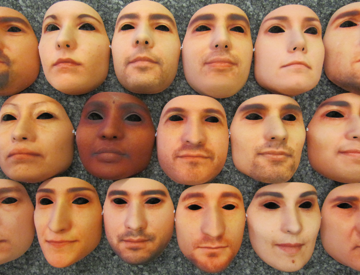 Casinos, where this technology is being deployed, sometimes in less than secure networks, must understand just why the personalized player identification and associated facial biometric data they hold is so valuable to cybercriminals and take steps to ensure they understand the security required to prevent a data breach. I’ve written articles previously that highlighted how a Las Vegas casino’s network was penetrated when hackers found an unsecured access to the internet-connected thermometer in a fish tank in the hotel’s lobby; allowing for over 10gb of player data to be stolen and sent to Finland. However, this pales in comparison to the damage which can be done to individuals when their face is stolen.  While I am personally unaware of a biometric data theft yet occurring at a casino, it certainly has happened elsewhere. In 2015, 21.5 million people were affected by a breach of U.S. Government systems. Biometric identity data gathered over the previous 15 years was compromised. Fingerprint images linked to other biometric data and identities were among the information stolen when the U.S. Office of Personnel Management was breached. 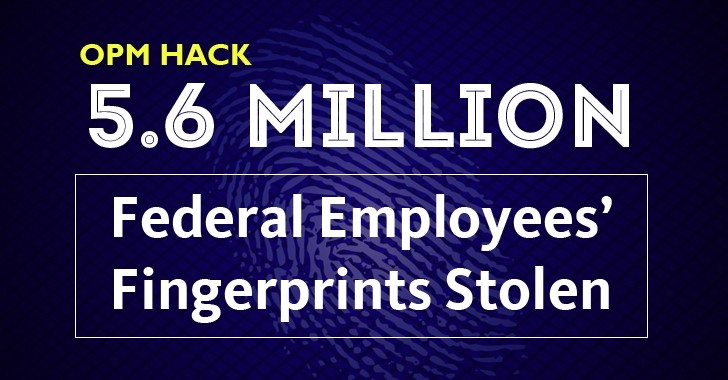 Facial Recognition compounds this problem. Corporations and individuals, both, must understand that biometric data such as fingerprints and facial recognition patterns can (and will) be hacked as cybercriminals look to steal and spoof the information to gain access to other systems secured by the same information. While a player at a casino who is classified as a “high roller” my have their wallet stolen, with a network password to their company ignorantly scribbled on a post-it-note on the inside; they can always change their password. However, when that same high roller has their facial information stolen, it can lead to an unmitigated disaster as their face was used to control access to their bank, their corporate trade secrets, and a myriad of other “secured” databases – and they can’t change their face. The information is forever compromised. Imagine the cost to a casino when the full and unchangeable identity of a Fortune 500 CEO has his/her facial data stolen from the casino network, causing that CEO to be forever labeled as a security risk to their – and every other – corporation they could conceivably work for. There will be data breaches. There will be facial data stolen. There will be lawsuits. It’s just a matter of when.  The adoption of this technology is akin to nuclear proliferation. It was developed. It was deployed. It will continue to be placed into use. But when something goes wrong – it REALLY goes wrong. This is why its more important now, than ever before, that casinos focus on hardening their network security. Penetration testing, above and beyond the minimum compliance mandates are necessary. Reviews of IT best practices and instituting more robust solutions for the protection from social engineering of employees who have access to the biometric databases must occur in advance, during, and routinely after the implementation and deployment of any facial recognition technology. Engaging a company such as Link Technologies (www.linktechconsulting.com) and benefiting from their Enterprise Risk Assessments, Security Gap Analysis, Vulnerability Remediation Management, and general Cyber Security Consulting is a necessary step to ensure the sensitive data which they collect on their guest is kept from those who seek to exploit it.  While previous data breaches have exposed credit card information, and personal identification of individual casino patrons; those affected could always change their accounts and passwords. They can never change their face. Contact me today at [email protected] to discuss how we can assist in identifying the vulnerable points in your network and provide remediation services to limit exposure. |
| json metadata | {"tags":["biometrics","cybersecurity","casinos","penetration"],"image":["https://cdn.steemitimages.com/DQmY93TwJX4iDSpg1K3mAfVFBkkFoqDCrFVBwScMkJHMDjM/image.png","https://cdn.steemitimages.com/DQmXydjWTXqEEBtvurxrBRM3zjMFCaV6Tfxj4An2Y1rZp2k/image.png","https://cdn.steemitimages.com/DQmT99Rhn11qPN1M8RkyLaH6HD7faZMuaZjFUK1Znv79UzP/image.png","https://cdn.steemitimages.com/DQmTGjGz6rcSkzQDuVU56iZBKBfFMpotzjn4bLFKZHpjCJX/image.png","https://cdn.steemitimages.com/DQmVyU5TyXj2Nj8jaiMmY1traVGqEL6nE1FDrxCweDUriVd/image.png","https://cdn.steemitimages.com/DQmPpD8PALNcSTbHE4YRriC7pHho8uFuoi2mLm9FbTihcpK/image.png"],"app":"steemit/0.1","format":"markdown"} |
| Transaction Info | Block #36141332/Trx b116488c3bfc850271d234e45eda251dd413a8de |
View Raw JSON Data
{
"trx_id": "b116488c3bfc850271d234e45eda251dd413a8de",
"block": 36141332,
"trx_in_block": 0,
"op_in_trx": 0,
"virtual_op": 0,
"timestamp": "2019-09-05T00:14:30",
"op": [
"comment",
{
"parent_author": "",
"parent_permlink": "biometrics",
"author": "taoofrandom",
"permlink": "stolen-biometrics-and-casino-cyber-security",
"title": "Stolen Biometrics & Casino Cyber Security",
"body": "# You can change your password – you can’t change your face. \n\nFacial Recognition is inevitable for mass adoption. Casinos across the globe are installing this technology to accomplish everything from the detection of unwanted guests, the personalization of VIP experiences, access control, and the merging of transactional data, player ratings, and existing rewards systems. \n\nIt’s a no-brainier that casinos the world over are flocking towards this technology. The ability to enhance the overall guest experience with streamlined processes directly affects the guest’s behavior and willingness to spend. \n\n\nGuest are accustomed to being watched by the eye-in-the-sky as soon as they step into a casino property. Obviously, surveillance cameras in casinos are nothing new – neither are the arguments for and against facial recognition technology. However, with the inevitable adoption of this technology, the need for data security is higher than ever. It’s one thing to have your credit card and PIN information stolen while shopping at Target – it’s another thing entirely to have your entire biometric identity stolen. And, yes – it’s happened. \n\nThe secure storage of biometric information will be a critical element for security planning within the casino industry for decades to come as the potential for “bio-crime” grows. There are clear risks to individuals with identity theft and financial crime, should their facial biometrics be stolen and reproduced for spoofing. \n\n\nCasinos, where this technology is being deployed, sometimes in less than secure networks, must understand just why the personalized player identification and associated facial biometric data they hold is so valuable to cybercriminals and take steps to ensure they understand the security required to prevent a data breach. \n\nI’ve written articles previously that highlighted how a Las Vegas casino’s network was penetrated when hackers found an unsecured access to the internet-connected thermometer in a fish tank in the hotel’s lobby; allowing for over 10gb of player data to be stolen and sent to Finland. However, this pales in comparison to the damage which can be done to individuals when their face is stolen. \n\n\nWhile I am personally unaware of a biometric data theft yet occurring at a casino, it certainly has happened elsewhere. In 2015, 21.5 million people were affected by a breach of U.S. Government systems. Biometric identity data gathered over the previous 15 years was compromised. Fingerprint images linked to other biometric data and identities were among the information stolen when the U.S. Office of Personnel Management was breached. \n\n\nFacial Recognition compounds this problem. Corporations and individuals, both, must understand that biometric data such as fingerprints and facial recognition patterns can (and will) be hacked as cybercriminals look to steal and spoof the information to gain access to other systems secured by the same information. While a player at a casino who is classified as a “high roller” my have their wallet stolen, with a network password to their company ignorantly scribbled on a post-it-note on the inside; they can always change their password. However, when that same high roller has their facial information stolen, it can lead to an unmitigated disaster as their face was used to control access to their bank, their corporate trade secrets, and a myriad of other “secured” databases – and they can’t change their face. The information is forever compromised.\n\nImagine the cost to a casino when the full and unchangeable identity of a Fortune 500 CEO has his/her facial data stolen from the casino network, causing that CEO to be forever labeled as a security risk to their – and every other – corporation they could conceivably work for. There will be data breaches. There will be facial data stolen. There will be lawsuits. It’s just a matter of when.\n\n\n\nThe adoption of this technology is akin to nuclear proliferation. It was developed. It was deployed. It will continue to be placed into use. But when something goes wrong – it REALLY goes wrong. \n\nThis is why its more important now, than ever before, that casinos focus on hardening their network security. Penetration testing, above and beyond the minimum compliance mandates are necessary. Reviews of IT best practices and instituting more robust solutions for the protection from social engineering of employees who have access to the biometric databases must occur in advance, during, and routinely after the implementation and deployment of any facial recognition technology. \n\nEngaging a company such as Link Technologies (www.linktechconsulting.com) and benefiting from their Enterprise Risk Assessments, Security Gap Analysis, Vulnerability Remediation Management, and general Cyber Security Consulting is a necessary step to ensure the sensitive data which they collect on their guest is kept from those who seek to exploit it. \n\n\nWhile previous data breaches have exposed credit card information, and personal identification of individual casino patrons; those affected could always change their accounts and passwords. They can never change their face.\n\nContact me today at [email protected] to discuss how we can assist in identifying the vulnerable points in your network and provide remediation services to limit exposure.",
"json_metadata": "{\"tags\":[\"biometrics\",\"cybersecurity\",\"casinos\",\"penetration\"],\"image\":[\"https://cdn.steemitimages.com/DQmY93TwJX4iDSpg1K3mAfVFBkkFoqDCrFVBwScMkJHMDjM/image.png\",\"https://cdn.steemitimages.com/DQmXydjWTXqEEBtvurxrBRM3zjMFCaV6Tfxj4An2Y1rZp2k/image.png\",\"https://cdn.steemitimages.com/DQmT99Rhn11qPN1M8RkyLaH6HD7faZMuaZjFUK1Znv79UzP/image.png\",\"https://cdn.steemitimages.com/DQmTGjGz6rcSkzQDuVU56iZBKBfFMpotzjn4bLFKZHpjCJX/image.png\",\"https://cdn.steemitimages.com/DQmVyU5TyXj2Nj8jaiMmY1traVGqEL6nE1FDrxCweDUriVd/image.png\",\"https://cdn.steemitimages.com/DQmPpD8PALNcSTbHE4YRriC7pHho8uFuoi2mLm9FbTihcpK/image.png\"],\"app\":\"steemit/0.1\",\"format\":\"markdown\"}"
}
]
}taoofrandomdeleted a comment or post2019/09/04 23:18:18
taoofrandomdeleted a comment or post
2019/09/04 23:18:18
| author | taoofrandom |
| permlink | casino-cyber-security-and-the-risk-of-stolen-biometrics |
| Transaction Info | Block #36140217/Trx a69ce8f3dcf7e56f3b9ec2ac503ca1fef78dcfb3 |
View Raw JSON Data
{
  "trx_id": "a69ce8f3dcf7e56f3b9ec2ac503ca1fef78dcfb3",
  "block": 36140217,
  "trx_in_block": 0,
  "op_in_trx": 0,
  "virtual_op": 0,
  "timestamp": "2019-09-04T23:18:18",
  "op": [
    "delete_comment",
    {
      "author": "taoofrandom",
      "permlink": "casino-cyber-security-and-the-risk-of-stolen-biometrics"
    }
  ]
}taoofrandompublished a new post: casino-cyber-security-and-the-risk-of-stolen-biometrics2019/09/04 23:17:39
taoofrandompublished a new post: casino-cyber-security-and-the-risk-of-stolen-biometrics
2019/09/04 23:17:39
| parent author | |
| parent permlink | facial |
| author | taoofrandom |
| permlink | casino-cyber-security-and-the-risk-of-stolen-biometrics |
| title | Casino Cyber Security & The Risk of Stolen Biometrics |
| body | You can change your password – you can’t change your face. Facial Recognition is inevitable for mass adoption. Casinos across the globe are installing this technology to accomplish everything from the detection of unwanted guests, the personalization of VIP experiences, access control, and the merging of transactional data, player ratings, and existing rewards systems. It’s a no-brainier that casinos the world over are flocking towards this technology. The ability to enhance the overall guest experience with streamlined processes directly affects the guest’s behavior and willingness to spend. No alt text provided for this image Guest are accustomed to being watched by the eye-in-the-sky as soon as they step into a casino property. Obviously, surveillance cameras in casinos are nothing new – neither are the arguments for and against facial recognition technology. However, with the inevitable adoption of this technology, the need for data security is higher than ever. It’s one thing to have your credit card and PIN information stolen while shopping at Target – it’s another thing entirely to have your entire biometric identity stolen. And, yes – it’s happened. The secure storage of biometric information will be a critical element for security planning within the casino industry for decades to come as the potential for “bio-crime” grows. There are clear risks to individuals with identity theft and financial crime, should their facial biometrics be stolen and reproduced for spoofing. No alt text provided for this image Casinos, where this technology is being deployed, sometimes in less than secure networks, must understand just why the personalized player identification and associated facial biometric data they hold is so valuable to cyber criminals and take steps to ensure they understand the security required to prevent a data breach. I’ve written articles previously that highlighted how a Las Vegas casino’s network was penetrated when hackers found an unsecure access to the internet connected thermometer in a fish tank in the hotel’s lobby; allowing for over 10gb of player data to be stolen and sent to Finland. However, this pales in comparison to the damage which can be done to individuals when their face is stolen. No alt text provided for this image While I am personally unaware of a biometric data theft yet occurring at a casino, it certainly has happened elsewhere. In 2015, 21.5 million people were affected by a breach of U.S. Government systems. Biometric identity data gathered over the previous 15 years was compromised. Fingerprint images linked to other biometric data and identities were among the information stolen when the U.S. Office of Personnel Management was breached. No alt text provided for this image Facial Recognition compounds this problem. Corporations and individuals, both, must understand that biometric data such as fingerprints and facial recognition patterns can (and will) be hacked as cyber criminals look to steal and spoof the information to gain access to other systems secured by the same information. While a player at a casino who is classified as a “high roller” my have their wallet stolen, with a network password to their company ignorantly scribbled on a post-it-note on the inside; they can always change their password. However, when that same high roller has their facial information stolen, it can lead to an unmitigated disaster as their face was used to control access to their bank, their corporate trade secrets, and a myriad of other “secured” databases – and they can’t change their face. The information is forever compromised. Imagine the cost to a casino when the full and unchangeable identity of a Fortune 500 CEO has his/her facial data stolen from the casino network, causing that CEO to be forever labeled as a security risk to their – and every other – corporation they could conceivable work for. There will be data breaches. There will be facial data stolen. There will be lawsuits. It’s just a matter of when. No alt text provided for this image The adoption of this technology is akin to nuclear proliferation. It was developed. It was deployed. It will continue to be placed into use. But when something goes wrong – it REALLY goes wrong. This is why its more important now, than ever before, that casinos focus on hardening their network security. Penetration testing, above and beyond the minimum compliance mandates are necessary. Reviews of IT best practices and instituting more robust solutions for the protection from social engineering of employees who have access to the biometric databases must occur in advance, during, and routinely after the implementation and deployment of any facial recognition technology. Engaging a company such as Link Technologies (www.linktechconsulting.com) and benefiting from their Enterprise Risk Assessments, Security Gap Analysis, Vulnerability Remediation Management, and general Cyber Security Consulting is a necessary step to ensure the sensitive data which they collect on their guest is kept from those who seek to exploit it. No alt text provided for this image While previous data breaches have exposed credit card information, and personal identification of individual casino patrons; those affected could always change their accounts and passwords. They can never change their face. Contact me today at [email protected] to discuss how we can assist in identifying the vulnerable points in your network and provide remediation services to limit exposure. |
| json metadata | {"tags":["facial","recognition"],"app":"steemit/0.1","format":"markdown"} |
| Transaction Info | Block #36140204/Trx b207be83648b92b3e0e874b35df049e89bc897f3 |
View Raw JSON Data
{
  "trx_id": "b207be83648b92b3e0e874b35df049e89bc897f3",
  "block": 36140204,
  "trx_in_block": 8,
  "op_in_trx": 0,
  "virtual_op": 0,
  "timestamp": "2019-09-04T23:17:39",
  "op": [
    "comment",
    {
      "parent_author": "",
      "parent_permlink": "facial",
      "author": "taoofrandom",
      "permlink": "casino-cyber-security-and-the-risk-of-stolen-biometrics",
      "title": "Casino Cyber Security & The Risk of Stolen Biometrics",
      "body": "You can change your password – you can’t change your face. \nFacial Recognition is inevitable for mass adoption. Casinos across the globe are installing this technology to accomplish everything from the detection of unwanted guests, the personalization of VIP experiences, access control, and the merging of transactional data, player ratings, and existing rewards systems.  \n\nIt’s a no-brainier that casinos the world over are flocking towards this technology. The ability to enhance the overall guest experience with streamlined processes directly affects the guest’s behavior and willingness to spend.  \n\nNo alt text provided for this image\nGuest are accustomed to being watched by the eye-in-the-sky as soon as they step into a casino property. Obviously, surveillance cameras in casinos are nothing new – neither are the arguments for and against facial recognition technology. However, with the inevitable adoption of this technology, the need for data security is higher than ever. It’s one thing to have your credit card and PIN information stolen while shopping at Target – it’s another thing entirely to have your entire biometric identity stolen. And, yes – it’s happened.  \n\nThe secure storage of biometric information will be a critical element for security planning within the casino industry for decades to come as the potential for “bio-crime” grows. There are clear risks to individuals with identity theft and financial crime, should their facial biometrics be stolen and reproduced for spoofing. \n\nNo alt text provided for this image\nCasinos, where this technology is being deployed, sometimes in less than secure networks, must understand just why the personalized player identification and associated facial biometric data they hold is so valuable to cyber criminals and take steps to ensure they understand the security required to prevent a data breach. \n\nI’ve written articles previously that highlighted how a Las Vegas casino’s network was penetrated when hackers found an unsecure access to the internet connected thermometer in a fish tank in the hotel’s lobby; allowing for over 10gb of player data to be stolen and sent to Finland. However, this pales in comparison to the damage which can be done to individuals when their face is stolen. \n\nNo alt text provided for this image\nWhile I am personally unaware of a biometric data theft yet occurring at a casino, it certainly has happened elsewhere. In 2015, 21.5 million people were affected by a breach of U.S. Government systems. Biometric identity data gathered over the previous 15 years was compromised. Fingerprint images linked to other biometric data and identities were among the information stolen when the U.S. Office of Personnel Management was breached. \n\nNo alt text provided for this image\nFacial Recognition compounds this problem. Corporations and individuals, both, must understand that biometric data such as fingerprints and facial recognition patterns can (and will) be hacked as cyber criminals look to steal and spoof the information to gain access to other systems secured by the same information. While a player at a casino who is classified as a “high roller” my have their wallet stolen, with a network password to their company ignorantly scribbled on a post-it-note on the inside; they can always change their password. However, when that same high roller has their facial information stolen, it can lead to an unmitigated disaster as their face was used to control access to their bank, their corporate trade secrets, and a myriad of other “secured” databases – and they can’t change their face. The information is forever compromised.\n\nImagine the cost to a casino when the full and unchangeable identity of a Fortune 500 CEO has his/her facial data stolen from the casino network, causing that CEO to be forever labeled as a security risk to their – and every other – corporation they could conceivable work for. There will be data breaches. There will be facial data stolen. There will be lawsuits. It’s just a matter of when.\n\nNo alt text provided for this image\n\n\nThe adoption of this technology is akin to nuclear proliferation. It was developed. It was deployed. It will continue to be placed into use. But when something goes wrong – it REALLY goes wrong. \n\nThis is why its more important now, than ever before, that casinos focus on hardening their network security. Penetration testing, above and beyond the minimum compliance mandates are necessary. Reviews of IT best practices and instituting more robust solutions for the protection from social engineering of employees who have access to the biometric databases must occur in advance, during, and routinely after the implementation and deployment of any facial recognition technology. \n\nEngaging a company such as Link Technologies (www.linktechconsulting.com) and benefiting from their Enterprise Risk Assessments, Security Gap Analysis, Vulnerability Remediation Management, and general Cyber Security Consulting is a necessary step to ensure the sensitive data which they collect on their guest is kept from those who seek to exploit it. \n\nNo alt text provided for this image\nWhile previous data breaches have exposed credit card information, and personal identification of individual casino patrons; those affected could always change their accounts and passwords. They can never change their face.\n\nContact me today at [email protected] to discuss how we can assist in identifying the vulnerable points in your network and provide remediation services to limit exposure.",
      "json_metadata": "{\"tags\":[\"facial\",\"recognition\"],\"app\":\"steemit/0.1\",\"format\":\"markdown\"}"
    }
  ]
}crypto.piotrsent 0.001 STEEM to @taoofrandom- "Dear @taoofrandom. I hope you don't mind this little memo. Every week I'm trying to help and promote content published by few selected authors and today I would like to share with you post published b..."2019/08/30 09:34:18
crypto.piotrsent 0.001 STEEM to @taoofrandom- "Dear @taoofrandom. I hope you don't mind this little memo. Every week I'm trying to help and promote content published by few selected authors and today I would like to share with you post published b..."
2019/08/30 09:34:18
| from | crypto.piotr |
| to | taoofrandom |
| amount | 0.001 STEEM |
| memo | Dear @taoofrandom. I hope you don't mind this little memo. Every week I'm trying to help and promote content published by few selected authors and today I would like to share with you post published by my friend @honarparvar: "WARNING: This might not be a trend!". I'm curious if you believe in TA and what's your opinion on using indicators while trading crypto. Share your opinion, I read all valuable comments. Piotr // LINK: https://steemit.com/trading/@honarparvar/warning-this-might-not-be-a-trend |
| Transaction Info | Block #35996419/Trx f57805ac622ae5d3e8ba902c318c5a10d1e65a19 |
View Raw JSON Data
{
  "trx_id": "f57805ac622ae5d3e8ba902c318c5a10d1e65a19",
  "block": 35996419,
  "trx_in_block": 18,
  "op_in_trx": 0,
  "virtual_op": 0,
  "timestamp": "2019-08-30T09:34:18",
  "op": [
    "transfer",
    {
      "from": "crypto.piotr",
      "to": "taoofrandom",
      "amount": "0.001 STEEM",
      "memo": "Dear @taoofrandom. I hope you don't mind this little memo. Every week I'm trying to help and promote content published by few selected authors and today I would like to share with you post published by my friend @honarparvar: \"WARNING: This might not be a trend!\". I'm curious if you believe in TA and what's your opinion on using indicators while trading crypto. Share your opinion, I read all valuable comments. Piotr // LINK: https://steemit.com/trading/@honarparvar/warning-this-might-not-be-a-trend"
    }
  ]
}2019/08/13 16:44:27
2019/08/13 16:44:27
| parent author | taoofrandom |
| parent permlink | 3-ways-to-save-your-company-from-decision-paralysis |
| author | steemcleaners |
| permlink | re-taoofrandom-3-ways-to-save-your-company-from-decision-paralysis-20190813t164426268z |
| title | |
| body | [Source](https://www.forbes.com/sites/davidsturt/2015/06/11/decision-paralysis-why-its-prevalent-and-3-ways-to-end-it/#2e87b84235b2) [Plagiarism](http://www.plagiarism.org/plagiarism-101/what-is-plagiarism/) is the copying & pasting of others work without giving credit to the original author or artist. Plagiarized posts are considered spam. Spam is discouraged by the community, and may result in action from the [cheetah bot](https://steemit.com/faq.html#What_is__cheetah). [More information and tips on sharing content.](https://steemcleaners.org/copy-paste-plagiarism/) If you believe this comment is in error, please contact us in [#disputes on Discord](https://discord.gg/YR2Wy5A) |
| json metadata | {"app":"steemcleaners/0.3","format":"markdown+html","community":"steemcleaners"} |
| Transaction Info | Block #35521335/Trx 341d81785b4ed51c2cbd081e66b037b95e254e67 |
View Raw JSON Data
{
  "trx_id": "341d81785b4ed51c2cbd081e66b037b95e254e67",
  "block": 35521335,
  "trx_in_block": 16,
  "op_in_trx": 0,
  "virtual_op": 0,
  "timestamp": "2019-08-13T16:44:27",
  "op": [
    "comment",
    {
      "parent_author": "taoofrandom",
      "parent_permlink": "3-ways-to-save-your-company-from-decision-paralysis",
      "author": "steemcleaners",
      "permlink": "re-taoofrandom-3-ways-to-save-your-company-from-decision-paralysis-20190813t164426268z",
      "title": "",
      "body": "[Source](https://www.forbes.com/sites/davidsturt/2015/06/11/decision-paralysis-why-its-prevalent-and-3-ways-to-end-it/#2e87b84235b2)\n[Plagiarism](http://www.plagiarism.org/plagiarism-101/what-is-plagiarism/) is the copying & pasting of others work without giving credit to the original author or artist. Plagiarized posts are considered spam. \r\n\r\nSpam is discouraged by the community, and may result in action from the [cheetah bot](https://steemit.com/faq.html#What_is__cheetah).\r\n\r\n[More information and tips on sharing content.](https://steemcleaners.org/copy-paste-plagiarism/)\r\n\r\nIf you believe this comment is in error, please contact us in [#disputes on Discord](https://discord.gg/YR2Wy5A)",
      "json_metadata": "{\"app\":\"steemcleaners/0.3\",\"format\":\"markdown+html\",\"community\":\"steemcleaners\"}"
    }
  ]
}2019/08/12 10:35:45
2019/08/12 10:35:45
| parent author | taoofrandom |
| parent permlink | vote-for-potcoin |
| author | steemitboard |
| permlink | steemitboard-notify-taoofrandom-20190812t103544000z |
| title | |
| body | Congratulations @taoofrandom! You have completed the following achievement on the Steem blockchain and have been rewarded with new badge(s) : <table><tr><td><img src="https://steemitimages.com/60x60/http://steemitboard.com/img/notifications/firstcomment.png"></td><td>You made your First Comment</td></tr> </table> <sub>_You can view [your badges on your Steem Board](https://steemitboard.com/@taoofrandom) and compare to others on the [Steem Ranking](https://steemitboard.com/ranking/index.php?name=taoofrandom)_</sub> <sub>_If you no longer want to receive notifications, reply to this comment with the word_ `STOP`</sub> ###### [Vote for @Steemitboard as a witness](https://v2.steemconnect.com/sign/account-witness-vote?witness=steemitboard&approve=1) to get one more award and increased upvotes! |
| json metadata | {"image":["https://steemitboard.com/img/notify.png"]} |
| Transaction Info | Block #35485228/Trx 103117879913550bb037096a03ee90f3dfb9b9fd |
View Raw JSON Data
{
  "trx_id": "103117879913550bb037096a03ee90f3dfb9b9fd",
  "block": 35485228,
  "trx_in_block": 2,
  "op_in_trx": 0,
  "virtual_op": 0,
  "timestamp": "2019-08-12T10:35:45",
  "op": [
    "comment",
    {
      "parent_author": "taoofrandom",
      "parent_permlink": "vote-for-potcoin",
      "author": "steemitboard",
      "permlink": "steemitboard-notify-taoofrandom-20190812t103544000z",
      "title": "",
      "body": "Congratulations @taoofrandom! You have completed the following achievement on the Steem blockchain and have been rewarded with new badge(s) :\n\n<table><tr><td><img src=\"https://steemitimages.com/60x60/http://steemitboard.com/img/notifications/firstcomment.png\"></td><td>You made your First Comment</td></tr>\n</table>\n\n<sub>_You can view [your badges on your Steem Board](https://steemitboard.com/@taoofrandom) and compare to others on the [Steem Ranking](https://steemitboard.com/ranking/index.php?name=taoofrandom)_</sub>\n<sub>_If you no longer want to receive notifications, reply to this comment with the word_ `STOP`</sub>\n\n\n\n###### [Vote for @Steemitboard as a witness](https://v2.steemconnect.com/sign/account-witness-vote?witness=steemitboard&approve=1) to get one more award and increased upvotes!",
      "json_metadata": "{\"image\":[\"https://steemitboard.com/img/notify.png\"]}"
    }
  ]
}taoofrandomreplied to @truthbombs / pw3it12019/08/11 23:34:15
taoofrandomreplied to @truthbombs / pw3it1
2019/08/11 23:34:15
| parent author | truthbombs |
| parent permlink | top-cryptocurrency-discord-servers |
| author | taoofrandom |
| permlink | pw3it1 |
| title | |
| body | Hey - let us in! https://discord.gg/KexXtC7 The PotCoin Official Discord Server checking in! :) |
| json metadata | {"tags":["cryptocurrency"],"links":["https://discord.gg/KexXtC7"],"app":"steemit/0.1"} |
| Transaction Info | Block #35472021/Trx a061a51004fa975721cfc663dfd79f8d1c3dbce7 |
View Raw JSON Data
{
  "trx_id": "a061a51004fa975721cfc663dfd79f8d1c3dbce7",
  "block": 35472021,
  "trx_in_block": 18,
  "op_in_trx": 0,
  "virtual_op": 0,
  "timestamp": "2019-08-11T23:34:15",
  "op": [
    "comment",
    {
      "parent_author": "truthbombs",
      "parent_permlink": "top-cryptocurrency-discord-servers",
      "author": "taoofrandom",
      "permlink": "pw3it1",
      "title": "",
      "body": "Hey - let us in!  https://discord.gg/KexXtC7  The PotCoin Official Discord Server checking in!  :)",
      "json_metadata": "{\"tags\":[\"cryptocurrency\"],\"links\":[\"https://discord.gg/KexXtC7\"],\"app\":\"steemit/0.1\"}"
    }
  ]
}pixelfanupvoted (0.59%) @taoofrandom / vote-for-potcoin2019/08/09 21:24:54
pixelfanupvoted (0.59%) @taoofrandom / vote-for-potcoin
2019/08/09 21:24:54
| voter | pixelfan |
| author | taoofrandom |
| permlink | vote-for-potcoin |
| weight | 59 (0.59%) |
| Transaction Info | Block #35411947/Trx d74b05ef7d5a3c1f998551fab448b673616f9242 |
View Raw JSON Data
{
  "trx_id": "d74b05ef7d5a3c1f998551fab448b673616f9242",
  "block": 35411947,
  "trx_in_block": 9,
  "op_in_trx": 0,
  "virtual_op": 0,
  "timestamp": "2019-08-09T21:24:54",
  "op": [
    "vote",
    {
      "voter": "pixelfan",
      "author": "taoofrandom",
      "permlink": "vote-for-potcoin",
      "weight": 59
    }
  ]
}taoofrandompublished a new post: vote-for-potcoin2019/08/09 21:20:03
taoofrandompublished a new post: vote-for-potcoin
2019/08/09 21:20:03
| parent author | |
| parent permlink | crypto |
| author | taoofrandom |
| permlink | vote-for-potcoin |
| title | Vote for POTCOIN |
| body | AIO Casino (www.aiocasino.com) is holding a vote for the next two coins to be included on their First All-In-One Cryptocurrency Casino. PotCoin is going up against Metrix Coin. The decision rests in the hands of the community - do you want another standard payment coin on the casino or do you want the coin that sent Dennis Rodman to North Korea and is directly tied to the legal cannabis industry and making an actual difference?? Visit the Twitter link below and cast your vote for POTCOIN! Make sure to re-tweet the voting link and tweet-tweet pass! Vote for PotCoin here: https://twitter.com/AioCasino/status/1159902193543262209?s=20 Disclaimer: ***PotCoin is not a gambling operator nor is endorsing any gambling operation, and functions independently from any and all online gambling operator's control. Any advice provided on this or 3rd party posts should not be considered as legal or professional advice in any way. PotCoin hereby disclaims any conditions, representations, and warranties, express or implied, or the accuracy, suitability, quality, the fitness of any gambling site or post for any purpose, merchantability, non-infringement and/or non-interference as regards to its content, materials, programs, services, and software. It is the user's responsibility to ensure that they meet all age and other regulatory requirements prior to registering an account at any gambling site and PotCoin shall not be held liable to users or any 3rd party in contract, tort, negligence, or otherwise, for any monetary or other losses or damages of any kind incurred by the user or such third party directly or indirectly arising from or in any way connected with or in consequence to any use or access of any gambling site and its content, programs, services or software. Potcoin is not advocating or otherwise encouraging any investment into any ICO. Doing so is solely at your own risk. Please consult your professional financial, investment and tax advisors before making any investment in any initial coin offerings ("ICOs"). Potcoin does not provide investment or financial advice and does not endorse or recommend investment in any ICOs advertised on any linked site. The content on this post is provided for informational purposes only and should be supplemented with independent research and factual verification.*** |
| json metadata | {"tags":["crypto","cryptocurrency","contest","twitter","potcoin"],"links":["https://twitter.com/AioCasino/status/1159902193543262209?s=20"],"app":"steemit/0.1","format":"markdown"} |
| Transaction Info | Block #35411850/Trx 721a9205c73eb63088b2613fb24fb972973719de |
View Raw JSON Data
{
  "trx_id": "721a9205c73eb63088b2613fb24fb972973719de",
  "block": 35411850,
  "trx_in_block": 7,
  "op_in_trx": 0,
  "virtual_op": 0,
  "timestamp": "2019-08-09T21:20:03",
  "op": [
    "comment",
    {
      "parent_author": "",
      "parent_permlink": "crypto",
      "author": "taoofrandom",
      "permlink": "vote-for-potcoin",
      "title": "Vote for POTCOIN",
      "body": "AIO Casino (www.aiocasino.com) is holding a vote for the next two coins to be included on their First All-In-One Cryptocurrency Casino. PotCoin is going up against Metrix Coin. The decision rests in the hands of the community - do you want another standard payment coin on the casino or do you want the coin that sent Dennis Rodman to North Korea and is directly tied to the legal cannabis industry and making an actual difference?? Visit the Twitter link below and cast your vote for POTCOIN! Make sure to re-tweet the voting link and tweet-tweet pass!\n\nVote for PotCoin here: https://twitter.com/AioCasino/status/1159902193543262209?s=20\n\n\n\nDisclaimer:\n\n***PotCoin is not a gambling operator nor is endorsing any gambling operation, and functions independently from any and all online gambling operator's control. Any advice provided on this or 3rd party posts should not be considered as legal or professional advice in any way. PotCoin hereby disclaims any conditions, representations, and warranties, express or implied, or the accuracy, suitability, quality, the fitness of any gambling site or post for any purpose, merchantability, non-infringement and/or non-interference as regards to its content, materials, programs, services, and software. It is the user's responsibility to ensure that they meet all age and other regulatory requirements prior to registering an account at any gambling site and PotCoin shall not be held liable to users or any 3rd party in contract, tort, negligence, or otherwise, for any monetary or other losses or damages of any kind incurred by the user or such third party directly or indirectly arising from or in any way connected with or in consequence to any use or access of any gambling site and its content, programs, services or software. Potcoin is not advocating or otherwise encouraging any investment into any ICO. Doing so is solely at your own risk. Please consult your professional financial, investment and tax advisors before making any investment in any initial coin offerings (\"ICOs\"). Potcoin does not provide investment or financial advice and does not endorse or recommend investment in any ICOs advertised on any linked site. The content on this post is provided for informational purposes only and should be supplemented with independent research and factual verification.***",
      "json_metadata": "{\"tags\":[\"crypto\",\"cryptocurrency\",\"contest\",\"twitter\",\"potcoin\"],\"links\":[\"https://twitter.com/AioCasino/status/1159902193543262209?s=20\"],\"app\":\"steemit/0.1\",\"format\":\"markdown\"}"
    }
  ]
}2019/08/06 20:00:51
2019/08/06 20:00:51
| voter | fyrstikken |
| author | taoofrandom |
| permlink | how-the-ar-15-came-to-be-the-symbol-of-the-anti-gun-agenda-in-the-united-states |
| weight | 100 (1.00%) |
| Transaction Info | Block #35324813/Trx 94ffe4c487bb796a5a01e42fa88e15e795f29cb2 |
View Raw JSON Data
{
  "trx_id": "94ffe4c487bb796a5a01e42fa88e15e795f29cb2",
  "block": 35324813,
  "trx_in_block": 33,
  "op_in_trx": 0,
  "virtual_op": 0,
  "timestamp": "2019-08-06T20:00:51",
  "op": [
    "vote",
    {
      "voter": "fyrstikken",
      "author": "taoofrandom",
      "permlink": "how-the-ar-15-came-to-be-the-symbol-of-the-anti-gun-agenda-in-the-united-states",
      "weight": 100
    }
  ]
}2019/08/06 19:34:24
2019/08/06 19:34:24
| voter | laissez-faire |
| author | taoofrandom |
| permlink | how-the-ar-15-came-to-be-the-symbol-of-the-anti-gun-agenda-in-the-united-states |
| weight | 10000 (100.00%) |
| Transaction Info | Block #35324334/Trx 6893e7ddcbe80cf905eebd62f585125f10ac988b |
View Raw JSON Data
{
  "trx_id": "6893e7ddcbe80cf905eebd62f585125f10ac988b",
  "block": 35324334,
  "trx_in_block": 0,
  "op_in_trx": 0,
  "virtual_op": 0,
  "timestamp": "2019-08-06T19:34:24",
  "op": [
    "vote",
    {
      "voter": "laissez-faire",
      "author": "taoofrandom",
      "permlink": "how-the-ar-15-came-to-be-the-symbol-of-the-anti-gun-agenda-in-the-united-states",
      "weight": 10000
    }
  ]
}2019/08/06 19:34:03
2019/08/06 19:34:03
| voter | anomaly |
| author | taoofrandom |
| permlink | how-the-ar-15-came-to-be-the-symbol-of-the-anti-gun-agenda-in-the-united-states |
| weight | 100 (1.00%) |
| Transaction Info | Block #35324327/Trx afbfb34f2aabe9e460dc476b59308073b9fa4487 |
View Raw JSON Data
{
  "trx_id": "afbfb34f2aabe9e460dc476b59308073b9fa4487",
  "block": 35324327,
  "trx_in_block": 22,
  "op_in_trx": 0,
  "virtual_op": 0,
  "timestamp": "2019-08-06T19:34:03",
  "op": [
    "vote",
    {
      "voter": "anomaly",
      "author": "taoofrandom",
      "permlink": "how-the-ar-15-came-to-be-the-symbol-of-the-anti-gun-agenda-in-the-united-states",
      "weight": 100
    }
  ]
}2019/08/06 19:32:48
2019/08/06 19:32:48
| parent author | |
| parent permlink | guns |
| author | taoofrandom |
| permlink | how-the-ar-15-came-to-be-the-symbol-of-the-anti-gun-agenda-in-the-united-states |
| title | How the AR-15 came to be the symbol of the Anti-Gun agenda in the United States |
| body | In an effort to educate the people AND the media, here are some facts and history on the AR-15. I will endeavor to be as professional with opinions as long as the questions or remarks are presented the same way. Readers are culturally diverse and from several different countries and everyone has an opinion. * My first question. How did the AR-15 become the "big baddie" of the anti-gun crowd?  It's #16 on the photo above. There are only 11 other bullets with a smaller circumference than the 5.56x45 AR-15 round, and 5 of those are hand gun ammunition. EVERYTHING ELSE is larger...making a larger entrance and exit wound than then ammo from an AR-15. BIGSCARY GUN it is. Every single bullet shown above can be purchased in the USA. Every one. Only 11 rounds shown above are smaller than the AR-15's. But the left, anti-gun folks would have everyone think that the AR-15 is a weapon of war, and that is complete bunk. The Barrett .50 BMB sniper rifle that can engage a man-sized target over 1 mile away with ease - THAT is a weapon of war...but because it isn't common, it isn't targeted by the anti-gun group. If they want to ban guns, all I'm asking for is "truth in advertising." But they lie, and here is how: First, it is important to understand what an assault weapon isn't. The terms "assault weapon" and "assault rifle" are often confused. According to Bruce H. Kobayashi and Joseph E. Olson, writing in the Stanford Law and Policy Review: * "Prior to 1989, the term "assault weapon" did not exist in the lexicon of firearms. It is a political term, developed by anti-gun publicists to expand the category of "assault rifles." " If an assault weapon is not an assault rifle, what is an assault rifle? For Example: The M4A1 is fully automatic. This means it fires multiple rounds each time the trigger is pulled. The M4A1 can fire up to 950 rounds per minute. The M4A1 and other fully automatic firearms are also called machine guns. In 1986, the Federal government banned the sale or transfer of new machine guns to civilians. Like the majority of firearms sold in the United States, the AR-15 is semi-automatic. This means it fires one round each time the trigger is pulled. The AR-15 can fire between 45 and 60 rounds per minute depending on the skill of the operator. This rate of fire is comparable to other semi-automatic firearms, but pales in comparison to fully automatic assault rifles, some of which can fire more than 1,000 rounds per minute.  The truth about AR-15s, or the politically termed “assault weapons”, is that they function like this ranch rifle...  …and this shotgun  …and this pistol  …and this double action revolver  All of these guns only fire one round each time the trigger is pulled. They are NOT assault weapons in the technical definition, as they are NOT fully automatic.  So, why is the anti-gun crowd, the media and our politicians going after the AR-15 when it functions EXACTLY the same as most shotguns and hunting rifles? The answer, is simple: Perception. According to a 1988 report by the Violence Policy Center, an VERY left leaning anti-gun lobby: “Handgun restriction is simply not viewed as a priority. Assault weapons are a new topic. The weapons’ menacing looks, coupled with the public’s confusion over fully automatic machine guns versus semi-automatic assault weapons – anything that looks like a machine gun is assumed to be a machine gun – can only increase the chance of public support for restrictions on these weapons. “ In the late 1980s, more than two decades after the AR-15 was first sold to the American public, the anti-gun lobby began a systematic campaign to conflate it and other "military-style" firearms with machine guns. The media followed suit, and soon the American public began to think that an assault weapon was, like the assault rifles it resembled, a machine gun. This strategy came to fruition in 1993, when the Federal Assault Weapons Ban (AWB) was introduced in Congress. The AWB would ban the sale of new assault weapons to American civilians. However, since "assault weapon" was an invented term, it had no technical meaning. Before assault weapons could be banned, legislators had to define them. Because assault rifles were already banned, and because an outright ban on semi-automatic firearms wasn't considered politically feasible, the AWB defined assault weapons as semi-automatic firearms that shared too many cosmetic features with their fully automatic counterparts. These banned "military-style" features included certain combinations of collapsible stocks...  …and flash hiders…  …and pistol grips. NONE of which made the weapon any more lethal. And According to a Department of Justice study, the firearms that the AWB would ban were used in only 2% of gun crimes. Nevertheless, the AWB's passage was aided by the fact that many Americans believed the bill would ban machine guns and "weapons of war," something that had, in fact, already been banned. The ignorance of the American people bolstered the political “win” and the anti-gun agenda fed upon this ignorance to pass the bills. The AWB also banned magazines having a capacity higher than ten rounds. This restriction applied to all firearms, not just so-called assault weapons. To secure enough votes to pass the bill, a sunset provision was added. After ten years, the AWB would end. On September 13, 1994, the Federal Assault Weapons Ban went into effect. A Washington Post editorial published two days later was candid about the ban's real purpose: * "[N]o one should have any illusions about what was accomplished [by the ban]. Assault weapons play a part in only a small percentage of crime. The provision is mainly symbolic; its virtue will be if it turns out to be, as hoped, a stepping stone to broader gun control. When the AWB became law, manufacturers began retooling to produce firearms and magazines that were compliant. One of those ban-compliant firearms was the Hi-Point 995, which was sold with ten-round magazines. In 1999, five years into the Federal Assault Weapons Ban, the Columbine High School massacre occurred. One of the perpetrators, Eric Harris, was armed with a Hi-Point 995. Undeterred by the ten-round capacity of his magazines, Harris simply brought more of them: thirteen magazines would be found in the massacre's aftermath. Harris fired 96 rounds before killing himself. In 2004, the Federal Assault Weapons Ban expired. It was not renewed. The AWB had failed to have an impact on gun crime in the United States. A 2004 Department of Justice report concluded: “Should it be renewed, the ban's effects on gun violence are likely to be small at best and perhaps too small for reliable measurement. [Assault weapons] were rarely used in gun crimes even before the ban.” Regarding large capacity magazines, the study said: ” It is not clear how often the outcomes of gun attacks depend on the ability of offenders to fire more than ten shots (the current magazine capacity limit) without reloading. Furthermore, legislators had misjudged the popularity of so-called assault weapons. In his memoir, Bill Clinton wrote that Democrats lost control of Congress in the 1994 midterm elections because of the AWB. Other Democrats have stated that the AWB may have cost Al Gore the 2000 presidential election. At Virginia Tech in 2007, Seung-Hui Cho again showed the futility of regulating magazine capacity when he carried nineteen ten- and fifteen-round magazines in his backpack as part of a carefully planned massacre. Cho used seventeen of the magazines and fired approximately 170 rounds—or ten rounds per magazine—from two handguns before killing himself. Like Eric Harris before him, Cho demonstrated that a magazine's capacity was incidental to the amount of death and injury an unopposed murderer could cause in a "gun-free zone." Although the Virginia Tech massacre was and remains the deadliest school shooting in U.S. history, it resulted in relatively few calls for new gun control, because so-called assault weapons were not used. But after the Sandy Hook Elementary School shooting, the AR-15 and other so-called assault weapons were widely depicted as military weapons whose only purpose was to rapidly kill large numbers of people. In reality, so-called assault weapons are commonly used by hunters and competitors.  It has been estimated that at least 3.3 million AR-15 rifles were sold in the United States between 1986 and 2009. In its ubiquity, the AR-15 is a modern musket—the default rifle with which law-abiding Americans exercise their right to keep and bear arms. The AR-15 is particularly favored for its modularity, accuracy, light weight, and low recoil—attributes that make it ideal not only for shooting sports but also armed self-defense. As such, it is the epitome of what America's founders sought to protect when they wrote the Second Amendment to the Constitution of the United States. Nevertheless, on December 17, 2012, Senator Dianne Feinstein, the author of the original AWB, announced her intention to introduce another Federal Assault Weapons Ban in Congress. However, Senator Feinstein's own facts do not support her agenda. The truth about assault weapons is that they are underrepresented in gun crimes. According to Senator Feinstein, so-called assault weapons have been used in 385 murders since the AWB expired in 2004, or about 48 murders per year. But there were 8,583 total murders with guns in the United States in 2011, meaning so-called assault weapons were used 0.6% of the time. Further illustrating the small role so-called assault weapons play in crime, FBI data shows that 323 murders were committed with rifles of any kind in 2011 In comparison, 496 murders were committed with hammers and clubs, and 1,694 murders were perpetrated with knives. Insofar as the AR-15 is used in crimes, the rifle's popularity must be considered. Besides the AR-15, James Holmes used a best-selling and arguably more lethal shotgun at the Aurora movie theater shooting. At the Virginia Tech and Tucson shootings, Seung-Hui Cho and Jared Loughner used a best-selling handgun. All else being equal, a gun that is common is more likely to be used for legal or illegal purposes than a gun that is rare. Outlawing guns that are popular today will only make different guns popular tomorrow. The truth about assault weapons is that there is no such thing. So-called assault weapons are semi-automatic firearms—the guns most commonly used by millions of law-abiding Americans. Banning firearms because of their cosmetic features is misguided. * There are two ways to get rid of guns in the United States: 1) Door to Door confiscation - which will lead to a very bad end, and insurrection (regardless of effectiveness, size or scope.) 2) Attrition - where a kind or type of gun is labeled an assault weapon and listed as a banned weapon type. Attrition is already in progress. But it will take, if effective at all, decades and decades to work. There are approximately upwards of 360 million guns in the hands of private citizens in the United States. There is approximately 314 million US Citizens. There are only 1.4 million active duty military personnel and 880,000 reserve military in the entire US Military. There are only 794,000 police officers in the United States - that equates to 256 police for every 100,000 armed citizens. The outright ban on weapons in the United States is an impossible task. |
| json metadata | {"tags":["guns","weapons","gunban","constitution"],"image":["https://cdn.steemitimages.com/DQmeyr8mqQzJVaQP7W4BbXAY5MCjAv9i3fHNh4tqFa4trmp/image.png","https://cdn.steemitimages.com/DQmUs5ngymuK8UqQEEXm35MrHnAFP7Ncq3awvn8ZQ848VNE/image.png","https://cdn.steemitimages.com/DQmRGo8hHwmGrFh2auhNofthr5c53They1V7zNTjeAYBs6S/image.png","https://cdn.steemitimages.com/DQmUcip6ATcBqHzJSnwCuPFEbHKzJKAqk2yvxGQ8rQCTt1g/image.png","https://cdn.steemitimages.com/DQmX3Jz81ar7xyrwpVsJc4A8L3URg5NXU7epdhdAh9vooqu/image.png","https://cdn.steemitimages.com/DQmdnsfR5PMjAUrqdgoEKmkpX46oX5bFWenfJSpUUAVcJdF/image.png","https://cdn.steemitimages.com/DQmPyah88g34QxKZq96o45rd3U8n8qHbMAEWucw6eMYbFpB/image.png","https://cdn.steemitimages.com/DQmYYQsCVerPhFWPNfrxcLhZTKfpxpKMxaFoL9yBvpfiVB6/image.png","https://cdn.steemitimages.com/DQmcTE9eeNrajcASdcyUARv2DbFB5o2Ffnkcihvvfhj4VBG/image.png","https://cdn.steemitimages.com/DQmRzAJd5nST5FumpGZn1cXuS5RvV6QKStDynRMWKgS1sJj/image.png"],"app":"steemit/0.1","format":"markdown"} |
| Transaction Info | Block #35324306/Trx eba5fdb42008c39ef47500451d7447710a5eca21 |
View Raw JSON Data
{
"trx_id": "eba5fdb42008c39ef47500451d7447710a5eca21",
"block": 35324306,
"trx_in_block": 5,
"op_in_trx": 0,
"virtual_op": 0,
"timestamp": "2019-08-06T19:32:48",
"op": [
"comment",
{
"parent_author": "",
"parent_permlink": "guns",
"author": "taoofrandom",
"permlink": "how-the-ar-15-came-to-be-the-symbol-of-the-anti-gun-agenda-in-the-united-states",
"title": "How the AR-15 came to be the symbol of the Anti-Gun agenda in the United States",
"body": "In an effort to educate the people AND the media, here are some facts and history on the AR-15. \n\nI will endeavor to be as professional with opinions as long as the questions or remarks are presented the same way. Readers are culturally diverse and from several different countries and everyone has an opinion. \n\n* My first question. How did the AR-15 become the \"big baddie\" of the anti-gun crowd? \n\n\n\nIt's #16 on the photo above. There are only 11 other bullets with a smaller circumference than the 5.56x45 AR-15 round, and 5 of those are hand gun ammunition. EVERYTHING ELSE is larger...making a larger entrance and exit wound than then ammo from an AR-15. BIGSCARY GUN it is. \n\nEvery single bullet shown above can be purchased in the USA. Every one. Only 11 rounds shown above are smaller than the AR-15's. But the left, anti-gun folks would have everyone think that the AR-15 is a weapon of war, and that is complete bunk. The Barrett .50 BMB sniper rifle that can engage a man-sized target over 1 mile away with ease - THAT is a weapon of war...but because it isn't common, it isn't targeted by the anti-gun group. If they want to ban guns, all I'm asking for is \"truth in advertising.\" But they lie, and here is how:\n\nFirst, it is important to understand what an assault weapon isn't. The terms \"assault weapon\" and \"assault rifle\" are often confused. According to Bruce H. Kobayashi and Joseph E. Olson, writing in the Stanford Law and Policy Review:\n\n* \"Prior to 1989, the term \"assault weapon\" did not exist in the lexicon of firearms. It is a political term, developed by anti-gun publicists to expand the category of \"assault rifles.\" \"\n\nIf an assault weapon is not an assault rifle, what is an assault rifle?\n\nFor Example: The M4A1 is fully automatic. This means it fires multiple rounds each time the trigger is pulled. The M4A1 can fire up to 950 rounds per minute. The M4A1 and other fully automatic firearms are also called machine guns. In 1986, the Federal government banned the sale or transfer of new machine guns to civilians. Like the majority of firearms sold in the United States, the AR-15 is semi-automatic. This means it fires one round each time the trigger is pulled. The AR-15 can fire between 45 and 60 rounds per minute depending on the skill of the operator. This rate of fire is comparable to other semi-automatic firearms, but pales in comparison to fully automatic assault rifles, some of which can fire more than 1,000 rounds per minute. \n\n\nThe truth about AR-15s, or the politically termed “assault weapons”, is that they function like this ranch rifle...\n\n\n…and this shotgun\n\n\n…and this pistol\n\n\n…and this double action revolver\n\n\nAll of these guns only fire one round each time the trigger is pulled. They are NOT assault weapons in the technical definition, as they are NOT fully automatic. \n\n\n\nSo, why is the anti-gun crowd, the media and our politicians going after the AR-15 when it functions EXACTLY the same as most shotguns and hunting rifles? The answer, is simple:\n\nPerception. According to a 1988 report by the Violence Policy Center, an VERY left leaning anti-gun lobby: “Handgun restriction is simply not viewed as a priority. Assault weapons are a new topic. The weapons’ menacing looks, coupled with the public’s confusion over fully automatic machine guns versus semi-automatic assault weapons – anything that looks like a machine gun is assumed to be a machine gun – can only increase the chance of public support for restrictions on these weapons. “\nIn the late 1980s, more than two decades after the AR-15 was first sold to the American public, the anti-gun lobby began a systematic campaign to conflate it and other \"military-style\" firearms with machine guns. The media followed suit, and soon the American public began to think that an assault weapon was, like the assault rifles it resembled, a machine gun.\n\nThis strategy came to fruition in 1993, when the Federal Assault Weapons Ban (AWB) was introduced in Congress. The AWB would ban the sale of new assault weapons to American civilians.\n\nHowever, since \"assault weapon\" was an invented term, it had no technical meaning. Before assault weapons could be banned, legislators had to define them.\n\nBecause assault rifles were already banned, and because an outright ban on semi-automatic firearms wasn't considered politically feasible, the AWB defined assault weapons as semi-automatic firearms that shared too many cosmetic features with their fully automatic counterparts.\n\nThese banned \"military-style\" features included certain combinations of collapsible stocks...\n\n\n…and flash hiders…\n\n\n…and pistol grips. NONE of which made the weapon any more lethal. \n\nAnd According to a Department of Justice study, the firearms that the AWB would ban were used in only 2% of gun crimes.\n\nNevertheless, the AWB's passage was aided by the fact that many Americans believed the bill would ban machine guns and \"weapons of war,\" something that had, in fact, already been banned. The ignorance of the American people bolstered the political “win” and the anti-gun agenda fed upon this ignorance to pass the bills. \n\nThe AWB also banned magazines having a capacity higher than ten rounds. This restriction applied to all firearms, not just so-called assault weapons.\n\nTo secure enough votes to pass the bill, a sunset provision was added. After ten years, the AWB would end.\n\nOn September 13, 1994, the Federal Assault Weapons Ban went into effect. A Washington Post editorial published two days later was candid about the ban's real purpose:\n* \"[N]o one should have any illusions about what was accomplished [by the ban]. Assault weapons play a part in only a small percentage of crime. The provision is mainly symbolic; its virtue will be if it turns out to be, as hoped, a stepping stone to broader gun control.\n\nWhen the AWB became law, manufacturers began retooling to produce firearms and magazines that were compliant. One of those ban-compliant firearms was the Hi-Point 995, which was sold with ten-round magazines.\n\nIn 1999, five years into the Federal Assault Weapons Ban, the Columbine High School massacre occurred. One of the perpetrators, Eric Harris, was armed with a Hi-Point 995.\nUndeterred by the ten-round capacity of his magazines, Harris simply brought more of them: thirteen magazines would be found in the massacre's aftermath. Harris fired 96 rounds before killing himself.\nIn 2004, the Federal Assault Weapons Ban expired. It was not renewed. The AWB had failed to have an impact on gun crime in the United States. A 2004 Department of Justice report concluded:\n\n“Should it be renewed, the ban's effects on gun violence are likely to be small at best and perhaps too small for reliable measurement. [Assault weapons] were rarely used in gun crimes even before the ban.”\n\nRegarding large capacity magazines, the study said:\n\n” It is not clear how often the outcomes of gun attacks depend on the ability of offenders to fire more than ten shots (the current magazine capacity limit) without reloading.\nFurthermore, legislators had misjudged the popularity of so-called assault weapons. In his memoir, Bill Clinton wrote that Democrats lost control of Congress in the 1994 midterm elections because of the AWB. Other Democrats have stated that the AWB may have cost Al Gore the 2000 presidential election.\n\nAt Virginia Tech in 2007, Seung-Hui Cho again showed the futility of regulating magazine capacity when he carried nineteen ten- and fifteen-round magazines in his backpack as part of a carefully planned massacre.\nCho used seventeen of the magazines and fired approximately 170 rounds—or ten rounds per magazine—from two handguns before killing himself. Like Eric Harris before him, Cho demonstrated that a magazine's capacity was incidental to the amount of death and injury an unopposed murderer could cause in a \"gun-free zone.\"\n\nAlthough the Virginia Tech massacre was and remains the deadliest school shooting in U.S. history, it resulted in relatively few calls for new gun control, because so-called assault weapons were not used.\n\nBut after the Sandy Hook Elementary School shooting, the AR-15 and other so-called assault weapons were widely depicted as military weapons whose only purpose was to rapidly kill large numbers of people.\nIn reality, so-called assault weapons are commonly used by hunters and competitors.\n\n\n\nIt has been estimated that at least 3.3 million AR-15 rifles were sold in the United States between 1986 and 2009. In its ubiquity, the AR-15 is a modern musket—the default rifle with which law-abiding Americans exercise their right to keep and bear arms.\n\nThe AR-15 is particularly favored for its modularity, accuracy, light weight, and low recoil—attributes that make it ideal not only for shooting sports but also armed self-defense.\nAs such, it is the epitome of what America's founders sought to protect when they wrote the Second Amendment to the Constitution of the United States.\nNevertheless, on December 17, 2012, Senator Dianne Feinstein, the author of the original AWB, announced her intention to introduce another Federal Assault Weapons Ban in Congress.\nHowever, Senator Feinstein's own facts do not support her agenda. The truth about assault weapons is that they are underrepresented in gun crimes.\n\nAccording to Senator Feinstein, so-called assault weapons have been used in 385 murders since the AWB expired in 2004, or about 48 murders per year. But there were 8,583 total murders with guns in the United States in 2011, meaning so-called assault weapons were used 0.6% of the time.\n\nFurther illustrating the small role so-called assault weapons play in crime, FBI data shows that 323 murders were committed with rifles of any kind in 2011 In comparison, 496 murders were committed with hammers and clubs, and 1,694 murders were perpetrated with knives.\n\nInsofar as the AR-15 is used in crimes, the rifle's popularity must be considered.\n\nBesides the AR-15, James Holmes used a best-selling and arguably more lethal shotgun at the Aurora movie theater shooting. At the Virginia Tech and Tucson shootings, Seung-Hui Cho and Jared Loughner used a best-selling handgun. \nAll else being equal, a gun that is common is more likely to be used for legal or illegal purposes than a gun that is rare. Outlawing guns that are popular today will only make different guns popular tomorrow.\n\nThe truth about assault weapons is that there is no such thing. So-called assault weapons are semi-automatic firearms—the guns most commonly used by millions of law-abiding Americans.\nBanning firearms because of their cosmetic features is misguided.\n\n* There are two ways to get rid of guns in the United States:\n1) Door to Door confiscation - which will lead to a very bad end, and insurrection (regardless of effectiveness, size or scope.)\n2) Attrition - where a kind or type of gun is labeled an assault weapon and listed as a banned weapon type.\n\nAttrition is already in progress. But it will take, if effective at all, decades and decades to work. \n\nThere are approximately upwards of 360 million guns in the hands of private citizens in the United States. There is approximately 314 million US Citizens. There are only 1.4 million active duty military personnel and 880,000 reserve military in the entire US Military. There are only 794,000 police officers in the United States - that equates to 256 police for every 100,000 armed citizens. The outright ban on weapons in the United States is an impossible task.",
"json_metadata": "{\"tags\":[\"guns\",\"weapons\",\"gunban\",\"constitution\"],\"image\":[\"https://cdn.steemitimages.com/DQmeyr8mqQzJVaQP7W4BbXAY5MCjAv9i3fHNh4tqFa4trmp/image.png\",\"https://cdn.steemitimages.com/DQmUs5ngymuK8UqQEEXm35MrHnAFP7Ncq3awvn8ZQ848VNE/image.png\",\"https://cdn.steemitimages.com/DQmRGo8hHwmGrFh2auhNofthr5c53They1V7zNTjeAYBs6S/image.png\",\"https://cdn.steemitimages.com/DQmUcip6ATcBqHzJSnwCuPFEbHKzJKAqk2yvxGQ8rQCTt1g/image.png\",\"https://cdn.steemitimages.com/DQmX3Jz81ar7xyrwpVsJc4A8L3URg5NXU7epdhdAh9vooqu/image.png\",\"https://cdn.steemitimages.com/DQmdnsfR5PMjAUrqdgoEKmkpX46oX5bFWenfJSpUUAVcJdF/image.png\",\"https://cdn.steemitimages.com/DQmPyah88g34QxKZq96o45rd3U8n8qHbMAEWucw6eMYbFpB/image.png\",\"https://cdn.steemitimages.com/DQmYYQsCVerPhFWPNfrxcLhZTKfpxpKMxaFoL9yBvpfiVB6/image.png\",\"https://cdn.steemitimages.com/DQmcTE9eeNrajcASdcyUARv2DbFB5o2Ffnkcihvvfhj4VBG/image.png\",\"https://cdn.steemitimages.com/DQmRzAJd5nST5FumpGZn1cXuS5RvV6QKStDynRMWKgS1sJj/image.png\"],\"app\":\"steemit/0.1\",\"format\":\"markdown\"}"
}
]
}2019/08/01 13:48:54
2019/08/01 13:48:54
| parent author | taoofrandom |
| parent permlink | 3-ways-to-save-your-company-from-decision-paralysis |
| author | cheetah |
| permlink | cheetah-re-taoofrandom3-ways-to-save-your-company-from-decision-paralysis |
| title | |
| body | Hi! I am a robot. I just upvoted you! I found similar content that readers might be interested in: https://www.forbes.com/sites/davidsturt/2015/06/11/decision-paralysis-why-its-prevalent-and-3-ways-to-end-it/ |
| json metadata | |
| Transaction Info | Block #35173760/Trx ae1f559e49d0e596580148fc7a0fe3a7eb2850e4 |
View Raw JSON Data
{
  "trx_id": "ae1f559e49d0e596580148fc7a0fe3a7eb2850e4",
  "block": 35173760,
  "trx_in_block": 11,
  "op_in_trx": 0,
  "virtual_op": 0,
  "timestamp": "2019-08-01T13:48:54",
  "op": [
    "comment",
    {
      "parent_author": "taoofrandom",
      "parent_permlink": "3-ways-to-save-your-company-from-decision-paralysis",
      "author": "cheetah",
      "permlink": "cheetah-re-taoofrandom3-ways-to-save-your-company-from-decision-paralysis",
      "title": "",
      "body": "Hi! I am a robot. I just upvoted you! I found similar content that readers might be interested in:\nhttps://www.forbes.com/sites/davidsturt/2015/06/11/decision-paralysis-why-its-prevalent-and-3-ways-to-end-it/",
      "json_metadata": ""
    }
  ]
}cheetahupvoted (0.08%) @taoofrandom / 3-ways-to-save-your-company-from-decision-paralysis2019/08/01 13:48:51
cheetahupvoted (0.08%) @taoofrandom / 3-ways-to-save-your-company-from-decision-paralysis
2019/08/01 13:48:51
| voter | cheetah |
| author | taoofrandom |
| permlink | 3-ways-to-save-your-company-from-decision-paralysis |
| weight | 8 (0.08%) |
| Transaction Info | Block #35173759/Trx a4f4d52ff792152a835f29ed1fdbaefa7ffdc510 |
View Raw JSON Data
{
  "trx_id": "a4f4d52ff792152a835f29ed1fdbaefa7ffdc510",
  "block": 35173759,
  "trx_in_block": 6,
  "op_in_trx": 0,
  "virtual_op": 0,
  "timestamp": "2019-08-01T13:48:51",
  "op": [
    "vote",
    {
      "voter": "cheetah",
      "author": "taoofrandom",
      "permlink": "3-ways-to-save-your-company-from-decision-paralysis",
      "weight": 8
    }
  ]
}taoofrandompublished a new post: 3-ways-to-save-your-company-from-decision-paralysis2019/08/01 13:48:39
taoofrandompublished a new post: 3-ways-to-save-your-company-from-decision-paralysis
2019/08/01 13:48:39
| parent author | |
| parent permlink | business |
| author | taoofrandom |
| permlink | 3-ways-to-save-your-company-from-decision-paralysis |
| title | 3 Ways to Save Your Company from DECISION PARALYSIS |
| body | ###### I’ve suffered through it. I’ve worked with CEOs who seem to have this as their primary MO…we have all seen it or felt it before, “decision paralysis”—the inability to decide. A recent incident showed us something profound—that decision paralysis can happen to anyone, and with the right strategies, it can be avoided.  Recently, a CEO I was consulting for and I met in Las Vegas en route to a meeting with a potential partnership inking in California. Ahead of us, on the 5-hour drive to our destination in San Diego, we had planned on going over all of our qualification criteria for this partnership evaluation. We needed to confirm our understanding of the market, the risks we’d undertake, and the amount of labor involved versus the ROI – we had to ensure we hadn’t missed anything before our meeting the next day. Decisions were to be made and made well. Hunger set in, and we pulled over at a fantastic Italian restaurant, the name of which escapes me. Halfway into our working meal, I came to a quick realization – we were being too binary in our decisions. I believe this was a direct response to time constraints and the fact that we didn’t want to overcomplicate issues. But it got me thinking about a study I read many years ago by researchers at the University of Minnesota which found that “empowerment is a major motivator to employees.” At the very basic level of empowerment is the ability and freedom to make decisions. Your employees want to do a good job and succeed – and they will accomplish this in the best way they can when they are trusted by leadership to take action. What lies at the very heart of empowerment is the freedom to make decisions and solve issues. In the back of my mind, I felt that the decisions I was making weren’t really mine – they were stolen by the situation, modified by time and compressed into a “Do, or Do Not” type answer. I didn’t feel as if I had contributed or solved any issues. Reflecting on this, I envisioned an employee in the daily grind and asked myself two very important questions: * “When employees are given autonomy to make decisions, do they?” * “Do leaders really want their employees making decisions?” After considerable pondering and reflection back to when I was reporting to a Director or Manager, I reached the conclusion that, in both cases, most of the time, they do not. Social programming has taught us that companies seek out employees who can eventually be groomed for the roles of future leaders. But experience teaches us, subconsciously, that this theory holds no water. A 2013 survey by development consultancy firm Head, Heart and Brain, revealed that nearly half of the 1,277 employees surveyed (47%) feel “actively threatened” by their supervisors and leaders. The same study showed that "leaders are not sending overt positive signals about rewards to workers for strong performance." Harvard Business Review published a study which showed that while only 42% of respondents surveyed say they trust their boss, an astounding 62% of respondents said they would trust a stranger. With these statistics, how is it possible that employees would feel trusted to make the right decisions?  ###### So, how do we fix this internally? How do we change? How do we ensure our decisions aren’t always binary, and how we engage and groom our employees to become the future leaders we will inevitably need? We can accomplish this in three adopted practices: * Pause and ask one good question: A 2012 study shows how even a few milliseconds of pausing can change the outcome of a decision. “Postponing the onset of the decision process by as little as 50 to 100 milliseconds enables the brain to focus attention on the most relevant information and block out irrelevant distractors," said Jack Grinband, Ph.D., associate research scientist in the Taub Institute and assistant professor of clinical radiology at Columbia University Medical Center. * Develop a minimum of options: Too often decisions get mistakenly framed in binary terms. Either we do this, or we do that. Rarely does this reflect the realities of decisions. Studies show that work is three times more likely to be valued as ‘important’ when someone has changed the mix by adding or removing an element or two. Think of the decision solution not as a single, rigid choice, but a collection of elements that can be recombined in many ways. Decision-making is not a “one and done” activity, it’s an ongoing process that should facilitate adaptation along the way. Avoid making decisions when pressed for time. And if there is no alternative for the time-crunch then make sure you run the idea past someone to get a different consideration – they may inspire your third option. * Talk to five people: Decision making is a team sport. However, most people don’t reach out beyond their own team to talk through the decision before they make it. Then they wonder why their decision lacks innovative new thinking, or they only discover after the decision is made that another group has become adversely affected. We found that 72% of award-winning outcomes happen when people reach out and discuss their decisions with others who may have differing opinions—people outside their inner circle of associates. A smart way for leaders to encourage better decision-making is to ask the question, “Who have you talked to about this proposed decision?” This question provides a great teaching opportunity to help a team member identify multiple people to talk to in order to gain new or different perspectives. |
| json metadata | {"tags":["business","how-to","life","decision","strategy"],"image":["https://cdn.steemitimages.com/DQmYRnNkPWAqHyL7dZxDkbgXW66DL9upw7Txs57Tch4Hdid/image.png","https://cdn.steemitimages.com/DQmZg84xDHwsv3is5fqtRmNibRHmo1jzzQC6KzZQZumnBLN/image.png"],"app":"steemit/0.1","format":"markdown"} |
| Transaction Info | Block #35173755/Trx 6a0b7222a32d0f34401611a0f59e19fb2c42cfcb |
View Raw JSON Data
{
"trx_id": "6a0b7222a32d0f34401611a0f59e19fb2c42cfcb",
"block": 35173755,
"trx_in_block": 20,
"op_in_trx": 0,
"virtual_op": 0,
"timestamp": "2019-08-01T13:48:39",
"op": [
"comment",
{
"parent_author": "",
"parent_permlink": "business",
"author": "taoofrandom",
"permlink": "3-ways-to-save-your-company-from-decision-paralysis",
"title": "3 Ways to Save Your Company from DECISION PARALYSIS",
"body": "###### I’ve suffered through it. I’ve worked with CEOs who seem to have this as their primary MO…we have all seen it or felt it before, “decision paralysis”—the inability to decide. A recent incident showed us something profound—that decision paralysis can happen to anyone, and with the right strategies, it can be avoided.\n\n\n\nRecently, a CEO I was consulting for and I met in Las Vegas en route to a meeting with a potential partnership inking in California. Ahead of us, on the 5-hour drive to our destination in San Diego, we had planned on going over all of our qualification criteria for this partnership evaluation. We needed to confirm our understanding of the market, the risks we’d undertake, and the amount of labor involved versus the ROI – we had to ensure we hadn’t missed anything before our meeting the next day. Decisions were to be made and made well. Hunger set in, and we pulled over at a fantastic Italian restaurant, the name of which escapes me.\n\nHalfway into our working meal, I came to a quick realization – we were being too binary in our decisions. I believe this was a direct response to time constraints and the fact that we didn’t want to overcomplicate issues. But it got me thinking about a study I read many years ago by researchers at the University of Minnesota which found that “empowerment is a major motivator to employees.” At the very basic level of empowerment is the ability and freedom to make decisions. Your employees want to do a good job and succeed – and they will accomplish this in the best way they can when they are trusted by leadership to take action. What lies at the very heart of empowerment is the freedom to make decisions and solve issues. \n\nIn the back of my mind, I felt that the decisions I was making weren’t really mine – they were stolen by the situation, modified by time and compressed into a “Do, or Do Not” type answer. I didn’t feel as if I had contributed or solved any issues.\n\nReflecting on this, I envisioned an employee in the daily grind and asked myself two very important questions:\n\n* “When employees are given autonomy to make decisions, do they?”\n* “Do leaders really want their employees making decisions?”\n\nAfter considerable pondering and reflection back to when I was reporting to a Director or Manager, I reached the conclusion that, in both cases, most of the time, they do not.\n\nSocial programming has taught us that companies seek out employees who can eventually be groomed for the roles of future leaders. But experience teaches us, subconsciously, that this theory holds no water.\n\nA 2013 survey by development consultancy firm Head, Heart and Brain, revealed that nearly half of the 1,277 employees surveyed (47%) feel “actively threatened” by their supervisors and leaders. The same study showed that \"leaders are not sending overt positive signals about rewards to workers for strong performance.\" Harvard Business Review published a study which showed that while only 42% of respondents surveyed say they trust their boss, an astounding 62% of respondents said they would trust a stranger. With these statistics, how is it possible that employees would feel trusted to make the right decisions?\n\n\n\n###### So, how do we fix this internally? How do we change? How do we ensure our decisions aren’t always binary, and how we engage and groom our employees to become the future leaders we will inevitably need?\n\n\nWe can accomplish this in three adopted practices:\n\n* Pause and ask one good question: A 2012 study shows how even a few milliseconds of pausing can change the outcome of a decision. “Postponing the onset of the decision process by as little as 50 to 100 milliseconds enables the brain to focus attention on the most relevant information and block out irrelevant distractors,\" said Jack Grinband, Ph.D., associate research scientist in the Taub Institute and assistant professor of clinical radiology at Columbia University Medical Center. \n\n* Develop a minimum of options: Too often decisions get mistakenly framed in binary terms. Either we do this, or we do that. Rarely does this reflect the realities of decisions. Studies show that work is three times more likely to be valued as ‘important’ when someone has changed the mix by adding or removing an element or two. Think of the decision solution not as a single, rigid choice, but a collection of elements that can be recombined in many ways. Decision-making is not a “one and done” activity, it’s an ongoing process that should facilitate adaptation along the way. Avoid making decisions when pressed for time. And if there is no alternative for the time-crunch then make sure you run the idea past someone to get a different consideration – they may inspire your third option.\n\n* Talk to five people: Decision making is a team sport. However, most people don’t reach out beyond their own team to talk through the decision before they make it. Then they wonder why their decision lacks innovative new thinking, or they only discover after the decision is made that another group has become adversely affected. We found that 72% of award-winning outcomes happen when people reach out and discuss their decisions with others who may have differing opinions—people outside their inner circle of associates. A smart way for leaders to encourage better decision-making is to ask the question, “Who have you talked to about this proposed decision?” This question provides a great teaching opportunity to help a team member identify multiple people to talk to in order to gain new or different perspectives.",
"json_metadata": "{\"tags\":[\"business\",\"how-to\",\"life\",\"decision\",\"strategy\"],\"image\":[\"https://cdn.steemitimages.com/DQmYRnNkPWAqHyL7dZxDkbgXW66DL9upw7Txs57Tch4Hdid/image.png\",\"https://cdn.steemitimages.com/DQmZg84xDHwsv3is5fqtRmNibRHmo1jzzQC6KzZQZumnBLN/image.png\"],\"app\":\"steemit/0.1\",\"format\":\"markdown\"}"
}
]
}fyrstikkenupvoted (1.00%) @taoofrandom / blockchain-and-the-future-of-sports-betting2019/08/01 13:34:57
fyrstikkenupvoted (1.00%) @taoofrandom / blockchain-and-the-future-of-sports-betting
2019/08/01 13:34:57
| voter | fyrstikken |
| author | taoofrandom |
| permlink | blockchain-and-the-future-of-sports-betting |
| weight | 100 (1.00%) |
| Transaction Info | Block #35173482/Trx 37c084fe0b31522ad5d306b08a607e4cd7dd3647 |
View Raw JSON Data
{
  "trx_id": "37c084fe0b31522ad5d306b08a607e4cd7dd3647",
  "block": 35173482,
  "trx_in_block": 50,
  "op_in_trx": 0,
  "virtual_op": 0,
  "timestamp": "2019-08-01T13:34:57",
  "op": [
    "vote",
    {
      "voter": "fyrstikken",
      "author": "taoofrandom",
      "permlink": "blockchain-and-the-future-of-sports-betting",
      "weight": 100
    }
  ]
}taoofrandompublished a new post: blockchain-and-the-future-of-sports-betting2019/08/01 13:13:57
taoofrandompublished a new post: blockchain-and-the-future-of-sports-betting
2019/08/01 13:13:57
| parent author | |
| parent permlink | blockchain |
| author | taoofrandom |
| permlink | blockchain-and-the-future-of-sports-betting |
| title | Blockchain & the Future of Sports Betting |
| body | # Future-Proofing The Sports Betting Industry With Blockchain ## The Progression of Sports Betting In The United States In order to fully grasp the utility of Blockchain in Sports Betting, one must first understand the early history of the industry and the regulations that it's Wild West type of origins forced into creation. The United States has a sorted history of gambling and sports betting, and the latter has often flouted gambling regulations and anti-gambling laws simply due to its inherent nature of being ‘mostly’ decentralized from inception. This country (and many others, I’d assume) have witnessed a long battle between gaming laws and people who wish to enjoy betting on sports. Regulation in sports betting really became tight after the 1919 Black Sox scandal where eight members of the heavy favorite Chicago White Sox were accused of intentionally throwing the World Series against the Cincinnati Reds in exchange for a bribe of about $10,000 each. This caused states to begin banning various forms of gambling by targeting the gaming operator and bookies. However, before that incident, sports betting was extremely popular in the United States — and even prior to the formation of this country, as the American Revolutionary War was funded, in part, through taxes placed on lotteries in the original US Colonies. All 13 original colonies established lotteries and once the War of Independence began, the Continental Congress voted a $10 Million lottery to finance the war. Had the appetite for betting not been as strong as it was, we may well be drinking tea and driving on the wrong side of the road. 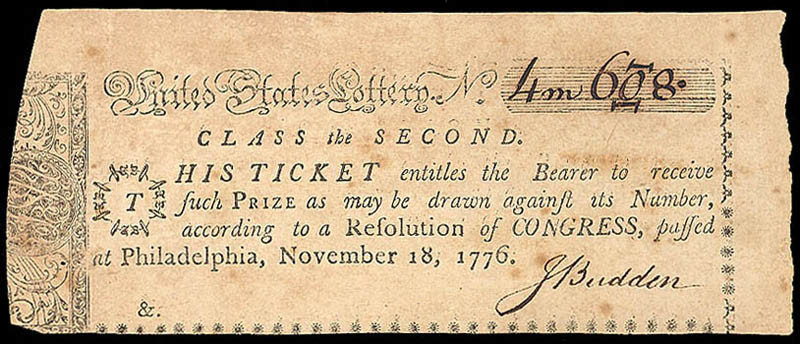 Lotteries were not the only form of gambling during this era. Wagering on horse racing was a popular form of gambling. Not surprisingly, it was not quite as organized nor as elaborate as modern horse racing. Rather, the gambling was limited to a few friendly bets between owners of horses and their partisans. The first racetrack in North America was built on Long Island in 1665. Before the 1800s, the gambling industry started to grow rapidly and appeared as a replacement for lotteries. During that time, New Orleans became the leading gambling center for the United States which was eventually replaced by California in 1850. However, by the early 20th century, gambling was firmly under mafia control which began to lay the catalyst for government regulation of the industry as a whole and to create oversight (and control of) by the Government.  The Great Depression resulted in major financial and economic losses for the United States. Because the Government already had its hooks in the gaming industry, this resulted in gambling being legalized, but with strict controls that were of benefit to the government(s) of the United States — designed to provide economic relief and ensure the flow of money in specific markets. The double blow of the stock market crash of 1929 and the Hoover Dam project created a hard economic depression in Nevada, which led to the legalization of gambling as a way to bring economic relief. In 1931, Nevada legalized most forms of gambling when Assembly Bill 98 was signed into law, providing a source of revenue for the state. Interest in development in the state was slow at first as the state itself had a limited population. After World War II, enforcement of gambling laws became more strict in most places and the desert town of Las Vegas became an attractive target for investment by crime figures such as New York’s Bugsy Siegel.  The town rapidly developed during the 1950s dooming some illegal gambling empires such as Galveston. Nevada and Las Vegas, in particular, became the center of gambling in the U.S. In the 1960s Howard Hughes and other legitimate investors purchased many of the most important hotels and casinos in the city gradually reducing the city’s connections to organized crime. Southern Maryland became popular for its slot machines which operated legally there between 1949 (1943 in some places) and 1968. In 1977, New Jersey legalized gambling in Atlantic City. The city rapidly grew into a significant tourist destination, briefly revitalizing what was previously largely a run-down slum community. In 1979, the Seminole tribe opened the first reservation-based commercial gambling beginning a trend that would be followed by other reservations. Gradually, lotteries and some types of parimutuel betting were legalized in other areas of the country. In the 1990s, riverboat casinos were legalized in Louisiana and Illinois in addition to other states. In 1996, Michigan legalized gambling in the city of Detroit creating an economic center for potential casino growth. In an attempt to curb the ill effects of the rapid rise in gambling on sporting events, Congress passed the Professional and Amateur Sports Protection Act of 1992. In the early 21st century, Internet gambling grew rapidly in popularity worldwide, but interstate and international transactions remained illegal under the Federal Wire Act of 1961, with additional penalties added by the Unlawful Internet Gambling Enforcement Act of 2006. The Supreme Court overturned the 1992 prohibition against sports gambling in 2018 paving the way for the legalization of one of the most popular forms of gambling. ## Sports Betting Now — A Worldwide Market With a Future Problem The sports betting market is the biggest segment of the overall worldwide gambling market. Gaming companies have been extremely excited about the Supreme Court’s decision earlier in 2018 to allow sports gambling across the U.S. MGM Resorts (NYSE:MGM), Boyd Gaming(NYSE:BYD), and Caesars Entertainment (NASDAQ:CZR) have already announced sports book expansions, both in casinos and online, and that’s just the early movers. While sports betting might be the largest worldwide gambling market segment, it isn’t yet a very big business for casinos in general. In Nevada, sports betting wins for casinos were just $329.1 million, which pales in comparison to games like baccarat and blackjack, which pulled in $1.24 billion and $1.17 billion, respectively. But there’s a reason casinos are excited about sports betting growth long-term The sports betting market comprises a number of types of wagers; from money line, point spreads, handicap betting, prop bets, futures, parlays, progressives and many others in different prize range. Rewards are given in the form of physical goods, as well as monetary benefits. The online gambling market in the US enables the bettors to use virtual money, which has reduced the risks related to cash. Payment through online real cash transactions and virtual money enables the distribution of prize money as virtual currency, which can later be used to play other games or redeem as cash. It also helps the vendors track the spending history of the customers. Another advantage of online gambling is the scalability it offers as it can be implemented to reach a large gambling population. This will give vendors an opportunity to create customized marketing plans to attract more bettors.  **Online gambling, especially sports betting, attracts the younger population. It also reaches the gambling population that does not follow sports on TV and is available in countries where betting is either legal or illegal. The average age of a land-based sports bettor is 45 years, whereas the average age group of an online sports bettor is 38 years.** _"For penetration, growth and market dominance, it is essential for sports betting to attract the millennial generation — and those who come behind it. The adoption of and immediate implementation of blockchain technologies throughout the global online gambling market is essential in maintaining the interest of this segment of the population, as well as combating the internal policies of credit card processors and financial institutions.” — Tao of Random_ Technological innovations, such as the adoption of Blockchain, along with player reward and retention programs play a significant role in driving market growth. To maintain this growth, the Sports Betting industry must constantly develop new ideas and technology, stay up-to-date with emerging games and maintain compliance with licensing policies and procedures; or adopt technologies which provide solutions across the board and address portions of all road-bumps. Casinos, Sports Books and Mobile Gaming operators can benefit from the adoption of future-proof technology. No one knows which cryptocurrencies or blockchain networks will be the most popular in 5, 10 or 20 years from now; and this causes hesitation in market adoption of the technology, especially in the regulated industries. While IGT (NYSE:IGT) is powering MGM’s sports betting already, and Scientific Games (NASDAQ:SGMS) announced an agreement with Caesars to use its sports betting platform in New Jersey and Mississippi, there are fundamental gaps in their traditional payment infrastructure for which Blockchain can provide solutions; such as interoperability of assets between games, more robust Know Your Player (KYP) data, instant remittance, and value transfer while dis-intermediating expensive 3rd party processing, and facilitating the legal transfer of value cross-border. Without the integration of network agnostic solutions, these solutions, while they may well work and create increased revenue in the short term, will be prone to the compounding of complexities for the necessary adoption of future protocols and networks as they become cheaper, faster, and more utilized. These companies are in the early phases of building out sport betting infrastructure, and will likely be providers for most early casino sportsbooks — however the gaming industry operators must become educated and look to the near-future while leveraging their pull and ensure their selected providers are adopting and integrating the blockchain solutions that companies such as Omnigate Systems Inc. provide. ## The Sports Betting Experience of Tomorrow Imagine a sports betting casino patron is walking the floor during mid-day after a Premier League game. Throughout the casino, not just in the sportsbook are various flat-screens showing the early NFL games. ATM/TITO redemption Kiosks play these feeds as well when not being used. Each screen has a code displayed which the patrons can scan with their mobile phones giving them the audio feed to their favorite game. They can listen as they walk the floor, playing slots and/or table games.  Suspiciously absent from the casino is the entire Sports Book — having been replaced by the highest revenue-generating table games it now serves as a gambling VIP lounge with concierge service for the property’s most valuable guests. Instead of placing bets at a kiosk, or obtaining cash from winning bets, everything is stored and recorded in a digital blockchain-enabled wallet on the patron’s mobile device. Because the Player Rewards information is linked with the wallet as well as the players' bank account, that single wallet can be used to purchase concessions, casino chips, or transfer funds directly to a table game or slot machine. All of the compliance, Title 31 restrictions, KYC/AML functions, player limits and casino credit are managed by the middleware which the patron’s digital wallet is enabled from. The wallet, on their mobile device, is powered by the front-end UI developed by the casino but allows for the patron to add funds anytime, anywhere to spend in real time on the casino floor. Funds can be added from any asset class, any fiat currency, any linked bank account with instant and real-time value transfer. Placing a Sports Bet is simple for the guest; as they move from the Baccarat table, with instant credit from their winnings appearing in their wallet, they place a wager on the upcoming Redskins v. Cowboys game. The amount is deducted from their mobile wallet and the casino’s account is real-time credited. The patron continues to walk the floor and participating in the house edge games while enjoying their participation in Sports Betting. Any technological advance surrounding game-pace and the potential to increase this while retaining customer loyalty and acceptance has huge implications for the casino operator. The underlying metric of whether a casino makes more or not, and how it makes this money is rather simple: **TURNOVER (the sum of all bets made) X HOUSE ADVANTAGE = THEORETICAL WIN** In this case, by promoting the capability of sports bets in a manner where the patron can also instantly utilize their winnings on the casino floor increases the Theoretical Win for the house. Geographical compliance on betting location is enforced through the inherent ability of location-based protocols native to mobile devices. The casino can restrict the ability to place a sports bet depending on where in the casino the patron is. Rewards for casino play are given in real-time and can be used directly from the wallet on the mobile device. After the game the patron is betting is over and the patron realizes a hefty win of $50,000 credited directly to his digital wallet, a co-branded offer is displayed on the app, offering the patron the chance to be flown to a player meet-and-greet where he’ll be the VIP guest and met the game MVP. The patron accepts the offer, the money he just won is debited from his digital account with the appropriate percentage transferred to the winning team and the house getting its take as well. ## This isn’t fiction. That scenario isn’t what could be possible in the future. It is what IS possible, right now. But only when the proper technology is applied. The industry has competing interests, and with good reason. Proprietary technologies are beneficial to the companies who create them and provide a service to the buyers. But buyers must understand that they control the development of those technologies with their buying power — working with their trusted tech and experience suppliers today to ensure the suppliers are integrating the correct systems to future proof their tomorrow is the key to rapid development and reduced long-term code complexity. |
| json metadata | {"tags":["blockchain","cryptocurrencies","esports","sports","betting"],"image":["https://cdn.steemitimages.com/DQmS2EnhexQ43rLkZpLV6T5deGrjm2KsormBfiGq8ShgJwn/image.png","https://cdn.steemitimages.com/DQme4TnnykUPVEuGmvgwSudC6TQLukYJu4zoKKxuTEbfdpo/image.png","https://cdn.steemitimages.com/DQmNNemLub1h4jssZaZfSA1wGty4VYY87XDiLxS77znC68q/image.png","https://cdn.steemitimages.com/DQmQEjny68BqijYqdTgoMnLdUsZs6GMczNFWJT1KHHSPgKR/image.png","https://cdn.steemitimages.com/DQmbxgBKiZKsK2qB9emdBmHn4CVwqvtnDrLkWhmXQ7MYHSW/image.png"],"app":"steemit/0.1","format":"markdown"} |
| Transaction Info | Block #35173064/Trx 12b2a68d0676d4a488749461988bfd7d2c8a371f |
View Raw JSON Data
{
"trx_id": "12b2a68d0676d4a488749461988bfd7d2c8a371f",
"block": 35173064,
"trx_in_block": 1,
"op_in_trx": 0,
"virtual_op": 0,
"timestamp": "2019-08-01T13:13:57",
"op": [
"comment",
{
"parent_author": "",
"parent_permlink": "blockchain",
"author": "taoofrandom",
"permlink": "blockchain-and-the-future-of-sports-betting",
"title": "Blockchain & the Future of Sports Betting",
"body": "# Future-Proofing The Sports Betting Industry With Blockchain\n\n## The Progression of Sports Betting In The United States\n\nIn order to fully grasp the utility of Blockchain in Sports Betting, one must first understand the early history of the industry and the regulations that it's Wild West type of origins forced into creation. The United States has a sorted history of gambling and sports betting, and the latter has often flouted gambling regulations and anti-gambling laws simply due to its inherent nature of being ‘mostly’ decentralized from inception. This country (and many others, I’d assume) have witnessed a long battle between gaming laws and people who wish to enjoy betting on sports. Regulation in sports betting really became tight after the 1919 Black Sox scandal where eight members of the heavy favorite Chicago White Sox were accused of intentionally throwing the World Series against the Cincinnati Reds in exchange for a bribe of about $10,000 each. This caused states to begin banning various forms of gambling by targeting the gaming operator and bookies.\n\nHowever, before that incident, sports betting was extremely popular in the United States — and even prior to the formation of this country, as the American Revolutionary War was funded, in part, through taxes placed on lotteries in the original US Colonies. All 13 original colonies established lotteries and once the War of Independence began, the Continental Congress voted a $10 Million lottery to finance the war. Had the appetite for betting not been as strong as it was, we may well be drinking tea and driving on the wrong side of the road.\n\n\n\nLotteries were not the only form of gambling during this era. Wagering on horse racing was a popular form of gambling. Not surprisingly, it was not quite as organized nor as elaborate as modern horse racing. Rather, the gambling was limited to a few friendly bets between owners of horses and their partisans. The first racetrack in North America was built on Long Island in 1665.\n\nBefore the 1800s, the gambling industry started to grow rapidly and appeared as a replacement for lotteries. During that time, New Orleans became the leading gambling center for the United States which was eventually replaced by California in 1850. However, by the early 20th century, gambling was firmly under mafia control which began to lay the catalyst for government regulation of the industry as a whole and to create oversight (and control of) by the Government.\n\n\n\nThe Great Depression resulted in major financial and economic losses for the United States. Because the Government already had its hooks in the gaming industry, this resulted in gambling being legalized, but with strict controls that were of benefit to the government(s) of the United States — designed to provide economic relief and ensure the flow of money in specific markets. The double blow of the stock market crash of 1929 and the Hoover Dam project created a hard economic depression in Nevada, which led to the legalization of gambling as a way to bring economic relief. In 1931, Nevada legalized most forms of gambling when Assembly Bill 98 was signed into law, providing a source of revenue for the state. Interest in development in the state was slow at first as the state itself had a limited population. After World War II, enforcement of gambling laws became more strict in most places and the desert town of Las Vegas became an attractive target for investment by crime figures such as New York’s Bugsy Siegel.\n\n\n\nThe town rapidly developed during the 1950s dooming some illegal gambling empires such as Galveston. Nevada and Las Vegas, in particular, became the center of gambling in the U.S. In the 1960s Howard Hughes and other legitimate investors purchased many of the most important hotels and casinos in the city gradually reducing the city’s connections to organized crime.\n\nSouthern Maryland became popular for its slot machines which operated legally there between 1949 (1943 in some places) and 1968. In 1977, New Jersey legalized gambling in Atlantic City. The city rapidly grew into a significant tourist destination, briefly revitalizing what was previously largely a run-down slum community. In 1979, the Seminole tribe opened the first reservation-based commercial gambling beginning a trend that would be followed by other reservations. Gradually, lotteries and some types of parimutuel betting were legalized in other areas of the country.\n\nIn the 1990s, riverboat casinos were legalized in Louisiana and Illinois in addition to other states. In 1996, Michigan legalized gambling in the city of Detroit creating an economic center for potential casino growth. In an attempt to curb the ill effects of the rapid rise in gambling on sporting events, Congress passed the Professional and Amateur Sports Protection Act of 1992.\n\nIn the early 21st century, Internet gambling grew rapidly in popularity worldwide, but interstate and international transactions remained illegal under the Federal Wire Act of 1961, with additional penalties added by the Unlawful Internet Gambling Enforcement Act of 2006. The Supreme Court overturned the 1992 prohibition against sports gambling in 2018 paving the way for the legalization of one of the most popular forms of gambling.\n\n## Sports Betting Now — A Worldwide Market With a Future Problem\n\nThe sports betting market is the biggest segment of the overall worldwide gambling market. Gaming companies have been extremely excited about the Supreme Court’s decision earlier in 2018 to allow sports gambling across the U.S. MGM Resorts (NYSE:MGM), Boyd Gaming(NYSE:BYD), and Caesars Entertainment (NASDAQ:CZR) have already announced sports book expansions, both in casinos and online, and that’s just the early movers.\n\nWhile sports betting might be the largest worldwide gambling market segment, it isn’t yet a very big business for casinos in general. In Nevada, sports betting wins for casinos were just $329.1 million, which pales in comparison to games like baccarat and blackjack, which pulled in $1.24 billion and $1.17 billion, respectively. But there’s a reason casinos are excited about sports betting growth long-term\n\nThe sports betting market comprises a number of types of wagers; from money line, point spreads, handicap betting, prop bets, futures, parlays, progressives and many others in different prize range. Rewards are given in the form of physical goods, as well as monetary benefits. The online gambling market in the US enables the bettors to use virtual money, which has reduced the risks related to cash. Payment through online real cash transactions and virtual money enables the distribution of prize money as virtual currency, which can later be used to play other games or redeem as cash. It also helps the vendors track the spending history of the customers. Another advantage of online gambling is the scalability it offers as it can be implemented to reach a large gambling population. This will give vendors an opportunity to create customized marketing plans to attract more bettors.\n\n\n\n**Online gambling, especially sports betting, attracts the younger population. It also reaches the gambling population that does not follow sports on TV and is available in countries where betting is either legal or illegal. The average age of a land-based sports bettor is 45 years, whereas the average age group of an online sports bettor is 38 years.**\n\n_\"For penetration, growth and market dominance, it is essential for sports betting to attract the millennial generation — and those who come behind it. The adoption of and immediate implementation of blockchain technologies throughout the global online gambling market is essential in maintaining the interest of this segment of the population, as well as combating the internal policies of credit card processors and financial institutions.” — Tao of Random_\n\nTechnological innovations, such as the adoption of Blockchain, along with player reward and retention programs play a significant role in driving market growth. To maintain this growth, the Sports Betting industry must constantly develop new ideas and technology, stay up-to-date with emerging games and maintain compliance with licensing policies and procedures; or adopt technologies which provide solutions across the board and address portions of all road-bumps.\n\nCasinos, Sports Books and Mobile Gaming operators can benefit from the adoption of future-proof technology. No one knows which cryptocurrencies or blockchain networks will be the most popular in 5, 10 or 20 years from now; and this causes hesitation in market adoption of the technology, especially in the regulated industries. While IGT (NYSE:IGT) is powering MGM’s sports betting already, and Scientific Games (NASDAQ:SGMS) announced an agreement with Caesars to use its sports betting platform in New Jersey and Mississippi, there are fundamental gaps in their traditional payment infrastructure for which Blockchain can provide solutions; such as interoperability of assets between games, more robust Know Your Player (KYP) data, instant remittance, and value transfer while dis-intermediating expensive 3rd party processing, and facilitating the legal transfer of value cross-border. Without the integration of network agnostic solutions, these solutions, while they may well work and create increased revenue in the short term, will be prone to the compounding of complexities for the necessary adoption of future protocols and networks as they become cheaper, faster, and more utilized. These companies are in the early phases of building out sport betting infrastructure, and will likely be providers for most early casino sportsbooks — however the gaming industry operators must become educated and look to the near-future while leveraging their pull and ensure their selected providers are adopting and integrating the blockchain solutions that companies such as Omnigate Systems Inc. provide.\n\n## The Sports Betting Experience of Tomorrow\n\nImagine a sports betting casino patron is walking the floor during mid-day after a Premier League game. Throughout the casino, not just in the sportsbook are various flat-screens showing the early NFL games. ATM/TITO redemption Kiosks play these feeds as well when not being used. Each screen has a code displayed which the patrons can scan with their mobile phones giving them the audio feed to their favorite game. They can listen as they walk the floor, playing slots and/or table games.\n\n\n\nSuspiciously absent from the casino is the entire Sports Book — having been replaced by the highest revenue-generating table games it now serves as a gambling VIP lounge with concierge service for the property’s most valuable guests. Instead of placing bets at a kiosk, or obtaining cash from winning bets, everything is stored and recorded in a digital blockchain-enabled wallet on the patron’s mobile device. Because the Player Rewards information is linked with the wallet as well as the players' bank account, that single wallet can be used to purchase concessions, casino chips, or transfer funds directly to a table game or slot machine. All of the compliance, Title 31 restrictions, KYC/AML functions, player limits and casino credit are managed by the middleware which the patron’s digital wallet is enabled from.\n\nThe wallet, on their mobile device, is powered by the front-end UI developed by the casino but allows for the patron to add funds anytime, anywhere to spend in real time on the casino floor. Funds can be added from any asset class, any fiat currency, any linked bank account with instant and real-time value transfer. Placing a Sports Bet is simple for the guest; as they move from the Baccarat table, with instant credit from their winnings appearing in their wallet, they place a wager on the upcoming Redskins v. Cowboys game. The amount is deducted from their mobile wallet and the casino’s account is real-time credited. The patron continues to walk the floor and participating in the house edge games while enjoying their participation in Sports Betting.\n\nAny technological advance surrounding game-pace and the potential to increase this while retaining customer loyalty and acceptance has huge implications for the casino operator. The underlying metric of whether a casino makes more or not, and how it makes this money is rather simple:\n\n**TURNOVER (the sum of all bets made) X HOUSE ADVANTAGE = THEORETICAL WIN**\n\nIn this case, by promoting the capability of sports bets in a manner where the patron can also instantly utilize their winnings on the casino floor increases the Theoretical Win for the house.\n\nGeographical compliance on betting location is enforced through the inherent ability of location-based protocols native to mobile devices. The casino can restrict the ability to place a sports bet depending on where in the casino the patron is.\n\nRewards for casino play are given in real-time and can be used directly from the wallet on the mobile device. After the game the patron is betting is over and the patron realizes a hefty win of $50,000 credited directly to his digital wallet, a co-branded offer is displayed on the app, offering the patron the chance to be flown to a player meet-and-greet where he’ll be the VIP guest and met the game MVP. The patron accepts the offer, the money he just won is debited from his digital account with the appropriate percentage transferred to the winning team and the house getting its take as well.\n\n## This isn’t fiction.\n\nThat scenario isn’t what could be possible in the future. It is what IS possible, right now. But only when the proper technology is applied. The industry has competing interests, and with good reason. Proprietary technologies are beneficial to the companies who create them and provide a service to the buyers. But buyers must understand that they control the development of those technologies with their buying power — working with their trusted tech and experience suppliers today to ensure the suppliers are integrating the correct systems to future proof their tomorrow is the key to rapid development and reduced long-term code complexity.",
"json_metadata": "{\"tags\":[\"blockchain\",\"cryptocurrencies\",\"esports\",\"sports\",\"betting\"],\"image\":[\"https://cdn.steemitimages.com/DQmS2EnhexQ43rLkZpLV6T5deGrjm2KsormBfiGq8ShgJwn/image.png\",\"https://cdn.steemitimages.com/DQme4TnnykUPVEuGmvgwSudC6TQLukYJu4zoKKxuTEbfdpo/image.png\",\"https://cdn.steemitimages.com/DQmNNemLub1h4jssZaZfSA1wGty4VYY87XDiLxS77znC68q/image.png\",\"https://cdn.steemitimages.com/DQmQEjny68BqijYqdTgoMnLdUsZs6GMczNFWJT1KHHSPgKR/image.png\",\"https://cdn.steemitimages.com/DQmbxgBKiZKsK2qB9emdBmHn4CVwqvtnDrLkWhmXQ7MYHSW/image.png\"],\"app\":\"steemit/0.1\",\"format\":\"markdown\"}"
}
]
}taoofrandompublished a new post: financial-crimes-in-video-gams2019/08/01 13:12:42
taoofrandompublished a new post: financial-crimes-in-video-gams
2019/08/01 13:12:42
| parent author | |
| parent permlink | crimes |
| author | taoofrandom |
| permlink | financial-crimes-in-video-gams |
| title | Financial Crimes in Video Games |
| body | Are Video Game Companies Violating US Financial Crimes Laws? Video Game Virtual Currencies & Financial Crimes – A Complex Problem Often Overlooked Over the past several months, I’ve written a few articles regarding video game development and how novel technologies may be used in the creation of virtual in-game currencies and even to provide real-world value to in-game tokens for use in purchasing tangible merchandise from in-game stores. While my previous articles spoke about new innovations in payment processing for the Video Game Industry- this article addresses the issues which revolve how many of those new processes may expose the game developer to liabilities with financial crimes. Financial Crimes - Know Your Player - Video Games - Compliance - Anti-Money Laundering - Penalties - Pitfalls Video Game studios are masters at bringing in the best artistic and creative talent to craft the visual universe around captivating and engaging storytelling. Successful games require artists, writers, modelers, animators, developers, QA and a slew of other personnel to come together and create that immersive and magical world where the player is engaged in the game. Competition is extreme within game development studios. In 2016, it was estimated that just in the United States alone, the game industry consisted of 2,457 active game studios across 2,858 office locations. 94.5% of these companies were founded domestically, while the remaining 5.4% were founded overseas with one or more branch offices located in the United States. Video game companies are in all 50 US States and the District of Columbia – out of which 29.8% of all game companies are located in California which is the top state of the American video game industry. 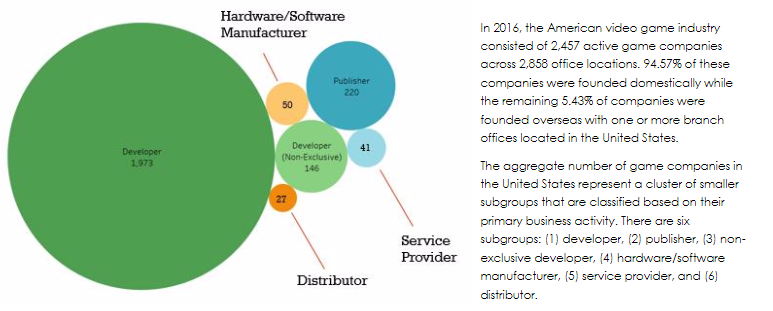 With the density of competition in the video game industry, companies are seeking new technologies to create new player experiences and the ability to set themselves apart from their competition. In-Game Stores Digital Asset Tokenization Assigning Real-World Value to In-Game Virtual Currencies Creating Partnerships With Merchandisers To Accept In-Game Currencies In Exchange For Tangible Goods But with these new player experiences and technologies comes a slew of potential financial and criminal pit-falls of which game studios may not even be aware they may be violating.  Enter FinCEN Understanding that game development is a high-overhead and labor-intensive endeavor, it’s a difficult, and often impossible, financial choice for smaller or indie studios to dedicate the time and resources necessary to maintain compliance with financial crimes regulations. Game development costs can exceeded well over USD $200 million for games such as GTA - which means even the large studios are wary to incorporate compliance staff into the mix of their creative, coding and artistic talent. But what do financial crimes regulations have to do with the video game industry; and why should game studios have financial crimes compliance experts on staff? With extreme competition for new player experiences and new monetization processes, the video game industry is expanding into in-game merchandising, in-app purchases and exchanges between virtual and real currencies, and token gifting. Enter a new dynamic in video game development with Know your Client and Anti-Money Laundering regulations: (KYC/AML) – an area which may require very specific expertise to ensure your studio doesn’t fall into a breach of US Federal law. Good-faith efforts to provide gamers with new experiences may bring into play a tremendous burden for game studios in record-keeping, identity authentication, transaction tracking, and documentation.  Game studios, and even independent developers, should be cautious that in the creation of in-game virtual currencies, they could be in breach of the same rules and regulations which cryptocurrencies such as Bitcoin are subject to with the US Treasury Departments division, FinCEN (Financial Crimes Enforcement Network). Games which allow for the purchasing of tangible goods, or for the conversion of virtual currency into fiat currency may be subject to the Anti-money laundering laws. But why is this? FinCEN, in 2013, released the documentation for guidance for virtual currencies. As it turns out, it’s potentially damning to the Video Game Industry, as any individual or company involved in virtual currency transactions could be considered a money transmitter if; (1) it acts as an “exchanger” or “administrator” of the transactions; (2) the virtual currency involved is a “convertible virtual currency”; and (3) the company facilitates the movement of funds between different persons or locations. So, let’s take a look at how FinCEN defines what an “exchanger,” is and how they look at “convertible virtual currency,”– as these definitions can dictate whether a game studio is potentially subjecting themselves to some serious legal jeopardy. EXCHANGER: This is a person (or entity) engaged as a business in the exchange of virtual currency for real currency, funds OR other virtual currency. More specific to game studios, an exchanger is an entity that issues a virtual currency and has the authority to redeem the virtual currency. A game studio that issues a virtual currency can include the service of providing game players virtual currency, even for free, or in exchange for real currency or as a type of promotion. The redemption process includes withdrawing the virtual currency from circulation regardless of whether or not it’s in exchange for in-game or in-app items (skins, devices, upgrades) real-world goods or services or real currencies. CONVERTIBLE VIRTUAL CURRENCY (CVC): FinCEN defines a CVC as a virtual currency that either (1) has an equivalent value in real currency or (2) acts as a substitute for real currency. As an example, most everyone can identify with; Bitcoin is considered to be a CVC because it has an established exchange rate with multiple fiat currencies and is accepted as a payment method by many merchants in exchange for goods and services. Cryptocurrencies such as Bitcoin, Ethereum, LiteCoin and the thousands of others were developed for the specific purpose of substituting for real currency and are clear examples of CVCs. If a game studio creates a virtual currency with these same capabilities, it could be considered a CVC and subject to FinCEN regulations. However, this definition is surrounded by a lot of gray and isn’t such a straightforward definition when the currency is for in-game/in-app use only and not intended as a decentralized fiat substitute. For the most part, this will typically depend on the types of activities the developer permits. If a game studio allows a game player to exchange that in-game virtual currency for fiat and vice versa, or if the studio enables players to purchase real-world goods and services with those virtual currencies, then the virtual currency is most likely a CVC.  Compounding these regulatory issues are the policies of FinCEN which may require a game studio to be registered as a "money transmitter." In the legal code of the United States, a money transmitter, or money transfer service is a business entity that provides money transfer services or payment instruments. These entities fall under a larger group of companies called money service businesses or MSBs. Under US Federal Law 18 USC § 1960, businesses are required to register for a Money Transmitter license where their activity falls within the state definition of a money transmitter. On top of this confusion, forty-nine of the 50 US states, with the exception of Montana, regulate money transmitters, although the laws vary from one state to the next. So, how would you know if your game, your game studio or your game idea would require compliance with FinCEN regulations? While laws are constantly evolving, the below four examples would most likely require a game development studio to operate under the FinCEN regulations of a money transmitter: Merchandise: If a studio develops a game wherein a player may purchase, with actual currency, "rewards points" or whereby they gain those points from using certain features of the game, and whereby the game studio has an arrangement with a merchant to offer real-world, tangible merchandise within the game (or via an external purchase portal), and lists the price of various items in either real currency or in reward points - FinCEN would likely determine that the game studio has facilitated the movement of funds between users and merchants and would require the adherence to all applicable regulations. Gifting: If a developer creates a game which allows players to purchase tickets, tokens, or other digital assets which are used to access premium content, and if those tickets, tokens or digital assets can also be cashed back out into real currency - an MSB license will most likely be required. For example, if there are two players of the same game who wish to use the premium content together, but only one has the required ticket/token, and the game permits player one to gift those tokens to player two, by debiting the tokens from player one's account and crediting the account of player two - then the game studio has facilitated the movement of funds between users and would be likely require registration as an MSB to avoid FinCEN violations. User-Generated Content: If a game features a virtual world which allows players to purchase tokens which can then be spent on virtual items to customize their character (skins, accessories, weapons), and those upgrades are user generated by other players through a process the developer creates to allow the uploading and selling of that content, (sold for and purchased with in-game virtual currencies) then the developer has facilitated the movement of funds between the player purchasing the virtual item and the player to designed and sold the virtual item. Game Marketplaces: We've all seen this one, and it's most likely the most common potential regulatory trap any game studio can fall into: a studio develops a game which features a marketplace where gamers can buy, sell, or exchange virtual items they've acquired during gameplay. Perhaps the game features two different virtual currencies, "gold", and "gems." Players acquire the gold through in-game achievements such as slaying a boss in a fantasy game or scoring a hole-in-one on a golf game. The gems, on the other hand, are purchased with real currency. Players can also upload custom player-created items and sell those items on the marketplace in exchange for the gems - and can exchange those gems for real currency. In this case, the developer is likely to be found as a facilitator of the transfer of funds between buyers and sellers through the marketplace and is subject to FinCEN regulatory compliance.  Under the Bank Secrecy Act (BSA), 31 U.S.C. 5311 et seq., FinCEN may bring an enforcement action for violations of the reporting, record-keeping, or other requirements of the BSA. Civil money penalties may be assessed for record-keeping violations under 31 C.F.R §1010.415 (formerly 31 C.F.R. §103.29), or for reporting violations for failing to file a currency transaction report (CTR) in violation of 31 C.F.R. §1010.311 The Solution - Avoidance, In-House Compliance or 3rd Party Management? Avoidance - any game studio can maintain compliance with FinCEN through simple avoidance. Prevent the virtual currency from being returnable, exchangeable or refundable, either for real currency or for real goods and services. Even if a virtual currency can be purchased with real currency, your game's terms of use could clearly spell out that there is no method which allows for it to be "cashed out." Additionally, simple things such as making certain that your game's virtual currency is only a limited, non-transferable, non-exclusive license and that it doesn't represent a property interest of any kind - and ensure you make clear that the virtual currency has no value in any fiat currency. However, as with everything, consult with your legal counsel for confirmation. But so much for creating new player experiences, creating new monetization platforms, revenue lift, and increasing your player base through loyalty points, digital asset marketplaces and in-game merchandising. Avoidance means no innovation. No new strategies. No new player engagement methods. While this is the safe option - your players are evolving, and so are their wishes for new engagements. In-House Compliance - Hiring just one single person to oversee your FinCEN compliance will add approximately $120,000 USD per year to your overhead in salary alone. Glassdoor reports that a FinCEN compliance Project Officer commands between $119,000 to $129,000 in annual salary. On top of this, your studio will need to bring, in-house, the KYC/AML integration specialists to comply with the digital record keeping in processing your game players when they register an account. The creation of transfer limits along with the integration of manual and automated verification processes will incur a tremendous development cost in time and funding as well. Developing the framework and the compliance processes and integrations required for in-game marketplaces which merge traditional currencies with cryptocurrencies, virtual currencies and decentralized exchanges allowing for a studio to process currency conversion orders and payments in real-time can take years of development. Additionally, each blockchain network utilized adds a layer of code complexity to your project and increases your overall go-to-market time. 3rd Party Management - Video game players are the most passionate and engaged fans in the world and game developers capitalize on this by monetizing their games through digital products. But FinCEN regulations can stifle this innovation by overburdening game studios with complex compliance mandates. While all the solutions exist from multiple vendors in varying states of capacity and capability, Video Game Studios would be well served by looking to integrated solution providers with multiple integrations that address everything from Single Sign-On, Player to Authenticated ID Matching, and Digital Transaction Processing. Integrated solution providers enable game developers to continue to make the best games possible while building on a platform which simplifies KYC/AML regulation compliance and helps to ensure compliance with the law. Many of these companies integrate with exchanges to facilitate tracking of in-game trades and reconciliations with fiat and digital assets. Integrated Solution Providers are a tremendous advantage to game studios looking to simplify processes and engage players in new experiences and monetization models, compliance with KYC/AML regulations are never accomplished through a single solution. I always recommend utilizing legal counsel for compliance reviews, especially in regards to FinCEN mandates. |
| json metadata | {"tags":["crimes","video","games","financial","fincen"],"image":["https://cdn.steemitimages.com/DQmZYUhkJEHaNSpT51g82JVDn2detbZaAWhWjuwVMce7fRe/image.png","https://cdn.steemitimages.com/DQmZPdHUmiVvubvGoGygVNAFU7Ur7N9zqm1d4S4cMst617o/image.png","https://cdn.steemitimages.com/DQmarJNMA98QVLBBSEYW6WWZ5uha9BSCeZpi5wnTwB8Smai/image.png","https://cdn.steemitimages.com/DQmRgC8GpJbaqb5EGZgmF42gmojKP1VArB9ShzQJMBMAncW/image.png","https://cdn.steemitimages.com/DQmTgH1USrxodsVAex5rzg1xZajr8fG5BfMANhtJSBpa8Mz/image.png"],"app":"steemit/0.1","format":"markdown"} |
| Transaction Info | Block #35173039/Trx ec34f052161d42a0db230cb2ac40ce1b3416c417 |
View Raw JSON Data
{
"trx_id": "ec34f052161d42a0db230cb2ac40ce1b3416c417",
"block": 35173039,
"trx_in_block": 13,
"op_in_trx": 0,
"virtual_op": 0,
"timestamp": "2019-08-01T13:12:42",
"op": [
"comment",
{
"parent_author": "",
"parent_permlink": "crimes",
"author": "taoofrandom",
"permlink": "financial-crimes-in-video-gams",
"title": "Financial Crimes in Video Games",
"body": "Are Video Game Companies Violating US Financial Crimes Laws?\n\nVideo Game Virtual Currencies & Financial Crimes – A Complex Problem Often Overlooked\n\nOver the past several months, I’ve written a few articles regarding video game development and how novel technologies may be used in the creation of virtual in-game currencies and even to provide real-world value to in-game tokens for use in purchasing tangible merchandise from in-game stores. \n\nWhile my previous articles spoke about new innovations in payment processing for the Video Game Industry- this article addresses the issues which revolve how many of those new processes may expose the game developer to liabilities with financial crimes.\n\nFinancial Crimes - Know Your Player - Video Games - Compliance - Anti-Money Laundering - Penalties - Pitfalls\n\nVideo Game studios are masters at bringing in the best artistic and creative talent to craft the visual universe around captivating and engaging storytelling. Successful games require artists, writers, modelers, animators, developers, QA and a slew of other personnel to come together and create that immersive and magical world where the player is engaged in the game.\n\nCompetition is extreme within game development studios. In 2016, it was estimated that just in the United States alone, the game industry consisted of 2,457 active game studios across 2,858 office locations. 94.5% of these companies were founded domestically, while the remaining 5.4% were founded overseas with one or more branch offices located in the United States. Video game companies are in all 50 US States and the District of Columbia – out of which 29.8% of all game companies are located in California which is the top state of the American video game industry. \n\n\n\nWith the density of competition in the video game industry, companies are seeking new technologies to create new player experiences and the ability to set themselves apart from their competition. \n\nIn-Game Stores\nDigital Asset Tokenization\nAssigning Real-World Value to In-Game Virtual Currencies\nCreating Partnerships With Merchandisers To Accept In-Game Currencies In Exchange For Tangible Goods\n\nBut with these new player experiences and technologies comes a slew of potential financial and criminal pit-falls of which game studios may not even be aware they may be violating.\n\n\nEnter FinCEN\nUnderstanding that game development is a high-overhead and labor-intensive endeavor, it’s a difficult, and often impossible, financial choice for smaller or indie studios to dedicate the time and resources necessary to maintain compliance with financial crimes regulations. \n\nGame development costs can exceeded well over USD $200 million for games such as GTA - which means even the large studios are wary to incorporate compliance staff into the mix of their creative, coding and artistic talent.\n\nBut what do financial crimes regulations have to do with the video game industry; and why should game studios have financial crimes compliance experts on staff?\n\nWith extreme competition for new player experiences and new monetization processes, the video game industry is expanding into in-game merchandising, in-app purchases and exchanges between virtual and real currencies, and token gifting.\n\nEnter a new dynamic in video game development with Know your Client and Anti-Money Laundering regulations: (KYC/AML) – an area which may require very specific expertise to ensure your studio doesn’t fall into a breach of US Federal law. Good-faith efforts to provide gamers with new experiences may bring into play a tremendous burden for game studios in record-keeping, identity authentication, transaction tracking, and documentation.\n\n\n\nGame studios, and even independent developers, should be cautious that in the creation of in-game virtual currencies, they could be in breach of the same rules and regulations which cryptocurrencies such as Bitcoin are subject to with the US Treasury Departments division, FinCEN (Financial Crimes Enforcement Network). Games which allow for the purchasing of tangible goods, or for the conversion of virtual currency into fiat currency may be subject to the Anti-money laundering laws.\n\nBut why is this?\n\nFinCEN, in 2013, released the documentation for guidance for virtual currencies. As it turns out, it’s potentially damning to the Video Game Industry, as any individual or company involved in virtual currency transactions could be considered a money transmitter if; (1) it acts as an “exchanger” or “administrator” of the transactions; (2) the virtual currency involved is a “convertible virtual currency”; and (3) the company facilitates the movement of funds between different persons or locations.\n\nSo, let’s take a look at how FinCEN defines what an “exchanger,” is and how they look at “convertible virtual currency,”– as these definitions can dictate whether a game studio is potentially subjecting themselves to some serious legal jeopardy.\n\nEXCHANGER: This is a person (or entity) engaged as a business in the exchange of virtual currency for real currency, funds OR other virtual currency. More specific to game studios, an exchanger is an entity that issues a virtual currency and has the authority to redeem the virtual currency. A game studio that issues a virtual currency can include the service of providing game players virtual currency, even for free, or in exchange for real currency or as a type of promotion. The redemption process includes withdrawing the virtual currency from circulation regardless of whether or not it’s in exchange for in-game or in-app items (skins, devices, upgrades) real-world goods or services or real currencies. \n\nCONVERTIBLE VIRTUAL CURRENCY (CVC): FinCEN defines a CVC as a virtual currency that either (1) has an equivalent value in real currency or (2) acts as a substitute for real currency. \n\nAs an example, most everyone can identify with; Bitcoin is considered to be a CVC because it has an established exchange rate with multiple fiat currencies and is accepted as a payment method by many merchants in exchange for goods and services. Cryptocurrencies such as Bitcoin, Ethereum, LiteCoin and the thousands of others were developed for the specific purpose of substituting for real currency and are clear examples of CVCs. \n\nIf a game studio creates a virtual currency with these same capabilities, it could be considered a CVC and subject to FinCEN regulations. However, this definition is surrounded by a lot of gray and isn’t such a straightforward definition when the currency is for in-game/in-app use only and not intended as a decentralized fiat substitute. For the most part, this will typically depend on the types of activities the developer permits. If a game studio allows a game player to exchange that in-game virtual currency for fiat and vice versa, or if the studio enables players to purchase real-world goods and services with those virtual currencies, then the virtual currency is most likely a CVC. \n\n\n\nCompounding these regulatory issues are the policies of FinCEN which may require a game studio to be registered as a \"money transmitter.\" In the legal code of the United States, a money transmitter, or money transfer service is a business entity that provides money transfer services or payment instruments. These entities fall under a larger group of companies called money service businesses or MSBs. Under US Federal Law 18 USC § 1960, businesses are required to register for a Money Transmitter license where their activity falls within the state definition of a money transmitter.\n\nOn top of this confusion, forty-nine of the 50 US states, with the exception of Montana, regulate money transmitters, although the laws vary from one state to the next.\nSo, how would you know if your game, your game studio or your game idea would require compliance with FinCEN regulations? While laws are constantly evolving, the below four examples would most likely require a game development studio to operate under the FinCEN regulations of a money transmitter:\n\nMerchandise: If a studio develops a game wherein a player may purchase, with actual currency, \"rewards points\" or whereby they gain those points from using certain features of the game, and whereby the game studio has an arrangement with a merchant to offer real-world, tangible merchandise within the game (or via an external purchase portal), and lists the price of various items in either real currency or in reward points - FinCEN would likely determine that the game studio has facilitated the movement of funds between users and merchants and would require the adherence to all applicable regulations.\n\nGifting: If a developer creates a game which allows players to purchase tickets, tokens, or other digital assets which are used to access premium content, and if those tickets, tokens or digital assets can also be cashed back out into real currency - an MSB license will most likely be required. For example, if there are two players of the same game who wish to use the premium content together, but only one has the required ticket/token, and the game permits player one to gift those tokens to player two, by debiting the tokens from player one's account and crediting the account of player two - then the game studio has facilitated the movement of funds between users and would be likely require registration as an MSB to avoid FinCEN violations.\n\nUser-Generated Content: If a game features a virtual world which allows players to purchase tokens which can then be spent on virtual items to customize their character (skins, accessories, weapons), and those upgrades are user generated by other players through a process the developer creates to allow the uploading and selling of that content, (sold for and purchased with in-game virtual currencies) then the developer has facilitated the movement of funds between the player purchasing the virtual item and the player to designed and sold the virtual item.\n\nGame Marketplaces: We've all seen this one, and it's most likely the most common potential regulatory trap any game studio can fall into: a studio develops a game which features a marketplace where gamers can buy, sell, or exchange virtual items they've acquired during gameplay. Perhaps the game features two different virtual currencies, \"gold\", and \"gems.\" Players acquire the gold through in-game achievements such as slaying a boss in a fantasy game or scoring a hole-in-one on a golf game. The gems, on the other hand, are purchased with real currency. Players can also upload custom player-created items and sell those items on the marketplace in exchange for the gems - and can exchange those gems for real currency. In this case, the developer is likely to be found as a facilitator of the transfer of funds between buyers and sellers through the marketplace and is subject to FinCEN regulatory compliance.\n\n\n\nUnder the Bank Secrecy Act (BSA), 31 U.S.C. 5311 et seq., FinCEN may bring an enforcement action for violations of the reporting, record-keeping, or other requirements of the BSA. Civil money penalties may be assessed for record-keeping violations under 31 C.F.R §1010.415 (formerly 31 C.F.R. §103.29), or for reporting violations for failing to file a currency transaction report (CTR) in violation of 31 C.F.R. §1010.311\n\nThe Solution - Avoidance, In-House Compliance or 3rd Party Management?\n\nAvoidance - any game studio can maintain compliance with FinCEN through simple avoidance. Prevent the virtual currency from being returnable, exchangeable or refundable, either for real currency or for real goods and services. Even if a virtual currency can be purchased with real currency, your game's terms of use could clearly spell out that there is no method which allows for it to be \"cashed out.\" Additionally, simple things such as making certain that your game's virtual currency is only a limited, non-transferable, non-exclusive license and that it doesn't represent a property interest of any kind - and ensure you make clear that the virtual currency has no value in any fiat currency. However, as with everything, consult with your legal counsel for confirmation.\n\nBut so much for creating new player experiences, creating new monetization platforms, revenue lift, and increasing your player base through loyalty points, digital asset marketplaces and in-game merchandising. Avoidance means no innovation. No new strategies. No new player engagement methods. While this is the safe option - your players are evolving, and so are their wishes for new engagements.\n\nIn-House Compliance - Hiring just one single person to oversee your FinCEN compliance will add approximately $120,000 USD per year to your overhead in salary alone. Glassdoor reports that a FinCEN compliance Project Officer commands between $119,000 to $129,000 in annual salary. On top of this, your studio will need to bring, in-house, the KYC/AML integration specialists to comply with the digital record keeping in processing your game players when they register an account. The creation of transfer limits along with the integration of manual and automated verification processes will incur a tremendous development cost in time and funding as well. Developing the framework and the compliance processes and integrations required for in-game marketplaces which merge traditional currencies with cryptocurrencies, virtual currencies and decentralized exchanges allowing for a studio to process currency conversion orders and payments in real-time can take years of development. Additionally, each blockchain network utilized adds a layer of code complexity to your project and increases your overall go-to-market time.\n\n3rd Party Management - Video game players are the most passionate and engaged fans in the world and game developers capitalize on this by monetizing their games through digital products. But FinCEN regulations can stifle this innovation by overburdening game studios with complex compliance mandates. While all the solutions exist from multiple vendors in varying states of capacity and capability, Video Game Studios would be well served by looking to integrated solution providers with multiple integrations that address everything from Single Sign-On, Player to Authenticated ID Matching, and Digital Transaction Processing.\n\nIntegrated solution providers enable game developers to continue to make the best games possible while building on a platform which simplifies KYC/AML regulation compliance and helps to ensure compliance with the law. Many of these companies integrate with exchanges to facilitate tracking of in-game trades and reconciliations with fiat and digital assets. Integrated Solution Providers are a tremendous advantage to game studios looking to simplify processes and engage players in new experiences and monetization models, compliance with KYC/AML regulations are never accomplished through a single solution. I always recommend utilizing legal counsel for compliance reviews, especially in regards to FinCEN mandates.",
"json_metadata": "{\"tags\":[\"crimes\",\"video\",\"games\",\"financial\",\"fincen\"],\"image\":[\"https://cdn.steemitimages.com/DQmZYUhkJEHaNSpT51g82JVDn2detbZaAWhWjuwVMce7fRe/image.png\",\"https://cdn.steemitimages.com/DQmZPdHUmiVvubvGoGygVNAFU7Ur7N9zqm1d4S4cMst617o/image.png\",\"https://cdn.steemitimages.com/DQmarJNMA98QVLBBSEYW6WWZ5uha9BSCeZpi5wnTwB8Smai/image.png\",\"https://cdn.steemitimages.com/DQmRgC8GpJbaqb5EGZgmF42gmojKP1VArB9ShzQJMBMAncW/image.png\",\"https://cdn.steemitimages.com/DQmTgH1USrxodsVAex5rzg1xZajr8fG5BfMANhtJSBpa8Mz/image.png\"],\"app\":\"steemit/0.1\",\"format\":\"markdown\"}"
}
]
}2019/07/23 22:51:12
2019/07/23 22:51:12
| parent author | taoofrandom |
| parent permlink | financial-crimes-in-video-gams |
| author | steemitboard |
| permlink | steemitboard-notify-taoofrandom-20190723t225111000z |
| title | |
| body | Congratulations @taoofrandom! You have completed the following achievement on the Steem blockchain and have been rewarded with new badge(s) : <table><tr><td><img src="https://steemitimages.com/60x60/http://steemitboard.com/img/notifications/firstpost.png"></td><td>You published your First Post</td></tr> <tr><td><img src="https://steemitimages.com/60x60/http://steemitboard.com/img/notifications/firstvote.png"></td><td>You made your First Vote</td></tr> <tr><td><img src="https://steemitimages.com/60x60/http://steemitboard.com/img/notifications/firstvoted.png"></td><td>You got a First Vote</td></tr> <tr><td><img src="https://steemitimages.com/60x70/http://steemitboard.com/@taoofrandom/voted.png?201907232206"></td><td>You received more than 10 upvotes. Your next target is to reach 50 upvotes.</td></tr> </table> <sub>_You can view [your badges on your Steem Board](https://steemitboard.com/@taoofrandom) and compare to others on the [Steem Ranking](https://steemitboard.com/ranking/index.php?name=taoofrandom)_</sub> <sub>_If you no longer want to receive notifications, reply to this comment with the word_ `STOP`</sub> ###### [Vote for @Steemitboard as a witness](https://v2.steemconnect.com/sign/account-witness-vote?witness=steemitboard&approve=1) to get one more award and increased upvotes! |
| json metadata | {"image":["https://steemitboard.com/img/notify.png"]} |
| Transaction Info | Block #34926147/Trx f6bcf8f4e32fc34db0d6041be06cfb9bb585ac52 |
View Raw JSON Data
{
  "trx_id": "f6bcf8f4e32fc34db0d6041be06cfb9bb585ac52",
  "block": 34926147,
  "trx_in_block": 0,
  "op_in_trx": 0,
  "virtual_op": 0,
  "timestamp": "2019-07-23T22:51:12",
  "op": [
    "comment",
    {
      "parent_author": "taoofrandom",
      "parent_permlink": "financial-crimes-in-video-gams",
      "author": "steemitboard",
      "permlink": "steemitboard-notify-taoofrandom-20190723t225111000z",
      "title": "",
      "body": "Congratulations @taoofrandom! You have completed the following achievement on the Steem blockchain and have been rewarded with new badge(s) :\n\n<table><tr><td><img src=\"https://steemitimages.com/60x60/http://steemitboard.com/img/notifications/firstpost.png\"></td><td>You published your First Post</td></tr>\n<tr><td><img src=\"https://steemitimages.com/60x60/http://steemitboard.com/img/notifications/firstvote.png\"></td><td>You made your First Vote</td></tr>\n<tr><td><img src=\"https://steemitimages.com/60x60/http://steemitboard.com/img/notifications/firstvoted.png\"></td><td>You got a First Vote</td></tr>\n<tr><td><img src=\"https://steemitimages.com/60x70/http://steemitboard.com/@taoofrandom/voted.png?201907232206\"></td><td>You received more than 10 upvotes. Your next target is to reach 50 upvotes.</td></tr>\n</table>\n\n<sub>_You can view [your badges on your Steem Board](https://steemitboard.com/@taoofrandom) and compare to others on the [Steem Ranking](https://steemitboard.com/ranking/index.php?name=taoofrandom)_</sub>\n<sub>_If you no longer want to receive notifications, reply to this comment with the word_ `STOP`</sub>\n\n\n\n###### [Vote for @Steemitboard as a witness](https://v2.steemconnect.com/sign/account-witness-vote?witness=steemitboard&approve=1) to get one more award and increased upvotes!",
      "json_metadata": "{\"image\":[\"https://steemitboard.com/img/notify.png\"]}"
    }
  ]
}pinoyupvoted (10.00%) @taoofrandom / could-blockchain-technology-ever-replace-tito2019/07/23 20:18:06
pinoyupvoted (10.00%) @taoofrandom / could-blockchain-technology-ever-replace-tito
2019/07/23 20:18:06
| voter | pinoy |
| author | taoofrandom |
| permlink | could-blockchain-technology-ever-replace-tito |
| weight | 1000 (10.00%) |
| Transaction Info | Block #34923086/Trx 61aa9180d595fb9740902d4e78e82bbff47dde2c |
View Raw JSON Data
{
  "trx_id": "61aa9180d595fb9740902d4e78e82bbff47dde2c",
  "block": 34923086,
  "trx_in_block": 25,
  "op_in_trx": 0,
  "virtual_op": 0,
  "timestamp": "2019-07-23T20:18:06",
  "op": [
    "vote",
    {
      "voter": "pinoy",
      "author": "taoofrandom",
      "permlink": "could-blockchain-technology-ever-replace-tito",
      "weight": 1000
    }
  ]
}taoofrandomupvoted (100.00%) @changeangel / steemit-community-rocks2019/07/23 20:09:39
taoofrandomupvoted (100.00%) @changeangel / steemit-community-rocks
2019/07/23 20:09:39
| voter | taoofrandom |
| author | changeangel |
| permlink | steemit-community-rocks |
| weight | 10000 (100.00%) |
| Transaction Info | Block #34922917/Trx 72ab2924d756eb17ada417efe3b2faf20afc24f9 |
View Raw JSON Data
{
  "trx_id": "72ab2924d756eb17ada417efe3b2faf20afc24f9",
  "block": 34922917,
  "trx_in_block": 19,
  "op_in_trx": 0,
  "virtual_op": 0,
  "timestamp": "2019-07-23T20:09:39",
  "op": [
    "vote",
    {
      "voter": "taoofrandom",
      "author": "changeangel",
      "permlink": "steemit-community-rocks",
      "weight": 10000
    }
  ]
}taoofrandomupvoted (100.00%) @changeangel / changeangel-steemit-achievement-100-upvotes2019/07/23 20:09:36
taoofrandomupvoted (100.00%) @changeangel / changeangel-steemit-achievement-100-upvotes
2019/07/23 20:09:36
| voter | taoofrandom |
| author | changeangel |
| permlink | changeangel-steemit-achievement-100-upvotes |
| weight | 10000 (100.00%) |
| Transaction Info | Block #34922916/Trx a06a3002599034c5af6200aeb01d23d48c0aeabf |
View Raw JSON Data
{
  "trx_id": "a06a3002599034c5af6200aeb01d23d48c0aeabf",
  "block": 34922916,
  "trx_in_block": 23,
  "op_in_trx": 0,
  "virtual_op": 0,
  "timestamp": "2019-07-23T20:09:36",
  "op": [
    "vote",
    {
      "voter": "taoofrandom",
      "author": "changeangel",
      "permlink": "changeangel-steemit-achievement-100-upvotes",
      "weight": 10000
    }
  ]
}taoofrandomupvoted (100.00%) @changeangel / huge-call-for-support-from-changeangel-to-the-steem-family2019/07/23 20:09:33
taoofrandomupvoted (100.00%) @changeangel / huge-call-for-support-from-changeangel-to-the-steem-family
2019/07/23 20:09:33
| voter | taoofrandom |
| author | changeangel |
| permlink | huge-call-for-support-from-changeangel-to-the-steem-family |
| weight | 10000 (100.00%) |
| Transaction Info | Block #34922915/Trx 681b761c65c8e65326770031f9ac2511c254b95a |
View Raw JSON Data
{
  "trx_id": "681b761c65c8e65326770031f9ac2511c254b95a",
  "block": 34922915,
  "trx_in_block": 23,
  "op_in_trx": 0,
  "virtual_op": 0,
  "timestamp": "2019-07-23T20:09:33",
  "op": [
    "vote",
    {
      "voter": "taoofrandom",
      "author": "changeangel",
      "permlink": "huge-call-for-support-from-changeangel-to-the-steem-family",
      "weight": 10000
    }
  ]
}2019/07/23 20:09:30
2019/07/23 20:09:30
| voter | taoofrandom |
| author | changeangel |
| permlink | 166-tickets-sold-in-4-days-totals-gbp830-for-three-amazing-charities |
| weight | 10000 (100.00%) |
| Transaction Info | Block #34922914/Trx f97a9cd894f3877756908ee3cfe4c8a6f5a9220d |
View Raw JSON Data
{
  "trx_id": "f97a9cd894f3877756908ee3cfe4c8a6f5a9220d",
  "block": 34922914,
  "trx_in_block": 5,
  "op_in_trx": 0,
  "virtual_op": 0,
  "timestamp": "2019-07-23T20:09:30",
  "op": [
    "vote",
    {
      "voter": "taoofrandom",
      "author": "changeangel",
      "permlink": "166-tickets-sold-in-4-days-totals-gbp830-for-three-amazing-charities",
      "weight": 10000
    }
  ]
}2019/07/23 20:09:24
2019/07/23 20:09:24
| voter | taoofrandom |
| author | changeangel |
| permlink | sharetalk-is-building-an-ios-app-to-go-alongside-our-updated-android-app-v0-8-3 |
| weight | 10000 (100.00%) |
| Transaction Info | Block #34922912/Trx 608b1931ab5d250ad4d180071507d9b6d093245e |
View Raw JSON Data
{
  "trx_id": "608b1931ab5d250ad4d180071507d9b6d093245e",
  "block": 34922912,
  "trx_in_block": 2,
  "op_in_trx": 0,
  "virtual_op": 0,
  "timestamp": "2019-07-23T20:09:24",
  "op": [
    "vote",
    {
      "voter": "taoofrandom",
      "author": "changeangel",
      "permlink": "sharetalk-is-building-an-ios-app-to-go-alongside-our-updated-android-app-v0-8-3",
      "weight": 10000
    }
  ]
}2019/07/23 20:09:18
2019/07/23 20:09:18
| voter | taoofrandom |
| author | changeangel |
| permlink | the-odocrypt-mining-algo-hardfork-on-the-digibyte-blockchain-has-been-successful |
| weight | 10000 (100.00%) |
| Transaction Info | Block #34922910/Trx 1519c4445bceae748e36083683e9d85304aed85f |
View Raw JSON Data
{
  "trx_id": "1519c4445bceae748e36083683e9d85304aed85f",
  "block": 34922910,
  "trx_in_block": 21,
  "op_in_trx": 0,
  "virtual_op": 0,
  "timestamp": "2019-07-23T20:09:18",
  "op": [
    "vote",
    {
      "voter": "taoofrandom",
      "author": "changeangel",
      "permlink": "the-odocrypt-mining-algo-hardfork-on-the-digibyte-blockchain-has-been-successful",
      "weight": 10000
    }
  ]
}yeheyupvoted (10.00%) @taoofrandom / could-blockchain-technology-ever-replace-tito2019/07/23 20:02:54
yeheyupvoted (10.00%) @taoofrandom / could-blockchain-technology-ever-replace-tito
2019/07/23 20:02:54
| voter | yehey |
| author | taoofrandom |
| permlink | could-blockchain-technology-ever-replace-tito |
| weight | 1000 (10.00%) |
| Transaction Info | Block #34922782/Trx 17e369b4a2e393522958a205bebc0700ecd290b7 |
View Raw JSON Data
{
  "trx_id": "17e369b4a2e393522958a205bebc0700ecd290b7",
  "block": 34922782,
  "trx_in_block": 13,
  "op_in_trx": 0,
  "virtual_op": 0,
  "timestamp": "2019-07-23T20:02:54",
  "op": [
    "vote",
    {
      "voter": "yehey",
      "author": "taoofrandom",
      "permlink": "could-blockchain-technology-ever-replace-tito",
      "weight": 1000
    }
  ]
}taoofrandomfollowed @potcoin2019/07/23 20:02:03
taoofrandomfollowed @potcoin
2019/07/23 20:02:03
| required auths | [] |
| required posting auths | ["taoofrandom"] |
| id | follow |
| json | ["follow",{"follower":"taoofrandom","following":"potcoin","what":["blog"]}] |
| Transaction Info | Block #34922765/Trx 3a69d15b4072d36015b6ae6d0ec3e5522355927e |
View Raw JSON Data
{
  "trx_id": "3a69d15b4072d36015b6ae6d0ec3e5522355927e",
  "block": 34922765,
  "trx_in_block": 56,
  "op_in_trx": 0,
  "virtual_op": 0,
  "timestamp": "2019-07-23T20:02:03",
  "op": [
    "custom_json",
    {
      "required_auths": [],
      "required_posting_auths": [
        "taoofrandom"
      ],
      "id": "follow",
      "json": "[\"follow\",{\"follower\":\"taoofrandom\",\"following\":\"potcoin\",\"what\":[\"blog\"]}]"
    }
  ]
}2019/07/23 20:00:39
2019/07/23 20:00:39
| voter | changeangel |
| author | taoofrandom |
| permlink | can-blockchain-solve-the-problems-at-the-department-of-veterans-affairs |
| weight | 10000 (100.00%) |
| Transaction Info | Block #34922737/Trx 08a0779f71a6a38eb6206d4f828488eed2a7348b |
View Raw JSON Data
{
  "trx_id": "08a0779f71a6a38eb6206d4f828488eed2a7348b",
  "block": 34922737,
  "trx_in_block": 4,
  "op_in_trx": 0,
  "virtual_op": 0,
  "timestamp": "2019-07-23T20:00:39",
  "op": [
    "vote",
    {
      "voter": "changeangel",
      "author": "taoofrandom",
      "permlink": "can-blockchain-solve-the-problems-at-the-department-of-veterans-affairs",
      "weight": 10000
    }
  ]
}changeangelupvoted (100.00%) @taoofrandom / could-blockchain-technology-ever-replace-tito2019/07/23 20:00:30
changeangelupvoted (100.00%) @taoofrandom / could-blockchain-technology-ever-replace-tito
2019/07/23 20:00:30
| voter | changeangel |
| author | taoofrandom |
| permlink | could-blockchain-technology-ever-replace-tito |
| weight | 10000 (100.00%) |
| Transaction Info | Block #34922734/Trx b31c37badac0e72095bec875de9fa5525faa69db |
View Raw JSON Data
{
  "trx_id": "b31c37badac0e72095bec875de9fa5525faa69db",
  "block": 34922734,
  "trx_in_block": 26,
  "op_in_trx": 0,
  "virtual_op": 0,
  "timestamp": "2019-07-23T20:00:30",
  "op": [
    "vote",
    {
      "voter": "changeangel",
      "author": "taoofrandom",
      "permlink": "could-blockchain-technology-ever-replace-tito",
      "weight": 10000
    }
  ]
}changeangelupvoted (100.00%) @taoofrandom / usd100-billion-unrealized-revenue-in-video-games2019/07/23 20:00:24
changeangelupvoted (100.00%) @taoofrandom / usd100-billion-unrealized-revenue-in-video-games
2019/07/23 20:00:24
| voter | changeangel |
| author | taoofrandom |
| permlink | usd100-billion-unrealized-revenue-in-video-games |
| weight | 10000 (100.00%) |
| Transaction Info | Block #34922732/Trx 942757e584392e33362b42b47b3b5d61fbe40378 |
View Raw JSON Data
{
  "trx_id": "942757e584392e33362b42b47b3b5d61fbe40378",
  "block": 34922732,
  "trx_in_block": 6,
  "op_in_trx": 0,
  "virtual_op": 0,
  "timestamp": "2019-07-23T20:00:24",
  "op": [
    "vote",
    {
      "voter": "changeangel",
      "author": "taoofrandom",
      "permlink": "usd100-billion-unrealized-revenue-in-video-games",
      "weight": 10000
    }
  ]
}changeangelupvoted (100.00%) @taoofrandom / financial-crimes-in-video-gams2019/07/23 19:59:42
changeangelupvoted (100.00%) @taoofrandom / financial-crimes-in-video-gams
2019/07/23 19:59:42
| voter | changeangel |
| author | taoofrandom |
| permlink | financial-crimes-in-video-gams |
| weight | 10000 (100.00%) |
| Transaction Info | Block #34922718/Trx c109b334ded9fa05c65224e849e0736e81d5d24e |
View Raw JSON Data
{
  "trx_id": "c109b334ded9fa05c65224e849e0736e81d5d24e",
  "block": 34922718,
  "trx_in_block": 5,
  "op_in_trx": 0,
  "virtual_op": 0,
  "timestamp": "2019-07-23T19:59:42",
  "op": [
    "vote",
    {
      "voter": "changeangel",
      "author": "taoofrandom",
      "permlink": "financial-crimes-in-video-gams",
      "weight": 10000
    }
  ]
}2019/07/23 19:55:33
2019/07/23 19:55:33
| voter | taoofrandom |
| author | changeangel |
| permlink | everyday-changeangel-wakes-up-we-think-how-can-we-help-the-non-ico-coins-listed-on-changeangel |
| weight | 10000 (100.00%) |
| Transaction Info | Block #34922636/Trx 082668712e703ffb35b4560dbbb7296cf6f81131 |
View Raw JSON Data
{
  "trx_id": "082668712e703ffb35b4560dbbb7296cf6f81131",
  "block": 34922636,
  "trx_in_block": 27,
  "op_in_trx": 0,
  "virtual_op": 0,
  "timestamp": "2019-07-23T19:55:33",
  "op": [
    "vote",
    {
      "voter": "taoofrandom",
      "author": "changeangel",
      "permlink": "everyday-changeangel-wakes-up-we-think-how-can-we-help-the-non-ico-coins-listed-on-changeangel",
      "weight": 10000
    }
  ]
}taoofrandomfollowed @changeangel2019/07/23 19:53:42
taoofrandomfollowed @changeangel
2019/07/23 19:53:42
| required auths | [] |
| required posting auths | ["taoofrandom"] |
| id | follow |
| json | ["follow",{"follower":"taoofrandom","following":"changeangel","what":["blog"]}] |
| Transaction Info | Block #34922599/Trx ac486244a3ada708447c4436af837a5fb9663be8 |
View Raw JSON Data
{
  "trx_id": "ac486244a3ada708447c4436af837a5fb9663be8",
  "block": 34922599,
  "trx_in_block": 22,
  "op_in_trx": 0,
  "virtual_op": 0,
  "timestamp": "2019-07-23T19:53:42",
  "op": [
    "custom_json",
    {
      "required_auths": [],
      "required_posting_auths": [
        "taoofrandom"
      ],
      "id": "follow",
      "json": "[\"follow\",{\"follower\":\"taoofrandom\",\"following\":\"changeangel\",\"what\":[\"blog\"]}]"
    }
  ]
}taoofrandomupvoted (100.00%) @taoofrandom / financial-crimes-in-video-gams2019/07/23 19:46:09
taoofrandomupvoted (100.00%) @taoofrandom / financial-crimes-in-video-gams
2019/07/23 19:46:09
| voter | taoofrandom |
| author | taoofrandom |
| permlink | financial-crimes-in-video-gams |
| weight | 10000 (100.00%) |
| Transaction Info | Block #34922448/Trx 2e24e0a56f3b76b3dab403ab0a643e2dceb8eddb |
View Raw JSON Data
{
  "trx_id": "2e24e0a56f3b76b3dab403ab0a643e2dceb8eddb",
  "block": 34922448,
  "trx_in_block": 18,
  "op_in_trx": 0,
  "virtual_op": 0,
  "timestamp": "2019-07-23T19:46:09",
  "op": [
    "vote",
    {
      "voter": "taoofrandom",
      "author": "taoofrandom",
      "permlink": "financial-crimes-in-video-gams",
      "weight": 10000
    }
  ]
}wiragoupvoted (100.00%) @taoofrandom / usd100-billion-unrealized-revenue-in-video-games2019/07/23 19:44:33
wiragoupvoted (100.00%) @taoofrandom / usd100-billion-unrealized-revenue-in-video-games
2019/07/23 19:44:33
| voter | wirago |
| author | taoofrandom |
| permlink | usd100-billion-unrealized-revenue-in-video-games |
| weight | 10000 (100.00%) |
| Transaction Info | Block #34922416/Trx 3217dd76f9897dc9940c1d505cd5dcecd1537f75 |
View Raw JSON Data
{
  "trx_id": "3217dd76f9897dc9940c1d505cd5dcecd1537f75",
  "block": 34922416,
  "trx_in_block": 0,
  "op_in_trx": 0,
  "virtual_op": 0,
  "timestamp": "2019-07-23T19:44:33",
  "op": [
    "vote",
    {
      "voter": "wirago",
      "author": "taoofrandom",
      "permlink": "usd100-billion-unrealized-revenue-in-video-games",
      "weight": 10000
    }
  ]
}2019/07/23 19:37:09
2019/07/23 19:37:09
| voter | laissez-faire |
| author | taoofrandom |
| permlink | can-blockchain-solve-the-problems-at-the-department-of-veterans-affairs |
| weight | 10000 (100.00%) |
| Transaction Info | Block #34922268/Trx ae4e4d4e025ed329266930996b6966ebab988157 |
View Raw JSON Data
{
  "trx_id": "ae4e4d4e025ed329266930996b6966ebab988157",
  "block": 34922268,
  "trx_in_block": 42,
  "op_in_trx": 0,
  "virtual_op": 0,
  "timestamp": "2019-07-23T19:37:09",
  "op": [
    "vote",
    {
      "voter": "laissez-faire",
      "author": "taoofrandom",
      "permlink": "can-blockchain-solve-the-problems-at-the-department-of-veterans-affairs",
      "weight": 10000
    }
  ]
}taoofrandompublished a new post: financial-crimes-in-video-gams2019/07/23 19:37:09
taoofrandompublished a new post: financial-crimes-in-video-gams
2019/07/23 19:37:09
| parent author | |
| parent permlink | crimes |
| author | taoofrandom |
| permlink | financial-crimes-in-video-gams |
| title | Financial Crimes in Video Gams |
| body | Are Video Game Companies Violating US Financial Crimes Laws? Video Game Virtual Currencies & Financial Crimes – A Complex Problem Often Overlooked Over the past several months, I’ve written a few articles regarding video game development and how novel technologies may be used in the creation of virtual in-game currencies and even to provide real-world value to in-game tokens for use in purchasing tangible merchandise from in-game stores. While my previous articles spoke about new innovations in payment processing for the Video Game Industry- this article addresses the issues which revolve how many of those new processes may expose the game developer to liabilities with financial crimes. Financial Crimes - Know Your Player - Video Games - Compliance - Anti-Money Laundering - Penalties - Pitfalls Video Game studios are masters at bringing in the best artistic and creative talent to craft the visual universe around captivating and engaging storytelling. Successful games require artists, writers, modelers, animators, developers, QA and a slew of other personnel to come together and create that immersive and magical world where the player is engaged in the game. Competition is extreme within game development studios. In 2016, it was estimated that just in the United States alone, the game industry consisted of 2,457 active game studios across 2,858 office locations. 94.5% of these companies were founded domestically, while the remaining 5.4% were founded overseas with one or more branch offices located in the United States. Video game companies are in all 50 US States and the District of Columbia – out of which 29.8% of all game companies are located in California which is the top state of the American video game industry.  With the density of competition in the video game industry, companies are seeking new technologies to create new player experiences and the ability to set themselves apart from their competition. In-Game Stores Digital Asset Tokenization Assigning Real-World Value to In-Game Virtual Currencies Creating Partnerships With Merchandisers To Accept In-Game Currencies In Exchange For Tangible Goods But with these new player experiences and technologies comes a slew of potential financial and criminal pit-falls of which game studios may not even be aware they may be violating.  Enter FinCEN Understanding that game development is a high-overhead and labor-intensive endeavor, it’s a difficult, and often impossible, financial choice for smaller or indie studios to dedicate the time and resources necessary to maintain compliance with financial crimes regulations. Game development costs can exceeded well over USD $200 million for games such as GTA - which means even the large studios are wary to incorporate compliance staff into the mix of their creative, coding and artistic talent. But what do financial crimes regulations have to do with the video game industry; and why should game studios have financial crimes compliance experts on staff? With extreme competition for new player experiences and new monetization processes, the video game industry is expanding into in-game merchandising, in-app purchases and exchanges between virtual and real currencies, and token gifting. Enter a new dynamic in video game development with Know your Client and Anti-Money Laundering regulations: (KYC/AML) – an area which may require very specific expertise to ensure your studio doesn’t fall into a breach of US Federal law. Good-faith efforts to provide gamers with new experiences may bring into play a tremendous burden for game studios in record-keeping, identity authentication, transaction tracking, and documentation.  Game studios, and even independent developers, should be cautious that in the creation of in-game virtual currencies, they could be in breach of the same rules and regulations which cryptocurrencies such as Bitcoin are subject to with the US Treasury Departments division, FinCEN (Financial Crimes Enforcement Network). Games which allow for the purchasing of tangible goods, or for the conversion of virtual currency into fiat currency may be subject to the Anti-money laundering laws. But why is this? FinCEN, in 2013, released the documentation for guidance for virtual currencies. As it turns out, it’s potentially damning to the Video Game Industry, as any individual or company involved in virtual currency transactions could be considered a money transmitter if; (1) it acts as an “exchanger” or “administrator” of the transactions; (2) the virtual currency involved is a “convertible virtual currency”; and (3) the company facilitates the movement of funds between different persons or locations. So, let’s take a look at how FinCEN defines what an “exchanger,” is and how they look at “convertible virtual currency,”– as these definitions can dictate whether a game studio is potentially subjecting themselves to some serious legal jeopardy. EXCHANGER: This is a person (or entity) engaged as a business in the exchange of virtual currency for real currency, funds OR other virtual currency. More specific to game studios, an exchanger is an entity that issues a virtual currency and has the authority to redeem the virtual currency. A game studio that issues a virtual currency can include the service of providing game players virtual currency, even for free, or in exchange for real currency or as a type of promotion. The redemption process includes withdrawing the virtual currency from circulation regardless of whether or not it’s in exchange for in-game or in-app items (skins, devices, upgrades) real-world goods or services or real currencies. CONVERTIBLE VIRTUAL CURRENCY (CVC): FinCEN defines a CVC as a virtual currency that either (1) has an equivalent value in real currency or (2) acts as a substitute for real currency. As an example, most everyone can identify with; Bitcoin is considered to be a CVC because it has an established exchange rate with multiple fiat currencies and is accepted as a payment method by many merchants in exchange for goods and services. Cryptocurrencies such as Bitcoin, Ethereum, LiteCoin and the thousands of others were developed for the specific purpose of substituting for real currency and are clear examples of CVCs. If a game studio creates a virtual currency with these same capabilities, it could be considered a CVC and subject to FinCEN regulations. However, this definition is surrounded by a lot of gray and isn’t such a straightforward definition when the currency is for in-game/in-app use only and not intended as a decentralized fiat substitute. For the most part, this will typically depend on the types of activities the developer permits. If a game studio allows a game player to exchange that in-game virtual currency for fiat and vice versa, or if the studio enables players to purchase real-world goods and services with those virtual currencies, then the virtual currency is most likely a CVC.  Compounding these regulatory issues are the policies of FinCEN which may require a game studio to be registered as a "money transmitter." In the legal code of the United States, a money transmitter, or money transfer service is a business entity that provides money transfer services or payment instruments. These entities fall under a larger group of companies called money service businesses or MSBs. Under US Federal Law 18 USC § 1960, businesses are required to register for a Money Transmitter license where their activity falls within the state definition of a money transmitter. On top of this confusion, forty-nine of the 50 US states, with the exception of Montana, regulate money transmitters, although the laws vary from one state to the next. So, how would you know if your game, your game studio or your game idea would require compliance with FinCEN regulations? While laws are constantly evolving, the below four examples would most likely require a game development studio to operate under the FinCEN regulations of a money transmitter: Merchandise: If a studio develops a game wherein a player may purchase, with actual currency, "rewards points" or whereby they gain those points from using certain features of the game, and whereby the game studio has an arrangement with a merchant to offer real-world, tangible merchandise within the game (or via an external purchase portal), and lists the price of various items in either real currency or in reward points - FinCEN would likely determine that the game studio has facilitated the movement of funds between users and merchants and would require the adherence to all applicable regulations. Gifting: If a developer creates a game which allows players to purchase tickets, tokens, or other digital assets which are used to access premium content, and if those tickets, tokens or digital assets can also be cashed back out into real currency - an MSB license will most likely be required. For example, if there are two players of the same game who wish to use the premium content together, but only one has the required ticket/token, and the game permits player one to gift those tokens to player two, by debiting the tokens from player one's account and crediting the account of player two - then the game studio has facilitated the movement of funds between users and would be likely require registration as an MSB to avoid FinCEN violations. User-Generated Content: If a game features a virtual world which allows players to purchase tokens which can then be spent on virtual items to customize their character (skins, accessories, weapons), and those upgrades are user generated by other players through a process the developer creates to allow the uploading and selling of that content, (sold for and purchased with in-game virtual currencies) then the developer has facilitated the movement of funds between the player purchasing the virtual item and the player to designed and sold the virtual item. Game Marketplaces: We've all seen this one, and it's most likely the most common potential regulatory trap any game studio can fall into: a studio develops a game which features a marketplace where gamers can buy, sell, or exchange virtual items they've acquired during gameplay. Perhaps the game features two different virtual currencies, "gold", and "gems." Players acquire the gold through in-game achievements such as slaying a boss in a fantasy game or scoring a hole-in-one on a golf game. The gems, on the other hand, are purchased with real currency. Players can also upload custom player-created items and sell those items on the marketplace in exchange for the gems - and can exchange those gems for real currency. In this case, the developer is likely to be found as a facilitator of the transfer of funds between buyers and sellers through the marketplace and is subject to FinCEN regulatory compliance.  Under the Bank Secrecy Act (BSA), 31 U.S.C. 5311 et seq., FinCEN may bring an enforcement action for violations of the reporting, record-keeping, or other requirements of the BSA. Civil money penalties may be assessed for record-keeping violations under 31 C.F.R §1010.415 (formerly 31 C.F.R. §103.29), or for reporting violations for failing to file a currency transaction report (CTR) in violation of 31 C.F.R. §1010.311 The Solution - Avoidance, In-House Compliance or 3rd Party Management? Avoidance - any game studio can maintain compliance with FinCEN through simple avoidance. Prevent the virtual currency from being returnable, exchangeable or refundable, either for real currency or for real goods and services. Even if a virtual currency can be purchased with real currency, your game's terms of use could clearly spell out that there is no method which allows for it to be "cashed out." Additionally, simple things such as making certain that your game's virtual currency is only a limited, non-transferable, non-exclusive license and that it doesn't represent a property interest of any kind - and ensure you make clear that the virtual currency has no value in any fiat currency. However, as with everything, consult with your legal counsel for confirmation. But so much for creating new player experiences, creating new monetization platforms, revenue lift, and increasing your player base through loyalty points, digital asset marketplaces and in-game merchandising. Avoidance means no innovation. No new strategies. No new player engagement methods. While this is the safe option - your players are evolving, and so are their wishes for new engagements. In-House Compliance - Hiring just one single person to oversee your FinCEN compliance will add approximately $120,000 USD per year to your overhead in salary alone. Glassdoor reports that a FinCEN compliance Project Officer commands between $119,000 to $129,000 in annual salary. On top of this, your studio will need to bring, in-house, the KYC/AML integration specialists to comply with the digital record keeping in processing your game players when they register an account. The creation of transfer limits along with the integration of manual and automated verification processes will incur a tremendous development cost in time and funding as well. Developing the framework and the compliance processes and integrations required for in-game marketplaces which merge traditional currencies with cryptocurrencies, virtual currencies and decentralized exchanges allowing for a studio to process currency conversion orders and payments in real-time can take years of development. Additionally, each blockchain network utilized adds a layer of code complexity to your project and increases your overall go-to-market time. 3rd Party Management - Video game players are the most passionate and engaged fans in the world and game developers capitalize on this by monetizing their games through digital products. But FinCEN regulations can stifle this innovation by overburdening game studios with complex compliance mandates. While all the solutions exist from multiple vendors in varying states of capacity and capability, Video Game Studios would be well served by looking to integrated solution providers with multiple integrations that address everything from Single Sign-On, Player to Authenticated ID Matching, and Digital Transaction Processing. Integrated solution providers enable game developers to continue to make the best games possible while building on a platform which simplifies KYC/AML regulation compliance and helps to ensure compliance with the law. Many of these companies integrate with exchanges to facilitate tracking of in-game trades and reconciliations with fiat and digital assets. Integrated Solution Providers are a tremendous advantage to game studios looking to simplify processes and engage players in new experiences and monetization models, compliance with KYC/AML regulations are never accomplished through a single solution. I always recommend utilizing legal counsel for compliance reviews, especially in regards to FinCEN mandates. |
| json metadata | {"tags":["crimes","video","games","financial","fincen"],"image":["https://cdn.steemitimages.com/DQmZYUhkJEHaNSpT51g82JVDn2detbZaAWhWjuwVMce7fRe/image.png","https://cdn.steemitimages.com/DQmZPdHUmiVvubvGoGygVNAFU7Ur7N9zqm1d4S4cMst617o/image.png","https://cdn.steemitimages.com/DQmarJNMA98QVLBBSEYW6WWZ5uha9BSCeZpi5wnTwB8Smai/image.png","https://cdn.steemitimages.com/DQmRgC8GpJbaqb5EGZgmF42gmojKP1VArB9ShzQJMBMAncW/image.png","https://cdn.steemitimages.com/DQmTgH1USrxodsVAex5rzg1xZajr8fG5BfMANhtJSBpa8Mz/image.png"],"app":"steemit/0.1","format":"markdown"} |
| Transaction Info | Block #34922268/Trx 4d8a259b6b5823927ae6f770fe092237ffd5a87a |
View Raw JSON Data
{
"trx_id": "4d8a259b6b5823927ae6f770fe092237ffd5a87a",
"block": 34922268,
"trx_in_block": 27,
"op_in_trx": 0,
"virtual_op": 0,
"timestamp": "2019-07-23T19:37:09",
"op": [
"comment",
{
"parent_author": "",
"parent_permlink": "crimes",
"author": "taoofrandom",
"permlink": "financial-crimes-in-video-gams",
"title": "Financial Crimes in Video Gams",
"body": "Are Video Game Companies Violating US Financial Crimes Laws?\n\nVideo Game Virtual Currencies & Financial Crimes – A Complex Problem Often Overlooked\n\nOver the past several months, I’ve written a few articles regarding video game development and how novel technologies may be used in the creation of virtual in-game currencies and even to provide real-world value to in-game tokens for use in purchasing tangible merchandise from in-game stores. \n\nWhile my previous articles spoke about new innovations in payment processing for the Video Game Industry- this article addresses the issues which revolve how many of those new processes may expose the game developer to liabilities with financial crimes.\n\nFinancial Crimes - Know Your Player - Video Games - Compliance - Anti-Money Laundering - Penalties - Pitfalls\n\nVideo Game studios are masters at bringing in the best artistic and creative talent to craft the visual universe around captivating and engaging storytelling. Successful games require artists, writers, modelers, animators, developers, QA and a slew of other personnel to come together and create that immersive and magical world where the player is engaged in the game.\n\nCompetition is extreme within game development studios. In 2016, it was estimated that just in the United States alone, the game industry consisted of 2,457 active game studios across 2,858 office locations. 94.5% of these companies were founded domestically, while the remaining 5.4% were founded overseas with one or more branch offices located in the United States. Video game companies are in all 50 US States and the District of Columbia – out of which 29.8% of all game companies are located in California which is the top state of the American video game industry. \n\n\n\nWith the density of competition in the video game industry, companies are seeking new technologies to create new player experiences and the ability to set themselves apart from their competition. \n\nIn-Game Stores\nDigital Asset Tokenization\nAssigning Real-World Value to In-Game Virtual Currencies\nCreating Partnerships With Merchandisers To Accept In-Game Currencies In Exchange For Tangible Goods\n\nBut with these new player experiences and technologies comes a slew of potential financial and criminal pit-falls of which game studios may not even be aware they may be violating.\n\n\nEnter FinCEN\nUnderstanding that game development is a high-overhead and labor-intensive endeavor, it’s a difficult, and often impossible, financial choice for smaller or indie studios to dedicate the time and resources necessary to maintain compliance with financial crimes regulations. \n\nGame development costs can exceeded well over USD $200 million for games such as GTA - which means even the large studios are wary to incorporate compliance staff into the mix of their creative, coding and artistic talent.\n\nBut what do financial crimes regulations have to do with the video game industry; and why should game studios have financial crimes compliance experts on staff?\n\nWith extreme competition for new player experiences and new monetization processes, the video game industry is expanding into in-game merchandising, in-app purchases and exchanges between virtual and real currencies, and token gifting.\n\nEnter a new dynamic in video game development with Know your Client and Anti-Money Laundering regulations: (KYC/AML) – an area which may require very specific expertise to ensure your studio doesn’t fall into a breach of US Federal law. Good-faith efforts to provide gamers with new experiences may bring into play a tremendous burden for game studios in record-keeping, identity authentication, transaction tracking, and documentation.\n\n\n\nGame studios, and even independent developers, should be cautious that in the creation of in-game virtual currencies, they could be in breach of the same rules and regulations which cryptocurrencies such as Bitcoin are subject to with the US Treasury Departments division, FinCEN (Financial Crimes Enforcement Network). Games which allow for the purchasing of tangible goods, or for the conversion of virtual currency into fiat currency may be subject to the Anti-money laundering laws.\n\nBut why is this?\n\nFinCEN, in 2013, released the documentation for guidance for virtual currencies. As it turns out, it’s potentially damning to the Video Game Industry, as any individual or company involved in virtual currency transactions could be considered a money transmitter if; (1) it acts as an “exchanger” or “administrator” of the transactions; (2) the virtual currency involved is a “convertible virtual currency”; and (3) the company facilitates the movement of funds between different persons or locations.\n\nSo, let’s take a look at how FinCEN defines what an “exchanger,” is and how they look at “convertible virtual currency,”– as these definitions can dictate whether a game studio is potentially subjecting themselves to some serious legal jeopardy.\n\nEXCHANGER: This is a person (or entity) engaged as a business in the exchange of virtual currency for real currency, funds OR other virtual currency. More specific to game studios, an exchanger is an entity that issues a virtual currency and has the authority to redeem the virtual currency. A game studio that issues a virtual currency can include the service of providing game players virtual currency, even for free, or in exchange for real currency or as a type of promotion. The redemption process includes withdrawing the virtual currency from circulation regardless of whether or not it’s in exchange for in-game or in-app items (skins, devices, upgrades) real-world goods or services or real currencies. \n\nCONVERTIBLE VIRTUAL CURRENCY (CVC): FinCEN defines a CVC as a virtual currency that either (1) has an equivalent value in real currency or (2) acts as a substitute for real currency. \n\nAs an example, most everyone can identify with; Bitcoin is considered to be a CVC because it has an established exchange rate with multiple fiat currencies and is accepted as a payment method by many merchants in exchange for goods and services. Cryptocurrencies such as Bitcoin, Ethereum, LiteCoin and the thousands of others were developed for the specific purpose of substituting for real currency and are clear examples of CVCs. \n\nIf a game studio creates a virtual currency with these same capabilities, it could be considered a CVC and subject to FinCEN regulations. However, this definition is surrounded by a lot of gray and isn’t such a straightforward definition when the currency is for in-game/in-app use only and not intended as a decentralized fiat substitute. For the most part, this will typically depend on the types of activities the developer permits. If a game studio allows a game player to exchange that in-game virtual currency for fiat and vice versa, or if the studio enables players to purchase real-world goods and services with those virtual currencies, then the virtual currency is most likely a CVC. \n\n\n\nCompounding these regulatory issues are the policies of FinCEN which may require a game studio to be registered as a \"money transmitter.\" In the legal code of the United States, a money transmitter, or money transfer service is a business entity that provides money transfer services or payment instruments. These entities fall under a larger group of companies called money service businesses or MSBs. Under US Federal Law 18 USC § 1960, businesses are required to register for a Money Transmitter license where their activity falls within the state definition of a money transmitter.\n\nOn top of this confusion, forty-nine of the 50 US states, with the exception of Montana, regulate money transmitters, although the laws vary from one state to the next.\nSo, how would you know if your game, your game studio or your game idea would require compliance with FinCEN regulations? While laws are constantly evolving, the below four examples would most likely require a game development studio to operate under the FinCEN regulations of a money transmitter:\n\nMerchandise: If a studio develops a game wherein a player may purchase, with actual currency, \"rewards points\" or whereby they gain those points from using certain features of the game, and whereby the game studio has an arrangement with a merchant to offer real-world, tangible merchandise within the game (or via an external purchase portal), and lists the price of various items in either real currency or in reward points - FinCEN would likely determine that the game studio has facilitated the movement of funds between users and merchants and would require the adherence to all applicable regulations.\n\nGifting: If a developer creates a game which allows players to purchase tickets, tokens, or other digital assets which are used to access premium content, and if those tickets, tokens or digital assets can also be cashed back out into real currency - an MSB license will most likely be required. For example, if there are two players of the same game who wish to use the premium content together, but only one has the required ticket/token, and the game permits player one to gift those tokens to player two, by debiting the tokens from player one's account and crediting the account of player two - then the game studio has facilitated the movement of funds between users and would be likely require registration as an MSB to avoid FinCEN violations.\n\nUser-Generated Content: If a game features a virtual world which allows players to purchase tokens which can then be spent on virtual items to customize their character (skins, accessories, weapons), and those upgrades are user generated by other players through a process the developer creates to allow the uploading and selling of that content, (sold for and purchased with in-game virtual currencies) then the developer has facilitated the movement of funds between the player purchasing the virtual item and the player to designed and sold the virtual item.\n\nGame Marketplaces: We've all seen this one, and it's most likely the most common potential regulatory trap any game studio can fall into: a studio develops a game which features a marketplace where gamers can buy, sell, or exchange virtual items they've acquired during gameplay. Perhaps the game features two different virtual currencies, \"gold\", and \"gems.\" Players acquire the gold through in-game achievements such as slaying a boss in a fantasy game or scoring a hole-in-one on a golf game. The gems, on the other hand, are purchased with real currency. Players can also upload custom player-created items and sell those items on the marketplace in exchange for the gems - and can exchange those gems for real currency. In this case, the developer is likely to be found as a facilitator of the transfer of funds between buyers and sellers through the marketplace and is subject to FinCEN regulatory compliance.\n\n\n\nUnder the Bank Secrecy Act (BSA), 31 U.S.C. 5311 et seq., FinCEN may bring an enforcement action for violations of the reporting, record-keeping, or other requirements of the BSA. Civil money penalties may be assessed for record-keeping violations under 31 C.F.R §1010.415 (formerly 31 C.F.R. §103.29), or for reporting violations for failing to file a currency transaction report (CTR) in violation of 31 C.F.R. §1010.311\n\nThe Solution - Avoidance, In-House Compliance or 3rd Party Management?\n\nAvoidance - any game studio can maintain compliance with FinCEN through simple avoidance. Prevent the virtual currency from being returnable, exchangeable or refundable, either for real currency or for real goods and services. Even if a virtual currency can be purchased with real currency, your game's terms of use could clearly spell out that there is no method which allows for it to be \"cashed out.\" Additionally, simple things such as making certain that your game's virtual currency is only a limited, non-transferable, non-exclusive license and that it doesn't represent a property interest of any kind - and ensure you make clear that the virtual currency has no value in any fiat currency. However, as with everything, consult with your legal counsel for confirmation.\n\nBut so much for creating new player experiences, creating new monetization platforms, revenue lift, and increasing your player base through loyalty points, digital asset marketplaces and in-game merchandising. Avoidance means no innovation. No new strategies. No new player engagement methods. While this is the safe option - your players are evolving, and so are their wishes for new engagements.\n\nIn-House Compliance - Hiring just one single person to oversee your FinCEN compliance will add approximately $120,000 USD per year to your overhead in salary alone. Glassdoor reports that a FinCEN compliance Project Officer commands between $119,000 to $129,000 in annual salary. On top of this, your studio will need to bring, in-house, the KYC/AML integration specialists to comply with the digital record keeping in processing your game players when they register an account. The creation of transfer limits along with the integration of manual and automated verification processes will incur a tremendous development cost in time and funding as well. Developing the framework and the compliance processes and integrations required for in-game marketplaces which merge traditional currencies with cryptocurrencies, virtual currencies and decentralized exchanges allowing for a studio to process currency conversion orders and payments in real-time can take years of development. Additionally, each blockchain network utilized adds a layer of code complexity to your project and increases your overall go-to-market time.\n\n3rd Party Management - Video game players are the most passionate and engaged fans in the world and game developers capitalize on this by monetizing their games through digital products. But FinCEN regulations can stifle this innovation by overburdening game studios with complex compliance mandates. While all the solutions exist from multiple vendors in varying states of capacity and capability, Video Game Studios would be well served by looking to integrated solution providers with multiple integrations that address everything from Single Sign-On, Player to Authenticated ID Matching, and Digital Transaction Processing.\n\nIntegrated solution providers enable game developers to continue to make the best games possible while building on a platform which simplifies KYC/AML regulation compliance and helps to ensure compliance with the law. Many of these companies integrate with exchanges to facilitate tracking of in-game trades and reconciliations with fiat and digital assets. Integrated Solution Providers are a tremendous advantage to game studios looking to simplify processes and engage players in new experiences and monetization models, compliance with KYC/AML regulations are never accomplished through a single solution. I always recommend utilizing legal counsel for compliance reviews, especially in regards to FinCEN mandates.",
"json_metadata": "{\"tags\":[\"crimes\",\"video\",\"games\",\"financial\",\"fincen\"],\"image\":[\"https://cdn.steemitimages.com/DQmZYUhkJEHaNSpT51g82JVDn2detbZaAWhWjuwVMce7fRe/image.png\",\"https://cdn.steemitimages.com/DQmZPdHUmiVvubvGoGygVNAFU7Ur7N9zqm1d4S4cMst617o/image.png\",\"https://cdn.steemitimages.com/DQmarJNMA98QVLBBSEYW6WWZ5uha9BSCeZpi5wnTwB8Smai/image.png\",\"https://cdn.steemitimages.com/DQmRgC8GpJbaqb5EGZgmF42gmojKP1VArB9ShzQJMBMAncW/image.png\",\"https://cdn.steemitimages.com/DQmTgH1USrxodsVAex5rzg1xZajr8fG5BfMANhtJSBpa8Mz/image.png\"],\"app\":\"steemit/0.1\",\"format\":\"markdown\"}"
}
]
}2019/07/23 19:37:03
2019/07/23 19:37:03
| voter | fyrstikken |
| author | taoofrandom |
| permlink | can-blockchain-solve-the-problems-at-the-department-of-veterans-affairs |
| weight | 100 (1.00%) |
| Transaction Info | Block #34922266/Trx 7e9d408c325e9a97564d9a3d1c2caad4e8a2bd79 |
View Raw JSON Data
{
  "trx_id": "7e9d408c325e9a97564d9a3d1c2caad4e8a2bd79",
  "block": 34922266,
  "trx_in_block": 31,
  "op_in_trx": 0,
  "virtual_op": 0,
  "timestamp": "2019-07-23T19:37:03",
  "op": [
    "vote",
    {
      "voter": "fyrstikken",
      "author": "taoofrandom",
      "permlink": "can-blockchain-solve-the-problems-at-the-department-of-veterans-affairs",
      "weight": 100
    }
  ]
}taoofrandompublished a new post: usd100-billion-unrealized-revenue-in-video-games2019/07/23 19:31:48
taoofrandompublished a new post: usd100-billion-unrealized-revenue-in-video-games
2019/07/23 19:31:48
| parent author | |
| parent permlink | gaming |
| author | taoofrandom |
| permlink | usd100-billion-unrealized-revenue-in-video-games |
| title | $100 Billion Unrealized Revenue in Video Games |
| body | Why can't I buy a t-shirt from a video game? In-Game merchandising could be the revenue model which start-up and indie game companies need to get over the hump as well as a tremendous tool in providing for massive profits for established game development companies. But it isn’t, and I want to know why. After reading this article, please let me know your thoughts on why this monetization process isn't exploited by the video game industry - I need to know. George Lucas has a few dollars in his account. Mainly from his success with Star Wars. But it wasn’t the movie, directly, which made Mr. Lucas a billionaire. It was merchandising.  In 1973, George Lucas had just finished directing the cult classic, “American Graffiti.” Set in 1962 and starring Richard Dreyfuss and Ronny Howard, the high-school comedy remains one of the most profitable movies of all time. Made on a budget of $750,000, it has earned over $200 million in revenue. The success of that movie provided Lucas with the leverage and credibility he needed to pitch the idea of a Sci-Fi western called “Star Wars.” In the 70’s nobody in Hollywood took sci-fi movies seriously. The genre had seen too many flops and the studios had collectively lost millions. Every studio Lucas pitched the idea to turned him down, until he spoke with Alan Ladd Jr. at 20th Century Fox. Fox was skeptical, but green-lighted the project. When Lucas said he would take a $500,000 cut on his directing fees in return for keeping the licensing and merchandising rights for himself, the studio jumped. Since the Fox anticipated the movie would bomb anyway, a half-million dollars in hand felt like a better investment than securing merchandising rights to something they assumed would be worthless. Fox's shortsightedness caused them to trade a billions for a half million.  Star Wars “A New Hope” was released on May 25, 1977 in 35 theaters. Immediately, it became part of our cultural fabric and shattered all expectations with a gross of $775.4 million worldwide, changing Hollywood forever. By 1978, more than 40 million Star Wars figures were sold for gross sales of more than $100 million. Lucas successfully turned those rights into a billion-dollar business, teaming with Kenner to launch a line of action figures around the original trilogy that proved so popular the company was literally selling kids “I.O.U.”s for Christmas sets. It also became the first IP to partner with LEGO for branded sets (a market that, in itself, has become a billion-dollar business). You can find Star Wars on just about anything now, and that’s the point. Over the past four decades, the franchise has grown to be one of the biggest merchandising forces in the world, accounting for well over $25 billion in sales to date. Lucas was not only a visionary with his epic space western, but he was also a visionary in the way he saw the monetization of the cult around movies. He knew the movie would live in the real world and the tangible items that brought the movie into the home was the key in his vision. With full rights to himself, he created partnerships and manufactured action figures, toy light-sabers, the LEGO sets, the T-shirts, bed sheets, play-sets the X-Wing models, the tie-in books, the Yoda Halloween costumes, the Chewbacca pillows, the remote controlled R2D2s, and everything in between — stuff he could sell far beyond the run of the movie in theaters. Keep in mind, in 1977 no one had DVDs or VCRs much less Netflix or Amazon Prime Video – once the movie was out of the theaters, it was out of mind. Lucas knew he was creating a huge, fantastic world of science fiction, and that if people fell in love with the movies, they’d want to live in that world. And they did.  The rights were so valuable that they were a key piece of the negotiations during Disney’s purchase of Lucasfilm Ltd and the Star Wars franchise from Lucas. Lucas told Bob Iger he was considering retirement and planned to sell the company, as well as the Star Wars franchise. On October 30, 2012, Disney announced a deal to acquire Lucasfilm for $4.05 billion, with approximately half in cash and half in shares of Disney stock. Disney wanted to make a new trilogy and spin-off films, but the company needed to control all the other merchandise they’d be producing around it. It’s why the studio coughed up that mind-blowing $4 billion for the franchise. After the purchase, Disney rolled out over 100 new Star Wars toys and revitalized a cultural phenomenon, with a huge bottom line. Toy sales between the purchase and the end of that year reached over $2 billion in retail sales; with Disney's estimated royalty rate of 15 percent, Mickey can afford better cheese. So why isn’t this happening in the Video Game Industry? Why can’t I even buy a T-Shirt in my favorite video game? Video game players are the most passionate and engaged fans in the world and game developers capitalize on this by monetizing their games through digital products. Digital in-app Purchases (IAPs) are valued at $37 Billion. Industry leaders such as Supercell are pulling in over $2.4 billion in revenue through in-game digital purchases alone. But the industry is missing out on providing their fan base a tangible product by not selling the cult of the game to the real-world.  In 2015, the global video games market was worth approximately $71 billion. As we move closer to 2020, its value is expected to exceed $90 billion. While Lucas saw the value of merchandising opportunities in the 1970’s, the video game industry still relies on three basic monetization models to make those profits: 1) Players pay for games 2) In-game advertising to generate revenue 3) Players spending money on micro-transactions But I still can’t buy my T-Shirt in-game… Each of those three monetization models can be implemented individually; however, in many cases, gaming companies choose to combine at least two of the three models to boost revenue. The combined models appear mostly in free-to-play (F2P) games, where players are encouraged to pay for enhancements, such as additional lives, currency, personalized avatars, skins, an ad-free experience, or unrestricted playing time. Those playing for free may face in-game advertisements, timers, a lack of customization options, or other hindrances. So much more is possible without penalizing the player… but no one is taking advantage of it. While a $37 Billion industry of IAPs survives on $1.00 to $5.00 digital items, the boat is empty when it comes to the selling of the $20 to $100 items to fans. Sure, companies such as Rovio generated more than 40% of it’s $200 million revenue through the licensing of official Angry Birds merchandise, but I can’t buy my commemorative T-Shirt for my in-game achievement from in the game in the same way I can buy upgrades and in-game virtual items.  Compounding this frustration, the video game industry isn’t new to providing a physical product from an in-game experience. I’m old…maybe you are too and can remember the Atari 2600. Back then, Activision would send out achievement badges when a player reached a high score or a specific level in some games. The process was tedious as players had to take a picture of the TV screen and mail the photo to an address listed in the papers that came with the game… but they did it.  More recently Bungie used merchandising to generate buzz around the release of a new Destiny DLC. A player could go to the Bungie online store where the Destiny shirt was priced at $777,000. Obviously, no one could actually purchase the shirt, but playing the game and unlocking a Guardians Achievement would give the players a promo code which gave them a $776,975 discount on the shirt.   These examples, which span decades, show the continued interest of players for branded merchandise while providing a tangible part of a game in the real world. But the process is fractured. It’s inefficient for a player to look for or even know about an online store selling officially licensed merchandise for a game. However, if that player is shown the merchandise and provided a method of purchasing the items while in the game, the sale success is exponentially higher. The closer the point of purchase is to the point of engagement, the higher the likelihood of a sale. In our world today, drop shipping and print on demand services allows for low inventory and overhead while maintaining a rapid supply chain of tangible products to players. Game studios have access everywhere to services for creating and shipping shirts, toys, figurines, collectibles – but the opportunity is missing. Why? Is this a tech problem? Is it a payment processing problem? Is it an international sales/tax collection problem? Is it a lack of vision problem? Is it that game development studios are excellent at building games, but the framework for the credit card vaults, tokenization, virual device trading, and the standardization across games is out of their wheelhouse? How did Lucas, in the 1970’s see the value of this opportunity, but the video game industry who has an audience of 1.4 billion active players not have a process where the engaged player who just slayed the Orc can purchase a T-Shirt from the game that has their achievement printed on it? Why can’t a player who customizes his character with upgraded skins and abilities purchase a 3D printed figurine of that character while he’s playing the game? I need to understand. |
| json metadata | {"tags":["gaming","video","games","merchandising","esports"],"image":["https://cdn.steemitimages.com/DQmb2dUJuHuFg52cXPr2dLXRHwNovvEAqzgRvcFjX7gMS76/image.png","https://cdn.steemitimages.com/DQmVFFjWxqFX5WPi6G6aeUkbozbBYb898WKL914vUnFU5r2/image.png","https://cdn.steemitimages.com/DQmdnzpD1UNA26N33EHRGZQa2A3s8eGh2U9WQyps4JgwQY2/image.png","https://cdn.steemitimages.com/DQmc6RJvfcVNXX1LGNBqHXXmuXpdrZYoejqHTYr1CZmAYNM/image.png","https://cdn.steemitimages.com/DQme7uxLNARQnLDBZ2kAhGZHSShtvGAtSW28ixx6TGq9eH7/image.png","https://cdn.steemitimages.com/DQmQ4NNE9f2oiwT3rd4xFSuJVef9roEJut9XXZmkxUKRnoN/image.png","https://cdn.steemitimages.com/DQmV7Uhuheij6jTxKoSAPbDvfo73RkU761RtgD5UV2pbteP/image.png","https://cdn.steemitimages.com/DQmPZjZSoPTnehhrHa6uferenAmfW1ArDAi8zN2fpdgWpGV/image.png"],"app":"steemit/0.1","format":"markdown"} |
| Transaction Info | Block #34922161/Trx 2cd73f7d59edf8e79a7070837d97988be1cf56b2 |
View Raw JSON Data
{
"trx_id": "2cd73f7d59edf8e79a7070837d97988be1cf56b2",
"block": 34922161,
"trx_in_block": 3,
"op_in_trx": 0,
"virtual_op": 0,
"timestamp": "2019-07-23T19:31:48",
"op": [
"comment",
{
"parent_author": "",
"parent_permlink": "gaming",
"author": "taoofrandom",
"permlink": "usd100-billion-unrealized-revenue-in-video-games",
"title": "$100 Billion Unrealized Revenue in Video Games",
"body": "Why can't I buy a t-shirt from a video game?\n\nIn-Game merchandising could be the revenue model which start-up and indie game companies need to get over the hump as well as a tremendous tool in providing for massive profits for established game development companies. \n\nBut it isn’t, and I want to know why. After reading this article, please let me know your thoughts on why this monetization process isn't exploited by the video game industry - I need to know.\nGeorge Lucas has a few dollars in his account. Mainly from his success with Star Wars. But it wasn’t the movie, directly, which made Mr. Lucas a billionaire. It was merchandising. \n\n\n\nIn 1973, George Lucas had just finished directing the cult classic, “American Graffiti.” Set in 1962 and starring Richard Dreyfuss and Ronny Howard, the high-school comedy remains one of the most profitable movies of all time. Made on a budget of $750,000, it has earned over $200 million in revenue. The success of that movie provided Lucas with the leverage and credibility he needed to pitch the idea of a Sci-Fi western called “Star Wars.” In the 70’s nobody in Hollywood took sci-fi movies seriously. The genre had seen too many flops and the studios had collectively lost millions. Every studio Lucas pitched the idea to turned him down, until he spoke with Alan Ladd Jr. at 20th Century Fox. Fox was skeptical, but green-lighted the project. When Lucas said he would take a $500,000 cut on his directing fees in return for keeping the licensing and merchandising rights for himself, the studio jumped. Since the Fox anticipated the movie would bomb anyway, a half-million dollars in hand felt like a better investment than securing merchandising rights to something they assumed would be worthless. Fox's shortsightedness caused them to trade a billions for a half million.\n\n\n\nStar Wars “A New Hope” was released on May 25, 1977 in 35 theaters. Immediately, it became part of our cultural fabric and shattered all expectations with a gross of $775.4 million worldwide, changing Hollywood forever. By 1978, more than 40 million Star Wars figures were sold for gross sales of more than $100 million. Lucas successfully turned those rights into a billion-dollar business, teaming with Kenner to launch a line of action figures around the original trilogy that proved so popular the company was literally selling kids “I.O.U.”s for Christmas sets. It also became the first IP to partner with LEGO for branded sets (a market that, in itself, has become a billion-dollar business). You can find Star Wars on just about anything now, and that’s the point. Over the past four decades, the franchise has grown to be one of the biggest merchandising forces in the world, accounting for well over $25 billion in sales to date.\n\nLucas was not only a visionary with his epic space western, but he was also a visionary in the way he saw the monetization of the cult around movies. He knew the movie would live in the real world and the tangible items that brought the movie into the home was the key in his vision. With full rights to himself, he created partnerships and manufactured action figures, toy light-sabers, the LEGO sets, the T-shirts, bed sheets, play-sets the X-Wing models, the tie-in books, the Yoda Halloween costumes, the Chewbacca pillows, the remote controlled R2D2s, and everything in between — stuff he could sell far beyond the run of the movie in theaters. Keep in mind, in 1977 no one had DVDs or VCRs much less Netflix or Amazon Prime Video – once the movie was out of the theaters, it was out of mind. Lucas knew he was creating a huge, fantastic world of science fiction, and that if people fell in love with the movies, they’d want to live in that world. And they did.\n\n\n\nThe rights were so valuable that they were a key piece of the negotiations during Disney’s purchase of Lucasfilm Ltd and the Star Wars franchise from Lucas. Lucas told Bob Iger he was considering retirement and planned to sell the company, as well as the Star Wars franchise. On October 30, 2012, Disney announced a deal to acquire Lucasfilm for $4.05 billion, with approximately half in cash and half in shares of Disney stock. Disney wanted to make a new trilogy and spin-off films, but the company needed to control all the other merchandise they’d be producing around it. It’s why the studio coughed up that mind-blowing $4 billion for the franchise. After the purchase, Disney rolled out over 100 new Star Wars toys and revitalized a cultural phenomenon, with a huge bottom line. Toy sales between the purchase and the end of that year reached over $2 billion in retail sales; with Disney's estimated royalty rate of 15 percent, Mickey can afford better cheese.\n\nSo why isn’t this happening in the Video Game Industry? Why can’t I even buy a T-Shirt in my favorite video game?\n\nVideo game players are the most passionate and engaged fans in the world and game developers capitalize on this by monetizing their games through digital products. Digital in-app Purchases (IAPs) are valued at $37 Billion. Industry leaders such as Supercell are pulling in over $2.4 billion in revenue through in-game digital purchases alone. But the industry is missing out on providing their fan base a tangible product by not selling the cult of the game to the real-world.\n\n\n\nIn 2015, the global video games market was worth approximately $71 billion. As we move closer to 2020, its value is expected to exceed $90 billion. While Lucas saw the value of merchandising opportunities in the 1970’s, the video game industry still relies on three basic monetization models to make those profits: \n\n1) Players pay for games\n2) In-game advertising to generate revenue\n3) Players spending money on micro-transactions\n\nBut I still can’t buy my T-Shirt in-game…\n\nEach of those three monetization models can be implemented individually; however, in many cases, gaming companies choose to combine at least two of the three models to boost revenue. The combined models appear mostly in free-to-play (F2P) games, where players are encouraged to pay for enhancements, such as additional lives, currency, personalized avatars, skins, an ad-free experience, or unrestricted playing time. Those playing for free may face in-game advertisements, timers, a lack of customization options, or other hindrances. So much more is possible without penalizing the player… but no one is taking advantage of it.\n\nWhile a $37 Billion industry of IAPs survives on $1.00 to $5.00 digital items, the boat is empty when it comes to the selling of the $20 to $100 items to fans. Sure, companies such as Rovio generated more than 40% of it’s $200 million revenue through the licensing of official Angry Birds merchandise, but I can’t buy my commemorative T-Shirt for my in-game achievement from in the game in the same way I can buy upgrades and in-game virtual items.\n\n\n\nCompounding this frustration, the video game industry isn’t new to providing a physical product from an in-game experience. I’m old…maybe you are too and can remember the Atari 2600. Back then, Activision would send out achievement badges when a player reached a high score or a specific level in some games. The process was tedious as players had to take a picture of the TV screen and mail the photo to an address listed in the papers that came with the game… but they did it. \n\n\n\nMore recently Bungie used merchandising to generate buzz around the release of a new Destiny DLC. A player could go to the Bungie online store where the Destiny shirt was priced at $777,000. Obviously, no one could actually purchase the shirt, but playing the game and unlocking a Guardians Achievement would give the players a promo code which gave them a $776,975 discount on the shirt. \n\n\n\n\nThese examples, which span decades, show the continued interest of players for branded merchandise while providing a tangible part of a game in the real world. But the process is fractured. It’s inefficient for a player to look for or even know about an online store selling officially licensed merchandise for a game. However, if that player is shown the merchandise and provided a method of purchasing the items while in the game, the sale success is exponentially higher. The closer the point of purchase is to the point of engagement, the higher the likelihood of a sale. \n\nIn our world today, drop shipping and print on demand services allows for low inventory and overhead while maintaining a rapid supply chain of tangible products to players. Game studios have access everywhere to services for creating and shipping shirts, toys, figurines, collectibles – but the opportunity is missing. \n\nWhy?\nIs this a tech problem? Is it a payment processing problem? Is it an international sales/tax collection problem? Is it a lack of vision problem? Is it that game development studios are excellent at building games, but the framework for the credit card vaults, tokenization, virual device trading, and the standardization across games is out of their wheelhouse? How did Lucas, in the 1970’s see the value of this opportunity, but the video game industry who has an audience of 1.4 billion active players not have a process where the engaged player who just slayed the Orc can purchase a T-Shirt from the game that has their achievement printed on it? Why can’t a player who customizes his character with upgraded skins and abilities purchase a 3D printed figurine of that character while he’s playing the game?\n\nI need to understand.",
"json_metadata": "{\"tags\":[\"gaming\",\"video\",\"games\",\"merchandising\",\"esports\"],\"image\":[\"https://cdn.steemitimages.com/DQmb2dUJuHuFg52cXPr2dLXRHwNovvEAqzgRvcFjX7gMS76/image.png\",\"https://cdn.steemitimages.com/DQmVFFjWxqFX5WPi6G6aeUkbozbBYb898WKL914vUnFU5r2/image.png\",\"https://cdn.steemitimages.com/DQmdnzpD1UNA26N33EHRGZQa2A3s8eGh2U9WQyps4JgwQY2/image.png\",\"https://cdn.steemitimages.com/DQmc6RJvfcVNXX1LGNBqHXXmuXpdrZYoejqHTYr1CZmAYNM/image.png\",\"https://cdn.steemitimages.com/DQme7uxLNARQnLDBZ2kAhGZHSShtvGAtSW28ixx6TGq9eH7/image.png\",\"https://cdn.steemitimages.com/DQmQ4NNE9f2oiwT3rd4xFSuJVef9roEJut9XXZmkxUKRnoN/image.png\",\"https://cdn.steemitimages.com/DQmV7Uhuheij6jTxKoSAPbDvfo73RkU761RtgD5UV2pbteP/image.png\",\"https://cdn.steemitimages.com/DQmPZjZSoPTnehhrHa6uferenAmfW1ArDAi8zN2fpdgWpGV/image.png\"],\"app\":\"steemit/0.1\",\"format\":\"markdown\"}"
}
]
}taoofrandompublished a new post: could-blockchain-technology-ever-replace-tito2019/07/23 19:24:24
taoofrandompublished a new post: could-blockchain-technology-ever-replace-tito
2019/07/23 19:24:24
| parent author | |
| parent permlink | casinos |
| author | taoofrandom |
| permlink | could-blockchain-technology-ever-replace-tito |
| title | Could Blockchain Technology Ever Replace TITO? |
| body | First, what is TITO? A system for slot machine play through the use of a barcoded paper ticket. The ticket may be purchased in advance of slot machine play or issued from the slot machine if there are credits remaining at the conclusion of the patron’s gaming session. When the patron has completed his play, balances on the ticket can be redeemed for cash at a kiosk or the casino cage or used for further play at the casino that issued the ticket. Where did it come from? In consideration of the potential use of blockchain to phase-out the TITO, we must understand the nuances around which TITO was adopted. This entails understanding how TITO helps to solve the problem of data collection in the casino industry. Ticket-in, ticket-out (TITO) machines are used in casino slot machines to print out a slip of paper with a barcode indicating the amount of money represented. These can, in turn, be redeemed for cash at an automated kiosk, or be used for gameplay at other slot machines. The machines utilize a barcode scanner built into the bill acceptor, a thermal ticket printer in place of a coin hopper (some rare machines are set up to pay with coins if the payout is less than the payout limit, and to print a ticket in situations where a hand pay would normally be required) and a network interface to communicate with a central system that tracks tickets. MGM was in the middle of construction of its major hotel in Las Vegas and invited several gaming machine manufacturers to join a consortium for its Cashless Casino experiment. In the group were Bally Gaming, IGT, Sigma Games, Universal, and several others. They were all presented with the MGM UIB Protocol documents and were aided in the realization of the protocol on their gaming platforms. The first trial of the system was actually at the Desert Inn property. MGM Had situated several trailers in the parking lot where the manufacturers could bring their gaming devices for test before being installed on the Field Trial at the Desert Inn. On or about March of 1992 Applied Computer Technology began evaluating software that was developed for Five Star Solutions and subsequently sold to MGM Grand Hotels, Inc. for a slot monitoring and accounting system. Applied Computer Technology began to modify the software and specify a new hardware platform for MGM to use in order to implement its designed system and to allow expansion of its current capabilities at the time. On June 30, 1992, Applied Computer Technology, Inc. issued a quotation to MGM Grand, Inc. to engineer and design a Universal Interface Board or UIB for MGM Grand to be installed into slot machines for the purpose of monitoring critical machine status and components, displaying messages to the user of the slot machine, reading magnetic strip cards and communicating messages to and from a host mainframe computer. On or about July of 1992 the quotation was expanded to include the printing of Bar Codes on a receipt ticket printer manufactured by Star Micronics Inc, model #sp300. MGM Grand provided them with a model printing algorithm in BASIC source code as an example of how to print the ticket which they used to develop the algorithm. This saved a lot of development time since the code they provided already had been developed. They were also presented at that time with a sample ticket. On or about August of 1992, they received word from MGM that they had located a bill validator that was capable of reading the tickets that Applied Computer Technology was currently printing, and for ACT to start writing preliminary code for the validation of tickets to and from the mainframe computer so that when the unit did arrive ACT would be ready in a short time to test their protocols. On or about October 22 of 1992 ACT received a prototype Bill Validator from MGM Grand hotel who had received it from Pat Green of Triad Design. The Bill Validator was special in that it not only was able to validate currency but also to validate coupons with bar-coded tickets on them. Mr. Green was using a second parties Bill Validator outfitted with his own special circuitry which incorporated a laser bar code reading system. The following in an excerpt of the very first functioning version of the code  As can be seen by the above section of the program highlighted in blue and titled Revision History, an entry was made on June 5, 1992, repairing a section of the program with the function name do_sds_pend(). This section upon further examination shows that the program at that time was capable of handling pending transactions for cashouts, and jackpots whereas the program would receive a cashout signal from the gaming device, transmit the amount of cashout or handpay to the mainframe computer, and await a command from the mainframe to print a ticket worth a set amount of credits/coins and finally signal the gaming machine after the ticket was printed that the pending state was complete and to continue its operations as normal. TITO USE The concept of Ticket In / Ticket Out (TITO), as described above was a boon to the Casino Slots Departments and the estates they manage. TITO enabled the phase-out of mechanical machine hoppers, prone to jamming, and requiring constant replenishment which tied up considerable sums of cash which were open to theft as it crossed the casino floor instead of being secured in a vault. Today, the TITO voucher is ubiquitous and the ability to track them across the gaming floor is increasingly prized in its ability to address: When there is theft, to rapidly determine who the perpetrator is for swift apprehension. To issue alerts when more than a certain value, or vouchers in a certain combination, are cashed in. To detect patterns of activity when vouchers close to expiry, or multiple small “remainder” values are cashed. To track the preference of players who move from machine to machine and measure time of play. However, for all the benefits TITO brought to the casino floor, it is not without its pitfalls and weaknesses which provide opportunities for improvements in the system or, potentially a phased replacement of the entire TITO system. TITO VULNERABILITIES Partial Payouts: A partial payout occurs when a ticket is inserted into a machine, with an amount that is not supported by the denomination. For example, a ticket valued at $148 is inserted into a $10 per spin slot. In this instance, the machine will print a ticket for the remaining $8.00. Quite often, patrons unfamiliar with the process will assume the machine is out of order, taking the $8.00 and leaving. Ticket Theft: At first, this may seem rare. However, in the casino environment, designed to distract patrons and guide their eyes elsewhere and combined with comped alcohol, it happens more often than assumed. This is not just theft from the patron, however. Ticket Theft uses casino resources as they are often asked to investigate lost or stolen tickets. A stolen ticket for $20 to a patron, may cost a casino $75 in labor to resolve. Money Laundering: Casinos have always been an ideal location to change illegal money. With the advent of TITO, it’s never been easier. Though FinCEN has tasked gaming operators with the responsibility of reporting suspicious transactions, with so many events happening on the casino floor, this activity remains difficult to prevent. Suspicious activity involving TITO usage can be any, all, or hybrids of the following two examples: a. Placing currency in a slot machine, then cashing out after minimal or no play and redeeming the TITO ticket at a kiosk on the gaming floor (“bill stuffing); b. Patrons pass a large number of chips, cash or TITO tickets between themselves in an apparent effort to conceal the ownership of the chips, cash or TITO tickets; if patrons are closely related, such activity may not be seen as suspicious. Employee Collusion/Reprinting: Employee theft accounts for the majority of loss throughout all industries, and casino gaming is no exception. Most lost or stolen tickets are reported, but some remain unclaimed. Each TITO ticket is created with an expiration date. If they are not redeemed within 60 days of their creation, the funds are returned to the house. Employees with sufficient access are able to run reports of unclaimed tickets which are about to expire then reprint and pass them to a non-employee for redemption. Theft of Time: TITO incidents are frequent. The investigation on them is time-consuming. Each time a ticket is inserted into a machine, the system generates a new ticket number. A single TITO ticket may have a dozen or more events. Manually referring to slot location, time of ticket event, and pulling up the correlated video takes dozens of man-hours each week. Exploiting reporting times in ticket creation with the mainframe disseminating the ticket information to the slot control system and kiosk systems allows a window for patrons to copy and cashout a ticket more than once. Tickets are often counterfeited with advanced processes or fake tickets are created and sold at a discount to unknowing patrons. While this doesn’t seem to affect the casino, it does, as any money a player loses on the street, is money the casino loses an opportunity to win on the house edge. CASINO ANALYTICS IN THE PAST Understanding the why, behind the advent of TITO requires a bit more knowledge of how operations in both cash handling as well as data was collected during the past. To start, as late as the 1980’s, the ubiquitous presence of computers and smart-phones with which we are all so familiar were unknown because, for the most part, they did not exist. This meant that most analytics were done manually, if at all. Typically, this meant that they were not really done, and people relied upon superstition verging upon Witchcraft and "gut feel" for the decisions that they made. There was no data available to help in this decision making and no simple way to analyze or to interpret it even if the data had been available. Back in the day, "the Count", where one emptied the Gaming Table drop boxes and counted out the money and checked out the Fill and Credit paperwork, was critical. Only at these times was the Operation really aware of what they were winning and losing and until the money was actually counted then everything else was little better than guesswork. By the time the 1990s rolled around, we might term the epoch the near past. In the near past, computers existed and within a few years after mobile phones of the most basic sort were becoming common. By this time, Microsoft Office had revolutionized office productivity and Excel actually meant that a normal person could produce graphs that looked professional. Indeed, by this point, a huge share of the (still very small amount) data analysis conducted was processed in Excel while simple Access databases accounted for much of the rest. There were, of course, more complex analytic tools out there, but my they were not commonly employed and were all but invisible to the majority of employees. At least some of this was due to the staff still employed and rising to the top ranks of the industry. With some notable and far-sighted exceptions, the majority had "grown-up" in the Gaming Industry, especially the Table Games portion of it, without analytics and reliant upon the "gut feel" method of working out what was going on; many of them distrusted technology and of the work and training they would need to be able to get the most out of even the basic tools available to them at this time. The analysis was lacking in almost every aspect of the Table Games Operation. This could, of course, be contrasted with the Slots Departments who were beginning to reap the benefits of mechanization and the analysis that could be applied to the early electro-mechanical and increasingly purely electronic slots systems. So, in Slots, you could say there were the beginnings of the "Siloed systems", that is systems that gathered data and allowed analysis solely within their own bounded confines (or with Excel); while for Table games there was nothing...unless enterprising staff entered the data themselves. CASINO ANALYTICS IN THE PRESENT If we skip forward from the 1990s, to around 2011 when Galaxy Macau opened, a cornerstone of the largest and most vital Table Gaming market the world had ever seen, much had changed. By this time, analytics systems, even for Table Games had become ubiquitous and pioneering companies were beginning to go further and to promise real, timely, actionable intelligence from the deluge of data that had flourished in the sixteen years between these dates. Indeed, it is easy to argue that the actual collection of data, the easy bit, had completely outstripped the ability to suitably organize, analyze and act on the data being recorded and stored: the hard bit. The growth of data and the formation of the silo systems themselves seemed almost designed to stymie efforts to draw anything meaningful from the awful weight of what was being collected. This is not to denigrate the Silo Systems in use at the time. Indeed, this whole era might be handily subtitled the Silo Systems Age even as the period before this could be considered the Data Dark Ages. The silo systems had been spectacularly productive in what they were designed to do and, in earlier periods of this age, had given unprecedented insight into operations, within the siloed data itself. While data flows were, relatively speaking, low and what needed to be known or understood strictly circumscribed they worked very well indeed. But the very strength of systems designed to store data within limited parameters and to analyze and interpret this data inevitably meant that these systems could not consider data from outside their silo. Nor, as it increasingly became apparent, were they entirely well suited to the increasing data flows coming from larger and more data-intensive operations and from the increases in the areas from which data was being collected. The answer to this always seemed to be to add more independent siloes, but it seemed that as quickly as these were added, they were being filled up by what data was being collected and they were being superseded in what Operations Management wished was being collected. To even attempt to consider data across the growing numbers of siloes in use, it was back to Excel for the enterprising staff member brave, or foolhardy, enough to try to sift the deluge of data for the nuggets of information buried within. It was a period that could, for our nascent data explorer, be characterized by the printout and the highlighter pen. Forests of print outs for the siloed data were produced; much of which could not be extracted in any other way as this feature had never been considered when the silo was constructed. Then the explorer sat down and tried to impose order upon the chaos of the data and to consider events on printout "A" that might illuminate detail on printout "B" before typing everything into Excel and trying to graph or pivot table it. CASINO ANALYTICS IN THE FUTURE The future will be a world without siloed systems. Or rather, since it will take a while for the currently siloed systems to be replaced, it will become like that after having gone through a transitional period where there are overarching systems binding the siloes together and taking data from all of them. We have already reached a stage where cross-silo systems exist and are looking at data, and more importantly the connections between data in different siloes collected for different purposes, in new and illuminating ways. There are some very exciting technologies out there that are examining data in entirely new and unprecedented ways; giving insights into things people have long believed and confirming some ideas even while they debunk others. Now data can be examined from IoT style devices on the gaming floor and combined with data from Ratings and Food and Beverage systems to give a far more detailed and nuanced picture of a Patron and their interaction with the Operation. Similarly, data can be taken on dealer performance and ratings to determine how they interact with Patrons, how efficiently they perform their duties and even such things as how they impact upon Patron dwell tie at their tables. In a business such as Casino Table Games where rewarding Patrons through reinvestment has to be balanced against making sure that they actually add value to the Operation by their wager amounts and style of play and where customer service must be balanced against sufficient game-pace to make margin there are myriad areas where data analytics can be beneficial. Bringing this data together from the siloes within which it is stored and analyzing it in context can already provide incredible business insights. The idea that there has to be only one provider, that one company, supplier or organization can do everything end-to-end, is a holdover from the Silo Age. The Future of Gaming Analytics will be one of the best-of-breed suppliers of the basic building blocks of data collecting feeding into similar providers of data analytics and the entirety of this analysis and output being available on whatever medium best suits the individual planning to consume it. OK, BUT NONE OF THIS HAD ANYTHING TO DO WITH BLOCKCHAIN... Well, it does now - and it's under the guise of how Casinos know their players - be patient... Without knowing your players, there is no real way a casino can best serve them. They can’t be sure what it is they like, or how they are expected to play. The concern is that if the competition has a better grasp on player identity and behavior, there is every reason for a casino’s players to defect to another property. When this occurs, and it does, casinos begin to “buy their business” by offering higher promotional levels in an effort to entice the return of their once-loyal players. So, how can technologies be deployed to aid a casino in their quest for information regarding their players and understanding what they like and what their actions are on the casino floor? There is, unsurprisingly, considerable overlap with the data that is used to determine the best optimization of Table Games. Rating data as it currently exists is the obvious starting point. This gives the casino a picture of what their staff and systems believe is happening, and while it may not (and almost certainly isn't) completely accurate it does do a very good job of determining Gaming Preference. What do patrons prefer to do? Data from smart IoT enabled devices, such as Smart Shoes are currently determining the actual game pace, determining what is really going on at the Gaming Table level. Next Generation sensors, already in "real world" deployments, can determine both the location of any wagers made and with increasing accuracy the cash values of these wagers. Data from Venue, Hotel and POS systems can be linked to create a Patron profile of what they are doing when they are not wagering on the Gaming Tables. Where are they interacting with the broader Casino offering? How are they paying for this interaction? What are their non-gaming preferences? Geo-location sensors can be deployed, via opt-in applications, to track Patron movements about the property. Where are they going when they do not interact with the wider offering? From the sum of this data, again gathered from across the various siloes in which it currently resides, a more complete and more holistic picture of the Patron as an autonomous actor can be determined. A combination of bet recognition and game pace can determine their real, as opposed to assumed, value to the operation. What is meant by this is the real House Advantage maintained by the Casino against their play (for any Table Game type where this can be a variable). It can issue alerts when play exceeds certain thresholds or changes in marked ways. For the first time, an accurate appraisal of what they like to do in addition to their Gaming can be determined. This enables enhanced market segmentation and a fuller picture of the likes and dislikes of the patron in question. If he or she only goes to the seafood restaurant, why would a casino send them a voucher for a steak? If they like the Spa, why reward them with a buffet voucher? Offers can be made "on the fly" when the Patron is in proximity with something a casino now recognizes that they enjoy doing. Subtly rewarding them for brand loyalty to the casino and explicitly discouraging them from gaming somewhere that does not know them as well. An increasingly non-siloed, data-rich and free data environment is a picture of the future when customers are more reliant on technology. So while no-one knows for sure in what precise direction technology will shape how the Casino Industry will face the future, the broad trends are sufficiently established to be knowable. What is required therefore is the ability to do this, before the competition does? AGAIN, WHAT ABOUT BLOCKCHAIN? Any Blockchain solution company, in evaluating the potential for casino penetration should take into heavy consideration the history of TITO, how and why it was developed, and the continued lean on knowing the players. Combining that with how a wallet/ledger solution would solve the 7 identified TITO vulnerabilities above will give you a solid approach in both development and marketing efforts. It should be obvious to those of us involved in Blockchain tech how, the implementation of an enterprise-level, patron utilized wallet which communicates with not only slots but casino credit mechanisms would be of a tremendous asset in combating fraud while generating new player data casinos have never had access to. The value proposition lies within cost savings, player retention, player information and habit knowledge, and anti-theft. The question is not will Blockchain replace TITO, but who is willing to step up and begin that process? |
| json metadata | {"tags":["casinos","blockchain","tito","slotmachine","fraud"],"image":["https://cdn.steemitimages.com/DQmUbBdkTXpcqmE7orZHyDmW2eGsnBk614JTfiZcYiHJVY9/image.png"],"app":"steemit/0.1","format":"markdown"} |
| Transaction Info | Block #34922013/Trx e4bd09006d5336fb467e0666dc4c4405ed6aade2 |
View Raw JSON Data
{
"trx_id": "e4bd09006d5336fb467e0666dc4c4405ed6aade2",
"block": 34922013,
"trx_in_block": 6,
"op_in_trx": 0,
"virtual_op": 0,
"timestamp": "2019-07-23T19:24:24",
"op": [
"comment",
{
"parent_author": "",
"parent_permlink": "casinos",
"author": "taoofrandom",
"permlink": "could-blockchain-technology-ever-replace-tito",
"title": "Could Blockchain Technology Ever Replace TITO?",
"body": "First, what is TITO?\nA system for slot machine play through the use of a barcoded paper ticket. The ticket may be purchased in advance of slot machine play or issued from the slot machine if there are credits remaining at the conclusion of the patron’s gaming session. When the patron has completed his play, balances on the ticket can be redeemed for cash at a kiosk or the casino cage or used for further play at the casino that issued the ticket.\n\nWhere did it come from?\n\nIn consideration of the potential use of blockchain to phase-out the TITO, we must understand the nuances around which TITO was adopted. This entails understanding how TITO helps to solve the problem of data collection in the casino industry. \n\nTicket-in, ticket-out (TITO) machines are used in casino slot machines to print out a slip of paper with a barcode indicating the amount of money represented. These can, in turn, be redeemed for cash at an automated kiosk, or be used for gameplay at other slot machines. The machines utilize a barcode scanner built into the bill acceptor, a thermal ticket printer in place of a coin hopper (some rare machines are set up to pay with coins if the payout is less than the payout limit, and to print a ticket in situations where a hand pay would normally be required) and a network interface to communicate with a central system that tracks tickets. MGM was in the middle of construction of its major hotel in Las Vegas and invited several gaming machine manufacturers to join a consortium for its Cashless Casino experiment. In the group were Bally Gaming, IGT, Sigma Games, Universal, and several others. They were all presented with the MGM UIB Protocol documents and were aided in the realization of the protocol on their gaming platforms. The first trial of the system was actually at the Desert Inn property. MGM Had situated several trailers in the parking lot where the manufacturers could bring their gaming devices for test before being installed on the Field Trial at the Desert Inn.\n\nOn or about March of 1992 Applied Computer Technology began evaluating software that was developed for Five Star Solutions and subsequently sold to MGM Grand Hotels, Inc. for a slot monitoring and accounting system. Applied Computer Technology began to modify the software and specify a new hardware platform for MGM to use in order to implement its designed system and to allow expansion of its current capabilities at the time. On June 30, 1992, Applied Computer Technology, Inc. issued a quotation to MGM Grand, Inc. to engineer and design a Universal Interface Board or UIB for MGM Grand to be installed into slot machines for the purpose of monitoring critical machine status and components, displaying messages to the user of the slot machine, reading magnetic strip cards and communicating messages to and from a host mainframe computer. On or about July of 1992 the quotation was expanded to include the printing of Bar Codes on a receipt ticket printer manufactured by Star Micronics Inc, model #sp300. MGM Grand provided them with a model printing algorithm in BASIC source code as an example of how to print the ticket which they used to develop the algorithm. This saved a lot of development time since the code they provided already had been developed. They were also presented at that time with a sample ticket. On or about August of 1992, they received word from MGM that they had located a bill validator that was capable of reading the tickets that Applied Computer Technology was currently printing, and for ACT to start writing preliminary code for the validation of tickets to and from the mainframe computer so that when the unit did arrive ACT would be ready in a short time to test their protocols. On or about October 22 of 1992 ACT received a prototype Bill Validator from MGM Grand hotel who had received it from Pat Green of Triad Design. The Bill Validator was special in that it not only was able to validate currency but also to validate coupons with bar-coded tickets on them. Mr. Green was using a second parties Bill Validator outfitted with his own special circuitry which incorporated a laser bar code reading system. \n\nThe following in an excerpt of the very first functioning version of the code\n\n\nAs can be seen by the above section of the program highlighted in blue and titled Revision History, an entry was made on June 5, 1992, repairing a section of the program with the function name do_sds_pend(). This section upon further examination shows that the program at that time was capable of handling pending transactions for cashouts, and jackpots whereas the program would receive a cashout signal from the gaming device, transmit the amount of cashout or handpay to the mainframe computer, and await a command from the mainframe to print a ticket worth a set amount of credits/coins and finally signal the gaming machine after the ticket was printed that the pending state was complete and to continue its operations as normal. \n\nTITO USE\nThe concept of Ticket In / Ticket Out (TITO), as described above was a boon to the Casino Slots Departments and the estates they manage. TITO enabled the phase-out of mechanical machine hoppers, prone to jamming, and requiring constant replenishment which tied up considerable sums of cash which were open to theft as it crossed the casino floor instead of being secured in a vault. \n\nToday, the TITO voucher is ubiquitous and the ability to track them across the gaming floor is increasingly prized in its ability to address:\n\nWhen there is theft, to rapidly determine who the perpetrator is for swift apprehension. \nTo issue alerts when more than a certain value, or vouchers in a certain combination, are cashed in. \nTo detect patterns of activity when vouchers close to expiry, or multiple small “remainder” values are cashed.\nTo track the preference of players who move from machine to machine and measure time of play. \nHowever, for all the benefits TITO brought to the casino floor, it is not without its pitfalls and weaknesses which provide opportunities for improvements in the system or, potentially a phased replacement of the entire TITO system. \n\nTITO VULNERABILITIES\nPartial Payouts: A partial payout occurs when a ticket is inserted into a machine, with an amount that is not supported by the denomination. For example, a ticket valued at $148 is inserted into a $10 per spin slot. In this instance, the machine will print a ticket for the remaining $8.00. Quite often, patrons unfamiliar with the process will assume the machine is out of order, taking the $8.00 and leaving. \nTicket Theft: At first, this may seem rare. However, in the casino environment, designed to distract patrons and guide their eyes elsewhere and combined with comped alcohol, it happens more often than assumed. This is not just theft from the patron, however. Ticket Theft uses casino resources as they are often asked to investigate lost or stolen tickets. A stolen ticket for $20 to a patron, may cost a casino $75 in labor to resolve. \nMoney Laundering: Casinos have always been an ideal location to change illegal money. With the advent of TITO, it’s never been easier. Though FinCEN has tasked gaming operators with the responsibility of reporting suspicious transactions, with so many events happening on the casino floor, this activity remains difficult to prevent. Suspicious activity involving TITO usage can be any, all, or hybrids of the following two examples:\na. Placing currency in a slot machine, then cashing out after minimal or no play and redeeming the TITO ticket at a kiosk on the gaming floor (“bill stuffing);\n\nb. Patrons pass a large number of chips, cash or TITO tickets between themselves in an apparent effort to conceal the ownership of the chips, cash or TITO tickets; if patrons are closely related, such activity may not be seen as suspicious. \n\nEmployee Collusion/Reprinting: Employee theft accounts for the majority of loss throughout all industries, and casino gaming is no exception. Most lost or stolen tickets are reported, but some remain unclaimed. Each TITO ticket is created with an expiration date. If they are not redeemed within 60 days of their creation, the funds are returned to the house. Employees with sufficient access are able to run reports of unclaimed tickets which are about to expire then reprint and pass them to a non-employee for redemption. \n\nTheft of Time: TITO incidents are frequent. The investigation on them is time-consuming. Each time a ticket is inserted into a machine, the system generates a new ticket number. A single TITO ticket may have a dozen or more events. Manually referring to slot location, time of ticket event, and pulling up the correlated video takes dozens of man-hours each week. \n\nExploiting reporting times in ticket creation with the mainframe disseminating the ticket information to the slot control system and kiosk systems allows a window for patrons to copy and cashout a ticket more than once. \nTickets are often counterfeited with advanced processes or fake tickets are created and sold at a discount to unknowing patrons. While this doesn’t seem to affect the casino, it does, as any money a player loses on the street, is money the casino loses an opportunity to win on the house edge. \n\nCASINO ANALYTICS IN THE PAST\nUnderstanding the why, behind the advent of TITO requires a bit more knowledge of how operations in both cash handling as well as data was collected during the past. To start, as late as the 1980’s, the ubiquitous presence of computers and smart-phones with which we are all so familiar were unknown because, for the most part, they did not exist. This meant that most analytics were done manually, if at all. Typically, this meant that they were not really done, and people relied upon superstition verging upon Witchcraft and \"gut feel\" for the decisions that they made. There was no data available to help in this decision making and no simple way to analyze or to interpret it even if the data had been available.\n\nBack in the day, \"the Count\", where one emptied the Gaming Table drop boxes and counted out the money and checked out the Fill and Credit paperwork, was critical. Only at these times was the Operation really aware of what they were winning and losing and until the money was actually counted then everything else was little better than guesswork.\n\nBy the time the 1990s rolled around, we might term the epoch the near past. In the near past, computers existed and within a few years after mobile phones of the most basic sort were becoming common. By this time, Microsoft Office had revolutionized office productivity and Excel actually meant that a normal person could produce graphs that looked professional.\n\nIndeed, by this point, a huge share of the (still very small amount) data analysis conducted was processed in Excel while simple Access databases accounted for much of the rest. There were, of course, more complex analytic tools out there, but my they were not commonly employed and were all but invisible to the majority of employees.\n\nAt least some of this was due to the staff still employed and rising to the top ranks of the industry. With some notable and far-sighted exceptions, the majority had \"grown-up\" in the Gaming Industry, especially the Table Games portion of it, without analytics and reliant upon the \"gut feel\" method of working out what was going on; many of them distrusted technology and of the work and training they would need to be able to get the most out of even the basic tools available to them at this time.\n\nThe analysis was lacking in almost every aspect of the Table Games Operation. This could, of course, be contrasted with the Slots Departments who were beginning to reap the benefits of mechanization and the analysis that could be applied to the early electro-mechanical and increasingly purely electronic slots systems. So, in Slots, you could say there were the beginnings of the \"Siloed systems\", that is systems that gathered data and allowed analysis solely within their own bounded confines (or with Excel); while for Table games there was nothing...unless enterprising staff entered the data themselves.\n\nCASINO ANALYTICS IN THE PRESENT\nIf we skip forward from the 1990s, to around 2011 when Galaxy Macau opened, a cornerstone of the largest and most vital Table Gaming market the world had ever seen, much had changed. By this time, analytics systems, even for Table Games had become ubiquitous and pioneering companies were beginning to go further and to promise real, timely, actionable intelligence from the deluge of data that had flourished in the sixteen years between these dates.\n\nIndeed, it is easy to argue that the actual collection of data, the easy bit, had completely outstripped the ability to suitably organize, analyze and act on the data being recorded and stored: the hard bit. The growth of data and the formation of the silo systems themselves seemed almost designed to stymie efforts to draw anything meaningful from the awful weight of what was being collected.\n\nThis is not to denigrate the Silo Systems in use at the time. Indeed, this whole era might be handily subtitled the Silo Systems Age even as the period before this could be considered the Data Dark Ages. The silo systems had been spectacularly productive in what they were designed to do and, in earlier periods of this age, had given unprecedented insight into operations, within the siloed data itself. While data flows were, relatively speaking, low and what needed to be known or understood strictly circumscribed they worked very well indeed.\n\nBut the very strength of systems designed to store data within limited parameters and to analyze and interpret this data inevitably meant that these systems could not consider data from outside their silo. Nor, as it increasingly became apparent, were they entirely well suited to the increasing data flows coming from larger and more data-intensive operations and from the increases in the areas from which data was being collected. The answer to this always seemed to be to add more independent siloes, but it seemed that as quickly as these were added, they were being filled up by what data was being collected and they were being superseded in what Operations Management wished was being collected.\n\nTo even attempt to consider data across the growing numbers of siloes in use, it was back to Excel for the enterprising staff member brave, or foolhardy, enough to try to sift the deluge of data for the nuggets of information buried within. It was a period that could, for our nascent data explorer, be characterized by the printout and the highlighter pen.\n\nForests of print outs for the siloed data were produced; much of which could not be extracted in any other way as this feature had never been considered when the silo was constructed. Then the explorer sat down and tried to impose order upon the chaos of the data and to consider events on printout \"A\" that might illuminate detail on printout \"B\" before typing everything into Excel and trying to graph or pivot table it.\n\nCASINO ANALYTICS IN THE FUTURE\nThe future will be a world without siloed systems. Or rather, since it will take a while for the currently siloed systems to be replaced, it will become like that after having gone through a transitional period where there are overarching systems binding the siloes together and taking data from all of them.\n\nWe have already reached a stage where cross-silo systems exist and are looking at data, and more importantly the connections between data in different siloes collected for different purposes, in new and illuminating ways. There are some very exciting technologies out there that are examining data in entirely new and unprecedented ways; giving insights into things people have long believed and confirming some ideas even while they debunk others. Now data can be examined from IoT style devices on the gaming floor and combined with data from Ratings and Food and Beverage systems to give a far more detailed and nuanced picture of a Patron and their interaction with the Operation.\n\nSimilarly, data can be taken on dealer performance and ratings to determine how they interact with Patrons, how efficiently they perform their duties and even such things as how they impact upon Patron dwell tie at their tables.\n\nIn a business such as Casino Table Games where rewarding Patrons through reinvestment has to be balanced against making sure that they actually add value to the Operation by their wager amounts and style of play and where customer service must be balanced against sufficient game-pace to make margin there are myriad areas where data analytics can be beneficial.\n\nBringing this data together from the siloes within which it is stored and analyzing it in context can already provide incredible business insights. The idea that there has to be only one provider, that one company, supplier or organization can do everything end-to-end, is a holdover from the Silo Age.\n\nThe Future of Gaming Analytics will be one of the best-of-breed suppliers of the basic building blocks of data collecting feeding into similar providers of data analytics and the entirety of this analysis and output being available on whatever medium best suits the individual planning to consume it.\n\nOK, BUT NONE OF THIS HAD ANYTHING TO DO WITH BLOCKCHAIN...\nWell, it does now - and it's under the guise of how Casinos know their players - be patient...\n\nWithout knowing your players, there is no real way a casino can best serve them. They can’t be sure what it is they like, or how they are expected to play. The concern is that if the competition has a better grasp on player identity and behavior, there is every reason for a casino’s players to defect to another property. When this occurs, and it does, casinos begin to “buy their business” by offering higher promotional levels in an effort to entice the return of their once-loyal players.\n\nSo, how can technologies be deployed to aid a casino in their quest for information regarding their players and understanding what they like and what their actions are on the casino floor? There is, unsurprisingly, considerable overlap with the data that is used to determine the best optimization of Table Games. \n\nRating data as it currently exists is the obvious starting point. This gives the casino a picture of what their staff and systems believe is happening, and while it may not (and almost certainly isn't) completely accurate it does do a very good job of determining Gaming Preference.\n\nWhat do patrons prefer to do?\n\nData from smart IoT enabled devices, such as Smart Shoes are currently determining the actual game pace, determining what is really going on at the Gaming Table level. Next Generation sensors, already in \"real world\" deployments, can determine both the location of any wagers made and with increasing accuracy the cash values of these wagers. Data from Venue, Hotel and POS systems can be linked to create a Patron profile of what they are doing when they are not wagering on the Gaming Tables. Where are they interacting with the broader Casino offering? How are they paying for this interaction? What are their non-gaming preferences? Geo-location sensors can be deployed, via opt-in applications, to track Patron movements about the property. Where are they going when they do not interact with the wider offering?\n\nFrom the sum of this data, again gathered from across the various siloes in which it currently resides, a more complete and more holistic picture of the Patron as an autonomous actor can be determined.\n\nA combination of bet recognition and game pace can determine their real, as opposed to assumed, value to the operation. What is meant by this is the real House Advantage maintained by the Casino against their play (for any Table Game type where this can be a variable). It can issue alerts when play exceeds certain thresholds or changes in marked ways.\n\nFor the first time, an accurate appraisal of what they like to do in addition to their Gaming can be determined. This enables enhanced market segmentation and a fuller picture of the likes and dislikes of the patron in question. If he or she only goes to the seafood restaurant, why would a casino send them a voucher for a steak? If they like the Spa, why reward them with a buffet voucher?\n\nOffers can be made \"on the fly\" when the Patron is in proximity with something a casino now recognizes that they enjoy doing. Subtly rewarding them for brand loyalty to the casino and explicitly discouraging them from gaming somewhere that does not know them as well.\n\nAn increasingly non-siloed, data-rich and free data environment is a picture of the future when customers are more reliant on technology. So while no-one knows for sure in what precise direction technology will shape how the Casino Industry will face the future, the broad trends are sufficiently established to be knowable. What is required therefore is the ability to do this, before the competition does?\n\nAGAIN, WHAT ABOUT BLOCKCHAIN?\nAny Blockchain solution company, in evaluating the potential for casino penetration should take into heavy consideration the history of TITO, how and why it was developed, and the continued lean on knowing the players. Combining that with how a wallet/ledger solution would solve the 7 identified TITO vulnerabilities above will give you a solid approach in both development and marketing efforts. It should be obvious to those of us involved in Blockchain tech how, the implementation of an enterprise-level, patron utilized wallet which communicates with not only slots but casino credit mechanisms would be of a tremendous asset in combating fraud while generating new player data casinos have never had access to. The value proposition lies within cost savings, player retention, player information and habit knowledge, and anti-theft. \n\nThe question is not will Blockchain replace TITO, but who is willing to step up and begin that process?",
"json_metadata": "{\"tags\":[\"casinos\",\"blockchain\",\"tito\",\"slotmachine\",\"fraud\"],\"image\":[\"https://cdn.steemitimages.com/DQmUbBdkTXpcqmE7orZHyDmW2eGsnBk614JTfiZcYiHJVY9/image.png\"],\"app\":\"steemit/0.1\",\"format\":\"markdown\"}"
}
]
}2019/07/23 19:10:06
2019/07/23 19:10:06
| voter | minibot |
| author | taoofrandom |
| permlink | can-blockchain-solve-the-problems-at-the-department-of-veterans-affairs |
| weight | 500 (5.00%) |
| Transaction Info | Block #34921728/Trx ac45b09e36f250a5db51376a8b6953ac4ca1167c |
View Raw JSON Data
{
  "trx_id": "ac45b09e36f250a5db51376a8b6953ac4ca1167c",
  "block": 34921728,
  "trx_in_block": 11,
  "op_in_trx": 0,
  "virtual_op": 0,
  "timestamp": "2019-07-23T19:10:06",
  "op": [
    "vote",
    {
      "voter": "minibot",
      "author": "taoofrandom",
      "permlink": "can-blockchain-solve-the-problems-at-the-department-of-veterans-affairs",
      "weight": 500
    }
  ]
}2019/07/23 19:09:09
2019/07/23 19:09:09
| parent author | taoofrandom |
| parent permlink | can-blockchain-solve-the-problems-at-the-department-of-veterans-affairs |
| author | lanmower |
| permlink | can-blockchain-solve-the-problems-at-the-department-of-veterans-affairs-sominvite |
| title | |
| body | Hey there @taoofrandom, welcome to STEEM. If you join @schoolofminnows, you can receive votes for free. 1. Your post will appear in post-promotion on the discord. 2. Your posts will also get featured on the school of minnows account on steem https://steemit.com/@schoolofminnows 3. You get votes from other members. 4. The whole thing is FREE. To join follow this link: https://steem.host/connect/steempunks |
| json metadata | {} |
| Transaction Info | Block #34921709/Trx 7c1a33ab931e8053ee1f07913c74bde6daa96276 |
View Raw JSON Data
{
  "trx_id": "7c1a33ab931e8053ee1f07913c74bde6daa96276",
  "block": 34921709,
  "trx_in_block": 7,
  "op_in_trx": 0,
  "virtual_op": 0,
  "timestamp": "2019-07-23T19:09:09",
  "op": [
    "comment",
    {
      "parent_author": "taoofrandom",
      "parent_permlink": "can-blockchain-solve-the-problems-at-the-department-of-veterans-affairs",
      "author": "lanmower",
      "permlink": "can-blockchain-solve-the-problems-at-the-department-of-veterans-affairs-sominvite",
      "title": "",
      "body": "Hey there @taoofrandom, welcome to STEEM. If you join @schoolofminnows, you can receive votes for free.\n            1. Your post will appear in post-promotion on the discord.\n            2. Your posts will also get featured on the school of minnows account on steem\n            https://steemit.com/@schoolofminnows\n            3. You get votes from other members.\n            4. The whole thing is FREE.\n            To join follow this link:\n            https://steem.host/connect/steempunks",
      "json_metadata": "{}"
    }
  ]
}taoofrandompublished a new post: can-blockchain-solve-the-problems-at-the-department-of-veterans-affairs2019/07/23 19:09:03
taoofrandompublished a new post: can-blockchain-solve-the-problems-at-the-department-of-veterans-affairs
2019/07/23 19:09:03
| parent author | |
| parent permlink | veterans |
| author | taoofrandom |
| permlink | can-blockchain-solve-the-problems-at-the-department-of-veterans-affairs |
| title | Can Blockchain Solve The Problems At The Department of Veterans Affairs? |
| body | The Department of Veterans Affairs Needs To Adopt Blockchain - And Here's Why... The government of the United States has, on the surface, maintained an excellent reputation throughout the past by taking care of veterans. The United States has the most comprehensive system of assistance for Veterans of any nation in the world, with roots that can be traced back to 1636, when the Pilgrims of Plymouth Colony were at war with the Pequot Indians. The Pilgrims passed a law that stated that disabled soldiers would be supported by the colony. The Department of Veterans Affairs carries this tradition through Congressional mandate and currently supports over 20 million Veterans. While they are not without issues, no other country provides as much for returning Soldiers, Sailors, Airmen, and Marines as does the United States.  The primary objective of the Department of Veterans Affairs is to promote the interest of veterans who are living within the United States. Outside of medical coverage and assistance, the VA is responsible for the GI Bill payments of all the honorably discharged veterans seeking to improve their education. Through the GI Bill, the veterans will be able to receive an allowance, which can support their living. With all these benefits, the Department of Veterans Affairs is trying to provide the opportunity for the veterans to reintegrate with the society in a convenient manner, after their retirement, end of enlistment or separation due to injury.  Unfortunately, the VA is rife with inefficiencies, scandals, and plagued by reports of Veterans not receiving proper care or financial assistance. Recently conducted studies identified most veterans are not receiving all the benefits that are linked with this program. As a result, the veterans are forced to fund on their own. This has taken place, not due to the unavailability of funds. The Department of Veterans Affairs has enough funds to benefit all the veterans. They are willing to release the funds for the betterment of the veterans as well. The problem lies within its financial distribution system - the technology used to facilitate this program is inefficient. As a result, the veterans are forced to go through a series of struggles to ensure they receive the financial assistance they were contractually guaranteed. Veterans haven't received GI Bill benefits for months due to ongoing IT issues at VA "This is — to be kind — a train wreck,” said Rep. Phil Roe, R-Tenn., the chairman of the House Committee on Veterans Affairs.  The Department of Veterans Affairs is suffering from a series of information technology glitches that has caused GI Bill benefit payments covering education and housing to be delayed or never be delivered. While it is unclear how many GI Bill recipients were affected by the glitches, as of Nov. 8, more than 82,000 were still waiting for their housing payments with only weeks remaining in the school semester, according to the VA. Hundreds of thousands are believed to have been affected. The Department of Veterans Affairs is currently using outdated technology in order to manage the programs that are conducted with the objective of providing benefits to the veterans. The officials come across a series of difficulties when they are trying to manage the funds. They identified this issue some time back. As a result, they gave a service provider with the task of repairing the system and improving its efficiency. However, they also gave a tight deadline to get the job done. As a result, the service provider was not able to provide a quality service. The cause of the difficulty lies, more specifically, within VA’s Office of Information Technology, which was tasked with implementing a change in how the housing allowance was calculated, the agency said. At the end of August, the Veterans Benefits Administration had nearly 239,000 pending claims — 100,000 more than at the same point in 2017. As school began, thousands of students faced dire circumstances and some faced eviction, getting kicked out of school or taking on loan or credit card debt. 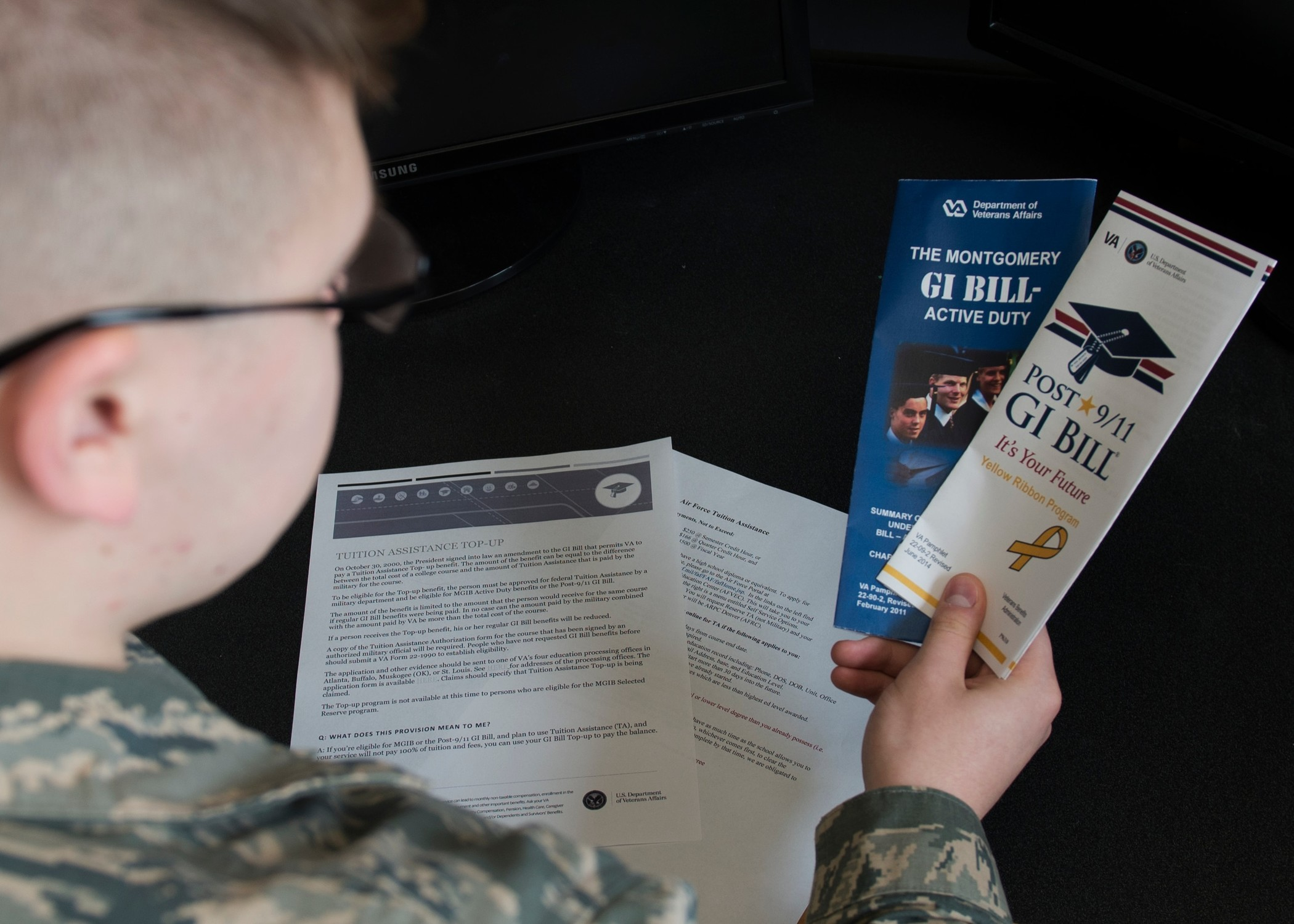 As the problem appears to have no clear solution, the House Committee on Veterans’ Affairs is holding a hearing Wednesday to investigate the matter. The contractor hired by the VA to update its system for the Forever GI Bill, Booz Allen Hamilton, a multi-billion-dollar information technology company, will be called to testify. In a Nov. 5 letter to Secretary of Veterans Affairs Robert Wilkie, Roe said that employees at the processing center told the group that IT systems at the office froze and crashed so often that tasks that once took five minutes now required 45 minutes. Computers often suffered a “blue screen of death,” which required restarting machines, and “managers had to write off 16,890 man-hours due to system crashes or latency issues.” As the problem appears to have no clear solution, the House Committee on Veterans’ Affairs is holding a hearing Wednesday to investigate the matter. The contractor hired by the VA to update its system for the Forever GI Bill, Booz Allen Hamilton, a multi-billion-dollar information technology company, will be called to testify. In a Nov. 5 letter to Secretary of Veterans Affairs Robert Wilkie, Roe said that employees at the processing center told the group that IT systems at the office froze and crashed so often that tasks that once took five minutes now required 45 minutes. Computers often suffered a “blue screen of death,” which required restarting machines, and “managers had to write off 16,890 man-hours due to system crashes or latency issues.” "Now the things have turned worse. It would be counterproductive for the Department of Veterans Affairs to focus on repairing the existing legacy system. Instead, they have to think about coming up with a new system and stop putting band-aids on a sucking chest wound." - Tao of Random, author. Hence, it is important to take a look at the best options available out there in the market to consider and go ahead with an option that they can rely on. This is where blockchain technology comes into play. Blockchain technology and cryptocurrencies have received a lot of attention in the recent past. It is also being called the "future of currencies." This new method of completing transactions has penetrated to a considerable percentage of the world population as well. Blockchain is an open-source solution available for the government of the United States to use to improve the efficiency of work done by the Department of Veterans Affairs. In fact, it is better if the government can get inspired by the Blockchain technology and take appropriate measures in order to develop open-source front-end applications for their purposes. Companies, such as Omnigate Systems Inc., who have developed robust middleware can easily enable this front-end development by implementing their opensource FinTech platform. The new implementation of government systems gets delayed due to a variety of reasons. Financial, Political - they all take their toll on the end recipient - the Veteran. This fact has been verified by a series of studies conducted in the past. The best and the most convenient option available to overcome the negative consequences associated with such instances is breakthrough government resistance and adopt open source solutions which are designed to be future-proof and won't require processing delays to update or revamp.  Blockchain technology can be used for a variety of transactional tasks. The ability of blockchain technology to enable payments can be considered as one of the most prominent applications behind it. It has the ability to offer both security as well as privacy for the people making transactions. Due to this reason, the payment methods powered by Blockchain technology became extremely popular during the recent past. The popularity of Bitcoin is a clear example to prove the above-mentioned fact. The current legacy system employed by The Department of Veterans Affairs will cost taxpayers a considerable amount to repair. However, they will also come across the need to replace this system, in the next 5 to 20 years. Arguably, this need manifested years ago, but the system was never updated. It will be a massive expense. Any standard FinTech solution will face, in time, the same issue that they are facing now. Hence, replacing the existing system with a new one cannot be considered as the best solution available for them. They will have to look for a more robust, and future-proof solution. That’s where the Department of Veterans Affairs should think about implementing the blockchain technology. If the VA implements Blockchain technology, Veterans will not be forced to accept payments in cryptocurrencies. Blockchain technology can be, and is, utilized in the transfer of fiat currencies and would be an outstanding platform used to track the Veteran payments and maximize speed and efficiency. One may find several driving forces behind the proliferation of blockchain technology as well. Out of them, a service provider such as Ripple would be able to provide excellent assistance to the Department of Veterans Affairs. Ripple is a real-time gross settlement system, currency exchange and remittance network created by Ripple Labs Inc., a US-based technology company. Ripple is built upon a distributed open-source internet protocol and supports tokens representing fiat currency, cryptocurrency, commodities, or other units of value such as frequent flier miles or mobile minutes. Released in 2012, Ripple purports to enable "secure, instantly and nearly free global financial transactions of any size with no chargebacks." In utilizing Ripple, or most blockchain networks, it would also possible for them to provide a framework of transactional verification to the Veterans, enabling them to track the payment status they are entitled to receive. This can deliver a better experience to the Veterans at the end of the day. Tao of Random |
| json metadata | {"tags":["veterans","blockchain","department","government"],"image":["https://cdn.steemitimages.com/DQmeMSUEh6XK8P7Dkzv5XA58iTEyrXGaZ1x4P6B3Rvx3vMC/image.png","https://cdn.steemitimages.com/DQmZEHQ1fSgXFTkE77JMaG2WLZDpqRJovEpwyQjasEWYGFC/image.png","https://cdn.steemitimages.com/DQmPxGWACkUKKYA3XPYVbEWGw2ZABrbwBvfhu9QqENmdHd3/image.png","https://cdn.steemitimages.com/DQmQE6auutnxT8T1BxVcCFGD6akBfDxMmBiASEeHEKyN2AW/image.png","https://cdn.steemitimages.com/DQmX1n82SNJ7PgmVqY2d75rxceCRTBNuKVpP4Gm8HRKeLtB/image.png"],"app":"steemit/0.1","format":"markdown"} |
| Transaction Info | Block #34921707/Trx 6b11683e781abd863b8141ea3ddf3261deeb633d |
View Raw JSON Data
{
"trx_id": "6b11683e781abd863b8141ea3ddf3261deeb633d",
"block": 34921707,
"trx_in_block": 19,
"op_in_trx": 0,
"virtual_op": 0,
"timestamp": "2019-07-23T19:09:03",
"op": [
"comment",
{
"parent_author": "",
"parent_permlink": "veterans",
"author": "taoofrandom",
"permlink": "can-blockchain-solve-the-problems-at-the-department-of-veterans-affairs",
"title": "Can Blockchain Solve The Problems At The Department of Veterans Affairs?",
"body": "The Department of Veterans Affairs Needs To Adopt Blockchain - And Here's Why...\n\nThe government of the United States has, on the surface, maintained an excellent reputation throughout the past by taking care of veterans. The United States has the most comprehensive system of assistance for Veterans of any nation in the world, with roots that can be traced back to 1636, when the Pilgrims of Plymouth Colony were at war with the Pequot Indians. The Pilgrims passed a law that stated that disabled soldiers would be supported by the colony. The Department of Veterans Affairs carries this tradition through Congressional mandate and currently supports over 20 million Veterans. While they are not without issues, no other country provides as much for returning Soldiers, Sailors, Airmen, and Marines as does the United States.\n\n\n\nThe primary objective of the Department of Veterans Affairs is to promote the interest of veterans who are living within the United States. Outside of medical coverage and assistance, the VA is responsible for the GI Bill payments of all the honorably discharged veterans seeking to improve their education. Through the GI Bill, the veterans will be able to receive an allowance, which can support their living. With all these benefits, the Department of Veterans Affairs is trying to provide the opportunity for the veterans to reintegrate with the society in a convenient manner, after their retirement, end of enlistment or separation due to injury. \n\n\n\nUnfortunately, the VA is rife with inefficiencies, scandals, and plagued by reports of Veterans not receiving proper care or financial assistance. Recently conducted studies identified most veterans are not receiving all the benefits that are linked with this program. As a result, the veterans are forced to fund on their own. This has taken place, not due to the unavailability of funds. The Department of Veterans Affairs has enough funds to benefit all the veterans. They are willing to release the funds for the betterment of the veterans as well.\n\nThe problem lies within its financial distribution system - the technology used to facilitate this program is inefficient. As a result, the veterans are forced to go through a series of struggles to ensure they receive the financial assistance they were contractually guaranteed. \n\nVeterans haven't received GI Bill benefits for months due to ongoing IT issues at VA\n\"This is — to be kind — a train wreck,” said Rep. Phil Roe, R-Tenn., the chairman of the House Committee on Veterans Affairs.\n\n\n\nThe Department of Veterans Affairs is suffering from a series of information technology glitches that has caused GI Bill benefit payments covering education and housing to be delayed or never be delivered.\n\nWhile it is unclear how many GI Bill recipients were affected by the glitches, as of Nov. 8, more than 82,000 were still waiting for their housing payments with only weeks remaining in the school semester, according to the VA. Hundreds of thousands are believed to have been affected.\n\nThe Department of Veterans Affairs is currently using outdated technology in order to manage the programs that are conducted with the objective of providing benefits to the veterans. The officials come across a series of difficulties when they are trying to manage the funds. They identified this issue some time back. As a result, they gave a service provider with the task of repairing the system and improving its efficiency. However, they also gave a tight deadline to get the job done. As a result, the service provider was not able to provide a quality service. \n\nThe cause of the difficulty lies, more specifically, within VA’s Office of Information Technology, which was tasked with implementing a change in how the housing allowance was calculated, the agency said.\n\nAt the end of August, the Veterans Benefits Administration had nearly 239,000 pending claims — 100,000 more than at the same point in 2017. As school began, thousands of students faced dire circumstances and some faced eviction, getting kicked out of school or taking on loan or credit card debt.\n\n\n\nAs the problem appears to have no clear solution, the House Committee on Veterans’ Affairs is holding a hearing Wednesday to investigate the matter.\n\nThe contractor hired by the VA to update its system for the Forever GI Bill, Booz Allen Hamilton, a multi-billion-dollar information technology company, will be called to testify. In a Nov. 5 letter to Secretary of Veterans Affairs Robert Wilkie, Roe said that employees at the processing center told the group that IT systems at the office froze and crashed so often that tasks that once took five minutes now required 45 minutes. Computers often suffered a “blue screen of death,” which required restarting machines, and “managers had to write off 16,890 man-hours due to system crashes or latency issues.”\n\nAs the problem appears to have no clear solution, the House Committee on Veterans’ Affairs is holding a hearing Wednesday to investigate the matter.\n\nThe contractor hired by the VA to update its system for the Forever GI Bill, Booz Allen Hamilton, a multi-billion-dollar information technology company, will be called to testify. In a Nov. 5 letter to Secretary of Veterans Affairs Robert Wilkie, Roe said that employees at the processing center told the group that IT systems at the office froze and crashed so often that tasks that once took five minutes now required 45 minutes. Computers often suffered a “blue screen of death,” which required restarting machines, and “managers had to write off 16,890 man-hours due to system crashes or latency issues.”\n\n\"Now the things have turned worse. It would be counterproductive for the Department of Veterans Affairs to focus on repairing the existing legacy system. Instead, they have to think about coming up with a new system and stop putting band-aids on a sucking chest wound.\" - Tao of Random, author.\n\nHence, it is important to take a look at the best options available out there in the market to consider and go ahead with an option that they can rely on. \n\nThis is where blockchain technology comes into play. \n\nBlockchain technology and cryptocurrencies have received a lot of attention in the recent past. It is also being called the \"future of currencies.\" This new method of completing transactions has penetrated to a considerable percentage of the world population as well. \n\nBlockchain is an open-source solution available for the government of the United States to use to improve the efficiency of work done by the Department of Veterans Affairs. In fact, it is better if the government can get inspired by the Blockchain technology and take appropriate measures in order to develop open-source front-end applications for their purposes. Companies, such as Omnigate Systems Inc., who have developed robust middleware can easily enable this front-end development by implementing their opensource FinTech platform.\n\nThe new implementation of government systems gets delayed due to a variety of reasons. Financial, Political - they all take their toll on the end recipient - the Veteran. This fact has been verified by a series of studies conducted in the past. The best and the most convenient option available to overcome the negative consequences associated with such instances is breakthrough government resistance and adopt open source solutions which are designed to be future-proof and won't require processing delays to update or revamp.\n\n\n\nBlockchain technology can be used for a variety of transactional tasks. The ability of blockchain technology to enable payments can be considered as one of the most prominent applications behind it. It has the ability to offer both security as well as privacy for the people making transactions. Due to this reason, the payment methods powered by Blockchain technology became extremely popular during the recent past. The popularity of Bitcoin is a clear example to prove the above-mentioned fact. \n\nThe current legacy system employed by The Department of Veterans Affairs will cost taxpayers a considerable amount to repair. However, they will also come across the need to replace this system, in the next 5 to 20 years. Arguably, this need manifested years ago, but the system was never updated. It will be a massive expense. Any standard FinTech solution will face, in time, the same issue that they are facing now. Hence, replacing the existing system with a new one cannot be considered as the best solution available for them. They will have to look for a more robust, and future-proof solution. That’s where the Department of Veterans Affairs should think about implementing the blockchain technology. \n\nIf the VA implements Blockchain technology, Veterans will not be forced to accept payments in cryptocurrencies. Blockchain technology can be, and is, utilized in the transfer of fiat currencies and would be an outstanding platform used to track the Veteran payments and maximize speed and efficiency.\nOne may find several driving forces behind the proliferation of blockchain technology as well. Out of them, a service provider such as Ripple would be able to provide excellent assistance to the Department of Veterans Affairs. Ripple is a real-time gross settlement system, currency exchange and remittance network created by Ripple Labs Inc., a US-based technology company. Ripple is built upon a distributed open-source internet protocol and supports tokens representing fiat currency, cryptocurrency, commodities, or other units of value such as frequent flier miles or mobile minutes. Released in 2012, Ripple purports to enable \"secure, instantly and nearly free global financial transactions of any size with no chargebacks.\"\n\nIn utilizing Ripple, or most blockchain networks, it would also possible for them to provide a framework of transactional verification to the Veterans, enabling them to track the payment status they are entitled to receive. This can deliver a better experience to the Veterans at the end of the day.\n\nTao of Random",
"json_metadata": "{\"tags\":[\"veterans\",\"blockchain\",\"department\",\"government\"],\"image\":[\"https://cdn.steemitimages.com/DQmeMSUEh6XK8P7Dkzv5XA58iTEyrXGaZ1x4P6B3Rvx3vMC/image.png\",\"https://cdn.steemitimages.com/DQmZEHQ1fSgXFTkE77JMaG2WLZDpqRJovEpwyQjasEWYGFC/image.png\",\"https://cdn.steemitimages.com/DQmPxGWACkUKKYA3XPYVbEWGw2ZABrbwBvfhu9QqENmdHd3/image.png\",\"https://cdn.steemitimages.com/DQmQE6auutnxT8T1BxVcCFGD6akBfDxMmBiASEeHEKyN2AW/image.png\",\"https://cdn.steemitimages.com/DQmX1n82SNJ7PgmVqY2d75rxceCRTBNuKVpP4Gm8HRKeLtB/image.png\"],\"app\":\"steemit/0.1\",\"format\":\"markdown\"}"
}
]
}steemdelegated 18.299 SP to @taoofrandom2019/07/23 17:52:39
steemdelegated 18.299 SP to @taoofrandom
2019/07/23 17:52:39
| delegator | steem |
| delegatee | taoofrandom |
| vesting shares | 29797.432138 VESTS |
| Transaction Info | Block #34920181/Trx b7ff1e48499a90784dee3c039175b5fa2a20de6c |
View Raw JSON Data
{
  "trx_id": "b7ff1e48499a90784dee3c039175b5fa2a20de6c",
  "block": 34920181,
  "trx_in_block": 8,
  "op_in_trx": 0,
  "virtual_op": 0,
  "timestamp": "2019-07-23T17:52:39",
  "op": [
    "delegate_vesting_shares",
    {
      "delegator": "steem",
      "delegatee": "taoofrandom",
      "vesting_shares": "29797.432138 VESTS"
    }
  ]
}steemdelegated 18.607 SP to @taoofrandom2019/07/23 16:03:36
steemdelegated 18.607 SP to @taoofrandom
2019/07/23 16:03:36
| delegator | steem |
| delegatee | taoofrandom |
| vesting shares | 30300.000000 VESTS |
| Transaction Info | Block #34918000/Trx 0d95cba8080f7bb539dceb53b1b8a6f32d98397f |
View Raw JSON Data
{
  "trx_id": "0d95cba8080f7bb539dceb53b1b8a6f32d98397f",
  "block": 34918000,
  "trx_in_block": 13,
  "op_in_trx": 0,
  "virtual_op": 0,
  "timestamp": "2019-07-23T16:03:36",
  "op": [
    "delegate_vesting_shares",
    {
      "delegator": "steem",
      "delegatee": "taoofrandom",
      "vesting_shares": "30300.000000 VESTS"
    }
  ]
}steemcreated a new account: @taoofrandom2019/07/23 16:03:36
steemcreated a new account: @taoofrandom
2019/07/23 16:03:36
| creator | steem |
| new account name | taoofrandom |
| owner | {"weight_threshold":1,"account_auths":[],"key_auths":[["STM7LQbhnpTAawMTeQhc7Jea7iUoGYCRjGFpnmXsDEWLq7kKiSqzb",1]]} |
| active | {"weight_threshold":1,"account_auths":[],"key_auths":[["STM81nv39C9rnicyquZtYMFBgHBQtNxcUuDRXcd8x6meWRkPEdn9v",1]]} |
| posting | {"weight_threshold":1,"account_auths":[],"key_auths":[["STM6Kov6cdUEiWcerzj74RRf3VoEyC6U219upPKzmm1BTDNLCY1Yo",1]]} |
| memo key | STM5Fq4JmzS2Wxbo72cEHXxRSpCzrrgKYK3TVJtdXBfyuYzA9ijGL |
| json metadata | {} |
| extensions | [] |
| Transaction Info | Block #34918000/Trx 0d95cba8080f7bb539dceb53b1b8a6f32d98397f |
View Raw JSON Data
{
  "trx_id": "0d95cba8080f7bb539dceb53b1b8a6f32d98397f",
  "block": 34918000,
  "trx_in_block": 13,
  "op_in_trx": 0,
  "virtual_op": 0,
  "timestamp": "2019-07-23T16:03:36",
  "op": [
    "create_claimed_account",
    {
      "creator": "steem",
      "new_account_name": "taoofrandom",
      "owner": {
        "weight_threshold": 1,
        "account_auths": [],
        "key_auths": [
          [
            "STM7LQbhnpTAawMTeQhc7Jea7iUoGYCRjGFpnmXsDEWLq7kKiSqzb",
            1
          ]
        ]
      },
      "active": {
        "weight_threshold": 1,
        "account_auths": [],
        "key_auths": [
          [
            "STM81nv39C9rnicyquZtYMFBgHBQtNxcUuDRXcd8x6meWRkPEdn9v",
            1
          ]
        ]
      },
      "posting": {
        "weight_threshold": 1,
        "account_auths": [],
        "key_auths": [
          [
            "STM6Kov6cdUEiWcerzj74RRf3VoEyC6U219upPKzmm1BTDNLCY1Yo",
            1
          ]
        ]
      },
      "memo_key": "STM5Fq4JmzS2Wxbo72cEHXxRSpCzrrgKYK3TVJtdXBfyuYzA9ijGL",
      "json_metadata": "{}",
      "extensions": []
    }
  ]
}Manabar
Voting Power100.00%
Downvote Power100.00%
Resource Credits100.00%
Reputation Progress0.00%
{
  "voting_manabar": {
    "current_mana": 1953311140,
    "last_update_time": 1588955115
  },
  "downvote_manabar": {
    "current_mana": 488327785,
    "last_update_time": 1588955115
  },
  "rc_account": {
    "account": "taoofrandom",
    "rc_manabar": {
      "current_mana": "15812019895",
      "last_update_time": 1588955115
    },
    "max_rc_creation_adjustment": {
      "amount": "5959508175",
      "precision": 6,
      "nai": "@@000000037"
    },
    "max_rc": "7912819315"
  }
}
Account Metadata
| POSTING JSON METADATA | |
| None | |
| JSON METADATA | |
| None |
{
  "posting_json_metadata": {},
  "json_metadata": {}
}
Auth Keys
Owner
Single Signature
Public Keys
STM7LQbhnpTAawMTeQhc7Jea7iUoGYCRjGFpnmXsDEWLq7kKiSqzb1/1
Active
Single Signature
Public Keys
STM81nv39C9rnicyquZtYMFBgHBQtNxcUuDRXcd8x6meWRkPEdn9v1/1
Posting
Single Signature
Public Keys
STM6Kov6cdUEiWcerzj74RRf3VoEyC6U219upPKzmm1BTDNLCY1Yo1/1
Memo
STM5Fq4JmzS2Wxbo72cEHXxRSpCzrrgKYK3TVJtdXBfyuYzA9ijGL
{
  "owner": {
    "weight_threshold": 1,
    "account_auths": [],
    "key_auths": [
      [
        "STM7LQbhnpTAawMTeQhc7Jea7iUoGYCRjGFpnmXsDEWLq7kKiSqzb",
        1
      ]
    ]
  },
  "active": {
    "weight_threshold": 1,
    "account_auths": [],
    "key_auths": [
      [
        "STM81nv39C9rnicyquZtYMFBgHBQtNxcUuDRXcd8x6meWRkPEdn9v",
        1
      ]
    ]
  },
  "posting": {
    "weight_threshold": 1,
    "account_auths": [],
    "key_auths": [
      [
        "STM6Kov6cdUEiWcerzj74RRf3VoEyC6U219upPKzmm1BTDNLCY1Yo",
        1
      ]
    ]
  },
  "memo": "STM5Fq4JmzS2Wxbo72cEHXxRSpCzrrgKYK3TVJtdXBfyuYzA9ijGL"
}
Witness Votes
0 / 30
No active witness votes.
[]