

@savoyesharrieff
37Savoye' Sharrieff is a aspiring writer and student of civil engineering for the modern world.
steemit.com/@savoyesharrieffVOTING POWER100.00%
DOWNVOTE POWER100.00%
RESOURCE CREDITS100.00%
REPUTATION PROGRESS61.18%
Net Worth
0.014USD
STEEM
0.247STEEM
SBD
0.000SBD
Effective Power
3.430SP
├── Own SP
0.000SP
└── Incoming DelegationsDeleg
+3.430SP
Detailed Balance
| STEEM | ||
| balance | 0.000STEEM | STEEM |
| market_balance | 0.000STEEM | STEEM |
| savings_balance | 0.000STEEM | STEEM |
| reward_steem_balance | 0.247STEEM | STEEM |
| STEEM POWER | ||
| Own SP | 0.000SP | SP |
| Delegated Out | 0.000SP | SP |
| Delegation In | 3.430SP | SP |
| Effective Power | 3.430SP | SP |
| Reward SP (pending) | 0.248SP | SP |
| SBD | ||
| sbd_balance | 0.000SBD | SBD |
| sbd_conversions | 0.000SBD | SBD |
| sbd_market_balance | 0.000SBD | SBD |
| savings_sbd_balance | 0.000SBD | SBD |
| reward_sbd_balance | 0.000SBD | SBD |
{
  "balance": "0.000 STEEM",
  "savings_balance": "0.000 STEEM",
  "reward_steem_balance": "0.247 STEEM",
  "vesting_shares": "0.000000 VESTS",
  "delegated_vesting_shares": "0.000000 VESTS",
  "received_vesting_shares": "5577.601570 VESTS",
  "sbd_balance": "0.000 SBD",
  "savings_sbd_balance": "0.000 SBD",
  "reward_sbd_balance": "0.000 SBD",
  "conversions": []
}
Account Info
| name | savoyesharrieff |
| id | 1916915 |
| rank | 1,103,817 |
| reputation | 19507403652 |
| created | 2024-10-02T19:22:12 |
| recovery_account | steemcurator01 |
| proxy | None |
| post_count | 4 |
| comment_count | 0 |
| lifetime_vote_count | 0 |
| witnesses_voted_for | 0 |
| last_post | 2025-02-06T18:54:21 |
| last_root_post | 2025-02-06T18:54:21 |
| last_vote_time | 1970-01-01T00:00:00 |
| proxied_vsf_votes | 0, 0, 0, 0 |
| can_vote | 1 |
| voting_power | 0 |
| delayed_votes | 0 |
| balance | 0.000 STEEM |
| savings_balance | 0.000 STEEM |
| sbd_balance | 0.000 SBD |
| savings_sbd_balance | 0.000 SBD |
| vesting_shares | 0.000000 VESTS |
| delegated_vesting_shares | 0.000000 VESTS |
| received_vesting_shares | 5577.601570 VESTS |
| reward_vesting_balance | 421.576105 VESTS |
| vesting_balance | 0.000 STEEM |
| vesting_withdraw_rate | 0.000000 VESTS |
| next_vesting_withdrawal | 1969-12-31T23:59:59 |
| withdrawn | 0 |
| to_withdraw | 0 |
| withdraw_routes | 0 |
| savings_withdraw_requests | 0 |
| last_account_recovery | 1970-01-01T00:00:00 |
| reset_account | null |
| last_owner_update | 1970-01-01T00:00:00 |
| last_account_update | 2024-11-13T16:08:15 |
| mined | No |
| sbd_seconds | 0 |
| sbd_last_interest_payment | 1970-01-01T00:00:00 |
| savings_sbd_last_interest_payment | 1970-01-01T00:00:00 |
{
  "active": {
    "account_auths": [],
    "key_auths": [
      [
        "STM5rHfDR6KKucg1tb3ffTP5vuHdprjndaqYrVMQeNbiGi2so4GaC",
        1
      ]
    ],
    "weight_threshold": 1
  },
  "balance": "0.000 STEEM",
  "can_vote": true,
  "comment_count": 0,
  "created": "2024-10-02T19:22:12",
  "curation_rewards": 0,
  "delegated_vesting_shares": "0.000000 VESTS",
  "downvote_manabar": {
    "current_mana": 1394400392,
    "last_update_time": 1746734688
  },
  "guest_bloggers": [],
  "id": 1916915,
  "json_metadata": "{}",
  "last_account_recovery": "1970-01-01T00:00:00",
  "last_account_update": "2024-11-13T16:08:15",
  "last_owner_update": "1970-01-01T00:00:00",
  "last_post": "2025-02-06T18:54:21",
  "last_root_post": "2025-02-06T18:54:21",
  "last_vote_time": "1970-01-01T00:00:00",
  "lifetime_vote_count": 0,
  "market_history": [],
  "memo_key": "STM5t7wW77L76AajCTiq1Ct4fabQBzjvNymfXJBmSuBpMCUTrCSpd",
  "mined": false,
  "name": "savoyesharrieff",
  "next_vesting_withdrawal": "1969-12-31T23:59:59",
  "other_history": [],
  "owner": {
    "account_auths": [],
    "key_auths": [
      [
        "STM6R1ErDNgQC3U37a8Jqv9XVc76Ziesqw5BcMUYVpNgKheb4WgvT",
        1
      ]
    ],
    "weight_threshold": 1
  },
  "pending_claimed_accounts": 0,
  "post_bandwidth": 0,
  "post_count": 4,
  "post_history": [],
  "posting": {
    "account_auths": [],
    "key_auths": [
      [
        "STM7BHF5HCskebiu71bGmGt9JXUxuP1YR6hWQn3YWavoLD72CFsd5",
        1
      ]
    ],
    "weight_threshold": 1
  },
  "posting_json_metadata": "{\"profile\":{\"profile_image\":\"https://cdn.steemitimages.com/DQmNNhxvNd9b1m7tGFqdavVjomToRsvDka925gZmXSbZKWy/old%20english%20s.jpg\",\"cover_image\":\"https://cdn.steemitimages.com/DQmZTjf4qnL8YBrayMtzUXDsVbxqJj5Gq6txBeib7YAUAoY/Savoye'%20Sharrieff%20LinkedIn%20BG%20Img.jpg\",\"name\":\"Savoye' Sharrieff\",\"about\":\"Savoye' Sharrieff is a aspiring writer and student of civil engineering for the modern world.\",\"version\":2}}",
  "posting_rewards": 495,
  "proxied_vsf_votes": [
    0,
    0,
    0,
    0
  ],
  "proxy": "",
  "received_vesting_shares": "5577.601570 VESTS",
  "recovery_account": "steemcurator01",
  "reputation": "19507403652",
  "reset_account": "null",
  "reward_sbd_balance": "0.000 SBD",
  "reward_steem_balance": "0.247 STEEM",
  "reward_vesting_balance": "421.576105 VESTS",
  "reward_vesting_steem": "0.248 STEEM",
  "savings_balance": "0.000 STEEM",
  "savings_sbd_balance": "0.000 SBD",
  "savings_sbd_last_interest_payment": "1970-01-01T00:00:00",
  "savings_sbd_seconds": "0",
  "savings_sbd_seconds_last_update": "1970-01-01T00:00:00",
  "savings_withdraw_requests": 0,
  "sbd_balance": "0.000 SBD",
  "sbd_last_interest_payment": "1970-01-01T00:00:00",
  "sbd_seconds": "0",
  "sbd_seconds_last_update": "1970-01-01T00:00:00",
  "tags_usage": [],
  "to_withdraw": 0,
  "transfer_history": [],
  "vesting_balance": "0.000 STEEM",
  "vesting_shares": "0.000000 VESTS",
  "vesting_withdraw_rate": "0.000000 VESTS",
  "vote_history": [],
  "voting_manabar": {
    "current_mana": "5577601570",
    "last_update_time": 1746734688
  },
  "voting_power": 0,
  "withdraw_routes": 0,
  "withdrawn": 0,
  "witness_votes": [],
  "witnesses_voted_for": 0,
  "rank": 1103817
}
Withdraw Routes
| Incoming | Outgoing |
|---|---|
Empty | Empty |
{
  "incoming": [],
  "outgoing": []
}From Date
To Date
steemdelegated 3.430 SP to @savoyesharrieff2025/05/08 20:04:48
steemdelegated 3.430 SP to @savoyesharrieff
2025/05/08 20:04:48
| delegatee | savoyesharrieff |
| delegator | steem |
| vesting shares | 5577.601570 VESTS |
| Transaction Info | Block #95397049/Trx 147521eecb45eb3e537cc4803b1b40b814ef5cf6 |
View Raw JSON Data
{
  "block": 95397049,
  "op": [
    "delegate_vesting_shares",
    {
      "delegatee": "savoyesharrieff",
      "delegator": "steem",
      "vesting_shares": "5577.601570 VESTS"
    }
  ],
  "op_in_trx": 0,
  "timestamp": "2025-05-08T20:04:48",
  "trx_id": "147521eecb45eb3e537cc4803b1b40b814ef5cf6",
  "trx_in_block": 0,
  "virtual_op": 0
}steemdelegated 10.352 SP to @savoyesharrieff2025/02/16 21:48:57
steemdelegated 10.352 SP to @savoyesharrieff
2025/02/16 21:48:57
| delegatee | savoyesharrieff |
| delegator | steem |
| vesting shares | 16835.142227 VESTS |
| Transaction Info | Block #93072897/Trx 33b45c22a55aca2c4d57cbe2c7116ee7dfea73e1 |
View Raw JSON Data
{
  "block": 93072897,
  "op": [
    "delegate_vesting_shares",
    {
      "delegatee": "savoyesharrieff",
      "delegator": "steem",
      "vesting_shares": "16835.142227 VESTS"
    }
  ],
  "op_in_trx": 0,
  "timestamp": "2025-02-16T21:48:57",
  "trx_id": "33b45c22a55aca2c4d57cbe2c7116ee7dfea73e1",
  "trx_in_block": 2,
  "virtual_op": 0
}2025/02/06 18:54:21
2025/02/06 18:54:21
| author | savoyesharrieff |
| body | By: Savoye’ Sharrieff  Imagine trying to sleep on a city bench during a heatwave, the concrete beneath you radiating heat like an oven. Or shivering in drenched clothes after a storm, with nowhere to dry off, nowhere to escape the biting cold. For thousands of people experiencing homelessness, this isn’t just a rough night—it’s their daily reality. And as climate change worsens, their struggle is becoming even more brutal. Rising temperatures, extreme storms, and natural disasters don’t just make headlines—they destroy lives. The housing crisis has already forced more people onto the streets, and now, with extreme weather events becoming more frequent, many are left completely defenseless against the elements. Without action, more lives will be lost—not just to homelessness, but to the deadly consequences of a changing climate. To protect those most at risk, we must prioritize affordable housing—not just as an act of compassion, but as a life-saving necessity.  The Role of Civil and Community Engineering in Affordable Housing Solutions Climate change intensifies the dangers faced by people experiencing homelessness, exposing them to extreme weather conditions. However, through smart civil engineering and community-focused design, we can create affordable housing that is not only safe but also resilient, sustainable, and supportive of long-term stability. One critical solution is modular construction, which allows for the rapid assembly of prefabricated homes at a fraction of the cost of traditional building methods. These structures can be designed with climate-resilient materials, ensuring durability against extreme weather conditions like hurricanes, floods, and heatwaves. By incorporating solar panels, rainwater collection systems, and energy-efficient insulation, affordable housing can also help reduce utility costs for low-income residents while minimizing environmental impact. Reduction of these costs of homeownership make it less likely that economic changes will result in a person losing their homes. Beyond shelter, community-centric engineering plays a crucial role in fostering connection and stability. Affordable housing developments should include shared green spaces, community gardens, and multi-use common areas that encourage social interaction and provide a sense of belonging. Research has shown that these features improve mental health, reduce crime rates, and strengthen community resilience in the face of crises. Additionally, urban planning must focus on strategic placement of affordable housing in areas that offer accessibility to public transportation, job opportunities, and essential services. Instead of isolating low-income communities, integrated development can provide residents with opportunities for upward mobility while reducing their reliance on costly and carbon-heavy transportation. 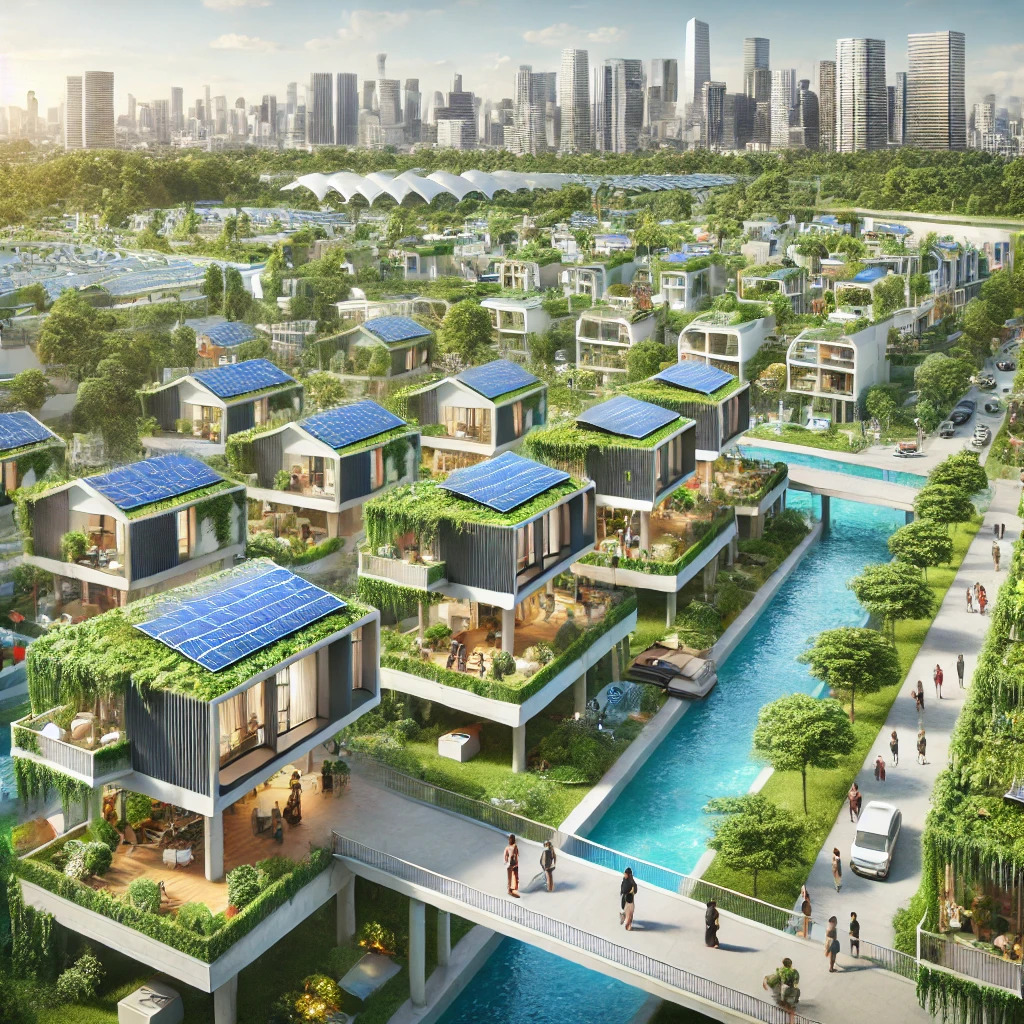 Addressing the Housing Crisis Through Engineering & Community Design Climate change isn’t just making homelessness more dangerous—it’s also driving more people into housing instability. In the Greater New Orleans area (GNO), we’ve seen firsthand how extreme weather disrupts lives. Hurricanes, severe flooding, and even rare events like a 10-inch snowfall (January, 2025) can leave already vulnerable individuals without shelter and in crisis conditions. Natural disasters don’t just displace people temporarily; they damage infrastructure, drive up construction costs, and make it harder for low-income families to secure stable housing. Beyond natural disasters, rising insurance premiums, utility costs, and climate-related damage to real estate are pricing out families who were already on the financial edge. Civil engineers and urban planners must address these challenges through climate-adaptive housing solutions that keep costs low while improving long-term sustainability. This includes: • Elevated, flood-resistant structures designed to withstand rising water levels. • Energy-efficient housing with solar and rainwater collection systems to offset rising utility costs. • Locating affordable housing developments near public transportation and employment hubs to reduce financial strain on residents. Additionally, climate-resilient community planning can prevent displacement before disasters strike. By integrating emergency shelter spaces into new developments and utilizing storm-resistant building materials, we can create homes that protect residents year-round. The impact of extreme weather is not just a housing crisis—it’s a civil engineering challenge that demands innovative, forward-thinking solutions. 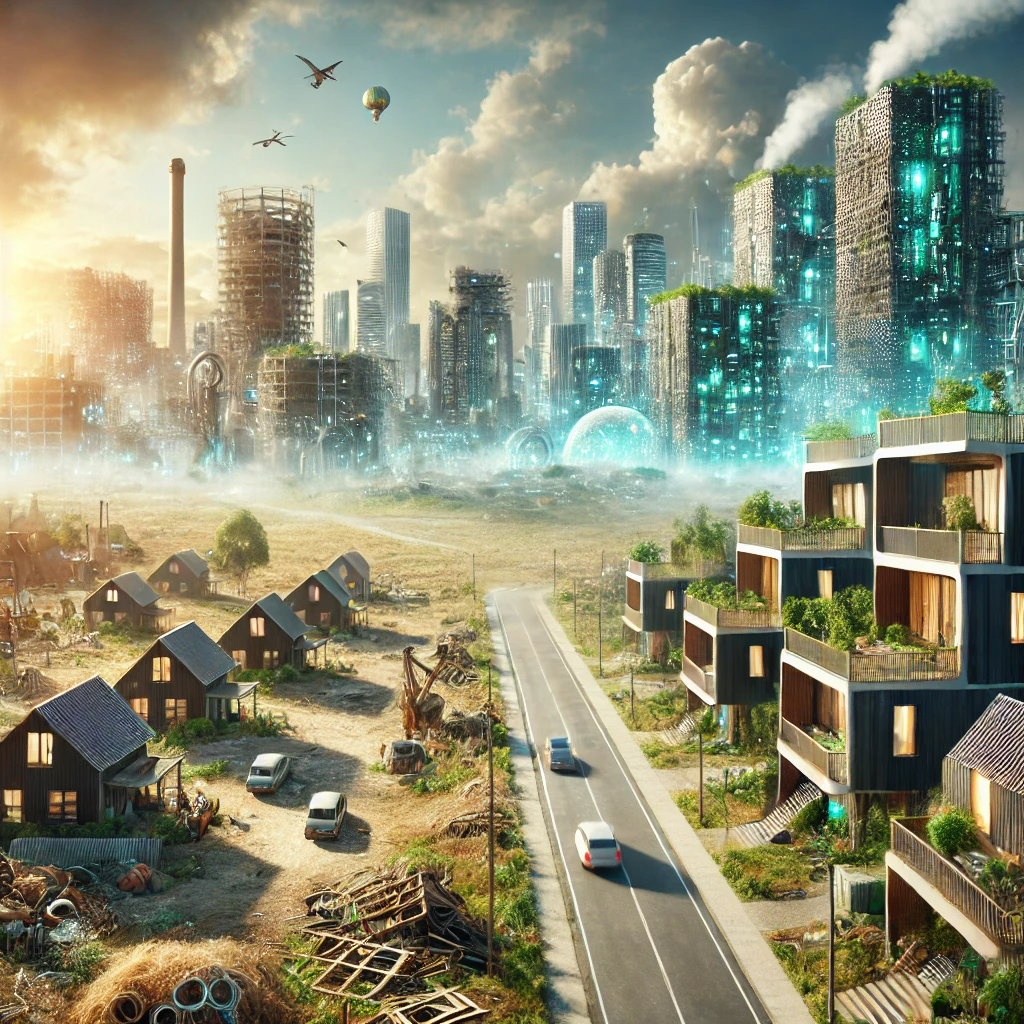 Engineering a Sustainable Future Through Affordable Housing To combat this growing crisis, we must prioritize investment in climate-resilient, affordable housing that integrates innovative engineering solutions. Safe and stable housing is not just about providing shelter—it’s about building structures that protect residents from extreme weather events while fostering long-term economic and environmental sustainability. Engineers, urban planners, and community developers have a critical role to play in designing homes that mitigate climate risks, lower long-term costs, and strengthen communities. Strategic investments in green, high-efficiency housing can provide long-term solutions that serve both the people and the planet. This includes: • Resilient building materials, such as hurricane-rated windows, flood-resistant foundations, and fire-retardant insulation, to withstand climate extremes. • Sustainable energy systems, like solar power, rainwater collection, and passive cooling designs, to reduce residents' utility expenses while decreasing environmental impact. • Smart community planning, ensuring that affordable housing developments are located near essential services, job centers, and reliable public transportation, reducing the financial burden on residents. Beyond simply being a humane solution, investing in climate-conscious, community-driven housing also reduces the strain on emergency services, hospitals, and shelters—ultimately saving public funds. By embracing sustainable, well-planned developments, we can build stronger, more resilient communities that offer stability, security, and opportunity for all.  A Call to Action for Resilient, Affordable Housing Climate change is no longer a distant threat—it’s an immediate crisis, especially for those experiencing homelessness. With extreme weather events intensifying and rising housing costs displacing more individuals, the need for sustainable, affordable housing has never been greater. If we fail to act, hundreds of thousands more will be left vulnerable to life-threatening conditions with no path to stability. The solution is clear: strategic investment in resilient, community-focused housing that not only shelters but protects. By integrating climate-conscious design, durable infrastructure, and accessible urban planning, we can create communities that are not only affordable but also built to withstand environmental challenges. This isn’t just about providing homes—it’s about engineering long-term stability, reducing public costs, and ensuring that no one is left unprotected as climate risks escalate. The time to act is now. By prioritizing sustainable, affordable housing, we can build a future where safety, security, and resilience are not privileges—but guarantees for all.  Additional Resources and Works Cited 1. Climate Change and Homelessness Source: Ramin, B., & Svoboda, T. (2009). Health of the Homeless and Climate Change. Journal of Urban Health, 86(4), 654–664. Summary: This study examines how climate change exacerbates health risks among homeless populations, highlighting increased exposure to extreme weather events and the resulting health complications. 2. Engineering Methods for Affordable Housing Source: National Research Council. (2003). Engineering Methods for Planning Affordable Housing and Infrastructure. In Proceedings of the National Conference on Housing and Urban Development Issues (pp. 150-165). Summary: This paper discusses innovative engineering and construction methods aimed at developing affordable housing, emphasizing the role of urban planning and sustainable design. 3. Barriers to Affordable Housing Construction Source: Amoah, P., & Simpeh, F. (2023). Barriers to and Enablers of Affordable Housing Construction: Insights from Upstate New York. Buildings, 13(2), 345. Summary: This research identifies challenges and facilitators in affordable housing construction, providing insights into effective strategies for stakeholders in the housing sector. 4. Climate Change Impacts on Homelessness Source: Cusack, L., van Loon, A., Kralik, D., Arbon, P., & Gilbert, S. (2013). Extreme-weather-related health needs of people who are homeless. Australian Journal of Primary Health, 19(3), 250–255. Summary: The study explores the health impacts of extreme weather on homeless individuals, emphasizing the need for targeted interventions to protect this vulnerable population. 5. Sustainable Low-Cost Housing Source: Sivakrishna, A., & Senthilkumar, R. (2022). A state-of-the-art review on sustainable low-cost housing and infrastructure. Materials Today: Proceedings, 62(1), 311–315. Summary: This article reviews sustainable materials and construction techniques for low-cost housing, proposing innovative solutions to address housing affordability and environmental sustainability. |
| json metadata | {"tags":["climatecrisisanhousing","affordablehousing","sustainabledevelopment","homelessclimatecrisis","resilienthousingdesign","greenbuilding","floodresistanthousing","greencivilengineering"],"image":["https://cdn.steemitimages.com/DQmRE1GNgYGmTz6YdNJfk44M1cukMp9sEASSkCNPMPLwZSm/DA378D_1.png","https://cdn.steemitimages.com/DQmdmsP2hdDSRQcjP2Qq1yX9VWVaLdXuWvPjHELoEpfPupg/DAA4CF_1.jpg","https://cdn.steemitimages.com/DQmfBCHPAueDAYcioFw46GWmPz1C9SHzAYFzrU3pS8SReFx/DA5E75_1.jpg","https://cdn.steemitimages.com/DQmPSGFDwK5y9zjfos5bbjvhAD5LUzQEiswGdXnqJdw2VFW/DA0783_1.png","https://cdn.steemitimages.com/DQmPjYLEsSNfD5Zh395mGU8VatWcPs2tP6d5opgkLiy5nVK/DA9162_1.jpg","https://cdn.steemitimages.com/DQmZcecHSGaNRf8J1X2vvbAyGJtKsJw533hLDGSKvRAbnp8/DALLE2_3.png"],"app":"steemit/0.2","format":"markdown"} |
| parent author | |
| parent permlink | climatecrisisanhousing |
| permlink | homelessness-housing-and-heatwaves-why-climate-resilient-communities-matter |
| title | Homelessness, Housing, and Heatwaves: Why Climate-Resilient Communities Matter |
| Transaction Info | Block #92782460/Trx 6336728278a8322d778ebfbdc9676e69191dee67 |
View Raw JSON Data
{
"block": 92782460,
"op": [
"comment",
{
"author": "savoyesharrieff",
"body": "By: Savoye’ Sharrieff\n\n\n\nImagine trying to sleep on a city bench during a heatwave, the concrete beneath you radiating heat like an oven. Or shivering in drenched clothes after a storm, with nowhere to dry off, nowhere to escape the biting cold. For thousands of people experiencing homelessness, this isn’t just a rough night—it’s their daily reality. And as climate change worsens, their struggle is becoming even more brutal.\n\nRising temperatures, extreme storms, and natural disasters don’t just make headlines—they destroy lives. The housing crisis has already forced more people onto the streets, and now, with extreme weather events becoming more frequent, many are left completely defenseless against the elements. Without action, more lives will be lost—not just to homelessness, but to the deadly consequences of a changing climate.\n\nTo protect those most at risk, we must prioritize affordable housing—not just as an act of compassion, but as a life-saving necessity.\n\n\n\nThe Role of Civil and Community Engineering in Affordable Housing Solutions\n\nClimate change intensifies the dangers faced by people experiencing homelessness, exposing them to extreme weather conditions. However, through smart civil engineering and community-focused design, we can create affordable housing that is not only safe but also resilient, sustainable, and supportive of long-term stability.\n\nOne critical solution is modular construction, which allows for the rapid assembly of prefabricated homes at a fraction of the cost of traditional building methods. These structures can be designed with climate-resilient materials, ensuring durability against extreme weather conditions like hurricanes, floods, and heatwaves. By incorporating solar panels, rainwater collection systems, and energy-efficient insulation, affordable housing can also help reduce utility costs for low-income residents while minimizing environmental impact. Reduction of these costs of homeownership make it less likely that economic changes will result in a person losing their homes.\n\nBeyond shelter, community-centric engineering plays a crucial role in fostering connection and stability. Affordable housing developments should include shared green spaces, community gardens, and multi-use common areas that encourage social interaction and provide a sense of belonging. Research has shown that these features improve mental health, reduce crime rates, and strengthen community resilience in the face of crises.\n\nAdditionally, urban planning must focus on strategic placement of affordable housing in areas that offer accessibility to public transportation, job opportunities, and essential services. Instead of isolating low-income communities, integrated development can provide residents with opportunities for upward mobility while reducing their reliance on costly and carbon-heavy transportation.\n\n\n\nAddressing the Housing Crisis Through Engineering & Community Design\n\nClimate change isn’t just making homelessness more dangerous—it’s also driving more people into housing instability. In the Greater New Orleans area (GNO), we’ve seen firsthand how extreme weather disrupts lives. Hurricanes, severe flooding, and even rare events like a 10-inch snowfall (January, 2025) can leave already vulnerable individuals without shelter and in crisis conditions. Natural disasters don’t just displace people temporarily; they damage infrastructure, drive up construction costs, and make it harder for low-income families to secure stable housing.\n\nBeyond natural disasters, rising insurance premiums, utility costs, and climate-related damage to real estate are pricing out families who were already on the financial edge. Civil engineers and urban planners must address these challenges through climate-adaptive housing solutions that keep costs low while improving long-term sustainability. This includes:\n\n•\tElevated, flood-resistant structures designed to withstand rising water levels.\n•\tEnergy-efficient housing with solar and rainwater collection systems to offset rising utility costs.\n•\tLocating affordable housing developments near public transportation and employment hubs to reduce financial strain on residents.\n\nAdditionally, climate-resilient community planning can prevent displacement before disasters strike. By integrating emergency shelter spaces into new developments and utilizing storm-resistant building materials, we can create homes that protect residents year-round. The impact of extreme weather is not just a housing crisis—it’s a civil engineering challenge that demands innovative, forward-thinking solutions.\n\n\n\nEngineering a Sustainable Future Through Affordable Housing\n\nTo combat this growing crisis, we must prioritize investment in climate-resilient, affordable housing that integrates innovative engineering solutions. Safe and stable housing is not just about providing shelter—it’s about building structures that protect residents from extreme weather events while fostering long-term economic and environmental sustainability. Engineers, urban planners, and community developers have a critical role to play in designing homes that mitigate climate risks, lower long-term costs, and strengthen communities.\n\nStrategic investments in green, high-efficiency housing can provide long-term solutions that serve both the people and the planet. This includes:\n\n•\tResilient building materials, such as hurricane-rated windows, flood-resistant foundations, and fire-retardant insulation, to withstand climate extremes.\n•\tSustainable energy systems, like solar power, rainwater collection, and passive cooling designs, to reduce residents' utility expenses while decreasing environmental impact.\n•\tSmart community planning, ensuring that affordable housing developments are located near essential services, job centers, and reliable public transportation, reducing the financial burden on residents.\n\nBeyond simply being a humane solution, investing in climate-conscious, community-driven housing also reduces the strain on emergency services, hospitals, and shelters—ultimately saving public funds. By embracing sustainable, well-planned developments, we can build stronger, more resilient communities that offer stability, security, and opportunity for all.\n\n\n\nA Call to Action for Resilient, Affordable Housing\n\nClimate change is no longer a distant threat—it’s an immediate crisis, especially for those experiencing homelessness. With extreme weather events intensifying and rising housing costs displacing more individuals, the need for sustainable, affordable housing has never been greater. If we fail to act, hundreds of thousands more will be left vulnerable to life-threatening conditions with no path to stability.\n\nThe solution is clear: strategic investment in resilient, community-focused housing that not only shelters but protects. By integrating climate-conscious design, durable infrastructure, and accessible urban planning, we can create communities that are not only affordable but also built to withstand environmental challenges. This isn’t just about providing homes—it’s about engineering long-term stability, reducing public costs, and ensuring that no one is left unprotected as climate risks escalate.\n\nThe time to act is now. By prioritizing sustainable, affordable housing, we can build a future where safety, security, and resilience are not privileges—but guarantees for all.\n\n\n \nAdditional Resources and Works Cited\n\n1.\tClimate Change and Homelessness\nSource: Ramin, B., & Svoboda, T. (2009). Health of the Homeless and Climate Change. Journal of Urban Health, 86(4), 654–664.\nSummary: This study examines how climate change exacerbates health risks among homeless populations, highlighting increased exposure to extreme weather events and the resulting health complications.\n2.\tEngineering Methods for Affordable Housing\nSource: National Research Council. (2003). Engineering Methods for Planning Affordable Housing and Infrastructure. In Proceedings of the National Conference on Housing and Urban Development Issues (pp. 150-165).\nSummary: This paper discusses innovative engineering and construction methods aimed at developing affordable housing, emphasizing the role of urban planning and sustainable design.\n3.\tBarriers to Affordable Housing Construction\nSource: Amoah, P., & Simpeh, F. (2023). Barriers to and Enablers of Affordable Housing Construction: Insights from Upstate New York. Buildings, 13(2), 345.\nSummary: This research identifies challenges and facilitators in affordable housing construction, providing insights into effective strategies for stakeholders in the housing sector.\n4.\tClimate Change Impacts on Homelessness\nSource: Cusack, L., van Loon, A., Kralik, D., Arbon, P., & Gilbert, S. (2013). Extreme-weather-related health needs of people who are homeless. Australian Journal of Primary Health, 19(3), 250–255.\nSummary: The study explores the health impacts of extreme weather on homeless individuals, emphasizing the need for targeted interventions to protect this vulnerable population.\n5.\tSustainable Low-Cost Housing\nSource: Sivakrishna, A., & Senthilkumar, R. (2022). A state-of-the-art review on sustainable low-cost housing and infrastructure. Materials Today: Proceedings, 62(1), 311–315.\nSummary: This article reviews sustainable materials and construction techniques for low-cost housing, proposing innovative solutions to address housing affordability and environmental sustainability.",
"json_metadata": "{\"tags\":[\"climatecrisisanhousing\",\"affordablehousing\",\"sustainabledevelopment\",\"homelessclimatecrisis\",\"resilienthousingdesign\",\"greenbuilding\",\"floodresistanthousing\",\"greencivilengineering\"],\"image\":[\"https://cdn.steemitimages.com/DQmRE1GNgYGmTz6YdNJfk44M1cukMp9sEASSkCNPMPLwZSm/DA378D_1.png\",\"https://cdn.steemitimages.com/DQmdmsP2hdDSRQcjP2Qq1yX9VWVaLdXuWvPjHELoEpfPupg/DAA4CF_1.jpg\",\"https://cdn.steemitimages.com/DQmfBCHPAueDAYcioFw46GWmPz1C9SHzAYFzrU3pS8SReFx/DA5E75_1.jpg\",\"https://cdn.steemitimages.com/DQmPSGFDwK5y9zjfos5bbjvhAD5LUzQEiswGdXnqJdw2VFW/DA0783_1.png\",\"https://cdn.steemitimages.com/DQmPjYLEsSNfD5Zh395mGU8VatWcPs2tP6d5opgkLiy5nVK/DA9162_1.jpg\",\"https://cdn.steemitimages.com/DQmZcecHSGaNRf8J1X2vvbAyGJtKsJw533hLDGSKvRAbnp8/DALLE2_3.png\"],\"app\":\"steemit/0.2\",\"format\":\"markdown\"}",
"parent_author": "",
"parent_permlink": "climatecrisisanhousing",
"permlink": "homelessness-housing-and-heatwaves-why-climate-resilient-communities-matter",
"title": "Homelessness, Housing, and Heatwaves: Why Climate-Resilient Communities Matter"
}
],
"op_in_trx": 0,
"timestamp": "2025-02-06T18:54:21",
"trx_id": "6336728278a8322d778ebfbdc9676e69191dee67",
"trx_in_block": 0,
"virtual_op": 0
}savoyesharrieffpublished a new post: designing-for-dignity-rethinking-infrastructure-for-an-inclusive-society2024/11/13 16:18:36
savoyesharrieffpublished a new post: designing-for-dignity-rethinking-infrastructure-for-an-inclusive-society
2024/11/13 16:18:36
| author | savoyesharrieff |
| body | 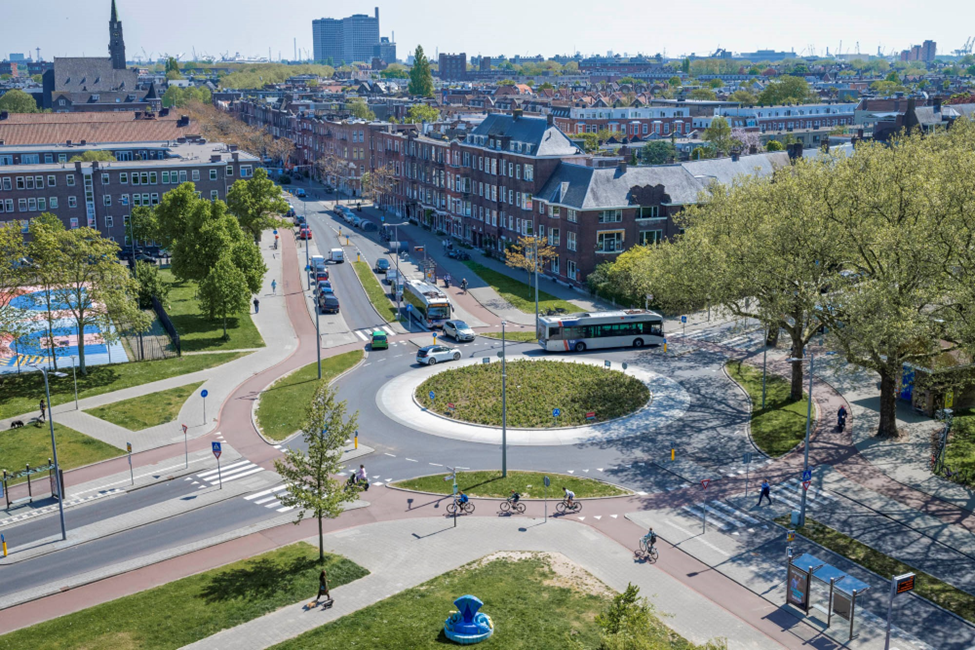 Designing for Dignity: Rethinking Infrastructure for an Inclusive Society By: Savoye’ M. Sharrieff Imagine navigating a city where every public space is built for mobility and accessibility—yet remains inaccessible to over a quarter of the population living with disabilities. For too many, it’s like trying to find an iPhone charger in a room full of Android users. The challenges faced by disabled individuals reveal a gap in our infrastructure that engineering must address. Accidents and health issues can cause injuries or disabilities that prevent people from continuing life as usual. Therefore, the engineering field must adapt to accommodate not only the physically disabled but also those with mental disabilities. In this article, I aim to highlight some of the challenges and difficulties within this area of the engineering industry. In the 1990s, President George H. W. Bush signed the Americans with Disabilities Act (ADA) into law. This act had a significant impact across many fields, but perhaps most profoundly on engineering. ADA guidelines promote inclusivity for individuals with disabilities in public spaces such as businesses, transportation, and other public accommodations. According to Hoffman and Johnson, “Creating accessible spaces is essential not only for equity but for the basic functioning of an inclusive society” (23). Now, civil engineers have a professional duty to implement ADA standards during the design process and act as allies for those with concerns regarding compliance. Sure, engineers follow ADA standards—just like some people consider making a peanut butter and jelly sandwich "cooking." We can all agree that there’s room for improvement.  The most visible group of disabled individuals are those with physical disabilities. According to the CDC, approximately “one in four U.S. adults—approximately 61 million Americans—live with a disability” (CDC). Whether they are deaf, blind, or mobility-impaired, changes need to be made to building designs to assist them at every opportunity. We have already implemented curb and sidewalk ramps, as well as braille signage, but these are seen as the bare minimum. Programs like New York City’s Accessible Pedestrian Signals (APS), which enable audible crossing signals for the visually impaired, demonstrate the need for engineering solutions beyond ADA’s foundational requirements. “While the ADA has laid the groundwork for accessible spaces, its basic standards have not kept pace with the demands for more sophisticated solutions” (Smith and Taylor 45). Accessibility for the disabled is not prioritized in technological advancements, even though disabled individuals make up about a quarter of the U.S. population. As engineers, we must devote more attention to this issue, or lives could be at risk due to our negligence. Accommodating people with mental disabilities is often easier because many are fully or mostly capable of performing the same tasks as the average person. However, the less capable individuals are frequently overlooked, forced to remain indoors or restricted to simple tasks. For example, busy public spaces can be overwhelming for individuals with cognitive disabilities. Some cities and facilities are testing sensory-friendly environments—public areas that reduce overwhelming visual and auditory stimuli—enabling people with autism and other cognitive disabilities to feel more comfortable. According to Brown, “Public spaces that accommodate sensory needs, quiet areas, and clear signage are essential to creating an inclusive environment for individuals with cognitive disabilities” (89). It should be one of our goals to ensure that these individuals can enjoy outdoor activities and have experiences comparable to those of other people. In the future, technologies like self-driving vehicles could provide significant solutions to this issue, but they may not be enough to fully address the problem. 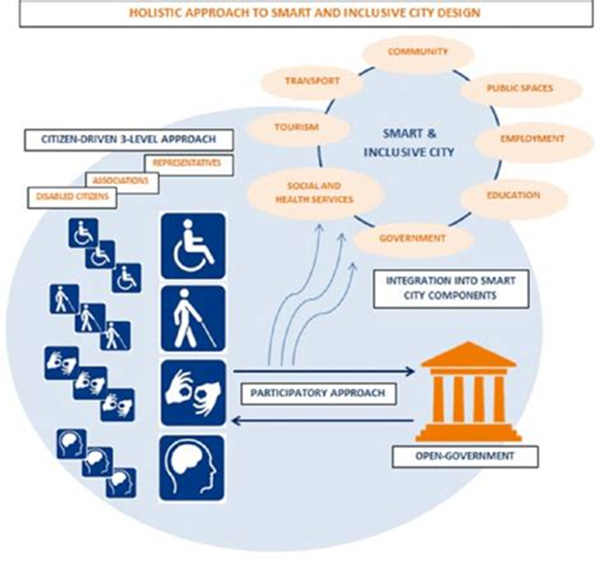 While some may argue that the costs of advanced accessibility measures are high, the benefits far outweigh these expenses when we consider the safety, inclusivity, and quality of life improvements for millions. Neglecting these issues could potentially lead to even more problems. For instance, in the event of an emergency in a tall building, a person in a wheelchair would have to either risk using the elevator or face the challenge of navigating the stairs, which would pose obvious difficulties. The potential dangers arising from ignoring this issue far outweigh the benefits of simple accommodations like handicap parking spaces.  The engineering industry must come together not only to develop these solutions but also to implement them in our design plans, ensuring that individuals who face these challenges can maintain a stable life, regardless of their disabilities. As engineers and members of society, we are responsible for creating spaces that everyone can enjoy. By investing in accessible infrastructure and continuously advancing our approaches, we can ensure that no person is excluded from the world we build. “An inclusive society is one in which our infrastructure mirrors our commitment to equality and belonging” (Davis 102). Each of us has a role to play in advocating for accessibility—whether as engineers, policymakers, or community members. Together, we can build a world that truly reflects our shared commitment to inclusion and equity. ________________________________________ Works Cited: Brown, Alex. Cognitive Accessibility in Public Spaces: Innovations and Challenges. Oxford University Press, 2021. Centers for Disease Control and Prevention. “Disability Impacts All of Us.” CDC.gov, Centers for Disease Control and Prevention, 16 Sept. 2020, www.cdc.gov/ncbddd/disabilityandhealth/infographic-disability-impacts-all.html. Davis, Patricia. Engineering Equality: Infrastructure and Inclusion in the 21st Century. Harvard University Press, 2018. Hoffman, Miles, and Rita Johnson. Designing Accessibly: Engineering Solutions for an Inclusive Society. Cambridge University Press, 2019. Smith, Laura, and George Taylor. Beyond the ADA: Advancing Accessibility in Modern Engineering. Routledge, 2017. |
| json metadata | {"tags":["inclusive-infrastructure","universal-design","ada-compliance","accessibility-innovation","infrastructure-equality"],"image":["https://cdn.steemitimages.com/DQmUxto8mDGufkgsRuhSvnpfUPf9iphWG4dvz1iNqP1gg7Y/image.png","https://cdn.steemitimages.com/DQmNMEPN7pnfkuEoQW9EQvW98tBSp7JF3YCwjV5VAXkzQwT/image.png","https://cdn.steemitimages.com/DQmRrG7W1a2VAK42ExafFyWonW9KvESACS6QRZo7sjvQ8Ln/image.png","https://cdn.steemitimages.com/DQmaMeCh19KW654DEHJeiZrcUdt26zaeQQJyvkfaZmZL7pg/image.png"],"app":"steemit/0.2","format":"markdown"} |
| parent author | |
| parent permlink | inclusive-infrastructure |
| permlink | designing-for-dignity-rethinking-infrastructure-for-an-inclusive-society |
| title | Designing for Dignity: Rethinking Infrastructure for an Inclusive Society |
| Transaction Info | Block #90337122/Trx c4e5d07172421e6e741597a7bf9a497f662557e9 |
View Raw JSON Data
{
"block": 90337122,
"op": [
"comment",
{
"author": "savoyesharrieff",
"body": "\n\nDesigning for Dignity: Rethinking Infrastructure for an Inclusive Society\nBy: Savoye’ M. Sharrieff\n\nImagine navigating a city where every public space is built for mobility and accessibility—yet remains inaccessible to over a quarter of the population living with disabilities. For too many, it’s like trying to find an iPhone charger in a room full of Android users. The challenges faced by disabled individuals reveal a gap in our infrastructure that engineering must address. Accidents and health issues can cause injuries or disabilities that prevent people from continuing life as usual. Therefore, the engineering field must adapt to accommodate not only the physically disabled but also those with mental disabilities. In this article, I aim to highlight some of the challenges and difficulties within this area of the engineering industry.\n\nIn the 1990s, President George H. W. Bush signed the Americans with Disabilities Act (ADA) into law. This act had a significant impact across many fields, but perhaps most profoundly on engineering. ADA guidelines promote inclusivity for individuals with disabilities in public spaces such as businesses, transportation, and other public accommodations. According to Hoffman and Johnson, “Creating accessible spaces is essential not only for equity but for the basic functioning of an inclusive society” (23). Now, civil engineers have a professional duty to implement ADA standards during the design process and act as allies for those with concerns regarding compliance. Sure, engineers follow ADA standards—just like some people consider making a peanut butter and jelly sandwich \"cooking.\" We can all agree that there’s room for improvement.\n\n \n\n\n\nThe most visible group of disabled individuals are those with physical disabilities. According to the CDC, approximately “one in four U.S. adults—approximately 61 million Americans—live with a disability” (CDC). Whether they are deaf, blind, or mobility-impaired, changes need to be made to building designs to assist them at every opportunity. We have already implemented curb and sidewalk ramps, as well as braille signage, but these are seen as the bare minimum. Programs like New York City’s Accessible Pedestrian Signals (APS), which enable audible crossing signals for the visually impaired, demonstrate the need for engineering solutions beyond ADA’s foundational requirements. “While the ADA has laid the groundwork for accessible spaces, its basic standards have not kept pace with the demands for more sophisticated solutions” (Smith and Taylor 45). Accessibility for the disabled is not prioritized in technological advancements, even though disabled individuals make up about a quarter of the U.S. population. As engineers, we must devote more attention to this issue, or lives could be at risk due to our negligence.\n\nAccommodating people with mental disabilities is often easier because many are fully or mostly capable of performing the same tasks as the average person. However, the less capable individuals are frequently overlooked, forced to remain indoors or restricted to simple tasks. For example, busy public spaces can be overwhelming for individuals with cognitive disabilities. Some cities and facilities are testing sensory-friendly environments—public areas that reduce overwhelming visual and auditory stimuli—enabling people with autism and other cognitive disabilities to feel more comfortable. According to Brown, “Public spaces that accommodate sensory needs, quiet areas, and clear signage are essential to creating an inclusive environment for individuals with cognitive disabilities” (89). It should be one of our goals to ensure that these individuals can enjoy outdoor activities and have experiences comparable to those of other people. In the future, technologies like self-driving vehicles could provide significant solutions to this issue, but they may not be enough to fully address the problem.\n\n \n\n\n\nWhile some may argue that the costs of advanced accessibility measures are high, the benefits far outweigh these expenses when we consider the safety, inclusivity, and quality of life improvements for millions. Neglecting these issues could potentially lead to even more problems. For instance, in the event of an emergency in a tall building, a person in a wheelchair would have to either risk using the elevator or face the challenge of navigating the stairs, which would pose obvious difficulties. The potential dangers arising from ignoring this issue far outweigh the benefits of simple accommodations like handicap parking spaces.\n\n \n\n\n\nThe engineering industry must come together not only to develop these solutions but also to implement them in our design plans, ensuring that individuals who face these challenges can maintain a stable life, regardless of their disabilities. As engineers and members of society, we are responsible for creating spaces that everyone can enjoy. By investing in accessible infrastructure and continuously advancing our approaches, we can ensure that no person is excluded from the world we build. “An inclusive society is one in which our infrastructure mirrors our commitment to equality and belonging” (Davis 102). Each of us has a role to play in advocating for accessibility—whether as engineers, policymakers, or community members. Together, we can build a world that truly reflects our shared commitment to inclusion and equity.\n________________________________________\nWorks Cited:\n\nBrown, Alex. Cognitive Accessibility in Public Spaces: Innovations and Challenges. Oxford University Press, 2021.\n\nCenters for Disease Control and Prevention. “Disability Impacts All of Us.” CDC.gov, Centers for Disease Control and Prevention, 16 Sept. 2020, www.cdc.gov/ncbddd/disabilityandhealth/infographic-disability-impacts-all.html.\n\nDavis, Patricia. Engineering Equality: Infrastructure and Inclusion in the 21st Century. Harvard University Press, 2018.\n\nHoffman, Miles, and Rita Johnson. Designing Accessibly: Engineering Solutions for an Inclusive Society. Cambridge University Press, 2019.\n\nSmith, Laura, and George Taylor. Beyond the ADA: Advancing Accessibility in Modern Engineering. Routledge, 2017.",
"json_metadata": "{\"tags\":[\"inclusive-infrastructure\",\"universal-design\",\"ada-compliance\",\"accessibility-innovation\",\"infrastructure-equality\"],\"image\":[\"https://cdn.steemitimages.com/DQmUxto8mDGufkgsRuhSvnpfUPf9iphWG4dvz1iNqP1gg7Y/image.png\",\"https://cdn.steemitimages.com/DQmNMEPN7pnfkuEoQW9EQvW98tBSp7JF3YCwjV5VAXkzQwT/image.png\",\"https://cdn.steemitimages.com/DQmRrG7W1a2VAK42ExafFyWonW9KvESACS6QRZo7sjvQ8Ln/image.png\",\"https://cdn.steemitimages.com/DQmaMeCh19KW654DEHJeiZrcUdt26zaeQQJyvkfaZmZL7pg/image.png\"],\"app\":\"steemit/0.2\",\"format\":\"markdown\"}",
"parent_author": "",
"parent_permlink": "inclusive-infrastructure",
"permlink": "designing-for-dignity-rethinking-infrastructure-for-an-inclusive-society",
"title": "Designing for Dignity: Rethinking Infrastructure for an Inclusive Society"
}
],
"op_in_trx": 0,
"timestamp": "2024-11-13T16:18:36",
"trx_id": "c4e5d07172421e6e741597a7bf9a497f662557e9",
"trx_in_block": 4,
"virtual_op": 0
}savoyesharrieffupdated their account properties2024/11/13 16:08:15
savoyesharrieffupdated their account properties
2024/11/13 16:08:15
| account | savoyesharrieff |
| extensions | [] |
| json metadata | |
| posting json metadata | {"profile":{"profile_image":"https://cdn.steemitimages.com/DQmNNhxvNd9b1m7tGFqdavVjomToRsvDka925gZmXSbZKWy/old%20english%20s.jpg","cover_image":"https://cdn.steemitimages.com/DQmZTjf4qnL8YBrayMtzUXDsVbxqJj5Gq6txBeib7YAUAoY/Savoye'%20Sharrieff%20LinkedIn%20BG%20Img.jpg","name":"Savoye' Sharrieff","about":"Savoye' Sharrieff is a aspiring writer and student of civil engineering for the modern world.","version":2}} |
| Transaction Info | Block #90336915/Trx 4482c186214b4775bfbf3ea40032f4ff817016f8 |
View Raw JSON Data
{
  "block": 90336915,
  "op": [
    "account_update2",
    {
      "account": "savoyesharrieff",
      "extensions": [],
      "json_metadata": "",
      "posting_json_metadata": "{\"profile\":{\"profile_image\":\"https://cdn.steemitimages.com/DQmNNhxvNd9b1m7tGFqdavVjomToRsvDka925gZmXSbZKWy/old%20english%20s.jpg\",\"cover_image\":\"https://cdn.steemitimages.com/DQmZTjf4qnL8YBrayMtzUXDsVbxqJj5Gq6txBeib7YAUAoY/Savoye'%20Sharrieff%20LinkedIn%20BG%20Img.jpg\",\"name\":\"Savoye' Sharrieff\",\"about\":\"Savoye' Sharrieff is a aspiring writer and student of civil engineering for the modern world.\",\"version\":2}}"
    }
  ],
  "op_in_trx": 0,
  "timestamp": "2024-11-13T16:08:15",
  "trx_id": "4482c186214b4775bfbf3ea40032f4ff817016f8",
  "trx_in_block": 1,
  "virtual_op": 0
}savoyesharrieffpublished a new post: building-hope-how-civil-engineering-transforms-low-income-neighborhoods2024/10/24 17:37:36
savoyesharrieffpublished a new post: building-hope-how-civil-engineering-transforms-low-income-neighborhoods
2024/10/24 17:37:36
| author | savoyesharrieff |
| body | By Savoye’ Sharrieff 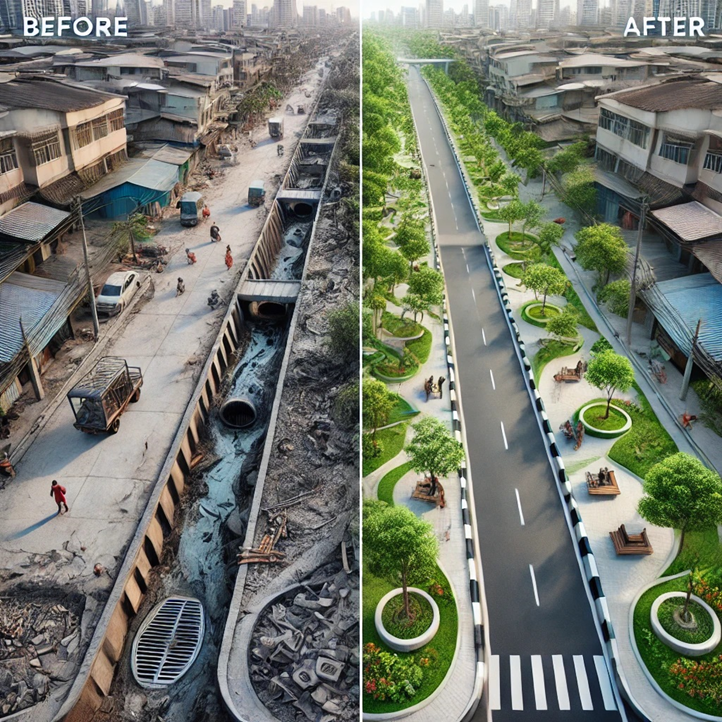 Imagine living in a neighborhood where the streets are riddled with potholes, the water isn't always safe to drink, and stepping outside at night feels risky. For many residents of low-income neighborhoods, these challenges are part of daily life. But civil engineering holds the power to change that. By improving infrastructure, enhancing sanitation efforts, and creating safer public spaces, civil engineers can breathe new life into neglected communities, promoting health, safety, and economic opportunity. 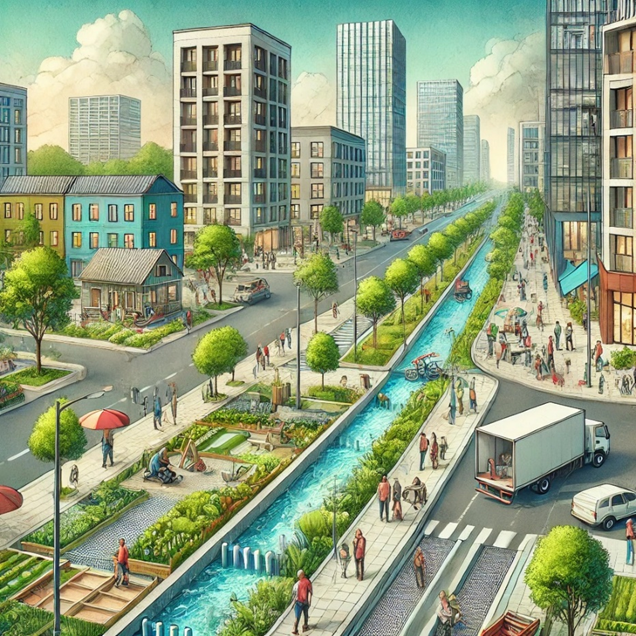 Revitalizing Infrastructure: Building the Foundation for Change Revitalizing infrastructure is the first step toward uplifting neglected communities. In many low-income neighborhoods, deteriorating roads, outdated drainage systems, and unreliable utilities disrupt daily life, making it difficult for residents to access essential services and stay economically stable. According to the Urban Institute, neighborhoods with poverty rates between 20% and 40% experience the most dramatic positive impact from infrastructure improvements, preventing further decline into extreme poverty (Urban Institute). Civil engineers are at the forefront of these efforts, designing infrastructure that ensures reliable transportation and utilities. These improvements don’t just fix immediate problems—they lay the foundation for future growth. Take the American Society of Civil Engineers (ASCE) study on large-scale infrastructure projects like the interstate highway system. These projects have historically transformed communities but also highlighted the need for equitable development to avoid displacement and segregation (ASCE). In addition to addressing immediate infrastructure needs, civil engineers are also key players in mitigating the impacts of climate change on low-income neighborhoods. Vulnerable communities are often hit hardest by environmental challenges like flooding and extreme heat. By designing more resilient infrastructure—such as improved drainage systems, flood-prevention measures, and heat-resistant materials—civil engineers can help safeguard these areas. These solutions not only address current needs but also ensure that low-income neighborhoods are prepared to face the changing climate.  Enhancing Sanitation: A Vital Step Toward Community Health Clean water and effective waste management are essential for any community, but they are often lacking in low-income neighborhoods. Civil engineers play a pivotal role in designing water management systems and waste disposal methods that reduce the spread of waterborne diseases and improve living standards. According to the World Bank, investments in sanitation infrastructure can significantly improve health and economic stability in urban settlements (World Bank). Affordable sanitation infrastructure, such as public restrooms and efficient waste treatment facilities, ensures that residents have access to basic hygiene. Beyond the public health benefits, these systems contribute to a cleaner and more sustainable environment. By combining innovative engineering techniques with community engagement, civil engineers can create sanitation solutions that are practical, scalable, and life-changing for low-income neighborhoods. One example of success comes from Nairobi, Kenya, where engineers collaborated with local governments to improve drainage and sanitation systems in informal settlements. These efforts reduced the spread of diseases and improved the quality of life for thousands of residents. Such initiatives highlight how civil engineering can address pressing challenges while fostering healthier, more resilient communities. 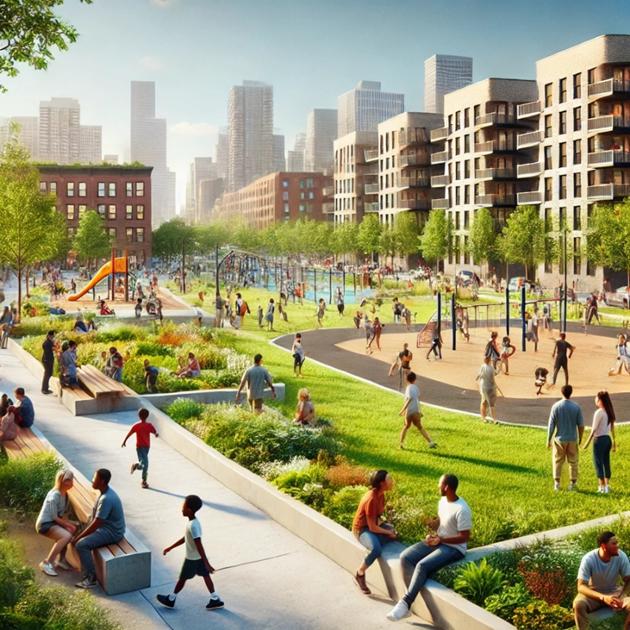 Creating Safe Public Spaces: Building Stronger Communities Revitalizing infrastructure and sanitation systems is crucial, but creating safe public spaces is just as important. Well-lit parks, secure public areas, and recreational facilities foster safety and encourage outdoor activity. Research shows that well-designed public spaces in urban areas can reduce crime rates while promoting social cohesion and community engagement (Oxford Academic). A great example of this is Bryant Park in New York City. Once a neglected area, it was transformed into a vibrant community space through thoughtful urban planning and civil engineering. The inclusion of features like ample lighting, secure pathways, and community-friendly layouts made it a hub for residents to gather and engage. By applying similar strategies in low-income neighborhoods, civil engineers can turn unsafe areas into spaces that promote a sense of belonging and pride. In cities like Medellín, Colombia, urban planning efforts have transformed once dangerous neighborhoods into vibrant, connected areas through the integration of cable cars, public transport, and green spaces. Medellín’s transformation shows how a holistic approach to urban design can both reduce crime and foster economic growth, creating healthier, safer communities in the process.  The Economic Benefits of Civil Engineering Beyond the immediate improvements in quality of life, infrastructure projects can have a lasting economic impact. By improving roads, utilities, and public spaces, civil engineers create conditions that attract businesses, raise property values, and increase tourism. Studies show that every dollar invested in urban infrastructure can generate up to five dollars in economic activity, making these projects essential for fostering sustainable development in low-income neighborhoods.  Community Involvement: Empowering Residents Through Engagement Crucial to the success of any project is community involvement. Civil engineers, in collaboration with urban planners, must work directly with residents to ensure that projects reflect the community’s needs and aspirations. By engaging local leaders and holding town hall meetings, engineers can incorporate feedback that enhances the effectiveness of the project. This involvement empowers residents to take ownership of their newly revitalized spaces, strengthening community ties and ensuring the long-term success of the improvements. A Call to Action for Civil Engineers and Urban Planners Civil engineers have the power to create lasting change in low-income neighborhoods by addressing critical challenges like infrastructure repair, sanitation, and public space development. By investing in these key areas, we can transform neglected communities into thriving, healthy environments where residents feel safe and empowered. It’s about more than just building roads and systems—it’s about creating opportunities for growth and prosperity. Civil engineers, urban planners, and policymakers must work together to ensure that every neighborhood, regardless of income level, has access to the resources needed to thrive. The future of our cities depends on the decisions we make today. Let’s build hope, one community at a time. Works Cited: American Society of Civil Engineers. "How the Interstate Highway System Connected—and in Some Cases Segregated—America." ASCE, 2021, www.asce.org. Oxford Academic. "Community Engagement in Deprived Neighbourhoods." Oxford Academic, academic.oup.com/heapro/article/37/2/daab098/6327058. Urban Institute. "Building Successful Neighborhoods." Urban Institute, www.urban.org. World Bank. "Improving Infrastructure Services and Livelihoods in Low-Income Urban Settlements." World Bank, www.worldbank.org. |
| json metadata | {"tags":["civil","engineering","urban","development","community"],"image":["https://cdn.steemitimages.com/DQmacwKw7oU23C1sbe6uzNjtHvijDg35LpDg2nLuUZcUp8S/image.png","https://cdn.steemitimages.com/DQmaTPFqi1vgvTfFpe5kbmkRAgep3rwkLF5pdVxGqEQPAxC/image.png","https://cdn.steemitimages.com/DQmbqpqPEFEQ9X7Tg8B15MtPcXumAq87dzY9Gaf9XM8MmLJ/image.png","https://cdn.steemitimages.com/DQmepvT21t3KWDBhrcBSAPk4zs9kMutUB2nwX8D6ZjXS3nA/image.png","https://cdn.steemitimages.com/DQmS7VB2XMK75SW6PJs1dojh2KBAZXxM1g79o71rHqkp1QJ/image.png","https://cdn.steemitimages.com/DQmPxCHYoirqrubnXDMDNHRWjgkVNoBpoZQxUeAve4MkEhj/image.png"],"app":"steemit/0.2","format":"markdown"} |
| parent author | |
| parent permlink | civil |
| permlink | building-hope-how-civil-engineering-transforms-low-income-neighborhoods |
| title | Building Hope: How Civil Engineering Transforms Low-Income Neighborhoods |
| Transaction Info | Block #89764486/Trx 82236d9f68834f428ee740d42a7931140cca6a82 |
View Raw JSON Data
{
"block": 89764486,
"op": [
"comment",
{
"author": "savoyesharrieff",
"body": "By Savoye’ Sharrieff\n\n\n\n\n\nImagine living in a neighborhood where the streets are riddled with potholes, the water isn't always safe to drink, and stepping outside at night feels risky. For many residents of low-income neighborhoods, these challenges are part of daily life. But civil engineering holds the power to change that. By improving infrastructure, enhancing sanitation efforts, and creating safer public spaces, civil engineers can breathe new life into neglected communities, promoting health, safety, and economic opportunity.\n \n\n\n\nRevitalizing Infrastructure: Building the Foundation for Change\n\nRevitalizing infrastructure is the first step toward uplifting neglected communities. In many low-income neighborhoods, deteriorating roads, outdated drainage systems, and unreliable utilities disrupt daily life, making it difficult for residents to access essential services and stay economically stable. According to the Urban Institute, neighborhoods with poverty rates between 20% and 40% experience the most dramatic positive impact from infrastructure improvements, preventing further decline into extreme poverty (Urban Institute).\n\nCivil engineers are at the forefront of these efforts, designing infrastructure that ensures reliable transportation and utilities. These improvements don’t just fix immediate problems—they lay the foundation for future growth. Take the American Society of Civil Engineers (ASCE) study on large-scale infrastructure projects like the interstate highway system. These projects have historically transformed communities but also highlighted the need for equitable development to avoid displacement and segregation (ASCE).\n\nIn addition to addressing immediate infrastructure needs, civil engineers are also key players in mitigating the impacts of climate change on low-income neighborhoods. Vulnerable communities are often hit hardest by environmental challenges like flooding and extreme heat. By designing more resilient infrastructure—such as improved drainage systems, flood-prevention measures, and heat-resistant materials—civil engineers can help safeguard these areas. These solutions not only address current needs but also ensure that low-income neighborhoods are prepared to face the changing climate.\n\n\n\n \nEnhancing Sanitation: A Vital Step Toward Community Health\n\nClean water and effective waste management are essential for any community, but they are often lacking in low-income neighborhoods. Civil engineers play a pivotal role in designing water management systems and waste disposal methods that reduce the spread of waterborne diseases and improve living standards. According to the World Bank, investments in sanitation infrastructure can significantly improve health and economic stability in urban settlements (World Bank).\n\nAffordable sanitation infrastructure, such as public restrooms and efficient waste treatment facilities, ensures that residents have access to basic hygiene. Beyond the public health benefits, these systems contribute to a cleaner and more sustainable environment. By combining innovative engineering techniques with community engagement, civil engineers can create sanitation solutions that are practical, scalable, and life-changing for low-income neighborhoods.\n\nOne example of success comes from Nairobi, Kenya, where engineers collaborated with local governments to improve drainage and sanitation systems in informal settlements. These efforts reduced the spread of diseases and improved the quality of life for thousands of residents. Such initiatives highlight how civil engineering can address pressing challenges while fostering healthier, more resilient communities.\n \n\n\n\nCreating Safe Public Spaces: Building Stronger Communities\n\nRevitalizing infrastructure and sanitation systems is crucial, but creating safe public spaces is just as important. Well-lit parks, secure public areas, and recreational facilities foster safety and encourage outdoor activity. Research shows that well-designed public spaces in urban areas can reduce crime rates while promoting social cohesion and community engagement (Oxford Academic).\n\nA great example of this is Bryant Park in New York City. Once a neglected area, it was transformed into a vibrant community space through thoughtful urban planning and civil engineering. The inclusion of features like ample lighting, secure pathways, and community-friendly layouts made it a hub for residents to gather and engage. By applying similar strategies in low-income neighborhoods, civil engineers can turn unsafe areas into spaces that promote a sense of belonging and pride.\n\nIn cities like Medellín, Colombia, urban planning efforts have transformed once dangerous neighborhoods into vibrant, connected areas through the integration of cable cars, public transport, and green spaces. Medellín’s transformation shows how a holistic approach to urban design can both reduce crime and foster economic growth, creating healthier, safer communities in the process.\n \n\n\n\nThe Economic Benefits of Civil Engineering\n\nBeyond the immediate improvements in quality of life, infrastructure projects can have a lasting economic impact. By improving roads, utilities, and public spaces, civil engineers create conditions that attract businesses, raise property values, and increase tourism. Studies show that every dollar invested in urban infrastructure can generate up to five dollars in economic activity, making these projects essential for fostering sustainable development in low-income neighborhoods.\n\n\n\n\nCommunity Involvement: Empowering Residents Through Engagement\n\nCrucial to the success of any project is community involvement. Civil engineers, in collaboration with urban planners, must work directly with residents to ensure that projects reflect the community’s needs and aspirations. By engaging local leaders and holding town hall meetings, engineers can incorporate feedback that enhances the effectiveness of the project. This involvement empowers residents to take ownership of their newly revitalized spaces, strengthening community ties and ensuring the long-term success of the improvements.\n \nA Call to Action for Civil Engineers and Urban Planners\n\nCivil engineers have the power to create lasting change in low-income neighborhoods by addressing critical challenges like infrastructure repair, sanitation, and public space development. By investing in these key areas, we can transform neglected communities into thriving, healthy environments where residents feel safe and empowered.\n\nIt’s about more than just building roads and systems—it’s about creating opportunities for growth and prosperity. Civil engineers, urban planners, and policymakers must work together to ensure that every neighborhood, regardless of income level, has access to the resources needed to thrive. The future of our cities depends on the decisions we make today. Let’s build hope, one community at a time.\n\nWorks Cited:\n\nAmerican Society of Civil Engineers. \"How the Interstate Highway System Connected—and in Some Cases Segregated—America.\" ASCE, 2021, www.asce.org.\n\nOxford Academic. \"Community Engagement in Deprived Neighbourhoods.\" Oxford Academic, academic.oup.com/heapro/article/37/2/daab098/6327058.\n\nUrban Institute. \"Building Successful Neighborhoods.\" Urban Institute, www.urban.org.\n\nWorld Bank. \"Improving Infrastructure Services and Livelihoods in Low-Income Urban Settlements.\" World Bank, www.worldbank.org.",
"json_metadata": "{\"tags\":[\"civil\",\"engineering\",\"urban\",\"development\",\"community\"],\"image\":[\"https://cdn.steemitimages.com/DQmacwKw7oU23C1sbe6uzNjtHvijDg35LpDg2nLuUZcUp8S/image.png\",\"https://cdn.steemitimages.com/DQmaTPFqi1vgvTfFpe5kbmkRAgep3rwkLF5pdVxGqEQPAxC/image.png\",\"https://cdn.steemitimages.com/DQmbqpqPEFEQ9X7Tg8B15MtPcXumAq87dzY9Gaf9XM8MmLJ/image.png\",\"https://cdn.steemitimages.com/DQmepvT21t3KWDBhrcBSAPk4zs9kMutUB2nwX8D6ZjXS3nA/image.png\",\"https://cdn.steemitimages.com/DQmS7VB2XMK75SW6PJs1dojh2KBAZXxM1g79o71rHqkp1QJ/image.png\",\"https://cdn.steemitimages.com/DQmPxCHYoirqrubnXDMDNHRWjgkVNoBpoZQxUeAve4MkEhj/image.png\"],\"app\":\"steemit/0.2\",\"format\":\"markdown\"}",
"parent_author": "",
"parent_permlink": "civil",
"permlink": "building-hope-how-civil-engineering-transforms-low-income-neighborhoods",
"title": "Building Hope: How Civil Engineering Transforms Low-Income Neighborhoods"
}
],
"op_in_trx": 0,
"timestamp": "2024-10-24T17:37:36",
"trx_id": "82236d9f68834f428ee740d42a7931140cca6a82",
"trx_in_block": 3,
"virtual_op": 0
}savoyesharrieffreceived 0.247 STEEM, 0.259 SP author reward for @savoyesharrieff / creating-safe-cities-for-pets-how-civil-engineering-can-shape-urban-spaces2024/10/09 19:35:42
savoyesharrieffreceived 0.247 STEEM, 0.259 SP author reward for @savoyesharrieff / creating-safe-cities-for-pets-how-civil-engineering-can-shape-urban-spaces
2024/10/09 19:35:42
| author | savoyesharrieff |
| permlink | creating-safe-cities-for-pets-how-civil-engineering-can-shape-urban-spaces |
| sbd payout | 0.000 SBD |
| steem payout | 0.247 STEEM |
| vesting payout | 421.576105 VESTS |
| Transaction Info | Block #89337011/Virtual Operation #3 |
View Raw JSON Data
{
  "block": 89337011,
  "op": [
    "author_reward",
    {
      "author": "savoyesharrieff",
      "permlink": "creating-safe-cities-for-pets-how-civil-engineering-can-shape-urban-spaces",
      "sbd_payout": "0.000 SBD",
      "steem_payout": "0.247 STEEM",
      "vesting_payout": "421.576105 VESTS"
    }
  ],
  "op_in_trx": 0,
  "timestamp": "2024-10-09T19:35:42",
  "trx_id": "0000000000000000000000000000000000000000",
  "trx_in_block": 4294967295,
  "virtual_op": 3
}steemdelegated 10.455 SP to @savoyesharrieff2024/10/02 19:37:48
steemdelegated 10.455 SP to @savoyesharrieff
2024/10/02 19:37:48
| delegatee | savoyesharrieff |
| delegator | steem |
| vesting shares | 17003.659399 VESTS |
| Transaction Info | Block #89136637/Trx 340b050675697e4ac8eeb10d390a045caa780819 |
View Raw JSON Data
{
  "block": 89136637,
  "op": [
    "delegate_vesting_shares",
    {
      "delegatee": "savoyesharrieff",
      "delegator": "steem",
      "vesting_shares": "17003.659399 VESTS"
    }
  ],
  "op_in_trx": 0,
  "timestamp": "2024-10-02T19:37:48",
  "trx_id": "340b050675697e4ac8eeb10d390a045caa780819",
  "trx_in_block": 2,
  "virtual_op": 0
}2024/10/02 19:36:06
2024/10/02 19:36:06
| author | savoyesharrieff |
| permlink | creating-safe-cities-for-pets-how-civil-engineering-can-shape-urban-spaces |
| voter | sanaula |
| weight | 2000 (20.00%) |
| Transaction Info | Block #89136603/Trx 571144dd699c08d8dadde81304306614463c0dff |
View Raw JSON Data
{
  "block": 89136603,
  "op": [
    "vote",
    {
      "author": "savoyesharrieff",
      "permlink": "creating-safe-cities-for-pets-how-civil-engineering-can-shape-urban-spaces",
      "voter": "sanaula",
      "weight": 2000
    }
  ],
  "op_in_trx": 0,
  "timestamp": "2024-10-02T19:36:06",
  "trx_id": "571144dd699c08d8dadde81304306614463c0dff",
  "trx_in_block": 0,
  "virtual_op": 0
}2024/10/02 19:35:57
2024/10/02 19:35:57
| author | savoyesharrieff |
| permlink | creating-safe-cities-for-pets-how-civil-engineering-can-shape-urban-spaces |
| voter | baizid123 |
| weight | 2000 (20.00%) |
| Transaction Info | Block #89136600/Trx 33b0374435e479aee32aef47dc44545a2ab520b1 |
View Raw JSON Data
{
  "block": 89136600,
  "op": [
    "vote",
    {
      "author": "savoyesharrieff",
      "permlink": "creating-safe-cities-for-pets-how-civil-engineering-can-shape-urban-spaces",
      "voter": "baizid123",
      "weight": 2000
    }
  ],
  "op_in_trx": 0,
  "timestamp": "2024-10-02T19:35:57",
  "trx_id": "33b0374435e479aee32aef47dc44545a2ab520b1",
  "trx_in_block": 3,
  "virtual_op": 0
}2024/10/02 19:35:51
2024/10/02 19:35:51
| author | savoyesharrieff |
| permlink | creating-safe-cities-for-pets-how-civil-engineering-can-shape-urban-spaces |
| voter | steem.history |
| weight | 2000 (20.00%) |
| Transaction Info | Block #89136598/Trx 8d131755c759becd9467457daa2ae7c0790493f3 |
View Raw JSON Data
{
  "block": 89136598,
  "op": [
    "vote",
    {
      "author": "savoyesharrieff",
      "permlink": "creating-safe-cities-for-pets-how-civil-engineering-can-shape-urban-spaces",
      "voter": "steem.history",
      "weight": 2000
    }
  ],
  "op_in_trx": 0,
  "timestamp": "2024-10-02T19:35:51",
  "trx_id": "8d131755c759becd9467457daa2ae7c0790493f3",
  "trx_in_block": 1,
  "virtual_op": 0
}2024/10/02 19:35:48
2024/10/02 19:35:48
| author | steem.history |
| body | Hello welcome to Steemit world! I'm @steem.history, who is steem witness. This is a recommended post for you.[Newcomers Guide](https://steemitdev.com/guide/@steemitblog/steemit-a-guide-for-newcomers) and [The Complete Steemit Etiquette Guide (Revision 2.0)](https://steemit.com/steem/@steem.history/the-complete-steemit-etiquette-guide-revision-20-homage-1598425779) and, recommended community [Newcomers Community](https://steemit.com/trending/hive-172186) I wish you luck to your steemit activities.<center> https://cdn.steemitimages.com/DQmXHwdcNs5VPcBft1iSosPdHLpBNBfjuG84g3ffWhMw5JQ/image.png <sub>(The bots avatar has been created using https://robohash.org/)</sub> @steem.history ### My witness activity - [My aspiration for STEEM witness](https://steemit.com/hive-185836/@steem.history/my-aspiration-for-steem-witness-1601280729) - Provides information on Steem. [Reference](https://steemit.com/trending/hive-130095) - Supporting the Steem project. [SPUD4STEEM project](https://steemit.com/trending/spud4steem) - Supporting the community. ### My featured posts - [The Complete Steemit Etiquette Guide (Revision 2.0) -Homage](https://steemit.com/steem/@steem.history/the-complete-steemit-etiquette-guide-revision-20-homage-1598425779) [](https://steemlogin.com/sign/account-witness-vote?witness=steem.history&approve=1) <sub>please click it!</sub>  <sub>(Go to https://steemit.com/~witnesses and type fbslo at the bottom of the page)</sub> </center> |
| json metadata | {"tsgs":["hello"]} |
| parent author | savoyesharrieff |
| parent permlink | creating-safe-cities-for-pets-how-civil-engineering-can-shape-urban-spaces |
| permlink | re-savoyesharrieff-creating-safe-cities-for-pets-how-civil-engineering-can-shape-urban-spaces-20241002t193548177z |
| title | |
| Transaction Info | Block #89136597/Trx 3b3442ac1bd50a797da605e91f88ee69dc263551 |
View Raw JSON Data
{
"block": 89136597,
"op": [
"comment",
{
"author": "steem.history",
"body": "Hello welcome to Steemit world! \n I'm @steem.history, who is steem witness. \n This is a recommended post for you.[Newcomers Guide](https://steemitdev.com/guide/@steemitblog/steemit-a-guide-for-newcomers) and [The Complete Steemit Etiquette Guide (Revision 2.0)](https://steemit.com/steem/@steem.history/the-complete-steemit-etiquette-guide-revision-20-homage-1598425779) and, recommended community [Newcomers Community](https://steemit.com/trending/hive-172186) \n I wish you luck to your steemit activities.<center> \n \n \n https://cdn.steemitimages.com/DQmXHwdcNs5VPcBft1iSosPdHLpBNBfjuG84g3ffWhMw5JQ/image.png \n <sub>(The bots avatar has been created using https://robohash.org/)</sub> \n @steem.history \n \n ### My witness activity \n - [My aspiration for STEEM witness](https://steemit.com/hive-185836/@steem.history/my-aspiration-for-steem-witness-1601280729) \n - Provides information on Steem. \n [Reference](https://steemit.com/trending/hive-130095) \n - Supporting the Steem project. \n [SPUD4STEEM project](https://steemit.com/trending/spud4steem) \n - Supporting the community. \n ### My featured posts \n - [The Complete Steemit Etiquette Guide (Revision 2.0) -Homage](https://steemit.com/steem/@steem.history/the-complete-steemit-etiquette-guide-revision-20-homage-1598425779) \n \n [](https://steemlogin.com/sign/account-witness-vote?witness=steem.history&approve=1) \n <sub>please click it!</sub> \n \n  \n <sub>(Go to https://steemit.com/~witnesses and type fbslo at the bottom of the page)</sub> \n \n </center>",
"json_metadata": "{\"tsgs\":[\"hello\"]}",
"parent_author": "savoyesharrieff",
"parent_permlink": "creating-safe-cities-for-pets-how-civil-engineering-can-shape-urban-spaces",
"permlink": "re-savoyesharrieff-creating-safe-cities-for-pets-how-civil-engineering-can-shape-urban-spaces-20241002t193548177z",
"title": ""
}
],
"op_in_trx": 0,
"timestamp": "2024-10-02T19:35:48",
"trx_id": "3b3442ac1bd50a797da605e91f88ee69dc263551",
"trx_in_block": 0,
"virtual_op": 0
}2024/10/02 19:35:42
2024/10/02 19:35:42
| author | savoyesharrieff |
| body | 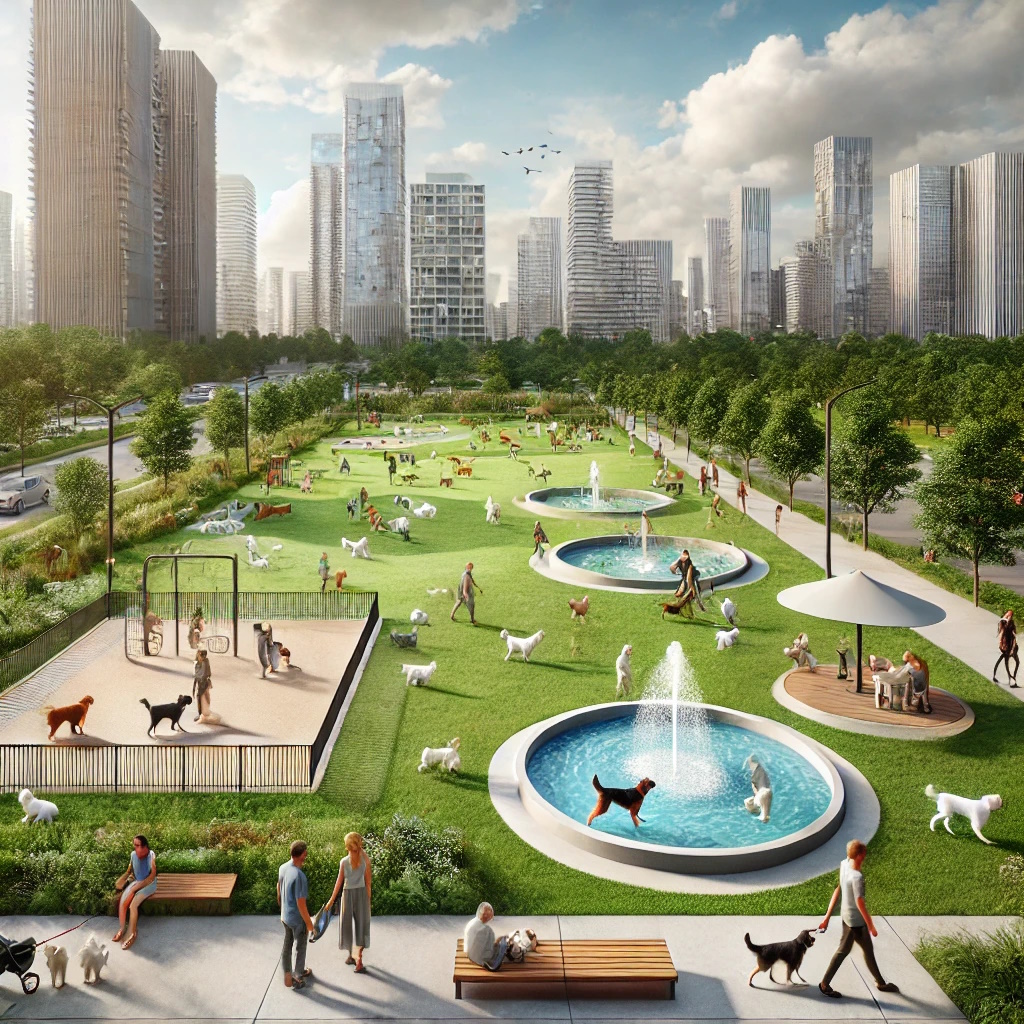 # How Civil Engineering Can Shape Urban Spaces We all love our pets. They’re integral parts of our families, yet many urban environments aren’t designed with pets in mind. Have you ever noticed how hard it can be to find a safe, open space for your dog to run freely in a crowded city? Many pet owners face this struggle. A recent study found that over 60% of urban households own pets, but cities often lack sufficient green spaces to accommodate them (American Pet Products Association, 2023). By building more green areas and pet-designated zones, civil engineers can create safer, more welcoming urban environments for both pets and their owners, fostering stronger, healthier communities. ## Expanding Green Spaces for Pets One of the most effective ways to make cities more pet-friendly is by increasing the number of green spaces. Think of the last time you walked through a busy park with your dog—was it relaxing, or were you constantly dodging crowds? Now imagine a park with open areas specifically for pets, complete with dog parks, pet-safe water features, and walking paths. These spaces allow pets to roam freely, exercise, and socialize, which is essential for their health. According to the Centers for Disease Control and Prevention (CDC), access to green spaces not only improves physical health but also reduces stress and anxiety for both pets and humans (CDC, 2022). Cities like New York City and Tokyo have implemented dog-friendly spaces in parks, setting an example of what thoughtful urban planning can achieve. New York’s Central Park offers off-leash hours in several areas, and Tokyo’s Yoyogi Park has a large, fenced dog run. These kinds of spaces provide owners with a sense of security, knowing their pets are free to run and play without danger. In fact, studies show that exposure to green spaces increases physical activity and social interaction among pet owners (Frumkin et al., 2021). ## Prioritizing Pet Safety in Urban Infrastructure Safety is another key issue when designing pet-friendly cities. Streets, sidewalks, and transportation systems are often designed with people in mind, but what about the animals that live alongside us? A 2020 report from the American Society of Civil Engineers (ASCE) found that pedestrian and animal safety are often neglected in urban infrastructure, leading to an increase in accidents involving pets in urban areas (ASCE, 2020). As urban populations grow, the risk for pets only increases if safety isn’t addressed. Engineers can solve this by implementing pet-safe crosswalks with signals designed for both pets and owners. In the Netherlands, some cities have already begun testing crosswalks with visual and sound cues tailored for pets. Additionally, installing barriers along busy roads can prevent pets from wandering into traffic. According to the American Veterinary Medical Association (AVMA), more than 1.2 million dogs are killed by vehicles annually, and simple safety measures could significantly reduce this number (AVMA, 2021). Pet-friendly public transportation options could also provide safer travel for pet owners. In San Francisco, for example, certain bus routes now offer designated areas for pets, making commuting with animals safer and more convenient. ## A Call for Pet-Friendly Urban Planning As communities grow, urban planners need to consider more than just human needs—they must create environments where pets can thrive too. According to World Animal Protection, a growing number of cities are recognizing the importance of integrating animal welfare into urban planning, with initiatives in cities like London and Melbourne setting global examples (World Animal Protection, 2022). Making urban areas safer and more accessible for pets is more important than it may seem. By expanding green spaces and improving safety measures, civil engineers can ensure pets have safe, enjoyable environments to live in. Whether you're a pet owner advocating for more pet-friendly areas, or a civil engineering student inspired to make a difference, you have the power to shape urban spaces where both pets and people can flourish. Imagine a future where every walk with your dog is a peaceful journey through a park designed with your pet in mind. With thoughtful planning and advocacy, this future can become a reality in cities worldwide. ## Works Cited American Pet Products Association. "Pet Industry Market Size, Trends & Ownership Statistics." APPA, 2023, https://www.americanpetproducts.org/press_industrytrends.asp. American Society of Civil Engineers. "2020 Report Card for America’s Infrastructure." ASCE, 2020, https://infrastructurereportcard.org/. American Veterinary Medical Association. "Vehicle Accidents and Pets." AVMA, 2021, https://www.avma.org/resources-tools/pet-owners/petcare/vehicle-accidents-and-pets. Centers for Disease Control and Prevention. "Parks and Green Space." CDC, 2022, https://www.cdc.gov/healthyplaces/parks_green_space.htm. Frumkin, Howard, et al. "Nature Contact and Human Health: A Research Agenda." Environmental Health Perspectives, vol. 129, no. 7, 2021, https://ehp.niehs.nih.gov/doi/full/10.1289/EHP8513. World Animal Protection. "Urban Planning and Animal Welfare: A Global Perspective." World Animal Protection, 2022, https://www.worldanimalprotection.org/news/urban-planning-animal-welfare. |
| json metadata | {"tags":["pets","civil","engineering","pet","health"],"image":["https://cdn.steemitimages.com/DQmTZnFW8BZyfLkNZbJBPHwn5ECmxeQZYCwvuQJBh4jdFsK/An%20urban%20park%20featuring%20a%20large%20dog%20park,%20pets%20playing%20safely.jpg"],"links":["https://www.americanpetproducts.org/press_industrytrends.asp","https://infrastructurereportcard.org/","https://www.avma.org/resources-tools/pet-owners/petcare/vehicle-accidents-and-pets","https://www.cdc.gov/healthyplaces/parks_green_space.htm","https://ehp.niehs.nih.gov/doi/full/10.1289/EHP8513","https://www.worldanimalprotection.org/news/urban-planning-animal-welfare"],"app":"steemit/0.2","format":"markdown"} |
| parent author | |
| parent permlink | pets |
| permlink | creating-safe-cities-for-pets-how-civil-engineering-can-shape-urban-spaces |
| title | Creating Safe Cities for Pets: How Civil Engineering Can Shape Urban Spaces |
| Transaction Info | Block #89136595/Trx 83f73387b5dacae480c30ad3e64d3018c3ba0143 |
View Raw JSON Data
{
"block": 89136595,
"op": [
"comment",
{
"author": "savoyesharrieff",
"body": "\n\n# How Civil Engineering Can Shape Urban Spaces\n\nWe all love our pets. They’re integral parts of our families, yet many urban environments aren’t designed with pets in mind. Have you ever noticed how hard it can be to find a safe, open space for your dog to run freely in a crowded city? Many pet owners face this struggle. A recent study found that over 60% of urban households own pets, but cities often lack sufficient green spaces to accommodate them (American Pet Products Association, 2023). By building more green areas and pet-designated zones, civil engineers can create safer, more welcoming urban environments for both pets and their owners, fostering stronger, healthier communities.\n\n## Expanding Green Spaces for Pets\n\nOne of the most effective ways to make cities more pet-friendly is by increasing the number of green spaces. Think of the last time you walked through a busy park with your dog—was it relaxing, or were you constantly dodging crowds? Now imagine a park with open areas specifically for pets, complete with dog parks, pet-safe water features, and walking paths. These spaces allow pets to roam freely, exercise, and socialize, which is essential for their health. According to the Centers for Disease Control and Prevention (CDC), access to green spaces not only improves physical health but also reduces stress and anxiety for both pets and humans (CDC, 2022).\n\nCities like New York City and Tokyo have implemented dog-friendly spaces in parks, setting an example of what thoughtful urban planning can achieve. New York’s Central Park offers off-leash hours in several areas, and Tokyo’s Yoyogi Park has a large, fenced dog run. These kinds of spaces provide owners with a sense of security, knowing their pets are free to run and play without danger. In fact, studies show that exposure to green spaces increases physical activity and social interaction among pet owners (Frumkin et al., 2021).\n\n## Prioritizing Pet Safety in Urban Infrastructure\n\nSafety is another key issue when designing pet-friendly cities. Streets, sidewalks, and transportation systems are often designed with people in mind, but what about the animals that live alongside us? A 2020 report from the American Society of Civil Engineers (ASCE) found that pedestrian and animal safety are often neglected in urban infrastructure, leading to an increase in accidents involving pets in urban areas (ASCE, 2020). As urban populations grow, the risk for pets only increases if safety isn’t addressed.\n\nEngineers can solve this by implementing pet-safe crosswalks with signals designed for both pets and owners. In the Netherlands, some cities have already begun testing crosswalks with visual and sound cues tailored for pets. Additionally, installing barriers along busy roads can prevent pets from wandering into traffic. According to the American Veterinary Medical Association (AVMA), more than 1.2 million dogs are killed by vehicles annually, and simple safety measures could significantly reduce this number (AVMA, 2021). Pet-friendly public transportation options could also provide safer travel for pet owners. In San Francisco, for example, certain bus routes now offer designated areas for pets, making commuting with animals safer and more convenient.\n\n## A Call for Pet-Friendly Urban Planning\n\nAs communities grow, urban planners need to consider more than just human needs—they must create environments where pets can thrive too. According to World Animal Protection, a growing number of cities are recognizing the importance of integrating animal welfare into urban planning, with initiatives in cities like London and Melbourne setting global examples (World Animal Protection, 2022).\n\nMaking urban areas safer and more accessible for pets is more important than it may seem. By expanding green spaces and improving safety measures, civil engineers can ensure pets have safe, enjoyable environments to live in. Whether you're a pet owner advocating for more pet-friendly areas, or a civil engineering student inspired to make a difference, you have the power to shape urban spaces where both pets and people can flourish. Imagine a future where every walk with your dog is a peaceful journey through a park designed with your pet in mind. With thoughtful planning and advocacy, this future can become a reality in cities worldwide.\n\n \n## Works Cited\n\nAmerican Pet Products Association. \"Pet Industry Market Size, Trends & Ownership Statistics.\" APPA, 2023, https://www.americanpetproducts.org/press_industrytrends.asp.\n\nAmerican Society of Civil Engineers. \"2020 Report Card for America’s Infrastructure.\" ASCE, 2020, https://infrastructurereportcard.org/.\n\nAmerican Veterinary Medical Association. \"Vehicle Accidents and Pets.\" AVMA, 2021, https://www.avma.org/resources-tools/pet-owners/petcare/vehicle-accidents-and-pets.\n\nCenters for Disease Control and Prevention. \"Parks and Green Space.\" CDC, 2022, https://www.cdc.gov/healthyplaces/parks_green_space.htm.\n\nFrumkin, Howard, et al. \"Nature Contact and Human Health: A Research Agenda.\" Environmental Health Perspectives, vol. 129, no. 7, 2021, https://ehp.niehs.nih.gov/doi/full/10.1289/EHP8513.\n\nWorld Animal Protection. \"Urban Planning and Animal Welfare: A Global Perspective.\" World Animal Protection, 2022, https://www.worldanimalprotection.org/news/urban-planning-animal-welfare.",
"json_metadata": "{\"tags\":[\"pets\",\"civil\",\"engineering\",\"pet\",\"health\"],\"image\":[\"https://cdn.steemitimages.com/DQmTZnFW8BZyfLkNZbJBPHwn5ECmxeQZYCwvuQJBh4jdFsK/An%20urban%20park%20featuring%20a%20large%20dog%20park,%20pets%20playing%20safely.jpg\"],\"links\":[\"https://www.americanpetproducts.org/press_industrytrends.asp\",\"https://infrastructurereportcard.org/\",\"https://www.avma.org/resources-tools/pet-owners/petcare/vehicle-accidents-and-pets\",\"https://www.cdc.gov/healthyplaces/parks_green_space.htm\",\"https://ehp.niehs.nih.gov/doi/full/10.1289/EHP8513\",\"https://www.worldanimalprotection.org/news/urban-planning-animal-welfare\"],\"app\":\"steemit/0.2\",\"format\":\"markdown\"}",
"parent_author": "",
"parent_permlink": "pets",
"permlink": "creating-safe-cities-for-pets-how-civil-engineering-can-shape-urban-spaces",
"title": "Creating Safe Cities for Pets: How Civil Engineering Can Shape Urban Spaces"
}
],
"op_in_trx": 0,
"timestamp": "2024-10-02T19:35:42",
"trx_id": "83f73387b5dacae480c30ad3e64d3018c3ba0143",
"trx_in_block": 0,
"virtual_op": 0
}steemdelegated 10.711 SP to @savoyesharrieff2024/10/02 19:22:15
steemdelegated 10.711 SP to @savoyesharrieff
2024/10/02 19:22:15
| delegatee | savoyesharrieff |
| delegator | steem |
| vesting shares | 17419.000000 VESTS |
| Transaction Info | Block #89136328/Trx efae902e28faa6dad0123896b00e2ea11c8b55ef |
View Raw JSON Data
{
  "block": 89136328,
  "op": [
    "delegate_vesting_shares",
    {
      "delegatee": "savoyesharrieff",
      "delegator": "steem",
      "vesting_shares": "17419.000000 VESTS"
    }
  ],
  "op_in_trx": 0,
  "timestamp": "2024-10-02T19:22:15",
  "trx_id": "efae902e28faa6dad0123896b00e2ea11c8b55ef",
  "trx_in_block": 0,
  "virtual_op": 0
}steemcurator01created a new account: @savoyesharrieff2024/10/02 19:22:12
steemcurator01created a new account: @savoyesharrieff
2024/10/02 19:22:12
| active | {"account_auths":[],"key_auths":[["STM5rHfDR6KKucg1tb3ffTP5vuHdprjndaqYrVMQeNbiGi2so4GaC",1]],"weight_threshold":1} |
| creator | steemcurator01 |
| extensions | [] |
| json metadata | {} |
| memo key | STM5t7wW77L76AajCTiq1Ct4fabQBzjvNymfXJBmSuBpMCUTrCSpd |
| new account name | savoyesharrieff |
| owner | {"account_auths":[],"key_auths":[["STM6R1ErDNgQC3U37a8Jqv9XVc76Ziesqw5BcMUYVpNgKheb4WgvT",1]],"weight_threshold":1} |
| posting | {"account_auths":[],"key_auths":[["STM7BHF5HCskebiu71bGmGt9JXUxuP1YR6hWQn3YWavoLD72CFsd5",1]],"weight_threshold":1} |
| Transaction Info | Block #89136327/Trx 2c7139ed52fd90385c02cb975bdf179d16a141fe |
View Raw JSON Data
{
  "block": 89136327,
  "op": [
    "create_claimed_account",
    {
      "active": {
        "account_auths": [],
        "key_auths": [
          [
            "STM5rHfDR6KKucg1tb3ffTP5vuHdprjndaqYrVMQeNbiGi2so4GaC",
            1
          ]
        ],
        "weight_threshold": 1
      },
      "creator": "steemcurator01",
      "extensions": [],
      "json_metadata": "{}",
      "memo_key": "STM5t7wW77L76AajCTiq1Ct4fabQBzjvNymfXJBmSuBpMCUTrCSpd",
      "new_account_name": "savoyesharrieff",
      "owner": {
        "account_auths": [],
        "key_auths": [
          [
            "STM6R1ErDNgQC3U37a8Jqv9XVc76Ziesqw5BcMUYVpNgKheb4WgvT",
            1
          ]
        ],
        "weight_threshold": 1
      },
      "posting": {
        "account_auths": [],
        "key_auths": [
          [
            "STM7BHF5HCskebiu71bGmGt9JXUxuP1YR6hWQn3YWavoLD72CFsd5",
            1
          ]
        ],
        "weight_threshold": 1
      }
    }
  ],
  "op_in_trx": 0,
  "timestamp": "2024-10-02T19:22:12",
  "trx_id": "2c7139ed52fd90385c02cb975bdf179d16a141fe",
  "trx_in_block": 1,
  "virtual_op": 0
}Manabar
Voting Power100.00%
Downvote Power100.00%
Resource Credits100.00%
Reputation Progress61.18%
{
  "voting_manabar": {
    "current_mana": "5577601570",
    "last_update_time": 1746734688
  },
  "downvote_manabar": {
    "current_mana": 1394400392,
    "last_update_time": 1746734688
  },
  "rc_account": {
    "account": "savoyesharrieff",
    "max_rc": "10678688245",
    "max_rc_creation_adjustment": {
      "amount": "5101086675",
      "nai": "@@000000037",
      "precision": 6
    },
    "rc_manabar": {
      "current_mana": "21936228902",
      "last_update_time": 1746734688
    }
  }
}
Account Metadata
| POSTING JSON METADATA | |
| profile | {"profile_image":"https://cdn.steemitimages.com/DQmNNhxvNd9b1m7tGFqdavVjomToRsvDka925gZmXSbZKWy/old%20english%20s.jpg","cover_image":"https://cdn.steemitimages.com/DQmZTjf4qnL8YBrayMtzUXDsVbxqJj5Gq6txBeib7YAUAoY/Savoye'%20Sharrieff%20LinkedIn%20BG%20Img.jpg","name":"Savoye' Sharrieff","about":"Savoye' Sharrieff is a aspiring writer and student of civil engineering for the modern world.","version":2} |
| JSON METADATA | |
| None | |
{
  "posting_json_metadata": {
    "profile": {
      "profile_image": "https://cdn.steemitimages.com/DQmNNhxvNd9b1m7tGFqdavVjomToRsvDka925gZmXSbZKWy/old%20english%20s.jpg",
      "cover_image": "https://cdn.steemitimages.com/DQmZTjf4qnL8YBrayMtzUXDsVbxqJj5Gq6txBeib7YAUAoY/Savoye'%20Sharrieff%20LinkedIn%20BG%20Img.jpg",
      "name": "Savoye' Sharrieff",
      "about": "Savoye' Sharrieff is a aspiring writer and student of civil engineering for the modern world.",
      "version": 2
    }
  },
  "json_metadata": {}
}
Auth Keys
Owner
Single Signature
Public Keys
STM6R1ErDNgQC3U37a8Jqv9XVc76Ziesqw5BcMUYVpNgKheb4WgvT1/1
Active
Single Signature
Public Keys
STM5rHfDR6KKucg1tb3ffTP5vuHdprjndaqYrVMQeNbiGi2so4GaC1/1
Posting
Single Signature
Public Keys
STM7BHF5HCskebiu71bGmGt9JXUxuP1YR6hWQn3YWavoLD72CFsd51/1
Memo
STM5t7wW77L76AajCTiq1Ct4fabQBzjvNymfXJBmSuBpMCUTrCSpd
{
  "owner": {
    "account_auths": [],
    "key_auths": [
      [
        "STM6R1ErDNgQC3U37a8Jqv9XVc76Ziesqw5BcMUYVpNgKheb4WgvT",
        1
      ]
    ],
    "weight_threshold": 1
  },
  "active": {
    "account_auths": [],
    "key_auths": [
      [
        "STM5rHfDR6KKucg1tb3ffTP5vuHdprjndaqYrVMQeNbiGi2so4GaC",
        1
      ]
    ],
    "weight_threshold": 1
  },
  "posting": {
    "account_auths": [],
    "key_auths": [
      [
        "STM7BHF5HCskebiu71bGmGt9JXUxuP1YR6hWQn3YWavoLD72CFsd5",
        1
      ]
    ],
    "weight_threshold": 1
  },
  "memo": "STM5t7wW77L76AajCTiq1Ct4fabQBzjvNymfXJBmSuBpMCUTrCSpd"
}
Witness Votes
0 / 30
No active witness votes.
[]