

VOTING POWER0.00%
DOWNVOTE POWER0.00%
RESOURCE CREDITS100.00%
REPUTATION PROGRESS0.00%
Net Worth
0.000USD
STEEM
0.004STEEM
SBD
0.000SBD
Own SP
0.000SP
Detailed Balance
| STEEM | ||
| balance | 0.004STEEM | STEEM |
| market_balance | 0.000STEEM | STEEM |
| savings_balance | 0.000STEEM | STEEM |
| reward_steem_balance | 0.000STEEM | STEEM |
| STEEM POWER | ||
| Own SP | 0.000SP | SP |
| Delegated Out | 0.000SP | SP |
| Delegation In | 0.000SP | SP |
| Effective Power | 0.000SP | SP |
| Reward SP (pending) | 0.000SP | SP |
| SBD | ||
| sbd_balance | 0.000SBD | SBD |
| sbd_conversions | 0.000SBD | SBD |
| sbd_market_balance | 0.000SBD | SBD |
| savings_sbd_balance | 0.000SBD | SBD |
| reward_sbd_balance | 0.000SBD | SBD |
{
  "balance": "0.004 STEEM",
  "savings_balance": "0.000 STEEM",
  "reward_steem_balance": "0.000 STEEM",
  "vesting_shares": "0.000000 VESTS",
  "delegated_vesting_shares": "0.000000 VESTS",
  "received_vesting_shares": "0.000000 VESTS",
  "sbd_balance": "0.000 SBD",
  "savings_sbd_balance": "0.000 SBD",
  "reward_sbd_balance": "0.000 SBD",
  "conversions": []
}
Account Info
| name | rpark94 |
| id | 1282891 |
| rank | 1,877,764 |
| reputation | 401983 |
| created | 2019-06-07T15:05:27 |
| recovery_account | oracle-d |
| proxy | None |
| post_count | 3 |
| comment_count | 0 |
| lifetime_vote_count | 0 |
| witnesses_voted_for | 0 |
| last_post | 2021-05-03T00:44:42 |
| last_root_post | 2021-05-03T00:44:42 |
| last_vote_time | 1970-01-01T00:00:00 |
| proxied_vsf_votes | 0, 0, 0, 0 |
| can_vote | 1 |
| voting_power | 0 |
| delayed_votes | 0 |
| balance | 0.004 STEEM |
| savings_balance | 0.000 STEEM |
| sbd_balance | 0.000 SBD |
| savings_sbd_balance | 0.000 SBD |
| vesting_shares | 0.000000 VESTS |
| delegated_vesting_shares | 0.000000 VESTS |
| received_vesting_shares | 0.000000 VESTS |
| reward_vesting_balance | 0.000000 VESTS |
| vesting_balance | 0.000 STEEM |
| vesting_withdraw_rate | 0.000000 VESTS |
| next_vesting_withdrawal | 1969-12-31T23:59:59 |
| withdrawn | 0 |
| to_withdraw | 0 |
| withdraw_routes | 0 |
| savings_withdraw_requests | 0 |
| last_account_recovery | 1970-01-01T00:00:00 |
| reset_account | null |
| last_owner_update | 1970-01-01T00:00:00 |
| last_account_update | 1970-01-01T00:00:00 |
| mined | No |
| sbd_seconds | 0 |
| sbd_last_interest_payment | 1970-01-01T00:00:00 |
| savings_sbd_last_interest_payment | 1970-01-01T00:00:00 |
{
  "id": 1282891,
  "name": "rpark94",
  "owner": {
    "weight_threshold": 1,
    "account_auths": [],
    "key_auths": [
      [
        "STM5C95wGqsFgMF5JZfyH8M8rX2gdpnn3hSxBDBHSfLj2eH1uzJTz",
        1
      ]
    ]
  },
  "active": {
    "weight_threshold": 1,
    "account_auths": [],
    "key_auths": [
      [
        "STM64Hxb5ihA6K8uLTEo83nFPAF5b6eMwfiWECwvrBHzq71gqrb7P",
        1
      ]
    ]
  },
  "posting": {
    "weight_threshold": 1,
    "account_auths": [],
    "key_auths": [
      [
        "STM7zbWxMEfFEpZYMQR4PJtyc3Ns6iDpy5geP8GcNUmE7T7h1SXYB",
        1
      ]
    ]
  },
  "memo_key": "STM7VfKvgva49vTpjv9s4V5RFZHBRxThEUsxUx1CxRSLko7V9fMCH",
  "json_metadata": "{\"app\":{\"host\":\"widget.steem.ninja\",\"about\":\"Steem.Ninja is a Steem account creation services provided by Oracle-D Communities Limited.\",\"website\":\"https://steem.ninja\",\"blog\":\"https://steemit.com/@steem.ninja\"},\"profile\":{\"about\":\"This account was created via @steem.ninja\",\"cover_image\":\"https://cdn.steem.ninja/default_cover.jpg\",\"profile_image\":\"https://robohash.org/rpark94.png\"}}",
  "posting_json_metadata": "",
  "proxy": "",
  "last_owner_update": "1970-01-01T00:00:00",
  "last_account_update": "1970-01-01T00:00:00",
  "created": "2019-06-07T15:05:27",
  "mined": false,
  "recovery_account": "oracle-d",
  "last_account_recovery": "1970-01-01T00:00:00",
  "reset_account": "null",
  "comment_count": 0,
  "lifetime_vote_count": 0,
  "post_count": 3,
  "can_vote": true,
  "voting_manabar": {
    "current_mana": 0,
    "last_update_time": 1567696356
  },
  "downvote_manabar": {
    "current_mana": 0,
    "last_update_time": 1567696356
  },
  "voting_power": 0,
  "balance": "0.004 STEEM",
  "savings_balance": "0.000 STEEM",
  "sbd_balance": "0.000 SBD",
  "sbd_seconds": "0",
  "sbd_seconds_last_update": "1970-01-01T00:00:00",
  "sbd_last_interest_payment": "1970-01-01T00:00:00",
  "savings_sbd_balance": "0.000 SBD",
  "savings_sbd_seconds": "0",
  "savings_sbd_seconds_last_update": "1970-01-01T00:00:00",
  "savings_sbd_last_interest_payment": "1970-01-01T00:00:00",
  "savings_withdraw_requests": 0,
  "reward_sbd_balance": "0.000 SBD",
  "reward_steem_balance": "0.000 STEEM",
  "reward_vesting_balance": "0.000000 VESTS",
  "reward_vesting_steem": "0.000 STEEM",
  "vesting_shares": "0.000000 VESTS",
  "delegated_vesting_shares": "0.000000 VESTS",
  "received_vesting_shares": "0.000000 VESTS",
  "vesting_withdraw_rate": "0.000000 VESTS",
  "next_vesting_withdrawal": "1969-12-31T23:59:59",
  "withdrawn": 0,
  "to_withdraw": 0,
  "withdraw_routes": 0,
  "curation_rewards": 0,
  "posting_rewards": 0,
  "proxied_vsf_votes": [
    0,
    0,
    0,
    0
  ],
  "witnesses_voted_for": 0,
  "last_post": "2021-05-03T00:44:42",
  "last_root_post": "2021-05-03T00:44:42",
  "last_vote_time": "1970-01-01T00:00:00",
  "post_bandwidth": 0,
  "pending_claimed_accounts": 0,
  "vesting_balance": "0.000 STEEM",
  "reputation": 401983,
  "transfer_history": [],
  "market_history": [],
  "post_history": [],
  "vote_history": [],
  "other_history": [],
  "witness_votes": [],
  "tags_usage": [],
  "guest_bloggers": [],
  "rank": 1877764
}
Withdraw Routes
| Incoming | Outgoing |
|---|---|
Empty | Empty |
{
  "incoming": [],
  "outgoing": []
}From Date
To Date
rpark94published a new post: wordpress-entries2021/05/03 00:52:12
rpark94published a new post: wordpress-entries
2021/05/03 00:52:12
| parent author | |
| parent permlink | orangrimba |
| author | rpark94 |
| permlink | wordpress-entries |
| title | WordPress Entries |
| body | @@ -183,8 +183,112 @@ ess.com/ +%0A%0A%0A!%5Bimage.png%5D(https://cdn.steemitimages.com/DQmZAoagXqdBsbCdgNqZRdnEdhqdW2E7JzG1w8zTmfufWy8/image.png) |
| json metadata | {"tags":["indigenouspeoples","indonesia","indigenousrights","rainforest","deforestation","palmoil","rubber"],"links":["https://rpark94.wordpress.com/"],"app":"steemit/0.2","format":"markdown","image":["https://cdn.steemitimages.com/DQmZAoagXqdBsbCdgNqZRdnEdhqdW2E7JzG1w8zTmfufWy8/image.png"]} |
| Transaction Info | Block #53407753/Trx 02a3c1678ea8caeaf6d50ce0059e6c5a5287ba52 |
View Raw JSON Data
{
  "trx_id": "02a3c1678ea8caeaf6d50ce0059e6c5a5287ba52",
  "block": 53407753,
  "trx_in_block": 7,
  "op_in_trx": 0,
  "virtual_op": 0,
  "timestamp": "2021-05-03T00:52:12",
  "op": [
    "comment",
    {
      "parent_author": "",
      "parent_permlink": "orangrimba",
      "author": "rpark94",
      "permlink": "wordpress-entries",
      "title": "WordPress Entries",
      "body": "@@ -183,8 +183,112 @@\n ess.com/\n+%0A%0A%0A!%5Bimage.png%5D(https://cdn.steemitimages.com/DQmZAoagXqdBsbCdgNqZRdnEdhqdW2E7JzG1w8zTmfufWy8/image.png)\n",
      "json_metadata": "{\"tags\":[\"indigenouspeoples\",\"indonesia\",\"indigenousrights\",\"rainforest\",\"deforestation\",\"palmoil\",\"rubber\"],\"links\":[\"https://rpark94.wordpress.com/\"],\"app\":\"steemit/0.2\",\"format\":\"markdown\",\"image\":[\"https://cdn.steemitimages.com/DQmZAoagXqdBsbCdgNqZRdnEdhqdW2E7JzG1w8zTmfufWy8/image.png\"]}"
    }
  ]
}rpark94muted @patriamreminisci2021/05/03 00:48:57
rpark94muted @patriamreminisci
2021/05/03 00:48:57
| required auths | [] |
| required posting auths | ["rpark94"] |
| id | follow |
| json | ["follow",{"follower":"rpark94","following":"patriamreminisci","what":["",""]}] |
| Transaction Info | Block #53407688/Trx 32aaf525ee12bb64c3ce7f733634480e2e7d504f |
View Raw JSON Data
{
  "trx_id": "32aaf525ee12bb64c3ce7f733634480e2e7d504f",
  "block": 53407688,
  "trx_in_block": 3,
  "op_in_trx": 0,
  "virtual_op": 0,
  "timestamp": "2021-05-03T00:48:57",
  "op": [
    "custom_json",
    {
      "required_auths": [],
      "required_posting_auths": [
        "rpark94"
      ],
      "id": "follow",
      "json": "[\"follow\",{\"follower\":\"rpark94\",\"following\":\"patriamreminisci\",\"what\":[\"\",\"\"]}]"
    }
  ]
}executive-boardsent 0.001 STEEM to @rpark94- "❗ Hello rpark94, great that you are using the STEEM blockchain. The Executive Board is publishing insider infos at https://discord.gg/KyBbmhh on how you will be earning the most coins. It's easy, just..."2021/05/03 00:46:06
executive-boardsent 0.001 STEEM to @rpark94- "❗ Hello rpark94, great that you are using the STEEM blockchain. The Executive Board is publishing insider infos at https://discord.gg/KyBbmhh on how you will be earning the most coins. It's easy, just..."
2021/05/03 00:46:06
| from | executive-board |
| to | rpark94 |
| amount | 0.001 STEEM |
| memo | ❗ Hello rpark94, great that you are using the STEEM blockchain. The Executive Board is publishing insider infos at https://discord.gg/KyBbmhh on how you will be earning the most coins. It's easy, just follow the instructions. THE 1000X BOOSTER KEY is already waiting for you over there too. 😉 Warm regards, The Executive Board. |
| Transaction Info | Block #53407631/Trx dd09b39807fca48f7e2fa697968e052941e39eb8 |
View Raw JSON Data
{
  "trx_id": "dd09b39807fca48f7e2fa697968e052941e39eb8",
  "block": 53407631,
  "trx_in_block": 3,
  "op_in_trx": 0,
  "virtual_op": 0,
  "timestamp": "2021-05-03T00:46:06",
  "op": [
    "transfer",
    {
      "from": "executive-board",
      "to": "rpark94",
      "amount": "0.001 STEEM",
      "memo": "❗ Hello rpark94, great that you are using the STEEM blockchain. The Executive Board is publishing insider infos at https://discord.gg/KyBbmhh on how you will be earning the most coins. It's easy, just follow the instructions. THE 1000X BOOSTER KEY is already waiting for you over there too. 😉 Warm regards, The Executive Board."
    }
  ]
}rpark94published a new post: wordpress-entries2021/05/03 00:44:42
rpark94published a new post: wordpress-entries
2021/05/03 00:44:42
| parent author | |
| parent permlink | orangrimba |
| author | rpark94 |
| permlink | wordpress-entries |
| title | WordPress Entries |
| body | Due to problems I'm facing with Steemit, I've switched to WordPress to post the remainder of my time with the Orang Rimba. Link to my WordPress blogs are here: https://rpark94.wordpress.com/ |
| json metadata | {"tags":["orangrimba","indigenouspeoples","indonesia","indigenousrights","rainforest","deforestation","palmoil","rubber"],"links":["https://rpark94.wordpress.com/"],"app":"steemit/0.2","format":"markdown"} |
| Transaction Info | Block #53407603/Trx 60c4ec097c2f09798c4a1cc1be5885b3d01294f9 |
View Raw JSON Data
{
  "trx_id": "60c4ec097c2f09798c4a1cc1be5885b3d01294f9",
  "block": 53407603,
  "trx_in_block": 2,
  "op_in_trx": 0,
  "virtual_op": 0,
  "timestamp": "2021-05-03T00:44:42",
  "op": [
    "comment",
    {
      "parent_author": "",
      "parent_permlink": "orangrimba",
      "author": "rpark94",
      "permlink": "wordpress-entries",
      "title": "WordPress Entries",
      "body": "Due to problems I'm facing with Steemit, I've switched to WordPress to post the remainder of my time with the Orang Rimba. Link to my WordPress blogs are here: https://rpark94.wordpress.com/",
      "json_metadata": "{\"tags\":[\"orangrimba\",\"indigenouspeoples\",\"indonesia\",\"indigenousrights\",\"rainforest\",\"deforestation\",\"palmoil\",\"rubber\"],\"links\":[\"https://rpark94.wordpress.com/\"],\"app\":\"steemit/0.2\",\"format\":\"markdown\"}"
    }
  ]
}rpark94upvoted (100.00%) @n3bul4 / hallucinations-a-look-into-the-brain2019/10/07 17:14:06
rpark94upvoted (100.00%) @n3bul4 / hallucinations-a-look-into-the-brain
2019/10/07 17:14:06
| voter | rpark94 |
| author | n3bul4 |
| permlink | hallucinations-a-look-into-the-brain |
| weight | 10000 (100.00%) |
| Transaction Info | Block #37080893/Trx 81cfe2aabc14307d5fd582ee53fedbe9fbdf0579 |
View Raw JSON Data
{
  "trx_id": "81cfe2aabc14307d5fd582ee53fedbe9fbdf0579",
  "block": 37080893,
  "trx_in_block": 25,
  "op_in_trx": 0,
  "virtual_op": 0,
  "timestamp": "2019-10-07T17:14:06",
  "op": [
    "vote",
    {
      "voter": "rpark94",
      "author": "n3bul4",
      "permlink": "hallucinations-a-look-into-the-brain",
      "weight": 10000
    }
  ]
}2019/10/04 03:37:06
2019/10/04 03:37:06
| voter | rpark94 |
| author | derwaechter |
| permlink | lernen-sie-den-mma-kaempfer-kennen-der-seine-traeume-aufgab-um-den-pygmaeen-wasser-land-und-freiheit-zurueckzugeben |
| weight | 10000 (100.00%) |
| Transaction Info | Block #36978353/Trx 76290e0f71c5ba97b4a143c96c94acc0b1971813 |
View Raw JSON Data
{
  "trx_id": "76290e0f71c5ba97b4a143c96c94acc0b1971813",
  "block": 36978353,
  "trx_in_block": 16,
  "op_in_trx": 0,
  "virtual_op": 0,
  "timestamp": "2019-10-04T03:37:06",
  "op": [
    "vote",
    {
      "voter": "rpark94",
      "author": "derwaechter",
      "permlink": "lernen-sie-den-mma-kaempfer-kennen-der-seine-traeume-aufgab-um-den-pygmaeen-wasser-land-und-freiheit-zurueckzugeben",
      "weight": 10000
    }
  ]
}rpark94upvoted (100.00%) @mountainjewel / new-beginnings-40-day-mantra-and-meditation-practice2019/10/04 03:35:39
rpark94upvoted (100.00%) @mountainjewel / new-beginnings-40-day-mantra-and-meditation-practice
2019/10/04 03:35:39
| voter | rpark94 |
| author | mountainjewel |
| permlink | new-beginnings-40-day-mantra-and-meditation-practice |
| weight | 10000 (100.00%) |
| Transaction Info | Block #36978324/Trx f04acdc712c500fc3595144a51731116e2c82360 |
View Raw JSON Data
{
  "trx_id": "f04acdc712c500fc3595144a51731116e2c82360",
  "block": 36978324,
  "trx_in_block": 2,
  "op_in_trx": 0,
  "virtual_op": 0,
  "timestamp": "2019-10-04T03:35:39",
  "op": [
    "vote",
    {
      "voter": "rpark94",
      "author": "mountainjewel",
      "permlink": "new-beginnings-40-day-mantra-and-meditation-practice",
      "weight": 10000
    }
  ]
}rpark94upvoted (100.00%) @jackjoe / manusia-hutan-hujan-06b47be893e852019/10/04 03:33:12
rpark94upvoted (100.00%) @jackjoe / manusia-hutan-hujan-06b47be893e85
2019/10/04 03:33:12
| voter | rpark94 |
| author | jackjoe |
| permlink | manusia-hutan-hujan-06b47be893e85 |
| weight | 10000 (100.00%) |
| Transaction Info | Block #36978275/Trx bf41c56ea4dceb9bbbf41e8e49ebf4e62baa3947 |
View Raw JSON Data
{
  "trx_id": "bf41c56ea4dceb9bbbf41e8e49ebf4e62baa3947",
  "block": 36978275,
  "trx_in_block": 19,
  "op_in_trx": 0,
  "virtual_op": 0,
  "timestamp": "2019-10-04T03:33:12",
  "op": [
    "vote",
    {
      "voter": "rpark94",
      "author": "jackjoe",
      "permlink": "manusia-hutan-hujan-06b47be893e85",
      "weight": 10000
    }
  ]
}rpark94upvoted (100.00%) @manny80 / fight-for-the-forgotten2019/10/04 03:30:45
rpark94upvoted (100.00%) @manny80 / fight-for-the-forgotten
2019/10/04 03:30:45
| voter | rpark94 |
| author | manny80 |
| permlink | fight-for-the-forgotten |
| weight | 10000 (100.00%) |
| Transaction Info | Block #36978226/Trx c6d9c4dd32853d9ffb2c191e8ac2949a25a340d7 |
View Raw JSON Data
{
  "trx_id": "c6d9c4dd32853d9ffb2c191e8ac2949a25a340d7",
  "block": 36978226,
  "trx_in_block": 15,
  "op_in_trx": 0,
  "virtual_op": 0,
  "timestamp": "2019-10-04T03:30:45",
  "op": [
    "vote",
    {
      "voter": "rpark94",
      "author": "manny80",
      "permlink": "fight-for-the-forgotten",
      "weight": 10000
    }
  ]
}rpark94upvoted (100.00%) @juvyjabian / are-we-born-a-natural-competitive2019/10/04 03:27:21
rpark94upvoted (100.00%) @juvyjabian / are-we-born-a-natural-competitive
2019/10/04 03:27:21
| voter | rpark94 |
| author | juvyjabian |
| permlink | are-we-born-a-natural-competitive |
| weight | 10000 (100.00%) |
| Transaction Info | Block #36978158/Trx 0059120e087fdff86ec405f8efde8ac07000016a |
View Raw JSON Data
{
  "trx_id": "0059120e087fdff86ec405f8efde8ac07000016a",
  "block": 36978158,
  "trx_in_block": 16,
  "op_in_trx": 0,
  "virtual_op": 0,
  "timestamp": "2019-10-04T03:27:21",
  "op": [
    "vote",
    {
      "voter": "rpark94",
      "author": "juvyjabian",
      "permlink": "are-we-born-a-natural-competitive",
      "weight": 10000
    }
  ]
}2019/10/04 03:17:30
2019/10/04 03:17:30
| voter | rpark94 |
| author | anonnews |
| permlink | meet-the-mma-fighter-who-gave-up-his-dreams-to-bring-back-water-land-and-freedom-to-the-pygmies |
| weight | 10000 (100.00%) |
| Transaction Info | Block #36977961/Trx 5a0c537d2d02b5a476fdfdba0ccf85bb9339efa4 |
View Raw JSON Data
{
  "trx_id": "5a0c537d2d02b5a476fdfdba0ccf85bb9339efa4",
  "block": 36977961,
  "trx_in_block": 11,
  "op_in_trx": 0,
  "virtual_op": 0,
  "timestamp": "2019-10-04T03:17:30",
  "op": [
    "vote",
    {
      "voter": "rpark94",
      "author": "anonnews",
      "permlink": "meet-the-mma-fighter-who-gave-up-his-dreams-to-bring-back-water-land-and-freedom-to-the-pygmies",
      "weight": 10000
    }
  ]
}2019/10/04 03:12:03
2019/10/04 03:12:03
| voter | rpark94 |
| author | ryanelnieno |
| permlink | 7-this-tribe-is-famous-for-the-most-beautiful-woman-in-the-world-one-of-indonesia-ac2f9aec7a86f |
| weight | 10000 (100.00%) |
| Transaction Info | Block #36977853/Trx 58fe701268278a40b1a568e7ecdc9c77a0776db8 |
View Raw JSON Data
{
  "trx_id": "58fe701268278a40b1a568e7ecdc9c77a0776db8",
  "block": 36977853,
  "trx_in_block": 36,
  "op_in_trx": 0,
  "virtual_op": 0,
  "timestamp": "2019-10-04T03:12:03",
  "op": [
    "vote",
    {
      "voter": "rpark94",
      "author": "ryanelnieno",
      "permlink": "7-this-tribe-is-famous-for-the-most-beautiful-woman-in-the-world-one-of-indonesia-ac2f9aec7a86f",
      "weight": 10000
    }
  ]
}2019/10/04 03:10:33
2019/10/04 03:10:33
| voter | rpark94 |
| author | ryanelnieno |
| permlink | 7-this-tribe-is-famous-for-the-most-beautiful-woman-in-the-world-one-of-indonesia-ac2f9aec7a86f |
| weight | 10000 (100.00%) |
| Transaction Info | Block #36977823/Trx 8906a82adf0d86ec0fbd47dd4161a9eec1fbb1ba |
View Raw JSON Data
{
  "trx_id": "8906a82adf0d86ec0fbd47dd4161a9eec1fbb1ba",
  "block": 36977823,
  "trx_in_block": 18,
  "op_in_trx": 0,
  "virtual_op": 0,
  "timestamp": "2019-10-04T03:10:33",
  "op": [
    "vote",
    {
      "voter": "rpark94",
      "author": "ryanelnieno",
      "permlink": "7-this-tribe-is-famous-for-the-most-beautiful-woman-in-the-world-one-of-indonesia-ac2f9aec7a86f",
      "weight": 10000
    }
  ]
}rpark94upvoted (100.00%) @alexaf05 / the-uniqueness-of-tribal-people-in-the-world-2fa688d6c7bbf2019/10/04 03:07:45
rpark94upvoted (100.00%) @alexaf05 / the-uniqueness-of-tribal-people-in-the-world-2fa688d6c7bbf
2019/10/04 03:07:45
| voter | rpark94 |
| author | alexaf05 |
| permlink | the-uniqueness-of-tribal-people-in-the-world-2fa688d6c7bbf |
| weight | 10000 (100.00%) |
| Transaction Info | Block #36977767/Trx cd4654554a38d08d001179aac3d1f8351161d12c |
View Raw JSON Data
{
  "trx_id": "cd4654554a38d08d001179aac3d1f8351161d12c",
  "block": 36977767,
  "trx_in_block": 15,
  "op_in_trx": 0,
  "virtual_op": 0,
  "timestamp": "2019-10-04T03:07:45",
  "op": [
    "vote",
    {
      "voter": "rpark94",
      "author": "alexaf05",
      "permlink": "the-uniqueness-of-tribal-people-in-the-world-2fa688d6c7bbf",
      "weight": 10000
    }
  ]
}rpark94upvoted (100.00%) @dinsha / critically-endangered-species-part-1-18-to-092019/10/04 03:04:48
rpark94upvoted (100.00%) @dinsha / critically-endangered-species-part-1-18-to-09
2019/10/04 03:04:48
| voter | rpark94 |
| author | dinsha |
| permlink | critically-endangered-species-part-1-18-to-09 |
| weight | 10000 (100.00%) |
| Transaction Info | Block #36977708/Trx 3819b3873abc98c2850dcda95605c00c194290b4 |
View Raw JSON Data
{
  "trx_id": "3819b3873abc98c2850dcda95605c00c194290b4",
  "block": 36977708,
  "trx_in_block": 15,
  "op_in_trx": 0,
  "virtual_op": 0,
  "timestamp": "2019-10-04T03:04:48",
  "op": [
    "vote",
    {
      "voter": "rpark94",
      "author": "dinsha",
      "permlink": "critically-endangered-species-part-1-18-to-09",
      "weight": 10000
    }
  ]
}rpark94upvoted (100.00%) @dinsha / critically-endangered-species-part-2-08-to-012019/10/04 03:03:45
rpark94upvoted (100.00%) @dinsha / critically-endangered-species-part-2-08-to-01
2019/10/04 03:03:45
| voter | rpark94 |
| author | dinsha |
| permlink | critically-endangered-species-part-2-08-to-01 |
| weight | 10000 (100.00%) |
| Transaction Info | Block #36977687/Trx b21e99ed42097c618ace4570421f058a91aeab58 |
View Raw JSON Data
{
  "trx_id": "b21e99ed42097c618ace4570421f058a91aeab58",
  "block": 36977687,
  "trx_in_block": 9,
  "op_in_trx": 0,
  "virtual_op": 0,
  "timestamp": "2019-10-04T03:03:45",
  "op": [
    "vote",
    {
      "voter": "rpark94",
      "author": "dinsha",
      "permlink": "critically-endangered-species-part-2-08-to-01",
      "weight": 10000
    }
  ]
}rpark94upvoted (100.00%) @ayijufridar / teladan-dari-butet-manurung-the-hero-of-asia-or-13854371c76262019/10/04 02:58:54
rpark94upvoted (100.00%) @ayijufridar / teladan-dari-butet-manurung-the-hero-of-asia-or-13854371c7626
2019/10/04 02:58:54
| voter | rpark94 |
| author | ayijufridar |
| permlink | teladan-dari-butet-manurung-the-hero-of-asia-or-13854371c7626 |
| weight | 10000 (100.00%) |
| Transaction Info | Block #36977590/Trx c68d1ddcbe38829d24826e4757f858d99fe1b9cf |
View Raw JSON Data
{
  "trx_id": "c68d1ddcbe38829d24826e4757f858d99fe1b9cf",
  "block": 36977590,
  "trx_in_block": 7,
  "op_in_trx": 0,
  "virtual_op": 0,
  "timestamp": "2019-10-04T02:58:54",
  "op": [
    "vote",
    {
      "voter": "rpark94",
      "author": "ayijufridar",
      "permlink": "teladan-dari-butet-manurung-the-hero-of-asia-or-13854371c7626",
      "weight": 10000
    }
  ]
}rpark94upvoted (100.00%) @kachinhenry / the-folk-tales-of-myanmar-02-steemed-by-henry-aung2019/10/01 09:03:36
rpark94upvoted (100.00%) @kachinhenry / the-folk-tales-of-myanmar-02-steemed-by-henry-aung
2019/10/01 09:03:36
| voter | rpark94 |
| author | kachinhenry |
| permlink | the-folk-tales-of-myanmar-02-steemed-by-henry-aung |
| weight | 10000 (100.00%) |
| Transaction Info | Block #36898650/Trx ea4083fbfefc10e7528ec3c60f2b7235a7631e95 |
View Raw JSON Data
{
  "trx_id": "ea4083fbfefc10e7528ec3c60f2b7235a7631e95",
  "block": 36898650,
  "trx_in_block": 13,
  "op_in_trx": 0,
  "virtual_op": 0,
  "timestamp": "2019-10-01T09:03:36",
  "op": [
    "vote",
    {
      "voter": "rpark94",
      "author": "kachinhenry",
      "permlink": "the-folk-tales-of-myanmar-02-steemed-by-henry-aung",
      "weight": 10000
    }
  ]
}2019/10/01 09:01:42
2019/10/01 09:01:42
| voter | rpark94 |
| author | holothewise |
| permlink | field-encounters-on-the-trail-of-the-elephant-shrew-original-footage |
| weight | 10000 (100.00%) |
| Transaction Info | Block #36898612/Trx 885271ac6c62874f936bcfec921cf12c6a3f2173 |
View Raw JSON Data
{
  "trx_id": "885271ac6c62874f936bcfec921cf12c6a3f2173",
  "block": 36898612,
  "trx_in_block": 3,
  "op_in_trx": 0,
  "virtual_op": 0,
  "timestamp": "2019-10-01T09:01:42",
  "op": [
    "vote",
    {
      "voter": "rpark94",
      "author": "holothewise",
      "permlink": "field-encounters-on-the-trail-of-the-elephant-shrew-original-footage",
      "weight": 10000
    }
  ]
}rpark94upvoted (100.00%) @exploretraveler / a-photo-tour-of-the-indigenous-peoples-of-taiwan2019/10/01 09:00:15
rpark94upvoted (100.00%) @exploretraveler / a-photo-tour-of-the-indigenous-peoples-of-taiwan
2019/10/01 09:00:15
| voter | rpark94 |
| author | exploretraveler |
| permlink | a-photo-tour-of-the-indigenous-peoples-of-taiwan |
| weight | 10000 (100.00%) |
| Transaction Info | Block #36898583/Trx 217e4f8d9c73f936a69986832fad5e6455d46360 |
View Raw JSON Data
{
  "trx_id": "217e4f8d9c73f936a69986832fad5e6455d46360",
  "block": 36898583,
  "trx_in_block": 22,
  "op_in_trx": 0,
  "virtual_op": 0,
  "timestamp": "2019-10-01T09:00:15",
  "op": [
    "vote",
    {
      "voter": "rpark94",
      "author": "exploretraveler",
      "permlink": "a-photo-tour-of-the-indigenous-peoples-of-taiwan",
      "weight": 10000
    }
  ]
}2019/10/01 08:51:39
2019/10/01 08:51:39
| voter | rpark94 |
| author | jockey |
| permlink | australia-only-commonwealth-nation-never-to-sign-a-treaty-with-its-indigenous-people |
| weight | 10000 (100.00%) |
| Transaction Info | Block #36898411/Trx 95920170cbacfe33310e97097954a5b4e7a8f5bd |
View Raw JSON Data
{
  "trx_id": "95920170cbacfe33310e97097954a5b4e7a8f5bd",
  "block": 36898411,
  "trx_in_block": 7,
  "op_in_trx": 0,
  "virtual_op": 0,
  "timestamp": "2019-10-01T08:51:39",
  "op": [
    "vote",
    {
      "voter": "rpark94",
      "author": "jockey",
      "permlink": "australia-only-commonwealth-nation-never-to-sign-a-treaty-with-its-indigenous-people",
      "weight": 10000
    }
  ]
}rpark94upvoted (100.00%) @lapilipinas / a-hard-life-of-aboriginal-australians2019/10/01 08:04:54
rpark94upvoted (100.00%) @lapilipinas / a-hard-life-of-aboriginal-australians
2019/10/01 08:04:54
| voter | rpark94 |
| author | lapilipinas |
| permlink | a-hard-life-of-aboriginal-australians |
| weight | 10000 (100.00%) |
| Transaction Info | Block #36897478/Trx 566cd5e5707a2524a792c91a99e535877b143dbd |
View Raw JSON Data
{
  "trx_id": "566cd5e5707a2524a792c91a99e535877b143dbd",
  "block": 36897478,
  "trx_in_block": 3,
  "op_in_trx": 0,
  "virtual_op": 0,
  "timestamp": "2019-10-01T08:04:54",
  "op": [
    "vote",
    {
      "voter": "rpark94",
      "author": "lapilipinas",
      "permlink": "a-hard-life-of-aboriginal-australians",
      "weight": 10000
    }
  ]
}rpark94upvoted (100.00%) @stuiverman / newsletter-12-state-of-the-planet-earth---2018-08-282019/10/01 07:09:54
rpark94upvoted (100.00%) @stuiverman / newsletter-12-state-of-the-planet-earth---2018-08-28
2019/10/01 07:09:54
| voter | rpark94 |
| author | stuiverman |
| permlink | newsletter-12-state-of-the-planet-earth---2018-08-28 |
| weight | 10000 (100.00%) |
| Transaction Info | Block #36896379/Trx 633a475de2c4576c42a85c9df40310de31d63dfc |
View Raw JSON Data
{
  "trx_id": "633a475de2c4576c42a85c9df40310de31d63dfc",
  "block": 36896379,
  "trx_in_block": 12,
  "op_in_trx": 0,
  "virtual_op": 0,
  "timestamp": "2019-10-01T07:09:54",
  "op": [
    "vote",
    {
      "voter": "rpark94",
      "author": "stuiverman",
      "permlink": "newsletter-12-state-of-the-planet-earth---2018-08-28",
      "weight": 10000
    }
  ]
}rpark94upvoted (100.00%) @haroon-asif / 15-rare-and-beautiful-birds2019/10/01 07:06:48
rpark94upvoted (100.00%) @haroon-asif / 15-rare-and-beautiful-birds
2019/10/01 07:06:48
| voter | rpark94 |
| author | haroon-asif |
| permlink | 15-rare-and-beautiful-birds |
| weight | 10000 (100.00%) |
| Transaction Info | Block #36896317/Trx 7ab444b227506d9750ff0732408528026b4715bb |
View Raw JSON Data
{
  "trx_id": "7ab444b227506d9750ff0732408528026b4715bb",
  "block": 36896317,
  "trx_in_block": 17,
  "op_in_trx": 0,
  "virtual_op": 0,
  "timestamp": "2019-10-01T07:06:48",
  "op": [
    "vote",
    {
      "voter": "rpark94",
      "author": "haroon-asif",
      "permlink": "15-rare-and-beautiful-birds",
      "weight": 10000
    }
  ]
}2019/10/01 07:02:48
2019/10/01 07:02:48
| voter | rpark94 |
| author | joshmarkes |
| permlink | the-philippine-at-the-crossroads-of-the-ivory-trade-national-museum-of-anthropology-s-collection-worth-reading-807aa3526187 |
| weight | 10000 (100.00%) |
| Transaction Info | Block #36896237/Trx e720125e1b14a6312f5de1fe8cc39c690cb77fa1 |
View Raw JSON Data
{
  "trx_id": "e720125e1b14a6312f5de1fe8cc39c690cb77fa1",
  "block": 36896237,
  "trx_in_block": 19,
  "op_in_trx": 0,
  "virtual_op": 0,
  "timestamp": "2019-10-01T07:02:48",
  "op": [
    "vote",
    {
      "voter": "rpark94",
      "author": "joshmarkes",
      "permlink": "the-philippine-at-the-crossroads-of-the-ivory-trade-national-museum-of-anthropology-s-collection-worth-reading-807aa3526187",
      "weight": 10000
    }
  ]
}rpark94upvoted (100.00%) @ping-ping / the-5-most-rare-birds-in-the-world2019/10/01 07:01:48
rpark94upvoted (100.00%) @ping-ping / the-5-most-rare-birds-in-the-world
2019/10/01 07:01:48
| voter | rpark94 |
| author | ping-ping |
| permlink | the-5-most-rare-birds-in-the-world |
| weight | 10000 (100.00%) |
| Transaction Info | Block #36896217/Trx aa243bd53566d73f68da8fa877396a164aed6e13 |
View Raw JSON Data
{
  "trx_id": "aa243bd53566d73f68da8fa877396a164aed6e13",
  "block": 36896217,
  "trx_in_block": 17,
  "op_in_trx": 0,
  "virtual_op": 0,
  "timestamp": "2019-10-01T07:01:48",
  "op": [
    "vote",
    {
      "voter": "rpark94",
      "author": "ping-ping",
      "permlink": "the-5-most-rare-birds-in-the-world",
      "weight": 10000
    }
  ]
}2019/10/01 06:58:15
2019/10/01 06:58:15
| voter | rpark94 |
| author | vermute |
| permlink | hornbills-of-africa-asia-and-indonesia-colourful-birds-with-big-bills-and-strange-nests |
| weight | 10000 (100.00%) |
| Transaction Info | Block #36896146/Trx 42ccece0ee49e35f101baad766246a779a0cb0b1 |
View Raw JSON Data
{
  "trx_id": "42ccece0ee49e35f101baad766246a779a0cb0b1",
  "block": 36896146,
  "trx_in_block": 18,
  "op_in_trx": 0,
  "virtual_op": 0,
  "timestamp": "2019-10-01T06:58:15",
  "op": [
    "vote",
    {
      "voter": "rpark94",
      "author": "vermute",
      "permlink": "hornbills-of-africa-asia-and-indonesia-colourful-birds-with-big-bills-and-strange-nests",
      "weight": 10000
    }
  ]
}blocktradesdelegated 0.000 SP to @rpark942019/09/05 15:12:36
blocktradesdelegated 0.000 SP to @rpark94
2019/09/05 15:12:36
| delegator | blocktrades |
| delegatee | rpark94 |
| vesting shares | 0.000000 VESTS |
| Transaction Info | Block #36159205/Trx 0dabcd6124a91cf41115f1d23e6e026910e3fd79 |
View Raw JSON Data
{
  "trx_id": "0dabcd6124a91cf41115f1d23e6e026910e3fd79",
  "block": 36159205,
  "trx_in_block": 32,
  "op_in_trx": 0,
  "virtual_op": 0,
  "timestamp": "2019-09-05T15:12:36",
  "op": [
    "delegate_vesting_shares",
    {
      "delegator": "blocktrades",
      "delegatee": "rpark94",
      "vesting_shares": "0.000000 VESTS"
    }
  ]
}blocktradessent 0.001 STEEM to @rpark94- "#Gkpn7etKiXEcyd19EESwSACZe8VtGqoLWkB65HHd7j79qLY6Lmz5VpCStyoCWNowjngED7fExfqzk5AXBrZDuZg6F8ahz6ioaUSVDTKisDwTuoGySpkwMUYT556kL6TPBkdRhQx6A8rKQQeC659VZmAhfErpdGr9tKC8YLvaXEX3bD8Qs2E7Bxe2nfaoU6RVpnpPyKk..."2019/09/04 15:16:09
blocktradessent 0.001 STEEM to @rpark94- "#Gkpn7etKiXEcyd19EESwSACZe8VtGqoLWkB65HHd7j79qLY6Lmz5VpCStyoCWNowjngED7fExfqzk5AXBrZDuZg6F8ahz6ioaUSVDTKisDwTuoGySpkwMUYT556kL6TPBkdRhQx6A8rKQQeC659VZmAhfErpdGr9tKC8YLvaXEX3bD8Qs2E7Bxe2nfaoU6RVpnpPyKk..."
2019/09/04 15:16:09
| from | blocktrades |
| to | rpark94 |
| amount | 0.001 STEEM |
| memo | #Gkpn7etKiXEcyd19EESwSACZe8VtGqoLWkB65HHd7j79qLY6Lmz5VpCStyoCWNowjngED7fExfqzk5AXBrZDuZg6F8ahz6ioaUSVDTKisDwTuoGySpkwMUYT556kL6TPBkdRhQx6A8rKQQeC659VZmAhfErpdGr9tKC8YLvaXEX3bD8Qs2E7Bxe2nfaoU6RVpnpPyKkfEeVEm7MAqwzCKdPg2soDBC64DfTQr5r8YbRMLQ9bkU9ZmLTSx7TL6CSsB3WPgWFtHUvXZdN8La9wnpg6SZpaaZ6Amun5UxxmWRGYAAuaC8sVMbdqJbpQafStJMmQzpb |
| Transaction Info | Block #36130628/Trx 415fdcf70e868ab074cc251d0e46c162587b6b4c |
View Raw JSON Data
{
  "trx_id": "415fdcf70e868ab074cc251d0e46c162587b6b4c",
  "block": 36130628,
  "trx_in_block": 34,
  "op_in_trx": 0,
  "virtual_op": 0,
  "timestamp": "2019-09-04T15:16:09",
  "op": [
    "transfer",
    {
      "from": "blocktrades",
      "to": "rpark94",
      "amount": "0.001 STEEM",
      "memo": "#Gkpn7etKiXEcyd19EESwSACZe8VtGqoLWkB65HHd7j79qLY6Lmz5VpCStyoCWNowjngED7fExfqzk5AXBrZDuZg6F8ahz6ioaUSVDTKisDwTuoGySpkwMUYT556kL6TPBkdRhQx6A8rKQQeC659VZmAhfErpdGr9tKC8YLvaXEX3bD8Qs2E7Bxe2nfaoU6RVpnpPyKkfEeVEm7MAqwzCKdPg2soDBC64DfTQr5r8YbRMLQ9bkU9ZmLTSx7TL6CSsB3WPgWFtHUvXZdN8La9wnpg6SZpaaZ6Amun5UxxmWRGYAAuaC8sVMbdqJbpQafStJMmQzpb"
    }
  ]
}blocktradessent 0.001 STEEM to @rpark94- "#Gkpn7etKiXEcyd19EESwSACZe8VtGqoLWkB65HHd7j79qLY6Lmz5VpCStyoCWNowjngED7fExfqzk5AXBrZDuZg6Ez8pagk26yHAcvWHqj6bpecDjkXTgNGBNE8JT9maPA7iTkzgcb9Qfh9wRKnVYCqrrLwr88eMGsNPopxyW2hK1YdkkUvKcxqHzsvAqdNyz5s1e44..."2019/09/03 15:07:48
blocktradessent 0.001 STEEM to @rpark94- "#Gkpn7etKiXEcyd19EESwSACZe8VtGqoLWkB65HHd7j79qLY6Lmz5VpCStyoCWNowjngED7fExfqzk5AXBrZDuZg6Ez8pagk26yHAcvWHqj6bpecDjkXTgNGBNE8JT9maPA7iTkzgcb9Qfh9wRKnVYCqrrLwr88eMGsNPopxyW2hK1YdkkUvKcxqHzsvAqdNyz5s1e44..."
2019/09/03 15:07:48
| from | blocktrades |
| to | rpark94 |
| amount | 0.001 STEEM |
| memo | #Gkpn7etKiXEcyd19EESwSACZe8VtGqoLWkB65HHd7j79qLY6Lmz5VpCStyoCWNowjngED7fExfqzk5AXBrZDuZg6Ez8pagk26yHAcvWHqj6bpecDjkXTgNGBNE8JT9maPA7iTkzgcb9Qfh9wRKnVYCqrrLwr88eMGsNPopxyW2hK1YdkkUvKcxqHzsvAqdNyz5s1e44BiKHxoyf6jRZF5g7nf5uZAv1aBT29Ft2C2jjWfz7AxBVcz4mvg9c8qbdbaBYxz73GJfcMdbboPjk7dKjVJLfG21MJHvELoQLLej37S4tRJrc19TiWYjZkKKA1AatGjxY |
| Transaction Info | Block #36101891/Trx 8f70e21f651efdc06c091266f042e662c3fbe8a5 |
View Raw JSON Data
{
  "trx_id": "8f70e21f651efdc06c091266f042e662c3fbe8a5",
  "block": 36101891,
  "trx_in_block": 31,
  "op_in_trx": 0,
  "virtual_op": 0,
  "timestamp": "2019-09-03T15:07:48",
  "op": [
    "transfer",
    {
      "from": "blocktrades",
      "to": "rpark94",
      "amount": "0.001 STEEM",
      "memo": "#Gkpn7etKiXEcyd19EESwSACZe8VtGqoLWkB65HHd7j79qLY6Lmz5VpCStyoCWNowjngED7fExfqzk5AXBrZDuZg6Ez8pagk26yHAcvWHqj6bpecDjkXTgNGBNE8JT9maPA7iTkzgcb9Qfh9wRKnVYCqrrLwr88eMGsNPopxyW2hK1YdkkUvKcxqHzsvAqdNyz5s1e44BiKHxoyf6jRZF5g7nf5uZAv1aBT29Ft2C2jjWfz7AxBVcz4mvg9c8qbdbaBYxz73GJfcMdbboPjk7dKjVJLfG21MJHvELoQLLej37S4tRJrc19TiWYjZkKKA1AatGjxY"
    }
  ]
}rpark94upvoted (100.00%) @bobfromsales / why-griffith-is-one-of-the-most-hated-villains-of-all-time2019/07/15 05:29:06
rpark94upvoted (100.00%) @bobfromsales / why-griffith-is-one-of-the-most-hated-villains-of-all-time
2019/07/15 05:29:06
| voter | rpark94 |
| author | bobfromsales |
| permlink | why-griffith-is-one-of-the-most-hated-villains-of-all-time |
| weight | 10000 (100.00%) |
| Transaction Info | Block #34675202/Trx f7b18256a70bd4162e7665242736c9548870d3ba |
View Raw JSON Data
{
  "trx_id": "f7b18256a70bd4162e7665242736c9548870d3ba",
  "block": 34675202,
  "trx_in_block": 16,
  "op_in_trx": 0,
  "virtual_op": 0,
  "timestamp": "2019-07-15T05:29:06",
  "op": [
    "vote",
    {
      "voter": "rpark94",
      "author": "bobfromsales",
      "permlink": "why-griffith-is-one-of-the-most-hated-villains-of-all-time",
      "weight": 10000
    }
  ]
}rpark94published a new post: leeriness-in-the-jungle2019/07/13 09:30:36
rpark94published a new post: leeriness-in-the-jungle
2019/07/13 09:30:36
| parent author | |
| parent permlink | orangrimba |
| author | rpark94 |
| permlink | leeriness-in-the-jungle |
| title | Leeriness in the Jungle |
| body | @@ -10714,18 +10714,18 @@ alo, who -%E2%80%99 s +e role am |
| json metadata | {"tags":["orangrimba","indigenouspeoples","landrights","indonesia"],"image":["https://cdn.steemitimages.com/DQmVMcaqcREjcH72uJ5M92KHyWPe7vnbjxUNpY9qi7mm7NP/image.jpeg","https://cdn.steemitimages.com/DQmUTRhdovAxwydpBMuSiVAbpcHE3dnhbq2yEw8myDu7X9w/image.jpeg","https://img.youtube.com/vi/vmWvnOoikc0/0.jpg","https://cdn.steemitimages.com/DQmTgkEyitfDJ5BeHD6wvwP5XoW8dm7TF8nmePX33NjgT9p/image.jpeg","https://cdn.steemitimages.com/DQmf2LJVV3Qerhf9YUWHU3HwgrL7DosZGMWuyBConh2GfQN/image.jpeg","https://cdn.steemitimages.com/DQmZNmZDTmSb9yFduN3xSrXYRiVZMPcvN9W3FYAHXuiaDV9/image.jpeg","https://cdn.steemitimages.com/DQmf7Gqrj18xPwvrCCXjDckPpck6nikidn1R6yiRMitGjwb/image.jpeg","https://cdn.steemitimages.com/DQmW64Lu3biQZea8gyfs1H24DtMF3KvpnaWM13b5qEgfD8P/image.jpeg","https://cdn.steemitimages.com/DQmQmFVM8Sz19JusQVowxZfxra93W2JkWk4owhwqdnntDmQ/image.jpeg","https://cdn.steemitimages.com/DQmc6AxMFYh3cxLeQ8z2RoJz6cUSQmm1J4Hf5P9MxAK73DU/image.jpeg","https://cdn.steemitimages.com/DQmcCmvErWneqmcb76ynMbYgXwq6kNbjAkKu1jtTgfrD5EF/image.jpeg","https://cdn.steemitimages.com/DQmPP8SdAMwzG1ZcZDsg2zgWaRLH6E3MJuq4RKnEYDw8dWs/image.jpeg","https://cdn.steemitimages.com/DQmcaxs7GnAnZum3nVHwduAHvbWn5s7gtJqo6GtsRkWtJ9d/image.jpeg","https://cdn.steemitimages.com/DQmWkwMA1WkaAgJV88Mt8zAYjekaSZLveXh59edYGiLFZ6D/image.jpeg","https://img.youtube.com/vi/tm8yfEM7Ps8/0.jpg"],"links":["https://steemit.com/orang/@rpark94/introduction-to-the-orang-rimba-world","https://ugm.ac.id/en/news/5778-research-permission-in-indonesia-still-complicated","https://www.nature.com/articles/d41586-018-05001-7","https://news.mongabay.com/2019/05/what-we-learned-from-two-years-of-investigating-corrupt-land-deals-in-indonesia/","https://en.m.wikipedia.org/wiki/Kubu_language","https://www.google.com/amp/s/amp.theguardian.com/commentisfree/2015/apr/30/why-have-we-got-it-in-for-glottal-stop","https://youtu.be/vmWvnOoikc0","https://www.google.com/amp/s/www.thejakartapost.com/amp/news/2015/03/23/orang-rimba-demand-health-education-facilities.html","http://warsi.or.id/eng/content/release/242/In_Memory_Of_Yusak_The_Orang_Rimba_Education_Hero","https://m.youtube.com/watch?v=tm8yfEM7Ps8"],"app":"steemit/0.1","format":"markdown"} |
| Transaction Info | Block #34622481/Trx 677fdbc094fe9d0cb9c8954317f2c6da1457823a |
View Raw JSON Data
{
  "trx_id": "677fdbc094fe9d0cb9c8954317f2c6da1457823a",
  "block": 34622481,
  "trx_in_block": 1,
  "op_in_trx": 0,
  "virtual_op": 0,
  "timestamp": "2019-07-13T09:30:36",
  "op": [
    "comment",
    {
      "parent_author": "",
      "parent_permlink": "orangrimba",
      "author": "rpark94",
      "permlink": "leeriness-in-the-jungle",
      "title": "Leeriness in the Jungle",
      "body": "@@ -10714,18 +10714,18 @@\n alo, who\n-%E2%80%99\n s\n+e\n  role am\n",
      "json_metadata": "{\"tags\":[\"orangrimba\",\"indigenouspeoples\",\"landrights\",\"indonesia\"],\"image\":[\"https://cdn.steemitimages.com/DQmVMcaqcREjcH72uJ5M92KHyWPe7vnbjxUNpY9qi7mm7NP/image.jpeg\",\"https://cdn.steemitimages.com/DQmUTRhdovAxwydpBMuSiVAbpcHE3dnhbq2yEw8myDu7X9w/image.jpeg\",\"https://img.youtube.com/vi/vmWvnOoikc0/0.jpg\",\"https://cdn.steemitimages.com/DQmTgkEyitfDJ5BeHD6wvwP5XoW8dm7TF8nmePX33NjgT9p/image.jpeg\",\"https://cdn.steemitimages.com/DQmf2LJVV3Qerhf9YUWHU3HwgrL7DosZGMWuyBConh2GfQN/image.jpeg\",\"https://cdn.steemitimages.com/DQmZNmZDTmSb9yFduN3xSrXYRiVZMPcvN9W3FYAHXuiaDV9/image.jpeg\",\"https://cdn.steemitimages.com/DQmf7Gqrj18xPwvrCCXjDckPpck6nikidn1R6yiRMitGjwb/image.jpeg\",\"https://cdn.steemitimages.com/DQmW64Lu3biQZea8gyfs1H24DtMF3KvpnaWM13b5qEgfD8P/image.jpeg\",\"https://cdn.steemitimages.com/DQmQmFVM8Sz19JusQVowxZfxra93W2JkWk4owhwqdnntDmQ/image.jpeg\",\"https://cdn.steemitimages.com/DQmc6AxMFYh3cxLeQ8z2RoJz6cUSQmm1J4Hf5P9MxAK73DU/image.jpeg\",\"https://cdn.steemitimages.com/DQmcCmvErWneqmcb76ynMbYgXwq6kNbjAkKu1jtTgfrD5EF/image.jpeg\",\"https://cdn.steemitimages.com/DQmPP8SdAMwzG1ZcZDsg2zgWaRLH6E3MJuq4RKnEYDw8dWs/image.jpeg\",\"https://cdn.steemitimages.com/DQmcaxs7GnAnZum3nVHwduAHvbWn5s7gtJqo6GtsRkWtJ9d/image.jpeg\",\"https://cdn.steemitimages.com/DQmWkwMA1WkaAgJV88Mt8zAYjekaSZLveXh59edYGiLFZ6D/image.jpeg\",\"https://img.youtube.com/vi/tm8yfEM7Ps8/0.jpg\"],\"links\":[\"https://steemit.com/orang/@rpark94/introduction-to-the-orang-rimba-world\",\"https://ugm.ac.id/en/news/5778-research-permission-in-indonesia-still-complicated\",\"https://www.nature.com/articles/d41586-018-05001-7\",\"https://news.mongabay.com/2019/05/what-we-learned-from-two-years-of-investigating-corrupt-land-deals-in-indonesia/\",\"https://en.m.wikipedia.org/wiki/Kubu_language\",\"https://www.google.com/amp/s/amp.theguardian.com/commentisfree/2015/apr/30/why-have-we-got-it-in-for-glottal-stop\",\"https://youtu.be/vmWvnOoikc0\",\"https://www.google.com/amp/s/www.thejakartapost.com/amp/news/2015/03/23/orang-rimba-demand-health-education-facilities.html\",\"http://warsi.or.id/eng/content/release/242/In_Memory_Of_Yusak_The_Orang_Rimba_Education_Hero\",\"https://m.youtube.com/watch?v=tm8yfEM7Ps8\"],\"app\":\"steemit/0.1\",\"format\":\"markdown\"}"
    }
  ]
}rpark94upvoted (100.00%) @puanswarnabhumi / induk-bejajo-ibu-di-mata-orang-rimba2019/07/12 06:50:51
rpark94upvoted (100.00%) @puanswarnabhumi / induk-bejajo-ibu-di-mata-orang-rimba
2019/07/12 06:50:51
| voter | rpark94 |
| author | puanswarnabhumi |
| permlink | induk-bejajo-ibu-di-mata-orang-rimba |
| weight | 10000 (100.00%) |
| Transaction Info | Block #34590526/Trx f132f44f08ac5a9498557fc414c37cd8a8c64fd0 |
View Raw JSON Data
{
  "trx_id": "f132f44f08ac5a9498557fc414c37cd8a8c64fd0",
  "block": 34590526,
  "trx_in_block": 20,
  "op_in_trx": 0,
  "virtual_op": 0,
  "timestamp": "2019-07-12T06:50:51",
  "op": [
    "vote",
    {
      "voter": "rpark94",
      "author": "puanswarnabhumi",
      "permlink": "induk-bejajo-ibu-di-mata-orang-rimba",
      "weight": 10000
    }
  ]
}rpark94published a new post: introduction-to-the-orang-rimba-world2019/07/12 06:35:09
rpark94published a new post: introduction-to-the-orang-rimba-world
2019/07/12 06:35:09
| parent author | |
| parent permlink | orang |
| author | rpark94 |
| permlink | introduction-to-the-orang-rimba-world |
| title | Introduction to the Orang Rimba world |
| body | After a four-year absence, I’m back to the Republic of Indonesia with the intent of staying for a full year this time. Compared to my previous visits, in 2013 and 2015, where the focus was primarily on wildlife conservation efforts, my primary intent this time is on an indigenous tribe which has been a particular obsession of mine over the past several years. They’re called the Orang Rimba (translated to “people of the forest” in their language) and they live in the rainforests on the island of Sumatra. https://cdn.steemitimages.com/DQmQ1mhHQUzm5KjxGA4SeCUe3MEX2nogjUr3sT7cMoDLkSR/image.png<center>Photo credit: KKI WARSI</center> Unique in that they’re a forest-dwelling people living in a region (central Sumatra) which has been heavily influenced by many large kingdoms and empires (i.e. Melayu Kingdom, Srivijaya Empire and more recently with the introduction of [Islam](http://factsanddetails.com/indonesia/History_and_Religion/sub6_1a/entry-3944.html)) throughout its history. Being one of the few animist and nomadic peoples left on Sumatra, they really do stand out from their Malay speaking neighbors, who live in villages and are Islamic practitioners. Unfortunately, this is one of the root causes of their problems. As observed by authors of both Indonesian (Prasetijo, 2015) and Western backgrounds (Berta, 2014; Sager, 2008), the Orang Rimba are considered to be the lowest order of the social caste in Sumatran society. Often, they are referred to as “Kubu” by villagers which means someone who is uncivilized and lives in the forest/wilderness, is stupid and lacks any sense of culture or religion (Sager, 2008, pg. 5). Due to this discriminatory meaning, most Orang Rimba take great offense when called a ‘Kubu’ as denotated by the statement of one Orang Rimba below: <blockquote>We are ashamed of being called Kubu. Orang Terang (the Malay people) say Kubu means stupid and backward. We don’t like to be called that. - Penggunang Leman, Orang Rimba (Prasetijo, 2015, pg. 95) </blockquote> No doubt that due to this prejudice, conflicts between Orang Rimba and village people are not uncommon, with the Orang Rimba almost always being the victims in such clashes (Prasetijo, 2015, pg. 158). More pressing than discrimination has to be the loss of the Orang Rimba’s [forest home](https://etnobudaya.net/2010/11/14/jambis-orang-rimba-where-losing-the-forest-means-losing-your-home/). https://cdn.steemitimages.com/DQmaHVHeEieWcXWqS5vsUvJ5Ko21iPhVGTiL1byWH5RwmdW/image.png<center>Unfortunately, this is what's left for the homes of many Orang Rimba. Photo Credit: BBC.com</center> Being hunter-gatherers who occasionally practice shifting cultivation (in a manner not dissimilar to many Amazonian Indian tribes), their lifestyle depends on large expanses of intact primary rainforest for their cultural survival. https://cdn.steemitimages.com/DQmTbaqUuvpXHMJK46kem8FzUgXUF4p6SuPLX3HXoWdHPKG/image.png<center>Typical Orang Rimba cultivation field</center> Sadly, Indonesia has experienced rapid deforestation over the past few decades, to the point where, in 2012, the country briefly outperformed Brazil in total deforestation rate, despite being only a third of the size (Margono et al., 2014). https://cdn.steemitimages.com/DQmXSy6uVt4rZ2PKgTkRpduT8wnwyL7UMXmf21LdXScrv1N/image.png<center>Forest loss in Indonesia, 2000-2012. Photo Credit: Margono et al., 2014</center> Most of this has to do with the expansion of two major industries: palm oil and pulp & paper. Sumatra has borne the worst of this environmental atrocity, as 70 percent of Indonesia’s palm oil production occurs on this island (Berta, 2014, pg. 8). https://cdn.steemitimages.com/DQmQoWtM5MyTEignUeKHjroHZgoZdG7LTXYVKcjdAsmbbaW/image.png<center>Forest loss in central Sumatra, 2000-2016. Photo Credit: Eyes on the Forest.</center> Much of where the Orang Rimba people live is on a so-called ‘palm oil hotspot’: Jambi province on central Sumatra. Due to this overlap, many Orang Rimba have lost their forest entirely and are now reduced to beggars barely making a living, often forced to steal palm fruits to make ends meet (Prasetijo, 2015, pg. 175-176). Luckily, there is one spot where the Orang Rimba are allowed to still live a forest-dwelling life: the Bukit Duabelas National Park. Home to approximately 40 percent of the remaining 3,800 Orang Rimba (KKI WARSI, 2008), the area is considered the cultural center for the tribe. https://cdn.steemitimages.com/DQmZJPNuy4EoRaVswC5847Vfr4tXNdsmXsUgXpzpAsHqvyz/image.png<center>Forest in Bukit Duabelas National Park. Photo Credit: CIFOR.</center> The National Park was originally created in 2000, after being lobbied by both the Orang Rimba and the local non-profit environmental organization, KKI WARSI (Prasetijo, 2015, pg. 179; Sager, 2008, pg. 17). Created in 1992 as a collaboration of various smaller NGOs, [KKI WARSI](http://warsi.or.id/eng/content/showing/45/content) has since focused on community conservation efforts by using traditional customary rules (adat as its referred to in Indonesia) as a people-friendly means to conserve forests. WARSI’s effort came at a pivotal point as the northern part of the National Park was originally slated to be industrially logged before it was converted to NP status (Prasetijo, 2015, pg. 179-180). To return the topic to myself, it is through WARSI that I am here. And it’s at Bukit Duabelas National Park where I’ll be conducting a research project regarding a new Zoning System that the National Park authority is implementing. **A New Management Plan** Having been made into a National Park, the authorities are deciding to take the next step by rearranging the Management System of the NP to include the Orang Rimba customary system/adat. They are deciding to do this by dividing the NP into [seven different zones](http://warsi.or.id/eng/content/release/343). https://cdn.steemitimages.com/DQmcYz8u1WUHMbjSanySueiVagpvDZ17KCQP1DfbWy6NLcK/image.png<center>The new Zoning Map of Bukit Duabelas National Park. They're divided into seven new zones. They are: Core Zone (in Red), Traditional Zone (Brown), Religious Zone (Purple), Jungle Zone (Yellow), Utilization Zone (Light Green), Particular Zone (Dark Green), Rehabilitation Zone (small specs in Light Blue). Photo Credit: KKI WARSI.</center> This new Zoning System will give the Orang Rimba officially declared areas where they can hunt, use for shifting cultivation and secure locations which they reserve for ceremonial purposes. In theory, this is a great idea and I was personally thrilled when I first heard about this last year. However, I have read [anecdotical reports](https://www.mongabay.co.id/2018/10/06/pemerintah-adopsi-aturan-adat-orang-rimba-kelola-taman-nasional/?fbclid=IwAR0kJi4hZtqVLD9R3tPpGMBpEcCimkOuFyMKNyZTXFlPxfUIlgIu6N7pwRM) which indicate that the process may not have been entirely consensual. Given conservation’s rather [contentious history](https://www.survivalinternational.org/articles/3562-conservation-needs-to-change) with indigenous peoples, I would not be surprised if this was the case. This motivated me to take the initiative to conduct a consensus survey with the Orang Rimba Temenggungs (a position which is equivalent to a chief) to see if they truly agreed with the Zoning System or if it was made through corrosion. This process will take up to a year considering that the Orang Rimba are a reserved people who don’t immediately trust outsiders (Berta, 2014, pg. 12). So far, I’ve met up with the National Park authority to discuss my project. The impression I’ve got was that they seem confident they got the Orang Rimba’s full support as showcased by the thumbprints they received from all thirteen Temenggungs in BDNP. This indicated that they “signed” the paper thus “agreeing” with the Zoning System. I was still uncertain if this was truly the case and I’ve talked with WARSI employees about my concerns. It turns out that WARSI employees were themselves unsure about the results as the Zoning process happened rather quickly and published before they gave any real input. This raised eyebrows for me and only convinced me more to conduct my project. On a side note, another reason for my visit is to conduct my own personal wildlife survey in the National Park. To the best of my knowledge, the last “survey” (if it can even be called that considering how small scale many of these sample studies were) was done back in 1998 by the Indonesian Institute of Science (LIPI) which estimated that there were 10-12 Sumatran tigers in the Park (unfortunately, I couldn’t find a link to the report). Since then, there has been virtually no effort or even attempts to monitor wildlife in the NP. How many wildlife species there are and the overall quality of biodiversity in the NP are practically unknown. Though I do hold hope that they’re in decent numbers, at least in comparison to the relatively small size of BDNP. This is due to the Orang Rimba’s tribal taboos which forbid the hunting of many endangered species (i.e. tigers, elephants, and even the critically threatened helmeted hornbills) due to them being perceived as the incantation of local gods/deities (Sager, 2008, pg. 146). https://cdn.steemitimages.com/DQmZ8UzEs7KxnMGn12SBhayMLVNNji638Wj9aVQ9Zh31BRs/image.png<center>The iconic Helmeted Hornbill. Highly endangered due to Chinese and Vietnamese demand for its hornbill, which is often referred to as "red ivory". An important bird to the Orang Rimba, who see it as a messenger of God. Taken from Pinterest.com.</center> Though this hasn’t stopped Sumatran elephants from becoming locally extinct in the late 1980s (Sager, 2008, pg. 65). Regardless, I’m keen on finding out BDNP’s biological treasures though I’ll have to gain the trust of the Orang Rimba, the traditional owners of the forest, first before I can proceed with this. **At Camp** Coming to WARSI’s field office/camp and meeting the Orang Rimba for the first time was somewhat of a contradictory feeling for me. On one hand, I was more than happy to finally meet the people that I had prior only seen in books and online articles. On the other hand, most of the Orang Rimba were clearly skeptical of me and kept their distance; only giving me awkward stares. It didn’t create the most welcoming experience, considering how much I desired to meet with them. I’m not alone in this initial response, as Anne Berta (2014) wrote in detail of her experience. For her, it took a few months before the larger Orang Rimba community opened up to her presence. I can’t blame the Orang Rimba for this, for their history with the outside world is one of abuse. Historically, when the forest was much more expansive, the Orang Rimba stayed well away from the outside world, running away to the forest if they accidentally encounter a non-Orang Rimba. This was due to slave raids which were common in the region in past centuries (Sager, 2008, pg. 67). In more recent times, discrimination and deforestation no doubt forced them to maintain this mentality. Still, the Temenggung I met, Ngrip, and Mangku Besemen welcomed me openly, despite the language barrier, and made the situation feel a little more inclusive. 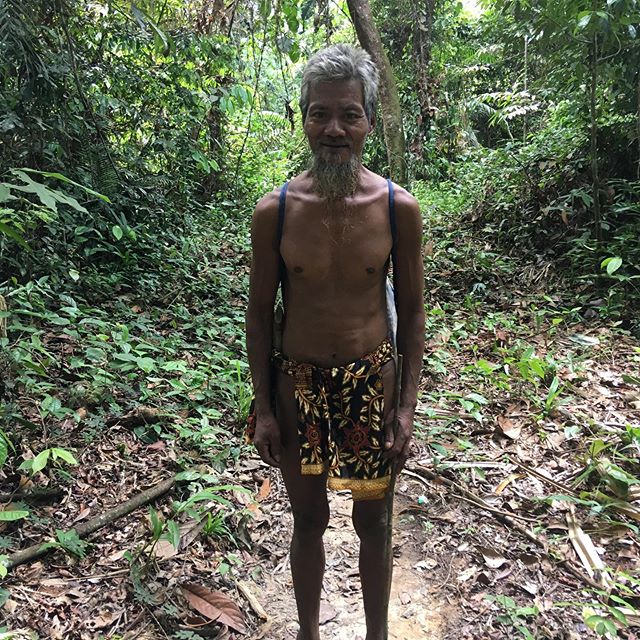<center>Besemen, one of the elders of the Orang Rimba who was among the first people to greet me at camp.</center> Pretty soon, many of the young boys, male adolescents, and young adults opened up to me as well. Particularly the young ones as they wanted to know more about the outside world. It’s them I spent much of my time with at camp and in BDNP. In the end, I can definitely say that May was a good month for me on getting to know new people, despite the initial barrier. 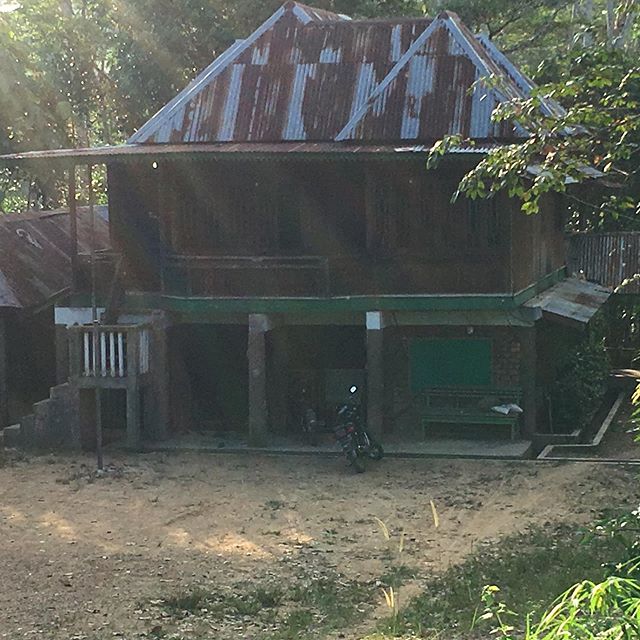<center>My home for the next year.</center> **New Information** To end this blog entry, I would like to say that, for the final two weeks of May, I went to Yogyakarta on Java island to get my visa extension. During my time in Jogja (Yogyakarta abbreviated), I decided to learn as much Bahasa Indonesia as I could at a place called Puri Bahasa, an accredited school for language learning. https://cdn.steemitimages.com/DQmbFNzgMchSWYwhYy4aQpZBYaPU3GdchERnpvb27HsnXXa/image.png<center>Puri Bahasa, the school where I attempted to learn Bahasa Indonesia. Photo credit: Sekolah Kita.</center> I won’t write much on this, considering I want to keep this blog about the Orang Rimba, but there is one important note I received from one of my teachers. Since the topic of the Orang Rimba was brought up, she told me that it was a common method for many companies in the recent past to fool the Orang Rimba by getting them to “sign” an agreement with their thumbprints. Without consulting the Orang Rimba about all the details of their intent. This brought up what the National Park authority told me. That they got the people’s “agreement” by getting their thumbprints. Of course, this isn’t definitive evidence of anything but it is telling of what both governments and companies are willing to do to get what they desire. I know that the Indonesian government is trying to improve relationships with indigenous peoples lately but, given how [recent and weakly enforced](https://news.mongabay.com/2017/03/indonesias-indigenous-peoples-will-have-to-keep-waiting-for-a-promised-task-force-on-their-rights/) this is so far, I would not put it past them that such strategies are still used to get procedures done. **Work Citations:** Berta, A. E. V. (2014). “People of the Jungle: Adat, Women, and Change among Orang Rimba” (Master's thesis). University of Oslo, Norway. KKI WARSI. (2008). “Survey Bio-Regional Jambi”. Margono, B. A., Potapov, P. V., Turubanova, S., Stolle, F., & Hansen, M. C. (2014). Primary forest cover loss in Indonesia over 2000–2012. Nature climate change, 4(8), 730. Prasetijo, A. (2015). “Orang Rimba: True Custodian of the Forest”. Sager, S. (2008). “The sky is our roof, the earth our floor: Orang Rimba customs and religion in the Bukit Duabelas region of Jambi, Sumatra.” The Australian National University, Australia. |
| json metadata | {"tags":["orangrimba","indigenouspeoples","deforestation","forestpeoplesrights","orang"],"image":["https://cdn.steemitimages.com/DQmQ1mhHQUzm5KjxGA4SeCUe3MEX2nogjUr3sT7cMoDLkSR/image.png","https://cdn.steemitimages.com/DQmaHVHeEieWcXWqS5vsUvJ5Ko21iPhVGTiL1byWH5RwmdW/image.png","https://cdn.steemitimages.com/DQmTbaqUuvpXHMJK46kem8FzUgXUF4p6SuPLX3HXoWdHPKG/image.png","https://cdn.steemitimages.com/DQmXSy6uVt4rZ2PKgTkRpduT8wnwyL7UMXmf21LdXScrv1N/image.png","https://cdn.steemitimages.com/DQmQoWtM5MyTEignUeKHjroHZgoZdG7LTXYVKcjdAsmbbaW/image.png","https://cdn.steemitimages.com/DQmZJPNuy4EoRaVswC5847Vfr4tXNdsmXsUgXpzpAsHqvyz/image.png","https://cdn.steemitimages.com/DQmcYz8u1WUHMbjSanySueiVagpvDZ17KCQP1DfbWy6NLcK/image.png","https://cdn.steemitimages.com/DQmZ8UzEs7KxnMGn12SBhayMLVNNji638Wj9aVQ9Zh31BRs/image.png","https://cdn.steemitimages.com/DQmVsejngBb4yRVRSe8sT8xpnPhxsHAnAsbSttux5ewh7xQ/60062449_470721797001819_3831662313877012144_n.jpg","https://cdn.steemitimages.com/DQmWRfWsEFhmtR72mdPiTGicaKqoA6d4gHCpmsjVQfn3FLu/61080001_432884210846384_1151598007868005560_n.jpg","https://cdn.steemitimages.com/DQmbFNzgMchSWYwhYy4aQpZBYaPU3GdchERnpvb27HsnXXa/image.png"],"links":["http://factsanddetails.com/indonesia/History_and_Religion/sub6_1a/entry-3944.html","https://etnobudaya.net/2010/11/14/jambis-orang-rimba-where-losing-the-forest-means-losing-your-home/","http://warsi.or.id/eng/content/showing/45/content","http://warsi.or.id/eng/content/release/343","https://www.mongabay.co.id/2018/10/06/pemerintah-adopsi-aturan-adat-orang-rimba-kelola-taman-nasional/?fbclid=IwAR0kJi4hZtqVLD9R3tPpGMBpEcCimkOuFyMKNyZTXFlPxfUIlgIu6N7pwRM","https://www.survivalinternational.org/articles/3562-conservation-needs-to-change","https://news.mongabay.com/2017/03/indonesias-indigenous-peoples-will-have-to-keep-waiting-for-a-promised-task-force-on-their-rights/"],"app":"steemit/0.1","format":"markdown"} |
| Transaction Info | Block #34590212/Trx 9ecdd2fae62482aadf9b5c2a5275b52ef0d172b9 |
View Raw JSON Data
{
"trx_id": "9ecdd2fae62482aadf9b5c2a5275b52ef0d172b9",
"block": 34590212,
"trx_in_block": 4,
"op_in_trx": 0,
"virtual_op": 0,
"timestamp": "2019-07-12T06:35:09",
"op": [
"comment",
{
"parent_author": "",
"parent_permlink": "orang",
"author": "rpark94",
"permlink": "introduction-to-the-orang-rimba-world",
"title": "Introduction to the Orang Rimba world",
"body": "After a four-year absence, I’m back to the Republic of Indonesia with the intent of staying for a full year this time. Compared to my previous visits, in 2013 and 2015, where the focus was primarily on wildlife conservation efforts, my primary intent this time is on an indigenous tribe which has been a particular obsession of mine over the past several years. They’re called the Orang Rimba (translated to “people of the forest” in their language) and they live in the rainforests on the island of Sumatra.\n\nhttps://cdn.steemitimages.com/DQmQ1mhHQUzm5KjxGA4SeCUe3MEX2nogjUr3sT7cMoDLkSR/image.png<center>Photo credit: KKI WARSI</center>\n\nUnique in that they’re a forest-dwelling people living in a region (central Sumatra) which has been heavily influenced by many large kingdoms and empires (i.e. Melayu Kingdom, Srivijaya Empire and more recently with the introduction of [Islam](http://factsanddetails.com/indonesia/History_and_Religion/sub6_1a/entry-3944.html)) throughout its history. Being one of the few animist and nomadic peoples left on Sumatra, they really do stand out from their Malay speaking neighbors, who live in villages and are Islamic practitioners. Unfortunately, this is one of the root causes of their problems. As observed by authors of both Indonesian (Prasetijo, 2015) and Western backgrounds (Berta, 2014; Sager, 2008), the Orang Rimba are considered to be the lowest order of the social caste in Sumatran society. Often, they are referred to as “Kubu” by villagers which means someone who is uncivilized and lives in the forest/wilderness, is stupid and lacks any sense of culture or religion (Sager, 2008, pg. 5). Due to this discriminatory meaning, most Orang Rimba take great offense when called a ‘Kubu’ as denotated by the statement of one Orang Rimba below:\n \n<blockquote>We are ashamed of being called Kubu. Orang Terang (the Malay people) say Kubu means stupid and backward. We don’t like to be called that.\n - Penggunang Leman, Orang Rimba (Prasetijo, 2015, pg. 95) </blockquote> \n\nNo doubt that due to this prejudice, conflicts between Orang Rimba and village people are not uncommon, with the Orang Rimba almost always being the victims in such clashes (Prasetijo, 2015, pg. 158). More pressing than discrimination has to be the loss of the Orang Rimba’s [forest home](https://etnobudaya.net/2010/11/14/jambis-orang-rimba-where-losing-the-forest-means-losing-your-home/). \n\nhttps://cdn.steemitimages.com/DQmaHVHeEieWcXWqS5vsUvJ5Ko21iPhVGTiL1byWH5RwmdW/image.png<center>Unfortunately, this is what's left for the homes of many Orang Rimba. Photo Credit: BBC.com</center>\n\nBeing hunter-gatherers who occasionally practice shifting cultivation (in a manner not dissimilar to many Amazonian Indian tribes), their lifestyle depends on large expanses of intact primary rainforest for their cultural survival. \n\nhttps://cdn.steemitimages.com/DQmTbaqUuvpXHMJK46kem8FzUgXUF4p6SuPLX3HXoWdHPKG/image.png<center>Typical Orang Rimba cultivation field</center>\n\nSadly, Indonesia has experienced rapid deforestation over the past few decades, to the point where, in 2012, the country briefly outperformed Brazil in total deforestation rate, despite being only a third of the size (Margono et al., 2014). \n\nhttps://cdn.steemitimages.com/DQmXSy6uVt4rZ2PKgTkRpduT8wnwyL7UMXmf21LdXScrv1N/image.png<center>Forest loss in Indonesia, 2000-2012. Photo Credit: Margono et al., 2014</center>\n\nMost of this has to do with the expansion of two major industries: palm oil and pulp & paper. Sumatra has borne the worst of this environmental atrocity, as 70 percent of Indonesia’s palm oil production occurs on this island (Berta, 2014, pg. 8). \n\nhttps://cdn.steemitimages.com/DQmQoWtM5MyTEignUeKHjroHZgoZdG7LTXYVKcjdAsmbbaW/image.png<center>Forest loss in central Sumatra, 2000-2016. Photo Credit: Eyes on the Forest.</center>\n\nMuch of where the Orang Rimba people live is on a so-called ‘palm oil hotspot’: Jambi province on central Sumatra. Due to this overlap, many Orang Rimba have lost their forest entirely and are now reduced to beggars barely making a living, often forced to steal palm fruits to make ends meet (Prasetijo, 2015, pg. 175-176). Luckily, there is one spot where the Orang Rimba are allowed to still live a forest-dwelling life: the Bukit Duabelas National Park. Home to approximately 40 percent of the remaining 3,800 Orang Rimba (KKI WARSI, 2008), the area is considered the cultural center for the tribe. \n\nhttps://cdn.steemitimages.com/DQmZJPNuy4EoRaVswC5847Vfr4tXNdsmXsUgXpzpAsHqvyz/image.png<center>Forest in Bukit Duabelas National Park. Photo Credit: CIFOR.</center>\n\nThe National Park was originally created in 2000, after being lobbied by both the Orang Rimba and the local non-profit environmental organization, KKI WARSI (Prasetijo, 2015, pg. 179; Sager, 2008, pg. 17). Created in 1992 as a collaboration of various smaller NGOs, [KKI WARSI](http://warsi.or.id/eng/content/showing/45/content) has since focused on community conservation efforts by using traditional customary rules (adat as its referred to in Indonesia) as a people-friendly means to conserve forests. WARSI’s effort came at a pivotal point as the northern part of the National Park was originally slated to be industrially logged before it was converted to NP status (Prasetijo, 2015, pg. 179-180). To return the topic to myself, it is through WARSI that I am here. And it’s at Bukit Duabelas National Park where I’ll be conducting a research project regarding a new Zoning System that the National Park authority is implementing. \n\n**A New Management Plan**\nHaving been made into a National Park, the authorities are deciding to take the next step by rearranging the Management System of the NP to include the Orang Rimba customary system/adat. They are deciding to do this by dividing the NP into [seven different zones](http://warsi.or.id/eng/content/release/343). \n\nhttps://cdn.steemitimages.com/DQmcYz8u1WUHMbjSanySueiVagpvDZ17KCQP1DfbWy6NLcK/image.png<center>The new Zoning Map of Bukit Duabelas National Park. They're divided into seven new zones. They are: Core Zone (in Red), Traditional Zone (Brown), Religious Zone (Purple), Jungle Zone (Yellow), Utilization Zone (Light Green), Particular Zone (Dark Green), Rehabilitation Zone (small specs in Light Blue). Photo Credit: KKI WARSI.</center>\n\nThis new Zoning System will give the Orang Rimba officially declared areas where they can hunt, use for shifting cultivation and secure locations which they reserve for ceremonial purposes. In theory, this is a great idea and I was personally thrilled when I first heard about this last year. However, I have read [anecdotical reports](https://www.mongabay.co.id/2018/10/06/pemerintah-adopsi-aturan-adat-orang-rimba-kelola-taman-nasional/?fbclid=IwAR0kJi4hZtqVLD9R3tPpGMBpEcCimkOuFyMKNyZTXFlPxfUIlgIu6N7pwRM) which indicate that the process may not have been entirely consensual. Given conservation’s rather [contentious history](https://www.survivalinternational.org/articles/3562-conservation-needs-to-change) with indigenous peoples, I would not be surprised if this was the case. This motivated me to take the initiative to conduct a consensus survey with the Orang Rimba Temenggungs (a position which is equivalent to a chief) to see if they truly agreed with the Zoning System or if it was made through corrosion. This process will take up to a year considering that the Orang Rimba are a reserved people who don’t immediately trust outsiders (Berta, 2014, pg. 12). So far, I’ve met up with the National Park authority to discuss my project. The impression I’ve got was that they seem confident they got the Orang Rimba’s full support as showcased by the thumbprints they received from all thirteen Temenggungs in BDNP. This indicated that they “signed” the paper thus “agreeing” with the Zoning System. I was still uncertain if this was truly the case and I’ve talked with WARSI employees about my concerns. It turns out that WARSI employees were themselves unsure about the results as the Zoning process happened rather quickly and published before they gave any real input. This raised eyebrows for me and only convinced me more to conduct my project. On a side note, another reason for my visit is to conduct my own personal wildlife survey in the National Park. To the best of my knowledge, the last “survey” (if it can even be called that considering how small scale many of these sample studies were) was done back in 1998 by the Indonesian Institute of Science (LIPI) which estimated that there were 10-12 Sumatran tigers in the Park (unfortunately, I couldn’t find a link to the report). Since then, there has been virtually no effort or even attempts to monitor wildlife in the NP. How many wildlife species there are and the overall quality of biodiversity in the NP are practically unknown. Though I do hold hope that they’re in decent numbers, at least in comparison to the relatively small size of BDNP. This is due to the Orang Rimba’s tribal taboos which forbid the hunting of many endangered species (i.e. tigers, elephants, and even the critically threatened helmeted hornbills) due to them being perceived as the incantation of local gods/deities (Sager, 2008, pg. 146). \n\nhttps://cdn.steemitimages.com/DQmZ8UzEs7KxnMGn12SBhayMLVNNji638Wj9aVQ9Zh31BRs/image.png<center>The iconic Helmeted Hornbill. Highly endangered due to Chinese and Vietnamese demand for its hornbill, which is often referred to as \"red ivory\". An important bird to the Orang Rimba, who see it as a messenger of God. Taken from Pinterest.com.</center>\n\nThough this hasn’t stopped Sumatran elephants from becoming locally extinct in the late 1980s (Sager, 2008, pg. 65). Regardless, I’m keen on finding out BDNP’s biological treasures though I’ll have to gain the trust of the Orang Rimba, the traditional owners of the forest, first before I can proceed with this. \n\n**At Camp**\nComing to WARSI’s field office/camp and meeting the Orang Rimba for the first time was somewhat of a contradictory feeling for me. On one hand, I was more than happy to finally meet the people that I had prior only seen in books and online articles. On the other hand, most of the Orang Rimba were clearly skeptical of me and kept their distance; only giving me awkward stares. It didn’t create the most welcoming experience, considering how much I desired to meet with them. I’m not alone in this initial response, as Anne Berta (2014) wrote in detail of her experience. For her, it took a few months before the larger Orang Rimba community opened up to her presence. I can’t blame the Orang Rimba for this, for their history with the outside world is one of abuse. Historically, when the forest was much more expansive, the Orang Rimba stayed well away from the outside world, running away to the forest if they accidentally encounter a non-Orang Rimba. This was due to slave raids which were common in the region in past centuries (Sager, 2008, pg. 67). In more recent times, discrimination and deforestation no doubt forced them to maintain this mentality. Still, the Temenggung I met, Ngrip, and Mangku Besemen welcomed me openly, despite the language barrier, and made the situation feel a little more inclusive. \n\n<center>Besemen, one of the elders of the Orang Rimba who was among the first people to greet me at camp.</center>\n\nPretty soon, many of the young boys, male adolescents, and young adults opened up to me as well. Particularly the young ones as they wanted to know more about the outside world. It’s them I spent much of my time with at camp and in BDNP. In the end, I can definitely say that May was a good month for me on getting to know new people, despite the initial barrier. \n\n<center>My home for the next year.</center>\n\n**New Information**\nTo end this blog entry, I would like to say that, for the final two weeks of May, I went to Yogyakarta on Java island to get my visa extension. During my time in Jogja (Yogyakarta abbreviated), I decided to learn as much Bahasa Indonesia as I could at a place called Puri Bahasa, an accredited school for language learning. \n\nhttps://cdn.steemitimages.com/DQmbFNzgMchSWYwhYy4aQpZBYaPU3GdchERnpvb27HsnXXa/image.png<center>Puri Bahasa, the school where I attempted to learn Bahasa Indonesia. Photo credit: Sekolah Kita.</center>\n\nI won’t write much on this, considering I want to keep this blog about the Orang Rimba, but there is one important note I received from one of my teachers. Since the topic of the Orang Rimba was brought up, she told me that it was a common method for many companies in the recent past to fool the Orang Rimba by getting them to “sign” an agreement with their thumbprints. Without consulting the Orang Rimba about all the details of their intent. This brought up what the National Park authority told me. That they got the people’s “agreement” by getting their thumbprints. Of course, this isn’t definitive evidence of anything but it is telling of what both governments and companies are willing to do to get what they desire. I know that the Indonesian government is trying to improve relationships with indigenous peoples lately but, given how [recent and weakly enforced](https://news.mongabay.com/2017/03/indonesias-indigenous-peoples-will-have-to-keep-waiting-for-a-promised-task-force-on-their-rights/) this is so far, I would not put it past them that such strategies are still used to get procedures done. \n\n**Work Citations:**\nBerta, A. E. V. (2014). “People of the Jungle: Adat, Women, and Change among Orang Rimba” (Master's thesis). University of Oslo, Norway. \nKKI WARSI. (2008). “Survey Bio-Regional Jambi”.\nMargono, B. A., Potapov, P. V., Turubanova, S., Stolle, F., & Hansen, M. C. (2014). Primary forest cover loss in Indonesia over 2000–2012. Nature climate change, 4(8), 730.\nPrasetijo, A. (2015). “Orang Rimba: True Custodian of the Forest”.\nSager, S. (2008). “The sky is our roof, the earth our floor: Orang Rimba customs and religion in the Bukit Duabelas region of Jambi, Sumatra.” The Australian National University, Australia.",
"json_metadata": "{\"tags\":[\"orangrimba\",\"indigenouspeoples\",\"deforestation\",\"forestpeoplesrights\",\"orang\"],\"image\":[\"https://cdn.steemitimages.com/DQmQ1mhHQUzm5KjxGA4SeCUe3MEX2nogjUr3sT7cMoDLkSR/image.png\",\"https://cdn.steemitimages.com/DQmaHVHeEieWcXWqS5vsUvJ5Ko21iPhVGTiL1byWH5RwmdW/image.png\",\"https://cdn.steemitimages.com/DQmTbaqUuvpXHMJK46kem8FzUgXUF4p6SuPLX3HXoWdHPKG/image.png\",\"https://cdn.steemitimages.com/DQmXSy6uVt4rZ2PKgTkRpduT8wnwyL7UMXmf21LdXScrv1N/image.png\",\"https://cdn.steemitimages.com/DQmQoWtM5MyTEignUeKHjroHZgoZdG7LTXYVKcjdAsmbbaW/image.png\",\"https://cdn.steemitimages.com/DQmZJPNuy4EoRaVswC5847Vfr4tXNdsmXsUgXpzpAsHqvyz/image.png\",\"https://cdn.steemitimages.com/DQmcYz8u1WUHMbjSanySueiVagpvDZ17KCQP1DfbWy6NLcK/image.png\",\"https://cdn.steemitimages.com/DQmZ8UzEs7KxnMGn12SBhayMLVNNji638Wj9aVQ9Zh31BRs/image.png\",\"https://cdn.steemitimages.com/DQmVsejngBb4yRVRSe8sT8xpnPhxsHAnAsbSttux5ewh7xQ/60062449_470721797001819_3831662313877012144_n.jpg\",\"https://cdn.steemitimages.com/DQmWRfWsEFhmtR72mdPiTGicaKqoA6d4gHCpmsjVQfn3FLu/61080001_432884210846384_1151598007868005560_n.jpg\",\"https://cdn.steemitimages.com/DQmbFNzgMchSWYwhYy4aQpZBYaPU3GdchERnpvb27HsnXXa/image.png\"],\"links\":[\"http://factsanddetails.com/indonesia/History_and_Religion/sub6_1a/entry-3944.html\",\"https://etnobudaya.net/2010/11/14/jambis-orang-rimba-where-losing-the-forest-means-losing-your-home/\",\"http://warsi.or.id/eng/content/showing/45/content\",\"http://warsi.or.id/eng/content/release/343\",\"https://www.mongabay.co.id/2018/10/06/pemerintah-adopsi-aturan-adat-orang-rimba-kelola-taman-nasional/?fbclid=IwAR0kJi4hZtqVLD9R3tPpGMBpEcCimkOuFyMKNyZTXFlPxfUIlgIu6N7pwRM\",\"https://www.survivalinternational.org/articles/3562-conservation-needs-to-change\",\"https://news.mongabay.com/2017/03/indonesias-indigenous-peoples-will-have-to-keep-waiting-for-a-promised-task-force-on-their-rights/\"],\"app\":\"steemit/0.1\",\"format\":\"markdown\"}"
}
]
}fyrstikkenupvoted (1.00%) @rpark94 / leeriness-in-the-jungle2019/07/12 05:30:48
fyrstikkenupvoted (1.00%) @rpark94 / leeriness-in-the-jungle
2019/07/12 05:30:48
| voter | fyrstikken |
| author | rpark94 |
| permlink | leeriness-in-the-jungle |
| weight | 100 (1.00%) |
| Transaction Info | Block #34588925/Trx facbe1cdde812212cdd9a26cfe2c4dd689617bb4 |
View Raw JSON Data
{
  "trx_id": "facbe1cdde812212cdd9a26cfe2c4dd689617bb4",
  "block": 34588925,
  "trx_in_block": 0,
  "op_in_trx": 0,
  "virtual_op": 0,
  "timestamp": "2019-07-12T05:30:48",
  "op": [
    "vote",
    {
      "voter": "fyrstikken",
      "author": "rpark94",
      "permlink": "leeriness-in-the-jungle",
      "weight": 100
    }
  ]
}rpark94upvoted (100.00%) @chairulsyaban / otto-sumatran-elephants-77c7629e7b1032019/07/12 05:29:45
rpark94upvoted (100.00%) @chairulsyaban / otto-sumatran-elephants-77c7629e7b103
2019/07/12 05:29:45
| voter | rpark94 |
| author | chairulsyaban |
| permlink | otto-sumatran-elephants-77c7629e7b103 |
| weight | 10000 (100.00%) |
| Transaction Info | Block #34588904/Trx 3dfde5073933fda4401c4001f6fe835331f49d9f |
View Raw JSON Data
{
  "trx_id": "3dfde5073933fda4401c4001f6fe835331f49d9f",
  "block": 34588904,
  "trx_in_block": 24,
  "op_in_trx": 0,
  "virtual_op": 0,
  "timestamp": "2019-07-12T05:29:45",
  "op": [
    "vote",
    {
      "voter": "rpark94",
      "author": "chairulsyaban",
      "permlink": "otto-sumatran-elephants-77c7629e7b103",
      "weight": 10000
    }
  ]
}rpark94upvoted (100.00%) @denkers / save-the-sumatran-elephants2019/07/12 05:26:36
rpark94upvoted (100.00%) @denkers / save-the-sumatran-elephants
2019/07/12 05:26:36
| voter | rpark94 |
| author | denkers |
| permlink | save-the-sumatran-elephants |
| weight | 10000 (100.00%) |
| Transaction Info | Block #34588843/Trx 69c04e37645b72cd5853046d24f5a3538e82c646 |
View Raw JSON Data
{
  "trx_id": "69c04e37645b72cd5853046d24f5a3538e82c646",
  "block": 34588843,
  "trx_in_block": 12,
  "op_in_trx": 0,
  "virtual_op": 0,
  "timestamp": "2019-07-12T05:26:36",
  "op": [
    "vote",
    {
      "voter": "rpark94",
      "author": "denkers",
      "permlink": "save-the-sumatran-elephants",
      "weight": 10000
    }
  ]
}rpark94published a new post: leeriness-in-the-jungle2019/07/12 05:02:42
rpark94published a new post: leeriness-in-the-jungle
2019/07/12 05:02:42
| parent author | |
| parent permlink | orangrimba |
| author | rpark94 |
| permlink | leeriness-in-the-jungle |
| title | Leeriness in the Jungle |
| body | https://cdn.steemitimages.com/DQmVMcaqcREjcH72uJ5M92KHyWPe7vnbjxUNpY9qi7mm7NP/image.jpeg<center>Photo Credit: KKI WARSI</center> My experience in June can be best described in one word: lethargic. Reason being that not much was done in regards to field work that I’ve described in my last [blog post](https://steemit.com/orang/@rpark94/introduction-to-the-orang-rimba-world). There are several reasons for this but ultimately it comes down to two primary culprits: bureaucracy in Indonesia and the Eid al-Fitr (called “Idul Fitri” in Indonesia) holiday weeks. Due to the latter, my coworkers at WARSI had to take two weeks off to celebrate the holidays with their families. While I stayed for an extended time in a hotel for the first week, I returned to the field office by the second, ignorantly believing that Idul Fitri was over. While this was a mistake on my part, I did wait, hoping to see my coworkers by next week. Unfortunately, it didn’t even end there, as WARSI had to attend a workshop that was coordinated by the National Park Authority. This lasted for the third week of June and then, given the scope of the topics discussed, WARSI had spent another week discussing the outcomes. Thus, essentially terminating any chance I had of making any significant progress last month! No doubt that these increased discussions show how tedious the bureaucratic process is in Indonesia, which brings me to my next point. When I had visited the Authority Office for Bukit Duabelas NP in May, the Director told me that she required seven steps before I was able to do my research freely in the National Park. It was outlined in the paper below. https://cdn.steemitimages.com/DQmUTRhdovAxwydpBMuSiVAbpcHE3dnhbq2yEw8myDu7X9w/image.jpeg The List is: 1. Term of Reference (ToR) 2. Recommendation letter from Professor and University 3. License from Research Minister 4. License from Home Affairs Minister 5. Passport 6. License from Police 7. Money 8. Letter of immigration As you can clearly see, three of the essential requirements were getting licenses from two separate ministries and from the regional police. This I found unnecessary to which my WARSI coworkers had agreed with in subsequent discussions. Indonesia is [notorious](https://ugm.ac.id/en/news/5778-research-permission-in-indonesia-still-complicated) for its difficulty towards foreign researchers to gain permission to do research. Where it can take many months to get approval from a single ministry. Even keeping this in mind, I was still perplexed by the many requirements that I had to meet. Since then, I found out that there are [strict new regulations](https://www.nature.com/articles/d41586-018-05001-7) which requires foreign researchers to gain more permits before conducting their activities. To not do so could lead “offenders” to be imprisoned for up to two years. On top of this, the topic of research needs to be “beneficial for Indonesia”. What this means usually comes down to pure political interests. Due to environmental issues being a very [controversial topic](https://news.mongabay.com/2019/05/what-we-learned-from-two-years-of-investigating-corrupt-land-deals-in-indonesia/) for the Indonesian government, it’s not surprising that most conservationists and environmental advocates are against this ruling. If the worst happens, I could see, at least, a few more months passing before I get full approval. Which means, for now, I am unable to enter the BDNP (unless I get a one-day pass for 150,000 RP or US$10.50) and experience the Orang Rimba’s traditional lifestyle as intended. For the time being, WARSI is discussing with the National Park authority to see what I can do. **Interacting with the Orang Rimba** Regardless, I wasn’t going to let my negative experience with bureaucracy affect my time when I’m at the BDNP camp. Since I was at the WARSI field camp for three weeks, I wanted to get to know the Orang Rimba better in the meantime. With myself now able to speak very remedial Bahasa Indonesia, I could make some simple sentences for my daily activities. One Orang Rimba, Bejujung, stood out to me as he had a desire to learn the English language and he wanted me to teach him as much as possible. I did so with the very limited Bahasa Indonesia I knew (I accredit myself but, admittedly, I relied on Google Translate to communicate around half of what I needed to say) and in return I asked for him to teach me the Orang Rimba language. I say “language” but, in reality, what the Orang Rimba have is a different [dialect](https://en.m.wikipedia.org/wiki/Kubu_language) rather than a full-on language. For the most part, the Orang Rimba “language” has the same grammar and word dictionary as Bahasa Indonesia with a few exceptions. Certain words are different for the Orang Rimba, here are several examples: Yes: *Iya Nih* (Bahasa Indonesia), *Ao* (Orang Rimba); No: *Tidak* (BI), *Hopi* (OR); Water: *Air* (pronounced *Ai-ree*) (BI), *Ai* (OR). Many terms the Orang Rimba have for the local wildlife is also different, Tiger: *Harimau* (BI), *Merego* (OR); Elephant: *Gajah* (BI), *Gedjoh* (OR); Helmeted Hornbill: *Rangkong Helm* (BI), *Burung Gading* (OR). Also, it should be noted that Orang Rimba speak in more pronounced gaps when saying certain words, a phenomenon which linguists have called [“Glottal”](https://www.google.com/amp/s/amp.theguardian.com/commentisfree/2015/apr/30/why-have-we-got-it-in-for-glottal-stop) stops. For example, an Orang Rimba person would say *“U’rang”* rather than “Orang”. This makes it feel like I’m learning another language at times and I’m not the only one who came to this conclusion. Ramsey Elkholy (2016, pg. 51) during his studies, found it very difficult to learn *Bahasa Rimba* and it took him many months before he was able to speak it at a fluent enough level. This was despite the fact that he taught himself a good amount of Bahasa Indonesia beforehand (Elkholy, 2016; pg. 6). To top that off, one WARSI employee I conversed with, who’s new to the organization, needed a translator to come to the field with him to understand what the Orang Rimba are saying, and he’s a fluent Indonesian speaker! Suffice to say, this will be quite the challenge for me for the duration of my time here. https://youtu.be/vmWvnOoikc0<center>Message from Temenggung Menyurau. Notice how quick his pace is and the sudden stops in his words. Credit to Survival International.</center> Going back to topic, what struck me out about Bejujung more than his desire to learn English was his character. For one, he spoke notably less with the Glottal stops compared to even the other young Orang Rimba at camp, whom themselves were increasingly using more Bahasa Indonesia words. On top of that, he had his hair slightly dyed, with golden streaks appearing on the top of his head. This was something I expect more from the youths in Jambi City or Palembang rather than here at Bukit Duabelas National Park. I found out the reason behind this, Bejujung was one of three Orang Rimba to go to Yogyakarta to be educated on the secondary level (equivalent to High School in the USA) due to exception performance. This was through a new scholarship program set by PT.SAL (an education company) and supported by WARSI. https://cdn.steemitimages.com/DQmTgkEyitfDJ5BeHD6wvwP5XoW8dm7TF8nmePX33NjgT9p/image.jpeg<center>Bejujung (right) with Besiar, both are Orang Rimba who have been educated in Yogyakarta.</center> While outwardly, I congratulated Bejujung for his achievements, it did exemplify an observation I made when I first came here. The Orang Rimba at the WARSI camp are quite accustomed to what is deemed as a more “modern” lifestyle. They frequently wear western clothing, eat meat from domesticated animals (a taboo in traditional Orang Rimba society), regularly drink coffee and tea, and most of the young adults have their own personal smartphones. It became apparent to me that the Orang Rimba at camp were at what the Indonesian Ministry of Social Affairs (MoSA) has deemed the “residing level” (Prasetijo, 2015; pg. 98). MoSA categorize the Orang Rimba in three primary “levels”: “nomadic”, “half-nomadic”, and “residing”. Whereas the first two levels describe Orang Rimba that retain, at least, parts of their cultural lifestyle, ‘residing’ Orang Rimba are those who are adopting the lifestyle of outsiders and are in the final process of assimilation (Prasetijo, 2015; pg. 98). The most stark moment I had to tell me how assimilated these indigenous peoples were becoming was a conversation I had with a Orang Rimba named Kemetan. https://cdn.steemitimages.com/DQmf2LJVV3Qerhf9YUWHU3HwgrL7DosZGMWuyBConh2GfQN/image.jpeg<center>Kemetan </center> Towards the end of the month, I struck up a conversation with Kemetan and it got to a point where I was asking him about his personal experience as an Orang Rimba person. Our conversation went roughly how it did below: “Me: Have you faced discrimination as an Orang Rimba by villagers? Kemetan: No, I haven’t faced any of that. Me: None at all? Kemetan: None. Me: That’s interesting to hear and your experience is quite different from what I’ve read. I want to know, what do you think the Orang Rimba’s future should be. Kemetan: I think we should live like the villagers and not in the forest anymore. Me: Okay, but not all Orang Rimba feel this way, right? Kemetan: No, in fact there’s a lot arguments of where we should move forward.” To further solidify Kemetan’s transition, he proceeded to show me a picture of a girl on his phone (which he had been on for half of our conversation). She’s a Malay villager whom Kemetan met through Facebook and Instagram and has been dating for a month by the time of our conversation. This mentality from young Orang Rimba is not new and has been going on for some time now. Anne Berta has written of her experience with the older generation who feel that their young people (especially their young men) are spending too much time away from the forest and are not learning the traditional laws or adat (Berta, 2014; pg. 37-38). Given what I’ve seen, it appears that these young Orang Rimba are continuing to defy their elders to potential cultural oblivion. To give a little hope, not all young Orang Rimba feel this way, as a little boy named Gading told me that, despite living regularly at camp, he wants to continue learning the laws of his people and he prefers to be in the forest rather than a village. **Information from the Jungle People** Another noteworthy information I’ve gathered in June was when I talked with Jalo, who is Gading’s father. https://cdn.steemitimages.com/DQmZNmZDTmSb9yFduN3xSrXYRiVZMPcvN9W3FYAHXuiaDV9/image.jpeg<center>Jalo, who’s role amongst his people is a Depati (Deputy). The third highest rank in the Orang Rimba’s traditional hierarchy.</center> Jalo, a man of high status and respect amongst his people, asked me, at first, small questions about myself, as he wanted to know more about me. This elevated when I told him of my goals and overall intentions of being here. Seeing an opportunity, Jalo told me that he feels the Zoning System doesn’t provide enough for their economic well-being. He explained that the Zoning System must include improving the roads, so that the Orang Rimba can have better access to village markets where they can sell their rubber products. https://cdn.steemitimages.com/DQmf7Gqrj18xPwvrCCXjDckPpck6nikidn1R6yiRMitGjwb/image.jpeg<center>Unfortunately, this is what many rural roads in Indonesia look like. Photo credit: Mongabay.com</center> This way, they’ll have more money which they want to use for better education and healthcare. Which Jalo feels the government also seriously [neglects](https://www.google.com/amp/s/www.thejakartapost.com/amp/news/2015/03/23/orang-rimba-demand-health-education-facilities.html). While, at first glance, Jalo’s statement may seem to contradict the complaints his generation have made, it really isn’t considering the Orang Rimba’s circumstance. Since the 1970s, palm oil companies have been grabbing more and more land by categorizing them as Industrial Plantation Forest (HTI), which can be exploited at will for industrial use (Prasetijo, 2015; pg. 106). As a result, the Orang Rimba’s forest home is now too small and restrictive for them all to live a nomadic existence. In fact, only a few Orang Rimba at Bukit Duabelas still live a full nomadic forest-based life (Prasetijo, 2015; pg. 138); the majority switch between a nomadic lifestyle and tending to their Jungle Rubber plantations. https://cdn.steemitimages.com/DQmW64Lu3biQZea8gyfs1H24DtMF3KvpnaWM13b5qEgfD8P/image.jpeg<center>Jungle rubber managed by the Orang Rimba. As opposed to monoculture rubber plantations, jungle rubber retain more indigenous tree species. As the rubber trees are planted alongside many native trees. Most Orang Rimba prefer jungle rubber, as it not only gives them a source of economic income but it distinguishes them from the lifestyle of the villagers. Who have adopted growing monoculture plantations.</center> These plantations are what’s giving monetary means to the Orang Rimba and they need it for their daily activities like sending their children to school. While [reluctant](http://warsi.or.id/eng/content/release/242/In_Memory_Of_Yusak_The_Orang_Rimba_Education_Hero) at first, many older Orang Rimba came to accept the need for education as many of them were perviously taken advantage of by outsiders due to their illiteracy (note the “thumbprint agreements” in my last post). If their children can learn to read and write effectively, then they won’t be taken advantage of in the future. It’s just that the elders want them to maintain their customary laws along with getting better education. It’s the abandonment of the former which causes the generational conflict. **Time in the Forest** Towards the end of the month, being at camp constantly with little physical activities to do was becoming a huge problem. The overall feeling I got was of stagnation and restriction. To the point where I decided to get a day pass from a National Park branch nearby. I was reluctant to buy a day ticket before because I was keen on saving money as I felt I spent far too much in May (you can partly thank my overpriced language course for this). But the stagnant feeling got to me too much by month’s end and I took the chance. Accompanied by an Orang Rimba named Gako, going into the rainforest of Bukit Duabelas was enhancing, giving a calm and tranquil experience which I definitely needed by that point. Seeing the lush and biodiverse forest instantly set me in a better mood but it also saddened me that this type of forest (lowland tropical rainforests), once widespread across the Sumatran central plains, is now restricted to a few protected areas. https://cdn.steemitimages.com/DQmQmFVM8Sz19JusQVowxZfxra93W2JkWk4owhwqdnntDmQ/image.jpeg https://cdn.steemitimages.com/DQmc6AxMFYh3cxLeQ8z2RoJz6cUSQmm1J4Hf5P9MxAK73DU/image.jpeg<center>The rainforest vegetation in Bukit Duabelas National Park.</center> https://cdn.steemitimages.com/DQmcCmvErWneqmcb76ynMbYgXwq6kNbjAkKu1jtTgfrD5EF/image.jpeg<center>Gako, the Orang Rimba who guided through the forest this time.</center> Regardless, my day in the forest did end with a visit to a *Rumah Godong/Adat*, the biggest type of architecture for the Orang Rimba (Kurniawan et al., 2014). Usually built in the middle of clearings for shifting cultivation plots and can last for up to two years, they are used when settling disputes. https://cdn.steemitimages.com/DQmPP8SdAMwzG1ZcZDsg2zgWaRLH6E3MJuq4RKnEYDw8dWs/image.jpeg<center>The *Rumah Godong/Adat* which I saw at the end of my forest trek.</center> https://cdn.steemitimages.com/DQmcaxs7GnAnZum3nVHwduAHvbWn5s7gtJqo6GtsRkWtJ9d/image.jpeg<center>The author standing next to the entrance of the building.</center> On the way back to camp, Gako and I heard the call of a Rhinoceros Hornbill and then we saw it take flight. https://cdn.steemitimages.com/DQmWkwMA1WkaAgJV88Mt8zAYjekaSZLveXh59edYGiLFZ6D/image.jpeg<center>A rhinoceros hornbill taking flight, similar to the one we saw. Photo credit: Science Netlink</center> It was a great way to end the month. Still, I certainly will keep my ears clear to hear the call of the critically endangered Helmeted Hornbill while I’m here. https://m.youtube.com/watch?v=tm8yfEM7Ps8<center>Video about the illegal trade of Helmeted Hornbills. Watch from 1:43-1:56 to hear the call of the Helmeted Hornbill. Credit to National Geographic</center> **Looking Ahead** For now, I’ll have to continue receiving all the items required on the list. As mentioned earlier, WARSI will continue talking with NP Authorities and we’ll see what needs to be done. So far, I have received a letter of recommendation from my professor who’s the head of the Social Science Department at James Cook University in Queensland, Australia (where I’ll be going to for my Master Thesis in the future). As well as the money total of 15,000,000 RP (equivalent to US$1050) needed for my year long stay in Indonesia. Along with my Terms of Reference (ToR) and Passport. It’s the licenses which seems to be the biggest hurdle so far and I am concerned how long they will take to receive. I’m hoping sometime by the end of July but, given how long the bureaucratic process is, I can’t say for certain. But as one of my teachers at Yogyakarta told me when I was late to class one day due to a delayed time at the Immigration Office: “Welcome to Indonesia”. **Work Citation:** Berta, A. E. V. (2014). “People of the Jungle: Adat, Women, and Change among Orang Rimba” (Master's thesis). University of Oslo, Norway. Elkholy, R. (2016). “Being and becoming: embodiment and experience among the Orang Rimba of Sumatra.” Berghahn Books. Kurniawan, K.R., Fadhil, M.N., Iasha, M.C., Putranti, N.D., Saifullah, A.B., Hamid, R.A. & Fardani, N.A. (2014). “Architecture of Semi-Nomadic ‘Orang Rimba’ in the Bukit Duabelas National Park Jambi.” University of Indonesia, Indonesia. Prasetijo, A. (2015). “Orang Rimba: True Custodian of the Forest.” |
| json metadata | {"tags":["orangrimba","indigenouspeoples","landrights","indonesia"],"image":["https://cdn.steemitimages.com/DQmVMcaqcREjcH72uJ5M92KHyWPe7vnbjxUNpY9qi7mm7NP/image.jpeg","https://cdn.steemitimages.com/DQmUTRhdovAxwydpBMuSiVAbpcHE3dnhbq2yEw8myDu7X9w/image.jpeg","https://img.youtube.com/vi/vmWvnOoikc0/0.jpg","https://cdn.steemitimages.com/DQmTgkEyitfDJ5BeHD6wvwP5XoW8dm7TF8nmePX33NjgT9p/image.jpeg","https://cdn.steemitimages.com/DQmf2LJVV3Qerhf9YUWHU3HwgrL7DosZGMWuyBConh2GfQN/image.jpeg","https://cdn.steemitimages.com/DQmZNmZDTmSb9yFduN3xSrXYRiVZMPcvN9W3FYAHXuiaDV9/image.jpeg","https://cdn.steemitimages.com/DQmf7Gqrj18xPwvrCCXjDckPpck6nikidn1R6yiRMitGjwb/image.jpeg","https://cdn.steemitimages.com/DQmW64Lu3biQZea8gyfs1H24DtMF3KvpnaWM13b5qEgfD8P/image.jpeg","https://cdn.steemitimages.com/DQmQmFVM8Sz19JusQVowxZfxra93W2JkWk4owhwqdnntDmQ/image.jpeg","https://cdn.steemitimages.com/DQmc6AxMFYh3cxLeQ8z2RoJz6cUSQmm1J4Hf5P9MxAK73DU/image.jpeg","https://cdn.steemitimages.com/DQmcCmvErWneqmcb76ynMbYgXwq6kNbjAkKu1jtTgfrD5EF/image.jpeg","https://cdn.steemitimages.com/DQmPP8SdAMwzG1ZcZDsg2zgWaRLH6E3MJuq4RKnEYDw8dWs/image.jpeg","https://cdn.steemitimages.com/DQmcaxs7GnAnZum3nVHwduAHvbWn5s7gtJqo6GtsRkWtJ9d/image.jpeg","https://cdn.steemitimages.com/DQmWkwMA1WkaAgJV88Mt8zAYjekaSZLveXh59edYGiLFZ6D/image.jpeg","https://img.youtube.com/vi/tm8yfEM7Ps8/0.jpg"],"links":["https://steemit.com/orang/@rpark94/introduction-to-the-orang-rimba-world","https://ugm.ac.id/en/news/5778-research-permission-in-indonesia-still-complicated","https://www.nature.com/articles/d41586-018-05001-7","https://news.mongabay.com/2019/05/what-we-learned-from-two-years-of-investigating-corrupt-land-deals-in-indonesia/","https://en.m.wikipedia.org/wiki/Kubu_language","https://www.google.com/amp/s/amp.theguardian.com/commentisfree/2015/apr/30/why-have-we-got-it-in-for-glottal-stop","https://youtu.be/vmWvnOoikc0","https://www.google.com/amp/s/www.thejakartapost.com/amp/news/2015/03/23/orang-rimba-demand-health-education-facilities.html","http://warsi.or.id/eng/content/release/242/In_Memory_Of_Yusak_The_Orang_Rimba_Education_Hero","https://m.youtube.com/watch?v=tm8yfEM7Ps8"],"app":"steemit/0.1","format":"markdown"} |
| Transaction Info | Block #34588366/Trx 0b8f2715e85724bff1eecfb38416a9980a4ef439 |
View Raw JSON Data
{
  "trx_id": "0b8f2715e85724bff1eecfb38416a9980a4ef439",
  "block": 34588366,
  "trx_in_block": 12,
  "op_in_trx": 0,
  "virtual_op": 0,
  "timestamp": "2019-07-12T05:02:42",
  "op": [
    "comment",
    {
      "parent_author": "",
      "parent_permlink": "orangrimba",
      "author": "rpark94",
      "permlink": "leeriness-in-the-jungle",
      "title": "Leeriness in the Jungle",
      "body": "https://cdn.steemitimages.com/DQmVMcaqcREjcH72uJ5M92KHyWPe7vnbjxUNpY9qi7mm7NP/image.jpeg<center>Photo Credit: KKI WARSI</center>\n\nMy experience in June can be best described in one word: lethargic. Reason being that not much was done in regards to field work that I’ve described in my last [blog post](https://steemit.com/orang/@rpark94/introduction-to-the-orang-rimba-world). There are several reasons for this but ultimately it comes down to two primary culprits: bureaucracy in Indonesia and the Eid al-Fitr (called “Idul Fitri” in Indonesia) holiday weeks. Due to the latter, my coworkers at WARSI had to take two weeks off to celebrate the holidays with their families. While I stayed for an extended time in a hotel for the first week, I returned to the field office by the second, ignorantly believing that Idul Fitri was over. While this was a mistake on my part, I did wait, hoping to see my coworkers by next week. Unfortunately, it didn’t even end there, as WARSI had to attend a workshop that was coordinated by the National Park Authority. This lasted for the third week of June and then, given the scope of the topics discussed, WARSI had spent another week discussing the outcomes. Thus, essentially terminating any chance I had of making any significant progress last month! No doubt that these increased discussions show how tedious the bureaucratic process is in Indonesia, which brings me to my next point. When I had visited the Authority Office for Bukit Duabelas NP in May, the Director told me that she required seven steps before I was able to do my research freely in the National Park. It was outlined in the paper below.\n\nhttps://cdn.steemitimages.com/DQmUTRhdovAxwydpBMuSiVAbpcHE3dnhbq2yEw8myDu7X9w/image.jpeg The List is: \n1. Term of Reference (ToR)\n2. Recommendation letter from Professor and University\n3. License from Research Minister \n4. License from Home Affairs Minister \n5.  Passport \n6. License from Police\n7. Money\n8. Letter of immigration\n\nAs you can clearly see, three of the essential requirements were getting licenses from two separate ministries and from the regional police. This I found unnecessary to which my WARSI coworkers had agreed with in subsequent discussions. Indonesia is [notorious](https://ugm.ac.id/en/news/5778-research-permission-in-indonesia-still-complicated) for its difficulty towards foreign researchers to gain permission to do research. Where it can take many months to get approval from a single ministry. Even keeping this in mind, I was still perplexed by the many requirements that I had to meet. Since then, I found out that there are [strict new regulations](https://www.nature.com/articles/d41586-018-05001-7) which requires foreign researchers to gain more permits before conducting their activities. To not do so could lead “offenders” to be imprisoned for up to two years. On top of this, the topic of research needs to be “beneficial for Indonesia”. What this means usually comes down to pure political interests. Due to environmental issues being a very [controversial topic](https://news.mongabay.com/2019/05/what-we-learned-from-two-years-of-investigating-corrupt-land-deals-in-indonesia/) for the Indonesian government, it’s not surprising that most conservationists and environmental advocates are against this ruling. If the worst happens, I could see, at least, a few more months passing before I get full approval. Which means, for now, I am unable to enter the BDNP (unless I get a one-day pass for 150,000 RP or US$10.50) and experience the Orang Rimba’s traditional lifestyle as intended. For the time being, WARSI is discussing with the National Park authority to see what I can do. \n\n**Interacting with the Orang Rimba**\nRegardless, I wasn’t going to let my negative experience with bureaucracy affect my time when I’m at the BDNP camp. Since I was at the WARSI field camp for three weeks, I wanted to get to know the Orang Rimba better in the meantime. With myself now able to speak very remedial Bahasa Indonesia, I could make some simple sentences for my daily activities. One Orang Rimba, Bejujung, stood out to me as he had a desire to learn the English language and he wanted me to teach him as much as possible. I did so with the very limited Bahasa Indonesia I knew (I accredit myself but, admittedly, I relied on Google Translate to communicate around half of what I needed to say) and in return I asked for him to teach me the Orang Rimba language. I say “language” but, in reality, what the Orang Rimba have is a different [dialect](https://en.m.wikipedia.org/wiki/Kubu_language) rather than a full-on language. For the most part, the Orang Rimba “language” has the same grammar and word dictionary as Bahasa Indonesia with a few exceptions. Certain words are different for the Orang Rimba, here are several examples: Yes: *Iya Nih* (Bahasa Indonesia), *Ao* (Orang Rimba); No: *Tidak* (BI), *Hopi* (OR); Water: *Air* (pronounced *Ai-ree*) (BI), *Ai* (OR). Many terms the Orang Rimba have for the local wildlife is also different, Tiger: *Harimau* (BI), *Merego* (OR); Elephant: *Gajah* (BI), *Gedjoh* (OR); Helmeted Hornbill: *Rangkong Helm* (BI), *Burung Gading* (OR).  Also, it should be noted that Orang Rimba speak in more pronounced gaps when saying certain words, a phenomenon which linguists have called [“Glottal”](https://www.google.com/amp/s/amp.theguardian.com/commentisfree/2015/apr/30/why-have-we-got-it-in-for-glottal-stop) stops. For example, an Orang Rimba person would say *“U’rang”* rather than “Orang”. This makes it feel like I’m learning another language at times and I’m not the only one who came to this conclusion. Ramsey Elkholy (2016, pg. 51) during his studies, found it very difficult to learn *Bahasa Rimba* and it took him many months before he was able to speak it at a fluent enough level. This was despite the fact that he taught himself a good amount of Bahasa Indonesia beforehand (Elkholy, 2016; pg. 6). To top that off, one WARSI employee I conversed with, who’s new to the organization, needed a translator to come to the field with him to understand what the Orang Rimba are saying, and he’s a fluent Indonesian speaker! Suffice to say, this will be quite the challenge for me for the duration of my time here. \n\nhttps://youtu.be/vmWvnOoikc0<center>Message from Temenggung Menyurau. Notice how quick his pace is and the sudden stops in his words. Credit to Survival International.</center>\n\nGoing back to topic, what struck me out about Bejujung more than his desire to learn English was his character. For one, he spoke notably less with the Glottal stops compared to even the other young Orang Rimba at camp, whom themselves were increasingly using more Bahasa Indonesia words. On top of that, he had his hair slightly dyed, with golden streaks appearing on the top of his head. This was something I expect more from the youths in Jambi City or Palembang rather than here at Bukit Duabelas National Park. I found out the reason behind this, Bejujung was one of three Orang Rimba to go to Yogyakarta to be educated on the secondary level (equivalent to High School in the USA) due to exception performance. This was through a new scholarship program set by PT.SAL (an education company) and supported by WARSI. \n\nhttps://cdn.steemitimages.com/DQmTgkEyitfDJ5BeHD6wvwP5XoW8dm7TF8nmePX33NjgT9p/image.jpeg<center>Bejujung (right) with Besiar, both are Orang Rimba who have been educated in Yogyakarta.</center>\n\nWhile outwardly, I congratulated Bejujung for his achievements, it did exemplify an observation I made when I first came here. The Orang Rimba at the WARSI camp are quite accustomed to what is deemed as a more “modern” lifestyle. They frequently wear western clothing, eat meat from domesticated animals (a taboo in traditional Orang Rimba society), regularly drink coffee and tea, and most of the young adults have their own personal smartphones. It became apparent to me that the Orang Rimba at camp were at what the Indonesian Ministry of Social Affairs (MoSA) has deemed the “residing level” (Prasetijo, 2015; pg. 98). MoSA categorize the Orang Rimba in three primary “levels”: “nomadic”, “half-nomadic”, and “residing”. Whereas the first two levels describe Orang Rimba that retain, at least, parts of their cultural lifestyle, ‘residing’ Orang Rimba are those who are adopting the lifestyle of outsiders and are in the final process of assimilation (Prasetijo, 2015; pg. 98). The most stark moment I had to tell me how assimilated these indigenous peoples were becoming was a conversation I had with a Orang Rimba named Kemetan. \n\nhttps://cdn.steemitimages.com/DQmf2LJVV3Qerhf9YUWHU3HwgrL7DosZGMWuyBConh2GfQN/image.jpeg<center>Kemetan </center>\n\nTowards the end of the month, I struck up a conversation with Kemetan and it got to a point where I was asking him about his personal experience as an Orang Rimba person. Our conversation went roughly how it did below:\n\n“Me: Have you faced discrimination as an Orang Rimba by villagers?\n\nKemetan: No, I haven’t faced any of that. \n\nMe: None at all?\n\nKemetan: None.\n\nMe: That’s interesting to hear and your experience is quite different from what I’ve read. I want to know, what do you think the Orang Rimba’s future should be. \n\nKemetan: I think we should live like the villagers and not in the forest anymore.\n\nMe: Okay, but not all Orang Rimba feel this way, right?\n\nKemetan: No, in fact there’s a lot arguments of where we should move forward.”\n\nTo further solidify Kemetan’s transition, he proceeded to show me a picture of a girl on his phone (which he had been on for half of our conversation). She’s a Malay villager whom Kemetan met through Facebook and Instagram and has been dating for a month by the time of our conversation. This mentality from young Orang Rimba is not new and has been going on for some time now. Anne Berta has written of her experience with the older generation who feel that their young people (especially their young men) are spending too much time away from the forest and are not learning the traditional laws or adat (Berta, 2014; pg. 37-38). Given what I’ve seen, it appears that these young Orang Rimba are continuing to defy their elders to potential cultural oblivion. To give a little hope, not all young Orang Rimba feel this way, as a little boy named Gading told me that, despite living regularly at camp, he wants to continue learning the laws of his people and he prefers to be in the forest rather than a village. \n\n**Information from the Jungle People**\nAnother noteworthy information I’ve gathered in June was when I talked with Jalo, who is Gading’s father. \n\nhttps://cdn.steemitimages.com/DQmZNmZDTmSb9yFduN3xSrXYRiVZMPcvN9W3FYAHXuiaDV9/image.jpeg<center>Jalo, who’s role amongst his people is a Depati (Deputy). The third highest rank in the Orang Rimba’s traditional hierarchy.</center>\n\nJalo, a man of high status and respect amongst his people, asked me, at first, small questions about myself, as he wanted to know more about me. This elevated when I told him of my goals and overall intentions of being here. Seeing an opportunity, Jalo told me that he feels the Zoning System doesn’t provide enough for their economic well-being. He explained that the Zoning System must include improving the roads, so that the Orang Rimba can have better access to village markets where they can sell their rubber products. \n\nhttps://cdn.steemitimages.com/DQmf7Gqrj18xPwvrCCXjDckPpck6nikidn1R6yiRMitGjwb/image.jpeg<center>Unfortunately, this is what many rural roads in Indonesia look like. Photo credit: Mongabay.com</center>\n\nThis way, they’ll have more money which they want to use for better education and healthcare. Which Jalo feels the government also seriously [neglects](https://www.google.com/amp/s/www.thejakartapost.com/amp/news/2015/03/23/orang-rimba-demand-health-education-facilities.html). While, at first glance, Jalo’s statement may seem to contradict the complaints his generation have made, it really isn’t considering the Orang Rimba’s circumstance. Since the 1970s, palm oil companies have been grabbing more and more land by categorizing them as Industrial Plantation Forest (HTI), which can be exploited at will for industrial use (Prasetijo, 2015; pg. 106). As a result, the Orang Rimba’s forest home is now too small and restrictive for them all to live a nomadic existence. In fact, only a few Orang Rimba at Bukit Duabelas still live a full nomadic forest-based life (Prasetijo, 2015; pg. 138); the majority switch between a nomadic lifestyle and tending to their Jungle Rubber plantations. \n\nhttps://cdn.steemitimages.com/DQmW64Lu3biQZea8gyfs1H24DtMF3KvpnaWM13b5qEgfD8P/image.jpeg<center>Jungle rubber managed by the Orang Rimba. As opposed to monoculture rubber plantations, jungle rubber retain more indigenous tree species. As the rubber trees are planted alongside many native trees. Most Orang Rimba prefer jungle rubber, as it not only gives them a source of economic income but it distinguishes them from the lifestyle of the villagers. Who have adopted growing monoculture plantations.</center>\n\nThese plantations are what’s giving monetary means to the Orang Rimba and they need it for their daily activities like sending their children to school. While [reluctant](http://warsi.or.id/eng/content/release/242/In_Memory_Of_Yusak_The_Orang_Rimba_Education_Hero) at first, many older Orang Rimba came to accept the need for education as many of them were perviously taken advantage of by outsiders due to their illiteracy (note the “thumbprint agreements” in my last post). If their children can learn to read and write effectively, then they won’t be taken advantage of in the future. It’s just that the elders want them to maintain their customary laws along with getting better education. It’s the abandonment of the former which causes the generational conflict. \n\n**Time in the Forest**\nTowards the end of the month, being at camp constantly with little physical activities to do was becoming a huge problem. The overall feeling I got was of stagnation and restriction. To the point where I decided to get a day pass from a National Park branch nearby. I was reluctant to buy a day ticket before because I was keen on saving money as I felt I spent far too much in May (you can partly thank my overpriced language course for this). But the stagnant feeling got to me too much by month’s end and I took the chance. Accompanied by an Orang Rimba named Gako, going into the rainforest of Bukit Duabelas was enhancing, giving a calm and tranquil experience which I definitely needed by that point. Seeing the lush and biodiverse forest instantly set me in a better mood but it also saddened me that this type of forest (lowland tropical rainforests), once widespread across the Sumatran central plains, is now restricted to a few protected areas. \n\nhttps://cdn.steemitimages.com/DQmQmFVM8Sz19JusQVowxZfxra93W2JkWk4owhwqdnntDmQ/image.jpeg\n\nhttps://cdn.steemitimages.com/DQmc6AxMFYh3cxLeQ8z2RoJz6cUSQmm1J4Hf5P9MxAK73DU/image.jpeg<center>The rainforest vegetation in Bukit Duabelas National Park.</center>\n\nhttps://cdn.steemitimages.com/DQmcCmvErWneqmcb76ynMbYgXwq6kNbjAkKu1jtTgfrD5EF/image.jpeg<center>Gako, the Orang Rimba who guided through the forest this time.</center>\n\nRegardless, my day in the forest did end with a visit to a *Rumah Godong/Adat*, the biggest type of architecture for the Orang Rimba (Kurniawan et al., 2014). Usually built in the middle of clearings for shifting cultivation plots and can last for up to two years, they are used when settling disputes. \n\nhttps://cdn.steemitimages.com/DQmPP8SdAMwzG1ZcZDsg2zgWaRLH6E3MJuq4RKnEYDw8dWs/image.jpeg<center>The *Rumah Godong/Adat* which I saw at the end of my forest trek.</center>\n\nhttps://cdn.steemitimages.com/DQmcaxs7GnAnZum3nVHwduAHvbWn5s7gtJqo6GtsRkWtJ9d/image.jpeg<center>The author standing next to the entrance of the building.</center>\n\nOn the way back to camp, Gako and I heard the call of a Rhinoceros Hornbill and then we saw it take flight.\n\nhttps://cdn.steemitimages.com/DQmWkwMA1WkaAgJV88Mt8zAYjekaSZLveXh59edYGiLFZ6D/image.jpeg<center>A rhinoceros hornbill taking flight, similar to the one we saw. Photo credit: Science Netlink</center>\n\nIt was a great way to end the month. Still, I certainly will keep my ears clear to hear the call of the critically endangered Helmeted Hornbill while I’m here. \n\nhttps://m.youtube.com/watch?v=tm8yfEM7Ps8<center>Video about the illegal trade of Helmeted Hornbills. Watch from 1:43-1:56 to hear the call of the Helmeted Hornbill. Credit to National Geographic</center>\n\n**Looking Ahead**\nFor now, I’ll have to continue receiving all the items required on the list. As mentioned earlier, WARSI will continue talking with NP Authorities and we’ll see what needs to be done. So far, I have received a letter of recommendation from my professor who’s the head of the Social Science Department at James Cook University in Queensland, Australia (where I’ll be going to for my Master Thesis in the future). As well as the money total of 15,000,000 RP (equivalent to US$1050) needed for my year long stay in Indonesia. Along with my Terms of Reference (ToR) and Passport. It’s the licenses which seems to be the biggest hurdle so far and I am concerned how long they will take to receive. I’m hoping sometime by the end of July but, given how long the bureaucratic process is, I can’t say for certain. But as one of my teachers at Yogyakarta told me when I was late to class one day due to a delayed time at the Immigration Office: “Welcome to Indonesia”. \n\n**Work Citation:**\nBerta, A. E. V. (2014). “People of the Jungle: Adat, Women, and Change among Orang Rimba” (Master's thesis). University of Oslo, Norway.\nElkholy, R. (2016). “Being and becoming: embodiment and experience among the Orang Rimba of Sumatra.” Berghahn Books.\nKurniawan, K.R., Fadhil, M.N., Iasha, M.C., Putranti, N.D., Saifullah, A.B., Hamid, R.A. & Fardani, N.A. (2014). “Architecture of Semi-Nomadic ‘Orang Rimba’ in the Bukit Duabelas National Park Jambi.” University of Indonesia, Indonesia. \nPrasetijo, A. (2015). “Orang Rimba: True Custodian of the Forest.”",
      "json_metadata": "{\"tags\":[\"orangrimba\",\"indigenouspeoples\",\"landrights\",\"indonesia\"],\"image\":[\"https://cdn.steemitimages.com/DQmVMcaqcREjcH72uJ5M92KHyWPe7vnbjxUNpY9qi7mm7NP/image.jpeg\",\"https://cdn.steemitimages.com/DQmUTRhdovAxwydpBMuSiVAbpcHE3dnhbq2yEw8myDu7X9w/image.jpeg\",\"https://img.youtube.com/vi/vmWvnOoikc0/0.jpg\",\"https://cdn.steemitimages.com/DQmTgkEyitfDJ5BeHD6wvwP5XoW8dm7TF8nmePX33NjgT9p/image.jpeg\",\"https://cdn.steemitimages.com/DQmf2LJVV3Qerhf9YUWHU3HwgrL7DosZGMWuyBConh2GfQN/image.jpeg\",\"https://cdn.steemitimages.com/DQmZNmZDTmSb9yFduN3xSrXYRiVZMPcvN9W3FYAHXuiaDV9/image.jpeg\",\"https://cdn.steemitimages.com/DQmf7Gqrj18xPwvrCCXjDckPpck6nikidn1R6yiRMitGjwb/image.jpeg\",\"https://cdn.steemitimages.com/DQmW64Lu3biQZea8gyfs1H24DtMF3KvpnaWM13b5qEgfD8P/image.jpeg\",\"https://cdn.steemitimages.com/DQmQmFVM8Sz19JusQVowxZfxra93W2JkWk4owhwqdnntDmQ/image.jpeg\",\"https://cdn.steemitimages.com/DQmc6AxMFYh3cxLeQ8z2RoJz6cUSQmm1J4Hf5P9MxAK73DU/image.jpeg\",\"https://cdn.steemitimages.com/DQmcCmvErWneqmcb76ynMbYgXwq6kNbjAkKu1jtTgfrD5EF/image.jpeg\",\"https://cdn.steemitimages.com/DQmPP8SdAMwzG1ZcZDsg2zgWaRLH6E3MJuq4RKnEYDw8dWs/image.jpeg\",\"https://cdn.steemitimages.com/DQmcaxs7GnAnZum3nVHwduAHvbWn5s7gtJqo6GtsRkWtJ9d/image.jpeg\",\"https://cdn.steemitimages.com/DQmWkwMA1WkaAgJV88Mt8zAYjekaSZLveXh59edYGiLFZ6D/image.jpeg\",\"https://img.youtube.com/vi/tm8yfEM7Ps8/0.jpg\"],\"links\":[\"https://steemit.com/orang/@rpark94/introduction-to-the-orang-rimba-world\",\"https://ugm.ac.id/en/news/5778-research-permission-in-indonesia-still-complicated\",\"https://www.nature.com/articles/d41586-018-05001-7\",\"https://news.mongabay.com/2019/05/what-we-learned-from-two-years-of-investigating-corrupt-land-deals-in-indonesia/\",\"https://en.m.wikipedia.org/wiki/Kubu_language\",\"https://www.google.com/amp/s/amp.theguardian.com/commentisfree/2015/apr/30/why-have-we-got-it-in-for-glottal-stop\",\"https://youtu.be/vmWvnOoikc0\",\"https://www.google.com/amp/s/www.thejakartapost.com/amp/news/2015/03/23/orang-rimba-demand-health-education-facilities.html\",\"http://warsi.or.id/eng/content/release/242/In_Memory_Of_Yusak_The_Orang_Rimba_Education_Hero\",\"https://m.youtube.com/watch?v=tm8yfEM7Ps8\"],\"app\":\"steemit/0.1\",\"format\":\"markdown\"}"
    }
  ]
}2019/07/12 04:57:54
2019/07/12 04:57:54
| voter | rpark94 |
| author | juvyjabian |
| permlink | the-life-and-experiences-of-indigenous-people-who-are-losing-their-space-in-the-community |
| weight | 10000 (100.00%) |
| Transaction Info | Block #34588270/Trx 3b12ad9fc5457e9a94b4fd7c43928376a1948d68 |
View Raw JSON Data
{
  "trx_id": "3b12ad9fc5457e9a94b4fd7c43928376a1948d68",
  "block": 34588270,
  "trx_in_block": 15,
  "op_in_trx": 0,
  "virtual_op": 0,
  "timestamp": "2019-07-12T04:57:54",
  "op": [
    "vote",
    {
      "voter": "rpark94",
      "author": "juvyjabian",
      "permlink": "the-life-and-experiences-of-indigenous-people-who-are-losing-their-space-in-the-community",
      "weight": 10000
    }
  ]
}rpark94published a new post: introduction-to-the-orang-rimba-world2019/06/28 12:46:09
rpark94published a new post: introduction-to-the-orang-rimba-world
2019/06/28 12:46:09
| parent author | |
| parent permlink | orang |
| author | rpark94 |
| permlink | introduction-to-the-orang-rimba-world |
| title | Introduction to the Orang Rimba world |
| body | After a four-year absence, I’m back to the Republic of Indonesia with the intent of staying for a full year this time. Compared to my previous visits, in 2013 and 2015, where the focus was primarily on wildlife conservation efforts, my primary intent this time is on an indigenous tribe which has been a particular obsession of mine over the past several years. They’re called the Orang Rimba (translated to “people of the forest” in their language) and they live in the rainforests on the island of Sumatra. https://cdn.steemitimages.com/DQmQ1mhHQUzm5KjxGA4SeCUe3MEX2nogjUr3sT7cMoDLkSR/image.png<center>Photo credit: KKI WARSI</center> Unique in that they’re a forest-dwelling people living in a region (central Sumatra) which has been heavily influenced by many large kingdoms and empires (i.e. Melayu Kingdom, Srivijaya Empire and more recently with the introduction of [Islam](http://factsanddetails.com/indonesia/History_and_Religion/sub6_1a/entry-3944.html)) throughout its history. Being one of the few animist and nomadic peoples left on Sumatra, they really do stand out from their Malay speaking neighbors, who live in villages and are Islamic practitioners. Unfortunately, this is one of the root causes of their problems. As observed by authors of both Indonesian (Prasetijo, 2015) and Western backgrounds (Berta, 2014; Sager, 2008), the Orang Rimba are considered to be the lowest order of the social caste in Sumatran society. Often, they are referred to as “Kubu” by villagers which means someone who is uncivilized and lives in the forest/wilderness, is stupid and lacks any sense of culture or religion (Sager, 2008, pg. 5). Due to this discriminatory meaning, most Orang Rimba take great offense when called a ‘Kubu’ as denotated by the statement of one Orang Rimba below: <blockquote>We are ashamed of being called Kubu. Orang Terang (the Malay people) say Kubu means stupid and backward. We don’t like to be called that. - Penggunang Leman, Orang Rimba (Prasetijo, 2015, pg. 95) </blockquote> No doubt that due to this prejudice, conflicts between Orang Rimba and village people are not uncommon, with the Orang Rimba almost always being the victims in such clashes (Prasetijo, 2015, pg. 158). More pressing than discrimination has to be the loss of the Orang Rimba’s [forest home](https://etnobudaya.net/2010/11/14/jambis-orang-rimba-where-losing-the-forest-means-losing-your-home/). https://cdn.steemitimages.com/DQmaHVHeEieWcXWqS5vsUvJ5Ko21iPhVGTiL1byWH5RwmdW/image.png<center>Unfortunately, this is what's left for the homes of many Orang Rimba. Photo Credit: BBC.com</center> Being hunter-gatherers who occasionally practice shifting cultivation (in a manner not dissimilar to many Amazonian Indian tribes), their lifestyle depends on large expanses of intact primary rainforest for their cultural survival. https://cdn.steemitimages.com/DQmTbaqUuvpXHMJK46kem8FzUgXUF4p6SuPLX3HXoWdHPKG/image.png<center>Typical Orang Rimba cultivation field</center> Sadly, Indonesia has experienced rapid deforestation over the past few decades, to the point where, in 2012, the country briefly outperformed Brazil in total deforestation rate, despite being only a third of the size (Margono et al., 2014). https://cdn.steemitimages.com/DQmXSy6uVt4rZ2PKgTkRpduT8wnwyL7UMXmf21LdXScrv1N/image.png<center>Forest loss in Indonesia, 2000-2012. Photo Credit: Margono et al., 2014</center> Most of this has to do with the expansion of two major industries: palm oil and pulp & paper. Sumatra has borne the worst of this environmental atrocity, as 70 percent of Indonesia’s palm oil production occurs on this island (Berta, 2014, pg. 8). https://cdn.steemitimages.com/DQmQoWtM5MyTEignUeKHjroHZgoZdG7LTXYVKcjdAsmbbaW/image.png<center>Forest loss in central Sumatra, 2000-2016. Photo Credit: Eyes on the Forest.</center> Much of where the Orang Rimba people live is on a so-called ‘palm oil hotspot’: Jambi province on central Sumatra. Due to this overlap, many Orang Rimba have lost their forest entirely and are now reduced to beggars barely making a living, often forced to steal palm fruits to make ends meet (Prasetijo, 2015, pg. 175-176). Luckily, there is one spot where the Orang Rimba are allowed to still live a forest-dwelling life: the Bukit Duabelas National Park. Home to approximately 40 percent of the remaining 3,800 Orang Rimba (KKI WARSI, 2008), the area is considered the cultural center for the tribe. https://cdn.steemitimages.com/DQmZJPNuy4EoRaVswC5847Vfr4tXNdsmXsUgXpzpAsHqvyz/image.png<center>Forest in Bukit Duabelas National Park. Photo Credit: CIFOR.</center> The National Park was originally created in 2000, after being lobbied by both the Orang Rimba and the local non-profit environmental organization, KKI WARSI (Prasetijo, 2015, pg. 179; Sager, 2008, pg. 17). Created in 1992 as a collaboration of various smaller NGOs, [KKI WARSI](http://warsi.or.id/eng/content/showing/45/content) has since focused on community conservation efforts by using traditional customary rules (adat as its referred to in Indonesia) as a people-friendly means to conserve forests. WARSI’s effort came at a pivotal point as the northern part of the National Park was originally slated to be industrially logged before it was converted to NP status (Prasetijo, 2015, pg. 179-180). To return the topic to myself, it is through WARSI that I am here. And it’s at Bukit Duabelas National Park where I’ll be conducting a research project regarding a new Zoning System that the National Park authority is implementing. **A New Management Plan** Having been made into a National Park, the authorities are deciding to take the next step by rearranging the Management System of the NP to include the Orang Rimba customary system/adat. They are deciding to do this by dividing the NP into [seven different zones](http://warsi.or.id/eng/content/release/343). https://cdn.steemitimages.com/DQmcYz8u1WUHMbjSanySueiVagpvDZ17KCQP1DfbWy6NLcK/image.png<center>The new Zoning Map of Bukit Duabelas National Park. They're divided into seven new zones. They are: Core Zone (in Red), Traditional Zone (Brown), Religious Zone (Purple), Jungle Zone (Yellow), Utilization Zone (Light Green), Particular Zone (Dark Green), Rehabilitation Zone (small specs in Light Blue). Photo Credit: KKI WARSI.</center> This new Zoning System will give the Orang Rimba officially declared areas where they can hunt, use for shifting cultivation and secure locations which they reserve for ceremonial purposes. In theory, this is a great idea and I was personally thrilled when I first heard about this last year. However, I have read [anecdotical reports](https://www.mongabay.co.id/2018/10/06/pemerintah-adopsi-aturan-adat-orang-rimba-kelola-taman-nasional/?fbclid=IwAR0kJi4hZtqVLD9R3tPpGMBpEcCimkOuFyMKNyZTXFlPxfUIlgIu6N7pwRM) which indicate that the process may not have been entirely consensual. Given conservation’s rather [contentious history](https://www.survivalinternational.org/articles/3562-conservation-needs-to-change) with indigenous peoples, I would not be surprised if this was the case. This motivated me to take the initiative to conduct a consensus survey with the Orang Rimba Temenggungs (a position which is equivalent to a chief) to see if they truly agreed with the Zoning System or if it was made through corrosion. This process will take up to a year considering that the Orang Rimba are a reserved people who don’t immediately trust outsiders (Berta, 2014, pg. 12). So far, I’ve met up with the National Park authority to discuss my project. The impression I’ve got was that they seem confident they got the Orang Rimba’s full support as showcased by the thumbprints they received from all thirteen Temenggungs in BDNP. This indicated that they “signed” the paper thus “agreeing” with the Zoning System. I was still uncertain if this was truly the case and I’ve talked with WARSI employees about my concerns. It turns out that WARSI employees were themselves unsure about the results as the Zoning process happened rather quickly and published before they gave any real input. This raised eyebrows for me and only convinced me more to conduct my project. On a side note, another reason for my visit is to conduct my own personal wildlife survey in the National Park. To the best of my knowledge, the last “survey” (if it can even be called that considering how small scale many of these sample studies were) was done back in 1998 by the Indonesian Institute of Science (LIPI) which estimated that there were 10-12 Sumatran tigers in the Park (unfortunately, I couldn’t find a link to the report). Since then, there has been virtually no effort or even attempts to monitor wildlife in the NP. How many wildlife species there are and the overall quality of biodiversity in the NP are practically unknown. Though I do hold hope that they’re in decent numbers, at least in comparison to the relatively small size of BDNP. This is due to the Orang Rimba’s tribal taboos which forbid the hunting of many endangered species (i.e. tigers, elephants, and even the critically threatened helmeted hornbills) due to them being perceived as the incantation of local gods/deities (Sager, 2008, pg. 146). https://cdn.steemitimages.com/DQmZ8UzEs7KxnMGn12SBhayMLVNNji638Wj9aVQ9Zh31BRs/image.png<center>The iconic Helmeted Hornbill. Highly endangered due to Chinese and Vietnamese demand for its hornbill, which is often referred to as "red ivory". An important bird to the Orang Rimba, who see it as a messenger of God. Taken from Pinterest.com.</center> Though this hasn’t stopped Sumatran elephants from becoming locally extinct in the late 1980s (Sager, 2008, pg. 65). Regardless, I’m keen on finding out BDNP’s biological treasures though I’ll have to gain the trust of the Orang Rimba, the traditional owners of the forest, first before I can proceed with this. **At Camp** Coming to WARSI’s field office/camp and meeting the Orang Rimba for the first time was somewhat of a contradictory feeling for me. On one hand, I was more than happy to finally meet the people that I had prior only seen in books and online articles. On the other hand, most of the Orang Rimba were clearly skeptical of me and kept their distance; only giving me awkward stares. It didn’t create the most welcoming experience, considering how much I desired to meet with them. I’m not alone in this initial response, as Anne Berta (2014) wrote in detail of her experience. For her, it took a few months before the larger Orang Rimba community opened up to her presence. I can’t blame the Orang Rimba for this, for their history with the outside world is one of abuse. Historically, when the forest was much more expansive, the Orang Rimba stayed well away from the outside world, running away to the forest if they accidentally encounter a non-Orang Rimba. This was due to slave raids which were common in the region in past centuries (Sager, 2008, pg. 67). In more recent times, discrimination and deforestation no doubt forced them to maintain this mentality. Still, the Temenggung I met, Ngrip, and Mangku Besemen welcomed me openly, despite the language barrier, and made the situation feel a little more inclusive. <center>Besemen, one of the elders of the Orang Rimba who was among the first people to greet me at camp.</center> Pretty soon, many of the young boys, male adolescents, and young adults opened up to me as well. Particularly the young ones as they wanted to know more about the outside world. It’s them I spent much of my time with at camp and in BDNP. In the end, I can definitely say that May was a good month for me on getting to know new people, despite the initial barrier. <center>My home for the next year.</center> **New Information** To end this blog entry, I would like to say that, for the final two weeks of May, I went to Yogyakarta on Java island to get my visa extension. During my time in Jogja (Yogyakarta abbreviated), I decided to learn as much Bahasa Indonesia as I could at a place called Puri Bahasa, an accredited school for language learning. https://cdn.steemitimages.com/DQmbFNzgMchSWYwhYy4aQpZBYaPU3GdchERnpvb27HsnXXa/image.png<center>Puri Bahasa, the school where I attempted to learn Bahasa Indonesia. Photo credit: Sekolah Kita.</center> I won’t write much on this, considering I want to keep this blog about the Orang Rimba, but there is one important note I received from one of my teachers. Since the topic of the Orang Rimba was brought up, she told me that it was a common method for many companies in the recent past to fool the Orang Rimba by getting them to “sign” an agreement with their thumbprints. Without consulting the Orang Rimba about all the details of their intent. This brought up what the National Park authority told me. That they got the people’s “agreement” by getting their thumbprints. Of course, this isn’t definitive evidence of anything but it is telling of what both governments and companies are willing to do to get what they desire. I know that the Indonesian government is trying to improve relationships with indigenous peoples lately but, given how [recent and weakly enforced](https://news.mongabay.com/2017/03/indonesias-indigenous-peoples-will-have-to-keep-waiting-for-a-promised-task-force-on-their-rights/) this is so far, I would not put it past them that such strategies are still used to get procedures done. **Work Citations:** Berta, A. E. V. (2014). “People of the Jungle: Adat, Women, and Change among Orang Rimba” (Master's thesis). University of Oslo, Norway. KKI WARSI. (2008). “Survey Bio-Regional Jambi”. Margono, B. A., Potapov, P. V., Turubanova, S., Stolle, F., & Hansen, M. C. (2014). Primary forest cover loss in Indonesia over 2000–2012. Nature climate change, 4(8), 730. Prasetijo, A. (2015). “Orang Rimba: True Custodian of the Forest”. Sager, S. (2008). “The sky is our roof, the earth our floor: Orang Rimba customs and religion in the Bukit Duabelas region of Jambi, Sumatra.” The Australian National University, Australia. |
| json metadata | {"tags":["orangrimba","indigenouspeoples","deforestation","forestpeoplesrights","orang"],"image":["https://cdn.steemitimages.com/DQmQ1mhHQUzm5KjxGA4SeCUe3MEX2nogjUr3sT7cMoDLkSR/image.png","https://cdn.steemitimages.com/DQmaHVHeEieWcXWqS5vsUvJ5Ko21iPhVGTiL1byWH5RwmdW/image.png","https://cdn.steemitimages.com/DQmTbaqUuvpXHMJK46kem8FzUgXUF4p6SuPLX3HXoWdHPKG/image.png","https://cdn.steemitimages.com/DQmXSy6uVt4rZ2PKgTkRpduT8wnwyL7UMXmf21LdXScrv1N/image.png","https://cdn.steemitimages.com/DQmQoWtM5MyTEignUeKHjroHZgoZdG7LTXYVKcjdAsmbbaW/image.png","https://cdn.steemitimages.com/DQmZJPNuy4EoRaVswC5847Vfr4tXNdsmXsUgXpzpAsHqvyz/image.png","https://cdn.steemitimages.com/DQmcYz8u1WUHMbjSanySueiVagpvDZ17KCQP1DfbWy6NLcK/image.png","https://cdn.steemitimages.com/DQmZ8UzEs7KxnMGn12SBhayMLVNNji638Wj9aVQ9Zh31BRs/image.png","https://cdn.steemitimages.com/DQmVsejngBb4yRVRSe8sT8xpnPhxsHAnAsbSttux5ewh7xQ/60062449_470721797001819_3831662313877012144_n.jpg","https://cdn.steemitimages.com/DQmWRfWsEFhmtR72mdPiTGicaKqoA6d4gHCpmsjVQfn3FLu/61080001_432884210846384_1151598007868005560_n.jpg","https://cdn.steemitimages.com/DQmbFNzgMchSWYwhYy4aQpZBYaPU3GdchERnpvb27HsnXXa/image.png"],"links":["http://factsanddetails.com/indonesia/History_and_Religion/sub6_1a/entry-3944.html","https://etnobudaya.net/2010/11/14/jambis-orang-rimba-where-losing-the-forest-means-losing-your-home/","http://warsi.or.id/eng/content/showing/45/content","http://warsi.or.id/eng/content/release/343","https://www.mongabay.co.id/2018/10/06/pemerintah-adopsi-aturan-adat-orang-rimba-kelola-taman-nasional/?fbclid=IwAR0kJi4hZtqVLD9R3tPpGMBpEcCimkOuFyMKNyZTXFlPxfUIlgIu6N7pwRM","https://www.survivalinternational.org/articles/3562-conservation-needs-to-change","https://news.mongabay.com/2017/03/indonesias-indigenous-peoples-will-have-to-keep-waiting-for-a-promised-task-force-on-their-rights/"],"app":"steemit/0.1","format":"markdown"} |
| Transaction Info | Block #34194938/Trx 4dfab8a010aff2c15c40f30a3d44d767f16af384 |
View Raw JSON Data
{
"trx_id": "4dfab8a010aff2c15c40f30a3d44d767f16af384",
"block": 34194938,
"trx_in_block": 0,
"op_in_trx": 0,
"virtual_op": 0,
"timestamp": "2019-06-28T12:46:09",
"op": [
"comment",
{
"parent_author": "",
"parent_permlink": "orang",
"author": "rpark94",
"permlink": "introduction-to-the-orang-rimba-world",
"title": "Introduction to the Orang Rimba world",
"body": "After a four-year absence, I’m back to the Republic of Indonesia with the intent of staying for a full year this time. Compared to my previous visits, in 2013 and 2015, where the focus was primarily on wildlife conservation efforts, my primary intent this time is on an indigenous tribe which has been a particular obsession of mine over the past several years. They’re called the Orang Rimba (translated to “people of the forest” in their language) and they live in the rainforests on the island of Sumatra.\n\nhttps://cdn.steemitimages.com/DQmQ1mhHQUzm5KjxGA4SeCUe3MEX2nogjUr3sT7cMoDLkSR/image.png<center>Photo credit: KKI WARSI</center>\n\nUnique in that they’re a forest-dwelling people living in a region (central Sumatra) which has been heavily influenced by many large kingdoms and empires (i.e. Melayu Kingdom, Srivijaya Empire and more recently with the introduction of [Islam](http://factsanddetails.com/indonesia/History_and_Religion/sub6_1a/entry-3944.html)) throughout its history. Being one of the few animist and nomadic peoples left on Sumatra, they really do stand out from their Malay speaking neighbors, who live in villages and are Islamic practitioners. Unfortunately, this is one of the root causes of their problems. As observed by authors of both Indonesian (Prasetijo, 2015) and Western backgrounds (Berta, 2014; Sager, 2008), the Orang Rimba are considered to be the lowest order of the social caste in Sumatran society. Often, they are referred to as “Kubu” by villagers which means someone who is uncivilized and lives in the forest/wilderness, is stupid and lacks any sense of culture or religion (Sager, 2008, pg. 5). Due to this discriminatory meaning, most Orang Rimba take great offense when called a ‘Kubu’ as denotated by the statement of one Orang Rimba below:\n \n<blockquote>We are ashamed of being called Kubu. Orang Terang (the Malay people) say Kubu means stupid and backward. We don’t like to be called that.\n - Penggunang Leman, Orang Rimba (Prasetijo, 2015, pg. 95) </blockquote> \n\nNo doubt that due to this prejudice, conflicts between Orang Rimba and village people are not uncommon, with the Orang Rimba almost always being the victims in such clashes (Prasetijo, 2015, pg. 158). More pressing than discrimination has to be the loss of the Orang Rimba’s [forest home](https://etnobudaya.net/2010/11/14/jambis-orang-rimba-where-losing-the-forest-means-losing-your-home/). \n\nhttps://cdn.steemitimages.com/DQmaHVHeEieWcXWqS5vsUvJ5Ko21iPhVGTiL1byWH5RwmdW/image.png<center>Unfortunately, this is what's left for the homes of many Orang Rimba. Photo Credit: BBC.com</center>\n\nBeing hunter-gatherers who occasionally practice shifting cultivation (in a manner not dissimilar to many Amazonian Indian tribes), their lifestyle depends on large expanses of intact primary rainforest for their cultural survival. \n\nhttps://cdn.steemitimages.com/DQmTbaqUuvpXHMJK46kem8FzUgXUF4p6SuPLX3HXoWdHPKG/image.png<center>Typical Orang Rimba cultivation field</center>\n\nSadly, Indonesia has experienced rapid deforestation over the past few decades, to the point where, in 2012, the country briefly outperformed Brazil in total deforestation rate, despite being only a third of the size (Margono et al., 2014). \n\nhttps://cdn.steemitimages.com/DQmXSy6uVt4rZ2PKgTkRpduT8wnwyL7UMXmf21LdXScrv1N/image.png<center>Forest loss in Indonesia, 2000-2012. Photo Credit: Margono et al., 2014</center>\n\nMost of this has to do with the expansion of two major industries: palm oil and pulp & paper. Sumatra has borne the worst of this environmental atrocity, as 70 percent of Indonesia’s palm oil production occurs on this island (Berta, 2014, pg. 8). \n\nhttps://cdn.steemitimages.com/DQmQoWtM5MyTEignUeKHjroHZgoZdG7LTXYVKcjdAsmbbaW/image.png<center>Forest loss in central Sumatra, 2000-2016. Photo Credit: Eyes on the Forest.</center>\n\nMuch of where the Orang Rimba people live is on a so-called ‘palm oil hotspot’: Jambi province on central Sumatra. Due to this overlap, many Orang Rimba have lost their forest entirely and are now reduced to beggars barely making a living, often forced to steal palm fruits to make ends meet (Prasetijo, 2015, pg. 175-176). Luckily, there is one spot where the Orang Rimba are allowed to still live a forest-dwelling life: the Bukit Duabelas National Park. Home to approximately 40 percent of the remaining 3,800 Orang Rimba (KKI WARSI, 2008), the area is considered the cultural center for the tribe. \n\nhttps://cdn.steemitimages.com/DQmZJPNuy4EoRaVswC5847Vfr4tXNdsmXsUgXpzpAsHqvyz/image.png<center>Forest in Bukit Duabelas National Park. Photo Credit: CIFOR.</center>\n\nThe National Park was originally created in 2000, after being lobbied by both the Orang Rimba and the local non-profit environmental organization, KKI WARSI (Prasetijo, 2015, pg. 179; Sager, 2008, pg. 17). Created in 1992 as a collaboration of various smaller NGOs, [KKI WARSI](http://warsi.or.id/eng/content/showing/45/content) has since focused on community conservation efforts by using traditional customary rules (adat as its referred to in Indonesia) as a people-friendly means to conserve forests. WARSI’s effort came at a pivotal point as the northern part of the National Park was originally slated to be industrially logged before it was converted to NP status (Prasetijo, 2015, pg. 179-180). To return the topic to myself, it is through WARSI that I am here. And it’s at Bukit Duabelas National Park where I’ll be conducting a research project regarding a new Zoning System that the National Park authority is implementing. \n\n**A New Management Plan**\nHaving been made into a National Park, the authorities are deciding to take the next step by rearranging the Management System of the NP to include the Orang Rimba customary system/adat. They are deciding to do this by dividing the NP into [seven different zones](http://warsi.or.id/eng/content/release/343). \n\nhttps://cdn.steemitimages.com/DQmcYz8u1WUHMbjSanySueiVagpvDZ17KCQP1DfbWy6NLcK/image.png<center>The new Zoning Map of Bukit Duabelas National Park. They're divided into seven new zones. They are: Core Zone (in Red), Traditional Zone (Brown), Religious Zone (Purple), Jungle Zone (Yellow), Utilization Zone (Light Green), Particular Zone (Dark Green), Rehabilitation Zone (small specs in Light Blue). Photo Credit: KKI WARSI.</center>\n\nThis new Zoning System will give the Orang Rimba officially declared areas where they can hunt, use for shifting cultivation and secure locations which they reserve for ceremonial purposes. In theory, this is a great idea and I was personally thrilled when I first heard about this last year. However, I have read [anecdotical reports](https://www.mongabay.co.id/2018/10/06/pemerintah-adopsi-aturan-adat-orang-rimba-kelola-taman-nasional/?fbclid=IwAR0kJi4hZtqVLD9R3tPpGMBpEcCimkOuFyMKNyZTXFlPxfUIlgIu6N7pwRM) which indicate that the process may not have been entirely consensual. Given conservation’s rather [contentious history](https://www.survivalinternational.org/articles/3562-conservation-needs-to-change) with indigenous peoples, I would not be surprised if this was the case. This motivated me to take the initiative to conduct a consensus survey with the Orang Rimba Temenggungs (a position which is equivalent to a chief) to see if they truly agreed with the Zoning System or if it was made through corrosion. This process will take up to a year considering that the Orang Rimba are a reserved people who don’t immediately trust outsiders (Berta, 2014, pg. 12). So far, I’ve met up with the National Park authority to discuss my project. The impression I’ve got was that they seem confident they got the Orang Rimba’s full support as showcased by the thumbprints they received from all thirteen Temenggungs in BDNP. This indicated that they “signed” the paper thus “agreeing” with the Zoning System. I was still uncertain if this was truly the case and I’ve talked with WARSI employees about my concerns. It turns out that WARSI employees were themselves unsure about the results as the Zoning process happened rather quickly and published before they gave any real input. This raised eyebrows for me and only convinced me more to conduct my project. On a side note, another reason for my visit is to conduct my own personal wildlife survey in the National Park. To the best of my knowledge, the last “survey” (if it can even be called that considering how small scale many of these sample studies were) was done back in 1998 by the Indonesian Institute of Science (LIPI) which estimated that there were 10-12 Sumatran tigers in the Park (unfortunately, I couldn’t find a link to the report). Since then, there has been virtually no effort or even attempts to monitor wildlife in the NP. How many wildlife species there are and the overall quality of biodiversity in the NP are practically unknown. Though I do hold hope that they’re in decent numbers, at least in comparison to the relatively small size of BDNP. This is due to the Orang Rimba’s tribal taboos which forbid the hunting of many endangered species (i.e. tigers, elephants, and even the critically threatened helmeted hornbills) due to them being perceived as the incantation of local gods/deities (Sager, 2008, pg. 146). \n\nhttps://cdn.steemitimages.com/DQmZ8UzEs7KxnMGn12SBhayMLVNNji638Wj9aVQ9Zh31BRs/image.png<center>The iconic Helmeted Hornbill. Highly endangered due to Chinese and Vietnamese demand for its hornbill, which is often referred to as \"red ivory\". An important bird to the Orang Rimba, who see it as a messenger of God. Taken from Pinterest.com.</center>\n\nThough this hasn’t stopped Sumatran elephants from becoming locally extinct in the late 1980s (Sager, 2008, pg. 65). Regardless, I’m keen on finding out BDNP’s biological treasures though I’ll have to gain the trust of the Orang Rimba, the traditional owners of the forest, first before I can proceed with this. \n\n**At Camp**\nComing to WARSI’s field office/camp and meeting the Orang Rimba for the first time was somewhat of a contradictory feeling for me. On one hand, I was more than happy to finally meet the people that I had prior only seen in books and online articles. On the other hand, most of the Orang Rimba were clearly skeptical of me and kept their distance; only giving me awkward stares. It didn’t create the most welcoming experience, considering how much I desired to meet with them. I’m not alone in this initial response, as Anne Berta (2014) wrote in detail of her experience. For her, it took a few months before the larger Orang Rimba community opened up to her presence. I can’t blame the Orang Rimba for this, for their history with the outside world is one of abuse. Historically, when the forest was much more expansive, the Orang Rimba stayed well away from the outside world, running away to the forest if they accidentally encounter a non-Orang Rimba. This was due to slave raids which were common in the region in past centuries (Sager, 2008, pg. 67). In more recent times, discrimination and deforestation no doubt forced them to maintain this mentality. Still, the Temenggung I met, Ngrip, and Mangku Besemen welcomed me openly, despite the language barrier, and made the situation feel a little more inclusive. \n\n<center>Besemen, one of the elders of the Orang Rimba who was among the first people to greet me at camp.</center>\n\nPretty soon, many of the young boys, male adolescents, and young adults opened up to me as well. Particularly the young ones as they wanted to know more about the outside world. It’s them I spent much of my time with at camp and in BDNP. In the end, I can definitely say that May was a good month for me on getting to know new people, despite the initial barrier. \n\n<center>My home for the next year.</center>\n\n**New Information**\nTo end this blog entry, I would like to say that, for the final two weeks of May, I went to Yogyakarta on Java island to get my visa extension. During my time in Jogja (Yogyakarta abbreviated), I decided to learn as much Bahasa Indonesia as I could at a place called Puri Bahasa, an accredited school for language learning. \n\nhttps://cdn.steemitimages.com/DQmbFNzgMchSWYwhYy4aQpZBYaPU3GdchERnpvb27HsnXXa/image.png<center>Puri Bahasa, the school where I attempted to learn Bahasa Indonesia. Photo credit: Sekolah Kita.</center>\n\nI won’t write much on this, considering I want to keep this blog about the Orang Rimba, but there is one important note I received from one of my teachers. Since the topic of the Orang Rimba was brought up, she told me that it was a common method for many companies in the recent past to fool the Orang Rimba by getting them to “sign” an agreement with their thumbprints. Without consulting the Orang Rimba about all the details of their intent. This brought up what the National Park authority told me. That they got the people’s “agreement” by getting their thumbprints. Of course, this isn’t definitive evidence of anything but it is telling of what both governments and companies are willing to do to get what they desire. I know that the Indonesian government is trying to improve relationships with indigenous peoples lately but, given how [recent and weakly enforced](https://news.mongabay.com/2017/03/indonesias-indigenous-peoples-will-have-to-keep-waiting-for-a-promised-task-force-on-their-rights/) this is so far, I would not put it past them that such strategies are still used to get procedures done. \n\n**Work Citations:**\nBerta, A. E. V. (2014). “People of the Jungle: Adat, Women, and Change among Orang Rimba” (Master's thesis). University of Oslo, Norway. \nKKI WARSI. (2008). “Survey Bio-Regional Jambi”.\nMargono, B. A., Potapov, P. V., Turubanova, S., Stolle, F., & Hansen, M. C. (2014). Primary forest cover loss in Indonesia over 2000–2012. Nature climate change, 4(8), 730.\nPrasetijo, A. (2015). “Orang Rimba: True Custodian of the Forest”.\nSager, S. (2008). “The sky is our roof, the earth our floor: Orang Rimba customs and religion in the Bukit Duabelas region of Jambi, Sumatra.” The Australian National University, Australia.",
"json_metadata": "{\"tags\":[\"orangrimba\",\"indigenouspeoples\",\"deforestation\",\"forestpeoplesrights\",\"orang\"],\"image\":[\"https://cdn.steemitimages.com/DQmQ1mhHQUzm5KjxGA4SeCUe3MEX2nogjUr3sT7cMoDLkSR/image.png\",\"https://cdn.steemitimages.com/DQmaHVHeEieWcXWqS5vsUvJ5Ko21iPhVGTiL1byWH5RwmdW/image.png\",\"https://cdn.steemitimages.com/DQmTbaqUuvpXHMJK46kem8FzUgXUF4p6SuPLX3HXoWdHPKG/image.png\",\"https://cdn.steemitimages.com/DQmXSy6uVt4rZ2PKgTkRpduT8wnwyL7UMXmf21LdXScrv1N/image.png\",\"https://cdn.steemitimages.com/DQmQoWtM5MyTEignUeKHjroHZgoZdG7LTXYVKcjdAsmbbaW/image.png\",\"https://cdn.steemitimages.com/DQmZJPNuy4EoRaVswC5847Vfr4tXNdsmXsUgXpzpAsHqvyz/image.png\",\"https://cdn.steemitimages.com/DQmcYz8u1WUHMbjSanySueiVagpvDZ17KCQP1DfbWy6NLcK/image.png\",\"https://cdn.steemitimages.com/DQmZ8UzEs7KxnMGn12SBhayMLVNNji638Wj9aVQ9Zh31BRs/image.png\",\"https://cdn.steemitimages.com/DQmVsejngBb4yRVRSe8sT8xpnPhxsHAnAsbSttux5ewh7xQ/60062449_470721797001819_3831662313877012144_n.jpg\",\"https://cdn.steemitimages.com/DQmWRfWsEFhmtR72mdPiTGicaKqoA6d4gHCpmsjVQfn3FLu/61080001_432884210846384_1151598007868005560_n.jpg\",\"https://cdn.steemitimages.com/DQmbFNzgMchSWYwhYy4aQpZBYaPU3GdchERnpvb27HsnXXa/image.png\"],\"links\":[\"http://factsanddetails.com/indonesia/History_and_Religion/sub6_1a/entry-3944.html\",\"https://etnobudaya.net/2010/11/14/jambis-orang-rimba-where-losing-the-forest-means-losing-your-home/\",\"http://warsi.or.id/eng/content/showing/45/content\",\"http://warsi.or.id/eng/content/release/343\",\"https://www.mongabay.co.id/2018/10/06/pemerintah-adopsi-aturan-adat-orang-rimba-kelola-taman-nasional/?fbclid=IwAR0kJi4hZtqVLD9R3tPpGMBpEcCimkOuFyMKNyZTXFlPxfUIlgIu6N7pwRM\",\"https://www.survivalinternational.org/articles/3562-conservation-needs-to-change\",\"https://news.mongabay.com/2017/03/indonesias-indigenous-peoples-will-have-to-keep-waiting-for-a-promised-task-force-on-their-rights/\"],\"app\":\"steemit/0.1\",\"format\":\"markdown\"}"
}
]
}rpark94published a new post: introduction-to-the-orang-rimba-world2019/06/28 12:45:39
rpark94published a new post: introduction-to-the-orang-rimba-world
2019/06/28 12:45:39
| parent author | |
| parent permlink | orang |
| author | rpark94 |
| permlink | introduction-to-the-orang-rimba-world |
| title | Introduction to the Orang Rimba world |
| body | After a four-year absence, I’m back to the Republic of Indonesia with the intent of staying for a full year this time. Compared to my previous visits, in 2013 and 2015, where the focus was primarily on wildlife conservation efforts, my primary intent this time is on an indigenous tribe which has been a particular obsession of mine over the past several years. They’re called the Orang Rimba (translated to “people of the forest” in their language) and they live in the rainforests on the island of Sumatra. https://cdn.steemitimages.com/DQmQ1mhHQUzm5KjxGA4SeCUe3MEX2nogjUr3sT7cMoDLkSR/image.png<center>Photo credit: KKI WARSI</center> Unique in that they’re a forest-dwelling people living in a region (central Sumatra) which has been heavily influenced by many large kingdoms and empires (i.e. Melayu Kingdom, Srivijaya Empire and more recently with the introduction of [Islam](http://factsanddetails.com/indonesia/History_and_Religion/sub6_1a/entry-3944.html)) throughout its history. Being one of the few animist and nomadic peoples left on Sumatra, they really do stand out from their Malay speaking neighbors, who live in villages and are Islamic practitioners. Unfortunately, this is one of the root causes of their problems. As observed by authors of both Indonesian (Prasetijo, 2015) and Western backgrounds (Berta, 2014; Sager, 2008), the Orang Rimba are considered to be the lowest order of the social caste in Sumatran society. Often, they are referred to as “Kubu” by villagers which means someone who is uncivilized and lives in the forest/wilderness, is stupid and lacks any sense of culture or religion (Sager, 2008, pg. 5). Due to this discriminatory meaning, most Orang Rimba take great offense when called a ‘Kubu’ as denotated by the statement of one Orang Rimba below: <blockquote>We are ashamed of being called Kubu. Orang Terang (the Malay people) say Kubu means stupid and backward. We don’t like to be called that. - Penggunang Leman, Orang Rimba (Prasetijo, 2015, pg. 95) </blockquote> No doubt that due to this prejudice, conflicts between Orang Rimba and village people are not uncommon, with the Orang Rimba almost always being the victims in such clashes (Prasetijo, 2015, pg. 158). More pressing than discrimination has to be the loss of the Orang Rimba’s [forest home](https://etnobudaya.net/2010/11/14/jambis-orang-rimba-where-losing-the-forest-means-losing-your-home/). https://cdn.steemitimages.com/DQmaHVHeEieWcXWqS5vsUvJ5Ko21iPhVGTiL1byWH5RwmdW/image.png<center>Unfortunately, this is what's left for the homes of many Orang Rimba. Photo Credit: BBC.com</center> Being hunter-gatherers who occasionally practice shifting cultivation (in a manner not dissimilar to many Amazonian Indian tribes), their lifestyle depends on large expanses of intact primary rainforest for their cultural survival. https://cdn.steemitimages.com/DQmTbaqUuvpXHMJK46kem8FzUgXUF4p6SuPLX3HXoWdHPKG/image.png<center>Typical Orang Rimba cultivation field</center> Sadly, Indonesia has experienced rapid deforestation over the past few decades, to the point where, in 2012, the country briefly outperformed Brazil in total deforestation rate, despite being only a third of the size (Margono et al., 2014). https://cdn.steemitimages.com/DQmXSy6uVt4rZ2PKgTkRpduT8wnwyL7UMXmf21LdXScrv1N/image.png<center>Forest loss in Indonesia, 2000-2012. Photo Credit: Margono et al., 2014</center> Most of this has to do with the expansion of two major industries: palm oil and pulp & paper. Sumatra has borne the worst of this environmental atrocity, as 70 percent of Indonesia’s palm oil production occurs on this island (Berta, 2014, pg. 8). https://cdn.steemitimages.com/DQmQoWtM5MyTEignUeKHjroHZgoZdG7LTXYVKcjdAsmbbaW/image.png<center>Forest loss in central Sumatra, 2000-2016. Photo Credit: Eyes on the Forest.</center> Much of where the Orang Rimba people live is on a so-called ‘palm oil hotspot’: Jambi province on central Sumatra. Due to this overlap, many Orang Rimba have lost their forest entirely and are now reduced to beggars barely making a living, often forced to steal palm fruits to make ends meet (Prasetijo, 2015, pg. 175-176). Luckily, there is one spot where the Orang Rimba are allowed to still live a forest-dwelling life: the Bukit Duabelas National Park. Home to approximately 40 percent of the remaining 3,800 Orang Rimba (KKI WARSI, 2008), the area is considered the cultural center for the tribe. https://cdn.steemitimages.com/DQmZJPNuy4EoRaVswC5847Vfr4tXNdsmXsUgXpzpAsHqvyz/image.png<center>Forest in Bukit Duabelas National Park. Photo Credit: CIFOR.</center> The National Park was originally created in 2000, after being lobbied by both the Orang Rimba and the local non-profit environmental organization, KKI WARSI (Prasetijo, 2015, pg. 179; Sager, 2008, pg. 17). Created in 1992 as a collaboration of various smaller NGOs, [KKI WARSI](http://warsi.or.id/eng/content/showing/45/content) has since focused on community conservation efforts by using traditional customary rules (adat as its referred to in Indonesia) as a people-friendly means to conserve forests. WARSI’s effort came at a pivotal point as the northern part of the National Park was originally slated to be industrially logged before it was converted to NP status (Prasetijo, 2015, pg. 179-180). To return the topic to myself, it is through WARSI that I am here. And it’s at Bukit Duabelas National Park where I’ll be conducting a research project regarding a new Zoning System that the National Park authority is implementing. **A New Management Plan** Having been made into a National Park, the authorities are deciding to take the next step by rearranging the Management System of the NP to include the Orang Rimba customary system/adat. They are deciding to do this by dividing the NP into [seven different zones](http://warsi.or.id/eng/content/release/343). https://cdn.steemitimages.com/DQmcYz8u1WUHMbjSanySueiVagpvDZ17KCQP1DfbWy6NLcK/image.png<center>The new Zoning Map of Bukit Duabelas National Park. They're divided into seven new zones. They are: Core Zone (in Red), Traditional Zone (Brown), Religious Zone (Purple), Jungle Zone (Yellow), Utilization Zone (Light Green), Particular Zone (Dark Green), Rehabilitation Zone (small specs in Light Blue). Photo Credit: KKI WARSI.</center> This new Zoning System will give the Orang Rimba officially declared areas where they can hunt, use for shifting cultivation and secure locations which they reserve for ceremonial purposes. In theory, this is a great idea and I was personally thrilled when I first heard about this last year. However, I have read [anecdotical reports](https://www.mongabay.co.id/2018/10/06/pemerintah-adopsi-aturan-adat-orang-rimba-kelola-taman-nasional/?fbclid=IwAR0kJi4hZtqVLD9R3tPpGMBpEcCimkOuFyMKNyZTXFlPxfUIlgIu6N7pwRM) which indicate that the process may not have been entirely consensual. Given conservation’s rather [contentious history](https://www.survivalinternational.org/articles/3562-conservation-needs-to-change) with indigenous peoples, I would not be surprised if this was the case. This motivated me to take the initiative to conduct a consensus survey with the Orang Rimba Temenggungs (a position which is equivalent to a chief) to see if they truly agreed with the Zoning System or if it was made through corrosion. This process will take up to a year considering that the Orang Rimba are a reserved people who don’t immediately trust outsiders (Berta, 2014, pg. 12). So far, I’ve met up with the National Park authority to discuss my project. The impression I’ve got was that they seem confident they got the Orang Rimba’s full support as showcased by the thumbprints they received from all thirteen Temenggungs in BDNP. This indicated that they “signed” the paper thus “agreeing” with the Zoning System. I was still uncertain if this was truly the case and I’ve talked with WARSI employees about my concerns. It turns out that WARSI employees were themselves unsure about the results as the Zoning process happened rather quickly and published before they gave any real input. This raised eyebrows for me and only convinced me more to conduct my project. On a side note, another reason for my visit is to conduct my own personal wildlife survey in the National Park. To the best of my knowledge, the last “survey” (if it can even be called that considering how small scale many of these sample studies were) was done back in 1998 by the Indonesian Institute of Science (LIPI) which estimated that there were 10-12 Sumatran tigers in the Park (unfortunately, I couldn’t find a link to the report). Since then, there has been virtually no effort or even attempts to monitor wildlife in the NP. How many wildlife species there are and the overall quality of biodiversity in the NP are practically unknown. Though I do hold hope that they’re in decent numbers, at least in comparison to the relatively small size of BDNP. This is due to the Orang Rimba’s tribal taboos which forbid the hunting of many endangered species (i.e. tigers, elephants, and even the critically threatened helmeted hornbills) due to them being perceived as the incantation of local gods/deities (Sager, 2008, pg. 146). https://cdn.steemitimages.com/DQmZ8UzEs7KxnMGn12SBhayMLVNNji638Wj9aVQ9Zh31BRs/image.png<center>The iconic Helmeted Hornbill. Highly endangered due to Chinese and Vietnamese demand for its hornbill, which is often referred to as "red ivory". An important bird to the Orang Rimba, who see it as a messenger of God. Taken from Pinterest.com.</center> Though this hasn’t stopped Sumatran elephants from becoming locally extinct in the late 1980s (Sager, 2008, pg. 65). Regardless, I’m keen on finding out BDNP’s biological treasures though I’ll have to gain the trust of the Orang Rimba, the traditional owners of the forest, first before I can proceed with this. **At Camp** Coming to WARSI’s field office/camp and meeting the Orang Rimba for the first time was somewhat of a contradictory feeling for me. On one hand, I was more than happy to finally meet the people that I had prior only seen in books and online articles. On the other hand, most of the Orang Rimba were clearly skeptical of me and kept their distance; only giving me awkward stares. It didn’t create the most welcoming experience, considering how much I desired to meet with them. I’m not alone in this initial response, as Anne Berta (2014) wrote in detail of her experience. For her, it took a few months before the larger Orang Rimba community opened up to her presence. I can’t blame the Orang Rimba for this, for their history with the outside world is one of abuse. Historically, when the forest was much more expansive, the Orang Rimba stayed well away from the outside world, running away to the forest if they accidentally encounter a non-Orang Rimba. This was due to slave raids which were common in the region in past centuries (Sager, 2008, pg. 67). In more recent times, discrimination and deforestation no doubt forced them to maintain this mentality. Still, the Temenggung I met, Ngrip, and Mangku Besemen welcomed me openly, despite the language barrier, and made the situation feel a little more inclusive. <center>Besemen, one of the elders of the Orang Rimba who was among the first people to greet me at camp.</center> Pretty soon, many of the young boys, male adolescents, and young adults opened up to me as well. Particularly the young ones as they wanted to know more about the outside world. It’s them I spent much of my time with at camp and in BDNP. In the end, I can definitely say that May was a good month for me on getting to know new people, despite the initial barrier. <center>My home for the next year.</center> **New Information** To end this blog entry, I would like to say that, for the final two weeks of May, I went to Yogyakarta on Java island to get my visa extension. During my time in Jogja (Yogyakarta abbreviated), I decided to learn as much Bahasa Indonesia as I could at a place called Puri Bahasa, an accredited school for language learning. https://cdn.steemitimages.com/DQmbFNzgMchSWYwhYy4aQpZBYaPU3GdchERnpvb27HsnXXa/image.png<center>Puri Bahasa, the school where I attempted to learn Bahasa Indonesia. Photo credit: Sekolah Kita.</center> I won’t write much on this, considering I want to keep this blog about the Orang Rimba, but there is one important note I received from one of my teachers. Since the topic of the Orang Rimba was brought up, she told me that it was a common method for many companies in the recent past to fool the Orang Rimba by getting them to “sign” an agreement with their thumbprints. Without consulting the Orang Rimba about all the details of their intent. This brought up what the National Park authority told me. That they got the people’s “agreement” by getting their thumbprints. Of course, this isn’t definitive evidence of anything but it is telling of what both governments and companies are willing to do to get what they desire. I know that the Indonesian government is trying to improve relationships with indigenous peoples lately but, given how [recent and weakly enforced](https://news.mongabay.com/2017/03/indonesias-indigenous-peoples-will-have-to-keep-waiting-for-a-promised-task-force-on-their-rights/) this is so far, I would not put it past them that such strategies are still used to get procedures done. **Work Citations:** Berta, A. E. V. (2014). “People of the Jungle: Adat, Women, and Change among Orang Rimba” (Master's thesis). University of Oslo, Norway. KKI WARSI. (2008). “Survey Bio-Regional Jambi”. Margono, B. A., Potapov, P. V., Turubanova, S., Stolle, F., & Hansen, M. C. (2014). Primary forest cover loss in Indonesia over 2000–2012. Nature climate change, 4(8), 730. Prasetijo, A. (2015). “Orang Rimba: True Custodian of the Forest”. Sager, S. (2008). “The sky is our roof, the earth our floor: Orang Rimba customs and religion in the Bukit Duabelas region of Jambi, Sumatra.” The Australian National University, Australia. |
| json metadata | {"tags":["orangrimba","indigenouspeoples","deforestation","forestpeoplesrights","orang"],"image":["https://cdn.steemitimages.com/DQmQ1mhHQUzm5KjxGA4SeCUe3MEX2nogjUr3sT7cMoDLkSR/image.png","https://cdn.steemitimages.com/DQmaHVHeEieWcXWqS5vsUvJ5Ko21iPhVGTiL1byWH5RwmdW/image.png","https://cdn.steemitimages.com/DQmTbaqUuvpXHMJK46kem8FzUgXUF4p6SuPLX3HXoWdHPKG/image.png","https://cdn.steemitimages.com/DQmXSy6uVt4rZ2PKgTkRpduT8wnwyL7UMXmf21LdXScrv1N/image.png","https://cdn.steemitimages.com/DQmQoWtM5MyTEignUeKHjroHZgoZdG7LTXYVKcjdAsmbbaW/image.png","https://cdn.steemitimages.com/DQmZJPNuy4EoRaVswC5847Vfr4tXNdsmXsUgXpzpAsHqvyz/image.png","https://cdn.steemitimages.com/DQmcYz8u1WUHMbjSanySueiVagpvDZ17KCQP1DfbWy6NLcK/image.png","https://cdn.steemitimages.com/DQmZ8UzEs7KxnMGn12SBhayMLVNNji638Wj9aVQ9Zh31BRs/image.png","https://cdn.steemitimages.com/DQmVsejngBb4yRVRSe8sT8xpnPhxsHAnAsbSttux5ewh7xQ/60062449_470721797001819_3831662313877012144_n.jpg","https://cdn.steemitimages.com/DQmWRfWsEFhmtR72mdPiTGicaKqoA6d4gHCpmsjVQfn3FLu/61080001_432884210846384_1151598007868005560_n.jpg","https://cdn.steemitimages.com/DQmbFNzgMchSWYwhYy4aQpZBYaPU3GdchERnpvb27HsnXXa/image.png"],"links":["http://factsanddetails.com/indonesia/History_and_Religion/sub6_1a/entry-3944.html","https://etnobudaya.net/2010/11/14/jambis-orang-rimba-where-losing-the-forest-means-losing-your-home/","http://warsi.or.id/eng/content/showing/45/content","http://warsi.or.id/eng/content/release/343","https://www.mongabay.co.id/2018/10/06/pemerintah-adopsi-aturan-adat-orang-rimba-kelola-taman-nasional/?fbclid=IwAR0kJi4hZtqVLD9R3tPpGMBpEcCimkOuFyMKNyZTXFlPxfUIlgIu6N7pwRM","https://www.survivalinternational.org/articles/3562-conservation-needs-to-change","https://news.mongabay.com/2017/03/indonesias-indigenous-peoples-will-have-to-keep-waiting-for-a-promised-task-force-on-their-rights/"],"app":"steemit/0.1","format":"markdown"} |
| Transaction Info | Block #34194928/Trx ea623b5c6ea3afdc4b276a40e5ac7e3742109c4d |
View Raw JSON Data
{
"trx_id": "ea623b5c6ea3afdc4b276a40e5ac7e3742109c4d",
"block": 34194928,
"trx_in_block": 18,
"op_in_trx": 0,
"virtual_op": 0,
"timestamp": "2019-06-28T12:45:39",
"op": [
"comment",
{
"parent_author": "",
"parent_permlink": "orang",
"author": "rpark94",
"permlink": "introduction-to-the-orang-rimba-world",
"title": "Introduction to the Orang Rimba world",
"body": "After a four-year absence, I’m back to the Republic of Indonesia with the intent of staying for a full year this time. Compared to my previous visits, in 2013 and 2015, where the focus was primarily on wildlife conservation efforts, my primary intent this time is on an indigenous tribe which has been a particular obsession of mine over the past several years. They’re called the Orang Rimba (translated to “people of the forest” in their language) and they live in the rainforests on the island of Sumatra.\n\nhttps://cdn.steemitimages.com/DQmQ1mhHQUzm5KjxGA4SeCUe3MEX2nogjUr3sT7cMoDLkSR/image.png<center>Photo credit: KKI WARSI</center>\n\nUnique in that they’re a forest-dwelling people living in a region (central Sumatra) which has been heavily influenced by many large kingdoms and empires (i.e. Melayu Kingdom, Srivijaya Empire and more recently with the introduction of [Islam](http://factsanddetails.com/indonesia/History_and_Religion/sub6_1a/entry-3944.html)) throughout its history. Being one of the few animist and nomadic peoples left on Sumatra, they really do stand out from their Malay speaking neighbors, who live in villages and are Islamic practitioners. Unfortunately, this is one of the root causes of their problems. As observed by authors of both Indonesian (Prasetijo, 2015) and Western backgrounds (Berta, 2014; Sager, 2008), the Orang Rimba are considered to be the lowest order of the social caste in Sumatran society. Often, they are referred to as “Kubu” by villagers which means someone who is uncivilized and lives in the forest/wilderness, is stupid and lacks any sense of culture or religion (Sager, 2008, pg. 5). Due to this discriminatory meaning, most Orang Rimba take great offense when called a ‘Kubu’ as denotated by the statement of one Orang Rimba below:\n \n<blockquote>We are ashamed of being called Kubu. Orang Terang (the Malay people) say Kubu means stupid and backward. We don’t like to be called that.\n - Penggunang Leman, Orang Rimba (Prasetijo, 2015, pg. 95) </blockquote> \n\nNo doubt that due to this prejudice, conflicts between Orang Rimba and village people are not uncommon, with the Orang Rimba almost always being the victims in such clashes (Prasetijo, 2015, pg. 158). More pressing than discrimination has to be the loss of the Orang Rimba’s [forest home](https://etnobudaya.net/2010/11/14/jambis-orang-rimba-where-losing-the-forest-means-losing-your-home/). \n\nhttps://cdn.steemitimages.com/DQmaHVHeEieWcXWqS5vsUvJ5Ko21iPhVGTiL1byWH5RwmdW/image.png<center>Unfortunately, this is what's left for the homes of many Orang Rimba. Photo Credit: BBC.com</center>\n\nBeing hunter-gatherers who occasionally practice shifting cultivation (in a manner not dissimilar to many Amazonian Indian tribes), their lifestyle depends on large expanses of intact primary rainforest for their cultural survival. \n\nhttps://cdn.steemitimages.com/DQmTbaqUuvpXHMJK46kem8FzUgXUF4p6SuPLX3HXoWdHPKG/image.png<center>Typical Orang Rimba cultivation field</center>\n\nSadly, Indonesia has experienced rapid deforestation over the past few decades, to the point where, in 2012, the country briefly outperformed Brazil in total deforestation rate, despite being only a third of the size (Margono et al., 2014). \n\nhttps://cdn.steemitimages.com/DQmXSy6uVt4rZ2PKgTkRpduT8wnwyL7UMXmf21LdXScrv1N/image.png<center>Forest loss in Indonesia, 2000-2012. Photo Credit: Margono et al., 2014</center>\n\nMost of this has to do with the expansion of two major industries: palm oil and pulp & paper. Sumatra has borne the worst of this environmental atrocity, as 70 percent of Indonesia’s palm oil production occurs on this island (Berta, 2014, pg. 8). \n\nhttps://cdn.steemitimages.com/DQmQoWtM5MyTEignUeKHjroHZgoZdG7LTXYVKcjdAsmbbaW/image.png<center>Forest loss in central Sumatra, 2000-2016. Photo Credit: Eyes on the Forest.</center>\n\nMuch of where the Orang Rimba people live is on a so-called ‘palm oil hotspot’: Jambi province on central Sumatra. Due to this overlap, many Orang Rimba have lost their forest entirely and are now reduced to beggars barely making a living, often forced to steal palm fruits to make ends meet (Prasetijo, 2015, pg. 175-176). Luckily, there is one spot where the Orang Rimba are allowed to still live a forest-dwelling life: the Bukit Duabelas National Park. Home to approximately 40 percent of the remaining 3,800 Orang Rimba (KKI WARSI, 2008), the area is considered the cultural center for the tribe. \n\nhttps://cdn.steemitimages.com/DQmZJPNuy4EoRaVswC5847Vfr4tXNdsmXsUgXpzpAsHqvyz/image.png<center>Forest in Bukit Duabelas National Park. Photo Credit: CIFOR.</center>\n\nThe National Park was originally created in 2000, after being lobbied by both the Orang Rimba and the local non-profit environmental organization, KKI WARSI (Prasetijo, 2015, pg. 179; Sager, 2008, pg. 17). Created in 1992 as a collaboration of various smaller NGOs, [KKI WARSI](http://warsi.or.id/eng/content/showing/45/content) has since focused on community conservation efforts by using traditional customary rules (adat as its referred to in Indonesia) as a people-friendly means to conserve forests. WARSI’s effort came at a pivotal point as the northern part of the National Park was originally slated to be industrially logged before it was converted to NP status (Prasetijo, 2015, pg. 179-180). To return the topic to myself, it is through WARSI that I am here. And it’s at Bukit Duabelas National Park where I’ll be conducting a research project regarding a new Zoning System that the National Park authority is implementing. \n\n**A New Management Plan**\nHaving been made into a National Park, the authorities are deciding to take the next step by rearranging the Management System of the NP to include the Orang Rimba customary system/adat. They are deciding to do this by dividing the NP into [seven different zones](http://warsi.or.id/eng/content/release/343). \n\nhttps://cdn.steemitimages.com/DQmcYz8u1WUHMbjSanySueiVagpvDZ17KCQP1DfbWy6NLcK/image.png<center>The new Zoning Map of Bukit Duabelas National Park. They're divided into seven new zones. They are: Core Zone (in Red), Traditional Zone (Brown), Religious Zone (Purple), Jungle Zone (Yellow), Utilization Zone (Light Green), Particular Zone (Dark Green), Rehabilitation Zone (small specs in Light Blue). Photo Credit: KKI WARSI.</center>\n\nThis new Zoning System will give the Orang Rimba officially declared areas where they can hunt, use for shifting cultivation and secure locations which they reserve for ceremonial purposes. In theory, this is a great idea and I was personally thrilled when I first heard about this last year. However, I have read [anecdotical reports](https://www.mongabay.co.id/2018/10/06/pemerintah-adopsi-aturan-adat-orang-rimba-kelola-taman-nasional/?fbclid=IwAR0kJi4hZtqVLD9R3tPpGMBpEcCimkOuFyMKNyZTXFlPxfUIlgIu6N7pwRM) which indicate that the process may not have been entirely consensual. Given conservation’s rather [contentious history](https://www.survivalinternational.org/articles/3562-conservation-needs-to-change) with indigenous peoples, I would not be surprised if this was the case. This motivated me to take the initiative to conduct a consensus survey with the Orang Rimba Temenggungs (a position which is equivalent to a chief) to see if they truly agreed with the Zoning System or if it was made through corrosion. This process will take up to a year considering that the Orang Rimba are a reserved people who don’t immediately trust outsiders (Berta, 2014, pg. 12). So far, I’ve met up with the National Park authority to discuss my project. The impression I’ve got was that they seem confident they got the Orang Rimba’s full support as showcased by the thumbprints they received from all thirteen Temenggungs in BDNP. This indicated that they “signed” the paper thus “agreeing” with the Zoning System. I was still uncertain if this was truly the case and I’ve talked with WARSI employees about my concerns. It turns out that WARSI employees were themselves unsure about the results as the Zoning process happened rather quickly and published before they gave any real input. This raised eyebrows for me and only convinced me more to conduct my project. On a side note, another reason for my visit is to conduct my own personal wildlife survey in the National Park. To the best of my knowledge, the last “survey” (if it can even be called that considering how small scale many of these sample studies were) was done back in 1998 by the Indonesian Institute of Science (LIPI) which estimated that there were 10-12 Sumatran tigers in the Park (unfortunately, I couldn’t find a link to the report). Since then, there has been virtually no effort or even attempts to monitor wildlife in the NP. How many wildlife species there are and the overall quality of biodiversity in the NP are practically unknown. Though I do hold hope that they’re in decent numbers, at least in comparison to the relatively small size of BDNP. This is due to the Orang Rimba’s tribal taboos which forbid the hunting of many endangered species (i.e. tigers, elephants, and even the critically threatened helmeted hornbills) due to them being perceived as the incantation of local gods/deities (Sager, 2008, pg. 146). \n\nhttps://cdn.steemitimages.com/DQmZ8UzEs7KxnMGn12SBhayMLVNNji638Wj9aVQ9Zh31BRs/image.png<center>The iconic Helmeted Hornbill. Highly endangered due to Chinese and Vietnamese demand for its hornbill, which is often referred to as \"red ivory\". An important bird to the Orang Rimba, who see it as a messenger of God. Taken from Pinterest.com.</center>\n\nThough this hasn’t stopped Sumatran elephants from becoming locally extinct in the late 1980s (Sager, 2008, pg. 65). Regardless, I’m keen on finding out BDNP’s biological treasures though I’ll have to gain the trust of the Orang Rimba, the traditional owners of the forest, first before I can proceed with this. \n\n**At Camp**\nComing to WARSI’s field office/camp and meeting the Orang Rimba for the first time was somewhat of a contradictory feeling for me. On one hand, I was more than happy to finally meet the people that I had prior only seen in books and online articles. On the other hand, most of the Orang Rimba were clearly skeptical of me and kept their distance; only giving me awkward stares. It didn’t create the most welcoming experience, considering how much I desired to meet with them. I’m not alone in this initial response, as Anne Berta (2014) wrote in detail of her experience. For her, it took a few months before the larger Orang Rimba community opened up to her presence. I can’t blame the Orang Rimba for this, for their history with the outside world is one of abuse. Historically, when the forest was much more expansive, the Orang Rimba stayed well away from the outside world, running away to the forest if they accidentally encounter a non-Orang Rimba. This was due to slave raids which were common in the region in past centuries (Sager, 2008, pg. 67). In more recent times, discrimination and deforestation no doubt forced them to maintain this mentality. Still, the Temenggung I met, Ngrip, and Mangku Besemen welcomed me openly, despite the language barrier, and made the situation feel a little more inclusive. \n\n<center>Besemen, one of the elders of the Orang Rimba who was among the first people to greet me at camp.</center>\n\nPretty soon, many of the young boys, male adolescents, and young adults opened up to me as well. Particularly the young ones as they wanted to know more about the outside world. It’s them I spent much of my time with at camp and in BDNP. In the end, I can definitely say that May was a good month for me on getting to know new people, despite the initial barrier. \n\n<center>My home for the next year.</center>\n\n**New Information**\nTo end this blog entry, I would like to say that, for the final two weeks of May, I went to Yogyakarta on Java island to get my visa extension. During my time in Jogja (Yogyakarta abbreviated), I decided to learn as much Bahasa Indonesia as I could at a place called Puri Bahasa, an accredited school for language learning. \n\nhttps://cdn.steemitimages.com/DQmbFNzgMchSWYwhYy4aQpZBYaPU3GdchERnpvb27HsnXXa/image.png<center>Puri Bahasa, the school where I attempted to learn Bahasa Indonesia. Photo credit: Sekolah Kita.</center>\n\nI won’t write much on this, considering I want to keep this blog about the Orang Rimba, but there is one important note I received from one of my teachers. Since the topic of the Orang Rimba was brought up, she told me that it was a common method for many companies in the recent past to fool the Orang Rimba by getting them to “sign” an agreement with their thumbprints. Without consulting the Orang Rimba about all the details of their intent. This brought up what the National Park authority told me. That they got the people’s “agreement” by getting their thumbprints. Of course, this isn’t definitive evidence of anything but it is telling of what both governments and companies are willing to do to get what they desire. I know that the Indonesian government is trying to improve relationships with indigenous peoples lately but, given how [recent and weakly enforced](https://news.mongabay.com/2017/03/indonesias-indigenous-peoples-will-have-to-keep-waiting-for-a-promised-task-force-on-their-rights/) this is so far, I would not put it past them that such strategies are still used to get procedures done. \n\n**Work Citations:**\nBerta, A. E. V. (2014). “People of the Jungle: Adat, Women, and Change among Orang Rimba” (Master's thesis). University of Oslo, Norway. \nKKI WARSI. (2008). “Survey Bio-Regional Jambi”.\nMargono, B. A., Potapov, P. V., Turubanova, S., Stolle, F., & Hansen, M. C. (2014). Primary forest cover loss in Indonesia over 2000–2012. Nature climate change, 4(8), 730.\nPrasetijo, A. (2015). “Orang Rimba: True Custodian of the Forest”.\nSager, S. (2008). “The sky is our roof, the earth our floor: Orang Rimba customs and religion in the Bukit Duabelas region of Jambi, Sumatra.” The Australian National University, Australia.",
"json_metadata": "{\"tags\":[\"orangrimba\",\"indigenouspeoples\",\"deforestation\",\"forestpeoplesrights\",\"orang\"],\"image\":[\"https://cdn.steemitimages.com/DQmQ1mhHQUzm5KjxGA4SeCUe3MEX2nogjUr3sT7cMoDLkSR/image.png\",\"https://cdn.steemitimages.com/DQmaHVHeEieWcXWqS5vsUvJ5Ko21iPhVGTiL1byWH5RwmdW/image.png\",\"https://cdn.steemitimages.com/DQmTbaqUuvpXHMJK46kem8FzUgXUF4p6SuPLX3HXoWdHPKG/image.png\",\"https://cdn.steemitimages.com/DQmXSy6uVt4rZ2PKgTkRpduT8wnwyL7UMXmf21LdXScrv1N/image.png\",\"https://cdn.steemitimages.com/DQmQoWtM5MyTEignUeKHjroHZgoZdG7LTXYVKcjdAsmbbaW/image.png\",\"https://cdn.steemitimages.com/DQmZJPNuy4EoRaVswC5847Vfr4tXNdsmXsUgXpzpAsHqvyz/image.png\",\"https://cdn.steemitimages.com/DQmcYz8u1WUHMbjSanySueiVagpvDZ17KCQP1DfbWy6NLcK/image.png\",\"https://cdn.steemitimages.com/DQmZ8UzEs7KxnMGn12SBhayMLVNNji638Wj9aVQ9Zh31BRs/image.png\",\"https://cdn.steemitimages.com/DQmVsejngBb4yRVRSe8sT8xpnPhxsHAnAsbSttux5ewh7xQ/60062449_470721797001819_3831662313877012144_n.jpg\",\"https://cdn.steemitimages.com/DQmWRfWsEFhmtR72mdPiTGicaKqoA6d4gHCpmsjVQfn3FLu/61080001_432884210846384_1151598007868005560_n.jpg\",\"https://cdn.steemitimages.com/DQmbFNzgMchSWYwhYy4aQpZBYaPU3GdchERnpvb27HsnXXa/image.png\"],\"links\":[\"http://factsanddetails.com/indonesia/History_and_Religion/sub6_1a/entry-3944.html\",\"https://etnobudaya.net/2010/11/14/jambis-orang-rimba-where-losing-the-forest-means-losing-your-home/\",\"http://warsi.or.id/eng/content/showing/45/content\",\"http://warsi.or.id/eng/content/release/343\",\"https://www.mongabay.co.id/2018/10/06/pemerintah-adopsi-aturan-adat-orang-rimba-kelola-taman-nasional/?fbclid=IwAR0kJi4hZtqVLD9R3tPpGMBpEcCimkOuFyMKNyZTXFlPxfUIlgIu6N7pwRM\",\"https://www.survivalinternational.org/articles/3562-conservation-needs-to-change\",\"https://news.mongabay.com/2017/03/indonesias-indigenous-peoples-will-have-to-keep-waiting-for-a-promised-task-force-on-their-rights/\"],\"app\":\"steemit/0.1\",\"format\":\"markdown\"}"
}
]
}rpark94published a new post: introduction-to-the-orang-rimba-world2019/06/28 12:45:15
rpark94published a new post: introduction-to-the-orang-rimba-world
2019/06/28 12:45:15
| parent author | |
| parent permlink | orang |
| author | rpark94 |
| permlink | introduction-to-the-orang-rimba-world |
| title | Introduction to the Orang Rimba world |
| body | After a four-year absence, I’m back to the Republic of Indonesia with the intent of staying for a full year this time. Compared to my previous visits, in 2013 and 2015, where the focus was primarily on wildlife conservation efforts, my primary intent this time is on an indigenous tribe which has been a particular obsession of mine over the past several years. They’re called the Orang Rimba (translated to “people of the forest” in their language) and they live in the rainforests on the island of Sumatra. https://cdn.steemitimages.com/DQmQ1mhHQUzm5KjxGA4SeCUe3MEX2nogjUr3sT7cMoDLkSR/image.png<center>Photo credit: KKI WARSI</center> Unique in that they’re a forest-dwelling people living in a region (central Sumatra) which has been heavily influenced by many large kingdoms and empires (i.e. Melayu Kingdom, Srivijaya Empire and more recently with the introduction of [Islam](http://factsanddetails.com/indonesia/History_and_Religion/sub6_1a/entry-3944.html)) throughout its history. Being one of the few animist and nomadic peoples left on Sumatra, they really do stand out from their Malay speaking neighbors, who live in villages and are Islamic practitioners. Unfortunately, this is one of the root causes of their problems. As observed by authors of both Indonesian (Prasetijo, 2015) and Western backgrounds (Berta, 2014; Sager, 2008), the Orang Rimba are considered to be the lowest order of the social caste in Sumatran society. Often, they are referred to as “Kubu” by villagers which means someone who is uncivilized and lives in the forest/wilderness, is stupid and lacks any sense of culture or religion (Sager, 2008, pg. 5). Due to this discriminatory meaning, most Orang Rimba take great offense when called a ‘Kubu’ as denotated by the statement of one Orang Rimba below: <blockquote>We are ashamed of being called Kubu. Orang Terang (the Malay people) say Kubu means stupid and backward. We don’t like to be called that. - Penggunang Leman, Orang Rimba (Prasetijo, 2015, pg. 95) </blockquote> No doubt that due to this prejudice, conflicts between Orang Rimba and village people are not uncommon, with the Orang Rimba almost always being the victims in such clashes (Prasetijo, 2015, pg. 158). More pressing than discrimination has to be the loss of the Orang Rimba’s [forest home](https://etnobudaya.net/2010/11/14/jambis-orang-rimba-where-losing-the-forest-means-losing-your-home/). https://cdn.steemitimages.com/DQmaHVHeEieWcXWqS5vsUvJ5Ko21iPhVGTiL1byWH5RwmdW/image.png<center>Unfortunately, this is what's left for the homes of many Orang Rimba. Photo Credit: BBC.com</center> Being hunter-gatherers who occasionally practice shifting cultivation (in a manner not dissimilar to many Amazonian Indian tribes), their lifestyle depends on large expanses of intact primary rainforest for their cultural survival. https://cdn.steemitimages.com/DQmTbaqUuvpXHMJK46kem8FzUgXUF4p6SuPLX3HXoWdHPKG/image.png<center>Typical Orang Rimba cultivation field</center> Sadly, Indonesia has experienced rapid deforestation over the past few decades, to the point where, in 2012, the country briefly outperformed Brazil in total deforestation rate, despite being only a third of the size (Margono et al., 2014). https://cdn.steemitimages.com/DQmXSy6uVt4rZ2PKgTkRpduT8wnwyL7UMXmf21LdXScrv1N/image.png<center>Forest loss in Indonesia, 2000-2012. Photo Credit: Margono et al., 2014</center> Most of this has to do with the expansion of two major industries: palm oil and pulp & paper. Sumatra has borne the worst of this environmental atrocity, as 70 percent of Indonesia’s palm oil production occurs on this island (Berta, 2014, pg. 8). https://cdn.steemitimages.com/DQmQoWtM5MyTEignUeKHjroHZgoZdG7LTXYVKcjdAsmbbaW/image.png<center>Forest loss in central Sumatra, 2000-2016. Photo Credit: Eyes on the Forest.</center> Much of where the Orang Rimba people live is on a so-called ‘palm oil hotspot’: Jambi province on central Sumatra. Due to this overlap, many Orang Rimba have lost their forest entirely and are now reduced to beggars barely making a living, often forced to steal palm fruits to make ends meet (Prasetijo, 2015, pg. 175-176). Luckily, there is one spot where the Orang Rimba are allowed to still live a forest-dwelling life: the Bukit Duabelas National Park. Home to approximately 40 percent of the remaining 3,800 Orang Rimba (KKI WARSI, 2008), the area is considered the cultural center for the tribe. https://cdn.steemitimages.com/DQmZJPNuy4EoRaVswC5847Vfr4tXNdsmXsUgXpzpAsHqvyz/image.png<center>Forest in Bukit Duabelas National Park. Photo Credit: CIFOR.</center> The National Park was originally created in 2000, after being lobbied by both the Orang Rimba and the local non-profit environmental organization, KKI WARSI (Prasetijo, 2015, pg. 179; Sager, 2008, pg. 17). Created in 1992 as a collaboration of various smaller NGOs, [KKI WARSI](http://warsi.or.id/eng/content/showing/45/content) has since focused on community conservation efforts by using traditional customary rules (adat as its referred to in Indonesia) as a people-friendly means to conserve forests. WARSI’s effort came at a pivotal point as the northern part of the National Park was originally slated to be industrially logged before it was converted to NP status (Prasetijo, 2015, pg. 179-180). To return the topic to myself, it is through WARSI that I am here. And it’s at Bukit Duabelas National Park where I’ll be conducting a research project regarding a new Zoning System that the National Park authority is implementing. **A New Management Plan** Having been made into a National Park, the authorities are deciding to take the next step by rearranging the Management System of the NP to include the Orang Rimba customary system/adat. They are deciding to do this by dividing the NP into [seven different zones](http://warsi.or.id/eng/content/release/343). https://cdn.steemitimages.com/DQmcYz8u1WUHMbjSanySueiVagpvDZ17KCQP1DfbWy6NLcK/image.png<center>The new Zoning Map of Bukit Duabelas National Park. They're divided into seven new zones. They are: Core Zone (in Red), Traditional Zone (Brown), Religious Zone (Purple), Jungle Zone (Yellow), Utilization Zone (Light Green), Particular Zone (Dark Green), Rehabilitation Zone (small specs in Light Blue). Photo Credit: KKI WARSI.</center> This new Zoning System will give the Orang Rimba officially declared areas where they can hunt, use for shifting cultivation and secure locations which they reserve for ceremonial purposes. In theory, this is a great idea and I was personally thrilled when I first heard about this last year. However, I have read [anecdotical reports](https://www.mongabay.co.id/2018/10/06/pemerintah-adopsi-aturan-adat-orang-rimba-kelola-taman-nasional/?fbclid=IwAR0kJi4hZtqVLD9R3tPpGMBpEcCimkOuFyMKNyZTXFlPxfUIlgIu6N7pwRM) which indicate that the process may not have been entirely consensual. Given conservation’s rather [contentious history](https://www.survivalinternational.org/articles/3562-conservation-needs-to-change) with indigenous peoples, I would not be surprised if this was the case. This motivated me to take the initiative to conduct a consensus survey with the Orang Rimba Temenggungs (a position which is equivalent to a chief) to see if they truly agreed with the Zoning System or if it was made through corrosion. This process will take up to a year considering that the Orang Rimba are a reserved people who don’t immediately trust outsiders (Berta, 2014, pg. 12). So far, I’ve met up with the National Park authority to discuss my project. The impression I’ve got was that they seem confident they got the Orang Rimba’s full support as showcased by the thumbprints they received from all thirteen Temenggungs in BDNP. This indicated that they “signed” the paper thus “agreeing” with the Zoning System. I was still uncertain if this was truly the case and I’ve talked with WARSI employees about my concerns. It turns out that WARSI employees were themselves unsure about the results as the Zoning process happened rather quickly and published before they gave any real input. This raised eyebrows for me and only convinced me more to conduct my project. On a side note, another reason for my visit is to conduct my own personal wildlife survey in the National Park. To the best of my knowledge, the last “survey” (if it can even be called that considering how small scale many of these sample studies were) was done back in 1998 by the Indonesian Institute of Science (LIPI) which estimated that there were 10-12 Sumatran tigers in the Park (unfortunately, I couldn’t find a link to the report). Since then, there has been virtually no effort or even attempts to monitor wildlife in the NP. How many wildlife species there are and the overall quality of biodiversity in the NP are practically unknown. Though I do hold hope that they’re in decent numbers, at least in comparison to the relatively small size of BDNP. This is due to the Orang Rimba’s tribal taboos which forbid the hunting of many endangered species (i.e. tigers, elephants, and even the critically threatened helmeted hornbills) due to them being perceived as the incantation of local gods/deities (Sager, 2008, pg. 146). https://cdn.steemitimages.com/DQmZ8UzEs7KxnMGn12SBhayMLVNNji638Wj9aVQ9Zh31BRs/image.png<center>The iconic Helmeted Hornbill. Highly endangered due to Chinese and Vietnamese demand for its hornbill, which is often referred to as "red ivory". An important bird to the Orang Rimba, who see it as a messenger of God. Taken from Pinterest.com.</center> Though this hasn’t stopped Sumatran elephants from becoming locally extinct in the late 1980s (Sager, 2008, pg. 65). Regardless, I’m keen on finding out BDNP’s biological treasures though I’ll have to gain the trust of the Orang Rimba, the traditional owners of the forest, first before I can proceed with this. **At Camp** Coming to WARSI’s field office/camp and meeting the Orang Rimba for the first time was somewhat of a contradictory feeling for me. On one hand, I was more than happy to finally meet the people that I had prior only seen in books and online articles. On the other hand, most of the Orang Rimba were clearly skeptical of me and kept their distance; only giving me awkward stares. It didn’t create the most welcoming experience, considering how much I desired to meet with them. I’m not alone in this initial response, as Anne Berta (2014) wrote in detail of her experience. For her, it took a few months before the larger Orang Rimba community opened up to her presence. I can’t blame the Orang Rimba for this, for their history with the outside world is one of abuse. Historically, when the forest was much more expansive, the Orang Rimba stayed well away from the outside world, running away to the forest if they accidentally encounter a non-Orang Rimba. This was due to slave raids which were common in the region in past centuries (Sager, 2008, pg. 67). In more recent times, discrimination and deforestation no doubt forced them to maintain this mentality. Still, the Temenggung I met, Ngrip, and Mangku Besemen welcomed me openly, despite the language barrier, and made the situation feel a little more inclusive. <center>Besemen, one of the elders of the Orang Rimba who was among the first people to greet me at camp.</center> Pretty soon, many of the young boys, male adolescents, and young adults opened up to me as well. Particularly the young ones as they wanted to know more about the outside world. It’s them I spent much of my time with at camp and in BDNP. In the end, I can definitely say that May was a good month for me on getting to know new people, despite the initial barrier. <center>My home for the next year.</center> **New Information** To end this blog entry, I would like to say that, for the final two weeks of May, I went to Yogyakarta on Java island to get my visa extension. During my time in Jogja (Yogyakarta abbreviated), I decided to learn as much Bahasa Indonesia as I could at a place called Puri Bahasa, an accredited school for language learning. https://cdn.steemitimages.com/DQmbFNzgMchSWYwhYy4aQpZBYaPU3GdchERnpvb27HsnXXa/image.png<center>Puri Bahasa, the school where I attempted to learn Bahasa Indonesia. Photo credit: Sekolah Kita.</center> I won’t write much on this, considering I want to keep this blog about the Orang Rimba, but there is one important note I received from one of my teachers. Since the topic of the Orang Rimba was brought up, she told me that it was a common method for many companies in the recent past to fool the Orang Rimba by getting them to “sign” an agreement with their thumbprints. Without consulting the Orang Rimba about all the details of their intent. This brought up what the National Park authority told me. That they got the people’s “agreement” by getting their thumbprints. Of course, this isn’t definitive evidence of anything but it is telling of what both governments and companies are willing to do to get what they desire. I know that the Indonesian government is trying to improve relationships with indigenous peoples lately but, given how [recent and weakly enforced](https://news.mongabay.com/2017/03/indonesias-indigenous-peoples-will-have-to-keep-waiting-for-a-promised-task-force-on-their-rights/) this is so far, I would not put it past them that such strategies are still used to get procedures done. **Work Citations:** Berta, A. E. V. (2014). “People of the Jungle: Adat, Women, and Change among Orang Rimba” (Master's thesis). University of Oslo, Norway. KKI WARSI. (2008). “Survey Bio-Regional Jambi”. Margono, B. A., Potapov, P. V., Turubanova, S., Stolle, F., & Hansen, M. C. (2014). Primary forest cover loss in Indonesia over 2000–2012. Nature climate change, 4(8), 730. Prasetijo, A. (2015). “Orang Rimba: True Custodian of the Forest”. Sager, S. (2008). “The sky is our roof, the earth our floor: Orang Rimba customs and religion in the Bukit Duabelas region of Jambi, Sumatra.” The Australian National University, Australia. |
| json metadata | {"tags":["orangrimba","indigenouspeoples","deforestation","forestpeoplesrights","orang"],"image":["https://cdn.steemitimages.com/DQmQ1mhHQUzm5KjxGA4SeCUe3MEX2nogjUr3sT7cMoDLkSR/image.png","https://cdn.steemitimages.com/DQmaHVHeEieWcXWqS5vsUvJ5Ko21iPhVGTiL1byWH5RwmdW/image.png","https://cdn.steemitimages.com/DQmTbaqUuvpXHMJK46kem8FzUgXUF4p6SuPLX3HXoWdHPKG/image.png","https://cdn.steemitimages.com/DQmXSy6uVt4rZ2PKgTkRpduT8wnwyL7UMXmf21LdXScrv1N/image.png","https://cdn.steemitimages.com/DQmQoWtM5MyTEignUeKHjroHZgoZdG7LTXYVKcjdAsmbbaW/image.png","https://cdn.steemitimages.com/DQmZJPNuy4EoRaVswC5847Vfr4tXNdsmXsUgXpzpAsHqvyz/image.png","https://cdn.steemitimages.com/DQmcYz8u1WUHMbjSanySueiVagpvDZ17KCQP1DfbWy6NLcK/image.png","https://cdn.steemitimages.com/DQmZ8UzEs7KxnMGn12SBhayMLVNNji638Wj9aVQ9Zh31BRs/image.png","https://cdn.steemitimages.com/DQmVsejngBb4yRVRSe8sT8xpnPhxsHAnAsbSttux5ewh7xQ/60062449_470721797001819_3831662313877012144_n.jpg","https://cdn.steemitimages.com/DQmWRfWsEFhmtR72mdPiTGicaKqoA6d4gHCpmsjVQfn3FLu/61080001_432884210846384_1151598007868005560_n.jpg","https://cdn.steemitimages.com/DQmbFNzgMchSWYwhYy4aQpZBYaPU3GdchERnpvb27HsnXXa/image.png"],"links":["http://factsanddetails.com/indonesia/History_and_Religion/sub6_1a/entry-3944.html","https://etnobudaya.net/2010/11/14/jambis-orang-rimba-where-losing-the-forest-means-losing-your-home/","http://warsi.or.id/eng/content/showing/45/content","http://warsi.or.id/eng/content/release/343","https://www.mongabay.co.id/2018/10/06/pemerintah-adopsi-aturan-adat-orang-rimba-kelola-taman-nasional/?fbclid=IwAR0kJi4hZtqVLD9R3tPpGMBpEcCimkOuFyMKNyZTXFlPxfUIlgIu6N7pwRM","https://www.survivalinternational.org/articles/3562-conservation-needs-to-change","https://news.mongabay.com/2017/03/indonesias-indigenous-peoples-will-have-to-keep-waiting-for-a-promised-task-force-on-their-rights/"],"app":"steemit/0.1","format":"markdown"} |
| Transaction Info | Block #34194920/Trx 838fa45d3e9997bb94dabe68149bda6bc32b165b |
View Raw JSON Data
{
"trx_id": "838fa45d3e9997bb94dabe68149bda6bc32b165b",
"block": 34194920,
"trx_in_block": 25,
"op_in_trx": 0,
"virtual_op": 0,
"timestamp": "2019-06-28T12:45:15",
"op": [
"comment",
{
"parent_author": "",
"parent_permlink": "orang",
"author": "rpark94",
"permlink": "introduction-to-the-orang-rimba-world",
"title": "Introduction to the Orang Rimba world",
"body": "After a four-year absence, I’m back to the Republic of Indonesia with the intent of staying for a full year this time. Compared to my previous visits, in 2013 and 2015, where the focus was primarily on wildlife conservation efforts, my primary intent this time is on an indigenous tribe which has been a particular obsession of mine over the past several years. They’re called the Orang Rimba (translated to “people of the forest” in their language) and they live in the rainforests on the island of Sumatra.\n\nhttps://cdn.steemitimages.com/DQmQ1mhHQUzm5KjxGA4SeCUe3MEX2nogjUr3sT7cMoDLkSR/image.png<center>Photo credit: KKI WARSI</center>\n\nUnique in that they’re a forest-dwelling people living in a region (central Sumatra) which has been heavily influenced by many large kingdoms and empires (i.e. Melayu Kingdom, Srivijaya Empire and more recently with the introduction of [Islam](http://factsanddetails.com/indonesia/History_and_Religion/sub6_1a/entry-3944.html)) throughout its history. Being one of the few animist and nomadic peoples left on Sumatra, they really do stand out from their Malay speaking neighbors, who live in villages and are Islamic practitioners. Unfortunately, this is one of the root causes of their problems. As observed by authors of both Indonesian (Prasetijo, 2015) and Western backgrounds (Berta, 2014; Sager, 2008), the Orang Rimba are considered to be the lowest order of the social caste in Sumatran society. Often, they are referred to as “Kubu” by villagers which means someone who is uncivilized and lives in the forest/wilderness, is stupid and lacks any sense of culture or religion (Sager, 2008, pg. 5). Due to this discriminatory meaning, most Orang Rimba take great offense when called a ‘Kubu’ as denotated by the statement of one Orang Rimba below:\n \n<blockquote>We are ashamed of being called Kubu. Orang Terang (the Malay people) say Kubu means stupid and backward. We don’t like to be called that.\n - Penggunang Leman, Orang Rimba (Prasetijo, 2015, pg. 95) </blockquote> \n\nNo doubt that due to this prejudice, conflicts between Orang Rimba and village people are not uncommon, with the Orang Rimba almost always being the victims in such clashes (Prasetijo, 2015, pg. 158). More pressing than discrimination has to be the loss of the Orang Rimba’s [forest home](https://etnobudaya.net/2010/11/14/jambis-orang-rimba-where-losing-the-forest-means-losing-your-home/). \n\nhttps://cdn.steemitimages.com/DQmaHVHeEieWcXWqS5vsUvJ5Ko21iPhVGTiL1byWH5RwmdW/image.png<center>Unfortunately, this is what's left for the homes of many Orang Rimba. Photo Credit: BBC.com</center>\n\nBeing hunter-gatherers who occasionally practice shifting cultivation (in a manner not dissimilar to many Amazonian Indian tribes), their lifestyle depends on large expanses of intact primary rainforest for their cultural survival. \n\nhttps://cdn.steemitimages.com/DQmTbaqUuvpXHMJK46kem8FzUgXUF4p6SuPLX3HXoWdHPKG/image.png<center>Typical Orang Rimba cultivation field</center>\n\nSadly, Indonesia has experienced rapid deforestation over the past few decades, to the point where, in 2012, the country briefly outperformed Brazil in total deforestation rate, despite being only a third of the size (Margono et al., 2014). \n\nhttps://cdn.steemitimages.com/DQmXSy6uVt4rZ2PKgTkRpduT8wnwyL7UMXmf21LdXScrv1N/image.png<center>Forest loss in Indonesia, 2000-2012. Photo Credit: Margono et al., 2014</center>\n\nMost of this has to do with the expansion of two major industries: palm oil and pulp & paper. Sumatra has borne the worst of this environmental atrocity, as 70 percent of Indonesia’s palm oil production occurs on this island (Berta, 2014, pg. 8). \n\nhttps://cdn.steemitimages.com/DQmQoWtM5MyTEignUeKHjroHZgoZdG7LTXYVKcjdAsmbbaW/image.png<center>Forest loss in central Sumatra, 2000-2016. Photo Credit: Eyes on the Forest.</center>\n\nMuch of where the Orang Rimba people live is on a so-called ‘palm oil hotspot’: Jambi province on central Sumatra. Due to this overlap, many Orang Rimba have lost their forest entirely and are now reduced to beggars barely making a living, often forced to steal palm fruits to make ends meet (Prasetijo, 2015, pg. 175-176). Luckily, there is one spot where the Orang Rimba are allowed to still live a forest-dwelling life: the Bukit Duabelas National Park. Home to approximately 40 percent of the remaining 3,800 Orang Rimba (KKI WARSI, 2008), the area is considered the cultural center for the tribe. \n\nhttps://cdn.steemitimages.com/DQmZJPNuy4EoRaVswC5847Vfr4tXNdsmXsUgXpzpAsHqvyz/image.png<center>Forest in Bukit Duabelas National Park. Photo Credit: CIFOR.</center>\n\nThe National Park was originally created in 2000, after being lobbied by both the Orang Rimba and the local non-profit environmental organization, KKI WARSI (Prasetijo, 2015, pg. 179; Sager, 2008, pg. 17). Created in 1992 as a collaboration of various smaller NGOs, [KKI WARSI](http://warsi.or.id/eng/content/showing/45/content) has since focused on community conservation efforts by using traditional customary rules (adat as its referred to in Indonesia) as a people-friendly means to conserve forests. WARSI’s effort came at a pivotal point as the northern part of the National Park was originally slated to be industrially logged before it was converted to NP status (Prasetijo, 2015, pg. 179-180). To return the topic to myself, it is through WARSI that I am here. And it’s at Bukit Duabelas National Park where I’ll be conducting a research project regarding a new Zoning System that the National Park authority is implementing. \n\n**A New Management Plan**\nHaving been made into a National Park, the authorities are deciding to take the next step by rearranging the Management System of the NP to include the Orang Rimba customary system/adat. They are deciding to do this by dividing the NP into [seven different zones](http://warsi.or.id/eng/content/release/343). \n\nhttps://cdn.steemitimages.com/DQmcYz8u1WUHMbjSanySueiVagpvDZ17KCQP1DfbWy6NLcK/image.png<center>The new Zoning Map of Bukit Duabelas National Park. They're divided into seven new zones. They are: Core Zone (in Red), Traditional Zone (Brown), Religious Zone (Purple), Jungle Zone (Yellow), Utilization Zone (Light Green), Particular Zone (Dark Green), Rehabilitation Zone (small specs in Light Blue). Photo Credit: KKI WARSI.</center>\n\nThis new Zoning System will give the Orang Rimba officially declared areas where they can hunt, use for shifting cultivation and secure locations which they reserve for ceremonial purposes. In theory, this is a great idea and I was personally thrilled when I first heard about this last year. However, I have read [anecdotical reports](https://www.mongabay.co.id/2018/10/06/pemerintah-adopsi-aturan-adat-orang-rimba-kelola-taman-nasional/?fbclid=IwAR0kJi4hZtqVLD9R3tPpGMBpEcCimkOuFyMKNyZTXFlPxfUIlgIu6N7pwRM) which indicate that the process may not have been entirely consensual. Given conservation’s rather [contentious history](https://www.survivalinternational.org/articles/3562-conservation-needs-to-change) with indigenous peoples, I would not be surprised if this was the case. This motivated me to take the initiative to conduct a consensus survey with the Orang Rimba Temenggungs (a position which is equivalent to a chief) to see if they truly agreed with the Zoning System or if it was made through corrosion. This process will take up to a year considering that the Orang Rimba are a reserved people who don’t immediately trust outsiders (Berta, 2014, pg. 12). So far, I’ve met up with the National Park authority to discuss my project. The impression I’ve got was that they seem confident they got the Orang Rimba’s full support as showcased by the thumbprints they received from all thirteen Temenggungs in BDNP. This indicated that they “signed” the paper thus “agreeing” with the Zoning System. I was still uncertain if this was truly the case and I’ve talked with WARSI employees about my concerns. It turns out that WARSI employees were themselves unsure about the results as the Zoning process happened rather quickly and published before they gave any real input. This raised eyebrows for me and only convinced me more to conduct my project. On a side note, another reason for my visit is to conduct my own personal wildlife survey in the National Park. To the best of my knowledge, the last “survey” (if it can even be called that considering how small scale many of these sample studies were) was done back in 1998 by the Indonesian Institute of Science (LIPI) which estimated that there were 10-12 Sumatran tigers in the Park (unfortunately, I couldn’t find a link to the report). Since then, there has been virtually no effort or even attempts to monitor wildlife in the NP. How many wildlife species there are and the overall quality of biodiversity in the NP are practically unknown. Though I do hold hope that they’re in decent numbers, at least in comparison to the relatively small size of BDNP. This is due to the Orang Rimba’s tribal taboos which forbid the hunting of many endangered species (i.e. tigers, elephants, and even the critically threatened helmeted hornbills) due to them being perceived as the incantation of local gods/deities (Sager, 2008, pg. 146). \n\nhttps://cdn.steemitimages.com/DQmZ8UzEs7KxnMGn12SBhayMLVNNji638Wj9aVQ9Zh31BRs/image.png<center>The iconic Helmeted Hornbill. Highly endangered due to Chinese and Vietnamese demand for its hornbill, which is often referred to as \"red ivory\". An important bird to the Orang Rimba, who see it as a messenger of God. Taken from Pinterest.com.</center>\n\nThough this hasn’t stopped Sumatran elephants from becoming locally extinct in the late 1980s (Sager, 2008, pg. 65). Regardless, I’m keen on finding out BDNP’s biological treasures though I’ll have to gain the trust of the Orang Rimba, the traditional owners of the forest, first before I can proceed with this. \n\n**At Camp**\nComing to WARSI’s field office/camp and meeting the Orang Rimba for the first time was somewhat of a contradictory feeling for me. On one hand, I was more than happy to finally meet the people that I had prior only seen in books and online articles. On the other hand, most of the Orang Rimba were clearly skeptical of me and kept their distance; only giving me awkward stares. It didn’t create the most welcoming experience, considering how much I desired to meet with them. I’m not alone in this initial response, as Anne Berta (2014) wrote in detail of her experience. For her, it took a few months before the larger Orang Rimba community opened up to her presence. I can’t blame the Orang Rimba for this, for their history with the outside world is one of abuse. Historically, when the forest was much more expansive, the Orang Rimba stayed well away from the outside world, running away to the forest if they accidentally encounter a non-Orang Rimba. This was due to slave raids which were common in the region in past centuries (Sager, 2008, pg. 67). In more recent times, discrimination and deforestation no doubt forced them to maintain this mentality. Still, the Temenggung I met, Ngrip, and Mangku Besemen welcomed me openly, despite the language barrier, and made the situation feel a little more inclusive. \n\n<center>Besemen, one of the elders of the Orang Rimba who was among the first people to greet me at camp.</center>\n\nPretty soon, many of the young boys, male adolescents, and young adults opened up to me as well. Particularly the young ones as they wanted to know more about the outside world. It’s them I spent much of my time with at camp and in BDNP. In the end, I can definitely say that May was a good month for me on getting to know new people, despite the initial barrier. \n\n<center>My home for the next year.</center>\n\n**New Information**\nTo end this blog entry, I would like to say that, for the final two weeks of May, I went to Yogyakarta on Java island to get my visa extension. During my time in Jogja (Yogyakarta abbreviated), I decided to learn as much Bahasa Indonesia as I could at a place called Puri Bahasa, an accredited school for language learning. \n\nhttps://cdn.steemitimages.com/DQmbFNzgMchSWYwhYy4aQpZBYaPU3GdchERnpvb27HsnXXa/image.png<center>Puri Bahasa, the school where I attempted to learn Bahasa Indonesia. Photo credit: Sekolah Kita.</center>\n\nI won’t write much on this, considering I want to keep this blog about the Orang Rimba, but there is one important note I received from one of my teachers. Since the topic of the Orang Rimba was brought up, she told me that it was a common method for many companies in the recent past to fool the Orang Rimba by getting them to “sign” an agreement with their thumbprints. Without consulting the Orang Rimba about all the details of their intent. This brought up what the National Park authority told me. That they got the people’s “agreement” by getting their thumbprints. Of course, this isn’t definitive evidence of anything but it is telling of what both governments and companies are willing to do to get what they desire. I know that the Indonesian government is trying to improve relationships with indigenous peoples lately but, given how [recent and weakly enforced](https://news.mongabay.com/2017/03/indonesias-indigenous-peoples-will-have-to-keep-waiting-for-a-promised-task-force-on-their-rights/) this is so far, I would not put it past them that such strategies are still used to get procedures done. \n\n**Work Citations:**\nBerta, A. E. V. (2014). “People of the Jungle: Adat, Women, and Change among Orang Rimba” (Master's thesis). University of Oslo, Norway. \nKKI WARSI. (2008). “Survey Bio-Regional Jambi”.\nMargono, B. A., Potapov, P. V., Turubanova, S., Stolle, F., & Hansen, M. C. (2014). Primary forest cover loss in Indonesia over 2000–2012. Nature climate change, 4(8), 730.\nPrasetijo, A. (2015). “Orang Rimba: True Custodian of the Forest”.\nSager, S. (2008). “The sky is our roof, the earth our floor: Orang Rimba customs and religion in the Bukit Duabelas region of Jambi, Sumatra.” The Australian National University, Australia.",
"json_metadata": "{\"tags\":[\"orangrimba\",\"indigenouspeoples\",\"deforestation\",\"forestpeoplesrights\",\"orang\"],\"image\":[\"https://cdn.steemitimages.com/DQmQ1mhHQUzm5KjxGA4SeCUe3MEX2nogjUr3sT7cMoDLkSR/image.png\",\"https://cdn.steemitimages.com/DQmaHVHeEieWcXWqS5vsUvJ5Ko21iPhVGTiL1byWH5RwmdW/image.png\",\"https://cdn.steemitimages.com/DQmTbaqUuvpXHMJK46kem8FzUgXUF4p6SuPLX3HXoWdHPKG/image.png\",\"https://cdn.steemitimages.com/DQmXSy6uVt4rZ2PKgTkRpduT8wnwyL7UMXmf21LdXScrv1N/image.png\",\"https://cdn.steemitimages.com/DQmQoWtM5MyTEignUeKHjroHZgoZdG7LTXYVKcjdAsmbbaW/image.png\",\"https://cdn.steemitimages.com/DQmZJPNuy4EoRaVswC5847Vfr4tXNdsmXsUgXpzpAsHqvyz/image.png\",\"https://cdn.steemitimages.com/DQmcYz8u1WUHMbjSanySueiVagpvDZ17KCQP1DfbWy6NLcK/image.png\",\"https://cdn.steemitimages.com/DQmZ8UzEs7KxnMGn12SBhayMLVNNji638Wj9aVQ9Zh31BRs/image.png\",\"https://cdn.steemitimages.com/DQmVsejngBb4yRVRSe8sT8xpnPhxsHAnAsbSttux5ewh7xQ/60062449_470721797001819_3831662313877012144_n.jpg\",\"https://cdn.steemitimages.com/DQmWRfWsEFhmtR72mdPiTGicaKqoA6d4gHCpmsjVQfn3FLu/61080001_432884210846384_1151598007868005560_n.jpg\",\"https://cdn.steemitimages.com/DQmbFNzgMchSWYwhYy4aQpZBYaPU3GdchERnpvb27HsnXXa/image.png\"],\"links\":[\"http://factsanddetails.com/indonesia/History_and_Religion/sub6_1a/entry-3944.html\",\"https://etnobudaya.net/2010/11/14/jambis-orang-rimba-where-losing-the-forest-means-losing-your-home/\",\"http://warsi.or.id/eng/content/showing/45/content\",\"http://warsi.or.id/eng/content/release/343\",\"https://www.mongabay.co.id/2018/10/06/pemerintah-adopsi-aturan-adat-orang-rimba-kelola-taman-nasional/?fbclid=IwAR0kJi4hZtqVLD9R3tPpGMBpEcCimkOuFyMKNyZTXFlPxfUIlgIu6N7pwRM\",\"https://www.survivalinternational.org/articles/3562-conservation-needs-to-change\",\"https://news.mongabay.com/2017/03/indonesias-indigenous-peoples-will-have-to-keep-waiting-for-a-promised-task-force-on-their-rights/\"],\"app\":\"steemit/0.1\",\"format\":\"markdown\"}"
}
]
}rpark94removed vote from (0.00%) @rpark94 / introduction-to-the-orang-rimba-world2019/06/28 12:44:27
rpark94removed vote from (0.00%) @rpark94 / introduction-to-the-orang-rimba-world
2019/06/28 12:44:27
| voter | rpark94 |
| author | rpark94 |
| permlink | introduction-to-the-orang-rimba-world |
| weight | 0 (0.00%) |
| Transaction Info | Block #34194904/Trx 057d597fbf3abfbdebe088b4a0b26b135dbba10a |
View Raw JSON Data
{
  "trx_id": "057d597fbf3abfbdebe088b4a0b26b135dbba10a",
  "block": 34194904,
  "trx_in_block": 10,
  "op_in_trx": 0,
  "virtual_op": 0,
  "timestamp": "2019-06-28T12:44:27",
  "op": [
    "vote",
    {
      "voter": "rpark94",
      "author": "rpark94",
      "permlink": "introduction-to-the-orang-rimba-world",
      "weight": 0
    }
  ]
}rpark94upvoted (100.00%) @rpark94 / introduction-to-the-orang-rimba-world2019/06/28 12:44:15
rpark94upvoted (100.00%) @rpark94 / introduction-to-the-orang-rimba-world
2019/06/28 12:44:15
| voter | rpark94 |
| author | rpark94 |
| permlink | introduction-to-the-orang-rimba-world |
| weight | 10000 (100.00%) |
| Transaction Info | Block #34194900/Trx 56851b5ce5a614d4fdae06c439162c54a2deeb35 |
View Raw JSON Data
{
  "trx_id": "56851b5ce5a614d4fdae06c439162c54a2deeb35",
  "block": 34194900,
  "trx_in_block": 20,
  "op_in_trx": 0,
  "virtual_op": 0,
  "timestamp": "2019-06-28T12:44:15",
  "op": [
    "vote",
    {
      "voter": "rpark94",
      "author": "rpark94",
      "permlink": "introduction-to-the-orang-rimba-world",
      "weight": 10000
    }
  ]
}rpark94published a new post: introduction-to-the-orang-rimba-world2019/06/10 06:41:18
rpark94published a new post: introduction-to-the-orang-rimba-world
2019/06/10 06:41:18
| parent author | |
| parent permlink | orang |
| author | rpark94 |
| permlink | introduction-to-the-orang-rimba-world |
| title | Introduction to the Orang Rimba world |
| body | @@ -5161,27 +5161,23 @@ to -protect +conserve forest - area s. W @@ -5408,29 +5408,8 @@ lf, -let me point out that it @@ -6688,22 +6688,16 @@ I have -since read %5Ban @@ -7153,24 +7153,11 @@ his -turned out to be +was the @@ -8940,16 +8940,17 @@ numbers +, at leas @@ -11514,16 +11514,20 @@ mba who +was among th @@ -11607,20 +11607,17 @@ ung boys - and +, male ad @@ -11620,24 +11620,26 @@ e adolescent +s, and young a @@ -13150,30 +13150,20 @@ of -what the -y +ir inten -d to do +t . Th @@ -13560,16 +13560,17 @@ ven how +%5B recent a @@ -13587,16 +13587,151 @@ enforced +%5D(https://news.mongabay.com/2017/03/indonesias-indigenous-peoples-will-have-to-keep-waiting-for-a-promised-task-force-on-their-rights/) this is |
| json metadata | {"tags":["orang","rimba","indigenouspeoples","deforestation","forestpeoplesrights"],"image":["https://cdn.steemitimages.com/DQmQ1mhHQUzm5KjxGA4SeCUe3MEX2nogjUr3sT7cMoDLkSR/image.png","https://cdn.steemitimages.com/DQmaHVHeEieWcXWqS5vsUvJ5Ko21iPhVGTiL1byWH5RwmdW/image.png","https://cdn.steemitimages.com/DQmTbaqUuvpXHMJK46kem8FzUgXUF4p6SuPLX3HXoWdHPKG/image.png","https://cdn.steemitimages.com/DQmXSy6uVt4rZ2PKgTkRpduT8wnwyL7UMXmf21LdXScrv1N/image.png","https://cdn.steemitimages.com/DQmQoWtM5MyTEignUeKHjroHZgoZdG7LTXYVKcjdAsmbbaW/image.png","https://cdn.steemitimages.com/DQmZJPNuy4EoRaVswC5847Vfr4tXNdsmXsUgXpzpAsHqvyz/image.png","https://cdn.steemitimages.com/DQmcYz8u1WUHMbjSanySueiVagpvDZ17KCQP1DfbWy6NLcK/image.png","https://cdn.steemitimages.com/DQmZ8UzEs7KxnMGn12SBhayMLVNNji638Wj9aVQ9Zh31BRs/image.png","https://cdn.steemitimages.com/DQmVsejngBb4yRVRSe8sT8xpnPhxsHAnAsbSttux5ewh7xQ/60062449_470721797001819_3831662313877012144_n.jpg","https://cdn.steemitimages.com/DQmWRfWsEFhmtR72mdPiTGicaKqoA6d4gHCpmsjVQfn3FLu/61080001_432884210846384_1151598007868005560_n.jpg","https://cdn.steemitimages.com/DQmbFNzgMchSWYwhYy4aQpZBYaPU3GdchERnpvb27HsnXXa/image.png"],"links":["http://factsanddetails.com/indonesia/History_and_Religion/sub6_1a/entry-3944.html","https://etnobudaya.net/2010/11/14/jambis-orang-rimba-where-losing-the-forest-means-losing-your-home/","http://warsi.or.id/eng/content/showing/45/content","http://warsi.or.id/eng/content/release/343","https://www.mongabay.co.id/2018/10/06/pemerintah-adopsi-aturan-adat-orang-rimba-kelola-taman-nasional/?fbclid=IwAR0kJi4hZtqVLD9R3tPpGMBpEcCimkOuFyMKNyZTXFlPxfUIlgIu6N7pwRM","https://www.survivalinternational.org/articles/3562-conservation-needs-to-change","https://news.mongabay.com/2017/03/indonesias-indigenous-peoples-will-have-to-keep-waiting-for-a-promised-task-force-on-their-rights/"],"app":"steemit/0.1","format":"markdown"} |
| Transaction Info | Block #33670071/Trx e056e180a9fdce42e06e1a382f97980db7c3bb91 |
View Raw JSON Data
{
  "trx_id": "e056e180a9fdce42e06e1a382f97980db7c3bb91",
  "block": 33670071,
  "trx_in_block": 8,
  "op_in_trx": 0,
  "virtual_op": 0,
  "timestamp": "2019-06-10T06:41:18",
  "op": [
    "comment",
    {
      "parent_author": "",
      "parent_permlink": "orang",
      "author": "rpark94",
      "permlink": "introduction-to-the-orang-rimba-world",
      "title": "Introduction to the Orang Rimba world",
      "body": "@@ -5161,27 +5161,23 @@\n  to \n-protect\n+conserve\n  forest\n- area\n s. W\n@@ -5408,29 +5408,8 @@\n lf, \n-let me point out that\n  it \n@@ -6688,22 +6688,16 @@\n  I have \n-since \n read %5Ban\n@@ -7153,24 +7153,11 @@\n his \n-turned out to be\n+was\n  the\n@@ -8940,16 +8940,17 @@\n  numbers\n+,\n  at leas\n@@ -11514,16 +11514,20 @@\n mba who \n+was \n among th\n@@ -11607,20 +11607,17 @@\n ung boys\n- and\n+,\n  male ad\n@@ -11620,24 +11620,26 @@\n e adolescent\n+s,\n  and young a\n@@ -13150,30 +13150,20 @@\n  of \n-what \n the\n-y\n+ir\n  inten\n-d to do\n+t\n . Th\n@@ -13560,16 +13560,17 @@\n ven how \n+%5B\n recent a\n@@ -13587,16 +13587,151 @@\n enforced\n+%5D(https://news.mongabay.com/2017/03/indonesias-indigenous-peoples-will-have-to-keep-waiting-for-a-promised-task-force-on-their-rights/)\n  this is\n",
      "json_metadata": "{\"tags\":[\"orang\",\"rimba\",\"indigenouspeoples\",\"deforestation\",\"forestpeoplesrights\"],\"image\":[\"https://cdn.steemitimages.com/DQmQ1mhHQUzm5KjxGA4SeCUe3MEX2nogjUr3sT7cMoDLkSR/image.png\",\"https://cdn.steemitimages.com/DQmaHVHeEieWcXWqS5vsUvJ5Ko21iPhVGTiL1byWH5RwmdW/image.png\",\"https://cdn.steemitimages.com/DQmTbaqUuvpXHMJK46kem8FzUgXUF4p6SuPLX3HXoWdHPKG/image.png\",\"https://cdn.steemitimages.com/DQmXSy6uVt4rZ2PKgTkRpduT8wnwyL7UMXmf21LdXScrv1N/image.png\",\"https://cdn.steemitimages.com/DQmQoWtM5MyTEignUeKHjroHZgoZdG7LTXYVKcjdAsmbbaW/image.png\",\"https://cdn.steemitimages.com/DQmZJPNuy4EoRaVswC5847Vfr4tXNdsmXsUgXpzpAsHqvyz/image.png\",\"https://cdn.steemitimages.com/DQmcYz8u1WUHMbjSanySueiVagpvDZ17KCQP1DfbWy6NLcK/image.png\",\"https://cdn.steemitimages.com/DQmZ8UzEs7KxnMGn12SBhayMLVNNji638Wj9aVQ9Zh31BRs/image.png\",\"https://cdn.steemitimages.com/DQmVsejngBb4yRVRSe8sT8xpnPhxsHAnAsbSttux5ewh7xQ/60062449_470721797001819_3831662313877012144_n.jpg\",\"https://cdn.steemitimages.com/DQmWRfWsEFhmtR72mdPiTGicaKqoA6d4gHCpmsjVQfn3FLu/61080001_432884210846384_1151598007868005560_n.jpg\",\"https://cdn.steemitimages.com/DQmbFNzgMchSWYwhYy4aQpZBYaPU3GdchERnpvb27HsnXXa/image.png\"],\"links\":[\"http://factsanddetails.com/indonesia/History_and_Religion/sub6_1a/entry-3944.html\",\"https://etnobudaya.net/2010/11/14/jambis-orang-rimba-where-losing-the-forest-means-losing-your-home/\",\"http://warsi.or.id/eng/content/showing/45/content\",\"http://warsi.or.id/eng/content/release/343\",\"https://www.mongabay.co.id/2018/10/06/pemerintah-adopsi-aturan-adat-orang-rimba-kelola-taman-nasional/?fbclid=IwAR0kJi4hZtqVLD9R3tPpGMBpEcCimkOuFyMKNyZTXFlPxfUIlgIu6N7pwRM\",\"https://www.survivalinternational.org/articles/3562-conservation-needs-to-change\",\"https://news.mongabay.com/2017/03/indonesias-indigenous-peoples-will-have-to-keep-waiting-for-a-promised-task-force-on-their-rights/\"],\"app\":\"steemit/0.1\",\"format\":\"markdown\"}"
    }
  ]
}rpark94published a new post: introduction-to-the-orang-rimba-world2019/06/10 04:16:36
rpark94published a new post: introduction-to-the-orang-rimba-world
2019/06/10 04:16:36
| parent author | |
| parent permlink | orang |
| author | rpark94 |
| permlink | introduction-to-the-orang-rimba-world |
| title | Introduction to the Orang Rimba world |
| body | After a four-year absence, I’m back to the Republic of Indonesia with the intent of staying for a full year this time. Compared to my previous visits, in 2013 and 2015, where the focus was primarily on wildlife conservation efforts, my primary intent this time is on an indigenous tribe which has been a particular obsession of mine over the past several years. They’re called the Orang Rimba (translated to “people of the forest” in their language) and they live in the rainforests on the island of Sumatra. https://cdn.steemitimages.com/DQmQ1mhHQUzm5KjxGA4SeCUe3MEX2nogjUr3sT7cMoDLkSR/image.png<center>Photo credit: KKI WARSI</center> Unique in that they’re a forest-dwelling people living in a region (central Sumatra) which has been heavily influenced by many large kingdoms and empires (i.e. Melayu Kingdom, Srivijaya Empire and more recently with the introduction of [Islam](http://factsanddetails.com/indonesia/History_and_Religion/sub6_1a/entry-3944.html)) throughout its history. Being one of the few animist and nomadic peoples left on Sumatra, they really do stand out from their Malay speaking neighbors, who live in villages and are Islamic practitioners. Unfortunately, this is one of the root causes of their problems. As observed by authors of both Indonesian (Prasetijo, 2015) and Western backgrounds (Berta, 2014; Sager, 2008), the Orang Rimba are considered to be the lowest order of the social caste in Sumatran society. Often, they are referred to as “Kubu” by villagers which means someone who is uncivilized and lives in the forest/wilderness, is stupid and lacks any sense of culture or religion (Sager, 2008, pg. 5). Due to this discriminatory meaning, most Orang Rimba take great offense when called a ‘Kubu’ as denotated by the statement of one Orang Rimba below: <blockquote>We are ashamed of being called Kubu. Orang Terang (the Malay people) say Kubu means stupid and backward. We don’t like to be called that. - Penggunang Leman, Orang Rimba (Prasetijo, 2015, pg. 95) </blockquote> No doubt that due to this prejudice, conflicts between Orang Rimba and village people are not uncommon, with the Orang Rimba almost always being the victims in such clashes (Prasetijo, 2015, pg. 158). More pressing than discrimination has to be the loss of the Orang Rimba’s [forest home](https://etnobudaya.net/2010/11/14/jambis-orang-rimba-where-losing-the-forest-means-losing-your-home/). https://cdn.steemitimages.com/DQmaHVHeEieWcXWqS5vsUvJ5Ko21iPhVGTiL1byWH5RwmdW/image.png<center>Unfortunately, this is what's left for the homes of many Orang Rimba. Photo Credit: BBC.com</center> Being hunter-gatherers who occasionally practice shifting cultivation (in a manner not dissimilar to many Amazonian Indian tribes), their lifestyle depends on large expanses of intact primary rainforest for their cultural survival. https://cdn.steemitimages.com/DQmTbaqUuvpXHMJK46kem8FzUgXUF4p6SuPLX3HXoWdHPKG/image.png<center>Typical Orang Rimba cultivation field</center> Sadly, Indonesia has experienced rapid deforestation over the past few decades, to the point where, in 2012, the country briefly outperformed Brazil in total deforestation rate, despite being only a third of the size (Margono et al., 2014). https://cdn.steemitimages.com/DQmXSy6uVt4rZ2PKgTkRpduT8wnwyL7UMXmf21LdXScrv1N/image.png<center>Forest loss in Indonesia, 2000-2012. Photo Credit: Margono et al., 2014</center> Most of this has to do with the expansion of two major industries: palm oil and pulp & paper. Sumatra has borne the worst of this environmental atrocity, as 70 percent of Indonesia’s palm oil production occurs on this island (Berta, 2014, pg. 8). https://cdn.steemitimages.com/DQmQoWtM5MyTEignUeKHjroHZgoZdG7LTXYVKcjdAsmbbaW/image.png<center>Forest loss in central Sumatra, 2000-2016. Photo Credit: Eyes on the Forest.</center> Much of where the Orang Rimba people live is on a so-called ‘palm oil hotspot’: Jambi province on central Sumatra. Due to this overlap, many Orang Rimba have lost their forest entirely and are now reduced to beggars barely making a living, often forced to steal palm fruits to make ends meet (Prasetijo, 2015, pg. 175-176). Luckily, there is one spot where the Orang Rimba are allowed to still live a forest-dwelling life: the Bukit Duabelas National Park. Home to approximately 40 percent of the remaining 3,800 Orang Rimba (KKI WARSI, 2008), the area is considered the cultural center for the tribe. https://cdn.steemitimages.com/DQmZJPNuy4EoRaVswC5847Vfr4tXNdsmXsUgXpzpAsHqvyz/image.png<center>Forest in Bukit Duabelas National Park. Photo Credit: CIFOR.</center> The National Park was originally created in 2000, after being lobbied by both the Orang Rimba and the local non-profit environmental organization, KKI WARSI (Prasetijo, 2015, pg. 179; Sager, 2008, pg. 17). Created in 1992 as a collaboration of various smaller NGOs, [KKI WARSI](http://warsi.or.id/eng/content/showing/45/content) has since focused on community conservation efforts by using traditional customary rules (adat as its referred to in Indonesia) as a people-friendly means to protect forest areas. WARSI’s effort came at a pivotal point as the northern part of the National Park was originally slated to be industrially logged before it was converted to NP status (Prasetijo, 2015, pg. 179-180). To return the topic to myself, let me point out that it is through WARSI that I am here. And it’s at Bukit Duabelas National Park where I’ll be conducting a research project regarding a new Zoning System that the National Park authority is implementing. **A New Management Plan** Having been made into a National Park, the authorities are deciding to take the next step by rearranging the Management System of the NP to include the Orang Rimba customary system/adat. They are deciding to do this by dividing the NP into [seven different zones](http://warsi.or.id/eng/content/release/343). https://cdn.steemitimages.com/DQmcYz8u1WUHMbjSanySueiVagpvDZ17KCQP1DfbWy6NLcK/image.png<center>The new Zoning Map of Bukit Duabelas National Park. They're divided into seven new zones. They are: Core Zone (in Red), Traditional Zone (Brown), Religious Zone (Purple), Jungle Zone (Yellow), Utilization Zone (Light Green), Particular Zone (Dark Green), Rehabilitation Zone (small specs in Light Blue). Photo Credit: KKI WARSI.</center> This new Zoning System will give the Orang Rimba officially declared areas where they can hunt, use for shifting cultivation and secure locations which they reserve for ceremonial purposes. In theory, this is a great idea and I was personally thrilled when I first heard about this last year. However, I have since read [anecdotical reports](https://www.mongabay.co.id/2018/10/06/pemerintah-adopsi-aturan-adat-orang-rimba-kelola-taman-nasional/?fbclid=IwAR0kJi4hZtqVLD9R3tPpGMBpEcCimkOuFyMKNyZTXFlPxfUIlgIu6N7pwRM) which indicate that the process may not have been entirely consensual. Given conservation’s rather [contentious history](https://www.survivalinternational.org/articles/3562-conservation-needs-to-change) with indigenous peoples, I would not be surprised if this turned out to be the case. This motivated me to take the initiative to conduct a consensus survey with the Orang Rimba Temenggungs (a position which is equivalent to a chief) to see if they truly agreed with the Zoning System or if it was made through corrosion. This process will take up to a year considering that the Orang Rimba are a reserved people who don’t immediately trust outsiders (Berta, 2014, pg. 12). So far, I’ve met up with the National Park authority to discuss my project. The impression I’ve got was that they seem confident they got the Orang Rimba’s full support as showcased by the thumbprints they received from all thirteen Temenggungs in BDNP. This indicated that they “signed” the paper thus “agreeing” with the Zoning System. I was still uncertain if this was truly the case and I’ve talked with WARSI employees about my concerns. It turns out that WARSI employees were themselves unsure about the results as the Zoning process happened rather quickly and published before they gave any real input. This raised eyebrows for me and only convinced me more to conduct my project. On a side note, another reason for my visit is to conduct my own personal wildlife survey in the National Park. To the best of my knowledge, the last “survey” (if it can even be called that considering how small scale many of these sample studies were) was done back in 1998 by the Indonesian Institute of Science (LIPI) which estimated that there were 10-12 Sumatran tigers in the Park (unfortunately, I couldn’t find a link to the report). Since then, there has been virtually no effort or even attempts to monitor wildlife in the NP. How many wildlife species there are and the overall quality of biodiversity in the NP are practically unknown. Though I do hold hope that they’re in decent numbers at least in comparison to the relatively small size of BDNP. This is due to the Orang Rimba’s tribal taboos which forbid the hunting of many endangered species (i.e. tigers, elephants, and even the critically threatened helmeted hornbills) due to them being perceived as the incantation of local gods/deities (Sager, 2008, pg. 146). https://cdn.steemitimages.com/DQmZ8UzEs7KxnMGn12SBhayMLVNNji638Wj9aVQ9Zh31BRs/image.png<center>The iconic Helmeted Hornbill. Highly endangered due to Chinese and Vietnamese demand for its hornbill, which is often referred to as "red ivory". An important bird to the Orang Rimba, who see it as a messenger of God. Taken from Pinterest.com.</center> Though this hasn’t stopped Sumatran elephants from becoming locally extinct in the late 1980s (Sager, 2008, pg. 65). Regardless, I’m keen on finding out BDNP’s biological treasures though I’ll have to gain the trust of the Orang Rimba, the traditional owners of the forest, first before I can proceed with this. **At Camp** Coming to WARSI’s field office/camp and meeting the Orang Rimba for the first time was somewhat of a contradictory feeling for me. On one hand, I was more than happy to finally meet the people that I had prior only seen in books and online articles. On the other hand, most of the Orang Rimba were clearly skeptical of me and kept their distance; only giving me awkward stares. It didn’t create the most welcoming experience, considering how much I desired to meet with them. I’m not alone in this initial response, as Anne Berta (2014) wrote in detail of her experience. For her, it took a few months before the larger Orang Rimba community opened up to her presence. I can’t blame the Orang Rimba for this, for their history with the outside world is one of abuse. Historically, when the forest was much more expansive, the Orang Rimba stayed well away from the outside world, running away to the forest if they accidentally encounter a non-Orang Rimba. This was due to slave raids which were common in the region in past centuries (Sager, 2008, pg. 67). In more recent times, discrimination and deforestation no doubt forced them to maintain this mentality. Still, the Temenggung I met, Ngrip, and Mangku Besemen welcomed me openly, despite the language barrier, and made the situation feel a little more inclusive. <center>Besemen, one of the elders of the Orang Rimba who among the first people to greet me at camp.</center> Pretty soon, many of the young boys and male adolescent and young adults opened up to me as well. Particularly the young ones as they wanted to know more about the outside world. It’s them I spent much of my time with at camp and in BDNP. In the end, I can definitely say that May was a good month for me on getting to know new people, despite the initial barrier. <center>My home for the next year.</center> **New Information** To end this blog entry, I would like to say that, for the final two weeks of May, I went to Yogyakarta on Java island to get my visa extension. During my time in Jogja (Yogyakarta abbreviated), I decided to learn as much Bahasa Indonesia as I could at a place called Puri Bahasa, an accredited school for language learning. https://cdn.steemitimages.com/DQmbFNzgMchSWYwhYy4aQpZBYaPU3GdchERnpvb27HsnXXa/image.png<center>Puri Bahasa, the school where I attempted to learn Bahasa Indonesia. Photo credit: Sekolah Kita.</center> I won’t write much on this, considering I want to keep this blog about the Orang Rimba, but there is one important note I received from one of my teachers. Since the topic of the Orang Rimba was brought up, she told me that it was a common method for many companies in the recent past to fool the Orang Rimba by getting them to “sign” an agreement with their thumbprints. Without consulting the Orang Rimba about all the details of what they intend to do. This brought up what the National Park authority told me. That they got the people’s “agreement” by getting their thumbprints. Of course, this isn’t definitive evidence of anything but it is telling of what both governments and companies are willing to do to get what they desire. I know that the Indonesian government is trying to improve relationships with indigenous peoples lately but, given how recent and weakly enforced this is so far, I would not put it past them that such strategies are still used to get procedures done. **Work Citations:** Berta, A. E. V. (2014). “People of the Jungle: Adat, Women, and Change among Orang Rimba” (Master's thesis). University of Oslo, Norway. KKI WARSI. (2008). “Survey Bio-Regional Jambi”. Margono, B. A., Potapov, P. V., Turubanova, S., Stolle, F., & Hansen, M. C. (2014). Primary forest cover loss in Indonesia over 2000–2012. Nature climate change, 4(8), 730. Prasetijo, A. (2015). “Orang Rimba: True Custodian of the Forest”. Sager, S. (2008). “The sky is our roof, the earth our floor: Orang Rimba customs and religion in the Bukit Duabelas region of Jambi, Sumatra.” The Australian National University, Australia. |
| json metadata | {"tags":["orang","rimba","indigenouspeoples","deforestation","forestpeoplesrights"],"image":["https://cdn.steemitimages.com/DQmQ1mhHQUzm5KjxGA4SeCUe3MEX2nogjUr3sT7cMoDLkSR/image.png","https://cdn.steemitimages.com/DQmaHVHeEieWcXWqS5vsUvJ5Ko21iPhVGTiL1byWH5RwmdW/image.png","https://cdn.steemitimages.com/DQmTbaqUuvpXHMJK46kem8FzUgXUF4p6SuPLX3HXoWdHPKG/image.png","https://cdn.steemitimages.com/DQmXSy6uVt4rZ2PKgTkRpduT8wnwyL7UMXmf21LdXScrv1N/image.png","https://cdn.steemitimages.com/DQmQoWtM5MyTEignUeKHjroHZgoZdG7LTXYVKcjdAsmbbaW/image.png","https://cdn.steemitimages.com/DQmZJPNuy4EoRaVswC5847Vfr4tXNdsmXsUgXpzpAsHqvyz/image.png","https://cdn.steemitimages.com/DQmcYz8u1WUHMbjSanySueiVagpvDZ17KCQP1DfbWy6NLcK/image.png","https://cdn.steemitimages.com/DQmZ8UzEs7KxnMGn12SBhayMLVNNji638Wj9aVQ9Zh31BRs/image.png","https://cdn.steemitimages.com/DQmVsejngBb4yRVRSe8sT8xpnPhxsHAnAsbSttux5ewh7xQ/60062449_470721797001819_3831662313877012144_n.jpg","https://cdn.steemitimages.com/DQmWRfWsEFhmtR72mdPiTGicaKqoA6d4gHCpmsjVQfn3FLu/61080001_432884210846384_1151598007868005560_n.jpg","https://cdn.steemitimages.com/DQmbFNzgMchSWYwhYy4aQpZBYaPU3GdchERnpvb27HsnXXa/image.png"],"links":["http://factsanddetails.com/indonesia/History_and_Religion/sub6_1a/entry-3944.html","https://etnobudaya.net/2010/11/14/jambis-orang-rimba-where-losing-the-forest-means-losing-your-home/","http://warsi.or.id/eng/content/showing/45/content","http://warsi.or.id/eng/content/release/343","https://www.mongabay.co.id/2018/10/06/pemerintah-adopsi-aturan-adat-orang-rimba-kelola-taman-nasional/?fbclid=IwAR0kJi4hZtqVLD9R3tPpGMBpEcCimkOuFyMKNyZTXFlPxfUIlgIu6N7pwRM","https://www.survivalinternational.org/articles/3562-conservation-needs-to-change"],"app":"steemit/0.1","format":"markdown"} |
| Transaction Info | Block #33667179/Trx 6b9ad6242b91aaa1c521ba974c91ab9dffb4298e |
View Raw JSON Data
{
"trx_id": "6b9ad6242b91aaa1c521ba974c91ab9dffb4298e",
"block": 33667179,
"trx_in_block": 12,
"op_in_trx": 0,
"virtual_op": 0,
"timestamp": "2019-06-10T04:16:36",
"op": [
"comment",
{
"parent_author": "",
"parent_permlink": "orang",
"author": "rpark94",
"permlink": "introduction-to-the-orang-rimba-world",
"title": "Introduction to the Orang Rimba world",
"body": "After a four-year absence, I’m back to the Republic of Indonesia with the intent of staying for a full year this time. Compared to my previous visits, in 2013 and 2015, where the focus was primarily on wildlife conservation efforts, my primary intent this time is on an indigenous tribe which has been a particular obsession of mine over the past several years. They’re called the Orang Rimba (translated to “people of the forest” in their language) and they live in the rainforests on the island of Sumatra.\n\nhttps://cdn.steemitimages.com/DQmQ1mhHQUzm5KjxGA4SeCUe3MEX2nogjUr3sT7cMoDLkSR/image.png<center>Photo credit: KKI WARSI</center>\n\nUnique in that they’re a forest-dwelling people living in a region (central Sumatra) which has been heavily influenced by many large kingdoms and empires (i.e. Melayu Kingdom, Srivijaya Empire and more recently with the introduction of [Islam](http://factsanddetails.com/indonesia/History_and_Religion/sub6_1a/entry-3944.html)) throughout its history. Being one of the few animist and nomadic peoples left on Sumatra, they really do stand out from their Malay speaking neighbors, who live in villages and are Islamic practitioners. Unfortunately, this is one of the root causes of their problems. As observed by authors of both Indonesian (Prasetijo, 2015) and Western backgrounds (Berta, 2014; Sager, 2008), the Orang Rimba are considered to be the lowest order of the social caste in Sumatran society. Often, they are referred to as “Kubu” by villagers which means someone who is uncivilized and lives in the forest/wilderness, is stupid and lacks any sense of culture or religion (Sager, 2008, pg. 5). Due to this discriminatory meaning, most Orang Rimba take great offense when called a ‘Kubu’ as denotated by the statement of one Orang Rimba below:\n \n<blockquote>We are ashamed of being called Kubu. Orang Terang (the Malay people) say Kubu means stupid and backward. We don’t like to be called that.\n - Penggunang Leman, Orang Rimba (Prasetijo, 2015, pg. 95) </blockquote> \n\nNo doubt that due to this prejudice, conflicts between Orang Rimba and village people are not uncommon, with the Orang Rimba almost always being the victims in such clashes (Prasetijo, 2015, pg. 158). More pressing than discrimination has to be the loss of the Orang Rimba’s [forest home](https://etnobudaya.net/2010/11/14/jambis-orang-rimba-where-losing-the-forest-means-losing-your-home/). \n\nhttps://cdn.steemitimages.com/DQmaHVHeEieWcXWqS5vsUvJ5Ko21iPhVGTiL1byWH5RwmdW/image.png<center>Unfortunately, this is what's left for the homes of many Orang Rimba. Photo Credit: BBC.com</center>\n\nBeing hunter-gatherers who occasionally practice shifting cultivation (in a manner not dissimilar to many Amazonian Indian tribes), their lifestyle depends on large expanses of intact primary rainforest for their cultural survival. \n\nhttps://cdn.steemitimages.com/DQmTbaqUuvpXHMJK46kem8FzUgXUF4p6SuPLX3HXoWdHPKG/image.png<center>Typical Orang Rimba cultivation field</center>\n\nSadly, Indonesia has experienced rapid deforestation over the past few decades, to the point where, in 2012, the country briefly outperformed Brazil in total deforestation rate, despite being only a third of the size (Margono et al., 2014). \n\nhttps://cdn.steemitimages.com/DQmXSy6uVt4rZ2PKgTkRpduT8wnwyL7UMXmf21LdXScrv1N/image.png<center>Forest loss in Indonesia, 2000-2012. Photo Credit: Margono et al., 2014</center>\n\nMost of this has to do with the expansion of two major industries: palm oil and pulp & paper. Sumatra has borne the worst of this environmental atrocity, as 70 percent of Indonesia’s palm oil production occurs on this island (Berta, 2014, pg. 8). \n\nhttps://cdn.steemitimages.com/DQmQoWtM5MyTEignUeKHjroHZgoZdG7LTXYVKcjdAsmbbaW/image.png<center>Forest loss in central Sumatra, 2000-2016. Photo Credit: Eyes on the Forest.</center>\n\nMuch of where the Orang Rimba people live is on a so-called ‘palm oil hotspot’: Jambi province on central Sumatra. Due to this overlap, many Orang Rimba have lost their forest entirely and are now reduced to beggars barely making a living, often forced to steal palm fruits to make ends meet (Prasetijo, 2015, pg. 175-176). Luckily, there is one spot where the Orang Rimba are allowed to still live a forest-dwelling life: the Bukit Duabelas National Park. Home to approximately 40 percent of the remaining 3,800 Orang Rimba (KKI WARSI, 2008), the area is considered the cultural center for the tribe. \n\nhttps://cdn.steemitimages.com/DQmZJPNuy4EoRaVswC5847Vfr4tXNdsmXsUgXpzpAsHqvyz/image.png<center>Forest in Bukit Duabelas National Park. Photo Credit: CIFOR.</center>\n\nThe National Park was originally created in 2000, after being lobbied by both the Orang Rimba and the local non-profit environmental organization, KKI WARSI (Prasetijo, 2015, pg. 179; Sager, 2008, pg. 17). Created in 1992 as a collaboration of various smaller NGOs, [KKI WARSI](http://warsi.or.id/eng/content/showing/45/content) has since focused on community conservation efforts by using traditional customary rules (adat as its referred to in Indonesia) as a people-friendly means to protect forest areas. WARSI’s effort came at a pivotal point as the northern part of the National Park was originally slated to be industrially logged before it was converted to NP status (Prasetijo, 2015, pg. 179-180). To return the topic to myself, let me point out that it is through WARSI that I am here. And it’s at Bukit Duabelas National Park where I’ll be conducting a research project regarding a new Zoning System that the National Park authority is implementing. \n\n**A New Management Plan**\nHaving been made into a National Park, the authorities are deciding to take the next step by rearranging the Management System of the NP to include the Orang Rimba customary system/adat. They are deciding to do this by dividing the NP into [seven different zones](http://warsi.or.id/eng/content/release/343). \n\nhttps://cdn.steemitimages.com/DQmcYz8u1WUHMbjSanySueiVagpvDZ17KCQP1DfbWy6NLcK/image.png<center>The new Zoning Map of Bukit Duabelas National Park. They're divided into seven new zones. They are: Core Zone (in Red), Traditional Zone (Brown), Religious Zone (Purple), Jungle Zone (Yellow), Utilization Zone (Light Green), Particular Zone (Dark Green), Rehabilitation Zone (small specs in Light Blue). Photo Credit: KKI WARSI.</center>\n\nThis new Zoning System will give the Orang Rimba officially declared areas where they can hunt, use for shifting cultivation and secure locations which they reserve for ceremonial purposes. In theory, this is a great idea and I was personally thrilled when I first heard about this last year. However, I have since read [anecdotical reports](https://www.mongabay.co.id/2018/10/06/pemerintah-adopsi-aturan-adat-orang-rimba-kelola-taman-nasional/?fbclid=IwAR0kJi4hZtqVLD9R3tPpGMBpEcCimkOuFyMKNyZTXFlPxfUIlgIu6N7pwRM) which indicate that the process may not have been entirely consensual. Given conservation’s rather [contentious history](https://www.survivalinternational.org/articles/3562-conservation-needs-to-change) with indigenous peoples, I would not be surprised if this turned out to be the case. This motivated me to take the initiative to conduct a consensus survey with the Orang Rimba Temenggungs (a position which is equivalent to a chief) to see if they truly agreed with the Zoning System or if it was made through corrosion. This process will take up to a year considering that the Orang Rimba are a reserved people who don’t immediately trust outsiders (Berta, 2014, pg. 12). So far, I’ve met up with the National Park authority to discuss my project. The impression I’ve got was that they seem confident they got the Orang Rimba’s full support as showcased by the thumbprints they received from all thirteen Temenggungs in BDNP. This indicated that they “signed” the paper thus “agreeing” with the Zoning System. I was still uncertain if this was truly the case and I’ve talked with WARSI employees about my concerns. It turns out that WARSI employees were themselves unsure about the results as the Zoning process happened rather quickly and published before they gave any real input. This raised eyebrows for me and only convinced me more to conduct my project. On a side note, another reason for my visit is to conduct my own personal wildlife survey in the National Park. To the best of my knowledge, the last “survey” (if it can even be called that considering how small scale many of these sample studies were) was done back in 1998 by the Indonesian Institute of Science (LIPI) which estimated that there were 10-12 Sumatran tigers in the Park (unfortunately, I couldn’t find a link to the report). Since then, there has been virtually no effort or even attempts to monitor wildlife in the NP. How many wildlife species there are and the overall quality of biodiversity in the NP are practically unknown. Though I do hold hope that they’re in decent numbers at least in comparison to the relatively small size of BDNP. This is due to the Orang Rimba’s tribal taboos which forbid the hunting of many endangered species (i.e. tigers, elephants, and even the critically threatened helmeted hornbills) due to them being perceived as the incantation of local gods/deities (Sager, 2008, pg. 146). \n\nhttps://cdn.steemitimages.com/DQmZ8UzEs7KxnMGn12SBhayMLVNNji638Wj9aVQ9Zh31BRs/image.png<center>The iconic Helmeted Hornbill. Highly endangered due to Chinese and Vietnamese demand for its hornbill, which is often referred to as \"red ivory\". An important bird to the Orang Rimba, who see it as a messenger of God. Taken from Pinterest.com.</center>\n\nThough this hasn’t stopped Sumatran elephants from becoming locally extinct in the late 1980s (Sager, 2008, pg. 65). Regardless, I’m keen on finding out BDNP’s biological treasures though I’ll have to gain the trust of the Orang Rimba, the traditional owners of the forest, first before I can proceed with this. \n\n**At Camp**\nComing to WARSI’s field office/camp and meeting the Orang Rimba for the first time was somewhat of a contradictory feeling for me. On one hand, I was more than happy to finally meet the people that I had prior only seen in books and online articles. On the other hand, most of the Orang Rimba were clearly skeptical of me and kept their distance; only giving me awkward stares. It didn’t create the most welcoming experience, considering how much I desired to meet with them. I’m not alone in this initial response, as Anne Berta (2014) wrote in detail of her experience. For her, it took a few months before the larger Orang Rimba community opened up to her presence. I can’t blame the Orang Rimba for this, for their history with the outside world is one of abuse. Historically, when the forest was much more expansive, the Orang Rimba stayed well away from the outside world, running away to the forest if they accidentally encounter a non-Orang Rimba. This was due to slave raids which were common in the region in past centuries (Sager, 2008, pg. 67). In more recent times, discrimination and deforestation no doubt forced them to maintain this mentality. Still, the Temenggung I met, Ngrip, and Mangku Besemen welcomed me openly, despite the language barrier, and made the situation feel a little more inclusive. \n\n<center>Besemen, one of the elders of the Orang Rimba who among the first people to greet me at camp.</center>\n\nPretty soon, many of the young boys and male adolescent and young adults opened up to me as well. Particularly the young ones as they wanted to know more about the outside world. It’s them I spent much of my time with at camp and in BDNP. In the end, I can definitely say that May was a good month for me on getting to know new people, despite the initial barrier. \n\n<center>My home for the next year.</center>\n\n**New Information**\nTo end this blog entry, I would like to say that, for the final two weeks of May, I went to Yogyakarta on Java island to get my visa extension. During my time in Jogja (Yogyakarta abbreviated), I decided to learn as much Bahasa Indonesia as I could at a place called Puri Bahasa, an accredited school for language learning. \n\nhttps://cdn.steemitimages.com/DQmbFNzgMchSWYwhYy4aQpZBYaPU3GdchERnpvb27HsnXXa/image.png<center>Puri Bahasa, the school where I attempted to learn Bahasa Indonesia. Photo credit: Sekolah Kita.</center>\n\nI won’t write much on this, considering I want to keep this blog about the Orang Rimba, but there is one important note I received from one of my teachers. Since the topic of the Orang Rimba was brought up, she told me that it was a common method for many companies in the recent past to fool the Orang Rimba by getting them to “sign” an agreement with their thumbprints. Without consulting the Orang Rimba about all the details of what they intend to do. This brought up what the National Park authority told me. That they got the people’s “agreement” by getting their thumbprints. Of course, this isn’t definitive evidence of anything but it is telling of what both governments and companies are willing to do to get what they desire. I know that the Indonesian government is trying to improve relationships with indigenous peoples lately but, given how recent and weakly enforced this is so far, I would not put it past them that such strategies are still used to get procedures done. \n\n**Work Citations:**\nBerta, A. E. V. (2014). “People of the Jungle: Adat, Women, and Change among Orang Rimba” (Master's thesis). University of Oslo, Norway. \nKKI WARSI. (2008). “Survey Bio-Regional Jambi”.\nMargono, B. A., Potapov, P. V., Turubanova, S., Stolle, F., & Hansen, M. C. (2014). Primary forest cover loss in Indonesia over 2000–2012. Nature climate change, 4(8), 730.\nPrasetijo, A. (2015). “Orang Rimba: True Custodian of the Forest”.\nSager, S. (2008). “The sky is our roof, the earth our floor: Orang Rimba customs and religion in the Bukit Duabelas region of Jambi, Sumatra.” The Australian National University, Australia.",
"json_metadata": "{\"tags\":[\"orang\",\"rimba\",\"indigenouspeoples\",\"deforestation\",\"forestpeoplesrights\"],\"image\":[\"https://cdn.steemitimages.com/DQmQ1mhHQUzm5KjxGA4SeCUe3MEX2nogjUr3sT7cMoDLkSR/image.png\",\"https://cdn.steemitimages.com/DQmaHVHeEieWcXWqS5vsUvJ5Ko21iPhVGTiL1byWH5RwmdW/image.png\",\"https://cdn.steemitimages.com/DQmTbaqUuvpXHMJK46kem8FzUgXUF4p6SuPLX3HXoWdHPKG/image.png\",\"https://cdn.steemitimages.com/DQmXSy6uVt4rZ2PKgTkRpduT8wnwyL7UMXmf21LdXScrv1N/image.png\",\"https://cdn.steemitimages.com/DQmQoWtM5MyTEignUeKHjroHZgoZdG7LTXYVKcjdAsmbbaW/image.png\",\"https://cdn.steemitimages.com/DQmZJPNuy4EoRaVswC5847Vfr4tXNdsmXsUgXpzpAsHqvyz/image.png\",\"https://cdn.steemitimages.com/DQmcYz8u1WUHMbjSanySueiVagpvDZ17KCQP1DfbWy6NLcK/image.png\",\"https://cdn.steemitimages.com/DQmZ8UzEs7KxnMGn12SBhayMLVNNji638Wj9aVQ9Zh31BRs/image.png\",\"https://cdn.steemitimages.com/DQmVsejngBb4yRVRSe8sT8xpnPhxsHAnAsbSttux5ewh7xQ/60062449_470721797001819_3831662313877012144_n.jpg\",\"https://cdn.steemitimages.com/DQmWRfWsEFhmtR72mdPiTGicaKqoA6d4gHCpmsjVQfn3FLu/61080001_432884210846384_1151598007868005560_n.jpg\",\"https://cdn.steemitimages.com/DQmbFNzgMchSWYwhYy4aQpZBYaPU3GdchERnpvb27HsnXXa/image.png\"],\"links\":[\"http://factsanddetails.com/indonesia/History_and_Religion/sub6_1a/entry-3944.html\",\"https://etnobudaya.net/2010/11/14/jambis-orang-rimba-where-losing-the-forest-means-losing-your-home/\",\"http://warsi.or.id/eng/content/showing/45/content\",\"http://warsi.or.id/eng/content/release/343\",\"https://www.mongabay.co.id/2018/10/06/pemerintah-adopsi-aturan-adat-orang-rimba-kelola-taman-nasional/?fbclid=IwAR0kJi4hZtqVLD9R3tPpGMBpEcCimkOuFyMKNyZTXFlPxfUIlgIu6N7pwRM\",\"https://www.survivalinternational.org/articles/3562-conservation-needs-to-change\"],\"app\":\"steemit/0.1\",\"format\":\"markdown\"}"
}
]
}rpark94followed @patriamreminisci2019/06/07 15:29:21
rpark94followed @patriamreminisci
2019/06/07 15:29:21
| required auths | [] |
| required posting auths | ["rpark94"] |
| id | follow |
| json | ["follow",{"follower":"rpark94","following":"patriamreminisci","what":["blog"]}] |
| Transaction Info | Block #33594352/Trx 8164101ea897a063d31cc5240246916a5ea4a99e |
View Raw JSON Data
{
  "trx_id": "8164101ea897a063d31cc5240246916a5ea4a99e",
  "block": 33594352,
  "trx_in_block": 5,
  "op_in_trx": 0,
  "virtual_op": 0,
  "timestamp": "2019-06-07T15:29:21",
  "op": [
    "custom_json",
    {
      "required_auths": [],
      "required_posting_auths": [
        "rpark94"
      ],
      "id": "follow",
      "json": "[\"follow\",{\"follower\":\"rpark94\",\"following\":\"patriamreminisci\",\"what\":[\"blog\"]}]"
    }
  ]
}blocktradessent 0.001 STEEM to @rpark94- "#5gTpNaUqwqy18KY6T2kb1EVAoA6vvJNJKAFsStbbRXKcJET6gk4zXep7jKn7MuPZu2wF6hTJrE9asDoqrzdiaE69LJThJJEjzxCm5Z6SAiv7VpqNbaTpPnZvVjjZ7t7aiFGaQapQEV4B1r2CUvHvyEudnDNVU7eUhjCG9fbNymTgNV82D5RhfDzLn7C56Jg8VY8gKM3..."2019/06/07 15:06:45
blocktradessent 0.001 STEEM to @rpark94- "#5gTpNaUqwqy18KY6T2kb1EVAoA6vvJNJKAFsStbbRXKcJET6gk4zXep7jKn7MuPZu2wF6hTJrE9asDoqrzdiaE69LJThJJEjzxCm5Z6SAiv7VpqNbaTpPnZvVjjZ7t7aiFGaQapQEV4B1r2CUvHvyEudnDNVU7eUhjCG9fbNymTgNV82D5RhfDzLn7C56Jg8VY8gKM3..."
2019/06/07 15:06:45
| from | blocktrades |
| to | rpark94 |
| amount | 0.001 STEEM |
| memo | #5gTpNaUqwqy18KY6T2kb1EVAoA6vvJNJKAFsStbbRXKcJET6gk4zXep7jKn7MuPZu2wF6hTJrE9asDoqrzdiaE69LJThJJEjzxCm5Z6SAiv7VpqNbaTpPnZvVjjZ7t7aiFGaQapQEV4B1r2CUvHvyEudnDNVU7eUhjCG9fbNymTgNV82D5RhfDzLn7C56Jg8VY8gKM3C6EcLUJ9FULNtcBtLV6jebuziifcfzPXi7SaZd4q93GQ9gvVZArhA6AywZaUDWv6YMad7X8h7qkS4mekx3CfwEE1H1rZAHNQ1Z48xyPKou4w1UX1N1G9rDanP3djVcgAgcRRy7DRkuvVzgBBXW6x3gyG8eze3xv5Ck1tY7w7VpVs |
| Transaction Info | Block #33593900/Trx 5f3ad1cd65eb0f9922da1f8ad44772e8e8712675 |
View Raw JSON Data
{
  "trx_id": "5f3ad1cd65eb0f9922da1f8ad44772e8e8712675",
  "block": 33593900,
  "trx_in_block": 3,
  "op_in_trx": 0,
  "virtual_op": 0,
  "timestamp": "2019-06-07T15:06:45",
  "op": [
    "transfer",
    {
      "from": "blocktrades",
      "to": "rpark94",
      "amount": "0.001 STEEM",
      "memo": "#5gTpNaUqwqy18KY6T2kb1EVAoA6vvJNJKAFsStbbRXKcJET6gk4zXep7jKn7MuPZu2wF6hTJrE9asDoqrzdiaE69LJThJJEjzxCm5Z6SAiv7VpqNbaTpPnZvVjjZ7t7aiFGaQapQEV4B1r2CUvHvyEudnDNVU7eUhjCG9fbNymTgNV82D5RhfDzLn7C56Jg8VY8gKM3C6EcLUJ9FULNtcBtLV6jebuziifcfzPXi7SaZd4q93GQ9gvVZArhA6AywZaUDWv6YMad7X8h7qkS4mekx3CfwEE1H1rZAHNQ1Z48xyPKou4w1UX1N1G9rDanP3djVcgAgcRRy7DRkuvVzgBBXW6x3gyG8eze3xv5Ck1tY7w7VpVs"
    }
  ]
}blocktradesdelegated 18.358 SP to @rpark942019/06/07 15:06:45
blocktradesdelegated 18.358 SP to @rpark94
2019/06/07 15:06:45
| delegator | blocktrades |
| delegatee | rpark94 |
| vesting shares | 29893.399013 VESTS |
| Transaction Info | Block #33593900/Trx 5f3ad1cd65eb0f9922da1f8ad44772e8e8712675 |
View Raw JSON Data
{
  "trx_id": "5f3ad1cd65eb0f9922da1f8ad44772e8e8712675",
  "block": 33593900,
  "trx_in_block": 3,
  "op_in_trx": 0,
  "virtual_op": 0,
  "timestamp": "2019-06-07T15:06:45",
  "op": [
    "delegate_vesting_shares",
    {
      "delegator": "blocktrades",
      "delegatee": "rpark94",
      "vesting_shares": "29893.399013 VESTS"
    }
  ]
}2019/06/07 15:05:27
2019/06/07 15:05:27
| creator | oracle-d |
| new account name | rpark94 |
| owner | {"weight_threshold":1,"account_auths":[],"key_auths":[["STM5C95wGqsFgMF5JZfyH8M8rX2gdpnn3hSxBDBHSfLj2eH1uzJTz",1]]} |
| active | {"weight_threshold":1,"account_auths":[],"key_auths":[["STM64Hxb5ihA6K8uLTEo83nFPAF5b6eMwfiWECwvrBHzq71gqrb7P",1]]} |
| posting | {"weight_threshold":1,"account_auths":[],"key_auths":[["STM7zbWxMEfFEpZYMQR4PJtyc3Ns6iDpy5geP8GcNUmE7T7h1SXYB",1]]} |
| memo key | STM7VfKvgva49vTpjv9s4V5RFZHBRxThEUsxUx1CxRSLko7V9fMCH |
| json metadata | {"app":{"host":"widget.steem.ninja","about":"Steem.Ninja is a Steem account creation services provided by Oracle-D Communities Limited.","website":"https://steem.ninja","blog":"https://steemit.com/@steem.ninja"},"profile":{"about":"This account was created via @steem.ninja","cover_image":"https://cdn.steem.ninja/default_cover.jpg","profile_image":"https://robohash.org/rpark94.png"}} |
| extensions | [] |
| Transaction Info | Block #33593874/Trx 786671a43f6ead08266ba9c64e28c7ef1e0b2746 |
View Raw JSON Data
{
  "trx_id": "786671a43f6ead08266ba9c64e28c7ef1e0b2746",
  "block": 33593874,
  "trx_in_block": 10,
  "op_in_trx": 0,
  "virtual_op": 0,
  "timestamp": "2019-06-07T15:05:27",
  "op": [
    "create_claimed_account",
    {
      "creator": "oracle-d",
      "new_account_name": "rpark94",
      "owner": {
        "weight_threshold": 1,
        "account_auths": [],
        "key_auths": [
          [
            "STM5C95wGqsFgMF5JZfyH8M8rX2gdpnn3hSxBDBHSfLj2eH1uzJTz",
            1
          ]
        ]
      },
      "active": {
        "weight_threshold": 1,
        "account_auths": [],
        "key_auths": [
          [
            "STM64Hxb5ihA6K8uLTEo83nFPAF5b6eMwfiWECwvrBHzq71gqrb7P",
            1
          ]
        ]
      },
      "posting": {
        "weight_threshold": 1,
        "account_auths": [],
        "key_auths": [
          [
            "STM7zbWxMEfFEpZYMQR4PJtyc3Ns6iDpy5geP8GcNUmE7T7h1SXYB",
            1
          ]
        ]
      },
      "memo_key": "STM7VfKvgva49vTpjv9s4V5RFZHBRxThEUsxUx1CxRSLko7V9fMCH",
      "json_metadata": "{\"app\":{\"host\":\"widget.steem.ninja\",\"about\":\"Steem.Ninja is a Steem account creation services provided by Oracle-D Communities Limited.\",\"website\":\"https://steem.ninja\",\"blog\":\"https://steemit.com/@steem.ninja\"},\"profile\":{\"about\":\"This account was created via @steem.ninja\",\"cover_image\":\"https://cdn.steem.ninja/default_cover.jpg\",\"profile_image\":\"https://robohash.org/rpark94.png\"}}",
      "extensions": []
    }
  ]
}Manabar
Voting Power0.00%
Downvote Power0.00%
Resource Credits100.00%
Reputation Progress0.00%
{
  "voting_manabar": {
    "current_mana": 0,
    "last_update_time": 1567696356
  },
  "downvote_manabar": {
    "current_mana": 0,
    "last_update_time": 1567696356
  },
  "rc_account": {
    "account": "rpark94",
    "rc_manabar": {
      "current_mana": 4200457925,
      "last_update_time": 1620003132
    },
    "max_rc_creation_adjustment": {
      "amount": "5975692786",
      "precision": 6,
      "nai": "@@000000037"
    },
    "max_rc": "5975692786"
  }
}
Account Metadata
| POSTING JSON METADATA | |
| None | |
| JSON METADATA | |
| app | {"host":"widget.steem.ninja","about":"Steem.Ninja is a Steem account creation services provided by Oracle-D Communities Limited.","website":"https://steem.ninja","blog":"https://steemit.com/@steem.ninja"} |
| profile | {"about":"This account was created via @steem.ninja","cover_image":"https://cdn.steem.ninja/default_cover.jpg","profile_image":"https://robohash.org/rpark94.png"} |
{
  "posting_json_metadata": {},
  "json_metadata": {
    "app": {
      "host": "widget.steem.ninja",
      "about": "Steem.Ninja is a Steem account creation services provided by Oracle-D Communities Limited.",
      "website": "https://steem.ninja",
      "blog": "https://steemit.com/@steem.ninja"
    },
    "profile": {
      "about": "This account was created via @steem.ninja",
      "cover_image": "https://cdn.steem.ninja/default_cover.jpg",
      "profile_image": "https://robohash.org/rpark94.png"
    }
  }
}
Auth Keys
Owner
Single Signature
Public Keys
STM5C95wGqsFgMF5JZfyH8M8rX2gdpnn3hSxBDBHSfLj2eH1uzJTz1/1
Active
Single Signature
Public Keys
STM64Hxb5ihA6K8uLTEo83nFPAF5b6eMwfiWECwvrBHzq71gqrb7P1/1
Posting
Single Signature
Public Keys
STM7zbWxMEfFEpZYMQR4PJtyc3Ns6iDpy5geP8GcNUmE7T7h1SXYB1/1
Memo
STM7VfKvgva49vTpjv9s4V5RFZHBRxThEUsxUx1CxRSLko7V9fMCH
{
  "owner": {
    "weight_threshold": 1,
    "account_auths": [],
    "key_auths": [
      [
        "STM5C95wGqsFgMF5JZfyH8M8rX2gdpnn3hSxBDBHSfLj2eH1uzJTz",
        1
      ]
    ]
  },
  "active": {
    "weight_threshold": 1,
    "account_auths": [],
    "key_auths": [
      [
        "STM64Hxb5ihA6K8uLTEo83nFPAF5b6eMwfiWECwvrBHzq71gqrb7P",
        1
      ]
    ]
  },
  "posting": {
    "weight_threshold": 1,
    "account_auths": [],
    "key_auths": [
      [
        "STM7zbWxMEfFEpZYMQR4PJtyc3Ns6iDpy5geP8GcNUmE7T7h1SXYB",
        1
      ]
    ]
  },
  "memo": "STM7VfKvgva49vTpjv9s4V5RFZHBRxThEUsxUx1CxRSLko7V9fMCH"
}
Witness Votes
0 / 30
No active witness votes.
[]