

VOTING POWER100.00%
DOWNVOTE POWER100.00%
RESOURCE CREDITS100.00%
REPUTATION PROGRESS99.45%
Net Worth
0.785USD
STEEM
0.000STEEM
SBD
1.522SBD
Effective Power
5.001SP
├── Own SP
0.636SP
└── Incoming DelegationsDeleg
+4.365SP
Detailed Balance
| STEEM | ||
| balance | 0.000STEEM | STEEM |
| market_balance | 0.000STEEM | STEEM |
| savings_balance | 0.000STEEM | STEEM |
| reward_steem_balance | 0.000STEEM | STEEM |
| STEEM POWER | ||
| Own SP | 0.636SP | SP |
| Delegated Out | 0.000SP | SP |
| Delegation In | 4.365SP | SP |
| Effective Power | 5.001SP | SP |
| Reward SP (pending) | 0.902SP | SP |
| SBD | ||
| sbd_balance | 0.000SBD | SBD |
| sbd_conversions | 0.000SBD | SBD |
| sbd_market_balance | 0.000SBD | SBD |
| savings_sbd_balance | 0.000SBD | SBD |
| reward_sbd_balance | 1.522SBD | SBD |
{
  "balance": "0.000 STEEM",
  "savings_balance": "0.000 STEEM",
  "reward_steem_balance": "0.000 STEEM",
  "vesting_shares": "1034.985630 VESTS",
  "delegated_vesting_shares": "0.000000 VESTS",
  "received_vesting_shares": "7108.674176 VESTS",
  "sbd_balance": "0.000 SBD",
  "savings_sbd_balance": "0.000 SBD",
  "reward_sbd_balance": "1.522 SBD",
  "conversions": []
}
Account Info
| name | rabelais |
| id | 209121 |
| rank | 668,601 |
| reputation | 5986421342 |
| created | 2017-06-20T19:53:03 |
| recovery_account | steem |
| proxy | None |
| post_count | 4 |
| comment_count | 0 |
| lifetime_vote_count | 0 |
| witnesses_voted_for | 0 |
| last_post | 2017-06-25T17:48:42 |
| last_root_post | 2017-06-25T17:45:30 |
| last_vote_time | 2017-06-25T21:08:12 |
| proxied_vsf_votes | 0, 0, 0, 0 |
| can_vote | 1 |
| voting_power | 0 |
| delayed_votes | 0 |
| balance | 0.000 STEEM |
| savings_balance | 0.000 STEEM |
| sbd_balance | 0.000 SBD |
| savings_sbd_balance | 0.000 SBD |
| vesting_shares | 1034.985630 VESTS |
| delegated_vesting_shares | 0.000000 VESTS |
| received_vesting_shares | 7108.674176 VESTS |
| reward_vesting_balance | 1865.924281 VESTS |
| vesting_balance | 0.000 STEEM |
| vesting_withdraw_rate | 0.000000 VESTS |
| next_vesting_withdrawal | 1969-12-31T23:59:59 |
| withdrawn | 0 |
| to_withdraw | 0 |
| withdraw_routes | 0 |
| savings_withdraw_requests | 0 |
| last_account_recovery | 1970-01-01T00:00:00 |
| reset_account | null |
| last_owner_update | 1970-01-01T00:00:00 |
| last_account_update | 1970-01-01T00:00:00 |
| mined | No |
| sbd_seconds | 0 |
| sbd_last_interest_payment | 1970-01-01T00:00:00 |
| savings_sbd_last_interest_payment | 1970-01-01T00:00:00 |
{
  "id": 209121,
  "name": "rabelais",
  "owner": {
    "weight_threshold": 1,
    "account_auths": [],
    "key_auths": [
      [
        "STM7snLVaD75LnjoD31p3pLtrt4de2Nzwwz7mzTmHT6fPatgS2rpj",
        1
      ]
    ]
  },
  "active": {
    "weight_threshold": 1,
    "account_auths": [],
    "key_auths": [
      [
        "STM8gtrUf7TLyCnprxiamD5kMcgWxF8ALgRmUWZnZ8q2RfxTuwTTd",
        1
      ]
    ]
  },
  "posting": {
    "weight_threshold": 1,
    "account_auths": [],
    "key_auths": [
      [
        "STM68bhu48NhbCpe8jZAYtwMtWq6pUhSa5oDqw8Ms9Wb6Ht8NB2nD",
        1
      ]
    ]
  },
  "memo_key": "STM7VFwTmzY8X68Zi2TyTsoXJHtCLnsofwbyaQiH3hixBEDa1ZqCX",
  "json_metadata": "",
  "posting_json_metadata": "",
  "proxy": "",
  "last_owner_update": "1970-01-01T00:00:00",
  "last_account_update": "1970-01-01T00:00:00",
  "created": "2017-06-20T19:53:03",
  "mined": false,
  "recovery_account": "steem",
  "last_account_recovery": "1970-01-01T00:00:00",
  "reset_account": "null",
  "comment_count": 0,
  "lifetime_vote_count": 0,
  "post_count": 4,
  "can_vote": true,
  "voting_manabar": {
    "current_mana": "8143659806",
    "last_update_time": 1779081822
  },
  "downvote_manabar": {
    "current_mana": 2035914951,
    "last_update_time": 1779081822
  },
  "voting_power": 0,
  "balance": "0.000 STEEM",
  "savings_balance": "0.000 STEEM",
  "sbd_balance": "0.000 SBD",
  "sbd_seconds": "0",
  "sbd_seconds_last_update": "1970-01-01T00:00:00",
  "sbd_last_interest_payment": "1970-01-01T00:00:00",
  "savings_sbd_balance": "0.000 SBD",
  "savings_sbd_seconds": "0",
  "savings_sbd_seconds_last_update": "1970-01-01T00:00:00",
  "savings_sbd_last_interest_payment": "1970-01-01T00:00:00",
  "savings_withdraw_requests": 0,
  "reward_sbd_balance": "1.522 SBD",
  "reward_steem_balance": "0.000 STEEM",
  "reward_vesting_balance": "1865.924281 VESTS",
  "reward_vesting_steem": "0.902 STEEM",
  "vesting_shares": "1034.985630 VESTS",
  "delegated_vesting_shares": "0.000000 VESTS",
  "received_vesting_shares": "7108.674176 VESTS",
  "vesting_withdraw_rate": "0.000000 VESTS",
  "next_vesting_withdrawal": "1969-12-31T23:59:59",
  "withdrawn": 0,
  "to_withdraw": 0,
  "withdraw_routes": 0,
  "curation_rewards": 1,
  "posting_rewards": 1800,
  "proxied_vsf_votes": [
    0,
    0,
    0,
    0
  ],
  "witnesses_voted_for": 0,
  "last_post": "2017-06-25T17:48:42",
  "last_root_post": "2017-06-25T17:45:30",
  "last_vote_time": "2017-06-25T21:08:12",
  "post_bandwidth": 0,
  "pending_claimed_accounts": 0,
  "vesting_balance": "0.000 STEEM",
  "reputation": "5986421342",
  "transfer_history": [],
  "market_history": [],
  "post_history": [],
  "vote_history": [],
  "other_history": [],
  "witness_votes": [],
  "tags_usage": [],
  "guest_bloggers": [],
  "rank": 668601
}
Withdraw Routes
| Incoming | Outgoing |
|---|---|
Empty | Empty |
{
  "incoming": [],
  "outgoing": []
}From Date
To Date
2026/05/18 05:23:42
2026/05/18 05:23:42
| delegator | steem |
| delegatee | rabelais |
| vesting shares | 7108.674176 VESTS |
| Transaction Info | Block #106149589/Trx bdb0dda379b7a069751864473646d3db543df5ec |
View Raw JSON Data
{
  "trx_id": "bdb0dda379b7a069751864473646d3db543df5ec",
  "block": 106149589,
  "trx_in_block": 0,
  "op_in_trx": 0,
  "virtual_op": 0,
  "timestamp": "2026-05-18T05:23:42",
  "op": [
    "delegate_vesting_shares",
    {
      "delegator": "steem",
      "delegatee": "rabelais",
      "vesting_shares": "7108.674176 VESTS"
    }
  ]
}2026/05/13 00:44:00
2026/05/13 00:44:00
| delegator | steem |
| delegatee | rabelais |
| vesting shares | 4396.463771 VESTS |
| Transaction Info | Block #106000726/Trx 4fdce3efce2f80fdfac055319e827f5abac63183 |
View Raw JSON Data
{
  "trx_id": "4fdce3efce2f80fdfac055319e827f5abac63183",
  "block": 106000726,
  "trx_in_block": 2,
  "op_in_trx": 0,
  "virtual_op": 0,
  "timestamp": "2026-05-13T00:44:00",
  "op": [
    "delegate_vesting_shares",
    {
      "delegator": "steem",
      "delegatee": "rabelais",
      "vesting_shares": "4396.463771 VESTS"
    }
  ]
}2026/04/26 04:36:51
2026/04/26 04:36:51
| delegator | steem |
| delegatee | rabelais |
| vesting shares | 7121.189932 VESTS |
| Transaction Info | Block #105517102/Trx dffbe05c9c476702be50fd6c735668c570513972 |
View Raw JSON Data
{
  "trx_id": "dffbe05c9c476702be50fd6c735668c570513972",
  "block": 105517102,
  "trx_in_block": 2,
  "op_in_trx": 0,
  "virtual_op": 0,
  "timestamp": "2026-04-26T04:36:51",
  "op": [
    "delegate_vesting_shares",
    {
      "delegator": "steem",
      "delegatee": "rabelais",
      "vesting_shares": "7121.189932 VESTS"
    }
  ]
}2026/01/23 21:37:36
2026/01/23 21:37:36
| delegator | steem |
| delegatee | rabelais |
| vesting shares | 4438.010590 VESTS |
| Transaction Info | Block #102868374/Trx f08a078eec152082b13714d3947e19c25056c742 |
View Raw JSON Data
{
  "trx_id": "f08a078eec152082b13714d3947e19c25056c742",
  "block": 102868374,
  "trx_in_block": 2,
  "op_in_trx": 0,
  "virtual_op": 0,
  "timestamp": "2026-01-23T21:37:36",
  "op": [
    "delegate_vesting_shares",
    {
      "delegator": "steem",
      "delegatee": "rabelais",
      "vesting_shares": "4438.010590 VESTS"
    }
  ]
}2024/12/17 16:48:27
2024/12/17 16:48:27
| delegator | steem |
| delegatee | rabelais |
| vesting shares | 4602.229787 VESTS |
| Transaction Info | Block #91314604/Trx e562bc1218b7056b12a2fe5f23ac1fe3a77347e5 |
View Raw JSON Data
{
  "trx_id": "e562bc1218b7056b12a2fe5f23ac1fe3a77347e5",
  "block": 91314604,
  "trx_in_block": 3,
  "op_in_trx": 0,
  "virtual_op": 0,
  "timestamp": "2024-12-17T16:48:27",
  "op": [
    "delegate_vesting_shares",
    {
      "delegator": "steem",
      "delegatee": "rabelais",
      "vesting_shares": "4602.229787 VESTS"
    }
  ]
}2023/11/14 08:30:03
2023/11/14 08:30:03
| delegator | steem |
| delegatee | rabelais |
| vesting shares | 4771.363319 VESTS |
| Transaction Info | Block #79868765/Trx ca3376f21fd8cbfb603cc1a48583074bb0a799bd |
View Raw JSON Data
{
  "trx_id": "ca3376f21fd8cbfb603cc1a48583074bb0a799bd",
  "block": 79868765,
  "trx_in_block": 10,
  "op_in_trx": 0,
  "virtual_op": 0,
  "timestamp": "2023-11-14T08:30:03",
  "op": [
    "delegate_vesting_shares",
    {
      "delegator": "steem",
      "delegatee": "rabelais",
      "vesting_shares": "4771.363319 VESTS"
    }
  ]
}2023/09/22 09:19:54
2023/09/22 09:19:54
| delegator | steem |
| delegatee | rabelais |
| vesting shares | 7708.272105 VESTS |
| Transaction Info | Block #78361597/Trx 3205c7f6c35ffed265f7f894e57443653471e8e3 |
View Raw JSON Data
{
  "trx_id": "3205c7f6c35ffed265f7f894e57443653471e8e3",
  "block": 78361597,
  "trx_in_block": 2,
  "op_in_trx": 0,
  "virtual_op": 0,
  "timestamp": "2023-09-22T09:19:54",
  "op": [
    "delegate_vesting_shares",
    {
      "delegator": "steem",
      "delegatee": "rabelais",
      "vesting_shares": "7708.272105 VESTS"
    }
  ]
}2022/11/03 16:55:42
2022/11/03 16:55:42
| delegator | steem |
| delegatee | rabelais |
| vesting shares | 7930.323543 VESTS |
| Transaction Info | Block #69119502/Trx 575770cd878306494b20b072f63a72b139c27f61 |
View Raw JSON Data
{
  "trx_id": "575770cd878306494b20b072f63a72b139c27f61",
  "block": 69119502,
  "trx_in_block": 1,
  "op_in_trx": 0,
  "virtual_op": 0,
  "timestamp": "2022-11-03T16:55:42",
  "op": [
    "delegate_vesting_shares",
    {
      "delegator": "steem",
      "delegatee": "rabelais",
      "vesting_shares": "7930.323543 VESTS"
    }
  ]
}2022/01/17 22:13:12
2022/01/17 22:13:12
| delegator | steem |
| delegatee | rabelais |
| vesting shares | 8150.431144 VESTS |
| Transaction Info | Block #60822859/Trx f69c2fbc879c9386dad4b96fbf367c9ccc60ec4a |
View Raw JSON Data
{
  "trx_id": "f69c2fbc879c9386dad4b96fbf367c9ccc60ec4a",
  "block": 60822859,
  "trx_in_block": 4,
  "op_in_trx": 0,
  "virtual_op": 0,
  "timestamp": "2022-01-17T22:13:12",
  "op": [
    "delegate_vesting_shares",
    {
      "delegator": "steem",
      "delegatee": "rabelais",
      "vesting_shares": "8150.431144 VESTS"
    }
  ]
}2021/06/14 05:26:24
2021/06/14 05:26:24
| delegator | steem |
| delegatee | rabelais |
| vesting shares | 8334.625432 VESTS |
| Transaction Info | Block #54613236/Trx c9dce96ef1adde36e545d34f2e5168bc9f52256a |
View Raw JSON Data
{
  "trx_id": "c9dce96ef1adde36e545d34f2e5168bc9f52256a",
  "block": 54613236,
  "trx_in_block": 6,
  "op_in_trx": 0,
  "virtual_op": 0,
  "timestamp": "2021-06-14T05:26:24",
  "op": [
    "delegate_vesting_shares",
    {
      "delegator": "steem",
      "delegatee": "rabelais",
      "vesting_shares": "8334.625432 VESTS"
    }
  ]
}2020/12/11 15:39:30
2020/12/11 15:39:30
| delegator | steem |
| delegatee | rabelais |
| vesting shares | 8522.047406 VESTS |
| Transaction Info | Block #49360525/Trx 74238ddcc3cea191159f8a18efa22eb50d1def59 |
View Raw JSON Data
{
  "trx_id": "74238ddcc3cea191159f8a18efa22eb50d1def59",
  "block": 49360525,
  "trx_in_block": 4,
  "op_in_trx": 0,
  "virtual_op": 0,
  "timestamp": "2020-12-11T15:39:30",
  "op": [
    "delegate_vesting_shares",
    {
      "delegator": "steem",
      "delegatee": "rabelais",
      "vesting_shares": "8522.047406 VESTS"
    }
  ]
}2020/12/06 09:15:27
2020/12/06 09:15:27
| delegator | steem |
| delegatee | rabelais |
| vesting shares | 1912.543513 VESTS |
| Transaction Info | Block #49212052/Trx 59961b4a9e00255c3ac93a39c4ccd4fd9cdc2119 |
View Raw JSON Data
{
  "trx_id": "59961b4a9e00255c3ac93a39c4ccd4fd9cdc2119",
  "block": 49212052,
  "trx_in_block": 6,
  "op_in_trx": 0,
  "virtual_op": 0,
  "timestamp": "2020-12-06T09:15:27",
  "op": [
    "delegate_vesting_shares",
    {
      "delegator": "steem",
      "delegatee": "rabelais",
      "vesting_shares": "1912.543513 VESTS"
    }
  ]
}2020/12/05 19:17:18
2020/12/05 19:17:18
| delegator | steem |
| delegatee | rabelais |
| vesting shares | 8528.255260 VESTS |
| Transaction Info | Block #49195607/Trx 411f366a98aa894ac29810a6f9c2dc38818963e7 |
View Raw JSON Data
{
  "trx_id": "411f366a98aa894ac29810a6f9c2dc38818963e7",
  "block": 49195607,
  "trx_in_block": 8,
  "op_in_trx": 0,
  "virtual_op": 0,
  "timestamp": "2020-12-05T19:17:18",
  "op": [
    "delegate_vesting_shares",
    {
      "delegator": "steem",
      "delegatee": "rabelais",
      "vesting_shares": "8528.255260 VESTS"
    }
  ]
}2020/11/03 01:01:24
2020/11/03 01:01:24
| delegator | steem |
| delegatee | rabelais |
| vesting shares | 1920.017158 VESTS |
| Transaction Info | Block #48268853/Trx 21065280677cd781e4b241d608174cfdb33a7b22 |
View Raw JSON Data
{
  "trx_id": "21065280677cd781e4b241d608174cfdb33a7b22",
  "block": 48268853,
  "trx_in_block": 7,
  "op_in_trx": 0,
  "virtual_op": 0,
  "timestamp": "2020-11-03T01:01:24",
  "op": [
    "delegate_vesting_shares",
    {
      "delegator": "steem",
      "delegatee": "rabelais",
      "vesting_shares": "1920.017158 VESTS"
    }
  ]
}2020/05/09 10:17:39
2020/05/09 10:17:39
| delegator | steem |
| delegatee | rabelais |
| vesting shares | 8731.060619 VESTS |
| Transaction Info | Block #43222369/Trx f647a163ded84e300146d9e5a0faec839ff850a0 |
View Raw JSON Data
{
  "trx_id": "f647a163ded84e300146d9e5a0faec839ff850a0",
  "block": 43222369,
  "trx_in_block": 10,
  "op_in_trx": 0,
  "virtual_op": 0,
  "timestamp": "2020-05-09T10:17:39",
  "op": [
    "delegate_vesting_shares",
    {
      "delegator": "steem",
      "delegatee": "rabelais",
      "vesting_shares": "8731.060619 VESTS"
    }
  ]
}2020/05/08 14:34:45
2020/05/08 14:34:45
| delegator | steem |
| delegatee | rabelais |
| vesting shares | 1953.311140 VESTS |
| Transaction Info | Block #43199271/Trx 0217819323b74169883ff7d8867b37270f15a868 |
View Raw JSON Data
{
  "trx_id": "0217819323b74169883ff7d8867b37270f15a868",
  "block": 43199271,
  "trx_in_block": 9,
  "op_in_trx": 0,
  "virtual_op": 0,
  "timestamp": "2020-05-08T14:34:45",
  "op": [
    "delegate_vesting_shares",
    {
      "delegator": "steem",
      "delegatee": "rabelais",
      "vesting_shares": "1953.311140 VESTS"
    }
  ]
}2020/04/16 02:46:45
2020/04/16 02:46:45
| delegator | steem |
| delegatee | rabelais |
| vesting shares | 8743.948067 VESTS |
| Transaction Info | Block #42568553/Trx 15cac0085bf85e8175d0f96f78d04614bb97de11 |
View Raw JSON Data
{
  "trx_id": "15cac0085bf85e8175d0f96f78d04614bb97de11",
  "block": 42568553,
  "trx_in_block": 5,
  "op_in_trx": 0,
  "virtual_op": 0,
  "timestamp": "2020-04-16T02:46:45",
  "op": [
    "delegate_vesting_shares",
    {
      "delegator": "steem",
      "delegatee": "rabelais",
      "vesting_shares": "8743.948067 VESTS"
    }
  ]
}2019/06/20 20:38:33
2019/06/20 20:38:33
| parent author | rabelais |
| parent permlink | 4egybj |
| author | steemitboard |
| permlink | steemitboard-notify-rabelais-20190620t203832000z |
| title | |
| body | Congratulations @rabelais! You received a personal award! <table><tr><td>https://steemitimages.com/70x70/http://steemitboard.com/@rabelais/birthday2.png</td><td>Happy Birthday! - You are on the Steem blockchain for 2 years!</td></tr></table> <sub>_You can view [your badges on your Steem Board](https://steemitboard.com/@rabelais) and compare to others on the [Steem Ranking](https://steemitboard.com/ranking/index.php?name=rabelais)_</sub> **Do not miss the last post from @steemitboard:** <table><tr><td><a href="https://steemit.com/steemitboard/@steemitboard/the-steem-community-has-lost-an-epic-member-farewell-woflhart"><img src="https://steemitimages.com/64x128/https://cdn.steemitimages.com/DQmQWnM36SWCPGn98nY83M1ArgweMz5fnovQEp2E4FiDdug/Wolfhart_header.png"></a></td><td><a href="https://steemit.com/steemitboard/@steemitboard/the-steem-community-has-lost-an-epic-member-farewell-woflhart">The Steem community has lost an epic member! Farewell @woflhart!</a></td></tr><tr><td><a href="https://steemit.com/steemtoolbar/@steemitboard/steemtoolbar-update-display-bug-fixed"><img src="https://steemitimages.com/64x128/http://i.cubeupload.com/7CiQEO.png"></a></td><td><a href="https://steemit.com/steemtoolbar/@steemitboard/steemtoolbar-update-display-bug-fixed">SteemitBoard - Witness Update</a></td></tr><tr><td><a href="https://steemit.com/steem/@steemitboard/do-not-miss-the-coming-rocky-mountain-steem-meetup-and-get-a-new-community-badge"><img src="https://steemitimages.com/64x128/https://cdn.steemitimages.com/DQmUphCGZFWgt6bJ1XTtunV7esnwy6bxnGqcLcHAV3NEqnQ/meetup-rocky-mountain.png"></a></td><td><a href="https://steemit.com/steem/@steemitboard/do-not-miss-the-coming-rocky-mountain-steem-meetup-and-get-a-new-community-badge">Do not miss the coming Rocky Mountain Steem Meetup and get a new community badge!</a></td></tr></table> ###### [Vote for @Steemitboard as a witness](https://v2.steemconnect.com/sign/account-witness-vote?witness=steemitboard&approve=1) to get one more award and increased upvotes! |
| json metadata | {"image":["https://steemitboard.com/img/notify.png"]} |
| Transaction Info | Block #33974233/Trx 3a63a119b8bdb135cfb71f31357c1337917e5769 |
View Raw JSON Data
{
  "trx_id": "3a63a119b8bdb135cfb71f31357c1337917e5769",
  "block": 33974233,
  "trx_in_block": 13,
  "op_in_trx": 0,
  "virtual_op": 0,
  "timestamp": "2019-06-20T20:38:33",
  "op": [
    "comment",
    {
      "parent_author": "rabelais",
      "parent_permlink": "4egybj",
      "author": "steemitboard",
      "permlink": "steemitboard-notify-rabelais-20190620t203832000z",
      "title": "",
      "body": "Congratulations @rabelais! You received a personal award!\n\n<table><tr><td>https://steemitimages.com/70x70/http://steemitboard.com/@rabelais/birthday2.png</td><td>Happy Birthday! - You are on the Steem blockchain for 2 years!</td></tr></table>\n\n<sub>_You can view [your badges on your Steem Board](https://steemitboard.com/@rabelais) and compare to others on the [Steem Ranking](https://steemitboard.com/ranking/index.php?name=rabelais)_</sub>\n\n\n**Do not miss the last post from @steemitboard:**\n<table><tr><td><a href=\"https://steemit.com/steemitboard/@steemitboard/the-steem-community-has-lost-an-epic-member-farewell-woflhart\"><img src=\"https://steemitimages.com/64x128/https://cdn.steemitimages.com/DQmQWnM36SWCPGn98nY83M1ArgweMz5fnovQEp2E4FiDdug/Wolfhart_header.png\"></a></td><td><a href=\"https://steemit.com/steemitboard/@steemitboard/the-steem-community-has-lost-an-epic-member-farewell-woflhart\">The Steem community has lost an epic member! Farewell @woflhart!</a></td></tr><tr><td><a href=\"https://steemit.com/steemtoolbar/@steemitboard/steemtoolbar-update-display-bug-fixed\"><img src=\"https://steemitimages.com/64x128/http://i.cubeupload.com/7CiQEO.png\"></a></td><td><a href=\"https://steemit.com/steemtoolbar/@steemitboard/steemtoolbar-update-display-bug-fixed\">SteemitBoard - Witness Update</a></td></tr><tr><td><a href=\"https://steemit.com/steem/@steemitboard/do-not-miss-the-coming-rocky-mountain-steem-meetup-and-get-a-new-community-badge\"><img src=\"https://steemitimages.com/64x128/https://cdn.steemitimages.com/DQmUphCGZFWgt6bJ1XTtunV7esnwy6bxnGqcLcHAV3NEqnQ/meetup-rocky-mountain.png\"></a></td><td><a href=\"https://steemit.com/steem/@steemitboard/do-not-miss-the-coming-rocky-mountain-steem-meetup-and-get-a-new-community-badge\">Do not miss the coming Rocky Mountain Steem Meetup and get a new community badge!</a></td></tr></table>\n\n###### [Vote for @Steemitboard as a witness](https://v2.steemconnect.com/sign/account-witness-vote?witness=steemitboard&approve=1) to get one more award and increased upvotes!",
      "json_metadata": "{\"image\":[\"https://steemitboard.com/img/notify.png\"]}"
    }
  ]
}2019/05/12 19:53:45
2019/05/12 19:53:45
| delegator | steem |
| delegatee | rabelais |
| vesting shares | 8939.564880 VESTS |
| Transaction Info | Block #32851476/Trx 09f406f25975303be6feb38cc8b9a2fb3202bbf7 |
View Raw JSON Data
{
  "trx_id": "09f406f25975303be6feb38cc8b9a2fb3202bbf7",
  "block": 32851476,
  "trx_in_block": 31,
  "op_in_trx": 0,
  "virtual_op": 0,
  "timestamp": "2019-05-12T19:53:45",
  "op": [
    "delegate_vesting_shares",
    {
      "delegator": "steem",
      "delegatee": "rabelais",
      "vesting_shares": "8939.564880 VESTS"
    }
  ]
}2018/06/21 00:37:21
2018/06/21 00:37:21
| parent author | rabelais |
| parent permlink | 4egybj |
| author | steemitboard |
| permlink | steemitboard-notify-rabelais-20180621t003723000z |
| title | |
| body | Congratulations @rabelais! You have received a personal award! [](http://steemitboard.com/@rabelais) 1 Year on Steemit <sub>_Click on the badge to view your Board of Honor._</sub> **Do not miss the [last post](https://steemit.com/steemitboard/@steemitboard/steemitboard-world-cup-contest-argentina-vs-croatia) from @steemitboard!** --- **Participate in the [SteemitBoard World Cup Contest](https://steemit.com/steemitboard/@steemitboard/steemitboard-world-cup-contest-collect-badges-and-win-free-sbd)!** Collect World Cup badges and win free SBD Support the Gold Sponsors of the contest: [@good-karma](https://v2.steemconnect.com/sign/account-witness-vote?witness=good-karma&approve=1) and [@lukestokes](https://v2.steemconnect.com/sign/account-witness-vote?witness=lukestokes.mhth&approve=1) --- > Do you like [SteemitBoard's project](https://steemit.com/@steemitboard)? Then **[Vote for its witness](https://v2.steemconnect.com/sign/account-witness-vote?witness=steemitboard&approve=1)** and **get one more award**! |
| json metadata | {"image":["https://steemitboard.com/img/notify.png"]} |
| Transaction Info | Block #23501848/Trx bfab588f1275897f0fdb7270b1c3b36adf3ceeef |
View Raw JSON Data
{
"trx_id": "bfab588f1275897f0fdb7270b1c3b36adf3ceeef",
"block": 23501848,
"trx_in_block": 20,
"op_in_trx": 0,
"virtual_op": 0,
"timestamp": "2018-06-21T00:37:21",
"op": [
"comment",
{
"parent_author": "rabelais",
"parent_permlink": "4egybj",
"author": "steemitboard",
"permlink": "steemitboard-notify-rabelais-20180621t003723000z",
"title": "",
"body": "Congratulations @rabelais! You have received a personal award!\n\n[](http://steemitboard.com/@rabelais) 1 Year on Steemit\n<sub>_Click on the badge to view your Board of Honor._</sub>\n\n\n**Do not miss the [last post](https://steemit.com/steemitboard/@steemitboard/steemitboard-world-cup-contest-argentina-vs-croatia) from @steemitboard!**\n\n---\n**Participate in the [SteemitBoard World Cup Contest](https://steemit.com/steemitboard/@steemitboard/steemitboard-world-cup-contest-collect-badges-and-win-free-sbd)!**\nCollect World Cup badges and win free SBD\nSupport the Gold Sponsors of the contest: [@good-karma](https://v2.steemconnect.com/sign/account-witness-vote?witness=good-karma&approve=1) and [@lukestokes](https://v2.steemconnect.com/sign/account-witness-vote?witness=lukestokes.mhth&approve=1)\n\n---\n\n> Do you like [SteemitBoard's project](https://steemit.com/@steemitboard)? Then **[Vote for its witness](https://v2.steemconnect.com/sign/account-witness-vote?witness=steemitboard&approve=1)** and **get one more award**!",
"json_metadata": "{\"image\":[\"https://steemitboard.com/img/notify.png\"]}"
}
]
}2018/05/16 23:50:00
2018/05/16 23:50:00
| delegator | steem |
| delegatee | rabelais |
| vesting shares | 9139.175748 VESTS |
| Transaction Info | Block #22494101/Trx e9046fd79f3fc978599ad61a66dcf6cd9e149828 |
View Raw JSON Data
{
  "trx_id": "e9046fd79f3fc978599ad61a66dcf6cd9e149828",
  "block": 22494101,
  "trx_in_block": 22,
  "op_in_trx": 0,
  "virtual_op": 0,
  "timestamp": "2018-05-16T23:50:00",
  "op": [
    "delegate_vesting_shares",
    {
      "delegator": "steem",
      "delegatee": "rabelais",
      "vesting_shares": "9139.175748 VESTS"
    }
  ]
}2018/05/06 06:30:48
2018/05/06 06:30:48
| delegator | steem |
| delegatee | rabelais |
| vesting shares | 29504.378799 VESTS |
| Transaction Info | Block #22185365/Trx efa0fe9b3b82989e84c5196ad23ff22b97e950ea |
View Raw JSON Data
{
  "trx_id": "efa0fe9b3b82989e84c5196ad23ff22b97e950ea",
  "block": 22185365,
  "trx_in_block": 32,
  "op_in_trx": 0,
  "virtual_op": 0,
  "timestamp": "2018-05-06T06:30:48",
  "op": [
    "delegate_vesting_shares",
    {
      "delegator": "steem",
      "delegatee": "rabelais",
      "vesting_shares": "29504.378799 VESTS"
    }
  ]
}2017/12/27 21:18:33
2017/12/27 21:18:33
| delegator | steem |
| delegatee | rabelais |
| vesting shares | 29708.014370 VESTS |
| Transaction Info | Block #18463184/Trx 924d5ecae75245a61c0cd8a12a43d78b145c4ffa |
View Raw JSON Data
{
  "trx_id": "924d5ecae75245a61c0cd8a12a43d78b145c4ffa",
  "block": 18463184,
  "trx_in_block": 32,
  "op_in_trx": 0,
  "virtual_op": 0,
  "timestamp": "2017-12-27T21:18:33",
  "op": [
    "delegate_vesting_shares",
    {
      "delegator": "steem",
      "delegatee": "rabelais",
      "vesting_shares": "29708.014370 VESTS"
    }
  ]
}2017/07/02 17:45:30
2017/07/02 17:45:30
| author | rabelais |
| permlink | 4egybj |
| sbd payout | 1.495 SBD |
| steem payout | 0.000 STEEM |
| vesting payout | 1828.688463 VESTS |
| Transaction Info | Block #13337209/Virtual Operation #4 |
View Raw JSON Data
{
  "trx_id": "0000000000000000000000000000000000000000",
  "block": 13337209,
  "trx_in_block": 4294967295,
  "op_in_trx": 0,
  "virtual_op": 4,
  "timestamp": "2017-07-02T17:45:30",
  "op": [
    "author_reward",
    {
      "author": "rabelais",
      "permlink": "4egybj",
      "sbd_payout": "1.495 SBD",
      "steem_payout": "0.000 STEEM",
      "vesting_payout": "1828.688463 VESTS"
    }
  ]
}rabelaisreceived 0.027 SBD, 0.022 SP author reward for @rabelais / how-to-read-chinese-characters2017/07/02 16:47:18
rabelaisreceived 0.027 SBD, 0.022 SP author reward for @rabelais / how-to-read-chinese-characters
2017/07/02 16:47:18
| author | rabelais |
| permlink | how-to-read-chinese-characters |
| sbd payout | 0.027 SBD |
| steem payout | 0.000 STEEM |
| vesting payout | 35.167161 VESTS |
| Transaction Info | Block #13336045/Virtual Operation #3 |
View Raw JSON Data
{
  "trx_id": "0000000000000000000000000000000000000000",
  "block": 13336045,
  "trx_in_block": 4294967295,
  "op_in_trx": 0,
  "virtual_op": 3,
  "timestamp": "2017-07-02T16:47:18",
  "op": [
    "author_reward",
    {
      "author": "rabelais",
      "permlink": "how-to-read-chinese-characters",
      "sbd_payout": "0.027 SBD",
      "steem_payout": "0.000 STEEM",
      "vesting_payout": "35.167161 VESTS"
    }
  ]
}2017/07/02 16:39:27
2017/07/02 16:39:27
| curator | rabelais |
| reward | 2.068657 VESTS |
| comment author | lovedj |
| comment permlink | 3uxwhv |
| Transaction Info | Block #13335888/Virtual Operation #26 |
View Raw JSON Data
{
  "trx_id": "0000000000000000000000000000000000000000",
  "block": 13335888,
  "trx_in_block": 4294967295,
  "op_in_trx": 0,
  "virtual_op": 26,
  "timestamp": "2017-07-02T16:39:27",
  "op": [
    "curation_reward",
    {
      "curator": "rabelais",
      "reward": "2.068657 VESTS",
      "comment_author": "lovedj",
      "comment_permlink": "3uxwhv"
    }
  ]
}rabelaisupvoted (100.00%) @wilkinshui / re-rabelais-2017626t1757503z2017/06/25 21:08:12
rabelaisupvoted (100.00%) @wilkinshui / re-rabelais-2017626t1757503z
2017/06/25 21:08:12
| voter | rabelais |
| author | wilkinshui |
| permlink | re-rabelais-2017626t1757503z |
| weight | 10000 (100.00%) |
| Transaction Info | Block #13140051/Trx a096606058e7cc491468e58363d0b143959fbaad |
View Raw JSON Data
{
  "trx_id": "a096606058e7cc491468e58363d0b143959fbaad",
  "block": 13140051,
  "trx_in_block": 2,
  "op_in_trx": 0,
  "virtual_op": 0,
  "timestamp": "2017-06-25T21:08:12",
  "op": [
    "vote",
    {
      "voter": "rabelais",
      "author": "wilkinshui",
      "permlink": "re-rabelais-2017626t1757503z",
      "weight": 10000
    }
  ]
}elementnailsupvoted (100.00%) @rabelais / how-to-read-chinese-characters2017/06/25 19:17:30
elementnailsupvoted (100.00%) @rabelais / how-to-read-chinese-characters
2017/06/25 19:17:30
| voter | elementnails |
| author | rabelais |
| permlink | how-to-read-chinese-characters |
| weight | 10000 (100.00%) |
| Transaction Info | Block #13137839/Trx cd16719687d33778cf834fc7f447d23b81398e6e |
View Raw JSON Data
{
  "trx_id": "cd16719687d33778cf834fc7f447d23b81398e6e",
  "block": 13137839,
  "trx_in_block": 18,
  "op_in_trx": 0,
  "virtual_op": 0,
  "timestamp": "2017-06-25T19:17:30",
  "op": [
    "vote",
    {
      "voter": "elementnails",
      "author": "rabelais",
      "permlink": "how-to-read-chinese-characters",
      "weight": 10000
    }
  ]
}2017/06/25 18:20:24
2017/06/25 18:20:24
| voter | gimgurra |
| author | rabelais |
| permlink | 4egybj |
| weight | 10000 (100.00%) |
| Transaction Info | Block #13136697/Trx a07d9b310463a6c79726c2be2bb0d69eb3c9a1fa |
View Raw JSON Data
{
  "trx_id": "a07d9b310463a6c79726c2be2bb0d69eb3c9a1fa",
  "block": 13136697,
  "trx_in_block": 22,
  "op_in_trx": 0,
  "virtual_op": 0,
  "timestamp": "2017-06-25T18:20:24",
  "op": [
    "vote",
    {
      "voter": "gimgurra",
      "author": "rabelais",
      "permlink": "4egybj",
      "weight": 10000
    }
  ]
}2017/06/25 18:16:00
2017/06/25 18:16:00
| required auths | [] |
| required posting auths | ["rabelais"] |
| id | follow |
| json | ["follow",{"follower":"rabelais","following":"oflyhigh","what":["blog"]}] |
| Transaction Info | Block #13136609/Trx 924fdd514e3a336c3d77765499acf52944852d5c |
View Raw JSON Data
{
  "trx_id": "924fdd514e3a336c3d77765499acf52944852d5c",
  "block": 13136609,
  "trx_in_block": 23,
  "op_in_trx": 0,
  "virtual_op": 0,
  "timestamp": "2017-06-25T18:16:00",
  "op": [
    "custom_json",
    {
      "required_auths": [],
      "required_posting_auths": [
        "rabelais"
      ],
      "id": "follow",
      "json": "[\"follow\",{\"follower\":\"rabelais\",\"following\":\"oflyhigh\",\"what\":[\"blog\"]}]"
    }
  ]
}2017/06/25 18:15:42
2017/06/25 18:15:42
| voter | hr1 |
| author | rabelais |
| permlink | 4egybj |
| weight | 2000 (20.00%) |
| Transaction Info | Block #13136603/Trx 5e34a7b3f84a0638d38033d08ae3e536f7568fcb |
View Raw JSON Data
{
  "trx_id": "5e34a7b3f84a0638d38033d08ae3e536f7568fcb",
  "block": 13136603,
  "trx_in_block": 35,
  "op_in_trx": 0,
  "virtual_op": 0,
  "timestamp": "2017-06-25T18:15:42",
  "op": [
    "vote",
    {
      "voter": "hr1",
      "author": "rabelais",
      "permlink": "4egybj",
      "weight": 2000
    }
  ]
}2017/06/25 17:55:06
2017/06/25 17:55:06
| voter | rabelais |
| author | lovedj |
| permlink | 3uxwhv |
| weight | 10000 (100.00%) |
| Transaction Info | Block #13136191/Trx 37d523b4d0ca6e0899946b213a35248a5d7f1389 |
View Raw JSON Data
{
  "trx_id": "37d523b4d0ca6e0899946b213a35248a5d7f1389",
  "block": 13136191,
  "trx_in_block": 13,
  "op_in_trx": 0,
  "virtual_op": 0,
  "timestamp": "2017-06-25T17:55:06",
  "op": [
    "vote",
    {
      "voter": "rabelais",
      "author": "lovedj",
      "permlink": "3uxwhv",
      "weight": 10000
    }
  ]
}2017/06/25 17:50:54
2017/06/25 17:50:54
| voter | rabelais |
| author | jiahn |
| permlink | 4cbowb |
| weight | 10000 (100.00%) |
| Transaction Info | Block #13136107/Trx e73d41b7a8dcbd0112a7c2b4b93d8e7583abad34 |
View Raw JSON Data
{
  "trx_id": "e73d41b7a8dcbd0112a7c2b4b93d8e7583abad34",
  "block": 13136107,
  "trx_in_block": 1,
  "op_in_trx": 0,
  "virtual_op": 0,
  "timestamp": "2017-06-25T17:50:54",
  "op": [
    "vote",
    {
      "voter": "rabelais",
      "author": "jiahn",
      "permlink": "4cbowb",
      "weight": 10000
    }
  ]
}2017/06/25 17:48:42
2017/06/25 17:48:42
| parent author | dioneaguiar |
| parent permlink | re-rabelais-4egybj-20170625t174735997z |
| author | rabelais |
| permlink | re-dioneaguiar-re-rabelais-4egybj-20170625t174844047z |
| title | |
| body | Thanks again! |
| json metadata | {"tags":["kr"],"app":"steemit/0.1"} |
| Transaction Info | Block #13136063/Trx 22ed3a7747265d9f8d3765ec7c756ecded9e4878 |
View Raw JSON Data
{
  "trx_id": "22ed3a7747265d9f8d3765ec7c756ecded9e4878",
  "block": 13136063,
  "trx_in_block": 18,
  "op_in_trx": 0,
  "virtual_op": 0,
  "timestamp": "2017-06-25T17:48:42",
  "op": [
    "comment",
    {
      "parent_author": "dioneaguiar",
      "parent_permlink": "re-rabelais-4egybj-20170625t174735997z",
      "author": "rabelais",
      "permlink": "re-dioneaguiar-re-rabelais-4egybj-20170625t174844047z",
      "title": "",
      "body": "Thanks again!",
      "json_metadata": "{\"tags\":[\"kr\"],\"app\":\"steemit/0.1\"}"
    }
  ]
}rabelaisupvoted (100.00%) @dioneaguiar / re-rabelais-4egybj-20170625t174735997z2017/06/25 17:48:36
rabelaisupvoted (100.00%) @dioneaguiar / re-rabelais-4egybj-20170625t174735997z
2017/06/25 17:48:36
| voter | rabelais |
| author | dioneaguiar |
| permlink | re-rabelais-4egybj-20170625t174735997z |
| weight | 10000 (100.00%) |
| Transaction Info | Block #13136061/Trx 13f2d1ef6f8ffdc0b7f8dc98d9cbb0c3dc41216d |
View Raw JSON Data
{
  "trx_id": "13f2d1ef6f8ffdc0b7f8dc98d9cbb0c3dc41216d",
  "block": 13136061,
  "trx_in_block": 3,
  "op_in_trx": 0,
  "virtual_op": 0,
  "timestamp": "2017-06-25T17:48:36",
  "op": [
    "vote",
    {
      "voter": "rabelais",
      "author": "dioneaguiar",
      "permlink": "re-rabelais-4egybj-20170625t174735997z",
      "weight": 10000
    }
  ]
}2017/06/25 17:48:15
2017/06/25 17:48:15
| voter | gbonikz |
| author | rabelais |
| permlink | 4egybj |
| weight | 10000 (100.00%) |
| Transaction Info | Block #13136054/Trx 4f8a1413ec87eee505fa93338a1ce3d698c4ce4d |
View Raw JSON Data
{
  "trx_id": "4f8a1413ec87eee505fa93338a1ce3d698c4ce4d",
  "block": 13136054,
  "trx_in_block": 16,
  "op_in_trx": 0,
  "virtual_op": 0,
  "timestamp": "2017-06-25T17:48:15",
  "op": [
    "vote",
    {
      "voter": "gbonikz",
      "author": "rabelais",
      "permlink": "4egybj",
      "weight": 10000
    }
  ]
}2017/06/25 17:47:18
2017/06/25 17:47:18
| parent author | rabelais |
| parent permlink | 4egybj |
| author | dioneaguiar |
| permlink | re-rabelais-4egybj-20170625t174735997z |
| title | |
| body | What an excellent post again! |
| json metadata | {"tags":["kr"],"app":"steemit/0.1"} |
| Transaction Info | Block #13136035/Trx 211d79531c8d29798d4b56146aac03fb0183eb9a |
View Raw JSON Data
{
  "trx_id": "211d79531c8d29798d4b56146aac03fb0183eb9a",
  "block": 13136035,
  "trx_in_block": 15,
  "op_in_trx": 0,
  "virtual_op": 0,
  "timestamp": "2017-06-25T17:47:18",
  "op": [
    "comment",
    {
      "parent_author": "rabelais",
      "parent_permlink": "4egybj",
      "author": "dioneaguiar",
      "permlink": "re-rabelais-4egybj-20170625t174735997z",
      "title": "",
      "body": "What an excellent post again!",
      "json_metadata": "{\"tags\":[\"kr\"],\"app\":\"steemit/0.1\"}"
    }
  ]
}2017/06/25 17:45:30
2017/06/25 17:45:30
| voter | rabelais |
| author | rabelais |
| permlink | 4egybj |
| weight | 10000 (100.00%) |
| Transaction Info | Block #13135999/Trx 56fd83d3789b42e7f777207913f253961f867ce1 |
View Raw JSON Data
{
  "trx_id": "56fd83d3789b42e7f777207913f253961f867ce1",
  "block": 13135999,
  "trx_in_block": 12,
  "op_in_trx": 0,
  "virtual_op": 0,
  "timestamp": "2017-06-25T17:45:30",
  "op": [
    "vote",
    {
      "voter": "rabelais",
      "author": "rabelais",
      "permlink": "4egybj",
      "weight": 10000
    }
  ]
}2017/06/25 17:45:30
2017/06/25 17:45:30
| parent author | |
| parent permlink | kr |
| author | rabelais |
| permlink | 4egybj |
| title | 늦깎이 한자 배우기 |
| body | # 한자 읽기 한자에 관심이 있지만 한자가 너무 어렵게 느껴지는 분들이 계실 겁니다. 그런 분들을 위해서 준비했습니다. 저 같은 경우는 나이가 올해 30인데, 한자를 처음 배운 게 대학교 졸업할 때 즈음(25살정도 쯤)이었습니다. 한자가 너무 어려워서 한자 수업 때는 맨날 잠만 잤고, 수업 중에도 도통 자세한 설명을 안 해주고 무조건 외우라고 해서 너무 힘들었습니다. 한참 시간이 지나고 한자를 늦깎이로 처음 배우다 보니 보통 어려운 게 아니더라구요. 저같이 느끼는 분들을 위해 준비해봤습니다. 한자 배우기!! ## 기본 쉽게 말하면 한자는 상형문자입니다. 아래 유명한 TED영상을 보시죠.(한글자막 추천) https://www.youtube.com/watch?v=qR72RnEwl0M 물론 상형문자 그 자체와는 궤를 달리하는 문자이지만, 그 기본 개념은 고대의 상형문자에서 크게 벗어나지 않습니다. 예를 들어 아래의 문자는 저녁 석, 또는 달을 의미합니다. 달을 있는 그대로 그린 것에, 곡선을 좀 줄이고 모양을 단순화 한 거죠. 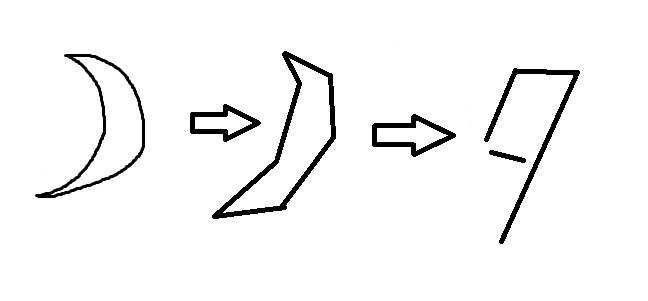 >**夕 저녁 /석/** 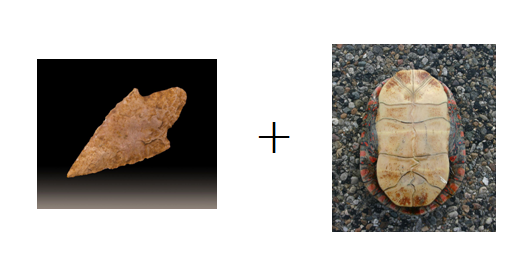 *발견된 가장 오래된 한자 중에는, 거북이의 배에 날카로운 것으로 새긴 갑골문이 있습니다. 아무래도 끝이 둥그런 펜이 아니다 보니, 곡선을 그리기 힘들었고 그에 따라 원이 없고 직선이 많은 모양이 된 것이 아닐까 합니다. 아래의 예는 이미 아는 분이 많으시리라 생각합니다.  >**人 사람 /인/** ## 부수 & 더욱 복잡한 문자들 아래와 같은 문자는 어떻게 읽을까요? >**然** 무슨 뜻을 의미할까요? 제일 왼쪽 위에 부수는 달을 닮았고(夕), 오른쪽 위의 부수는 사람을 닮았습니다(人). 하지만 의미는 완전히 다릅니다. 한자는 **1) 작은 점이나 선**이 더해지거나 **2) 다른 각도, 다른 위치** 에 놓여있을 때 의미가 완전히 달라집니다. 상형문자이긴 하되, 실제 문자로 사용해야 하니 규칙이 훨씬 엄격하다고 볼 수 있죠. 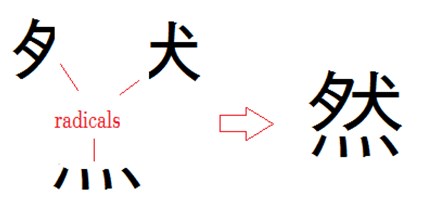 *원문을 영어로 작성하다보니 영어가 들어갔습니다... ## 뜻 해석하기 위의 문자를 부수를 가지고 본격적으로 해석해 봅시다.  첫 번째 부수月는 고기, 살점을 의미합니다. 갈비뼈에 붙은 살점에서 갈비뼈를 형상화 한거죠. 이게 우리가 흔히 아는 고기 육(肉)인데 이것은 획수가 많다 보니 비슷하게 생긴 달 月의 모양을 빌려 단순화 했습니다. 그리고 아무래도 한쪽에 몰아서 놓아야 하다 보니, 또 모양을 바꾸었습니다. 저녁 夕자에 획을 하나 더 그은 모습으로요. 두 번째 부수犬는 우리가 흔히 아는 사람 人에서 왔습니다. 그런데 사람도 나타내는 방식이 가지가지입니다. 크다 大 또는 대장부 夫(갓을 쓴 사람) 모두 부수일 때에는 사람을 의미합니다. 아무래도 졸라맨처럼 단순하게 그려야하다보니 개를 묘사하긴 쉽지 않은데, 개와 사람의 가장 큰 차이는 꼬리가 달렸다는 점에 착안해서 꼬리 획을 하나 추가하여 개, 또는 짐승이라는 의미가 됐습니다. 세 번째는 우리가 이미 너무너무너무 잘 알고 있는 불 火 부수입니다. 불 부수의 모든 획을 점으로 만들면 가스레인지 불꽃 같은 모양이 되지요. 아무래도 이미 위쪽에 부수가 두개나 벌써 들어가서 자리가 없기 때문에, 불 모양을 점으로 만들어 아래쪽에 몰아놓은 모양새가 됐습니다. 이러한 요소들은 모여서 스토리를 만듭니다. 야생의 꼬리달린 짐승 (犬)을 불(火)에 그을리면 아주 자연스럽게 고기(肉)로 성질이 변합니다. 이것은 지극히도 **자연**스러운 현상입니다. 따라서 然은 _그러함, 자연, 자연스러움_ 등의 의미를 가지게 됩니다. 소리는 임의로 하나의 글자에서 보통 가져오게 됩니다. 개 犬자는 '견'이라는 소리가 있으므로, 유사한 '연'의 소리를 가지게 됩니다. 따라서 그럴 연 然이라는 글자로 해석됩니다. 하지만 영어나 다른 유럽어들처럼 소리가 언제나 확실한 건 아닙니다. 그래서 배우는 건 직접 암기해서 외우는 수밖에 없고, 다만 일부 부수의 소리를 이용하여 빠르게 '추측'하는 것만 가능합니다. 한자를 해석할 때에는 언제나 임기응변이 중요합니다. ## 혼란하다 혼란해! 한자는 특히 초보자에게 매우 헷갈립니다. 아주 똑같이 생긴 글자 하나가 아주 완전히 다른 것을 의미하기도 합니다. 그게 다 이유가 있습니다. 왜냐면 한자는 다른 언어들과 마찬가지로 자연발생한 글자이지만, 글자 하나=의미 하나다보니, 모든 사물에 대응하여 글자를 만들게 되고, 따라서 외울게 너무 많아졌던겁니다. 이게 중국 대륙의 지배자, 황제들에게는 아주 골칫거리였습니다. 왜냐면 정부 문서를 만들거나 교육에 너무 많은 비용과 시간이 소모됐던 겁니다. 그래서 비슷한 글자는 그냥 퉁치는 걸로 하고 합쳐버리거나 획을 생략해 버렸습니다. 이런 한자의 역사를 모르는 오늘날의 사람들에게 한자는 너무 복잡하고 어렵기만 합니다. 다행인 점은 복잡하긴 해도 대충 논리적인 구성을 띈다는 점입니다. >**月** 이것은 **1)달**을 의미하지만 **2)개월**을 의미하기도 합니다. 원래 월의 개념은 달이 29.5일마다 지구를 한번 도는 데에서 온 것이기 때문입니다. (https://en.wiktionary.org/wiki/month) 하지만 위에서 봤듯이 **3)고기(肉)**를 의미하기도 합니다. '肉'는 획이 너무 많아서, 어지간한 경우에는 月로 대체됩니다. 부수일 때에는 이런 뜻의 변화가 아주 자주 일어납니다. 그냥 비슷하게 생겼다 하면 얼추 모든 것이 될 수 있습니다. 月은 **제삿상, 제단, 계단, 조각배 등등 ** 그냥 여러분이 저 글자를 보고 상상할 수 있는 모든 물건이 다 됩니다. 다행히도 _거의 90%_ 는 그냥 고기나 달을 의미합니다. 가장 빠르게 한자를 이해하는 방법은 부수를 이해하는 것입니다. 우리나라 말에서 사용되는 한자어의 부수는 총 214자입니다. 많은 것 같지만 부수는 대부분 획수가 적은 단순한 한자들이고, 전체 한자가 몇 천 글자, 몇 만 글자에 달한다는 점을 생각하면 오히려 쉬운 편이죠. 저 같은 경우는 그냥 3시간 정도면 214자의 뜻을 모두 외울 수 있더라구요. 헷갈리면 그냥 3시간 짜리 부수표같은 것을 4번이고 5번이고 계속 보면 됩니다. 진짜 거의 하루나 이틀 만에 모든 부수 마스터가 가능합니다. ## 각국 한자 비교 이 부분은 원래 영어 사용자들에게 어떤 한자를 배우는 게 좋은가를 추천하기 위해 쓴 건데요, 흥미있는 것 같아서 남겨둡니다. **일본 한자** * 발음: 매우 쉬움 * 획수: 살짝 복잡함 * 글자수: 2,136자(상용한자 기준) -불교의 영향으로 매우 독특한 한자 단어들이 많음 -외국인이 가장 발음하기 쉬움 -한국어 한자보다 획수가 적지만, 간체자보다는 획수가 많은 편 **한국 한자** * 발음: 어려움(외국인에게) * 획수: 복잡함 * 글자수: 1,800~2,000자(교육, 실생활 기준) -실제 사용되는 한자의 수가 적음. 많이 외우지 않아도 됨. -외국인에게 발음이 제일 어려움 -원래 글자에서 획수를 줄여 약자(略字)를 만들지 않아 획수가 많고 복잡한 편 **간체자** * 발음: 약간 어려움 * 획수: 간단함 * 글자수: 3,000자(교육, 실생활 기준) 보다 조금 더 많을 것으로 추정 -발음 자체는 간단하지만 권설음과 성조가 있어서 어려움 -획수로만 따지면 가장 최신에 정비된 한자이므로 제일 간단함(꼭 쉽다고는 할 수 없음. 왜냐면 같은 글자가 여러가지를 의미하므로 헷갈릴 수도 있음) **번체자** * 발음: 약간 어려움 * 획수: 매우 복잡함 * 글자수: 3,000(교육, 실생활 기준) -한국 한자, 일본 한자와 비슷 -한자의 오래된 형태를 보존하고 있음. 번체자를 알면 한국 한자와 일본 한자 이해가 무척 쉬움 -발음 난이도가 간체자와 비슷 |
| json metadata | {"tags":["kr","cn","chinese","writing","blog"],"image":["https://img.youtube.com/vi/qR72RnEwl0M/0.jpg","https://steemitimages.com/DQmXtDup4RP57awC6y8MYUjGYew5A9wkB9ZXDZLYEkN7hya/moon.jpg","https://steemitimages.com/DQmeZRhorraCLaPFSEuGAQTGeYNnk9d4o8cvHk36RfFLnsm/pointy.png","https://steemitimages.com/DQmNPVK4Rib1vLv39LRBxNLVHiFw1avKao3f4JfjcZarsMP/man.jpg","https://steemitimages.com/DQmYhLUEWtZfRBS2doeY4gHfZz7uHTyZFpBrZSmxhfho8jU/radicals.png","https://steemitimages.com/DQmPatLcemZ1k5HQR44kKHLEtKmUETsnPuGXZneBdMyiJB8/combination.png"],"links":["https://www.youtube.com/watch?v=qR72RnEwl0M","https://en.wiktionary.org/wiki/month"],"app":"steemit/0.1","format":"markdown"} |
| Transaction Info | Block #13135999/Trx 56fd83d3789b42e7f777207913f253961f867ce1 |
View Raw JSON Data
{
"trx_id": "56fd83d3789b42e7f777207913f253961f867ce1",
"block": 13135999,
"trx_in_block": 12,
"op_in_trx": 0,
"virtual_op": 0,
"timestamp": "2017-06-25T17:45:30",
"op": [
"comment",
{
"parent_author": "",
"parent_permlink": "kr",
"author": "rabelais",
"permlink": "4egybj",
"title": "늦깎이 한자 배우기",
"body": "# 한자 읽기\n\n한자에 관심이 있지만 한자가 너무 어렵게 느껴지는 분들이 계실 겁니다. 그런 분들을 위해서 준비했습니다.\n\n저 같은 경우는 나이가 올해 30인데, 한자를 처음 배운 게 대학교 졸업할 때 즈음(25살정도 쯤)이었습니다. 한자가 너무 어려워서 한자 수업 때는 맨날 잠만 잤고, 수업 중에도 도통 자세한 설명을 안 해주고 무조건 외우라고 해서 너무 힘들었습니다. 한참 시간이 지나고 한자를 늦깎이로 처음 배우다 보니 보통 어려운 게 아니더라구요. 저같이 느끼는 분들을 위해 준비해봤습니다. 한자 배우기!!\n\n## 기본\n쉽게 말하면 한자는 상형문자입니다. 아래 유명한 TED영상을 보시죠.(한글자막 추천)\nhttps://www.youtube.com/watch?v=qR72RnEwl0M\n\n물론 상형문자 그 자체와는 궤를 달리하는 문자이지만, 그 기본 개념은 고대의 상형문자에서 크게 벗어나지 않습니다.\n\n예를 들어 아래의 문자는 저녁 석, 또는 달을 의미합니다. 달을 있는 그대로 그린 것에, 곡선을 좀 줄이고 모양을 단순화 한 거죠.\n \n\n>**夕 저녁 /석/**\n\n \n*발견된 가장 오래된 한자 중에는, 거북이의 배에 날카로운 것으로 새긴 갑골문이 있습니다. 아무래도 끝이 둥그런 펜이 아니다 보니, 곡선을 그리기 힘들었고 그에 따라 원이 없고 직선이 많은 모양이 된 것이 아닐까 합니다.\n\n아래의 예는 이미 아는 분이 많으시리라 생각합니다.\n \n>**人 사람 /인/**\n\n\n## 부수 & 더욱 복잡한 문자들\n아래와 같은 문자는 어떻게 읽을까요?\n>**然**\n\n무슨 뜻을 의미할까요? 제일 왼쪽 위에 부수는 달을 닮았고(夕), 오른쪽 위의 부수는 사람을 닮았습니다(人). 하지만 의미는 완전히 다릅니다. 한자는 **1) 작은 점이나 선**이 더해지거나 **2) 다른 각도, 다른 위치** 에 놓여있을 때 의미가 완전히 달라집니다. 상형문자이긴 하되, 실제 문자로 사용해야 하니 규칙이 훨씬 엄격하다고 볼 수 있죠.\n\n \n*원문을 영어로 작성하다보니 영어가 들어갔습니다...\n\n## 뜻 해석하기\n\n위의 문자를 부수를 가지고 본격적으로 해석해 봅시다.\n\n \n\n첫 번째 부수月는 고기, 살점을 의미합니다. 갈비뼈에 붙은 살점에서 갈비뼈를 형상화 한거죠. 이게 우리가 흔히 아는 고기 육(肉)인데 이것은 획수가 많다 보니 비슷하게 생긴 달 月의 모양을 빌려 단순화 했습니다. 그리고 아무래도 한쪽에 몰아서 놓아야 하다 보니, 또 모양을 바꾸었습니다. 저녁 夕자에 획을 하나 더 그은 모습으로요.\n\n두 번째 부수犬는 우리가 흔히 아는 사람 人에서 왔습니다. 그런데 사람도 나타내는 방식이 가지가지입니다. 크다 大 또는 대장부 夫(갓을 쓴 사람) 모두 부수일 때에는 사람을 의미합니다. 아무래도 졸라맨처럼 단순하게 그려야하다보니 개를 묘사하긴 쉽지 않은데, 개와 사람의 가장 큰 차이는 꼬리가 달렸다는 점에 착안해서 꼬리 획을 하나 추가하여 개, 또는 짐승이라는 의미가 됐습니다.\n\n세 번째는 우리가 이미 너무너무너무 잘 알고 있는 불 火 부수입니다. 불 부수의 모든 획을 점으로 만들면 가스레인지 불꽃 같은 모양이 되지요. 아무래도 이미 위쪽에 부수가 두개나 벌써 들어가서 자리가 없기 때문에, 불 모양을 점으로 만들어 아래쪽에 몰아놓은 모양새가 됐습니다.\n\n이러한 요소들은 모여서 스토리를 만듭니다.\n야생의 꼬리달린 짐승 (犬)을 불(火)에 그을리면 아주 자연스럽게 고기(肉)로 성질이 변합니다. 이것은 지극히도 **자연**스러운 현상입니다. 따라서 然은 _그러함, 자연, 자연스러움_ 등의 의미를 가지게 됩니다.\n\n소리는 임의로 하나의 글자에서 보통 가져오게 됩니다. 개 犬자는 '견'이라는 소리가 있으므로, 유사한 '연'의 소리를 가지게 됩니다. 따라서 그럴 연 然이라는 글자로 해석됩니다.\n\n하지만 영어나 다른 유럽어들처럼 소리가 언제나 확실한 건 아닙니다. 그래서 배우는 건 직접 암기해서 외우는 수밖에 없고, 다만 일부 부수의 소리를 이용하여 빠르게 '추측'하는 것만 가능합니다. 한자를 해석할 때에는 언제나 임기응변이 중요합니다.\n\n## 혼란하다 혼란해!\n한자는 특히 초보자에게 매우 헷갈립니다. 아주 똑같이 생긴 글자 하나가 아주 완전히 다른 것을 의미하기도 합니다.\n\n그게 다 이유가 있습니다. 왜냐면 한자는 다른 언어들과 마찬가지로 자연발생한 글자이지만, 글자 하나=의미 하나다보니, 모든 사물에 대응하여 글자를 만들게 되고, 따라서 외울게 너무 많아졌던겁니다. 이게 중국 대륙의 지배자, 황제들에게는 아주 골칫거리였습니다. 왜냐면 정부 문서를 만들거나 교육에 너무 많은 비용과 시간이 소모됐던 겁니다. 그래서 비슷한 글자는 그냥 퉁치는 걸로 하고 합쳐버리거나 획을 생략해 버렸습니다. 이런 한자의 역사를 모르는 오늘날의 사람들에게 한자는 너무 복잡하고 어렵기만 합니다.\n\n다행인 점은 복잡하긴 해도 대충 논리적인 구성을 띈다는 점입니다.\n>**月**\n\n이것은 **1)달**을 의미하지만 **2)개월**을 의미하기도 합니다. 원래 월의 개념은 달이 29.5일마다 지구를 한번 도는 데에서 온 것이기 때문입니다. (https://en.wiktionary.org/wiki/month) 하지만 위에서 봤듯이 **3)고기(肉)**를 의미하기도 합니다. '肉'는 획이 너무 많아서, 어지간한 경우에는 月로 대체됩니다. 부수일 때에는 이런 뜻의 변화가 아주 자주 일어납니다. 그냥 비슷하게 생겼다 하면 얼추 모든 것이 될 수 있습니다. 月은 **제삿상, 제단, 계단, 조각배 등등 ** 그냥 여러분이 저 글자를 보고 상상할 수 있는 모든 물건이 다 됩니다. 다행히도 _거의 90%_ 는 그냥 고기나 달을 의미합니다.\n\n가장 빠르게 한자를 이해하는 방법은 부수를 이해하는 것입니다. 우리나라 말에서 사용되는 한자어의 부수는 총 214자입니다. 많은 것 같지만 부수는 대부분 획수가 적은 단순한 한자들이고, 전체 한자가 몇 천 글자, 몇 만 글자에 달한다는 점을 생각하면 오히려 쉬운 편이죠. 저 같은 경우는 그냥 3시간 정도면 214자의 뜻을 모두 외울 수 있더라구요. 헷갈리면 그냥 3시간 짜리 부수표같은 것을 4번이고 5번이고 계속 보면 됩니다. 진짜 거의 하루나 이틀 만에 모든 부수 마스터가 가능합니다.\n\n## 각국 한자 비교\n이 부분은 원래 영어 사용자들에게 어떤 한자를 배우는 게 좋은가를 추천하기 위해 쓴 건데요, 흥미있는 것 같아서 남겨둡니다.\n\n**일본 한자**\n* 발음: 매우 쉬움\n* 획수: 살짝 복잡함\n* 글자수: 2,136자(상용한자 기준)\n\n-불교의 영향으로 매우 독특한 한자 단어들이 많음\n-외국인이 가장 발음하기 쉬움\n-한국어 한자보다 획수가 적지만, 간체자보다는 획수가 많은 편\n\n**한국 한자**\n* 발음: 어려움(외국인에게)\n* 획수: 복잡함\n* 글자수: 1,800~2,000자(교육, 실생활 기준)\n\n-실제 사용되는 한자의 수가 적음. 많이 외우지 않아도 됨.\n-외국인에게 발음이 제일 어려움\n-원래 글자에서 획수를 줄여 약자(略字)를 만들지 않아 획수가 많고 복잡한 편\n\n**간체자**\n* 발음: 약간 어려움\n* 획수: 간단함\n* 글자수: 3,000자(교육, 실생활 기준) 보다 조금 더 많을 것으로 추정\n-발음 자체는 간단하지만 권설음과 성조가 있어서 어려움\n-획수로만 따지면 가장 최신에 정비된 한자이므로 제일 간단함(꼭 쉽다고는 할 수 없음. 왜냐면 같은 글자가 여러가지를 의미하므로 헷갈릴 수도 있음)\n\n**번체자**\n* 발음: 약간 어려움\n* 획수: 매우 복잡함\n* 글자수: 3,000(교육, 실생활 기준)\n-한국 한자, 일본 한자와 비슷\n-한자의 오래된 형태를 보존하고 있음. 번체자를 알면 한국 한자와 일본 한자 이해가 무척 쉬움\n-발음 난이도가 간체자와 비슷",
"json_metadata": "{\"tags\":[\"kr\",\"cn\",\"chinese\",\"writing\",\"blog\"],\"image\":[\"https://img.youtube.com/vi/qR72RnEwl0M/0.jpg\",\"https://steemitimages.com/DQmXtDup4RP57awC6y8MYUjGYew5A9wkB9ZXDZLYEkN7hya/moon.jpg\",\"https://steemitimages.com/DQmeZRhorraCLaPFSEuGAQTGeYNnk9d4o8cvHk36RfFLnsm/pointy.png\",\"https://steemitimages.com/DQmNPVK4Rib1vLv39LRBxNLVHiFw1avKao3f4JfjcZarsMP/man.jpg\",\"https://steemitimages.com/DQmYhLUEWtZfRBS2doeY4gHfZz7uHTyZFpBrZSmxhfho8jU/radicals.png\",\"https://steemitimages.com/DQmPatLcemZ1k5HQR44kKHLEtKmUETsnPuGXZneBdMyiJB8/combination.png\"],\"links\":[\"https://www.youtube.com/watch?v=qR72RnEwl0M\",\"https://en.wiktionary.org/wiki/month\"],\"app\":\"steemit/0.1\",\"format\":\"markdown\"}"
}
]
}2017/06/25 17:33:45
2017/06/25 17:33:45
| parent author | wilkinshui |
| parent permlink | re-rabelais-2017626t1757503z |
| author | rabelais |
| permlink | re-wilkinshui-re-rabelais-2017626t1757503z-20170625t173344208z |
| title | |
| body | Thanks! Chinese letters are very interesting indeed. Every character has its own history, represents our ancestors' view toward the object. Every time I learn more of them, I feel like seeing through thousands years of history. |
| json metadata | {"tags":["chinese"],"app":"steemit/0.1"} |
| Transaction Info | Block #13135764/Trx 52efc3f8a92f8fe23efe7b9b11ec928227b6e37c |
View Raw JSON Data
{
  "trx_id": "52efc3f8a92f8fe23efe7b9b11ec928227b6e37c",
  "block": 13135764,
  "trx_in_block": 1,
  "op_in_trx": 0,
  "virtual_op": 0,
  "timestamp": "2017-06-25T17:33:45",
  "op": [
    "comment",
    {
      "parent_author": "wilkinshui",
      "parent_permlink": "re-rabelais-2017626t1757503z",
      "author": "rabelais",
      "permlink": "re-wilkinshui-re-rabelais-2017626t1757503z-20170625t173344208z",
      "title": "",
      "body": "Thanks! Chinese letters are very interesting indeed. Every character has its own history,  represents our ancestors' view toward the object. Every time I learn more of them, I feel like seeing through thousands years of history.",
      "json_metadata": "{\"tags\":[\"chinese\"],\"app\":\"steemit/0.1\"}"
    }
  ]
}wilkinshuiupvoted (13.00%) @rabelais / how-to-read-chinese-characters2017/06/25 17:08:15
wilkinshuiupvoted (13.00%) @rabelais / how-to-read-chinese-characters
2017/06/25 17:08:15
| voter | wilkinshui |
| author | rabelais |
| permlink | how-to-read-chinese-characters |
| weight | 1300 (13.00%) |
| Transaction Info | Block #13135254/Trx ff1f3eecbb8a6ffbdf2db5c19029a85e4e69b721 |
View Raw JSON Data
{
  "trx_id": "ff1f3eecbb8a6ffbdf2db5c19029a85e4e69b721",
  "block": 13135254,
  "trx_in_block": 30,
  "op_in_trx": 0,
  "virtual_op": 0,
  "timestamp": "2017-06-25T17:08:15",
  "op": [
    "vote",
    {
      "voter": "wilkinshui",
      "author": "rabelais",
      "permlink": "how-to-read-chinese-characters",
      "weight": 1300
    }
  ]
}wilkinshuireplied to @rabelais / re-rabelais-2017626t1757503z2017/06/25 17:08:00
wilkinshuireplied to @rabelais / re-rabelais-2017626t1757503z
2017/06/25 17:08:00
| parent author | rabelais |
| parent permlink | how-to-read-chinese-characters |
| author | wilkinshui |
| permlink | re-rabelais-2017626t1757503z |
| title | |
| body | Thanks for the post, chinese in my opinion might be one of the most difficult language to learn, alongside with latin. Learning how to read chinese is still ok, but learning to write and recognize is definitely not easy as every word is so unique to itself. |
| json metadata | {"tags":"chinese","app":"esteem/1.4.5","format":"markdown+html","community":"esteem"} |
| Transaction Info | Block #13135249/Trx b9c3b61b4e785820911eddc7b1bec87084b65ad8 |
View Raw JSON Data
{
  "trx_id": "b9c3b61b4e785820911eddc7b1bec87084b65ad8",
  "block": 13135249,
  "trx_in_block": 12,
  "op_in_trx": 0,
  "virtual_op": 0,
  "timestamp": "2017-06-25T17:08:00",
  "op": [
    "comment",
    {
      "parent_author": "rabelais",
      "parent_permlink": "how-to-read-chinese-characters",
      "author": "wilkinshui",
      "permlink": "re-rabelais-2017626t1757503z",
      "title": "",
      "body": "Thanks for the post, chinese in my opinion might be one of the most difficult language to learn, alongside with latin. Learning how to read chinese is still ok, but learning to write and recognize is definitely not easy as every word is so unique to itself.",
      "json_metadata": "{\"tags\":\"chinese\",\"app\":\"esteem/1.4.5\",\"format\":\"markdown+html\",\"community\":\"esteem\"}"
    }
  ]
}rabelaisupvoted (100.00%) @tonesquare / steemit-girl-from-japan2017/06/25 16:56:36
rabelaisupvoted (100.00%) @tonesquare / steemit-girl-from-japan
2017/06/25 16:56:36
| voter | rabelais |
| author | tonesquare |
| permlink | steemit-girl-from-japan |
| weight | 10000 (100.00%) |
| Transaction Info | Block #13135021/Trx 2fdb38176692ebea3b2aa75a12d1b23e94d73618 |
View Raw JSON Data
{
  "trx_id": "2fdb38176692ebea3b2aa75a12d1b23e94d73618",
  "block": 13135021,
  "trx_in_block": 3,
  "op_in_trx": 0,
  "virtual_op": 0,
  "timestamp": "2017-06-25T16:56:36",
  "op": [
    "vote",
    {
      "voter": "rabelais",
      "author": "tonesquare",
      "permlink": "steemit-girl-from-japan",
      "weight": 10000
    }
  ]
}2017/06/25 16:56:18
2017/06/25 16:56:18
| voter | rabelais |
| author | sochul |
| permlink | 6bbqyp |
| weight | 10000 (100.00%) |
| Transaction Info | Block #13135015/Trx 5daf612eacca7d8c3c073a4297cb382e470a53e6 |
View Raw JSON Data
{
  "trx_id": "5daf612eacca7d8c3c073a4297cb382e470a53e6",
  "block": 13135015,
  "trx_in_block": 23,
  "op_in_trx": 0,
  "virtual_op": 0,
  "timestamp": "2017-06-25T16:56:18",
  "op": [
    "vote",
    {
      "voter": "rabelais",
      "author": "sochul",
      "permlink": "6bbqyp",
      "weight": 10000
    }
  ]
}rabelaispublished a new post: how-to-read-chinese-characters2017/06/25 16:55:30
rabelaispublished a new post: how-to-read-chinese-characters
2017/06/25 16:55:30
| parent author | |
| parent permlink | chinese |
| author | rabelais |
| permlink | how-to-read-chinese-characters |
| title | How to read Chinese characters |
| body | # How to read Chinese characters (Not Chinese as a language) _(this is my first steemit post. Gosh I'm so nervous now.)_ For those who interested in Chinese markets, learning Chinese language is a must. However, the language and character is vastly different from those of Western languages. Even the CIA officially announced Chinese is one of the most difficult languages for Americans. If you are frustrated Chinese learner, then this article is for you. https://unbabel.com/blog/japanese-finnish-or-chinese-the-10-hardest-languages-for-english-speakers-to-learn/ From where I live, Chinese culture is dominant. It's easy to bump into Chinese among daily words and expressions. We Koreans say "annyeong(안녕)" as meaning of "hi". Even this word is from Chinese("安寧"). Still many Koreans are not aware of this. Because we use a different character system. Not just that, rapid development of smart phone has worsened the situation. Many young Koreans born in this generation don't know how to read Chinese letters. As for me, I was a Chinese illiterate for more than 2 decades. I've finally learned how to read it after 25. So I do understand the westerners' frustration toward Chinese letters. ## Basics It's widely known that Chinese letters are similar to ancient hieroglyph. For simpler studies, check out this very famous TED clip: https://www.youtube.com/watch?v=qR72RnEwl0M To wrap it up, most basic(fundamental) Chinese letters are in fact simplified hieroglyph.(Surely not 100% hieroglyph. This is an euphemism, just to make stuff easier.)  >**夕 night /xi/** For example, this letter means moon. As the look suggests, it's easy to trace the meaning. This must have been how the ancestors drew moon on a stiff surface with a pointy stick in hand.  *The earliest form of Chinese was written in turtles' hard belly bone with pointy stuff. Drawing a round shape must have been very difficult on this one. The letter below is way easier. You know the answer already.  >**人 person /ren/** pretty obvious, right? ## Radicals & Complex Letters but problem arises when if you want to go further. Let's say this letter is written on paper this time: >**然** What is it supposed to mean? the top left side of the character looks similar to the moon(夕), top right side resembles to person(人); does it mean the same stuff? The answer is no. See, Chinese letters often mean something radically different when **1) a small dot, a line** is added or **2) it is put in different position, different angle.** Chinese letters are hieroglyph with very rigid rules. and furthermore, these small letters form a bigger letter. These small components are called radicals(部首, 부수).  Essentially, radicals are just basic words. So basic words can be both a radical, part of a larger letter or just a word which has a meaning by itself. Then which word becomes a radical? unfortunately, there is no fixed rule for that. **The learner is supposed to memorize the whole 200 something radicals**(the numbers can vary by nations, languages but approximately around 200) for future combinations. I have to say these radicals are the **real alphabets** of Chinese words. The memorization is not that difficult because they mostly took after where they got the meaning from. ## Deciphering the meaning Learning radicals has a big advantage; since radicals work as a basic alphabet of more complex letters, it also serves **1) the purpose of dictionary index. 2) Learners can assume meaning or sound of a certain words** from radicals. Let's decipher the word above this time:  so these radicals mean clockwise, 1) meat, 2) animal, 3) fire. This elements create a story. a live animal(犬) is → burnt on fire(火) → thus live animal becomes an edible meat(肉). This shows a typical **natural** phenomenon. As a result, the combination 然 means _nature, naturally_. for the sound, since the word 人 has /ren/ ("run" from running) sound, 然 has /ran/ ("ran" from Iran) sound. It doesn't work as it should sometimes. However, the learner has a freedom to make up a story or a clue to remember it easily. Some words have an obvious combination but some words have really strange combination. Some of unobvious words have an 'official' explanations but some others have lost the explanations behind the meaning. The learner has to be **flexible**, in order to decipher the meanings. ## Confusion Chinese letters are very confusing, especially for beginners. Some words have more than just one sound, more than one meaning. Some words are very identical, but yet a very different word. There is a reason for that. The letters were made rather arbitrarily at first. But since each letter represents each stuff, there were tons of stuff to memorize. Unlike alphabets, where you just need to 26 letters to write and read. Then a new emperor got a crown, he/she notices it takes too much toll on education, government works where everything has to be written down on expensive paper(especially in that era)by small number of well educated people. The emperor merges similar looking letters and gets rid of anything redundant. It creates a confusion for modern learners but I have to say this was inevitable. It is confusing but most of them makes a sense. For example, >**月** This means **1)moon**, but also means **2)month**. The concept of month was born by observing the movement of the moon, which revolves around the earth for about 29.5 days. (https://en.wiktionary.org/wiki/month) and this also represents **3)meat**, which sometimes represented by 肉. Since letter '肉' is much more complex, 月 is sometimes used as a simpler substitute. If it is used as a radical, it can be pretty much anything what it resembles, such as **bone(ribcage), altar, boat, etc.** but _normally,_ it's just meat, moon or month. The best way to overcome this problem, is learning all 200 something radicals, make up a story for each more complex words. Then write it down in a notebook or somewhere. ## What to learn When we say Chinese, everyone may think of the Chinese language from mainland China. However, Chinese was an international trade language back thousands years ago among Asian countries. Just like English does these days among European countries. Now, as the influence of Chinese has diminished, Korea and Japan are the only remaining users of Chinese letters. The learner can learn Chinese as a language, or just the letters to learn other Asian languages such as Japanese and Korean. The learner doesn't have to learn whole Chinese language in order to understand these letters. The knowledge of Chinese letters can be adapted into many ways. I have summarized the basic features for those who interested in learning Chinese letters. **Japanese Chinese** * Pronunciation: Easy * Stroke: Somewhat complex * Usage: Many * Amount: Somewhat many -Highly influenced by Buddhism; some words have an odd usage due to religious meaning -Most easy to pronounce -Smaller number of strokes compare to Korean Chinese, yet not smaller than Simplified Chinese **Korean Chinese** * Pronunciation: Difficult * Stroke: Complex * Usage: Many * Amount: Smallest -Only small number of Chinese letters is officially used; don't have to memorize a lot -Most difficult to pronounce -Words are complex, many strokes and also Chinese have two different form. **Simplified Chinese** * Pronunciation: Somewhat difficult * Stroke: Easy * Usage: Not a lot(Only Mainland Chinese people use) * Amount: Many -Pronunciation itself is easy, but need to memorize musical 'tones' -Simplest. Smallest strokes. **Traditional Chinese** * Pronunciation: Somewhat difficult * Stroke: Complex * Usage: Most widely used(similar to Japanese, Korean Chinese) * Amount: Largest amount -Similar to Korean and Japanese Chinese. -Oldest form of Chinese preserved, many strokes. If understood, other Chinese forms are easy. -Pronunciation difficulty is similar to simplified Chinese. Historically, Simplified Chinese is the latest invention. Korean, Japanese Chinese and Traditional Chinese is the earlier form of Chinese. Pronunciations are different to nations but they sound similar, so the knowledge can be later used in different languages. Don't worry if you made a wrong choice. It'll help you learn a new thing later anyway :) In a simpler term, my recommendations are: If you are interested in learning Chinese letters but **worried about difficulty**, _then choose Japanese Chinese._ If you are an avid learner and **seeking an extensive knowledge**, _then choose Traditional Chinese._ |
| json metadata | {"tags":["chinese","cn","kr","blog","writing"],"image":["https://img.youtube.com/vi/qR72RnEwl0M/0.jpg","https://steemitimages.com/DQmXtDup4RP57awC6y8MYUjGYew5A9wkB9ZXDZLYEkN7hya/moon.jpg","https://steemitimages.com/DQmeZRhorraCLaPFSEuGAQTGeYNnk9d4o8cvHk36RfFLnsm/pointy.png","https://steemitimages.com/DQmNPVK4Rib1vLv39LRBxNLVHiFw1avKao3f4JfjcZarsMP/man.jpg","https://steemitimages.com/DQmYhLUEWtZfRBS2doeY4gHfZz7uHTyZFpBrZSmxhfho8jU/radicals.png","https://steemitimages.com/DQmPatLcemZ1k5HQR44kKHLEtKmUETsnPuGXZneBdMyiJB8/combination.png"],"links":["https://unbabel.com/blog/japanese-finnish-or-chinese-the-10-hardest-languages-for-english-speakers-to-learn/","https://www.youtube.com/watch?v=qR72RnEwl0M","https://en.wiktionary.org/wiki/month"],"app":"steemit/0.1","format":"markdown"} |
| Transaction Info | Block #13134999/Trx 2fb5a1d35c531eebd75ce54faff9cdc1b391b374 |
View Raw JSON Data
{
"trx_id": "2fb5a1d35c531eebd75ce54faff9cdc1b391b374",
"block": 13134999,
"trx_in_block": 24,
"op_in_trx": 0,
"virtual_op": 0,
"timestamp": "2017-06-25T16:55:30",
"op": [
"comment",
{
"parent_author": "",
"parent_permlink": "chinese",
"author": "rabelais",
"permlink": "how-to-read-chinese-characters",
"title": "How to read Chinese characters",
"body": "# How to read Chinese characters\n(Not Chinese as a language)\n\n_(this is my first steemit post. Gosh I'm so nervous now.)_\n\nFor those who interested in Chinese markets, learning Chinese language is a must. However, the language and character is vastly different from those of Western languages. Even the CIA officially announced Chinese is one of the most difficult languages for Americans. If you are frustrated Chinese learner, then this article is for you.\n\nhttps://unbabel.com/blog/japanese-finnish-or-chinese-the-10-hardest-languages-for-english-speakers-to-learn/\n\nFrom where I live, Chinese culture is dominant. It's easy to bump into Chinese among daily words and expressions. We Koreans say \"annyeong(안녕)\" as meaning of \"hi\". Even this word is from Chinese(\"安寧\"). Still many Koreans are not aware of this. Because we use a different character system. Not just that, rapid development of smart phone has worsened the situation. Many young Koreans born in this generation don't know how to read Chinese letters. As for me, I was a Chinese illiterate for more than 2 decades. I've finally learned how to read it after 25. So I do understand the westerners' frustration toward Chinese letters.\n\n## Basics\nIt's widely known that Chinese letters are similar to ancient hieroglyph. For simpler studies, check out this very famous TED clip:\nhttps://www.youtube.com/watch?v=qR72RnEwl0M\n\nTo wrap it up, most basic(fundamental) Chinese letters are in fact simplified hieroglyph.(Surely not 100% hieroglyph. This is an euphemism, just to make stuff easier.)\n\n \n>**夕 night /xi/**\n\nFor example, this letter means moon. As the look suggests, it's easy to trace the meaning. This must have been how the ancestors drew moon on a stiff surface with a pointy stick in hand.\n\n \n*The earliest form of Chinese was written in turtles' hard belly bone with pointy stuff. Drawing a round shape must have been very difficult on this one.\n \nThe letter below is way easier. You know the answer already.\n\n\n>**人 person /ren/**\n\npretty obvious, right?\n\n## Radicals & Complex Letters\nbut problem arises when if you want to go further. Let's say this letter is written on paper this time:\n>**然**\n\nWhat is it supposed to mean? the top left side of the character looks similar to the moon(夕), top right side resembles to person(人); does it mean the same stuff? The answer is no. See, Chinese letters often mean something radically different when **1) a small dot, a line** is added or **2) it is put in different position, different angle.** Chinese letters are hieroglyph with very rigid rules.\n\nand furthermore, these small letters form a bigger letter. These small components are called radicals(部首, 부수).\n\n \n\nEssentially, radicals are just basic words. So basic words can be both a radical, part of a larger letter or just a word which has a meaning by itself. Then which word becomes a radical? unfortunately, there is no fixed rule for that. **The learner is supposed to memorize the whole 200 something radicals**(the numbers can vary by nations, languages but approximately around 200) for future combinations. I have to say these radicals are the **real alphabets** of Chinese words. The memorization is not that difficult because they mostly took after where they got the meaning from.\n\n## Deciphering the meaning\nLearning radicals has a big advantage; since radicals work as a basic alphabet of more complex letters, it also serves **1) the purpose of dictionary index. 2) Learners can assume meaning or sound of a certain words** from radicals.\n\nLet's decipher the word above this time:\n\n\n\nso these radicals mean clockwise, 1) meat, 2) animal, 3) fire.\nThis elements create a story. \na live animal(犬) is → burnt on fire(火) → thus live animal becomes an edible meat(肉).\nThis shows a typical **natural** phenomenon. As a result, the combination 然 means _nature, naturally_.\n\nfor the sound, since the word 人 has /ren/ (\"run\" from running) sound, 然 has /ran/ (\"ran\" from Iran) sound.\n\nIt doesn't work as it should sometimes. However, the learner has a freedom to make up a story or a clue to remember it easily. Some words have an obvious combination but some words have really strange combination. Some of unobvious words have an 'official' explanations but some others have lost the explanations behind the meaning. The learner has to be **flexible**, in order to decipher the meanings.\n\n## Confusion\nChinese letters are very confusing, especially for beginners. Some words have more than just one sound, more than one meaning. Some words are very identical, but yet a very different word.\n\nThere is a reason for that. The letters were made rather arbitrarily at first. But since each letter represents each stuff, there were tons of stuff to memorize. Unlike alphabets, where you just need to 26 letters to write and read. Then a new emperor got a crown, he/she notices it takes too much toll on education, government works where everything has to be written down on expensive paper(especially in that era)by small number of well educated people. The emperor merges similar looking letters and gets rid of anything redundant. It creates a confusion for modern learners but I have to say this was inevitable.\n\nIt is confusing but most of them makes a sense. For example,\n>**月**\n\nThis means **1)moon**, but also means **2)month**. The concept of month was born by observing the movement of the moon, which revolves around the earth for about 29.5 days. (https://en.wiktionary.org/wiki/month) and this also represents **3)meat**, which sometimes represented by 肉. Since letter '肉' is much more complex, 月 is sometimes used as a simpler substitute. If it is used as a radical, it can be pretty much anything what it resembles, such as **bone(ribcage), altar, boat, etc.** but _normally,_ it's just meat, moon or month.\n\nThe best way to overcome this problem, is learning all 200 something radicals, make up a story for each more complex words. Then write it down in a notebook or somewhere.\n\n## What to learn\nWhen we say Chinese, everyone may think of the Chinese language from mainland China. However, Chinese was an international trade language back thousands years ago among Asian countries. Just like English does these days among European countries. Now, as the influence of Chinese has diminished, Korea and Japan are the only remaining users of Chinese letters.\n\nThe learner can learn Chinese as a language, or just the letters to learn other Asian languages such as Japanese and Korean. The learner doesn't have to learn whole Chinese language in order to understand these letters. The knowledge of Chinese letters can be adapted into many ways. I have summarized the basic features for those who interested in learning Chinese letters.\n\n**Japanese Chinese**\n* Pronunciation: Easy\n* Stroke: Somewhat complex\n* Usage: Many\n* Amount: Somewhat many\n\n-Highly influenced by Buddhism; some words have an odd usage due to religious meaning\n-Most easy to pronounce\n-Smaller number of strokes compare to Korean Chinese, yet not smaller than Simplified Chinese\n\n**Korean Chinese**\n* Pronunciation: Difficult\n* Stroke: Complex\n* Usage: Many\n* Amount: Smallest\n\n-Only small number of Chinese letters is officially used; don't have to memorize a lot\n-Most difficult to pronounce\n-Words are complex, many strokes\n\nand also Chinese have two different form.\n\n**Simplified Chinese**\n* Pronunciation: Somewhat difficult\n* Stroke: Easy\n* Usage: Not a lot(Only Mainland Chinese people use)\n* Amount: Many\n\n-Pronunciation itself is easy, but need to memorize musical 'tones'\n-Simplest. Smallest strokes.\n\n**Traditional Chinese**\n* Pronunciation: Somewhat difficult\n* Stroke: Complex\n* Usage: Most widely used(similar to Japanese, Korean Chinese)\n* Amount: Largest amount\n\n-Similar to Korean and Japanese Chinese.\n-Oldest form of Chinese preserved, many strokes. If understood, other Chinese forms are easy.\n-Pronunciation difficulty is similar to simplified Chinese.\n\nHistorically, Simplified Chinese is the latest invention. Korean, Japanese Chinese and Traditional Chinese is the earlier form of Chinese. Pronunciations are different to nations but they sound similar, so the knowledge can be later used in different languages. Don't worry if you made a wrong choice. It'll help you learn a new thing later anyway :)\n\nIn a simpler term, my recommendations are:\n\nIf you are interested in learning Chinese letters but **worried about difficulty**,\n_then choose Japanese Chinese._\n\nIf you are an avid learner and **seeking an extensive knowledge**,\n_then choose Traditional Chinese._",
"json_metadata": "{\"tags\":[\"chinese\",\"cn\",\"kr\",\"blog\",\"writing\"],\"image\":[\"https://img.youtube.com/vi/qR72RnEwl0M/0.jpg\",\"https://steemitimages.com/DQmXtDup4RP57awC6y8MYUjGYew5A9wkB9ZXDZLYEkN7hya/moon.jpg\",\"https://steemitimages.com/DQmeZRhorraCLaPFSEuGAQTGeYNnk9d4o8cvHk36RfFLnsm/pointy.png\",\"https://steemitimages.com/DQmNPVK4Rib1vLv39LRBxNLVHiFw1avKao3f4JfjcZarsMP/man.jpg\",\"https://steemitimages.com/DQmYhLUEWtZfRBS2doeY4gHfZz7uHTyZFpBrZSmxhfho8jU/radicals.png\",\"https://steemitimages.com/DQmPatLcemZ1k5HQR44kKHLEtKmUETsnPuGXZneBdMyiJB8/combination.png\"],\"links\":[\"https://unbabel.com/blog/japanese-finnish-or-chinese-the-10-hardest-languages-for-english-speakers-to-learn/\",\"https://www.youtube.com/watch?v=qR72RnEwl0M\",\"https://en.wiktionary.org/wiki/month\"],\"app\":\"steemit/0.1\",\"format\":\"markdown\"}"
}
]
}rabelaispublished a new post: how-to-read-chinese-characters2017/06/25 16:54:42
rabelaispublished a new post: how-to-read-chinese-characters
2017/06/25 16:54:42
| parent author | |
| parent permlink | chinese |
| author | rabelais |
| permlink | how-to-read-chinese-characters |
| title | How to read Chinese characters |
| body | # How to read Chinese characters (Not Chinese as a language) _(this is my first steemit post. Gosh I'm so nervous now.)_ For those who interested in Chinese markets, learning Chinese language is a must. However, the language and character is vastly different from those of Western languages. Even the CIA officially announced Chinese is one of the most difficult languages for Americans. If you are frustrated Chinese learner, then this article is for you. https://unbabel.com/blog/japanese-finnish-or-chinese-the-10-hardest-languages-for-english-speakers-to-learn/ From where I live, Chinese culture is dominant. It's easy to bump into Chinese among daily words and expressions. We Koreans say "annyeong(안녕)" as meaning of "hi". Even this word is from Chinese("安寧"). Still many Koreans are not aware of this. Because we use a different character system. Not just that, rapid development of smart phone has worsened the situation. Many young Koreans born in this generation don't know how to read Chinese letters. As for me, I was a Chinese illiterate for more than 2 decades. I've finally learned how to read it after 25. So I do understand the westerners' frustration toward Chinese letters. ## Basics It's widely known that Chinese letters are similar to ancient hieroglyph. For simpler studies, check out this very famous TED clip: https://www.youtube.com/watch?v=qR72RnEwl0M To wrap it up, most basic(fundamental) Chinese letters are in fact simplified hieroglyph.(Surely not 100% hieroglyph. This is an euphemism, just to make stuff easier.)  >**夕 night /xi/** For example, this letter means moon. As the look suggests, it's easy to trace the meaning. This must have been how the ancestors drew moon on a stiff surface with a pointy stick in hand.  *The earliest form of Chinese was written in turtles' hard belly bone with pointy stuff. Drawing a round shape must have been very difficult on this one. The letter below is way easier. You know the answer already.  >**人 person /ren/** pretty obvious, right? ## Radicals & Complex Letters but problem arises when if you want to go further. Let's say this letter is written on paper this time: >**然** What is it supposed to mean? the top left side of the character looks similar to the moon(夕), top right side resembles to person(人); does it mean the same stuff? The answer is no. See, Chinese letters often mean something radically different when **1) a small dot, a line** is added or **2) it is put in different position, different angle.** Chinese letters are hieroglyph with very rigid rules. and furthermore, these small letters form a bigger letter. These small components are called radicals(部首, 부수).  Essentially, radicals are just basic words. So basic words can be both a radical, part of a larger letter or just a word which has a meaning by itself. Then which word becomes a radical? unfortunately, there is no fixed rule for that. **The learner is supposed to memorize the whole 200 something radicals**(the numbers can vary by nations, languages but approximately around 200) for future combinations. I have to say these radicals are the **real alphabets** of Chinese words. The memorization is not that difficult because they mostly took after where they got the meaning from. ## Deciphering the meaning Learning radicals has a big advantage; since radicals work as a basic alphabet of more complex letters, it also serves **1) the purpose of dictionary index. 2) Learners can assume meaning or sound of a certain words** from radicals. Let's decipher the word above this time:  so these radicals mean clockwise, 1) meat, 2) animal, 3) fire. This elements create a story. a live animal(犬) is → burnt on fire(火) → thus live animal becomes an edible meat(肉). This shows a typical **natural** phenomenon. As a result, the combination 然 means _nature, naturally_. for the sound, since the word 人 has /ren/ ("run" from running) sound, 然 has /ran/ ("ran" from Iran) sound. It doesn't work as it should sometimes. However, the learner has a freedom to make up a story or a clue to remember it easily. Some words have an obvious combination but some words have really strange combination. Some of unobvious words have an 'official' explanations but some others have lost the explanations behind the meaning. The learner has to be **flexible**, in order to decipher the meanings. ## Confusion Chinese letters are very confusing, especially for beginners. Some words have more than just one sound, more than one meaning. Some words are very identical, but yet a very different word. There is a reason for that. The letters were made rather arbitrarily at first. But since each letter represents each stuff, there were tons of stuff to memorize. Unlike alphabets, where you just need to 26 letters to write and read. Then a new emperor got a crown, he/she notices it takes too much toll on education, government works where everything has to be written down on expensive paper(especially in that era)by small number of well educated people. The emperor merges similar looking letters and gets rid of anything redundant. It creates a confusion for modern learners but I have to say this was inevitable. It is confusing but most of them makes a sense. For example, >**月** This means **1)moon**, but also means **2)month**. The concept of month was born by observing the movement of the moon, which revolves around the earth for about 29.5 days. (https://en.wiktionary.org/wiki/month) and this also represents **3)meat**, which sometimes represented by 肉. Since letter '肉' is much more complex, 月 is sometimes used as a simpler substitute. If it is used as a radical, it can be pretty much anything what it resembles, such as **bone(ribcage), altar, boat, etc.** but _normally,_ it's just meat, moon or month. The best way to overcome this problem, is learning all 200 something radicals, make up a story for each more complex words. Then write it down in a notebook or somewhere. ## What to learn When we say Chinese, everyone may think of the Chinese language from mainland China. However, Chinese was an international trade language back thousands years ago among Asian countries. Just like English does these days among European countries. Now, as the influence of Chinese has diminished, Korea and Japan are the only remaining users of Chinese letters. The learner can learn Chinese as a language, or just the letters to learn other Asian languages such as Japanese and Korean. The learner doesn't have to learn whole Chinese language in order to understand these letters. The knowledge of Chinese letters can be adapted into many ways. I have summarized the basic features for those who interested in learning Chinese letters. **Japanese Chinese** * Pronunciation: Easy * Stroke: Somewhat complex * Usage: Many * Amount: Somewhat many -Highly influenced by Buddhism; some words have an odd usage due to religious meaning -Most easy to pronounce -Smaller number of strokes compare to Korean Chinese, yet not smaller than Simplified Chinese **Korean Chinese** * Pronunciation: Difficult * Stroke: Complex * Usage: Many * Amount: Smallest -Only small number of Chinese letters is officially used; don't have to memorize a lot -Most difficult to pronounce -Words are complex, many strokes and also Chinese have two different form. **Simplified Chinese** * Pronunciation: Somewhat difficult * Stroke: Easy * Usage: Not a lot(Only Mainland Chinese people use) * Amount: Many -Pronunciation itself is easy, but need to memorize musical 'tones' -Simplest. Smallest strokes. **Traditional Chinese** * Pronunciation: Somewhat difficult * Stroke: Complex * Usage: Most widely used(similar to Japanese, Korean Chinese) * Amount: Largest amount -Similar to Korean and Japanese Chinese. -Oldest form of Chinese preserved, many strokes. If understood, other Chinese forms are easy. -Pronunciation difficulty is similar to simplified Chinese. Historically, Simplified Chinese is the latest invention. Korean, Japanese Chinese and Traditional Chinese is the earlier form of Chinese. Pronunciations are different to nations but they sound similar, so the knowledge can be later used in different languages. Don't worry if you made a wrong choice. It'll help you learn a new thing later anyway :) In a simpler term, my recommendations are: If you are interested in learning Chinese letters but **worried about difficulty**, _then choose Japanese Chinese._ If you are an avid learner and **seeking an extensive knowledge**, _then choose Traditional Chinese._ |
| json metadata | {"tags":["cn","kr","china","english","chinese"],"image":["https://img.youtube.com/vi/qR72RnEwl0M/0.jpg","https://steemitimages.com/DQmXtDup4RP57awC6y8MYUjGYew5A9wkB9ZXDZLYEkN7hya/moon.jpg","https://steemitimages.com/DQmeZRhorraCLaPFSEuGAQTGeYNnk9d4o8cvHk36RfFLnsm/pointy.png","https://steemitimages.com/DQmNPVK4Rib1vLv39LRBxNLVHiFw1avKao3f4JfjcZarsMP/man.jpg","https://steemitimages.com/DQmYhLUEWtZfRBS2doeY4gHfZz7uHTyZFpBrZSmxhfho8jU/radicals.png","https://steemitimages.com/DQmPatLcemZ1k5HQR44kKHLEtKmUETsnPuGXZneBdMyiJB8/combination.png"],"links":["https://unbabel.com/blog/japanese-finnish-or-chinese-the-10-hardest-languages-for-english-speakers-to-learn/","https://www.youtube.com/watch?v=qR72RnEwl0M","https://en.wiktionary.org/wiki/month"],"app":"steemit/0.1","format":"markdown"} |
| Transaction Info | Block #13134983/Trx adc59fa16f846da836e787fc7bef2e717e399518 |
View Raw JSON Data
{
"trx_id": "adc59fa16f846da836e787fc7bef2e717e399518",
"block": 13134983,
"trx_in_block": 13,
"op_in_trx": 0,
"virtual_op": 0,
"timestamp": "2017-06-25T16:54:42",
"op": [
"comment",
{
"parent_author": "",
"parent_permlink": "chinese",
"author": "rabelais",
"permlink": "how-to-read-chinese-characters",
"title": "How to read Chinese characters",
"body": "# How to read Chinese characters\n(Not Chinese as a language)\n\n_(this is my first steemit post. Gosh I'm so nervous now.)_\n\nFor those who interested in Chinese markets, learning Chinese language is a must. However, the language and character is vastly different from those of Western languages. Even the CIA officially announced Chinese is one of the most difficult languages for Americans. If you are frustrated Chinese learner, then this article is for you.\n\nhttps://unbabel.com/blog/japanese-finnish-or-chinese-the-10-hardest-languages-for-english-speakers-to-learn/\n\nFrom where I live, Chinese culture is dominant. It's easy to bump into Chinese among daily words and expressions. We Koreans say \"annyeong(안녕)\" as meaning of \"hi\". Even this word is from Chinese(\"安寧\"). Still many Koreans are not aware of this. Because we use a different character system. Not just that, rapid development of smart phone has worsened the situation. Many young Koreans born in this generation don't know how to read Chinese letters. As for me, I was a Chinese illiterate for more than 2 decades. I've finally learned how to read it after 25. So I do understand the westerners' frustration toward Chinese letters.\n\n## Basics\nIt's widely known that Chinese letters are similar to ancient hieroglyph. For simpler studies, check out this very famous TED clip:\nhttps://www.youtube.com/watch?v=qR72RnEwl0M\n\nTo wrap it up, most basic(fundamental) Chinese letters are in fact simplified hieroglyph.(Surely not 100% hieroglyph. This is an euphemism, just to make stuff easier.)\n\n \n>**夕 night /xi/**\n\nFor example, this letter means moon. As the look suggests, it's easy to trace the meaning. This must have been how the ancestors drew moon on a stiff surface with a pointy stick in hand.\n\n \n*The earliest form of Chinese was written in turtles' hard belly bone with pointy stuff. Drawing a round shape must have been very difficult on this one.\n \nThe letter below is way easier. You know the answer already.\n\n\n>**人 person /ren/**\n\npretty obvious, right?\n\n## Radicals & Complex Letters\nbut problem arises when if you want to go further. Let's say this letter is written on paper this time:\n>**然**\n\nWhat is it supposed to mean? the top left side of the character looks similar to the moon(夕), top right side resembles to person(人); does it mean the same stuff? The answer is no. See, Chinese letters often mean something radically different when **1) a small dot, a line** is added or **2) it is put in different position, different angle.** Chinese letters are hieroglyph with very rigid rules.\n\nand furthermore, these small letters form a bigger letter. These small components are called radicals(部首, 부수).\n\n \n\nEssentially, radicals are just basic words. So basic words can be both a radical, part of a larger letter or just a word which has a meaning by itself. Then which word becomes a radical? unfortunately, there is no fixed rule for that. **The learner is supposed to memorize the whole 200 something radicals**(the numbers can vary by nations, languages but approximately around 200) for future combinations. I have to say these radicals are the **real alphabets** of Chinese words. The memorization is not that difficult because they mostly took after where they got the meaning from.\n\n## Deciphering the meaning\nLearning radicals has a big advantage; since radicals work as a basic alphabet of more complex letters, it also serves **1) the purpose of dictionary index. 2) Learners can assume meaning or sound of a certain words** from radicals.\n\nLet's decipher the word above this time:\n\n\n\nso these radicals mean clockwise, 1) meat, 2) animal, 3) fire.\nThis elements create a story. \na live animal(犬) is → burnt on fire(火) → thus live animal becomes an edible meat(肉).\nThis shows a typical **natural** phenomenon. As a result, the combination 然 means _nature, naturally_.\n\nfor the sound, since the word 人 has /ren/ (\"run\" from running) sound, 然 has /ran/ (\"ran\" from Iran) sound.\n\nIt doesn't work as it should sometimes. However, the learner has a freedom to make up a story or a clue to remember it easily. Some words have an obvious combination but some words have really strange combination. Some of unobvious words have an 'official' explanations but some others have lost the explanations behind the meaning. The learner has to be **flexible**, in order to decipher the meanings.\n\n## Confusion\nChinese letters are very confusing, especially for beginners. Some words have more than just one sound, more than one meaning. Some words are very identical, but yet a very different word.\n\nThere is a reason for that. The letters were made rather arbitrarily at first. But since each letter represents each stuff, there were tons of stuff to memorize. Unlike alphabets, where you just need to 26 letters to write and read. Then a new emperor got a crown, he/she notices it takes too much toll on education, government works where everything has to be written down on expensive paper(especially in that era)by small number of well educated people. The emperor merges similar looking letters and gets rid of anything redundant. It creates a confusion for modern learners but I have to say this was inevitable.\n\nIt is confusing but most of them makes a sense. For example,\n>**月**\n\nThis means **1)moon**, but also means **2)month**. The concept of month was born by observing the movement of the moon, which revolves around the earth for about 29.5 days. (https://en.wiktionary.org/wiki/month) and this also represents **3)meat**, which sometimes represented by 肉. Since letter '肉' is much more complex, 月 is sometimes used as a simpler substitute. If it is used as a radical, it can be pretty much anything what it resembles, such as **bone(ribcage), altar, boat, etc.** but _normally,_ it's just meat, moon or month.\n\nThe best way to overcome this problem, is learning all 200 something radicals, make up a story for each more complex words. Then write it down in a notebook or somewhere.\n\n## What to learn\nWhen we say Chinese, everyone may think of the Chinese language from mainland China. However, Chinese was an international trade language back thousands years ago among Asian countries. Just like English does these days among European countries. Now, as the influence of Chinese has diminished, Korea and Japan are the only remaining users of Chinese letters.\n\nThe learner can learn Chinese as a language, or just the letters to learn other Asian languages such as Japanese and Korean. The learner doesn't have to learn whole Chinese language in order to understand these letters. The knowledge of Chinese letters can be adapted into many ways. I have summarized the basic features for those who interested in learning Chinese letters.\n\n**Japanese Chinese**\n* Pronunciation: Easy\n* Stroke: Somewhat complex\n* Usage: Many\n* Amount: Somewhat many\n\n-Highly influenced by Buddhism; some words have an odd usage due to religious meaning\n-Most easy to pronounce\n-Smaller number of strokes compare to Korean Chinese, yet not smaller than Simplified Chinese\n\n**Korean Chinese**\n* Pronunciation: Difficult\n* Stroke: Complex\n* Usage: Many\n* Amount: Smallest\n\n-Only small number of Chinese letters is officially used; don't have to memorize a lot\n-Most difficult to pronounce\n-Words are complex, many strokes\n\nand also Chinese have two different form.\n\n**Simplified Chinese**\n* Pronunciation: Somewhat difficult\n* Stroke: Easy\n* Usage: Not a lot(Only Mainland Chinese people use)\n* Amount: Many\n\n-Pronunciation itself is easy, but need to memorize musical 'tones'\n-Simplest. Smallest strokes.\n\n**Traditional Chinese**\n* Pronunciation: Somewhat difficult\n* Stroke: Complex\n* Usage: Most widely used(similar to Japanese, Korean Chinese)\n* Amount: Largest amount\n\n-Similar to Korean and Japanese Chinese.\n-Oldest form of Chinese preserved, many strokes. If understood, other Chinese forms are easy.\n-Pronunciation difficulty is similar to simplified Chinese.\n\nHistorically, Simplified Chinese is the latest invention. Korean, Japanese Chinese and Traditional Chinese is the earlier form of Chinese. Pronunciations are different to nations but they sound similar, so the knowledge can be later used in different languages. Don't worry if you made a wrong choice. It'll help you learn a new thing later anyway :)\n\nIn a simpler term, my recommendations are:\n\nIf you are interested in learning Chinese letters but **worried about difficulty**,\n_then choose Japanese Chinese._\n\nIf you are an avid learner and **seeking an extensive knowledge**,\n_then choose Traditional Chinese._",
"json_metadata": "{\"tags\":[\"cn\",\"kr\",\"china\",\"english\",\"chinese\"],\"image\":[\"https://img.youtube.com/vi/qR72RnEwl0M/0.jpg\",\"https://steemitimages.com/DQmXtDup4RP57awC6y8MYUjGYew5A9wkB9ZXDZLYEkN7hya/moon.jpg\",\"https://steemitimages.com/DQmeZRhorraCLaPFSEuGAQTGeYNnk9d4o8cvHk36RfFLnsm/pointy.png\",\"https://steemitimages.com/DQmNPVK4Rib1vLv39LRBxNLVHiFw1avKao3f4JfjcZarsMP/man.jpg\",\"https://steemitimages.com/DQmYhLUEWtZfRBS2doeY4gHfZz7uHTyZFpBrZSmxhfho8jU/radicals.png\",\"https://steemitimages.com/DQmPatLcemZ1k5HQR44kKHLEtKmUETsnPuGXZneBdMyiJB8/combination.png\"],\"links\":[\"https://unbabel.com/blog/japanese-finnish-or-chinese-the-10-hardest-languages-for-english-speakers-to-learn/\",\"https://www.youtube.com/watch?v=qR72RnEwl0M\",\"https://en.wiktionary.org/wiki/month\"],\"app\":\"steemit/0.1\",\"format\":\"markdown\"}"
}
]
}rabelaispublished a new post: how-to-read-chinese-characters2017/06/25 16:50:33
rabelaispublished a new post: how-to-read-chinese-characters
2017/06/25 16:50:33
| parent author | |
| parent permlink | chinese |
| author | rabelais |
| permlink | how-to-read-chinese-characters |
| title | How to read Chinese characters |
| body | @@ -2457,19 +2457,17 @@ *%0A%0AWhat -doe +i s it sup |
| json metadata | {"tags":["chinese","kr","education","learning","language"],"image":["https://img.youtube.com/vi/qR72RnEwl0M/0.jpg","https://steemitimages.com/DQmXtDup4RP57awC6y8MYUjGYew5A9wkB9ZXDZLYEkN7hya/moon.jpg","https://steemitimages.com/DQmeZRhorraCLaPFSEuGAQTGeYNnk9d4o8cvHk36RfFLnsm/pointy.png","https://steemitimages.com/DQmNPVK4Rib1vLv39LRBxNLVHiFw1avKao3f4JfjcZarsMP/man.jpg","https://steemitimages.com/DQmYhLUEWtZfRBS2doeY4gHfZz7uHTyZFpBrZSmxhfho8jU/radicals.png","https://steemitimages.com/DQmPatLcemZ1k5HQR44kKHLEtKmUETsnPuGXZneBdMyiJB8/combination.png"],"links":["https://unbabel.com/blog/japanese-finnish-or-chinese-the-10-hardest-languages-for-english-speakers-to-learn/","https://www.youtube.com/watch?v=qR72RnEwl0M","https://en.wiktionary.org/wiki/month"],"app":"steemit/0.1","format":"markdown"} |
| Transaction Info | Block #13134900/Trx 1e8a523bb78b2d652b3090836f63ce0c8a54a920 |
View Raw JSON Data
{
  "trx_id": "1e8a523bb78b2d652b3090836f63ce0c8a54a920",
  "block": 13134900,
  "trx_in_block": 20,
  "op_in_trx": 0,
  "virtual_op": 0,
  "timestamp": "2017-06-25T16:50:33",
  "op": [
    "comment",
    {
      "parent_author": "",
      "parent_permlink": "chinese",
      "author": "rabelais",
      "permlink": "how-to-read-chinese-characters",
      "title": "How to read Chinese characters",
      "body": "@@ -2457,19 +2457,17 @@\n *%0A%0AWhat \n-doe\n+i\n s it sup\n",
      "json_metadata": "{\"tags\":[\"chinese\",\"kr\",\"education\",\"learning\",\"language\"],\"image\":[\"https://img.youtube.com/vi/qR72RnEwl0M/0.jpg\",\"https://steemitimages.com/DQmXtDup4RP57awC6y8MYUjGYew5A9wkB9ZXDZLYEkN7hya/moon.jpg\",\"https://steemitimages.com/DQmeZRhorraCLaPFSEuGAQTGeYNnk9d4o8cvHk36RfFLnsm/pointy.png\",\"https://steemitimages.com/DQmNPVK4Rib1vLv39LRBxNLVHiFw1avKao3f4JfjcZarsMP/man.jpg\",\"https://steemitimages.com/DQmYhLUEWtZfRBS2doeY4gHfZz7uHTyZFpBrZSmxhfho8jU/radicals.png\",\"https://steemitimages.com/DQmPatLcemZ1k5HQR44kKHLEtKmUETsnPuGXZneBdMyiJB8/combination.png\"],\"links\":[\"https://unbabel.com/blog/japanese-finnish-or-chinese-the-10-hardest-languages-for-english-speakers-to-learn/\",\"https://www.youtube.com/watch?v=qR72RnEwl0M\",\"https://en.wiktionary.org/wiki/month\"],\"app\":\"steemit/0.1\",\"format\":\"markdown\"}"
    }
  ]
}rabelaispublished a new post: how-to-read-chinese-characters2017/06/25 16:49:24
rabelaispublished a new post: how-to-read-chinese-characters
2017/06/25 16:49:24
| parent author | |
| parent permlink | chinese |
| author | rabelais |
| permlink | how-to-read-chinese-characters |
| title | How to read Chinese characters |
| body | @@ -1548,16 +1548,132 @@ sier.)%0A%0A + !%5Bmoon.jpg%5D(https://steemitimages.com/DQmXtDup4RP57awC6y8MYUjGYew5A9wkB9ZXDZLYEkN7hya/moon.jpg)%0A%3E**%E5%A4%95 night /xi/**%0A%0A For exam @@ -2113,124 +2113,8 @@ .%0A %0A - !%5Bmoon.jpg%5D(https://steemitimages.com/DQmXtDup4RP57awC6y8MYUjGYew5A9wkB9ZXDZLYEkN7hya/moon.jpg)%0A%3E**%E5%A4%95 night /xi/**%0A%0A The |
| json metadata | {"tags":["chinese","kr","education","learning","language"],"image":["https://img.youtube.com/vi/qR72RnEwl0M/0.jpg","https://steemitimages.com/DQmXtDup4RP57awC6y8MYUjGYew5A9wkB9ZXDZLYEkN7hya/moon.jpg","https://steemitimages.com/DQmeZRhorraCLaPFSEuGAQTGeYNnk9d4o8cvHk36RfFLnsm/pointy.png","https://steemitimages.com/DQmNPVK4Rib1vLv39LRBxNLVHiFw1avKao3f4JfjcZarsMP/man.jpg","https://steemitimages.com/DQmYhLUEWtZfRBS2doeY4gHfZz7uHTyZFpBrZSmxhfho8jU/radicals.png","https://steemitimages.com/DQmPatLcemZ1k5HQR44kKHLEtKmUETsnPuGXZneBdMyiJB8/combination.png"],"links":["https://unbabel.com/blog/japanese-finnish-or-chinese-the-10-hardest-languages-for-english-speakers-to-learn/","https://www.youtube.com/watch?v=qR72RnEwl0M","https://en.wiktionary.org/wiki/month"],"app":"steemit/0.1","format":"markdown"} |
| Transaction Info | Block #13134877/Trx 4660b4735d9bd4884deebe435dead2b8fab5b80c |
View Raw JSON Data
{
  "trx_id": "4660b4735d9bd4884deebe435dead2b8fab5b80c",
  "block": 13134877,
  "trx_in_block": 3,
  "op_in_trx": 0,
  "virtual_op": 0,
  "timestamp": "2017-06-25T16:49:24",
  "op": [
    "comment",
    {
      "parent_author": "",
      "parent_permlink": "chinese",
      "author": "rabelais",
      "permlink": "how-to-read-chinese-characters",
      "title": "How to read Chinese characters",
      "body": "@@ -1548,16 +1548,132 @@\n sier.)%0A%0A\n+ !%5Bmoon.jpg%5D(https://steemitimages.com/DQmXtDup4RP57awC6y8MYUjGYew5A9wkB9ZXDZLYEkN7hya/moon.jpg)%0A%3E**%E5%A4%95 night /xi/**%0A%0A\n For exam\n@@ -2113,124 +2113,8 @@\n .%0A %0A\n- !%5Bmoon.jpg%5D(https://steemitimages.com/DQmXtDup4RP57awC6y8MYUjGYew5A9wkB9ZXDZLYEkN7hya/moon.jpg)%0A%3E**%E5%A4%95 night /xi/**%0A%0A\n The \n",
      "json_metadata": "{\"tags\":[\"chinese\",\"kr\",\"education\",\"learning\",\"language\"],\"image\":[\"https://img.youtube.com/vi/qR72RnEwl0M/0.jpg\",\"https://steemitimages.com/DQmXtDup4RP57awC6y8MYUjGYew5A9wkB9ZXDZLYEkN7hya/moon.jpg\",\"https://steemitimages.com/DQmeZRhorraCLaPFSEuGAQTGeYNnk9d4o8cvHk36RfFLnsm/pointy.png\",\"https://steemitimages.com/DQmNPVK4Rib1vLv39LRBxNLVHiFw1avKao3f4JfjcZarsMP/man.jpg\",\"https://steemitimages.com/DQmYhLUEWtZfRBS2doeY4gHfZz7uHTyZFpBrZSmxhfho8jU/radicals.png\",\"https://steemitimages.com/DQmPatLcemZ1k5HQR44kKHLEtKmUETsnPuGXZneBdMyiJB8/combination.png\"],\"links\":[\"https://unbabel.com/blog/japanese-finnish-or-chinese-the-10-hardest-languages-for-english-speakers-to-learn/\",\"https://www.youtube.com/watch?v=qR72RnEwl0M\",\"https://en.wiktionary.org/wiki/month\"],\"app\":\"steemit/0.1\",\"format\":\"markdown\"}"
    }
  ]
}rabelaisupvoted (100.00%) @rabelais / how-to-read-chinese-characters2017/06/25 16:47:18
rabelaisupvoted (100.00%) @rabelais / how-to-read-chinese-characters
2017/06/25 16:47:18
| voter | rabelais |
| author | rabelais |
| permlink | how-to-read-chinese-characters |
| weight | 10000 (100.00%) |
| Transaction Info | Block #13134835/Trx 534aff624d784bc86377b6baf20574fc7b9dfe3e |
View Raw JSON Data
{
  "trx_id": "534aff624d784bc86377b6baf20574fc7b9dfe3e",
  "block": 13134835,
  "trx_in_block": 5,
  "op_in_trx": 0,
  "virtual_op": 0,
  "timestamp": "2017-06-25T16:47:18",
  "op": [
    "vote",
    {
      "voter": "rabelais",
      "author": "rabelais",
      "permlink": "how-to-read-chinese-characters",
      "weight": 10000
    }
  ]
}rabelaispublished a new post: how-to-read-chinese-characters2017/06/25 16:47:18
rabelaispublished a new post: how-to-read-chinese-characters
2017/06/25 16:47:18
| parent author | |
| parent permlink | chinese |
| author | rabelais |
| permlink | how-to-read-chinese-characters |
| title | How to read Chinese characters |
| body | # How to read Chinese characters (Not Chinese as a language) _(this is my first steemit post. Gosh I'm so nervous now.)_ For those who interested in Chinese markets, learning Chinese language is a must. However, the language and character is vastly different from those of Western languages. Even the CIA officially announced Chinese is one of the most difficult languages for Americans. If you are frustrated Chinese learner, then this article is for you. https://unbabel.com/blog/japanese-finnish-or-chinese-the-10-hardest-languages-for-english-speakers-to-learn/ From where I live, Chinese culture is dominant. It's easy to bump into Chinese among daily words and expressions. We Koreans say "annyeong(안녕)" as meaning of "hi". Even this word is from Chinese("安寧"). Still many Koreans are not aware of this. Because we use a different character system. Not just that, rapid development of smart phone has worsened the situation. Many young Koreans born in this generation don't know how to read Chinese letters. As for me, I was a Chinese illiterate for more than 2 decades. I've finally learned how to read it after 25. So I do understand the westerners' frustration toward Chinese letters. ## Basics It's widely known that Chinese letters are similar to ancient hieroglyph. For simpler studies, check out this very famous TED clip: https://www.youtube.com/watch?v=qR72RnEwl0M To wrap it up, most basic(fundamental) Chinese letters are in fact simplified hieroglyph.(Surely not 100% hieroglyph. This is an euphemism, just to make stuff easier.) For example, this letter means moon. As the look suggests, it's easy to trace the meaning. This must have been how the ancestors drew moon on a stiff surface with a pointy stick in hand.  *The earliest form of Chinese was written in turtles' hard belly bone with pointy stuff. Drawing a round shape must have been very difficult on this one.  >**夕 night /xi/** The letter below is way easier. You know the answer already.  >**人 person /ren/** pretty obvious, right? ## Radicals & Complex Letters but problem arises when if you want to go further. Let's say this letter is written on paper this time: >**然** What does it supposed to mean? the top left side of the character looks similar to the moon(夕), top right side resembles to person(人); does it mean the same stuff? The answer is no. See, Chinese letters often mean something radically different when **1) a small dot, a line** is added or **2) it is put in different position, different angle.** Chinese letters are hieroglyph with very rigid rules. and furthermore, these small letters form a bigger letter. These small components are called radicals(部首, 부수).  Essentially, radicals are just basic words. So basic words can be both a radical, part of a larger letter or just a word which has a meaning by itself. Then which word becomes a radical? unfortunately, there is no fixed rule for that. **The learner is supposed to memorize the whole 200 something radicals**(the numbers can vary by nations, languages but approximately around 200) for future combinations. I have to say these radicals are the **real alphabets** of Chinese words. The memorization is not that difficult because they mostly took after where they got the meaning from. ## Deciphering the meaning Learning radicals has a big advantage; since radicals work as a basic alphabet of more complex letters, it also serves **1) the purpose of dictionary index. 2) Learners can assume meaning or sound of a certain words** from radicals. Let's decipher the word above this time:  so these radicals mean clockwise, 1) meat, 2) animal, 3) fire. This elements create a story. a live animal(犬) is → burnt on fire(火) → thus live animal becomes an edible meat(肉). This shows a typical **natural** phenomenon. As a result, the combination 然 means _nature, naturally_. for the sound, since the word 人 has /ren/ ("run" from running) sound, 然 has /ran/ ("ran" from Iran) sound. It doesn't work as it should sometimes. However, the learner has a freedom to make up a story or a clue to remember it easily. Some words have an obvious combination but some words have really strange combination. Some of unobvious words have an 'official' explanations but some others have lost the explanations behind the meaning. The learner has to be **flexible**, in order to decipher the meanings. ## Confusion Chinese letters are very confusing, especially for beginners. Some words have more than just one sound, more than one meaning. Some words are very identical, but yet a very different word. There is a reason for that. The letters were made rather arbitrarily at first. But since each letter represents each stuff, there were tons of stuff to memorize. Unlike alphabets, where you just need to 26 letters to write and read. Then a new emperor got a crown, he/she notices it takes too much toll on education, government works where everything has to be written down on expensive paper(especially in that era)by small number of well educated people. The emperor merges similar looking letters and gets rid of anything redundant. It creates a confusion for modern learners but I have to say this was inevitable. It is confusing but most of them makes a sense. For example, >**月** This means **1)moon**, but also means **2)month**. The concept of month was born by observing the movement of the moon, which revolves around the earth for about 29.5 days. (https://en.wiktionary.org/wiki/month) and this also represents **3)meat**, which sometimes represented by 肉. Since letter '肉' is much more complex, 月 is sometimes used as a simpler substitute. If it is used as a radical, it can be pretty much anything what it resembles, such as **bone(ribcage), altar, boat, etc.** but _normally,_ it's just meat, moon or month. The best way to overcome this problem, is learning all 200 something radicals, make up a story for each more complex words. Then write it down in a notebook or somewhere. ## What to learn When we say Chinese, everyone may think of the Chinese language from mainland China. However, Chinese was an international trade language back thousands years ago among Asian countries. Just like English does these days among European countries. Now, as the influence of Chinese has diminished, Korea and Japan are the only remaining users of Chinese letters. The learner can learn Chinese as a language, or just the letters to learn other Asian languages such as Japanese and Korean. The learner doesn't have to learn whole Chinese language in order to understand these letters. The knowledge of Chinese letters can be adapted into many ways. I have summarized the basic features for those who interested in learning Chinese letters. **Japanese Chinese** * Pronunciation: Easy * Stroke: Somewhat complex * Usage: Many * Amount: Somewhat many -Highly influenced by Buddhism; some words have an odd usage due to religious meaning -Most easy to pronounce -Smaller number of strokes compare to Korean Chinese, yet not smaller than Simplified Chinese **Korean Chinese** * Pronunciation: Difficult * Stroke: Complex * Usage: Many * Amount: Smallest -Only small number of Chinese letters is officially used; don't have to memorize a lot -Most difficult to pronounce -Words are complex, many strokes and also Chinese have two different form. **Simplified Chinese** * Pronunciation: Somewhat difficult * Stroke: Easy * Usage: Not a lot(Only Mainland Chinese people use) * Amount: Many -Pronunciation itself is easy, but need to memorize musical 'tones' -Simplest. Smallest strokes. **Traditional Chinese** * Pronunciation: Somewhat difficult * Stroke: Complex * Usage: Most widely used(similar to Japanese, Korean Chinese) * Amount: Largest amount -Similar to Korean and Japanese Chinese. -Oldest form of Chinese preserved, many strokes. If understood, other Chinese forms are easy. -Pronunciation difficulty is similar to simplified Chinese. Historically, Simplified Chinese is the latest invention. Korean, Japanese Chinese and Traditional Chinese is the earlier form of Chinese. Pronunciations are different to nations but they sound similar, so the knowledge can be later used in different languages. Don't worry if you made a wrong choice. It'll help you learn a new thing later anyway :) In a simpler term, my recommendations are: If you are interested in learning Chinese letters but **worried about difficulty**, _then choose Japanese Chinese._ If you are an avid learner and **seeking an extensive knowledge**, _then choose Traditional Chinese._ |
| json metadata | {"tags":["chinese","kr","education","learning","language"],"image":["https://img.youtube.com/vi/qR72RnEwl0M/0.jpg","https://steemitimages.com/DQmeZRhorraCLaPFSEuGAQTGeYNnk9d4o8cvHk36RfFLnsm/pointy.png","https://steemitimages.com/DQmXtDup4RP57awC6y8MYUjGYew5A9wkB9ZXDZLYEkN7hya/moon.jpg","https://steemitimages.com/DQmNPVK4Rib1vLv39LRBxNLVHiFw1avKao3f4JfjcZarsMP/man.jpg","https://steemitimages.com/DQmYhLUEWtZfRBS2doeY4gHfZz7uHTyZFpBrZSmxhfho8jU/radicals.png","https://steemitimages.com/DQmPatLcemZ1k5HQR44kKHLEtKmUETsnPuGXZneBdMyiJB8/combination.png"],"links":["https://unbabel.com/blog/japanese-finnish-or-chinese-the-10-hardest-languages-for-english-speakers-to-learn/","https://www.youtube.com/watch?v=qR72RnEwl0M","https://en.wiktionary.org/wiki/month"],"app":"steemit/0.1","format":"markdown"} |
| Transaction Info | Block #13134835/Trx 534aff624d784bc86377b6baf20574fc7b9dfe3e |
View Raw JSON Data
{
"trx_id": "534aff624d784bc86377b6baf20574fc7b9dfe3e",
"block": 13134835,
"trx_in_block": 5,
"op_in_trx": 0,
"virtual_op": 0,
"timestamp": "2017-06-25T16:47:18",
"op": [
"comment",
{
"parent_author": "",
"parent_permlink": "chinese",
"author": "rabelais",
"permlink": "how-to-read-chinese-characters",
"title": "How to read Chinese characters",
"body": "# How to read Chinese characters\n(Not Chinese as a language)\n\n_(this is my first steemit post. Gosh I'm so nervous now.)_\n\nFor those who interested in Chinese markets, learning Chinese language is a must. However, the language and character is vastly different from those of Western languages. Even the CIA officially announced Chinese is one of the most difficult languages for Americans. If you are frustrated Chinese learner, then this article is for you.\n\nhttps://unbabel.com/blog/japanese-finnish-or-chinese-the-10-hardest-languages-for-english-speakers-to-learn/\n\nFrom where I live, Chinese culture is dominant. It's easy to bump into Chinese among daily words and expressions. We Koreans say \"annyeong(안녕)\" as meaning of \"hi\". Even this word is from Chinese(\"安寧\"). Still many Koreans are not aware of this. Because we use a different character system. Not just that, rapid development of smart phone has worsened the situation. Many young Koreans born in this generation don't know how to read Chinese letters. As for me, I was a Chinese illiterate for more than 2 decades. I've finally learned how to read it after 25. So I do understand the westerners' frustration toward Chinese letters.\n\n## Basics\nIt's widely known that Chinese letters are similar to ancient hieroglyph. For simpler studies, check out this very famous TED clip:\nhttps://www.youtube.com/watch?v=qR72RnEwl0M\n\nTo wrap it up, most basic(fundamental) Chinese letters are in fact simplified hieroglyph.(Surely not 100% hieroglyph. This is an euphemism, just to make stuff easier.)\n\nFor example, this letter means moon. As the look suggests, it's easy to trace the meaning. This must have been how the ancestors drew moon on a stiff surface with a pointy stick in hand.\n\n \n*The earliest form of Chinese was written in turtles' hard belly bone with pointy stuff. Drawing a round shape must have been very difficult on this one.\n \n \n>**夕 night /xi/**\n\nThe letter below is way easier. You know the answer already.\n\n\n>**人 person /ren/**\n\npretty obvious, right?\n\n## Radicals & Complex Letters\nbut problem arises when if you want to go further. Let's say this letter is written on paper this time:\n>**然**\n\nWhat does it supposed to mean? the top left side of the character looks similar to the moon(夕), top right side resembles to person(人); does it mean the same stuff? The answer is no. See, Chinese letters often mean something radically different when **1) a small dot, a line** is added or **2) it is put in different position, different angle.** Chinese letters are hieroglyph with very rigid rules.\n\nand furthermore, these small letters form a bigger letter. These small components are called radicals(部首, 부수).\n\n \n\nEssentially, radicals are just basic words. So basic words can be both a radical, part of a larger letter or just a word which has a meaning by itself. Then which word becomes a radical? unfortunately, there is no fixed rule for that. **The learner is supposed to memorize the whole 200 something radicals**(the numbers can vary by nations, languages but approximately around 200) for future combinations. I have to say these radicals are the **real alphabets** of Chinese words. The memorization is not that difficult because they mostly took after where they got the meaning from.\n\n## Deciphering the meaning\nLearning radicals has a big advantage; since radicals work as a basic alphabet of more complex letters, it also serves **1) the purpose of dictionary index. 2) Learners can assume meaning or sound of a certain words** from radicals.\n\nLet's decipher the word above this time:\n\n\n\nso these radicals mean clockwise, 1) meat, 2) animal, 3) fire.\nThis elements create a story. \na live animal(犬) is → burnt on fire(火) → thus live animal becomes an edible meat(肉).\nThis shows a typical **natural** phenomenon. As a result, the combination 然 means _nature, naturally_.\n\nfor the sound, since the word 人 has /ren/ (\"run\" from running) sound, 然 has /ran/ (\"ran\" from Iran) sound.\n\nIt doesn't work as it should sometimes. However, the learner has a freedom to make up a story or a clue to remember it easily. Some words have an obvious combination but some words have really strange combination. Some of unobvious words have an 'official' explanations but some others have lost the explanations behind the meaning. The learner has to be **flexible**, in order to decipher the meanings.\n\n## Confusion\nChinese letters are very confusing, especially for beginners. Some words have more than just one sound, more than one meaning. Some words are very identical, but yet a very different word.\n\nThere is a reason for that. The letters were made rather arbitrarily at first. But since each letter represents each stuff, there were tons of stuff to memorize. Unlike alphabets, where you just need to 26 letters to write and read. Then a new emperor got a crown, he/she notices it takes too much toll on education, government works where everything has to be written down on expensive paper(especially in that era)by small number of well educated people. The emperor merges similar looking letters and gets rid of anything redundant. It creates a confusion for modern learners but I have to say this was inevitable.\n\nIt is confusing but most of them makes a sense. For example,\n>**月**\n\nThis means **1)moon**, but also means **2)month**. The concept of month was born by observing the movement of the moon, which revolves around the earth for about 29.5 days. (https://en.wiktionary.org/wiki/month) and this also represents **3)meat**, which sometimes represented by 肉. Since letter '肉' is much more complex, 月 is sometimes used as a simpler substitute. If it is used as a radical, it can be pretty much anything what it resembles, such as **bone(ribcage), altar, boat, etc.** but _normally,_ it's just meat, moon or month.\n\nThe best way to overcome this problem, is learning all 200 something radicals, make up a story for each more complex words. Then write it down in a notebook or somewhere.\n\n## What to learn\nWhen we say Chinese, everyone may think of the Chinese language from mainland China. However, Chinese was an international trade language back thousands years ago among Asian countries. Just like English does these days among European countries. Now, as the influence of Chinese has diminished, Korea and Japan are the only remaining users of Chinese letters.\n\nThe learner can learn Chinese as a language, or just the letters to learn other Asian languages such as Japanese and Korean. The learner doesn't have to learn whole Chinese language in order to understand these letters. The knowledge of Chinese letters can be adapted into many ways. I have summarized the basic features for those who interested in learning Chinese letters.\n\n**Japanese Chinese**\n* Pronunciation: Easy\n* Stroke: Somewhat complex\n* Usage: Many\n* Amount: Somewhat many\n\n-Highly influenced by Buddhism; some words have an odd usage due to religious meaning\n-Most easy to pronounce\n-Smaller number of strokes compare to Korean Chinese, yet not smaller than Simplified Chinese\n\n**Korean Chinese**\n* Pronunciation: Difficult\n* Stroke: Complex\n* Usage: Many\n* Amount: Smallest\n\n-Only small number of Chinese letters is officially used; don't have to memorize a lot\n-Most difficult to pronounce\n-Words are complex, many strokes\n\nand also Chinese have two different form.\n\n**Simplified Chinese**\n* Pronunciation: Somewhat difficult\n* Stroke: Easy\n* Usage: Not a lot(Only Mainland Chinese people use)\n* Amount: Many\n\n-Pronunciation itself is easy, but need to memorize musical 'tones'\n-Simplest. Smallest strokes.\n\n**Traditional Chinese**\n* Pronunciation: Somewhat difficult\n* Stroke: Complex\n* Usage: Most widely used(similar to Japanese, Korean Chinese)\n* Amount: Largest amount\n\n-Similar to Korean and Japanese Chinese.\n-Oldest form of Chinese preserved, many strokes. If understood, other Chinese forms are easy.\n-Pronunciation difficulty is similar to simplified Chinese.\n\nHistorically, Simplified Chinese is the latest invention. Korean, Japanese Chinese and Traditional Chinese is the earlier form of Chinese. Pronunciations are different to nations but they sound similar, so the knowledge can be later used in different languages. Don't worry if you made a wrong choice. It'll help you learn a new thing later anyway :)\n\nIn a simpler term, my recommendations are:\n\nIf you are interested in learning Chinese letters but **worried about difficulty**,\n_then choose Japanese Chinese._\n\nIf you are an avid learner and **seeking an extensive knowledge**,\n_then choose Traditional Chinese._",
"json_metadata": "{\"tags\":[\"chinese\",\"kr\",\"education\",\"learning\",\"language\"],\"image\":[\"https://img.youtube.com/vi/qR72RnEwl0M/0.jpg\",\"https://steemitimages.com/DQmeZRhorraCLaPFSEuGAQTGeYNnk9d4o8cvHk36RfFLnsm/pointy.png\",\"https://steemitimages.com/DQmXtDup4RP57awC6y8MYUjGYew5A9wkB9ZXDZLYEkN7hya/moon.jpg\",\"https://steemitimages.com/DQmNPVK4Rib1vLv39LRBxNLVHiFw1avKao3f4JfjcZarsMP/man.jpg\",\"https://steemitimages.com/DQmYhLUEWtZfRBS2doeY4gHfZz7uHTyZFpBrZSmxhfho8jU/radicals.png\",\"https://steemitimages.com/DQmPatLcemZ1k5HQR44kKHLEtKmUETsnPuGXZneBdMyiJB8/combination.png\"],\"links\":[\"https://unbabel.com/blog/japanese-finnish-or-chinese-the-10-hardest-languages-for-english-speakers-to-learn/\",\"https://www.youtube.com/watch?v=qR72RnEwl0M\",\"https://en.wiktionary.org/wiki/month\"],\"app\":\"steemit/0.1\",\"format\":\"markdown\"}"
}
]
}2017/06/25 14:22:21
2017/06/25 14:22:21
| voter | rabelais |
| author | dubi |
| permlink | 600-600- |
| weight | 10000 (100.00%) |
| Transaction Info | Block #13131938/Trx 099193e25801e1a0c5ef2e2b42659a5ac8b968fb |
View Raw JSON Data
{
  "trx_id": "099193e25801e1a0c5ef2e2b42659a5ac8b968fb",
  "block": 13131938,
  "trx_in_block": 4,
  "op_in_trx": 0,
  "virtual_op": 0,
  "timestamp": "2017-06-25T14:22:21",
  "op": [
    "vote",
    {
      "voter": "rabelais",
      "author": "dubi",
      "permlink": "600-600-",
      "weight": 10000
    }
  ]
}2017/06/20 19:53:03
2017/06/20 19:53:03
| fee | 0.500 STEEM |
| delegation | 57000.000000 VESTS |
| creator | steem |
| new account name | rabelais |
| owner | {"weight_threshold":1,"account_auths":[],"key_auths":[["STM7snLVaD75LnjoD31p3pLtrt4de2Nzwwz7mzTmHT6fPatgS2rpj",1]]} |
| active | {"weight_threshold":1,"account_auths":[],"key_auths":[["STM8gtrUf7TLyCnprxiamD5kMcgWxF8ALgRmUWZnZ8q2RfxTuwTTd",1]]} |
| posting | {"weight_threshold":1,"account_auths":[],"key_auths":[["STM68bhu48NhbCpe8jZAYtwMtWq6pUhSa5oDqw8Ms9Wb6Ht8NB2nD",1]]} |
| memo key | STM7VFwTmzY8X68Zi2TyTsoXJHtCLnsofwbyaQiH3hixBEDa1ZqCX |
| json metadata | |
| extensions | [] |
| Transaction Info | Block #12994712/Trx cbbfca51c7fdb24c57ab99f6cc485daeb87308e0 |
View Raw JSON Data
{
  "trx_id": "cbbfca51c7fdb24c57ab99f6cc485daeb87308e0",
  "block": 12994712,
  "trx_in_block": 10,
  "op_in_trx": 0,
  "virtual_op": 0,
  "timestamp": "2017-06-20T19:53:03",
  "op": [
    "account_create_with_delegation",
    {
      "fee": "0.500 STEEM",
      "delegation": "57000.000000 VESTS",
      "creator": "steem",
      "new_account_name": "rabelais",
      "owner": {
        "weight_threshold": 1,
        "account_auths": [],
        "key_auths": [
          [
            "STM7snLVaD75LnjoD31p3pLtrt4de2Nzwwz7mzTmHT6fPatgS2rpj",
            1
          ]
        ]
      },
      "active": {
        "weight_threshold": 1,
        "account_auths": [],
        "key_auths": [
          [
            "STM8gtrUf7TLyCnprxiamD5kMcgWxF8ALgRmUWZnZ8q2RfxTuwTTd",
            1
          ]
        ]
      },
      "posting": {
        "weight_threshold": 1,
        "account_auths": [],
        "key_auths": [
          [
            "STM68bhu48NhbCpe8jZAYtwMtWq6pUhSa5oDqw8Ms9Wb6Ht8NB2nD",
            1
          ]
        ]
      },
      "memo_key": "STM7VFwTmzY8X68Zi2TyTsoXJHtCLnsofwbyaQiH3hixBEDa1ZqCX",
      "json_metadata": "",
      "extensions": []
    }
  ]
}Manabar
Voting Power100.00%
Downvote Power100.00%
Resource Credits100.00%
Reputation Progress99.45%
{
  "voting_manabar": {
    "current_mana": "8143659806",
    "last_update_time": 1779081822
  },
  "downvote_manabar": {
    "current_mana": 2035914951,
    "last_update_time": 1779081822
  },
  "rc_account": {
    "account": "rabelais",
    "rc_manabar": {
      "current_mana": "10164408779",
      "last_update_time": 1779081822
    },
    "max_rc_creation_adjustment": {
      "amount": "2020748973",
      "precision": 6,
      "nai": "@@000000037"
    },
    "max_rc": "10164408779"
  }
}
Account Metadata
| POSTING JSON METADATA | |
| None | |
| JSON METADATA | |
| None |
{
  "posting_json_metadata": {},
  "json_metadata": {}
}
Auth Keys
Owner
Single Signature
Public Keys
STM7snLVaD75LnjoD31p3pLtrt4de2Nzwwz7mzTmHT6fPatgS2rpj1/1
Active
Single Signature
Public Keys
STM8gtrUf7TLyCnprxiamD5kMcgWxF8ALgRmUWZnZ8q2RfxTuwTTd1/1
Posting
Single Signature
Public Keys
STM68bhu48NhbCpe8jZAYtwMtWq6pUhSa5oDqw8Ms9Wb6Ht8NB2nD1/1
Memo
STM7VFwTmzY8X68Zi2TyTsoXJHtCLnsofwbyaQiH3hixBEDa1ZqCX
{
  "owner": {
    "weight_threshold": 1,
    "account_auths": [],
    "key_auths": [
      [
        "STM7snLVaD75LnjoD31p3pLtrt4de2Nzwwz7mzTmHT6fPatgS2rpj",
        1
      ]
    ]
  },
  "active": {
    "weight_threshold": 1,
    "account_auths": [],
    "key_auths": [
      [
        "STM8gtrUf7TLyCnprxiamD5kMcgWxF8ALgRmUWZnZ8q2RfxTuwTTd",
        1
      ]
    ]
  },
  "posting": {
    "weight_threshold": 1,
    "account_auths": [],
    "key_auths": [
      [
        "STM68bhu48NhbCpe8jZAYtwMtWq6pUhSa5oDqw8Ms9Wb6Ht8NB2nD",
        1
      ]
    ]
  },
  "memo": "STM7VFwTmzY8X68Zi2TyTsoXJHtCLnsofwbyaQiH3hixBEDa1ZqCX"
}
Witness Votes
0 / 30
No active witness votes.
[]