

VOTING POWER100.00%
DOWNVOTE POWER100.00%
RESOURCE CREDITS100.00%
REPUTATION PROGRESS90.93%
Net Worth
0.097USD
STEEM
0.931STEEM
SBD
0.089SBD
Effective Power
1.180SP
├── Own SP
0.000SP
└── Incoming DelegationsDeleg
+1.180SP
Detailed Balance
| STEEM | ||
| balance | 0.011STEEM | STEEM |
| market_balance | 0.000STEEM | STEEM |
| savings_balance | 0.000STEEM | STEEM |
| reward_steem_balance | 0.920STEEM | STEEM |
| STEEM POWER | ||
| Own SP | 0.000SP | SP |
| Delegated Out | 0.000SP | SP |
| Delegation In | 1.180SP | SP |
| Effective Power | 1.180SP | SP |
| Reward SP (pending) | 1.430SP | SP |
| SBD | ||
| sbd_balance | 0.000SBD | SBD |
| sbd_conversions | 0.000SBD | SBD |
| sbd_market_balance | 0.000SBD | SBD |
| savings_sbd_balance | 0.000SBD | SBD |
| reward_sbd_balance | 0.089SBD | SBD |
{
  "balance": "0.011 STEEM",
  "savings_balance": "0.000 STEEM",
  "reward_steem_balance": "0.920 STEEM",
  "vesting_shares": "0.000000 VESTS",
  "delegated_vesting_shares": "0.000000 VESTS",
  "received_vesting_shares": "1920.017158 VESTS",
  "sbd_balance": "0.000 SBD",
  "savings_sbd_balance": "0.000 SBD",
  "reward_sbd_balance": "0.089 SBD",
  "conversions": []
}
Account Info
| name | mideastsoccer |
| id | 1257617 |
| rank | 1,641,288 |
| reputation | 97707204821 |
| created | 2019-04-16T00:23:54 |
| recovery_account | steem |
| proxy | None |
| post_count | 139 |
| comment_count | 0 |
| lifetime_vote_count | 0 |
| witnesses_voted_for | 0 |
| last_post | 2020-05-05T10:53:57 |
| last_root_post | 2020-05-05T10:53:57 |
| last_vote_time | 1970-01-01T00:00:00 |
| proxied_vsf_votes | 0, 0, 0, 0 |
| can_vote | 1 |
| voting_power | 0 |
| delayed_votes | 0 |
| balance | 0.011 STEEM |
| savings_balance | 0.000 STEEM |
| sbd_balance | 0.000 SBD |
| savings_sbd_balance | 0.000 SBD |
| vesting_shares | 0.000000 VESTS |
| delegated_vesting_shares | 0.000000 VESTS |
| received_vesting_shares | 1920.017158 VESTS |
| reward_vesting_balance | 2805.505758 VESTS |
| vesting_balance | 0.000 STEEM |
| vesting_withdraw_rate | 0.000000 VESTS |
| next_vesting_withdrawal | 1969-12-31T23:59:59 |
| withdrawn | 0 |
| to_withdraw | 0 |
| withdraw_routes | 0 |
| savings_withdraw_requests | 0 |
| last_account_recovery | 1970-01-01T00:00:00 |
| reset_account | null |
| last_owner_update | 1970-01-01T00:00:00 |
| last_account_update | 1970-01-01T00:00:00 |
| mined | No |
| sbd_seconds | 0 |
| sbd_last_interest_payment | 1970-01-01T00:00:00 |
| savings_sbd_last_interest_payment | 1970-01-01T00:00:00 |
{
  "id": 1257617,
  "name": "mideastsoccer",
  "owner": {
    "weight_threshold": 1,
    "account_auths": [],
    "key_auths": [
      [
        "STM5E4PvoybnUNzC6K4u7tMcvpa5LieojznK2sppAknnULgudMRwe",
        1
      ]
    ]
  },
  "active": {
    "weight_threshold": 1,
    "account_auths": [],
    "key_auths": [
      [
        "STM7G7qPgmhKtfdX5ugsYoUntRgnc1EtQ5xvLNXqnyoyTs3LsMHZw",
        1
      ]
    ]
  },
  "posting": {
    "weight_threshold": 1,
    "account_auths": [],
    "key_auths": [
      [
        "STM6nGBLg45u36upcHPswSuK1w2cM2NggSEd7HyY2NP6j9zEffh28",
        1
      ]
    ]
  },
  "memo_key": "STM5Kue75zzhrBKFDPzStSM9uhqqGYxx988kayycGDH6q1EbJDoA1",
  "json_metadata": "{}",
  "posting_json_metadata": "",
  "proxy": "",
  "last_owner_update": "1970-01-01T00:00:00",
  "last_account_update": "1970-01-01T00:00:00",
  "created": "2019-04-16T00:23:54",
  "mined": false,
  "recovery_account": "steem",
  "last_account_recovery": "1970-01-01T00:00:00",
  "reset_account": "null",
  "comment_count": 0,
  "lifetime_vote_count": 0,
  "post_count": 139,
  "can_vote": true,
  "voting_manabar": {
    "current_mana": 1920017158,
    "last_update_time": 1604354703
  },
  "downvote_manabar": {
    "current_mana": 480004290,
    "last_update_time": 1604354703
  },
  "voting_power": 0,
  "balance": "0.011 STEEM",
  "savings_balance": "0.000 STEEM",
  "sbd_balance": "0.000 SBD",
  "sbd_seconds": "0",
  "sbd_seconds_last_update": "1970-01-01T00:00:00",
  "sbd_last_interest_payment": "1970-01-01T00:00:00",
  "savings_sbd_balance": "0.000 SBD",
  "savings_sbd_seconds": "0",
  "savings_sbd_seconds_last_update": "1970-01-01T00:00:00",
  "savings_sbd_last_interest_payment": "1970-01-01T00:00:00",
  "savings_withdraw_requests": 0,
  "reward_sbd_balance": "0.089 SBD",
  "reward_steem_balance": "0.920 STEEM",
  "reward_vesting_balance": "2805.505758 VESTS",
  "reward_vesting_steem": "1.430 STEEM",
  "vesting_shares": "0.000000 VESTS",
  "delegated_vesting_shares": "0.000000 VESTS",
  "received_vesting_shares": "1920.017158 VESTS",
  "vesting_withdraw_rate": "0.000000 VESTS",
  "next_vesting_withdrawal": "1969-12-31T23:59:59",
  "withdrawn": 0,
  "to_withdraw": 0,
  "withdraw_routes": 0,
  "curation_rewards": 0,
  "posting_rewards": 2852,
  "proxied_vsf_votes": [
    0,
    0,
    0,
    0
  ],
  "witnesses_voted_for": 0,
  "last_post": "2020-05-05T10:53:57",
  "last_root_post": "2020-05-05T10:53:57",
  "last_vote_time": "1970-01-01T00:00:00",
  "post_bandwidth": 0,
  "pending_claimed_accounts": 0,
  "vesting_balance": "0.000 STEEM",
  "reputation": "97707204821",
  "transfer_history": [],
  "market_history": [],
  "post_history": [],
  "vote_history": [],
  "other_history": [],
  "witness_votes": [],
  "tags_usage": [],
  "guest_bloggers": [],
  "rank": 1641288
}
Withdraw Routes
| Incoming | Outgoing |
|---|---|
Empty | Empty |
{
  "incoming": [],
  "outgoing": []
}From Date
To Date
blurtofficialsent 0.001 STEEM to @mideastsoccer- "CONGRATS! You have a 1:1 BLURT AIRDROP of 2.854 BLURT and 0.000000 BLURT POWER waiting for you. Check out https://blurtwallet.com/@mideastsoccer and https://blurt.blog/ TODAY!"2020/12/17 11:48:36
blurtofficialsent 0.001 STEEM to @mideastsoccer- "CONGRATS! You have a 1:1 BLURT AIRDROP of 2.854 BLURT and 0.000000 BLURT POWER waiting for you. Check out https://blurtwallet.com/@mideastsoccer and https://blurt.blog/ TODAY!"
2020/12/17 11:48:36
| from | blurtofficial |
| to | mideastsoccer |
| amount | 0.001 STEEM |
| memo | CONGRATS! You have a 1:1 BLURT AIRDROP of 2.854 BLURT and 0.000000 BLURT POWER waiting for you. Check out https://blurtwallet.com/@mideastsoccer and https://blurt.blog/ TODAY! |
| Transaction Info | Block #49525669/Trx 538f80e551cbb043b3d0714618c7dbc7e85d85d4 |
View Raw JSON Data
{
  "trx_id": "538f80e551cbb043b3d0714618c7dbc7e85d85d4",
  "block": 49525669,
  "trx_in_block": 7,
  "op_in_trx": 0,
  "virtual_op": 0,
  "timestamp": "2020-12-17T11:48:36",
  "op": [
    "transfer",
    {
      "from": "blurtofficial",
      "to": "mideastsoccer",
      "amount": "0.001 STEEM",
      "memo": "CONGRATS! You have a 1:1 BLURT AIRDROP of 2.854 BLURT and 0.000000 BLURT POWER waiting for you. Check out https://blurtwallet.com/@mideastsoccer and https://blurt.blog/ TODAY!"
    }
  ]
}steemdelegated 1.180 SP to @mideastsoccer2020/11/02 22:05:03
steemdelegated 1.180 SP to @mideastsoccer
2020/11/02 22:05:03
| delegator | steem |
| delegatee | mideastsoccer |
| vesting shares | 1920.017158 VESTS |
| Transaction Info | Block #48265393/Trx a0b8c371cbfc0b6751f1fdda56c20e0d96f567de |
View Raw JSON Data
{
  "trx_id": "a0b8c371cbfc0b6751f1fdda56c20e0d96f567de",
  "block": 48265393,
  "trx_in_block": 0,
  "op_in_trx": 0,
  "virtual_op": 0,
  "timestamp": "2020-11-02T22:05:03",
  "op": [
    "delegate_vesting_shares",
    {
      "delegator": "steem",
      "delegatee": "mideastsoccer",
      "vesting_shares": "1920.017158 VESTS"
    }
  ]
}mideastsoccerreceived 0.016 SBD, 0.120 SP author reward for @mideastsoccer / gulf-security-arab-gulf-states-have-no-good-options2020/05/12 10:53:57
mideastsoccerreceived 0.016 SBD, 0.120 SP author reward for @mideastsoccer / gulf-security-arab-gulf-states-have-no-good-options
2020/05/12 10:53:57
| author | mideastsoccer |
| permlink | gulf-security-arab-gulf-states-have-no-good-options |
| sbd payout | 0.016 SBD |
| steem payout | 0.000 STEEM |
| vesting payout | 195.287695 VESTS |
| Transaction Info | Block #43307509/Virtual Operation #3 |
View Raw JSON Data
{
  "trx_id": "0000000000000000000000000000000000000000",
  "block": 43307509,
  "trx_in_block": 4294967295,
  "op_in_trx": 0,
  "virtual_op": 3,
  "timestamp": "2020-05-12T10:53:57",
  "op": [
    "author_reward",
    {
      "author": "mideastsoccer",
      "permlink": "gulf-security-arab-gulf-states-have-no-good-options",
      "sbd_payout": "0.016 SBD",
      "steem_payout": "0.000 STEEM",
      "vesting_payout": "195.287695 VESTS"
    }
  ]
}steemdelegated 3.603 SP to @mideastsoccer2020/05/08 12:55:06
steemdelegated 3.603 SP to @mideastsoccer
2020/05/08 12:55:06
| delegator | steem |
| delegatee | mideastsoccer |
| vesting shares | 5859.933421 VESTS |
| Transaction Info | Block #43197324/Trx e9bfeaf9e4443660c5052487e376bc76f439df0d |
View Raw JSON Data
{
  "trx_id": "e9bfeaf9e4443660c5052487e376bc76f439df0d",
  "block": 43197324,
  "trx_in_block": 15,
  "op_in_trx": 0,
  "virtual_op": 0,
  "timestamp": "2020-05-08T12:55:06",
  "op": [
    "delegate_vesting_shares",
    {
      "delegator": "steem",
      "delegatee": "mideastsoccer",
      "vesting_shares": "5859.933421 VESTS"
    }
  ]
}filipinoupvoted (10.00%) @mideastsoccer / gulf-security-arab-gulf-states-have-no-good-options2020/05/05 20:35:06
filipinoupvoted (10.00%) @mideastsoccer / gulf-security-arab-gulf-states-have-no-good-options
2020/05/05 20:35:06
| voter | filipino |
| author | mideastsoccer |
| permlink | gulf-security-arab-gulf-states-have-no-good-options |
| weight | 1000 (10.00%) |
| Transaction Info | Block #43121961/Trx 23ff860852d4919827b8dd2f34c622078465fea9 |
View Raw JSON Data
{
  "trx_id": "23ff860852d4919827b8dd2f34c622078465fea9",
  "block": 43121961,
  "trx_in_block": 12,
  "op_in_trx": 0,
  "virtual_op": 0,
  "timestamp": "2020-05-05T20:35:06",
  "op": [
    "vote",
    {
      "voter": "filipino",
      "author": "mideastsoccer",
      "permlink": "gulf-security-arab-gulf-states-have-no-good-options",
      "weight": 1000
    }
  ]
}new-steemitupvoted (2.00%) @mideastsoccer / gulf-security-arab-gulf-states-have-no-good-options2020/05/05 11:24:18
new-steemitupvoted (2.00%) @mideastsoccer / gulf-security-arab-gulf-states-have-no-good-options
2020/05/05 11:24:18
| voter | new-steemit |
| author | mideastsoccer |
| permlink | gulf-security-arab-gulf-states-have-no-good-options |
| weight | 200 (2.00%) |
| Transaction Info | Block #43111225/Trx 97ce3142c2b77f5f58fc82439b8e21e2045b1462 |
View Raw JSON Data
{
  "trx_id": "97ce3142c2b77f5f58fc82439b8e21e2045b1462",
  "block": 43111225,
  "trx_in_block": 0,
  "op_in_trx": 0,
  "virtual_op": 0,
  "timestamp": "2020-05-05T11:24:18",
  "op": [
    "vote",
    {
      "voter": "new-steemit",
      "author": "mideastsoccer",
      "permlink": "gulf-security-arab-gulf-states-have-no-good-options",
      "weight": 200
    }
  ]
}payrollupvoted (2.00%) @mideastsoccer / gulf-security-arab-gulf-states-have-no-good-options2020/05/05 11:24:06
payrollupvoted (2.00%) @mideastsoccer / gulf-security-arab-gulf-states-have-no-good-options
2020/05/05 11:24:06
| voter | payroll |
| author | mideastsoccer |
| permlink | gulf-security-arab-gulf-states-have-no-good-options |
| weight | 200 (2.00%) |
| Transaction Info | Block #43111221/Trx 6adf11ad1e3ef2dfada02d390e6ab91f61bd1b27 |
View Raw JSON Data
{
  "trx_id": "6adf11ad1e3ef2dfada02d390e6ab91f61bd1b27",
  "block": 43111221,
  "trx_in_block": 30,
  "op_in_trx": 0,
  "virtual_op": 0,
  "timestamp": "2020-05-05T11:24:06",
  "op": [
    "vote",
    {
      "voter": "payroll",
      "author": "mideastsoccer",
      "permlink": "gulf-security-arab-gulf-states-have-no-good-options",
      "weight": 200
    }
  ]
}mideastsoccerpublished a new post: gulf-security-arab-gulf-states-have-no-good-options2020/05/05 10:53:57
mideastsoccerpublished a new post: gulf-security-arab-gulf-states-have-no-good-options
2020/05/05 10:53:57
| parent author | |
| parent permlink | saudiarabia |
| author | mideastsoccer |
| permlink | gulf-security-arab-gulf-states-have-no-good-options |
| title | Gulf Security: Arab Gulf States Have No Good Options |
| body | 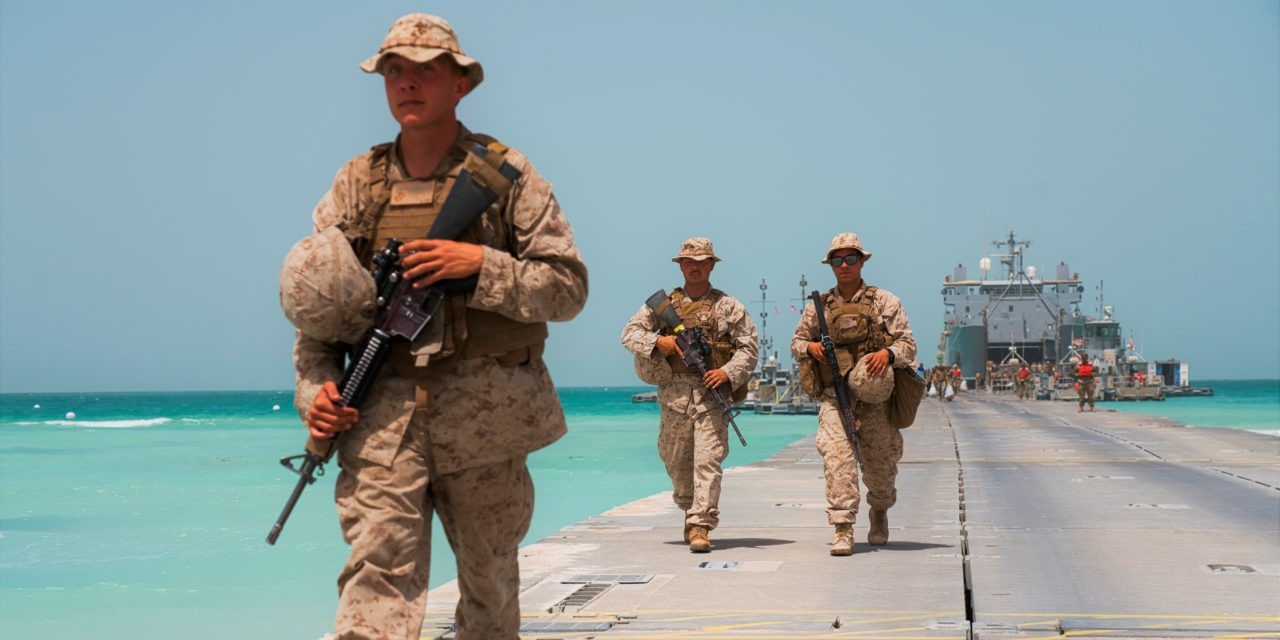 Gulf Security: Arab Gulf States Have No Good Options by James M. Dorsey | May 4, 2020 This story first appeared on Inside Arabia A podcast version of this story is available on Soundcloud, Itunes, Spotify, Stitcher, TuneIn, Spreaker, Pocket Casts, Tumblr, Podbean, Audecibel, Patreon and Castbox. The coronavirus pandemic and its economic fallout may rewrite the security as well as the political and economic map of the Middle East. The crisis will probably color Gulf attitudes towards the region’s major external players: the United States, China, and Russia. Yet, Gulf states are likely to discover that their ability to shape the region’s map has significantly diminished. The United States faces a stark choice in the Middle East if it continues its maximum pressure campaign against Iran: confront the Islamic republic militarily or withdraw from the region. Trita Parsi, Executive Vice President of the Quincy Institute in Washington and a former head of the National Iranian American Council, recently drew that harsh conclusion. No doubt, Mr. Parsi may be correct in the ultimate analysis. US-Iranian tensions could easily spin out of control into an all-out war that neither Iran nor the United States wants. There are, however, lots of shades of grey that separate long-standing tit-for-tat attacks on US targets – primarily in Iraq, occasional Iranian harassment of US naval vessels in the Gulf, and sporadic US responses, from all-out war. The United States and Iran have been engaged in tit-for-tats with varying degrees of intensity for years and so far have avoided an uncontrolled escalation despite incidents such as the 1988 downing of Iran Air flight 655, that killed 274 people, and the targeted assassination earlier this year of Iranian General Qassem Soleimani. Leaving aside potential black and grey swans, a more likely scenario is that a US desire to reduce its commitment to Gulf states, increased Gulf doubts about US reliability as a regional security guarantor, and a new world in which Gulf and Western states struggle to come to grips with the economic fallout of the coronavirus pandemic, create an environment more conducive to a multilateral security arrangement. One that would reduce the risk of war, even if multilateralism globally seems to be on the retreat. US President Donald J. Trump’s threat in early April to cut off military sales to Saudi Arabia, if the kingdom did not bury the hatchet in its oil price war with Russia – sparking the collapse of oil markets, is an inevitable epic battle for market share. More immediately, it drove the message home in Riyadh that US security guarantees were conditional and reinforced Saudi perceptions that the United States was getting disproportionately more out of its close ties to the kingdom than Saudi Arabia. The Trump administration, in a little noticed sign of the times, put Saudi Arabia in late April on a priority watch list for violations of intellectual property rights because of its pirating of sports broadcasting rights owned by Qatar’s beIN television franchise. The listing threatened to complicate Saudi Arabia’s already controversial bid to acquire English soccer club Newcastle United. It is still too early to assess the geopolitical impact of the global economic downturn. Depressed demand and pricing for oil and gas could enable China to diversify its sourcing and potentially reduce its dependence on the Middle East, a volatile region with heightened security risks. China imported 31 percent more oil from Russia last month while its intake of Saudi crude slipped by 1.8 percent compared to March 2019. At the same time, low oil prices that make US production commercially less viable could temporarily increase Washington’s interest in Gulf security. Fundamentally, and irrespective of what scenario plays out, little will change. The US will still want to reduce its exposure to the Middle East. For its part, China will still need to secure oil and gas supplies as well as its investments and significant diaspora community in the region while seeking to avoid being sucked into intractable regional conflicts. By the same token, the gradual revival of economic life, including a probable phased revitalization of supply chains and international travel, combined with a need to rethink migrant worker housing and create local employment, could alter Middle Eastern perspectives of China’s way of doing business. China’s Belt-and-Road projects often have a China-wins-twice aspect to them that may have always been problematic but has become even more so in a post-pandemic economic environment. China-funded projects rely by and large on Chinese labor and materials supply rather than local sourcing. The People’s Republic’s “China First” approach extends beyond economics and commerce. In an environment in which the United States is an irreplaceable but unreliable partner, Gulf states may look differently at Chinese hesitancy to co-shoulder responsibility for regional security with the risk of having to involve itself in multiple conflicts it has so far been able to stay aloof from. The coronavirus pandemic constitutes a watershed that will color Middle Eastern attitudes towards all of the region’s foremost external players: the United States, China, and Russia. Prior to the crisis, Russia, the weakest of the three, was playing a weak economic hand well, but may find that more difficult going forward. Gulf states are likely to conclude that assertive go-it-alone policies are risky and only work in specific circumstances where big powers are either part of the ploy or look the other way. Though such were easier to pursue in a stable economic environment in which their oil and gas revenue base appeared secure. The United Arab Emirates appears to have read the writing on the wall. It began a year ago to hedge its bets by reaching out to Iran in a bid to ensure that it would not become a theater of war if US-Iranian tensions were to spin out of control. Still, that has not stopped its support for rebel forces in Libya led by renegade Field Marshall Khalifa Haftar in violation of an international arms embargo. Mr. Trump’s threat of a cut-off in military sales to Saudi Arabia should have driven the point home. Yet, financially and economically weakened, less able to play big powers off against one another, and deprived of any viable alternative options, the kingdom and other Gulf states may find that a multilateral security arrangement that incorporates rather than replaces the United States’ regional defense umbrella is the only security straw they can hold on to. Nevertheless, in eventually attempting to negotiate a new arrangement, they may also find that they no longer have the kind of leverage they had prior to a pandemic that in many ways has pulled the rug from beneath them. Dr. James M. Dorsey is an award-winning journalist and a senior fellow at Nanyang Technological University’s S. Rajaratnam School of International Studies in Singapore. He is also an adjunct senior research fellow at the National University of Singapore’s Middle East Institute and co-director of the University of Wuerzburg’s Institute of Fan Culture in Germany |
| json metadata | {"tags":["saudiarabia","gulf","unitedstates","china","russia"],"image":["https://cdn.steemitimages.com/DQmWmnTUa2ZZ5WhbQzenk22pgPwUSDLP2hxhh1Ez24HfJru/InsideArabia04052020.jpg"],"app":"steemit/0.2","format":"markdown"} |
| Transaction Info | Block #43110632/Trx 193b08b7180dad971a7474cdf1de306c98a01f87 |
View Raw JSON Data
{
"trx_id": "193b08b7180dad971a7474cdf1de306c98a01f87",
"block": 43110632,
"trx_in_block": 1,
"op_in_trx": 0,
"virtual_op": 0,
"timestamp": "2020-05-05T10:53:57",
"op": [
"comment",
{
"parent_author": "",
"parent_permlink": "saudiarabia",
"author": "mideastsoccer",
"permlink": "gulf-security-arab-gulf-states-have-no-good-options",
"title": "Gulf Security: Arab Gulf States Have No Good Options",
"body": "\n\nGulf Security: Arab Gulf States Have No Good Options\nby James M. Dorsey | May 4, 2020\nThis story first appeared on Inside Arabia\nA podcast version of this story is available on Soundcloud, Itunes, Spotify, Stitcher, TuneIn, Spreaker, Pocket Casts, Tumblr, Podbean, Audecibel, Patreon and Castbox.\n\nThe coronavirus pandemic and its economic fallout may rewrite the security as well as the political and economic map of the Middle East. The crisis will probably color Gulf attitudes towards the region’s major external players: the United States, China, and Russia. Yet, Gulf states are likely to discover that their ability to shape the region’s map has significantly diminished.\nThe United States faces a stark choice in the Middle East if it continues its maximum pressure campaign against Iran: confront the Islamic republic militarily or withdraw from the region.\nTrita Parsi, Executive Vice President of the Quincy Institute in Washington and a former head of the National Iranian American Council, recently drew that harsh conclusion. No doubt, Mr. Parsi may be correct in the ultimate analysis. US-Iranian tensions could easily spin out of control into an all-out war that neither Iran nor the United States wants.\nThere are, however, lots of shades of grey that separate long-standing tit-for-tat attacks on US targets – primarily in Iraq, occasional Iranian harassment of US naval vessels in the Gulf, and sporadic US responses, from all-out war.\nThe United States and Iran have been engaged in tit-for-tats with varying degrees of intensity for years and so far have avoided an uncontrolled escalation despite incidents such as the 1988 downing of Iran Air flight 655, that killed 274 people, and the targeted assassination earlier this year of Iranian General Qassem Soleimani.\nLeaving aside potential black and grey swans, a more likely scenario is that a US desire to reduce its commitment to Gulf states, increased Gulf doubts about US reliability as a regional security guarantor, and a new world in which Gulf and Western states struggle to come to grips with the economic fallout of the coronavirus pandemic, create an environment more conducive to a multilateral security arrangement. One that would reduce the risk of war, even if multilateralism globally seems to be on the retreat.\nUS President Donald J. Trump’s threat in early April to cut off military sales to Saudi Arabia, if the kingdom did not bury the hatchet in its oil price war with Russia – sparking the collapse of oil markets, is an inevitable epic battle for market share.\nMore immediately, it drove the message home in Riyadh that US security guarantees were conditional and reinforced Saudi perceptions that the United States was getting disproportionately more out of its close ties to the kingdom than Saudi Arabia.\nThe Trump administration, in a little noticed sign of the times, put Saudi Arabia in late April on a priority watch list for violations of intellectual property rights because of its pirating of sports broadcasting rights owned by Qatar’s beIN television franchise. The listing threatened to complicate Saudi Arabia’s already controversial bid to acquire English soccer club Newcastle United.\nIt is still too early to assess the geopolitical impact of the global economic downturn. Depressed demand and pricing for oil and gas could enable China to diversify its sourcing and potentially reduce its dependence on the Middle East, a volatile region with heightened security risks. China imported 31 percent more oil from Russia last month while its intake of Saudi crude slipped by 1.8 percent compared to March 2019.\nAt the same time, low oil prices that make US production commercially less viable could temporarily increase Washington’s interest in Gulf security.\nFundamentally, and irrespective of what scenario plays out, little will change. The US will still want to reduce its exposure to the Middle East. For its part, China will still need to secure oil and gas supplies as well as its investments and significant diaspora community in the region while seeking to avoid being sucked into intractable regional conflicts.\nBy the same token, the gradual revival of economic life, including a probable phased revitalization of supply chains and international travel, combined with a need to rethink migrant worker housing and create local employment, could alter Middle Eastern perspectives of China’s way of doing business.\nChina’s Belt-and-Road projects often have a China-wins-twice aspect to them that may have always been problematic but has become even more so in a post-pandemic economic environment. China-funded projects rely by and large on Chinese labor and materials supply rather than local sourcing.\nThe People’s Republic’s “China First” approach extends beyond economics and commerce. In an environment in which the United States is an irreplaceable but unreliable partner, Gulf states may look differently at Chinese hesitancy to co-shoulder responsibility for regional security with the risk of having to involve itself in multiple conflicts it has so far been able to stay aloof from.\nThe coronavirus pandemic constitutes a watershed that will color Middle Eastern attitudes towards all of the region’s foremost external players: the United States, China, and Russia. Prior to the crisis, Russia, the weakest of the three, was playing a weak economic hand well, but may find that more difficult going forward.\nGulf states are likely to conclude that assertive go-it-alone policies are risky and only work in specific circumstances where big powers are either part of the ploy or look the other way. Though such were easier to pursue in a stable economic environment in which their oil and gas revenue base appeared secure.\nThe United Arab Emirates appears to have read the writing on the wall. It began a year ago to hedge its bets by reaching out to Iran in a bid to ensure that it would not become a theater of war if US-Iranian tensions were to spin out of control. Still, that has not stopped its support for rebel forces in Libya led by renegade Field Marshall Khalifa Haftar in violation of an international arms embargo.\nMr. Trump’s threat of a cut-off in military sales to Saudi Arabia should have driven the point home. Yet, financially and economically weakened, less able to play big powers off against one another, and deprived of any viable alternative options, the kingdom and other Gulf states may find that a multilateral security arrangement that incorporates rather than replaces the United States’ regional defense umbrella is the only security straw they can hold on to.\nNevertheless, in eventually attempting to negotiate a new arrangement, they may also find that they no longer have the kind of leverage they had prior to a pandemic that in many ways has pulled the rug from beneath them.\nDr. James M. Dorsey is an award-winning journalist and a senior fellow at Nanyang Technological University’s S. Rajaratnam School of International Studies in Singapore. He is also an adjunct senior research fellow at the National University of Singapore’s Middle East Institute and co-director of the University of Wuerzburg’s Institute of Fan Culture in Germany",
"json_metadata": "{\"tags\":[\"saudiarabia\",\"gulf\",\"unitedstates\",\"china\",\"russia\"],\"image\":[\"https://cdn.steemitimages.com/DQmWmnTUa2ZZ5WhbQzenk22pgPwUSDLP2hxhh1Ez24HfJru/InsideArabia04052020.jpg\"],\"app\":\"steemit/0.2\",\"format\":\"markdown\"}"
}
]
}mideastsoccerreceived 0.006 SBD, 0.042 SP author reward for @mideastsoccer / pandemic-threatens-to-drive-wedge-into-us-gulf-relations2020/05/04 11:57:57
mideastsoccerreceived 0.006 SBD, 0.042 SP author reward for @mideastsoccer / pandemic-threatens-to-drive-wedge-into-us-gulf-relations
2020/05/04 11:57:57
| author | mideastsoccer |
| permlink | pandemic-threatens-to-drive-wedge-into-us-gulf-relations |
| sbd payout | 0.006 SBD |
| steem payout | 0.000 STEEM |
| vesting payout | 68.383279 VESTS |
| Transaction Info | Block #43083782/Virtual Operation #5 |
View Raw JSON Data
{
  "trx_id": "0000000000000000000000000000000000000000",
  "block": 43083782,
  "trx_in_block": 4294967295,
  "op_in_trx": 0,
  "virtual_op": 5,
  "timestamp": "2020-05-04T11:57:57",
  "op": [
    "author_reward",
    {
      "author": "mideastsoccer",
      "permlink": "pandemic-threatens-to-drive-wedge-into-us-gulf-relations",
      "sbd_payout": "0.006 SBD",
      "steem_payout": "0.000 STEEM",
      "vesting_payout": "68.383279 VESTS"
    }
  ]
}mideastsoccerreceived 0.009 SBD, 0.059 SP author reward for @mideastsoccer / middle-eastern-juxtapositions-the-phone-call-that-never-came2020/05/02 05:10:51
mideastsoccerreceived 0.009 SBD, 0.059 SP author reward for @mideastsoccer / middle-eastern-juxtapositions-the-phone-call-that-never-came
2020/05/02 05:10:51
| author | mideastsoccer |
| permlink | middle-eastern-juxtapositions-the-phone-call-that-never-came |
| sbd payout | 0.009 SBD |
| steem payout | 0.000 STEEM |
| vesting payout | 95.749225 VESTS |
| Transaction Info | Block #43019666/Virtual Operation #120 |
View Raw JSON Data
{
  "trx_id": "0000000000000000000000000000000000000000",
  "block": 43019666,
  "trx_in_block": 4294967295,
  "op_in_trx": 0,
  "virtual_op": 120,
  "timestamp": "2020-05-02T05:10:51",
  "op": [
    "author_reward",
    {
      "author": "mideastsoccer",
      "permlink": "middle-eastern-juxtapositions-the-phone-call-that-never-came",
      "sbd_payout": "0.009 SBD",
      "steem_payout": "0.000 STEEM",
      "vesting_payout": "95.749225 VESTS"
    }
  ]
}p2pbullionsent 0.001 STEEM to @mideastsoccer- "Did you know you can buy silver and gold directly using steem? Checkout https://peertopeerbullion.com. More products being added daily.
"2020/04/28 14:36:33
p2pbullionsent 0.001 STEEM to @mideastsoccer- "Did you know you can buy silver and gold directly using steem? Checkout https://peertopeerbullion.com. More products being added daily.
"
2020/04/28 14:36:33
| from | p2pbullion |
| to | mideastsoccer |
| amount | 0.001 STEEM |
| memo | Did you know you can buy silver and gold directly using steem? Checkout https://peertopeerbullion.com. More products being added daily. |
| Transaction Info | Block #42918359/Trx 74bc070e090d2834445d0cbc68a3eb73f80112d1 |
View Raw JSON Data
{
  "trx_id": "74bc070e090d2834445d0cbc68a3eb73f80112d1",
  "block": 42918359,
  "trx_in_block": 4,
  "op_in_trx": 0,
  "virtual_op": 0,
  "timestamp": "2020-04-28T14:36:33",
  "op": [
    "transfer",
    {
      "from": "p2pbullion",
      "to": "mideastsoccer",
      "amount": "0.001 STEEM",
      "memo": "Did you know you can buy silver and gold directly using steem?  Checkout https://peertopeerbullion.com.  More products being added daily. \r\n\t"
    }
  ]
}2020/04/28 13:22:42
2020/04/28 13:22:42
| parent author | |
| parent permlink | saudiarabia |
| author | mideastsoccer |
| permlink | saudi-arabia-s-problems-not-just-a-pandemic-and-economics-but-geopolitics-too |
| title | Saudi Arabia’s Problems: Not Just a Pandemic and Economics, but Geopolitics Too |
| body | 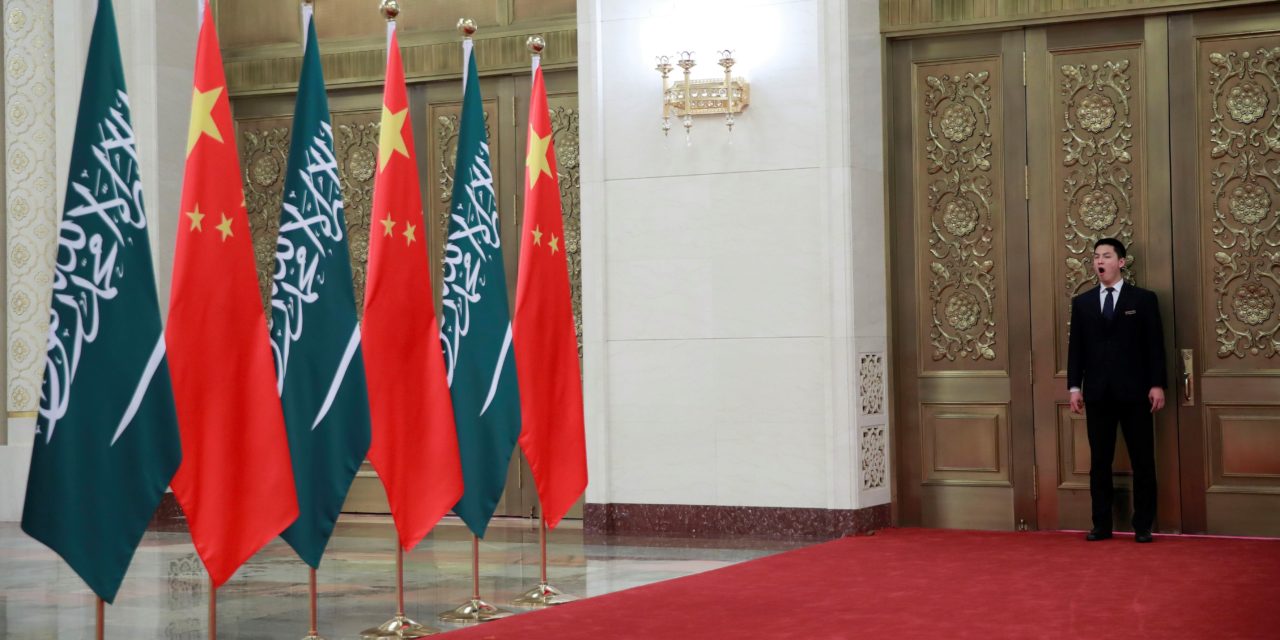 By James M. Dorsey This story was first published in Inside Arabia A podcast version of this story is available on Soundcloud, Itunes, Spotify, Stitcher, TuneIn, Spreaker, Pocket Casts, Tumblr, Podbean, Audecibel, Patreon and Castbox. Saudi Crown Prince Mohammed bin Salman may feel that the global pandemic and its economic fallout are the more immediate of his problems as the kingdom gradually lifts restrictions put in place to stymie the spread of the coronavirus. However, looming large on the horizon is a potential rift with the United States as a result of the kingdom’s price war with Russia that contributed to the collapse of oil markets and an existential crisis for America’s shale industry. US President Donald J. Trump is believed to be weighing a ban on import of Saudi oil in a bid to force the kingdom to reroute tankers carrying some 40 million barrels of crude to the United States. More fundamentally, Prince Mohammed has put the kingdom’s relationship with the United States at risk without having any real alternative options at a time that an agreement among oil producers to cut production amounts to at best a timeout in a price war that is all about market share. The price war has further strained Saudi Arabia’s ties to the US Congress, already troubled by the war in Yemen, the kingdom’s record of human rights abuse, and the killing and dismemberment of journalist Jamal Khashoggi in 2018. Saudi judiciary reforms in the past week, including abolishing flogging as a legal punishment and death sentences for people who committed crimes as minors, constituted an effort to respond to criticism but were unlikely to turn the tide. Speaking for Congressmen representing US shale states, North Dakota Senator Kevin Cramer warned that “Saudi Arabia’s next steps will determine whether our strategic partnership is salvageable.” Salvaging Saudi-US relations may be Prince Mohammed’s only option. Russian President Vladimir Putin is unlikely to have taken kindly to a reported shouting match in a phone call with the crown prince at the outset of the price war. Signaling that the production cuts are a ceasefire rather than an end to the war, Saudi Arabia and Russia continue to fight it out on oil markets with the kingdom undercutting Russia with discounts and special offers, according to a Reuters investigation. Strained relations did not prevent the two countries from moving forward with an agreement on Russian wheat sales to the kingdom. A first Russian shipment of 60,000 tons set sail for Saudi Arabia earlier this month. Irrespective of the state of Saudi-Russian relations, Russia’s call for replacing the US defense umbrella in the Gulf with a multi-lateral security arrangement that would involve the United States as well as China, Europe, and India is a skeleton with no flesh. Russia has neither the wherewithal nor the will to shoulder responsibility for Gulf security. Nor do others, envisioned by Russia as a participant in a revised Gulf security arrangement. The proposal, moreover, is a stillborn baby as long as Saudi Arabia refuses to engage with Iran with no pre-conditions. The kingdom has so far used the pandemic to harden fault lines with the Islamic Republic, casting aside opportunities to build bridges with goodwill gestures. Similarly, China has no appetite for a major military role in the Middle East despite having established its first foreign military base in Djibouti and contributing to anti-piracy operations off the coast of Somalia. Equally troubling for Prince Mohammed is the fact that he cannot be certain that China would be able to maintain its neutrality if US-Iranian tensions were to explode into an all-out war given that when the chips are down Iran may be of greater strategic significance to Beijing. Iran’s geography, demography, and highly educated population give it a leg up in its competition with Saudi Arabia for Chinese favor. So does the fact that China and Iran see each other as bookends at both ends of Asia with a civilizational history that goes back thousands of years. Iran, moreover, plays a pivotal role in Belt and Road-related efforts to link China to Europe by a rail that would traverse Central Asia and the Islamic Republic and end the expensive and time-consuming process of having to transfer goods to ships at one end of the Caspian Sea and loading them back onto a train on the Caspian’s opposite shore. Prince Mohammed’s maneuvering to strike a balance in securing Saudi Arabia’s place in a world of contentious big power relationships is reflected in coverage by the kingdom’s tightly controlled media of Chinese and US efforts to combat the pandemic. Andrew Leber, a student of Saudi policymaking, noted that “China’s mixed record in boosting its image in Riyadh is a reminder that soft-power competition is not a zero-sum game. Even as Saudi outlets have grown more willing to air criticisms of China, some have derided the efforts of President Donald Trump and his administration to blame COVID-19 on Beijing.” Mr. Leber’s analysis of Saudi media coverage suggests that Prince Mohammed is seeking to keep all doors open. It will, however, take a lot more than vacillating media coverage and reform of the kingdom’s penal code to polish Saudi Arabia’s tarnished image in the United States and level the playing field with Iran when it comes to China. Dr. James M. Dorsey is an award-winning journalist and a senior fellow at Nanyang Technological University’s S. Rajaratnam School of International Studies in Singapore. He is also an adjunct senior research fellow at the National University of Singapore’s Middle East Institute and co-director of the University of Wuerzburg’s Institute of Fan Culture in Germany |
| json metadata | {"tags":["uae","iran","oil","trump","china"],"image":["https://cdn.steemitimages.com/DQmNNBeZeQJyzbpd4gFbFhgHx536AGM3QYbvCz3eHZ6K41G/Saudi-China.jpg"],"app":"steemit/0.2","format":"markdown"} |
| Transaction Info | Block #42916921/Trx 5608a2f41fb495053315d946c5b853cb9b811711 |
View Raw JSON Data
{
"trx_id": "5608a2f41fb495053315d946c5b853cb9b811711",
"block": 42916921,
"trx_in_block": 0,
"op_in_trx": 0,
"virtual_op": 0,
"timestamp": "2020-04-28T13:22:42",
"op": [
"comment",
{
"parent_author": "",
"parent_permlink": "saudiarabia",
"author": "mideastsoccer",
"permlink": "saudi-arabia-s-problems-not-just-a-pandemic-and-economics-but-geopolitics-too",
"title": "Saudi Arabia’s Problems: Not Just a Pandemic and Economics, but Geopolitics Too",
"body": "\n\nBy James M. Dorsey\nThis story was first published in Inside Arabia\n\nA podcast version of this story is available on Soundcloud, Itunes, Spotify, Stitcher, TuneIn, Spreaker, Pocket Casts, Tumblr, Podbean, Audecibel, Patreon and Castbox.\n\nSaudi Crown Prince Mohammed bin Salman may feel that the global pandemic and its economic fallout are the more immediate of his problems as the kingdom gradually lifts restrictions put in place to stymie the spread of the coronavirus.\nHowever, looming large on the horizon is a potential rift with the United States as a result of the kingdom’s price war with Russia that contributed to the collapse of oil markets and an existential crisis for America’s shale industry.\nUS President Donald J. Trump is believed to be weighing a ban on import of Saudi oil in a bid to force the kingdom to reroute tankers carrying some 40 million barrels of crude to the United States.\nMore fundamentally, Prince Mohammed has put the kingdom’s relationship with the United States at risk without having any real alternative options at a time that an agreement among oil producers to cut production amounts to at best a timeout in a price war that is all about market share.\nThe price war has further strained Saudi Arabia’s ties to the US Congress, already troubled by the war in Yemen, the kingdom’s record of human rights abuse, and the killing and dismemberment of journalist Jamal Khashoggi in 2018.\nSaudi judiciary reforms in the past week, including abolishing flogging as a legal punishment and death sentences for people who committed crimes as minors, constituted an effort to respond to criticism but were unlikely to turn the tide.\nSpeaking for Congressmen representing US shale states, North Dakota Senator Kevin Cramer warned that “Saudi Arabia’s next steps will determine whether our strategic partnership is salvageable.”\nSalvaging Saudi-US relations may be Prince Mohammed’s only option.\nRussian President Vladimir Putin is unlikely to have taken kindly to a reported shouting match in a phone call with the crown prince at the outset of the price war.\nSignaling that the production cuts are a ceasefire rather than an end to the war, Saudi Arabia and Russia continue to fight it out on oil markets with the kingdom undercutting Russia with discounts and special offers, according to a Reuters investigation.\nStrained relations did not prevent the two countries from moving forward with an agreement on Russian wheat sales to the kingdom. A first Russian shipment of 60,000 tons set sail for Saudi Arabia earlier this month.\nIrrespective of the state of Saudi-Russian relations, Russia’s call for replacing the US defense umbrella in the Gulf with a multi-lateral security arrangement that would involve the United States as well as China, Europe, and India is a skeleton with no flesh.\nRussia has neither the wherewithal nor the will to shoulder responsibility for Gulf security. Nor do others, envisioned by Russia as a participant in a revised Gulf security arrangement.\nThe proposal, moreover, is a stillborn baby as long as Saudi Arabia refuses to engage with Iran with no pre-conditions. The kingdom has so far used the pandemic to harden fault lines with the Islamic Republic, casting aside opportunities to build bridges with goodwill gestures.\nSimilarly, China has no appetite for a major military role in the Middle East despite having established its first foreign military base in Djibouti and contributing to anti-piracy operations off the coast of Somalia.\nEqually troubling for Prince Mohammed is the fact that he cannot be certain that China would be able to maintain its neutrality if US-Iranian tensions were to explode into an all-out war given that when the chips are down Iran may be of greater strategic significance to Beijing.\nIran’s geography, demography, and highly educated population give it a leg up in its competition with Saudi Arabia for Chinese favor. So does the fact that China and Iran see each other as bookends at both ends of Asia with a civilizational history that goes back thousands of years.\nIran, moreover, plays a pivotal role in Belt and Road-related efforts to link China to Europe by a rail that would traverse Central Asia and the Islamic Republic and end the expensive and time-consuming process of having to transfer goods to ships at one end of the Caspian Sea and loading them back onto a train on the Caspian’s opposite shore.\nPrince Mohammed’s maneuvering to strike a balance in securing Saudi Arabia’s place in a world of contentious big power relationships is reflected in coverage by the kingdom’s tightly controlled media of Chinese and US efforts to combat the pandemic.\nAndrew Leber, a student of Saudi policymaking, noted that “China’s mixed record in boosting its image in Riyadh is a reminder that soft-power competition is not a zero-sum game. Even as Saudi outlets have grown more willing to air criticisms of China, some have derided the efforts of President Donald Trump and his administration to blame COVID-19 on Beijing.”\nMr. Leber’s analysis of Saudi media coverage suggests that Prince Mohammed is seeking to keep all doors open.\nIt will, however, take a lot more than vacillating media coverage and reform of the kingdom’s penal code to polish Saudi Arabia’s tarnished image in the United States and level the playing field with Iran when it comes to China.\nDr. James M. Dorsey is an award-winning journalist and a senior fellow at Nanyang Technological University’s S. Rajaratnam School of International Studies in Singapore. He is also an adjunct senior research fellow at the National University of Singapore’s Middle East Institute and co-director of the University of Wuerzburg’s Institute of Fan Culture in Germany",
"json_metadata": "{\"tags\":[\"uae\",\"iran\",\"oil\",\"trump\",\"china\"],\"image\":[\"https://cdn.steemitimages.com/DQmNNBeZeQJyzbpd4gFbFhgHx536AGM3QYbvCz3eHZ6K41G/Saudi-China.jpg\"],\"app\":\"steemit/0.2\",\"format\":\"markdown\"}"
}
]
}2020/04/28 13:07:39
2020/04/28 13:07:39
| parent author | |
| parent permlink | saudiarabia |
| author | mideastsoccer |
| permlink | saudi-arabia-s-problems-not-just-a-pandemic-and-economics-but-geopolitics-too |
| title | Saudi Arabia’s Problems: Not Just a Pandemic and Economics, but Geopolitics Too |
| body |  |
| json metadata | {"tags":["saudiarabia","uae","iran","oil","trump","china"],"image":["https://cdn.steemitimages.com/DQmNNBeZeQJyzbpd4gFbFhgHx536AGM3QYbvCz3eHZ6K41G/Saudi-China.jpg"],"app":"steemit/0.2","format":"markdown"} |
| Transaction Info | Block #42916628/Trx abe54ed6f2e28c08bed0cda28f6f6a57e337b465 |
View Raw JSON Data
{
"trx_id": "abe54ed6f2e28c08bed0cda28f6f6a57e337b465",
"block": 42916628,
"trx_in_block": 0,
"op_in_trx": 0,
"virtual_op": 0,
"timestamp": "2020-04-28T13:07:39",
"op": [
"comment",
{
"parent_author": "",
"parent_permlink": "saudiarabia",
"author": "mideastsoccer",
"permlink": "saudi-arabia-s-problems-not-just-a-pandemic-and-economics-but-geopolitics-too",
"title": "Saudi Arabia’s Problems: Not Just a Pandemic and Economics, but Geopolitics Too",
"body": "",
"json_metadata": "{\"tags\":[\"saudiarabia\",\"uae\",\"iran\",\"oil\",\"trump\",\"china\"],\"image\":[\"https://cdn.steemitimages.com/DQmNNBeZeQJyzbpd4gFbFhgHx536AGM3QYbvCz3eHZ6K41G/Saudi-China.jpg\"],\"app\":\"steemit/0.2\",\"format\":\"markdown\"}"
}
]
}sharesupvoted (10.00%) @mideastsoccer / pandemic-threatens-to-drive-wedge-into-us-gulf-relations2020/04/27 13:04:45
sharesupvoted (10.00%) @mideastsoccer / pandemic-threatens-to-drive-wedge-into-us-gulf-relations
2020/04/27 13:04:45
| voter | shares |
| author | mideastsoccer |
| permlink | pandemic-threatens-to-drive-wedge-into-us-gulf-relations |
| weight | 1000 (10.00%) |
| Transaction Info | Block #42888504/Trx 7becd7d2953f0bbf3718a5c0d5f36c5a53f20f10 |
View Raw JSON Data
{
  "trx_id": "7becd7d2953f0bbf3718a5c0d5f36c5a53f20f10",
  "block": 42888504,
  "trx_in_block": 1,
  "op_in_trx": 0,
  "virtual_op": 0,
  "timestamp": "2020-04-27T13:04:45",
  "op": [
    "vote",
    {
      "voter": "shares",
      "author": "mideastsoccer",
      "permlink": "pandemic-threatens-to-drive-wedge-into-us-gulf-relations",
      "weight": 1000
    }
  ]
}councilupvoted (10.00%) @mideastsoccer / pandemic-threatens-to-drive-wedge-into-us-gulf-relations2020/04/27 13:04:45
councilupvoted (10.00%) @mideastsoccer / pandemic-threatens-to-drive-wedge-into-us-gulf-relations
2020/04/27 13:04:45
| voter | council |
| author | mideastsoccer |
| permlink | pandemic-threatens-to-drive-wedge-into-us-gulf-relations |
| weight | 1000 (10.00%) |
| Transaction Info | Block #42888504/Trx 7f945d6828354222ddf10d1ee7ac317676aaddb5 |
View Raw JSON Data
{
  "trx_id": "7f945d6828354222ddf10d1ee7ac317676aaddb5",
  "block": 42888504,
  "trx_in_block": 0,
  "op_in_trx": 0,
  "virtual_op": 0,
  "timestamp": "2020-04-27T13:04:45",
  "op": [
    "vote",
    {
      "voter": "council",
      "author": "mideastsoccer",
      "permlink": "pandemic-threatens-to-drive-wedge-into-us-gulf-relations",
      "weight": 1000
    }
  ]
}yeheyupvoted (10.00%) @mideastsoccer / pandemic-threatens-to-drive-wedge-into-us-gulf-relations2020/04/27 13:03:21
yeheyupvoted (10.00%) @mideastsoccer / pandemic-threatens-to-drive-wedge-into-us-gulf-relations
2020/04/27 13:03:21
| voter | yehey |
| author | mideastsoccer |
| permlink | pandemic-threatens-to-drive-wedge-into-us-gulf-relations |
| weight | 1000 (10.00%) |
| Transaction Info | Block #42888476/Trx dd6db36ab4f4d022946e5168737de85befc17b2f |
View Raw JSON Data
{
  "trx_id": "dd6db36ab4f4d022946e5168737de85befc17b2f",
  "block": 42888476,
  "trx_in_block": 10,
  "op_in_trx": 0,
  "virtual_op": 0,
  "timestamp": "2020-04-27T13:03:21",
  "op": [
    "vote",
    {
      "voter": "yehey",
      "author": "mideastsoccer",
      "permlink": "pandemic-threatens-to-drive-wedge-into-us-gulf-relations",
      "weight": 1000
    }
  ]
}mideastsoccerpublished a new post: pandemic-threatens-to-drive-wedge-into-us-gulf-relations2020/04/27 11:57:57
mideastsoccerpublished a new post: pandemic-threatens-to-drive-wedge-into-us-gulf-relations
2020/04/27 11:57:57
| parent author | |
| parent permlink | saudiarabia |
| author | mideastsoccer |
| permlink | pandemic-threatens-to-drive-wedge-into-us-gulf-relations |
| title | Pandemic threatens to drive wedge into US-Gulf relations |
| body |  James M. Dorsey This article first appeared in Gulf Insight A podcast version of this story is available on Soundcloud, Itunes, Spotify, Stitcher, TuneIn, Spreaker, Pocket Casts, Tumblr, Podbean, Audecibel, Patreon and Castbox. It is early days, but first indications are that the global pandemic is entrenching long-drawn Middle Eastern geopolitical, political, ethnic, and sectarian battle lines rather than serving as a vehicle to build bridges and build confidence. The coronavirus crisis is also changing the region’s political landscape as non-governmental organizations and militants in countries like Iraq, Syria, and Lebanon fill gaps where governments have failed to cater to social and health needs created by the pandemic. The empowerment of NGOs and militant groups, particularly where they fill a gap without coordinating with government, potentially raises security issues as militants capitalize on their ability to show up the state’s lack of capability. The expanded militants’ role takes on added significance as states like Saudi Arabia and the United Arab Emirates use the pandemic to entrench as well as manage many of the Middle East’s fault lines, if not widen them to their advantage. The pandemic has also not stopped the region’s foremost external power, the United States, from taking Iran’s bait in an escalating tit-for-tat that risks a larger military conflagration. In a similar vein, the UAE has used the pandemic to solidify its limited outreach to Iran designed to shield the Gulf state from becoming a battlefield in any US-Iranian military confrontation. While the United States reportedly blocked an Iranian request for US5 billion from the International Monetary Fund (IMF) to fight the virus, the UAE was among the first nations to deliver medical aid to Iran and facilitate shipments by the World Health Organization (WHO). The shipments led to a rare March 15 phone call between UAE foreign minister Abdullah bin Zayed bin Sultan Al Nahyan and his Iranian counterpart, Mohammad Javid Zarif. The UAE began reaching out to Iran last year when it sent a coast guard delegation to Tehran to discuss maritime security in the wake of alleged Iranian attacks on oil tankers off the coast of the Emirates. The Trump administration remained silent when the UAE last October released US$700 million in frozen Iranian assets that ran counter to US efforts to strangle Iran economically with harsh sanctions. The UAE’s moves amount to a lowering of the temperature. Officials insist that there will be no real breakthrough in Emirati-Iranian relations as long as Iran supports proxies like Hezbollah in Lebanon, pro-Iranian militias in Iraq and Houthi rebels in Yemen. UAE Crown Prince Mohammed bin Zayed made that clear when he phoned Syrian President Bashar -al-Assad in a bid to drive a wedge between Syria and Iran and complicate Turkish military interventions in Syria as well as Libya. UAE support for Syria and Libyan rebel forces led by Field Marshall Khalifa Haftar spotlight the contradictions in the Emirates’ projection of itself as a humanitarian actor. Neither Mr. Al-Assad or Mr. Haftar have shied away from targeting hospitals and medical facilities at a time functioning health infrastructure is a priority. In cuddling up to Syria and reaching out to Iran, the UAE and Saudi Arabia may have common goals even if they pursue them in different ways that are dictated by the degree of risk they are willing to shoulder. As a result, Saudi Arabia, in contrast to the UAE, has maintained a hard line towards Iran, casting aside opportunities to build bridges by, for example, offering Iran medical aid. Instead, Saudi Arabia appeared to reinforce the divide by accusing Iran of “direct responsibility” for the spread of the virus. Government-controlled media charged that Iran’s allies, Qatar and Turkey, had deliberately mismanaged the crisis. Moreover, the kingdom, backing a US refusal to ease sanctioning of Iran, prevented the Non-Aligned Movement from condemning the Trump administration’s hard line at the time of a pandemic. Saudi Arabia’s failure to follow in the UAE’s footsteps could prove to be costlier than meets the eye. The coronavirus coupled with the global economic breakdown and the collapse of the oil market has somewhat levelled the playing field with Iran with the undermining of the kingdom’s ability to manipulate oil prices as well as its diminished financial muscle. Add to that the weakening of Saudi Arabia’s claim to leadership of the Islamic world as the custodian of Mecca and Medina, Islam’s two holiest cities, as a result of its efforts to combat the pandemic. One has to go way back in history to find a precedent for the kingdom’s banning of the Umrah, Islam’s minor pilgrimage to Mecca; the likely cancelling of the haj, Islam’s major pilgrimage that constitutes one of the faith’s five pillars; and the closing down of mosques to avoid congregational prayer. Just to make things worse, Saudi Arabia has jeopardized its close ties to the United States with an oil price war against Russia that collapsed oil markets, drove oil prices to rock bottom, and significantly undermined the US shale industry with its ten million jobs. Nonetheless, Saudi Crown Prince Mohammed bin Salman, in a twist of irony given his record on human rights and rule of law, has emerged as a model in some Muslim countries like Pakistan that have been less forceful in imposing physical distancing and lockdowns on ultra-conservative religious communities. “What if this year’s haj was under Imran Khan rather than Mohammad bin Salman? Would he have waffled there as indeed he has in Pakistan?” asked Pakistani nuclear scientist, political analyst and human rights activist Pervez Hoodbhoy referring to the Pakistan prime minister. Saudi Arabia has so far carried the brunt of US criticism despite the fact that it remains more closely aligned with US policies than the UAE which to date has succeeded in flying under the radar. That is a remarkable achievement given that the Emirates backed Saudi Arabia in its debilitating price war by announcing that it too would raise oil production. The strategy has since been put on hold with an agreement to radically reduce production among members of the Organization of Oil Exporting Countries (OPEC), non-OPEC producers, including Russia, and the Group of Twenty that brings together the world’s largest economies. In the same vein, the UAE’s outreach to Syria and Iran runs counter to US policy. The policy contradictions stem from Gulf efforts to ensure that entrenched conflicts do not spiral out of control, particularly as they battle a pandemic and struggle to cope with the economic fallout. That is also their core message to US President Donald J. Trump amid heightening tensions with Iran: “Don’t let this get out of hand. You live thousands of miles away. It will be us, not you who pays the price and you won’t be there to rush to our defense,” said a prominent Saudi. About the author Dr. James M. Dorsey is an award-winning journalist and a senior fellow at Nanyang Technological University’s S. Rajaratnam School of International Studies in Singapore. He is also an adjunct senior research fellow at the National University of Singapore’s Middle East Institute and co-director of the University of Wuerzburg’s Institute of Fan Culture in Germany About the Gulf Insights series: The "Gulf Insights" series is published by the Gulf Studies Center on a weekly base with the aim to promote informed debate with academic depth. The Gulf Insights are commentaries on pressing regional issues written by the GSC/GSP faculty, staff PhD and MA students, as well as guest scholars, and they can be between 1,200 to 1,500 words. All articles published under “Gulf Insight” series have been discussed internally but they reflect the opinion and views of the authors, and do not reflect the views of the Center, the College of Arts and Sciences or Qatar University. |
| json metadata | {"tags":["saudiarabia","iran","trump","china","russia"],"image":["https://cdn.steemitimages.com/DQmZbcnhJpG3bY3Re4FcZ4iDFi3m6ri3gxP7bmW8gRHd7py/GulfPandemic.jpg"],"app":"steemit/0.2","format":"markdown"} |
| Transaction Info | Block #42887198/Trx 4fe4712c92785f427be3077061483f3528b5a722 |
View Raw JSON Data
{
"trx_id": "4fe4712c92785f427be3077061483f3528b5a722",
"block": 42887198,
"trx_in_block": 23,
"op_in_trx": 0,
"virtual_op": 0,
"timestamp": "2020-04-27T11:57:57",
"op": [
"comment",
{
"parent_author": "",
"parent_permlink": "saudiarabia",
"author": "mideastsoccer",
"permlink": "pandemic-threatens-to-drive-wedge-into-us-gulf-relations",
"title": "Pandemic threatens to drive wedge into US-Gulf relations",
"body": "\n\nJames M. Dorsey\n\nThis article first appeared in Gulf Insight\nA podcast version of this story is available on Soundcloud, Itunes, Spotify, Stitcher, TuneIn, Spreaker, Pocket Casts, Tumblr, Podbean, Audecibel, Patreon and Castbox.\nIt is early days, but first indications are that the global pandemic is entrenching long-drawn Middle Eastern geopolitical, political, ethnic, and sectarian battle lines rather than serving as a vehicle to build bridges and build confidence.\n\nThe coronavirus crisis is also changing the region’s political landscape as non-governmental organizations and militants in countries like Iraq, Syria, and Lebanon fill gaps where governments have failed to cater to social and health needs created by the pandemic.\n\nThe empowerment of NGOs and militant groups, particularly where they fill a gap without coordinating with government, potentially raises security issues as militants capitalize on their ability to show up the state’s lack of capability.\n\nThe expanded militants’ role takes on added significance as states like Saudi Arabia and the United Arab Emirates use the pandemic to entrench as well as manage many of the Middle East’s fault lines, if not widen them to their advantage. \n\nThe pandemic has also not stopped the region’s foremost external power, the United States, from taking Iran’s bait in an escalating tit-for-tat that risks a larger military conflagration. \n\nIn a similar vein, the UAE has used the pandemic to solidify its limited outreach to Iran designed to shield the Gulf state from becoming a battlefield in any US-Iranian military confrontation.\n\nWhile the United States reportedly blocked an Iranian request for US5 billion from the International Monetary Fund (IMF) to fight the virus, the UAE was among the first nations to deliver medical aid to Iran and facilitate shipments by the World Health Organization (WHO).\n\nThe shipments led to a rare March 15 phone call between UAE foreign minister Abdullah bin Zayed bin Sultan Al Nahyan and his Iranian counterpart, Mohammad Javid Zarif.\n\nThe UAE began reaching out to Iran last year when it sent a coast guard delegation to Tehran to discuss maritime security in the wake of alleged Iranian attacks on oil tankers off the coast of the Emirates.\n\nThe Trump administration remained silent when the UAE last October released US$700 million in frozen Iranian assets that ran counter to US efforts to strangle Iran economically with harsh sanctions.\n\nThe UAE’s moves amount to a lowering of the temperature. Officials insist that there will be no real breakthrough in Emirati-Iranian relations as long as Iran supports proxies like Hezbollah in Lebanon, pro-Iranian militias in Iraq and Houthi rebels in Yemen.\n\nUAE Crown Prince Mohammed bin Zayed made that clear when he phoned Syrian President Bashar -al-Assad in a bid to drive a wedge between Syria and Iran and complicate Turkish military interventions in Syria as well as Libya.\n\nUAE support for Syria and Libyan rebel forces led by Field Marshall Khalifa Haftar spotlight the contradictions in the Emirates’ projection of itself as a humanitarian actor. Neither Mr. Al-Assad or Mr. Haftar have shied away from targeting hospitals and medical facilities at a time functioning health infrastructure is a priority.\n\nIn cuddling up to Syria and reaching out to Iran, the UAE and Saudi Arabia may have common goals even if they pursue them in different ways that are dictated by the degree of risk they are willing to shoulder.\n\nAs a result, Saudi Arabia, in contrast to the UAE, has maintained a hard line towards Iran, casting aside opportunities to build bridges by, for example, offering Iran medical aid.\n\nInstead, Saudi Arabia appeared to reinforce the divide by accusing Iran of “direct responsibility” for the spread of the virus. Government-controlled media charged that Iran’s allies, Qatar and Turkey, had deliberately mismanaged the crisis.\n\nMoreover, the kingdom, backing a US refusal to ease sanctioning of Iran, prevented the Non-Aligned Movement from condemning the Trump administration’s hard line at the time of a pandemic.\n\nSaudi Arabia’s failure to follow in the UAE’s footsteps could prove to be costlier than meets the eye.\n\nThe coronavirus coupled with the global economic breakdown and the collapse of the oil market has somewhat levelled the playing field with Iran with the undermining of the kingdom’s ability to manipulate oil prices as well as its diminished financial muscle. \n\nAdd to that the weakening of Saudi Arabia’s claim to leadership of the Islamic world as the custodian of Mecca and Medina, Islam’s two holiest cities, as a result of its efforts to combat the pandemic.\n\nOne has to go way back in history to find a precedent for the kingdom’s banning of the Umrah, Islam’s minor pilgrimage to Mecca; the likely cancelling of the haj, Islam’s major pilgrimage that constitutes one of the faith’s five pillars; and the closing down of mosques to avoid congregational prayer.\n\nJust to make things worse, Saudi Arabia has jeopardized its close ties to the United States with an oil price war against Russia that collapsed oil markets, drove oil prices to rock bottom, and significantly undermined the US shale industry with its ten million jobs.\n\nNonetheless, Saudi Crown Prince Mohammed bin Salman, in a twist of irony given his record on human rights and rule of law, has emerged as a model in some Muslim countries like Pakistan that have been less forceful in imposing physical distancing and lockdowns on ultra-conservative religious communities. \n\n“What if this year’s haj was under Imran Khan rather than Mohammad bin Salman? Would he have waffled there as indeed he has in Pakistan?” asked Pakistani nuclear scientist, political analyst and human rights activist Pervez Hoodbhoy referring to the Pakistan prime minister.\n\nSaudi Arabia has so far carried the brunt of US criticism despite the fact that it remains more closely aligned with US policies than the UAE which to date has succeeded in flying under the radar.\n\nThat is a remarkable achievement given that the Emirates backed Saudi Arabia in its debilitating price war by announcing that it too would raise oil production. \n\nThe strategy has since been put on hold with an agreement to radically reduce production among members of the Organization of Oil Exporting Countries (OPEC), non-OPEC producers, including Russia, and the Group of Twenty that brings together the world’s largest economies.\n\nIn the same vein, the UAE’s outreach to Syria and Iran runs counter to US policy.\n\nThe policy contradictions stem from Gulf efforts to ensure that entrenched conflicts do not spiral out of control, particularly as they battle a pandemic and struggle to cope with the economic fallout.\n\nThat is also their core message to US President Donald J. Trump amid heightening tensions with Iran: “Don’t let this get out of hand. You live thousands of miles away. It will be us, not you who pays the price and you won’t be there to rush to our defense,” said a prominent Saudi.\n \nAbout the author\n \nDr. James M. Dorsey is an award-winning journalist and a senior fellow at Nanyang Technological University’s S. Rajaratnam School of International Studies in Singapore. He is also an adjunct senior research fellow at the National University of Singapore’s Middle East Institute and co-director of the University of Wuerzburg’s Institute of Fan Culture in Germany\n \nAbout the Gulf Insights series:\n \nThe \"Gulf Insights\" series is published by the Gulf Studies Center on a weekly base with the aim to promote informed debate with academic depth. The Gulf Insights are commentaries on pressing regional issues written by the GSC/GSP faculty, staff PhD and MA students, as well as guest scholars, and they can be between 1,200 to 1,500 words. \nAll articles published under “Gulf Insight” series have been discussed internally but they reflect the opinion and views of the authors, and do not reflect the views of the Center, the College of Arts and Sciences or Qatar University.",
"json_metadata": "{\"tags\":[\"saudiarabia\",\"iran\",\"trump\",\"china\",\"russia\"],\"image\":[\"https://cdn.steemitimages.com/DQmZbcnhJpG3bY3Re4FcZ4iDFi3m6ri3gxP7bmW8gRHd7py/GulfPandemic.jpg\"],\"app\":\"steemit/0.2\",\"format\":\"markdown\"}"
}
]
}sakraupvoted (100.00%) @mideastsoccer / middle-eastern-juxtapositions-the-phone-call-that-never-came2020/04/25 09:06:00
sakraupvoted (100.00%) @mideastsoccer / middle-eastern-juxtapositions-the-phone-call-that-never-came
2020/04/25 09:06:00
| voter | sakra |
| author | mideastsoccer |
| permlink | middle-eastern-juxtapositions-the-phone-call-that-never-came |
| weight | 10000 (100.00%) |
| Transaction Info | Block #42827744/Trx 2f7fcade2481430cd832f81226700b33aadd1395 |
View Raw JSON Data
{
  "trx_id": "2f7fcade2481430cd832f81226700b33aadd1395",
  "block": 42827744,
  "trx_in_block": 1,
  "op_in_trx": 0,
  "virtual_op": 0,
  "timestamp": "2020-04-25T09:06:00",
  "op": [
    "vote",
    {
      "voter": "sakra",
      "author": "mideastsoccer",
      "permlink": "middle-eastern-juxtapositions-the-phone-call-that-never-came",
      "weight": 10000
    }
  ]
}2020/04/25 07:33:36
2020/04/25 07:33:36
| voter | filipino |
| author | mideastsoccer |
| permlink | middle-eastern-juxtapositions-the-phone-call-that-never-came |
| weight | 1000 (10.00%) |
| Transaction Info | Block #42825949/Trx 695fd575d39333a5a8f77d44ec4609f32836b740 |
View Raw JSON Data
{
  "trx_id": "695fd575d39333a5a8f77d44ec4609f32836b740",
  "block": 42825949,
  "trx_in_block": 2,
  "op_in_trx": 0,
  "virtual_op": 0,
  "timestamp": "2020-04-25T07:33:36",
  "op": [
    "vote",
    {
      "voter": "filipino",
      "author": "mideastsoccer",
      "permlink": "middle-eastern-juxtapositions-the-phone-call-that-never-came",
      "weight": 1000
    }
  ]
}yeheyupvoted (10.00%) @mideastsoccer / middle-eastern-juxtapositions-the-phone-call-that-never-came2020/04/25 06:04:27
yeheyupvoted (10.00%) @mideastsoccer / middle-eastern-juxtapositions-the-phone-call-that-never-came
2020/04/25 06:04:27
| voter | yehey |
| author | mideastsoccer |
| permlink | middle-eastern-juxtapositions-the-phone-call-that-never-came |
| weight | 1000 (10.00%) |
| Transaction Info | Block #42824213/Trx 3c7457e98bfe05b95496ed13c43050434ed897de |
View Raw JSON Data
{
  "trx_id": "3c7457e98bfe05b95496ed13c43050434ed897de",
  "block": 42824213,
  "trx_in_block": 18,
  "op_in_trx": 0,
  "virtual_op": 0,
  "timestamp": "2020-04-25T06:04:27",
  "op": [
    "vote",
    {
      "voter": "yehey",
      "author": "mideastsoccer",
      "permlink": "middle-eastern-juxtapositions-the-phone-call-that-never-came",
      "weight": 1000
    }
  ]
}mideastsoccerpublished a new post: middle-eastern-juxtapositions-the-phone-call-that-never-came2020/04/25 05:10:51
mideastsoccerpublished a new post: middle-eastern-juxtapositions-the-phone-call-that-never-came
2020/04/25 05:10:51
| parent author | |
| parent permlink | iran |
| author | mideastsoccer |
| permlink | middle-eastern-juxtapositions-the-phone-call-that-never-came |
| title | Middle Eastern juxtapositions: The phone call that never came |
| body | 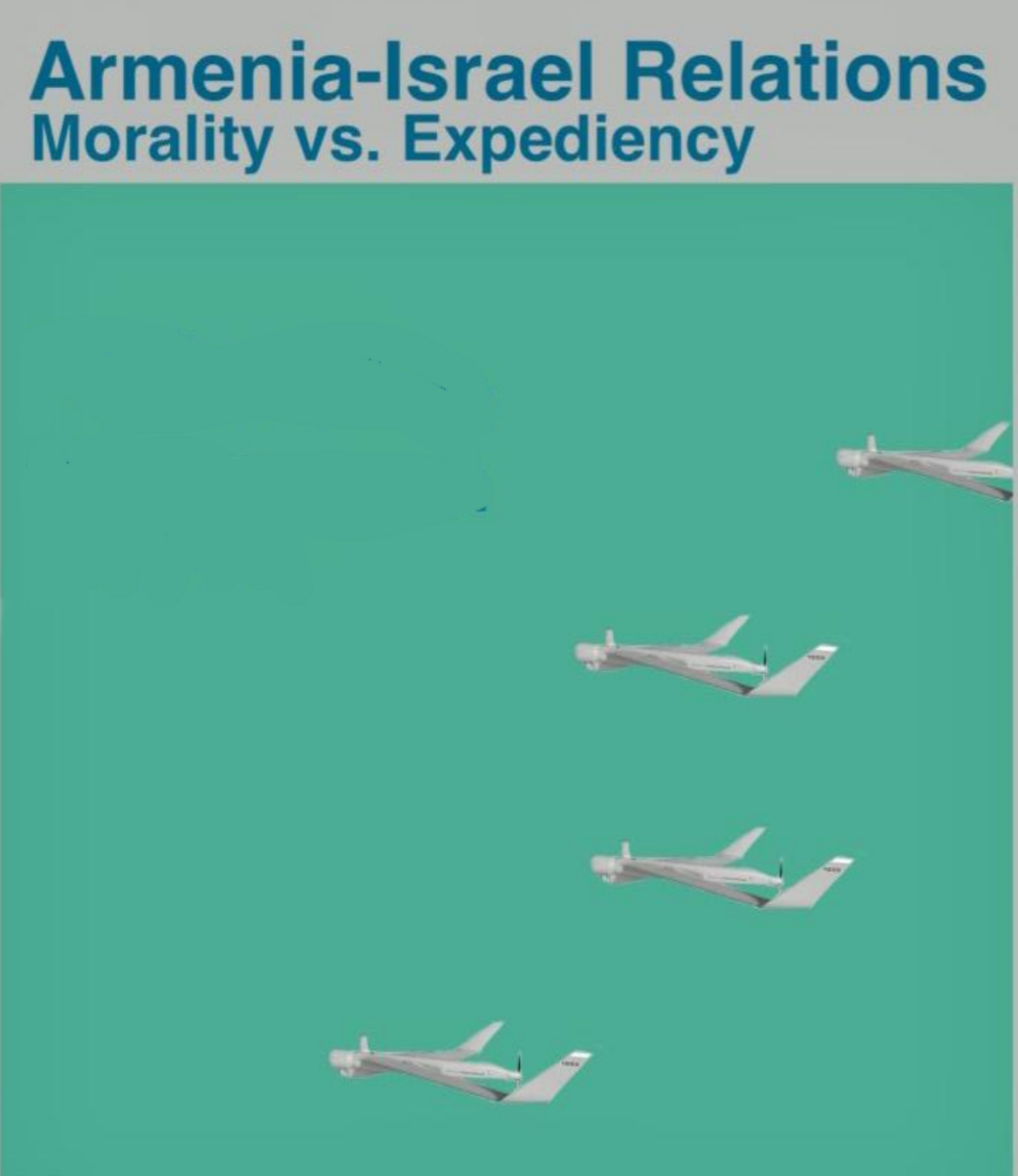 By James M. Dorsey A podcast version of this story is available on Soundcloud, Itunes, Spotify, Stitcher, TuneIn, Spreaker, Pocket Casts, Tumblr, Podbean, Audecibel, Patreon and Castbox. Populated by fluent Hebrew speakers, the Israel desk of Armenia’s foreign ministry waited back in 1991 in the wake of the collapse of the Soviet Union for a phone call that never came. The ministry was convinced that Israel, with whom Armenia shared an experience of genocide, were natural allies. The ministry waited in vain. Israel never made the call. The shared experience could not compete with Armenia’s Turkic nemesis, Azerbaijan, with which it was at war over Nagorno Karabagh, an Armenian enclave on Azerbaijani territory. “The calculation was simple. Azerbaijan has three strategic assets that Israel is interested in: Muslims, oil and several thousand Jews. All Armenia has to offer is at best several hundred Jews,” said an Israeli official at the time. Azerbaijan had one more asset: close ties to Turkey, which supported it in the war against Armenia. As a result, Israel and Jewish organizations with long-standing ties to Turkey refrained for years from participating in annual commemorations of the 1915 mass murder of Armenians. In a sign of the times, that may be changing. Turkish President Recep Tayyip Erdogan’s strained relations with Israel and the West, his touting of implicitly anti-Semitic conspiracy theories, hollowing out of Turkish democracy and offensive against Syrian Kurds who played a key role in defeating the Islamic State, appears to have turned the tide. The US Congress as well as major American Jewish organizations have laid Turkish objections by the wayside and recognized the mass murder of Armenian as genocide. “One thing is certain: Armenians and Jews, two groups whose similar history makes them natural allies, will improve their relationships,” said historian and political scientist Marc David Baer. Mr. Baer may have spoken too early. While relations with Turkey may no longer be a consideration, relations with Azerbaijan are. To be sure, Azerbaijan’s human rights record is hardly better than that of Turkey. Yet, predominantly Shiite Azerbaijan, like Armenia, borders on Iran. With tension between the United States and Iran on the rise, that could be of significance. President Donald J. Trump tweeted earlier this week that he had ordered the US Navy to destroy any vessels in the Gulf that harassed American navy ships. Mr. Trump posted his tweet after Iranian Revolutionary Guard gun speedboats had made, according to the US, “dangerous and harassing approaches.” The approaches were part of Iran’s strategy of gradual escalation that aims to bring the United States and the Islamic republic to the brink of war in a bid to force a return to the 2015 international agreement that curbed Iran’s nuclear program. The Trump administration withdrew from the agreement in 2018 and re-imposed harsh economic sanctions on Iran. The International Crisis Group, in an effort to pre-empt the tit-for-tat from escalating out of control, called this week for a US-Iranian military hotline. “A mechanism facilitated by a third party might contain the risk of conflict due to misread signals and miscalculation,” the group said. Lurking in the background as the United States and Israel focus on getting a grip on the coronavirus and the pandemic’s economic fallout is the fact that Iran’s gradual breaching of the nuclear accord has put the Islamic republic within reach of the amount of enriched uranium needed to produce a nuclear weapon. The breaches were part of Iran’s so far failed attempt to pressure the United States as well as an effort to force other signatories to compensate it for losses suffered by the US sanctions. Iran has consistently denied that it aims to obtain a nuclear capability. It has breached the nuclear deal without abrogating the agreement that was also signed by China, France, Russia, Britain, Germany and the European Union. The International Atomic Energy Agency (IAEA) warned last month that Iran had nearly tripled its stockpile of enriched uranium and was refusing to answer questions about three possible undeclared nuclear sites. Concern about Iran’s military capability was boosted this week with the Islamic republic’s successful launch of a satellite and unveiling of a full-blown space program managed by the Revolutionary Guards. Add to that a just published study of the Iranian navy thar concludes “based on its doctrine of naval warfare, the Iranian revolutionary naval forces have embarked on a fast-paced rearmament and reequipment program during the past two decades, aimed at offsetting the U.S. Navy’s military presence in the Persian Gulf region.” All of which, demonstrates the failure of the United States’ maximum pressure campaign against Iran and the country’s abilities despite sanctions and a pandemic. Israel made clear in the years prior to the signing of the nuclear accord that it would not allow Iran to get within a year of being able to build a nuclear weapon. At the time, Israel and Azerbaijan discussed the possibility of the Israeli air force using Azerbaijani airbases should it opt to take out the Islamic republic’s nuclear facilities. Talk of an Israeli strike has not yet been revived amidst the current escalating US-Iranian tension, but that does not mean it will not. For Armenia’s Israel experts, this means that there is no point in once again waiting for an Israeli phone call. That call is not coming any time soon. Dr. James M. Dorsey is an award-winning journalist and a senior fellow at Nanyang Technological University’s S. Rajaratnam School of International Studies in Singapore. He is also an adjunct senior research fellow at the National University of Singapore’s Middle East Institute and co-director of the University of Wuerzburg’s Institute of Fan Culture in Germany |
| json metadata | {"tags":["iran","trump","israel","azerbaijan","armenia"],"image":["https://cdn.steemitimages.com/DQmdAZFVBNXncZqrqTBrLE56KfLT751Hr3rU8SqZ9ihSXqa/ArmeniaIsrael.png"],"app":"steemit/0.2","format":"markdown"} |
| Transaction Info | Block #42823170/Trx bbd9cca7d733e022c495f40422882159f7515570 |
View Raw JSON Data
{
"trx_id": "bbd9cca7d733e022c495f40422882159f7515570",
"block": 42823170,
"trx_in_block": 8,
"op_in_trx": 0,
"virtual_op": 0,
"timestamp": "2020-04-25T05:10:51",
"op": [
"comment",
{
"parent_author": "",
"parent_permlink": "iran",
"author": "mideastsoccer",
"permlink": "middle-eastern-juxtapositions-the-phone-call-that-never-came",
"title": "Middle Eastern juxtapositions: The phone call that never came",
"body": "\n\nBy James M. Dorsey\nA podcast version of this story is available on Soundcloud, Itunes, Spotify, Stitcher, TuneIn, Spreaker, Pocket Casts, Tumblr, Podbean, Audecibel, Patreon and Castbox.\nPopulated by fluent Hebrew speakers, the Israel desk of Armenia’s foreign ministry waited back in 1991 in the wake of the collapse of the Soviet Union for a phone call that never came.\nThe ministry was convinced that Israel, with whom Armenia shared an experience of genocide, were natural allies.\nThe ministry waited in vain. Israel never made the call.\nThe shared experience could not compete with Armenia’s Turkic nemesis, Azerbaijan, with which it was at war over Nagorno Karabagh, an Armenian enclave on Azerbaijani territory.\n“The calculation was simple. Azerbaijan has three strategic assets that Israel is interested in: Muslims, oil and several thousand Jews. All Armenia has to offer is at best several hundred Jews,” said an Israeli official at the time.\nAzerbaijan had one more asset: close ties to Turkey, which supported it in the war against Armenia.\nAs a result, Israel and Jewish organizations with long-standing ties to Turkey refrained for years from participating in annual commemorations of the 1915 mass murder of Armenians.\nIn a sign of the times, that may be changing. \nTurkish President Recep Tayyip Erdogan’s strained relations with Israel and the West, his touting of implicitly anti-Semitic conspiracy theories, hollowing out of Turkish democracy and offensive against Syrian Kurds who played a key role in defeating the Islamic State, appears to have turned the tide.\nThe US Congress as well as major American Jewish organizations have laid Turkish objections by the wayside and recognized the mass murder of Armenian as genocide.\n“One thing is certain: Armenians and Jews, two groups whose similar history makes them natural allies, will improve their relationships,” said historian and political scientist Marc David Baer.\nMr. Baer may have spoken too early.\nWhile relations with Turkey may no longer be a consideration, relations with Azerbaijan are. \nTo be sure, Azerbaijan’s human rights record is hardly better than that of Turkey.\nYet, predominantly Shiite Azerbaijan, like Armenia, borders on Iran.\nWith tension between the United States and Iran on the rise, that could be of significance.\nPresident Donald J. Trump tweeted earlier this week that he had ordered the US Navy to destroy any vessels in the Gulf that harassed American navy ships.\nMr. Trump posted his tweet after Iranian Revolutionary Guard gun speedboats had made, according to the US, “dangerous and harassing approaches.”\nThe approaches were part of Iran’s strategy of gradual escalation that aims to bring the United States and the Islamic republic to the brink of war in a bid to force a return to the 2015 international agreement that curbed Iran’s nuclear program. \nThe Trump administration withdrew from the agreement in 2018 and re-imposed harsh economic sanctions on Iran.\nThe International Crisis Group, in an effort to pre-empt the tit-for-tat from escalating out of control, called this week for a US-Iranian military hotline. “A mechanism facilitated by a third party might contain the risk of conflict due to misread signals and miscalculation,” the group said.\nLurking in the background as the United States and Israel focus on getting a grip on the coronavirus and the pandemic’s economic fallout is the fact that Iran’s gradual breaching of the nuclear accord has put the Islamic republic within reach of the amount of enriched uranium needed to produce a nuclear weapon.\nThe breaches were part of Iran’s so far failed attempt to pressure the United States as well as an effort to force other signatories to compensate it for losses suffered by the US sanctions.\nIran has consistently denied that it aims to obtain a nuclear capability. It has breached the nuclear deal without abrogating the agreement that was also signed by China, France, Russia, Britain, Germany and the European Union.\nThe International Atomic Energy Agency (IAEA) warned last month that Iran had nearly tripled its stockpile of enriched uranium and was refusing to answer questions about three possible undeclared nuclear sites.\nConcern about Iran’s military capability was boosted this week with the Islamic republic’s successful launch of a satellite and unveiling of a full-blown space program managed by the Revolutionary Guards.\nAdd to that a just published study of the Iranian navy thar concludes “based on its doctrine of naval warfare, the Iranian revolutionary naval forces have embarked on a fast-paced rearmament and reequipment program during the past two decades, aimed at offsetting the U.S. Navy’s military presence in the Persian Gulf region.”\nAll of which, demonstrates the failure of the United States’ maximum pressure campaign against Iran and the country’s abilities despite sanctions and a pandemic.\nIsrael made clear in the years prior to the signing of the nuclear accord that it would not allow Iran to get within a year of being able to build a nuclear weapon.\nAt the time, Israel and Azerbaijan discussed the possibility of the Israeli air force using Azerbaijani airbases should it opt to take out the Islamic republic’s nuclear facilities. \nTalk of an Israeli strike has not yet been revived amidst the current escalating US-Iranian tension, but that does not mean it will not.\nFor Armenia’s Israel experts, this means that there is no point in once again waiting for an Israeli phone call. That call is not coming any time soon.\nDr. James M. Dorsey is an award-winning journalist and a senior fellow at Nanyang Technological University’s S. Rajaratnam School of International Studies in Singapore. He is also an adjunct senior research fellow at the National University of Singapore’s Middle East Institute and co-director of the University of Wuerzburg’s Institute of Fan Culture in Germany",
"json_metadata": "{\"tags\":[\"iran\",\"trump\",\"israel\",\"azerbaijan\",\"armenia\"],\"image\":[\"https://cdn.steemitimages.com/DQmdAZFVBNXncZqrqTBrLE56KfLT751Hr3rU8SqZ9ihSXqa/ArmeniaIsrael.png\"],\"app\":\"steemit/0.2\",\"format\":\"markdown\"}"
}
]
}mideastsoccerpublished a new post: dialogue-of-the-deaf-drives-escalating-us-iranian-tensions2020/04/21 12:56:39
mideastsoccerpublished a new post: dialogue-of-the-deaf-drives-escalating-us-iranian-tensions
2020/04/21 12:56:39
| parent author | |
| parent permlink | iran |
| author | mideastsoccer |
| permlink | dialogue-of-the-deaf-drives-escalating-us-iranian-tensions |
| title | Dialogue of the Deaf Drives Escalating US-Iranian Tensions |
| body | 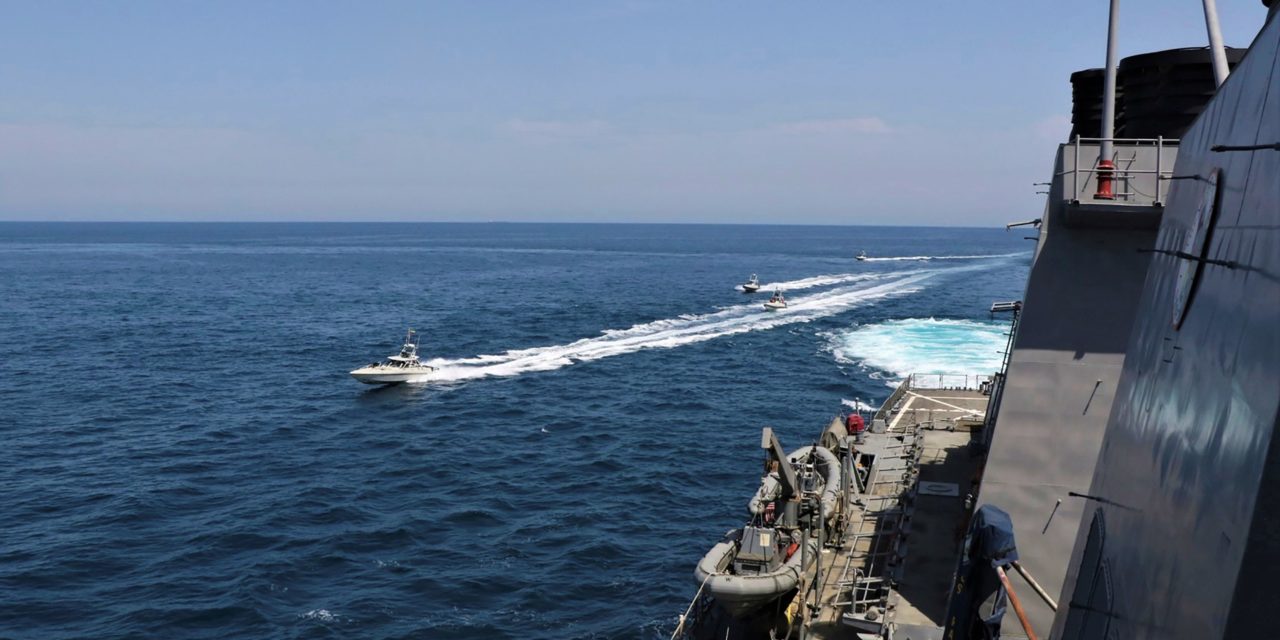 by James M. Dorsey | Apr 21, 2020 This story was first published in Inside Arabia A podcast version of this story is available on Soundcloud, Itunes, Spotify, Stitcher, TuneIn, Spreaker, Pocket Casts, Tumblr, Podbean, Audecibel, Patreon and Castbox. The United States and Iran, acting on perceptions of one another that seem to be engraved in stone, are on a collision course that could have devastating consequences for Arab Gulf states and Iraq. The risk is magnified by each one’s adoption of policies and strategies that are based on faulty assessments of the other. The United States and Iran have waged a contentious dialogue of the deaf for much of the past four decades. It is a dialogue that seemingly brought the two countries to the brink of war in January following tit-for-tat attacks with potentially devastating consequences for Arab Gulf states. The tit-for-tat culminated in the killing of Iranian general Qassem Soleimani that initially was thought to have deterred Iran. It did not, and the talking past one another heightens the risk of things getting, again, out of hand. Successive US and Iranian governments are the culprits even if US President Barak Obama and his Iranian counterpart, Hassan Rouhani, attempted to change the course of history with a 2015 international agreement that curbed Iran’s nuclear ambitions. The agreement failed to revise deep-seated distrust, including US perceptions that Iran seeks to destabilize the Middle East and sow regional mischief and Iran’s conviction that successive US administrations and their regional allies seek regime change in Tehran. In a sign of the times, the global pandemic has become another Iranian-US battlefield in which both sides are driven by perceptions of one another rather than a will to create opportunities to break the logjam. Perceptions have been reinforced not only by a US refusal to ease harsh sanctions, but also Saudi Arabia’s failure to follow in the footsteps of the United Arab Emirates by shipping medical supplies to Iran and by Iran’s attempt to use the pandemic to pressure Washington and secure financial aid from the International Monetary Fund (IMF). The divide is further magnified by the fact that misperceptions have filtered into the fabric of foreign policy communities of both countries that lead to policy recommendations potentially based on problematic analysis. The killing of Mr. Soleimani did everything but send a message warning Iran that it was playing with fire. It missed the point that Iranian strategy, after initially failing to pressure the Trump administration into reversing its 2018 withdrawal from the nuclear accord, is centred on playing with fire. Iran last weekend stepped up Revolutionary Guard speed boat patrols in the Gulf after the United States warned that there had been “dangerous and harassing approaches.” Rightly or wrongly, Iran is likely to believe that it is a strategy that may not have achieved its main goal so far but has produced results. Iran appears to see forcing a withdrawal of US troops from Iraq as achievable and will interpret the recent concentration of US forces in a smaller number of Iraqi bases as a step in that direction. The US says the redeployment was planned prior to President Donald J. Trump’s assertion that Iran was planning “a sneak attack” against American forces. Iran last year opted for gradual escalation involving attacks on US targets in Iraq as well as critical national infrastructure in the United Arab Emirates and Saudi Arabia in a bid to bring the region to the brink of war. Convinced that neither the United States nor Iran wants a war, Iranian leaders hope that heightened tension will open the door to a return to the negotiating table. If that were correct, it would throw into doubt recommendations that the United States should adopt a strategy of deterrence against Iran, similar for example to Israel’s successful bid to push Iranian and Iranian-backed forces in Syria away from the Jewish state’s border. Some 200 airstrikes against 1,000 targets “slowed Iran’s military build-up in Syria while avoiding a broader regional conflagration that would have been damaging to Israel’s interests,” the Center for a New American Security said in a report released last week. The problem is that comparing Iranian policy towards the United States and Israel amounts to comparing apples and pears. Iran has no interest in pushing Israel towards a negotiation nor does it want to risk an all-out war. In other words, Israel may find it far easier than the United States to deter Iran. Escalated US attacks on Iranian targets, unlike Israeli strikes, would probably serve Iran’s immediate purpose. The lay of the land is complicated not only by the rejiggering of US forces in Iraq but also the country’s internal political dynamics. The killing of Mr. Soleimani and Abu Mahdi al-Muhandis, an Iraqi commander who died alongside the Iranian general, has brought to the surface differences among pro-Iranian militias in Iraq. The two men were pivotal figures in keeping the militias in line. Some militias are demanding that they be integrated into the Iraqi military while others want to continue operating independently albeit in close association with the military and yet others have forged alliances with criminal networks. All in all, little suggests that US-Iranian tensions can be reduced without the political will to revisit and puncture perceptions of one another. That may be a tall order given that the nuclear accord failed to create a real opening. Yet, even without an opening, both the United States and Iran would do well to take a hard look at their perceptions in a bid to realistically assess their options. “The United States and Iran are on a collision course . . . because [they] . . . hold very different interpretations of reality,” said strategist and Middle East scholar Ross Harrison. “The United States, which had built its doctrine around combatting a global threat from the Soviet Union, found itself flatfooted in dealing with a regional phenomenon like post-revolutionary Iran…. The United States can injure Iran, but it is unlikely to be able to compromise Iran’s regional influence.” Dr. James M. Dorsey is an award-winning journalist and a senior fellow at Nanyang Technological University’s S. Rajaratnam School of International Studies in Singapore. He is also an adjunct senior research fellow at the National University of Singapore’s Middle East Institute and co-director of the University of Wuerzburg’s Institute of Fan Culture in Germany |
| json metadata | {"tags":["iran","israel","uae","unitedstates","coronavirus"],"image":["https://cdn.steemitimages.com/DQmRpWCQa64cxA1vJdAv9ziUcQWvKgMp51N17qLR4rQPEQx/InsideArabia_21042020.jpg"],"app":"steemit/0.2","format":"markdown"} |
| Transaction Info | Block #42720154/Trx 0aee1df6ddf03cb6ed51a8aecc489bb1d49252c8 |
View Raw JSON Data
{
"trx_id": "0aee1df6ddf03cb6ed51a8aecc489bb1d49252c8",
"block": 42720154,
"trx_in_block": 5,
"op_in_trx": 0,
"virtual_op": 0,
"timestamp": "2020-04-21T12:56:39",
"op": [
"comment",
{
"parent_author": "",
"parent_permlink": "iran",
"author": "mideastsoccer",
"permlink": "dialogue-of-the-deaf-drives-escalating-us-iranian-tensions",
"title": "Dialogue of the Deaf Drives Escalating US-Iranian Tensions",
"body": "\n\nby James M. Dorsey | Apr 21, 2020\nThis story was first published in Inside Arabia\nA podcast version of this story is available on Soundcloud, Itunes, Spotify, Stitcher, TuneIn, Spreaker, Pocket Casts, Tumblr, Podbean, Audecibel, Patreon and Castbox.\nThe United States and Iran, acting on perceptions of one another that seem to be engraved in stone, are on a collision course that could have devastating consequences for Arab Gulf states and Iraq. The risk is magnified by each one’s adoption of policies and strategies that are based on faulty assessments of the other.\nThe United States and Iran have waged a contentious dialogue of the deaf for much of the past four decades.\nIt is a dialogue that seemingly brought the two countries to the brink of war in January following tit-for-tat attacks with potentially devastating consequences for Arab Gulf states.\nThe tit-for-tat culminated in the killing of Iranian general Qassem Soleimani that initially was thought to have deterred Iran.\nIt did not, and the talking past one another heightens the risk of things getting, again, out of hand.\nSuccessive US and Iranian governments are the culprits even if US President Barak Obama and his Iranian counterpart, Hassan Rouhani, attempted to change the course of history with a 2015 international agreement that curbed Iran’s nuclear ambitions.\nThe agreement failed to revise deep-seated distrust, including US perceptions that Iran seeks to destabilize the Middle East and sow regional mischief and Iran’s conviction that successive US administrations and their regional allies seek regime change in Tehran.\nIn a sign of the times, the global pandemic has become another Iranian-US battlefield in which both sides are driven by perceptions of one another rather than a will to create opportunities to break the logjam.\nPerceptions have been reinforced not only by a US refusal to ease harsh sanctions, but also Saudi Arabia’s failure to follow in the footsteps of the United Arab Emirates by shipping medical supplies to Iran and by Iran’s attempt to use the pandemic to pressure Washington and secure financial aid from the International Monetary Fund (IMF).\nThe divide is further magnified by the fact that misperceptions have filtered into the fabric of foreign policy communities of both countries that lead to policy recommendations potentially based on problematic analysis.\nThe killing of Mr. Soleimani did everything but send a message warning Iran that it was playing with fire.\nIt missed the point that Iranian strategy, after initially failing to pressure the Trump administration into reversing its 2018 withdrawal from the nuclear accord, is centred on playing with fire.\nIran last weekend stepped up Revolutionary Guard speed boat patrols in the Gulf after the United States warned that there had been “dangerous and harassing approaches.”\nRightly or wrongly, Iran is likely to believe that it is a strategy that may not have achieved its main goal so far but has produced results.\nIran appears to see forcing a withdrawal of US troops from Iraq as achievable and will interpret the recent concentration of US forces in a smaller number of Iraqi bases as a step in that direction.\nThe US says the redeployment was planned prior to President Donald J. Trump’s assertion that Iran was planning “a sneak attack” against American forces.\nIran last year opted for gradual escalation involving attacks on US targets in Iraq as well as critical national infrastructure in the United Arab Emirates and Saudi Arabia in a bid to bring the region to the brink of war.\nConvinced that neither the United States nor Iran wants a war, Iranian leaders hope that heightened tension will open the door to a return to the negotiating table.\nIf that were correct, it would throw into doubt recommendations that the United States should adopt a strategy of deterrence against Iran, similar for example to Israel’s successful bid to push Iranian and Iranian-backed forces in Syria away from the Jewish state’s border.\nSome 200 airstrikes against 1,000 targets “slowed Iran’s military build-up in Syria while avoiding a broader regional conflagration that would have been damaging to Israel’s interests,” the Center for a New American Security said in a report released last week.\nThe problem is that comparing Iranian policy towards the United States and Israel amounts to comparing apples and pears. Iran has no interest in pushing Israel towards a negotiation nor does it want to risk an all-out war.\nIn other words, Israel may find it far easier than the United States to deter Iran. Escalated US attacks on Iranian targets, unlike Israeli strikes, would probably serve Iran’s immediate purpose.\nThe lay of the land is complicated not only by the rejiggering of US forces in Iraq but also the country’s internal political dynamics.\nThe killing of Mr. Soleimani and Abu Mahdi al-Muhandis, an Iraqi commander who died alongside the Iranian general, has brought to the surface differences among pro-Iranian militias in Iraq. The two men were pivotal figures in keeping the militias in line.\nSome militias are demanding that they be integrated into the Iraqi military while others want to continue operating independently albeit in close association with the military and yet others have forged alliances with criminal networks.\nAll in all, little suggests that US-Iranian tensions can be reduced without the political will to revisit and puncture perceptions of one another. That may be a tall order given that the nuclear accord failed to create a real opening.\nYet, even without an opening, both the United States and Iran would do well to take a hard look at their perceptions in a bid to realistically assess their options.\n“The United States and Iran are on a collision course . . . because [they] . . . hold very different interpretations of reality,” said strategist and Middle East scholar Ross Harrison. “The United States, which had built its doctrine around combatting a global threat from the Soviet Union, found itself flatfooted in dealing with a regional phenomenon like post-revolutionary Iran…. The United States can injure Iran, but it is unlikely to be able to compromise Iran’s regional influence.”\nDr. James M. Dorsey is an award-winning journalist and a senior fellow at Nanyang Technological University’s S. Rajaratnam School of International Studies in Singapore. He is also an adjunct senior research fellow at the National University of Singapore’s Middle East Institute and co-director of the University of Wuerzburg’s Institute of Fan Culture in Germany",
"json_metadata": "{\"tags\":[\"iran\",\"israel\",\"uae\",\"unitedstates\",\"coronavirus\"],\"image\":[\"https://cdn.steemitimages.com/DQmRpWCQa64cxA1vJdAv9ziUcQWvKgMp51N17qLR4rQPEQx/InsideArabia_21042020.jpg\"],\"app\":\"steemit/0.2\",\"format\":\"markdown\"}"
}
]
}mideastsoccerpublished a new post: saudi-arabia-rolls-the-dice-with-bid-for-newcastle-united2020/04/17 12:08:42
mideastsoccerpublished a new post: saudi-arabia-rolls-the-dice-with-bid-for-newcastle-united
2020/04/17 12:08:42
| parent author | |
| parent permlink | soccer |
| author | mideastsoccer |
| permlink | saudi-arabia-rolls-the-dice-with-bid-for-newcastle-united |
| title | Saudi Arabia rolls the dice with bid for Newcastle United |
| body | 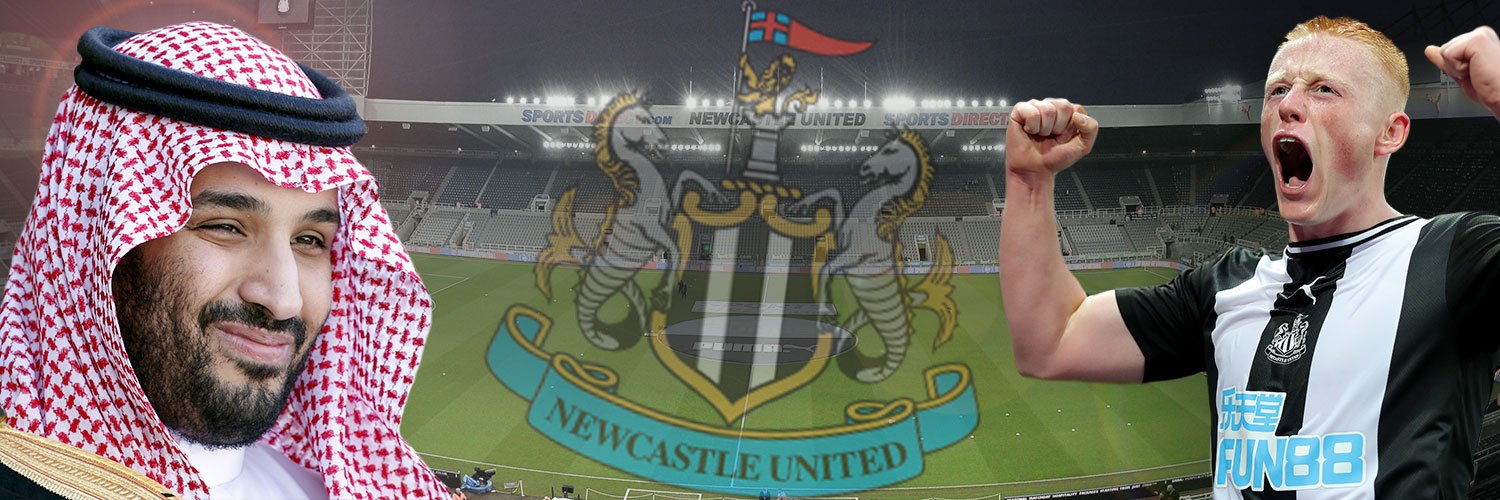 By James M. Dorsey A podcast version of this story is available on Soundcloud, Itunes, Spotify, Stitcher, TuneIn, Spreaker, Pocket Casts, Tumblr, Podbean, Audecibel, Patreon and Castbox. Saudi Crown Prince Mohammed bin Salman has rolled the dice with a US$ 374 million bid to acquire storied British soccer club Newcastle United. If approved by Britain’s Premier League that nominally maintains a high bar for the qualification of aspiring club owners, Prince Mohammed would have demonstrated that he has put behind him an image tarnished by Saudi conduct of a five-year long war in Yemen, the 2018 killing of journalist Jamal Khashoggi, systematic abuse of human rights and, more recently, the kingdom’s badly-timed oil price war with Russia. A successful acquisition would send a message that the kingdom retains the kind of financial muscle that allows it to acquire trophies that enable it to project itself in a different light and garner soft power rather than financial gain at a time of a pandemic and global economic collapse. The planned acquisition comes as Saudi Arabia is reportedly seeking to raise US$7 billion with an international bond sale to compensate for sharply reduced oil revenues. Aramco, the Saudi national oil company, was reported to be talking to banks about a US$10 billion loan to help finance its acquisition of a 70% stake in Saudi Basic Industries Corp (SABIC). The deal would pour money into the Public Investment Fund (PIF), the kingdom’s sovereign wealth fund. The acquisition would mimic the 2017 purchase of celebrated soccer star Neymar by Qatar-owned Paris St. Germain for US$277 million intended to demonstrate that the Gulf state was unaffected by the then several months-old Saudi-UAE-led economic and diplomatic boycott. By the same token, a decision by the Premier League to reject the acquisition of Newcastle would be perceived as yet another of Prince Mohammed’s self-inflicted public relations fiascos that include multiple failed attempts to position the kingdom as a powerhouse in international soccer governance. Prince Mohammed’s emphasis on soccer, symbolized by his presence at the kick-off of the 2018 World Cup in which Russia handily defeated Saudi Arabia, has as much to do with projection of the kingdom internationally as it is a pillar of his effort to develop the entertainment and sports sectors in his country and boost his attempt to position nationalism rather than religion as a core element of Saudi identity. Prince Mohammed is betting that the Premier League at a time of economic crisis and with Britain needing to forge new trade relationships in the wake of its departure from the European Union may not want to slam the door on a wealthy investor and/or jeopardize British relations with the kingdom. That could prove to be a relatively safe bet. Premier League and British officials will have taken note that Prince Mohammed does not take kindly to criticism and rejection. Saudi Arabia responded in 2018 to Canadian criticism of the kingdom’s human rights record by withdrawing its ambassador and freezing all new trade and investment transactions. German criticism of a failed Saudi attempt to force the resignation of Lebanon’s prime minister led that same year to a de facto downgrading of diplomatic relations and reduced trade. Reports that Yasir al-Rumayyan, a close associate of Prince Mohammed and governor of the PIF, will become chairman of Newcastle raise the stakes for both Prince Mohammed and the Premier League. The PIF will reportedly put up 80 percent of the funds needed for the acquisition through an investment vehicle created by a British financier even though a document filed with Companies House, Britain’s registrar of companies, made no mention of the fund. The Premier League, nonetheless, may find itself, albeit only momentarily, in an uncomfortable position. The League has tightened its criteria to test potential club owners on their integrity and reputation. The criteria include ensuring that a potential owner has not committed an act in a foreign jurisdiction that would be a criminal offence in Britain, even if not illegal in their own country. That could put the Premier League in the position of, at least by implication, passing judgement on whether Prince Mohammed was implicated in any of a number of events that may have violated British law. Supporters of the acquisition argue that it bolsters Prince Mohammed’s reforms in a soccer-crazy country and reaffirms his push to break with the kingdom’s austere, inward-looking past. They reason further that it will bolster investment in Newcastle and surroundings at a time of impending economic hardship. Supporters only need to look at Manchester where the United Arab Emirates’ acquisition of Manchester City more than a decade ago has benefitted not only the club but the city too. Like fans in Manchester who have manifested little interest in the UAE’s record of human rights abuse, supporters of Newcastle are likely to welcome the financial injection and departure of the club’s unpopular current owner, Mike Ashley, and ignore condemnation of the deal by human rights activists, including Amnesty International, as “sportswashing, plain and simple.” Dr. James M. Dorsey is an award-winning journalist and a senior fellow at Nanyang Technological University’s S. Rajaratnam School of International Studies in Singapore. He is also an adjunct senior research fellow at the National University of Singapore’s Middle East Institute and co-director of the University of Wuerzburg’s Institute of Fan Culture in Germany. |
| json metadata | {"tags":["soccer","sports","saudiarabia","humanrights","uae"],"image":["https://cdn.steemitimages.com/DQmQtYBVyXGrMWSnui3X5qBS2hzXGnrWAARb1Umu6WWu7gc/MbSNewcastle.jpg"],"app":"steemit/0.2","format":"markdown"} |
| Transaction Info | Block #42607305/Trx 9bd9aa228654519a8570849c72d0c76aeee7e3a3 |
View Raw JSON Data
{
"trx_id": "9bd9aa228654519a8570849c72d0c76aeee7e3a3",
"block": 42607305,
"trx_in_block": 12,
"op_in_trx": 0,
"virtual_op": 0,
"timestamp": "2020-04-17T12:08:42",
"op": [
"comment",
{
"parent_author": "",
"parent_permlink": "soccer",
"author": "mideastsoccer",
"permlink": "saudi-arabia-rolls-the-dice-with-bid-for-newcastle-united",
"title": "Saudi Arabia rolls the dice with bid for Newcastle United",
"body": "\n\nBy James M. Dorsey\nA podcast version of this story is available on Soundcloud, Itunes, Spotify, Stitcher, TuneIn, Spreaker, Pocket Casts, Tumblr, Podbean, Audecibel, Patreon and Castbox.\nSaudi Crown Prince Mohammed bin Salman has rolled the dice with a US$ 374 million bid to acquire storied British soccer club Newcastle United.\nIf approved by Britain’s Premier League that nominally maintains a high bar for the qualification of aspiring club owners, Prince Mohammed would have demonstrated that he has put behind him an image tarnished by Saudi conduct of a five-year long war in Yemen, the 2018 killing of journalist Jamal Khashoggi, systematic abuse of human rights and, more recently, the kingdom’s badly-timed oil price war with Russia.\nA successful acquisition would send a message that the kingdom retains the kind of financial muscle that allows it to acquire trophies that enable it to project itself in a different light and garner soft power rather than financial gain at a time of a pandemic and global economic collapse.\nThe planned acquisition comes as Saudi Arabia is reportedly seeking to raise US$7 billion with an international bond sale to compensate for sharply reduced oil revenues.\nAramco, the Saudi national oil company, was reported to be talking to banks about a US$10 billion loan to help finance its acquisition of a 70% stake in Saudi Basic Industries Corp (SABIC). The deal would pour money into the Public Investment Fund (PIF), the kingdom’s sovereign wealth fund.\nThe acquisition would mimic the 2017 purchase of celebrated soccer star Neymar by Qatar-owned Paris St. Germain for US$277 million intended to demonstrate that the Gulf state was unaffected by the then several months-old Saudi-UAE-led economic and diplomatic boycott.\nBy the same token, a decision by the Premier League to reject the acquisition of Newcastle would be perceived as yet another of Prince Mohammed’s self-inflicted public relations fiascos that include multiple failed attempts to position the kingdom as a powerhouse in international soccer governance.\nPrince Mohammed’s emphasis on soccer, symbolized by his presence at the kick-off of the 2018 World Cup in which Russia handily defeated Saudi Arabia, has as much to do with projection of the kingdom internationally as it is a pillar of his effort to develop the entertainment and sports sectors in his country and boost his attempt to position nationalism rather than religion as a core element of Saudi identity.\nPrince Mohammed is betting that the Premier League at a time of economic crisis and with Britain needing to forge new trade relationships in the wake of its departure from the European Union may not want to slam the door on a wealthy investor and/or jeopardize British relations with the kingdom.\nThat could prove to be a relatively safe bet.\nPremier League and British officials will have taken note that Prince Mohammed does not take kindly to criticism and rejection. \nSaudi Arabia responded in 2018 to Canadian criticism of the kingdom’s human rights record by withdrawing its ambassador and freezing all new trade and investment transactions.\nGerman criticism of a failed Saudi attempt to force the resignation of Lebanon’s prime minister led that same year to a de facto downgrading of diplomatic relations and reduced trade.\nReports that Yasir al-Rumayyan, a close associate of Prince Mohammed and governor of the PIF, will become chairman of Newcastle raise the stakes for both Prince Mohammed and the Premier League.\nThe PIF will reportedly put up 80 percent of the funds needed for the acquisition through an investment vehicle created by a British financier even though a document filed with Companies House, Britain’s registrar of companies, made no mention of the fund.\nThe Premier League, nonetheless, may find itself, albeit only momentarily, in an uncomfortable position.\nThe League has tightened its criteria to test potential club owners on their integrity and reputation. The criteria include ensuring that a potential owner has not committed an act in a foreign jurisdiction that would be a criminal offence in Britain, even if not illegal in their own country.\nThat could put the Premier League in the position of, at least by implication, passing judgement on whether Prince Mohammed was implicated in any of a number of events that may have violated British law.\nSupporters of the acquisition argue that it bolsters Prince Mohammed’s reforms in a soccer-crazy country and reaffirms his push to break with the kingdom’s austere, inward-looking past. They reason further that it will bolster investment in Newcastle and surroundings at a time of impending economic hardship.\nSupporters only need to look at Manchester where the United Arab Emirates’ acquisition of Manchester City more than a decade ago has benefitted not only the club but the city too.\nLike fans in Manchester who have manifested little interest in the UAE’s record of human rights abuse, supporters of Newcastle are likely to welcome the financial injection and departure of the club’s unpopular current owner, Mike Ashley, and ignore condemnation of the deal by human rights activists, including Amnesty International, as “sportswashing, plain and simple.” \nDr. James M. Dorsey is an award-winning journalist and a senior fellow at Nanyang Technological University’s S. Rajaratnam School of International Studies in Singapore. He is also an adjunct senior research fellow at the National University of Singapore’s Middle East Institute and co-director of the University of Wuerzburg’s Institute of Fan Culture in Germany.",
"json_metadata": "{\"tags\":[\"soccer\",\"sports\",\"saudiarabia\",\"humanrights\",\"uae\"],\"image\":[\"https://cdn.steemitimages.com/DQmQtYBVyXGrMWSnui3X5qBS2hzXGnrWAARb1Umu6WWu7gc/MbSNewcastle.jpg\"],\"app\":\"steemit/0.2\",\"format\":\"markdown\"}"
}
]
}filipinoupvoted (10.00%) @mideastsoccer / us-saudi-oil-clash-sets-stage-for-future-epic-battle2020/04/14 20:37:42
filipinoupvoted (10.00%) @mideastsoccer / us-saudi-oil-clash-sets-stage-for-future-epic-battle
2020/04/14 20:37:42
| voter | filipino |
| author | mideastsoccer |
| permlink | us-saudi-oil-clash-sets-stage-for-future-epic-battle |
| weight | 1000 (10.00%) |
| Transaction Info | Block #42533343/Trx 31614cf969859e5b40116dec558e3a484d9f5c2f |
View Raw JSON Data
{
  "trx_id": "31614cf969859e5b40116dec558e3a484d9f5c2f",
  "block": 42533343,
  "trx_in_block": 14,
  "op_in_trx": 0,
  "virtual_op": 0,
  "timestamp": "2020-04-14T20:37:42",
  "op": [
    "vote",
    {
      "voter": "filipino",
      "author": "mideastsoccer",
      "permlink": "us-saudi-oil-clash-sets-stage-for-future-epic-battle",
      "weight": 1000
    }
  ]
}mideastsoccerpublished a new post: us-saudi-oil-clash-sets-stage-for-future-epic-battle2020/04/14 12:46:48
mideastsoccerpublished a new post: us-saudi-oil-clash-sets-stage-for-future-epic-battle
2020/04/14 12:46:48
| parent author | |
| parent permlink | saudi |
| author | mideastsoccer |
| permlink | us-saudi-oil-clash-sets-stage-for-future-epic-battle |
| title | US-Saudi Oil Clash Sets Stage for Future Epic Battle |
| body | 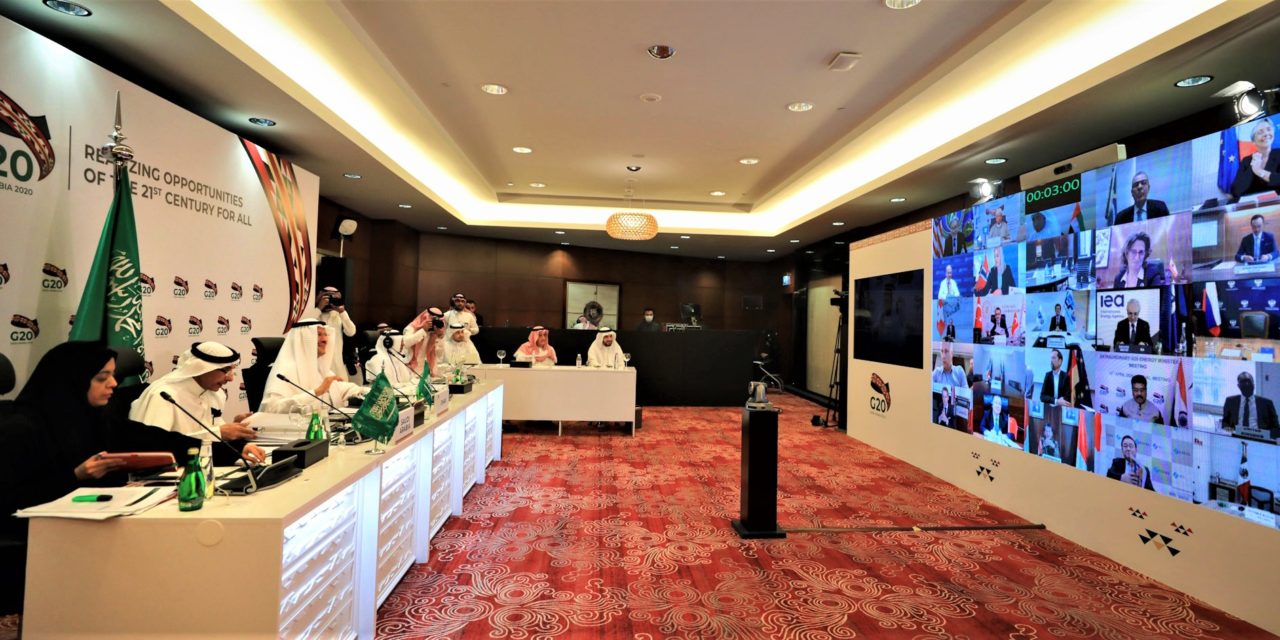 by James M. Dorsey | Apr 14, 2020 This story was first published on Inside Arabia A podcast version of this story is available on Soundcloud, Itunes, Spotify, Stitcher, TuneIn, Spreaker, Pocket Casts, Tumblr, Podbean, Audecibel, Patreon and Castbox. The coronavirus pandemic and the global economic meltdown forced Saudi Arabia, the United Arab Emirates, the United States, and Russia to call time out in a war that was less about prices and more about market share and survival of the fittest. The agreement among producers to cut production by 10 million barrels a day amounts to a ceasefire that will likely end once economies recover and can again sustain the cost of war. Prince Abdulaziz bin Salman Al Saud, Minister of Energy of Saudi Arabia, chairs a virtual summit of the Group of 20 energy ministers in Riyadh, Saudi Arabia, April 10, 2020 (Saudi Energy Ministry via AP) Saudi Arabia and the United Arab Emirates (UAE) risk jeopardizing their relationship with the United States as a result of diverging interests that became evident with the eruption of the recent oil price war. That remains true even if the war was unsustainable in the midst of a devastating pandemic. So far Saudi Arabia has been the focus of US wrath at the kingdom’s perceived insensitivity and recklessness while the UAE has managed to fly under the radar despite it too declaring that it would increase production in support of the price war with Russia. The question is for how long the UAE can stay off the radar. An immediate crisis has been averted with an agreement on Sunday, April 12 between members of the Organization of Oil Exporting Countries (OPEC) and non-OPEC producers to cut production by some 10 million barrels a day. But 13 US Republican Congressmen from oil-producing states put Saudi Arabia on notice in a two-hour phone call with Saudi Energy Minister Abdulaziz bin Salman a day after the agreement. “While we appreciate them taking the first step toward fixing the problem they helped create, the Saudis spent over a month waging war on American oil producers, all while our troops protected theirs. That’s not how friends treat friends. Their actions were inexcusable and won’t be forgotten. Saudi Arabia’s next steps will determine whether our strategic partnership is salvageable,” said North Dakota Senator Kevin Cramer. The Congressmen’s notice reflected a deterioration of the kingdom’s relations with Congress over the past two years as well as US President Donald J. Trump’s anger at the Saudi price war. There is, however, a silver lining in the US-Saudi clash over oil prices even if it was suspended with the production cut agreement. The clash clarifies the parameters of the long-standing relationship between the two countries. Eager to knock out the US shale industry, which accounts for some 10 million jobs, Saudi Arabia made clear that it would pursue its interests irrespective of US concerns or the fact that the world was in a massive economic downturn as the result of a pandemic. “The Kingdom will . . . have to reduce its budgetary expenditures while wisely accessing its financial reserves for essential spending as it fights this potentially long-term battle of the fittest for market share in global energy,” said Ali Shihabi, a political analyst and former banker who often reflects Saudi thinking. To accommodate sharply reduced revenues, the Saudi finance ministry has instructed government bodies to submit proposals to slash this year’s spending by up to 30 percent, the economic consultancy Nasser Saidi and Associates said in a research note. The US-Saudi clash has also laid bare the vulnerability of the US shale industry at a critical time. The ability of the United States to project itself as the world’s largest producer and exporter takes on added significance against the backdrop of a decline in US credibility reinforced by America’s inability to get a grip on the coronavirus crisis. The irony is that US anger could have just as well been directed at the UAE, which was quick to declare its support of the Saudi move to drive prices below US shale’s breakeven point by flooding the market. There’s “ample production capacity that will be quickly brought online given the current circumstances,” UAE Energy Minister Suhail Al Mazrouei said on March 11. By putting Saudi Arabia and by implication the UAE on notice, the Congressmen were drawing battle lines for a renewed clash in the future that may have become even more inevitable as a result of the pandemic and its economic fallout. With a likely reduction of the value of oil reserves and limited new gas stockpiles in the coming decades because of the rise of shale and renewables, Saudi Arabia needs to secure market share by capitalizing on its low costs. Indeed, the kingdom has one of the world’s lowest costs of production of a barrel of oil. The collapse in demand, low prices, and the global economic turndown increases the importance of market share. Saudi Arabia is likely to have to downsize its attention-grabbing big tickets like Neom – the futuristic city on the Red Sea, and focus on revenue and job-creating sectors. “There’s a high likelihood (Neom) fades into nothingness. . . . The momentum will likely die out. And it will take a lot to rebuild that momentum,” said a Gulf-based economist. In a sign of the times, JPMorgan was reportedly seeking to sell at a discount loans raised by the sovereign wealth funds of Saudi Arabia and the UAE as banks brace for a borrowing spree in the Gulf due to low oil prices. Some economists suggest that Saudi Arabia and other oil producers may seek to create jobs and domestic and regional markets for their petrochemicals by pushing the development of plastics processing and chemicals. Saudi Arabia hinted at a return to a focus on energy derivatives with the acquisition by its sovereign wealth fund of stakes worth roughly $1 billion USD in four major European oil companies—Equinor, Royal Dutch Shell, Total, and Eni. “Managing heightened public expectations of the leadership will be crucial in maintaining public support for MbS when the pandemic subsides. The crisis is also a test for the progress made on Saudi Vision 2030, especially its programs to transform public services, reduce unemployment, and diversify the economy away from oil,” said Saudi Arabia scholar Yasmine Farouk. Ms. Farouk was referring to Saudi Crown Prince Mohammed bin Salman by his initials and his Vision 2030 plan to lessen the kingdom’s dependence on oil revenues by diversifying its economy. Dr. James M. Dorsey is an award-winning journalist and a senior fellow at Nanyang Technological University’s S. Rajaratnam School of International Studies in Singapore. He is also an adjunct senior research fellow at the National University of Singapore’s Middle East Institute and co-director of the University of Wuerzburg’s Institute of Fan Culture in Germany. |
| json metadata | {"tags":["saudi","uae","trump","oil","energy"],"image":["https://cdn.steemitimages.com/DQmUdccFJq9AbGvWveoREziRaNhqD1uN9Q3NiyDcB14a3wY/InsideArabia13042020.jpg"],"app":"steemit/0.2","format":"markdown"} |
| Transaction Info | Block #42524138/Trx a83bebe04a4a21df439b725cdcc042169c8f0f97 |
View Raw JSON Data
{
"trx_id": "a83bebe04a4a21df439b725cdcc042169c8f0f97",
"block": 42524138,
"trx_in_block": 7,
"op_in_trx": 0,
"virtual_op": 0,
"timestamp": "2020-04-14T12:46:48",
"op": [
"comment",
{
"parent_author": "",
"parent_permlink": "saudi",
"author": "mideastsoccer",
"permlink": "us-saudi-oil-clash-sets-stage-for-future-epic-battle",
"title": "US-Saudi Oil Clash Sets Stage for Future Epic Battle",
"body": "\n\nby James M. Dorsey | Apr 14, 2020\nThis story was first published on Inside Arabia\nA podcast version of this story is available on Soundcloud, Itunes, Spotify, Stitcher, TuneIn, Spreaker, Pocket Casts, Tumblr, Podbean, Audecibel, Patreon and Castbox.\n\nThe coronavirus pandemic and the global economic meltdown forced Saudi Arabia, the United Arab Emirates, the United States, and Russia to call time out in a war that was less about prices and more about market share and survival of the fittest. The agreement among producers to cut production by 10 million barrels a day amounts to a ceasefire that will likely end once economies recover and can again sustain the cost of war.\n\nPrince Abdulaziz bin Salman Al Saud, Minister of Energy of Saudi Arabia, chairs a virtual summit of the Group of 20 energy ministers in Riyadh, Saudi Arabia, April 10, 2020 (Saudi Energy Ministry via AP)\nSaudi Arabia and the United Arab Emirates (UAE) risk jeopardizing their relationship with the United States as a result of diverging interests that became evident with the eruption of the recent oil price war. That remains true even if the war was unsustainable in the midst of a devastating pandemic.\nSo far Saudi Arabia has been the focus of US wrath at the kingdom’s perceived insensitivity and recklessness while the UAE has managed to fly under the radar despite it too declaring that it would increase production in support of the price war with Russia. The question is for how long the UAE can stay off the radar.\nAn immediate crisis has been averted with an agreement on Sunday, April 12 between members of the Organization of Oil Exporting Countries (OPEC) and non-OPEC producers to cut production by some 10 million barrels a day.\nBut 13 US Republican Congressmen from oil-producing states put Saudi Arabia on notice in a two-hour phone call with Saudi Energy Minister Abdulaziz bin Salman a day after the agreement.\n“While we appreciate them taking the first step toward fixing the problem they helped create, the Saudis spent over a month waging war on American oil producers, all while our troops protected theirs. That’s not how friends treat friends. Their actions were inexcusable and won’t be forgotten. Saudi Arabia’s next steps will determine whether our strategic partnership is salvageable,” said North Dakota Senator Kevin Cramer.\nThe Congressmen’s notice reflected a deterioration of the kingdom’s relations with Congress over the past two years as well as US President Donald J. Trump’s anger at the Saudi price war.\nThere is, however, a silver lining in the US-Saudi clash over oil prices even if it was suspended with the production cut agreement. The clash clarifies the parameters of the long-standing relationship between the two countries.\nEager to knock out the US shale industry, which accounts for some 10 million jobs, Saudi Arabia made clear that it would pursue its interests irrespective of US concerns or the fact that the world was in a massive economic downturn as the result of a pandemic.\n“The Kingdom will . . . have to reduce its budgetary expenditures while wisely accessing its financial reserves for essential spending as it fights this potentially long-term battle of the fittest for market share in global energy,” said Ali Shihabi, a political analyst and former banker who often reflects Saudi thinking.\nTo accommodate sharply reduced revenues, the Saudi finance ministry has instructed government bodies to submit proposals to slash this year’s spending by up to 30 percent, the economic consultancy Nasser Saidi and Associates said in a research note.\nThe US-Saudi clash has also laid bare the vulnerability of the US shale industry at a critical time. The ability of the United States to project itself as the world’s largest producer and exporter takes on added significance against the backdrop of a decline in US credibility reinforced by America’s inability to get a grip on the coronavirus crisis.\nThe irony is that US anger could have just as well been directed at the UAE, which was quick to declare its support of the Saudi move to drive prices below US shale’s breakeven point by flooding the market.\nThere’s “ample production capacity that will be quickly brought online given the current circumstances,” UAE Energy Minister Suhail Al Mazrouei said on March 11.\nBy putting Saudi Arabia and by implication the UAE on notice, the Congressmen were drawing battle lines for a renewed clash in the future that may have become even more inevitable as a result of the pandemic and its economic fallout.\nWith a likely reduction of the value of oil reserves and limited new gas stockpiles in the coming decades because of the rise of shale and renewables, Saudi Arabia needs to secure market share by capitalizing on its low costs. Indeed, the kingdom has one of the world’s lowest costs of production of a barrel of oil.\nThe collapse in demand, low prices, and the global economic turndown increases the importance of market share. Saudi Arabia is likely to have to downsize its attention-grabbing big tickets like Neom – the futuristic city on the Red Sea, and focus on revenue and job-creating sectors.\n“There’s a high likelihood (Neom) fades into nothingness. . . . The momentum will likely die out. And it will take a lot to rebuild that momentum,” said a Gulf-based economist.\nIn a sign of the times, JPMorgan was reportedly seeking to sell at a discount loans raised by the sovereign wealth funds of Saudi Arabia and the UAE as banks brace for a borrowing spree in the Gulf due to low oil prices.\nSome economists suggest that Saudi Arabia and other oil producers may seek to create jobs and domestic and regional markets for their petrochemicals by pushing the development of plastics processing and chemicals.\nSaudi Arabia hinted at a return to a focus on energy derivatives with the acquisition by its sovereign wealth fund of stakes worth roughly $1 billion USD in four major European oil companies—Equinor, Royal Dutch Shell, Total, and Eni.\n“Managing heightened public expectations of the leadership will be crucial in maintaining public support for MbS when the pandemic subsides. The crisis is also a test for the progress made on Saudi Vision 2030, especially its programs to transform public services, reduce unemployment, and diversify the economy away from oil,” said Saudi Arabia scholar Yasmine Farouk.\nMs. Farouk was referring to Saudi Crown Prince Mohammed bin Salman by his initials and his Vision 2030 plan to lessen the kingdom’s dependence on oil revenues by diversifying its economy. \nDr. James M. Dorsey is an award-winning journalist and a senior fellow at Nanyang Technological University’s S. Rajaratnam School of International Studies in Singapore. He is also an adjunct senior research fellow at the National University of Singapore’s Middle East Institute and co-director of the University of Wuerzburg’s Institute of Fan Culture in Germany.",
"json_metadata": "{\"tags\":[\"saudi\",\"uae\",\"trump\",\"oil\",\"energy\"],\"image\":[\"https://cdn.steemitimages.com/DQmUdccFJq9AbGvWveoREziRaNhqD1uN9Q3NiyDcB14a3wY/InsideArabia13042020.jpg\"],\"app\":\"steemit/0.2\",\"format\":\"markdown\"}"
}
]
}mideastsoccerreceived 0.034 STEEM, 0.001 SBD, 0.054 SP author reward for @mideastsoccer / 28hk7x-stopping-covid-19-in-its-tracks-science-gets-the-upper-hand2020/04/14 11:33:12
mideastsoccerreceived 0.034 STEEM, 0.001 SBD, 0.054 SP author reward for @mideastsoccer / 28hk7x-stopping-covid-19-in-its-tracks-science-gets-the-upper-hand
2020/04/14 11:33:12
| author | mideastsoccer |
| permlink | 28hk7x-stopping-covid-19-in-its-tracks-science-gets-the-upper-hand |
| sbd payout | 0.001 SBD |
| steem payout | 0.034 STEEM |
| vesting payout | 88.020137 VESTS |
| Transaction Info | Block #42522701/Virtual Operation #494 |
View Raw JSON Data
{
  "trx_id": "0000000000000000000000000000000000000000",
  "block": 42522701,
  "trx_in_block": 4294967295,
  "op_in_trx": 0,
  "virtual_op": 494,
  "timestamp": "2020-04-14T11:33:12",
  "op": [
    "author_reward",
    {
      "author": "mideastsoccer",
      "permlink": "28hk7x-stopping-covid-19-in-its-tracks-science-gets-the-upper-hand",
      "sbd_payout": "0.001 SBD",
      "steem_payout": "0.034 STEEM",
      "vesting_payout": "88.020137 VESTS"
    }
  ]
}mideastsoccerreceived 0.034 STEEM, 0.001 SBD, 0.053 SP author reward for @mideastsoccer / stopping-covid-19-in-its-tracks-science-gets-the-upper-hand2020/04/14 11:27:57
mideastsoccerreceived 0.034 STEEM, 0.001 SBD, 0.053 SP author reward for @mideastsoccer / stopping-covid-19-in-its-tracks-science-gets-the-upper-hand
2020/04/14 11:27:57
| author | mideastsoccer |
| permlink | stopping-covid-19-in-its-tracks-science-gets-the-upper-hand |
| sbd payout | 0.001 SBD |
| steem payout | 0.034 STEEM |
| vesting payout | 86.064151 VESTS |
| Transaction Info | Block #42522598/Virtual Operation #3 |
View Raw JSON Data
{
  "trx_id": "0000000000000000000000000000000000000000",
  "block": 42522598,
  "trx_in_block": 4294967295,
  "op_in_trx": 0,
  "virtual_op": 3,
  "timestamp": "2020-04-14T11:27:57",
  "op": [
    "author_reward",
    {
      "author": "mideastsoccer",
      "permlink": "stopping-covid-19-in-its-tracks-science-gets-the-upper-hand",
      "sbd_payout": "0.001 SBD",
      "steem_payout": "0.034 STEEM",
      "vesting_payout": "86.064151 VESTS"
    }
  ]
}mideastsoccerreceived 0.014 SBD, 0.101 SP author reward for @mideastsoccer / resisting-lockdowns-bringing-ultra-conservatives-into-the-fold2020/04/11 08:18:36
mideastsoccerreceived 0.014 SBD, 0.101 SP author reward for @mideastsoccer / resisting-lockdowns-bringing-ultra-conservatives-into-the-fold
2020/04/11 08:18:36
| author | mideastsoccer |
| permlink | resisting-lockdowns-bringing-ultra-conservatives-into-the-fold |
| sbd payout | 0.014 SBD |
| steem payout | 0.000 STEEM |
| vesting payout | 164.331777 VESTS |
| Transaction Info | Block #42434460/Virtual Operation #5 |
View Raw JSON Data
{
  "trx_id": "0000000000000000000000000000000000000000",
  "block": 42434460,
  "trx_in_block": 4294967295,
  "op_in_trx": 0,
  "virtual_op": 5,
  "timestamp": "2020-04-11T08:18:36",
  "op": [
    "author_reward",
    {
      "author": "mideastsoccer",
      "permlink": "resisting-lockdowns-bringing-ultra-conservatives-into-the-fold",
      "sbd_payout": "0.014 SBD",
      "steem_payout": "0.000 STEEM",
      "vesting_payout": "164.331777 VESTS"
    }
  ]
}mideastsoccerpublished a new post: opec-production-cut-papers-over-cracks-in-us-gulf-relation-but-for-how-long2020/04/10 07:09:51
mideastsoccerpublished a new post: opec-production-cut-papers-over-cracks-in-us-gulf-relation-but-for-how-long
2020/04/10 07:09:51
| parent author | |
| parent permlink | saudiarabia |
| author | mideastsoccer |
| permlink | opec-production-cut-papers-over-cracks-in-us-gulf-relation-but-for-how-long |
| title | OPEC production cut papers over cracks in US-Gulf relation but for how long? |
| body | 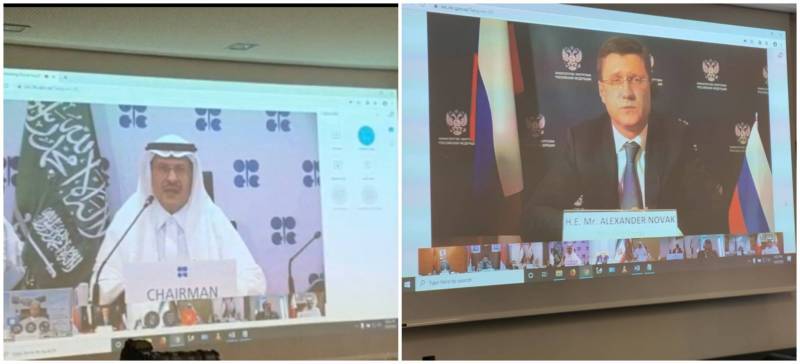 By James M. Dorsey A podcast version of this story is available on Soundcloud, Itunes, Spotify, Stitcher, TuneIn, Spreaker, Pocket Casts, Tumblr, Podbean, Audecibel, Patreon and Castbox. A decision by the Organization of Petroleum Exporting Countries (OPEC) and non-OPEC producers like Russia to temporarily end a price war and cut production amounts to a time-out rather than an end to what is likely to erupt at some point in the future as a tripartite war. More immediately, the decision averts a significant deterioration in relations between the United States and Saudi Arabia and in the kingdom’s wake, the United Arab Emirates. Nearly 50 Republican US lawmakers warned Saudi Crown Prince Mohammed bin Salman on the eve of this week’s OPEC oil ministers’ videoconference that economic and military cooperation between the United States and Saudi Arabia was at risk. The congressmen demanded that the kingdom end a price war with Russia that collapsed oil prices as the world struggled with the coronavirus pandemic and its devastating human and economic fallout. The UAE had joined Saudi Arabia in raising production in a move that was sparked by Russia’s initial refusal to extend production cuts agreed early this year but more fundamentally was designed to knock out competition from US shale producers that had turned the United States into the world’s largest producer. In a twist of irony, Saudi Arabia, Russia and the UAE, the initial warring parties, share a desire to take out the US shale industry in an environment in which the value of their reserves is likely to diminish in the next decades as a result of shale and renewables. Add to that a Russian interest to undermine US power where it can. The stakes for the key warring parties, particularly the Gulf states and the US, couldn’t have been higher but were raised by the collapse of the oil price as well as demand in the midst of a global economic meltdown. For Saudi Arabia and the UAE, the stakes were their relationship with the US and significant reputational damage with a move that put at risk tens of millions of American jobs at a time at which 17 million people joined the unemployed in the United States in the past four weeks. Oil is but the tip of an iceberg in efforts, particularly in the case of UAE, to manage a divergence in interests with the United States without tarnishing the country’s carefully groomed image as one of Washington’s closest allies in the Middle East. Differences first emerged with Emirati gestures designed to ensure that the country would not be a target in any military confrontation between the United States and Iran. The UAE began reaching out to Iran a year ago when it sent a coast guard delegation to Tehran to discuss maritime security in the wake of alleged Iranian attacks on oil tankers off the coast of the Emirates. The Trump administration remained silent when the UAE last October released US$700 million in frozen Iranian assets that ran counter to US efforts to strangle Iran economically with harsh sanctions. While the United States reportedly blocked an Iranian request for US5 billion from the International Monetary Fund (IMF) to fight the virus, the UAE was among the first nations to facilitate aid shipments to the Islamic republic. The shipments led to a rare March 15 phone call between UAE foreign minister Abdullah bin Zayed bin Sultan Al Nahyan and his Iranian counterpart, Mohammad Javid Zarif. UAE officials stressed, however, that there would be no real breakthrough in Emirati-Iranian relations as long as Iran supported proxies like Hezbollah in Lebanon, pro-Iranian militias in Iraq and Houth rebels in Yemen. The UAE gesture contrasted starkly with a Saudi refusal to capitalize on the pandemic. Instead, Saudi Arabia appeared to reinforce battle lines by accusing Iran of “direct responsibility” for the spread of the virus. Government-controlled media charged that Iran’s allies, Qatar and Turkey, had deliberately mismanaged the crisis. Moreover, the kingdom, backing a US refusal to ease sanctions, prevented the Non-Aligned Movement from condemning the Trump administration’s hard line. In a further indication of a divergence of interests, the UAE, according to Middle East Eye, has been trying to sabotage US support for Turkey’s military intervention in northern Syria as well as a Turkish-Russian engineered ceasefire in the region. In other words, the UAE was at odds with Russia, not just with regard to oil, but also Russian efforts to prevent the situation in northern Syria from spiralling out of control and further jeopardizing Moscow’s alliance with Turkey. Middle East Eye reported that UAE Crown Prince Mohammed bin Zayed had promised Syrian President Bashar al-Assad US$3 billion, $250 million of which was paid upfront, to break the ceasefire in Idlib, one of the last rebel strongholds in Syria. On opposite ends of the Middle East divide, Prince Mohammed had hoped to tie Turkey up in fighting in Syria, which would complicate Turkish military support for the internationally recognized Libyan government in Tripoli. The UAE aids rebel forces led by Field Marshal Khalifa Haftar. The outlet said that a tweet by Prince Mohammed on March 28 declaring support for Syria in the fight against the coronavirus was designed to keep secret the real reason for the UAE payment. “I discussed with Syrian President Bashar al-Assad by phone the repercussions of the spread of the coronavirus and assured him of the UAE’s support of and assistance for the brotherly Syrian people in these exceptional circumstances. Human solidarity in times of adversity supersedes all else, Sisterly Syria will not be alone in these difficult circumstances,” Prince Mohammed said. Its unlikely that Prince Mohammed’s explanations will convince policymakers in Washington. Nevertheless, the United States, Saudi Arabia and the UAE are likely to paper over cracks in their relations in the short term facilitated by a pandemic and economic crisis that leaves no one untouched. It probably is, however, only a matter of time for them to re-appear. Dr. James M. Dorsey is an award-winning journalist and a senior fellow at Nanyang Technological University’s S. Rajaratnam School of International Studies in Singapore. He is also an adjunct senior research fellow at the National University of Singapore’s Middle East Institute and co-director of the University of Wuerzburg’s Institute of Fan Culture in Germany. |
| json metadata | {"tags":["saudiarabia","uae","russia","oil","jobs"],"image":["https://cdn.steemitimages.com/DQmRhUasiHDFXQeK1EjvBRek3t1ot7eMuWZnYcNKSLHAiqp/OPECVideoConf.jpg"],"app":"steemit/0.2","format":"markdown"} |
| Transaction Info | Block #42404961/Trx 31271d34bf5a4a2fb8c630bba0a8698bdd34d662 |
View Raw JSON Data
{
"trx_id": "31271d34bf5a4a2fb8c630bba0a8698bdd34d662",
"block": 42404961,
"trx_in_block": 23,
"op_in_trx": 0,
"virtual_op": 0,
"timestamp": "2020-04-10T07:09:51",
"op": [
"comment",
{
"parent_author": "",
"parent_permlink": "saudiarabia",
"author": "mideastsoccer",
"permlink": "opec-production-cut-papers-over-cracks-in-us-gulf-relation-but-for-how-long",
"title": "OPEC production cut papers over cracks in US-Gulf relation but for how long?",
"body": "\n\nBy James M. Dorsey\nA podcast version of this story is available on Soundcloud, Itunes, Spotify, Stitcher, TuneIn, Spreaker, Pocket Casts, Tumblr, Podbean, Audecibel, Patreon and Castbox.\nA decision by the Organization of Petroleum Exporting Countries (OPEC) and non-OPEC producers like Russia to temporarily end a price war and cut production amounts to a time-out rather than an end to what is likely to erupt at some point in the future as a tripartite war.\nMore immediately, the decision averts a significant deterioration in relations between the United States and Saudi Arabia and in the kingdom’s wake, the United Arab Emirates.\nNearly 50 Republican US lawmakers warned Saudi Crown Prince Mohammed bin Salman on the eve of this week’s OPEC oil ministers’ videoconference that economic and military cooperation between the United States and Saudi Arabia was at risk.\nThe congressmen demanded that the kingdom end a price war with Russia that collapsed oil prices as the world struggled with the coronavirus pandemic and its devastating human and economic fallout.\nThe UAE had joined Saudi Arabia in raising production in a move that was sparked by Russia’s initial refusal to extend production cuts agreed early this year but more fundamentally was designed to knock out competition from US shale producers that had turned the United States into the world’s largest producer. \nIn a twist of irony, Saudi Arabia, Russia and the UAE, the initial warring parties, share a desire to take out the US shale industry in an environment in which the value of their reserves is likely to diminish in the next decades as a result of shale and renewables. Add to that a Russian interest to undermine US power where it can.\nThe stakes for the key warring parties, particularly the Gulf states and the US, couldn’t have been higher but were raised by the collapse of the oil price as well as demand in the midst of a global economic meltdown. \nFor Saudi Arabia and the UAE, the stakes were their relationship with the US and significant reputational damage with a move that put at risk tens of millions of American jobs at a time at which 17 million people joined the unemployed in the United States in the past four weeks.\nOil is but the tip of an iceberg in efforts, particularly in the case of UAE, to manage a divergence in interests with the United States without tarnishing the country’s carefully groomed image as one of Washington’s closest allies in the Middle East.\nDifferences first emerged with Emirati gestures designed to ensure that the country would not be a target in any military confrontation between the United States and Iran. \nThe UAE began reaching out to Iran a year ago when it sent a coast guard delegation to Tehran to discuss maritime security in the wake of alleged Iranian attacks on oil tankers off the coast of the Emirates. \nThe Trump administration remained silent when the UAE last October released US$700 million in frozen Iranian assets that ran counter to US efforts to strangle Iran economically with harsh sanctions.\nWhile the United States reportedly blocked an Iranian request for US5 billion from the International Monetary Fund (IMF) to fight the virus, the UAE was among the first nations to facilitate aid shipments to the Islamic republic. \nThe shipments led to a rare March 15 phone call between UAE foreign minister Abdullah bin Zayed bin Sultan Al Nahyan and his Iranian counterpart, Mohammad Javid Zarif.\nUAE officials stressed, however, that there would be no real breakthrough in Emirati-Iranian relations as long as Iran supported proxies like Hezbollah in Lebanon, pro-Iranian militias in Iraq and Houth rebels in Yemen.\nThe UAE gesture contrasted starkly with a Saudi refusal to capitalize on the pandemic.\nInstead, Saudi Arabia appeared to reinforce battle lines by accusing Iran of “direct responsibility” for the spread of the virus. Government-controlled media charged that Iran’s allies, Qatar and Turkey, had deliberately mismanaged the crisis.\nMoreover, the kingdom, backing a US refusal to ease sanctions, prevented the Non-Aligned Movement from condemning the Trump administration’s hard line.\nIn a further indication of a divergence of interests, the UAE, according to Middle East Eye, has been trying to sabotage US support for Turkey’s military intervention in northern Syria as well as a Turkish-Russian engineered ceasefire in the region.\nIn other words, the UAE was at odds with Russia, not just with regard to oil, but also Russian efforts to prevent the situation in northern Syria from spiralling out of control and further jeopardizing Moscow’s alliance with Turkey.\nMiddle East Eye reported that UAE Crown Prince Mohammed bin Zayed had promised Syrian President Bashar al-Assad US$3 billion, $250 million of which was paid upfront, to break the ceasefire in Idlib, one of the last rebel strongholds in Syria.\nOn opposite ends of the Middle East divide, Prince Mohammed had hoped to tie Turkey up in fighting in Syria, which would complicate Turkish military support for the internationally recognized Libyan government in Tripoli. The UAE aids rebel forces led by Field Marshal Khalifa Haftar.\nThe outlet said that a tweet by Prince Mohammed on March 28 declaring support for Syria in the fight against the coronavirus was designed to keep secret the real reason for the UAE payment.\n“I discussed with Syrian President Bashar al-Assad by phone the repercussions of the spread of the coronavirus and assured him of the UAE’s support of and assistance for the brotherly Syrian people in these exceptional circumstances. Human solidarity in times of adversity supersedes all else, Sisterly Syria will not be alone in these difficult circumstances,” Prince Mohammed said.\nIts unlikely that Prince Mohammed’s explanations will convince policymakers in Washington.\nNevertheless, the United States, Saudi Arabia and the UAE are likely to paper over cracks in their relations in the short term facilitated by a pandemic and economic crisis that leaves no one untouched. It probably is, however, only a matter of time for them to re-appear.\nDr. James M. Dorsey is an award-winning journalist and a senior fellow at Nanyang Technological University’s S. Rajaratnam School of International Studies in Singapore. He is also an adjunct senior research fellow at the National University of Singapore’s Middle East Institute and co-director of the University of Wuerzburg’s Institute of Fan Culture in Germany.",
"json_metadata": "{\"tags\":[\"saudiarabia\",\"uae\",\"russia\",\"oil\",\"jobs\"],\"image\":[\"https://cdn.steemitimages.com/DQmRhUasiHDFXQeK1EjvBRek3t1ot7eMuWZnYcNKSLHAiqp/OPECVideoConf.jpg\"],\"app\":\"steemit/0.2\",\"format\":\"markdown\"}"
}
]
}2020/04/08 18:29:12
2020/04/08 18:29:12
| voter | askarali |
| author | mideastsoccer |
| permlink | 28hk7x-stopping-covid-19-in-its-tracks-science-gets-the-upper-hand |
| weight | 10000 (100.00%) |
| Transaction Info | Block #42361983/Trx 9f4c808649b7a886d51efaee1be7be18f0d8f6c0 |
View Raw JSON Data
{
  "trx_id": "9f4c808649b7a886d51efaee1be7be18f0d8f6c0",
  "block": 42361983,
  "trx_in_block": 1,
  "op_in_trx": 0,
  "virtual_op": 0,
  "timestamp": "2020-04-08T18:29:12",
  "op": [
    "vote",
    {
      "voter": "askarali",
      "author": "mideastsoccer",
      "permlink": "28hk7x-stopping-covid-19-in-its-tracks-science-gets-the-upper-hand",
      "weight": 10000
    }
  ]
}mideastsoccerreceived 0.034 SBD, 0.236 SP author reward for @mideastsoccer / global-response-to-coronavirus-exposes-governments-fault-lines2020/04/08 05:22:30
mideastsoccerreceived 0.034 SBD, 0.236 SP author reward for @mideastsoccer / global-response-to-coronavirus-exposes-governments-fault-lines
2020/04/08 05:22:30
| author | mideastsoccer |
| permlink | global-response-to-coronavirus-exposes-governments-fault-lines |
| sbd payout | 0.034 SBD |
| steem payout | 0.000 STEEM |
| vesting payout | 383.503272 VESTS |
| Transaction Info | Block #42346606/Virtual Operation #4 |
View Raw JSON Data
{
  "trx_id": "0000000000000000000000000000000000000000",
  "block": 42346606,
  "trx_in_block": 4294967295,
  "op_in_trx": 0,
  "virtual_op": 4,
  "timestamp": "2020-04-08T05:22:30",
  "op": [
    "author_reward",
    {
      "author": "mideastsoccer",
      "permlink": "global-response-to-coronavirus-exposes-governments-fault-lines",
      "sbd_payout": "0.034 SBD",
      "steem_payout": "0.000 STEEM",
      "vesting_payout": "383.503272 VESTS"
    }
  ]
}2020/04/07 12:05:36
2020/04/07 12:05:36
| voter | raise-me-up |
| author | mideastsoccer |
| permlink | 28hk7x-stopping-covid-19-in-its-tracks-science-gets-the-upper-hand |
| weight | 1 (0.01%) |
| Transaction Info | Block #42326373/Trx a5658cdce1fee06a3bb1cefe7a5fccacc5204642 |
View Raw JSON Data
{
  "trx_id": "a5658cdce1fee06a3bb1cefe7a5fccacc5204642",
  "block": 42326373,
  "trx_in_block": 2,
  "op_in_trx": 0,
  "virtual_op": 0,
  "timestamp": "2020-04-07T12:05:36",
  "op": [
    "vote",
    {
      "voter": "raise-me-up",
      "author": "mideastsoccer",
      "permlink": "28hk7x-stopping-covid-19-in-its-tracks-science-gets-the-upper-hand",
      "weight": 1
    }
  ]
}2020/04/07 12:01:18
2020/04/07 12:01:18
| voter | payroll |
| author | mideastsoccer |
| permlink | 28hk7x-stopping-covid-19-in-its-tracks-science-gets-the-upper-hand |
| weight | 400 (4.00%) |
| Transaction Info | Block #42326289/Trx a3e1761e8d55984bdb4e208d4f7dccfc875c9821 |
View Raw JSON Data
{
  "trx_id": "a3e1761e8d55984bdb4e208d4f7dccfc875c9821",
  "block": 42326289,
  "trx_in_block": 6,
  "op_in_trx": 0,
  "virtual_op": 0,
  "timestamp": "2020-04-07T12:01:18",
  "op": [
    "vote",
    {
      "voter": "payroll",
      "author": "mideastsoccer",
      "permlink": "28hk7x-stopping-covid-19-in-its-tracks-science-gets-the-upper-hand",
      "weight": 400
    }
  ]
}2020/04/07 12:01:15
2020/04/07 12:01:15
| voter | raise-me-up |
| author | mideastsoccer |
| permlink | stopping-covid-19-in-its-tracks-science-gets-the-upper-hand |
| weight | 1 (0.01%) |
| Transaction Info | Block #42326288/Trx d910e0eff9b559943b97c13cf2484b6562720ded |
View Raw JSON Data
{
  "trx_id": "d910e0eff9b559943b97c13cf2484b6562720ded",
  "block": 42326288,
  "trx_in_block": 14,
  "op_in_trx": 0,
  "virtual_op": 0,
  "timestamp": "2020-04-07T12:01:15",
  "op": [
    "vote",
    {
      "voter": "raise-me-up",
      "author": "mideastsoccer",
      "permlink": "stopping-covid-19-in-its-tracks-science-gets-the-upper-hand",
      "weight": 1
    }
  ]
}2020/04/07 11:53:00
2020/04/07 11:53:00
| voter | payroll |
| author | mideastsoccer |
| permlink | stopping-covid-19-in-its-tracks-science-gets-the-upper-hand |
| weight | 400 (4.00%) |
| Transaction Info | Block #42326127/Trx 6923008f9f97aef32bf2da8f3105ad3927d3da02 |
View Raw JSON Data
{
  "trx_id": "6923008f9f97aef32bf2da8f3105ad3927d3da02",
  "block": 42326127,
  "trx_in_block": 8,
  "op_in_trx": 0,
  "virtual_op": 0,
  "timestamp": "2020-04-07T11:53:00",
  "op": [
    "vote",
    {
      "voter": "payroll",
      "author": "mideastsoccer",
      "permlink": "stopping-covid-19-in-its-tracks-science-gets-the-upper-hand",
      "weight": 400
    }
  ]
}mideastsoccerpublished a new post: 28hk7x-stopping-covid-19-in-its-tracks-science-gets-the-upper-hand2020/04/07 11:33:12
mideastsoccerpublished a new post: 28hk7x-stopping-covid-19-in-its-tracks-science-gets-the-upper-hand
2020/04/07 11:33:12
| parent author | |
| parent permlink | science |
| author | mideastsoccer |
| permlink | 28hk7x-stopping-covid-19-in-its-tracks-science-gets-the-upper-hand |
| title | Stopping COVID-19 in its tracks: Science gets the upper hand |
| body | 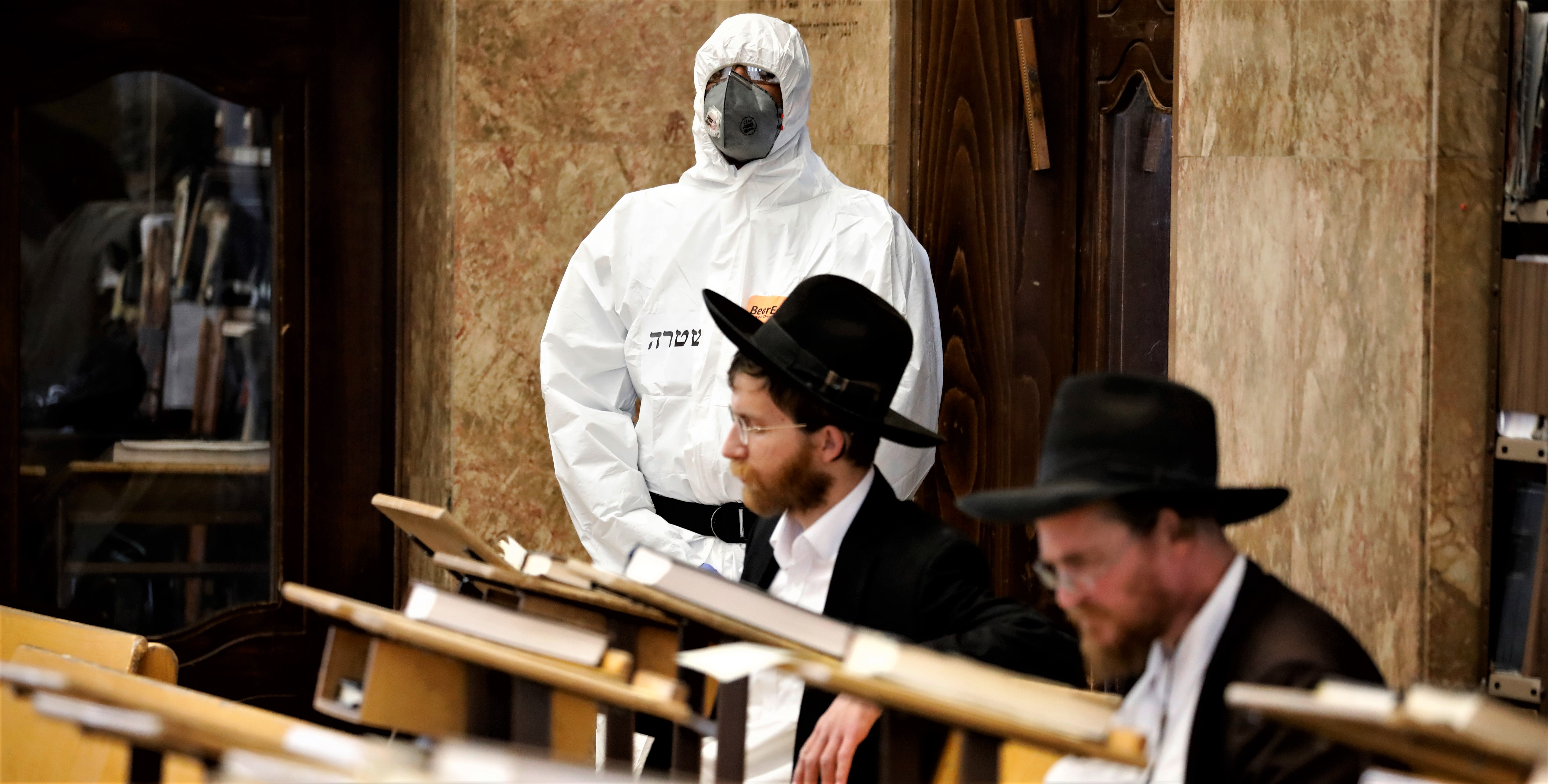 by James M. Dorsey | Apr 7, 2020 This story was first published in Inside Arabia A podcast version of this story is available on Soundcloud, Itunes, Spotify, Stitcher, TuneIn, Spreaker, Pocket Casts, Tumblr, Podbean, Audecibel, Patreon and Castbox. Civilizationalist leaders who seek religious legitimacy, cater to a religious support base or initially discarded scientific advice for expedient political reasons may have met their match in the coronavirus. Science has knocked religion and traditional healing methods out of the ring in the battle between rival approaches towards getting the coronavirus pandemic under control. Men like Indian prime minister Narendra Modi, Iranian supreme leader Ayatollah Ali Khamenei, Pakistani prime minister Imran Khan, and Israeli health minister Yaakov Litzman have finally joined much of the world in imposing science-driven degrees of lockdowns, social distancing, and the search for medical cures and protections after initially opting for political expediency or advocacy of traditional healing methods and/or religious precepts. Remarkably, Saudi Crown Prince Mohammed bin Salman, the de facto ruler of a kingdom that was founded and shaped by an ultra-conservative strand of Islam, was one leader who was not held back by religion when he suspended the Umrah (the smaller pilgrimage to Mecca), announced that this year’s haj could be cancelled, and locked-down the holy city as well as its counterpart, Medina. “What if this year’s haj was under Imran Khan rather than Mohammad bin Salman? Would he have waffled there as indeed he has in Pakistan?” asked Pakistani nuclear scientist, political analyst and human rights activist Pervez Hoodbhoy. Mr. Hoodbhoy noted that Pakistan has yet to import Saudi dates touted as cure for all diseases by Maulana Tariq Jameel, Pakistan’s most popular preacher and a staunch ally of Mr. Khan. Mr. Hoodbhoy also took note of the fact Mr. Modi had not fallen back on Hindutava or Hindu nationalism’s advocacy of the therapeutic powers of cow urine, Ayurveda, a medical system rooted in Indian history, and yoga. Mr. Khamenei has similarly dropped his resistance to the closure of shrines in the holy cities of Qom and Mashhad. His government has closed schools and universities and urged the public to stay at home while announcing that “low-risk” economic activity would be allowed to resume next week. The consequences of science-based approaches for civilisationalists who advocate policies inspired by religion or the supremacy of one religious group over another could go far beyond what should shape public health policies. They could threaten the foundations of their religious support base as well as their discriminatory policies towards religious or ethnic minorities. Israel is a case in point in terms of both prime minister Benyamin Netanyahu’s religious support base as well as his policies towards Israeli nationals of Palestinian descent. With ultra-orthodox Jewish neighborhoods and cities emerging as the communities most affected by the coronavirus, some Israeli commentators argue that the pandemic could undermine rabbinical authority on a scale not seen since the Holocaust when large numbers left ultra-orthodoxy after rabbinical advice to remain in Europe proved devastating. Ultra-orthodox rabbis, including Mr. Litzman, the health minister, who together with his wife and an ultra-orthodox advisor to Mr. Netanyahu, has tested positive, have had to reverse themselves in recent days as the virus ate its way through their communities in Jerusalem and other Israeli cities. “Torah no longer saves from death. The coronavirus has dealt an unimaginable blow to the rabbinical authority - and worldview - that ultra-Orthodox Jews previously regarded as infallible and eternal,” said prominent Israeli journalist Anshel Pfeffer, who authored an acclaimed biography of Mr. Netanyahu. The non-discriminatory nature of the coronavirus forced the Israeli government last week to ramp up testing in communities of Israeli Palestinians which had been described by public health experts as a ticking time bomb. The experts warned that Israeli Palestinians were an at-risk group, many of whom suffer from chronic diseases, live in crowded conditions, and are socially and economically disadvantaged. “In terms of public health, due to the present situation, the Arab communities are likely to become epicenters of the coronavirus outbreak, which will threaten the health of the entire population,” said Dr. Nihaya Daoud, a public health lecturer at Ben Gurion University of the Negev. Increased testing of Israel Palestinians tackles Israel’s immediate problem of attempting to stymie the spread of the virus. It doesn’t address the longer-term structural threat to public health posed by imbalances in health infrastructure in Israeli Jewish and Israeli Palestinian communities, a lesson many Israelis could draw from the coronavirus crisis. Drawing that lesson would challenge a pillar of Israeli policy with far-reaching consequences. By the same token, the return home of some 45,000 Palestinian workers to the West Bank for this week’s Passover holiday is likely to create bottlenecks in both Israel and the Palestinian territory after the Israeli government decided that they would not be allowed to return because of health concerns. The decision threatens to create a labor shortage in Israel, increase economic pressure on an already weakened Palestine Authority, and facilitate the spread of the virus on the West Bank given the administration’s inability to test all returnees. "Because the two populations are so intertwined, curbing the virus only in one society is impossible," said Ofer Zalzberg of the International Crisis Group. It’s a lesson that applies universally, not just to Israelis and Palestinians in Israel and the West Bank. That is no truer than in Syrian and Palestinian refugee camps that dot the eastern Mediterranean. It also casts a glaring spotlight on the risks of looking the other way when hospitals and health infrastructure are deliberately destroyed in war-torn countries like in Syria, where President Bashar al-Assad’s forces deliberately targeted hospitals, and in Yemen, where the Saudi-UAE-led coalition did the same. No doubt, it is a lesson that anti-globalists and civilisationalists prefer not to hear. Yet, whether anti-globalists and civilisationalists like it or not, the coronavirus is global and universal. So is the science that will ultimately help get control of the pandemic and eventually stop it in its tracks. Thank you for joining me today. I hope you enjoyed the podcast. A written version of this podcast is on my blog, The Turbulent World of Middle East Soccer at mideastsoccer.blogspot.com. Please join me for my next podcast in the coming days. Best wishes and take care in these trying times Dr. James M. Dorsey is an award-winning journalist and a senior fellow at Nanyang Technological University’s S. Rajaratnam School of International Studies in Singapore. He is also an adjunct senior research fellow at the National University of Singapore’s Middle East Institute and co-director of the University of Wuerzburg’s Institute of Fan Culture in Germany. |
| json metadata | {"tags":["science","religion","judaism","islam","health"],"image":["https://cdn.steemitimages.com/DQmYLgDPFjhYnoLAyjq9EDmTkTKjDweUjZkT8pEm5H36aGt/InsideArabia07042020.jpg"],"app":"steemit/0.2","format":"markdown"} |
| Transaction Info | Block #42325739/Trx 1d2c5cad8e3dec58f4e2e9b138cbf0a1dd4cc3f1 |
View Raw JSON Data
{
"trx_id": "1d2c5cad8e3dec58f4e2e9b138cbf0a1dd4cc3f1",
"block": 42325739,
"trx_in_block": 5,
"op_in_trx": 0,
"virtual_op": 0,
"timestamp": "2020-04-07T11:33:12",
"op": [
"comment",
{
"parent_author": "",
"parent_permlink": "science",
"author": "mideastsoccer",
"permlink": "28hk7x-stopping-covid-19-in-its-tracks-science-gets-the-upper-hand",
"title": "Stopping COVID-19 in its tracks: Science gets the upper hand",
"body": "\n\nby James M. Dorsey | Apr 7, 2020\n\nThis story was first published in Inside Arabia\n\nA podcast version of this story is available on Soundcloud, Itunes, Spotify, Stitcher, TuneIn, Spreaker, Pocket Casts, Tumblr, Podbean, Audecibel, Patreon and Castbox.\n\nCivilizationalist leaders who seek religious legitimacy, cater to a religious support base or initially discarded scientific advice for expedient political reasons may have met their match in the coronavirus.\nScience has knocked religion and traditional healing methods out of the ring in the battle between rival approaches towards getting the coronavirus pandemic under control.\nMen like Indian prime minister Narendra Modi, Iranian supreme leader Ayatollah Ali Khamenei, Pakistani prime minister Imran Khan, and Israeli health minister Yaakov Litzman have finally joined much of the world in imposing science-driven degrees of lockdowns, social distancing, and the search for medical cures and protections after initially opting for political expediency or advocacy of traditional healing methods and/or religious precepts.\nRemarkably, Saudi Crown Prince Mohammed bin Salman, the de facto ruler of a kingdom that was founded and shaped by an ultra-conservative strand of Islam, was one leader who was not held back by religion when he suspended the Umrah (the smaller pilgrimage to Mecca), announced that this year’s haj could be cancelled, and locked-down the holy city as well as its counterpart, Medina.\n“What if this year’s haj was under Imran Khan rather than Mohammad bin Salman? Would he have waffled there as indeed he has in Pakistan?” asked Pakistani nuclear scientist, political analyst and human rights activist Pervez Hoodbhoy.\nMr. Hoodbhoy noted that Pakistan has yet to import Saudi dates touted as cure for all diseases by Maulana Tariq Jameel, Pakistan’s most popular preacher and a staunch ally of Mr. Khan.\nMr. Hoodbhoy also took note of the fact Mr. Modi had not fallen back on Hindutava or Hindu nationalism’s advocacy of the therapeutic powers of cow urine, Ayurveda, a medical system rooted in Indian history, and yoga.\nMr. Khamenei has similarly dropped his resistance to the closure of shrines in the holy cities of Qom and Mashhad. His government has closed schools and universities and urged the public to stay at home while announcing that “low-risk” economic activity would be allowed to resume next week.\nThe consequences of science-based approaches for civilisationalists who advocate policies inspired by religion or the supremacy of one religious group over another could go far beyond what should shape public health policies.\nThey could threaten the foundations of their religious support base as well as their discriminatory policies towards religious or ethnic minorities. Israel is a case in point in terms of both prime minister Benyamin Netanyahu’s religious support base as well as his policies towards Israeli nationals of Palestinian descent.\nWith ultra-orthodox Jewish neighborhoods and cities emerging as the communities most affected by the coronavirus, some Israeli commentators argue that the pandemic could undermine rabbinical authority on a scale not seen since the Holocaust when large numbers left ultra-orthodoxy after rabbinical advice to remain in Europe proved devastating.\nUltra-orthodox rabbis, including Mr. Litzman, the health minister, who together with his wife and an ultra-orthodox advisor to Mr. Netanyahu, has tested positive, have had to reverse themselves in recent days as the virus ate its way through their communities in Jerusalem and other Israeli cities.\n“Torah no longer saves from death. The coronavirus has dealt an unimaginable blow to the rabbinical authority - and worldview - that ultra-Orthodox Jews previously regarded as infallible and eternal,” said prominent Israeli journalist Anshel Pfeffer, who authored an acclaimed biography of Mr. Netanyahu.\nThe non-discriminatory nature of the coronavirus forced the Israeli government last week to ramp up testing in communities of Israeli Palestinians which had been described by public health experts as a ticking time bomb.\nThe experts warned that Israeli Palestinians were an at-risk group, many of whom suffer from chronic diseases, live in crowded conditions, and are socially and economically disadvantaged.\n“In terms of public health, due to the present situation, the Arab communities are likely to become epicenters of the coronavirus outbreak, which will threaten the health of the entire population,” said Dr. Nihaya Daoud, a public health lecturer at Ben Gurion University of the Negev.\nIncreased testing of Israel Palestinians tackles Israel’s immediate problem of attempting to stymie the spread of the virus.\nIt doesn’t address the longer-term structural threat to public health posed by imbalances in health infrastructure in Israeli Jewish and Israeli Palestinian communities, a lesson many Israelis could draw from the coronavirus crisis. \nDrawing that lesson would challenge a pillar of Israeli policy with far-reaching consequences.\nBy the same token, the return home of some 45,000 Palestinian workers to the West Bank for this week’s Passover holiday is likely to create bottlenecks in both Israel and the Palestinian territory after the Israeli government decided that they would not be allowed to return because of health concerns.\nThe decision threatens to create a labor shortage in Israel, increase economic pressure on an already weakened Palestine Authority, and facilitate the spread of the virus on the West Bank given the administration’s inability to test all returnees. \n\"Because the two populations are so intertwined, curbing the virus only in one society is impossible,\" said Ofer Zalzberg of the International Crisis Group.\nIt’s a lesson that applies universally, not just to Israelis and Palestinians in Israel and the West Bank. That is no truer than in Syrian and Palestinian refugee camps that dot the eastern Mediterranean. \nIt also casts a glaring spotlight on the risks of looking the other way when hospitals and health infrastructure are deliberately destroyed in war-torn countries like in Syria, where President Bashar al-Assad’s forces deliberately targeted hospitals, and in Yemen, where the Saudi-UAE-led coalition did the same.\nNo doubt, it is a lesson that anti-globalists and civilisationalists prefer not to hear.\nYet, whether anti-globalists and civilisationalists like it or not, the coronavirus is global and universal. So is the science that will ultimately help get control of the pandemic and eventually stop it in its tracks. \nThank you for joining me today. I hope you enjoyed the podcast. A written version of this podcast is on my blog, The Turbulent World of Middle East Soccer at mideastsoccer.blogspot.com. Please join me for my next podcast in the coming days. Best wishes and take care in these trying times\nDr. James M. Dorsey is an award-winning journalist and a senior fellow at Nanyang Technological University’s S. Rajaratnam School of International Studies in Singapore. He is also an adjunct senior research fellow at the National University of Singapore’s Middle East Institute and co-director of the University of Wuerzburg’s Institute of Fan Culture in Germany.",
"json_metadata": "{\"tags\":[\"science\",\"religion\",\"judaism\",\"islam\",\"health\"],\"image\":[\"https://cdn.steemitimages.com/DQmYLgDPFjhYnoLAyjq9EDmTkTKjDweUjZkT8pEm5H36aGt/InsideArabia07042020.jpg\"],\"app\":\"steemit/0.2\",\"format\":\"markdown\"}"
}
]
}mideastsoccerpublished a new post: stopping-covid-19-in-its-tracks-science-gets-the-upper-hand2020/04/07 11:27:57
mideastsoccerpublished a new post: stopping-covid-19-in-its-tracks-science-gets-the-upper-hand
2020/04/07 11:27:57
| parent author | |
| parent permlink | science |
| author | mideastsoccer |
| permlink | stopping-covid-19-in-its-tracks-science-gets-the-upper-hand |
| title | Stopping COVID-19 in its tracks: Science gets the upper hand |
| body |  by James M. Dorsey | Apr 7, 2020 This story was first published in Inside Arabia A podcast version of this story is available on Soundcloud, Itunes, Spotify, Stitcher, TuneIn, Spreaker, Pocket Casts, Tumblr, Podbean, Audecibel, Patreon and Castbox. Civilizationalist leaders who seek religious legitimacy, cater to a religious support base or initially discarded scientific advice for expedient political reasons may have met their match in the coronavirus. Science has knocked religion and traditional healing methods out of the ring in the battle between rival approaches towards getting the coronavirus pandemic under control. Men like Indian prime minister Narendra Modi, Iranian supreme leader Ayatollah Ali Khamenei, Pakistani prime minister Imran Khan, and Israeli health minister Yaakov Litzman have finally joined much of the world in imposing science-driven degrees of lockdowns, social distancing, and the search for medical cures and protections after initially opting for political expediency or advocacy of traditional healing methods and/or religious precepts. Remarkably, Saudi Crown Prince Mohammed bin Salman, the de facto ruler of a kingdom that was founded and shaped by an ultra-conservative strand of Islam, was one leader who was not held back by religion when he suspended the Umrah (the smaller pilgrimage to Mecca), announced that this year’s haj could be cancelled, and locked-down the holy city as well as its counterpart, Medina. “What if this year’s haj was under Imran Khan rather than Mohammad bin Salman? Would he have waffled there as indeed he has in Pakistan?” asked Pakistani nuclear scientist, political analyst and human rights activist Pervez Hoodbhoy. Mr. Hoodbhoy noted that Pakistan has yet to import Saudi dates touted as cure for all diseases by Maulana Tariq Jameel, Pakistan’s most popular preacher and a staunch ally of Mr. Khan. Mr. Hoodbhoy also took note of the fact Mr. Modi had not fallen back on Hindutava or Hindu nationalism’s advocacy of the therapeutic powers of cow urine, Ayurveda, a medical system rooted in Indian history, and yoga. Mr. Khamenei has similarly dropped his resistance to the closure of shrines in the holy cities of Qom and Mashhad. His government has closed schools and universities and urged the public to stay at home while announcing that “low-risk” economic activity would be allowed to resume next week. The consequences of science-based approaches for civilisationalists who advocate policies inspired by religion or the supremacy of one religious group over another could go far beyond what should shape public health policies. They could threaten the foundations of their religious support base as well as their discriminatory policies towards religious or ethnic minorities. Israel is a case in point in terms of both prime minister Benyamin Netanyahu’s religious support base as well as his policies towards Israeli nationals of Palestinian descent. With ultra-orthodox Jewish neighborhoods and cities emerging as the communities most affected by the coronavirus, some Israeli commentators argue that the pandemic could undermine rabbinical authority on a scale not seen since the Holocaust when large numbers left ultra-orthodoxy after rabbinical advice to remain in Europe proved devastating. Ultra-orthodox rabbis, including Mr. Litzman, the health minister, who together with his wife and an ultra-orthodox advisor to Mr. Netanyahu, has tested positive, have had to reverse themselves in recent days as the virus ate its way through their communities in Jerusalem and other Israeli cities. “Torah no longer saves from death. The coronavirus has dealt an unimaginable blow to the rabbinical authority - and worldview - that ultra-Orthodox Jews previously regarded as infallible and eternal,” said prominent Israeli journalist Anshel Pfeffer, who authored an acclaimed biography of Mr. Netanyahu. The non-discriminatory nature of the coronavirus forced the Israeli government last week to ramp up testing in communities of Israeli Palestinians which had been described by public health experts as a ticking time bomb. The experts warned that Israeli Palestinians were an at-risk group, many of whom suffer from chronic diseases, live in crowded conditions, and are socially and economically disadvantaged. “In terms of public health, due to the present situation, the Arab communities are likely to become epicenters of the coronavirus outbreak, which will threaten the health of the entire population,” said Dr. Nihaya Daoud, a public health lecturer at Ben Gurion University of the Negev. Increased testing of Israel Palestinians tackles Israel’s immediate problem of attempting to stymie the spread of the virus. It doesn’t address the longer-term structural threat to public health posed by imbalances in health infrastructure in Israeli Jewish and Israeli Palestinian communities, a lesson many Israelis could draw from the coronavirus crisis. Drawing that lesson would challenge a pillar of Israeli policy with far-reaching consequences. By the same token, the return home of some 45,000 Palestinian workers to the West Bank for this week’s Passover holiday is likely to create bottlenecks in both Israel and the Palestinian territory after the Israeli government decided that they would not be allowed to return because of health concerns. The decision threatens to create a labor shortage in Israel, increase economic pressure on an already weakened Palestine Authority, and facilitate the spread of the virus on the West Bank given the administration’s inability to test all returnees. "Because the two populations are so intertwined, curbing the virus only in one society is impossible," said Ofer Zalzberg of the International Crisis Group. It’s a lesson that applies universally, not just to Israelis and Palestinians in Israel and the West Bank. That is no truer than in Syrian and Palestinian refugee camps that dot the eastern Mediterranean. It also casts a glaring spotlight on the risks of looking the other way when hospitals and health infrastructure are deliberately destroyed in war-torn countries like in Syria, where President Bashar al-Assad’s forces deliberately targeted hospitals, and in Yemen, where the Saudi-UAE-led coalition did the same. No doubt, it is a lesson that anti-globalists and civilisationalists prefer not to hear. Yet, whether anti-globalists and civilisationalists like it or not, the coronavirus is global and universal. So is the science that will ultimately help get control of the pandemic and eventually stop it in its tracks. Thank you for joining me today. I hope you enjoyed the podcast. A written version of this podcast is on my blog, The Turbulent World of Middle East Soccer at mideastsoccer.blogspot.com. Please join me for my next podcast in the coming days. Best wishes and take care in these trying times Dr. James M. Dorsey is an award-winning journalist and a senior fellow at Nanyang Technological University’s S. Rajaratnam School of International Studies in Singapore. He is also an adjunct senior research fellow at the National University of Singapore’s Middle East Institute and co-director of the University of Wuerzburg’s Institute of Fan Culture in Germany. |
| json metadata | {"tags":["science","religion","judaism","islam","health"],"image":["https://cdn.steemitimages.com/DQmYLgDPFjhYnoLAyjq9EDmTkTKjDweUjZkT8pEm5H36aGt/InsideArabia07042020.jpg"],"app":"steemit/0.2","format":"markdown"} |
| Transaction Info | Block #42325638/Trx 43a227b33f29224f87567592aca2a92d16cd5f03 |
View Raw JSON Data
{
"trx_id": "43a227b33f29224f87567592aca2a92d16cd5f03",
"block": 42325638,
"trx_in_block": 2,
"op_in_trx": 0,
"virtual_op": 0,
"timestamp": "2020-04-07T11:27:57",
"op": [
"comment",
{
"parent_author": "",
"parent_permlink": "science",
"author": "mideastsoccer",
"permlink": "stopping-covid-19-in-its-tracks-science-gets-the-upper-hand",
"title": "Stopping COVID-19 in its tracks: Science gets the upper hand",
"body": "\n\nby James M. Dorsey | Apr 7, 2020\n\nThis story was first published in Inside Arabia\n\nA podcast version of this story is available on Soundcloud, Itunes, Spotify, Stitcher, TuneIn, Spreaker, Pocket Casts, Tumblr, Podbean, Audecibel, Patreon and Castbox.\n\nCivilizationalist leaders who seek religious legitimacy, cater to a religious support base or initially discarded scientific advice for expedient political reasons may have met their match in the coronavirus.\nScience has knocked religion and traditional healing methods out of the ring in the battle between rival approaches towards getting the coronavirus pandemic under control.\nMen like Indian prime minister Narendra Modi, Iranian supreme leader Ayatollah Ali Khamenei, Pakistani prime minister Imran Khan, and Israeli health minister Yaakov Litzman have finally joined much of the world in imposing science-driven degrees of lockdowns, social distancing, and the search for medical cures and protections after initially opting for political expediency or advocacy of traditional healing methods and/or religious precepts.\nRemarkably, Saudi Crown Prince Mohammed bin Salman, the de facto ruler of a kingdom that was founded and shaped by an ultra-conservative strand of Islam, was one leader who was not held back by religion when he suspended the Umrah (the smaller pilgrimage to Mecca), announced that this year’s haj could be cancelled, and locked-down the holy city as well as its counterpart, Medina.\n“What if this year’s haj was under Imran Khan rather than Mohammad bin Salman? Would he have waffled there as indeed he has in Pakistan?” asked Pakistani nuclear scientist, political analyst and human rights activist Pervez Hoodbhoy.\nMr. Hoodbhoy noted that Pakistan has yet to import Saudi dates touted as cure for all diseases by Maulana Tariq Jameel, Pakistan’s most popular preacher and a staunch ally of Mr. Khan.\nMr. Hoodbhoy also took note of the fact Mr. Modi had not fallen back on Hindutava or Hindu nationalism’s advocacy of the therapeutic powers of cow urine, Ayurveda, a medical system rooted in Indian history, and yoga.\nMr. Khamenei has similarly dropped his resistance to the closure of shrines in the holy cities of Qom and Mashhad. His government has closed schools and universities and urged the public to stay at home while announcing that “low-risk” economic activity would be allowed to resume next week.\nThe consequences of science-based approaches for civilisationalists who advocate policies inspired by religion or the supremacy of one religious group over another could go far beyond what should shape public health policies.\nThey could threaten the foundations of their religious support base as well as their discriminatory policies towards religious or ethnic minorities. Israel is a case in point in terms of both prime minister Benyamin Netanyahu’s religious support base as well as his policies towards Israeli nationals of Palestinian descent.\nWith ultra-orthodox Jewish neighborhoods and cities emerging as the communities most affected by the coronavirus, some Israeli commentators argue that the pandemic could undermine rabbinical authority on a scale not seen since the Holocaust when large numbers left ultra-orthodoxy after rabbinical advice to remain in Europe proved devastating.\nUltra-orthodox rabbis, including Mr. Litzman, the health minister, who together with his wife and an ultra-orthodox advisor to Mr. Netanyahu, has tested positive, have had to reverse themselves in recent days as the virus ate its way through their communities in Jerusalem and other Israeli cities.\n“Torah no longer saves from death. The coronavirus has dealt an unimaginable blow to the rabbinical authority - and worldview - that ultra-Orthodox Jews previously regarded as infallible and eternal,” said prominent Israeli journalist Anshel Pfeffer, who authored an acclaimed biography of Mr. Netanyahu.\nThe non-discriminatory nature of the coronavirus forced the Israeli government last week to ramp up testing in communities of Israeli Palestinians which had been described by public health experts as a ticking time bomb.\nThe experts warned that Israeli Palestinians were an at-risk group, many of whom suffer from chronic diseases, live in crowded conditions, and are socially and economically disadvantaged.\n“In terms of public health, due to the present situation, the Arab communities are likely to become epicenters of the coronavirus outbreak, which will threaten the health of the entire population,” said Dr. Nihaya Daoud, a public health lecturer at Ben Gurion University of the Negev.\nIncreased testing of Israel Palestinians tackles Israel’s immediate problem of attempting to stymie the spread of the virus.\nIt doesn’t address the longer-term structural threat to public health posed by imbalances in health infrastructure in Israeli Jewish and Israeli Palestinian communities, a lesson many Israelis could draw from the coronavirus crisis. \nDrawing that lesson would challenge a pillar of Israeli policy with far-reaching consequences.\nBy the same token, the return home of some 45,000 Palestinian workers to the West Bank for this week’s Passover holiday is likely to create bottlenecks in both Israel and the Palestinian territory after the Israeli government decided that they would not be allowed to return because of health concerns.\nThe decision threatens to create a labor shortage in Israel, increase economic pressure on an already weakened Palestine Authority, and facilitate the spread of the virus on the West Bank given the administration’s inability to test all returnees. \n\"Because the two populations are so intertwined, curbing the virus only in one society is impossible,\" said Ofer Zalzberg of the International Crisis Group.\nIt’s a lesson that applies universally, not just to Israelis and Palestinians in Israel and the West Bank. That is no truer than in Syrian and Palestinian refugee camps that dot the eastern Mediterranean. \nIt also casts a glaring spotlight on the risks of looking the other way when hospitals and health infrastructure are deliberately destroyed in war-torn countries like in Syria, where President Bashar al-Assad’s forces deliberately targeted hospitals, and in Yemen, where the Saudi-UAE-led coalition did the same.\nNo doubt, it is a lesson that anti-globalists and civilisationalists prefer not to hear.\nYet, whether anti-globalists and civilisationalists like it or not, the coronavirus is global and universal. So is the science that will ultimately help get control of the pandemic and eventually stop it in its tracks. \nThank you for joining me today. I hope you enjoyed the podcast. A written version of this podcast is on my blog, The Turbulent World of Middle East Soccer at mideastsoccer.blogspot.com. Please join me for my next podcast in the coming days. Best wishes and take care in these trying times\nDr. James M. Dorsey is an award-winning journalist and a senior fellow at Nanyang Technological University’s S. Rajaratnam School of International Studies in Singapore. He is also an adjunct senior research fellow at the National University of Singapore’s Middle East Institute and co-director of the University of Wuerzburg’s Institute of Fan Culture in Germany.",
"json_metadata": "{\"tags\":[\"science\",\"religion\",\"judaism\",\"islam\",\"health\"],\"image\":[\"https://cdn.steemitimages.com/DQmYLgDPFjhYnoLAyjq9EDmTkTKjDweUjZkT8pEm5H36aGt/InsideArabia07042020.jpg\"],\"app\":\"steemit/0.2\",\"format\":\"markdown\"}"
}
]
}2020/04/04 09:12:27
2020/04/04 09:12:27
| voter | mendoza |
| author | mideastsoccer |
| permlink | resisting-lockdowns-bringing-ultra-conservatives-into-the-fold |
| weight | 1000 (10.00%) |
| Transaction Info | Block #42238679/Trx 51d5c0fdc9befb9e18a78401b69dc9526a519bd9 |
View Raw JSON Data
{
  "trx_id": "51d5c0fdc9befb9e18a78401b69dc9526a519bd9",
  "block": 42238679,
  "trx_in_block": 10,
  "op_in_trx": 0,
  "virtual_op": 0,
  "timestamp": "2020-04-04T09:12:27",
  "op": [
    "vote",
    {
      "voter": "mendoza",
      "author": "mideastsoccer",
      "permlink": "resisting-lockdowns-bringing-ultra-conservatives-into-the-fold",
      "weight": 1000
    }
  ]
}2020/04/04 09:02:18
2020/04/04 09:02:18
| voter | council |
| author | mideastsoccer |
| permlink | resisting-lockdowns-bringing-ultra-conservatives-into-the-fold |
| weight | 1000 (10.00%) |
| Transaction Info | Block #42238479/Trx 40f0cf60ed4fcebb19fd3f94b2ad6ef67d0c2a90 |
View Raw JSON Data
{
  "trx_id": "40f0cf60ed4fcebb19fd3f94b2ad6ef67d0c2a90",
  "block": 42238479,
  "trx_in_block": 12,
  "op_in_trx": 0,
  "virtual_op": 0,
  "timestamp": "2020-04-04T09:02:18",
  "op": [
    "vote",
    {
      "voter": "council",
      "author": "mideastsoccer",
      "permlink": "resisting-lockdowns-bringing-ultra-conservatives-into-the-fold",
      "weight": 1000
    }
  ]
}2020/04/04 09:02:18
2020/04/04 09:02:18
| voter | shares |
| author | mideastsoccer |
| permlink | resisting-lockdowns-bringing-ultra-conservatives-into-the-fold |
| weight | 1000 (10.00%) |
| Transaction Info | Block #42238479/Trx 395840d34211adccbe460682ae886965cf1f0e9d |
View Raw JSON Data
{
  "trx_id": "395840d34211adccbe460682ae886965cf1f0e9d",
  "block": 42238479,
  "trx_in_block": 10,
  "op_in_trx": 0,
  "virtual_op": 0,
  "timestamp": "2020-04-04T09:02:18",
  "op": [
    "vote",
    {
      "voter": "shares",
      "author": "mideastsoccer",
      "permlink": "resisting-lockdowns-bringing-ultra-conservatives-into-the-fold",
      "weight": 1000
    }
  ]
}2020/04/04 09:02:15
2020/04/04 09:02:15
| voter | yehey |
| author | mideastsoccer |
| permlink | resisting-lockdowns-bringing-ultra-conservatives-into-the-fold |
| weight | 1000 (10.00%) |
| Transaction Info | Block #42238478/Trx dace8ef47ec9028cb9c5d745cc96f8debd346c14 |
View Raw JSON Data
{
  "trx_id": "dace8ef47ec9028cb9c5d745cc96f8debd346c14",
  "block": 42238478,
  "trx_in_block": 1,
  "op_in_trx": 0,
  "virtual_op": 0,
  "timestamp": "2020-04-04T09:02:15",
  "op": [
    "vote",
    {
      "voter": "yehey",
      "author": "mideastsoccer",
      "permlink": "resisting-lockdowns-bringing-ultra-conservatives-into-the-fold",
      "weight": 1000
    }
  ]
}2020/04/04 09:01:39
2020/04/04 09:01:39
| voter | raise-me-up |
| author | mideastsoccer |
| permlink | resisting-lockdowns-bringing-ultra-conservatives-into-the-fold |
| weight | 1 (0.01%) |
| Transaction Info | Block #42238467/Trx 1d30692ab54ada048ca4b349020fcc71a9745066 |
View Raw JSON Data
{
  "trx_id": "1d30692ab54ada048ca4b349020fcc71a9745066",
  "block": 42238467,
  "trx_in_block": 11,
  "op_in_trx": 0,
  "virtual_op": 0,
  "timestamp": "2020-04-04T09:01:39",
  "op": [
    "vote",
    {
      "voter": "raise-me-up",
      "author": "mideastsoccer",
      "permlink": "resisting-lockdowns-bringing-ultra-conservatives-into-the-fold",
      "weight": 1
    }
  ]
}2020/04/04 08:48:39
2020/04/04 08:48:39
| voter | payroll |
| author | mideastsoccer |
| permlink | resisting-lockdowns-bringing-ultra-conservatives-into-the-fold |
| weight | 400 (4.00%) |
| Transaction Info | Block #42238216/Trx b31ec9e5ad39511b1424fa954fe81e8464b8b634 |
View Raw JSON Data
{
  "trx_id": "b31ec9e5ad39511b1424fa954fe81e8464b8b634",
  "block": 42238216,
  "trx_in_block": 7,
  "op_in_trx": 0,
  "virtual_op": 0,
  "timestamp": "2020-04-04T08:48:39",
  "op": [
    "vote",
    {
      "voter": "payroll",
      "author": "mideastsoccer",
      "permlink": "resisting-lockdowns-bringing-ultra-conservatives-into-the-fold",
      "weight": 400
    }
  ]
}mideastsoccerpublished a new post: resisting-lockdowns-bringing-ultra-conservatives-into-the-fold2020/04/04 08:18:36
mideastsoccerpublished a new post: resisting-lockdowns-bringing-ultra-conservatives-into-the-fold
2020/04/04 08:18:36
| parent author | |
| parent permlink | coronavirus |
| author | mideastsoccer |
| permlink | resisting-lockdowns-bringing-ultra-conservatives-into-the-fold |
| title | Resisting Lockdowns: Bringing Ultra-conservatives into the fold |
| body | 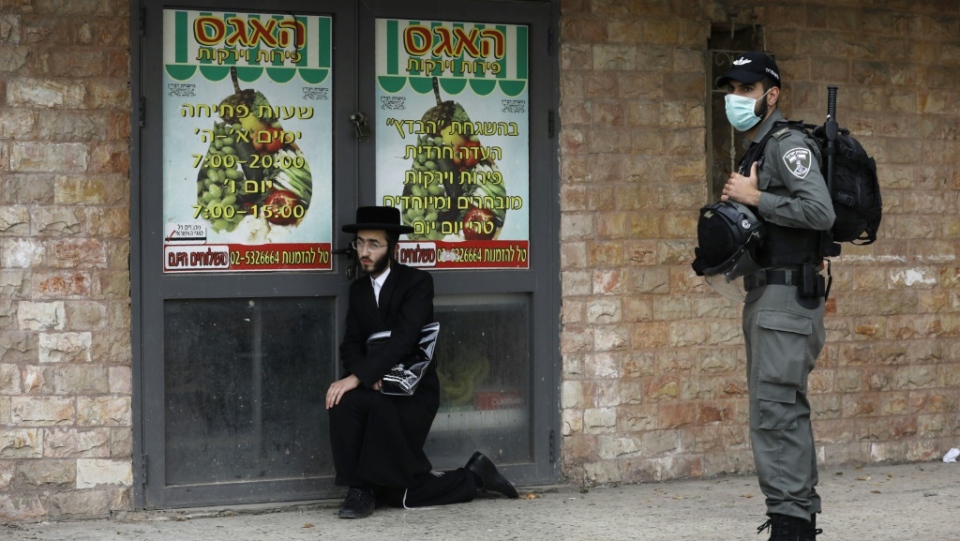 A podcast version of this story is available on Soundcloud, Itunes, Spotify, Stitcher, TuneIn, Spreaker, Pocket Casts, Tumblr, Podbean, Audecibel, Patreon and Castbox. The Coronavirus pandemic points a finger not only at the colossal global collapse of responsible public health policy but also the importance of balancing exclusionary religious practices and social cohesion. While government negligence allowed an Evangelist prayer meeting to drive the spread of the virus in France, lagging social cohesion coupled with politicians’ politicking put ultra-conservative communities in Israel and Pakistan in the disease’s driver’s seat. The resistance to public health policies of ultra-conservatives, who pay the price with high infection rates, takes debate about social cohesion beyond European efforts over the past two decades to restrict ultra-conservative Muslim and, to a lesser degree, Jewish practices in a bid to prevent the fringes of society turning into breeding grounds for militancy and political violence. Various European governments have sought to impose social cohesion by banning women’s face covers, forcing people to shake the hand of someone of a different gender, restricting foreign funding for religious institutions and calls for outlawing Muslim and Jewish rituals for the slaughter of animals. Post-Kemalist Turkey under the leadership of President Recep Tayyip Erdogan, the only democracy to move in the opposite direction, was the exception that confirmed the rule. While European nations banned hijabs and niqabs, Mr. Erdogan, as part of his effort to Islamicize society, lifted the ban in universities and government offices, demolishing a pillar of French laicist-inspired Kemalism. The issues of social cohesion and political violence took centre stage in February in a Dutch parliamentary inquiry that investigated “unwanted influence of unfree countries.” The parliamentary group grilled a controversial Salafi imam with questions that implied that the cleric was undermining social cohesion and enabling militancy with advice to his community to avoid intermingling with non-Muslim Dutchmen and to look the other way when walking past a church. Critics charged that the inquiry by focussing exclusively on ultra-conservative Muslims and Turkish nationalist moves to control Dutch Turkish mosques was putting the Muslim community, that accounts for five percent of the Dutch population, on the defensive. Israeli efforts to combat the coronavirus have highlighted similar social cohesion issues with ultra-orthodox Jewish communities in Jerusalem and Bnei Brak, a city near Tel Aviv, that are among the Jewish state’s foremost virus clusters. Authorities put Bnei Brak this week in lockdown. Initial government reluctance to enforce the closure of schools and synagogues as well as social distancing among the ultra-orthodox, who account for 12 percent of Israel’s population of 8.6 million, was seemingly motivated by Prime Minister Benyamin Netanyahu’s fear that he would alienate religious parties that support his effort to form a new post-election government. Mr. Netanyahu has recently been twice in quarantine, once after having been in face-to-face contact with his ultra-orthodox advisor, Rivka Paluch, who tested positive, and a second time after his health minister, Yaakov Litzman, a prominent member of the ultra-orthodox community, contracted the disease. It took the disease to persuade Mr. Litzman that harsher measures were needed. Mr. Litzman, discussing the virus. insisted last month that “we are praying and hoping that Messiah will come by Passover, it’s the time of redemption. I am sure that the Messiah will come just like he took us out of Egypt.” Mr. Litzman and Ms. Paluch’s initial resistance to tough public health measures suggests that ultra-orthodox assertions that lack of information explained ultra-orthodox resistance was not the only reason for the failure of to comply with government policy. To be sure, ultra-orthodox Jews frequently live in a world of their own that centres on prayer and religious learning. Many do not have television, access to the internet or listen to mainstream radio broadcasts. They rely on community news sheets. Add to that the fact that proposed public health measures disrupt ultra-orthodox life. Like Muslims, ultra-orthodox Jews congregate several times a day for prayers. Unlike Muslims, Jews require for certain prayers a quorum of at least ten adult men. The government’s closure of rituals baths, moreover, means that couples are banned from intimacy or sleeping in one bed. Furthermore, ultra-orthodox interactions with more secular Jewish society are few and far between. Members of the community often speak Yiddish, rather than Hebrew, a language that in their view is reserved for prayer in the absence of the arrival of the Messiah. Like recent ultra-orthodox funerals, recent mass gatherings in Pakistan, Malaysia and India of Tablighi Jamaat, a transnational ultra-conservative Muslim movement, have turned into hubs from which the coronavirus has spread. Former Israeli justice and religious affairs minister Yossi Beilin could have been speaking about the Tablighi when he summed up the ultra-orthodox Jewish view as ‘keep praying together. Whatever you try doing will not change anything, because the disaster is a God-given phenomenon, and only begging God may change things for the better.’’’ An Evangelist pastor in Florida, Reverend Rodney Howard-Browne, who was arrested for organizing Sunday church services in defiance of emergency orders, echoed Mr. Beilin’s rendition of attitudes among some ultra-conservatives. “We are demonized because we believe that God heals, that the Lord sets people free, and they make us out to be some kook,” Mr. Howard-Browne said. With governments across the globe having failed to prepare for or counter the coronavirus from day one, Israel and Pakistan are in good company So is France, where a week-long Evangelist gathering in the city of Mulhouse kickstarted the virus’ spread in the country. Members of the congregation said they knew nothing about the virus’ threat. Indeed, the French government had at that point failed to issue proper warnings and take the kind of measures that potentially could have blunted the virus’ devastating impact. The upshot of Israel’s travails, the Dutch inquiry that at times resembled an inquisition, Pakistani hesitancy to impose public health measures on an influential religious group, and French negligence constitute in essence government failures on two counts: The failure to read the writing on the wall with regard to the virus and the failure to work with ultra-conservatives to bring them into the fold. Talking about the ultra-orthodox, Gilad Malach of the Israel Democracy Institute appeared to put the onus on ultra-conservatives. “The main question towards the future is whether within the community there will be voices...that will say: ‘We want to protect our community, but we also belong to the state,’” Mr. Malach said. If the emergence of ultra-conservative communities as virus clusters says anything, it is that waiting for ultra-conservatives to raise their voice isn’t good enough. The coronavirus demonstrates the price of not reaching out to ultra-conservative communities and establishing two-way channels of communication. Dr James M. Dorsey is a Senior Fellow at the Rajaratnam School of International Studies, Nanyang Technological University, an Adjunct Senior Research Fellow at the National University of Singapore’s Middle East Institute, and Co-Director of the University of Würzburg’s Institute of Fan Culture. |
| json metadata | {"tags":["coronavirus","israel","france","religion","health"],"image":["https://cdn.steemitimages.com/DQmae6k6nsGQ6SMfirTkchtzVrMxm1Kg78zU3HM4n3X54Rr/Ultraorth_Virus.jpg"],"app":"steemit/0.2","format":"markdown"} |
| Transaction Info | Block #42237633/Trx 9b6a25d9599e379128ca786983eead0e9d233a14 |
View Raw JSON Data
{
"trx_id": "9b6a25d9599e379128ca786983eead0e9d233a14",
"block": 42237633,
"trx_in_block": 24,
"op_in_trx": 0,
"virtual_op": 0,
"timestamp": "2020-04-04T08:18:36",
"op": [
"comment",
{
"parent_author": "",
"parent_permlink": "coronavirus",
"author": "mideastsoccer",
"permlink": "resisting-lockdowns-bringing-ultra-conservatives-into-the-fold",
"title": "Resisting Lockdowns: Bringing Ultra-conservatives into the fold",
"body": "\n\nA podcast version of this story is available on Soundcloud, Itunes, Spotify, Stitcher, TuneIn, Spreaker, Pocket Casts, Tumblr, Podbean, Audecibel, Patreon and Castbox.\nThe Coronavirus pandemic points a finger not only at the colossal global collapse of responsible public health policy but also the importance of balancing exclusionary religious practices and social cohesion.\nWhile government negligence allowed an Evangelist prayer meeting to drive the spread of the virus in France, lagging social cohesion coupled with politicians’ politicking put ultra-conservative communities in Israel and Pakistan in the disease’s driver’s seat.\nThe resistance to public health policies of ultra-conservatives, who pay the price with high infection rates, takes debate about social cohesion beyond European efforts over the past two decades to restrict ultra-conservative Muslim and, to a lesser degree, Jewish practices in a bid to prevent the fringes of society turning into breeding grounds for militancy and political violence.\nVarious European governments have sought to impose social cohesion by banning women’s face covers, forcing people to shake the hand of someone of a different gender, restricting foreign funding for religious institutions and calls for outlawing Muslim and Jewish rituals for the slaughter of animals.\nPost-Kemalist Turkey under the leadership of President Recep Tayyip Erdogan, the only democracy to move in the opposite direction, was the exception that confirmed the rule. \nWhile European nations banned hijabs and niqabs, Mr. Erdogan, as part of his effort to Islamicize society, lifted the ban in universities and government offices, demolishing a pillar of French laicist-inspired Kemalism.\nThe issues of social cohesion and political violence took centre stage in February in a Dutch parliamentary inquiry that investigated “unwanted influence of unfree countries.” \nThe parliamentary group grilled a controversial Salafi imam with questions that implied that the cleric was undermining social cohesion and enabling militancy with advice to his community to avoid intermingling with non-Muslim Dutchmen and to look the other way when walking past a church.\nCritics charged that the inquiry by focussing exclusively on ultra-conservative Muslims and Turkish nationalist moves to control Dutch Turkish mosques was putting the Muslim community, that accounts for five percent of the Dutch population, on the defensive.\nIsraeli efforts to combat the coronavirus have highlighted similar social cohesion issues with ultra-orthodox Jewish communities in Jerusalem and Bnei Brak, a city near Tel Aviv, that are among the Jewish state’s foremost virus clusters. Authorities put Bnei Brak this week in lockdown.\nInitial government reluctance to enforce the closure of schools and synagogues as well as social distancing among the ultra-orthodox, who account for 12 percent of Israel’s population of 8.6 million, was seemingly motivated by Prime Minister Benyamin Netanyahu’s fear that he would alienate religious parties that support his effort to form a new post-election government.\nMr. Netanyahu has recently been twice in quarantine, once after having been in face-to-face contact with his ultra-orthodox advisor, Rivka Paluch, who tested positive, and a second time after his health minister, Yaakov Litzman, a prominent member of the ultra-orthodox community, contracted the disease.\nIt took the disease to persuade Mr. Litzman that harsher measures were needed.\nMr. Litzman, discussing the virus. insisted last month that “we are praying and hoping that Messiah will come by Passover, it’s the time of redemption. I am sure that the Messiah will come just like he took us out of Egypt.”\nMr. Litzman and Ms. Paluch’s initial resistance to tough public health measures suggests that ultra-orthodox assertions that lack of information explained ultra-orthodox resistance was not the only reason for the failure of to comply with government policy.\nTo be sure, ultra-orthodox Jews frequently live in a world of their own that centres on prayer and religious learning. Many do not have television, access to the internet or listen to mainstream radio broadcasts. They rely on community news sheets.\nAdd to that the fact that proposed public health measures disrupt ultra-orthodox life.\nLike Muslims, ultra-orthodox Jews congregate several times a day for prayers. Unlike Muslims, Jews require for certain prayers a quorum of at least ten adult men. The government’s closure of rituals baths, moreover, means that couples are banned from intimacy or sleeping in one bed.\nFurthermore, ultra-orthodox interactions with more secular Jewish society are few and far between. Members of the community often speak Yiddish, rather than Hebrew, a language that in their view is reserved for prayer in the absence of the arrival of the Messiah.\nLike recent ultra-orthodox funerals, recent mass gatherings in Pakistan, Malaysia and India of Tablighi Jamaat, a transnational ultra-conservative Muslim movement, have turned into hubs from which the coronavirus has spread.\nFormer Israeli justice and religious affairs minister Yossi Beilin could have been speaking about the Tablighi when he summed up the ultra-orthodox Jewish view as ‘keep praying together. Whatever you try doing will not change anything, because the disaster is a God-given phenomenon, and only begging God may change things for the better.’’’ \nAn Evangelist pastor in Florida, Reverend Rodney Howard-Browne, who was arrested for organizing Sunday church services in defiance of emergency orders, echoed Mr. Beilin’s rendition of attitudes among some ultra-conservatives.\n“We are demonized because we believe that God heals, that the Lord sets people free, and they make us out to be some kook,” Mr. Howard-Browne said.\nWith governments across the globe having failed to prepare for or counter the coronavirus from day one, Israel and Pakistan are in good company So is France, where a week-long Evangelist gathering in the city of Mulhouse kickstarted the virus’ spread in the country.\nMembers of the congregation said they knew nothing about the virus’ threat. Indeed, the French government had at that point failed to issue proper warnings and take the kind of measures that potentially could have blunted the virus’ devastating impact. \nThe upshot of Israel’s travails, the Dutch inquiry that at times resembled an inquisition, Pakistani hesitancy to impose public health measures on an influential religious group, and French negligence constitute in essence government failures on two counts: The failure to read the writing on the wall with regard to the virus and the failure to work with ultra-conservatives to bring them into the fold.\nTalking about the ultra-orthodox, Gilad Malach of the Israel Democracy Institute appeared to put the onus on ultra-conservatives. “The main question towards the future is whether within the community there will be voices...that will say: ‘We want to protect our community, but we also belong to the state,’” Mr. Malach said.\nIf the emergence of ultra-conservative communities as virus clusters says anything, it is that waiting for ultra-conservatives to raise their voice isn’t good enough. The coronavirus demonstrates the price of not reaching out to ultra-conservative communities and establishing two-way channels of communication.\nDr James M. Dorsey is a Senior Fellow at the Rajaratnam School of International Studies, Nanyang Technological University, an Adjunct Senior Research Fellow at the National University of Singapore’s Middle East Institute, and Co-Director of the University of Würzburg’s Institute of Fan Culture.",
"json_metadata": "{\"tags\":[\"coronavirus\",\"israel\",\"france\",\"religion\",\"health\"],\"image\":[\"https://cdn.steemitimages.com/DQmae6k6nsGQ6SMfirTkchtzVrMxm1Kg78zU3HM4n3X54Rr/Ultraorth_Virus.jpg\"],\"app\":\"steemit/0.2\",\"format\":\"markdown\"}"
}
]
}mideastsoccerreceived 0.260 STEEM, 0.313 SP author reward for @mideastsoccer / islam-authoritarianism-and-underdevelopment-a-global-and-historical-comparison2020/04/04 04:49:33
mideastsoccerreceived 0.260 STEEM, 0.313 SP author reward for @mideastsoccer / islam-authoritarianism-and-underdevelopment-a-global-and-historical-comparison
2020/04/04 04:49:33
| author | mideastsoccer |
| permlink | islam-authoritarianism-and-underdevelopment-a-global-and-historical-comparison |
| sbd payout | 0.000 SBD |
| steem payout | 0.260 STEEM |
| vesting payout | 508.833752 VESTS |
| Transaction Info | Block #42233528/Virtual Operation #3 |
View Raw JSON Data
{
  "trx_id": "0000000000000000000000000000000000000000",
  "block": 42233528,
  "trx_in_block": 4294967295,
  "op_in_trx": 0,
  "virtual_op": 3,
  "timestamp": "2020-04-04T04:49:33",
  "op": [
    "author_reward",
    {
      "author": "mideastsoccer",
      "permlink": "islam-authoritarianism-and-underdevelopment-a-global-and-historical-comparison",
      "sbd_payout": "0.000 SBD",
      "steem_payout": "0.260 STEEM",
      "vesting_payout": "508.833752 VESTS"
    }
  ]
}2020/04/01 05:43:39
2020/04/01 05:43:39
| voter | payroll |
| author | mideastsoccer |
| permlink | global-response-to-coronavirus-exposes-governments-fault-lines |
| weight | 400 (4.00%) |
| Transaction Info | Block #42149609/Trx 398ae6f0dce6629a5b7ec9e8ffdb0c790361d56d |
View Raw JSON Data
{
  "trx_id": "398ae6f0dce6629a5b7ec9e8ffdb0c790361d56d",
  "block": 42149609,
  "trx_in_block": 2,
  "op_in_trx": 0,
  "virtual_op": 0,
  "timestamp": "2020-04-01T05:43:39",
  "op": [
    "vote",
    {
      "voter": "payroll",
      "author": "mideastsoccer",
      "permlink": "global-response-to-coronavirus-exposes-governments-fault-lines",
      "weight": 400
    }
  ]
}mideastsoccerpublished a new post: global-response-to-coronavirus-exposes-governments-fault-lines2020/04/01 05:22:30
mideastsoccerpublished a new post: global-response-to-coronavirus-exposes-governments-fault-lines
2020/04/01 05:22:30
| parent author | |
| parent permlink | islam |
| author | mideastsoccer |
| permlink | global-response-to-coronavirus-exposes-governments-fault-lines |
| title | Global Response to Coronavirus Exposes Governments’ Fault Lines |
| body | 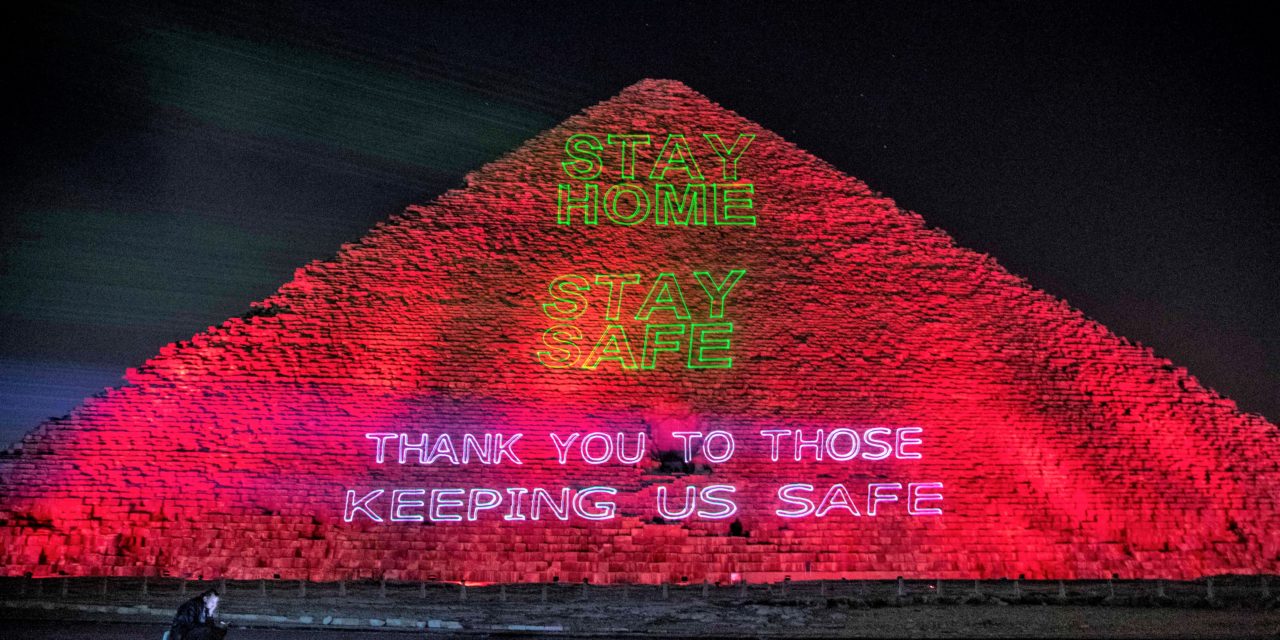 by James M. Dorsey | Mar 31, 2020 This story was first published on Inside Arabia A podcast version of this story is available on Soundcloud, Itunes, Spotify, Stitcher, TuneIn, Spreaker, Pocket Casts, Tumblr, Podbean, Audecibel, Patreon and Castbox. The Egyptian Ministry of Antiquities lit up the pyramids in an expression of support for health workers battling the coronavirus outbreak, March 30, 2020, in Giza, Egypt. (AP Photo Nariman El-Mofty) There’s a message in Pakistani and Egyptian responses to the Coronavirus: neither ultra-conservative science-rejecting worldviews nor self-serving autocratic policies aimed at regime enhancement produced initial prevention and mitigation strategies that could have blunted the impact of the disease. To be sure, Pakistan and Egypt, although different in what drove their responses, are in good company. Overwhelmingly, governments across the globe with the exceptions of Singapore, Taiwan, and South Korea, failed to take the initial warnings signs seriously. Unlike western democracies that have little to boast about in their handling of the crisis, countries like Pakistan and Egypt lack the checks and balances, robust civil societies, and independent media needed as correctives. Unlike western democracies that have little to boast about in their handling of the Coronavirus crisis, countries like Pakistan and Egypt also lack the checks and balances, robust civil societies, and independent media needed as correctives. And both Egypt and Pakistan have gone out of their way to keep it that way. Egypt, apparently taking a leaf out of China’s playbook, reprimanded foreign correspondents for The Guardian and The New York Times in Cairo for reporting that the number of cases in the country was exponentially higher than the 495 confirmed by authorities as of March 29. The coverage was based on conclusions by infectious disease specialists at the University of Toronto who had analyzed flight and traveler data as well as infection rates. The scientists estimated that “Egypt likely has a large burden of Covid-2019 cases that are unreported.” They put the number of Egyptian cases as high as 19,130 as of March 15. In response, authorities withdrew the press permit of The Guardian’s Ruth Michaelson and expelled her from the country while The New York Times’ Declan Walsh was forced to delete a tweet. Furthermore, several Egyptians have been detained on charges of spreading false and fabricated rumors. Yet, Egypt imposed strict measures including the closure of all educational institutions and the suspension of flights on March 15, the day the scientists published their findings. The government also announced a $6.38 billion USD fund to fight the virus. A World Health Organization (WHO) official in Cairo said the group could not verify the scientists’ methodology but added that “it is possible that there are many other cases with mild symptoms which did not result in hospital visits, and therefore are not detected or reported.” Independent reporting is a crucial node in an effective early warning system. It creates pressure for a timely response. The effort to suppress it was in line with Egyptian general-turned-president Abdel Fattah al-Sisi’s initial reaction to the virus. Rather than focusing on early preventive measures at home, Egyptian President Abdel Fattah al-Sisi sought to benefit from China’s predicament. Rather than focusing on early preventive measures at home, Mr. Al-Sisi sought to benefit from China’s predicament. With only one officially confirmed case of a Chinese national arriving in February at Cairo airport who was hospitalized and cured, Mr. Al-Sisi sent his health minister, Hala Zayed, to China to praise it for preventing a far worse global outbreak by taking very strong precautionary measures. This despite Beijing’s costly failure to confront the disease firmly from the outset. Pakistan’s approach in recent months was no less negligent. Like Egypt, a country in which the power of the military is thinly camouflaged by hollowed out institutions, Pakistan waffled until last week in its response to the pandemic. The Pakistani government refused early on to evacuate some 800 students from Wuhan in a bid to earn brownie points in Beijing. It also failed to manage the return of potentially infected pilgrims from Iran. And finally, it catered to ultra-conservative groups whose worldviews were akin to ones long prevalent in Saudi Arabia with its significant cultural and religious influence in the South Asian nation. As a result, Pakistan, a deeply religious country that borders on both China and Iran, allowed Tablighi Jamaat, a proselytizing group with a huge global following in some 80 countries that is banned in Saudi Arabia, to continue organizing mass events. Pakistan, a deeply religious country, allowed Tablighi Jamaat, a proselytizing group with a huge global following in some 80 countries, to continue organizing mass events. The group organized a 16,000 people mass gathering in early March in Malaysia where scores were infected with the Coronavirus. Hundreds of Tablighi gathered from March 21 to 23 in the Mardan District of Pakistan’s Khyber Pakhtunkhwa province to pray, listen to speeches, and eat and sleep in congested quarters. One participant, professing his belief that God would protect the Tablighi, described spending almost six weeks together with thousands of others at Tablighi headquarters near Lahore, a city of 11 million, just before traveling to Mardan. Pakistan Religious Affairs Minister Noor-ul-Haq Qadri caved in to demands by the clergy to keep mosques open but capped the maximum number of people at prayers at five. The minister’s concession reinforced a popular perception of the government’s message that the virus crisis was less grave than projected by health authorities across the globe. “If the pandemic was serious, the government would’ve shut down all the mosques,” said Sadiq Bhutt, speaking through an interpreter, as he entered a mosque in Islamabad for Friday prayers. Eventually, overriding government policy, the Pakistan military intervened in recent days to impose a lockdown like in much of the rest of the world. But as in Egypt it may be too late for Pakistan, the world’s most populous Muslim nation of 207 million, that is ill-equipped for a pandemic. The lesson of Egypt, Pakistan, and China’s initial handling of the Coronavirus is that neither self-serving autocrats nor authoritarians have the wherewithal to confront a crisis like a pandemic in a timely fashion. Ultimately, the lesson of Egypt, Pakistan, and China’s initial handling of the Coronavirus is that neither self-serving autocrats nor authoritarians have the wherewithal to confront a crisis like a pandemic in a timely fashion. Their much-delayed responses have failed to take the public’s interests to heart rather than those of elites that prioritize geopolitical or political advantage. Western democracies have performed not much better with US President Donald J. Trump seemingly more concerned about economic impact in an election year than about public health and people’s lives. The difference, however, is that western democracies have the potential of holding leaders to account and implementing lessons learned from the costly mismanagement of the coronavirus pandemic. It’s hard to hold out a similar hope for Arab autocracies or countries like Pakistan whose democratic façade is at best skin-deep. James M. Dorsey is a Senior Fellow at the Rajaratnam School of International Studies, Nanyang Technological University, an Adjunct Senior Research Fellow at the National University of Singapore’s Middle East Institute, and Co-Director of the University of Würzburg’s Institute of Fan Culture. |
| json metadata | {"tags":["islam","health","coronavirus","pndemic","middleeast"],"image":["https://cdn.steemitimages.com/DQmYAZtxNZMzrFpccxcmS6YsQC1LyNNFvExSsemQaZz36j2/Coronavir_InSArab.jpg"],"app":"steemit/0.2","format":"markdown"} |
| Transaction Info | Block #42149193/Trx c48f68bb1abd6bf2e48eaafafb8c9f3df1f4f3a2 |
View Raw JSON Data
{
"trx_id": "c48f68bb1abd6bf2e48eaafafb8c9f3df1f4f3a2",
"block": 42149193,
"trx_in_block": 34,
"op_in_trx": 0,
"virtual_op": 0,
"timestamp": "2020-04-01T05:22:30",
"op": [
"comment",
{
"parent_author": "",
"parent_permlink": "islam",
"author": "mideastsoccer",
"permlink": "global-response-to-coronavirus-exposes-governments-fault-lines",
"title": "Global Response to Coronavirus Exposes Governments’ Fault Lines",
"body": "\n\nby James M. Dorsey | Mar 31, 2020\nThis story was first published on Inside Arabia\nA podcast version of this story is available on Soundcloud, Itunes, Spotify, Stitcher, TuneIn, Spreaker, Pocket Casts, Tumblr, Podbean, Audecibel, Patreon and Castbox.\n \nThe Egyptian Ministry of Antiquities lit up the pyramids in an expression of support for health workers battling the coronavirus outbreak, March 30, 2020, in Giza, Egypt. (AP Photo Nariman El-Mofty)\nThere’s a message in Pakistani and Egyptian responses to the Coronavirus: neither ultra-conservative science-rejecting worldviews nor self-serving autocratic policies aimed at regime enhancement produced initial prevention and mitigation strategies that could have blunted the impact of the disease.\nTo be sure, Pakistan and Egypt, although different in what drove their responses, are in good company. Overwhelmingly, governments across the globe with the exceptions of Singapore, Taiwan, and South Korea, failed to take the initial warnings signs seriously.\nUnlike western democracies that have little to boast about in their handling of the crisis, countries like Pakistan and Egypt lack the checks and balances, robust civil societies, and independent media needed as correctives.\nUnlike western democracies that have little to boast about in their handling of the Coronavirus crisis, countries like Pakistan and Egypt also lack the checks and balances, robust civil societies, and independent media needed as correctives.\nAnd both Egypt and Pakistan have gone out of their way to keep it that way.\nEgypt, apparently taking a leaf out of China’s playbook, reprimanded foreign correspondents for The Guardian and The New York Times in Cairo for reporting that the number of cases in the country was exponentially higher than the 495 confirmed by authorities as of March 29. \nThe coverage was based on conclusions by infectious disease specialists at the University of Toronto who had analyzed flight and traveler data as well as infection rates.\nThe scientists estimated that “Egypt likely has a large burden of Covid-2019 cases that are unreported.” They put the number of Egyptian cases as high as 19,130 as of March 15.\nIn response, authorities withdrew the press permit of The Guardian’s Ruth Michaelson and expelled her from the country while The New York Times’ Declan Walsh was forced to delete a tweet. Furthermore, several Egyptians have been detained on charges of spreading false and fabricated rumors.\nYet, Egypt imposed strict measures including the closure of all educational institutions and the suspension of flights on March 15, the day the scientists published their findings. The government also announced a $6.38 billion USD fund to fight the virus.\nA World Health Organization (WHO) official in Cairo said the group could not verify the scientists’ methodology but added that “it is possible that there are many other cases with mild symptoms which did not result in hospital visits, and therefore are not detected or reported.”\nIndependent reporting is a crucial node in an effective early warning system. It creates pressure for a timely response. The effort to suppress it was in line with Egyptian general-turned-president Abdel Fattah al-Sisi’s initial reaction to the virus.\nRather than focusing on early preventive measures at home, Egyptian President Abdel Fattah al-Sisi sought to benefit from China’s predicament.\nRather than focusing on early preventive measures at home, Mr. Al-Sisi sought to benefit from China’s predicament.\nWith only one officially confirmed case of a Chinese national arriving in February at Cairo airport who was hospitalized and cured, Mr. Al-Sisi sent his health minister, Hala Zayed, to China to praise it for preventing a far worse global outbreak by taking very strong precautionary measures. This despite Beijing’s costly failure to confront the disease firmly from the outset.\nPakistan’s approach in recent months was no less negligent.\nLike Egypt, a country in which the power of the military is thinly camouflaged by hollowed out institutions, Pakistan waffled until last week in its response to the pandemic.\nThe Pakistani government refused early on to evacuate some 800 students from Wuhan in a bid to earn brownie points in Beijing. It also failed to manage the return of potentially infected pilgrims from Iran. And finally, it catered to ultra-conservative groups whose worldviews were akin to ones long prevalent in Saudi Arabia with its significant cultural and religious influence in the South Asian nation.\nAs a result, Pakistan, a deeply religious country that borders on both China and Iran, allowed Tablighi Jamaat, a proselytizing group with a huge global following in some 80 countries that is banned in Saudi Arabia, to continue organizing mass events.\nPakistan, a deeply religious country, allowed Tablighi Jamaat, a proselytizing group with a huge global following in some 80 countries, to continue organizing mass events.\nThe group organized a 16,000 people mass gathering in early March in Malaysia where scores were infected with the Coronavirus.\nHundreds of Tablighi gathered from March 21 to 23 in the Mardan District of Pakistan’s Khyber Pakhtunkhwa province to pray, listen to speeches, and eat and sleep in congested quarters.\nOne participant, professing his belief that God would protect the Tablighi, described spending almost six weeks together with thousands of others at Tablighi headquarters near Lahore, a city of 11 million, just before traveling to Mardan.\nPakistan Religious Affairs Minister Noor-ul-Haq Qadri caved in to demands by the clergy to keep mosques open but capped the maximum number of people at prayers at five.\nThe minister’s concession reinforced a popular perception of the government’s message that the virus crisis was less grave than projected by health authorities across the globe.\n“If the pandemic was serious, the government would’ve shut down all the mosques,” said Sadiq Bhutt, speaking through an interpreter, as he entered a mosque in Islamabad for Friday prayers.\nEventually, overriding government policy, the Pakistan military intervened in recent days to impose a lockdown like in much of the rest of the world.\nBut as in Egypt it may be too late for Pakistan, the world’s most populous Muslim nation of 207 million, that is ill-equipped for a pandemic.\nThe lesson of Egypt, Pakistan, and China’s initial handling of the Coronavirus is that neither self-serving autocrats nor authoritarians have the wherewithal to confront a crisis like a pandemic in a timely fashion.\nUltimately, the lesson of Egypt, Pakistan, and China’s initial handling of the Coronavirus is that neither self-serving autocrats nor authoritarians have the wherewithal to confront a crisis like a pandemic in a timely fashion. Their much-delayed responses have failed \nto take the public’s interests to heart rather than those of elites that prioritize geopolitical or political advantage.\nWestern democracies have performed not much better with US President Donald J. Trump seemingly more concerned about economic impact in an election year than about public health and people’s lives.\nThe difference, however, is that western democracies have the potential of holding leaders to account and implementing lessons learned from the costly mismanagement of the coronavirus pandemic.\nIt’s hard to hold out a similar hope for Arab autocracies or countries like Pakistan whose democratic façade is at best skin-deep.\nJames M. Dorsey is a Senior Fellow at the Rajaratnam School of International Studies, Nanyang Technological University, an Adjunct Senior Research Fellow at the National University of Singapore’s Middle East Institute, and Co-Director of the University of Würzburg’s Institute of Fan Culture.",
"json_metadata": "{\"tags\":[\"islam\",\"health\",\"coronavirus\",\"pndemic\",\"middleeast\"],\"image\":[\"https://cdn.steemitimages.com/DQmYAZtxNZMzrFpccxcmS6YsQC1LyNNFvExSsemQaZz36j2/Coronavir_InSArab.jpg\"],\"app\":\"steemit/0.2\",\"format\":\"markdown\"}"
}
]
}2020/03/28 05:10:36
2020/03/28 05:10:36
| voter | payroll |
| author | mideastsoccer |
| permlink | islam-authoritarianism-and-underdevelopment-a-global-and-historical-comparison |
| weight | 400 (4.00%) |
| Transaction Info | Block #42035322/Trx 667991009b47b6ddb8169fec14b244e85f408e80 |
View Raw JSON Data
{
  "trx_id": "667991009b47b6ddb8169fec14b244e85f408e80",
  "block": 42035322,
  "trx_in_block": 7,
  "op_in_trx": 0,
  "virtual_op": 0,
  "timestamp": "2020-03-28T05:10:36",
  "op": [
    "vote",
    {
      "voter": "payroll",
      "author": "mideastsoccer",
      "permlink": "islam-authoritarianism-and-underdevelopment-a-global-and-historical-comparison",
      "weight": 400
    }
  ]
}2020/03/28 04:49:33
2020/03/28 04:49:33
| parent author | |
| parent permlink | islam |
| author | mideastsoccer |
| permlink | islam-authoritarianism-and-underdevelopment-a-global-and-historical-comparison |
| title | Islam, Authoritarianism, and Underdevelopment: A Global and Historical Comparison |
| body | AHMET T. KURU Islam, Authoritarianism, and Underdevelopment  A Global and Historical Comparison CAMBRIDGE UNIVERSITY PRESS 2019 March 25, 2020 James M. Dorsey Ahmet T. Kuru’s new book Islam, Authoritarianism and Underdevelopment, A Global and Historical Comparison (Cambridge University Press, 2019) is a ground-breaking history and analysis of the evolution of the state in Muslim countries. Thoroughly researched and accessibly written, Kuru’s work traces the template of the modern-day state in many Muslim-majority countries to fundamental political, social and economic changes in the 11th century. That was when Islamic scholars who until then had by and large refused to surrender their independence to the state were co-opted by Muslim rulers. It was a time when the merchant class lost its economic clout as the Muslim world moved from a mercantile to a feudal economy. Religious and other scholars were often themselves merchants or funded by merchants. The transition coincided with the rise of the military state legitimized by religious scholars who had little choice but to go into its employ. They helped the state develop a forced Sunni Muslim orthodoxy based on text rather than reason- or tradition based interpretation of Islam with the founding of madrassahs or religious seminaries that were designed to counter the rise of Shiite states in North Africa and counter less or unorthodox strands of the faith. Kuru’s history could hardly be more relevant. It lays bare the roots of modern-day, illiberal, authoritarian or autocratic states in the Muslim world that are characterized by some form of often rent-driven state capitalism and frequently expansionary in their effort to ensure regime survival and increase rents. These states feature education systems that fail to develop critical thinking and religious establishments that are subservient to their rulers. Kuru’s book also in effect describes one of the original sources of the civilizational state that has become a fixture in the struggle to shape a new world order. With his book, Kuru has made an invaluable contribution to the understanding of the stagnation as well as the turmoil that has swept the Middle East and North Africa as well as the wider Islamic world. To listen to the podcast, please click on https://traffic.megaphone.fm/LIT3563987063.mp3 James M. Dorsey is a senior fellow at Nanyang Technological University's S. Rajaratnam School of International Studies and the National University of Singapore’s Middle East Institute. |
| json metadata | {"tags":["islam","history","religion","muslims","middleeast"],"image":["https://cdn.steemitimages.com/DQmSGCvfcCttpFPSrLQkbPUhnZ5SJP8HAcQr8QuD7vYDEYj/ahmet-t-kuru.jpg"],"links":["https://traffic.megaphone.fm/LIT3563987063.mp3"],"app":"steemit/0.2","format":"markdown"} |
| Transaction Info | Block #42034909/Trx c20a79eb34a2415f37b66ef9e3e1eb4af9b230eb |
View Raw JSON Data
{
"trx_id": "c20a79eb34a2415f37b66ef9e3e1eb4af9b230eb",
"block": 42034909,
"trx_in_block": 18,
"op_in_trx": 0,
"virtual_op": 0,
"timestamp": "2020-03-28T04:49:33",
"op": [
"comment",
{
"parent_author": "",
"parent_permlink": "islam",
"author": "mideastsoccer",
"permlink": "islam-authoritarianism-and-underdevelopment-a-global-and-historical-comparison",
"title": "Islam, Authoritarianism, and Underdevelopment: A Global and Historical Comparison",
"body": "AHMET T. KURU\n\nIslam, Authoritarianism, and Underdevelopment\n\n\n\nA Global and Historical Comparison\n\nCAMBRIDGE UNIVERSITY PRESS 2019\n\nMarch 25, 2020 James M. Dorsey\n\n\n\n\nAhmet T. Kuru’s new book Islam, Authoritarianism and Underdevelopment, A Global and Historical Comparison (Cambridge University Press, 2019) is a ground-breaking history and analysis of the evolution of the state in Muslim countries. Thoroughly researched and accessibly written, Kuru’s work traces the template of the modern-day state in many Muslim-majority countries to fundamental political, social and economic changes in the 11th century. That was when Islamic scholars who until then had by and large refused to surrender their independence to the state were co-opted by Muslim rulers. It was a time when the merchant class lost its economic clout as the Muslim world moved from a mercantile to a feudal economy. Religious and other scholars were often themselves merchants or funded by merchants.\n\nThe transition coincided with the rise of the military state legitimized by religious scholars who had little choice but to go into its employ. They helped the state develop a forced Sunni Muslim orthodoxy based on text rather than reason- or tradition based interpretation of Islam with the founding of madrassahs or religious seminaries that were designed to counter the rise of Shiite states in North Africa and counter less or unorthodox strands of the faith. Kuru’s history could hardly be more relevant. It lays bare the roots of modern-day, illiberal, authoritarian or autocratic states in the Muslim world that are characterized by some form of often rent-driven state capitalism and frequently expansionary in their effort to ensure regime survival and increase rents.\n\nThese states feature education systems that fail to develop critical thinking and religious establishments that are subservient to their rulers. Kuru’s book also in effect describes one of the original sources of the civilizational state that has become a fixture in the struggle to shape a new world order. With his book, Kuru has made an invaluable contribution to the understanding of the stagnation as well as the turmoil that has swept the Middle East and North Africa as well as the wider Islamic world.\n\nTo listen to the podcast, please click on https://traffic.megaphone.fm/LIT3563987063.mp3\n\nJames M. Dorsey is a senior fellow at Nanyang Technological University's S. Rajaratnam School of International Studies and the National University of Singapore’s Middle East Institute.",
"json_metadata": "{\"tags\":[\"islam\",\"history\",\"religion\",\"muslims\",\"middleeast\"],\"image\":[\"https://cdn.steemitimages.com/DQmSGCvfcCttpFPSrLQkbPUhnZ5SJP8HAcQr8QuD7vYDEYj/ahmet-t-kuru.jpg\"],\"links\":[\"https://traffic.megaphone.fm/LIT3563987063.mp3\"],\"app\":\"steemit/0.2\",\"format\":\"markdown\"}"
}
]
}mideastsoccerpublished a new post: china-manoeuvres-to-protect-its-interests-while-keeping-its-hands-clean2020/03/26 11:04:45
mideastsoccerpublished a new post: china-manoeuvres-to-protect-its-interests-while-keeping-its-hands-clean
2020/03/26 11:04:45
| parent author | |
| parent permlink | china |
| author | mideastsoccer |
| permlink | china-manoeuvres-to-protect-its-interests-while-keeping-its-hands-clean |
| title | China manoeuvres to protect its interests while keeping its hands clean |
| body |  Written by James M. Dorsey. A podcast version of this story is available on Soundcloud, Itunes, Spotify, Stitcher, TuneIn, Spreaker, Pocket Casts, Tumblr, Podbean, Audecibel, Patreon and Castbox. The question is not if, but when the long-standing American defence umbrella in the Gulf, the world’s most militarised and volatile region, will be replaced by a multilateral security arrangement that would have to include China as well as Russia. The United States’ perceived diminishing commitment to the Gulf and the broader Middle East and mounting doubts about the deterrence value of its defence umbrella leave the Gulf stuck between a rock and a hard place. The American umbrella is shrinking, but neither China nor Russia, despite their obvious interests, are capable or willing simply to shoulder the responsibility, political risk and cost of replacing it. On balance, China’s interests seem self-evident. It needs to secure its mushrooming political and economic interests in the Gulf, which includes ensuring the flow of oil and gas and protecting its infrastructure investment and the expanding Chinese diaspora in the region. Nonetheless, China has so far refrained from putting its might where its money is, free-riding instead (in the words of US officials) on America’s regional military presence. China’s approach is grounded in the belief that economics rather than geopolitics is the key to solving disputes Indeed, for the longest time China has been able to outsource the protection of its interests to the United States at virtually no cost. For the US, guaranteeing security in the Gulf has been anchored in an American policy which accepted that maintaining security far beyond the borders of the United States was in America’s national interest, including the protection of Chinese assets. All China needed to do, therefore, was to make minimal gestures such as contributing to the multi-national effort in the Gulf and adjacent waters to counter Somali pirates. In the meantime, China could pursue a long-term strategy to bolster its capabilities. This included infrastructure projects related to the Belt and Road Initiative (BRI) with dual-purpose potential (such as the strategic ports of Gwadar in Pakistan and Duqm in Oman as well as commercial investment in Dubai’s Jebel Ali), the creation of China’s first overseas military facility in Djibouti, and significant expenditure on upgrading the Chinese armed forces. All that potentially changed with the rise of US President Donald J. Trump, who advocated an America First policy that attributed little value to past US commitments or to maintaining existing alliances. Hence Trump embarked on a trade war with China – viewed as a strategic competitor – and appeared to fuel rather than resolve regional stability by uncritically aligning American policy with that of Saudi Arabia and Israel and targeted Iran as the source of all evil. This change has yet to translate into specific Chinese policy statements or actions. Nonetheless, the anticipated shift from a unipolar to a multilateral security architecture in the Gulf has cast a new light on the first-ever joint naval exercise involving Chinese, Russian and Iranian naval forces, as well as China’s seemingly lukewarm support for a Russian proposal for a multilateral security approach in the Gulf. China was careful to signal that neither the joint exercise nor its closer military ties with a host of other Middle Eastern nations meant it was aspiring to a greater role in regional security any time soon. If anything, both the exercise and China’s notional support for Russia’s proposed restructuring of regional security suggest that China envisions a continued US lead in Gulf security, despite the mounting rivalry between the world’s two largest economies. The Russian proposal in many ways fits China’s bill. Its calls for a multilateral structure involving Russia, China, the United States, Europe and India that would evolve out of a regional security conference along the lines of the Organisation for Security and Cooperation in Europe (OSCE). While backing Russia’s proposal in general terms, Chinese foreign ministry spokesman Geng Shuang stopped short of specifically endorsing it. Geng welcomed ‘all proposals and diplomatic efforts conducive to de-escalating the situation in the Gulf region’. China’s reluctance to endorse the Russian proposal more wholeheartedly is rooted in differing approaches towards multilateralism in general and alliances in particular. China shies away from alliances, with their emphasis on geo-economics rather than geopolitics, while Russia still operates in terms of alliances. Despite favouring a continued American lead, China sees a broadening of security arrangements that would embed rather than replace the US defence umbrella in the Gulf as a way to reduce regional tensions. China also believes that a multilateral arrangement would allow it to continue to steer clear of being sucked into conflicts and disputes in the Middle East, particularly the Saudi-Iranian rivalry. A multilateral arrangement in which the US remained the key military player would further fit the pattern of China’s gradual projection of its growing military power beyond its borders. With the exception of the facility in Djibouti, China’s projection becomes less hardcore the further one gets from the borders of the People’s Republic. More fundamentally, China’s approach is grounded in the belief that economics rather than geopolitics is the key to solving disputes, which so far has allowed it to remain detached from the Middle East’s multiple conflicts. It remains to be seen how sustainable this approach is in the long term. Such an approach is unlikely to shield China forever from the Middle East’s penchant for ensuring it is at the heart of the major external parties’ concerns. And as Jiang Xudong, a Middle East scholar at the Shanghai Academy of Social Sciences, puts it: ‘Economic investment will not solve all other problems when there are religious and ethnic conflicts at play’. Dr James M. Dorsey is a Senior Fellow at the Rajaratnam School of International Studies, Nanyang Technological University, an Adjunct Senior Research Fellow at the National University of Singapore’s Middle East Institute, and Co-Director of the University of Würzburg’s Institute of Fan Culture. This article was first published by Asia Dialogue |
| json metadata | {"tags":["china","russia","usa","security","middleeast"],"image":["https://cdn.steemitimages.com/DQmQkJ3uVi4thStmXjBMeRwkPMFEtLBBaq6k8NDV79m3Boi/ChinFightJetAsDial.jpg"],"app":"steemit/0.2","format":"markdown"} |
| Transaction Info | Block #41985440/Trx 7f7c3eb573b23b1f9402477755b0e05f6dd524f1 |
View Raw JSON Data
{
"trx_id": "7f7c3eb573b23b1f9402477755b0e05f6dd524f1",
"block": 41985440,
"trx_in_block": 24,
"op_in_trx": 0,
"virtual_op": 0,
"timestamp": "2020-03-26T11:04:45",
"op": [
"comment",
{
"parent_author": "",
"parent_permlink": "china",
"author": "mideastsoccer",
"permlink": "china-manoeuvres-to-protect-its-interests-while-keeping-its-hands-clean",
"title": "China manoeuvres to protect its interests while keeping its hands clean",
"body": "\n\nWritten by James M. Dorsey.\nA podcast version of this story is available on Soundcloud, Itunes, Spotify, Stitcher, TuneIn, Spreaker, Pocket Casts, Tumblr, Podbean, Audecibel, Patreon and Castbox.\nThe question is not if, but when the long-standing American defence umbrella in the Gulf, the world’s most militarised and volatile region, will be replaced by a multilateral security arrangement that would have to include China as well as Russia.\nThe United States’ perceived diminishing commitment to the Gulf and the broader Middle East and mounting doubts about the deterrence value of its defence umbrella leave the Gulf stuck between a rock and a hard place. The American umbrella is shrinking, but neither China nor Russia, despite their obvious interests, are capable or willing simply to shoulder the responsibility, political risk and cost of replacing it.\nOn balance, China’s interests seem self-evident. It needs to secure its mushrooming political and economic interests in the Gulf, which includes ensuring the flow of oil and gas and protecting its infrastructure investment and the expanding Chinese diaspora in the region. Nonetheless, China has so far refrained from putting its might where its money is, free-riding instead (in the words of US officials) on America’s regional military presence.\nChina’s approach is grounded in the belief that economics rather than geopolitics is the key to solving disputes\nIndeed, for the longest time China has been able to outsource the protection of its interests to the United States at virtually no cost. For the US, guaranteeing security in the Gulf has been anchored in an American policy which accepted that maintaining security far beyond the borders of the United States was in America’s national interest, including the protection of Chinese assets. All China needed to do, therefore, was to make minimal gestures such as contributing to the multi-national effort in the Gulf and adjacent waters to counter Somali pirates.\nIn the meantime, China could pursue a long-term strategy to bolster its capabilities. This included infrastructure projects related to the Belt and Road Initiative (BRI) with dual-purpose potential (such as the strategic ports of Gwadar in Pakistan and Duqm in Oman as well as commercial investment in Dubai’s Jebel Ali), the creation of China’s first overseas military facility in Djibouti, and significant expenditure on upgrading the Chinese armed forces.\nAll that potentially changed with the rise of US President Donald J. Trump, who advocated an America First policy that attributed little value to past US commitments or to maintaining existing alliances. Hence Trump embarked on a trade war with China – viewed as a strategic competitor – and appeared to fuel rather than resolve regional stability by uncritically aligning American policy with that of Saudi Arabia and Israel and targeted Iran as the source of all evil.\nThis change has yet to translate into specific Chinese policy statements or actions. Nonetheless, the anticipated shift from a unipolar to a multilateral security architecture in the Gulf has cast a new light on the first-ever joint naval exercise involving Chinese, Russian and Iranian naval forces, as well as China’s seemingly lukewarm support for a Russian proposal for a multilateral security approach in the Gulf.\nChina was careful to signal that neither the joint exercise nor its closer military ties with a host of other Middle Eastern nations meant it was aspiring to a greater role in regional security any time soon. If anything, both the exercise and China’s notional support for Russia’s proposed restructuring of regional security suggest that China envisions a continued US lead in Gulf security, despite the mounting rivalry between the world’s two largest economies.\nThe Russian proposal in many ways fits China’s bill. Its calls for a multilateral structure involving Russia, China, the United States, Europe and India that would evolve out of a regional security conference along the lines of the Organisation for Security and Cooperation in Europe (OSCE). While backing Russia’s proposal in general terms, Chinese foreign ministry spokesman Geng Shuang stopped short of specifically endorsing it. Geng welcomed ‘all proposals and diplomatic efforts conducive to de-escalating the situation in the Gulf region’.\nChina’s reluctance to endorse the Russian proposal more wholeheartedly is rooted in differing approaches towards multilateralism in general and alliances in particular. China shies away from alliances, with their emphasis on geo-economics rather than geopolitics, while Russia still operates in terms of alliances. Despite favouring a continued American lead, China sees a broadening of security arrangements that would embed rather than replace the US defence umbrella in the Gulf as a way to reduce regional tensions.\nChina also believes that a multilateral arrangement would allow it to continue to steer clear of being sucked into conflicts and disputes in the Middle East, particularly the Saudi-Iranian rivalry. A multilateral arrangement in which the US remained the key military player would further fit the pattern of China’s gradual projection of its growing military power beyond its borders.\nWith the exception of the facility in Djibouti, China’s projection becomes less hardcore the further one gets from the borders of the People’s Republic. More fundamentally, China’s approach is grounded in the belief that economics rather than geopolitics is the key to solving disputes, which so far has allowed it to remain detached from the Middle East’s multiple conflicts. It remains to be seen how sustainable this approach is in the long term.\nSuch an approach is unlikely to shield China forever from the Middle East’s penchant for ensuring it is at the heart of the major external parties’ concerns. And as Jiang Xudong, a Middle East scholar at the Shanghai Academy of Social Sciences, puts it: ‘Economic investment will not solve all other problems when there are religious and ethnic conflicts at play’.\nDr James M. Dorsey is a Senior Fellow at the Rajaratnam School of International Studies, Nanyang Technological University, an Adjunct Senior Research Fellow at the National University of Singapore’s Middle East Institute, and Co-Director of the University of Würzburg’s Institute of Fan Culture.\nThis article was first published by Asia Dialogue",
"json_metadata": "{\"tags\":[\"china\",\"russia\",\"usa\",\"security\",\"middleeast\"],\"image\":[\"https://cdn.steemitimages.com/DQmQkJ3uVi4thStmXjBMeRwkPMFEtLBBaq6k8NDV79m3Boi/ChinFightJetAsDial.jpg\"],\"app\":\"steemit/0.2\",\"format\":\"markdown\"}"
}
]
}2020/03/19 14:33:03
2020/03/19 14:33:03
| voter | trendwizard |
| author | mideastsoccer |
| permlink | playing-for-higher-stakes-saudi-arabia-gambles-on-oil-war-with-russia |
| weight | 10000 (100.00%) |
| Transaction Info | Block #41790656/Trx d0b6e50dcf66a4a43914b87fc61ea3308219db1c |
View Raw JSON Data
{
  "trx_id": "d0b6e50dcf66a4a43914b87fc61ea3308219db1c",
  "block": 41790656,
  "trx_in_block": 16,
  "op_in_trx": 0,
  "virtual_op": 0,
  "timestamp": "2020-03-19T14:33:03",
  "op": [
    "vote",
    {
      "voter": "trendwizard",
      "author": "mideastsoccer",
      "permlink": "playing-for-higher-stakes-saudi-arabia-gambles-on-oil-war-with-russia",
      "weight": 10000
    }
  ]
}steemdelegated 18.062 SP to @mideastsoccer2020/03/19 01:34:27
steemdelegated 18.062 SP to @mideastsoccer
2020/03/19 01:34:27
| delegator | steem |
| delegatee | mideastsoccer |
| vesting shares | 29378.649278 VESTS |
| Transaction Info | Block #41775109/Trx 2451853f257677874d5b6fa4141c197d8e2e4313 |
View Raw JSON Data
{
  "trx_id": "2451853f257677874d5b6fa4141c197d8e2e4313",
  "block": 41775109,
  "trx_in_block": 3,
  "op_in_trx": 0,
  "virtual_op": 0,
  "timestamp": "2020-03-19T01:34:27",
  "op": [
    "delegate_vesting_shares",
    {
      "delegator": "steem",
      "delegatee": "mideastsoccer",
      "vesting_shares": "29378.649278 VESTS"
    }
  ]
}2020/03/17 16:32:30
2020/03/17 16:32:30
| voter | filipino |
| author | mideastsoccer |
| permlink | playing-for-higher-stakes-saudi-arabia-gambles-on-oil-war-with-russia |
| weight | 1000 (10.00%) |
| Transaction Info | Block #41735528/Trx e032d4ae744122def7df5531c354f61797cd465b |
View Raw JSON Data
{
  "trx_id": "e032d4ae744122def7df5531c354f61797cd465b",
  "block": 41735528,
  "trx_in_block": 10,
  "op_in_trx": 0,
  "virtual_op": 0,
  "timestamp": "2020-03-17T16:32:30",
  "op": [
    "vote",
    {
      "voter": "filipino",
      "author": "mideastsoccer",
      "permlink": "playing-for-higher-stakes-saudi-arabia-gambles-on-oil-war-with-russia",
      "weight": 1000
    }
  ]
}2020/03/17 15:21:30
2020/03/17 15:21:30
| voter | laissez-faire |
| author | mideastsoccer |
| permlink | playing-for-higher-stakes-saudi-arabia-gambles-on-oil-war-with-russia |
| weight | 10000 (100.00%) |
| Transaction Info | Block #41734111/Trx 686109e905ddb01be2e6674a430932356365695c |
View Raw JSON Data
{
  "trx_id": "686109e905ddb01be2e6674a430932356365695c",
  "block": 41734111,
  "trx_in_block": 7,
  "op_in_trx": 0,
  "virtual_op": 0,
  "timestamp": "2020-03-17T15:21:30",
  "op": [
    "vote",
    {
      "voter": "laissez-faire",
      "author": "mideastsoccer",
      "permlink": "playing-for-higher-stakes-saudi-arabia-gambles-on-oil-war-with-russia",
      "weight": 10000
    }
  ]
}2020/03/17 15:21:24
2020/03/17 15:21:24
| voter | anomaly |
| author | mideastsoccer |
| permlink | playing-for-higher-stakes-saudi-arabia-gambles-on-oil-war-with-russia |
| weight | 100 (1.00%) |
| Transaction Info | Block #41734109/Trx d132378dcfda223f68725ad81cbc0e6f3270b474 |
View Raw JSON Data
{
  "trx_id": "d132378dcfda223f68725ad81cbc0e6f3270b474",
  "block": 41734109,
  "trx_in_block": 10,
  "op_in_trx": 0,
  "virtual_op": 0,
  "timestamp": "2020-03-17T15:21:24",
  "op": [
    "vote",
    {
      "voter": "anomaly",
      "author": "mideastsoccer",
      "permlink": "playing-for-higher-stakes-saudi-arabia-gambles-on-oil-war-with-russia",
      "weight": 100
    }
  ]
}mideastsoccerpublished a new post: playing-for-higher-stakes-saudi-arabia-gambles-on-oil-war-with-russia2020/03/17 15:20:27
mideastsoccerpublished a new post: playing-for-higher-stakes-saudi-arabia-gambles-on-oil-war-with-russia
2020/03/17 15:20:27
| parent author | |
| parent permlink | saudiarabia |
| author | mideastsoccer |
| permlink | playing-for-higher-stakes-saudi-arabia-gambles-on-oil-war-with-russia |
| title | Playing for Higher Stakes: Saudi Arabia Gambles on Oil War with Russia |
| body | 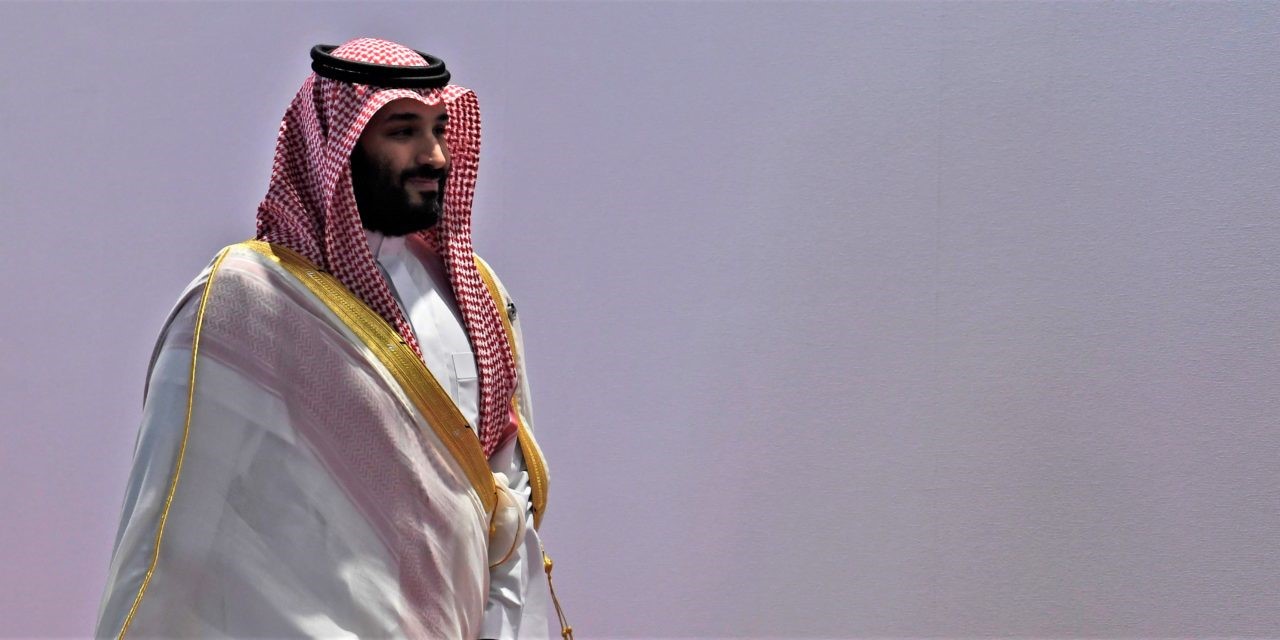 by James M. Dorsey This article was first published on Inside Arabia A podcast version of this story is available on Soundcloud, Itunes, Spotify, Stitcher, TuneIn, Spreaker, Pocket Casts, Tumblr, Podbean, Audecibel, Patreon and Castbox. Saudi Arabia’s oil spat with Russia throws a spanner into the works of the Kingdom’s long-standing effort to hedge its bets, a strategy that has taken on added significance as the Gulf comes to grips with the likelihood that the region’s security architecture will fundamentally change. Saudi Arabia, despite a primary focus on close ties to the United States, has increasingly sought to put its eggs in multiple baskets by initially forging closer military and economic relations with Britain, France, and Germany, and more recently with Russia and China. The Saudi strategy, stemming from mounting doubts about the reliability of the United States as an ally and protector of last resort, was showcased when China opened its first overseas defense production facility in Saudi Arabia for the manufacturing of the CH-4 Caihong, or Rainbow drone, as well as associated equipment. The CH-4 is comparable to the US armed MQ-9 Reaper drone that Washington has refused to sell to the Kingdom. Saudi Arabia’s willingness to undermine its hedging strategy by challenging Russia’s refusal to continue to align its production levels with that of the Organization of Oil Exporting Countries (OPEC) follows the Kingdom’s bowing to US pressure to acquire Lockheed Martin’s Terminal High Altitude Area Defense (THAAD) system rather than Russia’s S-400 anti-aircraft and anti-missile weapon. Mr. Putin made a last-ditch sales pitch last September after the Kingdom’s six battalions of US-made Patriot batteries failed to detect drone and missile attacks on two of the country’s key oil facilities that knocked out half of its production capacity. The decision by Mohammed bin Salman, known by his initials MbS, to confront Russia stemmed from a stark choice confronting the Crown Prince: endanger relations with the only power to have put forward a regional security plan that would have allowed the Kingdom to hedge its bets while maintaining close ties to the United States, or drive oil prices down in a bid to force Russia to coordinate production levels that would ensure a higher price. Ultimately, the Crown Prince’s choice was driven by economics rather than longer-term security. Low oil prices have already forced the Kingdom to borrow from international financial markets. $80 USD per barrel is the price it needs to balance its budget. It is also the price MbS needs for his ambitious plans to diversify and streamline the Saudi economy and turn it into a cutting edge 21st century knowledge hub. MbS may in some respects have shot himself in the foot even if his assumption proves correct that the Kingdom could win a price and production war and that Russian President Vladimir Putin would see a longer term move from a unipolar to a multilateral security arrangement in the Gulf as too big a prize to lose. Last year’s limited initial public offering (IPO) on the Saudi stock exchange by Aramco, the Kingdom’s national oil company, that constituted a crown jewel in MbS’ economic reform plans, failed to convincingly address fears that it was subject to the whims of the Kingdom’s ruling elite. The war with Russia may have convinced investors’ worst fears with Aramco raising capacity and production to help MbS with his gamble. “This has proved to investors that their worst fears about Aramco were a reality. The company’s plans and its output decisions are based on MbS’ erratic behavior,” said a Saudi official familiar with Aramco’s offering. MbS may not be the only one to suffer consequences of the oil war but his may be a tougher struggle because it involves restoration of trust. The setback for US shale oil companies that need a relatively high oil price to break even, the reason Russia was willing to go to war with Saudi Arabia, is likely to be temporary as was evident in 2014 when Saudi Arabia gunned for market share rather than price to drive American producers out of business. “A protracted crude oil price war on the supply side, combined with the simultaneous demand shock caused by Covid-19’s impact on economic activity, will hurt oil producers everywhere,” said Tilak K. Doshi, an energy scholar at the National University of Singapore’s Middle East Institute. If the Crown Prince’s decision was driven by domestic considerations, so was Mr. Putin’s. Yet, despite believing that OPEC had outlived its utility, Mr. Putin was taken aback by the ferocity of Saudi Arabia’s response to the Russian cancellation of its earlier production level agreement with OPEC, prompting Moscow to call for a return to the agreed levels for the first quarter of this year. “OPEC is finished, so is any attempt to ‘manage’ the oil market. US shale (as a fully privately owned industry) operates on aggressive free market principals. The Russians understand that and so does Saudi. The energy game (including alternatives) is now a survival of the fittest,” tweeted Ali Shihabi, a banker-turned-pro-Saudi-political commentator. In Russia, MbS is up against an opponent that could prove to have a longer breath. Dr. James M. Dorsey is an award-winning journalist and a senior fellow at Nanyang Technological University’s S. Rajaratnam School of International Studies in Singapore. He is also an adjunct senior research fellow at the National University of Singapore’s Middle East Institute and co-director of the University of Wuerzburg’s Institute of Fan Culture in Germany. |
| json metadata | {"tags":["saudiarabia","unitedstates","oil","energy","russia"],"image":["https://cdn.steemitimages.com/DQmVdvYH7ePrjBaEeAAYw6CAmuK32U2mg248Y9ZpKG45MnB/MbSInsArabia.jpg"],"app":"steemit/0.2","format":"markdown"} |
| Transaction Info | Block #41734090/Trx 1a58ce9a313eae603ee5eb0643b95d7d1a4e7b2b |
View Raw JSON Data
{
"trx_id": "1a58ce9a313eae603ee5eb0643b95d7d1a4e7b2b",
"block": 41734090,
"trx_in_block": 26,
"op_in_trx": 0,
"virtual_op": 0,
"timestamp": "2020-03-17T15:20:27",
"op": [
"comment",
{
"parent_author": "",
"parent_permlink": "saudiarabia",
"author": "mideastsoccer",
"permlink": "playing-for-higher-stakes-saudi-arabia-gambles-on-oil-war-with-russia",
"title": "Playing for Higher Stakes: Saudi Arabia Gambles on Oil War with Russia",
"body": "\n\nby James M. Dorsey\n\nThis article was first published on Inside Arabia\n\nA podcast version of this story is available on Soundcloud, Itunes, Spotify, Stitcher, TuneIn, Spreaker, Pocket Casts, Tumblr, Podbean, Audecibel, Patreon and Castbox.\nSaudi Arabia’s oil spat with Russia throws a spanner into the works of the Kingdom’s long-standing effort to hedge its bets, a strategy that has taken on added significance as the Gulf comes to grips with the likelihood that the region’s security architecture will fundamentally change.\nSaudi Arabia, despite a primary focus on close ties to the United States, has increasingly sought to put its eggs in multiple baskets by initially forging closer military and economic relations with Britain, France, and Germany, and more recently with Russia and China.\nThe Saudi strategy, stemming from mounting doubts about the reliability of the United States as an ally and protector of last resort, was showcased when China opened its first overseas defense production facility in Saudi Arabia for the manufacturing of the CH-4 Caihong, or Rainbow drone, as well as associated equipment.\nThe CH-4 is comparable to the US armed MQ-9 Reaper drone that Washington has refused to sell to the Kingdom.\nSaudi Arabia’s willingness to undermine its hedging strategy by challenging Russia’s refusal to continue to align its production levels with that of the Organization of Oil Exporting Countries (OPEC) follows the Kingdom’s bowing to US pressure to acquire Lockheed Martin’s Terminal High Altitude Area Defense (THAAD) system rather than Russia’s S-400 anti-aircraft and anti-missile weapon.\nMr. Putin made a last-ditch sales pitch last September after the Kingdom’s six battalions of US-made Patriot batteries failed to detect drone and missile attacks on two of the country’s key oil facilities that knocked out half of its production capacity.\nThe decision by Mohammed bin Salman, known by his initials MbS, to confront Russia stemmed from a stark choice confronting the Crown Prince: endanger relations with the only power to have put forward a regional security plan that would have allowed the Kingdom to hedge its bets while maintaining close ties to the United States, or drive oil prices down in a bid to force Russia to coordinate production levels that would ensure a higher price.\nUltimately, the Crown Prince’s choice was driven by economics rather than longer-term security.\nLow oil prices have already forced the Kingdom to borrow from international financial markets. $80 USD per barrel is the price it needs to balance its budget. It is also the price MbS needs for his ambitious plans to diversify and streamline the Saudi economy and turn it into a cutting edge 21st century knowledge hub.\n\nMbS may in some respects have shot himself in the foot even if his assumption proves correct that the Kingdom could win a price and production war and that Russian President Vladimir Putin would see a longer term move from a unipolar to a multilateral security arrangement in the Gulf as too big a prize to lose.\nLast year’s limited initial public offering (IPO) on the Saudi stock exchange by Aramco, the Kingdom’s national oil company, that constituted a crown jewel in MbS’ economic reform plans, failed to convincingly address fears that it was subject to the whims of the Kingdom’s ruling elite.\nThe war with Russia may have convinced investors’ worst fears with Aramco raising capacity and production to help MbS with his gamble.\n“This has proved to investors that their worst fears about Aramco were a reality. The company’s plans and its output decisions are based on MbS’ erratic behavior,” said a Saudi official familiar with Aramco’s offering.\nMbS may not be the only one to suffer consequences of the oil war but his may be a tougher struggle because it involves restoration of trust.\nThe setback for US shale oil companies that need a relatively high oil price to break even, the reason Russia was willing to go to war with Saudi Arabia, is likely to be temporary as was evident in 2014 when Saudi Arabia gunned for market share rather than price to drive American producers out of business.\n “A protracted crude oil price war on the supply side, combined with the simultaneous demand shock caused by Covid-19’s impact on economic activity, will hurt oil producers everywhere,” said Tilak K. Doshi, an energy scholar at the National University of Singapore’s Middle East Institute.\nIf the Crown Prince’s decision was driven by domestic considerations, so was Mr. Putin’s.\nYet, despite believing that OPEC had outlived its utility, Mr. Putin was taken aback by the ferocity of Saudi Arabia’s response to the Russian cancellation of its earlier production level agreement with OPEC, prompting Moscow to call for a return to the agreed levels for the first quarter of this year.\n“OPEC is finished, so is any attempt to ‘manage’ the oil market. US shale (as a fully privately owned industry) operates on aggressive free market principals. The Russians understand that and so does Saudi. The energy game (including alternatives) is now a survival of the fittest,” tweeted Ali Shihabi, a banker-turned-pro-Saudi-political commentator.\nIn Russia, MbS is up against an opponent that could prove to have a longer breath.\nDr. James M. Dorsey is an award-winning journalist and a senior fellow at Nanyang Technological University’s S. Rajaratnam School of International Studies in Singapore. He is also an adjunct senior research fellow at the National University of Singapore’s Middle East Institute and co-director of the University of Wuerzburg’s Institute of Fan Culture in Germany.",
"json_metadata": "{\"tags\":[\"saudiarabia\",\"unitedstates\",\"oil\",\"energy\",\"russia\"],\"image\":[\"https://cdn.steemitimages.com/DQmVdvYH7ePrjBaEeAAYw6CAmuK32U2mg248Y9ZpKG45MnB/MbSInsArabia.jpg\"],\"app\":\"steemit/0.2\",\"format\":\"markdown\"}"
}
]
}mideastsoccerpublished a new post: coronavirus-the-middle-east-s-lessons-not-learnt-and-missed-opportunities2020/03/16 05:45:03
mideastsoccerpublished a new post: coronavirus-the-middle-east-s-lessons-not-learnt-and-missed-opportunities
2020/03/16 05:45:03
| parent author | |
| parent permlink | coronavirus |
| author | mideastsoccer |
| permlink | coronavirus-the-middle-east-s-lessons-not-learnt-and-missed-opportunities |
| title | Coronavirus: The Middle East’s lessons not learnt and missed opportunities |
| body |  By James M. Dorsey A podcast version of this story is available on Soundcloud, Itunes, Spotify, Stitcher, TuneIn, Spreaker, Pocket Casts, Tumblr, Podbean, Audecibel, Patreon and Castbox. There is little indication that Middle Eastern rulers are learning the lessons of the Coronavirus’ devastating effect. Nor is there any suggestion that they are willing to see the pandemic as an opportunity to negotiate new social contracts at a time that the virus has temporarily taken the sails out of mass anti-government protests in various countries and discontent continues to simmer in others. On the contrary. Iran has become the poster child of what happens when the public distrusts a government that has a track record of being untransparent from the outset of a crisis, limits freedom of expression that often creates early warning systems that could enable authorities to take timely, pre-emptive measures to avert or limit the damage, and is perceived as corrupt. Iranian spiritual leader Ayatollah Ali Khamenei saw himself forced last week to bring in the military to clear the streets after Iranians, already struggling under the impact of harsh US economic sanctions, refused to adhere to public health warnings regarding large gatherings, social distancing. and advice to stay at home. Mr. Khamenei assigned the task to the regular armed forces after the Revolutionary Guards Corps failed to persuade Iranians to heed government advice regarding the epidemic that as of this writing has infected some 14,000 people and caused 724 deaths and turned Iran into one of the world’s hardest hit countries. The distrust has fuelled reports and rumours that casualties exceed by far government figures and that mass graves were being prepared to cope with a much higher than stated death toll. The Coronavirus hit Iran, that was slow to acknowledge the severity of the crisis, only weeks after large numbers took to the streets of Iranian cities denouncing Mr. Khamenei and the Guards in protest against the government’s initial reluctance to live up to its responsibility for the mistaken downing of a Ukrainian airliner that killed 176 people. Multiple Middle Eastern states, including Saudi Arabia, the United Arab Emirates, Qatar, Kuwait, Jordan and Israel have ordered closures of educational facilities, quarantines and taken steps to curtail, if not halt travel to and from Asian and European nations badly affected by the virus or temporarily interrupt all travel to their countries. Nonetheless, an exponential spread of the virus could stress test the national health systems in both energy-rich countries that have invested in state-of-the-art medical facilities as well as war-ravaged nations like Syria, Yemen and Libya where hospitals have been prime targets of devastating air strikes. Potential stress tests that fail could prove risky. Countries like Iraq, which is particularly exposed with its close ties to neighbouring Iran, Algeria and Lebanon, where many like in Iran defy advice to stay at home, have witnessed months of sustained mass anti-government protests demanding a complete overhaul of a political system perceived as corrupt and incapable of delivering public goods such as jobs, proper healthcare and other services. Governments have, however, shown little incentive to capitalize on the temporary dwindling of protests to forge new social contracts using the need to confront the virus threat nationally as a wedge. Fear of the virus coupled with government repression have seen the numbers of protesters in Baghdad’s Tahrir Square, where demonstrators initially insisted that Iraq’s political elite was a virus worse than Corona, drop from the thousands to several hundred at best. The same is true for Algeria and Lebanon, hit not only by the virus but also a financial crisis that is forcing it to default on its ballooning debt. "You won't be of much help to Algeria if you're dead," quipped one person on Twitter. Embattled governments see opportunity in the virus, just not one that will prevent the temporary lid on what is a boiling pot from exploding again once the crisis is over, possibly with greater vengeance if Corona exposes the authorities’ and the health system’s inability to cope. "In Algeria, the government's calls for cancelling the protests are not motivated by sanitary concerns as it is the case in France, the US or elsewhere,” said Riad Kaced, a US-based activist who flew to Algiers almost every second week to take part in the protests. “The Algerian regime wants to seize this opportunity to strangle the Hirak and kill it off," Mr. Kaced said, referring to the protest movement by its Arabic name. In that mould, the virus, which has so far infected 62 people in Saudi Arabia did not stop Crown Prince Mohammed bin Salman from rounding up potential opponents whom he suspected of plotting against him and launching an oil war with Russia that has wreaked havoc at a time that the global economy can least afford it. Another clear indication that Middle Eastern autocrats and discredited elites see no reason to use the virus crisis as a monkey wrench to reduce regional tensions and create political and social structures that would make their societies more resilient is their failure to crackdown on opinionmakers, influencers and rumour mongers that seek to weaponize Corona on tightly controlled mainstream and new media. The Saudi and United Arab Emirates governments remained silent while pro-government voices came to the defense of Saudi-based journalist Noura al-Moteari who tweeted that the virus and its spread had been funded by Qatar in order to undermine Prince Mohammed’s plans for social and economic reform and the UAE's upcoming Expo 2020. They also looked the other way, despite a Saudi government warning that rumour mongers could face jail terms of up to five years and a fine of up to USD 800,000, after analyst Zayed al-Amri claimed on Saudi television that Turkey and Iran were using the virus to target Arab tourists and attack countries across the globe. Said social media scholar Marc Owen Jones: ´Coronavirus is being opportunistically weaponised through disinformation and propaganda tactics aimed at demonising political opponents, while exposing latent prejudices.” The Coronavirus crisis is taking its toll, including the lives of many that good and transparent governance possibly could have saved. Ultimately, authorities will get a grip on it. However, Corona wasn’t the first such crisis and won’t be the last. The risk is that weaponization serves rulers’ short-term interests but contributes little to building the kind of national and regional resilience and cohesion needed to confront the next one. Dr. James M. Dorsey is a senior fellow at Nanyang Technological University’s S. Rajaratnam School of International Studies, an adjunct senior research fellow at the National University of Singapore’s Middle East Institute and co-director of the University of Wuerzburg’s Institute of Fan Culture |
| json metadata | {"tags":["coronavirus","health","middleeast","iran","saudi"],"image":["https://cdn.steemitimages.com/DQmNPVepyjQMT16TBDAqsCQr5stB8xTDzoewV33nB2PaTAF/IranDefMinVirus.jpg"],"app":"steemit/0.2","format":"markdown"} |
| Transaction Info | Block #41693863/Trx 9d9f498c8c538d97342217203ba3b17d8435aa1e |
View Raw JSON Data
{
"trx_id": "9d9f498c8c538d97342217203ba3b17d8435aa1e",
"block": 41693863,
"trx_in_block": 11,
"op_in_trx": 0,
"virtual_op": 0,
"timestamp": "2020-03-16T05:45:03",
"op": [
"comment",
{
"parent_author": "",
"parent_permlink": "coronavirus",
"author": "mideastsoccer",
"permlink": "coronavirus-the-middle-east-s-lessons-not-learnt-and-missed-opportunities",
"title": "Coronavirus: The Middle East’s lessons not learnt and missed opportunities",
"body": "\n\nBy James M. Dorsey\nA podcast version of this story is available on Soundcloud, Itunes, Spotify, Stitcher, TuneIn, Spreaker, Pocket Casts, Tumblr, Podbean, Audecibel, Patreon and Castbox.\nThere is little indication that Middle Eastern rulers are learning the lessons of the Coronavirus’ devastating effect. \nNor is there any suggestion that they are willing to see the pandemic as an opportunity to negotiate new social contracts at a time that the virus has temporarily taken the sails out of mass anti-government protests in various countries and discontent continues to simmer in others.\nOn the contrary.\nIran has become the poster child of what happens when the public distrusts a government that has a track record of being untransparent from the outset of a crisis, limits freedom of expression that often creates early warning systems that could enable authorities to take timely, pre-emptive measures to avert or limit the damage, and is perceived as corrupt.\nIranian spiritual leader Ayatollah Ali Khamenei saw himself forced last week to bring in the military to clear the streets after Iranians, already struggling under the impact of harsh US economic sanctions, refused to adhere to public health warnings regarding large gatherings, social distancing. and advice to stay at home.\nMr. Khamenei assigned the task to the regular armed forces after the Revolutionary Guards Corps failed to persuade Iranians to heed government advice regarding the epidemic that as of this writing has infected some 14,000 people and caused 724 deaths and turned Iran into one of the world’s hardest hit countries.\nThe distrust has fuelled reports and rumours that casualties exceed by far government figures and that mass graves were being prepared to cope with a much higher than stated death toll.\nThe Coronavirus hit Iran, that was slow to acknowledge the severity of the crisis, only weeks after large numbers took to the streets of Iranian cities denouncing Mr. Khamenei and the Guards in protest against the government’s initial reluctance to live up to its responsibility for the mistaken downing of a Ukrainian airliner that killed 176 people. \nMultiple Middle Eastern states, including Saudi Arabia, the United Arab Emirates, Qatar, Kuwait, Jordan and Israel have ordered closures of educational facilities, quarantines and taken steps to curtail, if not halt travel to and from Asian and European nations badly affected by the virus or temporarily interrupt all travel to their countries.\nNonetheless, an exponential spread of the virus could stress test the national health systems in both energy-rich countries that have invested in state-of-the-art medical facilities as well as war-ravaged nations like Syria, Yemen and Libya where hospitals have been prime targets of devastating air strikes.\nPotential stress tests that fail could prove risky.\nCountries like Iraq, which is particularly exposed with its close ties to neighbouring Iran, Algeria and Lebanon, where many like in Iran defy advice to stay at home, have witnessed months of sustained mass anti-government protests demanding a complete overhaul of a political system perceived as corrupt and incapable of delivering public goods such as jobs, proper healthcare and other services.\nGovernments have, however, shown little incentive to capitalize on the temporary dwindling of protests to forge new social contracts using the need to confront the virus threat nationally as a wedge.\nFear of the virus coupled with government repression have seen the numbers of protesters in Baghdad’s Tahrir Square, where demonstrators initially insisted that Iraq’s political elite was a virus worse than Corona, drop from the thousands to several hundred at best.\nThe same is true for Algeria and Lebanon, hit not only by the virus but also a financial crisis that is forcing it to default on its ballooning debt. \n\"You won't be of much help to Algeria if you're dead,\" quipped one person on Twitter.\nEmbattled governments see opportunity in the virus, just not one that will prevent the temporary lid on what is a boiling pot from exploding again once the crisis is over, possibly with greater vengeance if Corona exposes the authorities’ and the health system’s inability to cope.\n\"In Algeria, the government's calls for cancelling the protests are not motivated by sanitary concerns as it is the case in France, the US or elsewhere,” said Riad Kaced, a US-based activist who flew to Algiers almost every second week to take part in the protests.\n“The Algerian regime wants to seize this opportunity to strangle the Hirak and kill it off,\" Mr. Kaced said, referring to the protest movement by its Arabic name.\nIn that mould, the virus, which has so far infected 62 people in Saudi Arabia did not stop Crown Prince Mohammed bin Salman from rounding up potential opponents whom he suspected of plotting against him and launching an oil war with Russia that has wreaked havoc at a time that the global economy can least afford it.\nAnother clear indication that Middle Eastern autocrats and discredited elites see no reason to use the virus crisis as a monkey wrench to reduce regional tensions and create political and social structures that would make their societies more resilient is their failure to crackdown on opinionmakers, influencers and rumour mongers that seek to weaponize Corona on tightly controlled mainstream and new media.\nThe Saudi and United Arab Emirates governments remained silent while pro-government voices came to the defense of Saudi-based journalist Noura al-Moteari who tweeted that the virus and its spread had been funded by Qatar in order to undermine Prince Mohammed’s plans for social and economic reform and the UAE's upcoming Expo 2020.\nThey also looked the other way, despite a Saudi government warning that rumour mongers could face jail terms of up to five years and a fine of up to USD 800,000, after analyst Zayed al-Amri claimed on Saudi television that Turkey and Iran were using the virus to target Arab tourists and attack countries across the globe.\nSaid social media scholar Marc Owen Jones: ´Coronavirus is being opportunistically weaponised through disinformation and propaganda tactics aimed at demonising political opponents, while exposing latent prejudices.”\nThe Coronavirus crisis is taking its toll, including the lives of many that good and transparent governance possibly could have saved. Ultimately, authorities will get a grip on it.\nHowever, Corona wasn’t the first such crisis and won’t be the last. The risk is that weaponization serves rulers’ short-term interests but contributes little to building the kind of national and regional resilience and cohesion needed to confront the next one.\nDr. James M. Dorsey is a senior fellow at Nanyang Technological University’s S. Rajaratnam School of International Studies, an adjunct senior research fellow at the National University of Singapore’s Middle East Institute and co-director of the University of Wuerzburg’s Institute of Fan Culture",
"json_metadata": "{\"tags\":[\"coronavirus\",\"health\",\"middleeast\",\"iran\",\"saudi\"],\"image\":[\"https://cdn.steemitimages.com/DQmNPVepyjQMT16TBDAqsCQr5stB8xTDzoewV33nB2PaTAF/IranDefMinVirus.jpg\"],\"app\":\"steemit/0.2\",\"format\":\"markdown\"}"
}
]
}2020/03/11 14:01:45
2020/03/11 14:01:45
| voter | shares |
| author | mideastsoccer |
| permlink | biden-sanders-or-trump-us-policy-towards-the-gulf-will-change-regardless |
| weight | 500 (5.00%) |
| Transaction Info | Block #41560023/Trx 766dd6c27d432b873652a6463ae032cecaf80373 |
View Raw JSON Data
{
  "trx_id": "766dd6c27d432b873652a6463ae032cecaf80373",
  "block": 41560023,
  "trx_in_block": 15,
  "op_in_trx": 0,
  "virtual_op": 0,
  "timestamp": "2020-03-11T14:01:45",
  "op": [
    "vote",
    {
      "voter": "shares",
      "author": "mideastsoccer",
      "permlink": "biden-sanders-or-trump-us-policy-towards-the-gulf-will-change-regardless",
      "weight": 500
    }
  ]
}2020/03/11 14:01:42
2020/03/11 14:01:42
| voter | yehey |
| author | mideastsoccer |
| permlink | biden-sanders-or-trump-us-policy-towards-the-gulf-will-change-regardless |
| weight | 1000 (10.00%) |
| Transaction Info | Block #41560022/Trx 2c9fff35bf52660773b04c24a11fb2a4549fe4d0 |
View Raw JSON Data
{
  "trx_id": "2c9fff35bf52660773b04c24a11fb2a4549fe4d0",
  "block": 41560022,
  "trx_in_block": 8,
  "op_in_trx": 0,
  "virtual_op": 0,
  "timestamp": "2020-03-11T14:01:42",
  "op": [
    "vote",
    {
      "voter": "yehey",
      "author": "mideastsoccer",
      "permlink": "biden-sanders-or-trump-us-policy-towards-the-gulf-will-change-regardless",
      "weight": 1000
    }
  ]
}2020/03/11 13:29:51
2020/03/11 13:29:51
| voter | laissez-faire |
| author | mideastsoccer |
| permlink | biden-sanders-or-trump-us-policy-towards-the-gulf-will-change-regardless |
| weight | 10000 (100.00%) |
| Transaction Info | Block #41559388/Trx a8f8b91daed334e994010401237ace594fc0e202 |
View Raw JSON Data
{
  "trx_id": "a8f8b91daed334e994010401237ace594fc0e202",
  "block": 41559388,
  "trx_in_block": 9,
  "op_in_trx": 0,
  "virtual_op": 0,
  "timestamp": "2020-03-11T13:29:51",
  "op": [
    "vote",
    {
      "voter": "laissez-faire",
      "author": "mideastsoccer",
      "permlink": "biden-sanders-or-trump-us-policy-towards-the-gulf-will-change-regardless",
      "weight": 10000
    }
  ]
}2020/03/11 13:29:45
2020/03/11 13:29:45
| voter | anomaly |
| author | mideastsoccer |
| permlink | biden-sanders-or-trump-us-policy-towards-the-gulf-will-change-regardless |
| weight | 100 (1.00%) |
| Transaction Info | Block #41559386/Trx 35038bf369de0672d76c9066cd1f72cf92897ddf |
View Raw JSON Data
{
  "trx_id": "35038bf369de0672d76c9066cd1f72cf92897ddf",
  "block": 41559386,
  "trx_in_block": 12,
  "op_in_trx": 0,
  "virtual_op": 0,
  "timestamp": "2020-03-11T13:29:45",
  "op": [
    "vote",
    {
      "voter": "anomaly",
      "author": "mideastsoccer",
      "permlink": "biden-sanders-or-trump-us-policy-towards-the-gulf-will-change-regardless",
      "weight": 100
    }
  ]
}mideastsoccerpublished a new post: biden-sanders-or-trump-us-policy-towards-the-gulf-will-change-regardless2020/03/11 13:28:48
mideastsoccerpublished a new post: biden-sanders-or-trump-us-policy-towards-the-gulf-will-change-regardless
2020/03/11 13:28:48
| parent author | |
| parent permlink | trump |
| author | mideastsoccer |
| permlink | biden-sanders-or-trump-us-policy-towards-the-gulf-will-change-regardless |
| title | Biden, Sanders, or Trump: US Policy Towards the Gulf Will Change Regardless |
| body | 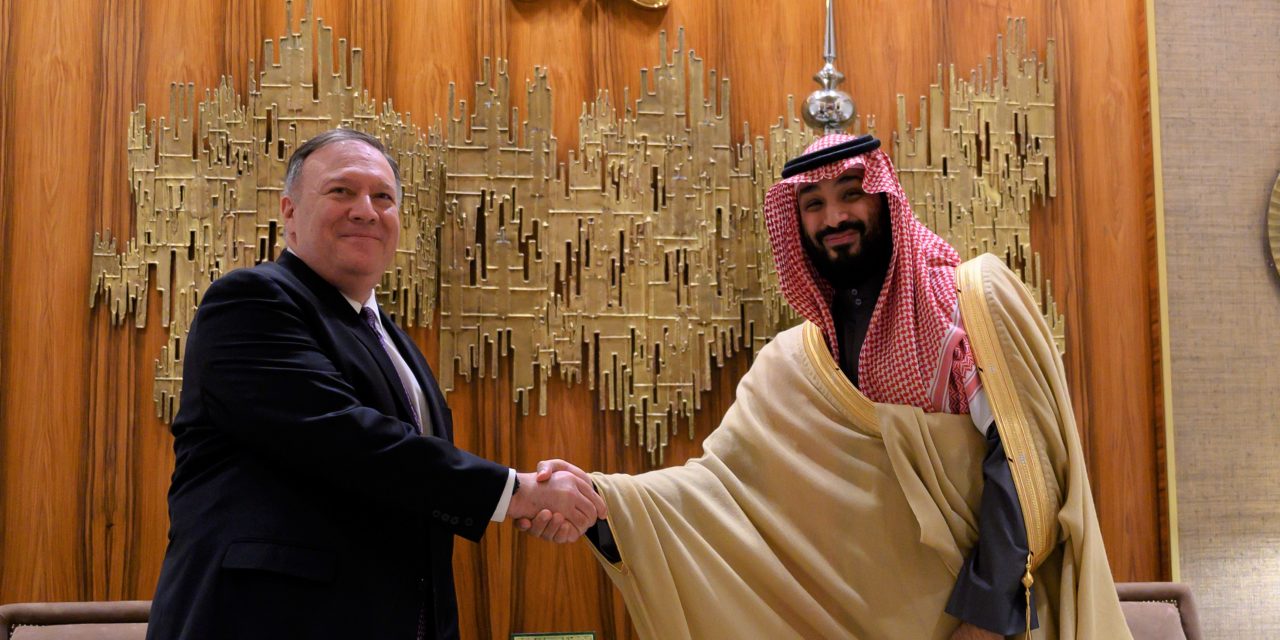 By James M. Dorsey This story was first published on Inside Arabia. A podcast version of this story is available on Soundcloud, Itunes, Spotify, Stitcher, TuneIn, Spreaker, Pocket Casts, Tumblr, Podbean, Audecibel, Patreon and Castbox. The fight in this week’s Democratic primaries may have been about who confronts Donald J. Trump in November’s US presidential election, Bernie Sanders or Joe Biden. But irrespective of who wins the primaries and the election, one thing is certain: the next American leader will preside over fundamental changes in the US military commitment to the Gulf and what a new regional security architecture will look like. No doubt, a President Sanders, based on his electoral campaign promises, would likely oversee the most fundamental shift in US policy towards the Gulf and the rest of the Middle East in decades. Yet, even if Mr. Sanders fails to become the Democratic candidate in the November election, or loses to Mr. Trump, significant elements of his thinking are certain to be at the core of the next administration’s policy, reflecting a broader trend in US attitudes towards foreign engagements in general and the Middle East in particular. It’s hard to think of anything that Messrs.Sanders and Trump would agree on. And even if there is something, like a reduced commitment to Gulf security, they would do everything to deny that there is any common ground. Yet, that is perhaps the only thing they agree on. However, the difference between the two men is that Mr. Trump, who lacks a policy vision that goes beyond slogans like “Make America Great Again” and “Why should the United States shoulder the responsibility of others?”, has no issue with repeatedly reversing himself and sees Saudi Arabia, the United Arab Emirates, and Israel as his guardrails. Irrespective of whether one agrees with Mr. Sanders or not, or how realistic one thinks his vision is, it is beyond doubt that he has thought through a concept of what American policy towards the Middle East should be. As a result, a Sanders presidency, viewed with apprehension by countries like Israel, Saudi Arabia, and the UAE, whom the Democrats’ most left-wing hopeful has targeted, could prove to be either the most constructive US government in changing the region’s political landscape or the most divisive and destructive. The changing landscape is likely to be driven by the US desire to reduce its military commitment and nagging Gulf doubts about US reliability. Doubts that began with US President Barak Obama’s support for the 2011 popular Arab revolts and his nuclear deal with Iran and were later reinforced by Mr. Trump’s unpredictability and refusal to respond forcefully to multiple Iranian provocations, including last September’s attack on two key Saudi oil facilities. The killing in January by US drones of Iranian General Qassem Soleimani was seen by Gulf states as the welcome taking out of a feared and wily opponent but also as an operation that risked dragging the region into a full-fledged war. Mr. Trump has further raised questions with his insistence that his withdrawal from the 2015 nuclear deal that curbed Iran’s nuclear program and sanctions-driven maximum pressure campaign are producing results. As a result, a move towards a multilateral security architecture looks increasingly attractive given the regional uncertainty about the outcome of the US election and the fact that neither China nor Russia is willing or capable on their own of replacing the US as the Gulf’s security guarantor. While Mr. Biden has ruffled few Middle Eastern feathers even though he is expected to hue closer to Mr. Obama’s approach, Mr. Sanders has raised alarms in Riyadh and Jerusalem with his campaign promise to re-join the nuclear agreement on the first day of his presidency even though, in theory, a return could facilitate achieving some kind of regional non-aggression understanding. Such an understanding is at the core of Russian and Iranian proposals for a multilateral arrangement that would embed the current unipolar US defense umbrella that was designed to protect the conservative Gulf states against Iran. The degree to which Mr. Sanders’ intention to revive the agreement with Iran facilitates a broader agreement or complicates a transition to a multilateral arrangement is nonetheless likely to depend on whether and how Israel, Saudi Arabia, and the UAE respond to Mr. Sanders’ policy. The glass is half full or half empty on that count. The Saudis, Emiratis, and Israelis were opposed to the original agreement. A sense in Riyadh and Abu Dhabi that Saudi and UAE interests had been ignored during the negotiations with Iran and that the US could no longer be fully trusted prompted them to embark on a series of reckless policies. That perception of mistrust sparked the disastrous war in Yemen and persuaded them to forge close albeit informal ties with Israel, which views the regime in Tehran as an existential threat. A Sanders administration that takes the Gulf states to task on human rights issues, and targets economic structures that enable the oil-rich states’ dollar diplomacy—even if it embraces Palestinian national rights—could convince them to do what it takes to counter the new president and thwart his initiatives. By the same token, Mr. Trump’s perceived unreliability prompted the UAE and Saudi Arabia to reach out to Iran. The Emiratis appear to have made progress in lowering tensions while indirect Saudi-Iranian contacts broke down with the Soleimani killing. A progressive US military disengagement from the Gulf and Iraq as well as a halt to support of the Saudi engagement in Yemen under Mr. Sanders could blow new life into regional efforts to create an environment conducive to a rejiggered security architecture. Said international affairs scholar Dania Koleilat Khatib: “Though some might see a Sanders presidency as causing more turbulence in the region, as he will likely let Iran loose, the chances are that he will lead a more multilateral approach, giving more space for the UN to resolve the conflicts in the region.” Dr. James M. Dorsey is a senior fellow at Nanyang Technological University’s S. Rajaratnam School of International Studies, an adjunct senior research fellow at the National University of Singapore’s Middle East Institute and co-director of the University of Wuerzburg’s Institute of Fan Culture |
| json metadata | {"tags":["trump","middleeast","china","russia","saudiarabia"],"image":["https://cdn.steemitimages.com/DQmYMTgoso1YjtnSsBYZbR1GJG9XiJfDNWAFoFWGqxGpCVF/PompeoMbS.jpg"],"app":"steemit/0.2","format":"markdown"} |
| Transaction Info | Block #41559367/Trx a6c985f61b57c7470bba401229d49dd3062ee32a |
View Raw JSON Data
{
"trx_id": "a6c985f61b57c7470bba401229d49dd3062ee32a",
"block": 41559367,
"trx_in_block": 21,
"op_in_trx": 0,
"virtual_op": 0,
"timestamp": "2020-03-11T13:28:48",
"op": [
"comment",
{
"parent_author": "",
"parent_permlink": "trump",
"author": "mideastsoccer",
"permlink": "biden-sanders-or-trump-us-policy-towards-the-gulf-will-change-regardless",
"title": "Biden, Sanders, or Trump: US Policy Towards the Gulf Will Change Regardless",
"body": "\n\nBy James M. Dorsey\nThis story was first published on Inside Arabia.\nA podcast version of this story is available on Soundcloud, Itunes, Spotify, Stitcher, TuneIn, Spreaker, Pocket Casts, Tumblr, Podbean, Audecibel, Patreon and Castbox.\nThe fight in this week’s Democratic primaries may have been about who confronts Donald J. Trump in November’s US presidential election, Bernie Sanders or Joe Biden. But irrespective of who wins the primaries and the election, one thing is certain: the next American leader will preside over fundamental changes in the US military commitment to the Gulf and what a new regional security architecture will look like.\nNo doubt, a President Sanders, based on his electoral campaign promises, would likely oversee the most fundamental shift in US policy towards the Gulf and the rest of the Middle East in decades.\nYet, even if Mr. Sanders fails to become the Democratic candidate in the November election, or loses to Mr. Trump, significant elements of his thinking are certain to be at the core of the next administration’s policy, reflecting a broader trend in US attitudes towards foreign engagements in general and the Middle East in particular.\nIt’s hard to think of anything that Messrs.Sanders and Trump would agree on. And even if there is something, like a reduced commitment to Gulf security, they would do everything to deny that there is any common ground.\nYet, that is perhaps the only thing they agree on.\nHowever, the difference between the two men is that Mr. Trump, who lacks a policy vision that goes beyond slogans like “Make America Great Again” and “Why should the United States shoulder the responsibility of others?”, has no issue with repeatedly reversing himself and sees Saudi Arabia, the United Arab Emirates, and Israel as his guardrails.\nIrrespective of whether one agrees with Mr. Sanders or not, or how realistic one thinks his vision is, it is beyond doubt that he has thought through a concept of what American policy towards the Middle East should be.\nAs a result, a Sanders presidency, viewed with apprehension by countries like Israel, Saudi Arabia, and the UAE, whom the Democrats’ most left-wing hopeful has targeted, could prove to be either the most constructive US government in changing the region’s political landscape or the most divisive and destructive.\nThe changing landscape is likely to be driven by the US desire to reduce its military commitment and nagging Gulf doubts about US reliability. Doubts that began with US President Barak Obama’s support for the 2011 popular Arab revolts and his nuclear deal with Iran and were later reinforced by Mr. Trump’s unpredictability and refusal to respond forcefully to multiple Iranian provocations, including last September’s attack on two key Saudi oil facilities.\nThe killing in January by US drones of Iranian General Qassem Soleimani was seen by Gulf states as the welcome taking out of a feared and wily opponent but also as an operation that risked dragging the region into a full-fledged war.\nMr. Trump has further raised questions with his insistence that his withdrawal from the 2015 nuclear deal that curbed Iran’s nuclear program and sanctions-driven maximum pressure campaign are producing results.\nAs a result, a move towards a multilateral security architecture looks increasingly attractive given the regional uncertainty about the outcome of the US election and the fact that neither China nor Russia is willing or capable on their own of replacing the US as the Gulf’s security guarantor.\nWhile Mr. Biden has ruffled few Middle Eastern feathers even though he is expected to hue closer to Mr. Obama’s approach, Mr. Sanders has raised alarms in Riyadh and Jerusalem with his campaign promise to re-join the nuclear agreement on the first day of his presidency even though, in theory, a return could facilitate achieving some kind of regional non-aggression understanding.\nSuch an understanding is at the core of Russian and Iranian proposals for a multilateral arrangement that would embed the current unipolar US defense umbrella that was designed to protect the conservative Gulf states against Iran.\nThe degree to which Mr. Sanders’ intention to revive the agreement with Iran facilitates a broader agreement or complicates a transition to a multilateral arrangement is nonetheless likely to depend on whether and how Israel, Saudi Arabia, and the UAE respond to Mr. Sanders’ policy.\nThe glass is half full or half empty on that count.\nThe Saudis, Emiratis, and Israelis were opposed to the original agreement.\nA sense in Riyadh and Abu Dhabi that Saudi and UAE interests had been ignored during the negotiations with Iran and that the US could no longer be fully trusted prompted them to embark on a series of reckless policies. That perception of mistrust sparked the disastrous war in Yemen and persuaded them to forge close albeit informal ties with Israel, which views the regime in Tehran as an existential threat.\nA Sanders administration that takes the Gulf states to task on human rights issues, and targets economic structures that enable the oil-rich states’ dollar diplomacy—even if it embraces Palestinian national rights—could convince them to do what it takes to counter the new president and thwart his initiatives.\nBy the same token, Mr. Trump’s perceived unreliability prompted the UAE and Saudi Arabia to reach out to Iran. The Emiratis appear to have made progress in lowering tensions while indirect Saudi-Iranian contacts broke down with the Soleimani killing.\nA progressive US military disengagement from the Gulf and Iraq as well as a halt to support of the Saudi engagement in Yemen under Mr. Sanders could blow new life into regional efforts to create an environment conducive to a rejiggered security architecture.\nSaid international affairs scholar Dania Koleilat Khatib: “Though some might see a Sanders presidency as causing more turbulence in the region, as he will likely let Iran loose, the chances are that he will lead a more multilateral approach, giving more space for the UN to resolve the conflicts in the region.”\nDr. James M. Dorsey is a senior fellow at Nanyang Technological University’s S. Rajaratnam School of International Studies, an adjunct senior research fellow at the National University of Singapore’s Middle East Institute and co-director of the University of Wuerzburg’s Institute of Fan Culture",
"json_metadata": "{\"tags\":[\"trump\",\"middleeast\",\"china\",\"russia\",\"saudiarabia\"],\"image\":[\"https://cdn.steemitimages.com/DQmYMTgoso1YjtnSsBYZbR1GJG9XiJfDNWAFoFWGqxGpCVF/PompeoMbS.jpg\"],\"app\":\"steemit/0.2\",\"format\":\"markdown\"}"
}
]
}mideastsoccerpublished a new post: the-long-term-political-fallout-of-coronavirus2020/03/08 11:44:21
mideastsoccerpublished a new post: the-long-term-political-fallout-of-coronavirus
2020/03/08 11:44:21
| parent author | |
| parent permlink | coronavirus |
| author | mideastsoccer |
| permlink | the-long-term-political-fallout-of-coronavirus |
| title | The Long-term Political Fallout of Coronavirus |
| body |  By James M. Dorsey A podcast version of this story is available on Soundcloud, Itunes, Spotify, Stitcher, TuneIn, Spreaker, Pocket Casts, Tumblr, Podbean, Audecibel, Patreon and Castbox. As the coronavirus spreads, so does its likely political fallout. For authoritarians and autocrats, the fallout is likely to be a mixed bag. Some will benefit from invasive tracing and monitoring of those affected by the virus that is likely to boost the evolution towards a Big Brother and surveillance state as well as nationalist economic policies propagated by populists and nationalists like US President Donald J. Trump. Others are seeing perceived government failures to confront the virus effectively early on further undermine public trust and fuel demands for greater transparency, accountability and freedom of expression. For religious ultra-conservatives, including Salafi minorities in non-Muslim nations who are in the firing line because of their refusal to adopt to Western habits like men shaking the hand of women, the virus is likely to reap benefits. The question is whether the threat of endemics and pandemics that are egalitarian in the extreme and recognize no physical or social borders will prompt the international community to take note of the risk of breakdowns in already weak public health systems in conflict situations such as Syria, Yemen and Libya. The risks are magnified by the deliberate targeting of hospitals and other medical facilities and the mass dislocation of millions who are forced into bare-knuckle, unhygienic refugee camps with hardly any services and rampant malnutrition. Protesters in countries like Iraq and Thailand, demanding an overhaul of the political system, and Hong Kong where reform is the driver, have dashed government hopes that fear of contagion would take the wind out of the demonstrators’ sails. Protesters in Iraq, that has so far reported 40 cases and three deaths, refused to abandon mass public gatherings, calling instead for the virus to take its toll on the country’s leadership. "Listen to us Corona, come and visit the thieves who stole our wealth, come and take revenge from who stole our dreams, we only loved our homeland, but they killed us,” protesters chanted. “The government uses coronavirus as an excuse to end the protests. They tried everything — snipers, live bullets, tear gas, abduction and so on and on — but they failed. They are now finding another way to stop us, but they will fail again,” said Yasamin Mustafa, a teenage protester from Basra, referring to government warnings about the virus. Similarly, students in Thailand have ignored calls by military-backed Prime Minister Prayuth Chan-Ocha for an end to protests because of the virus risk. The students are demanding Mr. Prayuth’s resignation and political reforms after the Constitutional Court disbanded Future Forward, a popular pro-democracy party. In Hong Kong, with Chief Executive Carrie Lam’s approval rating sinking to a record low of just 9.1% after her government faced criticism over its handling of the virus, protests have moved from the street to online public gatherings in support of long-standing demands for reform. At the same time, Ms. Lam’s backers in Beijing are confronting demands for greater freedom of speech at a moment that the government of President Xi Jinping has imposed absolute media conformity. Mr Xi’s critics insist that greater transparency and freedom could have prevented the virus from turning China into the world’s most affected country with yet to be fully appreciated severe economic consequences. Writing in The Wall Street Journal, Bloomberg’s former China bureau chief Dexter Roberts warned that the long-term fallout of the virus could be fundamental with hundreds of millions of domestic migrant workers “still facing unprecedented virus-related disruptions in their lives and work” as incomes have dried up, aggravated by enforced quarantines and “a skewed health care system (that) relegates (them) to understaffed and underfunded clinics.” The government, like in the wake of the SARS crisis in 2003, will likely benefit in the short-term from middle- and upper-class support for increased political and social controls enabled by its roll out of a 21st century Orwellian surveillance state, Mr. Roberts argued. “The coronavirus may eventually fade as a threat, but it has exposed the deep inequities that divide Chinese into two classes… That split remains the biggest obstacle to China’s development” with the disadvantaged migrant workers posing “the biggest threat to its economic and political future,” Mr. Roberts said. The virus crisis certainly was not the last nail in the Iranian government’s coffin, but it has significantly widened an already yawning gap in public trust ripped open by widespread corruption, repressive policies, lack of transparency and the government’s handling of the downing in January of a Ukrainian airliner. "The relationship between the government and the public is severely damaged. The government is suffering a massive loss of confidence. And this shows in critical situations like now. Due to this distrust, society ignores information given out by the government. In recent weeks, the government has too often had to correct its own statements." said sociologist Saeed Paivandi. Mr. Paivandi was referring to faltering efforts by supreme leader Ayatollah Ali Khamenei and the government to persuade Iranians to observe disruptive health precautions at a time that the country is struggling to cope with the devastating economic impact of harsh US sanctions that have complicated its access to medical products. Initial government failure to confront the crisis head on by, for example, quarantining the holy city of Qom, the Iranian hub of the virus, coupled with the sanctions that have turned Iran into a source of the virus elsewhere in the Middle East and beyond, threatens to put the Islamic republic in the same risk category as Syria, Yemen and Libya. The virus crisis is also grist for nationalists’ mills, prompting Mr. Trump to pressure US pharmaceutical companies that have moved overseas to shift their operations back to the United States. “The coronavirus shows the importance of bringing manufacturing back to America so that we are producing, at home, the medicines and equipment and everything else that we need to protect the public’s health,” Mr. Trump said. If Mr. Trump sees a silver lining in the virus crisis, so do religious ultra-conservatives and critics of European measures to impose Western behaviour on segments of Muslim minority communities. With governments advising against customary physical greetings such as handshakes, kissing and hugs, ultra-conservatives like Salafis who refuse to shake a women’s hand argue privately that that their attitude is going mainstream at a time that their practices are under fire in Europe. Dutch parliamentarians last month took Salafis to task for their refusal, arguing in a parliamentary inquiry into “unwanted influencing by unfree countries” that shaking a woman’s hand was part of Dutch culture and refusal to do so impeded integration. The Coronavirus has, at least for now, undermined that argument. Danish authorities have suspended citizenship naturalization ceremonies that require a handshake as part of the process in line with legislation adopted in 2018 to force the hand of ultra-conservatives that refuse to shake hands with the opposite sex. Critics of the law said the suspension highlighted the absurdity of forcing people to have physical contact. “It’s absurd. The path to Danish citizenship should be about inclusion, not exclusion,” said Peder Hvelplund, a green lawmaker. Dr. James M. Dorsey is a senior fellow at Nanyang Technological University’s S. Rajaratnam School of International Studies, an adjunct senior research fellow at the National University of Singapore’s Middle East Institute and co-director of the University of Wuerzburg’s Institute of Fan Culture |
| json metadata | {"tags":["coronavirus","health","china","iran","trump"],"image":["https://cdn.steemitimages.com/DQmaDAr6YgmyB4RhB4F89hLy9Vqba6kLLY2azgUaEN3jCTL/IranVirus.jpg"],"app":"steemit/0.2","format":"markdown"} |
| Transaction Info | Block #41471053/Trx b894e7238d3a0dcc54f00bc53904280cc5b6b970 |
View Raw JSON Data
{
"trx_id": "b894e7238d3a0dcc54f00bc53904280cc5b6b970",
"block": 41471053,
"trx_in_block": 23,
"op_in_trx": 0,
"virtual_op": 0,
"timestamp": "2020-03-08T11:44:21",
"op": [
"comment",
{
"parent_author": "",
"parent_permlink": "coronavirus",
"author": "mideastsoccer",
"permlink": "the-long-term-political-fallout-of-coronavirus",
"title": "The Long-term Political Fallout of Coronavirus",
"body": "\n\nBy James M. Dorsey\nA podcast version of this story is available on Soundcloud, Itunes, Spotify, Stitcher, TuneIn, Spreaker, Pocket Casts, Tumblr, Podbean, Audecibel, Patreon and Castbox.\nAs the coronavirus spreads, so does its likely political fallout.\nFor authoritarians and autocrats, the fallout is likely to be a mixed bag. \nSome will benefit from invasive tracing and monitoring of those affected by the virus that is likely to boost the evolution towards a Big Brother and surveillance state as well as nationalist economic policies propagated by populists and nationalists like US President Donald J. Trump.\nOthers are seeing perceived government failures to confront the virus effectively early on further undermine public trust and fuel demands for greater transparency, accountability and freedom of expression.\nFor religious ultra-conservatives, including Salafi minorities in non-Muslim nations who are in the firing line because of their refusal to adopt to Western habits like men shaking the hand of women, the virus is likely to reap benefits. \nThe question is whether the threat of endemics and pandemics that are egalitarian in the extreme and recognize no physical or social borders will prompt the international community to take note of the risk of breakdowns in already weak public health systems in conflict situations such as Syria, Yemen and Libya. \nThe risks are magnified by the deliberate targeting of hospitals and other medical facilities and the mass dislocation of millions who are forced into bare-knuckle, unhygienic refugee camps with hardly any services and rampant malnutrition.\nProtesters in countries like Iraq and Thailand, demanding an overhaul of the political system, and Hong Kong where reform is the driver, have dashed government hopes that fear of contagion would take the wind out of the demonstrators’ sails.\nProtesters in Iraq, that has so far reported 40 cases and three deaths, refused to abandon mass public gatherings, calling instead for the virus to take its toll on the country’s leadership.\n\"Listen to us Corona, come and visit the thieves who stole our wealth, come and take revenge from who stole our dreams, we only loved our homeland, but they killed us,” protesters chanted.\n“The government uses coronavirus as an excuse to end the protests. They tried everything — snipers, live bullets, tear gas, abduction and so on and on — but they failed. They are now finding another way to stop us, but they will fail again,” said Yasamin Mustafa, a teenage protester from Basra, referring to government warnings about the virus.\nSimilarly, students in Thailand have ignored calls by military-backed Prime Minister Prayuth Chan-Ocha for an end to protests because of the virus risk. The students are demanding Mr. Prayuth’s resignation and political reforms after the Constitutional Court disbanded Future Forward, a popular pro-democracy party.\nIn Hong Kong, with Chief Executive Carrie Lam’s approval rating sinking to a record low of just 9.1% after her government faced criticism over its handling of the virus, protests have moved from the street to online public gatherings in support of long-standing demands for reform.\nAt the same time, Ms. Lam’s backers in Beijing are confronting demands for greater freedom of speech at a moment that the government of President Xi Jinping has imposed absolute media conformity.\nMr Xi’s critics insist that greater transparency and freedom could have prevented the virus from turning China into the world’s most affected country with yet to be fully appreciated severe economic consequences. \nWriting in The Wall Street Journal, Bloomberg’s former China bureau chief Dexter Roberts warned that the long-term fallout of the virus could be fundamental with hundreds of millions of domestic migrant workers “still facing unprecedented virus-related disruptions in their lives and work” as incomes have dried up, aggravated by enforced quarantines and “a skewed health care system (that) relegates (them) to understaffed and underfunded clinics.”\nThe government, like in the wake of the SARS crisis in 2003, will likely benefit in the short-term from middle- and upper-class support for increased political and social controls enabled by its roll out of a 21st century Orwellian surveillance state, Mr. Roberts argued.\n“The coronavirus may eventually fade as a threat, but it has exposed the deep inequities that divide Chinese into two classes… That split remains the biggest obstacle to China’s development” with the disadvantaged migrant workers posing “the biggest threat to its economic and political future,” Mr. Roberts said.\nThe virus crisis certainly was not the last nail in the Iranian government’s coffin, but it has significantly widened an already yawning gap in public trust ripped open by widespread corruption, repressive policies, lack of transparency and the government’s handling of the downing in January of a Ukrainian airliner.\n\"The relationship between the government and the public is severely damaged. The government is suffering a massive loss of confidence. And this shows in critical situations like now. Due to this distrust, society ignores information given out by the government. In recent weeks, the government has too often had to correct its own statements.\" said sociologist Saeed Paivandi.\nMr. Paivandi was referring to faltering efforts by supreme leader Ayatollah Ali Khamenei and the government to persuade Iranians to observe disruptive health precautions at a time that the country is struggling to cope with the devastating economic impact of harsh US sanctions that have complicated its access to medical products. \nInitial government failure to confront the crisis head on by, for example, quarantining the holy city of Qom, the Iranian hub of the virus, coupled with the sanctions that have turned Iran into a source of the virus elsewhere in the Middle East and beyond, threatens to put the Islamic republic in the same risk category as Syria, Yemen and Libya.\nThe virus crisis is also grist for nationalists’ mills, prompting Mr. Trump to pressure US pharmaceutical companies that have moved overseas to shift their operations back to the United States.\n“The coronavirus shows the importance of bringing manufacturing back to America so that we are producing, at home, the medicines and equipment and everything else that we need to protect the public’s health,” Mr. Trump said.\nIf Mr. Trump sees a silver lining in the virus crisis, so do religious ultra-conservatives and critics of European measures to impose Western behaviour on segments of Muslim minority communities.\nWith governments advising against customary physical greetings such as handshakes, kissing and hugs, ultra-conservatives like Salafis who refuse to shake a women’s hand argue privately that that their attitude is going mainstream at a time that their practices are under fire in Europe.\nDutch parliamentarians last month took Salafis to task for their refusal, arguing in a parliamentary inquiry into “unwanted influencing by unfree countries” that shaking a woman’s hand was part of Dutch culture and refusal to do so impeded integration.\nThe Coronavirus has, at least for now, undermined that argument. \nDanish authorities have suspended citizenship naturalization ceremonies that require a handshake as part of the process in line with legislation adopted in 2018 to force the hand of ultra-conservatives that refuse to shake hands with the opposite sex.\n\nCritics of the law said the suspension highlighted the absurdity of forcing people to have physical contact. “It’s absurd. The path to Danish citizenship should be about inclusion, not exclusion,” said Peder Hvelplund, a green lawmaker.\n\nDr. James M. Dorsey is a senior fellow at Nanyang Technological University’s S. Rajaratnam School of International Studies, an adjunct senior research fellow at the National University of Singapore’s Middle East Institute and co-director of the University of Wuerzburg’s Institute of Fan Culture",
"json_metadata": "{\"tags\":[\"coronavirus\",\"health\",\"china\",\"iran\",\"trump\"],\"image\":[\"https://cdn.steemitimages.com/DQmaDAr6YgmyB4RhB4F89hLy9Vqba6kLLY2azgUaEN3jCTL/IranVirus.jpg\"],\"app\":\"steemit/0.2\",\"format\":\"markdown\"}"
}
]
}mideastsoccerpublished a new post: eastern-mediterranean-a-microcosm-of-regional-and-global-battles2020/03/05 05:54:36
mideastsoccerpublished a new post: eastern-mediterranean-a-microcosm-of-regional-and-global-battles
2020/03/05 05:54:36
| parent author | |
| parent permlink | middleeast |
| author | mideastsoccer |
| permlink | eastern-mediterranean-a-microcosm-of-regional-and-global-battles |
| title | Eastern Mediterranean: A microcosm of regional and global battles |
| body | 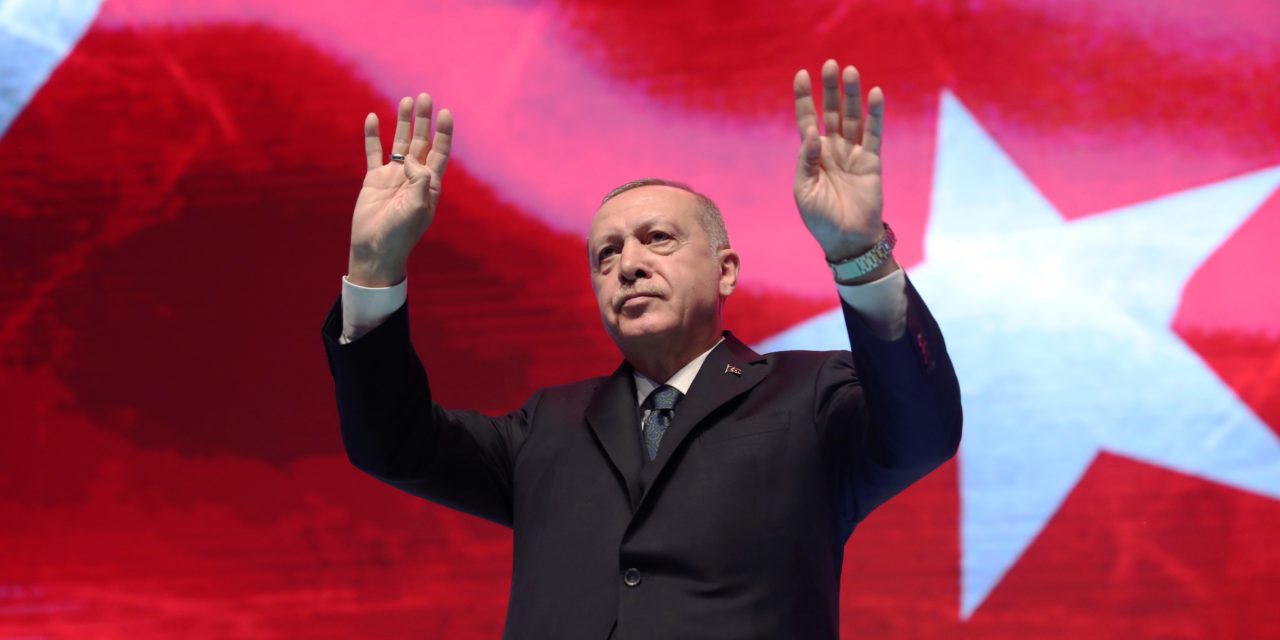 Eastern Mediterranean: A microcosm of regional and global battles By James M. Dorsey A podcast version of this story is available on Soundcloud, Itunes, Spotify, Stitcher, TuneIn, Spreaker, Pocket Casts, Tumblr, Podbean, Audecibel, Patreon and Castbox. The Eastern Mediterranean has become a flash-point for the meshing of geopolitics, the struggle for regional hegemony, battles for control of resources, religious soft power rivalry, and blatant interference in the politics of others. The complex and dangerous juxtaposition of multiple conflicting interests broadens the focus beyond Russia, when it comes to meddling in elections, to include countries like Turkey, the UAE, and Saudi Arabia. It blurs the lines between multiple conflicts such as the wars in Syria and Libya and the struggle for control of the Eastern Mediterranean’s newly found gas deposits. And it positions contested waters as the latest venue in which Russia and the West battle for influence. Laying bare the multiple disputes being fought on the back of the Eastern Mediterranean with its natural gas reserves of 122 trillion cubic feet resembles peeling an onion. Lining up on opposing sides are Middle Eastern, North African, and Eastern Mediterranean nations, Gulf states, Turkey, Russia, and Europe. Perhaps, most fundamental is the degree to which Europe going forward will be able to reduce its dependence on Russian gas imports. Russia currently satisfies approximately 40 percent of the European Union’s gas needs. The ability to reduce Russian imports with gas from the Eastern Mediterranean potentially would allow Europe to adopt a more forceful stand in the struggle between Western liberalism and Russian civilisationalism that is likely to co-shape a new world order. EU dependence has so far prompted European nations to temper their defense of Western values against Russian President Vladimir Putin’s civilizationalist policies that include territory grabs in the Caucasus and Ukraine, intimidation of Central Asian nations, and support for Western far-right, neo-Nazi, and anti-immigration forces designed to weaken liberal democracy and strengthen groups more empathetic to the Russian leader’s worldview. “The bad news is that the Moscow-Washington confrontation will continue; the good news is that there will be some guardrails built around it. . . .The Eastern Mediterranean, however, is emerging as an area where Russia, again, is competing with the West,” said Dmitri Trenin, head of the Carnegie Moscow Center. Mr. Trenin argued that it was the Eastern Mediterranean rather than Ukraine, Crimea, the Baltics, the Arctic, or south-eastern Europe where tension could flare the most. If for some nations like Greece, Cyprus, and Lebanon the struggle to control the Eastern Mediterranean’s resources is primarily about economics, for others, including Egypt and Israel it’s also about projecting power. That is no truer than for Russia and Turkey, even if their interests against the backdrop of recently diverging positions on the battlefields of Libya and Syria, may differ rather than converge. Turkey raised the stakes with its military backing of Libya’s internationally recognized Tripoli-based Government of National Accord (GNA) against United Arab Emirates, Saudi, Egyptian, and Russian-backed rebel leader Khalifa Haftar and his Libyan National Army (LNA). A GNA-Turkish maritime agreement that created an Exclusive Economic Zone (EEZ) in the Eastern Mediterranean favoring expansive Turkish claims and the building of relations between Mr. Haftar and Syrian President Bashar al-Assad link the war in Syria to the Eastern Mediterranean and the fighting in Libya. All at a time when Turkey and Russia manoeuvre to avoid a direct military clash in Idlib, the last stronghold of rebels fighting Russian-backed Syrian government forces. The economic zone, or EEZ, would block a planned pipeline that would link the EU to Israeli and Cypriot gas supplies. If successfully enforced, the zone, coupled with Turkey’s military performance in Syria with the downing of three Syrian warplanes in as many days, would signal to regional hegemonic hopefuls, namely Saudi Arabia and the UAE, that financial muscle may not be enough to impose their will. Ironically, one key to accommodation that could have reduced the risk of the ideological and geopolitical fuse blowing up and may have contributed to creating an environment of cooperation rather than confrontation lies on the divided island of Cyprus. Turkey, beyond insisting that Turkish participation is a sine-qua-non for any successful exploitation of Eastern Mediterranean gas, has opposed a role for predominantly Greek-Cypriot Cyprus without the inclusion of the island’s self-declared independent Turkish Cypriot north. Turkey, which has troops in the north ever since it invaded the island in 1974, is the only country to have recognized the region as an independent state. The idea of including northern Cyprus may be pie in the sky in an environment in which geopolitics is a zero-sum game with civilizationalists, nationalists, and autocrats leaving little space for power sharing. And Europe is too preoccupied with internal problems, and most recently with a new looming Syrian refugee crisis, to project a cohesive and inclusive policy approach. Scholar and commentator Hussein Ibish cautioned that “all the elements that have compelled the parties to the eastern Mediterranean natural gas competition to develop local alliances that are increasingly melding with other strategic, diplomatic, and political contests appears likely to continue.” Mr. Ibish blamed tension in the Eastern Mediterranean on the “strongly pro-Islamist orientation” of Turkey as “a budding would-be regional economic and political hegemon” rather than on multiple would-be hegemons. Nonetheless, his conclusion stands that in the Eastern Mediterranean “disputes arising over narrow issues such as natural gas reserves will continue to take on far broader significance.” Dr. James M. Dorsey is a senior fellow at Nanyang Technological University’s S. Rajaratnam School of International Studies, an adjunct senior research fellow at the National University of Singapore’s Middle East Institute and co-director of the University of Wuerzburg’s Institute of Fan Culture This story first appeared on Inside Arabia |
| json metadata | {"tags":["middleeast","russia","europe","energy","mediterranean"],"image":["https://cdn.steemitimages.com/DQmS3tbJ7JMkVUCehmWWGDftFHiU8Lgw53DBDn69dmWcto6/Erdogan.jpg"],"app":"steemit/0.2","format":"markdown"} |
| Transaction Info | Block #41377937/Trx 896faf21fbb6baaa3f7d51189f9ee79940385b35 |
View Raw JSON Data
{
"trx_id": "896faf21fbb6baaa3f7d51189f9ee79940385b35",
"block": 41377937,
"trx_in_block": 14,
"op_in_trx": 0,
"virtual_op": 0,
"timestamp": "2020-03-05T05:54:36",
"op": [
"comment",
{
"parent_author": "",
"parent_permlink": "middleeast",
"author": "mideastsoccer",
"permlink": "eastern-mediterranean-a-microcosm-of-regional-and-global-battles",
"title": "Eastern Mediterranean: A microcosm of regional and global battles",
"body": "\n\nEastern Mediterranean: A microcosm of regional and global battles\nBy James M. Dorsey\nA podcast version of this story is available on Soundcloud, Itunes, Spotify, Stitcher, TuneIn, Spreaker, Pocket Casts, Tumblr, Podbean, Audecibel, Patreon and Castbox.\nThe Eastern Mediterranean has become a flash-point for the meshing of geopolitics, the struggle for regional hegemony, battles for control of resources, religious soft power rivalry, and blatant interference in the politics of others.\nThe complex and dangerous juxtaposition of multiple conflicting interests broadens the focus beyond Russia, when it comes to meddling in elections, to include countries like Turkey, the UAE, and Saudi Arabia. \nIt blurs the lines between multiple conflicts such as the wars in Syria and Libya and the struggle for control of the Eastern Mediterranean’s newly found gas deposits. And it positions contested waters as the latest venue in which Russia and the West battle for influence.\nLaying bare the multiple disputes being fought on the back of the Eastern Mediterranean with its natural gas reserves of 122 trillion cubic feet resembles peeling an onion.\nLining up on opposing sides are Middle Eastern, North African, and Eastern Mediterranean nations, Gulf states, Turkey, Russia, and Europe.\nPerhaps, most fundamental is the degree to which Europe going forward will be able to reduce its dependence on Russian gas imports. Russia currently satisfies approximately 40 percent of the European Union’s gas needs.\nThe ability to reduce Russian imports with gas from the Eastern Mediterranean potentially would allow Europe to adopt a more forceful stand in the struggle between Western liberalism and Russian civilisationalism that is likely to co-shape a new world order.\nEU dependence has so far prompted European nations to temper their defense of Western values against Russian President Vladimir Putin’s civilizationalist policies that include territory grabs in the Caucasus and Ukraine, intimidation of Central Asian nations, and support for Western far-right, neo-Nazi, and anti-immigration forces designed to weaken liberal democracy and strengthen groups more empathetic to the Russian leader’s worldview.\n“The bad news is that the Moscow-Washington confrontation will continue; the good news is that there will be some guardrails built around it. . . .The Eastern Mediterranean, however, is emerging as an area where Russia, again, is competing with the West,” said Dmitri Trenin, head of the Carnegie Moscow Center.\nMr. Trenin argued that it was the Eastern Mediterranean rather than Ukraine, Crimea, the Baltics, the Arctic, or south-eastern Europe where tension could flare the most.\nIf for some nations like Greece, Cyprus, and Lebanon the struggle to control the Eastern Mediterranean’s resources is primarily about economics, for others, including Egypt and Israel it’s also about projecting power. That is no truer than for Russia and Turkey, even if their interests against the backdrop of recently diverging positions on the battlefields of Libya and Syria, may differ rather than converge.\nTurkey raised the stakes with its military backing of Libya’s internationally recognized Tripoli-based Government of National Accord (GNA) against United Arab Emirates, Saudi, Egyptian, and Russian-backed rebel leader Khalifa Haftar and his Libyan National Army (LNA).\nA GNA-Turkish maritime agreement that created an Exclusive Economic Zone (EEZ) in the Eastern Mediterranean favoring expansive Turkish claims and the building of relations between Mr. Haftar and Syrian President Bashar al-Assad link the war in Syria to the Eastern Mediterranean and the fighting in Libya. All at a time when Turkey and Russia manoeuvre to avoid a direct military clash in Idlib, the last stronghold of rebels fighting Russian-backed Syrian government forces.\nThe economic zone, or EEZ, would block a planned pipeline that would link the EU to Israeli and Cypriot gas supplies.\nIf successfully enforced, the zone, coupled with Turkey’s military performance in Syria with the downing of three Syrian warplanes in as many days, would signal to regional hegemonic hopefuls, namely Saudi Arabia and the UAE, that financial muscle may not be enough to impose their will.\nIronically, one key to accommodation that could have reduced the risk of the ideological and geopolitical fuse blowing up and may have contributed to creating an environment of cooperation rather than confrontation lies on the divided island of Cyprus.\nTurkey, beyond insisting that Turkish participation is a sine-qua-non for any successful exploitation of Eastern Mediterranean gas, has opposed a role for predominantly Greek-Cypriot Cyprus without the inclusion of the island’s self-declared independent Turkish Cypriot north.\nTurkey, which has troops in the north ever since it invaded the island in 1974, is the only country to have recognized the region as an independent state.\nThe idea of including northern Cyprus may be pie in the sky in an environment in which geopolitics is a zero-sum game with civilizationalists, nationalists, and autocrats leaving little space for power sharing. And Europe is too preoccupied with internal problems, and most recently with a new looming Syrian refugee crisis, to project a cohesive and inclusive policy approach.\nScholar and commentator Hussein Ibish cautioned that “all the elements that have compelled the parties to the eastern Mediterranean natural gas competition to develop local alliances that are increasingly melding with other strategic, diplomatic, and political contests appears likely to continue.”\nMr. Ibish blamed tension in the Eastern Mediterranean on the “strongly pro-Islamist orientation” of Turkey as “a budding would-be regional economic and political hegemon” rather than on multiple would-be hegemons.\nNonetheless, his conclusion stands that in the Eastern Mediterranean “disputes arising over narrow issues such as natural gas reserves will continue to take on far broader significance.”\nDr. James M. Dorsey is a senior fellow at Nanyang Technological University’s S. Rajaratnam School of International Studies, an adjunct senior research fellow at the National University of Singapore’s Middle East Institute and co-director of the University of Wuerzburg’s Institute of Fan Culture\nThis story first appeared on Inside Arabia",
"json_metadata": "{\"tags\":[\"middleeast\",\"russia\",\"europe\",\"energy\",\"mediterranean\"],\"image\":[\"https://cdn.steemitimages.com/DQmS3tbJ7JMkVUCehmWWGDftFHiU8Lgw53DBDn69dmWcto6/Erdogan.jpg\"],\"app\":\"steemit/0.2\",\"format\":\"markdown\"}"
}
]
}mideastsoccerpublished a new post: coming-home-to-roost-war-threatens-to-spill-beyond-syria-s-borders2020/03/02 05:01:39
mideastsoccerpublished a new post: coming-home-to-roost-war-threatens-to-spill-beyond-syria-s-borders
2020/03/02 05:01:39
| parent author | |
| parent permlink | syria |
| author | mideastsoccer |
| permlink | coming-home-to-roost-war-threatens-to-spill-beyond-syria-s-borders |
| title | Coming home to roost: War threatens to spill beyond Syria’s borders |
| body |  By James M. Dorsey A podcast version of this story is available on Soundcloud, Itunes, Spotify, Stitcher, TuneIn, Spreaker, Pocket Casts, Tumblr, Podbean, Audecibel, Patreon and Castbox. As tens of thousands of refugees shiver in the cold on Turkey’s borders with Europe and a new phase of the brutal Syrian war erupts, Russia, Turkey, the European Union and the international community are being presented with the bill for a flawed, short-term approach to the nine-year old conflict that largely lacked empathy for millions of victims and was likely to magnify rather than resolve problems. The failure of Western policymakers to adopt an approach that would have served Europe’s longer term security interests and sought to end Syria’s suffering in ways that may have held out the promise of a sustainable resolution of the conflict is compounded by the failure to exploit what was always a fragile alliance between Russia and NATO-member Turkey. With that alliance under strain, both in Syria, where Russia has warned that it cannot guarantee the safety of Turkish aircraft in Syrian airspace, and in Libya, where the two allies support opposing sides, multiple regional conflicts have begun to mesh. Some analysts have suggested that Russia was seeking to enlist the support of Saudi Arabia and the United Arab Emirates in Syria so that it could dump Turkey with which it is on the brink of military blows. The two Gulf states oppose Turkish ambitions in the Middle East and beyond. The analysts point to recent contacts between Emirati, Russian and Syrian officials and the establishment of relations between Syria and Libya’s UAE and Russian-backed rebel force led by renegade commander Khalifa Haftar. The various manoeuvres constitute variations on a theme. The international community, including Russia, did little in the early years of the war to stop militant groups and regional powers from contributing to the violence by exploiting Syria’s power vacuum to their immediate advantage. That changed selectively when the Islamic State gained a territorial foothold in Syria and Iraq. Similarly, much of the international community falsely assumed that a Syrian victory in Idlib, Syria’s last rebel stronghold, would create a fait accompli that Turkey would accept and that would pave the way to an end to the war and reconstruction. Like in much of the Middle East where a failure to put one’s ears to the ground and hear the widespread discontent simmering at the surface that produced a decade of revolution and brutal counterrevolution, neither Russia nor its detractors read the writing on Syria’s walls. If militants and external powers turned what started in 2011 as peaceful protests demanding reform rather than the overthrow of Syrian president Bashar al-Assad, the international community failed to recognize that nine years later criticism of the regime is widespread among an impoverished population traumatized by war. Rather than creating an environment for reconciliation and reconstruction, Russian-supported Syrian military successes in retaking territory from rebels by force or in negotiated handovers have not been accompanied by a relieving of economic and social hardship, sparking intermittent anti-government protests and stepped up repression. Much of the criticism focuses on the government’s failure to improve economic and living conditions, but, like in the early days of the popular revolt, shies away from calls for regime change. The improbability of a Russian-Syrian military victory putting Syria on a road towards peaceful resolution and recovery is highlighted by the fact that snap polling suggests that less than ten percent of the millions of Syrian refugees and internally displaced persons would be willing to return to or remain in a country that continues to be ruled by Mr. Al-Assad and his regime. As a result, Russia and Mr. Al-Assad appear to have adopted the kind of scorched earth policy that Israel’s military rejected in the late 1980s during the first Palestinian intifada or uprising. In contrast to the military that told then Israeli prime minister Yitzhak Rabin that the resolution needed to be political because the cost of a military solution would be too high, Russia and Mr. Al-Assad have concluded that no cost is too high. It is an approach that emulates Russia’s brutal crushing of rebellions in Chechnya in the 1990s. “Russia realized that it cannot cement its military victories into permanent political gains through diplomacy within the projected remaining lifetime of the regime. Instead, it decided to employ the ‘Grozny doctrine’ of complete annihilation of all those who stand in the way of its strategic goals and bring the conflict to an end before the regime collapses,” said Syrian activist Labib al-Nahhas De La Ossa, referring to the Chechen capital that was virtually destroyed by Russian forces. Its an approach that in violation of international law takes no heed of the consequences for innocent millions in Idlib or the fact that many, rather than supporting Hayat Tahrir al-Sham (HTS), an erstwhile Al Qaeda affiliate that controls part of the province, have repeatedly protested against it. Its also an approach that potentially could spark a renewed refugee crisis in Europe with Turkey, already home to some four million refugees, no longer stopping fleeing Syrians and others from trying to cross its Greek and Bulgarian borders with the European Union. Russia, in a cynical twist of irony, would likely be happy to see a repeat of the 2015 refugee crisis that fuelled support for far-right, anti-immigration and nativist forces in Europe who are empathetic to Moscow’s effort to weaken the trans-Atlantic alliance as well as the European Union with its adherence to Western values of democracy, human rights and the rule of law. Even with that being the case, Russian policy towards Idlib and the rest of Syria is likely to only produce problematic outcomes: ensuring total victory for Mr. Al-Assad risks a break-up with Turkey, a key regional player, and forecloses chances for a sustainable resolution of the Syrian conflict that would allow for the voluntary return of refugees and displaced persons. Continued Russian and Iranian-backed support for Mr. Al-Assad’s brutal regime will at best temporarily stabilize Syria and potentially open the door to a forced return of some refugees and displaced persons while setting the stage for another round of conflict. An equally unsustainable alternative scenario, envisioned by Mr. De La Ossa, would involve a Russian-Turkish agreement to cram three million refugees into a tiny slice of Idlib in what would amount to sub-human conditions. Said Mr. De La Ossa: “The humanitarian catastrophe that is Idlib has shown that the lessons from the beginning of World War II still apply: Appeasing dictators who are willing to kill massive numbers of people to realize their delusions of grandeur never works. But if the US, Europe, and the international community at large fail to heed these lessons, it will not only be Syrians who pay the price. “ Dr. James M. Dorsey is a senior fellow at Nanyang Technological University’s S. Rajaratnam School of International Studies, an adjunct senior research fellow at the National University of Singapore’s Middle East Institute and co-director of the University of Wuerzburg’s Institute of Fan Culture |
| json metadata | {"tags":["syria","russia","migration","europe","turkey"],"image":["https://cdn.steemitimages.com/DQmVuBRWivZsp72watfkcCNRbo4gVxmnSXknvYiCdpPaxRo/SyriaGreeceRefugees.jpg"],"app":"steemit/0.2","format":"markdown"} |
| Transaction Info | Block #41291494/Trx caff72575ebbc341eac791d4feba2018a0bfca00 |
View Raw JSON Data
{
"trx_id": "caff72575ebbc341eac791d4feba2018a0bfca00",
"block": 41291494,
"trx_in_block": 24,
"op_in_trx": 0,
"virtual_op": 0,
"timestamp": "2020-03-02T05:01:39",
"op": [
"comment",
{
"parent_author": "",
"parent_permlink": "syria",
"author": "mideastsoccer",
"permlink": "coming-home-to-roost-war-threatens-to-spill-beyond-syria-s-borders",
"title": "Coming home to roost: War threatens to spill beyond Syria’s borders",
"body": "\n\nBy James M. Dorsey\nA podcast version of this story is available on Soundcloud, Itunes, Spotify, Stitcher, TuneIn, Spreaker, Pocket Casts, Tumblr, Podbean, Audecibel, Patreon and Castbox.\nAs tens of thousands of refugees shiver in the cold on Turkey’s borders with Europe and a new phase of the brutal Syrian war erupts, Russia, Turkey, the European Union and the international community are being presented with the bill for a flawed, short-term approach to the nine-year old conflict that largely lacked empathy for millions of victims and was likely to magnify rather than resolve problems.\nThe failure of Western policymakers to adopt an approach that would have served Europe’s longer term security interests and sought to end Syria’s suffering in ways that may have held out the promise of a sustainable resolution of the conflict is compounded by the failure to exploit what was always a fragile alliance between Russia and NATO-member Turkey.\nWith that alliance under strain, both in Syria, where Russia has warned that it cannot guarantee the safety of Turkish aircraft in Syrian airspace, and in Libya, where the two allies support opposing sides, multiple regional conflicts have begun to mesh.\nSome analysts have suggested that Russia was seeking to enlist the support of Saudi Arabia and the United Arab Emirates in Syria so that it could dump Turkey with which it is on the brink of military blows. The two Gulf states oppose Turkish ambitions in the Middle East and beyond.\nThe analysts point to recent contacts between Emirati, Russian and Syrian officials and the establishment of relations between Syria and Libya’s UAE and Russian-backed rebel force led by renegade commander Khalifa Haftar.\nThe various manoeuvres constitute variations on a theme.\nThe international community, including Russia, did little in the early years of the war to stop militant groups and regional powers from contributing to the violence by exploiting Syria’s power vacuum to their immediate advantage. That changed selectively when the Islamic State gained a territorial foothold in Syria and Iraq.\nSimilarly, much of the international community falsely assumed that a Syrian victory in Idlib, Syria’s last rebel stronghold, would create a fait accompli that Turkey would accept and that would pave the way to an end to the war and reconstruction.\nLike in much of the Middle East where a failure to put one’s ears to the ground and hear the widespread discontent simmering at the surface that produced a decade of revolution and brutal counterrevolution, neither Russia nor its detractors read the writing on Syria’s walls.\nIf militants and external powers turned what started in 2011 as peaceful protests demanding reform rather than the overthrow of Syrian president Bashar al-Assad, the international community failed to recognize that nine years later criticism of the regime is widespread among an impoverished population traumatized by war. \nRather than creating an environment for reconciliation and reconstruction, Russian-supported Syrian military successes in retaking territory from rebels by force or in negotiated handovers have not been accompanied by a relieving of economic and social hardship, sparking intermittent anti-government protests and stepped up repression.\nMuch of the criticism focuses on the government’s failure to improve economic and living conditions, but, like in the early days of the popular revolt, shies away from calls for regime change.\nThe improbability of a Russian-Syrian military victory putting Syria on a road towards peaceful resolution and recovery is highlighted by the fact that snap polling suggests that less than ten percent of the millions of Syrian refugees and internally displaced persons would be willing to return to or remain in a country that continues to be ruled by Mr. Al-Assad and his regime.\nAs a result, Russia and Mr. Al-Assad appear to have adopted the kind of scorched earth policy that Israel’s military rejected in the late 1980s during the first Palestinian intifada or uprising. \nIn contrast to the military that told then Israeli prime minister Yitzhak Rabin that the resolution needed to be political because the cost of a military solution would be too high, Russia and Mr. Al-Assad have concluded that no cost is too high. It is an approach that emulates Russia’s brutal crushing of rebellions in Chechnya in the 1990s.\n“Russia realized that it cannot cement its military victories into permanent political gains through diplomacy within the projected remaining lifetime of the regime. Instead, it decided to employ the ‘Grozny doctrine’ of complete annihilation of all those who stand in the way of its strategic goals and bring the conflict to an end before the regime collapses,” said Syrian activist Labib al-Nahhas De La Ossa, referring to the Chechen capital that was virtually destroyed by Russian forces.\nIts an approach that in violation of international law takes no heed of the consequences for innocent millions in Idlib or the fact that many, rather than supporting Hayat Tahrir al-Sham (HTS), an erstwhile Al Qaeda affiliate that controls part of the province, have repeatedly protested against it.\nIts also an approach that potentially could spark a renewed refugee crisis in Europe with Turkey, already home to some four million refugees, no longer stopping fleeing Syrians and others from trying to cross its Greek and Bulgarian borders with the European Union.\nRussia, in a cynical twist of irony, would likely be happy to see a repeat of the 2015 refugee crisis that fuelled support for far-right, anti-immigration and nativist forces in Europe who are empathetic to Moscow’s effort to weaken the trans-Atlantic alliance as well as the European Union with its adherence to Western values of democracy, human rights and the rule of law.\nEven with that being the case, Russian policy towards Idlib and the rest of Syria is likely to only produce problematic outcomes: ensuring total victory for Mr. Al-Assad risks a break-up with Turkey, a key regional player, and forecloses chances for a sustainable resolution of the Syrian conflict that would allow for the voluntary return of refugees and displaced persons.\nContinued Russian and Iranian-backed support for Mr. Al-Assad’s brutal regime will at best temporarily stabilize Syria and potentially open the door to a forced return of some refugees and displaced persons while setting the stage for another round of conflict.\nAn equally unsustainable alternative scenario, envisioned by Mr. De La Ossa, would involve a Russian-Turkish agreement to cram three million refugees into a tiny slice of Idlib in what would amount to sub-human conditions.\nSaid Mr. De La Ossa: “The humanitarian catastrophe that is Idlib has shown that the lessons from the beginning of World War II still apply: Appeasing dictators who are willing to kill massive numbers of people to realize their delusions of grandeur never works. But if the US, Europe, and the international community at large fail to heed these lessons, it will not only be Syrians who pay the price. “\n Dr. James M. Dorsey is a senior fellow at Nanyang Technological University’s S. Rajaratnam School of International Studies, an adjunct senior research fellow at the National University of Singapore’s Middle East Institute and co-director of the University of Wuerzburg’s Institute of Fan Culture",
"json_metadata": "{\"tags\":[\"syria\",\"russia\",\"migration\",\"europe\",\"turkey\"],\"image\":[\"https://cdn.steemitimages.com/DQmVuBRWivZsp72watfkcCNRbo4gVxmnSXknvYiCdpPaxRo/SyriaGreeceRefugees.jpg\"],\"app\":\"steemit/0.2\",\"format\":\"markdown\"}"
}
]
}laissez-faireupvoted (100.00%) @mideastsoccer / trump-vs-sanders-populism-vs-populism2020/02/29 11:53:09
laissez-faireupvoted (100.00%) @mideastsoccer / trump-vs-sanders-populism-vs-populism
2020/02/29 11:53:09
| voter | laissez-faire |
| author | mideastsoccer |
| permlink | trump-vs-sanders-populism-vs-populism |
| weight | 10000 (100.00%) |
| Transaction Info | Block #41242224/Trx bd8af8df78c29e79bf6df747ae7dab438272f4a1 |
View Raw JSON Data
{
  "trx_id": "bd8af8df78c29e79bf6df747ae7dab438272f4a1",
  "block": 41242224,
  "trx_in_block": 7,
  "op_in_trx": 0,
  "virtual_op": 0,
  "timestamp": "2020-02-29T11:53:09",
  "op": [
    "vote",
    {
      "voter": "laissez-faire",
      "author": "mideastsoccer",
      "permlink": "trump-vs-sanders-populism-vs-populism",
      "weight": 10000
    }
  ]
}willdavisupvoted (100.00%) @mideastsoccer / trump-vs-sanders-populism-vs-populism2020/02/29 11:53:06
willdavisupvoted (100.00%) @mideastsoccer / trump-vs-sanders-populism-vs-populism
2020/02/29 11:53:06
| voter | willdavis |
| author | mideastsoccer |
| permlink | trump-vs-sanders-populism-vs-populism |
| weight | 10000 (100.00%) |
| Transaction Info | Block #41242223/Trx 6c8f4aafeaddfecc4081c4c7202eb96fa5e628eb |
View Raw JSON Data
{
  "trx_id": "6c8f4aafeaddfecc4081c4c7202eb96fa5e628eb",
  "block": 41242223,
  "trx_in_block": 10,
  "op_in_trx": 0,
  "virtual_op": 0,
  "timestamp": "2020-02-29T11:53:06",
  "op": [
    "vote",
    {
      "voter": "willdavis",
      "author": "mideastsoccer",
      "permlink": "trump-vs-sanders-populism-vs-populism",
      "weight": 10000
    }
  ]
}anomalyupvoted (1.00%) @mideastsoccer / trump-vs-sanders-populism-vs-populism2020/02/29 11:53:00
anomalyupvoted (1.00%) @mideastsoccer / trump-vs-sanders-populism-vs-populism
2020/02/29 11:53:00
| voter | anomaly |
| author | mideastsoccer |
| permlink | trump-vs-sanders-populism-vs-populism |
| weight | 100 (1.00%) |
| Transaction Info | Block #41242222/Trx e00f55a4fa731e2dd61da5f1c2397bf8cc4260a3 |
View Raw JSON Data
{
  "trx_id": "e00f55a4fa731e2dd61da5f1c2397bf8cc4260a3",
  "block": 41242222,
  "trx_in_block": 43,
  "op_in_trx": 0,
  "virtual_op": 0,
  "timestamp": "2020-02-29T11:53:00",
  "op": [
    "vote",
    {
      "voter": "anomaly",
      "author": "mideastsoccer",
      "permlink": "trump-vs-sanders-populism-vs-populism",
      "weight": 100
    }
  ]
}mideastsoccerpublished a new post: trump-vs-sanders-populism-vs-populism2020/02/29 11:51:57
mideastsoccerpublished a new post: trump-vs-sanders-populism-vs-populism
2020/02/29 11:51:57
| parent author | |
| parent permlink | united |
| author | mideastsoccer |
| permlink | trump-vs-sanders-populism-vs-populism |
| title | Trump vs Sanders? Populism vs Populism |
| body |  By James M. Dorsey A podcast version of this story is available on Soundcloud, Itunes, Spotify, Stitcher, TuneIn, Spreaker, Pocket Casts, Tumblr, Podbean, Audecibel, Patreon and Castbox. Civilisationalism’s train may well have left the station. That may also be true for a fundamental re-definition of US foreign policy. To what degree, civilisationalism continues its march and how US foreign policy will be re-defined is likely to be determined by who wins this year’s US presidential election. With Donald J. Trump the undisputed Republican candidate and Bernie Sanders the Democratic frontrunner, the fight for the highest office in the land could be one between two very different but no less radical visions of America’s role in the world. For civilizationalist illiberals, authoritarians and autocrats in the Middle East and North Africa and beyond, the stakes could not be higher. In The Economist’s words, a race between Messrs. Trump and Sanders would be between, "a corrupt, divisive right-wing populist" with an empathy for autocrats, like his favourite, Egyptian general-turned-president Abdel Fattah al-Sisi, and "a sanctimonious left-wing populist, " who, despite emphasizing human rights, democracy, diplomacy and re-committing the United States to the trans-Atlantic alliance, “has a dangerous tendency to put ends before means” and “displays the intolerance of a Righteous Man.” The obvious differences notwithstanding, Messrs. Trump and Sanders share scepticism about America wielding power overseas and a reluctance to use military force. On the surface of it, Mr. Sanders would likely agree that Mr. Trump wasn’t wrong when he took aim at a post-Cold War US foreign policy that had primarily produced disastrous failures since the demise of Communism by declaring “our foreign policy is a complete and total disaster.” Mr. Trump was referring to what political scientist Stephen M. Walt described as an era in which the United States as the world’s only superpower could rule supreme but had no need to do so. “Instead of building an ever-expanding zone of peace united by a shared commitment to liberal ideas, America’s pursuit of liberal hegemony poisoned relations with Russia, led to costly quagmires in Afghanistan, Iraq and several other countries, squandered trillions of dollars and thousands of lives, and encouraged both states and non-state actors to resist American efforts or to exploit them for their own benefit,” Mr. Walt argued. From a civilisationalist’s point of view, Mr. Trump was the right person at the right time. He promised a radical departure from the United States’ internationalist agenda and dumped the concept of American exceptionalism that positioned the United States as the linchpin of a liberal world order, the indispensable policeman that would keep the world from falling apart. Foreign policy would no longer be informed by a longer-term overarching worldview. Instead it would be driven by short-term transactions that served immediate goals, struck advantageous deals and shifted burdens to others. Ironically, Mr. Trump’s chaotic and impulsive policymaking and management style, narcissism, and ineptitude allowed civilisationalists with whom he instinctively empathized take center stage while the United States continued to fight wars in distant lands and shoulder much of the burden of policing global security. Rather than “bringing America’s commitments and capabilities into better balance, Trump has undermined the latter without decreasing the former,” Mr. Walt concluded. Mr. Trump’s approach bolstered Russian president Vladimir Putin’s declaration three years into the real-estate mogul-turned president’s administration that liberalism had “outlived its purpose.” Writing in The New York Times, Max Frankel, the paper’s former executive editor, argued last year that civilizationalist leaders didn’t need to formalize a tacit meeting of the minds on the principles of governance that should underwrite a new world order. Against the backdrop of unproven allegations of illicit cooperation between Russia and the 2016 Trump electoral campaign, Mr. Frankel suggested that “there was no need for detailed electoral collusion between the Trump campaign and Vladimir Putin's oligarchy because they had an overarching deal: the quid of help in the campaign against Hillary Clinton for the quo of a new pro-Russian foreign policy.” Igor Yurgens, president of the Institute of Contemporary Development, and a former advisor to erstwhile Russian president Dmitry Medvedev, expressed a similar sentiment. Mr. Trump is “our wrecking ball. He shares our ideology and has shown as much sympathy to Russia as was humanly possible,” Mr. Yurgens said. Mr. Yurgens assertion is seemingly mirrored in Mr. Trump’s empathy for Mr. Putin and autocrats like Mr. Al-Sisi and Emirati and Saudi crown princes, Mohammed bin Zayed and Mohammed bin Salman as well as his anti-immigration policies that favour Europeans and discriminate against Africans, Asians and Latin Americans and his repeated refusal to convincingly condemn racist and neo-Nazi groups. Mr. Trump’s ambiguity towards far-right thinking neatly aligns itself with Russian support for racist and neo-Nazi groups in the United States and across Europe that is designed to fuel civilizationalist attitudes, bolster opposition to European Union sanctions imposed after Russia’s annexation of Crimea in 2014, and drive a wedge in the trans-Atlantic alliance that Mr. Trump has repeatedly questioned. By contrast, Mr. Sanders, a self-styled democratic socialist, would likely bring a different, more civil tone to the presidency, but no less of a redirection of US foreign policy. If Mr. Trump attempted to reduce foreign policy to business-like transactions, Mr. Sanders would transform policy into what scholars Ben Judah and David Adler have termed ‘foreign politics.’ “He is targeting the global architecture of kleptocracy in which many U.S. firms and passport holders are complicit and building ties with social movements around the world that can serve as allies in the fight against state corruption,” Messrs. Judah and Adler argued in The Guardian. In doing so, Messrs. Judah and Adler suggest, Mr. Sanders as president would, unlike his predecessors, target three pillars of Mr. Putin’s disruptive polices: oil and gas revenues, a kleptocratic power base, and information warfare. Mr. Sander’s tools shy away from the centrality of military power. Instead they include the promotion of renewable energy that would reduce European reliance on Russian fossil fuels, the dismantling of offshore tax havens and corporate shells that facilitate Putin’s kleptocracy, and US reengagement in the battle of ideas by promoting human rights and other democratic values. From a foreign policy perspective, the problem with Mr. Sanders is not the loftiness of his goals and principled positions or the practicality of his domestic policy proposals. It is that, given deep polarisation in the United States, he could prove to be as divisive as his nemesis, Mr. Trump. Ironically, that is not how many Europeans, including conservatives, see Mr. Sanders. Said a senior member of Germany’s ruling centre-right Christian Democratic Union (CDU): “He may seem radically left-wing in America, but if he were German, he would fit right into the CDU, and probably even the more conservative side of it. Dr. James M. Dorsey is a senior fellow at Nanyang Technological University’s S. Rajaratnam School of International Studies, an adjunct senior research fellow at the National University of Singapore’s Middle East Institute and co-director of the University of Wuerzburg’s Institute of Fan Culture |
| json metadata | {"tags":["united","states","trump","sanders","russia","democracy"],"image":["https://cdn.steemitimages.com/DQmPz1ZGr9vkhvaYQ86X7KgDafBPp546dPq7vAhSaFNoHqn/TrumpVsSanders.jpg"],"app":"steemit/0.2","format":"markdown"} |
| Transaction Info | Block #41242201/Trx dbe493787e214744a923fe00fa0042d002f5495d |
View Raw JSON Data
{
"trx_id": "dbe493787e214744a923fe00fa0042d002f5495d",
"block": 41242201,
"trx_in_block": 0,
"op_in_trx": 0,
"virtual_op": 0,
"timestamp": "2020-02-29T11:51:57",
"op": [
"comment",
{
"parent_author": "",
"parent_permlink": "united",
"author": "mideastsoccer",
"permlink": "trump-vs-sanders-populism-vs-populism",
"title": "Trump vs Sanders? Populism vs Populism",
"body": "\n\nBy James M. Dorsey\nA podcast version of this story is available on Soundcloud, Itunes, Spotify, Stitcher, TuneIn, Spreaker, Pocket Casts, Tumblr, Podbean, Audecibel, Patreon and Castbox.\nCivilisationalism’s train may well have left the station. That may also be true for a fundamental re-definition of US foreign policy.\nTo what degree, civilisationalism continues its march and how US foreign policy will be re-defined is likely to be determined by who wins this year’s US presidential election. \nWith Donald J. Trump the undisputed Republican candidate and Bernie Sanders the Democratic frontrunner, the fight for the highest office in the land could be one between two very different but no less radical visions of America’s role in the world.\nFor civilizationalist illiberals, authoritarians and autocrats in the Middle East and North Africa and beyond, the stakes could not be higher.\nIn The Economist’s words, a race between Messrs. Trump and Sanders would be between, \"a corrupt, divisive right-wing populist\" with an empathy for autocrats, like his favourite, Egyptian general-turned-president Abdel Fattah al-Sisi, and \"a sanctimonious left-wing populist, \" who, despite emphasizing human rights, democracy, diplomacy and re-committing the United States to the trans-Atlantic alliance, “has a dangerous tendency to put ends before means” and “displays the intolerance of a Righteous Man.”\nThe obvious differences notwithstanding, Messrs. Trump and Sanders share scepticism about America wielding power overseas and a reluctance to use military force.\nOn the surface of it, Mr. Sanders would likely agree that Mr. Trump wasn’t wrong when he took aim at a post-Cold War US foreign policy that had primarily produced disastrous failures since the demise of Communism by declaring “our foreign policy is a complete and total disaster.”\nMr. Trump was referring to what political scientist Stephen M. Walt described as an era in which the United States as the world’s only superpower could rule supreme but had no need to do so.\n“Instead of building an ever-expanding zone of peace united by a shared commitment to liberal ideas, America’s pursuit of liberal hegemony poisoned relations with Russia, led to costly quagmires in Afghanistan, Iraq and several other countries, squandered trillions of dollars and thousands of lives, and encouraged both states and non-state actors to resist American efforts or to exploit them for their own benefit,” Mr. Walt argued.\nFrom a civilisationalist’s point of view, Mr. Trump was the right person at the right time. \nHe promised a radical departure from the United States’ internationalist agenda and dumped the concept of American exceptionalism that positioned the United States as the linchpin of a liberal world order, the indispensable policeman that would keep the world from falling apart. Foreign policy would no longer be informed by a longer-term overarching worldview.\nInstead it would be driven by short-term transactions that served immediate goals, struck advantageous deals and shifted burdens to others. \nIronically, Mr. Trump’s chaotic and impulsive policymaking and management style, narcissism, and ineptitude allowed civilisationalists with whom he instinctively empathized take center stage while the United States continued to fight wars in distant lands and shoulder much of the burden of policing global security. \nRather than “bringing America’s commitments and capabilities into better balance, Trump has undermined the latter without decreasing the former,” Mr. Walt concluded.\nMr. Trump’s approach bolstered Russian president Vladimir Putin’s declaration three years into the real-estate mogul-turned president’s administration that liberalism had “outlived its purpose.”\nWriting in The New York Times, Max Frankel, the paper’s former executive editor, argued last year that civilizationalist leaders didn’t need to formalize a tacit meeting of the minds on the principles of governance that should underwrite a new world order.\nAgainst the backdrop of unproven allegations of illicit cooperation between Russia and the 2016 Trump electoral campaign, Mr. Frankel suggested that “there was no need for detailed electoral collusion between the Trump campaign and Vladimir Putin's oligarchy because they had an overarching deal: the quid of help in the campaign against Hillary Clinton for the quo of a new pro-Russian foreign policy.”\nIgor Yurgens, president of the Institute of Contemporary Development, and a former advisor to erstwhile Russian president Dmitry Medvedev, expressed a similar sentiment.\nMr. Trump is “our wrecking ball. He shares our ideology and has shown as much sympathy to Russia as was humanly possible,” Mr. Yurgens said.\nMr. Yurgens assertion is seemingly mirrored in Mr. Trump’s empathy for Mr. Putin and autocrats like Mr. Al-Sisi and Emirati and Saudi crown princes, Mohammed bin Zayed and Mohammed bin Salman as well as his anti-immigration policies that favour Europeans and discriminate against Africans, Asians and Latin Americans and his repeated refusal to convincingly condemn racist and neo-Nazi groups. \nMr. Trump’s ambiguity towards far-right thinking neatly aligns itself with Russian support for racist and neo-Nazi groups in the United States and across Europe that is designed to fuel civilizationalist attitudes, bolster opposition to European Union sanctions imposed after Russia’s annexation of Crimea in 2014, and drive a wedge in the trans-Atlantic alliance that Mr. Trump has repeatedly questioned.\nBy contrast, Mr. Sanders, a self-styled democratic socialist, would likely bring a different, more civil tone to the presidency, but no less of a redirection of US foreign policy. \nIf Mr. Trump attempted to reduce foreign policy to business-like transactions, Mr. Sanders would transform policy into what scholars Ben Judah and David Adler have termed ‘foreign politics.’\n“He is targeting the global architecture of kleptocracy in which many U.S. firms and passport holders are complicit and building ties with social movements around the world that can serve as allies in the fight against state corruption,” Messrs. Judah and Adler argued in The Guardian.\nIn doing so, Messrs. Judah and Adler suggest, Mr. Sanders as president would, unlike his predecessors, target three pillars of Mr. Putin’s disruptive polices: oil and gas revenues, a kleptocratic power base, and information warfare. \nMr. Sander’s tools shy away from the centrality of military power. Instead they include the promotion of renewable energy that would reduce European reliance on Russian fossil fuels, the dismantling of offshore tax havens and corporate shells that facilitate Putin’s kleptocracy, and US reengagement in the battle of ideas by promoting human rights and other democratic values.\nFrom a foreign policy perspective, the problem with Mr. Sanders is not the loftiness of his goals and principled positions or the practicality of his domestic policy proposals. It is that, given deep polarisation in the United States, he could prove to be as divisive as his nemesis, Mr. Trump.\nIronically, that is not how many Europeans, including conservatives, see Mr. Sanders. Said a senior member of Germany’s ruling centre-right Christian Democratic Union (CDU): “He may seem radically left-wing in America, but if he were German, he would fit right into the CDU, and probably even the more conservative side of it.\nDr. James M. Dorsey is a senior fellow at Nanyang Technological University’s S. Rajaratnam School of International Studies, an adjunct senior research fellow at the National University of Singapore’s Middle East Institute and co-director of the University of Wuerzburg’s Institute of Fan Culture",
"json_metadata": "{\"tags\":[\"united\",\"states\",\"trump\",\"sanders\",\"russia\",\"democracy\"],\"image\":[\"https://cdn.steemitimages.com/DQmPz1ZGr9vkhvaYQ86X7KgDafBPp546dPq7vAhSaFNoHqn/TrumpVsSanders.jpg\"],\"app\":\"steemit/0.2\",\"format\":\"markdown\"}"
}
]
}2020/02/26 15:48:15
2020/02/26 15:48:15
| parent author | |
| parent permlink | civilization |
| author | mideastsoccer |
| permlink | not-a-pretty-picture-the-contours-of-a-new-world-order-are-on-your-tv-screen |
| title | Not a pretty picture: The contours of a new world order are on your tv screen |
| body |  By James M. Dorsey A podcast version of this story is available on Soundcloud, Itunes, Spotify, Stitcher, TuneIn, Spreaker, Pocket Casts, Tumblr, Podbean, Audecibel, Patreon and Castbox. Television news summarizes daily what a new world order shaped by civilisationalists entails. Writer William Gibson’s assertion that “the future is already here – it's just not evenly distributed” is graphically illustrated in pictures of hundreds of thousands, if not millions of desperate Syrians fleeing indiscriminate bombing in Idlib, Syria’s last rebel stronghold, with nowhere to go. It’s also evident in video clips from the streets of Indian cities where police stand aside as Hindu nationalists target Muslims and Prime Minister Narendra Modi turns Muslims into second-class citizens; refugee camps in Bangladesh where hundreds of thousands of Rohingya who fled ethnic cleansing in Myanmar linger with no prospect of a better life; a devastating civil war in Libya fuelled by foreign powers propagating a worldview that has much in common with civilisationalism; a take-it-or-leave it US plan to resolve the Israeli-Palestinian conflict that belittles and disregards Palestinian aspirations; the Trump administration’s adoption of rules that favour immigrants from Europe rather than Africa, Asia and Latin America; and China’s brutal effort to erase the identity and culture of its Turkic Muslim minority. The constant tv diet of the horrors of civilizationalist-inspired violence, war, human suffering, discrimination, and prejudice coupled with fears of existential threats posed by the other, migration and globalization, no longer spark outrage. “The horrors in Idlib are one face of the emerging ‘new world disorder,’" said Wall Street Journal columnist Walter Russell Mead. Underlying civilizationalist discrimination and repression that risks dislocating ever larger minority segments of populations, political violence and mass migration on unmanageable scales is the mainstreaming of racism, anti-Semitism and Islamophobia and the demonization of liberal values that propagate basic, human and minority rights and ideologies that seek to synthesize democratic and conservative values steeped in tradition and religion, particularly Islam. Civilisationalists and right-wing populists, including Messrs. Trump and Modi, Russian President Vladimir Putin, and Chinese President Xi Jingping, feed from similar philosophical troughs. Political scientist Shawn W. Rosenberg argues that the political structures of states that are governed by populists and/or defined by a civilization rather than the Westphalian concept of a nation are built on the notion that people are characterized not by their ties to one another, but by being part of a nation. Civilisationalists and populists ignore individual differences and emphasize an individual’s relationship to the nation. In their world, individuals are at the bottom of the heap in a civilizationalist state that is anchored in concepts of loyalty to the nation and obedience to the state and its leaders who embody the will of the people. Mr. Rosenberg warns that civilisationalists see an independent judiciary, Western concepts of rule of law, and a free press as institutions that not only obstruct accomplishment of their mission but also undermine their definition of the role and place of the individual. To protect a nation’s integrity, civilisationalists and populists seek to shield ‘the people’ from foreign influences, migration and the nation’s competitors, other nations. They see their nation’s power as derived from being stronger than others and doing better than others at the other’s expense. Foreign policy is geared towards that goal rather than towards a global community that upholds principles of equality, equity and cooperation, Mr. Rosenberg asserts. Civilisationalists and populist seek economic and/or military diminution, if not domination of others, which by implication requires a rejection or hollowing out of international institutions. The civilizationalist approach is making itself felt not only in lands governed by civilisationalists. Mainstream political leaders like French President Emmanuel Macron, widely viewed as a centrist who is attempting to counter civilisationalism and populism, are not immune to aspects of civilisationalism. Nor is the Dutch parliamentary commission that earlier this month held controversial hearings about “unwanted influencing by unfree countries” that focussed on Gulf support for Dutch Muslim communities and an unnuanced view of political Islam. The commission contemplated following in the footsteps of Austria that has banned foreign funding for Muslim organizations. France is considering a similar ban. Speaking in the city of Mulhouse earlier this month, Mr. Macron laid out his strategy to combat political Islam represented by the Muslim Brotherhood and Salafists who in his words insist that Islamic law supersedes the laws of the French Republic and emphasize “Islamist separatism” and “Islamist supremacy.” Kuwait and Qatar are funding the construction of an Islamic religious and cultural centre in Mulhouse. Qatar has backed the Brotherhood in the past and is home to Yusuf al-Qaradawi, widely viewed as a one of the foremost influencers of the Brotherhood, a catch-all for a multitude of aligned Islamist groups that bicker among themselves. “In the Republic we cannot accept that we refuse to shake hands with a woman because she is a woman. In the Republic, we cannot accept that someone refuses to be treated or educated by someone because she is a woman. In the Republic, one cannot accept school dropouts for religious or belief reasons. In the Republic, one cannot require certificates of virginity to marry,” Mr. Macron said. Mr. Macron’s sweeping opposition to political Islam persuaded him to support Libyan rebel leader Khalifa Haftar, who stands accused of human rights violations and has aligned himself with a Saudi-backed strand of Salafism that preaches absolute obedience to the ruler. Mr. Haftar, who also enjoys support of the United Arab Emirates and Egypt, two countries opposed to democracy and any expression of Islam that rejects submission to an autocrat, is seeking to wrench control of the Libyan capital of Tripoli from the United Nations-recognized Government of National Accord (GNA). The GNA is backed by Turkey and includes elements associated with the Brotherhood. To be sure, France has had its share of jihadist violence in recent years with deadly attacks on a French satirical newspaper, restaurants, music halls and soccer stadiums and the ramming of a truck into a crowd on the streets of Nice. Creeping civilisationalism does not, however, by definition characterise the efforts by Europeans like Mr. Macron and others to ensure that minority communities, including Muslims, are full-fledged participants in a society that should afford them equal opportunity and rights and requires them to accommodate dominant mores. Civilizationalist approaches, nonetheless, contribute to the failure to be agnostic in countering all forms of supremacism and racial, ethnic or religious prejudice and the lumping together of ideologies that reject democratic values with ones that seek accommodation. It’s a failure that creates the environment in which someone like white supremacist Tobias Rathjen was emboldened to earlier this month kill nine people with an immigrant background in the German city of Hanau. German politicians accused the far-right Alternative for Germany (AfD) party of contributing to that environment. They demanded that the party be placed under surveillance. Countering civilisationalism is one side of the coin. Avoiding unhelpful generalisations and oversimplifications is another. In an examination of the concept of popular sovereignty in Islamic thought, political scientist Andrew F. March argues that this decade’s popular Arab revolts marked an “intellectual revolution” and “a comprehensive reformulation of Islamic political philosophy” involving not only “reducing rulers to their proper status as agents of the people but also implicitly raising the people to the ultimate arbiters of God’s law.” No doubt, it’s a revolution that is rejected by ultra-conservative Muslims, elements of the Brotherhood and various strands of Salafism. Nonetheless, it was a revolution articulated in February 2011, days after the fall of Hosni Mubarak, by none other than Mr. Al-Qaradawi, one of the most prominent Islamist thinkers. Quoting Martin Luther King Jr’s prediction that “the arc of the moral universe is long, but it bends toward justice,” Mr. Mead the columnist, concluded that it “is hard to see from Idlib.” He could have just as well been speaking about the dislocation and suffering in a civilizationalist-dominated world that plays out on television screens across the globe in which rights, equitable rule of law and international law are relegated to the dust bin. Dr. James M. Dorsey is a senior fellow at Nanyang Technological University’s S. Rajaratnam School of International Studies, an adjunct senior research fellow at the National University of Singapore’s Middle East Institute and co-director of the University of Wuerzburg’s Institute of Fan Culture |
| json metadata | {"tags":["civilization","democracy","humanrights","syria","trimp"],"image":["https://cdn.steemitimages.com/DQmQpAmft2uUfNAqwFphskhWcVmoDJcsUgKRpRvbn9cPm1v/DelhiProtest.jpg"],"app":"steemit/0.2","format":"markdown"} |
| Transaction Info | Block #41160721/Trx d5151ba1bb25c7c0e5aefd21b850532d06ee4ab7 |
View Raw JSON Data
{
"trx_id": "d5151ba1bb25c7c0e5aefd21b850532d06ee4ab7",
"block": 41160721,
"trx_in_block": 3,
"op_in_trx": 0,
"virtual_op": 0,
"timestamp": "2020-02-26T15:48:15",
"op": [
"comment",
{
"parent_author": "",
"parent_permlink": "civilization",
"author": "mideastsoccer",
"permlink": "not-a-pretty-picture-the-contours-of-a-new-world-order-are-on-your-tv-screen",
"title": "Not a pretty picture: The contours of a new world order are on your tv screen",
"body": "\n\nBy James M. Dorsey\nA podcast version of this story is available on Soundcloud, Itunes, Spotify, Stitcher, TuneIn, Spreaker, Pocket Casts, Tumblr, Podbean, Audecibel, Patreon and Castbox.\nTelevision news summarizes daily what a new world order shaped by civilisationalists entails.\nWriter William Gibson’s assertion that “the future is already here – it's just not evenly distributed” is graphically illustrated in pictures of hundreds of thousands, if not millions of desperate Syrians fleeing indiscriminate bombing in Idlib, Syria’s last rebel stronghold, with nowhere to go.\nIt’s also evident in video clips from the streets of Indian cities where police stand aside as Hindu nationalists target Muslims and Prime Minister Narendra Modi turns Muslims into second-class citizens; refugee camps in Bangladesh where hundreds of thousands of Rohingya who fled ethnic cleansing in Myanmar linger with no prospect of a better life; a devastating civil war in Libya fuelled by foreign powers propagating a worldview that has much in common with civilisationalism; a take-it-or-leave it US plan to resolve the Israeli-Palestinian conflict that belittles and disregards Palestinian aspirations; the Trump administration’s adoption of rules that favour immigrants from Europe rather than Africa, Asia and Latin America; and China’s brutal effort to erase the identity and culture of its Turkic Muslim minority.\nThe constant tv diet of the horrors of civilizationalist-inspired violence, war, human suffering, discrimination, and prejudice coupled with fears of existential threats posed by the other, migration and globalization, no longer spark outrage.\n“The horrors in Idlib are one face of the emerging ‘new world disorder,’\" said Wall Street Journal columnist Walter Russell Mead.\nUnderlying civilizationalist discrimination and repression that risks dislocating ever larger minority segments of populations, political violence and mass migration on unmanageable scales is the mainstreaming of racism, anti-Semitism and Islamophobia and the demonization of liberal values that propagate basic, human and minority rights and ideologies that seek to synthesize democratic and conservative values steeped in tradition and religion, particularly Islam. \nCivilisationalists and right-wing populists, including Messrs. Trump and Modi, Russian President Vladimir Putin, and Chinese President Xi Jingping, feed from similar philosophical troughs. \nPolitical scientist Shawn W. Rosenberg argues that the political structures of states that are governed by populists and/or defined by a civilization rather than the Westphalian concept of a nation are built on the notion that people are characterized not by their ties to one another, but by being part of a nation.\nCivilisationalists and populists ignore individual differences and emphasize an individual’s relationship to the nation. In their world, individuals are at the bottom of the heap in a civilizationalist state that is anchored in concepts of loyalty to the nation and obedience to the state and its leaders who embody the will of the people. \nMr. Rosenberg warns that civilisationalists see an independent judiciary, Western concepts of rule of law, and a free press as institutions that not only obstruct accomplishment of their mission but also undermine their definition of the role and place of the individual.\nTo protect a nation’s integrity, civilisationalists and populists seek to shield ‘the people’ from foreign influences, migration and the nation’s competitors, other nations. They see their nation’s power as derived from being stronger than others and doing better than others at the other’s expense. \nForeign policy is geared towards that goal rather than towards a global community that upholds principles of equality, equity and cooperation, Mr. Rosenberg asserts. Civilisationalists and populist seek economic and/or military diminution, if not domination of others, which by implication requires a rejection or hollowing out of international institutions.\nThe civilizationalist approach is making itself felt not only in lands governed by civilisationalists. Mainstream political leaders like French President Emmanuel Macron, widely viewed as a centrist who is attempting to counter civilisationalism and populism, are not immune to aspects of civilisationalism. \nNor is the Dutch parliamentary commission that earlier this month held controversial hearings about “unwanted influencing by unfree countries” that focussed on Gulf support for Dutch Muslim communities and an unnuanced view of political Islam. The commission contemplated following in the footsteps of Austria that has banned foreign funding for Muslim organizations. France is considering a similar ban.\nSpeaking in the city of Mulhouse earlier this month, Mr. Macron laid out his strategy to combat political Islam represented by the Muslim Brotherhood and Salafists who in his words insist that Islamic law supersedes the laws of the French Republic and emphasize “Islamist separatism” and “Islamist supremacy.”\nKuwait and Qatar are funding the construction of an Islamic religious and cultural centre in Mulhouse.\nQatar has backed the Brotherhood in the past and is home to Yusuf al-Qaradawi, widely viewed as a one of the foremost influencers of the Brotherhood, a catch-all for a multitude of aligned Islamist groups that bicker among themselves.\n“In the Republic we cannot accept that we refuse to shake hands with a woman because she is a woman. In the Republic, we cannot accept that someone refuses to be treated or educated by someone because she is a woman. In the Republic, one cannot accept school dropouts for religious or belief reasons. In the Republic, one cannot require certificates of virginity to marry,” Mr. Macron said.\nMr. Macron’s sweeping opposition to political Islam persuaded him to support Libyan rebel leader Khalifa Haftar, who stands accused of human rights violations and has aligned himself with a Saudi-backed strand of Salafism that preaches absolute obedience to the ruler. \nMr. Haftar, who also enjoys support of the United Arab Emirates and Egypt, two countries opposed to democracy and any expression of Islam that rejects submission to an autocrat, is seeking to wrench control of the Libyan capital of Tripoli from the United Nations-recognized Government of National Accord (GNA). The GNA is backed by Turkey and includes elements associated with the Brotherhood.\nTo be sure, France has had its share of jihadist violence in recent years with deadly attacks on a French satirical newspaper, restaurants, music halls and soccer stadiums and the ramming of a truck into a crowd on the streets of Nice.\nCreeping civilisationalism does not, however, by definition characterise the efforts by Europeans like Mr. Macron and others to ensure that minority communities, including Muslims, are full-fledged participants in a society that should afford them equal opportunity and rights and requires them to accommodate dominant mores.\nCivilizationalist approaches, nonetheless, contribute to the failure to be agnostic in countering all forms of supremacism and racial, ethnic or religious prejudice and the lumping together of ideologies that reject democratic values with ones that seek accommodation. \nIt’s a failure that creates the environment in which someone like white supremacist Tobias Rathjen was emboldened to earlier this month kill nine people with an immigrant background in the German city of Hanau. \nGerman politicians accused the far-right Alternative for Germany (AfD) party of contributing to that environment. They demanded that the party be placed under surveillance.\nCountering civilisationalism is one side of the coin. Avoiding unhelpful generalisations and oversimplifications is another.\nIn an examination of the concept of popular sovereignty in Islamic thought, political scientist Andrew F. March argues that this decade’s popular Arab revolts marked an “intellectual revolution” and “a comprehensive reformulation of Islamic political philosophy” involving not only “reducing rulers to their proper status as agents of the people but also implicitly raising the people to the ultimate arbiters of God’s law.”\nNo doubt, it’s a revolution that is rejected by ultra-conservative Muslims, elements of the Brotherhood and various strands of Salafism. Nonetheless, it was a revolution articulated in February 2011, days after the fall of Hosni Mubarak, by none other than Mr. Al-Qaradawi, one of the most prominent Islamist thinkers.\nQuoting Martin Luther King Jr’s prediction that “the arc of the moral universe is long, but it bends toward justice,” Mr. Mead the columnist, concluded that it “is hard to see from Idlib.” \nHe could have just as well been speaking about the dislocation and suffering in a civilizationalist-dominated world that plays out on television screens across the globe in which rights, equitable rule of law and international law are relegated to the dust bin. \nDr. James M. Dorsey is a senior fellow at Nanyang Technological University’s S. Rajaratnam School of International Studies, an adjunct senior research fellow at the National University of Singapore’s Middle East Institute and co-director of the University of Wuerzburg’s Institute of Fan Culture",
"json_metadata": "{\"tags\":[\"civilization\",\"democracy\",\"humanrights\",\"syria\",\"trimp\"],\"image\":[\"https://cdn.steemitimages.com/DQmQpAmft2uUfNAqwFphskhWcVmoDJcsUgKRpRvbn9cPm1v/DelhiProtest.jpg\"],\"app\":\"steemit/0.2\",\"format\":\"markdown\"}"
}
]
}mikitsupvoted (100.00%) @mideastsoccer / why-trump-rejects-the-need-from-middle-eastern-oil2020/02/23 05:40:42
mikitsupvoted (100.00%) @mideastsoccer / why-trump-rejects-the-need-from-middle-eastern-oil
2020/02/23 05:40:42
| voter | mikits |
| author | mideastsoccer |
| permlink | why-trump-rejects-the-need-from-middle-eastern-oil |
| weight | 10000 (100.00%) |
| Transaction Info | Block #41062472/Trx b38e1b31cb4ca468d6640196184200cff224313e |
View Raw JSON Data
{
  "trx_id": "b38e1b31cb4ca468d6640196184200cff224313e",
  "block": 41062472,
  "trx_in_block": 5,
  "op_in_trx": 0,
  "virtual_op": 0,
  "timestamp": "2020-02-23T05:40:42",
  "op": [
    "vote",
    {
      "voter": "mikits",
      "author": "mideastsoccer",
      "permlink": "why-trump-rejects-the-need-from-middle-eastern-oil",
      "weight": 10000
    }
  ]
}mideastsoccerpublished a new post: why-trump-rejects-the-need-from-middle-eastern-oil2020/02/23 05:06:42
mideastsoccerpublished a new post: why-trump-rejects-the-need-from-middle-eastern-oil
2020/02/23 05:06:42
| parent author | |
| parent permlink | unitedstates |
| author | mideastsoccer |
| permlink | why-trump-rejects-the-need-from-middle-eastern-oil |
| title | Why Trump Rejects the Need from Middle Eastern Oil |
| body | 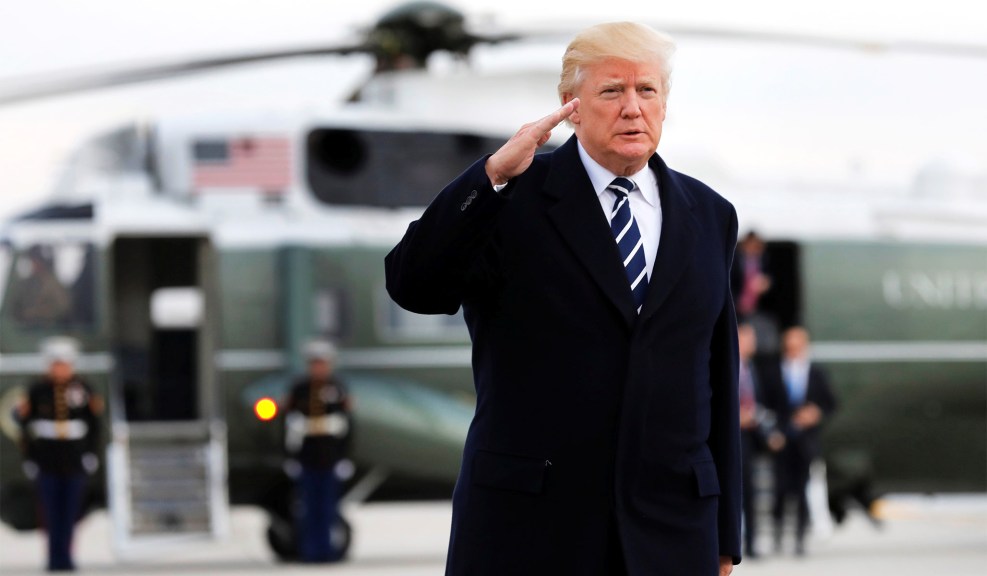 It is the geopolitics rather than the economics of energy that will drive US interest, particularly as it regards efforts to change Iranian policies, if not the Iranian regime, as well as the longer-term power balance in the Middle East. Dr. James M. Dorsey Oil may not be the only factor driving a reduced US commitment to guaranteeing security in the Middle East, but it certainly is one that weighs heavily in US President Donald Trump’s mind. “Because we have done so well with Energy over the last few years (thank you, Mr. President!), we are a net Energy Exporter, & now the Number One Energy Producer in the World. We don’t need Middle Eastern Oil & Gas, & in fact have very few tankers there…,” Mr. Trump said in a self-congratulatory tweet. (1) The timing of Mr. Trump’s assertion that a decade-old, technology-driven drilling boom had propelled the United States to become the world’s top fossil fuel producer gave his tweet real meaning even if his claim that the US was no longer dependent on Gulf imports or vulnerable to oil price fluctuations was questionable. He was tweeting two days after drones and missiles allegedly launched by either Iran or Houthi rebels in Yemen seriously damaged two key Saudi oil facilities. (2) Coming on the back of Mr. Trump’s failure to respond to the earlier downing by Iran of a US drone, the sabotaging of tankers in the Arabian Sea off the coast of the United Arab Emirates, and multiple attacks on US facilities in Iraq by Iranian-backed militias, the tweet reinforced nagging questions among Gulf leaders about the reliability of the United States’ longstanding regional defense umbrella intended to protect against such incidents.(3) All Roads Lead to Rome Oil was a factor in an ongoing rethink of US interests in the Middle East that started already at the time of the Obama administration even if Mr. Trump’s approach to some form of disengagement differs starkly with that of his predecessor, Barak Obama. In contrast to Mr. Trump’s transactional approach and maximum pressure campaign designed to force Iran to unconditionally renegotiate the fledgling 2015 international agreement that curbed the Islamic republic’s nuclear program, discontinue its development of ballistic missiles and halt support for regional proxies, Mr. Obama negotiated the agreement and sought to gradually return Iran to the international fold. Transactionalism was at the core of Mr. Trump’s assertion in the wake of the oil facility attacks that they were ”an attack on Saudi Arabia, and that wasn’t an attack on us. If we decide to do something, they’ll be very much involved, and that includes payment. And they understand that fully.” (4) Both approaches set off alarm bells in the Gulf. Saudi and UAE leaders favoured Mr. Trump’s campaign against Iran but worried about his transactionalism. Nonetheless, both approaches were informed by the re-emergence of the United Sates as a powerful player in international energy markets even if statistics failed to bear out Mr. Trump’s assertions of energy independence. Despite having become the world’s largest oil producer, US production of some 18 million barrels a day falls just short of the country’s daily consumption of 20 million. The United States’ requirement for imported oil also stems from a mismatch between what some US refiners want and what the United States produces. Some refiners, including Motiva Enterprises LLC in Port Arthur, Texas, the US’ biggest facility are part owned by Saudi Aramco, the kingdom’s national oil company, and set up to accommodate medium and heavy Saudi grades. Others, primarily in California that depends on Saudi Arabia for 37 percent of its total foreign oil imports, because it lacks pipelines that would connect it with oil-rich states such as Texas. (5) Much of the US shortfall is covered by imports from Canada. The United States, nonetheless, acquires an average of 48 million barrels per month of crude oil and petroleum products from the Gulf region. That is a third less than what the United States imported a decade ago and roughly equivalent to what it purchased in the mid-1990s. (6) Said Jason Bordoff, a former senior director of Obama’s national security council and founding director of the Center on Global Energy Policy at Columbia University: “US consumers (and Trump) may yet discover that while the shale revolution has strengthened the United States’ position economically and geopolitically, the nation is far from energy-independent: The Middle East remains critical to oil markets, and disruptions there can still cause pain for consumers here.” (7) Even if the US would import no oil from the Middle East, it would retain an interest in ensuring that supply from the region is not disrupted given the impact that would have on the United States itself as well as its trading partners. As a result, a reduced US commitment to Middle East security could backfire, particularly given that some degree of dependence on oil from the region is likely to continue in the foreseeable future. That is all the more true given that domestic US prices will be vulnerable to disruptions in the Gulf with its significant price-setting influence that impacts not only oil derivatives, but also other commodities such as corn and soybeans whose prices respond to movements in oil markets. Because Gulf producers are state-owned entities rather than private corporations as in the United States, US leaders have no control of production levels that influence prices. As a result, energy independent or not, Trump needs his Gulf and other allies in OPEC to intervene when oil prices rise too high for US consumers. Similarly, greater US energy self-sufficiency has in some respects changed the nature of rather than reduced US dependency on the Gulf. In effect, the dependency is less economic and more geopolitical. The United States’ use of energy as a weapon in its sanctions-driven efforts to change policies, if not regimes in Iran and Venezuela relies on Gulf states to compensate for market shortfalls resulting from US policies. US sanctions have removed at least 2.5 million Iranian barrels of crude per day and aim to reduce Iranian exports to zero. The sanctions, without Gulf intervention, would have sent oil prices soaring. “A stout U.S. military deterrent to those who might threaten oil and gas flows from the Gulf does not guarantee stable prices, but it helps reduce the risk of both damaging spikes and the geopolitical risk premium that markets generally price-in during periods of instability in the region,” said energy scholar Gabriel Collins. (8) Continued dependence does not mean that the United States has not and economically, strategically and geopolitical from the impact of shale oil. Increased domestic production has boosted GDP by not spending dollars overseas and has reduced America’s trade deficit by some US$250 billion. (9) Higher oil prices have furthermore benefitted US producers and helped offset price hikes for consumers. Increased US production has also bolstered global inventories, reduced the impact of supply shocks, forced the Organization of the Petroleum Exporting Countries (OPEC) to cut production, and given the United States the kind of flexibility to manage production levels that traditional producers do not have. The Future is Complex Moving forward, energy-driven US interests in regional security not only in the Middle East but also in the Eastern Mediterranean are likely to be less shaped by the degree to which the United States may rely on imports and more by developments in the region itself, including the emergence of the eastern Mediterranean as a potential gas supplier to Europe, Asia and China; Saudi plans to establish a natural gas network with the UAE and Oman that eventually would extend to Kuwait, Bahrain Iraq, Jordan, Egypt and possibly Palestine; and the kingdom’s intention to massively invest in development of its own gas resources. (10) The Eastern Mediterranean lurks on the back ground in the war in Libya with Turkish backing of the United Nations-recognized Government of National Accord in Tripoli designed to protect a Turkish-Libyan maritime agreement creating an Exclusive Economic Zone against rebel forces of Field Marshall Khalifa Haftar, who is supported by Turkey’s regional rivals, the UAE and Saudi Arabia. (11) Russia has joined the fray, hoping that a victory by Khalifa, who has been attempting to capture Tripoli since last April, will thwart a Greek-Cypriot-Israeli agreement to build a pipeline that would supply gas to Europe, reducing European dependence on Russian gas in the process. (12) Critics charge that the maritime agreement that would limit Greek-Cypriot Israeli access to hydrocarbons in the Eastern Mediterranean, violates the Law of the Sea. (13) Throwing the Eastern Mediterranean into the mix raises US interest not only for reasons of energy security. Israel’s stake in Eastern Mediterranean gas reinforces the United States’ commitment to the security of the Jewish state that requires some regional American presence. Even so, if Mr. Trump believes his own energy independence rhetoric, he may be blinded to the kind of US influence that will be needed to defend Israeli interests in the Eastern Mediterranean. Serious strains in US-Turkish relations coupled with Mr. Trump’s inclination to by and large abandon Syria and his disinterest in Libya despite having taken a phone call from Mr. Haftar in April 2019 would suggest that the president has not connect ed the dots. Tension in the Eastern Mediterranean mounted with two Turkish exploration vessels, Fatih and Yavuz, exploring in territorial waters belonging to European Union-member Cyprus, a country Ankara refuses to recognize. Turkey invaded the Turkish Cypriot north of the island in 1974 and is the only country to recognize the region’s unilateral declaration of independence. Turkey is unlikely to be deterred by the sanctioning of two of its officials for involvement in the exploration in Cypriot waters in violation of international law. (14) The Washington-based Center for Strategic and International Studies (CSIS) cautioned in a report that “the United States needs a holistic and integrated approach towards the Eastern Mediterranean that will stabilize Europe and shift the regional balance in the Middle East back towards the United States. Resolving the Syrian conflict is essential for Eastern Mediterranean stabilization and developing an appropriate policy approach toward an increasingly antagonistic and anti-democratic Turkey is the key to solving the Syria puzzle and re-anchoring the region toward the Euro-Atlantic community.” (15) Describing the Eastern Mediterranean as a theatre of big power competition that threatens US and trans-Atlantic interests, the report, maps out a detailed strategy for US re-engagement. The United States, “must make hard choices and embrace realistic goals, however unattractive, to reinvigorate US diplomatic, economic and security engagement in the region. This will involve addressing and reconciling seemingly incompatible US policies towards Syria and Turkey that can only be bridged through active created and sustained diplomacy backed by ongoing military engagement,” the report said. It Is Geopolitics, Stupid! Similar to the Eastern Mediterranean, it is the geopolitics rather than the economics of energy that will drive US interest, particularly as it regards efforts to change Iranian policies, if not the Iranian regime, as well as the longer term power balance in the Middle East and Central Asia. And it’s as much about gas as its about oil. A Saudi push to become a major natural gas player seeks to take advantage of the US sanctions against Iran in a bid to turn the kingdom into a gas powerhouse that rivals the Islamic republic. (16) The push came after Saudi Arabia discovered major reserves in the Red Sea. (17) Aramco chief executive Amin Nasser said he expected US$150 billion to be invested in the Saudi gas sector over the next ten years. Mr. Nasser envisioned gas production increasing from 14 billion standard cubic feet to 23 billion by 2030. “We are looking to shift from only satisfying our utility industry in the kingdom, which will happen especially with the increase in renewable and nuclear to be an exporter of gas and gas products,” Mr. Nasser said. “Aramco’s international gas team has been given an open platform to look at gas acquisitions along the whole supply chain. They have been given significant financial firepower – in the billions of dollars,” he added. (18) Saudi Arabia has targeted acquisitions in the United States in an effort to both boost its position in the gas market as well as US interest in the kingdom’s stability and also in the Artic. Aramco agreed in May 2019 to a buy a 25 percent stake in Sempra Energy’s Texas liquefied natural gas terminal in one of the biggest gas deals ever. The deal involves a 20-year agreement under which Saudi Arabia would buy 5 million tons of gas annually from Sempra’s Port Arthur plant, due to begin operations in 2023. (19) While the Trump administration looks favourably at Saudi investment, some analysts are raising red flags. “We simply cannot hand the quickly globalizing (via LNG) gas market to more risky exporters that often have political goals that are contrary to ours (to put it politely),” said Jude Clemente of JTC Energy Research Associates. (20) The kingdom has also expressed an interest in acquiring a 30 percent stake in Russia’s Novatek Arctic LNG project. (21)Access to the project’s gas would allow Saudi Arabia to negotiate long-term deals and/or sell cargoes on the spot market or increase domestic supply. A Saudi-Russian deal in the Artic would likely not only enhance the kingdom’s position but also bring Saudi Arabia, a member of OPEC, and Russia, which is not formally part of the cartel, closer together in their joint management of global oil supplies. Beyond investments, Saudi Arabia is seeking to become a force in the marketing and trading of gas. The kingdom scored an initial success with the sale in April 2019 of its first Liquified Natural Gas (LNG) cargo in Singapore, the trading hub for Asia and the Pacific, the world’s largest LNG market. (22) Conclusion US President Donald J. Trump claims that his shale oil has made his country energy independent. It is a claim that goes down well with a significant segment of the American public even if the facts do not bear out Mr. Trump’s assertion in a year in which voters go to the polls to decide whether he will get a second term. Increased self-sufficiency has fuelled perceptions that the United States is losing interest in the Middle East and is likely to reduce its commitment to the region’s security. Even if US economic interest may lessen, US strategic interest in regional stability continues to loom large. The question is not whether the emergence of the United States as the world’s largest energy producer will lead to its departure from the Middle East but what consequences it will have coupled with uncertainty among Gulf leaders about the level of Mr. Trump’s commitment on the region’s future security architecture. ABOUT THE AUTHOR Dr. James M. Dorsey Senior Fellow at the S. Rajaratnam School of International Studies, co-director of the University of Würzburg’s Institute for Fan Culture, and co-host of the New Books in Middle Eastern Studies podcast. James is the author of “The Turbulent World of Middle East Soccer” blog, a book with the same title and a co-authored volume, “Comparative Political Transitions between Southeast Asia and the Middle East and North Africa” as well as “Shifting Sands, Essays on Sports and Politics in the Middle East and North Africa” and just published “China and the Middle East: Venturing into the Maelstrom”. REFERENCES 1. Donald J. Trump, Twitter, 16 September 2019, https://twitter.com/realDonaldTrump/status/1173560246863876096?ref_src=twsrc%5Etfw%7Ctwcamp%5Etweetembed&ref_url=https%3A%2F%2Fwww.reuters.com%2Farticle%2Fus-saudi-aramco-attacks-trump-idUSKBN1W12RO 2. BBC News, Saudi Arabia oil attacks: UN 'unable to confirm Iranian involvement', 11 December 2019, https://www.bbc.com/news/world-middle-east-50742224 3. James M. Dorsey, Soleimani’s death opens a door to alternative security arrangements in the Gulf, The Turbulent World of Middle East Soccer, 7 January 2020, https://mideastsoccer.blogspot.com/2020/01/soleimanis-death-opens-door-to.html 4. Chris Megerian and Nabih Bulos, Trump says ‘no rush’ to respond to attacks on Saudi oil facilities, Los Angeles Times, 16 September 2019, https://www.latimes.com/politics/story/2019-09-16/trump-faces-difficult-options-on-iran 5. Devika Krishna Kumar, RPT-Saudi attacks threaten U.S. gasoline price hikes, particularly in California, Reuters, 16 September 2019, https://www.reuters.com/article/saudi-aramco-attacks-gasoline/rpt-saudi-attacks-threaten-us-gasoline-price-hikes-particularly-in-california-idUSL2N26700Y 6. Timothy Gardner, Trump says U.S. does not need Middle East oil, but cargoes keep coming, Reuters, 17 September 2019, https://www.reuters.com/article/us-saudi-aramco-attacks-trump/trump-says-u-s-does-not-need-middle-east-oil-but-cargoes-keep-coming-idUSKBN1W12RO 7. Jason Bordoff, No, President Trump, the U.S. isn’t energy-independent. Middle East oil still matters, The Washington Post, 10 January 2020, https://www.washingtonpost.com/outlook/2020/01/10/no-president-trump-us-isnt-energy-independent-middle-east-oil-still-matters/ 8. Gabriel Collins, Shale is Not Forever: Why America Should Continue Protecting Gulf Oil and Gas Flows, The National Interest, 8 July 2019, https://nationalinterest.org/blog/middle-east-watch/shale-not-forever-why-america-should-continue-protecting-gulf-oil-and-gas 9. HIS Markit, Trading places: How the shale revolution has helped keep the US trade deficit in check, 2018, https://ihsmarkit.com/Info/1118/trading-places-shale-revolution.html 10. James M. Dorsey, Ending the Gulf crisis: Natural gas frames future Gulf relations, The Turbulent World of Middle East Soccer, 8 December 2019, https://mideastsoccer.blogspot.com/2019/12/ending-gulf-crisis-natural-gas-frames.html 11. Al Jazeera, Will new gas deal fuel regional rivalry in east Mediterranean? 2 January 2020, https://www.aljazeera.com/programmes/insidestory/2020/01/gas-deal-fuel-regional-rivalry-east-mediterranean-200102190218475.html 12. Angeliki Koutantou, Greece, Israel, Cyprus sign EastMed gas pipeline deal, Reuters, 2 January 2020, https://www.reuters.com/article/us-greece-cyprus-israel-pipeline/greece-israel-cyprus-sign-eastmed-gas-pipeline-deal-idUSKBN1Z10R5 13. Luke Baker, Tuvan Gumrukcu and Michele Kambas, Turkey-Libya maritime deal rattles East Mediterranean, Reuters, 25 December 2019, https://www.reuters.com/article/us-turkey-libya-eastmed-tensions-explain/turkey-libya-maritime-deal-rattles-east-mediterranean-idUSKBN1YT0JK 14. Callum Paton, Starting with Food: Culinary Approaches to Ottoman History, The National, 5 February 2020, https://www.thenational.ae/world/europe/eu-to-sanction-two-turkish-state-oil-officials-over-illegal-mediterranean-drilling-1.974556 15. Jon B. Alterman, Heather A. Conley, Donatienne Ruy and Haim Malka, Restoring the Eastern Mediterranean as a U.S. Strategic Anchor, Center for Strategic and International Studies, 22 May 2018, https://www.csis.org/analysis/restoring-eastern-mediterranean-us-strategic-anchor 16. Miriam Malek, Saudi Arabia-GCC gas pipeline studies to commence within weeks: Falih, S&P Global Platts, 8 April 2019, https://www.spglobal.com/platts/en/market-insights/latest-news/natural-gas/040819-saudi-arabia-gcc-gas-pipeline-studies-to-commence-within-weeks-falih 17. Tsvetana Paraskova, Saudi Arabia Says Large Gas Reserves Found In Red Sea, Oilprice.com, 7 March 2019, https://oilprice.com/Latest-Energy-News/World-News/Saudi-Arabia-Says-Large-Gas-Reserves-Found-In-Red-Sea.html 18. Simon Robinson, Dominic Evans, and Dmitry Zhdannikov, Saudi Aramco eyes multi-billion-dollar U.S. gas acquisitions: CEO, Reuters, 22 January 2019, https://www.reuters.com/article/us-davos-meeting-aramco/saudi-aramco-eyes-multi-billion-dollar-u-s-gas-acquisitions-ceo-idUSKCN1PG1W1 19. Natasha Turak and Tom DiChristopher, Saudi oil giant Aramco strikes deal to buy US natural gas from Sempra Energy, CNBC, 22 May 2019, https://www.cnbc.com/2019/05/22/saudi-oil-giant-aramco-strikes-deal-to-buy-us-natural-gas-from-sempra.html 20. Jude Clementi, Saudi Arabia Ventures Into U.S. Natural Gas, Forbes, 22 January 2019, https://www.forbes.com/sites/judeclemente/2019/01/22/saudi-arabia-ventures-into-u-s-natural-gas/ 21. Reuters, Novatek close to deal with Saudi Aramco on Arctic LNG 2 project: CEO, 17 March 2019, https://www.reuters.com/article/us-oil-opec-novatek/novatek-close-to-deal-with-saudi-aramco-on-arctic-lng-2-project-ceo-idUSKCN1QY0LF 22. Anthony Dipaola, Stephen Stapczynski, and Verity Ratcliffe, Saudi Aramco Sells First LNG as Oil Giant Expands Into Gas, Bloomberg News, 25 April 2019, https://www.bloomberg.com/news/articles/2019-04-25/saudi-aramco-sells-first-lng-as-oil-behemoth-expands-into-gas?sref=3XwG50X1 |
| json metadata | {"tags":["unitedstates","trump","oil","saudi","opec"],"image":["https://cdn.steemitimages.com/DQmaRE4JTiQUhMjfjH5B5YB6tJm1cXPeHrNWzN8FGqQ2qUM/Photo%201%20AJL%20Trump%20Oil.jpg"],"links":["https://twitter.com/realDonaldTrump/status/1173560246863876096?ref_src=twsrc%5Etfw%7Ctwcamp%5Etweetembed&ref_url=https%3A%2F%2Fwww.reuters.com%2Farticle%2Fus-saudi-aramco-attacks-trump-idUSKBN1W12RO","https://www.bbc.com/news/world-middle-east-50742224","https://mideastsoccer.blogspot.com/2020/01/soleimanis-death-opens-door-to.html","https://www.latimes.com/politics/story/2019-09-16/trump-faces-difficult-options-on-iran","https://www.reuters.com/article/saudi-aramco-attacks-gasoline/rpt-saudi-attacks-threaten-us-gasoline-price-hikes-particularly-in-california-idUSL2N26700Y","https://www.reuters.com/article/us-saudi-aramco-attacks-trump/trump-says-u-s-does-not-need-middle-east-oil-but-cargoes-keep-coming-idUSKBN1W12RO","https://www.washingtonpost.com/outlook/2020/01/10/no-president-trump-us-isnt-energy-independent-middle-east-oil-still-matters/","https://nationalinterest.org/blog/middle-east-watch/shale-not-forever-why-america-should-continue-protecting-gulf-oil-and-gas","https://ihsmarkit.com/Info/1118/trading-places-shale-revolution.html","https://mideastsoccer.blogspot.com/2019/12/ending-gulf-crisis-natural-gas-frames.html","https://www.aljazeera.com/programmes/insidestory/2020/01/gas-deal-fuel-regional-rivalry-east-mediterranean-200102190218475.html","https://www.reuters.com/article/us-greece-cyprus-israel-pipeline/greece-israel-cyprus-sign-eastmed-gas-pipeline-deal-idUSKBN1Z10R5","https://www.reuters.com/article/us-turkey-libya-eastmed-tensions-explain/turkey-libya-maritime-deal-rattles-east-mediterranean-idUSKBN1YT0JK","https://www.thenational.ae/world/europe/eu-to-sanction-two-turkish-state-oil-officials-over-illegal-mediterranean-drilling-1.974556","https://www.csis.org/analysis/restoring-eastern-mediterranean-us-strategic-anchor","https://www.spglobal.com/platts/en/market-insights/latest-news/natural-gas/040819-saudi-arabia-gcc-gas-pipeline-studies-to-commence-within-weeks-falih","https://oilprice.com/Latest-Energy-News/World-News/Saudi-Arabia-Says-Large-Gas-Reserves-Found-In-Red-Sea.html","https://www.reuters.com/article/us-davos-meeting-aramco/saudi-aramco-eyes-multi-billion-dollar-u-s-gas-acquisitions-ceo-idUSKCN1PG1W1","https://www.cnbc.com/2019/05/22/saudi-oil-giant-aramco-strikes-deal-to-buy-us-natural-gas-from-sempra.html","https://www.forbes.com/sites/judeclemente/2019/01/22/saudi-arabia-ventures-into-u-s-natural-gas/","https://www.reuters.com/article/us-oil-opec-novatek/novatek-close-to-deal-with-saudi-aramco-on-arctic-lng-2-project-ceo-idUSKCN1QY0LF","https://www.bloomberg.com/news/articles/2019-04-25/saudi-aramco-sells-first-lng-as-oil-behemoth-expands-into-gas?sref=3XwG50X1"],"app":"steemit/0.2","format":"markdown"} |
| Transaction Info | Block #41061794/Trx 727d16a38277cc822bdd93b3519f08bf30c0de82 |
View Raw JSON Data
{
"trx_id": "727d16a38277cc822bdd93b3519f08bf30c0de82",
"block": 41061794,
"trx_in_block": 15,
"op_in_trx": 0,
"virtual_op": 0,
"timestamp": "2020-02-23T05:06:42",
"op": [
"comment",
{
"parent_author": "",
"parent_permlink": "unitedstates",
"author": "mideastsoccer",
"permlink": "why-trump-rejects-the-need-from-middle-eastern-oil",
"title": "Why Trump Rejects the Need from Middle Eastern Oil",
"body": "\n\nIt is the geopolitics rather than the economics of energy that will drive US interest, particularly as it regards efforts to change Iranian policies, if not the Iranian regime, as well as the longer-term power balance in the Middle East.\n\nDr. James M. Dorsey\n\nOil may not be the only factor driving a reduced US commitment to guaranteeing security in the Middle East, but it certainly is one that weighs heavily in US President Donald Trump’s mind. “Because we have done so well with Energy over the last few years (thank you, Mr. President!), we are a net Energy Exporter, & now the Number One Energy Producer in the World. We don’t need Middle Eastern Oil & Gas, & in fact have very few tankers there…,” Mr. Trump said in a self-congratulatory tweet. (1)\nThe timing of Mr. Trump’s assertion that a decade-old, technology-driven drilling boom had propelled the United States to become the world’s top fossil fuel producer gave his tweet real meaning even if his claim that the US was no longer dependent on Gulf imports or vulnerable to oil price fluctuations was questionable. He was tweeting two days after drones and missiles allegedly launched by either Iran or Houthi rebels in Yemen seriously damaged two key Saudi oil facilities. (2)\nComing on the back of Mr. Trump’s failure to respond to the earlier downing by Iran of a US drone, the sabotaging of tankers in the Arabian Sea off the coast of the United Arab Emirates, and multiple attacks on US facilities in Iraq by Iranian-backed militias, the tweet reinforced nagging questions among Gulf leaders about the reliability of the United States’ longstanding regional defense umbrella intended to protect against such incidents.(3)\nAll Roads Lead to Rome\nOil was a factor in an ongoing rethink of US interests in the Middle East that started already at the time of the Obama administration even if Mr. Trump’s approach to some form of disengagement differs starkly with that of his predecessor, Barak Obama.\nIn contrast to Mr. Trump’s transactional approach and maximum pressure campaign designed to force Iran to unconditionally renegotiate the fledgling 2015 international agreement that curbed the Islamic republic’s nuclear program, discontinue its development of ballistic missiles and halt support for regional proxies, Mr. Obama negotiated the agreement and sought to gradually return Iran to the international fold.\nTransactionalism was at the core of Mr. Trump’s assertion in the wake of the oil facility attacks that they were ”an attack on Saudi Arabia, and that wasn’t an attack on us. If we decide to do something, they’ll be very much involved, and that includes payment. And they understand that fully.” (4)\nBoth approaches set off alarm bells in the Gulf. Saudi and UAE leaders favoured Mr. Trump’s campaign against Iran but worried about his transactionalism.\nNonetheless, both approaches were informed by the re-emergence of the United Sates as a powerful player in international energy markets even if statistics failed to bear out Mr. Trump’s assertions of energy independence.\nDespite having become the world’s largest oil producer, US production of some 18 million barrels a day falls just short of the country’s daily consumption of 20 million. The United States’ requirement for imported oil also stems from a mismatch between what some US refiners want and what the United States produces.\nSome refiners, including Motiva Enterprises LLC in Port Arthur, Texas, the US’ biggest facility are part owned by Saudi Aramco, the kingdom’s national oil company, and set up to accommodate medium and heavy Saudi grades.\nOthers, primarily in California that depends on Saudi Arabia for 37 percent of its total foreign oil imports, because it lacks pipelines that would connect it with oil-rich states such as Texas. (5)\nMuch of the US shortfall is covered by imports from Canada. The United States, nonetheless, acquires an average of 48 million barrels per month of crude oil and petroleum products from the Gulf region. That is a third less than what the United States imported a decade ago and roughly equivalent to what it purchased in the mid-1990s. (6)\nSaid Jason Bordoff, a former senior director of Obama’s national security council and founding director of the Center on Global Energy Policy at Columbia University: “US consumers (and Trump) may yet discover that while the shale revolution has strengthened the United States’ position economically and geopolitically, the nation is far from energy-independent: The Middle East remains critical to oil markets, and disruptions there can still cause pain for consumers here.” (7)\nEven if the US would import no oil from the Middle East, it would retain an interest in ensuring that supply from the region is not disrupted given the impact that would have on the United States itself as well as its trading partners.\nAs a result, a reduced US commitment to Middle East security could backfire, particularly given that some degree of dependence on oil from the region is likely to continue in the foreseeable future. That is all the more true given that domestic US prices will be vulnerable to disruptions in the Gulf with its significant price-setting influence that impacts not only oil derivatives, but also other commodities such as corn and soybeans whose prices respond to movements in oil markets.\nBecause Gulf producers are state-owned entities rather than private corporations as in the United States, US leaders have no control of production levels that influence prices. As a result, energy independent or not, Trump needs his Gulf and other allies in OPEC to intervene when oil prices rise too high for US consumers.\nSimilarly, greater US energy self-sufficiency has in some respects changed the nature of rather than reduced US dependency on the Gulf. In effect, the dependency is less economic and more geopolitical.\nThe United States’ use of energy as a weapon in its sanctions-driven efforts to change policies, if not regimes in Iran and Venezuela relies on Gulf states to compensate for market shortfalls resulting from US policies. US sanctions have removed at least 2.5 million Iranian barrels of crude per day and aim to reduce Iranian exports to zero. The sanctions, without Gulf intervention, would have sent oil prices soaring.\n“A stout U.S. military deterrent to those who might threaten oil and gas flows from the Gulf does not guarantee stable prices, but it helps reduce the risk of both damaging spikes and the geopolitical risk premium that markets generally price-in during periods of instability in the region,” said energy scholar Gabriel Collins. (8)\nContinued dependence does not mean that the United States has not and economically, strategically and geopolitical from the impact of shale oil. Increased domestic production has boosted GDP by not spending dollars overseas and has reduced America’s trade deficit by some US$250 billion. (9)\nHigher oil prices have furthermore benefitted US producers and helped offset price hikes for consumers. Increased US production has also bolstered global inventories, reduced the impact of supply shocks, forced the Organization of the Petroleum Exporting Countries (OPEC) to cut production, and given the United States the kind of flexibility to manage production levels that traditional producers do not have.\nThe Future is Complex\nMoving forward, energy-driven US interests in regional security not only in the Middle East but also in the Eastern Mediterranean are likely to be less shaped by the degree to which the United States may rely on imports and more by developments in the region itself, including the emergence of the eastern Mediterranean as a potential gas supplier to Europe, Asia and China; Saudi plans to establish a natural gas network with the UAE and Oman that eventually would extend to Kuwait, Bahrain Iraq, Jordan, Egypt and possibly Palestine; and the kingdom’s intention to massively invest in development of its own gas resources. (10)\nThe Eastern Mediterranean lurks on the back ground in the war in Libya with Turkish backing of the United Nations-recognized Government of National Accord in Tripoli designed to protect a Turkish-Libyan maritime agreement creating an Exclusive Economic Zone against rebel forces of Field Marshall Khalifa Haftar, who is supported by Turkey’s regional rivals, the UAE and Saudi Arabia. (11)\nRussia has joined the fray, hoping that a victory by Khalifa, who has been attempting to capture Tripoli since last April, will thwart a Greek-Cypriot-Israeli agreement to build a pipeline that would supply gas to Europe, reducing European dependence on Russian gas in the process. (12) Critics charge that the maritime agreement that would limit Greek-Cypriot Israeli access to hydrocarbons in the Eastern Mediterranean, violates the Law of the Sea. (13)\nThrowing the Eastern Mediterranean into the mix raises US interest not only for reasons of energy security. Israel’s stake in Eastern Mediterranean gas reinforces the United States’ commitment to the security of the Jewish state that requires some regional American presence.\nEven so, if Mr. Trump believes his own energy independence rhetoric, he may be blinded to the kind of US influence that will be needed to defend Israeli interests in the Eastern Mediterranean. Serious strains in US-Turkish relations coupled with Mr. Trump’s inclination to by and large abandon Syria and his disinterest in Libya despite having taken a phone call from Mr. Haftar in April 2019 would suggest that the president has not connect ed the dots.\nTension in the Eastern Mediterranean mounted with two Turkish exploration vessels, Fatih and Yavuz, exploring in territorial waters belonging to European Union-member Cyprus, a country Ankara refuses to recognize. Turkey invaded the Turkish Cypriot north of the island in 1974 and is the only country to recognize the region’s unilateral declaration of independence. Turkey is unlikely to be deterred by the sanctioning of two of its officials for involvement in the exploration in Cypriot waters in violation of international law. (14)\nThe Washington-based Center for Strategic and International Studies (CSIS) cautioned in a report that “the United States needs a holistic and integrated approach towards the Eastern Mediterranean that will stabilize Europe and shift the regional balance in the Middle East back towards the United States. Resolving the Syrian conflict is essential for Eastern Mediterranean stabilization and developing an appropriate policy approach toward an increasingly antagonistic and anti-democratic Turkey is the key to solving the Syria puzzle and re-anchoring the region toward the Euro-Atlantic community.” (15)\nDescribing the Eastern Mediterranean as a theatre of big power competition that threatens US and trans-Atlantic interests, the report, maps out a detailed strategy for US re-engagement.\nThe United States, “must make hard choices and embrace realistic goals, however unattractive, to reinvigorate US diplomatic, economic and security engagement in the region. This will involve addressing and reconciling seemingly incompatible US policies towards Syria and Turkey that can only be bridged through active created and sustained diplomacy backed by ongoing military engagement,” the report said.\nIt Is Geopolitics, Stupid!\nSimilar to the Eastern Mediterranean, it is the geopolitics rather than the economics of energy that will drive US interest, particularly as it regards efforts to change Iranian policies, if not the Iranian regime, as well as the longer term power balance in the Middle East and Central Asia.\nAnd it’s as much about gas as its about oil. A Saudi push to become a major natural gas player seeks to take advantage of the US sanctions against Iran in a bid to turn the kingdom into a gas powerhouse that rivals the Islamic republic. (16) The push came after Saudi Arabia discovered major reserves in the Red Sea. (17)\nAramco chief executive Amin Nasser said he expected US$150 billion to be invested in the Saudi gas sector over the next ten years. Mr. Nasser envisioned gas production increasing from 14 billion standard cubic feet to 23 billion by 2030.\n“We are looking to shift from only satisfying our utility industry in the kingdom, which will happen especially with the increase in renewable and nuclear to be an exporter of gas and gas products,” Mr. Nasser said.\n“Aramco’s international gas team has been given an open platform to look at gas acquisitions along the whole supply chain. They have been given significant financial firepower – in the billions of dollars,” he added. (18)\nSaudi Arabia has targeted acquisitions in the United States in an effort to both boost its position in the gas market as well as US interest in the kingdom’s stability and also in the Artic.\nAramco agreed in May 2019 to a buy a 25 percent stake in Sempra Energy’s Texas liquefied natural gas terminal in one of the biggest gas deals ever. The deal involves a 20-year agreement under which Saudi Arabia would buy 5 million tons of gas annually from Sempra’s Port Arthur plant, due to begin operations in 2023. (19)\nWhile the Trump administration looks favourably at Saudi investment, some analysts are raising red flags. “We simply cannot hand the quickly globalizing (via LNG) gas market to more risky exporters that often have political goals that are contrary to ours (to put it politely),” said Jude Clemente of JTC Energy Research Associates. (20)\nThe kingdom has also expressed an interest in acquiring a 30 percent stake in Russia’s Novatek Arctic LNG project. (21)Access to the project’s gas would allow Saudi Arabia to negotiate long-term deals and/or sell cargoes on the spot market or increase domestic supply.\nA Saudi-Russian deal in the Artic would likely not only enhance the kingdom’s position but also bring Saudi Arabia, a member of OPEC, and Russia, which is not formally part of the cartel, closer together in their joint management of global oil supplies.\nBeyond investments, Saudi Arabia is seeking to become a force in the marketing and trading of gas. The kingdom scored an initial success with the sale in April 2019 of its first Liquified Natural Gas (LNG) cargo in Singapore, the trading hub for Asia and the Pacific, the world’s largest LNG market. (22)\nConclusion\nUS President Donald J. Trump claims that his shale oil has made his country energy independent. It is a claim that goes down well with a significant segment of the American public even if the facts do not bear out Mr. Trump’s assertion in a year in which voters go to the polls to decide whether he will get a second term.\nIncreased self-sufficiency has fuelled perceptions that the United States is losing interest in the Middle East and is likely to reduce its commitment to the region’s security. Even if US economic interest may lessen, US strategic interest in regional stability continues to loom large.\nThe question is not whether the emergence of the United States as the world’s largest energy producer will lead to its departure from the Middle East but what consequences it will have coupled with uncertainty among Gulf leaders about the level of Mr. Trump’s commitment on the region’s future security architecture.\nABOUT THE AUTHOR\n\nDr. James M. Dorsey\nSenior Fellow at the S. Rajaratnam School of International Studies, co-director of the University of Würzburg’s Institute for Fan Culture, and co-host of the New Books in Middle Eastern Studies podcast. James is the author of “The Turbulent World of Middle East Soccer” blog, a book with the same title and a co-authored volume, “Comparative Political Transitions between Southeast Asia and the Middle East and North Africa” as well as “Shifting Sands, Essays on Sports and Politics in the Middle East and North Africa” and just published “China and the Middle East: Venturing into the Maelstrom”. \nREFERENCES\n1.\tDonald J. Trump, Twitter, 16 September 2019, https://twitter.com/realDonaldTrump/status/1173560246863876096?ref_src=twsrc%5Etfw%7Ctwcamp%5Etweetembed&ref_url=https%3A%2F%2Fwww.reuters.com%2Farticle%2Fus-saudi-aramco-attacks-trump-idUSKBN1W12RO\n2.\tBBC News, Saudi Arabia oil attacks: UN 'unable to confirm Iranian involvement', 11 December 2019, https://www.bbc.com/news/world-middle-east-50742224\n3.\tJames M. Dorsey, Soleimani’s death opens a door to alternative security arrangements in the Gulf, The Turbulent World of Middle East Soccer, 7 January 2020, https://mideastsoccer.blogspot.com/2020/01/soleimanis-death-opens-door-to.html\n4.\tChris Megerian and Nabih Bulos, Trump says ‘no rush’ to respond to attacks on Saudi oil facilities, Los Angeles Times, 16 September 2019, https://www.latimes.com/politics/story/2019-09-16/trump-faces-difficult-options-on-iran\n5.\tDevika Krishna Kumar, RPT-Saudi attacks threaten U.S. gasoline price hikes, particularly in California, Reuters, 16 September 2019, https://www.reuters.com/article/saudi-aramco-attacks-gasoline/rpt-saudi-attacks-threaten-us-gasoline-price-hikes-particularly-in-california-idUSL2N26700Y\n6.\tTimothy Gardner, Trump says U.S. does not need Middle East oil, but cargoes keep coming, Reuters, 17 September 2019, https://www.reuters.com/article/us-saudi-aramco-attacks-trump/trump-says-u-s-does-not-need-middle-east-oil-but-cargoes-keep-coming-idUSKBN1W12RO\n7.\tJason Bordoff, No, President Trump, the U.S. isn’t energy-independent. Middle East oil still matters, The Washington Post, 10 January 2020, https://www.washingtonpost.com/outlook/2020/01/10/no-president-trump-us-isnt-energy-independent-middle-east-oil-still-matters/\n8.\tGabriel Collins, Shale is Not Forever: Why America Should Continue Protecting Gulf Oil and Gas Flows, The National Interest, 8 July 2019, https://nationalinterest.org/blog/middle-east-watch/shale-not-forever-why-america-should-continue-protecting-gulf-oil-and-gas\n9.\tHIS Markit, Trading places: How the shale revolution has helped keep the US trade deficit in check, 2018, https://ihsmarkit.com/Info/1118/trading-places-shale-revolution.html\n10.\tJames M. Dorsey, Ending the Gulf crisis: Natural gas frames future Gulf relations, The Turbulent World of Middle East Soccer, 8 December 2019, https://mideastsoccer.blogspot.com/2019/12/ending-gulf-crisis-natural-gas-frames.html\n11.\tAl Jazeera, Will new gas deal fuel regional rivalry in east Mediterranean? 2 January 2020, https://www.aljazeera.com/programmes/insidestory/2020/01/gas-deal-fuel-regional-rivalry-east-mediterranean-200102190218475.html\n12.\tAngeliki Koutantou, Greece, Israel, Cyprus sign EastMed gas pipeline deal, Reuters, 2 January 2020, https://www.reuters.com/article/us-greece-cyprus-israel-pipeline/greece-israel-cyprus-sign-eastmed-gas-pipeline-deal-idUSKBN1Z10R5\n13.\tLuke Baker, Tuvan Gumrukcu and Michele Kambas, Turkey-Libya maritime deal rattles East Mediterranean, Reuters, 25 December 2019, https://www.reuters.com/article/us-turkey-libya-eastmed-tensions-explain/turkey-libya-maritime-deal-rattles-east-mediterranean-idUSKBN1YT0JK\n14.\tCallum Paton, Starting with Food: Culinary Approaches to Ottoman History, The National, 5 February 2020, https://www.thenational.ae/world/europe/eu-to-sanction-two-turkish-state-oil-officials-over-illegal-mediterranean-drilling-1.974556\n15.\tJon B. Alterman, Heather A. Conley, Donatienne Ruy and Haim Malka, Restoring the Eastern Mediterranean as a U.S. Strategic Anchor, Center for Strategic and International Studies, 22 May 2018, https://www.csis.org/analysis/restoring-eastern-mediterranean-us-strategic-anchor\n16.\tMiriam Malek, Saudi Arabia-GCC gas pipeline studies to commence within weeks: Falih, S&P Global Platts, 8 April 2019, https://www.spglobal.com/platts/en/market-insights/latest-news/natural-gas/040819-saudi-arabia-gcc-gas-pipeline-studies-to-commence-within-weeks-falih\n17.\tTsvetana Paraskova, Saudi Arabia Says Large Gas Reserves Found In Red Sea, Oilprice.com, 7 March 2019, https://oilprice.com/Latest-Energy-News/World-News/Saudi-Arabia-Says-Large-Gas-Reserves-Found-In-Red-Sea.html\n18.\tSimon Robinson, Dominic Evans, and Dmitry Zhdannikov, Saudi Aramco eyes multi-billion-dollar U.S. gas acquisitions: CEO, Reuters, 22 January 2019, https://www.reuters.com/article/us-davos-meeting-aramco/saudi-aramco-eyes-multi-billion-dollar-u-s-gas-acquisitions-ceo-idUSKCN1PG1W1\n19.\tNatasha Turak and Tom DiChristopher, Saudi oil giant Aramco strikes deal to buy US natural gas from Sempra Energy, CNBC, 22 May 2019, https://www.cnbc.com/2019/05/22/saudi-oil-giant-aramco-strikes-deal-to-buy-us-natural-gas-from-sempra.html\n20.\tJude Clementi, Saudi Arabia Ventures Into U.S. Natural Gas, Forbes, 22 January 2019, https://www.forbes.com/sites/judeclemente/2019/01/22/saudi-arabia-ventures-into-u-s-natural-gas/\n21.\tReuters, Novatek close to deal with Saudi Aramco on Arctic LNG 2 project: CEO, 17 March 2019, https://www.reuters.com/article/us-oil-opec-novatek/novatek-close-to-deal-with-saudi-aramco-on-arctic-lng-2-project-ceo-idUSKCN1QY0LF\n22.\tAnthony Dipaola, Stephen Stapczynski, and Verity Ratcliffe, Saudi Aramco Sells First LNG as Oil Giant Expands Into Gas, Bloomberg News, 25 April 2019, https://www.bloomberg.com/news/articles/2019-04-25/saudi-aramco-sells-first-lng-as-oil-behemoth-expands-into-gas?sref=3XwG50X1",
"json_metadata": "{\"tags\":[\"unitedstates\",\"trump\",\"oil\",\"saudi\",\"opec\"],\"image\":[\"https://cdn.steemitimages.com/DQmaRE4JTiQUhMjfjH5B5YB6tJm1cXPeHrNWzN8FGqQ2qUM/Photo%201%20AJL%20Trump%20Oil.jpg\"],\"links\":[\"https://twitter.com/realDonaldTrump/status/1173560246863876096?ref_src=twsrc%5Etfw%7Ctwcamp%5Etweetembed&ref_url=https%3A%2F%2Fwww.reuters.com%2Farticle%2Fus-saudi-aramco-attacks-trump-idUSKBN1W12RO\",\"https://www.bbc.com/news/world-middle-east-50742224\",\"https://mideastsoccer.blogspot.com/2020/01/soleimanis-death-opens-door-to.html\",\"https://www.latimes.com/politics/story/2019-09-16/trump-faces-difficult-options-on-iran\",\"https://www.reuters.com/article/saudi-aramco-attacks-gasoline/rpt-saudi-attacks-threaten-us-gasoline-price-hikes-particularly-in-california-idUSL2N26700Y\",\"https://www.reuters.com/article/us-saudi-aramco-attacks-trump/trump-says-u-s-does-not-need-middle-east-oil-but-cargoes-keep-coming-idUSKBN1W12RO\",\"https://www.washingtonpost.com/outlook/2020/01/10/no-president-trump-us-isnt-energy-independent-middle-east-oil-still-matters/\",\"https://nationalinterest.org/blog/middle-east-watch/shale-not-forever-why-america-should-continue-protecting-gulf-oil-and-gas\",\"https://ihsmarkit.com/Info/1118/trading-places-shale-revolution.html\",\"https://mideastsoccer.blogspot.com/2019/12/ending-gulf-crisis-natural-gas-frames.html\",\"https://www.aljazeera.com/programmes/insidestory/2020/01/gas-deal-fuel-regional-rivalry-east-mediterranean-200102190218475.html\",\"https://www.reuters.com/article/us-greece-cyprus-israel-pipeline/greece-israel-cyprus-sign-eastmed-gas-pipeline-deal-idUSKBN1Z10R5\",\"https://www.reuters.com/article/us-turkey-libya-eastmed-tensions-explain/turkey-libya-maritime-deal-rattles-east-mediterranean-idUSKBN1YT0JK\",\"https://www.thenational.ae/world/europe/eu-to-sanction-two-turkish-state-oil-officials-over-illegal-mediterranean-drilling-1.974556\",\"https://www.csis.org/analysis/restoring-eastern-mediterranean-us-strategic-anchor\",\"https://www.spglobal.com/platts/en/market-insights/latest-news/natural-gas/040819-saudi-arabia-gcc-gas-pipeline-studies-to-commence-within-weeks-falih\",\"https://oilprice.com/Latest-Energy-News/World-News/Saudi-Arabia-Says-Large-Gas-Reserves-Found-In-Red-Sea.html\",\"https://www.reuters.com/article/us-davos-meeting-aramco/saudi-aramco-eyes-multi-billion-dollar-u-s-gas-acquisitions-ceo-idUSKCN1PG1W1\",\"https://www.cnbc.com/2019/05/22/saudi-oil-giant-aramco-strikes-deal-to-buy-us-natural-gas-from-sempra.html\",\"https://www.forbes.com/sites/judeclemente/2019/01/22/saudi-arabia-ventures-into-u-s-natural-gas/\",\"https://www.reuters.com/article/us-oil-opec-novatek/novatek-close-to-deal-with-saudi-aramco-on-arctic-lng-2-project-ceo-idUSKCN1QY0LF\",\"https://www.bloomberg.com/news/articles/2019-04-25/saudi-aramco-sells-first-lng-as-oil-behemoth-expands-into-gas?sref=3XwG50X1\"],\"app\":\"steemit/0.2\",\"format\":\"markdown\"}"
}
]
}2020/02/21 02:47:18
2020/02/21 02:47:18
| parent author | mideastsoccer |
| parent permlink | jmd-on-nbn-nicholas-blincoe-more-nobel-than-war |
| author | cheetah |
| permlink | cheetah-re-mideastsoccerjmd-on-nbn-nicholas-blincoe-more-nobel-than-war |
| title | |
| body | Hi! I am a robot. I just upvoted you! I found similar content that readers might be interested in: https://player.fm/1zrzrK |
| json metadata | |
| Transaction Info | Block #41001519/Trx f94c9022a4eb740e6623d0ee0ef0271f46aa7f74 |
View Raw JSON Data
{
  "trx_id": "f94c9022a4eb740e6623d0ee0ef0271f46aa7f74",
  "block": 41001519,
  "trx_in_block": 10,
  "op_in_trx": 0,
  "virtual_op": 0,
  "timestamp": "2020-02-21T02:47:18",
  "op": [
    "comment",
    {
      "parent_author": "mideastsoccer",
      "parent_permlink": "jmd-on-nbn-nicholas-blincoe-more-nobel-than-war",
      "author": "cheetah",
      "permlink": "cheetah-re-mideastsoccerjmd-on-nbn-nicholas-blincoe-more-nobel-than-war",
      "title": "",
      "body": "Hi! I am a robot. I just upvoted you! I found similar content that readers might be interested in:\nhttps://player.fm/1zrzrK",
      "json_metadata": ""
    }
  ]
}cheetahupvoted (0.08%) @mideastsoccer / jmd-on-nbn-nicholas-blincoe-more-nobel-than-war2020/02/21 02:47:15
cheetahupvoted (0.08%) @mideastsoccer / jmd-on-nbn-nicholas-blincoe-more-nobel-than-war
2020/02/21 02:47:15
| voter | cheetah |
| author | mideastsoccer |
| permlink | jmd-on-nbn-nicholas-blincoe-more-nobel-than-war |
| weight | 8 (0.08%) |
| Transaction Info | Block #41001518/Trx d3e59aaabf95d7b2d047d394e7f4a74c0ac64f5f |
View Raw JSON Data
{
  "trx_id": "d3e59aaabf95d7b2d047d394e7f4a74c0ac64f5f",
  "block": 41001518,
  "trx_in_block": 6,
  "op_in_trx": 0,
  "virtual_op": 0,
  "timestamp": "2020-02-21T02:47:15",
  "op": [
    "vote",
    {
      "voter": "cheetah",
      "author": "mideastsoccer",
      "permlink": "jmd-on-nbn-nicholas-blincoe-more-nobel-than-war",
      "weight": 8
    }
  ]
}mideastsoccerpublished a new post: jmd-on-nbn-nicholas-blincoe-more-nobel-than-war2020/02/21 02:47:00
mideastsoccerpublished a new post: jmd-on-nbn-nicholas-blincoe-more-nobel-than-war
2020/02/21 02:47:00
| parent author | |
| parent permlink | israel |
| author | mideastsoccer |
| permlink | jmd-on-nbn-nicholas-blincoe-more-nobel-than-war |
| title | JMD on NBN: Nicholas Blincoe, More Nobel Than War |
| body |  Nicholas Blincoe’s More Noble Than War: A Soccer History of Israel-Palestine (Bold Type Books, 2019) is a beautifully narrated and written history of a century of conflict between pre-state Jews and Palestinians and Israeli Jews and Israeli Palestinians after the establishment of the state. It is a story that goes far beyond the history of the conflict, the mirror images of developments in Jewish and Palestinian society, and the internecine ideological infighting and power struggles within the two communities. It paints in graphic detail the incestuous and inseparable relationship between sports and politics and the importance of soccer, particularly in the Middle East and North Africa, in identity and nation formation as well as nation building. It also demonstrates in graphic detail how first Jews and then Palestinians exploited soccer to first achieve international recognition of their struggles and then as nations by dispatching teams to tour other countries and being granted membership in world soccer body FIFA. In doing so, Israelis and Palestinians set an example that decades later became a key pillar of the Algerian liberation struggle in the 1950s and 1960s with the National Liberation Front (FLN)’s creation of its own national soccer team that put its fight for independence on the world map. The skeletal facts of Blincoe’s tale have long been known. The significance of Blincoe’s contribution is that he puts flesh on the skeleton by weaving the facts into a meticulously researched and reported, easily accessible narrative in which he brings key players and ideological trends to life. It’s a tale that is all fact but reads like a thriller. ________________________________________ James M. Dorsey is a senior fellow at Nanyang Technological University S. Rajaratnam School of International Studies and the National University of Singapore’s Middle East Institute. Listen to the podcast at: https://dcs-b.megaphone.fm/LIT4403670488.mp3?key=ad2e7300cfe9b3f4d918bfd05eaa8bd6 |
| json metadata | {"tags":["israel","palestine","football","soccer","sports"],"image":["https://cdn.steemitimages.com/DQmZPDZGWn7yqjJeBkNM2aiNKv6z1qiPdMAFtd5sCgC1V9m/MoreNobleThanWar.jpg"],"links":["https://dcs-b.megaphone.fm/LIT4403670488.mp3?key=ad2e7300cfe9b3f4d918bfd05eaa8bd6"],"app":"steemit/0.2","format":"markdown"} |
| Transaction Info | Block #41001513/Trx 04350d66ce3b56e70986eb8a515c1e542f3280f8 |
View Raw JSON Data
{
"trx_id": "04350d66ce3b56e70986eb8a515c1e542f3280f8",
"block": 41001513,
"trx_in_block": 18,
"op_in_trx": 0,
"virtual_op": 0,
"timestamp": "2020-02-21T02:47:00",
"op": [
"comment",
{
"parent_author": "",
"parent_permlink": "israel",
"author": "mideastsoccer",
"permlink": "jmd-on-nbn-nicholas-blincoe-more-nobel-than-war",
"title": "JMD on NBN: Nicholas Blincoe, More Nobel Than War",
"body": "\n\nNicholas Blincoe’s More Noble Than War: A Soccer History of Israel-Palestine (Bold Type Books, 2019) is a beautifully narrated and written history of a century of conflict between pre-state Jews and Palestinians and Israeli Jews and Israeli Palestinians after the establishment of the state. It is a story that goes far beyond the history of the conflict, the mirror images of developments in Jewish and Palestinian society, and the internecine ideological infighting and power struggles within the two communities. It paints in graphic detail the incestuous and inseparable relationship between sports and politics and the importance of soccer, particularly in the Middle East and North Africa, in identity and nation formation as well as nation building. It also demonstrates in graphic detail how first Jews and then Palestinians exploited soccer to first achieve international recognition of their struggles and then as nations by dispatching teams to tour other countries and being granted membership in world soccer body FIFA. In doing so, Israelis and Palestinians set an example that decades later became a key pillar of the Algerian liberation struggle in the 1950s and 1960s with the National Liberation Front (FLN)’s creation of its own national soccer team that put its fight for independence on the world map. The skeletal facts of Blincoe’s tale have long been known. The significance of Blincoe’s contribution is that he puts flesh on the skeleton by weaving the facts into a meticulously researched and reported, easily accessible narrative in which he brings key players and ideological trends to life. It’s a tale that is all fact but reads like a thriller.\n________________________________________\nJames M. Dorsey is a senior fellow at Nanyang Technological University S. Rajaratnam School of International Studies and the National University of Singapore’s Middle East Institute.\n\nListen to the podcast at: https://dcs-b.megaphone.fm/LIT4403670488.mp3?key=ad2e7300cfe9b3f4d918bfd05eaa8bd6",
"json_metadata": "{\"tags\":[\"israel\",\"palestine\",\"football\",\"soccer\",\"sports\"],\"image\":[\"https://cdn.steemitimages.com/DQmZPDZGWn7yqjJeBkNM2aiNKv6z1qiPdMAFtd5sCgC1V9m/MoreNobleThanWar.jpg\"],\"links\":[\"https://dcs-b.megaphone.fm/LIT4403670488.mp3?key=ad2e7300cfe9b3f4d918bfd05eaa8bd6\"],\"app\":\"steemit/0.2\",\"format\":\"markdown\"}"
}
]
}Manabar
Voting Power100.00%
Downvote Power100.00%
Resource Credits100.00%
Reputation Progress90.93%
{
  "voting_manabar": {
    "current_mana": 1920017158,
    "last_update_time": 1604354703
  },
  "downvote_manabar": {
    "current_mana": 480004290,
    "last_update_time": 1604354703
  },
  "rc_account": {
    "account": "mideastsoccer",
    "rc_manabar": {
      "current_mana": "11854029353",
      "last_update_time": 1604354703
    },
    "max_rc_creation_adjustment": {
      "amount": "5994095932",
      "precision": 6,
      "nai": "@@000000037"
    },
    "max_rc": "7914113090"
  }
}
Account Metadata
| POSTING JSON METADATA | |
| None | |
| JSON METADATA | |
| None |
{
  "posting_json_metadata": {},
  "json_metadata": {}
}
Auth Keys
Owner
Single Signature
Public Keys
STM5E4PvoybnUNzC6K4u7tMcvpa5LieojznK2sppAknnULgudMRwe1/1
Active
Single Signature
Public Keys
STM7G7qPgmhKtfdX5ugsYoUntRgnc1EtQ5xvLNXqnyoyTs3LsMHZw1/1
Posting
Single Signature
Public Keys
STM6nGBLg45u36upcHPswSuK1w2cM2NggSEd7HyY2NP6j9zEffh281/1
Memo
STM5Kue75zzhrBKFDPzStSM9uhqqGYxx988kayycGDH6q1EbJDoA1
{
  "owner": {
    "weight_threshold": 1,
    "account_auths": [],
    "key_auths": [
      [
        "STM5E4PvoybnUNzC6K4u7tMcvpa5LieojznK2sppAknnULgudMRwe",
        1
      ]
    ]
  },
  "active": {
    "weight_threshold": 1,
    "account_auths": [],
    "key_auths": [
      [
        "STM7G7qPgmhKtfdX5ugsYoUntRgnc1EtQ5xvLNXqnyoyTs3LsMHZw",
        1
      ]
    ]
  },
  "posting": {
    "weight_threshold": 1,
    "account_auths": [],
    "key_auths": [
      [
        "STM6nGBLg45u36upcHPswSuK1w2cM2NggSEd7HyY2NP6j9zEffh28",
        1
      ]
    ]
  },
  "memo": "STM5Kue75zzhrBKFDPzStSM9uhqqGYxx988kayycGDH6q1EbJDoA1"
}
Witness Votes
0 / 30
No active witness votes.
[]