

VOTING POWER100.00%
DOWNVOTE POWER100.00%
RESOURCE CREDITS100.00%
REPUTATION PROGRESS14.59%
Net Worth
0.006USD
STEEM
0.101STEEM
SBD
0.000SBD
Effective Power
3.354SP
├── Own SP
0.000SP
└── Incoming DelegationsDeleg
+3.354SP
Detailed Balance
| STEEM | ||
| balance | 0.013STEEM | STEEM |
| market_balance | 0.000STEEM | STEEM |
| savings_balance | 0.000STEEM | STEEM |
| reward_steem_balance | 0.088STEEM | STEEM |
| STEEM POWER | ||
| Own SP | 0.000SP | SP |
| Delegated Out | 0.000SP | SP |
| Delegation In | 3.354SP | SP |
| Effective Power | 3.354SP | SP |
| Reward SP (pending) | 0.089SP | SP |
| SBD | ||
| sbd_balance | 0.000SBD | SBD |
| sbd_conversions | 0.000SBD | SBD |
| sbd_market_balance | 0.000SBD | SBD |
| savings_sbd_balance | 0.000SBD | SBD |
| reward_sbd_balance | 0.000SBD | SBD |
{
  "balance": "0.013 STEEM",
  "savings_balance": "0.000 STEEM",
  "reward_steem_balance": "0.088 STEEM",
  "vesting_shares": "0.000000 VESTS",
  "delegated_vesting_shares": "0.000000 VESTS",
  "received_vesting_shares": "5453.622753 VESTS",
  "sbd_balance": "0.000 SBD",
  "savings_sbd_balance": "0.000 SBD",
  "reward_sbd_balance": "0.000 SBD",
  "conversions": []
}
Account Info
| name | kryptomindpvt |
| id | 1730918 |
| rank | 1,394,482 |
| reputation | 4818078613 |
| created | 2022-07-19T10:51:51 |
| recovery_account | steemcurator01 |
| proxy | None |
| post_count | 39 |
| comment_count | 0 |
| lifetime_vote_count | 0 |
| witnesses_voted_for | 0 |
| last_post | 2024-11-04T07:32:42 |
| last_root_post | 2024-11-04T07:32:42 |
| last_vote_time | 2024-09-13T14:04:21 |
| proxied_vsf_votes | 0, 0, 0, 0 |
| can_vote | 1 |
| voting_power | 0 |
| delayed_votes | 0 |
| balance | 0.013 STEEM |
| savings_balance | 0.000 STEEM |
| sbd_balance | 0.000 SBD |
| savings_sbd_balance | 0.000 SBD |
| vesting_shares | 0.000000 VESTS |
| delegated_vesting_shares | 0.000000 VESTS |
| received_vesting_shares | 5453.622753 VESTS |
| reward_vesting_balance | 160.747586 VESTS |
| vesting_balance | 0.000 STEEM |
| vesting_withdraw_rate | 0.000000 VESTS |
| next_vesting_withdrawal | 1969-12-31T23:59:59 |
| withdrawn | 0 |
| to_withdraw | 0 |
| withdraw_routes | 0 |
| savings_withdraw_requests | 0 |
| last_account_recovery | 1970-01-01T00:00:00 |
| reset_account | null |
| last_owner_update | 1970-01-01T00:00:00 |
| last_account_update | 1970-01-01T00:00:00 |
| mined | No |
| sbd_seconds | 0 |
| sbd_last_interest_payment | 1970-01-01T00:00:00 |
| savings_sbd_last_interest_payment | 1970-01-01T00:00:00 |
{
  "active": {
    "account_auths": [],
    "key_auths": [
      [
        "STM6hQWshC9Pbwund59MDht8EKb9wT8wbKfbrPGtibmfiYeQ5vcvE",
        1
      ]
    ],
    "weight_threshold": 1
  },
  "balance": "0.013 STEEM",
  "can_vote": true,
  "comment_count": 0,
  "created": "2022-07-19T10:51:51",
  "curation_rewards": 0,
  "delegated_vesting_shares": "0.000000 VESTS",
  "downvote_manabar": {
    "current_mana": 1363405688,
    "last_update_time": 1773477609
  },
  "guest_bloggers": [],
  "id": 1730918,
  "json_metadata": "{}",
  "last_account_recovery": "1970-01-01T00:00:00",
  "last_account_update": "1970-01-01T00:00:00",
  "last_owner_update": "1970-01-01T00:00:00",
  "last_post": "2024-11-04T07:32:42",
  "last_root_post": "2024-11-04T07:32:42",
  "last_vote_time": "2024-09-13T14:04:21",
  "lifetime_vote_count": 0,
  "market_history": [],
  "memo_key": "STM6gF75unnCWcueWepxwA2szsqS54LhyU9m3H15taFyznirSyDaR",
  "mined": false,
  "name": "kryptomindpvt",
  "next_vesting_withdrawal": "1969-12-31T23:59:59",
  "other_history": [],
  "owner": {
    "account_auths": [],
    "key_auths": [
      [
        "STM77PFJzonDRp7GgjRVQLzVHETUgCRmgQYhvRo5GFgrQd95ifvFj",
        1
      ]
    ],
    "weight_threshold": 1
  },
  "pending_claimed_accounts": 0,
  "post_bandwidth": 0,
  "post_count": 39,
  "post_history": [],
  "posting": {
    "account_auths": [],
    "key_auths": [
      [
        "STM8SiwKYiYQqpja6vpzBwpucbGFh6D64wgWbpNHxGRpCsZ6wZFaq",
        1
      ]
    ],
    "weight_threshold": 1
  },
  "posting_json_metadata": "",
  "posting_rewards": 177,
  "proxied_vsf_votes": [
    0,
    0,
    0,
    0
  ],
  "proxy": "",
  "received_vesting_shares": "5453.622753 VESTS",
  "recovery_account": "steemcurator01",
  "reputation": "4818078613",
  "reset_account": "null",
  "reward_sbd_balance": "0.000 SBD",
  "reward_steem_balance": "0.088 STEEM",
  "reward_vesting_balance": "160.747586 VESTS",
  "reward_vesting_steem": "0.089 STEEM",
  "savings_balance": "0.000 STEEM",
  "savings_sbd_balance": "0.000 SBD",
  "savings_sbd_last_interest_payment": "1970-01-01T00:00:00",
  "savings_sbd_seconds": "0",
  "savings_sbd_seconds_last_update": "1970-01-01T00:00:00",
  "savings_withdraw_requests": 0,
  "sbd_balance": "0.000 SBD",
  "sbd_last_interest_payment": "1970-01-01T00:00:00",
  "sbd_seconds": "0",
  "sbd_seconds_last_update": "1970-01-01T00:00:00",
  "tags_usage": [],
  "to_withdraw": 0,
  "transfer_history": [],
  "vesting_balance": "0.000 STEEM",
  "vesting_shares": "0.000000 VESTS",
  "vesting_withdraw_rate": "0.000000 VESTS",
  "vote_history": [],
  "voting_manabar": {
    "current_mana": "5453622753",
    "last_update_time": 1773477609
  },
  "voting_power": 0,
  "withdraw_routes": 0,
  "withdrawn": 0,
  "witness_votes": [],
  "witnesses_voted_for": 0,
  "rank": 1394482
}
Withdraw Routes
| Incoming | Outgoing |
|---|---|
Empty | Empty |
{
  "incoming": [],
  "outgoing": []
}From Date
To Date
steemdelegated 3.354 SP to @kryptomindpvt2026/03/14 08:40:09
steemdelegated 3.354 SP to @kryptomindpvt
2026/03/14 08:40:09
| delegatee | kryptomindpvt |
| delegator | steem |
| vesting shares | 5453.622753 VESTS |
| Transaction Info | Block #104289382/Trx 83d34a5ef4395a611811e6ede9a37a2da11fbd12 |
View Raw JSON Data
{
  "block": 104289382,
  "op": [
    "delegate_vesting_shares",
    {
      "delegatee": "kryptomindpvt",
      "delegator": "steem",
      "vesting_shares": "5453.622753 VESTS"
    }
  ],
  "op_in_trx": 0,
  "timestamp": "2026-03-14T08:40:09",
  "trx_id": "83d34a5ef4395a611811e6ede9a37a2da11fbd12",
  "trx_in_block": 0,
  "virtual_op": 0
}biillcheryreplied to @kryptomindpvt / tade632026/02/12 23:49:15
biillcheryreplied to @kryptomindpvt / tade63
2026/02/12 23:49:15
| author | biillchery |
| body | I used to feel like I was always one step behind the market, reacting to headlines instead of following a clear investment strategy. The constant volatility made it difficult to stay consistent, and I knew I needed a smarter, more structured approach. That is when I came across XeltoMatrix Official Website https://xelto-matrix.org. The platform is tailored specifically for investors in Canada and offers advanced analytics, portfolio management tools, and practical risk control features. Instead of relying on guesswork, I now make decisions based on real data and structured insights. Since adopting this approach, my investment process feels far more organized, disciplined, and focused on steady long-term growth. |
| json metadata | {"links":["https://xelto-matrix.org"],"app":"steemit/0.2"} |
| parent author | kryptomindpvt |
| parent permlink | 7-crypto-coins-that-could-reach-new-all-highs-in-2025 |
| permlink | tade63 |
| title | |
| Transaction Info | Block #103445800/Trx 95394c51acfeee1835749a8ac286a253afd9bf07 |
View Raw JSON Data
{
  "block": 103445800,
  "op": [
    "comment",
    {
      "author": "biillchery",
      "body": "I used to feel like I was always one step behind the market, reacting to headlines instead of following a clear investment strategy. The constant volatility made it difficult to stay consistent, and I knew I needed a smarter, more structured approach. That is when I came across XeltoMatrix Official Website https://xelto-matrix.org. The platform is tailored specifically for investors in Canada and offers advanced analytics, portfolio management tools, and practical risk control features. Instead of relying on guesswork, I now make decisions based on real data and structured insights. Since adopting this approach, my investment process feels far more organized, disciplined, and focused on steady long-term growth.",
      "json_metadata": "{\"links\":[\"https://xelto-matrix.org\"],\"app\":\"steemit/0.2\"}",
      "parent_author": "kryptomindpvt",
      "parent_permlink": "7-crypto-coins-that-could-reach-new-all-highs-in-2025",
      "permlink": "tade63",
      "title": ""
    }
  ],
  "op_in_trx": 0,
  "timestamp": "2026-02-12T23:49:15",
  "trx_id": "95394c51acfeee1835749a8ac286a253afd9bf07",
  "trx_in_block": 1,
  "virtual_op": 0
}steemdelegated 3.455 SP to @kryptomindpvt2025/02/03 08:55:42
steemdelegated 3.455 SP to @kryptomindpvt
2025/02/03 08:55:42
| delegatee | kryptomindpvt |
| delegator | steem |
| vesting shares | 5617.266478 VESTS |
| Transaction Info | Block #92684300/Trx 49c3ef5df44571cc6d6fe0fdada88f33a3aed28b |
View Raw JSON Data
{
  "block": 92684300,
  "op": [
    "delegate_vesting_shares",
    {
      "delegatee": "kryptomindpvt",
      "delegator": "steem",
      "vesting_shares": "5617.266478 VESTS"
    }
  ],
  "op_in_trx": 0,
  "timestamp": "2025-02-03T08:55:42",
  "trx_id": "49c3ef5df44571cc6d6fe0fdada88f33a3aed28b",
  "trx_in_block": 3,
  "virtual_op": 0
}kryptomindpvtpublished a new post: hire-best-web-3-0-developers2024/11/04 07:32:42
kryptomindpvtpublished a new post: hire-best-web-3-0-developers
2024/11/04 07:32:42
| author | kryptomindpvt |
| body | .png) Web 3.0 is the blockchain-driven, decentralized, and power-packed version of the future internet-neatly wrapped. A host of opportunities and further challenges in finding skilled Web 3.0 developers are a promise of this new avatar of the web, since it demands knowledge in Blockchain, dApps, Smart Contracts, Play to Earn Games and much more. Hiring in-house Web 3.0 developers is very expensive for companies, considering yearly salaries ranging from $150,000 to $300,000. So what options are left? How can one hire the best Web 3.0 developers affordably? Here is a look into the best companies and platform to get the right talent if you’re finding best Web 3.0 developers: 1 – Kryptomind Kryptomind is an experienced full-service blockchain development company offering a full suite of Web 3.0 development services. It is a company working on next-generation projects. Having worked on a diverse types of projects—from the Metaverse and NFTs to blockchain and play-and-earn games—this company is well suited for your next-generation Web 3.0 product development. Have anything related to Web 3.0, their talented Web 3.0 developers are available for hire for development as well as consultation. Kryptomind team is continuously up it’s skills in AI, ML, NFTs, wallets, and play-to-earn games. Started as simple blockchain development company, they have evolved into a full-fledged Web 3.0 development company, offering services, including smart contract development and AI product development. A consultation with the Kryptomind team will give you a deeper understanding of their experience. Request a consultation! 2 – Toptal Toptal is a very well-reputed platform that helps in the hiring of elite developers, be it Web 3.0 or blockchain expert developers. They have super-strict screening through which they allow just the best 3% to onboard, meaning really highly qualified professionals. Whether it be blockchain, Ethereum, smart contract development, or many more, Toptal’s talent pool can pretty much cover anything there is about Web 3.0. 3 – Upwork From Web 3.0 and blockchain experience to anything else, you can hire any type of developer from Upwork. You will be able to post job openings or profile searches, identifying candidates to pick the skill set for either one of your Solidity programming, NFT development, or DeFi expertise. You can go through the reviews and the projects this particular developer has worked upon to be very sure that you’re choosing someone who gets the job done. 4 – CryptoJobs CryptoJobs is a job board for blockchain and cryptocurrency projects. If there were to be any one single place that may have a Web 3.0 developer-you know, those people that really know the inside of blockchain technology-then this would be it. CryptoJobs has everything from smart contract developers to Web 3.0 architects, making it more convenient to hunt for specialists in this niche. 5 – LinkedIn It is one of the larger professional networks globally and a good place to find Web 3.0 developers. You can put up a job ad or actively look for pros by filtering for blockchain development, smart contract development, and Web 3.0. Again, the strong point with LinkedIn is the possibility to get candidate vetting through professional history, recommendations, and skill endorsements. 6 – GitHub GitHub is a platform where such developers show off their coding skills and take part in developing open-source projects. It is one of the best hubs to get the talents of Web 3.0 developers with a passion for blockchain and decentralized technologies. You get the opportunity to see the past work done by a developer, his contribution to blockchain projects if any, and may even interact with him prior to making a hiring decision. 7 – AngelList Talent AngelList Talent is a good platform for many startups and tech companies willing to hire more senior developers. This resource will be at hand when hiring a Web 3.0 developer in case you deal with a blockchain/DeFi startup. On AngelList, you are allowed to post your vacancy and attract candidates interested in innovative technologies. 8 – Web3.career Web3.career is a niche job board; it’s for Web 3.0 developers only. It speaks to the firms operating in the space of a decentralized web and blockchain directly, listing their opening jobs for all kinds of roles within Web 3.0-from backend developers into DApps to experts in solidity and NFT developers. That positions them great in attracting top specialized talent. 9 – Freelancer Freelancer is another big freelance platform besides Upwork, from where you are able to hire Web 3.0 developers for either short-term or project-based assignments. It has a large pool of freelancers skilled in blockchain development, cryptocurrency, and making decentralized applications. You will go through portfolio reviewing, job bidding, and hire based on expertise and budget. 10 – RemoteOK Since RemoteOK is all about remote jobs, finding Web 3.0 developers to work comfortably from anywhere will be highly suitable here. Also, it has a section of Web 3.0 and blockchain jobs on the platform, and finding a developer with experience in decentralized tech and crypto will be pretty easy for you. Kickstart your career in blockchain with our blockchain training program! |
| json metadata | {"tags":["blockchain","web3","webdeveloper","cryptocurrency"],"image":["https://cdn.steemitimages.com/DQmQ3pgZ5uXnVD79NLeTYxexEChxSPVrZbez8FLjDeAJwFy/Designer%20(5).png"],"app":"steemit/0.2","format":"markdown"} |
| parent author | |
| parent permlink | blockchain |
| permlink | hire-best-web-3-0-developers |
| title | Hire Best Web 3.0 Developers |
| Transaction Info | Block #90068443/Trx 5caec5435112b63beb45064a2e97fab064f7c15b |
View Raw JSON Data
{
"block": 90068443,
"op": [
"comment",
{
"author": "kryptomindpvt",
"body": ".png)\n\nWeb 3.0 is the blockchain-driven, decentralized, and power-packed version of the future internet-neatly wrapped. A host of opportunities and further challenges in finding skilled Web 3.0 developers are a promise of this new avatar of the web, since it demands knowledge in Blockchain, dApps, Smart Contracts, Play to Earn Games and much more. Hiring in-house Web 3.0 developers is very expensive for companies, considering yearly salaries ranging from $150,000 to $300,000. So what options are left? How can one hire the best Web 3.0 developers affordably?\n\nHere is a look into the best companies and platform to get the right talent if you’re finding best Web 3.0 developers:\n\n1 – Kryptomind\nKryptomind is an experienced full-service blockchain development company offering a full suite of Web 3.0 development services. It is a company working on next-generation projects. Having worked on a diverse types of projects—from the Metaverse and NFTs to blockchain and play-and-earn games—this company is well suited for your next-generation Web 3.0 product development. Have anything related to Web 3.0, their talented Web 3.0 developers are available for hire for development as well as consultation. Kryptomind team is continuously up it’s skills in AI, ML, NFTs, wallets, and play-to-earn games. Started as simple blockchain development company, they have evolved into a full-fledged Web 3.0 development company, offering services, including smart contract development and AI product development. A consultation with the Kryptomind team will give you a deeper understanding of their experience. Request a consultation!\n\n2 – Toptal\n\nToptal is a very well-reputed platform that helps in the hiring of elite developers, be it Web 3.0 or blockchain expert developers. They have super-strict screening through which they allow just the best 3% to onboard, meaning really highly qualified professionals. Whether it be blockchain, Ethereum, smart contract development, or many more, Toptal’s talent pool can pretty much cover anything there is about Web 3.0.\n\n3 – Upwork\nFrom Web 3.0 and blockchain experience to anything else, you can hire any type of developer from Upwork. You will be able to post job openings or profile searches, identifying candidates to pick the skill set for either one of your Solidity programming, NFT development, or DeFi expertise. You can go through the reviews and the projects this particular developer has worked upon to be very sure that you’re choosing someone who gets the job done.\n\n4 – CryptoJobs\nCryptoJobs is a job board for blockchain and cryptocurrency projects. If there were to be any one single place that may have a Web 3.0 developer-you know, those people that really know the inside of blockchain technology-then this would be it. CryptoJobs has everything from smart contract developers to Web 3.0 architects, making it more convenient to hunt for specialists in this niche.\n\n5 – LinkedIn\nIt is one of the larger professional networks globally and a good place to find Web 3.0 developers. You can put up a job ad or actively look for pros by filtering for blockchain development, smart contract development, and Web 3.0. Again, the strong point with LinkedIn is the possibility to get candidate vetting through professional history, recommendations, and skill endorsements.\n\n6 – GitHub\nGitHub is a platform where such developers show off their coding skills and take part in developing open-source projects. It is one of the best hubs to get the talents of Web 3.0 developers with a passion for blockchain and decentralized technologies. You get the opportunity to see the past work done by a developer, his contribution to blockchain projects if any, and may even interact with him prior to making a hiring decision.\n\n7 – AngelList Talent\nAngelList Talent is a good platform for many startups and tech companies willing to hire more senior developers. This resource will be at hand when hiring a Web 3.0 developer in case you deal with a blockchain/DeFi startup. On AngelList, you are allowed to post your vacancy and attract candidates interested in innovative technologies.\n\n8 – Web3.career\nWeb3.career is a niche job board; it’s for Web 3.0 developers only. It speaks to the firms operating in the space of a decentralized web and blockchain directly, listing their opening jobs for all kinds of roles within Web 3.0-from backend developers into DApps to experts in solidity and NFT developers. That positions them great in attracting top specialized talent.\n\n9 – Freelancer\nFreelancer is another big freelance platform besides Upwork, from where you are able to hire Web 3.0 developers for either short-term or project-based assignments. It has a large pool of freelancers skilled in blockchain development, cryptocurrency, and making decentralized applications. You will go through portfolio reviewing, job bidding, and hire based on expertise and budget.\n\n10 – RemoteOK\nSince RemoteOK is all about remote jobs, finding Web 3.0 developers to work comfortably from anywhere will be highly suitable here. Also, it has a section of Web 3.0 and blockchain jobs on the platform, and finding a developer with experience in decentralized tech and crypto will be pretty easy for you.\n\nKickstart your career in blockchain with our blockchain training program!",
"json_metadata": "{\"tags\":[\"blockchain\",\"web3\",\"webdeveloper\",\"cryptocurrency\"],\"image\":[\"https://cdn.steemitimages.com/DQmQ3pgZ5uXnVD79NLeTYxexEChxSPVrZbez8FLjDeAJwFy/Designer%20(5).png\"],\"app\":\"steemit/0.2\",\"format\":\"markdown\"}",
"parent_author": "",
"parent_permlink": "blockchain",
"permlink": "hire-best-web-3-0-developers",
"title": "Hire Best Web 3.0 Developers"
}
],
"op_in_trx": 0,
"timestamp": "2024-11-04T07:32:42",
"trx_id": "5caec5435112b63beb45064a2e97fab064f7c15b",
"trx_in_block": 2,
"virtual_op": 0
}karianjahiupvoted (100.00%) @kryptomindpvt / hire-solidity-developers-quickly2024/10/22 08:39:27
karianjahiupvoted (100.00%) @kryptomindpvt / hire-solidity-developers-quickly
2024/10/22 08:39:27
| author | kryptomindpvt |
| permlink | hire-solidity-developers-quickly |
| voter | karianjahi |
| weight | 10000 (100.00%) |
| Transaction Info | Block #89696778/Trx 91b31dc734ce6346de36328bfb15f644f9e3a958 |
View Raw JSON Data
{
  "block": 89696778,
  "op": [
    "vote",
    {
      "author": "kryptomindpvt",
      "permlink": "hire-solidity-developers-quickly",
      "voter": "karianjahi",
      "weight": 10000
    }
  ],
  "op_in_trx": 0,
  "timestamp": "2024-10-22T08:39:27",
  "trx_id": "91b31dc734ce6346de36328bfb15f644f9e3a958",
  "trx_in_block": 0,
  "virtual_op": 0
}kryptomindpvtpublished a new post: hire-solidity-developers-quickly2024/10/21 08:35:48
kryptomindpvtpublished a new post: hire-solidity-developers-quickly
2024/10/21 08:35:48
| author | kryptomindpvt |
| body | .png) How to Hire Solidity Developers Understanding what a good candidate for a hiring developer is, in particular, is much needed now. Solidity is used for writing smart contracts on decentralized applications using the Ethereum blockchain. The demand for developers skilled in Solidity has really picked up with the growing interest in blockchain technology and DeFi projects. If you want to recruit a Solidity developer, you can hire directly through Kryptomind blockchain staff augmentation service, However, if you want to read just a guide, then this is the procedure you have to follow step by step: Understand Your Project’s Needs But before you start going out looking for some kind of Solidity developer, there needs to be a clear definition of your project. Are you building a dApp, or maybe some simple smart contract? Do you even care if they support the more complex token standards, like ERC20 and ERC721? The clearer your scope is, the easier it’s going to be to look for that type of developer. Smart Contracts: If your project revolves around executing agreements on the blockchain, you’ll want a developer who specializes in building and auditing smart contracts. dApps: If you’re developing a decentralized app, your developer will need to understand front-end and back-end development, along with Solidity expertise. Security: Smart contracts could get into issues. It is important to hire an individual who understands security best practices. Know the Core Skills of a Solidity Developer When there are dozens of programming languages, Solidity focuses solely on the blockchains and decentralized systems. A number of skills come into the mind when hiring developers in Solidity: Solidity Skills: The developer should have extreme proficiency with Solidity and show it through their portfolio of previous projects. Experience with Ethereum: developers who can work in Solidity should have hands-on experience in Ethereum as Ethereum is the blockchain that majorly uses Solidty, though knowledge of other blockchain platforms might come in handy. Understanding the basics of Blockchain: they must comprehend blockchain on a high level, such as how consensus mechanisms work, gas fees, and optimization of smart contracts. Security Knowledge: The developer is supposed to know all the weaknesses related to smart contracts, hence well informed on security risks and the best way to avoid them in exploitation. Experience With Tools: Truffle, Hardhat, Remix, OpenZeppelin are the tools one would need to build and deploy smart contracts. Search in the Right Places Finding Solidity developers can be tricky since it’s a niche skill, but there are several places to look: Freelance Platforms: Websites like Upwork, Toptal, and Freelancer often have skilled Solidity developers available for short-term or project-based work. Blockchain-Specific Job Boards: Platforms like CryptoJobs, Ethlance, and Gitcoin are excellent places to find developers specializing in blockchain. Developer Communities: Look for talent in developer communities like GitHub or Ethereum’s official forums. These places are full of developers passionate about blockchain technology. Social Media & Networks: Twitter and LinkedIn are increasingly popular places for developers to share their expertise. You can find Solidity developers by participating in blockchain-related discussions or following relevant hashtags like #Solidity, #Blockchain, or #DeFi. Screening for the Right Candidate Once you’ve found potential candidates, the next step is to screen them effectively. Here’s what to focus on: Portfolio Review: Ask candidates to show their previous work, especially projects that are live on the Ethereum blockchain. Reviewing their past work will give you insights into their coding style and expertise. Technical Test: Ask candidates to write a simple smart contract or provide a detailed explanation of a project they’ve worked on. A technical challenge can help you assess their skill level. Security Knowledge: Test them on common vulnerabilities such as reentrancy attacks, integer overflows, and denial of service (DoS). Good developers should know these so they will not create them. Team coordination skills: This is something one can have from either a freelancer or a full-time developer, more so in case one is in a remote-first team. Consider Their Experience and Portfolio New language so devs with at least some serious years of experience aren’t exactly in high numbers. Still, good developers impressively have great portfolios, albeit with fewer years under their belt. Consider the types of projects that they have worked on closely. Have they developed smart contracts for large-scale DeFi projects? Have they worked with other standards on blockchain, such as ERC-20 or ERC-721? Check References and Reviews If you’re hiring from freelance platforms or job boards, look for reviews from previous clients. If you’re hiring directly, ask for references and contact them to get feedback on the developer’s work ethic, reliability, and communication skills. Good references are often the key to finding a reliable Solidity developer. Discuss Budget and Payment Structure This is a niche skill set, and blockchain development is gaining popularity,, there are many blockchain training courses available too. Developers can therefore demand high salaries because of the growing demand. Be ready to pay market compensation, especially if you need advanced experienced persons. The payment structure should be agreed beforehand. Some people may prefer a fixed fee, while others will prefer an hour-based basis. Freelancers: Freelancers may be engaged for low-priority, small, or short-term projects. Full-time developers: This will be an amazing investment if this is actually a long-term project or a startup that will launch their company on blockchain. Establish Clear Communication and Milestones Once you’ve hired a Solidity developer, clear communication is key. You set up milestones and deliverables with deadlines to keep things rolling. No better way to be informed than through frequent check-ins and updates. Conclusion A good Solidity developer is hired through a strategic process, which involves careful planning and rigorous screening and proper communication. You are looking for the best candidate to join your blockchain project, and that’s being attentive to the needs of the project while looking for relevant skills and using job platforms strictly designed for such purposes. The best candidate will surely bring your project idea to life, making sure it’s secure, efficient, and future-proof. You can also hire Solidity developers through Kryptomind; we are one of the leading blockchain development companies with a team of the best Solidity programmers. |
| json metadata | {"tags":["blockchain","usa","uk","smartcontracts","blockchaintechnology","solidity","hiring","ceo"],"image":["https://cdn.steemitimages.com/DQmcgJzGXT7YWDAWTmFnN1SFQ3XyJ5z41MLtaLqMeDFAQaJ/Designer%20(4).png"],"app":"steemit/0.2","format":"markdown"} |
| parent author | |
| parent permlink | blockchain |
| permlink | hire-solidity-developers-quickly |
| title | Hire Solidity Developers Quickly |
| Transaction Info | Block #89668009/Trx 697c09664842267106e40dcc05ae1aff561fd60f |
View Raw JSON Data
{
"block": 89668009,
"op": [
"comment",
{
"author": "kryptomindpvt",
"body": ".png)\n\nHow to Hire Solidity Developers\n\nUnderstanding what a good candidate for a hiring developer is, in particular, is much needed now. Solidity is used for writing smart contracts on decentralized applications using the Ethereum blockchain. The demand for developers skilled in Solidity has really picked up with the growing interest in blockchain technology and DeFi projects. If you want to recruit a Solidity developer, you can hire directly through Kryptomind blockchain staff augmentation service, However, if you want to read just a guide, then this is the procedure you have to follow step by step:\n\nUnderstand Your Project’s Needs\n\nBut before you start going out looking for some kind of Solidity developer, there needs to be a clear definition of your project. Are you building a dApp, or maybe some simple smart contract? Do you even care if they support the more complex token standards, like ERC20 and ERC721? The clearer your scope is, the easier it’s going to be to look for that type of developer.\n\nSmart Contracts: If your project revolves around executing agreements on the blockchain, you’ll want a developer who specializes in building and auditing smart contracts.\n\ndApps: If you’re developing a decentralized app, your developer will need to understand front-end and back-end development, along with Solidity expertise.\n\nSecurity: Smart contracts could get into issues. It is important to hire an individual who understands security best practices.\n \n\nKnow the Core Skills of a Solidity Developer\n\nWhen there are dozens of programming languages, Solidity focuses solely on the blockchains and decentralized systems. A number of skills come into the mind when hiring developers in Solidity:\n\nSolidity Skills: The developer should have extreme proficiency with Solidity and show it through their portfolio of previous projects.\n\nExperience with Ethereum: developers who can work in Solidity should have hands-on experience in Ethereum as Ethereum is the blockchain that majorly uses Solidty, though knowledge of other blockchain platforms might come in handy.\n\nUnderstanding the basics of Blockchain: they must comprehend blockchain on a high level, such as how consensus mechanisms work, gas fees, and optimization of smart contracts.\n\nSecurity Knowledge: The developer is supposed to know all the weaknesses related to smart contracts, hence well informed on security risks and the best way to avoid them in exploitation.\n\nExperience With Tools: Truffle, Hardhat, Remix, OpenZeppelin are the tools one would need to build and deploy smart contracts.\n \n\nSearch in the Right Places\n\nFinding Solidity developers can be tricky since it’s a niche skill, but there are several places to look:\n\nFreelance Platforms: Websites like Upwork, Toptal, and Freelancer often have skilled Solidity developers available for short-term or project-based work.\n\nBlockchain-Specific Job Boards: Platforms like CryptoJobs, Ethlance, and Gitcoin are excellent places to find developers specializing in blockchain.\n\nDeveloper Communities: Look for talent in developer communities like GitHub or Ethereum’s official forums. These places are full of developers passionate about blockchain technology.\n\nSocial Media & Networks: Twitter and LinkedIn are increasingly popular places for developers to share their expertise. You can find Solidity developers by participating in blockchain-related discussions or following relevant hashtags like #Solidity, #Blockchain, or #DeFi.\n\nScreening for the Right Candidate\n\nOnce you’ve found potential candidates, the next step is to screen them effectively. Here’s what to focus on:\n\nPortfolio Review: Ask candidates to show their previous work, especially projects that are live on the Ethereum blockchain. Reviewing their past work will give you insights into their coding style and expertise.\n\nTechnical Test: Ask candidates to write a simple smart contract or provide a detailed explanation of a project they’ve worked on. A technical challenge can help you assess their skill level.\n\nSecurity Knowledge: Test them on common vulnerabilities such as reentrancy attacks, integer overflows, and denial of service (DoS). Good developers should know these so they will not create them.\nTeam coordination skills: This is something one can have from either a freelancer or a full-time developer, more so in case one is in a remote-first team.\n\nConsider Their Experience and Portfolio\n\nNew language so devs with at least some serious years of experience aren’t exactly in high numbers. Still, good developers impressively have great portfolios, albeit with fewer years under their belt. Consider the types of projects that they have worked on closely. Have they developed smart contracts for large-scale DeFi projects? Have they worked with other standards on blockchain, such as ERC-20 or ERC-721?\n\nCheck References and Reviews\n\nIf you’re hiring from freelance platforms or job boards, look for reviews from previous clients. If you’re hiring directly, ask for references and contact them to get feedback on the developer’s work ethic, reliability, and communication skills. Good references are often the key to finding a reliable Solidity developer.\n\nDiscuss Budget and Payment Structure\n\nThis is a niche skill set, and blockchain development is gaining popularity,, there are many blockchain training courses available too. Developers can therefore demand high salaries because of the growing demand. Be ready to pay market compensation, especially if you need advanced experienced persons. The payment structure should be agreed beforehand. Some people may prefer a fixed fee, while others will prefer an hour-based basis.\n\nFreelancers: Freelancers may be engaged for low-priority, small, or short-term projects.\nFull-time developers: This will be an amazing investment if this is actually a long-term project or a startup that will launch their company on blockchain.\n \n\nEstablish Clear Communication and Milestones\n\nOnce you’ve hired a Solidity developer, clear communication is key. You set up milestones and deliverables with deadlines to keep things rolling. No better way to be informed than through frequent check-ins and updates.\n\n\nConclusion\n\nA good Solidity developer is hired through a strategic process, which involves careful planning and rigorous screening and proper communication. You are looking for the best candidate to join your blockchain project, and that’s being attentive to the needs of the project while looking for relevant skills and using job platforms strictly designed for such purposes. The best candidate will surely bring your project idea to life, making sure it’s secure, efficient, and future-proof. You can also hire Solidity developers through Kryptomind; we are one of the leading blockchain development companies with a team of the best Solidity programmers.",
"json_metadata": "{\"tags\":[\"blockchain\",\"usa\",\"uk\",\"smartcontracts\",\"blockchaintechnology\",\"solidity\",\"hiring\",\"ceo\"],\"image\":[\"https://cdn.steemitimages.com/DQmcgJzGXT7YWDAWTmFnN1SFQ3XyJ5z41MLtaLqMeDFAQaJ/Designer%20(4).png\"],\"app\":\"steemit/0.2\",\"format\":\"markdown\"}",
"parent_author": "",
"parent_permlink": "blockchain",
"permlink": "hire-solidity-developers-quickly",
"title": "Hire Solidity Developers Quickly"
}
],
"op_in_trx": 0,
"timestamp": "2024-10-21T08:35:48",
"trx_id": "697c09664842267106e40dcc05ae1aff561fd60f",
"trx_in_block": 0,
"virtual_op": 0
}kryptomindpvtupvoted (100.00%) @xpilar.witness / another-test2024/10/21 08:29:12
kryptomindpvtupvoted (100.00%) @xpilar.witness / another-test
2024/10/21 08:29:12
| author | xpilar.witness |
| permlink | another-test |
| voter | kryptomindpvt |
| weight | 10000 (100.00%) |
| Transaction Info | Block #89667878/Trx 26f1513cb640bc2f7d5b1326d2d1b3f079877192 |
View Raw JSON Data
{
  "block": 89667878,
  "op": [
    "vote",
    {
      "author": "xpilar.witness",
      "permlink": "another-test",
      "voter": "kryptomindpvt",
      "weight": 10000
    }
  ],
  "op_in_trx": 0,
  "timestamp": "2024-10-21T08:29:12",
  "trx_id": "26f1513cb640bc2f7d5b1326d2d1b3f079877192",
  "trx_in_block": 2,
  "virtual_op": 0
}kryptomindpvtcustom json: notify2024/10/02 10:48:33
kryptomindpvtcustom json: notify
2024/10/02 10:48:33
| id | notify |
| json | ["setLastRead",{"date":"2024-10-02T10:48:31"}] |
| required auths | [] |
| required posting auths | ["kryptomindpvt"] |
| Transaction Info | Block #89126089/Trx 8b2160afa42551a48af33c8b82683753e9cf7d7b |
View Raw JSON Data
{
  "block": 89126089,
  "op": [
    "custom_json",
    {
      "id": "notify",
      "json": "[\"setLastRead\",{\"date\":\"2024-10-02T10:48:31\"}]",
      "required_auths": [],
      "required_posting_auths": [
        "kryptomindpvt"
      ]
    }
  ],
  "op_in_trx": 0,
  "timestamp": "2024-10-02T10:48:33",
  "trx_id": "8b2160afa42551a48af33c8b82683753e9cf7d7b",
  "trx_in_block": 1,
  "virtual_op": 0
}kryptomindpvtpublished a new post: is-learning-blockchain-tech-worth-it-in-20242024/10/02 10:47:42
kryptomindpvtpublished a new post: is-learning-blockchain-tech-worth-it-in-2024
2024/10/02 10:47:42
| author | kryptomindpvt |
| body | .png) Blockchain is one of those words you keep hearing all the time but what is it really and more importantly is it worth your time in 2024 or is this just another shiny fad that'll burn out and leave you wondering why you even bothered? Well, you've come to the correct spot because today we'll evaluate if investing in blockchain technology is a good decision for your future or a hype train that you should avoid. In this tutorial, we'll go over all you need to know about blockchain, including real-world uses, employment prospects, and if it's truly worth knowing in 2024. Ready? Let's solve the riddle together! 1. What is Blockchain Anyway? The Basics: What Even Is Blockchain? Alright, let’s keep this simple. Think of it like a notebook; Everyone can see it and every time someone writes something in it, it stays there forever. This notebook has pages and each page gets filled up before moving to the next and here's the kicker; you can't rip out any pages or change what's written once it’s done. That's blockchain in a nutshell. This isn't just about cryptocurrencies either. We're talking about something way bigger here Blockchain is about keeping records securely and transparently. It's like the opposite of your old high school diary that you could tear out and burn if needed. Why Should You Care Because blockchain is slowly sneaking into everything. Not just digital money but also things like tracking food from farms to stores proving who owns what and even changing how we vote. It's not just a nerd thing anymore. It’s a world thing. Did You Know Walmart uses blockchain to track where their mangoes come from and it used to take them almost seven days to figure it out. Now it takes about two seconds. That's the kind of power we’re talking about. 2. Real-World Uses: Beyond the Bitcoin Craze Money Stuff: Changing the Way We Pay Banks love their fees and delays. Blockchain laughs at them. Instead of taking a couple of days and a slice of your money, blockchain can send cash anywhere in the world almost instantly. No middlemen, no extra nonsense. Example - There’s a thing called Ripple that helps banks move money fast and cheaply. It’s like PayPal but without the fees and waiting. Tracking Stuff: From Farms to Your Table Ever wondered where your food really comes from? With blockchain every step is recorded so you know exactly what farm that apple came from Or whether the “organic” chicken you bought really grew up on a farm or in some shady lab? For example, IBM's Food Trust system does exactly this, tracking everything from lettuce to beef so you know what’s on your plate isn't mystery meat. Health Stuff: Keeping Your Secrets Safe Ever worry about how many strangers have seen your medical records, Blockchain makes sure only the right people can see your health details. When you want to share it with a new doctor it’s easy but when you don’t it’s locked tight. Digital Identity and Voting Tired of passwords, Blockchain can give you one identity that’s impossible to fake. Perfect for proving who you are without 10 layers of nonsense or for voting without worrying about shady ballot-stuffing. 3. Are There Actual Jobs in This Thing The Hunt for Blockchain Skills Everyone wants to hire these blockchain experts now, but there just aren't enough. It is like being the only lemonade stand in a burning desert. Companies are desperate for anyone who knows this stuff. Whether it is banks, governments, or tech startups, they all are running around looking for folks who can help them figure out blockchain. What Jobs Are We Talking About 1. Blockchain Developer You build things with code no suits no nonsense just coding. 2. Blockchain Architect You design how stuff fits together. Not the type that wears a hard hat but still pretty cool. 3. Blockchain Consultant You help companies not look dumb when they try to jump on the blockchain bandwagon. 4. Crypto Trader You buy and sell cryptocurrency to make money. You know those people who got rich with Bitcoin yeah that could be you if you’re smart about it. How Much Money Are We Talking A good blockchain developer can make anywhere from 100K to 180K a year. And that’s just starting out. Not bad for something you can learn in your pajamas right? 4. Can You Actually Learn This Stuff The Honest Truth It’s Not That Hard Look everything sounds hard until you give it a shot. Blockchain is no different. You don't need to be a math genius or some computer whiz to start. You just need to be curious and willing to put in some time. What You’ll Need to Pick Up 1. Basic Coding Skills: Python, JavaScript, C++ - Pick one and start! YouTube’s got your back. 2. Blockchain Basics: How it works, why it matters, how to build simple stuff with it. Tons of free tutorials out there. 3. Understanding Cryptography: It sounds scary but it’s just fancy talk about how to keep secrets in a digital world. Where to Learn It Check out places like Udemy Coursera or YouTube. They’ve got courses that start with “What is blockchain” and take you all the way to “I just built my first blockchain app” 5. Is Blockchain Here to Stay or Just a Phase Spoiler Alert It’s Sticking Around Blockchain is the same. It is not going anywhere. In reality, it is burying its heels deeper. The more businesses embrace it, the more industries discover a way to fit it in, and the more and more consumers learn that it's much more than Bitcoin. Fact: Already, more than 80 percent of all Fortune 100 companies are either using or researching blockchain in some form. Amazon, Microsoft, and Walmart are all the cool kids now doing it too. No longer just for the "nerds" or "crypto enthusiasts." 6. Pros and Cons Let's Be Real About It The Good Stuff You’ll Get Paid Blockchain jobs that pay well and there aren’t enough people to fill them. You’ll Be Ahead of the Curve This tech is growing and if you learn it now you’ll be ahead of everyone who catches on later. It’s Actually Interesting It’s not just more boring office stuff - You’re learning about the future. The Bad Stuff You’ll Need Patience It’s not magic It’ll take some time to learn. Things Change Fast What you know today might shift tomorrow but hey that’s tech for you. It’s Not Always Needed Some companies love to throw the word “blockchain” around without really needing it. So be ready for that nonsense Final Verdict Is It Worth It Yes It’s Worth It But Don't Expect Magic Blockchain is for you, if you are a technophile wanting to be ahead of the curve, maybe making good money on the way and though in no regard a get-rich scheme, certainly it will be in high demand in years to come. If You Love New Tech Dive In If you want to be part of something that’s changing the world, start learning blockchain today. You'll be ahead of the game while others are still figuring out what it even means. If You’re Looking for a Quick Fix Maybe Skip It Blockchain isn’t something you learn overnight. It's going to take some time and effort. But if you stick with it you'll be glad you did. Bottom Line Blockchain is more than just a term; it represents the changing tide of technology. Blockchain is here to stay, and it's more than just Bitcoin. It's an entirely new way of doing things. And it's worth your time in 2024 if you're ready to take on something thrilling, difficult, and perhaps life-changing. |
| json metadata | {"tags":["blockchain","blockchaindevelopment","innovation","career"],"image":["https://cdn.steemitimages.com/DQmV2YAEKFanJwLxJr7YREgiHGPKrUqpTPVXangdX7JewrF/Designer%20(2).png"],"app":"steemit/0.2","format":"markdown"} |
| parent author | |
| parent permlink | blockchain |
| permlink | is-learning-blockchain-tech-worth-it-in-2024 |
| title | Is Learning Blockchain Tech Worth It in 2024 |
| Transaction Info | Block #89126072/Trx 288c64ee12869a458edea5e5dbe444507a72a883 |
View Raw JSON Data
{
"block": 89126072,
"op": [
"comment",
{
"author": "kryptomindpvt",
"body": ".png)\n\n\nBlockchain is one of those words you keep hearing all the time but what is it really and more importantly is it worth your time in 2024 or is this just another shiny fad that'll burn out and leave you wondering why you even bothered?\n\nWell, you've come to the correct spot because today we'll evaluate if investing in blockchain technology is a good decision for your future or a hype train that you should avoid. In this tutorial, we'll go over all you need to know about blockchain, including real-world uses, employment prospects, and if it's truly worth knowing in 2024. Ready? Let's solve the riddle together!\n\n1. What is Blockchain Anyway?\n\nThe Basics: What Even Is Blockchain?\n\nAlright, let’s keep this simple. Think of it like a notebook; Everyone can see it and every time someone writes something in it, it stays there forever. This notebook has pages and each page gets filled up before moving to the next and here's the kicker; you can't rip out any pages or change what's written once it’s done. That's blockchain in a nutshell.\n\nThis isn't just about cryptocurrencies either. We're talking about something way bigger here Blockchain is about keeping records securely and transparently. It's like the opposite of your old high school diary that you could tear out and burn if needed.\n\nWhy Should You Care\n\nBecause blockchain is slowly sneaking into everything. Not just digital money but also things like tracking food from farms to stores proving who owns what and even changing how we vote. It's not just a nerd thing anymore. It’s a world thing.\n\nDid You Know Walmart uses blockchain to track where their mangoes come from and it used to take them almost seven days to figure it out. Now it takes about two seconds. That's the kind of power we’re talking about.\n\n2. Real-World Uses: Beyond the Bitcoin Craze\n\nMoney Stuff: Changing the Way We Pay\n\nBanks love their fees and delays. Blockchain laughs at them. Instead of taking a couple of days and a slice of your money, blockchain can send cash anywhere in the world almost instantly. No middlemen, no extra nonsense.\n\nExample - There’s a thing called Ripple that helps banks move money fast and cheaply. It’s like PayPal but without the fees and waiting.\n\nTracking Stuff: From Farms to Your Table\n\nEver wondered where your food really comes from? With blockchain every step is recorded so you know exactly what farm that apple came from Or whether the “organic” chicken you bought really grew up on a farm or in some shady lab?\n\nFor example, IBM's Food Trust system does exactly this, tracking everything from lettuce to beef so you know what’s on your plate isn't mystery meat.\n\nHealth Stuff: Keeping Your Secrets Safe\n\nEver worry about how many strangers have seen your medical records, Blockchain makes sure only the right people can see your health details. When you want to share it with a new doctor it’s easy but when you don’t it’s locked tight.\n\nDigital Identity and Voting\n\nTired of passwords, Blockchain can give you one identity that’s impossible to fake. Perfect for proving who you are without 10 layers of nonsense or for voting without worrying about shady ballot-stuffing.\n\n3. Are There Actual Jobs in This Thing\n\nThe Hunt for Blockchain Skills\n\nEveryone wants to hire these blockchain experts now, but there just aren't enough. It is like being the only lemonade stand in a burning desert. Companies are desperate for anyone who knows this stuff. Whether it is banks, governments, or tech startups, they all are running around looking for folks who can help them figure out blockchain.\n\nWhat Jobs Are We Talking About\n\n1. Blockchain Developer You build things with code no suits no nonsense just coding.\n2. Blockchain Architect You design how stuff fits together. Not the type that wears a hard hat but still pretty cool.\n3. Blockchain Consultant You help companies not look dumb when they try to jump on the blockchain bandwagon.\n4. Crypto Trader You buy and sell cryptocurrency to make money. You know those people who got rich with Bitcoin yeah that could be you if you’re smart about it.\n\nHow Much Money Are We Talking\n\nA good blockchain developer can make anywhere from 100K to 180K a year. And that’s just starting out. Not bad for something you can learn in your pajamas right?\n\n4. Can You Actually Learn This Stuff\n\nThe Honest Truth It’s Not That Hard\n\nLook everything sounds hard until you give it a shot. Blockchain is no different. You don't need to be a math genius or some computer whiz to start. You just need to be curious and willing to put in some time.\n\nWhat You’ll Need to Pick Up\n\n1. Basic Coding Skills: Python, JavaScript, C++ - Pick one and start! YouTube’s got your back.\n2. Blockchain Basics: How it works, why it matters, how to build simple stuff with it. Tons of free tutorials out there.\n3. Understanding Cryptography: It sounds scary but it’s just fancy talk about how to keep secrets in a digital world.\n\nWhere to Learn It\n\nCheck out places like Udemy Coursera or YouTube. They’ve got courses that start with “What is blockchain” and take you all the way to “I just built my first blockchain app”\n\n5. Is Blockchain Here to Stay or Just a Phase\n\nSpoiler Alert It’s Sticking Around\n\nBlockchain is the same. It is not going anywhere. In reality, it is burying its heels deeper. The more businesses embrace it, the more industries discover a way to fit it in, and the more and more consumers learn that it's much more than Bitcoin.\n\nFact: Already, more than 80 percent of all Fortune 100 companies are either using or researching blockchain in some form. Amazon, Microsoft, and Walmart are all the cool kids now doing it too. No longer just for the \"nerds\" or \"crypto enthusiasts.\"\n\n6. Pros and Cons Let's Be Real About It\n\nThe Good Stuff\n\nYou’ll Get Paid Blockchain jobs that pay well and there aren’t enough people to fill them.\nYou’ll Be Ahead of the Curve This tech is growing and if you learn it now you’ll be ahead of everyone who catches on later.\n\nIt’s Actually Interesting It’s not just more boring office stuff - You’re learning about the future.\n\nThe Bad Stuff\n\nYou’ll Need Patience It’s not magic It’ll take some time to learn.\n\nThings Change Fast What you know today might shift tomorrow but hey that’s tech for you.\n\nIt’s Not Always Needed Some companies love to throw the word “blockchain” around without really needing it. So be ready for that nonsense\n\nFinal Verdict Is It Worth It\n\nYes It’s Worth It But Don't Expect Magic\n\nBlockchain is for you, if you are a technophile wanting to be ahead of the curve, maybe making good money on the way and though in no regard a get-rich scheme, certainly it will be in high demand in years to come.\n\nIf You Love New Tech Dive In\n\nIf you want to be part of something that’s changing the world, start learning blockchain today. You'll be ahead of the game while others are still figuring out what it even means.\n\nIf You’re Looking for a Quick Fix Maybe Skip It\n\nBlockchain isn’t something you learn overnight. It's going to take some time and effort. But if you stick with it you'll be glad you did.\n\nBottom Line\n\nBlockchain is more than just a term; it represents the changing tide of technology. Blockchain is here to stay, and it's more than just Bitcoin. It's an entirely new way of doing things. And it's worth your time in 2024 if you're ready to take on something thrilling, difficult, and perhaps life-changing.",
"json_metadata": "{\"tags\":[\"blockchain\",\"blockchaindevelopment\",\"innovation\",\"career\"],\"image\":[\"https://cdn.steemitimages.com/DQmV2YAEKFanJwLxJr7YREgiHGPKrUqpTPVXangdX7JewrF/Designer%20(2).png\"],\"app\":\"steemit/0.2\",\"format\":\"markdown\"}",
"parent_author": "",
"parent_permlink": "blockchain",
"permlink": "is-learning-blockchain-tech-worth-it-in-2024",
"title": "Is Learning Blockchain Tech Worth It in 2024"
}
],
"op_in_trx": 0,
"timestamp": "2024-10-02T10:47:42",
"trx_id": "288c64ee12869a458edea5e5dbe444507a72a883",
"trx_in_block": 0,
"virtual_op": 0
}2024/09/13 14:04:21
2024/09/13 14:04:21
| author | kryptomindpvt |
| permlink | understanding-bollinger-bands-a-comprehensive-guide-for-traders |
| voter | kryptomindpvt |
| weight | 10000 (100.00%) |
| Transaction Info | Block #88584042/Trx 89f21e255eec1ebabc964aa565c855c9615a28f3 |
View Raw JSON Data
{
  "block": 88584042,
  "op": [
    "vote",
    {
      "author": "kryptomindpvt",
      "permlink": "understanding-bollinger-bands-a-comprehensive-guide-for-traders",
      "voter": "kryptomindpvt",
      "weight": 10000
    }
  ],
  "op_in_trx": 0,
  "timestamp": "2024-09-13T14:04:21",
  "trx_id": "89f21e255eec1ebabc964aa565c855c9615a28f3",
  "trx_in_block": 3,
  "virtual_op": 0
}kryptomindpvtpublished a new post: understanding-bollinger-bands-a-comprehensive-guide-for-traders2024/09/13 14:04:00
kryptomindpvtpublished a new post: understanding-bollinger-bands-a-comprehensive-guide-for-traders
2024/09/13 14:04:00
| author | kryptomindpvt |
| body | .png) In the world of trading, Technical analysis tools are inconceivable in the world of trading. Among the technical analysis tools, the Bollinger Bands is one of the most popular and versatile indicators. Whether one is a long-term investor or a retail trader, adding knowledge about Bollinger Bands substantially improves one's trading strategy. This will explain what Bollinger Bands are, how they work, and how to use them to further improve your trading outcomes. What Are Bollinger Bands? Bollinger Bands are one type of technical analysis tool, consisting of three lines plotted on a price chart. These bands have been devised to serve traders with the purpose of estimating volatility in markets and the resultant price movements. Definition: Bollinger Bands consist of three lines. Middle Band: That forms a 20-period SMA of the closing prices. Upper Band: The upper band is derived as adding twice the standard deviation of the closing prices from the middle band. Lower Band: The lower band is found by subtracting twice the standard deviation from the middle band. Historical Background: Invented by John Bollinger in the 1980s, Bollinger Bands played an indispensable role in technical analysis and were well adapted for measuring volatility and finding trading opportunities. Mathematical Basis: The bands self-regulate with any changes in the market conditions: during a market that is less volatile, the bands contract, while highly volatile markets see the bands expand. How Bollinger Bands Work 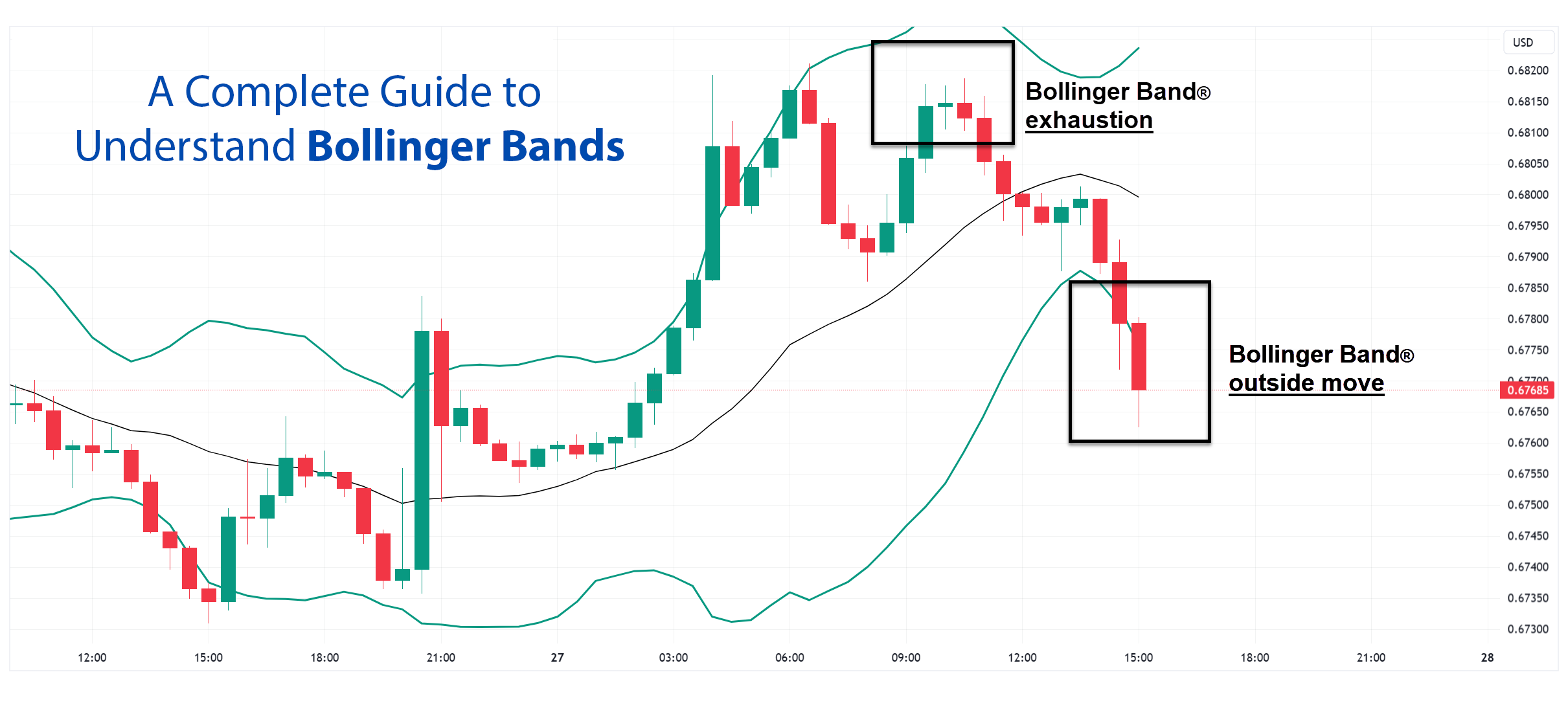 Perhaps a further look at what is behind Bollinger Bands and what inferences might be made from them about market behavior could be of use. The Middle Band: The middle band, or SMA, is an average price over a certain period in time. The base for the upper and lower bands. The Upper and Lower Bands: The bands are plotted two standard deviations above and below the middle band. The width between the bands widens and constricts with the volatility of the market: Narrow Bands: Indicate low volatility and possible breakout. Wide Bands: Point to high volatility and, probably, price reversals. Band Width: The width of the bands is a major indicator. A contraction of the bands, also called a "squeeze," is most times followed by a big price movement. On the other hand, an expansion could mean that a trend is ongoing. Interpreting Bollinger Bands Correct interpretation of Bollinger Bands helps a trader in making better decisions. Price Movement Within the Bands: Prices moving within the bands generally show that the market is stable. A price that has continuously traveled in proximity to the upper band may indicate overbought conditions, while a price near the lower band could indicate an oversold state. Squeeze: A squeeze would occur when bands contract, thus giving a breakout signal. Generally, traders seek a price move that breaks out of the squeeze for trading opportunities. Breakouts: It can also be a sign of high momentum at times when prices move outside of the bands. These breakouts have to be confirmed by other indicators in order to avoid false ones. Trading Strategies Using Bollinger Bands Bollinger Bands are used by traders in a number of different ways to exploit market opportunities. Trend Following Strategy: Traders may look to trade in the direction of the trend when the price consistently touches or moves along one of the bands. For example, buying when prices touch the lower band and selling when they touch the upper band. Reversal Strategy: Prices outside the bands can also suggest possible reversals. One final use of confirmation signals is to provide a trigger for the entry point of a trade to take place in a direction opposite to that of the breakout. Combination with Other Indicators: Combining Bollinger Bands with other indicators, such as the RSI or MACD, may provide a more enhanced trading signal. Limitations and Considerations Although these bands are very powerful, they also have their drawbacks. False Signals: These bands sometimes give false signals, especially in strong trends. The use of the bands has to be in conjunction with other tools. Market Conditions: The Bollinger Bands work best in a range-bound market. In case of a strong trend, the bands are not capable of giving the best signals. Risk Management: Always use Bollinger Bands with a good risk management strategy in order to save your capital. Practical Example: Case Study of Bid Box To elaborate a bit more on Bollinger Band power, a real-world case study by Kryptomind will be explained here. In the Bid Box project, which has been explained in detail within the case study by Kryptomind at, technical analysis tools like Bollinger Bands were inducted to create, analyze, and optimize trading strategies. Background The Bid Box project is related to market condition analysis in order to further develop better algorithms for trading. Bollinger Bands are used to evaluate states of high volatility and possible trading opportunities. Application Starting with the application of Bollinger Bands, the Bid Box team tuned its trading signals, improved its decision-making, and upped its trading performance. Outcome The introduction of Bollinger Bands into the trading strategy of Bid Box also led to more accurate predictions of returns and higher returns, thus providing practical benefits for this tool in real trading scenarios as well. Conclusion In this way, Bollinger Bands are very versatile and usable when trying to gauge volatility in the markets and making reasonably informed decisions in trade. When you know how it works, then you can better employ trading strategies for your good views of the market by applying them. If you want to tap into such strategies in the trade, Contact us and explore how we can support you in tailoring them to make you successful. Let's discuss! Frequently Asked Questions What do Bollinger Bands tell you? Bollinger Bands help you identify sharp, short-term price movements and potential entry and exit points. How effective is Bollinger Bands? By setting the upper and lower bands two standard deviations away from the SMA, Bollinger Bands create a range expected to contain approximately 95% of the security's price movements over a given period. What is the best Bollinger Band strategy? The Bollinger Band Breakout strategy. |
| json metadata | {"tags":["bollingerbands","tradingstrategy","cryptocurrency","trrading","blockchain","blockchaindevelopment"],"image":["https://cdn.steemitimages.com/DQmViwGh2B6nsL3Vt2RPxZ1tqRri9KHSFynjxkZLaetrAzp/Designer%20(1).png","https://cdn.steemitimages.com/DQmVmmSKEeBJtf2tYm76y4AyBBB36YgysXyhtGsbpZ9WkBP/Bollenger-bands.png"],"app":"steemit/0.2","format":"markdown"} |
| parent author | |
| parent permlink | bollingerbands |
| permlink | understanding-bollinger-bands-a-comprehensive-guide-for-traders |
| title | Understanding Bollinger Bands: A Comprehensive Guide for Traders |
| Transaction Info | Block #88584035/Trx 50234a9ed75d771767bdabad5118d974dc250beb |
View Raw JSON Data
{
"block": 88584035,
"op": [
"comment",
{
"author": "kryptomindpvt",
"body": ".png)\n\nIn the world of trading, Technical analysis tools are inconceivable in the world of trading. Among the technical analysis tools, the Bollinger Bands is one of the most popular and versatile indicators. Whether one is a long-term investor or a retail trader, adding knowledge about Bollinger Bands substantially improves one's trading strategy. This will explain what Bollinger Bands are, how they work, and how to use them to further improve your trading outcomes.\n\nWhat Are Bollinger Bands?\n\nBollinger Bands are one type of technical analysis tool, consisting of three lines plotted on a price chart. These bands have been devised to serve traders with the purpose of estimating volatility in markets and the resultant price movements.\n\nDefinition: Bollinger Bands consist of three lines.\n\nMiddle Band: That forms a 20-period SMA of the closing prices.\n\nUpper Band: The upper band is derived as adding twice the standard deviation of the closing prices from the middle band.\n\nLower Band: The lower band is found by subtracting twice the standard deviation from the middle band.\n\nHistorical Background: Invented by John Bollinger in the 1980s, Bollinger Bands played an indispensable role in technical analysis and were well adapted for measuring volatility and finding trading opportunities.\n\nMathematical Basis: The bands self-regulate with any changes in the market conditions: during a market that is less volatile, the bands contract, while highly volatile markets see the bands expand.\n\nHow Bollinger Bands Work\n\n\n\n\n\nPerhaps a further look at what is behind Bollinger Bands and what inferences might be made from them about market behavior could be of use.\n\nThe Middle Band: The middle band, or SMA, is an average price over a certain period in time. The base for the upper and lower bands.\n\nThe Upper and Lower Bands: The bands are plotted two standard deviations above and below the middle band. The width between the bands widens and constricts with the volatility of the market:\n\nNarrow Bands: Indicate low volatility and possible breakout.\n\n Wide Bands: Point to high volatility and, probably, price reversals.\n\nBand Width: The width of the bands is a major indicator. A contraction of the bands, also called a \"squeeze,\" is most times followed by a big price movement. On the other hand, an expansion could mean that a trend is ongoing.\n\nInterpreting Bollinger Bands\n\nCorrect interpretation of Bollinger Bands helps a trader in making better decisions.\n\nPrice Movement Within the Bands: Prices moving within the bands generally show that the market is stable. A price that has continuously traveled in proximity to the upper band may indicate overbought conditions, while a price near the lower band could indicate an oversold state.\n\nSqueeze: A squeeze would occur when bands contract, thus giving a breakout signal. Generally, traders seek a price move that breaks out of the squeeze for trading opportunities.\n\nBreakouts: It can also be a sign of high momentum at times when prices move outside of the bands. These breakouts have to be confirmed by other indicators in order to avoid false ones.\n\nTrading Strategies Using Bollinger Bands\n\nBollinger Bands are used by traders in a number of different ways to exploit market opportunities.\n\nTrend Following Strategy: Traders may look to trade in the direction of the trend when the price consistently touches or moves along one of the bands. For example, buying when prices touch the lower band and selling when they touch the upper band.\n\nReversal Strategy: Prices outside the bands can also suggest possible reversals. One final use of confirmation signals is to provide a trigger for the entry point of a trade to take place in a direction opposite to that of the breakout.\n\nCombination with Other Indicators: Combining Bollinger Bands with other indicators, such as the RSI or MACD, may provide a more enhanced trading signal.\n\nLimitations and Considerations\n\nAlthough these bands are very powerful, they also have their drawbacks.\n\nFalse Signals: These bands sometimes give false signals, especially in strong trends. The use of the bands has to be in conjunction with other tools.\n\nMarket Conditions: The Bollinger Bands work best in a range-bound market. In case of a strong trend, the bands are not capable of giving the best signals.\n\nRisk Management: Always use Bollinger Bands with a good risk management strategy in order to save your capital.\n\nPractical Example: Case Study of Bid Box\n\nTo elaborate a bit more on Bollinger Band power, a real-world case study by Kryptomind will be explained here. In the Bid Box project, which has been explained in detail within the case study by Kryptomind at, technical analysis tools like Bollinger Bands were inducted to create, analyze, and optimize trading strategies.\n\nBackground \n\nThe Bid Box project is related to market condition analysis in order to further develop better algorithms for trading. Bollinger Bands are used to evaluate states of high volatility and possible trading opportunities.\n\nApplication \n\nStarting with the application of Bollinger Bands, the Bid Box team tuned its trading signals, improved its decision-making, and upped its trading performance.\n\nOutcome\n\nThe introduction of Bollinger Bands into the trading strategy of Bid Box also led to more accurate predictions of returns and higher returns, thus providing practical benefits for this tool in real trading scenarios as well.\n\nConclusion\n\nIn this way, Bollinger Bands are very versatile and usable when trying to gauge volatility in the markets and making reasonably informed decisions in trade. When you know how it works, then you can better employ trading strategies for your good views of the market by applying them.\n\nIf you want to tap into such strategies in the trade, Contact us and explore how we can support you in tailoring them to make you successful. Let's discuss!\n\nFrequently Asked Questions\n\nWhat do Bollinger Bands tell you?\n\nBollinger Bands help you identify sharp, short-term price movements and potential entry and exit points.\n\nHow effective is Bollinger Bands?\n\nBy setting the upper and lower bands two standard deviations away from the SMA, Bollinger Bands create a range expected to contain approximately 95% of the security's price movements over a given period.\n\nWhat is the best Bollinger Band strategy?\n\nThe Bollinger Band Breakout strategy.",
"json_metadata": "{\"tags\":[\"bollingerbands\",\"tradingstrategy\",\"cryptocurrency\",\"trrading\",\"blockchain\",\"blockchaindevelopment\"],\"image\":[\"https://cdn.steemitimages.com/DQmViwGh2B6nsL3Vt2RPxZ1tqRri9KHSFynjxkZLaetrAzp/Designer%20(1).png\",\"https://cdn.steemitimages.com/DQmVmmSKEeBJtf2tYm76y4AyBBB36YgysXyhtGsbpZ9WkBP/Bollenger-bands.png\"],\"app\":\"steemit/0.2\",\"format\":\"markdown\"}",
"parent_author": "",
"parent_permlink": "bollingerbands",
"permlink": "understanding-bollinger-bands-a-comprehensive-guide-for-traders",
"title": "Understanding Bollinger Bands: A Comprehensive Guide for Traders"
}
],
"op_in_trx": 0,
"timestamp": "2024-09-13T14:04:00",
"trx_id": "50234a9ed75d771767bdabad5118d974dc250beb",
"trx_in_block": 0,
"virtual_op": 0
}kryptomindpvtupvoted (100.00%) @kryptomindpvt / what-are-smart-contracts-and-how-do-they-work2024/09/13 13:57:48
kryptomindpvtupvoted (100.00%) @kryptomindpvt / what-are-smart-contracts-and-how-do-they-work
2024/09/13 13:57:48
| author | kryptomindpvt |
| permlink | what-are-smart-contracts-and-how-do-they-work |
| voter | kryptomindpvt |
| weight | 10000 (100.00%) |
| Transaction Info | Block #88583911/Trx 56e69c64c0000857a90a9ba0fd255a47babf8a4c |
View Raw JSON Data
{
  "block": 88583911,
  "op": [
    "vote",
    {
      "author": "kryptomindpvt",
      "permlink": "what-are-smart-contracts-and-how-do-they-work",
      "voter": "kryptomindpvt",
      "weight": 10000
    }
  ],
  "op_in_trx": 0,
  "timestamp": "2024-09-13T13:57:48",
  "trx_id": "56e69c64c0000857a90a9ba0fd255a47babf8a4c",
  "trx_in_block": 2,
  "virtual_op": 0
}2024/09/05 12:33:45
2024/09/05 12:33:45
| author | xpilar.witness |
| body | 👏 Great article about smart contracts! 😊 You've done a fantastic job explaining their importance, how they work, and their applications in various industries. The use cases you mentioned are so relevant to our modern world, especially when it comes to efficiency, transparency, and security. 💡 I'm curious to know more about your thoughts on the future of smart contracts and blockchain technology. Will we see even more innovative uses emerge? What do you think is the biggest challenge facing the adoption of these technologies? Also, I'd love to hear from our community members! Have you worked with or used smart contracts in any way? Do you have any favorite examples or projects that showcase their potential? Let's keep the conversation going and share our experiences! 💬 P.S. Don't forget to vote for the amazing @xpilar.witness at https://steemitwallet.com/~witnesses by clicking on the "vote" button 🗳️. Your support means a lot to them, and they're doing fantastic work in improving and expanding the Steem ecosystem! 👍 |
| json metadata | {"tags":["upvote","community"],"app":"upex-app"} |
| parent author | kryptomindpvt |
| parent permlink | what-are-smart-contracts-and-how-do-they-work |
| permlink | re-kryptomindpvt-1725539624723 |
| title | |
| Transaction Info | Block #88352466/Trx 5131b7a8bbac917e59012a00c66b9dc543a817cd |
View Raw JSON Data
{
  "block": 88352466,
  "op": [
    "comment",
    {
      "author": "xpilar.witness",
      "body": "👏 Great article about smart contracts! 😊 You've done a fantastic job explaining their importance, how they work, and their applications in various industries. The use cases you mentioned are so relevant to our modern world, especially when it comes to efficiency, transparency, and security. 💡\n\nI'm curious to know more about your thoughts on the future of smart contracts and blockchain technology. Will we see even more innovative uses emerge? What do you think is the biggest challenge facing the adoption of these technologies?\n\nAlso, I'd love to hear from our community members! Have you worked with or used smart contracts in any way? Do you have any favorite examples or projects that showcase their potential? Let's keep the conversation going and share our experiences! 💬\n\nP.S. Don't forget to vote for the amazing @xpilar.witness at https://steemitwallet.com/~witnesses by clicking on the \"vote\" button 🗳️. Your support means a lot to them, and they're doing fantastic work in improving and expanding the Steem ecosystem! 👍",
      "json_metadata": "{\"tags\":[\"upvote\",\"community\"],\"app\":\"upex-app\"}",
      "parent_author": "kryptomindpvt",
      "parent_permlink": "what-are-smart-contracts-and-how-do-they-work",
      "permlink": "re-kryptomindpvt-1725539624723",
      "title": ""
    }
  ],
  "op_in_trx": 0,
  "timestamp": "2024-09-05T12:33:45",
  "trx_id": "5131b7a8bbac917e59012a00c66b9dc543a817cd",
  "trx_in_block": 2,
  "virtual_op": 0
}kryptomindpvtpublished a new post: what-are-smart-contracts-and-how-do-they-work2024/09/02 15:34:57
kryptomindpvtpublished a new post: what-are-smart-contracts-and-how-do-they-work
2024/09/02 15:34:57
| author | kryptomindpvt |
| body |  Smart contracts are the self-executing contracts where the terms of agreement are written directly into lines of code. When predefined conditions are satisfied, the contracts will automatically enforce the terms themselves and execute the transactions without the intermediaries, for instance, lawyers or brokers. Smart contracts operate on blockchains, which ensures that the transactions will be clear, not tampered with, and secure. Essentially, a smart contract is a set of computerized protocols especially designed to facilitate, verify, or enforce the performance of a contract, decentralization being possible because one of the mechanisms put into place in these protocols implies automatic performance and fulfillment of certain clauses. They are better used in support of decentralized applications, also called DApps, and automation processes in most industries that include finance, supply chains, health care, and many others. Why are smart contracts important? This is all important, as smart contracts simply flip how agreements are executed and enforced. They can effectively cut costs and enhance efficiency through automation by the use of blockchain technology, which itself removes the need for any kind of intermediaries. The transparency and immutability of blockchain mean that the terms within a smart contract are secure, and they cannot be changed once it has gone live. Smart contracts introduce a number of added advantages: they are tamper-proof, non-fraudulent, and decentralized. Actually, the fact that smart contracts can be made accessible anywhere in the world fosters cross-border transactions with considerable ease. More than simply automating, a smart contract has the ability to enable more complex applications, such as Decentralized Autonomous Organizations and decentralized finance, for innovations that will unlock new business models. Smart contracts are increasingly proving to be one of the key components that can improve accuracy, compliance, and general operational efficiency in industries such as finance, real estate, supply chain, and healthcare. How Does Smart Contract Work? Smart contract is an automatically executed agreement written directly into a software program. Legal professionals or interactions do not require Smart contracts since compliant forestall-of-criteria will, without difficulty, execute and put into effect Surveillance terms. Smart contracts ensure that transactions are secure, transparent, and immutable. In short, a clever agreement is a digital application that can maintain, verify, or need the overall performance of a contract. They are mainly used for decentralized applications and improve the workflow of several sectors, such as healthcare, source relevance, and business enterprise. Smart Contract Blockchain is a blockchain that has become available due to smart agreements accordingly. The maximum outstanding instance is Ethereum, which delivered the smart settlement concept and has ended up the backbone of a huge environment of decentralized packages. One of the smart contract blockchain is the blockchain itself, which serves as a decentralized, unchangeable ledger of all transactions and interactions that occur with the smart contract. This means that when a smart contract is created, it can be modified. This provides a level of security and confidence. There are several techniques for intelligent agreements on different blockchains. In Ethereum, it is characterized in the language of Solidity. Other popular blockchains, such as EOS, NEO, and Tezos, show particular execution and tools for intelligent agreement development. 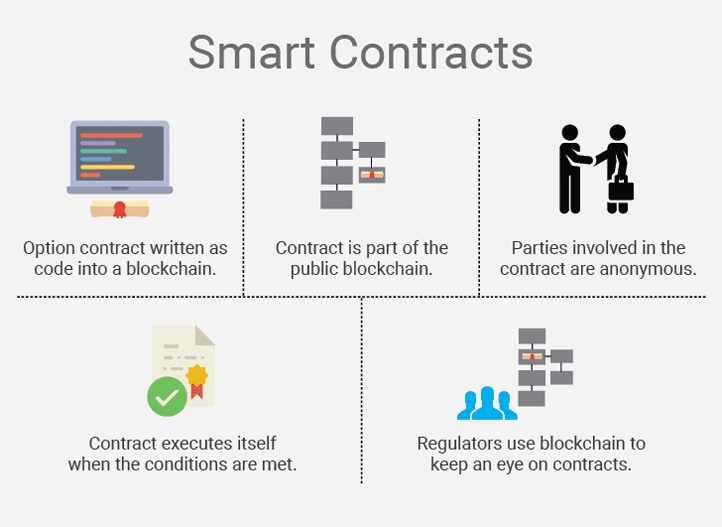 Applications of Smart Contract in Blockchain A smart contract is revolutionizing various industries by enabling decentralized, transparent, and efficient processes. Some of the key applications include: Finance Smart contract is essential in decentralized finance platforms by spurring down-negotiation, lending, and investment operations. Not to mention, they also eliminate the necessity of the established financial intermediaries, thereby, reducing costs and increasing efficiency. Supply Chain Management A smart contract is very beneficial, especially in the case of the automation of commodities transfers and payments. Blockchain records and documents each operation stage of supply chains, providing further transparency of the process and alleviating theft. Healthcare A smart contract can maintain patient records so that they are accessible to only those authorized. They also automate insurance claims, hence reducing the time used and cost towards processing. Real Estate A smart contract will speed up property transactions because real estate agreements and fees are automated, which in turn, will decrease the need for intermediaries and speed up transactions. Voting Systems Through the incorporation of blockchain-and smart contract-based voting framework that ensures safe, unchangeable, and transparent keeps on record. To a large extent, this can be instrumental in the reduction of electoral malpractices and the creation of voter confidence in the system of voting. Conclusion In this article, we discussed what smart contracts are, why they are important, and how they work. We also discussed the applications of a smart contract in blockchain. Ready to take your project to the next level? At Kryptomind, we specialize in innovative solutions that bridge the gap between blockchain and AI, delivering cutting-edge products for businesses worldwide. Let's discuss how we can bring your vision to life. Contact us today to start your journey towards success! Frequently Asked Questions Which language is best for writing a smart contract? Top 3 programming languages to write smart contracts include Solidity, Rust, and JavaScript. Is smart contract legal? While a smart contract can be a legally binding agreement, it isn't necessarily always legally binding. A smart contract still has to meet all the legal requirements of a contract, such as intent to form a contract. And these legal requirements might also vary by jurisdiction. What is the most popular smart contract blockchain? The top 10 best smart contract platforms in 2024 are Ethereum, Binance Smart Chain (BSC), TRON, Arbitrum, Cardano, Solana, Polygon, Algorand, Avalanche, and Tezos. |
| json metadata | {"tags":["blockchain","smartcontracts","solidity","rust","solana","ethereum"],"image":["https://cdn.steemitimages.com/DQmZW9wZbiirdFR2BST7YCzFB6jWqsXvZuCHQbpHTqu64p6/Designer.png","https://cdn.steemitimages.com/DQmdkGBkGsNPm3sTwMRtogzCnsg96uKQK3jEqrD1dPkfrYC/Layer-1.png"],"app":"steemit/0.2","format":"markdown"} |
| parent author | |
| parent permlink | blockchain |
| permlink | what-are-smart-contracts-and-how-do-they-work |
| title | What are Smart Contracts? And how do they work? |
| Transaction Info | Block #88270103/Trx caa0eee75e207ad18e15916d727ef1705234650a |
View Raw JSON Data
{
"block": 88270103,
"op": [
"comment",
{
"author": "kryptomindpvt",
"body": "\n\nSmart contracts are the self-executing contracts where the terms of agreement are written directly into lines of code. When predefined conditions are satisfied, the contracts will automatically enforce the terms themselves and execute the transactions without the intermediaries, for instance, lawyers or brokers. Smart contracts operate on blockchains, which ensures that the transactions will be clear, not tampered with, and secure.\n\nEssentially, a smart contract is a set of computerized protocols especially designed to facilitate, verify, or enforce the performance of a contract, decentralization being possible because one of the mechanisms put into place in these protocols implies automatic performance and fulfillment of certain clauses. They are better used in support of decentralized applications, also called DApps, and automation processes in most industries that include finance, supply chains, health care, and many others.\n\nWhy are smart contracts important?\n\nThis is all important, as smart contracts simply flip how agreements are executed and enforced. They can effectively cut costs and enhance efficiency through automation by the use of blockchain technology, which itself removes the need for any kind of intermediaries. The transparency and immutability of blockchain mean that the terms within a smart contract are secure, and they cannot be changed once it has gone live.\n\nSmart contracts introduce a number of added advantages: they are tamper-proof, non-fraudulent, and decentralized. Actually, the fact that smart contracts can be made accessible anywhere in the world fosters cross-border transactions with considerable ease.\n\nMore than simply automating, a smart contract has the ability to enable more complex applications, such as Decentralized Autonomous Organizations and decentralized finance, for innovations that will unlock new business models. Smart contracts are increasingly proving to be one of the key components that can improve accuracy, compliance, and general operational efficiency in industries such as finance, real estate, supply chain, and healthcare.\n\nHow Does Smart Contract Work? \n\nSmart contract is an automatically executed agreement written directly into a software program. Legal professionals or interactions do not require Smart contracts since compliant forestall-of-criteria will, without difficulty, execute and put into effect Surveillance terms. Smart contracts ensure that transactions are secure, transparent, and immutable.\n\nIn short, a clever agreement is a digital application that can maintain, verify, or need the overall performance of a contract. They are mainly used for decentralized applications and improve the workflow of several sectors, such as healthcare, source relevance, and business enterprise. Smart Contract Blockchain is a blockchain that has become available due to smart agreements accordingly. The maximum outstanding instance is Ethereum, which delivered the smart settlement concept and has ended up the backbone of a huge environment of decentralized packages.\n\nOne of the smart contract blockchain is the blockchain itself, which serves as a decentralized, unchangeable ledger of all transactions and interactions that occur with the smart contract. This means that when a smart contract is created, it can be modified. This provides a level of security and confidence. There are several techniques for intelligent agreements on different blockchains. In Ethereum, it is characterized in the language of Solidity. Other popular blockchains, such as EOS, NEO, and Tezos, show particular execution and tools for intelligent agreement development.\n\n\n\n\nApplications of Smart Contract in Blockchain\n\nA smart contract is revolutionizing various industries by enabling decentralized, transparent, and efficient processes. Some of the key applications include:\n\nFinance\n\nSmart contract is essential in decentralized finance platforms by spurring down-negotiation, lending, and investment operations. Not to mention, they also eliminate the necessity of the established financial intermediaries, thereby, reducing costs and increasing efficiency. \n\nSupply Chain Management\n\nA smart contract is very beneficial, especially in the case of the automation of commodities transfers and payments. Blockchain records and documents each operation stage of supply chains, providing further transparency of the process and alleviating theft.\n\nHealthcare\n\nA smart contract can maintain patient records so that they are accessible to only those authorized. They also automate insurance claims, hence reducing the time used and cost towards processing.\n\nReal Estate\n\nA smart contract will speed up property transactions because real estate agreements and fees are automated, which in turn, will decrease the need for intermediaries and speed up transactions.\n\nVoting Systems\n\nThrough the incorporation of blockchain-and smart contract-based voting framework that ensures safe, unchangeable, and transparent keeps on record. To a large extent, this can be instrumental in the reduction of electoral malpractices and the creation of voter confidence in the system of voting.\n\nConclusion\n\nIn this article, we discussed what smart contracts are, why they are important, and how they work. We also discussed the applications of a smart contract in blockchain. Ready to take your project to the next level? At Kryptomind, we specialize in innovative solutions that bridge the gap between blockchain and AI, delivering cutting-edge products for businesses worldwide. Let's discuss how we can bring your vision to life. Contact us today to start your journey towards success!\n\nFrequently Asked Questions\n\nWhich language is best for writing a smart contract?\n\nTop 3 programming languages to write smart contracts include Solidity, Rust, and JavaScript.\n\nIs smart contract legal?\n\nWhile a smart contract can be a legally binding agreement, it isn't necessarily always legally binding. A smart contract still has to meet all the legal requirements of a contract, such as intent to form a contract. And these legal requirements might also vary by jurisdiction.\n\nWhat is the most popular smart contract blockchain?\n\nThe top 10 best smart contract platforms in 2024 are Ethereum, Binance Smart Chain (BSC), TRON, Arbitrum, Cardano, Solana, Polygon, Algorand, Avalanche, and Tezos.",
"json_metadata": "{\"tags\":[\"blockchain\",\"smartcontracts\",\"solidity\",\"rust\",\"solana\",\"ethereum\"],\"image\":[\"https://cdn.steemitimages.com/DQmZW9wZbiirdFR2BST7YCzFB6jWqsXvZuCHQbpHTqu64p6/Designer.png\",\"https://cdn.steemitimages.com/DQmdkGBkGsNPm3sTwMRtogzCnsg96uKQK3jEqrD1dPkfrYC/Layer-1.png\"],\"app\":\"steemit/0.2\",\"format\":\"markdown\"}",
"parent_author": "",
"parent_permlink": "blockchain",
"permlink": "what-are-smart-contracts-and-how-do-they-work",
"title": "What are Smart Contracts? And how do they work?"
}
],
"op_in_trx": 0,
"timestamp": "2024-09-02T15:34:57",
"trx_id": "caa0eee75e207ad18e15916d727ef1705234650a",
"trx_in_block": 1,
"virtual_op": 0
}2024/04/09 09:17:30
2024/04/09 09:17:30
| author | kryptomindpvt |
| permlink | what-led-simple-chatbots-to-become-powerful-tools-that-are-changing-entire-industries |
| voter | kryptomindpvt |
| weight | 10000 (100.00%) |
| Transaction Info | Block #84078980/Trx edcec836e8193710204374d608b46b3386ac424b |
View Raw JSON Data
{
  "block": 84078980,
  "op": [
    "vote",
    {
      "author": "kryptomindpvt",
      "permlink": "what-led-simple-chatbots-to-become-powerful-tools-that-are-changing-entire-industries",
      "voter": "kryptomindpvt",
      "weight": 10000
    }
  ],
  "op_in_trx": 0,
  "timestamp": "2024-04-09T09:17:30",
  "trx_id": "edcec836e8193710204374d608b46b3386ac424b",
  "trx_in_block": 5,
  "virtual_op": 0
}bluesnipersent 0.010 STEEM to @kryptomindpvt- "Hello. Good to see you on Steem. To maximize your rewards, publish your post also on Hive ( hive.blog ) and Blurt ( blurt.blog ) blockchains. Use upvu, jsup or ctime and get instant upvotes"2024/04/09 08:02:06
bluesnipersent 0.010 STEEM to @kryptomindpvt- "Hello. Good to see you on Steem. To maximize your rewards, publish your post also on Hive ( hive.blog ) and Blurt ( blurt.blog ) blockchains. Use upvu, jsup or ctime and get instant upvotes"
2024/04/09 08:02:06
| amount | 0.010 STEEM |
| from | bluesniper |
| memo | Hello. Good to see you on Steem. To maximize your rewards, publish your post also on Hive ( hive.blog ) and Blurt ( blurt.blog ) blockchains. Use upvu, jsup or ctime and get instant upvotes |
| to | kryptomindpvt |
| Transaction Info | Block #84077476/Trx ef2313b967c39e55f359e35fd7cc07bfc2640b5f |
View Raw JSON Data
{
  "block": 84077476,
  "op": [
    "transfer",
    {
      "amount": "0.010 STEEM",
      "from": "bluesniper",
      "memo": "Hello. Good to see you on Steem. To maximize your rewards, publish your post also on Hive ( hive.blog ) and Blurt ( blurt.blog ) blockchains. Use upvu, jsup or ctime and get instant upvotes",
      "to": "kryptomindpvt"
    }
  ],
  "op_in_trx": 0,
  "timestamp": "2024-04-09T08:02:06",
  "trx_id": "ef2313b967c39e55f359e35fd7cc07bfc2640b5f",
  "trx_in_block": 1,
  "virtual_op": 0
}2024/04/09 08:01:42
2024/04/09 08:01:42
| author | kryptomindpvt |
| permlink | what-led-simple-chatbots-to-become-powerful-tools-that-are-changing-entire-industries |
| voter | bluesniper |
| weight | 10000 (100.00%) |
| Transaction Info | Block #84077468/Trx e70a162e50fd398b10213ce230239be547c13859 |
View Raw JSON Data
{
  "block": 84077468,
  "op": [
    "vote",
    {
      "author": "kryptomindpvt",
      "permlink": "what-led-simple-chatbots-to-become-powerful-tools-that-are-changing-entire-industries",
      "voter": "bluesniper",
      "weight": 10000
    }
  ],
  "op_in_trx": 0,
  "timestamp": "2024-04-09T08:01:42",
  "trx_id": "e70a162e50fd398b10213ce230239be547c13859",
  "trx_in_block": 0,
  "virtual_op": 0
}2024/04/09 07:56:24
2024/04/09 07:56:24
| author | kryptomindpvt |
| body | In today's fast-track of digital interactions, the way we connect online is constantly transforming. A prime example of this evolution is the rise of AI chatbots. Initially conceived as a means to offer basic assistance and streamline processes, these intelligent virtual helpers have surpassed their humble beginnings. They've become indispensable tools, driving progress and innovation across a vast array of industries. To understand this impact, we need to delve into the fascinating journey of AI chatbots, exploring how they've transformed from mere helpers into the engines propelling advancements in our digital world. From revolutionizing customer service experiences to automating complex tasks, AI chatbots are reshaping the way businesses operate and interact with their audience. This exploration will uncover the key breakthroughs that fueled their evolution, highlighting the exciting potential they hold for the future.  1. Origins and Evolution: The story of AI chatbots traces back to their humble beginnings as simple rule-based systems programmed to respond to specific keywords. Initially, their primary function was to provide basic customer support and automate routine tasks. However, with rapid advancements in natural language processing (NLP) and machine learning algorithms, chatbots have undergone a remarkable transformation. They can now understand context, recognize speech patterns, and engage in more sophisticated conversations with users. 2. Enhanced User Experience: One of the key drivers behind the proliferation of AI chatbots is their ability to enhance the user experience across various platforms. By leveraging AI-powered insights, chatbots can personalize interactions, anticipate user needs, and deliver tailored recommendations in real-time. Whether it's assisting customers with product inquiries, guiding them through the sales process, or providing timely support, chatbots are instrumental in improving customer satisfaction and loyalty. 3. Revolutionizing Customer Service: In the realm of customer service, AI chatbots have emerged as game-changers, revolutionizing the way businesses interact with their clientele. Gone are the days of long wait times and frustrating automated phone menus. Today, chatbots offer instantaneous assistance round the clock, resolving queries, troubleshooting issues, and even handling transactions seamlessly. With their ability to scale effortlessly and handle multiple inquiries simultaneously, chatbots ensure a more efficient and satisfying customer service experience. 4. Empowering Industries: Beyond customer service, AI chatbots are making waves across various industries, empowering organizations to streamline operations, boost productivity, and drive innovation. In healthcare, chatbots are revolutionizing patient care by providing personalized health advice, monitoring symptoms, and even assisting with medication management. In the banking sector, chatbots are transforming financial services, offering virtual assistance with account inquiries, transactional support, and investment advice. Similarly, in e-commerce, chatbots are enhancing the shopping experience by offering personalized recommendations, guiding users through the purchase journey, and providing instant support. 5. Future Prospects and Challenges: As AI chatbots continue to evolve, the future holds immense promise and potential. With ongoing advancements in AI technology, chatbots are expected to become even more intelligent, intuitive, and human-like in their interactions. From virtual companions providing emotional support to AI-powered tutors delivering personalized learning experiences, the possibilities are endless. However, along with opportunities come challenges, including concerns about data privacy, security, and ethical considerations surrounding AI development and deployment. It's imperative for developers, businesses, and policymakers to address these issues proactively and ensure that AI chatbots serve the greater good while upholding ethical standards and user trust. In conclusion, the rise of AI chatbots represents a paradigm shift in the way we communicate, interact, and conduct business in the digital age. From their humble beginnings as virtual assistants to their current role as catalysts for advancement and innovation, chatbots have come a long way. As we embrace the potential of AI technology, it's essential to harness its power responsibly, ensuring that AI chatbots continue to serve as valuable assets in our quest for progress and prosperity. |
| json metadata | {"tags":["chatbot","ai","digitalrevolution","blockchain","customerservice","advancement"],"image":["https://cdn.steemitimages.com/DQmPQLLRNuNfstjDx6FxN757ns9xQCXnbxBqqKZsu9kqiM8/The%20Rise%20of%20AI%20Chatbots.jpg"],"app":"steemit/0.2","format":"markdown"} |
| parent author | |
| parent permlink | chatbot |
| permlink | what-led-simple-chatbots-to-become-powerful-tools-that-are-changing-entire-industries |
| title | What led simple chatbots to become powerful tools that are changing entire industries? |
| Transaction Info | Block #84077362/Trx 969afd50b6e898abb304e99695b628c53fffed58 |
View Raw JSON Data
{
"block": 84077362,
"op": [
"comment",
{
"author": "kryptomindpvt",
"body": "In today's fast-track of digital interactions, the way we connect online is constantly transforming. A prime example of this evolution is the rise of AI chatbots. Initially conceived as a means to offer basic assistance and streamline processes, these intelligent virtual helpers have surpassed their humble beginnings. They've become indispensable tools, driving progress and innovation across a vast array of industries. To understand this impact, we need to delve into the fascinating journey of AI chatbots, exploring how they've transformed from mere helpers into the engines propelling advancements in our digital world. From revolutionizing customer service experiences to automating complex tasks, AI chatbots are reshaping the way businesses operate and interact with their audience. This exploration will uncover the key breakthroughs that fueled their evolution, highlighting the exciting potential they hold for the future.\n\n\n\n\n\n1. Origins and Evolution: \n\nThe story of AI chatbots traces back to their humble beginnings as simple rule-based systems programmed to respond to specific keywords. Initially, their primary function was to provide basic customer support and automate routine tasks. However, with rapid advancements in natural language processing (NLP) and machine learning algorithms, chatbots have undergone a remarkable transformation. They can now understand context, recognize speech patterns, and engage in more sophisticated conversations with users.\n\n\n2. Enhanced User Experience:\n\nOne of the key drivers behind the proliferation of AI chatbots is their ability to enhance the user experience across various platforms. By leveraging AI-powered insights, chatbots can personalize interactions, anticipate user needs, and deliver tailored recommendations in real-time. Whether it's assisting customers with product inquiries, guiding them through the sales process, or providing timely support, chatbots are instrumental in improving customer satisfaction and loyalty.\n\n3. Revolutionizing Customer Service:\n\nIn the realm of customer service, AI chatbots have emerged as game-changers, revolutionizing the way businesses interact with their clientele. Gone are the days of long wait times and frustrating automated phone menus. Today, chatbots offer instantaneous assistance round the clock, resolving queries, troubleshooting issues, and even handling transactions seamlessly. With their ability to scale effortlessly and handle multiple inquiries simultaneously, chatbots ensure a more efficient and satisfying customer service experience.\n\n4. Empowering Industries: \n\nBeyond customer service, AI chatbots are making waves across various industries, empowering organizations to streamline operations, boost productivity, and drive innovation. In healthcare, chatbots are revolutionizing patient care by providing personalized health advice, monitoring symptoms, and even assisting with medication management. In the banking sector, chatbots are transforming financial services, offering virtual assistance with account inquiries, transactional support, and investment advice. Similarly, in e-commerce, chatbots are enhancing the shopping experience by offering personalized recommendations, guiding users through the purchase journey, and providing instant support.\n\n5. Future Prospects and Challenges: \n\nAs AI chatbots continue to evolve, the future holds immense promise and potential. With ongoing advancements in AI technology, chatbots are expected to become even more intelligent, intuitive, and human-like in their interactions. From virtual companions providing emotional support to AI-powered tutors delivering personalized learning experiences, the possibilities are endless. However, along with opportunities come challenges, including concerns about data privacy, security, and ethical considerations surrounding AI development and deployment. It's imperative for developers, businesses, and policymakers to address these issues proactively and ensure that AI chatbots serve the greater good while upholding ethical standards and user trust.\n\nIn conclusion, the rise of AI chatbots represents a paradigm shift in the way we communicate, interact, and conduct business in the digital age. From their humble beginnings as virtual assistants to their current role as catalysts for advancement and innovation, chatbots have come a long way. As we embrace the potential of AI technology, it's essential to harness its power responsibly, ensuring that AI chatbots continue to serve as valuable assets in our quest for progress and prosperity.",
"json_metadata": "{\"tags\":[\"chatbot\",\"ai\",\"digitalrevolution\",\"blockchain\",\"customerservice\",\"advancement\"],\"image\":[\"https://cdn.steemitimages.com/DQmPQLLRNuNfstjDx6FxN757ns9xQCXnbxBqqKZsu9kqiM8/The%20Rise%20of%20AI%20Chatbots.jpg\"],\"app\":\"steemit/0.2\",\"format\":\"markdown\"}",
"parent_author": "",
"parent_permlink": "chatbot",
"permlink": "what-led-simple-chatbots-to-become-powerful-tools-that-are-changing-entire-industries",
"title": "What led simple chatbots to become powerful tools that are changing entire industries?"
}
],
"op_in_trx": 0,
"timestamp": "2024-04-09T07:56:24",
"trx_id": "969afd50b6e898abb304e99695b628c53fffed58",
"trx_in_block": 6,
"virtual_op": 0
}steemdelegated 3.571 SP to @kryptomindpvt2023/11/14 01:15:00
steemdelegated 3.571 SP to @kryptomindpvt
2023/11/14 01:15:00
| delegatee | kryptomindpvt |
| delegator | steem |
| vesting shares | 5806.348949 VESTS |
| Transaction Info | Block #79860093/Trx e9ac30f1e52a45219802b4af25b056a2c993a069 |
View Raw JSON Data
{
  "block": 79860093,
  "op": [
    "delegate_vesting_shares",
    {
      "delegatee": "kryptomindpvt",
      "delegator": "steem",
      "vesting_shares": "5806.348949 VESTS"
    }
  ],
  "op_in_trx": 0,
  "timestamp": "2023-11-14T01:15:00",
  "trx_id": "e9ac30f1e52a45219802b4af25b056a2c993a069",
  "trx_in_block": 2,
  "virtual_op": 0
}steemdelegated 5.377 SP to @kryptomindpvt2023/09/22 00:41:09
steemdelegated 5.377 SP to @kryptomindpvt
2023/09/22 00:41:09
| delegatee | kryptomindpvt |
| delegator | steem |
| vesting shares | 8743.627735 VESTS |
| Transaction Info | Block #78351246/Trx 10aeb275acc45a92ef5783754a6c61aea2a7d0bf |
View Raw JSON Data
{
  "block": 78351246,
  "op": [
    "delegate_vesting_shares",
    {
      "delegatee": "kryptomindpvt",
      "delegator": "steem",
      "vesting_shares": "8743.627735 VESTS"
    }
  ],
  "op_in_trx": 0,
  "timestamp": "2023-09-22T00:41:09",
  "trx_id": "10aeb275acc45a92ef5783754a6c61aea2a7d0bf",
  "trx_in_block": 1,
  "virtual_op": 0
}kryptomindpvtpublished a new post: how-is-ai-revolutionising-healthcare2023/02/03 11:06:30
kryptomindpvtpublished a new post: how-is-ai-revolutionising-healthcare
2023/02/03 11:06:30
| author | kryptomindpvt |
| body |  The healthcare industry is one of the most rapidly evolving fields in the world, with advancements in technology and medicine continuously shaping the way healthcare professionals diagnose and treat patients. One of the most significant developments in recent years has been the integration of artificial intelligence (AI) into various aspects of healthcare. AI has the potential to transform the healthcare industry by improving patient outcomes, streamlining workflows, and reducing costs. Introduction to Artificial Intelligence (AI) in Healthcare: AI is the intelligence exhibited by machines or software. It has become an essential part of healthcare, as it helps automate processes, improve accuracy, and reduce costs. AI is used in healthcare to analyse large datasets, make decisions, and provide recommendations. It also helps to create accurate models that can be used to predict outcomes and improve healthcare services. Applications of AI are becoming increasingly sophisticated. AI can help automate mundane tasks, provide better diagnoses and treatments, and help healthcare professionals to make better decisions. It also helps to improve patient care, reduce healthcare costs, and improve patient outcomes. Examples of AI in Healthcare: One of the most significant benefits of AI in healthcare is its ability to help healthcare professionals make more accurate diagnoses. AI algorithms are being used to detect cancer earlier by analysing medical imaging studies, such as X-rays and MRI scans, to recognize signs of cancer that may not be immediately visible to the human eye. This technology can also be used to monitor the progression of cancer and determine the best course of treatment. Another way that AI is revolutionising healthcare is through personalised medicine. This approach to healthcare is based on the idea that every patient is unique, and their treatment plans should be tailored to their specific needs and circumstances. AI algorithms can analyze genetic details to determine if a patient is predisposed to certain diseases, such as heart disease. This information is then used to develop a customized preventative care plan that minimizes the patient's risk of developing these conditions. AI is playing a crucial role in the field of drug discovery. AI algorithms investigate molecular and cellular data to identify potential new drugs and therapies. This technology can speed up the drug discovery process and make it easier for researchers to identify new treatments for a wide spectrum of diseases and conditions. AI algorithms can also help to improve the accuracy of diagnostic tools, such as blood tests, to help healthcare professionals make more informed diagnoses. AI Solutions for Diagnostics and Treatment: AI solutions are being used to help diagnose and treat a wide range of medical conditions. AI-powered systems can examine a patient's medical history and provide tailored treatments. AI solutions help to detect and diagnose diseases, such as cancer, more accurately than humans can. It also powers individualised remedies for patients and detects abnormalities in images, such as tumours. In addition, it can scrutinise a patient’s medical history to offer tailored treatments with great success. AI for Disease Prediction and Prevention: AI for disease prediction and prevention has become an essential part of the healthcare industry. AI is transforming the way diseases are diagnosed, monitored, and prevented. AI is employed to enhance the precision of disease onset predictions and to provide superior care to those suffering from them. It allows for more accurate predictions and earlier interventions that monitor patients for signs of infection or changes in their health status. It can automatically detect patterns in data that indicate disease and alert medical professionals to intervene before the disease progresses. AI for Healthcare Data Management: AI is also being used to improve healthcare data management. AI-powered systems can investigate large datasets and identify patterns that can improve the accuracy and efficiency of healthcare delivery. It analyses patient records, medical images, and other healthcare data to provide better insights and make better decisions. AI-powered systems can provide personalised reminders and notifications to help patients stay on track with their healthcare plans. It provides more accurate and customised feedback to patients. Conclusion: AI is revolutionising healthcare, and it is becoming increasingly sophisticated. AI is being used to automate mundane tasks, provide better diagnoses and treatments, and help healthcare professionals make better decisions. AI is also used to predict and prevent diseases, develop better drugs, improve healthcare data management, and improve patient engagement. AI is an incredible technology that transforms healthcare and makes it more efficient and effective. |
| json metadata | {"tags":["artificialintelligence","aiinhealthcare","aisolutions","aialgorithms","ai"],"image":["https://cdn.steemitimages.com/DQmXKvTLmaxNADktxbo6LcJrSHBdqoYqphVfYhSR4RLAD7C/HC.png"],"app":"steemit/0.2","format":"markdown"} |
| parent author | |
| parent permlink | artificialintelligence |
| permlink | how-is-ai-revolutionising-healthcare |
| title | How is AI Revolutionising Healthcare? |
| Transaction Info | Block #71746942/Trx 0417af076882185e6cd7cd738c38381bc821ba8c |
View Raw JSON Data
{
"block": 71746942,
"op": [
"comment",
{
"author": "kryptomindpvt",
"body": "\n\nThe healthcare industry is one of the most rapidly evolving fields in the world, with advancements in technology and medicine continuously shaping the way healthcare professionals diagnose and treat patients. One of the most significant developments in recent years has been the integration of artificial intelligence (AI) into various aspects of healthcare. AI has the potential to transform the healthcare industry by improving patient outcomes, streamlining workflows, and reducing costs.\n\nIntroduction to Artificial Intelligence (AI) in Healthcare:\n\nAI is the intelligence exhibited by machines or software. It has become an essential part of healthcare, as it helps automate processes, improve accuracy, and reduce costs. AI is used in healthcare to analyse large datasets, make decisions, and provide recommendations. It also helps to create accurate models that can be used to predict outcomes and improve healthcare services. Applications of AI are becoming increasingly sophisticated. AI can help automate mundane tasks, provide better diagnoses and treatments, and help healthcare professionals to make better decisions. It also helps to improve patient care, reduce healthcare costs, and improve patient outcomes.\n\nExamples of AI in Healthcare:\n\nOne of the most significant benefits of AI in healthcare is its ability to help healthcare professionals make more accurate diagnoses. AI algorithms are being used to detect cancer earlier by analysing medical imaging studies, such as X-rays and MRI scans, to recognize signs of cancer that may not be immediately visible to the human eye. This technology can also be used to monitor the progression of cancer and determine the best course of treatment.\n\nAnother way that AI is revolutionising healthcare is through personalised medicine. This approach to healthcare is based on the idea that every patient is unique, and their treatment plans should be tailored to their specific needs and circumstances. \n\nAI algorithms can analyze genetic details to determine if a patient is predisposed to certain diseases, such as heart disease. This information is then used to develop a customized preventative care plan that minimizes the patient's risk of developing these conditions.\n\nAI is playing a crucial role in the field of drug discovery. AI algorithms investigate molecular and cellular data to identify potential new drugs and therapies. This technology can speed up the drug discovery process and make it easier for researchers to identify new treatments for a wide spectrum of diseases and conditions.\n\nAI algorithms can also help to improve the accuracy of diagnostic tools, such as blood tests, to help healthcare professionals make more informed diagnoses. \n\nAI Solutions for Diagnostics and Treatment:\n\nAI solutions are being used to help diagnose and treat a wide range of medical conditions. AI-powered systems can examine a patient's medical history and provide tailored treatments. AI solutions help to detect and diagnose diseases, such as cancer, more accurately than humans can. It also powers individualised remedies for patients and detects abnormalities in images, such as tumours. In addition, it can scrutinise a patient’s medical history to offer tailored treatments with great success.\n\nAI for Disease Prediction and Prevention:\n\nAI for disease prediction and prevention has become an essential part of the healthcare industry. AI is transforming the way diseases are diagnosed, monitored, and prevented. AI is employed to enhance the precision of disease onset predictions and to provide superior care to those suffering from them. It allows for more accurate predictions and earlier interventions that monitor patients for signs of infection or changes in their health status. It can automatically detect patterns in data that indicate disease and alert medical professionals to intervene before the disease progresses.\n\nAI for Healthcare Data Management:\n\nAI is also being used to improve healthcare data management. AI-powered systems can investigate large datasets and identify patterns that can improve the accuracy and efficiency of healthcare delivery. It analyses patient records, medical images, and other healthcare data to provide better insights and make better decisions. AI-powered systems can provide personalised reminders and notifications to help patients stay on track with their healthcare plans. It provides more accurate and customised feedback to patients.\n\nConclusion: \n\nAI is revolutionising healthcare, and it is becoming increasingly sophisticated. AI is being used to automate mundane tasks, provide better diagnoses and treatments, and help healthcare professionals make better decisions. AI is also used to predict and prevent diseases, develop better drugs, improve healthcare data management, and improve patient engagement. AI is an incredible technology that transforms healthcare and makes it more efficient and effective.",
"json_metadata": "{\"tags\":[\"artificialintelligence\",\"aiinhealthcare\",\"aisolutions\",\"aialgorithms\",\"ai\"],\"image\":[\"https://cdn.steemitimages.com/DQmXKvTLmaxNADktxbo6LcJrSHBdqoYqphVfYhSR4RLAD7C/HC.png\"],\"app\":\"steemit/0.2\",\"format\":\"markdown\"}",
"parent_author": "",
"parent_permlink": "artificialintelligence",
"permlink": "how-is-ai-revolutionising-healthcare",
"title": "How is AI Revolutionising Healthcare?"
}
],
"op_in_trx": 0,
"timestamp": "2023-02-03T11:06:30",
"trx_id": "0417af076882185e6cd7cd738c38381bc821ba8c",
"trx_in_block": 0,
"virtual_op": 0
}2023/01/31 10:25:30
2023/01/31 10:25:30
| author | kryptomindpvt |
| body |  The banking and finance industry is transforming due to the emergence of machine learning (ML) and artificial intelligence (AI). ML and AI are helping financial institutions become more efficient and improve customer service while reducing costs. Financial institutions can use ML and AI to automate processes, detect fraud, and personalise customer experiences. This article will delve into the usage of ML and AI in banking and finance and the advantages that may arise from implementing this technology. What are machine learning and artificial intelligence? ML is a branch of AI that enables computers to learn and adapt without explicit programming. ML uses algorithms to process data and identify patterns, allowing it to make decisions and predictions based on its observations. AI, on the other hand, is the use of computers to simulate human intelligence. With the help of AI, machines can accomplish tasks that typically require human intelligence, such as natural language processing (NLP) and facial recognition. Applications of AI and ML in banking and finance: Banking and finance institutions are using ML and AI to improve their operations. ML and AI help automate processes such as customer onboarding and loan applications, detect fraud, and personalize customer experiences. Automation: Automation is one of the primary applications of ML and AI in banking and finance. Automating processes such as customer onboarding and loan applications can save time and money for both the customer and the financial institution. It can help financial institutions become more efficient, as they can process applications faster and with fewer errors. Fraud Detection: In ML and AI, large data sets are used to train machine learning algorithms, which analyze customer data to identify suspicious activity. These same algorithms, through AI applications, are applied in cybersecurity to detect and classify malicious activity. Once trained, the algorithm helps to scrutinize new data and identify patterns that may indicate security threats. Chatbots: AI chatbots and virtual assistants are beneficial in the banking and financial industries to improve customer service. These AI-powered systems can handle a broad spectrum of customer demands and enable 24/7 access to account balances, transactions, bill payments, and financial information. Personalization: ML and AI can also be used to personalize customer data and provide personalized recommendations, such as credit cards and loans tailored to the customer's needs, which is possible with the help of AI. It provides customers with personalized advice and services. Automation: AI-enabled technologies can take over numerous laborious and monotonous jobs that are usually done by humans, such as entering data and ensuring compliance. It allows financial institutions to operate more efficiently and reduce costs. Additionally, AI-based algorithms can automate trading decisions, allowing financial institutions to make faster and more informed trades. Benefits of ML and AI in Banking and Finance: ML and AI are helping banking and finance institutions become more efficient and improve customer service and reduce costs. ML and AI can automate processes, detect fraud, and personalize customer experiences. Furthermore, ML and AI can help financial institutions gain insights into customer behaviors and preferences. Financial institutions can use machine learning and AI to analyze large amounts of data and identify patterns that inform more accurate decisions. AI is used to automate compliance processes and identify any potential compliance breaches. It allows financial institutions to meet regulatory requirements and avoid penalties. Banks use machine learning algorithms to analyze financial markets and identify patterns that inform investment decisions. It allows financial institutions to provide more personalized investment advice to their clients and improve the performance of their portfolios. Conclusion: The integration of ML and AI in the banking and finance sector brings several benefits to the table. From improved risk management to enhanced fraud detection and increased automation, these technologies can help financial institutions operate more efficiently, make more informed decisions, and improve customer service. AI can also improve compliance and cyber security, making the financial industry more secure and trustworthy. |
| json metadata | {"tags":["machinelearning","artificialintelligence"],"image":["https://cdn.steemitimages.com/DQmY9RHjVEze7zhvrggfLP4YpepTUiWkGyxKFKYE6JziSh6/Machine%20Learning2.png"],"app":"steemit/0.2","format":"markdown"} |
| parent author | |
| parent permlink | machinelearning |
| permlink | how-are-machine-learning-and-artificial-intelligence-used-in-banking-and-finance |
| title | How are machine learning and artificial intelligence used in banking and finance? |
| Transaction Info | Block #71660112/Trx fa05f300188c1679fb44ee7b76a4e4c4a553c406 |
View Raw JSON Data
{
"block": 71660112,
"op": [
"comment",
{
"author": "kryptomindpvt",
"body": "\n\n\nThe banking and finance industry is transforming due to the emergence of machine learning (ML) and artificial intelligence (AI). ML and AI are helping financial institutions become more efficient and improve customer service while reducing costs. Financial institutions can use ML and AI to automate processes, detect fraud, and personalise customer experiences. This article will delve into the usage of ML and AI in banking and finance and the advantages that may arise from implementing this technology.\n\nWhat are machine learning and artificial intelligence?\n\nML is a branch of AI that enables computers to learn and adapt without explicit programming. ML uses algorithms to process data and identify patterns, allowing it to make decisions and predictions based on its observations. AI, on the other hand, is the use of computers to simulate human intelligence. With the help of AI, machines can accomplish tasks that typically require human intelligence, such as natural language processing (NLP) and facial recognition.\n\nApplications of AI and ML in banking and finance:\n\nBanking and finance institutions are using ML and AI to improve their operations. ML and AI help automate processes such as customer onboarding and loan applications, detect fraud, and personalize customer experiences. \n\nAutomation: \n\nAutomation is one of the primary applications of ML and AI in banking and finance. Automating processes such as customer onboarding and loan applications can save time and money for both the customer and the financial institution. It can help financial institutions become more efficient, as they can process applications faster and with fewer errors.\nFraud Detection: \n\nIn ML and AI, large data sets are used to train machine learning algorithms, which analyze customer data to identify suspicious activity. These same algorithms, through AI applications, are applied in cybersecurity to detect and classify malicious activity. Once trained, the algorithm helps to scrutinize new data and identify patterns that may indicate security threats.\n\nChatbots:\n\nAI chatbots and virtual assistants are beneficial in the banking and financial industries to improve customer service. These AI-powered systems can handle a broad spectrum of customer demands and enable 24/7 access to account balances, transactions, bill payments, and financial information.\n\nPersonalization: \n\nML and AI can also be used to personalize customer data and provide personalized recommendations, such as credit cards and loans tailored to the customer's needs, which is possible with the help of AI. It provides customers with personalized advice and services.\n\nAutomation:\n\nAI-enabled technologies can take over numerous laborious and monotonous jobs that are usually done by humans, such as entering data and ensuring compliance. It allows financial institutions to operate more efficiently and reduce costs. Additionally, AI-based algorithms can automate trading decisions, allowing financial institutions to make faster and more informed trades.\n\nBenefits of ML and AI in Banking and Finance:\n\nML and AI are helping banking and finance institutions become more efficient and improve customer service and reduce costs. ML and AI can automate processes, detect fraud, and personalize customer experiences. Furthermore, ML and AI can help financial institutions gain insights into customer behaviors and preferences.\n\nFinancial institutions can use machine learning and AI to analyze large amounts of data and identify patterns that inform more accurate decisions. AI is used to automate compliance processes and identify any potential compliance breaches. It allows financial institutions to meet regulatory requirements and avoid penalties.\n\nBanks use machine learning algorithms to analyze financial markets and identify patterns that inform investment decisions. It allows financial institutions to provide more personalized investment advice to their clients and improve the performance of their portfolios.\n\nConclusion:\n\nThe integration of ML and AI in the banking and finance sector brings several benefits to the table. From improved risk management to enhanced fraud detection and increased automation, these technologies can help financial institutions operate more efficiently, make more informed decisions, and improve customer service. AI can also improve compliance and cyber security, making the financial industry more secure and trustworthy.",
"json_metadata": "{\"tags\":[\"machinelearning\",\"artificialintelligence\"],\"image\":[\"https://cdn.steemitimages.com/DQmY9RHjVEze7zhvrggfLP4YpepTUiWkGyxKFKYE6JziSh6/Machine%20Learning2.png\"],\"app\":\"steemit/0.2\",\"format\":\"markdown\"}",
"parent_author": "",
"parent_permlink": "machinelearning",
"permlink": "how-are-machine-learning-and-artificial-intelligence-used-in-banking-and-finance",
"title": "How are machine learning and artificial intelligence used in banking and finance?"
}
],
"op_in_trx": 0,
"timestamp": "2023-01-31T10:25:30",
"trx_id": "fa05f300188c1679fb44ee7b76a4e4c4a553c406",
"trx_in_block": 3,
"virtual_op": 0
}2023/01/26 13:19:45
2023/01/26 13:19:45
| author | kryptomindpvt |
| body |  Machine learning is a form of artificial intelligence that enables software applications to be more accurately predict outcomes without being explicitly programmed. It's a way of teaching a computer to learn from data without being explicitly programmed. How does machine learning work? Machine learning focuses on developing computer programmes that can access data, use it to learn for themselves, and make decisions with minimal human intervention. This technology relies on recognizing patterns in large datasets, which allows the system to update its understanding as new data becomes available. Machine learning categories: Here we will discuss the most commonly used machine learning techniques: Supervised learning, unsupervised learning, and reinforcement learning. Supervised learning: In supervised learning, the computer is supplied with a dataset of inputs and corresponding outputs, and the goal is for the computer to learn a mapping from inputs to outputs. It is done by training a model on the dataset, which is used to predict new unseen data. It operates on several tasks, such as image classification, speech recognition, and natural language processing. Unsupervised learning: In unsupervised learning, a computer receives a dataset containing inputs but no corresponding outputs. Its purpose is for computers to discover patterns and structures in data. It uses this to predict new, unseen data, which is then done by training a model on your data. Unsupervised learning uses for various tasks, such as dimensionality reduction, anomaly detection, and clustering. Reinforcement learning: In reinforcement learning, agents learn to make decisions by interacting with their environment. Agents receive rewards or penalties for their actions and know which actions lead to higher prices over time. Reinforcement learning recreates a key role in games, robotics, and self-driving cars. Three Main machine learning techniques: Here we will discuss the most commonly used machine-learning techniques: Classification: Classification is a supervised learning technique that uses prior knowledge of a categorical label for a given input data. It is one of the most widely used techniques in machine learning. Classification algorithms include logistic regression, decision trees, random forests, support vector machines (SVM), and neural networks. Additionally, To improve the precision of the model, the classification algorithms can use various techniques like data preprocessing, feature selection, and feature engineering. SVM is a linear model and is used for both binary and multi-class classification. It works by finding the best boundary that separates the different classes in the input space. SVM can identify speech and calligraphy and even detect cancer. Companies choose machine learning when they want to automate and speed up their workflows. Regression: Regression is likewise a supervised learning technique that analyses continuous value for a given input data. It models the relationship between a dependent variable (output) and one or more independent variables (inputs). The SVM-based algorithm Support Vector (SV) uses regression to find the best boundary that fits the data into input spaces. It assists in many fields, such as finance, economics, and engineering. Clustering: Clustering is an unsupervised learning technique used to discover the underlying structure of the data and identify patterns or groups within the data. We can use it in numerous fields, such as computer science, biology, marketing, and social science. It is also helpful in conjunction with other machine learning techniques, such as recommendations for internet users, classification, and regression, to improve the comprehensive performance of the model. Conclusion: Machine learning has many applications in various industries, such as healthcare, finance, e-commerce, and transportation. We can analyze large and complex data sets and make predictions that can help in decision-making. All these techniques have their strengths and weaknesses, and the choice of strategy will depend on the specific task and the kind of available data. New designs are developing, and research is being done to improve the performance of the existing techniques. |
| json metadata | {"tags":["machinelearning","artificialintelligence","svm","ai"],"image":["https://cdn.steemitimages.com/DQmZqrtviHBTqQTaqQTKrXuMWs7A6HW5X6GTGsQbdP4qWwY/Machine%20Learning.png"],"app":"steemit/0.2","format":"markdown"} |
| parent author | |
| parent permlink | machinelearning |
| permlink | three-essential-machine-learning-techniques-that-businesses-need-to-know-about |
| title | Three essential machine learning techniques that businesses need to know about. |
| Transaction Info | Block #71520267/Trx 6f8e1f4a1aaa183232bc1fd72cd4f38027d31b9a |
View Raw JSON Data
{
"block": 71520267,
"op": [
"comment",
{
"author": "kryptomindpvt",
"body": "\n\nMachine learning is a form of artificial intelligence that enables software applications to be more accurately predict outcomes without being explicitly programmed. It's a way of teaching a computer to learn from data without being explicitly programmed. \n\nHow does machine learning work?\n\nMachine learning focuses on developing computer programmes that can access data, use it to learn for themselves, and make decisions with minimal human intervention. This technology relies on recognizing patterns in large datasets, which allows the system to update its understanding as new data becomes available.\n\nMachine learning categories:\n\nHere we will discuss the most commonly used machine learning techniques:\nSupervised learning, unsupervised learning, and reinforcement learning.\n\nSupervised learning:\n\nIn supervised learning, the computer is supplied with a dataset of inputs and corresponding outputs, and the goal is for the computer to learn a mapping from inputs to outputs. It is done by training a model on the dataset, which is used to predict new unseen data. It operates on several tasks, such as image classification, speech recognition, and natural language processing.\n\nUnsupervised learning:\n\nIn unsupervised learning, a computer receives a dataset containing inputs but no corresponding outputs. Its purpose is for computers to discover patterns and structures in data. It uses this to predict new, unseen data, which is then done by training a model on your data. Unsupervised learning uses for various tasks, such as dimensionality reduction, anomaly detection, and clustering.\n\nReinforcement learning:\n\nIn reinforcement learning, agents learn to make decisions by interacting with their environment. Agents receive rewards or penalties for their actions and know which actions lead to higher prices over time. Reinforcement learning recreates a key role in games, robotics, and self-driving cars.\n\nThree Main machine learning techniques:\n\nHere we will discuss the most commonly used machine-learning techniques:\n\nClassification:\n\nClassification is a supervised learning technique that uses prior knowledge of a categorical label for a given input data. It is one of the most widely used techniques in machine learning. Classification algorithms include logistic regression, decision trees, random forests, support vector machines (SVM), and neural networks. Additionally, To improve the precision of the model, the classification algorithms can use various techniques like data preprocessing, feature selection, and feature engineering.\n\nSVM is a linear model and is used for both binary and multi-class classification. It works by finding the best boundary that separates the different classes in the input space. SVM can identify speech and calligraphy and even detect cancer. Companies choose machine learning when they want to automate and speed up their workflows.\n\nRegression:\n\nRegression is likewise a supervised learning technique that analyses continuous value for a given input data. It models the relationship between a dependent variable (output) and one or more independent variables (inputs). The SVM-based algorithm Support Vector (SV) uses regression to find the best boundary that fits the data into input spaces. It assists in many fields, such as finance, economics, and engineering.\n\nClustering:\n\nClustering is an unsupervised learning technique used to discover the underlying structure of the data and identify patterns or groups within the data. We can use it in numerous fields, such as computer science, biology, marketing, and social science. It is also helpful in conjunction with other machine learning techniques, such as recommendations for internet users, classification, and regression, to improve the comprehensive performance of the model. \n\nConclusion:\n\nMachine learning has many applications in various industries, such as healthcare, finance, e-commerce, and transportation. We can analyze large and complex data sets and make predictions that can help in decision-making. All these techniques have their strengths and weaknesses, and the choice of strategy will depend on the specific task and the kind of available data. New designs are developing, and research is being done to improve the performance of the existing techniques.",
"json_metadata": "{\"tags\":[\"machinelearning\",\"artificialintelligence\",\"svm\",\"ai\"],\"image\":[\"https://cdn.steemitimages.com/DQmZqrtviHBTqQTaqQTKrXuMWs7A6HW5X6GTGsQbdP4qWwY/Machine%20Learning.png\"],\"app\":\"steemit/0.2\",\"format\":\"markdown\"}",
"parent_author": "",
"parent_permlink": "machinelearning",
"permlink": "three-essential-machine-learning-techniques-that-businesses-need-to-know-about",
"title": "Three essential machine learning techniques that businesses need to know about."
}
],
"op_in_trx": 0,
"timestamp": "2023-01-26T13:19:45",
"trx_id": "6f8e1f4a1aaa183232bc1fd72cd4f38027d31b9a",
"trx_in_block": 1,
"virtual_op": 0
}steemdelegated 16.431 SP to @kryptomindpvt2023/01/25 14:56:33
steemdelegated 16.431 SP to @kryptomindpvt
2023/01/25 14:56:33
| delegatee | kryptomindpvt |
| delegator | steem |
| vesting shares | 26717.685932 VESTS |
| Transaction Info | Block #71493530/Trx eb6d7570ef45b691a2f1c9ea0a4bd2aacdbb08b7 |
View Raw JSON Data
{
  "block": 71493530,
  "op": [
    "delegate_vesting_shares",
    {
      "delegatee": "kryptomindpvt",
      "delegator": "steem",
      "vesting_shares": "26717.685932 VESTS"
    }
  ],
  "op_in_trx": 0,
  "timestamp": "2023-01-25T14:56:33",
  "trx_id": "eb6d7570ef45b691a2f1c9ea0a4bd2aacdbb08b7",
  "trx_in_block": 2,
  "virtual_op": 0
}kryptomindpvtpublished a new post: a-definitive-guide-to-web-3-in-social-networking2023/01/24 11:26:42
kryptomindpvtpublished a new post: a-definitive-guide-to-web-3-in-social-networking
2023/01/24 11:26:42
| author | kryptomindpvt |
| body |  Web 3.0 is the latest version or third generation of the Internet. The web, referred to as the “world wide Web,” connects data in a decentralized manner, which assists websites and applications. Web 3.0 expands the use of blockchain-based technologies in decentralized applications. What is social networking? How does it differ from social media? Social networking refers to online platforms to connect and communicate with others. These platforms allow users to create profiles, share information, and interact with others through various forms of communication, such as text, images, and videos. Social networking platforms include Facebook, LinkedIn, Instagram, and many others. These platforms focus on connecting and communicating with others, while social media platforms tend to focus more on content creation and consumption. Additionally, SM platforms are widely used for marketing, news, and entertainment. Web 3 in social networking/networks: As we know, Web 3 is decentralized, which means users have control over their data and online identities. Videos, blogs, and scrolling through feeds are popular activities users do now. Web3 social networks are blockchain-based platforms that create decentralized applications (dApps). These dApps provide users’ self-sovereign identities and generate interactions between users and the dApp. Smart contracts are self-executing, with the terms of the agreement between buyer and seller written directly into lines of code. Web3 social networks create decentralized autonomous organizations (DAOs), which are run by a network of users rather than a centralized authority. These organizations can also be used for social networking. It enables users to create decentralised social networking platforms where users have more control over the platform's decisions and operations. Web 3 platforms for social media in 2023. Mastodon: Mastodon is an open-source, decentralized social media platform, a part of the web 3 ecosystem. It allows users to create and join "instances" (similar to servers or communities) where they can post text, images, videos, and other content. Mastodon is not controlled by a single company or organization; users can freely join and leave different instances. It also emphasizes privacy and user control, allowing users to set their privacy settings and block or mute other users. It is based on the ActivityPub protocol and allows for seamless communication and federation across different instances. Odysee: Odysee is built on the LBRY blockchain and allows users to upload and share videos, images, and various types of content to earn cryptocurrency through the LBRY token for their contributions. Odysee is decentralised, meaning it is not controlled by a single company or organization. Instead, the platform is run by a network of users who provide storage and bandwidth for the content. This decentralisation offers greater privacy and security to users, as well as more resistance to censorship. Mirror: The mirror is a decentralized social media platform built on the Ethereum blockchain and InterPlanetary File System (IPFS), which aims to give users more control over their data and privacy. It provides users with a decentralized and distributed architecture, meaning there is no central point of control or failure. Users can create content, share it with their followers, and earn cryptocurrency through the Mirror Token (NFT) for their contributions. It also allows users to interact with other users, join communities, and discover new content. Steem: Steem is also a decentralized social media platform built on the Steem blockchain. It allows users to create and share content, such as text posts, images, and videos, and to earn cryptocurrency through the Steem token for their contributions. The platform allows users to vote on content, and the rewards are distributed proportionally to the vote weight. Additionally, it has a built-in reputation system, allowing users to establish a reputation and gain more influence on Steem. Conclusion: Web3 social networks are decentralized and built on blockchain technology, using NFTs, decentralized identities, decentralized autonomous organizations (DAOs), and smart contracts to incentivize users to participate in the network and automate the process of executing a contract. The Increasing demand for Web-based social media platforms due to censorship and demonetization suggests blockchain could play a crucial role in the next generation of social media applications. |
| json metadata | {"tags":["web3","socialnetworking","blockchain","smartcontracts","web3platforms","web3insocialnetworking"],"image":["https://cdn.steemitimages.com/DQmWMUXu8po2UXfD9ynEsBAGe29J8qUML75i6tDjnYeDzrp/A%20Definitive%20Guide%20to%20Web%203%20%20in%20Social%20Networking.png"],"app":"steemit/0.2","format":"markdown"} |
| parent author | |
| parent permlink | web3 |
| permlink | a-definitive-guide-to-web-3-in-social-networking |
| title | A Definitive Guide to Web 3 in Social Networking |
| Transaction Info | Block #71460695/Trx a237a369c5bfc0a49061a75af08ccc36f35e60b4 |
View Raw JSON Data
{
"block": 71460695,
"op": [
"comment",
{
"author": "kryptomindpvt",
"body": "\n\n\nWeb 3.0 is the latest version or third generation of the Internet. The web, referred to as the “world wide Web,” connects data in a decentralized manner, which assists websites and applications. Web 3.0 expands the use of blockchain-based technologies in decentralized applications. \n\nWhat is social networking? How does it differ from social media?\n\nSocial networking refers to online platforms to connect and communicate with others. These platforms allow users to create profiles, share information, and interact with others through various forms of communication, such as text, images, and videos. Social networking platforms include Facebook, LinkedIn, Instagram, and many others. \n\nThese platforms focus on connecting and communicating with others, while social media platforms tend to focus more on content creation and consumption. Additionally, SM platforms are widely used for marketing, news, and entertainment.\n\nWeb 3 in social networking/networks:\n\nAs we know, Web 3 is decentralized, which means users have control over their data and online identities. Videos, blogs, and scrolling through feeds are popular activities users do now. Web3 social networks are blockchain-based platforms that create decentralized applications (dApps). These dApps provide users’ self-sovereign identities and generate interactions between users and the dApp. \n\nSmart contracts are self-executing, with the terms of the agreement between buyer and seller written directly into lines of code. Web3 social networks create decentralized autonomous organizations (DAOs), which are run by a network of users rather than a centralized authority. These organizations can also be used for social networking. It enables users to create decentralised social networking platforms where users have more control over the platform's decisions and operations. \n\nWeb 3 platforms for social media in 2023.\n\nMastodon:\n\nMastodon is an open-source, decentralized social media platform, a part of the web 3 ecosystem. It allows users to create and join \"instances\" (similar to servers or communities) where they can post text, images, videos, and other content. Mastodon is not controlled by a single company or organization; users can freely join and leave different instances. It also emphasizes privacy and user control, allowing users to set their privacy settings and block or mute other users. It is based on the ActivityPub protocol and allows for seamless communication and federation across different instances.\n\nOdysee:\n\nOdysee is built on the LBRY blockchain and allows users to upload and share videos, images, and various types of content to earn cryptocurrency through the LBRY token for their contributions. Odysee is decentralised, meaning it is not controlled by a single company or organization. Instead, the platform is run by a network of users who provide storage and bandwidth for the content. This decentralisation offers greater privacy and security to users, as well as more resistance to censorship. \n\nMirror:\n\nThe mirror is a decentralized social media platform built on the Ethereum blockchain and InterPlanetary File System (IPFS), which aims to give users more control over their data and privacy. It provides users with a decentralized and distributed architecture, meaning there is no central point of control or failure. Users can create content, share it with their followers, and earn cryptocurrency through the Mirror Token (NFT) for their contributions. It also allows users to interact with other users, join communities, and discover new content.\n\nSteem:\n\nSteem is also a decentralized social media platform built on the Steem blockchain. It allows users to create and share content, such as text posts, images, and videos, and to earn cryptocurrency through the Steem token for their contributions. The platform allows users to vote on content, and the rewards are distributed proportionally to the vote weight. Additionally, it has a built-in reputation system, allowing users to establish a reputation and gain more influence on Steem.\n\nConclusion:\n\nWeb3 social networks are decentralized and built on blockchain technology, using NFTs, decentralized identities, decentralized autonomous organizations (DAOs), and smart contracts to incentivize users to participate in the network and automate the process of executing a contract. The Increasing demand for Web-based social media platforms due to censorship and demonetization suggests blockchain could play a crucial role in the next generation of social media applications.",
"json_metadata": "{\"tags\":[\"web3\",\"socialnetworking\",\"blockchain\",\"smartcontracts\",\"web3platforms\",\"web3insocialnetworking\"],\"image\":[\"https://cdn.steemitimages.com/DQmWMUXu8po2UXfD9ynEsBAGe29J8qUML75i6tDjnYeDzrp/A%20Definitive%20Guide%20to%20Web%203%20%20in%20Social%20Networking.png\"],\"app\":\"steemit/0.2\",\"format\":\"markdown\"}",
"parent_author": "",
"parent_permlink": "web3",
"permlink": "a-definitive-guide-to-web-3-in-social-networking",
"title": "A Definitive Guide to Web 3 in Social Networking"
}
],
"op_in_trx": 0,
"timestamp": "2023-01-24T11:26:42",
"trx_id": "a237a369c5bfc0a49061a75af08ccc36f35e60b4",
"trx_in_block": 0,
"virtual_op": 0
}kryptomindpvtpublished a new post: why-is-bitcoin-now-down-from-all-time-highs2023/01/20 11:19:48
kryptomindpvtpublished a new post: why-is-bitcoin-now-down-from-all-time-highs
2023/01/20 11:19:48
| author | kryptomindpvt |
| body |  Bitcoin, the world’s first decentralised cryptocurrency, has now plunged. There could be many reasons why the price of Bitcoin has declined significantly from its all-time high. Where is Bitcoin now? In early 2018, the price of bitcoin was hovering around $13,000, a significant drop from its all-time high of $19,783.06 reached in December 2017. However, in 2019, the price of bitcoin began to rebound, climbing back up to around $10,000 by the end of the year. This upward trend continued into 2020, with the price reaching around $12,000 by the summer and then surging to $18,000 by December. The price of bitcoin continued to be highly volatile in 2021, with a sudden drop in early January and then a steady climb through the rest of the year. By December 2021, the price of bitcoin had reached $30,000. Nowadays, one Bitcoin worth is around $17,000, which was around $69,000 in November 2021, and then it reached $47,000 in January 2022. Why is Bitcoin’s price dropping? Bitcoin started 2022 on a positive note, but certain unfortunate affairs brought too many swings in the cryptocurrency’s price, which made BTC crash over the past year. Here are some possible factors that could cause Bitcoin’s price to drop: Rising inflationary fears: Rising inflationary fears have a significant impact on the value of Bitcoin Currency and other cryptocurrencies. Inflation is a measure of the rate at which the overall level of prices for goods and services is rising. When inflation is high, the cost of living increases and consumers have less purchasing power. This led to a decrease in demand for goods and services, which in turn led to a decrease in the value of assets such as Bitcoin. Uncertainty due to rising interest in the U.S. and the U.K: Uncertainty due to rising interest rates in the United States and the United Kingdom had a significant impact on the value of Bitcoin. Higher interest rates make it more attractive for investors to hold fiat currencies, which has led to a reduction in demand for Bitcoin. Additionally, rising interest rates can also lead to increased volatility in the stock market and other financial markets, which also impacts the value of Bitcoin. Terra-Luna crash: The “Terra-Luna crash” refers to the failure of the Terra-Luna project, a cryptocurrency project that aimed to create a stablecoin pegged to the value of the moon. This project impacted the BTC price and investors' confidence to invest in the broad crypto market. Additionally, the Terra-Luna crash also led to increased regulatory scrutiny of the broader cryptocurrency market. Regulators become more concerned about the risks associated with investing in cryptocurrency projects and take steps to increase regulation of the market. This led to increased costs for cryptocurrency businesses and made it more difficult for new projects to launch. The collapse of the largest global cryptocurrency exchange, Future Exchange (FTX): FTX is one of the most popular and widely used cryptocurrency exchanges in the world, with millions of users and a large volume of trades. The collapse between FTX and Binance, led to a decrease in demand for Bitcoin and other cryptocurrencies, as investors lost access to a major platform for buying and selling BTC. This showed a decline in the price of Bitcoin and other cryptocurrencies, as the supply of digital assets exceeded the demand. System of taxation: High taxes on digital currencies make it less attractive for individuals and businesses to use and invest in them. Leading to a decline in demand for digital currencies and their value. The government imposed a high capital gains tax on Bitcoin, which discouraged individuals from buying and selling digital currency, leading to a decrease in demand for its price. Governments should strive to create a clear and consistent tax regime that encourages the use of digital currencies while protecting investors and preventing fraud. Conclusion: Bitcoin’s price is plummeting nowadays due to the FTX’s downfall. Furthermore, many other factors have contributed to the recent decline in the price of bitcoin, including increased regulatory scrutiny, increased competition from other cryptocurrencies, hacking attacks and security breaches, market corrections, and profit-taking. However, it's important to keep in notice that the cryptocurrency market is highly volatile and that prices can fluctuate rapidly. |
| json metadata | {"tags":["blockchain","btc","blockchaintechnology","priceofbtc","bitcoin"],"image":["https://cdn.steemitimages.com/DQmahvKfGhHA7sfpn629zpYobMwoD5jaShHD4eQy4mBTfVk/Why%20is%20Bitcoin%20now%20down%20%20from%20all-time%20highs%20web.png"],"app":"steemit/0.2","format":"markdown"} |
| parent author | |
| parent permlink | blockchain |
| permlink | why-is-bitcoin-now-down-from-all-time-highs |
| title | Why is Bitcoin now down from all-time highs? |
| Transaction Info | Block #71345948/Trx 6ef9ad0e72f0924aed9af174e7d177439741ed24 |
View Raw JSON Data
{
"block": 71345948,
"op": [
"comment",
{
"author": "kryptomindpvt",
"body": "\n\n\nBitcoin, the world’s first decentralised cryptocurrency, has now plunged. There could be many reasons why the price of Bitcoin has declined significantly from its all-time high. \n\nWhere is Bitcoin now?\n\nIn early 2018, the price of bitcoin was hovering around $13,000, a significant drop from its all-time high of $19,783.06 reached in December 2017. However, in 2019, the price of bitcoin began to rebound, climbing back up to around $10,000 by the end of the year. This upward trend continued into 2020, with the price reaching around $12,000 by the summer and then surging to $18,000 by December.\n\nThe price of bitcoin continued to be highly volatile in 2021, with a sudden drop in early January and then a steady climb through the rest of the year. By December 2021, the price of bitcoin had reached $30,000. Nowadays, one Bitcoin worth is around $17,000, which was around $69,000 in November 2021, and then it reached $47,000 in January 2022. \n\nWhy is Bitcoin’s price dropping?\n\nBitcoin started 2022 on a positive note, but certain unfortunate affairs brought too many swings in the cryptocurrency’s price, which made BTC crash over the past year. Here are some possible factors that could cause Bitcoin’s price to drop:\n\nRising inflationary fears:\n\nRising inflationary fears have a significant impact on the value of Bitcoin Currency and other cryptocurrencies. Inflation is a measure of the rate at which the overall level of prices for goods and services is rising. When inflation is high, the cost of living increases and consumers have less purchasing power. This led to a decrease in demand for goods and services, which in turn led to a decrease in the value of assets such as Bitcoin.\n\nUncertainty due to rising interest in the U.S. and the U.K:\n\nUncertainty due to rising interest rates in the United States and the United Kingdom had a significant impact on the value of Bitcoin. Higher interest rates make it more attractive for investors to hold fiat currencies, which has led to a reduction in demand for Bitcoin. Additionally, rising interest rates can also lead to increased volatility in the stock market and other financial markets, which also impacts the value of Bitcoin.\n\nTerra-Luna crash:\n\nThe “Terra-Luna crash” refers to the failure of the Terra-Luna project, a cryptocurrency project that aimed to create a stablecoin pegged to the value of the moon. This project impacted the BTC price and investors' confidence to invest in the broad crypto market. Additionally, the Terra-Luna crash also led to increased regulatory scrutiny of the broader cryptocurrency market. Regulators become more concerned about the risks associated with investing in cryptocurrency projects and take steps to increase regulation of the market. This led to increased costs for cryptocurrency businesses and made it more difficult for new projects to launch.\n\nThe collapse of the largest global cryptocurrency exchange, Future Exchange (FTX):\n\nFTX is one of the most popular and widely used cryptocurrency exchanges in the world, with millions of users and a large volume of trades. The collapse between FTX and Binance, led to a decrease in demand for Bitcoin and other cryptocurrencies, as investors lost access to a major platform for buying and selling BTC. This showed a decline in the price of Bitcoin and other cryptocurrencies, as the supply of digital assets exceeded the demand.\n\nSystem of taxation:\n\nHigh taxes on digital currencies make it less attractive for individuals and businesses to use and invest in them. Leading to a decline in demand for digital currencies and their value. The government imposed a high capital gains tax on Bitcoin, which discouraged individuals from buying and selling digital currency, leading to a decrease in demand for its price. Governments should strive to create a clear and consistent tax regime that encourages the use of digital currencies while protecting investors and preventing fraud. \n\nConclusion:\n\nBitcoin’s price is plummeting nowadays due to the FTX’s downfall. Furthermore, many other factors have contributed to the recent decline in the price of bitcoin, including increased regulatory scrutiny, increased competition from other cryptocurrencies, hacking attacks and security breaches, market corrections, and profit-taking. However, it's important to keep in notice that the cryptocurrency market is highly volatile and that prices can fluctuate rapidly.",
"json_metadata": "{\"tags\":[\"blockchain\",\"btc\",\"blockchaintechnology\",\"priceofbtc\",\"bitcoin\"],\"image\":[\"https://cdn.steemitimages.com/DQmahvKfGhHA7sfpn629zpYobMwoD5jaShHD4eQy4mBTfVk/Why%20is%20Bitcoin%20now%20down%20%20from%20all-time%20highs%20web.png\"],\"app\":\"steemit/0.2\",\"format\":\"markdown\"}",
"parent_author": "",
"parent_permlink": "blockchain",
"permlink": "why-is-bitcoin-now-down-from-all-time-highs",
"title": "Why is Bitcoin now down from all-time highs?"
}
],
"op_in_trx": 0,
"timestamp": "2023-01-20T11:19:48",
"trx_id": "6ef9ad0e72f0924aed9af174e7d177439741ed24",
"trx_in_block": 4,
"virtual_op": 0
}kryptomindpvtpublished a new post: a-detailed-guide-to-the-metaverse-in-education2023/01/17 13:32:39
kryptomindpvtpublished a new post: a-detailed-guide-to-the-metaverse-in-education
2023/01/17 13:32:39
| author | kryptomindpvt |
| body |  The concept of the metaverse, a virtual world that exists outside of physical reality, is that it has only recently become a reality due to technological advances. In 2023, the metaverse will take off in a big way, and many predict it will change the way we live, work, and play. Metaverse education platforms have the potential to keep students engaged: These platforms empower educators to keep students engaged by providing a dynamic and interactive learning experience, not limited by the physical constraints of a traditional classroom. For example, educators can easily enter the students into the related subject labs just after discussing the concept. Instead of memorizing definitions, students will understand them in real time. This allows for a more hands-on, experiential learning experience that can be tailored to the individual needs and learning styles of each student. Additionally, metaverse education platforms can also provide opportunities for students to collaborate and work together on projects, which can foster teamwork and problem-solving skills. Democratizing Education: Metaverse has the potential to democratize education by providing everyone with equal educational opportunities. For instance, students living in remote or underprivileged areas may not have access to the same resources or opportunities as students living in more affluent areas. However, with a metaverse education platform, students can learn at their own pace and in a way that is tailored to their individual needs and learning styles, which can help promote a lifelong love of learning. Moreover, with the help of Metaverse platforms, educators will help the students solve their problems in a better way. In the past, experts and even technologists could not imagine anything like this, which is gaining popularity these days. Metaverse education platforms/Metaverse applications in education: The potential of the metaverse in education is vast. It can be used to create immersive and interactive learning experiences, connect students from around the world and provide access to educational resources that would otherwise be unavailable. Virtual Reality: Virtual reality (VR) in education is an emerging technology that is being increasingly adopted by educational institutions, teachers, and students. VR technology allows users to immerse themselves in realistic, computer-generated environments, which can be used to supplement or replace traditional classroom learning. Some students may learn better through visual and kinesthetic means, while others may learn better through auditory means. VR technology can create a wide range of educational experiences that cater to different learning styles, which can help make learning more accessible to a wider range of students. Moreover, a student who is studying ancient Egypt can use VR to explore the pyramids and temples of Egypt, while a student studying biology can use VR to explore the inner workings of the human body. VR technology can also be used to create simulations of real-world environments and situations, which can be used to train students in fields such as medicine, engineering, and architecture. Virtual Classrooms: In virtual classrooms, metaverse can personalize the learning experiences of students. The teachers can create customised learning paths for each student based on their individual needs and abilities. This can help to increase student engagement and motivation, as well as improve overall learning outcomes. Additionally, teachers can use the Metaverse to provide real-time feedback and support to students, helping them to stay on track and reach their full potential. Gamified learning environments: The Metaverse in a gamified learning environment is the ability to create truly collaborative learning experiences. In the metaverse learners can work together in real-time to complete tasks and achieve goals, allowing them to learn from each other and develop important social and teamwork skills. For example, a group of learners in a metaverse-based science game could work together to complete virtual lab experiments or to build virtual models of complex scientific concepts. Similarly, a learner in a metaverse-based history game could explore virtual environments, designed to help them understand specific historical events or periods. Moreover, in the metaverse, educational games competitions maintain students' competitive spirit, because they are rewarded with different awards and badges, which encourage them to learn from each other and to develop important social and teamwork skills. Learning through virtual experiments: The metaverse provides a unique opportunity for virtual experiment learning in physics, chemistry, biology, and engineering. By creating virtual environments that simulate real-world laboratory settings, the metaverse allows learners to conduct experiments and explore scientific and engineering concepts in a safe and controlled environment. This can be especially beneficial for learners who may not have access to traditional laboratory facilities or equipment. For instance, in biology, learners can conduct virtual experiments to explore concepts such as cell biology, genetics, and ecology. They can use virtual microscopes to observe virtual slides of cells and tissues and use virtual simulations to explore the behaviour of living organisms and ecosystems. They can also conduct virtual experiments to explore genetics, such as cross-breeding different virtual organisms and observing the inheritance of genetic traits. Conclusion: Metaverse offers a unique and exciting opportunity to enhance the traditional classroom experience and create new opportunities for students and teachers. With the ability to create immersive and interactive learning experiences, personalized learning paths, and opportunities for collaboration and teamwork, the Metaverse has the potential to revolutionize the way we think about education. |
| json metadata | {"tags":["metaverseineducation","virtualreality","virtualclassroom","metaverse"],"image":["https://cdn.steemitimages.com/DQmfJRzdDSs8aH4ox3ho9Kx9DmXTuBiJmfkafytwZKS99gi/A%20Detailed%20Guide%20%20to%20the%20Metaverse%20in%20Education.png"],"app":"steemit/0.2","format":"markdown"} |
| parent author | |
| parent permlink | metaverseineducation |
| permlink | a-detailed-guide-to-the-metaverse-in-education |
| title | A Detailed Guide to the Metaverse in Education |
| Transaction Info | Block #71262726/Trx 3a3a7690bbfbf8720ef3946d3c0cd32f505af935 |
View Raw JSON Data
{
"block": 71262726,
"op": [
"comment",
{
"author": "kryptomindpvt",
"body": "\n\nThe concept of the metaverse, a virtual world that exists outside of physical reality, is that it has only recently become a reality due to technological advances. In 2023, the metaverse will take off in a big way, and many predict it will change the way we live, work, and play.\n\nMetaverse education platforms have the potential to keep students engaged:\n\nThese platforms empower educators to keep students engaged by providing a dynamic and interactive learning experience, not limited by the physical constraints of a traditional classroom. For example, educators can easily enter the students into the related subject labs just after discussing the concept. Instead of memorizing definitions, students will understand them in real time. This allows for a more hands-on, experiential learning experience that can be tailored to the individual needs and learning styles of each student. Additionally, metaverse education platforms can also provide opportunities for students to collaborate and work together on projects, which can foster teamwork and problem-solving skills.\n\nDemocratizing Education:\n\nMetaverse has the potential to democratize education by providing everyone with equal educational opportunities. For instance, students living in remote or underprivileged areas may not have access to the same resources or opportunities as students living in more affluent areas. However, with a metaverse education platform, students can learn at their own pace and in a way that is tailored to their individual needs and learning styles, which can help promote a lifelong love of learning. Moreover, with the help of Metaverse platforms, educators will help the students solve their problems in a better way. In the past, experts and even technologists could not imagine anything like this, which is gaining popularity these days.\n\nMetaverse education platforms/Metaverse applications in education:\n\nThe potential of the metaverse in education is vast. It can be used to create immersive and interactive learning experiences, connect students from around the world and provide access to educational resources that would otherwise be unavailable.\n\nVirtual Reality:\n\nVirtual reality (VR) in education is an emerging technology that is being increasingly adopted by educational institutions, teachers, and students. VR technology allows users to immerse themselves in realistic, computer-generated environments, which can be used to supplement or replace traditional classroom learning. \n\nSome students may learn better through visual and kinesthetic means, while others may learn better through auditory means. VR technology can create a wide range of educational experiences that cater to different learning styles, which can help make learning more accessible to a wider range of students.\n\nMoreover, a student who is studying ancient Egypt can use VR to explore the pyramids and temples of Egypt, while a student studying biology can use VR to explore the inner workings of the human body. VR technology can also be used to create simulations of real-world environments and situations, which can be used to train students in fields such as medicine, engineering, and architecture.\n\nVirtual Classrooms:\n\nIn virtual classrooms, metaverse can personalize the learning experiences of students. The teachers can create customised learning paths for each student based on their individual needs and abilities. This can help to increase student engagement and motivation, as well as improve overall learning outcomes. Additionally, teachers can use the Metaverse to provide real-time feedback and support to students, helping them to stay on track and reach their full potential. \n\nGamified learning environments:\n\nThe Metaverse in a gamified learning environment is the ability to create truly collaborative learning experiences. In the metaverse learners can work together in real-time to complete tasks and achieve goals, allowing them to learn from each other and develop important social and teamwork skills. For example, a group of learners in a metaverse-based science game could work together to complete virtual lab experiments or to build virtual models of complex scientific concepts.\n\nSimilarly, a learner in a metaverse-based history game could explore virtual environments, designed to help them understand specific historical events or periods. Moreover, in the metaverse, educational games competitions maintain students' competitive spirit, because they are rewarded with different awards and badges, which encourage them to learn from each other and to develop important social and teamwork skills. \n\nLearning through virtual experiments:\n\nThe metaverse provides a unique opportunity for virtual experiment learning in physics, chemistry, biology, and engineering. By creating virtual environments that simulate real-world laboratory settings, the metaverse allows learners to conduct experiments and explore scientific and engineering concepts in a safe and controlled environment. This can be especially beneficial for learners who may not have access to traditional laboratory facilities or equipment.\n\nFor instance, in biology, learners can conduct virtual experiments to explore concepts such as cell biology, genetics, and ecology. They can use virtual microscopes to observe virtual slides of cells and tissues and use virtual simulations to explore the behaviour of living organisms and ecosystems. They can also conduct virtual experiments to explore genetics, such as cross-breeding different virtual organisms and observing the inheritance of genetic traits.\n\nConclusion:\n\nMetaverse offers a unique and exciting opportunity to enhance the traditional classroom experience and create new opportunities for students and teachers. With the ability to create immersive and interactive learning experiences, personalized learning paths, and opportunities for collaboration and teamwork, the Metaverse has the potential to revolutionize the way we think about education.",
"json_metadata": "{\"tags\":[\"metaverseineducation\",\"virtualreality\",\"virtualclassroom\",\"metaverse\"],\"image\":[\"https://cdn.steemitimages.com/DQmfJRzdDSs8aH4ox3ho9Kx9DmXTuBiJmfkafytwZKS99gi/A%20Detailed%20Guide%20%20to%20the%20Metaverse%20in%20Education.png\"],\"app\":\"steemit/0.2\",\"format\":\"markdown\"}",
"parent_author": "",
"parent_permlink": "metaverseineducation",
"permlink": "a-detailed-guide-to-the-metaverse-in-education",
"title": "A Detailed Guide to the Metaverse in Education"
}
],
"op_in_trx": 0,
"timestamp": "2023-01-17T13:32:39",
"trx_id": "3a3a7690bbfbf8720ef3946d3c0cd32f505af935",
"trx_in_block": 0,
"virtual_op": 0
}kryptomindpvtpublished a new post: 7-crypto-coins-that-could-reach-new-all-highs-in-20252023/01/13 13:50:51
kryptomindpvtpublished a new post: 7-crypto-coins-that-could-reach-new-all-highs-in-2025
2023/01/13 13:50:51
| author | kryptomindpvt |
| body |  Predicting which cryptocurrency coin will reach new all-time highs in 2025 is a challenging task, as the market is highly dynamic and subject to a wide range of external factors. However, several coins still have a high potential to reach new all-time highs in the coming years. The coins discussed below have a strong developer community and a wide range of use cases, and many experts believe that they have considerable growth potential. These coins include: Bitcoin (BTC): Bitcoin is the most well known and widely-traded cryptocurrency with a strong track record of price appreciation. Despite its volatile price history, many experts believe that Bitcoin has the potential to reach new all-time highs in the coming years due to increasing mainstream adoption and the limited supply of coins. As the supply of Bitcoin decreases over time, the scarcity of the coin is likely to increase, which could lead to price appreciation. This scenario is supported by several factors, including the limited supply of coins and the growing recognition of the benefits of decentralisation. If Bitcoin can overcome some of the technical and regulatory challenges that it faces, it is possible that it could become a widely-used means of exchange and store of value. The most powerful scenario about Bitcoin is that it will continue to exist and be used by a small but dedicated group of users, but will not achieve widespread mainstream adoption. This scenario will be supported by the fact that Bitcoin has a strong and passionate community of supporters. Ethereum (ETH): Ethereum is a decentralised blockchain-based currency, that promotes the creation of smart contracts and decentralised applications (dApps). One of the key factors that could contribute to the future growth of Ethereum is the increasing adoption of smart contracts. A smart contract is a self-executing contract in which the terms and conditions between a buyer and a seller are written directly in lines of code. They have the potential to revolutionise a wide range of industries by reducing the need for intermediaries and increasing the efficiency and security of transactions. As more and more organisations and individuals begin using smart contracts, the demand for Ethereum is likely to increase, which could lead to price appreciation. Cardano (ADA): Cardano is a decentralised platform that focuses on enabling the creation of secure and scalable applications. Cardano is also likely to benefit from the increasing focus on decentralised finance (DeFi). DeFi refers to a growing ecosystem of financial applications and services that are built on blockchain technology and are operated in a decentralised manner allowing users to access a wide range of financial services, such as lending, borrowing, and trading, without the need for traditional financial intermediaries. The DeFi space has seen explosive growth in recent years, and it is expected to continue to evolve and mature in the coming years. We will likely see more traditional financial services being replaced by DeFi platforms as they become more user-friendly and offer competitive features and benefits. Furthermore, with its high scalability, quick transaction time, and robust infrastructure, Cardano’s value could reach new heights by 2025 making it a great investment option for those looking for long-term gains. Binance Coin (BNB): Binance Coin is the native cryptocurrency of Binance Exchange, one of the world's largest and most popular cryptocurrency exchanges. It has a strong track record of price appreciation and is widely used as a means of payment on the Binance platform. The increasing adoption of cryptocurrency exchanges could contribute to the future growth of Binance Coin. As people become interested in buying and selling cryptocurrency, the demand for exchanges is likely to increase. This could lead to an increase in demand for Binance Coin, as it is widely used as a means of payment on the Binance platform. Chainlink (LINK): Chain Link is a decentralised oracle network that enables the creation of smart contracts that can securely access off-chain data. The factor that could contribute to the future growth of Chain Link is the increasing adoption of decentralised applications (dApps). DApps are applications that are built on top of decentralised platforms and operate in a decentralised manner. They have the potential to disrupt a wide range of industries by enabling the creation of more transparent and secure systems. As dApps are being developed and adopted, the demand for Chain Link is very likely to increase, as it enables dApps to securely access off-chain data. Solana (SOL): Solana is a high-speed, decentralised platform that is designed to enable the creation of scalable applications and has a wide range of partnerships and collaborations. It uses a unique consensus mechanism called Proof-of-History (PoH) to secure its network and validate transactions. PoH is a time-based consensus mechanism that uses a distributed timestamp server to record the order of events on the network. The key benefit of PoH is its ability to enable fast transaction speeds. Because PoH does not rely on a traditional proof-of-work consensus mechanism, it does not require validators to perform resource-intensive calculations to validate transactions. This allows the Solana network to process transactions much faster than other blockchain platforms. Polkadot (DOT): Polkadot is also a decentralised platform that is designed to enable the creation of scalable and interoperable applications. It has a strong development team and a wide range of partnerships and collaborations. Polkadot is focused on scalability and interoperability. Many blockchain platforms have struggled to handle the volume of transactions that are required for large-scale adoption. As a result, there has been a push to develop new technologies and protocols that can improve the scalability and performance of Polkadot. Conclusion: It is important to note that these are just a few examples of coins that have the potential to reach new all-time highs in 2025 and there may be other coins that also have strong potential. The cryptocurrency market is highly dynamic making it difficult to predict exactly what the future will hold. As with any investment, it is important to do your research and carefully consider your investment decisions before investing in any cryptocurrency. |
| json metadata | {"tags":["cryptocoins","blockchain","blockchaintechnology","btc","eth"],"image":["https://cdn.steemitimages.com/DQmUmLSHeBuTfvKh4purH8otvvFWzpd4GjnTUBwBKHdh7Bh/7%20Crypto%20Coins%20That%20Could%20%20Reach%20New%20All-Highs%20in%202025.png"],"app":"steemit/0.2","format":"markdown"} |
| parent author | |
| parent permlink | cryptocoins |
| permlink | 7-crypto-coins-that-could-reach-new-all-highs-in-2025 |
| title | 7 Crypto Coins That Could Reach New All-Highs in 2025 |
| Transaction Info | Block #71148444/Trx fc1b53cc3c7d64df0bb6f44399a7f4a4acd49c1f |
View Raw JSON Data
{
"block": 71148444,
"op": [
"comment",
{
"author": "kryptomindpvt",
"body": "\n\n\nPredicting which cryptocurrency coin will reach new all-time highs in 2025 is a challenging task, as the market is highly dynamic and subject to a wide range of external factors. However, several coins still have a high potential to reach new all-time highs in the coming years. The coins discussed below have a strong developer community and a wide range of use cases, and many experts believe that they have considerable growth potential. These coins include:\n\nBitcoin (BTC): \n\nBitcoin is the most well known and widely-traded cryptocurrency with a strong track record of price appreciation. Despite its volatile price history, many experts believe that Bitcoin has the potential to reach new all-time highs in the coming years due to increasing mainstream adoption and the limited supply of coins.\n\nAs the supply of Bitcoin decreases over time, the scarcity of the coin is likely to increase, which could lead to price appreciation. This scenario is supported by several factors, including the limited supply of coins and the growing recognition of the benefits of decentralisation. If Bitcoin can overcome some of the technical and regulatory challenges that it faces, it is possible that it could become a widely-used means of exchange and store of value.\n\nThe most powerful scenario about Bitcoin is that it will continue to exist and be used by a small but dedicated group of users, but will not achieve widespread mainstream adoption. This scenario will be supported by the fact that Bitcoin has a strong and passionate community of supporters.\n\nEthereum (ETH): \n\nEthereum is a decentralised blockchain-based currency, that promotes the creation of smart contracts and decentralised applications (dApps). One of the key factors that could contribute to the future growth of Ethereum is the increasing adoption of smart contracts. \nA smart contract is a self-executing contract in which the terms and conditions between a buyer and a seller are written directly in lines of code. They have the potential to revolutionise a wide range of industries by reducing the need for intermediaries and increasing the efficiency and security of transactions. As more and more organisations and individuals begin using smart contracts, the demand for Ethereum is likely to increase, which could lead to price appreciation.\n\nCardano (ADA): \n\nCardano is a decentralised platform that focuses on enabling the creation of secure and scalable applications. Cardano is also likely to benefit from the increasing focus on decentralised finance (DeFi). DeFi refers to a growing ecosystem of financial applications and services that are built on blockchain technology and are operated in a decentralised manner allowing users to access a wide range of financial services, such as lending, borrowing, and trading, without the need for traditional financial intermediaries. \n\nThe DeFi space has seen explosive growth in recent years, and it is expected to continue to evolve and mature in the coming years. We will likely see more traditional financial services being replaced by DeFi platforms as they become more user-friendly and offer competitive features and benefits. Furthermore, with its high scalability, quick transaction time, and robust infrastructure, Cardano’s value could reach new heights by 2025 making it a great investment option for those looking for long-term gains.\n\nBinance Coin (BNB): \n\nBinance Coin is the native cryptocurrency of Binance Exchange, one of the world's largest and most popular cryptocurrency exchanges. It has a strong track record of price appreciation and is widely used as a means of payment on the Binance platform. \n\nThe increasing adoption of cryptocurrency exchanges could contribute to the future growth of Binance Coin. As people become interested in buying and selling cryptocurrency, the demand for exchanges is likely to increase. This could lead to an increase in demand for Binance Coin, as it is widely used as a means of payment on the Binance platform.\n\nChainlink (LINK): \n\nChain Link is a decentralised oracle network that enables the creation of smart contracts that can securely access off-chain data. The factor that could contribute to the future growth of Chain Link is the increasing adoption of decentralised applications (dApps).\n\nDApps are applications that are built on top of decentralised platforms and operate in a decentralised manner. They have the potential to disrupt a wide range of industries by enabling the creation of more transparent and secure systems. As dApps are being developed and adopted, the demand for Chain Link is very likely to increase, as it enables dApps to securely access off-chain data.\n\nSolana (SOL): \n\nSolana is a high-speed, decentralised platform that is designed to enable the creation of scalable applications and has a wide range of partnerships and collaborations. It uses a unique consensus mechanism called Proof-of-History (PoH) to secure its network and validate transactions. PoH is a time-based consensus mechanism that uses a distributed timestamp server to record the order of events on the network. \n\nThe key benefit of PoH is its ability to enable fast transaction speeds. Because PoH does not rely on a traditional proof-of-work consensus mechanism, it does not require validators to perform resource-intensive calculations to validate transactions. This allows the Solana network to process transactions much faster than other blockchain platforms.\n\nPolkadot (DOT): \n\nPolkadot is also a decentralised platform that is designed to enable the creation of scalable and interoperable applications. It has a strong development team and a wide range of partnerships and collaborations.\n\nPolkadot is focused on scalability and interoperability. Many blockchain platforms have struggled to handle the volume of transactions that are required for large-scale adoption. As a result, there has been a push to develop new technologies and protocols that can improve the scalability and performance of Polkadot.\n\nConclusion:\n\nIt is important to note that these are just a few examples of coins that have the potential to reach new all-time highs in 2025 and there may be other coins that also have strong potential. The cryptocurrency market is highly dynamic making it difficult to predict exactly what the future will hold. As with any investment, it is important to do your research and carefully consider your investment decisions before investing in any cryptocurrency.",
"json_metadata": "{\"tags\":[\"cryptocoins\",\"blockchain\",\"blockchaintechnology\",\"btc\",\"eth\"],\"image\":[\"https://cdn.steemitimages.com/DQmUmLSHeBuTfvKh4purH8otvvFWzpd4GjnTUBwBKHdh7Bh/7%20Crypto%20Coins%20That%20Could%20%20Reach%20New%20All-Highs%20in%202025.png\"],\"app\":\"steemit/0.2\",\"format\":\"markdown\"}",
"parent_author": "",
"parent_permlink": "cryptocoins",
"permlink": "7-crypto-coins-that-could-reach-new-all-highs-in-2025",
"title": "7 Crypto Coins That Could Reach New All-Highs in 2025"
}
],
"op_in_trx": 0,
"timestamp": "2023-01-13T13:50:51",
"trx_id": "fc1b53cc3c7d64df0bb6f44399a7f4a4acd49c1f",
"trx_in_block": 3,
"virtual_op": 0
}kryptomindpvtpublished a new post: where-will-blockchain-technology-be-in-20252023/01/09 08:02:12
kryptomindpvtpublished a new post: where-will-blockchain-technology-be-in-2025
2023/01/09 08:02:12
| author | kryptomindpvt |
| body |  Predicting where blockchain technology will be in 2025 is a challenging task, but here are several key trends and developments that are likely to shape the direction of the blockchain industry in the coming years. Scalability and Interoperability: One of the most significant trends in blockchain technology is the increasing focus on scalability and interoperability. Many blockchain platforms such as Ethereum have struggled to handle the volume of transactions that are required for large-scale adoption. As a result, there has been a push to develop new technologies and protocols that can improve the scalability and performance of these systems. We will likely see significant progress in this industry (blockchain technology) over the next few years, as more and more organisations and developers work on solving these challenges. Decentralised finance (DeFi): DeFi refers to a growing ecosystem of financial applications and services that are built on blockchain technology and operate in a decentralised manner. These applications allow users to access a wide range of financial services, such as lending, borrowing, and trading, without the need for traditional financial intermediaries. DeFi had explosive growth in recent years, and it is expected to continue to evolve and mature in the coming years. We will likely see more and more traditional financial services being replaced by DeFi platforms as they become more user-friendly and offer competitive features and benefits. Social Impact and Sustainability: Many organisations and individuals are exploring the use of blockchain to address global challenges such as climate change, poverty, and inequality. For example, blockchain-based platforms and initiatives are being developed to track the provenance of goods and ensure that they are produced sustainably and ethically. We will likely see more and more organisations using blockchain to create positive social and environmental impacts in the coming years. Governance and Voting Systems: Another area of interest is the potential use of blockchain for governance and voting systems. There is a growing belief that blockchain technology could be used to create more transparent and secure voting systems, particularly in the context of elections and referendums. Because blockchain-based voting systems could create an immutable record of every vote that is cast, which would make it difficult to tamper with the results of an election. We will likely see more and more governments and organisations using blockchain for this purpose in the coming years. Integration with other technologies: We will likely see more and more integration between blockchain technology and other emerging technologies such as artificial intelligence, the Internet of Things (IoT), and 5G networks. These integrations could lead to new and innovative use cases for blockchain technology. Moreover, the integration of blockchain and 5G networks could enable new types of decentralised applications and services that can operate at scale. With the increased speed and bandwidth of 5G networks, it is possible to create blockchain-based systems that can handle high volumes of transactions and data in real-time. Conclusion: Despite these promising developments, it is important to recognize that there are still many challenges and impediments that need to be worked upon and met. Overall, it is clear that the future of blockchain technology is full of promise and potential. While there are certainly challenges and uncertainties, technology has the potential to transform a wide range of industries and bring about significant positive change in the world. As technology continues to evolve and mature, it will be interesting to see how it is used and the impact it brings on society and the global economy. |
| json metadata | {"tags":["blockchain","blockchaintechnology","futureofblockchain","defi","iot"],"image":["https://cdn.steemitimages.com/DQmSjxmXCWzjy63Tc1V41PG9fT4MhcXYSDFprdP9LjVsCCK/image.png"],"app":"steemit/0.2","format":"markdown"} |
| parent author | |
| parent permlink | blockchain |
| permlink | where-will-blockchain-technology-be-in-2025 |
| title | Where will blockchain technology be in 2025? |
| Transaction Info | Block #71026798/Trx e764dff13f1cfa1e44e3214098a67fc9d373cd8e |
View Raw JSON Data
{
"block": 71026798,
"op": [
"comment",
{
"author": "kryptomindpvt",
"body": "\n\nPredicting where blockchain technology will be in 2025 is a challenging task, but here are several key trends and developments that are likely to shape the direction of the blockchain industry in the coming years.\n\nScalability and Interoperability:\n\nOne of the most significant trends in blockchain technology is the increasing focus on scalability and interoperability. Many blockchain platforms such as Ethereum have struggled to handle the volume of transactions that are required for large-scale adoption. \n\nAs a result, there has been a push to develop new technologies and protocols that can improve the scalability and performance of these systems. We will likely see significant progress in this industry (blockchain technology) over the next few years, as more and more organisations and developers work on solving these challenges.\n\nDecentralised finance (DeFi):\n\nDeFi refers to a growing ecosystem of financial applications and services that are built on blockchain technology and operate in a decentralised manner. These applications allow users to access a wide range of financial services, such as lending, borrowing, and trading, without the need for traditional financial intermediaries. \n\nDeFi had explosive growth in recent years, and it is expected to continue to evolve and mature in the coming years. We will likely see more and more traditional financial services being replaced by DeFi platforms as they become more user-friendly and offer competitive features and benefits.\n\nSocial Impact and Sustainability:\n\nMany organisations and individuals are exploring the use of blockchain to address global challenges such as climate change, poverty, and inequality. For example, blockchain-based platforms and initiatives are being developed to track the provenance of goods and ensure that they are produced sustainably and ethically. We will likely see more and more organisations using blockchain to create positive social and environmental impacts in the coming years.\n\nGovernance and Voting Systems:\n\nAnother area of interest is the potential use of blockchain for governance and voting systems. There is a growing belief that blockchain technology could be used to create more transparent and secure voting systems, particularly in the context of elections and referendums. Because blockchain-based voting systems could create an immutable record of every vote that is cast, which would make it difficult to tamper with the results of an election. We will likely see more and more governments and organisations using blockchain for this purpose in the coming years.\n\nIntegration with other technologies:\n\nWe will likely see more and more integration between blockchain technology and other emerging technologies such as artificial intelligence, the Internet of Things (IoT), and 5G networks. These integrations could lead to new and innovative use cases for blockchain technology.\n\nMoreover, the integration of blockchain and 5G networks could enable new types of decentralised applications and services that can operate at scale. With the increased speed and bandwidth of 5G networks, it is possible to create blockchain-based systems that can handle high volumes of transactions and data in real-time.\n\nConclusion:\n\nDespite these promising developments, it is important to recognize that there are still many challenges and impediments that need to be worked upon and met. Overall, it is clear that the future of blockchain technology is full of promise and potential. While there are certainly challenges and uncertainties, technology has the potential to transform a wide range of industries and bring about significant positive change in the world. As technology continues to evolve and mature, it will be interesting to see how it is used and the impact it brings on society and the global economy.",
"json_metadata": "{\"tags\":[\"blockchain\",\"blockchaintechnology\",\"futureofblockchain\",\"defi\",\"iot\"],\"image\":[\"https://cdn.steemitimages.com/DQmSjxmXCWzjy63Tc1V41PG9fT4MhcXYSDFprdP9LjVsCCK/image.png\"],\"app\":\"steemit/0.2\",\"format\":\"markdown\"}",
"parent_author": "",
"parent_permlink": "blockchain",
"permlink": "where-will-blockchain-technology-be-in-2025",
"title": "Where will blockchain technology be in 2025?"
}
],
"op_in_trx": 0,
"timestamp": "2023-01-09T08:02:12",
"trx_id": "e764dff13f1cfa1e44e3214098a67fc9d373cd8e",
"trx_in_block": 0,
"virtual_op": 0
}kryptomindpvtpublished a new post: top-blockchain-trends-in-20232023/01/04 10:13:21
kryptomindpvtpublished a new post: top-blockchain-trends-in-2023
2023/01/04 10:13:21
| author | kryptomindpvt |
| body |  Blockchain technology has already revolutionized the way business is done, and the possibilities continue to expand. Some experts estimated it to be a $20 billion industry in 2023, and more companies will recognize the potential of distributed ledger technology. As such, several trends are emerging in blockchain technology that will surely shape the future of the blockchain. In this writing, we will know about some top blockchain trends for 2023, from decentralized finance (Defi) to non-fungible tokens (NFTs), and what they mean for your business. Trends of Blockchain Technology: Asset Tokenization: The process of tokenization is the creation of digital assets that can be traded on the blockchain. This is done by converting existing assets such as real estate into digital tokens. This permits you to purchase and trade assets on decentralized exchanges without any intermediary. Tokenization can also be used to create new assets such as loyalty points and reward points. Tokenization has many benefits such as increased liquidity, reduced costs, and faster transactions. It can also bring new investment opportunities to individuals and institutions that were previously inaccessible. For example, tokenization has enabled partial ownership of assets. This means that you can own a portion of real estate or other assets without having to buy them outright. Tokenization is still in its infancy and many challenges need to be overcome to realize its full potential. However, technology is evolving rapidly and there are already some exciting projects underway. With continued innovation and adoption, tokenization could have a major impact on how assets are traded in the future. dApps: Decentralized applications work on blockchain networks. They are similar to traditional apps but have some key differences because dApps are not retained by any intermediary, and they are run by a community of users, all of whom play a role in maintaining the network. They make dApps more secure and more resistant to censorship than traditional apps. Another important difference is that dApps often use cryptographic tokens to power their networks and due to their cryptographic nature, the use of these tokens can encourage users to join the network or reward them for their contributions. This creates an ecosystem of users invested in the success of dApps. So far, there have been several successful dApps based on Ethereum, EOS, and other blockchain platforms. Common examples include CryptoKitties, Augur, and MakerDAO. As more developers create dApps and more users use them, more amazing decentralized applications could emerge in the years to come! Private Blockchain: Private blockchains operate in a private context or closed network, using peer-to-peer connectivity similar to public blockchain networks. Businesses use this blockchain network to customize authentication settings and other key security options. Transactions on this network are faster than on the public blockchain and offer companies the opportunity to scale their network size up or down. Only certain users can validate and submit transactions and view data on the chain. Via cryptography and consensus mechanisms, it ensures network security and provides a secure platform for exchanging funds and assets between parties. Private blockchains can use different consensus models such as Proof of Work (PoW), Proof of Stake (PoS), or hybrid consensus models. These mechanisms allow private blockchain participants to independently verify each transaction without relying on third-party verification services or miners. NFTs focus on real-world Utility: NFTs are growing in popularity due to their focus on real-world utility. As you know, NFTs are digital assets that cannot be exchanged due to their uniqueness. This makes them flawless for the usage of such things, as collectibles, games, and even digital art. One of the advantages of NFTs is that they can be transmitted and stored on the blockchain, which makes them more secure than traditional assets, which are often vulnerable to fraud. Additionally, NFTs can be bought and sold on decentralized exchanges, giving users more control over their investments. The growing interest in NFTs has led to the development of new platforms and applications that utilize this technology. The most popular are decentralized, Axie Infinity, and Crypto Kitties. These applications allow clients/users to buy, sell or trade virtual assets in a safe and transparent mode. NFTs are likely to continue to grow in popularity in the coming years due to their focus on real-world utility. DAOs Go Mainstream: Over the past year, the popularity of distributed autonomous organizations (DAOs) has skyrocketed. A DAO is a decentralized organization run by a set of rules encoded on the blockchain. Rules are enforced by the network of users participating in the DAO. DAOs have several advantages over traditional organizations. They are censorship and corruption resistant, transparent and efficient. Additionally, DAOs can be created and operated without expensive infrastructure or centralized management. The rise of DAOs is partly due to the increasing maturity of blockchain technology. With the availability of a more robust platform and tools, getting started with DAO is easier than ever. Additionally, the rise of Ethereum-based protocols has made it possible to launch complex DAOs with multiple layers of governance. As you know, DAOs are becoming more and more popular and we expect more innovations in this area. We believe that DAO will eventually go mainstream and become a major force in the global economy. Decentralized finance (DeFi): DeFi refers to a growing ecosystem of financial applications and services that are built on blockchain technology and operate in a decentralized manner. These applications allow users to access a wide range of financial services, such as lending, borrowing, and trading, without the need for traditional financial intermediaries. The DeFi space has seen explosive growth in recent years, and it is expected to continue to evolve and mature in the coming years. We will likely see more and more traditional financial services being replaced by DeFi platforms as they become more user-friendly and offer competitive features and benefits. Conclusion: Overall, it is clear that the future of blockchain technology is full of promise and potential. While there are certainly challenges and uncertainties, technology has the potential to transform a wide range of industries and bring about significant positive change in the world. As technology continues to evolve and mature, it will be interesting to see how it is used and the impact it has on society and the global economy. |
| json metadata | {"tags":["trendsofblockchain","blockchaintechnology"],"image":["https://cdn.steemitimages.com/DQmPV7hMFhVoMp9oaF2qqUKjkhwK4R9bdvyQpGocxrrM6zT/top.png"],"app":"steemit/0.2","format":"markdown"} |
| parent author | |
| parent permlink | trendsofblockchain |
| permlink | top-blockchain-trends-in-2023 |
| title | Top Blockchain Trends in 2023 |
| Transaction Info | Block #70886018/Trx 612353b775e3f21e9374c2ec90c3bcb2f9730fab |
View Raw JSON Data
{
"block": 70886018,
"op": [
"comment",
{
"author": "kryptomindpvt",
"body": "\n\n\nBlockchain technology has already revolutionized the way business is done, and the possibilities continue to expand. Some experts estimated it to be a $20 billion industry in 2023, and more companies will recognize the potential of distributed ledger technology.\n\nAs such, several trends are emerging in blockchain technology that will surely shape the future of the blockchain. In this writing, we will know about some top blockchain trends for 2023, from decentralized finance (Defi) to non-fungible tokens (NFTs), and what they mean for your business.\n\nTrends of Blockchain Technology:\n\nAsset Tokenization:\n\nThe process of tokenization is the creation of digital assets that can be traded on the blockchain. This is done by converting existing assets such as real estate into digital tokens. This permits you to purchase and trade assets on decentralized exchanges without any intermediary. Tokenization can also be used to create new assets such as loyalty points and reward points.\n\nTokenization has many benefits such as increased liquidity, reduced costs, and faster transactions. It can also bring new investment opportunities to individuals and institutions that were previously inaccessible. For example, tokenization has enabled partial ownership of assets. This means that you can own a portion of real estate or other assets without having to buy them outright.\n\nTokenization is still in its infancy and many challenges need to be overcome to realize its full potential. However, technology is evolving rapidly and there are already some exciting projects underway. With continued innovation and adoption, tokenization could have a major impact on how assets are traded in the future.\n\ndApps:\n\nDecentralized applications work on blockchain networks. They are similar to traditional apps but have some key differences because dApps are not retained by any intermediary, and they are run by a community of users, all of whom play a role in maintaining the network. They make dApps more secure and more resistant to censorship than traditional apps.\n\n\nAnother important difference is that dApps often use cryptographic tokens to power their networks and due to their cryptographic nature, the use of these tokens can encourage users to join the network or reward them for their contributions. This creates an ecosystem of users invested in the success of dApps.\n\nSo far, there have been several successful dApps based on Ethereum, EOS, and other blockchain platforms. Common examples include CryptoKitties, Augur, and MakerDAO. As more developers create dApps and more users use them, more amazing decentralized applications could emerge in the years to come!\n\nPrivate Blockchain:\n\nPrivate blockchains operate in a private context or closed network, using peer-to-peer connectivity similar to public blockchain networks. Businesses use this blockchain network to customize authentication settings and other key security options. Transactions on this network are faster than on the public blockchain and offer companies the opportunity to scale their network size up or down.\n\nOnly certain users can validate and submit transactions and view data on the chain. Via cryptography and consensus mechanisms, it ensures network security and provides a secure platform for exchanging funds and assets between parties.\n\nPrivate blockchains can use different consensus models such as Proof of Work (PoW), Proof of Stake (PoS), or hybrid consensus models. These mechanisms allow private blockchain participants to independently verify each transaction without relying on third-party verification services or miners.\n\nNFTs focus on real-world Utility:\n\nNFTs are growing in popularity due to their focus on real-world utility. As you know, NFTs are digital assets that cannot be exchanged due to their uniqueness. This makes them flawless for the usage of such things, as collectibles, games, and even digital art.\n\nOne of the advantages of NFTs is that they can be transmitted and stored on the blockchain, which makes them more secure than traditional assets, which are often vulnerable to fraud. Additionally, NFTs can be bought and sold on decentralized exchanges, giving users more control over their investments.\n\nThe growing interest in NFTs has led to the development of new platforms and applications that utilize this technology. The most popular are decentralized, Axie Infinity, and Crypto Kitties. These applications allow clients/users to buy, sell or trade virtual assets in a safe and transparent mode. NFTs are likely to continue to grow in popularity in the coming years due to their focus on real-world utility.\n\nDAOs Go Mainstream:\n\nOver the past year, the popularity of distributed autonomous organizations (DAOs) has skyrocketed. A DAO is a decentralized organization run by a set of rules encoded on the blockchain. Rules are enforced by the network of users participating in the DAO.\n\nDAOs have several advantages over traditional organizations. They are censorship and corruption resistant, transparent and efficient. Additionally, DAOs can be created and operated without expensive infrastructure or centralized management.\n\nThe rise of DAOs is partly due to the increasing maturity of blockchain technology. With the availability of a more robust platform and tools, getting started with DAO is easier than ever. Additionally, the rise of Ethereum-based protocols has made it possible to launch complex DAOs with multiple layers of governance.\n\nAs you know, DAOs are becoming more and more popular and we expect more innovations in this area. We believe that DAO will eventually go mainstream and become a major force in the global economy.\n\nDecentralized finance (DeFi):\n\nDeFi refers to a growing ecosystem of financial applications and services that are built on blockchain technology and operate in a decentralized manner. These applications allow users to access a wide range of financial services, such as lending, borrowing, and trading, without the need for traditional financial intermediaries. \n\nThe DeFi space has seen explosive growth in recent years, and it is expected to continue to evolve and mature in the coming years. We will likely see more and more traditional financial services being replaced by DeFi platforms as they become more user-friendly and offer competitive features and benefits.\n\nConclusion:\n\nOverall, it is clear that the future of blockchain technology is full of promise and potential. While there are certainly challenges and uncertainties, technology has the potential to transform a wide range of industries and bring about significant positive change in the world. As technology continues to evolve and mature, it will be interesting to see how it is used and the impact it has on society and the global economy.",
"json_metadata": "{\"tags\":[\"trendsofblockchain\",\"blockchaintechnology\"],\"image\":[\"https://cdn.steemitimages.com/DQmPV7hMFhVoMp9oaF2qqUKjkhwK4R9bdvyQpGocxrrM6zT/top.png\"],\"app\":\"steemit/0.2\",\"format\":\"markdown\"}",
"parent_author": "",
"parent_permlink": "trendsofblockchain",
"permlink": "top-blockchain-trends-in-2023",
"title": "Top Blockchain Trends in 2023"
}
],
"op_in_trx": 0,
"timestamp": "2023-01-04T10:13:21",
"trx_id": "612353b775e3f21e9374c2ec90c3bcb2f9730fab",
"trx_in_block": 3,
"virtual_op": 0
}kryptomindpvtcustom json: notify2022/12/27 10:11:30
kryptomindpvtcustom json: notify
2022/12/27 10:11:30
| id | notify |
| json | ["setLastRead",{"date":"2022-12-27T10:11:29"}] |
| required auths | [] |
| required posting auths | ["kryptomindpvt"] |
| Transaction Info | Block #70656590/Trx 0e4d4b019bec6aa89810476f113fbe1f9a28a09a |
View Raw JSON Data
{
  "block": 70656590,
  "op": [
    "custom_json",
    {
      "id": "notify",
      "json": "[\"setLastRead\",{\"date\":\"2022-12-27T10:11:29\"}]",
      "required_auths": [],
      "required_posting_auths": [
        "kryptomindpvt"
      ]
    }
  ],
  "op_in_trx": 0,
  "timestamp": "2022-12-27T10:11:30",
  "trx_id": "0e4d4b019bec6aa89810476f113fbe1f9a28a09a",
  "trx_in_block": 1,
  "virtual_op": 0
}kryptomindpvtpublished a new post: top-trends-of-metaverse-in-20232022/12/27 10:06:51
kryptomindpvtpublished a new post: top-trends-of-metaverse-in-2023
2022/12/27 10:06:51
| author | kryptomindpvt |
| body |  The Metaverse is a persistent, user-created online world that exists across platforms. It is a shared, open environment where avatars can interact with each other and with virtual objects. The metaverse can be used for socializing, gaming, or other activities. The term "metaverse" was first introduced by Neil Stevenson in his science fiction novel Snow Crash. In this book, the Metaverse is his three-dimensional representation of the Internet, allowing avatars to interact with each other and with virtual objects. The Metaverse is similar to Second Life, the online world that started in 2003. There are several trends to describe what the metaverse will look like as it becomes more widely available. One thing is for sure, it's not just another place to gamble. Trends of Metaverse: 2023 is shaping up to be an important year for the Metaverse. Here are a few trends that could rule the metaverse in 2023. Increased Interactivity and Social Connectivity: As technology advances, the metaverse becomes increasingly interactive and social. With avatars in immersive environments such as multiplayer games, virtual reality experiences, and other shared spaces, there are even more ways to connect with others. Improved Graphics and Immersion: Graphics and immersion are key ingredients in making the Metaverse a fun place to be. As hardware and software evolve, we see more realistic and believable graphics that make it easy to forget you're not in the real world. More Engaging Content: Content within the metaverse becomes more engaging as creators strive to make their work more immersive. As individuals leave their footprints in the metaverse, there will be more user-generated experiences, worlds, and objects. This may include more interactive elements such as games and puzzles. Increased Security: As the metaverse has grown in popularity, security measures have been put in place to protect user information and prevent fraudsters from taking advantage of unsuspecting victims. Greater Customization Options: Users have more customization options regarding their avatars and the environments in which they exist within the metaverse. This includes everything from customizing your avatar's appearance to choosing the type of panorama you want to explore. Improved Users Experience: The user experience within the metaverse continues to improve as technology advances. This improved experience makes it easier for users to steer and find the content they're scrutinizing for. Decentralization: The trend toward decentralization will continue. The metaverse will become more decentralized as people build their own experiences and platforms using open-source technology. This creates a more participatory and democratic metaverse where everyone has a say in how they develop. Future of Metaverse: The metaverse is constantly evolving and the future of the metaverse is always in flux. However, there are some key trends that we can expect to shape the future of the metaverse. First, the growing popularity of Augmented Reality (AR) and Virtual Reality (VR) technologies means that more and more people will interact with the Metaverse via AR/VR devices. This will proliferate his AR/VR content and experiences within the Metaverse, creating new ways to interact with and navigate the Metaverse. Second, artificial intelligence (AI) will play an increasingly important role in the Metaverse. AI-powered avatars and bots will become more commonplace, and AI will be used to create more realistic and believable environments and characters. Conclusion: Heading into 2023, the popularity of the Metaverse will explode. As new platforms and technologies emerge, blockchain-based metaverse applications emerge, social media platforms grow, and companies and organizations use the metaverse for training and simulation, it is clear that the metaverse is the future of online interactions. In addition, Web 3.0 and the existing open-ended virtual world will bring much-needed stability to the Metaverse, allowing existing players to continue using existing and upcoming resources. While media will provide new platforms and opportunities to new players for shaping the future of the metaverse. |
| json metadata | {"tags":["futureofmetaverse","metaversetrends"],"image":["https://cdn.steemitimages.com/DQmQcLcKgqsVqnq4G31qGnCiGpiK6thNuWq2gHiDunKpQHb/trends%20of%20metaverse.png"],"app":"steemit/0.2","format":"markdown"} |
| parent author | |
| parent permlink | futureofmetaverse |
| permlink | top-trends-of-metaverse-in-2023 |
| title | Top Trends of Metaverse in 2023 |
| Transaction Info | Block #70656498/Trx 4be3717d5a426b2ce9fb6bd45fd16ae378eebbdb |
View Raw JSON Data
{
"block": 70656498,
"op": [
"comment",
{
"author": "kryptomindpvt",
"body": "\n\n\nThe Metaverse is a persistent, user-created online world that exists across platforms. It is a shared, open environment where avatars can interact with each other and with virtual objects. The metaverse can be used for socializing, gaming, or other activities.\n\nThe term \"metaverse\" was first introduced by Neil Stevenson in his science fiction novel Snow Crash. In this book, the Metaverse is his three-dimensional representation of the Internet, allowing avatars to interact with each other and with virtual objects. The Metaverse is similar to Second Life, the online world that started in 2003.\n\nThere are several trends to describe what the metaverse will look like as it becomes more widely available. One thing is for sure, it's not just another place to gamble.\n\nTrends of Metaverse:\n\n2023 is shaping up to be an important year for the Metaverse. Here are a few trends that could rule the metaverse in 2023.\n\nIncreased Interactivity and Social Connectivity:\n\nAs technology advances, the metaverse becomes increasingly interactive and social. With avatars in immersive environments such as multiplayer games, virtual reality experiences, and other shared spaces, there are even more ways to connect with others.\n\nImproved Graphics and Immersion:\n\nGraphics and immersion are key ingredients in making the Metaverse a fun place to be. As hardware and software evolve, we see more realistic and believable graphics that make it easy to forget you're not in the real world.\n\nMore Engaging Content:\nContent within the metaverse becomes more engaging as creators strive to make their work more immersive. As individuals leave their footprints in the metaverse, there will be more user-generated experiences, worlds, and objects. This may include more interactive elements such as games and puzzles.\n\nIncreased Security:\n\nAs the metaverse has grown in popularity, security measures have been put in place to protect user information and prevent fraudsters from taking advantage of unsuspecting victims.\n\nGreater Customization Options:\n\nUsers have more customization options regarding their avatars and the environments in which they exist within the metaverse. This includes everything from customizing your avatar's appearance to choosing the type of panorama you want to explore.\n\nImproved Users Experience:\n\nThe user experience within the metaverse continues to improve as technology advances. This improved experience makes it easier for users to steer and find the content they're scrutinizing for.\n\nDecentralization:\n\nThe trend toward decentralization will continue. The metaverse will become more decentralized as people build their own experiences and platforms using open-source technology. This creates a more participatory and democratic metaverse where everyone has a say in how they develop.\n\nFuture of Metaverse:\n\nThe metaverse is constantly evolving and the future of the metaverse is always in flux. However, there are some key trends that we can expect to shape the future of the metaverse.\n\nFirst, the growing popularity of Augmented Reality (AR) and Virtual Reality (VR) technologies means that more and more people will interact with the Metaverse via AR/VR devices. This will proliferate his AR/VR content and experiences within the Metaverse, creating new ways to interact with and navigate the Metaverse.\n\nSecond, artificial intelligence (AI) will play an increasingly important role in the Metaverse. AI-powered avatars and bots will become more commonplace, and AI will be used to create more realistic and believable environments and characters.\n\n Conclusion:\n\nHeading into 2023, the popularity of the Metaverse will explode. As new platforms and technologies emerge, blockchain-based metaverse applications emerge, social media platforms grow, and companies and organizations use the metaverse for training and simulation, it is clear that the metaverse is the future of online interactions.\n\nIn addition, Web 3.0 and the existing open-ended virtual world will bring much-needed stability to the Metaverse, allowing existing players to continue using existing and upcoming resources. While media will provide new platforms and opportunities to new players for shaping the future of the metaverse.",
"json_metadata": "{\"tags\":[\"futureofmetaverse\",\"metaversetrends\"],\"image\":[\"https://cdn.steemitimages.com/DQmQcLcKgqsVqnq4G31qGnCiGpiK6thNuWq2gHiDunKpQHb/trends%20of%20metaverse.png\"],\"app\":\"steemit/0.2\",\"format\":\"markdown\"}",
"parent_author": "",
"parent_permlink": "futureofmetaverse",
"permlink": "top-trends-of-metaverse-in-2023",
"title": "Top Trends of Metaverse in 2023"
}
],
"op_in_trx": 0,
"timestamp": "2022-12-27T10:06:51",
"trx_id": "4be3717d5a426b2ce9fb6bd45fd16ae378eebbdb",
"trx_in_block": 0,
"virtual_op": 0
}steemdelegated 16.541 SP to @kryptomindpvt2022/11/03 14:07:27
steemdelegated 16.541 SP to @kryptomindpvt
2022/11/03 14:07:27
| delegatee | kryptomindpvt |
| delegator | steem |
| vesting shares | 26895.927518 VESTS |
| Transaction Info | Block #69116150/Trx 48f34c916d3fab144b0582b5384779509e00952c |
View Raw JSON Data
{
  "block": 69116150,
  "op": [
    "delegate_vesting_shares",
    {
      "delegatee": "kryptomindpvt",
      "delegator": "steem",
      "vesting_shares": "26895.927518 VESTS"
    }
  ],
  "op_in_trx": 0,
  "timestamp": "2022-11-03T14:07:27",
  "trx_id": "48f34c916d3fab144b0582b5384779509e00952c",
  "trx_in_block": 3,
  "virtual_op": 0
}kryptomindpvtpublished a new post: crypto-winter-is-it-over2022/11/02 13:32:18
kryptomindpvtpublished a new post: crypto-winter-is-it-over
2022/11/02 13:32:18
| author | kryptomindpvt |
| body |  We all know that cryptocurrencies have seen better days. Lately, all the cryptocurrencies have been thriving to gain the credibility they had a few years ago. This year has been challenging for the crypto market. The famous cryptocurrency Bitcoin (BTC) has been hovering around $20,000 nowadays, which is 70% off its high back in November 2021. It’s just not only Bitcoin that has been feeling the downward pressure. Others like Ethereum (ETH), Polygon (MATIC), Cardano (ADA), etc., have been 60% more off than last year. Blockchain experts have already called this the next Crypto Winter after the last one, which lasted nearly three years, from February 2018 to December 2020. What is Crypto Winter? Crypto Winter, in terms of the cryptocurrency market, is referred to the steady and unstable growth where the market seems to be unprofitable. Defining it further, the crypto winter refers to when the prices contract and remain low for a pervasive period. Cryptocurrencies aren’t the only thing suffering in this long winter. The people and companies behind it are also facing difficulties as well. Major blockchain and crypto companies have witnessed and seen profound losses. Even the leading NFT marketplace, OpenSea, had to cut its staff by 30% during this year’s summer. Advantages of Crypto Winter It’s not the first time the market has settled over a crypto winter. From such experience, we know that the crypto winter is much like the conventional bear market because the results are similar. Due to the long term of this crypto winter, many young startups have weeded out. Thus, indirectly allowing the top companies to prove and mature their crypto products. Will Crypto Come Roaring Back? When it comes down to predicting the crypto winter’s end and the crypto market’s future, many experts have pointed out that more essential cryptocurrencies will prevail. Many people and investors have stopped buying cryptocurrency due to the current market situation. Whereas some investors love the pullback, viewing it as a chance to double down on the crypto market for the long term. A few analysts predict that the crypto winter will likely end in the earlier months of 2023. |
| json metadata | {"tags":["cryptowinter","cryptomarket","blockchain","blockchaintechnology","kryptomind"],"image":["https://cdn.steemitimages.com/DQmYWt5vSCn9H5FDfMza8xygGH3AUKS5GgGtJnQb9iQzFQt/CRYPTO%20WINTER%201.png"],"app":"steemit/0.2","format":"markdown"} |
| parent author | |
| parent permlink | cryptowinter |
| permlink | crypto-winter-is-it-over |
| title | Crypto Winter: Is It Over? |
| Transaction Info | Block #69086781/Trx 809bc3f800cd5472d8d24b557f7b4b68375604fc |
View Raw JSON Data
{
"block": 69086781,
"op": [
"comment",
{
"author": "kryptomindpvt",
"body": "\n\nWe all know that cryptocurrencies have seen better days. Lately, all the cryptocurrencies have been thriving to gain the credibility they had a few years ago. This year has been challenging for the crypto market.\n\nThe famous cryptocurrency Bitcoin (BTC) has been hovering around $20,000 nowadays, which is 70% off its high back in November 2021. It’s just not only Bitcoin that has been feeling the downward pressure. Others like Ethereum (ETH), Polygon (MATIC), Cardano (ADA), etc., have been 60% more off than last year.\n\nBlockchain experts have already called this the next Crypto Winter after the last one, which lasted nearly three years, from February 2018 to December 2020.\n\nWhat is Crypto Winter?\n\nCrypto Winter, in terms of the cryptocurrency market, is referred to the steady and unstable growth where the market seems to be unprofitable. Defining it further, the crypto winter refers to when the prices contract and remain low for a pervasive period.\n\nCryptocurrencies aren’t the only thing suffering in this long winter. The people and companies behind it are also facing difficulties as well. Major blockchain and crypto companies have witnessed and seen profound losses. Even the leading NFT marketplace, OpenSea, had to cut its staff by 30% during this year’s summer.\n\nAdvantages of Crypto Winter\n\nIt’s not the first time the market has settled over a crypto winter. From such experience, we know that the crypto winter is much like the conventional bear market because the results are similar.\n\nDue to the long term of this crypto winter, many young startups have weeded out. Thus, indirectly allowing the top companies to prove and mature their crypto products.\n\nWill Crypto Come Roaring Back?\n\nWhen it comes down to predicting the crypto winter’s end and the crypto market’s future, many experts have pointed out that more essential cryptocurrencies will prevail.\n\nMany people and investors have stopped buying cryptocurrency due to the current market situation. Whereas some investors love the pullback, viewing it as a chance to double down on the crypto market for the long term. A few analysts predict that the crypto winter will likely end in the earlier months of 2023.",
"json_metadata": "{\"tags\":[\"cryptowinter\",\"cryptomarket\",\"blockchain\",\"blockchaintechnology\",\"kryptomind\"],\"image\":[\"https://cdn.steemitimages.com/DQmYWt5vSCn9H5FDfMza8xygGH3AUKS5GgGtJnQb9iQzFQt/CRYPTO%20WINTER%201.png\"],\"app\":\"steemit/0.2\",\"format\":\"markdown\"}",
"parent_author": "",
"parent_permlink": "cryptowinter",
"permlink": "crypto-winter-is-it-over",
"title": "Crypto Winter: Is It Over?"
}
],
"op_in_trx": 0,
"timestamp": "2022-11-02T13:32:18",
"trx_id": "809bc3f800cd5472d8d24b557f7b4b68375604fc",
"trx_in_block": 0,
"virtual_op": 0
}alexmove.witnesssent 0.001 STEEM to @kryptomindpvt- "Please support me @alexmove.witness as witness on site https://steemitwallet.com/~witnesses. I send daily Witness vote STEEM reward and voted for some posts of those who voted. Your vote is very impor..."2022/10/10 08:36:06
alexmove.witnesssent 0.001 STEEM to @kryptomindpvt- "Please support me @alexmove.witness as witness on site https://steemitwallet.com/~witnesses. I send daily Witness vote STEEM reward and voted for some posts of those who voted. Your vote is very impor..."
2022/10/10 08:36:06
| amount | 0.001 STEEM |
| from | alexmove.witness |
| memo | Please support me @alexmove.witness as witness on site https://steemitwallet.com/~witnesses. I send daily Witness vote STEEM reward and voted for some posts of those who voted. Your vote is very important to me, kryptomindpvt! Good luck! 20221010 |
| to | kryptomindpvt |
| Transaction Info | Block #68421683/Trx cbfc85acb855a6fa5ee9d094228ece5b741a0a78 |
View Raw JSON Data
{
  "block": 68421683,
  "op": [
    "transfer",
    {
      "amount": "0.001 STEEM",
      "from": "alexmove.witness",
      "memo": "Please support me @alexmove.witness as witness on site https://steemitwallet.com/~witnesses. I send daily Witness vote STEEM reward and voted for some posts of those who voted. Your vote is very important to me, kryptomindpvt! Good luck! 20221010",
      "to": "kryptomindpvt"
    }
  ],
  "op_in_trx": 0,
  "timestamp": "2022-10-10T08:36:06",
  "trx_id": "cbfc85acb855a6fa5ee9d094228ece5b741a0a78",
  "trx_in_block": 4,
  "virtual_op": 0
}kryptomindpvtpublished a new post: cardano-vasil-hard-fork-what-is-it2022/10/10 08:30:24
kryptomindpvtpublished a new post: cardano-vasil-hard-fork-what-is-it
2022/10/10 08:30:24
| author | kryptomindpvt |
| body | %202.png) Cardano is a decentralized Proof of Stake (PoS) blockchain network designed to be a more efficient alternative to Proof of Work (PoW), just like Ethereum’s merge last month. Cardano’s ecosystem allows other developers to create decentralized apps, tokens, or other use cases for scalable blockchain networks. Recently, Cardano implemented new functionality in their system through the Vasil Hard Fork, improving the network for all its users. The upgrade was to change the Cardano developer’s development experience using Plutus to create their decentralized applications. What Is Cardano Vasil Hard Fork? Cardano’s Blockchain implemented Vasil Hard Fork technology intended to increase the chain’s throughput by enriching smart contract capabilities and reducing the current costs. Plutus is Cardano’s native smart contract language. Vasil will help deliver a second version of Cardano’s scripting language, Plutus (V.2). Plutus helps differentiate the code that drives the smart contracts, which runs on a user’s machine and remains off-chain from the on-chain validation of transactions. How will Vasil Hard Fork help Cardano? The recent upgrade on the Cardano blockchain network will enhance the ecosystem’s efficiency, block latency speeds, and transaction throughput. Moreover, the Vasil Hard Fork will see the implementation of a technique known as diffusion pipelining. This technique which will help to block propagation times and indirectly increasing the network’s transaction processing capabilities. The Vasil Hard Folk will also introduce three essential Cardano Improvements (CIPs) named CIP-31, CIP-32, and CIP-33. CIP-31 will help raise a new reference input mechanism that will allow the DApps to access transactional output data without having to recreate it again. This will help make the entire process more streamlined and time-saving. The CIP-32 is designed to increase Cardano’s decentralization levels by adding on-chain data storage features for the users. CIP-33 will help make the transactions cheaper by making changes to the system’s programming script, making the processing faster and reducing the fees. Lastly, another improvement will be added, named CIP-40, as a part of Vasil. This will help introduce a new output transaction mechanism that will improve the block transmission without the full validation. The updates includes enhancing Cardano’s native smart contract programming language Plutus to a more functional advancement than its previous iteration. Potential Effects on Cardano? The Vasil Hard Fork was already released at the end of last month and the remaining updates are still taking place. The second phase of the Vasil Hard Fork will help redefine the Plutus cost model. This will directly affect the memory fees and processing powers required to help govern the Cardano’s native smart contracts. Apart from working on the Vasil Hard Fork, the Cardano’s development team is working on the layer-2 scaling solution, the Hydra Head Protocol, which is capable of processing transactions from the Cardano network while using it as the settlement layer and core security. At this point, the update from Cardano revealed that they had successfully addressed the issue with Hydra’s node framework. There isn’t a specific date for the current situation, but it will be out within a few months. What the future holds for Cardano? The future is quite uncertain, but it is sure that Cardano’s Vasil Hard Fork update will definitely impact new users and investors to move toward Cardano’s blockchain network in the coming time. Since the start of 2020, Cardano’s cryptocurrency ADA has significantly witnessed dips in its transaction volumes. Even after the recent upgrade, it hasn’t helped increase ADA’s value in the cryptocurrency network. Even after the switch to Vasil Hard Fork, there isn’t a boom in the price of ADA lately. The facts show that Cardano’s ecosystem has made tremendous strides over the past few years. These efforts show that the project is primed for big things in the years to come. |
| json metadata | {"tags":["ada","cardano","vasilhardfork","blockchain","blockchaintechnology","kryptomind"],"image":["https://cdn.steemitimages.com/DQmbxyWyBiTfrWSFTgsVJENG2cU6G7iEobQzMEx2xdPwZ1J/Cardano%20Vasil%20Hard%20Fork%20Blog%20Banner%20(07-10-22)%202.png"],"app":"steemit/0.2","format":"markdown"} |
| parent author | |
| parent permlink | ada |
| permlink | cardano-vasil-hard-fork-what-is-it |
| title | Cardano Vasil Hard Fork? What Is It? |
| Transaction Info | Block #68421570/Trx 625007324c77aa33e066b066a2f3eb6b39ebe101 |
View Raw JSON Data
{
"block": 68421570,
"op": [
"comment",
{
"author": "kryptomindpvt",
"body": "%202.png)\n\nCardano is a decentralized Proof of Stake (PoS) blockchain network designed to be a more efficient alternative to Proof of Work (PoW), just like Ethereum’s merge last month. Cardano’s ecosystem allows other developers to create decentralized apps, tokens, or other use cases for scalable blockchain networks.\n\nRecently, Cardano implemented new functionality in their system through the Vasil Hard Fork, improving the network for all its users. The upgrade was to change the Cardano developer’s development experience using Plutus to create their decentralized applications.\n\nWhat Is Cardano Vasil Hard Fork?\n\nCardano’s Blockchain implemented Vasil Hard Fork technology intended to increase the chain’s throughput by enriching smart contract capabilities and reducing the current costs. Plutus is Cardano’s native smart contract language.\n\nVasil will help deliver a second version of Cardano’s scripting language, Plutus (V.2). Plutus helps differentiate the code that drives the smart contracts, which runs on a user’s machine and remains off-chain from the on-chain validation of transactions.\n\nHow will Vasil Hard Fork help Cardano?\n\nThe recent upgrade on the Cardano blockchain network will enhance the ecosystem’s efficiency, block latency speeds, and transaction throughput. Moreover, the Vasil Hard Fork will see the implementation of a technique known as diffusion pipelining. This technique which will help to block propagation times and indirectly increasing the network’s transaction processing capabilities.\n\nThe Vasil Hard Folk will also introduce three essential Cardano Improvements (CIPs) named CIP-31, CIP-32, and CIP-33. CIP-31 will help raise a new reference input mechanism that will allow the DApps to access transactional output data without having to recreate it again. This will help make the entire process more streamlined and time-saving.\n\nThe CIP-32 is designed to increase Cardano’s decentralization levels by adding on-chain data storage features for the users. CIP-33 will help make the transactions cheaper by making changes to the system’s programming script, making the processing faster and reducing the fees.\n\nLastly, another improvement will be added, named CIP-40, as a part of Vasil. This will help introduce a new output transaction mechanism that will improve the block transmission without the full validation. The updates includes enhancing Cardano’s native smart contract programming language Plutus to a more functional advancement than its previous iteration.\n\nPotential Effects on Cardano?\n\nThe Vasil Hard Fork was already released at the end of last month and the remaining updates are still taking place. The second phase of the Vasil Hard Fork will help redefine the Plutus cost model. This will directly affect the memory fees and processing powers required to help govern the Cardano’s native smart contracts.\n\nApart from working on the Vasil Hard Fork, the Cardano’s development team is working on the layer-2 scaling solution, the Hydra Head Protocol, which is capable of processing transactions from the Cardano network while using it as the settlement layer and core security.\n\nAt this point, the update from Cardano revealed that they had successfully addressed the issue with Hydra’s node framework. There isn’t a specific date for the current situation, but it will be out within a few months.\n\nWhat the future holds for Cardano?\n\nThe future is quite uncertain, but it is sure that Cardano’s Vasil Hard Fork update will definitely impact new users and investors to move toward Cardano’s blockchain network in the coming time.\n\nSince the start of 2020, Cardano’s cryptocurrency ADA has significantly witnessed dips in its transaction volumes. Even after the recent upgrade, it hasn’t helped increase ADA’s value in the cryptocurrency network.\n\nEven after the switch to Vasil Hard Fork, there isn’t a boom in the price of ADA lately. The facts show that Cardano’s ecosystem has made tremendous strides over the past few years. These efforts show that the project is primed for big things in the years to come.",
"json_metadata": "{\"tags\":[\"ada\",\"cardano\",\"vasilhardfork\",\"blockchain\",\"blockchaintechnology\",\"kryptomind\"],\"image\":[\"https://cdn.steemitimages.com/DQmbxyWyBiTfrWSFTgsVJENG2cU6G7iEobQzMEx2xdPwZ1J/Cardano%20Vasil%20Hard%20Fork%20Blog%20Banner%20(07-10-22)%202.png\"],\"app\":\"steemit/0.2\",\"format\":\"markdown\"}",
"parent_author": "",
"parent_permlink": "ada",
"permlink": "cardano-vasil-hard-fork-what-is-it",
"title": "Cardano Vasil Hard Fork? What Is It?"
}
],
"op_in_trx": 0,
"timestamp": "2022-10-10T08:30:24",
"trx_id": "625007324c77aa33e066b066a2f3eb6b39ebe101",
"trx_in_block": 0,
"virtual_op": 0
}thanhcp200208232replied to @kryptomindpvt / ri3qmi2022/09/12 14:51:54
thanhcp200208232replied to @kryptomindpvt / ri3qmi
2022/09/12 14:51:54
| author | thanhcp200208232 |
| body | research ada |
| json metadata | {"app":"steemit/0.2"} |
| parent author | kryptomindpvt |
| parent permlink | ethereum-overtaking-bitcoin-soon |
| permlink | ri3qmi |
| title | |
| Transaction Info | Block #67627048/Trx d76cfd2d570dbdb4e149f41e6a6b3aa089496bb8 |
View Raw JSON Data
{
  "block": 67627048,
  "op": [
    "comment",
    {
      "author": "thanhcp200208232",
      "body": "research ada",
      "json_metadata": "{\"app\":\"steemit/0.2\"}",
      "parent_author": "kryptomindpvt",
      "parent_permlink": "ethereum-overtaking-bitcoin-soon",
      "permlink": "ri3qmi",
      "title": ""
    }
  ],
  "op_in_trx": 0,
  "timestamp": "2022-09-12T14:51:54",
  "trx_id": "d76cfd2d570dbdb4e149f41e6a6b3aa089496bb8",
  "trx_in_block": 4,
  "virtual_op": 0
}kryptomindpvtpublished a new post: ethereum-overtaking-bitcoin-soon2022/09/12 10:19:42
kryptomindpvtpublished a new post: ethereum-overtaking-bitcoin-soon
2022/09/12 10:19:42
| author | kryptomindpvt |
| body | %201.png) Experts and researchers are now predicting that Ethereum overtaking Bitcoin in the Blockchain Market is turning out to be accurate. The main reason behind this prediction is Ethereum is moving towards Ethereum 2.0. It involves switching to a drastically less energy-consuming method of validating transactions known as Proof of Stake (PoS). Ethereum is the first among other Blockchains to move from Proof of Work (PoW) to Proof of Stake (PoS). This could be a giant step for Ethereum but this will revolutionize Blockchain completely. In the beginning, it will reduce the global energy consumption required for mining. Ethereum Overtaking Bitcoin Or Not? Some experts and researchers are already recommending people who invested in Bitcoin to start selling them as soon as possible. Ethereum can revolutionize the complete Blockchain Industry with the change to Proof of Stake, which is expected to happen at the end of this month. One of the other factors behind the leading Blockchains is the massive energy consumption involved. With “The Merge” happening with Ethereum’s switch, the energy costs will be down by 99.95%. It means that 10 million GPUs worldwide could be narrowed down to just a few thousand, resulting in a reduced energy crisis globally. Indeed, Ethereum will be taking over Bitcoin if “The Merge” happens. With the cut in energy costs, this will result in Ethereum coming up front in the Blockchain Market due to the transaction costs going even cheaper than before. Is Ethereum The Future of Blockchain? Yes, it is more likely that the future will favor Ethereum overtaking Bitcoin. Ethereum’s merge with Proof of Stake (PoS) could open up the Blockchain industry towards an inward investment from traditional finance, which remained quite cautious in the past due to the carbon footprint associated with Proof of Work (PoW). In Ethereum 2.0, ether will become a deflationary cryptocurrency, with the annual issuance of the cryptocurrency being slashed down by almost 90%. Investors are already lining up many ether call options for a possible bull run on Ethereum if The Merge goes through. With only over a month left, many crypto analysts are predicting the changes to come just after The Merge. Ethereum will completely revolutionize the Blockchain Industry if The Merge goes through without complications. Apart from resolving the Global Energy Crisis due to mining, it will also reduce the other transaction cost that Ethereum had to bear. Can Ethereum Flip Bitcoin Over? The flipping can occur due to various causes and ways. With a limited amount of Bitcoin, some of its value is derived from its rarity and can also serve as an inflation hedge. Comparing it to cash processors like VISA, which can handle around 60,000 transactions per second. On the other hand, Bitcoin’s Blockchain can handle roughly seven transactions per second. So, Bitcoin is too reluctant to function as a suitable means of exchange. Thus resulting in forcing people to look for a faster and more efficient system. Ethereum has made it quite feasible to develop and build new valuable products and services. As a means of exchange, these developments on the Ethereum Blockchain will need some ether coin. This will indirectly raise the price and demand of the cryptocurrency. Ethereum Overtaking Bitcoin: Final Thoughts? All experts and researchers have pointed toward a major increase in the prices of Ethereum by the end of this year. The projected growth of Ethereum should be seen shortly after The Merge is launched. Many critics still think it is to create hype in the Blockchain Market, but that’s entirely wrong. Users and Investors are more likely to shift towards Ethereum than Bitcoin after Ethereum’s transition. Only time will tell us if this is true, but the stakes are pretty high. There is little wait left to guarantee full insurance of this significant evolution of the Blockchain Industry. |
| json metadata | {"tags":["ethereum","ethereum2","themerge","blockchain","blockchaintechnology","futureofblockchain","kryptomind"],"image":["https://cdn.steemitimages.com/DQmdA5woYkQ6DxHJUd61CrgrZh83kqXUitjXF2sgujwQfAB/Ethereum%20Overtaking%20Bitcoin%20Blog%20Banner%20(07-09-22)%201.png"],"app":"steemit/0.2","format":"markdown"} |
| parent author | |
| parent permlink | ethereum |
| permlink | ethereum-overtaking-bitcoin-soon |
| title | Ethereum Overtaking Bitcoin Soon? |
| Transaction Info | Block #67621631/Trx 20e3723e8cacebe226d81cf3484ace6a73712cb2 |
View Raw JSON Data
{
"block": 67621631,
"op": [
"comment",
{
"author": "kryptomindpvt",
"body": "%201.png)\n\nExperts and researchers are now predicting that Ethereum overtaking Bitcoin in the Blockchain Market is turning out to be accurate. The main reason behind this prediction is Ethereum is moving towards Ethereum 2.0. It involves switching to a drastically less energy-consuming method of validating transactions known as Proof of Stake (PoS).\n\nEthereum is the first among other Blockchains to move from Proof of Work (PoW) to Proof of Stake (PoS). This could be a giant step for Ethereum but this will revolutionize Blockchain completely. In the beginning, it will reduce the global energy consumption required for mining.\n\nEthereum Overtaking Bitcoin Or Not?\n\nSome experts and researchers are already recommending people who invested in Bitcoin to start selling them as soon as possible. Ethereum can revolutionize the complete Blockchain Industry with the change to Proof of Stake, which is expected to happen at the end of this month.\n\nOne of the other factors behind the leading Blockchains is the massive energy consumption involved. With “The Merge” happening with Ethereum’s switch, the energy costs will be down by 99.95%. It means that 10 million GPUs worldwide could be narrowed down to just a few thousand, resulting in a reduced energy crisis globally.\n\nIndeed, Ethereum will be taking over Bitcoin if “The Merge” happens. With the cut in energy costs, this will result in Ethereum coming up front in the Blockchain Market due to the transaction costs going even cheaper than before.\n\nIs Ethereum The Future of Blockchain?\n\nYes, it is more likely that the future will favor Ethereum overtaking Bitcoin. Ethereum’s merge with Proof of Stake (PoS) could open up the Blockchain industry towards an inward investment from traditional finance, which remained quite cautious in the past due to the carbon footprint associated with Proof of Work (PoW).\n\nIn Ethereum 2.0, ether will become a deflationary cryptocurrency, with the annual issuance of the cryptocurrency being slashed down by almost 90%. Investors are already lining up many ether call options for a possible bull run on Ethereum if The Merge goes through. With only over a month left, many crypto analysts are predicting the changes to come just after The Merge.\n\nEthereum will completely revolutionize the Blockchain Industry if The Merge goes through without complications. Apart from resolving the Global Energy Crisis due to mining, it will also reduce the other transaction cost that Ethereum had to bear.\n\nCan Ethereum Flip Bitcoin Over?\n\nThe flipping can occur due to various causes and ways. With a limited amount of Bitcoin, some of its value is derived from its rarity and can also serve as an inflation hedge.\n\nComparing it to cash processors like VISA, which can handle around 60,000 transactions per second. On the other hand, Bitcoin’s Blockchain can handle roughly seven transactions per second. So, Bitcoin is too reluctant to function as a suitable means of exchange. Thus resulting in forcing people to look for a faster and more efficient system.\n\nEthereum has made it quite feasible to develop and build new valuable products and services. As a means of exchange, these developments on the Ethereum Blockchain will need some ether coin. This will indirectly raise the price and demand of the cryptocurrency.\n\nEthereum Overtaking Bitcoin: Final Thoughts?\n\nAll experts and researchers have pointed toward a major increase in the prices of Ethereum by the end of this year. The projected growth of Ethereum should be seen shortly after The Merge is launched. Many critics still think it is to create hype in the Blockchain Market, but that’s entirely wrong.\n\nUsers and Investors are more likely to shift towards Ethereum than Bitcoin after Ethereum’s transition. Only time will tell us if this is true, but the stakes are pretty high. There is little wait left to guarantee full insurance of this significant evolution of the Blockchain Industry.",
"json_metadata": "{\"tags\":[\"ethereum\",\"ethereum2\",\"themerge\",\"blockchain\",\"blockchaintechnology\",\"futureofblockchain\",\"kryptomind\"],\"image\":[\"https://cdn.steemitimages.com/DQmdA5woYkQ6DxHJUd61CrgrZh83kqXUitjXF2sgujwQfAB/Ethereum%20Overtaking%20Bitcoin%20Blog%20Banner%20(07-09-22)%201.png\"],\"app\":\"steemit/0.2\",\"format\":\"markdown\"}",
"parent_author": "",
"parent_permlink": "ethereum",
"permlink": "ethereum-overtaking-bitcoin-soon",
"title": "Ethereum Overtaking Bitcoin Soon?"
}
],
"op_in_trx": 0,
"timestamp": "2022-09-12T10:19:42",
"trx_id": "20e3723e8cacebe226d81cf3484ace6a73712cb2",
"trx_in_block": 0,
"virtual_op": 0
}crypto.defragreplied to @kryptomindpvt / 20220901t105241516z2022/09/01 10:52:42
crypto.defragreplied to @kryptomindpvt / 20220901t105241516z
2022/09/01 10:52:42
| author | crypto.defrag |
| body | Crypto Currency, its digital money. |
| json metadata | {"app":"repv0.1x"} |
| parent author | kryptomindpvt |
| parent permlink | blockchain-bubble-or-revolution-what-s-the-future |
| permlink | 20220901t105241516z |
| title | |
| Transaction Info | Block #67307387/Trx 505153978557082dcb167ed1ceb988b0ae5c446c |
View Raw JSON Data
{
  "block": 67307387,
  "op": [
    "comment",
    {
      "author": "crypto.defrag",
      "body": "Crypto Currency, its digital money.",
      "json_metadata": "{\"app\":\"repv0.1x\"}",
      "parent_author": "kryptomindpvt",
      "parent_permlink": "blockchain-bubble-or-revolution-what-s-the-future",
      "permlink": "20220901t105241516z",
      "title": ""
    }
  ],
  "op_in_trx": 0,
  "timestamp": "2022-09-01T10:52:42",
  "trx_id": "505153978557082dcb167ed1ceb988b0ae5c446c",
  "trx_in_block": 1,
  "virtual_op": 0
}crypto.defragupvoted (1.11%) @kryptomindpvt / blockchain-bubble-or-revolution-what-s-the-future2022/09/01 10:43:15
crypto.defragupvoted (1.11%) @kryptomindpvt / blockchain-bubble-or-revolution-what-s-the-future
2022/09/01 10:43:15
| author | kryptomindpvt |
| permlink | blockchain-bubble-or-revolution-what-s-the-future |
| voter | crypto.defrag |
| weight | 111 (1.11%) |
| Transaction Info | Block #67307200/Trx 1385f4a21837cf4a6b701b2f16907fc018da0867 |
View Raw JSON Data
{
  "block": 67307200,
  "op": [
    "vote",
    {
      "author": "kryptomindpvt",
      "permlink": "blockchain-bubble-or-revolution-what-s-the-future",
      "voter": "crypto.defrag",
      "weight": 111
    }
  ],
  "op_in_trx": 0,
  "timestamp": "2022-09-01T10:43:15",
  "trx_id": "1385f4a21837cf4a6b701b2f16907fc018da0867",
  "trx_in_block": 0,
  "virtual_op": 0
}kryptomindpvtpublished a new post: blockchain-bubble-or-revolution-what-s-the-future2022/09/01 10:34:36
kryptomindpvtpublished a new post: blockchain-bubble-or-revolution-what-s-the-future
2022/09/01 10:34:36
| author | kryptomindpvt |
| body | %202.png) The recent fluctuations in the Blockchain Market have made us wonder whether the Blockchain Bubble is true or not. Current investors are already worried about their investments in the Blockchain market and the future. New investors are still curious if it’s an excellent time to put in money or not. What is a Blockchain Bubble? A bubble occurs when the assets are priced higher than their actual value in the market. Various factors are considered when valuing investments and assets, including demand, growth potential, earnings and others. However, in some cases, an asset’s value will increase more than expected. Here are some of the circumstances under which a Blockchain Bubble forms: – A surge in value attracts investors, who invest in the asset, further increasing its value. – Rapid price increases are caused by excitement over a specific asset. – More investors will increase the asset’s value, causing its price to exceed its intrinsic value. Not all of the rapid price increases indicate a Blockchain Bubble. For example, asset price increases may occur due to recovery periods after a recession. The significant difference in the price increase can be justified by the factors used to evaluate an investment. Are We in a Blockchain Bubble? Currently, it isn’t easy to assess whether the values of different cryptocurrencies could be justified or if they are being overvalued due to the excitement created in the market. Other traditional investments are valued based on their business performance or financial metrics, whereas cryptocurrencies are primarily based on factors like competition, cost of production and demand. Bitcoin, one of the leading and most popular cryptocurrencies, has been said to have many bubbles over the past few years now: – At the end of 2017, its price had reached over $13,000 before bursting. – By mid of 2019, its value rose from $3,400 to $12,000 drastically. – Finally in 2021, after continuous dips and peaks, Bitcoin reached an astonishing $61,000. While Bitcoin’s current price has since fallen to its current value of $20,290 as of 31st August 2022, it is still higher than what other skeptics had imagined it would reach when it was first introduced. There are no specific reasons for the fluctuations in Bitcoin’s value since a majority of the value is derived from just speculation only. How does the Blockchain Bubble Work? In the Blockchain market or any other market, here is how the bubble forms and pops in similar ways: – A bubble typically begins when investor changes their perspectives on a particular investment. In this case, a new investment opportunity may have been created by the invention of cryptocurrency. – A potential gain from the investment will then be discussed with investors. – Speculators will then begin taking risks, increasing prices and attracting even more investors. Using Bitcoin as an example, its rapid growth period from 2017 to 2019 illustrated this exact phase. – There will be many new investors attracted to the bubble at its peak who believe there is little risk and plenty to gain. As a result, they may make unfounded investment decisions, further increasing the stock price. – A few investors may lose money, causing others to sell their shares. The Snowball Effect occurs and while some investors may make huge profits, those who are too late to sell may suffer significant losses, making the investment price drop. The Future of Blockchain? The Blockchain market’s future is expected to triple by the year 2030. While more and more individuals, businesses and governments are taking an interest in cryptocurrencies, there is still a lot of skepticism surrounding the value of cryptocurrencies and how to implement balanced regulations. People who have invested in Blockchains have identified benefits such as easy payment management, quick accessibility and working directly with individuals rather than the involvement of third parties like banks and other organizations. However, many people are still insecure about their assets and their volatility. Factors like these are the reason for the mixed feelings surrounding the giant corporations investing in Blockchain and having government-placed regulations on the Blockchain market. Since many investors are still interested in using the cryptocurrency’s non-traditional system, they are even more skeptical of it becoming more corporate. Moving further, individuals, businesses, or governments will need to work on a system that will help balance the need for regulations with the desire to keep the existing P2P structure of the Blockchain networks. Bubble or Revolution: Final Verdict? It is still difficult to determine whether the Blockchain Bubble will pop out or Revolutionize the world completely. Many people, including a lot of investors, are still unsure if they should invest in the Blockchain market or not. When making investment decisions in the Blockchain market, individuals should consider all the pros and cons behind investing their money. For example, if a person wants to invest in cryptocurrencies just because they want to join the crowd. Instead, they should take more time to analyze if their investment would make sense in the long run or not. You never know what the future of Blockchain holds and whether the bubble will pop or not. A Penny for Your Thoughts! |
| json metadata | {"tags":["blockchain","blockchaintechnology","bitcoin","futureofcryptocurrency","kryptomind"],"image":["https://cdn.steemitimages.com/DQmdrdS5Ac1kyf5EFSDVwCXu8BVzyTLWB5LioFKSSYsM1Yi/Blockchain%20Bubble%20Blog%20Banner%20(01-09-22)%202.png"],"app":"steemit/0.2","format":"markdown"} |
| parent author | |
| parent permlink | blockchain |
| permlink | blockchain-bubble-or-revolution-what-s-the-future |
| title | Blockchain Bubble or Revolution? What’s The Future? |
| Transaction Info | Block #67307027/Trx d91cc2729930765f770069c7e76845cfbc7642f1 |
View Raw JSON Data
{
"block": 67307027,
"op": [
"comment",
{
"author": "kryptomindpvt",
"body": "%202.png)\n\nThe recent fluctuations in the Blockchain Market have made us wonder whether the Blockchain Bubble is true or not. Current investors are already worried about their investments in the Blockchain market and the future. New investors are still curious if it’s an excellent time to put in money or not.\n\nWhat is a Blockchain Bubble?\n\nA bubble occurs when the assets are priced higher than their actual value in the market. Various factors are considered when valuing investments and assets, including demand, growth potential, earnings and others. However, in some cases, an asset’s value will increase more than expected.\n\nHere are some of the circumstances under which a Blockchain Bubble forms:\n\n– A surge in value attracts investors, who invest in the asset, further increasing its value.\n\n– Rapid price increases are caused by excitement over a specific asset.\n\n– More investors will increase the asset’s value, causing its price to exceed its intrinsic value.\n\nNot all of the rapid price increases indicate a Blockchain Bubble. For example, asset price increases may occur due to recovery periods after a recession. The significant difference in the price increase can be justified by the factors used to evaluate an investment.\n\nAre We in a Blockchain Bubble?\n\nCurrently, it isn’t easy to assess whether the values of different cryptocurrencies could be justified or if they are being overvalued due to the excitement created in the market.\n\nOther traditional investments are valued based on their business performance or financial metrics, whereas cryptocurrencies are primarily based on factors like competition, cost of production and demand.\n\nBitcoin, one of the leading and most popular cryptocurrencies, has been said to have many bubbles over the past few years now:\n\n– At the end of 2017, its price had reached over $13,000 before bursting.\n\n– By mid of 2019, its value rose from $3,400 to $12,000 drastically.\n\n– Finally in 2021, after continuous dips and peaks, Bitcoin reached an astonishing $61,000.\n\nWhile Bitcoin’s current price has since fallen to its current value of $20,290 as of 31st August 2022, it is still higher than what other skeptics had imagined it would reach when it was first introduced. There are no specific reasons for the fluctuations in Bitcoin’s value since a majority of the value is derived from just speculation only.\n\nHow does the Blockchain Bubble Work?\n\nIn the Blockchain market or any other market, here is how the bubble forms and pops in similar ways:\n\n– A bubble typically begins when investor changes their perspectives on a particular investment. In this case, a new investment opportunity may have been created by the invention of cryptocurrency.\n\n– A potential gain from the investment will then be discussed with investors.\n\n– Speculators will then begin taking risks, increasing prices and attracting even more investors. Using Bitcoin as an example, its rapid growth period from 2017 to 2019 illustrated this exact phase.\n\n– There will be many new investors attracted to the bubble at its peak who believe there is little risk and plenty to gain. As a result, they may make unfounded investment decisions, further increasing the stock price.\n\n– A few investors may lose money, causing others to sell their shares. The Snowball Effect occurs and while some investors may make huge profits, those who are too late to sell may suffer significant losses, making the investment price drop.\n\nThe Future of Blockchain?\n\nThe Blockchain market’s future is expected to triple by the year 2030. While more and more individuals, businesses and governments are taking an interest in cryptocurrencies, there is still a lot of skepticism surrounding the value of cryptocurrencies and how to implement balanced regulations.\n\nPeople who have invested in Blockchains have identified benefits such as easy payment management, quick accessibility and working directly with individuals rather than the involvement of third parties like banks and other organizations. However, many people are still insecure about their assets and their volatility.\n\nFactors like these are the reason for the mixed feelings surrounding the giant corporations investing in Blockchain and having government-placed regulations on the Blockchain market. Since many investors are still interested in using the cryptocurrency’s non-traditional system, they are even more skeptical of it becoming more corporate.\n\nMoving further, individuals, businesses, or governments will need to work on a system that will help balance the need for regulations with the desire to keep the existing P2P structure of the Blockchain networks.\n\nBubble or Revolution: Final Verdict?\n\nIt is still difficult to determine whether the Blockchain Bubble will pop out or Revolutionize the world completely. Many people, including a lot of investors, are still unsure if they should invest in the Blockchain market or not.\n\nWhen making investment decisions in the Blockchain market, individuals should consider all the pros and cons behind investing their money. For example, if a person wants to invest in cryptocurrencies just because they want to join the crowd. Instead, they should take more time to analyze if their investment would make sense in the long run or not. You never know what the future of Blockchain holds and whether the bubble will pop or not.\n\nA Penny for Your Thoughts!",
"json_metadata": "{\"tags\":[\"blockchain\",\"blockchaintechnology\",\"bitcoin\",\"futureofcryptocurrency\",\"kryptomind\"],\"image\":[\"https://cdn.steemitimages.com/DQmdrdS5Ac1kyf5EFSDVwCXu8BVzyTLWB5LioFKSSYsM1Yi/Blockchain%20Bubble%20Blog%20Banner%20(01-09-22)%202.png\"],\"app\":\"steemit/0.2\",\"format\":\"markdown\"}",
"parent_author": "",
"parent_permlink": "blockchain",
"permlink": "blockchain-bubble-or-revolution-what-s-the-future",
"title": "Blockchain Bubble or Revolution? What’s The Future?"
}
],
"op_in_trx": 0,
"timestamp": "2022-09-01T10:34:36",
"trx_id": "d91cc2729930765f770069c7e76845cfbc7642f1",
"trx_in_block": 3,
"virtual_op": 0
}kryptomindpvtreceived 0.028 STEEM, 0.031 SP author reward for @kryptomindpvt / ethereum-switching-to-proof-of-stake-pos2022/09/01 08:21:12
kryptomindpvtreceived 0.028 STEEM, 0.031 SP author reward for @kryptomindpvt / ethereum-switching-to-proof-of-stake-pos
2022/09/01 08:21:12
| author | kryptomindpvt |
| permlink | ethereum-switching-to-proof-of-stake-pos |
| sbd payout | 0.000 SBD |
| steem payout | 0.028 STEEM |
| vesting payout | 50.473951 VESTS |
| Transaction Info | Block #67304373/Virtual Operation #3 |
View Raw JSON Data
{
  "block": 67304373,
  "op": [
    "author_reward",
    {
      "author": "kryptomindpvt",
      "permlink": "ethereum-switching-to-proof-of-stake-pos",
      "sbd_payout": "0.000 SBD",
      "steem_payout": "0.028 STEEM",
      "vesting_payout": "50.473951 VESTS"
    }
  ],
  "op_in_trx": 0,
  "timestamp": "2022-09-01T08:21:12",
  "trx_id": "0000000000000000000000000000000000000000",
  "trx_in_block": 4294967295,
  "virtual_op": 3
}fulireplied to @kryptomindpvt / 20220825t082805678z2022/08/25 08:28:06
fulireplied to @kryptomindpvt / 20220825t082805678z
2022/08/25 08:28:06
| author | fuli |
| body | You've got a free upvote from <a href='https://steemitwallet.com/~witnesses'>witness fuli</a>. <br /> Peace & Love! <br /> |
| json metadata | {} |
| parent author | kryptomindpvt |
| parent permlink | ethereum-switching-to-proof-of-stake-pos |
| permlink | 20220825t082805678z |
| title | upvoted |
| Transaction Info | Block #67104431/Trx a2cbb0c2cb37ca0ac8873ecd9eef6b11f9180fb4 |
View Raw JSON Data
{
  "block": 67104431,
  "op": [
    "comment",
    {
      "author": "fuli",
      "body": "You've got a free upvote from <a href='https://steemitwallet.com/~witnesses'>witness fuli</a>. <br /> Peace & Love! <br />",
      "json_metadata": "{}",
      "parent_author": "kryptomindpvt",
      "parent_permlink": "ethereum-switching-to-proof-of-stake-pos",
      "permlink": "20220825t082805678z",
      "title": "upvoted"
    }
  ],
  "op_in_trx": 0,
  "timestamp": "2022-08-25T08:28:06",
  "trx_id": "a2cbb0c2cb37ca0ac8873ecd9eef6b11f9180fb4",
  "trx_in_block": 0,
  "virtual_op": 0
}fuliupvoted (40.00%) @kryptomindpvt / ethereum-switching-to-proof-of-stake-pos2022/08/25 08:28:03
fuliupvoted (40.00%) @kryptomindpvt / ethereum-switching-to-proof-of-stake-pos
2022/08/25 08:28:03
| author | kryptomindpvt |
| permlink | ethereum-switching-to-proof-of-stake-pos |
| voter | fuli |
| weight | 4000 (40.00%) |
| Transaction Info | Block #67104430/Trx f189d36bf35373f3a910abe5fe840f8dcdf238df |
View Raw JSON Data
{
  "block": 67104430,
  "op": [
    "vote",
    {
      "author": "kryptomindpvt",
      "permlink": "ethereum-switching-to-proof-of-stake-pos",
      "voter": "fuli",
      "weight": 4000
    }
  ],
  "op_in_trx": 0,
  "timestamp": "2022-08-25T08:28:03",
  "trx_id": "f189d36bf35373f3a910abe5fe840f8dcdf238df",
  "trx_in_block": 0,
  "virtual_op": 0
}kryptomindpvtpublished a new post: ethereum-switching-to-proof-of-stake-pos2022/08/25 08:21:12
kryptomindpvtpublished a new post: ethereum-switching-to-proof-of-stake-pos
2022/08/25 08:21:12
| author | kryptomindpvt |
| body | %20(1).png) The NFT market tokens representing Digital Art, Music and Videos soared to a whopping price of $44 Billion last year. This increased attention to the Ethereum Blockchain, where most of the NFTs were bought and sold. Hence, Ethereum came up with the idea to change from Proof of Work to Proof of Stake. Unlike a banking system, a Blockchain network doesn’t have a central gatekeeper to verify the transactions. Instead, Bitcoin and Ethereum, two of the largest cryptocurrencies, both rely on a mechanism called “Proof of Work (PoW)” to maintain the ledger of transactions. What Is Proof Of Work (PoW)? It is the algorithm that helps secure many cryptocurrencies like Bitcoin and Ethereum. The concept behind its creation was to control third parties like banks or states involved in the financial ecosystem. Participants maintained a shared ledger, which is why Blockchains like Bitcoin and Ethereum moved their systems entirely to PoW. Even more specifically, PoW solves the “double-spending” problem. If, for instance, the users double-spend their coins, this will cause inflation in the overall supply, resulting in the devaluation of everyone else’s coins and making the currency worthless. Hence, the Blockchain networks shifted completely to PoW, making doubling digital currency very difficult. What Is Proof Of Stake (PoS)? The problem was quite clear for Ethereum developers regarding the limitations with PoW. So, they are almost in the final stages of building the new solution, “Ethereum 2.0”. This upgraded version of Ethereum will produce a faster, intensive mechanism called “Proof of Stake (PoS)”. It will not only maximize the speed and efficiency but also lower the existing fees. In Proof of Stake, staking is similar to a proof of work’s mining. It’s the process through which a network participant gets to select the latest batch of transactions to the desired Blockchain and, in exchange, earn some crypto back. The details may vary, but PoS Blockchains generally deploy a network of “validators” who contribute or stake their personal crypto in exchange to get a chance to validate new transactions, update the Blockchain and earn themselves a reward. How Does Proof Of Stake Work? Basically, in PoS, the algorithm selects a pool of validators based on the number of funds each validator has. If you’ve chosen and the committee of “attesters” accepts your block. Ethereum claims that the critical advantage behind switching from Proof of Work to Proof of Stake is the economic incentive to play by the rules. If a node picks up a bad block or transaction, the validators face “slashing”, which technically means that all their ether is “burned”. Proponents have claimed that Proof of Stake is far more secure than Proof of Work. Attacking a PoW chain, you only need half the computing power in the network. Whereas, for PoS, you need to control more than half the coins of the system. It is pretty tricky to achieve this with PoW. A Risky Move For Ethereum? Moving the Blockchain network from Proof of Work to Proof of Stake comes with risks. Thousands and thousands of Smart Contracts operate entirely on the Ethereum chain, with billions of dollars of assets at stake. Proof of Stake has still not been proven onto our existing Proof of Work platforms. Ethereum has been among the top Blockchain networks, and it will be difficult for them to transit from PoW to PoS. The vulnerabilities would surface once the new system is widely released. Future Of Ethereum? With Ethereum’s transition to this new protocol, we are still unsure how it will affect the Blockchain market. If this plan for Ethereum succeeds, then this will increase the price of Ethereum to booming numbers in the Blockchain market. However, Ethereum will be launching its “Ethereum 2.0” mid-next month. Only a few days left as Ethereum is working on the final touches of their Proof of Stake model. With the crypto market being uncanny, no one is still sure what the future of Ethereum holds after their new model implementations. Let’s hope it goes the right way, as it will completely revolutionize the Blockchain market. |
| json metadata | {"tags":["proofofwork","proofofstake","ethereum2","blockchain","blockchaintechnology","kryptomind"],"image":["https://cdn.steemitimages.com/DQmVyGUdxPfvXuLe9LXYL2fQywST8TkYpsRxt1Q8Q2zcqXv/Ethereum%20switching%20to%20PoS%20Blog%20Banner%20(24-08-22)%20(1).png"],"app":"steemit/0.2","format":"markdown"} |
| parent author | |
| parent permlink | proofofwork |
| permlink | ethereum-switching-to-proof-of-stake-pos |
| title | Ethereum Switching To Proof Of Stake (PoS)? |
| Transaction Info | Block #67104300/Trx 05712adcc4f09f43693f67003c483c3b11c46c65 |
View Raw JSON Data
{
"block": 67104300,
"op": [
"comment",
{
"author": "kryptomindpvt",
"body": "%20(1).png)\n\nThe NFT market tokens representing Digital Art, Music and Videos soared to a whopping price of $44 Billion last year. This increased attention to the Ethereum Blockchain, where most of the NFTs were bought and sold. Hence, Ethereum came up with the idea to change from Proof of Work to Proof of Stake.\n\nUnlike a banking system, a Blockchain network doesn’t have a central gatekeeper to verify the transactions. Instead, Bitcoin and Ethereum, two of the largest cryptocurrencies, both rely on a mechanism called “Proof of Work (PoW)” to maintain the ledger of transactions.\n\nWhat Is Proof Of Work (PoW)?\n\nIt is the algorithm that helps secure many cryptocurrencies like Bitcoin and Ethereum. The concept behind its creation was to control third parties like banks or states involved in the financial ecosystem. Participants maintained a shared ledger, which is why Blockchains like Bitcoin and Ethereum moved their systems entirely to PoW.\n\nEven more specifically, PoW solves the “double-spending” problem. If, for instance, the users double-spend their coins, this will cause inflation in the overall supply, resulting in the devaluation of everyone else’s coins and making the currency worthless. Hence, the Blockchain networks shifted completely to PoW, making doubling digital currency very difficult.\n\nWhat Is Proof Of Stake (PoS)?\n\nThe problem was quite clear for Ethereum developers regarding the limitations with PoW. So, they are almost in the final stages of building the new solution, “Ethereum 2.0”. This upgraded version of Ethereum will produce a faster, intensive mechanism called “Proof of Stake (PoS)”. It will not only maximize the speed and efficiency but also lower the existing fees.\n\nIn Proof of Stake, staking is similar to a proof of work’s mining. It’s the process through which a network participant gets to select the latest batch of transactions to the desired Blockchain and, in exchange, earn some crypto back. The details may vary, but PoS Blockchains generally deploy a network of “validators” who contribute or stake their personal crypto in exchange to get a chance to validate new transactions, update the Blockchain and earn themselves a reward.\n\nHow Does Proof Of Stake Work?\n\nBasically, in PoS, the algorithm selects a pool of validators based on the number of funds each validator has. If you’ve chosen and the committee of “attesters” accepts your block. Ethereum claims that the critical advantage behind switching from Proof of Work to Proof of Stake is the economic incentive to play by the rules. If a node picks up a bad block or transaction, the validators face “slashing”, which technically means that all their ether is “burned”.\n\nProponents have claimed that Proof of Stake is far more secure than Proof of Work. Attacking a PoW chain, you only need half the computing power in the network. Whereas, for PoS, you need to control more than half the coins of the system. It is pretty tricky to achieve this with PoW.\n\nA Risky Move For Ethereum?\n\nMoving the Blockchain network from Proof of Work to Proof of Stake comes with risks. Thousands and thousands of Smart Contracts operate entirely on the Ethereum chain, with billions of dollars of assets at stake.\n\nProof of Stake has still not been proven onto our existing Proof of Work platforms. Ethereum has been among the top Blockchain networks, and it will be difficult for them to transit from PoW to PoS. The vulnerabilities would surface once the new system is widely released.\n\nFuture Of Ethereum?\n\nWith Ethereum’s transition to this new protocol, we are still unsure how it will affect the Blockchain market. If this plan for Ethereum succeeds, then this will increase the price of Ethereum to booming numbers in the Blockchain market.\n\nHowever, Ethereum will be launching its “Ethereum 2.0” mid-next month. Only a few days left as Ethereum is working on the final touches of their Proof of Stake model. With the crypto market being uncanny, no one is still sure what the future of Ethereum holds after their new model implementations. Let’s hope it goes the right way, as it will completely revolutionize the Blockchain market.",
"json_metadata": "{\"tags\":[\"proofofwork\",\"proofofstake\",\"ethereum2\",\"blockchain\",\"blockchaintechnology\",\"kryptomind\"],\"image\":[\"https://cdn.steemitimages.com/DQmVyGUdxPfvXuLe9LXYL2fQywST8TkYpsRxt1Q8Q2zcqXv/Ethereum%20switching%20to%20PoS%20Blog%20Banner%20(24-08-22)%20(1).png\"],\"app\":\"steemit/0.2\",\"format\":\"markdown\"}",
"parent_author": "",
"parent_permlink": "proofofwork",
"permlink": "ethereum-switching-to-proof-of-stake-pos",
"title": "Ethereum Switching To Proof Of Stake (PoS)?"
}
],
"op_in_trx": 0,
"timestamp": "2022-08-25T08:21:12",
"trx_id": "05712adcc4f09f43693f67003c483c3b11c46c65",
"trx_in_block": 3,
"virtual_op": 0
}beemenginesent 0.001 STEEM to @kryptomindpvt- "🚀 Auto Voting Your New Posts 24/24. 🌐 1600+ Community ⚡️ 25+ Curator💰 Passive Earnings 💠 Support. Checkout beemengine.com to subscribe, or get a one month subscription for a reply of 1 HIVE/STEEM ..."2022/08/18 14:26:33
beemenginesent 0.001 STEEM to @kryptomindpvt- "🚀 Auto Voting Your New Posts 24/24. 🌐 1600+ Community ⚡️ 25+ Curator💰 Passive Earnings 💠 Support. Checkout beemengine.com to subscribe, or get a one month subscription for a reply of 1 HIVE/STEEM ..."
2022/08/18 14:26:33
| amount | 0.001 STEEM |
| from | beemengine |
| memo | 🚀 Auto Voting Your New Posts 24/24. 🌐 1600+ Community ⚡️ 25+ Curator💰 Passive Earnings 💠 Support. Checkout beemengine.com to subscribe, or get a one month subscription for a reply of 1 HIVE/STEEM with memo: subscribe |
| to | kryptomindpvt |
| Transaction Info | Block #66912675/Trx 1bf12bcfb4ba90ca4e21272249a7895acd62b0f4 |
View Raw JSON Data
{
  "block": 66912675,
  "op": [
    "transfer",
    {
      "amount": "0.001 STEEM",
      "from": "beemengine",
      "memo": "🚀 Auto Voting Your New Posts 24/24. 🌐 1600+ Community ⚡️ 25+ Curator💰 Passive Earnings 💠 Support. Checkout beemengine.com to subscribe, or get a one month subscription for a reply of 1 HIVE/STEEM with memo: subscribe",
      "to": "kryptomindpvt"
    }
  ],
  "op_in_trx": 0,
  "timestamp": "2022-08-18T14:26:33",
  "trx_id": "1bf12bcfb4ba90ca4e21272249a7895acd62b0f4",
  "trx_in_block": 0,
  "virtual_op": 0
}kryptomindpvtpublished a new post: 5-things-you-need-to-know-about-the-metaverse2022/08/18 14:25:39
kryptomindpvtpublished a new post: 5-things-you-need-to-know-about-the-metaverse
2022/08/18 14:25:39
| author | kryptomindpvt |
| body | %202.png) If you are a regular Internet user, then you have most likely heard about the term “Metaverse” especially from the recent Facebook rebranding to Meta. You might have heard about it from Fortnite creator Epic Games about their $1 billion funding to focus on their “long-term vision for the Metaverse”. What Is The Metaverse Exactly? The Metaverse is an immersive digital reality that allows users to participate in social activities from the comfort of their own homes. The basic concept of the Metaverse is quite optimistic that is by working to replicate the real-world environment and enable interactive activities by combining augmented and virtual reality. It garnered interest since its inception especially after the world pandemic due to COVID-19 as many people participated in a variety of virtual events whilst staying at home. Its unique feature of it is that it focuses on the concept of presence to make all users feel like they are having a face-to-face interaction with this new iteration of the Internet. The concept may seem all daunting but here are 5 things about the Metaverse that will help you to understand it better: 1- Is The Metaverse a completely New Technology? Just imagine that you could fully experience and participate in any sort of concert, business event or gaming by simply wearing a headset. You’ll feel like you’re physically present there just because of the 3D features the Metaverse has. The question remains “Is Metaverse a completely new technology or not?”. Realistically, it is just a combination of two previous technologies: Augmented Reality (AR) and Virtual Reality (VR). Both these technologies are combined to create an exciting 3D environment that can be simulated through glasses, headsets or watches. Not only these but it can also be accessed through other existing technologies like computers, gaming consoles or even cell phones. 2- What type of Businesses will be in The Metaverse? Several business opportunities are available in the Metaverse. Some of the possibilities are endless and will involve multiple industries like: – Virtual Concerts, Events and Meetings – Shopping Experiences – Virtual Augmented workspaces to offer a more collaborative connection between employees – Better learning experience through Virtual Institutions – Social Media Platforms that will allow users to interact using their 3D avatars 3- Blockchain Technology in The Metaverse Everyone is quite familiar with Blockchain nowadays and its effect today in the modern world of digital transactions. It is a system for recording all trackable assets and financial transactions within any business network. Any sort of valuable asset whether it is tangible or intangible can be traced in Blockchain Technology to minimize the risks of any third-party involvement. Incorporating Blockchain Technology into the Metaverse is still an ongoing process. Two of the most well-known cryptocurrency platforms, Bitcoin and Ethereum are working and helping to establish Blockchain technology in the Metaverse which provides digital transactions in that virtual reality. 4- No Ownership of The Metaverse The idea of the Metaverse is entirely a shared concept even though Facebook changed its name to Meta. Facebook couldn’t be considered to take complete credit for developing this new technology. A lot of companies are exploring new features to enhance their own pockets with this technology. Big Tech companies like Microsoft, Roblox, Unity, Nvidia and others are all building their ideas of a better virtual world to develop new digital experiences. 5- Is The Metaverse Safe? Many users have already sparked conversations about safety concerns and analyzed if it could be a responsible & secure immersive environment. Qualified experts on digital privacy have explained the activities in the Metaverse will be monitored and under surveillance to ensure user safety & privacy. It will also have a legal framework of guidelines that will help focus on prevention and implement consequences of the action in case of any sort of virtual harassment is to occur. The Metaverse will take all precautionary measures and help users to trust the technology. By the end of 2024, there will be 1.7 billion AR mobile users worldwide. Accessibility, cost and safety are the top three factors cited by Extended Reality (XR), industry experts as driving the AR market past the VR market. The Conclusion? The Metaverse is a catalyst of the future that will add to the next generation of the Internet. If you look back historically at the existing major tech trends, no one had envisioned it as it is today. While everyone knows it’s a game changer in the future, no one is exactly sure where it will end up. We would all have to wait and see what exactly the Metaverse holds for everyone in the future. Most likely, Metaverse is the future and will revolutionize the way we see the world right now. |
| json metadata | {"tags":["metaverse","themetaverse","facebookmetaverse","virtualreality","blockchain","kryptomind"],"image":["https://cdn.steemitimages.com/DQmVoVouRgYUKEZAgNcuQBEmX8z1UsHNQrvUADQZu8F5VRB/5%20Things%20You%20Need%20To%20Know%20About%20The%20Metaverse%20Blog%20Banner%20(18-08-22)%202.png"],"app":"steemit/0.2","format":"markdown"} |
| parent author | |
| parent permlink | metaverse |
| permlink | 5-things-you-need-to-know-about-the-metaverse |
| title | 5 Things You Need To Know About The Metaverse |
| Transaction Info | Block #66912657/Trx ca5dc4642dddffd70c2f5c96d96139c19b85dc53 |
View Raw JSON Data
{
"block": 66912657,
"op": [
"comment",
{
"author": "kryptomindpvt",
"body": "%202.png)\n\nIf you are a regular Internet user, then you have most likely heard about the term “Metaverse” especially from the recent Facebook rebranding to Meta. You might have heard about it from Fortnite creator Epic Games about their $1 billion funding to focus on their “long-term vision for the Metaverse”.\n\nWhat Is The Metaverse Exactly?\n\nThe Metaverse is an immersive digital reality that allows users to participate in social activities from the comfort of their own homes. The basic concept of the Metaverse is quite optimistic that is by working to replicate the real-world environment and enable interactive activities by combining augmented and virtual reality.\n\nIt garnered interest since its inception especially after the world pandemic due to COVID-19 as many people participated in a variety of virtual events whilst staying at home.\n\nIts unique feature of it is that it focuses on the concept of presence to make all users feel like they are having a face-to-face interaction with this new iteration of the Internet. The concept may seem all daunting but here are 5 things about the Metaverse that will help you to understand it better:\n\n1- Is The Metaverse a completely New Technology?\n\nJust imagine that you could fully experience and participate in any sort of concert, business event or gaming by simply wearing a headset. You’ll feel like you’re physically present there just because of the 3D features the Metaverse has.\n\nThe question remains “Is Metaverse a completely new technology or not?”. Realistically, it is just a combination of two previous technologies: Augmented Reality (AR) and Virtual Reality (VR). Both these technologies are combined to create an exciting 3D environment that can be simulated through glasses, headsets or watches. Not only these but it can also be accessed through other existing technologies like computers, gaming consoles or even cell phones.\n\n2- What type of Businesses will be in The Metaverse?\n\nSeveral business opportunities are available in the Metaverse. Some of the possibilities are endless and will involve multiple industries like:\n\n– Virtual Concerts, Events and Meetings\n\n– Shopping Experiences\n\n– Virtual Augmented workspaces to offer a more collaborative connection between employees\n\n– Better learning experience through Virtual Institutions\n\n– Social Media Platforms that will allow users to interact using their 3D avatars\n\n3- Blockchain Technology in The Metaverse\n\nEveryone is quite familiar with Blockchain nowadays and its effect today in the modern world of digital transactions. It is a system for recording all trackable assets and financial transactions within any business network. Any sort of valuable asset whether it is tangible or intangible can be traced in Blockchain Technology to minimize the risks of any third-party involvement. Incorporating Blockchain Technology into the Metaverse is still an ongoing process. Two of the most well-known cryptocurrency platforms, Bitcoin and Ethereum are working and helping to establish Blockchain technology in the Metaverse which provides digital transactions in that virtual reality.\n\n4- No Ownership of The Metaverse\n\nThe idea of the Metaverse is entirely a shared concept even though Facebook changed its name to Meta. Facebook couldn’t be considered to take complete credit for developing this new technology. A lot of companies are exploring new features to enhance their own pockets with this technology. Big Tech companies like Microsoft, Roblox, Unity, Nvidia and others are all building their ideas of a better virtual world to develop new digital experiences.\n\n5- Is The Metaverse Safe?\n\nMany users have already sparked conversations about safety concerns and analyzed if it could be a responsible & secure immersive environment. Qualified experts on digital privacy have explained the activities in the Metaverse will be monitored and under surveillance to ensure user safety & privacy. It will also have a legal framework of guidelines that will help focus on prevention and implement consequences of the action in case of any sort of virtual harassment is to occur. The Metaverse will take all precautionary measures and help users to trust the technology. By the end of 2024, there will be 1.7 billion AR mobile users worldwide. Accessibility, cost and safety are the top three factors cited by Extended Reality (XR), industry experts as driving the AR market past the VR market.\n\nThe Conclusion?\n\nThe Metaverse is a catalyst of the future that will add to the next generation of the Internet. If you look back historically at the existing major tech trends, no one had envisioned it as it is today. While everyone knows it’s a game changer in the future, no one is exactly sure where it will end up. We would all have to wait and see what exactly the Metaverse holds for everyone in the future. Most likely, Metaverse is the future and will revolutionize the way we see the world right now.",
"json_metadata": "{\"tags\":[\"metaverse\",\"themetaverse\",\"facebookmetaverse\",\"virtualreality\",\"blockchain\",\"kryptomind\"],\"image\":[\"https://cdn.steemitimages.com/DQmVoVouRgYUKEZAgNcuQBEmX8z1UsHNQrvUADQZu8F5VRB/5%20Things%20You%20Need%20To%20Know%20About%20The%20Metaverse%20Blog%20Banner%20(18-08-22)%202.png\"],\"app\":\"steemit/0.2\",\"format\":\"markdown\"}",
"parent_author": "",
"parent_permlink": "metaverse",
"permlink": "5-things-you-need-to-know-about-the-metaverse",
"title": "5 Things You Need To Know About The Metaverse"
}
],
"op_in_trx": 0,
"timestamp": "2022-08-18T14:25:39",
"trx_id": "ca5dc4642dddffd70c2f5c96d96139c19b85dc53",
"trx_in_block": 6,
"virtual_op": 0
}kryptomindpvtpublished a new post: new-ethereum-token-standard-erc-49072022/08/17 13:20:09
kryptomindpvtpublished a new post: new-ethereum-token-standard-erc-4907
2022/08/17 13:20:09
| author | kryptomindpvt |
| body | %203.png) As technology continuously evolves, a new concept is introduced every day. An exciting concept in the world of NFTs is rentable NFTs. According to ERC-4907, an NFT owner may provide permission to a third party to use their NFT for a certain amount of time. The user will lose access to the NFT after that period is over. P2E video games are still a relatively recent trend in both gaming and cryptocurrency. Despite this, the sector has tremendous development potential since it successfully combines two things that everyone wants: money and fun. Entry into the P2E market has been increasingly simpler with the continued growth of NFT rental services. They allow gamers to rent an NFT without conditions and pay lenders a percentage of their profits. In turn, owners of non-fungibles have the opportunity to earn additional passive income. What Are NFT Rentals? NFT Rentals operates similarly to other rentals in the real world. Let’s say you desire a premium automobile for a few days. The most economical option is to hire a car for the necessary number of days and return it without fail to the owner when your rental period is up rather than purchasing a new vehicle. Like renting a car for a few days, the goal is to return the NFT to its rightful owner when your rental term is up. The Importance Of NFT Renting There are several advantages to renting to NFTs, and they can have a wide range of utilities. Both owners and tenants gain from NFT rentals. The renter offers a chance to interact with the NFT community or utilize an NFT’s service that they otherwise wouldn’t be able to afford, even temporarily. The owner can monetize their NFT and get passive revenue from a static asset that would otherwise gather virtual dust in their digital wallets. These advantages of NFTs renting in the gaming industry are unquestionably beneficial to casual and high-net-worth players. NFT rentals have enormous potential. You may rent digital artwork, metaverse territory, and many gaming materials. With the widespread adoption of blockchain games, guilds, and metaverse in the upcoming years, the NFT rental industry will prosper. As a result, users, guilds, and projects will hold vast quantities of idle NFTs. To lower the cost of participation and encourage continued usage among current users through rental income, it is essential to maintain a thriving rental market. Current NFT Rental Methods NFTs may now be rented out in one of two ways: - Collateralized Renting - Collateral-free Renting In both cases, the owner will provide the user access to the NFT in exchange for a security deposit or other agreement to return the NFT to the owner when the rental time is over. Once rented out, the original owner loses control of the NFT, which raises several dangers. Additionally, the owner must manually retrieve their item when the rental period is up, which is a complex and expensive operation, especially when renting many assets concurrently. The separation of the roles of owner and renter with an expiration date made possible by the introduction of ERC-4907 implies that the privileges of the leaseholder expire automatically without the need for any further on-chain actions. NFT Rental Dual Role Standard ERC-4907 By differentiating who is the owner and who is the user of the NFT, ERC-4907 introduces a new position and makes it feasible to “rent” the NFT. The renter can use the NFT up to the end of the loan period, at which point it immediately reverts to its owner. The ERC-4907 standard, which adds the dual roles of “owner” and “user” at its application layer, expands ERC-721. Through an automatic “expires” feature that enforces the user’s time-limited role, ERC-4907 optimizes NFT rentals. This ground-breaking feature makes NFTs rentable by default and prevents yet another on-chain transaction by removing the need for owners to withdraw user rights actively. It is simple to implement ERC-4907 by adding a small amount of code. The ecosystem for NFTs may develop and innovate more quickly if this paradigm becomes the norm. The Protocol Offers: Simple implementation: Backwards compatibility and easy to implement. Functions for the NFT: It is much simpler to control what lenders and borrowers can and cannot do with the NFT when there are separate “owner” and “user” roles. On-chain time management (expires): After the rental period has expired, the “user” of NFT is immediately revoked. Simple Third-Party Integration: The NFT owner may rent the NFT to some users and simultaneously utilize the NFT in a mortgage platform. The “user” role of the NFT is used in renting, whereas the “owner” role is used in mortgages. Increasing access to NFT: Renters can use the NFT but cannot transfer it or alter its user-ship, which is automatically revoked upon expiration; hence renting an ERC-4907 NFT does not need OC or any collateral at all. This increases the options for people to rent NFTs and use them. Increasing market liquidity: As The Metaverse and Web3 grow, more and more individuals will choose to rent NFTs to enjoy their advantages, including those who cannot afford to buy in-game items or virtual property or who do not choose to do so. Over time, this will significantly enhance NFT market liquidity. Conclusion We discussed the NFT Rental Standard ERC-4907, its operation, and the rationale for the renting system. An essential standard known as ERC-4907 does away with the requirement for collateral when lending and borrowing NFTs. NFT owners, buyers, markets, and artists will access safer and more profitable opportunities if it becomes accepted as the norm for NFT production and programming. |
| json metadata | {"tags":["nfts","nonfungibletokens","ethereumtokens","erc4907","blockchain","blockchaintechnology","kryptomind"],"image":["https://cdn.steemitimages.com/DQmQhDPZcVswBYThZchuXTZxSCTjadu5koV7c6cCaTnk5no/Ethereum%20Token%20ERC4907%20Blog%20Banner%20(17-08-22)%203.png"],"app":"steemit/0.2","format":"markdown"} |
| parent author | |
| parent permlink | nfts |
| permlink | new-ethereum-token-standard-erc-4907 |
| title | New Ethereum Token Standard ERC-4907? |
| Transaction Info | Block #66882747/Trx 3ddd14da79f78ed69d799e93a6cd71e70f256c1c |
View Raw JSON Data
{
"block": 66882747,
"op": [
"comment",
{
"author": "kryptomindpvt",
"body": "%203.png)\n\nAs technology continuously evolves, a new concept is introduced every day. An exciting concept in the world of NFTs is rentable NFTs. According to ERC-4907, an NFT owner may provide permission to a third party to use their NFT for a certain amount of time. The user will lose access to the NFT after that period is over.\n\nP2E video games are still a relatively recent trend in both gaming and cryptocurrency. Despite this, the sector has tremendous development potential since it successfully combines two things that everyone wants: money and fun.\n\nEntry into the P2E market has been increasingly simpler with the continued growth of NFT rental services. They allow gamers to rent an NFT without conditions and pay lenders a percentage of their profits. In turn, owners of non-fungibles have the opportunity to earn additional passive income.\n\nWhat Are NFT Rentals?\n\nNFT Rentals operates similarly to other rentals in the real world. Let’s say you desire a premium automobile for a few days. The most economical option is to hire a car for the necessary number of days and return it without fail to the owner when your rental period is up rather than purchasing a new vehicle. Like renting a car for a few days, the goal is to return the NFT to its rightful owner when your rental term is up.\n\nThe Importance Of NFT Renting\n\nThere are several advantages to renting to NFTs, and they can have a wide range of utilities.\n\nBoth owners and tenants gain from NFT rentals. The renter offers a chance to interact with the NFT community or utilize an NFT’s service that they otherwise wouldn’t be able to afford, even temporarily. The owner can monetize their NFT and get passive revenue from a static asset that would otherwise gather virtual dust in their digital wallets. These advantages of NFTs renting in the gaming industry are unquestionably beneficial to casual and high-net-worth players.\n\nNFT rentals have enormous potential. You may rent digital artwork, metaverse territory, and many gaming materials. With the widespread adoption of blockchain games, guilds, and metaverse in the upcoming years, the NFT rental industry will prosper. As a result, users, guilds, and projects will hold vast quantities of idle NFTs. To lower the cost of participation and encourage continued usage among current users through rental income, it is essential to maintain a thriving rental market.\n\nCurrent NFT Rental Methods\n\nNFTs may now be rented out in one of two ways:\n\n- Collateralized Renting\n- Collateral-free Renting\n\nIn both cases, the owner will provide the user access to the NFT in exchange for a security deposit or other agreement to return the NFT to the owner when the rental time is over. Once rented out, the original owner loses control of the NFT, which raises several dangers. Additionally, the owner must manually retrieve their item when the rental period is up, which is a complex and expensive operation, especially when renting many assets concurrently.\n\nThe separation of the roles of owner and renter with an expiration date made possible by the introduction of ERC-4907 implies that the privileges of the leaseholder expire automatically without the need for any further on-chain actions.\n\nNFT Rental Dual Role Standard ERC-4907\n\nBy differentiating who is the owner and who is the user of the NFT, ERC-4907 introduces a new position and makes it feasible to “rent” the NFT. The renter can use the NFT up to the end of the loan period, at which point it immediately reverts to its owner.\n\nThe ERC-4907 standard, which adds the dual roles of “owner” and “user” at its application layer, expands ERC-721. Through an automatic “expires” feature that enforces the user’s time-limited role, ERC-4907 optimizes NFT rentals. This ground-breaking feature makes NFTs rentable by default and prevents yet another on-chain transaction by removing the need for owners to withdraw user rights actively.\n\nIt is simple to implement ERC-4907 by adding a small amount of code. The ecosystem for NFTs may develop and innovate more quickly if this paradigm becomes the norm.\n\nThe Protocol Offers:\n\nSimple implementation: Backwards compatibility and easy to implement.\n\nFunctions for the NFT: It is much simpler to control what lenders and borrowers can and cannot do with the NFT when there are separate “owner” and “user” roles.\n\nOn-chain time management (expires): After the rental period has expired, the “user” of NFT is immediately revoked.\n\nSimple Third-Party Integration: The NFT owner may rent the NFT to some users and simultaneously utilize the NFT in a mortgage platform. The “user” role of the NFT is used in renting, whereas the “owner” role is used in mortgages.\n\nIncreasing access to NFT: Renters can use the NFT but cannot transfer it or alter its user-ship, which is automatically revoked upon expiration; hence renting an ERC-4907 NFT does not need OC or any collateral at all. This increases the options for people to rent NFTs and use them.\n\nIncreasing market liquidity: As The Metaverse and Web3 grow, more and more individuals will choose to rent NFTs to enjoy their advantages, including those who cannot afford to buy in-game items or virtual property or who do not choose to do so. Over time, this will significantly enhance NFT market liquidity.\n\nConclusion\n\nWe discussed the NFT Rental Standard ERC-4907, its operation, and the rationale for the renting system. An essential standard known as ERC-4907 does away with the requirement for collateral when lending and borrowing NFTs. NFT owners, buyers, markets, and artists will access safer and more profitable opportunities if it becomes accepted as the norm for NFT production and programming.",
"json_metadata": "{\"tags\":[\"nfts\",\"nonfungibletokens\",\"ethereumtokens\",\"erc4907\",\"blockchain\",\"blockchaintechnology\",\"kryptomind\"],\"image\":[\"https://cdn.steemitimages.com/DQmQhDPZcVswBYThZchuXTZxSCTjadu5koV7c6cCaTnk5no/Ethereum%20Token%20ERC4907%20Blog%20Banner%20(17-08-22)%203.png\"],\"app\":\"steemit/0.2\",\"format\":\"markdown\"}",
"parent_author": "",
"parent_permlink": "nfts",
"permlink": "new-ethereum-token-standard-erc-4907",
"title": "New Ethereum Token Standard ERC-4907?"
}
],
"op_in_trx": 0,
"timestamp": "2022-08-17T13:20:09",
"trx_id": "3ddd14da79f78ed69d799e93a6cd71e70f256c1c",
"trx_in_block": 1,
"virtual_op": 0
}goodforkidsupvoted (1.11%) @kryptomindpvt / how-are-nfts-impacting-the-art-world2022/08/16 10:47:00
goodforkidsupvoted (1.11%) @kryptomindpvt / how-are-nfts-impacting-the-art-world
2022/08/16 10:47:00
| author | kryptomindpvt |
| permlink | how-are-nfts-impacting-the-art-world |
| voter | goodforkids |
| weight | 111 (1.11%) |
| Transaction Info | Block #66851090/Trx 6ef75308c8556393c2ac6d8600dcd1cf00657bab |
View Raw JSON Data
{
  "block": 66851090,
  "op": [
    "vote",
    {
      "author": "kryptomindpvt",
      "permlink": "how-are-nfts-impacting-the-art-world",
      "voter": "goodforkids",
      "weight": 111
    }
  ],
  "op_in_trx": 0,
  "timestamp": "2022-08-16T10:47:00",
  "trx_id": "6ef75308c8556393c2ac6d8600dcd1cf00657bab",
  "trx_in_block": 1,
  "virtual_op": 0
}kryptomindpvtpublished a new post: how-are-nfts-impacting-the-art-world2022/08/16 10:40:54
kryptomindpvtpublished a new post: how-are-nfts-impacting-the-art-world
2022/08/16 10:40:54
| author | kryptomindpvt |
| body | %202.png) Non-fungible tokens, or NFTs, have recently piqued the interest of international artists and collectors, generating new economic activity. But much of the discussion neglects to include how NFTs change the conventional art market. The consequences of purchasing and selling fascinate collectors, galleries, museums, auction houses, and artists. A brand-new class of crypto assets, NFTs are distinct from Bitcoin, which is fungible or interchangeable. An NFT is often an exceptional digital depiction of a good, such as a work of art, in the context of art and collectibles. It is saved on a “blockchain,” a digital database that frequently acts as a decentralized public ledger and resembles a certificate of authenticity. Artwork, music, collectibles, and other digital assets, whether tangible or digital, can serve as the foundation for NFTs. So, where do NFTs fit into the current environment of the art market? NFTs may be viewed as a fad by some, but they have intriguing ramifications for both the development of digital art in the present and the future. NFTs Profit For Artists Artists and their artwork follow a well-worn road, starting with galleries, which put the art with museums and collectors, then the secondary market focused on auction houses. Museums, collectors, and artists buy and sell art in galleries and auction houses. NFTs and associated marketplaces allow artists to sell directly to buyers. NFTs affect artwork price and how galleries and artists are compensated. As new art is made and sold, the gallerist decides the price. A secondary market may develop for a seasoned artist’s work over time, increasing liquidity. When an artwork sells on the secondary market, the revenues go to the owner. The artist doesn’t benefit from price rises after the original sale. NFT contracts may contain royalty terms, so artists get a portion of any upside. Big NFT exchanges like OpenSea obey these rules, but private deals are murkier. Given that NFTs are freely launched and tradeable, a collapse of primary and secondary markets may imply buyers have more influence on market pricing. This democratization of the art market means more buyers and sellers from within and beyond the conventional art world are trading across different platforms, so it’s more crucial than ever to be attentive and educated. Accessibility And Cost Blockchain technology and NFTs are altering how people view art and art ownership. NFTs frequently refer to some type of artwork, whether it be digital or tangible. Ownership of an NFT, however, does not entail ownership of the actual work of art. Non-fungible tokens are occasionally sold alongside the actual artwork and occasionally not. With his collection of 10,000 NFTs, “The Currency,” by British artist Damien Hirst, Hirst explored the issue of ownership by having each NFT represent a different tangible piece of art. NFTs are sent to buyers, who choose between actual artwork and digital non-fungible tokens. One is destroyed, the other. Additionally, museums are considering how to employ non-fungible tokens. To raise money to restore the same masterworks, some institutions have produced NFTs of the masterpieces in their collections. As museums see NFTs as distinct forms of art, new issues about their acquisition, storage, and curation arise. NFTs might create a new category of art purchasers. Blockchain enhances these possibilities by making fractionalized art ownership more popular and simpler to acquire and sell, even if owning art through art funds is not a new concept. Through a higher minimum commitment, traditional art funds provide each investor with proportionate participation in a collection of works of art. Blockchain makes it easier to acquire partial ownership of one or more art pieces, allowing for free secondary market trading for less money. Communities And Collectibles Non-fungible tokens affect more than just great art. Minting NFTs works for collectibles like baseball cards. NBA Top Shots is an early NFT in this category that lets users gather highlight videos of their favorite athlete’s dunks or jump shots. This group of NFTs has an intriguing trait in that they might potentially benefit from a sizable fanbase or collector base that supports one another’s tastes. New artistic communities are being created by offering artists new, more direct means to communicate with their fans through non-fungible tokens. The firm Yuga Labs’ 2021 release of a collection of NFTs featuring cartoon apes called The Bored Ape Yacht Club caused a stir in the art and business realms, generating millions of dollars and attracting the attention of famous people. Members of the “Club” get access to exclusive chat rooms, receive “airdropped” deals (new NFTs sent straight to their wallets), and the ape images even serve as a virtual coat of arms for social media accounts. Historically, art communities have been established through galleries; however, NFTs also support the development of online and virtual communities. NFTs And Art World: Conclusion NFTs are upending the art market by altering how art is traded. Through websites like OpenSea and Foundation, digital art creators may sell directly to collectors, bypassing brokers and galleries. Understandably, auction houses would like to participate in this significant upheaval. In October, Sotheby’s, selling NFTs valued at $100 million in 2021, debuted Sotheby’s Metaverse, a specialized, exclusive NFT market. In the future, this will develop to encompass a complete range of market characteristics, such as leading offers, dynamic auctions, open editions, and the ability to mint generative artworks. |
| json metadata | {"tags":["nfts","nonfungibletoken","blockchain","blockchaintechnology","kryptomind"],"image":["https://cdn.steemitimages.com/DQmb4U6uMBrFL3cFRBa9BUqkNeq8VJV59MEo22cZUn9KjQS/NFT%20Art%20World%20%20Blog%20Banner%20(16-08-22)%202.png"],"app":"steemit/0.2","format":"markdown"} |
| parent author | |
| parent permlink | nfts |
| permlink | how-are-nfts-impacting-the-art-world |
| title | How Are NFTs Impacting The Art World? |
| Transaction Info | Block #66850969/Trx cb7951619c50f6d23f2610eae7d56788c6eba2b8 |
View Raw JSON Data
{
"block": 66850969,
"op": [
"comment",
{
"author": "kryptomindpvt",
"body": "%202.png)\n\nNon-fungible tokens, or NFTs, have recently piqued the interest of international artists and collectors, generating new economic activity. But much of the discussion neglects to include how NFTs change the conventional art market. The consequences of purchasing and selling fascinate collectors, galleries, museums, auction houses, and artists.\n\nA brand-new class of crypto assets, NFTs are distinct from Bitcoin, which is fungible or interchangeable. An NFT is often an exceptional digital depiction of a good, such as a work of art, in the context of art and collectibles. It is saved on a “blockchain,” a digital database that frequently acts as a decentralized public ledger and resembles a certificate of authenticity. Artwork, music, collectibles, and other digital assets, whether tangible or digital, can serve as the foundation for NFTs. So, where do NFTs fit into the current environment of the art market? NFTs may be viewed as a fad by some, but they have intriguing ramifications for both the development of digital art in the present and the future.\n\nNFTs Profit For Artists\n\nArtists and their artwork follow a well-worn road, starting with galleries, which put the art with museums and collectors, then the secondary market focused on auction houses. Museums, collectors, and artists buy and sell art in galleries and auction houses. NFTs and associated marketplaces allow artists to sell directly to buyers.\n\nNFTs affect artwork price and how galleries and artists are compensated. As new art is made and sold, the gallerist decides the price. A secondary market may develop for a seasoned artist’s work over time, increasing liquidity. When an artwork sells on the secondary market, the revenues go to the owner. The artist doesn’t benefit from price rises after the original sale. NFT contracts may contain royalty terms, so artists get a portion of any upside. Big NFT exchanges like OpenSea obey these rules, but private deals are murkier. Given that NFTs are freely launched and tradeable, a collapse of primary and secondary markets may imply buyers have more influence on market pricing.\n\nThis democratization of the art market means more buyers and sellers from within and beyond the conventional art world are trading across different platforms, so it’s more crucial than ever to be attentive and educated.\n\nAccessibility And Cost\n\nBlockchain technology and NFTs are altering how people view art and art ownership. NFTs frequently refer to some type of artwork, whether it be digital or tangible. Ownership of an NFT, however, does not entail ownership of the actual work of art. Non-fungible tokens are occasionally sold alongside the actual artwork and occasionally not.\n\nWith his collection of 10,000 NFTs, “The Currency,” by British artist Damien Hirst, Hirst explored the issue of ownership by having each NFT represent a different tangible piece of art. NFTs are sent to buyers, who choose between actual artwork and digital non-fungible tokens. One is destroyed, the other. Additionally, museums are considering how to employ non-fungible tokens. To raise money to restore the same masterworks, some institutions have produced NFTs of the masterpieces in their collections. As museums see NFTs as distinct forms of art, new issues about their acquisition, storage, and curation arise.\n\nNFTs might create a new category of art purchasers. Blockchain enhances these possibilities by making fractionalized art ownership more popular and simpler to acquire and sell, even if owning art through art funds is not a new concept. Through a higher minimum commitment, traditional art funds provide each investor with proportionate participation in a collection of works of art. Blockchain makes it easier to acquire partial ownership of one or more art pieces, allowing for free secondary market trading for less money.\n\nCommunities And Collectibles\n\nNon-fungible tokens affect more than just great art. Minting NFTs works for collectibles like baseball cards. NBA Top Shots is an early NFT in this category that lets users gather highlight videos of their favorite athlete’s dunks or jump shots.\n\nThis group of NFTs has an intriguing trait in that they might potentially benefit from a sizable fanbase or collector base that supports one another’s tastes. New artistic communities are being created by offering artists new, more direct means to communicate with their fans through non-fungible tokens. The firm Yuga Labs’ 2021 release of a collection of NFTs featuring cartoon apes called The Bored Ape Yacht Club caused a stir in the art and business realms, generating millions of dollars and attracting the attention of famous people. Members of the “Club” get access to exclusive chat rooms, receive “airdropped” deals (new NFTs sent straight to their wallets), and the ape images even serve as a virtual coat of arms for social media accounts. Historically, art communities have been established through galleries; however, NFTs also support the development of online and virtual communities.\n\nNFTs And Art World: Conclusion\n\nNFTs are upending the art market by altering how art is traded. Through websites like OpenSea and Foundation, digital art creators may sell directly to collectors, bypassing brokers and galleries. Understandably, auction houses would like to participate in this significant upheaval. In October, Sotheby’s, selling NFTs valued at $100 million in 2021, debuted Sotheby’s Metaverse, a specialized, exclusive NFT market. In the future, this will develop to encompass a complete range of market characteristics, such as leading offers, dynamic auctions, open editions, and the ability to mint generative artworks.",
"json_metadata": "{\"tags\":[\"nfts\",\"nonfungibletoken\",\"blockchain\",\"blockchaintechnology\",\"kryptomind\"],\"image\":[\"https://cdn.steemitimages.com/DQmb4U6uMBrFL3cFRBa9BUqkNeq8VJV59MEo22cZUn9KjQS/NFT%20Art%20World%20%20Blog%20Banner%20(16-08-22)%202.png\"],\"app\":\"steemit/0.2\",\"format\":\"markdown\"}",
"parent_author": "",
"parent_permlink": "nfts",
"permlink": "how-are-nfts-impacting-the-art-world",
"title": "How Are NFTs Impacting The Art World?"
}
],
"op_in_trx": 0,
"timestamp": "2022-08-16T10:40:54",
"trx_id": "cb7951619c50f6d23f2610eae7d56788c6eba2b8",
"trx_in_block": 5,
"virtual_op": 0
}kryptomindpvtpublished a new post: dapps-decentralized-application-or-what-is-it2022/08/15 13:21:57
kryptomindpvtpublished a new post: dapps-decentralized-application-or-what-is-it
2022/08/15 13:21:57
| author | kryptomindpvt |
| body | %203.png) DApps are true innovation that masterfully uses the benefits of decentralization to provide end users with the utmost security and sensitivity. Decentralized applications created on top of blockchain are referred to as DApps. What are DApps? The backend software of a dApp runs on a decentralized peer-to-peer network. Compare this to a typical app, where the backend code runs on centralized servers. The sole difference between blockchain-powered decentralized apps and the mobile or web apps we now use daily is how you conduct transactions or connect with other users through the blockchain network. The data being transacted in this case is dispersed throughout a decentralized network of millions of nodes, keeping user records and identity secure and impermeable rather than being under the jurisdiction of a single large corporation, intermediary, or company. It’s Unique Characteristics: The extraordinary qualities and attributes that DApps possess are what set them apart. Let’s mention some of them and quickly go over them. Censorship Proof: If you utilize a decentralized app, no one in the blockchain network can restrict your profile or account since it is not under the jurisdiction of a central organization or owner. Let’s examine it with yet another example: Suppose you use a dApp similar to Facebook and post messages to the app network. No one, not you, can take those messages down after they’ve been published. Open Source: DApps must be open-sourced, and the developer community must have access to the code base. However, any improvements in the open-sourced DApp code must be made by a consensus method that essentially amounts to a majority vote rather than a developer. Decentralized: Because a DApp is decentralized, its anonymous data must be kept on an immutable, public blockchain. Dapps provide complete data integrity and are cryptographically secured. Thanks to cryptographic primitives, everything saved on the blockchain is unchangeable and incontrovertible, preventing hackers and attackers from forging your transaction without your permission. Your credentials are kept secure by using your wallet to approve DApp operations with your DApp user account. Maintain Anonymity: As a dApps user, you may maintain anonymity throughout any transactions in the DApp. Get Incentivized: Tokens produced in DApps are used in the blockchain ecosystem to reward validators. Zero Downtime DApps: DApps are hosted on decentralized blockchain platforms like Ethereum and polygon, guaranteeing high availability around the clock. It is exceedingly unlikely for a blockchain technology like Ethereum to be compromised or experience downtime. The Function of DApps The backend code for DApps is stored and executed on a decentralized network, such as the Ethereum blockchain, where smart contracts are used for the app logic and data storage. In this case, smart contracts are a collection of protocols that are publicly available on the blockchain and may be seen and executed in accordance with those protocols. As a trustworthy intermediary, smart contracts facilitate agreements and transactions. The intelligent smart contract that stores the logic to regulate the DApp’s transactions is the main reason DApps can be decentralized on a specific blockchain network. Use Cases and Examples: It includes running decentralized finance (DeFi) lending services, games, NFT, collectibles, and marketplaces. DApps Case Study: Decentralized Trading Protocol: UniSwap Open-sourced liquidity protocol: (AAVE) Most Effective aggregator of DeFi: 1-inch Everyone can broadcast, share, and earn money from audio with Audius. Rarible is both a marketplace for these assets and an Ethereum-based distributed network that facilitates direct exchange. |
| json metadata | {"tags":["dapps","dappsapplications","blockchain","blockchaintechnology","kryptomind"],"image":["https://cdn.steemitimages.com/DQmQxCtLDMxt4Nm7MvJkCwxxkzeZPQDpuFLPXwjdLNCHwsT/DApps%20Application%20Blog%20Banner%20(15-08-22)%203.png"],"app":"steemit/0.2","format":"markdown"} |
| parent author | |
| parent permlink | dapps |
| permlink | dapps-decentralized-application-or-what-is-it |
| title | DApps: Decentralized Application | What Is It? |
| Transaction Info | Block #66825563/Trx b4d56e2bd943f0522ee201e752e5c032ae8592fd |
View Raw JSON Data
{
"block": 66825563,
"op": [
"comment",
{
"author": "kryptomindpvt",
"body": "%203.png)\n\nDApps are true innovation that masterfully uses the benefits of decentralization to provide end users with the utmost security and sensitivity. Decentralized applications created on top of blockchain are referred to as DApps.\n\nWhat are DApps?\n\nThe backend software of a dApp runs on a decentralized peer-to-peer network. Compare this to a typical app, where the backend code runs on centralized servers.\n\nThe sole difference between blockchain-powered decentralized apps and the mobile or web apps we now use daily is how you conduct transactions or connect with other users through the blockchain network. The data being transacted in this case is dispersed throughout a decentralized network of millions of nodes, keeping user records and identity secure and impermeable rather than being under the jurisdiction of a single large corporation, intermediary, or company.\n\nIt’s Unique Characteristics:\n\nThe extraordinary qualities and attributes that DApps possess are what set them apart. Let’s mention some of them and quickly go over them.\n\nCensorship Proof: \n\nIf you utilize a decentralized app, no one in the blockchain network can restrict your profile or account since it is not under the jurisdiction of a central organization or owner.\n\nLet’s examine it with yet another example:\n\nSuppose you use a dApp similar to Facebook and post messages to the app network. No one, not you, can take those messages down after they’ve been published.\n\nOpen Source: \n\nDApps must be open-sourced, and the developer community must have access to the code base. However, any improvements in the open-sourced DApp code must be made by a consensus method that essentially amounts to a majority vote rather than a developer.\n\nDecentralized: \n\nBecause a DApp is decentralized, its anonymous data must be kept on an immutable, public blockchain.\n\nDapps provide complete data integrity and are cryptographically secured. Thanks to cryptographic primitives, everything saved on the blockchain is unchangeable and incontrovertible, preventing hackers and attackers from forging your transaction without your permission. Your credentials are kept secure by using your wallet to approve DApp operations with your DApp user account.\n\nMaintain Anonymity:\n\nAs a dApps user, you may maintain anonymity throughout any transactions in the DApp.\n\nGet Incentivized: \n\nTokens produced in DApps are used in the blockchain ecosystem to reward validators.\n\nZero Downtime DApps: \n\nDApps are hosted on decentralized blockchain platforms like Ethereum and polygon, guaranteeing high availability around the clock. It is exceedingly unlikely for a blockchain technology like Ethereum to be compromised or experience downtime.\n\nThe Function of DApps\n\nThe backend code for DApps is stored and executed on a decentralized network, such as the Ethereum blockchain, where smart contracts are used for the app logic and data storage.\n\nIn this case, smart contracts are a collection of protocols that are publicly available on the blockchain and may be seen and executed in accordance with those protocols. As a trustworthy intermediary, smart contracts facilitate agreements and transactions. The intelligent smart contract that stores the logic to regulate the DApp’s transactions is the main reason DApps can be decentralized on a specific blockchain network.\n\nUse Cases and Examples:\n\nIt includes running decentralized finance (DeFi) lending services, games, NFT, collectibles, and marketplaces. \n\nDApps Case Study:\n\nDecentralized Trading Protocol: UniSwap\n\nOpen-sourced liquidity protocol: (AAVE)\n\nMost Effective aggregator of DeFi: 1-inch\n\nEveryone can broadcast, share, and earn money from audio with Audius.\n\nRarible is both a marketplace for these assets and an Ethereum-based distributed network that facilitates direct exchange.",
"json_metadata": "{\"tags\":[\"dapps\",\"dappsapplications\",\"blockchain\",\"blockchaintechnology\",\"kryptomind\"],\"image\":[\"https://cdn.steemitimages.com/DQmQxCtLDMxt4Nm7MvJkCwxxkzeZPQDpuFLPXwjdLNCHwsT/DApps%20Application%20Blog%20Banner%20(15-08-22)%203.png\"],\"app\":\"steemit/0.2\",\"format\":\"markdown\"}",
"parent_author": "",
"parent_permlink": "dapps",
"permlink": "dapps-decentralized-application-or-what-is-it",
"title": "DApps: Decentralized Application | What Is It?"
}
],
"op_in_trx": 0,
"timestamp": "2022-08-15T13:21:57",
"trx_id": "b4d56e2bd943f0522ee201e752e5c032ae8592fd",
"trx_in_block": 6,
"virtual_op": 0
}kryptomindpvtpublished a new post: what-is-blockchain-trilemma-how-can-we-solve-it2022/08/12 10:25:33
kryptomindpvtpublished a new post: what-is-blockchain-trilemma-how-can-we-solve-it
2022/08/12 10:25:33
| author | kryptomindpvt |
| body | Blockchain, a leader in innovation, is one of the most exciting sectors in the world, driving the development of new technologies and frequently changing the paradigm. The blockchain trilemma is one of the most well-known obstacles that developers and innovators in the cryptocurrency sector have worked tirelessly to solve as the industry has grown. The Blockchain Trilemma: What Is It? We must first examine the blockchain concept to understand the blockchain trilemma. Blockchain is a public, shared, immutable database or ledger where the transactions recorded are unchangeable. The three most important characteristics of blockchain are decentralization, scalability, and security. By being decentralized, a blockchain allows for equal participation from all parties in its creation and verification. Blockchain administration is divided among members throughout the whole network, making it more decentralized and secure than if a single body managed it. The decentralized network is more open and accessible than the conventional Internet. Blockchain security entails that it should be able to fend off efforts by wrong parties to gain control of it. The price of maintaining complete blockchain system control is typically used to gauge security. A blockchain is considered more secure if it is more expensive to manipulate. Scalability describes the capacity and speed of the blockchain to handle transactions. The fundamental functionality of a blockchain is scalability, and the most crucial indicator for assessing a blockchain’s scalability is transaction per second (TPS). It is essential to raise the TPS and enhance the scalability of blockchain since it is generally acknowledged that a relatively low TPS is one of the primary reasons that blockchains like Bitcoin have not been widely embraced in the first place. Security, decentralization, and scalability—the three properties mentioned above—are the fundamental core of blockchain technology. Even though the technology constantly evolves, everyone agrees that an “ideal” blockchain should simultaneously be decentralized, safe, and scalable. However, industry producers and developers frequently discover that it is exceedingly challenging to address all three problems simultaneously. When building a blockchain, it is often necessary to sacrifice one feature to benefit the other two; this situation is known as the “blockchain trilemma.” A Perfect Example Of The Trilemma Of Blockchain; Bitcoin An illustration of the blockchain dilemma is the scalability of bitcoin. Although Bitcoin is a fantastic invention, its platform is not the most scalable. However, the Bitcoin platform is among the internet’s most secure and decentralized. Due to its less than optimum transaction speeds, it has regrettably developed a bad image regarding scalability. It is less than ideal if you want to utilize it as money. Since the competition processes transactions in milliseconds, card processors like Visa and Mastercard outperform Bitcoin in this regard. Although the Lightning Network has helped to resolve this issue, this Layer 2 scaling method still has several drawbacks. In the end, any cryptocurrency that wants to function as a fiat currency must be scalable enough. Many raised whether or not all three traits could be accomplished in a single network. Developers have concluded that it is impossible to achieve all three aspects and that the only option is to make do with what is now technologically feasible while working out how to make the necessary trade-offs in a practical setting. While every project works to optimize its network, every blockchain architecture will have certain flaws. Therefore, developers must determine how much of each attribute they are ready to give up to attain maximum performance. Different Approaches To The Blockchain Trilemma Solana (SOL) Solana uses enterprise-grade servers and a Proof of Stake (PoS) technology to attempt to resolve the blockchain trilemma. It relies on synchronization and a limited number of servers to accomplish blockchain decentralization. There are issues with blockchain decentralization despite this, nevertheless. The server cost is often around $10,000, and joining the processing cluster requires staking thousands of dollars, which is typically only an option for large companies and wealthy people. As only a few people can fund SOL, this hinders decentralization initiatives. Polkadot (DOT) With the capacity to quickly establish a customized blockchain, Polkadot provides a revolutionary data availability and validity scheme to enable various blockchains to interact. This implies that you obtain both interoperability and security. To achieve energy efficiency, it makes use of a next-generation POS platform. The Relay Chain and Parachain are the fundamental components of this blockchain. It is a significant advance on Solana because it uses validators to guarantee network consensus. Cardano (ADA) One of the most ecologically friendly protocols, Cardano has this to offer. Because it employs the Ouroboros secure blockchain system, it has built-in security. However, processing speed is sacrificed for security. Therefore, the network doesn’t handle transactions as quickly as some others. However, because it lacks the enormous processing needs necessary for a network like Solana, joining the network is much simpler. Fantom (FTM) According to Fantom, the blockchain trilemma problem has been resolved. One of the most popular crypto coins, its network provides more than 200 DApps. The network can attain the claimed speed, security, and dependability thanks to Fantom’s aBFT consensus technology. The validator nodes of Fantom, which assist in establishing it as a trustless and leaderless system, are another element of the company’s approach to the blockchain trilemma. With Fantom and FTM, blockchain decentralization is therefore greatly enhanced. Avalanche (AVAX) The Avalanche network has yet another effective strategy for controlling the blockchain trilemma’s restrictions. They mainly achieve their blockchain’s decentralization by rewarding users who stake and manage validator nodes. The fact that these benefits are such great means that potential validators don’t need to invest a lot of tokens to get started. Avalanche has impressively low hardware requirements, too. For less than 1/100th the cost of the gear required to start as a validator on the Solana network, one can start with less costly hardware. The scalability and decentralization of the blockchain depend on validators. But few individuals are motivated to work as validators. In many cases, doing so is too expensive or difficult to do, restricting its advantages to a select few. The Blockchain Dilemma: Is It Solvable? When considering how to resolve the blockchain trilemma, there is no one solution. The Holy Grail cannot be attained, in theory. The most we can do right now is to maximize each blockchain’s potential to fulfill its declared purpose. Future generations may access networks with exponentially greater network transfer speeds and almost unlimited computing capacity. The blockchain trilemma might be resolved relatively quickly in that situation. Transaction speeds would be accelerated “to the moon,” which would solve the issue. Conclusion For most developers, the blockchain trilemma is currently a significant issue. Like everything else, we have a considerably higher chance of solving a problem if we know its exact nature. We should share their optimism as many developers are working on the blockchain trilemma’s difficulties. %202.png) |
| json metadata | {"tags":["blockchain","blockchaintechnology","security","decentralization","scalability","kryptomind"],"image":["https://cdn.steemitimages.com/DQmaFHEx5HC6t9CCg3m7d5k2VEbmRbcF6Lnirxs6iNPXKoS/Blockchain%20Trilemma%20Blog%20Banner%20(12-08-22)%202.png"],"app":"steemit/0.2","format":"markdown"} |
| parent author | |
| parent permlink | blockchain |
| permlink | what-is-blockchain-trilemma-how-can-we-solve-it |
| title | What Is Blockchain Trilemma? How Can We Solve It? |
| Transaction Info | Block #66736259/Trx 5d96a937b765842d98c390a85ce807714d296050 |
View Raw JSON Data
{
"block": 66736259,
"op": [
"comment",
{
"author": "kryptomindpvt",
"body": "Blockchain, a leader in innovation, is one of the most exciting sectors in the world, driving the development of new technologies and frequently changing the paradigm. The blockchain trilemma is one of the most well-known obstacles that developers and innovators in the cryptocurrency sector have worked tirelessly to solve as the industry has grown.\n\nThe Blockchain Trilemma: What Is It?\n\nWe must first examine the blockchain concept to understand the blockchain trilemma. Blockchain is a public, shared, immutable database or ledger where the transactions recorded are unchangeable. The three most important characteristics of blockchain are decentralization, scalability, and security.\n\nBy being decentralized, a blockchain allows for equal participation from all parties in its creation and verification. Blockchain administration is divided among members throughout the whole network, making it more decentralized and secure than if a single body managed it. The decentralized network is more open and accessible than the conventional Internet.\n\nBlockchain security entails that it should be able to fend off efforts by wrong parties to gain control of it. The price of maintaining complete blockchain system control is typically used to gauge security. A blockchain is considered more secure if it is more expensive to manipulate.\n\nScalability describes the capacity and speed of the blockchain to handle transactions. The fundamental functionality of a blockchain is scalability, and the most crucial indicator for assessing a blockchain’s scalability is transaction per second (TPS). It is essential to raise the TPS and enhance the scalability of blockchain since it is generally acknowledged that a relatively low TPS is one of the primary reasons that blockchains like Bitcoin have not been widely embraced in the first place.\n\nSecurity, decentralization, and scalability—the three properties mentioned above—are the fundamental core of blockchain technology. Even though the technology constantly evolves, everyone agrees that an “ideal” blockchain should simultaneously be decentralized, safe, and scalable. However, industry producers and developers frequently discover that it is exceedingly challenging to address all three problems simultaneously. When building a blockchain, it is often necessary to sacrifice one feature to benefit the other two; this situation is known as the “blockchain trilemma.”\n\nA Perfect Example Of The Trilemma Of Blockchain; Bitcoin\n\nAn illustration of the blockchain dilemma is the scalability of bitcoin. Although Bitcoin is a fantastic invention, its platform is not the most scalable. However, the Bitcoin platform is among the internet’s most secure and decentralized. Due to its less than optimum transaction speeds, it has regrettably developed a bad image regarding scalability. It is less than ideal if you want to utilize it as money. Since the competition processes transactions in milliseconds, card processors like Visa and Mastercard outperform Bitcoin in this regard. Although the Lightning Network has helped to resolve this issue, this Layer 2 scaling method still has several drawbacks. In the end, any cryptocurrency that wants to function as a fiat currency must be scalable enough.\n\nMany raised whether or not all three traits could be accomplished in a single network. Developers have concluded that it is impossible to achieve all three aspects and that the only option is to make do with what is now technologically feasible while working out how to make the necessary trade-offs in a practical setting. While every project works to optimize its network, every blockchain architecture will have certain flaws. Therefore, developers must determine how much of each attribute they are ready to give up to attain maximum performance.\n\nDifferent Approaches To The Blockchain Trilemma Solana (SOL) \n\nSolana uses enterprise-grade servers and a Proof of Stake (PoS) technology to attempt to resolve the blockchain trilemma. It relies on synchronization and a limited number of servers to accomplish blockchain decentralization. There are issues with blockchain decentralization despite this, nevertheless. The server cost is often around $10,000, and joining the processing cluster requires staking thousands of dollars, which is typically only an option for large companies and wealthy people. As only a few people can fund SOL, this hinders decentralization initiatives.\n\nPolkadot (DOT)\n\nWith the capacity to quickly establish a customized blockchain, Polkadot provides a revolutionary data availability and validity scheme to enable various blockchains to interact.\n\nThis implies that you obtain both interoperability and security. To achieve energy efficiency, it makes use of a next-generation POS platform. The Relay Chain and Parachain are the fundamental components of this blockchain. It is a significant advance on Solana because it uses validators to guarantee network consensus.\n\nCardano (ADA)\n\nOne of the most ecologically friendly protocols, Cardano has this to offer. Because it employs the Ouroboros secure blockchain system, it has built-in security. However, processing speed is sacrificed for security. Therefore, the network doesn’t handle transactions as quickly as some others. However, because it lacks the enormous processing needs necessary for a network like Solana, joining the network is much simpler.\n\nFantom (FTM)\n\nAccording to Fantom, the blockchain trilemma problem has been resolved. One of the most popular crypto coins, its network provides more than 200 DApps. The network can attain the claimed speed, security, and dependability thanks to Fantom’s aBFT consensus technology. The validator nodes of Fantom, which assist in establishing it as a trustless and leaderless system, are another element of the company’s approach to the blockchain trilemma. With Fantom and FTM, blockchain decentralization is therefore greatly enhanced.\n\nAvalanche (AVAX)\n\nThe Avalanche network has yet another effective strategy for controlling the blockchain trilemma’s restrictions. They mainly achieve their blockchain’s decentralization by rewarding users who stake and manage validator nodes. The fact that these benefits are such great means that potential validators don’t need to invest a lot of tokens to get started.\n\nAvalanche has impressively low hardware requirements, too. For less than 1/100th the cost of the gear required to start as a validator on the Solana network, one can start with less costly hardware.\n\nThe scalability and decentralization of the blockchain depend on validators. But few individuals are motivated to work as validators. In many cases, doing so is too expensive or difficult to do, restricting its advantages to a select few.\n\nThe Blockchain Dilemma: Is It Solvable?\n\nWhen considering how to resolve the blockchain trilemma, there is no one solution. The Holy Grail cannot be attained, in theory. The most we can do right now is to maximize each blockchain’s potential to fulfill its declared purpose. Future generations may access networks with exponentially greater network transfer speeds and almost unlimited computing capacity. The blockchain trilemma might be resolved relatively quickly in that situation. Transaction speeds would be accelerated “to the moon,” which would solve the issue.\n\nConclusion\n\nFor most developers, the blockchain trilemma is currently a significant issue. Like everything else, we have a considerably higher chance of solving a problem if we know its exact nature. We should share their optimism as many developers are working on the blockchain trilemma’s difficulties.\n%202.png)",
"json_metadata": "{\"tags\":[\"blockchain\",\"blockchaintechnology\",\"security\",\"decentralization\",\"scalability\",\"kryptomind\"],\"image\":[\"https://cdn.steemitimages.com/DQmaFHEx5HC6t9CCg3m7d5k2VEbmRbcF6Lnirxs6iNPXKoS/Blockchain%20Trilemma%20Blog%20Banner%20(12-08-22)%202.png\"],\"app\":\"steemit/0.2\",\"format\":\"markdown\"}",
"parent_author": "",
"parent_permlink": "blockchain",
"permlink": "what-is-blockchain-trilemma-how-can-we-solve-it",
"title": "What Is Blockchain Trilemma? How Can We Solve It?"
}
],
"op_in_trx": 0,
"timestamp": "2022-08-12T10:25:33",
"trx_id": "5d96a937b765842d98c390a85ce807714d296050",
"trx_in_block": 3,
"virtual_op": 0
}kryptomindpvtpublished a new post: top-5-blockchain-development-companies-in-20222022/08/11 11:04:06
kryptomindpvtpublished a new post: top-5-blockchain-development-companies-in-2022
2022/08/11 11:04:06
| author | kryptomindpvt |
| body | @@ -1163,17 +1163,17 @@ nies.%0A%0A1 -) +. Cubix%0A%0A @@ -1885,17 +1885,17 @@ e US.%0A%0A2 -) +. SoluLab @@ -2682,17 +2682,17 @@ Beam.%0A%0A3 -) +. Aspired @@ -3423,17 +3423,17 @@ %0ADeFi%0A%0A4 -) +. Kryptom @@ -4618,17 +4618,17 @@ ects.%0A%0A5 -) +. Labrys |
| json metadata | {"tags":["blockchaintechnology","blockchaindevelopment"],"image":["https://cdn.steemitimages.com/DQmTypCX6959k1UBdj227U2EvtRxYsYTbQATiekYemA2BZZ/Top%205%20Blockchain%20Development%20Companies%20in%202022%20Blog%20Banner%20(11-08-22)%202.png"],"app":"steemit/0.2","format":"markdown"} |
| parent author | |
| parent permlink | blockchain |
| permlink | top-5-blockchain-development-companies-in-2022 |
| title | Top 5 Blockchain Development Companies In 2022 |
| Transaction Info | Block #66708431/Trx 6ec39bdd02eac1d65735a98b30ad002d5fa6976d |
View Raw JSON Data
{
  "block": 66708431,
  "op": [
    "comment",
    {
      "author": "kryptomindpvt",
      "body": "@@ -1163,17 +1163,17 @@\n nies.%0A%0A1\n-)\n+.\n  Cubix%0A%0A\n@@ -1885,17 +1885,17 @@\n e US.%0A%0A2\n-)\n+.\n  SoluLab\n@@ -2682,17 +2682,17 @@\n Beam.%0A%0A3\n-)\n+.\n  Aspired\n@@ -3423,17 +3423,17 @@\n %0ADeFi%0A%0A4\n-)\n+.\n  Kryptom\n@@ -4618,17 +4618,17 @@\n ects.%0A%0A5\n-)\n+.\n  Labrys \n",
      "json_metadata": "{\"tags\":[\"blockchaintechnology\",\"blockchaindevelopment\"],\"image\":[\"https://cdn.steemitimages.com/DQmTypCX6959k1UBdj227U2EvtRxYsYTbQATiekYemA2BZZ/Top%205%20Blockchain%20Development%20Companies%20in%202022%20Blog%20Banner%20(11-08-22)%202.png\"],\"app\":\"steemit/0.2\",\"format\":\"markdown\"}",
      "parent_author": "",
      "parent_permlink": "blockchain",
      "permlink": "top-5-blockchain-development-companies-in-2022",
      "title": "Top 5 Blockchain Development Companies In 2022"
    }
  ],
  "op_in_trx": 0,
  "timestamp": "2022-08-11T11:04:06",
  "trx_id": "6ec39bdd02eac1d65735a98b30ad002d5fa6976d",
  "trx_in_block": 6,
  "virtual_op": 0
}kryptomindpvtpublished a new post: top-5-blockchain-development-companies-in-20222022/08/11 11:02:51
kryptomindpvtpublished a new post: top-5-blockchain-development-companies-in-2022
2022/08/11 11:02:51
| author | kryptomindpvt |
| body | %202.png) It is not surprising that the market for blockchain technology is expanding quickly, given how quickly technology advances. The blockchain market is anticipated to increase from USD 3 billion in 2020 to USD 39.7 billion in 2025, with a CAGR of 67.3%. This surge will be spurred by businesses’ growing desire to simplify their operations, promoting the expansion of blockchain development services. Are you unsure whether your business should adopt blockchain technology? Naturally, you should consider managing the network and infrastructure more smoothly since this will increase income. However, there has recently been a plethora of blockchain app development businesses offering this service owing to rising demand, making it challenging to choose the best one. To assist you in comparing and choosing the finest blockchain development company for your needs, we have created a list of the top 5 companies. 1) Cubix Cubix is a blockchain development firm with over 12 years of expertise in creating software solutions. It has extensive experience developing and integrating unique blockchain applications. The company offers end-to-end services, from product development to technical advice and blockchain potential evaluation. Cubix creates dependable and scalable blockchain solutions for fintech, commerce, banking, and logistics companies. They provide the following services: Blockchain advisory creation of smart contracts Cloud-based blockchain services E-wallet services Blockchain supply chains for businesses In addition to having operations in Pakistan and the UAE, Cubix has its main headquarters in the US. 2) SoluLab Clients have given SoluLab a great review, and the blockchain development business has received excellent marks from Clutch (4.8/5), GoodFirms (5/5), and Design Drizzle. Established in 2014, it currently serves clients in all time zones and operates in India, the US, and the UAE. The team at SoluLab is particularly interested in blockchain technology. The business offers full-circle development services in a variety of markets, including: Cryptocurrency protocols Smart contracts for enterprise blockchain Decentralized software Metaverse solutions Games NFT markets and games Cryptocurrency exchanges and wallets In addition to Ethereum, SoluLab supports the following blockchain networks: Binance, Polygon, Solana, Cardano, EOS, Avalanche, Fantom, Near, and MoonBeam. 3) Aspired Aspired is a blockchain development company with a solid online presence and positive customer feedback. They have a 5/5 rating on Clutch and GoodFirms. The firm operates in the UAE and Pakistan, and its US headquarters is in West Palm Beach, Florida. To work with customers, Aspired employs a specialized development team engagement approach. After obtaining project specifications, they determine the essential roles and narrow their talent pool to the most qualified applicants. The team’s developers have a lot of expertise working on blockchain development projects and are prepared to provide their skills in areas like the creation of: NFT games Blockchain wallets DApp Smart contracts Multichain Solutions DeFi 4) Kryptomind With a primary focus on NFT and DeFi solutions and more than five years of combined expertise in the IT industry, Kryptomind is a multi-award-winning blockchain development company. Numerous reputable ranking and review organizations, including Clutch, GoodFirms, and HackerNoon, have acknowledged it as one of the best blockchain services. Kryptomind offers services in all of the most well-liked blockchain development areas while focusing on cutting-edge technologies: NFT marketplace & NFT games Decentralized software (DApps) DeFi (including exchanges, a custom platform accelerator, staking, wallets, lending and borrowing platforms, and smart contracts) Private and Public Blockchain Blockchain track-and-trace solutions Cryptocurrency exchanges and wallets Kryptomind offers end-to-end development services as one of the leading blockchain development businesses. Kryptomind has amassed many effective blockchain development products over the years. The most distinguishing characteristic of kryptomind is its exclusivity to blockchain technology. GWallet exchange, CryptoKara, Dafi, Senoa, FitScript, and the HOGI ecosystem are their most accomplished projects. 5) Labrys Labrys is an Australian blockchain development company offering services in this area since 2017. Labrys works with companies of all shapes and sizes, from start-ups to established corporations and governments. They may help customers that require development assistance in the following areas: NFTs Smart contracts Tokens Enterprise blockchain Blockchain integration Labrys offers consultancy and proof of concept (POC) development services in its capacity as a leading blockchain development business. Its staff can help clients with various tasks, including UI/UX design, product definition, MVP development, and more. Clutch has given Labrys a high rating of 5/5, while GoodFirms has a rating of 5/5. Clients laud the team’s output quality, adaptability, and communication. Conclusion Blockchain is being used by many companies in many sectors, including education, gaming, and finance. Hire a qualified team of engineers if you’re ready to use blockchain to boost your company’s performance. Consider the team’s experience, services, and portfolio when selecting the finest blockchain development firm for your project. |
| json metadata | {"tags":["blockchaintechnology","blockchaindevelopment"],"image":["https://cdn.steemitimages.com/DQmTypCX6959k1UBdj227U2EvtRxYsYTbQATiekYemA2BZZ/Top%205%20Blockchain%20Development%20Companies%20in%202022%20Blog%20Banner%20(11-08-22)%202.png"],"app":"steemit/0.2","format":"markdown"} |
| parent author | |
| parent permlink | blockchain |
| permlink | top-5-blockchain-development-companies-in-2022 |
| title | Top 5 Blockchain Development Companies In 2022 |
| Transaction Info | Block #66708406/Trx 4d798ac73866ea80ff2a1b2999a31c1e5e120e8d |
View Raw JSON Data
{
"block": 66708406,
"op": [
"comment",
{
"author": "kryptomindpvt",
"body": "%202.png)\n\nIt is not surprising that the market for blockchain technology is expanding quickly, given how quickly technology advances. The blockchain market is anticipated to increase from USD 3 billion in 2020 to USD 39.7 billion in 2025, with a CAGR of 67.3%. This surge will be spurred by businesses’ growing desire to simplify their operations, promoting the expansion of blockchain development services.\n\nAre you unsure whether your business should adopt blockchain technology? Naturally, you should consider managing the network and infrastructure more smoothly since this will increase income. However, there has recently been a plethora of blockchain app development businesses offering this service owing to rising demand, making it challenging to choose the best one.\n\nTo assist you in comparing and choosing the finest blockchain development company for your needs, we have created a list of the top 5 companies.\n\n1) Cubix\n\nCubix is a blockchain development firm with over 12 years of expertise in creating software solutions. It has extensive experience developing and integrating unique blockchain applications. The company offers end-to-end services, from product development to technical advice and blockchain potential evaluation.\n\nCubix creates dependable and scalable blockchain solutions for fintech, commerce, banking, and logistics companies. They provide the following services:\n\nBlockchain advisory\n\ncreation of smart contracts\n\nCloud-based blockchain services\n\nE-wallet services\n\nBlockchain supply chains for businesses\n\nIn addition to having operations in Pakistan and the UAE, Cubix has its main headquarters in the US.\n\n2) SoluLab\n\nClients have given SoluLab a great review, and the blockchain development business has received excellent marks from Clutch (4.8/5), GoodFirms (5/5), and Design Drizzle.\n\nEstablished in 2014, it currently serves clients in all time zones and operates in India, the US, and the UAE. The team at SoluLab is particularly interested in blockchain technology. The business offers full-circle development services in a variety of markets, including:\n\nCryptocurrency protocols\n\nSmart contracts for enterprise blockchain\n\nDecentralized software\n\nMetaverse solutions \n\nGames\n\nNFT markets and games\n\nCryptocurrency exchanges and wallets\n\nIn addition to Ethereum, SoluLab supports the following blockchain networks: Binance, Polygon, Solana, Cardano, EOS, Avalanche, Fantom, Near, and MoonBeam.\n\n3) Aspired\n\nAspired is a blockchain development company with a solid online presence and positive customer feedback. They have a 5/5 rating on Clutch and GoodFirms. The firm operates in the UAE and Pakistan, and its US headquarters is in West Palm Beach, Florida.\n\nTo work with customers, Aspired employs a specialized development team engagement approach. After obtaining project specifications, they determine the essential roles and narrow their talent pool to the most qualified applicants.\n\nThe team’s developers have a lot of expertise working on blockchain development projects and are prepared to provide their skills in areas like the creation of:\n\nNFT games\n\nBlockchain wallets\n\nDApp \n\nSmart contracts\n\nMultichain Solutions\n\nDeFi\n\n4) Kryptomind\n\nWith a primary focus on NFT and DeFi solutions and more than five years of combined expertise in the IT industry, Kryptomind is a multi-award-winning blockchain development company. Numerous reputable ranking and review organizations, including Clutch, GoodFirms, and HackerNoon, have acknowledged it as one of the best blockchain services.\n\nKryptomind offers services in all of the most well-liked blockchain development areas while focusing on cutting-edge technologies:\n\nNFT marketplace & NFT games\n\nDecentralized software (DApps)\n\nDeFi (including exchanges, a custom platform accelerator, staking, wallets, lending and borrowing platforms, and smart contracts)\n\nPrivate and Public Blockchain\n\nBlockchain track-and-trace solutions\n\nCryptocurrency exchanges and wallets\n\nKryptomind offers end-to-end development services as one of the leading blockchain development businesses. Kryptomind has amassed many effective blockchain development products over the years. The most distinguishing characteristic of kryptomind is its exclusivity to blockchain technology. GWallet exchange, CryptoKara, Dafi, Senoa, FitScript, and the HOGI ecosystem are their most accomplished projects.\n\n5) Labrys \n\nLabrys is an Australian blockchain development company offering services in this area since 2017. Labrys works with companies of all shapes and sizes, from start-ups to established corporations and governments. They may help customers that require development assistance in the following areas:\n\nNFTs\n\nSmart contracts\n\nTokens\n\nEnterprise blockchain\n\nBlockchain integration\n\nLabrys offers consultancy and proof of concept (POC) development services in its capacity as a leading blockchain development business. Its staff can help clients with various tasks, including UI/UX design, product definition, MVP development, and more.\n\nClutch has given Labrys a high rating of 5/5, while GoodFirms has a rating of 5/5. Clients laud the team’s output quality, adaptability, and communication.\n\nConclusion\n\nBlockchain is being used by many companies in many sectors, including education, gaming, and finance. Hire a qualified team of engineers if you’re ready to use blockchain to boost your company’s performance. Consider the team’s experience, services, and portfolio when selecting the finest blockchain development firm for your project.",
"json_metadata": "{\"tags\":[\"blockchaintechnology\",\"blockchaindevelopment\"],\"image\":[\"https://cdn.steemitimages.com/DQmTypCX6959k1UBdj227U2EvtRxYsYTbQATiekYemA2BZZ/Top%205%20Blockchain%20Development%20Companies%20in%202022%20Blog%20Banner%20(11-08-22)%202.png\"],\"app\":\"steemit/0.2\",\"format\":\"markdown\"}",
"parent_author": "",
"parent_permlink": "blockchain",
"permlink": "top-5-blockchain-development-companies-in-2022",
"title": "Top 5 Blockchain Development Companies In 2022"
}
],
"op_in_trx": 0,
"timestamp": "2022-08-11T11:02:51",
"trx_id": "4d798ac73866ea80ff2a1b2999a31c1e5e120e8d",
"trx_in_block": 0,
"virtual_op": 0
}kryptomindpvtpublished a new post: top-5-blockchain-development-companies-in-20222022/08/11 11:02:03
kryptomindpvtpublished a new post: top-5-blockchain-development-companies-in-2022
2022/08/11 11:02:03
| author | kryptomindpvt |
| body | %202.png) It is not surprising that the market for blockchain technology is expanding quickly, given how quickly technology advances. The blockchain market is anticipated to increase from USD 3 billion in 2020 to USD 39.7 billion in 2025, with a CAGR of 67.3%. This surge will be spurred by businesses’ growing desire to simplify their operations, promoting the expansion of blockchain development services. Are you unsure whether your business should adopt blockchain technology? Naturally, you should consider managing the network and infrastructure more smoothly since this will increase income. However, there has recently been a plethora of blockchain app development businesses offering this service owing to rising demand, making it challenging to choose the best one. To assist you in comparing and choosing the finest blockchain development company for your needs, we have created a list of the top 5 companies. 1) Cubix Cubix is a blockchain development firm with over 12 years of expertise in creating software solutions. It has extensive experience developing and integrating unique blockchain applications. The company offers end-to-end services, from product development to technical advice and blockchain potential evaluation. Cubix creates dependable and scalable blockchain solutions for fintech, commerce, banking, and logistics companies. They provide the following services: Blockchain advisory creation of smart contracts Cloud-based blockchain services E-wallet services Blockchain supply chains for businesses In addition to having operations in Pakistan and the UAE, Cubix has its main headquarters in the US. 2) SoluLab Clients have given SoluLab a great review, and the blockchain development business has received excellent marks from Clutch (4.8/5), GoodFirms (5/5), and Design Drizzle. Established in 2014, it currently serves clients in all time zones and operates in India, the US, and the UAE. The team at SoluLab is particularly interested in blockchain technology. The business offers full-circle development services in a variety of markets, including: Cryptocurrency protocols Smart contracts for enterprise blockchain Decentralized software Metaverse solutions Games NFT markets and games Cryptocurrency exchanges and wallets In addition to Ethereum, SoluLab supports the following blockchain networks: Binance, Polygon, Solana, Cardano, EOS, Avalanche, Fantom, Near, and MoonBeam. 3) Aspired Aspired is a blockchain development company with a solid online presence and positive customer feedback. They have a 5/5 rating on Clutch and GoodFirms. The firm operates in the UAE and Pakistan, and its US headquarters is in West Palm Beach, Florida. To work with customers, Aspired employs a specialized development team engagement approach. After obtaining project specifications, they determine the essential roles and narrow their talent pool to the most qualified applicants. The team’s developers have a lot of expertise working on blockchain development projects and are prepared to provide their skills in areas like the creation of: NFT games Blockchain wallets DApp Smart contracts Multichain Solutions DeFi 4) Kryptomind With a primary focus on NFT and DeFi solutions and more than five years of combined expertise in the IT industry, Kryptomind is a multi-award-winning blockchain development company. Numerous reputable ranking and review organizations, including Clutch, GoodFirms, and HackerNoon, have acknowledged it as one of the best blockchain services. Kryptomind offers services in all of the most well-liked blockchain development areas while focusing on cutting-edge technologies: NFT marketplace & NFT games Decentralized software (DApps) DeFi (including exchanges, a custom platform accelerator, staking, wallets, lending and borrowing platforms, and smart contracts) Private and Public Blockchain Blockchain track-and-trace solutions Cryptocurrency exchanges and wallets Kryptomind offers end-to-end development services as one of the leading blockchain development businesses. Kryptomind has amassed many effective blockchain development products over the years. The most distinguishing characteristic of kryptomind is its exclusivity to blockchain technology. GWallet exchange, CryptoKara, Dafi, Senoa, FitScript, and the HOGI ecosystem are their most accomplished projects. 5) Labrys Labrys is an Australian blockchain development company offering services in this area since 2017. Labrys works with companies of all shapes and sizes, from start-ups to established corporations and governments. They may help customers that require development assistance in the following areas: NFTs Smart contracts Tokens Enterprise blockchain Blockchain integration Labrys offers consultancy and proof of concept (POC) development services in its capacity as a leading blockchain development business. Its staff can help clients with various tasks, including UI/UX design, product definition, MVP development, and more. Clutch has given Labrys a high rating of 5/5, while GoodFirms has a rating of 5/5. Clients laud the team’s output quality, adaptability, and communication. Conclusion Blockchain is being used by many companies in many sectors, including education, gaming, and finance. Hire a qualified team of engineers if you’re ready to use blockchain to boost your company’s performance. Consider the team’s experience, services, and portfolio when selecting the finest blockchain development firm for your project. |
| json metadata | {"tags":["blockchain","blockchaintechnology","blockchaindevelopment"],"image":["https://cdn.steemitimages.com/DQmTypCX6959k1UBdj227U2EvtRxYsYTbQATiekYemA2BZZ/Top%205%20Blockchain%20Development%20Companies%20in%202022%20Blog%20Banner%20(11-08-22)%202.png"],"app":"steemit/0.2","format":"markdown"} |
| parent author | |
| parent permlink | blockchain |
| permlink | top-5-blockchain-development-companies-in-2022 |
| title | Top 5 Blockchain Development Companies In 2022 |
| Transaction Info | Block #66708390/Trx e1a9faedafc4e3609e48355ff99cb9948fc284b7 |
View Raw JSON Data
{
"block": 66708390,
"op": [
"comment",
{
"author": "kryptomindpvt",
"body": "%202.png)\n\nIt is not surprising that the market for blockchain technology is expanding quickly, given how quickly technology advances. The blockchain market is anticipated to increase from USD 3 billion in 2020 to USD 39.7 billion in 2025, with a CAGR of 67.3%. This surge will be spurred by businesses’ growing desire to simplify their operations, promoting the expansion of blockchain development services.\n\nAre you unsure whether your business should adopt blockchain technology? Naturally, you should consider managing the network and infrastructure more smoothly since this will increase income. However, there has recently been a plethora of blockchain app development businesses offering this service owing to rising demand, making it challenging to choose the best one.\n\nTo assist you in comparing and choosing the finest blockchain development company for your needs, we have created a list of the top 5 companies.\n\n1) Cubix\n\nCubix is a blockchain development firm with over 12 years of expertise in creating software solutions. It has extensive experience developing and integrating unique blockchain applications. The company offers end-to-end services, from product development to technical advice and blockchain potential evaluation.\n\nCubix creates dependable and scalable blockchain solutions for fintech, commerce, banking, and logistics companies. They provide the following services:\n\nBlockchain advisory\n\ncreation of smart contracts\n\nCloud-based blockchain services\n\nE-wallet services\n\nBlockchain supply chains for businesses\n\nIn addition to having operations in Pakistan and the UAE, Cubix has its main headquarters in the US.\n\n2) SoluLab\n\nClients have given SoluLab a great review, and the blockchain development business has received excellent marks from Clutch (4.8/5), GoodFirms (5/5), and Design Drizzle.\n\nEstablished in 2014, it currently serves clients in all time zones and operates in India, the US, and the UAE. The team at SoluLab is particularly interested in blockchain technology. The business offers full-circle development services in a variety of markets, including:\n\nCryptocurrency protocols\n\nSmart contracts for enterprise blockchain\n\nDecentralized software\n\nMetaverse solutions \n\nGames\n\nNFT markets and games\n\nCryptocurrency exchanges and wallets\n\nIn addition to Ethereum, SoluLab supports the following blockchain networks: Binance, Polygon, Solana, Cardano, EOS, Avalanche, Fantom, Near, and MoonBeam.\n\n3) Aspired\n\nAspired is a blockchain development company with a solid online presence and positive customer feedback. They have a 5/5 rating on Clutch and GoodFirms. The firm operates in the UAE and Pakistan, and its US headquarters is in West Palm Beach, Florida.\n\nTo work with customers, Aspired employs a specialized development team engagement approach. After obtaining project specifications, they determine the essential roles and narrow their talent pool to the most qualified applicants.\n\nThe team’s developers have a lot of expertise working on blockchain development projects and are prepared to provide their skills in areas like the creation of:\n\nNFT games\n\nBlockchain wallets\n\nDApp \n\nSmart contracts\n\nMultichain Solutions\n\nDeFi\n\n4) Kryptomind\n\nWith a primary focus on NFT and DeFi solutions and more than five years of combined expertise in the IT industry, Kryptomind is a multi-award-winning blockchain development company. Numerous reputable ranking and review organizations, including Clutch, GoodFirms, and HackerNoon, have acknowledged it as one of the best blockchain services.\n\nKryptomind offers services in all of the most well-liked blockchain development areas while focusing on cutting-edge technologies:\n\nNFT marketplace & NFT games\n\nDecentralized software (DApps)\n\nDeFi (including exchanges, a custom platform accelerator, staking, wallets, lending and borrowing platforms, and smart contracts)\n\nPrivate and Public Blockchain\n\nBlockchain track-and-trace solutions\n\nCryptocurrency exchanges and wallets\n\nKryptomind offers end-to-end development services as one of the leading blockchain development businesses. Kryptomind has amassed many effective blockchain development products over the years. The most distinguishing characteristic of kryptomind is its exclusivity to blockchain technology. GWallet exchange, CryptoKara, Dafi, Senoa, FitScript, and the HOGI ecosystem are their most accomplished projects.\n\n5) Labrys \n\nLabrys is an Australian blockchain development company offering services in this area since 2017. Labrys works with companies of all shapes and sizes, from start-ups to established corporations and governments. They may help customers that require development assistance in the following areas:\n\nNFTs\n\nSmart contracts\n\nTokens\n\nEnterprise blockchain\n\nBlockchain integration\n\nLabrys offers consultancy and proof of concept (POC) development services in its capacity as a leading blockchain development business. Its staff can help clients with various tasks, including UI/UX design, product definition, MVP development, and more.\n\nClutch has given Labrys a high rating of 5/5, while GoodFirms has a rating of 5/5. Clients laud the team’s output quality, adaptability, and communication.\n\nConclusion\n\nBlockchain is being used by many companies in many sectors, including education, gaming, and finance. Hire a qualified team of engineers if you’re ready to use blockchain to boost your company’s performance. Consider the team’s experience, services, and portfolio when selecting the finest blockchain development firm for your project.",
"json_metadata": "{\"tags\":[\"blockchain\",\"blockchaintechnology\",\"blockchaindevelopment\"],\"image\":[\"https://cdn.steemitimages.com/DQmTypCX6959k1UBdj227U2EvtRxYsYTbQATiekYemA2BZZ/Top%205%20Blockchain%20Development%20Companies%20in%202022%20Blog%20Banner%20(11-08-22)%202.png\"],\"app\":\"steemit/0.2\",\"format\":\"markdown\"}",
"parent_author": "",
"parent_permlink": "blockchain",
"permlink": "top-5-blockchain-development-companies-in-2022",
"title": "Top 5 Blockchain Development Companies In 2022"
}
],
"op_in_trx": 0,
"timestamp": "2022-08-11T11:02:03",
"trx_id": "e1a9faedafc4e3609e48355ff99cb9948fc284b7",
"trx_in_block": 5,
"virtual_op": 0
}jayleesteemupvoted (100.00%) @kryptomindpvt / proof-of-authority-what-you-need-to-know-about-it2022/08/10 14:51:27
jayleesteemupvoted (100.00%) @kryptomindpvt / proof-of-authority-what-you-need-to-know-about-it
2022/08/10 14:51:27
| author | kryptomindpvt |
| permlink | proof-of-authority-what-you-need-to-know-about-it |
| voter | jayleesteem |
| weight | 10000 (100.00%) |
| Transaction Info | Block #66684344/Trx 3fbd54e3c5c29825774b49e12922a88f11edf257 |
View Raw JSON Data
{
  "block": 66684344,
  "op": [
    "vote",
    {
      "author": "kryptomindpvt",
      "permlink": "proof-of-authority-what-you-need-to-know-about-it",
      "voter": "jayleesteem",
      "weight": 10000
    }
  ],
  "op_in_trx": 0,
  "timestamp": "2022-08-10T14:51:27",
  "trx_id": "3fbd54e3c5c29825774b49e12922a88f11edf257",
  "trx_in_block": 8,
  "virtual_op": 0
}kryptomindpvtpublished a new post: proof-of-authority-what-you-need-to-know-about-it2022/08/10 14:05:36
kryptomindpvtpublished a new post: proof-of-authority-what-you-need-to-know-about-it
2022/08/10 14:05:36
| author | kryptomindpvt |
| body | Proof of Authority is a variation on the Proof of Stake consensus process in which network users stake their identity and reputation rather than tokens. Proof of Authority, first proposed in 2015 by Ethereum co-founder Gavin Wood, has recently emerged as one of the more popular consensus methods as the blockchain community looks for alternatives to Proof of Work. PoA, or Proof of Staked Authority (PoSA), aims to address some problems of existing PoW alternatives, including Proof-of-Stake. To Begin With, Why Replace PoW? The groundbreaking notion of Satoshi Nakamoto, which gave rise to Bitcoin and ignited the blockchain revolution, may be characterized as the ideal union of decentralization and cryptography. The Proof of Work algorithm, the brilliant idea that underpins the Bitcoin network and ensures its immutability and resistance to hostile operations, was at the core of this union. PoW became the default consensus algorithm for most blockchain protocols that appeared after Bitcoin since it looked to serve the function. But blockchain technology gained popularity, making several PoW limits that weren’t initially clear. Many people in the blockchain community began seeking alternatives due to these shortcomings. The Drawback Of Pos That Proof Of Authority Seeks To Address Proof of Stake algorithms has been one of the most often used consensus solutions with the movement away from PoW. The benefits of PoS are apparent: it gives network validators an even greater financial incentive to act responsibly; it doesn’t require a lot of processing power or specialized equipment; and it allows for sharding, which increases the scalability of a blockchain network. Given all these benefits, it is not unexpected that Proof of Stake (PoS) is now being implemented on Ethereum, the second-most popular blockchain network in the world. But the PoS also has a critical flaw that is frequently ignored. Proof of stake algorithms assumes that participants in a network who have staked tokens will be motivated to act in the network’s best interest or risk losing their investment. Therefore, it seems sensible to think that a person will be more driven to ensure the network’s success if they have a more significant interest in it. This presumption, however, ignores the possibility that, despite identical stakes potentially having equal financial worth, their holders may not view them similarly. For instance, regardless of the actual stake level, a person with 20% of their entire possessions placed in a network is likely to be far more committed to that network’s success than a person with 1% of their holdings staked. The algorithm’s premise is that network users stake their identities rather than using tokens. As a result, validators in PoA systems are well-known entities who stake their reputations on the line for the privilege of validating the blocks, in contrast to the majority of blockchain protocols where anybody may join without identifying their names. This modification to the PoS paradigm assures that all network members are equally motivated to contribute to the success of their network by eliminating the need to take into account any financial inequalities between the validators. Proof Of Authority: Benefits And Drawbacks PoA is not feasible for public blockchains like Bitcoin and Ethereum, which include hundreds or even thousands of validating nodes because of the identification requirement. PoA networks are less decentralized since they often have a small number of validating nodes. They also have a high throughput capacity, which is good. Proof of authority is similar to PoS because it takes little computing work and no specialized hardware. However, PoA networks often only use entities with a solid reputation as their validators, making it difficult for the average person to fill that position. The Future Of Proof Of Authority In the end, PoA will probably flourish in the corporate sector. PoA-based algorithms are unlikely ever to power public platforms with hundreds or millions of users. They are excellent at creating compact and lean networks suited to a small number of known stakeholders. Proof of Authority is where it is most likely to have a significant effect. %202.png) The Kryptomind team has considerable expertise collaborating on some of the most well-known protocols for creating private blockchain solutions. Contact kryptomind right now if you need a skilled developer to assist you in using the potential of blockchain technology to grow your company. |
| json metadata | {"tags":["proofofauthority","blockchain","blockchaintechnology"],"image":["https://cdn.steemitimages.com/DQmUEaN9a6euBnswQwrs7RioCymCu3D4nfY5Q4vJs8AKiNE/Proof%20Of%20Authority%20Blog%20Banner%20(10-08-22)%202.png"],"app":"steemit/0.2","format":"markdown"} |
| parent author | |
| parent permlink | poa |
| permlink | proof-of-authority-what-you-need-to-know-about-it |
| title | Proof Of Authority: What You Need To Know About It! |
| Transaction Info | Block #66683434/Trx 1d525fdfd0cd9f910f3c7bb27046ad6d436b0457 |
View Raw JSON Data
{
"block": 66683434,
"op": [
"comment",
{
"author": "kryptomindpvt",
"body": "Proof of Authority is a variation on the Proof of Stake consensus process in which network users stake their identity and reputation rather than tokens. Proof of Authority, first proposed in 2015 by Ethereum co-founder Gavin Wood, has recently emerged as one of the more popular consensus methods as the blockchain community looks for alternatives to Proof of Work. PoA, or Proof of Staked Authority (PoSA), aims to address some problems of existing PoW alternatives, including Proof-of-Stake.\n\nTo Begin With, Why Replace PoW?\n\nThe groundbreaking notion of Satoshi Nakamoto, which gave rise to Bitcoin and ignited the blockchain revolution, may be characterized as the ideal union of decentralization and cryptography. The Proof of Work algorithm, the brilliant idea that underpins the Bitcoin network and ensures its immutability and resistance to hostile operations, was at the core of this union.\n\nPoW became the default consensus algorithm for most blockchain protocols that appeared after Bitcoin since it looked to serve the function. But blockchain technology gained popularity, making several PoW limits that weren’t initially clear. Many people in the blockchain community began seeking alternatives due to these shortcomings.\n\nThe Drawback Of Pos That Proof Of Authority Seeks To Address\n\nProof of Stake algorithms has been one of the most often used consensus solutions with the movement away from PoW. The benefits of PoS are apparent: it gives network validators an even greater financial incentive to act responsibly; it doesn’t require a lot of processing power or specialized equipment; and it allows for sharding, which increases the scalability of a blockchain network.\n\nGiven all these benefits, it is not unexpected that Proof of Stake (PoS) is now being implemented on Ethereum, the second-most popular blockchain network in the world. But the PoS also has a critical flaw that is frequently ignored.\n\nProof of stake algorithms assumes that participants in a network who have staked tokens will be motivated to act in the network’s best interest or risk losing their investment. Therefore, it seems sensible to think that a person will be more driven to ensure the network’s success if they have a more significant interest in it. This presumption, however, ignores the possibility that, despite identical stakes potentially having equal financial worth, their holders may not view them similarly. For instance, regardless of the actual stake level, a person with 20% of their entire possessions placed in a network is likely to be far more committed to that network’s success than a person with 1% of their holdings staked.\n\nThe algorithm’s premise is that network users stake their identities rather than using tokens. As a result, validators in PoA systems are well-known entities who stake their reputations on the line for the privilege of validating the blocks, in contrast to the majority of blockchain protocols where anybody may join without identifying their names. This modification to the PoS paradigm assures that all network members are equally motivated to contribute to the success of their network by eliminating the need to take into account any financial inequalities between the validators.\n\nProof Of Authority: Benefits And Drawbacks\n\nPoA is not feasible for public blockchains like Bitcoin and Ethereum, which include hundreds or even thousands of validating nodes because of the identification requirement. PoA networks are less decentralized since they often have a small number of validating nodes. They also have a high throughput capacity, which is good.\n\nProof of authority is similar to PoS because it takes little computing work and no specialized hardware. However, PoA networks often only use entities with a solid reputation as their validators, making it difficult for the average person to fill that position.\n\nThe Future Of Proof Of Authority\n\nIn the end, PoA will probably flourish in the corporate sector. PoA-based algorithms are unlikely ever to power public platforms with hundreds or millions of users. They are excellent at creating compact and lean networks suited to a small number of known stakeholders. Proof of Authority is where it is most likely to have a significant effect.\n\n%202.png)\n\nThe Kryptomind team has considerable expertise collaborating on some of the most well-known protocols for creating private blockchain solutions. Contact kryptomind right now if you need a skilled developer to assist you in using the potential of blockchain technology to grow your company.",
"json_metadata": "{\"tags\":[\"proofofauthority\",\"blockchain\",\"blockchaintechnology\"],\"image\":[\"https://cdn.steemitimages.com/DQmUEaN9a6euBnswQwrs7RioCymCu3D4nfY5Q4vJs8AKiNE/Proof%20Of%20Authority%20Blog%20Banner%20(10-08-22)%202.png\"],\"app\":\"steemit/0.2\",\"format\":\"markdown\"}",
"parent_author": "",
"parent_permlink": "poa",
"permlink": "proof-of-authority-what-you-need-to-know-about-it",
"title": "Proof Of Authority: What You Need To Know About It!"
}
],
"op_in_trx": 0,
"timestamp": "2022-08-10T14:05:36",
"trx_id": "1d525fdfd0cd9f910f3c7bb27046ad6d436b0457",
"trx_in_block": 2,
"virtual_op": 0
}kryptomindpvtpublished a new post: proof-of-authority-what-you-need-to-know-about-it2022/08/10 14:04:57
kryptomindpvtpublished a new post: proof-of-authority-what-you-need-to-know-about-it
2022/08/10 14:04:57
| author | kryptomindpvt |
| body | Proof of Authority is a variation on the Proof of Stake consensus process in which network users stake their identity and reputation rather than tokens. Proof of Authority, first proposed in 2015 by Ethereum co-founder Gavin Wood, has recently emerged as one of the more popular consensus methods as the blockchain community looks for alternatives to Proof of Work. PoA, or Proof of Staked Authority (PoSA), aims to address some problems of existing PoW alternatives, including Proof-of-Stake. To Begin With, Why Replace PoW? The groundbreaking notion of Satoshi Nakamoto, which gave rise to Bitcoin and ignited the blockchain revolution, may be characterized as the ideal union of decentralization and cryptography. The Proof of Work algorithm, the brilliant idea that underpins the Bitcoin network and ensures its immutability and resistance to hostile operations, was at the core of this union. PoW became the default consensus algorithm for most blockchain protocols that appeared after Bitcoin since it looked to serve the function. But blockchain technology gained popularity, making several PoW limits that weren’t initially clear. Many people in the blockchain community began seeking alternatives due to these shortcomings. The Drawback Of Pos That Proof Of Authority Seeks To Address Proof of Stake algorithms has been one of the most often used consensus solutions with the movement away from PoW. The benefits of PoS are apparent: it gives network validators an even greater financial incentive to act responsibly; it doesn’t require a lot of processing power or specialized equipment; and it allows for sharding, which increases the scalability of a blockchain network. Given all these benefits, it is not unexpected that Proof of Stake (PoS) is now being implemented on Ethereum, the second-most popular blockchain network in the world. But the PoS also has a critical flaw that is frequently ignored. Proof of stake algorithms assumes that participants in a network who have staked tokens will be motivated to act in the network’s best interest or risk losing their investment. Therefore, it seems sensible to think that a person will be more driven to ensure the network’s success if they have a more significant interest in it. This presumption, however, ignores the possibility that, despite identical stakes potentially having equal financial worth, their holders may not view them similarly. For instance, regardless of the actual stake level, a person with 20% of their entire possessions placed in a network is likely to be far more committed to that network’s success than a person with 1% of their holdings staked. The algorithm’s premise is that network users stake their identities rather than using tokens. As a result, validators in PoA systems are well-known entities who stake their reputations on the line for the privilege of validating the blocks, in contrast to the majority of blockchain protocols where anybody may join without identifying their names. This modification to the PoS paradigm assures that all network members are equally motivated to contribute to the success of their network by eliminating the need to take into account any financial inequalities between the validators. Proof Of Authority: Benefits And Drawbacks PoA is not feasible for public blockchains like Bitcoin and Ethereum, which include hundreds or even thousands of validating nodes because of the identification requirement. PoA networks are less decentralized since they often have a small number of validating nodes. They also have a high throughput capacity, which is good. Proof of authority is similar to PoS because it takes little computing work and no specialized hardware. However, PoA networks often only use entities with a solid reputation as their validators, making it difficult for the average person to fill that position. The Future Of Proof Of Authority In the end, PoA will probably flourish in the corporate sector. PoA-based algorithms are unlikely ever to power public platforms with hundreds or millions of users. They are excellent at creating compact and lean networks suited to a small number of known stakeholders. Proof of Authority is where it is most likely to have a significant effect. %202.png) The Kryptomind team has considerable expertise collaborating on some of the most well-known protocols for creating private blockchain solutions. Contact kryptomind right now if you need a skilled developer to assist you in using the potential of blockchain technology to grow your company. |
| json metadata | {"tags":["poa"],"image":["https://cdn.steemitimages.com/DQmUEaN9a6euBnswQwrs7RioCymCu3D4nfY5Q4vJs8AKiNE/Proof%20Of%20Authority%20Blog%20Banner%20(10-08-22)%202.png"],"app":"steemit/0.2","format":"markdown"} |
| parent author | |
| parent permlink | poa |
| permlink | proof-of-authority-what-you-need-to-know-about-it |
| title | Proof Of Authority: What You Need To Know About It! |
| Transaction Info | Block #66683421/Trx cc3812dad4980adb5e85aadb72b3d78f4fa30318 |
View Raw JSON Data
{
"block": 66683421,
"op": [
"comment",
{
"author": "kryptomindpvt",
"body": "Proof of Authority is a variation on the Proof of Stake consensus process in which network users stake their identity and reputation rather than tokens. Proof of Authority, first proposed in 2015 by Ethereum co-founder Gavin Wood, has recently emerged as one of the more popular consensus methods as the blockchain community looks for alternatives to Proof of Work. PoA, or Proof of Staked Authority (PoSA), aims to address some problems of existing PoW alternatives, including Proof-of-Stake.\n\nTo Begin With, Why Replace PoW?\n\nThe groundbreaking notion of Satoshi Nakamoto, which gave rise to Bitcoin and ignited the blockchain revolution, may be characterized as the ideal union of decentralization and cryptography. The Proof of Work algorithm, the brilliant idea that underpins the Bitcoin network and ensures its immutability and resistance to hostile operations, was at the core of this union.\n\nPoW became the default consensus algorithm for most blockchain protocols that appeared after Bitcoin since it looked to serve the function. But blockchain technology gained popularity, making several PoW limits that weren’t initially clear. Many people in the blockchain community began seeking alternatives due to these shortcomings.\n\nThe Drawback Of Pos That Proof Of Authority Seeks To Address\n\nProof of Stake algorithms has been one of the most often used consensus solutions with the movement away from PoW. The benefits of PoS are apparent: it gives network validators an even greater financial incentive to act responsibly; it doesn’t require a lot of processing power or specialized equipment; and it allows for sharding, which increases the scalability of a blockchain network.\n\nGiven all these benefits, it is not unexpected that Proof of Stake (PoS) is now being implemented on Ethereum, the second-most popular blockchain network in the world. But the PoS also has a critical flaw that is frequently ignored.\n\nProof of stake algorithms assumes that participants in a network who have staked tokens will be motivated to act in the network’s best interest or risk losing their investment. Therefore, it seems sensible to think that a person will be more driven to ensure the network’s success if they have a more significant interest in it. This presumption, however, ignores the possibility that, despite identical stakes potentially having equal financial worth, their holders may not view them similarly. For instance, regardless of the actual stake level, a person with 20% of their entire possessions placed in a network is likely to be far more committed to that network’s success than a person with 1% of their holdings staked.\n\nThe algorithm’s premise is that network users stake their identities rather than using tokens. As a result, validators in PoA systems are well-known entities who stake their reputations on the line for the privilege of validating the blocks, in contrast to the majority of blockchain protocols where anybody may join without identifying their names. This modification to the PoS paradigm assures that all network members are equally motivated to contribute to the success of their network by eliminating the need to take into account any financial inequalities between the validators.\n\nProof Of Authority: Benefits And Drawbacks\n\nPoA is not feasible for public blockchains like Bitcoin and Ethereum, which include hundreds or even thousands of validating nodes because of the identification requirement. PoA networks are less decentralized since they often have a small number of validating nodes. They also have a high throughput capacity, which is good.\n\nProof of authority is similar to PoS because it takes little computing work and no specialized hardware. However, PoA networks often only use entities with a solid reputation as their validators, making it difficult for the average person to fill that position.\n\nThe Future Of Proof Of Authority\n\nIn the end, PoA will probably flourish in the corporate sector. PoA-based algorithms are unlikely ever to power public platforms with hundreds or millions of users. They are excellent at creating compact and lean networks suited to a small number of known stakeholders. Proof of Authority is where it is most likely to have a significant effect.\n\n%202.png)\n\nThe Kryptomind team has considerable expertise collaborating on some of the most well-known protocols for creating private blockchain solutions. Contact kryptomind right now if you need a skilled developer to assist you in using the potential of blockchain technology to grow your company.",
"json_metadata": "{\"tags\":[\"poa\"],\"image\":[\"https://cdn.steemitimages.com/DQmUEaN9a6euBnswQwrs7RioCymCu3D4nfY5Q4vJs8AKiNE/Proof%20Of%20Authority%20Blog%20Banner%20(10-08-22)%202.png\"],\"app\":\"steemit/0.2\",\"format\":\"markdown\"}",
"parent_author": "",
"parent_permlink": "poa",
"permlink": "proof-of-authority-what-you-need-to-know-about-it",
"title": "Proof Of Authority: What You Need To Know About It!"
}
],
"op_in_trx": 0,
"timestamp": "2022-08-10T14:04:57",
"trx_id": "cc3812dad4980adb5e85aadb72b3d78f4fa30318",
"trx_in_block": 7,
"virtual_op": 0
}2022/08/05 07:21:30
2022/08/05 07:21:30
| author | kryptomindpvt |
| permlink | all-you-need-to-know-about-the-solana-hack-2022 |
| voter | breadcrumzofzion |
| weight | 700 (7.00%) |
| Transaction Info | Block #66532461/Trx 17e87d6e2e536c8f227dad6dd1acd63967d62c86 |
View Raw JSON Data
{
  "block": 66532461,
  "op": [
    "vote",
    {
      "author": "kryptomindpvt",
      "permlink": "all-you-need-to-know-about-the-solana-hack-2022",
      "voter": "breadcrumzofzion",
      "weight": 700
    }
  ],
  "op_in_trx": 0,
  "timestamp": "2022-08-05T07:21:30",
  "trx_id": "17e87d6e2e536c8f227dad6dd1acd63967d62c86",
  "trx_in_block": 3,
  "virtual_op": 0
}kryptomindpvtpublished a new post: all-you-need-to-know-about-the-solana-hack-20222022/08/05 07:13:33
kryptomindpvtpublished a new post: all-you-need-to-know-about-the-solana-hack-2022
2022/08/05 07:13:33
| author | kryptomindpvt |
| body | One of the strangest hacks in the crypto world occurred yesterday, The Solana Hack. Over $6,000,000 in Solana and USDC was stolen from over 8,000 Solana wallets. The hacker exploited private keys to steal user monies, making it one of the most puzzling thefts in the crypto sector to date. The reason for the attack and the degree of the damage is still being investigated; however, on Wednesday afternoon, the “Solana Status” Twitter account disclosed that the vulnerability appears to be connected to Slope wallets, a particular kind of bitcoin wallet platform created for Solana. And rather than a Solana blockchain compromise, private key (or password) information for such wallets “was accidentally provided to an application monitoring provider” at some time. Phantom posted a tweet late on Wednesday afternoon stating that it believes the exploits are the result of “complications related to importing accounts to and from Slope” and that it is “still actively working to identify whether there may have been other vulnerabilities that contributed to this incident.” Slope acknowledged that “a cohort of Slope wallets were compromised in the breach” in a statement but hasn’t disclosed the reason. “We have some hypotheses as to the nature of the breach, but nothing is yet firm… We are actively conducting internal investigations and audits, working with top external security and audit groups,” Slope wrote. Here’s How The Solana Hack Happened It all began when several people on Solana detected odd fund withdrawals from phantom wallets. As a result, several news stories of individuals mass-transferring money from their wallets surfaced on social media. This was addressed by Phantom, which said in a statement that it wasn’t a “Phantom-specific issue.” Developer and auditor 0xfoobar discovered the theft of Solana and USDC from Slope and Phantom wallets a short while afterward. El33th4xor, a co-founder of VAX, immediately said that the attacker was able to transfer the funds because they had access to private keys. There are two conceivable explanations in theory: One possibility for the hackers was to execute a “supply chain assault.” They have to break into the JS library and grab the private keys to do this. The alternative would be to use a browser vulnerability. However, this appears implausible given that several Internet systems would need to be impacted. In this hack, Solana was the only intruder. Emin Gün Sirer also acknowledged that coins on centralized exchanges and hardware wallets are not in danger. Unreasonable Solana RPC Node Failures Additionally, when specific RPC nodes began ping offline, the exploit worsened. This suggested that the Solana network was down, which increased the heated tone on Twitter. A purported counter-attack on the hacker is the cause of this. The argument states that to slow down the hack, the developers need to have launched many DDos assaults against the nodes. The precise reason for the failure is yet unknown, though it is concerning. Cryptocurrency Hacks Are Increasing; How Can You Protect Yourself? The Solana exploit no longer an exceptional circumstance. Yesterday saw the fourth-largest breach in cryptocurrency history. More than $190 million was taken from the Nomad Bridge due to an upgrade issue. As a result, hackers are increasingly targeting the cryptocurrency business. The fact that hardware wallets are almost immune to hacks is awe-inspiring. That is why the phrase “Not your keys, not your coins” became popular in the cryptosphere. Therefore, you should consider using a hardware wallet if you want to be completely safe and shield your money from hacker assaults or bankruptcy. Only those who store their monies secretly will have a reasonable likelihood of avoiding such occurrences. |
| json metadata | {"tags":["solana","solanahack","solanahack2022","kryptomind"],"app":"steemit/0.2","format":"markdown"} |
| parent author | |
| parent permlink | solana |
| permlink | all-you-need-to-know-about-the-solana-hack-2022 |
| title | All You Need To Know About The Solana Hack 2022! |
| Transaction Info | Block #66532303/Trx a8f3fc4fb4b51b9a1815e0488bbcf63447168152 |
View Raw JSON Data
{
  "block": 66532303,
  "op": [
    "comment",
    {
      "author": "kryptomindpvt",
      "body": "One of the strangest hacks in the crypto world occurred yesterday, The Solana Hack. Over $6,000,000 in Solana and USDC was stolen from over 8,000 Solana wallets. The hacker exploited private keys to steal user monies, making it one of the most puzzling thefts in the crypto sector to date. \n\nThe reason for the attack and the degree of the damage is still being investigated; however, on Wednesday afternoon, the “Solana Status” Twitter account disclosed that the vulnerability appears to be connected to Slope wallets, a particular kind of bitcoin wallet platform created for Solana. And rather than a Solana blockchain compromise, private key (or password) information for such wallets “was accidentally provided to an application monitoring provider” at some time.\n\nPhantom posted a tweet late on Wednesday afternoon stating that it believes the exploits are the result of “complications related to importing accounts to and from Slope” and that it is “still actively working to identify whether there may have been other vulnerabilities that contributed to this incident.”\n\nSlope acknowledged that “a cohort of Slope wallets were compromised in the breach” in a statement but hasn’t disclosed the reason. “We have some hypotheses as to the nature of the breach, but nothing is yet firm… We are actively conducting internal investigations and audits, working with top external security and audit groups,” Slope wrote. \n\nHere’s How The Solana Hack Happened\n\nIt all began when several people on Solana detected odd fund withdrawals from phantom wallets. As a result, several news stories of individuals mass-transferring money from their wallets surfaced on social media. This was addressed by Phantom, which said in a statement that it wasn’t a “Phantom-specific issue.”\n\nDeveloper and auditor 0xfoobar discovered the theft of Solana and USDC from Slope and Phantom wallets a short while afterward.\n\nEl33th4xor, a co-founder of VAX, immediately said that the attacker was able to transfer the funds because they had access to private keys. There are two conceivable explanations in theory: One possibility for the hackers was to execute a “supply chain assault.” They have to break into the JS library and grab the private keys to do this. The alternative would be to use a browser vulnerability. However, this appears implausible given that several Internet systems would need to be impacted. In this hack, Solana was the only intruder. Emin Gün Sirer also acknowledged that coins on centralized exchanges and hardware wallets are not in danger. \n\nUnreasonable Solana RPC Node Failures\n\nAdditionally, when specific RPC nodes began ping offline, the exploit worsened. This suggested that the Solana network was down, which increased the heated tone on Twitter.\n\nA purported counter-attack on the hacker is the cause of this. The argument states that to slow down the hack, the developers need to have launched many DDos assaults against the nodes. The precise reason for the failure is yet unknown, though it is concerning.\n \nCryptocurrency Hacks Are Increasing; How Can You Protect Yourself?\n\nThe Solana exploit no longer an exceptional circumstance. Yesterday saw the fourth-largest breach in cryptocurrency history. More than $190 million was taken from the Nomad Bridge due to an upgrade issue. As a result, hackers are increasingly targeting the cryptocurrency business. \n\nThe fact that hardware wallets are almost immune to hacks is awe-inspiring. That is why the phrase “Not your keys, not your coins” became popular in the cryptosphere. Therefore, you should consider using a hardware wallet if you want to be completely safe and shield your money from hacker assaults or bankruptcy. Only those who store their monies secretly will have a reasonable likelihood of avoiding such occurrences.",
      "json_metadata": "{\"tags\":[\"solana\",\"solanahack\",\"solanahack2022\",\"kryptomind\"],\"app\":\"steemit/0.2\",\"format\":\"markdown\"}",
      "parent_author": "",
      "parent_permlink": "solana",
      "permlink": "all-you-need-to-know-about-the-solana-hack-2022",
      "title": "All You Need To Know About The Solana Hack 2022!"
    }
  ],
  "op_in_trx": 0,
  "timestamp": "2022-08-05T07:13:33",
  "trx_id": "a8f3fc4fb4b51b9a1815e0488bbcf63447168152",
  "trx_in_block": 2,
  "virtual_op": 0
}kryptomindpvtpublished a new post: pros-and-cons-of-blockchain-technology2022/08/05 07:06:36
kryptomindpvtpublished a new post: pros-and-cons-of-blockchain-technology
2022/08/05 07:06:36
| author | kryptomindpvt |
| body | Speaking of bitcoin without bringing up blockchain technology is practically impossible. Blockchain uses a peer-to-peer (P2P) network of computers to store data fragments securely. Additionally, smart contracts, decentralized transactions, and irreversible records are some of its essential elements. But in addition to cryptocurrencies like bitcoin and Ethereum, blockchain technology offers a wide range of additional applications. Here is how blockchain functions, along with a detailed examination of its advantages, disadvantages, and future uses. What Is Blockchain? Blockchain is an online database that keeps “blocks” of information organized by date. Blockchain is decentralized, in contrast to conventional databases that use a third party or intermediary, and these blocks are connected on what is known as the “chain.” This implies that no outside party may watch over or meddle with transactions. The P2P computer network of nodes, or individual computers, which verifies all new data and disseminates cross-network duplicates of the blockchain to maintain its security, allows the blockchain system to self-regulate. Blocks are the building blocks of blockchains. A timestamp, transaction information, and a mathematical function from the preceding block are all included in each block. This mathematical function, known as a cryptographic hash, from the previous block will be incorporated into the current block by computers that mine blocks or operate validating nodes that sign blocks to create a chain. Pros And Cons Of Blockchain Technology Blockchain technology has many advantages and disadvantages, but we’ll focus on the advantages first. The benefits of blockchain are listed below. Pros Disintermediation A distributed system is the first thing you get with blockchain. It implies that your system is free of any intermediaries. However, how is that advantageous? Intermediaries are frequently the intermediary who links you to your services. There is widespread corruption, and these middlemen often take advantage of businesses and customers for their financial benefit. High-Quality Data Blockchain technology’s degree of data quality is significant. It saves data in a distributed ledger system. How can it deliver reliable data? You should be aware that low-quality data does not become high-quality overnight. That isn’t how it works. Anyhow, the consensus mechanism provided by this technology enables you to replace useless data with valuable data. This means that nobody can add any information to the ledger or even change the information already there. Security and Resilience Blockchain delivers the highest level of endurance. You may compare it to the internet since it has built-in reliability. In actuality, the technology’s general design is what makes it so robust. Additionally, it ensures that there is no single failure point or one person managing it by dispersing information block storage across the network. Outstanding Integrity The quality of integrity offered by blockchain is yet another fantastic benefit. So far, blockchain delivers the best level of integrity compared to any other network technology. What does that signify, though? In actuality, it implies that all of your data will always be accurate and that once it is entered into the ledger, it cannot be changed. Furthermore, the information storage and consensus mechanisms are both reliable. Additionally, any user cannot just modify the verification as they wish. As a result, it would provide accurate and trustworthy data each time you transact or save any other information. Transparency and Invariability Blockchain is an immutable storage structure that prevents you from altering or erasing any data. As a result, if somebody tries to modify the data, everyone else would immediately see it. In any case, most of the ledger system using this technology is accessible to everyone. Information from the shared ledger is available for anybody to view at any moment, including on private blockchains. Transactions In comparison to conventional methods, it also provides speedier transactions. Usually, it might take a long time for the centralized banks to complete a transaction. It offers quicker transactions in addition to a decreased transaction cost—nothing comes for free, unfortunately. When you do everyday business using traditional techniques, you must pay them something in return for their assistance. Cons Performance Redundancy The distributed structure of the ledger system necessitates that every node has a copy of the system, which is why it must go through the same procedure repeatedly. Complex Process for Verifying Signatures The procedure for verifying signatures is another drawback. In essence, you’ll require a private-public cryptographic signature verification for each transaction in the system. The ECDSA is then utilized to guarantee that the transaction occurs between the proper nodes. Private Keys You need a private key to conduct transactions on the network. However, you’ll also lose access to your networked funds if you misplace your private key. It is no longer possible to retrieve them. Lack of Internal Resources There aren’t many skilled developers available to work on technology because it is still a relatively new notion. So, finding a competent team to handle the project becomes challenging when businesses attempt to construct their corporate blockchain solution. Integrity Concerns The integration procedure is still not working correctly. Many blockchain technologies cannot integrate with traditional networks. Many people have reservations about this. Uncertainty of the Laws Not all blockchain solutions include the correct set of network restrictions. As a result, many people have little faith in the system. On the other side, the idea of ICO fraud is introduced by the absence of regulation. And it goes without saying that given the lack of cryptocurrency regulation, many people have been duped by ICO frauds. Since this industry is entirely regulated, governmental organizations also find it challenging to accept it. Significant Energy Use Every transaction must go through consensus procedures to guarantee its validity. Undoubtedly, forming each node in the consensus process takes tremendous work. Not to add, all nodes must exchange messages for a transaction to be legitimate. Privacy Issues Businesses must protect their privacy if they want to preserve the value of their brand. They cannot divulge their confidential knowledge to the general public or their rivals. As a result, many businesses aren’t all that interested in using blockchain for commercial operations. High Price Yes, compared to conventional infrastructure, blockchain is far less expensive. However, it might also be a costly option. In essence, the price is determined by the kind of function you want to add and your requirements. Furthermore, creating starch in a solution form costs a lot of money. Pros And Cons: The Final Word Blockchain technology is still a young one with a long road ahead. Therefore, it is extremely likely that it will have both benefits and drawbacks. However, you should be aware that blockchain has already addressed most of the problems and is working on finding a fresh approach to reduce the problems as much as possible. |
| json metadata | {"tags":["blockchain","blockchaintechnology","kryptomind"],"app":"steemit/0.2","format":"markdown"} |
| parent author | |
| parent permlink | blockchain |
| permlink | pros-and-cons-of-blockchain-technology |
| title | Pros And Cons Of Blockchain Technology? |
| Transaction Info | Block #66532166/Trx 9673d5baf35ef541033a082d80b96f2a4bd61c87 |
View Raw JSON Data
{
  "block": 66532166,
  "op": [
    "comment",
    {
      "author": "kryptomindpvt",
      "body": "Speaking of bitcoin without bringing up blockchain technology is practically impossible. Blockchain uses a peer-to-peer (P2P) network of computers to store data fragments securely. Additionally, smart contracts, decentralized transactions, and irreversible records are some of its essential elements.\n \nBut in addition to cryptocurrencies like bitcoin and Ethereum, blockchain technology offers a wide range of additional applications. Here is how blockchain functions, along with a detailed examination of its advantages, disadvantages, and future uses.\n \nWhat Is Blockchain?\n\nBlockchain is an online database that keeps “blocks” of information organized by date. Blockchain is decentralized, in contrast to conventional databases that use a third party or intermediary, and these blocks are connected on what is known as the “chain.”\n\nThis implies that no outside party may watch over or meddle with transactions. The P2P computer network of nodes, or individual computers, which verifies all new data and disseminates cross-network duplicates of the blockchain to maintain its security, allows the blockchain system to self-regulate.\n\nBlocks are the building blocks of blockchains. A timestamp, transaction information, and a mathematical function from the preceding block are all included in each block. This mathematical function, known as a cryptographic hash, from the previous block will be incorporated into the current block by computers that mine blocks or operate validating nodes that sign blocks to create a chain.\n\nPros And Cons Of Blockchain Technology\n\nBlockchain technology has many advantages and disadvantages, but we’ll focus on the advantages first. The benefits of blockchain are listed below.\n\nPros\n\nDisintermediation\n\nA distributed system is the first thing you get with blockchain. It implies that your system is free of any intermediaries. However, how is that advantageous? Intermediaries are frequently the intermediary who links you to your services. There is widespread corruption, and these middlemen often take advantage of businesses and customers for their financial benefit.\n\nHigh-Quality Data\n\nBlockchain technology’s degree of data quality is significant. It saves data in a distributed ledger system. How can it deliver reliable data? You should be aware that low-quality data does not become high-quality overnight. That isn’t how it works.\n\nAnyhow, the consensus mechanism provided by this technology enables you to replace useless data with valuable data. This means that nobody can add any information to the ledger or even change the information already there.\n\nSecurity and Resilience\n\nBlockchain delivers the highest level of endurance. You may compare it to the internet since it has built-in reliability. In actuality, the technology’s general design is what makes it so robust. Additionally, it ensures that there is no single failure point or one person managing it by dispersing information block storage across the network.\n\nOutstanding Integrity\n\nThe quality of integrity offered by blockchain is yet another fantastic benefit. So far, blockchain delivers the best level of integrity compared to any other network technology. What does that signify, though? In actuality, it implies that all of your data will always be accurate and that once it is entered into the ledger, it cannot be changed.\n\nFurthermore, the information storage and consensus mechanisms are both reliable. Additionally, any user cannot just modify the verification as they wish. As a result, it would provide accurate and trustworthy data each time you transact or save any other information.\n\nTransparency and Invariability\n\nBlockchain is an immutable storage structure that prevents you from altering or erasing any data. As a result, if somebody tries to modify the data, everyone else would immediately see it. In any case, most of the ledger system using this technology is accessible to everyone. Information from the shared ledger is available for anybody to view at any moment, including on private blockchains.\n\nTransactions\n\nIn comparison to conventional methods, it also provides speedier transactions. Usually, it might take a long time for the centralized banks to complete a transaction. It offers quicker transactions in addition to a decreased transaction cost—nothing comes for free, unfortunately. When you do everyday business using traditional techniques, you must pay them something in return for their assistance.\n\nCons\n\nPerformance Redundancy\n\nThe distributed structure of the ledger system necessitates that every node has a copy of the system, which is why it must go through the same procedure repeatedly.\n\nComplex Process for Verifying Signatures\n\nThe procedure for verifying signatures is another drawback. In essence, you’ll require a private-public cryptographic signature verification for each transaction in the system. The ECDSA is then utilized to guarantee that the transaction occurs between the proper nodes.\n\nPrivate Keys\n\nYou need a private key to conduct transactions on the network. However, you’ll also lose access to your networked funds if you misplace your private key. It is no longer possible to retrieve them.\n\nLack of Internal Resources\n\nThere aren’t many skilled developers available to work on technology because it is still a relatively new notion. So, finding a competent team to handle the project becomes challenging when businesses attempt to construct their corporate blockchain solution.\n\nIntegrity Concerns\n\nThe integration procedure is still not working correctly. Many blockchain technologies cannot integrate with traditional networks. Many people have reservations about this.\n\nUncertainty of the Laws\n\nNot all blockchain solutions include the correct set of network restrictions. As a result, many people have little faith in the system. On the other side, the idea of ICO fraud is introduced by the absence of regulation.\n\nAnd it goes without saying that given the lack of cryptocurrency regulation, many people have been duped by ICO frauds. Since this industry is entirely regulated, governmental organizations also find it challenging to accept it.\n\nSignificant Energy Use\n\nEvery transaction must go through consensus procedures to guarantee its validity. Undoubtedly, forming each node in the consensus process takes tremendous work. Not to add, all nodes must exchange messages for a transaction to be legitimate.\n\nPrivacy Issues\n\nBusinesses must protect their privacy if they want to preserve the value of their brand. They cannot divulge their confidential knowledge to the general public or their rivals. As a result, many businesses aren’t all that interested in using blockchain for commercial operations.\n\nHigh Price\n\nYes, compared to conventional infrastructure, blockchain is far less expensive. However, it might also be a costly option. In essence, the price is determined by the kind of function you want to add and your requirements. Furthermore, creating starch in a solution form costs a lot of money.\n\nPros And Cons: The Final Word\n\nBlockchain technology is still a young one with a long road ahead. Therefore, it is extremely likely that it will have both benefits and drawbacks. \n\nHowever, you should be aware that blockchain has already addressed most of the problems and is working on finding a fresh approach to reduce the problems as much as possible.",
      "json_metadata": "{\"tags\":[\"blockchain\",\"blockchaintechnology\",\"kryptomind\"],\"app\":\"steemit/0.2\",\"format\":\"markdown\"}",
      "parent_author": "",
      "parent_permlink": "blockchain",
      "permlink": "pros-and-cons-of-blockchain-technology",
      "title": "Pros And Cons Of Blockchain Technology?"
    }
  ],
  "op_in_trx": 0,
  "timestamp": "2022-08-05T07:06:36",
  "trx_id": "9673d5baf35ef541033a082d80b96f2a4bd61c87",
  "trx_in_block": 4,
  "virtual_op": 0
}kryptomindpvtpublished a new post: what-is-proof-of-history-poh2022/08/03 10:24:54
kryptomindpvtpublished a new post: what-is-proof-of-history-poh
2022/08/03 10:24:54
| author | kryptomindpvt |
| body | Proof of History (PoH), developed by Solana, is a way of embedding time into the blockchain to reduce the strain on network nodes while processing blocks. In a classic blockchain, reaching an agreement on when a block was mined is equally as crucial as reaching an agreement on the transactions in that block. Timestamping is essential because it tells the network that transactions happened in a specified sequence.  In a Proof of Work (PoW) scenario, the successful block miner is the first to find the right nonce, which requires a certain amount of computing power. Verifiable Delay Functions are used in Proof of History (PoH) (VDFs). A VDF can only be solved by one CPU core following a particular procedure. It is easy to estimate the time required for each step because parallel processing is not allowed. Proof of History (PoH) eliminates the time barrier by decreasing the processing weight, making blockchain efficient and faster. The security technique known as Tower BFT, which enables users to stake tokens to determine if a Proof of History (PoH) hash is genuine, is combined with Proof of History (PoH) in Solana. Benefits Low Transaction Prices: Solana has lower transaction fees than competing networks like Ethereum. As a result, Solana is an ideal solution for frequent purchases and money transfers. Scalability: The Solana network provides rapid transaction processing. As a result, the whole picture becomes more scalable. Drawbacks To verify the legitimacy of transactions on its network, Solana currently makes use of fewer than 1,200 validators. Solana is frequently described as an Ethereum killer; however, the network has fewer dApps in comparison. Solana has around 350 dApps, but Ethereum has nearly 3,000 dApps. Proof of Stake vs. Proof of History (PoS) The concepts of Proof of Stake and Proof of History are quite identical. This is because Proof of Stake turned into Proof of History. Both algorithms are based on the same principles. Both methods employ validators to ensure that transactions are verified, and new blocks are produced. However, there is a considerable variation in how time is estimated between these two techniques. Proof of Stake uses the timestamp function. This implies that each node is dependent on the network’s timestamp. Because time must first pass via the network, the network will run slower. This isn’t necessary with Proof of History since it uses the Verifiable Delay Function, which estimates time based on historical events. Following the analysis of these occurrences, a hash function is created; anybody can verify that. This hash is added to every block produced by the network. Since calculating time requires so little, the Solana blockchain is already highly scalable. Issues with Proof of History (PoH) PoH is a consensus process similar to Proof of Stake but utilizes a different time calculation algorithm. Historical events currently determine the passage of time. These events are combined to build a hash that preceding events can only create. In no way can the hash be fabricated. Solana is the first blockchain to use the PoH algorithm. As a result, the blockchain is highly scalable, with the ability to execute up to 60,000 transactions every second. PoH ensures that identifying the timestamp of a transaction requires as little time as possible. Proof of History, on the other hand, is riddled with problems. For example, because this strategy has never been tested on a large scale, we wouldn’t know if it works properly. Furthermore, several weaknesses and attacks in Solana have already been uncovered, some partially triggered by PoH. As a result, we are unsure if PoH is a secure consensus mechanism. |
| json metadata | {"tags":["poh","proofofhistory","solana","blockchain","kryptomind"],"image":["https://cdn.steemitimages.com/DQmVc4Dv7JY6GdPJvrznMQbwXSE5p9NRht3TRrPsCpd6cS9/POH1.png"],"app":"steemit/0.2","format":"markdown"} |
| parent author | |
| parent permlink | poh |
| permlink | what-is-proof-of-history-poh |
| title | What Is Proof Of History (PoH)? |
| Transaction Info | Block #66478841/Trx d0bbffe4725177af01a95715e7111381637f438b |
View Raw JSON Data
{
"block": 66478841,
"op": [
"comment",
{
"author": "kryptomindpvt",
"body": "Proof of History (PoH), developed by Solana, is a way of embedding time into the blockchain to reduce the strain on network nodes while processing blocks. In a classic blockchain, reaching an agreement on when a block was mined is equally as crucial as reaching an agreement on the transactions in that block. Timestamping is essential because it tells the network that transactions happened in a specified sequence.\n\n\n\nIn a Proof of Work (PoW) scenario, the successful block miner is the first to find the right nonce, which requires a certain amount of computing power. Verifiable Delay Functions are used in Proof of History (PoH) (VDFs). A VDF can only be solved by one CPU core following a particular procedure. It is easy to estimate the time required for each step because parallel processing is not allowed.\n\nProof of History (PoH) eliminates the time barrier by decreasing the processing weight, making blockchain efficient and faster. The security technique known as Tower BFT, which enables users to stake tokens to determine if a Proof of History (PoH) hash is genuine, is combined with Proof of History (PoH) in Solana.\n\nBenefits\n\nLow Transaction Prices:\n\nSolana has lower transaction fees than competing networks like Ethereum. As a result, Solana is an ideal solution for frequent purchases and money transfers.\n\nScalability: \n\nThe Solana network provides rapid transaction processing. As a result, the whole picture becomes more scalable.\n\nDrawbacks\n\nTo verify the legitimacy of transactions on its network, Solana currently makes use of fewer than 1,200 validators.\n\nSolana is frequently described as an Ethereum killer; however, the network has fewer dApps in comparison. Solana has around 350 dApps, but Ethereum has nearly 3,000 dApps.\n\nProof of Stake vs. Proof of History (PoS)\n\nThe concepts of Proof of Stake and Proof of History are quite identical. This is because Proof of Stake turned into Proof of History. Both algorithms are based on the same principles. Both methods employ validators to ensure that transactions are verified, and new blocks are produced.\n\nHowever, there is a considerable variation in how time is estimated between these two techniques. Proof of Stake uses the timestamp function. This implies that each node is dependent on the network’s timestamp. Because time must first pass via the network, the network will run slower.\n\nThis isn’t necessary with Proof of History since it uses the Verifiable Delay Function, which estimates time based on historical events. Following the analysis of these occurrences, a hash function is created; anybody can verify that. This hash is added to every block produced by the network. Since calculating time requires so little, the Solana blockchain is already highly scalable.\n\nIssues with Proof of History (PoH)\n\nPoH is a consensus process similar to Proof of Stake but utilizes a different time calculation algorithm. Historical events currently determine the passage of time. These events are combined to build a hash that preceding events can only create. In no way can the hash be fabricated.\n\nSolana is the first blockchain to use the PoH algorithm. As a result, the blockchain is highly scalable, with the ability to execute up to 60,000 transactions every second. PoH ensures that identifying the timestamp of a transaction requires as little time as possible.\n\nProof of History, on the other hand, is riddled with problems. For example, because this strategy has never been tested on a large scale, we wouldn’t know if it works properly. Furthermore, several weaknesses and attacks in Solana have already been uncovered, some partially triggered by PoH. As a result, we are unsure if PoH is a secure consensus mechanism.",
"json_metadata": "{\"tags\":[\"poh\",\"proofofhistory\",\"solana\",\"blockchain\",\"kryptomind\"],\"image\":[\"https://cdn.steemitimages.com/DQmVc4Dv7JY6GdPJvrznMQbwXSE5p9NRht3TRrPsCpd6cS9/POH1.png\"],\"app\":\"steemit/0.2\",\"format\":\"markdown\"}",
"parent_author": "",
"parent_permlink": "poh",
"permlink": "what-is-proof-of-history-poh",
"title": "What Is Proof Of History (PoH)?"
}
],
"op_in_trx": 0,
"timestamp": "2022-08-03T10:24:54",
"trx_id": "d0bbffe4725177af01a95715e7111381637f438b",
"trx_in_block": 0,
"virtual_op": 0
}aligravereplied to @kryptomindpvt / rfzp152022/08/02 13:19:57
aligravereplied to @kryptomindpvt / rfzp15
2022/08/02 13:19:57
| author | aligrave |
| body | Google is paying $27485 to $29658 consistently for taking a shot at the web from home. I joined this action 2 months back and I have earned $31547 in my first month from this action. I can say my life has improved completely! Take a gander at what I do....http://4cashbag.ml/ |
| json metadata | {"links":["http://4cashbag.ml/"],"app":"steemit/0.2"} |
| parent author | kryptomindpvt |
| parent permlink | what-are-smart-contracts-in-blockchain |
| permlink | rfzp15 |
| title | |
| Transaction Info | Block #66453668/Trx f346e85ac25d1deeb3eea920bb05103a9db355c0 |
View Raw JSON Data
{
  "block": 66453668,
  "op": [
    "comment",
    {
      "author": "aligrave",
      "body": "Google is paying $27485 to $29658 consistently for taking a shot at the web from home. I joined this action 2 months back and I have earned $31547 in my first month from this action. I can say my life has improved completely! Take a gander at what I do....http://4cashbag.ml/",
      "json_metadata": "{\"links\":[\"http://4cashbag.ml/\"],\"app\":\"steemit/0.2\"}",
      "parent_author": "kryptomindpvt",
      "parent_permlink": "what-are-smart-contracts-in-blockchain",
      "permlink": "rfzp15",
      "title": ""
    }
  ],
  "op_in_trx": 0,
  "timestamp": "2022-08-02T13:19:57",
  "trx_id": "f346e85ac25d1deeb3eea920bb05103a9db355c0",
  "trx_in_block": 2,
  "virtual_op": 0
}kryptomindpvtpublished a new post: what-are-smart-contracts-in-blockchain2022/08/02 13:08:30
kryptomindpvtpublished a new post: what-are-smart-contracts-in-blockchain
2022/08/02 13:08:30
| author | kryptomindpvt |
| body | Smart Contracts increase transaction security and efficiency; therefore, they are a key component of blockchain technology. Not only that, but it also improves access to other components, such as applications running on different platforms. How Does It Work? Smart contracts are protocols or computer programs for automatic transactions maintained on a blockchain and activated in response to the fulfillment of specified requirements. In other words, smart contracts automate the execution of contracts so that all parties can quickly discern the result without needing a middleman or a waiting period. These are self-executing contracts in which the terms of the buyer-seller contract are written directly into lines of code. According to American computer scientist Nick Szabo, smart contracts are computerized transaction protocols that carry out contract terms. Szabo created the virtual currency “Bit Gold” in 1998. Its use renders transactions visible, irrevocable, and traceable. Advantages of Smart Contracts Accuracy and Efficiency The contract is instantly put into effect when a condition is satisfied. There is no paperwork to deal with, and no time was wasted fixing mistakes that might happen when filling out papers by hand because smart contracts are digital and automated. Trust and Transparency In this process, no third party is involved, and the people share encrypted transaction records; there is no need to be concerned about altering information for personal advantage. Security The encrypted nature of blockchain transaction records makes them extremely difficult to hack. Additionally, hackers would need to alter the entire chain to alter a single record on a distributed ledger since each entry is connected to the entries that came before and after it. Savings Smart contracts do away with the need for middlemen and all associated costs and delays. In What Steps Do Smart Contracts Operate? A smart contract is a special program that runs on a specialized virtual machine that is integrated into a blockchain or other distributed ledger and encapsulates business logic. Step 1: Business teams work with developers to specify their standards for the expected behavior of the smart contract in response to specific occurrences or conditions. Step 2: Simple conditions include payment authorization, package receipt, or a utility meter reading threshold. Step 3: More advanced logic may be used to encode more complicated actions, such as calculating the value of a derivative financial instrument or automatically disbursing an insurance payment. Step 4: The developers create and test the logic using a platform for building smart contracts. Once written, the application is forwarded to a different team for security testing. Step 5: You may use an internal specialist or a business that specializes in evaluating smart contract security. Step 6: After the contract has been approved, it is used on an already-existing blockchain or other distributed ledger infrastructure. Step 7: Once the smart contract has been implemented, it is set up to wait for event updates from an “oracle,” which is essentially a cryptographically secure streaming data source. Step 8: The smart contract runs after receiving the required concatenation of events from one or more oracles. What Makes It So Important? Decentralized apps and currencies of all shapes and sizes may be created by developers using smart contracts. They are maintained on a blockchain like any other cryptocurrency transaction and are utilized in anything from new financial tools to logistics and gaming experiences. A smart-contract software is often irreversible once it is put into the blockchain. Decentralized applications, often known as “dapps,” are driven by smart contracts and contain decentralized financial technology (also known as DeFi), which aspires to revolutionize the banking sector. DeFi apps enable cryptocurrency owners to conduct complicated financial activities, including saving, borrowing, and insurance, from anywhere in the globe without a bank or other financial institution getting a share. Current apps that use smart contracts and are more widely used include: Uniswap: A decentralized exchange that lets users trade certain types of cryptocurrency using smart contracts without any central body controlling exchange rates. Compound: A platform that utilizes smart contracts to enable borrowers to get loans promptly and investors to earn interest without needing a bank to act as a middleman. USDC: A cryptocurrency linked to the US dollar via a smart contract, making one USDC equal to one USD. Stablecoins, a more recent subset of digital currency, including UDDC. So, how would you use these technologies that are enabled by smart contracts? Consider that you have some Ethereum that you would like to exchange for USDC. Put some Ethereum into Uniswap, which will use a smart contract to locate the best exchange rate automatically, execute the deal, and pay you your USDC. Then, without utilizing a bank or other financial institution, you might put part of your USDC into Compound to lend to others and obtain an algorithmically set interest rate. Currency exchanges in conventional finance are pricy and time-consuming. Additionally, lending liquid assets to total strangers on the other side of the globe is neither simple nor secure for individuals to do. But all of those scenarios—as well as a wide range of others—are made conceivable by smart contracts. Smart Contracts: Their Limitations Smart contracts cannot obtain information about “real-world” events since they cannot make HTTP inquiries. This is intentional. The consensus required for security and decentralization might be compromised by using external data. Conclusion %202.png) Smart contracts can potentially transform how international business and commerce are conducted by speeding up transactions, decreasing bureaucracy, and increasing cost-efficiency. Smart contracts might significantly impact various industries, including the arts, music, real estate, banking, manufacturing, retail, supply chain, and telecommunications. If you’re interested in blockchain and smart contract applications, Kryptomind offers the top smart contract developers you can connect with. |
| json metadata | {"tags":["smartcontracts","blockchain","blockchaintechnology","kryptomind"],"image":["https://cdn.steemitimages.com/DQmZuMv6Q5puQNvsUeJtcSDUKjbY2wLGAib3qUqqBdjDtDt/Smart%20Contracts%20Blog%20Banner%20(02-08-22)%202.png"],"app":"steemit/0.2","format":"markdown"} |
| parent author | |
| parent permlink | smartcontracts |
| permlink | what-are-smart-contracts-in-blockchain |
| title | What Are Smart Contracts In Blockchain? |
| Transaction Info | Block #66453439/Trx 48577ec4f532483f3ab4c385639b47ac25d25bbd |
View Raw JSON Data
{
"block": 66453439,
"op": [
"comment",
{
"author": "kryptomindpvt",
"body": "Smart Contracts increase transaction security and efficiency; therefore, they are a key component of blockchain technology. Not only that, but it also improves access to other components, such as applications running on different platforms.\n\nHow Does It Work?\n\nSmart contracts are protocols or computer programs for automatic transactions maintained on a blockchain and activated in response to the fulfillment of specified requirements. In other words, smart contracts automate the execution of contracts so that all parties can quickly discern the result without needing a middleman or a waiting period.\n\nThese are self-executing contracts in which the terms of the buyer-seller contract are written directly into lines of code.\n\nAccording to American computer scientist Nick Szabo, smart contracts are computerized transaction protocols that carry out contract terms. Szabo created the virtual currency “Bit Gold” in 1998.\n\nIts use renders transactions visible, irrevocable, and traceable.\n\nAdvantages of Smart Contracts\n\nAccuracy and Efficiency\n\nThe contract is instantly put into effect when a condition is satisfied. There is no paperwork to deal with, and no time was wasted fixing mistakes that might happen when filling out papers by hand because smart contracts are digital and automated.\n\nTrust and Transparency\n\nIn this process, no third party is involved, and the people share encrypted transaction records; there is no need to be concerned about altering information for personal advantage.\n\nSecurity\n\nThe encrypted nature of blockchain transaction records makes them extremely difficult to hack. Additionally, hackers would need to alter the entire chain to alter a single record on a distributed ledger since each entry is connected to the entries that came before and after it.\n\nSavings\n\nSmart contracts do away with the need for middlemen and all associated costs and delays.\n\nIn What Steps Do Smart Contracts Operate?\n\nA smart contract is a special program that runs on a specialized virtual machine that is integrated into a blockchain or other distributed ledger and encapsulates business logic.\n\nStep 1: Business teams work with developers to specify their standards for the expected behavior of the smart contract in response to specific occurrences or conditions.\n\nStep 2: Simple conditions include payment authorization, package receipt, or a utility meter reading threshold.\n\nStep 3: More advanced logic may be used to encode more complicated actions, such as calculating the value of a derivative financial instrument or automatically disbursing an insurance payment.\n\nStep 4: The developers create and test the logic using a platform for building smart contracts. Once written, the application is forwarded to a different team for security testing.\n\nStep 5: You may use an internal specialist or a business that specializes in evaluating smart contract security.\n\nStep 6: After the contract has been approved, it is used on an already-existing blockchain or other distributed ledger infrastructure.\n\nStep 7: Once the smart contract has been implemented, it is set up to wait for event updates from an “oracle,” which is essentially a cryptographically secure streaming data source.\n\nStep 8: The smart contract runs after receiving the required concatenation of events from one or more oracles.\n\nWhat Makes It So Important?\n\nDecentralized apps and currencies of all shapes and sizes may be created by developers using smart contracts. They are maintained on a blockchain like any other cryptocurrency transaction and are utilized in anything from new financial tools to logistics and gaming experiences. A smart-contract software is often irreversible once it is put into the blockchain.\n\nDecentralized applications, often known as “dapps,” are driven by smart contracts and contain decentralized financial technology (also known as DeFi), which aspires to revolutionize the banking sector. DeFi apps enable cryptocurrency owners to conduct complicated financial activities, including saving, borrowing, and insurance, from anywhere in the globe without a bank or other financial institution getting a share. Current apps that use smart contracts and are more widely used include:\n\nUniswap: A decentralized exchange that lets users trade certain types of cryptocurrency using smart contracts without any central body controlling exchange rates.\n\nCompound: A platform that utilizes smart contracts to enable borrowers to get loans promptly and investors to earn interest without needing a bank to act as a middleman.\n\nUSDC: A cryptocurrency linked to the US dollar via a smart contract, making one USDC equal to one USD. Stablecoins, a more recent subset of digital currency, including UDDC.\n\nSo, how would you use these technologies that are enabled by smart contracts? Consider that you have some Ethereum that you would like to exchange for USDC. Put some Ethereum into Uniswap, which will use a smart contract to locate the best exchange rate automatically, execute the deal, and pay you your USDC. Then, without utilizing a bank or other financial institution, you might put part of your USDC into Compound to lend to others and obtain an algorithmically set interest rate.\n\nCurrency exchanges in conventional finance are pricy and time-consuming. Additionally, lending liquid assets to total strangers on the other side of the globe is neither simple nor secure for individuals to do. But all of those scenarios—as well as a wide range of others—are made conceivable by smart contracts.\n\nSmart Contracts: Their Limitations\n\nSmart contracts cannot obtain information about “real-world” events since they cannot make HTTP inquiries. This is intentional. The consensus required for security and decentralization might be compromised by using external data.\n\nConclusion\n\n%202.png)\n\nSmart contracts can potentially transform how international business and commerce are conducted by speeding up transactions, decreasing bureaucracy, and increasing cost-efficiency. Smart contracts might significantly impact various industries, including the arts, music, real estate, banking, manufacturing, retail, supply chain, and telecommunications. If you’re interested in blockchain and smart contract applications, Kryptomind offers the top smart contract developers you can connect with.",
"json_metadata": "{\"tags\":[\"smartcontracts\",\"blockchain\",\"blockchaintechnology\",\"kryptomind\"],\"image\":[\"https://cdn.steemitimages.com/DQmZuMv6Q5puQNvsUeJtcSDUKjbY2wLGAib3qUqqBdjDtDt/Smart%20Contracts%20Blog%20Banner%20(02-08-22)%202.png\"],\"app\":\"steemit/0.2\",\"format\":\"markdown\"}",
"parent_author": "",
"parent_permlink": "smartcontracts",
"permlink": "what-are-smart-contracts-in-blockchain",
"title": "What Are Smart Contracts In Blockchain?"
}
],
"op_in_trx": 0,
"timestamp": "2022-08-02T13:08:30",
"trx_id": "48577ec4f532483f3ab4c385639b47ac25d25bbd",
"trx_in_block": 9,
"virtual_op": 0
}rmikki11upvoted (100.00%) @kryptomindpvt / learn-basic-operation-of-solana-cli2022/08/01 11:57:00
rmikki11upvoted (100.00%) @kryptomindpvt / learn-basic-operation-of-solana-cli
2022/08/01 11:57:00
| author | kryptomindpvt |
| permlink | learn-basic-operation-of-solana-cli |
| voter | rmikki11 |
| weight | 10000 (100.00%) |
| Transaction Info | Block #66423368/Trx 50b9bc567adba0cdebdd22483dabdf36b867a483 |
View Raw JSON Data
{
  "block": 66423368,
  "op": [
    "vote",
    {
      "author": "kryptomindpvt",
      "permlink": "learn-basic-operation-of-solana-cli",
      "voter": "rmikki11",
      "weight": 10000
    }
  ],
  "op_in_trx": 0,
  "timestamp": "2022-08-01T11:57:00",
  "trx_id": "50b9bc567adba0cdebdd22483dabdf36b867a483",
  "trx_in_block": 1,
  "virtual_op": 0
}kryptomindpvtpublished a new post: learn-basic-operation-of-solana-cli2022/08/01 11:56:33
kryptomindpvtpublished a new post: learn-basic-operation-of-solana-cli
2022/08/01 11:56:33
| author | kryptomindpvt |
| body | If 2020 is considered to be the year of Ethereum Defi. Then the Solana ecosystem’s year is 2022. The official website for Solana states that 400 projects have just been launched there. This is undoubtedly challenging for a blockchain that has recently launched its mainnet in April 2020. This article will first cover some fundamental Solana-CLI procedures, such as how to make a wallet and send money around. Setup Examples used in this piece were run on Ubuntu 20.04. The CLI tools for Solana must first be downloaded from the company’s main website. You may download it by using the command below: sh -c “$(curl -sSfL https://release.solana.com/v1.8.0/install)” Restart your computer when the download is finished, and then verify that it was installed correctly: $ solana –version solana-cli 1.8.0 (src:4a8ff62a; feat:1813598585) Then, we must download Rust, the primary language Solana uses: $ curl https://sh.rustup.rs -sSf | sh $ source $HOME/.cargo/env $ rustup component add rustfmt Like other blockchains, Solana requires a wallet for storing, sending, and doing other operations with your tokens. If you are unfamiliar with blockchain technology, a wallet is a set of public and private keys. Public Key may be compared to your account number. For instance, if your friend wants to send you some tokens, he must choose your public key as the recipient. The private key may be thought of as your account’s signature, which is used to verify that the transfer information was transmitted from and was authorized by your account. Your private key must be stored securely and adequately as a result. Otherwise, if it is lost, you won’t be able to spend any of your money; if it is leaked, anybody can move it at any time. According to the company’s documentation, Solana Wallet may be set up in three modes: Paper Wallet, Hardware Wallet, and File System Wallet. The major focus of this article is on explaining how to establish a File System Wallet and utilize it for various tasks. You can establish a new wallet account by following these steps if you need to: $ solana-keygen new The above command will produce a pair of public and private keys and store them in the following predefined locations: /root/.config/solana/id.json Additionally, you may choose where to store the freshly generated public and private keys: $ mkdir solana $ solana-keygen new –outfile /root/solana/my_wallet.json After that, you must confirm that you are the wallet’s private key owner to the Solana network. You must first get this wallet’s public key: $ solana-keygen pubkey ~/solana/my_wallet.json FEBxPgsTXTdWkifpiGUSjfzS7ztBFJKPnaHT8A7iUdFc After that, pair the wallet file with this public key: solana-keygen verify FEBxPgsTXTdWkifpiGUSjfzS7ztBFJKPnaHT8A7iUdFc /root/solana/my_wallet.json To examine the current configuration, we may use the command: $ solana config get Config File: /root/.config/solana/cli/config.yml RPC URL: http://api.devnet.solana.com WebSocket URL: ws://api.devnet.solana.com/ (computed) Keypair Path: /root/.config/solana/id.json Commitment: confirmed Let’s now go over the setup information mentioned above: Config File: The configuration file’s location; RPC URL: The URL of the Cluster to which you are currently logged in. The network is referred to as a Cluster in Solana. You can now connect to several Clusters in Solana, including Testnet, Mainnet-Beta, and Mainnet. On your localhost, you may quickly build your own Solana Cluster. The setting above displays Solana’s Testnet at http://api.devnet.solana.com; WebSocket URL: The Solana Cluster’s Websocket URL that you connected to. It is produced automatically from the RPC URL; Keypair: The location of the wallet’s active wallet We must change the wallet location to /root/solana/my wallet.json as the wallet display location is the Solana CLI’s default location: $ solana config set –keypair /root/solana/my_wallet.json This command can be used to switch between wallets on the same workstation. As previously noted, Solana offers a variety of Clusters. In this article, Testnet will be used for all activities. The Mainnet and Testnet configurations are very similar. The main distinction is that on the testnet, all tokens and transactions are fake. Therefore, anyone may freely experiment with anything on the Testnet. Solana-default CLI’s setup should point to Testnet after it has been downloaded. If not, you may establish using the command below: $ solana config set –url https://api.devnet.solana.com Additionally, you may get Sol coins via Airdrop on the Testnet. You may get 2 Sol coins by following these steps after finishing the above configuration: $ solana airdrop 2 Let’s now create a new wallet with the name my wallet2.json. The directions remain the same as before: $ solana-keygen new –outfile /root/solana/my_wallet2.json Extracting its public key now $ solana-keygen pubkey ~/solana/my_wallet2.json Ec2x4xwfxgLuZBwvuv1HmhFgujWNJ16Lkf92Zu81hv56 And verify your wallet: solana-keygen verify Ec2x4xwfxgLuZBwvuv1HmhFgujWNJ16Lkf92Zu81hv56 /root/solana/my_wallet2.json Solana’s Testnet has two wallets stored in the files /root/solana/my wallet.json and /root/solana/my wallet2.json, respectively. I received two Sols through airdrop in my wallet, located at /root/solana/my wallet.json. Let’s try sending one of these to /root/solana/my wallet2.json wallet now. To check the setup right now, use the following command first: $ solana config get Config File: /root/.config/solana/cli/config.yml RPC URL: http://api.devnet.solana.com WebSocket URL: ws://api.devnet.solana.com/ (computed) Keypair Path: /root/solana/my_wallet.json Commitment: confirmed As shown earlier, our wallet is located at /root/solana/my wallet.json. Then, to send 1 Sol to this account, we enter the public key of the receiving account: $ solana transfer Ec2x4xwfxgLuZBwvuv1HmhFgujWNJ16Lkf92Zu81hv56 1 Error: The recipient address (Ec2x4xwfxgLuZBwvuv1HmhFgujWNJ16Lkf92Zu81hv56) is not funded. Add `–allow-unfunded-recipient` to complete the transfer You will discover a mistake in the initial transfer. The major cause is that the receiving account has no balance; hence the instruction should be altered to: $ solana transfer Ec2x4xwfxgLuZBwvuv1HmhFgujWNJ16Lkf92Zu81hv56 1 -allow-unfunded-recipient After success, execute the following command to check the recipient account’s balance: $ solana balance Ec2x4xwfxgLuZBwvuv1HmhFgujWNJ16Lkf92Zu81hv56 1 SOL We can also check the balance of the original account: $ solana balance FEBxPgsTXTdWkifpiGUSjfzS7ztBFJKPnaHT8A7iUdFc 0.9985234 SOL After transferring 1Sol from your first account, the remaining amount will be 0.9985234Sol rather than 1Sol. Because Solana transactions are the same as those of other blockchains, each transaction needs payment to the network’s Validator. As a result, the missing component is the transaction’s processing charge. |
| json metadata | {"tags":["solana","solanacli","blockchain","blockchaintechnology","kryptomind"],"links":["https://release.solana.com/v1.8.0/install","https://sh.rustup.rs","http://api.devnet.solana.com","https://api.devnet.solana.com"],"app":"steemit/0.2","format":"markdown"} |
| parent author | |
| parent permlink | solana |
| permlink | learn-basic-operation-of-solana-cli |
| title | Learn Basic Operation Of Solana-CLI |
| Transaction Info | Block #66423359/Trx 6246be3ef9b2d6215378e45f74f7175e7676ff0e |
View Raw JSON Data
{
  "block": 66423359,
  "op": [
    "comment",
    {
      "author": "kryptomindpvt",
      "body": "If 2020 is considered to be the year of Ethereum Defi. Then the Solana ecosystem’s year is 2022. The official website for Solana states that 400 projects have just been launched there. This is undoubtedly challenging for a blockchain that has recently launched its mainnet in April 2020. This article will first cover some fundamental Solana-CLI procedures, such as how to make a wallet and send money around.\n\nSetup\n\nExamples used in this piece were run on Ubuntu 20.04.\n\nThe CLI tools for Solana must first be downloaded from the company’s main website. You may download it by using the command below:\n\nsh -c “$(curl -sSfL https://release.solana.com/v1.8.0/install)”\n\nRestart your computer when the download is finished, and then verify that it was installed correctly:\n\n$ solana –version \n\nsolana-cli 1.8.0 (src:4a8ff62a; feat:1813598585)\n\nThen, we must download Rust, the primary language Solana uses:\n\n$ curl https://sh.rustup.rs -sSf | sh\n\n$ source $HOME/.cargo/env\n\n$ rustup component add rustfmt\n\nLike other blockchains, Solana requires a wallet for storing, sending, and doing other operations with your tokens.\n\nIf you are unfamiliar with blockchain technology, a wallet is a set of public and private keys. Public Key may be compared to your account number. For instance, if your friend wants to send you some tokens, he must choose your public key as the recipient. The private key may be thought of as your account’s signature, which is used to verify that the transfer information was transmitted from and was authorized by your account. Your private key must be stored securely and adequately as a result. Otherwise, if it is lost, you won’t be able to spend any of your money; if it is leaked, anybody can move it at any time.\n\nAccording to the company’s documentation, Solana Wallet may be set up in three modes: Paper Wallet, Hardware Wallet, and File System Wallet. The major focus of this article is on explaining how to establish a File System Wallet and utilize it for various tasks.\n\nYou can establish a new wallet account by following these steps if you need to:\n\n$ solana-keygen new\n\nThe above command will produce a pair of public and private keys and store them in the following predefined locations:\n\n/root/.config/solana/id.json\n\nAdditionally, you may choose where to store the freshly generated public and private keys:\n\n$ mkdir solana\n\n$ solana-keygen new –outfile /root/solana/my_wallet.json\n\nAfter that, you must confirm that you are the wallet’s private key owner to the Solana network. You must first get this wallet’s public key:\n\n$ solana-keygen pubkey ~/solana/my_wallet.json FEBxPgsTXTdWkifpiGUSjfzS7ztBFJKPnaHT8A7iUdFc\n\nAfter that, pair the wallet file with this public key:\n\nsolana-keygen verify FEBxPgsTXTdWkifpiGUSjfzS7ztBFJKPnaHT8A7iUdFc /root/solana/my_wallet.json\n\nTo examine the current configuration, we may use the command:\n\n$ solana config get Config File: /root/.config/solana/cli/config.yml\n\nRPC URL: http://api.devnet.solana.com\n\nWebSocket URL: ws://api.devnet.solana.com/ (computed)\n\nKeypair Path: /root/.config/solana/id.json\n\nCommitment: confirmed\n\nLet’s now go over the setup information mentioned above:\n\nConfig File: The configuration file’s location;\n\nRPC URL: The URL of the Cluster to which you are currently logged in. The network is referred to as a Cluster in Solana. You can now connect to several Clusters in Solana, including Testnet, Mainnet-Beta, and Mainnet. On your localhost, you may quickly build your own Solana Cluster. The setting above displays Solana’s Testnet at http://api.devnet.solana.com;\n\nWebSocket URL: The Solana Cluster’s Websocket URL that you connected to. It is produced automatically from the RPC URL;\n\nKeypair: The location of the wallet’s active wallet\n\nWe must change the wallet location to /root/solana/my wallet.json as the wallet display location is the Solana CLI’s default location:\n\n$ solana config set –keypair /root/solana/my_wallet.json\n\nThis command can be used to switch between wallets on the same workstation.\n\nAs previously noted, Solana offers a variety of Clusters. In this article, Testnet will be used for all activities. The Mainnet and Testnet configurations are very similar. The main distinction is that on the testnet, all tokens and transactions are fake. Therefore, anyone may freely experiment with anything on the Testnet.\n\nSolana-default CLI’s setup should point to Testnet after it has been downloaded. If not, you may establish using the command below:\n\n$ solana config set –url https://api.devnet.solana.com\n\nAdditionally, you may get Sol coins via Airdrop on the Testnet. You may get 2 Sol coins by following these steps after finishing the above configuration:\n\n$ solana airdrop 2\n\nLet’s now create a new wallet with the name my wallet2.json. The directions remain the same as before:\n\n$ solana-keygen new –outfile /root/solana/my_wallet2.json\n\nExtracting its public key now\n\n$ solana-keygen pubkey ~/solana/my_wallet2.json Ec2x4xwfxgLuZBwvuv1HmhFgujWNJ16Lkf92Zu81hv56\n\nAnd verify your wallet:\n\nsolana-keygen verify Ec2x4xwfxgLuZBwvuv1HmhFgujWNJ16Lkf92Zu81hv56 /root/solana/my_wallet2.json\n\nSolana’s Testnet has two wallets stored in the files /root/solana/my wallet.json and /root/solana/my wallet2.json, respectively. I received two Sols through airdrop in my wallet, located at /root/solana/my wallet.json. Let’s try sending one of these to /root/solana/my wallet2.json wallet now.\n\nTo check the setup right now, use the following command first:\n\n$ solana config get Config File: /root/.config/solana/cli/config.yml\n\nRPC URL: http://api.devnet.solana.com\n\nWebSocket URL: ws://api.devnet.solana.com/ (computed)\n\nKeypair Path: /root/solana/my_wallet.json\n\nCommitment: confirmed\n\nAs shown earlier, our wallet is located at /root/solana/my wallet.json. Then, to send 1 Sol to this account, we enter the public key of the receiving account:\n\n$ solana transfer Ec2x4xwfxgLuZBwvuv1HmhFgujWNJ16Lkf92Zu81hv56 1 Error: The recipient address (Ec2x4xwfxgLuZBwvuv1HmhFgujWNJ16Lkf92Zu81hv56) is not funded. Add `–allow-unfunded-recipient` to complete the transfer\n\nYou will discover a mistake in the initial transfer. The major cause is that the receiving account has no balance; hence the instruction should be altered to:\n\n$ solana transfer Ec2x4xwfxgLuZBwvuv1HmhFgujWNJ16Lkf92Zu81hv56 1 -allow-unfunded-recipient\n\nAfter success, execute the following command to check the recipient account’s balance:\n\n$ solana balance Ec2x4xwfxgLuZBwvuv1HmhFgujWNJ16Lkf92Zu81hv56\n\n1 SOL\n\nWe can also check the balance of the original account:\n\n$ solana balance FEBxPgsTXTdWkifpiGUSjfzS7ztBFJKPnaHT8A7iUdFc\n\n0.9985234 SOL\n\nAfter transferring 1Sol from your first account, the remaining amount will be 0.9985234Sol rather than 1Sol. Because Solana transactions are the same as those of other blockchains, each transaction needs payment to the network’s Validator. As a result, the missing component is the transaction’s processing charge.",
      "json_metadata": "{\"tags\":[\"solana\",\"solanacli\",\"blockchain\",\"blockchaintechnology\",\"kryptomind\"],\"links\":[\"https://release.solana.com/v1.8.0/install\",\"https://sh.rustup.rs\",\"http://api.devnet.solana.com\",\"https://api.devnet.solana.com\"],\"app\":\"steemit/0.2\",\"format\":\"markdown\"}",
      "parent_author": "",
      "parent_permlink": "solana",
      "permlink": "learn-basic-operation-of-solana-cli",
      "title": "Learn Basic Operation Of Solana-CLI"
    }
  ],
  "op_in_trx": 0,
  "timestamp": "2022-08-01T11:56:33",
  "trx_id": "6246be3ef9b2d6215378e45f74f7175e7676ff0e",
  "trx_in_block": 3,
  "virtual_op": 0
}minnowpromoreplied to @kryptomindpvt / som0s69bhnw9gj2022/08/01 11:21:39
minnowpromoreplied to @kryptomindpvt / som0s69bhnw9gj
2022/08/01 11:21:39
| author | minnowpromo |
| body | This is a one-time notice from SCHOOL OF MINNOWS, a free value added service on steem. Getting started on steem can be super hard on these social platforms 😪 but luckily there is some communities that help support the little guy 😊, you might like school of minnows, we join forces with lots of other small accounts to help each other grow! Finally a good curation trail that helps its users achieve rapid growth, its fun on a bun! check it out. https://plu.sh/somland/ |
| json metadata | {} |
| parent author | kryptomindpvt |
| parent permlink | let-s-explore-the-erc-1155-token-standard |
| permlink | som0s69bhnw9gj |
| title | |
| Transaction Info | Block #66422662/Trx 5be8b4e845bf5dee2f234a04d54c3b610f780b97 |
View Raw JSON Data
{
  "block": 66422662,
  "op": [
    "comment",
    {
      "author": "minnowpromo",
      "body": "This is a one-time notice from SCHOOL OF MINNOWS, a free value added service on steem.\nGetting started on steem can be super hard on these social platforms 😪 but luckily there is some communities that help support the little guy 😊, you might like school of minnows, we join forces with lots of other small accounts to help each other grow! \nFinally a good curation trail that helps its users achieve rapid growth, its fun on a bun! check it out. https://plu.sh/somland/",
      "json_metadata": "{}",
      "parent_author": "kryptomindpvt",
      "parent_permlink": "let-s-explore-the-erc-1155-token-standard",
      "permlink": "som0s69bhnw9gj",
      "title": ""
    }
  ],
  "op_in_trx": 0,
  "timestamp": "2022-08-01T11:21:39",
  "trx_id": "5be8b4e845bf5dee2f234a04d54c3b610f780b97",
  "trx_in_block": 0,
  "virtual_op": 0
}rmikki11upvoted (100.00%) @kryptomindpvt / let-s-explore-the-erc-1155-token-standard2022/08/01 10:39:48
rmikki11upvoted (100.00%) @kryptomindpvt / let-s-explore-the-erc-1155-token-standard
2022/08/01 10:39:48
| author | kryptomindpvt |
| permlink | let-s-explore-the-erc-1155-token-standard |
| voter | rmikki11 |
| weight | 10000 (100.00%) |
| Transaction Info | Block #66421830/Trx 7fe6d1b79be6ec2102661acf90f3c098b64e427e |
View Raw JSON Data
{
  "block": 66421830,
  "op": [
    "vote",
    {
      "author": "kryptomindpvt",
      "permlink": "let-s-explore-the-erc-1155-token-standard",
      "voter": "rmikki11",
      "weight": 10000
    }
  ],
  "op_in_trx": 0,
  "timestamp": "2022-08-01T10:39:48",
  "trx_id": "7fe6d1b79be6ec2102661acf90f3c098b64e427e",
  "trx_in_block": 0,
  "virtual_op": 0
}kryptomindpvtpublished a new post: let-s-explore-the-erc-1155-token-standard2022/08/01 10:39:21
kryptomindpvtpublished a new post: let-s-explore-the-erc-1155-token-standard
2022/08/01 10:39:21
| author | kryptomindpvt |
| body | ERC1155, “Ethereum Request for Comments 1155,” is a token standard mostly utilized for NFTs (non-fungible tokens). It is advantageous to have a token standard like the ERC1155 to control these tokens since NFTs are becoming increasingly popular, and more artists want to produce NFTs. Additionally, understanding the ERC-1155 token standard, one of the top standards on Ethereum, is a crucial step for anybody desiring to begin in blockchain programming and wishing to construct NFTs. As a result, keep reading to learn more about the ERC-1155 token standard, what it is, and how it differs from other token standards. As a result, you’ll be prepared to begin using the ERC-1155 token standard to create ERC1155 NFTs. ERC-721 was the first non-fungible token standard under Ethereum that NFT enthusiasts adopted. The Ethereum community did, however, discover ways to enhance and expand the capabilities of ERC-721. The newest NFT standard, ERC1155, has emerged and offers intriguing advancements. In this article, you’ll learn why the ERC-1155 standard is favored by developers nowadays. The ERC1155 token standard is found to have borrowed from earlier fungible and non-fungible token standards like ERC-20 and ERC-721. The smart contract’s capacity to simultaneously represent several tokens is only one of its many new advantages. Additionally, compared to earlier standards, it is more efficient due to several batch operations. The improvements to ERC1155 make transactions simpler to manage, which Solidity developers and NFT producers will welcome. Additionally, they reduce transaction costs by lowering Ethereum gas prices. Furthermore, ERC1155 provides greater versatility by combining fungible, non-fungible, and semi-fungible token features. What is ERC1155? There are more uses for ERC1155 than NFT tokens. It prepares the ground for the administration and exchange of many tokens. Single deployed contracts using ERC1155 may contain a variety of non-fungible, fungible, and semi-fungible token combinations. This ERC1155 token standard was created by the Enjin team and was inspired by other token standards like ERC721 and ERC20 tokens. It made its enhancements as well. Previously, for each fungible or non-fungible token, you had to deploy a new contract under ERC-20 or ERC-721. As a result, duplicate bytes of code are scattered across Ethereum’s network. The earlier standards also restricted some features by breaking each contract into separate addresses. Obviously, the community needed to develop a new standard for the NFT and a larger token ecosystem for them to develop and spread into other applications. The number of transactions and the inefficiency of the contracts would need to be reduced if gaming platforms and other token-based dApps (decentralized apps) wished to use NFTs. So, ERC1155 was created. With ERC1155, it can now send many token kinds at once and reduce transaction fees. On top of the ERC1155 standard, it is also feasible to build exchanges using atomic swaps and escrows of different tokens. As a result of ERC1155, the system is no longer required to approve token contracts one at a time. ERC-1155 vs. ERC-721 The ERC-721 and ERC-1155 standards are the most often used for NFTs. The ERC-721 token standard is the most recognizable NFT token standard because it was the first to be widely adopted. Additionally, this standard enables apps to leverage the NFT-specific Ethereum API from Moralis. ERC-721 specifies the bare minimal interface that a smart contract must implement. It is possible to own, trade, and manage tokens using this minimal interface. A standard for the token’s associated information is not required. Additionally, it does not prohibit features that go above or beyond the minimum required. Dieter Shirley, the CTO of Dapper Labs, first created ERC-721 as a draught EIP (Ethereum improvement proposal), which eventually inspired the game CryptoKitties. Keeping in mind that they only include links or URIs to the artwork, photos, or files, as well as their information, is a crucial aspect of NFT’s smart contracts. Such tokens point to off-chain sources for these data files and information, removing the need for the blockchain to house this data. Using ERC1155 to Create Semi-Fungible Tokens What exactly are semi-fungible tokens, though? These new token types combine various characteristics of the token standards that came before them. Imagine that you’re getting the best of both worlds. Consider this helpful analogy: You can design a shop voucher, which is a fungible token that retains value until you use it. After being redeemed, the coupon has no further cash value and cannot be traded like any other fungible token. As a result, the redeemed voucher now has different features and is distinct in terms of the item saved, the user, the price, etc. As a result, it stops being fungible. A semi-fungible token standard like ERC1155 can, however, embody both characteristics. The Enjin blog claims that ERC1155 is a revolutionary method of defining tokens. The least amount of information required to differentiate each item from the others allows storing several objects in a single contract. The contract state, according to Enjin, “contains configuration data per token ID and all the behavior guiding the collection,” he adds. As a result, this new token standard enables the creation of NFTs like CryptoPunks and CryptoKitties and utility tokens like BNB, for instance. Transactions are safer and more efficient thanks to their enhancements. ERC1155 reduces gas costs by grouping transactions together, in contrast to ERC-721. Additionally, the creation of effective NFTs and fungible tokens simultaneously demonstrates an improvement above ERC-20 and ERC-721. ERC1155 Contracts Multiple token kinds can now be transferred thanks to ERC1155 contracts simultaneously. On top of the ERC1155 standard, you may implement various functionality, including atomic swaps and escrows (helpful in trading) of different tokens. By doing this, you do away with the requirement that ERC-721 token contracts be individually authorized. Additionally, as was already noted, many NFT and fungible token types can be combined into a single ERC1155 contract. Atomic Swap of Multiple Tokens ERC1155 contracts can help you save money on Ethereum gas costs since, in this case, the full batch gets approved and transacts in just two easy steps. You may also transfer several products to numerous receivers using ERC1155 contracts. Transferring Many Tokens at Once to Various Accounts Moving various items to several users simply requires one contract and one transaction. ERC1155 eliminates redundancy and is lightweight and practical. ERC1155 Contract Sample // contracts/GameItems.sol // SPDX-License-Identifier: MIT pragma solidity ^0.6.0; import “@openzeppelin/contracts/token/ERC1155/ERC1155.sol”; contract GameItems is ERC1155 { uint256 public constant COPPER = 0; uint256 public constant CRYSTAL = 1; uint256 public constant ELDER_SWORD = 2; uint256 public constant KNIFE = 3; uint256 public constant WAND = 4; constructor() public ERC1155(“https://game.example/api/item/{id}.json”) { _mint(msg.sender, COPPER, 10**18, “”); _mint(msg.sender, CRYSTAL, 10**27, “”); _mint(msg.sender, ELDER_SWORD, 1, “”); _mint(msg.sender, KNIFE, 10**9, “”); _mint(msg.sender, WAND, 10**9, “”); } } An ERC1155 contract has now been initialized. The gaming objects included in this agreement are both fungible and non-fungible. The “Elder Sword” is not fungible in this situation, but copper is. You can also see that each item listed under “GameItems” has a corresponding number. Simply put, this means that any number, including “copper” and “crystal,” is really just an alias for “0,” “1,” and so on. These names are internally interpreted as “0,” “1,” “2,” “3,” and “4”. There are a number of “mint calls” in the function Object() { [native code] } portion of the ERC1155 contract. New token kinds are created via the mint calls. Copper is coined in this game’s currency in the quantity of “1018,” whereas crystal is minted in the quantity of “1027.” The elder sword is an NFT since it is only available in a single quantity, or “1”. Because there is just one of it accessible, it is special and uncommon despite the fact that the knife and wand mint in large numbers. They might also be non-fiat tokens (NFTs) since they stand for distinct objects that are not coins. Additionally, you don’t need to start a new contract; you can simply keep adding items to the existing one. ERC1155 – The Gold Standard Versions of smart contracts are used in significant NFT markets. Users can generate new goods using ERC1155 without deploying new contracts on various marketplaces. ERC1155 so offers a benefit while developing dApps on Ethereum. The new superior standard for NFT platforms developed today also makes more sense in the NFT marketplace development. ERC1155 may advance your blockchain development career alongside Moralis, which provides new, potent techniques to enhance your NFT dApps and platforms. Given these benefits, there are few reasons to return to the earlier, cumbersome standard. However, it is still a choice for straightforward projects and a helpful teaching tool for any inexperienced blockchain developer or NFT coder. Summary ERC1155 is currently regarded as the “gold standard” for NFT platform development due to all the distinctive benefits it offers. It enables the combination of several token kinds and the ability to handle many users or receivers in a single deployed contract and transaction. With numerous unique characteristics, such as developing semi-fungible tokens, it is an advance above previous NFT standards. ERC1155 may assist you in developing the upcoming wave of popular NFT games, markets, and platforms when combined with Moralis’ robust Web3 development tools, which let you quickly set up a blockchain node and shift backend work to its infrastructure, and construct dApps.  |
| json metadata | {"tags":["blockchain","blockchaintechnology","nfts","smartcontracts","ethereum"],"users":["openzeppelin"],"image":["https://cdn.steemitimages.com/DQmSusJDopUA68j649WgoWAqYupz4RCfZ1Qdr3Da8AAMGBv/ERC-TOKEN.png"],"app":"steemit/0.2","format":"markdown"} |
| parent author | |
| parent permlink | blockchain |
| permlink | let-s-explore-the-erc-1155-token-standard |
| title | Let’s Explore The ERC-1155 Token Standard |
| Transaction Info | Block #66421821/Trx e14d1ecbba78fba84e56658b9d3c5c37869d7d08 |
View Raw JSON Data
{
"block": 66421821,
"op": [
"comment",
{
"author": "kryptomindpvt",
"body": "ERC1155, “Ethereum Request for Comments 1155,” is a token standard mostly utilized for NFTs (non-fungible tokens). It is advantageous to have a token standard like the ERC1155 to control these tokens since NFTs are becoming increasingly popular, and more artists want to produce NFTs. Additionally, understanding the ERC-1155 token standard, one of the top standards on Ethereum, is a crucial step for anybody desiring to begin in blockchain programming and wishing to construct NFTs. As a result, keep reading to learn more about the ERC-1155 token standard, what it is, and how it differs from other token standards. As a result, you’ll be prepared to begin using the ERC-1155 token standard to create ERC1155 NFTs.\n\nERC-721 was the first non-fungible token standard under Ethereum that NFT enthusiasts adopted. The Ethereum community did, however, discover ways to enhance and expand the capabilities of ERC-721. The newest NFT standard, ERC1155, has emerged and offers intriguing advancements. In this article, you’ll learn why the ERC-1155 standard is favored by developers nowadays.\n\nThe ERC1155 token standard is found to have borrowed from earlier fungible and non-fungible token standards like ERC-20 and ERC-721. The smart contract’s capacity to simultaneously represent several tokens is only one of its many new advantages. Additionally, compared to earlier standards, it is more efficient due to several batch operations. The improvements to ERC1155 make transactions simpler to manage, which Solidity developers and NFT producers will welcome. Additionally, they reduce transaction costs by lowering Ethereum gas prices. Furthermore, ERC1155 provides greater versatility by combining fungible, non-fungible, and semi-fungible token features.\n\nWhat is ERC1155?\n\nThere are more uses for ERC1155 than NFT tokens. It prepares the ground for the administration and exchange of many tokens. Single deployed contracts using ERC1155 may contain a variety of non-fungible, fungible, and semi-fungible token combinations.\n\nThis ERC1155 token standard was created by the Enjin team and was inspired by other token standards like ERC721 and ERC20 tokens. It made its enhancements as well. Previously, for each fungible or non-fungible token, you had to deploy a new contract under ERC-20 or ERC-721. As a result, duplicate bytes of code are scattered across Ethereum’s network. The earlier standards also restricted some features by breaking each contract into separate addresses.\n\nObviously, the community needed to develop a new standard for the NFT and a larger token ecosystem for them to develop and spread into other applications. The number of transactions and the inefficiency of the contracts would need to be reduced if gaming platforms and other token-based dApps (decentralized apps) wished to use NFTs. So, ERC1155 was created.\n\nWith ERC1155, it can now send many token kinds at once and reduce transaction fees. On top of the ERC1155 standard, it is also feasible to build exchanges using atomic swaps and escrows of different tokens. As a result of ERC1155, the system is no longer required to approve token contracts one at a time.\n\nERC-1155 vs. ERC-721\n\nThe ERC-721 and ERC-1155 standards are the most often used for NFTs.\n\nThe ERC-721 token standard is the most recognizable NFT token standard because it was the first to be widely adopted. Additionally, this standard enables apps to leverage the NFT-specific Ethereum API from Moralis.\n\nERC-721 specifies the bare minimal interface that a smart contract must implement. It is possible to own, trade, and manage tokens using this minimal interface. A standard for the token’s associated information is not required. Additionally, it does not prohibit features that go above or beyond the minimum required.\n\nDieter Shirley, the CTO of Dapper Labs, first created ERC-721 as a draught EIP (Ethereum improvement proposal), which eventually inspired the game CryptoKitties. \n\nKeeping in mind that they only include links or URIs to the artwork, photos, or files, as well as their information, is a crucial aspect of NFT’s smart contracts. Such tokens point to off-chain sources for these data files and information, removing the need for the blockchain to house this data.\n\nUsing ERC1155 to Create Semi-Fungible Tokens \n\nWhat exactly are semi-fungible tokens, though? These new token types combine various characteristics of the token standards that came before them. Imagine that you’re getting the best of both worlds. Consider this helpful analogy: You can design a shop voucher, which is a fungible token that retains value until you use it. After being redeemed, the coupon has no further cash value and cannot be traded like any other fungible token. As a result, the redeemed voucher now has different features and is distinct in terms of the item saved, the user, the price, etc. As a result, it stops being fungible. A semi-fungible token standard like ERC1155 can, however, embody both characteristics.\n\nThe Enjin blog claims that ERC1155 is a revolutionary method of defining tokens. The least amount of information required to differentiate each item from the others allows storing several objects in a single contract. The contract state, according to Enjin, “contains configuration data per token ID and all the behavior guiding the collection,” he adds.\n\nAs a result, this new token standard enables the creation of NFTs like CryptoPunks and CryptoKitties and utility tokens like BNB, for instance. Transactions are safer and more efficient thanks to their enhancements. ERC1155 reduces gas costs by grouping transactions together, in contrast to ERC-721. Additionally, the creation of effective NFTs and fungible tokens simultaneously demonstrates an improvement above ERC-20 and ERC-721.\n\nERC1155 Contracts\n\nMultiple token kinds can now be transferred thanks to ERC1155 contracts simultaneously. On top of the ERC1155 standard, you may implement various functionality, including atomic swaps and escrows (helpful in trading) of different tokens. By doing this, you do away with the requirement that ERC-721 token contracts be individually authorized. Additionally, as was already noted, many NFT and fungible token types can be combined into a single ERC1155 contract.\n\nAtomic Swap of Multiple Tokens\n\nERC1155 contracts can help you save money on Ethereum gas costs since, in this case, the full batch gets approved and transacts in just two easy steps. You may also transfer several products to numerous receivers using ERC1155 contracts.\n\nTransferring Many Tokens at Once to Various Accounts\n\nMoving various items to several users simply requires one contract and one transaction. ERC1155 eliminates redundancy and is lightweight and practical.\n\nERC1155 Contract Sample\n\n// contracts/GameItems.sol\n\n// SPDX-License-Identifier: MIT\n\npragma solidity ^0.6.0;\n\nimport “@openzeppelin/contracts/token/ERC1155/ERC1155.sol”;\n\ncontract GameItems is ERC1155 {\n\n uint256 public constant COPPER = 0;\n\n uint256 public constant CRYSTAL = 1;\n\n uint256 public constant ELDER_SWORD = 2;\n\n uint256 public constant KNIFE = 3;\n\n uint256 public constant WAND = 4;\n\n constructor() public ERC1155(“https://game.example/api/item/{id}.json”) {\n\n _mint(msg.sender, COPPER, 10**18, “”);\n\n _mint(msg.sender, CRYSTAL, 10**27, “”);\n\n _mint(msg.sender, ELDER_SWORD, 1, “”);\n\n _mint(msg.sender, KNIFE, 10**9, “”);\n\n _mint(msg.sender, WAND, 10**9, “”);\n\n }\n\n}\n\nAn ERC1155 contract has now been initialized. The gaming objects included in this agreement are both fungible and non-fungible. The “Elder Sword” is not fungible in this situation, but copper is.\n\nYou can also see that each item listed under “GameItems” has a corresponding number. Simply put, this means that any number, including “copper” and “crystal,” is really just an alias for “0,” “1,” and so on. These names are internally interpreted as “0,” “1,” “2,” “3,” and “4”.\n\nThere are a number of “mint calls” in the function Object() { [native code] } portion of the ERC1155 contract. New token kinds are created via the mint calls. Copper is coined in this game’s currency in the quantity of “1018,” whereas crystal is minted in the quantity of “1027.” The elder sword is an NFT since it is only available in a single quantity, or “1”. Because there is just one of it accessible, it is special and uncommon despite the fact that the knife and wand mint in large numbers. They might also be non-fiat tokens (NFTs) since they stand for distinct objects that are not coins. Additionally, you don’t need to start a new contract; you can simply keep adding items to the existing one.\n\nERC1155 – The Gold Standard\n\nVersions of smart contracts are used in significant NFT markets. Users can generate new goods using ERC1155 without deploying new contracts on various marketplaces. ERC1155 so offers a benefit while developing dApps on Ethereum. The new superior standard for NFT platforms developed today also makes more sense in the NFT marketplace development. ERC1155 may advance your blockchain development career alongside Moralis, which provides new, potent techniques to enhance your NFT dApps and platforms.\n\nGiven these benefits, there are few reasons to return to the earlier, cumbersome standard. However, it is still a choice for straightforward projects and a helpful teaching tool for any inexperienced blockchain developer or NFT coder.\n\nSummary\n\nERC1155 is currently regarded as the “gold standard” for NFT platform development due to all the distinctive benefits it offers. It enables the combination of several token kinds and the ability to handle many users or receivers in a single deployed contract and transaction. With numerous unique characteristics, such as developing semi-fungible tokens, it is an advance above previous NFT standards.\n\nERC1155 may assist you in developing the upcoming wave of popular NFT games, markets, and platforms when combined with Moralis’ robust Web3 development tools, which let you quickly set up a blockchain node and shift backend work to its infrastructure, and construct dApps.\n",
"json_metadata": "{\"tags\":[\"blockchain\",\"blockchaintechnology\",\"nfts\",\"smartcontracts\",\"ethereum\"],\"users\":[\"openzeppelin\"],\"image\":[\"https://cdn.steemitimages.com/DQmSusJDopUA68j649WgoWAqYupz4RCfZ1Qdr3Da8AAMGBv/ERC-TOKEN.png\"],\"app\":\"steemit/0.2\",\"format\":\"markdown\"}",
"parent_author": "",
"parent_permlink": "blockchain",
"permlink": "let-s-explore-the-erc-1155-token-standard",
"title": "Let’s Explore The ERC-1155 Token Standard"
}
],
"op_in_trx": 0,
"timestamp": "2022-08-01T10:39:21",
"trx_id": "e14d1ecbba78fba84e56658b9d3c5c37869d7d08",
"trx_in_block": 0,
"virtual_op": 0
}kryptomindpvtreceived 0.060 STEEM, 0.068 SP author reward for @kryptomindpvt / nfts-vs-crypto-which-one-is-better2022/07/29 11:54:36
kryptomindpvtreceived 0.060 STEEM, 0.068 SP author reward for @kryptomindpvt / nfts-vs-crypto-which-one-is-better
2022/07/29 11:54:36
| author | kryptomindpvt |
| permlink | nfts-vs-crypto-which-one-is-better |
| sbd payout | 0.000 SBD |
| steem payout | 0.060 STEEM |
| vesting payout | 110.273635 VESTS |
| Transaction Info | Block #66337364/Virtual Operation #6 |
View Raw JSON Data
{
  "block": 66337364,
  "op": [
    "author_reward",
    {
      "author": "kryptomindpvt",
      "permlink": "nfts-vs-crypto-which-one-is-better",
      "sbd_payout": "0.000 SBD",
      "steem_payout": "0.060 STEEM",
      "vesting_payout": "110.273635 VESTS"
    }
  ],
  "op_in_trx": 0,
  "timestamp": "2022-07-29T11:54:36",
  "trx_id": "0000000000000000000000000000000000000000",
  "trx_in_block": 4294967295,
  "virtual_op": 6
}kryptomindpvtpublished a new post: metaverse-vs-web-3-0-what-s-the-difference2022/07/28 12:57:09
kryptomindpvtpublished a new post: metaverse-vs-web-3-0-what-s-the-difference
2022/07/28 12:57:09
| author | kryptomindpvt |
| body | The internet is continuously growing — today’s version is significantly different from the sluggish, text-dominated one we all believed was the bomb in the 1990s. Tomorrow’s internet will have its wonders. If you’ve been following any forecasts about how the internet of tomorrow will appear and work, you’ve probably heard the phrases “Web 3.0” and “The Metaverse“ thrown around, but they’re not the same thing. Here are the differences between Metaverse and Web 3.0 & what each means for your online future. Web 3.0 Web 3.0 is frequently referred to as the next phase of internet development. It is a revolution in some ways in the fundamental principles underlying how the internet operates. It’s also crucial to remember that web 3.0 is not explicitly defined. Why? It is still an idea that is being worked on. Tim Berners-Lee, the guy who created the internet, believes that the semantic web will be the next significant development in its development. The semantic web is concerned with making all online material machine-readable. People can question whether virtual assistants like Siri and Alexa are already making the same claims. Does this indicate that the third generation of the web has already begun? Since 2020, there have been significant changes in how people view web 3.0 and the metaverse, particularly with the introduction of blockchain. As a result, developing a decentralized web is now the primary goal of web 3.0. Given that everyone may use the internet in the modern world, you must ask why decentralization is necessary. However, a significant portion of the web is owned by large tech companies, making the case for a decentralized web strong. In addition to decentralization, web 3.0 covers various essential subjects, including non-fungible tokens, decentralized finance, decentralized autonomous organizations, or DAOs. Before learning the distinction between web 3.0 and the metaverse, you may think of web 3.0 as a new strategy for creating a new financial universe. Web 3.0’s primary emphasis will be combating competition from well-known platform companies. It would also try to introduce new ways for online users to collaborate. Step Into The Metaverse The metaverse is one of the most discussed topics in technology, which has led many professionals in the field to speculate about its possible ramifications. The involvement of major corporations like Meta, Microsoft, and Epic Games demonstrates promising futures for the metaverse. Additionally, comparisons between the metaverse and web 3.0 also highlight the importance of the metaverse. What precisely is this metaverse, then? The metaverse is a digital environment that combines virtual environments with physically persistent virtual realities. The metaverse may be viewed as a 3D depiction of the digital world you can access through your smartphone. Consider using an avatar to shop for clothing at a virtual store and fitting the clothing to ensure a proper fit. In a future where users could easily navigate the various locations, the metaverse would essentially merge several digital realms. Participants may be able to use certain features through the different digital places in the metaverse. For instance, they can cooperate with coworkers for work in the metaverse or play games with pals. The metaverse’s potential to replace the internet as we know its fundamental concept demonstrates it. From this, you can see how the web 3.0 and metaverse debate has become crucial today. Difference Between Metaverse And Web 3.0 Definition A simple comparison between the metaverse and web 3.0 should start by looking at their definitions. Metaverse The metaverse is a virtual environment where three-dimensional objects may be interacted with. The metaverse will enable users to interact with other users and virtual things using virtual reality headsets. Web 3.0 Web 3.0, on the other hand, is essentially an advancement of the methods through which users may manage their digital assets and online personas. With web 3.0, individuals might manage and monetize the material and produce the content of their choice. Web 3.0 is a vision for the internet’s future in which people can claim ownership of their works. Fundamental Technology The underlying technology of web 3.0 and the metaverse would be the next crucial aspect to consider. Metaverse Various essential technologies exist in the metaverse that supports the ecosystem. You would want connection, interfaces, decentralization, the creator economy, experiences, and supporting technology for the metaverse development. Web 3.0 The goal of Web 3.0 was to build a decentralized internet that would exclusively employ cryptocurrencies and blockchain technology. Blockchain can facilitate user interaction with online services governed by a decentralized computer network. Web 3.0 can also use public blockchain capabilities to provide open and permissionless access to anybody with an internet connection. Application Range The possible uses of both technologies would be another significant distinction between web 3.0 and the metaverse. Metaverse Movies, entertainment, video games, education, simulation-based training, and social media platforms are all combined into one platform by the newly emergent metaverse dimension. All of these metaverse applications are still in the development phase, though. Therefore, it would be premature to presume that practically all real-world behavior could be mirrored in the metaverse. Web 3.0 In reality, Web 3.0 is the new internet generation’s norm. It may be viewed as a guideline that all internet users must follow. Therefore, web 3.0 would apply to the whole web rather than just certain apps. Conclusion The conclusion from the discussion of web 3.0 and the metaverse is that the two technologies work flawlessly together. It is easy to see how metaverse and web 3.0 are more interconnected and reliant on one another. The web 3.0 movement promotes a decentralized network, which may be the foundation for connectivity in the Metaverse, a virtual environment. Additionally, the metaverse’s creator economy can support web 3.0’s goal of creating a new financial system by providing decentralized solutions. The metaverse, however, is still in its early stages of development and would need a significant jump in the underlying technology. On the other hand, with the recent impressive rise of NFTs and DeFi, web 3.0 is taking the proper shape. Let’s wait and see how web 3.0 and the metaverse develop in the future. |
| json metadata | {"tags":["metaverse","facebookmetaverse","web3","web3websites","blockchaindevelopment","kryptomind"],"app":"steemit/0.2","format":"markdown"} |
| parent author | |
| parent permlink | metaverse |
| permlink | metaverse-vs-web-3-0-what-s-the-difference |
| title | Metaverse Vs. Web 3.0: What’s The Difference? |
| Transaction Info | Block #66310052/Trx ad9b9aec74b5becf586b3b92b11a9c04c1f552d2 |
View Raw JSON Data
{
  "block": 66310052,
  "op": [
    "comment",
    {
      "author": "kryptomindpvt",
      "body": "The internet is continuously growing — today’s version is significantly different from the sluggish, text-dominated one we all believed was the bomb in the 1990s. Tomorrow’s internet will have its wonders.\n\nIf you’ve been following any forecasts about how the internet of tomorrow will appear and work, you’ve probably heard the phrases “Web 3.0” and “The Metaverse“ thrown around, but they’re not the same thing.\n\nHere are the differences between Metaverse and Web 3.0 & what each means for your online future.\n\nWeb 3.0\n\nWeb 3.0 is frequently referred to as the next phase of internet development. It is a revolution in some ways in the fundamental principles underlying how the internet operates. It’s also crucial to remember that web 3.0 is not explicitly defined. Why? It is still an idea that is being worked on. Tim Berners-Lee, the guy who created the internet, believes that the semantic web will be the next significant development in its development.\n\nThe semantic web is concerned with making all online material machine-readable. People can question whether virtual assistants like Siri and Alexa are already making the same claims. Does this indicate that the third generation of the web has already begun?\n\nSince 2020, there have been significant changes in how people view web 3.0 and the metaverse, particularly with the introduction of blockchain. As a result, developing a decentralized web is now the primary goal of web 3.0. Given that everyone may use the internet in the modern world, you must ask why decentralization is necessary.\n\nHowever, a significant portion of the web is owned by large tech companies, making the case for a decentralized web strong. In addition to decentralization, web 3.0 covers various essential subjects, including non-fungible tokens, decentralized finance, decentralized autonomous organizations, or DAOs.\n\nBefore learning the distinction between web 3.0 and the metaverse, you may think of web 3.0 as a new strategy for creating a new financial universe. Web 3.0’s primary emphasis will be combating competition from well-known platform companies. It would also try to introduce new ways for online users to collaborate.\n\nStep Into The Metaverse\n\nThe metaverse is one of the most discussed topics in technology, which has led many professionals in the field to speculate about its possible ramifications. The involvement of major corporations like Meta, Microsoft, and Epic Games demonstrates promising futures for the metaverse. Additionally, comparisons between the metaverse and web 3.0 also highlight the importance of the metaverse.\n\nWhat precisely is this metaverse, then? The metaverse is a digital environment that combines virtual environments with physically persistent virtual realities. The metaverse may be viewed as a 3D depiction of the digital world you can access through your smartphone.\n\nConsider using an avatar to shop for clothing at a virtual store and fitting the clothing to ensure a proper fit. In a future where users could easily navigate the various locations, the metaverse would essentially merge several digital realms. Participants may be able to use certain features through the different digital places in the metaverse.\n\nFor instance, they can cooperate with coworkers for work in the metaverse or play games with pals. The metaverse’s potential to replace the internet as we know its fundamental concept demonstrates it. From this, you can see how the web 3.0 and metaverse debate has become crucial today.\n\nDifference Between Metaverse And Web 3.0\n\nDefinition\n\nA simple comparison between the metaverse and web 3.0 should start by looking at their definitions. \n\nMetaverse\n\nThe metaverse is a virtual environment where three-dimensional objects may be interacted with. The metaverse will enable users to interact with other users and virtual things using virtual reality headsets.\n\nWeb 3.0\n\nWeb 3.0, on the other hand, is essentially an advancement of the methods through which users may manage their digital assets and online personas. With web 3.0, individuals might manage and monetize the material and produce the content of their choice. Web 3.0 is a vision for the internet’s future in which people can claim ownership of their works.\n\nFundamental Technology\n\nThe underlying technology of web 3.0 and the metaverse would be the next crucial aspect to consider. \n\nMetaverse\n\nVarious essential technologies exist in the metaverse that supports the ecosystem. You would want connection, interfaces, decentralization, the creator economy, experiences, and supporting technology for the metaverse development.\n\nWeb 3.0\n\nThe goal of Web 3.0 was to build a decentralized internet that would exclusively employ cryptocurrencies and blockchain technology. Blockchain can facilitate user interaction with online services governed by a decentralized computer network. Web 3.0 can also use public blockchain capabilities to provide open and permissionless access to anybody with an internet connection.\n\nApplication Range\n\nThe possible uses of both technologies would be another significant distinction between web 3.0 and the metaverse. \n\nMetaverse\n\nMovies, entertainment, video games, education, simulation-based training, and social media platforms are all combined into one platform by the newly emergent metaverse dimension. All of these metaverse applications are still in the development phase, though. Therefore, it would be premature to presume that practically all real-world behavior could be mirrored in the metaverse.\n\nWeb 3.0\n\nIn reality, Web 3.0 is the new internet generation’s norm. It may be viewed as a guideline that all internet users must follow. Therefore, web 3.0 would apply to the whole web rather than just certain apps.\n\nConclusion\n\nThe conclusion from the discussion of web 3.0 and the metaverse is that the two technologies work flawlessly together. It is easy to see how metaverse and web 3.0 are more interconnected and reliant on one another. The web 3.0 movement promotes a decentralized network, which may be the foundation for connectivity in the Metaverse, a virtual environment.\n\nAdditionally, the metaverse’s creator economy can support web 3.0’s goal of creating a new financial system by providing decentralized solutions. The metaverse, however, is still in its early stages of development and would need a significant jump in the underlying technology. On the other hand, with the recent impressive rise of NFTs and DeFi, web 3.0 is taking the proper shape. Let’s wait and see how web 3.0 and the metaverse develop in the future.",
      "json_metadata": "{\"tags\":[\"metaverse\",\"facebookmetaverse\",\"web3\",\"web3websites\",\"blockchaindevelopment\",\"kryptomind\"],\"app\":\"steemit/0.2\",\"format\":\"markdown\"}",
      "parent_author": "",
      "parent_permlink": "metaverse",
      "permlink": "metaverse-vs-web-3-0-what-s-the-difference",
      "title": "Metaverse Vs. Web 3.0: What’s The Difference?"
    }
  ],
  "op_in_trx": 0,
  "timestamp": "2022-07-28T12:57:09",
  "trx_id": "ad9b9aec74b5becf586b3b92b11a9c04c1f552d2",
  "trx_in_block": 4,
  "virtual_op": 0
}kryptomindpvtpublished a new post: zero-knowledge-proof-what-is-its-role-in-blockchain2022/07/27 11:06:15
kryptomindpvtpublished a new post: zero-knowledge-proof-what-is-its-role-in-blockchain
2022/07/27 11:06:15
| author | kryptomindpvt |
| body | Technology development has led to an expansion in the breadth of fraudulent actions throughout time. Therefore, one of the key duties involved in the transaction process is maintaining security protocols. Although blockchain has emerged as one of the most promising breakthroughs, we still require extra security measures to guarantee transaction security. Zero Knowledge Proof, often known as ZKP, is an excellent choice in certain situations. Blockchain has been linked to cryptography since its conception. However, with the introduction of ZKP, many have started to pay attention to the blockchain and cryptography combo. On a blockchain platform, the transaction is entirely secured using cryptographic methods. In other words, the combination of blockchain and cryptography provides a safe method of conducting financial transactions. Zero-Knowledge Proof: What is it? Zero-Knowledge Proof is a cryptographic approach in which no information is given during a transaction other than exchanging a specific value known to both the prover and the verifiers. Zero-knowledge proof is a way for a user to demonstrate to another user that they know an absolute value without disclosing any additional or further information. The following three characteristics are fundamental to ZKPs: Completeness The completion attribute indicates that the transaction has been confirmed and that the prover is free to proceed with processing it. The verifier has the power to give the prover the input he initially sought when the transaction assertion is true. Soundness According to the soundness property, the transaction is correct and not connected to any fraudulent activity. It means that the verifier cannot be persuaded under any circumstances if the transaction scenario is different and the assertion is false. In this case, neither the prover nor the prover’s request for the inputs may be certified by the verifier. Zero-knowledge The only information available to the verifier is the current statement and whether or not the statement is legitimate. Any further information and personal data from different parties will be concealed. At the most fundamental level, constructing a Zero-Knowledge Proof necessitates the verifier to ask the prover a sequence of questions about the actions that may be taken when the prover accurately understands all the necessary facts. It is more likely that the verifier’s test will ultimately show the prover to be incorrect. What are the Two Basic Types of Zero-Knowledge Proof? The following are examples of the two primary categories of ZKPs: Interactive ZKP The concepts’ activities relate to mathematical probability. In interactive ZKP, a prover must persuade a particular verifier before doing the same for each additional verifier. To convince the verifier of a specific fact in interactive ZKPs, the prover must carry out a set of tasks. Non-Interactive ZKP There is no interaction between the prover and the verifier in non-interactive ZKPs. In non-interactive ZKP, a prover provides a piece of evidence that anybody may check, and the verification process can even be deferred. They require specialized software to improve the non-interactive ZKPs’ process. Zcash is a well-known use of Zero-Knowledge proof. The first use of zk-SNARKs was in the cryptocurrency Zcash, which also serves as the basis for Zero-Knowledge cryptography. Now, we must comprehend what zk-SNARKs are. Zero-Knowledge Succinct Non-Interactive Argument of Knowledge, or zk-SNARKs, is an acronym. A technique called zk-SNARKs takes advantage of non-interactive ZKP. Zk-SNARKs support the three algorithms listed below. Key Generator A key generator defines a parameter for generating a key pair. After creating a private or public key pair, a trustworthy source can remove the private data. Then, using the available data, a new key pair is made. One would be used for proving, while the other would be used for confirming. Prover The person who has to verify their expertise is given the proving key. He will get the secret key, check it, and then send the statement. Verifier The prover will provide input, and the verifier will confirm the statement’s validity. Zk-SNARKS must also have the four properties listed below. The assertion is the only thing the verifier will learn. It should take a few milliseconds to complete a task if it has to be brief. Non-interactive: The procedure ought not to involve any interaction. The proof must adhere to the soundness principle and use zero-knowledge encryption. Without a reliable witness, neither the prover nor the verifier can continue the procedure. What are the Different Blockchain Applications For Zero-Knowledge Proof? Blockchain Messengers Even if modern messengers made encryption a guarantee, unsecured blockchain technology might be the next great thing in technology. With the assurance of a solid, unencrypted solution, ZKPs and blockchain may work together to provide a value-added messaging platform that is secure for everyone. File System Controls of the Future ZKPs can assist in securing data and logins with many levels of protection. As a result, ZKPs can be a significant barrier to data alteration and retrieval for hackers or other manipulators. Protecting the Storage With the data included in the storage unit, ZKPs feature a security protocol. The access channels have strong security measures that produce an extremely secure, seamless environment. Private Blockchain Transaction Transfer Private blockchain transactions raise the most serious concerns due to multiple flaws in established protocols. ZKP may effectively integrate private blockchain transactions to produce a robust hacker-proof system. Data Security Banks and hospitals are organizations that must protect sensitive data from unauthorized access. Combining ZKPs with blockchain can make data access difficult. What are the Benefits of Zero-Knowledge Proofing? Simplicity The most noticeable feature of ZKPs is their simplicity. It does not require software skills, yet it may provide superior solutions that influence our everyday lives. Furthermore, because it is entirely unencrypted while remaining extremely secure, it may simultaneously provide the best of both worlds. Secure When it comes to transferring information, ZKPs are incredibly secure. As a result, a user may utilize it confidently without needing to study the codes or analytics to grasp its fundamentals. Saves Time ZKPs reduce the time necessary for blockchain transactions, providing consumers with value in a noble way. Privacy The most valued feature of ZKPs is the protection of its users’ privacy. It never involves sensitive data transfer and is thus inherently private. Safety Users of ZKPs are aware of the requirement for ZKPs to share data, and they may avoid any firm that requires access to personal information for no legitimate purpose. |
| json metadata | {"tags":["zkp","blockchain","blockchaintechnology"],"app":"steemit/0.2","format":"markdown"} |
| parent author | |
| parent permlink | zeroknowledgeproof |
| permlink | zero-knowledge-proof-what-is-its-role-in-blockchain |
| title | Zero Knowledge Proof: What Is Its Role In Blockchain? |
| Transaction Info | Block #66279187/Trx 3a596e4d2a9f776907bb902b7c4433b3dc272a2f |
View Raw JSON Data
{
  "block": 66279187,
  "op": [
    "comment",
    {
      "author": "kryptomindpvt",
      "body": "Technology development has led to an expansion in the breadth of fraudulent actions throughout time. Therefore, one of the key duties involved in the transaction process is maintaining security protocols. Although blockchain has emerged as one of the most promising breakthroughs, we still require extra security measures to guarantee transaction security. Zero Knowledge Proof, often known as ZKP, is an excellent choice in certain situations.\n\nBlockchain has been linked to cryptography since its conception. However, with the introduction of ZKP, many have started to pay attention to the blockchain and cryptography combo. On a blockchain platform, the transaction is entirely secured using cryptographic methods. In other words, the combination of blockchain and cryptography provides a safe method of conducting financial transactions.\n\nZero-Knowledge Proof: What is it?\n\nZero-Knowledge Proof is a cryptographic approach in which no information is given during a transaction other than exchanging a specific value known to both the prover and the verifiers. Zero-knowledge proof is a way for a user to demonstrate to another user that they know an absolute value without disclosing any additional or further information.\n\nThe following three characteristics are fundamental to ZKPs:\n\nCompleteness\n\nThe completion attribute indicates that the transaction has been confirmed and that the prover is free to proceed with processing it. The verifier has the power to give the prover the input he initially sought when the transaction assertion is true.\n\nSoundness\n\nAccording to the soundness property, the transaction is correct and not connected to any fraudulent activity. It means that the verifier cannot be persuaded under any circumstances if the transaction scenario is different and the assertion is false. In this case, neither the prover nor the prover’s request for the inputs may be certified by the verifier.\n\nZero-knowledge\n\nThe only information available to the verifier is the current statement and whether or not the statement is legitimate. Any further information and personal data from different parties will be concealed.\n\nAt the most fundamental level, constructing a Zero-Knowledge Proof necessitates the verifier to ask the prover a sequence of questions about the actions that may be taken when the prover accurately understands all the necessary facts. It is more likely that the verifier’s test will ultimately show the prover to be incorrect.\n\nWhat are the Two Basic Types of Zero-Knowledge Proof?\n\nThe following are examples of the two primary categories of ZKPs:\n\nInteractive ZKP\n\nThe concepts’ activities relate to mathematical probability. In interactive ZKP, a prover must persuade a particular verifier before doing the same for each additional verifier. To convince the verifier of a specific fact in interactive ZKPs, the prover must carry out a set of tasks.\n\nNon-Interactive ZKP\n\nThere is no interaction between the prover and the verifier in non-interactive ZKPs. In non-interactive ZKP, a prover provides a piece of evidence that anybody may check, and the verification process can even be deferred. They require specialized software to improve the non-interactive ZKPs’ process.\n\nZcash is a well-known use of Zero-Knowledge proof. The first use of zk-SNARKs was in the cryptocurrency Zcash, which also serves as the basis for Zero-Knowledge cryptography.\n\nNow, we must comprehend what zk-SNARKs are. Zero-Knowledge Succinct Non-Interactive Argument of Knowledge, or zk-SNARKs, is an acronym. A technique called zk-SNARKs takes advantage of non-interactive ZKP.\n\nZk-SNARKs support the three algorithms listed below.\n\nKey Generator\n\nA key generator defines a parameter for generating a key pair. After creating a private or public key pair, a trustworthy source can remove the private data. Then, using the available data, a new key pair is made. One would be used for proving, while the other would be used for confirming.\n\nProver\n\nThe person who has to verify their expertise is given the proving key. He will get the secret key, check it, and then send the statement.\n\nVerifier\n\nThe prover will provide input, and the verifier will confirm the statement’s validity.\n\nZk-SNARKS must also have the four properties listed below.\n\nThe assertion is the only thing the verifier will learn. It should take a few milliseconds to complete a task if it has to be brief.\nNon-interactive: The procedure ought not to involve any interaction.\nThe proof must adhere to the soundness principle and use zero-knowledge encryption.\nWithout a reliable witness, neither the prover nor the verifier can continue the procedure.\n\nWhat are the Different Blockchain Applications For Zero-Knowledge Proof?\n\nBlockchain Messengers\n\nEven if modern messengers made encryption a guarantee, unsecured blockchain technology might be the next great thing in technology. With the assurance of a solid, unencrypted solution, ZKPs and blockchain may work together to provide a value-added messaging platform that is secure for everyone.\n\nFile System Controls of the Future\n\nZKPs can assist in securing data and logins with many levels of protection. As a result, ZKPs can be a significant barrier to data alteration and retrieval for hackers or other manipulators.\n\nProtecting the Storage\n\nWith the data included in the storage unit, ZKPs feature a security protocol. The access channels have strong security measures that produce an extremely secure, seamless environment.\n\nPrivate Blockchain Transaction Transfer\n\nPrivate blockchain transactions raise the most serious concerns due to multiple flaws in established protocols. ZKP may effectively integrate private blockchain transactions to produce a robust hacker-proof system.\n\nData Security\n\nBanks and hospitals are organizations that must protect sensitive data from unauthorized access. Combining ZKPs with blockchain can make data access difficult.\n\nWhat are the Benefits of Zero-Knowledge Proofing?\n\nSimplicity\n\nThe most noticeable feature of ZKPs is their simplicity. It does not require software skills, yet it may provide superior solutions that influence our everyday lives. Furthermore, because it is entirely unencrypted while remaining extremely secure, it may simultaneously provide the best of both worlds.\n\nSecure\n\nWhen it comes to transferring information, ZKPs are incredibly secure. As a result, a user may utilize it confidently without needing to study the codes or analytics to grasp its fundamentals.\n\nSaves Time\n\nZKPs reduce the time necessary for blockchain transactions, providing consumers with value in a noble way.\n\nPrivacy\n\nThe most valued feature of ZKPs is the protection of its users’ privacy. It never involves sensitive data transfer and is thus inherently private.\n\nSafety\n\nUsers of ZKPs are aware of the requirement for ZKPs to share data, and they may avoid any firm that requires access to personal information for no legitimate purpose.",
      "json_metadata": "{\"tags\":[\"zkp\",\"blockchain\",\"blockchaintechnology\"],\"app\":\"steemit/0.2\",\"format\":\"markdown\"}",
      "parent_author": "",
      "parent_permlink": "zeroknowledgeproof",
      "permlink": "zero-knowledge-proof-what-is-its-role-in-blockchain",
      "title": "Zero Knowledge Proof: What Is Its Role In Blockchain?"
    }
  ],
  "op_in_trx": 0,
  "timestamp": "2022-07-27T11:06:15",
  "trx_id": "3a596e4d2a9f776907bb902b7c4433b3dc272a2f",
  "trx_in_block": 1,
  "virtual_op": 0
}kryptomindpvtpublished a new post: zero-knowledge-proof-what-is-its-role-in-blockchain2022/07/27 11:05:39
kryptomindpvtpublished a new post: zero-knowledge-proof-what-is-its-role-in-blockchain
2022/07/27 11:05:39
| author | kryptomindpvt |
| body | Technology development has led to an expansion in the breadth of fraudulent actions throughout time. Therefore, one of the key duties involved in the transaction process is maintaining security protocols. Although blockchain has emerged as one of the most promising breakthroughs, we still require extra security measures to guarantee transaction security. Zero Knowledge Proof, often known as ZKP, is an excellent choice in certain situations. Blockchain has been linked to cryptography since its conception. However, with the introduction of ZKP, many have started to pay attention to the blockchain and cryptography combo. On a blockchain platform, the transaction is entirely secured using cryptographic methods. In other words, the combination of blockchain and cryptography provides a safe method of conducting financial transactions. Zero-Knowledge Proof: What is it? Zero-Knowledge Proof is a cryptographic approach in which no information is given during a transaction other than exchanging a specific value known to both the prover and the verifiers. Zero-knowledge proof is a way for a user to demonstrate to another user that they know an absolute value without disclosing any additional or further information. The following three characteristics are fundamental to ZKPs: Completeness The completion attribute indicates that the transaction has been confirmed and that the prover is free to proceed with processing it. The verifier has the power to give the prover the input he initially sought when the transaction assertion is true. Soundness According to the soundness property, the transaction is correct and not connected to any fraudulent activity. It means that the verifier cannot be persuaded under any circumstances if the transaction scenario is different and the assertion is false. In this case, neither the prover nor the prover’s request for the inputs may be certified by the verifier. Zero-knowledge The only information available to the verifier is the current statement and whether or not the statement is legitimate. Any further information and personal data from different parties will be concealed. At the most fundamental level, constructing a Zero-Knowledge Proof necessitates the verifier to ask the prover a sequence of questions about the actions that may be taken when the prover accurately understands all the necessary facts. It is more likely that the verifier’s test will ultimately show the prover to be incorrect. What are the Two Basic Types of Zero-Knowledge Proof? The following are examples of the two primary categories of ZKPs: Interactive ZKP The concepts’ activities relate to mathematical probability. In interactive ZKP, a prover must persuade a particular verifier before doing the same for each additional verifier. To convince the verifier of a specific fact in interactive ZKPs, the prover must carry out a set of tasks. Non-Interactive ZKP There is no interaction between the prover and the verifier in non-interactive ZKPs. In non-interactive ZKP, a prover provides a piece of evidence that anybody may check, and the verification process can even be deferred. They require specialized software to improve the non-interactive ZKPs’ process. Zcash is a well-known use of Zero-Knowledge proof. The first use of zk-SNARKs was in the cryptocurrency Zcash, which also serves as the basis for Zero-Knowledge cryptography. Now, we must comprehend what zk-SNARKs are. Zero-Knowledge Succinct Non-Interactive Argument of Knowledge, or zk-SNARKs, is an acronym. A technique called zk-SNARKs takes advantage of non-interactive ZKP. Zk-SNARKs support the three algorithms listed below. Key Generator A key generator defines a parameter for generating a key pair. After creating a private or public key pair, a trustworthy source can remove the private data. Then, using the available data, a new key pair is made. One would be used for proving, while the other would be used for confirming. Prover The person who has to verify their expertise is given the proving key. He will get the secret key, check it, and then send the statement. Verifier The prover will provide input, and the verifier will confirm the statement’s validity. Zk-SNARKS must also have the four properties listed below. The assertion is the only thing the verifier will learn. It should take a few milliseconds to complete a task if it has to be brief. Non-interactive: The procedure ought not to involve any interaction. The proof must adhere to the soundness principle and use zero-knowledge encryption. Without a reliable witness, neither the prover nor the verifier can continue the procedure. What are the Different Blockchain Applications For Zero-Knowledge Proof? Blockchain Messengers Even if modern messengers made encryption a guarantee, unsecured blockchain technology might be the next great thing in technology. With the assurance of a solid, unencrypted solution, ZKPs and blockchain may work together to provide a value-added messaging platform that is secure for everyone. File System Controls of the Future ZKPs can assist in securing data and logins with many levels of protection. As a result, ZKPs can be a significant barrier to data alteration and retrieval for hackers or other manipulators. Protecting the Storage With the data included in the storage unit, ZKPs feature a security protocol. The access channels have strong security measures that produce an extremely secure, seamless environment. Private Blockchain Transaction Transfer Private blockchain transactions raise the most serious concerns due to multiple flaws in established protocols. ZKP may effectively integrate private blockchain transactions to produce a robust hacker-proof system. Data Security Banks and hospitals are organizations that must protect sensitive data from unauthorized access. Combining ZKPs with blockchain can make data access difficult. What are the Benefits of Zero-Knowledge Proofing? Simplicity The most noticeable feature of ZKPs is their simplicity. It does not require software skills, yet it may provide superior solutions that influence our everyday lives. Furthermore, because it is entirely unencrypted while remaining extremely secure, it may simultaneously provide the best of both worlds. Secure When it comes to transferring information, ZKPs are incredibly secure. As a result, a user may utilize it confidently without needing to study the codes or analytics to grasp its fundamentals. Saves Time ZKPs reduce the time necessary for blockchain transactions, providing consumers with value in a noble way. Privacy The most valued feature of ZKPs is the protection of its users’ privacy. It never involves sensitive data transfer and is thus inherently private. Safety Users of ZKPs are aware of the requirement for ZKPs to share data, and they may avoid any firm that requires access to personal information for no legitimate purpose. |
| json metadata | {"tags":["zeroknowledgeproof"],"app":"steemit/0.2","format":"markdown"} |
| parent author | |
| parent permlink | zeroknowledgeproof |
| permlink | zero-knowledge-proof-what-is-its-role-in-blockchain |
| title | Zero Knowledge Proof: What Is Its Role In Blockchain? |
| Transaction Info | Block #66279175/Trx c7e8c8ee41d78d0b7e6191aeffefb21b80a3242c |
View Raw JSON Data
{
  "block": 66279175,
  "op": [
    "comment",
    {
      "author": "kryptomindpvt",
      "body": "Technology development has led to an expansion in the breadth of fraudulent actions throughout time. Therefore, one of the key duties involved in the transaction process is maintaining security protocols. Although blockchain has emerged as one of the most promising breakthroughs, we still require extra security measures to guarantee transaction security. Zero Knowledge Proof, often known as ZKP, is an excellent choice in certain situations.\n\nBlockchain has been linked to cryptography since its conception. However, with the introduction of ZKP, many have started to pay attention to the blockchain and cryptography combo. On a blockchain platform, the transaction is entirely secured using cryptographic methods. In other words, the combination of blockchain and cryptography provides a safe method of conducting financial transactions.\n\nZero-Knowledge Proof: What is it?\n\nZero-Knowledge Proof is a cryptographic approach in which no information is given during a transaction other than exchanging a specific value known to both the prover and the verifiers. Zero-knowledge proof is a way for a user to demonstrate to another user that they know an absolute value without disclosing any additional or further information.\n\nThe following three characteristics are fundamental to ZKPs:\n\nCompleteness\n\nThe completion attribute indicates that the transaction has been confirmed and that the prover is free to proceed with processing it. The verifier has the power to give the prover the input he initially sought when the transaction assertion is true.\n\nSoundness\n\nAccording to the soundness property, the transaction is correct and not connected to any fraudulent activity. It means that the verifier cannot be persuaded under any circumstances if the transaction scenario is different and the assertion is false. In this case, neither the prover nor the prover’s request for the inputs may be certified by the verifier.\n\nZero-knowledge\n\nThe only information available to the verifier is the current statement and whether or not the statement is legitimate. Any further information and personal data from different parties will be concealed.\n\nAt the most fundamental level, constructing a Zero-Knowledge Proof necessitates the verifier to ask the prover a sequence of questions about the actions that may be taken when the prover accurately understands all the necessary facts. It is more likely that the verifier’s test will ultimately show the prover to be incorrect.\n\nWhat are the Two Basic Types of Zero-Knowledge Proof?\n\nThe following are examples of the two primary categories of ZKPs:\n\nInteractive ZKP\n\nThe concepts’ activities relate to mathematical probability. In interactive ZKP, a prover must persuade a particular verifier before doing the same for each additional verifier. To convince the verifier of a specific fact in interactive ZKPs, the prover must carry out a set of tasks.\n\nNon-Interactive ZKP\n\nThere is no interaction between the prover and the verifier in non-interactive ZKPs. In non-interactive ZKP, a prover provides a piece of evidence that anybody may check, and the verification process can even be deferred. They require specialized software to improve the non-interactive ZKPs’ process.\n\nZcash is a well-known use of Zero-Knowledge proof. The first use of zk-SNARKs was in the cryptocurrency Zcash, which also serves as the basis for Zero-Knowledge cryptography.\n\nNow, we must comprehend what zk-SNARKs are. Zero-Knowledge Succinct Non-Interactive Argument of Knowledge, or zk-SNARKs, is an acronym. A technique called zk-SNARKs takes advantage of non-interactive ZKP.\n\nZk-SNARKs support the three algorithms listed below.\n\nKey Generator\n\nA key generator defines a parameter for generating a key pair. After creating a private or public key pair, a trustworthy source can remove the private data. Then, using the available data, a new key pair is made. One would be used for proving, while the other would be used for confirming.\n\nProver\n\nThe person who has to verify their expertise is given the proving key. He will get the secret key, check it, and then send the statement.\n\nVerifier\n\nThe prover will provide input, and the verifier will confirm the statement’s validity.\n\nZk-SNARKS must also have the four properties listed below.\n\nThe assertion is the only thing the verifier will learn. It should take a few milliseconds to complete a task if it has to be brief.\nNon-interactive: The procedure ought not to involve any interaction.\nThe proof must adhere to the soundness principle and use zero-knowledge encryption.\nWithout a reliable witness, neither the prover nor the verifier can continue the procedure.\n\nWhat are the Different Blockchain Applications For Zero-Knowledge Proof?\n\nBlockchain Messengers\n\nEven if modern messengers made encryption a guarantee, unsecured blockchain technology might be the next great thing in technology. With the assurance of a solid, unencrypted solution, ZKPs and blockchain may work together to provide a value-added messaging platform that is secure for everyone.\n\nFile System Controls of the Future\n\nZKPs can assist in securing data and logins with many levels of protection. As a result, ZKPs can be a significant barrier to data alteration and retrieval for hackers or other manipulators.\n\nProtecting the Storage\n\nWith the data included in the storage unit, ZKPs feature a security protocol. The access channels have strong security measures that produce an extremely secure, seamless environment.\n\nPrivate Blockchain Transaction Transfer\n\nPrivate blockchain transactions raise the most serious concerns due to multiple flaws in established protocols. ZKP may effectively integrate private blockchain transactions to produce a robust hacker-proof system.\n\nData Security\n\nBanks and hospitals are organizations that must protect sensitive data from unauthorized access. Combining ZKPs with blockchain can make data access difficult.\n\nWhat are the Benefits of Zero-Knowledge Proofing?\n\nSimplicity\n\nThe most noticeable feature of ZKPs is their simplicity. It does not require software skills, yet it may provide superior solutions that influence our everyday lives. Furthermore, because it is entirely unencrypted while remaining extremely secure, it may simultaneously provide the best of both worlds.\n\nSecure\n\nWhen it comes to transferring information, ZKPs are incredibly secure. As a result, a user may utilize it confidently without needing to study the codes or analytics to grasp its fundamentals.\n\nSaves Time\n\nZKPs reduce the time necessary for blockchain transactions, providing consumers with value in a noble way.\n\nPrivacy\n\nThe most valued feature of ZKPs is the protection of its users’ privacy. It never involves sensitive data transfer and is thus inherently private.\n\nSafety\n\nUsers of ZKPs are aware of the requirement for ZKPs to share data, and they may avoid any firm that requires access to personal information for no legitimate purpose.",
      "json_metadata": "{\"tags\":[\"zeroknowledgeproof\"],\"app\":\"steemit/0.2\",\"format\":\"markdown\"}",
      "parent_author": "",
      "parent_permlink": "zeroknowledgeproof",
      "permlink": "zero-knowledge-proof-what-is-its-role-in-blockchain",
      "title": "Zero Knowledge Proof: What Is Its Role In Blockchain?"
    }
  ],
  "op_in_trx": 0,
  "timestamp": "2022-07-27T11:05:39",
  "trx_id": "c7e8c8ee41d78d0b7e6191aeffefb21b80a3242c",
  "trx_in_block": 6,
  "virtual_op": 0
}kryptomindpvtpublished a new post: 5-interesting-facts-about-blockchain-you-didn-t-know2022/07/26 10:48:21
kryptomindpvtpublished a new post: 5-interesting-facts-about-blockchain-you-didn-t-know
2022/07/26 10:48:21
| author | kryptomindpvt |
| body | Although blockchain has drawn a lot of attention as the basis for cryptocurrency transactions, the technology is helpful for more than just keeping track of who has traded bitcoins for whom. At its most basic, blockchain is an open ledger that nobody controls. Sure, it’s a financial transaction technology, but because it’s decentralized, people, corporations, and governments may use it to record all information exchanges. Blockchain technology is emerging just as the digital world requires it. The ability to construct a distributed, verifiable and tamper-proof online ledger provides businesses with a tool that may make trust-intensive choices considerably easier. So, how exactly does it work? Simply put, a blockchain is a chain of unique digital data saved across a network of computers. When a validated interaction occurs, a new block of unique digital information is added to the blockchain, and the blockchain is updated across the whole distributed network. The following are some facts about blockchain technology: 1. The Invention of Blockchain and Bitcoin The Blockchain and Bitcoin Inventor Satoshi Nakamoto is the creator of both bitcoin and blockchain technology. However, nobody knows who Satoshi Nakamoto is. However, other people believe that the father of Bitcoin is a guy of Western American origin in Temple City, Los Angeles named Dorian Satoshi Nakamoto. Several coincidences happened at that time. For instance, the first person to acquire a bitcoin trade was computer scientist Hal Finney, who lived next door to Nakamoto. Dorian Satoshi Nakamoto, however, disputed it at the time. As a result, we have yet to learn the true identity of this bitcoin inventor. 2. Crypto-friendly and Blockchain Countries Switzerland, Gibraltar, and Malta will be the most advocated blockchain and crypto-friendly countries on the earth. Switzerland, for example, has the world’s most stable market and has been receptive to blockchain and cryptocurrencies. Gibraltar was the first country to implement and facilitate cryptocurrency trading to establish a fiscal service commission. The primary goal of this commission is to provide a permit for ICO operations. Furthermore, it keeps those firms dealing with crypto on track. Malta is a blockchain island and is considered the epicenter of blockchain development. It is regarded as the origin of its blockchain and other crypto firms. It is the first option for those ready to start their own business and operate from the world-class blockchain. 3. Increased Blockchain Adoption Blockchain will be one of the era’s prominent technologies. According to an industry survey, 40 million individuals have begun to learn about this technology, many of whom apply it for business purposes. In the next ten decades, the quantity will increase by up to 80%. Many organizations and corporations use digital currencies as payment methods because they allow them to bypass traditional financial transactions’ difficulties while still providing access to worldwide cash exchanges. 4. Blockchain Technology in the Global Market The development of blockchain technology is still in its early stages, but progress is being made at a rapid rate. Most companies have started implementing this technology to offer the modifications necessary to update outdated systems. The market for blockchain technology is projected to reach around $60 million by 2024, in line with an industry study and inspection findings. 5. Transactions Through Blockchain Blockchain technology transactions are significantly quicker than those carried out using conventional methods. This might result in significant transaction cost savings, particularly for international transactions. This is the most crucial reason that several institutions, such as American Express and ALFA banks, have started incorporating blockchain technology to build more economically viable versions of their services. Based on the data stated above, it is apparent that blockchain technology will be the leading technology, and it is projected to take over the globe in the following years. Are you interested in implementing blockchain technology in your business? Choose the blockchain development firm leading the pack so that you can quickly find the finest answers to your significant problems and improve your business to an extended degree. Kryptomind is a leading blockchain development company that can help you with all blockchain projects. %202.png) |
| json metadata | {"tags":["blockchaindevelopment"],"image":["https://cdn.steemitimages.com/DQmd8BmZ4zDfD3D2LqqggtrAiZRHJsECLmCKc1ctYfLZ9YJ/5%20Interesting%20Facts%20Blog%20Banner%20(26-07-22)%202.png"],"app":"steemit/0.2","format":"markdown"} |
| parent author | |
| parent permlink | blockchain |
| permlink | 5-interesting-facts-about-blockchain-you-didn-t-know |
| title | 5 Interesting Facts About Blockchain You Didn’t Know! |
| Transaction Info | Block #66250176/Trx 97f141cb30301a79698d05a7df55c2803e111818 |
View Raw JSON Data
{
"block": 66250176,
"op": [
"comment",
{
"author": "kryptomindpvt",
"body": "Although blockchain has drawn a lot of attention as the basis for cryptocurrency transactions, the technology is helpful for more than just keeping track of who has traded bitcoins for whom. At its most basic, blockchain is an open ledger that nobody controls. Sure, it’s a financial transaction technology, but because it’s decentralized, people, corporations, and governments may use it to record all information exchanges.\n\nBlockchain technology is emerging just as the digital world requires it. The ability to construct a distributed, verifiable and tamper-proof online ledger provides businesses with a tool that may make trust-intensive choices considerably easier. So, how exactly does it work? Simply put, a blockchain is a chain of unique digital data saved across a network of computers. When a validated interaction occurs, a new block of unique digital information is added to the blockchain, and the blockchain is updated across the whole distributed network.\n\nThe following are some facts about blockchain technology:\n\n1. The Invention of Blockchain and Bitcoin \n\nThe Blockchain and Bitcoin Inventor Satoshi Nakamoto is the creator of both bitcoin and blockchain technology. However, nobody knows who Satoshi Nakamoto is. However, other people believe that the father of Bitcoin is a guy of Western American origin in Temple City, Los Angeles named Dorian Satoshi Nakamoto.\n\nSeveral coincidences happened at that time. For instance, the first person to acquire a bitcoin trade was computer scientist Hal Finney, who lived next door to Nakamoto. Dorian Satoshi Nakamoto, however, disputed it at the time. As a result, we have yet to learn the true identity of this bitcoin inventor.\n\n2. Crypto-friendly and Blockchain Countries\n\nSwitzerland, Gibraltar, and Malta will be the most advocated blockchain and crypto-friendly countries on the earth. Switzerland, for example, has the world’s most stable market and has been receptive to blockchain and cryptocurrencies. Gibraltar was the first country to implement and facilitate cryptocurrency trading to establish a fiscal service commission.\n\nThe primary goal of this commission is to provide a permit for ICO operations. Furthermore, it keeps those firms dealing with crypto on track. Malta is a blockchain island and is considered the epicenter of blockchain development.\n\nIt is regarded as the origin of its blockchain and other crypto firms. It is the first option for those ready to start their own business and operate from the world-class blockchain.\n\n3. Increased Blockchain Adoption\n\nBlockchain will be one of the era’s prominent technologies. According to an industry survey, 40 million individuals have begun to learn about this technology, many of whom apply it for business purposes. In the next ten decades, the quantity will increase by up to 80%.\n\nMany organizations and corporations use digital currencies as payment methods because they allow them to bypass traditional financial transactions’ difficulties while still providing access to worldwide cash exchanges.\n\n4. Blockchain Technology in the Global Market\n\nThe development of blockchain technology is still in its early stages, but progress is being made at a rapid rate. Most companies have started implementing this technology to offer the modifications necessary to update outdated systems. The market for blockchain technology is projected to reach around $60 million by 2024, in line with an industry study and inspection findings.\n\n5. Transactions Through Blockchain\n\nBlockchain technology transactions are significantly quicker than those carried out using conventional methods. This might result in significant transaction cost savings, particularly for international transactions. This is the most crucial reason that several institutions, such as American Express and ALFA banks, have started incorporating blockchain technology to build more economically viable versions of their services.\n\nBased on the data stated above, it is apparent that blockchain technology will be the leading technology, and it is projected to take over the globe in the following years.\n\nAre you interested in implementing blockchain technology in your business? Choose the blockchain development firm leading the pack so that you can quickly find the finest answers to your significant problems and improve your business to an extended degree. Kryptomind is a leading blockchain development company that can help you with all blockchain projects.\n%202.png)",
"json_metadata": "{\"tags\":[\"blockchaindevelopment\"],\"image\":[\"https://cdn.steemitimages.com/DQmd8BmZ4zDfD3D2LqqggtrAiZRHJsECLmCKc1ctYfLZ9YJ/5%20Interesting%20Facts%20Blog%20Banner%20(26-07-22)%202.png\"],\"app\":\"steemit/0.2\",\"format\":\"markdown\"}",
"parent_author": "",
"parent_permlink": "blockchain",
"permlink": "5-interesting-facts-about-blockchain-you-didn-t-know",
"title": "5 Interesting Facts About Blockchain You Didn’t Know!"
}
],
"op_in_trx": 0,
"timestamp": "2022-07-26T10:48:21",
"trx_id": "97f141cb30301a79698d05a7df55c2803e111818",
"trx_in_block": 0,
"virtual_op": 0
}kryptomindpvtpublished a new post: 5-interesting-facts-about-blockchain-you-didn-t-know2022/07/26 10:47:30
kryptomindpvtpublished a new post: 5-interesting-facts-about-blockchain-you-didn-t-know
2022/07/26 10:47:30
| author | kryptomindpvt |
| body | Although blockchain has drawn a lot of attention as the basis for cryptocurrency transactions, the technology is helpful for more than just keeping track of who has traded bitcoins for whom. At its most basic, blockchain is an open ledger that nobody controls. Sure, it’s a financial transaction technology, but because it’s decentralized, people, corporations, and governments may use it to record all information exchanges. Blockchain technology is emerging just as the digital world requires it. The ability to construct a distributed, verifiable and tamper-proof online ledger provides businesses with a tool that may make trust-intensive choices considerably easier. So, how exactly does it work? Simply put, a blockchain is a chain of unique digital data saved across a network of computers. When a validated interaction occurs, a new block of unique digital information is added to the blockchain, and the blockchain is updated across the whole distributed network. The following are some facts about blockchain technology: 1. The Invention of Blockchain and Bitcoin The Blockchain and Bitcoin Inventor Satoshi Nakamoto is the creator of both bitcoin and blockchain technology. However, nobody knows who Satoshi Nakamoto is. However, other people believe that the father of Bitcoin is a guy of Western American origin in Temple City, Los Angeles named Dorian Satoshi Nakamoto. Several coincidences happened at that time. For instance, the first person to acquire a bitcoin trade was computer scientist Hal Finney, who lived next door to Nakamoto. Dorian Satoshi Nakamoto, however, disputed it at the time. As a result, we have yet to learn the true identity of this bitcoin inventor. 2. Crypto-friendly and Blockchain Countries Switzerland, Gibraltar, and Malta will be the most advocated blockchain and crypto-friendly countries on the earth. Switzerland, for example, has the world’s most stable market and has been receptive to blockchain and cryptocurrencies. Gibraltar was the first country to implement and facilitate cryptocurrency trading to establish a fiscal service commission. The primary goal of this commission is to provide a permit for ICO operations. Furthermore, it keeps those firms dealing with crypto on track. Malta is a blockchain island and is considered the epicenter of blockchain development. It is regarded as the origin of its blockchain and other crypto firms. It is the first option for those ready to start their own business and operate from the world-class blockchain. 3. Increased Blockchain Adoption Blockchain will be one of the era’s prominent technologies. According to an industry survey, 40 million individuals have begun to learn about this technology, many of whom apply it for business purposes. In the next ten decades, the quantity will increase by up to 80%. Many organizations and corporations use digital currencies as payment methods because they allow them to bypass traditional financial transactions’ difficulties while still providing access to worldwide cash exchanges. 4. Blockchain Technology in the Global Market The development of blockchain technology is still in its early stages, but progress is being made at a rapid rate. Most companies have started implementing this technology to offer the modifications necessary to update outdated systems. The market for blockchain technology is projected to reach around $60 million by 2024, in line with an industry study and inspection findings. 5. Transactions Through Blockchain Blockchain technology transactions are significantly quicker than those carried out using conventional methods. This might result in significant transaction cost savings, particularly for international transactions. This is the most crucial reason that several institutions, such as American Express and ALFA banks, have started incorporating blockchain technology to build more economically viable versions of their services. Based on the data stated above, it is apparent that blockchain technology will be the leading technology, and it is projected to take over the globe in the following years. Are you interested in implementing blockchain technology in your business? Choose the blockchain development firm leading the pack so that you can quickly find the finest answers to your significant problems and improve your business to an extended degree. Kryptomind is a leading blockchain development company that can help you with all blockchain projects. %202.png) |
| json metadata | {"tags":["blockchain"],"image":["https://cdn.steemitimages.com/DQmd8BmZ4zDfD3D2LqqggtrAiZRHJsECLmCKc1ctYfLZ9YJ/5%20Interesting%20Facts%20Blog%20Banner%20(26-07-22)%202.png"],"app":"steemit/0.2","format":"markdown"} |
| parent author | |
| parent permlink | blockchain |
| permlink | 5-interesting-facts-about-blockchain-you-didn-t-know |
| title | 5 Interesting Facts About Blockchain You Didn’t Know! |
| Transaction Info | Block #66250160/Trx b0db970b1971a899ede76fb8010e319e69a4cefe |
View Raw JSON Data
{
"block": 66250160,
"op": [
"comment",
{
"author": "kryptomindpvt",
"body": "Although blockchain has drawn a lot of attention as the basis for cryptocurrency transactions, the technology is helpful for more than just keeping track of who has traded bitcoins for whom. At its most basic, blockchain is an open ledger that nobody controls. Sure, it’s a financial transaction technology, but because it’s decentralized, people, corporations, and governments may use it to record all information exchanges.\n\nBlockchain technology is emerging just as the digital world requires it. The ability to construct a distributed, verifiable and tamper-proof online ledger provides businesses with a tool that may make trust-intensive choices considerably easier. So, how exactly does it work? Simply put, a blockchain is a chain of unique digital data saved across a network of computers. When a validated interaction occurs, a new block of unique digital information is added to the blockchain, and the blockchain is updated across the whole distributed network.\n\nThe following are some facts about blockchain technology:\n\n1. The Invention of Blockchain and Bitcoin \n\nThe Blockchain and Bitcoin Inventor Satoshi Nakamoto is the creator of both bitcoin and blockchain technology. However, nobody knows who Satoshi Nakamoto is. However, other people believe that the father of Bitcoin is a guy of Western American origin in Temple City, Los Angeles named Dorian Satoshi Nakamoto.\n\nSeveral coincidences happened at that time. For instance, the first person to acquire a bitcoin trade was computer scientist Hal Finney, who lived next door to Nakamoto. Dorian Satoshi Nakamoto, however, disputed it at the time. As a result, we have yet to learn the true identity of this bitcoin inventor.\n\n2. Crypto-friendly and Blockchain Countries\n\nSwitzerland, Gibraltar, and Malta will be the most advocated blockchain and crypto-friendly countries on the earth. Switzerland, for example, has the world’s most stable market and has been receptive to blockchain and cryptocurrencies. Gibraltar was the first country to implement and facilitate cryptocurrency trading to establish a fiscal service commission.\n\nThe primary goal of this commission is to provide a permit for ICO operations. Furthermore, it keeps those firms dealing with crypto on track. Malta is a blockchain island and is considered the epicenter of blockchain development.\n\nIt is regarded as the origin of its blockchain and other crypto firms. It is the first option for those ready to start their own business and operate from the world-class blockchain.\n\n3. Increased Blockchain Adoption\n\nBlockchain will be one of the era’s prominent technologies. According to an industry survey, 40 million individuals have begun to learn about this technology, many of whom apply it for business purposes. In the next ten decades, the quantity will increase by up to 80%.\n\nMany organizations and corporations use digital currencies as payment methods because they allow them to bypass traditional financial transactions’ difficulties while still providing access to worldwide cash exchanges.\n\n4. Blockchain Technology in the Global Market\n\nThe development of blockchain technology is still in its early stages, but progress is being made at a rapid rate. Most companies have started implementing this technology to offer the modifications necessary to update outdated systems. The market for blockchain technology is projected to reach around $60 million by 2024, in line with an industry study and inspection findings.\n\n5. Transactions Through Blockchain\n\nBlockchain technology transactions are significantly quicker than those carried out using conventional methods. This might result in significant transaction cost savings, particularly for international transactions. This is the most crucial reason that several institutions, such as American Express and ALFA banks, have started incorporating blockchain technology to build more economically viable versions of their services.\n\nBased on the data stated above, it is apparent that blockchain technology will be the leading technology, and it is projected to take over the globe in the following years.\n\nAre you interested in implementing blockchain technology in your business? Choose the blockchain development firm leading the pack so that you can quickly find the finest answers to your significant problems and improve your business to an extended degree. Kryptomind is a leading blockchain development company that can help you with all blockchain projects.\n%202.png)",
"json_metadata": "{\"tags\":[\"blockchain\"],\"image\":[\"https://cdn.steemitimages.com/DQmd8BmZ4zDfD3D2LqqggtrAiZRHJsECLmCKc1ctYfLZ9YJ/5%20Interesting%20Facts%20Blog%20Banner%20(26-07-22)%202.png\"],\"app\":\"steemit/0.2\",\"format\":\"markdown\"}",
"parent_author": "",
"parent_permlink": "blockchain",
"permlink": "5-interesting-facts-about-blockchain-you-didn-t-know",
"title": "5 Interesting Facts About Blockchain You Didn’t Know!"
}
],
"op_in_trx": 0,
"timestamp": "2022-07-26T10:47:30",
"trx_id": "b0db970b1971a899ede76fb8010e319e69a4cefe",
"trx_in_block": 3,
"virtual_op": 0
}Manabar
Voting Power100.00%
Downvote Power100.00%
Resource Credits100.00%
Reputation Progress14.59%
{
  "voting_manabar": {
    "current_mana": "5453622753",
    "last_update_time": 1773477609
  },
  "downvote_manabar": {
    "current_mana": 1363405688,
    "last_update_time": 1773477609
  },
  "rc_account": {
    "account": "kryptomindpvt",
    "max_rc": "10880537060",
    "max_rc_creation_adjustment": {
      "amount": "5426914307",
      "nai": "@@000000037",
      "precision": 6
    },
    "rc_manabar": {
      "current_mana": "11044180785",
      "last_update_time": 1773477609
    }
  }
}
Account Metadata
| POSTING JSON METADATA | |
| None | |
| JSON METADATA | |
| None |
{
  "posting_json_metadata": {},
  "json_metadata": {}
}
Auth Keys
Owner
Single Signature
Public Keys
STM77PFJzonDRp7GgjRVQLzVHETUgCRmgQYhvRo5GFgrQd95ifvFj1/1
Active
Single Signature
Public Keys
STM6hQWshC9Pbwund59MDht8EKb9wT8wbKfbrPGtibmfiYeQ5vcvE1/1
Posting
Single Signature
Public Keys
STM8SiwKYiYQqpja6vpzBwpucbGFh6D64wgWbpNHxGRpCsZ6wZFaq1/1
Memo
STM6gF75unnCWcueWepxwA2szsqS54LhyU9m3H15taFyznirSyDaR
{
  "owner": {
    "account_auths": [],
    "key_auths": [
      [
        "STM77PFJzonDRp7GgjRVQLzVHETUgCRmgQYhvRo5GFgrQd95ifvFj",
        1
      ]
    ],
    "weight_threshold": 1
  },
  "active": {
    "account_auths": [],
    "key_auths": [
      [
        "STM6hQWshC9Pbwund59MDht8EKb9wT8wbKfbrPGtibmfiYeQ5vcvE",
        1
      ]
    ],
    "weight_threshold": 1
  },
  "posting": {
    "account_auths": [],
    "key_auths": [
      [
        "STM8SiwKYiYQqpja6vpzBwpucbGFh6D64wgWbpNHxGRpCsZ6wZFaq",
        1
      ]
    ],
    "weight_threshold": 1
  },
  "memo": "STM6gF75unnCWcueWepxwA2szsqS54LhyU9m3H15taFyznirSyDaR"
}
Witness Votes
0 / 30
No active witness votes.
[]