

VOTING POWER100.00%
DOWNVOTE POWER100.00%
RESOURCE CREDITS100.00%
REPUTATION PROGRESS19.99%
Net Worth
0.067USD
STEEM
0.323STEEM
SBD
0.086SBD
Own SP
0.125SP
Detailed Balance
| STEEM | ||
| balance | 0.000STEEM | STEEM |
| market_balance | 0.000STEEM | STEEM |
| savings_balance | 0.000STEEM | STEEM |
| reward_steem_balance | 0.323STEEM | STEEM |
| STEEM POWER | ||
| Own SP | 0.125SP | SP |
| Delegated Out | 0.000SP | SP |
| Delegation In | 0.000SP | SP |
| Effective Power | 0.125SP | SP |
| Reward SP (pending) | 0.389SP | SP |
| SBD | ||
| sbd_balance | 0.001SBD | SBD |
| sbd_conversions | 0.000SBD | SBD |
| sbd_market_balance | 0.000SBD | SBD |
| savings_sbd_balance | 0.000SBD | SBD |
| reward_sbd_balance | 0.085SBD | SBD |
{
  "balance": "0.000 STEEM",
  "savings_balance": "0.000 STEEM",
  "reward_steem_balance": "0.323 STEEM",
  "vesting_shares": "203.024016 VESTS",
  "delegated_vesting_shares": "0.000000 VESTS",
  "received_vesting_shares": "0.000000 VESTS",
  "sbd_balance": "0.001 SBD",
  "savings_sbd_balance": "0.000 SBD",
  "reward_sbd_balance": "0.085 SBD",
  "conversions": []
}
Account Info
| name | kaishinaw |
| id | 1062896 |
| rank | 1,681,012 |
| reputation | 10524688771 |
| created | 2018-06-29T01:00:00 |
| recovery_account | eonwarped |
| proxy | None |
| post_count | 15 |
| comment_count | 0 |
| lifetime_vote_count | 0 |
| witnesses_voted_for | 0 |
| last_post | 2019-01-07T03:13:21 |
| last_root_post | 2019-01-07T03:13:21 |
| last_vote_time | 2018-08-07T03:18:36 |
| proxied_vsf_votes | 0, 0, 0, 0 |
| can_vote | 1 |
| voting_power | 0 |
| delayed_votes | 0 |
| balance | 0.000 STEEM |
| savings_balance | 0.000 STEEM |
| sbd_balance | 0.001 SBD |
| savings_sbd_balance | 0.000 SBD |
| vesting_shares | 203.024016 VESTS |
| delegated_vesting_shares | 0.000000 VESTS |
| received_vesting_shares | 0.000000 VESTS |
| reward_vesting_balance | 784.335609 VESTS |
| vesting_balance | 0.000 STEEM |
| vesting_withdraw_rate | 0.000000 VESTS |
| next_vesting_withdrawal | 1969-12-31T23:59:59 |
| withdrawn | 0 |
| to_withdraw | 0 |
| withdraw_routes | 0 |
| savings_withdraw_requests | 0 |
| last_account_recovery | 1970-01-01T00:00:00 |
| reset_account | null |
| last_owner_update | 2018-06-29T01:11:12 |
| last_account_update | 2018-06-29T01:11:12 |
| mined | No |
| sbd_seconds | 0 |
| sbd_last_interest_payment | 1970-01-01T00:00:00 |
| savings_sbd_last_interest_payment | 1970-01-01T00:00:00 |
{
  "id": 1062896,
  "name": "kaishinaw",
  "owner": {
    "weight_threshold": 1,
    "account_auths": [],
    "key_auths": [
      [
        "STM6P16RsNaipu3mG57j2HDdvSxPp8nKcSNYrHLoVwtmKDXuvnAc4",
        1
      ]
    ]
  },
  "active": {
    "weight_threshold": 1,
    "account_auths": [],
    "key_auths": [
      [
        "STM5dD1saAJuCtZTkY5ccWkUycAu5JaPL96dG5C25f7VmGZnpUAxK",
        1
      ]
    ]
  },
  "posting": {
    "weight_threshold": 1,
    "account_auths": [],
    "key_auths": [
      [
        "STM8XgTRareAhvpccaBaUnY4oqxtjN9vg35VwLYzE6wo4HFCiadyk",
        1
      ]
    ]
  },
  "memo_key": "STM6DXnpEgdqz9ZmzG6nf2KmDckXXYdfWADA1wMD6BoReHbi4Ncoy",
  "json_metadata": "{}",
  "posting_json_metadata": "{}",
  "proxy": "",
  "last_owner_update": "2018-06-29T01:11:12",
  "last_account_update": "2018-06-29T01:11:12",
  "created": "2018-06-29T01:00:00",
  "mined": false,
  "recovery_account": "eonwarped",
  "last_account_recovery": "1970-01-01T00:00:00",
  "reset_account": "null",
  "comment_count": 0,
  "lifetime_vote_count": 0,
  "post_count": 15,
  "can_vote": true,
  "voting_manabar": {
    "current_mana": 203024016,
    "last_update_time": 1589987781
  },
  "downvote_manabar": {
    "current_mana": 50756004,
    "last_update_time": 1589987781
  },
  "voting_power": 0,
  "balance": "0.000 STEEM",
  "savings_balance": "0.000 STEEM",
  "sbd_balance": "0.001 SBD",
  "sbd_seconds": "0",
  "sbd_seconds_last_update": "2018-08-04T14:52:03",
  "sbd_last_interest_payment": "1970-01-01T00:00:00",
  "savings_sbd_balance": "0.000 SBD",
  "savings_sbd_seconds": "0",
  "savings_sbd_seconds_last_update": "1970-01-01T00:00:00",
  "savings_sbd_last_interest_payment": "1970-01-01T00:00:00",
  "savings_withdraw_requests": 0,
  "reward_sbd_balance": "0.085 SBD",
  "reward_steem_balance": "0.323 STEEM",
  "reward_vesting_balance": "784.335609 VESTS",
  "reward_vesting_steem": "0.389 STEEM",
  "vesting_shares": "203.024016 VESTS",
  "delegated_vesting_shares": "0.000000 VESTS",
  "received_vesting_shares": "0.000000 VESTS",
  "vesting_withdraw_rate": "0.000000 VESTS",
  "next_vesting_withdrawal": "1969-12-31T23:59:59",
  "withdrawn": 0,
  "to_withdraw": 0,
  "withdraw_routes": 0,
  "curation_rewards": 2,
  "posting_rewards": 772,
  "proxied_vsf_votes": [
    0,
    0,
    0,
    0
  ],
  "witnesses_voted_for": 0,
  "last_post": "2019-01-07T03:13:21",
  "last_root_post": "2019-01-07T03:13:21",
  "last_vote_time": "2018-08-07T03:18:36",
  "post_bandwidth": 0,
  "pending_claimed_accounts": 0,
  "vesting_balance": "0.000 STEEM",
  "reputation": "10524688771",
  "transfer_history": [],
  "market_history": [],
  "post_history": [],
  "vote_history": [],
  "other_history": [],
  "witness_votes": [],
  "tags_usage": [],
  "guest_bloggers": [],
  "rank": 1681012
}
Withdraw Routes
| Incoming | Outgoing |
|---|---|
Empty | Empty |
{
  "incoming": [],
  "outgoing": []
}From Date
To Date
eonwarpeddelegated 0.000 SP to @kaishinaw2020/05/20 15:16:21
eonwarpeddelegated 0.000 SP to @kaishinaw
2020/05/20 15:16:21
| delegator | eonwarped |
| delegatee | kaishinaw |
| vesting shares | 0.000000 VESTS |
| Transaction Info | Block #43537783/Trx 207509f9172080455b9afbfaca1f6e238f2f5086 |
View Raw JSON Data
{
  "trx_id": "207509f9172080455b9afbfaca1f6e238f2f5086",
  "block": 43537783,
  "trx_in_block": 19,
  "op_in_trx": 0,
  "virtual_op": 0,
  "timestamp": "2020-05-20T15:16:21",
  "op": [
    "delegate_vesting_shares",
    {
      "delegator": "eonwarped",
      "delegatee": "kaishinaw",
      "vesting_shares": "0.000000 VESTS"
    }
  ]
}2019/06/29 01:45:03
2019/06/29 01:45:03
| parent author | kaishinaw |
| parent permlink | why-your-token-is-likely-a-bad-investment-and-why-bitcoin-scalability-is-secondary |
| author | steemitboard |
| permlink | steemitboard-notify-kaishinaw-20190629t014503000z |
| title | |
| body | Congratulations @kaishinaw! You received a personal award! <table><tr><td>https://steemitimages.com/70x70/http://steemitboard.com/@kaishinaw/birthday1.png</td><td>Happy Birthday! - You are on the Steem blockchain for 1 year!</td></tr></table> <sub>_You can view [your badges on your Steem Board](https://steemitboard.com/@kaishinaw) and compare to others on the [Steem Ranking](https://steemitboard.com/ranking/index.php?name=kaishinaw)_</sub> ###### [Vote for @Steemitboard as a witness](https://v2.steemconnect.com/sign/account-witness-vote?witness=steemitboard&approve=1) to get one more award and increased upvotes! |
| json metadata | {"image":["https://steemitboard.com/img/notify.png"]} |
| Transaction Info | Block #34210503/Trx 748aaaf75f7b34ae29e7c22bf2543daca1f908c3 |
View Raw JSON Data
{
  "trx_id": "748aaaf75f7b34ae29e7c22bf2543daca1f908c3",
  "block": 34210503,
  "trx_in_block": 9,
  "op_in_trx": 0,
  "virtual_op": 0,
  "timestamp": "2019-06-29T01:45:03",
  "op": [
    "comment",
    {
      "parent_author": "kaishinaw",
      "parent_permlink": "why-your-token-is-likely-a-bad-investment-and-why-bitcoin-scalability-is-secondary",
      "author": "steemitboard",
      "permlink": "steemitboard-notify-kaishinaw-20190629t014503000z",
      "title": "",
      "body": "Congratulations @kaishinaw! You received a personal award!\n\n<table><tr><td>https://steemitimages.com/70x70/http://steemitboard.com/@kaishinaw/birthday1.png</td><td>Happy Birthday! - You are on the Steem blockchain for 1 year!</td></tr></table>\n\n<sub>_You can view [your badges on your Steem Board](https://steemitboard.com/@kaishinaw) and compare to others on the [Steem Ranking](https://steemitboard.com/ranking/index.php?name=kaishinaw)_</sub>\n\n\n###### [Vote for @Steemitboard as a witness](https://v2.steemconnect.com/sign/account-witness-vote?witness=steemitboard&approve=1) to get one more award and increased upvotes!",
      "json_metadata": "{\"image\":[\"https://steemitboard.com/img/notify.png\"]}"
    }
  ]
}2019/02/26 10:45:33
2019/02/26 10:45:33
| parent author | kaishinaw |
| parent permlink | why-your-token-is-likely-a-bad-investment-and-why-bitcoin-scalability-is-secondary |
| author | partiko |
| permlink | partiko-re-kaishinaw-why-your-token-is-likely-a-bad-investment-and-why-bitcoin-scalability-is-secondary-20190226t104533138z |
| title | |
| body | Hello @kaishinaw! This is a friendly reminder that you have 3000 Partiko Points unclaimed in your Partiko account! Partiko is a fast and beautiful mobile app for Steem, and it’s the most popular Steem mobile app out there! Download Partiko using the link below and login using SteemConnect to claim your 3000 Partiko points! You can easily convert them into Steem token! https://partiko.app/referral/partiko |
| json metadata | {"app":"partiko"} |
| Transaction Info | Block #30683426/Trx f9ee5da8b56f60295342a2f05579ebc6e8e6bcc8 |
View Raw JSON Data
{
  "trx_id": "f9ee5da8b56f60295342a2f05579ebc6e8e6bcc8",
  "block": 30683426,
  "trx_in_block": 17,
  "op_in_trx": 0,
  "virtual_op": 0,
  "timestamp": "2019-02-26T10:45:33",
  "op": [
    "comment",
    {
      "parent_author": "kaishinaw",
      "parent_permlink": "why-your-token-is-likely-a-bad-investment-and-why-bitcoin-scalability-is-secondary",
      "author": "partiko",
      "permlink": "partiko-re-kaishinaw-why-your-token-is-likely-a-bad-investment-and-why-bitcoin-scalability-is-secondary-20190226t104533138z",
      "title": "",
      "body": "Hello @kaishinaw! This is a friendly reminder that you have 3000 Partiko Points unclaimed in your Partiko account!\n\nPartiko is a fast and beautiful mobile app for Steem, and it’s the most popular Steem mobile app out there! Download Partiko using the link below and login using SteemConnect to claim your 3000 Partiko points! You can easily convert them into Steem token!\n\nhttps://partiko.app/referral/partiko",
      "json_metadata": "{\"app\":\"partiko\"}"
    }
  ]
}2019/01/15 04:17:21
2019/01/15 04:17:21
| parent author | kaishinaw |
| parent permlink | why-your-token-is-likely-a-bad-investment-and-why-bitcoin-scalability-is-secondary |
| author | steemitboard |
| permlink | steemitboard-notify-kaishinaw-20190115t041720000z |
| title | |
| body | Congratulations @kaishinaw! You have completed the following achievement on the Steem blockchain and have been rewarded with new badge(s) : <table><tr><td>https://steemitimages.com/60x60/http://steemitboard.com/notifications/firstpayout.png</td><td>You got your First payout</td></tr> </table> <sub>_[Click here to view your Board](https://steemitboard.com/@kaishinaw)_</sub> <sub>_If you no longer want to receive notifications, reply to this comment with the word_ `STOP`</sub> > Support [SteemitBoard's project](https://steemit.com/@steemitboard)! **[Vote for its witness](https://v2.steemconnect.com/sign/account-witness-vote?witness=steemitboard&approve=1)** and **get one more award**! |
| json metadata | {"image":["https://steemitboard.com/img/notify.png"]} |
| Transaction Info | Block #29467161/Trx d0db14c0a56528765666504356f83500de9f1ef6 |
View Raw JSON Data
{
  "trx_id": "d0db14c0a56528765666504356f83500de9f1ef6",
  "block": 29467161,
  "trx_in_block": 0,
  "op_in_trx": 0,
  "virtual_op": 0,
  "timestamp": "2019-01-15T04:17:21",
  "op": [
    "comment",
    {
      "parent_author": "kaishinaw",
      "parent_permlink": "why-your-token-is-likely-a-bad-investment-and-why-bitcoin-scalability-is-secondary",
      "author": "steemitboard",
      "permlink": "steemitboard-notify-kaishinaw-20190115t041720000z",
      "title": "",
      "body": "Congratulations @kaishinaw! You have completed the following achievement on the Steem blockchain and have been rewarded with new badge(s) :\n\n<table><tr><td>https://steemitimages.com/60x60/http://steemitboard.com/notifications/firstpayout.png</td><td>You got your First payout</td></tr>\n</table>\n\n<sub>_[Click here to view your Board](https://steemitboard.com/@kaishinaw)_</sub>\n<sub>_If you no longer want to receive notifications, reply to this comment with the word_ `STOP`</sub>\n\n\n\n> Support [SteemitBoard's project](https://steemit.com/@steemitboard)! **[Vote for its witness](https://v2.steemconnect.com/sign/account-witness-vote?witness=steemitboard&approve=1)** and **get one more award**!",
      "json_metadata": "{\"image\":[\"https://steemitboard.com/img/notify.png\"]}"
    }
  ]
}kaishinawreceived 0.230 STEEM, 0.287 SP author reward for @kaishinaw / why-your-token-is-likely-a-bad-investment-and-why-bitcoin-scalability-is-secondary2019/01/14 03:13:21
kaishinawreceived 0.230 STEEM, 0.287 SP author reward for @kaishinaw / why-your-token-is-likely-a-bad-investment-and-why-bitcoin-scalability-is-secondary
2019/01/14 03:13:21
| author | kaishinaw |
| permlink | why-your-token-is-likely-a-bad-investment-and-why-bitcoin-scalability-is-secondary |
| sbd payout | 0.000 SBD |
| steem payout | 0.230 STEEM |
| vesting payout | 465.993515 VESTS |
| Transaction Info | Block #29437109/Virtual Operation #5 |
View Raw JSON Data
{
  "trx_id": "0000000000000000000000000000000000000000",
  "block": 29437109,
  "trx_in_block": 4294967295,
  "op_in_trx": 0,
  "virtual_op": 5,
  "timestamp": "2019-01-14T03:13:21",
  "op": [
    "author_reward",
    {
      "author": "kaishinaw",
      "permlink": "why-your-token-is-likely-a-bad-investment-and-why-bitcoin-scalability-is-secondary",
      "sbd_payout": "0.000 SBD",
      "steem_payout": "0.230 STEEM",
      "vesting_payout": "465.993515 VESTS"
    }
  ]
}2019/01/07 03:55:45
2019/01/07 03:55:45
| voter | sensation |
| author | kaishinaw |
| permlink | why-your-token-is-likely-a-bad-investment-and-why-bitcoin-scalability-is-secondary |
| weight | 10000 (100.00%) |
| Transaction Info | Block #29236472/Trx 91fac07418edae0dd265b73902d370cad518c6db |
View Raw JSON Data
{
  "trx_id": "91fac07418edae0dd265b73902d370cad518c6db",
  "block": 29236472,
  "trx_in_block": 2,
  "op_in_trx": 0,
  "virtual_op": 0,
  "timestamp": "2019-01-07T03:55:45",
  "op": [
    "vote",
    {
      "voter": "sensation",
      "author": "kaishinaw",
      "permlink": "why-your-token-is-likely-a-bad-investment-and-why-bitcoin-scalability-is-secondary",
      "weight": 10000
    }
  ]
}2019/01/07 03:46:54
2019/01/07 03:46:54
| parent author | |
| parent permlink | crypto |
| author | kaishinaw |
| permlink | why-your-token-is-likely-a-bad-investment-and-why-bitcoin-scalability-is-secondary |
| title | Why your token is likely a bad investment & why Bitcoin scalability is secondary |
| body | --- <center>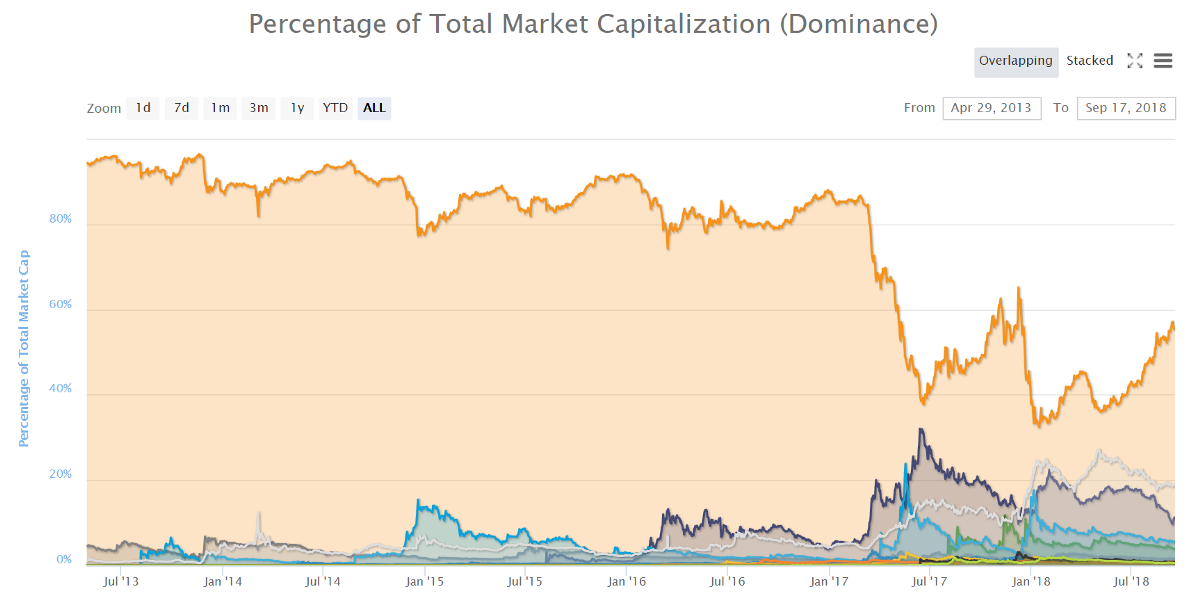 [Bitcoin dominance in orange](https://coinmarketcap.com/charts/)</center> Setting aside the [volatility of cryptos](https://medium.com/coinmonks/crypto-volatility-the-phantom-chicken-and-egg-problem-81caf9089cd7), one of the key paradoxes that is hardly ever addressed when people throw money at various crypto projects is this: >When I invest in a token, I am hoping someone in the future will want to buy it at a higher price to use the platform. However, why would anyone buy my tokens to use the platform if the price of the token keeps increasing as I expect it to? This seemingly simple question lies at the heart of crypto valuations and is inseparable from the the decentralized future as envisioned by many crypto enthusiasts. Without an understanding of this, any money going into crypto is essentially blind money, regardless of how well the project team executes their stated goals. At the core of this confusion is the lack of distinction between the core use case of a platform's token as well as a general surface understanding of what purpose money actually serves. As mentioned [here](https://medium.com/@kaishinaw/the-scarcity-problem-why-cryptocurrencies-are-so-divisive-1ecab558c2e2), due to the complexity surrounding cryptos, people tend to group all cryptos into a single basket regardless of the differences in implementation. Coupled with the [abstract nature of value](https://medium.com/predict/redefining-our-valuation-of-the-world-what-institutions-tech-and-cryptos-can-tell-us-about-real-bcd9a5803329), many people just settle for simplified and seemingly logically consistent analysis models without further thought about its actual applicability in specific use cases. The key among this is the belief that "higher network usage implies higher network value" which says nothing of who actually captures the value generated by the network. There have been many amazing articles (links at the end) which have gone into detail about this (a.k.a. 'Token Velocity Problem') and this is not one of them. Instead, my goal is to avoid as much of the technical jargon and ultimately answer the questions raised in the title by shedding some light on the following observations: * The likelihood of a user using, trading, or holding a token is dependent on the extent to which the token acts as a store of value, medium of exchange, or utility. (i.e, is it more like gold, cash, or coupons?). * The total value of a network is more a function of how much users are willing to pay per token rather than the total amount of activity on the network. A network will be unable to scale if cost of using the network rises linearly with token price. * The benefits generated by the blockchain will accrue to the users in the form of cost savings, meaning that such value is not captured by the network itself but is rather a lower out-of-pocket cost for users. * Given the public nature of blockchain protocols, each chain will not only have to compete with competitors but also face forking risks. Given similar functionalities, users will likely utilize the one with lower costs leaving little margin for profits above the required cost to run the service. * Store of value functionality will tend to be naturally monopolistic as the larger the proportion of value captured in a single asset, the smaller the potential impact that remaining assets will have. Transaction costs and throughput for such an asset, as long as reasonable, is secondary. --- <b>What do you use money for?</b> Money is the solution to all of life's problems until you have too much of it. It empowers us to live the life that we want as we can buy the rest of life's necessities with enough money. As such, we strive to stash as much of it so that we will be able to face whatever the future throws at us. We store it in banks to keep it safe and only take out as much as we need. The amount of cash withdrawn is a fine balance between making our daily transactions more convenient and the fear of losing it (or for some, the fear of spending it). <center>[How money keeps us out of trouble](http://blondie.com/comic_tag/saving-money/)</center> Hence, depending on what we want to do with it, money has different uses: * As a store of value, we want the confidence and security that our dollar today is worth a dollar tomorrow. * As a medium of exchange, we want it to be convenient for us to use on a daily basis. * As a utility (think redeemable coupons), we do not even want to know that there was money involved, we only need the product/service promised. It is important to note that the above characteristics are driven by our needs and therefore applies to any form of money regardless of the technology behind it. As long as there is a need to quantify the world around us, new innovations around money (which we use as a value estimate) will push towards making life better for its users. Cryptocurrencies carries on this tradition by enabling money to be programmed as well as flattening the hierarchical structure around current value streams. The confusion arises because there has never been a point in human history where people were exposed to so many forms of money (monetary bases) in such a short period. Moreover, prior to this, many people in the modern world were never forced to contemplate the utility of a stable currency nor even hold a different currency. Needless to say, hardly anyone was prepared with the necessary knowledge to truly assess the complexity of each of these new cryptocurrencies which presented itself as freestanding monetary bases. What then transpired was a fierce unregulated competition among cryptocurrencies to capture a larger proportion of global value streams ('money') based upon who had the best promises or rumors. <center> [In it for the tech](https://www.reddit.com/r/btc/comments/73hlog/dont_let_your_kid_talk_with_crypto_traders/)</center> Without really understanding what a network's token is used for, people's faith in blockchain technology became deeply intertwined with simpler metrics such as market cap, transaction volume, and token price. As a result, when trying to determine the 'real' value of the token, the argument usually went something like this: >The market cap of this token now is only $10 million while the value of the industry that it is targeting is worth $10 billion so I can expect the price per token to increase ~1,000x due to limited supply. The network also has double the number of transactions compared to the next best competitor so it should be worth minimally twice the competitor's value if not more due to network effects. Underlying this argument is the assumption that the token in question will, at a minimum, maintain its value during the holding period so that it can be sold in the future. Although all currencies do display this store of value quality to a certain extent, for the large majority of cryptos, their core use case is not as a store of value but rather as a token that grants them the ability to use the platform in question. This is a key distinction that has to be made when buying a token as it essentially determines whether you are holding a token based upon an 'intrinsic' property of the token or holding based on the belief that someone be willing to pay more for the right to use the platform. --- <b>Destroyer of market value, deliverer of real value</b> Regardless of transaction costs, if your token just enables usage of the network and you believe it is worth the same as current enterprises, there is no benefit to the consumers as they will still have to pay the same prices for what is essentially the same service. Even if the costs saved or new money coming through blockchain technologies is so significant such that you could still gain a profit while the users save on their costs, you are essentially replacing the middlemen in what is supposed to be a decentralized solution. Given that blockchains are supposed to 'get rid of the middlemen', the only time that holding such tokens should generate any profit is when doing so helps to secure or stabilize the network. This is what many tokens try to achieve using different variations of the staking protocol where a user with a large enough stash will be able to stake his tokens on the network in order to get an interest. Getting this right is a fine balance as it essentially plays with the supply and demand for a token. It must be noted that Proof of Stake greatly reduces the computational resource required to secure the platform and therefore significantly reduces the proportion of network value going to miners or token holders. Moreover, having more people hold the token reduces the circulating supply but does not necessarily reduce the transaction volume of a platform. In fact, this lack of liquidity could actually end up hindering network growth. Taking a step back to look at the bigger picture, the public nature of blockchain protocols will also ensure that users, instead of investors, of the token will be the one to derive the most surplus from this technology. As the chain could easily be split, carrying along all the original chain's data with it, users will eventually migrate to the chain with the lowest cost, given similar functionalities. <center> 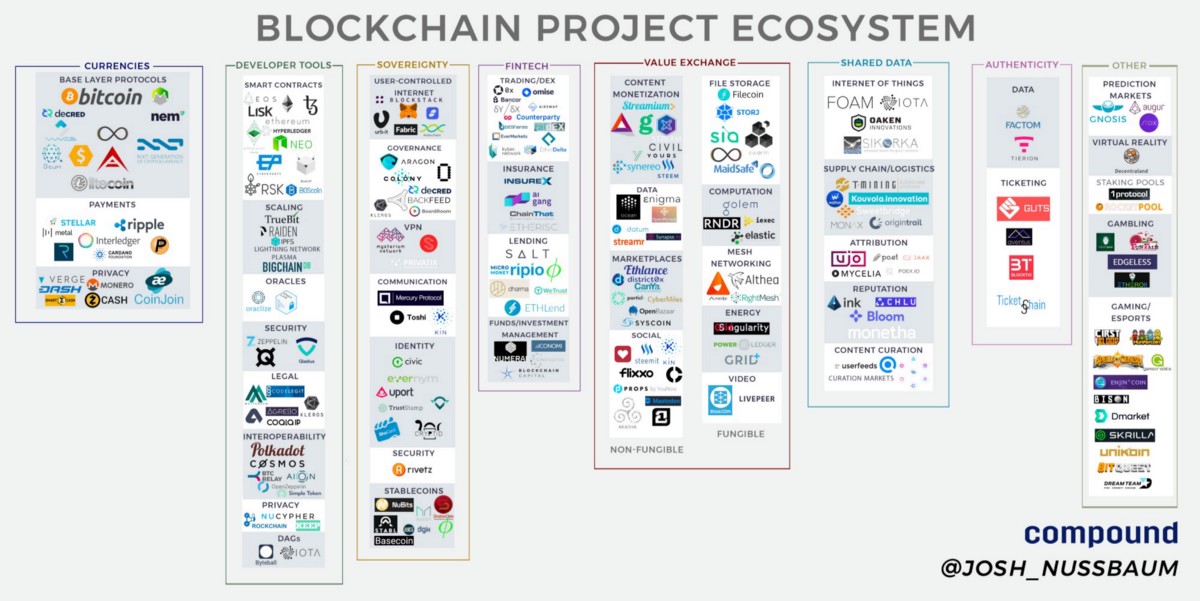 [Number of different chains](https://medium.com/@josh_nussbaum/blockchain-project-ecosystem-8940ababaf27) </center> Additionally, the above does not take into account that public protocols facilitates competition through open and inexpensive experimentation. The result of this is that there will likely be increasingly specialized protocols, each lowering the cost for users through eliminating any unnecessary costs from the platform. As such, the interest to be gained from securing a network will likely converge to a fraction above the actual costs with little room for additional profits. Making things worse for investors is that failure rates in this space will be extremely high with majority of the 'winning' protocols having yet to be created. Good for the users, not so much for investors. --- <b>What will people use the token for?</b> Given that the technology itself is set to transfer much of the surplus to the users, the question that then needs to be asked is how would the users actually use the token. The different ways society uses money now will provide a glimpse into how individuals will approach the tokens of the future. As was hinted above, people generally require money to exhibit different characteristics based upon the situation. We store money in the bank for security even though we end up paying a lot through lost interest (look at the difference in interest paid when we borrow from the bank compared to when we lend them our money). We buy property with money in the hopes of having a nest egg even though we end up paying extra through mortgage payments and lost liquidity. We exchange money for gold when we lose faith in the government even though gold has very limited uses. <center> 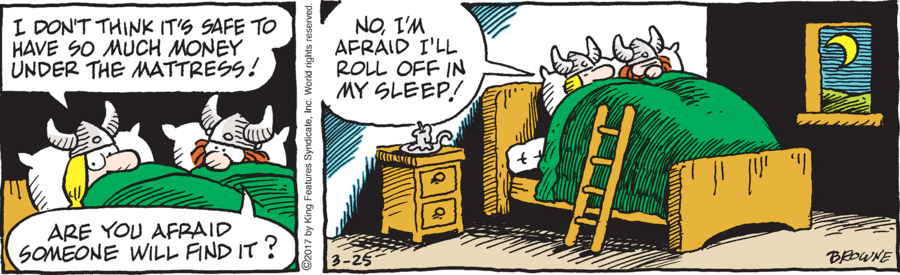 [Difficulties of having too much money](http://hagarthehorrible.com/comics/march-25-2017/) </center> We carry cash in our wallet so that we can trade whenever we want even though we risk losing the cash. We use different cards in different situations to accumulate benefits or save costs even though it is inconvenient to do so. We transfer money into various company/mobile wallets so that we can more easily access their services even though we lose out on any interest payments. We buy redeemable coupons or kickstarter products so that we can save through bulk buying or early access even though it means our money gets locked up until we get the service/product. One of the main outcomes of the above is that the use case will determine how long we want to hold value in that particular form. We place money in the bank because we don't intend to use it anytime soon. We buy financial assets if we have enough capital so that the value stored can weather future inflation. We trade for gold as a hedge against future calamities. On the other hand, we would only carry enough cash as necessary for the next few days or transfer just as much as needed to other accounts/coupons so that we don't lock up our money and lose out on interest payments. As such, our store of value needs will be closely intertwined with the holding period. Consequently, people will tend to hoard store of value forms while minimizing the time as well as amount for medium of exchange or utility forms. This effectively means that the less the medium acts as a store of value, the more likely we are to trade it only when we require access to the platform. As such, the costs of using the platform becomes the determining demand factor for such tokens. If the token price and transaction costs are not decoupled, the network will not be able to scale. Even if completely decoupled, the token's value will only grow linearly with the demand for the underlying utility and as covered in the section above, market dynamics are constantly pushing the costs of such utility downwards. It can be argued that there might be a single cryptocurrency that successfully competes as both a store of value and medium of exchange due to the specific advantages the technology has over monetary store of value as well as specific payment forms. Nonetheless, given the competitive nature of crypto's protocols, it is more likely that society will choose to store value in a particular asset while continuing to take advantage of increasingly specialized protocols suited to particular use cases. This is even more so considering the progress that we have seen around cross-chain swaps or inter-chain operability. With reduced friction converting between tokens, users would have less reason to hoard non store of value tokens. --- <b>What does this all mean?</b> Given the amount of competition among token protocols, most tokens will likely be a bad investment due to the difficulties of identifying a 'winner' and the fact that market dynamics essentially places a hard cap on the token if it has no store of value characteristics. These same forces are also why payments functionality in a store of value asset is relatively trivial compared to the assets ability to be resilient to changes. It is interesting to note that, of the potential use cases for cryptos, store of value functionality comes with the least technological risk. Bitcoin (BTC), the most likely candidate for this pure store of value asset, has consistently prioritized resiliency and is already at a stage where it has been tested in the real world. <center> 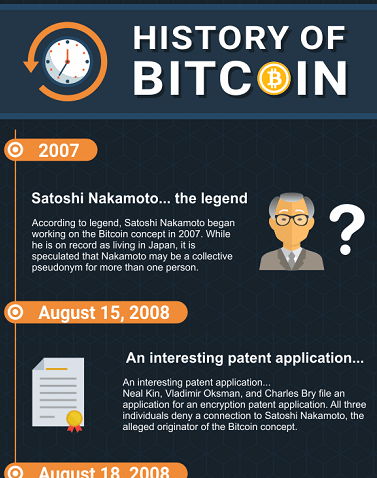 [A great detailed history dive here](https://fried.com/history-of-bitcoin/) </center> This is not to say that people will continue using BTC if transaction costs and confirmation times skyrocket but rather it is much harder for a token to become a store of value than it is to become a medium of exchange. BTC, in its current state, already meets the requirement of a store of value asset albeit needing some tweaks to its payments function going forward. Meanwhile, other tokens are still trying to define or meet a much more complex and specialized use case. This is why, relative to other tokens, BTC seems like a better investment, especially if holders keep all the forks of BTC as a hedge. The profitability of a token will be heavily dependent on its token model which determines the extent to which users would want to hold it. This will also be heavily influenced by its specific use case. For example, privacy tokens might have higher transaction friction due to privacy and anonymity requirements resulting in longer holding periods. Crucially, this model will have to be set within a framework of the current network value versus the enterprise value of its centralized counterpart minus the middlemen costs. Of course this framework assumes that the utility of the token matches its counterpart's exactly and captures all the value for that utility. Ultimately, public blockchain technology is set to transfer a significant proportion of utility to the users rather than to token holders or miners. This will come at the expense of traditional businesses hence why corporates are wary of this technology. John Pfeffer summarizes it nicely: > Cryptocurrency's performance advantage over incumbent forms of money is: (a) strongest and most obvious as a monetary store of value; (b) stronger for some, but far from all, payments; and (c) differentiated as a unit of account for a few select purposes. As such, aside from a monetary store of value, cryptos will likely function in coordination with rather than replace many of the centralized solutions found today. Cryptos will democratize access to different value streams as well as pave the way for new forms of value generation. This is an exciting future that we are building but it won't come about by just throwing money at promising project teams. There is definitely some profit to be made from investing in such teams early and providing them with the required capital to realize their product. However, in order for blockchain technologies to scale and achieve it's true potential, investors must realize that, unlike current business models, the benefits of the platform will also have to be distributed. --- <i>For those interested in diving deeper into the rabbit hole, I highly recommend the following (especially the first one which helped me put a lot of my thoughts into words): * [An (Institutional) Investor's Take on Cryptoassets](https://s3.eu-west-2.amazonaws.com/john-pfeffer/An+Investor%27s+Take+on+Cryptoassets+v6.pdf) by John Pfeffer * [On Value, Velocity and Monetary Theory](https://medium.com/blockchannel/on-value-velocity-and-monetary-theory-a-new-approach-to-cryptoasset-valuations-32c9b22e3b6f) by Alex Evans * [95 Crypto Theses for 2018](https://medium.com/tbis-weekly-bits/95-crypto-theses-for-2018-ca7b74f8abcf) by TwoBitIdiot * [On Medium-of-Exchange Token Valuations](https://vitalik.ca/general/2017/10/17/moe.html) by Vitalik Buterin * [On the Velocity Problem for Cryptoasset Value](https://medium.com/thoughtchains/on-the-velocity-problem-for-cryptoasset-value-aad235694211) by Wilson Lau * [Understanding Token Velocity](https://multicoin.capital/2017/12/08/understanding-token-velocity/) by Kyle Samani Thanks for reading. I would love to know your thoughts so please feel free to drop a comment. :)</i> |
| json metadata | {"tags":["cryptocurrency","trading","money","bitcoin","crypto"],"image":["https://cdn.steemitimages.com/DQmVjxz7BUUQQSZeKKDndAgoBAxUJ8REt53217A5oahaw7E/1_ZG3LOzxwKLg9Y8Ff0pHftw.png","https://cdn.steemitimages.com/DQmTVeh76xL9Mk7P9566ESUps6jJYCLZShMoFkQZ7sbXGAG/1_fvYeldQczEBcObKN9VFtJg.gif","https://cdn.steemitimages.com/DQmNj5csBz5eDcxgGjb5ky5fWK8dUkZCWkn3ndwri5guewk/1_bghlcnh4HBrQQYBOG9pzTg.jpeg","https://cdn.steemitimages.com/DQmUnunBpbcgecP3s6Jx7bM2DhunZSEKV5FE9JQ7mkUjXmQ/1_xp2j8e4no7ShjB4NMcmjMg.jpeg","https://cdn.steemitimages.com/DQmYexQRxcvpMaYmuHs9Eozan7Z7N2zA7awBAGD5dZxvcZ8/1_BqhGiEbDXAQNh86yZef92w.gif","https://cdn.steemitimages.com/DQmPwB619zqciqN8aqx4Bh278gddjzuJWANdj1jv2jQgxZ4/1_xrUdFav8wDS7osRVxkdg-Q.png"],"links":["https://coinmarketcap.com/charts/","https://medium.com/coinmonks/crypto-volatility-the-phantom-chicken-and-egg-problem-81caf9089cd7","https://medium.com/@kaishinaw/the-scarcity-problem-why-cryptocurrencies-are-so-divisive-1ecab558c2e2","https://medium.com/predict/redefining-our-valuation-of-the-world-what-institutions-tech-and-cryptos-can-tell-us-about-real-bcd9a5803329","http://blondie.com/comic_tag/saving-money/","https://www.reddit.com/r/btc/comments/73hlog/dont_let_your_kid_talk_with_crypto_traders/","https://medium.com/@josh_nussbaum/blockchain-project-ecosystem-8940ababaf27","http://hagarthehorrible.com/comics/march-25-2017/","https://fried.com/history-of-bitcoin/","https://s3.eu-west-2.amazonaws.com/john-pfeffer/An+Investor%27s+Take+on+Cryptoassets+v6.pdf","https://medium.com/blockchannel/on-value-velocity-and-monetary-theory-a-new-approach-to-cryptoasset-valuations-32c9b22e3b6f","https://medium.com/tbis-weekly-bits/95-crypto-theses-for-2018-ca7b74f8abcf","https://vitalik.ca/general/2017/10/17/moe.html","https://medium.com/thoughtchains/on-the-velocity-problem-for-cryptoasset-value-aad235694211","https://multicoin.capital/2017/12/08/understanding-token-velocity/"],"app":"steemit/0.1","format":"markdown"} |
| Transaction Info | Block #29236295/Trx 7843986039364f018e1c2da59c03e9bb4d474db7 |
View Raw JSON Data
{
"trx_id": "7843986039364f018e1c2da59c03e9bb4d474db7",
"block": 29236295,
"trx_in_block": 19,
"op_in_trx": 0,
"virtual_op": 0,
"timestamp": "2019-01-07T03:46:54",
"op": [
"comment",
{
"parent_author": "",
"parent_permlink": "crypto",
"author": "kaishinaw",
"permlink": "why-your-token-is-likely-a-bad-investment-and-why-bitcoin-scalability-is-secondary",
"title": "Why your token is likely a bad investment & why Bitcoin scalability is secondary",
"body": "---\n<center>\n[Bitcoin dominance in orange](https://coinmarketcap.com/charts/)</center>\n\nSetting aside the [volatility of cryptos](https://medium.com/coinmonks/crypto-volatility-the-phantom-chicken-and-egg-problem-81caf9089cd7), one of the key paradoxes that is hardly ever addressed when people throw money at various crypto projects is this:\n\n>When I invest in a token, I am hoping someone in the future will want to buy it at a higher price to use the platform. However, why would anyone buy my tokens to use the platform if the price of the token keeps increasing as I expect it to?\n\nThis seemingly simple question lies at the heart of crypto valuations and is inseparable from the the decentralized future as envisioned by many crypto enthusiasts. Without an understanding of this, any money going into crypto is essentially blind money, regardless of how well the project team executes their stated goals.\n\nAt the core of this confusion is the lack of distinction between the core use case of a platform's token as well as a general surface understanding of what purpose money actually serves. As mentioned [here](https://medium.com/@kaishinaw/the-scarcity-problem-why-cryptocurrencies-are-so-divisive-1ecab558c2e2), due to the complexity surrounding cryptos, people tend to group all cryptos into a single basket regardless of the differences in implementation. Coupled with the [abstract nature of value](https://medium.com/predict/redefining-our-valuation-of-the-world-what-institutions-tech-and-cryptos-can-tell-us-about-real-bcd9a5803329), many people just settle for simplified and seemingly logically consistent analysis models without further thought about its actual applicability in specific use cases. The key among this is the belief that \"higher network usage implies higher network value\" which says nothing of who actually captures the value generated by the network.\n\nThere have been many amazing articles (links at the end) which have gone into detail about this (a.k.a. 'Token Velocity Problem') and this is not one of them. Instead, my goal is to avoid as much of the technical jargon and ultimately answer the questions raised in the title by shedding some light on the following observations:\n* The likelihood of a user using, trading, or holding a token is dependent on the extent to which the token acts as a store of value, medium of exchange, or utility. (i.e, is it more like gold, cash, or coupons?).\n* The total value of a network is more a function of how much users are willing to pay per token rather than the total amount of activity on the network. A network will be unable to scale if cost of using the network rises linearly with token price.\n* The benefits generated by the blockchain will accrue to the users in the form of cost savings, meaning that such value is not captured by the network itself but is rather a lower out-of-pocket cost for users.\n* Given the public nature of blockchain protocols, each chain will not only have to compete with competitors but also face forking risks. Given similar functionalities, users will likely utilize the one with lower costs leaving little margin for profits above the required cost to run the service.\n* Store of value functionality will tend to be naturally monopolistic as the larger the proportion of value captured in a single asset, the smaller the potential impact that remaining assets will have. Transaction costs and throughput for such an asset, as long as reasonable, is secondary.\n\n\n\n---\n\n<b>What do you use money for?</b>\n\nMoney is the solution to all of life's problems until you have too much of it. It empowers us to live the life that we want as we can buy the rest of life's necessities with enough money. As such, we strive to stash as much of it so that we will be able to face whatever the future throws at us. We store it in banks to keep it safe and only take out as much as we need. The amount of cash withdrawn is a fine balance between making our daily transactions more convenient and the fear of losing it (or for some, the fear of spending it).\n\n<center>[How money keeps us out of trouble](http://blondie.com/comic_tag/saving-money/)</center>\n\nHence, depending on what we want to do with it, money has different uses:\n* As a store of value, we want the confidence and security that our dollar today is worth a dollar tomorrow.\n* As a medium of exchange, we want it to be convenient for us to use on a daily basis.\n* As a utility (think redeemable coupons), we do not even want to know that there was money involved, we only need the product/service promised.\n\nIt is important to note that the above characteristics are driven by our needs and therefore applies to any form of money regardless of the technology behind it. As long as there is a need to quantify the world around us, new innovations around money (which we use as a value estimate) will push towards making life better for its users. Cryptocurrencies carries on this tradition by enabling money to be programmed as well as flattening the hierarchical structure around current value streams.\n\nThe confusion arises because there has never been a point in human history where people were exposed to so many forms of money (monetary bases) in such a short period. Moreover, prior to this, many people in the modern world were never forced to contemplate the utility of a stable currency nor even hold a different currency. Needless to say, hardly anyone was prepared with the necessary knowledge to truly assess the complexity of each of these new cryptocurrencies which presented itself as freestanding monetary bases. What then transpired was a fierce unregulated competition among cryptocurrencies to capture a larger proportion of global value streams ('money') based upon who had the best promises or rumors.\n\n<center> \n[In it for the tech](https://www.reddit.com/r/btc/comments/73hlog/dont_let_your_kid_talk_with_crypto_traders/)</center>\n\nWithout really understanding what a network's token is used for, people's faith in blockchain technology became deeply intertwined with simpler metrics such as market cap, transaction volume, and token price. As a result, when trying to determine the 'real' value of the token, the argument usually went something like this:\n\n>The market cap of this token now is only $10 million while the value of the industry that it is targeting is worth $10 billion so I can expect the price per token to increase ~1,000x due to limited supply. The network also has double the number of transactions compared to the next best competitor so it should be worth minimally twice the competitor's value if not more due to network effects.\n\nUnderlying this argument is the assumption that the token in question will, at a minimum, maintain its value during the holding period so that it can be sold in the future. Although all currencies do display this store of value quality to a certain extent, for the large majority of cryptos, their core use case is not as a store of value but rather as a token that grants them the ability to use the platform in question. This is a key distinction that has to be made when buying a token as it essentially determines whether you are holding a token based upon an 'intrinsic' property of the token or holding based on the belief that someone be willing to pay more for the right to use the platform.\n\n\n---\n\n<b>Destroyer of market value, deliverer of real value</b>\n\nRegardless of transaction costs, if your token just enables usage of the network and you believe it is worth the same as current enterprises, there is no benefit to the consumers as they will still have to pay the same prices for what is essentially the same service. Even if the costs saved or new money coming through blockchain technologies is so significant such that you could still gain a profit while the users save on their costs, you are essentially replacing the middlemen in what is supposed to be a decentralized solution.\n\nGiven that blockchains are supposed to 'get rid of the middlemen', the only time that holding such tokens should generate any profit is when doing so helps to secure or stabilize the network. This is what many tokens try to achieve using different variations of the staking protocol where a user with a large enough stash will be able to stake his tokens on the network in order to get an interest. Getting this right is a fine balance as it essentially plays with the supply and demand for a token.\n\nIt must be noted that Proof of Stake greatly reduces the computational resource required to secure the platform and therefore significantly reduces the proportion of network value going to miners or token holders. Moreover, having more people hold the token reduces the circulating supply but does not necessarily reduce the transaction volume of a platform. In fact, this lack of liquidity could actually end up hindering network growth.\n\nTaking a step back to look at the bigger picture, the public nature of blockchain protocols will also ensure that users, instead of investors, of the token will be the one to derive the most surplus from this technology. As the chain could easily be split, carrying along all the original chain's data with it, users will eventually migrate to the chain with the lowest cost, given similar functionalities.\n\n<center>\n\n[Number of different chains](https://medium.com/@josh_nussbaum/blockchain-project-ecosystem-8940ababaf27)\n</center>\n\nAdditionally, the above does not take into account that public protocols facilitates competition through open and inexpensive experimentation. The result of this is that there will likely be increasingly specialized protocols, each lowering the cost for users through eliminating any unnecessary costs from the platform. As such, the interest to be gained from securing a network will likely converge to a fraction above the actual costs with little room for additional profits. Making things worse for investors is that failure rates in this space will be extremely high with majority of the 'winning' protocols having yet to be created. Good for the users, not so much for investors.\n\n\n---\n\n<b>What will people use the token for?</b>\n\nGiven that the technology itself is set to transfer much of the surplus to the users, the question that then needs to be asked is how would the users actually use the token. The different ways society uses money now will provide a glimpse into how individuals will approach the tokens of the future. As was hinted above, people generally require money to exhibit different characteristics based upon the situation.\n\nWe store money in the bank for security even though we end up paying a lot through lost interest (look at the difference in interest paid when we borrow from the bank compared to when we lend them our money). We buy property with money in the hopes of having a nest egg even though we end up paying extra through mortgage payments and lost liquidity. We exchange money for gold when we lose faith in the government even though gold has very limited uses.\n\n<center>\n\n[Difficulties of having too much money](http://hagarthehorrible.com/comics/march-25-2017/)\n</center>\n\nWe carry cash in our wallet so that we can trade whenever we want even though we risk losing the cash. We use different cards in different situations to accumulate benefits or save costs even though it is inconvenient to do so. We transfer money into various company/mobile wallets so that we can more easily access their services even though we lose out on any interest payments. We buy redeemable coupons or kickstarter products so that we can save through bulk buying or early access even though it means our money gets locked up until we get the service/product.\n\nOne of the main outcomes of the above is that the use case will determine how long we want to hold value in that particular form. We place money in the bank because we don't intend to use it anytime soon. We buy financial assets if we have enough capital so that the value stored can weather future inflation. We trade for gold as a hedge against future calamities. On the other hand, we would only carry enough cash as necessary for the next few days or transfer just as much as needed to other accounts/coupons so that we don't lock up our money and lose out on interest payments. As such, our store of value needs will be closely intertwined with the holding period.\n\nConsequently, people will tend to hoard store of value forms while minimizing the time as well as amount for medium of exchange or utility forms. This effectively means that the less the medium acts as a store of value, the more likely we are to trade it only when we require access to the platform. As such, the costs of using the platform becomes the determining demand factor for such tokens. If the token price and transaction costs are not decoupled, the network will not be able to scale. Even if completely decoupled, the token's value will only grow linearly with the demand for the underlying utility and as covered in the section above, market dynamics are constantly pushing the costs of such utility downwards.\n\nIt can be argued that there might be a single cryptocurrency that successfully competes as both a store of value and medium of exchange due to the specific advantages the technology has over monetary store of value as well as specific payment forms. Nonetheless, given the competitive nature of crypto's protocols, it is more likely that society will choose to store value in a particular asset while continuing to take advantage of increasingly specialized protocols suited to particular use cases. This is even more so considering the progress that we have seen around cross-chain swaps or inter-chain operability. With reduced friction converting between tokens, users would have less reason to hoard non store of value tokens.\n\n\n---\n\n<b>What does this all mean?</b>\n\nGiven the amount of competition among token protocols, most tokens will likely be a bad investment due to the difficulties of identifying a 'winner' and the fact that market dynamics essentially places a hard cap on the token if it has no store of value characteristics. These same forces are also why payments functionality in a store of value asset is relatively trivial compared to the assets ability to be resilient to changes. It is interesting to note that, of the potential use cases for cryptos, store of value functionality comes with the least technological risk. Bitcoin (BTC), the most likely candidate for this pure store of value asset, has consistently prioritized resiliency and is already at a stage where it has been tested in the real world.\n\n<center>\n\n[A great detailed history dive here](https://fried.com/history-of-bitcoin/)\n</center>\n\nThis is not to say that people will continue using BTC if transaction costs and confirmation times skyrocket but rather it is much harder for a token to become a store of value than it is to become a medium of exchange. BTC, in its current state, already meets the requirement of a store of value asset albeit needing some tweaks to its payments function going forward. Meanwhile, other tokens are still trying to define or meet a much more complex and specialized use case. This is why, relative to other tokens, BTC seems like a better investment, especially if holders keep all the forks of BTC as a hedge.\n\nThe profitability of a token will be heavily dependent on its token model which determines the extent to which users would want to hold it. This will also be heavily influenced by its specific use case. For example, privacy tokens might have higher transaction friction due to privacy and anonymity requirements resulting in longer holding periods. Crucially, this model will have to be set within a framework of the current network value versus the enterprise value of its centralized counterpart minus the middlemen costs. Of course this framework assumes that the utility of the token matches its counterpart's exactly and captures all the value for that utility.\n\nUltimately, public blockchain technology is set to transfer a significant proportion of utility to the users rather than to token holders or miners. This will come at the expense of traditional businesses hence why corporates are wary of this technology. John Pfeffer summarizes it nicely:\n\n> Cryptocurrency's performance advantage over incumbent forms of money is:\n(a) strongest and most obvious as a monetary store of value; (b) stronger for some, but far from all, payments; and (c) differentiated as a unit of account for a few select purposes.\n\nAs such, aside from a monetary store of value, cryptos will likely function in coordination with rather than replace many of the centralized solutions found today. Cryptos will democratize access to different value streams as well as pave the way for new forms of value generation. This is an exciting future that we are building but it won't come about by just throwing money at promising project teams. There is definitely some profit to be made from investing in such teams early and providing them with the required capital to realize their product. However, in order for blockchain technologies to scale and achieve it's true potential, investors must realize that, unlike current business models, the benefits of the platform will also have to be distributed.\n\n\n---\n\n<i>For those interested in diving deeper into the rabbit hole, I highly recommend the following (especially the first one which helped me put a lot of my thoughts into words):\n* [An (Institutional) Investor's Take on Cryptoassets](https://s3.eu-west-2.amazonaws.com/john-pfeffer/An+Investor%27s+Take+on+Cryptoassets+v6.pdf) by John Pfeffer\n* [On Value, Velocity and Monetary Theory](https://medium.com/blockchannel/on-value-velocity-and-monetary-theory-a-new-approach-to-cryptoasset-valuations-32c9b22e3b6f) by Alex Evans\n* [95 Crypto Theses for 2018](https://medium.com/tbis-weekly-bits/95-crypto-theses-for-2018-ca7b74f8abcf) by TwoBitIdiot\n* [On Medium-of-Exchange Token Valuations](https://vitalik.ca/general/2017/10/17/moe.html) by Vitalik Buterin\n* [On the Velocity Problem for Cryptoasset Value](https://medium.com/thoughtchains/on-the-velocity-problem-for-cryptoasset-value-aad235694211) by Wilson Lau\n* [Understanding Token Velocity](https://multicoin.capital/2017/12/08/understanding-token-velocity/) by Kyle Samani\n\nThanks for reading. I would love to know your thoughts so please feel free to drop a comment. :)</i>",
"json_metadata": "{\"tags\":[\"cryptocurrency\",\"trading\",\"money\",\"bitcoin\",\"crypto\"],\"image\":[\"https://cdn.steemitimages.com/DQmVjxz7BUUQQSZeKKDndAgoBAxUJ8REt53217A5oahaw7E/1_ZG3LOzxwKLg9Y8Ff0pHftw.png\",\"https://cdn.steemitimages.com/DQmTVeh76xL9Mk7P9566ESUps6jJYCLZShMoFkQZ7sbXGAG/1_fvYeldQczEBcObKN9VFtJg.gif\",\"https://cdn.steemitimages.com/DQmNj5csBz5eDcxgGjb5ky5fWK8dUkZCWkn3ndwri5guewk/1_bghlcnh4HBrQQYBOG9pzTg.jpeg\",\"https://cdn.steemitimages.com/DQmUnunBpbcgecP3s6Jx7bM2DhunZSEKV5FE9JQ7mkUjXmQ/1_xp2j8e4no7ShjB4NMcmjMg.jpeg\",\"https://cdn.steemitimages.com/DQmYexQRxcvpMaYmuHs9Eozan7Z7N2zA7awBAGD5dZxvcZ8/1_BqhGiEbDXAQNh86yZef92w.gif\",\"https://cdn.steemitimages.com/DQmPwB619zqciqN8aqx4Bh278gddjzuJWANdj1jv2jQgxZ4/1_xrUdFav8wDS7osRVxkdg-Q.png\"],\"links\":[\"https://coinmarketcap.com/charts/\",\"https://medium.com/coinmonks/crypto-volatility-the-phantom-chicken-and-egg-problem-81caf9089cd7\",\"https://medium.com/@kaishinaw/the-scarcity-problem-why-cryptocurrencies-are-so-divisive-1ecab558c2e2\",\"https://medium.com/predict/redefining-our-valuation-of-the-world-what-institutions-tech-and-cryptos-can-tell-us-about-real-bcd9a5803329\",\"http://blondie.com/comic_tag/saving-money/\",\"https://www.reddit.com/r/btc/comments/73hlog/dont_let_your_kid_talk_with_crypto_traders/\",\"https://medium.com/@josh_nussbaum/blockchain-project-ecosystem-8940ababaf27\",\"http://hagarthehorrible.com/comics/march-25-2017/\",\"https://fried.com/history-of-bitcoin/\",\"https://s3.eu-west-2.amazonaws.com/john-pfeffer/An+Investor%27s+Take+on+Cryptoassets+v6.pdf\",\"https://medium.com/blockchannel/on-value-velocity-and-monetary-theory-a-new-approach-to-cryptoasset-valuations-32c9b22e3b6f\",\"https://medium.com/tbis-weekly-bits/95-crypto-theses-for-2018-ca7b74f8abcf\",\"https://vitalik.ca/general/2017/10/17/moe.html\",\"https://medium.com/thoughtchains/on-the-velocity-problem-for-cryptoasset-value-aad235694211\",\"https://multicoin.capital/2017/12/08/understanding-token-velocity/\"],\"app\":\"steemit/0.1\",\"format\":\"markdown\"}"
}
]
}2019/01/07 03:33:39
2019/01/07 03:33:39
| voter | eonwarped |
| author | kaishinaw |
| permlink | why-your-token-is-likely-a-bad-investment-and-why-bitcoin-scalability-is-secondary |
| weight | 8700 (87.00%) |
| Transaction Info | Block #29236030/Trx 0e83698ec0ff81be5a1faa1b9dc2ffb636c91a00 |
View Raw JSON Data
{
  "trx_id": "0e83698ec0ff81be5a1faa1b9dc2ffb636c91a00",
  "block": 29236030,
  "trx_in_block": 13,
  "op_in_trx": 0,
  "virtual_op": 0,
  "timestamp": "2019-01-07T03:33:39",
  "op": [
    "vote",
    {
      "voter": "eonwarped",
      "author": "kaishinaw",
      "permlink": "why-your-token-is-likely-a-bad-investment-and-why-bitcoin-scalability-is-secondary",
      "weight": 8700
    }
  ]
}2019/01/07 03:33:24
2019/01/07 03:33:24
| voter | fyrstikken |
| author | kaishinaw |
| permlink | why-your-token-is-likely-a-bad-investment-and-why-bitcoin-scalability-is-secondary |
| weight | 100 (1.00%) |
| Transaction Info | Block #29236025/Trx a660619e5de9ba5482fd772fbb83d757e041928f |
View Raw JSON Data
{
  "trx_id": "a660619e5de9ba5482fd772fbb83d757e041928f",
  "block": 29236025,
  "trx_in_block": 18,
  "op_in_trx": 0,
  "virtual_op": 0,
  "timestamp": "2019-01-07T03:33:24",
  "op": [
    "vote",
    {
      "voter": "fyrstikken",
      "author": "kaishinaw",
      "permlink": "why-your-token-is-likely-a-bad-investment-and-why-bitcoin-scalability-is-secondary",
      "weight": 100
    }
  ]
}2019/01/07 03:31:39
2019/01/07 03:31:39
| voter | council |
| author | kaishinaw |
| permlink | why-your-token-is-likely-a-bad-investment-and-why-bitcoin-scalability-is-secondary |
| weight | 1000 (10.00%) |
| Transaction Info | Block #29235990/Trx 8078453bde3629cc2cc3c8ec731366327b90a16e |
View Raw JSON Data
{
  "trx_id": "8078453bde3629cc2cc3c8ec731366327b90a16e",
  "block": 29235990,
  "trx_in_block": 13,
  "op_in_trx": 0,
  "virtual_op": 0,
  "timestamp": "2019-01-07T03:31:39",
  "op": [
    "vote",
    {
      "voter": "council",
      "author": "kaishinaw",
      "permlink": "why-your-token-is-likely-a-bad-investment-and-why-bitcoin-scalability-is-secondary",
      "weight": 1000
    }
  ]
}2019/01/07 03:18:09
2019/01/07 03:18:09
| voter | raise-me-up |
| author | kaishinaw |
| permlink | why-your-token-is-likely-a-bad-investment-and-why-bitcoin-scalability-is-secondary |
| weight | 1 (0.01%) |
| Transaction Info | Block #29235720/Trx 99d54f10761872f8268ea9dedcd9ae0d115ee587 |
View Raw JSON Data
{
  "trx_id": "99d54f10761872f8268ea9dedcd9ae0d115ee587",
  "block": 29235720,
  "trx_in_block": 18,
  "op_in_trx": 0,
  "virtual_op": 0,
  "timestamp": "2019-01-07T03:18:09",
  "op": [
    "vote",
    {
      "voter": "raise-me-up",
      "author": "kaishinaw",
      "permlink": "why-your-token-is-likely-a-bad-investment-and-why-bitcoin-scalability-is-secondary",
      "weight": 1
    }
  ]
}2019/01/07 03:13:33
2019/01/07 03:13:33
| parent author | kaishinaw |
| parent permlink | why-your-token-is-likely-a-bad-investment-and-why-bitcoin-scalability-is-secondary |
| author | cheetah |
| permlink | cheetah-re-kaishinawwhy-your-token-is-likely-a-bad-investment-and-why-bitcoin-scalability-is-secondary |
| title | |
| body | Hi! I am a robot. I just upvoted you! I found similar content that readers might be interested in: https://medium.com/coinmonks/why-your-token-is-likely-a-bad-investment-why-bitcoin-scalability-is-secondary-91e1f82dd2f1 |
| json metadata | |
| Transaction Info | Block #29235628/Trx c7edfe393ccd6a5e0eeed160762f5e32161b8ba8 |
View Raw JSON Data
{
  "trx_id": "c7edfe393ccd6a5e0eeed160762f5e32161b8ba8",
  "block": 29235628,
  "trx_in_block": 6,
  "op_in_trx": 0,
  "virtual_op": 0,
  "timestamp": "2019-01-07T03:13:33",
  "op": [
    "comment",
    {
      "parent_author": "kaishinaw",
      "parent_permlink": "why-your-token-is-likely-a-bad-investment-and-why-bitcoin-scalability-is-secondary",
      "author": "cheetah",
      "permlink": "cheetah-re-kaishinawwhy-your-token-is-likely-a-bad-investment-and-why-bitcoin-scalability-is-secondary",
      "title": "",
      "body": "Hi! I am a robot. I just upvoted you! I found similar content that readers might be interested in:\nhttps://medium.com/coinmonks/why-your-token-is-likely-a-bad-investment-why-bitcoin-scalability-is-secondary-91e1f82dd2f1",
      "json_metadata": ""
    }
  ]
}2019/01/07 03:13:30
2019/01/07 03:13:30
| voter | cheetah |
| author | kaishinaw |
| permlink | why-your-token-is-likely-a-bad-investment-and-why-bitcoin-scalability-is-secondary |
| weight | 8 (0.08%) |
| Transaction Info | Block #29235627/Trx b4ff165daf900c3ecba61869010586fd7110ba19 |
View Raw JSON Data
{
  "trx_id": "b4ff165daf900c3ecba61869010586fd7110ba19",
  "block": 29235627,
  "trx_in_block": 8,
  "op_in_trx": 0,
  "virtual_op": 0,
  "timestamp": "2019-01-07T03:13:30",
  "op": [
    "vote",
    {
      "voter": "cheetah",
      "author": "kaishinaw",
      "permlink": "why-your-token-is-likely-a-bad-investment-and-why-bitcoin-scalability-is-secondary",
      "weight": 8
    }
  ]
}2019/01/07 03:13:21
2019/01/07 03:13:21
| parent author | |
| parent permlink | crypto |
| author | kaishinaw |
| permlink | why-your-token-is-likely-a-bad-investment-and-why-bitcoin-scalability-is-secondary |
| title | Why your token is likely a bad investment & why Bitcoin scalability is secondary |
| body | --- <center> [Bitcoin dominance in orange](https://coinmarketcap.com/charts/)</center> Setting aside the [volatility of cryptos](https://medium.com/coinmonks/crypto-volatility-the-phantom-chicken-and-egg-problem-81caf9089cd7), one of the key paradoxes that is hardly ever addressed when people throw money at various crypto projects is this: >When I invest in a token, I am hoping someone in the future will want to buy it at a higher price to use the platform. However, why would anyone buy my tokens to use the platform if the price of the token keeps increasing as I expect it to? This seemingly simple question lies at the heart of crypto valuations and is inseparable from the the decentralized future as envisioned by many crypto enthusiasts. Without an understanding of this, any money going into crypto is essentially blind money, regardless of how well the project team executes their stated goals. At the core of this confusion is the lack of distinction between the core use case of a platform's token as well as a general surface understanding of what purpose money actually serves. As mentioned [here](https://medium.com/@kaishinaw/the-scarcity-problem-why-cryptocurrencies-are-so-divisive-1ecab558c2e2), due to the complexity surrounding cryptos, people tend to group all cryptos into a single basket regardless of the differences in implementation. Coupled with the [abstract nature of value](https://medium.com/predict/redefining-our-valuation-of-the-world-what-institutions-tech-and-cryptos-can-tell-us-about-real-bcd9a5803329), many people just settle for simplified and seemingly logically consistent analysis models without further thought about its actual applicability in specific use cases. The key among this is the belief that "higher network usage implies higher network value" which says nothing of who actually captures the value generated by the network. There have been many amazing articles (links at the end) which have gone into detail about this (a.k.a. 'Token Velocity Problem') and this is not one of them. Instead, my goal is to avoid as much of the technical jargon and ultimately answer the questions raised in the title by shedding some light on the following observations: * The likelihood of a user using, trading, or holding a token is dependent on the extent to which the token acts as a store of value, medium of exchange, or utility. (i.e, is it more like gold, cash, or coupons?). * The total value of a network is more a function of how much users are willing to pay per token rather than the total amount of activity on the network. A network will be unable to scale if cost of using the network rises linearly with token price. * The benefits generated by the blockchain will accrue to the users in the form of cost savings, meaning that such value is not captured by the network itself but is rather a lower out-of-pocket cost for users. * Given the public nature of blockchain protocols, each chain will not only have to compete with competitors but also face forking risks. Given similar functionalities, users will likely utilize the one with lower costs leaving little margin for profits above the required cost to run the service. * Store of value functionality will tend to be naturally monopolistic as the larger the proportion of value captured in a single asset, the smaller the potential impact that remaining assets will have. Transaction costs and throughput for such an asset, as long as reasonable, is secondary. --- <b>What do you use money for?</b> Money is the solution to all of life's problems until you have too much of it. It empowers us to live the life that we want as we can buy the rest of life's necessities with enough money. As such, we strive to stash as much of it so that we will be able to face whatever the future throws at us. We store it in banks to keep it safe and only take out as much as we need. The amount of cash withdrawn is a fine balance between making our daily transactions more convenient and the fear of losing it (or for some, the fear of spending it). <center>[How money keeps us out of trouble](http://blondie.com/comic_tag/saving-money/)</center> Hence, depending on what we want to do with it, money has different uses: * As a store of value, we want the confidence and security that our dollar today is worth a dollar tomorrow. * As a medium of exchange, we want it to be convenient for us to use on a daily basis. * As a utility (think redeemable coupons), we do not even want to know that there was money involved, we only need the product/service promised. It is important to note that the above characteristics are driven by our needs and therefore applies to any form of money regardless of the technology behind it. As long as there is a need to quantify the world around us, new innovations around money (which we use as a value estimate) will push towards making life better for its users. Cryptocurrencies carries on this tradition by enabling money to be programmed as well as flattening the hierarchical structure around current value streams. The confusion arises because there has never been a point in human history where people were exposed to so many forms of money (monetary bases) in such a short period. Moreover, prior to this, many people in the modern world were never forced to contemplate the utility of a stable currency nor even hold a different currency. Needless to say, hardly anyone was prepared with the necessary knowledge to truly assess the complexity of each of these new cryptocurrencies which presented itself as freestanding monetary bases. What then transpired was a fierce unregulated competition among cryptocurrencies to capture a larger proportion of global value streams ('money') based upon who had the best promises or rumors. <center> [In it for the tech](https://www.reddit.com/r/btc/comments/73hlog/dont_let_your_kid_talk_with_crypto_traders/)</center> Without really understanding what a network's token is used for, people's faith in blockchain technology became deeply intertwined with simpler metrics such as market cap, transaction volume, and token price. As a result, when trying to determine the 'real' value of the token, the argument usually went something like this: >The market cap of this token now is only $10 million while the value of the industry that it is targeting is worth $10 billion so I can expect the price per token to increase ~1,000x due to limited supply. The network also has double the number of transactions compared to the next best competitor so it should be worth minimally twice the competitor's value if not more due to network effects. Underlying this argument is the assumption that the token in question will, at a minimum, maintain its value during the holding period so that it can be sold in the future. Although all currencies do display this store of value quality to a certain extent, for the large majority of cryptos, their core use case is not as a store of value but rather as a token that grants them the ability to use the platform in question. This is a key distinction that has to be made when buying a token as it essentially determines whether you are holding a token based upon an 'intrinsic' property of the token or holding based on the belief that someone be willing to pay more for the right to use the platform. --- <b>Destroyer of market value, deliverer of real value</b> Regardless of transaction costs, if your token just enables usage of the network and you believe it is worth the same as current enterprises, there is no benefit to the consumers as they will still have to pay the same prices for what is essentially the same service. Even if the costs saved or new money coming through blockchain technologies is so significant such that you could still gain a profit while the users save on their costs, you are essentially replacing the middlemen in what is supposed to be a decentralized solution. Given that blockchains are supposed to 'get rid of the middlemen', the only time that holding such tokens should generate any profit is when doing so helps to secure or stabilize the network. This is what many tokens try to achieve using different variations of the staking protocol where a user with a large enough stash will be able to stake his tokens on the network in order to get an interest. Getting this right is a fine balance as it essentially plays with the supply and demand for a token. It must be noted that Proof of Stake greatly reduces the computational resource required to secure the platform and therefore significantly reduces the proportion of network value going to miners or token holders. Moreover, having more people hold the token reduces the circulating supply but does not necessarily reduce the transaction volume of a platform. In fact, this lack of liquidity could actually end up hindering network growth. Taking a step back to look at the bigger picture, the public nature of blockchain protocols will also ensure that users, instead of investors, of the token will be the one to derive the most surplus from this technology. As the chain could easily be split, carrying along all the original chain's data with it, users will eventually migrate to the chain with the lowest cost, given similar functionalities. <center>  [Number of different chains](https://medium.com/@josh_nussbaum/blockchain-project-ecosystem-8940ababaf27) </center> Additionally, the above does not take into account that public protocols facilitates competition through open and inexpensive experimentation. The result of this is that there will likely be increasingly specialized protocols, each lowering the cost for users through eliminating any unnecessary costs from the platform. As such, the interest to be gained from securing a network will likely converge to a fraction above the actual costs with little room for additional profits. Making things worse for investors is that failure rates in this space will be extremely high with majority of the 'winning' protocols having yet to be created. Good for the users, not so much for investors. --- <b>What will people use the token for?</b> Given that the technology itself is set to transfer much of the surplus to the users, the question that then needs to be asked is how would the users actually use the token. The different ways society uses money now will provide a glimpse into how individuals will approach the tokens of the future. As was hinted above, people generally require money to exhibit different characteristics based upon the situation. We store money in the bank for security even though we end up paying a lot through lost interest (look at the difference in interest paid when we borrow from the bank compared to when we lend them our money). We buy property with money in the hopes of having a nest egg even though we end up paying extra through mortgage payments and lost liquidity. We exchange money for gold when we lose faith in the government even though gold has very limited uses. <center>  [Difficulties of having too much money](http://hagarthehorrible.com/comics/march-25-2017/) </center> We carry cash in our wallet so that we can trade whenever we want even though we risk losing the cash. We use different cards in different situations to accumulate benefits or save costs even though it is inconvenient to do so. We transfer money into various company/mobile wallets so that we can more easily access their services even though we lose out on any interest payments. We buy redeemable coupons or kickstarter products so that we can save through bulk buying or early access even though it means our money gets locked up until we get the service/product. One of the main outcomes of the above is that the use case will determine how long we want to hold value in that particular form. We place money in the bank because we don't intend to use it anytime soon. We buy financial assets if we have enough capital so that the value stored can weather future inflation. We trade for gold as a hedge against future calamities. On the other hand, we would only carry enough cash as necessary for the next few days or transfer just as much as needed to other accounts/coupons so that we don't lock up our money and lose out on interest payments. As such, our store of value needs will be closely intertwined with the holding period. Consequently, people will tend to hoard store of value forms while minimizing the time as well as amount for medium of exchange or utility forms. This effectively means that the less the medium acts as a store of value, the more likely we are to trade it only when we require access to the platform. As such, the costs of using the platform becomes the determining demand factor for such tokens. If the token price and transaction costs are not decoupled, the network will not be able to scale. Even if completely decoupled, the token's value will only grow linearly with the demand for the underlying utility and as covered in the section above, market dynamics are constantly pushing the costs of such utility downwards. It can be argued that there might be a single cryptocurrency that successfully competes as both a store of value and medium of exchange due to the specific advantages the technology has over monetary store of value as well as specific payment forms. Nonetheless, given the competitive nature of crypto's protocols, it is more likely that society will choose to store value in a particular asset while continuing to take advantage of increasingly specialized protocols suited to particular use cases. This is even more so considering the progress that we have seen around cross-chain swaps or inter-chain operability. With reduced friction converting between tokens, users would have less reason to hoard non store of value tokens. --- <b>What does this all mean?</b> Given the amount of competition among token protocols, most tokens will likely be a bad investment due to the difficulties of identifying a 'winner' and the fact that market dynamics essentially places a hard cap on the token if it has no store of value characteristics. These same forces are also why payments functionality in a store of value asset is relatively trivial compared to the assets ability to be resilient to changes. It is interesting to note that, of the potential use cases for cryptos, store of value functionality comes with the least technological risk. Bitcoin (BTC), the most likely candidate for this pure store of value asset, has consistently prioritized resiliency and is already at a stage where it has been tested in the real world. <center>  [A great detailed history dive here](https://fried.com/history-of-bitcoin/) </center> This is not to say that people will continue using BTC if transaction costs and confirmation times skyrocket but rather it is much harder for a token to become a store of value than it is to become a medium of exchange. BTC, in its current state, already meets the requirement of a store of value asset albeit needing some tweaks to its payments function going forward. Meanwhile, other tokens are still trying to define or meet a much more complex and specialized use case. This is why, relative to other tokens, BTC seems like a better investment, especially if holders keep all the forks of BTC as a hedge. The profitability of a token will be heavily dependent on its token model which determines the extent to which users would want to hold it. This will also be heavily influenced by its specific use case. For example, privacy tokens might have higher transaction friction due to privacy and anonymity requirements resulting in longer holding periods. Crucially, this model will have to be set within a framework of the current network value versus the enterprise value of its centralized counterpart minus the middlemen costs. Of course this framework assumes that the utility of the token matches its counterpart's exactly and captures all the value for that utility. Ultimately, public blockchain technology is set to transfer a significant proportion of utility to the users rather than to token holders or miners. This will come at the expense of traditional businesses hence why corporates are wary of this technology. John Pfeffer summarizes it nicely: > Cryptocurrency's performance advantage over incumbent forms of money is: (a) strongest and most obvious as a monetary store of value; (b) stronger for some, but far from all, payments; and (c) differentiated as a unit of account for a few select purposes. As such, aside from a monetary store of value, cryptos will likely function in coordination with rather than replace many of the centralized solutions found today. Cryptos will democratize access to different value streams as well as pave the way for new forms of value generation. This is an exciting future that we are building but it won't come about by just throwing money at promising project teams. There is definitely some profit to be made from investing in such teams early and providing them with the required capital to realize their product. However, in order for blockchain technologies to scale and achieve it's true potential, investors must realize that, unlike current business models, the benefits of the platform will also have to be distributed. --- <i>For those interested in diving deeper into the rabbit hole, I highly recommend the following (especially the first one which helped me put a lot of my thoughts into words): * [An (Institutional) Investor's Take on Cryptoassets](https://s3.eu-west-2.amazonaws.com/john-pfeffer/An+Investor%27s+Take+on+Cryptoassets+v6.pdf) by John Pfeffer * [On Value, Velocity and Monetary Theory](https://medium.com/blockchannel/on-value-velocity-and-monetary-theory-a-new-approach-to-cryptoasset-valuations-32c9b22e3b6f) by Alex Evans * [95 Crypto Theses for 2018](https://medium.com/tbis-weekly-bits/95-crypto-theses-for-2018-ca7b74f8abcf) by TwoBitIdiot * [On Medium-of-Exchange Token Valuations](https://vitalik.ca/general/2017/10/17/moe.html) by Vitalik Buterin * [On the Velocity Problem for Cryptoasset Value](https://medium.com/thoughtchains/on-the-velocity-problem-for-cryptoasset-value-aad235694211) by Wilson Lau * [Understanding Token Velocity](https://multicoin.capital/2017/12/08/understanding-token-velocity/) by Kyle Samani Thanks for reading. I would love to know your thoughts so please feel free to drop a comment. :)</i> |
| json metadata | {"tags":["crypto","trading","money","governance","bitcoin"],"image":["https://cdn.steemitimages.com/DQmVjxz7BUUQQSZeKKDndAgoBAxUJ8REt53217A5oahaw7E/1_ZG3LOzxwKLg9Y8Ff0pHftw.png","https://cdn.steemitimages.com/DQmTVeh76xL9Mk7P9566ESUps6jJYCLZShMoFkQZ7sbXGAG/1_fvYeldQczEBcObKN9VFtJg.gif","https://cdn.steemitimages.com/DQmNj5csBz5eDcxgGjb5ky5fWK8dUkZCWkn3ndwri5guewk/1_bghlcnh4HBrQQYBOG9pzTg.jpeg","https://cdn.steemitimages.com/DQmUnunBpbcgecP3s6Jx7bM2DhunZSEKV5FE9JQ7mkUjXmQ/1_xp2j8e4no7ShjB4NMcmjMg.jpeg","https://cdn.steemitimages.com/DQmYexQRxcvpMaYmuHs9Eozan7Z7N2zA7awBAGD5dZxvcZ8/1_BqhGiEbDXAQNh86yZef92w.gif","https://cdn.steemitimages.com/DQmPwB619zqciqN8aqx4Bh278gddjzuJWANdj1jv2jQgxZ4/1_xrUdFav8wDS7osRVxkdg-Q.png"],"links":["https://coinmarketcap.com/charts/","https://medium.com/coinmonks/crypto-volatility-the-phantom-chicken-and-egg-problem-81caf9089cd7","https://medium.com/@kaishinaw/the-scarcity-problem-why-cryptocurrencies-are-so-divisive-1ecab558c2e2","https://medium.com/predict/redefining-our-valuation-of-the-world-what-institutions-tech-and-cryptos-can-tell-us-about-real-bcd9a5803329","http://blondie.com/comic_tag/saving-money/","https://www.reddit.com/r/btc/comments/73hlog/dont_let_your_kid_talk_with_crypto_traders/","https://medium.com/@josh_nussbaum/blockchain-project-ecosystem-8940ababaf27","http://hagarthehorrible.com/comics/march-25-2017/","https://fried.com/history-of-bitcoin/","https://s3.eu-west-2.amazonaws.com/john-pfeffer/An+Investor%27s+Take+on+Cryptoassets+v6.pdf","https://medium.com/blockchannel/on-value-velocity-and-monetary-theory-a-new-approach-to-cryptoasset-valuations-32c9b22e3b6f","https://medium.com/tbis-weekly-bits/95-crypto-theses-for-2018-ca7b74f8abcf","https://vitalik.ca/general/2017/10/17/moe.html","https://medium.com/thoughtchains/on-the-velocity-problem-for-cryptoasset-value-aad235694211","https://multicoin.capital/2017/12/08/understanding-token-velocity/"],"app":"steemit/0.1","format":"markdown"} |
| Transaction Info | Block #29235624/Trx d457b977f1c5f3ee06573d807c891c1d41ca84f0 |
View Raw JSON Data
{
"trx_id": "d457b977f1c5f3ee06573d807c891c1d41ca84f0",
"block": 29235624,
"trx_in_block": 5,
"op_in_trx": 0,
"virtual_op": 0,
"timestamp": "2019-01-07T03:13:21",
"op": [
"comment",
{
"parent_author": "",
"parent_permlink": "crypto",
"author": "kaishinaw",
"permlink": "why-your-token-is-likely-a-bad-investment-and-why-bitcoin-scalability-is-secondary",
"title": "Why your token is likely a bad investment & why Bitcoin scalability is secondary",
"body": "---\n<center>\n[Bitcoin dominance in orange](https://coinmarketcap.com/charts/)</center>\n\nSetting aside the [volatility of cryptos](https://medium.com/coinmonks/crypto-volatility-the-phantom-chicken-and-egg-problem-81caf9089cd7), one of the key paradoxes that is hardly ever addressed when people throw money at various crypto projects is this:\n\n>When I invest in a token, I am hoping someone in the future will want to buy it at a higher price to use the platform. However, why would anyone buy my tokens to use the platform if the price of the token keeps increasing as I expect it to?\n\nThis seemingly simple question lies at the heart of crypto valuations and is inseparable from the the decentralized future as envisioned by many crypto enthusiasts. Without an understanding of this, any money going into crypto is essentially blind money, regardless of how well the project team executes their stated goals.\n\nAt the core of this confusion is the lack of distinction between the core use case of a platform's token as well as a general surface understanding of what purpose money actually serves. As mentioned [here](https://medium.com/@kaishinaw/the-scarcity-problem-why-cryptocurrencies-are-so-divisive-1ecab558c2e2), due to the complexity surrounding cryptos, people tend to group all cryptos into a single basket regardless of the differences in implementation. Coupled with the [abstract nature of value](https://medium.com/predict/redefining-our-valuation-of-the-world-what-institutions-tech-and-cryptos-can-tell-us-about-real-bcd9a5803329), many people just settle for simplified and seemingly logically consistent analysis models without further thought about its actual applicability in specific use cases. The key among this is the belief that \"higher network usage implies higher network value\" which says nothing of who actually captures the value generated by the network.\n\nThere have been many amazing articles (links at the end) which have gone into detail about this (a.k.a. 'Token Velocity Problem') and this is not one of them. Instead, my goal is to avoid as much of the technical jargon and ultimately answer the questions raised in the title by shedding some light on the following observations:\n* The likelihood of a user using, trading, or holding a token is dependent on the extent to which the token acts as a store of value, medium of exchange, or utility. (i.e, is it more like gold, cash, or coupons?).\n* The total value of a network is more a function of how much users are willing to pay per token rather than the total amount of activity on the network. A network will be unable to scale if cost of using the network rises linearly with token price.\n* The benefits generated by the blockchain will accrue to the users in the form of cost savings, meaning that such value is not captured by the network itself but is rather a lower out-of-pocket cost for users.\n* Given the public nature of blockchain protocols, each chain will not only have to compete with competitors but also face forking risks. Given similar functionalities, users will likely utilize the one with lower costs leaving little margin for profits above the required cost to run the service.\n* Store of value functionality will tend to be naturally monopolistic as the larger the proportion of value captured in a single asset, the smaller the potential impact that remaining assets will have. Transaction costs and throughput for such an asset, as long as reasonable, is secondary.\n\n\n\n---\n\n<b>What do you use money for?</b>\n\nMoney is the solution to all of life's problems until you have too much of it. It empowers us to live the life that we want as we can buy the rest of life's necessities with enough money. As such, we strive to stash as much of it so that we will be able to face whatever the future throws at us. We store it in banks to keep it safe and only take out as much as we need. The amount of cash withdrawn is a fine balance between making our daily transactions more convenient and the fear of losing it (or for some, the fear of spending it).\n\n<center>[How money keeps us out of trouble](http://blondie.com/comic_tag/saving-money/)</center>\n\nHence, depending on what we want to do with it, money has different uses:\n* As a store of value, we want the confidence and security that our dollar today is worth a dollar tomorrow.\n* As a medium of exchange, we want it to be convenient for us to use on a daily basis.\n* As a utility (think redeemable coupons), we do not even want to know that there was money involved, we only need the product/service promised.\n\nIt is important to note that the above characteristics are driven by our needs and therefore applies to any form of money regardless of the technology behind it. As long as there is a need to quantify the world around us, new innovations around money (which we use as a value estimate) will push towards making life better for its users. Cryptocurrencies carries on this tradition by enabling money to be programmed as well as flattening the hierarchical structure around current value streams.\n\nThe confusion arises because there has never been a point in human history where people were exposed to so many forms of money (monetary bases) in such a short period. Moreover, prior to this, many people in the modern world were never forced to contemplate the utility of a stable currency nor even hold a different currency. Needless to say, hardly anyone was prepared with the necessary knowledge to truly assess the complexity of each of these new cryptocurrencies which presented itself as freestanding monetary bases. What then transpired was a fierce unregulated competition among cryptocurrencies to capture a larger proportion of global value streams ('money') based upon who had the best promises or rumors.\n\n<center> \n[In it for the tech](https://www.reddit.com/r/btc/comments/73hlog/dont_let_your_kid_talk_with_crypto_traders/)</center>\n\nWithout really understanding what a network's token is used for, people's faith in blockchain technology became deeply intertwined with simpler metrics such as market cap, transaction volume, and token price. As a result, when trying to determine the 'real' value of the token, the argument usually went something like this:\n\n>The market cap of this token now is only $10 million while the value of the industry that it is targeting is worth $10 billion so I can expect the price per token to increase ~1,000x due to limited supply. The network also has double the number of transactions compared to the next best competitor so it should be worth minimally twice the competitor's value if not more due to network effects.\n\nUnderlying this argument is the assumption that the token in question will, at a minimum, maintain its value during the holding period so that it can be sold in the future. Although all currencies do display this store of value quality to a certain extent, for the large majority of cryptos, their core use case is not as a store of value but rather as a token that grants them the ability to use the platform in question. This is a key distinction that has to be made when buying a token as it essentially determines whether you are holding a token based upon an 'intrinsic' property of the token or holding based on the belief that someone be willing to pay more for the right to use the platform.\n\n\n---\n\n<b>Destroyer of market value, deliverer of real value</b>\n\nRegardless of transaction costs, if your token just enables usage of the network and you believe it is worth the same as current enterprises, there is no benefit to the consumers as they will still have to pay the same prices for what is essentially the same service. Even if the costs saved or new money coming through blockchain technologies is so significant such that you could still gain a profit while the users save on their costs, you are essentially replacing the middlemen in what is supposed to be a decentralized solution.\n\nGiven that blockchains are supposed to 'get rid of the middlemen', the only time that holding such tokens should generate any profit is when doing so helps to secure or stabilize the network. This is what many tokens try to achieve using different variations of the staking protocol where a user with a large enough stash will be able to stake his tokens on the network in order to get an interest. Getting this right is a fine balance as it essentially plays with the supply and demand for a token.\n\nIt must be noted that Proof of Stake greatly reduces the computational resource required to secure the platform and therefore significantly reduces the proportion of network value going to miners or token holders. Moreover, having more people hold the token reduces the circulating supply but does not necessarily reduce the transaction volume of a platform. In fact, this lack of liquidity could actually end up hindering network growth.\n\nTaking a step back to look at the bigger picture, the public nature of blockchain protocols will also ensure that users, instead of investors, of the token will be the one to derive the most surplus from this technology. As the chain could easily be split, carrying along all the original chain's data with it, users will eventually migrate to the chain with the lowest cost, given similar functionalities.\n\n<center>\n\n[Number of different chains](https://medium.com/@josh_nussbaum/blockchain-project-ecosystem-8940ababaf27)\n</center>\n\nAdditionally, the above does not take into account that public protocols facilitates competition through open and inexpensive experimentation. The result of this is that there will likely be increasingly specialized protocols, each lowering the cost for users through eliminating any unnecessary costs from the platform. As such, the interest to be gained from securing a network will likely converge to a fraction above the actual costs with little room for additional profits. Making things worse for investors is that failure rates in this space will be extremely high with majority of the 'winning' protocols having yet to be created. Good for the users, not so much for investors.\n\n\n---\n\n<b>What will people use the token for?</b>\n\nGiven that the technology itself is set to transfer much of the surplus to the users, the question that then needs to be asked is how would the users actually use the token. The different ways society uses money now will provide a glimpse into how individuals will approach the tokens of the future. As was hinted above, people generally require money to exhibit different characteristics based upon the situation.\n\nWe store money in the bank for security even though we end up paying a lot through lost interest (look at the difference in interest paid when we borrow from the bank compared to when we lend them our money). We buy property with money in the hopes of having a nest egg even though we end up paying extra through mortgage payments and lost liquidity. We exchange money for gold when we lose faith in the government even though gold has very limited uses.\n\n<center>\n\n[Difficulties of having too much money](http://hagarthehorrible.com/comics/march-25-2017/)\n</center>\n\nWe carry cash in our wallet so that we can trade whenever we want even though we risk losing the cash. We use different cards in different situations to accumulate benefits or save costs even though it is inconvenient to do so. We transfer money into various company/mobile wallets so that we can more easily access their services even though we lose out on any interest payments. We buy redeemable coupons or kickstarter products so that we can save through bulk buying or early access even though it means our money gets locked up until we get the service/product.\n\nOne of the main outcomes of the above is that the use case will determine how long we want to hold value in that particular form. We place money in the bank because we don't intend to use it anytime soon. We buy financial assets if we have enough capital so that the value stored can weather future inflation. We trade for gold as a hedge against future calamities. On the other hand, we would only carry enough cash as necessary for the next few days or transfer just as much as needed to other accounts/coupons so that we don't lock up our money and lose out on interest payments. As such, our store of value needs will be closely intertwined with the holding period.\n\nConsequently, people will tend to hoard store of value forms while minimizing the time as well as amount for medium of exchange or utility forms. This effectively means that the less the medium acts as a store of value, the more likely we are to trade it only when we require access to the platform. As such, the costs of using the platform becomes the determining demand factor for such tokens. If the token price and transaction costs are not decoupled, the network will not be able to scale. Even if completely decoupled, the token's value will only grow linearly with the demand for the underlying utility and as covered in the section above, market dynamics are constantly pushing the costs of such utility downwards.\n\nIt can be argued that there might be a single cryptocurrency that successfully competes as both a store of value and medium of exchange due to the specific advantages the technology has over monetary store of value as well as specific payment forms. Nonetheless, given the competitive nature of crypto's protocols, it is more likely that society will choose to store value in a particular asset while continuing to take advantage of increasingly specialized protocols suited to particular use cases. This is even more so considering the progress that we have seen around cross-chain swaps or inter-chain operability. With reduced friction converting between tokens, users would have less reason to hoard non store of value tokens.\n\n\n---\n\n<b>What does this all mean?</b>\n\nGiven the amount of competition among token protocols, most tokens will likely be a bad investment due to the difficulties of identifying a 'winner' and the fact that market dynamics essentially places a hard cap on the token if it has no store of value characteristics. These same forces are also why payments functionality in a store of value asset is relatively trivial compared to the assets ability to be resilient to changes. It is interesting to note that, of the potential use cases for cryptos, store of value functionality comes with the least technological risk. Bitcoin (BTC), the most likely candidate for this pure store of value asset, has consistently prioritized resiliency and is already at a stage where it has been tested in the real world.\n\n<center>\n\n[A great detailed history dive here](https://fried.com/history-of-bitcoin/)\n</center>\n\nThis is not to say that people will continue using BTC if transaction costs and confirmation times skyrocket but rather it is much harder for a token to become a store of value than it is to become a medium of exchange. BTC, in its current state, already meets the requirement of a store of value asset albeit needing some tweaks to its payments function going forward. Meanwhile, other tokens are still trying to define or meet a much more complex and specialized use case. This is why, relative to other tokens, BTC seems like a better investment, especially if holders keep all the forks of BTC as a hedge.\n\nThe profitability of a token will be heavily dependent on its token model which determines the extent to which users would want to hold it. This will also be heavily influenced by its specific use case. For example, privacy tokens might have higher transaction friction due to privacy and anonymity requirements resulting in longer holding periods. Crucially, this model will have to be set within a framework of the current network value versus the enterprise value of its centralized counterpart minus the middlemen costs. Of course this framework assumes that the utility of the token matches its counterpart's exactly and captures all the value for that utility.\n\nUltimately, public blockchain technology is set to transfer a significant proportion of utility to the users rather than to token holders or miners. This will come at the expense of traditional businesses hence why corporates are wary of this technology. John Pfeffer summarizes it nicely:\n\n> Cryptocurrency's performance advantage over incumbent forms of money is:\n(a) strongest and most obvious as a monetary store of value; (b) stronger for some, but far from all, payments; and (c) differentiated as a unit of account for a few select purposes.\n\nAs such, aside from a monetary store of value, cryptos will likely function in coordination with rather than replace many of the centralized solutions found today. Cryptos will democratize access to different value streams as well as pave the way for new forms of value generation. This is an exciting future that we are building but it won't come about by just throwing money at promising project teams. There is definitely some profit to be made from investing in such teams early and providing them with the required capital to realize their product. However, in order for blockchain technologies to scale and achieve it's true potential, investors must realize that, unlike current business models, the benefits of the platform will also have to be distributed.\n\n\n---\n\n<i>For those interested in diving deeper into the rabbit hole, I highly recommend the following (especially the first one which helped me put a lot of my thoughts into words):\n* [An (Institutional) Investor's Take on Cryptoassets](https://s3.eu-west-2.amazonaws.com/john-pfeffer/An+Investor%27s+Take+on+Cryptoassets+v6.pdf) by John Pfeffer\n* [On Value, Velocity and Monetary Theory](https://medium.com/blockchannel/on-value-velocity-and-monetary-theory-a-new-approach-to-cryptoasset-valuations-32c9b22e3b6f) by Alex Evans\n* [95 Crypto Theses for 2018](https://medium.com/tbis-weekly-bits/95-crypto-theses-for-2018-ca7b74f8abcf) by TwoBitIdiot\n* [On Medium-of-Exchange Token Valuations](https://vitalik.ca/general/2017/10/17/moe.html) by Vitalik Buterin\n* [On the Velocity Problem for Cryptoasset Value](https://medium.com/thoughtchains/on-the-velocity-problem-for-cryptoasset-value-aad235694211) by Wilson Lau\n* [Understanding Token Velocity](https://multicoin.capital/2017/12/08/understanding-token-velocity/) by Kyle Samani\n\nThanks for reading. I would love to know your thoughts so please feel free to drop a comment. :)</i>",
"json_metadata": "{\"tags\":[\"crypto\",\"trading\",\"money\",\"governance\",\"bitcoin\"],\"image\":[\"https://cdn.steemitimages.com/DQmVjxz7BUUQQSZeKKDndAgoBAxUJ8REt53217A5oahaw7E/1_ZG3LOzxwKLg9Y8Ff0pHftw.png\",\"https://cdn.steemitimages.com/DQmTVeh76xL9Mk7P9566ESUps6jJYCLZShMoFkQZ7sbXGAG/1_fvYeldQczEBcObKN9VFtJg.gif\",\"https://cdn.steemitimages.com/DQmNj5csBz5eDcxgGjb5ky5fWK8dUkZCWkn3ndwri5guewk/1_bghlcnh4HBrQQYBOG9pzTg.jpeg\",\"https://cdn.steemitimages.com/DQmUnunBpbcgecP3s6Jx7bM2DhunZSEKV5FE9JQ7mkUjXmQ/1_xp2j8e4no7ShjB4NMcmjMg.jpeg\",\"https://cdn.steemitimages.com/DQmYexQRxcvpMaYmuHs9Eozan7Z7N2zA7awBAGD5dZxvcZ8/1_BqhGiEbDXAQNh86yZef92w.gif\",\"https://cdn.steemitimages.com/DQmPwB619zqciqN8aqx4Bh278gddjzuJWANdj1jv2jQgxZ4/1_xrUdFav8wDS7osRVxkdg-Q.png\"],\"links\":[\"https://coinmarketcap.com/charts/\",\"https://medium.com/coinmonks/crypto-volatility-the-phantom-chicken-and-egg-problem-81caf9089cd7\",\"https://medium.com/@kaishinaw/the-scarcity-problem-why-cryptocurrencies-are-so-divisive-1ecab558c2e2\",\"https://medium.com/predict/redefining-our-valuation-of-the-world-what-institutions-tech-and-cryptos-can-tell-us-about-real-bcd9a5803329\",\"http://blondie.com/comic_tag/saving-money/\",\"https://www.reddit.com/r/btc/comments/73hlog/dont_let_your_kid_talk_with_crypto_traders/\",\"https://medium.com/@josh_nussbaum/blockchain-project-ecosystem-8940ababaf27\",\"http://hagarthehorrible.com/comics/march-25-2017/\",\"https://fried.com/history-of-bitcoin/\",\"https://s3.eu-west-2.amazonaws.com/john-pfeffer/An+Investor%27s+Take+on+Cryptoassets+v6.pdf\",\"https://medium.com/blockchannel/on-value-velocity-and-monetary-theory-a-new-approach-to-cryptoasset-valuations-32c9b22e3b6f\",\"https://medium.com/tbis-weekly-bits/95-crypto-theses-for-2018-ca7b74f8abcf\",\"https://vitalik.ca/general/2017/10/17/moe.html\",\"https://medium.com/thoughtchains/on-the-velocity-problem-for-cryptoasset-value-aad235694211\",\"https://multicoin.capital/2017/12/08/understanding-token-velocity/\"],\"app\":\"steemit/0.1\",\"format\":\"markdown\"}"
}
]
}coin.infoupvoted (6.94%) @kaishinaw / crypto-volatility-the-phantom-chicken-and-egg-problem2018/09/10 12:33:00
coin.infoupvoted (6.94%) @kaishinaw / crypto-volatility-the-phantom-chicken-and-egg-problem
2018/09/10 12:33:00
| voter | coin.info |
| author | kaishinaw |
| permlink | crypto-volatility-the-phantom-chicken-and-egg-problem |
| weight | 694 (6.94%) |
| Transaction Info | Block #25837621/Trx d32a8549260658927fbe01c079bb5ee5917b69d6 |
View Raw JSON Data
{
  "trx_id": "d32a8549260658927fbe01c079bb5ee5917b69d6",
  "block": 25837621,
  "trx_in_block": 45,
  "op_in_trx": 0,
  "virtual_op": 0,
  "timestamp": "2018-09-10T12:33:00",
  "op": [
    "vote",
    {
      "voter": "coin.info",
      "author": "kaishinaw",
      "permlink": "crypto-volatility-the-phantom-chicken-and-egg-problem",
      "weight": 694
    }
  ]
}2018/09/10 12:32:57
2018/09/10 12:32:57
| parent author | kaishinaw |
| parent permlink | crypto-volatility-the-phantom-chicken-and-egg-problem |
| author | coin.info |
| permlink | re-kaishinaw-crypto-volatility-the-phantom-chicken-and-egg-problem-20180910t123256859z |
| title | |
| body | **Coins mentioned in post:** Coin | | Price (USD) | 📉 24h | 📉 7d - | - | - | - | - **BTC** | Bitcoin | 6328.861$ | _-1.26%_ | _-12.81%_ **DAI** | Dai | 1.005$ | _-1.24%_ | _0.57%_ **ETH** | Ethereum | 196.966$ | _-3.13%_ | _-31.91%_ **FLASH** | Flash | 0.006$ | _-5.38%_ | _-16.64%_ |
| json metadata | {"app":"coininfo/1.0.0","format":"markdown"} |
| Transaction Info | Block #25837620/Trx 05639bbfab555cf60b8ac3988a67361295ba0000 |
View Raw JSON Data
{
  "trx_id": "05639bbfab555cf60b8ac3988a67361295ba0000",
  "block": 25837620,
  "trx_in_block": 36,
  "op_in_trx": 0,
  "virtual_op": 0,
  "timestamp": "2018-09-10T12:32:57",
  "op": [
    "comment",
    {
      "parent_author": "kaishinaw",
      "parent_permlink": "crypto-volatility-the-phantom-chicken-and-egg-problem",
      "author": "coin.info",
      "permlink": "re-kaishinaw-crypto-volatility-the-phantom-chicken-and-egg-problem-20180910t123256859z",
      "title": "",
      "body": "**Coins mentioned in post:**\n\nCoin | | Price (USD) | 📉 24h | 📉 7d\n- | - | - | - | -\n**BTC** | Bitcoin | 6328.861$ | _-1.26%_ | _-12.81%_\n**DAI** | Dai | 1.005$ | _-1.24%_ | _0.57%_\n**ETH** | Ethereum | 196.966$ | _-3.13%_ | _-31.91%_\n**FLASH** | Flash | 0.006$ | _-5.38%_ | _-16.64%_",
      "json_metadata": "{\"app\":\"coininfo/1.0.0\",\"format\":\"markdown\"}"
    }
  ]
}sensationupvoted (100.00%) @kaishinaw / crypto-volatility-the-phantom-chicken-and-egg-problem2018/09/10 10:57:33
sensationupvoted (100.00%) @kaishinaw / crypto-volatility-the-phantom-chicken-and-egg-problem
2018/09/10 10:57:33
| voter | sensation |
| author | kaishinaw |
| permlink | crypto-volatility-the-phantom-chicken-and-egg-problem |
| weight | 10000 (100.00%) |
| Transaction Info | Block #25835712/Trx eccf5683a108809f8ba831e7f6533171ae7bd594 |
View Raw JSON Data
{
  "trx_id": "eccf5683a108809f8ba831e7f6533171ae7bd594",
  "block": 25835712,
  "trx_in_block": 35,
  "op_in_trx": 0,
  "virtual_op": 0,
  "timestamp": "2018-09-10T10:57:33",
  "op": [
    "vote",
    {
      "voter": "sensation",
      "author": "kaishinaw",
      "permlink": "crypto-volatility-the-phantom-chicken-and-egg-problem",
      "weight": 10000
    }
  ]
}moby-dickupvoted (100.00%) @kaishinaw / crypto-volatility-the-phantom-chicken-and-egg-problem2018/09/10 10:45:48
moby-dickupvoted (100.00%) @kaishinaw / crypto-volatility-the-phantom-chicken-and-egg-problem
2018/09/10 10:45:48
| voter | moby-dick |
| author | kaishinaw |
| permlink | crypto-volatility-the-phantom-chicken-and-egg-problem |
| weight | 10000 (100.00%) |
| Transaction Info | Block #25835477/Trx ec2b12ef3e0074a1946654251711206b9124425a |
View Raw JSON Data
{
  "trx_id": "ec2b12ef3e0074a1946654251711206b9124425a",
  "block": 25835477,
  "trx_in_block": 16,
  "op_in_trx": 0,
  "virtual_op": 0,
  "timestamp": "2018-09-10T10:45:48",
  "op": [
    "vote",
    {
      "voter": "moby-dick",
      "author": "kaishinaw",
      "permlink": "crypto-volatility-the-phantom-chicken-and-egg-problem",
      "weight": 10000
    }
  ]
}magpieloverupvoted (100.00%) @kaishinaw / crypto-volatility-the-phantom-chicken-and-egg-problem2018/09/10 10:31:18
magpieloverupvoted (100.00%) @kaishinaw / crypto-volatility-the-phantom-chicken-and-egg-problem
2018/09/10 10:31:18
| voter | magpielover |
| author | kaishinaw |
| permlink | crypto-volatility-the-phantom-chicken-and-egg-problem |
| weight | 10000 (100.00%) |
| Transaction Info | Block #25835187/Trx 1d173b55d20f1ce89196455e98425a9e3c5ecced |
View Raw JSON Data
{
  "trx_id": "1d173b55d20f1ce89196455e98425a9e3c5ecced",
  "block": 25835187,
  "trx_in_block": 3,
  "op_in_trx": 0,
  "virtual_op": 0,
  "timestamp": "2018-09-10T10:31:18",
  "op": [
    "vote",
    {
      "voter": "magpielover",
      "author": "kaishinaw",
      "permlink": "crypto-volatility-the-phantom-chicken-and-egg-problem",
      "weight": 10000
    }
  ]
}steeming-hotupvoted (3.00%) @kaishinaw / crypto-volatility-the-phantom-chicken-and-egg-problem2018/09/10 10:02:18
steeming-hotupvoted (3.00%) @kaishinaw / crypto-volatility-the-phantom-chicken-and-egg-problem
2018/09/10 10:02:18
| voter | steeming-hot |
| author | kaishinaw |
| permlink | crypto-volatility-the-phantom-chicken-and-egg-problem |
| weight | 300 (3.00%) |
| Transaction Info | Block #25834607/Trx 9996e1aeebdfe0d0651ea9d751553ec9cff64899 |
View Raw JSON Data
{
  "trx_id": "9996e1aeebdfe0d0651ea9d751553ec9cff64899",
  "block": 25834607,
  "trx_in_block": 7,
  "op_in_trx": 0,
  "virtual_op": 0,
  "timestamp": "2018-09-10T10:02:18",
  "op": [
    "vote",
    {
      "voter": "steeming-hot",
      "author": "kaishinaw",
      "permlink": "crypto-volatility-the-phantom-chicken-and-egg-problem",
      "weight": 300
    }
  ]
}kaishinawpublished a new post: crypto-volatility-the-phantom-chicken-and-egg-problem2018/09/10 09:59:33
kaishinawpublished a new post: crypto-volatility-the-phantom-chicken-and-egg-problem
2018/09/10 09:59:33
| parent author | |
| parent permlink | crypto |
| author | kaishinaw |
| permlink | crypto-volatility-the-phantom-chicken-and-egg-problem |
| title | Crypto volatility: The phantom chicken and egg problem |
| body | --- 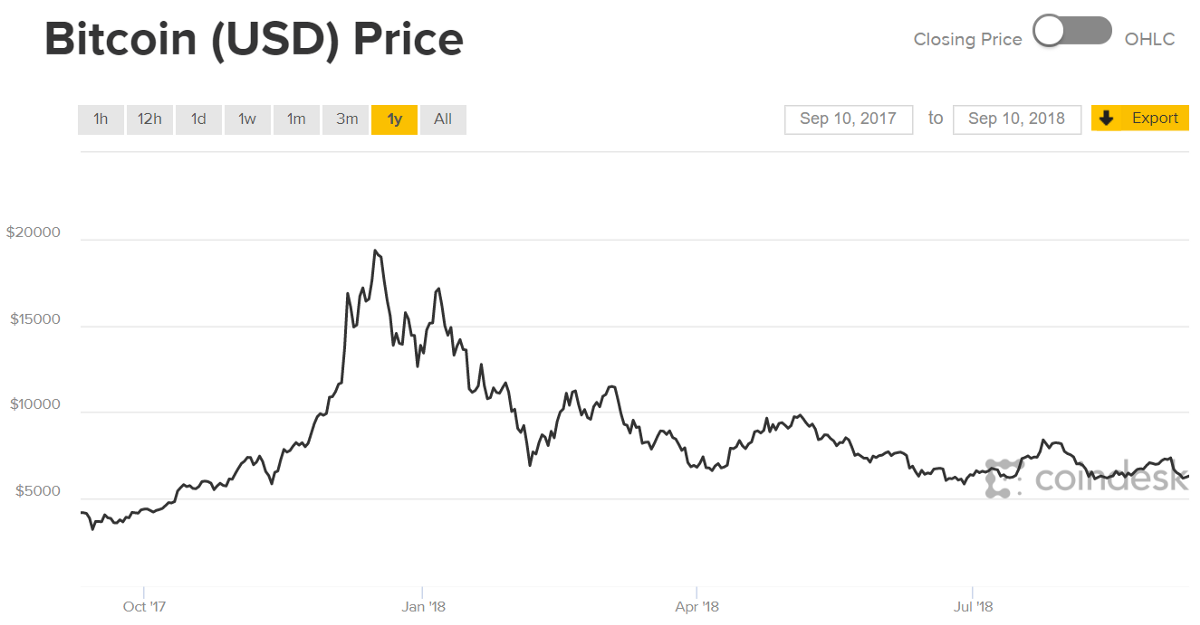 Price volatility was the defining feature that garnered cryptocurrencies attention and made Bitcoin a mainstream name. It was only when the technology was reframed from the perspective of money that people started jumping on board the train in hopes of not missing out the next gold rush. What was equally important was that the technology and the accompanying applications built around it managed to bypass traditional monetary systems allowing anyone and everyone to join this train. All of this while the authorities tried to come to grips with how to categorize and rein in this driverless train barelling through the wild west. Throughout all of this, what was interesting was that no institutional money had formally entered this cryptocurrency space. Leaving discussions about the underlying blockchain technology aside, the reason for this usually boiled down to cryptos being too volatile for day-to-day use. This was a legitimate concern as there was a reason why all these institutions were still dependent on the financial industry which we all share a love-hate relationship for: they played a vital role in stabilizing the monetary systems which enable trade. In essence, one of the reasons we 'love' the financial industry is because they provided certainty that the price of things around us did not fluctuate from one day to the next. This is an often underappreciated aspect of the financial system as the only one thing we hate more than banks is uncertainty. But as I argue here, our need to quantify the world around us goes against the chaotic nature of reality. As such, the monetary system that we use today is just a relative approximation of the world around us where value is assigned rather than generated by the item itself. At its most basic, cryptocurrencies are volatile today due to a volume/maths problem but at the fundamental level, volatility is also the outcome of human subjectivity. Essentially, we are trying to solve a chicken or egg dilemma in order to chase a mirage. --- <b>Which came first?</b> A lot of the volatility in the crypto market is a result of a basic maths problem: Without a sufficiently high capitalization, large trades can result in significant price movements. However, more money will only come in when there is less uncertainty around price movements. As such, we are stuck in a chicken and egg dilemma which faces any institution, currency or asset as it tries to scale. A startup raising its valuation by a million dollars might double its share price while that same million dollars might be a rounding error for multinationals. On a more personal level, it is the same reason why I would be excited to get $10 off a $20 meal but will be disgusted if the car dealer offers me a $10 discount on a $10,000 car. 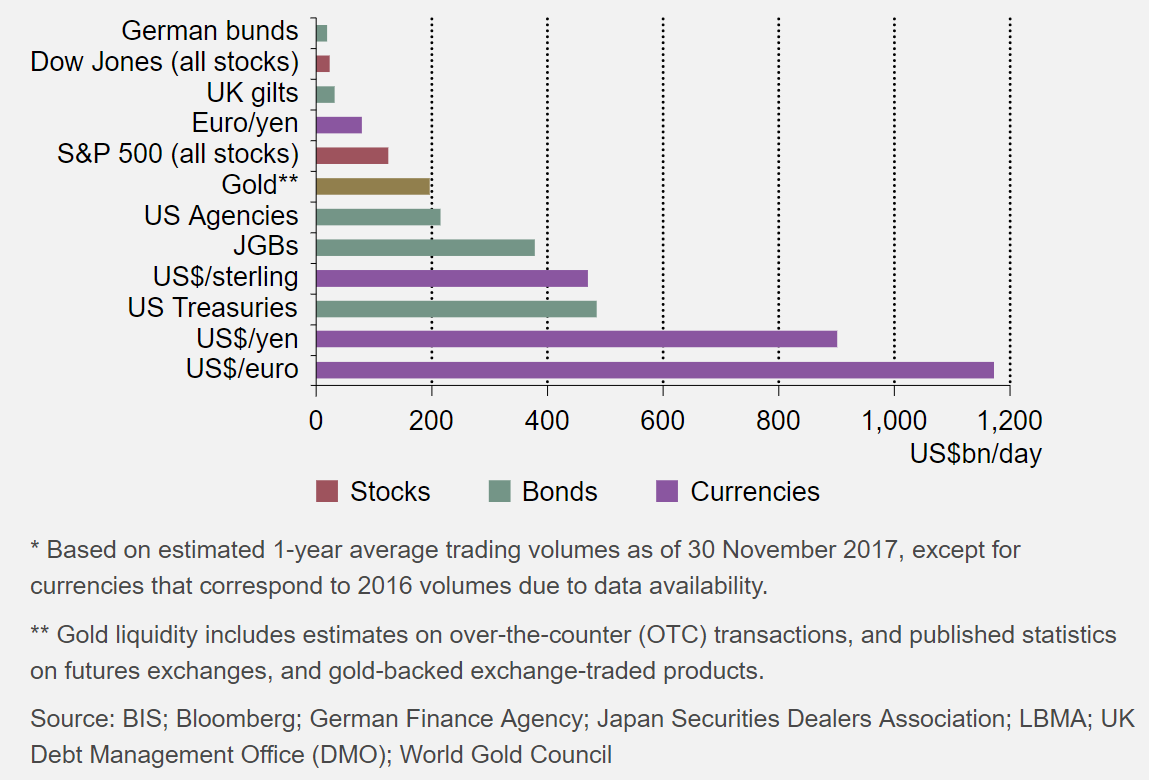 For scale, the daily dollar trading volume for cryptos sits around <a href="https://coinmarketcap.com/">$12bn</a> (Sept 2018, I had to change this number a few times while drafting) while the NASDAQ alone sits at <a href="http://www.nasdaqtrader.com/Trader.aspx?id=DailyMarketSummary">$130bn</a>. Moreover, the gold market trades close to <a href="https://www.gold.org/research/gold-investor/gold-investor-december-2017/key-gold-market-statistics">$200bn</a> daily while the USD/EUR pair alone trades more than a trillion. No matter how cryptos are classified (asset, collectible or currency), it is clear that it is still in the very early stages. This is taking into account that due to lack of regulations on ICOs, some cryptos have extremely unrealistic valuations. For example, if only 20% of the coins are distributed onto the market at a total of $10m, the market cap for that token will be at $50m. Although the 20% figure is generally around the standard distribution for companies going through an IPO, it must be noted that there is very little in the way of someone just creating an ICO. Moreover, holding/lockup requirements can currently only be enforced via code so in most cases, people will just have to trust that the creator will only sell after the stated period. Sites like Coinmarketcap do address this issue via using circulating supply instead of total supply in their metrics but are less stringent with regards to their listing <a href="https://coinmarketcap.com/faq/">criteria</a>. An interesting characteristic of the crypto markets which arises due to it operating in a fiat dominated world is that ICOs create market sell offs via a crypto liquidation effect. Essentially, as cryptocurrencies are not widely accepted (yet), the only way its monetary value can be realized is through exchanging it to cash. Additionally, as is the case for majority of ICOs now, users will have to purchase crypto (usually ETH) first in order to even participate in an ICO. All of this, coupled with thin order books (due to much of the supply being in off-exchange wallets, such as <a href="https://www.reddit.com/r/Bitcoin/comments/9ceb5v/1b_bitcoins_on_the_move_owner_transfers_100m_to/">this</a> wallet which holds 111,114 BTC), amplifies the volatility in the crypto markets. Ultimately, the first movers bear the brunt of the risks hence why the promised payoffs are so enticing. However, the amount of risk which a day-to-day business will have to undertake to utilize cryptos is still unacceptably high. This is especially so for alternative tokens. As the crypto market grows, the volatility will slowly but surely decrease as can be seen from Bitcoin's decreasing volatility. It is also important to put this into perspective as gold is probably more volatile then what most people think with annual movement consistently entering the <a href="https://www.gold-eagle.com/article/gold-and-silver-volatility-1969-2012-0">double digit percentages</a>. --- <b>An elephant walks into the room…</b> <center>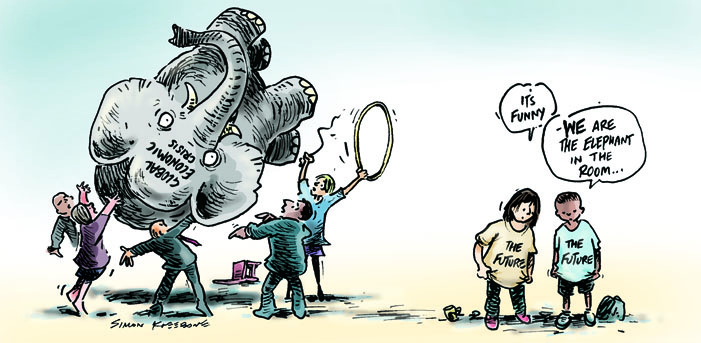</center> All of this trading of course doesn't address the elephant in the room which is that much of it is actually a zero-sum game with no actual value being generated. To be clear, this is not exclusive to cryptos as stock exchanges such as NASDAQ experiences daily trade volume of ~1% (<a href="https://www.stockmarketclock.com/exchanges/nasdaq">$130bn of $11tn market cap</a>) even though global GDP growth tends to hover around <a href="https://data.worldbank.org/indicator/NY.GDP.MKTP.KD.ZG">3%</a> annually (barring any shocks). Nonetheless, the ratio of daily trading volume to total market cap for cryptos is much higher at ~5% ($13bn of $240bn market cap). All of this is to say that much of the profits from trading actually comes at the expense of another player. Of course, the ratio of speculative money in the crypto market needs no introduction given that most people will be able to define a lambo better than explaining DLT. The community itself is made out of people who thrive on volatility and are therefore more likely to trade just for short-term profits. Moreover, the lack of regulation on market manipulation also results in exploitation of the market itself as can be seen <a href="https://www.youtube.com/watch?v=If8ZM8GkThg">here</a>. Even when users play within the rules, the prominence of trading bots in the crypto market amplifies the market swings much like how high frequency trading (HFT) caused the flash crash in 2010 (HFT has since been discouraged via regulating trade times, I recommend the book <a href="https://www.amazon.com/Flash-Boys-Wall-Street-Revolt/dp/0393351599">Flash Boys</a> if you're interested). Putting aside all the talk about getting rich for a while, it must also be noted that the nature of many cryptos also lends itself to greater volatility: * Virtually no minimum trading value: Transaction costs becomes the main barrier and even then transaction costs can be in the fractions of a cent (depending on the chain) * Absolute transaction costs: The cost for transacting 1 coin or 1,000 coins is the same at any given time * Easier access to cryptos: As long as the user has a smart device, internet, and money, the user can obtain crypto without having to verify their identity or having access to a bank. The number of users on crypto exchanges surpasses those in traditional brokerage institutions * Digitally tradeable: The technology itself ensures ownership of the digitized asset negating the need for auditing or even physical movement of the asset * Market never sleeps: Exchanges are open 24/7 resulting in many sleepless nights 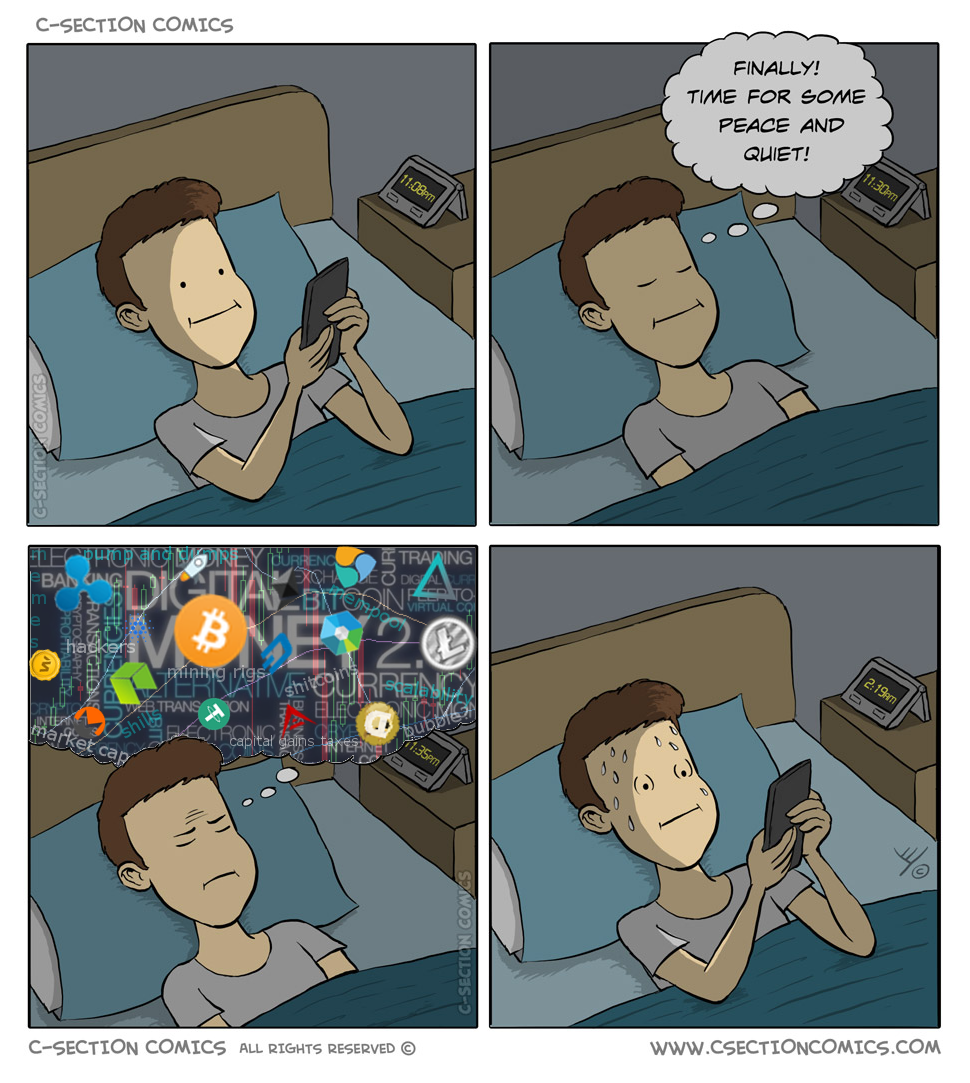 Consequently, this reduced friction to trade results in greater volatility as well as many anxiety disorders. Nonetheless, the incidence of these disorders were minimized in the small group of people who started contributing towards the community. --- <b>The stablecoin mirage</b> Of this group of contributors, there are those who chase the holy grail of crypto: the stablecoin. It is envisioned that with the creation of a stablecoin, an asset that maintains a stable value against a target price, it will provide stability, scalability, and resiliency. This would significantly reduce the risks of entering the market therefore paving the way to mass adoption. The stablecoin is definitely a goal that the community should strive for but I think it is also important to acknowledge that the perfect stablecoin is also a mirage. This is because the perception of an asset's value is mostly based on expectations about its adoption by the community. In other words, we assign value to the world around us rather than deriving value from the item itself. An important implication of this is that the dollar value that we see on any item is actually a function of demand and supply. In effect, this value is relative as we all derive different amounts of utility from each item. Essentially, our need to quantify the world makes it possible for trade but simultaneously goes against the chaotic nature of reality. As such, completely decentralized stablecoins is likely just a fantasy as it will have to be totally abstracted from the real world and in doing so becomes completely useless. One consequence of this abstract nature is that it becomes even harder for people to assign a value for intangible assets and what could be more intangible than information being stored in cryptographically-secured blocks running on a distributed digital network. As such, perceptions around cryptos are much more volatile and easily influenced by media outlets. To makes matters even worse, cryptos are the perfect fodder for mainstream media as I argue here. As a result, the volatility is amplified even further as it is driven by a lot of rumors without much technical analysis. Often times, an opinion from an influential figure can dictate the market direction as all the speculators buy and sell on the news. --- <b>Decentralized = volatile? (Warning: skip if you don't like technical stuff)</b> <center>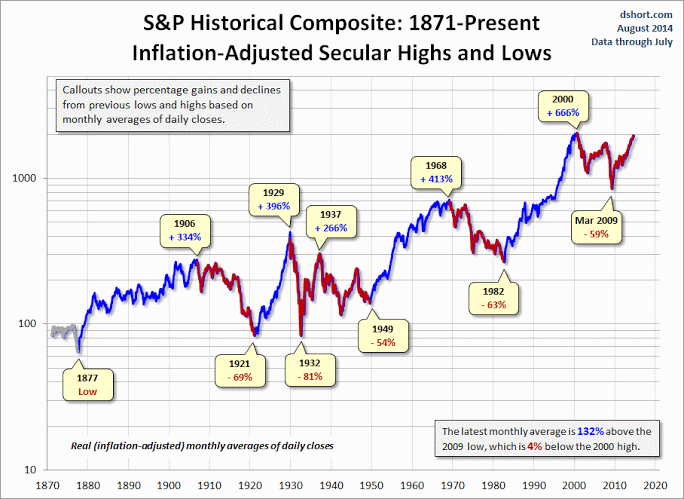</center> A question that then needs to be asked is whether decentralized networks are inherently more volatile. A lot of the stability in current markets are maintained via the various banks, monetary authorities and government policies. We might say that they have done a bad job historically given the many spectacular crashes but how much better will a decentralized system fare? A good point of reference for this would be the IMF. The IMF was established as a multilateral institution to coordinate exchange rate arrangements among nations. Their immediate focus was on avoiding the competitive devaluations of the 1930s while also encouraging liberalization of the world trade system. It was anticipated that there would be a worldwide system of 'fixed, but adjustable' exchange rates, with adjustments coming only when there was 'fundamental disequilibrium'. As such, the IMF operated on the basis that exchange rates were generally stable enough for trade to be conducted but intervention was required during any black swan events, the trigger for which was usually the inability of a country to continue servicing its debt voluntarily. There is a lot of debate on whether the 'austerity' measures required for IMF aid were too strict or even if the measures taken were effective at all but one thing is certain, even in hindsight, people can't seem to agree on whether the IMF served its purpose of of economic stabilization (<a href="https://www.tandfonline.com/doi/full/10.1080/00220388.2017.1279734">this</a> is a good read for IMF effectiveness). If subject matter experts can't agree on a result post-fact, what about a decentralized vote on the future exchange rates to stabilize currencies. The free markets might be a solution but it must be noted that globally, there have been many celebrities who were elected as leaders only for their incompetency to become apparent. The answer then as always is that it depends. It can be said that decentralized systems are inherently more volatile as it will be more susceptible to social contagion but centralized solutions are not immune either. Centralized solutions modifies or keeps free market mechanisms in check but the lack of transparency leads to a lot of uncertainty and blind institutional trust. The debate around trust in institutions vs trust in networks is a whole other argument but what is certain is that the way incentives are structured and the limits placed on a system will critically affect the stability of a system. As a general rule, countries tend to stabilize their currency by trying to match their money supply with changes in Real GDP (nominal) and inflation rates. This is achieved via a mix of reserves maintained by trusted institutions (Federal Reserve, European Central Bank, etc.) and complex financial mechanisms (bonds, collateralized debt obligations, etc.). Consequently, the dual nature of currencies being both a medium of exchange and a store of value will have to be balanced within this framework. In theory, this should ensure currency stability but as always human unpredictability ruins any perfect system. Essentially, the value of a dollar will be dependent on the expectations which they have on its value in the future which leads to positive/negative feedback loops. If enough people believe their dollar will be worth less in the future, they will start spending/selling it resulting in a self-fulfilling cycle. The inverse of this brings an interesting thought experiment: If people expect a currency/asset's value to rise, they will continue pumping money into the asset up till a point where all the value that people want to store has been put into the asset. In effect, the more money people put in an asset in hopes of realizing a profit, the more the asset will function as a store of value especially if the asset is fixed in supply as most cryptos are. A possible result of this is that if an asset captures a large enough volume and proportion of an economy, it can actually function as a stabilization mechanism due to the same volume paradox we were addressing before. This is an effect some smaller countries do make use of by pegging their currencies to USD. 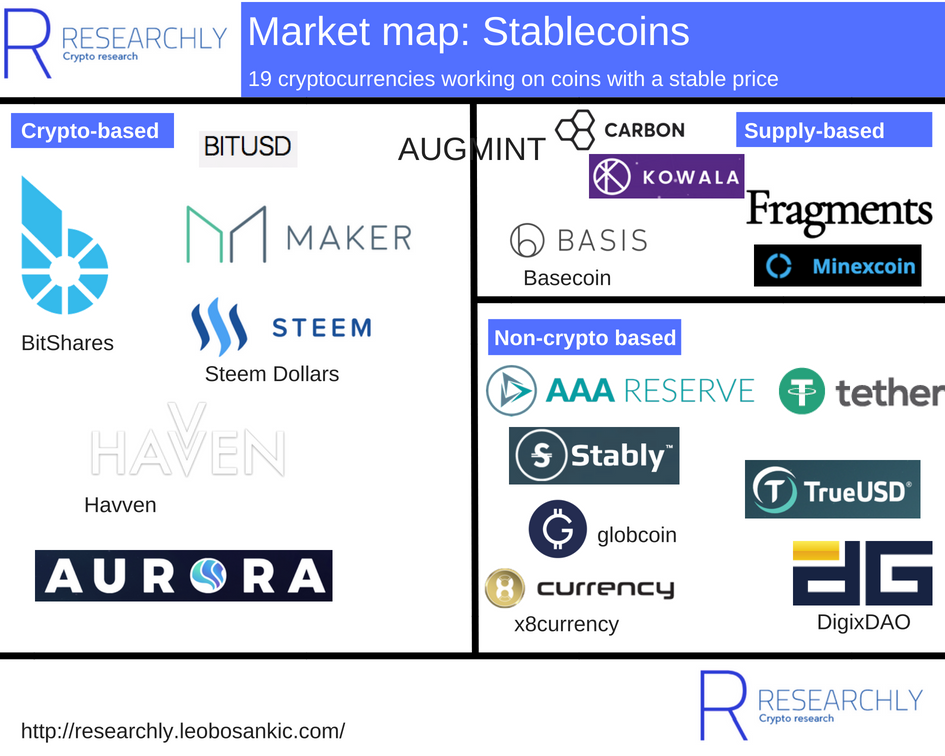 If this does happen to cryptos, it brings up the question again of whether a stablecoin is needed when the large majority of value will likely be locked up in the most likely candidate: Bitcoin. Granted, there still needs to be a medium of exchange role for day-to-day usage but this could be carried out by other coins/tokens or even in the same design as gas in Ethereum. Bitcoin will effectively function as a decentralized global reserve but rules will have to be in place to avoid any major runs. It will be interesting to see how this plays out especially given the single utility token model that many ICOs adopt today. I would highly recommend this article on the <a href="https://medium.com/reserve-currency/our-analysis-of-the-makerdao-protocol-4a9872c1a824">DAI</a> for those interested in the more technical aspects. --- <b>Balancing abuse of power with social contagion</b> This is what lies at the core of human civilization since the days of Plato's Republic. When power is concentrated, it lends itself to abuse but without the lack of authority, coordinating society falls apart. This extends into our value systems as well because money is effectively the most direct way society organizes itself. As such, the underlying consensus mechanism of a system will dictate the expectations regarding how value is distributed. Although it can be argued that expectations and social contagion are what led to extreme volatility, much of this speculation is based on uncertainty due to the lack of transparency around pricing of risk. This is not to say that increased transparency via the blockchain will reduce uncertainty as this will definitely result in information overload for the masses (we all seek the <a href="https://medium.com/predict/edward-snowden-mark-zuckerberg-logan-paul-who-is-responsible-for-our-digital-future-d17d1ff8a585">laziest route</a> after all). However, distributed ledger systems is a step in the right direction as more trust is distributed to networks rather than walled-off institutions. Moreover, programmable money will enable higher resolution for monetary policy. Ultimately, it all comes back to the human element whereby people still prefer stable and relatively secured growth for their investments over time (except traders, they are a different breed altogether). As it stands now, the crypto market is still not large enough and by extension, not stable enough, for mainstream adoption. Moreover, volatility impacts are compounded by the ratio of speculative money in the market, lack of regulation, as well as natural characteristics of many cryptos: reduced trading friction, abstraction from physical world, and hard to understand fundamentals. Reduced stability is definitely the most important non-technical hurdle cryptos must overcome but it must also be recognized that true stability is also a phantom. --- <i>In the next article, I will be diving into why many of today's' tokens will essentially be worthless if they do become mainstream (the token velocity problem). Till then, thanks for reading and I would love to hear your thoughts on this. :)</i> |
| json metadata | {"tags":["crypto","trading","money","governance","bitcoin"],"image":["https://cdn.steemitimages.com/DQmVrjhBp13gyKtv2kxJLgcdxSrNqmBuCiusztco16eZBXF/1_42WVaYFVnVvENuokPKDuaQ.png","https://cdn.steemitimages.com/DQmNnqETkoFQEuBefqs1YAkp7a6Mg5i62CM3CyjZUDFhwe1/1_i8XVjrfzu4bXf3k-L5jOMQ.png","https://cdn.steemitimages.com/DQmYxKcJyLkV8WT9i3DPiMyqUvoSdiHvYszU27umbXAtqN7/elephant-lr-pic.jpg","https://cdn.steemitimages.com/DQmZgrotifL4HLevBUeDdGZ4zvA6CHokzH5E3DXvKSy7Y7j/qgf7ptlttc801.png","https://cdn.steemitimages.com/DQmQPPYciXm8jPyqQKmsTE64aNXGu9er1ANxtUCNot11uy5/secular-bear-markets-dshort[1].gif","https://cdn.steemitimages.com/DQmexDDTzvVxhfXXYyittYcVASoUEiAEg7o3X8jE5niFRwM/researchly_stablecoins_market_map.png"],"links":["https://coinmarketcap.com/","http://www.nasdaqtrader.com/Trader.aspx?id=DailyMarketSummary","https://www.gold.org/research/gold-investor/gold-investor-december-2017/key-gold-market-statistics","https://coinmarketcap.com/faq/","https://www.reddit.com/r/Bitcoin/comments/9ceb5v/1b_bitcoins_on_the_move_owner_transfers_100m_to/","https://www.gold-eagle.com/article/gold-and-silver-volatility-1969-2012-0","https://www.stockmarketclock.com/exchanges/nasdaq","https://data.worldbank.org/indicator/NY.GDP.MKTP.KD.ZG","https://www.youtube.com/watch?v=If8ZM8GkThg","https://www.amazon.com/Flash-Boys-Wall-Street-Revolt/dp/0393351599","https://www.tandfonline.com/doi/full/10.1080/00220388.2017.1279734","https://medium.com/reserve-currency/our-analysis-of-the-makerdao-protocol-4a9872c1a824","https://medium.com/predict/edward-snowden-mark-zuckerberg-logan-paul-who-is-responsible-for-our-digital-future-d17d1ff8a585"],"app":"steemit/0.1","format":"markdown"} |
| Transaction Info | Block #25834552/Trx 753c93fee26ae7085f8d0dbc91759b42761da66c |
View Raw JSON Data
{
"trx_id": "753c93fee26ae7085f8d0dbc91759b42761da66c",
"block": 25834552,
"trx_in_block": 10,
"op_in_trx": 0,
"virtual_op": 0,
"timestamp": "2018-09-10T09:59:33",
"op": [
"comment",
{
"parent_author": "",
"parent_permlink": "crypto",
"author": "kaishinaw",
"permlink": "crypto-volatility-the-phantom-chicken-and-egg-problem",
"title": "Crypto volatility: The phantom chicken and egg problem",
"body": "---\n\n\nPrice volatility was the defining feature that garnered cryptocurrencies attention and made Bitcoin a mainstream name. It was only when the technology was reframed from the perspective of money that people started jumping on board the train in hopes of not missing out the next gold rush. What was equally important was that the technology and the accompanying applications built around it managed to bypass traditional monetary systems allowing anyone and everyone to join this train. All of this while the authorities tried to come to grips with how to categorize and rein in this driverless train barelling through the wild west.\n\nThroughout all of this, what was interesting was that no institutional money had formally entered this cryptocurrency space. Leaving discussions about the underlying blockchain technology aside, the reason for this usually boiled down to cryptos being too volatile for day-to-day use. This was a legitimate concern as there was a reason why all these institutions were still dependent on the financial industry which we all share a love-hate relationship for: they played a vital role in stabilizing the monetary systems which enable trade. In essence, one of the reasons we 'love' the financial industry is because they provided certainty that the price of things around us did not fluctuate from one day to the next.\n\nThis is an often underappreciated aspect of the financial system as the only one thing we hate more than banks is uncertainty. But as I argue here, our need to quantify the world around us goes against the chaotic nature of reality. As such, the monetary system that we use today is just a relative approximation of the world around us where value is assigned rather than generated by the item itself. At its most basic, cryptocurrencies are volatile today due to a volume/maths problem but at the fundamental level, volatility is also the outcome of human subjectivity. Essentially, we are trying to solve a chicken or egg dilemma in order to chase a mirage.\n\n\n---\n\n<b>Which came first?</b>\n\nA lot of the volatility in the crypto market is a result of a basic maths problem:\nWithout a sufficiently high capitalization, large trades can result in significant price movements. However, more money will only come in when there is less uncertainty around price movements.\n\nAs such, we are stuck in a chicken and egg dilemma which faces any institution, currency or asset as it tries to scale. A startup raising its valuation by a million dollars might double its share price while that same million dollars might be a rounding error for multinationals. On a more personal level, it is the same reason why I would be excited to get $10 off a $20 meal but will be disgusted if the car dealer offers me a $10 discount on a $10,000 car.\n\n\n\nFor scale, the daily dollar trading volume for cryptos sits around <a href=\"https://coinmarketcap.com/\">$12bn</a> (Sept 2018, I had to change this number a few times while drafting) while the NASDAQ alone sits at <a href=\"http://www.nasdaqtrader.com/Trader.aspx?id=DailyMarketSummary\">$130bn</a>. Moreover, the gold market trades close to <a href=\"https://www.gold.org/research/gold-investor/gold-investor-december-2017/key-gold-market-statistics\">$200bn</a> daily while the USD/EUR pair alone trades more than a trillion. No matter how cryptos are classified (asset, collectible or currency), it is clear that it is still in the very early stages.\n\nThis is taking into account that due to lack of regulations on ICOs, some cryptos have extremely unrealistic valuations. For example, if only 20% of the coins are distributed onto the market at a total of $10m, the market cap for that token will be at $50m. Although the 20% figure is generally around the standard distribution for companies going through an IPO, it must be noted that there is very little in the way of someone just creating an ICO. Moreover, holding/lockup requirements can currently only be enforced via code so in most cases, people will just have to trust that the creator will only sell after the stated period. Sites like Coinmarketcap do address this issue via using circulating supply instead of total supply in their metrics but are less stringent with regards to their listing <a href=\"https://coinmarketcap.com/faq/\">criteria</a>.\n\nAn interesting characteristic of the crypto markets which arises due to it operating in a fiat dominated world is that ICOs create market sell offs via a crypto liquidation effect. Essentially, as cryptocurrencies are not widely accepted (yet), the only way its monetary value can be realized is through exchanging it to cash. Additionally, as is the case for majority of ICOs now, users will have to purchase crypto (usually ETH) first in order to even participate in an ICO. All of this, coupled with thin order books (due to much of the supply being in off-exchange wallets, such as <a href=\"https://www.reddit.com/r/Bitcoin/comments/9ceb5v/1b_bitcoins_on_the_move_owner_transfers_100m_to/\">this</a> wallet which holds 111,114 BTC), amplifies the volatility in the crypto markets.\n\nUltimately, the first movers bear the brunt of the risks hence why the promised payoffs are so enticing. However, the amount of risk which a day-to-day business will have to undertake to utilize cryptos is still unacceptably high. This is especially so for alternative tokens. As the crypto market grows, the volatility will slowly but surely decrease as can be seen from Bitcoin's decreasing volatility. It is also important to put this into perspective as gold is probably more volatile then what most people think with annual movement consistently entering the <a href=\"https://www.gold-eagle.com/article/gold-and-silver-volatility-1969-2012-0\">double digit percentages</a>.\n\n\n---\n\n<b>An elephant walks into the room…</b>\n\n<center></center>\n\nAll of this trading of course doesn't address the elephant in the room which is that much of it is actually a zero-sum game with no actual value being generated. To be clear, this is not exclusive to cryptos as stock exchanges such as NASDAQ experiences daily trade volume of ~1% (<a href=\"https://www.stockmarketclock.com/exchanges/nasdaq\">$130bn of $11tn market cap</a>) even though global GDP growth tends to hover around <a href=\"https://data.worldbank.org/indicator/NY.GDP.MKTP.KD.ZG\">3%</a> annually (barring any shocks). Nonetheless, the ratio of daily trading volume to total market cap for cryptos is much higher at ~5% ($13bn of $240bn market cap). All of this is to say that much of the profits from trading actually comes at the expense of another player.\n\nOf course, the ratio of speculative money in the crypto market needs no introduction given that most people will be able to define a lambo better than explaining DLT. The community itself is made out of people who thrive on volatility and are therefore more likely to trade just for short-term profits. Moreover, the lack of regulation on market manipulation also results in exploitation of the market itself as can be seen <a href=\"https://www.youtube.com/watch?v=If8ZM8GkThg\">here</a>. Even when users play within the rules, the prominence of trading bots in the crypto market amplifies the market swings much like how high frequency trading (HFT) caused the flash crash in 2010 (HFT has since been discouraged via regulating trade times, I recommend the book <a href=\"https://www.amazon.com/Flash-Boys-Wall-Street-Revolt/dp/0393351599\">Flash Boys</a> if you're interested).\n\nPutting aside all the talk about getting rich for a while, it must also be noted that the nature of many cryptos also lends itself to greater volatility:\n\n* Virtually no minimum trading value: Transaction costs becomes the main barrier and even then transaction costs can be in the fractions of a cent (depending on the chain)\n* Absolute transaction costs: The cost for transacting 1 coin or 1,000 coins is the same at any given time\n* Easier access to cryptos: As long as the user has a smart device, internet, and money, the user can obtain crypto without having to verify their identity or having access to a bank. The number of users on crypto exchanges surpasses those in traditional brokerage institutions\n* Digitally tradeable: The technology itself ensures ownership of the digitized asset negating the need for auditing or even physical movement of the asset\n* Market never sleeps: Exchanges are open 24/7 resulting in many sleepless nights\n\n\n\nConsequently, this reduced friction to trade results in greater volatility as well as many anxiety disorders. Nonetheless, the incidence of these disorders were minimized in the small group of people who started contributing towards the community.\n\n\n---\n\n<b>The stablecoin mirage</b>\n\nOf this group of contributors, there are those who chase the holy grail of crypto: the stablecoin. It is envisioned that with the creation of a stablecoin, an asset that maintains a stable value against a target price, it will provide stability, scalability, and resiliency. This would significantly reduce the risks of entering the market therefore paving the way to mass adoption. The stablecoin is definitely a goal that the community should strive for but I think it is also important to acknowledge that the perfect stablecoin is also a mirage.\n\nThis is because the perception of an asset's value is mostly based on expectations about its adoption by the community. In other words, we assign value to the world around us rather than deriving value from the item itself. An important implication of this is that the dollar value that we see on any item is actually a function of demand and supply. In effect, this value is relative as we all derive different amounts of utility from each item. Essentially, our need to quantify the world makes it possible for trade but simultaneously goes against the chaotic nature of reality. As such, completely decentralized stablecoins is likely just a fantasy as it will have to be totally abstracted from the real world and in doing so becomes completely useless.\n\nOne consequence of this abstract nature is that it becomes even harder for people to assign a value for intangible assets and what could be more intangible than information being stored in cryptographically-secured blocks running on a distributed digital network. As such, perceptions around cryptos are much more volatile and easily influenced by media outlets. To makes matters even worse, cryptos are the perfect fodder for mainstream media as I argue here. As a result, the volatility is amplified even further as it is driven by a lot of rumors without much technical analysis. Often times, an opinion from an influential figure can dictate the market direction as all the speculators buy and sell on the news.\n\n\n---\n\n<b>Decentralized = volatile? (Warning: skip if you don't like technical stuff)</b>\n\n<center></center>\n\nA question that then needs to be asked is whether decentralized networks are inherently more volatile. A lot of the stability in current markets are maintained via the various banks, monetary authorities and government policies. We might say that they have done a bad job historically given the many spectacular crashes but how much better will a decentralized system fare?\n\nA good point of reference for this would be the IMF. The IMF was established as a multilateral institution to coordinate exchange rate arrangements among nations. Their immediate focus was on avoiding the competitive devaluations of the 1930s while also encouraging liberalization of the world trade system. It was anticipated that there would be a worldwide system of 'fixed, but adjustable' exchange rates, with adjustments coming only when there was 'fundamental disequilibrium'. As such, the IMF operated on the basis that exchange rates were generally stable enough for trade to be conducted but intervention was required during any black swan events, the trigger for which was usually the inability of a country to continue servicing its debt voluntarily.\n\nThere is a lot of debate on whether the 'austerity' measures required for IMF aid were too strict or even if the measures taken were effective at all but one thing is certain, even in hindsight, people can't seem to agree on whether the IMF served its purpose of of economic stabilization (<a href=\"https://www.tandfonline.com/doi/full/10.1080/00220388.2017.1279734\">this</a> is a good read for IMF effectiveness). If subject matter experts can't agree on a result post-fact, what about a decentralized vote on the future exchange rates to stabilize currencies. The free markets might be a solution but it must be noted that globally, there have been many celebrities who were elected as leaders only for their incompetency to become apparent.\n\nThe answer then as always is that it depends. It can be said that decentralized systems are inherently more volatile as it will be more susceptible to social contagion but centralized solutions are not immune either. Centralized solutions modifies or keeps free market mechanisms in check but the lack of transparency leads to a lot of uncertainty and blind institutional trust. The debate around trust in institutions vs trust in networks is a whole other argument but what is certain is that the way incentives are structured and the limits placed on a system will critically affect the stability of a system.\n\nAs a general rule, countries tend to stabilize their currency by trying to match their money supply with changes in Real GDP (nominal) and inflation rates. This is achieved via a mix of reserves maintained by trusted institutions (Federal Reserve, European Central Bank, etc.) and complex financial mechanisms (bonds, collateralized debt obligations, etc.). Consequently, the dual nature of currencies being both a medium of exchange and a store of value will have to be balanced within this framework.\n\nIn theory, this should ensure currency stability but as always human unpredictability ruins any perfect system. Essentially, the value of a dollar will be dependent on the expectations which they have on its value in the future which leads to positive/negative feedback loops. If enough people believe their dollar will be worth less in the future, they will start spending/selling it resulting in a self-fulfilling cycle.\n\nThe inverse of this brings an interesting thought experiment: If people expect a currency/asset's value to rise, they will continue pumping money into the asset up till a point where all the value that people want to store has been put into the asset. In effect, the more money people put in an asset in hopes of realizing a profit, the more the asset will function as a store of value especially if the asset is fixed in supply as most cryptos are. A possible result of this is that if an asset captures a large enough volume and proportion of an economy, it can actually function as a stabilization mechanism due to the same volume paradox we were addressing before. This is an effect some smaller countries do make use of by pegging their currencies to USD.\n\n\n\nIf this does happen to cryptos, it brings up the question again of whether a stablecoin is needed when the large majority of value will likely be locked up in the most likely candidate: Bitcoin. Granted, there still needs to be a medium of exchange role for day-to-day usage but this could be carried out by other coins/tokens or even in the same design as gas in Ethereum. Bitcoin will effectively function as a decentralized global reserve but rules will have to be in place to avoid any major runs. It will be interesting to see how this plays out especially given the single utility token model that many ICOs adopt today.\n\nI would highly recommend this article on the <a href=\"https://medium.com/reserve-currency/our-analysis-of-the-makerdao-protocol-4a9872c1a824\">DAI</a> for those interested in the more technical aspects.\n\n\n---\n\n<b>Balancing abuse of power with social contagion</b>\n\nThis is what lies at the core of human civilization since the days of Plato's Republic. When power is concentrated, it lends itself to abuse but without the lack of authority, coordinating society falls apart. This extends into our value systems as well because money is effectively the most direct way society organizes itself. As such, the underlying consensus mechanism of a system will dictate the expectations regarding how value is distributed.\n\nAlthough it can be argued that expectations and social contagion are what led to extreme volatility, much of this speculation is based on uncertainty due to the lack of transparency around pricing of risk. This is not to say that increased transparency via the blockchain will reduce uncertainty as this will definitely result in information overload for the masses (we all seek the <a href=\"https://medium.com/predict/edward-snowden-mark-zuckerberg-logan-paul-who-is-responsible-for-our-digital-future-d17d1ff8a585\">laziest route</a> after all). However, distributed ledger systems is a step in the right direction as more trust is distributed to networks rather than walled-off institutions. Moreover, programmable money will enable higher resolution for monetary policy.\n\nUltimately, it all comes back to the human element whereby people still prefer stable and relatively secured growth for their investments over time (except traders, they are a different breed altogether). As it stands now, the crypto market is still not large enough and by extension, not stable enough, for mainstream adoption. Moreover, volatility impacts are compounded by the ratio of speculative money in the market, lack of regulation, as well as natural characteristics of many cryptos: reduced trading friction, abstraction from physical world, and hard to understand fundamentals. Reduced stability is definitely the most important non-technical hurdle cryptos must overcome but it must also be recognized that true stability is also a phantom.\n\n\n---\n\n<i>In the next article, I will be diving into why many of today's' tokens will essentially be worthless if they do become mainstream (the token velocity problem). Till then, thanks for reading and I would love to hear your thoughts on this. :)</i>",
"json_metadata": "{\"tags\":[\"crypto\",\"trading\",\"money\",\"governance\",\"bitcoin\"],\"image\":[\"https://cdn.steemitimages.com/DQmVrjhBp13gyKtv2kxJLgcdxSrNqmBuCiusztco16eZBXF/1_42WVaYFVnVvENuokPKDuaQ.png\",\"https://cdn.steemitimages.com/DQmNnqETkoFQEuBefqs1YAkp7a6Mg5i62CM3CyjZUDFhwe1/1_i8XVjrfzu4bXf3k-L5jOMQ.png\",\"https://cdn.steemitimages.com/DQmYxKcJyLkV8WT9i3DPiMyqUvoSdiHvYszU27umbXAtqN7/elephant-lr-pic.jpg\",\"https://cdn.steemitimages.com/DQmZgrotifL4HLevBUeDdGZ4zvA6CHokzH5E3DXvKSy7Y7j/qgf7ptlttc801.png\",\"https://cdn.steemitimages.com/DQmQPPYciXm8jPyqQKmsTE64aNXGu9er1ANxtUCNot11uy5/secular-bear-markets-dshort[1].gif\",\"https://cdn.steemitimages.com/DQmexDDTzvVxhfXXYyittYcVASoUEiAEg7o3X8jE5niFRwM/researchly_stablecoins_market_map.png\"],\"links\":[\"https://coinmarketcap.com/\",\"http://www.nasdaqtrader.com/Trader.aspx?id=DailyMarketSummary\",\"https://www.gold.org/research/gold-investor/gold-investor-december-2017/key-gold-market-statistics\",\"https://coinmarketcap.com/faq/\",\"https://www.reddit.com/r/Bitcoin/comments/9ceb5v/1b_bitcoins_on_the_move_owner_transfers_100m_to/\",\"https://www.gold-eagle.com/article/gold-and-silver-volatility-1969-2012-0\",\"https://www.stockmarketclock.com/exchanges/nasdaq\",\"https://data.worldbank.org/indicator/NY.GDP.MKTP.KD.ZG\",\"https://www.youtube.com/watch?v=If8ZM8GkThg\",\"https://www.amazon.com/Flash-Boys-Wall-Street-Revolt/dp/0393351599\",\"https://www.tandfonline.com/doi/full/10.1080/00220388.2017.1279734\",\"https://medium.com/reserve-currency/our-analysis-of-the-makerdao-protocol-4a9872c1a824\",\"https://medium.com/predict/edward-snowden-mark-zuckerberg-logan-paul-who-is-responsible-for-our-digital-future-d17d1ff8a585\"],\"app\":\"steemit/0.1\",\"format\":\"markdown\"}"
}
]
}kaishinawupvoted (100.00%) @sames / looks-like-bch-is-showing-it-real-colors2018/08/07 03:18:36
kaishinawupvoted (100.00%) @sames / looks-like-bch-is-showing-it-real-colors
2018/08/07 03:18:36
| voter | kaishinaw |
| author | sames |
| permlink | looks-like-bch-is-showing-it-real-colors |
| weight | 10000 (100.00%) |
| Transaction Info | Block #24847775/Trx 65189f2cb51b65cb0d3e35bdb69f2c338952f649 |
View Raw JSON Data
{
  "trx_id": "65189f2cb51b65cb0d3e35bdb69f2c338952f649",
  "block": 24847775,
  "trx_in_block": 27,
  "op_in_trx": 0,
  "virtual_op": 0,
  "timestamp": "2018-08-07T03:18:36",
  "op": [
    "vote",
    {
      "voter": "kaishinaw",
      "author": "sames",
      "permlink": "looks-like-bch-is-showing-it-real-colors",
      "weight": 10000
    }
  ]
}kaishinawupvoted (100.00%) @ankarlie / steem-has-the-technology-to-stop-bitcoin-from-killing-the-planet2018/08/06 08:06:42
kaishinawupvoted (100.00%) @ankarlie / steem-has-the-technology-to-stop-bitcoin-from-killing-the-planet
2018/08/06 08:06:42
| voter | kaishinaw |
| author | ankarlie |
| permlink | steem-has-the-technology-to-stop-bitcoin-from-killing-the-planet |
| weight | 10000 (100.00%) |
| Transaction Info | Block #24824747/Trx 254320ba23a69c82c575874d0eaf2725622106a9 |
View Raw JSON Data
{
  "trx_id": "254320ba23a69c82c575874d0eaf2725622106a9",
  "block": 24824747,
  "trx_in_block": 28,
  "op_in_trx": 0,
  "virtual_op": 0,
  "timestamp": "2018-08-06T08:06:42",
  "op": [
    "vote",
    {
      "voter": "kaishinaw",
      "author": "ankarlie",
      "permlink": "steem-has-the-technology-to-stop-bitcoin-from-killing-the-planet",
      "weight": 10000
    }
  ]
}minnowboostersent 0.001 SBD to @kaishinaw- "Congrats! You have been accepted to the @minnowbooster Community driven Whitelist. You now have access to some nice perks, such as bigger upvote limits and the potential to earn bonus payments! Want t..."2018/08/04 14:52:03
minnowboostersent 0.001 SBD to @kaishinaw- "Congrats! You have been accepted to the @minnowbooster Community driven Whitelist. You now have access to some nice perks, such as bigger upvote limits and the potential to earn bonus payments! Want t..."
2018/08/04 14:52:03
| from | minnowbooster |
| to | kaishinaw |
| amount | 0.001 SBD |
| memo | Congrats! You have been accepted to the @minnowbooster Community driven Whitelist. You now have access to some nice perks, such as bigger upvote limits and the potential to earn bonus payments! Want to contribute? Click here: https://www.minnowbooster.net/whitelist |
| Transaction Info | Block #24775266/Trx 698a828218f6899f290214583e00507f02b26e24 |
View Raw JSON Data
{
  "trx_id": "698a828218f6899f290214583e00507f02b26e24",
  "block": 24775266,
  "trx_in_block": 38,
  "op_in_trx": 0,
  "virtual_op": 0,
  "timestamp": "2018-08-04T14:52:03",
  "op": [
    "transfer",
    {
      "from": "minnowbooster",
      "to": "kaishinaw",
      "amount": "0.001 SBD",
      "memo": "Congrats! You have been accepted to the @minnowbooster Community driven Whitelist. You now have access to some nice perks, such as bigger upvote limits and the potential to earn bonus payments! Want to contribute? Click here: https://www.minnowbooster.net/whitelist"
    }
  ]
}kaishinawreceived 0.001 SP curation reward for @eonwarped / utopian-steemit-advanced-settings-modal-with-payout-setting2018/08/01 03:39:36
kaishinawreceived 0.001 SP curation reward for @eonwarped / utopian-steemit-advanced-settings-modal-with-payout-setting
2018/08/01 03:39:36
| curator | kaishinaw |
| reward | 2.026740 VESTS |
| comment author | eonwarped |
| comment permlink | utopian-steemit-advanced-settings-modal-with-payout-setting |
| Transaction Info | Block #24675462/Virtual Operation #57 |
View Raw JSON Data
{
  "trx_id": "0000000000000000000000000000000000000000",
  "block": 24675462,
  "trx_in_block": 4294967295,
  "op_in_trx": 0,
  "virtual_op": 57,
  "timestamp": "2018-08-01T03:39:36",
  "op": [
    "curation_reward",
    {
      "curator": "kaishinaw",
      "reward": "2.026740 VESTS",
      "comment_author": "eonwarped",
      "comment_permlink": "utopian-steemit-advanced-settings-modal-with-payout-setting"
    }
  ]
}kaishinawreceived 0.006 STEEM, 0.004 SBD, 0.011 SP author reward for @kaishinaw / re-eonwarped-re-kaishinaw-edward-snowden-mark-zuckerberg-logan-paul-who-is-responsible-for-our-digital-future-20180725t021211344z2018/08/01 02:12:12
kaishinawreceived 0.006 STEEM, 0.004 SBD, 0.011 SP author reward for @kaishinaw / re-eonwarped-re-kaishinaw-edward-snowden-mark-zuckerberg-logan-paul-who-is-responsible-for-our-digital-future-20180725t021211344z
2018/08/01 02:12:12
| author | kaishinaw |
| permlink | re-eonwarped-re-kaishinaw-edward-snowden-mark-zuckerberg-logan-paul-who-is-responsible-for-our-digital-future-20180725t021211344z |
| sbd payout | 0.004 SBD |
| steem payout | 0.006 STEEM |
| vesting payout | 18.240725 VESTS |
| Transaction Info | Block #24673716/Virtual Operation #4 |
View Raw JSON Data
{
  "trx_id": "0000000000000000000000000000000000000000",
  "block": 24673716,
  "trx_in_block": 4294967295,
  "op_in_trx": 0,
  "virtual_op": 4,
  "timestamp": "2018-08-01T02:12:12",
  "op": [
    "author_reward",
    {
      "author": "kaishinaw",
      "permlink": "re-eonwarped-re-kaishinaw-edward-snowden-mark-zuckerberg-logan-paul-who-is-responsible-for-our-digital-future-20180725t021211344z",
      "sbd_payout": "0.004 SBD",
      "steem_payout": "0.006 STEEM",
      "vesting_payout": "18.240725 VESTS"
    }
  ]
}kaishinawreceived 0.033 STEEM, 0.028 SBD, 0.066 SP author reward for @kaishinaw / edward-snowden-mark-zuckerberg-logan-paul-who-is-responsible-for-our-digital-future2018/07/30 09:57:48
kaishinawreceived 0.033 STEEM, 0.028 SBD, 0.066 SP author reward for @kaishinaw / edward-snowden-mark-zuckerberg-logan-paul-who-is-responsible-for-our-digital-future
2018/07/30 09:57:48
| author | kaishinaw |
| permlink | edward-snowden-mark-zuckerberg-logan-paul-who-is-responsible-for-our-digital-future |
| sbd payout | 0.028 SBD |
| steem payout | 0.033 STEEM |
| vesting payout | 107.427132 VESTS |
| Transaction Info | Block #24625447/Virtual Operation #3 |
View Raw JSON Data
{
  "trx_id": "0000000000000000000000000000000000000000",
  "block": 24625447,
  "trx_in_block": 4294967295,
  "op_in_trx": 0,
  "virtual_op": 3,
  "timestamp": "2018-07-30T09:57:48",
  "op": [
    "author_reward",
    {
      "author": "kaishinaw",
      "permlink": "edward-snowden-mark-zuckerberg-logan-paul-who-is-responsible-for-our-digital-future",
      "sbd_payout": "0.028 SBD",
      "steem_payout": "0.033 STEEM",
      "vesting_payout": "107.427132 VESTS"
    }
  ]
}kaishinawupvoted (100.00%) @eonwarped / utopian-steemit-advanced-settings-modal-with-payout-setting2018/07/25 07:31:39
kaishinawupvoted (100.00%) @eonwarped / utopian-steemit-advanced-settings-modal-with-payout-setting
2018/07/25 07:31:39
| voter | kaishinaw |
| author | eonwarped |
| permlink | utopian-steemit-advanced-settings-modal-with-payout-setting |
| weight | 10000 (100.00%) |
| Transaction Info | Block #24479059/Trx 8b82944e7ca095abe58f9192b5b45a92a2a3f95c |
View Raw JSON Data
{
  "trx_id": "8b82944e7ca095abe58f9192b5b45a92a2a3f95c",
  "block": 24479059,
  "trx_in_block": 3,
  "op_in_trx": 0,
  "virtual_op": 0,
  "timestamp": "2018-07-25T07:31:39",
  "op": [
    "vote",
    {
      "voter": "kaishinaw",
      "author": "eonwarped",
      "permlink": "utopian-steemit-advanced-settings-modal-with-payout-setting",
      "weight": 10000
    }
  ]
}2018/07/25 05:09:45
2018/07/25 05:09:45
| parent author | eonwarped |
| parent permlink | re-kaishinaw-re-eonwarped-re-kaishinaw-edward-snowden-mark-zuckerberg-logan-paul-who-is-responsible-for-our-digital-future-20180725t031031501z |
| author | kaishinaw |
| permlink | re-eonwarped-re-kaishinaw-re-eonwarped-re-kaishinaw-edward-snowden-mark-zuckerberg-logan-paul-who-is-responsible-for-our-digital-future-20180725t050943690z |
| title | |
| body | As long as you're self-aware and willing to educate others, you're definitely helping already :) You've already invested more time into this than the large majority of people who are just passive consumers |
| json metadata | {"tags":["identity"],"app":"steemit/0.1"} |
| Transaction Info | Block #24476222/Trx abb4cd2e07c0c26ef61290eb20b52da019f97269 |
View Raw JSON Data
{
  "trx_id": "abb4cd2e07c0c26ef61290eb20b52da019f97269",
  "block": 24476222,
  "trx_in_block": 11,
  "op_in_trx": 0,
  "virtual_op": 0,
  "timestamp": "2018-07-25T05:09:45",
  "op": [
    "comment",
    {
      "parent_author": "eonwarped",
      "parent_permlink": "re-kaishinaw-re-eonwarped-re-kaishinaw-edward-snowden-mark-zuckerberg-logan-paul-who-is-responsible-for-our-digital-future-20180725t031031501z",
      "author": "kaishinaw",
      "permlink": "re-eonwarped-re-kaishinaw-re-eonwarped-re-kaishinaw-edward-snowden-mark-zuckerberg-logan-paul-who-is-responsible-for-our-digital-future-20180725t050943690z",
      "title": "",
      "body": "As long as you're self-aware and willing to educate others, you're definitely helping already :)\n\nYou've already invested more time into this than the large majority of people who are just passive consumers",
      "json_metadata": "{\"tags\":[\"identity\"],\"app\":\"steemit/0.1\"}"
    }
  ]
}2018/07/25 03:10:33
2018/07/25 03:10:33
| voter | eonwarped |
| author | kaishinaw |
| permlink | re-eonwarped-re-kaishinaw-edward-snowden-mark-zuckerberg-logan-paul-who-is-responsible-for-our-digital-future-20180725t021211344z |
| weight | 1500 (15.00%) |
| Transaction Info | Block #24473838/Trx 0a48af4b17b00b50d98cfd7f0e8b0aa11e9f7ef9 |
View Raw JSON Data
{
  "trx_id": "0a48af4b17b00b50d98cfd7f0e8b0aa11e9f7ef9",
  "block": 24473838,
  "trx_in_block": 38,
  "op_in_trx": 0,
  "virtual_op": 0,
  "timestamp": "2018-07-25T03:10:33",
  "op": [
    "vote",
    {
      "voter": "eonwarped",
      "author": "kaishinaw",
      "permlink": "re-eonwarped-re-kaishinaw-edward-snowden-mark-zuckerberg-logan-paul-who-is-responsible-for-our-digital-future-20180725t021211344z",
      "weight": 1500
    }
  ]
}2018/07/25 03:10:30
2018/07/25 03:10:30
| parent author | kaishinaw |
| parent permlink | re-eonwarped-re-kaishinaw-edward-snowden-mark-zuckerberg-logan-paul-who-is-responsible-for-our-digital-future-20180725t021211344z |
| author | eonwarped |
| permlink | re-kaishinaw-re-eonwarped-re-kaishinaw-edward-snowden-mark-zuckerberg-logan-paul-who-is-responsible-for-our-digital-future-20180725t031031501z |
| title | |
| body | I suppose I am doing my part there. At least I hope so :P |
| json metadata | {"tags":["identity"],"app":"steemit/0.1"} |
| Transaction Info | Block #24473837/Trx 8270249f7a1857177bd26468edf468c8f73e2fbe |
View Raw JSON Data
{
  "trx_id": "8270249f7a1857177bd26468edf468c8f73e2fbe",
  "block": 24473837,
  "trx_in_block": 34,
  "op_in_trx": 0,
  "virtual_op": 0,
  "timestamp": "2018-07-25T03:10:30",
  "op": [
    "comment",
    {
      "parent_author": "kaishinaw",
      "parent_permlink": "re-eonwarped-re-kaishinaw-edward-snowden-mark-zuckerberg-logan-paul-who-is-responsible-for-our-digital-future-20180725t021211344z",
      "author": "eonwarped",
      "permlink": "re-kaishinaw-re-eonwarped-re-kaishinaw-edward-snowden-mark-zuckerberg-logan-paul-who-is-responsible-for-our-digital-future-20180725t031031501z",
      "title": "",
      "body": "I suppose I am doing my part there. At least I hope so :P",
      "json_metadata": "{\"tags\":[\"identity\"],\"app\":\"steemit/0.1\"}"
    }
  ]
}2018/07/25 02:12:12
2018/07/25 02:12:12
| parent author | eonwarped |
| parent permlink | re-kaishinaw-edward-snowden-mark-zuckerberg-logan-paul-who-is-responsible-for-our-digital-future-20180724t023043029z |
| author | kaishinaw |
| permlink | re-eonwarped-re-kaishinaw-edward-snowden-mark-zuckerberg-logan-paul-who-is-responsible-for-our-digital-future-20180725t021211344z |
| title | |
| body | I guess it's more of taking more responsibility over our own digital identities and how we interact with tech. Basically, no matter how far tech progresses, it is ultimately still a tool that serves a human purpose. Instead of solely relying on tech to solve our personal problems, we need to understand how we are contributing towards them (i.e, indirectly supporting controversial content by clicking on it instead of just ignoring it). Tech after all just amplifies out own biases. |
| json metadata | {"tags":["identity"],"app":"steemit/0.1"} |
| Transaction Info | Block #24472671/Trx a689370fa98fb80565ce8c1e60346284b9ba5573 |
View Raw JSON Data
{
  "trx_id": "a689370fa98fb80565ce8c1e60346284b9ba5573",
  "block": 24472671,
  "trx_in_block": 32,
  "op_in_trx": 0,
  "virtual_op": 0,
  "timestamp": "2018-07-25T02:12:12",
  "op": [
    "comment",
    {
      "parent_author": "eonwarped",
      "parent_permlink": "re-kaishinaw-edward-snowden-mark-zuckerberg-logan-paul-who-is-responsible-for-our-digital-future-20180724t023043029z",
      "author": "kaishinaw",
      "permlink": "re-eonwarped-re-kaishinaw-edward-snowden-mark-zuckerberg-logan-paul-who-is-responsible-for-our-digital-future-20180725t021211344z",
      "title": "",
      "body": "I guess it's more of taking more responsibility over our own digital identities and how we interact with tech. Basically, no matter how far tech progresses, it is ultimately still a tool that serves a human purpose. Instead of solely relying on tech to solve our personal problems, we need to understand how we are contributing towards them (i.e, indirectly supporting controversial content by clicking on it instead of just ignoring it). Tech after all just amplifies out own biases.",
      "json_metadata": "{\"tags\":[\"identity\"],\"app\":\"steemit/0.1\"}"
    }
  ]
}2018/07/24 02:30:45
2018/07/24 02:30:45
| parent author | kaishinaw |
| parent permlink | edward-snowden-mark-zuckerberg-logan-paul-who-is-responsible-for-our-digital-future |
| author | eonwarped |
| permlink | re-kaishinaw-edward-snowden-mark-zuckerberg-logan-paul-who-is-responsible-for-our-digital-future-20180724t023043029z |
| title | |
| body | I'm not sure what the main take-away here is to be honest. Is it that we need programs to increase our collective awareness? Stop placing too much blame on companies? I suppose we could all do with a little less entitlement? Could be part of it. But anyway, a thought provoking post to be sure. |
| json metadata | {"tags":["identity"],"app":"steemit/0.1"} |
| Transaction Info | Block #24444257/Trx 6f06f6b3b3593d426ea2c985eae42c010f750cae |
View Raw JSON Data
{
  "trx_id": "6f06f6b3b3593d426ea2c985eae42c010f750cae",
  "block": 24444257,
  "trx_in_block": 0,
  "op_in_trx": 0,
  "virtual_op": 0,
  "timestamp": "2018-07-24T02:30:45",
  "op": [
    "comment",
    {
      "parent_author": "kaishinaw",
      "parent_permlink": "edward-snowden-mark-zuckerberg-logan-paul-who-is-responsible-for-our-digital-future",
      "author": "eonwarped",
      "permlink": "re-kaishinaw-edward-snowden-mark-zuckerberg-logan-paul-who-is-responsible-for-our-digital-future-20180724t023043029z",
      "title": "",
      "body": "I'm not sure what the main take-away here is to be honest. Is it that we need programs to increase our collective awareness? Stop placing too much blame on companies? I suppose we could all do with a little less entitlement? Could be part of it. But anyway, a thought provoking post to be sure.",
      "json_metadata": "{\"tags\":[\"identity\"],\"app\":\"steemit/0.1\"}"
    }
  ]
}2018/07/24 02:17:15
2018/07/24 02:17:15
| voter | meno |
| author | kaishinaw |
| permlink | edward-snowden-mark-zuckerberg-logan-paul-who-is-responsible-for-our-digital-future |
| weight | 4600 (46.00%) |
| Transaction Info | Block #24443987/Trx 1a053b687acbee6fd832607e15e12e339bec7590 |
View Raw JSON Data
{
  "trx_id": "1a053b687acbee6fd832607e15e12e339bec7590",
  "block": 24443987,
  "trx_in_block": 32,
  "op_in_trx": 0,
  "virtual_op": 0,
  "timestamp": "2018-07-24T02:17:15",
  "op": [
    "vote",
    {
      "voter": "meno",
      "author": "kaishinaw",
      "permlink": "edward-snowden-mark-zuckerberg-logan-paul-who-is-responsible-for-our-digital-future",
      "weight": 4600
    }
  ]
}2018/07/23 15:54:21
2018/07/23 15:54:21
| voter | eonwarped |
| author | kaishinaw |
| permlink | edward-snowden-mark-zuckerberg-logan-paul-who-is-responsible-for-our-digital-future |
| weight | 10000 (100.00%) |
| Transaction Info | Block #24431532/Trx be19c1204d3b7b1bbd5e98dc46d2c95a50b51319 |
View Raw JSON Data
{
  "trx_id": "be19c1204d3b7b1bbd5e98dc46d2c95a50b51319",
  "block": 24431532,
  "trx_in_block": 13,
  "op_in_trx": 0,
  "virtual_op": 0,
  "timestamp": "2018-07-23T15:54:21",
  "op": [
    "vote",
    {
      "voter": "eonwarped",
      "author": "kaishinaw",
      "permlink": "edward-snowden-mark-zuckerberg-logan-paul-who-is-responsible-for-our-digital-future",
      "weight": 10000
    }
  ]
}2018/07/23 11:56:03
2018/07/23 11:56:03
| voter | sensation |
| author | kaishinaw |
| permlink | edward-snowden-mark-zuckerberg-logan-paul-who-is-responsible-for-our-digital-future |
| weight | 10000 (100.00%) |
| Transaction Info | Block #24426769/Trx 8e8a4560ea791f98d017f7f5106f40057cc9c8ea |
View Raw JSON Data
{
  "trx_id": "8e8a4560ea791f98d017f7f5106f40057cc9c8ea",
  "block": 24426769,
  "trx_in_block": 38,
  "op_in_trx": 0,
  "virtual_op": 0,
  "timestamp": "2018-07-23T11:56:03",
  "op": [
    "vote",
    {
      "voter": "sensation",
      "author": "kaishinaw",
      "permlink": "edward-snowden-mark-zuckerberg-logan-paul-who-is-responsible-for-our-digital-future",
      "weight": 10000
    }
  ]
}2018/07/23 10:32:21
2018/07/23 10:32:21
| voter | magpielover |
| author | kaishinaw |
| permlink | edward-snowden-mark-zuckerberg-logan-paul-who-is-responsible-for-our-digital-future |
| weight | 10000 (100.00%) |
| Transaction Info | Block #24425095/Trx 8e55eae8cf02a0a34b70e40a6c9464d2bdacaec3 |
View Raw JSON Data
{
  "trx_id": "8e55eae8cf02a0a34b70e40a6c9464d2bdacaec3",
  "block": 24425095,
  "trx_in_block": 1,
  "op_in_trx": 0,
  "virtual_op": 0,
  "timestamp": "2018-07-23T10:32:21",
  "op": [
    "vote",
    {
      "voter": "magpielover",
      "author": "kaishinaw",
      "permlink": "edward-snowden-mark-zuckerberg-logan-paul-who-is-responsible-for-our-digital-future",
      "weight": 10000
    }
  ]
}2018/07/23 10:18:57
2018/07/23 10:18:57
| voter | youngogmarqs |
| author | kaishinaw |
| permlink | edward-snowden-mark-zuckerberg-logan-paul-who-is-responsible-for-our-digital-future |
| weight | 2 (0.02%) |
| Transaction Info | Block #24424827/Trx 8683ce527eb6a9ad990ad7fe7f9ff8249dfc9efe |
View Raw JSON Data
{
  "trx_id": "8683ce527eb6a9ad990ad7fe7f9ff8249dfc9efe",
  "block": 24424827,
  "trx_in_block": 16,
  "op_in_trx": 0,
  "virtual_op": 0,
  "timestamp": "2018-07-23T10:18:57",
  "op": [
    "vote",
    {
      "voter": "youngogmarqs",
      "author": "kaishinaw",
      "permlink": "edward-snowden-mark-zuckerberg-logan-paul-who-is-responsible-for-our-digital-future",
      "weight": 2
    }
  ]
}2018/07/23 09:57:48
2018/07/23 09:57:48
| parent author | |
| parent permlink | identity |
| author | kaishinaw |
| permlink | edward-snowden-mark-zuckerberg-logan-paul-who-is-responsible-for-our-digital-future |
| title | Edward Snowden, Mark Zuckerberg, Logan Paul: Who is responsible for our digital future? |
| body | --- * Should Snowden have done more to ensure our digital freedoms? He is currently on temporary asylum in Russia after having exposed the extent of global surveillance conducted by governments throughout the world. His asylum with a state that is not known for its democracy expires in 2020, at a time when Trump and Putin will likely become best friends given the current <a href="https://www.businessinsider.sg/trump-reaction-putin-summit-helsinki-fallout-2018-7/?r=US&IR=T">trajectory</a>. * Should Zuckerberg have done more to secure our data and stop fake news? After a small dip in Facebook share prices following the Cambridge Analytica scandal in March 2018, he is sitting on a nice 14% profit from the pre-scandal prices. Interestingly, Facebook stock price has gone up almost 75% since the 2016 elections and the fake news scandals surrounding it (FB stands at ~USD209 as of this <a href="https://finance.yahoo.com/quote/FB/">writing</a>). * Should Logan Paul have done more to provide quality content? Ever since uploading a video of a deceased body in Japan's infamous 'suicide forest' at the end of 2017, he is still earning millions from his 17 million strong subscriber base on YouTube. More surprisingly, this subscriber base is actually growing by the thousands <a href="https://socialblade.com/youtube/channel/ucg8rbf3g2amx70yod8vqizg">everyday</a>. --- <b>Digital empowerment's biggest obstacle</b> The digital future which we are barreling towards is one of convenience and comfort at the expense of some vague idea about our rights and freedoms. For much of this development process, we have been blindfolded and lead by the hand, trusting and hoping that there will be a happy ending at the end of this movie. This in essence captures the biggest obstacle in our move towards digital empowerment: are we willing to sacrifice our popcorn for a role in this movie? In other words, are we really willing to take responsibility for the future that we want to live in? ) Society as a whole is starting to wake up to the consequences of having a digital identity but given the many years of 'free data' which companies have been extracting from individuals in the past, participation in many of these platforms is not an optional one. To be clear, this relationship is a mutual one as providing these companies with our data enables them to develop more personalized services and create products which we didn't know we needed. As such, disrupting this free data pipeline does not only mean consequences for the companies but also wrecks havoc to our daily routines. Moving forward, there will be new technologies which will put more power in the hands of the people but at the same time, it is only if we are willing to take on more responsibility. Take for example the rise of decentralized technologies such as cryptocurrencies, it is a promising technology but how many people would rather keep their tokens on centralized exchanges than be responsible for their own keys. Even for technologies such as the internet, how many of us actually takes the time to read the T&Cs for every website to better understand how our data is being used. The question then is how can we make this relationship a healthy one where we can still benefit from the convenience of institutions but also have proper checks and balances that holds them accountable? As with all relationships, it's a lot of give and take and the willingness to invest in it from both sides. --- <b>How did we get here?</b> Modern technology has become so specialized that it take years of study just to understand the fundamentals. How many people actually know the difference between all the buzzwords floating around at the moment: Cloud Computing vs Internet-of-Things, Artificial Intelligence vs Machine Learning, Bitcoin vs Blockchain. If a society which can recite Game of Thrones lines does not understand these terms, what more to say the societies which are struggling to put food on the table everyday. This is not to be a killjoy (you should definitely watch GoT if you haven't) but rather to put things in perspective as <a href="https://www.internetworldstats.com/stats.htm">45%</a> of the world has no internet and less than a <a href="https://ourworldindata.org/tertiary-education#share-of-the-population-with-tertiary-education">fifth</a> of global population have ever undergone tertiary education. As such, technological advancements are largely driven by a tiny minority of the world.  It also doesn't help that many of these technologies are so far abstracted from the physical world. Whereas previous generations were forced to consider the effects of their actions as the consequences were local and visible, the consequences of our online actions are now global in scope resulting in the disinhibition or our actions. There are less morals, value or feelings involved when we don't know what were the consequences of our actions or who it affected. It is one of the reasons why we are comfortable with sharing so much information with strangers and also why company executives can so easily make decisions which affect the livelihoods of their users. This psychological gap coupled with the knowledge divide is what overwhelms many people resulting in the current situation where we hope companies will act in our best interest or at least be regulated by the government. Overlooking the fact that, worldwide, governmental trust is already low, one problem with relying on regulations is that by nature, it can never keep up with innovation. The pace and impact of modern technologies coupled with the premiums which tech employees get paid now effectively means that it is the tech industry dictating our future. Trust in institutions is critical to how society functions but when there is such a power imbalance and no alternatives, it takes very little for the relationship to become parasitical. --- <b>Corporate vs personal responsibility</b> All of this is not to relieve institutions of their social responsibilities but rather to realize the fact that we also have an important part to make this relationship truly mutually beneficial. Society would rather place the line of responsibility as close as possible to corporations as it is always easier to put the blame on a big faceless entity then start questioning our own actions. Blaming something or someone else is human nature, as can be inferred through the first thing that comes out from your mouth when you stub your toe on a table. Critically, placing all the responsibility with institutions essentially declares that large swaths of the population are too dumb or helpless to do anything for themselves. Apart from the implications this would have on freedom of choice, it also leads to an even more dire situation where many people believe institutions are responsible for their quality of life: * Spending too much time or getting too distracted by your phone? Get Apple to introduce new <a href="https://www.apple.com/newsroom/2018/06/ios-12-introduces-new-features-to-reduce-interruptions-and-manage-screen-time/">tools</a> so that you can manage your own time. * Getting all riled up over that piece of news which appears in your feed? Get Facebook to improve their fake news detecting <a href="https://www.wired.com/story/facebook-fight-against-fake-news-keeps-raising-questions/">algorithms</a>. * Feeling tired and lethargic due to lack of sleep? One more game of PUBG or one more episode of Stranger Things will energize me. Of course institutions should help us address these issues through eliminating the use of <a href="https://uxdesign.cc/stop-calling-these-dark-design-patterns-or-dark-ux-these-are-simply-asshole-designs-bb02df378ba">dark designs</a> and banning malicious actors, but at the end of the day, who is ultimately the one who should decide: when your phone use becomes a waste of time; what types of content you want to see; how tired your body is. This cycle is definitely hard to escape and that is why playing the victim is easier. It is easier to try a new app and hope it works rather than putting your phone away, it is easier to scream 'fake news' and label people as idiots than taking the time to research and keep our emotions in check, and it is easier to sit there passively with auto-play then to switch off the console. > In the internet, news go from one website to another without any control, and change the original context, in general, not mentioning the source. When the legend is more interesting than the reality, everyone prefers the legend! - <a href="http://www.scielo.br/scielo.php?pid=S0034-75902014000500585&script=sci_arttext&tlng=en">Maggiolini</a> It is easier coming up with excuses because overcoming the obstacle is scary as it involves investing a lot of work at the personal level. It takes a lot of emotional labor to overcome our own biases in order to take effective action. It is difficult because at the end of the day, we need to ask ourselves why do I need to work so hard to be happy? Whether we like it or not, responsibility is not something that can be avoided as long as we're benefiting from being a part of society. This does not only apply to the tech industry but to society as a whole. How many of us have voted for a politician based upon a few populist ideals rather than really understanding the consequences of such actions. Our life of comfort has resulted in many of us taking the things around us for granted. Like any democracy, our usage of technologies is not a given. It requires us to invest in it and not only cherry-pick the parts that we like best. The line between corporate and personal responsibility is not a clearly defined one but what is clear is that responsibility will have to come from both sides. Rather than playing the victim, we need to start educating ourselves and taking more responsibility of our digital identities. With such a change in mindset, society will gravitate towards companies whose goals ultimately aligns with ours rather than the current monopolistic situation. --- <b>A tech utopia?</b> We like to believe that human ingenuity will trump all our problems, solving everything through new innovative technologies. While technology does provide increasingly effective solutions to overcome technical complexities, it also creates new challenges around ethical and social issues which are more serious and difficult to solve. Technology is not neutral but rather it enshrines a vision and reflects the worldview of its creator. A lot of these problems are systematic but we still have to make a stand at the individual level before society as a whole will start to change. The best thing that you can do for society is to start taking responsibility for your own digital identity. Only then will the playing field between individuals and the technology industry be more even, allowing us to have more meaningful conversations around the technologies which society really needs. We might not be able to control the circumstances surrounding us but we are definitely in control of how we respond to these circumstances. After all, the foundation of personal development is having the power to influence the outcome of your life. It might not be the story you wanted to be a part of but all great stories start with the heroes stepping outside their comfort zone. --- <i>Thanks for reading. I would love to know your thoughts so please feel free to drop a comment. :)</i> |
| json metadata | {"tags":["identity","responsibility","technology","development","future"],"image":["","https://cdn.steemitimages.com/DQmXmrFnv6TmNpX9XQ52kbVivr7AqQFo2owKiSgKhzqYABc/Internet.PNG"],"links":["https://www.businessinsider.sg/trump-reaction-putin-summit-helsinki-fallout-2018-7/?r=US&IR=T","https://finance.yahoo.com/quote/FB/","https://socialblade.com/youtube/channel/ucg8rbf3g2amx70yod8vqizg","https://www.internetworldstats.com/stats.htm","https://ourworldindata.org/tertiary-education#share-of-the-population-with-tertiary-education","https://www.apple.com/newsroom/2018/06/ios-12-introduces-new-features-to-reduce-interruptions-and-manage-screen-time/","https://www.wired.com/story/facebook-fight-against-fake-news-keeps-raising-questions/","https://uxdesign.cc/stop-calling-these-dark-design-patterns-or-dark-ux-these-are-simply-asshole-designs-bb02df378ba","http://www.scielo.br/scielo.php?pid=S0034-75902014000500585&script=sci_arttext&tlng=en"],"app":"steemit/0.1","format":"markdown"} |
| Transaction Info | Block #24424404/Trx f83890b607d8ab22e035ee5885d08bd0971a7a44 |
View Raw JSON Data
{
"trx_id": "f83890b607d8ab22e035ee5885d08bd0971a7a44",
"block": 24424404,
"trx_in_block": 12,
"op_in_trx": 0,
"virtual_op": 0,
"timestamp": "2018-07-23T09:57:48",
"op": [
"comment",
{
"parent_author": "",
"parent_permlink": "identity",
"author": "kaishinaw",
"permlink": "edward-snowden-mark-zuckerberg-logan-paul-who-is-responsible-for-our-digital-future",
"title": "Edward Snowden, Mark Zuckerberg, Logan Paul: Who is responsible for our digital future?",
"body": "---\n\n* Should Snowden have done more to ensure our digital freedoms?\n\nHe is currently on temporary asylum in Russia after having exposed the extent of global surveillance conducted by governments throughout the world. His asylum with a state that is not known for its democracy expires in 2020, at a time when Trump and Putin will likely become best friends given the current <a href=\"https://www.businessinsider.sg/trump-reaction-putin-summit-helsinki-fallout-2018-7/?r=US&IR=T\">trajectory</a>.\n\n* Should Zuckerberg have done more to secure our data and stop fake news?\n\nAfter a small dip in Facebook share prices following the Cambridge Analytica scandal in March 2018, he is sitting on a nice 14% profit from the pre-scandal prices. Interestingly, Facebook stock price has gone up almost 75% since the 2016 elections and the fake news scandals surrounding it (FB stands at ~USD209 as of this <a href=\"https://finance.yahoo.com/quote/FB/\">writing</a>).\n\n* Should Logan Paul have done more to provide quality content?\n\nEver since uploading a video of a deceased body in Japan's infamous 'suicide forest' at the end of 2017, he is still earning millions from his 17 million strong subscriber base on YouTube. More surprisingly, this subscriber base is actually growing by the thousands <a href=\"https://socialblade.com/youtube/channel/ucg8rbf3g2amx70yod8vqizg\">everyday</a>.\n\n\n---\n\n<b>Digital empowerment's biggest obstacle</b>\n\nThe digital future which we are barreling towards is one of convenience and comfort at the expense of some vague idea about our rights and freedoms. For much of this development process, we have been blindfolded and lead by the hand, trusting and hoping that there will be a happy ending at the end of this movie. This in essence captures the biggest obstacle in our move towards digital empowerment: are we willing to sacrifice our popcorn for a role in this movie? In other words, are we really willing to take responsibility for the future that we want to live in?\n\n)\n\nSociety as a whole is starting to wake up to the consequences of having a digital identity but given the many years of 'free data' which companies have been extracting from individuals in the past, participation in many of these platforms is not an optional one. To be clear, this relationship is a mutual one as providing these companies with our data enables them to develop more personalized services and create products which we didn't know we needed. As such, disrupting this free data pipeline does not only mean consequences for the companies but also wrecks havoc to our daily routines.\n\nMoving forward, there will be new technologies which will put more power in the hands of the people but at the same time, it is only if we are willing to take on more responsibility. Take for example the rise of decentralized technologies such as cryptocurrencies, it is a promising technology but how many people would rather keep their tokens on centralized exchanges than be responsible for their own keys. Even for technologies such as the internet, how many of us actually takes the time to read the T&Cs for every website to better understand how our data is being used. The question then is how can we make this relationship a healthy one where we can still benefit from the convenience of institutions but also have proper checks and balances that holds them accountable? As with all relationships, it's a lot of give and take and the willingness to invest in it from both sides.\n\n\n---\n\n<b>How did we get here?</b>\n\nModern technology has become so specialized that it take years of study just to understand the fundamentals. How many people actually know the difference between all the buzzwords floating around at the moment: Cloud Computing vs Internet-of-Things, Artificial Intelligence vs Machine Learning, Bitcoin vs Blockchain. If a society which can recite Game of Thrones lines does not understand these terms, what more to say the societies which are struggling to put food on the table everyday. This is not to be a killjoy (you should definitely watch GoT if you haven't) but rather to put things in perspective as <a href=\"https://www.internetworldstats.com/stats.htm\">45%</a> of the world has no internet and less than a <a href=\"https://ourworldindata.org/tertiary-education#share-of-the-population-with-tertiary-education\">fifth</a> of global population have ever undergone tertiary education. As such, technological advancements are largely driven by a tiny minority of the world.\n\n\n\nIt also doesn't help that many of these technologies are so far abstracted from the physical world. Whereas previous generations were forced to consider the effects of their actions as the consequences were local and visible, the consequences of our online actions are now global in scope resulting in the disinhibition or our actions. There are less morals, value or feelings involved when we don't know what were the consequences of our actions or who it affected. It is one of the reasons why we are comfortable with sharing so much information with strangers and also why company executives can so easily make decisions which affect the livelihoods of their users.\n\nThis psychological gap coupled with the knowledge divide is what overwhelms many people resulting in the current situation where we hope companies will act in our best interest or at least be regulated by the government. Overlooking the fact that, worldwide, governmental trust is already low, one problem with relying on regulations is that by nature, it can never keep up with innovation. The pace and impact of modern technologies coupled with the premiums which tech employees get paid now effectively means that it is the tech industry dictating our future. Trust in institutions is critical to how society functions but when there is such a power imbalance and no alternatives, it takes very little for the relationship to become parasitical.\n\n\n---\n\n<b>Corporate vs personal responsibility</b>\n\nAll of this is not to relieve institutions of their social responsibilities but rather to realize the fact that we also have an important part to make this relationship truly mutually beneficial. Society would rather place the line of responsibility as close as possible to corporations as it is always easier to put the blame on a big faceless entity then start questioning our own actions. Blaming something or someone else is human nature, as can be inferred through the first thing that comes out from your mouth when you stub your toe on a table.\n\nCritically, placing all the responsibility with institutions essentially declares that large swaths of the population are too dumb or helpless to do anything for themselves. Apart from the implications this would have on freedom of choice, it also leads to an even more dire situation where many people believe institutions are responsible for their quality of life:\n* Spending too much time or getting too distracted by your phone? Get Apple to introduce new <a href=\"https://www.apple.com/newsroom/2018/06/ios-12-introduces-new-features-to-reduce-interruptions-and-manage-screen-time/\">tools</a> so that you can manage your own time.\n* Getting all riled up over that piece of news which appears in your feed? Get Facebook to improve their fake news detecting <a href=\"https://www.wired.com/story/facebook-fight-against-fake-news-keeps-raising-questions/\">algorithms</a>.\n* Feeling tired and lethargic due to lack of sleep? One more game of PUBG or one more episode of Stranger Things will energize me.\n\nOf course institutions should help us address these issues through eliminating the use of <a href=\"https://uxdesign.cc/stop-calling-these-dark-design-patterns-or-dark-ux-these-are-simply-asshole-designs-bb02df378ba\">dark designs</a> and banning malicious actors, but at the end of the day, who is ultimately the one who should decide: when your phone use becomes a waste of time; what types of content you want to see; how tired your body is. This cycle is definitely hard to escape and that is why playing the victim is easier. It is easier to try a new app and hope it works rather than putting your phone away, it is easier to scream 'fake news' and label people as idiots than taking the time to research and keep our emotions in check, and it is easier to sit there passively with auto-play then to switch off the console.\n\n> In the internet, news go from one website to another without any control, and change the original context, in general, not mentioning the source. When the legend is more interesting than the reality, everyone prefers the legend! - <a href=\"http://www.scielo.br/scielo.php?pid=S0034-75902014000500585&script=sci_arttext&tlng=en\">Maggiolini</a>\n\nIt is easier coming up with excuses because overcoming the obstacle is scary as it involves investing a lot of work at the personal level. It takes a lot of emotional labor to overcome our own biases in order to take effective action. It is difficult because at the end of the day, we need to ask ourselves why do I need to work so hard to be happy?\n\nWhether we like it or not, responsibility is not something that can be avoided as long as we're benefiting from being a part of society. This does not only apply to the tech industry but to society as a whole. How many of us have voted for a politician based upon a few populist ideals rather than really understanding the consequences of such actions. Our life of comfort has resulted in many of us taking the things around us for granted. Like any democracy, our usage of technologies is not a given. It requires us to invest in it and not only cherry-pick the parts that we like best.\n\nThe line between corporate and personal responsibility is not a clearly defined one but what is clear is that responsibility will have to come from both sides. Rather than playing the victim, we need to start educating ourselves and taking more responsibility of our digital identities. With such a change in mindset, society will gravitate towards companies whose goals ultimately aligns with ours rather than the current monopolistic situation.\n\n\n---\n\n<b>A tech utopia?</b>\n\nWe like to believe that human ingenuity will trump all our problems, solving everything through new innovative technologies. While technology does provide increasingly effective solutions to overcome technical complexities, it also creates new challenges around ethical and social issues which are more serious and difficult to solve. Technology is not neutral but rather it enshrines a vision and reflects the worldview of its creator.\n\nA lot of these problems are systematic but we still have to make a stand at the individual level before society as a whole will start to change. The best thing that you can do for society is to start taking responsibility for your own digital identity. Only then will the playing field between individuals and the technology industry be more even, allowing us to have more meaningful conversations around the technologies which society really needs.\n\nWe might not be able to control the circumstances surrounding us but we are definitely in control of how we respond to these circumstances. After all, the foundation of personal development is having the power to influence the outcome of your life. It might not be the story you wanted to be a part of but all great stories start with the heroes stepping outside their comfort zone.\n\n\n---\n\n<i>Thanks for reading. I would love to know your thoughts so please feel free to drop a comment. :)</i>",
"json_metadata": "{\"tags\":[\"identity\",\"responsibility\",\"technology\",\"development\",\"future\"],\"image\":[\"\",\"https://cdn.steemitimages.com/DQmXmrFnv6TmNpX9XQ52kbVivr7AqQFo2owKiSgKhzqYABc/Internet.PNG\"],\"links\":[\"https://www.businessinsider.sg/trump-reaction-putin-summit-helsinki-fallout-2018-7/?r=US&IR=T\",\"https://finance.yahoo.com/quote/FB/\",\"https://socialblade.com/youtube/channel/ucg8rbf3g2amx70yod8vqizg\",\"https://www.internetworldstats.com/stats.htm\",\"https://ourworldindata.org/tertiary-education#share-of-the-population-with-tertiary-education\",\"https://www.apple.com/newsroom/2018/06/ios-12-introduces-new-features-to-reduce-interruptions-and-manage-screen-time/\",\"https://www.wired.com/story/facebook-fight-against-fake-news-keeps-raising-questions/\",\"https://uxdesign.cc/stop-calling-these-dark-design-patterns-or-dark-ux-these-are-simply-asshole-designs-bb02df378ba\",\"http://www.scielo.br/scielo.php?pid=S0034-75902014000500585&script=sci_arttext&tlng=en\"],\"app\":\"steemit/0.1\",\"format\":\"markdown\"}"
}
]
}kaishinawreceived 0.035 STEEM, 0.029 SBD, 0.071 SP author reward for @kaishinaw / why-the-media-loves-bitcoin-and-what-that-says-about-us2018/07/23 08:29:15
kaishinawreceived 0.035 STEEM, 0.029 SBD, 0.071 SP author reward for @kaishinaw / why-the-media-loves-bitcoin-and-what-that-says-about-us
2018/07/23 08:29:15
| author | kaishinaw |
| permlink | why-the-media-loves-bitcoin-and-what-that-says-about-us |
| sbd payout | 0.029 SBD |
| steem payout | 0.035 STEEM |
| vesting payout | 115.577918 VESTS |
| Transaction Info | Block #24422632/Virtual Operation #7 |
View Raw JSON Data
{
  "trx_id": "0000000000000000000000000000000000000000",
  "block": 24422632,
  "trx_in_block": 4294967295,
  "op_in_trx": 0,
  "virtual_op": 7,
  "timestamp": "2018-07-23T08:29:15",
  "op": [
    "author_reward",
    {
      "author": "kaishinaw",
      "permlink": "why-the-media-loves-bitcoin-and-what-that-says-about-us",
      "sbd_payout": "0.029 SBD",
      "steem_payout": "0.035 STEEM",
      "vesting_payout": "115.577918 VESTS"
    }
  ]
}kaishinawreceived 0.007 STEEM, 0.005 SBD, 0.014 SP author reward for @kaishinaw / re-eonwarped-re-kaishinaw-the-scarcity-problem-why-cryptocurrencies-are-so-divisive-20180716t080003680z2018/07/23 08:03:30
kaishinawreceived 0.007 STEEM, 0.005 SBD, 0.014 SP author reward for @kaishinaw / re-eonwarped-re-kaishinaw-the-scarcity-problem-why-cryptocurrencies-are-so-divisive-20180716t080003680z
2018/07/23 08:03:30
| author | kaishinaw |
| permlink | re-eonwarped-re-kaishinaw-the-scarcity-problem-why-cryptocurrencies-are-so-divisive-20180716t080003680z |
| sbd payout | 0.005 SBD |
| steem payout | 0.007 STEEM |
| vesting payout | 22.304531 VESTS |
| Transaction Info | Block #24422118/Virtual Operation #5 |
View Raw JSON Data
{
  "trx_id": "0000000000000000000000000000000000000000",
  "block": 24422118,
  "trx_in_block": 4294967295,
  "op_in_trx": 0,
  "virtual_op": 5,
  "timestamp": "2018-07-23T08:03:30",
  "op": [
    "author_reward",
    {
      "author": "kaishinaw",
      "permlink": "re-eonwarped-re-kaishinaw-the-scarcity-problem-why-cryptocurrencies-are-so-divisive-20180716t080003680z",
      "sbd_payout": "0.005 SBD",
      "steem_payout": "0.007 STEEM",
      "vesting_payout": "22.304531 VESTS"
    }
  ]
}kaishinawupvoted (100.00%) @flagfixer / my-goal-opposing-malicious-flags-from-the-steemdefenceleague2018/07/23 03:13:57
kaishinawupvoted (100.00%) @flagfixer / my-goal-opposing-malicious-flags-from-the-steemdefenceleague
2018/07/23 03:13:57
| voter | kaishinaw |
| author | flagfixer |
| permlink | my-goal-opposing-malicious-flags-from-the-steemdefenceleague |
| weight | 10000 (100.00%) |
| Transaction Info | Block #24416329/Trx c99b36fe0dca3e3def10819ef15254b9b6b4601c |
View Raw JSON Data
{
  "trx_id": "c99b36fe0dca3e3def10819ef15254b9b6b4601c",
  "block": 24416329,
  "trx_in_block": 27,
  "op_in_trx": 0,
  "virtual_op": 0,
  "timestamp": "2018-07-23T03:13:57",
  "op": [
    "vote",
    {
      "voter": "kaishinaw",
      "author": "flagfixer",
      "permlink": "my-goal-opposing-malicious-flags-from-the-steemdefenceleague",
      "weight": 10000
    }
  ]
}2018/07/23 03:12:48
2018/07/23 03:12:48
| parent author | flagfixer |
| parent permlink | flagfixer-re-kaishinawwhy-the-media-loves-bitcoin-and-what-that-says-about-us |
| author | kaishinaw |
| permlink | re-flagfixer-flagfixer-re-kaishinawwhy-the-media-loves-bitcoin-and-what-that-says-about-us-20180723t031246292z |
| title | |
| body | @flagfixer thanks mate! :) |
| json metadata | {"tags":["bitcoin"],"users":["flagfixer"],"app":"steemit/0.1"} |
| Transaction Info | Block #24416306/Trx 07a02d7dbc36dd3ef04be577d5b4c1449bc49f02 |
View Raw JSON Data
{
  "trx_id": "07a02d7dbc36dd3ef04be577d5b4c1449bc49f02",
  "block": 24416306,
  "trx_in_block": 14,
  "op_in_trx": 0,
  "virtual_op": 0,
  "timestamp": "2018-07-23T03:12:48",
  "op": [
    "comment",
    {
      "parent_author": "flagfixer",
      "parent_permlink": "flagfixer-re-kaishinawwhy-the-media-loves-bitcoin-and-what-that-says-about-us",
      "author": "kaishinaw",
      "permlink": "re-flagfixer-flagfixer-re-kaishinawwhy-the-media-loves-bitcoin-and-what-that-says-about-us-20180723t031246292z",
      "title": "",
      "body": "@flagfixer thanks mate! :)",
      "json_metadata": "{\"tags\":[\"bitcoin\"],\"users\":[\"flagfixer\"],\"app\":\"steemit/0.1\"}"
    }
  ]
}kaishinawreceived 0.001 SP curation reward for @eonwarped / re-kaishinaw-the-scarcity-problem-why-cryptocurrencies-are-so-divisive-20180715t170732782z2018/07/22 17:07:33
kaishinawreceived 0.001 SP curation reward for @eonwarped / re-kaishinaw-the-scarcity-problem-why-cryptocurrencies-are-so-divisive-20180715t170732782z
2018/07/22 17:07:33
| curator | kaishinaw |
| reward | 2.027751 VESTS |
| comment author | eonwarped |
| comment permlink | re-kaishinaw-the-scarcity-problem-why-cryptocurrencies-are-so-divisive-20180715t170732782z |
| Transaction Info | Block #24404206/Virtual Operation #5 |
View Raw JSON Data
{
  "trx_id": "0000000000000000000000000000000000000000",
  "block": 24404206,
  "trx_in_block": 4294967295,
  "op_in_trx": 0,
  "virtual_op": 5,
  "timestamp": "2018-07-22T17:07:33",
  "op": [
    "curation_reward",
    {
      "curator": "kaishinaw",
      "reward": "2.027751 VESTS",
      "comment_author": "eonwarped",
      "comment_permlink": "re-kaishinaw-the-scarcity-problem-why-cryptocurrencies-are-so-divisive-20180715t170732782z"
    }
  ]
}2018/07/20 14:45:33
2018/07/20 14:45:33
| parent author | kaishinaw |
| parent permlink | why-the-media-loves-bitcoin-and-what-that-says-about-us |
| author | flagfixer |
| permlink | flagfixer-re-kaishinawwhy-the-media-loves-bitcoin-and-what-that-says-about-us |
| title | |
| body | @kaishinaw you were flagged by a worthless gang of trolls, so, I gave you an upvote to counteract it! Enjoy!! |
| json metadata | |
| Transaction Info | Block #24343839/Trx 56a1cc852c5d361d2e778b3d170d7aca38db967e |
View Raw JSON Data
{
  "trx_id": "56a1cc852c5d361d2e778b3d170d7aca38db967e",
  "block": 24343839,
  "trx_in_block": 25,
  "op_in_trx": 0,
  "virtual_op": 0,
  "timestamp": "2018-07-20T14:45:33",
  "op": [
    "comment",
    {
      "parent_author": "kaishinaw",
      "parent_permlink": "why-the-media-loves-bitcoin-and-what-that-says-about-us",
      "author": "flagfixer",
      "permlink": "flagfixer-re-kaishinawwhy-the-media-loves-bitcoin-and-what-that-says-about-us",
      "title": "",
      "body": "@kaishinaw you were flagged by a worthless gang of trolls, so, I gave you an upvote to counteract it!  Enjoy!!",
      "json_metadata": ""
    }
  ]
}flagfixerupvoted (2.00%) @kaishinaw / why-the-media-loves-bitcoin-and-what-that-says-about-us2018/07/20 14:45:12
flagfixerupvoted (2.00%) @kaishinaw / why-the-media-loves-bitcoin-and-what-that-says-about-us
2018/07/20 14:45:12
| voter | flagfixer |
| author | kaishinaw |
| permlink | why-the-media-loves-bitcoin-and-what-that-says-about-us |
| weight | 200 (2.00%) |
| Transaction Info | Block #24343832/Trx 9be87d2f5a82c5cb8025b8892f43381cb4149c8c |
View Raw JSON Data
{
  "trx_id": "9be87d2f5a82c5cb8025b8892f43381cb4149c8c",
  "block": 24343832,
  "trx_in_block": 11,
  "op_in_trx": 0,
  "virtual_op": 0,
  "timestamp": "2018-07-20T14:45:12",
  "op": [
    "vote",
    {
      "voter": "flagfixer",
      "author": "kaishinaw",
      "permlink": "why-the-media-loves-bitcoin-and-what-that-says-about-us",
      "weight": 200
    }
  ]
}sucemabiteflagged (-100.00%) @kaishinaw / why-the-media-loves-bitcoin-and-what-that-says-about-us2018/07/20 14:33:09
sucemabiteflagged (-100.00%) @kaishinaw / why-the-media-loves-bitcoin-and-what-that-says-about-us
2018/07/20 14:33:09
| voter | sucemabite |
| author | kaishinaw |
| permlink | why-the-media-loves-bitcoin-and-what-that-says-about-us |
| weight | -10000 (-100.00%) |
| Transaction Info | Block #24343591/Trx a87167e4f1944b4d63530090cb0696b8eb75cd19 |
View Raw JSON Data
{
  "trx_id": "a87167e4f1944b4d63530090cb0696b8eb75cd19",
  "block": 24343591,
  "trx_in_block": 67,
  "op_in_trx": 0,
  "virtual_op": 0,
  "timestamp": "2018-07-20T14:33:09",
  "op": [
    "vote",
    {
      "voter": "sucemabite",
      "author": "kaishinaw",
      "permlink": "why-the-media-loves-bitcoin-and-what-that-says-about-us",
      "weight": -10000
    }
  ]
}socialupvoted (100.00%) @kaishinaw / why-the-media-loves-bitcoin-and-what-that-says-about-us2018/07/17 12:00:51
socialupvoted (100.00%) @kaishinaw / why-the-media-loves-bitcoin-and-what-that-says-about-us
2018/07/17 12:00:51
| voter | social |
| author | kaishinaw |
| permlink | why-the-media-loves-bitcoin-and-what-that-says-about-us |
| weight | 10000 (100.00%) |
| Transaction Info | Block #24254220/Trx df0f1bad3a095434b71f38a9ab7f565f88526927 |
View Raw JSON Data
{
  "trx_id": "df0f1bad3a095434b71f38a9ab7f565f88526927",
  "block": 24254220,
  "trx_in_block": 34,
  "op_in_trx": 0,
  "virtual_op": 0,
  "timestamp": "2018-07-17T12:00:51",
  "op": [
    "vote",
    {
      "voter": "social",
      "author": "kaishinaw",
      "permlink": "why-the-media-loves-bitcoin-and-what-that-says-about-us",
      "weight": 10000
    }
  ]
}lastditchupvoted (100.00%) @kaishinaw / why-the-media-loves-bitcoin-and-what-that-says-about-us2018/07/17 12:00:48
lastditchupvoted (100.00%) @kaishinaw / why-the-media-loves-bitcoin-and-what-that-says-about-us
2018/07/17 12:00:48
| voter | lastditch |
| author | kaishinaw |
| permlink | why-the-media-loves-bitcoin-and-what-that-says-about-us |
| weight | 10000 (100.00%) |
| Transaction Info | Block #24254219/Trx 8350fb05e817dbc51fa467b0a4ddc4c1f8749f3c |
View Raw JSON Data
{
  "trx_id": "8350fb05e817dbc51fa467b0a4ddc4c1f8749f3c",
  "block": 24254219,
  "trx_in_block": 52,
  "op_in_trx": 0,
  "virtual_op": 0,
  "timestamp": "2018-07-17T12:00:48",
  "op": [
    "vote",
    {
      "voter": "lastditch",
      "author": "kaishinaw",
      "permlink": "why-the-media-loves-bitcoin-and-what-that-says-about-us",
      "weight": 10000
    }
  ]
}2018/07/17 09:02:21
2018/07/17 09:02:21
| required auths | [] |
| required posting auths | ["kaishinaw"] |
| id | follow |
| json | ["follow",{"follower":"kaishinaw","following":"sames","what":["blog"]}] |
| Transaction Info | Block #24250656/Trx 5684e4cd9c45ac157a29789af724c08330920050 |
View Raw JSON Data
{
  "trx_id": "5684e4cd9c45ac157a29789af724c08330920050",
  "block": 24250656,
  "trx_in_block": 10,
  "op_in_trx": 0,
  "virtual_op": 0,
  "timestamp": "2018-07-17T09:02:21",
  "op": [
    "custom_json",
    {
      "required_auths": [],
      "required_posting_auths": [
        "kaishinaw"
      ],
      "id": "follow",
      "json": "[\"follow\",{\"follower\":\"kaishinaw\",\"following\":\"sames\",\"what\":[\"blog\"]}]"
    }
  ]
}2018/07/17 02:58:33
2018/07/17 02:58:33
| parent author | eonwarped |
| parent permlink | re-kaishinaw-why-the-media-loves-bitcoin-and-what-that-says-about-us-20180716t183602687z |
| author | kaishinaw |
| permlink | re-eonwarped-re-kaishinaw-why-the-media-loves-bitcoin-and-what-that-says-about-us-20180717t025503247z |
| title | |
| body | We are all slaves to drama, there's a reason why politics is full of so many controversial figures at the expense of more level-headed decision makers. Those predictions are annoying as heck, I wan to find out who is this idiot and how can they justify such numbers. So either way, we end up clicking on it and that generates profits for the media company anyways. That's why I can't wait to see where steemit goes from here in terms of changing incentives on the internet |
| json metadata | {"tags":["bitcoin"],"app":"steemit/0.1"} |
| Transaction Info | Block #24243390/Trx e887f6c2776ff6b699f3ab74a17c174869be9f8b |
View Raw JSON Data
{
  "trx_id": "e887f6c2776ff6b699f3ab74a17c174869be9f8b",
  "block": 24243390,
  "trx_in_block": 4,
  "op_in_trx": 0,
  "virtual_op": 0,
  "timestamp": "2018-07-17T02:58:33",
  "op": [
    "comment",
    {
      "parent_author": "eonwarped",
      "parent_permlink": "re-kaishinaw-why-the-media-loves-bitcoin-and-what-that-says-about-us-20180716t183602687z",
      "author": "kaishinaw",
      "permlink": "re-eonwarped-re-kaishinaw-why-the-media-loves-bitcoin-and-what-that-says-about-us-20180717t025503247z",
      "title": "",
      "body": "We are all slaves to drama, there's a reason why politics is full of so many controversial figures at the expense of more level-headed decision makers.\n\nThose predictions are annoying as heck, I wan to find out who is this idiot and how can they justify such numbers. So either way, we end up clicking on it and that generates profits for the media company anyways. That's why I can't wait to see where steemit goes from here in terms of changing incentives on the internet",
      "json_metadata": "{\"tags\":[\"bitcoin\"],\"app\":\"steemit/0.1\"}"
    }
  ]
}samesupvoted (75.00%) @kaishinaw / why-the-media-loves-bitcoin-and-what-that-says-about-us2018/07/17 00:26:57
samesupvoted (75.00%) @kaishinaw / why-the-media-loves-bitcoin-and-what-that-says-about-us
2018/07/17 00:26:57
| voter | sames |
| author | kaishinaw |
| permlink | why-the-media-loves-bitcoin-and-what-that-says-about-us |
| weight | 7500 (75.00%) |
| Transaction Info | Block #24240360/Trx 1c5eeabe5db9914f40e2566de9872e135f4700a4 |
View Raw JSON Data
{
  "trx_id": "1c5eeabe5db9914f40e2566de9872e135f4700a4",
  "block": 24240360,
  "trx_in_block": 17,
  "op_in_trx": 0,
  "virtual_op": 0,
  "timestamp": "2018-07-17T00:26:57",
  "op": [
    "vote",
    {
      "voter": "sames",
      "author": "kaishinaw",
      "permlink": "why-the-media-loves-bitcoin-and-what-that-says-about-us",
      "weight": 7500
    }
  ]
}alphabotupvoted (1.00%) @kaishinaw / why-the-media-loves-bitcoin-and-what-that-says-about-us2018/07/17 00:11:45
alphabotupvoted (1.00%) @kaishinaw / why-the-media-loves-bitcoin-and-what-that-says-about-us
2018/07/17 00:11:45
| voter | alphabot |
| author | kaishinaw |
| permlink | why-the-media-loves-bitcoin-and-what-that-says-about-us |
| weight | 100 (1.00%) |
| Transaction Info | Block #24240056/Trx 7d978f106cc924b4d9ce1a8672d3e66c30ea1b79 |
View Raw JSON Data
{
  "trx_id": "7d978f106cc924b4d9ce1a8672d3e66c30ea1b79",
  "block": 24240056,
  "trx_in_block": 30,
  "op_in_trx": 0,
  "virtual_op": 0,
  "timestamp": "2018-07-17T00:11:45",
  "op": [
    "vote",
    {
      "voter": "alphabot",
      "author": "kaishinaw",
      "permlink": "why-the-media-loves-bitcoin-and-what-that-says-about-us",
      "weight": 100
    }
  ]
}kaishinawpublished a new post: why-the-media-loves-bitcoin-and-what-that-says-about-us2018/07/17 00:11:33
kaishinawpublished a new post: why-the-media-loves-bitcoin-and-what-that-says-about-us
2018/07/17 00:11:33
| parent author | |
| parent permlink | bitcoin |
| author | kaishinaw |
| permlink | why-the-media-loves-bitcoin-and-what-that-says-about-us |
| title | Why the media loves Bitcoin & what that says about us |
| body | --- It's simple right? It's all about the money. That is true but I believe it goes much deeper than that as the allure of cryptocurrencies is effectively one that centers around human ambition. Please allow me to go on a tangent before fully addressing this statement. I promise you that this tangent is relevant and more importantly worth your time. After all, isn't that what all good stories (not implying this is one of them) are about: fulfilling the promise of a resolution after building up the anticipation. <center><a href="http://www.justriddlesandmore.com/Comics/anticipation.html">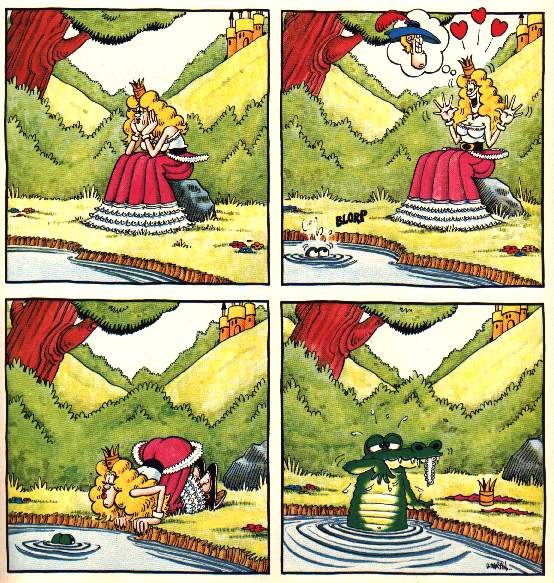</a></center> Stories of love and connection aside, the other stories which we can all relate to are stories of money (although some wold argue the latter leads to the former). Cryptocurrencies managed to capture the world's attention not due to the underlying technology itself but rather the narratives that surround it. These narratives in turn allowed ample space for human emotion which are deeply intertwined with riches and power. As such, much of the interest surrounding cryptocurrencies was always dependent on going beyond the technicalities in order to relate to core truths of human emotion: * Our sense of wonder which allows us to imagine the future possibilities where we were so rich that there was actually something which our money couldn't buy * Our love of mysteries which keeps us guessing about the cryptic origins of this new technology and as to how this story will end * Our need for adventure which continues to pull us into this narrative in the hopes of not missing out on this once in a lifetime journey * Our attraction to justice which wants to believe in an elegant democratic solution which will topple established institutions which have done us wrong in the past Is it no wonder that many have latched on to this ongoing narrative of mystery and justice, where with enough courage or stupidity (depending on how you look at it), they could easily participate in this adventure that will define the future of society (be it a more democratic society or the biggest bubble in history). It also doesn't hurt that there is a possibility of owning a Lambo somewhere along the way. <a href="https://www.youtube.com/watch?v=KxDwieKpawg">Andrew Stanton</a> (writer of Finding Nemo and WALL-E) captures this perfectly in his quote below: > "The greatest story commandment, … 'Make me care' - please, emotionally, intellectually, aesthetically, just make me care" --- <b>Nobody (except geeks) cares about your blockchain</b> If you went out to the streets and mention Bitcoin, everyone will have a personal opinion or a story of a friend relating to it although most would likely be unable to define what a blockchain is. Much like how many sports fans have never even played the sport which they are so passionate about, it is not about the game itself that draws them to it but rather the history and context behind each match. As of this writing: England will have to wait another 4 years for a chance to chant <a href="https://www.thesun.co.uk/world-cup-2018/6750454/its-coming-home-mean-three-lions-released-baddiel-skinner-the-lightning-seeds-song-about/">'It's Coming Home'</a> and end their 52 year FIFA Championship drought; LeBron James is joining the Lakers after having had to carry all the hopes of Cleveland fans and being continuously <a href="https://www.businessinsider.sg/jr-smith-forgets-score-dribbles-clock-game-1-finals-2018-5/?r=US&IR=T">disappointed</a> by his teammates; and Connor McGregor is following in the footsteps of Mike Tyson with copious amounts of trash-talking and of course 'Making-it-rain' pictures. <center><a href="https://www.independent.co.uk/sport/general/boxing/mayweather-mcgregor/floyd-mayweather-vs-conor-mcgregor-prize-money-how-much-purse-ppv-numbers-winner-make-sponsorship-a7894376.html"></a> Definitely watching it for the sport</center> This is the same reason why the painting of the American flag below managed to fetch $110m at an auction while you can easily pick up a flag for a few dollars elsewhere. <center><a href="http://www.newsflashing.com/crazy/top-10-most-expensive-painting"></a> When art becomes more than just 'art'</center> However, unlike an art piece, what makes sports that much more griping is that its stories are always current and easily understood therefore making it more relatable. Sports have the ability to overcome all boundaries. You don't need a common language to understand it. At its core, it is about pitting the desires and perseverance of one individual or team against another. It is a clash of passions where at the end of the day, a winner will emerge. It is why the knockout rounds of FIFA are so much more exciting than the qualifying rounds. In a similar vein, cryptocurrencies are able to overcome any cultural boundaries as all it requires is an understanding of money which any modern society would already have a good amount of knowledge on. The story surrounding cryptocurrencies has become a story about the clash between technology vs middlemen, anarchists vs governments, people vs establishments. With its intrinsic value being so far abstracted from the physical world, most have settled on it's monetary valuation to determine a winner in this battle. A meteoric rise in Bitcoin's price will mean the technologists, anarchists and democracy have won and vice versa. As always, the truth is always somewhere in the middle but this delineation is what makes cryptocurrencies so divisive as I argue <a href="https://steemit.com/bubble/@kaishinaw/the-scarcity-problem-why-cryptocurrencies-are-so-divisive">here</a>. > "Drama is anticipation mingled with uncertainty" - William Archer A good story is inevitable but not predictable hence the volatility of cryptocurrencies makes this story even more exciting. The prices of cryptocurrencies is the constant change in this story which keeps it interesting. Given the steep learning curve required to even remotely understand blockchain technologies, the confusion around the technology compels us to deduce and deduct as to who is in the right and whether we were right in our deductions. Additionally, the mystery behind Bitcoin's creation and its linkages to the dark-web (I highly recommend this read about Ross Ulbricht, the founder of Silk Road) makes for an even more intriguing story. These anarchist beginnings coupled with the institutional self-interest that resulted in many financial crises in the past pushes us to the edge of our seats. In effect, it is an underdog story about honest conflicts that create doubt about what the truth might be hence we demand a conclusion to this story. --- <b>Everybody (including geeks) cares about what your blockchain can do for them</b> What will really push us off our seats (metaphorically and also literally once we ditch that office chair), is when that blockchain starts impacting our daily lives. As it stands now, this will most likely be via monetary gains/losses through investing. What makes this get rich story different from most is how accessible this technology is due to its democratic design. Unlike the traditional asset markets where there is a need for a minimum capital amount and clearance from your bank or broker to participate in, all cryptocurrencies require for participation is a smart device and an internet connection. We are already see developing countries leapfrogging computer technology to conduct banking on their smartphones hence accessibility is a key factor in this. Consequently, aside from regulatory measures, the main barrier to entering the network (especially now when so many apps make it easy to trade cryptocurrencies) is a mental one. The fact that regulation of the industry is still very much a work in progress muddies this decision even further as the user must be comfortable in navigating certain grey areas as defined by society. This ease of access and lack of regulation is what allows the rapid inflows and outflows of money into the industry which contributes to the many rags to riches and riches to slightly better rags stories from the people all around us. --- Effectively, this narrative meets many of the criteria for an engaging story: * Timeliness: The subject matter (money or more specifically, a medium of exchange) will always be relevant. This is even more so in the consumer-oriented world we are in currently * Proximity: The technology is easily accessible and is slowly starting to appear all around us. All it takes to participate in this story is to download an app. * Impact: Contrary to what some people will say about money, I would still rather be crying in a Ferrari than on a bike. Money will definitely have a significant impact in providing the freedom to pursue our own passions. * Significance: The technology has the potential to affect large swaths of people as can be inferred from the number of people you know who have invested in it and this is at a time when the industry is still young. * Novelty: The technology itself is relatively new and hardly understood therefore requiring an investment on the readers part to complete this mystery for themselves * Prominence: Many of the social influencers we know have been affected by the rise of this technology. They might be believers or skeptics but this dichotomy is what intrigues us, how can people who are so respected in their respective fields have such differing opinions. And this at last brings us back full circle to the question raised in the title of this article. Cryptocurrencies have such an allure for mainstream media as it is a story that openly invites anyone daring enough to join in its narrative. It is an open call for people to participate in a more radical, yet unproven form of governance made possible due to the underlying technology of the blockchain. For those that heed this call, it becomes a case of confirming that they were right in their personal believes whether this came from careful deliberation of the technology or just pure gambling based on recommendations from those around them. For those that don't, it is also a case of justifying their believe that they were right to avoid it and refrain their friends from investing in it for fear of the possibility of getting burned by it. Whichever side you fall on, the ubiquity and ease of the technology ensures one thing, there will be little to blame if your prediction turns out wrong. If Bitcoin goes up manifold and you weren't able to gain from it, it was because you weren't able to capitalize upon this vision of the future given the ample opportunities to invest in it now. Conversely, if Bitcoin were to fold and you came out empty-handed, it was because your prediction of the future was out of touch with reality and you ignored many of the experts today. Either that or you were just throwing money at it based on dreams of a Lambo and FOMO (Fear Of Missing Out), don't be this guy. <center><a href="http://www.justriddlesandmore.com/Comics/anticipation.html">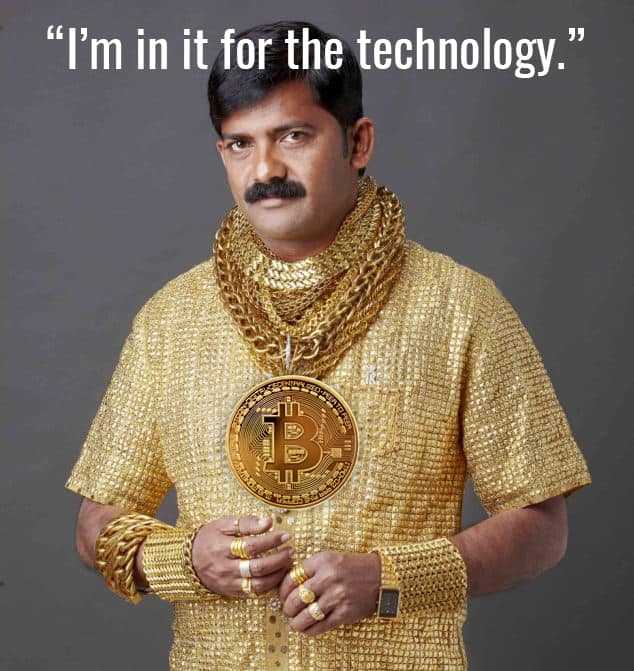</a></center> Ultimately, mainstream media takes to cryptocurrencies like bees to honey because with each report on the price movement of cryptocurrencies, it becomes an indicator as to whether our judgement call was right. We are waiting, we are anticipating the conclusion to this ever evolving story if only to reassure ourselves that we made the right decision. Much like how blockchain technologies were envisioned, it places the responsibility of our decisions back in our own hands and leaves it up to us to decide whether the story of our lives is one that is intertwined with the story of cryptocurrencies. --- <i>Thanks for reading this far! Let me know what are your thoughts as I would love to know what you think :)</i> |
| json metadata | {"tags":["bitcoin","media","cryptocurrency","stories","society"],"image":["https://cdn.steemitimages.com/DQmbTiu3Hft5v4UGqjbcc7FEJWFeeB6nd4JYrCuiyGPWvw9/anticipation.jpg","https://cdn.steemitimages.com/DQmcCY7GLrcrieTc61hmmWJpR4BLaxf1r4yWU8ceQKmDpda/mcgregor-numbers.jpg","https://cdn.steemitimages.com/DQmanvUhVKsfZfgKPrMgEstbNKD2AvqyZpHziRXPSaVzAGJ/flag-jasper-johns.jpg","https://cdn.steemitimages.com/DQmQidxqJ3s8GTQCWERg4FTLDjFDmtaEcvvZcYVJGHk2gux/Bitcoin-Meme-In-it-for-the-Technology.jpg"],"links":["http://www.justriddlesandmore.com/Comics/anticipation.html","https://www.youtube.com/watch?v=KxDwieKpawg","https://www.thesun.co.uk/world-cup-2018/6750454/its-coming-home-mean-three-lions-released-baddiel-skinner-the-lightning-seeds-song-about/","https://www.businessinsider.sg/jr-smith-forgets-score-dribbles-clock-game-1-finals-2018-5/?r=US&IR=T","https://www.independent.co.uk/sport/general/boxing/mayweather-mcgregor/floyd-mayweather-vs-conor-mcgregor-prize-money-how-much-purse-ppv-numbers-winner-make-sponsorship-a7894376.html","http://www.newsflashing.com/crazy/top-10-most-expensive-painting","https://steemit.com/bubble/@kaishinaw/the-scarcity-problem-why-cryptocurrencies-are-so-divisive"],"app":"steemit/0.1","format":"markdown"} |
| Transaction Info | Block #24240052/Trx 01f629e85bbf64dd8d6315e657457518edd5a59d |
View Raw JSON Data
{
"trx_id": "01f629e85bbf64dd8d6315e657457518edd5a59d",
"block": 24240052,
"trx_in_block": 9,
"op_in_trx": 0,
"virtual_op": 0,
"timestamp": "2018-07-17T00:11:33",
"op": [
"comment",
{
"parent_author": "",
"parent_permlink": "bitcoin",
"author": "kaishinaw",
"permlink": "why-the-media-loves-bitcoin-and-what-that-says-about-us",
"title": "Why the media loves Bitcoin & what that says about us",
"body": "---\n\nIt's simple right? It's all about the money. That is true but I believe it goes much deeper than that as the allure of cryptocurrencies is effectively one that centers around human ambition. Please allow me to go on a tangent before fully addressing this statement. I promise you that this tangent is relevant and more importantly worth your time. After all, isn't that what all good stories (not implying this is one of them) are about: fulfilling the promise of a resolution after building up the anticipation.\n\n<center><a href=\"http://www.justriddlesandmore.com/Comics/anticipation.html\"></a></center>\n\nStories of love and connection aside, the other stories which we can all relate to are stories of money (although some wold argue the latter leads to the former). Cryptocurrencies managed to capture the world's attention not due to the underlying technology itself but rather the narratives that surround it. These narratives in turn allowed ample space for human emotion which are deeply intertwined with riches and power. As such, much of the interest surrounding cryptocurrencies was always dependent on going beyond the technicalities in order to relate to core truths of human emotion:\n* Our sense of wonder which allows us to imagine the future possibilities where we were so rich that there was actually something which our money couldn't buy\n* Our love of mysteries which keeps us guessing about the cryptic origins of this new technology and as to how this story will end\n* Our need for adventure which continues to pull us into this narrative in the hopes of not missing out on this once in a lifetime journey\n* Our attraction to justice which wants to believe in an elegant democratic solution which will topple established institutions which have done us wrong in the past\n\nIs it no wonder that many have latched on to this ongoing narrative of mystery and justice, where with enough courage or stupidity (depending on how you look at it), they could easily participate in this adventure that will define the future of society (be it a more democratic society or the biggest bubble in history). It also doesn't hurt that there is a possibility of owning a Lambo somewhere along the way. <a href=\"https://www.youtube.com/watch?v=KxDwieKpawg\">Andrew Stanton</a> (writer of Finding Nemo and WALL-E) captures this perfectly in his quote below:\n\n> \"The greatest story commandment, … 'Make me care' - please, emotionally, intellectually, aesthetically, just make me care\"\n\n\n---\n\n<b>Nobody (except geeks) cares about your blockchain</b>\n\nIf you went out to the streets and mention Bitcoin, everyone will have a personal opinion or a story of a friend relating to it although most would likely be unable to define what a blockchain is. Much like how many sports fans have never even played the sport which they are so passionate about, it is not about the game itself that draws them to it but rather the history and context behind each match. As of this writing: England will have to wait another 4 years for a chance to chant <a href=\"https://www.thesun.co.uk/world-cup-2018/6750454/its-coming-home-mean-three-lions-released-baddiel-skinner-the-lightning-seeds-song-about/\">'It's Coming Home'</a> and end their 52 year FIFA Championship drought; LeBron James is joining the Lakers after having had to carry all the hopes of Cleveland fans and being continuously <a href=\"https://www.businessinsider.sg/jr-smith-forgets-score-dribbles-clock-game-1-finals-2018-5/?r=US&IR=T\">disappointed</a> by his teammates; and Connor McGregor is following in the footsteps of Mike Tyson with copious amounts of trash-talking and of course 'Making-it-rain' pictures.\n\n<center><a href=\"https://www.independent.co.uk/sport/general/boxing/mayweather-mcgregor/floyd-mayweather-vs-conor-mcgregor-prize-money-how-much-purse-ppv-numbers-winner-make-sponsorship-a7894376.html\"></a>\nDefinitely watching it for the sport</center>\n\nThis is the same reason why the painting of the American flag below managed to fetch $110m at an auction while you can easily pick up a flag for a few dollars elsewhere.\n\n<center><a href=\"http://www.newsflashing.com/crazy/top-10-most-expensive-painting\"></a>\nWhen art becomes more than just 'art'</center>\n\nHowever, unlike an art piece, what makes sports that much more griping is that its stories are always current and easily understood therefore making it more relatable. Sports have the ability to overcome all boundaries. You don't need a common language to understand it. At its core, it is about pitting the desires and perseverance of one individual or team against another. It is a clash of passions where at the end of the day, a winner will emerge. It is why the knockout rounds of FIFA are so much more exciting than the qualifying rounds.\n\nIn a similar vein, cryptocurrencies are able to overcome any cultural boundaries as all it requires is an understanding of money which any modern society would already have a good amount of knowledge on. The story surrounding cryptocurrencies has become a story about the clash between technology vs middlemen, anarchists vs governments, people vs establishments. With its intrinsic value being so far abstracted from the physical world, most have settled on it's monetary valuation to determine a winner in this battle. A meteoric rise in Bitcoin's price will mean the technologists, anarchists and democracy have won and vice versa. As always, the truth is always somewhere in the middle but this delineation is what makes cryptocurrencies so divisive as I argue <a href=\"https://steemit.com/bubble/@kaishinaw/the-scarcity-problem-why-cryptocurrencies-are-so-divisive\">here</a>.\n\n> \"Drama is anticipation mingled with uncertainty\" - William Archer\n\nA good story is inevitable but not predictable hence the volatility of cryptocurrencies makes this story even more exciting. The prices of cryptocurrencies is the constant change in this story which keeps it interesting.\n\nGiven the steep learning curve required to even remotely understand blockchain technologies, the confusion around the technology compels us to deduce and deduct as to who is in the right and whether we were right in our deductions. Additionally, the mystery behind Bitcoin's creation and its linkages to the dark-web (I highly recommend this read about Ross Ulbricht, the founder of Silk Road) makes for an even more intriguing story. These anarchist beginnings coupled with the institutional self-interest that resulted in many financial crises in the past pushes us to the edge of our seats. In effect, it is an underdog story about honest conflicts that create doubt about what the truth might be hence we demand a conclusion to this story.\n\n\n---\n\n<b>Everybody (including geeks) cares about what your blockchain can do for them</b>\n\nWhat will really push us off our seats (metaphorically and also literally once we ditch that office chair), is when that blockchain starts impacting our daily lives. As it stands now, this will most likely be via monetary gains/losses through investing. What makes this get rich story different from most is how accessible this technology is due to its democratic design.\n\nUnlike the traditional asset markets where there is a need for a minimum capital amount and clearance from your bank or broker to participate in, all cryptocurrencies require for participation is a smart device and an internet connection. We are already see developing countries leapfrogging computer technology to conduct banking on their smartphones hence accessibility is a key factor in this.\n\nConsequently, aside from regulatory measures, the main barrier to entering the network (especially now when so many apps make it easy to trade cryptocurrencies) is a mental one. The fact that regulation of the industry is still very much a work in progress muddies this decision even further as the user must be comfortable in navigating certain grey areas as defined by society. This ease of access and lack of regulation is what allows the rapid inflows and outflows of money into the industry which contributes to the many rags to riches and riches to slightly better rags stories from the people all around us.\n\n\n---\n\nEffectively, this narrative meets many of the criteria for an engaging story:\n* Timeliness: The subject matter (money or more specifically, a medium of exchange) will always be relevant. This is even more so in the consumer-oriented world we are in currently\n* Proximity: The technology is easily accessible and is slowly starting to appear all around us. All it takes to participate in this story is to download an app.\n* Impact: Contrary to what some people will say about money, I would still rather be crying in a Ferrari than on a bike. Money will definitely have a significant impact in providing the freedom to pursue our own passions.\n* Significance: The technology has the potential to affect large swaths of people as can be inferred from the number of people you know who have invested in it and this is at a time when the industry is still young.\n* Novelty: The technology itself is relatively new and hardly understood therefore requiring an investment on the readers part to complete this mystery for themselves\n* Prominence: Many of the social influencers we know have been affected by the rise of this technology. They might be believers or skeptics but this dichotomy is what intrigues us, how can people who are so respected in their respective fields have such differing opinions.\n\nAnd this at last brings us back full circle to the question raised in the title of this article. Cryptocurrencies have such an allure for mainstream media as it is a story that openly invites anyone daring enough to join in its narrative. It is an open call for people to participate in a more radical, yet unproven form of governance made possible due to the underlying technology of the blockchain. For those that heed this call, it becomes a case of confirming that they were right in their personal believes whether this came from careful deliberation of the technology or just pure gambling based on recommendations from those around them. For those that don't, it is also a case of justifying their believe that they were right to avoid it and refrain their friends from investing in it for fear of the possibility of getting burned by it.\n\nWhichever side you fall on, the ubiquity and ease of the technology ensures one thing, there will be little to blame if your prediction turns out wrong. If Bitcoin goes up manifold and you weren't able to gain from it, it was because you weren't able to capitalize upon this vision of the future given the ample opportunities to invest in it now. Conversely, if Bitcoin were to fold and you came out empty-handed, it was because your prediction of the future was out of touch with reality and you ignored many of the experts today. Either that or you were just throwing money at it based on dreams of a Lambo and FOMO (Fear Of Missing Out), don't be this guy.\n\n<center><a href=\"http://www.justriddlesandmore.com/Comics/anticipation.html\"></a></center>\n\nUltimately, mainstream media takes to cryptocurrencies like bees to honey because with each report on the price movement of cryptocurrencies, it becomes an indicator as to whether our judgement call was right. We are waiting, we are anticipating the conclusion to this ever evolving story if only to reassure ourselves that we made the right decision. Much like how blockchain technologies were envisioned, it places the responsibility of our decisions back in our own hands and leaves it up to us to decide whether the story of our lives is one that is intertwined with the story of cryptocurrencies.\n\n\n---\n\n<i>Thanks for reading this far! Let me know what are your thoughts as I would love to know what you think :)</i>",
"json_metadata": "{\"tags\":[\"bitcoin\",\"media\",\"cryptocurrency\",\"stories\",\"society\"],\"image\":[\"https://cdn.steemitimages.com/DQmbTiu3Hft5v4UGqjbcc7FEJWFeeB6nd4JYrCuiyGPWvw9/anticipation.jpg\",\"https://cdn.steemitimages.com/DQmcCY7GLrcrieTc61hmmWJpR4BLaxf1r4yWU8ceQKmDpda/mcgregor-numbers.jpg\",\"https://cdn.steemitimages.com/DQmanvUhVKsfZfgKPrMgEstbNKD2AvqyZpHziRXPSaVzAGJ/flag-jasper-johns.jpg\",\"https://cdn.steemitimages.com/DQmQidxqJ3s8GTQCWERg4FTLDjFDmtaEcvvZcYVJGHk2gux/Bitcoin-Meme-In-it-for-the-Technology.jpg\"],\"links\":[\"http://www.justriddlesandmore.com/Comics/anticipation.html\",\"https://www.youtube.com/watch?v=KxDwieKpawg\",\"https://www.thesun.co.uk/world-cup-2018/6750454/its-coming-home-mean-three-lions-released-baddiel-skinner-the-lightning-seeds-song-about/\",\"https://www.businessinsider.sg/jr-smith-forgets-score-dribbles-clock-game-1-finals-2018-5/?r=US&IR=T\",\"https://www.independent.co.uk/sport/general/boxing/mayweather-mcgregor/floyd-mayweather-vs-conor-mcgregor-prize-money-how-much-purse-ppv-numbers-winner-make-sponsorship-a7894376.html\",\"http://www.newsflashing.com/crazy/top-10-most-expensive-painting\",\"https://steemit.com/bubble/@kaishinaw/the-scarcity-problem-why-cryptocurrencies-are-so-divisive\"],\"app\":\"steemit/0.1\",\"format\":\"markdown\"}"
}
]
}2018/07/16 18:36:03
2018/07/16 18:36:03
| parent author | kaishinaw |
| parent permlink | why-the-media-loves-bitcoin-and-what-that-says-about-us |
| author | eonwarped |
| permlink | re-kaishinaw-why-the-media-loves-bitcoin-and-what-that-says-about-us-20180716t183602687z |
| title | |
| body | Definitely this captures exactly why this is exciting for the media and for spectators on top of just getting out on its possibilities. I suspect part of my enthusiasm is also because of the drama haha... You know what gets tiresome is the number of headlines that say "X predicts Y will reach Z by year F". Yeah, whatever. |
| json metadata | {"tags":["bitcoin"],"app":"steemit/0.1"} |
| Transaction Info | Block #24233343/Trx 39e44cd9838cad10e0310f799f2bcb2e519f68c5 |
View Raw JSON Data
{
  "trx_id": "39e44cd9838cad10e0310f799f2bcb2e519f68c5",
  "block": 24233343,
  "trx_in_block": 18,
  "op_in_trx": 0,
  "virtual_op": 0,
  "timestamp": "2018-07-16T18:36:03",
  "op": [
    "comment",
    {
      "parent_author": "kaishinaw",
      "parent_permlink": "why-the-media-loves-bitcoin-and-what-that-says-about-us",
      "author": "eonwarped",
      "permlink": "re-kaishinaw-why-the-media-loves-bitcoin-and-what-that-says-about-us-20180716t183602687z",
      "title": "",
      "body": "Definitely this captures exactly why this is exciting for the media and for spectators on top of just getting out on its possibilities. I suspect part of my enthusiasm is also because of the drama haha...\n\nYou know what gets tiresome is the number of headlines that say \"X predicts Y will reach Z by year F\". Yeah, whatever.",
      "json_metadata": "{\"tags\":[\"bitcoin\"],\"app\":\"steemit/0.1\"}"
    }
  ]
}eonwarpedupvoted (49.00%) @kaishinaw / why-the-media-loves-bitcoin-and-what-that-says-about-us2018/07/16 12:36:06
eonwarpedupvoted (49.00%) @kaishinaw / why-the-media-loves-bitcoin-and-what-that-says-about-us
2018/07/16 12:36:06
| voter | eonwarped |
| author | kaishinaw |
| permlink | why-the-media-loves-bitcoin-and-what-that-says-about-us |
| weight | 4900 (49.00%) |
| Transaction Info | Block #24226146/Trx 8ff0200e6c3c0980af21c8e63fa1d15a8bf351a3 |
View Raw JSON Data
{
  "trx_id": "8ff0200e6c3c0980af21c8e63fa1d15a8bf351a3",
  "block": 24226146,
  "trx_in_block": 7,
  "op_in_trx": 0,
  "virtual_op": 0,
  "timestamp": "2018-07-16T12:36:06",
  "op": [
    "vote",
    {
      "voter": "eonwarped",
      "author": "kaishinaw",
      "permlink": "why-the-media-loves-bitcoin-and-what-that-says-about-us",
      "weight": 4900
    }
  ]
}2018/07/16 12:20:06
2018/07/16 12:20:06
| voter | eonwarped |
| author | kaishinaw |
| permlink | re-eonwarped-re-kaishinaw-the-scarcity-problem-why-cryptocurrencies-are-so-divisive-20180716t080003680z |
| weight | 1500 (15.00%) |
| Transaction Info | Block #24225826/Trx 39b569ec08589641828f22a0f0b96a3e66a7191f |
View Raw JSON Data
{
  "trx_id": "39b569ec08589641828f22a0f0b96a3e66a7191f",
  "block": 24225826,
  "trx_in_block": 77,
  "op_in_trx": 0,
  "virtual_op": 0,
  "timestamp": "2018-07-16T12:20:06",
  "op": [
    "vote",
    {
      "voter": "eonwarped",
      "author": "kaishinaw",
      "permlink": "re-eonwarped-re-kaishinaw-the-scarcity-problem-why-cryptocurrencies-are-so-divisive-20180716t080003680z",
      "weight": 1500
    }
  ]
}sensationupvoted (100.00%) @kaishinaw / why-the-media-loves-bitcoin-and-what-that-says-about-us2018/07/16 09:53:24
sensationupvoted (100.00%) @kaishinaw / why-the-media-loves-bitcoin-and-what-that-says-about-us
2018/07/16 09:53:24
| voter | sensation |
| author | kaishinaw |
| permlink | why-the-media-loves-bitcoin-and-what-that-says-about-us |
| weight | 10000 (100.00%) |
| Transaction Info | Block #24222892/Trx b227d0dd6c1ca5344092d1df28e4bc43f0c4b112 |
View Raw JSON Data
{
  "trx_id": "b227d0dd6c1ca5344092d1df28e4bc43f0c4b112",
  "block": 24222892,
  "trx_in_block": 3,
  "op_in_trx": 0,
  "virtual_op": 0,
  "timestamp": "2018-07-16T09:53:24",
  "op": [
    "vote",
    {
      "voter": "sensation",
      "author": "kaishinaw",
      "permlink": "why-the-media-loves-bitcoin-and-what-that-says-about-us",
      "weight": 10000
    }
  ]
}prepperbotupvoted (25.00%) @kaishinaw / why-the-media-loves-bitcoin-and-what-that-says-about-us2018/07/16 08:57:15
prepperbotupvoted (25.00%) @kaishinaw / why-the-media-loves-bitcoin-and-what-that-says-about-us
2018/07/16 08:57:15
| voter | prepperbot |
| author | kaishinaw |
| permlink | why-the-media-loves-bitcoin-and-what-that-says-about-us |
| weight | 2500 (25.00%) |
| Transaction Info | Block #24221769/Trx 8fcd18d1b5db6fb3b00799fa4a66bdd3a833bda0 |
View Raw JSON Data
{
  "trx_id": "8fcd18d1b5db6fb3b00799fa4a66bdd3a833bda0",
  "block": 24221769,
  "trx_in_block": 50,
  "op_in_trx": 0,
  "virtual_op": 0,
  "timestamp": "2018-07-16T08:57:15",
  "op": [
    "vote",
    {
      "voter": "prepperbot",
      "author": "kaishinaw",
      "permlink": "why-the-media-loves-bitcoin-and-what-that-says-about-us",
      "weight": 2500
    }
  ]
}kaishinawfollowed @eonwarped2018/07/16 08:37:48
kaishinawfollowed @eonwarped
2018/07/16 08:37:48
| required auths | [] |
| required posting auths | ["kaishinaw"] |
| id | follow |
| json | ["follow",{"follower":"kaishinaw","following":"eonwarped","what":["blog"]}] |
| Transaction Info | Block #24221380/Trx 8c63948711e4fdc7ca3f384bf721d33206785613 |
View Raw JSON Data
{
  "trx_id": "8c63948711e4fdc7ca3f384bf721d33206785613",
  "block": 24221380,
  "trx_in_block": 12,
  "op_in_trx": 0,
  "virtual_op": 0,
  "timestamp": "2018-07-16T08:37:48",
  "op": [
    "custom_json",
    {
      "required_auths": [],
      "required_posting_auths": [
        "kaishinaw"
      ],
      "id": "follow",
      "json": "[\"follow\",{\"follower\":\"kaishinaw\",\"following\":\"eonwarped\",\"what\":[\"blog\"]}]"
    }
  ]
}hackerzizonupvoted (1.00%) @kaishinaw / why-the-media-loves-bitcoin-and-what-that-says-about-us2018/07/16 08:29:39
hackerzizonupvoted (1.00%) @kaishinaw / why-the-media-loves-bitcoin-and-what-that-says-about-us
2018/07/16 08:29:39
| voter | hackerzizon |
| author | kaishinaw |
| permlink | why-the-media-loves-bitcoin-and-what-that-says-about-us |
| weight | 100 (1.00%) |
| Transaction Info | Block #24221217/Trx b161c5de633adf972a9028b39e70d874c0058cf7 |
View Raw JSON Data
{
  "trx_id": "b161c5de633adf972a9028b39e70d874c0058cf7",
  "block": 24221217,
  "trx_in_block": 4,
  "op_in_trx": 0,
  "virtual_op": 0,
  "timestamp": "2018-07-16T08:29:39",
  "op": [
    "vote",
    {
      "voter": "hackerzizon",
      "author": "kaishinaw",
      "permlink": "why-the-media-loves-bitcoin-and-what-that-says-about-us",
      "weight": 100
    }
  ]
}fastresteemupvoted (1.00%) @kaishinaw / why-the-media-loves-bitcoin-and-what-that-says-about-us2018/07/16 08:29:27
fastresteemupvoted (1.00%) @kaishinaw / why-the-media-loves-bitcoin-and-what-that-says-about-us
2018/07/16 08:29:27
| voter | fastresteem |
| author | kaishinaw |
| permlink | why-the-media-loves-bitcoin-and-what-that-says-about-us |
| weight | 100 (1.00%) |
| Transaction Info | Block #24221213/Trx 5a59d9f4295966908b5612a4fa194ac63659fc0f |
View Raw JSON Data
{
  "trx_id": "5a59d9f4295966908b5612a4fa194ac63659fc0f",
  "block": 24221213,
  "trx_in_block": 10,
  "op_in_trx": 0,
  "virtual_op": 0,
  "timestamp": "2018-07-16T08:29:27",
  "op": [
    "vote",
    {
      "voter": "fastresteem",
      "author": "kaishinaw",
      "permlink": "why-the-media-loves-bitcoin-and-what-that-says-about-us",
      "weight": 100
    }
  ]
}kaishinawpublished a new post: why-the-media-loves-bitcoin-and-what-that-says-about-us2018/07/16 08:29:15
kaishinawpublished a new post: why-the-media-loves-bitcoin-and-what-that-says-about-us
2018/07/16 08:29:15
| parent author | |
| parent permlink | bitcoin |
| author | kaishinaw |
| permlink | why-the-media-loves-bitcoin-and-what-that-says-about-us |
| title | Why the media loves Bitcoin & what that says about us |
| body | --- It's simple right? It's all about the money. That is true but I believe it goes much deeper than that as the allure of cryptocurrencies is effectively one that centers around human ambition. Please allow me to go on a tangent before fully addressing this statement. I promise you that this tangent is relevant and more importantly worth your time. After all, isn't that what all good stories (not implying this is one of them) are about: fulfilling the promise of a resolution after building up the anticipation. <center><a href="http://www.justriddlesandmore.com/Comics/anticipation.html"></a></center> Stories of love and connection aside, the other stories which we can all relate to are stories of money (although some wold argue the latter leads to the former). Cryptocurrencies managed to capture the world's attention not due to the underlying technology itself but rather the narratives that surround it. These narratives in turn allowed ample space for human emotion which are deeply intertwined with riches and power. As such, much of the interest surrounding cryptocurrencies was always dependent on going beyond the technicalities in order to relate to core truths of human emotion: * Our sense of wonder which allows us to imagine the future possibilities where we were so rich that there was actually something which our money couldn't buy * Our love of mysteries which keeps us guessing about the cryptic origins of this new technology and as to how this story will end * Our need for adventure which continues to pull us into this narrative in the hopes of not missing out on this once in a lifetime journey * Our attraction to justice which wants to believe in an elegant democratic solution which will topple established institutions which have done us wrong in the past Is it no wonder that many have latched on to this ongoing narrative of mystery and justice, where with enough courage or stupidity (depending on how you look at it), they could easily participate in this adventure that will define the future of society (be it a more democratic society or the biggest bubble in history). It also doesn't hurt that there is a possibility of owning a Lambo somewhere along the way. <a href="https://www.youtube.com/watch?v=KxDwieKpawg">Andrew Stanton</a> (writer of Finding Nemo and WALL-E) captures this perfectly in his quote below: > "The greatest story commandment, … 'Make me care' - please, emotionally, intellectually, aesthetically, just make me care" --- <b>Nobody (except geeks) cares about your blockchain</b> If you went out to the streets and mention Bitcoin, everyone will have a personal opinion or a story of a friend relating to it although most would likely be unable to define what a blockchain is. Much like how many sports fans have never even played the sport which they are so passionate about, it is not about the game itself that draws them to it but rather the history and context behind each match. As of this writing: England will have to wait another 4 years for a chance to chant <a href="https://www.thesun.co.uk/world-cup-2018/6750454/its-coming-home-mean-three-lions-released-baddiel-skinner-the-lightning-seeds-song-about/">'It's Coming Home'</a> and end their 52 year FIFA Championship drought; LeBron James is joining the Lakers after having had to carry all the hopes of Cleveland fans and being continuously <a href="https://www.businessinsider.sg/jr-smith-forgets-score-dribbles-clock-game-1-finals-2018-5/?r=US&IR=T">disappointed</a> by his teammates; and Connor McGregor is following in the footsteps of Mike Tyson with copious amounts of trash-talking and of course 'Making-it-rain' pictures. <center><a href="https://www.independent.co.uk/sport/general/boxing/mayweather-mcgregor/floyd-mayweather-vs-conor-mcgregor-prize-money-how-much-purse-ppv-numbers-winner-make-sponsorship-a7894376.html"></a> Definitely watching it for the sport</center> This is the same reason why the painting of the American flag below managed to fetch $110m at an auction while you can easily pick up a flag for a few dollars elsewhere. <center><a href="http://www.newsflashing.com/crazy/top-10-most-expensive-painting"></a> When art becomes more than just 'art'</center> However, unlike an art piece, what makes sports that much more griping is that its stories are always current and easily understood therefore making it more relatable. Sports have the ability to overcome all boundaries. You don't need a common language to understand it. At its core, it is about pitting the desires and perseverance of one individual or team against another. It is a clash of passions where at the end of the day, a winner will emerge. It is why the knockout rounds of FIFA are so much more exciting than the qualifying rounds. In a similar vein, cryptocurrencies are able to overcome any cultural boundaries as all it requires is an understanding of money which any modern society would already have a good amount of knowledge on. The story surrounding cryptocurrencies has become a story about the clash between technology vs middlemen, anarchists vs governments, people vs establishments. With its intrinsic value being so far abstracted from the physical world, most have settled on it's monetary valuation to determine a winner in this battle. A meteoric rise in Bitcoin's price will mean the technologists, anarchists and democracy have won and vice versa. As always, the truth is always somewhere in the middle but this delineation is what makes cryptocurrencies so divisive as I argue <a href="https://steemit.com/bubble/@kaishinaw/the-scarcity-problem-why-cryptocurrencies-are-so-divisive">here</a>. > "Drama is anticipation mingled with uncertainty" - William Archer A good story is inevitable but not predictable hence the volatility of cryptocurrencies makes this story even more exciting. The prices of cryptocurrencies is the constant change in this story which keeps it interesting. Given the steep learning curve required to even remotely understand blockchain technologies, the confusion around the technology compels us to deduce and deduct as to who is in the right and whether we were right in our deductions. Additionally, the mystery behind Bitcoin's creation and its linkages to the dark-web (I highly recommend this read about Ross Ulbricht, the founder of Silk Road) makes for an even more intriguing story. These anarchist beginnings coupled with the institutional self-interest that resulted in many financial crises in the past pushes us to the edge of our seats. In effect, it is an underdog story about honest conflicts that create doubt about what the truth might be hence we demand a conclusion to this story. --- <b>Everybody (including geeks) cares about what your blockchain can do for them</b> What will really push us off our seats (metaphorically and also literally once we ditch that office chair), is when that blockchain starts impacting our daily lives. As it stands now, this will most likely be via monetary gains/losses through investing. What makes this get rich story different from most is how accessible this technology is due to its democratic design. Unlike the traditional asset markets where there is a need for a minimum capital amount and clearance from your bank or broker to participate in, all cryptocurrencies require for participation is a smart device and an internet connection. We are already see developing countries leapfrogging computer technology to conduct banking on their smartphones hence accessibility is a key factor in this. Consequently, aside from regulatory measures, the main barrier to entering the network (especially now when so many apps make it easy to trade cryptocurrencies) is a mental one. The fact that regulation of the industry is still very much a work in progress muddies this decision even further as the user must be comfortable in navigating certain grey areas as defined by society. This ease of access and lack of regulation is what allows the rapid inflows and outflows of money into the industry which contributes to the many rags to riches and riches to slightly better rags stories from the people all around us. --- Effectively, this narrative meets many of the criteria for an engaging story: * Timeliness: The subject matter (money or more specifically, a medium of exchange) will always be relevant. This is even more so in the consumer-oriented world we are in currently * Proximity: The technology is easily accessible and is slowly starting to appear all around us. All it takes to participate in this story is to download an app. * Impact: Contrary to what some people will say about money, I would still rather be crying in a Ferrari than on a bike. Money will definitely have a significant impact in providing the freedom to pursue our own passions. * Significance: The technology has the potential to affect large swaths of people as can be inferred from the number of people you know who have invested in it and this is at a time when the industry is still young. * Novelty: The technology itself is relatively new and hardly understood therefore requiring an investment on the readers part to complete this mystery for themselves * Prominence: Many of the social influencers we know have been affected by the rise of this technology. They might be believers or skeptics but this dichotomy is what intrigues us, how can people who are so respected in their respective fields have such differing opinions. And this at last brings us back full circle to the question raised in the title of this article. Cryptocurrencies have such an allure for mainstream media as it is a story that openly invites anyone daring enough to join in its narrative. It is an open call for people to participate in a more radical, yet unproven form of governance made possible due to the underlying technology of the blockchain. For those that heed this call, it becomes a case of confirming that they were right in their personal believes whether this came from careful deliberation of the technology or just pure gambling based on recommendations from those around them. For those that don't, it is also a case of justifying their believe that they were right to avoid it and refrain their friends from investing in it for fear of the possibility of getting burned by it. Whichever side you fall on, the ubiquity and ease of the technology ensures one thing, there will be little to blame if your prediction turns out wrong. If Bitcoin goes up manifold and you weren't able to gain from it, it was because you weren't able to capitalize upon this vision of the future given the ample opportunities to invest in it now. Conversely, if Bitcoin were to fold and you came out empty-handed, it was because your prediction of the future was out of touch with reality and you ignored many of the experts today. Either that or you were just throwing money at it based on dreams of a Lambo and FOMO (Fear Of Missing Out), don't be this guy. <center><a href="http://www.justriddlesandmore.com/Comics/anticipation.html"></a></center> Ultimately, mainstream media takes to cryptocurrencies like bees to honey because with each report on the price movement of cryptocurrencies, it becomes an indicator as to whether our judgement call was right. We are waiting, we are anticipating the conclusion to this ever evolving story if only to reassure ourselves that we made the right decision. Much like how blockchain technologies were envisioned, it places the responsibility of our decisions back in our own hands and leaves it up to us to decide whether the story of our lives is one that is intertwined with the story of cryptocurrencies. --- <i>Thanks for reading this far! Let me know what are your thoughts as I would love to know what you think :)</i> |
| json metadata | {"tags":["bitcoin","media","money","stories","society"],"image":["https://cdn.steemitimages.com/DQmbTiu3Hft5v4UGqjbcc7FEJWFeeB6nd4JYrCuiyGPWvw9/anticipation.jpg","https://cdn.steemitimages.com/DQmcCY7GLrcrieTc61hmmWJpR4BLaxf1r4yWU8ceQKmDpda/mcgregor-numbers.jpg","https://cdn.steemitimages.com/DQmanvUhVKsfZfgKPrMgEstbNKD2AvqyZpHziRXPSaVzAGJ/flag-jasper-johns.jpg","https://cdn.steemitimages.com/DQmQidxqJ3s8GTQCWERg4FTLDjFDmtaEcvvZcYVJGHk2gux/Bitcoin-Meme-In-it-for-the-Technology.jpg"],"links":["http://www.justriddlesandmore.com/Comics/anticipation.html","https://www.youtube.com/watch?v=KxDwieKpawg","https://www.thesun.co.uk/world-cup-2018/6750454/its-coming-home-mean-three-lions-released-baddiel-skinner-the-lightning-seeds-song-about/","https://www.businessinsider.sg/jr-smith-forgets-score-dribbles-clock-game-1-finals-2018-5/?r=US&IR=T","https://www.independent.co.uk/sport/general/boxing/mayweather-mcgregor/floyd-mayweather-vs-conor-mcgregor-prize-money-how-much-purse-ppv-numbers-winner-make-sponsorship-a7894376.html","http://www.newsflashing.com/crazy/top-10-most-expensive-painting","https://steemit.com/bubble/@kaishinaw/the-scarcity-problem-why-cryptocurrencies-are-so-divisive"],"app":"steemit/0.1","format":"markdown"} |
| Transaction Info | Block #24221209/Trx 68b5f290c757237db20cd80f8c6c0132b0c51561 |
View Raw JSON Data
{
"trx_id": "68b5f290c757237db20cd80f8c6c0132b0c51561",
"block": 24221209,
"trx_in_block": 9,
"op_in_trx": 0,
"virtual_op": 0,
"timestamp": "2018-07-16T08:29:15",
"op": [
"comment",
{
"parent_author": "",
"parent_permlink": "bitcoin",
"author": "kaishinaw",
"permlink": "why-the-media-loves-bitcoin-and-what-that-says-about-us",
"title": "Why the media loves Bitcoin & what that says about us",
"body": "---\n\nIt's simple right? It's all about the money. That is true but I believe it goes much deeper than that as the allure of cryptocurrencies is effectively one that centers around human ambition. Please allow me to go on a tangent before fully addressing this statement. I promise you that this tangent is relevant and more importantly worth your time. After all, isn't that what all good stories (not implying this is one of them) are about: fulfilling the promise of a resolution after building up the anticipation.\n\n<center><a href=\"http://www.justriddlesandmore.com/Comics/anticipation.html\"></a></center>\n\nStories of love and connection aside, the other stories which we can all relate to are stories of money (although some wold argue the latter leads to the former). Cryptocurrencies managed to capture the world's attention not due to the underlying technology itself but rather the narratives that surround it. These narratives in turn allowed ample space for human emotion which are deeply intertwined with riches and power. As such, much of the interest surrounding cryptocurrencies was always dependent on going beyond the technicalities in order to relate to core truths of human emotion:\n* Our sense of wonder which allows us to imagine the future possibilities where we were so rich that there was actually something which our money couldn't buy\n* Our love of mysteries which keeps us guessing about the cryptic origins of this new technology and as to how this story will end\n* Our need for adventure which continues to pull us into this narrative in the hopes of not missing out on this once in a lifetime journey\n* Our attraction to justice which wants to believe in an elegant democratic solution which will topple established institutions which have done us wrong in the past\n\nIs it no wonder that many have latched on to this ongoing narrative of mystery and justice, where with enough courage or stupidity (depending on how you look at it), they could easily participate in this adventure that will define the future of society (be it a more democratic society or the biggest bubble in history). It also doesn't hurt that there is a possibility of owning a Lambo somewhere along the way. <a href=\"https://www.youtube.com/watch?v=KxDwieKpawg\">Andrew Stanton</a> (writer of Finding Nemo and WALL-E) captures this perfectly in his quote below:\n\n> \"The greatest story commandment, … 'Make me care' - please, emotionally, intellectually, aesthetically, just make me care\"\n\n\n---\n\n<b>Nobody (except geeks) cares about your blockchain</b>\n\nIf you went out to the streets and mention Bitcoin, everyone will have a personal opinion or a story of a friend relating to it although most would likely be unable to define what a blockchain is. Much like how many sports fans have never even played the sport which they are so passionate about, it is not about the game itself that draws them to it but rather the history and context behind each match. As of this writing: England will have to wait another 4 years for a chance to chant <a href=\"https://www.thesun.co.uk/world-cup-2018/6750454/its-coming-home-mean-three-lions-released-baddiel-skinner-the-lightning-seeds-song-about/\">'It's Coming Home'</a> and end their 52 year FIFA Championship drought; LeBron James is joining the Lakers after having had to carry all the hopes of Cleveland fans and being continuously <a href=\"https://www.businessinsider.sg/jr-smith-forgets-score-dribbles-clock-game-1-finals-2018-5/?r=US&IR=T\">disappointed</a> by his teammates; and Connor McGregor is following in the footsteps of Mike Tyson with copious amounts of trash-talking and of course 'Making-it-rain' pictures.\n\n<center><a href=\"https://www.independent.co.uk/sport/general/boxing/mayweather-mcgregor/floyd-mayweather-vs-conor-mcgregor-prize-money-how-much-purse-ppv-numbers-winner-make-sponsorship-a7894376.html\"></a>\nDefinitely watching it for the sport</center>\n\nThis is the same reason why the painting of the American flag below managed to fetch $110m at an auction while you can easily pick up a flag for a few dollars elsewhere.\n\n<center><a href=\"http://www.newsflashing.com/crazy/top-10-most-expensive-painting\"></a>\nWhen art becomes more than just 'art'</center>\n\nHowever, unlike an art piece, what makes sports that much more griping is that its stories are always current and easily understood therefore making it more relatable. Sports have the ability to overcome all boundaries. You don't need a common language to understand it. At its core, it is about pitting the desires and perseverance of one individual or team against another. It is a clash of passions where at the end of the day, a winner will emerge. It is why the knockout rounds of FIFA are so much more exciting than the qualifying rounds.\n\nIn a similar vein, cryptocurrencies are able to overcome any cultural boundaries as all it requires is an understanding of money which any modern society would already have a good amount of knowledge on. The story surrounding cryptocurrencies has become a story about the clash between technology vs middlemen, anarchists vs governments, people vs establishments. With its intrinsic value being so far abstracted from the physical world, most have settled on it's monetary valuation to determine a winner in this battle. A meteoric rise in Bitcoin's price will mean the technologists, anarchists and democracy have won and vice versa. As always, the truth is always somewhere in the middle but this delineation is what makes cryptocurrencies so divisive as I argue <a href=\"https://steemit.com/bubble/@kaishinaw/the-scarcity-problem-why-cryptocurrencies-are-so-divisive\">here</a>.\n\n> \"Drama is anticipation mingled with uncertainty\" - William Archer\n\nA good story is inevitable but not predictable hence the volatility of cryptocurrencies makes this story even more exciting. The prices of cryptocurrencies is the constant change in this story which keeps it interesting.\n\nGiven the steep learning curve required to even remotely understand blockchain technologies, the confusion around the technology compels us to deduce and deduct as to who is in the right and whether we were right in our deductions. Additionally, the mystery behind Bitcoin's creation and its linkages to the dark-web (I highly recommend this read about Ross Ulbricht, the founder of Silk Road) makes for an even more intriguing story. These anarchist beginnings coupled with the institutional self-interest that resulted in many financial crises in the past pushes us to the edge of our seats. In effect, it is an underdog story about honest conflicts that create doubt about what the truth might be hence we demand a conclusion to this story.\n\n\n---\n\n<b>Everybody (including geeks) cares about what your blockchain can do for them</b>\n\nWhat will really push us off our seats (metaphorically and also literally once we ditch that office chair), is when that blockchain starts impacting our daily lives. As it stands now, this will most likely be via monetary gains/losses through investing. What makes this get rich story different from most is how accessible this technology is due to its democratic design.\n\nUnlike the traditional asset markets where there is a need for a minimum capital amount and clearance from your bank or broker to participate in, all cryptocurrencies require for participation is a smart device and an internet connection. We are already see developing countries leapfrogging computer technology to conduct banking on their smartphones hence accessibility is a key factor in this.\n\nConsequently, aside from regulatory measures, the main barrier to entering the network (especially now when so many apps make it easy to trade cryptocurrencies) is a mental one. The fact that regulation of the industry is still very much a work in progress muddies this decision even further as the user must be comfortable in navigating certain grey areas as defined by society. This ease of access and lack of regulation is what allows the rapid inflows and outflows of money into the industry which contributes to the many rags to riches and riches to slightly better rags stories from the people all around us.\n\n\n---\n\nEffectively, this narrative meets many of the criteria for an engaging story:\n* Timeliness: The subject matter (money or more specifically, a medium of exchange) will always be relevant. This is even more so in the consumer-oriented world we are in currently\n* Proximity: The technology is easily accessible and is slowly starting to appear all around us. All it takes to participate in this story is to download an app.\n* Impact: Contrary to what some people will say about money, I would still rather be crying in a Ferrari than on a bike. Money will definitely have a significant impact in providing the freedom to pursue our own passions.\n* Significance: The technology has the potential to affect large swaths of people as can be inferred from the number of people you know who have invested in it and this is at a time when the industry is still young.\n* Novelty: The technology itself is relatively new and hardly understood therefore requiring an investment on the readers part to complete this mystery for themselves\n* Prominence: Many of the social influencers we know have been affected by the rise of this technology. They might be believers or skeptics but this dichotomy is what intrigues us, how can people who are so respected in their respective fields have such differing opinions.\n\nAnd this at last brings us back full circle to the question raised in the title of this article. Cryptocurrencies have such an allure for mainstream media as it is a story that openly invites anyone daring enough to join in its narrative. It is an open call for people to participate in a more radical, yet unproven form of governance made possible due to the underlying technology of the blockchain. For those that heed this call, it becomes a case of confirming that they were right in their personal believes whether this came from careful deliberation of the technology or just pure gambling based on recommendations from those around them. For those that don't, it is also a case of justifying their believe that they were right to avoid it and refrain their friends from investing in it for fear of the possibility of getting burned by it.\n\nWhichever side you fall on, the ubiquity and ease of the technology ensures one thing, there will be little to blame if your prediction turns out wrong. If Bitcoin goes up manifold and you weren't able to gain from it, it was because you weren't able to capitalize upon this vision of the future given the ample opportunities to invest in it now. Conversely, if Bitcoin were to fold and you came out empty-handed, it was because your prediction of the future was out of touch with reality and you ignored many of the experts today. Either that or you were just throwing money at it based on dreams of a Lambo and FOMO (Fear Of Missing Out), don't be this guy.\n\n<center><a href=\"http://www.justriddlesandmore.com/Comics/anticipation.html\"></a></center>\n\nUltimately, mainstream media takes to cryptocurrencies like bees to honey because with each report on the price movement of cryptocurrencies, it becomes an indicator as to whether our judgement call was right. We are waiting, we are anticipating the conclusion to this ever evolving story if only to reassure ourselves that we made the right decision. Much like how blockchain technologies were envisioned, it places the responsibility of our decisions back in our own hands and leaves it up to us to decide whether the story of our lives is one that is intertwined with the story of cryptocurrencies.\n\n\n---\n\n<i>Thanks for reading this far! Let me know what are your thoughts as I would love to know what you think :)</i>",
"json_metadata": "{\"tags\":[\"bitcoin\",\"media\",\"money\",\"stories\",\"society\"],\"image\":[\"https://cdn.steemitimages.com/DQmbTiu3Hft5v4UGqjbcc7FEJWFeeB6nd4JYrCuiyGPWvw9/anticipation.jpg\",\"https://cdn.steemitimages.com/DQmcCY7GLrcrieTc61hmmWJpR4BLaxf1r4yWU8ceQKmDpda/mcgregor-numbers.jpg\",\"https://cdn.steemitimages.com/DQmanvUhVKsfZfgKPrMgEstbNKD2AvqyZpHziRXPSaVzAGJ/flag-jasper-johns.jpg\",\"https://cdn.steemitimages.com/DQmQidxqJ3s8GTQCWERg4FTLDjFDmtaEcvvZcYVJGHk2gux/Bitcoin-Meme-In-it-for-the-Technology.jpg\"],\"links\":[\"http://www.justriddlesandmore.com/Comics/anticipation.html\",\"https://www.youtube.com/watch?v=KxDwieKpawg\",\"https://www.thesun.co.uk/world-cup-2018/6750454/its-coming-home-mean-three-lions-released-baddiel-skinner-the-lightning-seeds-song-about/\",\"https://www.businessinsider.sg/jr-smith-forgets-score-dribbles-clock-game-1-finals-2018-5/?r=US&IR=T\",\"https://www.independent.co.uk/sport/general/boxing/mayweather-mcgregor/floyd-mayweather-vs-conor-mcgregor-prize-money-how-much-purse-ppv-numbers-winner-make-sponsorship-a7894376.html\",\"http://www.newsflashing.com/crazy/top-10-most-expensive-painting\",\"https://steemit.com/bubble/@kaishinaw/the-scarcity-problem-why-cryptocurrencies-are-so-divisive\"],\"app\":\"steemit/0.1\",\"format\":\"markdown\"}"
}
]
}2018/07/16 08:03:36
2018/07/16 08:03:36
| voter | kaishinaw |
| author | eonwarped |
| permlink | re-kaishinaw-the-scarcity-problem-why-cryptocurrencies-are-so-divisive-20180715t170732782z |
| weight | 10000 (100.00%) |
| Transaction Info | Block #24220696/Trx 0fea3e3b9aae3f25ef2ca7f656f97b3797f0063d |
View Raw JSON Data
{
  "trx_id": "0fea3e3b9aae3f25ef2ca7f656f97b3797f0063d",
  "block": 24220696,
  "trx_in_block": 32,
  "op_in_trx": 0,
  "virtual_op": 0,
  "timestamp": "2018-07-16T08:03:36",
  "op": [
    "vote",
    {
      "voter": "kaishinaw",
      "author": "eonwarped",
      "permlink": "re-kaishinaw-the-scarcity-problem-why-cryptocurrencies-are-so-divisive-20180715t170732782z",
      "weight": 10000
    }
  ]
}2018/07/16 08:03:30
2018/07/16 08:03:30
| parent author | eonwarped |
| parent permlink | re-kaishinaw-the-scarcity-problem-why-cryptocurrencies-are-so-divisive-20180715t170732782z |
| author | kaishinaw |
| permlink | re-eonwarped-re-kaishinaw-the-scarcity-problem-why-cryptocurrencies-are-so-divisive-20180716t080003680z |
| title | |
| body | Thanks for your help with everything! That is true as an established network, Bitcoin is definitely light years ahead of any other crypto in terms of adoption hence why it'll be around for a long time. Conversely, with such a big network, I don't really foresee it becoming an everyday currency due to coordination problems. It will probably still be great for large sum settlements but newer coins will have the advantage of a lighter and more flexible architecture. With that being said, it need not necessarily be based on the original btc chain as there are very interesting unproven architectures coming up which might scale better as an everyday currency (DACs, hashgraphs, etc) I think Steem is an amazing POC of what can be built on top of blockchain technologies but has major difficulties with scaling outside the platform which is something BAT does quite well. As you mentioned, there are no answers for that at the moment but the new projects coming out are definitely exciting to follow |
| json metadata | {"tags":["bubble"],"app":"steemit/0.1"} |
| Transaction Info | Block #24220694/Trx b53496609081aa37b99dc33bff9cc5dc75817e9a |
View Raw JSON Data
{
  "trx_id": "b53496609081aa37b99dc33bff9cc5dc75817e9a",
  "block": 24220694,
  "trx_in_block": 12,
  "op_in_trx": 0,
  "virtual_op": 0,
  "timestamp": "2018-07-16T08:03:30",
  "op": [
    "comment",
    {
      "parent_author": "eonwarped",
      "parent_permlink": "re-kaishinaw-the-scarcity-problem-why-cryptocurrencies-are-so-divisive-20180715t170732782z",
      "author": "kaishinaw",
      "permlink": "re-eonwarped-re-kaishinaw-the-scarcity-problem-why-cryptocurrencies-are-so-divisive-20180716t080003680z",
      "title": "",
      "body": "Thanks for your help with everything!\n\nThat is true as an established network, Bitcoin is definitely light years ahead of any other crypto in terms of adoption hence why it'll be around for a long time. Conversely, with such a big network, I don't really foresee it becoming an everyday currency due to coordination problems. It will probably still be great for large sum settlements but newer coins will have the advantage of a lighter and more flexible architecture. With that being said, it need not necessarily be based on the original btc chain as there are very interesting unproven architectures coming up which might scale better as an everyday currency (DACs, hashgraphs, etc)\n\nI think Steem is an amazing POC of what can be built on top of blockchain technologies but has major difficulties with scaling outside the platform which is something BAT does quite well. As you mentioned, there are no answers for that at the moment but the new projects coming out are definitely exciting to follow",
      "json_metadata": "{\"tags\":[\"bubble\"],\"app\":\"steemit/0.1\"}"
    }
  ]
}2018/07/15 17:07:33
2018/07/15 17:07:33
| parent author | kaishinaw |
| parent permlink | the-scarcity-problem-why-cryptocurrencies-are-so-divisive |
| author | eonwarped |
| permlink | re-kaishinaw-the-scarcity-problem-why-cryptocurrencies-are-so-divisive-20180715t170732782z |
| title | |
| body | Ah I wasn't paying attention when you started. Welcome! Good to see more similar lines of thinking for crypto. I still have been largely watching the Bitcoin cash community but staying away from it. It just seems they won't have an answer to other crypto striving to do their job better. Bitcoin has such a lead in integration, network effect, etc that even if it is moving slowly it will not be that easy to topple. E.g. I still need BTC to get to steem (needing to trust an exchange with good liquidity) and other stranger crypto that I might have interest in. And I think steem does better technically for those other purposes. I understand there's concerns about centralization but it doesn't seem like they have an answer for that either. |
| json metadata | {"tags":["bubble"],"app":"steemit/0.1"} |
| Transaction Info | Block #24202779/Trx d6195bc6b43275879a698829a20787fcbb9bf896 |
View Raw JSON Data
{
  "trx_id": "d6195bc6b43275879a698829a20787fcbb9bf896",
  "block": 24202779,
  "trx_in_block": 18,
  "op_in_trx": 0,
  "virtual_op": 0,
  "timestamp": "2018-07-15T17:07:33",
  "op": [
    "comment",
    {
      "parent_author": "kaishinaw",
      "parent_permlink": "the-scarcity-problem-why-cryptocurrencies-are-so-divisive",
      "author": "eonwarped",
      "permlink": "re-kaishinaw-the-scarcity-problem-why-cryptocurrencies-are-so-divisive-20180715t170732782z",
      "title": "",
      "body": "Ah I wasn't paying attention when you started. Welcome!\n\nGood to see more similar lines of thinking for crypto. I still have been largely watching the Bitcoin cash community but staying away from it. It just seems they won't have an answer to other crypto striving to do their job better. Bitcoin has such a lead in integration, network effect, etc that even if it is moving slowly it will not be that easy to topple. E.g. I still need BTC to get to steem (needing to trust an exchange with good liquidity) and other stranger crypto that I might have interest in. \n\nAnd I think steem does better technically for those other purposes. I understand there's concerns about centralization but it doesn't seem like they have an answer for that either.",
      "json_metadata": "{\"tags\":[\"bubble\"],\"app\":\"steemit/0.1\"}"
    }
  ]
}fongopotflagged (-100.00%) @kaishinaw / why-privacy-is-key-to-personal-growth2018/07/13 10:13:09
fongopotflagged (-100.00%) @kaishinaw / why-privacy-is-key-to-personal-growth
2018/07/13 10:13:09
| voter | fongopot |
| author | kaishinaw |
| permlink | why-privacy-is-key-to-personal-growth |
| weight | -10000 (-100.00%) |
| Transaction Info | Block #24136902/Trx 3c01c48ff2df697535189d747cc97ebc422f6ac5 |
View Raw JSON Data
{
  "trx_id": "3c01c48ff2df697535189d747cc97ebc422f6ac5",
  "block": 24136902,
  "trx_in_block": 82,
  "op_in_trx": 0,
  "virtual_op": 0,
  "timestamp": "2018-07-13T10:13:09",
  "op": [
    "vote",
    {
      "voter": "fongopot",
      "author": "kaishinaw",
      "permlink": "why-privacy-is-key-to-personal-growth",
      "weight": -10000
    }
  ]
}jilophuflagged (-100.00%) @kaishinaw / why-privacy-is-key-to-personal-growth2018/07/11 19:30:36
jilophuflagged (-100.00%) @kaishinaw / why-privacy-is-key-to-personal-growth
2018/07/11 19:30:36
| voter | jilophu |
| author | kaishinaw |
| permlink | why-privacy-is-key-to-personal-growth |
| weight | -10000 (-100.00%) |
| Transaction Info | Block #24090474/Trx 0138257c0fc97b606fe01a4eed13a0a4215e4a52 |
View Raw JSON Data
{
  "trx_id": "0138257c0fc97b606fe01a4eed13a0a4215e4a52",
  "block": 24090474,
  "trx_in_block": 24,
  "op_in_trx": 0,
  "virtual_op": 0,
  "timestamp": "2018-07-11T19:30:36",
  "op": [
    "vote",
    {
      "voter": "jilophu",
      "author": "kaishinaw",
      "permlink": "why-privacy-is-key-to-personal-growth",
      "weight": -10000
    }
  ]
}bestwebmasterflagged (-100.00%) @kaishinaw / why-privacy-is-key-to-personal-growth2018/07/11 18:59:39
bestwebmasterflagged (-100.00%) @kaishinaw / why-privacy-is-key-to-personal-growth
2018/07/11 18:59:39
| voter | bestwebmaster |
| author | kaishinaw |
| permlink | why-privacy-is-key-to-personal-growth |
| weight | -10000 (-100.00%) |
| Transaction Info | Block #24089855/Trx de679739d6acf4f358f6c9ce7e04584905086d50 |
View Raw JSON Data
{
  "trx_id": "de679739d6acf4f358f6c9ce7e04584905086d50",
  "block": 24089855,
  "trx_in_block": 32,
  "op_in_trx": 0,
  "virtual_op": 0,
  "timestamp": "2018-07-11T18:59:39",
  "op": [
    "vote",
    {
      "voter": "bestwebmaster",
      "author": "kaishinaw",
      "permlink": "why-privacy-is-key-to-personal-growth",
      "weight": -10000
    }
  ]
}kaishinawreceived 0.003 STEEM, 0.003 SBD, 0.006 SP author reward for @kaishinaw / re-deathcross-re-kaishinaw-re-deathcross-on-the-brink-of-the-next-huge-collapse-20180630t002910077z2018/07/07 00:29:09
kaishinawreceived 0.003 STEEM, 0.003 SBD, 0.006 SP author reward for @kaishinaw / re-deathcross-re-kaishinaw-re-deathcross-on-the-brink-of-the-next-huge-collapse-20180630t002910077z
2018/07/07 00:29:09
| author | kaishinaw |
| permlink | re-deathcross-re-kaishinaw-re-deathcross-on-the-brink-of-the-next-huge-collapse-20180630t002910077z |
| sbd payout | 0.003 SBD |
| steem payout | 0.003 STEEM |
| vesting payout | 10.147179 VESTS |
| Transaction Info | Block #23952490/Virtual Operation #3 |
View Raw JSON Data
{
  "trx_id": "0000000000000000000000000000000000000000",
  "block": 23952490,
  "trx_in_block": 4294967295,
  "op_in_trx": 0,
  "virtual_op": 3,
  "timestamp": "2018-07-07T00:29:09",
  "op": [
    "author_reward",
    {
      "author": "kaishinaw",
      "permlink": "re-deathcross-re-kaishinaw-re-deathcross-on-the-brink-of-the-next-huge-collapse-20180630t002910077z",
      "sbd_payout": "0.003 SBD",
      "steem_payout": "0.003 STEEM",
      "vesting_payout": "10.147179 VESTS"
    }
  ]
}kaishinawreceived 0.009 STEEM, 0.016 SBD, 0.025 SP author reward for @kaishinaw / re-deathcross-on-the-brink-of-the-next-huge-collapse-20180629t084229113z2018/07/06 08:45:21
kaishinawreceived 0.009 STEEM, 0.016 SBD, 0.025 SP author reward for @kaishinaw / re-deathcross-on-the-brink-of-the-next-huge-collapse-20180629t084229113z
2018/07/06 08:45:21
| author | kaishinaw |
| permlink | re-deathcross-on-the-brink-of-the-next-huge-collapse-20180629t084229113z |
| sbd payout | 0.016 SBD |
| steem payout | 0.009 STEEM |
| vesting payout | 40.590118 VESTS |
| Transaction Info | Block #23933627/Virtual Operation #15 |
View Raw JSON Data
{
  "trx_id": "0000000000000000000000000000000000000000",
  "block": 23933627,
  "trx_in_block": 4294967295,
  "op_in_trx": 0,
  "virtual_op": 15,
  "timestamp": "2018-07-06T08:45:21",
  "op": [
    "author_reward",
    {
      "author": "kaishinaw",
      "permlink": "re-deathcross-on-the-brink-of-the-next-huge-collapse-20180629t084229113z",
      "sbd_payout": "0.016 SBD",
      "steem_payout": "0.009 STEEM",
      "vesting_payout": "40.590118 VESTS"
    }
  ]
}kaishinawupvoted (100.00%) @steemitblog / steem-blockchain-patch-issued2018/07/05 01:24:18
kaishinawupvoted (100.00%) @steemitblog / steem-blockchain-patch-issued
2018/07/05 01:24:18
| voter | kaishinaw |
| author | steemitblog |
| permlink | steem-blockchain-patch-issued |
| weight | 10000 (100.00%) |
| Transaction Info | Block #23896044/Trx d09aea71e036ef31f080dcc5da7f68ff3c0b757f |
View Raw JSON Data
{
  "trx_id": "d09aea71e036ef31f080dcc5da7f68ff3c0b757f",
  "block": 23896044,
  "trx_in_block": 26,
  "op_in_trx": 0,
  "virtual_op": 0,
  "timestamp": "2018-07-05T01:24:18",
  "op": [
    "vote",
    {
      "voter": "kaishinaw",
      "author": "steemitblog",
      "permlink": "steem-blockchain-patch-issued",
      "weight": 10000
    }
  ]
}steeming-hotupvoted (4.00%) @kaishinaw / why-privacy-is-key-to-personal-growth2018/07/04 08:50:18
steeming-hotupvoted (4.00%) @kaishinaw / why-privacy-is-key-to-personal-growth
2018/07/04 08:50:18
| voter | steeming-hot |
| author | kaishinaw |
| permlink | why-privacy-is-key-to-personal-growth |
| weight | 400 (4.00%) |
| Transaction Info | Block #23876184/Trx ce52bc1a94053738c0cbf84993c81ca8a65255f0 |
View Raw JSON Data
{
  "trx_id": "ce52bc1a94053738c0cbf84993c81ca8a65255f0",
  "block": 23876184,
  "trx_in_block": 18,
  "op_in_trx": 0,
  "virtual_op": 0,
  "timestamp": "2018-07-04T08:50:18",
  "op": [
    "vote",
    {
      "voter": "steeming-hot",
      "author": "kaishinaw",
      "permlink": "why-privacy-is-key-to-personal-growth",
      "weight": 400
    }
  ]
}2018/07/04 08:50:00
2018/07/04 08:50:00
| parent author | kaishinaw |
| parent permlink | why-privacy-is-key-to-personal-growth |
| author | allnatural |
| permlink | re-kaishinaw-why-privacy-is-key-to-personal-growth-20180704t084957780z |
| title | |
| body | # # upvote for me please? https://steemit.com/news/@bible.com/2sysip # |
| json metadata | {"tags":["privacy"],"links":["https://steemit.com/news/@bible.com/2sysip"],"app":"steemit/0.1"} |
| Transaction Info | Block #23876178/Trx 1fe09722f0f929c1879a216ebc73ad7c74688ce0 |
View Raw JSON Data
{
  "trx_id": "1fe09722f0f929c1879a216ebc73ad7c74688ce0",
  "block": 23876178,
  "trx_in_block": 18,
  "op_in_trx": 0,
  "virtual_op": 0,
  "timestamp": "2018-07-04T08:50:00",
  "op": [
    "comment",
    {
      "parent_author": "kaishinaw",
      "parent_permlink": "why-privacy-is-key-to-personal-growth",
      "author": "allnatural",
      "permlink": "re-kaishinaw-why-privacy-is-key-to-personal-growth-20180704t084957780z",
      "title": "",
      "body": "#\n# upvote for me please? https://steemit.com/news/@bible.com/2sysip\n#",
      "json_metadata": "{\"tags\":[\"privacy\"],\"links\":[\"https://steemit.com/news/@bible.com/2sysip\"],\"app\":\"steemit/0.1\"}"
    }
  ]
}kaishinawpublished a new post: why-privacy-is-key-to-personal-growth2018/07/04 08:49:18
kaishinawpublished a new post: why-privacy-is-key-to-personal-growth
2018/07/04 08:49:18
| parent author | |
| parent permlink | privacy |
| author | kaishinaw |
| permlink | why-privacy-is-key-to-personal-growth |
| title | Why privacy is key to personal growth |
| body | ---  >"Sharing all destroys personality like a nude beach destroys eroticism." - Becky Blanton With that thought in mind (and hopefully with not too many accompanying images), we really need to start rethinking our approach to our personal privacy. With the increasing complexity in our social networks and the technologies involved, thinking about our privacy is really hard. This is the reason why only a tiny minority of people actually read the Terms & Conditions when signing up for a service and instead opt for a wait and hope nothing bad happens approach (guilty as charged). There is definitely a lot more work required in taking charge of our own personal privacy but what is at stake is our freedom to personal development and the accompanying respect we afford to other people around us. --- <b>Privacy: A prerequisite to personal development</b> I'm quoting Becky Blanton again cause she's raised quite a few important points <a href="https://www.quora.com/Why-is-privacy-important-to-people">here</a>. >"Privacy is the ability, right and power to choose our thoughts and feelings and whom to share them with, or not. What we keep private and what we share is what makes us desirable, funny, popular, unpopular, mysterious, charming, charismatic. It is what gives up personality." The quote above rings true for anyone managing their reputation in the various social circles they are a part of. Withholding information about yourself in different social situations does not show a lack of integrity but rather a more nuanced understanding of the social context. We each maintain social boundaries between different groups in order to advance the goal of the particular group (companionship between friends, love between family/partners, and money/social value when at work). As such, privacy allows us to be comfortable in different social settings while enabling society as a whole to progress. Consequently, privacy is also about respecting individuals. Within permissible boundaries, privacy enables deviation from the norm without individuals having to worry about being judged by another pair of eyes. This is core to the process of self-development as people are given the freedom to explore their inclinations, irregardless of whether it might be taboo or stigmatized in their community. All of us have likely been in the position where we prefer not to go through the lengthy process of explaining some of our private actions (there is a difference between privacy and secrecy which I will explore in the next article). Hence, freedom of information must also be accompanied with the necessary privacy for there to be a healthy space for individuals to get to know themselves. --- <b>A dangerous fallacy</b> >"If you have nothing to hide, you have nothing to fear" This is an argument often heard by legislators and those in power to justify the extent of surveillance being carried out. On the surface, this argument is true but it effectively places individual freedoms at the tremendous risk of organisations. First of all, we have to trust that the organisation's goals are in continuous alignment with our best interests. Second, even if the organisations are able to meet our expectations, they will always be at risk of a breach from various internal or external threats. We do not need to look into the past in order to discover how the lack of privacy resulted in loses in personal freedoms. Take for example China's "<a href="https://www.businessinsider.sg/china-social-credit-system-punishments-and-rewards-explained-2018-4/?r=US&IR=T">social credit</a>" system where each resident will be scored on a government determined non-transparent scoring method which determines their ability to travel, access public infrastructure or even find a partner on dating sites. This has already been rolled out for millions of residents. Irrespective of whether the CCP has been abusing this power, it is very likely every citizen lives with the anxiety that any of their actions can be used against them. It is not the actual breach of privacy that wields the most power over individuals but rather the constant anxiety that they might be singled-out and ostracized. This is the best way to keep people in alignment with the ideals of whoever holds the most power or data.  Critically, China should not be singled out as as a <a href="https://www.newstatesman.com/world/asia/2018/04/no-china-isn-t-black-mirror-social-credit-scores-are-more-complex-and-sinister">black box</a> with regards to human rights but it is indicative of the future we are heading towards (I highly recommend reading up on the Utah Data Center and this <a href="https://nsa.gov1.info/dni/nsa-ant-catalog/">NSA toolkit</a>). In fact, I would argue that the willingness of Chinese residents to trust in the CCP is a major factor why they were able to expand so fast while also having a more optimistic outlook of the future. What it comes down to is the need for proper checks and balances. Without it, our personal freedoms will most likely be at the threat of the organisations (public or private) who have the capability to harvest and make sense of the glut of personal data available online. The point of this article is not to advocate for complete privacy but as it stands, many consumers have no idea how their personal data is being used. Moreover, ownership of such personal data is also unclear. Residents have settled on the idea that their personal data is the trade-off needed to ensure social security. Similarly, consumers have accepted that selling our personal data is the only way to get personalized services (which is not the case as I argue <a href="https://medium.com/@kaishinaw/unlocking-the-internets-potential-69608b6c67d4">here</a>). Even for the most cooperative individuals, over-surveillance will induce paranoia as there is a always a possibility that their actions are misconstrued. >" Arguing that you don't care about the right to privacy because you have nothing to hide is no different than saying you don't care about free speech because you have nothing to say" - Edward Snowden --- <b>Conclusion</b> Privacy forms the foundation that provides individuals with the room needed for them to discover their personal inclinations and passions. Consequently, privacy also underpins a free and democratic society. As Doherty succinctly puts it: >"Your freedom of expression is threatened by the surveillance of your internet usage" >"Your freedom of association is threatened by the surveillance of your communications online and by phone" >"Your freedom of assembly is threatened by the tracking of your location by your mobile phone" We are at a very interesting point in the development of privacy rights. On the one hand, we have new technologies enabling extremely detailed digital avatars to be created. On the other, we also have large segments of the population who have never grown up in a surveillance state where sharing of personal data puts an individual at increased risk at the hands of the state. This is a massively complex issue with no straightforward answers. GDPR was a major step forward in terms of starting privacy discussions but we will need to continue thinking about our relationship with our personal data and the institutions which utilize such data. Only in doing so will we be able to progress towards a more inclusive and democratic future where everyone can be comfortable in their own skin. --- <i>This is the first article in a series of articles looking at our relationship with technology through a privacy perspective. In the next article, I will be looking at the relationship between privacy and power. Links will be updated as it is published. * With great power comes greater transparency (Part 2) Thanks for reading and do let me know what your thoughts :)</i> |
| json metadata | {"tags":["privacy","data","politics","ethics","power"],"image":["https://images.unsplash.com/photo-1519807173450-724fb9b09921?ixlib=rb-0.3.5&ixid=eyJhcHBfaWQiOjEyMDd9&s=c8775630c4ec2edc12b25bcf644aca8a&auto=format&fit=crop&w=1051&q=80","https://cdn.steemitimages.com/DQmNSfhhX6GL97JKbes7539KKFVNn1YjEmXXZkbEicbA5BN/image.png"],"links":["https://www.quora.com/Why-is-privacy-important-to-people","https://www.businessinsider.sg/china-social-credit-system-punishments-and-rewards-explained-2018-4/?r=US&IR=T","https://www.newstatesman.com/world/asia/2018/04/no-china-isn-t-black-mirror-social-credit-scores-are-more-complex-and-sinister","https://nsa.gov1.info/dni/nsa-ant-catalog/","https://medium.com/@kaishinaw/unlocking-the-internets-potential-69608b6c67d4"],"app":"steemit/0.1","format":"markdown"} |
| Transaction Info | Block #23876164/Trx 047198f3cb944e6c87703848c279cb9874c2e5ec |
View Raw JSON Data
{
"trx_id": "047198f3cb944e6c87703848c279cb9874c2e5ec",
"block": 23876164,
"trx_in_block": 14,
"op_in_trx": 0,
"virtual_op": 0,
"timestamp": "2018-07-04T08:49:18",
"op": [
"comment",
{
"parent_author": "",
"parent_permlink": "privacy",
"author": "kaishinaw",
"permlink": "why-privacy-is-key-to-personal-growth",
"title": "Why privacy is key to personal growth",
"body": "---\n\n\n>\"Sharing all destroys personality like a nude beach destroys eroticism.\" - Becky Blanton\n\nWith that thought in mind (and hopefully with not too many accompanying images), we really need to start rethinking our approach to our personal privacy. With the increasing complexity in our social networks and the technologies involved, thinking about our privacy is really hard. This is the reason why only a tiny minority of people actually read the Terms & Conditions when signing up for a service and instead opt for a wait and hope nothing bad happens approach (guilty as charged).\n\nThere is definitely a lot more work required in taking charge of our own personal privacy but what is at stake is our freedom to personal development and the accompanying respect we afford to other people around us.\n\n\n---\n\n<b>Privacy: A prerequisite to personal development</b>\n\nI'm quoting Becky Blanton again cause she's raised quite a few important points <a href=\"https://www.quora.com/Why-is-privacy-important-to-people\">here</a>.\n\n>\"Privacy is the ability, right and power to choose our thoughts and feelings and whom to share them with, or not. What we keep private and what we share is what makes us desirable, funny, popular, unpopular, mysterious, charming, charismatic. It is what gives up personality.\"\n\nThe quote above rings true for anyone managing their reputation in the various social circles they are a part of. Withholding information about yourself in different social situations does not show a lack of integrity but rather a more nuanced understanding of the social context. We each maintain social boundaries between different groups in order to advance the goal of the particular group (companionship between friends, love between family/partners, and money/social value when at work). As such, privacy allows us to be comfortable in different social settings while enabling society as a whole to progress.\n\nConsequently, privacy is also about respecting individuals. Within permissible boundaries, privacy enables deviation from the norm without individuals having to worry about being judged by another pair of eyes. This is core to the process of self-development as people are given the freedom to explore their inclinations, irregardless of whether it might be taboo or stigmatized in their community. All of us have likely been in the position where we prefer not to go through the lengthy process of explaining some of our private actions (there is a difference between privacy and secrecy which I will explore in the next article). Hence, freedom of information must also be accompanied with the necessary privacy for there to be a healthy space for individuals to get to know themselves.\n\n\n---\n\n<b>A dangerous fallacy</b>\n\n>\"If you have nothing to hide, you have nothing to fear\"\n\nThis is an argument often heard by legislators and those in power to justify the extent of surveillance being carried out. On the surface, this argument is true but it effectively places individual freedoms at the tremendous risk of organisations. First of all, we have to trust that the organisation's goals are in continuous alignment with our best interests. Second, even if the organisations are able to meet our expectations, they will always be at risk of a breach from various internal or external threats.\n\nWe do not need to look into the past in order to discover how the lack of privacy resulted in loses in personal freedoms. Take for example China's \"<a href=\"https://www.businessinsider.sg/china-social-credit-system-punishments-and-rewards-explained-2018-4/?r=US&IR=T\">social credit</a>\" system where each resident will be scored on a government determined non-transparent scoring method which determines their ability to travel, access public infrastructure or even find a partner on dating sites. This has already been rolled out for millions of residents. Irrespective of whether the CCP has been abusing this power, it is very likely every citizen lives with the anxiety that any of their actions can be used against them. It is not the actual breach of privacy that wields the most power over individuals but rather the constant anxiety that they might be singled-out and ostracized. This is the best way to keep people in alignment with the ideals of whoever holds the most power or data.\n\n\n\nCritically, China should not be singled out as as a <a href=\"https://www.newstatesman.com/world/asia/2018/04/no-china-isn-t-black-mirror-social-credit-scores-are-more-complex-and-sinister\">black box</a> with regards to human rights but it is indicative of the future we are heading towards (I highly recommend reading up on the Utah Data Center and this <a href=\"https://nsa.gov1.info/dni/nsa-ant-catalog/\">NSA toolkit</a>). In fact, I would argue that the willingness of Chinese residents to trust in the CCP is a major factor why they were able to expand so fast while also having a more optimistic outlook of the future. What it comes down to is the need for proper checks and balances. Without it, our personal freedoms will most likely be at the threat of the organisations (public or private) who have the capability to harvest and make sense of the glut of personal data available online.\n\nThe point of this article is not to advocate for complete privacy but as it stands, many consumers have no idea how their personal data is being used. Moreover, ownership of such personal data is also unclear. Residents have settled on the idea that their personal data is the trade-off needed to ensure social security. Similarly, consumers have accepted that selling our personal data is the only way to get personalized services (which is not the case as I argue <a href=\"https://medium.com/@kaishinaw/unlocking-the-internets-potential-69608b6c67d4\">here</a>). Even for the most cooperative individuals, over-surveillance will induce paranoia as there is a always a possibility that their actions are misconstrued.\n\n>\" Arguing that you don't care about the right to privacy because you have nothing to hide is no different than saying you don't care about free speech because you have nothing to say\" - Edward Snowden\n\n\n---\n\n<b>Conclusion</b>\n\nPrivacy forms the foundation that provides individuals with the room needed for them to discover their personal inclinations and passions. Consequently, privacy also underpins a free and democratic society. As Doherty succinctly puts it:\n\n>\"Your freedom of expression is threatened by the surveillance of your internet usage\"\n\n>\"Your freedom of association is threatened by the surveillance of your communications online and by phone\"\n\n>\"Your freedom of assembly is threatened by the tracking of your location by your mobile phone\"\n\nWe are at a very interesting point in the development of privacy rights. On the one hand, we have new technologies enabling extremely detailed digital avatars to be created. On the other, we also have large segments of the population who have never grown up in a surveillance state where sharing of personal data puts an individual at increased risk at the hands of the state.\n\nThis is a massively complex issue with no straightforward answers. GDPR was a major step forward in terms of starting privacy discussions but we will need to continue thinking about our relationship with our personal data and the institutions which utilize such data. Only in doing so will we be able to progress towards a more inclusive and democratic future where everyone can be comfortable in their own skin.\n\n\n---\n\n<i>This is the first article in a series of articles looking at our relationship with technology through a privacy perspective. In the next article, I will be looking at the relationship between privacy and power. Links will be updated as it is published.\n\n* With great power comes greater transparency (Part 2)\n\nThanks for reading and do let me know what your thoughts :)</i>",
"json_metadata": "{\"tags\":[\"privacy\",\"data\",\"politics\",\"ethics\",\"power\"],\"image\":[\"https://images.unsplash.com/photo-1519807173450-724fb9b09921?ixlib=rb-0.3.5&ixid=eyJhcHBfaWQiOjEyMDd9&s=c8775630c4ec2edc12b25bcf644aca8a&auto=format&fit=crop&w=1051&q=80\",\"https://cdn.steemitimages.com/DQmNSfhhX6GL97JKbes7539KKFVNn1YjEmXXZkbEicbA5BN/image.png\"],\"links\":[\"https://www.quora.com/Why-is-privacy-important-to-people\",\"https://www.businessinsider.sg/china-social-credit-system-punishments-and-rewards-explained-2018-4/?r=US&IR=T\",\"https://www.newstatesman.com/world/asia/2018/04/no-china-isn-t-black-mirror-social-credit-scores-are-more-complex-and-sinister\",\"https://nsa.gov1.info/dni/nsa-ant-catalog/\",\"https://medium.com/@kaishinaw/unlocking-the-internets-potential-69608b6c67d4\"],\"app\":\"steemit/0.1\",\"format\":\"markdown\"}"
}
]
}Manabar
Voting Power100.00%
Downvote Power100.00%
Resource Credits100.00%
Reputation Progress19.99%
{
  "voting_manabar": {
    "current_mana": 203024016,
    "last_update_time": 1589987781
  },
  "downvote_manabar": {
    "current_mana": 50756004,
    "last_update_time": 1589987781
  },
  "rc_account": {
    "account": "kaishinaw",
    "rc_manabar": {
      "current_mana": "31662772989",
      "last_update_time": 1589987781
    },
    "max_rc_creation_adjustment": {
      "amount": "2020748973",
      "precision": 6,
      "nai": "@@000000037"
    },
    "max_rc": 2223772989
  }
}
Account Metadata
| POSTING JSON METADATA | |
| None | |
| JSON METADATA | |
| None |
{
  "posting_json_metadata": {},
  "json_metadata": {}
}
Auth Keys
Owner
Single Signature
Public Keys
STM6P16RsNaipu3mG57j2HDdvSxPp8nKcSNYrHLoVwtmKDXuvnAc41/1
Active
Single Signature
Public Keys
STM5dD1saAJuCtZTkY5ccWkUycAu5JaPL96dG5C25f7VmGZnpUAxK1/1
Posting
Single Signature
Public Keys
STM8XgTRareAhvpccaBaUnY4oqxtjN9vg35VwLYzE6wo4HFCiadyk1/1
Memo
STM6DXnpEgdqz9ZmzG6nf2KmDckXXYdfWADA1wMD6BoReHbi4Ncoy
{
  "owner": {
    "weight_threshold": 1,
    "account_auths": [],
    "key_auths": [
      [
        "STM6P16RsNaipu3mG57j2HDdvSxPp8nKcSNYrHLoVwtmKDXuvnAc4",
        1
      ]
    ]
  },
  "active": {
    "weight_threshold": 1,
    "account_auths": [],
    "key_auths": [
      [
        "STM5dD1saAJuCtZTkY5ccWkUycAu5JaPL96dG5C25f7VmGZnpUAxK",
        1
      ]
    ]
  },
  "posting": {
    "weight_threshold": 1,
    "account_auths": [],
    "key_auths": [
      [
        "STM8XgTRareAhvpccaBaUnY4oqxtjN9vg35VwLYzE6wo4HFCiadyk",
        1
      ]
    ]
  },
  "memo": "STM6DXnpEgdqz9ZmzG6nf2KmDckXXYdfWADA1wMD6BoReHbi4Ncoy"
}
Witness Votes
0 / 30
No active witness votes.
[]