

@judezambarakji
25Writer, freelance video editor, and motion graphics designer.
steemit.com/@judezambarakjiVOTING POWER100.00%
DOWNVOTE POWER100.00%
RESOURCE CREDITS100.00%
REPUTATION PROGRESS0.00%
Net Worth
0.016USD
STEEM
0.000STEEM
SBD
0.018SBD
Effective Power
5.007SP
├── Own SP
0.135SP
└── Incoming DelegationsDeleg
+4.872SP
Detailed Balance
| STEEM | ||
| balance | 0.000STEEM | STEEM |
| market_balance | 0.000STEEM | STEEM |
| savings_balance | 0.000STEEM | STEEM |
| reward_steem_balance | 0.000STEEM | STEEM |
| STEEM POWER | ||
| Own SP | 0.135SP | SP |
| Delegated Out | 0.000SP | SP |
| Delegation In | 4.872SP | SP |
| Effective Power | 5.007SP | SP |
| Reward SP (pending) | 0.000SP | SP |
| SBD | ||
| sbd_balance | 0.018SBD | SBD |
| sbd_conversions | 0.000SBD | SBD |
| sbd_market_balance | 0.000SBD | SBD |
| savings_sbd_balance | 0.000SBD | SBD |
| reward_sbd_balance | 0.000SBD | SBD |
{
  "balance": "0.000 STEEM",
  "savings_balance": "0.000 STEEM",
  "reward_steem_balance": "0.000 STEEM",
  "vesting_shares": "220.289295 VESTS",
  "delegated_vesting_shares": "0.000000 VESTS",
  "received_vesting_shares": "7923.370511 VESTS",
  "sbd_balance": "0.018 SBD",
  "savings_sbd_balance": "0.000 SBD",
  "reward_sbd_balance": "0.000 SBD",
  "conversions": []
}
Account Info
| name | judezambarakji |
| id | 903227 |
| rank | 1,387,932 |
| reputation | 369523666 |
| created | 2018-03-30T15:37:21 |
| recovery_account | steem |
| proxy | None |
| post_count | 7 |
| comment_count | 0 |
| lifetime_vote_count | 0 |
| witnesses_voted_for | 0 |
| last_post | 2019-04-05T09:18:54 |
| last_root_post | 2018-09-02T11:26:57 |
| last_vote_time | 2018-09-30T07:07:45 |
| proxied_vsf_votes | 0, 0, 0, 0 |
| can_vote | 1 |
| voting_power | 0 |
| delayed_votes | 0 |
| balance | 0.000 STEEM |
| savings_balance | 0.000 STEEM |
| sbd_balance | 0.018 SBD |
| savings_sbd_balance | 0.000 SBD |
| vesting_shares | 220.289295 VESTS |
| delegated_vesting_shares | 0.000000 VESTS |
| received_vesting_shares | 7923.370511 VESTS |
| reward_vesting_balance | 0.000000 VESTS |
| vesting_balance | 0.000 STEEM |
| vesting_withdraw_rate | 0.000000 VESTS |
| next_vesting_withdrawal | 1969-12-31T23:59:59 |
| withdrawn | 0 |
| to_withdraw | 0 |
| withdraw_routes | 0 |
| savings_withdraw_requests | 0 |
| last_account_recovery | 1970-01-01T00:00:00 |
| reset_account | null |
| last_owner_update | 1970-01-01T00:00:00 |
| last_account_update | 2018-04-10T10:35:03 |
| mined | No |
| sbd_seconds | 0 |
| sbd_last_interest_payment | 1970-01-01T00:00:00 |
| savings_sbd_last_interest_payment | 1970-01-01T00:00:00 |
{
  "active": {
    "account_auths": [],
    "key_auths": [
      [
        "STM8VtFwVwWn49wkESbm742eVsrKq7DA14DfFSgRwfTTFGYgH6sDV",
        1
      ]
    ],
    "weight_threshold": 1
  },
  "balance": "0.000 STEEM",
  "can_vote": true,
  "comment_count": 0,
  "created": "2018-03-30T15:37:21",
  "curation_rewards": 0,
  "delegated_vesting_shares": "0.000000 VESTS",
  "downvote_manabar": {
    "current_mana": 2035914951,
    "last_update_time": 1779070173
  },
  "guest_bloggers": [],
  "id": 903227,
  "json_metadata": "{\"profile\":{\"profile_image\":\"https://s19.postimg.org/lo9j4m9ar/Polygon_Portrait_JPG_Medium.jpg\",\"name\":\"Jude Zambarakji\",\"about\":\"Writer, freelance video editor, and motion graphics designer.\",\"location\":\"Kenya\",\"website\":\"https://www.youtube.com/channel/UCWJc2rAOLeR2ydgyf7-BmCA\"}}",
  "last_account_recovery": "1970-01-01T00:00:00",
  "last_account_update": "2018-04-10T10:35:03",
  "last_owner_update": "1970-01-01T00:00:00",
  "last_post": "2019-04-05T09:18:54",
  "last_root_post": "2018-09-02T11:26:57",
  "last_vote_time": "2018-09-30T07:07:45",
  "lifetime_vote_count": 0,
  "market_history": [],
  "memo_key": "STM6p5krfiVM3bH55gJBJEHeEvMRSWs5iygvgwH1rV4px1QWA157Q",
  "mined": false,
  "name": "judezambarakji",
  "next_vesting_withdrawal": "1969-12-31T23:59:59",
  "other_history": [],
  "owner": {
    "account_auths": [],
    "key_auths": [
      [
        "STM7CwCyiQ2JtfostkxTwMute1cY9MK1ph6gEhGnhGmTsh4aGHHwS",
        1
      ]
    ],
    "weight_threshold": 1
  },
  "pending_claimed_accounts": 0,
  "post_bandwidth": 0,
  "post_count": 7,
  "post_history": [],
  "posting": {
    "account_auths": [],
    "key_auths": [
      [
        "STM81KM69eR7RUJZLhsKfrLx77RgfP5WHVm2iEeLkxpB7iYoUaTCz",
        1
      ]
    ],
    "weight_threshold": 1
  },
  "posting_json_metadata": "{\"profile\":{\"profile_image\":\"https://s19.postimg.org/lo9j4m9ar/Polygon_Portrait_JPG_Medium.jpg\",\"name\":\"Jude Zambarakji\",\"about\":\"Writer, freelance video editor, and motion graphics designer.\",\"location\":\"Kenya\",\"website\":\"https://www.youtube.com/channel/UCWJc2rAOLeR2ydgyf7-BmCA\"}}",
  "posting_rewards": 15,
  "proxied_vsf_votes": [
    0,
    0,
    0,
    0
  ],
  "proxy": "",
  "received_vesting_shares": "7923.370511 VESTS",
  "recovery_account": "steem",
  "reputation": 369523666,
  "reset_account": "null",
  "reward_sbd_balance": "0.000 SBD",
  "reward_steem_balance": "0.000 STEEM",
  "reward_vesting_balance": "0.000000 VESTS",
  "reward_vesting_steem": "0.000 STEEM",
  "savings_balance": "0.000 STEEM",
  "savings_sbd_balance": "0.000 SBD",
  "savings_sbd_last_interest_payment": "1970-01-01T00:00:00",
  "savings_sbd_seconds": "0",
  "savings_sbd_seconds_last_update": "1970-01-01T00:00:00",
  "savings_withdraw_requests": 0,
  "sbd_balance": "0.018 SBD",
  "sbd_last_interest_payment": "1970-01-01T00:00:00",
  "sbd_seconds": "0",
  "sbd_seconds_last_update": "2018-07-17T18:29:06",
  "tags_usage": [],
  "to_withdraw": 0,
  "transfer_history": [],
  "vesting_balance": "0.000 STEEM",
  "vesting_shares": "220.289295 VESTS",
  "vesting_withdraw_rate": "0.000000 VESTS",
  "vote_history": [],
  "voting_manabar": {
    "current_mana": "8143659806",
    "last_update_time": 1779070173
  },
  "voting_power": 0,
  "withdraw_routes": 0,
  "withdrawn": 0,
  "witness_votes": [],
  "witnesses_voted_for": 0,
  "rank": 1387932
}
Withdraw Routes
| Incoming | Outgoing |
|---|---|
Empty | Empty |
{
  "incoming": [],
  "outgoing": []
}From Date
To Date
steemdelegated 4.872 SP to @judezambarakji2026/05/18 02:09:33
steemdelegated 4.872 SP to @judezambarakji
2026/05/18 02:09:33
| delegatee | judezambarakji |
| delegator | steem |
| vesting shares | 7923.370511 VESTS |
| Transaction Info | Block #106145723/Trx b3697b3486583ed4f0addc30a3289b9bdee53ff0 |
View Raw JSON Data
{
  "block": 106145723,
  "op": [
    "delegate_vesting_shares",
    {
      "delegatee": "judezambarakji",
      "delegator": "steem",
      "vesting_shares": "7923.370511 VESTS"
    }
  ],
  "op_in_trx": 0,
  "timestamp": "2026-05-18T02:09:33",
  "trx_id": "b3697b3486583ed4f0addc30a3289b9bdee53ff0",
  "trx_in_block": 0,
  "virtual_op": 0
}steemdelegated 3.204 SP to @judezambarakji2026/05/12 11:32:57
steemdelegated 3.204 SP to @judezambarakji
2026/05/12 11:32:57
| delegatee | judezambarakji |
| delegator | steem |
| vesting shares | 5211.160106 VESTS |
| Transaction Info | Block #105984943/Trx f5c9d524a50f44feaa652e2952390e8d7168f940 |
View Raw JSON Data
{
  "block": 105984943,
  "op": [
    "delegate_vesting_shares",
    {
      "delegatee": "judezambarakji",
      "delegator": "steem",
      "vesting_shares": "5211.160106 VESTS"
    }
  ],
  "op_in_trx": 0,
  "timestamp": "2026-05-12T11:32:57",
  "trx_id": "f5c9d524a50f44feaa652e2952390e8d7168f940",
  "trx_in_block": 1,
  "virtual_op": 0
}steemdelegated 4.879 SP to @judezambarakji2026/04/26 01:27:24
steemdelegated 4.879 SP to @judezambarakji
2026/04/26 01:27:24
| delegatee | judezambarakji |
| delegator | steem |
| vesting shares | 7935.886267 VESTS |
| Transaction Info | Block #105513319/Trx 5cc859345055f770548c28a6f8f84429598ba4f5 |
View Raw JSON Data
{
  "block": 105513319,
  "op": [
    "delegate_vesting_shares",
    {
      "delegatee": "judezambarakji",
      "delegator": "steem",
      "vesting_shares": "7935.886267 VESTS"
    }
  ],
  "op_in_trx": 0,
  "timestamp": "2026-04-26T01:27:24",
  "trx_id": "5cc859345055f770548c28a6f8f84429598ba4f5",
  "trx_in_block": 6,
  "virtual_op": 0
}steemdelegated 3.230 SP to @judezambarakji2026/01/23 12:54:27
steemdelegated 3.230 SP to @judezambarakji
2026/01/23 12:54:27
| delegatee | judezambarakji |
| delegator | steem |
| vesting shares | 5252.706925 VESTS |
| Transaction Info | Block #102857931/Trx bf5a6c42bf892a706630d2bae1e2854bdd423c19 |
View Raw JSON Data
{
  "block": 102857931,
  "op": [
    "delegate_vesting_shares",
    {
      "delegatee": "judezambarakji",
      "delegator": "steem",
      "vesting_shares": "5252.706925 VESTS"
    }
  ],
  "op_in_trx": 0,
  "timestamp": "2026-01-23T12:54:27",
  "trx_id": "bf5a6c42bf892a706630d2bae1e2854bdd423c19",
  "trx_in_block": 3,
  "virtual_op": 0
}steemdelegated 3.330 SP to @judezambarakji2024/12/17 08:10:36
steemdelegated 3.330 SP to @judezambarakji
2024/12/17 08:10:36
| delegatee | judezambarakji |
| delegator | steem |
| vesting shares | 5416.926122 VESTS |
| Transaction Info | Block #91304267/Trx 6c941dec616ebee55f250d034e70c46c9e63e0ef |
View Raw JSON Data
{
  "block": 91304267,
  "op": [
    "delegate_vesting_shares",
    {
      "delegatee": "judezambarakji",
      "delegator": "steem",
      "vesting_shares": "5416.926122 VESTS"
    }
  ],
  "op_in_trx": 0,
  "timestamp": "2024-12-17T08:10:36",
  "trx_id": "6c941dec616ebee55f250d034e70c46c9e63e0ef",
  "trx_in_block": 1,
  "virtual_op": 0
}steemdelegated 3.434 SP to @judezambarakji2023/11/13 23:52:36
steemdelegated 3.434 SP to @judezambarakji
2023/11/13 23:52:36
| delegatee | judezambarakji |
| delegator | steem |
| vesting shares | 5586.059654 VESTS |
| Transaction Info | Block #79858450/Trx f1b8c2343ae429f2a01b120c3a9594ac4a30b104 |
View Raw JSON Data
{
  "block": 79858450,
  "op": [
    "delegate_vesting_shares",
    {
      "delegatee": "judezambarakji",
      "delegator": "steem",
      "vesting_shares": "5586.059654 VESTS"
    }
  ],
  "op_in_trx": 0,
  "timestamp": "2023-11-13T23:52:36",
  "trx_id": "f1b8c2343ae429f2a01b120c3a9594ac4a30b104",
  "trx_in_block": 6,
  "virtual_op": 0
}steemdelegated 5.240 SP to @judezambarakji2023/09/22 00:04:18
steemdelegated 5.240 SP to @judezambarakji
2023/09/22 00:04:18
| delegatee | judezambarakji |
| delegator | steem |
| vesting shares | 8523.338440 VESTS |
| Transaction Info | Block #78350512/Trx 289a14c799401e1ed24c764b5f914dc5e27a62a9 |
View Raw JSON Data
{
  "block": 78350512,
  "op": [
    "delegate_vesting_shares",
    {
      "delegatee": "judezambarakji",
      "delegator": "steem",
      "vesting_shares": "8523.338440 VESTS"
    }
  ],
  "op_in_trx": 0,
  "timestamp": "2023-09-22T00:04:18",
  "trx_id": "289a14c799401e1ed24c764b5f914dc5e27a62a9",
  "trx_in_block": 15,
  "virtual_op": 0
}steemdelegated 5.377 SP to @judezambarakji2022/11/03 13:35:06
steemdelegated 5.377 SP to @judezambarakji
2022/11/03 13:35:06
| delegatee | judezambarakji |
| delegator | steem |
| vesting shares | 8745.019878 VESTS |
| Transaction Info | Block #69115506/Trx 30271a2ed52c3a19e88bfb4e273bf1ff01a3b1dd |
View Raw JSON Data
{
  "block": 69115506,
  "op": [
    "delegate_vesting_shares",
    {
      "delegatee": "judezambarakji",
      "delegator": "steem",
      "vesting_shares": "8745.019878 VESTS"
    }
  ],
  "op_in_trx": 0,
  "timestamp": "2022-11-03T13:35:06",
  "trx_id": "30271a2ed52c3a19e88bfb4e273bf1ff01a3b1dd",
  "trx_in_block": 1,
  "virtual_op": 0
}steemdelegated 5.512 SP to @judezambarakji2022/01/17 16:57:18
steemdelegated 5.512 SP to @judezambarakji
2022/01/17 16:57:18
| delegatee | judezambarakji |
| delegator | steem |
| vesting shares | 8965.255014 VESTS |
| Transaction Info | Block #60816576/Trx 1d760a5c4a2bf6b119734b48650e192c6c782ccb |
View Raw JSON Data
{
  "block": 60816576,
  "op": [
    "delegate_vesting_shares",
    {
      "delegatee": "judezambarakji",
      "delegator": "steem",
      "vesting_shares": "8965.255014 VESTS"
    }
  ],
  "op_in_trx": 0,
  "timestamp": "2022-01-17T16:57:18",
  "trx_id": "1d760a5c4a2bf6b119734b48650e192c6c782ccb",
  "trx_in_block": 25,
  "virtual_op": 0
}steemdelegated 5.625 SP to @judezambarakji2021/06/14 02:32:12
steemdelegated 5.625 SP to @judezambarakji
2021/06/14 02:32:12
| delegatee | judezambarakji |
| delegator | steem |
| vesting shares | 9149.321767 VESTS |
| Transaction Info | Block #54609777/Trx c190ca911678ef3431134e361f0752c4029e92a8 |
View Raw JSON Data
{
  "block": 54609777,
  "op": [
    "delegate_vesting_shares",
    {
      "delegatee": "judezambarakji",
      "delegator": "steem",
      "vesting_shares": "9149.321767 VESTS"
    }
  ],
  "op_in_trx": 0,
  "timestamp": "2021-06-14T02:32:12",
  "trx_id": "c190ca911678ef3431134e361f0752c4029e92a8",
  "trx_in_block": 0,
  "virtual_op": 0
}steemdelegated 5.741 SP to @judezambarakji2020/12/11 12:48:42
steemdelegated 5.741 SP to @judezambarakji
2020/12/11 12:48:42
| delegatee | judezambarakji |
| delegator | steem |
| vesting shares | 9336.743741 VESTS |
| Transaction Info | Block #49357168/Trx c1bdbb7b9d984c8458d884dc3c96c9bb288f5e2b |
View Raw JSON Data
{
  "block": 49357168,
  "op": [
    "delegate_vesting_shares",
    {
      "delegatee": "judezambarakji",
      "delegator": "steem",
      "vesting_shares": "9336.743741 VESTS"
    }
  ],
  "op_in_trx": 0,
  "timestamp": "2020-12-11T12:48:42",
  "trx_id": "c1bdbb7b9d984c8458d884dc3c96c9bb288f5e2b",
  "trx_in_block": 5,
  "virtual_op": 0
}steemdelegated 1.176 SP to @judezambarakji2020/12/06 06:25:21
steemdelegated 1.176 SP to @judezambarakji
2020/12/06 06:25:21
| delegatee | judezambarakji |
| delegator | steem |
| vesting shares | 1912.543513 VESTS |
| Transaction Info | Block #49208720/Trx 800a4d3d69462424bb1ce6ec219a2b0184c55f5b |
View Raw JSON Data
{
  "block": 49208720,
  "op": [
    "delegate_vesting_shares",
    {
      "delegatee": "judezambarakji",
      "delegator": "steem",
      "vesting_shares": "1912.543513 VESTS"
    }
  ],
  "op_in_trx": 0,
  "timestamp": "2020-12-06T06:25:21",
  "trx_id": "800a4d3d69462424bb1ce6ec219a2b0184c55f5b",
  "trx_in_block": 3,
  "virtual_op": 0
}steemdelegated 5.744 SP to @judezambarakji2020/12/05 16:26:48
steemdelegated 5.744 SP to @judezambarakji
2020/12/05 16:26:48
| delegatee | judezambarakji |
| delegator | steem |
| vesting shares | 9342.951595 VESTS |
| Transaction Info | Block #49192264/Trx 505e05d6ad5ec96f3d7391d9f3d39971ec46d328 |
View Raw JSON Data
{
  "block": 49192264,
  "op": [
    "delegate_vesting_shares",
    {
      "delegatee": "judezambarakji",
      "delegator": "steem",
      "vesting_shares": "9342.951595 VESTS"
    }
  ],
  "op_in_trx": 0,
  "timestamp": "2020-12-05T16:26:48",
  "trx_id": "505e05d6ad5ec96f3d7391d9f3d39971ec46d328",
  "trx_in_block": 0,
  "virtual_op": 0
}steemdelegated 1.180 SP to @judezambarakji2020/11/02 19:07:00
steemdelegated 1.180 SP to @judezambarakji
2020/11/02 19:07:00
| delegatee | judezambarakji |
| delegator | steem |
| vesting shares | 1920.017158 VESTS |
| Transaction Info | Block #48261898/Trx 96cebd8d0ede7f9a4c52f6299188b8a49faa0851 |
View Raw JSON Data
{
  "block": 48261898,
  "op": [
    "delegate_vesting_shares",
    {
      "delegatee": "judezambarakji",
      "delegator": "steem",
      "vesting_shares": "1920.017158 VESTS"
    }
  ],
  "op_in_trx": 0,
  "timestamp": "2020-11-02T19:07:00",
  "trx_id": "96cebd8d0ede7f9a4c52f6299188b8a49faa0851",
  "trx_in_block": 0,
  "virtual_op": 0
}steemdelegated 5.869 SP to @judezambarakji2020/05/09 07:24:42
steemdelegated 5.869 SP to @judezambarakji
2020/05/09 07:24:42
| delegatee | judezambarakji |
| delegator | steem |
| vesting shares | 9545.756954 VESTS |
| Transaction Info | Block #43218996/Trx cf324b5d2058f6bdff2cf60fafd6ee5a4f1c83a1 |
View Raw JSON Data
{
  "block": 43218996,
  "op": [
    "delegate_vesting_shares",
    {
      "delegatee": "judezambarakji",
      "delegator": "steem",
      "vesting_shares": "9545.756954 VESTS"
    }
  ],
  "op_in_trx": 0,
  "timestamp": "2020-05-09T07:24:42",
  "trx_id": "cf324b5d2058f6bdff2cf60fafd6ee5a4f1c83a1",
  "trx_in_block": 1,
  "virtual_op": 0
}steemdelegated 1.201 SP to @judezambarakji2020/05/08 11:16:03
steemdelegated 1.201 SP to @judezambarakji
2020/05/08 11:16:03
| delegatee | judezambarakji |
| delegator | steem |
| vesting shares | 1953.311140 VESTS |
| Transaction Info | Block #43195388/Trx 4619d39b1aabe78706044fdcac6bf7ef0c35c40e |
View Raw JSON Data
{
  "block": 43195388,
  "op": [
    "delegate_vesting_shares",
    {
      "delegatee": "judezambarakji",
      "delegator": "steem",
      "vesting_shares": "1953.311140 VESTS"
    }
  ],
  "op_in_trx": 0,
  "timestamp": "2020-05-08T11:16:03",
  "trx_id": "4619d39b1aabe78706044fdcac6bf7ef0c35c40e",
  "trx_in_block": 10,
  "virtual_op": 0
}steemdelegated 5.978 SP to @judezambarakji2019/07/05 09:52:12
steemdelegated 5.978 SP to @judezambarakji
2019/07/05 09:52:12
| delegatee | judezambarakji |
| delegator | steem |
| vesting shares | 9723.115327 VESTS |
| Transaction Info | Block #34392728/Trx 1a51096f1e6bfe9c5cce2486ed83885d03f823e9 |
View Raw JSON Data
{
  "block": 34392728,
  "op": [
    "delegate_vesting_shares",
    {
      "delegatee": "judezambarakji",
      "delegator": "steem",
      "vesting_shares": "9723.115327 VESTS"
    }
  ],
  "op_in_trx": 0,
  "timestamp": "2019-07-05T09:52:12",
  "trx_id": "1a51096f1e6bfe9c5cce2486ed83885d03f823e9",
  "trx_in_block": 3,
  "virtual_op": 0
}steemdelegated 18.302 SP to @judezambarakji2019/04/05 10:13:15
steemdelegated 18.302 SP to @judezambarakji
2019/04/05 10:13:15
| delegatee | judezambarakji |
| delegator | steem |
| vesting shares | 29768.304905 VESTS |
| Transaction Info | Block #31776464/Trx 44feb05012a31f517d77d0d537a5ab9a092dac1a |
View Raw JSON Data
{
  "block": 31776464,
  "op": [
    "delegate_vesting_shares",
    {
      "delegatee": "judezambarakji",
      "delegator": "steem",
      "vesting_shares": "29768.304905 VESTS"
    }
  ],
  "op_in_trx": 0,
  "timestamp": "2019-04-05T10:13:15",
  "trx_id": "44feb05012a31f517d77d0d537a5ab9a092dac1a",
  "trx_in_block": 31,
  "virtual_op": 0
}2019/04/05 09:40:54
2019/04/05 09:40:54
| author | judezambarakji |
| body | @tcpolymath I know I'm late to the party, but could you make a follow up article explaining the math behind this idea of having Steem investors getting 100% of their stake rewards. I'm asking about the math because, correct me if I'm wrong, I think Steem currently has a monetary inflation rate that is decreasing at a fixed yearly rate. Would your proposal require Steem to be minted at an ever increasing or exponentially increasing rate of inflation? In this new hypothetical proof-of-stake system for Steem if we set the inflation rate at let's say 2% would upvotes raise the inflation rate above the baseline/default inflation rate? I'm not saying that I want Steem to have a deflationary policy; I just want to point out that the success of Steemit Inc is primarily measured by and for better or worse primarily determined by the price of Steem. I think having an inflationary monetary policy with a speculative cryptocurrency i.e. a crypto coin whose value constantly fluctuates is a bad idea, because some content producers are trying to live off the value of Steem and I think most people don't want the value of their income to constantly fluctuate. Would it be possible, in your opinion, for all investors and users to invest in Steem and only receive their stake rewards in SBD and would it also be possible to have an SBD that is actually relatively price stable like Tether's TUSD or MakerDAO's Dai? Correct me if I'm wrong, but Steem currently has a diminishing rate of monetary inflation and would your proposed system require Steem to adopt an accelerating rate of monetary inflation, to put differently? Would the fear of raising the inflation rate be the primary reason as to why Steemit Inc chose to divide the stake reward among Steem's various types of users/participants rather than have each and every user receive a stake reward that is exactly proportionally to the amount of Steem they invest in? I would also like to ask if the circular effect you talk about when describing how proof-of-stake coins work to increase their own value over time is in fact a positive feedback loop. The critical mass effect that you say is required to make a proof-of-stake coin become popular and self-sustaining in the long-run sounds like the reason why ICOs exist in the first place if I'm not mistaken. I think ICOs are better at creating the required critical mass for the widespread adoption of a proof-of-stake coin than mining or airdrops, the latter of which has recently become very fashionable. Could you also more clearly articulate what you mean by "critical mass" in a follow up article? I would also love to hear your opinion on the U Network (the UUU token) and if it can effectively solve the upvoting problems that currently plague Steemit. |
| json metadata | {"tags":["steem"],"users":["tcpolymath"],"app":"steemit/0.1"} |
| parent author | tcpolymath |
| parent permlink | a-simple-radical-change-to-steem-that-could-fix-most-of-our-problems |
| permlink | re-tcpolymath-a-simple-radical-change-to-steem-that-could-fix-most-of-our-problems-20190405t091849460z |
| title | |
| Transaction Info | Block #31775817/Trx cd450a0fe22a989b52fd49584f8ca5d83fa5b63e |
View Raw JSON Data
{
  "block": 31775817,
  "op": [
    "comment",
    {
      "author": "judezambarakji",
      "body": "@tcpolymath I know I'm late to the party, but could you make a follow up article explaining the math behind this idea of having Steem investors getting 100% of their stake rewards. \n\nI'm asking about the math because, correct me if I'm wrong, I think Steem currently has a monetary inflation rate that is decreasing at a fixed yearly rate. Would your proposal require Steem to be minted at an ever increasing or exponentially increasing rate of inflation? \n\nIn this new hypothetical proof-of-stake system for Steem if we set the inflation rate at let's say  2% would upvotes raise the inflation rate above the baseline/default inflation rate? \n\nI'm not saying that I want Steem to have a deflationary policy; I just want to point out that the success of Steemit Inc is primarily measured by and for better or worse primarily determined by the price of Steem. I think having an inflationary monetary policy with a speculative cryptocurrency i.e. a crypto coin whose value constantly fluctuates is a bad idea, because some content producers are trying to live off the value of Steem and I think most people don't want the value of their income to constantly fluctuate. \n\nWould it be possible, in your opinion, for all investors and users to invest in Steem and only receive their stake rewards in SBD and would it also be possible to have an SBD that is actually relatively price stable like Tether's TUSD or MakerDAO's Dai?\n\nCorrect me if I'm wrong, but  Steem currently has a diminishing rate of monetary inflation and would your proposed system require Steem to adopt an accelerating rate of monetary inflation, to put differently? \n\nWould the fear of raising the inflation rate be the primary reason as to why Steemit Inc chose to divide the stake reward among Steem's various types of users/participants rather than have each and every user receive a stake reward that is exactly proportionally to the amount of Steem they invest in?\n\nI would also like to ask if the circular effect you talk about when describing how proof-of-stake coins work to increase their own value over time is in fact a positive feedback loop. The critical mass effect that you say is required to make a proof-of-stake coin become popular and self-sustaining in the long-run sounds like the reason why ICOs exist in the first place if I'm not mistaken. I think ICOs are better at creating the required critical mass for the widespread adoption of a proof-of-stake coin than mining or airdrops, the latter of which has recently become very fashionable. Could you also more clearly articulate what you mean by \"critical mass\" in a follow up article?\n\nI would also love to hear your opinion on the U Network (the UUU token) and if it can effectively solve the upvoting problems that currently plague Steemit.",
      "json_metadata": "{\"tags\":[\"steem\"],\"users\":[\"tcpolymath\"],\"app\":\"steemit/0.1\"}",
      "parent_author": "tcpolymath",
      "parent_permlink": "a-simple-radical-change-to-steem-that-could-fix-most-of-our-problems",
      "permlink": "re-tcpolymath-a-simple-radical-change-to-steem-that-could-fix-most-of-our-problems-20190405t091849460z",
      "title": ""
    }
  ],
  "op_in_trx": 0,
  "timestamp": "2019-04-05T09:40:54",
  "trx_id": "cd450a0fe22a989b52fd49584f8ca5d83fa5b63e",
  "trx_in_block": 30,
  "virtual_op": 0
}2019/04/05 09:29:18
2019/04/05 09:29:18
| author | tcpolymath |
| body | I'm not really pushing this anymore, though I'm ok that some other people have taken it up, so I'm really not going to do followup posts, but I can answer that briefly. >Would your proposal require Steem to be minted at an ever increasing or exponentially increasing rate of inflation? I don't see why this would be necessary. There's not any new Steem being created, just a portion of the rewards pool is getting carved off to give to people who would rather have it directly. So when the inflation rate is 8%, you would be able to elect to get 8% directly, or have your 8% tossed into the voting rewards pool to be distributed by that mechanism. The rewards pool would be driven entirely by people who had elected to do that. So the inflation rate could keep decreasing, that would be fine. >Would the fear of raising the inflation rate be the primary reason as to why Steemit Inc chose to divide the stake reward among Steem's various types of users/participants rather than have each and every user receive a stake reward that is exactly proportionally to the amount of Steem they invest in? My understanding from what Ned has said is that the primary reason for the upvoting system is to get Steem into the hands of as many people as possible by making it possible to earn it in what's essentially a free-to-play system. I may be reading into that too much, though. (In any case, while it has worked to get a lot of people a little Steem, it kind of flopped at putting an effective amount of Steem in the hands of a broad populace.) |
| json metadata | {"tags":["steem"],"app":"steempeak/1.9.5"} |
| parent author | judezambarakji |
| parent permlink | re-tcpolymath-a-simple-radical-change-to-steem-that-could-fix-most-of-our-problems-20190405t091849460z |
| permlink | re-judezambarakji-re-tcpolymath-a-simple-radical-change-to-steem-that-could-fix-most-of-our-problems-20190405t092918327z |
| title | |
| Transaction Info | Block #31775585/Trx 67093c0d4b61e07f91087e49b764b56dae185d9f |
View Raw JSON Data
{
  "block": 31775585,
  "op": [
    "comment",
    {
      "author": "tcpolymath",
      "body": "I'm not really pushing this anymore, though I'm ok that some other people have taken it up, so I'm really not going to do followup posts, but I can answer that briefly.\n\n>Would your proposal require Steem to be minted at an ever increasing or exponentially increasing rate of inflation?\n\nI don't see why this would be necessary. There's not any new Steem being created, just a portion of the rewards pool is getting carved off to give to people who would rather have it directly. So when the inflation rate is 8%, you would be able to elect to get 8% directly, or have your 8% tossed into the voting rewards pool to be distributed by that mechanism. The rewards pool would be driven entirely by people who had elected to do that. So the inflation rate could keep decreasing, that would be fine.\n\n>Would the fear of raising the inflation rate be the primary reason as to why Steemit Inc chose to divide the stake reward among Steem's various types of users/participants rather than have each and every user receive a stake reward that is exactly proportionally to the amount of Steem they invest in?\n\nMy understanding from what Ned has said is that the primary reason for the upvoting system is to get Steem into the hands of as many people as possible by making it possible to earn it in what's essentially a free-to-play system. I may be reading into that too much, though. (In any case, while it has worked to get a lot of people a little Steem, it kind of flopped at putting an effective amount of Steem in the hands of a broad populace.) ",
      "json_metadata": "{\"tags\":[\"steem\"],\"app\":\"steempeak/1.9.5\"}",
      "parent_author": "judezambarakji",
      "parent_permlink": "re-tcpolymath-a-simple-radical-change-to-steem-that-could-fix-most-of-our-problems-20190405t091849460z",
      "permlink": "re-judezambarakji-re-tcpolymath-a-simple-radical-change-to-steem-that-could-fix-most-of-our-problems-20190405t092918327z",
      "title": ""
    }
  ],
  "op_in_trx": 0,
  "timestamp": "2019-04-05T09:29:18",
  "trx_id": "67093c0d4b61e07f91087e49b764b56dae185d9f",
  "trx_in_block": 17,
  "virtual_op": 0
}2019/04/05 09:18:54
2019/04/05 09:18:54
| author | judezambarakji |
| body | @tcpolymath I know I'm late to the party, but could you make a follow up article explaining the math behind this idea of having Steem investors getting 100% of their stake rewards. I'm asking about the math because Steem currently has a monetary inflation rate that is decreasing at a fixed yearly rate. Would your proposal require Steem to be minted at an ever increasing or exponentially increasing rate of inflation? In this new hypothetical proof-of-stake system for Steem if we set the inflation rate at let's say 2% would upvotes raise the inflation rate above the baseline/default inflation rate? Correct me if I'm wrong, but Steem currently has a diminishing rate of monetary inflation and would your proposed system require Steem to adopt an accelerating rate of monetary inflation, to put differently? Would the fear of raising the inflation rate be the primary reason as to why Steemit Inc chose to divide the stake reward among Steem's various types of users/participants rather than have each and every user receive a stake reward that is exactly proportionally to the amount of Steem they invest in? |
| json metadata | {"tags":["steem"],"users":["tcpolymath"],"app":"steemit/0.1"} |
| parent author | tcpolymath |
| parent permlink | a-simple-radical-change-to-steem-that-could-fix-most-of-our-problems |
| permlink | re-tcpolymath-a-simple-radical-change-to-steem-that-could-fix-most-of-our-problems-20190405t091849460z |
| title | |
| Transaction Info | Block #31775377/Trx e8d7a318b18080e8793e4eaa84379c046a4fae2f |
View Raw JSON Data
{
  "block": 31775377,
  "op": [
    "comment",
    {
      "author": "judezambarakji",
      "body": "@tcpolymath I know I'm late to the party, but could you make a follow up article explaining the math behind this idea of having Steem investors getting 100% of their stake rewards. \n\nI'm asking about the math because Steem currently has a monetary inflation rate that is decreasing at a fixed yearly rate. Would your proposal require Steem to be minted at an ever increasing or exponentially increasing rate of inflation? \n\nIn this new hypothetical proof-of-stake system for Steem if we set the inflation rate at let's say  2% would upvotes raise the inflation rate above the baseline/default inflation rate? \n\nCorrect me if I'm wrong, but  Steem currently has a diminishing rate of monetary inflation and would your proposed system require Steem to adopt an accelerating rate of monetary inflation, to put differently? \n\nWould the fear of raising the inflation rate be the primary reason as to why Steemit Inc chose to divide the stake reward among Steem's various types of users/participants rather than have each and every user receive a stake reward that is exactly proportionally to the amount of Steem they invest in?",
      "json_metadata": "{\"tags\":[\"steem\"],\"users\":[\"tcpolymath\"],\"app\":\"steemit/0.1\"}",
      "parent_author": "tcpolymath",
      "parent_permlink": "a-simple-radical-change-to-steem-that-could-fix-most-of-our-problems",
      "permlink": "re-tcpolymath-a-simple-radical-change-to-steem-that-could-fix-most-of-our-problems-20190405t091849460z",
      "title": ""
    }
  ],
  "op_in_trx": 0,
  "timestamp": "2019-04-05T09:18:54",
  "trx_id": "e8d7a318b18080e8793e4eaa84379c046a4fae2f",
  "trx_in_block": 15,
  "virtual_op": 0
}2019/03/30 16:16:36
2019/03/30 16:16:36
| author | steemitboard |
| body | Congratulations @judezambarakji! You received a personal award! <table><tr><td>https://steemitimages.com/70x70/http://steemitboard.com/@judezambarakji/birthday1.png</td><td>Happy Birthday! - You are on the Steem blockchain for 1 year!</td></tr></table> <sub>_You can view [your badges on your Steem Board](https://steemitboard.com/@judezambarakji) and compare to others on the [Steem Ranking](http://steemitboard.com/ranking/index.php?name=judezambarakji)_</sub> **Do not miss the last post from @steemitboard:** <table><tr><td><a href="https://steemit.com/steem/@steemitboard/3-years-on-steem-happy-birthday-the-distribution-of-commemorative-badges-has-begun"><img src="https://steemitimages.com/64x128/http://u.cubeupload.com/arcange/BG6u6k.png"></a></td><td><a href="https://steemit.com/steem/@steemitboard/3-years-on-steem-happy-birthday-the-distribution-of-commemorative-badges-has-begun">3 years on Steem - The distribution of commemorative badges has begun!</a></td></tr></table> ###### [Vote for @Steemitboard as a witness](https://v2.steemconnect.com/sign/account-witness-vote?witness=steemitboard&approve=1) to get one more award and increased upvotes! |
| json metadata | {"image":["https://steemitboard.com/img/notify.png"]} |
| parent author | judezambarakji |
| parent permlink | 4j9shn-protocol-evolution-and-the-future-of-blockchain-governance |
| permlink | steemitboard-notify-judezambarakji-20190330t161636000z |
| title | |
| Transaction Info | Block #31611040/Trx e39f645b8379316c1c844a42375d6747ccbf17b0 |
View Raw JSON Data
{
  "block": 31611040,
  "op": [
    "comment",
    {
      "author": "steemitboard",
      "body": "Congratulations @judezambarakji! You received a personal award!\n\n<table><tr><td>https://steemitimages.com/70x70/http://steemitboard.com/@judezambarakji/birthday1.png</td><td>Happy Birthday! - You are on the Steem blockchain for 1 year!</td></tr></table>\n\n<sub>_You can view [your badges on your Steem Board](https://steemitboard.com/@judezambarakji) and compare to others on the [Steem Ranking](http://steemitboard.com/ranking/index.php?name=judezambarakji)_</sub>\n\n\n**Do not miss the last post from @steemitboard:**\n<table><tr><td><a href=\"https://steemit.com/steem/@steemitboard/3-years-on-steem-happy-birthday-the-distribution-of-commemorative-badges-has-begun\"><img src=\"https://steemitimages.com/64x128/http://u.cubeupload.com/arcange/BG6u6k.png\"></a></td><td><a href=\"https://steemit.com/steem/@steemitboard/3-years-on-steem-happy-birthday-the-distribution-of-commemorative-badges-has-begun\">3 years on Steem - The distribution of commemorative badges has begun!</a></td></tr></table>\n\n###### [Vote for @Steemitboard as a witness](https://v2.steemconnect.com/sign/account-witness-vote?witness=steemitboard&approve=1) to get one more award and increased upvotes!",
      "json_metadata": "{\"image\":[\"https://steemitboard.com/img/notify.png\"]}",
      "parent_author": "judezambarakji",
      "parent_permlink": "4j9shn-protocol-evolution-and-the-future-of-blockchain-governance",
      "permlink": "steemitboard-notify-judezambarakji-20190330t161636000z",
      "title": ""
    }
  ],
  "op_in_trx": 0,
  "timestamp": "2019-03-30T16:16:36",
  "trx_id": "e39f645b8379316c1c844a42375d6747ccbf17b0",
  "trx_in_block": 8,
  "virtual_op": 0
}steemdelegated 6.044 SP to @judezambarakji2018/12/30 08:30:30
steemdelegated 6.044 SP to @judezambarakji
2018/12/30 08:30:30
| delegatee | judezambarakji |
| delegator | steem |
| vesting shares | 9830.780873 VESTS |
| Transaction Info | Block #29011838/Trx 99eb6381778ea9ec16b0e910af2c51d4eed7e3c1 |
View Raw JSON Data
{
  "block": 29011838,
  "op": [
    "delegate_vesting_shares",
    {
      "delegatee": "judezambarakji",
      "delegator": "steem",
      "vesting_shares": "9830.780873 VESTS"
    }
  ],
  "op_in_trx": 0,
  "timestamp": "2018-12-30T08:30:30",
  "trx_id": "99eb6381778ea9ec16b0e910af2c51d4eed7e3c1",
  "trx_in_block": 5,
  "virtual_op": 0
}steemdelegated 18.438 SP to @judezambarakji2018/11/26 22:20:18
steemdelegated 18.438 SP to @judezambarakji
2018/11/26 22:20:18
| delegatee | judezambarakji |
| delegator | steem |
| vesting shares | 29989.066784 VESTS |
| Transaction Info | Block #28049738/Trx 08a0baf12fe279913c287faab72e534a5eed10c5 |
View Raw JSON Data
{
  "block": 28049738,
  "op": [
    "delegate_vesting_shares",
    {
      "delegatee": "judezambarakji",
      "delegator": "steem",
      "vesting_shares": "29989.066784 VESTS"
    }
  ],
  "op_in_trx": 0,
  "timestamp": "2018-11-26T22:20:18",
  "trx_id": "08a0baf12fe279913c287faab72e534a5eed10c5",
  "trx_in_block": 15,
  "virtual_op": 0
}2018/09/30 08:18:45
2018/09/30 08:18:45
| author | taskmaster4450 |
| permlink | dlive-is-leaving-the-reason-a-farce-and-steem-won-t-miss-it-a-bit |
| voter | judezambarakji |
| weight | 10000 (100.00%) |
| Transaction Info | Block #26392445/Trx 90011e84fe9d606db452f63e61912f7dcd074774 |
View Raw JSON Data
{
  "block": 26392445,
  "op": [
    "vote",
    {
      "author": "taskmaster4450",
      "permlink": "dlive-is-leaving-the-reason-a-farce-and-steem-won-t-miss-it-a-bit",
      "voter": "judezambarakji",
      "weight": 10000
    }
  ],
  "op_in_trx": 0,
  "timestamp": "2018-09-30T08:18:45",
  "trx_id": "90011e84fe9d606db452f63e61912f7dcd074774",
  "trx_in_block": 5,
  "virtual_op": 0
}2018/09/30 07:07:45
2018/09/30 07:07:45
| author | tcpolymath |
| permlink | currently-accounts-must-have-75-sp-to-use-all-of-their-voting-power |
| voter | judezambarakji |
| weight | 10000 (100.00%) |
| Transaction Info | Block #26391025/Trx 1aaae7fe430ebc20a90a40d1a05e256dac023212 |
View Raw JSON Data
{
  "block": 26391025,
  "op": [
    "vote",
    {
      "author": "tcpolymath",
      "permlink": "currently-accounts-must-have-75-sp-to-use-all-of-their-voting-power",
      "voter": "judezambarakji",
      "weight": 10000
    }
  ],
  "op_in_trx": 0,
  "timestamp": "2018-09-30T07:07:45",
  "trx_id": "1aaae7fe430ebc20a90a40d1a05e256dac023212",
  "trx_in_block": 0,
  "virtual_op": 0
}judezambarakjiunfollowed @yabapmatt2018/09/30 06:59:06
judezambarakjiunfollowed @yabapmatt
2018/09/30 06:59:06
| id | follow |
| json | ["follow",{"follower":"judezambarakji","following":"yabapmatt","what":[]}] |
| required auths | [] |
| required posting auths | ["judezambarakji"] |
| Transaction Info | Block #26390853/Trx af74054a1534973e3e26f2b7b8ea8e08ebfda212 |
View Raw JSON Data
{
  "block": 26390853,
  "op": [
    "custom_json",
    {
      "id": "follow",
      "json": "[\"follow\",{\"follower\":\"judezambarakji\",\"following\":\"yabapmatt\",\"what\":[]}]",
      "required_auths": [],
      "required_posting_auths": [
        "judezambarakji"
      ]
    }
  ],
  "op_in_trx": 0,
  "timestamp": "2018-09-30T06:59:06",
  "trx_id": "af74054a1534973e3e26f2b7b8ea8e08ebfda212",
  "trx_in_block": 8,
  "virtual_op": 0
}judezambarakjifollowed @eosone2018/09/24 11:54:45
judezambarakjifollowed @eosone
2018/09/24 11:54:45
| id | follow |
| json | ["follow",{"follower":"judezambarakji","following":"eosone","what":["blog"]}] |
| required auths | [] |
| required posting auths | ["judezambarakji"] |
| Transaction Info | Block #26224287/Trx a5b13b0e7d9099ae4cecd3eb7efa17caa4027b31 |
View Raw JSON Data
{
  "block": 26224287,
  "op": [
    "custom_json",
    {
      "id": "follow",
      "json": "[\"follow\",{\"follower\":\"judezambarakji\",\"following\":\"eosone\",\"what\":[\"blog\"]}]",
      "required_auths": [],
      "required_posting_auths": [
        "judezambarakji"
      ]
    }
  ],
  "op_in_trx": 0,
  "timestamp": "2018-09-24T11:54:45",
  "trx_id": "a5b13b0e7d9099ae4cecd3eb7efa17caa4027b31",
  "trx_in_block": 9,
  "virtual_op": 0
}2018/09/02 11:27:15
2018/09/02 11:27:15
| author | cheetah |
| body | Hi! I am a robot. I just upvoted you! Readers might be interested in similar content by the same author: https://steemit.com/blockchain/@judezambarakji/protocol-evolution-and-the-future-of-blockchain-governance |
| json metadata | |
| parent author | judezambarakji |
| parent permlink | 4j9shn-protocol-evolution-and-the-future-of-blockchain-governance |
| permlink | cheetah-re-judezambarakji4j9shn-protocol-evolution-and-the-future-of-blockchain-governance |
| title | |
| Transaction Info | Block #25606021/Trx 727e6ebc6dea2ebc28f3fd814dacec4f8301e6e6 |
View Raw JSON Data
{
  "block": 25606021,
  "op": [
    "comment",
    {
      "author": "cheetah",
      "body": "Hi! I am a robot. I just upvoted you! Readers might be interested in similar content by the same author:\nhttps://steemit.com/blockchain/@judezambarakji/protocol-evolution-and-the-future-of-blockchain-governance",
      "json_metadata": "",
      "parent_author": "judezambarakji",
      "parent_permlink": "4j9shn-protocol-evolution-and-the-future-of-blockchain-governance",
      "permlink": "cheetah-re-judezambarakji4j9shn-protocol-evolution-and-the-future-of-blockchain-governance",
      "title": ""
    }
  ],
  "op_in_trx": 0,
  "timestamp": "2018-09-02T11:27:15",
  "trx_id": "727e6ebc6dea2ebc28f3fd814dacec4f8301e6e6",
  "trx_in_block": 46,
  "virtual_op": 0
}2018/09/02 11:27:12
2018/09/02 11:27:12
| author | judezambarakji |
| permlink | 4j9shn-protocol-evolution-and-the-future-of-blockchain-governance |
| voter | cheetah |
| weight | 8 (0.08%) |
| Transaction Info | Block #25606020/Trx edfd2d64fbd1d27e4f4b9259bdccdfb4a74c1d47 |
View Raw JSON Data
{
  "block": 25606020,
  "op": [
    "vote",
    {
      "author": "judezambarakji",
      "permlink": "4j9shn-protocol-evolution-and-the-future-of-blockchain-governance",
      "voter": "cheetah",
      "weight": 8
    }
  ],
  "op_in_trx": 0,
  "timestamp": "2018-09-02T11:27:12",
  "trx_id": "edfd2d64fbd1d27e4f4b9259bdccdfb4a74c1d47",
  "trx_in_block": 8,
  "virtual_op": 0
}judezambarakjipublished a new post: 4j9shn-protocol-evolution-and-the-future-of-blockchain-governance2018/09/02 11:26:57
judezambarakjipublished a new post: 4j9shn-protocol-evolution-and-the-future-of-blockchain-governance
2018/09/02 11:26:57
| author | judezambarakji |
| body |  In July of 2014, the crypto-world was introduced to the idea of a blockchain democracy, when Dan Larimer invented a new consensus algorithm for a decentralized exchange called Bitshares. This algorithm was called delegated proof-of-stake (DPOS) and it had the unusual property of encouraging its users to elect its network’s block producers or masternodes. For the first time in blockchain history, the vast majority of a network’s users actually had a say in how its protocol would evolve and adapt to their ever changing needs. Unlike classic blockchain protocols like Bitcoin, Bitshares was not wholly dominated by an unruly and haphazard collection of masternodes called miners. Bitcoin's protocol compels miners to act out of their own selfish self-interest, and it does not hold them accountable to the millions of crypto-investors who happen to use the same network. Mining empty blocks or batches of data with no transaction information, is just one example of the kind of selfish behavior that crypto-investors have come to expect from a proof-of-work governance structure. Some miners are willing to mine [empty blocks](Vhttps://news.bitcoin.com/reason-bitcoin-miners-empty-blocks/) for the [coinbase reward](https://en.bitcoin.it/wiki/Coinbase) and forgo the transaction fees of filled blocks, because they are afraid of losing all their potential block rewards to competing miners, who might solve the more profitable full blocks before them. These kind of miners tend to ignore the growing number of unconfirmed transactions in the blockchain’s memory pool, so that they can mine the less competitive, but empty blocks. Which brings us to an important question: why should crypto-investors transact on a blockchain in which block producers have a financial incentive to ignore their transactions? Bitcoin’s recent surge in popularity, has however; increased the overall [number of full blocks](https://bitcoinmagazine.com/articles/why-do-some-bitcoin-mining-pools-mine-empty-blocks-1468337739/) and made empty block mining an unprofitable affair. But why design a blockchain that encourages such behavior in the first place? And why should block producers have the freedom to prioritize short-term profits over long-term network growth?  <center> Bitcoin has a [limited supply](https://en.wikipedia.org/wiki/Bitcoin#cite_note-93), which means that the coinbase — the collection of newly minted coins for every block, will keep decreasing until it ceases to exist, and when that happens there will be no incentive to mine empty blocks. </center> Bitcoin apologists might argue that the block producers of DPOS blockchains have the ability to censor transactions, which is worse than having the ability to mine empty blocks. But Bitcoin miners have in fact censored transactions from [blacklisted addresses](https://bitcoinwhoswho.com/blog/2017/11/14/new-blacklisted-bitcoin-address-api/). If DPOS stakeholders dislike the censorship policies of their elected block validators, they can simply vote in another set of block validators. But in proof-of-work protocols, miners can censor the transactions of whichever wallet addresses they deem untrustworthy and they won’t face any repercussions. Address blacklisting is in fact, a useful tool that DPOS blockchains can adopt to better govern their networks. Some crypto-maximalists might feel that address blacklisting makes a cryptocurrency less fungible and therefore less valuable as a form of currency, but blockchain democracies like EOS have proven that being able to freeze the accounts of criminals is more important to crypto-investors than having a fully fungible cryptocurrency. Furthermore, semi-fungible cryptocurrencies have higher market capitalizations and are,therefore; more popular than Monero and other privacy focused coins that harbor [criminal enterprises](https://www.bloomberg.com/news/articles/2018-01-02/criminal-underworld-is-dropping-bitcoin-for-another-currency). And they might become even more popular if future government regimes [publicly support blockchain](https://www.coindesk.com/goodbye-fungibility-ofacs-bitcoin-blacklist-remake-crypto/) democracies that have account blacklisting features. Elections, account freezing, and other democratic actions that dogmatic proof-of-work supporters cry out against, prove that the financial incentives of block producers in DPOS blockchains are aligned with the needs of their respective communities. Elections are in fact, the most essential aspect of blockchain democracies. In Bitshares, and [several other](https://steemit.com/~witnesses) blockchains that have developed various iterations of its consensus algorithm, one can only become a [masternode](https://cryptofresh.com/witnesses) if one has enough votes to become one of the top 30 or [top 21](https://voters.eostitan.com/voters/50/0/21) full node block producers: servers that store the full copy of the blockchain’s history and reap all the financial rewards of being a masternode. To become a partial node, or a stand-by block producer in one of these blockchain democracies, one has to receive enough votes to be in the [top 70](http://eos-bp-votes.dapptools.info/s/api/block-producer-votes-stack-html/1/70) or [top 100](https://steemit.com/~witnesses) elected block validators. Elections determine who can and who cannot become a block producer in DPOS blockchains. And they ensure that the policies that candidate block producers choose to support, have a large impact on whether or not these potential masternodes are actually elected. Whereas consensus protocols that spawn amorphous leadership in blockchain communities like proof-of-work, rarely lead to the adoption of popular policies and often create social inertia. Some of Bitcoin’s hard forks, were in fact responses to its social inertia or inability to democratically evolve in line with the wishes of its community of investors. These hard forks spawned numerous [competing networks](https://en.wikipedia.org/wiki/List_of_bitcoin_forks) including: Bitcoin Cash, Bitcoin Gold, and Bitcoin Private. It’s hard to take Bitcoin seriously after so many [chain splitting hard forks](https://iconow.net/list-of-bitcoin-forks/). The sheer number of these hard forks, also brings into question the idea that proof-of-work is the “most secure” consensus protocol ever invented. This obsession with protocol security, is however; a distraction from one of blockchain technology’s most useful attributes: decentralized leadership. A consensus protocol’s security mechanism should serve the needs of its leadership, rather than have its leadership serve the needs of a dogmatic faith in decentralized financial security.  <center>In Bitcoin we trust. </center> Many miners and software developers tried to establish themselves as the [leaders of the Bitcoin community](https://medium.com/@bergealex4/on-extended-communication-failures-5ffb6fcc6b89), but their efforts failed and they instead created chain splitting hard forks to achieve their respective goals. Bitcoin’s decentralized decision making structure, the [*Bitcoin Improvement Proposal* (BIP)](https://github.com/bitcoin/bips), failed to [unite its developers](https://medium.com/@bergealex4/the-tao-of-bitcoin-development-ff093c6155cd); even with the promise of funding from private companies like purse.io, and more chain splitting hard forks followed suit. Unlike Blockchain democracies, proof-of-work protocols cannot directly fund software development with [monetary inflation](https://en.wikipedia.org/wiki/Monetary_inflation), and this makes them less coordinated than their DPOS counterparts. Even after protocol changes such as [BIP 9 ](https://github.com/bitcoin/bips/blob/master/bip-0009.mediawiki)— a method for broadcasting imminent or ongoing soft forks to the entire network — which set the foundations for a potential Bitcoin governance structure , Bitcoin developers still haven’t managed to create a coherent leadership model. Some crypto-maximalists believe that any attempt to create a governance structure violates the trustless nature of blockchain technology. But this point of view could not be farther from the truth. Like the complex cryptography that underpins blockchain accounting, governance structures make it easier for the general public to trust protocol changes that receive grassroots support. Furthermore, many developers eventually realized that Bitcoin miners often place their own interests above the needs of the community. This was especially true for a feature called Segregated Witness: a protocol change that would remove Bitcoin’s block size limit and increase its transaction speed. Bitcoin’s community tried to use its User Activated Soft Work (UASF) feature — a social method for initiating protocol changes— to launch Segregated Witness as a soft fork, but their efforts ultimately failed.  <center> Blockchain miners make terrible leaders </center> Much of the social inertia seen in Bitcoin’s protocol developments was the result of a misalignment of incentives and interests between miners and everyone else who happened to use its blockchain. Social inertia may also explain why, after 4 years since Ethereum’s founder, Vitalik Buterin — first [suggested a protocol change](https://blog.ethereum.org/2014/07/05/stake/), Ethereum still hasn’t transitioned to a proof-of-stake consensus algorithm. To make matters worse, Ether’s phenomenal price rise at the beginning of the year, drew the attention of avid cryptocurrency miners — who then raised its [hashrate difficulty](https://etherscan.io/chart/difficulty). Ether mining is [no longer profitable](https://www.tomshardware.com/news/ethereum-profitability-down-difficulty-up,36691.html), but Ethereum’s miners still won’t fork the blockchain to a proof-of-stake protocol. Some Ethereum miners might be waiting for miners with smaller or cheaper mining rigs to drop out of the mining race as soon as the mining difficulty reaches a certain level. But the lack of protocol development may cause Ether’s price to drop, which would make this bullish strategy unprofitable and pointless. Some diehard Ethereum supporters might argue that its developers needed more time to further develop [Casper](https://cointelegraph.com/news/casper-what-is-known-about-the-new-ethereums-network-upgrade): the suggested protocol upgrade. There are [two different versions](https://www.trustnodes.com/2018/08/16/vitalik-buterin-tells-story-race-vlad-zamfir-implement-proof-stake-casper) of Casper being proposed: Vitalik Buterin’s Friendly Finality Gadget (FFG) — a hybrid PoW/PoS consensus mechanism, and Vlad Zamfir’s Correct-by-Construction — a full PoS consensus algorithm in which the validity of a new competing chain is determined by the number of nodes who agree on the correctness of said chain rather than how closely related its new blocks are to the genesis block (the first block or batch of transactions in the Ethereum blockchain). Regardless of which version of Casper they choose to implement, they will still have to convince miners that they can replace Ethereum’s proof-of-work with a perfect proof-of-stake algorithm. Ethereum’s development team have in fact, spent years trying to convince miners that Ethereum needs a new and more efficient consensus mechanism, even though the proof-of-stake protocol could have been implemented incrementally. If Ether investors could vote on Ethereum’s protocol, they would have probably agreed to a progressive switch to proof-of-stake. Miners’ irrational fear of a protocol change has forced Ethereum’s development team to tackle highly improbable problems that real world proof-of-stake blockchains have never faced. These theoretical problems include the dreaded [long-range attack](https://blog.ethereum.org/2016/12/07/history-casper-chapter-2/) and the infamous nothing at [stake dilemma](https://blog.ethereum.org/2014/07/05/stake/). The latter problem — which some developers believe is entirely fictional — is especially unlikely to occur, because block validators in any kind of consensus protocol, have to forgo more than one opportunity cost, when they decide to fork a given blockchain. In a traditional proof-of-work protocol, miners are faced with two principal costs when they decide to fork the blockchain in question: the cost of creating new blocks on the new chain and the forgone block rewards that they would have received if they continued mining the old chain. If the new coin of their forked network is ignored by most investors — and the price of said coin is sufficiently low — they will have not only wasted their mining rigs’ power, but also forgone the opportunity to continue earning block rewards on the previous chain. Moreover, the block rewards of the new chain may be far lower than the rewards of the old chain. The nothing at stake problem, which could be more accurately described as the multi-chain production problem, is about proof-of-stake block producers having the ability to simultaneously produce blocks for multiple chains without incurring any costs for every new block they validate. But they will, however; incur the cost of managing a more expensive server because each new chain will require more RAM to process transactions, and more hard disk space to download some of, if not the entirety of, the blockchain’s transaction history. The idea that proof-of-stake block validators have “nothing at stake” when they produce blocks for multiple chains, ignores the fact that server costs increase as a blockchain network’s activity grows. Ethereum’s network activity, has for example, [grown to the point](https://hackernoon.com/the-ethereum-blockchain-size-has-exceeded-1tb-and-yes-its-an-issue-2b650b5f4f62) that many stand-by block producers cannot afford to manage the server costs of their partial nodes. Producing blocks for multiple chains increases one’s server costs, regardless of which consensus algorithm the network in question uses. Pedantic commentators, might argue that the sunk cost of buying or creating a server and upgrading it when the blockchain grows in size, is far less than the accumulated cost of producing new blocks in a new chain. But it would be disingenuous to say that there is no cost, whatsoever, for producing multiple chains in proof-of-stake protocols. DPOS blockchains make multi-block production even more expensive by forcing block validators to spend time and energy convincing stakeholders to vote for them. Block producers who attempt to start a new chain or a competing network have to convince the stakeholders who had previously voted for them to run the old chain, to vote for each and every new chain they create. DPOS thereby solves the nothing at stake problem by introducing the social cost of garnering votes. There are real tangible costs to managing several social media accounts with thousands of followers, and building free to use applications, in the process of garnering stakeholder votes. To solve the imaginary nothing at stake problem, Buterin and Zamfir developed the idea of the [slasher protocol](https://blog.ethereum.org/2014/01/15/slasher-a-punitive-proof-of-stake-algorithm/), which will force new block validators in a proof-of-stake version of Ethereum to have security deposits. If some of these block producers try to validate more than one chain of blocks at a time, they will lose their security deposit: the stake they had bought to become block validators. The fanatical desire to maintain a proof-of-work algorithm has forced Ethereum’s development team to cook up novel proof-of-stake problems to please their blockchain’s miners. While some problems like [weak subjectivity](https://blog.ethereum.org/2014/11/25/proof-stake-learned-love-weak-subjectivity/) — the idea that many proof-of-stake block validators stay online intermittently to validate blocks — are legitimate decentralization problems, other factors such as speed and scalability might have a greater long-term impact on mainstream blockchain adoption. Proof-of-work blockchains have, however; proven less secure than the proof-of-stake protocols that Ethereum’s development team have been trying to improve. Miners had, for example, double spent millions of dollars worth of [Bitcoin Cash](https://www.trustnodes.com/2018/05/24/bitcoin-gold-51-attacked-18-million-stolen-double-spends) when they realized that because it was a new coin; too few miners were mining it, and its resulting hashrate difficulty was low enough to be taken advantage of. 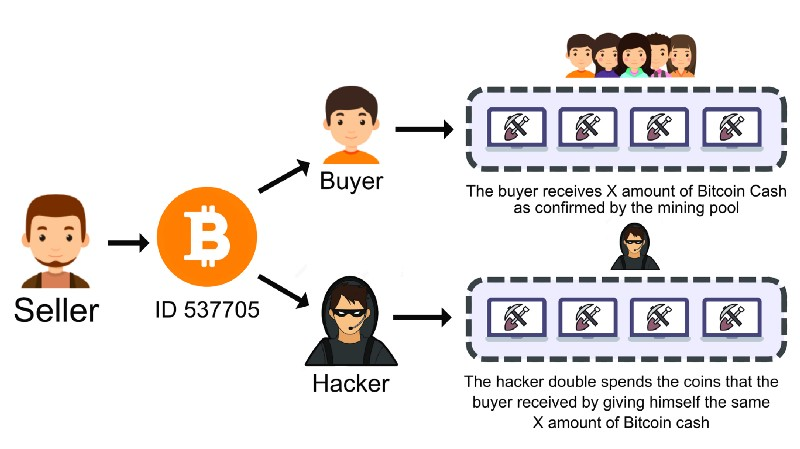 <center> A hacker needs only 51% of a proof-of-work coin’s hashing power to launch a double spend attack, but it would cost him more to launch the same kind of attack on a proof-of-stake coin because it would cost him 51% of that coin’s market capitalization. </center> DPOS blockchains have the same security features as proof-of-stake coins in addition to having a clear governance structure and being [orders of magnitude faster](https://www.trustnodes.com/2018/07/15/eos-hits-1200-transactions-per-second-ethereum-suddenly-faces-congestion). The [scalability trilemma](https://bitcoinist.com/breaking-down-the-scalability-trilemma/) makes DPOS blockchains, which have fewer nodes, faster but less decentralized than PoW and PoS protocols. Unfortunately for Ethereum’s most fervent advocates, its founder — Vitalik Buterin — seems to care more about security than speed and decentralization. Unbeknownst, to most Ether investors, any applied iteration of the PoS Casper protocol would produce an outcome in which most nodes would be unable to afford the security deposits required by the network and only the richest investors would continue to manage the nodes of the Ethereum blockchain. This is exactly what happen when Dash’s [price rise](https://coincodex.com/crypto/dash/) made becoming a [masternode](https://www.dash.org/masternodes/) extraordinarily [expensive](https://www.reddit.com/r/dashpay/comments/7dm9iu/cost_of_runningowning_a_masternode_420k_right_now/). Security deposits would also worsen the centralizing effects of Ethereum’s network growth. This subtle, but inevitable problem, hasn’t stopped [Vitalik Buterin from suggesting](https://blokt.com/news/vitalik-buterin-addresses-his-concerns-about-eoss) that the EOS blockchain adopt his version of the Casper protocol to improve its byzantine fault tolerance. If EOS had implemented the Casper protocol before its [mainnet launch](https://eoscountdown.com/), the wealthiest rather than the most popular block producer candidates would make up the majority of the top 21 block producers. Dan Larimer — the founder of EOS — in an article in which he refers to security deposits as bonds, pointed out how Buterin’s [Casper Protocol](http://bytemaster.github.io/2015/08/08/Review-of-Casper-Ethereums-proposed-Proof-of-Stake-Algorithm/) worsens income inequality among participating nodes and thereby increases network centralization: >The end result of this economic arrangement is that participating in Casper will only be profitable for a small subset of whales, likely a dozen or less. The only way to increase participation would be to increase fees which will primarily pad the pockets of the whales who have the highest margins while the smallest participating stakeholders barely break even. Larimer concluded his point on the centralizing effects of the Casper protocol with the following observation: >Casper is an innovative approach that will probably work in the same way that Proof of Work, Peercoin, Nxt, and Ripple all ‘work’: a consensus will be reached, transactions will be confirmed, double spends will be prevented. Unfortunately, it will also fail in the same ways as every system before it: unaccountable centralization of control in the hands of a concentrated minority. In the above statement, Larimer described transaction fees as an external source of revenue for block producers. Unlike the proposed Casper Protocol, EOS’ DPOS consensus algorithm funds the activities of block producers with a changeable [monetary inflation rate](https://github.com/EOSIO/Documentation/blob/master/TechnicalWhitePaper.md#block-rewards), which can be described as an internal source of revenue that effectively holds block validators accountable to voters. Security deposits would also make it harder for block producer candidates from poorer countries to join the network. This is a particularly unpalatable idea for EOS, because it’s the world’s first international blockchain democracy and many of its block producer candidates come from less well-off regions of the world, like Latin America and Africa. Buterin had also claimed that [blockchain democracies](https://vitalik.ca/general/2018/03/28/plutocracy.html) are plagued by social problems such as voter bribery and voting cartels — both of which would lead to the creation of a [plutocratic](https://en.wikipedia.org/wiki/Plutocracy) [oligarchy](https://en.wikipedia.org/wiki/Oligarchy). The following quote sums up his argument: >The flaw in all of this, of course, is that the average voter has only a very small chance of impacting which delegates get selected, and so they only have a very small incentive to vote based on any of these high-minded and lofty goals; rather, their incentive is to vote for whoever offers the highest and most reliable bribe. Attacking is easy. If a cartel equilibrium does not form, then an attacker can simply offer a share percentage slightly higher than 100% (perhaps using fee sharing or some kind of “starter promotion” as justification), capture the majority of delegate positions, and then start an attack. If they get removed from the delegate position via a hard fork, they can simply restart the attack again with a different identity. The gist of his argument is fairly sound, but there are a few minor holes in his reasoning. First off, EOS has more block producers who have publicly revealed their identities than any other blockchain democracy. There are far fewer anonymous block producers in EOS than in Bitshares, Steem, and Lisk, which makes vote bribery a much riskier revenue earning strategy in EOS than the aforementioned blockchains. An EOS block producer company caught giving out bribes, could have its reputation permanently damaged and creating a new account wouldn’t help it salvage its reputation, because its members would likely all be publicly known figures. No other democratic blockchain is as transparent as EOS. Secondly, Buterin readily admits that many of the voters who accept bribes don’t really understand why vote bribing is a bad thing. A re-education program organized by block producers, could easily help voters understand how vote bribing negatively affects a blockchain democracy’s long-term network growth. Voters who accept bribes risk electing unproductive block producers who do nothing, but confirm transactions. Fairly elected block producers tend to produce a lot of non-profit dapps to strengthen their blockchain’s economic ecosystem. EOS bock producers have, for example, [built](https://eosauthority.com/voting_analytics) [several](http://eosnetworkmonitor.io/) [block](http://eos-bp-votes.dapptools.info/#/block-producers) [explorers](https://votetracker.eosmedi.com/#/) and a [voting tool](https://www.youtube.com/watch?v=TF16fQCuIis), which all make voting; a clear, transparent, and user-friendly process. Thirdly, not all forms of collusion are *bad*. Collusion may sometimes come in the form of productive coalitions in which block producers agree to coordinate their individual efforts into specialized tasks. For example, one block producer can focus its efforts on building a user friendly wallet, while another block producer agrees to focus its attention on building a decentralized exchange. If these two block producers choose to vote for each other with their immensely large stakes, they will in the long-term add value to the network, and inspire confidence in the small investors who make up the majority of the blockchain’s electorate. Collusion is only a bad thing when the majority of a cryptocurrency’s investors cannot hold the blockchain’s block producers accountable for the latter’s misconduct. Some block producers have already formed small coalitions to finance the development of essential dapps like [Chintai](https://www.chintai-eos.io/): an EOS leasing platform. These kind of coalitions can also help end ideological disagreements, and bring unity to the community. Moreover, voting restrictions make such coalitions more competitive: EOS has about [80 block producer candidates](http://eos-bp-votes.dapptools.info/#/block-producers), but EOS stakeholders cannot vote for more than 30 block producers. 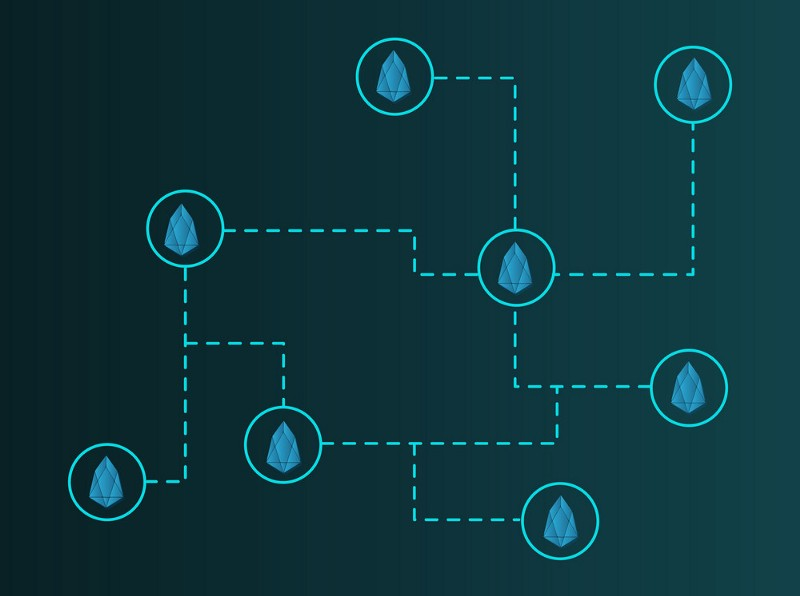 <center> Block producer coalitions could provide a variety of benefits to EOS’ dapp economy. </center> EOS also has some additional features to strengthen its democracy such as vote decay, which reduces the value of a given vote over a six month period. Vote decay prevents voter apathy, by forcing stakeholders to continuously evaluate the performance of the block producers they vote for. On the other hand, Block One — the company that developed the code behind the EOS blockchain — readily admits that vote decay is not a perfect way to increase voter activity: >We recommend that the constitution contain language forbidding the use of automated voting bots as the purpose of vote-decay was to ensure that voters re-evaluate their decisions rather than “set-it and forget it”. While it is not possible to prove the use of bots, it will be possible to prove that people do not use smart contracts to auto-vote. EOS’ dynamic leadership model can, however; be used to improve its voting algorithm and other protocol limitations. In time, blockchain democracies will come to dominate the crypto-space. *If you liked this article and would like to support my writing, you can leave a cryptocurrency donation:* *Bitcoin:* 1HiYu3Q7G9dczPmEtKTUw4dPbNfHJhRgC1 *Bitcoin cash:* qplsmz3m6hvzvnhfusa7zpa477djzp5cpsuewgjgr5 *Ethereum*: 0x9693CBe2D364f1EB6ef7C883d5DBE2562161013f *Ethereum classic*: 0xDA3caBFe304502f2D2c22eFb59597F38197cC897 *Litecoin:* LKieBwqfQyMcESWDmR8X2d8pHHabzBFsGw *Dash:* Xqv4C8MtmShLdvJbYZfeZpDXoGF75gaBXb |
| json metadata | {"tags":["blockchain","cryptocurrency","crypto","cryptocurrencies","bitcoin"],"image":["https://cdn.steemitimages.com/DQmYtugY3e6E2V1YKStjGegeZmCwCwYGYb2u9Zac3Cu8YEr/image.png","https://cdn.steemitimages.com/DQmQDyswwVjHRdTEZJYdpC7dvpth2MpZeQa6xqBtvnVDTGW/image.png","https://cdn.steemitimages.com/DQmddPhirVTsCgrZZtwChzp8ta6x2fMuBiWosEaMEJXEjEm/image.png","https://cdn.steemitimages.com/DQmehUcY2vGb6HzyEB7pXvmrFEdZ9o9yNy88CB3cTDJs6Be/image.png","https://cdn.steemitimages.com/DQmem7EtijrSCj2NnXLECs4XNXAMoEpLd8ty2cnswDkcB7Q/image.png","https://cdn.steemitimages.com/DQmVAcKWwjKWZXjs1wGsnjQtifbgEZUhkytSo9j1wk9QGMU/image.png"],"links":["Vhttps://news.bitcoin.com/reason-bitcoin-miners-empty-blocks/","https://en.bitcoin.it/wiki/Coinbase","https://bitcoinmagazine.com/articles/why-do-some-bitcoin-mining-pools-mine-empty-blocks-1468337739/","https://en.wikipedia.org/wiki/Bitcoin#cite_note-93","https://bitcoinwhoswho.com/blog/2017/11/14/new-blacklisted-bitcoin-address-api/","https://www.bloomberg.com/news/articles/2018-01-02/criminal-underworld-is-dropping-bitcoin-for-another-currency","https://www.coindesk.com/goodbye-fungibility-ofacs-bitcoin-blacklist-remake-crypto/","https://steemit.com/~witnesses","https://cryptofresh.com/witnesses","https://voters.eostitan.com/voters/50/0/21","http://eos-bp-votes.dapptools.info/s/api/block-producer-votes-stack-html/1/70","https://en.wikipedia.org/wiki/List_of_bitcoin_forks","https://iconow.net/list-of-bitcoin-forks/","https://medium.com/@bergealex4/on-extended-communication-failures-5ffb6fcc6b89","https://github.com/bitcoin/bips","https://medium.com/@bergealex4/the-tao-of-bitcoin-development-ff093c6155cd","https://en.wikipedia.org/wiki/Monetary_inflation","https://github.com/bitcoin/bips/blob/master/bip-0009.mediawiki","https://blog.ethereum.org/2014/07/05/stake/","https://etherscan.io/chart/difficulty","https://www.tomshardware.com/news/ethereum-profitability-down-difficulty-up,36691.html","https://cointelegraph.com/news/casper-what-is-known-about-the-new-ethereums-network-upgrade","https://www.trustnodes.com/2018/08/16/vitalik-buterin-tells-story-race-vlad-zamfir-implement-proof-stake-casper","https://blog.ethereum.org/2016/12/07/history-casper-chapter-2/","https://hackernoon.com/the-ethereum-blockchain-size-has-exceeded-1tb-and-yes-its-an-issue-2b650b5f4f62","https://blog.ethereum.org/2014/01/15/slasher-a-punitive-proof-of-stake-algorithm/","https://blog.ethereum.org/2014/11/25/proof-stake-learned-love-weak-subjectivity/","https://www.trustnodes.com/2018/05/24/bitcoin-gold-51-attacked-18-million-stolen-double-spends","https://www.trustnodes.com/2018/07/15/eos-hits-1200-transactions-per-second-ethereum-suddenly-faces-congestion","https://bitcoinist.com/breaking-down-the-scalability-trilemma/","https://coincodex.com/crypto/dash/","https://www.dash.org/masternodes/","https://www.reddit.com/r/dashpay/comments/7dm9iu/cost_of_runningowning_a_masternode_420k_right_now/","https://blokt.com/news/vitalik-buterin-addresses-his-concerns-about-eoss","https://eoscountdown.com/","http://bytemaster.github.io/2015/08/08/Review-of-Casper-Ethereums-proposed-Proof-of-Stake-Algorithm/","https://github.com/EOSIO/Documentation/blob/master/TechnicalWhitePaper.md#block-rewards","https://vitalik.ca/general/2018/03/28/plutocracy.html","https://en.wikipedia.org/wiki/Plutocracy","https://en.wikipedia.org/wiki/Oligarchy","https://eosauthority.com/voting_analytics","http://eosnetworkmonitor.io/","http://eos-bp-votes.dapptools.info/#/block-producers","https://votetracker.eosmedi.com/#/","https://www.youtube.com/watch?v=TF16fQCuIis","https://www.chintai-eos.io/"],"app":"steemit/0.1","format":"markdown"} |
| parent author | |
| parent permlink | blockchain |
| permlink | 4j9shn-protocol-evolution-and-the-future-of-blockchain-governance |
| title | Protocol Evolution and the Future of Blockchain Governance |
| Transaction Info | Block #25606015/Trx 766cf2690374cc7e5fee1899cbdf9a6299696e82 |
View Raw JSON Data
{
"block": 25606015,
"op": [
"comment",
{
"author": "judezambarakji",
"body": "\n\nIn July of 2014, the crypto-world was introduced to the idea of a blockchain democracy, when Dan Larimer invented a new consensus algorithm for a decentralized exchange called Bitshares. This algorithm was called delegated proof-of-stake (DPOS) and it had the unusual property of encouraging its users to elect its network’s block producers or masternodes.\n\nFor the first time in blockchain history, the vast majority of a network’s users actually had a say in how its protocol would evolve and adapt to their ever changing needs. Unlike classic blockchain protocols like Bitcoin, Bitshares was not wholly dominated by an unruly and haphazard collection of masternodes called miners.\n\nBitcoin's protocol compels miners to act out of their own selfish self-interest, and it does not hold them accountable to the millions of crypto-investors who happen to use the same network. Mining empty blocks or batches of data with no transaction information, is just one example of the kind of selfish behavior that crypto-investors have come to expect from a proof-of-work governance structure.\n\nSome miners are willing to mine [empty blocks](Vhttps://news.bitcoin.com/reason-bitcoin-miners-empty-blocks/) for the [coinbase reward](https://en.bitcoin.it/wiki/Coinbase) and forgo the transaction fees of filled blocks, because they are afraid of losing all their potential block rewards to competing miners, who might solve the more profitable full blocks before them.\n\nThese kind of miners tend to ignore the growing number of unconfirmed transactions in the blockchain’s memory pool, so that they can mine the less competitive, but empty blocks. Which brings us to an important question: why should crypto-investors transact on a blockchain in which block producers have a financial incentive to ignore their transactions?\n\nBitcoin’s recent surge in popularity, has however; increased the overall [number of full blocks](https://bitcoinmagazine.com/articles/why-do-some-bitcoin-mining-pools-mine-empty-blocks-1468337739/) and made empty block mining an unprofitable affair. But why design a blockchain that encourages such behavior in the first place? And why should block producers have the freedom to prioritize short-term profits over long-term network growth?\n\n\n\n<center> Bitcoin has a [limited supply](https://en.wikipedia.org/wiki/Bitcoin#cite_note-93), which means that the coinbase — the collection of newly minted coins for every block, will keep decreasing until it ceases to exist, and when that happens there will be no incentive to mine empty blocks. </center>\n\nBitcoin apologists might argue that the block producers of DPOS blockchains have the ability to censor transactions, which is worse than having the ability to mine empty blocks. But Bitcoin miners have in fact censored transactions from [blacklisted addresses](https://bitcoinwhoswho.com/blog/2017/11/14/new-blacklisted-bitcoin-address-api/). If DPOS stakeholders dislike the censorship policies of their elected block validators, they can simply vote in another set of block validators. But in proof-of-work protocols, miners can censor the transactions of whichever wallet addresses they deem untrustworthy and they won’t face any repercussions.\n\nAddress blacklisting is in fact, a useful tool that DPOS blockchains can adopt to better govern their networks. Some crypto-maximalists might feel that address blacklisting makes a cryptocurrency less fungible and therefore less valuable as a form of currency, but blockchain democracies like EOS have proven that being able to freeze the accounts of criminals is more important to crypto-investors than having a fully fungible cryptocurrency.\n\nFurthermore, semi-fungible cryptocurrencies have higher market capitalizations and are,therefore; more popular than Monero and other privacy focused coins that harbor [criminal enterprises](https://www.bloomberg.com/news/articles/2018-01-02/criminal-underworld-is-dropping-bitcoin-for-another-currency). And they might become even more popular if future government regimes [publicly support blockchain](https://www.coindesk.com/goodbye-fungibility-ofacs-bitcoin-blacklist-remake-crypto/) democracies that have account blacklisting features.\n\nElections, account freezing, and other democratic actions that dogmatic proof-of-work supporters cry out against, prove that the financial incentives of block producers in DPOS blockchains are aligned with the needs of their respective communities.\n\nElections are in fact, the most essential aspect of blockchain democracies. In Bitshares, and [several other](https://steemit.com/~witnesses) blockchains that have developed various iterations of its consensus algorithm, one can only become a [masternode](https://cryptofresh.com/witnesses) if one has enough votes to become one of the top 30 or [top 21](https://voters.eostitan.com/voters/50/0/21) full node block producers: servers that store the full copy of the blockchain’s history and reap all the financial rewards of being a masternode. To become a partial node, or a stand-by block producer in one of these blockchain democracies, one has to receive enough votes to be in the [top 70](http://eos-bp-votes.dapptools.info/s/api/block-producer-votes-stack-html/1/70) or [top 100](https://steemit.com/~witnesses) elected block validators.\n\nElections determine who can and who cannot become a block producer in DPOS blockchains. And they ensure that the policies that candidate block producers choose to support, have a large impact on whether or not these potential masternodes are actually elected. Whereas consensus protocols that spawn amorphous leadership in blockchain communities like proof-of-work, rarely lead to the adoption of popular policies and often create social inertia.\n\nSome of Bitcoin’s hard forks, were in fact responses to its social inertia or inability to democratically evolve in line with the wishes of its community of investors. These hard forks spawned numerous [competing networks](https://en.wikipedia.org/wiki/List_of_bitcoin_forks) including: Bitcoin Cash, Bitcoin Gold, and Bitcoin Private. It’s hard to take Bitcoin seriously after so many [chain splitting hard forks](https://iconow.net/list-of-bitcoin-forks/).\n\nThe sheer number of these hard forks, also brings into question the idea that proof-of-work is the “most secure” consensus protocol ever invented. This obsession with protocol security, is however; a distraction from one of blockchain technology’s most useful attributes: decentralized leadership.\n\nA consensus protocol’s security mechanism should serve the needs of its leadership, rather than have its leadership serve the needs of a dogmatic faith in decentralized financial security.\n\n\n\n<center>In Bitcoin we trust. </center>\n\nMany miners and software developers tried to establish themselves as the [leaders of the Bitcoin community](https://medium.com/@bergealex4/on-extended-communication-failures-5ffb6fcc6b89), but their efforts failed and they instead created chain splitting hard forks to achieve their respective goals.\n\nBitcoin’s decentralized decision making structure, the [*Bitcoin Improvement Proposal* (BIP)](https://github.com/bitcoin/bips), failed to [unite its developers](https://medium.com/@bergealex4/the-tao-of-bitcoin-development-ff093c6155cd); even with the promise of funding from private companies like purse.io, and more chain splitting hard forks followed suit. Unlike Blockchain democracies, proof-of-work protocols cannot directly fund software development with [monetary inflation](https://en.wikipedia.org/wiki/Monetary_inflation), and this makes them less coordinated than their DPOS counterparts.\n\nEven after protocol changes such as [BIP 9 ](https://github.com/bitcoin/bips/blob/master/bip-0009.mediawiki)— a method for broadcasting imminent or ongoing soft forks to the entire network — which set the foundations for a potential Bitcoin governance structure , Bitcoin developers still haven’t managed to create a coherent leadership model.\n\nSome crypto-maximalists believe that any attempt to create a governance structure violates the trustless nature of blockchain technology. But this point of view could not be farther from the truth. Like the complex cryptography that underpins blockchain accounting, governance structures make it easier for the general public to trust protocol changes that receive grassroots support.\n\nFurthermore, many developers eventually realized that Bitcoin miners often place their own interests above the needs of the community. This was especially true for a feature called Segregated Witness: a protocol change that would remove Bitcoin’s block size limit and increase its transaction speed. Bitcoin’s community tried to use its User Activated Soft Work (UASF) feature — a social method for initiating protocol changes— to launch Segregated Witness as a soft fork, but their efforts ultimately failed.\n\n\n\n<center> Blockchain miners make terrible leaders </center>\n\nMuch of the social inertia seen in Bitcoin’s protocol developments was the result of a misalignment of incentives and interests between miners and everyone else who happened to use its blockchain.\n\nSocial inertia may also explain why, after 4 years since Ethereum’s founder, Vitalik Buterin — first [suggested a protocol change](https://blog.ethereum.org/2014/07/05/stake/), Ethereum still hasn’t transitioned to a proof-of-stake consensus algorithm. To make matters worse, Ether’s phenomenal price rise at the beginning of the year, drew the attention of avid cryptocurrency miners — who then raised its [hashrate difficulty](https://etherscan.io/chart/difficulty). Ether mining is [no longer profitable](https://www.tomshardware.com/news/ethereum-profitability-down-difficulty-up,36691.html), but Ethereum’s miners still won’t fork the blockchain to a proof-of-stake protocol.\n\nSome Ethereum miners might be waiting for miners with smaller or cheaper mining rigs to drop out of the mining race as soon as the mining difficulty reaches a certain level. But the lack of protocol development may cause Ether’s price to drop, which would make this bullish strategy unprofitable and pointless.\n\nSome diehard Ethereum supporters might argue that its developers needed more time to further develop [Casper](https://cointelegraph.com/news/casper-what-is-known-about-the-new-ethereums-network-upgrade): the suggested protocol upgrade. There are [two different versions](https://www.trustnodes.com/2018/08/16/vitalik-buterin-tells-story-race-vlad-zamfir-implement-proof-stake-casper) of Casper being proposed: Vitalik Buterin’s Friendly Finality Gadget (FFG) — a hybrid PoW/PoS consensus mechanism, and Vlad Zamfir’s Correct-by-Construction — a full PoS consensus algorithm in which the validity of a new competing chain is determined by the number of nodes who agree on the correctness of said chain rather than how closely related its new blocks are to the genesis block (the first block or batch of transactions in the Ethereum blockchain).\n\nRegardless of which version of Casper they choose to implement, they will still have to convince miners that they can replace Ethereum’s proof-of-work with a perfect proof-of-stake algorithm. Ethereum’s development team have in fact, spent years trying to convince miners that Ethereum needs a new and more efficient consensus mechanism, even though the proof-of-stake protocol could have been implemented incrementally. If Ether investors could vote on Ethereum’s protocol, they would have probably agreed to a progressive switch to proof-of-stake.\n\nMiners’ irrational fear of a protocol change has forced Ethereum’s development team to tackle highly improbable problems that real world proof-of-stake blockchains have never faced. These theoretical problems include the dreaded [long-range attack](https://blog.ethereum.org/2016/12/07/history-casper-chapter-2/) and the infamous nothing at [stake dilemma](https://blog.ethereum.org/2014/07/05/stake/). The latter problem — which some developers believe is entirely fictional — is especially unlikely to occur, because block validators in any kind of consensus protocol, have to forgo more than one opportunity cost, when they decide to fork a given blockchain.\n\nIn a traditional proof-of-work protocol, miners are faced with two principal costs when they decide to fork the blockchain in question: the cost of creating new blocks on the new chain and the forgone block rewards that they would have received if they continued mining the old chain. If the new coin of their forked network is ignored by most investors — and the price of said coin is sufficiently low — they will have not only wasted their mining rigs’ power, but also forgone the opportunity to continue earning block rewards on the previous chain. Moreover, the block rewards of the new chain may be far lower than the rewards of the old chain.\n\nThe nothing at stake problem, which could be more accurately described as the multi-chain production problem, is about proof-of-stake block producers having the ability to simultaneously produce blocks for multiple chains without incurring any costs for every new block they validate. But they will, however; incur the cost of managing a more expensive server because each new chain will require more RAM to process transactions, and more hard disk space to download some of, if not the entirety of, the blockchain’s transaction history.\n\nThe idea that proof-of-stake block validators have “nothing at stake” when they produce blocks for multiple chains, ignores the fact that server costs increase as a blockchain network’s activity grows. Ethereum’s network activity, has for example, [grown to the point](https://hackernoon.com/the-ethereum-blockchain-size-has-exceeded-1tb-and-yes-its-an-issue-2b650b5f4f62) that many stand-by block producers cannot afford to manage the server costs of their partial nodes. Producing blocks for multiple chains increases one’s server costs, regardless of which consensus algorithm the network in question uses.\n\nPedantic commentators, might argue that the sunk cost of buying or creating a server and upgrading it when the blockchain grows in size, is far less than the accumulated cost of producing new blocks in a new chain. But it would be disingenuous to say that there is no cost, whatsoever, for producing multiple chains in proof-of-stake protocols.\n\nDPOS blockchains make multi-block production even more expensive by forcing block validators to spend time and energy convincing stakeholders to vote for them. Block producers who attempt to start a new chain or a competing network have to convince the stakeholders who had previously voted for them to run the old chain, to vote for each and every new chain they create. DPOS thereby solves the nothing at stake problem by introducing the social cost of garnering votes. There are real tangible costs to managing several social media accounts with thousands of followers, and building free to use applications, in the process of garnering stakeholder votes.\n\nTo solve the imaginary nothing at stake problem, Buterin and Zamfir developed the idea of the [slasher protocol](https://blog.ethereum.org/2014/01/15/slasher-a-punitive-proof-of-stake-algorithm/), which will force new block validators in a proof-of-stake version of Ethereum to have security deposits. If some of these block producers try to validate more than one chain of blocks at a time, they will lose their security deposit: the stake they had bought to become block validators.\n\nThe fanatical desire to maintain a proof-of-work algorithm has forced Ethereum’s development team to cook up novel proof-of-stake problems to please their blockchain’s miners. While some problems like [weak subjectivity](https://blog.ethereum.org/2014/11/25/proof-stake-learned-love-weak-subjectivity/) — the idea that many proof-of-stake block validators stay online intermittently to validate blocks — are legitimate decentralization problems, other factors such as speed and scalability might have a greater long-term impact on mainstream blockchain adoption.\n\nProof-of-work blockchains have, however; proven less secure than the proof-of-stake protocols that Ethereum’s development team have been trying to improve. Miners had, for example, double spent millions of dollars worth of [Bitcoin Cash](https://www.trustnodes.com/2018/05/24/bitcoin-gold-51-attacked-18-million-stolen-double-spends) when they realized that because it was a new coin; too few miners were mining it, and its resulting hashrate difficulty was low enough to be taken advantage of.\n\n\n\n<center> A hacker needs only 51% of a proof-of-work coin’s hashing power to launch a double spend attack, but it would cost him more to launch the same kind of attack on a proof-of-stake coin because it would cost him 51% of that coin’s market capitalization. </center>\n\nDPOS blockchains have the same security features as proof-of-stake coins in addition to having a clear governance structure and being [orders of magnitude faster](https://www.trustnodes.com/2018/07/15/eos-hits-1200-transactions-per-second-ethereum-suddenly-faces-congestion). The [scalability trilemma](https://bitcoinist.com/breaking-down-the-scalability-trilemma/) makes DPOS blockchains, which have fewer nodes, faster but less decentralized than PoW and PoS protocols.\n\nUnfortunately for Ethereum’s most fervent advocates, its founder — Vitalik Buterin — seems to care more about security than speed and decentralization. Unbeknownst, to most Ether investors, any applied iteration of the PoS Casper protocol would produce an outcome in which most nodes would be unable to afford the security deposits required by the network and only the richest investors would continue to manage the nodes of the Ethereum blockchain. This is exactly what happen when Dash’s [price rise](https://coincodex.com/crypto/dash/) made becoming a [masternode](https://www.dash.org/masternodes/) extraordinarily [expensive](https://www.reddit.com/r/dashpay/comments/7dm9iu/cost_of_runningowning_a_masternode_420k_right_now/).\n\nSecurity deposits would also worsen the centralizing effects of Ethereum’s network growth. This subtle, but inevitable problem, hasn’t stopped [Vitalik Buterin from suggesting](https://blokt.com/news/vitalik-buterin-addresses-his-concerns-about-eoss) that the EOS blockchain adopt his version of the Casper protocol to improve its byzantine fault tolerance. If EOS had implemented the Casper protocol before its [mainnet launch](https://eoscountdown.com/), the wealthiest rather than the most popular block producer candidates would make up the majority of the top 21 block producers.\n\nDan Larimer — the founder of EOS — in an article in which he refers to security deposits as bonds, pointed out how Buterin’s [Casper Protocol](http://bytemaster.github.io/2015/08/08/Review-of-Casper-Ethereums-proposed-Proof-of-Stake-Algorithm/) worsens income inequality among participating nodes and thereby increases network centralization:\n\n>The end result of this economic arrangement is that participating in Casper will only be profitable for a small subset of whales, likely a dozen or less. The only way to increase participation would be to increase fees which will primarily pad the pockets of the whales who have the highest margins while the smallest participating stakeholders barely break even.\n\nLarimer concluded his point on the centralizing effects of the Casper protocol with the following observation:\n\n>Casper is an innovative approach that will probably work in the same way that Proof of Work, Peercoin, Nxt, and Ripple all ‘work’: a consensus will be reached, transactions will be confirmed, double spends will be prevented. Unfortunately, it will also fail in the same ways as every system before it: unaccountable centralization of control in the hands of a concentrated minority.\n\nIn the above statement, Larimer described transaction fees as an external source of revenue for block producers. Unlike the proposed Casper Protocol, EOS’ DPOS consensus algorithm funds the activities of block producers with a changeable [monetary inflation rate](https://github.com/EOSIO/Documentation/blob/master/TechnicalWhitePaper.md#block-rewards), which can be described as an internal source of revenue that effectively holds block validators accountable to voters.\n\nSecurity deposits would also make it harder for block producer candidates from poorer countries to join the network. This is a particularly unpalatable idea for EOS, because it’s the world’s first international blockchain democracy and many of its block producer candidates come from less well-off regions of the world, like Latin America and Africa.\n\nButerin had also claimed that [blockchain democracies](https://vitalik.ca/general/2018/03/28/plutocracy.html) are plagued by social problems such as voter bribery and voting cartels — both of which would lead to the creation of a [plutocratic](https://en.wikipedia.org/wiki/Plutocracy) [oligarchy](https://en.wikipedia.org/wiki/Oligarchy). The following quote sums up his argument:\n\n>The flaw in all of this, of course, is that the average voter has only a very small chance of impacting which delegates get selected, and so they only have a very small incentive to vote based on any of these high-minded and lofty goals; rather, their incentive is to vote for whoever offers the highest and most reliable bribe. Attacking is easy. If a cartel equilibrium does not form, then an attacker can simply offer a share percentage slightly higher than 100% (perhaps using fee sharing or some kind of “starter promotion” as justification), capture the majority of delegate positions, and then start an attack. If they get removed from the delegate position via a hard fork, they can simply restart the attack again with a different identity.\n\nThe gist of his argument is fairly sound, but there are a few minor holes in his reasoning. First off, EOS has more block producers who have publicly revealed their identities than any other blockchain democracy. There are far fewer anonymous block producers in EOS than in Bitshares, Steem, and Lisk, which makes vote bribery a much riskier revenue earning strategy in EOS than the aforementioned blockchains. An EOS block producer company caught giving out bribes, could have its reputation permanently damaged and creating a new account wouldn’t help it salvage its reputation, because its members would likely all be publicly known figures. No other democratic blockchain is as transparent as EOS.\n\nSecondly, Buterin readily admits that many of the voters who accept bribes don’t really understand why vote bribing is a bad thing. A re-education program organized by block producers, could easily help voters understand how vote bribing negatively affects a blockchain democracy’s long-term network growth.\n\nVoters who accept bribes risk electing unproductive block producers who do nothing, but confirm transactions. Fairly elected block producers tend to produce a lot of non-profit dapps to strengthen their blockchain’s economic ecosystem. EOS bock producers have, for example, [built](https://eosauthority.com/voting_analytics) [several](http://eosnetworkmonitor.io/) [block](http://eos-bp-votes.dapptools.info/#/block-producers) [explorers](https://votetracker.eosmedi.com/#/) and a [voting tool](https://www.youtube.com/watch?v=TF16fQCuIis), which all make voting; a clear, transparent, and user-friendly process.\n\nThirdly, not all forms of collusion are *bad*. Collusion may sometimes come in the form of productive coalitions in which block producers agree to coordinate their individual efforts into specialized tasks. For example, one block producer can focus its efforts on building a user friendly wallet, while another block producer agrees to focus its attention on building a decentralized exchange. If these two block producers choose to vote for each other with their immensely large stakes, they will in the long-term add value to the network, and inspire confidence in the small investors who make up the majority of the blockchain’s electorate. Collusion is only a bad thing when the majority of a cryptocurrency’s investors cannot hold the blockchain’s block producers accountable for the latter’s misconduct.\n\nSome block producers have already formed small coalitions to finance the development of essential dapps like [Chintai](https://www.chintai-eos.io/): an EOS leasing platform. These kind of coalitions can also help end ideological disagreements, and bring unity to the community. Moreover, voting restrictions make such coalitions more competitive: EOS has about [80 block producer candidates](http://eos-bp-votes.dapptools.info/#/block-producers), but EOS stakeholders cannot vote for more than 30 block producers.\n\n\n\n<center> Block producer coalitions could provide a variety of benefits to EOS’ dapp economy. </center>\n\nEOS also has some additional features to strengthen its democracy such as vote decay, which reduces the value of a given vote over a six month period. Vote decay prevents voter apathy, by forcing stakeholders to continuously evaluate the performance of the block producers they vote for. On the other hand, Block One — the company that developed the code behind the EOS blockchain — readily admits that vote decay is not a perfect way to increase voter activity:\n\n>We recommend that the constitution contain language forbidding the use of automated voting bots as the purpose of vote-decay was to ensure that voters re-evaluate their decisions rather than “set-it and forget it”. While it is not possible to prove the use of bots, it will be possible to prove that people do not use smart contracts to auto-vote.\n\nEOS’ dynamic leadership model can, however; be used to improve its voting algorithm and other protocol limitations. In time, blockchain democracies will come to dominate the crypto-space.\n\n*If you liked this article and would like to support my writing, you can leave a cryptocurrency donation:*\n\n*Bitcoin:* 1HiYu3Q7G9dczPmEtKTUw4dPbNfHJhRgC1\n\n*Bitcoin cash:* qplsmz3m6hvzvnhfusa7zpa477djzp5cpsuewgjgr5\n\n*Ethereum*: 0x9693CBe2D364f1EB6ef7C883d5DBE2562161013f\n\n*Ethereum classic*: 0xDA3caBFe304502f2D2c22eFb59597F38197cC897\n\n*Litecoin:* LKieBwqfQyMcESWDmR8X2d8pHHabzBFsGw\n\n*Dash:* Xqv4C8MtmShLdvJbYZfeZpDXoGF75gaBXb",
"json_metadata": "{\"tags\":[\"blockchain\",\"cryptocurrency\",\"crypto\",\"cryptocurrencies\",\"bitcoin\"],\"image\":[\"https://cdn.steemitimages.com/DQmYtugY3e6E2V1YKStjGegeZmCwCwYGYb2u9Zac3Cu8YEr/image.png\",\"https://cdn.steemitimages.com/DQmQDyswwVjHRdTEZJYdpC7dvpth2MpZeQa6xqBtvnVDTGW/image.png\",\"https://cdn.steemitimages.com/DQmddPhirVTsCgrZZtwChzp8ta6x2fMuBiWosEaMEJXEjEm/image.png\",\"https://cdn.steemitimages.com/DQmehUcY2vGb6HzyEB7pXvmrFEdZ9o9yNy88CB3cTDJs6Be/image.png\",\"https://cdn.steemitimages.com/DQmem7EtijrSCj2NnXLECs4XNXAMoEpLd8ty2cnswDkcB7Q/image.png\",\"https://cdn.steemitimages.com/DQmVAcKWwjKWZXjs1wGsnjQtifbgEZUhkytSo9j1wk9QGMU/image.png\"],\"links\":[\"Vhttps://news.bitcoin.com/reason-bitcoin-miners-empty-blocks/\",\"https://en.bitcoin.it/wiki/Coinbase\",\"https://bitcoinmagazine.com/articles/why-do-some-bitcoin-mining-pools-mine-empty-blocks-1468337739/\",\"https://en.wikipedia.org/wiki/Bitcoin#cite_note-93\",\"https://bitcoinwhoswho.com/blog/2017/11/14/new-blacklisted-bitcoin-address-api/\",\"https://www.bloomberg.com/news/articles/2018-01-02/criminal-underworld-is-dropping-bitcoin-for-another-currency\",\"https://www.coindesk.com/goodbye-fungibility-ofacs-bitcoin-blacklist-remake-crypto/\",\"https://steemit.com/~witnesses\",\"https://cryptofresh.com/witnesses\",\"https://voters.eostitan.com/voters/50/0/21\",\"http://eos-bp-votes.dapptools.info/s/api/block-producer-votes-stack-html/1/70\",\"https://en.wikipedia.org/wiki/List_of_bitcoin_forks\",\"https://iconow.net/list-of-bitcoin-forks/\",\"https://medium.com/@bergealex4/on-extended-communication-failures-5ffb6fcc6b89\",\"https://github.com/bitcoin/bips\",\"https://medium.com/@bergealex4/the-tao-of-bitcoin-development-ff093c6155cd\",\"https://en.wikipedia.org/wiki/Monetary_inflation\",\"https://github.com/bitcoin/bips/blob/master/bip-0009.mediawiki\",\"https://blog.ethereum.org/2014/07/05/stake/\",\"https://etherscan.io/chart/difficulty\",\"https://www.tomshardware.com/news/ethereum-profitability-down-difficulty-up,36691.html\",\"https://cointelegraph.com/news/casper-what-is-known-about-the-new-ethereums-network-upgrade\",\"https://www.trustnodes.com/2018/08/16/vitalik-buterin-tells-story-race-vlad-zamfir-implement-proof-stake-casper\",\"https://blog.ethereum.org/2016/12/07/history-casper-chapter-2/\",\"https://hackernoon.com/the-ethereum-blockchain-size-has-exceeded-1tb-and-yes-its-an-issue-2b650b5f4f62\",\"https://blog.ethereum.org/2014/01/15/slasher-a-punitive-proof-of-stake-algorithm/\",\"https://blog.ethereum.org/2014/11/25/proof-stake-learned-love-weak-subjectivity/\",\"https://www.trustnodes.com/2018/05/24/bitcoin-gold-51-attacked-18-million-stolen-double-spends\",\"https://www.trustnodes.com/2018/07/15/eos-hits-1200-transactions-per-second-ethereum-suddenly-faces-congestion\",\"https://bitcoinist.com/breaking-down-the-scalability-trilemma/\",\"https://coincodex.com/crypto/dash/\",\"https://www.dash.org/masternodes/\",\"https://www.reddit.com/r/dashpay/comments/7dm9iu/cost_of_runningowning_a_masternode_420k_right_now/\",\"https://blokt.com/news/vitalik-buterin-addresses-his-concerns-about-eoss\",\"https://eoscountdown.com/\",\"http://bytemaster.github.io/2015/08/08/Review-of-Casper-Ethereums-proposed-Proof-of-Stake-Algorithm/\",\"https://github.com/EOSIO/Documentation/blob/master/TechnicalWhitePaper.md#block-rewards\",\"https://vitalik.ca/general/2018/03/28/plutocracy.html\",\"https://en.wikipedia.org/wiki/Plutocracy\",\"https://en.wikipedia.org/wiki/Oligarchy\",\"https://eosauthority.com/voting_analytics\",\"http://eosnetworkmonitor.io/\",\"http://eos-bp-votes.dapptools.info/#/block-producers\",\"https://votetracker.eosmedi.com/#/\",\"https://www.youtube.com/watch?v=TF16fQCuIis\",\"https://www.chintai-eos.io/\"],\"app\":\"steemit/0.1\",\"format\":\"markdown\"}",
"parent_author": "",
"parent_permlink": "blockchain",
"permlink": "4j9shn-protocol-evolution-and-the-future-of-blockchain-governance",
"title": "Protocol Evolution and the Future of Blockchain Governance"
}
],
"op_in_trx": 0,
"timestamp": "2018-09-02T11:26:57",
"trx_id": "766cf2690374cc7e5fee1899cbdf9a6299696e82",
"trx_in_block": 26,
"virtual_op": 0
}2018/09/02 11:03:24
2018/09/02 11:03:24
| author | judezambarakji |
| permlink | 2qyuim-protocol-evolution-and-the-future-of-blockchain-governance |
| voter | yehey |
| weight | 1000 (10.00%) |
| Transaction Info | Block #25605545/Trx a4a7108e919b0696cedb10c08cdb9a9842790320 |
View Raw JSON Data
{
  "block": 25605545,
  "op": [
    "vote",
    {
      "author": "judezambarakji",
      "permlink": "2qyuim-protocol-evolution-and-the-future-of-blockchain-governance",
      "voter": "yehey",
      "weight": 1000
    }
  ],
  "op_in_trx": 0,
  "timestamp": "2018-09-02T11:03:24",
  "trx_id": "a4a7108e919b0696cedb10c08cdb9a9842790320",
  "trx_in_block": 2,
  "virtual_op": 0
}2018/09/02 10:55:03
2018/09/02 10:55:03
| author | judezambarakji |
| permlink | 2qyuim-protocol-evolution-and-the-future-of-blockchain-governance |
| voter | sensation |
| weight | 10000 (100.00%) |
| Transaction Info | Block #25605378/Trx c89412b57bdcd62d8951d68c0aa41a7ed45ea2ab |
View Raw JSON Data
{
  "block": 25605378,
  "op": [
    "vote",
    {
      "author": "judezambarakji",
      "permlink": "2qyuim-protocol-evolution-and-the-future-of-blockchain-governance",
      "voter": "sensation",
      "weight": 10000
    }
  ],
  "op_in_trx": 0,
  "timestamp": "2018-09-02T10:55:03",
  "trx_id": "c89412b57bdcd62d8951d68c0aa41a7ed45ea2ab",
  "trx_in_block": 0,
  "virtual_op": 0
}2018/09/02 10:51:30
2018/09/02 10:51:30
| author | judezambarakji |
| permlink | 2qyuim-protocol-evolution-and-the-future-of-blockchain-governance |
| voter | ajuwaya |
| weight | 10000 (100.00%) |
| Transaction Info | Block #25605307/Trx 2a11facff35a7f6b58715a07dac85029ccbe685d |
View Raw JSON Data
{
  "block": 25605307,
  "op": [
    "vote",
    {
      "author": "judezambarakji",
      "permlink": "2qyuim-protocol-evolution-and-the-future-of-blockchain-governance",
      "voter": "ajuwaya",
      "weight": 10000
    }
  ],
  "op_in_trx": 0,
  "timestamp": "2018-09-02T10:51:30",
  "trx_id": "2a11facff35a7f6b58715a07dac85029ccbe685d",
  "trx_in_block": 26,
  "virtual_op": 0
}2018/09/02 10:20:00
2018/09/02 10:20:00
| author | cheetah |
| body | Hi! I am a robot. I just upvoted you! Readers might be interested in similar content by the same author: https://steemit.com/blockchain/@judezambarakji/protocol-evolution-and-the-future-of-blockchain-governance |
| json metadata | |
| parent author | judezambarakji |
| parent permlink | 2qyuim-protocol-evolution-and-the-future-of-blockchain-governance |
| permlink | cheetah-re-judezambarakji2qyuim-protocol-evolution-and-the-future-of-blockchain-governance |
| title | |
| Transaction Info | Block #25604677/Trx 265948922e11403b8071b46c3122f1189bb7d7df |
View Raw JSON Data
{
  "block": 25604677,
  "op": [
    "comment",
    {
      "author": "cheetah",
      "body": "Hi! I am a robot. I just upvoted you! Readers might be interested in similar content by the same author:\nhttps://steemit.com/blockchain/@judezambarakji/protocol-evolution-and-the-future-of-blockchain-governance",
      "json_metadata": "",
      "parent_author": "judezambarakji",
      "parent_permlink": "2qyuim-protocol-evolution-and-the-future-of-blockchain-governance",
      "permlink": "cheetah-re-judezambarakji2qyuim-protocol-evolution-and-the-future-of-blockchain-governance",
      "title": ""
    }
  ],
  "op_in_trx": 0,
  "timestamp": "2018-09-02T10:20:00",
  "trx_id": "265948922e11403b8071b46c3122f1189bb7d7df",
  "trx_in_block": 20,
  "virtual_op": 0
}2018/09/02 10:19:57
2018/09/02 10:19:57
| author | judezambarakji |
| permlink | 2qyuim-protocol-evolution-and-the-future-of-blockchain-governance |
| voter | cheetah |
| weight | 8 (0.08%) |
| Transaction Info | Block #25604676/Trx 09f8864366e7749017a68461db4262292fb360b3 |
View Raw JSON Data
{
  "block": 25604676,
  "op": [
    "vote",
    {
      "author": "judezambarakji",
      "permlink": "2qyuim-protocol-evolution-and-the-future-of-blockchain-governance",
      "voter": "cheetah",
      "weight": 8
    }
  ],
  "op_in_trx": 0,
  "timestamp": "2018-09-02T10:19:57",
  "trx_id": "09f8864366e7749017a68461db4262292fb360b3",
  "trx_in_block": 6,
  "virtual_op": 0
}judezambarakjiupdated options for 2qyuim-protocol-evolution-and-the-future-of-blockchain-governance2018/09/02 10:19:48
judezambarakjiupdated options for 2qyuim-protocol-evolution-and-the-future-of-blockchain-governance
2018/09/02 10:19:48
| allow curation rewards | true |
| allow votes | true |
| author | judezambarakji |
| extensions | [] |
| max accepted payout | 1000000.000 SBD |
| percent steem dollars | 0 |
| permlink | 2qyuim-protocol-evolution-and-the-future-of-blockchain-governance |
| Transaction Info | Block #25604673/Trx 4b233214d2741cd1af0f16011951b7e13623b5a0 |
View Raw JSON Data
{
  "block": 25604673,
  "op": [
    "comment_options",
    {
      "allow_curation_rewards": true,
      "allow_votes": true,
      "author": "judezambarakji",
      "extensions": [],
      "max_accepted_payout": "1000000.000 SBD",
      "percent_steem_dollars": 0,
      "permlink": "2qyuim-protocol-evolution-and-the-future-of-blockchain-governance"
    }
  ],
  "op_in_trx": 0,
  "timestamp": "2018-09-02T10:19:48",
  "trx_id": "4b233214d2741cd1af0f16011951b7e13623b5a0",
  "trx_in_block": 5,
  "virtual_op": 0
}judezambarakjipublished a new post: 2qyuim-protocol-evolution-and-the-future-of-blockchain-governance2018/09/02 10:19:48
judezambarakjipublished a new post: 2qyuim-protocol-evolution-and-the-future-of-blockchain-governance
2018/09/02 10:19:48
| author | judezambarakji |
| body |  In July of 2014, the crypto-world was introduced to the idea of a blockchain democracy, when Dan Larimer invented a new consensus algorithm for a decentralized exchange called Bitshares. This algorithm was called delegated proof-of-stake (DPOS) and it had the unusual property of encouraging its users to elect its network’s block producers or masternodes. For the first time in blockchain history, the vast majority of a network’s users actually had a say in how its protocol would evolve and adapt to their ever changing needs. Unlike classic blockchain protocols like Bitcoin, Bitshares was not wholly dominated by an unruly and haphazard collection of masternodes called miners. In Bitcoin, miners are solely driven by their own selfish self-interest, and are not held accountable to the millions of crypto-investors who happen to use the same network. Mining empty blocks or batches of data with no transaction information, is just one example of the kind of selfish behavior that crypto-investors have come to expect from a proof-of-work governance structure. Some miners are willing to mine [empty blocks](Vhttps://news.bitcoin.com/reason-bitcoin-miners-empty-blocks/) for the [coinbase reward](https://en.bitcoin.it/wiki/Coinbase) and forgo the transaction fees of filled blocks, because they are afraid of losing all their potential block rewards to competing miners, who might solve the more profitable full blocks before them. These kind of miners tend to ignore the growing number of unconfirmed transactions in the blockchain’s memory pool, so that they can mine the less competitive, but empty blocks. Which brings us to an important question: why should crypto-investors transact on a blockchain in which block producers have a financial incentive to ignore their transactions? Bitcoin’s recent surge in popularity, has however; increased the overall [number of full blocks](https://bitcoinmagazine.com/articles/why-do-some-bitcoin-mining-pools-mine-empty-blocks-1468337739/) and made empty block mining an unprofitable affair. But why design a blockchain that encourages such behavior in the first place? And why should block producers have the freedom to prioritize short-term profits over long-term network growth?  <center> Bitcoin has a [limited supply](https://en.wikipedia.org/wiki/Bitcoin#cite_note-93), which means that the coinbase — the collection of newly minted coins for every block, will keep decreasing until it ceases to exist, and when that happens there will be no incentive to mine empty blocks. </center> Bitcoin apologists might argue that the block producers of DPOS blockchains have the ability to censor transactions, which is worse than having the ability to mine empty blocks. But Bitcoin miners have in fact censored transactions from [blacklisted addresses](https://bitcoinwhoswho.com/blog/2017/11/14/new-blacklisted-bitcoin-address-api/). If DPOS stakeholders dislike the censorship policies of their elected block validators, they can simply vote in another set of block validators. But in proof-of-work protocols, miners can censor the transactions of whichever wallet addresses they deem untrustworthy and they won’t face any repercussions. Address blacklisting is in fact, a useful tool that DPOS blockchains can adopt to better govern their networks. Some crypto-maximalists might feel that address blacklisting makes a cryptocurrency less fungible and therefore less valuable as a form of currency, but blockchain democracies like EOS have proven that being able to freeze the accounts of criminals is more important to crypto-investors than having a fully fungible cryptocurrency. Furthermore, semi-fungible cryptocurrencies have higher market capitalizations and are,therefore; more popular than Monero and other privacy focused coins that harbor [criminal enterprises](https://www.bloomberg.com/news/articles/2018-01-02/criminal-underworld-is-dropping-bitcoin-for-another-currency). And they might become even more popular if future government regimes [publicly support blockchain](https://www.coindesk.com/goodbye-fungibility-ofacs-bitcoin-blacklist-remake-crypto/) democracies that have account blacklisting features. Elections, account freezing, and other democratic actions that dogmatic proof-of-work supporters cry out against, prove that the financial incentives of block producers in DPOS blockchains are aligned with the needs of their respective communities. Elections are in fact, the most essential aspect of blockchain democracies. In Bitshares, and [several other](https://steemit.com/~witnesses) blockchains that have developed various iterations of its consensus algorithm, one can only become a [masternode](https://cryptofresh.com/witnesses) if one has enough votes to become one of the top 30 or [top 21](https://voters.eostitan.com/voters/50/0/21) full node block producers: servers that store the full copy of the blockchain’s history and reap all the financial rewards of being a masternode. To become a partial node, or a stand-by block producer in one of these blockchain democracies, one has to receive enough votes to be in the [top 70](http://eos-bp-votes.dapptools.info/s/api/block-producer-votes-stack-html/1/70) or [top 100](https://steemit.com/~witnesses) elected block validators. Elections determine who can and who cannot become a block producer in DPOS blockchains. And they ensure that the policies that candidate block producers choose to support, have a large impact on whether or not these potential masternodes are actually elected. Whereas consensus protocols that spawn amorphous leadership in blockchain communities like proof-of-work, rarely lead to the adoption of popular policies and often create social inertia. Some of Bitcoin’s hard forks, were in fact responses to its social inertia or inability to democratically evolve in line with the wishes of its community of investors. These hard forks spawned numerous [competing networks](https://en.wikipedia.org/wiki/List_of_bitcoin_forks) including: Bitcoin Cash, Bitcoin Gold, and Bitcoin Private. It’s hard to take Bitcoin seriously after so many [chain splitting hard forks](https://iconow.net/list-of-bitcoin-forks/). The sheer number of these hard forks, also brings into question the idea that proof-of-work is the “most secure” consensus protocol ever invented. This obsession with protocol security, is however; a distraction from one of blockchain technology’s most useful attributes: decentralized leadership. A consensus protocol’s security mechanism should serve the needs of its leadership, rather than have its leadership serve the needs of a dogmatic faith in decentralized financial security.  <center>In Bitcoin we trust. </center> Many miners and software developers tried to establish themselves as the [leaders of the Bitcoin community](https://medium.com/@bergealex4/on-extended-communication-failures-5ffb6fcc6b89), but their efforts failed and they instead created chain splitting hard forks to achieve their respective goals. Bitcoin’s decentralized decision making structure, the [*Bitcoin Improvement Proposal* (BIP)](https://github.com/bitcoin/bips), failed to [unite its developers](https://medium.com/@bergealex4/the-tao-of-bitcoin-development-ff093c6155cd); even with the promise of funding from private companies like purse.io, and more chain splitting hard forks followed suit. Unlike Blockchain democracies, proof-of-work protocols cannot directly fund software development with [monetary inflation](https://en.wikipedia.org/wiki/Monetary_inflation), and this makes them less coordinated than their DPOS counterparts. Even after protocol changes such as [BIP 9 ](https://github.com/bitcoin/bips/blob/master/bip-0009.mediawiki)— a method for broadcasting imminent or ongoing soft forks to the entire network — which set the foundations for a potential Bitcoin governance structure , Bitcoin developers still haven’t managed to create a coherent leadership model. Some crypto-maximalists believe that any attempt to create a governance structure violates the trustless nature of blockchain technology. But this point of view could not be farther from the truth. Like the complex cryptography that underpins blockchain accounting, governance structures make it easier for the general public to trust protocol changes that receive grassroots support. Furthermore, many developers eventually realized that Bitcoin miners often place their own interests above the needs of the community. This was especially true for a feature called Segregated Witness: a protocol change that would remove Bitcoin’s block size limit and increase its transaction speed. Bitcoin’s community tried to use its User Activated Soft Work (UASF) feature — a social method for initiating protocol changes— to launch Segregated Witness as a soft fork, but their efforts ultimately failed.  <center> Blockchain miners make terrible leaders </center> Much of the social inertia seen in Bitcoin’s protocol developments was the result of a misalignment of incentives and interests between miners and everyone else who happened to use its blockchain. Social inertia may also explain why, after 4 years since Ethereum’s founder, Vitalik Buterin — first [suggested a protocol change](https://blog.ethereum.org/2014/07/05/stake/), Ethereum still hasn’t transitioned to a proof-of-stake consensus algorithm. To make matters worse, Ether’s phenomenal price rise at the beginning of the year, drew the attention of avid cryptocurrency miners — who then raised its [hashrate difficulty](https://etherscan.io/chart/difficulty). Ether mining is [no longer profitable](https://www.tomshardware.com/news/ethereum-profitability-down-difficulty-up,36691.html), but Ethereum’s miners still won’t fork the blockchain to a proof-of-stake protocol. Some Ethereum miners might be waiting for miners with smaller or cheaper mining rigs to drop out of the mining race as soon as the mining difficulty reaches a certain level. But the lack of protocol development may cause Ether’s price to drop, which would make this bullish strategy unprofitable and pointless. Some diehard Ethereum supporters might argue that its developers needed more time to further develop [Casper](https://cointelegraph.com/news/casper-what-is-known-about-the-new-ethereums-network-upgrade): the suggested protocol upgrade. There are [two different versions](https://www.trustnodes.com/2018/08/16/vitalik-buterin-tells-story-race-vlad-zamfir-implement-proof-stake-casper) of Casper being proposed: Vitalik Buterin’s Friendly Finality Gadget (FFG) — a hybrid PoW/PoS consensus mechanism, and Vlad Zamfir’s Correct-by-Construction — a full PoS consensus algorithm in which the validity of a new competing chain is determined by the number of nodes who agree on the correctness of said chain rather than how closely related its new blocks are to the genesis block (the first block or batch of transactions in the Ethereum blockchain). Regardless of which version of Casper they choose to implement, they will still have to convince miners that they can replace Ethereum’s proof-of-work with a perfect proof-of-stake algorithm. Ethereum’s development team have in fact, spent years trying to convince miners that Ethereum needs a new and more efficient consensus mechanism, even though the proof-of-stake protocol could have been implemented incrementally. If Ether investors could vote on Ethereum’s protocol, they would have probably agreed to a progressive switch to proof-of-stake. Miners’ irrational fear of a protocol change has forced Ethereum’s development team to tackle highly improbable problems that real world proof-of-stake blockchains have never faced. These theoretical problems include the dreaded [long-range attack](https://blog.ethereum.org/2016/12/07/history-casper-chapter-2/) and the infamous nothing at [stake dilemma](https://blog.ethereum.org/2014/07/05/stake/). The latter problem — which some developers believe is entirely fictional — is especially unlikely to occur, because block validators in any kind of consensus protocol, have to forgo more than one opportunity cost, when they decide to fork a given blockchain. In a traditional proof-of-work protocol, miners are faced with two principal costs when they decide to fork the blockchain in question: the cost of creating new blocks on the new chain and the forgone block rewards that they would have received if they continued mining the old chain. If the new coin of their forked network is ignored by most investors — and the price of said coin is sufficiently low — they will have not only wasted their mining rigs’ power, but also forgone the opportunity to continue earning block rewards on the previous chain. Moreover, the block rewards of the new chain may be far lower than the rewards of the old chain. The nothing at stake problem, which could be more accurately described as the multi-chain production problem, is about proof-of-stake block producers having the ability to simultaneously produce blocks for multiple chains without incurring any costs for every new block they validate. But they will, however; incur the cost of managing a more expensive server because each new chain will require more RAM to process transactions, and more hard disk space to download some of, if not the entirety of, the blockchain’s transaction history. The idea that proof-of-stake block validators have “nothing at stake” when they produce blocks for multiple chains, ignores the fact that server costs increase as a blockchain network’s activity grows. Ethereum’s network activity, has for example, [grown to the point](https://hackernoon.com/the-ethereum-blockchain-size-has-exceeded-1tb-and-yes-its-an-issue-2b650b5f4f62) that many stand-by block producers cannot afford to manage the server costs of their partial nodes. Producing blocks for multiple chains increases one’s server costs, regardless of which consensus algorithm the network in question uses. Pedantic commentators, might argue that the sunk cost of buying or creating a server and upgrading it when the blockchain grows in size, is far less than the accumulated cost of producing new blocks in a new chain. But it would be disingenuous to say that there is no cost, whatsoever, for producing multiple chains in proof-of-stake protocols. DPOS blockchains make multi-block production even more expensive by forcing block validators to spend time and energy convincing stakeholders to vote for them. Block producers who attempt to start a new chain or a competing network have to convince the stakeholders who had previously voted for them to run the old chain, to vote for each and every new chain they create. DPOS thereby solves the nothing at stake problem by introducing the social cost of garnering votes. There are real tangible costs to managing several social media accounts with thousands of followers, and building free to use applications, in the process of garnering stakeholder votes. To solve the imaginary nothing at stake problem, Buterin and Zamfir developed the idea of the [slasher protocol](https://blog.ethereum.org/2014/01/15/slasher-a-punitive-proof-of-stake-algorithm/), which will force new block validators in a proof-of-stake version of Ethereum to have security deposits. If some of these block producers try to validate more than one chain of blocks at a time, they will lose their security deposit: the stake they had bought to become block validators. The fanatical desire to maintain a proof-of-work algorithm has forced Ethereum’s development team to cook up novel proof-of-stake problems to please their blockchain’s miners. While some problems like [weak subjectivity](https://blog.ethereum.org/2014/11/25/proof-stake-learned-love-weak-subjectivity/) — the idea that many proof-of-stake block validators stay online intermittently to validate blocks — are legitimate decentralization problems, other factors such as speed and scalability might have a greater long-term impact on mainstream blockchain adoption. Proof-of-work blockchains have, however; proven less secure than the proof-of-stake protocols that Ethereum’s development team have been trying to improve. Miners had, for example, double spent millions of dollars worth of [Bitcoin Cash](https://www.trustnodes.com/2018/05/24/bitcoin-gold-51-attacked-18-million-stolen-double-spends) when they realized that because it was a new coin; too few miners were mining it, and its resulting hashrate difficulty was low enough to be taken advantage of.  <center> A hacker needs only 51% of a proof-of-work coin’s hashing power to launch a double spend attack, but it would cost him more to launch the same kind of attack on a proof-of-stake coin because it would cost him 51% of that coin’s market capitalization. </center> DPOS blockchains have the same security features as proof-of-stake coins in addition to having a clear governance structure and being [orders of magnitude faster](https://www.trustnodes.com/2018/07/15/eos-hits-1200-transactions-per-second-ethereum-suddenly-faces-congestion). The [scalability trilemma](https://bitcoinist.com/breaking-down-the-scalability-trilemma/) makes DPOS blockchains, which have fewer nodes, faster but less decentralized than PoW and PoS protocols. Unfortunately for Ethereum’s most fervent advocates, its founder — Vitalik Buterin — seems to care more about security than speed and decentralization. Unbeknownst, to most Ether investors, any applied iteration of the PoS Casper protocol would produce an outcome in which most nodes would be unable to afford the security deposits required by the network and only the richest investors would continue to manage the nodes of the Ethereum blockchain. This is exactly what happen when Dash’s [price rise](https://coincodex.com/crypto/dash/) made becoming a [masternode](https://www.dash.org/masternodes/) extraordinarily [expensive](https://www.reddit.com/r/dashpay/comments/7dm9iu/cost_of_runningowning_a_masternode_420k_right_now/). Security deposits would also worsen the centralizing effects of Ethereum’s network growth. This subtle, but inevitable problem, hasn’t stopped [Vitalik Buterin from suggesting](https://blokt.com/news/vitalik-buterin-addresses-his-concerns-about-eoss) that the EOS blockchain adopt his version of the Casper protocol to improve its byzantine fault tolerance. If EOS had implemented the Casper protocol before its [mainnet launch](https://eoscountdown.com/), the wealthiest rather than the most popular block producer candidates would make up the majority of the top 21 block producers. Dan Larimer — the founder of EOS — in an article in which he refers to security deposits as bonds, pointed out how Buterin’s [Casper Protocol](http://bytemaster.github.io/2015/08/08/Review-of-Casper-Ethereums-proposed-Proof-of-Stake-Algorithm/) worsens income inequality among participating nodes and thereby increases network centralization: >The end result of this economic arrangement is that participating in Casper will only be profitable for a small subset of whales, likely a dozen or less. The only way to increase participation would be to increase fees which will primarily pad the pockets of the whales who have the highest margins while the smallest participating stakeholders barely break even. Larimer concluded his point on the centralizing effects of the Casper protocol with the following observation: >Casper is an innovative approach that will probably work in the same way that Proof of Work, Peercoin, Nxt, and Ripple all ‘work’: a consensus will be reached, transactions will be confirmed, double spends will be prevented. Unfortunately, it will also fail in the same ways as every system before it: unaccountable centralization of control in the hands of a concentrated minority. In the above statement, Larimer described transaction fees as an external source of revenue for block producers. Unlike the proposed Casper Protocol, EOS’ DPOS consensus algorithm funds the activities of block producers with a changeable [monetary inflation rate](https://github.com/EOSIO/Documentation/blob/master/TechnicalWhitePaper.md#block-rewards), which can be described as an internal source of revenue that effectively holds block validators accountable to voters. Security deposits would also make it harder for block producer candidates from poorer countries to join the network. This is a particularly unpalatable idea for EOS, because it’s the world’s first international blockchain democracy and many of its block producer candidates come from less well-off regions of the world, like Latin America and Africa. Buterin had also claimed that [blockchain democracies](https://vitalik.ca/general/2018/03/28/plutocracy.html) are plagued by social problems such as voter bribery and voting cartels — both of which would lead to the creation of a [plutocratic](https://en.wikipedia.org/wiki/Plutocracy) [oligarchy](https://en.wikipedia.org/wiki/Oligarchy). The following quote sums up his argument: >The flaw in all of this, of course, is that the average voter has only a very small chance of impacting which delegates get selected, and so they only have a very small incentive to vote based on any of these high-minded and lofty goals; rather, their incentive is to vote for whoever offers the highest and most reliable bribe. Attacking is easy. If a cartel equilibrium does not form, then an attacker can simply offer a share percentage slightly higher than 100% (perhaps using fee sharing or some kind of “starter promotion” as justification), capture the majority of delegate positions, and then start an attack. If they get removed from the delegate position via a hard fork, they can simply restart the attack again with a different identity. The gist of his argument is fairly sound, but there are a few minor holes in his reasoning. First off, EOS has more block producers who have publicly revealed their identities than any other blockchain democracy. There are far fewer anonymous block producers in EOS than in Bitshares, Steem, and Lisk, which makes vote bribery a much riskier revenue earning strategy in EOS than the aforementioned blockchains. An EOS block producer company caught giving out bribes, could have its reputation permanently damaged and creating a new account wouldn’t help it salvage its reputation, because its members would likely all be publicly known figures. No other democratic blockchain is as transparent as EOS. Secondly, Buterin readily admits that many of the voters who accept bribes don’t really understand why vote bribing is a bad thing. A re-education program organized by block producers, could easily help voters understand how vote bribing negatively affects a blockchain democracy’s long-term network growth. Voters who accept bribes risk electing unproductive block producers who do nothing, but confirm transactions. Fairly elected block producers tend to produce a lot of non-profit dapps to strengthen their blockchain’s economic ecosystem. EOS bock producers have, for example, [built](https://eosauthority.com/voting_analytics) [several](http://eosnetworkmonitor.io/) [block](http://eos-bp-votes.dapptools.info/#/block-producers) [explorers](https://votetracker.eosmedi.com/#/) and a [voting tool](https://www.youtube.com/watch?v=TF16fQCuIis), which all make voting; a clear, transparent, and user-friendly process. Thirdly, not all forms of collusion are *bad*. Collusion may sometimes come in the form of productive coalitions in which block producers agree to coordinate their individual efforts into specialized tasks. For example, one block producer can focus its efforts on building a user friendly wallet, while another block producer agrees to focus its attention on building a decentralized exchange. If these two block producers choose to vote for each other with their immensely large stakes, they will in the long-term add value to the network, and inspire confidence in the small investors who make up the majority of the blockchain’s electorate. Collusion is only a bad thing when the majority of a cryptocurrency’s investors cannot hold the blockchain’s block producers accountable for the latter’s misconduct. Some block producers have already formed small coalitions to finance the development of essential dapps like [Chintai](https://www.chintai-eos.io/): an EOS leasing platform. These kind of coalitions can also help end ideological disagreements, and bring unity to the community. Moreover, voting restrictions make such coalitions more competitive: EOS has about [80 block producer candidates](http://eos-bp-votes.dapptools.info/#/block-producers), but EOS stakeholders cannot vote for more than 30 block producers.  <center> Block producer coalitions could provide a variety of benefits to EOS’ dapp economy. </center> EOS also has some additional features to strengthen its democracy such as vote decay, which reduces the value of a given vote over a six month period. Vote decay prevents voter apathy, by forcing stakeholders to continuously evaluate the performance of the block producers they vote for. On the other hand, Block One — the company that developed the code behind the EOS blockchain — readily admits that vote decay is not a perfect way to increase voter activity: >We recommend that the constitution contain language forbidding the use of automated voting bots as the purpose of vote-decay was to ensure that voters re-evaluate their decisions rather than “set-it and forget it”. While it is not possible to prove the use of bots, it will be possible to prove that people do not use smart contracts to auto-vote. EOS’ dynamic leadership model can, however; be used to improve its voting algorithm and other protocol limitations. In time, blockchain democracies will come to dominate the crypto-space. *If you liked this article and would like to support my writing, you can leave a cryptocurrency donation:* *Bitcoin:* 1HiYu3Q7G9dczPmEtKTUw4dPbNfHJhRgC1 *Bitcoin cash:* qplsmz3m6hvzvnhfusa7zpa477djzp5cpsuewgjgr5 *Ethereum*: 0x9693CBe2D364f1EB6ef7C883d5DBE2562161013f *Ethereum classic*: 0xDA3caBFe304502f2D2c22eFb59597F38197cC897 *Litecoin:* LKieBwqfQyMcESWDmR8X2d8pHHabzBFsGw *Dash:* Xqv4C8MtmShLdvJbYZfeZpDXoGF75gaBXb |
| json metadata | {"tags":["blockchain","cryptocurrency","crypto","cryptocurrencies","bitcoin"],"image":["https://cdn.steemitimages.com/DQmYtugY3e6E2V1YKStjGegeZmCwCwYGYb2u9Zac3Cu8YEr/image.png","https://cdn.steemitimages.com/DQmQDyswwVjHRdTEZJYdpC7dvpth2MpZeQa6xqBtvnVDTGW/image.png","https://cdn.steemitimages.com/DQmddPhirVTsCgrZZtwChzp8ta6x2fMuBiWosEaMEJXEjEm/image.png","https://cdn.steemitimages.com/DQmehUcY2vGb6HzyEB7pXvmrFEdZ9o9yNy88CB3cTDJs6Be/image.png","https://cdn.steemitimages.com/DQmem7EtijrSCj2NnXLECs4XNXAMoEpLd8ty2cnswDkcB7Q/image.png","https://cdn.steemitimages.com/DQmVAcKWwjKWZXjs1wGsnjQtifbgEZUhkytSo9j1wk9QGMU/image.png"],"links":["Vhttps://news.bitcoin.com/reason-bitcoin-miners-empty-blocks/","https://en.bitcoin.it/wiki/Coinbase","https://bitcoinmagazine.com/articles/why-do-some-bitcoin-mining-pools-mine-empty-blocks-1468337739/","https://en.wikipedia.org/wiki/Bitcoin#cite_note-93","https://bitcoinwhoswho.com/blog/2017/11/14/new-blacklisted-bitcoin-address-api/","https://www.bloomberg.com/news/articles/2018-01-02/criminal-underworld-is-dropping-bitcoin-for-another-currency","https://www.coindesk.com/goodbye-fungibility-ofacs-bitcoin-blacklist-remake-crypto/","https://steemit.com/~witnesses","https://cryptofresh.com/witnesses","https://voters.eostitan.com/voters/50/0/21","http://eos-bp-votes.dapptools.info/s/api/block-producer-votes-stack-html/1/70","https://en.wikipedia.org/wiki/List_of_bitcoin_forks","https://iconow.net/list-of-bitcoin-forks/","https://medium.com/@bergealex4/on-extended-communication-failures-5ffb6fcc6b89","https://github.com/bitcoin/bips","https://medium.com/@bergealex4/the-tao-of-bitcoin-development-ff093c6155cd","https://en.wikipedia.org/wiki/Monetary_inflation","https://github.com/bitcoin/bips/blob/master/bip-0009.mediawiki","https://blog.ethereum.org/2014/07/05/stake/","https://etherscan.io/chart/difficulty","https://www.tomshardware.com/news/ethereum-profitability-down-difficulty-up,36691.html","https://cointelegraph.com/news/casper-what-is-known-about-the-new-ethereums-network-upgrade","https://www.trustnodes.com/2018/08/16/vitalik-buterin-tells-story-race-vlad-zamfir-implement-proof-stake-casper","https://blog.ethereum.org/2016/12/07/history-casper-chapter-2/","https://hackernoon.com/the-ethereum-blockchain-size-has-exceeded-1tb-and-yes-its-an-issue-2b650b5f4f62","https://blog.ethereum.org/2014/01/15/slasher-a-punitive-proof-of-stake-algorithm/","https://blog.ethereum.org/2014/11/25/proof-stake-learned-love-weak-subjectivity/","https://www.trustnodes.com/2018/05/24/bitcoin-gold-51-attacked-18-million-stolen-double-spends","https://www.trustnodes.com/2018/07/15/eos-hits-1200-transactions-per-second-ethereum-suddenly-faces-congestion","https://bitcoinist.com/breaking-down-the-scalability-trilemma/","https://coincodex.com/crypto/dash/","https://www.dash.org/masternodes/","https://www.reddit.com/r/dashpay/comments/7dm9iu/cost_of_runningowning_a_masternode_420k_right_now/","https://blokt.com/news/vitalik-buterin-addresses-his-concerns-about-eoss","https://eoscountdown.com/","http://bytemaster.github.io/2015/08/08/Review-of-Casper-Ethereums-proposed-Proof-of-Stake-Algorithm/","https://github.com/EOSIO/Documentation/blob/master/TechnicalWhitePaper.md#block-rewards","https://vitalik.ca/general/2018/03/28/plutocracy.html","https://en.wikipedia.org/wiki/Plutocracy","https://en.wikipedia.org/wiki/Oligarchy","https://eosauthority.com/voting_analytics","http://eosnetworkmonitor.io/","http://eos-bp-votes.dapptools.info/#/block-producers","https://votetracker.eosmedi.com/#/","https://www.youtube.com/watch?v=TF16fQCuIis","https://www.chintai-eos.io/"],"app":"steemit/0.1","format":"markdown"} |
| parent author | |
| parent permlink | blockchain |
| permlink | 2qyuim-protocol-evolution-and-the-future-of-blockchain-governance |
| title | Protocol Evolution and the Future of Blockchain Governance |
| Transaction Info | Block #25604673/Trx 4b233214d2741cd1af0f16011951b7e13623b5a0 |
View Raw JSON Data
{
"block": 25604673,
"op": [
"comment",
{
"author": "judezambarakji",
"body": "\n\nIn July of 2014, the crypto-world was introduced to the idea of a blockchain democracy, when Dan Larimer invented a new consensus algorithm for a decentralized exchange called Bitshares. This algorithm was called delegated proof-of-stake (DPOS) and it had the unusual property of encouraging its users to elect its network’s block producers or masternodes.\n\nFor the first time in blockchain history, the vast majority of a network’s users actually had a say in how its protocol would evolve and adapt to their ever changing needs. Unlike classic blockchain protocols like Bitcoin, Bitshares was not wholly dominated by an unruly and haphazard collection of masternodes called miners.\n\nIn Bitcoin, miners are solely driven by their own selfish self-interest, and are not held accountable to the millions of crypto-investors who happen to use the same network. Mining empty blocks or batches of data with no transaction information, is just one example of the kind of selfish behavior that crypto-investors have come to expect from a proof-of-work governance structure.\n\nSome miners are willing to mine [empty blocks](Vhttps://news.bitcoin.com/reason-bitcoin-miners-empty-blocks/) for the [coinbase reward](https://en.bitcoin.it/wiki/Coinbase) and forgo the transaction fees of filled blocks, because they are afraid of losing all their potential block rewards to competing miners, who might solve the more profitable full blocks before them.\n\nThese kind of miners tend to ignore the growing number of unconfirmed transactions in the blockchain’s memory pool, so that they can mine the less competitive, but empty blocks. Which brings us to an important question: why should crypto-investors transact on a blockchain in which block producers have a financial incentive to ignore their transactions?\n\nBitcoin’s recent surge in popularity, has however; increased the overall [number of full blocks](https://bitcoinmagazine.com/articles/why-do-some-bitcoin-mining-pools-mine-empty-blocks-1468337739/) and made empty block mining an unprofitable affair. But why design a blockchain that encourages such behavior in the first place? And why should block producers have the freedom to prioritize short-term profits over long-term network growth?\n\n\n\n<center> Bitcoin has a [limited supply](https://en.wikipedia.org/wiki/Bitcoin#cite_note-93), which means that the coinbase — the collection of newly minted coins for every block, will keep decreasing until it ceases to exist, and when that happens there will be no incentive to mine empty blocks. </center>\n\nBitcoin apologists might argue that the block producers of DPOS blockchains have the ability to censor transactions, which is worse than having the ability to mine empty blocks. But Bitcoin miners have in fact censored transactions from [blacklisted addresses](https://bitcoinwhoswho.com/blog/2017/11/14/new-blacklisted-bitcoin-address-api/). If DPOS stakeholders dislike the censorship policies of their elected block validators, they can simply vote in another set of block validators. But in proof-of-work protocols, miners can censor the transactions of whichever wallet addresses they deem untrustworthy and they won’t face any repercussions.\n\nAddress blacklisting is in fact, a useful tool that DPOS blockchains can adopt to better govern their networks. Some crypto-maximalists might feel that address blacklisting makes a cryptocurrency less fungible and therefore less valuable as a form of currency, but blockchain democracies like EOS have proven that being able to freeze the accounts of criminals is more important to crypto-investors than having a fully fungible cryptocurrency.\n\nFurthermore, semi-fungible cryptocurrencies have higher market capitalizations and are,therefore; more popular than Monero and other privacy focused coins that harbor [criminal enterprises](https://www.bloomberg.com/news/articles/2018-01-02/criminal-underworld-is-dropping-bitcoin-for-another-currency). And they might become even more popular if future government regimes [publicly support blockchain](https://www.coindesk.com/goodbye-fungibility-ofacs-bitcoin-blacklist-remake-crypto/) democracies that have account blacklisting features.\n\nElections, account freezing, and other democratic actions that dogmatic proof-of-work supporters cry out against, prove that the financial incentives of block producers in DPOS blockchains are aligned with the needs of their respective communities.\n\nElections are in fact, the most essential aspect of blockchain democracies. In Bitshares, and [several other](https://steemit.com/~witnesses) blockchains that have developed various iterations of its consensus algorithm, one can only become a [masternode](https://cryptofresh.com/witnesses) if one has enough votes to become one of the top 30 or [top 21](https://voters.eostitan.com/voters/50/0/21) full node block producers: servers that store the full copy of the blockchain’s history and reap all the financial rewards of being a masternode. To become a partial node, or a stand-by block producer in one of these blockchain democracies, one has to receive enough votes to be in the [top 70](http://eos-bp-votes.dapptools.info/s/api/block-producer-votes-stack-html/1/70) or [top 100](https://steemit.com/~witnesses) elected block validators.\n\nElections determine who can and who cannot become a block producer in DPOS blockchains. And they ensure that the policies that candidate block producers choose to support, have a large impact on whether or not these potential masternodes are actually elected. Whereas consensus protocols that spawn amorphous leadership in blockchain communities like proof-of-work, rarely lead to the adoption of popular policies and often create social inertia.\n\nSome of Bitcoin’s hard forks, were in fact responses to its social inertia or inability to democratically evolve in line with the wishes of its community of investors. These hard forks spawned numerous [competing networks](https://en.wikipedia.org/wiki/List_of_bitcoin_forks) including: Bitcoin Cash, Bitcoin Gold, and Bitcoin Private. It’s hard to take Bitcoin seriously after so many [chain splitting hard forks](https://iconow.net/list-of-bitcoin-forks/).\n\nThe sheer number of these hard forks, also brings into question the idea that proof-of-work is the “most secure” consensus protocol ever invented. This obsession with protocol security, is however; a distraction from one of blockchain technology’s most useful attributes: decentralized leadership.\n\nA consensus protocol’s security mechanism should serve the needs of its leadership, rather than have its leadership serve the needs of a dogmatic faith in decentralized financial security.\n\n\n\n<center>In Bitcoin we trust. </center>\n\nMany miners and software developers tried to establish themselves as the [leaders of the Bitcoin community](https://medium.com/@bergealex4/on-extended-communication-failures-5ffb6fcc6b89), but their efforts failed and they instead created chain splitting hard forks to achieve their respective goals.\n\nBitcoin’s decentralized decision making structure, the [*Bitcoin Improvement Proposal* (BIP)](https://github.com/bitcoin/bips), failed to [unite its developers](https://medium.com/@bergealex4/the-tao-of-bitcoin-development-ff093c6155cd); even with the promise of funding from private companies like purse.io, and more chain splitting hard forks followed suit. Unlike Blockchain democracies, proof-of-work protocols cannot directly fund software development with [monetary inflation](https://en.wikipedia.org/wiki/Monetary_inflation), and this makes them less coordinated than their DPOS counterparts.\n\nEven after protocol changes such as [BIP 9 ](https://github.com/bitcoin/bips/blob/master/bip-0009.mediawiki)— a method for broadcasting imminent or ongoing soft forks to the entire network — which set the foundations for a potential Bitcoin governance structure , Bitcoin developers still haven’t managed to create a coherent leadership model.\n\nSome crypto-maximalists believe that any attempt to create a governance structure violates the trustless nature of blockchain technology. But this point of view could not be farther from the truth. Like the complex cryptography that underpins blockchain accounting, governance structures make it easier for the general public to trust protocol changes that receive grassroots support.\n\nFurthermore, many developers eventually realized that Bitcoin miners often place their own interests above the needs of the community. This was especially true for a feature called Segregated Witness: a protocol change that would remove Bitcoin’s block size limit and increase its transaction speed. Bitcoin’s community tried to use its User Activated Soft Work (UASF) feature — a social method for initiating protocol changes— to launch Segregated Witness as a soft fork, but their efforts ultimately failed.\n\n\n\n<center> Blockchain miners make terrible leaders </center>\n\nMuch of the social inertia seen in Bitcoin’s protocol developments was the result of a misalignment of incentives and interests between miners and everyone else who happened to use its blockchain.\n\nSocial inertia may also explain why, after 4 years since Ethereum’s founder, Vitalik Buterin — first [suggested a protocol change](https://blog.ethereum.org/2014/07/05/stake/), Ethereum still hasn’t transitioned to a proof-of-stake consensus algorithm. To make matters worse, Ether’s phenomenal price rise at the beginning of the year, drew the attention of avid cryptocurrency miners — who then raised its [hashrate difficulty](https://etherscan.io/chart/difficulty). Ether mining is [no longer profitable](https://www.tomshardware.com/news/ethereum-profitability-down-difficulty-up,36691.html), but Ethereum’s miners still won’t fork the blockchain to a proof-of-stake protocol.\n\nSome Ethereum miners might be waiting for miners with smaller or cheaper mining rigs to drop out of the mining race as soon as the mining difficulty reaches a certain level. But the lack of protocol development may cause Ether’s price to drop, which would make this bullish strategy unprofitable and pointless.\n\nSome diehard Ethereum supporters might argue that its developers needed more time to further develop [Casper](https://cointelegraph.com/news/casper-what-is-known-about-the-new-ethereums-network-upgrade): the suggested protocol upgrade. There are [two different versions](https://www.trustnodes.com/2018/08/16/vitalik-buterin-tells-story-race-vlad-zamfir-implement-proof-stake-casper) of Casper being proposed: Vitalik Buterin’s Friendly Finality Gadget (FFG) — a hybrid PoW/PoS consensus mechanism, and Vlad Zamfir’s Correct-by-Construction — a full PoS consensus algorithm in which the validity of a new competing chain is determined by the number of nodes who agree on the correctness of said chain rather than how closely related its new blocks are to the genesis block (the first block or batch of transactions in the Ethereum blockchain).\n\nRegardless of which version of Casper they choose to implement, they will still have to convince miners that they can replace Ethereum’s proof-of-work with a perfect proof-of-stake algorithm. Ethereum’s development team have in fact, spent years trying to convince miners that Ethereum needs a new and more efficient consensus mechanism, even though the proof-of-stake protocol could have been implemented incrementally. If Ether investors could vote on Ethereum’s protocol, they would have probably agreed to a progressive switch to proof-of-stake.\n\nMiners’ irrational fear of a protocol change has forced Ethereum’s development team to tackle highly improbable problems that real world proof-of-stake blockchains have never faced. These theoretical problems include the dreaded [long-range attack](https://blog.ethereum.org/2016/12/07/history-casper-chapter-2/) and the infamous nothing at [stake dilemma](https://blog.ethereum.org/2014/07/05/stake/). The latter problem — which some developers believe is entirely fictional — is especially unlikely to occur, because block validators in any kind of consensus protocol, have to forgo more than one opportunity cost, when they decide to fork a given blockchain.\n\nIn a traditional proof-of-work protocol, miners are faced with two principal costs when they decide to fork the blockchain in question: the cost of creating new blocks on the new chain and the forgone block rewards that they would have received if they continued mining the old chain. If the new coin of their forked network is ignored by most investors — and the price of said coin is sufficiently low — they will have not only wasted their mining rigs’ power, but also forgone the opportunity to continue earning block rewards on the previous chain. Moreover, the block rewards of the new chain may be far lower than the rewards of the old chain.\n\nThe nothing at stake problem, which could be more accurately described as the multi-chain production problem, is about proof-of-stake block producers having the ability to simultaneously produce blocks for multiple chains without incurring any costs for every new block they validate. But they will, however; incur the cost of managing a more expensive server because each new chain will require more RAM to process transactions, and more hard disk space to download some of, if not the entirety of, the blockchain’s transaction history.\n\nThe idea that proof-of-stake block validators have “nothing at stake” when they produce blocks for multiple chains, ignores the fact that server costs increase as a blockchain network’s activity grows. Ethereum’s network activity, has for example, [grown to the point](https://hackernoon.com/the-ethereum-blockchain-size-has-exceeded-1tb-and-yes-its-an-issue-2b650b5f4f62) that many stand-by block producers cannot afford to manage the server costs of their partial nodes. Producing blocks for multiple chains increases one’s server costs, regardless of which consensus algorithm the network in question uses.\n\nPedantic commentators, might argue that the sunk cost of buying or creating a server and upgrading it when the blockchain grows in size, is far less than the accumulated cost of producing new blocks in a new chain. But it would be disingenuous to say that there is no cost, whatsoever, for producing multiple chains in proof-of-stake protocols.\n\nDPOS blockchains make multi-block production even more expensive by forcing block validators to spend time and energy convincing stakeholders to vote for them. Block producers who attempt to start a new chain or a competing network have to convince the stakeholders who had previously voted for them to run the old chain, to vote for each and every new chain they create. DPOS thereby solves the nothing at stake problem by introducing the social cost of garnering votes. There are real tangible costs to managing several social media accounts with thousands of followers, and building free to use applications, in the process of garnering stakeholder votes.\n\nTo solve the imaginary nothing at stake problem, Buterin and Zamfir developed the idea of the [slasher protocol](https://blog.ethereum.org/2014/01/15/slasher-a-punitive-proof-of-stake-algorithm/), which will force new block validators in a proof-of-stake version of Ethereum to have security deposits. If some of these block producers try to validate more than one chain of blocks at a time, they will lose their security deposit: the stake they had bought to become block validators.\n\nThe fanatical desire to maintain a proof-of-work algorithm has forced Ethereum’s development team to cook up novel proof-of-stake problems to please their blockchain’s miners. While some problems like [weak subjectivity](https://blog.ethereum.org/2014/11/25/proof-stake-learned-love-weak-subjectivity/) — the idea that many proof-of-stake block validators stay online intermittently to validate blocks — are legitimate decentralization problems, other factors such as speed and scalability might have a greater long-term impact on mainstream blockchain adoption.\n\nProof-of-work blockchains have, however; proven less secure than the proof-of-stake protocols that Ethereum’s development team have been trying to improve. Miners had, for example, double spent millions of dollars worth of [Bitcoin Cash](https://www.trustnodes.com/2018/05/24/bitcoin-gold-51-attacked-18-million-stolen-double-spends) when they realized that because it was a new coin; too few miners were mining it, and its resulting hashrate difficulty was low enough to be taken advantage of.\n\n\n\n<center> A hacker needs only 51% of a proof-of-work coin’s hashing power to launch a double spend attack, but it would cost him more to launch the same kind of attack on a proof-of-stake coin because it would cost him 51% of that coin’s market capitalization. </center>\n\nDPOS blockchains have the same security features as proof-of-stake coins in addition to having a clear governance structure and being [orders of magnitude faster](https://www.trustnodes.com/2018/07/15/eos-hits-1200-transactions-per-second-ethereum-suddenly-faces-congestion). The [scalability trilemma](https://bitcoinist.com/breaking-down-the-scalability-trilemma/) makes DPOS blockchains, which have fewer nodes, faster but less decentralized than PoW and PoS protocols.\n\nUnfortunately for Ethereum’s most fervent advocates, its founder — Vitalik Buterin — seems to care more about security than speed and decentralization. Unbeknownst, to most Ether investors, any applied iteration of the PoS Casper protocol would produce an outcome in which most nodes would be unable to afford the security deposits required by the network and only the richest investors would continue to manage the nodes of the Ethereum blockchain. This is exactly what happen when Dash’s [price rise](https://coincodex.com/crypto/dash/) made becoming a [masternode](https://www.dash.org/masternodes/) extraordinarily [expensive](https://www.reddit.com/r/dashpay/comments/7dm9iu/cost_of_runningowning_a_masternode_420k_right_now/).\n\nSecurity deposits would also worsen the centralizing effects of Ethereum’s network growth. This subtle, but inevitable problem, hasn’t stopped [Vitalik Buterin from suggesting](https://blokt.com/news/vitalik-buterin-addresses-his-concerns-about-eoss) that the EOS blockchain adopt his version of the Casper protocol to improve its byzantine fault tolerance. If EOS had implemented the Casper protocol before its [mainnet launch](https://eoscountdown.com/), the wealthiest rather than the most popular block producer candidates would make up the majority of the top 21 block producers.\n\nDan Larimer — the founder of EOS — in an article in which he refers to security deposits as bonds, pointed out how Buterin’s [Casper Protocol](http://bytemaster.github.io/2015/08/08/Review-of-Casper-Ethereums-proposed-Proof-of-Stake-Algorithm/) worsens income inequality among participating nodes and thereby increases network centralization:\n\n>The end result of this economic arrangement is that participating in Casper will only be profitable for a small subset of whales, likely a dozen or less. The only way to increase participation would be to increase fees which will primarily pad the pockets of the whales who have the highest margins while the smallest participating stakeholders barely break even.\n\nLarimer concluded his point on the centralizing effects of the Casper protocol with the following observation:\n\n>Casper is an innovative approach that will probably work in the same way that Proof of Work, Peercoin, Nxt, and Ripple all ‘work’: a consensus will be reached, transactions will be confirmed, double spends will be prevented. Unfortunately, it will also fail in the same ways as every system before it: unaccountable centralization of control in the hands of a concentrated minority.\n\nIn the above statement, Larimer described transaction fees as an external source of revenue for block producers. Unlike the proposed Casper Protocol, EOS’ DPOS consensus algorithm funds the activities of block producers with a changeable [monetary inflation rate](https://github.com/EOSIO/Documentation/blob/master/TechnicalWhitePaper.md#block-rewards), which can be described as an internal source of revenue that effectively holds block validators accountable to voters.\n\nSecurity deposits would also make it harder for block producer candidates from poorer countries to join the network. This is a particularly unpalatable idea for EOS, because it’s the world’s first international blockchain democracy and many of its block producer candidates come from less well-off regions of the world, like Latin America and Africa.\n\nButerin had also claimed that [blockchain democracies](https://vitalik.ca/general/2018/03/28/plutocracy.html) are plagued by social problems such as voter bribery and voting cartels — both of which would lead to the creation of a [plutocratic](https://en.wikipedia.org/wiki/Plutocracy) [oligarchy](https://en.wikipedia.org/wiki/Oligarchy). The following quote sums up his argument:\n\n>The flaw in all of this, of course, is that the average voter has only a very small chance of impacting which delegates get selected, and so they only have a very small incentive to vote based on any of these high-minded and lofty goals; rather, their incentive is to vote for whoever offers the highest and most reliable bribe. Attacking is easy. If a cartel equilibrium does not form, then an attacker can simply offer a share percentage slightly higher than 100% (perhaps using fee sharing or some kind of “starter promotion” as justification), capture the majority of delegate positions, and then start an attack. If they get removed from the delegate position via a hard fork, they can simply restart the attack again with a different identity.\n\nThe gist of his argument is fairly sound, but there are a few minor holes in his reasoning. First off, EOS has more block producers who have publicly revealed their identities than any other blockchain democracy. There are far fewer anonymous block producers in EOS than in Bitshares, Steem, and Lisk, which makes vote bribery a much riskier revenue earning strategy in EOS than the aforementioned blockchains. An EOS block producer company caught giving out bribes, could have its reputation permanently damaged and creating a new account wouldn’t help it salvage its reputation, because its members would likely all be publicly known figures. No other democratic blockchain is as transparent as EOS.\n\nSecondly, Buterin readily admits that many of the voters who accept bribes don’t really understand why vote bribing is a bad thing. A re-education program organized by block producers, could easily help voters understand how vote bribing negatively affects a blockchain democracy’s long-term network growth.\n\nVoters who accept bribes risk electing unproductive block producers who do nothing, but confirm transactions. Fairly elected block producers tend to produce a lot of non-profit dapps to strengthen their blockchain’s economic ecosystem. EOS bock producers have, for example, [built](https://eosauthority.com/voting_analytics) [several](http://eosnetworkmonitor.io/) [block](http://eos-bp-votes.dapptools.info/#/block-producers) [explorers](https://votetracker.eosmedi.com/#/) and a [voting tool](https://www.youtube.com/watch?v=TF16fQCuIis), which all make voting; a clear, transparent, and user-friendly process.\n\nThirdly, not all forms of collusion are *bad*. Collusion may sometimes come in the form of productive coalitions in which block producers agree to coordinate their individual efforts into specialized tasks. For example, one block producer can focus its efforts on building a user friendly wallet, while another block producer agrees to focus its attention on building a decentralized exchange. If these two block producers choose to vote for each other with their immensely large stakes, they will in the long-term add value to the network, and inspire confidence in the small investors who make up the majority of the blockchain’s electorate. Collusion is only a bad thing when the majority of a cryptocurrency’s investors cannot hold the blockchain’s block producers accountable for the latter’s misconduct.\n\nSome block producers have already formed small coalitions to finance the development of essential dapps like [Chintai](https://www.chintai-eos.io/): an EOS leasing platform. These kind of coalitions can also help end ideological disagreements, and bring unity to the community. Moreover, voting restrictions make such coalitions more competitive: EOS has about [80 block producer candidates](http://eos-bp-votes.dapptools.info/#/block-producers), but EOS stakeholders cannot vote for more than 30 block producers.\n\n\n\n<center> Block producer coalitions could provide a variety of benefits to EOS’ dapp economy. </center>\n\nEOS also has some additional features to strengthen its democracy such as vote decay, which reduces the value of a given vote over a six month period. Vote decay prevents voter apathy, by forcing stakeholders to continuously evaluate the performance of the block producers they vote for. On the other hand, Block One — the company that developed the code behind the EOS blockchain — readily admits that vote decay is not a perfect way to increase voter activity:\n\n>We recommend that the constitution contain language forbidding the use of automated voting bots as the purpose of vote-decay was to ensure that voters re-evaluate their decisions rather than “set-it and forget it”. While it is not possible to prove the use of bots, it will be possible to prove that people do not use smart contracts to auto-vote.\n\nEOS’ dynamic leadership model can, however; be used to improve its voting algorithm and other protocol limitations. In time, blockchain democracies will come to dominate the crypto-space.\n\n*If you liked this article and would like to support my writing, you can leave a cryptocurrency donation:*\n\n*Bitcoin:* 1HiYu3Q7G9dczPmEtKTUw4dPbNfHJhRgC1\n\n*Bitcoin cash:* qplsmz3m6hvzvnhfusa7zpa477djzp5cpsuewgjgr5\n\n*Ethereum*: 0x9693CBe2D364f1EB6ef7C883d5DBE2562161013f\n\n*Ethereum classic*: 0xDA3caBFe304502f2D2c22eFb59597F38197cC897\n\n*Litecoin:* LKieBwqfQyMcESWDmR8X2d8pHHabzBFsGw\n\n*Dash:* Xqv4C8MtmShLdvJbYZfeZpDXoGF75gaBXb",
"json_metadata": "{\"tags\":[\"blockchain\",\"cryptocurrency\",\"crypto\",\"cryptocurrencies\",\"bitcoin\"],\"image\":[\"https://cdn.steemitimages.com/DQmYtugY3e6E2V1YKStjGegeZmCwCwYGYb2u9Zac3Cu8YEr/image.png\",\"https://cdn.steemitimages.com/DQmQDyswwVjHRdTEZJYdpC7dvpth2MpZeQa6xqBtvnVDTGW/image.png\",\"https://cdn.steemitimages.com/DQmddPhirVTsCgrZZtwChzp8ta6x2fMuBiWosEaMEJXEjEm/image.png\",\"https://cdn.steemitimages.com/DQmehUcY2vGb6HzyEB7pXvmrFEdZ9o9yNy88CB3cTDJs6Be/image.png\",\"https://cdn.steemitimages.com/DQmem7EtijrSCj2NnXLECs4XNXAMoEpLd8ty2cnswDkcB7Q/image.png\",\"https://cdn.steemitimages.com/DQmVAcKWwjKWZXjs1wGsnjQtifbgEZUhkytSo9j1wk9QGMU/image.png\"],\"links\":[\"Vhttps://news.bitcoin.com/reason-bitcoin-miners-empty-blocks/\",\"https://en.bitcoin.it/wiki/Coinbase\",\"https://bitcoinmagazine.com/articles/why-do-some-bitcoin-mining-pools-mine-empty-blocks-1468337739/\",\"https://en.wikipedia.org/wiki/Bitcoin#cite_note-93\",\"https://bitcoinwhoswho.com/blog/2017/11/14/new-blacklisted-bitcoin-address-api/\",\"https://www.bloomberg.com/news/articles/2018-01-02/criminal-underworld-is-dropping-bitcoin-for-another-currency\",\"https://www.coindesk.com/goodbye-fungibility-ofacs-bitcoin-blacklist-remake-crypto/\",\"https://steemit.com/~witnesses\",\"https://cryptofresh.com/witnesses\",\"https://voters.eostitan.com/voters/50/0/21\",\"http://eos-bp-votes.dapptools.info/s/api/block-producer-votes-stack-html/1/70\",\"https://en.wikipedia.org/wiki/List_of_bitcoin_forks\",\"https://iconow.net/list-of-bitcoin-forks/\",\"https://medium.com/@bergealex4/on-extended-communication-failures-5ffb6fcc6b89\",\"https://github.com/bitcoin/bips\",\"https://medium.com/@bergealex4/the-tao-of-bitcoin-development-ff093c6155cd\",\"https://en.wikipedia.org/wiki/Monetary_inflation\",\"https://github.com/bitcoin/bips/blob/master/bip-0009.mediawiki\",\"https://blog.ethereum.org/2014/07/05/stake/\",\"https://etherscan.io/chart/difficulty\",\"https://www.tomshardware.com/news/ethereum-profitability-down-difficulty-up,36691.html\",\"https://cointelegraph.com/news/casper-what-is-known-about-the-new-ethereums-network-upgrade\",\"https://www.trustnodes.com/2018/08/16/vitalik-buterin-tells-story-race-vlad-zamfir-implement-proof-stake-casper\",\"https://blog.ethereum.org/2016/12/07/history-casper-chapter-2/\",\"https://hackernoon.com/the-ethereum-blockchain-size-has-exceeded-1tb-and-yes-its-an-issue-2b650b5f4f62\",\"https://blog.ethereum.org/2014/01/15/slasher-a-punitive-proof-of-stake-algorithm/\",\"https://blog.ethereum.org/2014/11/25/proof-stake-learned-love-weak-subjectivity/\",\"https://www.trustnodes.com/2018/05/24/bitcoin-gold-51-attacked-18-million-stolen-double-spends\",\"https://www.trustnodes.com/2018/07/15/eos-hits-1200-transactions-per-second-ethereum-suddenly-faces-congestion\",\"https://bitcoinist.com/breaking-down-the-scalability-trilemma/\",\"https://coincodex.com/crypto/dash/\",\"https://www.dash.org/masternodes/\",\"https://www.reddit.com/r/dashpay/comments/7dm9iu/cost_of_runningowning_a_masternode_420k_right_now/\",\"https://blokt.com/news/vitalik-buterin-addresses-his-concerns-about-eoss\",\"https://eoscountdown.com/\",\"http://bytemaster.github.io/2015/08/08/Review-of-Casper-Ethereums-proposed-Proof-of-Stake-Algorithm/\",\"https://github.com/EOSIO/Documentation/blob/master/TechnicalWhitePaper.md#block-rewards\",\"https://vitalik.ca/general/2018/03/28/plutocracy.html\",\"https://en.wikipedia.org/wiki/Plutocracy\",\"https://en.wikipedia.org/wiki/Oligarchy\",\"https://eosauthority.com/voting_analytics\",\"http://eosnetworkmonitor.io/\",\"http://eos-bp-votes.dapptools.info/#/block-producers\",\"https://votetracker.eosmedi.com/#/\",\"https://www.youtube.com/watch?v=TF16fQCuIis\",\"https://www.chintai-eos.io/\"],\"app\":\"steemit/0.1\",\"format\":\"markdown\"}",
"parent_author": "",
"parent_permlink": "blockchain",
"permlink": "2qyuim-protocol-evolution-and-the-future-of-blockchain-governance",
"title": "Protocol Evolution and the Future of Blockchain Governance"
}
],
"op_in_trx": 0,
"timestamp": "2018-09-02T10:19:48",
"trx_id": "4b233214d2741cd1af0f16011951b7e13623b5a0",
"trx_in_block": 5,
"virtual_op": 0
}sensationupvoted (100.00%) @judezambarakji / protocol-evolution-and-the-future-of-blockchain-governance2018/09/01 15:55:24
sensationupvoted (100.00%) @judezambarakji / protocol-evolution-and-the-future-of-blockchain-governance
2018/09/01 15:55:24
| author | judezambarakji |
| permlink | protocol-evolution-and-the-future-of-blockchain-governance |
| voter | sensation |
| weight | 10000 (100.00%) |
| Transaction Info | Block #25582600/Trx 46c5fb94ee8ad203bbabb09b1970ee7bb0e44be3 |
View Raw JSON Data
{
  "block": 25582600,
  "op": [
    "vote",
    {
      "author": "judezambarakji",
      "permlink": "protocol-evolution-and-the-future-of-blockchain-governance",
      "voter": "sensation",
      "weight": 10000
    }
  ],
  "op_in_trx": 0,
  "timestamp": "2018-09-01T15:55:24",
  "trx_id": "46c5fb94ee8ad203bbabb09b1970ee7bb0e44be3",
  "trx_in_block": 4,
  "virtual_op": 0
}bigross123upvoted (100.00%) @judezambarakji / protocol-evolution-and-the-future-of-blockchain-governance2018/09/01 15:41:15
bigross123upvoted (100.00%) @judezambarakji / protocol-evolution-and-the-future-of-blockchain-governance
2018/09/01 15:41:15
| author | judezambarakji |
| permlink | protocol-evolution-and-the-future-of-blockchain-governance |
| voter | bigross123 |
| weight | 10000 (100.00%) |
| Transaction Info | Block #25582317/Trx ec04877c46c413c1bc4b00526c27d1f1200ffec1 |
View Raw JSON Data
{
  "block": 25582317,
  "op": [
    "vote",
    {
      "author": "judezambarakji",
      "permlink": "protocol-evolution-and-the-future-of-blockchain-governance",
      "voter": "bigross123",
      "weight": 10000
    }
  ],
  "op_in_trx": 0,
  "timestamp": "2018-09-01T15:41:15",
  "trx_id": "ec04877c46c413c1bc4b00526c27d1f1200ffec1",
  "trx_in_block": 35,
  "virtual_op": 0
}judezambarakjiupdated options for protocol-evolution-and-the-future-of-blockchain-governance2018/09/01 15:20:09
judezambarakjiupdated options for protocol-evolution-and-the-future-of-blockchain-governance
2018/09/01 15:20:09
| allow curation rewards | true |
| allow votes | true |
| author | judezambarakji |
| extensions | [] |
| max accepted payout | 1000000.000 SBD |
| percent steem dollars | 0 |
| permlink | protocol-evolution-and-the-future-of-blockchain-governance |
| Transaction Info | Block #25581896/Trx e7842e5578a1b3e27667cfa8c78669f94807aa9b |
View Raw JSON Data
{
  "block": 25581896,
  "op": [
    "comment_options",
    {
      "allow_curation_rewards": true,
      "allow_votes": true,
      "author": "judezambarakji",
      "extensions": [],
      "max_accepted_payout": "1000000.000 SBD",
      "percent_steem_dollars": 0,
      "permlink": "protocol-evolution-and-the-future-of-blockchain-governance"
    }
  ],
  "op_in_trx": 0,
  "timestamp": "2018-09-01T15:20:09",
  "trx_id": "e7842e5578a1b3e27667cfa8c78669f94807aa9b",
  "trx_in_block": 9,
  "virtual_op": 0
}judezambarakjipublished a new post: protocol-evolution-and-the-future-of-blockchain-governance2018/09/01 15:20:09
judezambarakjipublished a new post: protocol-evolution-and-the-future-of-blockchain-governance
2018/09/01 15:20:09
| author | judezambarakji |
| body |  In July of 2014, the crypto-world was introduced to the idea of a blockchain democracy, when Dan Larimer invented a new consensus algorithm for a decentralized exchange called Bitshares. This algorithm was called delegated proof-of-stake (DPOS) and it had the unusual property of forcing its users to elect its network’s block producers or masternodes. For the first time in blockchain history, the vast majority of a network’s users actually had a say in how its protocol would evolve and adapt to their ever changing needs. Unlike classic blockchain protocols like Bitcoin, Bitshares was not wholly dominated by an unruly and haphazard collection of masternodes called miners. In Bitcoin, miners are solely driven by their own selfish self-interest, and are not held accountable to the millions of crypto-investors who happen to use the same network. Mining empty blocks or batches of data with no transaction information, is just one example of the kind of selfish behavior that crypto-investors have come to expect from a proof-of-work governance structure. Some miners are willing to mine [empty blocks](Vhttps://news.bitcoin.com/reason-bitcoin-miners-empty-blocks/) for the [coinbase reward](https://en.bitcoin.it/wiki/Coinbase) and forgo the transaction fees of filled blocks, because they are afraid of losing all their potential block rewards to competing miners, who might solve the more profitable full blocks before them. These kind of miners tend to ignore the growing number of unconfirmed transactions in the blockchain’s memory pool, so that they can mine the less competitive, but empty blocks. Which brings us to an important question: why should crypto-investors transact on a blockchain in which block producers have a financial incentive to ignore their transactions? Bitcoin’s recent surge in popularity, has however; increased the overall [number of full blocks](https://bitcoinmagazine.com/articles/why-do-some-bitcoin-mining-pools-mine-empty-blocks-1468337739/) and made empty block mining an unprofitable affair. But why design a blockchain that encourages such behavior in the first place? And why should block producers have the freedom to prioritize short-term profits over long-term network growth?  <center> Bitcoin has a [limited supply](https://en.wikipedia.org/wiki/Bitcoin#cite_note-93), which means that the coinbase — the collection of newly minted coins for every block, will keep decreasing until it ceases to exist, and when that happens there will be no incentive to mine empty blocks. </center> Bitcoin apologists might argue that the block producers of DPOS blockchains have the ability to censor transactions, which is worse than having the ability to mine empty blocks. But Bitcoin miners have in fact censored transactions from [blacklisted addresses](https://bitcoinwhoswho.com/blog/2017/11/14/new-blacklisted-bitcoin-address-api/). If DPOS stakeholders dislike the censorship policies of their elected block validators, they can simply vote in another set of block validators. But in proof-of-work protocols, miners can censor the transactions of whichever wallet addresses they deem untrustworthy and they won’t face any repercussions. Address blacklisting is in fact, a useful tool that DPOS blockchains can adopt to better govern their networks. Some crypto-maximalists might feel that address blacklisting makes a cryptocurrency less fungible and therefore less valuable as a form of currency, but blockchain democracies like EOS have proven that being able to freeze the accounts of criminals is more important to crypto-investors than having a fully fungible cryptocurrency. Furthermore, semi-fungible cryptocurrencies have higher market capitalizations and are,therefore; more popular than Monero and other privacy focused coins that harbor [criminal enterprises](https://www.bloomberg.com/news/articles/2018-01-02/criminal-underworld-is-dropping-bitcoin-for-another-currency). And they might become even more popular if future government regimes [publicly support blockchain](https://www.coindesk.com/goodbye-fungibility-ofacs-bitcoin-blacklist-remake-crypto/) democracies that have account blacklisting features. Elections, account freezing, and other democratic actions that dogmatic proof-of-work supporters cry out against, prove that the financial incentives of block producers in DPOS blockchains are aligned with the needs of their respective communities. Elections are in fact, the most essential aspect of blockchain democracies. In Bitshares, and [several other](https://steemit.com/~witnesses) blockchains that have developed various iterations of its consensus algorithm, one can only become a [masternode](https://cryptofresh.com/witnesses) if one has enough votes to become one of the top 30 or [top 21](https://voters.eostitan.com/voters/50/0/21) full node block producers: servers that store the full copy of the blockchain’s history and reap all the financial rewards of being a masternode. To become a partial node, or a stand-by block producer in one of these blockchain democracies, one has to receive enough votes to be in the [top 70](http://eos-bp-votes.dapptools.info/s/api/block-producer-votes-stack-html/1/70) or [top 100](https://steemit.com/~witnesses) elected block validators. Elections determine who can and who cannot become a block producer in DPOS blockchains. And they ensure that the policies that candidate block producers choose to support, have a large impact on whether or not these potential masternodes are actually elected. Whereas consensus protocols that spawn amorphous leadership in blockchain communities like proof-of-work, rarely lead to the adoption of popular policies and often create social inertia. Some of Bitcoin’s hard forks, were in fact responses to its social inertia or inability to democratically evolve in line with the wishes of its community of investors. These hard forks spawned numerous [competing networks](https://en.wikipedia.org/wiki/List_of_bitcoin_forks) including: Bitcoin Cash, Bitcoin Gold, and Bitcoin Private. It’s hard to take Bitcoin seriously after so many [chain splitting hard forks](https://iconow.net/list-of-bitcoin-forks/). The sheer number of these hard forks, also brings into question the idea that proof-of-work is the “most secure” consensus protocol ever invented. This obsession with protocol security, is however; a distraction from one of blockchain technology’s most useful attributes: decentralized leadership. A consensus protocol’s security mechanism should serve the needs of its leadership, rather than have its leadership serve the needs of a dogmatic faith in decentralized financial security.  <center>In Bitcoin we trust. </center> Many miners and software developers tried to establish themselves as the [leaders of the Bitcoin community](https://medium.com/@bergealex4/on-extended-communication-failures-5ffb6fcc6b89), but their efforts failed and they instead created chain splitting hard forks to achieve their respective goals. Bitcoin’s decentralized decision making structure, the [*Bitcoin Improvement Proposal* (BIP)](https://github.com/bitcoin/bips), failed to [unite its developers](https://medium.com/@bergealex4/the-tao-of-bitcoin-development-ff093c6155cd); even with the promise of funding from private companies like purse.io, and more chain splitting hard forks followed suit. Unlike Blockchain democracies, proof-of-work protocols cannot directly fund software development with [monetary inflation](https://en.wikipedia.org/wiki/Monetary_inflation), and this makes them less coordinated than their DPOS counterparts. Even after protocol changes such as [BIP 9 ](https://github.com/bitcoin/bips/blob/master/bip-0009.mediawiki)— a method for broadcasting imminent or ongoing soft forks to the entire network — which set the foundations for a potential Bitcoin governance structure , Bitcoin developers still haven’t managed to create a coherent leadership model. Some crypto-maximalists believe that any attempt to create a governance structure violates the trustless nature of blockchain technology. But this point of view could not be farther from the truth. Like the complex cryptography that underpins blockchain accounting, governance structures make it easier for the general public to trust protocol changes that receive grassroots support. Furthermore, many developers eventually realized that Bitcoin miners often place their own interests above the needs of the community. This was especially true for a feature called Segregated Witness: a protocol change that would remove Bitcoin’s block size limit and increase its transaction speed. Bitcoin’s community tried to use its User Activated Soft Work (UASF) feature — a social method for initiating protocol changes— to launch Segregated Witness as a soft fork, but their efforts ultimately failed.  <center> Blockchain miners make terrible leaders </center> Much of the social inertia seen in Bitcoin’s protocol developments was the result of a misalignment of incentives and interests between miners and everyone else who happened to use its blockchain. Social inertia may also explain why, after 4 years since Ethereum’s founder, Vitalik Buterin — first [suggested a protocol change](https://blog.ethereum.org/2014/07/05/stake/), Ethereum still hasn’t transitioned to a proof-of-stake consensus algorithm. To make matters worse, Ether’s phenomenal price rise at the beginning of the year, drew the attention of avid cryptocurrency miners — who then raised its [hashrate difficulty](https://etherscan.io/chart/difficulty). Ether mining is [no longer profitable](https://www.tomshardware.com/news/ethereum-profitability-down-difficulty-up,36691.html), but Ethereum’s miners still won’t fork the blockchain to a proof-of-stake protocol. Some Ethereum miners might be waiting for miners with smaller or cheaper mining rigs to drop out of the mining race as soon as the mining difficulty reaches a certain level. But the lack of protocol development may cause Ether’s price to drop, which would make this bullish strategy unprofitable and pointless. Some diehard Ethereum supporters might argue that its developers needed more time to further develop [Casper](https://cointelegraph.com/news/casper-what-is-known-about-the-new-ethereums-network-upgrade): the suggested protocol upgrade. There are [two different versions](https://www.trustnodes.com/2018/08/16/vitalik-buterin-tells-story-race-vlad-zamfir-implement-proof-stake-casper) of Casper being proposed: Vitalik Buterin’s Friendly Finality Gadget (FFG) — a hybrid PoW/PoS consensus mechanism, and Vlad Zamfir’s Correct-by-Construction — a full PoS consensus algorithm in which the validity of a new competing chain is determined by the number of nodes who agree on the correctness of said chain rather than how closely related its new blocks are to the genesis block (the first block or batch of transactions in the Ethereum blockchain). Regardless of which version of Casper they choose to implement, they will still have to convince miners that they can replace Ethereum’s proof-of-work with a perfect proof-of-stake algorithm. Ethereum’s development team have in fact, spent years trying to convince miners that Ethereum needs a new and more efficient consensus mechanism, even though the proof-of-stake protocol could have been implemented incrementally. If Ether investors could vote on Ethereum’s protocol, they would have probably agreed to a progressive switch to proof-of-stake. Miners’ irrational fear of a protocol change has forced Ethereum’s development team to tackle highly improbable problems that real world proof-of-stake blockchains have never faced. These theoretical problems include the dreaded [long-range attack](https://blog.ethereum.org/2016/12/07/history-casper-chapter-2/) and the infamous nothing at [stake dilemma](https://blog.ethereum.org/2014/07/05/stake/). The latter problem — which some developers believe is entirely fictional — is especially unlikely to occur, because block validators in any kind of consensus protocol, have to forgo more than one opportunity cost, when they decide to fork a given blockchain. In a traditional proof-of-work protocol, miners are faced with two principal costs when they decide to fork the blockchain in question: the cost of creating new blocks on the new chain and the forgone block rewards that they would have received if they continued mining the old chain. If the new coin of their forked network is ignored by most investors — and the price of said coin is sufficiently low — they will have not only wasted their mining rigs’ power, but also forgone the opportunity to continue earning block rewards on the previous chain. Moreover, the block rewards of the new chain may be far lower than the rewards of the old chain. The nothing at stake problem, which could be more accurately described as the multi-chain production problem, is about proof-of-stake block producers having the ability to simultaneously produce blocks for multiple chains without incurring any costs for every new block they validate. But they will, however; incur the cost of managing a more expensive server because each new chain will require more RAM to process transactions, and more hard disk space to download some of, if not the entirety of, the blockchain’s transaction history. The idea that proof-of-stake block validators have “nothing at stake” when they produce blocks for multiple chains, ignores the fact that server costs increase as a blockchain network’s activity grows. Ethereum’s network activity, has for example, [grown to the point](https://hackernoon.com/the-ethereum-blockchain-size-has-exceeded-1tb-and-yes-its-an-issue-2b650b5f4f62) that many stand-by block producers cannot afford to manage the server costs of their partial nodes. Producing blocks for multiple chains increases one’s server costs, regardless of which consensus algorithm the network in question uses. Pedantic commentators, might argue that the sunk cost of buying or creating a server and upgrading it when the blockchain grows in size, is far less than the accumulated cost of producing new blocks in a new chain. But it would be disingenuous to say that there is no cost, whatsoever, for producing multiple chains in proof-of-stake protocols. DPOS blockchains make multi-block production even more expensive by forcing block validators to spend time and energy convincing stakeholders to vote for them. Block producers who attempt to start a new chain or a competing network have to convince the stakeholders who had previously voted for them to run the old chain, to vote for each and every new chain they create. DPOS thereby solves the nothing at stake problem by introducing the social cost of garnering votes. There are real tangible costs to managing several social media accounts with thousands of followers, and building free to use applications, in the process of garnering stakeholder votes. To solve the imaginary nothing at stake problem, Buterin and Zamfir developed the idea of the [slasher protocol](https://blog.ethereum.org/2014/01/15/slasher-a-punitive-proof-of-stake-algorithm/), which will force new block validators in a proof-of-stake version of Ethereum to have security deposits. If some of these block producers try to validate more than one chain of blocks at a time, they will lose their security deposit: the stake they had bought to become block validators. The fanatical desire to maintain a proof-of-work algorithm has forced Ethereum’s development team to cook up novel proof-of-stake problems to please their blockchain’s miners. While some problems like [weak subjectivity](https://blog.ethereum.org/2014/11/25/proof-stake-learned-love-weak-subjectivity/) — the idea that many proof-of-stake block validators stay online intermittently to validate blocks — are legitimate decentralization problems, other factors such as speed and scalability might have a greater long-term impact on mainstream blockchain adoption. Proof-of-work blockchains have, however; proven less secure than the proof-of-stake protocols that Ethereum’s development team have been trying to improve. Miners had, for example, double spent millions of dollars worth of [Bitcoin Cash](https://www.trustnodes.com/2018/05/24/bitcoin-gold-51-attacked-18-million-stolen-double-spends) when they realized that because it was a new coin; too few miners were mining it, and its resulting hashrate difficulty was low enough to be taken advantage of.  <center> A hacker needs only 51% of a proof-of-work coin’s hashing power to launch a double spend attack, but it would cost him more to launch the same kind of attack on a proof-of-stake coin because it would cost him 51% of that coin’s market capitalization. </center> DPOS blockchains have the same security features as proof-of-stake coins in addition to having a clear governance structure and being [orders of magnitude faster](https://www.trustnodes.com/2018/07/15/eos-hits-1200-transactions-per-second-ethereum-suddenly-faces-congestion). The [scalability trilemma](https://bitcoinist.com/breaking-down-the-scalability-trilemma/) makes DPOS blockchains, which have fewer nodes, faster but less decentralized than PoW and PoS protocols. Unfortunately for Ethereum’s most fervent advocates, its founder — Vitalik Buterin — seems to care more about security than speed and decentralization. Unbeknownst, to most Ether investors, any applied iteration of the PoS Casper protocol would produce an outcome in which most nodes would be unable to afford the security deposits required by the network and only the richest investors would continue to manage the nodes of the Ethereum blockchain. This is exactly what happen when Dash’s [price rise](https://coincodex.com/crypto/dash/) made becoming a [masternode](https://www.dash.org/masternodes/) extraordinarily [expensive](https://www.reddit.com/r/dashpay/comments/7dm9iu/cost_of_runningowning_a_masternode_420k_right_now/). Security deposits would also worsen the centralizing effects of Ethereum’s network growth. This subtle, but inevitable problem, hasn’t stopped [Vitalik Buterin from suggesting](https://blokt.com/news/vitalik-buterin-addresses-his-concerns-about-eoss) that the EOS blockchain adopt his version of the Casper protocol to improve its byzantine fault tolerance. If EOS had implemented the Casper protocol before its [mainnet launch](https://eoscountdown.com/), the wealthiest rather than the most popular block producer candidates would make up the majority of the top 21 block producers. Dan Larimer — the founder of EOS — in an article in which he refers to security deposits as bonds, pointed out how Buterin’s [Casper Protocol](http://bytemaster.github.io/2015/08/08/Review-of-Casper-Ethereums-proposed-Proof-of-Stake-Algorithm/) worsens income inequality among participating nodes and thereby increases network centralization: >The end result of this economic arrangement is that participating in Casper will only be profitable for a small subset of whales, likely a dozen or less. The only way to increase participation would be to increase fees which will primarily pad the pockets of the whales who have the highest margins while the smallest participating stakeholders barely break even. Larimer concluded his point on the centralizing effects of the Casper protocol with the following observation: >Casper is an innovative approach that will probably work in the same way that Proof of Work, Peercoin, Nxt, and Ripple all ‘work’: a consensus will be reached, transactions will be confirmed, double spends will be prevented. Unfortunately, it will also fail in the same ways as every system before it: unaccountable centralization of control in the hands of a concentrated minority. In the above statement, Larimer described transaction fees as an external source of revenue for block producers. Unlike the proposed Casper Protocol, EOS’ DPOS consensus algorithm funds the activities of block producers with a changeable [monetary inflation rate](https://github.com/EOSIO/Documentation/blob/master/TechnicalWhitePaper.md#block-rewards), which can be described as an internal source of revenue that effectively holds block validators accountable to voters. Security deposits would also make it harder for block producer candidates from poorer countries to join the network. This is a particularly unpalatable idea for EOS, because it’s the world’s first international blockchain democracy and many of its block producer candidates come from less well-off regions of the world, like Latin America and Africa. Buterin had also claimed that [blockchain democracies](https://vitalik.ca/general/2018/03/28/plutocracy.html) are plagued by social problems such as voter bribery and voting cartels — both of which would lead to the creation of a [plutocratic](https://en.wikipedia.org/wiki/Plutocracy) [oligarchy](https://en.wikipedia.org/wiki/Oligarchy). The following quote sums up his argument: >The flaw in all of this, of course, is that the average voter has only a very small chance of impacting which delegates get selected, and so they only have a very small incentive to vote based on any of these high-minded and lofty goals; rather, their incentive is to vote for whoever offers the highest and most reliable bribe. Attacking is easy. If a cartel equilibrium does not form, then an attacker can simply offer a share percentage slightly higher than 100% (perhaps using fee sharing or some kind of “starter promotion” as justification), capture the majority of delegate positions, and then start an attack. If they get removed from the delegate position via a hard fork, they can simply restart the attack again with a different identity. The gist of his argument is fairly sound, but there are a few minor holes in his reasoning. First off, EOS has more block producers who have publicly revealed their identities than any other blockchain democracy. There are far fewer anonymous block producers in EOS than in Bitshares, Steem, and Lisk, which makes vote bribery a much riskier revenue earning strategy in EOS than the aforementioned blockchains. An EOS block producer company caught giving out bribes, could have its reputation permanently damaged and creating a new account wouldn’t help it salvage its reputation, because its members would likely all be publicly known figures. No other democratic blockchain is as transparent as EOS. Secondly, Buterin readily admits that many of the voters who accept bribes don’t really understand why vote bribing is a bad thing. A re-education program organized by block producers, could easily help voters understand how vote bribing negatively affects a blockchain democracy’s long-term network growth. Voters who accept bribes risk electing unproductive block producers who do nothing, but confirm transactions. Fairly elected block producers tend to produce a lot of non-profit dapps to strengthen their blockchain’s economic ecosystem. EOS bock producers have, for example, [built](https://eosauthority.com/voting_analytics) [several](http://eosnetworkmonitor.io/) [block](http://eos-bp-votes.dapptools.info/#/block-producers) [explorers](https://votetracker.eosmedi.com/#/) and a [voting tool](https://www.youtube.com/watch?v=TF16fQCuIis), which all make voting; a clear, transparent, and user-friendly process. Thirdly, not all forms of collusion are *bad*. Collusion may sometimes come in the form of productive coalitions in which block producers agree to coordinate their individual efforts into specialized tasks. For example, one block producer can focus its efforts on building a user friendly wallet, while another block producer agrees to focus its attention on building a decentralized exchange. If these two block producers choose to vote for each other with their immensely large stakes, they will in the long-term add value to the network, and inspire confidence in the small investors who make up the majority of the blockchain’s electorate. Collusion is only a bad thing when the majority of a cryptocurrency’s investors cannot hold the blockchain’s block producers accountable for the latter’s misconduct. Some block producers have already formed small coalitions to finance the development of essential dapps like [Chintai](https://www.chintai-eos.io/): an EOS leasing platform. These kind of coalitions can also help end ideological disagreements, and bring unity to the community. Moreover, voting restrictions make such coalitions more competitive: EOS has about [80 block producer candidates](http://eos-bp-votes.dapptools.info/#/block-producers), but EOS stakeholders cannot vote for more than 30 block producers.  <center> Block producer coalitions could provide a variety of benefits to EOS’ dapp economy. </center> EOS also has some additional features to strengthen its democracy such as vote decay, which reduces the value of a given vote over a six month period. Vote decay prevents voter apathy, by forcing stakeholders to continuously evaluate the performance of the block producers they vote for. On the other hand, Block One — the company that developed the code behind the EOS blockchain — readily admits that vote decay is not a perfect way to increase voter activity: >We recommend that the constitution contain language forbidding the use of automated voting bots as the purpose of vote-decay was to ensure that voters re-evaluate their decisions rather than “set-it and forget it”. While it is not possible to prove the use of bots, it will be possible to prove that people do not use smart contracts to auto-vote. EOS’ dynamic leadership model can, however; be used to improve its voting algorithm and other protocol limitations. In time, blockchain democracies will come to dominate the crypto-space. *If you liked this article and would like to support my writing, you can leave a cryptocurrency donation:* *Bitcoin:* 1HiYu3Q7G9dczPmEtKTUw4dPbNfHJhRgC1 *Bitcoin cash:* qplsmz3m6hvzvnhfusa7zpa477djzp5cpsuewgjgr5 *Ethereum*: 0x9693CBe2D364f1EB6ef7C883d5DBE2562161013f *Ethereum classic*: 0xDA3caBFe304502f2D2c22eFb59597F38197cC897 *Litecoin:* LKieBwqfQyMcESWDmR8X2d8pHHabzBFsGw *Dash:* Xqv4C8MtmShLdvJbYZfeZpDXoGF75gaBXb |
| json metadata | {"tags":["blockchain","cryptocurrency","crypto","cryptocurrencies","bitcoin"],"image":["https://cdn.steemitimages.com/DQmYtugY3e6E2V1YKStjGegeZmCwCwYGYb2u9Zac3Cu8YEr/image.png","https://cdn.steemitimages.com/DQmQDyswwVjHRdTEZJYdpC7dvpth2MpZeQa6xqBtvnVDTGW/image.png","https://cdn.steemitimages.com/DQmddPhirVTsCgrZZtwChzp8ta6x2fMuBiWosEaMEJXEjEm/image.png","https://cdn.steemitimages.com/DQmehUcY2vGb6HzyEB7pXvmrFEdZ9o9yNy88CB3cTDJs6Be/image.png","https://cdn.steemitimages.com/DQmem7EtijrSCj2NnXLECs4XNXAMoEpLd8ty2cnswDkcB7Q/image.png","https://cdn.steemitimages.com/DQmVAcKWwjKWZXjs1wGsnjQtifbgEZUhkytSo9j1wk9QGMU/image.png"],"links":["Vhttps://news.bitcoin.com/reason-bitcoin-miners-empty-blocks/","https://en.bitcoin.it/wiki/Coinbase","https://bitcoinmagazine.com/articles/why-do-some-bitcoin-mining-pools-mine-empty-blocks-1468337739/","https://en.wikipedia.org/wiki/Bitcoin#cite_note-93","https://bitcoinwhoswho.com/blog/2017/11/14/new-blacklisted-bitcoin-address-api/","https://www.bloomberg.com/news/articles/2018-01-02/criminal-underworld-is-dropping-bitcoin-for-another-currency","https://www.coindesk.com/goodbye-fungibility-ofacs-bitcoin-blacklist-remake-crypto/","https://steemit.com/~witnesses","https://cryptofresh.com/witnesses","https://voters.eostitan.com/voters/50/0/21","http://eos-bp-votes.dapptools.info/s/api/block-producer-votes-stack-html/1/70","https://en.wikipedia.org/wiki/List_of_bitcoin_forks","https://iconow.net/list-of-bitcoin-forks/","https://medium.com/@bergealex4/on-extended-communication-failures-5ffb6fcc6b89","https://github.com/bitcoin/bips","https://medium.com/@bergealex4/the-tao-of-bitcoin-development-ff093c6155cd","https://en.wikipedia.org/wiki/Monetary_inflation","https://github.com/bitcoin/bips/blob/master/bip-0009.mediawiki","https://blog.ethereum.org/2014/07/05/stake/","https://etherscan.io/chart/difficulty","https://www.tomshardware.com/news/ethereum-profitability-down-difficulty-up,36691.html","https://cointelegraph.com/news/casper-what-is-known-about-the-new-ethereums-network-upgrade","https://www.trustnodes.com/2018/08/16/vitalik-buterin-tells-story-race-vlad-zamfir-implement-proof-stake-casper","https://blog.ethereum.org/2016/12/07/history-casper-chapter-2/","https://hackernoon.com/the-ethereum-blockchain-size-has-exceeded-1tb-and-yes-its-an-issue-2b650b5f4f62","https://blog.ethereum.org/2014/01/15/slasher-a-punitive-proof-of-stake-algorithm/","https://blog.ethereum.org/2014/11/25/proof-stake-learned-love-weak-subjectivity/","https://www.trustnodes.com/2018/05/24/bitcoin-gold-51-attacked-18-million-stolen-double-spends","https://www.trustnodes.com/2018/07/15/eos-hits-1200-transactions-per-second-ethereum-suddenly-faces-congestion","https://bitcoinist.com/breaking-down-the-scalability-trilemma/","https://coincodex.com/crypto/dash/","https://www.dash.org/masternodes/","https://www.reddit.com/r/dashpay/comments/7dm9iu/cost_of_runningowning_a_masternode_420k_right_now/","https://blokt.com/news/vitalik-buterin-addresses-his-concerns-about-eoss","https://eoscountdown.com/","http://bytemaster.github.io/2015/08/08/Review-of-Casper-Ethereums-proposed-Proof-of-Stake-Algorithm/","https://github.com/EOSIO/Documentation/blob/master/TechnicalWhitePaper.md#block-rewards","https://vitalik.ca/general/2018/03/28/plutocracy.html","https://en.wikipedia.org/wiki/Plutocracy","https://en.wikipedia.org/wiki/Oligarchy","https://eosauthority.com/voting_analytics","http://eosnetworkmonitor.io/","http://eos-bp-votes.dapptools.info/#/block-producers","https://votetracker.eosmedi.com/#/","https://www.youtube.com/watch?v=TF16fQCuIis","https://www.chintai-eos.io/"],"app":"steemit/0.1","format":"markdown"} |
| parent author | |
| parent permlink | blockchain |
| permlink | protocol-evolution-and-the-future-of-blockchain-governance |
| title | Protocol Evolution and the Future of Blockchain Governance |
| Transaction Info | Block #25581896/Trx e7842e5578a1b3e27667cfa8c78669f94807aa9b |
View Raw JSON Data
{
"block": 25581896,
"op": [
"comment",
{
"author": "judezambarakji",
"body": "\n\nIn July of 2014, the crypto-world was introduced to the idea of a blockchain democracy, when Dan Larimer invented a new consensus algorithm for a decentralized exchange called Bitshares. This algorithm was called delegated proof-of-stake (DPOS) and it had the unusual property of forcing its users to elect its network’s block producers or masternodes.\n\nFor the first time in blockchain history, the vast majority of a network’s users actually had a say in how its protocol would evolve and adapt to their ever changing needs. Unlike classic blockchain protocols like Bitcoin, Bitshares was not wholly dominated by an unruly and haphazard collection of masternodes called miners.\n\nIn Bitcoin, miners are solely driven by their own selfish self-interest, and are not held accountable to the millions of crypto-investors who happen to use the same network. Mining empty blocks or batches of data with no transaction information, is just one example of the kind of selfish behavior that crypto-investors have come to expect from a proof-of-work governance structure.\n\nSome miners are willing to mine [empty blocks](Vhttps://news.bitcoin.com/reason-bitcoin-miners-empty-blocks/) for the [coinbase reward](https://en.bitcoin.it/wiki/Coinbase) and forgo the transaction fees of filled blocks, because they are afraid of losing all their potential block rewards to competing miners, who might solve the more profitable full blocks before them.\n\nThese kind of miners tend to ignore the growing number of unconfirmed transactions in the blockchain’s memory pool, so that they can mine the less competitive, but empty blocks. Which brings us to an important question: why should crypto-investors transact on a blockchain in which block producers have a financial incentive to ignore their transactions?\n\nBitcoin’s recent surge in popularity, has however; increased the overall [number of full blocks](https://bitcoinmagazine.com/articles/why-do-some-bitcoin-mining-pools-mine-empty-blocks-1468337739/) and made empty block mining an unprofitable affair. But why design a blockchain that encourages such behavior in the first place? And why should block producers have the freedom to prioritize short-term profits over long-term network growth?\n\n\n\n<center> Bitcoin has a [limited supply](https://en.wikipedia.org/wiki/Bitcoin#cite_note-93), which means that the coinbase — the collection of newly minted coins for every block, will keep decreasing until it ceases to exist, and when that happens there will be no incentive to mine empty blocks. </center>\n\nBitcoin apologists might argue that the block producers of DPOS blockchains have the ability to censor transactions, which is worse than having the ability to mine empty blocks. But Bitcoin miners have in fact censored transactions from [blacklisted addresses](https://bitcoinwhoswho.com/blog/2017/11/14/new-blacklisted-bitcoin-address-api/). If DPOS stakeholders dislike the censorship policies of their elected block validators, they can simply vote in another set of block validators. But in proof-of-work protocols, miners can censor the transactions of whichever wallet addresses they deem untrustworthy and they won’t face any repercussions.\n\nAddress blacklisting is in fact, a useful tool that DPOS blockchains can adopt to better govern their networks. Some crypto-maximalists might feel that address blacklisting makes a cryptocurrency less fungible and therefore less valuable as a form of currency, but blockchain democracies like EOS have proven that being able to freeze the accounts of criminals is more important to crypto-investors than having a fully fungible cryptocurrency.\n\nFurthermore, semi-fungible cryptocurrencies have higher market capitalizations and are,therefore; more popular than Monero and other privacy focused coins that harbor [criminal enterprises](https://www.bloomberg.com/news/articles/2018-01-02/criminal-underworld-is-dropping-bitcoin-for-another-currency). And they might become even more popular if future government regimes [publicly support blockchain](https://www.coindesk.com/goodbye-fungibility-ofacs-bitcoin-blacklist-remake-crypto/) democracies that have account blacklisting features.\n\nElections, account freezing, and other democratic actions that dogmatic proof-of-work supporters cry out against, prove that the financial incentives of block producers in DPOS blockchains are aligned with the needs of their respective communities.\n\nElections are in fact, the most essential aspect of blockchain democracies. In Bitshares, and [several other](https://steemit.com/~witnesses) blockchains that have developed various iterations of its consensus algorithm, one can only become a [masternode](https://cryptofresh.com/witnesses) if one has enough votes to become one of the top 30 or [top 21](https://voters.eostitan.com/voters/50/0/21) full node block producers: servers that store the full copy of the blockchain’s history and reap all the financial rewards of being a masternode. To become a partial node, or a stand-by block producer in one of these blockchain democracies, one has to receive enough votes to be in the [top 70](http://eos-bp-votes.dapptools.info/s/api/block-producer-votes-stack-html/1/70) or [top 100](https://steemit.com/~witnesses) elected block validators.\n\nElections determine who can and who cannot become a block producer in DPOS blockchains. And they ensure that the policies that candidate block producers choose to support, have a large impact on whether or not these potential masternodes are actually elected. Whereas consensus protocols that spawn amorphous leadership in blockchain communities like proof-of-work, rarely lead to the adoption of popular policies and often create social inertia.\n\nSome of Bitcoin’s hard forks, were in fact responses to its social inertia or inability to democratically evolve in line with the wishes of its community of investors. These hard forks spawned numerous [competing networks](https://en.wikipedia.org/wiki/List_of_bitcoin_forks) including: Bitcoin Cash, Bitcoin Gold, and Bitcoin Private. It’s hard to take Bitcoin seriously after so many [chain splitting hard forks](https://iconow.net/list-of-bitcoin-forks/).\n\nThe sheer number of these hard forks, also brings into question the idea that proof-of-work is the “most secure” consensus protocol ever invented. This obsession with protocol security, is however; a distraction from one of blockchain technology’s most useful attributes: decentralized leadership.\n\nA consensus protocol’s security mechanism should serve the needs of its leadership, rather than have its leadership serve the needs of a dogmatic faith in decentralized financial security.\n\n\n\n<center>In Bitcoin we trust. </center>\n\nMany miners and software developers tried to establish themselves as the [leaders of the Bitcoin community](https://medium.com/@bergealex4/on-extended-communication-failures-5ffb6fcc6b89), but their efforts failed and they instead created chain splitting hard forks to achieve their respective goals.\n\nBitcoin’s decentralized decision making structure, the [*Bitcoin Improvement Proposal* (BIP)](https://github.com/bitcoin/bips), failed to [unite its developers](https://medium.com/@bergealex4/the-tao-of-bitcoin-development-ff093c6155cd); even with the promise of funding from private companies like purse.io, and more chain splitting hard forks followed suit. Unlike Blockchain democracies, proof-of-work protocols cannot directly fund software development with [monetary inflation](https://en.wikipedia.org/wiki/Monetary_inflation), and this makes them less coordinated than their DPOS counterparts.\n\nEven after protocol changes such as [BIP 9 ](https://github.com/bitcoin/bips/blob/master/bip-0009.mediawiki)— a method for broadcasting imminent or ongoing soft forks to the entire network — which set the foundations for a potential Bitcoin governance structure , Bitcoin developers still haven’t managed to create a coherent leadership model.\n\nSome crypto-maximalists believe that any attempt to create a governance structure violates the trustless nature of blockchain technology. But this point of view could not be farther from the truth. Like the complex cryptography that underpins blockchain accounting, governance structures make it easier for the general public to trust protocol changes that receive grassroots support.\n\nFurthermore, many developers eventually realized that Bitcoin miners often place their own interests above the needs of the community. This was especially true for a feature called Segregated Witness: a protocol change that would remove Bitcoin’s block size limit and increase its transaction speed. Bitcoin’s community tried to use its User Activated Soft Work (UASF) feature — a social method for initiating protocol changes— to launch Segregated Witness as a soft fork, but their efforts ultimately failed.\n\n\n\n<center> Blockchain miners make terrible leaders </center>\n\nMuch of the social inertia seen in Bitcoin’s protocol developments was the result of a misalignment of incentives and interests between miners and everyone else who happened to use its blockchain.\n\nSocial inertia may also explain why, after 4 years since Ethereum’s founder, Vitalik Buterin — first [suggested a protocol change](https://blog.ethereum.org/2014/07/05/stake/), Ethereum still hasn’t transitioned to a proof-of-stake consensus algorithm. To make matters worse, Ether’s phenomenal price rise at the beginning of the year, drew the attention of avid cryptocurrency miners — who then raised its [hashrate difficulty](https://etherscan.io/chart/difficulty). Ether mining is [no longer profitable](https://www.tomshardware.com/news/ethereum-profitability-down-difficulty-up,36691.html), but Ethereum’s miners still won’t fork the blockchain to a proof-of-stake protocol.\n\nSome Ethereum miners might be waiting for miners with smaller or cheaper mining rigs to drop out of the mining race as soon as the mining difficulty reaches a certain level. But the lack of protocol development may cause Ether’s price to drop, which would make this bullish strategy unprofitable and pointless.\n\nSome diehard Ethereum supporters might argue that its developers needed more time to further develop [Casper](https://cointelegraph.com/news/casper-what-is-known-about-the-new-ethereums-network-upgrade): the suggested protocol upgrade. There are [two different versions](https://www.trustnodes.com/2018/08/16/vitalik-buterin-tells-story-race-vlad-zamfir-implement-proof-stake-casper) of Casper being proposed: Vitalik Buterin’s Friendly Finality Gadget (FFG) — a hybrid PoW/PoS consensus mechanism, and Vlad Zamfir’s Correct-by-Construction — a full PoS consensus algorithm in which the validity of a new competing chain is determined by the number of nodes who agree on the correctness of said chain rather than how closely related its new blocks are to the genesis block (the first block or batch of transactions in the Ethereum blockchain).\n\nRegardless of which version of Casper they choose to implement, they will still have to convince miners that they can replace Ethereum’s proof-of-work with a perfect proof-of-stake algorithm. Ethereum’s development team have in fact, spent years trying to convince miners that Ethereum needs a new and more efficient consensus mechanism, even though the proof-of-stake protocol could have been implemented incrementally. If Ether investors could vote on Ethereum’s protocol, they would have probably agreed to a progressive switch to proof-of-stake.\n\nMiners’ irrational fear of a protocol change has forced Ethereum’s development team to tackle highly improbable problems that real world proof-of-stake blockchains have never faced. These theoretical problems include the dreaded [long-range attack](https://blog.ethereum.org/2016/12/07/history-casper-chapter-2/) and the infamous nothing at [stake dilemma](https://blog.ethereum.org/2014/07/05/stake/). The latter problem — which some developers believe is entirely fictional — is especially unlikely to occur, because block validators in any kind of consensus protocol, have to forgo more than one opportunity cost, when they decide to fork a given blockchain.\n\nIn a traditional proof-of-work protocol, miners are faced with two principal costs when they decide to fork the blockchain in question: the cost of creating new blocks on the new chain and the forgone block rewards that they would have received if they continued mining the old chain. If the new coin of their forked network is ignored by most investors — and the price of said coin is sufficiently low — they will have not only wasted their mining rigs’ power, but also forgone the opportunity to continue earning block rewards on the previous chain. Moreover, the block rewards of the new chain may be far lower than the rewards of the old chain.\n\nThe nothing at stake problem, which could be more accurately described as the multi-chain production problem, is about proof-of-stake block producers having the ability to simultaneously produce blocks for multiple chains without incurring any costs for every new block they validate. But they will, however; incur the cost of managing a more expensive server because each new chain will require more RAM to process transactions, and more hard disk space to download some of, if not the entirety of, the blockchain’s transaction history.\n\nThe idea that proof-of-stake block validators have “nothing at stake” when they produce blocks for multiple chains, ignores the fact that server costs increase as a blockchain network’s activity grows. Ethereum’s network activity, has for example, [grown to the point](https://hackernoon.com/the-ethereum-blockchain-size-has-exceeded-1tb-and-yes-its-an-issue-2b650b5f4f62) that many stand-by block producers cannot afford to manage the server costs of their partial nodes. Producing blocks for multiple chains increases one’s server costs, regardless of which consensus algorithm the network in question uses.\n\nPedantic commentators, might argue that the sunk cost of buying or creating a server and upgrading it when the blockchain grows in size, is far less than the accumulated cost of producing new blocks in a new chain. But it would be disingenuous to say that there is no cost, whatsoever, for producing multiple chains in proof-of-stake protocols.\n\nDPOS blockchains make multi-block production even more expensive by forcing block validators to spend time and energy convincing stakeholders to vote for them. Block producers who attempt to start a new chain or a competing network have to convince the stakeholders who had previously voted for them to run the old chain, to vote for each and every new chain they create. DPOS thereby solves the nothing at stake problem by introducing the social cost of garnering votes. There are real tangible costs to managing several social media accounts with thousands of followers, and building free to use applications, in the process of garnering stakeholder votes.\n\nTo solve the imaginary nothing at stake problem, Buterin and Zamfir developed the idea of the [slasher protocol](https://blog.ethereum.org/2014/01/15/slasher-a-punitive-proof-of-stake-algorithm/), which will force new block validators in a proof-of-stake version of Ethereum to have security deposits. If some of these block producers try to validate more than one chain of blocks at a time, they will lose their security deposit: the stake they had bought to become block validators.\n\nThe fanatical desire to maintain a proof-of-work algorithm has forced Ethereum’s development team to cook up novel proof-of-stake problems to please their blockchain’s miners. While some problems like [weak subjectivity](https://blog.ethereum.org/2014/11/25/proof-stake-learned-love-weak-subjectivity/) — the idea that many proof-of-stake block validators stay online intermittently to validate blocks — are legitimate decentralization problems, other factors such as speed and scalability might have a greater long-term impact on mainstream blockchain adoption.\n\nProof-of-work blockchains have, however; proven less secure than the proof-of-stake protocols that Ethereum’s development team have been trying to improve. Miners had, for example, double spent millions of dollars worth of [Bitcoin Cash](https://www.trustnodes.com/2018/05/24/bitcoin-gold-51-attacked-18-million-stolen-double-spends) when they realized that because it was a new coin; too few miners were mining it, and its resulting hashrate difficulty was low enough to be taken advantage of.\n\n\n\n<center> A hacker needs only 51% of a proof-of-work coin’s hashing power to launch a double spend attack, but it would cost him more to launch the same kind of attack on a proof-of-stake coin because it would cost him 51% of that coin’s market capitalization. </center>\n\nDPOS blockchains have the same security features as proof-of-stake coins in addition to having a clear governance structure and being [orders of magnitude faster](https://www.trustnodes.com/2018/07/15/eos-hits-1200-transactions-per-second-ethereum-suddenly-faces-congestion). The [scalability trilemma](https://bitcoinist.com/breaking-down-the-scalability-trilemma/) makes DPOS blockchains, which have fewer nodes, faster but less decentralized than PoW and PoS protocols.\n\nUnfortunately for Ethereum’s most fervent advocates, its founder — Vitalik Buterin — seems to care more about security than speed and decentralization. Unbeknownst, to most Ether investors, any applied iteration of the PoS Casper protocol would produce an outcome in which most nodes would be unable to afford the security deposits required by the network and only the richest investors would continue to manage the nodes of the Ethereum blockchain. This is exactly what happen when Dash’s [price rise](https://coincodex.com/crypto/dash/) made becoming a [masternode](https://www.dash.org/masternodes/) extraordinarily [expensive](https://www.reddit.com/r/dashpay/comments/7dm9iu/cost_of_runningowning_a_masternode_420k_right_now/).\n\nSecurity deposits would also worsen the centralizing effects of Ethereum’s network growth. This subtle, but inevitable problem, hasn’t stopped [Vitalik Buterin from suggesting](https://blokt.com/news/vitalik-buterin-addresses-his-concerns-about-eoss) that the EOS blockchain adopt his version of the Casper protocol to improve its byzantine fault tolerance. If EOS had implemented the Casper protocol before its [mainnet launch](https://eoscountdown.com/), the wealthiest rather than the most popular block producer candidates would make up the majority of the top 21 block producers.\n\nDan Larimer — the founder of EOS — in an article in which he refers to security deposits as bonds, pointed out how Buterin’s [Casper Protocol](http://bytemaster.github.io/2015/08/08/Review-of-Casper-Ethereums-proposed-Proof-of-Stake-Algorithm/) worsens income inequality among participating nodes and thereby increases network centralization:\n\n>The end result of this economic arrangement is that participating in Casper will only be profitable for a small subset of whales, likely a dozen or less. The only way to increase participation would be to increase fees which will primarily pad the pockets of the whales who have the highest margins while the smallest participating stakeholders barely break even.\n\nLarimer concluded his point on the centralizing effects of the Casper protocol with the following observation:\n\n>Casper is an innovative approach that will probably work in the same way that Proof of Work, Peercoin, Nxt, and Ripple all ‘work’: a consensus will be reached, transactions will be confirmed, double spends will be prevented. Unfortunately, it will also fail in the same ways as every system before it: unaccountable centralization of control in the hands of a concentrated minority.\n\nIn the above statement, Larimer described transaction fees as an external source of revenue for block producers. Unlike the proposed Casper Protocol, EOS’ DPOS consensus algorithm funds the activities of block producers with a changeable [monetary inflation rate](https://github.com/EOSIO/Documentation/blob/master/TechnicalWhitePaper.md#block-rewards), which can be described as an internal source of revenue that effectively holds block validators accountable to voters.\n\nSecurity deposits would also make it harder for block producer candidates from poorer countries to join the network. This is a particularly unpalatable idea for EOS, because it’s the world’s first international blockchain democracy and many of its block producer candidates come from less well-off regions of the world, like Latin America and Africa.\n\nButerin had also claimed that [blockchain democracies](https://vitalik.ca/general/2018/03/28/plutocracy.html) are plagued by social problems such as voter bribery and voting cartels — both of which would lead to the creation of a [plutocratic](https://en.wikipedia.org/wiki/Plutocracy) [oligarchy](https://en.wikipedia.org/wiki/Oligarchy). The following quote sums up his argument:\n\n>The flaw in all of this, of course, is that the average voter has only a very small chance of impacting which delegates get selected, and so they only have a very small incentive to vote based on any of these high-minded and lofty goals; rather, their incentive is to vote for whoever offers the highest and most reliable bribe. Attacking is easy. If a cartel equilibrium does not form, then an attacker can simply offer a share percentage slightly higher than 100% (perhaps using fee sharing or some kind of “starter promotion” as justification), capture the majority of delegate positions, and then start an attack. If they get removed from the delegate position via a hard fork, they can simply restart the attack again with a different identity.\n\nThe gist of his argument is fairly sound, but there are a few minor holes in his reasoning. First off, EOS has more block producers who have publicly revealed their identities than any other blockchain democracy. There are far fewer anonymous block producers in EOS than in Bitshares, Steem, and Lisk, which makes vote bribery a much riskier revenue earning strategy in EOS than the aforementioned blockchains. An EOS block producer company caught giving out bribes, could have its reputation permanently damaged and creating a new account wouldn’t help it salvage its reputation, because its members would likely all be publicly known figures. No other democratic blockchain is as transparent as EOS.\n\nSecondly, Buterin readily admits that many of the voters who accept bribes don’t really understand why vote bribing is a bad thing. A re-education program organized by block producers, could easily help voters understand how vote bribing negatively affects a blockchain democracy’s long-term network growth.\n\nVoters who accept bribes risk electing unproductive block producers who do nothing, but confirm transactions. Fairly elected block producers tend to produce a lot of non-profit dapps to strengthen their blockchain’s economic ecosystem. EOS bock producers have, for example, [built](https://eosauthority.com/voting_analytics) [several](http://eosnetworkmonitor.io/) [block](http://eos-bp-votes.dapptools.info/#/block-producers) [explorers](https://votetracker.eosmedi.com/#/) and a [voting tool](https://www.youtube.com/watch?v=TF16fQCuIis), which all make voting; a clear, transparent, and user-friendly process.\n\nThirdly, not all forms of collusion are *bad*. Collusion may sometimes come in the form of productive coalitions in which block producers agree to coordinate their individual efforts into specialized tasks. For example, one block producer can focus its efforts on building a user friendly wallet, while another block producer agrees to focus its attention on building a decentralized exchange. If these two block producers choose to vote for each other with their immensely large stakes, they will in the long-term add value to the network, and inspire confidence in the small investors who make up the majority of the blockchain’s electorate. Collusion is only a bad thing when the majority of a cryptocurrency’s investors cannot hold the blockchain’s block producers accountable for the latter’s misconduct.\n\nSome block producers have already formed small coalitions to finance the development of essential dapps like [Chintai](https://www.chintai-eos.io/): an EOS leasing platform. These kind of coalitions can also help end ideological disagreements, and bring unity to the community. Moreover, voting restrictions make such coalitions more competitive: EOS has about [80 block producer candidates](http://eos-bp-votes.dapptools.info/#/block-producers), but EOS stakeholders cannot vote for more than 30 block producers.\n\n\n\n<center> Block producer coalitions could provide a variety of benefits to EOS’ dapp economy. </center>\n\nEOS also has some additional features to strengthen its democracy such as vote decay, which reduces the value of a given vote over a six month period. Vote decay prevents voter apathy, by forcing stakeholders to continuously evaluate the performance of the block producers they vote for. On the other hand, Block One — the company that developed the code behind the EOS blockchain — readily admits that vote decay is not a perfect way to increase voter activity:\n\n>We recommend that the constitution contain language forbidding the use of automated voting bots as the purpose of vote-decay was to ensure that voters re-evaluate their decisions rather than “set-it and forget it”. While it is not possible to prove the use of bots, it will be possible to prove that people do not use smart contracts to auto-vote.\n\nEOS’ dynamic leadership model can, however; be used to improve its voting algorithm and other protocol limitations. In time, blockchain democracies will come to dominate the crypto-space.\n\n*If you liked this article and would like to support my writing, you can leave a cryptocurrency donation:*\n\n*Bitcoin:* 1HiYu3Q7G9dczPmEtKTUw4dPbNfHJhRgC1\n\n*Bitcoin cash:* qplsmz3m6hvzvnhfusa7zpa477djzp5cpsuewgjgr5\n\n*Ethereum*: 0x9693CBe2D364f1EB6ef7C883d5DBE2562161013f\n\n*Ethereum classic*: 0xDA3caBFe304502f2D2c22eFb59597F38197cC897\n\n*Litecoin:* LKieBwqfQyMcESWDmR8X2d8pHHabzBFsGw\n\n*Dash:* Xqv4C8MtmShLdvJbYZfeZpDXoGF75gaBXb",
"json_metadata": "{\"tags\":[\"blockchain\",\"cryptocurrency\",\"crypto\",\"cryptocurrencies\",\"bitcoin\"],\"image\":[\"https://cdn.steemitimages.com/DQmYtugY3e6E2V1YKStjGegeZmCwCwYGYb2u9Zac3Cu8YEr/image.png\",\"https://cdn.steemitimages.com/DQmQDyswwVjHRdTEZJYdpC7dvpth2MpZeQa6xqBtvnVDTGW/image.png\",\"https://cdn.steemitimages.com/DQmddPhirVTsCgrZZtwChzp8ta6x2fMuBiWosEaMEJXEjEm/image.png\",\"https://cdn.steemitimages.com/DQmehUcY2vGb6HzyEB7pXvmrFEdZ9o9yNy88CB3cTDJs6Be/image.png\",\"https://cdn.steemitimages.com/DQmem7EtijrSCj2NnXLECs4XNXAMoEpLd8ty2cnswDkcB7Q/image.png\",\"https://cdn.steemitimages.com/DQmVAcKWwjKWZXjs1wGsnjQtifbgEZUhkytSo9j1wk9QGMU/image.png\"],\"links\":[\"Vhttps://news.bitcoin.com/reason-bitcoin-miners-empty-blocks/\",\"https://en.bitcoin.it/wiki/Coinbase\",\"https://bitcoinmagazine.com/articles/why-do-some-bitcoin-mining-pools-mine-empty-blocks-1468337739/\",\"https://en.wikipedia.org/wiki/Bitcoin#cite_note-93\",\"https://bitcoinwhoswho.com/blog/2017/11/14/new-blacklisted-bitcoin-address-api/\",\"https://www.bloomberg.com/news/articles/2018-01-02/criminal-underworld-is-dropping-bitcoin-for-another-currency\",\"https://www.coindesk.com/goodbye-fungibility-ofacs-bitcoin-blacklist-remake-crypto/\",\"https://steemit.com/~witnesses\",\"https://cryptofresh.com/witnesses\",\"https://voters.eostitan.com/voters/50/0/21\",\"http://eos-bp-votes.dapptools.info/s/api/block-producer-votes-stack-html/1/70\",\"https://en.wikipedia.org/wiki/List_of_bitcoin_forks\",\"https://iconow.net/list-of-bitcoin-forks/\",\"https://medium.com/@bergealex4/on-extended-communication-failures-5ffb6fcc6b89\",\"https://github.com/bitcoin/bips\",\"https://medium.com/@bergealex4/the-tao-of-bitcoin-development-ff093c6155cd\",\"https://en.wikipedia.org/wiki/Monetary_inflation\",\"https://github.com/bitcoin/bips/blob/master/bip-0009.mediawiki\",\"https://blog.ethereum.org/2014/07/05/stake/\",\"https://etherscan.io/chart/difficulty\",\"https://www.tomshardware.com/news/ethereum-profitability-down-difficulty-up,36691.html\",\"https://cointelegraph.com/news/casper-what-is-known-about-the-new-ethereums-network-upgrade\",\"https://www.trustnodes.com/2018/08/16/vitalik-buterin-tells-story-race-vlad-zamfir-implement-proof-stake-casper\",\"https://blog.ethereum.org/2016/12/07/history-casper-chapter-2/\",\"https://hackernoon.com/the-ethereum-blockchain-size-has-exceeded-1tb-and-yes-its-an-issue-2b650b5f4f62\",\"https://blog.ethereum.org/2014/01/15/slasher-a-punitive-proof-of-stake-algorithm/\",\"https://blog.ethereum.org/2014/11/25/proof-stake-learned-love-weak-subjectivity/\",\"https://www.trustnodes.com/2018/05/24/bitcoin-gold-51-attacked-18-million-stolen-double-spends\",\"https://www.trustnodes.com/2018/07/15/eos-hits-1200-transactions-per-second-ethereum-suddenly-faces-congestion\",\"https://bitcoinist.com/breaking-down-the-scalability-trilemma/\",\"https://coincodex.com/crypto/dash/\",\"https://www.dash.org/masternodes/\",\"https://www.reddit.com/r/dashpay/comments/7dm9iu/cost_of_runningowning_a_masternode_420k_right_now/\",\"https://blokt.com/news/vitalik-buterin-addresses-his-concerns-about-eoss\",\"https://eoscountdown.com/\",\"http://bytemaster.github.io/2015/08/08/Review-of-Casper-Ethereums-proposed-Proof-of-Stake-Algorithm/\",\"https://github.com/EOSIO/Documentation/blob/master/TechnicalWhitePaper.md#block-rewards\",\"https://vitalik.ca/general/2018/03/28/plutocracy.html\",\"https://en.wikipedia.org/wiki/Plutocracy\",\"https://en.wikipedia.org/wiki/Oligarchy\",\"https://eosauthority.com/voting_analytics\",\"http://eosnetworkmonitor.io/\",\"http://eos-bp-votes.dapptools.info/#/block-producers\",\"https://votetracker.eosmedi.com/#/\",\"https://www.youtube.com/watch?v=TF16fQCuIis\",\"https://www.chintai-eos.io/\"],\"app\":\"steemit/0.1\",\"format\":\"markdown\"}",
"parent_author": "",
"parent_permlink": "blockchain",
"permlink": "protocol-evolution-and-the-future-of-blockchain-governance",
"title": "Protocol Evolution and the Future of Blockchain Governance"
}
],
"op_in_trx": 0,
"timestamp": "2018-09-01T15:20:09",
"trx_id": "e7842e5578a1b3e27667cfa8c78669f94807aa9b",
"trx_in_block": 9,
"virtual_op": 0
}judezambarakjifollowed @genereos2018/08/19 07:43:57
judezambarakjifollowed @genereos
2018/08/19 07:43:57
| id | follow |
| json | ["follow",{"follower":"judezambarakji","following":"genereos","what":["blog"]}] |
| required auths | [] |
| required posting auths | ["judezambarakji"] |
| Transaction Info | Block #25198551/Trx 6aefe41fa8694910155ac880cff8cc3dbc541358 |
View Raw JSON Data
{
  "block": 25198551,
  "op": [
    "custom_json",
    {
      "id": "follow",
      "json": "[\"follow\",{\"follower\":\"judezambarakji\",\"following\":\"genereos\",\"what\":[\"blog\"]}]",
      "required_auths": [],
      "required_posting_auths": [
        "judezambarakji"
      ]
    }
  ],
  "op_in_trx": 0,
  "timestamp": "2018-08-19T07:43:57",
  "trx_id": "6aefe41fa8694910155ac880cff8cc3dbc541358",
  "trx_in_block": 22,
  "virtual_op": 0
}coin.infoupvoted (6.94%) @judezambarakji / blockchain-is-not-meaningless-a-response-to-verge2018/08/18 21:49:45
coin.infoupvoted (6.94%) @judezambarakji / blockchain-is-not-meaningless-a-response-to-verge
2018/08/18 21:49:45
| author | judezambarakji |
| permlink | blockchain-is-not-meaningless-a-response-to-verge |
| voter | coin.info |
| weight | 694 (6.94%) |
| Transaction Info | Block #25186671/Trx 39265a0a15b400e7c603b40876aaed2ecb33e7b2 |
View Raw JSON Data
{
  "block": 25186671,
  "op": [
    "vote",
    {
      "author": "judezambarakji",
      "permlink": "blockchain-is-not-meaningless-a-response-to-verge",
      "voter": "coin.info",
      "weight": 694
    }
  ],
  "op_in_trx": 0,
  "timestamp": "2018-08-18T21:49:45",
  "trx_id": "39265a0a15b400e7c603b40876aaed2ecb33e7b2",
  "trx_in_block": 21,
  "virtual_op": 0
}2018/08/18 21:49:42
2018/08/18 21:49:42
| author | coin.info |
| body | **Coins mentioned in post:** Coin | | Price (USD) | 📉 24h | 📉 7d - | - | - | - | - **BTC** | Bitcoin | 6394.456$ | _-2.03%_ | _0.81%_ **EOS** | EOS | 5.075$ | _-4.89%_ | _-0.84%_ **ETH** | Ethereum | 294.373$ | _-4.2%_ | _-8.65%_ **XVG** | Verge | 0.014$ | _-6.0%_ | _2.1%_ |
| json metadata | {"app":"coininfo/1.0.0","format":"markdown"} |
| parent author | judezambarakji |
| parent permlink | blockchain-is-not-meaningless-a-response-to-verge |
| permlink | re-judezambarakji-blockchain-is-not-meaningless-a-response-to-verge-20180818t214942184z |
| title | |
| Transaction Info | Block #25186670/Trx 7aa9459306ce2f12e82a6c5e9989a31618745fdf |
View Raw JSON Data
{
  "block": 25186670,
  "op": [
    "comment",
    {
      "author": "coin.info",
      "body": "**Coins mentioned in post:**\n\nCoin | | Price (USD) | 📉 24h | 📉 7d\n- | - | - | - | -\n**BTC** | Bitcoin | 6394.456$ | _-2.03%_ | _0.81%_\n**EOS** | EOS | 5.075$ | _-4.89%_ | _-0.84%_\n**ETH** | Ethereum | 294.373$ | _-4.2%_ | _-8.65%_\n**XVG** | Verge | 0.014$ | _-6.0%_ | _2.1%_",
      "json_metadata": "{\"app\":\"coininfo/1.0.0\",\"format\":\"markdown\"}",
      "parent_author": "judezambarakji",
      "parent_permlink": "blockchain-is-not-meaningless-a-response-to-verge",
      "permlink": "re-judezambarakji-blockchain-is-not-meaningless-a-response-to-verge-20180818t214942184z",
      "title": ""
    }
  ],
  "op_in_trx": 0,
  "timestamp": "2018-08-18T21:49:42",
  "trx_id": "7aa9459306ce2f12e82a6c5e9989a31618745fdf",
  "trx_in_block": 15,
  "virtual_op": 0
}sensationupvoted (100.00%) @judezambarakji / blockchain-is-not-meaningless-a-response-to-verge2018/08/18 07:54:45
sensationupvoted (100.00%) @judezambarakji / blockchain-is-not-meaningless-a-response-to-verge
2018/08/18 07:54:45
| author | judezambarakji |
| permlink | blockchain-is-not-meaningless-a-response-to-verge |
| voter | sensation |
| weight | 10000 (100.00%) |
| Transaction Info | Block #25169975/Trx f718772cad7bf7f08340fe9b178259eac269b59c |
View Raw JSON Data
{
  "block": 25169975,
  "op": [
    "vote",
    {
      "author": "judezambarakji",
      "permlink": "blockchain-is-not-meaningless-a-response-to-verge",
      "voter": "sensation",
      "weight": 10000
    }
  ],
  "op_in_trx": 0,
  "timestamp": "2018-08-18T07:54:45",
  "trx_id": "f718772cad7bf7f08340fe9b178259eac269b59c",
  "trx_in_block": 16,
  "virtual_op": 0
}moby-dickupvoted (100.00%) @judezambarakji / blockchain-is-not-meaningless-a-response-to-verge2018/08/18 07:44:36
moby-dickupvoted (100.00%) @judezambarakji / blockchain-is-not-meaningless-a-response-to-verge
2018/08/18 07:44:36
| author | judezambarakji |
| permlink | blockchain-is-not-meaningless-a-response-to-verge |
| voter | moby-dick |
| weight | 10000 (100.00%) |
| Transaction Info | Block #25169772/Trx 2d8a89074df35c8f26dada0dd7d464588538ba7f |
View Raw JSON Data
{
  "block": 25169772,
  "op": [
    "vote",
    {
      "author": "judezambarakji",
      "permlink": "blockchain-is-not-meaningless-a-response-to-verge",
      "voter": "moby-dick",
      "weight": 10000
    }
  ],
  "op_in_trx": 0,
  "timestamp": "2018-08-18T07:44:36",
  "trx_id": "2d8a89074df35c8f26dada0dd7d464588538ba7f",
  "trx_in_block": 1,
  "virtual_op": 0
}alphabotupvoted (1.00%) @judezambarakji / blockchain-is-not-meaningless-a-response-to-verge2018/08/18 06:54:18
alphabotupvoted (1.00%) @judezambarakji / blockchain-is-not-meaningless-a-response-to-verge
2018/08/18 06:54:18
| author | judezambarakji |
| permlink | blockchain-is-not-meaningless-a-response-to-verge |
| voter | alphabot |
| weight | 100 (1.00%) |
| Transaction Info | Block #25168766/Trx e7d2826e116cdbd32197913d9961014cd5437454 |
View Raw JSON Data
{
  "block": 25168766,
  "op": [
    "vote",
    {
      "author": "judezambarakji",
      "permlink": "blockchain-is-not-meaningless-a-response-to-verge",
      "voter": "alphabot",
      "weight": 100
    }
  ],
  "op_in_trx": 0,
  "timestamp": "2018-08-18T06:54:18",
  "trx_id": "e7d2826e116cdbd32197913d9961014cd5437454",
  "trx_in_block": 11,
  "virtual_op": 0
}judezambarakjipublished a new post: blockchain-is-not-meaningless-a-response-to-verge2018/08/18 06:54:06
judezambarakjipublished a new post: blockchain-is-not-meaningless-a-response-to-verge
2018/08/18 06:54:06
| author | judezambarakji |
| body | @@ -101,44 +101,47 @@ his -is a copy of my original +post was originally published on Medium - post .*%0A%0A @@ -2917,16 +2917,16 @@ mpany.%0A%0A - %3E Estoni @@ -3357,8 +3357,9473 @@ kchain). +%0A%0AMany more of the world%E2%80%99s most important ideas are plagued by the same conceptual imprecision we see in blockchain technology. But unlike other scientific ideas, the blockchain is a real-world solution. The mere fact that developers have coded and implemented blockchain technologies means that a working definition for blockchain technology must exist. No biologist has ever created life in a test tube or petri dish%E2%80%8A%E2%80%94%E2%80%8Aand that may be why life has no %5Bscientific definition%5D(https://pdfs.semanticscholar.org/b8d3/a50d448f0d1467b50d511787017daf2ab272.pdf), despite hundreds of years research and experimentation.%0A%0AMuch of the confusion surrounding the term %E2%80%9Cblockchain%E2%80%9D stems from an ongoing debate among software developers on whether a blockchain can be centralized. Can a single database hosted on just one server or one computer be described as a blockchain if it uses time-stamping, and hashing algorithms to connect chronologically recorded transactions? The short answer is no.%0A%0AA blockchain is fundamentally a data structure in which transactions are verified in batches called blocks, and the nodes or servers verify said transactions through a consensus algorithm. There are a variety of blockchain consensus algorithms, but they boil down to four essential variations: proof of work, proof of stake, proof of importance, and byzantine fault tolerance or some combination thereof.%0A%0AThe Verge notes that some people think a private blockchain is just a shared database, but these two types of distributed databases have different consensus algorithms. A private blockchain uses what can be colloquially referred to as a proof of permission consensus algorithm that requires each masternode or participating company in the network, to simultaneously verify each new transaction by submitting their respective private keys. A shared database on the other hand, uses %5Bmulti-concurrency version control (MVCC)%5D(https://www.multichain.com/blog/2015/07/bitcoin-vs-blockchain-debate/)%E2%80%8A%E2%80%94%E2%80%8Aa system in which simultaneous transactions that produce conflicting outputs are processed in parallel. And according to Gideon Greenspan, the founder of Coin Sciences, we can think of a blockchain as a distributed MVCC.%0A%0AWithout a consensus algorithm there would be no reason to group transactions into uniquely identifiable %5Bblocks or batches%5D(https://www.youtube.com/watch?v=_160oMzblY8) and there would be no logical way to justify the use of a blockchain data structure. Bitcoin, for example, uses transaction blocks to set a quantifiable limit on the number of times miners must solve a nonce, the unique key of each batch or block of transactions, in order to determine the overall security of the network.%0A%0AThe Verge then cited an article from David Gerard in which the director of the %5BWorld Food Programme (WFP)%5D(https://davidgerard.co.uk/blockchain/2017/11/26/the-world-food-programmes-much-publicised-blockchain-has-one-participant-i-e-its-a-database/) tried to explain what a blockchain is. As shown in the following quote; Houman Haddad, one of WFP%E2%80%99s executives, thought a comparison to Git would help clarify the meaning of blockchain technology.%0A%0A%3E Git like blockchain, uses merkle trees. A blockchain, in a certain sense, can be seen as a peer-to-peer (P2P) hosted Git repository. In order to modify this repository, users must have a copy of the whole repository and pull the latest commits. When you download a blockchain client and run it, you have to check out the entire blockchain history, much like checking out a Git repo.%0A%0ANot all distributed databases are blockchains, because not all distributed databases need to process transactions with a consensus algorithm. Git is the kind of distributed database that doesn%E2%80%99t need a consensus algorithm, because each super-user or masternode has complete control over a given code repository and these super-users don%E2%80%99t need to organize their transactions in batches or blocks. To become a blockchain, Git would need some of its code repositories to be owned by multiple companies and these companies would have to simultaneously agree to each new code change before it was implemented in order to justify the use of a consensus algorithm.%0A%0A!%5B%5D(https://cdn.steemitimages.com/DQmZgMtJ65NxrJpRutJYAuTQgxTCscysUoJBoDuiMaeEr3D/image.png)%0A%0AGit is a distributed database that has no consensus algorithm.%0A%0ATransactions or commits (code changes) in Git, can be processed one at a time or in batches, and the staging index where new data is temporarily stored is somewhat like Bitcoin%E2%80%99s memory pool of unconfirmed transactions, but neither one of these traits make Git more like a blockchain.%0A%0AThe WFP%E2%80%99s private network, built on the Ethereum blockchain, may contain a semi-immutable record of the thousands if not millions of transactions that have taken place within Azraq%E2%80%8A%E2%80%94%E2%80%8AJordan%E2%80%99s refugee camp for Syrians, but that doesn%E2%80%99t make it a blockchain. WFP%E2%80%99s private network could become a blockchain when international NGOs and private companies decide to host their own competing nodes on its network. The lack of trust among such competing institutions could justify the use of a consensus algorithm based on a blockchain data structure.%0A%0A!%5B%5D(https://cdn.steemitimages.com/DQmS8aneev4WRKJsarw7ep3DSMW43mKfCcW6VBaAgHWQYNR/image.png)%0A%0AA private network built with the code base of a blockchain, is not an actual blockchain.%0A%0AEthereum%E2%80%99s transaction %5Bgas costs%5D(https://ethgasstation.info) may have forced Haddad to build a private network. But since the launch of the %5BEOS mainnet%5D(https://eoscountdown.com), there%E2%80%99s just no reason to continue using a shared database. EOS is a feeless blockchain that can process thousands of transactions per second. If speed and transparency are the key attributes the WFP is looking for in their distributed database, then EOS may be the perfect fit. But if privacy is also a priority, then %5BTendermint%5D(https://tendermint.com) and %5BHyperledger%5D(https://www.hyperledger.org/projects) are both great tools for building a private blockchain from scratch.%0A%0AThe legal ramifications of ambiguous blockchain terminology may have an even bigger impact on the long-term growth of blockchain adoption than misleading marketing campaigns. Angela Walch, a law professor from St. Mary%E2%80%99s University, believes that %5BAmerica%E2%80%99s current attempts to create blockchain legislation%5D(https://poseidon01.ssrn.com/delivery.php?ID=370115027092010119124094021065083094103033031041027010022025004096092126026115124067057030039061008116026026082118028074117091049074003041085021120118064073018094090071022077118022105067089066100079113028099023111086022089095107089028001091105084017024&EXT=pdf) are driven by misconceptions and a poor understanding of how the new technology actually works. She provided a few suggestions on how US politicians should go about writing blockchain laws, like hiring internal blockchain experts in their legislative committees.%0A%0AShe then went on to describe how some former state employees are now closely associated with blockchain businesses and may be trying to persuade legislators to adopt more favorable legislation on behalf of their new clients. This sounds like a precursor to full-on political lobbying for the blockchain space. But we probably won%E2%80%99t see any collective efforts to lobby for favorable crypto-legislation among blockchain business leaders, until they see less %5Bpolitical volatility and polarization in American politics%5D(www.pewresearch.org/fact-tank/2017/12/19/far-more-americans-say-there-are-strong-conflicts-between-partisans-than-between-other-groups-in-society/), which may prolong the process of formulating coherent blockchain regulation. This may in turn make blockchain a more elusive concept for legal professionals.%0A%0AShen then argues that the confusion surrounding the idea of immutability has had a negative impact on US legislation.%0A%0A%3E The term %E2%80%9Cimmutable,%E2%80%9D with its varying and sometimes non-intuitive meanings in describing blockchain technology, is one that I very much wish we could strike from the blockchain lexicon, as %E2%80%9Cby ridding ourselves of an unnecessary confusion we should gain very much in the clearness of our thought.%0A%0AProgrammers are accustomed to the idea that certain objects, individual pieces of data in a program%E2%80%8A%E2%80%94%E2%80%8Acan be %5Bimmutable%5D(https://en.wikipedia.org/wiki/Immutable_object) in the sense that they cannot be changed, but they can be entirely deleted from the program or a module of the program in question. A lawyer, on the other hand, would think of immutability as a complete or absolute resistance to changes of any kind.%0A%0AUnfortunately, many programmers are pragmatic short-termists who feel that software development is more important than business communication, and that%E2%80%99s why programmatic terminology is often only as precise and as thorough as a pragmatist needs it to be. Blockchain developers could start describing blockchains as semi-immutable databases, and with a little caution and diligence, they will in due time solve all the contentious issues surrounding blockchain jargon.%0A%0A*If you liked this article and would like to support my writing, you can leave a cryptocurrency donation:*%0A%0ABitcoin: 1HiYu3Q7G9dczPmEtKTUw4dPbNfHJhRgC1%0A%0ABitcoin cash: qplsmz3m6hvzvnhfusa7zpa477djzp5cpsuewgjgr5%0A%0AEthereum: 0x9693CBe2D364f1EB6ef7C883d5DBE2562161013f%0A%0AEthereum Classic: 0xDA3caBFe304502f2D2c22eFb59597F38197cC897%0A%0ALitecoin: LKieBwqfQyMcESWDmR8X2d8pHHabzBFsGw%0A%0ADash: Xqv4C8MtmShLdvJbYZfeZpDXoGF75gaBXb |
| json metadata | {"tags":["blockchain","eos","law","cryptocurrency","crypto"],"image":["https://cdn.steemitimages.com/DQmPTmVnYJi1qhTRsB8YSWdvcnuwn225AULQAAJavmnJxEg/image.png","https://cdn.steemitimages.com/DQmZgMtJ65NxrJpRutJYAuTQgxTCscysUoJBoDuiMaeEr3D/image.png","https://cdn.steemitimages.com/DQmS8aneev4WRKJsarw7ep3DSMW43mKfCcW6VBaAgHWQYNR/image.png"],"links":["https://www.blockchain.com/en/charts/hash-rate","https://e-estonia.com/wp-content/uploads/faq-a4-v02-blockchain.pdf","https://www.bloomberg.com/news/articles/2017-12-21/crypto-craze-sees-long-island-iced-tea-rename-as-long-blockchain","https://pdfs.semanticscholar.org/b8d3/a50d448f0d1467b50d511787017daf2ab272.pdf","https://www.multichain.com/blog/2015/07/bitcoin-vs-blockchain-debate/","https://www.youtube.com/watch?v=_160oMzblY8","https://davidgerard.co.uk/blockchain/2017/11/26/the-world-food-programmes-much-publicised-blockchain-has-one-participant-i-e-its-a-database/","https://ethgasstation.info","https://eoscountdown.com","https://tendermint.com","https://www.hyperledger.org/projects","https://poseidon01.ssrn.com/delivery.php?ID=370115027092010119124094021065083094103033031041027010022025004096092126026115124067057030039061008116026026082118028074117091049074003041085021120118064073018094090071022077118022105067089066100079113028099023111086022089095107089028001091105084017024&EXT=pdf","www.pewresearch.org/fact-tank/2017/12/19/far-more-americans-say-there-are-strong-conflicts-between-partisans-than-between-other-groups-in-society/","https://en.wikipedia.org/wiki/Immutable_object"],"app":"steemit/0.1","format":"markdown"} |
| parent author | |
| parent permlink | blockchain |
| permlink | blockchain-is-not-meaningless-a-response-to-verge |
| title | Blockchain is Not Meaningless: A Response to Verge |
| Transaction Info | Block #25168762/Trx 2463e27dc37e50e7271f5bfcf1249eba426b4e5b |
View Raw JSON Data
{
  "block": 25168762,
  "op": [
    "comment",
    {
      "author": "judezambarakji",
      "body": "@@ -101,44 +101,47 @@\n his \n-is a copy of my original\n+post was originally published on\n  Medium\n- post\n .*%0A%0A\n@@ -2917,16 +2917,16 @@\n mpany.%0A%0A\n-\n %3E Estoni\n@@ -3357,8 +3357,9473 @@\n kchain).\n+%0A%0AMany more of the world%E2%80%99s most important ideas are plagued by the same conceptual imprecision we see in blockchain technology. But unlike other scientific ideas, the blockchain is a real-world solution. The mere fact that developers have coded and implemented blockchain technologies means that a working definition for blockchain technology must exist. No biologist has ever created life in a test tube or petri dish%E2%80%8A%E2%80%94%E2%80%8Aand that may be why life has no %5Bscientific definition%5D(https://pdfs.semanticscholar.org/b8d3/a50d448f0d1467b50d511787017daf2ab272.pdf), despite hundreds of years research and experimentation.%0A%0AMuch of the confusion surrounding the term %E2%80%9Cblockchain%E2%80%9D stems from an ongoing debate among software developers on whether a blockchain can be centralized. Can a single database hosted on just one server or one computer be described as a blockchain if it uses time-stamping, and hashing algorithms to connect chronologically recorded transactions? The short answer is no.%0A%0AA blockchain is fundamentally a data structure in which transactions are verified in batches called blocks, and the nodes or servers verify said transactions through a consensus algorithm. There are a variety of blockchain consensus algorithms, but they boil down to four essential variations: proof of work, proof of stake, proof of importance, and byzantine fault tolerance or some combination thereof.%0A%0AThe Verge notes that some people think a private blockchain is just a shared database, but these two types of distributed databases have different consensus algorithms. A private blockchain uses what can be colloquially referred to as a proof of permission consensus algorithm that requires each masternode or participating company in the network, to simultaneously verify each new transaction by submitting their respective private keys. A shared database on the other hand, uses %5Bmulti-concurrency version control (MVCC)%5D(https://www.multichain.com/blog/2015/07/bitcoin-vs-blockchain-debate/)%E2%80%8A%E2%80%94%E2%80%8Aa system in which simultaneous transactions that produce conflicting outputs are processed in parallel. And according to Gideon Greenspan, the founder of Coin Sciences, we can think of a blockchain as a distributed MVCC.%0A%0AWithout a consensus algorithm there would be no reason to group transactions into uniquely identifiable %5Bblocks or batches%5D(https://www.youtube.com/watch?v=_160oMzblY8) and there would be no logical way to justify the use of a blockchain data structure. Bitcoin, for example, uses transaction blocks to set a quantifiable limit on the number of times miners must solve a nonce, the unique key of each batch or block of transactions, in order to determine the overall security of the network.%0A%0AThe Verge then cited an article from David Gerard in which the director of the %5BWorld Food Programme (WFP)%5D(https://davidgerard.co.uk/blockchain/2017/11/26/the-world-food-programmes-much-publicised-blockchain-has-one-participant-i-e-its-a-database/) tried to explain what a blockchain is. As shown in the following quote; Houman Haddad, one of WFP%E2%80%99s executives, thought a comparison to Git would help clarify the meaning of blockchain technology.%0A%0A%3E Git like blockchain, uses merkle trees. A blockchain, in a certain sense, can be seen as a peer-to-peer (P2P) hosted Git repository. In order to modify this repository, users must have a copy of the whole repository and pull the latest commits. When you download a blockchain client and run it, you have to check out the entire blockchain history, much like checking out a Git repo.%0A%0ANot all distributed databases are blockchains, because not all distributed databases need to process transactions with a consensus algorithm. Git is the kind of distributed database that doesn%E2%80%99t need a consensus algorithm, because each super-user or masternode has complete control over a given code repository and these super-users don%E2%80%99t need to organize their transactions in batches or blocks. To become a blockchain, Git would need some of its code repositories to be owned by multiple companies and these companies would have to simultaneously agree to each new code change before it was implemented in order to justify the use of a consensus algorithm.%0A%0A!%5B%5D(https://cdn.steemitimages.com/DQmZgMtJ65NxrJpRutJYAuTQgxTCscysUoJBoDuiMaeEr3D/image.png)%0A%0AGit is a distributed database that has no consensus algorithm.%0A%0ATransactions or commits (code changes) in Git, can be processed one at a time or in batches, and the staging index where new data is temporarily stored is somewhat like Bitcoin%E2%80%99s memory pool of unconfirmed transactions, but neither one of these traits make Git more like a blockchain.%0A%0AThe WFP%E2%80%99s private network, built on the Ethereum blockchain, may contain a semi-immutable record of the thousands if not millions of transactions that have taken place within Azraq%E2%80%8A%E2%80%94%E2%80%8AJordan%E2%80%99s refugee camp for Syrians, but that doesn%E2%80%99t make it a blockchain. WFP%E2%80%99s private network could become a blockchain when international NGOs and private companies decide to host their own competing nodes on its network. The lack of trust among such competing institutions could justify the use of a consensus algorithm based on a blockchain data structure.%0A%0A!%5B%5D(https://cdn.steemitimages.com/DQmS8aneev4WRKJsarw7ep3DSMW43mKfCcW6VBaAgHWQYNR/image.png)%0A%0AA private network built with the code base of a blockchain, is not an actual blockchain.%0A%0AEthereum%E2%80%99s transaction %5Bgas costs%5D(https://ethgasstation.info) may have forced Haddad to build a private network. But since the launch of the %5BEOS mainnet%5D(https://eoscountdown.com), there%E2%80%99s just no reason to continue using a shared database. EOS is a feeless blockchain that can process thousands of transactions per second. If speed and transparency are the key attributes the WFP is looking for in their distributed database, then EOS may be the perfect fit. But if privacy is also a priority, then %5BTendermint%5D(https://tendermint.com) and %5BHyperledger%5D(https://www.hyperledger.org/projects) are both great tools for building a private blockchain from scratch.%0A%0AThe legal ramifications of ambiguous blockchain terminology may have an even bigger impact on the long-term growth of blockchain adoption than misleading marketing campaigns. Angela Walch, a law professor from St. Mary%E2%80%99s University, believes that %5BAmerica%E2%80%99s current attempts to create blockchain legislation%5D(https://poseidon01.ssrn.com/delivery.php?ID=370115027092010119124094021065083094103033031041027010022025004096092126026115124067057030039061008116026026082118028074117091049074003041085021120118064073018094090071022077118022105067089066100079113028099023111086022089095107089028001091105084017024&EXT=pdf) are driven by misconceptions and a poor understanding of how the new technology actually works. She provided a few suggestions on how US politicians should go about writing blockchain laws, like hiring internal blockchain experts in their legislative committees.%0A%0AShe then went on to describe how some former state employees are now closely associated with blockchain businesses and may be trying to persuade legislators to adopt more favorable legislation on behalf of their new clients. This sounds like a precursor to full-on political lobbying for the blockchain space. But we probably won%E2%80%99t see any collective efforts to lobby for favorable crypto-legislation among blockchain business leaders, until they see less %5Bpolitical volatility and polarization in American politics%5D(www.pewresearch.org/fact-tank/2017/12/19/far-more-americans-say-there-are-strong-conflicts-between-partisans-than-between-other-groups-in-society/), which may prolong the process of formulating coherent blockchain regulation. This may in turn make blockchain a more elusive concept for legal professionals.%0A%0AShen then argues that the confusion surrounding the idea of immutability has had a negative impact on US legislation.%0A%0A%3E The term %E2%80%9Cimmutable,%E2%80%9D with its varying and sometimes non-intuitive meanings in describing blockchain technology, is one that I very much wish we could strike from the blockchain lexicon, as %E2%80%9Cby ridding ourselves of an unnecessary confusion we should gain very much in the clearness of our thought.%0A%0AProgrammers are accustomed to the idea that certain objects, individual pieces of data in a program%E2%80%8A%E2%80%94%E2%80%8Acan be %5Bimmutable%5D(https://en.wikipedia.org/wiki/Immutable_object) in the sense that they cannot be changed, but they can be entirely deleted from the program or a module of the program in question. A lawyer, on the other hand, would think of immutability as a complete or absolute resistance to changes of any kind.%0A%0AUnfortunately, many programmers are pragmatic short-termists who feel that software development is more important than business communication, and that%E2%80%99s why programmatic terminology is often only as precise and as thorough as a pragmatist needs it to be. Blockchain developers could start describing blockchains as semi-immutable databases, and with a little caution and diligence, they will in due time solve all the contentious issues surrounding blockchain jargon.%0A%0A*If you liked this article and would like to support my writing, you can leave a cryptocurrency donation:*%0A%0ABitcoin: 1HiYu3Q7G9dczPmEtKTUw4dPbNfHJhRgC1%0A%0ABitcoin cash: qplsmz3m6hvzvnhfusa7zpa477djzp5cpsuewgjgr5%0A%0AEthereum: 0x9693CBe2D364f1EB6ef7C883d5DBE2562161013f%0A%0AEthereum Classic: 0xDA3caBFe304502f2D2c22eFb59597F38197cC897%0A%0ALitecoin: LKieBwqfQyMcESWDmR8X2d8pHHabzBFsGw%0A%0ADash: Xqv4C8MtmShLdvJbYZfeZpDXoGF75gaBXb\n",
      "json_metadata": "{\"tags\":[\"blockchain\",\"eos\",\"law\",\"cryptocurrency\",\"crypto\"],\"image\":[\"https://cdn.steemitimages.com/DQmPTmVnYJi1qhTRsB8YSWdvcnuwn225AULQAAJavmnJxEg/image.png\",\"https://cdn.steemitimages.com/DQmZgMtJ65NxrJpRutJYAuTQgxTCscysUoJBoDuiMaeEr3D/image.png\",\"https://cdn.steemitimages.com/DQmS8aneev4WRKJsarw7ep3DSMW43mKfCcW6VBaAgHWQYNR/image.png\"],\"links\":[\"https://www.blockchain.com/en/charts/hash-rate\",\"https://e-estonia.com/wp-content/uploads/faq-a4-v02-blockchain.pdf\",\"https://www.bloomberg.com/news/articles/2017-12-21/crypto-craze-sees-long-island-iced-tea-rename-as-long-blockchain\",\"https://pdfs.semanticscholar.org/b8d3/a50d448f0d1467b50d511787017daf2ab272.pdf\",\"https://www.multichain.com/blog/2015/07/bitcoin-vs-blockchain-debate/\",\"https://www.youtube.com/watch?v=_160oMzblY8\",\"https://davidgerard.co.uk/blockchain/2017/11/26/the-world-food-programmes-much-publicised-blockchain-has-one-participant-i-e-its-a-database/\",\"https://ethgasstation.info\",\"https://eoscountdown.com\",\"https://tendermint.com\",\"https://www.hyperledger.org/projects\",\"https://poseidon01.ssrn.com/delivery.php?ID=370115027092010119124094021065083094103033031041027010022025004096092126026115124067057030039061008116026026082118028074117091049074003041085021120118064073018094090071022077118022105067089066100079113028099023111086022089095107089028001091105084017024&EXT=pdf\",\"www.pewresearch.org/fact-tank/2017/12/19/far-more-americans-say-there-are-strong-conflicts-between-partisans-than-between-other-groups-in-society/\",\"https://en.wikipedia.org/wiki/Immutable_object\"],\"app\":\"steemit/0.1\",\"format\":\"markdown\"}",
      "parent_author": "",
      "parent_permlink": "blockchain",
      "permlink": "blockchain-is-not-meaningless-a-response-to-verge",
      "title": "Blockchain is Not Meaningless: A Response to Verge"
    }
  ],
  "op_in_trx": 0,
  "timestamp": "2018-08-18T06:54:06",
  "trx_id": "2463e27dc37e50e7271f5bfcf1249eba426b4e5b",
  "trx_in_block": 25,
  "virtual_op": 0
}ax3upvoted (1.00%) @judezambarakji / blockchain-is-not-meaningless-a-response-to-verge2018/08/18 06:39:39
ax3upvoted (1.00%) @judezambarakji / blockchain-is-not-meaningless-a-response-to-verge
2018/08/18 06:39:39
| author | judezambarakji |
| permlink | blockchain-is-not-meaningless-a-response-to-verge |
| voter | ax3 |
| weight | 100 (1.00%) |
| Transaction Info | Block #25168473/Trx b6321447b19a03f3d1e61de035255a688ee44ffb |
View Raw JSON Data
{
  "block": 25168473,
  "op": [
    "vote",
    {
      "author": "judezambarakji",
      "permlink": "blockchain-is-not-meaningless-a-response-to-verge",
      "voter": "ax3",
      "weight": 100
    }
  ],
  "op_in_trx": 0,
  "timestamp": "2018-08-18T06:39:39",
  "trx_id": "b6321447b19a03f3d1e61de035255a688ee44ffb",
  "trx_in_block": 15,
  "virtual_op": 0
}judezambarakjipublished a new post: blockchain-is-not-meaningless-a-response-to-verge2018/08/18 06:39:30
judezambarakjipublished a new post: blockchain-is-not-meaningless-a-response-to-verge
2018/08/18 06:39:30
| author | judezambarakji |
| body |  *NB: This is a copy of my original Medium post.* Back in March, the Verge boldly claimed that the widespread use of the word “blockchain” by multinational companies, international institutions, and famous crypto-entrepreneurs, has transformed the technical term into a meaningless buzzword. At the start of the article, the Verge cites a few examples of companies that have hijacked the word blockchain for their shady marketing campaigns. One company such changed its name from Long Island Iced Tea Corp. to Long Blockchain Corp, and saw its share price rise by 289%. These and perhaps many other companies have a vested interested in perpetuating blockchain ignorance. There are hundreds of companies running crypto-scams — many which are ponzi schemes and fake mining pools that prey on the ignorance of cryptocurrency investors. The con-artists behind these pyramid schemes and fake mining pools often purport to mine various cryptocurrencies with insanely high and unreasonably consistent profit margins. A lot of crypto-ponzi investors are unaware of the fact that Bitcoin and every other mineable cryptocurrency have hash-rate difficulties that [increase exponentially](https://www.blockchain.com/en/charts/hash-rate) as more miners join their respective blockchain networks as nodes, and compete for the block reward: the newly minted cryptocurrency for each mined block. All miners, including mining pools will experience diminishing returns, regardless of how much they have invested in mining hardware. The only way any given mining pool would make more money over time, is if other mining pools abandon their efforts. But that is an extremely unlikely scenario, because the sunk cost of investing in mining hardware compels most miners to continue mining their respective cryptocurrencies until the cost of electricity is greater than the revenue they receive from mining. The lack of a clear and precise working definition of what a blockchain is makes it harder for new, and naive crypto-investors to learn more about the technology. And their lack of knowledge makes them easy prey for a new generation of con-men. Unethical marketing campaigns from ambitious tech companies will only make the situation worse. The Verge had pointed out how legitimate companies are deliberately spreading confusing information to bolster their marketing campaigns. The article gives an example of the consequences of prominent tech companies running marketing campaigns built on the nebulous idea of a blockchain. According to the Verge, major news outlets such as the Harvard Business Review and The New Yorker, had erroneously described Estonia’s national identity system as a blockchain technology. The Verge attributes this error to the myth making borne from the marketing decisions of a private Estonian company. > Estonia’s technology vendor, Guardtime, rebranded its offering from [“hash-linked time-stamping”](https://e-estonia.com/wp-content/uploads/faq-a4-v02-blockchain.pdf) to a “blockchain technology.” That’s not necessarily untrue since “blockchain” has no agreed-upon definition — and for now, it’s a [good marketing tactic](https://www.bloomberg.com/news/articles/2017-12-21/crypto-craze-sees-long-island-iced-tea-rename-as-long-blockchain). |
| json metadata | {"tags":["blockchain"],"image":["https://cdn.steemitimages.com/DQmPTmVnYJi1qhTRsB8YSWdvcnuwn225AULQAAJavmnJxEg/image.png"],"links":["https://www.blockchain.com/en/charts/hash-rate","https://e-estonia.com/wp-content/uploads/faq-a4-v02-blockchain.pdf","https://www.bloomberg.com/news/articles/2017-12-21/crypto-craze-sees-long-island-iced-tea-rename-as-long-blockchain"],"app":"steemit/0.1","format":"markdown"} |
| parent author | |
| parent permlink | blockchain |
| permlink | blockchain-is-not-meaningless-a-response-to-verge |
| title | Blockchain is Not Meaningless: A Response to Verge |
| Transaction Info | Block #25168470/Trx 1e8379922085ade44f4042e44e3371feb9ed6cd4 |
View Raw JSON Data
{
"block": 25168470,
"op": [
"comment",
{
"author": "judezambarakji",
"body": "\n\n*NB: This is a copy of my original Medium post.*\n\nBack in March, the Verge boldly claimed that the widespread use of the word “blockchain” by multinational companies, international institutions, and famous crypto-entrepreneurs, has transformed the technical term into a meaningless buzzword.\n\nAt the start of the article, the Verge cites a few examples of companies that have hijacked the word blockchain for their shady marketing campaigns. One company such changed its name from Long Island Iced Tea Corp. to Long Blockchain Corp, and saw its share price rise by 289%.\n\nThese and perhaps many other companies have a vested interested in perpetuating blockchain ignorance. There are hundreds of companies running crypto-scams — many which are ponzi schemes and fake mining pools that prey on the ignorance of cryptocurrency investors. The con-artists behind these pyramid schemes and fake mining pools often purport to mine various cryptocurrencies with insanely high and unreasonably consistent profit margins.\n\nA lot of crypto-ponzi investors are unaware of the fact that Bitcoin and every other mineable cryptocurrency have hash-rate difficulties that [increase exponentially](https://www.blockchain.com/en/charts/hash-rate) as more miners join their respective blockchain networks as nodes, and compete for the block reward: the newly minted cryptocurrency for each mined block.\n\nAll miners, including mining pools will experience diminishing returns, regardless of how much they have invested in mining hardware. The only way any given mining pool would make more money over time, is if other mining pools abandon their efforts. But that is an extremely unlikely scenario, because the sunk cost of investing in mining hardware compels most miners to continue mining their respective cryptocurrencies until the cost of electricity is greater than the revenue they receive from mining.\n\nThe lack of a clear and precise working definition of what a blockchain is makes it harder for new, and naive crypto-investors to learn more about the technology. And their lack of knowledge makes them easy prey for a new generation of con-men. Unethical marketing campaigns from ambitious tech companies will only make the situation worse.\n\nThe Verge had pointed out how legitimate companies are deliberately spreading confusing information to bolster their marketing campaigns. The article gives an example of the consequences of prominent tech companies running marketing campaigns built on the nebulous idea of a blockchain.\n\nAccording to the Verge, major news outlets such as the Harvard Business Review and The New Yorker, had erroneously described Estonia’s national identity system as a blockchain technology. The Verge attributes this error to the myth making borne from the marketing decisions of a private Estonian company.\n\n> Estonia’s technology vendor, Guardtime, rebranded its offering from [“hash-linked time-stamping”](https://e-estonia.com/wp-content/uploads/faq-a4-v02-blockchain.pdf) to a “blockchain technology.” That’s not necessarily untrue since “blockchain” has no agreed-upon definition — and for now, it’s a [good marketing tactic](https://www.bloomberg.com/news/articles/2017-12-21/crypto-craze-sees-long-island-iced-tea-rename-as-long-blockchain).",
"json_metadata": "{\"tags\":[\"blockchain\"],\"image\":[\"https://cdn.steemitimages.com/DQmPTmVnYJi1qhTRsB8YSWdvcnuwn225AULQAAJavmnJxEg/image.png\"],\"links\":[\"https://www.blockchain.com/en/charts/hash-rate\",\"https://e-estonia.com/wp-content/uploads/faq-a4-v02-blockchain.pdf\",\"https://www.bloomberg.com/news/articles/2017-12-21/crypto-craze-sees-long-island-iced-tea-rename-as-long-blockchain\"],\"app\":\"steemit/0.1\",\"format\":\"markdown\"}",
"parent_author": "",
"parent_permlink": "blockchain",
"permlink": "blockchain-is-not-meaningless-a-response-to-verge",
"title": "Blockchain is Not Meaningless: A Response to Verge"
}
],
"op_in_trx": 0,
"timestamp": "2018-08-18T06:39:30",
"trx_id": "1e8379922085ade44f4042e44e3371feb9ed6cd4",
"trx_in_block": 27,
"virtual_op": 0
}judezambarakjifollowed @steemreports2018/08/01 11:32:36
judezambarakjifollowed @steemreports
2018/08/01 11:32:36
| id | follow |
| json | ["follow",{"follower":"judezambarakji","following":"steemreports","what":["blog"]}] |
| required auths | [] |
| required posting auths | ["judezambarakji"] |
| Transaction Info | Block #24684916/Trx 99e015eaac8516c7ec420fd9c974caa0fe1b2133 |
View Raw JSON Data
{
  "block": 24684916,
  "op": [
    "custom_json",
    {
      "id": "follow",
      "json": "[\"follow\",{\"follower\":\"judezambarakji\",\"following\":\"steemreports\",\"what\":[\"blog\"]}]",
      "required_auths": [],
      "required_posting_auths": [
        "judezambarakji"
      ]
    }
  ],
  "op_in_trx": 0,
  "timestamp": "2018-08-01T11:32:36",
  "trx_id": "99e015eaac8516c7ec420fd9c974caa0fe1b2133",
  "trx_in_block": 2,
  "virtual_op": 0
}steemdelegated 18.562 SP to @judezambarakji2018/07/25 17:36:03
steemdelegated 18.562 SP to @judezambarakji
2018/07/25 17:36:03
| delegatee | judezambarakji |
| delegator | steem |
| vesting shares | 30190.865883 VESTS |
| Transaction Info | Block #24491145/Trx 6e6c6c99f5bf96861cc7d9ee453a881611721a1a |
View Raw JSON Data
{
  "block": 24491145,
  "op": [
    "delegate_vesting_shares",
    {
      "delegatee": "judezambarakji",
      "delegator": "steem",
      "vesting_shares": "30190.865883 VESTS"
    }
  ],
  "op_in_trx": 0,
  "timestamp": "2018-07-25T17:36:03",
  "trx_id": "6e6c6c99f5bf96861cc7d9ee453a881611721a1a",
  "trx_in_block": 44,
  "virtual_op": 0
}judezambarakjifollowed @steemitdev2018/07/21 17:47:48
judezambarakjifollowed @steemitdev
2018/07/21 17:47:48
| id | follow |
| json | ["follow",{"follower":"judezambarakji","following":"steemitdev","what":["blog"]}] |
| required auths | [] |
| required posting auths | ["judezambarakji"] |
| Transaction Info | Block #24376266/Trx 84d01fc028a0da7f27438fdfab58bd450c474c57 |
View Raw JSON Data
{
  "block": 24376266,
  "op": [
    "custom_json",
    {
      "id": "follow",
      "json": "[\"follow\",{\"follower\":\"judezambarakji\",\"following\":\"steemitdev\",\"what\":[\"blog\"]}]",
      "required_auths": [],
      "required_posting_auths": [
        "judezambarakji"
      ]
    }
  ],
  "op_in_trx": 0,
  "timestamp": "2018-07-21T17:47:48",
  "trx_id": "84d01fc028a0da7f27438fdfab58bd450c474c57",
  "trx_in_block": 4,
  "virtual_op": 0
}judezambarakjiunfollowed @mutitum2018/07/21 13:59:42
judezambarakjiunfollowed @mutitum
2018/07/21 13:59:42
| id | follow |
| json | ["follow",{"follower":"judezambarakji","following":"mutitum","what":[]}] |
| required auths | [] |
| required posting auths | ["judezambarakji"] |
| Transaction Info | Block #24371706/Trx b111ea69c3aa54240fec51d68af34c9c542be69f |
View Raw JSON Data
{
  "block": 24371706,
  "op": [
    "custom_json",
    {
      "id": "follow",
      "json": "[\"follow\",{\"follower\":\"judezambarakji\",\"following\":\"mutitum\",\"what\":[]}]",
      "required_auths": [],
      "required_posting_auths": [
        "judezambarakji"
      ]
    }
  ],
  "op_in_trx": 0,
  "timestamp": "2018-07-21T13:59:42",
  "trx_id": "b111ea69c3aa54240fec51d68af34c9c542be69f",
  "trx_in_block": 7,
  "virtual_op": 0
}judezambarakjifollowed @andybets2018/07/21 13:57:33
judezambarakjifollowed @andybets
2018/07/21 13:57:33
| id | follow |
| json | ["follow",{"follower":"judezambarakji","following":"andybets","what":["blog"]}] |
| required auths | [] |
| required posting auths | ["judezambarakji"] |
| Transaction Info | Block #24371663/Trx feff63a73a764b0837affbbf865bf8c460728477 |
View Raw JSON Data
{
  "block": 24371663,
  "op": [
    "custom_json",
    {
      "id": "follow",
      "json": "[\"follow\",{\"follower\":\"judezambarakji\",\"following\":\"andybets\",\"what\":[\"blog\"]}]",
      "required_auths": [],
      "required_posting_auths": [
        "judezambarakji"
      ]
    }
  ],
  "op_in_trx": 0,
  "timestamp": "2018-07-21T13:57:33",
  "trx_id": "feff63a73a764b0837affbbf865bf8c460728477",
  "trx_in_block": 14,
  "virtual_op": 0
}judezambarakjiclaimed reward balance: 0.018 SBD, 0.010 SP2018/07/17 18:29:06
judezambarakjiclaimed reward balance: 0.018 SBD, 0.010 SP
2018/07/17 18:29:06
| account | judezambarakji |
| reward sbd | 0.018 SBD |
| reward steem | 0.000 STEEM |
| reward vests | 16.303688 VESTS |
| Transaction Info | Block #24261968/Trx 60d73dc073568e536e51aeb7006dec7225d76ef2 |
View Raw JSON Data
{
  "block": 24261968,
  "op": [
    "claim_reward_balance",
    {
      "account": "judezambarakji",
      "reward_sbd": "0.018 SBD",
      "reward_steem": "0.000 STEEM",
      "reward_vests": "16.303688 VESTS"
    }
  ],
  "op_in_trx": 0,
  "timestamp": "2018-07-17T18:29:06",
  "trx_id": "60d73dc073568e536e51aeb7006dec7225d76ef2",
  "trx_in_block": 20,
  "virtual_op": 0
}judezambarakjiunfollowed @ned2018/07/10 16:18:51
judezambarakjiunfollowed @ned
2018/07/10 16:18:51
| id | follow |
| json | ["follow",{"follower":"judezambarakji","following":"ned","what":[]}] |
| required auths | [] |
| required posting auths | ["judezambarakji"] |
| Transaction Info | Block #24057850/Trx fe23ec2e3705c28ea48ddd8f36d4a7af670188fd |
View Raw JSON Data
{
  "block": 24057850,
  "op": [
    "custom_json",
    {
      "id": "follow",
      "json": "[\"follow\",{\"follower\":\"judezambarakji\",\"following\":\"ned\",\"what\":[]}]",
      "required_auths": [],
      "required_posting_auths": [
        "judezambarakji"
      ]
    }
  ],
  "op_in_trx": 0,
  "timestamp": "2018-07-10T16:18:51",
  "trx_id": "fe23ec2e3705c28ea48ddd8f36d4a7af670188fd",
  "trx_in_block": 29,
  "virtual_op": 0
}judezambarakjifollowed @biophil2018/07/09 12:40:06
judezambarakjifollowed @biophil
2018/07/09 12:40:06
| id | follow |
| json | ["follow",{"follower":"judezambarakji","following":"biophil","what":["blog"]}] |
| required auths | [] |
| required posting auths | ["judezambarakji"] |
| Transaction Info | Block #24024686/Trx e648bac5a62098e2026123839149c79b910c9ffa |
View Raw JSON Data
{
  "block": 24024686,
  "op": [
    "custom_json",
    {
      "id": "follow",
      "json": "[\"follow\",{\"follower\":\"judezambarakji\",\"following\":\"biophil\",\"what\":[\"blog\"]}]",
      "required_auths": [],
      "required_posting_auths": [
        "judezambarakji"
      ]
    }
  ],
  "op_in_trx": 0,
  "timestamp": "2018-07-09T12:40:06",
  "trx_id": "e648bac5a62098e2026123839149c79b910c9ffa",
  "trx_in_block": 43,
  "virtual_op": 0
}judezambarakjiunfollowed @wavesplatform2018/07/04 05:35:39
judezambarakjiunfollowed @wavesplatform
2018/07/04 05:35:39
| id | follow |
| json | ["follow",{"follower":"judezambarakji","following":"wavesplatform","what":[]}] |
| required auths | [] |
| required posting auths | ["judezambarakji"] |
| Transaction Info | Block #23872305/Trx 84ea699f1991d49e72a08ae561820789b49f1a4f |
View Raw JSON Data
{
  "block": 23872305,
  "op": [
    "custom_json",
    {
      "id": "follow",
      "json": "[\"follow\",{\"follower\":\"judezambarakji\",\"following\":\"wavesplatform\",\"what\":[]}]",
      "required_auths": [],
      "required_posting_auths": [
        "judezambarakji"
      ]
    }
  ],
  "op_in_trx": 0,
  "timestamp": "2018-07-04T05:35:39",
  "trx_id": "84ea699f1991d49e72a08ae561820789b49f1a4f",
  "trx_in_block": 26,
  "virtual_op": 0
}judezambarakjifollowed @jesta2018/06/29 08:30:51
judezambarakjifollowed @jesta
2018/06/29 08:30:51
| id | follow |
| json | ["follow",{"follower":"judezambarakji","following":"jesta","what":["blog"]}] |
| required auths | [] |
| required posting auths | ["judezambarakji"] |
| Transaction Info | Block #23741644/Trx ac1cb473cc815e7fcf24060c571b73a750c68fb8 |
View Raw JSON Data
{
  "block": 23741644,
  "op": [
    "custom_json",
    {
      "id": "follow",
      "json": "[\"follow\",{\"follower\":\"judezambarakji\",\"following\":\"jesta\",\"what\":[\"blog\"]}]",
      "required_auths": [],
      "required_posting_auths": [
        "judezambarakji"
      ]
    }
  ],
  "op_in_trx": 0,
  "timestamp": "2018-06-29T08:30:51",
  "trx_id": "ac1cb473cc815e7fcf24060c571b73a750c68fb8",
  "trx_in_block": 32,
  "virtual_op": 0
}judezambarakjifollowed @yabapmatt2018/06/26 12:23:12
judezambarakjifollowed @yabapmatt
2018/06/26 12:23:12
| id | follow |
| json | ["follow",{"follower":"judezambarakji","following":"yabapmatt","what":["blog"]}] |
| required auths | [] |
| required posting auths | ["judezambarakji"] |
| Transaction Info | Block #23659937/Trx 20bab258da534adea19a00e21330e90c3519e5d0 |
View Raw JSON Data
{
  "block": 23659937,
  "op": [
    "custom_json",
    {
      "id": "follow",
      "json": "[\"follow\",{\"follower\":\"judezambarakji\",\"following\":\"yabapmatt\",\"what\":[\"blog\"]}]",
      "required_auths": [],
      "required_posting_auths": [
        "judezambarakji"
      ]
    }
  ],
  "op_in_trx": 0,
  "timestamp": "2018-06-26T12:23:12",
  "trx_id": "20bab258da534adea19a00e21330e90c3519e5d0",
  "trx_in_block": 9,
  "virtual_op": 0
}judezambarakjiunfollowed @brandonfrye2018/06/23 11:46:03
judezambarakjiunfollowed @brandonfrye
2018/06/23 11:46:03
| id | follow |
| json | ["follow",{"follower":"judezambarakji","following":"brandonfrye","what":[]}] |
| required auths | [] |
| required posting auths | ["judezambarakji"] |
| Transaction Info | Block #23572816/Trx 94d47bb4a999b0a059f1dc78ff06c30fe5b9017e |
View Raw JSON Data
{
  "block": 23572816,
  "op": [
    "custom_json",
    {
      "id": "follow",
      "json": "[\"follow\",{\"follower\":\"judezambarakji\",\"following\":\"brandonfrye\",\"what\":[]}]",
      "required_auths": [],
      "required_posting_auths": [
        "judezambarakji"
      ]
    }
  ],
  "op_in_trx": 0,
  "timestamp": "2018-06-23T11:46:03",
  "trx_id": "94d47bb4a999b0a059f1dc78ff06c30fe5b9017e",
  "trx_in_block": 14,
  "virtual_op": 0
}judezambarakjiunfollowed @steemcleaners2018/06/23 11:40:00
judezambarakjiunfollowed @steemcleaners
2018/06/23 11:40:00
| id | follow |
| json | ["follow",{"follower":"judezambarakji","following":"steemcleaners","what":[]}] |
| required auths | [] |
| required posting auths | ["judezambarakji"] |
| Transaction Info | Block #23572695/Trx 19669c77ac110433a7b06ac77e762552a3bfb393 |
View Raw JSON Data
{
  "block": 23572695,
  "op": [
    "custom_json",
    {
      "id": "follow",
      "json": "[\"follow\",{\"follower\":\"judezambarakji\",\"following\":\"steemcleaners\",\"what\":[]}]",
      "required_auths": [],
      "required_posting_auths": [
        "judezambarakji"
      ]
    }
  ],
  "op_in_trx": 0,
  "timestamp": "2018-06-23T11:40:00",
  "trx_id": "19669c77ac110433a7b06ac77e762552a3bfb393",
  "trx_in_block": 34,
  "virtual_op": 0
}judezambarakjifollowed @gravity-protocol2018/06/23 11:37:33
judezambarakjifollowed @gravity-protocol
2018/06/23 11:37:33
| id | follow |
| json | ["follow",{"follower":"judezambarakji","following":"gravity-protocol","what":["blog"]}] |
| required auths | [] |
| required posting auths | ["judezambarakji"] |
| Transaction Info | Block #23572646/Trx daa4a0113706383bd8cb8354e98b2809317ba03f |
View Raw JSON Data
{
  "block": 23572646,
  "op": [
    "custom_json",
    {
      "id": "follow",
      "json": "[\"follow\",{\"follower\":\"judezambarakji\",\"following\":\"gravity-protocol\",\"what\":[\"blog\"]}]",
      "required_auths": [],
      "required_posting_auths": [
        "judezambarakji"
      ]
    }
  ],
  "op_in_trx": 0,
  "timestamp": "2018-06-23T11:37:33",
  "trx_id": "daa4a0113706383bd8cb8354e98b2809317ba03f",
  "trx_in_block": 26,
  "virtual_op": 0
}judezambarakjifollowed @mutitum2018/06/20 19:06:00
judezambarakjifollowed @mutitum
2018/06/20 19:06:00
| id | follow |
| json | ["follow",{"follower":"judezambarakji","following":"mutitum","what":["blog"]}] |
| required auths | [] |
| required posting auths | ["judezambarakji"] |
| Transaction Info | Block #23495227/Trx 63e689c01d244db4c1d3e0b6a58db29d293724f3 |
View Raw JSON Data
{
  "block": 23495227,
  "op": [
    "custom_json",
    {
      "id": "follow",
      "json": "[\"follow\",{\"follower\":\"judezambarakji\",\"following\":\"mutitum\",\"what\":[\"blog\"]}]",
      "required_auths": [],
      "required_posting_auths": [
        "judezambarakji"
      ]
    }
  ],
  "op_in_trx": 0,
  "timestamp": "2018-06-20T19:06:00",
  "trx_id": "63e689c01d244db4c1d3e0b6a58db29d293724f3",
  "trx_in_block": 4,
  "virtual_op": 0
}judezambarakjireceived 0.018 SBD, 0.010 SP author reward for @judezambarakji / the-new-guild-master-prologue-the-king-s-right-hand2018/04/17 10:33:15
judezambarakjireceived 0.018 SBD, 0.010 SP author reward for @judezambarakji / the-new-guild-master-prologue-the-king-s-right-hand
2018/04/17 10:33:15
| author | judezambarakji |
| permlink | the-new-guild-master-prologue-the-king-s-right-hand |
| sbd payout | 0.018 SBD |
| steem payout | 0.000 STEEM |
| vesting payout | 16.303688 VESTS |
| Transaction Info | Block #21643767/Virtual Operation #3 |
View Raw JSON Data
{
  "block": 21643767,
  "op": [
    "author_reward",
    {
      "author": "judezambarakji",
      "permlink": "the-new-guild-master-prologue-the-king-s-right-hand",
      "sbd_payout": "0.018 SBD",
      "steem_payout": "0.000 STEEM",
      "vesting_payout": "16.303688 VESTS"
    }
  ],
  "op_in_trx": 0,
  "timestamp": "2018-04-17T10:33:15",
  "trx_id": "0000000000000000000000000000000000000000",
  "trx_in_block": 4294967295,
  "virtual_op": 3
}judezambarakjifollowed @wavesplatform2018/04/11 18:06:42
judezambarakjifollowed @wavesplatform
2018/04/11 18:06:42
| id | follow |
| json | ["follow",{"follower":"judezambarakji","following":"wavesplatform","what":["blog"]}] |
| required auths | [] |
| required posting auths | ["judezambarakji"] |
| Transaction Info | Block #21480073/Trx cc1c9a90e4536024d2c6064453091ffc559a7383 |
View Raw JSON Data
{
  "block": 21480073,
  "op": [
    "custom_json",
    {
      "id": "follow",
      "json": "[\"follow\",{\"follower\":\"judezambarakji\",\"following\":\"wavesplatform\",\"what\":[\"blog\"]}]",
      "required_auths": [],
      "required_posting_auths": [
        "judezambarakji"
      ]
    }
  ],
  "op_in_trx": 0,
  "timestamp": "2018-04-11T18:06:42",
  "trx_id": "cc1c9a90e4536024d2c6064453091ffc559a7383",
  "trx_in_block": 37,
  "virtual_op": 0
}oevadarupvoted (100.00%) @judezambarakji / the-new-guild-master-prologue-the-king-s-right-hand2018/04/10 18:56:39
oevadarupvoted (100.00%) @judezambarakji / the-new-guild-master-prologue-the-king-s-right-hand
2018/04/10 18:56:39
| author | judezambarakji |
| permlink | the-new-guild-master-prologue-the-king-s-right-hand |
| voter | oevadar |
| weight | 10000 (100.00%) |
| Transaction Info | Block #21452275/Trx 920586ad4002825ad597ccc884c6e83cb57501de |
View Raw JSON Data
{
  "block": 21452275,
  "op": [
    "vote",
    {
      "author": "judezambarakji",
      "permlink": "the-new-guild-master-prologue-the-king-s-right-hand",
      "voter": "oevadar",
      "weight": 10000
    }
  ],
  "op_in_trx": 0,
  "timestamp": "2018-04-10T18:56:39",
  "trx_id": "920586ad4002825ad597ccc884c6e83cb57501de",
  "trx_in_block": 2,
  "virtual_op": 0
}dimonalievupvoted (100.00%) @judezambarakji / the-new-guild-master-prologue-the-king-s-right-hand2018/04/10 18:56:36
dimonalievupvoted (100.00%) @judezambarakji / the-new-guild-master-prologue-the-king-s-right-hand
2018/04/10 18:56:36
| author | judezambarakji |
| permlink | the-new-guild-master-prologue-the-king-s-right-hand |
| voter | dimonaliev |
| weight | 10000 (100.00%) |
| Transaction Info | Block #21452274/Trx a8caf6b247321550512cddb15cf42fa59a0f3bda |
View Raw JSON Data
{
  "block": 21452274,
  "op": [
    "vote",
    {
      "author": "judezambarakji",
      "permlink": "the-new-guild-master-prologue-the-king-s-right-hand",
      "voter": "dimonaliev",
      "weight": 10000
    }
  ],
  "op_in_trx": 0,
  "timestamp": "2018-04-10T18:56:36",
  "trx_id": "a8caf6b247321550512cddb15cf42fa59a0f3bda",
  "trx_in_block": 49,
  "virtual_op": 0
}miyashkinupvoted (100.00%) @judezambarakji / the-new-guild-master-prologue-the-king-s-right-hand2018/04/10 18:56:36
miyashkinupvoted (100.00%) @judezambarakji / the-new-guild-master-prologue-the-king-s-right-hand
2018/04/10 18:56:36
| author | judezambarakji |
| permlink | the-new-guild-master-prologue-the-king-s-right-hand |
| voter | miyashkin |
| weight | 10000 (100.00%) |
| Transaction Info | Block #21452274/Trx 3142ee4fa93cad9b307bc828bba540e20e5bfd27 |
View Raw JSON Data
{
  "block": 21452274,
  "op": [
    "vote",
    {
      "author": "judezambarakji",
      "permlink": "the-new-guild-master-prologue-the-king-s-right-hand",
      "voter": "miyashkin",
      "weight": 10000
    }
  ],
  "op_in_trx": 0,
  "timestamp": "2018-04-10T18:56:36",
  "trx_id": "3142ee4fa93cad9b307bc828bba540e20e5bfd27",
  "trx_in_block": 30,
  "virtual_op": 0
}bajkovoleeupvoted (100.00%) @judezambarakji / the-new-guild-master-prologue-the-king-s-right-hand2018/04/10 18:56:36
bajkovoleeupvoted (100.00%) @judezambarakji / the-new-guild-master-prologue-the-king-s-right-hand
2018/04/10 18:56:36
| author | judezambarakji |
| permlink | the-new-guild-master-prologue-the-king-s-right-hand |
| voter | bajkovolee |
| weight | 10000 (100.00%) |
| Transaction Info | Block #21452274/Trx e09cb64c17213f0474dd86ab2d7a0fbd8f3e6614 |
View Raw JSON Data
{
  "block": 21452274,
  "op": [
    "vote",
    {
      "author": "judezambarakji",
      "permlink": "the-new-guild-master-prologue-the-king-s-right-hand",
      "voter": "bajkovolee",
      "weight": 10000
    }
  ],
  "op_in_trx": 0,
  "timestamp": "2018-04-10T18:56:36",
  "trx_id": "e09cb64c17213f0474dd86ab2d7a0fbd8f3e6614",
  "trx_in_block": 18,
  "virtual_op": 0
}anginatamaraupvoted (100.00%) @judezambarakji / the-new-guild-master-prologue-the-king-s-right-hand2018/04/10 18:56:33
anginatamaraupvoted (100.00%) @judezambarakji / the-new-guild-master-prologue-the-king-s-right-hand
2018/04/10 18:56:33
| author | judezambarakji |
| permlink | the-new-guild-master-prologue-the-king-s-right-hand |
| voter | anginatamara |
| weight | 10000 (100.00%) |
| Transaction Info | Block #21452273/Trx 7d831847dd842e485e6375e4751373d0d9428829 |
View Raw JSON Data
{
  "block": 21452273,
  "op": [
    "vote",
    {
      "author": "judezambarakji",
      "permlink": "the-new-guild-master-prologue-the-king-s-right-hand",
      "voter": "anginatamara",
      "weight": 10000
    }
  ],
  "op_in_trx": 0,
  "timestamp": "2018-04-10T18:56:33",
  "trx_id": "7d831847dd842e485e6375e4751373d0d9428829",
  "trx_in_block": 20,
  "virtual_op": 0
}imovansupvoted (100.00%) @judezambarakji / the-new-guild-master-prologue-the-king-s-right-hand2018/04/10 18:56:30
imovansupvoted (100.00%) @judezambarakji / the-new-guild-master-prologue-the-king-s-right-hand
2018/04/10 18:56:30
| author | judezambarakji |
| permlink | the-new-guild-master-prologue-the-king-s-right-hand |
| voter | imovans |
| weight | 10000 (100.00%) |
| Transaction Info | Block #21452272/Trx 68496bdf2d701bc7fa2bf54aa063c7fcbcd52b46 |
View Raw JSON Data
{
  "block": 21452272,
  "op": [
    "vote",
    {
      "author": "judezambarakji",
      "permlink": "the-new-guild-master-prologue-the-king-s-right-hand",
      "voter": "imovans",
      "weight": 10000
    }
  ],
  "op_in_trx": 0,
  "timestamp": "2018-04-10T18:56:30",
  "trx_id": "68496bdf2d701bc7fa2bf54aa063c7fcbcd52b46",
  "trx_in_block": 0,
  "virtual_op": 0
}waris715upvoted (100.00%) @judezambarakji / the-new-guild-master-prologue-the-king-s-right-hand2018/04/10 18:56:27
waris715upvoted (100.00%) @judezambarakji / the-new-guild-master-prologue-the-king-s-right-hand
2018/04/10 18:56:27
| author | judezambarakji |
| permlink | the-new-guild-master-prologue-the-king-s-right-hand |
| voter | waris715 |
| weight | 10000 (100.00%) |
| Transaction Info | Block #21452271/Trx 62a1c62a27f7ad9e4ce25dd1517fbb4b6211e5fe |
View Raw JSON Data
{
  "block": 21452271,
  "op": [
    "vote",
    {
      "author": "judezambarakji",
      "permlink": "the-new-guild-master-prologue-the-king-s-right-hand",
      "voter": "waris715",
      "weight": 10000
    }
  ],
  "op_in_trx": 0,
  "timestamp": "2018-04-10T18:56:27",
  "trx_id": "62a1c62a27f7ad9e4ce25dd1517fbb4b6211e5fe",
  "trx_in_block": 50,
  "virtual_op": 0
}Manabar
Voting Power100.00%
Downvote Power100.00%
Resource Credits100.00%
Reputation Progress0.00%
{
  "voting_manabar": {
    "current_mana": "8143659806",
    "last_update_time": 1779070173
  },
  "downvote_manabar": {
    "current_mana": 2035914951,
    "last_update_time": 1779070173
  },
  "rc_account": {
    "account": "judezambarakji",
    "max_rc": "10164408779",
    "max_rc_creation_adjustment": {
      "amount": "2020748973",
      "nai": "@@000000037",
      "precision": 6
    },
    "rc_manabar": {
      "current_mana": "10164408779",
      "last_update_time": 1779070173
    }
  }
}
Account Metadata
| POSTING JSON METADATA | |
| profile | {"profile_image":"https://s19.postimg.org/lo9j4m9ar/Polygon_Portrait_JPG_Medium.jpg","name":"Jude Zambarakji","about":"Writer, freelance video editor, and motion graphics designer.","location":"Kenya","website":"https://www.youtube.com/channel/UCWJc2rAOLeR2ydgyf7-BmCA"} |
| JSON METADATA | |
| profile | {"profile_image":"https://s19.postimg.org/lo9j4m9ar/Polygon_Portrait_JPG_Medium.jpg","name":"Jude Zambarakji","about":"Writer, freelance video editor, and motion graphics designer.","location":"Kenya","website":"https://www.youtube.com/channel/UCWJc2rAOLeR2ydgyf7-BmCA"} |
{
  "posting_json_metadata": {
    "profile": {
      "profile_image": "https://s19.postimg.org/lo9j4m9ar/Polygon_Portrait_JPG_Medium.jpg",
      "name": "Jude Zambarakji",
      "about": "Writer, freelance video editor, and motion graphics designer.",
      "location": "Kenya",
      "website": "https://www.youtube.com/channel/UCWJc2rAOLeR2ydgyf7-BmCA"
    }
  },
  "json_metadata": {
    "profile": {
      "profile_image": "https://s19.postimg.org/lo9j4m9ar/Polygon_Portrait_JPG_Medium.jpg",
      "name": "Jude Zambarakji",
      "about": "Writer, freelance video editor, and motion graphics designer.",
      "location": "Kenya",
      "website": "https://www.youtube.com/channel/UCWJc2rAOLeR2ydgyf7-BmCA"
    }
  }
}
Auth Keys
Owner
Single Signature
Public Keys
STM7CwCyiQ2JtfostkxTwMute1cY9MK1ph6gEhGnhGmTsh4aGHHwS1/1
Active
Single Signature
Public Keys
STM8VtFwVwWn49wkESbm742eVsrKq7DA14DfFSgRwfTTFGYgH6sDV1/1
Posting
Single Signature
Public Keys
STM81KM69eR7RUJZLhsKfrLx77RgfP5WHVm2iEeLkxpB7iYoUaTCz1/1
Memo
STM6p5krfiVM3bH55gJBJEHeEvMRSWs5iygvgwH1rV4px1QWA157Q
{
  "owner": {
    "account_auths": [],
    "key_auths": [
      [
        "STM7CwCyiQ2JtfostkxTwMute1cY9MK1ph6gEhGnhGmTsh4aGHHwS",
        1
      ]
    ],
    "weight_threshold": 1
  },
  "active": {
    "account_auths": [],
    "key_auths": [
      [
        "STM8VtFwVwWn49wkESbm742eVsrKq7DA14DfFSgRwfTTFGYgH6sDV",
        1
      ]
    ],
    "weight_threshold": 1
  },
  "posting": {
    "account_auths": [],
    "key_auths": [
      [
        "STM81KM69eR7RUJZLhsKfrLx77RgfP5WHVm2iEeLkxpB7iYoUaTCz",
        1
      ]
    ],
    "weight_threshold": 1
  },
  "memo": "STM6p5krfiVM3bH55gJBJEHeEvMRSWs5iygvgwH1rV4px1QWA157Q"
}
Witness Votes
0 / 30
No active witness votes.
[]