

VOTING POWER100.00%
DOWNVOTE POWER100.00%
RESOURCE CREDITS100.00%
REPUTATION PROGRESS50.49%
Net Worth
0.058USD
STEEM
0.000STEEM
SBD
0.044SBD
Effective Power
5.001SP
├── Own SP
0.671SP
└── Incoming DelegationsDeleg
+4.331SP
Detailed Balance
| STEEM | ||
| balance | 0.000STEEM | STEEM |
| market_balance | 0.000STEEM | STEEM |
| savings_balance | 0.000STEEM | STEEM |
| reward_steem_balance | 0.000STEEM | STEEM |
| STEEM POWER | ||
| Own SP | 0.671SP | SP |
| Delegated Out | 0.000SP | SP |
| Delegation In | 4.331SP | SP |
| Effective Power | 5.001SP | SP |
| Reward SP (pending) | 0.010SP | SP |
| SBD | ||
| sbd_balance | 0.036SBD | SBD |
| sbd_conversions | 0.000SBD | SBD |
| sbd_market_balance | 0.000SBD | SBD |
| savings_sbd_balance | 0.000SBD | SBD |
| reward_sbd_balance | 0.008SBD | SBD |
{
  "balance": "0.000 STEEM",
  "savings_balance": "0.000 STEEM",
  "reward_steem_balance": "0.000 STEEM",
  "vesting_shares": "1091.924778 VESTS",
  "delegated_vesting_shares": "0.000000 VESTS",
  "received_vesting_shares": "7051.735028 VESTS",
  "sbd_balance": "0.036 SBD",
  "savings_sbd_balance": "0.000 SBD",
  "reward_sbd_balance": "0.008 SBD",
  "conversions": []
}
Account Info
| name | irieland |
| id | 562024 |
| rank | 1,387,410 |
| reputation | 1137882072 |
| created | 2018-01-04T19:13:36 |
| recovery_account | steem |
| proxy | None |
| post_count | 41 |
| comment_count | 0 |
| lifetime_vote_count | 0 |
| witnesses_voted_for | 0 |
| last_post | 2018-10-27T18:08:57 |
| last_root_post | 2018-10-27T18:08:57 |
| last_vote_time | 2018-02-05T20:48:45 |
| proxied_vsf_votes | 0, 0, 0, 0 |
| can_vote | 1 |
| voting_power | 0 |
| delayed_votes | 0 |
| balance | 0.000 STEEM |
| savings_balance | 0.000 STEEM |
| sbd_balance | 0.036 SBD |
| savings_sbd_balance | 0.000 SBD |
| vesting_shares | 1091.924778 VESTS |
| delegated_vesting_shares | 0.000000 VESTS |
| received_vesting_shares | 7051.735028 VESTS |
| reward_vesting_balance | 20.165270 VESTS |
| vesting_balance | 0.000 STEEM |
| vesting_withdraw_rate | 0.000000 VESTS |
| next_vesting_withdrawal | 1969-12-31T23:59:59 |
| withdrawn | 0 |
| to_withdraw | 0 |
| withdraw_routes | 0 |
| savings_withdraw_requests | 0 |
| last_account_recovery | 1970-01-01T00:00:00 |
| reset_account | null |
| last_owner_update | 1970-01-01T00:00:00 |
| last_account_update | 2018-05-05T13:54:51 |
| mined | No |
| sbd_seconds | 0 |
| sbd_last_interest_payment | 2018-05-05T16:30:57 |
| savings_sbd_last_interest_payment | 1970-01-01T00:00:00 |
{
  "active": {
    "account_auths": [],
    "key_auths": [
      [
        "STM8ZSbbZv5sZ79U6Y1SGoTSCaALTjmFtjNwPX8FE8yrAGfMxzmfV",
        1
      ]
    ],
    "weight_threshold": 1
  },
  "balance": "0.000 STEEM",
  "can_vote": true,
  "comment_count": 0,
  "created": "2018-01-04T19:13:36",
  "curation_rewards": 0,
  "delegated_vesting_shares": "0.000000 VESTS",
  "downvote_manabar": {
    "current_mana": 2035914951,
    "last_update_time": 1779067836
  },
  "guest_bloggers": [],
  "id": 562024,
  "json_metadata": "{\"profile\":{\"name\":\"irieland\",\"about\":\"Got to hustle around the clock... \",\"location\":\"Irieland\",\"profile_image\":\"https://i.imgsafe.org/14/144bc29bc0.jpeg\",\"cover_image\":\"https://imgsafe.org/image/1476f7afad\"}}",
  "last_account_recovery": "1970-01-01T00:00:00",
  "last_account_update": "2018-05-05T13:54:51",
  "last_owner_update": "1970-01-01T00:00:00",
  "last_post": "2018-10-27T18:08:57",
  "last_root_post": "2018-10-27T18:08:57",
  "last_vote_time": "2018-02-05T20:48:45",
  "lifetime_vote_count": 0,
  "market_history": [],
  "memo_key": "STM8HxCmczeCzypom4633JVbGEtRXrc2sLdqZQGVVSHfJKdxn6VB7",
  "mined": false,
  "name": "irieland",
  "next_vesting_withdrawal": "1969-12-31T23:59:59",
  "other_history": [],
  "owner": {
    "account_auths": [],
    "key_auths": [
      [
        "STM5XcLtTaW4DiZdcpA6g7ffHo7sUjxS9xgVMTm1B74kJcjs3uYBQ",
        1
      ]
    ],
    "weight_threshold": 1
  },
  "pending_claimed_accounts": 0,
  "post_bandwidth": 0,
  "post_count": 41,
  "post_history": [],
  "posting": {
    "account_auths": [],
    "key_auths": [
      [
        "STM83YiQqQu58HkqbAoKkSyQvk5dkqrTBGJNGkbYpfufXJFxknvGz",
        1
      ]
    ],
    "weight_threshold": 1
  },
  "posting_json_metadata": "{\"profile\":{\"name\":\"irieland\",\"about\":\"Got to hustle around the clock... \",\"location\":\"Irieland\",\"profile_image\":\"https://i.imgsafe.org/14/144bc29bc0.jpeg\",\"cover_image\":\"https://imgsafe.org/image/1476f7afad\"}}",
  "posting_rewards": 83,
  "proxied_vsf_votes": [
    0,
    0,
    0,
    0
  ],
  "proxy": "",
  "received_vesting_shares": "7051.735028 VESTS",
  "recovery_account": "steem",
  "reputation": 1137882072,
  "reset_account": "null",
  "reward_sbd_balance": "0.008 SBD",
  "reward_steem_balance": "0.000 STEEM",
  "reward_vesting_balance": "20.165270 VESTS",
  "reward_vesting_steem": "0.010 STEEM",
  "savings_balance": "0.000 STEEM",
  "savings_sbd_balance": "0.000 SBD",
  "savings_sbd_last_interest_payment": "1970-01-01T00:00:00",
  "savings_sbd_seconds": "0",
  "savings_sbd_seconds_last_update": "1970-01-01T00:00:00",
  "savings_withdraw_requests": 0,
  "sbd_balance": "0.036 SBD",
  "sbd_last_interest_payment": "2018-05-05T16:30:57",
  "sbd_seconds": "0",
  "sbd_seconds_last_update": "2018-05-05T16:30:57",
  "tags_usage": [],
  "to_withdraw": 0,
  "transfer_history": [],
  "vesting_balance": "0.000 STEEM",
  "vesting_shares": "1091.924778 VESTS",
  "vesting_withdraw_rate": "0.000000 VESTS",
  "vote_history": [],
  "voting_manabar": {
    "current_mana": "8143659806",
    "last_update_time": 1779067836
  },
  "voting_power": 0,
  "withdraw_routes": 0,
  "withdrawn": 0,
  "witness_votes": [],
  "witnesses_voted_for": 0,
  "rank": 1387410
}
Withdraw Routes
| Incoming | Outgoing |
|---|---|
Empty | Empty |
{
  "incoming": [],
  "outgoing": []
}From Date
To Date
2026/05/18 01:30:36
2026/05/18 01:30:36
| delegator | steem |
| delegatee | irieland |
| vesting shares | 7051.735028 VESTS |
| Transaction Info | Block #106144947/Trx 98bda42f815f8a703ebbaaf36cf019bbd827a06a |
View Raw JSON Data
{
  "trx_id": "98bda42f815f8a703ebbaaf36cf019bbd827a06a",
  "block": 106144947,
  "trx_in_block": 0,
  "op_in_trx": 0,
  "virtual_op": 0,
  "timestamp": "2026-05-18T01:30:36",
  "op": [
    "delegate_vesting_shares",
    {
      "delegator": "steem",
      "delegatee": "irieland",
      "vesting_shares": "7051.735028 VESTS"
    }
  ]
}2026/05/12 08:56:27
2026/05/12 08:56:27
| delegator | steem |
| delegatee | irieland |
| vesting shares | 4339.524623 VESTS |
| Transaction Info | Block #105981819/Trx 100213a89827104bcc0145850c0d5ef983e4154c |
View Raw JSON Data
{
  "trx_id": "100213a89827104bcc0145850c0d5ef983e4154c",
  "block": 105981819,
  "trx_in_block": 2,
  "op_in_trx": 0,
  "virtual_op": 0,
  "timestamp": "2026-05-12T08:56:27",
  "op": [
    "delegate_vesting_shares",
    {
      "delegator": "steem",
      "delegatee": "irieland",
      "vesting_shares": "4339.524623 VESTS"
    }
  ]
}2026/04/26 00:49:27
2026/04/26 00:49:27
| delegator | steem |
| delegatee | irieland |
| vesting shares | 7064.250784 VESTS |
| Transaction Info | Block #105512565/Trx 282d6b03b52c3d8a03f25b24325f72b9c6f6b83c |
View Raw JSON Data
{
  "trx_id": "282d6b03b52c3d8a03f25b24325f72b9c6f6b83c",
  "block": 105512565,
  "trx_in_block": 1,
  "op_in_trx": 0,
  "virtual_op": 0,
  "timestamp": "2026-04-26T00:49:27",
  "op": [
    "delegate_vesting_shares",
    {
      "delegator": "steem",
      "delegatee": "irieland",
      "vesting_shares": "7064.250784 VESTS"
    }
  ]
}2026/01/23 11:11:03
2026/01/23 11:11:03
| delegator | steem |
| delegatee | irieland |
| vesting shares | 4381.071442 VESTS |
| Transaction Info | Block #102855866/Trx 0fbc2b80a409a4922082ffeef69b2c906d72e6c0 |
View Raw JSON Data
{
  "trx_id": "0fbc2b80a409a4922082ffeef69b2c906d72e6c0",
  "block": 102855866,
  "trx_in_block": 3,
  "op_in_trx": 0,
  "virtual_op": 0,
  "timestamp": "2026-01-23T11:11:03",
  "op": [
    "delegate_vesting_shares",
    {
      "delegator": "steem",
      "delegatee": "irieland",
      "vesting_shares": "4381.071442 VESTS"
    }
  ]
}2024/12/17 06:28:12
2024/12/17 06:28:12
| delegator | steem |
| delegatee | irieland |
| vesting shares | 4545.290639 VESTS |
| Transaction Info | Block #91302224/Trx 83e8cdba45ae8a5ce7fb4ec41d146dfc87c86566 |
View Raw JSON Data
{
  "trx_id": "83e8cdba45ae8a5ce7fb4ec41d146dfc87c86566",
  "block": 91302224,
  "trx_in_block": 0,
  "op_in_trx": 0,
  "virtual_op": 0,
  "timestamp": "2024-12-17T06:28:12",
  "op": [
    "delegate_vesting_shares",
    {
      "delegator": "steem",
      "delegatee": "irieland",
      "vesting_shares": "4545.290639 VESTS"
    }
  ]
}2023/11/13 22:10:06
2023/11/13 22:10:06
| delegator | steem |
| delegatee | irieland |
| vesting shares | 4714.424171 VESTS |
| Transaction Info | Block #79856407/Trx fd32bfeb2e40b6a1db8294a31191477f824f218e |
View Raw JSON Data
{
  "trx_id": "fd32bfeb2e40b6a1db8294a31191477f824f218e",
  "block": 79856407,
  "trx_in_block": 0,
  "op_in_trx": 0,
  "virtual_op": 0,
  "timestamp": "2023-11-13T22:10:06",
  "op": [
    "delegate_vesting_shares",
    {
      "delegator": "steem",
      "delegatee": "irieland",
      "vesting_shares": "4714.424171 VESTS"
    }
  ]
}2023/09/21 23:19:00
2023/09/21 23:19:00
| delegator | steem |
| delegatee | irieland |
| vesting shares | 7651.702957 VESTS |
| Transaction Info | Block #78349609/Trx 4c2329e3f01b7565943f844673c9612373410a50 |
View Raw JSON Data
{
  "trx_id": "4c2329e3f01b7565943f844673c9612373410a50",
  "block": 78349609,
  "trx_in_block": 2,
  "op_in_trx": 0,
  "virtual_op": 0,
  "timestamp": "2023-09-21T23:19:00",
  "op": [
    "delegate_vesting_shares",
    {
      "delegator": "steem",
      "delegatee": "irieland",
      "vesting_shares": "7651.702957 VESTS"
    }
  ]
}2022/11/03 12:54:48
2022/11/03 12:54:48
| delegator | steem |
| delegatee | irieland |
| vesting shares | 7873.384395 VESTS |
| Transaction Info | Block #69114706/Trx 75748ec0a3e97de34d05671614659eead266fcc0 |
View Raw JSON Data
{
  "trx_id": "75748ec0a3e97de34d05671614659eead266fcc0",
  "block": 69114706,
  "trx_in_block": 1,
  "op_in_trx": 0,
  "virtual_op": 0,
  "timestamp": "2022-11-03T12:54:48",
  "op": [
    "delegate_vesting_shares",
    {
      "delegator": "steem",
      "delegatee": "irieland",
      "vesting_shares": "7873.384395 VESTS"
    }
  ]
}2022/01/17 12:04:42
2022/01/17 12:04:42
| delegator | steem |
| delegatee | irieland |
| vesting shares | 8093.917626 VESTS |
| Transaction Info | Block #60810755/Trx 762003f957334d5f20548c3ab8c99a70f5e5215d |
View Raw JSON Data
{
  "trx_id": "762003f957334d5f20548c3ab8c99a70f5e5215d",
  "block": 60810755,
  "trx_in_block": 13,
  "op_in_trx": 0,
  "virtual_op": 0,
  "timestamp": "2022-01-17T12:04:42",
  "op": [
    "delegate_vesting_shares",
    {
      "delegator": "steem",
      "delegatee": "irieland",
      "vesting_shares": "8093.917626 VESTS"
    }
  ]
}2021/06/14 01:56:51
2021/06/14 01:56:51
| delegator | steem |
| delegatee | irieland |
| vesting shares | 8277.686284 VESTS |
| Transaction Info | Block #54609074/Trx 537ca543acf841074181cd485e2c1c6ffd1f18b2 |
View Raw JSON Data
{
  "trx_id": "537ca543acf841074181cd485e2c1c6ffd1f18b2",
  "block": 54609074,
  "trx_in_block": 6,
  "op_in_trx": 0,
  "virtual_op": 0,
  "timestamp": "2021-06-14T01:56:51",
  "op": [
    "delegate_vesting_shares",
    {
      "delegator": "steem",
      "delegatee": "irieland",
      "vesting_shares": "8277.686284 VESTS"
    }
  ]
}2020/12/11 12:13:57
2020/12/11 12:13:57
| delegator | steem |
| delegatee | irieland |
| vesting shares | 8465.108258 VESTS |
| Transaction Info | Block #49356484/Trx dab04b82b1208f6cae67c4e0f7a49431203d6348 |
View Raw JSON Data
{
  "trx_id": "dab04b82b1208f6cae67c4e0f7a49431203d6348",
  "block": 49356484,
  "trx_in_block": 3,
  "op_in_trx": 0,
  "virtual_op": 0,
  "timestamp": "2020-12-11T12:13:57",
  "op": [
    "delegate_vesting_shares",
    {
      "delegator": "steem",
      "delegatee": "irieland",
      "vesting_shares": "8465.108258 VESTS"
    }
  ]
}2020/12/06 05:50:54
2020/12/06 05:50:54
| delegator | steem |
| delegatee | irieland |
| vesting shares | 1912.543513 VESTS |
| Transaction Info | Block #49208041/Trx 7ea498cb3e612f1ac56d6eac1f5360f11ccbe4c4 |
View Raw JSON Data
{
  "trx_id": "7ea498cb3e612f1ac56d6eac1f5360f11ccbe4c4",
  "block": 49208041,
  "trx_in_block": 1,
  "op_in_trx": 0,
  "virtual_op": 0,
  "timestamp": "2020-12-06T05:50:54",
  "op": [
    "delegate_vesting_shares",
    {
      "delegator": "steem",
      "delegatee": "irieland",
      "vesting_shares": "1912.543513 VESTS"
    }
  ]
}2020/12/05 15:51:54
2020/12/05 15:51:54
| delegator | steem |
| delegatee | irieland |
| vesting shares | 8471.316112 VESTS |
| Transaction Info | Block #49191579/Trx 9b3497cfb451c435a3c5d84c95b7b36fb2d02324 |
View Raw JSON Data
{
  "trx_id": "9b3497cfb451c435a3c5d84c95b7b36fb2d02324",
  "block": 49191579,
  "trx_in_block": 1,
  "op_in_trx": 0,
  "virtual_op": 0,
  "timestamp": "2020-12-05T15:51:54",
  "op": [
    "delegate_vesting_shares",
    {
      "delegator": "steem",
      "delegatee": "irieland",
      "vesting_shares": "8471.316112 VESTS"
    }
  ]
}2020/11/02 17:57:24
2020/11/02 17:57:24
| delegator | steem |
| delegatee | irieland |
| vesting shares | 1920.017158 VESTS |
| Transaction Info | Block #48260532/Trx a3c0534464b1318d67d20cb99ec0e0c42760697a |
View Raw JSON Data
{
  "trx_id": "a3c0534464b1318d67d20cb99ec0e0c42760697a",
  "block": 48260532,
  "trx_in_block": 4,
  "op_in_trx": 0,
  "virtual_op": 0,
  "timestamp": "2020-11-02T17:57:24",
  "op": [
    "delegate_vesting_shares",
    {
      "delegator": "steem",
      "delegatee": "irieland",
      "vesting_shares": "1920.017158 VESTS"
    }
  ]
}2020/05/09 06:49:21
2020/05/09 06:49:21
| delegator | steem |
| delegatee | irieland |
| vesting shares | 8674.121471 VESTS |
| Transaction Info | Block #43218308/Trx e5b93f1de6140119059c42f477cff9ffbc307d36 |
View Raw JSON Data
{
  "trx_id": "e5b93f1de6140119059c42f477cff9ffbc307d36",
  "block": 43218308,
  "trx_in_block": 22,
  "op_in_trx": 0,
  "virtual_op": 0,
  "timestamp": "2020-05-09T06:49:21",
  "op": [
    "delegate_vesting_shares",
    {
      "delegator": "steem",
      "delegatee": "irieland",
      "vesting_shares": "8674.121471 VESTS"
    }
  ]
}2020/05/08 10:35:33
2020/05/08 10:35:33
| delegator | steem |
| delegatee | irieland |
| vesting shares | 1953.311140 VESTS |
| Transaction Info | Block #43194600/Trx d988efbedddc6f3e763f003f935cc4ed416b513d |
View Raw JSON Data
{
  "trx_id": "d988efbedddc6f3e763f003f935cc4ed416b513d",
  "block": 43194600,
  "trx_in_block": 3,
  "op_in_trx": 0,
  "virtual_op": 0,
  "timestamp": "2020-05-08T10:35:33",
  "op": [
    "delegate_vesting_shares",
    {
      "delegator": "steem",
      "delegatee": "irieland",
      "vesting_shares": "1953.311140 VESTS"
    }
  ]
}2020/01/04 20:44:12
2020/01/04 20:44:12
| parent author | irieland |
| parent permlink | i-was-attacked-in-berlin-here-s-how-it-played-out |
| author | steemitboard |
| permlink | steemitboard-notify-irieland-20200104t204411000z |
| title | |
| body | Congratulations @irieland! You received a personal award! <table><tr><td>https://steemitimages.com/70x70/http://steemitboard.com/@irieland/birthday2.png</td><td>Happy Birthday! - You are on the Steem blockchain for 2 years!</td></tr></table> <sub>_You can view [your badges on your Steem Board](https://steemitboard.com/@irieland) and compare to others on the [Steem Ranking](https://steemitboard.com/ranking/index.php?name=irieland)_</sub> ###### [Vote for @Steemitboard as a witness](https://v2.steemconnect.com/sign/account-witness-vote?witness=steemitboard&approve=1) to get one more award and increased upvotes! |
| json metadata | {"image":["https://steemitboard.com/img/notify.png"]} |
| Transaction Info | Block #39643419/Trx c22718d3551a0fb9bfaeabcd42382687d828e0c9 |
View Raw JSON Data
{
  "trx_id": "c22718d3551a0fb9bfaeabcd42382687d828e0c9",
  "block": 39643419,
  "trx_in_block": 4,
  "op_in_trx": 0,
  "virtual_op": 0,
  "timestamp": "2020-01-04T20:44:12",
  "op": [
    "comment",
    {
      "parent_author": "irieland",
      "parent_permlink": "i-was-attacked-in-berlin-here-s-how-it-played-out",
      "author": "steemitboard",
      "permlink": "steemitboard-notify-irieland-20200104t204411000z",
      "title": "",
      "body": "Congratulations @irieland! You received a personal award!\n\n<table><tr><td>https://steemitimages.com/70x70/http://steemitboard.com/@irieland/birthday2.png</td><td>Happy Birthday! - You are on the Steem blockchain for 2 years!</td></tr></table>\n\n<sub>_You can view [your badges on your Steem Board](https://steemitboard.com/@irieland) and compare to others on the [Steem Ranking](https://steemitboard.com/ranking/index.php?name=irieland)_</sub>\n\n\n###### [Vote for @Steemitboard as a witness](https://v2.steemconnect.com/sign/account-witness-vote?witness=steemitboard&approve=1) to get one more award and increased upvotes!",
      "json_metadata": "{\"image\":[\"https://steemitboard.com/img/notify.png\"]}"
    }
  ]
}2019/12/28 02:32:18
2019/12/28 02:32:18
| delegator | steem |
| delegatee | irieland |
| vesting shares | 8747.023747 VESTS |
| Transaction Info | Block #39420374/Trx b97ed26e4ce5f05cb171d156156b78080f0bc79d |
View Raw JSON Data
{
  "trx_id": "b97ed26e4ce5f05cb171d156156b78080f0bc79d",
  "block": 39420374,
  "trx_in_block": 14,
  "op_in_trx": 0,
  "virtual_op": 0,
  "timestamp": "2019-12-28T02:32:18",
  "op": [
    "delegate_vesting_shares",
    {
      "delegator": "steem",
      "delegatee": "irieland",
      "vesting_shares": "8747.023747 VESTS"
    }
  ]
}irielandpublished a new post: i-was-attacked-in-berlin-here-s-how-it-played-out2019/08/31 19:53:18
irielandpublished a new post: i-was-attacked-in-berlin-here-s-how-it-played-out
2019/08/31 19:53:18
| parent author | |
| parent permlink | berlin |
| author | irieland |
| permlink | i-was-attacked-in-berlin-here-s-how-it-played-out |
| title | I was attacked in Berlin once. This is how it played out |
| body | @@ -1,18 +1,13 @@ I%E2%80%99ve -only been ass @@ -133,93 +133,18 @@ d it -, though I%E2%80%99m fairly certain that my attackers were fascists of some sort. I never did +. I didn't rep @@ -2249,21 +2249,16 @@ ash, or -even + drugs? I @@ -3774,34 +3774,56 @@ em. -I think about running, but +First rule of defence: run. But just to my left, at @@ -3866,28 +3866,8 @@ ade, - blocking my escape, the @@ -3914,16 +3914,20 @@ tainers. + And I%E2%80%99m car @@ -3932,17 +3932,20 @@ arrying -a +this heavy b @@ -3997,17 +3997,229 @@ g point -w +and I'm watching them from the corner of my eye. They're walking together, keeping close, and they're bumping into each other. They're amped up on something, trying to stay cool, but I deck that they're nervous. T hen I se @@ -4281,26 +4281,18 @@ g a +slim baton - of some sort in @@ -4342,28 +4342,8 @@ ght. - It%E2%80%99s at that moment I h @@ -4363,18 +4363,37 @@ eeling a -nd +t that moment because I know @@ -4428,22 +4428,19 @@ ssionals - and e +. E ven if t @@ -4442,18 +4442,17 @@ if they - a +' re not m @@ -4911,102 +4911,31 @@ s?%E2%80%9D%0A -At that point I stop walking and turn to face them. No way am I going to turn my back on them. +I turn to face them and I p @@ -5118,25 +5118,8 @@ uch. - I almost smile. %0A%E2%80%9CYo @@ -5199,44 +5199,8 @@ aton - - who thinks I haven%E2%80%99t noticed it - ste @@ -5214,16 +5214,23 @@ is left, + moving behind @@ -5238,94 +5238,21 @@ e. I - feel a moment of contempt for their unprofessionalism. It is silent on the street and +n the silence I c @@ -5294,33 +5294,21 @@ ting -, a -nd I know +s he -%E2%80%99s rais -ing +es the @@ -5408,23 +5408,8 @@ aton - over his head, alr @@ -5526,22 +5526,8 @@ d I -instinctively thro @@ -5542,22 +5542,19 @@ left arm - and t +. T he metal @@ -5578,17 +5578,20 @@ f my arm -, + and ricoche @@ -5630,255 +5630,122 @@ bin -and smacks violently back onto his forehead. I watch in amazement as his feet seem to rise up off the ground, and then he collapses in a heap on the path. He appears to be unconscious. The man behind him has been watching from behind baton man and +onto his forehead. His feet seem to rise under him and he collapses on his back. He looks unconscious. One of them has @@ -5917,14 +5917,8 @@ the -prone body @@ -5961,78 +5961,46 @@ . %0A%0A -At that stage I run -the +very fast -est three hundred metres I%E2%80%99ve even managed + the length of the park and @@ -6268,16 +6268,108 @@ nd laugh + and then wince in pain. My shoulder and wrist are smarting. The baton hit my shoulder first . %0A%0AIn t @@ -6417,47 +6417,18 @@ rs, -a market trader, is smoking a cigarette +is smoking and @@ -6458,22 +6458,31 @@ ffee + in the archway . I nod -hello as I @@ -6566,23 +6566,8 @@ ght, - in English, he sou @@ -6601,28 +6601,8 @@ me? - What was he saying? %E2%80%9D%0A%E2%80%9CH @@ -6651,17 +6651,30 @@ fucks.%E2%80%99 - +%E2%80%9D He grins. %E2%80%9C Are you @@ -6715,98 +6715,229 @@ ad. -%0A%E2%80%9CMust have been someone else.%E2%80%9D%0AHe pats me on the shoulder. %0A%E2%80%9CAnyway, someone%E2%80%99s got to do it +He pats me on the shoulder. %0A%E2%80%9CSomeone%E2%80%99s got to do it.%E2%80%9D%0A%0ALater that day I told the story to two friends. One asked if I reported it to the police. The other laughed grimly. %0A%E2%80%9COf course he didn't. He thought it was the police .%E2%80%9D |
| json metadata | {"format":"markdown","app":"steemit/0.1","tags":["berlin","fascists","reggae","rastafari"],"image":["https://cdn.steemitimages.com/DQmTGATQjmQDdiVv8MSJqffKXsqLZxoiLraz12fpwqMk4wU/7633138354_8caf7513cb_k.jpg"]} |
| Transaction Info | Block #36037335/Trx 4a095a0929000369eba58ce63b056a293f97a5f5 |
View Raw JSON Data
{
  "trx_id": "4a095a0929000369eba58ce63b056a293f97a5f5",
  "block": 36037335,
  "trx_in_block": 8,
  "op_in_trx": 0,
  "virtual_op": 0,
  "timestamp": "2019-08-31T19:53:18",
  "op": [
    "comment",
    {
      "parent_author": "",
      "parent_permlink": "berlin",
      "author": "irieland",
      "permlink": "i-was-attacked-in-berlin-here-s-how-it-played-out",
      "title": "I was attacked in Berlin once. This is how it played out",
      "body": "@@ -1,18 +1,13 @@\n I%E2%80%99ve \n-only \n been ass\n@@ -133,93 +133,18 @@\n d it\n-, though I%E2%80%99m fairly certain that my attackers were fascists of some sort. I never did\n+. I didn't\n  rep\n@@ -2249,21 +2249,16 @@\n ash, or \n-even \n \n+\n drugs? I\n@@ -3774,34 +3774,56 @@\n em. \n-I think about running, but\n+First rule of defence: run. But just to my left,\n  at \n@@ -3866,28 +3866,8 @@\n ade,\n- blocking my escape,\n  the\n@@ -3914,16 +3914,20 @@\n tainers.\n+ And\n  I%E2%80%99m car\n@@ -3932,17 +3932,20 @@\n arrying \n-a\n+this\n  heavy b\n@@ -3997,17 +3997,229 @@\n g point \n-w\n+and I'm watching them from the corner of my eye. They're walking together, keeping close, and they're bumping into each other. They're amped up on something, trying to stay cool, but I deck that they're nervous. T\n hen I se\n@@ -4281,26 +4281,18 @@\n g a \n+slim \n baton\n- of some sort\n  in \n@@ -4342,28 +4342,8 @@\n ght.\n- It%E2%80%99s at that moment\n  I h\n@@ -4363,18 +4363,37 @@\n eeling a\n-nd\n+t that moment because\n  I know \n@@ -4428,22 +4428,19 @@\n ssionals\n- and e\n+. E\n ven if t\n@@ -4442,18 +4442,17 @@\n  if they\n- a\n+'\n re not m\n@@ -4911,102 +4911,31 @@\n s?%E2%80%9D%0A\n-At that point I stop walking and turn to face them. No way am I going to turn my back on them.\n+I turn to face them and\n  I p\n@@ -5118,25 +5118,8 @@\n uch.\n- I almost smile. \n %0A%E2%80%9CYo\n@@ -5199,44 +5199,8 @@\n aton\n- - who thinks I haven%E2%80%99t noticed it -\n  ste\n@@ -5214,16 +5214,23 @@\n is left,\n+ moving\n  behind \n@@ -5238,94 +5238,21 @@\n e. I\n- feel a moment of contempt for their unprofessionalism. It is silent on the street and\n+n the silence\n  I c\n@@ -5294,33 +5294,21 @@\n ting\n-,\n  a\n-nd I know\n+s\n  he\n-%E2%80%99s\n  rais\n-ing\n+es\n  the\n@@ -5408,23 +5408,8 @@\n aton\n- over his head,\n  alr\n@@ -5526,22 +5526,8 @@\n d I \n-instinctively \n thro\n@@ -5542,22 +5542,19 @@\n left arm\n- and t\n+. T\n he metal\n@@ -5578,17 +5578,20 @@\n f my arm\n-,\n+ and\n  ricoche\n@@ -5630,255 +5630,122 @@\n bin \n-and smacks violently back onto his forehead. I watch in amazement as his feet seem to rise up off the ground, and then he collapses in a heap on the path. He appears to be unconscious. The man behind him has been watching from behind baton man and\n+onto his forehead. His feet seem to rise under him and he collapses on his back. He looks unconscious. One of them\n  has\n@@ -5917,14 +5917,8 @@\n the \n-prone \n body\n@@ -5961,78 +5961,46 @@\n . %0A%0A\n-At that stage \n I run \n-the\n+very\n  fast\n-est three hundred metres I%E2%80%99ve even managed\n+ the length of the park\n  and\n@@ -6268,16 +6268,108 @@\n nd laugh\n+ and then wince in pain. My shoulder and wrist are smarting. The baton hit my shoulder first\n . %0A%0AIn t\n@@ -6417,47 +6417,18 @@\n rs, \n-a market trader, is smoking a cigarette\n+is smoking\n  and\n@@ -6458,22 +6458,31 @@\n ffee\n+ in the archway\n . I nod \n-hello \n as I\n@@ -6566,23 +6566,8 @@\n ght,\n- in English, he\n  sou\n@@ -6601,28 +6601,8 @@\n  me?\n- What was he saying?\n %E2%80%9D%0A%E2%80%9CH\n@@ -6651,17 +6651,30 @@\n  fucks.%E2%80%99\n- \n+%E2%80%9D He grins.  %E2%80%9C\n Are you \n@@ -6715,98 +6715,229 @@\n ad. \n-%0A%E2%80%9CMust have been someone else.%E2%80%9D%0AHe pats me on the shoulder. %0A%E2%80%9CAnyway, someone%E2%80%99s got to do it\n+He pats me on the shoulder. %0A%E2%80%9CSomeone%E2%80%99s got to do it.%E2%80%9D%0A%0ALater that day I told the story to two friends. One asked if I reported it to the police. The other laughed grimly. %0A%E2%80%9COf course he didn't. He thought it was the police\n .%E2%80%9D\n",
      "json_metadata": "{\"format\":\"markdown\",\"app\":\"steemit/0.1\",\"tags\":[\"berlin\",\"fascists\",\"reggae\",\"rastafari\"],\"image\":[\"https://cdn.steemitimages.com/DQmTGATQjmQDdiVv8MSJqffKXsqLZxoiLraz12fpwqMk4wU/7633138354_8caf7513cb_k.jpg\"]}"
    }
  ]
}2019/01/26 19:24:00
2019/01/26 19:24:00
| delegator | steem |
| delegatee | irieland |
| vesting shares | 8943.807588 VESTS |
| Transaction Info | Block #29801726/Trx 136e7744e50592a73cbabacc48846a8f4b08b83d |
View Raw JSON Data
{
  "trx_id": "136e7744e50592a73cbabacc48846a8f4b08b83d",
  "block": 29801726,
  "trx_in_block": 24,
  "op_in_trx": 0,
  "virtual_op": 0,
  "timestamp": "2019-01-26T19:24:00",
  "op": [
    "delegate_vesting_shares",
    {
      "delegator": "steem",
      "delegatee": "irieland",
      "vesting_shares": "8943.807588 VESTS"
    }
  ]
}2019/01/04 21:08:09
2019/01/04 21:08:09
| parent author | irieland |
| parent permlink | i-was-attacked-in-berlin-here-s-how-it-played-out |
| author | steemitboard |
| permlink | steemitboard-notify-irieland-20190104t210808000z |
| title | |
| body | Congratulations @irieland! You received a personal award! <table><tr><td>https://steemitimages.com/70x70/http://steemitboard.com/@irieland/birthday1.png</td><td>1 Year on Steemit</td></tr></table> <sub>_[Click here to view your Board](https://steemitboard.com/@irieland)_</sub> > Support [SteemitBoard's project](https://steemit.com/@steemitboard)! **[Vote for its witness](https://v2.steemconnect.com/sign/account-witness-vote?witness=steemitboard&approve=1)** and **get one more award**! |
| json metadata | {"image":["https://steemitboard.com/img/notify.png"]} |
| Transaction Info | Block #29170797/Trx 6100acbadad1a18d46b79caac1adcaa1dd7eff79 |
View Raw JSON Data
{
  "trx_id": "6100acbadad1a18d46b79caac1adcaa1dd7eff79",
  "block": 29170797,
  "trx_in_block": 17,
  "op_in_trx": 0,
  "virtual_op": 0,
  "timestamp": "2019-01-04T21:08:09",
  "op": [
    "comment",
    {
      "parent_author": "irieland",
      "parent_permlink": "i-was-attacked-in-berlin-here-s-how-it-played-out",
      "author": "steemitboard",
      "permlink": "steemitboard-notify-irieland-20190104t210808000z",
      "title": "",
      "body": "Congratulations @irieland! You received a personal award!\n\n<table><tr><td>https://steemitimages.com/70x70/http://steemitboard.com/@irieland/birthday1.png</td><td>1 Year on Steemit</td></tr></table>\n\n<sub>_[Click here to view your Board](https://steemitboard.com/@irieland)_</sub>\n\n\n> Support [SteemitBoard's project](https://steemit.com/@steemitboard)! **[Vote for its witness](https://v2.steemconnect.com/sign/account-witness-vote?witness=steemitboard&approve=1)** and **get one more award**!",
      "json_metadata": "{\"image\":[\"https://steemitboard.com/img/notify.png\"]}"
    }
  ]
}2018/11/26 17:53:36
2018/11/26 17:53:36
| delegator | steem |
| delegatee | irieland |
| vesting shares | 29117.837350 VESTS |
| Transaction Info | Block #28044413/Trx 463c988475e06f473564416c3ae26eddfb0fa3fc |
View Raw JSON Data
{
  "trx_id": "463c988475e06f473564416c3ae26eddfb0fa3fc",
  "block": 28044413,
  "trx_in_block": 17,
  "op_in_trx": 0,
  "virtual_op": 0,
  "timestamp": "2018-11-26T17:53:36",
  "op": [
    "delegate_vesting_shares",
    {
      "delegator": "steem",
      "delegatee": "irieland",
      "vesting_shares": "29117.837350 VESTS"
    }
  ]
}irielandreceived 0.008 SBD, 0.012 SP author reward for @irieland / i-was-attacked-in-berlin-here-s-how-it-played-out2018/11/03 18:08:57
irielandreceived 0.008 SBD, 0.012 SP author reward for @irieland / i-was-attacked-in-berlin-here-s-how-it-played-out
2018/11/03 18:08:57
| author | irieland |
| permlink | i-was-attacked-in-berlin-here-s-how-it-played-out |
| sbd payout | 0.008 SBD |
| steem payout | 0.000 STEEM |
| vesting payout | 20.165270 VESTS |
| Transaction Info | Block #27382759/Virtual Operation #5 |
View Raw JSON Data
{
  "trx_id": "0000000000000000000000000000000000000000",
  "block": 27382759,
  "trx_in_block": 4294967295,
  "op_in_trx": 0,
  "virtual_op": 5,
  "timestamp": "2018-11-03T18:08:57",
  "op": [
    "author_reward",
    {
      "author": "irieland",
      "permlink": "i-was-attacked-in-berlin-here-s-how-it-played-out",
      "sbd_payout": "0.008 SBD",
      "steem_payout": "0.000 STEEM",
      "vesting_payout": "20.165270 VESTS"
    }
  ]
}yeheyupvoted (10.00%) @irieland / i-was-attacked-in-berlin-here-s-how-it-played-out2018/10/27 18:42:18
yeheyupvoted (10.00%) @irieland / i-was-attacked-in-berlin-here-s-how-it-played-out
2018/10/27 18:42:18
| voter | yehey |
| author | irieland |
| permlink | i-was-attacked-in-berlin-here-s-how-it-played-out |
| weight | 1000 (10.00%) |
| Transaction Info | Block #27181964/Trx cf030809e6d9dd3ebc53e3db99212d0906468310 |
View Raw JSON Data
{
  "trx_id": "cf030809e6d9dd3ebc53e3db99212d0906468310",
  "block": 27181964,
  "trx_in_block": 1,
  "op_in_trx": 0,
  "virtual_op": 0,
  "timestamp": "2018-10-27T18:42:18",
  "op": [
    "vote",
    {
      "voter": "yehey",
      "author": "irieland",
      "permlink": "i-was-attacked-in-berlin-here-s-how-it-played-out",
      "weight": 1000
    }
  ]
}councilupvoted (10.00%) @irieland / i-was-attacked-in-berlin-here-s-how-it-played-out2018/10/27 18:31:24
councilupvoted (10.00%) @irieland / i-was-attacked-in-berlin-here-s-how-it-played-out
2018/10/27 18:31:24
| voter | council |
| author | irieland |
| permlink | i-was-attacked-in-berlin-here-s-how-it-played-out |
| weight | 1000 (10.00%) |
| Transaction Info | Block #27181746/Trx 439f42e5d424cac8b2439408edcbb00e013a7756 |
View Raw JSON Data
{
  "trx_id": "439f42e5d424cac8b2439408edcbb00e013a7756",
  "block": 27181746,
  "trx_in_block": 7,
  "op_in_trx": 0,
  "virtual_op": 0,
  "timestamp": "2018-10-27T18:31:24",
  "op": [
    "vote",
    {
      "voter": "council",
      "author": "irieland",
      "permlink": "i-was-attacked-in-berlin-here-s-how-it-played-out",
      "weight": 1000
    }
  ]
}irielandpublished a new post: i-was-attacked-in-berlin-here-s-how-it-played-out2018/10/27 18:10:12
irielandpublished a new post: i-was-attacked-in-berlin-here-s-how-it-played-out
2018/10/27 18:10:12
| parent author | |
| parent permlink | berlin |
| author | irieland |
| permlink | i-was-attacked-in-berlin-here-s-how-it-played-out |
| title | I was attacked in Berlin once. This is how it played out |
| body | @@ -48,17 +48,23 @@ hope it -%E2%80%99 + remain s the on |
| json metadata | {"tags":["berlin","fascists","reggae","rastafari"],"image":["https://cdn.steemitimages.com/DQmTGATQjmQDdiVv8MSJqffKXsqLZxoiLraz12fpwqMk4wU/7633138354_8caf7513cb_k.jpg"],"app":"steemit/0.1","format":"markdown"} |
| Transaction Info | Block #27181322/Trx b5ed75cce7ba4566932a0300e0863d7c3dd05fed |
View Raw JSON Data
{
  "trx_id": "b5ed75cce7ba4566932a0300e0863d7c3dd05fed",
  "block": 27181322,
  "trx_in_block": 2,
  "op_in_trx": 0,
  "virtual_op": 0,
  "timestamp": "2018-10-27T18:10:12",
  "op": [
    "comment",
    {
      "parent_author": "",
      "parent_permlink": "berlin",
      "author": "irieland",
      "permlink": "i-was-attacked-in-berlin-here-s-how-it-played-out",
      "title": "I was attacked in Berlin once. This is how it played out",
      "body": "@@ -48,17 +48,23 @@\n  hope it\n-%E2%80%99\n+ remain\n s the on\n",
      "json_metadata": "{\"tags\":[\"berlin\",\"fascists\",\"reggae\",\"rastafari\"],\"image\":[\"https://cdn.steemitimages.com/DQmTGATQjmQDdiVv8MSJqffKXsqLZxoiLraz12fpwqMk4wU/7633138354_8caf7513cb_k.jpg\"],\"app\":\"steemit/0.1\",\"format\":\"markdown\"}"
    }
  ]
}irielandpublished a new post: i-was-attacked-in-berlin-here-s-how-it-played-out2018/10/27 18:09:45
irielandpublished a new post: i-was-attacked-in-berlin-here-s-how-it-played-out
2018/10/27 18:09:45
| parent author | |
| parent permlink | berlin |
| author | irieland |
| permlink | i-was-attacked-in-berlin-here-s-how-it-played-out |
| title | I was attacked in Berlin once. This is how it played out |
| body | I’ve only been assaulted once in my life, and I hope it’s the only time. I never did find out the reason for the assault, or who did it, though I’m fairly certain that my attackers were fascists of some sort. I never did report the incident afterwards, for reasons that may become clear, but with the rise of the far right and the normalisation of hate speech, I think now is as good a time as any to tell this particular story. This is how it played out. 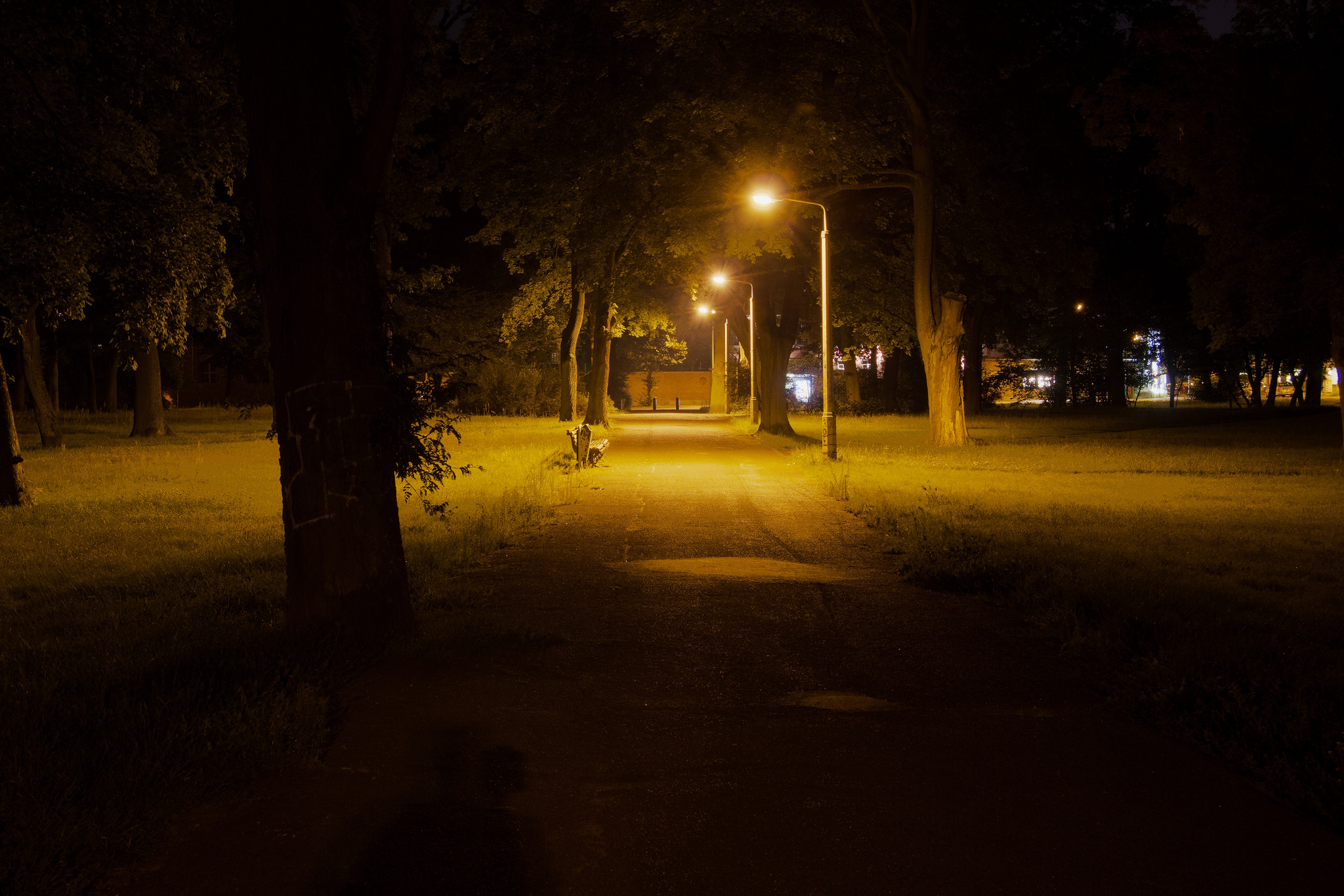 It happens in Berlin, in 2009, a few days before New Year, or Sylvester as continental Europeans call the end of the year celebrations. I had spent the late afternoon and evening visiting record shops and streetwear stores, dropping off copies of the first issue of Irie Up, a new magazine I was publishing. It was a return to journalism and publishing after a few years off the media scene, and Irie Up was a niche publication in a niche market, but part of a bigger operation I was working with in Berlin with a couple of friends that included a studio, a shop and a soundsystem. Yaam was heart of the reggae scene in Berlin, and also my last stop that evening to drop off some magazines and catch a bit of the late show. In my backpack I still had a box of magazines and some vinyls I’d picked up in trade earlier, and I thought about getting a taxi back to Kreuzberg, but the snow was falling softly, and I decided instead to walk instead. It’s a fifty minute walk from Yaam in Friedrichshain down to Blücherstrasse in Kreuzberg, and Berlin on winter nights can be enchanting, with the vintage street lights, the snow falling between the trees, and the cozy bars harbouring late night chats. I walked down Engeldamm and turned south on Adalbert. It was quiet on the streets, quiet enough that I’d noticed a car drifting along behind me earlier, an old Renault Megane, someone looking fruitlessly for a parking spot, I guessed. But as I came down Adalbertstrasse towards the U-bahn at Kottbusser Tor, I noticed the car was still behind me. Why would anyone be following me, I wondered? Surely nothing to do with the magazine? Maybe someone had seen me doing the rounds of the shops and figured I have a backpack full of cash, or even drugs? I’m humming a tune to distract my fears and I can only smile to myself when I realise the tune is old old hip-hop tune about depression and paranoia called My Mind Playing Tricks On Me. But late at night, something ain’t right I feel I’m being tailed by the same sucker’s headlights. I’ve always been a bit paranoid: it’s a useful trait for a journalist. I cross Skalitzerstrasse at Kottbusser, and head down Admiralstrasse, and when I look back, I can’t see the car and feel relief. My chest relaxes. I cross the short bridge and take Grimmsrasse and instead of continuing on down Körtestrasse, I decide to stay off the streets so I take a right on Urbanstrasse and then a left down through the trees onto Fontanepromenade. It’s there that the incident happens. The whole thing plays out in about fifteen seconds. I hear three car doors shut in quick succession and I see three men come around the corner into the park to my right, walking towards a point in the path where they will cut me off in ten or fifteen metres. All three are tall and wiry, with shaved heads, all wearing black jackets and pants, and they’re definitely coming towards me. I’m watching them from the corner of my eye as I walk ahead and notice that none has snow on their jackets. I guess they’ve just gotten out of a car. Is it the same car I noticed earlier? They look like the security team at a Nazi nightclub, and the way they are walking towards me, I’m certain that they’re coming to beat me. I don’t recognise any of them. I think about running, but at the bend at the top of Fontanepromenade, blocking my escape, there’s three big bell-shaped recycling containers. I’m carrying a heavy backpack. We’re still walking towards a meeting point when I see against the snow that the man in the middle is holding a baton of some sort in his right hand, trying to keep it out of sight. It’s at that moment I have a dread feeling and I know that these men are not professionals and even if they are not meant to kill me, they may do just that by mistake. And with no place to run, I accept that this night may be the night when I’m going to have to take a beating from these ugly Nazi motherfuckers, three of them against one, and one of them armed with a baton. I feel preternaturally calm but alert. Two of them walk up beside me, and the third one hangs back. “Hey,” says the one on the left, as he steps onto the footpath. “You. Have you Rizzla papers?” At that point I stop walking and turn to face them. No way am I going to turn my back on them. I pat my pockets as if looking for papers. “No, sorry,” I say. My questioner has now taken out a pouch of tobacco, and I can see he already has a pack of rolling papers in the pouch. I almost smile. “You must have some papers, man, come on,” he says again. The one with the baton - who thinks I haven’t noticed it - steps to his left, behind me. I feel a moment of contempt for their unprofessionalism. It is silent on the street and I can hear the cuff of his jacket twisting, and I know he’s raising the baton over his head. I step forward and twist to look over my left shoulder and see the baton over his head, already in motion. I’m wearing a parka with a big furry hood but I know that the baton is going to lay me flat and I instinctively throw up my left arm and the metal baton glances off my arm, ricochets back off the metal recycling bin and smacks violently back onto his forehead. I watch in amazement as his feet seem to rise up off the ground, and then he collapses in a heap on the path. He appears to be unconscious. The man behind him has been watching from behind baton man and hasn’t seen what happened. He is staring at me with his mouth open. I look back at the other one, who steps back from me, and then goes around to crouch down and shake the prone body. The bin is still resonating gently. At that stage I run the fastest three hundred metres I’ve even managed and it’s only when I get down to Südstern that I look back and see that there’s no sign of a pursuer. I walk half way down Blücherstrasse, and just before I get to my building, I turn and give the finger with both hands back in the general direction of the park and laugh. In the yard the next morning, one of neighbours, a market trader, is smoking a cigarette and drinking a takeaway coffee. I nod hello as I pass by. “Hey man,” he says. “There was a guy shouting in the street last night, in English, he sounded just like you.” “Like me? What was he saying?” “He was saying: ‘Fuck you, you fucking Nazis fucks.’ Are you fighting Nazis now?” I shake my head. “Must have been someone else.” He pats me on the shoulder. “Anyway, someone’s got to do it.” |
| json metadata | {"tags":["berlin","fascists","reggae","rastafari"],"image":["https://cdn.steemitimages.com/DQmTGATQjmQDdiVv8MSJqffKXsqLZxoiLraz12fpwqMk4wU/7633138354_8caf7513cb_k.jpg"],"app":"steemit/0.1","format":"markdown"} |
| Transaction Info | Block #27181313/Trx 3d14b550d2d2c620d55c5ec5505df98f4e587029 |
View Raw JSON Data
{
"trx_id": "3d14b550d2d2c620d55c5ec5505df98f4e587029",
"block": 27181313,
"trx_in_block": 11,
"op_in_trx": 0,
"virtual_op": 0,
"timestamp": "2018-10-27T18:09:45",
"op": [
"comment",
{
"parent_author": "",
"parent_permlink": "berlin",
"author": "irieland",
"permlink": "i-was-attacked-in-berlin-here-s-how-it-played-out",
"title": "I was attacked in Berlin once. This is how it played out",
"body": "I’ve only been assaulted once in my life, and I hope it’s the only time. I never did find out the reason for the assault, or who did it, though I’m fairly certain that my attackers were fascists of some sort. I never did report the incident afterwards, for reasons that may become clear, but with the rise of the far right and the normalisation of hate speech, I think now is as good a time as any to tell this particular story. This is how it played out.\n\n\n\nIt happens in Berlin, in 2009, a few days before New Year, or Sylvester as continental Europeans call the end of the year celebrations. I had spent the late afternoon and evening visiting record shops and streetwear stores, dropping off copies of the first issue of Irie Up, a new magazine I was publishing. It was a return to journalism and publishing after a few years off the media scene, and Irie Up was a niche publication in a niche market, but part of a bigger operation I was working with in Berlin with a couple of friends that included a studio, a shop and a soundsystem. Yaam was heart of the reggae scene in Berlin, and also my last stop that evening to drop off some magazines and catch a bit of the late show. In my backpack I still had a box of magazines and some vinyls I’d picked up in trade earlier, and I thought about getting a taxi back to Kreuzberg, but the snow was falling softly, and I decided instead to walk instead. \n\nIt’s a fifty minute walk from Yaam in Friedrichshain down to Blücherstrasse in Kreuzberg, and Berlin on winter nights can be enchanting, with the vintage street lights, the snow falling between the trees, and the cozy bars harbouring late night chats. I walked down Engeldamm and turned south on Adalbert. It was quiet on the streets, quiet enough that I’d noticed a car drifting along behind me earlier, an old Renault Megane, someone looking fruitlessly for a parking spot, I guessed. But as I came down Adalbertstrasse towards the U-bahn at Kottbusser Tor, I noticed the car was still behind me. Why would anyone be following me, I wondered? Surely nothing to do with the magazine? Maybe someone had seen me doing the rounds of the shops and figured I have a backpack full of cash, or even drugs? I’m humming a tune to distract my fears and I can only smile to myself when I realise the tune is old old hip-hop tune about depression and paranoia called My Mind Playing Tricks On Me.\n\nBut late at night, something ain’t right\nI feel I’m being tailed by the same sucker’s headlights. \n\nI’ve always been a bit paranoid: it’s a useful trait for a journalist. I cross Skalitzerstrasse at Kottbusser, and head down Admiralstrasse, and when I look back, I can’t see the car and feel relief. My chest relaxes. I cross the short bridge and take Grimmsrasse and instead of continuing on down Körtestrasse, I decide to stay off the streets so I take a right on Urbanstrasse and then a left down through the trees onto Fontanepromenade. It’s there that the incident happens. The whole thing plays out in about fifteen seconds. \n\nI hear three car doors shut in quick succession and I see three men come around the corner into the park to my right, walking towards a point in the path where they will cut me off in ten or fifteen metres. All three are tall and wiry, with shaved heads, all wearing black jackets and pants, and they’re definitely coming towards me. I’m watching them from the corner of my eye as I walk ahead and notice that none has snow on their jackets. I guess they’ve just gotten out of a car. Is it the same car I noticed earlier?\n\nThey look like the security team at a Nazi nightclub, and the way they are walking towards me, I’m certain that they’re coming to beat me. I don’t recognise any of them. I think about running, but at the bend at the top of Fontanepromenade, blocking my escape, there’s three big bell-shaped recycling containers. I’m carrying a heavy backpack. We’re still walking towards a meeting point when I see against the snow that the man in the middle is holding a baton of some sort in his right hand, trying to keep it out of sight. It’s at that moment I have a dread feeling and I know that these men are not professionals and even if they are not meant to kill me, they may do just that by mistake. And with no place to run, I accept that this night may be the night when I’m going to have to take a beating from these ugly Nazi motherfuckers, three of them against one, and one of them armed with a baton. I feel preternaturally calm but alert. Two of them walk up beside me, and the third one hangs back. \n\n“Hey,” says the one on the left, as he steps onto the footpath. “You. Have you Rizzla papers?”\nAt that point I stop walking and turn to face them. No way am I going to turn my back on them. I pat my pockets as if looking for papers.\n“No, sorry,” I say. \nMy questioner has now taken out a pouch of tobacco, and I can see he already has a pack of rolling papers in the pouch. I almost smile. \n“You must have some papers, man, come on,” he says again. The one with the baton - who thinks I haven’t noticed it - steps to his left, behind me. I feel a moment of contempt for their unprofessionalism. It is silent on the street and I can hear the cuff of his jacket twisting, and I know he’s raising the baton over his head. \n\nI step forward and twist to look over my left shoulder and see the baton over his head, already in motion. I’m wearing a parka with a big furry hood but I know that the baton is going to lay me flat and I instinctively throw up my left arm and the metal baton glances off my arm, ricochets back off the metal recycling bin and smacks violently back onto his forehead. I watch in amazement as his feet seem to rise up off the ground, and then he collapses in a heap on the path. He appears to be unconscious. The man behind him has been watching from behind baton man and hasn’t seen what happened. He is staring at me with his mouth open. I look back at the other one, who steps back from me, and then goes around to crouch down and shake the prone body. The bin is still resonating gently. \n\nAt that stage I run the fastest three hundred metres I’ve even managed and it’s only when I get down to Südstern that I look back and see that there’s no sign of a pursuer. I walk half way down Blücherstrasse, and just before I get to my building, I turn and give the finger with both hands back in the general direction of the park and laugh. \n\nIn the yard the next morning, one of neighbours, a market trader, is smoking a cigarette and drinking a takeaway coffee. I nod hello as I pass by.\n“Hey man,” he says. “There was a guy shouting in the street last night, in English, he sounded just like you.” \n“Like me? What was he saying?”\n“He was saying: ‘Fuck you, you fucking Nazis fucks.’ Are you fighting Nazis now?”\nI shake my head. \n“Must have been someone else.”\nHe pats me on the shoulder. \n“Anyway, someone’s got to do it.”",
"json_metadata": "{\"tags\":[\"berlin\",\"fascists\",\"reggae\",\"rastafari\"],\"image\":[\"https://cdn.steemitimages.com/DQmTGATQjmQDdiVv8MSJqffKXsqLZxoiLraz12fpwqMk4wU/7633138354_8caf7513cb_k.jpg\"],\"app\":\"steemit/0.1\",\"format\":\"markdown\"}"
}
]
}irielandpublished a new post: i-was-attacked-in-berlin-here-s-how-it-played-out2018/10/27 18:08:57
irielandpublished a new post: i-was-attacked-in-berlin-here-s-how-it-played-out
2018/10/27 18:08:57
| parent author | |
| parent permlink | berlin |
| author | irieland |
| permlink | i-was-attacked-in-berlin-here-s-how-it-played-out |
| title | I was attacked in Berlin: Here's how it played out |
| body | I’ve only been assaulted once in my life, and I hope it’s the only time. I never did find out the reason for the assault, or who did it, though I’m fairly certain that my attackers were fascists of some sort. I never did report the incident afterwards, for reasons that may become clear, but with the rise of the far right and the normalisation of hate speech, I think now is as good a time as any to tell this particular story. This is how it played out.  It happens in Berlin, in 2009, a few days before New Year, or Sylvester as continental Europeans call the end of the year celebrations. I had spent the late afternoon and evening visiting record shops and streetwear stores, dropping off copies of the first issue of Irie Up, a new magazine I was publishing. It was a return to journalism and publishing after a few years off the media scene, and Irie Up was a niche publication in a niche market, but part of a bigger operation I was working with in Berlin with a couple of friends that included a studio, a shop and a soundsystem. Yaam was heart of the reggae scene in Berlin, and also my last stop that evening to drop off some magazines and catch a bit of the late show. In my backpack I still had a box of magazines and some vinyls I’d picked up in trade earlier, and I thought about getting a taxi back to Kreuzberg, but the snow was falling softly, and I decided instead to walk instead. It’s a fifty minute walk from Yaam in Friedrichshain down to Blücherstrasse in Kreuzberg, and Berlin on winter nights can be enchanting, with the vintage street lights, the snow falling between the trees, and the cozy bars harbouring late night chats. I walked down Engeldamm and turned south on Adalbert. It was quiet on the streets, quiet enough that I’d noticed a car drifting along behind me earlier, an old Renault Megane, someone looking fruitlessly for a parking spot, I guessed. But as I came down Adalbertstrasse towards the U-bahn at Kottbusser Tor, I noticed the car was still behind me. Why would anyone be following me, I wondered? Surely nothing to do with the magazine? Maybe someone had seen me doing the rounds of the shops and figured I have a backpack full of cash, or even drugs? I’m humming a tune to distract my fears and I can only smile to myself when I realise the tune is old old hip-hop tune about depression and paranoia called My Mind Playing Tricks On Me. But late at night, something ain’t right I feel I’m being tailed by the same sucker’s headlights. I’ve always been a bit paranoid: it’s a useful trait for a journalist. I cross Skalitzerstrasse at Kottbusser, and head down Admiralstrasse, and when I look back, I can’t see the car and feel relief. My chest relaxes. I cross the short bridge and take Grimmsrasse and instead of continuing on down Körtestrasse, I decide to stay off the streets so I take a right on Urbanstrasse and then a left down through the trees onto Fontanepromenade. It’s there that the incident happens. The whole thing plays out in about fifteen seconds. I hear three car doors shut in quick succession and I see three men come around the corner into the park to my right, walking towards a point in the path where they will cut me off in ten or fifteen metres. All three are tall and wiry, with shaved heads, all wearing black jackets and pants, and they’re definitely coming towards me. I’m watching them from the corner of my eye as I walk ahead and notice that none has snow on their jackets. I guess they’ve just gotten out of a car. Is it the same car I noticed earlier? They look like the security team at a Nazi nightclub, and the way they are walking towards me, I’m certain that they’re coming to beat me. I don’t recognise any of them. I think about running, but at the bend at the top of Fontanepromenade, blocking my escape, there’s three big bell-shaped recycling containers. I’m carrying a heavy backpack. We’re still walking towards a meeting point when I see against the snow that the man in the middle is holding a baton of some sort in his right hand, trying to keep it out of sight. It’s at that moment I have a dread feeling and I know that these men are not professionals and even if they are not meant to kill me, they may do just that by mistake. And with no place to run, I accept that this night may be the night when I’m going to have to take a beating from these ugly Nazi motherfuckers, three of them against one, and one of them armed with a baton. I feel preternaturally calm but alert. Two of them walk up beside me, and the third one hangs back. “Hey,” says the one on the left, as he steps onto the footpath. “You. Have you Rizzla papers?” At that point I stop walking and turn to face them. No way am I going to turn my back on them. I pat my pockets as if looking for papers. “No, sorry,” I say. My questioner has now taken out a pouch of tobacco, and I can see he already has a pack of rolling papers in the pouch. I almost smile. “You must have some papers, man, come on,” he says again. The one with the baton - who thinks I haven’t noticed it - steps to his left, behind me. I feel a moment of contempt for their unprofessionalism. It is silent on the street and I can hear the cuff of his jacket twisting, and I know he’s raising the baton over his head. I step forward and twist to look over my left shoulder and see the baton over his head, already in motion. I’m wearing a parka with a big furry hood but I know that the baton is going to lay me flat and I instinctively throw up my left arm and the metal baton glances off my arm, ricochets back off the metal recycling bin and smacks violently back onto his forehead. I watch in amazement as his feet seem to rise up off the ground, and then he collapses in a heap on the path. He appears to be unconscious. The man behind him has been watching from behind baton man and hasn’t seen what happened. He is staring at me with his mouth open. I look back at the other one, who steps back from me, and then goes around to crouch down and shake the prone body. The bin is still resonating gently. At that stage I run the fastest three hundred metres I’ve even managed and it’s only when I get down to Südstern that I look back and see that there’s no sign of a pursuer. I walk half way down Blücherstrasse, and just before I get to my building, I turn and give the finger with both hands back in the general direction of the park and laugh. In the yard the next morning, one of neighbours, a market trader, is smoking a cigarette and drinking a takeaway coffee. I nod hello as I pass by. “Hey man,” he says. “There was a guy shouting in the street last night, in English, he sounded just like you.” “Like me? What was he saying?” “He was saying: ‘Fuck you, you fucking Nazis fucks.’ Are you fighting Nazis now?” I shake my head. “Must have been someone else.” He pats me on the shoulder. “Anyway, someone’s got to do it.” |
| json metadata | {"tags":["berlin","fascists","reggae","rastafari"],"image":["https://cdn.steemitimages.com/DQmTGATQjmQDdiVv8MSJqffKXsqLZxoiLraz12fpwqMk4wU/7633138354_8caf7513cb_k.jpg"],"app":"steemit/0.1","format":"markdown"} |
| Transaction Info | Block #27181297/Trx 4382aebd70903b52eb293ca9f258651c592f4877 |
View Raw JSON Data
{
"trx_id": "4382aebd70903b52eb293ca9f258651c592f4877",
"block": 27181297,
"trx_in_block": 10,
"op_in_trx": 0,
"virtual_op": 0,
"timestamp": "2018-10-27T18:08:57",
"op": [
"comment",
{
"parent_author": "",
"parent_permlink": "berlin",
"author": "irieland",
"permlink": "i-was-attacked-in-berlin-here-s-how-it-played-out",
"title": "I was attacked in Berlin: Here's how it played out",
"body": "I’ve only been assaulted once in my life, and I hope it’s the only time. I never did find out the reason for the assault, or who did it, though I’m fairly certain that my attackers were fascists of some sort. I never did report the incident afterwards, for reasons that may become clear, but with the rise of the far right and the normalisation of hate speech, I think now is as good a time as any to tell this particular story. This is how it played out.\n\n\n\nIt happens in Berlin, in 2009, a few days before New Year, or Sylvester as continental Europeans call the end of the year celebrations. I had spent the late afternoon and evening visiting record shops and streetwear stores, dropping off copies of the first issue of Irie Up, a new magazine I was publishing. It was a return to journalism and publishing after a few years off the media scene, and Irie Up was a niche publication in a niche market, but part of a bigger operation I was working with in Berlin with a couple of friends that included a studio, a shop and a soundsystem. Yaam was heart of the reggae scene in Berlin, and also my last stop that evening to drop off some magazines and catch a bit of the late show. In my backpack I still had a box of magazines and some vinyls I’d picked up in trade earlier, and I thought about getting a taxi back to Kreuzberg, but the snow was falling softly, and I decided instead to walk instead. \n\nIt’s a fifty minute walk from Yaam in Friedrichshain down to Blücherstrasse in Kreuzberg, and Berlin on winter nights can be enchanting, with the vintage street lights, the snow falling between the trees, and the cozy bars harbouring late night chats. I walked down Engeldamm and turned south on Adalbert. It was quiet on the streets, quiet enough that I’d noticed a car drifting along behind me earlier, an old Renault Megane, someone looking fruitlessly for a parking spot, I guessed. But as I came down Adalbertstrasse towards the U-bahn at Kottbusser Tor, I noticed the car was still behind me. Why would anyone be following me, I wondered? Surely nothing to do with the magazine? Maybe someone had seen me doing the rounds of the shops and figured I have a backpack full of cash, or even drugs? I’m humming a tune to distract my fears and I can only smile to myself when I realise the tune is old old hip-hop tune about depression and paranoia called My Mind Playing Tricks On Me.\n\nBut late at night, something ain’t right\nI feel I’m being tailed by the same sucker’s headlights. \n\nI’ve always been a bit paranoid: it’s a useful trait for a journalist. I cross Skalitzerstrasse at Kottbusser, and head down Admiralstrasse, and when I look back, I can’t see the car and feel relief. My chest relaxes. I cross the short bridge and take Grimmsrasse and instead of continuing on down Körtestrasse, I decide to stay off the streets so I take a right on Urbanstrasse and then a left down through the trees onto Fontanepromenade. It’s there that the incident happens. The whole thing plays out in about fifteen seconds. \n\nI hear three car doors shut in quick succession and I see three men come around the corner into the park to my right, walking towards a point in the path where they will cut me off in ten or fifteen metres. All three are tall and wiry, with shaved heads, all wearing black jackets and pants, and they’re definitely coming towards me. I’m watching them from the corner of my eye as I walk ahead and notice that none has snow on their jackets. I guess they’ve just gotten out of a car. Is it the same car I noticed earlier?\n\nThey look like the security team at a Nazi nightclub, and the way they are walking towards me, I’m certain that they’re coming to beat me. I don’t recognise any of them. I think about running, but at the bend at the top of Fontanepromenade, blocking my escape, there’s three big bell-shaped recycling containers. I’m carrying a heavy backpack. We’re still walking towards a meeting point when I see against the snow that the man in the middle is holding a baton of some sort in his right hand, trying to keep it out of sight. It’s at that moment I have a dread feeling and I know that these men are not professionals and even if they are not meant to kill me, they may do just that by mistake. And with no place to run, I accept that this night may be the night when I’m going to have to take a beating from these ugly Nazi motherfuckers, three of them against one, and one of them armed with a baton. I feel preternaturally calm but alert. Two of them walk up beside me, and the third one hangs back. \n\n“Hey,” says the one on the left, as he steps onto the footpath. “You. Have you Rizzla papers?”\nAt that point I stop walking and turn to face them. No way am I going to turn my back on them. I pat my pockets as if looking for papers.\n“No, sorry,” I say. \nMy questioner has now taken out a pouch of tobacco, and I can see he already has a pack of rolling papers in the pouch. I almost smile. \n“You must have some papers, man, come on,” he says again. The one with the baton - who thinks I haven’t noticed it - steps to his left, behind me. I feel a moment of contempt for their unprofessionalism. It is silent on the street and I can hear the cuff of his jacket twisting, and I know he’s raising the baton over his head. \n\nI step forward and twist to look over my left shoulder and see the baton over his head, already in motion. I’m wearing a parka with a big furry hood but I know that the baton is going to lay me flat and I instinctively throw up my left arm and the metal baton glances off my arm, ricochets back off the metal recycling bin and smacks violently back onto his forehead. I watch in amazement as his feet seem to rise up off the ground, and then he collapses in a heap on the path. He appears to be unconscious. The man behind him has been watching from behind baton man and hasn’t seen what happened. He is staring at me with his mouth open. I look back at the other one, who steps back from me, and then goes around to crouch down and shake the prone body. The bin is still resonating gently. \n\nAt that stage I run the fastest three hundred metres I’ve even managed and it’s only when I get down to Südstern that I look back and see that there’s no sign of a pursuer. I walk half way down Blücherstrasse, and just before I get to my building, I turn and give the finger with both hands back in the general direction of the park and laugh. \n\nIn the yard the next morning, one of neighbours, a market trader, is smoking a cigarette and drinking a takeaway coffee. I nod hello as I pass by.\n“Hey man,” he says. “There was a guy shouting in the street last night, in English, he sounded just like you.” \n“Like me? What was he saying?”\n“He was saying: ‘Fuck you, you fucking Nazis fucks.’ Are you fighting Nazis now?”\nI shake my head. \n“Must have been someone else.”\nHe pats me on the shoulder. \n“Anyway, someone’s got to do it.”",
"json_metadata": "{\"tags\":[\"berlin\",\"fascists\",\"reggae\",\"rastafari\"],\"image\":[\"https://cdn.steemitimages.com/DQmTGATQjmQDdiVv8MSJqffKXsqLZxoiLraz12fpwqMk4wU/7633138354_8caf7513cb_k.jpg\"],\"app\":\"steemit/0.1\",\"format\":\"markdown\"}"
}
]
}2018/08/09 18:53:48
2018/08/09 18:53:48
| delegator | steem |
| delegatee | irieland |
| vesting shares | 9037.028257 VESTS |
| Transaction Info | Block #24924038/Trx 8eb1ef16a723b0a95364209f4660f9866b3ec55d |
View Raw JSON Data
{
  "trx_id": "8eb1ef16a723b0a95364209f4660f9866b3ec55d",
  "block": 24924038,
  "trx_in_block": 24,
  "op_in_trx": 0,
  "virtual_op": 0,
  "timestamp": "2018-08-09T18:53:48",
  "op": [
    "delegate_vesting_shares",
    {
      "delegator": "steem",
      "delegatee": "irieland",
      "vesting_shares": "9037.028257 VESTS"
    }
  ]
}irielandpublished a new post: cricket-in-ireland2018/05/10 17:39:21
irielandpublished a new post: cricket-in-ireland
2018/05/10 17:39:21
| parent author | |
| parent permlink | cricket |
| author | irieland |
| permlink | cricket-in-ireland |
| title | Cricket in Ireland... |
| body | The Bangladeshi taxi driver in Dubai finds out I'm from Ireland and asks me if I know Kevin O'Brien. I don't. Who is he? "The cricket player!" says he, amazed that I don't know this. I tell him we don't like English sports. Apart from soccer. And rugby. And tennis. "Cricket has got a long history in Ireland. There were playing in Phoenix Park back in 1730, and by 1860 it had become one of the most popular sports in the country. There were around 300 clubs in Ireland at that point and the national team was strong enough to beat MCC by an innings at Lord’s in 1858. Everything started to change when the Gaelic Athletic Association was formed in 1884, and then, at the turn of the 20th century, banned GAA members from playing or attending foreign sports." https://www.theguardian.com/sport/2018/may/10/ireland-pakistan-first-test-match |
| json metadata | {"tags":["cricket","ireland"],"links":["https://www.theguardian.com/sport/2018/may/10/ireland-pakistan-first-test-match"],"app":"steemit/0.1","format":"markdown"} |
| Transaction Info | Block #22313902/Trx 3fd4699e6da5d96096823c07742aae8d130fc6ae |
View Raw JSON Data
{
  "trx_id": "3fd4699e6da5d96096823c07742aae8d130fc6ae",
  "block": 22313902,
  "trx_in_block": 2,
  "op_in_trx": 0,
  "virtual_op": 0,
  "timestamp": "2018-05-10T17:39:21",
  "op": [
    "comment",
    {
      "parent_author": "",
      "parent_permlink": "cricket",
      "author": "irieland",
      "permlink": "cricket-in-ireland",
      "title": "Cricket in Ireland...",
      "body": "The Bangladeshi taxi driver in Dubai finds out I'm from Ireland and asks me if I know Kevin O'Brien. I don't. Who is he? \"The cricket player!\" says he, amazed that I don't know this. I tell him we don't like English sports. Apart from soccer. And rugby. And tennis.\n\n\"Cricket has got a long history in Ireland. There were playing in Phoenix Park back in 1730, and by 1860 it had become one of the most popular sports in the country. There were around 300 clubs in Ireland at that point and the national team was strong enough to beat MCC by an innings at Lord’s in 1858. Everything started to change when the Gaelic Athletic Association was formed in 1884, and then, at the turn of the 20th century, banned GAA members from playing or attending foreign sports.\"\n\nhttps://www.theguardian.com/sport/2018/may/10/ireland-pakistan-first-test-match",
      "json_metadata": "{\"tags\":[\"cricket\",\"ireland\"],\"links\":[\"https://www.theguardian.com/sport/2018/may/10/ireland-pakistan-first-test-match\"],\"app\":\"steemit/0.1\",\"format\":\"markdown\"}"
    }
  ]
}2018/05/09 17:24:36
2018/05/09 17:24:36
| required auths | [] |
| required posting auths | ["irieland"] |
| id | follow |
| json | ["follow",{"follower":"irieland","following":"blessu","what":["blog"]}] |
| Transaction Info | Block #22284819/Trx c0ce632634c860597db3f135dddebece354962b7 |
View Raw JSON Data
{
  "trx_id": "c0ce632634c860597db3f135dddebece354962b7",
  "block": 22284819,
  "trx_in_block": 6,
  "op_in_trx": 0,
  "virtual_op": 0,
  "timestamp": "2018-05-09T17:24:36",
  "op": [
    "custom_json",
    {
      "required_auths": [],
      "required_posting_auths": [
        "irieland"
      ],
      "id": "follow",
      "json": "[\"follow\",{\"follower\":\"irieland\",\"following\":\"blessu\",\"what\":[\"blog\"]}]"
    }
  ]
}blessuupvoted (100.00%) @irieland / bitcoin-the-first-ten-years2018/05/08 22:19:39
blessuupvoted (100.00%) @irieland / bitcoin-the-first-ten-years
2018/05/08 22:19:39
| voter | blessu |
| author | irieland |
| permlink | bitcoin-the-first-ten-years |
| weight | 10000 (100.00%) |
| Transaction Info | Block #22261921/Trx be60355346aee5973a14edd4d789e246f113907b |
View Raw JSON Data
{
  "trx_id": "be60355346aee5973a14edd4d789e246f113907b",
  "block": 22261921,
  "trx_in_block": 57,
  "op_in_trx": 0,
  "virtual_op": 0,
  "timestamp": "2018-05-08T22:19:39",
  "op": [
    "vote",
    {
      "voter": "blessu",
      "author": "irieland",
      "permlink": "bitcoin-the-first-ten-years",
      "weight": 10000
    }
  ]
}ubgupvoted (1.00%) @irieland / the-builders2018/05/05 22:27:42
ubgupvoted (1.00%) @irieland / the-builders
2018/05/05 22:27:42
| voter | ubg |
| author | irieland |
| permlink | the-builders |
| weight | 100 (1.00%) |
| Transaction Info | Block #22175706/Trx bc09db1299a57f09e502b12deecd550e1bd4552a |
View Raw JSON Data
{
  "trx_id": "bc09db1299a57f09e502b12deecd550e1bd4552a",
  "block": 22175706,
  "trx_in_block": 3,
  "op_in_trx": 0,
  "virtual_op": 0,
  "timestamp": "2018-05-05T22:27:42",
  "op": [
    "vote",
    {
      "voter": "ubg",
      "author": "irieland",
      "permlink": "the-builders",
      "weight": 100
    }
  ]
}ubgupvoted (1.00%) @irieland / satoshi-nakamoto2018/05/05 22:26:09
ubgupvoted (1.00%) @irieland / satoshi-nakamoto
2018/05/05 22:26:09
| voter | ubg |
| author | irieland |
| permlink | satoshi-nakamoto |
| weight | 100 (1.00%) |
| Transaction Info | Block #22175675/Trx bb353da6f0753c52a8ccbd7d7a3cc350c29a6212 |
View Raw JSON Data
{
  "trx_id": "bb353da6f0753c52a8ccbd7d7a3cc350c29a6212",
  "block": 22175675,
  "trx_in_block": 20,
  "op_in_trx": 0,
  "virtual_op": 0,
  "timestamp": "2018-05-05T22:26:09",
  "op": [
    "vote",
    {
      "voter": "ubg",
      "author": "irieland",
      "permlink": "satoshi-nakamoto",
      "weight": 100
    }
  ]
}irielandpublished a new post: the-money-creators2018/05/05 19:04:18
irielandpublished a new post: the-money-creators
2018/05/05 19:04:18
| parent author | |
| parent permlink | bitcoin |
| author | irieland |
| permlink | the-money-creators |
| title | 14 The Money Creators |
| body |  So where does that leave us? In the early months of 2018, the bitcoin price bobbed around in the range around $10,000, cheering up developers who felt the cryptocurrency needed more time to develop out of the investment spotlight. Searches for bitcoin on Google dropped, as did the transaction volume, even though the fees had dropped significantly. It seems clear that bitcoin has to go through a few more evolutions before being widely adopted as a currency for payments. What does remain, though, is the fact that the global financial crisis of 2007 is still playing out, with no radical and transformative solution to the existing problems. It’s worth recounting those here. In September 2007, panic began to spread through the global banking system. An abrupt drop in demand for securitised mortgages, as people stopped paying for their homes, caused the short term money markets to seize up. The UK bank Northern Rock, unable to source short-term funding to pay its obligations, asked the Bank of England to provide it with liquidity, and the next morning nervous Northern Rock customers showed up en masse outside branches to withdraw their money. It was the first bank run in England since 1866, and the sight unnerved financial markets further. As banks lobbied for action, central banks began issuing credit into the markets, dropping interest rates to nearly zero and buying government and corporate bonds. In the years of analysis that followed, the public learned, too late, all about world of triple A rated bonds, securitised mortgages bonds, collateralised debt obligations, the shadow banking system and moral hazard. Demand for lending dropped off, as people and businesses paid off debt built up during the boom years. Yet few seemed the wiser about how to fix the problem. The Bank of England and other central banks continued to create billions of dollars, yen, pounds and euros without moving the needle on inflation. In 2014, the Bank of England was moved to publish a paper about money creation in the modern economy. The conventional wisdom about fractional reserve banking - the idea that banks take deposits, and then legally lend out multiples of those deposits, was incorrect, the paper stated: “In the modern economy, most money takes the form of bank deposits. But how those bank deposits are created is often misunderstood: the principal way is through commercial banks making loans. Whenever a bank makes a loan, it simultaneously creates a matching deposit in the borrower’s bank account, thereby creating new money.” Nor, the paper continued, is central bank money ‘multiplied up’ into more deposits and loans. Most of the money in circulation, 97 percent, is made up of money created by private banks. The rest is central bank money, which is notes and coins. The bank acts to balance the amount of money in circulation by setting interest rates, but when those rates (when at zero for instance) are not effective, then the bank can directly undertake asset purchases: quantitative easing. The paper was pointing out two important things: that most money in circulation is interest-bearing debt, legally created by private banks; and that quantitative easing resulted indirectly in the Bank buying government bonds. The paper was widely circulated in the bitcoin world, along with links to an article in the Guardian titled ‘The truth is out: money is just an IOU, and the banks are rolling in it’. It written by anthropologist David Graeber, author of Debt: The first 5,000 years. “Why did the Bank of England suddenly admit all this?,” he wrote. “Well, one reason is because it's obviously true. The Bank's job is to actually run the system, and of late, the system has not been running especially well. It's possible that it decided that maintaining the fantasy-land version of economics that has proved so convenient to the rich is simply a luxury it can no longer afford.” One of the main arguments of bitcoin critics was that one could not simply create money out of ‘thin air’. The Bank of England was now calmly - if patronisingly - was explaining that this is precisely how the creation of money happens in a modern economy. However, the bank was no longer the only one in control of the creation of money in a modern economy. In those intervening years, the big developments in payment have come from places such as China, which largely bypassed the existing cards network widely used for payments in the West, to be replaced by the QR-code and smartphone combination used by Alipay and WeChatPay. Facing into the future a little, it does not seem that big a leap for someone to come up with a widely usable mobile wallet that allows payments with bitcoin using the QR code system that does away with copying and pasting long hashes and makes the payment easy and widely accepted. That’s the objective, it appears, of groups such as Pantera Capital, which has back smartphone crypto wallet and payment business Abra and also Bitpesa, both designed first for emerging economies. But when we look at the wider context of internet businesses, data, and privacy, it seems clear now for the last several years that individuals and societies will reject the centralised surveillance model of Facebook and Google, with even Tim Cook of Apple stepping in to criticise Facebook - and Microsoft openly stating that its business is based on selling things, not surveilling its customers. China still appears to be headed towards a full-surveillance state, just as Western countries are resiling from the same approach. So what next for bitcoin? With wide interest in the blockchain, a new model is emerging for self-sovereignty, where citizens can hold their own data securely through a smartphone-based app that lets users control their own data, sharing just as much as is necessary for different circumstances, and sharing that data in a way that it remains encrypted. It’s 50 years since people started dreaming of personal computers, and the attendant problems that might accompany that, such as the need for privacy on the internet. Personal computers for all is a dream now widely realised with the smartphone, but along with that came alarm over surveillance, and data capture by the state and corporate world. And along with that came the practice of widely sharing our personal information such as name, date of birth, bank account or credit card information - opening up a vista where all of this data is regularly stolen and hacked, bringing us a world of hassle to protect our email and social media accounts. Is there a better way? Certainly. Instead of a centralised world we’re seeing the first possibilities of a decentralised world run by citizens, relying on technology such as smartphones and the blockchain, in a way that will surely open up new ways of trading, sharing and communicating with one another. The direction of money on the internet points that way. In the final analysis, as we’ve seen through this book, money is a codified form of value, moved around by a series of messages. Casting a cold eye on modern media, Marshall McLuhan famously stated that the medium is the message. Now we can say that money is the message. |
| json metadata | {"tags":["bitcoin","blockchain","money","northernrock"],"app":"steemit/0.1","format":"markdown","image":["https://steemitimages.com/DQmNMsSzx5oqCgzTnZa9p2zT93sk2A83mis4BxfCmVXfVLe/Screen%20Shot%202018-05-05%20at%2016.09.32.png"]} |
| Transaction Info | Block #22171638/Trx 7ec5e146fea25ebc2badb4649ad8e029847fa81f |
View Raw JSON Data
{
"trx_id": "7ec5e146fea25ebc2badb4649ad8e029847fa81f",
"block": 22171638,
"trx_in_block": 56,
"op_in_trx": 0,
"virtual_op": 0,
"timestamp": "2018-05-05T19:04:18",
"op": [
"comment",
{
"parent_author": "",
"parent_permlink": "bitcoin",
"author": "irieland",
"permlink": "the-money-creators",
"title": "14 The Money Creators",
"body": "\n\nSo where does that leave us? In the early months of 2018, the bitcoin price bobbed around in the range around $10,000, cheering up developers who felt the cryptocurrency needed more time to develop out of the investment spotlight. Searches for bitcoin on Google dropped, as did the transaction volume, even though the fees had dropped significantly. It seems clear that bitcoin has to go through a few more evolutions before being widely adopted as a currency for payments. \n\nWhat does remain, though, is the fact that the global financial crisis of 2007 is still playing out, with no radical and transformative solution to the existing problems. It’s worth recounting those here. In September 2007, panic began to spread through the global banking system. An abrupt drop in demand for securitised mortgages, as people stopped paying for their homes, caused the short term money markets to seize up. The UK bank Northern Rock, unable to source short-term funding to pay its obligations, asked the Bank of England to provide it with liquidity, and the next morning nervous Northern Rock customers showed up en masse outside branches to withdraw their money. It was the first bank run in England since 1866, and the sight unnerved financial markets further. \n\nAs banks lobbied for action, central banks began issuing credit into the markets, dropping interest rates to nearly zero and buying government and corporate bonds. In the years of analysis that followed, the public learned, too late, all about world of triple A rated bonds, securitised mortgages bonds, collateralised debt obligations, the shadow banking system and moral hazard. Demand for lending dropped off, as people and businesses paid off debt built up during the boom years. Yet few seemed the wiser about how to fix the problem. The Bank of England and other central banks continued to create billions of dollars, yen, pounds and euros without moving the needle on inflation. \n\nIn 2014, the Bank of England was moved to publish a paper about money creation in the modern economy. The conventional wisdom about fractional reserve banking - the idea that banks take deposits, and then legally lend out multiples of those deposits, was incorrect, the paper stated:\n\n“In the modern economy, most money takes the form of bank deposits. But how those bank deposits are created is often misunderstood: the principal way is through commercial\nbanks making loans. Whenever a bank makes a loan, it simultaneously creates a matching deposit in the borrower’s bank account, thereby creating new money.” Nor, the paper continued, is central bank money ‘multiplied up’ into more deposits and loans. Most of the money in circulation, 97 percent, is made up of money created by private banks. The rest is central bank money, which is notes and coins. The bank acts to balance the amount of money in circulation by setting interest rates, but when those rates (when at zero for instance) are not effective, then the bank can directly undertake asset purchases: quantitative easing. The paper was pointing out two important things: that most money in circulation is interest-bearing debt, legally created by private banks; and that quantitative easing resulted indirectly in the Bank buying government bonds. \n\nThe paper was widely circulated in the bitcoin world, along with links to an article in the Guardian titled ‘The truth is out: money is just an IOU, and the banks are rolling in it’. It written by anthropologist David Graeber, author of Debt: The first 5,000 years. “Why did the Bank of England suddenly admit all this?,” he wrote. “Well, one reason is because it's obviously true. The Bank's job is to actually run the system, and of late, the system has not been running especially well. It's possible that it decided that maintaining the fantasy-land version of economics that has proved so convenient to the rich is simply a luxury it can no longer afford.”\n\nOne of the main arguments of bitcoin critics was that one could not simply create money out of ‘thin air’. The Bank of England was now calmly - if patronisingly - was explaining that this is precisely how the creation of money happens in a modern economy. However, the bank was no longer the only one in control of the creation of money in a modern economy. \n\nIn those intervening years, the big developments in payment have come from places such as China, which largely bypassed the existing cards network widely used for payments in the West, to be replaced by the QR-code and smartphone combination used by Alipay and WeChatPay. Facing into the future a little, it does not seem that big a leap for someone to come up with a widely usable mobile wallet that allows payments with bitcoin using the QR code system that does away with copying and pasting long hashes and makes the payment easy and widely accepted. That’s the objective, it appears, of groups such as Pantera Capital, which has back smartphone crypto wallet and payment business Abra and also Bitpesa, both designed first for emerging economies.\n\nBut when we look at the wider context of internet businesses, data, and privacy, it seems clear now for the last several years that individuals and societies will reject the centralised surveillance model of Facebook and Google, with even Tim Cook of Apple stepping in to criticise Facebook - and Microsoft openly stating that its business is based on selling things, not surveilling its customers. China still appears to be headed towards a full-surveillance state, just as Western countries are resiling from the same approach. \n\nSo what next for bitcoin? With wide interest in the blockchain, a new model is emerging for self-sovereignty, where citizens can hold their own data securely through a smartphone-based app that lets users control their own data, sharing just as much as is necessary for different circumstances, and sharing that data in a way that it remains encrypted. \n\nIt’s 50 years since people started dreaming of personal computers, and the attendant problems that might accompany that, such as the need for privacy on the internet. Personal computers for all is a dream now widely realised with the smartphone, but along with that came alarm over surveillance, and data capture by the state and corporate world. And along with that came the practice of widely sharing our personal information such as name, date of birth, bank account or credit card information - opening up a vista where all of this data is regularly stolen and hacked, bringing us a world of hassle to protect our email and social media accounts. Is there a better way?\n\nCertainly. Instead of a centralised world we’re seeing the first possibilities of a decentralised world run by citizens, relying on technology such as smartphones and the blockchain, in a way that will surely open up new ways of trading, sharing and communicating with one another. The direction of money on the internet points that way. In the final analysis, as we’ve seen through this book, money is a codified form of value, moved around by a series of messages. Casting a cold eye on modern media, Marshall McLuhan famously stated that the medium is the message. Now we can say that money is the message.",
"json_metadata": "{\"tags\":[\"bitcoin\",\"blockchain\",\"money\",\"northernrock\"],\"app\":\"steemit/0.1\",\"format\":\"markdown\",\"image\":[\"https://steemitimages.com/DQmNMsSzx5oqCgzTnZa9p2zT93sk2A83mis4BxfCmVXfVLe/Screen%20Shot%202018-05-05%20at%2016.09.32.png\"]}"
}
]
}irielandpublished a new post: bitcoin-cash-and-ripples-of-subterfuge2018/05/05 19:04:03
irielandpublished a new post: bitcoin-cash-and-ripples-of-subterfuge
2018/05/05 19:04:03
| parent author | |
| parent permlink | bitcoin |
| author | irieland |
| permlink | bitcoin-cash-and-ripples-of-subterfuge |
| title | 13 Bitcoin cash and Ripples of Subterfuge |
| body | Bitcoin has a built-in problem. Each new block is limited in size to one megabyte of information, which in effect limits the number of transactions in each block, meaning that the network can process around six to seven transactions per second. That makes it difficult for bitcoin to be widely used as a method of payment. The Visa card network can process more than 24,000 transactions a second. Since 2014, developers have created new cryptocurrencies, mostly using blockchain software, to offer features they perceive to be lacking in bitcoin. Monero, for instance, was created in 2014 with the goal of offering more privacy than bitcoin; Ethereum was also created in 2014 with the goal of offering more scripting ability. Bitcoin programmers responded with an idea they called Segregated Witness. When users make a bitcoin transaction, they digitally sign the transaction, and the signature makes up most of the transaction data. The implementation, by consensus among the main players in the bitcoin ecosystem, would make way for adding the Lighting Network, which is designed to scale the number of possible transactions in a block by moving multiple transactions between individuals or businesses into a channel on a second layer. Only when the channel is closed is the payment resolved, meaning that there is no need for the blockchain to record all of the individual smaller payments between two entities. But some were not happy with the progress on making bitcoin into a viable payment method, including Roger Ver, one of bitcoin’s first and most ardent advocates. Ver introduced the idea of a new hard fork of bitcoin to create a new cryptocurrency called bitcoin cash. As one of the first players in bitcoin, Ver had purchased the domain bitcoin.com. And so, in the autumn of 2017, an extraordinary episode began to play out in the bitcoin world, and one which suggested that state actors were heavily involved in the campaign against bitcoin. In 2015, Wired magazine wrote that “Bitcoin’s creator Satoshi Nakamoto is probably this unknown Australian genius”. The man named in the article was Craig Wright, and in the following months, Wright began dropping hints that he was in fact the creator of bitcoin. Gavin Andresen and Jon Matonis, two of the early supporters of bitcoin, stepped in to support Wright’s claim. But Wright’s attempts to prove his identity as Nakamoto by producing some of the private keys used by Nakamoto failed to convince critics, and Wright withdrew from the limelight, claiming the false accusations against him were not worth the effort. Wright’s failed foray into the bitcoin limelight seemed odd at the time, redolent of a spook-led operation to wrongfoot the movement. But Wright was set to re-appear two years later when a set of developers supported by Roger Ver and Gavin Andresen invoked a hard fork of bitcoin to create the altcoin bitcoin cash, which came into effect on 1 August of 2017 with Ver as its main promoter. Ver spent money promoting bitcoin cash, telling journalists that bitcoin cash was the real bitcoin as intended by Satoshi Nakamoto. Wright began appearing with Ver, suggesting that 2018 would be the year of bitcoin cash. As bitcoin raced towards its peak in December of 2017 the CNBC show Fast Money invited Ver - a well-known name in the bitcoin world - to appear and comment. Ver took the opportunity to suggest that bitcoin was going to lose out to the real bitcoin, bitcoin cash. Some bitcoin developers were outraged. Ver owned bitcoin.com, a natural destination site for anyone typing ‘what is bitcoin’ into a search engine. The Bitcoin Cash name was a play on Bitcoin itself, and the Bitcoin Cash logo was identical to the Bitcoin logo, but green instead of orange. And right at the moment that bitcoin was attracting a big audience on cable television, here was one of bitcoin’s original advocates stepping in to misdirect newcomers towards bitcoin’s doppelganger. But what to do? Bitcoiners relished the absence of a regulator. If, as one commentator observed, a former Apple employee left the company and started a competitor called Apple Plus, Apple would have immediately had the project halted under copyright and intellectual property laws. Bitcoin was not regulated by patent, but by protocol, so there was no higher authority to appeal to. Bitcoin would have to live or die on its own merits. Craig Wright’s claim to be recognised as Satoshi Nakamoto, and Ver’s subsequent positioning of bitcoin cash as the real bitcoin of Nakamoto, now looked to be a gambit that had backfired. Many regarded Wright as a bad player, his re-appearance on the Ver Bitcoin Cash promotion eroding the campaign’s credibility. Other still smiled and remembered Ver’s early promotion of the honey badger meme. When the price spiked to almost $20,000 in mid-December and then began bucking and sliding down to nearly $6,000 over the next two months, many could accept that this was just another wild fluctuation. Others looked for a more sinister explanation, believing that bitcoin’s institutional opponents were looking for ways to halt its rise - promoting bitcoin cash to produce confusion. In March, the Japanese bankruptcy trustee announced that he had been selling large amounts of bitcoin on exchanges since 18 December, one day after the price peak. A few days later, at $16,000 he sold another 6,000 bitcoins, and the price dropped to $10,000 before recovering. Hard drops in price followed each time he sold a batch of bitcoin. Until March, no one knew who this trader was. Other traders were amazed that the trustee would sell huge batches on the open market. Kraken had offered to handle the sale, as it operated dark pools for making large sales without tanking the market, but had been turned down. [Chapter Fourteen: The Money Creators](https://steemit.com/bitcoin/@irieland/the-money-creators) |
| json metadata | {"tags":["bitcoin","blockchain","kraken","cryptocurrencies","keiser"],"app":"steemit/0.1","format":"markdown","links":["https://steemit.com/bitcoin/@irieland/the-money-creators"]} |
| Transaction Info | Block #22171633/Trx 50a1abb4902e65ae4817fa862455aae50e441995 |
View Raw JSON Data
{
  "trx_id": "50a1abb4902e65ae4817fa862455aae50e441995",
  "block": 22171633,
  "trx_in_block": 9,
  "op_in_trx": 0,
  "virtual_op": 0,
  "timestamp": "2018-05-05T19:04:03",
  "op": [
    "comment",
    {
      "parent_author": "",
      "parent_permlink": "bitcoin",
      "author": "irieland",
      "permlink": "bitcoin-cash-and-ripples-of-subterfuge",
      "title": "13 Bitcoin cash and Ripples of Subterfuge",
      "body": "Bitcoin has a built-in problem. Each new block is limited in size to one megabyte of information, which in effect limits the number of transactions in each block, meaning that the network can process around six to seven transactions per second. That makes it difficult for bitcoin to be widely used as a method of payment. The Visa card network can process more than 24,000 transactions a second. \n\nSince 2014, developers have created new cryptocurrencies, mostly using blockchain software, to offer features they perceive to be lacking in bitcoin. Monero, for instance, was created in 2014 with the goal of offering more privacy than bitcoin; Ethereum was also created in 2014 with the goal of offering more scripting ability. \n\nBitcoin programmers responded with an idea they called Segregated Witness. When users make a bitcoin transaction, they digitally sign the transaction, and the signature makes up most of the transaction data. The implementation, by consensus among the main players in the bitcoin ecosystem, would make way for adding the Lighting Network, which is designed to scale the number of possible transactions in a block by moving multiple transactions between individuals or businesses into a channel on a second layer. Only when the channel is closed is the payment resolved, meaning that there is no need for the blockchain to record all of the individual smaller payments between two entities. \n\nBut some were not happy with the progress on making bitcoin into a viable payment method, including Roger Ver, one of bitcoin’s first and most ardent advocates. Ver introduced the idea of a new hard fork of bitcoin to create a new cryptocurrency called bitcoin cash. As one of the first players in bitcoin, Ver had purchased the domain bitcoin.com. And so, in the autumn of 2017, an extraordinary episode began to play out in the bitcoin world, and one which suggested that state actors were heavily involved in the campaign against bitcoin. \n\nIn 2015, Wired magazine wrote that “Bitcoin’s creator Satoshi Nakamoto is probably this unknown Australian genius”. The man named in the article was Craig Wright, and in the following months, Wright began dropping hints that he was in fact the creator of bitcoin. Gavin Andresen and Jon Matonis, two of the early supporters of bitcoin, stepped in to support Wright’s claim. But Wright’s attempts to prove his identity as Nakamoto by producing some of the private keys used by Nakamoto failed to convince critics, and Wright withdrew from the limelight, claiming the false accusations against him were not worth the effort. Wright’s failed foray into the bitcoin limelight seemed odd at the time, redolent of a spook-led operation to wrongfoot the movement. \n\nBut Wright was set to re-appear two years later when a set of developers supported by Roger Ver and Gavin Andresen invoked a hard fork of bitcoin to create the altcoin bitcoin cash, which came into effect on 1 August of 2017 with Ver as its main promoter. Ver spent money promoting bitcoin cash, telling journalists that bitcoin cash was the real bitcoin as intended by Satoshi Nakamoto. Wright began appearing with Ver, suggesting that 2018 would be the year of bitcoin cash. As bitcoin raced towards its peak in December of 2017 the CNBC show Fast Money invited Ver - a well-known name in the bitcoin world - to appear and comment. Ver took the opportunity to suggest that bitcoin was going to lose out to the real bitcoin, bitcoin cash. \n\nSome bitcoin developers were outraged. Ver owned bitcoin.com, a natural destination site for anyone typing ‘what is bitcoin’ into a search engine. The Bitcoin Cash name was a play on Bitcoin itself, and the Bitcoin Cash logo was identical to the Bitcoin logo, but green instead of orange. And right at the moment that bitcoin was attracting a big audience on cable television, here was one of bitcoin’s original advocates stepping in to misdirect newcomers towards bitcoin’s doppelganger. \n\nBut what to do? Bitcoiners relished the absence of a regulator. If, as one commentator observed, a former Apple employee left the company and started a competitor called Apple Plus, Apple would have immediately had the project halted under copyright and intellectual property laws. Bitcoin was not regulated by patent, but by protocol, so there was no higher authority to appeal to. Bitcoin would have to live or die on its own merits. Craig Wright’s claim to be recognised as Satoshi Nakamoto, and Ver’s subsequent positioning of bitcoin cash as the real bitcoin of Nakamoto, now looked to be a gambit that had backfired. Many regarded Wright as a bad player, his re-appearance on the Ver Bitcoin Cash promotion eroding the campaign’s credibility. Other still smiled and remembered Ver’s early promotion of the honey badger meme.\n\nWhen the price spiked to almost $20,000 in mid-December and then began bucking and sliding down to nearly $6,000 over the next two months, many could accept that this was just another wild fluctuation. Others looked for a more sinister explanation, believing that bitcoin’s institutional opponents were looking for ways to halt its rise - promoting bitcoin cash to produce confusion. In March, the Japanese bankruptcy trustee announced that he had been selling large amounts of bitcoin on exchanges since 18 December, one day after the price peak. A few days later, at $16,000 he sold another 6,000 bitcoins, and the price dropped to $10,000 before recovering. Hard drops in price followed each time he sold a batch of bitcoin. Until March, no one knew who this trader was. Other traders were amazed that the trustee would sell huge batches on the open market. Kraken had offered to handle the sale, as it operated dark pools for making large sales without tanking the market, but had been turned down.\n\n[Chapter Fourteen: The Money Creators](https://steemit.com/bitcoin/@irieland/the-money-creators)",
      "json_metadata": "{\"tags\":[\"bitcoin\",\"blockchain\",\"kraken\",\"cryptocurrencies\",\"keiser\"],\"app\":\"steemit/0.1\",\"format\":\"markdown\",\"links\":[\"https://steemit.com/bitcoin/@irieland/the-money-creators\"]}"
    }
  ]
}irielandpublished a new post: the-builders2018/05/05 19:03:48
irielandpublished a new post: the-builders
2018/05/05 19:03:48
| parent author | |
| parent permlink | bitcoin |
| author | irieland |
| permlink | the-builders |
| title | 12 The builders |
| body | Focusing on the price of bitcoin and its ups and downs, as tends to happen in media reporting about bitcoin, tends to miss out on the fact that an entire infrastructure has grown up around bitcoin. It’s fair to say that hardware infrastructure is not as sexy a story as a financially and politically volatile currency. But since bitcoin’s launch in 2009, much of the infrastructure that supports the regular financial markets has also sprung up around bitcoin: dedicated media, exchanges, developer communities, secondary markets, storage services, vendors, hardware manufacturers, security services, legal services, software developers, conferences, regulatory bodies, consultants, educators, retail investors and corporate investors - and of course dedicated financial crime gangs, opportunistic fraudsters, and conmen. First of all, there’s the developers, who now number in the thousands, and many of whom work on the development of bitcoin for no reward. Then there are the miners, a group whose purpose has largely baffled the financial media. The media often use stock photographs to illustrate stories, and we can take it for granted that designers and photographers who produce these stock photos are not always deeply educated about the ideas they are meant to be conveying. A common photograph used to illustrate a bitcoin story shows several miniature figures - some with jackhammers and others with pickaxes - attacking with gusto a recumbent physical bitcoin several times their size. Bitcoin miners use computing power to verify new transactions by grouping the transactions into a block and then solving a complex mathematical problem that produces the required answer. The process takes around 10 minutes, and winner receives a set amount of bitcoin. The bitcoin protocol requires the halving of the reward every few years, anticipating a growth in the value of bitcoins. The protocol also changes the difficult level of mining the blocks in the ten-minute timeframe, to maintain consistency. Forecasting that the computing power available to create a block would grow, Nakamoto’s bitcoin protocol increases or reduced the rate of difficulty to keep the block time at around ten minutes. Initially the reward was mining was 50 bitcoins per block; by the start of 2018, the reward for one block was 12.5 bitcoins. The bitcoin reward is the incentive for miners to stay in the competition, and the work of the miners serves to keep the blockchain valid. In the early years, anyone with an ordinary computer could download the bitcoin software and start mining for bitcoin, with rewards of 50 bitcoin per block mined. But as more people joined the bitcoin world, and the blockchain grew larger, miners required increasing power. Instead of standard CPUs (central processing units), miners switched to GPUs (graphic processing units) that are widely used in video games, and are useful for performing the same task again and again at high speed. But by 2013, at least one genius realised that there was money in making the shovels for the miners, and the first ASIC (Application Specific Integrated Circuit) miners appeared, driven by the vision of Justin Wu, a Chinese entrepreneur who set up mining rig manufacturer Bitmain, which produces the popular mining rig called Antminer. In 2017, analysts estimated that Bitmain was producing profits of $3 billion to $4 billion. Bitmain controls around 75 percent of the mining rig market. Another part of the infrastructure is provided by people and companies who host the network by running bitcoin nodes, which are basically computers acting as independent points within the bitcoin network. A full node involves a computer that runs 24 hours a day, leaving a port open for interactions with other nodes. There are thousands of nodes making up the network and when miners make new blocks, they broadcast the results to a selection of randomly chosen nodes which then update the public blockchain record. The nodes verify that the newest blockchain is valid. To host a full node, a user would download the entire bitcoin blockchain software, and then continue to download and verify every new block against the bitcoin core consensus rules. It’s not just enthusiasts who support nodes. A dedicated bitcoiner may for instance wish to hold coins in their own wallet, and having the blockchain on the user’s computer is one certain way to trustlessly perform transactions. Then there are the exchanges, which grew out of the need for an easy way to actually obtain bitcoin, which for most people is to swap fiat money from their bank account for bitcoin. Often these exchanges also offer wallets where users can store their bitcoin. As we’ve seen, the first exchanges, such as MtGox, suffered alarming hacks and attacks, and in 2018, regulators are still getting around to providing guidance on exchanges. Exchanges that show resilience, security-consciousness, and survival skills, can serve as platforms for other projects. Think about the Winklevoss twins, who at an early stage, seemed to have a longer-term vision for the bitcoin infrastructure than most of their fellow enthusiasts - albeit a quite Wall Street-friendly vision, as opposed to many other bitcoiners who hope for the collapse of Wall Street. The Winklevoss twins seemed to see bitcoin sitting comfortably in bank and investment portfolioes, and availing of the same financial infrastructure available for other financial instruments, from hedges to shorts, EFTs and futures contracts. Already one of the biggest owners of bitcoin by early 2013, the twins applied that summer to the SEC for permission to establish an exchange traded fund (though the application was eventually rejected in 2017). In 2015, the established the Gemini cryptocurrency exchange, for price discovery among other things, and in 2017 they announced that the Chicago Board of Exchange would offer Bitcoin Futures based on the price on the Gemini exchange. Dedicated cryptocurrency funds arrived in 2014, with Dan Morehead’s Pantera Capital an early instance, investing across a range of exchanges, crypto-media and bitcoin businesses. There’s now an entire cryptocurrency media, with sites such as coindesk.com attracting not only readers but experienced financial journalists. (In 2017 Mark Hochstein left his role as editor-in-chief of American Banker and took up a position as editor of Coindesk.) Max Keiser and Stacy Herbert, through their show on RT.com, were the first journalists to cover bitcoin extensively - with some lately suggesting that Keiser himself is Nakamoto. Informal bitcoin gatherings soon turned into professionally run cryptocurrency conferences; at first bitcoin generally functioned within the broader fintech world. in 2018, there’s a bitcoin, cryptocurrency or blockchain conference happening nearly daily around the world. The arrival of Etherum in 2015 and the series of ICOs throughout 2017 added over one thousand new coins to the cryptocurrency universe. Aggregators such as coinmarketcap.com arrived to offer comparative tracking of cryptocurrencies. A new business grew up to provide storage solutions, from high-grade USB sticks to underground bunkers. Switzerland became an early state backer of the crypto infrastructure. As a long time player in the business of storing other people’s assets, Switzerland allowed some of its defunct military bunkers to be re-purposed as storage facilities for private keys to bitcoin wallets. The Winklevoss Twins were said to written their private keys on pieces of paper that were then cut up and stored at different facilities around the United States. [Chapter Thirteen: Bitcoin cash and ripples of subterfuge](https://steemit.com/bitcoin/@irieland/bitcoin-cash-and-ripples-of-subterfuge) |
| json metadata | {"tags":["bitcoin","cryptocurrencies","winklevoss","blockchain","infrastructure"],"app":"steemit/0.1","format":"markdown","links":["https://steemit.com/bitcoin/@irieland/bitcoin-cash-and-ripples-of-subterfuge"]} |
| Transaction Info | Block #22171628/Trx 6c481d00744fb51e88b5cbcfc85be4f35799d902 |
View Raw JSON Data
{
  "trx_id": "6c481d00744fb51e88b5cbcfc85be4f35799d902",
  "block": 22171628,
  "trx_in_block": 38,
  "op_in_trx": 0,
  "virtual_op": 0,
  "timestamp": "2018-05-05T19:03:48",
  "op": [
    "comment",
    {
      "parent_author": "",
      "parent_permlink": "bitcoin",
      "author": "irieland",
      "permlink": "the-builders",
      "title": "12 The builders",
      "body": "Focusing on the price of bitcoin and its ups and downs, as tends to happen in media reporting about bitcoin, tends to miss out on the fact that an entire infrastructure has grown up around bitcoin. It’s fair to say that hardware infrastructure is not as sexy a story as a financially and politically volatile currency. \n\nBut since bitcoin’s launch in 2009, much of the infrastructure that supports the regular financial markets has also sprung up around bitcoin: dedicated media, exchanges, developer communities, secondary markets, storage services, vendors, hardware manufacturers, security services, legal services, software developers, conferences, regulatory bodies, consultants, educators, retail investors and corporate investors - and of course dedicated financial crime gangs, opportunistic fraudsters, and conmen. \n\nFirst of all, there’s the developers, who now number in the thousands, and many of whom work on the development of bitcoin for no reward. Then there are the miners, a group whose purpose has largely baffled the financial media. The media often use stock photographs to illustrate stories, and we can take it for granted that designers and photographers who produce these stock photos are not always deeply educated about the ideas they are meant to be conveying. A common photograph used to illustrate a bitcoin story shows several miniature figures - some with jackhammers and others with pickaxes - attacking with gusto a recumbent physical bitcoin several times their size. \n\nBitcoin miners use computing power to verify new transactions by grouping the transactions into a block and then solving a complex mathematical problem that produces the required answer. The process takes around 10 minutes, and winner receives a set amount of bitcoin. The bitcoin protocol requires the halving of the reward every few years, anticipating a growth in the value of bitcoins. The protocol also changes the difficult level of mining the blocks in the ten-minute timeframe, to maintain consistency. Forecasting that the computing power available to create a block would grow, Nakamoto’s bitcoin protocol increases or reduced the rate of difficulty to keep the block time at around ten minutes. \n\nInitially the reward was mining was 50 bitcoins per block; by the start of 2018, the reward for one block was 12.5 bitcoins. The bitcoin reward is the incentive for miners to stay in the competition, and the work of the miners serves to keep the blockchain valid. In the early years, anyone with an ordinary computer could download the bitcoin software and start mining for bitcoin, with rewards of 50 bitcoin per block mined. But as more people joined the bitcoin world, and the blockchain grew larger, miners required increasing power. Instead of standard CPUs (central processing units), miners switched to GPUs (graphic processing units) that are widely used in video games, and are useful for performing the same task again and again at high speed. \n\nBut by 2013, at least one genius realised that there was money in making the shovels for the miners, and the first ASIC (Application Specific Integrated Circuit) miners appeared, driven by the vision of Justin Wu, a Chinese entrepreneur who set up mining rig manufacturer Bitmain, which produces the popular mining rig called Antminer. In 2017, analysts estimated that Bitmain was producing profits of $3 billion to $4 billion. Bitmain controls around 75 percent of the mining rig market. \n\nAnother part of the infrastructure is provided by people and companies who host the network by running bitcoin nodes, which are basically computers acting as independent points within the bitcoin network. A full node involves a computer that runs 24 hours a day, leaving a port open for interactions with other nodes. There are thousands of nodes making up the network and when miners make new blocks, they broadcast the results to a selection of randomly chosen nodes which then update the public blockchain record. The nodes verify that the newest blockchain is valid. To host a full node, a user would download the entire bitcoin blockchain software, and then continue to download and verify every new block against the bitcoin core consensus rules. It’s not just enthusiasts who support nodes. A dedicated bitcoiner may for instance wish to hold coins in their own wallet, and having the blockchain on the user’s computer is one certain way to trustlessly perform transactions. \n\nThen there are the exchanges, which grew out of the need for an easy way to actually obtain bitcoin, which for most people is to swap fiat money from their bank account for bitcoin. Often these exchanges also offer wallets where users can store their bitcoin. As we’ve seen, the first exchanges, such as MtGox, suffered alarming hacks and attacks, and in 2018, regulators are still getting around to providing guidance on exchanges. \n\nExchanges that show resilience, security-consciousness, and survival skills, can serve as platforms for other projects. Think about the Winklevoss twins, who at an early stage, seemed to have a longer-term vision for the bitcoin infrastructure than most of their fellow enthusiasts - albeit a quite Wall Street-friendly vision, as opposed to many other bitcoiners who hope for the collapse of Wall Street. The Winklevoss twins seemed to see bitcoin sitting comfortably in bank and investment portfolioes, and availing of the same financial infrastructure available for other financial instruments, from hedges to shorts, EFTs and futures contracts. \n\nAlready one of the biggest owners of bitcoin by early 2013, the twins applied that summer to the SEC for permission to establish an exchange traded fund (though the application was eventually rejected in 2017). In 2015, the established the Gemini cryptocurrency exchange, for price discovery among other things, and in 2017 they announced that the Chicago Board of Exchange would offer Bitcoin Futures based on the price on the Gemini exchange. \n\nDedicated cryptocurrency funds arrived in 2014, with Dan Morehead’s Pantera Capital an early instance, investing across a range of exchanges, crypto-media and bitcoin businesses. There’s now an entire cryptocurrency media, with sites such as coindesk.com attracting not only readers but experienced financial journalists. (In 2017 Mark Hochstein left his role as editor-in-chief of American Banker and took up a position as editor of Coindesk.) Max Keiser and Stacy Herbert, through their show on RT.com, were the first journalists to cover bitcoin extensively - with some lately suggesting that Keiser himself is Nakamoto.      \n\nInformal bitcoin gatherings soon turned into professionally run cryptocurrency conferences; at first bitcoin generally functioned within the broader fintech world. in 2018, there’s a bitcoin, cryptocurrency or blockchain conference happening nearly daily around the world.   \n\nThe arrival of Etherum in 2015 and the series of ICOs throughout 2017 added over one thousand new coins to the cryptocurrency universe. Aggregators such as coinmarketcap.com arrived to offer comparative tracking of cryptocurrencies. \n\nA new business grew up to provide storage solutions, from high-grade USB sticks to underground bunkers. Switzerland became an early state backer of the crypto infrastructure. As a long time player in the business of storing other people’s assets, Switzerland allowed some of its defunct military bunkers to be re-purposed as storage facilities for private keys to bitcoin wallets. The Winklevoss Twins were said to written their private keys on pieces of paper that were then cut up and stored at different facilities around the United States. \n\n[Chapter Thirteen: Bitcoin cash and ripples of subterfuge](https://steemit.com/bitcoin/@irieland/bitcoin-cash-and-ripples-of-subterfuge)",
      "json_metadata": "{\"tags\":[\"bitcoin\",\"cryptocurrencies\",\"winklevoss\",\"blockchain\",\"infrastructure\"],\"app\":\"steemit/0.1\",\"format\":\"markdown\",\"links\":[\"https://steemit.com/bitcoin/@irieland/bitcoin-cash-and-ripples-of-subterfuge\"]}"
    }
  ]
}irielandpublished a new post: what-the-f-is-blockchain2018/05/05 19:03:33
irielandpublished a new post: what-the-f-is-blockchain
2018/05/05 19:03:33
| parent author | |
| parent permlink | bitcoin |
| author | irieland |
| permlink | what-the-f-is-blockchain |
| title | 11 What the f#*% is blockchain? |
| body |  The idea of a blockchain began to form in the early 1990s but it was Satoshi Nakamoto who incarnated the first working blockchain in 2009 with the launch of bitcoin. A blockchain is a type of digital ledger for recording transactions, and is sometimes called a distributed ledger, as the growing record of transactions - or blocks in a chain - is stored on thousands of different servers, and updated simultaneously every ten minutes. Imagine a set of bitcoin transactions taking place between midday and 12.10 in the afternoon on any given day. Each of those transactions is verified by miners looking to earn bitcoins, which are awarded to the successful miner for confirming the latest block of transactions. When the new block of transactions is confirmed, it is broadcast to the network of different nodes that are running the bitcoin software, confirmed, and added to the previous chain of transactions. Because the transactions are verified by the mining process, there is no need for a trusted third party such as a bank to verify the transactions. The bitcoin blockchain had been growing since 2009, and despite continuous attacks by hackers - including an extended but failed assault by security guru Dan Kaminsky - it was proving to be immutable and resistant to censorship. Around 2014, the new narrative ‘blockchain good, bitcoin bad’ arrived into the world of bitcoin. Banks looking at bitcoin mostly felt queasy. Why encourage something that was potentially a competitor to the payments and banking system? Banks and consultants began to push the idea that the real innovation in the bitcoin ecosystem was not the cryptocurrency itself but the underlying technology of blockchain. Vitalik Buterin, an early proponent and supporter of bitcoin, had been working hard on developing the first cryptocurrency, and began to see the shape of what some called blockchain 2.0. Late in 2013, when bitcoin was still largely known for its connections to Silk Road, Buterin proposed that bitcoin needed more functionality for developing applications, but when the idea failed to get traction in the developer community, Buterin began working on his own application, which he called Ethereum. His vision was to develop a project that was both a cryptocurrency and software development programme. During 2014, the project raised funds through a crowdsale of Ethereum’s native cryptocurrency Ether. Buterin’s instinct proved correct: other developers began using Ethereum as platforms for launching cryptocurrencies through Initial Coin Offerings or ICOs. Banks, payment businesses, and consultants sat up and paid attention, sensing a way to get involved in non-bitcoin blockchain projects, free from worries that they might be inadvertently promoting bitcoin. Blockchain advocates started appearing at banking conferences, suggesting that banks could have their own blockchains! Banks - which have always been alive to threats to their business model - gathered into consortiums to experiment with blockchains. By September 2015, the R3 consortium had gathered 21 major banks including Barclays, Goldman Sachs, Crédit Suisse, UBS, JPMorgan, Citi, Bank of America, RBS and Deutsche Bank. Other banks including Wells Fargo and Dutch bank ABN Amro joined the Hyperledger project, led by the Linux Foundation and supported by IBM, Intel and Cisco. Ripple, founded by Chris Larsen, offered a digital currency blockchain for real time gross settlements between banks that would otherwise use the standard SWIFT system for settling balances between banks. Ripple’s ledger was owned by a private company, and the system was centralised as opposed to bitcoin’s distributed ledger. Bitcoin is sometimes called a permissionless blockchain, as anyone can join to mine bitcoin or make payments. Ripple is not permissionless: access to the network is restricted to approved parties, and the tokens used in the Ripple system were created at the beginning of the process. In the scramble to beatify blockchain, several commentators noted echoes of the banking industry’s approach to the early internet: open internet bad, closed internet (intranet) good. This time around, banks decided that not only was blockchain good, it was positively revolutionary. Financial author Chris Skinner, a regular speaker at financial events, was one of the first to notice the new mantra. Midway through 2015, he wrote on his website: “I’ve been tweeting a while that bankers are all repeating the mantra Bitcoin Bad, Blockchain Good. This rallying cry is now so strong that if you challenge it – is bitcoin really that bad? – everyone quashes the discussion. I’m now of a mind that the majority quash such discussion because they really don’t know what bitcoin is about. … So here are two test questions for all of you reading this and thinking Bitcoin Bad, Blockchain Good. One, have you actually read Satoshi Nakamoto’s white paper? Two, can you explain to me exactly why the blockchain is good? I don’t do this, as I don’t want to embarrass anyone, but I’m guessing that 99% of the Bitcoin Bad, Blockchain Good people would answer no to both questions.” Yet the mantra filtered out from the conference circuit into the financial press, and bankers repeated it with relish. Bitcoin supporters greeted the pronouncements with equanimity: most of those decrying bitcoin had a lot to lose if the project kept growing. The collective pronouncements of banking insiders on bitcoin and blockchain in 2015 set the template for the following three years. Willem Buiter, chief economist at Citi, explained: “You must not confuse the general concept of a decentralized ledger for trading ownership claims with the specific application of this decentralized ledger that we started with, which was bitcoin.” JPMorgan Jamie Dimon, a persistent opponent of bitcoin, got visibly annoyed anytime he was questioned about the cryptocurrency, declaring it “stupid”, “a fraud”, a “terrible store of value”, but useful if you are “a drug dealer, a murderer, things like that”. And Blockchain? “Blockchain is real.” A host of financial experts offered the opinion that blockchain’s remarkable powers had sadly been wasted on bitcoin, which was variously described as a scam, a ponzi scheme, a modern Tulip Mania or South Sea Bubble. “It’s just disgusting,” said Charlie Munger, business partner of Warren Buffett. “It’s noxious poison.” But while the critics had been focused on the undoubted shortcomings of the bitcoin projects, they largely failed to notice that excited supporters were busily building an infrastructure for the industry. With an eye on history, several entrepreneurs figured that it was better to sell mining equipment than to do the mining themselves - and vast profits awaited. [Chapter Twelve: The Builders](https://steemit.com/bitcoin/@irieland/the-builders) |
| json metadata | {"tags":["bitcoin","blockchain","munger","buffett"],"app":"steemit/0.1","format":"markdown","image":["https://steemitimages.com/DQmUP9LcEAUNokR843KRPodRgcmv5KFgN559mLE9cM7a9ci/102px-Blockchain.svg.png"],"links":["https://steemit.com/bitcoin/@irieland/the-builders"]} |
| Transaction Info | Block #22171623/Trx a8a077bfabf0d4ea6f83b4abbdf0cbc3b9d9ffd2 |
View Raw JSON Data
{
"trx_id": "a8a077bfabf0d4ea6f83b4abbdf0cbc3b9d9ffd2",
"block": 22171623,
"trx_in_block": 43,
"op_in_trx": 0,
"virtual_op": 0,
"timestamp": "2018-05-05T19:03:33",
"op": [
"comment",
{
"parent_author": "",
"parent_permlink": "bitcoin",
"author": "irieland",
"permlink": "what-the-f-is-blockchain",
"title": "11 What the f#*% is blockchain?",
"body": "\n\nThe idea of a blockchain began to form in the early 1990s but it was Satoshi Nakamoto who incarnated the first working blockchain in 2009 with the launch of bitcoin. \n\nA blockchain is a type of digital ledger for recording transactions, and is sometimes called a distributed ledger, as the growing record of transactions - or blocks in a chain - is stored on thousands of different servers, and updated simultaneously every ten minutes. Imagine a set of bitcoin transactions taking place between midday and 12.10 in the afternoon on any given day. Each of those transactions is verified by miners looking to earn bitcoins, which are awarded to the successful miner for confirming the latest block of transactions. When the new block of transactions is confirmed, it is broadcast to the network of different nodes that are running the bitcoin software, confirmed, and added to the previous chain of transactions. Because the transactions are verified by the mining process, there is no need for a trusted third party such as a bank to verify the transactions. \n\nThe bitcoin blockchain had been growing since 2009, and despite continuous attacks by hackers - including an extended but failed assault by security guru Dan Kaminsky - it was proving to be immutable and resistant to censorship. Around 2014, the new narrative ‘blockchain good, bitcoin bad’ arrived into the world of bitcoin. Banks looking at bitcoin mostly felt queasy. Why encourage something that was potentially a competitor to the payments and banking system? Banks and consultants began to push the idea that the real innovation in the bitcoin ecosystem was not the cryptocurrency itself but the underlying technology of blockchain. \n\nVitalik Buterin, an early proponent and supporter of bitcoin, had been working hard on developing the first cryptocurrency, and began to see the shape of what some called blockchain 2.0. Late in 2013, when bitcoin was still largely known for its connections to Silk Road, Buterin proposed that bitcoin needed more functionality for developing applications, but when the idea failed to get traction in the developer community, Buterin began working on his own application, which he called Ethereum. His vision was to develop a project that was both a cryptocurrency and software development programme. During 2014, the project raised funds through a crowdsale of Ethereum’s native cryptocurrency Ether. Buterin’s instinct proved correct: other developers began using Ethereum as platforms for launching cryptocurrencies through Initial Coin Offerings or ICOs. \n\nBanks, payment businesses, and consultants sat up and paid attention, sensing a way to get involved in non-bitcoin blockchain projects, free from worries that they might be inadvertently promoting bitcoin. Blockchain advocates started appearing at banking conferences, suggesting that banks could have their own blockchains!\n\nBanks - which have always been alive to threats to their business model - gathered into consortiums to experiment with blockchains. By September 2015, the R3 consortium had gathered 21 major banks including Barclays, Goldman Sachs, Crédit Suisse, UBS, JPMorgan, Citi, Bank of America, RBS and Deutsche Bank. Other banks including Wells Fargo and Dutch bank ABN Amro joined the Hyperledger project, led by the Linux Foundation and supported by IBM, Intel and Cisco. \n\nRipple, founded by Chris Larsen, offered a digital currency blockchain for real time gross settlements between banks that would otherwise use the standard SWIFT system for settling balances between banks. Ripple’s ledger was owned by a private company, and the system was centralised as opposed to bitcoin’s distributed ledger. Bitcoin is sometimes called a permissionless blockchain, as anyone can join to mine bitcoin or make payments. Ripple is not permissionless: access to the network is restricted to approved parties, and the tokens used in the Ripple system were created at the beginning of the process. \n\nIn the scramble to beatify blockchain, several commentators noted echoes of the banking industry’s approach to the early internet: open internet bad, closed internet (intranet) good. This time around, banks decided that not only was blockchain good, it was positively revolutionary. Financial author Chris Skinner, a regular speaker at financial events, was one of the first to notice the new mantra. Midway through 2015, he wrote on his website:\n\n“I’ve been tweeting a while that bankers are all repeating the mantra Bitcoin Bad, Blockchain Good. This rallying cry is now so strong that if you challenge it – is bitcoin really that bad? – everyone quashes the discussion. I’m now of a mind that the majority quash such discussion because they really don’t know what bitcoin is about. \n\n… So here are two test questions for all of you reading this and thinking Bitcoin Bad, Blockchain Good. \n\nOne, have you actually read Satoshi Nakamoto’s white paper?\n\nTwo, can you explain to me exactly why the blockchain is good?\n\nI don’t do this, as I don’t want to embarrass anyone, but I’m guessing that 99% of the Bitcoin Bad, Blockchain Good people would answer no to both questions.”\n\nYet the mantra filtered out from the conference circuit into the financial press, and bankers repeated it with relish. Bitcoin supporters greeted the pronouncements with equanimity: most of those decrying bitcoin had a lot to lose if the project kept growing. \n\nThe collective pronouncements of banking insiders on bitcoin and blockchain in 2015 set the template for the following three years. Willem Buiter, chief economist at Citi, explained: “You must not confuse the general concept of a decentralized ledger for trading ownership claims with the specific application of this decentralized ledger that we started with, which was bitcoin.” JPMorgan Jamie Dimon, a persistent opponent of bitcoin, got visibly annoyed anytime he was questioned about the cryptocurrency, declaring it “stupid”, “a fraud”, a “terrible store of value”, but useful if you are “a drug dealer, a murderer, things like that”. And Blockchain? “Blockchain is real.” \n\nA host of financial experts offered the opinion that blockchain’s remarkable powers had sadly been wasted on bitcoin, which was variously described as a scam, a ponzi scheme, a modern Tulip Mania or South Sea Bubble. “It’s just disgusting,” said Charlie Munger, business partner of Warren Buffett. “It’s noxious poison.” But while the critics had been focused on the undoubted shortcomings of the bitcoin projects, they largely failed to notice that excited supporters were busily building an infrastructure for the industry. With an eye on history, several entrepreneurs figured that it was better to sell mining equipment than to do the mining themselves - and vast profits awaited.\n\n[Chapter Twelve: The Builders](https://steemit.com/bitcoin/@irieland/the-builders)",
"json_metadata": "{\"tags\":[\"bitcoin\",\"blockchain\",\"munger\",\"buffett\"],\"app\":\"steemit/0.1\",\"format\":\"markdown\",\"image\":[\"https://steemitimages.com/DQmUP9LcEAUNokR843KRPodRgcmv5KFgN559mLE9cM7a9ci/102px-Blockchain.svg.png\"],\"links\":[\"https://steemit.com/bitcoin/@irieland/the-builders\"]}"
}
]
}irielandpublished a new post: chainalysis2018/05/05 19:03:03
irielandpublished a new post: chainalysis
2018/05/05 19:03:03
| parent author | |
| parent permlink | bitcoin |
| author | irieland |
| permlink | chainalysis |
| title | 10 Chainalysis |
| body | @@ -234,18 +234,16 @@ In 2013 -a Czech pr @@ -251,23 +251,16 @@ grammer -called Ale%C5%A1 Jan |
| json metadata | {"tags":["bitcoin","blockchain","chainalysis","gronager","cryptocurrencies"],"app":"steemit/0.1","format":"markdown","links":["https://steemit.com/bitcoin/@irieland/what-the-f-is-blockchain"]} |
| Transaction Info | Block #22171613/Trx d7e6adf972d8bbd81a1a5980d7be22ec86fdc073 |
View Raw JSON Data
{
  "trx_id": "d7e6adf972d8bbd81a1a5980d7be22ec86fdc073",
  "block": 22171613,
  "trx_in_block": 39,
  "op_in_trx": 0,
  "virtual_op": 0,
  "timestamp": "2018-05-05T19:03:03",
  "op": [
    "comment",
    {
      "parent_author": "",
      "parent_permlink": "bitcoin",
      "author": "irieland",
      "permlink": "chainalysis",
      "title": "10 Chainalysis",
      "body": "@@ -234,18 +234,16 @@\n In 2013 \n-a \n Czech pr\n@@ -251,23 +251,16 @@\n grammer \n-called \n Ale%C5%A1 Jan\n",
      "json_metadata": "{\"tags\":[\"bitcoin\",\"blockchain\",\"chainalysis\",\"gronager\",\"cryptocurrencies\"],\"app\":\"steemit/0.1\",\"format\":\"markdown\",\"links\":[\"https://steemit.com/bitcoin/@irieland/what-the-f-is-blockchain\"]}"
    }
  ]
}irielandpublished a new post: chainalysis2018/05/05 19:02:45
irielandpublished a new post: chainalysis
2018/05/05 19:02:45
| parent author | |
| parent permlink | bitcoin |
| author | irieland |
| permlink | chainalysis |
| title | 10 Chainalysis |
| body | In 2018, it’s still common for authorities to comment confidently that bitcoin is mostly used by criminals to launder money. The better educated understood that only a simple-minded criminal would use bitcoin to hide transactions. In 2013 a Czech programmer called Aleš Janda started a site called walletexplorer.com which anyone can use to explore the bitcoin blockchain and to map bitcoin transactions. If the user has one piece of information, often publicly available, such as a bitcoin wallet address, then it’s possible to track the bitcoin coming in and out of that wallet address, and where it goes. When the site MtGox went bankrupt in 2014, the Japanese bankruptcy trustee for Mt Gox hired US exchange Kraken to help the trustee understand what had happened at the exchange, and it’s likely that the Kraken team used walletexplorer.com to start tracing what happened to the (many) missing bitcoins. In 2014, Kraken spun off a new business called Chainalysis, headed by the Kraken COO Michael Gronager, with the Aleš Janda joining the new business. With access to the MtGox data, the Chainalysis team was able to establish that the MtGox theft had taken place over a long period. They established too that most of the missing coins ended up passing through BTC-e, an exchange based somewhere in Eastern Europe. Over the next years, the Chainalysis team discovered that 95 percent of ransomware payouts went through BTC-e. It appeared to be a favoured destination for those who wanted to launder money with no questions asked. Tracing the bitcoins threw up some extraordinary detail on the MtGox and Silk Road investigations. It turned out that at least two of the US agents investigating Silk Road were stealing bitcoin themselves, both from MtGox and Silk Road. The big fish was Alexander Vinnik, the alleged administrator of BTC-E. In 2017, Vinnik took a holiday in Greece where he was grabbed by law enforcement, and as of the time of writing in March 2018, is awaiting extradition to the United States to be charged with money laundering. Mark Karpelès, the former owner of MtGox, has written on his blog that he believes Vinnik not only laundered the missing coins but did in fact steal the bitcoins himself, as they moved straight from MtGox to BTC-e. The charges against Vinnik, Karpèles surmised, did not include theft as money laundering was an easier charge to prove, in order to get an extradition warrant. Chainalysis had a hit on its hands. It has raised a relatively small amount for a fintech start-up: just a seed round of $1.6 million early in 2016, following which it closed deals with agencies including the US Inland Revenue Service, Europol, half of the police forces in Europe, and probably several other police forces elsewhere too. For several years before bitcoin really came to broad public attention in late 2017, law enforcement and intelligence agencies had been watching the blockchain and connecting its anonymous actors to bank accounts and other digital identifiers. So, it’s worth bearing in mind that banking and finance executives warning that bitcoin was dangerous because of its use by criminals were either unaware that this was a bad use of bitcoin from the point of view of a criminal, or knew that this was not the real reason that they wanted to see bitcoin stopped. A reasonable explanation is that they knew bitcoin was something of a threat to the established banking system, but wanted to disable its progress through innuendo. It’s also worth remembering that banks had something of a legitimate complaint about the burden of compliance with AML and KYC regulations, which compelled them to gather increasing amounts of information on customers depending on the amount of money they wanted to send or pay. In fact, banks had long objected to the paperwork required for accepting money to transmit around the world. The recent multiplication of checks on these transaction can be traced back to the attack in the US on 11 September 2001. At that time, anti-money laundering legislation had been languishing in Congress for years, opposed by banks because of the additional compliance burden required through the data gathering and verification it required, often for relatively small amounts of money. Following the September 11 attacks, the outcry for legislation to combat terrorism had representatives scrambling to write new laws, which focused on stopping the financing of terrorism. The anti-money laundering legislation suddenly got a new lease of life. It was expanded to cover all financial institutions, bundled into shape, and announced as the Patriot Act. Additional know-your-customer legislation required banks to strengthen their customers identification procedures with additional layers of due diligence for foreign correspondent accounts. (In the intervening years, it’s become clear that this hasty decision ignored major differences between money laundering and terrorist financing.) As the work of Chainalysis and other blockchain detectives proceeded, leading bitcoin critics - now numbering commercial bank CEOs and regulators - began shifting their narrative away from bitcoin’s shortcomings and towards a new narrative that sounded suspiciously like the early narrative around the internet: bitcoin is bad, but blockchain is good. [Chapter Eleven: What the f*** is blockchain?](https://steemit.com/bitcoin/@irieland/what-the-f-is-blockchain) |
| json metadata | {"tags":["bitcoin","blockchain","chainalysis","gronager","cryptocurrencies"],"app":"steemit/0.1","format":"markdown","links":["https://steemit.com/bitcoin/@irieland/what-the-f-is-blockchain"]} |
| Transaction Info | Block #22171607/Trx 4c9cf41e2e570b51c28ac14aa426e3681430fd87 |
View Raw JSON Data
{
  "trx_id": "4c9cf41e2e570b51c28ac14aa426e3681430fd87",
  "block": 22171607,
  "trx_in_block": 11,
  "op_in_trx": 0,
  "virtual_op": 0,
  "timestamp": "2018-05-05T19:02:45",
  "op": [
    "comment",
    {
      "parent_author": "",
      "parent_permlink": "bitcoin",
      "author": "irieland",
      "permlink": "chainalysis",
      "title": "10 Chainalysis",
      "body": "In 2018, it’s still common for authorities to comment confidently that bitcoin is mostly used by criminals to launder money. The better educated understood that only a simple-minded criminal would use bitcoin to hide transactions. \n\nIn 2013 a Czech programmer called Aleš Janda started a site called walletexplorer.com which anyone can use to explore the bitcoin blockchain and to map bitcoin transactions. If the user has one piece of information, often publicly available, such as a bitcoin wallet address, then it’s possible to track the bitcoin coming in and out of that wallet address, and where it goes. \n\nWhen the site MtGox went bankrupt in 2014, the Japanese bankruptcy trustee for Mt Gox hired US exchange Kraken to help the trustee understand what had happened at the exchange, and it’s likely that the Kraken team used walletexplorer.com to start tracing what happened to the (many) missing bitcoins. In 2014, Kraken spun off a new business called Chainalysis, headed by the Kraken COO Michael Gronager, with the Aleš Janda joining the new business. With access to the MtGox data, the Chainalysis team was able to establish that the MtGox theft had taken place over a long period. They established too that most of the missing coins ended up passing through BTC-e, an exchange based somewhere in Eastern Europe. \n\nOver the next years, the Chainalysis team discovered that 95 percent of ransomware payouts went through BTC-e. It appeared to be a favoured destination for those who wanted to launder money with no questions asked. Tracing the bitcoins threw up some extraordinary detail on the MtGox and Silk Road investigations. It turned out that at least two of the US agents investigating Silk Road were stealing bitcoin themselves, both from MtGox and Silk Road. \n\nThe big fish was Alexander Vinnik, the alleged administrator of BTC-E. In 2017, Vinnik took a holiday in Greece where he was grabbed by law enforcement, and as of the time of writing in March 2018, is awaiting extradition to the United States to be charged with money laundering. Mark Karpelès, the former owner of MtGox, has written on his blog that he believes Vinnik not only laundered the missing coins but did in fact steal the bitcoins himself, as they moved straight from MtGox to BTC-e. The charges against Vinnik, Karpèles surmised, did not include theft as money laundering was an easier charge to prove, in order to get an extradition warrant.  \n\nChainalysis had a hit on its hands. It has raised a relatively small amount for a fintech start-up: just a seed round of $1.6 million early in 2016, following which it closed deals with agencies including the US Inland Revenue Service, Europol, half of the police forces in Europe, and probably several other police forces elsewhere too. For several years before bitcoin really came to broad public attention in late 2017, law enforcement and intelligence agencies had been watching the blockchain and connecting its anonymous actors to bank accounts and other digital identifiers. \n\nSo, it’s worth bearing in mind that banking and finance executives warning that bitcoin was dangerous because of its use by criminals were either unaware that this was a bad use of bitcoin from the point of view of a criminal, or knew that this was not the real reason that they wanted to see bitcoin stopped. A reasonable explanation is that they knew bitcoin was something of a threat to the established banking system, but wanted to disable its progress through innuendo. \n\nIt’s also worth remembering that banks had something of a legitimate complaint about the burden of compliance with AML and KYC regulations, which compelled them to gather increasing amounts of information on customers depending on the amount of money they wanted to send or pay. In fact, banks had long objected to the paperwork required for accepting money to transmit around the world. The recent multiplication of checks on these transaction can be traced back to the attack in the US on 11 September 2001. \n\nAt that time, anti-money laundering legislation had been languishing in Congress for years, opposed by banks because of the additional compliance burden required through the data gathering and verification it required, often for relatively small amounts of money. Following the September 11 attacks, the outcry for legislation to combat terrorism had representatives scrambling to write new laws, which focused on stopping the financing of terrorism. The anti-money laundering legislation suddenly got a new lease of life. It was expanded to cover all financial institutions, bundled into shape, and announced as the Patriot Act. Additional know-your-customer legislation required banks to strengthen their customers identification procedures with additional layers of due diligence for foreign correspondent accounts. (In the intervening years, it’s become clear that this hasty decision ignored major differences between money laundering and terrorist financing.) \n\nAs the work of Chainalysis and other blockchain detectives proceeded, leading bitcoin critics - now numbering commercial bank CEOs and regulators - began shifting their narrative away from bitcoin’s shortcomings and towards a new narrative that sounded suspiciously like the early narrative around the internet: bitcoin is bad, but blockchain is good.\n\n[Chapter Eleven: What the f*** is blockchain?](https://steemit.com/bitcoin/@irieland/what-the-f-is-blockchain)",
      "json_metadata": "{\"tags\":[\"bitcoin\",\"blockchain\",\"chainalysis\",\"gronager\",\"cryptocurrencies\"],\"app\":\"steemit/0.1\",\"format\":\"markdown\",\"links\":[\"https://steemit.com/bitcoin/@irieland/what-the-f-is-blockchain\"]}"
    }
  ]
}irielandpublished a new post: satoshi-nakamoto2018/05/05 19:02:30
irielandpublished a new post: satoshi-nakamoto
2018/05/05 19:02:30
| parent author | |
| parent permlink | bitcoin |
| author | irieland |
| permlink | satoshi-nakamoto |
| title | 9 Satoshi Nakamoto |
| body | There was good reason for Satoshi Nakamoto to disguise his real identity when he came up with the idea for bitcoin. Governments don’t take kindly to those who contravene state policy on the creation of money, because that’s the job entrusted to the central bank and to commercial banks. The money supply in an economy is known as broad money, and includes base money or currency. In simple terms, central banks issue base money, the notes and coins that circulate in an economy to pay for goods and services. Broad money includes that as well as the money created by commercial banks, which create money by issuing loans, or in other words, by crediting the borrowers bank account with the amount of the loan. When loans are repaid, that money is effectively destroyed, though banks receive the interest paid by the lender. What happens to people who try to break this arrangement? In 1998, when Bernard von Nothaus created the Liberty Dollar, the US Mint informed him that circulating the Liberty Dollar medallions constituted a federal crime. A US attorney wrote: “While these forms of anti-government activities do not involve violence, they are every bit as insidious and represent a clear and present danger to the economic stability of this country.” So for someone thinking about produced a new money supply, creating a cypher made sense, and Satoshi Nakamoto appears to have done enough to keep his real name a secret. Ten years after Satoshi Nakamoto circulated his pioneering white paper Bitcoin: A Peer-to-Peer Electronic Currency, his real identity remains unknown. The paper, published to a cypherpunk mailing list in October 2008, described bitcoin and how it could work. Nakamoto - who many believe to be an academic of some sort - said he had been working on the code to run the bitcoin system, and three months later he released the first version of bitcoin’s open source software on the website Sourceforge. Years later, commentators continue to discover that bitcoin was made possible by a concept called the blockchain, an electronic ledger for keeping track of all bitcoins. Satoshi Nakamoto put the first blockchain into operation early in January of 2009, when he created the first block on the chain, earning himself the first bitcoins in the process. Bitcoin is a protocol, a set of rules that governs how bitcoin works. The blockchain was a solution to the problem of double spending that previously bedevilled efforts to create a digital currency. The blockchain is designed to prevent this problem. Instead of a bank acting as a trusted third party to verify transactions, the bitcoin protocol invited bitcoin network members to verify transactions using proof-of-work, using computing power in a process called mining, and earning bitcoins as a reward. One of the first to download the code was Hal Finney, who was rewarded with bitcoins. Satoshi continued to mine bitcoin, earning himself roughly the first million bitcoins. Satoshi Nakamoto wrote all of the early changes to the code himself, though he soon accepted help from Gavin Andresen, an Australian programmer living in the US who wrote to Nakamoto and offered to help with the project. During 2010 and early 2011 Nakaomoto worked with Andresen on the project, until Andresen mentioned in an exchange that he had accepted an invitation to speak to the CIA about bitcoin. Satoshi Nakamoto promptly vanished from sight, leaving an untouched bitcoin wallet containing around one million bitcoin - which at bitcoin’s 2017 peak was worth about $19 billion. Several people and organisations tried to track down the real Satoshi Nakamoto, with some trying the technique of stylometry. The idea came to prominence during the search for Ted Kaczynsky, dubbed the Unabomber, who was a disaffected former maths professor who killed three people and injured 23 more by sending bombs in the post to businesses and institutions. The bombing spree ran from 1978 to 1995, when investigators agreed to publish Kaczynki’s manifesto in the hope that a reader would recognise the writing. FBI investigators using a technique called stylometry eventually convinced a jury that the Unabomber’s manifesto matched the writing style of notes investigators found at Kaczynski’s remote cabin. Several bloggers and journalists have tried to use similar techniques to identify Nakamoto, using published writing by the inventor. One blogger claimed that the NSA know Nakamoto’s identity by combing its vast database of emails and communications from its surveillance programme and using a stylometric method to connect Satoshi Nakamoto’s writing with writing from its database. But from what we know to date, Satoshi Nakamoto was something of an expert in privacy and cryptography, and may have used other techniques to hide his identity. (Although he claims to be Japanese, his writing suggests a native English speaker.) Several reporters and investigators have concluded that Nick Szabo himself is Satoshi Nakamoto, something Szabo unsurprisingly has denied. The same goes for the other early programmers of bitcoin. In 2014, Newsweek reporter Leah Goodman tracked down a man called Dorian Satoshi Nakamoto who was living in California. Nakamoto, a 64-year-old Japanese-American physicist, told Goodman that he was not the creator of bitcoin. Most accepted Nakamoto’s denials. If he was unmasked as the real creator of bitcoin, he would be hounded for the rest of his life, not to mention being under constant threat for possessing such a vast fortune. But as we’ll see later, while bitcoin is pseudonymous, it’s possible to trace bitcoins as they move into bank accounts. If the original Satoshi Nakamoto wanted to spend some of his million bitcoins, he would quickly be tracked down as the money moved through his bank account (if he has one). And so, one of the great prizes for the genius of Nakamoto sits untouched: many observers believe it will remain that way forever, an unintended comic consequence of an idea that even its creator can hardly have thought would ever reach so far. [Chapter Ten: Chainalysis, the bitcoin detectives](https://steemit.com/bitcoin/@irieland/chainalysis) |
| json metadata | {"tags":["bitcoin","nakamoto","satoshi","cryptocurrencies"],"app":"steemit/0.1","format":"markdown","links":["https://steemit.com/bitcoin/@irieland/chainalysis"]} |
| Transaction Info | Block #22171602/Trx 55dc9dce169510d3bf37bff87d66a66fd3f91e5d |
View Raw JSON Data
{
  "trx_id": "55dc9dce169510d3bf37bff87d66a66fd3f91e5d",
  "block": 22171602,
  "trx_in_block": 42,
  "op_in_trx": 0,
  "virtual_op": 0,
  "timestamp": "2018-05-05T19:02:30",
  "op": [
    "comment",
    {
      "parent_author": "",
      "parent_permlink": "bitcoin",
      "author": "irieland",
      "permlink": "satoshi-nakamoto",
      "title": "9 Satoshi Nakamoto",
      "body": "There was good reason for Satoshi Nakamoto to disguise his real identity when he came up with the idea for bitcoin. Governments don’t take kindly to those who contravene state policy on the creation of money, because that’s the job entrusted to the central bank and to commercial banks. \n\nThe money supply in an economy is known as broad money, and includes base money or currency. In simple terms, central banks issue base money, the notes and coins that circulate in an economy to pay for goods and services. Broad money includes that as well as the money created by commercial banks, which create money by issuing loans, or in other words, by crediting the borrowers bank account with the amount of the loan. When loans are repaid, that money is effectively destroyed, though banks receive the interest paid by the lender. \n\nWhat happens to people who try to break this arrangement? In 1998, when Bernard von Nothaus created the Liberty Dollar, the US Mint informed him that circulating the Liberty Dollar medallions constituted a federal crime. A US attorney wrote: “While these forms of anti-government activities do not involve violence, they are every bit as insidious and represent a clear and present danger to the economic stability of this country.”\n\nSo for someone thinking about produced a new money supply, creating a cypher made sense, and Satoshi Nakamoto appears to have done enough to keep his real name a secret. Ten years after Satoshi Nakamoto circulated his pioneering white paper Bitcoin: A Peer-to-Peer Electronic Currency, his real identity remains unknown. The paper, published to a cypherpunk mailing list in October 2008, described bitcoin and how it could work. Nakamoto - who many believe to be an academic of some sort - said he had been working on the code to run the bitcoin system, and three months later he released the first version of bitcoin’s open source software on the website Sourceforge. \n\nYears later, commentators continue to discover that bitcoin was made possible by a concept called the blockchain, an electronic ledger for keeping track of all bitcoins. Satoshi Nakamoto put the first blockchain into operation early in January of 2009, when he created the first block on the chain, earning himself the first bitcoins in the process. \n\nBitcoin is a protocol, a set of rules that governs how bitcoin works. The blockchain was a solution to the problem of double spending that previously bedevilled efforts to create a digital currency. The blockchain is designed to prevent this problem. \n\nInstead of a bank acting as a trusted third party to verify transactions, the bitcoin protocol invited bitcoin network members to verify transactions using proof-of-work, using computing power in a process called mining, and earning bitcoins as a reward.  \n\nOne of the first to download the code was Hal Finney, who was rewarded with bitcoins. Satoshi continued to mine bitcoin, earning himself roughly the first million bitcoins. Satoshi Nakamoto wrote all of the early changes to the code himself, though he soon accepted help from Gavin Andresen, an Australian programmer living in the US who wrote to Nakamoto and offered to help with the project. During 2010 and early 2011 Nakaomoto worked with Andresen on the project, until Andresen mentioned in an exchange that he had accepted an invitation to speak to the CIA about bitcoin. Satoshi Nakamoto promptly vanished from sight, leaving an untouched bitcoin wallet containing around one million bitcoin - which at bitcoin’s 2017 peak was worth about $19 billion. \n\nSeveral people and organisations tried to track down the real Satoshi Nakamoto, with some trying the technique of stylometry. The idea came to prominence during the search for Ted Kaczynsky, dubbed the Unabomber, who was a disaffected former maths professor who killed three people and injured 23 more by sending bombs in the post to businesses and institutions. The bombing spree ran from 1978 to 1995, when investigators agreed to publish Kaczynki’s manifesto in the hope that a reader would recognise the writing. FBI investigators using a technique called stylometry eventually convinced a jury that the Unabomber’s manifesto matched the writing style of notes investigators found at Kaczynski’s remote cabin. \n\nSeveral bloggers and journalists have tried to use similar techniques to identify Nakamoto, using published writing by the inventor. One blogger claimed that the NSA know Nakamoto’s identity by combing its vast database of emails and communications from its surveillance programme and using a stylometric method to connect Satoshi Nakamoto’s writing with writing from its database. But from what we know to date, Satoshi Nakamoto was something of an expert in privacy and cryptography, and may have used other techniques to hide his identity. (Although he claims to be Japanese, his writing suggests a native English speaker.) Several reporters and investigators have concluded that Nick Szabo himself is Satoshi Nakamoto, something Szabo unsurprisingly has denied. The same goes for the other early programmers of bitcoin.  \n\nIn 2014, Newsweek reporter Leah Goodman tracked down a man called Dorian Satoshi Nakamoto who was living in California. Nakamoto, a 64-year-old Japanese-American physicist, told Goodman that he was not the creator of bitcoin. Most accepted Nakamoto’s denials. If he was unmasked as the real creator of bitcoin, he would be hounded for the rest of his life, not to mention being under constant threat for possessing such a vast fortune. \n\nBut as we’ll see later, while bitcoin is pseudonymous, it’s possible to trace bitcoins as they move into bank accounts. If the original Satoshi Nakamoto wanted to spend some of his million bitcoins, he would quickly be tracked down as the money moved through his bank account (if he has one). And so, one of the great prizes for the genius of Nakamoto sits untouched: many observers believe it will remain that way forever, an unintended comic consequence of an idea that even its creator can hardly have thought would ever reach so far.\n\n[Chapter Ten: Chainalysis, the bitcoin detectives](https://steemit.com/bitcoin/@irieland/chainalysis)",
      "json_metadata": "{\"tags\":[\"bitcoin\",\"nakamoto\",\"satoshi\",\"cryptocurrencies\"],\"app\":\"steemit/0.1\",\"format\":\"markdown\",\"links\":[\"https://steemit.com/bitcoin/@irieland/chainalysis\"]}"
    }
  ]
}irielandpublished a new post: the-internet-of-money2018/05/05 19:02:15
irielandpublished a new post: the-internet-of-money
2018/05/05 19:02:15
| parent author | |
| parent permlink | bitcoin |
| author | irieland |
| permlink | the-internet-of-money |
| title | 8 The Internet of Money |
| body | When the early Internet was being built, a philosophical question emerged: who should own the software? The radical fringe of the hippie generation of the 1960s, which crossed in places into the area occupied by scientists and programmers, dreamed up the idea of the personal computer, and then began dreaming of ways to link them together. In the early 1980s, activist and programmer Richard Stallman helped found the Free Software Movement, arguing that software should not be proprietary, but should be free to distribute. It’s a scenario that has played out many times in the development of the internet, between closed and open source software, or between free and proprietary software. Internet Explorer, for example, is proprietary software, as is Windows. (Firefox and Linux, for instance, are developed from open source software.) The philosophy of the movement is that the use of computers should not lead to people being prevented from cooperating with each other. In practice, this means rejecting "proprietary software", which imposes such restrictions, and promoting free software, with the ultimate goal of liberating everyone in cyberspace – that is, every computer user. By the late 1990s, free software - which defined itself as a social movement - had evolved (or devolved, depending on your viewpoint) into open source software, which some dubbed a methodology rather than a movement. In 1989, British scientist Tim Berners-Lee, who was working at CERN, the European Centre for Nuclear Research, proposed an idea that he called the World Wide Web. The idea of the World Wide Web was to use computers to connect together academics and scientists for the easy sharing of information. The first website was hosted on Berners-Lee’s own computer, so in 1991 CERN became the first widely recognised website and in 1993 CERN released the worldwide web software into the public domain. The growth of the internet during the 1990s offered access to thousands of pages of content on the web. The initial impulse of users was to share information, so at first, most internet users worked with the FTP (File Transfer Protocol) to upload and transfer files across the web. The release of the Mosaic browser in 1993 - based on code written by Marc Andreessen - later to become a famous investors - made the web accessible for ordinary users. By 1995, WWW overtook FTP as the service with the most traffic on the internet, and Microsoft’s Internet Explorer and Netscape competed for traffic. The widely-adopted suite of protocols - Transmission Control Protocol / Internet Protocol (TCP/IP) - that allowed computers to connect to the internet became the standard internet protocol, governing the rules of how data is addressed. But the early promise and hope of a diverse and multifaceted internet faded as private companies realised the potential of the internet. From the mid-1990s across the turn of the millennium and into 2001, the growth in usage of the internet saw millions of companies add a “.com” to their names, trying to ride the “network effect”. Investors poured into the new “dotcom" phenomenon, but the promise proved ephemeral and the market imploded in 2001. Not that all companies lost out. The rise of Google from the late 1990s heralded a new concentration of power on the internet, and in the aftermath of the crash, a handful of resilient companies including Google and Amazon began to slowly dominate the web, joined in 2004 by Facebook, which promised to connect friends and families across the globe. By 2005, one billion people were using the internet. By 2017, that number had grown to 3.5 billion, half of the people on Earth.  But a handful of people never relented on the early promise. “The future is already here,” said William Gibson, the author of Neuromancer and inventor of the word cyberspace. “It just isn’t evenly distributed.” The influence of Gibson’s first novel lives on in film and literature. (Neuromancer planted the idea for The Matrix, right down to its Zion spaceship, and without Neuromancer’s Molly Millions aka Steppin’ Razor (another Rasta theme), there’s no Lisbeth Salander as the Girl with the Dragon Tattoo.) Gibson is credited as the originator of cyberpunk: when a group of Silicon Valley programmers began to gather to discuss the battle over privacy on the internet in the early 90s, they called themselves cypherpunks in tribute. By the late 1990s, their first ideas about internet money started to circulate. in 1997 the UK cryptographer Adam Back created a programme called HashCash, an attempt to develop an anonymous transaction system, which proposed the use of a proof-of-work, which requires a computationally intensive process. That was followed in 1998 by an idea from Wei Dai called BMoney which proposed a protocol that allowed the creation and exchange of money by untraceable entities rather than by Central Banks. Their ideas were advanced by Hal Finney in 2004 with his paper on Reusable Proofs of Work and by Nick Szabo’s 2005 proposal for Bitgold. Satoshi Nakamoto was following at least some of these developments: From: "Satoshi Nakamoto" <[email protected]> Sent: Friday, August 22, 2008 4:38 PM To: "Wei Dai" <[email protected]> Cc: "Satoshi Nakamoto" <[email protected]> Subject: Citation of your b-money page I was very interested to read your b-money page. I'm getting ready to release a paper that expands on your ideas into a complete working system. Adam Back (hashcash.org) noticed the similarities and pointed me to your site. Satoshi would be the first to admit that he was standing on the shoulders of giants. [Chapter Nine: Satoshi Nakamoto](https://steemit.com/bitcoin/@irieland/satoshi-nakamoto) |
| json metadata | {"tags":["bitcoin","freesoftwaremovement","cryptocurrencies","neuromancer"],"image":["https://steemitimages.com/DQmYawMPnaD4p1Tc6CTYU63PUHUagTAoWhDsfkwNeEpuGMY/51VF20SWCZL._SX290_BO1%2C204%2C203%2C200_.jpg"],"links":["mailto:[email protected]","mailto:[email protected]","https://steemit.com/bitcoin/@irieland/satoshi-nakamoto"],"app":"steemit/0.1","format":"markdown"} |
| Transaction Info | Block #22171597/Trx 0d6af856a57a7ff6894dd117571ce53353ade745 |
View Raw JSON Data
{
"trx_id": "0d6af856a57a7ff6894dd117571ce53353ade745",
"block": 22171597,
"trx_in_block": 24,
"op_in_trx": 0,
"virtual_op": 0,
"timestamp": "2018-05-05T19:02:15",
"op": [
"comment",
{
"parent_author": "",
"parent_permlink": "bitcoin",
"author": "irieland",
"permlink": "the-internet-of-money",
"title": "8 The Internet of Money",
"body": "When the early Internet was being built, a philosophical question emerged: who should own the software? The radical fringe of the hippie generation of the 1960s, which crossed in places into the area occupied by scientists and programmers, dreamed up the idea of the personal computer, and then began dreaming of ways to link them together. \n\nIn the early 1980s, activist and programmer Richard Stallman helped found the Free Software Movement, arguing that software should not be proprietary, but should be free to distribute. It’s a scenario that has played out many times in the development of the internet, between closed and open source software, or between free and proprietary software. Internet Explorer, for example, is proprietary software, as is Windows. (Firefox and Linux, for instance, are developed from open source software.) \n\nThe philosophy of the movement is that the use of computers should not lead to people being prevented from cooperating with each other. In practice, this means rejecting \"proprietary software\", which imposes such restrictions, and promoting free software, with the ultimate goal of liberating everyone in cyberspace – that is, every computer user. By the late 1990s, free software - which defined itself as a social movement - had evolved (or devolved, depending on your viewpoint) into open source software, which some dubbed a methodology rather than a movement. \n\nIn 1989, British scientist Tim Berners-Lee, who was working at CERN, the European Centre for Nuclear Research, proposed an idea that he called the World Wide Web. The idea of the World Wide Web was to use computers to connect together academics and scientists for the easy sharing of information. The first website was hosted on Berners-Lee’s own computer, so in 1991 CERN became the first widely recognised website and in 1993 CERN released the worldwide web software into the public domain. \n\nThe growth of the internet during the 1990s offered access to thousands of pages of content on the web. The initial impulse of users was to share information, so at first, most internet users worked with the FTP (File Transfer Protocol) to upload and transfer files across the web. The release of the Mosaic browser in 1993 - based on code written by Marc Andreessen - later to become a famous investors - made the web accessible for ordinary users. By 1995, WWW overtook FTP as the service with the most traffic on the internet, and Microsoft’s Internet Explorer and Netscape competed for traffic. The widely-adopted suite of protocols - Transmission Control Protocol / Internet Protocol (TCP/IP) - that allowed computers to connect to the internet became the standard internet protocol, governing the rules of how data is addressed. \n\nBut the early promise and hope of a diverse and multifaceted internet faded as private companies realised the potential of the internet. From the mid-1990s across the turn of the millennium and into 2001, the growth in usage of the internet saw millions of companies add a “.com” to their names, trying to ride the “network effect”. Investors poured into the new “dotcom\" phenomenon, but the promise proved ephemeral and the market imploded in 2001. Not that all companies lost out. The rise of Google from the late 1990s heralded a new concentration of power on the internet, and in the aftermath of the crash, a handful of resilient companies including Google and Amazon began to slowly dominate the web, joined in 2004 by Facebook, which promised to connect friends and families across the globe. By 2005, one billion people were using the internet. By 2017, that number had grown to 3.5 billion, half of the people on Earth. \n\n\n\nBut a handful of people never relented on the early promise. “The future is already here,” said William Gibson, the author of Neuromancer and inventor of the word cyberspace. “It just isn’t evenly distributed.” The influence of Gibson’s first novel lives on in film and literature. (Neuromancer planted the idea for The Matrix, right down to its Zion spaceship, and without Neuromancer’s Molly Millions aka Steppin’ Razor (another Rasta theme), there’s no Lisbeth Salander as the Girl with the Dragon Tattoo.) Gibson is credited as the originator of cyberpunk: when a group of Silicon Valley programmers began to gather to discuss the battle over privacy on the internet in the early 90s, they called themselves cypherpunks in tribute. By the late 1990s, their first ideas about internet money started to circulate. \n\nin 1997 the UK cryptographer Adam Back created a programme called HashCash, an attempt to develop an anonymous transaction system, which proposed the use of a proof-of-work, which requires a computationally intensive process. That was followed in 1998 by an idea from Wei Dai called BMoney which proposed a protocol that allowed the creation and exchange of money by untraceable entities rather than by Central Banks. Their ideas were advanced by Hal Finney in 2004 with his paper on Reusable Proofs of Work and by Nick Szabo’s 2005 proposal for Bitgold. Satoshi Nakamoto was following at least some of these developments:\n\nFrom: \"Satoshi Nakamoto\" <[email protected]>\nSent: Friday, August 22, 2008 4:38 PM\nTo: \"Wei Dai\" <[email protected]>\nCc: \"Satoshi Nakamoto\" <[email protected]>\nSubject: Citation of your b-money page\n\nI was very interested to read your b-money page. I'm getting ready to release a paper that expands on your ideas into a complete working system. Adam Back (hashcash.org) noticed the similarities and pointed me to your site. \n\nSatoshi would be the first to admit that he was standing on the shoulders of giants.\n\n[Chapter Nine: Satoshi Nakamoto](https://steemit.com/bitcoin/@irieland/satoshi-nakamoto)",
"json_metadata": "{\"tags\":[\"bitcoin\",\"freesoftwaremovement\",\"cryptocurrencies\",\"neuromancer\"],\"image\":[\"https://steemitimages.com/DQmYawMPnaD4p1Tc6CTYU63PUHUagTAoWhDsfkwNeEpuGMY/51VF20SWCZL._SX290_BO1%2C204%2C203%2C200_.jpg\"],\"links\":[\"mailto:[email protected]\",\"mailto:[email protected]\",\"https://steemit.com/bitcoin/@irieland/satoshi-nakamoto\"],\"app\":\"steemit/0.1\",\"format\":\"markdown\"}"
}
]
}irielandpublished a new post: financialisation2018/05/05 19:01:57
irielandpublished a new post: financialisation
2018/05/05 19:01:57
| parent author | |
| parent permlink | bitcoin |
| author | irieland |
| permlink | financialisation |
| title | 7 Finance on steroids |
| body |  There was a time, within the last three decades, when financial news stayed in the financial press. Banking, thought to be work for conservative, cautious managers, was characterised by the 3-6-3 rule: pay interest on deposits at three percent, lend money at six percent, and tee off at three in the afternoon. But that was all to change. The role of finance in the global economy grew enormously in the last three decades of the twentieth century, and continued into the current century until around 2008, when the overreach of the financial industry led the global economy entered into crisis, plunging it into a deep and long recession. There are two big trends to understand here. Since the early 1970s, the growth of wages has stagnated in relation to the real economy, while the growth of debt relative to income has increased vastly. Second, the role of finance in the global economy has become far larger than it was in the early 1970s. The Western world moved away from industrial jobs towards a service economy, exporting those manufacturing jobs to emerging economies. At the same time, the financial industry started to grow. Banking until the 1970s was generally corporate banking. When ordinary people in wealthy countries needed mortgages, they went to specialist building societies or mutual lenders (in the UK) or Savings and Loans (or ‘thrifts’) or locally-owned community banks in the US. From the late 1960s and early 1970s, corporate banks moved into retail lending, offering current accounts to ordinary people, along with mortgages and then other credit products such as credit cards. In the mid-1970s, a trader in Wall Street bank Salomon Brothers had an idea to make money off these mortgages. Salomon Brothers would buy these loans from banks, package them together, and sell them as mortgage-backed securities to investors, where monthly mortgage repayments would flow steadily towards the holders of these securities. These were useful investments for pension funds or other major funds that needed a steady, long-term return on investments, and the idea transformed mortgage lending. Today, three-quarters of mortgages are securitised. Moving the loans off the books allowed banks to issue yet more loans. Bank trading in securities grew through the 1980s, helped along by the deregulation of financial markets in London, the world capital of securities trading. Mortgage-backed securities are a type of derivative product, so called because they derive their value from another asset. As investment banks started offering clients derivatives to hedge the risk of changes in interest rates, or exchange rates, the derivates market mushroomed into a market many times the size of the original assets. Wall Street profits rose from 10 percent of US GDP in the early 1980s to 40 percent of GDP twenty years later, in the early years of the new millennium. Most people suppose that banks engage mainly in lending to businesses, but as economist John Kay noted in his book Other People’s Money, that in fact accounted for only three percent of the business of British banks. The other 97 percent was made of banks trading with other banks or non-banks. Another result of the changes: pay in the financial sector soared in comparison to other professions, and Wall Street began attracting the brightest graduates that otherwise may have gone into other businesses. But far below the exalted levels of derivatives trading, the economy was in real trouble. Banks had achieved great power and influence, and regulators struggled to keep up with the inventions of financiers, even in the markets they were supposed to monitor. There was another entire world of unregulated derivates sloshing around in the dark beyond the reach of regulators. Who was tracking the relationship between all of these connected loans, securities and derivatives? With vast profits to be made in trading derivatives and securities, there was a steady demand for mortgages and other loans ,such as credit card and car loans, that could be snapped up and bundled into increasingly exotic products for yield-hungry investors. In the US in particular, independent brokers began selling mortgages to people with no income, as the market became saturated. They were confident they could quickly earn a fee on the sale and then sell on the risky mortgage to a bank. A new practice had arrived in financial services: with the connivance of ratings agencies, banks were able to package extremely risky mortgages with safer loans, and somehow generate a Triple-A rated bond to sell on to some unsuspecting German regional bank with a thirst for returns. It was the type of work one might expect from a professional money launderer who can wash dirty money in with the clean money going through a business in order to wash the traces off the dirty money. The global financial crisis But in the middle of the first decade of the new millennium, people started defaulting on mortgages - unsurprising, given that many of them didn’t even have jobs and were hoping that rising prices would enable them to flip their houses for a profit. As these high-risk mortgages, which had been sliced up and hidden inside triple-A rated securities, began to go bad, they began to collapse the supposedly triple-A rated securities, setting off panic in the markets. Banks and funds tried to cover the growing holes in their balance sheets by calling in other loans. But who was ultimately holding these toxic securities? They had been sold and re-sold so many times that banks stopped trusting one another, and interbank lending suddenly dried up. The financial crash of 2007 and 2008 that started in the US and the UK plunged the global economy into crisis. Most economists judged it to have been the worst global recession since the Great Depression of the 1930s. If anyone had failed to understand the growth in influence of banks, the solution offered by governments to the financial crisis made the situation clear. Banks had become such an big part of the economy that governments, fearful that the collapse of banks would leave to ungovernable chaos and the collapse of the entire global financial system, broadly decided to save the banks rather than let them, or some of them, go out of business. One after another, countries announced programmes to bring banks under national control, or to provide guarantees to bank creditors. The word ‘bailout’ is often used to describe this event, but it’s a poor way to describe what happened. It’s more accurate to say the cost of recapitalising the broken banks was transferred to ordinary people under a policy labelled as austerity, where public spending was cut back in order to pay for the cost of nudging the bank system back to health. Some writers noted that this was not an isolated event, but the result of several decades of financialisation, where the interests of financiers and banks had grown wildly out of proportion with the common interest - a fact reflected in the growth of the financial media, which delivered a daily feed of rolling numbers and charts that suggested these fluctuating figures were the measure of life itself. [Chapter Eight: The Internet of Money](https://steemit.com/bitcoin/@irieland/the-internet-of-money) |
| json metadata | {"tags":["bitcoin","financialisation","cryptocurrencies"],"app":"steemit/0.1","format":"markdown","image":["https://steemitimages.com/DQmbKzTf4txFbGPVkQCUvQrHtshRvrG3RbjEsLGnyobJZKu/other-peoples-money-latest-sub-21.jpg"],"links":["https://steemit.com/bitcoin/@irieland/the-internet-of-money"]} |
| Transaction Info | Block #22171591/Trx a78c8fa14cb1d5fa43f134cfff0fc4bf27812320 |
View Raw JSON Data
{
"trx_id": "a78c8fa14cb1d5fa43f134cfff0fc4bf27812320",
"block": 22171591,
"trx_in_block": 61,
"op_in_trx": 0,
"virtual_op": 0,
"timestamp": "2018-05-05T19:01:57",
"op": [
"comment",
{
"parent_author": "",
"parent_permlink": "bitcoin",
"author": "irieland",
"permlink": "financialisation",
"title": "7 Finance on steroids",
"body": "\n\nThere was a time, within the last three decades, when financial news stayed in the financial press. Banking, thought to be work for conservative, cautious managers, was characterised by the 3-6-3 rule: pay interest on deposits at three percent, lend money at six percent, and tee off at three in the afternoon. But that was all to change. \n\nThe role of finance in the global economy grew enormously in the last three decades of the twentieth century, and continued into the current century until around 2008, when the overreach of the financial industry led the global economy entered into crisis, plunging it into a deep and long recession. \n\nThere are two big trends to understand here. Since the early 1970s, the growth of wages has stagnated in relation to the real economy, while the growth of debt relative to income has increased vastly. Second, the role of finance in the global economy has become far larger than it was in the early 1970s. The Western world moved away from industrial jobs towards a service economy, exporting those manufacturing jobs to emerging economies. At the same time, the financial industry started to grow. \n\nBanking until the 1970s was generally corporate banking. When ordinary people in wealthy countries needed mortgages, they went to specialist building societies or mutual lenders (in the UK) or Savings and Loans (or ‘thrifts’) or locally-owned community banks in the US. From the late 1960s and early 1970s, corporate banks moved into retail lending, offering current accounts to ordinary people, along with mortgages and then other credit products such as credit cards. In the mid-1970s, a trader in Wall Street bank Salomon Brothers had an idea to make money off these mortgages. Salomon Brothers would buy these loans from banks, package them together, and sell them as mortgage-backed securities to investors, where monthly mortgage repayments would flow steadily towards the holders of these securities. These were useful investments for pension funds or other major funds that needed a steady, long-term return on investments, and the idea transformed mortgage lending. Today, three-quarters of mortgages are securitised. Moving the loans off the books allowed banks to issue yet more loans. \n\nBank trading in securities grew through the 1980s, helped along by the deregulation of financial markets in London, the world capital of securities trading. Mortgage-backed securities are a type of derivative product, so called because they derive their value from another asset. As investment banks started offering clients derivatives to hedge the risk of changes in interest rates, or exchange rates, the derivates market mushroomed into a market many times the size of the original assets. \n\nWall Street profits rose from 10 percent of US GDP in the early 1980s to 40 percent of GDP twenty years later, in the early years of the new millennium. Most people suppose that banks engage mainly in lending to businesses, but as economist John Kay noted in his book Other People’s Money, that in fact accounted for only three percent of the business of British banks. The other 97 percent was made of banks trading with other banks or non-banks. Another result of the changes: pay in the financial sector soared in comparison to other professions, and Wall Street began attracting the brightest graduates that otherwise may have gone into other businesses. \n\nBut far below the exalted levels of derivatives trading, the economy was in real trouble. Banks had achieved great power and influence, and regulators struggled to keep up with the inventions of financiers, even in the markets they were supposed to monitor. There was another entire world of unregulated derivates sloshing around in the dark beyond the reach of regulators. Who was tracking the relationship between all of these connected loans, securities and derivatives? \n\nWith vast profits to be made in trading derivatives and securities, there was a steady demand for mortgages and other loans ,such as credit card and car loans, that could be snapped up and bundled into increasingly exotic products for yield-hungry investors. In the US in particular, independent brokers began selling mortgages to people with no income, as the market became saturated. They were confident they could quickly earn a fee on the sale and then sell on the risky mortgage to a bank. A new practice had arrived in financial services: with the connivance of ratings agencies, banks were able to package extremely risky mortgages with safer loans, and somehow generate a Triple-A rated bond to sell on to some unsuspecting German regional bank with a thirst for returns. It was the type of work one might expect from a professional money launderer who can wash dirty money in with the clean money going through a business in order to wash the traces off the dirty money. \n\nThe global financial crisis \n\nBut in the middle of the first decade of the new millennium, people started defaulting on mortgages - unsurprising, given that many of them didn’t even have jobs and were hoping that rising prices would enable them to flip their houses for a profit. As these high-risk mortgages, which had been sliced up and hidden inside triple-A rated securities, began to go bad, they began to collapse the supposedly triple-A rated securities, setting off panic in the markets. Banks and funds tried to cover the growing holes in their balance sheets by calling in other loans. But who was ultimately holding these toxic securities? They had been sold and re-sold so many times that banks stopped trusting one another, and interbank lending suddenly dried up. The financial crash of 2007 and 2008 that started in the US and the UK plunged the global economy into crisis. Most economists judged it to have been the worst global recession since the Great Depression of the 1930s. \n\nIf anyone had failed to understand the growth in influence of banks, the solution offered by governments to the financial crisis made the situation clear. Banks had become such an big part of the economy that governments, fearful that the collapse of banks would leave to ungovernable chaos and the collapse of the entire global financial system, broadly decided to save the banks rather than let them, or some of them, go out of business. One after another, countries announced programmes to bring banks under national control, or to provide guarantees to bank creditors. The word ‘bailout’ is often used to describe this event, but it’s a poor way to describe what happened. It’s more accurate to say the cost of recapitalising the broken banks was transferred to ordinary people under a policy labelled as austerity, where public spending was cut back in order to pay for the cost of nudging the bank system back to health. \n\nSome writers noted that this was not an isolated event, but the result of several decades of financialisation, where the interests of financiers and banks had grown wildly out of proportion with the common interest - a fact reflected in the growth of the financial media, which delivered a daily feed of rolling numbers and charts that suggested these fluctuating figures were the measure of life itself.\n\n[Chapter Eight: The Internet of Money](https://steemit.com/bitcoin/@irieland/the-internet-of-money)",
"json_metadata": "{\"tags\":[\"bitcoin\",\"financialisation\",\"cryptocurrencies\"],\"app\":\"steemit/0.1\",\"format\":\"markdown\",\"image\":[\"https://steemitimages.com/DQmbKzTf4txFbGPVkQCUvQrHtshRvrG3RbjEsLGnyobJZKu/other-peoples-money-latest-sub-21.jpg\"],\"links\":[\"https://steemit.com/bitcoin/@irieland/the-internet-of-money\"]}"
}
]
}irielandpublished a new post: financialisation2018/05/05 19:01:42
irielandpublished a new post: financialisation
2018/05/05 19:01:42
| parent author | |
| parent permlink | bitcoin |
| author | irieland |
| permlink | financialisation |
| title | 7 Financialisation |
| body |  There was a time, within the last three decades, when financial news stayed in the financial press. Banking, thought to be work for conservative, cautious managers, was characterised by the 3-6-3 rule: pay interest on deposits at three percent, lend money at six percent, and tee off at three in the afternoon. But that was all to change. The role of finance in the global economy grew enormously in the last three decades of the twentieth century, and continued into the current century until around 2008, when the overreach of the financial industry led the global economy entered into crisis, plunging it into a deep and long recession. There are two big trends to understand here. Since the early 1970s, the growth of wages has stagnated in relation to the real economy, while the growth of debt relative to income has increased vastly. Second, the role of finance in the global economy has become far larger than it was in the early 1970s. The Western world moved away from industrial jobs towards a service economy, exporting those manufacturing jobs to emerging economies. At the same time, the financial industry started to grow. Banking until the 1970s was generally corporate banking. When ordinary people in wealthy countries needed mortgages, they went to specialist building societies or mutual lenders (in the UK) or Savings and Loans (or ‘thrifts’) or locally-owned community banks in the US. From the late 1960s and early 1970s, corporate banks moved into retail lending, offering current accounts to ordinary people, along with mortgages and then other credit products such as credit cards. In the mid-1970s, a trader in Wall Street bank Salomon Brothers had an idea to make money off these mortgages. Salomon Brothers would buy these loans from banks, package them together, and sell them as mortgage-backed securities to investors, where monthly mortgage repayments would flow steadily towards the holders of these securities. These were useful investments for pension funds or other major funds that needed a steady, long-term return on investments, and the idea transformed mortgage lending. Today, three-quarters of mortgages are securitised. Moving the loans off the books allowed banks to issue yet more loans. Bank trading in securities grew through the 1980s, helped along by the deregulation of financial markets in London, the world capital of securities trading. Mortgage-backed securities are a type of derivative product, so called because they derive their value from another asset. As investment banks started offering clients derivatives to hedge the risk of changes in interest rates, or exchange rates, the derivates market mushroomed into a market many times the size of the original assets. Wall Street profits rose from 10 percent of US GDP in the early 1980s to 40 percent of GDP twenty years later, in the early years of the new millennium. Most people suppose that banks engage mainly in lending to businesses, but as economist John Kay noted in his book Other People’s Money, that in fact accounted for only three percent of the business of British banks. The other 97 percent was made of banks trading with other banks or non-banks. Another result of the changes: pay in the financial sector soared in comparison to other professions, and Wall Street began attracting the brightest graduates that otherwise may have gone into other businesses. But far below the exalted levels of derivatives trading, the economy was in real trouble. Banks had achieved great power and influence, and regulators struggled to keep up with the inventions of financiers, even in the markets they were supposed to monitor. There was another entire world of unregulated derivates sloshing around in the dark beyond the reach of regulators. Who was tracking the relationship between all of these connected loans, securities and derivatives? With vast profits to be made in trading derivatives and securities, there was a steady demand for mortgages and other loans ,such as credit card and car loans, that could be snapped up and bundled into increasingly exotic products for yield-hungry investors. In the US in particular, independent brokers began selling mortgages to people with no income, as the market became saturated. They were confident they could quickly earn a fee on the sale and then sell on the risky mortgage to a bank. A new practice had arrived in financial services: with the connivance of ratings agencies, banks were able to package extremely risky mortgages with safer loans, and somehow generate a Triple-A rated bond to sell on to some unsuspecting German regional bank with a thirst for returns. It was the type of work one might expect from a professional money launderer who can wash dirty money in with the clean money going through a business in order to wash the traces off the dirty money. The global financial crisis But in the middle of the first decade of the new millennium, people started defaulting on mortgages - unsurprising, given that many of them didn’t even have jobs and were hoping that rising prices would enable them to flip their houses for a profit. As these high-risk mortgages, which had been sliced up and hidden inside triple-A rated securities, began to go bad, they began to collapse the supposedly triple-A rated securities, setting off panic in the markets. Banks and funds tried to cover the growing holes in their balance sheets by calling in other loans. But who was ultimately holding these toxic securities? They had been sold and re-sold so many times that banks stopped trusting one another, and interbank lending suddenly dried up. The financial crash of 2007 and 2008 that started in the US and the UK plunged the global economy into crisis. Most economists judged it to have been the worst global recession since the Great Depression of the 1930s. If anyone had failed to understand the growth in influence of banks, the solution offered by governments to the financial crisis made the situation clear. Banks had become such an big part of the economy that governments, fearful that the collapse of banks would leave to ungovernable chaos and the collapse of the entire global financial system, broadly decided to save the banks rather than let them, or some of them, go out of business. One after another, countries announced programmes to bring banks under national control, or to provide guarantees to bank creditors. The word ‘bailout’ is often used to describe this event, but it’s a poor way to describe what happened. It’s more accurate to say the cost of recapitalising the broken banks was transferred to ordinary people under a policy labelled as austerity, where public spending was cut back in order to pay for the cost of nudging the bank system back to health. Some writers noted that this was not an isolated event, but the result of several decades of financialisation, where the interests of financiers and banks had grown wildly out of proportion with the common interest - a fact reflected in the growth of the financial media, which delivered a daily feed of rolling numbers and charts that suggested these fluctuating figures were the measure of life itself. [Chapter Eight: The Internet of Money](https://steemit.com/bitcoin/@irieland/the-internet-of-money) |
| json metadata | {"tags":["bitcoin","financialisation","cryptocurrencies"],"app":"steemit/0.1","format":"markdown","image":["https://steemitimages.com/DQmbKzTf4txFbGPVkQCUvQrHtshRvrG3RbjEsLGnyobJZKu/other-peoples-money-latest-sub-21.jpg"],"links":["https://steemit.com/bitcoin/@irieland/the-internet-of-money"]} |
| Transaction Info | Block #22171586/Trx 25cef2ecf43bd299b78feb6749137ef265799315 |
View Raw JSON Data
{
"trx_id": "25cef2ecf43bd299b78feb6749137ef265799315",
"block": 22171586,
"trx_in_block": 5,
"op_in_trx": 0,
"virtual_op": 0,
"timestamp": "2018-05-05T19:01:42",
"op": [
"comment",
{
"parent_author": "",
"parent_permlink": "bitcoin",
"author": "irieland",
"permlink": "financialisation",
"title": "7 Financialisation",
"body": "\n\nThere was a time, within the last three decades, when financial news stayed in the financial press. Banking, thought to be work for conservative, cautious managers, was characterised by the 3-6-3 rule: pay interest on deposits at three percent, lend money at six percent, and tee off at three in the afternoon. But that was all to change. \n\nThe role of finance in the global economy grew enormously in the last three decades of the twentieth century, and continued into the current century until around 2008, when the overreach of the financial industry led the global economy entered into crisis, plunging it into a deep and long recession. \n\nThere are two big trends to understand here. Since the early 1970s, the growth of wages has stagnated in relation to the real economy, while the growth of debt relative to income has increased vastly. Second, the role of finance in the global economy has become far larger than it was in the early 1970s. The Western world moved away from industrial jobs towards a service economy, exporting those manufacturing jobs to emerging economies. At the same time, the financial industry started to grow. \n\nBanking until the 1970s was generally corporate banking. When ordinary people in wealthy countries needed mortgages, they went to specialist building societies or mutual lenders (in the UK) or Savings and Loans (or ‘thrifts’) or locally-owned community banks in the US. From the late 1960s and early 1970s, corporate banks moved into retail lending, offering current accounts to ordinary people, along with mortgages and then other credit products such as credit cards. In the mid-1970s, a trader in Wall Street bank Salomon Brothers had an idea to make money off these mortgages. Salomon Brothers would buy these loans from banks, package them together, and sell them as mortgage-backed securities to investors, where monthly mortgage repayments would flow steadily towards the holders of these securities. These were useful investments for pension funds or other major funds that needed a steady, long-term return on investments, and the idea transformed mortgage lending. Today, three-quarters of mortgages are securitised. Moving the loans off the books allowed banks to issue yet more loans. \n\nBank trading in securities grew through the 1980s, helped along by the deregulation of financial markets in London, the world capital of securities trading. Mortgage-backed securities are a type of derivative product, so called because they derive their value from another asset. As investment banks started offering clients derivatives to hedge the risk of changes in interest rates, or exchange rates, the derivates market mushroomed into a market many times the size of the original assets. \n\nWall Street profits rose from 10 percent of US GDP in the early 1980s to 40 percent of GDP twenty years later, in the early years of the new millennium. Most people suppose that banks engage mainly in lending to businesses, but as economist John Kay noted in his book Other People’s Money, that in fact accounted for only three percent of the business of British banks. The other 97 percent was made of banks trading with other banks or non-banks. Another result of the changes: pay in the financial sector soared in comparison to other professions, and Wall Street began attracting the brightest graduates that otherwise may have gone into other businesses. \n\nBut far below the exalted levels of derivatives trading, the economy was in real trouble. Banks had achieved great power and influence, and regulators struggled to keep up with the inventions of financiers, even in the markets they were supposed to monitor. There was another entire world of unregulated derivates sloshing around in the dark beyond the reach of regulators. Who was tracking the relationship between all of these connected loans, securities and derivatives? \n\nWith vast profits to be made in trading derivatives and securities, there was a steady demand for mortgages and other loans ,such as credit card and car loans, that could be snapped up and bundled into increasingly exotic products for yield-hungry investors. In the US in particular, independent brokers began selling mortgages to people with no income, as the market became saturated. They were confident they could quickly earn a fee on the sale and then sell on the risky mortgage to a bank. A new practice had arrived in financial services: with the connivance of ratings agencies, banks were able to package extremely risky mortgages with safer loans, and somehow generate a Triple-A rated bond to sell on to some unsuspecting German regional bank with a thirst for returns. It was the type of work one might expect from a professional money launderer who can wash dirty money in with the clean money going through a business in order to wash the traces off the dirty money. \n\nThe global financial crisis \n\nBut in the middle of the first decade of the new millennium, people started defaulting on mortgages - unsurprising, given that many of them didn’t even have jobs and were hoping that rising prices would enable them to flip their houses for a profit. As these high-risk mortgages, which had been sliced up and hidden inside triple-A rated securities, began to go bad, they began to collapse the supposedly triple-A rated securities, setting off panic in the markets. Banks and funds tried to cover the growing holes in their balance sheets by calling in other loans. But who was ultimately holding these toxic securities? They had been sold and re-sold so many times that banks stopped trusting one another, and interbank lending suddenly dried up. The financial crash of 2007 and 2008 that started in the US and the UK plunged the global economy into crisis. Most economists judged it to have been the worst global recession since the Great Depression of the 1930s. \n\nIf anyone had failed to understand the growth in influence of banks, the solution offered by governments to the financial crisis made the situation clear. Banks had become such an big part of the economy that governments, fearful that the collapse of banks would leave to ungovernable chaos and the collapse of the entire global financial system, broadly decided to save the banks rather than let them, or some of them, go out of business. One after another, countries announced programmes to bring banks under national control, or to provide guarantees to bank creditors. The word ‘bailout’ is often used to describe this event, but it’s a poor way to describe what happened. It’s more accurate to say the cost of recapitalising the broken banks was transferred to ordinary people under a policy labelled as austerity, where public spending was cut back in order to pay for the cost of nudging the bank system back to health. \n\nSome writers noted that this was not an isolated event, but the result of several decades of financialisation, where the interests of financiers and banks had grown wildly out of proportion with the common interest - a fact reflected in the growth of the financial media, which delivered a daily feed of rolling numbers and charts that suggested these fluctuating figures were the measure of life itself.\n\n[Chapter Eight: The Internet of Money](https://steemit.com/bitcoin/@irieland/the-internet-of-money)",
"json_metadata": "{\"tags\":[\"bitcoin\",\"financialisation\",\"cryptocurrencies\"],\"app\":\"steemit/0.1\",\"format\":\"markdown\",\"image\":[\"https://steemitimages.com/DQmbKzTf4txFbGPVkQCUvQrHtshRvrG3RbjEsLGnyobJZKu/other-peoples-money-latest-sub-21.jpg\"],\"links\":[\"https://steemit.com/bitcoin/@irieland/the-internet-of-money\"]}"
}
]
}irielandpublished a new post: the-winklevoss-brothers2018/05/05 19:01:21
irielandpublished a new post: the-winklevoss-brothers
2018/05/05 19:01:21
| parent author | |
| parent permlink | winklevoss |
| author | irieland |
| permlink | the-winklevoss-brothers |
| title | 6 The Winklevoss brothers |
| body | @@ -892,17 +892,17 @@ mber, 20 -1 +0 3. After |
| json metadata | {"tags":["winklevoss","gemini","bitcoin","cryptocurrencies"],"app":"steemit/0.1","format":"markdown","links":["https://steemit.com/bitcoin/@irieland/financialisation"],"image":["https://steemitimages.com/DQmez3aRdx99Qsz9fge7zZS8N1Y8nyXzHehpKSJoLnA58vu/Cameron_Winklevoss_at_the_2008_Beijing_Olympics_-_20080817.jpg"]} |
| Transaction Info | Block #22171579/Trx c525e4ee702c79ea2ac05e1c28f77cc74933dfb7 |
View Raw JSON Data
{
  "trx_id": "c525e4ee702c79ea2ac05e1c28f77cc74933dfb7",
  "block": 22171579,
  "trx_in_block": 40,
  "op_in_trx": 0,
  "virtual_op": 0,
  "timestamp": "2018-05-05T19:01:21",
  "op": [
    "comment",
    {
      "parent_author": "",
      "parent_permlink": "winklevoss",
      "author": "irieland",
      "permlink": "the-winklevoss-brothers",
      "title": "6 The Winklevoss brothers",
      "body": "@@ -892,17 +892,17 @@\n mber, 20\n-1\n+0\n 3. After\n",
      "json_metadata": "{\"tags\":[\"winklevoss\",\"gemini\",\"bitcoin\",\"cryptocurrencies\"],\"app\":\"steemit/0.1\",\"format\":\"markdown\",\"links\":[\"https://steemit.com/bitcoin/@irieland/financialisation\"],\"image\":[\"https://steemitimages.com/DQmez3aRdx99Qsz9fge7zZS8N1Y8nyXzHehpKSJoLnA58vu/Cameron_Winklevoss_at_the_2008_Beijing_Olympics_-_20080817.jpg\"]}"
    }
  ]
}cryptoindexreplied to @irieland / re-in-exchange-20180505t1901042018/05/05 19:01:06
cryptoindexreplied to @irieland / re-in-exchange-20180505t190104
2018/05/05 19:01:06
| parent author | irieland |
| parent permlink | in-exchange |
| author | cryptoindex |
| permlink | re-in-exchange-20180505t190104 |
| title | |
| body | Price is what you pay. Value is what you get. |
| json metadata | |
| Transaction Info | Block #22171574/Trx 0af39a8460775300f28e63f32e1e7befed85a32f |
View Raw JSON Data
{
  "trx_id": "0af39a8460775300f28e63f32e1e7befed85a32f",
  "block": 22171574,
  "trx_in_block": 9,
  "op_in_trx": 0,
  "virtual_op": 0,
  "timestamp": "2018-05-05T19:01:06",
  "op": [
    "comment",
    {
      "parent_author": "irieland",
      "parent_permlink": "in-exchange",
      "author": "cryptoindex",
      "permlink": "re-in-exchange-20180505t190104",
      "title": "",
      "body": "Price is what you pay. Value is what you get.",
      "json_metadata": ""
    }
  ]
}irielandpublished a new post: the-winklevoss-brothers2018/05/05 19:00:39
irielandpublished a new post: the-winklevoss-brothers
2018/05/05 19:00:39
| parent author | |
| parent permlink | winklevoss |
| author | irieland |
| permlink | the-winklevoss-brothers |
| title | 6 The Winklevoss brothers |
| body | In the late 1990s, as people were discovering the potential of peer-to-peer networks on the internet, a site called FriendsReunited offered to re-unite you with former schoolmates, a kind of perpetually updated high school yearbook. It was a way, some wags suggested, for the annoying people you avoided at school to track you down as an adult. It was followed within a couple of years by Friendster, and then Myspace.  Cameron Winklevoss at the Olympics in 2008 It’s also around the time that the Winklevoss twins Tyler and Cameron enrol in Harvard University, where they have an idea to build a social network for Harvard students: they will call it HarvardConnection. It’s late November, 2013. After running into some problems with the development, they ask a freshman coder to help them finish the site, and spend a few weeks anxiously pursuing the busy freshman, who re-assures them that the work is underway. But at the start of the new year of 2004, the freshman, Mark Zuckerberg, instead launches his own site called thefacebook.com, which will quickly grow so big that he will drop out of college in his second year to build a multi-billion dollar business, now one of the most valuable in the world. The outraged Winklevoss twins first complained, and then sued Facebook through their re-named company ConnectU. It took until 2008 to years to settle the case, with Facebook eventually agreeing to pay the twins $20 million in cash and $45 million in Facebook shares four year after that. In 2012 the twins set up a business called Winklevoss Capital Management. During a holiday in Ibiza that year, the twins heard about bitcoin, and on their return to New York they arranged to meet Charlie Shrem, the founder of BitInstant. Shrem, a bitcoin evangelist par excellence, quickly converted the twins into newly born bitcoin enthusiasts and brought them on board as investors in BitInstant. With a few million sloshing around in the pockets from their Facebook win, the twins started accumulating bitcoin between the end of 2012 and early 2013, buying up around 120,000 coins at a price in the high teens. When they disclosed the investment in April 2013, the amount spent was $11 million. The twins were total converts. Along with growing their own hoard, the twins prevailed upon Schrem during the summer 2013 to raise more investment for BitInstant, to get the business on a solid legal footing. At that stage, the twins - or their advisers - already seemed to be ahead of the pack, and were operating with a sense of vision rooted in marrying Wild West bitcoin to the sophisticated financial engineering of Wall Street. As private investors, they were able to do as they pleased with their money, but they knew that institutional investors would not allow their money anywhere near the chaotic operations run by Shrem or Karpelès. Institutions holding other people’s money, such as pension funds, can only invest in rated financial instruments, and bitcoin was miles and years from that. But those in control of institutional money funds could invest in bitcoin derivatives such as a bitcoin exchange traded fund or bitcoin futures operating through regulated exchanges. By 2013, the twins had already envisaged a bitcoin exchange traded fund, and a bitcoin exchange which would set prices for the fund. On 1 July 2013, the twins filed to register the Winklevoss Bitcoin Trust EFT with the Securities Exchange Commission (SEC). Without holding bitcoin, investors would be able to exercise a variety of options such as shorting the EFT. But the application sat with the SEC, which was not at first sure how to regulate bitcoin. Meanwhile, the twins laid plans to launch their own Gemini exchange, designed to attract bigger investors, reasoning that Coinbase was already doing a decent job for personal investors. Even as the Winklevoss twins were making plans to move bitcoin into the financial mainstream, their investment in BitInstant was about to go south. The Feds were waiting for Charlie Shrem at JFK Airport in New York on a January morning in 2014 as he arrived back from a conference in Europe. It’s unlikely the twins lost any sleep over Shrem’s capture. They had bigger fish to fry. [Chapter Seven: Financialisation](https://steemit.com/bitcoin/@irieland/financialisation) |
| json metadata | {"tags":["winklevoss","gemini","bitcoin","cryptocurrencies"],"app":"steemit/0.1","format":"markdown","links":["https://steemit.com/bitcoin/@irieland/financialisation"],"image":["https://steemitimages.com/DQmez3aRdx99Qsz9fge7zZS8N1Y8nyXzHehpKSJoLnA58vu/Cameron_Winklevoss_at_the_2008_Beijing_Olympics_-_20080817.jpg"]} |
| Transaction Info | Block #22171565/Trx 14aeef6d10c6483ae13573401ae9a5f114f05296 |
View Raw JSON Data
{
"trx_id": "14aeef6d10c6483ae13573401ae9a5f114f05296",
"block": 22171565,
"trx_in_block": 37,
"op_in_trx": 0,
"virtual_op": 0,
"timestamp": "2018-05-05T19:00:39",
"op": [
"comment",
{
"parent_author": "",
"parent_permlink": "winklevoss",
"author": "irieland",
"permlink": "the-winklevoss-brothers",
"title": "6 The Winklevoss brothers",
"body": "In the late 1990s, as people were discovering the potential of peer-to-peer networks on the internet, a site called FriendsReunited offered to re-unite you with former schoolmates, a kind of perpetually updated high school yearbook. It was a way, some wags suggested, for the annoying people you avoided at school to track you down as an adult. It was followed within a couple of years by Friendster, and then Myspace. \n\n Cameron Winklevoss at the Olympics in 2008\n\nIt’s also around the time that the Winklevoss twins Tyler and Cameron enrol in Harvard University, where they have an idea to build a social network for Harvard students: they will call it HarvardConnection. It’s late November, 2013. After running into some problems with the development, they ask a freshman coder to help them finish the site, and spend a few weeks anxiously pursuing the busy freshman, who re-assures them that the work is underway. But at the start of the new year of 2004, the freshman, Mark Zuckerberg, instead launches his own site called thefacebook.com, which will quickly grow so big that he will drop out of college in his second year to build a multi-billion dollar business, now one of the most valuable in the world. \n\nThe outraged Winklevoss twins first complained, and then sued Facebook through their re-named company ConnectU. It took until 2008 to years to settle the case, with Facebook eventually agreeing to pay the twins $20 million in cash and $45 million in Facebook shares four year after that. In 2012 the twins set up a business called Winklevoss Capital Management. During a holiday in Ibiza that year, the twins heard about bitcoin, and on their return to New York they arranged to meet Charlie Shrem, the founder of BitInstant. Shrem, a bitcoin evangelist par excellence, quickly converted the twins into newly born bitcoin enthusiasts and brought them on board as investors in BitInstant. \n\nWith a few million sloshing around in the pockets from their Facebook win, the twins started accumulating bitcoin between the end of 2012 and early 2013, buying up around 120,000 coins at a price in the high teens. When they disclosed the investment in April 2013, the amount spent was $11 million. The twins were total converts. Along with growing their own hoard, the twins prevailed upon Schrem during the summer 2013 to raise more investment for BitInstant, to get the business on a solid legal footing.\n\nAt that stage, the twins - or their advisers - already seemed to be ahead of the pack, and were operating with a sense of vision rooted in marrying Wild West bitcoin to the sophisticated financial engineering of Wall Street. As private investors, they were able to do as they pleased with their money, but they knew that institutional investors would not allow their money anywhere near the chaotic operations run by Shrem or Karpelès. Institutions holding other people’s money, such as pension funds, can only invest in rated financial instruments, and bitcoin was miles and years from that. But those in control of institutional money funds could invest in bitcoin derivatives such as a bitcoin exchange traded fund or bitcoin futures operating through regulated exchanges. \n\nBy 2013, the twins had already envisaged a bitcoin exchange traded fund, and a bitcoin exchange which would set prices for the fund. On 1 July 2013, the twins filed to register the Winklevoss Bitcoin Trust EFT with the Securities Exchange Commission (SEC). Without holding bitcoin, investors would be able to exercise a variety of options such as shorting the EFT. But the application sat with the SEC, which was not at first sure how to regulate bitcoin. Meanwhile, the twins laid plans to launch their own Gemini exchange, designed to attract bigger investors, reasoning that Coinbase was already doing a decent job for personal investors. \n\nEven as the Winklevoss twins were making plans to move bitcoin into the financial mainstream, their investment in BitInstant was about to go south. The Feds were waiting for Charlie Shrem at JFK Airport in New York on a January morning in 2014 as he arrived back from a conference in Europe. It’s unlikely the twins lost any sleep over Shrem’s capture. They had bigger fish to fry.\n\n[Chapter Seven: Financialisation](https://steemit.com/bitcoin/@irieland/financialisation)",
"json_metadata": "{\"tags\":[\"winklevoss\",\"gemini\",\"bitcoin\",\"cryptocurrencies\"],\"app\":\"steemit/0.1\",\"format\":\"markdown\",\"links\":[\"https://steemit.com/bitcoin/@irieland/financialisation\"],\"image\":[\"https://steemitimages.com/DQmez3aRdx99Qsz9fge7zZS8N1Y8nyXzHehpKSJoLnA58vu/Cameron_Winklevoss_at_the_2008_Beijing_Olympics_-_20080817.jpg\"]}"
}
]
}irielandpublished a new post: the-early-players2018/05/05 19:00:27
irielandpublished a new post: the-early-players
2018/05/05 19:00:27
| parent author | |
| parent permlink | winklevoss |
| author | irieland |
| permlink | the-early-players |
| title | 5 The early players |
| body | Bitcoin’s early promoters relied initially on chat forums to build support, but found also some willing media support, mostly from digital culture blogs. Many of these early players also earned or bought bitcoin at very low prices and subsequently became millionaires or even billionaires when the price later rose into the thousands. Some of these early players will re-appear later in the bitcoin story as villains, undone by megalomania. At the start of 2010, bitcoin didn’t even any exchanges where people could turn fiat into bitcoins. Untraded, with no price discovery, its value was under one US penny. In those early days, the easiest way to obtain bitcoin was by mining. It was easy enough to earn 10,000 bitcoin as a miner, and some of the people earning bitcoin simply gave some away to friends to encourage them to join the movement. In 2010, the developer Gavin Andresen set up a website called bitcoinfaucet.com and gave away 10,000 bitcoin. It wasn't until May of that year until someone finally spent some bitcoin, nearly 18 months after the first bitcoin had been mined by bitcoin’s anonymous creator Satoshi Nakamoto. A software developer called Laszlo Hanyecz did some of the early mining of bitcoin, and in an early instance of price discovery, he posted online an offer to pay for a pizza with bitcoin. Hanyecz found someone willing to order him two pizzas: the seller wanted 10,000 bitcoin in exchange. Figuring that his bitcoin bounty at that time was worth about $0.003 or $0.004, about one-third of a US penny, Hanyecz guessed that the dollar price of the pizzas was the equivalent of $30 or $40, and he accepted the offer. Today, there are regular Twitter posts on the current dollar cost of the 10,000 bitcoin pizzas, which touched close to $200 million during December of 2017. Word of mouth (or word of email) was proving an effective tool for hackers to spread the world about bitcoin. The hacker world was well connected with libertarians and anarcho-capitalist groups who would entertain proposals to disrupt the centralised money system. In early 2011, Gavin Andresen arranged to meet for lunch with Mark Edge, host of a radio show called Free Live Talk. (One story says that Andresen paid Edge for the lunch with 25 bitcoin, which Edge accepted through mybitcoin.com, the first US bitcoin exchange, which was promptly hacked, and went bankrupt, with Edge losing all of his payment.) Still, Edge was interested and talked about bitcoin on his radio show. A young businessman called Roger Ver, who was listening to the show, became a near-instant convert. Ver would go on to invest in a handful of new bitcoin companies, starting with Charlie Schrem’s Bitinstant, and following with investments in exchanges Kraken and Bitpay, and blockchain businesses Ripple and blockchain.info. Ver’s money was important early financial support for the ecosystem. Jon Matonis, who was running a digital currency blog in 2010, says he received an email from Satoshi Nakamoto about bitcoin, and became an early believer. In 2011, Matonis spoke to financial journalist Max Keiser, who urged his listeners to invest in bitcoin. (The price at that point was $3 a coin). In September 2012, the early players looked to formalise the scattered culture. Roger Ver along with Mark Karpelès of Mt Gox, Charlie Schrem of Bitinstant, Gavin Andresen, lawyer Patrick Murck, Mehul Puri and CoinLab founder Peter Vessenes started the Bitcoin Foundation to promote the cryptocurrency. It was modelled after the Linux Foundation, and if the Bitcoin Foundation had laudable early goals, it subsequently suffered from the high profile of its founders: within a couple of years MtGox was bust and Charlie Schrem was in jail. Some people suggested that bitcoin needed more marketable leaders. The Winklevoss twins answered the call. [Chapter Six: The Winklevoss brothers](https://steemit.com/winklevoss/@irieland/the-winklevoss-brothers) |
| json metadata | {"tags":["winklevoss","bitcoin","cryptocurrencies","schrem","matonis"],"app":"steemit/0.1","format":"markdown","links":["https://steemit.com/winklevoss/@irieland/the-winklevoss-brothers"]} |
| Transaction Info | Block #22171561/Trx 0fe7ca9c05d51e5180892cb6a514cbfddf26b575 |
View Raw JSON Data
{
  "trx_id": "0fe7ca9c05d51e5180892cb6a514cbfddf26b575",
  "block": 22171561,
  "trx_in_block": 34,
  "op_in_trx": 0,
  "virtual_op": 0,
  "timestamp": "2018-05-05T19:00:27",
  "op": [
    "comment",
    {
      "parent_author": "",
      "parent_permlink": "winklevoss",
      "author": "irieland",
      "permlink": "the-early-players",
      "title": "5 The early players",
      "body": "Bitcoin’s early promoters relied initially on chat forums to build support, but found also some willing media support, mostly from digital culture blogs. Many of these early players also earned or bought bitcoin at very low prices and subsequently became millionaires or even billionaires when the price later rose into the thousands. Some of these early players will re-appear later in the bitcoin story as villains, undone by megalomania.   \n\nAt the start of 2010, bitcoin didn’t even any exchanges where people could turn fiat into bitcoins. Untraded, with no price discovery, its value was under one US penny. In those early days, the easiest way to obtain bitcoin was by mining. It was easy enough to earn 10,000 bitcoin as a miner, and some of the people earning bitcoin simply gave some away to friends to encourage them to join the movement. In 2010, the developer Gavin Andresen set up a website called bitcoinfaucet.com and gave away 10,000 bitcoin. It wasn't until May of that year until someone finally spent some bitcoin, nearly 18 months after the first bitcoin had been mined by bitcoin’s anonymous creator Satoshi Nakamoto.  \n\nA software developer called Laszlo Hanyecz did some of the early mining of bitcoin, and in an early instance of price discovery, he posted online an offer to pay for a pizza with bitcoin. Hanyecz found someone willing to order him two pizzas: the seller wanted 10,000 bitcoin in exchange. Figuring that his bitcoin bounty at that time was worth about $0.003 or $0.004, about one-third of a US penny, Hanyecz guessed that the dollar price of the pizzas was the equivalent of $30 or $40, and he accepted the offer. Today, there are regular Twitter posts on the current dollar cost of the 10,000 bitcoin pizzas, which touched close to $200 million during December of 2017.   \n\nWord of mouth (or word of email) was proving an effective tool for hackers to spread the world about bitcoin. The hacker world was well connected with libertarians and anarcho-capitalist groups who would entertain proposals to disrupt the centralised money system. In early 2011, Gavin Andresen arranged to meet for lunch with Mark Edge, host of a radio show called Free Live Talk. (One story says that Andresen paid Edge for the lunch with 25 bitcoin, which Edge accepted through mybitcoin.com, the first US bitcoin exchange, which was promptly hacked, and went bankrupt, with Edge losing all of his payment.) Still, Edge was interested and talked about bitcoin on his radio show. A young businessman called Roger Ver, who was listening to the show, became a near-instant convert. \n\nVer would go on to invest in a handful of new bitcoin companies, starting with Charlie Schrem’s Bitinstant, and following with investments in exchanges Kraken and Bitpay, and blockchain businesses Ripple and blockchain.info. Ver’s money was important early financial support for the ecosystem. \n\nJon Matonis, who was running a digital currency blog in 2010, says he received an email from Satoshi Nakamoto about bitcoin, and became an early believer. In 2011, Matonis spoke to financial journalist Max Keiser, who urged his listeners to invest in bitcoin. (The price at that point was $3 a coin).  \n\nIn September 2012, the early players looked to formalise the scattered culture. Roger Ver along with Mark Karpelès of Mt Gox, Charlie Schrem of Bitinstant, Gavin Andresen, lawyer Patrick Murck, Mehul Puri and CoinLab founder Peter Vessenes started the Bitcoin Foundation to promote the cryptocurrency. It was modelled after the Linux Foundation, and if the Bitcoin Foundation had laudable early goals, it subsequently suffered from the high profile of its founders: within a couple of years MtGox was bust and Charlie Schrem was in jail. Some people suggested that bitcoin needed more marketable leaders. The Winklevoss twins answered the call.\n\n[Chapter Six: The Winklevoss brothers](https://steemit.com/winklevoss/@irieland/the-winklevoss-brothers)",
      "json_metadata": "{\"tags\":[\"winklevoss\",\"bitcoin\",\"cryptocurrencies\",\"schrem\",\"matonis\"],\"app\":\"steemit/0.1\",\"format\":\"markdown\",\"links\":[\"https://steemit.com/winklevoss/@irieland/the-winklevoss-brothers\"]}"
    }
  ]
}irielandpublished a new post: in-exchange2018/05/05 19:00:06
irielandpublished a new post: in-exchange
2018/05/05 19:00:06
| parent author | |
| parent permlink | bitcoin |
| author | irieland |
| permlink | in-exchange |
| title | 4 In exchange... |
| body |  In the early days of the internet, getting information into and out of the net was complicated, unless you knew some coding. Web browsers solved that problem, providing an interface between the user and the network. Similarly, in the early days of bitcoin, there were few ways of buying bitcoin with fiat currency, and exchanges sprung up to solve that problem - online marketplaces for the trading of money. Many of the first exchanges opened up, got hacked, and then closed down, all in a matter of weeks or months. The first recorded exchange, BitcoinMarket, appeared online in February 2010, with MtGox in Japan following in July of the same year. Britcoin (a British sterling-bitcoin exchange) opened in March 2011, followed shortly afterwards by BitcoinBrasil and bitmarket.eu. Then Polish exchange Bitomat opened in April 2011, promptly becoming the third-largest bitcoin exchange, and promptly managing to lose the entire wallet of 17,000 bitcoins a few weeks later. MyBitcoin launched in early 2011 and by August lost 150,000 bitcoins before closing down. In February 2012, then second-largest exchange TradeHIll.com closed down after encountering problems with a payment processor. This trend would prove unstoppable. The early exchange scene was in dire need of improvement. In September 2011, US college student and bitcoin enthusiast Charlie Shrem (pictured above) co-founded Bitinstant, with the aim of becoming a bitcoin exchange. The company partnered with a payment processor, which allowed people to pay for bitcoin at banks and retail stores, and receive bitcoin in exchange by email. Bitinstant flourished and bitcoin booster Roger Ver, one of the early influential players, invested to help build up the business as money poured through BitInstant. A second group of investors followed, and pushed Shrem to raise yet more money and bring in fresh investors. As BitInstant’s lawyers struggled to put together paperwork for the new investors, they could see that the business was full of holes. As they started to scrutinise their customer base more closely, they discovered that many customers had been buying bitcoin with aliases and fake IDs. That wasn't good: in the wake of the 9/11 attacks, US lawmakers had hacked together the Patriot Act using anti-money laundering legislation that had been sitting unloved in the Congress. Shrem may not have realised that the investigators working on Silk Road were also paying attention to BitInstant. To stay compliant with regulators, BitInstant was allowing users to do no more than $1,000 of trading a day without meeting AML and KYC regulations. Any more, and BitInstant would fall inside stricter regulations. But law enforcement watching Silk Road were indeed drawn to BitInstant: at least one person was using Bitinstant to for nefarious reasons, according to the Manhattan US Attorney, who brought charges against Shrem in January 2014 for laundering one million dollars worth of bitcoin. The charges said that a 52-year-old Florida man called Robert Faiella was moving thousands of dollars a day through Bitinstant to buy bitcoin, and selling it to his clients, who were then using the bitcoin to buy items on Silk Road. In their eyes, Shrem was running a money laundering service for criminals. He was arrested and eventually imprisoned in March 2015, spending 14 months in prison for the lesser charge of aiding and abetting unlicensed money transmission. But in the intervening three years since Shrem launched BitInstant, and despite the perception that bitcoin was something mixed up in dark deeds on the dark net, several exchanges were thriving. The US exchange Coinbase, which was founded in July 2011 had become a serious enterprise, as had Kraken. Hong Kong-based Bitfinex, also founded in 2011, had become the biggest exchange by volume. An infrastructure was slowly started to settle into place. [Chapter Five: The early players](https://steemit.com/winklevoss/@irieland/the-early-players) |
| json metadata | {"tags":["bitcoin","shrem","cryptocurrencies","bitinstant"],"app":"steemit/0.1","format":"markdown","links":["https://steemit.com/winklevoss/@irieland/the-early-players"],"image":["https://steemitimages.com/DQmef1hMSZ9ctpxrj8mp27yWEGG6MUH9E5s9Zsrb1cLt8ZM/1920px-Charlie_Shrem_2013.jpg"]} |
| Transaction Info | Block #22171554/Trx 4f3e88bd6e87bfa8efe7ba58d0cdce0dc5e7a0c5 |
View Raw JSON Data
{
"trx_id": "4f3e88bd6e87bfa8efe7ba58d0cdce0dc5e7a0c5",
"block": 22171554,
"trx_in_block": 47,
"op_in_trx": 0,
"virtual_op": 0,
"timestamp": "2018-05-05T19:00:06",
"op": [
"comment",
{
"parent_author": "",
"parent_permlink": "bitcoin",
"author": "irieland",
"permlink": "in-exchange",
"title": "4 In exchange...",
"body": "\n\nIn the early days of the internet, getting information into and out of the net was complicated, unless you knew some coding. Web browsers solved that problem, providing an interface between the user and the network. Similarly, in the early days of bitcoin, there were few ways of buying bitcoin with fiat currency, and exchanges sprung up to solve that problem - online marketplaces for the trading of money. \n\nMany of the first exchanges opened up, got hacked, and then closed down, all in a matter of weeks or months. The first recorded exchange, BitcoinMarket, appeared online in February 2010, with MtGox in Japan following in July of the same year. Britcoin (a British sterling-bitcoin exchange) opened in March 2011, followed shortly afterwards by BitcoinBrasil and bitmarket.eu. Then Polish exchange Bitomat opened in April 2011, promptly becoming the third-largest bitcoin exchange, and promptly managing to lose the entire wallet of 17,000 bitcoins a few weeks later. MyBitcoin launched in early 2011 and by August lost 150,000 bitcoins before closing down. In February 2012, then second-largest exchange TradeHIll.com closed down after encountering problems with a payment processor. This trend would prove unstoppable. The early exchange scene was in dire need of improvement. \n\nIn September 2011, US college student and bitcoin enthusiast Charlie Shrem (pictured above) co-founded Bitinstant, with the aim of becoming a bitcoin exchange. The company partnered with a payment processor, which allowed people to pay for bitcoin at banks and retail stores, and receive bitcoin in exchange by email. Bitinstant flourished and bitcoin booster Roger Ver, one of the early influential players, invested to help build up the business as money poured through BitInstant. A second group of investors followed, and pushed Shrem to raise yet more money and bring in fresh investors. As BitInstant’s lawyers struggled to put together paperwork for the new investors, they could see that the business was full of holes. As they started to scrutinise their customer base more closely, they discovered that many customers had been buying bitcoin with aliases and fake IDs. That wasn't good: in the wake of the 9/11 attacks, US lawmakers had hacked together the Patriot Act using anti-money laundering legislation that had been sitting unloved in the Congress. \n\nShrem may not have realised that the investigators working on Silk Road were also paying attention to BitInstant. To stay compliant with regulators, BitInstant was allowing users to do no more than $1,000 of trading a day without meeting AML and KYC regulations. Any more, and BitInstant would fall inside stricter regulations. But law enforcement watching Silk Road were indeed drawn to BitInstant: at least one person was using Bitinstant to for nefarious reasons, according to the Manhattan US Attorney, who brought charges against Shrem in January 2014 for laundering one million dollars worth of bitcoin. The charges said that a 52-year-old Florida man called Robert Faiella was moving thousands of dollars a day through Bitinstant to buy bitcoin, and selling it to his clients, who were then using the bitcoin to buy items on Silk Road. In their eyes, Shrem was running a money laundering service for criminals. He was arrested and eventually imprisoned in March 2015, spending 14 months in prison for the lesser charge of aiding and abetting unlicensed money transmission. \n\nBut in the intervening three years since Shrem launched BitInstant, and despite the perception that bitcoin was something mixed up in dark deeds on the dark net, several exchanges were thriving. The US exchange Coinbase, which was founded in July 2011 had become a serious enterprise, as had Kraken. Hong Kong-based Bitfinex, also founded in 2011, had become the biggest exchange by volume. An infrastructure was slowly started to settle into place.\n\n[Chapter Five: The early players](https://steemit.com/winklevoss/@irieland/the-early-players)",
"json_metadata": "{\"tags\":[\"bitcoin\",\"shrem\",\"cryptocurrencies\",\"bitinstant\"],\"app\":\"steemit/0.1\",\"format\":\"markdown\",\"links\":[\"https://steemit.com/winklevoss/@irieland/the-early-players\"],\"image\":[\"https://steemitimages.com/DQmef1hMSZ9ctpxrj8mp27yWEGG6MUH9E5s9Zsrb1cLt8ZM/1920px-Charlie_Shrem_2013.jpg\"]}"
}
]
}irielandpublished a new post: in-exchange2018/05/05 18:59:57
irielandpublished a new post: in-exchange
2018/05/05 18:59:57
| parent author | |
| parent permlink | bitcoin |
| author | irieland |
| permlink | in-exchange |
| title | In exchange... |
| body | @@ -1499,16 +1499,33 @@ ie Shrem + (pictured above) co-foun |
| json metadata | {"tags":["bitcoin","shrem","cryptocurrencies","bitinstant"],"app":"steemit/0.1","format":"markdown","links":["https://steemit.com/winklevoss/@irieland/the-early-players"],"image":["https://steemitimages.com/DQmef1hMSZ9ctpxrj8mp27yWEGG6MUH9E5s9Zsrb1cLt8ZM/1920px-Charlie_Shrem_2013.jpg"]} |
| Transaction Info | Block #22171551/Trx 5a752b813407123c29c07f49af946d550ed18663 |
View Raw JSON Data
{
  "trx_id": "5a752b813407123c29c07f49af946d550ed18663",
  "block": 22171551,
  "trx_in_block": 36,
  "op_in_trx": 0,
  "virtual_op": 0,
  "timestamp": "2018-05-05T18:59:57",
  "op": [
    "comment",
    {
      "parent_author": "",
      "parent_permlink": "bitcoin",
      "author": "irieland",
      "permlink": "in-exchange",
      "title": "In exchange...",
      "body": "@@ -1499,16 +1499,33 @@\n ie Shrem\n+ (pictured above)\n  co-foun\n",
      "json_metadata": "{\"tags\":[\"bitcoin\",\"shrem\",\"cryptocurrencies\",\"bitinstant\"],\"app\":\"steemit/0.1\",\"format\":\"markdown\",\"links\":[\"https://steemit.com/winklevoss/@irieland/the-early-players\"],\"image\":[\"https://steemitimages.com/DQmef1hMSZ9ctpxrj8mp27yWEGG6MUH9E5s9Zsrb1cLt8ZM/1920px-Charlie_Shrem_2013.jpg\"]}"
    }
  ]
}irielandpublished a new post: the-dark-net2018/05/05 18:56:27
irielandpublished a new post: the-dark-net
2018/05/05 18:56:27
| parent author | |
| parent permlink | darknet |
| author | irieland |
| permlink | the-dark-net |
| title | 3 The dark net |
| body | For an underground online marketplace for drugs, guns and other illegal services and products, the Silk Road was an implausibly grand name. The idea, though, was brilliant, and built on two technological innovations: bitcoin and the dark web. In the early 1990s, businesses started creating web browsers such as Netscape and Internet Explorer so ordinary users could find things on the internet. People and businesses with websites wanted to make those sites easy to find, so search engines became another big business, charging websites to appear in rankings on search sites. But not everyone wanted to be instantly “found” on the internet, including the US and other militaries. The US military developed an internet communications protocol that encrypted messages and routed traffic through sites that hid the IP address of the sender and receiver. In 2004, the military released the software as freeware as the TOR browser. Using the TOR browser, users could find their way into the darknet. On this hidden peer to peer network of the darknet, searchers could find offers for drugs and guns. However, a problem remained amid all of this anonymity: purchases somehow had to be paid for using the regular money system - from cash to bank or money transfers, and that meant a high chance of being identified. Bitcoin seemed to offer a way around the payment problem. In February of 2011, a libertarian-minded Texan in his early 20s named Ross Ulbricht set up a darknet marketplace, and called it Silk Road. Buyers and sellers had to use bitcoin, which was around $3 per bitcoin at that time. Ulbricht’s philosophy was that governments should exercise no control over personal habits and he saw Silk Road primarily as a site to safely buy illegal drugs - safer, in theory, than the street corner. He needed some kind of inventory to get the site going, so he grew magic mushrooms in a home kit and offered them for sale on the site. By the time he'd sold the first batch, other sellers were signing up. It was an early introduction to bitcoin for the criminal and non-criminal underworld, and shortly afterwards to those looking to lock them up. In 2011, MtGox was the only option to cash in or out of bitcoin for the earliest adopters were people trying to buy or sell illegal products or services on Silk Road. It’s entirely reasonable to think that US law enforcement knew about it straight away. If they didn’t, a Gawker article about Silk Road in mid-2011 announced the site to the world. The headline reads: The Underground Website Where You Can Buy Any Drug Imaginable. After interviewing a couple of people who had pronounced themselves pleased with the service after buying LSD and cannabis on the site, Gawker laid out how it worked: “To purchase something on Silk Road, you first need to buy some bitcoins using a servece like MtGox Bitcoin Exchange.” (The site was helpfully hyperlinked.) Gawker then explained how to download and negotiate the TOR software. As the article admitted, all of this was at the very least a tricky procedure, and required considerable technical skill and nous to first obtain the bitcoin, and then to send it. Still, the concept was attractive enough that the site rapidly attracted hundreds of thousands of buyers and thousands of sellers. By early 2013, there were 10,000 different items for sale on the Silk Road site. Seventy percent of the inventory was drugs. The FBI - apparently mostly through searching on Google - finally caught up with Ulbricht in October of 2013 and arrested him, seizing 144,000 bitcoins. Ulbricht was sentenced to life in prison for criminal enterprise, drug trafficking, hacking and money laundering. Investigators were discovering ways to track bitcoin, and connecting Silk Roads traffic to other exchanges. But as soon as the Silk Road closed, it re-opened with new personnel as Silk Road 2. Silk Road would not to be the last of the darknet marketplaces, and bitcoin, it turned out, was only the first of thousands of cryptocurrencies. [Chapter Four: In Exchange](https://steemit.com/bitcoin/@irieland/in-exchange) |
| json metadata | {"tags":["darknet","bitcoin","cryptocurrencies","ulbricht","silkroad"],"app":"steemit/0.1","format":"markdown","links":["https://steemit.com/bitcoin/@irieland/in-exchange"]} |
| Transaction Info | Block #22171481/Trx 36ea91c5670e27dbcaf4483113e05cb5bbe74bd8 |
View Raw JSON Data
{
  "trx_id": "36ea91c5670e27dbcaf4483113e05cb5bbe74bd8",
  "block": 22171481,
  "trx_in_block": 36,
  "op_in_trx": 0,
  "virtual_op": 0,
  "timestamp": "2018-05-05T18:56:27",
  "op": [
    "comment",
    {
      "parent_author": "",
      "parent_permlink": "darknet",
      "author": "irieland",
      "permlink": "the-dark-net",
      "title": "3 The dark net",
      "body": "For an underground online marketplace for drugs, guns and other illegal services and products, the Silk Road was an implausibly grand name. The idea, though, was brilliant, and built on two technological innovations: bitcoin and the dark web.  \n\nIn the early 1990s, businesses started creating web browsers such as Netscape and Internet Explorer so ordinary users could find things on the internet. People and businesses with websites wanted to make those sites easy to find, so search engines became another big business, charging websites to appear in rankings on search sites. \n\nBut not everyone wanted to be instantly “found” on the internet, including the US and other militaries. The US military developed an internet communications protocol that encrypted messages and routed traffic through sites that hid the IP address of the sender and receiver. In 2004, the military released the software as freeware as the TOR browser. Using the TOR browser, users could find their way into the darknet. On this hidden peer to peer network of the darknet, searchers could find offers for drugs and guns. However, a problem remained amid all of this anonymity: purchases somehow had to be paid for using the regular money system - from cash to bank or money transfers, and that meant a high chance of being identified.\n\nBitcoin seemed to offer a way around the payment problem. In February of 2011, a libertarian-minded Texan in his early 20s named Ross Ulbricht set up a darknet marketplace, and called it Silk Road. Buyers and sellers had to use bitcoin, which was around $3 per bitcoin at that time. Ulbricht’s philosophy was that governments should exercise no control over personal habits and he saw Silk Road primarily as a site to safely buy illegal drugs - safer, in theory, than the street corner. He needed some kind of inventory to get the site going, so he grew magic mushrooms in a home kit and offered them for sale on the site. By the time he'd sold the first batch, other sellers were signing up. \n\nIt was an early introduction to bitcoin for the criminal and non-criminal underworld, and shortly afterwards to those looking to lock them up. In 2011, MtGox was the only option to cash in or out of bitcoin for the earliest adopters were people trying to buy or sell illegal products or services on Silk Road. It’s entirely reasonable to think that US law enforcement knew about it straight away. \n\nIf they didn’t, a Gawker article about Silk Road in mid-2011 announced the site to the world. The headline reads: The Underground Website Where You Can Buy Any Drug Imaginable. After interviewing a couple of people who had pronounced themselves pleased with the service after buying LSD and cannabis on the site, Gawker laid out how it worked: “To purchase something on Silk Road, you first need to buy some bitcoins using a servece like MtGox Bitcoin Exchange.” (The site was helpfully hyperlinked.) Gawker then explained how to download and negotiate the TOR software. As the article admitted, all of this was at the very least a tricky procedure, and required considerable technical skill and nous to first obtain the bitcoin, and then to send it. Still, the concept was attractive enough that the site rapidly attracted hundreds of thousands of buyers and thousands of sellers. By early 2013, there were 10,000 different items for sale on the Silk Road site. Seventy percent of the inventory was drugs. \n\nThe FBI - apparently mostly through searching on Google - finally caught up with Ulbricht in October of 2013 and arrested him, seizing 144,000 bitcoins. Ulbricht was sentenced to life in prison for criminal enterprise, drug trafficking, hacking and money laundering. Investigators were discovering ways to track bitcoin, and connecting Silk Roads traffic to other exchanges. But as soon as the Silk Road closed, it re-opened with new personnel as Silk Road 2. Silk Road would not to be the last of the darknet marketplaces, and bitcoin, it turned out, was only the first of thousands of cryptocurrencies.\n\n[Chapter Four: In Exchange](https://steemit.com/bitcoin/@irieland/in-exchange)",
      "json_metadata": "{\"tags\":[\"darknet\",\"bitcoin\",\"cryptocurrencies\",\"ulbricht\",\"silkroad\"],\"app\":\"steemit/0.1\",\"format\":\"markdown\",\"links\":[\"https://steemit.com/bitcoin/@irieland/in-exchange\"]}"
    }
  ]
}irielandpublished a new post: the-story-of-mount-gox2018/05/05 18:56:09
irielandpublished a new post: the-story-of-mount-gox
2018/05/05 18:56:09
| parent author | |
| parent permlink | mtgox |
| author | irieland |
| permlink | the-story-of-mount-gox |
| title | 2 The story of Mount Gox |
| body |  The story of MtGox, the first major bitcoin site, is surely worthy of a film. The bitcoin exchange was but the newest version of a simple technology that was already rocking the entertainment industry: file-sharing. In 1999, an American computer programmer called Shawn Fanning hit on an idea made possible by the widespread adoption of the internet, and a piece of data compression code that turned analogue music into digital files known as MP3s. His idea was to devise a simple way of sharing these digital music files through a peer-to-peer network, which he named Napster. Users - and in the 1990s, those were often college students with access to “high bandwidth” internet connections - could download the Napster utility and share MP3 songs on their computer across the network, and download songs from other users. Instead of storing all these songs on a central server, the network allowed the songs to remain on users’ computers, so Napster could claim that it never took ownership of the songs (and was therefore not in breach of copyright laws against unlawful sharing). Napster was a hit, gaining 80 million users. Many used the network to find commercially available songs for free, but for others, the network opened up the possibility of hunting down concert and recording bootlegs. Napster’s success also attracted the ire of big stars such as Metallica and Dr Dre, along with recording industry groups, who took out a lawsuit against Napster and eventually succeeded in closing it down in 2001. Napster, it turned out, had maintained a central server to direct traffic, so had some degree of control over what its users shared. But the cat was out of the bag: In Napster’s place, dozens of new file-sharing services sprung up for all kinds of material, including a next-generation offering called Grokster. Into this market stepped Jed McCaleb. In 2000, along with a fellow entrepreneur called Sam Yagan, McCalel set up a file-sharing service called eDonkey. By 2005, it had overtaken Grokster as the leading file-sharing service for pirated movies and songs, and according to CacheLogic was using one third of the internet’s bandwidth. When the Supreme Court ruled Grokster illegal in 2005, eDonkey’s days were numbered - eventually, it too, was forced to shut down. But McCaleb’s enthusiasm for P2P networks remained undimmed, and in 2010 he found a new mission based on a trading card game. The inspiration? McCaleb heard about bitcoin. The story of how MtGox got its name is bizarre. In 1993, an American games company called Wizards of the West Coast launched the trading card game Magic: The Gathering, an evolution of sorts of the popular Dungeons & Dragons-type role playing games. Magic: The Gathering was the first trading card game. It is played in person with physical cards, or on Magic: The Gathering Online with virtual cards. The game consistently rose in popularity and player numbers reached into the tens of millions. As the numbers expanded, the trading of cards attracted professional traders and spread onto online auction sites such as eBay. In 2007, McCaleb set up a site for trading Magic: The Gathering Online cards, and called it Magic: The Gathering Online eXchange, operating under the domain name of www.mtgox.com. But McCaleb let the project to slide and the domain name sat largely unused until 2010, when McCaleb read about bitcoin and thought of his dormant exchange concept. He relaunched the www.mtgox.com site (calling it Mount Gox), and began taking commissions from people wanting to acquire or sell bitcoins. When the coins first started trading, the price of a single bitcoin in US dollars remained under one dollar and stayed that way into the first quarter of 2011. Even at that low price, hackers were prowling around MtGox.com looking for weaknesses. McCaleb’s site apparently suffered an attack with a hacker making off with thousands of dollars worth of coins. Aware that he was facilitating the dealing of an unregulated online currency, McCaleb decided to get out. One year earlier, a 24-year-old French programmer and manga fan named Mark Karpelès was transferred to Tokyo by his employer Nexway, and Karpelès set up a company called Tibanne Co Ltd to provide web hosting services. One of Karpelès’s customers was unable to pay by credit card and asked to pay by bitcoin. Intrigued, Karpelès began to investigate bitcoin and came into contact with McCaleb. As Karpelès tells it, McCaleb offered the site to him for free, in exchange for splitting the profits 50-50 for the first six months and letting McCaleb retain a 12 percent stake in the business. So began Mark Karpelès’s rapid and short-lived ascent to emperor of the bitcoin world. Bitcoin in 2011 was little-known outside of a handful of programming geeks - and criminals. In its first year of operations the exchange had little more than 1,000 customers, and by the time McCaleb sold it on to Karpelès, it’s likely that bitcoins were already being stolen by hackers. To combat the threat, Karpelès began re-writing the code for the site, and increased security after another hack in mid-2011, moving most of the coins into cold storage, away from internet access. (Cold storage means keeping the private key for signing bitcoin transactions on a piece of paper rather than on a computer drive connected to the internet.) By that stage, Karpelès appears to have stumbled his way into running the biggest bitcoin exchange in the world. User numbers on the site passed 50,000 and Karpelès started hiring staff to run it with him, keeping the key passwords and access to himself even as the site claimed to be handling 80 percent of global bitcoin trades. Karpelès does appear to have been out of his depth, and didn’t realise the extent to which his site was compromised from the very start. But as would emerge years after the fact, MtGox had been a glorious target not just for for hackers of all sorts, but law enforcement officers and intelligence agencies of both the honest and crooked variety. US DEA agents and Secret Service agents on the trail of the illegal Silk Road marketplace in 2011 knew that the major source of bitcoin was MtGox, and Karpelès - aware that Silk Road was receiving negative publicity in the US - contacted US authorities to report suspicious account activity. Responding to the report, the secret service agent Shaun Bridges managed to get control of some of the MtGox accounts and stole nearly $1,000,000 of bitcoin while conducting the investigation. Another agent from the DEA called Carl Force stole bitcoin from MtGox, and alternatively threatened Karpelès and offered to become his business partner. And that was just law enforcement. Another source was steadily emptying the MtGox exchange, beginning sometime in 2011. It would be at least three years before anyone figured out who this was, but eventually the signs started pointing to BTC-e, a Russian bitcoin exchange owned by a London-registered company. The mastermind behind this site, according to US prosecutors, was Alexander Vinnik, who allegedly stole around $4 billion worth of bitcoin from MtGox. The Japanese exchange supposedly did not notice the thefts because of the way coins were moved in and out of wallets, but in 2017 the BTC-e site was suddenly taken offline and the bitcoin seized, and Alexander Vinnik was arrested while on holiday in Greece. At the time, though, all of this was unknown. To the casual observer, bitcoin looked like a hopeless mess. [Chapter Three: Welcome to the Dark Net](https://steemit.com/darknet/@irieland/the-dark-net) |
| json metadata | {"tags":["mtgox","bitcoin","cryptocurrencies","karpeles"],"app":"steemit/0.1","format":"markdown","links":["https://steemit.com/darknet/@irieland/the-dark-net"],"image":["https://steemitimages.com/DQmZcz7Jt2WokgxHef18HfoASdNE21SsPpcwQNgwLfhDVUY/n-mtgox-a-20171201-870x580.jpg"]} |
| Transaction Info | Block #22171475/Trx ccf16287bfa210bfa47f9dd90b00139f9d3b252c |
View Raw JSON Data
{
"trx_id": "ccf16287bfa210bfa47f9dd90b00139f9d3b252c",
"block": 22171475,
"trx_in_block": 43,
"op_in_trx": 0,
"virtual_op": 0,
"timestamp": "2018-05-05T18:56:09",
"op": [
"comment",
{
"parent_author": "",
"parent_permlink": "mtgox",
"author": "irieland",
"permlink": "the-story-of-mount-gox",
"title": "2 The story of Mount Gox",
"body": "\n\nThe story of MtGox, the first major bitcoin site, is surely worthy of a film. The bitcoin exchange was but the newest version of a simple technology that was already rocking the entertainment industry: file-sharing. In 1999, an American computer programmer called Shawn Fanning hit on an idea made possible by the widespread adoption of the internet, and a piece of data compression code that turned analogue music into digital files known as MP3s. His idea was to devise a simple way of sharing these digital music files through a peer-to-peer network, which he named Napster. Users - and in the 1990s, those were often college students with access to “high bandwidth” internet connections - could download the Napster utility and share MP3 songs on their computer across the network, and download songs from other users.\n\nInstead of storing all these songs on a central server, the network allowed the songs to remain on users’ computers, so Napster could claim that it never took ownership of the songs (and was therefore not in breach of copyright laws against unlawful sharing). Napster was a hit, gaining 80 million users. Many used the network to find commercially available songs for free, but for others, the network opened up the possibility of hunting down concert and recording bootlegs. Napster’s success also attracted the ire of big stars such as Metallica and Dr Dre, along with recording industry groups, who took out a lawsuit against Napster and eventually succeeded in closing it down in 2001. Napster, it turned out, had maintained a central server to direct traffic, so had some degree of control over what its users shared. But the cat was out of the bag: In Napster’s place, dozens of new file-sharing services sprung up for all kinds of material, including a next-generation offering called Grokster. \n\nInto this market stepped Jed McCaleb. In 2000, along with a fellow entrepreneur called Sam Yagan, McCalel set up a file-sharing service called eDonkey. By 2005, it had overtaken Grokster as the leading file-sharing service for pirated movies and songs, and according to CacheLogic was using one third of the internet’s bandwidth. When the Supreme Court ruled Grokster illegal in 2005, eDonkey’s days were numbered - eventually, it too, was forced to shut down. But McCaleb’s enthusiasm for P2P networks remained undimmed, and in 2010 he found a new mission based on a trading card game. The inspiration? McCaleb heard about bitcoin. \n\nThe story of how MtGox got its name is bizarre. In 1993, an American games company called Wizards of the West Coast launched the trading card game Magic: The Gathering, an evolution of sorts of the popular Dungeons & Dragons-type role playing games. Magic: The Gathering was the first trading card game. It is played in person with physical cards, or on Magic: The Gathering Online with virtual cards. The game consistently rose in popularity and player numbers reached into the tens of millions. As the numbers expanded, the trading of cards attracted professional traders and spread onto online auction sites such as eBay. \n\nIn 2007, McCaleb set up a site for trading Magic: The Gathering Online cards, and called it Magic: The Gathering Online eXchange, operating under the domain name of www.mtgox.com. But McCaleb let the project to slide and the domain name sat largely unused until 2010, when McCaleb read about bitcoin and thought of his dormant exchange concept. He relaunched the www.mtgox.com site (calling it Mount Gox), and began taking commissions from people wanting to acquire or sell bitcoins. When the coins first started trading, the price of a single bitcoin in US dollars remained under one dollar and stayed that way into the first quarter of 2011. Even at that low price, hackers were prowling around MtGox.com looking for weaknesses. McCaleb’s site apparently suffered an attack with a hacker making off with thousands of dollars worth of coins. Aware that he was facilitating the dealing of an unregulated online currency, McCaleb decided to get out. \n\nOne year earlier, a 24-year-old French programmer and manga fan named Mark Karpelès was transferred to Tokyo by his employer Nexway, and Karpelès set up a company called Tibanne Co Ltd to provide web hosting services. One of Karpelès’s customers was unable to pay by credit card and asked to pay by bitcoin. Intrigued, Karpelès began to investigate bitcoin and came into contact with McCaleb. As Karpelès tells it, McCaleb offered the site to him for free, in exchange for splitting the profits 50-50 for the first six months and letting McCaleb retain a 12 percent stake in the business. So began Mark Karpelès’s rapid and short-lived ascent to emperor of the bitcoin world. \n\nBitcoin in 2011 was little-known outside of a handful of programming geeks - and criminals. In its first year of operations the exchange had little more than 1,000 customers, and by the time McCaleb sold it on to Karpelès, it’s likely that bitcoins were already being stolen by hackers. To combat the threat, Karpelès began re-writing the code for the site, and increased security after another hack in mid-2011, moving most of the coins into cold storage, away from internet access. (Cold storage means keeping the private key for signing bitcoin transactions on a piece of paper rather than on a computer drive connected to the internet.) By that stage, Karpelès appears to have stumbled his way into running the biggest bitcoin exchange in the world. User numbers on the site passed 50,000 and Karpelès started hiring staff to run it with him, keeping the key passwords and access to himself even as the site claimed to be handling 80 percent of global bitcoin trades.\n\nKarpelès does appear to have been out of his depth, and didn’t realise the extent to which his site was compromised from the very start. But as would emerge years after the fact, MtGox had been a glorious target not just for for hackers of all sorts, but law enforcement officers and intelligence agencies of both the honest and crooked variety. US DEA agents and Secret Service agents on the trail of the illegal Silk Road marketplace in 2011 knew that the major source of bitcoin was MtGox, and Karpelès - aware that Silk Road was receiving negative publicity in the US - contacted US authorities to report suspicious account activity. Responding to the report, the secret service agent Shaun Bridges managed to get control of some of the MtGox accounts and stole nearly $1,000,000 of bitcoin while conducting the investigation. Another agent from the DEA called Carl Force stole bitcoin from MtGox, and alternatively threatened Karpelès and offered to become his business partner. And that was just law enforcement. \n\nAnother source was steadily emptying the MtGox exchange, beginning sometime in 2011. It would be at least three years before anyone figured out who this was, but eventually the signs started pointing to BTC-e, a Russian bitcoin exchange owned by a London-registered company. The mastermind behind this site, according to US prosecutors, was Alexander Vinnik, who allegedly stole around $4 billion worth of bitcoin from MtGox. The Japanese exchange supposedly did not notice the thefts because of the way coins were moved in and out of wallets, but in 2017 the BTC-e site was suddenly taken offline and the bitcoin seized, and Alexander Vinnik was arrested while on holiday in Greece. \n\nAt the time, though, all of this was unknown. To the casual observer, bitcoin looked like a hopeless mess.\n\n[Chapter Three: Welcome to the Dark Net](https://steemit.com/darknet/@irieland/the-dark-net)",
"json_metadata": "{\"tags\":[\"mtgox\",\"bitcoin\",\"cryptocurrencies\",\"karpeles\"],\"app\":\"steemit/0.1\",\"format\":\"markdown\",\"links\":[\"https://steemit.com/darknet/@irieland/the-dark-net\"],\"image\":[\"https://steemitimages.com/DQmZcz7Jt2WokgxHef18HfoASdNE21SsPpcwQNgwLfhDVUY/n-mtgox-a-20171201-870x580.jpg\"]}"
}
]
}irielandpublished a new post: bitcoin-the-first-ten-years2018/05/05 18:55:45
irielandpublished a new post: bitcoin-the-first-ten-years
2018/05/05 18:55:45
| parent author | |
| parent permlink | bitcoin |
| author | irieland |
| permlink | bitcoin-the-first-ten-years |
| title | 1 Bitcoin: the first ten years |
| body |  On Tuesday 28 November 2017, the Financial Times ran its first print headline story about bitcoin: “Bitcoin record triggers unease among traditional marketplaces”. The record increase referred to was an 850 percent rise in the price of bitcoin since the start of the year, and on 28 November, the bitcoin price was rising fast and approaching $10,000. By the ‘traditional marketplaces’, the paper meant electronic trading platforms: the world’s largest is the IG Group, a London-based business that provides trading in financial derivatives and contracts-for-difference, the types of sophisticated but complex financial products that landed banks in such trouble in the run up to the global financial crisis ten years earlier. But something about about the coverage suggested the paper couldn’t really wrap its head around the story. Bitcoin was not designed to replace or undermine these types of complex financial instruments, but the FT, like many commercial and central banks, seemed affronted by the very idea. The FT’s in-house commentary team Lex called bitcoin a ‘poxy currency’. The media found themselves in an unenviable position. Interest from readers and viewers meant they couldn’t avoid covering bitcoin but in the last months of 2017 every additional bit of media coverage seemed to push cryptocurrency prices higher. As coverage spilled from the financial pages into the news pages and TV and cable new shows, the surge attracted more curious investors and during the first days in December the price continued to moved rapidly upwards, gaining up to five percent in value daily and spiking to $20,000, before declining back to half that price in the early months of 2018. Since the bitcoin price had passed the $5,000 price mark in mid-2017, journalists and investors were putting questions to banking executives about the potential impact of bitcoin on banking business, and the executives typically dismissed bitcoin as irrelevant. Jamie Dimon, chief executive of JPMorgan Chase, told investors on a conference call in early September 2017 that bitcoin was “a fraud,” worse than the 17th century tulip bulb mania. These remarks, however, were for public consumption, and behind the scenes the banks were not so confident about bitcoin’s demise. Bank analyst privately admitted that bitcoin was indeed a threat to the bank business model. Banks in fact are required to alert investors to any major risk to their business models. Bank analysts preparing their 10-K reports knew they would have to admit that bitcoin could not be ignored and their bosses wouldn’t have to wait to read the published reports before admitting the risk. In early 2018 major US banks including JPMorgan, Bank of America and Goldman Sachs. JPMorgan, in a 10-K filing, told investors that it faced “a risk that payment processing and other services could be disrupted by technologies, such as cryptocurrencies, that require no intermediation”. Showing unusual - and some would say unprecedented - levels of concern for their customers, the big US banks began moving to prevent their customers from buying bitcoin with debit or credit cards. For the general public, the media talk of bitcoin’s disruptive potential in financial markets was a new development. Previously, mention of bitcoin in the mainstream media was generally accompanied by stories about scams, fraud, the dangers of anonymous transactions, online drug marketplaces, market bubbles and ponzi schemes. Bank CEO pronouncements about bitcoin tended to mention one or all of these dangers. But they knew that wasn’t the whole story. It wasn’t the true story either. Outside an enclave of websites and Reddit threads, not many people had heard about bitcoin prior before 2017, but those who had could easily recall how it was described. It was anonymous, allegedly, and therefore the perfect way to hide money from tax authorities, buy drugs or guns online, or even hire an assassin. Moreover the bitcoin world seemed rife with failure. Early attempts to organise the bitcoin world had ended disastrously, and for the curious, the bitcoin arena seemed full of self-promoters whose efforts to promote the cryptocurrency seemed unusually aligned with their own schemes. The lifespan of bitcoin matches the realm of what is called fintech, or financial technology, a term that came into widespread use in the early years following the near-collapse of the global financial system. After the financial crisis, the fintech world, populated by bright young entrepreneurs, along with many savvy former investment bankers who saw the need to re-invent themselves after the financial crisis, began building new software products designed to replace various parts of the established but flailing financial ecosystem. Automated lending software could replace clunky manual processes for underwriting loans. Slick mobile phone-based apps could take care of payments on the go. Fintech businesses tended to focused on one small task out of thousands of tasks handled daily by banks, and offered to do that one task faster, cheaper and better. As such, fintech drew equally on the worlds of finance and technology, two areas greatly dominated by men. Merge the bro culture of Silicon Valley and the established financial businesses of Wall Street, and the percentage of women drops to about five percent, at a guess. Go to a major fintech event and you’ll find this percentage seems completely reasonable. Fintech appears to be a man’s world, and bitcoin is no different. Add in a dose of hardcore and anarcho-capitalist politics, and you’ve got a special blend of combustible paranoid machismo. If there are few women appearing in this story, it’s not an oversight. In her short book on the rise of the alt-right, the author Angie Nagle noted that the online world of 4chan forums was rife with young men threatened by and seething at the rise of feminism and identity politics. Nagle included bitcoin-loving libertarians in wider milieu around the alt-right: while bitcoin supporters are far from dominated by libertarians, they do make up a fair share of its promotors. Its fair to say that the ideas behind bitcoin seemed to emerge from the far fringes of mainstream financial thinking. Its supporters would argue that bitcoin didn’t simply emerge as a new type of fintech business. Bitcoin rather can be read as another evolution of a project with its roots in 1960s West Coast America, in the area south of San Francisco. There, freaks and hippies first dreamed of putting computers in the hands of ordinary people, and were major figures in the internet revolution. The military budget of the United States dwarfs all others but frequently the results of military research are turned over to the public domain, turning a military project into a public good: consider the internet itself, or GPS systems, or the TOR browser for the darknet. An early concept of decentralised technology, the internet was that designed to be under the control of no single entity. It can’t simply be shut down, like a radio station or newspaper. So when millennial coders in the Bay Area started talking about a new type of digital money that could not be shut down, or controlled by a government, many dismissed this talk as libertarian dream-weaving. Others were intrigued. When the first wave of stories about bitcoin started appearing in 2013, its notoriety appeared inextricably linked with its function as the currency of a new technologically-enabled black market: the darknet. [Chapter two: Mount Gox](https://steemit.com/mtgox/@irieland/the-story-of-mount-gox) |
| json metadata | {"tags":["bitcoin","cryptocurrency","derivatives","financialtimes"],"app":"steemit/0.1","format":"markdown","links":["https://steemit.com/mtgox/@irieland/the-story-of-mount-gox"],"image":["https://steemitimages.com/DQmaDzMoV2h6H5x6P7XxDfKnix43H6pwd7iX99AeNp4C8g7/DPqq1HLWkAAPOpC.jpg"]} |
| Transaction Info | Block #22171467/Trx 5fe138623032dd106586614bbe55c59bd01bee1c |
View Raw JSON Data
{
"trx_id": "5fe138623032dd106586614bbe55c59bd01bee1c",
"block": 22171467,
"trx_in_block": 14,
"op_in_trx": 0,
"virtual_op": 0,
"timestamp": "2018-05-05T18:55:45",
"op": [
"comment",
{
"parent_author": "",
"parent_permlink": "bitcoin",
"author": "irieland",
"permlink": "bitcoin-the-first-ten-years",
"title": "1 Bitcoin: the first ten years",
"body": "\n\nOn Tuesday 28 November 2017, the Financial Times ran its first print headline story about bitcoin: “Bitcoin record triggers unease among traditional marketplaces”. The record increase referred to was an 850 percent rise in the price of bitcoin since the start of the year, and on 28 November, the bitcoin price was rising fast and approaching $10,000. \n\nBy the ‘traditional marketplaces’, the paper meant electronic trading platforms: the world’s largest is the IG Group, a London-based business that provides trading in financial derivatives and contracts-for-difference, the types of sophisticated but complex financial products that landed banks in such trouble in the run up to the global financial crisis ten years earlier. \n\nBut something about about the coverage suggested the paper couldn’t really wrap its head around the story. Bitcoin was not designed to replace or undermine these types of complex financial instruments, but the FT, like many commercial and central banks, seemed affronted by the very idea. The FT’s in-house commentary team Lex called bitcoin a ‘poxy currency’. \n\nThe media found themselves in an unenviable position. Interest from readers and viewers meant they couldn’t avoid covering bitcoin but in the last months of 2017 every additional bit of media coverage seemed to push cryptocurrency prices higher. As coverage spilled from the financial pages into the news pages and TV and cable new shows, the surge attracted more curious investors and during the first days in December the price continued to moved rapidly upwards, gaining up to five percent in value daily and spiking to $20,000, before declining back to half that price in the early months of 2018.\n\nSince the bitcoin price had passed the $5,000 price mark in mid-2017, journalists and investors were putting questions to banking executives about the potential impact of bitcoin on banking business, and the executives typically dismissed bitcoin as irrelevant. Jamie Dimon, chief executive of JPMorgan Chase, told investors on a conference call in early September 2017 that bitcoin was “a fraud,” worse than the 17th century tulip bulb mania.\n\nThese remarks, however, were for public consumption, and behind the scenes the banks were not so confident about bitcoin’s demise. Bank analyst privately admitted that bitcoin was indeed a threat to the bank business model. Banks in fact are required to alert investors to any major risk to their business models. Bank analysts preparing their 10-K reports knew they would have to admit that bitcoin could not be ignored and their bosses wouldn’t have to wait to read the published reports before admitting the risk. \n\nIn early 2018 major US banks including JPMorgan, Bank of America and Goldman Sachs. JPMorgan, in a 10-K filing, told investors that it faced “a risk that payment processing and other services could be disrupted by technologies, such as cryptocurrencies, that require no intermediation”. Showing unusual - and some would say unprecedented - levels of concern for their customers, the big US banks began moving to prevent their customers from buying bitcoin with debit or credit cards. \n\nFor the general public, the media talk of bitcoin’s disruptive potential in financial markets was a new development. Previously, mention of bitcoin in the mainstream media was generally accompanied by stories about scams, fraud, the dangers of anonymous transactions, online drug marketplaces, market bubbles and ponzi schemes. Bank CEO pronouncements about bitcoin tended to mention one or all of these dangers. But they knew that wasn’t the whole story. It wasn’t the true story either. \n\nOutside an enclave of websites and Reddit threads, not many people had heard about bitcoin prior before 2017, but those who had could easily recall how it was described. It was anonymous, allegedly, and therefore the perfect way to hide money from tax authorities, buy drugs or guns online, or even hire an assassin. Moreover the bitcoin world seemed rife with failure. Early attempts to organise the bitcoin world had ended disastrously, and for the curious, the bitcoin arena seemed full of self-promoters whose efforts to promote the cryptocurrency seemed unusually aligned with their own schemes. \n \nThe lifespan of bitcoin matches the realm of what is called fintech, or financial technology, a term that came into widespread use in the early years following the near-collapse of the global financial system. After the financial crisis, the fintech world, populated by bright young entrepreneurs, along with many savvy former investment bankers who saw the need to re-invent themselves after the financial crisis, began building new software products designed to replace various parts of the established but flailing financial ecosystem. Automated lending software could replace clunky manual processes for underwriting loans. Slick mobile phone-based apps could take care of payments on the go. Fintech businesses tended to focused on one small task out of thousands of tasks handled daily by banks, and offered to do that one task faster, cheaper and better. \n\nAs such, fintech drew equally on the worlds of finance and technology, two areas greatly dominated by men. Merge the bro culture of Silicon Valley and the established financial businesses of Wall Street, and the percentage of women drops to about five percent, at a guess. Go to a major fintech event and you’ll find this percentage seems completely reasonable. Fintech appears to be a man’s world, and bitcoin is no different. Add in a dose of hardcore and anarcho-capitalist politics, and you’ve got a special blend of combustible paranoid machismo. If there are few women appearing in this story, it’s not an oversight. \n\nIn her short book on the rise of the alt-right, the author Angie Nagle noted that the online world of 4chan forums was rife with young men threatened by and seething at the rise of feminism and identity politics. Nagle included bitcoin-loving libertarians in wider milieu around the alt-right: while bitcoin supporters are far from dominated by libertarians, they do make up a fair share of its promotors. Its fair to say that the ideas behind bitcoin seemed to emerge from the far fringes of mainstream financial thinking. \n\nIts supporters would argue that bitcoin didn’t simply emerge as a new type of fintech business. Bitcoin rather can be read as another evolution of a project with its roots in 1960s West Coast America, in the area south of San Francisco. There, freaks and hippies first dreamed of putting computers in the hands of ordinary people, and were major figures in the internet revolution. The military budget of the United States dwarfs all others but frequently the results of military research are turned over to the public domain, turning a military project into a public good: consider the internet itself, or GPS systems, or the TOR browser for the darknet. An early concept of decentralised technology, the internet was that designed to be under the control of no single entity. It can’t simply be shut down, like a radio station or newspaper. \n\nSo when millennial coders in the Bay Area started talking about a new type of digital money that could not be shut down, or controlled by a government, many dismissed this talk as libertarian dream-weaving. Others were intrigued. When the first wave of stories about bitcoin started appearing in 2013, its notoriety appeared inextricably linked with its function as the currency of a new technologically-enabled black market: the darknet.\n\n[Chapter two: Mount Gox](https://steemit.com/mtgox/@irieland/the-story-of-mount-gox)",
"json_metadata": "{\"tags\":[\"bitcoin\",\"cryptocurrency\",\"derivatives\",\"financialtimes\"],\"app\":\"steemit/0.1\",\"format\":\"markdown\",\"links\":[\"https://steemit.com/mtgox/@irieland/the-story-of-mount-gox\"],\"image\":[\"https://steemitimages.com/DQmaDzMoV2h6H5x6P7XxDfKnix43H6pwd7iX99AeNp4C8g7/DPqq1HLWkAAPOpC.jpg\"]}"
}
]
}2018/05/05 17:22:48
2018/05/05 17:22:48
| delegator | steem |
| delegatee | irieland |
| vesting shares | 29448.296387 VESTS |
| Transaction Info | Block #22169608/Trx 3cfefe4f8537922b45912b40439db27605b07117 |
View Raw JSON Data
{
  "trx_id": "3cfefe4f8537922b45912b40439db27605b07117",
  "block": 22169608,
  "trx_in_block": 37,
  "op_in_trx": 0,
  "virtual_op": 0,
  "timestamp": "2018-05-05T17:22:48",
  "op": [
    "delegate_vesting_shares",
    {
      "delegator": "steem",
      "delegatee": "irieland",
      "vesting_shares": "29448.296387 VESTS"
    }
  ]
}2018/05/05 16:30:57
2018/05/05 16:30:57
| from | irieland |
| to | null |
| amount | 0.100 SBD |
| memo | @irieland/bitcoin-the-first-ten-years |
| Transaction Info | Block #22168572/Trx 8bfa4fcd105c657be8a3d2056532b1766dd7b5b3 |
View Raw JSON Data
{
  "trx_id": "8bfa4fcd105c657be8a3d2056532b1766dd7b5b3",
  "block": 22168572,
  "trx_in_block": 82,
  "op_in_trx": 0,
  "virtual_op": 0,
  "timestamp": "2018-05-05T16:30:57",
  "op": [
    "transfer",
    {
      "from": "irieland",
      "to": "null",
      "amount": "0.100 SBD",
      "memo": "@irieland/bitcoin-the-first-ten-years"
    }
  ]
}irielandclaimed reward balance: 0.136 SBD, 0.041 SP2018/05/05 16:28:06
irielandclaimed reward balance: 0.136 SBD, 0.041 SP
2018/05/05 16:28:06
| account | irieland |
| reward steem | 0.000 STEEM |
| reward sbd | 0.136 SBD |
| reward vests | 67.526276 VESTS |
| Transaction Info | Block #22168515/Trx 00530b3af11a2b73815a71b4bb99ee98fc86d809 |
View Raw JSON Data
{
  "trx_id": "00530b3af11a2b73815a71b4bb99ee98fc86d809",
  "block": 22168515,
  "trx_in_block": 34,
  "op_in_trx": 0,
  "virtual_op": 0,
  "timestamp": "2018-05-05T16:28:06",
  "op": [
    "claim_reward_balance",
    {
      "account": "irieland",
      "reward_steem": "0.000 STEEM",
      "reward_sbd": "0.136 SBD",
      "reward_vests": "67.526276 VESTS"
    }
  ]
}ubgupvoted (1.00%) @irieland / the-early-players2018/05/05 15:56:21
ubgupvoted (1.00%) @irieland / the-early-players
2018/05/05 15:56:21
| voter | ubg |
| author | irieland |
| permlink | the-early-players |
| weight | 100 (1.00%) |
| Transaction Info | Block #22167880/Trx db9778a9663502efbdb9715c82400c1c270e0fe4 |
View Raw JSON Data
{
  "trx_id": "db9778a9663502efbdb9715c82400c1c270e0fe4",
  "block": 22167880,
  "trx_in_block": 20,
  "op_in_trx": 0,
  "virtual_op": 0,
  "timestamp": "2018-05-05T15:56:21",
  "op": [
    "vote",
    {
      "voter": "ubg",
      "author": "irieland",
      "permlink": "the-early-players",
      "weight": 100
    }
  ]
}moby-dickupvoted (100.00%) @irieland / the-builders2018/05/05 15:43:30
moby-dickupvoted (100.00%) @irieland / the-builders
2018/05/05 15:43:30
| voter | moby-dick |
| author | irieland |
| permlink | the-builders |
| weight | 10000 (100.00%) |
| Transaction Info | Block #22167623/Trx 8fe1932b5203161fa7c397a18df2da47cd7f7cc7 |
View Raw JSON Data
{
  "trx_id": "8fe1932b5203161fa7c397a18df2da47cd7f7cc7",
  "block": 22167623,
  "trx_in_block": 15,
  "op_in_trx": 0,
  "virtual_op": 0,
  "timestamp": "2018-05-05T15:43:30",
  "op": [
    "vote",
    {
      "voter": "moby-dick",
      "author": "irieland",
      "permlink": "the-builders",
      "weight": 10000
    }
  ]
}ubgupvoted (1.00%) @irieland / the-winklevoss-brothers2018/05/05 15:35:18
ubgupvoted (1.00%) @irieland / the-winklevoss-brothers
2018/05/05 15:35:18
| voter | ubg |
| author | irieland |
| permlink | the-winklevoss-brothers |
| weight | 100 (1.00%) |
| Transaction Info | Block #22167459/Trx 56b61c5a1539b5266fbf9e197548302d08dcae06 |
View Raw JSON Data
{
  "trx_id": "56b61c5a1539b5266fbf9e197548302d08dcae06",
  "block": 22167459,
  "trx_in_block": 36,
  "op_in_trx": 0,
  "virtual_op": 0,
  "timestamp": "2018-05-05T15:35:18",
  "op": [
    "vote",
    {
      "voter": "ubg",
      "author": "irieland",
      "permlink": "the-winklevoss-brothers",
      "weight": 100
    }
  ]
}thetroublenotesupvoted (0.20%) @irieland / the-money-creators2018/05/05 15:35:00
thetroublenotesupvoted (0.20%) @irieland / the-money-creators
2018/05/05 15:35:00
| voter | thetroublenotes |
| author | irieland |
| permlink | the-money-creators |
| weight | 20 (0.20%) |
| Transaction Info | Block #22167453/Trx 7a65069f27722e7fe2e7dc623a6a62d8e3f3804f |
View Raw JSON Data
{
  "trx_id": "7a65069f27722e7fe2e7dc623a6a62d8e3f3804f",
  "block": 22167453,
  "trx_in_block": 0,
  "op_in_trx": 0,
  "virtual_op": 0,
  "timestamp": "2018-05-05T15:35:00",
  "op": [
    "vote",
    {
      "voter": "thetroublenotes",
      "author": "irieland",
      "permlink": "the-money-creators",
      "weight": 20
    }
  ]
}thetroublenotesupvoted (0.20%) @irieland / what-the-f-is-blockchain2018/05/05 15:15:57
thetroublenotesupvoted (0.20%) @irieland / what-the-f-is-blockchain
2018/05/05 15:15:57
| voter | thetroublenotes |
| author | irieland |
| permlink | what-the-f-is-blockchain |
| weight | 20 (0.20%) |
| Transaction Info | Block #22167073/Trx 0514f28dabcf23d01015bd472d1c4e391f86e317 |
View Raw JSON Data
{
  "trx_id": "0514f28dabcf23d01015bd472d1c4e391f86e317",
  "block": 22167073,
  "trx_in_block": 0,
  "op_in_trx": 0,
  "virtual_op": 0,
  "timestamp": "2018-05-05T15:15:57",
  "op": [
    "vote",
    {
      "voter": "thetroublenotes",
      "author": "irieland",
      "permlink": "what-the-f-is-blockchain",
      "weight": 20
    }
  ]
}irielandpublished a new post: bitcoin-cash-and-ripples-of-subterfuge2018/05/05 15:15:33
irielandpublished a new post: bitcoin-cash-and-ripples-of-subterfuge
2018/05/05 15:15:33
| parent author | |
| parent permlink | bitcoin |
| author | irieland |
| permlink | bitcoin-cash-and-ripples-of-subterfuge |
| title | Bitcoin cash and Ripples of Subterfuge |
| body | @@ -5796,18 +5796,19 @@ hapter F -if +our teen: Th |
| json metadata | {"tags":["bitcoin","blockchain","kraken","cryptocurrencies","keiser"],"app":"steemit/0.1","format":"markdown","links":["https://steemit.com/bitcoin/@irieland/the-money-creators"]} |
| Transaction Info | Block #22167065/Trx 5882520442ceaffd2649bfc9f7e1d3612f857539 |
View Raw JSON Data
{
  "trx_id": "5882520442ceaffd2649bfc9f7e1d3612f857539",
  "block": 22167065,
  "trx_in_block": 28,
  "op_in_trx": 0,
  "virtual_op": 0,
  "timestamp": "2018-05-05T15:15:33",
  "op": [
    "comment",
    {
      "parent_author": "",
      "parent_permlink": "bitcoin",
      "author": "irieland",
      "permlink": "bitcoin-cash-and-ripples-of-subterfuge",
      "title": "Bitcoin cash and Ripples of Subterfuge",
      "body": "@@ -5796,18 +5796,19 @@\n hapter F\n-if\n+our\n teen: Th\n",
      "json_metadata": "{\"tags\":[\"bitcoin\",\"blockchain\",\"kraken\",\"cryptocurrencies\",\"keiser\"],\"app\":\"steemit/0.1\",\"format\":\"markdown\",\"links\":[\"https://steemit.com/bitcoin/@irieland/the-money-creators\"]}"
    }
  ]
}irielandpublished a new post: the-money-creators2018/05/05 15:15:15
irielandpublished a new post: the-money-creators
2018/05/05 15:15:15
| parent author | |
| parent permlink | bitcoin |
| author | irieland |
| permlink | the-money-creators |
| title | The Money Creators |
| body | @@ -1,12 +1,177 @@ +!%5BScreen Shot 2018-05-05 at 16.09.32.png%5D(https://steemitimages.com/DQmNMsSzx5oqCgzTnZa9p2zT93sk2A83mis4BxfCmVXfVLe/Screen%2520Shot%25202018-05-05%2520at%252016.09.32.png)%0A%0A So where doe |
| json metadata | {"tags":["bitcoin","blockchain","money","northernrock"],"app":"steemit/0.1","format":"markdown","image":["https://steemitimages.com/DQmNMsSzx5oqCgzTnZa9p2zT93sk2A83mis4BxfCmVXfVLe/Screen%20Shot%202018-05-05%20at%2016.09.32.png"]} |
| Transaction Info | Block #22167059/Trx 02f4dc666a10d03ccef80dc7e30a65cff3a91321 |
View Raw JSON Data
{
  "trx_id": "02f4dc666a10d03ccef80dc7e30a65cff3a91321",
  "block": 22167059,
  "trx_in_block": 120,
  "op_in_trx": 0,
  "virtual_op": 0,
  "timestamp": "2018-05-05T15:15:15",
  "op": [
    "comment",
    {
      "parent_author": "",
      "parent_permlink": "bitcoin",
      "author": "irieland",
      "permlink": "the-money-creators",
      "title": "The Money Creators",
      "body": "@@ -1,12 +1,177 @@\n+!%5BScreen Shot 2018-05-05 at 16.09.32.png%5D(https://steemitimages.com/DQmNMsSzx5oqCgzTnZa9p2zT93sk2A83mis4BxfCmVXfVLe/Screen%2520Shot%25202018-05-05%2520at%252016.09.32.png)%0A%0A\n So where doe\n",
      "json_metadata": "{\"tags\":[\"bitcoin\",\"blockchain\",\"money\",\"northernrock\"],\"app\":\"steemit/0.1\",\"format\":\"markdown\",\"image\":[\"https://steemitimages.com/DQmNMsSzx5oqCgzTnZa9p2zT93sk2A83mis4BxfCmVXfVLe/Screen%20Shot%202018-05-05%20at%2016.09.32.png\"]}"
    }
  ]
}irielandpublished a new post: the-builders2018/05/05 15:14:00
irielandpublished a new post: the-builders
2018/05/05 15:14:00
| parent author | |
| parent permlink | bitcoin |
| author | irieland |
| permlink | the-builders |
| title | The builders |
| body | @@ -7682,18 +7682,121 @@ en: -The Builders%5D( +Bitcoin cash and ripples of subterfuge%5D(https://steemit.com/bitcoin/@irieland/bitcoin-cash-and-ripples-of-subterfuge) |
| json metadata | {"tags":["bitcoin","cryptocurrencies","winklevoss","blockchain","infrastructure"],"app":"steemit/0.1","format":"markdown","links":["https://steemit.com/bitcoin/@irieland/bitcoin-cash-and-ripples-of-subterfuge"]} |
| Transaction Info | Block #22167034/Trx 485fa9db65e6f6e13114febf893811191780d9bf |
View Raw JSON Data
{
  "trx_id": "485fa9db65e6f6e13114febf893811191780d9bf",
  "block": 22167034,
  "trx_in_block": 64,
  "op_in_trx": 0,
  "virtual_op": 0,
  "timestamp": "2018-05-05T15:14:00",
  "op": [
    "comment",
    {
      "parent_author": "",
      "parent_permlink": "bitcoin",
      "author": "irieland",
      "permlink": "the-builders",
      "title": "The builders",
      "body": "@@ -7682,18 +7682,121 @@\n en: \n-The Builders%5D(\n+Bitcoin cash and ripples of subterfuge%5D(https://steemit.com/bitcoin/@irieland/bitcoin-cash-and-ripples-of-subterfuge)\n",
      "json_metadata": "{\"tags\":[\"bitcoin\",\"cryptocurrencies\",\"winklevoss\",\"blockchain\",\"infrastructure\"],\"app\":\"steemit/0.1\",\"format\":\"markdown\",\"links\":[\"https://steemit.com/bitcoin/@irieland/bitcoin-cash-and-ripples-of-subterfuge\"]}"
    }
  ]
}irielandpublished a new post: what-the-f-is-blockchain2018/05/05 15:13:00
irielandpublished a new post: what-the-f-is-blockchain
2018/05/05 15:13:00
| parent author | |
| parent permlink | bitcoin |
| author | irieland |
| permlink | what-the-f-is-blockchain |
| title | What the f#*% is blockchain? |
| body | @@ -6918,15 +6918,13 @@ er T -hirteen +welve : Th |
| json metadata | {"tags":["bitcoin","blockchain","munger","buffett"],"app":"steemit/0.1","format":"markdown","image":["https://steemitimages.com/DQmUP9LcEAUNokR843KRPodRgcmv5KFgN559mLE9cM7a9ci/102px-Blockchain.svg.png"],"links":["https://steemit.com/bitcoin/@irieland/the-builders"]} |
| Transaction Info | Block #22167014/Trx 62199b57e25216dee7199d52980dd0b9c9a8b6ec |
View Raw JSON Data
{
  "trx_id": "62199b57e25216dee7199d52980dd0b9c9a8b6ec",
  "block": 22167014,
  "trx_in_block": 14,
  "op_in_trx": 0,
  "virtual_op": 0,
  "timestamp": "2018-05-05T15:13:00",
  "op": [
    "comment",
    {
      "parent_author": "",
      "parent_permlink": "bitcoin",
      "author": "irieland",
      "permlink": "what-the-f-is-blockchain",
      "title": "What the f#*% is blockchain?",
      "body": "@@ -6918,15 +6918,13 @@\n er T\n-hirteen\n+welve\n : Th\n",
      "json_metadata": "{\"tags\":[\"bitcoin\",\"blockchain\",\"munger\",\"buffett\"],\"app\":\"steemit/0.1\",\"format\":\"markdown\",\"image\":[\"https://steemitimages.com/DQmUP9LcEAUNokR843KRPodRgcmv5KFgN559mLE9cM7a9ci/102px-Blockchain.svg.png\"],\"links\":[\"https://steemit.com/bitcoin/@irieland/the-builders\"]}"
    }
  ]
}irielandpublished a new post: chainalysis2018/05/05 15:12:42
irielandpublished a new post: chainalysis
2018/05/05 15:12:42
| parent author | |
| parent permlink | bitcoin |
| author | irieland |
| permlink | chainalysis |
| title | Chainalysis |
| body | @@ -5338,14 +5338,14 @@ ter -Twel +Ele ve +n : Wh |
| json metadata | {"tags":["bitcoin","blockchain","chainalysis","gronager","cryptocurrencies"],"app":"steemit/0.1","format":"markdown","links":["https://steemit.com/bitcoin/@irieland/what-the-f-is-blockchain"]} |
| Transaction Info | Block #22167008/Trx bd78f569e480c42f36f256a9c626da0691873796 |
View Raw JSON Data
{
  "trx_id": "bd78f569e480c42f36f256a9c626da0691873796",
  "block": 22167008,
  "trx_in_block": 1,
  "op_in_trx": 0,
  "virtual_op": 0,
  "timestamp": "2018-05-05T15:12:42",
  "op": [
    "comment",
    {
      "parent_author": "",
      "parent_permlink": "bitcoin",
      "author": "irieland",
      "permlink": "chainalysis",
      "title": "Chainalysis",
      "body": "@@ -5338,14 +5338,14 @@\n ter \n-Twel\n+Ele\n ve\n+n\n : Wh\n",
      "json_metadata": "{\"tags\":[\"bitcoin\",\"blockchain\",\"chainalysis\",\"gronager\",\"cryptocurrencies\"],\"app\":\"steemit/0.1\",\"format\":\"markdown\",\"links\":[\"https://steemit.com/bitcoin/@irieland/what-the-f-is-blockchain\"]}"
    }
  ]
}irielandpublished a new post: satoshi-nakamoto2018/05/05 15:12:18
irielandpublished a new post: satoshi-nakamoto
2018/05/05 15:12:18
| parent author | |
| parent permlink | bitcoin |
| author | irieland |
| permlink | satoshi-nakamoto |
| title | Satoshi Nakamoto |
| body | @@ -6083,12 +6083,9 @@ ter -Elev +T en: |
| json metadata | {"tags":["bitcoin","nakamoto","satoshi","cryptocurrencies"],"app":"steemit/0.1","format":"markdown","links":["https://steemit.com/bitcoin/@irieland/chainalysis"]} |
| Transaction Info | Block #22167000/Trx 512b3b971d42b04891855163987729968eb0b8ba |
View Raw JSON Data
{
  "trx_id": "512b3b971d42b04891855163987729968eb0b8ba",
  "block": 22167000,
  "trx_in_block": 6,
  "op_in_trx": 0,
  "virtual_op": 0,
  "timestamp": "2018-05-05T15:12:18",
  "op": [
    "comment",
    {
      "parent_author": "",
      "parent_permlink": "bitcoin",
      "author": "irieland",
      "permlink": "satoshi-nakamoto",
      "title": "Satoshi Nakamoto",
      "body": "@@ -6083,12 +6083,9 @@\n ter \n-Elev\n+T\n en: \n",
      "json_metadata": "{\"tags\":[\"bitcoin\",\"nakamoto\",\"satoshi\",\"cryptocurrencies\"],\"app\":\"steemit/0.1\",\"format\":\"markdown\",\"links\":[\"https://steemit.com/bitcoin/@irieland/chainalysis\"]}"
    }
  ]
}2018/05/05 15:11:48
2018/05/05 15:11:48
| parent author | beautifulplaces |
| parent permlink | re-irieland-201855t184443493z |
| author | irieland |
| permlink | re-beautifulplaces-re-irieland-201855t184443493z-20180505t151202534z |
| title | |
| body | thanks - feel free to share it. All chapters are online now. |
| json metadata | {"tags":["bitcoin"],"app":"steemit/0.1"} |
| Transaction Info | Block #22166990/Trx c611d2d0c48f4e238635a695cab9c4c9017f12af |
View Raw JSON Data
{
  "trx_id": "c611d2d0c48f4e238635a695cab9c4c9017f12af",
  "block": 22166990,
  "trx_in_block": 59,
  "op_in_trx": 0,
  "virtual_op": 0,
  "timestamp": "2018-05-05T15:11:48",
  "op": [
    "comment",
    {
      "parent_author": "beautifulplaces",
      "parent_permlink": "re-irieland-201855t184443493z",
      "author": "irieland",
      "permlink": "re-beautifulplaces-re-irieland-201855t184443493z-20180505t151202534z",
      "title": "",
      "body": "thanks - feel free to share it. All chapters are online now.",
      "json_metadata": "{\"tags\":[\"bitcoin\"],\"app\":\"steemit/0.1\"}"
    }
  ]
}kristendhupvoted (100.00%) @irieland / the-money-creators2018/05/05 15:10:27
kristendhupvoted (100.00%) @irieland / the-money-creators
2018/05/05 15:10:27
| voter | kristendh |
| author | irieland |
| permlink | the-money-creators |
| weight | 10000 (100.00%) |
| Transaction Info | Block #22166963/Trx f6bdf65630c63dff1c45ae52475521c2bc181a53 |
View Raw JSON Data
{
  "trx_id": "f6bdf65630c63dff1c45ae52475521c2bc181a53",
  "block": 22166963,
  "trx_in_block": 37,
  "op_in_trx": 0,
  "virtual_op": 0,
  "timestamp": "2018-05-05T15:10:27",
  "op": [
    "vote",
    {
      "voter": "kristendh",
      "author": "irieland",
      "permlink": "the-money-creators",
      "weight": 10000
    }
  ]
}irielandpublished a new post: bitcoin-cash-and-ripples-of-subterfuge2018/05/05 15:08:45
irielandpublished a new post: bitcoin-cash-and-ripples-of-subterfuge
2018/05/05 15:08:45
| parent author | |
| parent permlink | bitcoin |
| author | irieland |
| permlink | bitcoin-cash-and-ripples-of-subterfuge |
| title | Bitcoin cash and Ripples of Subterfuge |
| body | @@ -5823,8 +5823,66 @@ reators%5D +(https://steemit.com/bitcoin/@irieland/the-money-creators) |
| json metadata | {"tags":["bitcoin","blockchain","kraken","cryptocurrencies","keiser"],"app":"steemit/0.1","format":"markdown","links":["https://steemit.com/bitcoin/@irieland/the-money-creators"]} |
| Transaction Info | Block #22166929/Trx d6b03dc8cfe885d3746a6f99302ebde1b0d4cf51 |
View Raw JSON Data
{
  "trx_id": "d6b03dc8cfe885d3746a6f99302ebde1b0d4cf51",
  "block": 22166929,
  "trx_in_block": 47,
  "op_in_trx": 0,
  "virtual_op": 0,
  "timestamp": "2018-05-05T15:08:45",
  "op": [
    "comment",
    {
      "parent_author": "",
      "parent_permlink": "bitcoin",
      "author": "irieland",
      "permlink": "bitcoin-cash-and-ripples-of-subterfuge",
      "title": "Bitcoin cash and Ripples of Subterfuge",
      "body": "@@ -5823,8 +5823,66 @@\n reators%5D\n+(https://steemit.com/bitcoin/@irieland/the-money-creators)\n",
      "json_metadata": "{\"tags\":[\"bitcoin\",\"blockchain\",\"kraken\",\"cryptocurrencies\",\"keiser\"],\"app\":\"steemit/0.1\",\"format\":\"markdown\",\"links\":[\"https://steemit.com/bitcoin/@irieland/the-money-creators\"]}"
    }
  ]
}irielandpublished a new post: the-money-creators2018/05/05 15:07:48
irielandpublished a new post: the-money-creators
2018/05/05 15:07:48
| parent author | |
| parent permlink | bitcoin |
| author | irieland |
| permlink | the-money-creators |
| title | The Money Creators |
| body | So where does that leave us? In the early months of 2018, the bitcoin price bobbed around in the range around $10,000, cheering up developers who felt the cryptocurrency needed more time to develop out of the investment spotlight. Searches for bitcoin on Google dropped, as did the transaction volume, even though the fees had dropped significantly. It seems clear that bitcoin has to go through a few more evolutions before being widely adopted as a currency for payments. What does remain, though, is the fact that the global financial crisis of 2007 is still playing out, with no radical and transformative solution to the existing problems. It’s worth recounting those here. In September 2007, panic began to spread through the global banking system. An abrupt drop in demand for securitised mortgages, as people stopped paying for their homes, caused the short term money markets to seize up. The UK bank Northern Rock, unable to source short-term funding to pay its obligations, asked the Bank of England to provide it with liquidity, and the next morning nervous Northern Rock customers showed up en masse outside branches to withdraw their money. It was the first bank run in England since 1866, and the sight unnerved financial markets further. As banks lobbied for action, central banks began issuing credit into the markets, dropping interest rates to nearly zero and buying government and corporate bonds. In the years of analysis that followed, the public learned, too late, all about world of triple A rated bonds, securitised mortgages bonds, collateralised debt obligations, the shadow banking system and moral hazard. Demand for lending dropped off, as people and businesses paid off debt built up during the boom years. Yet few seemed the wiser about how to fix the problem. The Bank of England and other central banks continued to create billions of dollars, yen, pounds and euros without moving the needle on inflation. In 2014, the Bank of England was moved to publish a paper about money creation in the modern economy. The conventional wisdom about fractional reserve banking - the idea that banks take deposits, and then legally lend out multiples of those deposits, was incorrect, the paper stated: “In the modern economy, most money takes the form of bank deposits. But how those bank deposits are created is often misunderstood: the principal way is through commercial banks making loans. Whenever a bank makes a loan, it simultaneously creates a matching deposit in the borrower’s bank account, thereby creating new money.” Nor, the paper continued, is central bank money ‘multiplied up’ into more deposits and loans. Most of the money in circulation, 97 percent, is made up of money created by private banks. The rest is central bank money, which is notes and coins. The bank acts to balance the amount of money in circulation by setting interest rates, but when those rates (when at zero for instance) are not effective, then the bank can directly undertake asset purchases: quantitative easing. The paper was pointing out two important things: that most money in circulation is interest-bearing debt, legally created by private banks; and that quantitative easing resulted indirectly in the Bank buying government bonds. The paper was widely circulated in the bitcoin world, along with links to an article in the Guardian titled ‘The truth is out: money is just an IOU, and the banks are rolling in it’. It written by anthropologist David Graeber, author of Debt: The first 5,000 years. “Why did the Bank of England suddenly admit all this?,” he wrote. “Well, one reason is because it's obviously true. The Bank's job is to actually run the system, and of late, the system has not been running especially well. It's possible that it decided that maintaining the fantasy-land version of economics that has proved so convenient to the rich is simply a luxury it can no longer afford.” One of the main arguments of bitcoin critics was that one could not simply create money out of ‘thin air’. The Bank of England was now calmly - if patronisingly - was explaining that this is precisely how the creation of money happens in a modern economy. However, the bank was no longer the only one in control of the creation of money in a modern economy. In those intervening years, the big developments in payment have come from places such as China, which largely bypassed the existing cards network widely used for payments in the West, to be replaced by the QR-code and smartphone combination used by Alipay and WeChatPay. Facing into the future a little, it does not seem that big a leap for someone to come up with a widely usable mobile wallet that allows payments with bitcoin using the QR code system that does away with copying and pasting long hashes and makes the payment easy and widely accepted. That’s the objective, it appears, of groups such as Pantera Capital, which has back smartphone crypto wallet and payment business Abra and also Bitpesa, both designed first for emerging economies. But when we look at the wider context of internet businesses, data, and privacy, it seems clear now for the last several years that individuals and societies will reject the centralised surveillance model of Facebook and Google, with even Tim Cook of Apple stepping in to criticise Facebook - and Microsoft openly stating that its business is based on selling things, not surveilling its customers. China still appears to be headed towards a full-surveillance state, just as Western countries are resiling from the same approach. So what next for bitcoin? With wide interest in the blockchain, a new model is emerging for self-sovereignty, where citizens can hold their own data securely through a smartphone-based app that lets users control their own data, sharing just as much as is necessary for different circumstances, and sharing that data in a way that it remains encrypted. It’s 50 years since people started dreaming of personal computers, and the attendant problems that might accompany that, such as the need for privacy on the internet. Personal computers for all is a dream now widely realised with the smartphone, but along with that came alarm over surveillance, and data capture by the state and corporate world. And along with that came the practice of widely sharing our personal information such as name, date of birth, bank account or credit card information - opening up a vista where all of this data is regularly stolen and hacked, bringing us a world of hassle to protect our email and social media accounts. Is there a better way? Certainly. Instead of a centralised world we’re seeing the first possibilities of a decentralised world run by citizens, relying on technology such as smartphones and the blockchain, in a way that will surely open up new ways of trading, sharing and communicating with one another. The direction of money on the internet points that way. In the final analysis, as we’ve seen through this book, money is a codified form of value, moved around by a series of messages. Casting a cold eye on modern media, Marshall McLuhan famously stated that the medium is the message. Now we can say that money is the message. |
| json metadata | {"tags":["bitcoin","blockchain","money","northernrock"],"app":"steemit/0.1","format":"markdown"} |
| Transaction Info | Block #22166910/Trx c26994ee4117446b56d6356cd1fbb22681296c39 |
View Raw JSON Data
{
  "trx_id": "c26994ee4117446b56d6356cd1fbb22681296c39",
  "block": 22166910,
  "trx_in_block": 44,
  "op_in_trx": 0,
  "virtual_op": 0,
  "timestamp": "2018-05-05T15:07:48",
  "op": [
    "comment",
    {
      "parent_author": "",
      "parent_permlink": "bitcoin",
      "author": "irieland",
      "permlink": "the-money-creators",
      "title": "The Money Creators",
      "body": "So where does that leave us? In the early months of 2018, the bitcoin price bobbed around in the range around $10,000, cheering up developers who felt the cryptocurrency needed more time to develop out of the investment spotlight. Searches for bitcoin on Google dropped, as did the transaction volume, even though the fees had dropped significantly. It seems clear that bitcoin has to go through a few more evolutions before being widely adopted as a currency for payments. \n\nWhat does remain, though, is the fact that the global financial crisis of 2007 is still playing out, with no radical and transformative solution to the existing problems. It’s worth recounting those here. In September 2007, panic began to spread through the global banking system. An abrupt drop in demand for securitised mortgages, as people stopped paying for their homes, caused the short term money markets to seize up. The UK bank Northern Rock, unable to source short-term funding to pay its obligations, asked the Bank of England to provide it with liquidity, and the next morning nervous Northern Rock customers showed up en masse outside branches to withdraw their money. It was the first bank run in England since 1866, and the sight unnerved financial markets further. \n\nAs banks lobbied for action, central banks began issuing credit into the markets, dropping interest rates to nearly zero and buying government and corporate bonds. In the years of analysis that followed, the public learned, too late, all about world of triple A rated bonds, securitised mortgages bonds, collateralised debt obligations, the shadow banking system and moral hazard. Demand for lending dropped off, as people and businesses paid off debt built up during the boom years. Yet few seemed the wiser about how to fix the problem. The Bank of England and other central banks continued to create billions of dollars, yen, pounds and euros without moving the needle on inflation. \n\nIn 2014, the Bank of England was moved to publish a paper about money creation in the modern economy. The conventional wisdom about fractional reserve banking - the idea that banks take deposits, and then legally lend out multiples of those deposits, was incorrect, the paper stated:\n\n“In the modern economy, most money takes the form of bank deposits. But how those bank deposits are created is often misunderstood: the principal way is through commercial\nbanks making loans. Whenever a bank makes a loan, it simultaneously creates a matching deposit in the borrower’s bank account, thereby creating new money.” Nor, the paper continued, is central bank money ‘multiplied up’ into more deposits and loans. Most of the money in circulation, 97 percent, is made up of money created by private banks. The rest is central bank money, which is notes and coins. The bank acts to balance the amount of money in circulation by setting interest rates, but when those rates (when at zero for instance) are not effective, then the bank can directly undertake asset purchases: quantitative easing. The paper was pointing out two important things: that most money in circulation is interest-bearing debt, legally created by private banks; and that quantitative easing resulted indirectly in the Bank buying government bonds. \n\nThe paper was widely circulated in the bitcoin world, along with links to an article in the Guardian titled ‘The truth is out: money is just an IOU, and the banks are rolling in it’. It written by anthropologist David Graeber, author of Debt: The first 5,000 years. “Why did the Bank of England suddenly admit all this?,” he wrote. “Well, one reason is because it's obviously true. The Bank's job is to actually run the system, and of late, the system has not been running especially well. It's possible that it decided that maintaining the fantasy-land version of economics that has proved so convenient to the rich is simply a luxury it can no longer afford.”\n\nOne of the main arguments of bitcoin critics was that one could not simply create money out of ‘thin air’. The Bank of England was now calmly - if patronisingly - was explaining that this is precisely how the creation of money happens in a modern economy. However, the bank was no longer the only one in control of the creation of money in a modern economy. \n\nIn those intervening years, the big developments in payment have come from places such as China, which largely bypassed the existing cards network widely used for payments in the West, to be replaced by the QR-code and smartphone combination used by Alipay and WeChatPay. Facing into the future a little, it does not seem that big a leap for someone to come up with a widely usable mobile wallet that allows payments with bitcoin using the QR code system that does away with copying and pasting long hashes and makes the payment easy and widely accepted. That’s the objective, it appears, of groups such as Pantera Capital, which has back smartphone crypto wallet and payment business Abra and also Bitpesa, both designed first for emerging economies.\n\nBut when we look at the wider context of internet businesses, data, and privacy, it seems clear now for the last several years that individuals and societies will reject the centralised surveillance model of Facebook and Google, with even Tim Cook of Apple stepping in to criticise Facebook - and Microsoft openly stating that its business is based on selling things, not surveilling its customers. China still appears to be headed towards a full-surveillance state, just as Western countries are resiling from the same approach. \n\nSo what next for bitcoin? With wide interest in the blockchain, a new model is emerging for self-sovereignty, where citizens can hold their own data securely through a smartphone-based app that lets users control their own data, sharing just as much as is necessary for different circumstances, and sharing that data in a way that it remains encrypted. \n\nIt’s 50 years since people started dreaming of personal computers, and the attendant problems that might accompany that, such as the need for privacy on the internet. Personal computers for all is a dream now widely realised with the smartphone, but along with that came alarm over surveillance, and data capture by the state and corporate world. And along with that came the practice of widely sharing our personal information such as name, date of birth, bank account or credit card information - opening up a vista where all of this data is regularly stolen and hacked, bringing us a world of hassle to protect our email and social media accounts. Is there a better way?\n\nCertainly. Instead of a centralised world we’re seeing the first possibilities of a decentralised world run by citizens, relying on technology such as smartphones and the blockchain, in a way that will surely open up new ways of trading, sharing and communicating with one another. The direction of money on the internet points that way. In the final analysis, as we’ve seen through this book, money is a codified form of value, moved around by a series of messages. Casting a cold eye on modern media, Marshall McLuhan famously stated that the medium is the message. Now we can say that money is the message.",
      "json_metadata": "{\"tags\":[\"bitcoin\",\"blockchain\",\"money\",\"northernrock\"],\"app\":\"steemit/0.1\",\"format\":\"markdown\"}"
    }
  ]
}ubgupvoted (1.00%) @irieland / in-exchange2018/05/05 15:07:18
ubgupvoted (1.00%) @irieland / in-exchange
2018/05/05 15:07:18
| voter | ubg |
| author | irieland |
| permlink | in-exchange |
| weight | 100 (1.00%) |
| Transaction Info | Block #22166900/Trx 3fa697f152eb40a6a0b930fdbe3f889bd2f3e844 |
View Raw JSON Data
{
  "trx_id": "3fa697f152eb40a6a0b930fdbe3f889bd2f3e844",
  "block": 22166900,
  "trx_in_block": 67,
  "op_in_trx": 0,
  "virtual_op": 0,
  "timestamp": "2018-05-05T15:07:18",
  "op": [
    "vote",
    {
      "voter": "ubg",
      "author": "irieland",
      "permlink": "in-exchange",
      "weight": 100
    }
  ]
}giveaway-247upvoted (100.00%) @irieland / bitcoin-cash-and-ripples-of-subterfuge2018/05/05 15:03:06
giveaway-247upvoted (100.00%) @irieland / bitcoin-cash-and-ripples-of-subterfuge
2018/05/05 15:03:06
| voter | giveaway-247 |
| author | irieland |
| permlink | bitcoin-cash-and-ripples-of-subterfuge |
| weight | 10000 (100.00%) |
| Transaction Info | Block #22166816/Trx 758eb15c68e05b413edbecea291690601532216c |
View Raw JSON Data
{
  "trx_id": "758eb15c68e05b413edbecea291690601532216c",
  "block": 22166816,
  "trx_in_block": 15,
  "op_in_trx": 0,
  "virtual_op": 0,
  "timestamp": "2018-05-05T15:03:06",
  "op": [
    "vote",
    {
      "voter": "giveaway-247",
      "author": "irieland",
      "permlink": "bitcoin-cash-and-ripples-of-subterfuge",
      "weight": 10000
    }
  ]
}irielandpublished a new post: bitcoin-cash-and-ripples-of-subterfuge2018/05/05 15:02:12
irielandpublished a new post: bitcoin-cash-and-ripples-of-subterfuge
2018/05/05 15:02:12
| parent author | |
| parent permlink | bitcoin |
| author | irieland |
| permlink | bitcoin-cash-and-ripples-of-subterfuge |
| title | Bitcoin cash and Ripples of Subterfuge |
| body | Bitcoin has a built-in problem. Each new block is limited in size to one megabyte of information, which in effect limits the number of transactions in each block, meaning that the network can process around six to seven transactions per second. That makes it difficult for bitcoin to be widely used as a method of payment. The Visa card network can process more than 24,000 transactions a second. Since 2014, developers have created new cryptocurrencies, mostly using blockchain software, to offer features they perceive to be lacking in bitcoin. Monero, for instance, was created in 2014 with the goal of offering more privacy than bitcoin; Ethereum was also created in 2014 with the goal of offering more scripting ability. Bitcoin programmers responded with an idea they called Segregated Witness. When users make a bitcoin transaction, they digitally sign the transaction, and the signature makes up most of the transaction data. The implementation, by consensus among the main players in the bitcoin ecosystem, would make way for adding the Lighting Network, which is designed to scale the number of possible transactions in a block by moving multiple transactions between individuals or businesses into a channel on a second layer. Only when the channel is closed is the payment resolved, meaning that there is no need for the blockchain to record all of the individual smaller payments between two entities. But some were not happy with the progress on making bitcoin into a viable payment method, including Roger Ver, one of bitcoin’s first and most ardent advocates. Ver introduced the idea of a new hard fork of bitcoin to create a new cryptocurrency called bitcoin cash. As one of the first players in bitcoin, Ver had purchased the domain bitcoin.com. And so, in the autumn of 2017, an extraordinary episode began to play out in the bitcoin world, and one which suggested that state actors were heavily involved in the campaign against bitcoin. In 2015, Wired magazine wrote that “Bitcoin’s creator Satoshi Nakamoto is probably this unknown Australian genius”. The man named in the article was Craig Wright, and in the following months, Wright began dropping hints that he was in fact the creator of bitcoin. Gavin Andresen and Jon Matonis, two of the early supporters of bitcoin, stepped in to support Wright’s claim. But Wright’s attempts to prove his identity as Nakamoto by producing some of the private keys used by Nakamoto failed to convince critics, and Wright withdrew from the limelight, claiming the false accusations against him were not worth the effort. Wright’s failed foray into the bitcoin limelight seemed odd at the time, redolent of a spook-led operation to wrongfoot the movement. But Wright was set to re-appear two years later when a set of developers supported by Roger Ver and Gavin Andresen invoked a hard fork of bitcoin to create the altcoin bitcoin cash, which came into effect on 1 August of 2017 with Ver as its main promoter. Ver spent money promoting bitcoin cash, telling journalists that bitcoin cash was the real bitcoin as intended by Satoshi Nakamoto. Wright began appearing with Ver, suggesting that 2018 would be the year of bitcoin cash. As bitcoin raced towards its peak in December of 2017 the CNBC show Fast Money invited Ver - a well-known name in the bitcoin world - to appear and comment. Ver took the opportunity to suggest that bitcoin was going to lose out to the real bitcoin, bitcoin cash. Some bitcoin developers were outraged. Ver owned bitcoin.com, a natural destination site for anyone typing ‘what is bitcoin’ into a search engine. The Bitcoin Cash name was a play on Bitcoin itself, and the Bitcoin Cash logo was identical to the Bitcoin logo, but green instead of orange. And right at the moment that bitcoin was attracting a big audience on cable television, here was one of bitcoin’s original advocates stepping in to misdirect newcomers towards bitcoin’s doppelganger. But what to do? Bitcoiners relished the absence of a regulator. If, as one commentator observed, a former Apple employee left the company and started a competitor called Apple Plus, Apple would have immediately had the project halted under copyright and intellectual property laws. Bitcoin was not regulated by patent, but by protocol, so there was no higher authority to appeal to. Bitcoin would have to live or die on its own merits. Craig Wright’s claim to be recognised as Satoshi Nakamoto, and Ver’s subsequent positioning of bitcoin cash as the real bitcoin of Nakamoto, now looked to be a gambit that had backfired. Many regarded Wright as a bad player, his re-appearance on the Ver Bitcoin Cash promotion eroding the campaign’s credibility. Other still smiled and remembered Ver’s early promotion of the honey badger meme. When the price spiked to almost $20,000 in mid-December and then began bucking and sliding down to nearly $6,000 over the next two months, many could accept that this was just another wild fluctuation. Others looked for a more sinister explanation, believing that bitcoin’s institutional opponents were looking for ways to halt its rise - promoting bitcoin cash to produce confusion. In March, the Japanese bankruptcy trustee announced that he had been selling large amounts of bitcoin on exchanges since 18 December, one day after the price peak. A few days later, at $16,000 he sold another 6,000 bitcoins, and the price dropped to $10,000 before recovering. Hard drops in price followed each time he sold a batch of bitcoin. Until March, no one knew who this trader was. Other traders were amazed that the trustee would sell huge batches on the open market. Kraken had offered to handle the sale, as it operated dark pools for making large sales without tanking the market, but had been turned down. [Chapter Fifteen: The Money Creators] |
| json metadata | {"tags":["bitcoin","blockchain","kraken"],"app":"steemit/0.1","format":"markdown"} |
| Transaction Info | Block #22166798/Trx 761fa41efb6835698956bab866f6eca4a2be8a2c |
View Raw JSON Data
{
  "trx_id": "761fa41efb6835698956bab866f6eca4a2be8a2c",
  "block": 22166798,
  "trx_in_block": 7,
  "op_in_trx": 0,
  "virtual_op": 0,
  "timestamp": "2018-05-05T15:02:12",
  "op": [
    "comment",
    {
      "parent_author": "",
      "parent_permlink": "bitcoin",
      "author": "irieland",
      "permlink": "bitcoin-cash-and-ripples-of-subterfuge",
      "title": "Bitcoin cash and Ripples of Subterfuge",
      "body": "Bitcoin has a built-in problem. Each new block is limited in size to one megabyte of information, which in effect limits the number of transactions in each block, meaning that the network can process around six to seven transactions per second. That makes it difficult for bitcoin to be widely used as a method of payment. The Visa card network can process more than 24,000 transactions a second. \n\nSince 2014, developers have created new cryptocurrencies, mostly using blockchain software, to offer features they perceive to be lacking in bitcoin. Monero, for instance, was created in 2014 with the goal of offering more privacy than bitcoin; Ethereum was also created in 2014 with the goal of offering more scripting ability. \n\nBitcoin programmers responded with an idea they called Segregated Witness. When users make a bitcoin transaction, they digitally sign the transaction, and the signature makes up most of the transaction data. The implementation, by consensus among the main players in the bitcoin ecosystem, would make way for adding the Lighting Network, which is designed to scale the number of possible transactions in a block by moving multiple transactions between individuals or businesses into a channel on a second layer. Only when the channel is closed is the payment resolved, meaning that there is no need for the blockchain to record all of the individual smaller payments between two entities. \n\nBut some were not happy with the progress on making bitcoin into a viable payment method, including Roger Ver, one of bitcoin’s first and most ardent advocates. Ver introduced the idea of a new hard fork of bitcoin to create a new cryptocurrency called bitcoin cash. As one of the first players in bitcoin, Ver had purchased the domain bitcoin.com. And so, in the autumn of 2017, an extraordinary episode began to play out in the bitcoin world, and one which suggested that state actors were heavily involved in the campaign against bitcoin. \n\nIn 2015, Wired magazine wrote that “Bitcoin’s creator Satoshi Nakamoto is probably this unknown Australian genius”. The man named in the article was Craig Wright, and in the following months, Wright began dropping hints that he was in fact the creator of bitcoin. Gavin Andresen and Jon Matonis, two of the early supporters of bitcoin, stepped in to support Wright’s claim. But Wright’s attempts to prove his identity as Nakamoto by producing some of the private keys used by Nakamoto failed to convince critics, and Wright withdrew from the limelight, claiming the false accusations against him were not worth the effort. Wright’s failed foray into the bitcoin limelight seemed odd at the time, redolent of a spook-led operation to wrongfoot the movement. \n\nBut Wright was set to re-appear two years later when a set of developers supported by Roger Ver and Gavin Andresen invoked a hard fork of bitcoin to create the altcoin bitcoin cash, which came into effect on 1 August of 2017 with Ver as its main promoter. Ver spent money promoting bitcoin cash, telling journalists that bitcoin cash was the real bitcoin as intended by Satoshi Nakamoto. Wright began appearing with Ver, suggesting that 2018 would be the year of bitcoin cash. As bitcoin raced towards its peak in December of 2017 the CNBC show Fast Money invited Ver - a well-known name in the bitcoin world - to appear and comment. Ver took the opportunity to suggest that bitcoin was going to lose out to the real bitcoin, bitcoin cash. \n\nSome bitcoin developers were outraged. Ver owned bitcoin.com, a natural destination site for anyone typing ‘what is bitcoin’ into a search engine. The Bitcoin Cash name was a play on Bitcoin itself, and the Bitcoin Cash logo was identical to the Bitcoin logo, but green instead of orange. And right at the moment that bitcoin was attracting a big audience on cable television, here was one of bitcoin’s original advocates stepping in to misdirect newcomers towards bitcoin’s doppelganger. \n\nBut what to do? Bitcoiners relished the absence of a regulator. If, as one commentator observed, a former Apple employee left the company and started a competitor called Apple Plus, Apple would have immediately had the project halted under copyright and intellectual property laws. Bitcoin was not regulated by patent, but by protocol, so there was no higher authority to appeal to. Bitcoin would have to live or die on its own merits. Craig Wright’s claim to be recognised as Satoshi Nakamoto, and Ver’s subsequent positioning of bitcoin cash as the real bitcoin of Nakamoto, now looked to be a gambit that had backfired. Many regarded Wright as a bad player, his re-appearance on the Ver Bitcoin Cash promotion eroding the campaign’s credibility. Other still smiled and remembered Ver’s early promotion of the honey badger meme.\n\nWhen the price spiked to almost $20,000 in mid-December and then began bucking and sliding down to nearly $6,000 over the next two months, many could accept that this was just another wild fluctuation. Others looked for a more sinister explanation, believing that bitcoin’s institutional opponents were looking for ways to halt its rise - promoting bitcoin cash to produce confusion. In March, the Japanese bankruptcy trustee announced that he had been selling large amounts of bitcoin on exchanges since 18 December, one day after the price peak. A few days later, at $16,000 he sold another 6,000 bitcoins, and the price dropped to $10,000 before recovering. Hard drops in price followed each time he sold a batch of bitcoin. Until March, no one knew who this trader was. Other traders were amazed that the trustee would sell huge batches on the open market. Kraken had offered to handle the sale, as it operated dark pools for making large sales without tanking the market, but had been turned down.\n\n[Chapter Fifteen: The Money Creators]",
      "json_metadata": "{\"tags\":[\"bitcoin\",\"blockchain\",\"kraken\"],\"app\":\"steemit/0.1\",\"format\":\"markdown\"}"
    }
  ]
}anomalyupvoted (1.00%) @irieland / chainalysis2018/05/05 15:01:18
anomalyupvoted (1.00%) @irieland / chainalysis
2018/05/05 15:01:18
| voter | anomaly |
| author | irieland |
| permlink | chainalysis |
| weight | 100 (1.00%) |
| Transaction Info | Block #22166780/Trx 2211cb249f9ccadd5077b6fcf6271addb3c78bd1 |
View Raw JSON Data
{
  "trx_id": "2211cb249f9ccadd5077b6fcf6271addb3c78bd1",
  "block": 22166780,
  "trx_in_block": 29,
  "op_in_trx": 0,
  "virtual_op": 0,
  "timestamp": "2018-05-05T15:01:18",
  "op": [
    "vote",
    {
      "voter": "anomaly",
      "author": "irieland",
      "permlink": "chainalysis",
      "weight": 100
    }
  ]
}Manabar
Voting Power100.00%
Downvote Power100.00%
Resource Credits100.00%
Reputation Progress50.49%
{
  "voting_manabar": {
    "current_mana": "8143659806",
    "last_update_time": 1779067836
  },
  "downvote_manabar": {
    "current_mana": 2035914951,
    "last_update_time": 1779067836
  },
  "rc_account": {
    "account": "irieland",
    "rc_manabar": {
      "current_mana": "10164408779",
      "last_update_time": 1779067836
    },
    "max_rc_creation_adjustment": {
      "amount": "2020748973",
      "precision": 6,
      "nai": "@@000000037"
    },
    "max_rc": "10164408779"
  }
}
Account Metadata
| POSTING JSON METADATA | |
| profile | {"name":"irieland","about":"Got to hustle around the clock... ","location":"Irieland","profile_image":"https://i.imgsafe.org/14/144bc29bc0.jpeg","cover_image":"https://imgsafe.org/image/1476f7afad"} |
| JSON METADATA | |
| profile | {"name":"irieland","about":"Got to hustle around the clock... ","location":"Irieland","profile_image":"https://i.imgsafe.org/14/144bc29bc0.jpeg","cover_image":"https://imgsafe.org/image/1476f7afad"} |
{
  "posting_json_metadata": {
    "profile": {
      "name": "irieland",
      "about": "Got to hustle around the clock... ",
      "location": "Irieland",
      "profile_image": "https://i.imgsafe.org/14/144bc29bc0.jpeg",
      "cover_image": "https://imgsafe.org/image/1476f7afad"
    }
  },
  "json_metadata": {
    "profile": {
      "name": "irieland",
      "about": "Got to hustle around the clock... ",
      "location": "Irieland",
      "profile_image": "https://i.imgsafe.org/14/144bc29bc0.jpeg",
      "cover_image": "https://imgsafe.org/image/1476f7afad"
    }
  }
}
Auth Keys
Owner
Single Signature
Public Keys
STM5XcLtTaW4DiZdcpA6g7ffHo7sUjxS9xgVMTm1B74kJcjs3uYBQ1/1
Active
Single Signature
Public Keys
STM8ZSbbZv5sZ79U6Y1SGoTSCaALTjmFtjNwPX8FE8yrAGfMxzmfV1/1
Posting
Single Signature
Public Keys
STM83YiQqQu58HkqbAoKkSyQvk5dkqrTBGJNGkbYpfufXJFxknvGz1/1
Memo
STM8HxCmczeCzypom4633JVbGEtRXrc2sLdqZQGVVSHfJKdxn6VB7
{
  "owner": {
    "account_auths": [],
    "key_auths": [
      [
        "STM5XcLtTaW4DiZdcpA6g7ffHo7sUjxS9xgVMTm1B74kJcjs3uYBQ",
        1
      ]
    ],
    "weight_threshold": 1
  },
  "active": {
    "account_auths": [],
    "key_auths": [
      [
        "STM8ZSbbZv5sZ79U6Y1SGoTSCaALTjmFtjNwPX8FE8yrAGfMxzmfV",
        1
      ]
    ],
    "weight_threshold": 1
  },
  "posting": {
    "account_auths": [],
    "key_auths": [
      [
        "STM83YiQqQu58HkqbAoKkSyQvk5dkqrTBGJNGkbYpfufXJFxknvGz",
        1
      ]
    ],
    "weight_threshold": 1
  },
  "memo": "STM8HxCmczeCzypom4633JVbGEtRXrc2sLdqZQGVVSHfJKdxn6VB7"
}
Witness Votes
0 / 30
No active witness votes.
[]