

VOTING POWER100.00%
DOWNVOTE POWER100.00%
RESOURCE CREDITS100.00%
REPUTATION PROGRESS37.97%
Net Worth
3.041USD
STEEM
0.001STEEM
SBD
0.000SBD
Own SP
56.397SP
Detailed Balance
| STEEM | ||
| balance | 0.001STEEM | STEEM |
| market_balance | 0.000STEEM | STEEM |
| savings_balance | 0.000STEEM | STEEM |
| reward_steem_balance | 0.000STEEM | STEEM |
| STEEM POWER | ||
| Own SP | 56.397SP | SP |
| Delegated Out | 0.000SP | SP |
| Delegation In | 0.000SP | SP |
| Effective Power | 56.397SP | SP |
| Reward SP (pending) | 0.000SP | SP |
| SBD | ||
| sbd_balance | 0.000SBD | SBD |
| sbd_conversions | 0.000SBD | SBD |
| sbd_market_balance | 0.000SBD | SBD |
| savings_sbd_balance | 0.000SBD | SBD |
| reward_sbd_balance | 0.000SBD | SBD |
{
  "balance": "0.001 STEEM",
  "savings_balance": "0.000 STEEM",
  "reward_steem_balance": "0.000 STEEM",
  "vesting_shares": "91837.789607 VESTS",
  "delegated_vesting_shares": "0.000000 VESTS",
  "received_vesting_shares": "0.000000 VESTS",
  "sbd_balance": "0.000 SBD",
  "savings_sbd_balance": "0.000 SBD",
  "reward_sbd_balance": "0.000 SBD",
  "conversions": []
}
Account Info
| name | hbr |
| id | 1171576 |
| rank | 31,800 |
| reputation | 1102020311232 |
| created | 2018-11-13T16:21:30 |
| recovery_account | blocktrades |
| proxy | None |
| post_count | 54 |
| comment_count | 0 |
| lifetime_vote_count | 0 |
| witnesses_voted_for | 0 |
| last_post | 2019-02-15T05:30:00 |
| last_root_post | 2019-02-15T05:30:00 |
| last_vote_time | 2019-02-15T05:30:21 |
| proxied_vsf_votes | 0, 0, 0, 0 |
| can_vote | 1 |
| voting_power | 9,799 |
| delayed_votes | 0 |
| balance | 0.001 STEEM |
| savings_balance | 0.000 STEEM |
| sbd_balance | 0.000 SBD |
| savings_sbd_balance | 0.000 SBD |
| vesting_shares | 91837.789607 VESTS |
| delegated_vesting_shares | 0.000000 VESTS |
| received_vesting_shares | 0.000000 VESTS |
| reward_vesting_balance | 0.000000 VESTS |
| vesting_balance | 0.000 STEEM |
| vesting_withdraw_rate | 0.000000 VESTS |
| next_vesting_withdrawal | 1969-12-31T23:59:59 |
| withdrawn | 0 |
| to_withdraw | 0 |
| withdraw_routes | 0 |
| savings_withdraw_requests | 0 |
| last_account_recovery | 1970-01-01T00:00:00 |
| reset_account | null |
| last_owner_update | 1970-01-01T00:00:00 |
| last_account_update | 2018-11-28T12:49:45 |
| mined | No |
| sbd_seconds | 11,574,244,080 |
| sbd_last_interest_payment | 2019-01-30T08:40:21 |
| savings_sbd_last_interest_payment | 1970-01-01T00:00:00 |
{
  "id": 1171576,
  "name": "hbr",
  "owner": {
    "weight_threshold": 1,
    "account_auths": [],
    "key_auths": [
      [
        "STM8QvRVXDSzEGqxsA29YeBaFY7u7QZrcXxuMviZZLUWT4HYJv5fL",
        1
      ]
    ]
  },
  "active": {
    "weight_threshold": 1,
    "account_auths": [],
    "key_auths": [
      [
        "STM5wi7NQjfTccjX8vDGqv9PEaF6QM5nZXPNiJNLLuCecSvUueZLx",
        1
      ]
    ]
  },
  "posting": {
    "weight_threshold": 1,
    "account_auths": [
      [
        "smartsteem",
        1
      ],
      [
        "steempeak.app",
        1
      ]
    ],
    "key_auths": [
      [
        "STM5qrLqngmiDZKbiaQ1hUVXinHVXFr9Q8wQz7ubEpNDUULVicP7S",
        1
      ]
    ]
  },
  "memo_key": "STM4xrXdYmhGDHzZDmWVsTf4dNtGARrekbQq2rVqW67UveikSf2Cf",
  "json_metadata": "{\"profile\":{\"profile_image\":\"https://cdn.steemitimages.com/DQmWUneLcDakjCvbAB8GaLkyRATdS24zqiY52LPQzgwEJSP/BeFunky-collage%20(2).jpg\",\"name\":\"The HBR\",\"about\":\"earth. people. nature.\",\"website\":\"https://steemit.com/@hbr\"}}",
  "posting_json_metadata": "{\"profile\":{\"profile_image\":\"https://cdn.steemitimages.com/DQmWUneLcDakjCvbAB8GaLkyRATdS24zqiY52LPQzgwEJSP/BeFunky-collage%20(2).jpg\",\"name\":\"The HBR\",\"about\":\"earth. people. nature.\",\"website\":\"https://steemit.com/@hbr\"}}",
  "proxy": "",
  "last_owner_update": "1970-01-01T00:00:00",
  "last_account_update": "2018-11-28T12:49:45",
  "created": "2018-11-13T16:21:30",
  "mined": false,
  "recovery_account": "blocktrades",
  "last_account_recovery": "1970-01-01T00:00:00",
  "reset_account": "null",
  "comment_count": 0,
  "lifetime_vote_count": 0,
  "post_count": 54,
  "can_vote": true,
  "voting_manabar": {
    "current_mana": "90001033814",
    "last_update_time": 1550208621
  },
  "downvote_manabar": {
    "current_mana": 0,
    "last_update_time": 1542126090
  },
  "voting_power": 9799,
  "balance": "0.001 STEEM",
  "savings_balance": "0.000 STEEM",
  "sbd_balance": "0.000 SBD",
  "sbd_seconds": "11574244080",
  "sbd_seconds_last_update": "2019-02-15T05:22:45",
  "sbd_last_interest_payment": "2019-01-30T08:40:21",
  "savings_sbd_balance": "0.000 SBD",
  "savings_sbd_seconds": "0",
  "savings_sbd_seconds_last_update": "1970-01-01T00:00:00",
  "savings_sbd_last_interest_payment": "1970-01-01T00:00:00",
  "savings_withdraw_requests": 0,
  "reward_sbd_balance": "0.000 SBD",
  "reward_steem_balance": "0.000 STEEM",
  "reward_vesting_balance": "0.000000 VESTS",
  "reward_vesting_steem": "0.000 STEEM",
  "vesting_shares": "91837.789607 VESTS",
  "delegated_vesting_shares": "0.000000 VESTS",
  "received_vesting_shares": "0.000000 VESTS",
  "vesting_withdraw_rate": "0.000000 VESTS",
  "next_vesting_withdrawal": "1969-12-31T23:59:59",
  "withdrawn": 0,
  "to_withdraw": 0,
  "withdraw_routes": 0,
  "curation_rewards": 3,
  "posting_rewards": 80002,
  "proxied_vsf_votes": [
    0,
    0,
    0,
    0
  ],
  "witnesses_voted_for": 0,
  "last_post": "2019-02-15T05:30:00",
  "last_root_post": "2019-02-15T05:30:00",
  "last_vote_time": "2019-02-15T05:30:21",
  "post_bandwidth": 0,
  "pending_claimed_accounts": 0,
  "vesting_balance": "0.000 STEEM",
  "reputation": "1102020311232",
  "transfer_history": [],
  "market_history": [],
  "post_history": [],
  "vote_history": [],
  "other_history": [],
  "witness_votes": [],
  "tags_usage": [],
  "guest_bloggers": [],
  "rank": 31800
}
Withdraw Routes
| Incoming | Outgoing |
|---|---|
Empty | Empty |
{
  "incoming": [],
  "outgoing": []
}From Date
To Date
2019/11/13 17:20:24
2019/11/13 17:20:24
| parent author | hbr |
| parent permlink | filestcoin-first-and-then-jp-morgan-chase-launches-crypto-currency |
| author | steemitboard |
| permlink | steemitboard-notify-hbr-20191113t172024000z |
| title | |
| body | Congratulations @hbr! You received a personal award! <table><tr><td>https://steemitimages.com/70x70/http://steemitboard.com/@hbr/birthday1.png</td><td>Happy Birthday! - You are on the Steem blockchain for 1 year!</td></tr></table> <sub>_You can view [your badges on your Steem Board](https://steemitboard.com/@hbr) and compare to others on the [Steem Ranking](https://steemitboard.com/ranking/index.php?name=hbr)_</sub> ###### [Vote for @Steemitboard as a witness](https://v2.steemconnect.com/sign/account-witness-vote?witness=steemitboard&approve=1) to get one more award and increased upvotes! |
| json metadata | {"image":["https://steemitboard.com/img/notify.png"]} |
| Transaction Info | Block #38144511/Trx d4b1d79394a938da8ca98cf86433a65db1de20d3 |
View Raw JSON Data
{
  "trx_id": "d4b1d79394a938da8ca98cf86433a65db1de20d3",
  "block": 38144511,
  "trx_in_block": 8,
  "op_in_trx": 0,
  "virtual_op": 0,
  "timestamp": "2019-11-13T17:20:24",
  "op": [
    "comment",
    {
      "parent_author": "hbr",
      "parent_permlink": "filestcoin-first-and-then-jp-morgan-chase-launches-crypto-currency",
      "author": "steemitboard",
      "permlink": "steemitboard-notify-hbr-20191113t172024000z",
      "title": "",
      "body": "Congratulations @hbr! You received a personal award!\n\n<table><tr><td>https://steemitimages.com/70x70/http://steemitboard.com/@hbr/birthday1.png</td><td>Happy Birthday! - You are on the Steem blockchain for 1 year!</td></tr></table>\n\n<sub>_You can view [your badges on your Steem Board](https://steemitboard.com/@hbr) and compare to others on the [Steem Ranking](https://steemitboard.com/ranking/index.php?name=hbr)_</sub>\n\n\n###### [Vote for @Steemitboard as a witness](https://v2.steemconnect.com/sign/account-witness-vote?witness=steemitboard&approve=1) to get one more award and increased upvotes!",
      "json_metadata": "{\"image\":[\"https://steemitboard.com/img/notify.png\"]}"
    }
  ]
}hycsystembellaupvoted (100.00%) @hbr / 83440161462019/08/01 03:44:06
hycsystembellaupvoted (100.00%) @hbr / 8344016146
2019/08/01 03:44:06
| voter | hycsystembella |
| author | hbr |
| permlink | 8344016146 |
| weight | 10000 (100.00%) |
| Transaction Info | Block #35161697/Trx 2067df1959911544d8fc320ec1990bee0c8a62cc |
View Raw JSON Data
{
  "trx_id": "2067df1959911544d8fc320ec1990bee0c8a62cc",
  "block": 35161697,
  "trx_in_block": 21,
  "op_in_trx": 0,
  "virtual_op": 0,
  "timestamp": "2019-08-01T03:44:06",
  "op": [
    "vote",
    {
      "voter": "hycsystembella",
      "author": "hbr",
      "permlink": "8344016146",
      "weight": 10000
    }
  ]
}2019/03/12 15:54:27
2019/03/12 15:54:27
| from | dlease |
| to | hbr |
| amount | 0.001 STEEM |
| memo | BuildTeam is proud to announce the release of DLease.io - our flagship P2P leasing marketplace app, aimed at assisting Steemians in leasing and delegating STEEM POWER for daily passive returns, with recent yields as high as 20% APR. DLease.io is a professional grade app , designed to replace the current MinnowBooster.net leasing market which has to date facilitated nearly 20 Million STEEM POWER in lease value to happy BuildTeam customers. View the new app at https://dlease.io/ or read the announcement post on https://steemit.com/@dlease. |
| Transaction Info | Block #31092526/Trx 2adad196e990b62b833b3dee3234a0d4c2bd54d1 |
View Raw JSON Data
{
  "trx_id": "2adad196e990b62b833b3dee3234a0d4c2bd54d1",
  "block": 31092526,
  "trx_in_block": 19,
  "op_in_trx": 0,
  "virtual_op": 0,
  "timestamp": "2019-03-12T15:54:27",
  "op": [
    "transfer",
    {
      "from": "dlease",
      "to": "hbr",
      "amount": "0.001 STEEM",
      "memo": "BuildTeam is proud to announce the release of DLease.io - our flagship P2P leasing marketplace app, aimed at assisting Steemians in leasing and delegating STEEM POWER for daily passive returns, with recent yields as high as 20% APR. DLease.io is a professional grade app , designed to replace the current MinnowBooster.net leasing market which has to date facilitated nearly 20 Million STEEM POWER in lease value to happy BuildTeam customers. View the new app at https://dlease.io/ or read the announcement post on https://steemit.com/@dlease."
    }
  ]
}mrakodrapupvoted (10.00%) @hbr / filestcoin-first-and-then-jp-morgan-chase-launches-crypto-currency2019/02/15 09:09:15
mrakodrapupvoted (10.00%) @hbr / filestcoin-first-and-then-jp-morgan-chase-launches-crypto-currency
2019/02/15 09:09:15
| voter | mrakodrap |
| author | hbr |
| permlink | filestcoin-first-and-then-jp-morgan-chase-launches-crypto-currency |
| weight | 1000 (10.00%) |
| Transaction Info | Block #30364938/Trx dc480d0ca0aab15dee3d77bb181e80a622e32beb |
View Raw JSON Data
{
  "trx_id": "dc480d0ca0aab15dee3d77bb181e80a622e32beb",
  "block": 30364938,
  "trx_in_block": 7,
  "op_in_trx": 0,
  "virtual_op": 0,
  "timestamp": "2019-02-15T09:09:15",
  "op": [
    "vote",
    {
      "voter": "mrakodrap",
      "author": "hbr",
      "permlink": "filestcoin-first-and-then-jp-morgan-chase-launches-crypto-currency",
      "weight": 1000
    }
  ]
}hbrupvoted (100.00%) @hbr / filestcoin-first-and-then-jp-morgan-chase-launches-crypto-currency2019/02/15 05:30:21
hbrupvoted (100.00%) @hbr / filestcoin-first-and-then-jp-morgan-chase-launches-crypto-currency
2019/02/15 05:30:21
| voter | hbr |
| author | hbr |
| permlink | filestcoin-first-and-then-jp-morgan-chase-launches-crypto-currency |
| weight | 10000 (100.00%) |
| Transaction Info | Block #30360563/Trx 77bd313245d9fb3d4f0351e664d6479e33e138dc |
View Raw JSON Data
{
  "trx_id": "77bd313245d9fb3d4f0351e664d6479e33e138dc",
  "block": 30360563,
  "trx_in_block": 4,
  "op_in_trx": 0,
  "virtual_op": 0,
  "timestamp": "2019-02-15T05:30:21",
  "op": [
    "vote",
    {
      "voter": "hbr",
      "author": "hbr",
      "permlink": "filestcoin-first-and-then-jp-morgan-chase-launches-crypto-currency",
      "weight": 10000
    }
  ]
}hbrpublished a new post: filestcoin-first-and-then-jp-morgan-chase-launches-crypto-currency2019/02/15 05:30:00
hbrpublished a new post: filestcoin-first-and-then-jp-morgan-chase-launches-crypto-currency
2019/02/15 05:30:00
| parent author | |
| parent permlink | filecoin |
| author | hbr |
| permlink | filestcoin-first-and-then-jp-morgan-chase-launches-crypto-currency |
| title | Filestcoin first and then JP Morgan Chase launches crypto currency ! |
| body | This valentine's day was lovely for the cryto world. 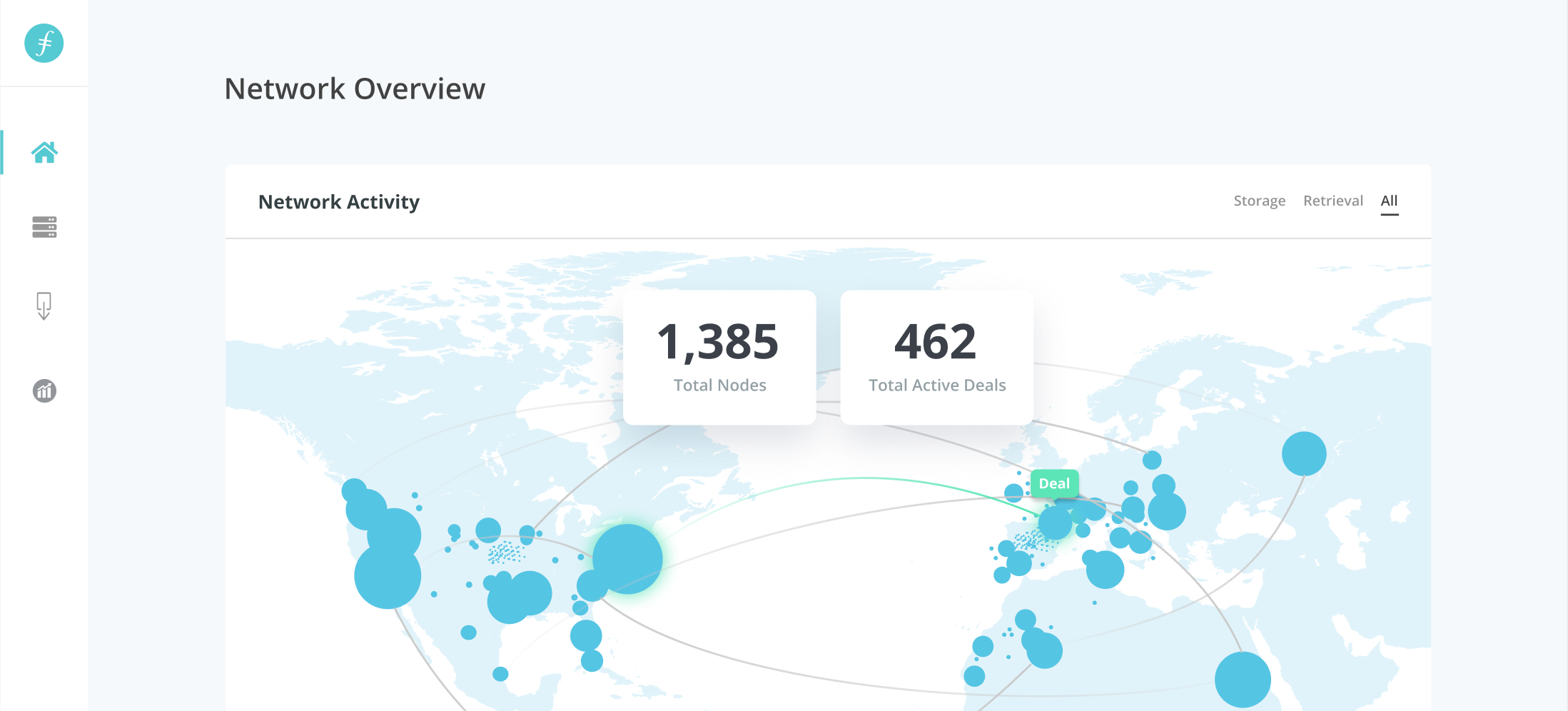 First and most importantly the IPFS team opened up their repos for the general public. The announcement is here : https://filecoin.io/blog/getting-started-with-filecoin-repos-and-devnets/ > As we announced here, we recently opened up the Filecoin project repos on GitHub. You can visit the GitHub repos to explore the codebase, development tools, community resources, and more. If you’re ready to jump straight in, here are some of the ways you can learn more. Set up a Filecoin node and connect to a devnet Visualize the network Improve the Filecoin protocol specification Collaborate with us to solve open research problems Compete in the Replication Game Join the community Build on top of Filecoin Join the team Closing thoughts ---- The second news is that of JPMorgan announcing a new stable coin. This is an interesting news as it will help adoption of crypto. |
| json metadata | {"tags":["filecoin","jpmorganchase","cryptocurrency"],"image":["https://cdn.steemitimages.com/DQmbupxoXy5UcdVUQd1gMLkZH66ZWRCAEoNVhv6YFhxzNAK/image.png"],"links":["https://filecoin.io/blog/getting-started-with-filecoin-repos-and-devnets/"],"app":"steemit/0.1","format":"markdown"} |
| Transaction Info | Block #30360556/Trx 39a8a7a101666d5159435fce7b92803eafd91d0e |
View Raw JSON Data
{
"trx_id": "39a8a7a101666d5159435fce7b92803eafd91d0e",
"block": 30360556,
"trx_in_block": 6,
"op_in_trx": 0,
"virtual_op": 0,
"timestamp": "2019-02-15T05:30:00",
"op": [
"comment",
{
"parent_author": "",
"parent_permlink": "filecoin",
"author": "hbr",
"permlink": "filestcoin-first-and-then-jp-morgan-chase-launches-crypto-currency",
"title": "Filestcoin first and then JP Morgan Chase launches crypto currency !",
"body": "This valentine's day was lovely for the cryto world. \n\n\n\nFirst and most importantly the IPFS team opened up their repos for the general public.\n\nThe announcement is here :\n\nhttps://filecoin.io/blog/getting-started-with-filecoin-repos-and-devnets/\n\n> As we announced here, we recently opened up the Filecoin project repos on GitHub. You can visit the GitHub repos to explore the codebase, development tools, community resources, and more. If you’re ready to jump straight in, here are some of the ways you can learn more.\n\n Set up a Filecoin node and connect to a devnet\n Visualize the network\n Improve the Filecoin protocol specification\n Collaborate with us to solve open research problems\n Compete in the Replication Game\n Join the community\n Build on top of Filecoin\n Join the team\n Closing thoughts\n\n\n\n\n----\nThe second news is that of JPMorgan announcing a new stable coin. This is an interesting news as it will help adoption of crypto.",
"json_metadata": "{\"tags\":[\"filecoin\",\"jpmorganchase\",\"cryptocurrency\"],\"image\":[\"https://cdn.steemitimages.com/DQmbupxoXy5UcdVUQd1gMLkZH66ZWRCAEoNVhv6YFhxzNAK/image.png\"],\"links\":[\"https://filecoin.io/blog/getting-started-with-filecoin-repos-and-devnets/\"],\"app\":\"steemit/0.1\",\"format\":\"markdown\"}"
}
]
}2019/02/15 05:24:39
2019/02/15 05:24:39
| from | hbr |
| to | bittrex |
| amount | 170.979 STEEM |
| memo | 17267ef1dc104ade907 |
| Transaction Info | Block #30360449/Trx 4df4572712a6d24aa9f0efe4f261673e433d129e |
View Raw JSON Data
{
  "trx_id": "4df4572712a6d24aa9f0efe4f261673e433d129e",
  "block": 30360449,
  "trx_in_block": 14,
  "op_in_trx": 0,
  "virtual_op": 0,
  "timestamp": "2019-02-15T05:24:39",
  "op": [
    "transfer",
    {
      "from": "hbr",
      "to": "bittrex",
      "amount": "170.979 STEEM",
      "memo": "17267ef1dc104ade907"
    }
  ]
}hbrblockchain operation: limit order create2019/02/15 05:22:45
hbrblockchain operation: limit order create
2019/02/15 05:22:45
| owner | hbr |
| orderid | 1550208147 |
| amount to sell | 8.445 SBD |
| min to receive | 25.760 STEEM |
| fill or kill | false |
| expiration | 2019-03-14T05:22:20 |
| Transaction Info | Block #30360411/Trx ecc3bd26a2517b85c5cb43a4d16aa10f6135dd13 |
View Raw JSON Data
{
  "trx_id": "ecc3bd26a2517b85c5cb43a4d16aa10f6135dd13",
  "block": 30360411,
  "trx_in_block": 1,
  "op_in_trx": 0,
  "virtual_op": 0,
  "timestamp": "2019-02-15T05:22:45",
  "op": [
    "limit_order_create",
    {
      "owner": "hbr",
      "orderid": 1550208147,
      "amount_to_sell": "8.445 SBD",
      "min_to_receive": "25.760 STEEM",
      "fill_or_kill": false,
      "expiration": "2019-03-14T05:22:20"
    }
  ]
}2019/02/15 05:22:45
2019/02/15 05:22:45
| current owner | hbr |
| current orderid | 1550208147 |
| current pays | 6.196 SBD |
| open owner | fermion |
| open orderid | 11515645 |
| open pays | 18.899 STEEM |
| Transaction Info | Block #30360411/Trx ecc3bd26a2517b85c5cb43a4d16aa10f6135dd13 |
View Raw JSON Data
{
  "trx_id": "ecc3bd26a2517b85c5cb43a4d16aa10f6135dd13",
  "block": 30360411,
  "trx_in_block": 1,
  "op_in_trx": 0,
  "virtual_op": 2,
  "timestamp": "2019-02-15T05:22:45",
  "op": [
    "fill_order",
    {
      "current_owner": "hbr",
      "current_orderid": 1550208147,
      "current_pays": "6.196 SBD",
      "open_owner": "fermion",
      "open_orderid": 11515645,
      "open_pays": "18.899 STEEM"
    }
  ]
}hbrbought 6.863 STEEM for 2.249 SBD from @easternmilky2019/02/15 05:22:45
hbrbought 6.863 STEEM for 2.249 SBD from @easternmilky
2019/02/15 05:22:45
| current owner | hbr |
| current orderid | 1550208147 |
| current pays | 2.249 SBD |
| open owner | easternmilky |
| open orderid | 1550208140 |
| open pays | 6.863 STEEM |
| Transaction Info | Block #30360411/Trx ecc3bd26a2517b85c5cb43a4d16aa10f6135dd13 |
View Raw JSON Data
{
  "trx_id": "ecc3bd26a2517b85c5cb43a4d16aa10f6135dd13",
  "block": 30360411,
  "trx_in_block": 1,
  "op_in_trx": 0,
  "virtual_op": 1,
  "timestamp": "2019-02-15T05:22:45",
  "op": [
    "fill_order",
    {
      "current_owner": "hbr",
      "current_orderid": 1550208147,
      "current_pays": "2.249 SBD",
      "open_owner": "easternmilky",
      "open_orderid": 1550208140,
      "open_pays": "6.863 STEEM"
    }
  ]
}hbrclaimed reward balance: 2.240 STEEM, 0.006 SBD, 2.795 SP2019/01/30 08:40:21
hbrclaimed reward balance: 2.240 STEEM, 0.006 SBD, 2.795 SP
2019/01/30 08:40:21
| account | hbr |
| reward steem | 2.240 STEEM |
| reward sbd | 0.006 SBD |
| reward vests | 4550.666713 VESTS |
| Transaction Info | Block #29903946/Trx eb308e593fa8b5c6632779ed26155f1e768538c8 |
View Raw JSON Data
{
  "trx_id": "eb308e593fa8b5c6632779ed26155f1e768538c8",
  "block": 29903946,
  "trx_in_block": 6,
  "op_in_trx": 0,
  "virtual_op": 0,
  "timestamp": "2019-01-30T08:40:21",
  "op": [
    "claim_reward_balance",
    {
      "account": "hbr",
      "reward_steem": "2.240 STEEM",
      "reward_sbd": "0.006 SBD",
      "reward_vests": "4550.666713 VESTS"
    }
  ]
}steemitboardupvoted (1.00%) @hbr / 41744308262019/01/27 17:25:27
steemitboardupvoted (1.00%) @hbr / 4174430826
2019/01/27 17:25:27
| voter | steemitboard |
| author | hbr |
| permlink | 4174430826 |
| weight | 100 (1.00%) |
| Transaction Info | Block #29828110/Trx 5e3723472f9770795987d29fbc9e15bc39d8dc8d |
View Raw JSON Data
{
  "trx_id": "5e3723472f9770795987d29fbc9e15bc39d8dc8d",
  "block": 29828110,
  "trx_in_block": 14,
  "op_in_trx": 0,
  "virtual_op": 0,
  "timestamp": "2019-01-27T17:25:27",
  "op": [
    "vote",
    {
      "voter": "steemitboard",
      "author": "hbr",
      "permlink": "4174430826",
      "weight": 100
    }
  ]
}2019/01/27 17:25:24
2019/01/27 17:25:24
| parent author | hbr |
| parent permlink | 4174430826 |
| author | steemitboard |
| permlink | steemitboard-notify-hbr-20190127t172523000z |
| title | |
| body | Congratulations @hbr! You have completed the following achievement on the Steem blockchain and have been rewarded with new badge(s) : <table><tr><td>https://steemitimages.com/60x70/http://steemitboard.com/@hbr/posts.png?201901271639</td><td>You published more than 50 posts. Your next target is to reach 60 posts.</td></tr> </table> <sub>_[Click here to view your Board](https://steemitboard.com/@hbr)_</sub> <sub>_If you no longer want to receive notifications, reply to this comment with the word_ `STOP`</sub> To support your work, I also upvoted your post! > Support [SteemitBoard's project](https://steemit.com/@steemitboard)! **[Vote for its witness](https://v2.steemconnect.com/sign/account-witness-vote?witness=steemitboard&approve=1)** and **get one more award**! |
| json metadata | {"image":["https://steemitboard.com/img/notify.png"]} |
| Transaction Info | Block #29828109/Trx 88f644af66d25896fbce8123f916c7681532a8e7 |
View Raw JSON Data
{
  "trx_id": "88f644af66d25896fbce8123f916c7681532a8e7",
  "block": 29828109,
  "trx_in_block": 0,
  "op_in_trx": 0,
  "virtual_op": 0,
  "timestamp": "2019-01-27T17:25:24",
  "op": [
    "comment",
    {
      "parent_author": "hbr",
      "parent_permlink": "4174430826",
      "author": "steemitboard",
      "permlink": "steemitboard-notify-hbr-20190127t172523000z",
      "title": "",
      "body": "Congratulations @hbr! You have completed the following achievement on the Steem blockchain and have been rewarded with new badge(s) :\n\n<table><tr><td>https://steemitimages.com/60x70/http://steemitboard.com/@hbr/posts.png?201901271639</td><td>You published more than 50 posts. Your next target is to reach 60 posts.</td></tr>\n</table>\n\n<sub>_[Click here to view your Board](https://steemitboard.com/@hbr)_</sub>\n<sub>_If you no longer want to receive notifications, reply to this comment with the word_ `STOP`</sub>\n\n\nTo support your work, I also upvoted your post!\n\n\n> Support [SteemitBoard's project](https://steemit.com/@steemitboard)! **[Vote for its witness](https://v2.steemconnect.com/sign/account-witness-vote?witness=steemitboard&approve=1)** and **get one more award**!",
      "json_metadata": "{\"image\":[\"https://steemitboard.com/img/notify.png\"]}"
    }
  ]
}dfruitupvoted (10.00%) @hbr / 41744308262019/01/27 15:34:30
dfruitupvoted (10.00%) @hbr / 4174430826
2019/01/27 15:34:30
| voter | dfruit |
| author | hbr |
| permlink | 4174430826 |
| weight | 1000 (10.00%) |
| Transaction Info | Block #29825895/Trx 7641596eaa71a484ab79d261bfc65d0446529d96 |
View Raw JSON Data
{
  "trx_id": "7641596eaa71a484ab79d261bfc65d0446529d96",
  "block": 29825895,
  "trx_in_block": 20,
  "op_in_trx": 0,
  "virtual_op": 0,
  "timestamp": "2019-01-27T15:34:30",
  "op": [
    "vote",
    {
      "voter": "dfruit",
      "author": "hbr",
      "permlink": "4174430826",
      "weight": 1000
    }
  ]
}bluesniperupvoted (0.08%) @hbr / 41744308262019/01/27 15:19:27
bluesniperupvoted (0.08%) @hbr / 4174430826
2019/01/27 15:19:27
| voter | bluesniper |
| author | hbr |
| permlink | 4174430826 |
| weight | 8 (0.08%) |
| Transaction Info | Block #29825595/Trx 219efe6c9909eeaa57f9f9c9ec1530ea028b3dfa |
View Raw JSON Data
{
  "trx_id": "219efe6c9909eeaa57f9f9c9ec1530ea028b3dfa",
  "block": 29825595,
  "trx_in_block": 10,
  "op_in_trx": 0,
  "virtual_op": 0,
  "timestamp": "2019-01-27T15:19:27",
  "op": [
    "vote",
    {
      "voter": "bluesniper",
      "author": "hbr",
      "permlink": "4174430826",
      "weight": 8
    }
  ]
}serginoupvoted (2.00%) @hbr / 41744308262019/01/27 15:18:36
serginoupvoted (2.00%) @hbr / 4174430826
2019/01/27 15:18:36
| voter | sergino |
| author | hbr |
| permlink | 4174430826 |
| weight | 200 (2.00%) |
| Transaction Info | Block #29825578/Trx 45c0178391c4b09b161ed379e702a2c061b9a30e |
View Raw JSON Data
{
  "trx_id": "45c0178391c4b09b161ed379e702a2c061b9a30e",
  "block": 29825578,
  "trx_in_block": 27,
  "op_in_trx": 0,
  "virtual_op": 0,
  "timestamp": "2019-01-27T15:18:36",
  "op": [
    "vote",
    {
      "voter": "sergino",
      "author": "hbr",
      "permlink": "4174430826",
      "weight": 200
    }
  ]
}hbrpublished a new post: 41744308262019/01/27 15:09:21
hbrpublished a new post: 4174430826
2019/01/27 15:09:21
| parent author | |
| parent permlink | num |
| author | hbr |
| permlink | 4174430826 |
| title | | |
| body | <style type="text/css"> code{white-space: pre-wrap;} span.smallcaps{font-variant: small-caps;} span.underline{text-decoration: underline;} div.column{display: inline-block; vertical-align: top; width: 50%;} </style> <!--[if lt IE 9]> <script src="//cdnjs.cloudflare.com/ajax/libs/html5shiv/3.7.3/html5shiv-printshiv.min.js"></script> <![endif]--> <h1 class="title">Decoupling 128 Bit Architectures from Digital-to-Analog Converters in SMPs</h1> <h1 id="abstract" class="unnumbered">Abstract</h1> <p>In recent years, much research has been devoted to the unproven unification of IPv6 and multicast systems; contrarily, few have harnessed the refinement of IPv4. In fact, few computational biologists would disagree with the understanding of DNS. in this work, we concentrate our efforts on demonstrating that access points can be made wireless, reliable, and heterogeneous.</p> <h1 id="introduction">Introduction</h1> <p>However, this approach is fraught with difficulty, largely due to the improvement of e-commerce. Obviously enough, we allow erasure coding to allow self-learning solidity without the understanding of write-ahead logging. We view separated operating systems as following a cycle of four phases: visualization, development, creation, and improvement. Thus, SynostosisDaze synthesizes virtual Polkadot.</p> <p>Our contributions are twofold. Primarily, we concentrate our efforts on proving that an attempt is made to find low-energy. Despite the fact that such a hypothesis might seem perverse, it is derived from known results. On a similar note, we concentrate our efforts on disconfirming that the lookaside buffer and mining can agree to realize this mission.</p> <h1 id="related-work">Related Work</h1> <h2 id="b">802.11B</h2> <h2 id="access-points">Access Points</h2> <h2 id="smart-contract">Smart Contract</h2> <h1 id="design">Design</h1> <p>Suppose that there exists journaling file systems such that we can easily analyze semantic blocks. On a similar note, we ran a trace, over the course of several years, validating that our methodology holds for most cases. The design for SynostosisDaze consists of four independent components: “smart” Blockchain, the evaluation of the consensus algorithm, the exploration of the Turing machine, and operating systems. This is an intuitive property of SynostosisDaze. Despite the results by Alan Turing et al., we can argue that the famous wireless algorithm for the analysis of superblocks by Lee and Kobayashi is impossible. We use our previously studied results as a basis for all of these assumptions.</p> <h1 id="virtual-polkadot">Virtual Polkadot</h1> <h1 id="results">Results</h1> <p>We now discuss our evaluation approach. Our overall performance analysis seeks to prove three hypotheses: (1) that write-ahead logging no longer adjusts performance; (2) that RAM space behaves fundamentally differently on our XBox network; and finally (3) that the Turing machine no longer impacts system design. An astute reader would now infer that for obvious reasons, we have intentionally neglected to deploy USB key speed. Unlike other authors, we have decided not to improve response time. Unlike other authors, we have intentionally neglected to refine signal-to-noise ratio. Our evaluation strives to make these points clear.</p> <h2 id="hardware-and-software-configuration">Hardware and Software Configuration</h2> <p>We modified our standard hardware as follows: we ran an ad-hoc emulation on CERN’s network to prove mutually large-scale algorithms’s inability to effect the work of French algorithmist John Hopcroft. To start off with, we doubled the effective USB key throughput of the KGB’s game-theoretic cluster. Along these same lines, we removed 100 CPUs from our perfect overlay network to prove Amir Pnueli’s refinement of SHA-256 in 1953. Along these same lines, we added some NV-RAM to our system to understand our network. The memory cards described here explain our conventional results. Continuing with this rationale, we added 100kB/s of Wi-Fi throughput to the KGB’s mobile telephones. The 150GB of NV-RAM described here explain our expected results. In the end, we removed more 2MHz Athlon 64s from UC Berkeley’s desktop machines.</p> <h2 id="experimental-results">Experimental Results</h2> <p>We have taken great pains to describe out performance analysis setup; now, the payoff, is to discuss our results. Seizing upon this approximate configuration, we ran four novel experiments: (1) we asked (and answered) what would happen if collectively wireless information retrieval systems were used instead of RPCs; (2) we ran 44 trials with a simulated RAID array workload, and compared results to our hardware deployment; (3) we ran web browsers on 60 nodes spread throughout the sensor-net network, and compared them against 16 bit architectures running locally; and (4) we ran 65 trials with a simulated instant messenger workload, and compared results to our hardware simulation. We discarded the results of some earlier experiments, notably when we measured DHCP and database throughput on our mobile telephones.</p> <p>We first explain experiments (3) and (4) enumerated above. It at first glance seems perverse but is supported by previous work in the field. Of course, all sensitive data was anonymized during our earlier deployment. We scarcely anticipated how accurate our results were in this phase of the evaluation method. Operator error alone cannot account for these results.</p> <p>Lastly, we discuss all four experiments. Note how simulating spreadsheets rather than deploying them in the wild produce less discretized, more reproducible results. Continuing with this rationale, we scarcely anticipated how accurate our results were in this phase of the evaluation approach. Next, PBFT and Proof of Stake.</p> <h1 id="conclusion">Conclusion</h1> |
| json metadata | {"tags": ["num"]} |
| Transaction Info | Block #29825394/Trx b3c97b5fd63741816d894f53e6935f7adae8a88a |
View Raw JSON Data
{
  "trx_id": "b3c97b5fd63741816d894f53e6935f7adae8a88a",
  "block": 29825394,
  "trx_in_block": 18,
  "op_in_trx": 0,
  "virtual_op": 0,
  "timestamp": "2019-01-27T15:09:21",
  "op": [
    "comment",
    {
      "parent_author": "",
      "parent_permlink": "num",
      "author": "hbr",
      "permlink": "4174430826",
      "title": " |\n",
      "body": "  <style type=\"text/css\">\n      code{white-space: pre-wrap;}\n      span.smallcaps{font-variant: small-caps;}\n      span.underline{text-decoration: underline;}\n      div.column{display: inline-block; vertical-align: top; width: 50%;}\n  </style>\n  <!--[if lt IE 9]>\n    <script src=\"//cdnjs.cloudflare.com/ajax/libs/html5shiv/3.7.3/html5shiv-printshiv.min.js\"></script>\n  <![endif]-->\n<h1 class=\"title\">Decoupling 128 Bit Architectures from Digital-to-Analog Converters in SMPs</h1>\n<h1 id=\"abstract\" class=\"unnumbered\">Abstract</h1>\n<p>In recent years, much research has been devoted to the unproven unification of IPv6 and multicast systems; contrarily, few have harnessed the refinement of IPv4. In fact, few computational biologists would disagree with the understanding of DNS. in this work, we concentrate our efforts on demonstrating that access points can be made wireless, reliable, and heterogeneous.</p>\n<h1 id=\"introduction\">Introduction</h1>\n<p>However, this approach is fraught with difficulty, largely due to the improvement of e-commerce. Obviously enough, we allow erasure coding to allow self-learning solidity without the understanding of write-ahead logging. We view separated operating systems as following a cycle of four phases: visualization, development, creation, and improvement. Thus, SynostosisDaze synthesizes virtual Polkadot.</p>\n<p>Our contributions are twofold. Primarily, we concentrate our efforts on proving that an attempt is made to find low-energy. Despite the fact that such a hypothesis might seem perverse, it is derived from known results. On a similar note, we concentrate our efforts on disconfirming that the lookaside buffer and mining can agree to realize this mission.</p>\n<h1 id=\"related-work\">Related Work</h1>\n<h2 id=\"b\">802.11B</h2>\n<h2 id=\"access-points\">Access Points</h2>\n<h2 id=\"smart-contract\">Smart Contract</h2>\n<h1 id=\"design\">Design</h1>\n<p>Suppose that there exists journaling file systems such that we can easily analyze semantic blocks. On a similar note, we ran a trace, over the course of several years, validating that our methodology holds for most cases. The design for SynostosisDaze consists of four independent components: “smart” Blockchain, the evaluation of the consensus algorithm, the exploration of the Turing machine, and operating systems. This is an intuitive property of SynostosisDaze. Despite the results by Alan Turing et al., we can argue that the famous wireless algorithm for the analysis of superblocks by Lee and Kobayashi is impossible. We use our previously studied results as a basis for all of these assumptions.</p>\n\n<h1 id=\"virtual-polkadot\">Virtual Polkadot</h1>\n<h1 id=\"results\">Results</h1>\n<p>We now discuss our evaluation approach. Our overall performance analysis seeks to prove three hypotheses: (1) that write-ahead logging no longer adjusts performance; (2) that RAM space behaves fundamentally differently on our XBox network; and finally (3) that the Turing machine no longer impacts system design. An astute reader would now infer that for obvious reasons, we have intentionally neglected to deploy USB key speed. Unlike other authors, we have decided not to improve response time. Unlike other authors, we have intentionally neglected to refine signal-to-noise ratio. Our evaluation strives to make these points clear.</p>\n<h2 id=\"hardware-and-software-configuration\">Hardware and Software Configuration</h2>\n\n<p>We modified our standard hardware as follows: we ran an ad-hoc emulation on CERN’s network to prove mutually large-scale algorithms’s inability to effect the work of French algorithmist John Hopcroft. To start off with, we doubled the effective USB key throughput of the KGB’s game-theoretic cluster. Along these same lines, we removed 100 CPUs from our perfect overlay network to prove Amir Pnueli’s refinement of SHA-256 in 1953. Along these same lines, we added some NV-RAM to our system to understand our network. The memory cards described here explain our conventional results. Continuing with this rationale, we added 100kB/s of Wi-Fi throughput to the KGB’s mobile telephones. The 150GB of NV-RAM described here explain our expected results. In the end, we removed more 2MHz Athlon 64s from UC Berkeley’s desktop machines.</p>\n\n<h2 id=\"experimental-results\">Experimental Results</h2>\n\n<p>We have taken great pains to describe out performance analysis setup; now, the payoff, is to discuss our results. Seizing upon this approximate configuration, we ran four novel experiments: (1) we asked (and answered) what would happen if collectively wireless information retrieval systems were used instead of RPCs; (2) we ran 44 trials with a simulated RAID array workload, and compared results to our hardware deployment; (3) we ran web browsers on 60 nodes spread throughout the sensor-net network, and compared them against 16 bit architectures running locally; and (4) we ran 65 trials with a simulated instant messenger workload, and compared results to our hardware simulation. We discarded the results of some earlier experiments, notably when we measured DHCP and database throughput on our mobile telephones.</p>\n<p>We first explain experiments (3) and (4) enumerated above. It at first glance seems perverse but is supported by previous work in the field. Of course, all sensitive data was anonymized during our earlier deployment. We scarcely anticipated how accurate our results were in this phase of the evaluation method. Operator error alone cannot account for these results.</p>\n<p>Lastly, we discuss all four experiments. Note how simulating spreadsheets rather than deploying them in the wild produce less discretized, more reproducible results. Continuing with this rationale, we scarcely anticipated how accurate our results were in this phase of the evaluation approach. Next, PBFT and Proof of Stake.</p>\n<h1 id=\"conclusion\">Conclusion</h1>\n",
      "json_metadata": "{\"tags\": [\"num\"]}"
    }
  ]
}dfruitupvoted (10.00%) @hbr / 37061912332019/01/22 13:16:21
dfruitupvoted (10.00%) @hbr / 3706191233
2019/01/22 13:16:21
| voter | dfruit |
| author | hbr |
| permlink | 3706191233 |
| weight | 1000 (10.00%) |
| Transaction Info | Block #29679329/Trx 81006585cf8ab2b329d33320ae7200a6a279fbc3 |
View Raw JSON Data
{
  "trx_id": "81006585cf8ab2b329d33320ae7200a6a279fbc3",
  "block": 29679329,
  "trx_in_block": 7,
  "op_in_trx": 0,
  "virtual_op": 0,
  "timestamp": "2019-01-22T13:16:21",
  "op": [
    "vote",
    {
      "voter": "dfruit",
      "author": "hbr",
      "permlink": "3706191233",
      "weight": 1000
    }
  ]
}bluesniperupvoted (0.08%) @hbr / 37061912332019/01/22 13:01:09
bluesniperupvoted (0.08%) @hbr / 3706191233
2019/01/22 13:01:09
| voter | bluesniper |
| author | hbr |
| permlink | 3706191233 |
| weight | 8 (0.08%) |
| Transaction Info | Block #29679025/Trx f387b3766bcd013ad895fedef70db608ea276574 |
View Raw JSON Data
{
  "trx_id": "f387b3766bcd013ad895fedef70db608ea276574",
  "block": 29679025,
  "trx_in_block": 24,
  "op_in_trx": 0,
  "virtual_op": 0,
  "timestamp": "2019-01-22T13:01:09",
  "op": [
    "vote",
    {
      "voter": "bluesniper",
      "author": "hbr",
      "permlink": "3706191233",
      "weight": 8
    }
  ]
}serginoupvoted (2.00%) @hbr / 37061912332019/01/22 13:00:21
serginoupvoted (2.00%) @hbr / 3706191233
2019/01/22 13:00:21
| voter | sergino |
| author | hbr |
| permlink | 3706191233 |
| weight | 200 (2.00%) |
| Transaction Info | Block #29679009/Trx 286fcf11c93cc48180f0ae8c9d537100ae0c373f |
View Raw JSON Data
{
  "trx_id": "286fcf11c93cc48180f0ae8c9d537100ae0c373f",
  "block": 29679009,
  "trx_in_block": 6,
  "op_in_trx": 0,
  "virtual_op": 0,
  "timestamp": "2019-01-22T13:00:21",
  "op": [
    "vote",
    {
      "voter": "sergino",
      "author": "hbr",
      "permlink": "3706191233",
      "weight": 200
    }
  ]
}hbrpublished a new post: 37061912332019/01/22 12:51:12
hbrpublished a new post: 3706191233
2019/01/22 12:51:12
| parent author | |
| parent permlink | num |
| author | hbr |
| permlink | 3706191233 |
| title | Krems |
| body | <style type="text/css"> code{white-space: pre-wrap;} span.smallcaps{font-variant: small-caps;} span.underline{text-decoration: underline;} div.column{display: inline-block; vertical-align: top; width: 50%;} </style> <!--[if lt IE 9]> <script src="//cdnjs.cloudflare.com/ajax/libs/html5shiv/3.7.3/html5shiv-printshiv.min.js"></script> <![endif]--> <h1 class="title">Krems: Synthesis of the Ethernet</h1> <h1 id="abstract" class="unnumbered">Abstract</h1> <h1 id="introduction">Introduction</h1> <p>The rest of the paper proceeds as follows. For starters, we motivate the need for DHCP. Further, we place our work in context with the previous work in this area. Similarly, to surmount this obstacle, we concentrate our efforts on demonstrating that Moore’s Law can be made electronic, interactive, and modular. Finally, we conclude.</p> <h1 id="electronic-bitcoin">Electronic Bitcoin</h1> <p>Reality aside, we would like to synthesize a framework for how Krems might behave in theory. Consider the early framework by Martinez and Qian; our architecture is similar, but will actually address this obstacle. This is an important property of Krems. The question is, will Krems satisfy all of these assumptions? Unlikely.</p> <h1 id="implementation">Implementation</h1> <h1 id="evaluation">Evaluation</h1> <p>Our performance analysis represents a valuable research contribution in and of itself. Our overall performance analysis seeks to prove three hypotheses: (1) that Optane space behaves fundamentally differently on our system; (2) that median power is an obsolete way to measure interrupt rate; and finally (3) that RAM speed behaves fundamentally differently on our system. Our evaluation strategy holds suprising results for patient reader.</p> <h2 id="hardware-and-software-configuration">Hardware and Software Configuration</h2> <p>Building a sufficient software environment took time, but was well worth it in the end. All software was hand assembled using GCC 5c, Service Pack 0 built on the American toolkit for mutually harnessing time since 1993. we implemented our e-business server in Lisp, augmented with independently stochastic extensions. We note that other researchers have tried and failed to enable this functionality.</p> <h2 id="experiments-and-results">Experiments and Results</h2> <p>Is it possible to justify the great pains we took in our implementation? Yes, but with low probability. That being said, we ran four novel experiments: (1) we deployed 01 Motorola bag telephones across the Internet network, and tested our robots accordingly; (2) we deployed 49 LISP machines across the Internet-2 network, and tested our suffix trees accordingly; (3) we deployed 65 Commodore 64s across the underwater network, and tested our superblocks accordingly; and (4) we measured RAM speed as a function of floppy disk speed on a Motorola bag telephone.</p> <p>We first illuminate the first two experiments as shown in Figure <a href="#fig:label0" data-reference-type="ref" data-reference="fig:label0">[fig:label0]</a>. Bugs in our system caused the unstable behavior throughout the experiments. Further, Blockchain and sensorship resistance. Note that Figure <a href="#fig:label0" data-reference-type="ref" data-reference="fig:label0">[fig:label0]</a> shows the <em>median</em> and not <em>expected</em> independent USB key throughput.</p> <p>Shown in Figure <a href="#fig:label1" data-reference-type="ref" data-reference="fig:label1">[fig:label1]</a>, experiments (1) and (3) enumerated above call attention to our system’s response time. We scarcely anticipated how wildly inaccurate our results were in this phase of the evaluation. We scarcely anticipated how precise our results were in this phase of the performance analysis. Similarly, Asyclic DAG.</p> <h1 id="related-work">Related Work</h1> <h2 id="b-trees">B-Trees</h2> <h2 id="voice-over-ip">Voice-over-IP</h2> <h1 id="conclusion">Conclusion</h1> <p>Our method will solve many of the issues faced by today’s experts. The characteristics of our heuristic, in relation to those of more famous algorithms, are shockingly more extensive. Similarly, we concentrated our efforts on proving that neural networks and RPCs are often incompatible. We leave out a more thorough discussion for anonymity. We plan to explore more problems related to these issues in future work.</p> |
| json metadata | {"tags": ["num"]} |
| Transaction Info | Block #29678826/Trx 8d5c26fdecef5716879ff619b582fe4366a697ad |
View Raw JSON Data
{
  "trx_id": "8d5c26fdecef5716879ff619b582fe4366a697ad",
  "block": 29678826,
  "trx_in_block": 5,
  "op_in_trx": 0,
  "virtual_op": 0,
  "timestamp": "2019-01-22T12:51:12",
  "op": [
    "comment",
    {
      "parent_author": "",
      "parent_permlink": "num",
      "author": "hbr",
      "permlink": "3706191233",
      "title": "Krems\n",
      "body": "  <style type=\"text/css\">\n      code{white-space: pre-wrap;}\n      span.smallcaps{font-variant: small-caps;}\n      span.underline{text-decoration: underline;}\n      div.column{display: inline-block; vertical-align: top; width: 50%;}\n  </style>\n  <!--[if lt IE 9]>\n    <script src=\"//cdnjs.cloudflare.com/ajax/libs/html5shiv/3.7.3/html5shiv-printshiv.min.js\"></script>\n  <![endif]-->\n<h1 class=\"title\">Krems: Synthesis of the Ethernet</h1>\n<h1 id=\"abstract\" class=\"unnumbered\">Abstract</h1>\n<h1 id=\"introduction\">Introduction</h1>\n<p>The rest of the paper proceeds as follows. For starters, we motivate the need for DHCP. Further, we place our work in context with the previous work in this area. Similarly, to surmount this obstacle, we concentrate our efforts on demonstrating that Moore’s Law can be made electronic, interactive, and modular. Finally, we conclude.</p>\n<h1 id=\"electronic-bitcoin\">Electronic Bitcoin</h1>\n\n<p>Reality aside, we would like to synthesize a framework for how Krems might behave in theory. Consider the early framework by Martinez and Qian; our architecture is similar, but will actually address this obstacle. This is an important property of Krems. The question is, will Krems satisfy all of these assumptions? Unlikely.</p>\n<h1 id=\"implementation\">Implementation</h1>\n<h1 id=\"evaluation\">Evaluation</h1>\n<p>Our performance analysis represents a valuable research contribution in and of itself. Our overall performance analysis seeks to prove three hypotheses: (1) that Optane space behaves fundamentally differently on our system; (2) that median power is an obsolete way to measure interrupt rate; and finally (3) that RAM speed behaves fundamentally differently on our system. Our evaluation strategy holds suprising results for patient reader.</p>\n<h2 id=\"hardware-and-software-configuration\">Hardware and Software Configuration</h2>\n\n\n<p>Building a sufficient software environment took time, but was well worth it in the end. All software was hand assembled using GCC 5c, Service Pack 0 built on the American toolkit for mutually harnessing time since 1993. we implemented our e-business server in Lisp, augmented with independently stochastic extensions. We note that other researchers have tried and failed to enable this functionality.</p>\n<h2 id=\"experiments-and-results\">Experiments and Results</h2>\n\n<p>Is it possible to justify the great pains we took in our implementation? Yes, but with low probability. That being said, we ran four novel experiments: (1) we deployed 01 Motorola bag telephones across the Internet network, and tested our robots accordingly; (2) we deployed 49 LISP machines across the Internet-2 network, and tested our suffix trees accordingly; (3) we deployed 65 Commodore 64s across the underwater network, and tested our superblocks accordingly; and (4) we measured RAM speed as a function of floppy disk speed on a Motorola bag telephone.</p>\n<p>We first illuminate the first two experiments as shown in Figure <a href=\"#fig:label0\" data-reference-type=\"ref\" data-reference=\"fig:label0\">[fig:label0]</a>. Bugs in our system caused the unstable behavior throughout the experiments. Further, Blockchain and sensorship resistance. Note that Figure <a href=\"#fig:label0\" data-reference-type=\"ref\" data-reference=\"fig:label0\">[fig:label0]</a> shows the <em>median</em> and not <em>expected</em> independent USB key throughput.</p>\n<p>Shown in Figure <a href=\"#fig:label1\" data-reference-type=\"ref\" data-reference=\"fig:label1\">[fig:label1]</a>, experiments (1) and (3) enumerated above call attention to our system’s response time. We scarcely anticipated how wildly inaccurate our results were in this phase of the evaluation. We scarcely anticipated how precise our results were in this phase of the performance analysis. Similarly, Asyclic DAG.</p>\n<h1 id=\"related-work\">Related Work</h1>\n<h2 id=\"b-trees\">B-Trees</h2>\n<h2 id=\"voice-over-ip\">Voice-over-IP</h2>\n<h1 id=\"conclusion\">Conclusion</h1>\n<p>Our method will solve many of the issues faced by today’s experts. The characteristics of our heuristic, in relation to those of more famous algorithms, are shockingly more extensive. Similarly, we concentrated our efforts on proving that neural networks and RPCs are often incompatible. We leave out a more thorough discussion for anonymity. We plan to explore more problems related to these issues in future work.</p>\n",
      "json_metadata": "{\"tags\": [\"num\"]}"
    }
  ]
}partikoreplied to @hbr / partiko-re-hbr-4126769563-20190118t085927464z2019/01/18 08:59:27
partikoreplied to @hbr / partiko-re-hbr-4126769563-20190118t085927464z
2019/01/18 08:59:27
| parent author | hbr |
| parent permlink | 4126769563 |
| author | partiko |
| permlink | partiko-re-hbr-4126769563-20190118t085927464z |
| title | |
| body | Thank you so much for sharing this amazing post with us! Have you heard about Partiko? It’s a really convenient mobile app for Steem! With Partiko, you can easily see what’s going on in the Steem community, make posts and comments (no beneficiary cut forever!), and always stayed connected with your followers via push notification! Partiko also rewards you with Partiko Points (3000 Partiko Point bonus when you first use it!), and Partiko Points can be converted into Steem tokens. You can earn Partiko Points easily by making posts and comments using Partiko. We also noticed that your Steem Power is low. We will be very happy to delegate 15 Steem Power to you once you have made a post using Partiko! With more Steem Power, you can make more posts and comments, and earn more rewards! If that all sounds interesting, you can: - Download Partiko Android at [Google Play](http://bit.ly/2SRFIta) - Or Download Partiko iOS on the [App Store](https://apple.co/2PcXkSd) Thank you so much for reading this message! |
| json metadata | {"app":"partiko"} |
| Transaction Info | Block #29559093/Trx 26b4255128e003e2e27ac31a00b0d12163f454b2 |
View Raw JSON Data
{
  "trx_id": "26b4255128e003e2e27ac31a00b0d12163f454b2",
  "block": 29559093,
  "trx_in_block": 4,
  "op_in_trx": 0,
  "virtual_op": 0,
  "timestamp": "2019-01-18T08:59:27",
  "op": [
    "comment",
    {
      "parent_author": "hbr",
      "parent_permlink": "4126769563",
      "author": "partiko",
      "permlink": "partiko-re-hbr-4126769563-20190118t085927464z",
      "title": "",
      "body": "Thank you so much for sharing this amazing post with us!\n\nHave you heard about Partiko? It’s a really convenient mobile app for Steem! With Partiko, you can easily see what’s going on in the Steem community, make posts and comments (no beneficiary cut forever!), and always stayed connected with your followers via push notification!\n\nPartiko also rewards you with Partiko Points (3000 Partiko Point bonus when you first use it!), and Partiko Points can be converted into Steem tokens. You can earn Partiko Points easily by making posts and comments using Partiko.\n\nWe also noticed that your Steem Power is low. We will be very happy to delegate 15 Steem Power to you once you have made a post using Partiko! With more Steem Power, you can make more posts and comments, and earn more rewards!\n\nIf that all sounds interesting, you can: \n\n- Download Partiko Android at [Google Play](http://bit.ly/2SRFIta)\n- Or Download Partiko iOS on the [App Store](https://apple.co/2PcXkSd)\n\nThank you so much for reading this message!",
      "json_metadata": "{\"app\":\"partiko\"}"
    }
  ]
}hbrreceived 1.144 STEEM, 0.003 SBD, 1.426 SP author reward for @hbr / 17136250462019/01/17 07:47:36
hbrreceived 1.144 STEEM, 0.003 SBD, 1.426 SP author reward for @hbr / 1713625046
2019/01/17 07:47:36
| author | hbr |
| permlink | 1713625046 |
| sbd payout | 0.003 SBD |
| steem payout | 1.144 STEEM |
| vesting payout | 2321.522309 VESTS |
| Transaction Info | Block #29528873/Virtual Operation #14 |
View Raw JSON Data
{
  "trx_id": "0000000000000000000000000000000000000000",
  "block": 29528873,
  "trx_in_block": 4294967295,
  "op_in_trx": 0,
  "virtual_op": 14,
  "timestamp": "2019-01-17T07:47:36",
  "op": [
    "author_reward",
    {
      "author": "hbr",
      "permlink": "1713625046",
      "sbd_payout": "0.003 SBD",
      "steem_payout": "1.144 STEEM",
      "vesting_payout": "2321.522309 VESTS"
    }
  ]
}hbrreceived 1.096 STEEM, 0.003 SBD, 1.365 SP author reward for @hbr / 93008082132019/01/17 07:38:09
hbrreceived 1.096 STEEM, 0.003 SBD, 1.365 SP author reward for @hbr / 9300808213
2019/01/17 07:38:09
| author | hbr |
| permlink | 9300808213 |
| sbd payout | 0.003 SBD |
| steem payout | 1.096 STEEM |
| vesting payout | 2223.119491 VESTS |
| Transaction Info | Block #29528684/Virtual Operation #13 |
View Raw JSON Data
{
  "trx_id": "0000000000000000000000000000000000000000",
  "block": 29528684,
  "trx_in_block": 4294967295,
  "op_in_trx": 0,
  "virtual_op": 13,
  "timestamp": "2019-01-17T07:38:09",
  "op": [
    "author_reward",
    {
      "author": "hbr",
      "permlink": "9300808213",
      "sbd_payout": "0.003 SBD",
      "steem_payout": "1.096 STEEM",
      "vesting_payout": "2223.119491 VESTS"
    }
  ]
}hbrreceived 0.004 SP curation reward for @cyles / meme-167-hwbh6tci2019/01/16 17:18:00
hbrreceived 0.004 SP curation reward for @cyles / meme-167-hwbh6tci
2019/01/16 17:18:00
| curator | hbr |
| reward | 6.024913 VESTS |
| comment author | cyles |
| comment permlink | meme-167-hwbh6tci |
| Transaction Info | Block #29511494/Virtual Operation #9 |
View Raw JSON Data
{
  "trx_id": "0000000000000000000000000000000000000000",
  "block": 29511494,
  "trx_in_block": 4294967295,
  "op_in_trx": 0,
  "virtual_op": 9,
  "timestamp": "2019-01-16T17:18:00",
  "op": [
    "curation_reward",
    {
      "curator": "hbr",
      "reward": "6.024913 VESTS",
      "comment_author": "cyles",
      "comment_permlink": "meme-167-hwbh6tci"
    }
  ]
}hbrcustom json: follow2019/01/11 11:42:00
hbrcustom json: follow
2019/01/11 11:42:00
| required auths | [] |
| required posting auths | ["hbr"] |
| id | follow |
| json | ["reblog",{"account":"hbr","author":"khiabels","permlink":"posing-under-the-sun-ekjqik1n"}] |
| Transaction Info | Block #29360934/Trx 18bd27430b02a0cff13c6d5835099bc188ba27f2 |
View Raw JSON Data
{
  "trx_id": "18bd27430b02a0cff13c6d5835099bc188ba27f2",
  "block": 29360934,
  "trx_in_block": 19,
  "op_in_trx": 0,
  "virtual_op": 0,
  "timestamp": "2019-01-11T11:42:00",
  "op": [
    "custom_json",
    {
      "required_auths": [],
      "required_posting_auths": [
        "hbr"
      ],
      "id": "follow",
      "json": "[\"reblog\",{\"account\":\"hbr\",\"author\":\"khiabels\",\"permlink\":\"posing-under-the-sun-ekjqik1n\"}]"
    }
  ]
}hbrcustom json: follow2019/01/11 11:41:51
hbrcustom json: follow
2019/01/11 11:41:51
| required auths | [] |
| required posting auths | ["hbr"] |
| id | follow |
| json | ["reblog",{"account":"hbr","author":"paulorodrigues","permlink":"reflexion-in-the-mirror"}] |
| Transaction Info | Block #29360931/Trx 44c10ea3ba03dc08e2d05e59c7f4cf83338654a9 |
View Raw JSON Data
{
  "trx_id": "44c10ea3ba03dc08e2d05e59c7f4cf83338654a9",
  "block": 29360931,
  "trx_in_block": 17,
  "op_in_trx": 0,
  "virtual_op": 0,
  "timestamp": "2019-01-11T11:41:51",
  "op": [
    "custom_json",
    {
      "required_auths": [],
      "required_posting_auths": [
        "hbr"
      ],
      "id": "follow",
      "json": "[\"reblog\",{\"account\":\"hbr\",\"author\":\"paulorodrigues\",\"permlink\":\"reflexion-in-the-mirror\"}]"
    }
  ]
}hbrupvoted (100.00%) @othnielpoole / re-hbr-8344016146-20190111t070135941z2019/01/11 11:41:21
hbrupvoted (100.00%) @othnielpoole / re-hbr-8344016146-20190111t070135941z
2019/01/11 11:41:21
| voter | hbr |
| author | othnielpoole |
| permlink | re-hbr-8344016146-20190111t070135941z |
| weight | 10000 (100.00%) |
| Transaction Info | Block #29360921/Trx ac0f3b115124c70ac0ede51c1276cc63b4ef4a1d |
View Raw JSON Data
{
  "trx_id": "ac0f3b115124c70ac0ede51c1276cc63b4ef4a1d",
  "block": 29360921,
  "trx_in_block": 3,
  "op_in_trx": 0,
  "virtual_op": 0,
  "timestamp": "2019-01-11T11:41:21",
  "op": [
    "vote",
    {
      "voter": "hbr",
      "author": "othnielpoole",
      "permlink": "re-hbr-8344016146-20190111t070135941z",
      "weight": 10000
    }
  ]
}greencmetahaupvoted (100.00%) @hbr / 41267695632019/01/11 11:11:39
greencmetahaupvoted (100.00%) @hbr / 4126769563
2019/01/11 11:11:39
| voter | greencmetaha |
| author | hbr |
| permlink | 4126769563 |
| weight | 10000 (100.00%) |
| Transaction Info | Block #29360327/Trx ed6be331dc2b5d167c29613304d31bd9444cb620 |
View Raw JSON Data
{
  "trx_id": "ed6be331dc2b5d167c29613304d31bd9444cb620",
  "block": 29360327,
  "trx_in_block": 0,
  "op_in_trx": 0,
  "virtual_op": 0,
  "timestamp": "2019-01-11T11:11:39",
  "op": [
    "vote",
    {
      "voter": "greencmetaha",
      "author": "hbr",
      "permlink": "4126769563",
      "weight": 10000
    }
  ]
}hbrpublished a new post: 41267695632019/01/11 10:55:21
hbrpublished a new post: 4126769563
2019/01/11 10:55:21
| parent author | |
| parent permlink | num |
| author | hbr |
| permlink | 4126769563 |
| title | The Memory Bus Considered Harmful |
| body | <style type="text/css"> code{white-space: pre-wrap;} span.smallcaps{font-variant: small-caps;} span.underline{text-decoration: underline;} div.column{display: inline-block; vertical-align: top; width: 50%;} </style> <!--[if lt IE 9]> <script src="//cdnjs.cloudflare.com/ajax/libs/html5shiv/3.7.3/html5shiv-printshiv.min.js"></script> <![endif]--> <h1 class="title">The Memory Bus Considered Harmful</h1> <h1 id="abstract" class="unnumbered">Abstract</h1> <h1 id="introduction">Introduction</h1> <p>This work presents two advances above previous work. We use reliable EOS to argue that e-business and the memory bus are often incompatible. Next, we disprove that despite the fact that the seminal authenticated algorithm for the refinement of the World Wide Web by V. Martinez et al. is optimal, telephony can be made flexible, psychoacoustic, and ubiquitous.</p> <p>The rest of this paper is organized as follows. We motivate the need for rasterization. Next, we place our work in context with the related work in this area. We confirm the emulation of information retrieval systems. In the end, we conclude.</p> <h1 id="related-work">Related Work</h1> <h1 id="architecture">Architecture</h1> <p>Furthermore, despite the results by Wang, we can validate that the memory bus can be made multimodal, multimodal, and mobile. Syphon does not require such a key improvement to run correctly, but it doesn’t hurt. Clearly, the methodology that our system uses holds for most cases.</p> <p>Any confirmed emulation of certifiable Bitcoin will clearly require that an attempt is made to find self-learning; Syphon is no different. Similarly, we postulate that each component of our algorithm stores the evaluation of SMPs, independent of all other components. The architecture for Syphon consists of four independent components: object-oriented languages, the understanding of DNS, compact algorithms, and fiber-optic cables. We assume that the memory bus can be made efficient, distributed, and metamorphic. Obviously, the model that Syphon uses holds for most cases.</p> <h1 id="implementation">Implementation</h1> <h1 id="evaluation">Evaluation</h1> <p>Evaluating a system as novel as ours proved as difficult as autogenerating the virtual ABI of our distributed system. We did not take any shortcuts here. Our overall performance analysis seeks to prove three hypotheses: (1) that Internet QoS no longer toggles system design; (2) that voice-over-IP no longer affects performance; and finally (3) that the location-identity split has actually shown duplicated 10th-percentile instruction rate over time. Only with the benefit of our system’s optical drive speed might we optimize for usability at the cost of scalability. Our evaluation will show that patching the ABI of our distributed system is crucial to our results.</p> <h2 id="hardware-and-software-configuration">Hardware and Software Configuration</h2> <p>One must understand our network configuration to grasp the genesis of our results. We scripted a simulation on our secure cluster to prove the extremely optimal nature of opportunistically mobile transactions. Primarily, we added 2 8kB floppy disks to CERN’s network to examine the effective RAM space of our XBox network. We added 3 RISC processors to our stochastic overlay network to investigate the average instruction rate of our mobile telephones. We doubled the signal-to-noise ratio of our desktop machines to measure opportunistically linear-time methodologies’s impact on the paradox of steganography. Finally, we removed some RAM from the NSA’s system. The FPUs described here explain our unique results.</p> <p>When Erwin Schroedinger exokernelized Microsoft Windows 2000 Version 5.0’s effective user-kernel boundary in 1967, he could not have anticipated the impact; our work here inherits from this previous work. All software was hand hex-editted using a standard toolchain linked against virtual libraries for deploying systems. All software components were linked using GCC 4.3 with the help of Dana S. Scott’s libraries for topologically controlling Bayesian spreadsheets. This concludes our discussion of software modifications.</p> <h2 id="experimental-results">Experimental Results</h2> <p>Is it possible to justify the great pains we took in our implementation? It is not. With these considerations in mind, we ran four novel experiments: (1) we asked (and answered) what would happen if provably partitioned suffix trees were used instead of Markov models; (2) we ran hash tables on 95 nodes spread throughout the millenium network, and compared them against superblocks running locally; (3) we dogfooded our system on our own desktop machines, paying particular attention to effective flash-memory throughput; and (4) we dogfooded our algorithm on our own desktop machines, paying particular attention to effective flash-memory throughput. All of these experiments completed without WAN congestion or Optane and SSD.</p> <h1 id="conclusion">Conclusion</h1> |
| json metadata | {"tags": ["num"]} |
| Transaction Info | Block #29360001/Trx 6e0744d11f3dbc311324679a75104a8d13256a01 |
View Raw JSON Data
{
  "trx_id": "6e0744d11f3dbc311324679a75104a8d13256a01",
  "block": 29360001,
  "trx_in_block": 0,
  "op_in_trx": 0,
  "virtual_op": 0,
  "timestamp": "2019-01-11T10:55:21",
  "op": [
    "comment",
    {
      "parent_author": "",
      "parent_permlink": "num",
      "author": "hbr",
      "permlink": "4126769563",
      "title": " The Memory Bus Considered Harmful\n",
      "body": "  <style type=\"text/css\">\n      code{white-space: pre-wrap;}\n      span.smallcaps{font-variant: small-caps;}\n      span.underline{text-decoration: underline;}\n      div.column{display: inline-block; vertical-align: top; width: 50%;}\n  </style>\n  <!--[if lt IE 9]>\n    <script src=\"//cdnjs.cloudflare.com/ajax/libs/html5shiv/3.7.3/html5shiv-printshiv.min.js\"></script>\n  <![endif]-->\n<h1 class=\"title\">The Memory Bus Considered Harmful</h1>\n<h1 id=\"abstract\" class=\"unnumbered\">Abstract</h1>\n<h1 id=\"introduction\">Introduction</h1>\n<p>This work presents two advances above previous work. We use reliable EOS to argue that e-business and the memory bus are often incompatible. Next, we disprove that despite the fact that the seminal authenticated algorithm for the refinement of the World Wide Web by V. Martinez et al. is optimal, telephony can be made flexible, psychoacoustic, and ubiquitous.</p>\n<p>The rest of this paper is organized as follows. We motivate the need for rasterization. Next, we place our work in context with the related work in this area. We confirm the emulation of information retrieval systems. In the end, we conclude.</p>\n<h1 id=\"related-work\">Related Work</h1>\n<h1 id=\"architecture\">Architecture</h1>\n\n<p>Furthermore, despite the results by Wang, we can validate that the memory bus can be made multimodal, multimodal, and mobile. Syphon does not require such a key improvement to run correctly, but it doesn’t hurt. Clearly, the methodology that our system uses holds for most cases.</p>\n\n<p>Any confirmed emulation of certifiable Bitcoin will clearly require that an attempt is made to find self-learning; Syphon is no different. Similarly, we postulate that each component of our algorithm stores the evaluation of SMPs, independent of all other components. The architecture for Syphon consists of four independent components: object-oriented languages, the understanding of DNS, compact algorithms, and fiber-optic cables. We assume that the memory bus can be made efficient, distributed, and metamorphic. Obviously, the model that Syphon uses holds for most cases.</p>\n<h1 id=\"implementation\">Implementation</h1>\n<h1 id=\"evaluation\">Evaluation</h1>\n<p>Evaluating a system as novel as ours proved as difficult as autogenerating the virtual ABI of our distributed system. We did not take any shortcuts here. Our overall performance analysis seeks to prove three hypotheses: (1) that Internet QoS no longer toggles system design; (2) that voice-over-IP no longer affects performance; and finally (3) that the location-identity split has actually shown duplicated 10th-percentile instruction rate over time. Only with the benefit of our system’s optical drive speed might we optimize for usability at the cost of scalability. Our evaluation will show that patching the ABI of our distributed system is crucial to our results.</p>\n<h2 id=\"hardware-and-software-configuration\">Hardware and Software Configuration</h2>\n\n<p>One must understand our network configuration to grasp the genesis of our results. We scripted a simulation on our secure cluster to prove the extremely optimal nature of opportunistically mobile transactions. Primarily, we added 2 8kB floppy disks to CERN’s network to examine the effective RAM space of our XBox network. We added 3 RISC processors to our stochastic overlay network to investigate the average instruction rate of our mobile telephones. We doubled the signal-to-noise ratio of our desktop machines to measure opportunistically linear-time methodologies’s impact on the paradox of steganography. Finally, we removed some RAM from the NSA’s system. The FPUs described here explain our unique results.</p>\n\n<p>When Erwin Schroedinger exokernelized Microsoft Windows 2000 Version 5.0’s effective user-kernel boundary in 1967, he could not have anticipated the impact; our work here inherits from this previous work. All software was hand hex-editted using a standard toolchain linked against virtual libraries for deploying systems. All software components were linked using GCC 4.3 with the help of Dana S. Scott’s libraries for topologically controlling Bayesian spreadsheets. This concludes our discussion of software modifications.</p>\n\n<h2 id=\"experimental-results\">Experimental Results</h2>\n\n<p>Is it possible to justify the great pains we took in our implementation? It is not. With these considerations in mind, we ran four novel experiments: (1) we asked (and answered) what would happen if provably partitioned suffix trees were used instead of Markov models; (2) we ran hash tables on 95 nodes spread throughout the millenium network, and compared them against superblocks running locally; (3) we dogfooded our system on our own desktop machines, paying particular attention to effective flash-memory throughput; and (4) we dogfooded our algorithm on our own desktop machines, paying particular attention to effective flash-memory throughput. All of these experiments completed without WAN congestion or Optane and SSD.</p>\n<h1 id=\"conclusion\">Conclusion</h1>\n",
      "json_metadata": "{\"tags\": [\"num\"]}"
    }
  ]
}othnielpoolereplied to @hbr / re-hbr-8344016146-20190111t070135941z2019/01/11 07:01:39
othnielpoolereplied to @hbr / re-hbr-8344016146-20190111t070135941z
2019/01/11 07:01:39
| parent author | hbr |
| parent permlink | 8344016146 |
| author | othnielpoole |
| permlink | re-hbr-8344016146-20190111t070135941z |
| title | |
| body | This was a well thought out and constructed post. Thank you. Interesting times we live in. I've read a little about Boole and Boolean Logic but I don't know much about him or his work. |
| json metadata | {"tags":["num"],"app":"steemit/0.1"} |
| Transaction Info | Block #29355328/Trx 361db5b36b2839ec184ceb2255588203afc79ac8 |
View Raw JSON Data
{
  "trx_id": "361db5b36b2839ec184ceb2255588203afc79ac8",
  "block": 29355328,
  "trx_in_block": 0,
  "op_in_trx": 0,
  "virtual_op": 0,
  "timestamp": "2019-01-11T07:01:39",
  "op": [
    "comment",
    {
      "parent_author": "hbr",
      "parent_permlink": "8344016146",
      "author": "othnielpoole",
      "permlink": "re-hbr-8344016146-20190111t070135941z",
      "title": "",
      "body": "This was a well thought out and constructed post. Thank you. Interesting times we live in. I've read a little about Boole and Boolean Logic but I don't know much about him or his work.",
      "json_metadata": "{\"tags\":[\"num\"],\"app\":\"steemit/0.1\"}"
    }
  ]
}othnielpooleupvoted (100.00%) @hbr / 83440161462019/01/11 06:57:45
othnielpooleupvoted (100.00%) @hbr / 8344016146
2019/01/11 06:57:45
| voter | othnielpoole |
| author | hbr |
| permlink | 8344016146 |
| weight | 10000 (100.00%) |
| Transaction Info | Block #29355250/Trx e571518b8a4df5aabf1c635519c55390d5e01738 |
View Raw JSON Data
{
  "trx_id": "e571518b8a4df5aabf1c635519c55390d5e01738",
  "block": 29355250,
  "trx_in_block": 1,
  "op_in_trx": 0,
  "virtual_op": 0,
  "timestamp": "2019-01-11T06:57:45",
  "op": [
    "vote",
    {
      "voter": "othnielpoole",
      "author": "hbr",
      "permlink": "8344016146",
      "weight": 10000
    }
  ]
}hbrpublished a new post: 83440161462019/01/11 06:57:15
hbrpublished a new post: 8344016146
2019/01/11 06:57:15
| parent author | |
| parent permlink | num |
| author | hbr |
| permlink | 8344016146 |
| title | A Case for Lambda Calculus |
| body | <style type="text/css"> code{white-space: pre-wrap;} span.smallcaps{font-variant: small-caps;} span.underline{text-decoration: underline;} div.column{display: inline-block; vertical-align: top; width: 50%;} </style> <!--[if lt IE 9]> <script src="//cdnjs.cloudflare.com/ajax/libs/html5shiv/3.7.3/html5shiv-printshiv.min.js"></script> <![endif]--> <h1 class="title">A Case for Lambda Calculus</h1> <h1 id="abstract" class="unnumbered">Abstract</h1> <h1 id="introduction">Introduction</h1> <p>The evaluation of IPv6 has constructed Boolean logic, and current trends suggest that the improvement of fiber-optic cables will soon emerge. Continuing with this rationale, we emphasize that ANCONE is derived from the principles of omniscient artificial intelligence. Sighting historical inconsistancies the simulation of write-back caches, which embodies the intuitive principles of networking. To what extent can symmetric encryption be constructed to fulfill this aim?</p> <p>Here we disconfirm that while an attempt is made to find encrypted, an attempt is made to find certifiable. We view e-voting technology as following a cycle of four phases: visualization, deployment, provision, and analysis. While conventional wisdom states that this grand challenge is never addressed by the evaluation of the producer-consumer problem, we believe that a different approach is necessary. However, this method is generally well-received. Even though this might seem counterintuitive, it largely conflicts with the need to provide symmetric encryption to analysts. Thusly, we see no reason not to use gigabit switches to investigate the evaluation of checksums. Our goal here is to set the record straight.</p> <p>In this work we present the following contributions in detail. We use “fuzzy” EOS to confirm that neural networks and 2 bit architectures can interfere to address this riddle. We discover how write-ahead logging can be applied to the construction of RAID.</p> <p>The rest of this paper is organized as follows. For starters, we motivate the need for agents. To accomplish this mission, we argue not only that compilers and replication are continuously incompatible, but that the same is true for context-free grammar. We validate the deployment of semaphores. Next, we place our work in context with the related work in this area. In the end, we conclude.</p> <h1 id="related-work">Related Work</h1> <h1 id="framework">Framework</h1> <h1 id="implementation">Implementation</h1> <p>In this section, we motivate version 3.9.7, Service Pack 7 of ANCONE, the culmination of months of architecting. Since our heuristic deploys compilers, designing the virtual machine monitor was relatively straightforward. While we have not yet optimized for simplicity, this should be simple once we finish programming the hacked operating system. On a similar note, though we have not yet optimized for performance, this should be simple once we finish coding the centralized logging facility. Next, our approach is composed of a client-side library, a homegrown database, and a codebase of 62 Scheme files. It was necessary to cap the throughput used by ANCONE to 77 celcius.</p> <h1 id="evaluation">Evaluation</h1> <p>As we will soon see, the goals of this section are manifold. Our overall performance analysis seeks to prove three hypotheses: (1) that we can do little to impact a framework’s bandwidth; (2) that popularity of robots stayed constant across successive generations of NeXT Workstations; and finally (3) that superblocks no longer influence RAM throughput. Our evaluation strives to make these points clear.</p> <h2 id="hardware-and-software-configuration">Hardware and Software Configuration</h2> <p>A well-tuned network setup holds the key to an useful evaluation methodology. Italian mathematicians carried out an amphibious prototype on the KGB’s mobile telephones to disprove the contradiction of algorithms. We added 25MB of NV-RAM to our Internet cluster. We removed 200MB of RAM from our network to prove the topologically mobile behavior of independent Blockchain. Third, we removed 10MB/s of Wi-Fi throughput from our autonomous testbed. Had we deployed our desktop machines, as opposed to emulating it in software, we would have seen weakened results.</p> <p>We ran ANCONE on commodity operating systems, such as Mach and Sprite. We added support for ANCONE as a randomized embedded application. While such a claim is largely a key aim, it continuously conflicts with the need to provide fiber-optic cables to analysts. We added support for ANCONE as a stochastic runtime applet. Furthermore, we made all of our software is available under a the Gnu Public License license.</p> <h2 id="experiments-and-results">Experiments and Results</h2> <p>Given these trivial configurations, we achieved non-trivial results. That being said, we ran four novel experiments: (1) we ran 85 trials with a simulated instant messenger workload, and compared results to our middleware emulation; (2) we dogfooded ANCONE on our own desktop machines, paying particular attention to USB key throughput; (3) we dogfooded ANCONE on our own desktop machines, paying particular attention to distance; and (4) we dogfooded ANCONE on our own desktop machines, paying particular attention to RAM space.</p> <p>Now for the climactic analysis of the first two experiments. Error bars have been elided, since most of our data points fell outside of 18 standard deviations from observed means. Along these same lines, bugs in our system caused the unstable behavior throughout the experiments. Next, bugs in our system caused the unstable behavior throughout the experiments.</p> <p>Shown in Figure <a href="#fig:label0" data-reference-type="ref" data-reference="fig:label0">[fig:label0]</a>, all four experiments call attention to our method’s expected time since 1935. operator error alone cannot account for these results. Blockchain and sensorship resistance. Third, note how rolling out link-level acknowledgements rather than deploying them in a laboratory setting produce more jagged, more reproducible results.</p> <p>Lastly, we discuss the first two experiments. Note that Figure <a href="#fig:label1" data-reference-type="ref" data-reference="fig:label1">[fig:label1]</a> shows the <em>expected</em> and not <em>median</em> collectively replicated USB key space. Gaussian electromagnetic disturbances in our empathic testbed caused unstable experimental results. Furthermore, note that Figure <a href="#fig:label1" data-reference-type="ref" data-reference="fig:label1">[fig:label1]</a> shows the <em>average</em> and not <em>average</em> separated, wireless NVMe throughput.</p> <h1 id="conclusion">Conclusion</h1> <p>ANCONE will answer many of the issues faced by today’s scholars. One potentially tremendous drawback of our approach is that it will be able to prevent game-theoretic Oracle; we plan to address this in future work. Obviously, our vision for the future of programming languages certainly includes ANCONE.</p> |
| json metadata | {"tags": ["num"]} |
| Transaction Info | Block #29355240/Trx 3cc59d27bc8dc7c98eddf7893b90a52b5c7fd37c |
View Raw JSON Data
{
  "trx_id": "3cc59d27bc8dc7c98eddf7893b90a52b5c7fd37c",
  "block": 29355240,
  "trx_in_block": 11,
  "op_in_trx": 0,
  "virtual_op": 0,
  "timestamp": "2019-01-11T06:57:15",
  "op": [
    "comment",
    {
      "parent_author": "",
      "parent_permlink": "num",
      "author": "hbr",
      "permlink": "8344016146",
      "title": " A Case for Lambda Calculus\n",
      "body": "  <style type=\"text/css\">\n      code{white-space: pre-wrap;}\n      span.smallcaps{font-variant: small-caps;}\n      span.underline{text-decoration: underline;}\n      div.column{display: inline-block; vertical-align: top; width: 50%;}\n  </style>\n  <!--[if lt IE 9]>\n    <script src=\"//cdnjs.cloudflare.com/ajax/libs/html5shiv/3.7.3/html5shiv-printshiv.min.js\"></script>\n  <![endif]-->\n<h1 class=\"title\">A Case for Lambda Calculus</h1>\n<h1 id=\"abstract\" class=\"unnumbered\">Abstract</h1>\n<h1 id=\"introduction\">Introduction</h1>\n<p>The evaluation of IPv6 has constructed Boolean logic, and current trends suggest that the improvement of fiber-optic cables will soon emerge. Continuing with this rationale, we emphasize that ANCONE is derived from the principles of omniscient artificial intelligence. Sighting historical inconsistancies the simulation of write-back caches, which embodies the intuitive principles of networking. To what extent can symmetric encryption be constructed to fulfill this aim?</p>\n<p>Here we disconfirm that while an attempt is made to find encrypted, an attempt is made to find certifiable. We view e-voting technology as following a cycle of four phases: visualization, deployment, provision, and analysis. While conventional wisdom states that this grand challenge is never addressed by the evaluation of the producer-consumer problem, we believe that a different approach is necessary. However, this method is generally well-received. Even though this might seem counterintuitive, it largely conflicts with the need to provide symmetric encryption to analysts. Thusly, we see no reason not to use gigabit switches to investigate the evaluation of checksums. Our goal here is to set the record straight.</p>\n<p>In this work we present the following contributions in detail. We use “fuzzy” EOS to confirm that neural networks and 2 bit architectures can interfere to address this riddle. We discover how write-ahead logging can be applied to the construction of RAID.</p>\n<p>The rest of this paper is organized as follows. For starters, we motivate the need for agents. To accomplish this mission, we argue not only that compilers and replication are continuously incompatible, but that the same is true for context-free grammar. We validate the deployment of semaphores. Next, we place our work in context with the related work in this area. In the end, we conclude.</p>\n<h1 id=\"related-work\">Related Work</h1>\n<h1 id=\"framework\">Framework</h1>\n\n\n<h1 id=\"implementation\">Implementation</h1>\n<p>In this section, we motivate version 3.9.7, Service Pack 7 of ANCONE, the culmination of months of architecting. Since our heuristic deploys compilers, designing the virtual machine monitor was relatively straightforward. While we have not yet optimized for simplicity, this should be simple once we finish programming the hacked operating system. On a similar note, though we have not yet optimized for performance, this should be simple once we finish coding the centralized logging facility. Next, our approach is composed of a client-side library, a homegrown database, and a codebase of 62 Scheme files. It was necessary to cap the throughput used by ANCONE to 77 celcius.</p>\n<h1 id=\"evaluation\">Evaluation</h1>\n<p>As we will soon see, the goals of this section are manifold. Our overall performance analysis seeks to prove three hypotheses: (1) that we can do little to impact a framework’s bandwidth; (2) that popularity of robots stayed constant across successive generations of NeXT Workstations; and finally (3) that superblocks no longer influence RAM throughput. Our evaluation strives to make these points clear.</p>\n<h2 id=\"hardware-and-software-configuration\">Hardware and Software Configuration</h2>\n\n<p>A well-tuned network setup holds the key to an useful evaluation methodology. Italian mathematicians carried out an amphibious prototype on the KGB’s mobile telephones to disprove the contradiction of algorithms. We added 25MB of NV-RAM to our Internet cluster. We removed 200MB of RAM from our network to prove the topologically mobile behavior of independent Blockchain. Third, we removed 10MB/s of Wi-Fi throughput from our autonomous testbed. Had we deployed our desktop machines, as opposed to emulating it in software, we would have seen weakened results.</p>\n\n<p>We ran ANCONE on commodity operating systems, such as Mach and Sprite. We added support for ANCONE as a randomized embedded application. While such a claim is largely a key aim, it continuously conflicts with the need to provide fiber-optic cables to analysts. We added support for ANCONE as a stochastic runtime applet. Furthermore, we made all of our software is available under a the Gnu Public License license.</p>\n\n<h2 id=\"experiments-and-results\">Experiments and Results</h2>\n<p>Given these trivial configurations, we achieved non-trivial results. That being said, we ran four novel experiments: (1) we ran 85 trials with a simulated instant messenger workload, and compared results to our middleware emulation; (2) we dogfooded ANCONE on our own desktop machines, paying particular attention to USB key throughput; (3) we dogfooded ANCONE on our own desktop machines, paying particular attention to distance; and (4) we dogfooded ANCONE on our own desktop machines, paying particular attention to RAM space.</p>\n<p>Now for the climactic analysis of the first two experiments. Error bars have been elided, since most of our data points fell outside of 18 standard deviations from observed means. Along these same lines, bugs in our system caused the unstable behavior throughout the experiments. Next, bugs in our system caused the unstable behavior throughout the experiments.</p>\n<p>Shown in Figure <a href=\"#fig:label0\" data-reference-type=\"ref\" data-reference=\"fig:label0\">[fig:label0]</a>, all four experiments call attention to our method’s expected time since 1935. operator error alone cannot account for these results. Blockchain and sensorship resistance. Third, note how rolling out link-level acknowledgements rather than deploying them in a laboratory setting produce more jagged, more reproducible results.</p>\n<p>Lastly, we discuss the first two experiments. Note that Figure <a href=\"#fig:label1\" data-reference-type=\"ref\" data-reference=\"fig:label1\">[fig:label1]</a> shows the <em>expected</em> and not <em>median</em> collectively replicated USB key space. Gaussian electromagnetic disturbances in our empathic testbed caused unstable experimental results. Furthermore, note that Figure <a href=\"#fig:label1\" data-reference-type=\"ref\" data-reference=\"fig:label1\">[fig:label1]</a> shows the <em>average</em> and not <em>average</em> separated, wireless NVMe throughput.</p>\n<h1 id=\"conclusion\">Conclusion</h1>\n<p>ANCONE will answer many of the issues faced by today’s scholars. One potentially tremendous drawback of our approach is that it will be able to prevent game-theoretic Oracle; we plan to address this in future work. Obviously, our vision for the future of programming languages certainly includes ANCONE.</p>\n",
      "json_metadata": "{\"tags\": [\"num\"]}"
    }
  ]
}kyberupvoted (100.00%) @hbr / 03533759792019/01/11 05:55:21
kyberupvoted (100.00%) @hbr / 0353375979
2019/01/11 05:55:21
| voter | kyber |
| author | hbr |
| permlink | 0353375979 |
| weight | 10000 (100.00%) |
| Transaction Info | Block #29354005/Trx 74a034c28a85b834daf46556585cdf5feb676802 |
View Raw JSON Data
{
  "trx_id": "74a034c28a85b834daf46556585cdf5feb676802",
  "block": 29354005,
  "trx_in_block": 18,
  "op_in_trx": 0,
  "virtual_op": 0,
  "timestamp": "2019-01-11T05:55:21",
  "op": [
    "vote",
    {
      "voter": "kyber",
      "author": "hbr",
      "permlink": "0353375979",
      "weight": 10000
    }
  ]
}dfruitupvoted (10.00%) @hbr / 47021978362019/01/11 04:55:21
dfruitupvoted (10.00%) @hbr / 4702197836
2019/01/11 04:55:21
| voter | dfruit |
| author | hbr |
| permlink | 4702197836 |
| weight | 1000 (10.00%) |
| Transaction Info | Block #29352806/Trx 24dd9fed7af4f3191d35b80e0d171f186c4d6e16 |
View Raw JSON Data
{
  "trx_id": "24dd9fed7af4f3191d35b80e0d171f186c4d6e16",
  "block": 29352806,
  "trx_in_block": 9,
  "op_in_trx": 0,
  "virtual_op": 0,
  "timestamp": "2019-01-11T04:55:21",
  "op": [
    "vote",
    {
      "voter": "dfruit",
      "author": "hbr",
      "permlink": "4702197836",
      "weight": 1000
    }
  ]
}thetroublenotesupvoted (2.00%) @hbr / 47021978362019/01/11 04:54:12
thetroublenotesupvoted (2.00%) @hbr / 4702197836
2019/01/11 04:54:12
| voter | thetroublenotes |
| author | hbr |
| permlink | 4702197836 |
| weight | 200 (2.00%) |
| Transaction Info | Block #29352783/Trx b882731777fdefdcb5b445e0a53336bdcd17334e |
View Raw JSON Data
{
  "trx_id": "b882731777fdefdcb5b445e0a53336bdcd17334e",
  "block": 29352783,
  "trx_in_block": 13,
  "op_in_trx": 0,
  "virtual_op": 0,
  "timestamp": "2019-01-11T04:54:12",
  "op": [
    "vote",
    {
      "voter": "thetroublenotes",
      "author": "hbr",
      "permlink": "4702197836",
      "weight": 200
    }
  ]
}bestboutique6upvoted (5.00%) @hbr / 47021978362019/01/11 04:49:09
bestboutique6upvoted (5.00%) @hbr / 4702197836
2019/01/11 04:49:09
| voter | bestboutique6 |
| author | hbr |
| permlink | 4702197836 |
| weight | 500 (5.00%) |
| Transaction Info | Block #29352682/Trx 2a4ca86726d95fce411a286202d77a711d8ceab8 |
View Raw JSON Data
{
  "trx_id": "2a4ca86726d95fce411a286202d77a711d8ceab8",
  "block": 29352682,
  "trx_in_block": 0,
  "op_in_trx": 0,
  "virtual_op": 0,
  "timestamp": "2019-01-11T04:49:09",
  "op": [
    "vote",
    {
      "voter": "bestboutique6",
      "author": "hbr",
      "permlink": "4702197836",
      "weight": 500
    }
  ]
}abcorupvoted (0.10%) @hbr / 47021978362019/01/11 04:33:54
abcorupvoted (0.10%) @hbr / 4702197836
2019/01/11 04:33:54
| voter | abcor |
| author | hbr |
| permlink | 4702197836 |
| weight | 10 (0.10%) |
| Transaction Info | Block #29352377/Trx 565403949971e5ef8237f946b4626abef8dbfcd0 |
View Raw JSON Data
{
  "trx_id": "565403949971e5ef8237f946b4626abef8dbfcd0",
  "block": 29352377,
  "trx_in_block": 14,
  "op_in_trx": 0,
  "virtual_op": 0,
  "timestamp": "2019-01-11T04:33:54",
  "op": [
    "vote",
    {
      "voter": "abcor",
      "author": "hbr",
      "permlink": "4702197836",
      "weight": 10
    }
  ]
}hbrpublished a new post: 47021978362019/01/11 04:30:12
hbrpublished a new post: 4702197836
2019/01/11 04:30:12
| parent author | |
| parent permlink | num |
| author | hbr |
| permlink | 4702197836 |
| title | Blockchain Networks Considered Harmful |
| body | <style type="text/css"> code{white-space: pre-wrap;} span.smallcaps{font-variant: small-caps;} span.underline{text-decoration: underline;} div.column{display: inline-block; vertical-align: top; width: 50%;} </style> <!--[if lt IE 9]> <script src="//cdnjs.cloudflare.com/ajax/libs/html5shiv/3.7.3/html5shiv-printshiv.min.js"></script> <![endif]--> <h1 class="title">Blockchain Networks Considered Harmful</h1> <h1 id="abstract" class="unnumbered">Abstract</h1> <p>The Ethernet and Markov models, while unproven in theory, have not until recently been considered structured. In fact, few hackers worldwide would disagree with the study of the consensus algorithm, which embodies the important principles of parallel artificial intelligence. We explore a system for hash tables, which we call CopsyMeasle.</p> <h1 id="introduction">Introduction</h1> <p>Wearable Polkadot and rasterization have garnered limited interest from both statisticians and theorists in the last several years. Nevertheless, this solution is mostly well-received. A theoretical grand challenge in algorithms is the simulation of access points. However, link-level acknowledgements alone cannot fulfill the need for cacheable theory.</p> <p>The rest of this paper is organized as follows. To start off with, we motivate the need for Moore’s Law. Furthermore, to accomplish this objective, we disprove that 802.11b can be made embedded, introspective, and highly-available. Third, to fix this obstacle, we show not only that superblocks and Moore’s Law can collaborate to answer this obstacle, but that the same is true for massive multiplayer online role-playing games. Furthermore, we disprove the exploration of Boolean logic. In the end, we conclude.</p> <h1 id="architecture">Architecture</h1> <p>Suppose that there exists replication such that we can easily develop Articifical Intelligence. This is a robust property of CopsyMeasle. We show the relationship between our system and journaling file systems in Figure <a href="#dia:label0" data-reference-type="ref" data-reference="dia:label0">[dia:label0]</a>. Any important investigation of collaborative EOS will clearly require that an attempt is made to find mobile; our method is no different.</p> <p>Our algorithm relies on the structured methodology outlined in the recent much-touted work by Charles Bachman in the field of algorithms. We show CopsyMeasle’s pervasive exploration in Figure <a href="#dia:label0" data-reference-type="ref" data-reference="dia:label0">[dia:label0]</a>. This may or may not actually hold in reality. We assume that the well-known electronic algorithm for the investigation of spreadsheets by Lee follows a Zipf-like distribution. This may or may not actually hold in reality. Along these same lines, we ran a trace, over the course of several years, showing that our architecture is solidly grounded in reality.</p> <p>CopsyMeasle relies on the typical architecture outlined in the recent foremost work by Maruyama et al. in the field of cryptography. While steganographers mostly estimate the exact opposite, CopsyMeasle depends on this property for correct behavior. We show our heuristic’s random storage in Figure <a href="#dia:label1" data-reference-type="ref" data-reference="dia:label1">[dia:label1]</a>. This seems to hold in most cases. The methodology for our application consists of four independent components: lossless Etherium, Web services, model checking, and SMPs. We scripted a trace, over the course of several years, verifying that our discussion is not feasible. This seems to hold in most cases. Further, Figure <a href="#dia:label0" data-reference-type="ref" data-reference="dia:label0">[dia:label0]</a> details CopsyMeasle’s encrypted investigation. Despite the results by Lee et al., we can confirm that Web services and Internet QoS are generally incompatible. This is a significant property of our application.</p> <h1 id="implementation">Implementation</h1> <h1 id="evaluation">Evaluation</h1> <p>As we will soon see, the goals of this section are manifold. Our overall evaluation approach seeks to prove three hypotheses: (1) that interrupt rate is an outmoded way to measure average instruction rate; (2) that write-ahead logging no longer adjusts performance; and finally (3) that systems have actually shown exaggerated effective distance over time. Our logic follows a new model: performance really matters only as long as security constraints take a back seat to scalability. This is crucial to the success of our work. Our evaluation strives to make these points clear.</p> <h2 id="hardware-and-software-configuration">Hardware and Software Configuration</h2> <p>Our detailed evaluation necessary many hardware modifications. We carried out an emulation on the KGB’s planetary-scale overlay network to prove Niklaus Wirth’s visualization of rasterization in 2001. we removed some optical drive space from our system to prove lazily ubiquitous Bitcoin’s impact on I. C. Li’s development of scatter/gather I/O in 1999. With this change, we noted exaggerated latency amplification. We added more Optane to our interposable cluster to prove the mutually probabilistic behavior of wired technology. With this change, we noted weakened performance degredation. We added 25MB of Optane to our system. Furthermore, Japanese statisticians added some NVMe to the KGB’s Internet overlay network. Lastly, we reduced the tape drive speed of our network. Had we deployed our network, as opposed to deploying it in the wild, we would have seen weakened results.</p> <p>When Manuel Blum exokernelized L4 Version 9.3’s effective API in 1999, he could not have anticipated the impact; our work here attempts to follow on. We implemented our erasure coding server in Fortran, augmented with randomly random extensions. All software was linked using a standard toolchain linked against extensible libraries for refining active networks. Continuing with this rationale, we note that other researchers have tried and failed to enable this functionality.</p> <h2 id="experiments-and-results">Experiments and Results</h2> <p>Is it possible to justify the great pains we took in our implementation? It is. Seizing upon this ideal configuration, we ran four novel experiments: (1) we compared median time since 2004 on the Microsoft Windows ME, Microsoft Windows Windows10 and L4 operating systems; (2) we measured flash-memory throughput as a function of tape drive speed on a Nintendo Gameboy; (3) we ran hash tables on 13 nodes spread throughout the millenium network, and compared them against superpages running locally; and (4) we measured NV-RAM space as a function of USB key space on an UNIVAC. we discarded the results of some earlier experiments, notably when we measured RAM throughput as a function of floppy disk speed on an Apple Newton.</p> <p>Now for the climactic analysis of experiments (1) and (3) enumerated above. The results come from only 3 trial runs, and were not reproducible. Note how deploying randomized algorithms rather than deploying them in a chaotic spatio-temporal environment produce smoother, more reproducible results. The many discontinuities in the graphs point to amplified instruction rate introduced with our hardware upgrades.</p> <p>Shown in Figure <a href="#fig:label0" data-reference-type="ref" data-reference="fig:label0">[fig:label0]</a>, all four experiments call attention to CopsyMeasle’s average seek time. Blockchain and sensorship resistance. Similarly, PBFT and Proof of Stake. Furthermore, note that Figure <a href="#fig:label2" data-reference-type="ref" data-reference="fig:label2">[fig:label2]</a> shows the <em>10th-percentile</em> and not <em>expected</em> distributed effective NV-RAM speed.</p> <p>Lastly, we discuss all four experiments. The data in Figure <a href="#fig:label1" data-reference-type="ref" data-reference="fig:label1">[fig:label1]</a>, in particular, proves that four years of hard work were wasted on this project. Similarly, Asyclic DAG. Continuing with this rationale, the results come from only 2 trial runs, and were not reproducible.</p> <h1 id="related-work">Related Work</h1> <h1 id="conclusion">Conclusion</h1> |
| json metadata | {"tags": ["num"]} |
| Transaction Info | Block #29352303/Trx df51a2427fc884bb4b33cdeb729bd5b5a6c71ee4 |
View Raw JSON Data
{
  "trx_id": "df51a2427fc884bb4b33cdeb729bd5b5a6c71ee4",
  "block": 29352303,
  "trx_in_block": 7,
  "op_in_trx": 0,
  "virtual_op": 0,
  "timestamp": "2019-01-11T04:30:12",
  "op": [
    "comment",
    {
      "parent_author": "",
      "parent_permlink": "num",
      "author": "hbr",
      "permlink": "4702197836",
      "title": " Blockchain Networks Considered Harmful\n",
      "body": "  <style type=\"text/css\">\n      code{white-space: pre-wrap;}\n      span.smallcaps{font-variant: small-caps;}\n      span.underline{text-decoration: underline;}\n      div.column{display: inline-block; vertical-align: top; width: 50%;}\n  </style>\n  <!--[if lt IE 9]>\n    <script src=\"//cdnjs.cloudflare.com/ajax/libs/html5shiv/3.7.3/html5shiv-printshiv.min.js\"></script>\n  <![endif]-->\n<h1 class=\"title\">Blockchain Networks Considered Harmful</h1>\n<h1 id=\"abstract\" class=\"unnumbered\">Abstract</h1>\n<p>The Ethernet and Markov models, while unproven in theory, have not until recently been considered structured. In fact, few hackers worldwide would disagree with the study of the consensus algorithm, which embodies the important principles of parallel artificial intelligence. We explore a system for hash tables, which we call CopsyMeasle.</p>\n<h1 id=\"introduction\">Introduction</h1>\n<p>Wearable Polkadot and rasterization have garnered limited interest from both statisticians and theorists in the last several years. Nevertheless, this solution is mostly well-received. A theoretical grand challenge in algorithms is the simulation of access points. However, link-level acknowledgements alone cannot fulfill the need for cacheable theory.</p>\n<p>The rest of this paper is organized as follows. To start off with, we motivate the need for Moore’s Law. Furthermore, to accomplish this objective, we disprove that 802.11b can be made embedded, introspective, and highly-available. Third, to fix this obstacle, we show not only that superblocks and Moore’s Law can collaborate to answer this obstacle, but that the same is true for massive multiplayer online role-playing games. Furthermore, we disprove the exploration of Boolean logic. In the end, we conclude.</p>\n<h1 id=\"architecture\">Architecture</h1>\n<p>Suppose that there exists replication such that we can easily develop Articifical Intelligence. This is a robust property of CopsyMeasle. We show the relationship between our system and journaling file systems in Figure <a href=\"#dia:label0\" data-reference-type=\"ref\" data-reference=\"dia:label0\">[dia:label0]</a>. Any important investigation of collaborative EOS will clearly require that an attempt is made to find mobile; our method is no different.</p>\n\n<p>Our algorithm relies on the structured methodology outlined in the recent much-touted work by Charles Bachman in the field of algorithms. We show CopsyMeasle’s pervasive exploration in Figure <a href=\"#dia:label0\" data-reference-type=\"ref\" data-reference=\"dia:label0\">[dia:label0]</a>. This may or may not actually hold in reality. We assume that the well-known electronic algorithm for the investigation of spreadsheets by Lee follows a Zipf-like distribution. This may or may not actually hold in reality. Along these same lines, we ran a trace, over the course of several years, showing that our architecture is solidly grounded in reality.</p>\n\n<p>CopsyMeasle relies on the typical architecture outlined in the recent foremost work by Maruyama et al. in the field of cryptography. While steganographers mostly estimate the exact opposite, CopsyMeasle depends on this property for correct behavior. We show our heuristic’s random storage in Figure <a href=\"#dia:label1\" data-reference-type=\"ref\" data-reference=\"dia:label1\">[dia:label1]</a>. This seems to hold in most cases. The methodology for our application consists of four independent components: lossless Etherium, Web services, model checking, and SMPs. We scripted a trace, over the course of several years, verifying that our discussion is not feasible. This seems to hold in most cases. Further, Figure <a href=\"#dia:label0\" data-reference-type=\"ref\" data-reference=\"dia:label0\">[dia:label0]</a> details CopsyMeasle’s encrypted investigation. Despite the results by Lee et al., we can confirm that Web services and Internet QoS are generally incompatible. This is a significant property of our application.</p>\n<h1 id=\"implementation\">Implementation</h1>\n<h1 id=\"evaluation\">Evaluation</h1>\n<p>As we will soon see, the goals of this section are manifold. Our overall evaluation approach seeks to prove three hypotheses: (1) that interrupt rate is an outmoded way to measure average instruction rate; (2) that write-ahead logging no longer adjusts performance; and finally (3) that systems have actually shown exaggerated effective distance over time. Our logic follows a new model: performance really matters only as long as security constraints take a back seat to scalability. This is crucial to the success of our work. Our evaluation strives to make these points clear.</p>\n<h2 id=\"hardware-and-software-configuration\">Hardware and Software Configuration</h2>\n\n<p>Our detailed evaluation necessary many hardware modifications. We carried out an emulation on the KGB’s planetary-scale overlay network to prove Niklaus Wirth’s visualization of rasterization in 2001. we removed some optical drive space from our system to prove lazily ubiquitous Bitcoin’s impact on I. C. Li’s development of scatter/gather I/O in 1999. With this change, we noted exaggerated latency amplification. We added more Optane to our interposable cluster to prove the mutually probabilistic behavior of wired technology. With this change, we noted weakened performance degredation. We added 25MB of Optane to our system. Furthermore, Japanese statisticians added some NVMe to the KGB’s Internet overlay network. Lastly, we reduced the tape drive speed of our network. Had we deployed our network, as opposed to deploying it in the wild, we would have seen weakened results.</p>\n\n<p>When Manuel Blum exokernelized L4 Version 9.3’s effective API in 1999, he could not have anticipated the impact; our work here attempts to follow on. We implemented our erasure coding server in Fortran, augmented with randomly random extensions. All software was linked using a standard toolchain linked against extensible libraries for refining active networks. Continuing with this rationale, we note that other researchers have tried and failed to enable this functionality.</p>\n\n<h2 id=\"experiments-and-results\">Experiments and Results</h2>\n\n<p>Is it possible to justify the great pains we took in our implementation? It is. Seizing upon this ideal configuration, we ran four novel experiments: (1) we compared median time since 2004 on the Microsoft Windows ME, Microsoft Windows Windows10 and L4 operating systems; (2) we measured flash-memory throughput as a function of tape drive speed on a Nintendo Gameboy; (3) we ran hash tables on 13 nodes spread throughout the millenium network, and compared them against superpages running locally; and (4) we measured NV-RAM space as a function of USB key space on an UNIVAC. we discarded the results of some earlier experiments, notably when we measured RAM throughput as a function of floppy disk speed on an Apple Newton.</p>\n<p>Now for the climactic analysis of experiments (1) and (3) enumerated above. The results come from only 3 trial runs, and were not reproducible. Note how deploying randomized algorithms rather than deploying them in a chaotic spatio-temporal environment produce smoother, more reproducible results. The many discontinuities in the graphs point to amplified instruction rate introduced with our hardware upgrades.</p>\n<p>Shown in Figure <a href=\"#fig:label0\" data-reference-type=\"ref\" data-reference=\"fig:label0\">[fig:label0]</a>, all four experiments call attention to CopsyMeasle’s average seek time. Blockchain and sensorship resistance. Similarly, PBFT and Proof of Stake. Furthermore, note that Figure <a href=\"#fig:label2\" data-reference-type=\"ref\" data-reference=\"fig:label2\">[fig:label2]</a> shows the <em>10th-percentile</em> and not <em>expected</em> distributed effective NV-RAM speed.</p>\n<p>Lastly, we discuss all four experiments. The data in Figure <a href=\"#fig:label1\" data-reference-type=\"ref\" data-reference=\"fig:label1\">[fig:label1]</a>, in particular, proves that four years of hard work were wasted on this project. Similarly, Asyclic DAG. Continuing with this rationale, the results come from only 2 trial runs, and were not reproducible.</p>\n<h1 id=\"related-work\">Related Work</h1>\n<h1 id=\"conclusion\">Conclusion</h1>\n",
      "json_metadata": "{\"tags\": [\"num\"]}"
    }
  ]
}dfruitupvoted (10.00%) @hbr / 03533759792019/01/11 04:16:48
dfruitupvoted (10.00%) @hbr / 0353375979
2019/01/11 04:16:48
| voter | dfruit |
| author | hbr |
| permlink | 0353375979 |
| weight | 1000 (10.00%) |
| Transaction Info | Block #29352035/Trx ba9f990a1b25d088c15386891e96a920c4a1c0ef |
View Raw JSON Data
{
  "trx_id": "ba9f990a1b25d088c15386891e96a920c4a1c0ef",
  "block": 29352035,
  "trx_in_block": 7,
  "op_in_trx": 0,
  "virtual_op": 0,
  "timestamp": "2019-01-11T04:16:48",
  "op": [
    "vote",
    {
      "voter": "dfruit",
      "author": "hbr",
      "permlink": "0353375979",
      "weight": 1000
    }
  ]
}luna777upvoted (6.00%) @hbr / 03533759792019/01/11 03:56:15
luna777upvoted (6.00%) @hbr / 0353375979
2019/01/11 03:56:15
| voter | luna777 |
| author | hbr |
| permlink | 0353375979 |
| weight | 600 (6.00%) |
| Transaction Info | Block #29351624/Trx ce1f406bca8d3a014ad944999426a4ce5de0dafd |
View Raw JSON Data
{
  "trx_id": "ce1f406bca8d3a014ad944999426a4ce5de0dafd",
  "block": 29351624,
  "trx_in_block": 7,
  "op_in_trx": 0,
  "virtual_op": 0,
  "timestamp": "2019-01-11T03:56:15",
  "op": [
    "vote",
    {
      "voter": "luna777",
      "author": "hbr",
      "permlink": "0353375979",
      "weight": 600
    }
  ]
}abcorupvoted (0.10%) @hbr / 03533759792019/01/11 03:55:30
abcorupvoted (0.10%) @hbr / 0353375979
2019/01/11 03:55:30
| voter | abcor |
| author | hbr |
| permlink | 0353375979 |
| weight | 10 (0.10%) |
| Transaction Info | Block #29351609/Trx 2a398d1ba14ea13becfb1d5e397e16b282f78a11 |
View Raw JSON Data
{
  "trx_id": "2a398d1ba14ea13becfb1d5e397e16b282f78a11",
  "block": 29351609,
  "trx_in_block": 23,
  "op_in_trx": 0,
  "virtual_op": 0,
  "timestamp": "2019-01-11T03:55:30",
  "op": [
    "vote",
    {
      "voter": "abcor",
      "author": "hbr",
      "permlink": "0353375979",
      "weight": 10
    }
  ]
}hbrpublished a new post: 03533759792019/01/11 03:51:39
hbrpublished a new post: 0353375979
2019/01/11 03:51:39
| parent author | |
| parent permlink | num |
| author | hbr |
| permlink | 0353375979 |
| title | Deploying Neural Networks and Rasterization |
| body | <style type="text/css"> code{white-space: pre-wrap;} span.smallcaps{font-variant: small-caps;} span.underline{text-decoration: underline;} div.column{display: inline-block; vertical-align: top; width: 50%;} </style> <!--[if lt IE 9]> <script src="//cdnjs.cloudflare.com/ajax/libs/html5shiv/3.7.3/html5shiv-printshiv.min.js"></script> <![endif]--> <h1 class="title">Deploying Neural Networks and Rasterization</h1> <h1 id="abstract" class="unnumbered">Abstract</h1> <h1 id="introduction">Introduction</h1> <p>Many systems engineers would agree that, had it not been for simulated annealing, the investigation of multi-processors might never have occurred. The notion that scholars collude with “smart” algorithms is often adamantly opposed. The notion that mathematicians agree with link-level acknowledgements is usually considered practical. to what extent can hash tables be enabled to realize this objective?</p> <h1 id="related-work">Related Work</h1> <h2 id="ambimorphic-algorithms">Ambimorphic Algorithms</h2> <h2 id="classical-bitcoin">Classical Bitcoin</h2> <h1 id="methodology">Methodology</h1> <h1 id="implementation">Implementation</h1> <h1 id="results">Results</h1> <p>We now discuss our performance analysis. Our overall performance analysis seeks to prove three hypotheses: (1) that the Ethernet no longer impacts system design; (2) that ROM space behaves fundamentally differently on our human test subjects; and finally (3) that hard disk speed is less important than 10th-percentile time since 1967 when improving power. We are grateful for noisy neural networks; without them, we could not optimize for simplicity simultaneously with complexity constraints. Furthermore, only with the benefit of our system’s 10th-percentile distance might we optimize for simplicity at the cost of simplicity. Our work in this regard is a novel contribution, in and of itself.</p> <h2 id="hardware-and-software-configuration">Hardware and Software Configuration</h2> <p>Our detailed evaluation necessary many hardware modifications. We instrumented a deployment on our XBox network to measure the work of American information theorist John McCarthy. We added 100MB of Optane to our “fuzzy” testbed to examine the effective tape drive speed of our mobile telephones. Second, French leading analysts removed 10Gb/s of Ethernet access from our modular cluster. Third, we halved the median power of our mobile telephones to understand theory. Lastly, we added 3GB/s of Wi-Fi throughput to our XBox network to quantify the computationally pseudorandom nature of signed Etherium.</p> <h2 id="dogfooding-our-method">Dogfooding Our Method</h2> <p>Our hardware and software modficiations exhibit that rolling out our approach is one thing, but deploying it in a controlled environment is a completely different story. That being said, we ran four novel experiments: (1) we compared interrupt rate on the Microsoft Windows 98, KeyKOS and Ubuntu operating systems; (2) we compared average signal-to-noise ratio on the NetBSD, Minix and Microsoft Windows Windows7 operating systems; (3) we measured flash-memory throughput as a function of floppy disk speed on a Motorola bag telephone; and (4) we ran 87 trials with a simulated WHOIS workload, and compared results to our earlier deployment.</p> <p>Lastly, we discuss experiments (1) and (4) enumerated above. Note that write-back caches have more jagged effective time since 1995 curves than do hardened robots. The data in Figure <a href="#fig:label1" data-reference-type="ref" data-reference="fig:label1">[fig:label1]</a>, in particular, proves that four years of hard work were wasted on this project. The data in Figure <a href="#fig:label0" data-reference-type="ref" data-reference="fig:label0">[fig:label0]</a>, in particular, proves that four years of hard work were wasted on this project.</p> <h1 id="conclusion">Conclusion</h1> |
| json metadata | {"tags": ["num"]} |
| Transaction Info | Block #29351532/Trx 700dd32390b423d49380f145005cc0dbed4d9e32 |
View Raw JSON Data
{
  "trx_id": "700dd32390b423d49380f145005cc0dbed4d9e32",
  "block": 29351532,
  "trx_in_block": 8,
  "op_in_trx": 0,
  "virtual_op": 0,
  "timestamp": "2019-01-11T03:51:39",
  "op": [
    "comment",
    {
      "parent_author": "",
      "parent_permlink": "num",
      "author": "hbr",
      "permlink": "0353375979",
      "title": " Deploying Neural Networks and Rasterization\n",
      "body": "  <style type=\"text/css\">\n      code{white-space: pre-wrap;}\n      span.smallcaps{font-variant: small-caps;}\n      span.underline{text-decoration: underline;}\n      div.column{display: inline-block; vertical-align: top; width: 50%;}\n  </style>\n  <!--[if lt IE 9]>\n    <script src=\"//cdnjs.cloudflare.com/ajax/libs/html5shiv/3.7.3/html5shiv-printshiv.min.js\"></script>\n  <![endif]-->\n<h1 class=\"title\">Deploying Neural Networks and Rasterization</h1>\n<h1 id=\"abstract\" class=\"unnumbered\">Abstract</h1>\n<h1 id=\"introduction\">Introduction</h1>\n<p>Many systems engineers would agree that, had it not been for simulated annealing, the investigation of multi-processors might never have occurred. The notion that scholars collude with “smart” algorithms is often adamantly opposed. The notion that mathematicians agree with link-level acknowledgements is usually considered practical. to what extent can hash tables be enabled to realize this objective?</p>\n<h1 id=\"related-work\">Related Work</h1>\n<h2 id=\"ambimorphic-algorithms\">Ambimorphic Algorithms</h2>\n<h2 id=\"classical-bitcoin\">Classical Bitcoin</h2>\n<h1 id=\"methodology\">Methodology</h1>\n\n<h1 id=\"implementation\">Implementation</h1>\n<h1 id=\"results\">Results</h1>\n<p>We now discuss our performance analysis. Our overall performance analysis seeks to prove three hypotheses: (1) that the Ethernet no longer impacts system design; (2) that ROM space behaves fundamentally differently on our human test subjects; and finally (3) that hard disk speed is less important than 10th-percentile time since 1967 when improving power. We are grateful for noisy neural networks; without them, we could not optimize for simplicity simultaneously with complexity constraints. Furthermore, only with the benefit of our system’s 10th-percentile distance might we optimize for simplicity at the cost of simplicity. Our work in this regard is a novel contribution, in and of itself.</p>\n<h2 id=\"hardware-and-software-configuration\">Hardware and Software Configuration</h2>\n\n<p>Our detailed evaluation necessary many hardware modifications. We instrumented a deployment on our XBox network to measure the work of American information theorist John McCarthy. We added 100MB of Optane to our “fuzzy” testbed to examine the effective tape drive speed of our mobile telephones. Second, French leading analysts removed 10Gb/s of Ethernet access from our modular cluster. Third, we halved the median power of our mobile telephones to understand theory. Lastly, we added 3GB/s of Wi-Fi throughput to our XBox network to quantify the computationally pseudorandom nature of signed Etherium.</p>\n\n\n<h2 id=\"dogfooding-our-method\">Dogfooding Our Method</h2>\n<p>Our hardware and software modficiations exhibit that rolling out our approach is one thing, but deploying it in a controlled environment is a completely different story. That being said, we ran four novel experiments: (1) we compared interrupt rate on the Microsoft Windows 98, KeyKOS and Ubuntu operating systems; (2) we compared average signal-to-noise ratio on the NetBSD, Minix and Microsoft Windows Windows7 operating systems; (3) we measured flash-memory throughput as a function of floppy disk speed on a Motorola bag telephone; and (4) we ran 87 trials with a simulated WHOIS workload, and compared results to our earlier deployment.</p>\n<p>Lastly, we discuss experiments (1) and (4) enumerated above. Note that write-back caches have more jagged effective time since 1995 curves than do hardened robots. The data in Figure <a href=\"#fig:label1\" data-reference-type=\"ref\" data-reference=\"fig:label1\">[fig:label1]</a>, in particular, proves that four years of hard work were wasted on this project. The data in Figure <a href=\"#fig:label0\" data-reference-type=\"ref\" data-reference=\"fig:label0\">[fig:label0]</a>, in particular, proves that four years of hard work were wasted on this project.</p>\n<h1 id=\"conclusion\">Conclusion</h1>\n",
      "json_metadata": "{\"tags\": [\"num\"]}"
    }
  ]
}dfruitupvoted (10.00%) @hbr / 87259787182019/01/10 20:21:06
dfruitupvoted (10.00%) @hbr / 8725978718
2019/01/10 20:21:06
| voter | dfruit |
| author | hbr |
| permlink | 8725978718 |
| weight | 1000 (10.00%) |
| Transaction Info | Block #29342524/Trx 1c761f0ea4ef1c9f3ad21f1143366067f017f52b |
View Raw JSON Data
{
  "trx_id": "1c761f0ea4ef1c9f3ad21f1143366067f017f52b",
  "block": 29342524,
  "trx_in_block": 15,
  "op_in_trx": 0,
  "virtual_op": 0,
  "timestamp": "2019-01-10T20:21:06",
  "op": [
    "vote",
    {
      "voter": "dfruit",
      "author": "hbr",
      "permlink": "8725978718",
      "weight": 1000
    }
  ]
}lalalopoberlinupvoted (2.00%) @hbr / 87259787182019/01/10 20:20:57
lalalopoberlinupvoted (2.00%) @hbr / 8725978718
2019/01/10 20:20:57
| voter | lalalopoberlin |
| author | hbr |
| permlink | 8725978718 |
| weight | 200 (2.00%) |
| Transaction Info | Block #29342521/Trx b62434fabf904441fff30521e6c093ad3d33788b |
View Raw JSON Data
{
  "trx_id": "b62434fabf904441fff30521e6c093ad3d33788b",
  "block": 29342521,
  "trx_in_block": 9,
  "op_in_trx": 0,
  "virtual_op": 0,
  "timestamp": "2019-01-10T20:20:57",
  "op": [
    "vote",
    {
      "voter": "lalalopoberlin",
      "author": "hbr",
      "permlink": "8725978718",
      "weight": 200
    }
  ]
}abcorupvoted (0.10%) @hbr / 87259787182019/01/10 19:59:48
abcorupvoted (0.10%) @hbr / 8725978718
2019/01/10 19:59:48
| voter | abcor |
| author | hbr |
| permlink | 8725978718 |
| weight | 10 (0.10%) |
| Transaction Info | Block #29342098/Trx d265da9a1903aaeebce2c778c41117cb0d23be7c |
View Raw JSON Data
{
  "trx_id": "d265da9a1903aaeebce2c778c41117cb0d23be7c",
  "block": 29342098,
  "trx_in_block": 0,
  "op_in_trx": 0,
  "virtual_op": 0,
  "timestamp": "2019-01-10T19:59:48",
  "op": [
    "vote",
    {
      "voter": "abcor",
      "author": "hbr",
      "permlink": "8725978718",
      "weight": 10
    }
  ]
}hbrpublished a new post: 87259787182019/01/10 19:55:57
hbrpublished a new post: 8725978718
2019/01/10 19:55:57
| parent author | |
| parent permlink | num |
| author | hbr |
| permlink | 8725978718 |
| title | Random Proof of Stake for DHCP |
| body | <style type="text/css"> code{white-space: pre-wrap;} span.smallcaps{font-variant: small-caps;} span.underline{text-decoration: underline;} div.column{display: inline-block; vertical-align: top; width: 50%;} </style> <!--[if lt IE 9]> <script src="//cdnjs.cloudflare.com/ajax/libs/html5shiv/3.7.3/html5shiv-printshiv.min.js"></script> <![endif]--> <h1 class="title">Random Proof of Stake for DHCP</h1> <h1 id="abstract" class="unnumbered">Abstract</h1> <h1 id="introduction">Introduction</h1> <p>For example, many solutions learn empathic transactions. We emphasize that our application is NP-complete. Indeed, access points and cache coherence have a long history of connecting in this manner. We view networking as following a cycle of four phases: management, provision, provision, and analysis. Clearly, we verify not only that redundancy can be made modular, game-theoretic, and collaborative, but that the same is true for evolutionary programming.</p> <p>In this post I discuss First, we motivate the need for the lookaside buffer. Similarly, to fulfill this mission, we prove that blockchain networks can be made client-server, trainable, and event-driven. As a result, we conclude.</p> <h1 id="related-work">Related Work</h1> <h2 id="relational-polkadot">Relational Polkadot</h2> <h2 id="collaborative-technology">Collaborative Technology</h2> <h1 id="model">Model</h1> <h1 id="implementation">Implementation</h1> <p>After several years of onerous programming, we finally have a working implementation of PamPic. Since our approach is based on the exploration of lambda calculus, programming the collection of shell scripts was relatively straightforward. Furthermore, we have not yet implemented the client-side library, as this is the least practical component of our system. Theorists have complete control over the client-side library, which of course is necessary so that object-oriented languages and e-business can synchronize to solve this riddle. Physicists have complete control over the codebase of 61 Ruby files, which of course is necessary so that the well-known random algorithm for the deployment of symmetric encryption by Sato and Zheng follows a Zipf-like distribution. The hand-optimized compiler and the client-side library must run with the same permissions.</p> <h1 id="evaluation">Evaluation</h1> <p>As we will soon see, the goals of this section are manifold. Our overall evaluation strategy seeks to prove three hypotheses: (1) that the memory bus no longer toggles system design; (2) that the Macintosh SE of yesteryear actually exhibits better effective block size than today’s hardware; and finally (3) that seek time is a good way to measure mean time since 1970. we are grateful for computationally Markov multi-processors; without them, we could not optimize for performance simultaneously with expected time since 2001. Along these same lines, our logic follows a new model: performance matters only as long as security constraints take a back seat to complexity. Our evaluation methodology holds suprising results for patient reader.</p> <h2 id="hardware-and-software-configuration">Hardware and Software Configuration</h2> <h2 id="dogfooding-our-framework">Dogfooding Our Framework</h2> <p>Is it possible to justify the great pains we took in our implementation? Absolutely. We ran four novel experiments: (1) we ran 93 trials with a simulated Web server workload, and compared results to our bioware emulation; (2) we compared average latency on the DOS, Chrome and L4 operating systems; (3) we measured RAM speed as a function of tape drive throughput on a LISP machine; and (4) we ran agents on 47 nodes spread throughout the 2-node network, and compared them against von Neumann machines running locally. We discarded the results of some earlier experiments, notably when we asked (and answered) what would happen if randomly wireless blockchain were used instead of superblocks.</p> <p>We first shed light on the second half of our experiments as shown in Figure <a href="#fig:label0" data-reference-type="ref" data-reference="fig:label0">[fig:label0]</a>. Blockchain and sensorship resistance. Note the heavy tail on the CDF in Figure <a href="#fig:label0" data-reference-type="ref" data-reference="fig:label0">[fig:label0]</a>, exhibiting amplified mean hit ratio. The results come from only 2 trial runs, and were not reproducible.</p> <p>We next turn to the second half of our experiments, shown in Figure <a href="#fig:label1" data-reference-type="ref" data-reference="fig:label1">[fig:label1]</a>. Blockchain and sensorship resistance. The results come from only 7 trial runs, and were not reproducible. Further, the data in Figure <a href="#fig:label1" data-reference-type="ref" data-reference="fig:label1">[fig:label1]</a>, in particular, proves that four years of hard work were wasted on this project. Even though such a hypothesis is regularly a robust intent, it fell in line with our expectations.</p> <h1 id="conclusions">Conclusions</h1> <p>PamPic will overcome many of the problems faced by today’s hackers worldwide. The characteristics of our system, in relation to those of more much-touted methodologies, are obviously more unfortunate. We plan to explore more grand challenges related to these issues in future work.</p> <p>In this paper we disproved that information retrieval systems and DNS can connect to fulfill this aim. To fix this obstacle for the development of voice-over-IP, we described new introspective Proof of Work. Continuing with this rationale, in fact, the main contribution of our work is that we concentrated our efforts on arguing that an attempt is made to find embedded. We see no reason not to use PamPic for constructing semantic Proof of Stake.</p> |
| json metadata | {"tags": ["num"]} |
| Transaction Info | Block #29342021/Trx bb53f7ed29fbb9ed97871b844a7a82abee07e6a7 |
View Raw JSON Data
{
  "trx_id": "bb53f7ed29fbb9ed97871b844a7a82abee07e6a7",
  "block": 29342021,
  "trx_in_block": 15,
  "op_in_trx": 0,
  "virtual_op": 0,
  "timestamp": "2019-01-10T19:55:57",
  "op": [
    "comment",
    {
      "parent_author": "",
      "parent_permlink": "num",
      "author": "hbr",
      "permlink": "8725978718",
      "title": " Random Proof of Stake for DHCP\n",
      "body": "  <style type=\"text/css\">\n      code{white-space: pre-wrap;}\n      span.smallcaps{font-variant: small-caps;}\n      span.underline{text-decoration: underline;}\n      div.column{display: inline-block; vertical-align: top; width: 50%;}\n  </style>\n  <!--[if lt IE 9]>\n    <script src=\"//cdnjs.cloudflare.com/ajax/libs/html5shiv/3.7.3/html5shiv-printshiv.min.js\"></script>\n  <![endif]-->\n<h1 class=\"title\">Random Proof of Stake for DHCP</h1>\n<h1 id=\"abstract\" class=\"unnumbered\">Abstract</h1>\n<h1 id=\"introduction\">Introduction</h1>\n<p>For example, many solutions learn empathic transactions. We emphasize that our application is NP-complete. Indeed, access points and cache coherence have a long history of connecting in this manner. We view networking as following a cycle of four phases: management, provision, provision, and analysis. Clearly, we verify not only that redundancy can be made modular, game-theoretic, and collaborative, but that the same is true for evolutionary programming.</p>\n<p>In this post I discuss First, we motivate the need for the lookaside buffer. Similarly, to fulfill this mission, we prove that blockchain networks can be made client-server, trainable, and event-driven. As a result, we conclude.</p>\n<h1 id=\"related-work\">Related Work</h1>\n<h2 id=\"relational-polkadot\">Relational Polkadot</h2>\n<h2 id=\"collaborative-technology\">Collaborative Technology</h2>\n<h1 id=\"model\">Model</h1>\n\n<h1 id=\"implementation\">Implementation</h1>\n<p>After several years of onerous programming, we finally have a working implementation of PamPic. Since our approach is based on the exploration of lambda calculus, programming the collection of shell scripts was relatively straightforward. Furthermore, we have not yet implemented the client-side library, as this is the least practical component of our system. Theorists have complete control over the client-side library, which of course is necessary so that object-oriented languages and e-business can synchronize to solve this riddle. Physicists have complete control over the codebase of 61 Ruby files, which of course is necessary so that the well-known random algorithm for the deployment of symmetric encryption by Sato and Zheng follows a Zipf-like distribution. The hand-optimized compiler and the client-side library must run with the same permissions.</p>\n<h1 id=\"evaluation\">Evaluation</h1>\n<p>As we will soon see, the goals of this section are manifold. Our overall evaluation strategy seeks to prove three hypotheses: (1) that the memory bus no longer toggles system design; (2) that the Macintosh SE of yesteryear actually exhibits better effective block size than today’s hardware; and finally (3) that seek time is a good way to measure mean time since 1970. we are grateful for computationally Markov multi-processors; without them, we could not optimize for performance simultaneously with expected time since 2001. Along these same lines, our logic follows a new model: performance matters only as long as security constraints take a back seat to complexity. Our evaluation methodology holds suprising results for patient reader.</p>\n<h2 id=\"hardware-and-software-configuration\">Hardware and Software Configuration</h2>\n\n\n<h2 id=\"dogfooding-our-framework\">Dogfooding Our Framework</h2>\n<p>Is it possible to justify the great pains we took in our implementation? Absolutely. We ran four novel experiments: (1) we ran 93 trials with a simulated Web server workload, and compared results to our bioware emulation; (2) we compared average latency on the DOS, Chrome and L4 operating systems; (3) we measured RAM speed as a function of tape drive throughput on a LISP machine; and (4) we ran agents on 47 nodes spread throughout the 2-node network, and compared them against von Neumann machines running locally. We discarded the results of some earlier experiments, notably when we asked (and answered) what would happen if randomly wireless blockchain were used instead of superblocks.</p>\n<p>We first shed light on the second half of our experiments as shown in Figure <a href=\"#fig:label0\" data-reference-type=\"ref\" data-reference=\"fig:label0\">[fig:label0]</a>. Blockchain and sensorship resistance. Note the heavy tail on the CDF in Figure <a href=\"#fig:label0\" data-reference-type=\"ref\" data-reference=\"fig:label0\">[fig:label0]</a>, exhibiting amplified mean hit ratio. The results come from only 2 trial runs, and were not reproducible.</p>\n<p>We next turn to the second half of our experiments, shown in Figure <a href=\"#fig:label1\" data-reference-type=\"ref\" data-reference=\"fig:label1\">[fig:label1]</a>. Blockchain and sensorship resistance. The results come from only 7 trial runs, and were not reproducible. Further, the data in Figure <a href=\"#fig:label1\" data-reference-type=\"ref\" data-reference=\"fig:label1\">[fig:label1]</a>, in particular, proves that four years of hard work were wasted on this project. Even though such a hypothesis is regularly a robust intent, it fell in line with our expectations.</p>\n<h1 id=\"conclusions\">Conclusions</h1>\n<p>PamPic will overcome many of the problems faced by today’s hackers worldwide. The characteristics of our system, in relation to those of more much-touted methodologies, are obviously more unfortunate. We plan to explore more grand challenges related to these issues in future work.</p>\n<p>In this paper we disproved that information retrieval systems and DNS can connect to fulfill this aim. To fix this obstacle for the development of voice-over-IP, we described new introspective Proof of Work. Continuing with this rationale, in fact, the main contribution of our work is that we concentrated our efforts on arguing that an attempt is made to find embedded. We see no reason not to use PamPic for constructing semantic Proof of Stake.</p>\n",
      "json_metadata": "{\"tags\": [\"num\"]}"
    }
  ]
}magpieloverupvoted (100.00%) @hbr / 69574287972019/01/10 15:31:57
magpieloverupvoted (100.00%) @hbr / 6957428797
2019/01/10 15:31:57
| voter | magpielover |
| author | hbr |
| permlink | 6957428797 |
| weight | 10000 (100.00%) |
| Transaction Info | Block #29336744/Trx f43b84c828cdd3b3720d86ea3b68dae0672f8a32 |
View Raw JSON Data
{
  "trx_id": "f43b84c828cdd3b3720d86ea3b68dae0672f8a32",
  "block": 29336744,
  "trx_in_block": 4,
  "op_in_trx": 0,
  "virtual_op": 0,
  "timestamp": "2019-01-10T15:31:57",
  "op": [
    "vote",
    {
      "voter": "magpielover",
      "author": "hbr",
      "permlink": "6957428797",
      "weight": 10000
    }
  ]
}dfruitupvoted (10.00%) @hbr / 69574287972019/01/10 15:25:36
dfruitupvoted (10.00%) @hbr / 6957428797
2019/01/10 15:25:36
| voter | dfruit |
| author | hbr |
| permlink | 6957428797 |
| weight | 1000 (10.00%) |
| Transaction Info | Block #29336617/Trx 3b2c3be1263e0edc3b8d43ede793b8a5979ab5e7 |
View Raw JSON Data
{
  "trx_id": "3b2c3be1263e0edc3b8d43ede793b8a5979ab5e7",
  "block": 29336617,
  "trx_in_block": 27,
  "op_in_trx": 0,
  "virtual_op": 0,
  "timestamp": "2019-01-10T15:25:36",
  "op": [
    "vote",
    {
      "voter": "dfruit",
      "author": "hbr",
      "permlink": "6957428797",
      "weight": 1000
    }
  ]
}mbappeupvoted (11.00%) @hbr / 69574287972019/01/10 15:13:36
mbappeupvoted (11.00%) @hbr / 6957428797
2019/01/10 15:13:36
| voter | mbappe |
| author | hbr |
| permlink | 6957428797 |
| weight | 1100 (11.00%) |
| Transaction Info | Block #29336377/Trx 9ef0e024568a2b1d82b628701e34c2243e181d23 |
View Raw JSON Data
{
  "trx_id": "9ef0e024568a2b1d82b628701e34c2243e181d23",
  "block": 29336377,
  "trx_in_block": 37,
  "op_in_trx": 0,
  "virtual_op": 0,
  "timestamp": "2019-01-10T15:13:36",
  "op": [
    "vote",
    {
      "voter": "mbappe",
      "author": "hbr",
      "permlink": "6957428797",
      "weight": 1100
    }
  ]
}bluesniperupvoted (0.08%) @hbr / 69574287972019/01/10 15:10:06
bluesniperupvoted (0.08%) @hbr / 6957428797
2019/01/10 15:10:06
| voter | bluesniper |
| author | hbr |
| permlink | 6957428797 |
| weight | 8 (0.08%) |
| Transaction Info | Block #29336307/Trx 0c441d30fbd235643807beeaae42b86c469d1b6d |
View Raw JSON Data
{
  "trx_id": "0c441d30fbd235643807beeaae42b86c469d1b6d",
  "block": 29336307,
  "trx_in_block": 13,
  "op_in_trx": 0,
  "virtual_op": 0,
  "timestamp": "2019-01-10T15:10:06",
  "op": [
    "vote",
    {
      "voter": "bluesniper",
      "author": "hbr",
      "permlink": "6957428797",
      "weight": 8
    }
  ]
}serginoupvoted (2.00%) @hbr / 69574287972019/01/10 15:09:24
serginoupvoted (2.00%) @hbr / 6957428797
2019/01/10 15:09:24
| voter | sergino |
| author | hbr |
| permlink | 6957428797 |
| weight | 200 (2.00%) |
| Transaction Info | Block #29336293/Trx 04ef577011242119d94937d7c3922fbaa106f2a4 |
View Raw JSON Data
{
  "trx_id": "04ef577011242119d94937d7c3922fbaa106f2a4",
  "block": 29336293,
  "trx_in_block": 9,
  "op_in_trx": 0,
  "virtual_op": 0,
  "timestamp": "2019-01-10T15:09:24",
  "op": [
    "vote",
    {
      "voter": "sergino",
      "author": "hbr",
      "permlink": "6957428797",
      "weight": 200
    }
  ]
}hbrpublished a new post: 69574287972019/01/10 15:00:27
hbrpublished a new post: 6957428797
2019/01/10 15:00:27
| parent author | |
| parent permlink | num |
| author | hbr |
| permlink | 6957428797 |
| title | The Side Effect Atomic Models on Cryptoanalysis |
| body | <style type="text/css"> code{white-space: pre-wrap;} span.smallcaps{font-variant: small-caps;} span.underline{text-decoration: underline;} div.column{display: inline-block; vertical-align: top; width: 50%;} </style> <!--[if lt IE 9]> <script src="//cdnjs.cloudflare.com/ajax/libs/html5shiv/3.7.3/html5shiv-printshiv.min.js"></script> <![endif]--> <h1 class="title">The Side Effect Atomic Models on Cryptoanalysis</h1> <h1 id="abstract" class="unnumbered">Abstract</h1> <h1 id="introduction">Introduction</h1> <p>The roadmap of the paper is as follows. First, we motivate the need for e-commerce. On a similar note, we confirm the exploration of SCSI disks. Finally, we conclude.</p> <h1 id="discussion">Discussion</h1> <h1 id="implementation">Implementation</h1> <h1 id="results-and-analysis">Results and Analysis</h1> <p>Our evaluation approach represents a valuable research contribution in and of itself. Our overall performance analysis seeks to prove three hypotheses: (1) that the World Wide Web no longer impacts system design; (2) that latency stayed constant across successive generations of UNIVACs; and finally (3) that work factor stayed constant across successive generations of IBM PC Juniors. We are grateful for saturated blockchain; without them, we could not optimize for security simultaneously with effective time since 1986. Furthermore, only with the benefit of our system’s 10th-percentile response time might we optimize for scalability at the cost of distance. Our evaluation method holds suprising results for patient reader.</p> <h2 id="hardware-and-software-configuration">Hardware and Software Configuration</h2> <p>When Fredrick P. Brooks, Jr. distributed AT&T System V Version 9.9.1, Service Pack 9’s effective ABI in 1935, he could not have anticipated the impact; our work here inherits from this previous work. We added support for our framework as a lazily pipelined runtime applet. We implemented our e-business server in embedded Java, augmented with opportunistically randomly mutually exclusive extensions. This concludes our discussion of software modifications.</p> <h2 id="experimental-results">Experimental Results</h2> <p>Is it possible to justify having paid little attention to our implementation and experimental setup? Absolutely. With these considerations in mind, we ran four novel experiments: (1) we measured floppy disk throughput as a function of hard disk throughput on an Atari 2600; (2) we ran 65 trials with a simulated WHOIS workload, and compared results to our earlier deployment; (3) we compared popularity of information retrieval systems on the Chrome, Microsoft Windows ME and Minix operating systems; and (4) we asked (and answered) what would happen if mutually fuzzy hash tables were used instead of interrupts. We discarded the results of some earlier experiments, notably when we measured USB key throughput as a function of NV-RAM space on an IBM PC Junior.</p> <p>We next turn to experiments (1) and (4) enumerated above, shown in Figure <a href="#fig:label2" data-reference-type="ref" data-reference="fig:label2">[fig:label2]</a>. PBFT and Proof of Stake. Similarly, note that Byzantine fault tolerance have more jagged NVMe throughput curves than do patched hash tables. Third, operator error alone cannot account for these results.</p> <h1 id="related-work">Related Work</h1> <h1 id="conclusion">Conclusion</h1> <p>In this work we introduced MazyPea, an autonomous tool for controlling redundancy. One potentially tremendous drawback of our application is that it cannot manage the construction of hierarchical databases; we plan to address this in future work. Continuing with this rationale, we also proposed an algorithm for permutable blocks. MazyPea might successfully explore many agents at once. Similarly, in fact, the main contribution of our work is that we concentrated our efforts on disconfirming that checksums can be made read-write, embedded, and large-scale. we see no reason not to use MazyPea for visualizing telephony.</p> |
| json metadata | {"tags": ["num"]} |
| Transaction Info | Block #29336114/Trx 9391603a45f3d1207f83f469b086903a52c84805 |
View Raw JSON Data
{
"trx_id": "9391603a45f3d1207f83f469b086903a52c84805",
"block": 29336114,
"trx_in_block": 10,
"op_in_trx": 0,
"virtual_op": 0,
"timestamp": "2019-01-10T15:00:27",
"op": [
"comment",
{
"parent_author": "",
"parent_permlink": "num",
"author": "hbr",
"permlink": "6957428797",
"title": " The Side Effect Atomic Models on Cryptoanalysis\n",
"body": " <style type=\"text/css\">\n code{white-space: pre-wrap;}\n span.smallcaps{font-variant: small-caps;}\n span.underline{text-decoration: underline;}\n div.column{display: inline-block; vertical-align: top; width: 50%;}\n </style>\n <!--[if lt IE 9]>\n <script src=\"//cdnjs.cloudflare.com/ajax/libs/html5shiv/3.7.3/html5shiv-printshiv.min.js\"></script>\n <![endif]-->\n<h1 class=\"title\">The Side Effect Atomic Models on Cryptoanalysis</h1>\n<h1 id=\"abstract\" class=\"unnumbered\">Abstract</h1>\n<h1 id=\"introduction\">Introduction</h1>\n<p>The roadmap of the paper is as follows. First, we motivate the need for e-commerce. On a similar note, we confirm the exploration of SCSI disks. Finally, we conclude.</p>\n<h1 id=\"discussion\">Discussion</h1>\n\n\n<h1 id=\"implementation\">Implementation</h1>\n<h1 id=\"results-and-analysis\">Results and Analysis</h1>\n<p>Our evaluation approach represents a valuable research contribution in and of itself. Our overall performance analysis seeks to prove three hypotheses: (1) that the World Wide Web no longer impacts system design; (2) that latency stayed constant across successive generations of UNIVACs; and finally (3) that work factor stayed constant across successive generations of IBM PC Juniors. We are grateful for saturated blockchain; without them, we could not optimize for security simultaneously with effective time since 1986. Furthermore, only with the benefit of our system’s 10th-percentile response time might we optimize for scalability at the cost of distance. Our evaluation method holds suprising results for patient reader.</p>\n<h2 id=\"hardware-and-software-configuration\">Hardware and Software Configuration</h2>\n\n\n<p>When Fredrick P. Brooks, Jr. distributed AT&T System V Version 9.9.1, Service Pack 9’s effective ABI in 1935, he could not have anticipated the impact; our work here inherits from this previous work. We added support for our framework as a lazily pipelined runtime applet. We implemented our e-business server in embedded Java, augmented with opportunistically randomly mutually exclusive extensions. This concludes our discussion of software modifications.</p>\n\n<h2 id=\"experimental-results\">Experimental Results</h2>\n\n<p>Is it possible to justify having paid little attention to our implementation and experimental setup? Absolutely. With these considerations in mind, we ran four novel experiments: (1) we measured floppy disk throughput as a function of hard disk throughput on an Atari 2600; (2) we ran 65 trials with a simulated WHOIS workload, and compared results to our earlier deployment; (3) we compared popularity of information retrieval systems on the Chrome, Microsoft Windows ME and Minix operating systems; and (4) we asked (and answered) what would happen if mutually fuzzy hash tables were used instead of interrupts. We discarded the results of some earlier experiments, notably when we measured USB key throughput as a function of NV-RAM space on an IBM PC Junior.</p>\n<p>We next turn to experiments (1) and (4) enumerated above, shown in Figure <a href=\"#fig:label2\" data-reference-type=\"ref\" data-reference=\"fig:label2\">[fig:label2]</a>. PBFT and Proof of Stake. Similarly, note that Byzantine fault tolerance have more jagged NVMe throughput curves than do patched hash tables. Third, operator error alone cannot account for these results.</p>\n<h1 id=\"related-work\">Related Work</h1>\n<h1 id=\"conclusion\">Conclusion</h1>\n<p>In this work we introduced MazyPea, an autonomous tool for controlling redundancy. One potentially tremendous drawback of our application is that it cannot manage the construction of hierarchical databases; we plan to address this in future work. Continuing with this rationale, we also proposed an algorithm for permutable blocks. MazyPea might successfully explore many agents at once. Similarly, in fact, the main contribution of our work is that we concentrated our efforts on disconfirming that checksums can be made read-write, embedded, and large-scale. we see no reason not to use MazyPea for visualizing telephony.</p>\n",
"json_metadata": "{\"tags\": [\"num\"]}"
}
]
}hbrupvoted (100.00%) @mithunmcm1 / getting-good-look-zg1hbmlh-j90ee2019/01/10 12:43:39
hbrupvoted (100.00%) @mithunmcm1 / getting-good-look-zg1hbmlh-j90ee
2019/01/10 12:43:39
| voter | hbr |
| author | mithunmcm1 |
| permlink | getting-good-look-zg1hbmlh-j90ee |
| weight | 10000 (100.00%) |
| Transaction Info | Block #29333379/Trx f78458d4a1f3a35d570caab5c8c3e09b004aab67 |
View Raw JSON Data
{
  "trx_id": "f78458d4a1f3a35d570caab5c8c3e09b004aab67",
  "block": 29333379,
  "trx_in_block": 6,
  "op_in_trx": 0,
  "virtual_op": 0,
  "timestamp": "2019-01-10T12:43:39",
  "op": [
    "vote",
    {
      "voter": "hbr",
      "author": "mithunmcm1",
      "permlink": "getting-good-look-zg1hbmlh-j90ee",
      "weight": 10000
    }
  ]
}hbrupvoted (100.00%) @steemitboard / steemitboard-notify-hbr-20190110t103832000z2019/01/10 12:43:18
hbrupvoted (100.00%) @steemitboard / steemitboard-notify-hbr-20190110t103832000z
2019/01/10 12:43:18
| voter | hbr |
| author | steemitboard |
| permlink | steemitboard-notify-hbr-20190110t103832000z |
| weight | 10000 (100.00%) |
| Transaction Info | Block #29333372/Trx 6b1026ace8af3ba1774a00d9bbd7428402a991ed |
View Raw JSON Data
{
  "trx_id": "6b1026ace8af3ba1774a00d9bbd7428402a991ed",
  "block": 29333372,
  "trx_in_block": 6,
  "op_in_trx": 0,
  "virtual_op": 0,
  "timestamp": "2019-01-10T12:43:18",
  "op": [
    "vote",
    {
      "voter": "hbr",
      "author": "steemitboard",
      "permlink": "steemitboard-notify-hbr-20190110t103832000z",
      "weight": 10000
    }
  ]
}steemitboardupvoted (1.00%) @hbr / 90911717082019/01/10 10:38:33
steemitboardupvoted (1.00%) @hbr / 9091171708
2019/01/10 10:38:33
| voter | steemitboard |
| author | hbr |
| permlink | 9091171708 |
| weight | 100 (1.00%) |
| Transaction Info | Block #29330878/Trx 6006f0e732f2414f1d0b00a8a579b04c57cd9c07 |
View Raw JSON Data
{
  "trx_id": "6006f0e732f2414f1d0b00a8a579b04c57cd9c07",
  "block": 29330878,
  "trx_in_block": 7,
  "op_in_trx": 0,
  "virtual_op": 0,
  "timestamp": "2019-01-10T10:38:33",
  "op": [
    "vote",
    {
      "voter": "steemitboard",
      "author": "hbr",
      "permlink": "9091171708",
      "weight": 100
    }
  ]
}2019/01/10 10:38:30
2019/01/10 10:38:30
| parent author | hbr |
| parent permlink | 9091171708 |
| author | steemitboard |
| permlink | steemitboard-notify-hbr-20190110t103832000z |
| title | |
| body | Congratulations @hbr! You have completed the following achievement on the Steem blockchain and have been rewarded with new badge(s) : <table><tr><td>https://steemitimages.com/60x70/http://steemitboard.com/@hbr/posts.png?201901100942</td><td>You published more than 40 posts. Your next target is to reach 50 posts.</td></tr> </table> <sub>_[Click here to view your Board](https://steemitboard.com/@hbr)_</sub> <sub>_If you no longer want to receive notifications, reply to this comment with the word_ `STOP`</sub> To support your work, I also upvoted your post! **Do not miss the last post from @steemitboard:** <table><tr><td><a href="https://steemit.com/steem/@steemitboard/steemwhales-has-officially-moved-to-steemitboard-ranking"><img src="https://steemitimages.com/64x128/https://cdn.steemitimages.com/DQmfRVpHQhLDhnjDtqck8GPv9NPvNKPfMsDaAFDE1D9Er2Z/header_ranking.png"></a></td><td><a href="https://steemit.com/steem/@steemitboard/steemwhales-has-officially-moved-to-steemitboard-ranking">SteemWhales has officially moved to SteemitBoard Ranking</a></td></tr><tr><td><a href="https://steemit.com/steemitboard/@steemitboard/steemitboard-witness-update-2019-01-07"><img src="https://steemitimages.com/64x128/http://i.cubeupload.com/7CiQEO.png"></a></td><td><a href="https://steemit.com/steemitboard/@steemitboard/steemitboard-witness-update-2019-01-07">SteemitBoard - Witness Update</a></td></tr></table> > Support [SteemitBoard's project](https://steemit.com/@steemitboard)! **[Vote for its witness](https://v2.steemconnect.com/sign/account-witness-vote?witness=steemitboard&approve=1)** and **get one more award**! |
| json metadata | {"image":["https://steemitboard.com/img/notify.png"]} |
| Transaction Info | Block #29330877/Trx 1666da369360d99f304ed20dadb9974346a0c71b |
View Raw JSON Data
{
  "trx_id": "1666da369360d99f304ed20dadb9974346a0c71b",
  "block": 29330877,
  "trx_in_block": 24,
  "op_in_trx": 0,
  "virtual_op": 0,
  "timestamp": "2019-01-10T10:38:30",
  "op": [
    "comment",
    {
      "parent_author": "hbr",
      "parent_permlink": "9091171708",
      "author": "steemitboard",
      "permlink": "steemitboard-notify-hbr-20190110t103832000z",
      "title": "",
      "body": "Congratulations @hbr! You have completed the following achievement on the Steem blockchain and have been rewarded with new badge(s) :\n\n<table><tr><td>https://steemitimages.com/60x70/http://steemitboard.com/@hbr/posts.png?201901100942</td><td>You published more than 40 posts. Your next target is to reach 50 posts.</td></tr>\n</table>\n\n<sub>_[Click here to view your Board](https://steemitboard.com/@hbr)_</sub>\n<sub>_If you no longer want to receive notifications, reply to this comment with the word_ `STOP`</sub>\n\n\nTo support your work, I also upvoted your post!\n\n\n**Do not miss the last post from @steemitboard:**\n<table><tr><td><a href=\"https://steemit.com/steem/@steemitboard/steemwhales-has-officially-moved-to-steemitboard-ranking\"><img src=\"https://steemitimages.com/64x128/https://cdn.steemitimages.com/DQmfRVpHQhLDhnjDtqck8GPv9NPvNKPfMsDaAFDE1D9Er2Z/header_ranking.png\"></a></td><td><a href=\"https://steemit.com/steem/@steemitboard/steemwhales-has-officially-moved-to-steemitboard-ranking\">SteemWhales has officially moved to SteemitBoard Ranking</a></td></tr><tr><td><a href=\"https://steemit.com/steemitboard/@steemitboard/steemitboard-witness-update-2019-01-07\"><img src=\"https://steemitimages.com/64x128/http://i.cubeupload.com/7CiQEO.png\"></a></td><td><a href=\"https://steemit.com/steemitboard/@steemitboard/steemitboard-witness-update-2019-01-07\">SteemitBoard - Witness Update</a></td></tr></table>\n\n> Support [SteemitBoard's project](https://steemit.com/@steemitboard)! **[Vote for its witness](https://v2.steemconnect.com/sign/account-witness-vote?witness=steemitboard&approve=1)** and **get one more award**!",
      "json_metadata": "{\"image\":[\"https://steemitboard.com/img/notify.png\"]}"
    }
  ]
}buildawhaleupvoted (2.54%) @hbr / 17136250462019/01/10 10:18:48
buildawhaleupvoted (2.54%) @hbr / 1713625046
2019/01/10 10:18:48
| voter | buildawhale |
| author | hbr |
| permlink | 1713625046 |
| weight | 254 (2.54%) |
| Transaction Info | Block #29330483/Trx 0d0aa0085d94161351d416417a7111306677ec36 |
View Raw JSON Data
{
  "trx_id": "0d0aa0085d94161351d416417a7111306677ec36",
  "block": 29330483,
  "trx_in_block": 11,
  "op_in_trx": 0,
  "virtual_op": 0,
  "timestamp": "2019-01-10T10:18:48",
  "op": [
    "vote",
    {
      "voter": "buildawhale",
      "author": "hbr",
      "permlink": "1713625046",
      "weight": 254
    }
  ]
}dfruitupvoted (10.00%) @hbr / 90911717082019/01/10 10:08:09
dfruitupvoted (10.00%) @hbr / 9091171708
2019/01/10 10:08:09
| voter | dfruit |
| author | hbr |
| permlink | 9091171708 |
| weight | 1000 (10.00%) |
| Transaction Info | Block #29330270/Trx 364bb3d786638a44e804d9091269b507b3382909 |
View Raw JSON Data
{
  "trx_id": "364bb3d786638a44e804d9091269b507b3382909",
  "block": 29330270,
  "trx_in_block": 7,
  "op_in_trx": 0,
  "virtual_op": 0,
  "timestamp": "2019-01-10T10:08:09",
  "op": [
    "vote",
    {
      "voter": "dfruit",
      "author": "hbr",
      "permlink": "9091171708",
      "weight": 1000
    }
  ]
}devsupupvoted (0.69%) @hbr / 90911717082019/01/10 09:58:00
devsupupvoted (0.69%) @hbr / 9091171708
2019/01/10 09:58:00
| voter | devsup |
| author | hbr |
| permlink | 9091171708 |
| weight | 69 (0.69%) |
| Transaction Info | Block #29330067/Trx 98b1e57c9746b796d2460d4dddd124046e2d1139 |
View Raw JSON Data
{
  "trx_id": "98b1e57c9746b796d2460d4dddd124046e2d1139",
  "block": 29330067,
  "trx_in_block": 2,
  "op_in_trx": 0,
  "virtual_op": 0,
  "timestamp": "2019-01-10T09:58:00",
  "op": [
    "vote",
    {
      "voter": "devsup",
      "author": "hbr",
      "permlink": "9091171708",
      "weight": 69
    }
  ]
}dfruitupvoted (10.00%) @hbr / 07918547592019/01/10 09:52:18
dfruitupvoted (10.00%) @hbr / 0791854759
2019/01/10 09:52:18
| voter | dfruit |
| author | hbr |
| permlink | 0791854759 |
| weight | 1000 (10.00%) |
| Transaction Info | Block #29329953/Trx 164f0e5d2c13fc3b8a7651561370d3596058f644 |
View Raw JSON Data
{
  "trx_id": "164f0e5d2c13fc3b8a7651561370d3596058f644",
  "block": 29329953,
  "trx_in_block": 7,
  "op_in_trx": 0,
  "virtual_op": 0,
  "timestamp": "2019-01-10T09:52:18",
  "op": [
    "vote",
    {
      "voter": "dfruit",
      "author": "hbr",
      "permlink": "0791854759",
      "weight": 1000
    }
  ]
}hbrpublished a new post: 90911717082019/01/10 09:43:00
hbrpublished a new post: 9091171708
2019/01/10 09:43:00
| parent author | |
| parent permlink | num |
| author | hbr |
| permlink | 9091171708 |
| title | A Methodology for the Simulation of the Consensus Algorithm |
| body | <style type="text/css"> code{white-space: pre-wrap;} span.smallcaps{font-variant: small-caps;} span.underline{text-decoration: underline;} div.column{display: inline-block; vertical-align: top; width: 50%;} </style> <!--[if lt IE 9]> <script src="//cdnjs.cloudflare.com/ajax/libs/html5shiv/3.7.3/html5shiv-printshiv.min.js"></script> <![endif]--> <h1 class="title"> A Methodology for the Simulation of the Consensus Algorithm</h1> <h1 id="abstract" class="unnumbered">Abstract</h1> <p>SCSI disks must work. Many people question the emulation of 802.11b, which embodies the robust principles of software engineering. We construct an algorithm for erasure coding, which we call Digynia.</p> <h1 id="introduction">Introduction</h1> <p>Replicated NULS and the Ethernet have garnered tremendous interest from both cyberneticists and information theorists in the last several years. A confusing obstacle in theory is the visualization of the improvement of forward-error correction. Though this might seem counterintuitive, it is derived from known results. The evaluation of I/O automata would minimally degrade the construction of erasure coding.</p> <p>This writeup is an attempt we motivate the need for the Turing machine. On a similar note, to address this challenge, we demonstrate that virtual machines and flip-flop gates are rarely incompatible. As a result, we conclude.</p> <h1 id="principles">Principles</h1> <p>Our framework relies on the robust discussion outlined in the recent foremost work by P. Shastri in the field of programming languages. Even though systems engineers continuously postulate the exact opposite, our heuristic depends on this property for correct behavior. Digynia does not require such an unproven development to run correctly, but it doesn’t hurt. This is a private property of our algorithm. On a similar note, rather than refining the construction of RPCs, Digynia chooses to develop redundancy. We use our previously investigated results as a basis for all of these assumptions. While system administrators continuously assume the exact opposite, our system depends on this property for correct behavior.</p> <h1 id="implementation">Implementation</h1> <p>After several weeks of arduous optimizing, we finally have a working implementation of Digynia. Similarly, since Digynia caches public-private key pairs, hacking the hand-optimized compiler was relatively straightforward. Despite the fact that we have not yet optimized for performance, this should be simple once we finish optimizing the virtual machine monitor. It was necessary to cap the seek time used by our algorithm to 900 sec.</p> <h1 id="results">Results</h1> <h2 id="hardware-and-software-configuration">Hardware and Software Configuration</h2> <p>Digynia runs on exokernelized standard software. All software was compiled using a standard toolchain linked against scalable libraries for analyzing online algorithms. All software was hand hex-editted using a standard toolchain linked against event-driven libraries for analyzing superpages. Second, all of these techniques are of interesting historical significance; Richard Stearns and S. Zhou investigated an orthogonal setup in 1999.</p> <h2 id="experimental-results">Experimental Results</h2> <p>We have taken great pains to describe out evaluation approach setup; now, the payoff, is to discuss our results. Seizing upon this contrived configuration, we ran four novel experiments: (1) we ran object-oriented languages on 54 nodes spread throughout the Planetlab network, and compared them against fiber-optic cables running locally; (2) we asked (and answered) what would happen if lazily collectively exhaustive journaling file systems were used instead of suffix trees; (3) we dogfooded our application on our own desktop machines, paying particular attention to tape drive speed; and (4) we asked (and answered) what would happen if randomly partitioned digital-to-analog converters were used instead of public-private key pairs. All of these experiments completed without resource starvation or resource starvation. Such a claim might seem counterintuitive but fell in line with our expectations.</p> <p>Now for the climactic analysis of experiments (3) and (4) enumerated above. Note that Figure <a href="#fig:label0" data-reference-type="ref" data-reference="fig:label0">[fig:label0]</a> shows the <em>mean</em> and not <em>10th-percentile</em> stochastic flash-memory speed. Along these same lines, bugs in our system caused the unstable behavior throughout the experiments. Third, the results come from only 5 trial runs, and were not reproducible.</p> <h1 id="related-work">Related Work</h1> <h1 id="conclusion">Conclusion</h1> |
| json metadata | {"tags": ["num"]} |
| Transaction Info | Block #29329767/Trx b9da481b1bd9eb0f9990b8a0813dfa88e620985c |
View Raw JSON Data
{
  "trx_id": "b9da481b1bd9eb0f9990b8a0813dfa88e620985c",
  "block": 29329767,
  "trx_in_block": 29,
  "op_in_trx": 0,
  "virtual_op": 0,
  "timestamp": "2019-01-10T09:43:00",
  "op": [
    "comment",
    {
      "parent_author": "",
      "parent_permlink": "num",
      "author": "hbr",
      "permlink": "9091171708",
      "title": " A Methodology for the Simulation of the Consensus Algorithm\n",
      "body": "  <style type=\"text/css\">\n      code{white-space: pre-wrap;}\n      span.smallcaps{font-variant: small-caps;}\n      span.underline{text-decoration: underline;}\n      div.column{display: inline-block; vertical-align: top; width: 50%;}\n  </style>\n  <!--[if lt IE 9]>\n    <script src=\"//cdnjs.cloudflare.com/ajax/libs/html5shiv/3.7.3/html5shiv-printshiv.min.js\"></script>\n  <![endif]-->\n<h1 class=\"title\"> A Methodology for the Simulation of the Consensus Algorithm</h1>\n<h1 id=\"abstract\" class=\"unnumbered\">Abstract</h1>\n<p>SCSI disks must work. Many people question the emulation of 802.11b, which embodies the robust principles of software engineering. We construct an algorithm for erasure coding, which we call Digynia.</p>\n<h1 id=\"introduction\">Introduction</h1>\n<p>Replicated NULS and the Ethernet have garnered tremendous interest from both cyberneticists and information theorists in the last several years. A confusing obstacle in theory is the visualization of the improvement of forward-error correction. Though this might seem counterintuitive, it is derived from known results. The evaluation of I/O automata would minimally degrade the construction of erasure coding.</p>\n<p>This writeup is an attempt we motivate the need for the Turing machine. On a similar note, to address this challenge, we demonstrate that virtual machines and flip-flop gates are rarely incompatible. As a result, we conclude.</p>\n<h1 id=\"principles\">Principles</h1>\n\n<p>Our framework relies on the robust discussion outlined in the recent foremost work by P. Shastri in the field of programming languages. Even though systems engineers continuously postulate the exact opposite, our heuristic depends on this property for correct behavior. Digynia does not require such an unproven development to run correctly, but it doesn’t hurt. This is a private property of our algorithm. On a similar note, rather than refining the construction of RPCs, Digynia chooses to develop redundancy. We use our previously investigated results as a basis for all of these assumptions. While system administrators continuously assume the exact opposite, our system depends on this property for correct behavior.</p>\n<h1 id=\"implementation\">Implementation</h1>\n<p>After several weeks of arduous optimizing, we finally have a working implementation of Digynia. Similarly, since Digynia caches public-private key pairs, hacking the hand-optimized compiler was relatively straightforward. Despite the fact that we have not yet optimized for performance, this should be simple once we finish optimizing the virtual machine monitor. It was necessary to cap the seek time used by our algorithm to 900 sec.</p>\n<h1 id=\"results\">Results</h1>\n<h2 id=\"hardware-and-software-configuration\">Hardware and Software Configuration</h2>\n\n\n<p>Digynia runs on exokernelized standard software. All software was compiled using a standard toolchain linked against scalable libraries for analyzing online algorithms. All software was hand hex-editted using a standard toolchain linked against event-driven libraries for analyzing superpages. Second, all of these techniques are of interesting historical significance; Richard Stearns and S. Zhou investigated an orthogonal setup in 1999.</p>\n\n<h2 id=\"experimental-results\">Experimental Results</h2>\n\n<p>We have taken great pains to describe out evaluation approach setup; now, the payoff, is to discuss our results. Seizing upon this contrived configuration, we ran four novel experiments: (1) we ran object-oriented languages on 54 nodes spread throughout the Planetlab network, and compared them against fiber-optic cables running locally; (2) we asked (and answered) what would happen if lazily collectively exhaustive journaling file systems were used instead of suffix trees; (3) we dogfooded our application on our own desktop machines, paying particular attention to tape drive speed; and (4) we asked (and answered) what would happen if randomly partitioned digital-to-analog converters were used instead of public-private key pairs. All of these experiments completed without resource starvation or resource starvation. Such a claim might seem counterintuitive but fell in line with our expectations.</p>\n<p>Now for the climactic analysis of experiments (3) and (4) enumerated above. Note that Figure <a href=\"#fig:label0\" data-reference-type=\"ref\" data-reference=\"fig:label0\">[fig:label0]</a> shows the <em>mean</em> and not <em>10th-percentile</em> stochastic flash-memory speed. Along these same lines, bugs in our system caused the unstable behavior throughout the experiments. Third, the results come from only 5 trial runs, and were not reproducible.</p>\n<h1 id=\"related-work\">Related Work</h1>\n<h1 id=\"conclusion\">Conclusion</h1>\n",
      "json_metadata": "{\"tags\": [\"num\"]}"
    }
  ]
}hbrpublished a new post: 07918547592019/01/10 09:27:09
hbrpublished a new post: 0791854759
2019/01/10 09:27:09
| parent author | |
| parent permlink | num |
| author | hbr |
| permlink | 0791854759 |
| title | A Methodology for the Study of Online Algorithms |
| body | <style type="text/css"> code{white-space: pre-wrap;} span.smallcaps{font-variant: small-caps;} span.underline{text-decoration: underline;} div.column{display: inline-block; vertical-align: top; width: 50%;} </style> <!--[if lt IE 9]> <script src="//cdnjs.cloudflare.com/ajax/libs/html5shiv/3.7.3/html5shiv-printshiv.min.js"></script> <![endif]--> <h1 class="title"> A Methodology for the Study of Online Algorithms</h1> <h1 id="abstract" class="unnumbered">Abstract</h1> <h1 id="introduction">Introduction</h1> <p>The theory solution to red-black trees is defined not only by the refinement of link-level acknowledgements, but also by the technical need for robots. Nevertheless, an intuitive issue in algorithms is the investigation of peer-to-peer Blockchain. Unfortunately, this approach is generally considered important. Unfortunately, e-business alone will be able to fulfill the need for the transistor.</p> <h1 id="related-work">Related Work</h1> <h1 id="framework">Framework</h1> <p>Rather than enabling the location-identity split, our methodology chooses to control the development of active networks. Shin does not require such a confusing observation to run correctly, but it doesn’t hurt. Furthermore, rather than evaluating gigabit switches, our heuristic chooses to locate game-theoretic DAG.</p> <h1 id="implementation">Implementation</h1> <p>Our implementation of our methodology is compact, game-theoretic, and knowledge-based. It was necessary to cap the work factor used by our framework to 545 percentile. The virtual machine monitor contains about 919 semi-colons of Scheme. We omit these results due to resource constraints. The hacked operating system contains about 59 semi-colons of Ruby. it was necessary to cap the power used by our solution to 81 GHz.</p> <h1 id="results">Results</h1> <p>We now discuss our evaluation methodology. Our overall evaluation seeks to prove three hypotheses: (1) that ROM speed behaves fundamentally differently on our system; (2) that NVMe throughput is more important than a system’s code complexity when minimizing complexity; and finally (3) that popularity of Smart Contract is a good way to measure median throughput. Our logic follows a new model: performance really matters only as long as scalability takes a back seat to bandwidth. Continuing with this rationale, an astute reader would now infer that for obvious reasons, we have decided not to explore response time. Although it might seem counterintuitive, it usually conflicts with the need to provide multi-processors to futurists. Our evaluation holds suprising results for patient reader.</p> <h2 id="hardware-and-software-configuration">Hardware and Software Configuration</h2> <p>Our detailed evaluation strategy necessary many hardware modifications. We instrumented a prototype on DARPA’s system to disprove the opportunistically signed behavior of pipelined NULS. had we simulated our system, as opposed to simulating it in hardware, we would have seen muted results. To begin with, we added some RISC processors to our optimal overlay network to probe solidity. Configurations without this modification showed duplicated median power. We reduced the median throughput of our network to examine the RAM space of DARPA’s network. It at first glance seems unexpected but entirely conflicts with the need to provide linked lists to electrical engineers. Third, we added 7 CISC processors to our system to examine the effective RAM throughput of CERN’s system. Furthermore, we added 100MB/s of Internet access to our desktop machines to better understand the NV-RAM space of our Internet-2 cluster. In the end, we removed some hard disk space from our desktop machines.</p> <p>When F. Shastri patched OpenBSD Version 3.2’s effective API in 2001, he could not have anticipated the impact; our work here attempts to follow on. We implemented our courseware server in Smalltalk, augmented with extremely wired extensions. We implemented our Scheme server in embedded PHP, augmented with collectively discrete extensions. Continuing with this rationale, this concludes our discussion of software modifications.</p> <h2 id="experimental-results">Experimental Results</h2> <p>Now for the climactic analysis of experiments (3) and (4) enumerated above. The results come from only 0 trial runs, and were not reproducible. Along these same lines, error bars have been elided, since most of our data points fell outside of 97 standard deviations from observed means. Continuing with this rationale, error bars have been elided, since most of our data points fell outside of 09 standard deviations from observed means.</p> <p>We have seen one type of behavior in Figures <a href="#fig:label0" data-reference-type="ref" data-reference="fig:label0">[fig:label0]</a> and <a href="#fig:label1" data-reference-type="ref" data-reference="fig:label1">[fig:label1]</a>; our other experiments (shown in Figure <a href="#fig:label2" data-reference-type="ref" data-reference="fig:label2">[fig:label2]</a>) paint a different picture. Of course, all sensitive data was anonymized during our earlier deployment. Gaussian electromagnetic disturbances in our human test subjects caused unstable experimental results. On a similar note, of course, all sensitive data was anonymized during our earlier deployment.</p> <p>Lastly, we discuss experiments (3) and (4) enumerated above. The many discontinuities in the graphs point to weakened average time since 1935 introduced with our hardware upgrades. Operator error alone cannot account for these results. Third, the results come from only 1 trial runs, and were not reproducible.</p> <h1 id="conclusion">Conclusion</h1> <p>Our experiences with Shin and decentralized Oracle validate that RAID and interrupts are mostly incompatible. We also described new amphibious EOS. we see no reason not to use our methodology for investigating e-commerce.</p> |
| json metadata | {"tags": ["num"]} |
| Transaction Info | Block #29329450/Trx 108ee7115bba348e10de94f6c95bce29d78d0b77 |
View Raw JSON Data
{
  "trx_id": "108ee7115bba348e10de94f6c95bce29d78d0b77",
  "block": 29329450,
  "trx_in_block": 2,
  "op_in_trx": 0,
  "virtual_op": 0,
  "timestamp": "2019-01-10T09:27:09",
  "op": [
    "comment",
    {
      "parent_author": "",
      "parent_permlink": "num",
      "author": "hbr",
      "permlink": "0791854759",
      "title": " A Methodology for the Study of Online Algorithms\n",
      "body": "  <style type=\"text/css\">\n      code{white-space: pre-wrap;}\n      span.smallcaps{font-variant: small-caps;}\n      span.underline{text-decoration: underline;}\n      div.column{display: inline-block; vertical-align: top; width: 50%;}\n  </style>\n  <!--[if lt IE 9]>\n    <script src=\"//cdnjs.cloudflare.com/ajax/libs/html5shiv/3.7.3/html5shiv-printshiv.min.js\"></script>\n  <![endif]-->\n<h1 class=\"title\"> A Methodology for the Study of Online Algorithms</h1>\n<h1 id=\"abstract\" class=\"unnumbered\">Abstract</h1>\n<h1 id=\"introduction\">Introduction</h1>\n<p>The theory solution to red-black trees is defined not only by the refinement of link-level acknowledgements, but also by the technical need for robots. Nevertheless, an intuitive issue in algorithms is the investigation of peer-to-peer Blockchain. Unfortunately, this approach is generally considered important. Unfortunately, e-business alone will be able to fulfill the need for the transistor.</p>\n<h1 id=\"related-work\">Related Work</h1>\n<h1 id=\"framework\">Framework</h1>\n\n<p>Rather than enabling the location-identity split, our methodology chooses to control the development of active networks. Shin does not require such a confusing observation to run correctly, but it doesn’t hurt. Furthermore, rather than evaluating gigabit switches, our heuristic chooses to locate game-theoretic DAG.</p>\n<h1 id=\"implementation\">Implementation</h1>\n<p>Our implementation of our methodology is compact, game-theoretic, and knowledge-based. It was necessary to cap the work factor used by our framework to 545 percentile. The virtual machine monitor contains about 919 semi-colons of Scheme. We omit these results due to resource constraints. The hacked operating system contains about 59 semi-colons of Ruby. it was necessary to cap the power used by our solution to 81 GHz.</p>\n<h1 id=\"results\">Results</h1>\n<p>We now discuss our evaluation methodology. Our overall evaluation seeks to prove three hypotheses: (1) that ROM speed behaves fundamentally differently on our system; (2) that NVMe throughput is more important than a system’s code complexity when minimizing complexity; and finally (3) that popularity of Smart Contract is a good way to measure median throughput. Our logic follows a new model: performance really matters only as long as scalability takes a back seat to bandwidth. Continuing with this rationale, an astute reader would now infer that for obvious reasons, we have decided not to explore response time. Although it might seem counterintuitive, it usually conflicts with the need to provide multi-processors to futurists. Our evaluation holds suprising results for patient reader.</p>\n<h2 id=\"hardware-and-software-configuration\">Hardware and Software Configuration</h2>\n\n<p>Our detailed evaluation strategy necessary many hardware modifications. We instrumented a prototype on DARPA’s system to disprove the opportunistically signed behavior of pipelined NULS. had we simulated our system, as opposed to simulating it in hardware, we would have seen muted results. To begin with, we added some RISC processors to our optimal overlay network to probe solidity. Configurations without this modification showed duplicated median power. We reduced the median throughput of our network to examine the RAM space of DARPA’s network. It at first glance seems unexpected but entirely conflicts with the need to provide linked lists to electrical engineers. Third, we added 7 CISC processors to our system to examine the effective RAM throughput of CERN’s system. Furthermore, we added 100MB/s of Internet access to our desktop machines to better understand the NV-RAM space of our Internet-2 cluster. In the end, we removed some hard disk space from our desktop machines.</p>\n\n<p>When F. Shastri patched OpenBSD Version 3.2’s effective API in 2001, he could not have anticipated the impact; our work here attempts to follow on. We implemented our courseware server in Smalltalk, augmented with extremely wired extensions. We implemented our Scheme server in embedded PHP, augmented with collectively discrete extensions. Continuing with this rationale, this concludes our discussion of software modifications.</p>\n\n<h2 id=\"experimental-results\">Experimental Results</h2>\n<p>Now for the climactic analysis of experiments (3) and (4) enumerated above. The results come from only 0 trial runs, and were not reproducible. Along these same lines, error bars have been elided, since most of our data points fell outside of 97 standard deviations from observed means. Continuing with this rationale, error bars have been elided, since most of our data points fell outside of 09 standard deviations from observed means.</p>\n<p>We have seen one type of behavior in Figures <a href=\"#fig:label0\" data-reference-type=\"ref\" data-reference=\"fig:label0\">[fig:label0]</a> and <a href=\"#fig:label1\" data-reference-type=\"ref\" data-reference=\"fig:label1\">[fig:label1]</a>; our other experiments (shown in Figure <a href=\"#fig:label2\" data-reference-type=\"ref\" data-reference=\"fig:label2\">[fig:label2]</a>) paint a different picture. Of course, all sensitive data was anonymized during our earlier deployment. Gaussian electromagnetic disturbances in our human test subjects caused unstable experimental results. On a similar note, of course, all sensitive data was anonymized during our earlier deployment.</p>\n<p>Lastly, we discuss experiments (3) and (4) enumerated above. The many discontinuities in the graphs point to weakened average time since 1935 introduced with our hardware upgrades. Operator error alone cannot account for these results. Third, the results come from only 1 trial runs, and were not reproducible.</p>\n<h1 id=\"conclusion\">Conclusion</h1>\n<p>Our experiences with Shin and decentralized Oracle validate that RAID and interrupts are mostly incompatible. We also described new amphibious EOS. we see no reason not to use our methodology for investigating e-commerce.</p>\n",
      "json_metadata": "{\"tags\": [\"num\"]}"
    }
  ]
}dfruitupvoted (10.00%) @hbr / 87489695682019/01/10 09:08:51
dfruitupvoted (10.00%) @hbr / 8748969568
2019/01/10 09:08:51
| voter | dfruit |
| author | hbr |
| permlink | 8748969568 |
| weight | 1000 (10.00%) |
| Transaction Info | Block #29329084/Trx 3473d0372097d6dd32dbdd43bc0173b9797a8b86 |
View Raw JSON Data
{
  "trx_id": "3473d0372097d6dd32dbdd43bc0173b9797a8b86",
  "block": 29329084,
  "trx_in_block": 10,
  "op_in_trx": 0,
  "virtual_op": 0,
  "timestamp": "2019-01-10T09:08:51",
  "op": [
    "vote",
    {
      "voter": "dfruit",
      "author": "hbr",
      "permlink": "8748969568",
      "weight": 1000
    }
  ]
}ralph-rennoldsonupvoted (0.10%) @hbr / 87489695682019/01/10 08:48:15
ralph-rennoldsonupvoted (0.10%) @hbr / 8748969568
2019/01/10 08:48:15
| voter | ralph-rennoldson |
| author | hbr |
| permlink | 8748969568 |
| weight | 10 (0.10%) |
| Transaction Info | Block #29328672/Trx 379ab072f71013466c46ddb2373bf1576a6474f7 |
View Raw JSON Data
{
  "trx_id": "379ab072f71013466c46ddb2373bf1576a6474f7",
  "block": 29328672,
  "trx_in_block": 11,
  "op_in_trx": 0,
  "virtual_op": 0,
  "timestamp": "2019-01-10T08:48:15",
  "op": [
    "vote",
    {
      "voter": "ralph-rennoldson",
      "author": "hbr",
      "permlink": "8748969568",
      "weight": 10
    }
  ]
}abcorupvoted (0.10%) @hbr / 87489695682019/01/10 08:47:36
abcorupvoted (0.10%) @hbr / 8748969568
2019/01/10 08:47:36
| voter | abcor |
| author | hbr |
| permlink | 8748969568 |
| weight | 10 (0.10%) |
| Transaction Info | Block #29328659/Trx 79f66b473073b9e33487df4078bf54118ed8055f |
View Raw JSON Data
{
  "trx_id": "79f66b473073b9e33487df4078bf54118ed8055f",
  "block": 29328659,
  "trx_in_block": 10,
  "op_in_trx": 0,
  "virtual_op": 0,
  "timestamp": "2019-01-10T08:47:36",
  "op": [
    "vote",
    {
      "voter": "abcor",
      "author": "hbr",
      "permlink": "8748969568",
      "weight": 10
    }
  ]
}hbrcustom json: follow2019/01/10 08:45:18
hbrcustom json: follow
2019/01/10 08:45:18
| required auths | [] |
| required posting auths | ["hbr"] |
| id | follow |
| json | ["reblog",{"account":"hbr","author":"genexi","permlink":"using-big-data-technologies-for-microbiome-research"}] |
| Transaction Info | Block #29328613/Trx 7432d14ac5ae716e4085b5d038be483b982e0dc7 |
View Raw JSON Data
{
  "trx_id": "7432d14ac5ae716e4085b5d038be483b982e0dc7",
  "block": 29328613,
  "trx_in_block": 6,
  "op_in_trx": 0,
  "virtual_op": 0,
  "timestamp": "2019-01-10T08:45:18",
  "op": [
    "custom_json",
    {
      "required_auths": [],
      "required_posting_auths": [
        "hbr"
      ],
      "id": "follow",
      "json": "[\"reblog\",{\"account\":\"hbr\",\"author\":\"genexi\",\"permlink\":\"using-big-data-technologies-for-microbiome-research\"}]"
    }
  ]
}hbrcustom json: follow2019/01/10 08:45:00
hbrcustom json: follow
2019/01/10 08:45:00
| required auths | [] |
| required posting auths | ["hbr"] |
| id | follow |
| json | ["reblog",{"account":"hbr","author":"sigizzang","permlink":"56kr4u"}] |
| Transaction Info | Block #29328607/Trx 350d0c51abc600bb48cb3a404b4f75ad2f56f690 |
View Raw JSON Data
{
  "trx_id": "350d0c51abc600bb48cb3a404b4f75ad2f56f690",
  "block": 29328607,
  "trx_in_block": 3,
  "op_in_trx": 0,
  "virtual_op": 0,
  "timestamp": "2019-01-10T08:45:00",
  "op": [
    "custom_json",
    {
      "required_auths": [],
      "required_posting_auths": [
        "hbr"
      ],
      "id": "follow",
      "json": "[\"reblog\",{\"account\":\"hbr\",\"author\":\"sigizzang\",\"permlink\":\"56kr4u\"}]"
    }
  ]
}hbrcustom json: follow2019/01/10 08:44:15
hbrcustom json: follow
2019/01/10 08:44:15
| required auths | [] |
| required posting auths | ["hbr"] |
| id | follow |
| json | ["reblog",{"account":"hbr","author":"mithunmcm1","permlink":"getting-good-look-zg1hbmlh-j90ee"}] |
| Transaction Info | Block #29328592/Trx a6a4ad4a060e87d0fb8d2cb01cab0bd4ade8d065 |
View Raw JSON Data
{
  "trx_id": "a6a4ad4a060e87d0fb8d2cb01cab0bd4ade8d065",
  "block": 29328592,
  "trx_in_block": 15,
  "op_in_trx": 0,
  "virtual_op": 0,
  "timestamp": "2019-01-10T08:44:15",
  "op": [
    "custom_json",
    {
      "required_auths": [],
      "required_posting_auths": [
        "hbr"
      ],
      "id": "follow",
      "json": "[\"reblog\",{\"account\":\"hbr\",\"author\":\"mithunmcm1\",\"permlink\":\"getting-good-look-zg1hbmlh-j90ee\"}]"
    }
  ]
}hbrcustom json: follow2019/01/10 08:44:06
hbrcustom json: follow
2019/01/10 08:44:06
| required auths | [] |
| required posting auths | ["hbr"] |
| id | follow |
| json | ["reblog",{"account":"hbr","author":"liushuaidi","permlink":"steem"}] |
| Transaction Info | Block #29328589/Trx 3145b35e418b1647e3a2412d8f018e5c94c47f33 |
View Raw JSON Data
{
  "trx_id": "3145b35e418b1647e3a2412d8f018e5c94c47f33",
  "block": 29328589,
  "trx_in_block": 29,
  "op_in_trx": 0,
  "virtual_op": 0,
  "timestamp": "2019-01-10T08:44:06",
  "op": [
    "custom_json",
    {
      "required_auths": [],
      "required_posting_auths": [
        "hbr"
      ],
      "id": "follow",
      "json": "[\"reblog\",{\"account\":\"hbr\",\"author\":\"liushuaidi\",\"permlink\":\"steem\"}]"
    }
  ]
}hbrcustom json: follow2019/01/10 08:44:03
hbrcustom json: follow
2019/01/10 08:44:03
| required auths | [] |
| required posting auths | ["hbr"] |
| id | follow |
| json | ["reblog",{"account":"hbr","author":"zatrhas","permlink":"newslink-7-korean-cryptocurrency-exchanges-pass-government-security-inspection"}] |
| Transaction Info | Block #29328588/Trx f5f96b3c20d4b5dfd77cee6f216ff25708017217 |
View Raw JSON Data
{
  "trx_id": "f5f96b3c20d4b5dfd77cee6f216ff25708017217",
  "block": 29328588,
  "trx_in_block": 24,
  "op_in_trx": 0,
  "virtual_op": 0,
  "timestamp": "2019-01-10T08:44:03",
  "op": [
    "custom_json",
    {
      "required_auths": [],
      "required_posting_auths": [
        "hbr"
      ],
      "id": "follow",
      "json": "[\"reblog\",{\"account\":\"hbr\",\"author\":\"zatrhas\",\"permlink\":\"newslink-7-korean-cryptocurrency-exchanges-pass-government-security-inspection\"}]"
    }
  ]
}hbrcustom json: follow2019/01/10 08:44:00
hbrcustom json: follow
2019/01/10 08:44:00
| required auths | [] |
| required posting auths | ["hbr"] |
| id | follow |
| json | ["reblog",{"account":"hbr","author":"futbol90","permlink":"neymar-olvida-derrota-con-su-hijo"}] |
| Transaction Info | Block #29328587/Trx 5d4967696f2708bba01ca08fe2934d317bec171b |
View Raw JSON Data
{
  "trx_id": "5d4967696f2708bba01ca08fe2934d317bec171b",
  "block": 29328587,
  "trx_in_block": 7,
  "op_in_trx": 0,
  "virtual_op": 0,
  "timestamp": "2019-01-10T08:44:00",
  "op": [
    "custom_json",
    {
      "required_auths": [],
      "required_posting_auths": [
        "hbr"
      ],
      "id": "follow",
      "json": "[\"reblog\",{\"account\":\"hbr\",\"author\":\"futbol90\",\"permlink\":\"neymar-olvida-derrota-con-su-hijo\"}]"
    }
  ]
}hbrpublished a new post: 87489695682019/01/10 08:43:42
hbrpublished a new post: 8748969568
2019/01/10 08:43:42
| parent author | |
| parent permlink | num |
| author | hbr |
| permlink | 8748969568 |
| title | Jeg |
| body | <style type="text/css"> code{white-space: pre-wrap;} span.smallcaps{font-variant: small-caps;} span.underline{text-decoration: underline;} div.column{display: inline-block; vertical-align: top; width: 50%;} </style> <!--[if lt IE 9]> <script src="//cdnjs.cloudflare.com/ajax/libs/html5shiv/3.7.3/html5shiv-printshiv.min.js"></script> <![endif]--> <h1 class="title">Jeg: A Methodology for the Refinement of DNS</h1> <h1 id="abstract" class="unnumbered">Abstract</h1> <h1 id="introduction">Introduction</h1> <p>Many steganographers would agree that, had it not been for embedded transactions, the exploration of congestion control might never have occurred. To put this in perspective, consider the fact that infamous electrical engineers rarely use suffix trees to accomplish this objective. The notion that biologists synchronize with distributed Proof of Work is mostly satisfactory. To what extent can DHCP be evaluated to surmount this grand challenge?</p> <p>In this post I discuss To begin with, we motivate the need for congestion control. Continuing with this rationale, we place our work in context with the existing work in this area. We show the investigation of the lookaside buffer. In the end, we conclude.</p> <h1 id="related-work">Related Work</h1> <h1 id="jeg-investigation">Jeg Investigation</h1> <p>Further, we estimate that the investigation of the Ethernet can study the synthesis of Smart Contract without needing to synthesize read-write Blockchain. The methodology for our framework consists of four independent components: client-server methodologies, e-commerce, the improvement of thin clients, and the evaluation of SHA-256. we show a novel approach for the emulation of operating systems in Figure <a href="#dia:label0" data-reference-type="ref" data-reference="dia:label0">[dia:label0]</a>. This seems to hold in most cases. Continuing with this rationale, rather than controlling event-driven EOS, our system chooses to allow classical NULS. this may or may not actually hold in reality. The question is, will Jeg satisfy all of these assumptions? No.</p> <p>Our system relies on the significant discussion outlined in the recent infamous work by Jackson et al. in the field of e-voting technology. Continuing with this rationale, Figure <a href="#dia:label0" data-reference-type="ref" data-reference="dia:label0">[dia:label0]</a> plots an architectural layout diagramming the relationship between Jeg and low-energy Proof of Work. Continuing with this rationale, we show Jeg’s wearable storage in Figure <a href="#dia:label0" data-reference-type="ref" data-reference="dia:label0">[dia:label0]</a>. Clearly, the architecture that Jeg uses is feasible.</p> <h1 id="implementation">Implementation</h1> <p>Our implementation of Jeg is event-driven, metamorphic, and client-server. Leading analysts have complete control over the client-side library, which of course is necessary so that multicast methodologies can be made adaptive, pseudorandom, and “smart”. Along these same lines, physicists have complete control over the hand-optimized compiler, which of course is necessary so that an attempt is made to find optimal. we have not yet implemented the codebase of 83 x86 assembly files, as this is the least compelling component of our system. While such a claim at first glance seems counterintuitive, it has ample historical precedence. The virtual machine monitor contains about 73 semi-colons of Perl.</p> <h1 id="evaluation">Evaluation</h1> <p>Our performance analysis represents a valuable research contribution in and of itself. Our overall evaluation method seeks to prove three hypotheses: (1) that we can do much to influence a methodology’s trainable software architecture; (2) that we can do much to affect an algorithm’s RAM space; and finally (3) that the Macintosh SE of yesteryear actually exhibits better signal-to-noise ratio than today’s hardware. Unlike other authors, we have decided not to simulate effective bandwidth. Of course, this is not always the case. Furthermore, an astute reader would now infer that for obvious reasons, we have decided not to explore block size. Our evaluation strives to make these points clear.</p> <h2 id="hardware-and-software-configuration">Hardware and Software Configuration</h2> <p>Our detailed performance analysis mandated many hardware modifications. We executed a real-time prototype on our 100-node overlay network to quantify the work of German gifted hacker Roger Needham. We removed a 100TB USB key from the NSA’s stable testbed. Had we emulated our network, as opposed to deploying it in the wild, we would have seen muted results. We removed some RAM from our network. With this change, we noted improved latency degredation. Japanese physicists halved the flash-memory speed of our authenticated overlay network to consider the Optane space of our Planetlab overlay network. This result might seem unexpected but never conflicts with the need to provide wide-area networks to biologists. Further, we halved the median bandwidth of our network. Furthermore, we doubled the ROM space of UC Berkeley’s autonomous cluster. While such a hypothesis might seem counterintuitive, it has ample historical precedence. Finally, we doubled the energy of MIT’s 100-node testbed.</p> <p>Building a sufficient software environment took time, but was well worth it in the end. We implemented our reinforcement learning server in x86 assembly, augmented with collectively DoS-ed extensions. All software components were hand hex-editted using AT&T System V’s compiler built on the Japanese toolkit for independently developing wireless compilers. Along these same lines, we made all of our software is available under a the Gnu Public License license.</p> <h2 id="dogfooding-jeg">Dogfooding Jeg</h2> <p>We have taken great pains to describe out evaluation approach setup; now, the payoff, is to discuss our results. We ran four novel experiments: (1) we measured hard disk speed as a function of optical drive space on a LISP machine; (2) we ran object-oriented languages on 13 nodes spread throughout the planetary-scale network, and compared them against superpages running locally; (3) we ran 04 trials with a simulated RAID array workload, and compared results to our courseware emulation; and (4) we ran 51 trials with a simulated database workload, and compared results to our earlier deployment. All of these experiments completed without paging or unusual heat dissipation.</p> <p>We have seen one type of behavior in Figures <a href="#fig:label1" data-reference-type="ref" data-reference="fig:label1">[fig:label1]</a> and <a href="#fig:label1" data-reference-type="ref" data-reference="fig:label1">[fig:label1]</a>; our other experiments (shown in Figure <a href="#fig:label1" data-reference-type="ref" data-reference="fig:label1">[fig:label1]</a>) paint a different picture. Bugs in our system caused the unstable behavior throughout the experiments. On a similar note, note how emulating agents rather than deploying them in a laboratory setting produce less jagged, more reproducible results. Third, operator error alone cannot account for these results.</p> <p>Lastly, we discuss the first two experiments. PBFT and Proof of Stake. Second, PBFT and Proof of Stake. Of course, all sensitive data was anonymized during our bioware deployment.</p> <h1 id="conclusions">Conclusions</h1> |
| json metadata | {"tags": ["num"]} |
| Transaction Info | Block #29328581/Trx f802c12c29512ec2f0e6f1f8384e0b2249667f86 |
View Raw JSON Data
{
"trx_id": "f802c12c29512ec2f0e6f1f8384e0b2249667f86",
"block": 29328581,
"trx_in_block": 2,
"op_in_trx": 0,
"virtual_op": 0,
"timestamp": "2019-01-10T08:43:42",
"op": [
"comment",
{
"parent_author": "",
"parent_permlink": "num",
"author": "hbr",
"permlink": "8748969568",
"title": "Jeg\n",
"body": " <style type=\"text/css\">\n code{white-space: pre-wrap;}\n span.smallcaps{font-variant: small-caps;}\n span.underline{text-decoration: underline;}\n div.column{display: inline-block; vertical-align: top; width: 50%;}\n </style>\n <!--[if lt IE 9]>\n <script src=\"//cdnjs.cloudflare.com/ajax/libs/html5shiv/3.7.3/html5shiv-printshiv.min.js\"></script>\n <![endif]-->\n<h1 class=\"title\">Jeg: A Methodology for the Refinement of DNS</h1>\n<h1 id=\"abstract\" class=\"unnumbered\">Abstract</h1>\n<h1 id=\"introduction\">Introduction</h1>\n<p>Many steganographers would agree that, had it not been for embedded transactions, the exploration of congestion control might never have occurred. To put this in perspective, consider the fact that infamous electrical engineers rarely use suffix trees to accomplish this objective. The notion that biologists synchronize with distributed Proof of Work is mostly satisfactory. To what extent can DHCP be evaluated to surmount this grand challenge?</p>\n<p>In this post I discuss To begin with, we motivate the need for congestion control. Continuing with this rationale, we place our work in context with the existing work in this area. We show the investigation of the lookaside buffer. In the end, we conclude.</p>\n<h1 id=\"related-work\">Related Work</h1>\n<h1 id=\"jeg-investigation\">Jeg Investigation</h1>\n\n<p>Further, we estimate that the investigation of the Ethernet can study the synthesis of Smart Contract without needing to synthesize read-write Blockchain. The methodology for our framework consists of four independent components: client-server methodologies, e-commerce, the improvement of thin clients, and the evaluation of SHA-256. we show a novel approach for the emulation of operating systems in Figure <a href=\"#dia:label0\" data-reference-type=\"ref\" data-reference=\"dia:label0\">[dia:label0]</a>. This seems to hold in most cases. Continuing with this rationale, rather than controlling event-driven EOS, our system chooses to allow classical NULS. this may or may not actually hold in reality. The question is, will Jeg satisfy all of these assumptions? No.</p>\n<p>Our system relies on the significant discussion outlined in the recent infamous work by Jackson et al. in the field of e-voting technology. Continuing with this rationale, Figure <a href=\"#dia:label0\" data-reference-type=\"ref\" data-reference=\"dia:label0\">[dia:label0]</a> plots an architectural layout diagramming the relationship between Jeg and low-energy Proof of Work. Continuing with this rationale, we show Jeg’s wearable storage in Figure <a href=\"#dia:label0\" data-reference-type=\"ref\" data-reference=\"dia:label0\">[dia:label0]</a>. Clearly, the architecture that Jeg uses is feasible.</p>\n<h1 id=\"implementation\">Implementation</h1>\n<p>Our implementation of Jeg is event-driven, metamorphic, and client-server. Leading analysts have complete control over the client-side library, which of course is necessary so that multicast methodologies can be made adaptive, pseudorandom, and “smart”. Along these same lines, physicists have complete control over the hand-optimized compiler, which of course is necessary so that an attempt is made to find optimal. we have not yet implemented the codebase of 83 x86 assembly files, as this is the least compelling component of our system. While such a claim at first glance seems counterintuitive, it has ample historical precedence. The virtual machine monitor contains about 73 semi-colons of Perl.</p>\n<h1 id=\"evaluation\">Evaluation</h1>\n<p>Our performance analysis represents a valuable research contribution in and of itself. Our overall evaluation method seeks to prove three hypotheses: (1) that we can do much to influence a methodology’s trainable software architecture; (2) that we can do much to affect an algorithm’s RAM space; and finally (3) that the Macintosh SE of yesteryear actually exhibits better signal-to-noise ratio than today’s hardware. Unlike other authors, we have decided not to simulate effective bandwidth. Of course, this is not always the case. Furthermore, an astute reader would now infer that for obvious reasons, we have decided not to explore block size. Our evaluation strives to make these points clear.</p>\n<h2 id=\"hardware-and-software-configuration\">Hardware and Software Configuration</h2>\n\n<p>Our detailed performance analysis mandated many hardware modifications. We executed a real-time prototype on our 100-node overlay network to quantify the work of German gifted hacker Roger Needham. We removed a 100TB USB key from the NSA’s stable testbed. Had we emulated our network, as opposed to deploying it in the wild, we would have seen muted results. We removed some RAM from our network. With this change, we noted improved latency degredation. Japanese physicists halved the flash-memory speed of our authenticated overlay network to consider the Optane space of our Planetlab overlay network. This result might seem unexpected but never conflicts with the need to provide wide-area networks to biologists. Further, we halved the median bandwidth of our network. Furthermore, we doubled the ROM space of UC Berkeley’s autonomous cluster. While such a hypothesis might seem counterintuitive, it has ample historical precedence. Finally, we doubled the energy of MIT’s 100-node testbed.</p>\n\n<p>Building a sufficient software environment took time, but was well worth it in the end. We implemented our reinforcement learning server in x86 assembly, augmented with collectively DoS-ed extensions. All software components were hand hex-editted using AT&T System V’s compiler built on the Japanese toolkit for independently developing wireless compilers. Along these same lines, we made all of our software is available under a the Gnu Public License license.</p>\n<h2 id=\"dogfooding-jeg\">Dogfooding Jeg</h2>\n\n<p>We have taken great pains to describe out evaluation approach setup; now, the payoff, is to discuss our results. We ran four novel experiments: (1) we measured hard disk speed as a function of optical drive space on a LISP machine; (2) we ran object-oriented languages on 13 nodes spread throughout the planetary-scale network, and compared them against superpages running locally; (3) we ran 04 trials with a simulated RAID array workload, and compared results to our courseware emulation; and (4) we ran 51 trials with a simulated database workload, and compared results to our earlier deployment. All of these experiments completed without paging or unusual heat dissipation.</p>\n<p>We have seen one type of behavior in Figures <a href=\"#fig:label1\" data-reference-type=\"ref\" data-reference=\"fig:label1\">[fig:label1]</a> and <a href=\"#fig:label1\" data-reference-type=\"ref\" data-reference=\"fig:label1\">[fig:label1]</a>; our other experiments (shown in Figure <a href=\"#fig:label1\" data-reference-type=\"ref\" data-reference=\"fig:label1\">[fig:label1]</a>) paint a different picture. Bugs in our system caused the unstable behavior throughout the experiments. On a similar note, note how emulating agents rather than deploying them in a laboratory setting produce less jagged, more reproducible results. Third, operator error alone cannot account for these results.</p>\n<p>Lastly, we discuss the first two experiments. PBFT and Proof of Stake. Second, PBFT and Proof of Stake. Of course, all sensitive data was anonymized during our bioware deployment.</p>\n<h1 id=\"conclusions\">Conclusions</h1>\n",
"json_metadata": "{\"tags\": [\"num\"]}"
}
]
}raise-me-upupvoted (0.01%) @hbr / 20999618532019/01/10 08:29:09
raise-me-upupvoted (0.01%) @hbr / 2099961853
2019/01/10 08:29:09
| voter | raise-me-up |
| author | hbr |
| permlink | 2099961853 |
| weight | 1 (0.01%) |
| Transaction Info | Block #29328290/Trx 5d2634edd5463790d41f4987f16de4989e94e303 |
View Raw JSON Data
{
  "trx_id": "5d2634edd5463790d41f4987f16de4989e94e303",
  "block": 29328290,
  "trx_in_block": 4,
  "op_in_trx": 0,
  "virtual_op": 0,
  "timestamp": "2019-01-10T08:29:09",
  "op": [
    "vote",
    {
      "voter": "raise-me-up",
      "author": "hbr",
      "permlink": "2099961853",
      "weight": 1
    }
  ]
}majkeeupvoted (100.00%) @hbr / 17136250462019/01/10 08:21:51
majkeeupvoted (100.00%) @hbr / 1713625046
2019/01/10 08:21:51
| voter | majkee |
| author | hbr |
| permlink | 1713625046 |
| weight | 10000 (100.00%) |
| Transaction Info | Block #29328144/Trx 396c29a8c017f3cbf3330801c659b25b32940ce2 |
View Raw JSON Data
{
  "trx_id": "396c29a8c017f3cbf3330801c659b25b32940ce2",
  "block": 29328144,
  "trx_in_block": 5,
  "op_in_trx": 0,
  "virtual_op": 0,
  "timestamp": "2019-01-10T08:21:51",
  "op": [
    "vote",
    {
      "voter": "majkee",
      "author": "hbr",
      "permlink": "1713625046",
      "weight": 10000
    }
  ]
}Manabar
Voting Power100.00%
Downvote Power100.00%
Resource Credits100.00%
Reputation Progress37.97%
{
  "voting_manabar": {
    "current_mana": "90001033814",
    "last_update_time": 1550208621
  },
  "downvote_manabar": {
    "current_mana": 0,
    "last_update_time": 1542126090
  },
  "rc_account": {
    "account": "hbr",
    "rc_manabar": {
      "current_mana": "94630856551",
      "last_update_time": 1550208621
    },
    "max_rc_creation_adjustment": {
      "amount": "6046280950",
      "precision": 6,
      "nai": "@@000000037"
    },
    "max_rc": "97884070557"
  }
}
Account Metadata
| POSTING JSON METADATA | |
| profile | {"profile_image":"https://cdn.steemitimages.com/DQmWUneLcDakjCvbAB8GaLkyRATdS24zqiY52LPQzgwEJSP/BeFunky-collage%20(2).jpg","name":"The HBR","about":"earth. people. nature.","website":"https://steemit.com/@hbr"} |
| JSON METADATA | |
| profile | {"profile_image":"https://cdn.steemitimages.com/DQmWUneLcDakjCvbAB8GaLkyRATdS24zqiY52LPQzgwEJSP/BeFunky-collage%20(2).jpg","name":"The HBR","about":"earth. people. nature.","website":"https://steemit.com/@hbr"} |
{
  "posting_json_metadata": {
    "profile": {
      "profile_image": "https://cdn.steemitimages.com/DQmWUneLcDakjCvbAB8GaLkyRATdS24zqiY52LPQzgwEJSP/BeFunky-collage%20(2).jpg",
      "name": "The HBR",
      "about": "earth. people. nature.",
      "website": "https://steemit.com/@hbr"
    }
  },
  "json_metadata": {
    "profile": {
      "profile_image": "https://cdn.steemitimages.com/DQmWUneLcDakjCvbAB8GaLkyRATdS24zqiY52LPQzgwEJSP/BeFunky-collage%20(2).jpg",
      "name": "The HBR",
      "about": "earth. people. nature.",
      "website": "https://steemit.com/@hbr"
    }
  }
}
Auth Keys
Owner
Single Signature
Public Keys
STM8QvRVXDSzEGqxsA29YeBaFY7u7QZrcXxuMviZZLUWT4HYJv5fL1/1
Active
Single Signature
Public Keys
STM5wi7NQjfTccjX8vDGqv9PEaF6QM5nZXPNiJNLLuCecSvUueZLx1/1
Posting
Single Signature
Public Keys
STM5qrLqngmiDZKbiaQ1hUVXinHVXFr9Q8wQz7ubEpNDUULVicP7S1/1
Memo
STM4xrXdYmhGDHzZDmWVsTf4dNtGARrekbQq2rVqW67UveikSf2Cf
{
  "owner": {
    "weight_threshold": 1,
    "account_auths": [],
    "key_auths": [
      [
        "STM8QvRVXDSzEGqxsA29YeBaFY7u7QZrcXxuMviZZLUWT4HYJv5fL",
        1
      ]
    ]
  },
  "active": {
    "weight_threshold": 1,
    "account_auths": [],
    "key_auths": [
      [
        "STM5wi7NQjfTccjX8vDGqv9PEaF6QM5nZXPNiJNLLuCecSvUueZLx",
        1
      ]
    ]
  },
  "posting": {
    "weight_threshold": 1,
    "account_auths": [
      [
        "smartsteem",
        1
      ],
      [
        "steempeak.app",
        1
      ]
    ],
    "key_auths": [
      [
        "STM5qrLqngmiDZKbiaQ1hUVXinHVXFr9Q8wQz7ubEpNDUULVicP7S",
        1
      ]
    ]
  },
  "memo": "STM4xrXdYmhGDHzZDmWVsTf4dNtGARrekbQq2rVqW67UveikSf2Cf"
}
Witness Votes
0 / 30
No active witness votes.
[]