

VOTING POWER100.00%
DOWNVOTE POWER100.00%
RESOURCE CREDITS100.00%
REPUTATION PROGRESS0.00%
Net Worth
0.037USD
STEEM
0.000STEEM
SBD
0.000SBD
Effective Power
5.011SP
├── Own SP
0.634SP
└── Incoming DelegationsDeleg
+4.376SP
Detailed Balance
| STEEM | ||
| balance | 0.000STEEM | STEEM |
| market_balance | 0.000STEEM | STEEM |
| savings_balance | 0.000STEEM | STEEM |
| reward_steem_balance | 0.000STEEM | STEEM |
| STEEM POWER | ||
| Own SP | 0.634SP | SP |
| Delegated Out | 0.000SP | SP |
| Delegation In | 4.376SP | SP |
| Effective Power | 5.011SP | SP |
| Reward SP (pending) | 0.000SP | SP |
| SBD | ||
| sbd_balance | 0.000SBD | SBD |
| sbd_conversions | 0.000SBD | SBD |
| sbd_market_balance | 0.000SBD | SBD |
| savings_sbd_balance | 0.000SBD | SBD |
| reward_sbd_balance | 0.000SBD | SBD |
{
  "balance": "0.000 STEEM",
  "savings_balance": "0.000 STEEM",
  "reward_steem_balance": "0.000 STEEM",
  "vesting_shares": "1030.983311 VESTS",
  "delegated_vesting_shares": "0.000000 VESTS",
  "received_vesting_shares": "7112.676495 VESTS",
  "sbd_balance": "0.000 SBD",
  "savings_sbd_balance": "0.000 SBD",
  "reward_sbd_balance": "0.000 SBD",
  "conversions": []
}
Account Info
| name | galenovich |
| id | 346870 |
| rank | 903,978 |
| reputation | 384988965 |
| created | 2017-09-01T19:02:00 |
| recovery_account | steem |
| proxy | None |
| post_count | 21 |
| comment_count | 0 |
| lifetime_vote_count | 0 |
| witnesses_voted_for | 0 |
| last_post | 2018-09-01T07:44:54 |
| last_root_post | 2018-09-01T07:44:54 |
| last_vote_time | 2018-06-25T08:29:09 |
| proxied_vsf_votes | 0, 0, 0, 0 |
| can_vote | 1 |
| voting_power | 0 |
| delayed_votes | 0 |
| balance | 0.000 STEEM |
| savings_balance | 0.000 STEEM |
| sbd_balance | 0.000 SBD |
| savings_sbd_balance | 0.000 SBD |
| vesting_shares | 1030.983311 VESTS |
| delegated_vesting_shares | 0.000000 VESTS |
| received_vesting_shares | 7112.676495 VESTS |
| reward_vesting_balance | 0.000000 VESTS |
| vesting_balance | 0.000 STEEM |
| vesting_withdraw_rate | 0.000000 VESTS |
| next_vesting_withdrawal | 1969-12-31T23:59:59 |
| withdrawn | 0 |
| to_withdraw | 0 |
| withdraw_routes | 0 |
| savings_withdraw_requests | 0 |
| last_account_recovery | 1970-01-01T00:00:00 |
| reset_account | null |
| last_owner_update | 1970-01-01T00:00:00 |
| last_account_update | 1970-01-01T00:00:00 |
| mined | No |
| sbd_seconds | 0 |
| sbd_last_interest_payment | 1970-01-01T00:00:00 |
| savings_sbd_last_interest_payment | 1970-01-01T00:00:00 |
{
  "active": {
    "account_auths": [],
    "key_auths": [
      [
        "STM8EkL8r2gJgcMGSjcHNnnVfECxh7QQMAw4NMoSQTGkxmGq7367r",
        1
      ]
    ],
    "weight_threshold": 1
  },
  "balance": "0.000 STEEM",
  "can_vote": true,
  "comment_count": 0,
  "created": "2017-09-01T19:02:00",
  "curation_rewards": 0,
  "delegated_vesting_shares": "0.000000 VESTS",
  "downvote_manabar": {
    "current_mana": 2035914951,
    "last_update_time": 1779064347
  },
  "guest_bloggers": [],
  "id": 346870,
  "json_metadata": "",
  "last_account_recovery": "1970-01-01T00:00:00",
  "last_account_update": "1970-01-01T00:00:00",
  "last_owner_update": "1970-01-01T00:00:00",
  "last_post": "2018-09-01T07:44:54",
  "last_root_post": "2018-09-01T07:44:54",
  "last_vote_time": "2018-06-25T08:29:09",
  "lifetime_vote_count": 0,
  "market_history": [],
  "memo_key": "STM6oQQmoJdXH1cBcfAhUrnuRErMviWQjsdokRntNfSWydah6ENRe",
  "mined": false,
  "name": "galenovich",
  "next_vesting_withdrawal": "1969-12-31T23:59:59",
  "other_history": [],
  "owner": {
    "account_auths": [],
    "key_auths": [
      [
        "STM72BYkCVBmfTRSc356gjYUmDoLeDVyvHVkNAjTFY6jfyrtJz2ga",
        1
      ]
    ],
    "weight_threshold": 1
  },
  "pending_claimed_accounts": 0,
  "post_bandwidth": 0,
  "post_count": 21,
  "post_history": [],
  "posting": {
    "account_auths": [],
    "key_auths": [
      [
        "STM76PyH88CFS9wgJ6TSVc1V4ikQiywU4VnmMzb3NtbSmgkStXWiC",
        1
      ]
    ],
    "weight_threshold": 1
  },
  "posting_json_metadata": "",
  "posting_rewards": 0,
  "proxied_vsf_votes": [
    0,
    0,
    0,
    0
  ],
  "proxy": "",
  "received_vesting_shares": "7112.676495 VESTS",
  "recovery_account": "steem",
  "reputation": 384988965,
  "reset_account": "null",
  "reward_sbd_balance": "0.000 SBD",
  "reward_steem_balance": "0.000 STEEM",
  "reward_vesting_balance": "0.000000 VESTS",
  "reward_vesting_steem": "0.000 STEEM",
  "savings_balance": "0.000 STEEM",
  "savings_sbd_balance": "0.000 SBD",
  "savings_sbd_last_interest_payment": "1970-01-01T00:00:00",
  "savings_sbd_seconds": "0",
  "savings_sbd_seconds_last_update": "1970-01-01T00:00:00",
  "savings_withdraw_requests": 0,
  "sbd_balance": "0.000 SBD",
  "sbd_last_interest_payment": "1970-01-01T00:00:00",
  "sbd_seconds": "0",
  "sbd_seconds_last_update": "1970-01-01T00:00:00",
  "tags_usage": [],
  "to_withdraw": 0,
  "transfer_history": [],
  "vesting_balance": "0.000 STEEM",
  "vesting_shares": "1030.983311 VESTS",
  "vesting_withdraw_rate": "0.000000 VESTS",
  "vote_history": [],
  "voting_manabar": {
    "current_mana": "8143659806",
    "last_update_time": 1779064347
  },
  "voting_power": 0,
  "withdraw_routes": 0,
  "withdrawn": 0,
  "witness_votes": [],
  "witnesses_voted_for": 0,
  "rank": 903978
}
Withdraw Routes
| Incoming | Outgoing |
|---|---|
Empty | Empty |
{
  "incoming": [],
  "outgoing": []
}From Date
To Date
steemdelegated 4.376 SP to @galenovich2026/05/18 00:32:27
steemdelegated 4.376 SP to @galenovich
2026/05/18 00:32:27
| delegatee | galenovich |
| delegator | steem |
| vesting shares | 7112.676495 VESTS |
| Transaction Info | Block #106143792/Trx 51a5a5377ad71e568df492f8bdfbce358122f992 |
View Raw JSON Data
{
  "block": 106143792,
  "op": [
    "delegate_vesting_shares",
    {
      "delegatee": "galenovich",
      "delegator": "steem",
      "vesting_shares": "7112.676495 VESTS"
    }
  ],
  "op_in_trx": 0,
  "timestamp": "2026-05-18T00:32:27",
  "trx_id": "51a5a5377ad71e568df492f8bdfbce358122f992",
  "trx_in_block": 1,
  "virtual_op": 0
}steemdelegated 2.708 SP to @galenovich2026/05/12 05:00:39
steemdelegated 2.708 SP to @galenovich
2026/05/12 05:00:39
| delegatee | galenovich |
| delegator | steem |
| vesting shares | 4400.466090 VESTS |
| Transaction Info | Block #105977113/Trx 1b0f9b9fc5acb439ac99f45fe567d25797004a0f |
View Raw JSON Data
{
  "block": 105977113,
  "op": [
    "delegate_vesting_shares",
    {
      "delegatee": "galenovich",
      "delegator": "steem",
      "vesting_shares": "4400.466090 VESTS"
    }
  ],
  "op_in_trx": 0,
  "timestamp": "2026-05-12T05:00:39",
  "trx_id": "1b0f9b9fc5acb439ac99f45fe567d25797004a0f",
  "trx_in_block": 2,
  "virtual_op": 0
}steemdelegated 4.384 SP to @galenovich2026/04/25 23:52:57
steemdelegated 4.384 SP to @galenovich
2026/04/25 23:52:57
| delegatee | galenovich |
| delegator | steem |
| vesting shares | 7125.192251 VESTS |
| Transaction Info | Block #105511437/Trx 19bdb401959bd0f6fe2e60c219a87ed1c1b6333f |
View Raw JSON Data
{
  "block": 105511437,
  "op": [
    "delegate_vesting_shares",
    {
      "delegatee": "galenovich",
      "delegator": "steem",
      "vesting_shares": "7125.192251 VESTS"
    }
  ],
  "op_in_trx": 0,
  "timestamp": "2026-04-25T23:52:57",
  "trx_id": "19bdb401959bd0f6fe2e60c219a87ed1c1b6333f",
  "trx_in_block": 0,
  "virtual_op": 0
}steemdelegated 2.733 SP to @galenovich2026/01/23 08:34:18
steemdelegated 2.733 SP to @galenovich
2026/01/23 08:34:18
| delegatee | galenovich |
| delegator | steem |
| vesting shares | 4442.012909 VESTS |
| Transaction Info | Block #102852733/Trx 4f27db413733ce33b47cf66befbaddb869d824a2 |
View Raw JSON Data
{
  "block": 102852733,
  "op": [
    "delegate_vesting_shares",
    {
      "delegatee": "galenovich",
      "delegator": "steem",
      "vesting_shares": "4442.012909 VESTS"
    }
  ],
  "op_in_trx": 0,
  "timestamp": "2026-01-23T08:34:18",
  "trx_id": "4f27db413733ce33b47cf66befbaddb869d824a2",
  "trx_in_block": 0,
  "virtual_op": 0
}steemdelegated 2.834 SP to @galenovich2024/12/17 03:52:51
steemdelegated 2.834 SP to @galenovich
2024/12/17 03:52:51
| delegatee | galenovich |
| delegator | steem |
| vesting shares | 4606.232106 VESTS |
| Transaction Info | Block #91299129/Trx cf8a73c80419292e853f9cb9c3f17b33f0ad9130 |
View Raw JSON Data
{
  "block": 91299129,
  "op": [
    "delegate_vesting_shares",
    {
      "delegatee": "galenovich",
      "delegator": "steem",
      "vesting_shares": "4606.232106 VESTS"
    }
  ],
  "op_in_trx": 0,
  "timestamp": "2024-12-17T03:52:51",
  "trx_id": "cf8a73c80419292e853f9cb9c3f17b33f0ad9130",
  "trx_in_block": 2,
  "virtual_op": 0
}steemdelegated 2.938 SP to @galenovich2023/11/13 19:35:51
steemdelegated 2.938 SP to @galenovich
2023/11/13 19:35:51
| delegatee | galenovich |
| delegator | steem |
| vesting shares | 4775.365638 VESTS |
| Transaction Info | Block #79853330/Trx cb1206c670052c69a5b16d25fea488d67055df43 |
View Raw JSON Data
{
  "block": 79853330,
  "op": [
    "delegate_vesting_shares",
    {
      "delegatee": "galenovich",
      "delegator": "steem",
      "vesting_shares": "4775.365638 VESTS"
    }
  ],
  "op_in_trx": 0,
  "timestamp": "2023-11-13T19:35:51",
  "trx_id": "cb1206c670052c69a5b16d25fea488d67055df43",
  "trx_in_block": 4,
  "virtual_op": 0
}steemdelegated 4.746 SP to @galenovich2023/09/21 22:09:57
steemdelegated 4.746 SP to @galenovich
2023/09/21 22:09:57
| delegatee | galenovich |
| delegator | steem |
| vesting shares | 7712.644424 VESTS |
| Transaction Info | Block #78348229/Trx daac4f7d6a2cadf1a26e245859e619e09ca7da0e |
View Raw JSON Data
{
  "block": 78348229,
  "op": [
    "delegate_vesting_shares",
    {
      "delegatee": "galenovich",
      "delegator": "steem",
      "vesting_shares": "7712.644424 VESTS"
    }
  ],
  "op_in_trx": 0,
  "timestamp": "2023-09-21T22:09:57",
  "trx_id": "daac4f7d6a2cadf1a26e245859e619e09ca7da0e",
  "trx_in_block": 12,
  "virtual_op": 0
}steemdelegated 4.882 SP to @galenovich2022/11/03 11:55:06
steemdelegated 4.882 SP to @galenovich
2022/11/03 11:55:06
| delegatee | galenovich |
| delegator | steem |
| vesting shares | 7934.325862 VESTS |
| Transaction Info | Block #69113518/Trx bc18841c3e201e198da1d2890a9e2a8558736e34 |
View Raw JSON Data
{
  "block": 69113518,
  "op": [
    "delegate_vesting_shares",
    {
      "delegatee": "galenovich",
      "delegator": "steem",
      "vesting_shares": "7934.325862 VESTS"
    }
  ],
  "op_in_trx": 0,
  "timestamp": "2022-11-03T11:55:06",
  "trx_id": "bc18841c3e201e198da1d2890a9e2a8558736e34",
  "trx_in_block": 3,
  "virtual_op": 0
}steemdelegated 5.018 SP to @galenovich2022/01/17 11:10:06
steemdelegated 5.018 SP to @galenovich
2022/01/17 11:10:06
| delegatee | galenovich |
| delegator | steem |
| vesting shares | 8154.859093 VESTS |
| Transaction Info | Block #60809666/Trx 24050288247226434b61a4e363c5e97ecf8c7ba1 |
View Raw JSON Data
{
  "block": 60809666,
  "op": [
    "delegate_vesting_shares",
    {
      "delegatee": "galenovich",
      "delegator": "steem",
      "vesting_shares": "8154.859093 VESTS"
    }
  ],
  "op_in_trx": 0,
  "timestamp": "2022-01-17T11:10:06",
  "trx_id": "24050288247226434b61a4e363c5e97ecf8c7ba1",
  "trx_in_block": 29,
  "virtual_op": 0
}steemdelegated 5.131 SP to @galenovich2021/06/14 01:04:48
steemdelegated 5.131 SP to @galenovich
2021/06/14 01:04:48
| delegatee | galenovich |
| delegator | steem |
| vesting shares | 8338.627751 VESTS |
| Transaction Info | Block #54608043/Trx f0c32c87548a6ee3b8ed135b9d6e8f1f895040e8 |
View Raw JSON Data
{
  "block": 54608043,
  "op": [
    "delegate_vesting_shares",
    {
      "delegatee": "galenovich",
      "delegator": "steem",
      "vesting_shares": "8338.627751 VESTS"
    }
  ],
  "op_in_trx": 0,
  "timestamp": "2021-06-14T01:04:48",
  "trx_id": "f0c32c87548a6ee3b8ed135b9d6e8f1f895040e8",
  "trx_in_block": 4,
  "virtual_op": 0
}steemdelegated 5.246 SP to @galenovich2020/12/11 11:23:03
steemdelegated 5.246 SP to @galenovich
2020/12/11 11:23:03
| delegatee | galenovich |
| delegator | steem |
| vesting shares | 8526.049725 VESTS |
| Transaction Info | Block #49355487/Trx 043ad418b08a94ff219dc63183adce9be3c8e92a |
View Raw JSON Data
{
  "block": 49355487,
  "op": [
    "delegate_vesting_shares",
    {
      "delegatee": "galenovich",
      "delegator": "steem",
      "vesting_shares": "8526.049725 VESTS"
    }
  ],
  "op_in_trx": 0,
  "timestamp": "2020-12-11T11:23:03",
  "trx_id": "043ad418b08a94ff219dc63183adce9be3c8e92a",
  "trx_in_block": 4,
  "virtual_op": 0
}steemdelegated 1.177 SP to @galenovich2020/12/06 05:00:15
steemdelegated 1.177 SP to @galenovich
2020/12/06 05:00:15
| delegatee | galenovich |
| delegator | steem |
| vesting shares | 1912.543513 VESTS |
| Transaction Info | Block #49207048/Trx 464fc0010811503cd997746fe2500292890d8339 |
View Raw JSON Data
{
  "block": 49207048,
  "op": [
    "delegate_vesting_shares",
    {
      "delegatee": "galenovich",
      "delegator": "steem",
      "vesting_shares": "1912.543513 VESTS"
    }
  ],
  "op_in_trx": 0,
  "timestamp": "2020-12-06T05:00:15",
  "trx_id": "464fc0010811503cd997746fe2500292890d8339",
  "trx_in_block": 2,
  "virtual_op": 0
}steemdelegated 5.250 SP to @galenovich2020/12/05 15:01:12
steemdelegated 5.250 SP to @galenovich
2020/12/05 15:01:12
| delegatee | galenovich |
| delegator | steem |
| vesting shares | 8532.257579 VESTS |
| Transaction Info | Block #49190581/Trx 52949d661aabffd86a7e021dcbc7743c5c3f5f23 |
View Raw JSON Data
{
  "block": 49190581,
  "op": [
    "delegate_vesting_shares",
    {
      "delegatee": "galenovich",
      "delegator": "steem",
      "vesting_shares": "8532.257579 VESTS"
    }
  ],
  "op_in_trx": 0,
  "timestamp": "2020-12-05T15:01:12",
  "trx_id": "52949d661aabffd86a7e021dcbc7743c5c3f5f23",
  "trx_in_block": 9,
  "virtual_op": 0
}steemdelegated 1.181 SP to @galenovich2020/11/02 16:11:27
steemdelegated 1.181 SP to @galenovich
2020/11/02 16:11:27
| delegatee | galenovich |
| delegator | steem |
| vesting shares | 1920.017158 VESTS |
| Transaction Info | Block #48258451/Trx 9e94f63320a83f792aaac83268fe5778a3c05d62 |
View Raw JSON Data
{
  "block": 48258451,
  "op": [
    "delegate_vesting_shares",
    {
      "delegatee": "galenovich",
      "delegator": "steem",
      "vesting_shares": "1920.017158 VESTS"
    }
  ],
  "op_in_trx": 0,
  "timestamp": "2020-11-02T16:11:27",
  "trx_id": "9e94f63320a83f792aaac83268fe5778a3c05d62",
  "trx_in_block": 2,
  "virtual_op": 0
}steemdelegated 5.375 SP to @galenovich2020/05/09 05:57:51
steemdelegated 5.375 SP to @galenovich
2020/05/09 05:57:51
| delegatee | galenovich |
| delegator | steem |
| vesting shares | 8735.062938 VESTS |
| Transaction Info | Block #43217298/Trx b912ccb236a917497edf0b37ae7e1fdc812d9fa4 |
View Raw JSON Data
{
  "block": 43217298,
  "op": [
    "delegate_vesting_shares",
    {
      "delegatee": "galenovich",
      "delegator": "steem",
      "vesting_shares": "8735.062938 VESTS"
    }
  ],
  "op_in_trx": 0,
  "timestamp": "2020-05-09T05:57:51",
  "trx_id": "b912ccb236a917497edf0b37ae7e1fdc812d9fa4",
  "trx_in_block": 4,
  "virtual_op": 0
}steemdelegated 1.202 SP to @galenovich2020/05/08 09:36:30
steemdelegated 1.202 SP to @galenovich
2020/05/08 09:36:30
| delegatee | galenovich |
| delegator | steem |
| vesting shares | 1953.311140 VESTS |
| Transaction Info | Block #43193445/Trx 05eb5cdf583ee6e0ba37758743b00555a2f44eff |
View Raw JSON Data
{
  "block": 43193445,
  "op": [
    "delegate_vesting_shares",
    {
      "delegatee": "galenovich",
      "delegator": "steem",
      "vesting_shares": "1953.311140 VESTS"
    }
  ],
  "op_in_trx": 0,
  "timestamp": "2020-05-08T09:36:30",
  "trx_id": "05eb5cdf583ee6e0ba37758743b00555a2f44eff",
  "trx_in_block": 35,
  "virtual_op": 0
}steemdelegated 5.439 SP to @galenovich2019/11/05 15:53:39
steemdelegated 5.439 SP to @galenovich
2019/11/05 15:53:39
| delegatee | galenovich |
| delegator | steem |
| vesting shares | 8838.878822 VESTS |
| Transaction Info | Block #37912814/Trx 52503e68aa25557598cfffe813ed13d3cc3cf0b8 |
View Raw JSON Data
{
  "block": 37912814,
  "op": [
    "delegate_vesting_shares",
    {
      "delegatee": "galenovich",
      "delegator": "steem",
      "vesting_shares": "8838.878822 VESTS"
    }
  ],
  "op_in_trx": 0,
  "timestamp": "2019-11-05T15:53:39",
  "trx_id": "52503e68aa25557598cfffe813ed13d3cc3cf0b8",
  "trx_in_block": 5,
  "virtual_op": 0
}2019/09/03 05:23:18
2019/09/03 05:23:18
| author | steemitboard |
| body | Congratulations @galenovich! You received a personal award! <table><tr><td>https://steemitimages.com/70x70/http://steemitboard.com/@galenovich/birthday2.png</td><td>Happy Birthday! - You are on the Steem blockchain for 2 years!</td></tr></table> <sub>_You can view [your badges on your Steem Board](https://steemitboard.com/@galenovich) and compare to others on the [Steem Ranking](https://steemitboard.com/ranking/index.php?name=galenovich)_</sub> ###### [Vote for @Steemitboard as a witness](https://v2.steemconnect.com/sign/account-witness-vote?witness=steemitboard&approve=1) to get one more award and increased upvotes! |
| json metadata | {"image":["https://steemitboard.com/img/notify.png"]} |
| parent author | galenovich |
| parent permlink | the-issues-blockchain-climate-standard-blocs-solves |
| permlink | steemitboard-notify-galenovich-20190903t052317000z |
| title | |
| Transaction Info | Block #36090337/Trx 0b1e6fc243313d08d101dcacc62654cd23ce65ef |
View Raw JSON Data
{
  "block": 36090337,
  "op": [
    "comment",
    {
      "author": "steemitboard",
      "body": "Congratulations @galenovich! You received a personal award!\n\n<table><tr><td>https://steemitimages.com/70x70/http://steemitboard.com/@galenovich/birthday2.png</td><td>Happy Birthday! - You are on the Steem blockchain for 2 years!</td></tr></table>\n\n<sub>_You can view [your badges on your Steem Board](https://steemitboard.com/@galenovich) and compare to others on the [Steem Ranking](https://steemitboard.com/ranking/index.php?name=galenovich)_</sub>\n\n\n###### [Vote for @Steemitboard as a witness](https://v2.steemconnect.com/sign/account-witness-vote?witness=steemitboard&approve=1) to get one more award and increased upvotes!",
      "json_metadata": "{\"image\":[\"https://steemitboard.com/img/notify.png\"]}",
      "parent_author": "galenovich",
      "parent_permlink": "the-issues-blockchain-climate-standard-blocs-solves",
      "permlink": "steemitboard-notify-galenovich-20190903t052317000z",
      "title": ""
    }
  ],
  "op_in_trx": 0,
  "timestamp": "2019-09-03T05:23:18",
  "trx_id": "0b1e6fc243313d08d101dcacc62654cd23ce65ef",
  "trx_in_block": 3,
  "virtual_op": 0
}steemdelegated 5.560 SP to @galenovich2018/12/01 08:47:57
steemdelegated 5.560 SP to @galenovich
2018/12/01 08:47:57
| delegatee | galenovich |
| delegator | steem |
| vesting shares | 9036.306600 VESTS |
| Transaction Info | Block #28177452/Trx 13e256a3560d1c1046c448e2316be444171d2b15 |
View Raw JSON Data
{
  "block": 28177452,
  "op": [
    "delegate_vesting_shares",
    {
      "delegatee": "galenovich",
      "delegator": "steem",
      "vesting_shares": "9036.306600 VESTS"
    }
  ],
  "op_in_trx": 0,
  "timestamp": "2018-12-01T08:47:57",
  "trx_id": "13e256a3560d1c1046c448e2316be444171d2b15",
  "trx_in_block": 4,
  "virtual_op": 0
}steemdelegated 17.989 SP to @galenovich2018/10/22 20:02:06
steemdelegated 17.989 SP to @galenovich
2018/10/22 20:02:06
| delegatee | galenovich |
| delegator | steem |
| vesting shares | 29235.918821 VESTS |
| Transaction Info | Block #27039664/Trx 621b913f712aaf817f5549c7c61423cff3067048 |
View Raw JSON Data
{
  "block": 27039664,
  "op": [
    "delegate_vesting_shares",
    {
      "delegatee": "galenovich",
      "delegator": "steem",
      "vesting_shares": "29235.918821 VESTS"
    }
  ],
  "op_in_trx": 0,
  "timestamp": "2018-10-22T20:02:06",
  "trx_id": "621b913f712aaf817f5549c7c61423cff3067048",
  "trx_in_block": 32,
  "virtual_op": 0
}galenovichupdated options for the-issues-blockchain-climate-standard-blocs-solves2018/09/01 07:44:54
galenovichupdated options for the-issues-blockchain-climate-standard-blocs-solves
2018/09/01 07:44:54
| allow curation rewards | true |
| allow votes | true |
| author | galenovich |
| extensions | [] |
| max accepted payout | 0.000 SBD |
| percent steem dollars | 10000 |
| permlink | the-issues-blockchain-climate-standard-blocs-solves |
| Transaction Info | Block #25572794/Trx 61ac37d2093e2c244953fe7aa50704237108db0d |
View Raw JSON Data
{
  "block": 25572794,
  "op": [
    "comment_options",
    {
      "allow_curation_rewards": true,
      "allow_votes": true,
      "author": "galenovich",
      "extensions": [],
      "max_accepted_payout": "0.000 SBD",
      "percent_steem_dollars": 10000,
      "permlink": "the-issues-blockchain-climate-standard-blocs-solves"
    }
  ],
  "op_in_trx": 0,
  "timestamp": "2018-09-01T07:44:54",
  "trx_id": "61ac37d2093e2c244953fe7aa50704237108db0d",
  "trx_in_block": 4,
  "virtual_op": 0
}galenovichpublished a new post: the-issues-blockchain-climate-standard-blocs-solves2018/09/01 07:44:54
galenovichpublished a new post: the-issues-blockchain-climate-standard-blocs-solves
2018/09/01 07:44:54
| author | galenovich |
| body |  UNFCCC Kyoto Protocol article 12 ‘Clean Development Mechanism’ (CDM) is getting criticized to the extent of discarding market offsetting policy entirely. Green NGOs are especially active. Next week this is going to be one of the issues to be discussed SB48 in Bangkok. Actual problems with CDM are used to propagate populistic but false ideas like Offsetting creates the illusion that high-carbon activities can continue, by relying on others, most notably poorer countries, to clean up the emitted pollution; Offsetting is at best a zero-sum game, meaning that some countries will increase their emissions while others decrease them; The mechanism has been counterproductive, leading to an increase in greenhouse gas emissions. These problems do exist with CDM but not with authentic offsetting policy or environmental market solutions. Here is why Authentic offsetting policy relies not on hypothetical ‘baseline scenarios’ which deem growth of emissions but on actual baseline emissions; Authentic offsetting policy requires reducing more than actual emissions including new source emissions, which means that new source emissions are required to be offset not only entirely but in excess, for instance at 1 to 1.2 ratio; If a CDM approach is applied to the cases, where support is needed to avoid future emissions while new sources are still introduced, the quota (cap-n-trade) approach should be used like in the Kyoto Protocol article 6 whereas carbon credits are still deducted from the assigned amount (quota); A commonly spread concepts that individual should make individual effort to change his lifestyle to reduce environmental footprint are well intended but in-fact are economically harmful. They distract attention from far more efficient market solutions and the fact that individual efforts are economically wasteful. The individual costs of substituting one’s car for a bicycle or a subway or abstaining from eating meat are excessive but would be worth a few tons of CO2-equivalent reduction a year at maximum. At the same time, buying out the rights to pollute the environment from large emitters or paying for actual mitigation outcomes is much more efficient and subjectively much less costly. Blockchain Climate Standard has been launched at DAO Integral Platform for Climate Initiatives (DAO IPCI) as a Genesis Mitigation Program. The Standard clearly defines authentic offsetting and environmental policy requirements and is the only global voluntary standard that applies such rigid criteria. Other voluntary carbon standards still allow for offsets to represent hypothetically avoided future emissions. Besides it is the only mitigation program populated in public programmable blockchain (not in permissioned quasi-blockchains) and performed via the smart contracts. In the first place, it eliminates the need for conventional registries with all their drawbacks like arbitral corrections of entries or cancelation of credits, excessive and monopolistic fees etc. Carbon markets’ OTC brokers, who devour annually hundreds of millions of dollars, are next to come. At the voluntary markets it is entirely up to the buyer to choose what sort of offsets to use: CDM credits that are worth less than a dollar or even fifty cents a ton of CO2-equivalent, or specific voluntary offsets (including currently the most rigid of them BloCS’ Transferable Mitigation Units), or for instance EU Allowances worth more than 20 Euros now, thus constraining large emitters in EU ETS in their rights to GHG emissions. Mitigation programs settled in DAO IPCI allow for choosing and using either of the options. Carbon emissions are negative externalities or according to Ronald Coase, a resource, and Ethereum developers’ community is thinking how to deal with externalities. Vitalik Buterin recently demonstrated a good knowledge of theoretical fundamentals related to social costs issues. These economic fundamentals should be developed to cover not only Pigouvian tax or cap-n-trade models but offset policy and transaction-based models and applied to offsetting cryptocurrencies’ carbon footprint. DAO IPCI developers are keen to do it and introduce an Ethereum Improvement Proposal in the first place. Last but not least is a temptation to address the famous “First take the beam out of your own eye, and then you will see clearly to remove the speck from your brother's eye” (Mathew 7:5) to some of the green NGOs who deprive the market solutions of environmental integrity. Authentic environmental market solutions, especially based o decentralized integrity of public blockchain are the most straightforward, cost-effective and honest of all the options. Some of famous green NGOs, for instance WWF, at least in Russia, do not support economic, market measures as not green enough, while working for coal lobby to adjust LULUCF methodologies, participating in falsifications of tender documentation for them, etc. |
| json metadata | {"tags":["climate","blockchain","buterin","ethereum","externality"],"image":["https://cdn.steemitimages.com/DQmVgpZtXxfD95zpqeo84rJsPTv79P6tWpqZz7WDyMrSxRm/image.png"],"app":"steemit/0.1","format":"markdown"} |
| parent author | |
| parent permlink | climate |
| permlink | the-issues-blockchain-climate-standard-blocs-solves |
| title | The issues Blockchain Climate Standard (BloCS) Solves |
| Transaction Info | Block #25572794/Trx 61ac37d2093e2c244953fe7aa50704237108db0d |
View Raw JSON Data
{
"block": 25572794,
"op": [
"comment",
{
"author": "galenovich",
"body": "\nUNFCCC Kyoto Protocol article 12 ‘Clean Development Mechanism’ (CDM) is getting criticized to the extent of discarding market offsetting policy entirely. Green NGOs are especially active. Next week this is going to be one of the issues to be discussed SB48 in Bangkok. \nActual problems with CDM are used to propagate populistic but false ideas like \n\tOffsetting creates the illusion that high-carbon activities can continue, by relying on others, most notably poorer countries, to clean up the emitted pollution;\n\tOffsetting is at best a zero-sum game, meaning that some countries will increase their emissions while others decrease them;\n\tThe mechanism has been counterproductive, leading to an increase in greenhouse gas emissions.\nThese problems do exist with CDM but not with authentic offsetting policy or environmental market solutions. Here is why \n\tAuthentic offsetting policy relies not on hypothetical ‘baseline scenarios’ which deem growth of emissions but on actual baseline emissions;\n\tAuthentic offsetting policy requires reducing more than actual emissions including new source emissions, which means that new source emissions are required to be offset not only entirely but in excess, for instance at 1 to 1.2 ratio;\n\tIf a CDM approach is applied to the cases, where support is needed to avoid future emissions while new sources are still introduced, the quota (cap-n-trade) approach should be used like in the Kyoto Protocol article 6 whereas carbon credits are still deducted from the assigned amount (quota); \n\tA commonly spread concepts that individual should make individual effort to change his lifestyle to reduce environmental footprint are well intended but in-fact are economically harmful. They distract attention from far more efficient market solutions and the fact that individual efforts are economically wasteful. The individual costs of substituting one’s car for a bicycle or a subway or abstaining from eating meat are excessive but would be worth a few tons of CO2-equivalent reduction a year at maximum. At the same time, buying out the rights to pollute the environment from large emitters or paying for actual mitigation outcomes is much more efficient and subjectively much less costly.\nBlockchain Climate Standard has been launched at DAO Integral Platform for Climate Initiatives (DAO IPCI) as a Genesis Mitigation Program. The Standard clearly defines authentic offsetting and environmental policy requirements and is the only global voluntary standard that applies such rigid criteria. Other voluntary carbon standards still allow for offsets to represent hypothetically avoided future emissions.\nBesides it is the only mitigation program populated in public programmable blockchain (not in permissioned quasi-blockchains) and performed via the smart contracts. In the first place, it eliminates the need for conventional registries with all their drawbacks like arbitral corrections of entries or cancelation of credits, excessive and monopolistic fees etc. Carbon markets’ OTC brokers, who devour annually hundreds of millions of dollars, are next to come.\nAt the voluntary markets it is entirely up to the buyer to choose what sort of offsets to use: CDM credits that are worth less than a dollar or even fifty cents a ton of CO2-equivalent, or specific voluntary offsets (including currently the most rigid of them BloCS’ Transferable Mitigation Units), or for instance EU Allowances worth more than 20 Euros now, thus constraining large emitters in EU ETS in their rights to GHG emissions. Mitigation programs settled in DAO IPCI allow for choosing and using either of the options.\nCarbon emissions are negative externalities or according to Ronald Coase, a resource, and Ethereum developers’ community is thinking how to deal with externalities. Vitalik Buterin recently demonstrated a good knowledge of theoretical fundamentals related to social costs issues. These economic fundamentals should be developed to cover not only Pigouvian tax or cap-n-trade models but offset policy and transaction-based models and applied to offsetting cryptocurrencies’ carbon footprint. DAO IPCI developers are keen to do it and introduce an Ethereum Improvement Proposal in the first place.\nLast but not least is a temptation to address the famous “First take the beam out of your own eye, and then you will see clearly to remove the speck from your brother's eye” (Mathew 7:5) to some of the green NGOs who deprive the market solutions of environmental integrity. Authentic environmental market solutions, especially based o decentralized integrity of public blockchain are the most straightforward, cost-effective and honest of all the options. Some of famous green NGOs, for instance WWF, at least in Russia, do not support economic, market measures as not green enough, while working for coal lobby to adjust LULUCF methodologies, participating in falsifications of tender documentation for them, etc.",
"json_metadata": "{\"tags\":[\"climate\",\"blockchain\",\"buterin\",\"ethereum\",\"externality\"],\"image\":[\"https://cdn.steemitimages.com/DQmVgpZtXxfD95zpqeo84rJsPTv79P6tWpqZz7WDyMrSxRm/image.png\"],\"app\":\"steemit/0.1\",\"format\":\"markdown\"}",
"parent_author": "",
"parent_permlink": "climate",
"permlink": "the-issues-blockchain-climate-standard-blocs-solves",
"title": "The issues Blockchain Climate Standard (BloCS) Solves"
}
],
"op_in_trx": 0,
"timestamp": "2018-09-01T07:44:54",
"trx_id": "61ac37d2093e2c244953fe7aa50704237108db0d",
"trx_in_block": 4,
"virtual_op": 0
}ngockimupvoted (100.00%) @galenovich / unfccc-cop24-blockchain-side-event2018/08/31 04:01:45
ngockimupvoted (100.00%) @galenovich / unfccc-cop24-blockchain-side-event
2018/08/31 04:01:45
| author | galenovich |
| permlink | unfccc-cop24-blockchain-side-event |
| voter | ngockim |
| weight | 10000 (100.00%) |
| Transaction Info | Block #25539541/Trx cc5eb809f4975651fa537c1e7140a7b2cdd19bdd |
View Raw JSON Data
{
  "block": 25539541,
  "op": [
    "vote",
    {
      "author": "galenovich",
      "permlink": "unfccc-cop24-blockchain-side-event",
      "voter": "ngockim",
      "weight": 10000
    }
  ],
  "op_in_trx": 0,
  "timestamp": "2018-08-31T04:01:45",
  "trx_id": "cc5eb809f4975651fa537c1e7140a7b2cdd19bdd",
  "trx_in_block": 22,
  "virtual_op": 0
}galenovichpublished a new post: unfccc-cop24-blockchain-side-event2018/08/31 04:01:36
galenovichpublished a new post: unfccc-cop24-blockchain-side-event
2018/08/31 04:01:36
| author | galenovich |
| body | DAO IPCI, Blockchain Climate Institute jointly with Coalition for Our Common Future (COCF), Small and Medium Scale Entrepreneurship Fundamentals Foundation (SMEFUNDS), applied for UNFCCC COP24 side-event “Decentralized Integrity. Public Blockchain Cases for Carbon Markets and Sustainable and Inclusive Financing”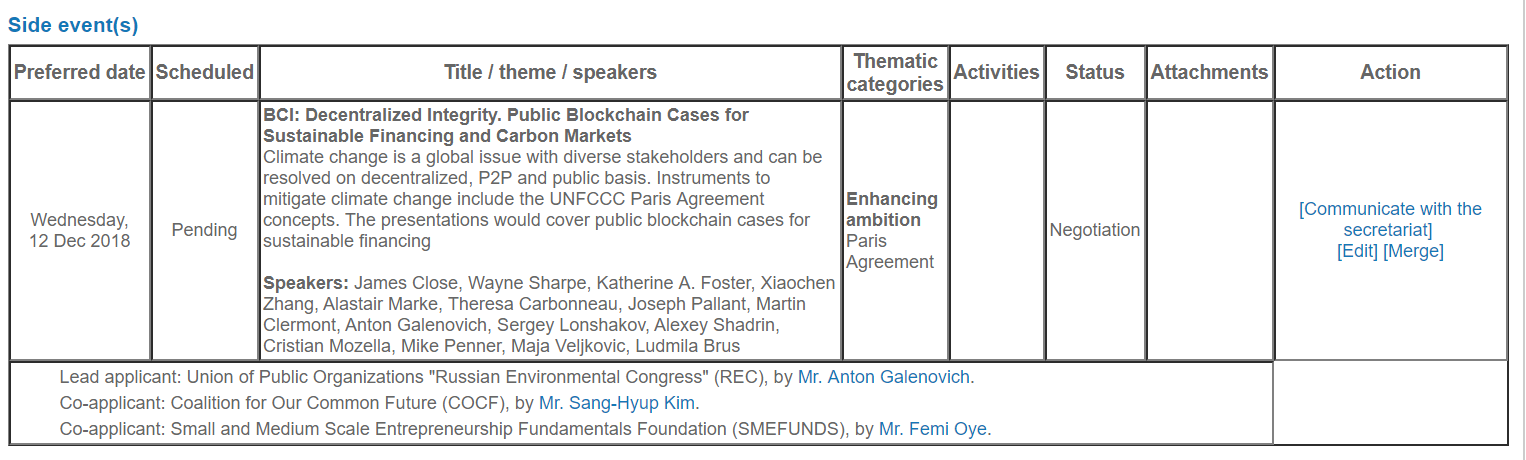 |
| json metadata | {"tags":["climate","blockchain","market","financing"],"image":["https://cdn.steemitimages.com/DQmem328smjqimpbDKBaihLfXYZjupPEp3egMot9JkYyhtn/Side%20event.png"],"app":"steemit/0.1","format":"markdown"} |
| parent author | |
| parent permlink | climate |
| permlink | unfccc-cop24-blockchain-side-event |
| title | UNFCCC COP24 blockchain side-event |
| Transaction Info | Block #25539538/Trx 23b14f349638a71b0cf5815f393abe976fdebc23 |
View Raw JSON Data
{
"block": 25539538,
"op": [
"comment",
{
"author": "galenovich",
"body": "DAO IPCI, Blockchain Climate Institute jointly with Coalition for Our Common Future (COCF), Small and Medium Scale Entrepreneurship Fundamentals Foundation (SMEFUNDS), applied for UNFCCC COP24 side-event “Decentralized Integrity. Public Blockchain Cases for Carbon Markets and Sustainable and Inclusive Financing”",
"json_metadata": "{\"tags\":[\"climate\",\"blockchain\",\"market\",\"financing\"],\"image\":[\"https://cdn.steemitimages.com/DQmem328smjqimpbDKBaihLfXYZjupPEp3egMot9JkYyhtn/Side%20event.png\"],\"app\":\"steemit/0.1\",\"format\":\"markdown\"}",
"parent_author": "",
"parent_permlink": "climate",
"permlink": "unfccc-cop24-blockchain-side-event",
"title": "UNFCCC COP24 blockchain side-event"
}
],
"op_in_trx": 0,
"timestamp": "2018-08-31T04:01:36",
"trx_id": "23b14f349638a71b0cf5815f393abe976fdebc23",
"trx_in_block": 5,
"virtual_op": 0
}pinoyupvoted (10.00%) @galenovich / community-or-corporation2018/08/16 03:41:42
pinoyupvoted (10.00%) @galenovich / community-or-corporation
2018/08/16 03:41:42
| author | galenovich |
| permlink | community-or-corporation |
| voter | pinoy |
| weight | 1000 (10.00%) |
| Transaction Info | Block #25107338/Trx 326181fef7ca69aa2887e29d936321fc22e3b951 |
View Raw JSON Data
{
  "block": 25107338,
  "op": [
    "vote",
    {
      "author": "galenovich",
      "permlink": "community-or-corporation",
      "voter": "pinoy",
      "weight": 1000
    }
  ],
  "op_in_trx": 0,
  "timestamp": "2018-08-16T03:41:42",
  "trx_id": "326181fef7ca69aa2887e29d936321fc22e3b951",
  "trx_in_block": 3,
  "virtual_op": 0
}galenovichpublished a new post: green-markets-need-cryptoanarchism2018/08/16 03:15:42
galenovichpublished a new post: green-markets-need-cryptoanarchism
2018/08/16 03:15:42
| author | galenovich |
| body |  Last May in Barcelona after presenting the launch of DAO IPCI for carbon markets solution at Innovate4Climate I had to answer a fundamental question: “Are the mitigation instruments, the carbon credits, the reductions in DAO IPCI real?”. Many or even the majority of things people buy are not real. “People do not long for tangible goods as such, but for the services which these goods are fitted to render them”. The goods are for the services, satisfaction or pleasure or to ease uneasiness. For mandatory markets carbon credits serve as a renewable resource of rights to go on with harmful economic activities within the limits of available carbon compliance units. For voluntary purposes carbon credits are used to green the image of the polluter or to ease ethical discomfort of individuals. In both cases carbon credits, reductions of GHG emissions do not have to be real. For mandatory purposes they have to comply with whatever requirements the governments establish. And as Ronald Coase has observed, the government is more like normal public authority — ignorant, subject to pressure, and corrupt. And reality is the last and the least of government requirements. For voluntary purposes carbon credits have to give people the impression that they are real. In both cases most of carbon credits are “additional”, “verified” hypothetically avoided but not actual reductions. It is the government or other green establishment authority that generates the impression that they are real. While carbon credits issued under Blockchain Climate Standard (BloCS) in DAO IPCI are much more real than any other carbon credits, as they are required to be “actual reductions” and are independently verified and issued in public blockchain as such, they need the audience, peers that would ask the question if they are real, the audience that needs transparent, peer-to-peer trustless ecosystem with unalterable data, where no one give prescriptions, imposes “prevailing opinions”, governs or administers, and people are entitled to their own free choice and actions. Green markets, including carbon markets, whether mandatory or not, are regulated to the extreme. In fact, mandatory carbon markets are more diversified in comparison with voluntary carbon markets, which are actually monopolized by a couple of established standards. The situation is comforting for many as people are averse to make a choice or the choice is so limited that it in fact is an imitation of options available. Neuro-psychic, intellectual efforts, costs for making a free economic choice are often so high that the issue is just put aside. Similar difficulties occur in the animal world, where, according to studies, the behavior — for example, of dogs, wolves — is not always determined by the immediate incentives and stimuli, but by mental representations or “neuro-psychic images”. Under such circumstances some of the hungry animals prefer to abandon the extrapolation problem solving even supported by positive food reinforcement, and make their choice between food demand and the need to maintain a normal level of nervous tension in favor of the latter, thereby preserving the “psychological comfort”. Evidently, neuropsychic efforts are yet another part of the transaction costs equation. The situation much resembles totalitarianism on the side of the green establishment and conformism on the side of green community. Markets just do not work under such circumstances and discussions on green markets failure are hollow unless those become free markets. The advance of public and programmable blockchain technology, Turing-complete systems, and triple-entry accounting allows for decentralized and truly peer-to-peer trading based on juxtaposition of individual values and inclusion of the entirety of costs. This technology is most fit for green markets, for environmental costs where direct participation of anyone willing to do so is indispensable. Even carbon market caps imposed by the government might not be needed, if the manufacturer discloses honestly the entire costs and third party damages embedded into the product. And if the seller and the buyer jointly decide to ignore these costs that would be their conscious decision to let the third party, including their children and grandchildren suffer. The more practical side of the issue is that objectively it is not in the interests of the green establishment to disrupt existing model, which has brought them power and revenues, by adaptation of the new, fundamentally crypto-anarchistic, decentralized, peer-to-peer “trustless” paradigm. That’s why most of “innovative” blockchain projects for green markets are based on permissioned and in fact centralized and controllable DLT solutions representing just another new tool in the old kit. However limited is the demand for such new paradigm on the other side, on the side of the people, of the green community, it is growing, especially with Centennials. Technology implications for the blockchain solution for green markets are direct and practical. It allows for unrestricted use by anyone anonymously or pseudonymously to create a decentralized autonomy, to issue instruments to mitigate whatever quantifiable and verifiable negative externality one chooses or instruments representing positive social impacts, to trade those instruments, to create insurance instruments or to claim damages, to link or merge the autonomies or preserve independency. It in fact is as crypto-anarchist as is sounds though with universal rules embedded into the smart contracts to sustain transparency, verification and accountability. After all, social costs, values for negative or positive externalities remain largely categories of ethics and moral, and no AI or big data modelling would be capable to substitute subjective juxtaposition of these values to reveal their market price and no authority should be entitled to deprive people of their choice of values. BlockchainCrypto AnarchismCarbon MarketSocial ImpactEconomics Like what you read? Give Anton Galenovich a round of applause. From a quick cheer to a standing ovation, clap to show how much you enjoyed this story. |
| json metadata | {"tags":["environmental","markets","blockchain","climate"],"image":["https://cdn.steemitimages.com/DQmNUhxwdeQVtjcTJ8TotfdKcWLcUFa3KLkJjSmxfSpcie4/image.png"],"app":"steemit/0.1","format":"markdown"} |
| parent author | |
| parent permlink | environmental |
| permlink | green-markets-need-cryptoanarchism |
| title | Green Markets Need CryptoAnarchism |
| Transaction Info | Block #25106818/Trx 2533a7a9b1a6197ff390aa101ffb5be888f4ee3a |
View Raw JSON Data
{
"block": 25106818,
"op": [
"comment",
{
"author": "galenovich",
"body": "\nLast May in Barcelona after presenting the launch of DAO IPCI for carbon markets solution at Innovate4Climate I had to answer a fundamental question: “Are the mitigation instruments, the carbon credits, the reductions in DAO IPCI real?”.\n\n\nMany or even the majority of things people buy are not real. “People do not long for tangible goods as such, but for the services which these goods are fitted to render them”. The goods are for the services, satisfaction or pleasure or to ease uneasiness. For mandatory markets carbon credits serve as a renewable resource of rights to go on with harmful economic activities within the limits of available carbon compliance units. For voluntary purposes carbon credits are used to green the image of the polluter or to ease ethical discomfort of individuals. In both cases carbon credits, reductions of GHG emissions do not have to be real. For mandatory purposes they have to comply with whatever requirements the governments establish. And as Ronald Coase has observed, the government is more like normal public authority — ignorant, subject to pressure, and corrupt. And reality is the last and the least of government requirements. For voluntary purposes carbon credits have to give people the impression that they are real. In both cases most of carbon credits are “additional”, “verified” hypothetically avoided but not actual reductions. It is the government or other green establishment authority that generates the impression that they are real.\n\nWhile carbon credits issued under Blockchain Climate Standard (BloCS) in DAO IPCI are much more real than any other carbon credits, as they are required to be “actual reductions” and are independently verified and issued in public blockchain as such, they need the audience, peers that would ask the question if they are real, the audience that needs transparent, peer-to-peer trustless ecosystem with unalterable data, where no one give prescriptions, imposes “prevailing opinions”, governs or administers, and people are entitled to their own free choice and actions.\n\nGreen markets, including carbon markets, whether mandatory or not, are regulated to the extreme. In fact, mandatory carbon markets are more diversified in comparison with voluntary carbon markets, which are actually monopolized by a couple of established standards.\n\nThe situation is comforting for many as people are averse to make a choice or the choice is so limited that it in fact is an imitation of options available. Neuro-psychic, intellectual efforts, costs for making a free economic choice are often so high that the issue is just put aside. Similar difficulties occur in the animal world, where, according to studies, the behavior — for example, of dogs, wolves — is not always determined by the immediate incentives and stimuli, but by mental representations or “neuro-psychic images”. Under such circumstances some of the hungry animals prefer to abandon the extrapolation problem solving even supported by positive food reinforcement, and make their choice between food demand and the need to maintain a normal level of nervous tension in favor of the latter, thereby preserving the “psychological comfort”. Evidently, neuropsychic efforts are yet another part of the transaction costs equation.\n\nThe situation much resembles totalitarianism on the side of the green establishment and conformism on the side of green community. Markets just do not work under such circumstances and discussions on green markets failure are hollow unless those become free markets.\n\nThe advance of public and programmable blockchain technology, Turing-complete systems, and triple-entry accounting allows for decentralized and truly peer-to-peer trading based on juxtaposition of individual values and inclusion of the entirety of costs. This technology is most fit for green markets, for environmental costs where direct participation of anyone willing to do so is indispensable.\n\nEven carbon market caps imposed by the government might not be needed, if the manufacturer discloses honestly the entire costs and third party damages embedded into the product. And if the seller and the buyer jointly decide to ignore these costs that would be their conscious decision to let the third party, including their children and grandchildren suffer.\n\nThe more practical side of the issue is that objectively it is not in the interests of the green establishment to disrupt existing model, which has brought them power and revenues, by adaptation of the new, fundamentally crypto-anarchistic, decentralized, peer-to-peer “trustless” paradigm. That’s why most of “innovative” blockchain projects for green markets are based on permissioned and in fact centralized and controllable DLT solutions representing just another new tool in the old kit. However limited is the demand for such new paradigm on the other side, on the side of the people, of the green community, it is growing, especially with Centennials.\n\nTechnology implications for the blockchain solution for green markets are direct and practical. It allows for unrestricted use by anyone anonymously or pseudonymously to create a decentralized autonomy, to issue instruments to mitigate whatever quantifiable and verifiable negative externality one chooses or instruments representing positive social impacts, to trade those instruments, to create insurance instruments or to claim damages, to link or merge the autonomies or preserve independency. It in fact is as crypto-anarchist as is sounds though with universal rules embedded into the smart contracts to sustain transparency, verification and accountability. After all, social costs, values for negative or positive externalities remain largely categories of ethics and moral, and no AI or big data modelling would be capable to substitute subjective juxtaposition of these values to reveal their market price and no authority should be entitled to deprive people of their choice of values.\n\nBlockchainCrypto AnarchismCarbon MarketSocial ImpactEconomics\nLike what you read? Give Anton Galenovich a round of applause.\nFrom a quick cheer to a standing ovation, clap to show how much you enjoyed this story.",
"json_metadata": "{\"tags\":[\"environmental\",\"markets\",\"blockchain\",\"climate\"],\"image\":[\"https://cdn.steemitimages.com/DQmNUhxwdeQVtjcTJ8TotfdKcWLcUFa3KLkJjSmxfSpcie4/image.png\"],\"app\":\"steemit/0.1\",\"format\":\"markdown\"}",
"parent_author": "",
"parent_permlink": "environmental",
"permlink": "green-markets-need-cryptoanarchism",
"title": "Green Markets Need CryptoAnarchism"
}
],
"op_in_trx": 0,
"timestamp": "2018-08-16T03:15:42",
"trx_id": "2533a7a9b1a6197ff390aa101ffb5be888f4ee3a",
"trx_in_block": 38,
"virtual_op": 0
}galenovichpublished a new post: community-or-corporation2018/08/16 03:07:27
galenovichpublished a new post: community-or-corporation
2018/08/16 03:07:27
| author | galenovich |
| body | @@ -1,8 +1,101 @@ +!%5B%5D(https://cdn.steemitimages.com/DQmZS9vxGqXCEKNJGPwhyvn1HVjAwVtChxpmzL5r9QNKWT1/image.png)%0A !%5B%5D(http |
| json metadata | {"tags":["environmental","markets","blockchain","climate"],"image":["https://cdn.steemitimages.com/DQmZS9vxGqXCEKNJGPwhyvn1HVjAwVtChxpmzL5r9QNKWT1/image.png","https://cdn.steemitimages.com/DQmfCYpkrm628RsYNY6ew7jd2TSCmzqf4gSuoML84yKypS1/image.png"],"app":"steemit/0.1","format":"markdown"} |
| parent author | |
| parent permlink | environmental |
| permlink | community-or-corporation |
| title | Community or corporation? |
| Transaction Info | Block #25106653/Trx d87b50feb0c6b66a828a1889d5ff6b62a3d9f14b |
View Raw JSON Data
{
  "block": 25106653,
  "op": [
    "comment",
    {
      "author": "galenovich",
      "body": "@@ -1,8 +1,101 @@\n+!%5B%5D(https://cdn.steemitimages.com/DQmZS9vxGqXCEKNJGPwhyvn1HVjAwVtChxpmzL5r9QNKWT1/image.png)%0A\n !%5B%5D(http\n",
      "json_metadata": "{\"tags\":[\"environmental\",\"markets\",\"blockchain\",\"climate\"],\"image\":[\"https://cdn.steemitimages.com/DQmZS9vxGqXCEKNJGPwhyvn1HVjAwVtChxpmzL5r9QNKWT1/image.png\",\"https://cdn.steemitimages.com/DQmfCYpkrm628RsYNY6ew7jd2TSCmzqf4gSuoML84yKypS1/image.png\"],\"app\":\"steemit/0.1\",\"format\":\"markdown\"}",
      "parent_author": "",
      "parent_permlink": "environmental",
      "permlink": "community-or-corporation",
      "title": "Community or corporation?"
    }
  ],
  "op_in_trx": 0,
  "timestamp": "2018-08-16T03:07:27",
  "trx_id": "d87b50feb0c6b66a828a1889d5ff6b62a3d9f14b",
  "trx_in_block": 40,
  "virtual_op": 0
}galenovichpublished a new post: community-or-corporation2018/08/16 03:02:54
galenovichpublished a new post: community-or-corporation
2018/08/16 03:02:54
| author | galenovich |
| body |  The integral Platform for Climate Initiatives (DAO IPCI) architectonics imply creation of decentralized autonomies, DAOs, around the sets of similar values.These values are expressed by specific smart contracts: for tokens and registries representing mitigation instruments and a token for internal market; for "manual" or self-executing procedures to verify and secure mitigation instruments; for compliance with pledges and commitments; for accreditation of the verifiers (the Independent Entities); for documentation support of the transactions; for identification of members of the community. These autonomies may form a type of "corporations", or "joint stock companies" with strictly defined stakes and stakeholders or form "communities" or "commons". The latter would seem more natural and common for public programmable blockchain, which has created a perfect way to crystallize distributed virtual communities. In many cases there are clear business rationales for the community rather than for "the corporation". For instance, it would make more sense to use common funds raised from selling renewable energy carbon credits from micro-installations, small industrial, commercial or industrial sites/installations or other green communal (municipal) measures for common purposes, for example for Business Interruption or Advance Loss of Profit types of insurance, rather than distributing the funds individually. Or there might be any hybrid type of distribution model agreed. For such cases, agreement on the rules for certification, verification, registration and issuance of result-based instruments (mitigation units) among the community members would be much more important than external approvals. Creation of a DAO in DAO IPCI Operator's Menu actually represents an initiation of the "nucleation" process of the new community. The community would still be decentralized with certain functions and limited authority delegated to the Operator, such as: approval of the Independent Entities (auditors), Issuers (project owners or developers entitled for specific mitigation instruments), of the registries and modules to be included into the DAO. These functions are somewhat similar to the functions of an executive secretary to make the activity of self-sufficient community possible. The Issuer initiates the claim for specific mitigation instruments, while the Independent Entity confirms, verifies or assures the entitlement and puts the instruments into the registry. The community as whole or it's individual members may take specific quantified commitments or pledges to offset negative impact and use Complier's contract to perform the commitments in a transparent trackable way in the unalterable ledger. The entirety of his activities is performed in public blockchain excluding possibility for intended or unintended falsifications, manipulations and necessity to refer to off-chain and much less trustworthy sources of data. Not all of the communities would evolve. Some would disappear still leaving traces of the activities in the blockchain. Some may share mitigation instruments registries, Independent Entities, Markets or even merge. Some may split. Technically those are simple though still transparent and reliable procedures. Not pretending to give any legal opinion or advice, it might be worth noting that in case DAO in a form of a corporation is established, the token issued by the Operator would rather be considered as a security, while for the community type of DAO it actually represents common values shared by the community or communities. Large part of "crypto-community" invests into the projects including some of the communities not actually becoming members of those communities.. This is a useful function to provide for market evaluation of their success of failure. The type of blockchain community described is more of a Kropotkin type of "anarchy", which rejects state coercion and centralization while promoting freedom of decentralized communities in their performance of noble activities to mitigate negative environmental and social impact. |
| json metadata | {"tags":["environmental","markets","blockchain","climate"],"image":["https://cdn.steemitimages.com/DQmfCYpkrm628RsYNY6ew7jd2TSCmzqf4gSuoML84yKypS1/image.png"],"app":"steemit/0.1","format":"markdown"} |
| parent author | |
| parent permlink | environmental |
| permlink | community-or-corporation |
| title | Community or corporation? |
| Transaction Info | Block #25106562/Trx ec28d7fea719ec4f8930f298971fb303dc9cac97 |
View Raw JSON Data
{
"block": 25106562,
"op": [
"comment",
{
"author": "galenovich",
"body": "\nThe integral Platform for Climate Initiatives (DAO IPCI) architectonics imply creation of decentralized autonomies, DAOs, around the sets of similar values.These values are expressed by specific smart contracts: for tokens and registries representing mitigation instruments and a token for internal market; for \"manual\" or self-executing procedures to verify and secure mitigation instruments; for compliance with pledges and commitments; for accreditation of the verifiers (the Independent Entities); for documentation support of the transactions; for identification of members of the community.\nThese autonomies may form a type of \"corporations\", or \"joint stock companies\" with strictly defined stakes and stakeholders or form \"communities\" or \"commons\". The latter would seem more natural and common for public programmable blockchain, which has created a perfect way to crystallize distributed virtual communities.\nIn many cases there are clear business rationales for the community rather than for \"the corporation\". For instance, it would make more sense to use common funds raised from selling renewable energy carbon credits from micro-installations, small industrial, commercial or industrial sites/installations or other green communal (municipal) measures for common purposes, for example for Business Interruption or Advance Loss of Profit types of insurance, rather than distributing the funds individually. Or there might be any hybrid type of distribution model agreed.\nFor such cases, agreement on the rules for certification, verification, registration and issuance of result-based instruments (mitigation units) among the community members would be much more important than external approvals.\nCreation of a DAO in DAO IPCI Operator's Menu actually represents an initiation of the \"nucleation\" process of the new community. The community would still be decentralized with certain functions and limited authority delegated to the Operator, such as: approval of the Independent Entities (auditors), Issuers (project owners or developers entitled for specific mitigation instruments), of the registries and modules to be included into the DAO.\nThese functions are somewhat similar to the functions of an executive secretary to make the activity of self-sufficient community possible. The Issuer initiates the claim for specific mitigation instruments, while the Independent Entity confirms, verifies or assures the entitlement and puts the instruments into the registry. The community as whole or it's individual members may take specific quantified commitments or pledges to offset negative impact and use Complier's contract to perform the commitments in a transparent trackable way in the unalterable ledger.\nThe entirety of his activities is performed in public blockchain excluding possibility for intended or unintended falsifications, manipulations and necessity to refer to off-chain and much less trustworthy sources of data.\nNot all of the communities would evolve. Some would disappear still leaving traces of the activities in the blockchain. Some may share mitigation instruments registries, Independent Entities, Markets or even merge. Some may split. Technically those are simple though still transparent and reliable procedures.\nNot pretending to give any legal opinion or advice, it might be worth noting that in case DAO in a form of a corporation is established, the token issued by the Operator would rather be considered as a security, while for the community type of DAO it actually represents common values shared by the community or communities.\nLarge part of \"crypto-community\" invests into the projects including some of the communities not actually becoming members of those communities.. This is a useful function to provide for market evaluation of their success of failure.\nThe type of blockchain community described is more of a Kropotkin type of \"anarchy\", which rejects state coercion and centralization while promoting freedom of decentralized communities in their performance of noble activities to mitigate negative environmental and social impact.",
"json_metadata": "{\"tags\":[\"environmental\",\"markets\",\"blockchain\",\"climate\"],\"image\":[\"https://cdn.steemitimages.com/DQmfCYpkrm628RsYNY6ew7jd2TSCmzqf4gSuoML84yKypS1/image.png\"],\"app\":\"steemit/0.1\",\"format\":\"markdown\"}",
"parent_author": "",
"parent_permlink": "environmental",
"permlink": "community-or-corporation",
"title": "Community or corporation?"
}
],
"op_in_trx": 0,
"timestamp": "2018-08-16T03:02:54",
"trx_id": "ec28d7fea719ec4f8930f298971fb303dc9cac97",
"trx_in_block": 23,
"virtual_op": 0
}2018/08/02 12:53:30
2018/08/02 12:53:30
| author | galenovich |
| permlink | commentaries-to-dao-ipci-white-paper-5-0-offsetting-carbon-footprint-for-crypto-transactions |
| voter | sensation |
| weight | 10000 (100.00%) |
| Transaction Info | Block #24715314/Trx 69d72280ecb1197051298576ce85d3c241933aeb |
View Raw JSON Data
{
  "block": 24715314,
  "op": [
    "vote",
    {
      "author": "galenovich",
      "permlink": "commentaries-to-dao-ipci-white-paper-5-0-offsetting-carbon-footprint-for-crypto-transactions",
      "voter": "sensation",
      "weight": 10000
    }
  ],
  "op_in_trx": 0,
  "timestamp": "2018-08-02T12:53:30",
  "trx_id": "69d72280ecb1197051298576ce85d3c241933aeb",
  "trx_in_block": 52,
  "virtual_op": 0
}2018/08/02 11:27:06
2018/08/02 11:27:06
| author | galenovich |
| permlink | commentaries-to-dao-ipci-white-paper-5-0-offsetting-carbon-footprint-for-crypto-transactions |
| voter | fastresteem |
| weight | 100 (1.00%) |
| Transaction Info | Block #24713586/Trx e87d456f80a9f09f60b9a3d1d70f56d8db1ea986 |
View Raw JSON Data
{
  "block": 24713586,
  "op": [
    "vote",
    {
      "author": "galenovich",
      "permlink": "commentaries-to-dao-ipci-white-paper-5-0-offsetting-carbon-footprint-for-crypto-transactions",
      "voter": "fastresteem",
      "weight": 100
    }
  ],
  "op_in_trx": 0,
  "timestamp": "2018-08-02T11:27:06",
  "trx_id": "e87d456f80a9f09f60b9a3d1d70f56d8db1ea986",
  "trx_in_block": 39,
  "virtual_op": 0
}2018/08/02 11:26:57
2018/08/02 11:26:57
| author | galenovich |
| body |  --- Energy consumption of main public blockchain networks is a real concern and a highly discussed issue. Collateral damage of fossil fuel based power generation is huge and "multidimensional". It includes damages to human health and to the environment due to air, water pollution, GHG emissions, irrevocable consumption of natural resources, etc. CO2 equivalent is a universal integrated parameter to quantify the damage, and offsetting carbon footprint once it is real is of great value. DAO IPCI Whitepaper states: "The manufacturers argue that they supply goods and services in demand, which at least means that the buyer of the goods and services (the second Party) is equally liable. From the economic point of view, it is neither the installation, physical objects, nor physical processes, nor the ownership that causes damage. It is actually the transaction, the deal, the trade, which causes the damage, the negative externality". For major public blockchain networks "the manufacturers" are the miners. That's why it would be fair that the users and the miners share the liability for collateral damage and reimburse, compensate or in other words offset this damage. As we have already pointed out, numerous offers to offset environmental footprint are minimarket solutions to reimburse environmental damage in-kind. To be considered as fair, these solutions have to be justified on both ends, on the demand side, i.e. in terms of calculation of environmental footprint, and on the supply side, i.e. in terms of quality of offset credits. In many cases calculation is not just too approximate but straightly fraudulent. Calculating specific personal carbon footprint is a complex endeavor. The methodologies used should be transparent and at least reviewed and endorsed by the expert community. Selection and quality of offset credits are even more important. People, who pay to offset environmental damage would expect that offset credit is worth the name. Offset credit should be real, absolute, permanent, verified, enforceable and measurable. At the minimum, there should be an adequate and traceable selection of standards applied, project types and prices to make a choice. Most of carbon offsetting proposals, including those that come from reputable brands, do not actually let people see what sort of credits are used, what is their market price, who has verified them, are they really retired or used again and again. Most of carbon credits used to offset carbon footprint represent hypothetically avoided emissions with negligible market price but not actual reductions or quotas. Public blockchain changes the paradigm and makes such scam practically impossible. But only when and if the whole life cycle of carbon credits and allowances is there - on public blockchain, and you don't have to rely on somebodies "trust me". DAO IPCI team has been working on offsetting scheme for public blockchain carbon footprint from the very beginning in 2016, but reluctant to actually introducing it exactly for the risks and reasons described. Now, that we have managed to arrange for verification, issuance and retirement of high quality actual reductions on Ethereum blockchain, created a mechanism that allows to issue any carbon compliance units secured by the Security Deposit Contract, on the one hand, and while calculation is still approximate high quality studies for calculating energy consumptions indices are available, on the other, comes the time to introduce the "trustless mechanism" required. --- General design for offsetting carbon footprint of individual transaction Calculation Algorithm: Electricity consumed per transaction (MWh) multiplied by Grid Emission Factor (tCO2e*MWh). Offsetting Algorithm:[1] 1. the User may choose the units he would prefer out of those that are placed on the Complier contract, which means that they are born and die on the blockchain 2. carbon footprint calculated would be divided by 2 3. once the units are paid for and burnt the User and relevant Miner receive public report, which includes the addresses of the burning transaction, of the token, of the verification report, and the amount of tCO2e burnt and left to be burnt Sources of Data Transactions data: http://etherscan.io for Ethereum, e.g. https://www.blockchain.com/explorer for Bitcoin Energy consumption per transaction: https://digiconomist.net/ethereum-energy-consumption for Ethereum, https://digiconomist.net/bitcoin-energy-consumption for Bitcoin.[2] Grid emission factor: assessed conservatively as equal to national grid emission factor for P.R. of China. According to "China's electricity emission intensity…"[3] equals to 0.861 t/MWh. Example TxHash: 0x8cb77d212b249ba3c455f405ceb07d1b05e36ccb7e59cd53ecd3311b08513a28 Block height: 6063159 Mined By: 0x829bd824b016326a401d083b33d092293333a830 (f2pool_2) Energy consumption per transaction: 0,079 MWh Grid emission factor: 0,861 t/MWh Calculation: 0,079*0,861=0,068019 tСО2e For offsetting purposes the result is divided by 2 and the price established by the Complier is used (ex. current EU ETS price approximately 15 Euro) The User has to pay for 1,020285/2= 0,51 Euro Once the units are paid for and burnt the User and relevant Miner receive public report, which includes the addresses of the burning transaction, of the token, of the verification report, and the amount of tCO2e burnt and left to be burnt (0,0340095 tCO each) [1] Prototype has been tested [2] Digiconomist Copyright © 2018 --- General design for offsetting carbon footprint of individual address Calculation Algorithm would be different: Electricity consumed per transaction (MWh) multiplied by Grid Emission Factor (tCO2e*MWh) multiplied by the number of transactions. Example Address: 0x6CEc6913fF2F8802a0eaA183Fb61C0234AAB5830 Number of transactions: 327 (https://etherscan.io/address/0x6CEc6913fF2F8802a0eaA183Fb61C0234AAB5830 ) Energy consumption per transaction: 0,079 MWh Grid emission factor: 0,861 t/MWh Calculation: 327*0,079*0,861=22,242213 tСО2e For offsetting purposes the result is divided by 2 and the price established by the Complier is used (ex. current EU ETS price approximately 15 Euro) The User has to pay for 11,1211065 tCO2e = 166.82 Euro Once the units are paid for and burnt the User and relevant Miner receive public report, which includes the addresses of the burning transaction, of the token, of the verification report, and the amount of tCO2e burnt and left to be burnt (11,1211065 tCO each) To compare, Bitcoin energy consumption per transaction is not 0,079, but 0,915 MWh. And carbon footprint for transaction would be not 0,068019 but 0,787815 tCO2e, and for the address with 327 transactions not 22,242213 but 257,615505 tCO2e. |
| json metadata | {"tags":["environmental","markets","blockchain","climate"],"image":["https://cdn.steemitimages.com/DQmZWcnff5vE8EyfoHpHwB4uo8JfaotfKgdpRCGc7QKUa2V/image.png"],"links":["http://etherscan.io","https://www.blockchain.com/explorer","https://digiconomist.net/ethereum-energy-consumption","https://digiconomist.net/bitcoin-energy-consumption","https://etherscan.io/address/0x6CEc6913fF2F8802a0eaA183Fb61C0234AAB5830"],"app":"steemit/0.1","format":"markdown"} |
| parent author | |
| parent permlink | environmental |
| permlink | commentaries-to-dao-ipci-white-paper-5-0-offsetting-carbon-footprint-for-crypto-transactions |
| title | Commentaries to DAO IPCI White Paper 5.0: Offsetting carbon footprint for “crypto transactions” |
| Transaction Info | Block #24713583/Trx 03a86a2e0fb2888ec778a24d9ad0a483b11ff293 |
View Raw JSON Data
{
"block": 24713583,
"op": [
"comment",
{
"author": "galenovich",
"body": "\n---\n\nEnergy consumption of main public blockchain networks is a real concern and a highly discussed issue. Collateral damage of fossil fuel based power generation is huge and \"multidimensional\". It includes damages to human health and to the environment due to air, water pollution, GHG emissions, irrevocable consumption of natural resources, etc. CO2 equivalent is a universal integrated parameter to quantify the damage, and offsetting carbon footprint once it is real is of great value. DAO IPCI Whitepaper states: \"The manufacturers argue that they supply goods and services in demand, which at least means that the buyer of the goods and services (the second Party) is equally liable. From the economic point of view, it is neither the installation, physical objects, nor physical processes, nor the ownership that causes damage. It is actually the transaction, the deal, the trade, which causes the damage, the negative externality\". For major public blockchain networks \"the manufacturers\" are the miners. That's why it would be fair that the users and the miners share the liability for collateral damage and reimburse, compensate or in other words offset this damage.\nAs we have already pointed out, numerous offers to offset environmental footprint are minimarket solutions to reimburse environmental damage in-kind. To be considered as fair, these solutions have to be justified on both ends, on the demand side, i.e. in terms of calculation of environmental footprint, and on the supply side, i.e. in terms of quality of offset credits. In many cases calculation is not just too approximate but straightly fraudulent. Calculating specific personal carbon footprint is a complex endeavor. The methodologies used should be transparent and at least reviewed and endorsed by the expert community. Selection and quality of offset credits are even more important. People, who pay to offset environmental damage would expect that offset credit is worth the name. Offset credit should be real, absolute, permanent, verified, enforceable and measurable. At the minimum, there should be an adequate and traceable selection of standards applied, project types and prices to make a choice. Most of carbon offsetting proposals, including those that come from reputable brands, do not actually let people see what sort of credits are used, what is their market price, who has verified them, are they really retired or used again and again. Most of carbon credits used to offset carbon footprint represent hypothetically avoided emissions with negligible market price but not actual reductions or quotas. Public blockchain changes the paradigm and makes such scam practically impossible. But only when and if the whole life cycle of carbon credits and allowances is there - on public blockchain, and you don't have to rely on somebodies \"trust me\".\nDAO IPCI team has been working on offsetting scheme for public blockchain carbon footprint from the very beginning in 2016, but reluctant to actually introducing it exactly for the risks and reasons described. Now, that we have managed to arrange for verification, issuance and retirement of high quality actual reductions on Ethereum blockchain, created a mechanism that allows to issue any carbon compliance units secured by the Security Deposit Contract, on the one hand, and while calculation is still approximate high quality studies for calculating energy consumptions indices are available, on the other, comes the time to introduce the \"trustless mechanism\" required.\n\n\n---\n\nGeneral design for offsetting carbon footprint of individual transaction\nCalculation Algorithm: Electricity consumed per transaction (MWh) multiplied by Grid Emission Factor (tCO2e*MWh).\nOffsetting Algorithm:[1]\n1. the User may choose the units he would prefer out of those that are placed on the Complier contract, which means that they are born and die on the blockchain\n2. carbon footprint calculated would be divided by 2\n3. once the units are paid for and burnt the User and relevant Miner receive public report, which includes the addresses of the burning transaction, of the token, of the verification report, and the amount of tCO2e burnt and left to be burnt\nSources of Data\nTransactions data: http://etherscan.io for Ethereum, e.g. https://www.blockchain.com/explorer for Bitcoin\nEnergy consumption per transaction: https://digiconomist.net/ethereum-energy-consumption for Ethereum, https://digiconomist.net/bitcoin-energy-consumption for Bitcoin.[2]\nGrid emission factor: assessed conservatively as equal to national grid emission factor for P.R. of China. According to \"China's electricity emission intensity…\"[3] equals to 0.861 t/MWh.\nExample\nTxHash: 0x8cb77d212b249ba3c455f405ceb07d1b05e36ccb7e59cd53ecd3311b08513a28\nBlock height: 6063159\nMined By: 0x829bd824b016326a401d083b33d092293333a830 (f2pool_2)\nEnergy consumption per transaction: 0,079 MWh\nGrid emission factor: 0,861 t/MWh\nCalculation: 0,079*0,861=0,068019 tСО2e\nFor offsetting purposes the result is divided by 2 and the price established by the Complier is used (ex. current EU ETS price approximately 15 Euro)\nThe User has to pay for 1,020285/2= 0,51 Euro\nOnce the units are paid for and burnt the User and relevant Miner receive public report, which includes the addresses of the burning transaction, of the token, of the verification report, and the amount of tCO2e burnt and left to be burnt (0,0340095 tCO each)\n[1] Prototype has been tested\n[2] Digiconomist Copyright © 2018\n\n\n---\n\nGeneral design for offsetting carbon footprint of individual address\nCalculation Algorithm would be different: Electricity consumed per transaction (MWh) multiplied by Grid Emission Factor (tCO2e*MWh) multiplied by the number of transactions.\nExample\nAddress: 0x6CEc6913fF2F8802a0eaA183Fb61C0234AAB5830\nNumber of transactions: 327 (https://etherscan.io/address/0x6CEc6913fF2F8802a0eaA183Fb61C0234AAB5830 )\nEnergy consumption per transaction: 0,079 MWh\nGrid emission factor: 0,861 t/MWh\nCalculation: 327*0,079*0,861=22,242213 tСО2e\nFor offsetting purposes the result is divided by 2 and the price established by the Complier is used (ex. current EU ETS price approximately 15 Euro)\nThe User has to pay for 11,1211065 tCO2e = 166.82 Euro\nOnce the units are paid for and burnt the User and relevant Miner receive public report, which includes the addresses of the burning transaction, of the token, of the verification report, and the amount of tCO2e burnt and left to be burnt (11,1211065 tCO each)\nTo compare, Bitcoin energy consumption per transaction is not 0,079, but 0,915 MWh. And carbon footprint for transaction would be not 0,068019 but 0,787815 tCO2e, and for the address with 327 transactions not 22,242213 but 257,615505 tCO2e.",
"json_metadata": "{\"tags\":[\"environmental\",\"markets\",\"blockchain\",\"climate\"],\"image\":[\"https://cdn.steemitimages.com/DQmZWcnff5vE8EyfoHpHwB4uo8JfaotfKgdpRCGc7QKUa2V/image.png\"],\"links\":[\"http://etherscan.io\",\"https://www.blockchain.com/explorer\",\"https://digiconomist.net/ethereum-energy-consumption\",\"https://digiconomist.net/bitcoin-energy-consumption\",\"https://etherscan.io/address/0x6CEc6913fF2F8802a0eaA183Fb61C0234AAB5830\"],\"app\":\"steemit/0.1\",\"format\":\"markdown\"}",
"parent_author": "",
"parent_permlink": "environmental",
"permlink": "commentaries-to-dao-ipci-white-paper-5-0-offsetting-carbon-footprint-for-crypto-transactions",
"title": "Commentaries to DAO IPCI White Paper 5.0: Offsetting carbon footprint for “crypto transactions”"
}
],
"op_in_trx": 0,
"timestamp": "2018-08-02T11:26:57",
"trx_id": "03a86a2e0fb2888ec778a24d9ad0a483b11ff293",
"trx_in_block": 15,
"virtual_op": 0
}galenovichupvoted (100.00%) @galenovich / commentaries-to-dao-ipci-draft-whitepaper-5-0-wp-ii2018/06/25 08:29:09
galenovichupvoted (100.00%) @galenovich / commentaries-to-dao-ipci-draft-whitepaper-5-0-wp-ii
2018/06/25 08:29:09
| author | galenovich |
| permlink | commentaries-to-dao-ipci-draft-whitepaper-5-0-wp-ii |
| voter | galenovich |
| weight | 10000 (100.00%) |
| Transaction Info | Block #23626469/Trx d4a365fa70774276da4cee30680c944868ab220e |
View Raw JSON Data
{
  "block": 23626469,
  "op": [
    "vote",
    {
      "author": "galenovich",
      "permlink": "commentaries-to-dao-ipci-draft-whitepaper-5-0-wp-ii",
      "voter": "galenovich",
      "weight": 10000
    }
  ],
  "op_in_trx": 0,
  "timestamp": "2018-06-25T08:29:09",
  "trx_id": "d4a365fa70774276da4cee30680c944868ab220e",
  "trx_in_block": 29,
  "virtual_op": 0
}galenovichpublished a new post: commentaries-to-dao-ipci-draft-whitepaper-5-0-wp-ii2018/06/25 07:31:03
galenovichpublished a new post: commentaries-to-dao-ipci-draft-whitepaper-5-0-wp-ii
2018/06/25 07:31:03
| author | galenovich |
| body | As we have described in the “Commentaries I”[1], the main difference of DAO IPCI from other solutions is that it requires the people to make their own choices and decisions. We do not offer a marketing solution of the type “here is what you should do”, or “here is the token you should buy” but rather a public blockchain environment, a parallel universe, where “you can create your own solutions” and “make you own choices”. It is for the individual participant to decide whether he accepts the rules of existing program of creates and introduces his own rules. DAO IPCI smart contracts and modules are “the bricks” to build independent mitigation programs within the common environment. It is essential for independent mitigation program to have environmental units’ registries (mitigation instruments’ registries), security reserve or security deposit contracts to issue environmental units to these registries, independent entities (IE) contracts to verify that these units comply with basic rules of the Program, to issue internal currency and to transfer or trade these units via the Market. DAO IPCI is somewhat similar to eukaryotic cells’ system, where independent program performs as individual cell structure — with core, “nucleolus” (2) containing “nucleus” with “DNA”, rules of the Program (1), and other modules, “organelles” (3–13), which provide for creation, sorting, packaging, processing, modification, and “trading” of new mitigation instruments, “proteins”, and for “energy production”, internal currency emission — separated from the external environment and other programs, “cells”, by the “membrane”.  https://en.wikipedia.org/wiki/Organelle#/media/File:Animal_Cell.svg [1] https://medium.com/@antongalenovich/commentaries-to-dao-ipci-draft-whitepaper-5-0-wp-i-e8967179d460 Independent programs may link or merge if they share basic approach, rules or have similar elements and form a superstructure, a “web” of mitigation programs. 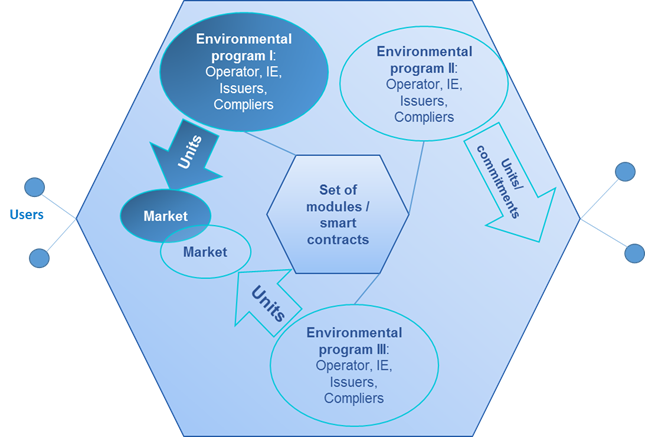 However, linking and merging is not easy. Even similar programs, for instance climate change mitigation programs have implicit differences in approaches that make their integration difficult. For example, DAO IPCO genesis program — Blockchain Climate Standard (BloCS)[1] — requires absolute reductions relative to actual baseline GHG emissions. Other programs offer instruments that do not actually represent reductions of GHG emissions but rather the emissions allegedly avoided according to hypothetical “baseline scenarios”. It is also quite common make distinction between “pricing” and “regulatory” approaches though some and many of the “pricing” approaches are in fact of administrative regulations nature, like taxes. Prices essentially communicate information[2]. They bring the information necessary to make a decision to a minimum and solve the problem of integrating knowledge on complex issues. However, the more rigid is the pricing system the less efficiently it performs this function. Other than establishing prices by decrees or regulating them by introducing “floors” and “ceilings”, one could rather “correct the names”[3], give a strict and rigid definition of what exactly is offered, and have it independently verified. For example, define and differentiate actual and absolute reductions of emissions and effluents, and “additional”, relative, hypothetically “avoided negative impacts”. Then let the market value them. Nevertheless, those differences do not prevent different programs from using the same digital, public blockchain ecosystem, each of them sustaining independency. [1] http://ipci.io/wp-content/uploads/2018/06/Blockchain-Climate-Standard.pdf [2] https://medium.com/@antongalenovich/decentralized-solution-for-pricing-the-priceless-cd781746acdc [3]”Rectify the names” (Chinese: 正 名) to make words correspond to reality BlockchainEnvironmentEconomicsDecentralizationDao Ipci |
| json metadata | {"tags":["blockchain","economics","environment","market","ipci"],"image":["https://cdn.steemitimages.com/DQmUxhp6M6YgCkq6kqFAE94WBcPCVNGPFCoGPBnkn9GEcwr/image.png","https://en.wikipedia.org/wiki/Organelle#/media/File:Animal_Cell.svg","https://cdn.steemitimages.com/DQmVhkkwofAKCUnjVTSkNdXn4puzsXLJjNzKuSfpbgYc6TG/image.png"],"links":["https://medium.com/@antongalenovich/commentaries-to-dao-ipci-draft-whitepaper-5-0-wp-i-e8967179d460","http://ipci.io/wp-content/uploads/2018/06/Blockchain-Climate-Standard.pdf","https://medium.com/@antongalenovich/decentralized-solution-for-pricing-the-priceless-cd781746acdc"],"app":"steemit/0.1","format":"markdown"} |
| parent author | |
| parent permlink | blockchain |
| permlink | commentaries-to-dao-ipci-draft-whitepaper-5-0-wp-ii |
| title | Commentaries to DAO IPCI draft Whitepaper 5.0 (WP): II |
| Transaction Info | Block #23625308/Trx a402e72c5e01bcd337ea8c158398e5620627cf8b |
View Raw JSON Data
{
"block": 23625308,
"op": [
"comment",
{
"author": "galenovich",
"body": "As we have described in the “Commentaries I”[1], the main difference of DAO IPCI from other solutions is that it requires the people to make their own choices and decisions. We do not offer a marketing solution of the type “here is what you should do”, or “here is the token you should buy” but rather a public blockchain environment, a parallel universe, where “you can create your own solutions” and “make you own choices”.\n\nIt is for the individual participant to decide whether he accepts the rules of existing program of creates and introduces his own rules.\n\nDAO IPCI smart contracts and modules are “the bricks” to build independent mitigation programs within the common environment. It is essential for independent mitigation program to have environmental units’ registries (mitigation instruments’ registries), security reserve or security deposit contracts to issue environmental units to these registries, independent entities (IE) contracts to verify that these units comply with basic rules of the Program, to issue internal currency and to transfer or trade these units via the Market.\n\nDAO IPCI is somewhat similar to eukaryotic cells’ system, where independent program performs as individual cell structure — with core, “nucleolus” (2) containing “nucleus” with “DNA”, rules of the Program (1), and other modules, “organelles” (3–13), which provide for creation, sorting, packaging, processing, modification, and “trading” of new mitigation instruments, “proteins”, and for “energy production”, internal currency emission — separated from the external environment and other programs, “cells”, by the “membrane”.\n\nhttps://en.wikipedia.org/wiki/Organelle#/media/File:Animal_Cell.svg\n\n[1] https://medium.com/@antongalenovich/commentaries-to-dao-ipci-draft-whitepaper-5-0-wp-i-e8967179d460\n\n\n\nIndependent programs may link or merge if they share basic approach, rules or have similar elements and form a superstructure, a “web” of mitigation programs.\n\n\n\nHowever, linking and merging is not easy. Even similar programs, for instance climate change mitigation programs have implicit differences in approaches that make their integration difficult. For example, DAO IPCO genesis program — Blockchain Climate Standard (BloCS)[1] — requires absolute reductions relative to actual baseline GHG emissions. Other programs offer instruments that do not actually represent reductions of GHG emissions but rather the emissions allegedly avoided according to hypothetical “baseline scenarios”.\n\nIt is also quite common make distinction between “pricing” and “regulatory” approaches though some and many of the “pricing” approaches are in fact of administrative regulations nature, like taxes. Prices essentially communicate information[2]. They bring the information necessary to make a decision to a minimum and solve the problem of integrating knowledge on complex issues. However, the more rigid is the pricing system the less efficiently it performs this function.\n\nOther than establishing prices by decrees or regulating them by introducing “floors” and “ceilings”, one could rather “correct the names”[3], give a strict and rigid definition of what exactly is offered, and have it independently verified. For example, define and differentiate actual and absolute reductions of emissions and effluents, and “additional”, relative, hypothetically “avoided negative impacts”. Then let the market value them.\n\nNevertheless, those differences do not prevent different programs from using the same digital, public blockchain ecosystem, each of them sustaining independency.\n\n[1] http://ipci.io/wp-content/uploads/2018/06/Blockchain-Climate-Standard.pdf\n\n[2] https://medium.com/@antongalenovich/decentralized-solution-for-pricing-the-priceless-cd781746acdc\n\n[3]”Rectify the names” (Chinese: 正 名) to make words correspond to reality\n\nBlockchainEnvironmentEconomicsDecentralizationDao Ipci",
"json_metadata": "{\"tags\":[\"blockchain\",\"economics\",\"environment\",\"market\",\"ipci\"],\"image\":[\"https://cdn.steemitimages.com/DQmUxhp6M6YgCkq6kqFAE94WBcPCVNGPFCoGPBnkn9GEcwr/image.png\",\"https://en.wikipedia.org/wiki/Organelle#/media/File:Animal_Cell.svg\",\"https://cdn.steemitimages.com/DQmVhkkwofAKCUnjVTSkNdXn4puzsXLJjNzKuSfpbgYc6TG/image.png\"],\"links\":[\"https://medium.com/@antongalenovich/commentaries-to-dao-ipci-draft-whitepaper-5-0-wp-i-e8967179d460\",\"http://ipci.io/wp-content/uploads/2018/06/Blockchain-Climate-Standard.pdf\",\"https://medium.com/@antongalenovich/decentralized-solution-for-pricing-the-priceless-cd781746acdc\"],\"app\":\"steemit/0.1\",\"format\":\"markdown\"}",
"parent_author": "",
"parent_permlink": "blockchain",
"permlink": "commentaries-to-dao-ipci-draft-whitepaper-5-0-wp-ii",
"title": "Commentaries to DAO IPCI draft Whitepaper 5.0 (WP): II"
}
],
"op_in_trx": 0,
"timestamp": "2018-06-25T07:31:03",
"trx_id": "a402e72c5e01bcd337ea8c158398e5620627cf8b",
"trx_in_block": 25,
"virtual_op": 0
}2018/06/23 18:55:42
2018/06/23 18:55:42
| author | galenovich |
| body | Drone-employee.com: waste incineration https://coub.com/view/1a10rt |
| json metadata | {"tags":["environment"],"links":["https://coub.com/view/1a10rt"],"app":"steemit/0.1"} |
| parent author | galenovich |
| parent permlink | iot-based-renewable-energy-carbon-credits-prototype-developed-in-dao-ipci |
| permlink | re-galenovich-iot-based-renewable-energy-carbon-credits-prototype-developed-in-dao-ipci-20180623t185540257z |
| title | |
| Transaction Info | Block #23581409/Trx 9e7b5774a338f90bbc1f12bc7380d4f7e8e2f305 |
View Raw JSON Data
{
  "block": 23581409,
  "op": [
    "comment",
    {
      "author": "galenovich",
      "body": "Drone-employee.com: waste incineration\nhttps://coub.com/view/1a10rt",
      "json_metadata": "{\"tags\":[\"environment\"],\"links\":[\"https://coub.com/view/1a10rt\"],\"app\":\"steemit/0.1\"}",
      "parent_author": "galenovich",
      "parent_permlink": "iot-based-renewable-energy-carbon-credits-prototype-developed-in-dao-ipci",
      "permlink": "re-galenovich-iot-based-renewable-energy-carbon-credits-prototype-developed-in-dao-ipci-20180623t185540257z",
      "title": ""
    }
  ],
  "op_in_trx": 0,
  "timestamp": "2018-06-23T18:55:42",
  "trx_id": "9e7b5774a338f90bbc1f12bc7380d4f7e8e2f305",
  "trx_in_block": 5,
  "virtual_op": 0
}2018/06/20 07:57:51
2018/06/20 07:57:51
| author | galenovich |
| permlink | blockchain-avatar-of-the-market-economy-and-coase-paradigm-for-social-costs-updated |
| voter | sensation |
| weight | 10000 (100.00%) |
| Transaction Info | Block #23481873/Trx 555cf0908ee9c2f77afeb90585e7e05003648f7d |
View Raw JSON Data
{
  "block": 23481873,
  "op": [
    "vote",
    {
      "author": "galenovich",
      "permlink": "blockchain-avatar-of-the-market-economy-and-coase-paradigm-for-social-costs-updated",
      "voter": "sensation",
      "weight": 10000
    }
  ],
  "op_in_trx": 0,
  "timestamp": "2018-06-20T07:57:51",
  "trx_id": "555cf0908ee9c2f77afeb90585e7e05003648f7d",
  "trx_in_block": 27,
  "virtual_op": 0
}2018/06/20 07:47:42
2018/06/20 07:47:42
| author | galenovich |
| permlink | blockchain-avatar-of-the-market-economy-and-coase-paradigm-for-social-costs-updated |
| voter | moby-dick |
| weight | 10000 (100.00%) |
| Transaction Info | Block #23481670/Trx d232071b1ff9bb7dcb31e90a9107d20ea7ed971c |
View Raw JSON Data
{
  "block": 23481670,
  "op": [
    "vote",
    {
      "author": "galenovich",
      "permlink": "blockchain-avatar-of-the-market-economy-and-coase-paradigm-for-social-costs-updated",
      "voter": "moby-dick",
      "weight": 10000
    }
  ],
  "op_in_trx": 0,
  "timestamp": "2018-06-20T07:47:42",
  "trx_id": "d232071b1ff9bb7dcb31e90a9107d20ea7ed971c",
  "trx_in_block": 4,
  "virtual_op": 0
}2018/06/20 04:58:21
2018/06/20 04:58:21
| author | galenovich |
| permlink | blockchain-avatar-of-the-market-economy-and-coase-paradigm-for-social-costs-updated |
| voter | galenovich |
| weight | 10000 (100.00%) |
| Transaction Info | Block #23478283/Trx 755dd5c0d558abb2ffb79abb38f47608cc613a3e |
View Raw JSON Data
{
  "block": 23478283,
  "op": [
    "vote",
    {
      "author": "galenovich",
      "permlink": "blockchain-avatar-of-the-market-economy-and-coase-paradigm-for-social-costs-updated",
      "voter": "galenovich",
      "weight": 10000
    }
  ],
  "op_in_trx": 0,
  "timestamp": "2018-06-20T04:58:21",
  "trx_id": "755dd5c0d558abb2ffb79abb38f47608cc613a3e",
  "trx_in_block": 26,
  "virtual_op": 0
}2018/06/20 04:58:03
2018/06/20 04:58:03
| author | galenovich |
| body | “It is futile to approach social facts with the attitude of a censor who approves or disapproves from the point of view of quite arbitrary standards and subjective It is quite common for the people stumbling upon complicated issues to set hopes on a central authority to resolve them rather than proposing an algorithm for the individuals to preserve their fundamental right to economic choice and settle problems on peer-to-peer basis. The complicated problem of social costs, of negative externalities, collateral damages[1], especially related to environmental issues, remains in the focus of economic science for over 100 years and has become critically important in relation to climate change in particular. While Pigovian approach remains dominant, advance of economic thought and technologies allows for implementation of the decentralized peer-to-peer model based on delimitation of property rights, on values and choices of free individuals. Ludwig von Mises, 1881–1973, the brightest mind of the Austrian School of Economics, precisely defined the core problem: “Carried through consistently, the right of property would entitle the proprietor to claim all the advantages which the good’s employment may generate on the one hand and would burden him with all the disadvantages resulting from its employment on the other hand”[2]. F. A. Hayek, 1899 –1992, another bright representative of the Austrian Economics, 1974 Nobel Prize Winner, alternatively stated that certain harmful effects of deforestation, of some methods of farming, or of the smoke and noise of factories, cannot be confined to the owner of the property in question, or to those willing to submit to the damage for an agreed compensation. F.A. Hayek suggested that in such instances we must find some substitute for the regulation by the price mechanism, and resort to the substitution of direct regulation by authority.[3] Ronald Coase, 1910–2013, a British economist, Nobel Prize Winner in Economic Sciences in 1991, proposed a general market-approach to the problem of social cost and a solution based on clearly defined property rights. The approach introduced the concept of clear delimitation of rights to perform activities harmful to third party and provided the basis for the market-based distribution of limited resources as a production factor and for a peer-to-peer settlement of reciprocal damage of part A (the manufacturer) and part B (the third party). “The real question that has to be decided is: should A be allowed to harm B or should B be allowed to harm A? The problem is to avoid the more serious harm”[4]. The focus is on the aspect, which still is mostly ignored: limiting or banning harmful activities of the polluter, party A, harms him just as his activities harm the people, the third party, party B.[5] They either have to choose, which side of damage is less costly to compensate or to bargain and settle. One of the solutions is strict delimitation of right to execute harmful activities[6] though the process of allocating these rights is costly and bears significant error or corruption risks. Figure 1 — Reciprocal approach to the problem of social cost[7] [1] In the original sense not a military euphemism [2] Human action: a treatise on economics / by Ludwig von Mises, 4th rev. ed., San-Francisco, 1996, p. 657 [3] Hayek, Friedrich August (1994). The Road to Serfdom. University of Chicago Press. ISBN 978–0–226–32061–8, p.44 [4] Ronald H. Coase, “The Problem of Social Cost”, The Journal of Law & Economics, Vol. III, 1960, p. 2 [5] “What has to be decided is whether the gain from preventing the harm is greater than the loss which would be suffered elsewhere as a result of stopping the action which produces the harm”, Coase, op. cit.., p. 27 “[6]If factors of production are thought of as rights, it becomes easier to understand that the right to do something which has a harmful effect (such as the creation of smoke, noise, smells, etc.) is also a factor of production. Just as we may use a piece of land in such a way as to prevent someone else from crossing it, or parking his car, or building his house upon it, so we may use it in such a way as to deny him a view or quiet or unpolluted air. The cost of exercising a right (of using a factor of production) is always the loss which is suffered elsewhere in consequence of the exercise of that right-the inability to cross land, to park a car, to build a house, to enjoy a view, to have peace and quiet or to breathe clean air’, Coase, p. 44 Figure 1 — Reciprocal approach to the problem of social cost[1] [1] “It is necessary to know whether the damaging business is liable or not for damage caused since without the establishment of this initial delimitation of rights there can be no market transactions to transfer and recombine them. “But the ultimate result (which maximises the value of production) is independent of the legal position if the pricing system is assumed to work without cost.” (R. Coase, p. 8) 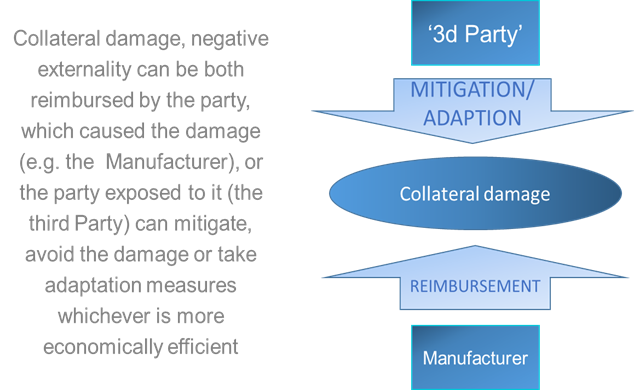 For example, the manufacturer produces gasoline with huge damage to the environment, natural resources, i.e. to future generations, and to the people’s health, security and quality of life. If the manufacturer would have to reimburse all of the damage, prevent pollution, restore natural resources and environment, cover all related medical expenses, etc., the costs would increase dramatically, and he might even have to stop the production of goods demanded by people. However, if the third party, i.e. those who are aggrieved by the damage, take “adaptation measures” or measures to offset, mitigate the damage, costs might be even greater. Both of the solutions are equal and differ only by the level of costs. The Austrian economists probably would not agree to such delimitation arguing that the property rights, the ownership should be clearly defined from the very beginning. But in some cases, for instance for newly discovered resource it is just not possible. Take radio frequencies, the resource, which was unlimited and worthless for some historical period and became especially valuable and scarce with the development of cellular communications. Same applies to GHG emissions. For a long time emissions of carbon dioxide were not considered harmful as the gas is a natural component of the atmosphere. Now they are regulated or limited by taxes or under emission trading schemes globally and the rights to emit GHG became a limited resource. Under the circumstances, it would be just natural and logical for the business to formulate fair method of allocation of this limited resource. The starting point, the baseline could be natural rights of ownership of the resource, which now has to be limited and formally distributed. For emissions markets the principle is known as “grandfathering”. It is consistent with liberal economic principle of allocation, one of famous historical examples of the application of which is Homestead Act in 1862 in the United States. In accordance with such Homestead Principle, the resource is distributed on the grounds of claims, though in limited quantity, and assignment of its share to particular owner is subject to efficient and careful exploitation. Smart contracts to perform such allocation of rights (quotas or allowances) are ready in DAO IPCI. Thus, it is the company itself, who is interested to claim a certain portion of the resource, to claim specified amount of annual greenhouse emission rights, and to justify the claim by efficient exploitation of the resource. With transfer of the entitlement for these rights, “the burden of the disadvantages”, i.e. responsibility for negative externalities is transferred to the buyer. The seller should inform the buyer of the risks and consequences associated with the goods transferred. Nevertheless, once the transaction is executed liability lies with the one who has acquired property rights. The manufacturers argue that they supply goods and services in demand, which at least means that the buyer of the goods and services (the second Party) is equally liable. From the economic point of view, it is neither the installation, physical objects nor physical processes, nor the ownership that causes damage. It is actually the transaction, the deal, the trade, which causes the damage, the negative externality.[1] There seems to be no such thing as a balance in economic development, there is no seamless process of ‘dynamic balancing’. Similarly to quantum mechanics, individual trade acts as ‘quantum’ of economic activities. Furthermore, if the parties agree on reimbursement from the manufacturer, the latter can reimburse negative externality (collateral damage) against the claim of the third party in monetary form, or the settlement may imply that either of the parties or professional supplier of offsets (the forth Party) provides for compensation (offsetting) or mitigation ‘in-kind’. [1] See A. Galenovich, “Quantization” of the environmental impact resource: “ transaction-based model “ of settlement of the social cost of carbon issue, https://goo.gl/tN16Wj Figure 2 — Comprehensive peer-to-peer social cost problem solution 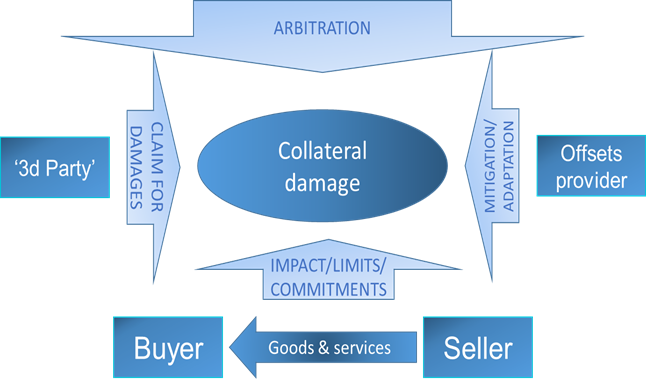 Traditionally, such complicated interactions of the four parties are regulated by the governments, which take possession of the arbitration, assign taxes and fees, quantitative limits and commitments. In the example with gasoline, the damage is partially controlled by the government, which applies licenses, taxes, fees, penalties, and technical regulations. As a result, the government awards the manufacturer with indulgentia, and the latter transfers the liability to the car owner. The third party, those who are aggrieved by the damage, may try to seek reimbursement, which would be difficult as the manufacture has already acquired legitimate clearance from the government, address claim for damages to the government, or take measures to offset, mitigate the damage, or adapt to it, or take no measures at all (which is the less evil than the interference of the government).[1] Experience shows that government “corrective” interventions often do not resolve but aggravate problems while blocking alternative ways for optimal settlement. This leads to the need to “correct corrective interventions” and governmental activity starts to circle without positive results with great transaction costs for society.[2] In fact, solution may be found if there is no government or any “superior authority” action[3], only if the parties interact on decentralized peer-to peer basis.[4] The goal is to arrange for or create low transaction cost institutions to promote settlement between the parties via smart contracts without government interventions. F.A. Hayek noted that “compared with this method of solving the economic problem — by decentralization plus automatic coordination through the price system — the method of central direction is incredibly clumsy, primitive, and limited in scope”.[5] The advance of public and programmable blockchain technology, Turing-complete systems, and triple-entry accounting allows for decentralized arbitration and truly peer-to-peer settlement, and thus allows for further development of the Coase paradigm embracing all of the four parties involved excluding superior authority or allowing the parties to choose the medium. Blockchain technology can be applied to mitigate the collateral socioeconomic damage caused by economic activities; it requires market-based infrastructure that supports decentralized peer-to-peer interactions, the public network evaluation of negative impacts, the distribution of liability, and settlement by means of mitigation outcomes.[6] The design objective is to provide any person, program, corporation, association or jurisdiction, with common space, common space fabric, common tools and ecosystem that is universal, reliable, transparent and that allows diverse stakeholders, including businesses and even individuals to: register their quantified impacts and mitigation pledges; invest in mitigation projects; offset carbon footprints and other damages; acquire and trade mitigation instruments; and join existing programs or launch new programs. As a blockchain ecosystem focused on mitigating negative societal externalities, programmable blockchain is a digital environment built on smart contracts designed to minimize transaction costs and to make the issuance and transfer of mitigation instruments — including internationally transferred mitigation outcomes — highly reliable, transparent and protected from interventions and manipulation by any centralized power. There should be no technical restrictions as to who may launch an autonomous mitigation program in public and programmable blockchain. Existing mandatory or voluntary, large and small programs of diverse scopes of activities and jurisdictions, as well as businesses, NGOs and even individuals should be able to create independent decentralized autonomous organizations (DAO) to implement specific programs and projects and perform transactions. Independent mitigation programs within specific blockchain or even different systems should interlace and form a web of DAOs that share selected modules and protocols with their peers. Diverse mitigation instruments in blockchain should be represented by specific tokens issued via coordinated actions of the Operator of the DAO, the Issuer and the Independent Entity. Only if these actions are in coordination and in compliance with the logic of the open-source smart contracts may the tokens be issued to the possession of the Issuer.[7] [1] “There is, of course, a further alternative, which is to do nothing about the problem at all. And given that the costs involved in solving the problem by regulations issued by the governmental administrative machine will often be heavy (particularly if the costs are interpreted to include all the consequences which follow from the Government engaging in this kind of activity), it will no doubt be commonly the case that the gain which would come from regulating the actions which give rise to the harmful effects will be less than the costs involved in Government regulation”, Coase, p.18 [2] “The kind of situation which economists are prone to consider as requiring corrective Government action is, in fact, often the result of Government action. Such action is not necessarily unwise. But there is a real danger that extensive Government intervention in the economic system may lead to the protection of those responsible for harmful effects being carried too far”, Coase, p. 28 [3] “That is to say, compensation would be paid in the absence of Government action. The only circumstances in which compensation would not be paid would be those in which there had been Government action”, Coase, p. 31 [4] “Who can seriously doubt that the power which a millionaire, who may be my employer, has over me is very much less than that which the smallest bureaucrat possesses who wields the coercive power of the state and on whose discretion it depends how I am allowed to live and work?”, Hayek, 1994, p.41 [5] Hayek, 1994, p.59 [6] There is already one practical example that allows participants in greenhouse gas (GHG) credit-based or quota-based emissions trading schemes to account for claims made towards these targets. (see http://ipci.io ) [7] Up to the moment, two of the manufacturers (KhimProm and Swiss Krono) and one trader (Aera Group) have issued tokens based on the GHG emission reductions assured and verified by reputable auditors. Pilot transaction to register transfer of tokens took place in March 2017. First market transaction has been executed in April 2018. Figure 3 — Issuance of the tokens representing mitigation instruments (environmental units) 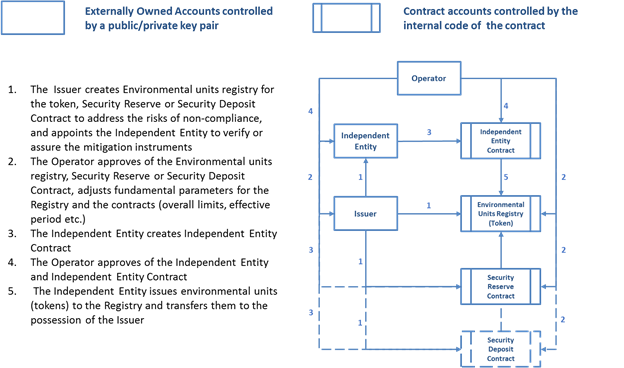 Independent Entities play a crucial arbitration role in the procedure. To reduce transaction costs and convert arbitration to truly decentralized smart contracts based model, IoT smart devices and Network verification has to be introduced and developed to gradually substitute expensive “manual verification”. Figure 4 — IoT smart devices based verification of renewable energy based credits (Prototype) 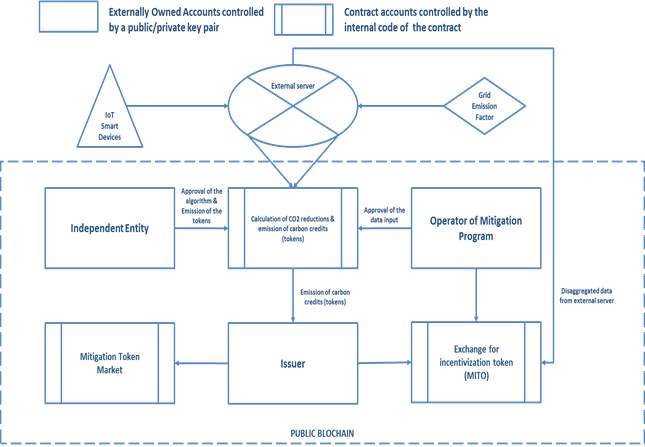 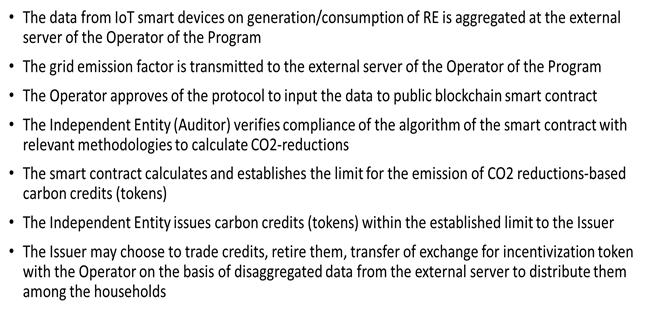 IoT devices and Artificial Intelligence and their economic interaction, ‘Robonomics’, are the future.[1] The interesting question is how exactly artificial devices would participate in human-to-machine deals, transactions, which need a common algorithm for market price. An algorithm based on ‘marginal cost’ concept may be introduced for machines, while human individuals would still and ever use subjective values to determine prices and costs. There seems to be no alternative to creation of a specific market for IoT or robot services. Regular demand for tokens representing mitigation instruments is on the side of the participants of commercial deals that cause collateral damage, manufacturers, suppliers and consumers, sellers and buyers of goods and services. However, monetary claims for damages of ‘the third Party’ is also a potential source of demand, which can be satisfied either in monetary form or by ’in-kind’ offsetting. Smart contracts should allow for initiating claim for damages in blockchain along with filing actual case, supporting it by secondary claimants, and settling either by reimbursement or offsetting the damage.[2] [1] See Robonomics platform by Airalab at https://github.com/airalab [2] There are notorious examples of public protest in Russia against air pollution from landfills. Little can be done as all the permissions from the government are in place. Enlisting a claim against landfill owners or/and relevant authorities in blockchain is an alternative peer-to-peer way to seek settlement. Primary individual claim secured by payment token deposit might be supported by secondary claims increasing the value of the claim. Furthermore, objective IoT devices may quantify and verify negative impact. The Respondent may choose to ignore the claim, reimburse damage by buying out “the claim tokens” or to compensate the damage with the verified results of mitigation measures if there are any. Figure 5–3d Party Claim for Damages 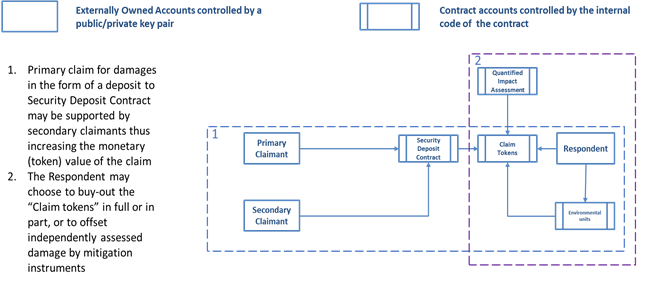 Other than tokens representing mitigation instruments type of token, represents digital currency for internal markets of independent programs, essentially a payment token. Operators of independent programs, DAOs, may issue this type of tokens arbitrarily.[1] Fundamental concept for issuance of independent currencies is that artificial state monopoly for money emission suppressing other currencies is harmful in respect of inflation, social conflicts, unrestrained budget expenditures, economic nationalism. Government monopoly for money should be abolished. From the very beginning blockchain technology and its first manifestation, Bitcoin, brought to life a simple though disruptive concept: that anyone can issue his own global money with minimum transaction costs. Actually, monopoly for money by the governments has already ended, and denationalization of money[2] has begun. Suppression by the governments of currencies issued by entities, persons or even machines, is hopeless, does not make sense and will eventually stop. At the end of the day, it is up to person himself to choose which of the currencies to use for each specific exchange or to store values. On the other hand, it is up to the Issuer to choose the scheme of issuance of “his money”. However, “one-time” sale of the token representing the currency is not the only option. Proof-of-Work algorithms to issue currency with all the benefits, unfortunately, are not a market feature. Proof-of Stake also do not fully reflect market demand for the token. Alternatively, a mechanism based on market demand for the token may be created. For this purpose initial crowd-offering should be targeted at understanding the initial demand and initial level of price acceptable for different buyers however unpredictable those might be. A permanent emission mechanism can be launched on this basis. For example, a contract that offers issuance of new tokens at the Ceiling price. When there is enough data from the smart-contract accumulated, Artificial Neural Network may take over setting the contract price for the token issuance. This way the Issuer provides options to the Buyers whether to use the token on the Market to buy goods, to buy more tokens, to store for the future or to go to an external exchange in search for the Floor price. Market is the core element of any independent program, DAO, within the blockchain ecosystem. Other elements like issuance or retirement of mitigation instruments provide for the quality of market goods and traceability of transactions, compliance with the program requirements. The goods traded at these markets are not for direct consumption but are goods of a higher order, factors of further production; essentially, they represent rights for further economic activity harmful to a third party. Payment token functional role is to provide for seamless market operations, fungibility of mitigation instruments, and its’ value is determined by the demand for the token. To provide for market operations with minimum transaction costs and for growth of value of the market further emission of payment token would seem necessary. However, payment token emission algorithm has to be compliant with inherent properties of public blockchain. “The state of the market at any instant is the price structure, i.e., the totality of the exchange ratios as established by the interaction of those eager to buy and those eager to sell.”[3] Evaluation of the state of the market might be performed by verification nodes of the programmable blockchain Network or by artificial neural network (ANN). Alternatively, market evaluation of the token should be introduced. [1] The Genesis Operator, the Operator of the Russian Carbon Fund Integrated Standard for Climate Initiatives (RCF ISCI Operator) has issued Mitigation Token (MITO) in total amount of 9,068,185.45, including 109,987.25 tokens, which have been actually sold or distributed, and are in the possession of private holders. No further emission of this token is technically possible. MITO is the payment token for RCF Standard MITO Market. [2] See Friedrich Hayek, Denationalization of Money, Institute of Economic Affairs, 1976 [3] Human action: a treatise on economics / by Ludwig von Mises, 4th rev. ed., San-Francisco, 1996, p. 258 Figure 6 — The Market and Issuance of Payment Token 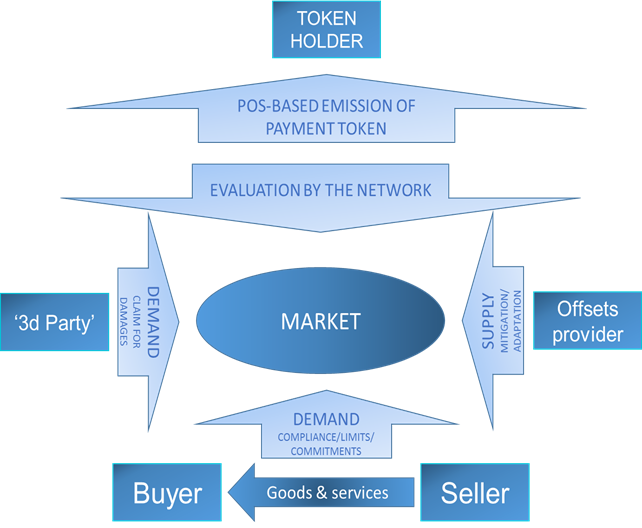 There is a dominant economic idea that the supply and demand and turnover determine the value of the market and are to be used to determine the amount of the currency needed. However, the fundamental parameter still is the market demand for the token, the currency whether it is used to exchange for goods (mitigation instruments) available at the market or to store value on the balance. As an example current Mitigation Token (MITO) has been issued by the Genesis DAO Operator in DAO IPCI, and further emission based on the demand for the token is technically impossible. Under the circumstances, it would be reasonable to design and execute the issuance and distribution of “MITO 2.0”. It should be performed by “the Pool of DAOs”. MITO 1.0 should be exchanged to MITO 2.0 at the rate of 1:2 to fulfil our commitments to presale buyers. To ensure the exchange “Alembic” or “Distillation” smart contract should work long enough to preserve the rights of MITO 1.0 presale buyers. Number of MITO 2.0 decimals should be increased to the level sufficient to support future hypothetical transaction fees, i.e. to the order of Ether decimals (10–18), and an emission mechanism designed. The ultimate target of the emission model is to provide for the growth of value of MITO Market and of MITO. There should not be a monopolist, a predesigned market maker. The main question for MITO 2.0 is whether to issue fixed amount or design a self-executing token emission contract. If there is further emission linked to market demand for token or to supply of mitigation instruments (currently more than 1,6 million verified carbon credits available), and newly issued tokens are distributed based on POS, than what would be the legal implications? The following scheme has been proposed for discussion. Figure 7 — Emission of MITO 2.0 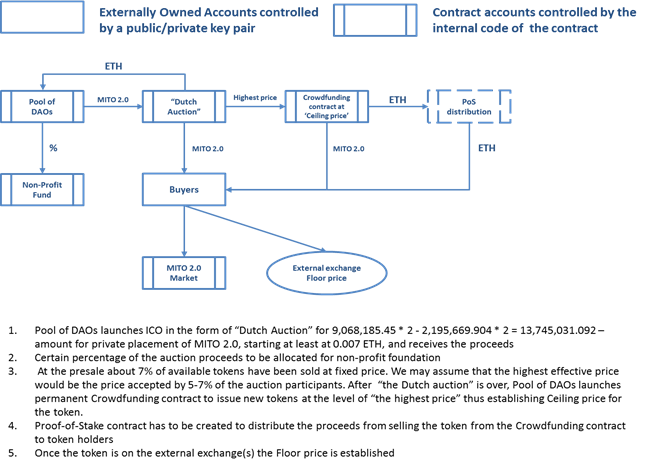 As newly issued tokens yield proceeds to the possession of existing token holders interested in the value of the market and the token, there would be an incentive to increase the value of the market and the demand for the token and no incentive to falsify trades in order to increase emission. Most of the elements to implement the model in principle are in place. Yet, some of them are still under development, what is far more important the concept in general still needs comprehension by the “climate” and “blockchain” communities. The concept that there is no governance or central authority, which prescribes solutions, restricts or allows actions is still making its way even in public blockchain projects. |
| json metadata | {"tags":["environmental","markets","blockchain","climate","economics"],"image":["https://cdn.steemitimages.com/DQmZR3X43VnNyWS8B3duiZZyoBaCTfs7axbqxZ23KtzqkT4/image.png","https://cdn.steemitimages.com/DQmPza3VE2rTYK5mA81afiTnUr4SeMwRJzRPzkRL5K9WM9x/image.png","https://cdn.steemitimages.com/DQmS7at58zg99zuPVbAQrAwyGWtCGNLdTU1MHKhfAWHm9EF/image.png","https://cdn.steemitimages.com/DQmULFz3iJqEQBaojdN1sdfs6KNfbSqSzRxwMZ9SFwdyLww/image.png","https://cdn.steemitimages.com/DQmQonFWtnMfDRj44TXEbePP3Fi19yqLhTmQN8AGq8LAwMC/image.png","https://cdn.steemitimages.com/DQmd6NYuBWpnXXHZPAfLkPY7m5JAeXmDCsKkwgwUKz4b3YC/image.png","https://cdn.steemitimages.com/DQmPAA4kQX6Evwk7hKrzJVM91wK6sDNrm3C5GkxMUr1rhw6/image.png","https://cdn.steemitimages.com/DQmZSw5pEQUA9w7P5ZrVggKu6pySfNAWHqpcC7BMgRJBDTS/image.png"],"links":["https://goo.gl/tN16Wj","http://ipci.io","https://github.com/airalab"],"app":"steemit/0.1","format":"markdown"} |
| parent author | |
| parent permlink | environmental |
| permlink | blockchain-avatar-of-the-market-economy-and-coase-paradigm-for-social-costs-updated |
| title | Blockchain Avatar of the Market Economy and Coase Paradigm for Social Costs (Updated) |
| Transaction Info | Block #23478277/Trx 75cc1623dec23d2a97a358b30e1e5f2e1f246c1c |
View Raw JSON Data
{
"block": 23478277,
"op": [
"comment",
{
"author": "galenovich",
"body": "“It is futile to approach social facts with the attitude of a censor who approves or disapproves from the point of view of quite arbitrary standards and subjective It is quite common for the people stumbling upon complicated issues to set hopes on a central authority to resolve them rather than proposing an algorithm for the individuals to preserve their fundamental right to economic choice and settle problems on peer-to-peer basis.\n\nThe complicated problem of social costs, of negative externalities, collateral damages[1], especially related to environmental issues, remains in the focus of economic science for over 100 years and has become critically important in relation to climate change in particular. While Pigovian approach remains dominant, advance of economic thought and technologies allows for implementation of the decentralized peer-to-peer model based on delimitation of property rights, on values and choices of free individuals. Ludwig von Mises, 1881–1973, the brightest mind of the Austrian School of Economics, precisely defined the core problem: “Carried through consistently, the right of property would entitle the proprietor to claim all the advantages which the good’s employment may generate on the one hand and would burden him with all the disadvantages resulting from its employment on the other hand”[2]. F. A. Hayek, 1899 –1992, another bright representative of the Austrian Economics, 1974 Nobel Prize Winner, alternatively stated that certain harmful effects of deforestation, of some methods of farming, or of the smoke and noise of factories, cannot be confined to the owner of the property in question, or to those willing to submit to the damage for an agreed compensation. F.A. Hayek suggested that in such instances we must find some substitute for the regulation by the price mechanism, and resort to the substitution of direct regulation by authority.[3]\n\nRonald Coase, 1910–2013, a British economist, Nobel Prize Winner in Economic Sciences in 1991, proposed a general market-approach to the problem of social cost and a solution based on clearly defined property rights. The approach introduced the concept of clear delimitation of rights to perform activities harmful to third party and provided the basis for the market-based distribution of limited resources as a production factor and for a peer-to-peer settlement of reciprocal damage of part A (the manufacturer) and part B (the third party). “The real question that has to be decided is: should A be allowed to harm B or should B be allowed to harm A? The problem is to avoid the more serious harm”[4]. The focus is on the aspect, which still is mostly ignored: limiting or banning harmful activities of the polluter, party A, harms him just as his activities harm the people, the third party, party B.[5] They either have to choose, which side of damage is less costly to compensate or to bargain and settle.\n\nOne of the solutions is strict delimitation of right to execute harmful activities[6] though the process of allocating these rights is costly and bears significant error or corruption risks.\n\nFigure 1 — Reciprocal approach to the problem of social cost[7]\n\n[1] In the original sense not a military euphemism\n\n[2] Human action: a treatise on economics / by Ludwig von Mises, 4th rev. ed., San-Francisco, 1996, p. 657\n\n[3] Hayek, Friedrich August (1994). The Road to Serfdom. University of Chicago Press. ISBN 978–0–226–32061–8, p.44\n\n[4] Ronald H. Coase, “The Problem of Social Cost”, The Journal of Law & Economics, Vol. III, 1960, p. 2\n\n[5] “What has to be decided is whether the gain from preventing the harm is greater than the loss which would be suffered elsewhere as a result of stopping the action which produces the harm”, Coase, op. cit.., p. 27\n\n“[6]If factors of production are thought of as rights, it becomes easier to understand that the right to do something which has a harmful effect (such as the creation of smoke, noise, smells, etc.) is also a factor of production. Just as we may use a piece of land in such a way as to prevent someone else from crossing it, or parking his car, or building his house upon it, so we may use it in such a way as to deny him a view or quiet or unpolluted air. The cost of exercising a right (of using a factor of production) is always the loss which is suffered elsewhere in consequence of the exercise of that right-the inability to cross land, to park a car, to build a house, to enjoy a view, to have peace and quiet or to breathe clean air’, Coase, p. 44\n\nFigure 1 — Reciprocal approach to the problem of social cost[1]\n\n[1] “It is necessary to know whether the damaging business is liable or not for damage caused since without the establishment of this initial delimitation of rights there can be no market transactions to transfer and recombine them. “But the ultimate result (which maximises the value of production) is independent of the legal position if the pricing system is assumed to work without cost.” (R. Coase, p. 8)\n\nFor example, the manufacturer produces gasoline with huge damage to the environment, natural resources, i.e. to future generations, and to the people’s health, security and quality of life. If the manufacturer would have to reimburse all of the damage, prevent pollution, restore natural resources and environment, cover all related medical expenses, etc., the costs would increase dramatically, and he might even have to stop the production of goods demanded by people. However, if the third party, i.e. those who are aggrieved by the damage, take “adaptation measures” or measures to offset, mitigate the damage, costs might be even greater. Both of the solutions are equal and differ only by the level of costs.\n\nThe Austrian economists probably would not agree to such delimitation arguing that the property rights, the ownership should be clearly defined from the very beginning. But in some cases, for instance for newly discovered resource it is just not possible. Take radio frequencies, the resource, which was unlimited and worthless for some historical period and became especially valuable and scarce with the development of cellular communications. Same applies to GHG emissions. For a long time emissions of carbon dioxide were not considered harmful as the gas is a natural component of the atmosphere. Now they are regulated or limited by taxes or under emission trading schemes globally and the rights to emit GHG became a limited resource.\n\nUnder the circumstances, it would be just natural and logical for the business to formulate fair method of allocation of this limited resource. The starting point, the baseline could be natural rights of ownership of the resource, which now has to be limited and formally distributed. For emissions markets the principle is known as “grandfathering”. It is consistent with liberal economic principle of allocation, one of famous historical examples of the application of which is Homestead Act in 1862 in the United States.\n\nIn accordance with such Homestead Principle, the resource is distributed on the grounds of claims, though in limited quantity, and assignment of its share to particular owner is subject to efficient and careful exploitation.\n\nSmart contracts to perform such allocation of rights (quotas or allowances) are ready in DAO IPCI.\n\nThus, it is the company itself, who is interested to claim a certain portion of the resource, to claim specified amount of annual greenhouse emission rights, and to justify the claim by efficient exploitation of the resource.\n\nWith transfer of the entitlement for these rights, “the burden of the disadvantages”, i.e. responsibility for negative externalities is transferred to the buyer. The seller should inform the buyer of the risks and consequences associated with the goods transferred. Nevertheless, once the transaction is executed liability lies with the one who has acquired property rights.\n\nThe manufacturers argue that they supply goods and services in demand, which at least means that the buyer of the goods and services (the second Party) is equally liable. From the economic point of view, it is neither the installation, physical objects nor physical processes, nor the ownership that causes damage. It is actually the transaction, the deal, the trade, which causes the damage, the negative externality.[1]\n\nThere seems to be no such thing as a balance in economic development, there is no seamless process of ‘dynamic balancing’. Similarly to quantum mechanics, individual trade acts as ‘quantum’ of economic activities.\n\nFurthermore, if the parties agree on reimbursement from the manufacturer, the latter can reimburse negative externality (collateral damage) against the claim of the third party in monetary form, or the settlement may imply that either of the parties or professional supplier of offsets (the forth Party) provides for compensation (offsetting) or mitigation ‘in-kind’.\n\n[1] See A. Galenovich, “Quantization” of the environmental impact resource: “ transaction-based model “ of settlement of the social cost of carbon issue, https://goo.gl/tN16Wj\n\nFigure 2 — Comprehensive peer-to-peer social cost problem solution\n\nTraditionally, such complicated interactions of the four parties are regulated by the governments, which take possession of the arbitration, assign taxes and fees, quantitative limits and commitments.\n\nIn the example with gasoline, the damage is partially controlled by the government, which applies licenses, taxes, fees, penalties, and technical regulations. As a result, the government awards the manufacturer with indulgentia, and the latter transfers the liability to the car owner. The third party, those who are aggrieved by the damage, may try to seek reimbursement, which would be difficult as the manufacture has already acquired legitimate clearance from the government, address claim for damages to the government, or take measures to offset, mitigate the damage, or adapt to it, or take no measures at all (which is the less evil than the interference of the government).[1]\n\nExperience shows that government “corrective” interventions often do not resolve but aggravate problems while blocking alternative ways for optimal settlement. This leads to the need to “correct corrective interventions” and governmental activity starts to circle without positive results with great transaction costs for society.[2]\n\nIn fact, solution may be found if there is no government or any “superior authority” action[3], only if the parties interact on decentralized peer-to peer basis.[4]\n\nThe goal is to arrange for or create low transaction cost institutions to promote settlement between the parties via smart contracts without government interventions. F.A. Hayek noted that “compared with this method of solving the economic problem — by decentralization plus automatic coordination through the price system — the method of central direction is incredibly clumsy, primitive, and limited in scope”.[5]\n\nThe advance of public and programmable blockchain technology, Turing-complete systems, and triple-entry accounting allows for decentralized arbitration and truly peer-to-peer settlement, and thus allows for further development of the Coase paradigm embracing all of the four parties involved excluding superior authority or allowing the parties to choose the medium.\n\nBlockchain technology can be applied to mitigate the collateral socioeconomic damage caused by economic activities; it requires market-based infrastructure that supports decentralized peer-to-peer interactions, the public network evaluation of negative impacts, the distribution of liability, and settlement by means of mitigation outcomes.[6]\n\nThe design objective is to provide any person, program, corporation, association or jurisdiction, with common space, common space fabric, common tools and ecosystem that is universal, reliable, transparent and that allows diverse stakeholders, including businesses and even individuals to: register their quantified impacts and mitigation pledges; invest in mitigation projects; offset carbon footprints and other damages; acquire and trade mitigation instruments; and join existing programs or launch new programs.\n\nAs a blockchain ecosystem focused on mitigating negative societal externalities, programmable blockchain is a digital environment built on smart contracts designed to minimize transaction costs and to make the issuance and transfer of mitigation instruments — including internationally transferred mitigation outcomes — highly reliable, transparent and protected from interventions and manipulation by any centralized power.\n\nThere should be no technical restrictions as to who may launch an autonomous mitigation program in public and programmable blockchain. Existing mandatory or voluntary, large and small programs of diverse scopes of activities and jurisdictions, as well as businesses, NGOs and even individuals should be able to create independent decentralized autonomous organizations (DAO) to implement specific programs and projects and perform transactions. Independent mitigation programs within specific blockchain or even different systems should interlace and form a web of DAOs that share selected modules and protocols with their peers.\n\nDiverse mitigation instruments in blockchain should be represented by specific tokens issued via coordinated actions of the Operator of the DAO, the Issuer and the Independent Entity. Only if these actions are in coordination and in compliance with the logic of the open-source smart contracts may the tokens be issued to the possession of the Issuer.[7]\n\n[1] “There is, of course, a further alternative, which is to do nothing about the problem at all. And given that the costs involved in solving the problem by regulations issued by the governmental administrative machine will often be heavy (particularly if the costs are interpreted to include all the consequences which follow from the Government engaging in this kind of activity), it will no doubt be commonly the case that the gain which would come from regulating the actions which give rise to the harmful effects will be less than the costs involved in Government regulation”, Coase, p.18\n\n[2] “The kind of situation which economists are prone to consider as requiring corrective Government action is, in fact, often the result of Government action. Such action is not necessarily unwise. But there is a real danger that extensive Government intervention in the economic system may lead to the protection of those responsible for harmful effects being carried too far”, Coase, p. 28\n\n[3] “That is to say, compensation would be paid in the absence of Government action. The only circumstances in which compensation would not be paid would be those in which there had been Government action”, Coase, p. 31\n\n[4] “Who can seriously doubt that the power which a millionaire, who may be my employer, has over me is very much less than that which the smallest bureaucrat possesses who wields the coercive power of the state and on whose discretion it depends how I am allowed to live and work?”, Hayek, 1994, p.41\n\n[5] Hayek, 1994, p.59\n\n[6] There is already one practical example that allows participants in greenhouse gas (GHG) credit-based or quota-based emissions trading schemes to account for claims made towards these targets. (see http://ipci.io )\n\n[7] Up to the moment, two of the manufacturers (KhimProm and Swiss Krono) and one trader (Aera Group) have issued tokens based on the GHG emission reductions assured and verified by reputable auditors. Pilot transaction to register transfer of tokens took place in March 2017. First market transaction has been executed in April 2018.\n\nFigure 3 — Issuance of the tokens representing mitigation instruments (environmental units)\n\nIndependent Entities play a crucial arbitration role in the procedure. To reduce transaction costs and convert arbitration to truly decentralized smart contracts based model, IoT smart devices and Network verification has to be introduced and developed to gradually substitute expensive “manual verification”.\n\nFigure 4 — IoT smart devices based verification of renewable energy based credits (Prototype)\n\n\nIoT devices and Artificial Intelligence and their economic interaction, ‘Robonomics’, are the future.[1] The interesting question is how exactly artificial devices would participate in human-to-machine deals, transactions, which need a common algorithm for market price. An algorithm based on ‘marginal cost’ concept may be introduced for machines, while human individuals would still and ever use subjective values to determine prices and costs. There seems to be no alternative to creation of a specific market for IoT or robot services.\n\nRegular demand for tokens representing mitigation instruments is on the side of the participants of commercial deals that cause collateral damage, manufacturers, suppliers and consumers, sellers and buyers of goods and services. However, monetary claims for damages of ‘the third Party’ is also a potential source of demand, which can be satisfied either in monetary form or by ’in-kind’ offsetting. Smart contracts should allow for initiating claim for damages in blockchain along with filing actual case, supporting it by secondary claimants, and settling either by reimbursement or offsetting the damage.[2]\n\n[1] See Robonomics platform by Airalab at https://github.com/airalab\n\n[2] There are notorious examples of public protest in Russia against air pollution from landfills. Little can be done as all the permissions from the government are in place. Enlisting a claim against landfill owners or/and relevant authorities in blockchain is an alternative peer-to-peer way to seek settlement. Primary individual claim secured by payment token deposit might be supported by secondary claims increasing the value of the claim. Furthermore, objective IoT devices may quantify and verify negative impact. The Respondent may choose to ignore the claim, reimburse damage by buying out “the claim tokens” or to compensate the damage with the verified results of mitigation measures if there are any.\n\nFigure 5–3d Party Claim for Damages\n\nOther than tokens representing mitigation instruments type of token, represents digital currency for internal markets of independent programs, essentially a payment token. Operators of independent programs, DAOs, may issue this type of tokens arbitrarily.[1]\n\nFundamental concept for issuance of independent currencies is that artificial state monopoly for money emission suppressing other currencies is harmful in respect of inflation, social conflicts, unrestrained budget expenditures, economic nationalism. Government monopoly for money should be abolished. From the very beginning blockchain technology and its first manifestation, Bitcoin, brought to life a simple though disruptive concept: that anyone can issue his own global money with minimum transaction costs. Actually, monopoly for money by the governments has already ended, and denationalization of money[2] has begun. Suppression by the governments of currencies issued by entities, persons or even machines, is hopeless, does not make sense and will eventually stop. At the end of the day, it is up to person himself to choose which of the currencies to use for each specific exchange or to store values. On the other hand, it is up to the Issuer to choose the scheme of issuance of “his money”. However, “one-time” sale of the token representing the currency is not the only option. Proof-of-Work algorithms to issue currency with all the benefits, unfortunately, are not a market feature. Proof-of Stake also do not fully reflect market demand for the token. Alternatively, a mechanism based on market demand for the token may be created. For this purpose initial crowd-offering should be targeted at understanding the initial demand and initial level of price acceptable for different buyers however unpredictable those might be. A permanent emission mechanism can be launched on this basis. For example, a contract that offers issuance of new tokens at the Ceiling price. When there is enough data from the smart-contract accumulated, Artificial Neural Network may take over setting the contract price for the token issuance. This way the Issuer provides options to the Buyers whether to use the token on the Market to buy goods, to buy more tokens, to store for the future or to go to an external exchange in search for the Floor price.\n\nMarket is the core element of any independent program, DAO, within the blockchain ecosystem. Other elements like issuance or retirement of mitigation instruments provide for the quality of market goods and traceability of transactions, compliance with the program requirements. The goods traded at these markets are not for direct consumption but are goods of a higher order, factors of further production; essentially, they represent rights for further economic activity harmful to a third party.\n\nPayment token functional role is to provide for seamless market operations, fungibility of mitigation instruments, and its’ value is determined by the demand for the token. To provide for market operations with minimum transaction costs and for growth of value of the market further emission of payment token would seem necessary. However, payment token emission algorithm has to be compliant with inherent properties of public blockchain.\n\n“The state of the market at any instant is the price structure, i.e., the totality of the exchange ratios as established by the interaction of those eager to buy and those eager to sell.”[3] Evaluation of the state of the market might be performed by verification nodes of the programmable blockchain Network or by artificial neural network (ANN). Alternatively, market evaluation of the token should be introduced.\n\n[1] The Genesis Operator, the Operator of the Russian Carbon Fund Integrated Standard for Climate Initiatives (RCF ISCI Operator) has issued Mitigation Token (MITO) in total amount of 9,068,185.45, including 109,987.25 tokens, which have been actually sold or distributed, and are in the possession of private holders. No further emission of this token is technically possible. MITO is the payment token for RCF Standard MITO Market.\n\n[2] See Friedrich Hayek, Denationalization of Money, Institute of Economic Affairs, 1976\n\n[3] Human action: a treatise on economics / by Ludwig von Mises, 4th rev. ed., San-Francisco, 1996, p. 258\n\nFigure 6 — The Market and Issuance of Payment Token\n\nThere is a dominant economic idea that the supply and demand and turnover determine the value of the market and are to be used to determine the amount of the currency needed. However, the fundamental parameter still is the market demand for the token, the currency whether it is used to exchange for goods (mitigation instruments) available at the market or to store value on the balance.\n\nAs an example current Mitigation Token (MITO) has been issued by the Genesis DAO Operator in DAO IPCI, and further emission based on the demand for the token is technically impossible. Under the circumstances, it would be reasonable to design and execute the issuance and distribution of “MITO 2.0”. It should be performed by “the Pool of DAOs”. MITO 1.0 should be exchanged to MITO 2.0 at the rate of 1:2 to fulfil our commitments to presale buyers. To ensure the exchange “Alembic” or “Distillation” smart contract should work long enough to preserve the rights of MITO 1.0 presale buyers.\n\nNumber of MITO 2.0 decimals should be increased to the level sufficient to support future hypothetical transaction fees, i.e. to the order of Ether decimals (10–18), and an emission mechanism designed. The ultimate target of the emission model is to provide for the growth of value of MITO Market and of MITO.\n\nThere should not be a monopolist, a predesigned market maker.\n\nThe main question for MITO 2.0 is whether to issue fixed amount or design a self-executing token emission contract. If there is further emission linked to market demand for token or to supply of mitigation instruments (currently more than 1,6 million verified carbon credits available), and newly issued tokens are distributed based on POS, than what would be the legal implications?\n\nThe following scheme has been proposed for discussion.\n\nFigure 7 — Emission of MITO 2.0\n\nAs newly issued tokens yield proceeds to the possession of existing token holders interested in the value of the market and the token, there would be an incentive to increase the value of the market and the demand for the token and no incentive to falsify trades in order to increase emission.\n\nMost of the elements to implement the model in principle are in place. Yet, some of them are still under development, what is far more important the concept in general still needs comprehension by the “climate” and “blockchain” communities. The concept that there is no governance or central authority, which prescribes solutions, restricts or allows actions is still making its way even in public blockchain projects.",
"json_metadata": "{\"tags\":[\"environmental\",\"markets\",\"blockchain\",\"climate\",\"economics\"],\"image\":[\"https://cdn.steemitimages.com/DQmZR3X43VnNyWS8B3duiZZyoBaCTfs7axbqxZ23KtzqkT4/image.png\",\"https://cdn.steemitimages.com/DQmPza3VE2rTYK5mA81afiTnUr4SeMwRJzRPzkRL5K9WM9x/image.png\",\"https://cdn.steemitimages.com/DQmS7at58zg99zuPVbAQrAwyGWtCGNLdTU1MHKhfAWHm9EF/image.png\",\"https://cdn.steemitimages.com/DQmULFz3iJqEQBaojdN1sdfs6KNfbSqSzRxwMZ9SFwdyLww/image.png\",\"https://cdn.steemitimages.com/DQmQonFWtnMfDRj44TXEbePP3Fi19yqLhTmQN8AGq8LAwMC/image.png\",\"https://cdn.steemitimages.com/DQmd6NYuBWpnXXHZPAfLkPY7m5JAeXmDCsKkwgwUKz4b3YC/image.png\",\"https://cdn.steemitimages.com/DQmPAA4kQX6Evwk7hKrzJVM91wK6sDNrm3C5GkxMUr1rhw6/image.png\",\"https://cdn.steemitimages.com/DQmZSw5pEQUA9w7P5ZrVggKu6pySfNAWHqpcC7BMgRJBDTS/image.png\"],\"links\":[\"https://goo.gl/tN16Wj\",\"http://ipci.io\",\"https://github.com/airalab\"],\"app\":\"steemit/0.1\",\"format\":\"markdown\"}",
"parent_author": "",
"parent_permlink": "environmental",
"permlink": "blockchain-avatar-of-the-market-economy-and-coase-paradigm-for-social-costs-updated",
"title": "Blockchain Avatar of the Market Economy and Coase Paradigm for Social Costs (Updated)"
}
],
"op_in_trx": 0,
"timestamp": "2018-06-20T04:58:03",
"trx_id": "75cc1623dec23d2a97a358b30e1e5f2e1f246c1c",
"trx_in_block": 12,
"virtual_op": 0
}2018/06/20 04:47:42
2018/06/20 04:47:42
| author | galenovich |
| body | https://www.bloomberg.com/view/articles/2018-06-18/the-climate-litigation-threat-is-getting-credible |
| json metadata | {"tags":["environment"],"links":["https://www.bloomberg.com/view/articles/2018-06-18/the-climate-litigation-threat-is-getting-credible"],"app":"steemit/0.1"} |
| parent author | galenovich |
| parent permlink | tokenizing-claims-for-environmental-damages-another-use-case-for-dao-ipci-security-deposit-contract |
| permlink | re-galenovich-tokenizing-claims-for-environmental-damages-another-use-case-for-dao-ipci-security-deposit-contract-20180620t044740972z |
| title | |
| Transaction Info | Block #23478070/Trx 5336f455db03f8477286dac40c97663a434ea1af |
View Raw JSON Data
{
  "block": 23478070,
  "op": [
    "comment",
    {
      "author": "galenovich",
      "body": "https://www.bloomberg.com/view/articles/2018-06-18/the-climate-litigation-threat-is-getting-credible",
      "json_metadata": "{\"tags\":[\"environment\"],\"links\":[\"https://www.bloomberg.com/view/articles/2018-06-18/the-climate-litigation-threat-is-getting-credible\"],\"app\":\"steemit/0.1\"}",
      "parent_author": "galenovich",
      "parent_permlink": "tokenizing-claims-for-environmental-damages-another-use-case-for-dao-ipci-security-deposit-contract",
      "permlink": "re-galenovich-tokenizing-claims-for-environmental-damages-another-use-case-for-dao-ipci-security-deposit-contract-20180620t044740972z",
      "title": ""
    }
  ],
  "op_in_trx": 0,
  "timestamp": "2018-06-20T04:47:42",
  "trx_id": "5336f455db03f8477286dac40c97663a434ea1af",
  "trx_in_block": 14,
  "virtual_op": 0
}2018/06/20 04:27:39
2018/06/20 04:27:39
| author | cheetah |
| body | Hi! I am a robot. I just upvoted you! I found similar content that readers might be interested in: http://www.lse.ac.uk/GranthamInstitute/wp-content/uploads/2018/04/Global-trends-in-climate-change-legislation-and-litigation-2018-snapshot-2.pdf |
| json metadata | |
| parent author | galenovich |
| parent permlink | tokenizing-claims-for-environmental-damages-another-use-case-for-dao-ipci-security-deposit-contract |
| permlink | cheetah-re-galenovichtokenizing-claims-for-environmental-damages-another-use-case-for-dao-ipci-security-deposit-contract |
| title | |
| Transaction Info | Block #23477669/Trx 3e0d4c2de9260bd03c610ef28d8f06cc433304f2 |
View Raw JSON Data
{
  "block": 23477669,
  "op": [
    "comment",
    {
      "author": "cheetah",
      "body": "Hi! I am a robot. I just upvoted you! I found similar content that readers might be interested in:\nhttp://www.lse.ac.uk/GranthamInstitute/wp-content/uploads/2018/04/Global-trends-in-climate-change-legislation-and-litigation-2018-snapshot-2.pdf",
      "json_metadata": "",
      "parent_author": "galenovich",
      "parent_permlink": "tokenizing-claims-for-environmental-damages-another-use-case-for-dao-ipci-security-deposit-contract",
      "permlink": "cheetah-re-galenovichtokenizing-claims-for-environmental-damages-another-use-case-for-dao-ipci-security-deposit-contract",
      "title": ""
    }
  ],
  "op_in_trx": 0,
  "timestamp": "2018-06-20T04:27:39",
  "trx_id": "3e0d4c2de9260bd03c610ef28d8f06cc433304f2",
  "trx_in_block": 15,
  "virtual_op": 0
}2018/06/20 04:27:30
2018/06/20 04:27:30
| author | galenovich |
| permlink | tokenizing-claims-for-environmental-damages-another-use-case-for-dao-ipci-security-deposit-contract |
| voter | galenovich |
| weight | 10000 (100.00%) |
| Transaction Info | Block #23477666/Trx 4ef09e88b7b86503690e632929b0d932f8f47f5f |
View Raw JSON Data
{
  "block": 23477666,
  "op": [
    "vote",
    {
      "author": "galenovich",
      "permlink": "tokenizing-claims-for-environmental-damages-another-use-case-for-dao-ipci-security-deposit-contract",
      "voter": "galenovich",
      "weight": 10000
    }
  ],
  "op_in_trx": 0,
  "timestamp": "2018-06-20T04:27:30",
  "trx_id": "4ef09e88b7b86503690e632929b0d932f8f47f5f",
  "trx_in_block": 12,
  "virtual_op": 0
}2018/06/20 04:27:27
2018/06/20 04:27:27
| author | galenovich |
| permlink | tokenizing-claims-for-environmental-damages-another-use-case-for-dao-ipci-security-deposit-contract |
| voter | cheetah |
| weight | 8 (0.08%) |
| Transaction Info | Block #23477665/Trx ad90cf48668acba3cd3020ad84ea428697cb80d5 |
View Raw JSON Data
{
  "block": 23477665,
  "op": [
    "vote",
    {
      "author": "galenovich",
      "permlink": "tokenizing-claims-for-environmental-damages-another-use-case-for-dao-ipci-security-deposit-contract",
      "voter": "cheetah",
      "weight": 8
    }
  ],
  "op_in_trx": 0,
  "timestamp": "2018-06-20T04:27:27",
  "trx_id": "ad90cf48668acba3cd3020ad84ea428697cb80d5",
  "trx_in_block": 23,
  "virtual_op": 0
}2018/06/20 04:27:06
2018/06/20 04:27:06
| author | galenovich |
| body | DAO Integral Platform for Climate Initiatives Security Deposit Contract may be used to support environmental claims for damages.  Along with filing the case in the court, primary Claimant may create Security Deposit Contract in DAO IPCI and deposit Mitigation Tokens (MITO) at the Contract, which allows for issuance 1:X amount of Claim Tokens depending on the ratio established by the Operator of DAO and the Independent Entity. For example, 10 Claim Token per MITO. Secondary Claimants may increase the deposit, thus, increasing the amount of Claim Token Issued. The tokens would be verified once the court renders positive award. The case may be settled either in monetary form or by ’in-kind’ offsetting. Thus, smart contract allows for initiating claim for damages, supporting it by secondary claimants, either reimbursement or offsetting the damage.  Most recently ten families from five EU countries, Kenya and Fiji, as well as a Swedish youth organization, filed case against the European Parliament and the Council of the European Union in General Court in Luxemburg. They say the EU is violating their fundamental rights of life, health, livelihood and property by failing to combat global warming.[1] The Climate Change Litigation of the World database includes over 276 court cases across 25 national courts (excluding the United States) and international adjudicatory bodies. Over 800 cases already identified in the US.[2] Those include claims in opposition of climate action, for deregulation, granting licenses to fossil fuel-based projects etc. Smart contracts are impartial and, theoretically, those can be tokenized too. The majority of cases deal with mitigation (77 per cent of cases are primarily concerned with emissions reductions), but there is some jurisdictional variation — for example, Australia has notable cases on adaptation, mostly dealing with coastal planning and risks from climatic hazards. [3] Corporations are the single most represented group of plaintiff; they bring 40 per cent of cases to court, 90 per cent of which are against governments, to overturn administrative decisions made on the basis of climate change to deny a license (e.g. for a coal-fired power plant or water extraction); and to challenge allocation of allowances under emissions trading schemes or governmental schemes (e.g. for production of renewable energy). In 70 per cent of the cases, climate change is actually at the periphery of the argument. Nevertheless, even in lawsuits where climate change is not central, the judiciary is increasingly exposed to climate change arguments in cases where, until recently, the environmental argument would not have been framed in those terms. For instance, challenges to fossil fuel-related projects have been brought for many years, but it is only in the last decade that climate change has been used as part of the argument or as a motivation for those cases. In 2015, 900 Dutch citizens, represented by the Urgenda Foundation, took their government to court to cut greenhouse gas emissions. It was the first time a group of citizens sued their own government over climate change action — and they won. The lawsuit resulted in a Dutch court ordering the government to cut greenhouse gas emissions nationwide by at least 25 percent by the year of 2020 (compared to 1990 levels), forcing it to take further measures against climate change.[4] In 2015, University of Waikato law student Sarah Thomson sued the government of New Zealand for failing to set emissions targets that reflect the scientific consensus on climate change, and lost.[5] There are notorious examples of public protest in Russia against air pollution from landfills. Little can be done as all the permissions from the government are in place. Filing a case and enlisting a claim against relevant authorities in blockchain is a way to seek settlement. Primary individual claim secured by payment token deposit might be supported by secondary claims increasing the value of the claim. Furthermore, objective IoT devices may quantify and verify negative impact. The Respondent may choose to ignore the claim, reimburse damage by buying out “the claim tokens” or to compensate the damage with the verified results of mitigation measures if there are any. These use-cases are hypothetical for the moment but environmental litigations, and most importantly settlements on blockchain would be consistent with public blockchain ideology and concepts. [1] http://www.dw.com/en/families-hit-by-climate-change-sue-the-eu/a-43933608 [2] http://climatecasechart.com/us-climate-change-litigation/ [3] http://www.lse.ac.uk/GranthamInstitute/wp-content/uploads/2018/04/Global-trends-in-climate-change-legislation-and-litigation-2018-snapshot-2.pdf [4] http://www.lse.ac.uk/GranthamInstitute/wp-content/uploads/2018/04/Global-trends-in-climate-change-legislation-and-litigation-2018-snapshot-2.pdf [5] https://www.radionz.co.nz/news/national/342953/law-student-loses-case-against-govt-s-climate-policy |
| json metadata | {"tags":["environment","blockchain","damage","claim"],"image":["https://cdn.steemitimages.com/DQmVQ3fiVfGxmVFaLXtaqJmsVnkfcL53mhVD5sfQyiAHci9/image.png","https://cdn.steemitimages.com/DQmd6NYuBWpnXXHZPAfLkPY7m5JAeXmDCsKkwgwUKz4b3YC/image.png"],"links":["http://www.dw.com/en/families-hit-by-climate-change-sue-the-eu/a-43933608","http://climatecasechart.com/us-climate-change-litigation/","http://www.lse.ac.uk/GranthamInstitute/wp-content/uploads/2018/04/Global-trends-in-climate-change-legislation-and-litigation-2018-snapshot-2.pdf","https://www.radionz.co.nz/news/national/342953/law-student-loses-case-against-govt-s-climate-policy"],"app":"steemit/0.1","format":"markdown"} |
| parent author | |
| parent permlink | environment |
| permlink | tokenizing-claims-for-environmental-damages-another-use-case-for-dao-ipci-security-deposit-contract |
| title | Tokenizing Claims for Environmental Damages — Another Use-Case for DAO IPCI Security Deposit Contract |
| Transaction Info | Block #23477658/Trx 1129d2212879415645bc62b808b064c3f17358dc |
View Raw JSON Data
{
"block": 23477658,
"op": [
"comment",
{
"author": "galenovich",
"body": "DAO Integral Platform for Climate Initiatives Security Deposit Contract may be used to support environmental claims for damages.\n\nAlong with filing the case in the court, primary Claimant may create Security Deposit Contract in DAO IPCI and deposit Mitigation Tokens (MITO) at the Contract, which allows for issuance 1:X amount of Claim Tokens depending on the ratio established by the Operator of DAO and the Independent Entity. For example, 10 Claim Token per MITO. Secondary Claimants may increase the deposit, thus, increasing the amount of Claim Token Issued. The tokens would be verified once the court renders positive award. The case may be settled either in monetary form or by ’in-kind’ offsetting. Thus, smart contract allows for initiating claim for damages, supporting it by secondary claimants, either reimbursement or offsetting the damage.\n\nMost recently ten families from five EU countries, Kenya and Fiji, as well as a Swedish youth organization, filed case against the European Parliament and the Council of the European Union in General Court in Luxemburg. They say the EU is violating their fundamental rights of life, health, livelihood and property by failing to combat global warming.[1]\n\nThe Climate Change Litigation of the World database includes over 276 court cases across 25 national courts (excluding the United States) and international adjudicatory bodies. Over 800 cases already identified in the US.[2] Those include claims in opposition of climate action, for deregulation, granting licenses to fossil fuel-based projects etc. Smart contracts are impartial and, theoretically, those can be tokenized too. The majority of cases deal with mitigation (77 per cent of cases are primarily concerned with emissions reductions), but there is some jurisdictional variation — for example, Australia has notable cases on adaptation, mostly dealing with coastal planning and risks from climatic hazards. [3]\n\nCorporations are the single most represented group of plaintiff; they bring 40 per cent of cases to court, 90 per cent of which are against governments, to overturn administrative decisions made on the basis of climate change to deny a license (e.g. for a coal-fired power plant or water extraction); and to challenge allocation of allowances under emissions trading schemes or governmental schemes (e.g. for production of renewable energy).\n\nIn 70 per cent of the cases, climate change is actually at the periphery of the argument. Nevertheless, even in lawsuits where climate change is not central, the judiciary is increasingly exposed to climate change arguments in cases where, until recently, the environmental argument would not have been framed in those terms. For instance, challenges to fossil fuel-related projects have been brought for many years, but it is only in the last decade that climate change has been used as part of the argument or as a motivation for those cases.\n\nIn 2015, 900 Dutch citizens, represented by the Urgenda Foundation, took their government to court to cut greenhouse gas emissions. It was the first time a group of citizens sued their own government over climate change action — and they won.\n\nThe lawsuit resulted in a Dutch court ordering the government to cut greenhouse gas emissions nationwide by at least 25 percent by the year of 2020 (compared to 1990 levels), forcing it to take further measures against climate change.[4]\n\nIn 2015, University of Waikato law student Sarah Thomson sued the government of New Zealand for failing to set emissions targets that reflect the scientific consensus on climate change, and lost.[5]\n\nThere are notorious examples of public protest in Russia against air pollution from landfills. Little can be done as all the permissions from the government are in place. Filing a case and enlisting a claim against relevant authorities in blockchain is a way to seek settlement. Primary individual claim secured by payment token deposit might be supported by secondary claims increasing the value of the claim. Furthermore, objective IoT devices may quantify and verify negative impact.\n\nThe Respondent may choose to ignore the claim, reimburse damage by buying out “the claim tokens” or to compensate the damage with the verified results of mitigation measures if there are any.\n\nThese use-cases are hypothetical for the moment but environmental litigations, and most importantly settlements on blockchain would be consistent with public blockchain ideology and concepts.\n\n[1] http://www.dw.com/en/families-hit-by-climate-change-sue-the-eu/a-43933608\n\n[2] http://climatecasechart.com/us-climate-change-litigation/\n\n[3] http://www.lse.ac.uk/GranthamInstitute/wp-content/uploads/2018/04/Global-trends-in-climate-change-legislation-and-litigation-2018-snapshot-2.pdf\n\n[4] http://www.lse.ac.uk/GranthamInstitute/wp-content/uploads/2018/04/Global-trends-in-climate-change-legislation-and-litigation-2018-snapshot-2.pdf\n\n[5] https://www.radionz.co.nz/news/national/342953/law-student-loses-case-against-govt-s-climate-policy",
"json_metadata": "{\"tags\":[\"environment\",\"blockchain\",\"damage\",\"claim\"],\"image\":[\"https://cdn.steemitimages.com/DQmVQ3fiVfGxmVFaLXtaqJmsVnkfcL53mhVD5sfQyiAHci9/image.png\",\"https://cdn.steemitimages.com/DQmd6NYuBWpnXXHZPAfLkPY7m5JAeXmDCsKkwgwUKz4b3YC/image.png\"],\"links\":[\"http://www.dw.com/en/families-hit-by-climate-change-sue-the-eu/a-43933608\",\"http://climatecasechart.com/us-climate-change-litigation/\",\"http://www.lse.ac.uk/GranthamInstitute/wp-content/uploads/2018/04/Global-trends-in-climate-change-legislation-and-litigation-2018-snapshot-2.pdf\",\"https://www.radionz.co.nz/news/national/342953/law-student-loses-case-against-govt-s-climate-policy\"],\"app\":\"steemit/0.1\",\"format\":\"markdown\"}",
"parent_author": "",
"parent_permlink": "environment",
"permlink": "tokenizing-claims-for-environmental-damages-another-use-case-for-dao-ipci-security-deposit-contract",
"title": "Tokenizing Claims for Environmental Damages — Another Use-Case for DAO IPCI Security Deposit Contract"
}
],
"op_in_trx": 0,
"timestamp": "2018-06-20T04:27:06",
"trx_id": "1129d2212879415645bc62b808b064c3f17358dc",
"trx_in_block": 23,
"virtual_op": 0
}2018/06/19 20:33:18
2018/06/19 20:33:18
| author | steemitboard |
| body | Congratulations @galenovich! You have completed some achievement on Steemit and have been rewarded with new badge(s) : [](http://steemitboard.com/@galenovich) Award for the number of upvotes [](http://steemitboard.com/@galenovich) Award for the number of upvotes received [](http://steemitboard.com/@galenovich) Award for the number of posts published <sub>_Click on the badge to view your Board of Honor._</sub> <sub>_If you no longer want to receive notifications, reply to this comment with the word_ `STOP`</sub> **Do not miss the [last post](https://steemit.com/steemitboard/@steemitboard/steemitboard-world-cup-contest-iran-vs-spain) from @steemitboard!** --- **Participate in the [SteemitBoard World Cup Contest](https://steemit.com/steemitboard/@steemitboard/steemitboard-world-cup-contest-collect-badges-and-win-free-sbd)!** Collect World Cup badges and win free SBD Support the Gold Sponsors of the contest: [@good-karma](https://v2.steemconnect.com/sign/account-witness-vote?witness=good-karma&approve=1) and [@lukestokes](https://v2.steemconnect.com/sign/account-witness-vote?witness=lukestokes.mhth&approve=1) --- > Do you like [SteemitBoard's project](https://steemit.com/@steemitboard)? Then **[Vote for its witness](https://v2.steemconnect.com/sign/account-witness-vote?witness=steemitboard&approve=1)** and **get one more award**! |
| json metadata | {"image":["https://steemitboard.com/img/notify.png"]} |
| parent author | galenovich |
| parent permlink | iot-based-renewable-energy-carbon-credits-prototype-developed-in-dao-ipci |
| permlink | steemitboard-notify-galenovich-20180619t203320000z |
| title | |
| Transaction Info | Block #23468197/Trx 001a0f90d8522789613d93c4bb325ab33e88be0a |
View Raw JSON Data
{
"block": 23468197,
"op": [
"comment",
{
"author": "steemitboard",
"body": "Congratulations @galenovich! You have completed some achievement on Steemit and have been rewarded with new badge(s) :\n\n[](http://steemitboard.com/@galenovich) Award for the number of upvotes\n[](http://steemitboard.com/@galenovich) Award for the number of upvotes received\n[](http://steemitboard.com/@galenovich) Award for the number of posts published\n\n<sub>_Click on the badge to view your Board of Honor._</sub>\n<sub>_If you no longer want to receive notifications, reply to this comment with the word_ `STOP`</sub>\n\n\n\n**Do not miss the [last post](https://steemit.com/steemitboard/@steemitboard/steemitboard-world-cup-contest-iran-vs-spain) from @steemitboard!**\n\n---\n**Participate in the [SteemitBoard World Cup Contest](https://steemit.com/steemitboard/@steemitboard/steemitboard-world-cup-contest-collect-badges-and-win-free-sbd)!**\nCollect World Cup badges and win free SBD\nSupport the Gold Sponsors of the contest: [@good-karma](https://v2.steemconnect.com/sign/account-witness-vote?witness=good-karma&approve=1) and [@lukestokes](https://v2.steemconnect.com/sign/account-witness-vote?witness=lukestokes.mhth&approve=1)\n\n---\n\n> Do you like [SteemitBoard's project](https://steemit.com/@steemitboard)? Then **[Vote for its witness](https://v2.steemconnect.com/sign/account-witness-vote?witness=steemitboard&approve=1)** and **get one more award**!",
"json_metadata": "{\"image\":[\"https://steemitboard.com/img/notify.png\"]}",
"parent_author": "galenovich",
"parent_permlink": "iot-based-renewable-energy-carbon-credits-prototype-developed-in-dao-ipci",
"permlink": "steemitboard-notify-galenovich-20180619t203320000z",
"title": ""
}
],
"op_in_trx": 0,
"timestamp": "2018-06-19T20:33:18",
"trx_id": "001a0f90d8522789613d93c4bb325ab33e88be0a",
"trx_in_block": 32,
"virtual_op": 0
}2018/06/19 18:04:24
2018/06/19 18:04:24
| author | galenovich |
| permlink | iot-based-renewable-energy-carbon-credits-prototype-developed-in-dao-ipci |
| voter | galenovich |
| weight | 10000 (100.00%) |
| Transaction Info | Block #23465228/Trx 40deff0f677ff9bff4407a6a480c8e8e02f6820c |
View Raw JSON Data
{
  "block": 23465228,
  "op": [
    "vote",
    {
      "author": "galenovich",
      "permlink": "iot-based-renewable-energy-carbon-credits-prototype-developed-in-dao-ipci",
      "voter": "galenovich",
      "weight": 10000
    }
  ],
  "op_in_trx": 0,
  "timestamp": "2018-06-19T18:04:24",
  "trx_id": "40deff0f677ff9bff4407a6a480c8e8e02f6820c",
  "trx_in_block": 8,
  "virtual_op": 0
}galenovichpublished a new post: iot-based-renewable-energy-carbon-credits-prototype-developed-in-dao-ipci2018/06/19 18:04:12
galenovichpublished a new post: iot-based-renewable-energy-carbon-credits-prototype-developed-in-dao-ipci
2018/06/19 18:04:12
| author | galenovich |
| body | IoT-based renewable energy carbon credits prototype developed in DAO IPCI When it comes to IoT protocol for renewables, reliability of data input is of critical importance. There are two components to issue grid connected renewable energy-based carbon credits: the amount of energy generated and grid emission factor, i.e. tons of carbon dioxide equivalent emitted in the grid per Megawatt. 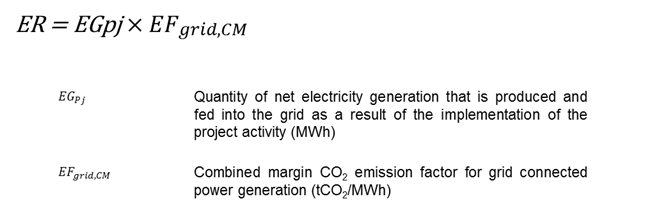 If the data input is transparent, supported by the original documentation and by identification of the sources and cannot be altered or falsified, one can be sure that the results are actual reductions of GHG emissions. Along with operational mechanism to issue carbon credits verified by independent entities, DAO IPCI is successfully testing IoT and automatic verification module to issue tokens representing renewable energy — based carbon credits. As the data is verified on public blockchain, it is transparent, reliable and cannot be falsified or used twice. Initially, for demonstration purposes the Independent Entity uploads the original data to IPFS and transfers it to DAO IPCI DApp (video). The Independent Entity does not have to calculate the results “manually”. The amount of tokens representing resulting reductions is calculated automatically and the Issuer may issue equal amount of RE specific tokens. Once the algorithm is tested and reviewed by environmental auditors and the community, the operations would be performed in self-executing mode. 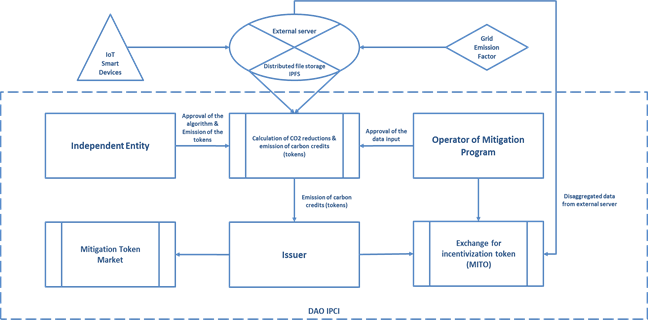 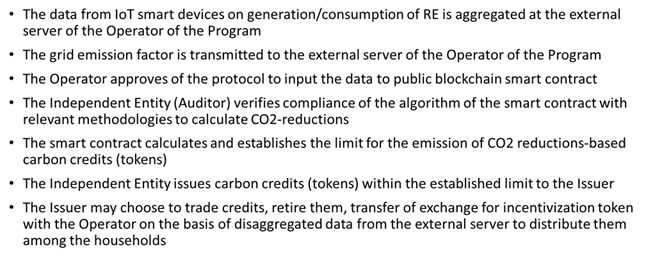 Chile EnergyLab Program would be the first to test the prototype, and the perspectives and demand for the service is virtually unlimited, for example, see “Bringing (solar) power to the people”. Sustaining reliability and transparency on public blockchain while reducing transaction costs dramatically is very important for small-scale renewable energy facilities. Similar modules would be deployed to issue carbon credits based on energy saving, and for renewable energy certificates. The users do not have to trust blindly the green standards, programs, registries, auditors, traders and brokers that approve, verify, register, issue and trade this type of carbon credits anymore. The process becomes transparent and “trustless”. Anyone can check the source, origination of the data, and choose whatever specific renewable energy credits he prefers. |
| json metadata | {"tags":["environment","blockchain","markets","climate","renewable"],"image":["https://cdn.steemitimages.com/DQmabhC33jLwkmUZJvUsRTe18kHXu61LBo7dhxiQUiohHy5/image.png","https://cdn.steemitimages.com/DQmSyaHicHLyBjX6R8JZE5mxBv5FvzAf6vbk7wU46UX98H9/image.png","https://cdn.steemitimages.com/DQmZSKJWhWqK4ACndZ72wB9PFUAaShkExezh3KyavhXL1r1/image.png"],"app":"steemit/0.1","format":"markdown"} |
| parent author | |
| parent permlink | environment |
| permlink | iot-based-renewable-energy-carbon-credits-prototype-developed-in-dao-ipci |
| title | IoT-based renewable energy carbon credits prototype developed in DAO IPCI |
| Transaction Info | Block #23465224/Trx 183b801fcdfbd5313a32027fb85e53d7fb0cc5b9 |
View Raw JSON Data
{
"block": 23465224,
"op": [
"comment",
{
"author": "galenovich",
"body": "IoT-based renewable energy carbon credits prototype developed in DAO IPCI\n\nWhen it comes to IoT protocol for renewables, reliability of data input is of critical importance. There are two components to issue grid connected renewable energy-based carbon credits: the amount of energy generated and grid emission factor, i.e. tons of carbon dioxide equivalent emitted in the grid per Megawatt.\n\nIf the data input is transparent, supported by the original documentation and by identification of the sources and cannot be altered or falsified, one can be sure that the results are actual reductions of GHG emissions.\n\nAlong with operational mechanism to issue carbon credits verified by independent entities, DAO IPCI is successfully testing IoT and automatic verification module to issue tokens representing renewable energy — based carbon credits. As the data is verified on public blockchain, it is transparent, reliable and cannot be falsified or used twice.\n\nInitially, for demonstration purposes the Independent Entity uploads the original data to IPFS and transfers it to DAO IPCI DApp (video). The Independent Entity does not have to calculate the results “manually”. The amount of tokens representing resulting reductions is calculated automatically and the Issuer may issue equal amount of RE specific tokens. Once the algorithm is tested and reviewed by environmental auditors and the community, the operations would be performed in self-executing mode.\n\n\nChile EnergyLab Program would be the first to test the prototype, and the perspectives and demand for the service is virtually unlimited, for example, see “Bringing (solar) power to the people”.\n\nSustaining reliability and transparency on public blockchain while reducing transaction costs dramatically is very important for small-scale renewable energy facilities.\n\nSimilar modules would be deployed to issue carbon credits based on energy saving, and for renewable energy certificates. The users do not have to trust blindly the green standards, programs, registries, auditors, traders and brokers that approve, verify, register, issue and trade this type of carbon credits anymore. The process becomes transparent and “trustless”. Anyone can check the source, origination of the data, and choose whatever specific renewable energy credits he prefers.",
"json_metadata": "{\"tags\":[\"environment\",\"blockchain\",\"markets\",\"climate\",\"renewable\"],\"image\":[\"https://cdn.steemitimages.com/DQmabhC33jLwkmUZJvUsRTe18kHXu61LBo7dhxiQUiohHy5/image.png\",\"https://cdn.steemitimages.com/DQmSyaHicHLyBjX6R8JZE5mxBv5FvzAf6vbk7wU46UX98H9/image.png\",\"https://cdn.steemitimages.com/DQmZSKJWhWqK4ACndZ72wB9PFUAaShkExezh3KyavhXL1r1/image.png\"],\"app\":\"steemit/0.1\",\"format\":\"markdown\"}",
"parent_author": "",
"parent_permlink": "environment",
"permlink": "iot-based-renewable-energy-carbon-credits-prototype-developed-in-dao-ipci",
"title": "IoT-based renewable energy carbon credits prototype developed in DAO IPCI"
}
],
"op_in_trx": 0,
"timestamp": "2018-06-19T18:04:12",
"trx_id": "183b801fcdfbd5313a32027fb85e53d7fb0cc5b9",
"trx_in_block": 49,
"virtual_op": 0
}2018/06/19 17:48:51
2018/06/19 17:48:51
| author | bible.com |
| body | Get a free Bible for your phone, tablet, and computer. [bible.com](http://bible.com) |
| json metadata | {"tags":["environment"],"links":["http://bible.com"],"app":"steemit/0.1"} |
| parent author | galenovich |
| parent permlink | torgovlya-sokrasheniyami-sbrosov-v-vodnuyu-sredu |
| permlink | re-galenovich-torgovlya-sokrasheniyami-sbrosov-v-vodnuyu-sredu-20180619t174853541z |
| title | |
| Transaction Info | Block #23464917/Trx a74c6255eda72932e93da9f2718dd070daae097b |
View Raw JSON Data
{
  "block": 23464917,
  "op": [
    "comment",
    {
      "author": "bible.com",
      "body": "Get a free Bible for your phone, tablet, and computer. [bible.com](http://bible.com)",
      "json_metadata": "{\"tags\":[\"environment\"],\"links\":[\"http://bible.com\"],\"app\":\"steemit/0.1\"}",
      "parent_author": "galenovich",
      "parent_permlink": "torgovlya-sokrasheniyami-sbrosov-v-vodnuyu-sredu",
      "permlink": "re-galenovich-torgovlya-sokrasheniyami-sbrosov-v-vodnuyu-sredu-20180619t174853541z",
      "title": ""
    }
  ],
  "op_in_trx": 0,
  "timestamp": "2018-06-19T17:48:51",
  "trx_id": "a74c6255eda72932e93da9f2718dd070daae097b",
  "trx_in_block": 56,
  "virtual_op": 0
}galenovichupvoted (100.00%) @galenovich / torgovlya-sokrasheniyami-sbrosov-v-vodnuyu-sredu2018/06/19 17:48:42
galenovichupvoted (100.00%) @galenovich / torgovlya-sokrasheniyami-sbrosov-v-vodnuyu-sredu
2018/06/19 17:48:42
| author | galenovich |
| permlink | torgovlya-sokrasheniyami-sbrosov-v-vodnuyu-sredu |
| voter | galenovich |
| weight | 10000 (100.00%) |
| Transaction Info | Block #23464914/Trx 9054cce6d9ac45d6693d8af9f22cb524dbc3bd54 |
View Raw JSON Data
{
  "block": 23464914,
  "op": [
    "vote",
    {
      "author": "galenovich",
      "permlink": "torgovlya-sokrasheniyami-sbrosov-v-vodnuyu-sredu",
      "voter": "galenovich",
      "weight": 10000
    }
  ],
  "op_in_trx": 0,
  "timestamp": "2018-06-19T17:48:42",
  "trx_id": "9054cce6d9ac45d6693d8af9f22cb524dbc3bd54",
  "trx_in_block": 7,
  "virtual_op": 0
}galenovichpublished a new post: torgovlya-sokrasheniyami-sbrosov-v-vodnuyu-sredu2018/06/19 17:48:33
galenovichpublished a new post: torgovlya-sokrasheniyami-sbrosov-v-vodnuyu-sredu
2018/06/19 17:48:33
| author | galenovich |
| body | “Защита чистоты наших рек в интересах общественности и большинства собственников прибрежных владений, тогда как санитарным властям и производителям удобней их загрязнять”. “A Treatise on the Law Relating to the Pollution & Obstruction of Watercourses: together with a Brief Summary of the Various Sources of River Pollution”. Preface. Clement Higgins, Stevens and Haynes, London 1877 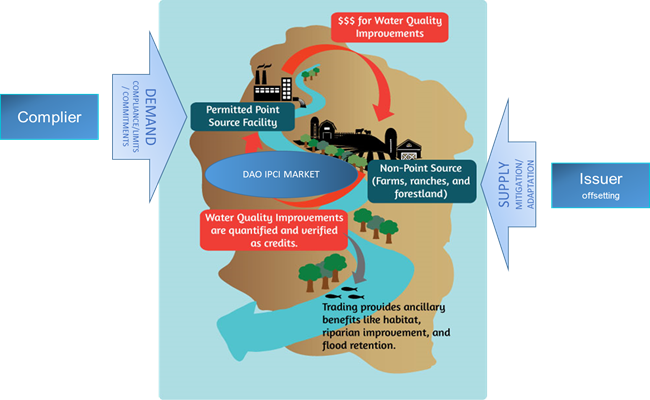 Общее название программы торговли правами на сбросы в водную среду в США — “Water Quality Trading” (WQT). Рыночное распределение прав собственно на водные ресурсы действует в Австралии. Практически и теоретически рынок прав на сбросы наиболее развит в США. Нормативно-правовой основой являются Правила 2003 г. (EPA’s 2003 WQT Policy) и Инструментарий 2007 г. (2007 WQT Toolkit for Permit Writers), обеспечивающие руководство для создания рыночных систем для соблюдения Закона о чистоте воды (Clean Water Act), лимитов сбросов, обоснованных качеством воды (water quality based effluent limitation, WQBEL) с применением разрешений по программе Национальной системы устранения сбросов загрязнителей (National Pollutant Discharge Elimination System , NPDES). Основные принципы буквально совпадают с имманентными принципами публичного блокчейна: транспарентность, действительные (real) сокращение (измеримые и верифицированные), учет (отслеживание транзакций и периодическая отчетность), обоснованность (использование динамических моделей слежения за качеством воды, сертификация сгенерированных кредитов, разработка научно обоснованных коэффициентов торговли кредитами, т.е. соотношений числа зачетных сокращений к числу компенсируемого загрязнения, например, по умолчанию: 4:1), ответственность за несоблюдение установленных лимитов. Источники сбросов подразделяются на «точечные» (например, промпредприятия, водоканалы) и «распределенные» (например, сельхозугодья, животноводческие, или агрофермы). Наиболее простой формой торговли является торговля между точечными источниками. Если объектами программы являются и те, и другие, то действует и прямая торговля кредитами между точечными и распределёнными источниками, и биржевая площадка. Основой для установления границ торговли системы является общность водной среды относительно различных загрязнителей. К загрязнителям, подходящим для включения в торговую систему, относятся те, которые кумулятивно влияют на качество воды в относительно больших ареалах, в отличие от специфических загрязнителей, сильнодействующих в относительно малых ареалах распространения. Подходящие для торговли сокращениями загрязнители подразделяются на не-конвенциональные: биогенные, азото- фосфорсодержащие загрязнения (сельхозсбросы, водоканалы); и конвенциональные: осадочные сбросы, термальные сбросы (промышленные сбросы). Кросс-торговля зачетными сокращениями (то есть сокращениями различных загрязнителей) возможна в случае вычисляемого (количественно определяемого) и приблизительно равного воздействия нагрузки по массе загрязняющих сбросов. Основой торговой системы являются лимиты, разрешения, устанавливаемые регулятором для источников загрязнений. Источник, неспособный удержаться в пределах разрешённой массы сбросов, является покупателем кредитов. Процесс генерации зачетных сокращений (кредитов) практически полностью совпадает с генерацией углеродных кредитов: от проектной документации к детерминации (установление базового уровня сбросов), установлению общего числа проектных единиц, масштабов и периода действия проекта, к верификации независимой организацией и системе мониторинга и отчетности. Все эти основополагающие черты архитектоники рынка сбросов в наилучшей степени могут быть воплощены в публичном блокчейне с использованием уже работающих модулей DAO IPCI. Использование IoT устройств (счетчиков сенсоров, дронов) значительно усиливает австономность и эффективность системы. Так, водные дроны могут выполнять задачу мониторинга за конвенциональными и неконвенциональными загрязнениями для построения динамических моделей и сопоставления с целевыми показателями чистоты воды и проектными результатами митигации. Работы по разработке и тестированию такой модели начались на платформе DAO IPCI в сотрудничестве с Airalab. |
| json metadata | {"tags":["environment","markets","blockchain"],"image":["https://cdn.steemitimages.com/DQmUZbnts1dsDkwabVqeL1kuXfqsbpbgTBBDmoPE9bvp6W9/image.png"],"app":"steemit/0.1","format":"markdown"} |
| parent author | |
| parent permlink | environment |
| permlink | torgovlya-sokrasheniyami-sbrosov-v-vodnuyu-sredu |
| title | Торговля сокращениями сбросов в водную среду |
| Transaction Info | Block #23464911/Trx 79f46516b5cd05e57c9b106e403dc70a74326a7d |
View Raw JSON Data
{
"block": 23464911,
"op": [
"comment",
{
"author": "galenovich",
"body": "“Защита чистоты наших рек в интересах общественности и большинства собственников прибрежных владений, тогда как санитарным властям и производителям удобней их загрязнять”. “A Treatise on the Law Relating to the Pollution & Obstruction of Watercourses: together with a Brief Summary of the Various Sources of River Pollution”. Preface. Clement Higgins, Stevens and Haynes, London 1877\n\nОбщее название программы торговли правами на сбросы в водную среду в США — “Water Quality Trading” (WQT). Рыночное распределение прав собственно на водные ресурсы действует в Австралии. Практически и теоретически рынок прав на сбросы наиболее развит в США. Нормативно-правовой основой являются Правила 2003 г. (EPA’s 2003 WQT Policy) и Инструментарий 2007 г. (2007 WQT Toolkit for Permit Writers), обеспечивающие руководство для создания рыночных систем для соблюдения Закона о чистоте воды (Clean Water Act), лимитов сбросов, обоснованных качеством воды (water quality based effluent limitation, WQBEL) с применением разрешений по программе Национальной системы устранения сбросов загрязнителей (National Pollutant Discharge Elimination System , NPDES).\n\nОсновные принципы буквально совпадают с имманентными принципами публичного блокчейна: транспарентность, действительные (real) сокращение (измеримые и верифицированные), учет (отслеживание транзакций и периодическая отчетность), обоснованность (использование динамических моделей слежения за качеством воды, сертификация сгенерированных кредитов, разработка научно обоснованных коэффициентов торговли кредитами, т.е. соотношений числа зачетных сокращений к числу компенсируемого загрязнения, например, по умолчанию: 4:1), ответственность за несоблюдение установленных лимитов.\n\nИсточники сбросов подразделяются на «точечные» (например, промпредприятия, водоканалы) и «распределенные» (например, сельхозугодья, животноводческие, или агрофермы).\n\nНаиболее простой формой торговли является торговля между точечными источниками.\n\nЕсли объектами программы являются и те, и другие, то действует и прямая торговля кредитами между точечными и распределёнными источниками, и биржевая площадка.\n\nОсновой для установления границ торговли системы является общность водной среды относительно различных загрязнителей.\n\nК загрязнителям, подходящим для включения в торговую систему, относятся те, которые кумулятивно влияют на качество воды в относительно больших ареалах, в отличие от специфических загрязнителей, сильнодействующих в относительно малых ареалах распространения.\n\nПодходящие для торговли сокращениями загрязнители подразделяются на не-конвенциональные: биогенные, азото- фосфорсодержащие загрязнения (сельхозсбросы, водоканалы); и конвенциональные: осадочные сбросы, термальные сбросы (промышленные сбросы).\n\nКросс-торговля зачетными сокращениями (то есть сокращениями различных загрязнителей) возможна в случае вычисляемого (количественно определяемого) и приблизительно равного воздействия нагрузки по массе загрязняющих сбросов.\n\nОсновой торговой системы являются лимиты, разрешения, устанавливаемые регулятором для источников загрязнений. Источник, неспособный удержаться в пределах разрешённой массы сбросов, является покупателем кредитов.\n\nПроцесс генерации зачетных сокращений (кредитов) практически полностью совпадает с генерацией углеродных кредитов: от проектной документации к детерминации (установление базового уровня сбросов), установлению общего числа проектных единиц, масштабов и периода действия проекта, к верификации независимой организацией и системе мониторинга и отчетности.\n\nВсе эти основополагающие черты архитектоники рынка сбросов в наилучшей степени могут быть воплощены в публичном блокчейне с использованием уже работающих модулей DAO IPCI. Использование IoT устройств (счетчиков сенсоров, дронов) значительно усиливает австономность и эффективность системы. Так, водные дроны могут выполнять задачу мониторинга за конвенциональными и неконвенциональными загрязнениями для построения динамических моделей и сопоставления с целевыми показателями чистоты воды и проектными результатами митигации.\n\nРаботы по разработке и тестированию такой модели начались на платформе DAO IPCI в сотрудничестве с Airalab.",
"json_metadata": "{\"tags\":[\"environment\",\"markets\",\"blockchain\"],\"image\":[\"https://cdn.steemitimages.com/DQmUZbnts1dsDkwabVqeL1kuXfqsbpbgTBBDmoPE9bvp6W9/image.png\"],\"app\":\"steemit/0.1\",\"format\":\"markdown\"}",
"parent_author": "",
"parent_permlink": "environment",
"permlink": "torgovlya-sokrasheniyami-sbrosov-v-vodnuyu-sredu",
"title": "Торговля сокращениями сбросов в водную среду"
}
],
"op_in_trx": 0,
"timestamp": "2018-06-19T17:48:33",
"trx_id": "79f46516b5cd05e57c9b106e403dc70a74326a7d",
"trx_in_block": 37,
"virtual_op": 0
}2018/06/19 17:43:45
2018/06/19 17:43:45
| author | galenovich |
| permlink | how-to-launch-your-own-environmental-mitigation-program-in-dao-ipci |
| voter | simplibrand |
| weight | 10000 (100.00%) |
| Transaction Info | Block #23464815/Trx 25d7c30a8ec38ed854124905b27bd6685fa243f5 |
View Raw JSON Data
{
  "block": 23464815,
  "op": [
    "vote",
    {
      "author": "galenovich",
      "permlink": "how-to-launch-your-own-environmental-mitigation-program-in-dao-ipci",
      "voter": "simplibrand",
      "weight": 10000
    }
  ],
  "op_in_trx": 0,
  "timestamp": "2018-06-19T17:43:45",
  "trx_id": "25d7c30a8ec38ed854124905b27bd6685fa243f5",
  "trx_in_block": 10,
  "virtual_op": 0
}2018/06/19 17:43:33
2018/06/19 17:43:33
| author | galenovich |
| permlink | how-to-launch-your-own-environmental-mitigation-program-in-dao-ipci |
| voter | galenovich |
| weight | 10000 (100.00%) |
| Transaction Info | Block #23464811/Trx 9584c16e174588383599be88d1e2d98bfeb2d0da |
View Raw JSON Data
{
  "block": 23464811,
  "op": [
    "vote",
    {
      "author": "galenovich",
      "permlink": "how-to-launch-your-own-environmental-mitigation-program-in-dao-ipci",
      "voter": "galenovich",
      "weight": 10000
    }
  ],
  "op_in_trx": 0,
  "timestamp": "2018-06-19T17:43:33",
  "trx_id": "9584c16e174588383599be88d1e2d98bfeb2d0da",
  "trx_in_block": 9,
  "virtual_op": 0
}2018/06/19 17:43:00
2018/06/19 17:43:00
| author | cheetah |
| body | Hi! I am a robot. I just upvoted you! I found similar content that readers might be interested in: http://ipci.io/how-to-launch-your-own-mitigation-program-in-dao-ipci/ |
| json metadata | |
| parent author | galenovich |
| parent permlink | how-to-launch-your-own-environmental-mitigation-program-in-dao-ipci |
| permlink | cheetah-re-galenovichhow-to-launch-your-own-environmental-mitigation-program-in-dao-ipci |
| title | |
| Transaction Info | Block #23464800/Trx 144dd68be88c4b155932eef64a7f4450afa86ec1 |
View Raw JSON Data
{
  "block": 23464800,
  "op": [
    "comment",
    {
      "author": "cheetah",
      "body": "Hi! I am a robot. I just upvoted you! I found similar content that readers might be interested in:\nhttp://ipci.io/how-to-launch-your-own-mitigation-program-in-dao-ipci/",
      "json_metadata": "",
      "parent_author": "galenovich",
      "parent_permlink": "how-to-launch-your-own-environmental-mitigation-program-in-dao-ipci",
      "permlink": "cheetah-re-galenovichhow-to-launch-your-own-environmental-mitigation-program-in-dao-ipci",
      "title": ""
    }
  ],
  "op_in_trx": 0,
  "timestamp": "2018-06-19T17:43:00",
  "trx_id": "144dd68be88c4b155932eef64a7f4450afa86ec1",
  "trx_in_block": 7,
  "virtual_op": 0
}2018/06/19 17:42:54
2018/06/19 17:42:54
| author | galenovich |
| permlink | how-to-launch-your-own-environmental-mitigation-program-in-dao-ipci |
| voter | cheetah |
| weight | 8 (0.08%) |
| Transaction Info | Block #23464798/Trx 8438203e47d496858cc87e2862c99db23767f6ff |
View Raw JSON Data
{
  "block": 23464798,
  "op": [
    "vote",
    {
      "author": "galenovich",
      "permlink": "how-to-launch-your-own-environmental-mitigation-program-in-dao-ipci",
      "voter": "cheetah",
      "weight": 8
    }
  ],
  "op_in_trx": 0,
  "timestamp": "2018-06-19T17:42:54",
  "trx_id": "8438203e47d496858cc87e2862c99db23767f6ff",
  "trx_in_block": 19,
  "virtual_op": 0
}galenovichpublished a new post: how-to-launch-your-own-environmental-mitigation-program-in-dao-ipci2018/06/19 17:42:42
galenovichpublished a new post: how-to-launch-your-own-environmental-mitigation-program-in-dao-ipci
2018/06/19 17:42:42
| author | galenovich |
| body | 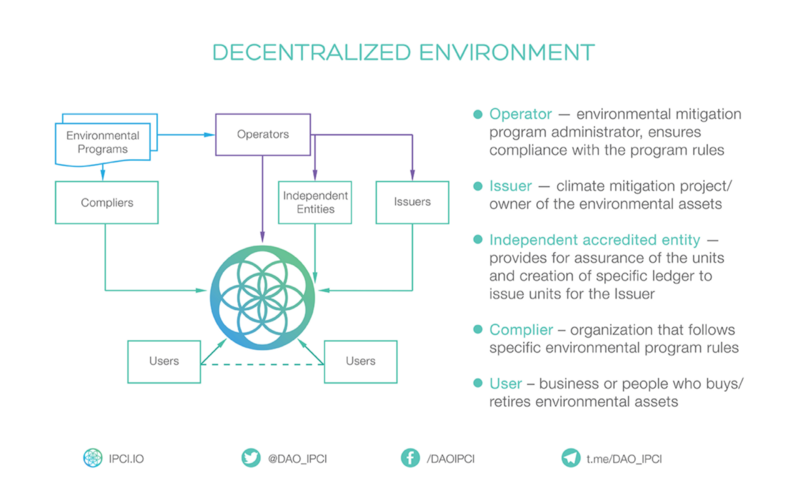 If you are not satisfied with existing environmental, climate change mitigation programs, or you think you can do better, you can launch your own program in DAO IPCI by creating your program DAO Core accepting MITO — Mitigation Token Policy (which is optional but highly recommended to provide for economic integrity of your program with other mitigation programs operating in DAO IPCI) setting the rules of the new Program bringing in and accepting Issuers, Independent Entities, Compliers to perform under the new program. The rules you would want to set should specifically describe what your environmental unit would represent: a ton of reduction of air emissions, of effluent, or Megawatt hour of green energy, or other mitigation outcome you can measure and verify. See the Blockchain Climate Standard Program Rules as a sample. 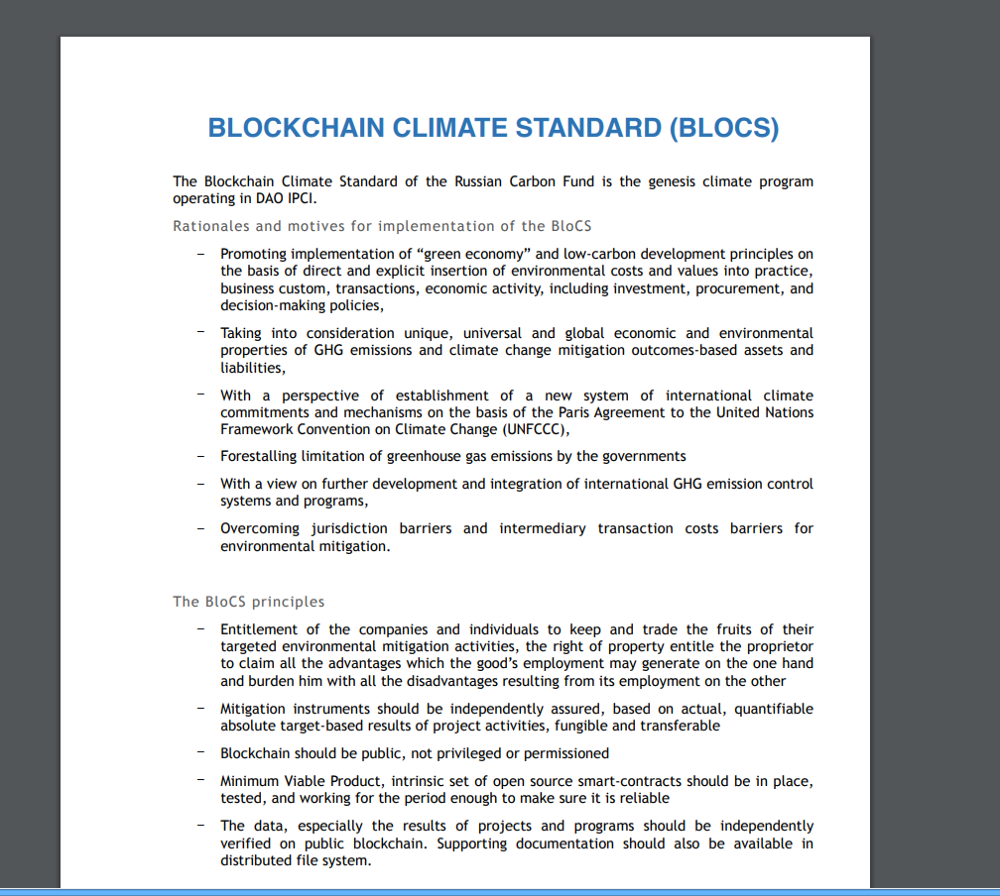 Make the Rules public and communicate with [email protected] for the Rules to be published at DAO IPCI website. To make verified environmental units you issue in DAO IPCI blockchain exchangeable, tradable via DAO IPCI Market you would need a digital currency, specifically designed to work with DAO IPCI protocols, smart-contracts, modules, market. Please read carefully the “Mitigation Token” section of the White Paper and communicate with [email protected] to confirm that you accept the policy and protocol described therein. Go to DAO IPCI DApp at http://dapp.ipci.io with your Ethereum wallet (ex. Metamask, Parity) running and select the function of the “Operator” and “Create DAO” in the Menu. 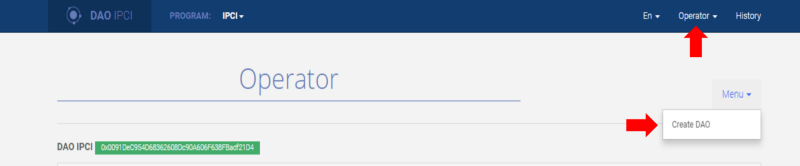 Fill the fields giving the name to your Program, description of the Program, and the name of the Operator. 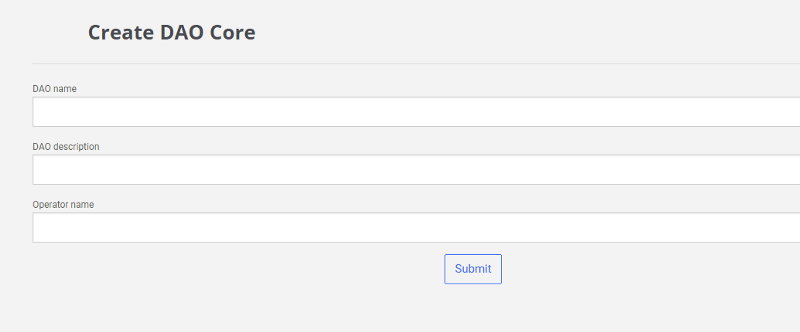 Submit and if you agree with Ethereum fee for creating DAO core approve the transaction. Make sure you copy the DAO Core address or track it via Etherscan.  Add you program to decentralized application by selecting “Add Program”, inserting your DAO Core address and selecting “Go”. 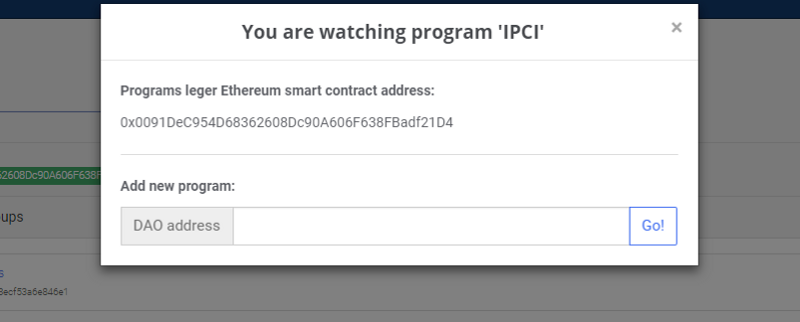 Now you have your own blockchain-based mitigation program running! All you have to do is invite and approve - Issuers, who are entitled to the mitigation outcomes (environmental units) you have described in the Rules, - Independent entities, who would verify or assure the mitigation instruments (environmental units), - Compliers and Users, who would acquire the environmental units issued to comply or to trade. Please note that combining the functions of Operator, Issuer, Independent Entity within the same DAO is prohibited by DAO IPCO Basic Terms. To run your Program refer to the Manual at http://ipci.io or ask for assistance at [email protected] or [email protected]. |
| json metadata | {"tags":["environmental","markets","blockchain","climate","ethereum"],"image":["https://cdn.steemitimages.com/DQmYucKngAUqCDJrnJtGEARtNQJKhs8AKYut3T8n7czoGh5/image.png","https://cdn.steemitimages.com/DQmYwj9iZc4k4c21bYymh8vmYqEUTHn4d9wf8kHsxjaDcjL/image.png","https://cdn.steemitimages.com/DQmdeUn2Z3pNTBnYfSus7gWMShmnksVe7yNW7eV4TvgXakW/image.png","https://cdn.steemitimages.com/DQmf4scMp5Nm7ECdUvmzW5VUmihQmDE8VZURwfdPFKQ2gHu/image.png","https://cdn.steemitimages.com/DQmRqhTVXffR1AnoqeNgJcn6cf5omVGV7WqB4e4UysoGQ58/image.png","https://cdn.steemitimages.com/DQmPrEMpYgvL4xyWp2PXQecueTfLzR9GBR3tUtnLx8Rc54b/image.png"],"links":["http://dapp.ipci.io","http://ipci.io"],"app":"steemit/0.1","format":"markdown"} |
| parent author | |
| parent permlink | environmental |
| permlink | how-to-launch-your-own-environmental-mitigation-program-in-dao-ipci |
| title | How to launch your own Environmental Mitigation Program in DAO IPCI? |
| Transaction Info | Block #23464794/Trx 4bf37bc927f77922f4acae851cd4c21f09fd3d96 |
View Raw JSON Data
{
"block": 23464794,
"op": [
"comment",
{
"author": "galenovich",
"body": "\nIf you are not satisfied with existing environmental, climate change mitigation programs, or you think you can do better, you can launch your own program in DAO IPCI by\n\ncreating your program DAO Core\naccepting MITO — Mitigation Token Policy (which is optional but highly recommended to provide for economic integrity of your program with other mitigation programs operating in DAO IPCI)\nsetting the rules of the new Program\nbringing in and accepting Issuers, Independent Entities, Compliers to perform under the new program.\nThe rules you would want to set should specifically describe what your environmental unit would represent: a ton of reduction of air emissions, of effluent, or Megawatt hour of green energy, or other mitigation outcome you can measure and verify. See the Blockchain Climate Standard Program Rules as a sample.\n\nMake the Rules public and communicate with [email protected] for the Rules to be published at DAO IPCI website.\n\nTo make verified environmental units you issue in DAO IPCI blockchain exchangeable, tradable via DAO IPCI Market you would need a digital currency, specifically designed to work with DAO IPCI protocols, smart-contracts, modules, market. Please read carefully the “Mitigation Token” section of the White Paper and communicate with [email protected] to confirm that you accept the policy and protocol described therein.\n\nGo to DAO IPCI DApp at http://dapp.ipci.io with your Ethereum wallet (ex. Metamask, Parity) running and select the function of the “Operator” and “Create DAO” in the Menu.\n\nFill the fields giving the name to your Program, description of the Program, and the name of the Operator.\n\nSubmit and if you agree with Ethereum fee for creating DAO core approve the transaction. Make sure you copy the DAO Core address or track it via Etherscan.\n\nAdd you program to decentralized application by selecting “Add Program”, inserting your DAO Core address and selecting “Go”.\n\nNow you have your own blockchain-based mitigation program running!\n\nAll you have to do is invite and approve\n\n- Issuers, who are entitled to the mitigation outcomes (environmental units) you have described in the Rules,\n- Independent entities, who would verify or assure the mitigation instruments (environmental units),\n- Compliers and Users, who would acquire the environmental units issued to comply or to trade.\nPlease note that combining the functions of Operator, Issuer, Independent Entity within the same DAO is prohibited by DAO IPCO Basic Terms.\n\nTo run your Program refer to the Manual at http://ipci.io or ask for assistance at [email protected] or [email protected].",
"json_metadata": "{\"tags\":[\"environmental\",\"markets\",\"blockchain\",\"climate\",\"ethereum\"],\"image\":[\"https://cdn.steemitimages.com/DQmYucKngAUqCDJrnJtGEARtNQJKhs8AKYut3T8n7czoGh5/image.png\",\"https://cdn.steemitimages.com/DQmYwj9iZc4k4c21bYymh8vmYqEUTHn4d9wf8kHsxjaDcjL/image.png\",\"https://cdn.steemitimages.com/DQmdeUn2Z3pNTBnYfSus7gWMShmnksVe7yNW7eV4TvgXakW/image.png\",\"https://cdn.steemitimages.com/DQmf4scMp5Nm7ECdUvmzW5VUmihQmDE8VZURwfdPFKQ2gHu/image.png\",\"https://cdn.steemitimages.com/DQmRqhTVXffR1AnoqeNgJcn6cf5omVGV7WqB4e4UysoGQ58/image.png\",\"https://cdn.steemitimages.com/DQmPrEMpYgvL4xyWp2PXQecueTfLzR9GBR3tUtnLx8Rc54b/image.png\"],\"links\":[\"http://dapp.ipci.io\",\"http://ipci.io\"],\"app\":\"steemit/0.1\",\"format\":\"markdown\"}",
"parent_author": "",
"parent_permlink": "environmental",
"permlink": "how-to-launch-your-own-environmental-mitigation-program-in-dao-ipci",
"title": "How to launch your own Environmental Mitigation Program in DAO IPCI?"
}
],
"op_in_trx": 0,
"timestamp": "2018-06-19T17:42:42",
"trx_id": "4bf37bc927f77922f4acae851cd4c21f09fd3d96",
"trx_in_block": 20,
"virtual_op": 0
}faruk1upvoted (100.00%) @galenovich / how-to-launch-virtual-green-fund-in-dao-ipci2018/06/19 17:32:39
faruk1upvoted (100.00%) @galenovich / how-to-launch-virtual-green-fund-in-dao-ipci
2018/06/19 17:32:39
| author | galenovich |
| permlink | how-to-launch-virtual-green-fund-in-dao-ipci |
| voter | faruk1 |
| weight | 10000 (100.00%) |
| Transaction Info | Block #23464593/Trx a59d4e0e76ddc343871e64b5a3270eea167528cc |
View Raw JSON Data
{
  "block": 23464593,
  "op": [
    "vote",
    {
      "author": "galenovich",
      "permlink": "how-to-launch-virtual-green-fund-in-dao-ipci",
      "voter": "faruk1",
      "weight": 10000
    }
  ],
  "op_in_trx": 0,
  "timestamp": "2018-06-19T17:32:39",
  "trx_id": "a59d4e0e76ddc343871e64b5a3270eea167528cc",
  "trx_in_block": 14,
  "virtual_op": 0
}galenovichupvoted (100.00%) @galenovich / how-to-launch-virtual-green-fund-in-dao-ipci2018/06/19 17:31:00
galenovichupvoted (100.00%) @galenovich / how-to-launch-virtual-green-fund-in-dao-ipci
2018/06/19 17:31:00
| author | galenovich |
| permlink | how-to-launch-virtual-green-fund-in-dao-ipci |
| voter | galenovich |
| weight | 10000 (100.00%) |
| Transaction Info | Block #23464560/Trx a3b1dfd269d8a867ac110ea86d9592c09b936cc8 |
View Raw JSON Data
{
  "block": 23464560,
  "op": [
    "vote",
    {
      "author": "galenovich",
      "permlink": "how-to-launch-virtual-green-fund-in-dao-ipci",
      "voter": "galenovich",
      "weight": 10000
    }
  ],
  "op_in_trx": 0,
  "timestamp": "2018-06-19T17:31:00",
  "trx_id": "a3b1dfd269d8a867ac110ea86d9592c09b936cc8",
  "trx_in_block": 22,
  "virtual_op": 0
}galenovichpublished a new post: how-to-launch-virtual-green-fund-in-dao-ipci2018/06/19 17:30:15
galenovichpublished a new post: how-to-launch-virtual-green-fund-in-dao-ipci
2018/06/19 17:30:15
| author | galenovich |
| body |  DAO Integral Platform for Climate Initiatives is a flexible modular platform, which supports the implementation of different result-based programs and projects. Existing set of smart contracts theoretically might be used to launch and run virtual green investment fund. Specific design of such fund would be entirely up to the Founders. The description herein is one of the abstract options for illustration purposes only. The Founders would have to allocate specific amount of Mitigation Tokens (MITO) and place it with multisignature wallet or a “Congress” smart contract (Congress) in order to govern the funds collectively by voting. For illustration purposes: 100,000 MITO. The Congress then creates new DAO and becomes the Operator. The project owner (the Issuer), who wishes to use the funds, creates Environmental Units Registry and a Security Deposit Contract uploading Project Idea Note to IPFS linked to the Environmental Units Registry. The project implies verification of 1,000,000 units of tCO2e within 3 years. Independent Entity retained by the Issuer creates Independent Entity Contract, evaluates the risks of performance and concludes that the project has 95% probability of success. The conclusion is uploaded to IPFS linked to the Security Deposit Contract. The Congress approves of the project and includes the Environmental Units Registry, the Security Deposit Contract and the Independent Entity contract into DAO Core. Independent Entity establishes Security Deposit at the level of 5% for 3 years. Which means that to issue 1,000,000 environmental units upfront 50,000 MITO has to be placed at the Security Deposit Contract. The Congress transfers 10,000 MITO to the Security Deposit Contract and 200,000 environmental units are issued and transferred to the Issuer. The Congress then buys 100,000 newly issued environmental units for another 10,000 MITO at MITO Market. The Issuer transfers 10,000 MITO to the Security Deposit Contract and another 200,000 are issued and transferred to the Issuer. The issuer now has 300,000 environmental units to sell and proceed with project implementation and is still interested in implementation of the project in specified time to receive 20,000 MITO back from the Security Deposit Contract. The Congress now has 80,000 MITO and 100,000 environmental units as a remuneration for 20,000 MITO, which would be returned is case the project is not implemented within 3 years. |
| json metadata | {"tags":["environmental","markets","blockchain","climate"],"image":["https://cdn.steemitimages.com/DQmRmEg8D1Q1Y4TJ6kpEp9zxLcL2977WXnEr4L33HQCots4/image.png"],"app":"steemit/0.1","format":"markdown"} |
| parent author | |
| parent permlink | environmental |
| permlink | how-to-launch-virtual-green-fund-in-dao-ipci |
| title | How to launch virtual green fund in DAO IPCI |
| Transaction Info | Block #23464545/Trx 5ebe17d98c8ff53dfd20f2b73a427617151db86c |
View Raw JSON Data
{
"block": 23464545,
"op": [
"comment",
{
"author": "galenovich",
"body": "\nDAO Integral Platform for Climate Initiatives is a flexible modular platform, which supports the implementation of different result-based programs and projects. Existing set of smart contracts theoretically might be used to launch and run virtual green investment fund. Specific design of such fund would be entirely up to the Founders. The description herein is one of the abstract options for illustration purposes only.\n\nThe Founders would have to allocate specific amount of Mitigation Tokens (MITO) and place it with multisignature wallet or a “Congress” smart contract (Congress) in order to govern the funds collectively by voting. For illustration purposes: 100,000 MITO.\n\nThe Congress then creates new DAO and becomes the Operator.\n\nThe project owner (the Issuer), who wishes to use the funds, creates Environmental Units Registry and a Security Deposit Contract uploading Project Idea Note to IPFS linked to the Environmental Units Registry. The project implies verification of 1,000,000 units of tCO2e within 3 years.\n\nIndependent Entity retained by the Issuer creates Independent Entity Contract, evaluates the risks of performance and concludes that the project has 95% probability of success. The conclusion is uploaded to IPFS linked to the Security Deposit Contract.\n\nThe Congress approves of the project and includes the Environmental Units Registry, the Security Deposit Contract and the Independent Entity contract into DAO Core.\n\nIndependent Entity establishes Security Deposit at the level of 5% for 3 years. Which means that to issue 1,000,000 environmental units upfront 50,000 MITO has to be placed at the Security Deposit Contract.\n\nThe Congress transfers 10,000 MITO to the Security Deposit Contract and 200,000 environmental units are issued and transferred to the Issuer.\n\nThe Congress then buys 100,000 newly issued environmental units for another 10,000 MITO at MITO Market.\n\nThe Issuer transfers 10,000 MITO to the Security Deposit Contract and another 200,000 are issued and transferred to the Issuer.\n\nThe issuer now has 300,000 environmental units to sell and proceed with project implementation and is still interested in implementation of the project in specified time to receive 20,000 MITO back from the Security Deposit Contract.\n\nThe Congress now has 80,000 MITO and 100,000 environmental units as a remuneration for 20,000 MITO, which would be returned is case the project is not implemented within 3 years.",
"json_metadata": "{\"tags\":[\"environmental\",\"markets\",\"blockchain\",\"climate\"],\"image\":[\"https://cdn.steemitimages.com/DQmRmEg8D1Q1Y4TJ6kpEp9zxLcL2977WXnEr4L33HQCots4/image.png\"],\"app\":\"steemit/0.1\",\"format\":\"markdown\"}",
"parent_author": "",
"parent_permlink": "environmental",
"permlink": "how-to-launch-virtual-green-fund-in-dao-ipci",
"title": "How to launch virtual green fund in DAO IPCI"
}
],
"op_in_trx": 0,
"timestamp": "2018-06-19T17:30:15",
"trx_id": "5ebe17d98c8ff53dfd20f2b73a427617151db86c",
"trx_in_block": 18,
"virtual_op": 0
}2018/06/19 17:23:39
2018/06/19 17:23:39
| author | galenovich |
| permlink | if-you-can-do-without-public-blockchain-you-can-do-without-dlt-altogether |
| voter | video-master |
| weight | 10000 (100.00%) |
| Transaction Info | Block #23464413/Trx d3e286ae2e6e5253dcc093d7bb9fbc554f827917 |
View Raw JSON Data
{
  "block": 23464413,
  "op": [
    "vote",
    {
      "author": "galenovich",
      "permlink": "if-you-can-do-without-public-blockchain-you-can-do-without-dlt-altogether",
      "voter": "video-master",
      "weight": 10000
    }
  ],
  "op_in_trx": 0,
  "timestamp": "2018-06-19T17:23:39",
  "trx_id": "d3e286ae2e6e5253dcc093d7bb9fbc554f827917",
  "trx_in_block": 15,
  "virtual_op": 0
}2018/06/19 17:23:21
2018/06/19 17:23:21
| author | galenovich |
| permlink | if-you-can-do-without-public-blockchain-you-can-do-without-dlt-altogether |
| voter | galenovich |
| weight | 10000 (100.00%) |
| Transaction Info | Block #23464407/Trx bac0ec909daa1688525a604748997fbba512b351 |
View Raw JSON Data
{
  "block": 23464407,
  "op": [
    "vote",
    {
      "author": "galenovich",
      "permlink": "if-you-can-do-without-public-blockchain-you-can-do-without-dlt-altogether",
      "voter": "galenovich",
      "weight": 10000
    }
  ],
  "op_in_trx": 0,
  "timestamp": "2018-06-19T17:23:21",
  "trx_id": "bac0ec909daa1688525a604748997fbba512b351",
  "trx_in_block": 11,
  "virtual_op": 0
}2018/06/19 17:23:18
2018/06/19 17:23:18
| author | galenovich |
| permlink | if-you-can-do-without-public-blockchain-you-can-do-without-dlt-altogether |
| voter | modemser |
| weight | 10000 (100.00%) |
| Transaction Info | Block #23464406/Trx 860c657cc4d362d8795e530296130a74eec08700 |
View Raw JSON Data
{
  "block": 23464406,
  "op": [
    "vote",
    {
      "author": "galenovich",
      "permlink": "if-you-can-do-without-public-blockchain-you-can-do-without-dlt-altogether",
      "voter": "modemser",
      "weight": 10000
    }
  ],
  "op_in_trx": 0,
  "timestamp": "2018-06-19T17:23:18",
  "trx_id": "860c657cc4d362d8795e530296130a74eec08700",
  "trx_in_block": 40,
  "virtual_op": 0
}galenovichpublished a new post: if-you-can-do-without-public-blockchain-you-can-do-without-dlt-altogether2018/06/19 17:23:12
galenovichpublished a new post: if-you-can-do-without-public-blockchain-you-can-do-without-dlt-altogether
2018/06/19 17:23:12
| author | galenovich |
| body | Blockchain makes sense when there are decentralized peer-to-peer contracts, sourced code is open for assessment and development, the data is copied to unlimited number of anonymous computers and cannot be altered ex-post, which are the features of public blockchain. If it’s not the case, then blockchain or even distributed databases probably are not needed. With current level of IT technologies centralized software and databases would do the job just as well and even better. 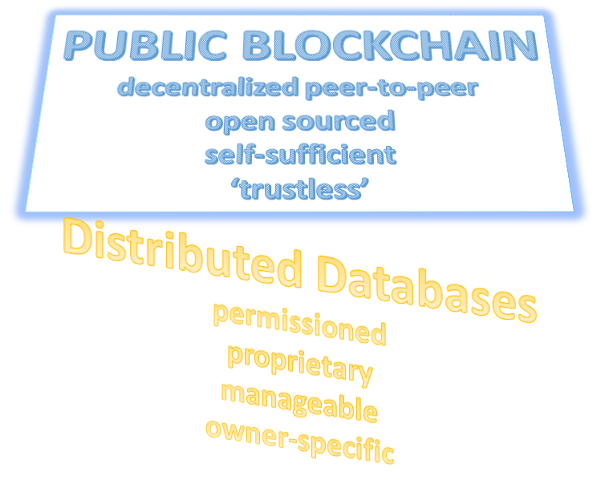 Unlike numerous distributed ledger, distributed databases-based (played off as blockchain-based) climate change, green energy, other environmental programs - most of which have plans and whitepapers but not the working product - DAO Integral Platform for Climate Initiatives (DAO IPCI) is actually deployed entirely in public not so-called privileged or proprietary blockchain. There are no privileged or proprietary components or the data deployed on the servers, nodes or in the clouds under centralized control. There are no proprietary software that you can’t examine but have to pay for. Social and environmental impact programs is the case where you definitely need public blockchain. DAO IPCI minimum viable set of intrinsic smart-contracts has been tested and working since 2016; it is open-sourced and may be reviewed and developed by the Ethereum community, largest blockchain community, or anyone. The data, especially mitigation instruments represented by tokens, which participants would want to check and track, are independently verified on public blockchain, not someplace else. Supporting documentation and data is stored in the distributed file system and cannot be altered. DAO IPCI is decentralized, not governed by anyone, does not imposes or prescribes anything to the users, independent programs ruled by independent operators, except for the logic. Which is universal and unified. DAO IPCI is not a “program” per se. It is an open sourced platform, a set of intrinsic smart-contracts adjustable to various requirements that anyone is free to use and develop. It is a trustless tool. “Trustless” meaning that you don’t have to trust anyone personally, nor the name, nor the brand, nor the reputation. You can track every step of the program you join or support, or launch your own program, and trust only open source contracts that have been tested and working since 2016 and can be checked by anyone and anytime. DAO IPCI in the first instance has been designed for carbon market instruments and functions. However, any natural capital, environmental assets, anything that’s quantifiable and independently verified, can be deployed in DAO IPCI and represented by specific types of tokens. Mitigation Token is not obligatory to be used as a currency in DAO IPCI. Any independent operator of an independent program can issue alternative currency, payment token arbitrarily. The question is not whether technology is mature, scalability, interoperability or energy efficiency issues are resolvable but whether major environmental market players, mandatory or voluntary environmental, green energy programs of different scale are ready for decentralization of authority, for transparency and a completely new economic paradigm. Would they be ready to make their business patterns public and share the authority they enjoy? Or would they still confine to disguising the old ways with sexy innovation wording like “blockchain” hoping to sustain public trust deserve it or not? Whether they do or do not nothing prevents self-sufficient independent programs and individuals from launching sovereign representations in DAO IPCI to adhere to the right to make one’s own choice and contribute to the new public blockchain market pattern. |
| json metadata | {"tags":["environmental","markets","blockchain","dlt"],"image":["https://cdn.steemitimages.com/DQmSD6oxzijxwScQYkERF7u5JZ8CUk4E8stdPTTtkhnNmZM/image.png"],"app":"steemit/0.1","format":"markdown"} |
| parent author | |
| parent permlink | environmental |
| permlink | if-you-can-do-without-public-blockchain-you-can-do-without-dlt-altogether |
| title | If you can do without public blockchain, you can do without DLT altogether |
| Transaction Info | Block #23464404/Trx 1e1058d5afe9a7c56438476c9b2fba1af0bcb626 |
View Raw JSON Data
{
"block": 23464404,
"op": [
"comment",
{
"author": "galenovich",
"body": "Blockchain makes sense when there are decentralized peer-to-peer contracts, sourced code is open for assessment and development, the data is copied to unlimited number of anonymous computers and cannot be altered ex-post, which are the features of public blockchain. If it’s not the case, then blockchain or even distributed databases probably are not needed. With current level of IT technologies centralized software and databases would do the job just as well and even better.\n\nUnlike numerous distributed ledger, distributed databases-based (played off as blockchain-based) climate change, green energy, other environmental programs - most of which have plans and whitepapers but not the working product - DAO Integral Platform for Climate Initiatives (DAO IPCI) is actually deployed entirely in public not so-called privileged or proprietary blockchain. There are no privileged or proprietary components or the data deployed on the servers, nodes or in the clouds under centralized control. There are no proprietary software that you can’t examine but have to pay for. Social and environmental impact programs is the case where you definitely need public blockchain.\n\nDAO IPCI minimum viable set of intrinsic smart-contracts has been tested and working since 2016; it is open-sourced and may be reviewed and developed by the Ethereum community, largest blockchain community, or anyone.\n\nThe data, especially mitigation instruments represented by tokens, which participants would want to check and track, are independently verified on public blockchain, not someplace else.\n\nSupporting documentation and data is stored in the distributed file system and cannot be altered.\n\nDAO IPCI is decentralized, not governed by anyone, does not imposes or prescribes anything to the users, independent programs ruled by independent operators, except for the logic. Which is universal and unified.\n\nDAO IPCI is not a “program” per se. It is an open sourced platform, a set of intrinsic smart-contracts adjustable to various requirements that anyone is free to use and develop. It is a trustless tool. “Trustless” meaning that you don’t have to trust anyone personally, nor the name, nor the brand, nor the reputation. You can track every step of the program you join or support, or launch your own program, and trust only open source contracts that have been tested and working since 2016 and can be checked by anyone and anytime.\n\nDAO IPCI in the first instance has been designed for carbon market instruments and functions. However, any natural capital, environmental assets, anything that’s quantifiable and independently verified, can be deployed in DAO IPCI and represented by specific types of tokens.\n\nMitigation Token is not obligatory to be used as a currency in DAO IPCI. Any independent operator of an independent program can issue alternative currency, payment token arbitrarily.\n\nThe question is not whether technology is mature, scalability, interoperability or energy efficiency issues are resolvable but whether major environmental market players, mandatory or voluntary environmental, green energy programs of different scale are ready for decentralization of authority, for transparency and a completely new economic paradigm. Would they be ready to make their business patterns public and share the authority they enjoy? Or would they still confine to disguising the old ways with sexy innovation wording like “blockchain” hoping to sustain public trust deserve it or not? Whether they do or do not nothing prevents self-sufficient independent programs and individuals from launching sovereign representations in DAO IPCI to adhere to the right to make one’s own choice and contribute to the new public blockchain market pattern.",
"json_metadata": "{\"tags\":[\"environmental\",\"markets\",\"blockchain\",\"dlt\"],\"image\":[\"https://cdn.steemitimages.com/DQmSD6oxzijxwScQYkERF7u5JZ8CUk4E8stdPTTtkhnNmZM/image.png\"],\"app\":\"steemit/0.1\",\"format\":\"markdown\"}",
"parent_author": "",
"parent_permlink": "environmental",
"permlink": "if-you-can-do-without-public-blockchain-you-can-do-without-dlt-altogether",
"title": "If you can do without public blockchain, you can do without DLT altogether"
}
],
"op_in_trx": 0,
"timestamp": "2018-06-19T17:23:12",
"trx_id": "1e1058d5afe9a7c56438476c9b2fba1af0bcb626",
"trx_in_block": 31,
"virtual_op": 0
}2018/06/19 17:02:48
2018/06/19 17:02:48
| author | cheetah |
| body | Hi! I am a robot. I just upvoted you! I found similar content that readers might be interested in: https://www.nhl.com/player/josh-jooris-8477591 |
| json metadata | |
| parent author | galenovich |
| parent permlink | vot-gde-nezamenim-publichnyi-blokchein |
| permlink | cheetah-re-galenovichvot-gde-nezamenim-publichnyi-blokchein |
| title | |
| Transaction Info | Block #23463996/Trx 745106efb492f18652f231a75008348216a0bd19 |
View Raw JSON Data
{
  "block": 23463996,
  "op": [
    "comment",
    {
      "author": "cheetah",
      "body": "Hi! I am a robot. I just upvoted you! I found similar content that readers might be interested in:\nhttps://www.nhl.com/player/josh-jooris-8477591",
      "json_metadata": "",
      "parent_author": "galenovich",
      "parent_permlink": "vot-gde-nezamenim-publichnyi-blokchein",
      "permlink": "cheetah-re-galenovichvot-gde-nezamenim-publichnyi-blokchein",
      "title": ""
    }
  ],
  "op_in_trx": 0,
  "timestamp": "2018-06-19T17:02:48",
  "trx_id": "745106efb492f18652f231a75008348216a0bd19",
  "trx_in_block": 1,
  "virtual_op": 0
}galenovichupvoted (100.00%) @galenovich / vot-gde-nezamenim-publichnyi-blokchein2018/06/19 17:02:45
galenovichupvoted (100.00%) @galenovich / vot-gde-nezamenim-publichnyi-blokchein
2018/06/19 17:02:45
| author | galenovich |
| permlink | vot-gde-nezamenim-publichnyi-blokchein |
| voter | galenovich |
| weight | 10000 (100.00%) |
| Transaction Info | Block #23463995/Trx 98b457bbf489ee19262950a61d4c8e407d3dd89c |
View Raw JSON Data
{
  "block": 23463995,
  "op": [
    "vote",
    {
      "author": "galenovich",
      "permlink": "vot-gde-nezamenim-publichnyi-blokchein",
      "voter": "galenovich",
      "weight": 10000
    }
  ],
  "op_in_trx": 0,
  "timestamp": "2018-06-19T17:02:45",
  "trx_id": "98b457bbf489ee19262950a61d4c8e407d3dd89c",
  "trx_in_block": 15,
  "virtual_op": 0
}cheetahupvoted (0.08%) @galenovich / vot-gde-nezamenim-publichnyi-blokchein2018/06/19 17:02:42
cheetahupvoted (0.08%) @galenovich / vot-gde-nezamenim-publichnyi-blokchein
2018/06/19 17:02:42
| author | galenovich |
| permlink | vot-gde-nezamenim-publichnyi-blokchein |
| voter | cheetah |
| weight | 8 (0.08%) |
| Transaction Info | Block #23463994/Trx 3274809d453c249a346d379d5251d789df0335cc |
View Raw JSON Data
{
  "block": 23463994,
  "op": [
    "vote",
    {
      "author": "galenovich",
      "permlink": "vot-gde-nezamenim-publichnyi-blokchein",
      "voter": "cheetah",
      "weight": 8
    }
  ],
  "op_in_trx": 0,
  "timestamp": "2018-06-19T17:02:42",
  "trx_id": "3274809d453c249a346d379d5251d789df0335cc",
  "trx_in_block": 22,
  "virtual_op": 0
}galenovichpublished a new post: vot-gde-nezamenim-publichnyi-blokchein2018/06/19 17:02:27
galenovichpublished a new post: vot-gde-nezamenim-publichnyi-blokchein
2018/06/19 17:02:27
| author | galenovich |
| body | Сейчас вполне обыденным стал вопрос, действительно ли проект или сфера деятельности нуждаются в публичном блокчейне? Вас беспокоят вредные последствия хозяйственно -экономической деятельности? Добычи и сжигания ископаемого топлива? Загрязнения от промышленных предприятий? Для вас, ваших близких, ваших детей и внуков, для окружающей среды, для людей? Вы сомневаетесь в том, что можете доверять тому, что правительства, крупные корпорации и неправительственные организации могут справиться с этими проблемами эффективно и честно? Считаете ли вы, что ваш выбор имеет значение? Если ответы положительные, то публичный блокчейн это то, что вам нужно. Есть бесчисленные организации, предлагающие присоединиться к ним, поддерживать их и доверять им в борьбе с загрязнением окружающей среды, изменением климата, эксплуатацией детей, обезлесением, нищетой, сохранением биоразнообразия, развитием зеленой энергии или поддержкой нуждающихся и т. д. и т. п. Все эти социально-экологические проблемы являются результатом экономической деятельности человека, сопутствующим ущербом. Но как только вы присоединитесь и поддержите определенную организацию, программу, проект, которым вы доверяете, вы отказываетесь от своего права выбирать самим конкретные методы, меры, которые вы предпочитаете, и не можете реально отслеживать, как расходуются деньги и каковы результаты. Как правило, как только вы доверяете какой-либо организации или программе, она предписывает выбранную область и способы действий, которые, по мнению их лидеров, являются лучшими. Не говоря уже о том, что очень часто оказывается, что самые яркие бренды не являются полностью сводными от подозрений, и в конце концов эти люди просто люди — иногда невежественные, восприимчивые к давлению и не чуждые жадности и коррупции. Возьмем благородный проект по восстановлению и защиты леса на Алтае (https://co2les.ru/). Проект предлагает рассчитать свой «углеродный след» и погасить его, приобретая сокращения (поглощения) выбросов углекислого газа результатами проекта. Углеродный калькулятор выдал мне нижеследующие результаты. «Из чего состоит углеродный след в 30.90 тонн CO2 в год: Дыхание: 9.03 тонн Домашние животные: 9.03 тонн Отопление: 5.89 тонн Личный автомобиль: 3.53 тонн Электричество: 1.85 тонн Авиаперелеты: 0.85 тонн Общественный траспорт (так в оригинале): 0.39 тонн Газовая плита: 0.32 тонн» Это не шутка. И иначе как заказной провокацией назвать такую калькуляцию нельзя. Мне выставлен счет за дыхание, свое и моей собаки. Уже не говоря о том, что нет у меня ни автомобиля, ни газовой плиты. Откуда взялись прочие цифры тоже непонятно. Погасить такие выбросы предлагается единицами сокращений, верифицированных в России по ст. 6 Киотского протокола. Эти единицы должны были быть зарегистрированы в российском реестре углеродных единиц, а их передача строго обусловлена погашением равного числа единиц установленного количества (квоты) России. От этого механизма Россия отказалась с 2012 года, и его для России уже не существует. Сокращения не зарегистрированы, не выпущены ни в каком реестре, их передача и погашение не регистрируется и ничто не мешает продать такие «достижения» сколько угодно раз разным доверчивым покупателям. Ничто не мешает ими бойко торговать. Под флагом сохранения российских лесов все эти манипуляции вызывают доверие у людей, а в результате — дискредитация всех усилий по противодействию изменению климата, защите лесов, продвижению рыночных механизмов в интересах экологии, «цены на углерод». Вот где система, не требующая доверия, незаменима. Вы можете отслеживать каждый шаг программы, к которой вы присоединяетесь или поддерживаете, или запускать свою собственную программу, и доверять только контрактам с открытым исходным кодом, которые были протестированы и работают в течение достаточно долгого времени и могут быть проверены кем угодно и в любое время. Вам не нужно знать, кто стоит за этими контрактами или кто администрирует систему. (Спойлер: никто не администрирует, только умные контракты и вы или люди, которых вы сами выбираете). Тем не менее, есть несколько лайф-хаков, чтобы убедиться, что система на самом деле не требует доверия, а не просто имитация: - Минимальный функциональный продукт, собственный набор умных контрактов с открытым исходным кодом должен быть проверен и работать в течение периода, достаточного для того, чтобы подтвердить работоспособность и надежность. Планы, концепции, белые книги, заявления, официальные документы, солидность команды и советников, меморандумы о взаимопонимании с важными людьми, брендами и корпорациями о будущих событиях часто только лишь замазывают отсутствие того функционала, который так сложно разрабатывать и запускать как действующий продукт. - Данные, особенно результаты, которые вы хотите проверить и отслеживать, должны быть независимо проверены непосредственно в публичном блокчейне, а не в другом месте. Сопутствующая документация также должна храниться в распределенной файловой системе, чтобы никто не мог «вносить исправления». Если данные и основные результаты просто помещаются в систему теми, кто запускает систему, это означает, что они не проверены и ничем не отличаются от того, чего вы пытаетесь избежать. - Блокчейн должен быть публичным, не частным, привилегированный или разрешенным. Если это частный «разрешенный» блокчейн, это просто означает, что данные хранятся на контролируемых серверах или в “облаках”, что возвращает к вопросу о том, можете ли вы доверять тем, кто контролирует данные. Если эти качества обеспечены, вы можете быть уверены, что имеете дело с системой не требующей доверия, достойной благородной социальной и экологической деятельности. |
| json metadata | {"tags":["environmental","markets","blockchain","climate"],"links":["https://co2les.ru/"],"app":"steemit/0.1","format":"markdown"} |
| parent author | |
| parent permlink | environmental |
| permlink | vot-gde-nezamenim-publichnyi-blokchein |
| title | Вот где незаменим публичный блокчейн |
| Transaction Info | Block #23463989/Trx b79616a41f49d3aa3387048eefc86cf716773af6 |
View Raw JSON Data
{
  "block": 23463989,
  "op": [
    "comment",
    {
      "author": "galenovich",
      "body": "Сейчас вполне обыденным стал вопрос, действительно ли проект или сфера деятельности нуждаются в публичном блокчейне?\n\nВас беспокоят вредные последствия хозяйственно -экономической деятельности? Добычи и сжигания ископаемого топлива? Загрязнения от промышленных предприятий? Для вас, ваших близких, ваших детей и внуков, для окружающей среды, для людей? Вы сомневаетесь в том, что можете доверять тому, что правительства, крупные корпорации и неправительственные организации могут справиться с этими проблемами эффективно и честно? Считаете ли вы, что ваш выбор имеет значение? Если ответы положительные, то публичный блокчейн это то, что вам нужно.\n\nЕсть бесчисленные организации, предлагающие присоединиться к ним, поддерживать их и доверять им в борьбе с загрязнением окружающей среды, изменением климата, эксплуатацией детей, обезлесением, нищетой, сохранением биоразнообразия, развитием зеленой энергии или поддержкой нуждающихся и т. д. и т. п. Все эти социально-экологические проблемы являются результатом экономической деятельности человека, сопутствующим ущербом. Но как только вы присоединитесь и поддержите определенную организацию, программу, проект, которым вы доверяете, вы отказываетесь от своего права выбирать самим конкретные методы, меры, которые вы предпочитаете, и не можете реально отслеживать, как расходуются деньги и каковы результаты. Как правило, как только вы доверяете какой-либо организации или программе, она предписывает выбранную область и способы действий, которые, по мнению их лидеров, являются лучшими. Не говоря уже о том, что очень часто оказывается, что самые яркие бренды не являются полностью сводными от подозрений, и в конце концов эти люди просто люди — иногда невежественные, восприимчивые к давлению и не чуждые жадности и коррупции.\n\nВозьмем благородный проект по восстановлению и защиты леса на Алтае (https://co2les.ru/). Проект предлагает рассчитать свой «углеродный след» и погасить его, приобретая сокращения (поглощения) выбросов углекислого газа результатами проекта. Углеродный калькулятор выдал мне нижеследующие результаты.\n\n«Из чего состоит углеродный след в 30.90 тонн CO2 в год:\n\nДыхание: 9.03 тонн\n\nДомашние животные: 9.03 тонн\n\nОтопление: 5.89 тонн\n\nЛичный автомобиль: 3.53 тонн\n\nЭлектричество: 1.85 тонн\n\nАвиаперелеты: 0.85 тонн\n\nОбщественный траспорт (так в оригинале): 0.39 тонн\n\nГазовая плита: 0.32 тонн»\n\nЭто не шутка. И иначе как заказной провокацией назвать такую калькуляцию нельзя. Мне выставлен счет за дыхание, свое и моей собаки. Уже не говоря о том, что нет у меня ни автомобиля, ни газовой плиты. Откуда взялись прочие цифры тоже непонятно.\n\nПогасить такие выбросы предлагается единицами сокращений, верифицированных в России по ст. 6 Киотского протокола. Эти единицы должны были быть зарегистрированы в российском реестре углеродных единиц, а их передача строго обусловлена погашением равного числа единиц установленного количества (квоты) России. От этого механизма Россия отказалась с 2012 года, и его для России уже не существует. Сокращения не зарегистрированы, не выпущены ни в каком реестре, их передача и погашение не регистрируется и ничто не мешает продать такие «достижения» сколько угодно раз разным доверчивым покупателям. Ничто не мешает ими бойко торговать. Под флагом сохранения российских лесов все эти манипуляции вызывают доверие у людей, а в результате — дискредитация всех усилий по противодействию изменению климата, защите лесов, продвижению рыночных механизмов в интересах экологии, «цены на углерод».\n\nВот где система, не требующая доверия, незаменима. Вы можете отслеживать каждый шаг программы, к которой вы присоединяетесь или поддерживаете, или запускать свою собственную программу, и доверять только контрактам с открытым исходным кодом, которые были протестированы и работают в течение достаточно долгого времени и могут быть проверены кем угодно и в любое время. Вам не нужно знать, кто стоит за этими контрактами или кто администрирует систему. (Спойлер: никто не администрирует, только умные контракты и вы или люди, которых вы сами выбираете).\n\nТем не менее, есть несколько лайф-хаков, чтобы убедиться, что система на самом деле не требует доверия, а не просто имитация:\n\n- Минимальный функциональный продукт, собственный набор умных контрактов с открытым исходным кодом должен быть проверен и работать в течение периода, достаточного для того, чтобы подтвердить работоспособность и надежность. Планы, концепции, белые книги, заявления, официальные документы, солидность команды и советников, меморандумы о взаимопонимании с важными людьми, брендами и корпорациями о будущих событиях часто только лишь замазывают отсутствие того функционала, который так сложно разрабатывать и запускать как действующий продукт.\n\n- Данные, особенно результаты, которые вы хотите проверить и отслеживать, должны быть независимо проверены непосредственно в публичном блокчейне, а не в другом месте. Сопутствующая документация также должна храниться в распределенной файловой системе, чтобы никто не мог «вносить исправления». Если данные и основные результаты просто помещаются в систему теми, кто запускает систему, это означает, что они не проверены и ничем не отличаются от того, чего вы пытаетесь избежать.\n\n- Блокчейн должен быть публичным, не частным, привилегированный или разрешенным. Если это частный «разрешенный» блокчейн, это просто означает, что данные хранятся на контролируемых серверах или в “облаках”, что возвращает к вопросу о том, можете ли вы доверять тем, кто контролирует данные.\n\nЕсли эти качества обеспечены, вы можете быть уверены, что имеете дело с системой не требующей доверия, достойной благородной социальной и экологической деятельности.",
      "json_metadata": "{\"tags\":[\"environmental\",\"markets\",\"blockchain\",\"climate\"],\"links\":[\"https://co2les.ru/\"],\"app\":\"steemit/0.1\",\"format\":\"markdown\"}",
      "parent_author": "",
      "parent_permlink": "environmental",
      "permlink": "vot-gde-nezamenim-publichnyi-blokchein",
      "title": "Вот где незаменим публичный блокчейн"
    }
  ],
  "op_in_trx": 0,
  "timestamp": "2018-06-19T17:02:27",
  "trx_id": "b79616a41f49d3aa3387048eefc86cf716773af6",
  "trx_in_block": 40,
  "virtual_op": 0
}galenovichfollowed @introduce.bot2018/06/19 16:54:42
galenovichfollowed @introduce.bot
2018/06/19 16:54:42
| id | follow |
| json | ["follow",{"follower":"galenovich","following":"introduce.bot","what":["blog"]}] |
| required auths | [] |
| required posting auths | ["galenovich"] |
| Transaction Info | Block #23463834/Trx f1b4955635445ce0bf7ed68ce2e7622ab2c2aeff |
View Raw JSON Data
{
  "block": 23463834,
  "op": [
    "custom_json",
    {
      "id": "follow",
      "json": "[\"follow\",{\"follower\":\"galenovich\",\"following\":\"introduce.bot\",\"what\":[\"blog\"]}]",
      "required_auths": [],
      "required_posting_auths": [
        "galenovich"
      ]
    }
  ],
  "op_in_trx": 0,
  "timestamp": "2018-06-19T16:54:42",
  "trx_id": "f1b4955635445ce0bf7ed68ce2e7622ab2c2aeff",
  "trx_in_block": 11,
  "virtual_op": 0
}galenovichupvoted (100.00%) @galenovich / that-s-where-public-blockchain-is-indispensable2018/06/19 16:53:24
galenovichupvoted (100.00%) @galenovich / that-s-where-public-blockchain-is-indispensable
2018/06/19 16:53:24
| author | galenovich |
| permlink | that-s-where-public-blockchain-is-indispensable |
| voter | galenovich |
| weight | 10000 (100.00%) |
| Transaction Info | Block #23463808/Trx bdef5ce6e53abfbe7f2c2c4b7840cb75a416c7bd |
View Raw JSON Data
{
  "block": 23463808,
  "op": [
    "vote",
    {
      "author": "galenovich",
      "permlink": "that-s-where-public-blockchain-is-indispensable",
      "voter": "galenovich",
      "weight": 10000
    }
  ],
  "op_in_trx": 0,
  "timestamp": "2018-06-19T16:53:24",
  "trx_id": "bdef5ce6e53abfbe7f2c2c4b7840cb75a416c7bd",
  "trx_in_block": 2,
  "virtual_op": 0
}galenovichpublished a new post: that-s-where-public-blockchain-is-indispensable2018/06/19 16:52:57
galenovichpublished a new post: that-s-where-public-blockchain-is-indispensable
2018/06/19 16:52:57
| author | galenovich |
| body |  It’s now trivial to ask whether the project or sphere of activity really need blockchain. Does any economic activity bother you as harmful to you, your nearest, your children and grandchildren, to natural environment, to the people you care? Do you sometimes doubt that you can trust that the governments, UN bureaucrats, major corporations and NGOs can cope with these issues fairly and efficiently? Do you think that your choice matters? If the answers are affirmative, then public blockchain solution is for you. There are countless organizations offering to join them, support them and trust them to fight pollution, climate change, child exploitation, deforestation, poverty, preserve biodiversity, develop green energy or support those in need, and so on and so on. All of these socio-environmental issues are the result of human economic activity, collateral damage in its’ original sense. But once you join and support specific organization you trust, you give up your right to choose the very specific methods, measures you’d prefer, and cannot actually track how the money are spent and what are the results. As a rule, once you trust some organization or program, it prescribes a selected scope and ways of activities their leaders think are the best. Not to mention that it often turns out that the brightest brands are not entirely beyond suspicion as Caesar’s wife, and at the end of the day those people are just people — sometimes ignorant, susceptible to pressure and not alien to greed and corruption. That’s where “trustless” public blockchain is indispensable. “Trustless” meaning that you don’t have to trust anyone personally, nor the name, nor the brand, nor the reputation. You can track every step of the program you join or support, or launch your own program, and trust only open source contracts that have been tested and working for quite some time and can be checked by anyone and anytime. You don’t really need to know who is behind those contracts or who governs the system. (Spoiler alert, no one governs or administers, it’s those contracts and you or people you choose). Still, there are a few life hacks to make sure the system is actually trustless and not just an imitation: Minimum Viable Product, intrinsic set of open source smart-contracts should be in place, tested, and working for the period enough to make sure it is working fine. Plans, concepts, statements, whitepapers, MOUs with important people, brands, and corporations on future developments just blur the absence of what is so hard to develop and launch as a real product. The data, especially the results you would want to check and track should be independently verified within the system, on public blockchain, not someplace else. Supporting documentation should also be stored in distributed file system so no one can “make corrections”. If the data and the core results are just placed into the system by those who run the system, it just means that they are not verified and are no different from what you are trying to get away from. Blockchain should be public, not privileged or permissioned. If it is privileged or permissioned, it just means that the data is stored on the servers under control. So then, you would be thrown back to the question whether you can trust those who control the data. Private blockchain is not a real blockchain. If those features are undoubtedly in place you may be sure, that you deal with the “trustless” public blockchain, which noble social and environmental activities deserve. Anton Galenovich, PhD, Founder. DAO IPCI |
| json metadata | {"tags":["environment","blockchain","markets","social"],"image":["https://cdn.steemitimages.com/DQmWo3JhbwEoP79Ua7yimGyhzg27NYa3cZwCxE7jfkATAmh/image.png"],"app":"steemit/0.1","format":"markdown"} |
| parent author | |
| parent permlink | environment |
| permlink | that-s-where-public-blockchain-is-indispensable |
| title | That’s where public blockchain is indispensable |
| Transaction Info | Block #23463799/Trx 71302daf7a3b582eef519225468711e8f8123e12 |
View Raw JSON Data
{
"block": 23463799,
"op": [
"comment",
{
"author": "galenovich",
"body": "\n\nIt’s now trivial to ask whether the project or sphere of activity really need blockchain.\n\nDoes any economic activity bother you as harmful to you, your nearest, your children and grandchildren, to natural environment, to the people you care? Do you sometimes doubt that you can trust that the governments, UN bureaucrats, major corporations and NGOs can cope with these issues fairly and efficiently? Do you think that your choice matters? If the answers are affirmative, then public blockchain solution is for you.\n\nThere are countless organizations offering to join them, support them and trust them to fight pollution, climate change, child exploitation, deforestation, poverty, preserve biodiversity, develop green energy or support those in need, and so on and so on. All of these socio-environmental issues are the result of human economic activity, collateral damage in its’ original sense. But once you join and support specific organization you trust, you give up your right to choose the very specific methods, measures you’d prefer, and cannot actually track how the money are spent and what are the results. As a rule, once you trust some organization or program, it prescribes a selected scope and ways of activities their leaders think are the best. Not to mention that it often turns out that the brightest brands are not entirely beyond suspicion as Caesar’s wife, and at the end of the day those people are just people — sometimes ignorant, susceptible to pressure and not alien to greed and corruption.\n\nThat’s where “trustless” public blockchain is indispensable. “Trustless” meaning that you don’t have to trust anyone personally, nor the name, nor the brand, nor the reputation. You can track every step of the program you join or support, or launch your own program, and trust only open source contracts that have been tested and working for quite some time and can be checked by anyone and anytime. You don’t really need to know who is behind those contracts or who governs the system. (Spoiler alert, no one governs or administers, it’s those contracts and you or people you choose).\n\nStill, there are a few life hacks to make sure the system is actually trustless and not just an imitation:\n\nMinimum Viable Product, intrinsic set of open source smart-contracts should be in place, tested, and working for the period enough to make sure it is working fine. Plans, concepts, statements, whitepapers, MOUs with important people, brands, and corporations on future developments just blur the absence of what is so hard to develop and launch as a real product.\n\nThe data, especially the results you would want to check and track should be independently verified within the system, on public blockchain, not someplace else. Supporting documentation should also be stored in distributed file system so no one can “make corrections”. If the data and the core results are just placed into the system by those who run the system, it just means that they are not verified and are no different from what you are trying to get away from.\n\nBlockchain should be public, not privileged or permissioned. If it is privileged or permissioned, it just means that the data is stored on the servers under control. So then, you would be thrown back to the question whether you can trust those who control the data.\n\nPrivate blockchain is not a real blockchain.\n\nIf those features are undoubtedly in place you may be sure, that you deal with the “trustless” public blockchain, which noble social and environmental activities deserve.\n\nAnton Galenovich, PhD, Founder. DAO IPCI",
"json_metadata": "{\"tags\":[\"environment\",\"blockchain\",\"markets\",\"social\"],\"image\":[\"https://cdn.steemitimages.com/DQmWo3JhbwEoP79Ua7yimGyhzg27NYa3cZwCxE7jfkATAmh/image.png\"],\"app\":\"steemit/0.1\",\"format\":\"markdown\"}",
"parent_author": "",
"parent_permlink": "environment",
"permlink": "that-s-where-public-blockchain-is-indispensable",
"title": "That’s where public blockchain is indispensable"
}
],
"op_in_trx": 0,
"timestamp": "2018-06-19T16:52:57",
"trx_id": "71302daf7a3b582eef519225468711e8f8123e12",
"trx_in_block": 20,
"virtual_op": 0
}galenovichupvoted (100.00%) @galenovich / anton-galenovich-dao-ipci-reply-to-michele-stua-climatecoin2018/06/19 16:47:03
galenovichupvoted (100.00%) @galenovich / anton-galenovich-dao-ipci-reply-to-michele-stua-climatecoin
2018/06/19 16:47:03
| author | galenovich |
| permlink | anton-galenovich-dao-ipci-reply-to-michele-stua-climatecoin |
| voter | galenovich |
| weight | 10000 (100.00%) |
| Transaction Info | Block #23463681/Trx af3b5ae1e7b1d634a5a9b091089dd180ad4fee1f |
View Raw JSON Data
{
  "block": 23463681,
  "op": [
    "vote",
    {
      "author": "galenovich",
      "permlink": "anton-galenovich-dao-ipci-reply-to-michele-stua-climatecoin",
      "voter": "galenovich",
      "weight": 10000
    }
  ],
  "op_in_trx": 0,
  "timestamp": "2018-06-19T16:47:03",
  "trx_id": "af3b5ae1e7b1d634a5a9b091089dd180ad4fee1f",
  "trx_in_block": 40,
  "virtual_op": 0
}galenovichpublished a new post: anton-galenovich-dao-ipci-reply-to-michele-stua-climatecoin2018/06/19 16:46:24
galenovichpublished a new post: anton-galenovich-dao-ipci-reply-to-michele-stua-climatecoin
2018/06/19 16:46:24
| author | galenovich |
| body | What started as a fight might turn into collaboration. Michele and ClimateCoin proposed to step back and discuss constructive cooperation. We appreciate it. 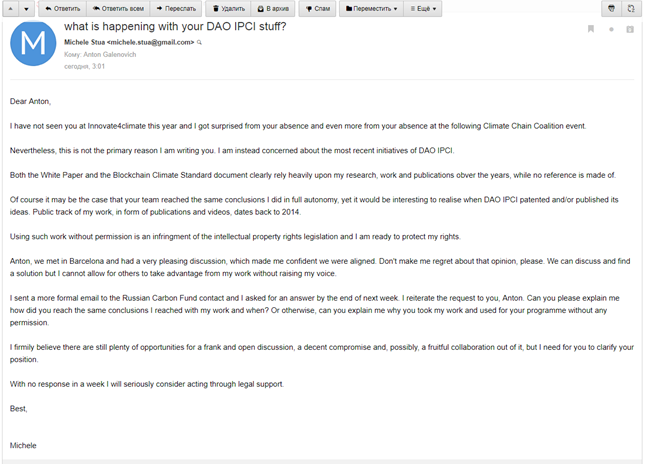 Dear Michele, I’m sure you don’t mind making this discussion public, frank and open. Organizers of Innovate4Climate did not have a slot for us to speak. We have attended New York Blockchain Week instead. As for your primary concern, I am the one to address it. My academic background does not let using anybody’s work with no reference to it. I’ve made my primary research in 2014, and in 2015 started discussions with Ethereum team (George Hallam), DigixGlobal (Kai Cheng, Chng) on actual implementation, coding. In 2016 we’ve met with incredibly talented team, Airalab, led by Sergey Lonshakov, who actually made it a reality in August 2016. First tokens backed by carbon credits were issued and traded in March 2017. Up to date 1,6 million tokens representing carbon credits have been verified, originated and issued in DAO IPCI under Blockchain Climate Standard (BloCS). Unlike ClimateCoin, DAO IPCI actually issued the “First Carbon Backed Crypto Asset”, the solution is actually working for almost two years, verification, generation of carbon credits-based tokens is performed on public blockchain not someplace else, it is decentralized, open sourced, transparent and free. Anyone can use it without asking our permission or paying us money with proper reference to DAO IPCI. There is no interest, motive or reason to steal anybody’s work and ideas. At least not on our side. DAO IPCI is not a climate program per se. It is an impartial open-sourced public blockchain platform. BloCS developed by Russian Carbon Fund with my help is the first climate program operating in DAO IPCI. And it has been there for two years with first carbon credits issued over a year ago. It was nice talking to you in Barcelona but I don’t know what specific work that I have allegedly used you mean. Frankly, no offence, I have not read one of your works. I’ve based my research on the works of Ronald Coase, Ludwig von Mises, F.A. Hayek, John Palmisano with proper references. Sincerely, Anton Galenovich, PhD P.S. Thank you for providing the link to the paper. I have looked through and the concept is exactly the opposite to the DAO IPCI concept. Compare your idea: “A single institution for the issuance of the certifications must be established in order to safeguard the equivalence of the reductions with their certification wherever they happen. A single international market for the certifications exchange must be guaranteed and connected with existing markets. A single organisation must be in charge of collecting the due certifications at the end of the timeframes, thus representing the monitoring institution for the accomplishment of the duties and the place for the parties’ reductions to be deposited by the end of each timeframe” to ours (Whitepaper 5.0): “Decentralization is ensured at the key level of different mitigation programs operating in the same digital environment. There are no technical restrictions as to who may launch an autonomous mitigation program in DAO IPCI. Existing mandatory or voluntary, large and small programs of diverse scopes of activities and jurisdictions, as well as businesses, NGOs and individuals may create independent DAO to implement specific programs and projects and perform transactions in DAO IPCI. Independent mitigation programs within DAO IPCI may interlace and form a web of DAOs that share selected modules and protocols with their peers.” “Other than tokens representing mitigation instruments type of token, represents an internal currency for internal markets of independent programs, essentially a payment/utility token. Operators of independent programs, DAOs, may issue this type of tokens arbitrarily.” It is all about decentralization vs “single institution” http://ipci.io/ |
| json metadata | {"tags":["environmental","markets","blockchain","climate"],"image":["https://cdn.steemitimages.com/DQman1eip1Bz61PhjhqxVSPBKvJRtRGbADnUjF9qhUZQeHn/image.png"],"links":["http://ipci.io/"],"app":"steemit/0.1","format":"markdown"} |
| parent author | |
| parent permlink | environmental |
| permlink | anton-galenovich-dao-ipci-reply-to-michele-stua-climatecoin |
| title | Anton Galenovich, DAO IPCI, reply to Michele Stua, ClimateCoin |
| Transaction Info | Block #23463668/Trx bb539aa55385ef4b5b750b4b1b9a02d62dd2cc4e |
View Raw JSON Data
{
"block": 23463668,
"op": [
"comment",
{
"author": "galenovich",
"body": "What started as a fight might turn into collaboration. Michele and ClimateCoin proposed to step back and discuss constructive cooperation. We appreciate it. \n\nDear Michele,\n\nI’m sure you don’t mind making this discussion public, frank and open.\n\nOrganizers of Innovate4Climate did not have a slot for us to speak. We have attended New York Blockchain Week instead.\n\nAs for your primary concern, I am the one to address it. My academic background does not let using anybody’s work with no reference to it. I’ve made my primary research in 2014, and in 2015 started discussions with Ethereum team (George Hallam), DigixGlobal (Kai Cheng, Chng) on actual implementation, coding. In 2016 we’ve met with incredibly talented team, Airalab, led by Sergey Lonshakov, who actually made it a reality in August 2016. First tokens backed by carbon credits were issued and traded in March 2017. Up to date 1,6 million tokens representing carbon credits have been verified, originated and issued in DAO IPCI under Blockchain Climate Standard (BloCS).\n\nUnlike ClimateCoin, DAO IPCI actually issued the “First Carbon Backed Crypto Asset”, the solution is actually working for almost two years, verification, generation of carbon credits-based tokens is performed on public blockchain not someplace else, it is decentralized, open sourced, transparent and free. Anyone can use it without asking our permission or paying us money with proper reference to DAO IPCI. There is no interest, motive or reason to steal anybody’s work and ideas.\n\nAt least not on our side.\n\nDAO IPCI is not a climate program per se. It is an impartial open-sourced public blockchain platform.\n\nBloCS developed by Russian Carbon Fund with my help is the first climate program operating in DAO IPCI. And it has been there for two years with first carbon credits issued over a year ago.\n\nIt was nice talking to you in Barcelona but I don’t know what specific work that I have allegedly used you mean. Frankly, no offence, I have not read one of your works. I’ve based my research on the works of Ronald Coase, Ludwig von Mises, F.A. Hayek, John Palmisano with proper references.\n\nSincerely,\n\nAnton Galenovich, PhD\n\nP.S. Thank you for providing the link to the paper. I have looked through and the concept is exactly the opposite to the DAO IPCI concept. Compare your idea:\n\n“A single institution for the issuance of the certifications must be established in order to safeguard the equivalence of the reductions with their certification wherever they happen. A single international market for the certifications exchange must be guaranteed and connected with existing markets. A single organisation must be in charge of collecting the due certifications at the end of the timeframes, thus representing the monitoring institution for the accomplishment of the duties and the place for the parties’ reductions to be deposited by the end of each timeframe”\n\nto ours (Whitepaper 5.0):\n\n“Decentralization is ensured at the key level of different mitigation programs operating in the same digital environment. There are no technical restrictions as to who may launch an autonomous mitigation program in DAO IPCI. Existing mandatory or voluntary, large and small programs of diverse scopes of activities and jurisdictions, as well as businesses, NGOs and individuals may create independent DAO to implement specific programs and projects and perform transactions in DAO IPCI. Independent mitigation programs within DAO IPCI may interlace and form a web of DAOs that share selected modules and protocols with their peers.”\n\n“Other than tokens representing mitigation instruments type of token, represents an internal currency for internal markets of independent programs, essentially a payment/utility token. Operators of independent programs, DAOs, may issue this type of tokens arbitrarily.”\n\nIt is all about decentralization vs “single institution”\nhttp://ipci.io/",
"json_metadata": "{\"tags\":[\"environmental\",\"markets\",\"blockchain\",\"climate\"],\"image\":[\"https://cdn.steemitimages.com/DQman1eip1Bz61PhjhqxVSPBKvJRtRGbADnUjF9qhUZQeHn/image.png\"],\"links\":[\"http://ipci.io/\"],\"app\":\"steemit/0.1\",\"format\":\"markdown\"}",
"parent_author": "",
"parent_permlink": "environmental",
"permlink": "anton-galenovich-dao-ipci-reply-to-michele-stua-climatecoin",
"title": "Anton Galenovich, DAO IPCI, reply to Michele Stua, ClimateCoin"
}
],
"op_in_trx": 0,
"timestamp": "2018-06-19T16:46:24",
"trx_id": "bb539aa55385ef4b5b750b4b1b9a02d62dd2cc4e",
"trx_in_block": 25,
"virtual_op": 0
}galenovichupvoted (100.00%) @galenovich / water-quality-trading-on-public-blockchain2018/06/19 16:07:45
galenovichupvoted (100.00%) @galenovich / water-quality-trading-on-public-blockchain
2018/06/19 16:07:45
| author | galenovich |
| permlink | water-quality-trading-on-public-blockchain |
| voter | galenovich |
| weight | 10000 (100.00%) |
| Transaction Info | Block #23462895/Trx 721c2df7f79096a12012d22f3b253015c0856d06 |
View Raw JSON Data
{
  "block": 23462895,
  "op": [
    "vote",
    {
      "author": "galenovich",
      "permlink": "water-quality-trading-on-public-blockchain",
      "voter": "galenovich",
      "weight": 10000
    }
  ],
  "op_in_trx": 0,
  "timestamp": "2018-06-19T16:07:45",
  "trx_id": "721c2df7f79096a12012d22f3b253015c0856d06",
  "trx_in_block": 45,
  "virtual_op": 0
}galenovichupvoted (100.00%) @galenovich / commentaries-to-dao-ipci-draft-whitepaper-5-0-wp-i2018/06/19 16:07:39
galenovichupvoted (100.00%) @galenovich / commentaries-to-dao-ipci-draft-whitepaper-5-0-wp-i
2018/06/19 16:07:39
| author | galenovich |
| permlink | commentaries-to-dao-ipci-draft-whitepaper-5-0-wp-i |
| voter | galenovich |
| weight | 10000 (100.00%) |
| Transaction Info | Block #23462893/Trx 97b0dbe1b5e28bd14213173498b6504e2507b67f |
View Raw JSON Data
{
  "block": 23462893,
  "op": [
    "vote",
    {
      "author": "galenovich",
      "permlink": "commentaries-to-dao-ipci-draft-whitepaper-5-0-wp-i",
      "voter": "galenovich",
      "weight": 10000
    }
  ],
  "op_in_trx": 0,
  "timestamp": "2018-06-19T16:07:39",
  "trx_id": "97b0dbe1b5e28bd14213173498b6504e2507b67f",
  "trx_in_block": 147,
  "virtual_op": 0
}aziliderf91012upvoted (100.00%) @galenovich / commentaries-to-dao-ipci-draft-whitepaper-5-0-wp-i2018/06/19 16:03:00
aziliderf91012upvoted (100.00%) @galenovich / commentaries-to-dao-ipci-draft-whitepaper-5-0-wp-i
2018/06/19 16:03:00
| author | galenovich |
| permlink | commentaries-to-dao-ipci-draft-whitepaper-5-0-wp-i |
| voter | aziliderf91012 |
| weight | 10000 (100.00%) |
| Transaction Info | Block #23462800/Trx 2a6594e7840349c2e22e5a0f697e1a92127e92de |
View Raw JSON Data
{
  "block": 23462800,
  "op": [
    "vote",
    {
      "author": "galenovich",
      "permlink": "commentaries-to-dao-ipci-draft-whitepaper-5-0-wp-i",
      "voter": "aziliderf91012",
      "weight": 10000
    }
  ],
  "op_in_trx": 0,
  "timestamp": "2018-06-19T16:03:00",
  "trx_id": "2a6594e7840349c2e22e5a0f697e1a92127e92de",
  "trx_in_block": 14,
  "virtual_op": 0
}galenovichpublished a new post: commentaries-to-dao-ipci-draft-whitepaper-5-0-wp-i2018/06/19 16:02:03
galenovichpublished a new post: commentaries-to-dao-ipci-draft-whitepaper-5-0-wp-i
2018/06/19 16:02:03
| author | galenovich |
| body |  The first thing, which differentiates DAO IPCI from other solutions, is that it is not an environmental program per se. DAO IPCI does not impose or prescribe any specific choices, decisions, options to the participants, users. Mitigation Token is not obligatory to be used as a currency in DAO IPCI. Any independent operator of an independent program can issue alternative currency, payment token arbitrarily. It is up to them, to the people themselves to make a choice whether they prefer to reduce specific negative impact by cutting specific emissions or effluents, or developing green energy or green financing programs. DAO IPCI is a public blockchain digital environment to meet and mitigate any negative externalities or social costs, a complex of smart contracts establishing universal and standard requirements: the activities, project results, mitigation, green energy, green financing instruments should be specific, quantifiable, auditable, verified, registered and issued by independent entities on public blockchain, transparent, exclude possibility for double-spending, irrevocably retired against compliance requirements or pledges. DAO IPCI minimum viable set of intrinsic smart-contracts has been tested and working since 2016; it is open-sourced and may be reviewed and developed by the Ethereum community — largest blockchain developers community — or anyone. There is a very wide variety of mitigation programs and environmental market instruments in the world, dozens of programs and compliance units for climate change mitigation only. Some of them offer instruments that do not actually represent reductions of GHG emissions but rather the emissions allegedly avoided according to hypothetical “baseline scenarios”. However, they may bring so-called co-benefits: provide for relatively green development, social benefits etc. It is up to the individual himself to decide what he values more and most. DAO IPCCI fundamental rationales lay in the market economics rather than in environmental propositions. DAO IPCI WP Introduction describes the underlying economic rationales. The question is not whether technology is mature, scalability, interoperability or energy efficiency issues are resolvable but whether major environmental market players, mandatory or voluntary environmental, green energy programs of different scale are ready for decentralization of authority, for transparency and a completely new economic paradigm. Would they be ready to make their business patterns public and share the authority they enjoy? Or would they still confine to disguising the old ways with sexy innovation wording like “blockchain” hoping to sustain public trust deserve it or not? Whether they do or do not nothing prevents self-sufficient independent programs and individuals from launching sovereign representations in DAO IPCI to adhere to the right to make one’s own choice and contribute to the new public blockchain market pattern. |
| json metadata | {"tags":["environmental","markets","blockchain"],"image":["https://cdn.steemitimages.com/DQmUF8g61Zph1XPnQvi29mmANByhiZQJ1wVTGhteDr7kQas/image.png"],"app":"steemit/0.1","format":"markdown"} |
| parent author | |
| parent permlink | environmental |
| permlink | commentaries-to-dao-ipci-draft-whitepaper-5-0-wp-i |
| title | Commentaries to DAO IPCI draft Whitepaper 5.0 (WP): I |
| Transaction Info | Block #23462781/Trx ed18c47c6ff6b735de7e5398bef3e0098126193a |
View Raw JSON Data
{
"block": 23462781,
"op": [
"comment",
{
"author": "galenovich",
"body": "\n\nThe first thing, which differentiates DAO IPCI from other solutions, is that it is not an environmental program per se. DAO IPCI does not impose or prescribe any specific choices, decisions, options to the participants, users. Mitigation Token is not obligatory to be used as a currency in DAO IPCI. Any independent operator of an independent program can issue alternative currency, payment token arbitrarily. It is up to them, to the people themselves to make a choice whether they prefer to reduce specific negative impact by cutting specific emissions or effluents, or developing green energy or green financing programs. DAO IPCI is a public blockchain digital environment to meet and mitigate any negative externalities or social costs, a complex of smart contracts establishing universal and standard requirements: the activities, project results, mitigation, green energy, green financing instruments should be specific, quantifiable, auditable, verified, registered and issued by independent entities on public blockchain, transparent, exclude possibility for double-spending, irrevocably retired against compliance requirements or pledges.\n\nDAO IPCI minimum viable set of intrinsic smart-contracts has been tested and working since 2016; it is open-sourced and may be reviewed and developed by the Ethereum community — largest blockchain developers community — or anyone.\n\nThere is a very wide variety of mitigation programs and environmental market instruments in the world, dozens of programs and compliance units for climate change mitigation only. Some of them offer instruments that do not actually represent reductions of GHG emissions but rather the emissions allegedly avoided according to hypothetical “baseline scenarios”. However, they may bring so-called co-benefits: provide for relatively green development, social benefits etc. It is up to the individual himself to decide what he values more and most.\n\nDAO IPCCI fundamental rationales lay in the market economics rather than in environmental propositions. DAO IPCI WP Introduction describes the underlying economic rationales.\n\nThe question is not whether technology is mature, scalability, interoperability or energy efficiency issues are resolvable but whether major environmental market players, mandatory or voluntary environmental, green energy programs of different scale are ready for decentralization of authority, for transparency and a completely new economic paradigm. Would they be ready to make their business patterns public and share the authority they enjoy? Or would they still confine to disguising the old ways with sexy innovation wording like “blockchain” hoping to sustain public trust deserve it or not? Whether they do or do not nothing prevents self-sufficient independent programs and individuals from launching sovereign representations in DAO IPCI to adhere to the right to make one’s own choice and contribute to the new public blockchain market pattern.",
"json_metadata": "{\"tags\":[\"environmental\",\"markets\",\"blockchain\"],\"image\":[\"https://cdn.steemitimages.com/DQmUF8g61Zph1XPnQvi29mmANByhiZQJ1wVTGhteDr7kQas/image.png\"],\"app\":\"steemit/0.1\",\"format\":\"markdown\"}",
"parent_author": "",
"parent_permlink": "environmental",
"permlink": "commentaries-to-dao-ipci-draft-whitepaper-5-0-wp-i",
"title": "Commentaries to DAO IPCI draft Whitepaper 5.0 (WP): I"
}
],
"op_in_trx": 0,
"timestamp": "2018-06-19T16:02:03",
"trx_id": "ed18c47c6ff6b735de7e5398bef3e0098126193a",
"trx_in_block": 20,
"virtual_op": 0
}2018/06/19 15:38:57
2018/06/19 15:38:57
| author | introduce.bot |
| body | ✅ @galenovich, I gave you an upvote on your first post! **Please give me a follow** and I will give you a follow in return!<br><br>Please also take a moment to read [this post](https://steemit.com/spam/@pleasestop/introducing-pleasestop-here-to-reduce-comment-spam) regarding bad behavior on Steemit. |
| json metadata | |
| parent author | galenovich |
| parent permlink | water-quality-trading-on-public-blockchain |
| permlink | introduce-bot-re-galenovichwater-quality-trading-on-public-blockchain |
| title | |
| Transaction Info | Block #23462319/Trx de4bede6684a2ef91c41575ae603a61f2fb133ee |
View Raw JSON Data
{
  "block": 23462319,
  "op": [
    "comment",
    {
      "author": "introduce.bot",
      "body": "✅  @galenovich, I gave you an upvote on your first post! **Please give me a follow** and I will give you a follow in return!<br><br>Please also take a moment to read [this post](https://steemit.com/spam/@pleasestop/introducing-pleasestop-here-to-reduce-comment-spam) regarding bad behavior on Steemit.",
      "json_metadata": "",
      "parent_author": "galenovich",
      "parent_permlink": "water-quality-trading-on-public-blockchain",
      "permlink": "introduce-bot-re-galenovichwater-quality-trading-on-public-blockchain",
      "title": ""
    }
  ],
  "op_in_trx": 0,
  "timestamp": "2018-06-19T15:38:57",
  "trx_id": "de4bede6684a2ef91c41575ae603a61f2fb133ee",
  "trx_in_block": 61,
  "virtual_op": 0
}Manabar
Voting Power100.00%
Downvote Power100.00%
Resource Credits100.00%
Reputation Progress0.00%
{
  "voting_manabar": {
    "current_mana": "8143659806",
    "last_update_time": 1779064347
  },
  "downvote_manabar": {
    "current_mana": 2035914951,
    "last_update_time": 1779064347
  },
  "rc_account": {
    "account": "galenovich",
    "max_rc": "10164408779",
    "max_rc_creation_adjustment": {
      "amount": "2020748973",
      "nai": "@@000000037",
      "precision": 6
    },
    "rc_manabar": {
      "current_mana": "10164408779",
      "last_update_time": 1779064347
    }
  }
}
Account Metadata
| POSTING JSON METADATA | |
| None | |
| JSON METADATA | |
| None |
{
  "posting_json_metadata": {},
  "json_metadata": {}
}
Auth Keys
Owner
Single Signature
Public Keys
STM72BYkCVBmfTRSc356gjYUmDoLeDVyvHVkNAjTFY6jfyrtJz2ga1/1
Active
Single Signature
Public Keys
STM8EkL8r2gJgcMGSjcHNnnVfECxh7QQMAw4NMoSQTGkxmGq7367r1/1
Posting
Single Signature
Public Keys
STM76PyH88CFS9wgJ6TSVc1V4ikQiywU4VnmMzb3NtbSmgkStXWiC1/1
Memo
STM6oQQmoJdXH1cBcfAhUrnuRErMviWQjsdokRntNfSWydah6ENRe
{
  "owner": {
    "account_auths": [],
    "key_auths": [
      [
        "STM72BYkCVBmfTRSc356gjYUmDoLeDVyvHVkNAjTFY6jfyrtJz2ga",
        1
      ]
    ],
    "weight_threshold": 1
  },
  "active": {
    "account_auths": [],
    "key_auths": [
      [
        "STM8EkL8r2gJgcMGSjcHNnnVfECxh7QQMAw4NMoSQTGkxmGq7367r",
        1
      ]
    ],
    "weight_threshold": 1
  },
  "posting": {
    "account_auths": [],
    "key_auths": [
      [
        "STM76PyH88CFS9wgJ6TSVc1V4ikQiywU4VnmMzb3NtbSmgkStXWiC",
        1
      ]
    ],
    "weight_threshold": 1
  },
  "memo": "STM6oQQmoJdXH1cBcfAhUrnuRErMviWQjsdokRntNfSWydah6ENRe"
}
Witness Votes
0 / 30
No active witness votes.
[]