

VOTING POWER100.00%
DOWNVOTE POWER100.00%
RESOURCE CREDITS100.00%
REPUTATION PROGRESS26.36%
Net Worth
0.469USD
STEEM
0.000STEEM
SBD
0.772SBD
Effective Power
5.001SP
├── Own SP
1.624SP
└── Incoming DelegationsDeleg
+3.377SP
Detailed Balance
| STEEM | ||
| balance | 0.000STEEM | STEEM |
| market_balance | 0.000STEEM | STEEM |
| savings_balance | 0.000STEEM | STEEM |
| reward_steem_balance | 0.000STEEM | STEEM |
| STEEM POWER | ||
| Own SP | 1.624SP | SP |
| Delegated Out | 0.000SP | SP |
| Delegation In | 3.377SP | SP |
| Effective Power | 5.001SP | SP |
| Reward SP (pending) | 0.000SP | SP |
| SBD | ||
| sbd_balance | 0.772SBD | SBD |
| sbd_conversions | 0.000SBD | SBD |
| sbd_market_balance | 0.000SBD | SBD |
| savings_sbd_balance | 0.000SBD | SBD |
| reward_sbd_balance | 0.000SBD | SBD |
{
  "balance": "0.000 STEEM",
  "savings_balance": "0.000 STEEM",
  "reward_steem_balance": "0.000 STEEM",
  "vesting_shares": "2645.246399 VESTS",
  "delegated_vesting_shares": "0.000000 VESTS",
  "received_vesting_shares": "5498.413407 VESTS",
  "sbd_balance": "0.772 SBD",
  "savings_sbd_balance": "0.000 SBD",
  "reward_sbd_balance": "0.000 SBD",
  "conversions": []
}
Account Info
| name | fredom |
| id | 408068 |
| rank | 1,421,610 |
| reputation | -20139164324 |
| created | 2017-10-11T20:31:57 |
| recovery_account | steem |
| proxy | None |
| post_count | 127 |
| comment_count | 0 |
| lifetime_vote_count | 0 |
| witnesses_voted_for | 0 |
| last_post | 2017-10-28T14:09:48 |
| last_root_post | 2017-10-28T14:09:48 |
| last_vote_time | 2017-10-28T14:09:48 |
| proxied_vsf_votes | 0, 0, 0, 0 |
| can_vote | 1 |
| voting_power | 0 |
| delayed_votes | 0 |
| balance | 0.000 STEEM |
| savings_balance | 0.000 STEEM |
| sbd_balance | 0.772 SBD |
| savings_sbd_balance | 0.000 SBD |
| vesting_shares | 2645.246399 VESTS |
| delegated_vesting_shares | 0.000000 VESTS |
| received_vesting_shares | 5498.413407 VESTS |
| reward_vesting_balance | 0.000000 VESTS |
| vesting_balance | 0.000 STEEM |
| vesting_withdraw_rate | 0.000000 VESTS |
| next_vesting_withdrawal | 1969-12-31T23:59:59 |
| withdrawn | 0 |
| to_withdraw | 0 |
| withdraw_routes | 0 |
| savings_withdraw_requests | 0 |
| last_account_recovery | 1970-01-01T00:00:00 |
| reset_account | null |
| last_owner_update | 1970-01-01T00:00:00 |
| last_account_update | 2017-10-12T19:21:36 |
| mined | No |
| sbd_seconds | 0 |
| sbd_last_interest_payment | 2017-12-05T16:13:24 |
| savings_sbd_last_interest_payment | 1970-01-01T00:00:00 |
{
  "active": {
    "account_auths": [],
    "key_auths": [
      [
        "STM86FD36P15iD9wY3LnQEn9HxZQbDRQjhix2vwapkkNNdSBeRuGp",
        1
      ]
    ],
    "weight_threshold": 1
  },
  "balance": "0.000 STEEM",
  "can_vote": true,
  "comment_count": 0,
  "created": "2017-10-11T20:31:57",
  "curation_rewards": 1,
  "delegated_vesting_shares": "0.000000 VESTS",
  "downvote_manabar": {
    "current_mana": 2035914951,
    "last_update_time": 1779063990
  },
  "guest_bloggers": [],
  "id": 408068,
  "json_metadata": "{\"profile\":{\"profile_image\":\"https://thevoiceofaquietgirl.files.wordpress.com/2015/05/freedom20hd20wallpaper1.jpg\",\"cover_image\":\"https://edri.org/wp-content/themes/edri/img/content/why_freedom.png\",\"name\":\"FREEDOM\",\"about\":\"FREEDOM PROSPERITY HAPPINESS\",\"location\":\"EARTH\"}}",
  "last_account_recovery": "1970-01-01T00:00:00",
  "last_account_update": "2017-10-12T19:21:36",
  "last_owner_update": "1970-01-01T00:00:00",
  "last_post": "2017-10-28T14:09:48",
  "last_root_post": "2017-10-28T14:09:48",
  "last_vote_time": "2017-10-28T14:09:48",
  "lifetime_vote_count": 0,
  "market_history": [],
  "memo_key": "STM6s8wWFfrpRw9zqtEx7gRjQA69kEqfTG1EpfEdTX5VV3SXfkqJy",
  "mined": false,
  "name": "fredom",
  "next_vesting_withdrawal": "1969-12-31T23:59:59",
  "other_history": [],
  "owner": {
    "account_auths": [],
    "key_auths": [
      [
        "STM5vULXBNo7ocXKFEZrgDkD3KZdrou6QNaLnmSNvueYscx3ybnc9",
        1
      ]
    ],
    "weight_threshold": 1
  },
  "pending_claimed_accounts": 0,
  "post_bandwidth": 0,
  "post_count": 127,
  "post_history": [],
  "posting": {
    "account_auths": [],
    "key_auths": [
      [
        "STM6tPcQSiEFeNDLuR154YSpVrehmNcxktUdduDMj7E2pkQJqxWr7",
        1
      ]
    ],
    "weight_threshold": 1
  },
  "posting_json_metadata": "{\"profile\":{\"profile_image\":\"https://thevoiceofaquietgirl.files.wordpress.com/2015/05/freedom20hd20wallpaper1.jpg\",\"cover_image\":\"https://edri.org/wp-content/themes/edri/img/content/why_freedom.png\",\"name\":\"FREEDOM\",\"about\":\"FREEDOM PROSPERITY HAPPINESS\",\"location\":\"EARTH\"}}",
  "posting_rewards": 1564,
  "proxied_vsf_votes": [
    0,
    0,
    0,
    0
  ],
  "proxy": "",
  "received_vesting_shares": "5498.413407 VESTS",
  "recovery_account": "steem",
  "reputation": -20139164324,
  "reset_account": "null",
  "reward_sbd_balance": "0.000 SBD",
  "reward_steem_balance": "0.000 STEEM",
  "reward_vesting_balance": "0.000000 VESTS",
  "reward_vesting_steem": "0.000 STEEM",
  "savings_balance": "0.000 STEEM",
  "savings_sbd_balance": "0.000 SBD",
  "savings_sbd_last_interest_payment": "1970-01-01T00:00:00",
  "savings_sbd_seconds": "0",
  "savings_sbd_seconds_last_update": "1970-01-01T00:00:00",
  "savings_withdraw_requests": 0,
  "sbd_balance": "0.772 SBD",
  "sbd_last_interest_payment": "2017-12-05T16:13:24",
  "sbd_seconds": "0",
  "sbd_seconds_last_update": "2017-12-05T16:13:24",
  "tags_usage": [],
  "to_withdraw": 0,
  "transfer_history": [],
  "vesting_balance": "0.000 STEEM",
  "vesting_shares": "2645.246399 VESTS",
  "vesting_withdraw_rate": "0.000000 VESTS",
  "vote_history": [],
  "voting_manabar": {
    "current_mana": "8143659806",
    "last_update_time": 1779063990
  },
  "voting_power": 0,
  "withdraw_routes": 0,
  "withdrawn": 0,
  "witness_votes": [],
  "witnesses_voted_for": 0,
  "rank": 1421610
}
Withdraw Routes
| Incoming | Outgoing |
|---|---|
Empty | Empty |
{
  "incoming": [],
  "outgoing": []
}From Date
To Date
2026/05/18 00:26:30
2026/05/18 00:26:30
| delegator | steem |
| delegatee | fredom |
| vesting shares | 5498.413407 VESTS |
| Transaction Info | Block #106143674/Trx 980bfd8fed732444e54f97d37184faeb0db446d0 |
View Raw JSON Data
{
  "trx_id": "980bfd8fed732444e54f97d37184faeb0db446d0",
  "block": 106143674,
  "trx_in_block": 1,
  "op_in_trx": 0,
  "virtual_op": 0,
  "timestamp": "2026-05-18T00:26:30",
  "op": [
    "delegate_vesting_shares",
    {
      "delegator": "steem",
      "delegatee": "fredom",
      "vesting_shares": "5498.413407 VESTS"
    }
  ]
}2026/05/12 04:36:27
2026/05/12 04:36:27
| delegator | steem |
| delegatee | fredom |
| vesting shares | 2786.203002 VESTS |
| Transaction Info | Block #105976631/Trx 9d045cd4e3445ac9e0476c09de030ebf2f332181 |
View Raw JSON Data
{
  "trx_id": "9d045cd4e3445ac9e0476c09de030ebf2f332181",
  "block": 105976631,
  "trx_in_block": 3,
  "op_in_trx": 0,
  "virtual_op": 0,
  "timestamp": "2026-05-12T04:36:27",
  "op": [
    "delegate_vesting_shares",
    {
      "delegator": "steem",
      "delegatee": "fredom",
      "vesting_shares": "2786.203002 VESTS"
    }
  ]
}2026/04/25 23:47:06
2026/04/25 23:47:06
| delegator | steem |
| delegatee | fredom |
| vesting shares | 5510.929163 VESTS |
| Transaction Info | Block #105511320/Trx c53351c891bc44fb155d210bd817f9b0d1de1436 |
View Raw JSON Data
{
  "trx_id": "c53351c891bc44fb155d210bd817f9b0d1de1436",
  "block": 105511320,
  "trx_in_block": 0,
  "op_in_trx": 0,
  "virtual_op": 0,
  "timestamp": "2026-04-25T23:47:06",
  "op": [
    "delegate_vesting_shares",
    {
      "delegator": "steem",
      "delegatee": "fredom",
      "vesting_shares": "5510.929163 VESTS"
    }
  ]
}2026/01/23 08:18:39
2026/01/23 08:18:39
| delegator | steem |
| delegatee | fredom |
| vesting shares | 2827.749821 VESTS |
| Transaction Info | Block #102852420/Trx 12d102aa4e36a0f207588766908c22d41012a812 |
View Raw JSON Data
{
  "trx_id": "12d102aa4e36a0f207588766908c22d41012a812",
  "block": 102852420,
  "trx_in_block": 0,
  "op_in_trx": 0,
  "virtual_op": 0,
  "timestamp": "2026-01-23T08:18:39",
  "op": [
    "delegate_vesting_shares",
    {
      "delegator": "steem",
      "delegatee": "fredom",
      "vesting_shares": "2827.749821 VESTS"
    }
  ]
}2024/12/17 03:37:21
2024/12/17 03:37:21
| delegator | steem |
| delegatee | fredom |
| vesting shares | 2991.969018 VESTS |
| Transaction Info | Block #91298819/Trx 6f4bdf73bfa53eee446734bc2739b9687eb1f7b6 |
View Raw JSON Data
{
  "trx_id": "6f4bdf73bfa53eee446734bc2739b9687eb1f7b6",
  "block": 91298819,
  "trx_in_block": 1,
  "op_in_trx": 0,
  "virtual_op": 0,
  "timestamp": "2024-12-17T03:37:21",
  "op": [
    "delegate_vesting_shares",
    {
      "delegator": "steem",
      "delegatee": "fredom",
      "vesting_shares": "2991.969018 VESTS"
    }
  ]
}2023/11/13 19:20:18
2023/11/13 19:20:18
| delegator | steem |
| delegatee | fredom |
| vesting shares | 3161.102550 VESTS |
| Transaction Info | Block #79853021/Trx 3c6faa2275b1a547583adc7aa168bf6e20543a6e |
View Raw JSON Data
{
  "trx_id": "3c6faa2275b1a547583adc7aa168bf6e20543a6e",
  "block": 79853021,
  "trx_in_block": 2,
  "op_in_trx": 0,
  "virtual_op": 0,
  "timestamp": "2023-11-13T19:20:18",
  "op": [
    "delegate_vesting_shares",
    {
      "delegator": "steem",
      "delegatee": "fredom",
      "vesting_shares": "3161.102550 VESTS"
    }
  ]
}2023/09/21 22:03:03
2023/09/21 22:03:03
| delegator | steem |
| delegatee | fredom |
| vesting shares | 6098.381336 VESTS |
| Transaction Info | Block #78348091/Trx d6153569cf22bd765c1b10bb11f138c82ad5d35d |
View Raw JSON Data
{
  "trx_id": "d6153569cf22bd765c1b10bb11f138c82ad5d35d",
  "block": 78348091,
  "trx_in_block": 0,
  "op_in_trx": 0,
  "virtual_op": 0,
  "timestamp": "2023-09-21T22:03:03",
  "op": [
    "delegate_vesting_shares",
    {
      "delegator": "steem",
      "delegatee": "fredom",
      "vesting_shares": "6098.381336 VESTS"
    }
  ]
}2022/11/03 11:49:06
2022/11/03 11:49:06
| delegator | steem |
| delegatee | fredom |
| vesting shares | 6320.062774 VESTS |
| Transaction Info | Block #69113398/Trx c450bc254974edc78348470e5d17638fa7565f45 |
View Raw JSON Data
{
  "trx_id": "c450bc254974edc78348470e5d17638fa7565f45",
  "block": 69113398,
  "trx_in_block": 4,
  "op_in_trx": 0,
  "virtual_op": 0,
  "timestamp": "2022-11-03T11:49:06",
  "op": [
    "delegate_vesting_shares",
    {
      "delegator": "steem",
      "delegatee": "fredom",
      "vesting_shares": "6320.062774 VESTS"
    }
  ]
}2022/01/17 11:04:36
2022/01/17 11:04:36
| delegator | steem |
| delegatee | fredom |
| vesting shares | 6540.596005 VESTS |
| Transaction Info | Block #60809556/Trx 1e6bb74a2433967fa8ee2b4f403fc9c00490fc19 |
View Raw JSON Data
{
  "trx_id": "1e6bb74a2433967fa8ee2b4f403fc9c00490fc19",
  "block": 60809556,
  "trx_in_block": 17,
  "op_in_trx": 0,
  "virtual_op": 0,
  "timestamp": "2022-01-17T11:04:36",
  "op": [
    "delegate_vesting_shares",
    {
      "delegator": "steem",
      "delegatee": "fredom",
      "vesting_shares": "6540.596005 VESTS"
    }
  ]
}2021/06/14 00:59:30
2021/06/14 00:59:30
| delegator | steem |
| delegatee | fredom |
| vesting shares | 6724.364663 VESTS |
| Transaction Info | Block #54607937/Trx dad79a448d0dd461147f0545917ac35ded97e507 |
View Raw JSON Data
{
  "trx_id": "dad79a448d0dd461147f0545917ac35ded97e507",
  "block": 54607937,
  "trx_in_block": 10,
  "op_in_trx": 0,
  "virtual_op": 0,
  "timestamp": "2021-06-14T00:59:30",
  "op": [
    "delegate_vesting_shares",
    {
      "delegator": "steem",
      "delegatee": "fredom",
      "vesting_shares": "6724.364663 VESTS"
    }
  ]
}2020/12/11 11:17:48
2020/12/11 11:17:48
| delegator | steem |
| delegatee | fredom |
| vesting shares | 6911.786637 VESTS |
| Transaction Info | Block #49355383/Trx 9676b6a5cf351446fc9bf392455987dcb19b1c11 |
View Raw JSON Data
{
  "trx_id": "9676b6a5cf351446fc9bf392455987dcb19b1c11",
  "block": 49355383,
  "trx_in_block": 3,
  "op_in_trx": 0,
  "virtual_op": 0,
  "timestamp": "2020-12-11T11:17:48",
  "op": [
    "delegate_vesting_shares",
    {
      "delegator": "steem",
      "delegatee": "fredom",
      "vesting_shares": "6911.786637 VESTS"
    }
  ]
}2020/12/06 04:55:03
2020/12/06 04:55:03
| delegator | steem |
| delegatee | fredom |
| vesting shares | 1912.543513 VESTS |
| Transaction Info | Block #49206945/Trx d6974db9f9bcde971e4adff92f272e518bc7cd95 |
View Raw JSON Data
{
  "trx_id": "d6974db9f9bcde971e4adff92f272e518bc7cd95",
  "block": 49206945,
  "trx_in_block": 9,
  "op_in_trx": 0,
  "virtual_op": 0,
  "timestamp": "2020-12-06T04:55:03",
  "op": [
    "delegate_vesting_shares",
    {
      "delegator": "steem",
      "delegatee": "fredom",
      "vesting_shares": "1912.543513 VESTS"
    }
  ]
}2020/12/05 14:56:03
2020/12/05 14:56:03
| delegator | steem |
| delegatee | fredom |
| vesting shares | 6917.994491 VESTS |
| Transaction Info | Block #49190480/Trx ebdf3efc1c816d2622867817fc8e8390b2388a4b |
View Raw JSON Data
{
  "trx_id": "ebdf3efc1c816d2622867817fc8e8390b2388a4b",
  "block": 49190480,
  "trx_in_block": 2,
  "op_in_trx": 0,
  "virtual_op": 0,
  "timestamp": "2020-12-05T14:56:03",
  "op": [
    "delegate_vesting_shares",
    {
      "delegator": "steem",
      "delegatee": "fredom",
      "vesting_shares": "6917.994491 VESTS"
    }
  ]
}2020/11/02 16:00:39
2020/11/02 16:00:39
| delegator | steem |
| delegatee | fredom |
| vesting shares | 1920.017158 VESTS |
| Transaction Info | Block #48258239/Trx cd545918546313d2447d38c6e70496a9c6930909 |
View Raw JSON Data
{
  "trx_id": "cd545918546313d2447d38c6e70496a9c6930909",
  "block": 48258239,
  "trx_in_block": 0,
  "op_in_trx": 0,
  "virtual_op": 0,
  "timestamp": "2020-11-02T16:00:39",
  "op": [
    "delegate_vesting_shares",
    {
      "delegator": "steem",
      "delegatee": "fredom",
      "vesting_shares": "1920.017158 VESTS"
    }
  ]
}2020/05/09 05:52:36
2020/05/09 05:52:36
| delegator | steem |
| delegatee | fredom |
| vesting shares | 7120.799850 VESTS |
| Transaction Info | Block #43217195/Trx 95888f91cf11db3ba6cdd69597c261772a92a5db |
View Raw JSON Data
{
  "trx_id": "95888f91cf11db3ba6cdd69597c261772a92a5db",
  "block": 43217195,
  "trx_in_block": 0,
  "op_in_trx": 0,
  "virtual_op": 0,
  "timestamp": "2020-05-09T05:52:36",
  "op": [
    "delegate_vesting_shares",
    {
      "delegator": "steem",
      "delegatee": "fredom",
      "vesting_shares": "7120.799850 VESTS"
    }
  ]
}2020/05/08 09:30:27
2020/05/08 09:30:27
| delegator | steem |
| delegatee | fredom |
| vesting shares | 1953.311140 VESTS |
| Transaction Info | Block #43193327/Trx fa0faf49ca334cd68f8b421b77d899ac0ecc46f7 |
View Raw JSON Data
{
  "trx_id": "fa0faf49ca334cd68f8b421b77d899ac0ecc46f7",
  "block": 43193327,
  "trx_in_block": 2,
  "op_in_trx": 0,
  "virtual_op": 0,
  "timestamp": "2020-05-08T09:30:27",
  "op": [
    "delegate_vesting_shares",
    {
      "delegator": "steem",
      "delegatee": "fredom",
      "vesting_shares": "1953.311140 VESTS"
    }
  ]
}2020/04/15 21:42:27
2020/04/15 21:42:27
| delegator | steem |
| delegatee | fredom |
| vesting shares | 7133.777269 VESTS |
| Transaction Info | Block #42562668/Trx 8cd42cd37b98bdab4da0c4c2908c83a70ad8b151 |
View Raw JSON Data
{
  "trx_id": "8cd42cd37b98bdab4da0c4c2908c83a70ad8b151",
  "block": 42562668,
  "trx_in_block": 24,
  "op_in_trx": 0,
  "virtual_op": 0,
  "timestamp": "2020-04-15T21:42:27",
  "op": [
    "delegate_vesting_shares",
    {
      "delegator": "steem",
      "delegatee": "fredom",
      "vesting_shares": "7133.777269 VESTS"
    }
  ]
}2019/10/11 20:52:12
2019/10/11 20:52:12
| parent author | fredom |
| parent permlink | i-have-gbp2-after-100-s-of-post-im-hitting-the-big-time-and-now-living-like-a-god |
| author | steemitboard |
| permlink | steemitboard-notify-fredom-20191011t205212000z |
| title | |
| body | Congratulations @fredom! You received a personal award! <table><tr><td>https://steemitimages.com/70x70/http://steemitboard.com/@fredom/birthday2.png</td><td>Happy Birthday! - You are on the Steem blockchain for 2 years!</td></tr></table> <sub>_You can view [your badges on your Steem Board](https://steemitboard.com/@fredom) and compare to others on the [Steem Ranking](https://steemitboard.com/ranking/index.php?name=fredom)_</sub> **Do not miss the last post from @steemitboard:** <table><tr><td><a href="https://steemit.com/steemfest/@steemitboard/the-new-steemfest-badge-is-ready"><img src="https://steemitimages.com/64x128/https://cdn.steemitimages.com/DQmRUkELn2Fd13pWFkmWU2wBMMx39EBX5V3cHBEZ2d7f3Ve/image.png"></a></td><td><a href="https://steemit.com/steemfest/@steemitboard/the-new-steemfest-badge-is-ready">The new SteemFest⁴ badge is ready</a></td></tr></table> ###### [Vote for @Steemitboard as a witness](https://v2.steemconnect.com/sign/account-witness-vote?witness=steemitboard&approve=1) to get one more award and increased upvotes! |
| json metadata | {"image":["https://steemitboard.com/img/notify.png"]} |
| Transaction Info | Block #37200205/Trx fe475498d78cc3f60c572fae802eae6eef64fe90 |
View Raw JSON Data
{
  "trx_id": "fe475498d78cc3f60c572fae802eae6eef64fe90",
  "block": 37200205,
  "trx_in_block": 4,
  "op_in_trx": 0,
  "virtual_op": 0,
  "timestamp": "2019-10-11T20:52:12",
  "op": [
    "comment",
    {
      "parent_author": "fredom",
      "parent_permlink": "i-have-gbp2-after-100-s-of-post-im-hitting-the-big-time-and-now-living-like-a-god",
      "author": "steemitboard",
      "permlink": "steemitboard-notify-fredom-20191011t205212000z",
      "title": "",
      "body": "Congratulations @fredom! You received a personal award!\n\n<table><tr><td>https://steemitimages.com/70x70/http://steemitboard.com/@fredom/birthday2.png</td><td>Happy Birthday! - You are on the Steem blockchain for 2 years!</td></tr></table>\n\n<sub>_You can view [your badges on your Steem Board](https://steemitboard.com/@fredom) and compare to others on the [Steem Ranking](https://steemitboard.com/ranking/index.php?name=fredom)_</sub>\n\n\n**Do not miss the last post from @steemitboard:**\n<table><tr><td><a href=\"https://steemit.com/steemfest/@steemitboard/the-new-steemfest-badge-is-ready\"><img src=\"https://steemitimages.com/64x128/https://cdn.steemitimages.com/DQmRUkELn2Fd13pWFkmWU2wBMMx39EBX5V3cHBEZ2d7f3Ve/image.png\"></a></td><td><a href=\"https://steemit.com/steemfest/@steemitboard/the-new-steemfest-badge-is-ready\">The new SteemFest⁴  badge is ready</a></td></tr></table>\n\n###### [Vote for @Steemitboard as a witness](https://v2.steemconnect.com/sign/account-witness-vote?witness=steemitboard&approve=1) to get one more award and increased upvotes!",
      "json_metadata": "{\"image\":[\"https://steemitboard.com/img/notify.png\"]}"
    }
  ]
}2019/05/12 14:57:18
2019/05/12 14:57:18
| delegator | steem |
| delegatee | fredom |
| vesting shares | 7329.400074 VESTS |
| Transaction Info | Block #32845549/Trx 0ec6108c1ef2de7f9785a0e82272ec2c839a72ad |
View Raw JSON Data
{
  "trx_id": "0ec6108c1ef2de7f9785a0e82272ec2c839a72ad",
  "block": 32845549,
  "trx_in_block": 23,
  "op_in_trx": 0,
  "virtual_op": 0,
  "timestamp": "2019-05-12T14:57:18",
  "op": [
    "delegate_vesting_shares",
    {
      "delegator": "steem",
      "delegatee": "fredom",
      "vesting_shares": "7329.400074 VESTS"
    }
  ]
}2018/05/16 20:17:48
2018/05/16 20:17:48
| delegator | steem |
| delegatee | fredom |
| vesting shares | 7528.952509 VESTS |
| Transaction Info | Block #22489857/Trx 92ef4f739e8747b190a4ebe40aaefdf42752071a |
View Raw JSON Data
{
  "trx_id": "92ef4f739e8747b190a4ebe40aaefdf42752071a",
  "block": 22489857,
  "trx_in_block": 20,
  "op_in_trx": 0,
  "virtual_op": 0,
  "timestamp": "2018-05-16T20:17:48",
  "op": [
    "delegate_vesting_shares",
    {
      "delegator": "steem",
      "delegatee": "fredom",
      "vesting_shares": "7528.952509 VESTS"
    }
  ]
}2018/05/06 06:23:12
2018/05/06 06:23:12
| delegator | steem |
| delegatee | fredom |
| vesting shares | 27894.118030 VESTS |
| Transaction Info | Block #22185213/Trx beb88fa128938846c92f55b3f92e7045521e71cc |
View Raw JSON Data
{
  "trx_id": "beb88fa128938846c92f55b3f92e7045521e71cc",
  "block": 22185213,
  "trx_in_block": 7,
  "op_in_trx": 0,
  "virtual_op": 0,
  "timestamp": "2018-05-06T06:23:12",
  "op": [
    "delegate_vesting_shares",
    {
      "delegator": "steem",
      "delegatee": "fredom",
      "vesting_shares": "27894.118030 VESTS"
    }
  ]
}samoyedfansupvoted (100.00%) @fredom / cute-siberian-samoyed-dogs-look-like-baby-bears2018/03/17 12:45:27
samoyedfansupvoted (100.00%) @fredom / cute-siberian-samoyed-dogs-look-like-baby-bears
2018/03/17 12:45:27
| voter | samoyedfans |
| author | fredom |
| permlink | cute-siberian-samoyed-dogs-look-like-baby-bears |
| weight | 10000 (100.00%) |
| Transaction Info | Block #20754609/Trx 2970b83da42ec58d800782d7a3225e2f81d24cb1 |
View Raw JSON Data
{
  "trx_id": "2970b83da42ec58d800782d7a3225e2f81d24cb1",
  "block": 20754609,
  "trx_in_block": 50,
  "op_in_trx": 0,
  "virtual_op": 0,
  "timestamp": "2018-03-17T12:45:27",
  "op": [
    "vote",
    {
      "voter": "samoyedfans",
      "author": "fredom",
      "permlink": "cute-siberian-samoyed-dogs-look-like-baby-bears",
      "weight": 10000
    }
  ]
}2017/12/27 21:17:33
2017/12/27 21:17:33
| delegator | steem |
| delegatee | fredom |
| vesting shares | 28097.753601 VESTS |
| Transaction Info | Block #18463164/Trx 8ffdbe44aee8595a13a8bb4840146436a824fb74 |
View Raw JSON Data
{
  "trx_id": "8ffdbe44aee8595a13a8bb4840146436a824fb74",
  "block": 18463164,
  "trx_in_block": 32,
  "op_in_trx": 0,
  "virtual_op": 0,
  "timestamp": "2017-12-27T21:17:33",
  "op": [
    "delegate_vesting_shares",
    {
      "delegator": "steem",
      "delegatee": "fredom",
      "vesting_shares": "28097.753601 VESTS"
    }
  ]
}whohow36upvoted (100.00%) @fredom / jamie-dimon-trust-me2017/12/27 13:54:03
whohow36upvoted (100.00%) @fredom / jamie-dimon-trust-me
2017/12/27 13:54:03
| voter | whohow36 |
| author | fredom |
| permlink | jamie-dimon-trust-me |
| weight | 10000 (100.00%) |
| Transaction Info | Block #18454296/Trx 93e4c2df1737825577e6d4a990d4e4564f7f9956 |
View Raw JSON Data
{
  "trx_id": "93e4c2df1737825577e6d4a990d4e4564f7f9956",
  "block": 18454296,
  "trx_in_block": 31,
  "op_in_trx": 0,
  "virtual_op": 0,
  "timestamp": "2017-12-27T13:54:03",
  "op": [
    "vote",
    {
      "voter": "whohow36",
      "author": "fredom",
      "permlink": "jamie-dimon-trust-me",
      "weight": 10000
    }
  ]
}2017/12/05 16:13:24
2017/12/05 16:13:24
| from | zahidsun |
| to | fredom |
| amount | 0.001 SBD |
| memo | sir i need 100k SP, please give me one chance i will pay 60$ to 70$ SBD daily for 100k SP, Sir I need your help plz, thanks in advance |
| Transaction Info | Block #17823748/Trx 6704955bca09ab8a36e1303d7281e1290f88d6cc |
View Raw JSON Data
{
  "trx_id": "6704955bca09ab8a36e1303d7281e1290f88d6cc",
  "block": 17823748,
  "trx_in_block": 5,
  "op_in_trx": 0,
  "virtual_op": 0,
  "timestamp": "2017-12-05T16:13:24",
  "op": [
    "transfer",
    {
      "from": "zahidsun",
      "to": "fredom",
      "amount": "0.001 SBD",
      "memo": "sir i need 100k SP, please give me one chance i will pay 60$ to 70$ SBD daily for 100k SP, Sir I need your help plz, thanks in advance"
    }
  ]
}2017/11/16 20:03:06
2017/11/16 20:03:06
| parent author | fredom |
| parent permlink | true-everest-into-thin-air-by-jon-krakauer |
| author | patrice |
| permlink | re-fredom-true-everest-into-thin-air-by-jon-krakauer-20171116t200308855z |
| title | |
| body | !cheetah ban |
| json metadata | {"tags":["life"],"app":"steemit/0.1"} |
| Transaction Info | Block #17281391/Trx ee5d48f80dcf38591fc1bcf4a2f3dc77525abfe8 |
View Raw JSON Data
{
  "trx_id": "ee5d48f80dcf38591fc1bcf4a2f3dc77525abfe8",
  "block": 17281391,
  "trx_in_block": 38,
  "op_in_trx": 0,
  "virtual_op": 0,
  "timestamp": "2017-11-16T20:03:06",
  "op": [
    "comment",
    {
      "parent_author": "fredom",
      "parent_permlink": "true-everest-into-thin-air-by-jon-krakauer",
      "author": "patrice",
      "permlink": "re-fredom-true-everest-into-thin-air-by-jon-krakauer-20171116t200308855z",
      "title": "",
      "body": "!cheetah ban",
      "json_metadata": "{\"tags\":[\"life\"],\"app\":\"steemit/0.1\"}"
    }
  ]
}2017/10/28 14:42:48
2017/10/28 14:42:48
| parent author | fredom |
| parent permlink | i-have-gbp2-after-100-s-of-post-im-hitting-the-big-time-and-now-living-like-a-god |
| author | cheaperwhale |
| permlink | re-i-have-gbp2-after-100-s-of-post-im-hitting-the-big-time-and-now-living-like-a-god-20171028t144240 |
| title | Low RP, fredom? 16727364 |
| body | Are you low on Reputation, fredom? You currently have only -20139164324! For just 0.001 SBD you will get an upvote from our network. We have the cheapest upvotes and are the only one with working encryption! Get rid of your low reputation, and choose us! [cheapwhale](https://steemit.com/@cheapwhale) How? Transfer 0.001 SBD to @cheapwhale and write the link to the post you want to upvote in memo. That's it! |
| json metadata | {"tags": ["SBD", "steem", "cheap", "power", "vote"]} |
| Transaction Info | Block #16728024/Trx 1488636194f943aab06eb9dd384e87b73ea16679 |
View Raw JSON Data
{
  "trx_id": "1488636194f943aab06eb9dd384e87b73ea16679",
  "block": 16728024,
  "trx_in_block": 5,
  "op_in_trx": 0,
  "virtual_op": 0,
  "timestamp": "2017-10-28T14:42:48",
  "op": [
    "comment",
    {
      "parent_author": "fredom",
      "parent_permlink": "i-have-gbp2-after-100-s-of-post-im-hitting-the-big-time-and-now-living-like-a-god",
      "author": "cheaperwhale",
      "permlink": "re-i-have-gbp2-after-100-s-of-post-im-hitting-the-big-time-and-now-living-like-a-god-20171028t144240",
      "title": "Low RP, fredom? 16727364",
      "body": "Are you low on Reputation, fredom?\n You currently have only -20139164324!\n For just 0.001 SBD you will get an upvote from our network.\nWe have the cheapest upvotes and are the only one with working encryption!\n Get rid of your low reputation, and choose us!\n [cheapwhale](https://steemit.com/@cheapwhale)\nHow? Transfer 0.001 SBD to @cheapwhale and write the link to the post you want to upvote in memo. That's it!",
      "json_metadata": "{\"tags\": [\"SBD\", \"steem\", \"cheap\", \"power\", \"vote\"]}"
    }
  ]
}2017/10/28 14:10:18
2017/10/28 14:10:18
| parent author | fredom |
| parent permlink | i-have-gbp2-after-100-s-of-post-im-hitting-the-big-time-and-now-living-like-a-god |
| author | trendingworld |
| permlink | re-fredom-i-have-gbp2-after-100-s-of-post-im-hitting-the-big-time-and-now-living-like-a-god-20171029t024102402z |
| title | |
| body | Hey, Please follow trendinworld.... for trending topics... |
| json metadata | {"tags":["life"],"app":"steemit/0.1"} |
| Transaction Info | Block #16727374/Trx e1c13e0df93bf127425c400757f50e0dd3732192 |
View Raw JSON Data
{
  "trx_id": "e1c13e0df93bf127425c400757f50e0dd3732192",
  "block": 16727374,
  "trx_in_block": 7,
  "op_in_trx": 0,
  "virtual_op": 0,
  "timestamp": "2017-10-28T14:10:18",
  "op": [
    "comment",
    {
      "parent_author": "fredom",
      "parent_permlink": "i-have-gbp2-after-100-s-of-post-im-hitting-the-big-time-and-now-living-like-a-god",
      "author": "trendingworld",
      "permlink": "re-fredom-i-have-gbp2-after-100-s-of-post-im-hitting-the-big-time-and-now-living-like-a-god-20171029t024102402z",
      "title": "",
      "body": "Hey,\n\nPlease follow trendinworld....\nfor trending topics...",
      "json_metadata": "{\"tags\":[\"life\"],\"app\":\"steemit/0.1\"}"
    }
  ]
}2017/10/28 14:09:48
2017/10/28 14:09:48
| voter | fredom |
| author | fredom |
| permlink | i-have-gbp2-after-100-s-of-post-im-hitting-the-big-time-and-now-living-like-a-god |
| weight | 10000 (100.00%) |
| Transaction Info | Block #16727364/Trx 060a02565ac9f8e65a6a048daed520e6c0151cc0 |
View Raw JSON Data
{
  "trx_id": "060a02565ac9f8e65a6a048daed520e6c0151cc0",
  "block": 16727364,
  "trx_in_block": 7,
  "op_in_trx": 0,
  "virtual_op": 0,
  "timestamp": "2017-10-28T14:09:48",
  "op": [
    "vote",
    {
      "voter": "fredom",
      "author": "fredom",
      "permlink": "i-have-gbp2-after-100-s-of-post-im-hitting-the-big-time-and-now-living-like-a-god",
      "weight": 10000
    }
  ]
}fredompublished a new post: i-have-gbp2-after-100-s-of-post-im-hitting-the-big-time-and-now-living-like-a-god2017/10/28 14:09:48
fredompublished a new post: i-have-gbp2-after-100-s-of-post-im-hitting-the-big-time-and-now-living-like-a-god
2017/10/28 14:09:48
| parent author | |
| parent permlink | life |
| author | fredom |
| permlink | i-have-gbp2-after-100-s-of-post-im-hitting-the-big-time-and-now-living-like-a-god |
| title | I HAVE £2 AFTER 100'S OF POST IM HITTING THE BIG TIME AND NOW LIVING LIKE A GOD |
| body | WHAT WILL I DO? WHAT WILL I DO? GO TO THE £1 BAKERY OR THE £1 SHOP FUCK IT I'LL DO THEM BOTH LIVING LIKE GOD THANK FUCK FOR THIS DECENTRALIZED WAY TO EARN OR IS IT???? JUST LIVING LIKE A GOD |
| json metadata | {"tags":["life","photography","art","bitcoin","cryptocurrency"],"app":"steemit/0.1","format":"markdown"} |
| Transaction Info | Block #16727364/Trx 060a02565ac9f8e65a6a048daed520e6c0151cc0 |
View Raw JSON Data
{
  "trx_id": "060a02565ac9f8e65a6a048daed520e6c0151cc0",
  "block": 16727364,
  "trx_in_block": 7,
  "op_in_trx": 0,
  "virtual_op": 0,
  "timestamp": "2017-10-28T14:09:48",
  "op": [
    "comment",
    {
      "parent_author": "",
      "parent_permlink": "life",
      "author": "fredom",
      "permlink": "i-have-gbp2-after-100-s-of-post-im-hitting-the-big-time-and-now-living-like-a-god",
      "title": "I HAVE £2 AFTER 100'S OF POST IM HITTING THE BIG TIME AND NOW LIVING LIKE A GOD",
      "body": "WHAT WILL I DO?\nWHAT WILL I DO?\nGO TO THE £1 BAKERY OR THE £1 SHOP\nFUCK IT I'LL DO THEM BOTH\nLIVING LIKE  GOD\nTHANK FUCK FOR THIS DECENTRALIZED WAY TO EARN   OR IS IT????\n\nJUST LIVING LIKE A GOD",
      "json_metadata": "{\"tags\":[\"life\",\"photography\",\"art\",\"bitcoin\",\"cryptocurrency\"],\"app\":\"steemit/0.1\",\"format\":\"markdown\"}"
    }
  ]
}fredomclaimed reward balance: 0.441 SBD, 0.576 SP2017/10/28 14:03:03
fredomclaimed reward balance: 0.441 SBD, 0.576 SP
2017/10/28 14:03:03
| account | fredom |
| reward steem | 0.000 STEEM |
| reward sbd | 0.441 SBD |
| reward vests | 937.651917 VESTS |
| Transaction Info | Block #16727230/Trx 0dfcc76003e581a00e38a77b9fecfd5cd176cf84 |
View Raw JSON Data
{
  "trx_id": "0dfcc76003e581a00e38a77b9fecfd5cd176cf84",
  "block": 16727230,
  "trx_in_block": 16,
  "op_in_trx": 0,
  "virtual_op": 0,
  "timestamp": "2017-10-28T14:03:03",
  "op": [
    "claim_reward_balance",
    {
      "account": "fredom",
      "reward_steem": "0.000 STEEM",
      "reward_sbd": "0.441 SBD",
      "reward_vests": "937.651917 VESTS"
    }
  ]
}fredomreceived 0.226 SBD, 0.292 SP author reward for @fredom / re-fredom-fucking-steemit-its-offical-after-over-100-posts-i-can-now-visit-the-usd1-shop-for-1-item-20171019t083052722z2017/10/26 08:31:00
fredomreceived 0.226 SBD, 0.292 SP author reward for @fredom / re-fredom-fucking-steemit-its-offical-after-over-100-posts-i-can-now-visit-the-usd1-shop-for-1-item-20171019t083052722z
2017/10/26 08:31:00
| author | fredom |
| permlink | re-fredom-fucking-steemit-its-offical-after-over-100-posts-i-can-now-visit-the-usd1-shop-for-1-item-20171019t083052722z |
| sbd payout | 0.226 SBD |
| steem payout | 0.000 STEEM |
| vesting payout | 474.965067 VESTS |
| Transaction Info | Block #16663063/Virtual Operation #3 |
View Raw JSON Data
{
  "trx_id": "0000000000000000000000000000000000000000",
  "block": 16663063,
  "trx_in_block": 4294967295,
  "op_in_trx": 0,
  "virtual_op": 3,
  "timestamp": "2017-10-26T08:31:00",
  "op": [
    "author_reward",
    {
      "author": "fredom",
      "permlink": "re-fredom-fucking-steemit-its-offical-after-over-100-posts-i-can-now-visit-the-usd1-shop-for-1-item-20171019t083052722z",
      "sbd_payout": "0.226 SBD",
      "steem_payout": "0.000 STEEM",
      "vesting_payout": "474.965067 VESTS"
    }
  ]
}fredomreceived 0.195 SBD, 0.256 SP author reward for @fredom / re-fredom-steemit-fraud-who-is-really-getting-paid-i-mean-besides-admin-and-selected-influncers-0-20171016t235043821z2017/10/23 23:50:48
fredomreceived 0.195 SBD, 0.256 SP author reward for @fredom / re-fredom-steemit-fraud-who-is-really-getting-paid-i-mean-besides-admin-and-selected-influncers-0-20171016t235043821z
2017/10/23 23:50:48
| author | fredom |
| permlink | re-fredom-steemit-fraud-who-is-really-getting-paid-i-mean-besides-admin-and-selected-influncers-0-20171016t235043821z |
| sbd payout | 0.195 SBD |
| steem payout | 0.000 STEEM |
| vesting payout | 417.444118 VESTS |
| Transaction Info | Block #16595078/Virtual Operation #5 |
View Raw JSON Data
{
  "trx_id": "0000000000000000000000000000000000000000",
  "block": 16595078,
  "trx_in_block": 4294967295,
  "op_in_trx": 0,
  "virtual_op": 5,
  "timestamp": "2017-10-23T23:50:48",
  "op": [
    "author_reward",
    {
      "author": "fredom",
      "permlink": "re-fredom-steemit-fraud-who-is-really-getting-paid-i-mean-besides-admin-and-selected-influncers-0-20171016t235043821z",
      "sbd_payout": "0.195 SBD",
      "steem_payout": "0.000 STEEM",
      "vesting_payout": "417.444118 VESTS"
    }
  ]
}fredomreceived 0.020 SBD, 0.028 SP author reward for @fredom / 3zsgrv-fuck-steemit-steemshit2017/10/22 22:08:33
fredomreceived 0.020 SBD, 0.028 SP author reward for @fredom / 3zsgrv-fuck-steemit-steemshit
2017/10/22 22:08:33
| author | fredom |
| permlink | 3zsgrv-fuck-steemit-steemshit |
| sbd payout | 0.020 SBD |
| steem payout | 0.000 STEEM |
| vesting payout | 45.242732 VESTS |
| Transaction Info | Block #16564253/Virtual Operation #2 |
View Raw JSON Data
{
  "trx_id": "0000000000000000000000000000000000000000",
  "block": 16564253,
  "trx_in_block": 4294967295,
  "op_in_trx": 0,
  "virtual_op": 2,
  "timestamp": "2017-10-22T22:08:33",
  "op": [
    "author_reward",
    {
      "author": "fredom",
      "permlink": "3zsgrv-fuck-steemit-steemshit",
      "sbd_payout": "0.020 SBD",
      "steem_payout": "0.000 STEEM",
      "vesting_payout": "45.242732 VESTS"
    }
  ]
}blacklist-aflagged (-10.00%) @fredom / true-everest-into-thin-air-by-jon-krakauer2017/10/21 00:05:48
blacklist-aflagged (-10.00%) @fredom / true-everest-into-thin-air-by-jon-krakauer
2017/10/21 00:05:48
| voter | blacklist-a |
| author | fredom |
| permlink | true-everest-into-thin-air-by-jon-krakauer |
| weight | -1000 (-10.00%) |
| Transaction Info | Block #16509018/Trx 53522836650fde92a03c998065835b179ee5fec9 |
View Raw JSON Data
{
  "trx_id": "53522836650fde92a03c998065835b179ee5fec9",
  "block": 16509018,
  "trx_in_block": 5,
  "op_in_trx": 0,
  "virtual_op": 0,
  "timestamp": "2017-10-21T00:05:48",
  "op": [
    "vote",
    {
      "voter": "blacklist-a",
      "author": "fredom",
      "permlink": "true-everest-into-thin-air-by-jon-krakauer",
      "weight": -1000
    }
  ]
}steemcleanersflagged (-6.00%) @fredom / true-everest-into-thin-air-by-jon-krakauer2017/10/21 00:04:33
steemcleanersflagged (-6.00%) @fredom / true-everest-into-thin-air-by-jon-krakauer
2017/10/21 00:04:33
| voter | steemcleaners |
| author | fredom |
| permlink | true-everest-into-thin-air-by-jon-krakauer |
| weight | -600 (-6.00%) |
| Transaction Info | Block #16508993/Trx 3e136a55d6e781ddb9f03c35b5d807f6aee64b4b |
View Raw JSON Data
{
  "trx_id": "3e136a55d6e781ddb9f03c35b5d807f6aee64b4b",
  "block": 16508993,
  "trx_in_block": 8,
  "op_in_trx": 0,
  "virtual_op": 0,
  "timestamp": "2017-10-21T00:04:33",
  "op": [
    "vote",
    {
      "voter": "steemcleaners",
      "author": "fredom",
      "permlink": "true-everest-into-thin-air-by-jon-krakauer",
      "weight": -600
    }
  ]
}2017/10/21 00:03:48
2017/10/21 00:03:48
| parent author | fredom |
| parent permlink | true-everest-into-thin-air-by-jon-krakauer |
| author | steemcleaners |
| permlink | re-fredom-true-everest-into-thin-air-by-jon-krakauer-20171021t000345653z |
| title | |
| body | Not indicating that the content you copy/paste is not your original work could be seen as [plagiarism. ](http://www.plagiarism.org/plagiarism-101/what-is-plagiarism/) Some tips to share content and add value: - Use a few sentences from your source in “quotes.” Use HTML tags or Markdown. - Linking to your source - Include your own original thoughts and ideas on what you have shared. Repeated plagiarized posts are considered spam. Spam is discouraged by the community, and may result in action from the [cheetah bot](https://steemit.com/steemitabuse/@cheetah/cheetah-bot-explained). Creative Commons: If you are posting content under a Creative Commons license, please attribute and link according to the specific license. If you are posting content under CC0 or Public Domain please consider noting that at the end of your post. If you are actually the original author, please do reply to let us know! Thank You! More Info: <a href="https://steemit.com/steemcleaners/@steemcleaners/abuse-guide-2017-update">Abuse Guide - 2017</a>. |
| json metadata | {"tags":["life"],"links":["http://www.plagiarism.org/plagiarism-101/what-is-plagiarism/","https://steemit.com/steemitabuse/@cheetah/cheetah-bot-explained","https://steemit.com/steemcleaners/@steemcleaners/abuse-guide-2017-update"],"app":"steemit/0.1"} |
| Transaction Info | Block #16508978/Trx 900df3cff395ec299b0eca9a556f6eb333ba1f4d |
View Raw JSON Data
{
  "trx_id": "900df3cff395ec299b0eca9a556f6eb333ba1f4d",
  "block": 16508978,
  "trx_in_block": 1,
  "op_in_trx": 0,
  "virtual_op": 0,
  "timestamp": "2017-10-21T00:03:48",
  "op": [
    "comment",
    {
      "parent_author": "fredom",
      "parent_permlink": "true-everest-into-thin-air-by-jon-krakauer",
      "author": "steemcleaners",
      "permlink": "re-fredom-true-everest-into-thin-air-by-jon-krakauer-20171021t000345653z",
      "title": "",
      "body": "Not indicating that the content you copy/paste is not your original work could be seen as [plagiarism. ](http://www.plagiarism.org/plagiarism-101/what-is-plagiarism/)\n\nSome tips to share content and add value:\n- Use a few sentences from your source in “quotes.” Use HTML tags or Markdown. \n- Linking to your source\n- Include your own original thoughts and ideas on what you have shared.\n\nRepeated plagiarized posts are considered spam. Spam is discouraged by the community, and may result in action from the [cheetah bot](https://steemit.com/steemitabuse/@cheetah/cheetah-bot-explained).\n\nCreative Commons: If you are posting content under a Creative Commons license, please attribute and link according to the specific license. If you are posting content under CC0 or Public Domain please consider noting that at the end of your post. \n\nIf you are actually the original author, please do reply to let us know!\n\nThank You!\n\nMore Info: <a href=\"https://steemit.com/steemcleaners/@steemcleaners/abuse-guide-2017-update\">Abuse Guide - 2017</a>.",
      "json_metadata": "{\"tags\":[\"life\"],\"links\":[\"http://www.plagiarism.org/plagiarism-101/what-is-plagiarism/\",\"https://steemit.com/steemitabuse/@cheetah/cheetah-bot-explained\",\"https://steemit.com/steemcleaners/@steemcleaners/abuse-guide-2017-update\"],\"app\":\"steemit/0.1\"}"
    }
  ]
}2017/10/20 20:05:39
2017/10/20 20:05:39
| parent author | fredom |
| parent permlink | true-everest-into-thin-air-by-jon-krakauer |
| author | cheetah |
| permlink | cheetah-re-fredomtrue-everest-into-thin-air-by-jon-krakauer |
| title | |
| body | Hi! I am a robot. I just upvoted you! I found similar content that readers might be interested in: http://jacanaent.com/Library/Books/Into%20Thin%20Air.htm |
| json metadata | |
| Transaction Info | Block #16504223/Trx 7d6919c77e5054999c6127cfb0363bc8197e1ba5 |
View Raw JSON Data
{
  "trx_id": "7d6919c77e5054999c6127cfb0363bc8197e1ba5",
  "block": 16504223,
  "trx_in_block": 11,
  "op_in_trx": 0,
  "virtual_op": 0,
  "timestamp": "2017-10-20T20:05:39",
  "op": [
    "comment",
    {
      "parent_author": "fredom",
      "parent_permlink": "true-everest-into-thin-air-by-jon-krakauer",
      "author": "cheetah",
      "permlink": "cheetah-re-fredomtrue-everest-into-thin-air-by-jon-krakauer",
      "title": "",
      "body": "Hi! I am a robot. I just upvoted you! I found similar content that readers might be interested in:\nhttp://jacanaent.com/Library/Books/Into%20Thin%20Air.htm",
      "json_metadata": ""
    }
  ]
}cheetahupvoted (0.50%) @fredom / true-everest-into-thin-air-by-jon-krakauer2017/10/20 20:05:36
cheetahupvoted (0.50%) @fredom / true-everest-into-thin-air-by-jon-krakauer
2017/10/20 20:05:36
| voter | cheetah |
| author | fredom |
| permlink | true-everest-into-thin-air-by-jon-krakauer |
| weight | 50 (0.50%) |
| Transaction Info | Block #16504222/Trx 873c62a73b24b1589f65429437f8487c4f47b3a0 |
View Raw JSON Data
{
  "trx_id": "873c62a73b24b1589f65429437f8487c4f47b3a0",
  "block": 16504222,
  "trx_in_block": 1,
  "op_in_trx": 0,
  "virtual_op": 0,
  "timestamp": "2017-10-20T20:05:36",
  "op": [
    "vote",
    {
      "voter": "cheetah",
      "author": "fredom",
      "permlink": "true-everest-into-thin-air-by-jon-krakauer",
      "weight": 50
    }
  ]
}fredomupvoted (100.00%) @fredom / true-everest-into-thin-air-by-jon-krakauer2017/10/20 20:05:18
fredomupvoted (100.00%) @fredom / true-everest-into-thin-air-by-jon-krakauer
2017/10/20 20:05:18
| voter | fredom |
| author | fredom |
| permlink | true-everest-into-thin-air-by-jon-krakauer |
| weight | 10000 (100.00%) |
| Transaction Info | Block #16504216/Trx d429a6d012b16c97e01a8f44b5dada86c573d036 |
View Raw JSON Data
{
  "trx_id": "d429a6d012b16c97e01a8f44b5dada86c573d036",
  "block": 16504216,
  "trx_in_block": 2,
  "op_in_trx": 0,
  "virtual_op": 0,
  "timestamp": "2017-10-20T20:05:18",
  "op": [
    "vote",
    {
      "voter": "fredom",
      "author": "fredom",
      "permlink": "true-everest-into-thin-air-by-jon-krakauer",
      "weight": 10000
    }
  ]
}fredompublished a new post: true-everest-into-thin-air-by-jon-krakauer2017/10/20 20:05:18
fredompublished a new post: true-everest-into-thin-air-by-jon-krakauer
2017/10/20 20:05:18
| parent author | |
| parent permlink | life |
| author | fredom |
| permlink | true-everest-into-thin-air-by-jon-krakauer |
| title | True Everest Into Thin Air by Jon Krakauer |
| body | Everest deals with trespassers harshly: the dead vanish beneath the snows. While the living struggle to explain what happened. And why. A survivor of the mountain's worst disaster examines the business of Mount Everest and the steep price of ambition 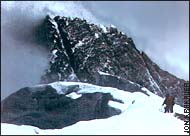 Straddling the top of the world, one foot in Tibet and the other in Nepal, I cleared the ice from my oxygen mask, hunched a shoulder against the wind, and stared absently at the vast sweep of earth below. I understood on some dim, detached level that it was a spectacular sight. I'd been fantasizing about this moment, and the release of emotion that would accompany it, for many months. But now that I was finally here, standing on the summit of Mount Everest, I just couldn't summon the energy to care. It was the afternoon of May 10. I hadn't slept in 57 hours. The only food I'd been able to force down over the preceding three days was a bowl of Ramen soup and a handful of peanut M&M;'s. Weeks of violent coughing had left me with two separated ribs, making it excruciatingly painful to breathe. Twenty-nine thousand twenty-eight feet up in the troposphere, there was so little oxygen reaching my brain that my mental capacity was that of a slow child. Under the circumstances, I was incapable of feeling much of anything except cold and tired. I'd arrived on the summit a few minutes after Anatoli Boukreev, a Russian guide with an American expedition, and just ahead of Andy Harris, a guide with the New Zealand-based commercial team that I was a part of and someone with whom I'd grown to be friends during the last six weeks. I snapped four quick photos of Harris and Boukreev striking summit poses, and then turned and started down. My watch read 1:17 P.M. All told, I'd spent less than five minutes on the roof of the world. After a few steps, I paused to take another photo, this one looking down the Southeast Ridge, the route we had ascended. Training my lens on a pair of climbers approaching the summit, I saw something that until that moment had escaped my attention. To the south, where the sky had been perfectly clear just an hour earlier, a blanket of clouds now hid Pumori, Ama Dablam, and the other lesser peaks surrounding Everest. Days later—after six bodies had been found, after a search for two others had been abandoned, after surgeons had amputated the gangrenous right hand of my teammate Beck Weathers—people would ask why, if the weather had begun to deteriorate, had climbers on the upper mountain not heeded the signs? Why did veteran Himalayan guides keep moving upward, leading a gaggle of amateurs, each of whom had paid as much as $65,000 to be ushered safely up Everest, into an apparent death trap? Nobody can speak for the leaders of the two guided groups involved, for both men are now dead. But I can attest that nothing I saw early on the afternoon of May 10 suggested that a murderous storm was about to bear down on us. To my oxygen-depleted mind, the clouds drifting up the grand valley of ice known as the Western Cwm looked innocuous, wispy, insubstantial. Gleaming in the brilliant midday sun, they appeared no different than the harmless puffs of convection condensation that rose from the valley almost daily. As I began my descent, I was indeed anxious, but my concern had little to do with the weather. A check of the gauge on my oxygen tank had revealed that it was almost empty. I needed to get down, fast. The uppermost shank of the Southeast Ridge is a slender, heavily corniced fin of rock and wind-scoured snow that snakes for a quarter-mile toward a secondary pinnacle known as the South Summit. Negotiating the serrated ridge presents few great technical hurdles, but the route is dreadfully exposed. After 15 minutes of cautious shuffling over a 7,000-foot abyss, I arrived at the notorious Hillary Step, a pronounced notch in the ridge named after Sir Edmund Hillary, the first Westerner to climb the mountain, and a spot that does require a fair amount of technical maneuvering. As I clipped into a fixed rope and prepared to rappel over the lip, I was greeted by an alarming sight. Thirty feet below, some 20 people were queued up at the base of the Step, and three climbers were hauling themselves up the rope that I was attempting to descend. I had no choice but to unclip from the line and step aside. The traffic jam comprised climbers from three separate expeditions: the team I belonged to, a group of paying clients under the leadership of the celebrated New Zealand guide Rob Hall; another guided party headed by American Scott Fischer; and a nonguided team from Taiwan. Moving at the snail's pace that is the norm above 8,000 meters, the throng labored up the Hillary Step one by one, while I nervously bided my time. Harris, who left the summit shortly after I did, soon pulled up behind me. Wanting to conserve whatever oxygen remained in my tank, I asked him to reach inside my backpack and turn off the valve on my regulator, which he did. For the next ten minutes I felt surprisingly good. My head cleared. I actually seemed less tired than with the gas turned on. Then, abruptly, I felt like I was suffocating. My vision dimmed and my head began to spin. I was on the brink of losing consciousness. Instead of turning my oxygen off, Harris, in his hypoxically impaired state, had mistakenly cranked the valve open to full flow, draining the tank. I'd just squandered the last of my gas going nowhere. There was another tank waiting for me at the South Summit, 250 feet below, but to get there I would have to descend the most exposed terrain on the entire route without benefit of supplemental oxygen. But first I had to wait for the crowd to thin. I removed my now useless mask, planted my ice ax into the mountain's frozen hide, and hunkered on the ridge crest. As I exchanged banal congratulations with the climbers filing past, inwardly I was frantic: "Hurry it up, hurry it up!" I silently pleaded. "While you guys are screwing around here, I'm losing brain cells by the millions!" Most of the passing crowd belonged to Fischer's group, but near the back of the parade two of my teammates eventually appeared: Hall and Yasuko Namba. Girlish and reserved, the 47-year-old Namba was 40 minutes away from becoming the oldest woman to climb Everest and the second Japanese woman to reach the highest point on each continent, the so-called Seven Summits. Later still, Doug Hansen—another member of our expedition, a postal worker from Seattle who had become my closest friend on the mountain-arrived atop the Step. "It's in the bag!" I yelled over the wind, trying to sound more upbeat than I felt. Plainly exhausted, Doug mumbled something from behind his oxygen mask that I didn't catch, shook my hand weakly, and continued plodding upward. The last climber up the rope was Fischer, whom I knew casually from Seattle, where we both lived. His strength and drive were legendary—in 1994 he'd climbed Everest without using bottled oxygen—so I was surprised at how slowly he was moving and how hammered he looked when he pulled his mask aside to say hello. "Bruuuuuuce!" he wheezed with forced cheer, employing his trademark, fratboyish greeting. When I asked how he was doing, Fischer insisted he was feeling fine: "Just dragging ass a little today for some reason. No big deal." With the Hillary Step finally clear, I clipped into the strand of orange rope, swung quickly around Fischer as he slumped over his ice ax, and rappelled over the edge. It was after 2:30 when I made it down to the South Summit. By now tendrils of mist were wrapping across the top of 27,890-foot Lhotse and lapping at Everest's summit pyramid. No longer did the weather look so benign. I grabbed a fresh oxygen cylinder, jammed it onto my regulator, and hurried down into the gathering cloud. Moments after I dropped below the South Summit, it began to snow lightly and the visibility went to hell. Four hundred vertical feet above, where the summit was still washed in bright sunlight under an immaculate cobalt sky, my compadres were dallying, memorializing their arrival at the apex of the planet with photos and high-fives-and using up precious ticks of the clock. None of them imagined that a horrible ordeal was drawing nigh. None of them suspected that by the end of that long day, every minute would matter. In May of 1963, when I was nine years old, Tom Hornbein and Willi Unsoeld made the first ascent of Everest's daunting West Ridge, one of the great feats in the annals of mountaineering. Late in the day on their summit push, they climbed a stratum of steep, crumbly limestone—the infamous Yellow Band—that they didn't think they'd be able to descend. Their best shot for getting off the mountain alive, they reckoned, was to go over the top and down the Southeast Ridge, an extremely audacious plan, given the late hour and the unknown terrain. Reaching the summit at sunset, they were forced to spend the night in the open above 28,000 feet—at the time, the highest bivouac in history—and to descend the Southeast Ridge the next morning. That night cost Unsoeld his toes, but the two survived to tell their tale. Unsoeld, who hailed from my hometown in Oregon, was a close friend of my father's. I climbed my first mountain in the company of my dad, Unsoeld, and his oldest son, Regon, a few months before Unsoeld departed for Nepal. Not surprisingly, accounts of the 1963 Everest epic resonated loud and long in my preadolescent imagination. While my friends idolized John Glenn, Sandy Koufax, and Johnny Unitas, my heroes were Hornbein and Unsoeld. Secretly, I dreamed of climbing Everest myself one day; for more than a decade it remained a burning ambition. It wasn't until my midtwenties that I abandoned the dream as a preposterous boyhood fantasy. Soon thereafter I began to look down my nose at the world's tallest mountain. It had become fashionable among alpine cognoscenti to denigrate Everest as a "slag heap," a peak lacking sufficient technical challenge or aesthetic appeal to be a worthy objective for a "serious" climber, which I desperately aspired to be. Such snobbery was rooted in the fact that by the early 1980s, Everest's easiest line—the South Col/Southeast Ridge, or the so-called Yak Route—had been climbed more than a hundred times. Then, in 1985, the floodgates were flung wide open when Dick Bass, a wealthy 55-year-old Texan with limited climbing experience, was ushered to the top of Everest by an extraordinary young climber named David Breashears. In bagging Everest, Bass became the first person to ascend all of the so-called Seven Summits, a feat that earned him worldwide renown and spurred a swarm of other amateur climbers to follow in his guided bootprints. "To aging Walter Mitty types like myself, Dick Bass was an inspiration," Seaborn Beck Weathers explained during the trek to Everest Base Camp last April. A 49-year-old Dallas pathologist, Weathers was one of eight paying clients on my expedition. "Bass showed that Everest was within the realm of possibility for regular guys. Assuming you're reasonably fit and have some disposable income, I think the biggest obstacle is probably taking time off from your job and leaving your family for two months." For a great many climbers, the record shows, stealing time away from the daily grind has not been an insurmountable obstacle, nor has the hefty outlay of cash. Over the past half-decade, the traffic on all of the Seven Summits, and especially Everest, has grown at an astonishing rate. And to meet demand, the number of commercial enterprises peddling guided ascents of these mountains has multiplied correspondingly. In the spring of 1996, 30 separate expeditions were on the flanks of Everest, at least eight of them organized as moneymaking ventures. Even before last season's calamitous outcome, the proliferation of commercial expeditions was a touchy issue. Traditionalists were offended that the world's highest summit was being sold to rich parvenus who, if denied the services of guides, would have difficulty making it to the top of a peak as modest as Mount Rainier. Everest, the purists sniffed, had been debased and profaned. Such critics also point out that, thanks to the commercialization of Everest, the once hallowed peak has now even been dragged into the swamp of American jurisprudence. Having paid princely sums to be escorted up Everest, some climbers have then sued their guides after the summit eluded them. "Occasionally you'll get a client who thinks he's bought a guaranteed ticket to the summit," laments Peter Athans, a highly respected guide who's made 11 trips to Everest and reached the top four times. "Some people don't understand that an Everest expedition can't be run like a Swiss train." Sadly, not every Everest lawsuit is unwarranted. Inept or disreputable companies have on more than one occasion failed to deliver crucial logistical support—oxygen, for instance—as promised. On some expeditions guides have gone to the summit without any of their clients, prompting the bitter clients to conclude that they were brought along simply to pick up the tab. In 1995, the leader of one commercial expedition absconded with tens of thousands of dollars of his clients' money before the trip even got off the ground. To a certain degree, climbers shopping for an Everest expedition get what they pay for. Expeditions on the northern, Tibetan side of the mountain are considerably cheaper—the going rate there is $20,000 to $40,000 per person—than those on the south, in part because China charges much less for climbing permits than does Nepal. But there's a trade-off: Until 1995, no guided client had ever reached the summit from Tibet. This year, Hall charged $65,000 a head, not including airfare or personal equipment, to take people up the South Col/Southeast Ridge route. Although no commercial guide service charged more, Hall, a lanky 35-year-old with a biting Kiwi wit, had no difficulty booking clients, thanks to his phenomenal success rate: He'd put 39 climbers on the summit between 1990 and 1995, which meant that he was responsible for three more ascents than had been made in the first 20 years after Hillary's inaugural climb. Despite the disdain I'd expressed for Everest over the years, when the call came to join Hall's expedition, I said yes without even hesitating to catch my breath. Boyhood dreams die hard, I discovered, and good sense be damned. On April 10, after ten days of hiking through the steep, walled canyons and rhododendron forests of northern Nepal, I walked into Everest Base Camp. My altimeter read 17,600 feet. Situated at the entrance to a magnificent natural amphitheater formed by Everest and its two sisters, Lhotse and Nuptse, was a small city of tents sheltering 240 climbers and Sherpas from 14 expeditions, all of it sprawled across a bend in the Khumbu Glacier. The escarpments above camp were draped with hanging glaciers, from which calved immense serac avalanches that thundered down at all hours of the day and night. Hard to the east, pinched between the Nuptse wall and the West Shoulder of Everest, the Khumbu Icefall spilled to within a quarter-mile of the tents in a chaos of pale blue shards. In stark contrast to the harsh qualities of the environment stood our campsite and all its creature comforts, including a 19-person staff. Our mess tent, a cavernous canvas structure, was wired with a stereo system and solar-powered electric lights; an adjacent communications tent housed a satellite phone and fax. There was a hot shower. A cook boy came to each client's tent in the mornings to serve us steaming mugs of tea in our sleeping bags. Fresh bread and vegetables arrived every few days on the backs of yaks. In many ways, Rob Hall's Adventure Consultants site served as a sort of town hall for Base Camp, largely because nobody on the mountain was more respected than Hall, who was on Everest for his eighth time. Whenever there was a problem—a labor dispute with the Sherpas, a medical emergency, a critical decision about climbing strategy—people came to him for advice. And Hall, always generous, dispensed his accumulated wisdom freely to the very rivals who were competing with him for clients, most notably Fischer. Fischer's Mountain Madness camp, distinguished by a huge Starbucks Coffee banner that hung from a chunk of granite, was a mere five minutes' walk down the glacier. Fischer and Hall were competitors, but they were also friends, and there was a good deal of socializing between the two teams. His mess tent wasn't as well appointed as ours, but Fischer was always quick to offer a cup of fresh-brewed coffee to any climber or trekker who poked a head inside the door. The 40-year-old Fischer was a strapping, gregarious man with a blond ponytail and manic energy. He'd grown up in New Jersey and had fallen in love with climbing after taking a NOLS course as a 14-year-old. In his formative years, during which he became known for a damn-the-torpedoes style, he'd survived a number of climbing accidents, including twice cratering into the ground from a height of more than 70 feet. Fischer's infectious, seat-of-the-pants approach to his own life was reflected in his improvisational approach to guiding Everest. In striking contrast to Hall—who insisted that his clients climb as a group at all times, under the close watch of his guides—Fischer encouraged his clients to be independent, to move at their own pace, to go wherever they wanted, whenever they wanted. Both men were under considerable pressure this season. The previous year, Hall had for the first time failed to get anybody to the top. Another dry spell would be very bad for business. Meanwhile Fischer, who had climbed the peak without oxygen but had never guided the mountain, was still trying to get established in the Everest business. He needed to get clients to the summit, especially a high-profile one like Sandy Hill Pittman, the Manhattan boulevardier-cum-writer who was filing daily diaries on an NBC World Wide Web site. Despite the many trappings of civilization at Base Camp, there was no forgetting that we were more than three miles above sea level. Walking to the mess tent at mealtime left me wheezing to catch my breath. If I sat up too quickly, my head reeled and vertigo set in. I developed a dry, hacking cough that would steadily worsen over the next six weeks. Cuts and scrapes refused to heal. I was rarely hungry, a sign that my oxygen-deprived stomach had shut down and my body had begun to consume itself for sustenance. My arms and legs gradually began to wither to toothpicks, and by expedition's end I would weigh 25 pounds less than when I left Seattle. Some of my teammates fared even worse than I in the meager air. At least half of them suffered from various intestinal ailments that kept them racing to the latrine. Hansen, 46, who'd paid for the expedition by working at a Seattle-area post office by night and on construction jobs by day, was plagued by an unceasing headache for most of his first week at Base Camp. It felt, as he put it, "like somebody's driven a nail between my eyes." This was Hansen's second time on Everest with Hall. The year before, he'd been forced to turn around 330 vertical feet below the summit because of deep snow and the late hour. "The summit looked sooooo close," Hansen recalled with a painful laugh. "Believe me, there hasn't been a day since that I haven't thought about it." Hansen had been talked into returning this year by Hall, who felt sorry that Hansen had been denied the summit and who had significantly discounted Hansen's fee to entice him to give it another try. A rail-thin man with a leathery, prematurely furrowed face, Hansen was a single father who spent a lot of time in Base Camp writing faxes to his two kids, ages 19 and 27, and to an elementary school in Kent, Washington, that had sold T-shirts to help fund his climb. Hansen bunked in the tent next to mine, and every time a fax would arrive from his daughter, Angie, he'd read it to me, beaming. "Jeez," he'd announce, "how do you suppose a screw-up like me could have raised such a great kid?" As a newcomer to altitude—I'd never been above 17,000 feet—I brooded about how I'd perform higher on the mountain, especially in the so-called Death Zone above 25,000 feet. I'd done some fairly extreme climbs over the years in Alaska, Patagonia, Canada, and the Alps. I'd logged considerably more time on technical rock and ice than most of the other clients and many of the guides. But technical expertise counted for very little on Everest, and I'd spent less time at high altitude—none, to be precise—than virtually every other climber here. By any rational assessment, I was singularly unqualified to attempt the highest mountain in the world. This didn't seem to worry Hall. After seven Everest expeditions he'd fine-tuned a remarkably effective method of acclimatization. In the next six weeks, we would make three trips above Base Camp, climbing about 2,000 feet higher each time. After that, he insisted, our bodies would be sufficiently adapted to the altitude to permit safe passage to the 29,028-foot summit. "It's worked 39 times so far, pal," Hall assured me with a wry grin. Three days after our arrival in Base Camp, we headed out on our first acclimatization sortie, a one-day round-trip to Camp One, perched at the upper lip of the Icefall, 2,000 vertical feet above. No part of the South Col route is more feared than the Icefall, a slowly moving jumble of huge, unstable ice blocks: We were all well aware that it had already killed 19 climbers. As I strapped on my crampons in the frigid predawn gloom, I winced with each creak and rumble from the glacier's shifting depths. Long before we'd even got to Base Camp, our trail had been blazed by Sherpas, who had fixed more than a mile of rope and installed about 60 aluminum ladders over the crevasses that crisscross the shattered glacier. As we shuffled forth, three-quarters of the way to Camp One, Hall remarked glibly that the Icefall was in better shape than he'd ever seen it: "The route's like a bloody freeway this season." But only slightly higher, at about 19,000 feet, the fixed ropes led us beneath and then over a 12-story chunk of ice that leaned precariously off kilter. I hurried to get out from beneath its wobbly tonnage and reach its crest, but my fastest pace was no better than a crawl. Every four or five steps I'd stop, lean against the rope, and suck desperately at the thin, bitter air, searing my lungs. We reached the end of the icefall about four hours after setting out, but the relative safety of Camp One didn't supply much peace of mind: I couldn't stop thinking about the ominously tilted slab and the fact that I would have to pass beneath its frozen bulk at least seven more times if I was going to make it to the top of Everest. Most of the recent debate about Everest has focused on the safety of commercial expeditions. But the least experienced, least qualified climbers on the mountain this past season were not guided clients; rather, they were members of traditionally structured, noncommercial expeditions. While descending the lower Icefall on April 13, I overtook a pair of slower climbers outfitted with unorthodox clothing and gear. Almost immediately it became apparent that they weren't very familiar with the standard tools and techniques of glacier travel. The climber in back repeatedly snagged his crampons and stumbled. Waiting for them to cross a gaping crevasse bridged by two rickety ladders lashed end to end, I was shocked to see them go across together, almost in lockstep, a needlessly dangerous act. An awkward attempt at conversation revealed that they were members of a Taiwanese expedition. The reputation of the Taiwanese had preceded them to Everest. In the spring of 1995, the team had traveled to Alaska to climb Mount McKinley as a shakedown for their attempt on Everest in 1996. Nine climbers reached the summit of McKinley, but seven of them were caught by a storm on the descent, became disoriented, and spent a night in the open at 19,400 feet, initiating a costly, hazardous rescue by the National Park Service. Five of the climbers—two of them with severe frostbite and one dead—were plucked from high on the peak by helicopter. "If we hadn't arrived right when we did, two others would have died, too," says American Conrad Anker, who with his partner Alex Lowe climbed to 19,400 feet to help rescue the Taiwanese. "Earlier, we'd noticed the Taiwanese group because they looked so incompetent. It really wasn't any big surprise when they got into trouble." The leader of the expedition, Ming Ho Gau—a jovial photographer who answers to "Makalu"—had to be assisted down the upper mountain. "As they were bringing him down," Anker recalls, "Makalu was yelling, 'Victory! Victory! We made summit!' to everyone he passed, as if the disaster hadn't even happened." When the survivors of the McKinley debacle showed up on Everest in 1996, Makalu Gau was again their leader. In truth, their presence was a matter of grave concern to just about everyone on the mountain. The fear was that the Taiwanese would suffer a calamity that would compel other expeditions to come to their aid, risking further lives and possibly costing climbers a shot at the summit. Of course, the Taiwanese were by no means the only group that seemed egregiously unqualified. Camped beside us at Base Camp was a 25-year-old Norwegian climber named Petter Neby, who announced his intention to make a solo ascent of the Southwest Face, an outrageously difficult route, despite the fact that his Himalayan experience consisted of two easy ascents of neighboring Island Peak, a 20,270-foot bump. And then there were the South Africans. Lavishly funded, sponsored by a major newspaper, the source of effusive national pride, their team had received a personal blessing from Nelson Mandela prior to their departure. The first South African expedition ever to be granted a permit to climb Everest, they were a mixed-race group that hoped to put the first black person on the summit. They were led by a smooth-talking former military officer named Ian Woodall. When the team arrived in Nepal it included three very strong members, most notably a brilliant climber named Andy de Klerk, who happened to be a good friend of mine. But almost immediately, four members, including de Klerk, defected. "Woodall turned out to be a total control freak," said de Klerk. "And you couldn't trust him. We never knew when he was talking bullshit or telling the truth. We didn't want to put our lives in the hands of a guy like that. So we left." Later de Klerk would learn that Woodall had lied about his climbing record. He'd never climbed anywhere near 8,000 meters, as he claimed. In fact, he hadn't climbed much of anything. Woodall had also allegedly lied about expedition finances and even lied about who was named on the official climbing permit. After Woodall's deceit was made public, it became an international scandal, reported on the front pages of newspapers throughout the Commonwealth. When the editor of the Johannesburg Sunday Times, the expedition's primary sponsor, confronted Woodall in Nepal, Woodall allegedly tried to physically intimidate him and, according to de Klerk, threatened, "I'm going to rip your fucking head off!" In the end, Woodall refused to relinquish leadership and insisted that the climb would proceed as planned. By this point none of the four climbers left on the team had more than minimal alpine experience. At least two of them, says de Klerk, "didn't even know how to put their crampons on." The solo Norwegian, the Taiwanese, and especially the South Africans were frequent topics of discussion around the dinner table in our mess tent. "With so many incompetent people on the mountain," Hall frowned one evening in late April, "I think it's pretty unlikely that we'll get through this without something bad happening." For our third and final acclimatization excursion, we spent four nights at 21,300-foot Camp Two and a night at 24,000-foot Camp Three. Then on May 1 our whole team descended to Base Camp to recoup our strength for the summit push. Much to my surprise, Hall's acclimatization plan seemed to be working: After three weeks, I felt like I was finally adapting to the altitude. The air at Base Camp now seemed deliciously thick. From the beginning, Hall had planned that May 10 would be our summit day. "Of the four times I've summited," he explained, "twice it was on the tenth of May. As the Sherps would put it, the tenth is an 'auspicious' date for me." But there was also a more down-to-earth reason for selecting this date: The annual ebb and flow of the monsoon made it likely that the most favorable weather of the year would fall on or near May 10. For all of April, the jet stream had been trained on Everest like a fire hose, blasting the summit pyramid with nonstop hurricane-force winds. Even on days when Base Camp was perfectly calm and flooded with sunshine, an immense plume of wind-driven snow was visible over the summit. But if all went well, in early May the monsoon approaching from the Bay of Bengal would force the jet stream north into Tibet. If this year was like past years, between the departure of the wind and the arrival of the monsoon storms we would be presented with a brief window of clear, calm weather during which a summit assault would be possible. Unfortunately, the annual weather patterns were no secret, and every expedition had its sights set on the same window. Hoping to avoid dangerous gridlock on the summit ridge, Hall held a powwow in the mess tent with leaders of the expeditions in Base Camp. The council, as it were, determined that Gòran Kropp, a young Swede who had ridden a bicycle all the way to Nepal from Stockholm, would make the first attempt, alone, on May 3. Next would be a team from Montenegro. Then, on May 8 or 9, it would be the turn of the IMAX expedition, headed by David Breashears, which hoped to wrap up a large-format film about Everest with footage from the top. Our team, it was decided, would share a summit date of May 10 with Fischer's group. An American commercial team and two British-led commercial groups promised to steer clear of the top of the mountain on the tenth, as did the Taiwanese. Woodall, however, declared that the South Africans would go to the top whenever they pleased, probably on the tenth, and anyone who didn't like it could "bugger off." Hall, ordinarily extremely slow to rile, flew into a rage over Woodall's refusal to cooperate. "I don't want to be anywhere near the upper mountain when those punters are up there," he seethed. "It feels good to be on our way to the summit, yeah?" Harris inquired as we pulled into Camp Two. The midday sun was reflecting off the walls of Nuptse, Lhotse, and Everest, and the entire ice-coated valley seemed to have been transformed into a huge solar oven. We were finally ascending for real, headed straight toward the top, Harris and me and everybody else. Harris—Harold to his friends—was the junior guide on the expedition and the only one who'd never been to Everest (indeed, he'd never been above 23,000 feet). Built like an NFL quarterback and preternaturally good-natured, he was usually assigned to the slower clients at the back of the pack. For much of the expedition, he had been laid low with intestinal ailments, but he was finally getting his strength back, and he was eager to prove himself to his seasoned colleagues. "I think we're actually gonna knock this big bastard off," he confided to me with a huge smile, staring up at the summit. Harris worked as a much-in-demand heli-skiing guide in the antipodal winter. Summers he guided climbers in New Zealand's Southern Alps and had just launched a promising heli-hiking business. Sipping tea in the mess tent back at Base Camp, he'd shown me a photograph of Fiona McPherson, the pretty, athletic doctor with whom he lived, and described the house they were building together in the hills outside Queenstown. "Yeah," he'd marveled, "it's kind of amazing, really. My life seems to be working out pretty well." Later that day, Kropp, the Swedish soloist, passed Camp Two on his way down the mountain, looking utterly worked. Three days earlier, under clear skies, he'd made it to just below the South Summit and was no more than an hour from the top when he decided to turn around. He had been climbing without supplemental oxygen, the hour had been late—2 P.M., to be exact—and he'd believed that if he'd kept going, he'd have been too tired to descend safely. "To turn around that close to the summit," Hall mused, shaking his head. "That showed incredibly good judgment on young Gòran's part. I'm impressed." Sticking to your predetermined turn-around time—that was the most important rule on the mountain. Over the previous month, Rob had lectured us repeatedly on this point. Our turn-around time, he said, would probably be 1 P.M., and no matter how close we were to the top, we were to abide by it. "With enough determination, any bloody idiot can get up this hill," Hall said. "The trick is to get back down alive." Cheerful and unflappable, Hall's easygoing facade masked an intense desire to succeed—which to him was defined in the fairly simple terms of getting as many clients as possible to the summit. But he also paid careful attention to the details: the health of the Sherpas, the efficiency of the solar-powered electrical system, the sharpness of his clients' crampons. He loved being a guide, and it pained him that some celebrated climbers didn't give his profession the respect he felt it deserved. On May 8 our team and Fischer's team left Camp Two and started climbing the Lhotse Face, a vast sweep of steel-hard ice rising from the head of the Western Cwm. Hall's Camp Three, two-thirds of the way up this wall, was set on a narrow ledge that had been chopped into the face by our Sherpas. It was a spectacularly perilous perch. A hundred feet below, no less exposed, were the tents of most of the other teams, including Fischer's, the South Africans, and the Taiwanese. It was here that we had our first encounter with death on the mountain. At 7:30 A.M. on May 9, as we were pulling on our boots to ascend to Camp Four, a 36-year-old steelworker from Taipei named Chen Yu-Nan crawled out of his tent to relieve himself, with only the smooth-soled liners of his mountaineering boots on his feet—a rather serious lapse of judgment. As he squatted, he lost his footing on the slick ice and went hurtling down the Lhotse Face, coming to rest, head-first, in a crevasse. Sherpas who had seen the incident lowered a rope, pulled him out of the slot, and carried him back to his tent. He was bruised and badly rattled, but otherwise he seemed unharmed. Chen's teammates left him in a tent to recover and departed for Camp Four. That afternoon, as Chen tried to descend to Camp Two with the help of Sherpas, he keeled over and died. Over the preceding six weeks there had been several serious accidents: Tenzing Sherpa, from our team, fell 150 feet into a crevasse and injured a leg seriously enough to require helicopter evacuation from Base Camp. One of Fischer's Sherpas nearly died of a mysterious illness at Camp Two. A young, apparently fit British climber had a serious heart attack near the top of the Icefall. A Dane was struck by a falling serac and broke several ribs. Until now, however, none of the mishaps had been fatal. Chen's death cast a momentary pall over the mountain. But 33 climbers at the South Col would be departing for the summit in a few short hours, and the gloom was quickly shoved aside by nervous anticipation of the challenge to come. Most of us were simply wrapped too tightly in the grip of summit fever to engage in thoughtful reflection about the death of someone in our midst. There would be plenty of time for reflection later, we assumed, after we all had summited—and got back down Climbing with oxygen for the first time, I had reached the South Col, our launching pad for the summit assault, at one o'clock that afternoon. A barren plateau of bulletproof ice and windswept boulders, the Col sits at 26,000 feet above sea level, tucked between the upper ramparts of Lhotse, the world's fourth-highest mountain, and Everest. Roughly rectangular, about four football fields long by two across, the Col is bounded on the east by the Kangshung Face, a 7,000-foot drop-off, and on the west by the 4,000-foot Lhotse Face. It is one of the coldest, most inhospitable places I have ever been. I was the first Western climber to arrive. When I got there, four Sherpas were struggling to erect our tents in a 50-mph wind. I helped them put up my shelter, anchoring it to some discarded oxygen canisters wedged beneath the largest rocks I could lift. Then I dove inside to wait for my teammates. It was nearly 5 P.M. when the last of the group made camp. The final stragglers in Fischer's group came in even later, which didn't augur well for the summit bid, scheduled to begin in six hours. Everyone retreated to their nylon domes the moment they reached the Col and did their best to nap, but the machine-gun rattle of the flapping tents and the anxiety over what was to come made sleep out of the question for most of us. Surrounding me on the plateau were some three dozen people, huddled in tents pitched side by side. Yet an odd sense of isolation hung over the camp. Up here, in this godforsaken place, I felt distressingly disconnected from everyone around me—emotionally, spiritually, physically. We were a team in name only, I'd sadly come to realize. Although we would leave camp in a few hours as a group, we would ascend as individuals, linked to one another by neither rope nor any deep sense of loyalty. Each client was in it for himself or herself, pretty much. And I was no different: I really hoped Doug Hansen would get to the top, for instance, yet if he were to turn around, I knew I would do everything in my power to keep pushing on. In another context this insight would have been depressing, but I was too preoccupied with the weather to dwell on it. If the wind didn't abate, the summit would be out of the question for all of us. At 7 P.M. the gale abruptly ceased. The temperature was 15 below zero, but there was almost no wind. Conditions were excellent; Hall, it appeared, had timed our summit bid perfectly. The tension was palpable as we sipped tea, delivered to us in our tents by Sherpas, and readied our gear. Nobody said much. All of us had suffered greatly to get to this moment. I had eaten little and slept not at all since leaving Camp Two two days earlier. Damage to my thoracic cartilage made each cough feel like a stiff kick between the ribs and brought tears to my eyes. But if I wanted a crack at the summit, I had no choice but to ignore my infirmities as much as possible and climb. Finally, at 11:35, we were away from the tents. I strapped on my oxygen mask and ascended into the darkness. There were 15 of us in Hall's team: guides Hall, Harris, and Mike Groom, an Australian with impressive Himalayan experience; Sherpas Ang Dorje, Lhakpa Chhiri, Nawang Norbu, and Kami; and clients Hansen, Namba, Weathers, Stuart Hutchison (a Canadian doctor), John Taske (an Australian doctor), Lou Kasischke (a lawyer from Michigan), Frank Fischbeck (a publisher from Hong Kong), and me. Fischer's group—guides Fischer, Boukreev, and Neal Beidleman; five Sherpas; and clients Charlotte Fox, Tim Madsen, Klev Schoening, Sandy Pittman, Lene Gammelgaard, and Martin Adams—left the South Col at midnight. Shortly after that, Makalu Gau started up with three Sherpas, ignoring his promise that no Taiwanese would make a summit attempt on May 10. Thankfully, the South Africans had failed to make it to Camp Four and were nowhere in sight. The night had a cold, phantasmal beauty that intensified as we ascended. More stars than I had ever seen smeared the frozen sky. Far to the southeast, enormous thunderheads drifted over Nepal, illuminating the heavens with surreal bursts of orange and blue lightning. A gibbous moon rose over the shoulder of 27,824-foot Makalu, washing the slope beneath my boots in ghostly light, obviating the need for a headlamp. I broke trail throughout the night with Ang Dorje—our sirdar, or head Sherpa—and at 5:30, just as the sun was edging over the horizon, I reached the crest of the Southeast Ridge. Three of the world's five highest peaks stood out in jagged relief against the pastel dawn. My altimeter read 27,500 feet. Hall had instructed us to climb no higher until the whole group gathered at this level roost known as the Balcony, so I sat down on my pack to wait. When Hall and Weathers finally arrived at the back of the herd, I'd been sitting for more than 90 minutes. By now Fischer's group and the Taiwanese team had caught and passed us. I was peeved over wasting so much time and at falling behind everybody else. But I understood Hall's rationale, so I kept quiet and played the part of the obedient client. To my mind, the rewards of climbing come from its emphasis on self-reliance, on making critical decisions and dealing with the consequences, on personal responsibility. When you become a client, I discovered, you give up all that. For safety's sake, the guide always calls the shots. Passivity on the part of the clients had thus been encouraged throughout our expedition. Sherpas put in the route, set up the camps, did the cooking, hauled the loads; we clients seldom carried more than daypacks stuffed with our personal gear. This system conserved our energy and vastly increased our chances of getting to the top, but I found it hugely unsatisfying. I felt at times as if I wasn't really climbing the mountain—that surrogates were doing it for me. Although I had willingly accepted this role in order to climb Everest, I never got used to it. And I was happy as hell when, at 7:10 A.M., Hall gave me the OK to continue climbing. One of the first people I passed when I started moving again was Fischer's sirdar, Lobsang Jangbu, kneeling in the snow over a pile of vomit. Both Lobsang and Boukreev had asked and been granted permission by Fischer to climb without supplemental oxygen, a highly questionable decision that significantly affected the performance of both men, but especially Lobsang. His feeble state, moreover, had been compounded by his insistence on "short-roping" Pittman on summit day. Lobsang, 25, was a gifted high-altitude climber who'd summited Everest twice before without oxygen. Sporting a long black ponytail and a gold tooth, he was flashy, self-assured, and very appealing to the clients, not to mention crucial to their summit hopes. As Fischer's head Sherpa, he was expected to be at the front of the group this morning, putting in the route. But just before daybreak, I'd looked down to see Lobsang hitched to Pittman by her three-foot safety tether; the Sherpa, huffing and puffing loudly, was hauling the assertive New Yorker up the steep slope like a horse pulling a plow. Pittman was on a widely publicized quest to ascend Everest and thereby complete the Seven Summits. She'd failed to make it to the top on two previous expeditions; this time she was determined to succeed. Fischer knew that Lobsang was short-roping Pittman, yet did nothing to stop it; some people have thus concluded that Fischer ordered Lobsang to do it, because Pittman had been moving slowly when she started out on summit day, and Fischer worried that if Pittman failed to reach the summit, he would be denied a marketing bonanza. But two other clients on Fischer's team speculate that Lobsang was short-roping her because she'd promised him a hefty cash bonus if she reached the top. Pittman has denied this and insists that she was hauled up against her wishes. Which begs a question: Why didn't she unfasten the tether, which would have required nothing more than reaching up and unclipping a single carabiner? "I have no idea why Lobsang was short-roping Sandy," confesses Beidleman. "He lost sight of what he was supposed to be doing up there, what the priorities were." It didn't seem like a particularly serious mistake at the time. A little thing. But it was one of many little things-accruing slowly, compounding imperceptibly, building steadily toward critical mass. A human plucked from sea level and dropped on the summit of Everest would lose consciousness within minutes and quickly die. A well-acclimatized climber can function at that altitude with supplemental oxygen—but not well, and not for long. The body becomes far more vulnerable to pulmonary and cerebral edema, hypothermia, frostbite. Each member of our team was carrying two orange, seven-pound oxygen bottles. A third bottle would be waiting for each of us at the South Summit on our descent, stashed there by Sherpas. At a conservative flow rate of two liters per minute, each bottle would last between five and six hours. By 4 or 5 P.M., about 18 hours after starting to climb, everyone's gas would be gone. Hall understood this well. The fact that nobody had summited this season prior to our attempt concerned him, because it meant that no fixed ropes had been installed on the upper Southeast Ridge, the most exposed part of the climb. To solve this problem, Hall and Fischer had agreed before leaving Base Camp that on summit day the two sirdars—Ang Dorje from Hall's team and Lobsang from Fischer's—would leave Camp Four 90 minutes ahead of everybody else and put in the fixed lines before any clients reached the upper mountain. "Rob made it very clear how important it was to do this," recalls Beidleman. "He wanted to avoid a bottleneck at all costs." For some reason, however, the Sherpas hadn't set out ahead of us on the night of May 9. When Ang Dorje and I reached the Balcony, we were an hour in front of the rest of the group, and we could have easily moved on and installed the ropes. But Hall had explicitly forbidden me to go ahead, and Lobsang was still far below, short-roping Pittman. There was nobody to accompany Ang Dorje. A quiet, moody young man who regarded Lobsang as a showboat and a goldbrick, Ang Dorje had been working extremely hard, well beyond the call of duty, for six long weeks. Now he was tired of doing more than his share. If Lobsang wasn't going to fix ropes, neither was he. Looking sullen, Ang Dorje sat down with me to wait. Sure enough, not long after everybody caught up with us and we continued climbing up, a bottleneck occurred when our group encountered a series of giant rock steps at 28,000 feet. Clients huddled at the base of this obstacle for nearly an hour while Beidleman, standing in for the absent Lobsang, laboriously ran the rope out. Here, the impatience and technical inexperience of Namba nearly caused a disaster. A businesswoman who liked to joke that her husband did all the cooking and cleaning, Namba had become famous back in Japan for her Seven Summits globe-trotting, and her quest for Everest had turned into a minor cause c‹lŠbre. She was usually a slow, tentative climber, but today, with the summit squarely in her sights, she seemed energized as never before. She'd been pushing hard all morning, jostling her way toward the front of the line. Now, as Beidleman clung precariously to the rock 100 feet above, the overeager Namba clamped her ascender onto the dangling rope before the guide had anchored his end of it. Just as she was about to put her full body weight on the rope—which would have pulled Beidleman off—guide Mike Groom intervened and gently scolded her. The line continued to grow longer, and so did the delay. By 11:30 A.M., three of Hall's clients—Hutchison, Taske, and Kasischke—had become worried about the lagging pace. Stuck behind the sluggish Taiwanese team, Hutchison now says, "It seemed increasingly unlikely that we would have any chance of summiting before the 1 P.M. turn-around time dictated by Rob." After a brief discussion, they turned their back on the summit and headed down with Kami and Lhakpa Chhiri. Earlier, Fischbeck, one of Hall's strongest clients, had also turned around. The decision must have been supremely difficult for at least some of these men, especially Fischbeck, for whom this was a fourth attempt on Everest. They'd each spent as much as $70,000 to be up here and had endured weeks of misery. All were driven, unaccustomed to losing and even less to quitting. And yet, faced with a tough decision, they were among the few who made the right one that day. There was a second, even worse, bottleneck at the South Summit, which I reached at about 11 A.M. The Hillary Step was just a stone's throw away, and slightly beyond that was the summit itself. Rendered dumb with awe and exhaustion, I took some photos and sat down with Harris, Beidleman, and Boukreev to wait for the Sherpas to fix ropes along the spectacularly corniced summit ridge. A stiff breeze raked the ridge crest, blowing a plume of spindrift into Tibet, but overhead the sky was an achingly brilliant blue. Lounging in the sun at 28,700 feet inside my thick down suit, gazing across the Himalayas in a hypoxic stupor, I completely lost track of time. Nobody paid much attention to the fact that Ang Dorje and Nawang Norbu were sharing a thermos of tea beside us and seemed to be in no hurry to go higher. Around noon, Beidleman finally asked, "Hey, Ang Dorje, are you going to fix the ropes, or what?" Ang Dorje's reply was a quick, unequivocal "No"—perhaps because neither Lobsang nor any of Fischer's other Sherpas was there to share the work. Shocked into doing the job ourselves, Beidleman, Boukreev, Harris, and I collected all the remaining rope, and Beidleman and Boukreev started stringing it along the most dangerous sections of the summit ridge. But by then more than an hour had trickled away. Bottled oxygen does not make the top of Everest feel like sea level. Ascending above the South Summit with my regulator delivering two liters of oxygen per minute, I had to stop and draw three or four heaving lungfuls of air after each ponderous step. The systems we were using delivered a lean mix of compressed oxygen and ambient air that made 29,000 feet feel like 26,000 feet. But they did confer other benefits that weren't so easily quantified, not the least of which was keeping hypothermia and frostbite at bay. If that was indeed the case, it meant that in the wee hours of the morning Hall and Hansen were still struggling from the Hillary Step toward the South Summit, taking more than 12 hours to traverse a stretch of ridge typically covered by descending climbers in half an hour. Hall's next call to Base Camp was at 4:43 A.M. He'd finally reached the South Summit but was unable to descend farther, and in a series of transmissions over the next two hours he sounded confused and irrational. "Harold was with me last night," Hall insisted, when in fact Harris had reached the South Col at sunset. "But he doesn't seem to be with me now. He was very weak." Mackenzie asked him how Hansen was doing. "Doug," Hall replied, "is gone." That was all he said, and it was the last mention he ever made of Hansen. He turned his attention to Weathers, who lay 20 feet away. His face was also caked with a thick armor of frost. Balls of ice the size of grapes were matted to his hair and eyelids. After clearing the frozen detritus from his face, Hutchison discovered that he, too, was still alive: "Beck was mumbling something, I think, but I couldn't tell what he was trying to say. His right glove was missing and he had terrible frostbite. He was as close to death as a person can be and still be breathing." Badly shaken, Hutchison went over to the Sherpas and asked Lhakpa Chhiri's advice. Lhakpa Chhiri, an Everest veteran respected by Sherpas and sahibs alike for his mountain savvy, urged Hutchison to leave Weathers and Namba where they lay. Even if they survived long enough to be dragged back to Camp Four, they would certainly die before they could be carried down to Base Camp, and attempting a rescue would needlessly jeopardize the lives of the other climbers on the Col, most of whom were going to have enough trouble getting themselves down safely. Shocked by the death toll, people have been quick to suggest policies and procedures intended to ensure that the catastrophes of this season won't be repeated. But guiding Everest is a very loosely regulated business, administered by a byzantine Third World bureaucracy that is spectacularly ill-equipped to assess qualifications of guides or clients, in a nation that has a vested interest in issuing as many climbing permits as the market will support. Truth be told, a little education is probably the most that can be hoped for. Everest would without question be safer if prospective clients truly understood the gravity of the risks they face—the thinness of the margin by which human life is sustained above 25,000 feet. Walter Mittys with Everest dreams need to keep in mind that when things go wrong up in the Death Zone—and sooner or later they always do—the strongest guides in the world may be powerless to save their clients' lives. Indeed, as the events of 1996 demonstrated, the strongest guides in the world are sometimes powerless to save even their own lives. Climbing mountains will never be a safe, predictable, rule-bound enterprise. It is an activity that idealizes risk-taking; its most celebrated figures have always been those who stuck their necks out the farthest and managed to get away with it. Climbers, as a species, are simply not distinguished by an excess of common sense. And that holds especially true for Everest climbers: When presented with a chance to reach the planet's highest summit, people are surprisingly quick to abandon prudence altogether. "Eventually," warns Tom Hornbein, 33 years after his ascent of the West Ridge, "what happened on Everest this season is certain to happen again." For evidence that few lessons were learned from the mistakes of May 10, one need look no farther than what happened on Everest two weeks later. On the night of May 24, by which date every other expedition had left Base Camp or was on its way down the mountain, the South Africans finally launched their summit bid. At 9:30 the following morning, Ian Woodall radioed that he was on the summit, that teammate Cathy O'Dowd would be on top in 15 minutes, and that his close friend Bruce Herrod was some unknown distance below. Herrod, whom I'd met several times on the mountain, was an amiable 37-year-old with little climbing experience. A freelance photographer, he hoped that making the summit of Everest would give his career a badly needed boost. As it turned out, Herrod was more than seven hours behind the others and didn't reach the summit until 5 P.M., by which time the upper mountain had clouded over. It had taken him 21 hours to climb from the South Col to the top. With darkness fast approaching, he was out of oxygen, physically drained, and completely alone on the roof of the world. "That he was up there that late, with nobody else around, was crazy," says his former teammate, Andy de Klerk "It's absolutely boggling." Herrod had been on the South Col from the evening of May 10 through May 12. He'd felt the ferocity of that storm, heard the desperate radio calls for help, seen Beck Weathers crippled with horrible frostbite. Early on his ascent of May 24-25, Herrod had climbed right past the frozen body of Scott Fischer. Yet none of that apparently made much of an impression on him. There was another radio transmission from Herrod at 7 P.M., but nothing was heard from him after that, and he never appeared at Camp Four. He is presumed to be dead—the 11th casualty of the season. As I write this, 54 days have passed since I stood on top of Everest, and there hasn't been more than an hour or two on any given day in which the loss of my companions hasn't monopolized my thoughts. Not even in sleep is there respite: Imagery from the climb and its sad aftermath permeates my dreams. There is some comfort, I suppose, in knowing that I'm not the only survivor of Everest to be so affected. A teammate of mine from Hall's expedition tells me that since he returned, his marriage has gone bad, he can't concentrate at work, his life has been in turmoil. In another case, Neal Beidleman helped save the lives of five clients by guiding them down the mountain, yet he is haunted by a death he was unable to prevent, of a client who wasn't on his team and thus wasn't really his responsibility. When I spoke to Beidleman recently, he recalled what it felt like to be out on the South Col, huddling with his group in the awful wind, trying desperately to keep everyone alive. He'd told and retold the story a hundred times, but it was still as vivid as the initial telling. "As soon as the sky cleared enough to give us an idea of where camp was," he recounted, "I remember shouting, 'Hey, this break in the storm may not last long, so let's go!' I was screaming at everyone to get moving, but it became clear that some of them didn't have enough strength to walk or even stand. "People were crying. I heard someone yell, 'Don't let me die here!' It was obvious that it was now or never. I tried to get Yasuko on her feet. She grabbed my arm, but she was too weak to get up past her knees. I started walking and dragged her for a step or two. Then her grip loosened and she fell away. I had to keep going. Somebody had to make it to the tents and get help, or everybody was going to die." Beidleman paused. "But I can't help thinking about Yasuko," he said when he resumed, his voice hushed. "She was so little. I can still feel her fingers sliding across my biceps and then letting go. I never even turned to look back |
| json metadata | {"tags":["life","photography","art","bitcoin","cryptocurrency"],"image":["https://steemitimages.com/DQmbnoTpF6a16eDebcAwmQR3DxYe8bJefJN4dCcctRr4Pcz/storm_summit.jpg"],"app":"steemit/0.1","format":"markdown"} |
| Transaction Info | Block #16504216/Trx d429a6d012b16c97e01a8f44b5dada86c573d036 |
View Raw JSON Data
{
"trx_id": "d429a6d012b16c97e01a8f44b5dada86c573d036",
"block": 16504216,
"trx_in_block": 2,
"op_in_trx": 0,
"virtual_op": 0,
"timestamp": "2017-10-20T20:05:18",
"op": [
"comment",
{
"parent_author": "",
"parent_permlink": "life",
"author": "fredom",
"permlink": "true-everest-into-thin-air-by-jon-krakauer",
"title": "True Everest Into Thin Air by Jon Krakauer",
"body": "Everest deals with trespassers harshly: the dead vanish beneath the snows. While the living struggle to explain what happened. And why. A survivor of the mountain's worst disaster examines the business of Mount Everest and the steep price of ambition\n\n\n\nStraddling the top of the world, one foot in Tibet and the other in Nepal, I cleared the ice from my oxygen mask, hunched a shoulder against the wind, and stared absently at the vast sweep of earth below. I understood on some dim, detached level that it was a spectacular sight. I'd been fantasizing about this moment, and the release of emotion that would accompany it, for many months. But now that I was finally here, standing on the summit of Mount Everest, I just couldn't summon the energy to care.\n\nIt was the afternoon of May 10. I hadn't slept in 57 hours. The only food I'd been able to force down over the preceding three days was a bowl of Ramen soup and a handful of peanut M&M;'s. Weeks of violent coughing had left me with two separated ribs, making it excruciatingly painful to breathe. Twenty-nine thousand twenty-eight feet up in the troposphere, there was so little oxygen reaching my brain that my mental capacity was that of a slow child. Under the circumstances, I was incapable of feeling much of anything except cold and tired.\n\nI'd arrived on the summit a few minutes after Anatoli Boukreev, a Russian guide with an American expedition, and just ahead of Andy Harris, a guide with the New Zealand-based commercial team that I was a part of and someone with whom I'd grown to be friends during the last six weeks. I snapped four quick photos of Harris and Boukreev striking summit poses, and then turned and started down. My watch read 1:17 P.M. All told, I'd spent less than five minutes on the roof of the world.\n\nAfter a few steps, I paused to take another photo, this one looking down the Southeast Ridge, the route we had ascended. Training my lens on a pair of climbers approaching the summit, I saw something that until that moment had escaped my attention. To the south, where the sky had been perfectly clear just an hour earlier, a blanket of clouds now hid Pumori, Ama Dablam, and the other lesser peaks surrounding Everest.\n\nDays later—after six bodies had been found, after a search for two others had been abandoned, after surgeons had amputated the gangrenous right hand of my teammate Beck Weathers—people would ask why, if the weather had begun to deteriorate, had climbers on the upper mountain not heeded the signs? Why did veteran Himalayan guides keep moving upward, leading a gaggle of amateurs, each of whom had paid as much as $65,000 to be ushered safely up Everest, into an apparent death trap?\n\nNobody can speak for the leaders of the two guided groups involved, for both men are now dead. But I can attest that nothing I saw early on the afternoon of May 10 suggested that a murderous storm was about to bear down on us. To my oxygen-depleted mind, the clouds drifting up the grand valley of ice known as the Western Cwm looked innocuous, wispy, insubstantial. Gleaming in the brilliant midday sun, they appeared no different than the harmless puffs of convection condensation that rose from the valley almost daily. As I began my descent, I was indeed anxious, but my concern had little to do with the weather. A check of the gauge on my oxygen tank had revealed that it was almost empty. I needed to get down, fast.\n\nThe uppermost shank of the Southeast Ridge is a slender, heavily corniced fin of rock and wind-scoured snow that snakes for a quarter-mile toward a secondary pinnacle known as the South Summit. Negotiating the serrated ridge presents few great technical hurdles, but the route is dreadfully exposed. After 15 minutes of cautious shuffling over a 7,000-foot abyss, I arrived at the notorious Hillary Step, a pronounced notch in the ridge named after Sir Edmund Hillary, the first Westerner to climb the mountain, and a spot that does require a fair amount of technical maneuvering. As I clipped into a fixed rope and prepared to rappel over the lip, I was greeted by an alarming sight.\n\nThirty feet below, some 20 people were queued up at the base of the Step, and three climbers were hauling themselves up the rope that I was attempting to descend. I had no choice but to unclip from the line and step aside.\n\nThe traffic jam comprised climbers from three separate expeditions: the team I belonged to, a group of paying clients under the leadership of the celebrated New Zealand guide Rob Hall; another guided party headed by American Scott Fischer; and a nonguided team from Taiwan. Moving at the snail's pace that is the norm above 8,000 meters, the throng labored up the Hillary Step one by one, while I nervously bided my time.\n\nHarris, who left the summit shortly after I did, soon pulled up behind me. Wanting to conserve whatever oxygen remained in my tank, I asked him to reach inside my backpack and turn off the valve on my regulator, which he did. For the next ten minutes I felt surprisingly good. My head cleared. I actually seemed less tired than with the gas turned on. Then, abruptly, I felt like I was suffocating. My vision dimmed and my head began to spin. I was on the brink of losing consciousness.\n\nInstead of turning my oxygen off, Harris, in his hypoxically impaired state, had mistakenly cranked the valve open to full flow, draining the tank. I'd just squandered the last of my gas going nowhere. There was another tank waiting for me at the South Summit, 250 feet below, but to get there I would have to descend the most exposed terrain on the entire route without benefit of supplemental oxygen.\n\nBut first I had to wait for the crowd to thin. I removed my now useless mask, planted my ice ax into the mountain's frozen hide, and hunkered on the ridge crest. As I exchanged banal congratulations with the climbers filing past, inwardly I was frantic: \"Hurry it up, hurry it up!\" I silently pleaded. \"While you guys are screwing around here, I'm losing brain cells by the millions!\"\n\nMost of the passing crowd belonged to Fischer's group, but near the back of the parade two of my teammates eventually appeared: Hall and Yasuko Namba. Girlish and reserved, the 47-year-old Namba was 40 minutes away from becoming the oldest woman to climb Everest and the second Japanese woman to reach the highest point on each continent, the so-called Seven Summits.\n\nLater still, Doug Hansen—another member of our expedition, a postal worker from Seattle who had become my closest friend on the mountain-arrived atop the Step. \"It's in the bag!\" I yelled over the wind, trying to sound more upbeat than I felt. Plainly exhausted, Doug mumbled something from behind his oxygen mask that I didn't catch, shook my hand weakly, and continued plodding upward.\n\nThe last climber up the rope was Fischer, whom I knew casually from Seattle, where we both lived. His strength and drive were legendary—in 1994 he'd climbed Everest without using bottled oxygen—so I was surprised at how slowly he was moving and how hammered he looked when he pulled his mask aside to say hello. \"Bruuuuuuce!\" he wheezed with forced cheer, employing his trademark, fratboyish greeting. When I asked how he was doing, Fischer insisted he was feeling fine: \"Just dragging ass a little today for some reason. No big deal.\" With the Hillary Step finally clear, I clipped into the strand of orange rope, swung quickly around Fischer as he slumped over his ice ax, and rappelled over the edge.\n\nIt was after 2:30 when I made it down to the South Summit. By now tendrils of mist were wrapping across the top of 27,890-foot Lhotse and lapping at Everest's summit pyramid. No longer did the weather look so benign. I grabbed a fresh oxygen cylinder, jammed it onto my regulator, and hurried down into the gathering cloud. Moments after I dropped below the South Summit, it began to snow lightly and the visibility went to hell.\n\nFour hundred vertical feet above, where the summit was still washed in bright sunlight under an immaculate cobalt sky, my compadres were dallying, memorializing their arrival at the apex of the planet with photos and high-fives-and using up precious ticks of the clock. None of them imagined that a horrible ordeal was drawing nigh. None of them suspected that by the end of that long day, every minute would matter.\n\nIn May of 1963, when I was nine years old, Tom Hornbein and Willi Unsoeld made the first ascent of Everest's daunting West Ridge, one of the great feats in the annals of mountaineering. Late in the day on their summit push, they climbed a stratum of steep, crumbly limestone—the infamous Yellow Band—that they didn't think they'd be able to descend. Their best shot for getting off the mountain alive, they reckoned, was to go over the top and down the Southeast Ridge, an extremely audacious plan, given the late hour and the unknown terrain. Reaching the summit at sunset, they were forced to spend the night in the open above 28,000 feet—at the time, the highest bivouac in history—and to descend the Southeast Ridge the next morning. That night cost Unsoeld his toes, but the two survived to tell their tale.\n\nUnsoeld, who hailed from my hometown in Oregon, was a close friend of my father's. I climbed my first mountain in the company of my dad, Unsoeld, and his oldest son, Regon, a few months before Unsoeld departed for Nepal. Not surprisingly, accounts of the 1963 Everest epic resonated loud and long in my preadolescent imagination. While my friends idolized John Glenn, Sandy Koufax, and Johnny Unitas, my heroes were Hornbein and Unsoeld.\n\nSecretly, I dreamed of climbing Everest myself one day; for more than a decade it remained a burning ambition. It wasn't until my midtwenties that I abandoned the dream as a preposterous boyhood fantasy. Soon thereafter I began to look down my nose at the world's tallest mountain. It had become fashionable among alpine cognoscenti to denigrate Everest as a \"slag heap,\" a peak lacking sufficient technical challenge or aesthetic appeal to be a worthy objective for a \"serious\" climber, which I desperately aspired to be.\n\nSuch snobbery was rooted in the fact that by the early 1980s, Everest's easiest line—the South Col/Southeast Ridge, or the so-called Yak Route—had been climbed more than a hundred times. Then, in 1985, the floodgates were flung wide open when Dick Bass, a wealthy 55-year-old Texan with limited climbing experience, was ushered to the top of Everest by an extraordinary young climber named David Breashears. In bagging Everest, Bass became the first person to ascend all of the so-called Seven Summits, a feat that earned him worldwide renown and spurred a swarm of other amateur climbers to follow in his guided bootprints.\n\n\"To aging Walter Mitty types like myself, Dick Bass was an inspiration,\" Seaborn Beck Weathers explained during the trek to Everest Base Camp last April. A 49-year-old Dallas pathologist, Weathers was one of eight paying clients on my expedition. \"Bass showed that Everest was within the realm of possibility for regular guys. Assuming you're reasonably fit and have some disposable income, I think the biggest obstacle is probably taking time off from your job and leaving your family for two months.\"\n\nFor a great many climbers, the record shows, stealing time away from the daily grind has not been an insurmountable obstacle, nor has the hefty outlay of cash. Over the past half-decade, the traffic on all of the Seven Summits, and especially Everest, has grown at an astonishing rate. And to meet demand, the number of commercial enterprises peddling guided ascents of these mountains has multiplied correspondingly. In the spring of 1996, 30 separate expeditions were on the flanks of Everest, at least eight of them organized as moneymaking ventures.\n\nEven before last season's calamitous outcome, the proliferation of commercial expeditions was a touchy issue. Traditionalists were offended that the world's highest summit was being sold to rich parvenus who, if denied the services of guides, would have difficulty making it to the top of a peak as modest as Mount Rainier. Everest, the purists sniffed, had been debased and profaned.\n\nSuch critics also point out that, thanks to the commercialization of Everest, the once hallowed peak has now even been dragged into the swamp of American jurisprudence. Having paid princely sums to be escorted up Everest, some climbers have then sued their guides after the summit eluded them. \"Occasionally you'll get a client who thinks he's bought a guaranteed ticket to the summit,\" laments Peter Athans, a highly respected guide who's made 11 trips to Everest and reached the top four times. \"Some people don't understand that an Everest expedition can't be run like a Swiss train.\"\n\nSadly, not every Everest lawsuit is unwarranted. Inept or disreputable companies have on more than one occasion failed to deliver crucial logistical support—oxygen, for instance—as promised. On some expeditions guides have gone to the summit without any of their clients, prompting the bitter clients to conclude that they were brought along simply to pick up the tab. In 1995, the leader of one commercial expedition absconded with tens of thousands of dollars of his clients' money before the trip even got off the ground.\n\nTo a certain degree, climbers shopping for an Everest expedition get what they pay for. Expeditions on the northern, Tibetan side of the mountain are considerably cheaper—the going rate there is $20,000 to $40,000 per person—than those on the south, in part because China charges much less for climbing permits than does Nepal. But there's a trade-off: Until 1995, no guided client had ever reached the summit from Tibet.\n\nThis year, Hall charged $65,000 a head, not including airfare or personal equipment, to take people up the South Col/Southeast Ridge route. Although no commercial guide service charged more, Hall, a lanky 35-year-old with a biting Kiwi wit, had no difficulty booking clients, thanks to his phenomenal success rate: He'd put 39 climbers on the summit between 1990 and 1995, which meant that he was responsible for three more ascents than had been made in the first 20 years after Hillary's inaugural climb. Despite the disdain I'd expressed for Everest over the years, when the call came to join Hall's expedition, I said yes without even hesitating to catch my breath. Boyhood dreams die hard, I discovered, and good sense be damned.\n\nOn April 10, after ten days of hiking through the steep, walled canyons and rhododendron forests of northern Nepal, I walked into Everest Base Camp. My altimeter read 17,600 feet.\n\nSituated at the entrance to a magnificent natural amphitheater formed by Everest and its two sisters, Lhotse and Nuptse, was a small city of tents sheltering 240 climbers and Sherpas from 14 expeditions, all of it sprawled across a bend in the Khumbu Glacier. The escarpments above camp were draped with hanging glaciers, from which calved immense serac avalanches that thundered down at all hours of the day and night. Hard to the east, pinched between the Nuptse wall and the West Shoulder of Everest, the Khumbu Icefall spilled to within a quarter-mile of the tents in a chaos of pale blue shards.\n\nIn stark contrast to the harsh qualities of the environment stood our campsite and all its creature comforts, including a 19-person staff. Our mess tent, a cavernous canvas structure, was wired with a stereo system and solar-powered electric lights; an adjacent communications tent housed a satellite phone and fax. There was a hot shower. A cook boy came to each client's tent in the mornings to serve us steaming mugs of tea in our sleeping bags. Fresh bread and vegetables arrived every few days on the backs of yaks.\n\nIn many ways, Rob Hall's Adventure Consultants site served as a sort of town hall for Base Camp, largely because nobody on the mountain was more respected than Hall, who was on Everest for his eighth time. Whenever there was a problem—a labor dispute with the Sherpas, a medical emergency, a critical decision about climbing strategy—people came to him for advice. And Hall, always generous, dispensed his accumulated wisdom freely to the very rivals who were competing with him for clients, most notably Fischer.\n\nFischer's Mountain Madness camp, distinguished by a huge Starbucks Coffee banner that hung from a chunk of granite, was a mere five minutes' walk down the glacier. Fischer and Hall were competitors, but they were also friends, and there was a good deal of socializing between the two teams. His mess tent wasn't as well appointed as ours, but Fischer was always quick to offer a cup of fresh-brewed coffee to any climber or trekker who poked a head inside the door.\n\nThe 40-year-old Fischer was a strapping, gregarious man with a blond ponytail and manic energy. He'd grown up in New Jersey and had fallen in love with climbing after taking a NOLS course as a 14-year-old. In his formative years, during which he became known for a damn-the-torpedoes style, he'd survived a number of climbing accidents, including twice cratering into the ground from a height of more than 70 feet. Fischer's infectious, seat-of-the-pants approach to his own life was reflected in his improvisational approach to guiding Everest. In striking contrast to Hall—who insisted that his clients climb as a group at all times, under the close watch of his guides—Fischer encouraged his clients to be independent, to move at their own pace, to go wherever they wanted, whenever they wanted.\n\nBoth men were under considerable pressure this season. The previous year, Hall had for the first time failed to get anybody to the top. Another dry spell would be very bad for business. Meanwhile Fischer, who had climbed the peak without oxygen but had never guided the mountain, was still trying to get established in the Everest business. He needed to get clients to the summit, especially a high-profile one like Sandy Hill Pittman, the Manhattan boulevardier-cum-writer who was filing daily diaries on an NBC World Wide Web site.\n\nDespite the many trappings of civilization at Base Camp, there was no forgetting that we were more than three miles above sea level. Walking to the mess tent at mealtime left me wheezing to catch my breath. If I sat up too quickly, my head reeled and vertigo set in. I developed a dry, hacking cough that would steadily worsen over the next six weeks. Cuts and scrapes refused to heal. I was rarely hungry, a sign that my oxygen-deprived stomach had shut down and my body had begun to consume itself for sustenance. My arms and legs gradually began to wither to toothpicks, and by expedition's end I would weigh 25 pounds less than when I left Seattle.\n\nSome of my teammates fared even worse than I in the meager air. At least half of them suffered from various intestinal ailments that kept them racing to the latrine. Hansen, 46, who'd paid for the expedition by working at a Seattle-area post office by night and on construction jobs by day, was plagued by an unceasing headache for most of his first week at Base Camp. It felt, as he put it, \"like somebody's driven a nail between my eyes.\" This was Hansen's second time on Everest with Hall. The year before, he'd been forced to turn around 330 vertical feet below the summit because of deep snow and the late hour. \"The summit looked sooooo close,\" Hansen recalled with a painful laugh. \"Believe me, there hasn't been a day since that I haven't thought about it.\" Hansen had been talked into returning this year by Hall, who felt sorry that Hansen had been denied the summit and who had significantly discounted Hansen's fee to entice him to give it another try.\n\nA rail-thin man with a leathery, prematurely furrowed face, Hansen was a single father who spent a lot of time in Base Camp writing faxes to his two kids, ages 19 and 27, and to an elementary school in Kent, Washington, that had sold T-shirts to help fund his climb. Hansen bunked in the tent next to mine, and every time a fax would arrive from his daughter, Angie, he'd read it to me, beaming. \"Jeez,\" he'd announce, \"how do you suppose a screw-up like me could have raised such a great kid?\"\n\nAs a newcomer to altitude—I'd never been above 17,000 feet—I brooded about how I'd perform higher on the mountain, especially in the so-called Death Zone above 25,000 feet. I'd done some fairly extreme climbs over the years in Alaska, Patagonia, Canada, and the Alps. I'd logged considerably more time on technical rock and ice than most of the other clients and many of the guides. But technical expertise counted for very little on Everest, and I'd spent less time at high altitude—none, to be precise—than virtually every other climber here. By any rational assessment, I was singularly unqualified to attempt the highest mountain in the world.\n\nThis didn't seem to worry Hall. After seven Everest expeditions he'd fine-tuned a remarkably effective method of acclimatization. In the next six weeks, we would make three trips above Base Camp, climbing about 2,000 feet higher each time. After that, he insisted, our bodies would be sufficiently adapted to the altitude to permit safe passage to the 29,028-foot summit. \"It's worked 39 times so far, pal,\" Hall assured me with a wry grin.\n\nThree days after our arrival in Base Camp, we headed out on our first acclimatization sortie, a one-day round-trip to Camp One, perched at the upper lip of the Icefall, 2,000 vertical feet above. No part of the South Col route is more feared than the Icefall, a slowly moving jumble of huge, unstable ice blocks: We were all well aware that it had already killed 19 climbers. As I strapped on my crampons in the frigid predawn gloom, I winced with each creak and rumble from the glacier's shifting depths.\n\nLong before we'd even got to Base Camp, our trail had been blazed by Sherpas, who had fixed more than a mile of rope and installed about 60 aluminum ladders over the crevasses that crisscross the shattered glacier. As we shuffled forth, three-quarters of the way to Camp One, Hall remarked glibly that the Icefall was in better shape than he'd ever seen it: \"The route's like a bloody freeway this season.\"\n\nBut only slightly higher, at about 19,000 feet, the fixed ropes led us beneath and then over a 12-story chunk of ice that leaned precariously off kilter. I hurried to get out from beneath its wobbly tonnage and reach its crest, but my fastest pace was no better than a crawl. Every four or five steps I'd stop, lean against the rope, and suck desperately at the thin, bitter air, searing my lungs.\n\nWe reached the end of the icefall about four hours after setting out, but the relative safety of Camp One didn't supply much peace of mind: I couldn't stop thinking about the ominously tilted slab and the fact that I would have to pass beneath its frozen bulk at least seven more times if I was going to make it to the top of Everest.\n\nMost of the recent debate about Everest has focused on the safety of commercial expeditions. But the least experienced, least qualified climbers on the mountain this past season were not guided clients; rather, they were members of traditionally structured, noncommercial expeditions.\n\nWhile descending the lower Icefall on April 13, I overtook a pair of slower climbers outfitted with unorthodox clothing and gear. Almost immediately it became apparent that they weren't very familiar with the standard tools and techniques of glacier travel. The climber in back repeatedly snagged his crampons and stumbled. Waiting for them to cross a gaping crevasse bridged by two rickety ladders lashed end to end, I was shocked to see them go across together, almost in lockstep, a needlessly dangerous act. An awkward attempt at conversation revealed that they were members of a Taiwanese expedition.\n\nThe reputation of the Taiwanese had preceded them to Everest. In the spring of 1995, the team had traveled to Alaska to climb Mount McKinley as a shakedown for their attempt on Everest in 1996. Nine climbers reached the summit of McKinley, but seven of them were caught by a storm on the descent, became disoriented, and spent a night in the open at 19,400 feet, initiating a costly, hazardous rescue by the National Park Service.\n\nFive of the climbers—two of them with severe frostbite and one dead—were plucked from high on the peak by helicopter. \"If we hadn't arrived right when we did, two others would have died, too,\" says American Conrad Anker, who with his partner Alex Lowe climbed to 19,400 feet to help rescue the Taiwanese. \"Earlier, we'd noticed the Taiwanese group because they looked so incompetent. It really wasn't any big surprise when they got into trouble.\"\n\nThe leader of the expedition, Ming Ho Gau—a jovial photographer who answers to \"Makalu\"—had to be assisted down the upper mountain. \"As they were bringing him down,\" Anker recalls, \"Makalu was yelling, 'Victory! Victory! We made summit!' to everyone he passed, as if the disaster hadn't even happened.\" When the survivors of the McKinley debacle showed up on Everest in 1996, Makalu Gau was again their leader.\n\nIn truth, their presence was a matter of grave concern to just about everyone on the mountain. The fear was that the Taiwanese would suffer a calamity that would compel other expeditions to come to their aid, risking further lives and possibly costing climbers a shot at the summit. Of course, the Taiwanese were by no means the only group that seemed egregiously unqualified. Camped beside us at Base Camp was a 25-year-old Norwegian climber named Petter Neby, who announced his intention to make a solo ascent of the Southwest Face, an outrageously difficult route, despite the fact that his Himalayan experience consisted of two easy ascents of neighboring Island Peak, a 20,270-foot bump.\n\nAnd then there were the South Africans. Lavishly funded, sponsored by a major newspaper, the source of effusive national pride, their team had received a personal blessing from Nelson Mandela prior to their departure. The first South African expedition ever to be granted a permit to climb Everest, they were a mixed-race group that hoped to put the first black person on the summit. They were led by a smooth-talking former military officer named Ian Woodall. When the team arrived in Nepal it included three very strong members, most notably a brilliant climber named Andy de Klerk, who happened to be a good friend of mine.\n\nBut almost immediately, four members, including de Klerk, defected. \"Woodall turned out to be a total control freak,\" said de Klerk. \"And you couldn't trust him. We never knew when he was talking bullshit or telling the truth. We didn't want to put our lives in the hands of a guy like that. So we left.\"\n\nLater de Klerk would learn that Woodall had lied about his climbing record. He'd never climbed anywhere near 8,000 meters, as he claimed. In fact, he hadn't climbed much of anything. Woodall had also allegedly lied about expedition finances and even lied about who was named on the official climbing permit.\n\nAfter Woodall's deceit was made public, it became an international scandal, reported on the front pages of newspapers throughout the Commonwealth. When the editor of the Johannesburg Sunday Times, the expedition's primary sponsor, confronted Woodall in Nepal, Woodall allegedly tried to physically intimidate him and, according to de Klerk, threatened, \"I'm going to rip your fucking head off!\"\n\nIn the end, Woodall refused to relinquish leadership and insisted that the climb would proceed as planned. By this point none of the four climbers left on the team had more than minimal alpine experience. At least two of them, says de Klerk, \"didn't even know how to put their crampons on.\"\n\nThe solo Norwegian, the Taiwanese, and especially the South Africans were frequent topics of discussion around the dinner table in our mess tent. \"With so many incompetent people on the mountain,\" Hall frowned one evening in late April, \"I think it's pretty unlikely that we'll get through this without something bad happening.\"\n\nFor our third and final acclimatization excursion, we spent four nights at 21,300-foot Camp Two and a night at 24,000-foot Camp Three. Then on May 1 our whole team descended to Base Camp to recoup our strength for the summit push. Much to my surprise, Hall's acclimatization plan seemed to be working: After three weeks, I felt like I was finally adapting to the altitude. The air at Base Camp now seemed deliciously thick.\n\nFrom the beginning, Hall had planned that May 10 would be our summit day. \"Of the four times I've summited,\" he explained, \"twice it was on the tenth of May. As the Sherps would put it, the tenth is an 'auspicious' date for me.\" But there was also a more down-to-earth reason for selecting this date: The annual ebb and flow of the monsoon made it likely that the most favorable weather of the year would fall on or near May 10.\n\nFor all of April, the jet stream had been trained on Everest like a fire hose, blasting the summit pyramid with nonstop hurricane-force winds. Even on days when Base Camp was perfectly calm and flooded with sunshine, an immense plume of wind-driven snow was visible over the summit. But if all went well, in early May the monsoon approaching from the Bay of Bengal would force the jet stream north into Tibet. If this year was like past years, between the departure of the wind and the arrival of the monsoon storms we would be presented with a brief window of clear, calm weather during which a summit assault would be possible.\n\nUnfortunately, the annual weather patterns were no secret, and every expedition had its sights set on the same window. Hoping to avoid dangerous gridlock on the summit ridge, Hall held a powwow in the mess tent with leaders of the expeditions in Base Camp. The council, as it were, determined that Gòran Kropp, a young Swede who had ridden a bicycle all the way to Nepal from Stockholm, would make the first attempt, alone, on May 3. Next would be a team from Montenegro. Then, on May 8 or 9, it would be the turn of the IMAX expedition, headed by David Breashears, which hoped to wrap up a large-format film about Everest with footage from the top.\n\nOur team, it was decided, would share a summit date of May 10 with Fischer's group. An American commercial team and two British-led commercial groups promised to steer clear of the top of the mountain on the tenth, as did the Taiwanese. Woodall, however, declared that the South Africans would go to the top whenever they pleased, probably on the tenth, and anyone who didn't like it could \"bugger off.\"\n\nHall, ordinarily extremely slow to rile, flew into a rage over Woodall's refusal to cooperate. \"I don't want to be anywhere near the upper mountain when those punters are up there,\" he seethed.\n\n\"It feels good to be on our way to the summit, yeah?\" Harris inquired as we pulled into Camp Two. The midday sun was reflecting off the walls of Nuptse, Lhotse, and Everest, and the entire ice-coated valley seemed to have been transformed into a huge solar oven. We were finally ascending for real, headed straight toward the top, Harris and me and everybody else.\n\nHarris—Harold to his friends—was the junior guide on the expedition and the only one who'd never been to Everest (indeed, he'd never been above 23,000 feet). Built like an NFL quarterback and preternaturally good-natured, he was usually assigned to the slower clients at the back of the pack. For much of the expedition, he had been laid low with intestinal ailments, but he was finally getting his strength back, and he was eager to prove himself to his seasoned colleagues. \"I think we're actually gonna knock this big bastard off,\" he confided to me with a huge smile, staring up at the summit.\n\nHarris worked as a much-in-demand heli-skiing guide in the antipodal winter. Summers he guided climbers in New Zealand's Southern Alps and had just launched a promising heli-hiking business. Sipping tea in the mess tent back at Base Camp, he'd shown me a photograph of Fiona McPherson, the pretty, athletic doctor with whom he lived, and described the house they were building together in the hills outside Queenstown. \"Yeah,\" he'd marveled, \"it's kind of amazing, really. My life seems to be working out pretty well.\"\n\nLater that day, Kropp, the Swedish soloist, passed Camp Two on his way down the mountain, looking utterly worked. Three days earlier, under clear skies, he'd made it to just below the South Summit and was no more than an hour from the top when he decided to turn around. He had been climbing without supplemental oxygen, the hour had been late—2 P.M., to be exact—and he'd believed that if he'd kept going, he'd have been too tired to descend safely.\n\n\"To turn around that close to the summit,\" Hall mused, shaking his head. \"That showed incredibly good judgment on young Gòran's part. I'm impressed.\" Sticking to your predetermined turn-around time—that was the most important rule on the mountain. Over the previous month, Rob had lectured us repeatedly on this point. Our turn-around time, he said, would probably be 1 P.M., and no matter how close we were to the top, we were to abide by it. \"With enough determination, any bloody idiot can get up this hill,\" Hall said. \"The trick is to get back down alive.\"\n\nCheerful and unflappable, Hall's easygoing facade masked an intense desire to succeed—which to him was defined in the fairly simple terms of getting as many clients as possible to the summit. But he also paid careful attention to the details: the health of the Sherpas, the efficiency of the solar-powered electrical system, the sharpness of his clients' crampons. He loved being a guide, and it pained him that some celebrated climbers didn't give his profession the respect he felt it deserved.\n\nOn May 8 our team and Fischer's team left Camp Two and started climbing the Lhotse Face, a vast sweep of steel-hard ice rising from the head of the Western Cwm. Hall's Camp Three, two-thirds of the way up this wall, was set on a narrow ledge that had been chopped into the face by our Sherpas. It was a spectacularly perilous perch. A hundred feet below, no less exposed, were the tents of most of the other teams, including Fischer's, the South Africans, and the Taiwanese.\n\nIt was here that we had our first encounter with death on the mountain. At 7:30 A.M. on May 9, as we were pulling on our boots to ascend to Camp Four, a 36-year-old steelworker from Taipei named Chen Yu-Nan crawled out of his tent to relieve himself, with only the smooth-soled liners of his mountaineering boots on his feet—a rather serious lapse of judgment. As he squatted, he lost his footing on the slick ice and went hurtling down the Lhotse Face, coming to rest, head-first, in a crevasse. Sherpas who had seen the incident lowered a rope, pulled him out of the slot, and carried him back to his tent. He was bruised and badly rattled, but otherwise he seemed unharmed. Chen's teammates left him in a tent to recover and departed for Camp Four. That afternoon, as Chen tried to descend to Camp Two with the help of Sherpas, he keeled over and died.\n\nOver the preceding six weeks there had been several serious accidents: Tenzing Sherpa, from our team, fell 150 feet into a crevasse and injured a leg seriously enough to require helicopter evacuation from Base Camp. One of Fischer's Sherpas nearly died of a mysterious illness at Camp Two. A young, apparently fit British climber had a serious heart attack near the top of the Icefall. A Dane was struck by a falling serac and broke several ribs. Until now, however, none of the mishaps had been fatal.\n\nChen's death cast a momentary pall over the mountain. But 33 climbers at the South Col would be departing for the summit in a few short hours, and the gloom was quickly shoved aside by nervous anticipation of the challenge to come. Most of us were simply wrapped too tightly in the grip of summit fever to engage in thoughtful reflection about the death of someone in our midst. There would be plenty of time for reflection later, we assumed, after we all had summited—and got back down\n\nClimbing with oxygen for the first time, I had reached the South Col, our launching pad for the summit assault, at one o'clock that afternoon. A barren plateau of bulletproof ice and windswept boulders, the Col sits at 26,000 feet above sea level, tucked between the upper ramparts of Lhotse, the world's fourth-highest mountain, and Everest. Roughly rectangular, about four football fields long by two across, the Col is bounded on the east by the Kangshung Face, a 7,000-foot drop-off, and on the west by the 4,000-foot Lhotse Face. It is one of the coldest, most inhospitable places I have ever been.\n\nI was the first Western climber to arrive. When I got there, four Sherpas were struggling to erect our tents in a 50-mph wind. I helped them put up my shelter, anchoring it to some discarded oxygen canisters wedged beneath the largest rocks I could lift. Then I dove inside to wait for my teammates.\n\nIt was nearly 5 P.M. when the last of the group made camp. The final stragglers in Fischer's group came in even later, which didn't augur well for the summit bid, scheduled to begin in six hours. Everyone retreated to their nylon domes the moment they reached the Col and did their best to nap, but the machine-gun rattle of the flapping tents and the anxiety over what was to come made sleep out of the question for most of us.\n\nSurrounding me on the plateau were some three dozen people, huddled in tents pitched side by side. Yet an odd sense of isolation hung over the camp. Up here, in this godforsaken place, I felt distressingly disconnected from everyone around me—emotionally, spiritually, physically. We were a team in name only, I'd sadly come to realize. Although we would leave camp in a few hours as a group, we would ascend as individuals, linked to one another by neither rope nor any deep sense of loyalty. Each client was in it for himself or herself, pretty much. And I was no different: I really hoped Doug Hansen would get to the top, for instance, yet if he were to turn around, I knew I would do everything in my power to keep pushing on. In another context this insight would have been depressing, but I was too preoccupied with the weather to dwell on it. If the wind didn't abate, the summit would be out of the question for all of us.\n\nAt 7 P.M. the gale abruptly ceased. The temperature was 15 below zero, but there was almost no wind. Conditions were excellent; Hall, it appeared, had timed our summit bid perfectly. The tension was palpable as we sipped tea, delivered to us in our tents by Sherpas, and readied our gear. Nobody said much. All of us had suffered greatly to get to this moment. I had eaten little and slept not at all since leaving Camp Two two days earlier. Damage to my thoracic cartilage made each cough feel like a stiff kick between the ribs and brought tears to my eyes. But if I wanted a crack at the summit, I had no choice but to ignore my infirmities as much as possible and climb.\n\nFinally, at 11:35, we were away from the tents. I strapped on my oxygen mask and ascended into the darkness. There were 15 of us in Hall's team: guides Hall, Harris, and Mike Groom, an Australian with impressive Himalayan experience; Sherpas Ang Dorje, Lhakpa Chhiri, Nawang Norbu, and Kami; and clients Hansen, Namba, Weathers, Stuart Hutchison (a Canadian doctor), John Taske (an Australian doctor), Lou Kasischke (a lawyer from Michigan), Frank Fischbeck (a publisher from Hong Kong), and me.\n\nFischer's group—guides Fischer, Boukreev, and Neal Beidleman; five Sherpas; and clients Charlotte Fox, Tim Madsen, Klev Schoening, Sandy Pittman, Lene Gammelgaard, and Martin Adams—left the South Col at midnight. Shortly after that, Makalu Gau started up with three Sherpas, ignoring his promise that no Taiwanese would make a summit attempt on May 10. Thankfully, the South Africans had failed to make it to Camp Four and were nowhere in sight.\n\nThe night had a cold, phantasmal beauty that intensified as we ascended. More stars than I had ever seen smeared the frozen sky. Far to the southeast, enormous thunderheads drifted over Nepal, illuminating the heavens with surreal bursts of orange and blue lightning. A gibbous moon rose over the shoulder of 27,824-foot Makalu, washing the slope beneath my boots in ghostly light, obviating the need for a headlamp. I broke trail throughout the night with Ang Dorje—our sirdar, or head Sherpa—and at 5:30, just as the sun was edging over the horizon, I reached the crest of the Southeast Ridge. Three of the world's five highest peaks stood out in jagged relief against the pastel dawn. My altimeter read 27,500 feet.\n\nHall had instructed us to climb no higher until the whole group gathered at this level roost known as the Balcony, so I sat down on my pack to wait. When Hall and Weathers finally arrived at the back of the herd, I'd been sitting for more than 90 minutes. By now Fischer's group and the Taiwanese team had caught and passed us. I was peeved over wasting so much time and at falling behind everybody else. But I understood Hall's rationale, so I kept quiet and played the part of the obedient client. To my mind, the rewards of climbing come from its emphasis on self-reliance, on making critical decisions and dealing with the consequences, on personal responsibility. When you become a client, I discovered, you give up all that. For safety's sake, the guide always calls the shots.\n\nPassivity on the part of the clients had thus been encouraged throughout our expedition. Sherpas put in the route, set up the camps, did the cooking, hauled the loads; we clients seldom carried more than daypacks stuffed with our personal gear. This system conserved our energy and vastly increased our chances of getting to the top, but I found it hugely unsatisfying. I felt at times as if I wasn't really climbing the mountain—that surrogates were doing it for me. Although I had willingly accepted this role in order to climb Everest, I never got used to it. And I was happy as hell when, at 7:10 A.M., Hall gave me the OK to continue climbing.\n\nOne of the first people I passed when I started moving again was Fischer's sirdar, Lobsang Jangbu, kneeling in the snow over a pile of vomit. Both Lobsang and Boukreev had asked and been granted permission by Fischer to climb without supplemental oxygen, a highly questionable decision that significantly affected the performance of both men, but especially Lobsang. His feeble state, moreover, had been compounded by his insistence on \"short-roping\" Pittman on summit day.\n\nLobsang, 25, was a gifted high-altitude climber who'd summited Everest twice before without oxygen. Sporting a long black ponytail and a gold tooth, he was flashy, self-assured, and very appealing to the clients, not to mention crucial to their summit hopes. As Fischer's head Sherpa, he was expected to be at the front of the group this morning, putting in the route. But just before daybreak, I'd looked down to see Lobsang hitched to Pittman by her three-foot safety tether; the Sherpa, huffing and puffing loudly, was hauling the assertive New Yorker up the steep slope like a horse pulling a plow. Pittman was on a widely publicized quest to ascend Everest and thereby complete the Seven Summits. She'd failed to make it to the top on two previous expeditions; this time she was determined to succeed.\n\nFischer knew that Lobsang was short-roping Pittman, yet did nothing to stop it; some people have thus concluded that Fischer ordered Lobsang to do it, because Pittman had been moving slowly when she started out on summit day, and Fischer worried that if Pittman failed to reach the summit, he would be denied a marketing bonanza. But two other clients on Fischer's team speculate that Lobsang was short-roping her because she'd promised him a hefty cash bonus if she reached the top. Pittman has denied this and insists that she was hauled up against her wishes. Which begs a question: Why didn't she unfasten the tether, which would have required nothing more than reaching up and unclipping a single carabiner?\n\n\"I have no idea why Lobsang was short-roping Sandy,\" confesses Beidleman. \"He lost sight of what he was supposed to be doing up there, what the priorities were.\" It didn't seem like a particularly serious mistake at the time. A little thing. But it was one of many little things-accruing slowly, compounding imperceptibly, building steadily toward critical mass.\n\nA human plucked from sea level and dropped on the summit of Everest would lose consciousness within minutes and quickly die. A well-acclimatized climber can function at that altitude with supplemental oxygen—but not well, and not for long. The body becomes far more vulnerable to pulmonary and cerebral edema, hypothermia, frostbite. Each member of our team was carrying two orange, seven-pound oxygen bottles. A third bottle would be waiting for each of us at the South Summit on our descent, stashed there by Sherpas. At a conservative flow rate of two liters per minute, each bottle would last between five and six hours. By 4 or 5 P.M., about 18 hours after starting to climb, everyone's gas would be gone.\n\nHall understood this well. The fact that nobody had summited this season prior to our attempt concerned him, because it meant that no fixed ropes had been installed on the upper Southeast Ridge, the most exposed part of the climb. To solve this problem, Hall and Fischer had agreed before leaving Base Camp that on summit day the two sirdars—Ang Dorje from Hall's team and Lobsang from Fischer's—would leave Camp Four 90 minutes ahead of everybody else and put in the fixed lines before any clients reached the upper mountain. \"Rob made it very clear how important it was to do this,\" recalls Beidleman. \"He wanted to avoid a bottleneck at all costs.\"\n\nFor some reason, however, the Sherpas hadn't set out ahead of us on the night of May 9. When Ang Dorje and I reached the Balcony, we were an hour in front of the rest of the group, and we could have easily moved on and installed the ropes. But Hall had explicitly forbidden me to go ahead, and Lobsang was still far below, short-roping Pittman. There was nobody to accompany Ang Dorje.\n\nA quiet, moody young man who regarded Lobsang as a showboat and a goldbrick, Ang Dorje had been working extremely hard, well beyond the call of duty, for six long weeks. Now he was tired of doing more than his share. If Lobsang wasn't going to fix ropes, neither was he. Looking sullen, Ang Dorje sat down with me to wait.\n\nSure enough, not long after everybody caught up with us and we continued climbing up, a bottleneck occurred when our group encountered a series of giant rock steps at 28,000 feet. Clients huddled at the base of this obstacle for nearly an hour while Beidleman, standing in for the absent Lobsang, laboriously ran the rope out.\n\nHere, the impatience and technical inexperience of Namba nearly caused a disaster. A businesswoman who liked to joke that her husband did all the cooking and cleaning, Namba had become famous back in Japan for her Seven Summits globe-trotting, and her quest for Everest had turned into a minor cause c‹lŠbre. She was usually a slow, tentative climber, but today, with the summit squarely in her sights, she seemed energized as never before. She'd been pushing hard all morning, jostling her way toward the front of the line. Now, as Beidleman clung precariously to the rock 100 feet above, the overeager Namba clamped her ascender onto the dangling rope before the guide had anchored his end of it. Just as she was about to put her full body weight on the rope—which would have pulled Beidleman off—guide Mike Groom intervened and gently scolded her.\n\nThe line continued to grow longer, and so did the delay. By 11:30 A.M., three of Hall's clients—Hutchison, Taske, and Kasischke—had become worried about the lagging pace. Stuck behind the sluggish Taiwanese team, Hutchison now says, \"It seemed increasingly unlikely that we would have any chance of summiting before the 1 P.M. turn-around time dictated by Rob.\"\n\nAfter a brief discussion, they turned their back on the summit and headed down with Kami and Lhakpa Chhiri. Earlier, Fischbeck, one of Hall's strongest clients, had also turned around. The decision must have been supremely difficult for at least some of these men, especially Fischbeck, for whom this was a fourth attempt on Everest. They'd each spent as much as $70,000 to be up here and had endured weeks of misery. All were driven, unaccustomed to losing and even less to quitting. And yet, faced with a tough decision, they were among the few who made the right one that day.\n\nThere was a second, even worse, bottleneck at the South Summit, which I reached at about 11 A.M. The Hillary Step was just a stone's throw away, and slightly beyond that was the summit itself. Rendered dumb with awe and exhaustion, I took some photos and sat down with Harris, Beidleman, and Boukreev to wait for the Sherpas to fix ropes along the spectacularly corniced summit ridge.\n\nA stiff breeze raked the ridge crest, blowing a plume of spindrift into Tibet, but overhead the sky was an achingly brilliant blue. Lounging in the sun at 28,700 feet inside my thick down suit, gazing across the Himalayas in a hypoxic stupor, I completely lost track of time. Nobody paid much attention to the fact that Ang Dorje and Nawang Norbu were sharing a thermos of tea beside us and seemed to be in no hurry to go higher. Around noon, Beidleman finally asked, \"Hey, Ang Dorje, are you going to fix the ropes, or what?\"\n\nAng Dorje's reply was a quick, unequivocal \"No\"—perhaps because neither Lobsang nor any of Fischer's other Sherpas was there to share the work. Shocked into doing the job ourselves, Beidleman, Boukreev, Harris, and I collected all the remaining rope, and Beidleman and Boukreev started stringing it along the most dangerous sections of the summit ridge. But by then more than an hour had trickled away.\n\nBottled oxygen does not make the top of Everest feel like sea level. Ascending above the South Summit with my regulator delivering two liters of oxygen per minute, I had to stop and draw three or four heaving lungfuls of air after each ponderous step. The systems we were using delivered a lean mix of compressed oxygen and ambient air that made 29,000 feet feel like 26,000 feet. But they did confer other benefits that weren't so easily quantified, not the least of which was keeping hypothermia and frostbite at bay.\n\n\nIf that was indeed the case, it meant that in the wee hours of the morning Hall and Hansen were still struggling from the Hillary Step toward the South Summit, taking more than 12 hours to traverse a stretch of ridge typically covered by descending climbers in half an hour.\n\nHall's next call to Base Camp was at 4:43 A.M. He'd finally reached the South Summit but was unable to descend farther, and in a series of transmissions over the next two hours he sounded confused and irrational. \"Harold was with me last night,\" Hall insisted, when in fact Harris had reached the South Col at sunset. \"But he doesn't seem to be with me now. He was very weak.\"\n\nMackenzie asked him how Hansen was doing. \"Doug,\" Hall replied, \"is gone.\" That was all he said, and it was the last mention he ever made of Hansen.\n\nHe turned his attention to Weathers, who lay 20 feet away. His face was also caked with a thick armor of frost. Balls of ice the size of grapes were matted to his hair and eyelids. After clearing the frozen detritus from his face, Hutchison discovered that he, too, was still alive: \"Beck was mumbling something, I think, but I couldn't tell what he was trying to say. His right glove was missing and he had terrible frostbite. He was as close to death as a person can be and still be breathing.\"\n\nBadly shaken, Hutchison went over to the Sherpas and asked Lhakpa Chhiri's advice. Lhakpa Chhiri, an Everest veteran respected by Sherpas and sahibs alike for his mountain savvy, urged Hutchison to leave Weathers and Namba where they lay. Even if they survived long enough to be dragged back to Camp Four, they would certainly die before they could be carried down to Base Camp, and attempting a rescue would needlessly jeopardize the lives of the other climbers on the Col, most of whom were going to have enough trouble getting themselves down safely.\n\n\nShocked by the death toll, people have been quick to suggest policies and procedures intended to ensure that the catastrophes of this season won't be repeated. But guiding Everest is a very loosely regulated business, administered by a byzantine Third World bureaucracy that is spectacularly ill-equipped to assess qualifications of guides or clients, in a nation that has a vested interest in issuing as many climbing permits as the market will support.\n\nTruth be told, a little education is probably the most that can be hoped for. Everest would without question be safer if prospective clients truly understood the gravity of the risks they face—the thinness of the margin by which human life is sustained above 25,000 feet. Walter Mittys with Everest dreams need to keep in mind that when things go wrong up in the Death Zone—and sooner or later they always do—the strongest guides in the world may be powerless to save their clients' lives. Indeed, as the events of 1996 demonstrated, the strongest guides in the world are sometimes powerless to save even their own lives.\n\nClimbing mountains will never be a safe, predictable, rule-bound enterprise. It is an activity that idealizes risk-taking; its most celebrated figures have always been those who stuck their necks out the farthest and managed to get away with it. Climbers, as a species, are simply not distinguished by an excess of common sense. And that holds especially true for Everest climbers: When presented with a chance to reach the planet's highest summit, people are surprisingly quick to abandon prudence altogether. \"Eventually,\" warns Tom Hornbein, 33 years after his ascent of the West Ridge, \"what happened on Everest this season is certain to happen again.\"\n\nFor evidence that few lessons were learned from the mistakes of May 10, one need look no farther than what happened on Everest two weeks later. On the night of May 24, by which date every other expedition had left Base Camp or was on its way down the mountain, the South Africans finally launched their summit bid. At 9:30 the following morning, Ian Woodall radioed that he was on the summit, that teammate Cathy O'Dowd would be on top in 15 minutes, and that his close friend Bruce Herrod was some unknown distance below. Herrod, whom I'd met several times on the mountain, was an amiable 37-year-old with little climbing experience. A freelance photographer, he hoped that making the summit of Everest would give his career a badly needed boost.\n\nAs it turned out, Herrod was more than seven hours behind the others and didn't reach the summit until 5 P.M., by which time the upper mountain had clouded over. It had taken him 21 hours to climb from the South Col to the top. With darkness fast approaching, he was out of oxygen, physically drained, and completely alone on the roof of the world. \"That he was up there that late, with nobody else around, was crazy,\" says his former teammate, Andy de Klerk \"It's absolutely boggling.\"\n\nHerrod had been on the South Col from the evening of May 10 through May 12. He'd felt the ferocity of that storm, heard the desperate radio calls for help, seen Beck Weathers crippled with horrible frostbite. Early on his ascent of May 24-25, Herrod had climbed right past the frozen body of Scott Fischer. Yet none of that apparently made much of an impression on him. There was another radio transmission from Herrod at 7 P.M., but nothing was heard from him after that, and he never appeared at Camp Four. He is presumed to be dead—the 11th casualty of the season.\n\nAs I write this, 54 days have passed since I stood on top of Everest, and there hasn't been more than an hour or two on any given day in which the loss of my companions hasn't monopolized my thoughts. Not even in sleep is there respite: Imagery from the climb and its sad aftermath permeates my dreams.\n\nThere is some comfort, I suppose, in knowing that I'm not the only survivor of Everest to be so affected. A teammate of mine from Hall's expedition tells me that since he returned, his marriage has gone bad, he can't concentrate at work, his life has been in turmoil. In another case, Neal Beidleman helped save the lives of five clients by guiding them down the mountain, yet he is haunted by a death he was unable to prevent, of a client who wasn't on his team and thus wasn't really his responsibility.\n\nWhen I spoke to Beidleman recently, he recalled what it felt like to be out on the South Col, huddling with his group in the awful wind, trying desperately to keep everyone alive. He'd told and retold the story a hundred times, but it was still as vivid as the initial telling. \"As soon as the sky cleared enough to give us an idea of where camp was,\" he recounted, \"I remember shouting, 'Hey, this break in the storm may not last long, so let's go!' I was screaming at everyone to get moving, but it became clear that some of them didn't have enough strength to walk or even stand.\n\n\"People were crying. I heard someone yell, 'Don't let me die here!' It was obvious that it was now or never. I tried to get Yasuko on her feet. She grabbed my arm, but she was too weak to get up past her knees. I started walking and dragged her for a step or two. Then her grip loosened and she fell away. I had to keep going. Somebody had to make it to the tents and get help, or everybody was going to die.\"\n\nBeidleman paused. \"But I can't help thinking about Yasuko,\" he said when he resumed, his voice hushed. \"She was so little. I can still feel her fingers sliding across my biceps and then letting go. I never even turned to look back",
"json_metadata": "{\"tags\":[\"life\",\"photography\",\"art\",\"bitcoin\",\"cryptocurrency\"],\"image\":[\"https://steemitimages.com/DQmbnoTpF6a16eDebcAwmQR3DxYe8bJefJN4dCcctRr4Pcz/storm_summit.jpg\"],\"app\":\"steemit/0.1\",\"format\":\"markdown\"}"
}
]
}bettykattyupvoted (100.00%) @fredom / bury-my-pride-at-wounded-knees2017/10/20 19:53:42
bettykattyupvoted (100.00%) @fredom / bury-my-pride-at-wounded-knees
2017/10/20 19:53:42
| voter | bettykatty |
| author | fredom |
| permlink | bury-my-pride-at-wounded-knees |
| weight | 10000 (100.00%) |
| Transaction Info | Block #16503984/Trx de0c5961b3ecd0669aa4a355e7fadf11d5dd98d8 |
View Raw JSON Data
{
  "trx_id": "de0c5961b3ecd0669aa4a355e7fadf11d5dd98d8",
  "block": 16503984,
  "trx_in_block": 12,
  "op_in_trx": 0,
  "virtual_op": 0,
  "timestamp": "2017-10-20T19:53:42",
  "op": [
    "vote",
    {
      "voter": "bettykatty",
      "author": "fredom",
      "permlink": "bury-my-pride-at-wounded-knees",
      "weight": 10000
    }
  ]
}2017/10/20 19:46:21
2017/10/20 19:46:21
| parent author | fredom |
| parent permlink | bury-my-pride-at-wounded-knees |
| author | cheetah |
| permlink | cheetah-re-fredombury-my-pride-at-wounded-knees |
| title | |
| body | Hi! I am a robot. I just upvoted you! I found similar content that readers might be interested in: https://www.outsideonline.com/1885136/bury-my-pride-wounded-knees |
| json metadata | |
| Transaction Info | Block #16503837/Trx 64e9212937d70208c365c9dfefde64206ba2dc57 |
View Raw JSON Data
{
  "trx_id": "64e9212937d70208c365c9dfefde64206ba2dc57",
  "block": 16503837,
  "trx_in_block": 9,
  "op_in_trx": 0,
  "virtual_op": 0,
  "timestamp": "2017-10-20T19:46:21",
  "op": [
    "comment",
    {
      "parent_author": "fredom",
      "parent_permlink": "bury-my-pride-at-wounded-knees",
      "author": "cheetah",
      "permlink": "cheetah-re-fredombury-my-pride-at-wounded-knees",
      "title": "",
      "body": "Hi! I am a robot. I just upvoted you! I found similar content that readers might be interested in:\nhttps://www.outsideonline.com/1885136/bury-my-pride-wounded-knees",
      "json_metadata": ""
    }
  ]
}cheetahupvoted (0.50%) @fredom / bury-my-pride-at-wounded-knees2017/10/20 19:46:18
cheetahupvoted (0.50%) @fredom / bury-my-pride-at-wounded-knees
2017/10/20 19:46:18
| voter | cheetah |
| author | fredom |
| permlink | bury-my-pride-at-wounded-knees |
| weight | 50 (0.50%) |
| Transaction Info | Block #16503836/Trx 376d562f1843449a235f70371416148ec6d11bb4 |
View Raw JSON Data
{
  "trx_id": "376d562f1843449a235f70371416148ec6d11bb4",
  "block": 16503836,
  "trx_in_block": 2,
  "op_in_trx": 0,
  "virtual_op": 0,
  "timestamp": "2017-10-20T19:46:18",
  "op": [
    "vote",
    {
      "voter": "cheetah",
      "author": "fredom",
      "permlink": "bury-my-pride-at-wounded-knees",
      "weight": 50
    }
  ]
}fredomupvoted (100.00%) @fredom / bury-my-pride-at-wounded-knees2017/10/20 19:46:03
fredomupvoted (100.00%) @fredom / bury-my-pride-at-wounded-knees
2017/10/20 19:46:03
| voter | fredom |
| author | fredom |
| permlink | bury-my-pride-at-wounded-knees |
| weight | 10000 (100.00%) |
| Transaction Info | Block #16503831/Trx 024c3d1d393f07ed1ba686dfb845310392675469 |
View Raw JSON Data
{
  "trx_id": "024c3d1d393f07ed1ba686dfb845310392675469",
  "block": 16503831,
  "trx_in_block": 12,
  "op_in_trx": 0,
  "virtual_op": 0,
  "timestamp": "2017-10-20T19:46:03",
  "op": [
    "vote",
    {
      "voter": "fredom",
      "author": "fredom",
      "permlink": "bury-my-pride-at-wounded-knees",
      "weight": 10000
    }
  ]
}fredompublished a new post: bury-my-pride-at-wounded-knees2017/10/20 19:46:03
fredompublished a new post: bury-my-pride-at-wounded-knees
2017/10/20 19:46:03
| parent author | |
| parent permlink | life |
| author | fredom |
| permlink | bury-my-pride-at-wounded-knees |
| title | Bury My Pride at Wounded Knees |
| body | Before the event, the doc gave me a six-day course of steroids for my back and threw in a bottle of Vicodin. “At your age,” he said, “after this race, you’re going to need it.”  I unintentionally pitchfork a clod of manure into my mouth. Sputtering—it tastes like brussels sprouts and farts—I spit it out, finish loading the wheelbarrow with dung, drag it out of the barn, and start running and rolling across the field. This is my 14th round-trip, and I'm being timed; each circuit has to be quicker than the last or they start adding laps. I race past the timekeeper, dump the manure at a compost pile, and head back to the barn. Death Race Death Race competitor JENKINS, MARK. Subject's expression of enjoyment may prove short-lived. Death Race JENKINS pilots wheelbarrow, contemplates nothingness, during Death Race "manure laps." It's June 26, I'm 17 hours into the Death Race, and, all in all, I'm still feeling pretty strong. A barbwire gash on my head has coated one side of my face with blood, but as I told the medic in my best Monty Python falsetto, "It's a mere flesh wound." My back no longer feels as if the vertebrae are being crushed, but the pain in my knees is definitely worse. It's not raining (at the moment), and my one-person pit crew—stalwart wife, Sue—is running alongside me, pushing peach slices into my slack-jawed mouth. I know I can finish this race. What I don't know is that this is the last time I'll feel good for a month. I fill the wheelbarrow again and sprint across the hayfield, shit flying. En route, I pass Stefanie Bishop, 27, the fastest woman in the event. She's practically skipping behind her wheelbarrow, turd-flecked blond hair bouncing. At age 51, I'm grimacing, huffing like a horse, while Bishop, halfway into her laps, effortlessly gives me a broad smile and shouts, "Yeah! Go get 'em!" It's twisted. The girl's some kind of superhero. The next task turns out to be a pond swim. (In the Death Race, you never know what each new challenge will be.) I've been ordered to count out 1,250 pennies and put $5 worth in a plastic bag. After running straight through the night lugging ungodly heavy objects, sitting in the grass counting coins sounds almost pleasant. Except I'm so exhausted that my mind's malfunctioning. I keep miscounting. By the time I get 500 pennies into the bag, the Vermont weather has changed its mind. It's drizzling and I'm shivering. I stand on the edge of the dimpled pond and watch as the bag of pennies, plus two bags of rocks thrown in as decoys, sink into the chilly water. My job is to go in and retrieve the pennies. Bishop got ahead of me during the counting, and I watch her perform this task with ease—diving in, bobbing back up with the correct bag, and then tearing off for the next mission. I slide into the water, nuts shriveling, heart momentarily halted by the shocking cold, swim out to where I think the bag sank, and go down. I try feeling my way around in the foot-deep mud but find nothing. I surface for air and then, like a duck, flip ass end up and dive again. I do this five times, holding my breath as long as I can, blindly groping in the billowing muck, and still I don't find the damn pennies. Ten times—no pennies. Fifteen times—no pennies. By now my lips are blue, chest constricted, joints rigid, jaw so stiff I can no longer speak. I'm reaching the point of hypothermia but refuse to give up. That's always been my problem, of course. I've viewed DNF-ing a race as a fate worse than injury, so I've straggled in with broken bones on more than one occasion. Not reaching the summit of a mountain kills me, so I've almost died trying a dozen times, returning with frostbite or torn tendons or a triple hernia. Obviously, I don't know when it's time to say uncle. But I have a sick feeling that this race may teach me when it's time to scream it. EVERYBODY WHO SIGNS UP for the Death Race—a demented sufferfest held in Pittsfield, Vermont, every summer for the past six years, with a winter edition in March that's been run only once—clearly shares my problem. Founded by Joe De Sena and Andy Weinberg, triathletes who were tired of ordinary races and gifted with a creative sense of the sadistic, the Death Race is an idiosyncratic form of punishment that can't be compared to any other race in the world. The New York Times dubbed it "Survivor meets Jackass," and for ordinary athletes the competition is indeed appalling. Without exception, my climbing and cycling buddies, wife, daughters, and everyone else I asked said it was the stupidest thing they'd ever heard of. "Our goal is to break you," De Sena bluntly told me on the phone a few months before the race. A stocky, crew-cut, no-holds-barred entrepreneur from Queens, New York, the 41-year-old De Sena is convinced that America has become despicably lazy and needs a kick in the ass. "We don't give you any water, we don't give you any food, we don't tell you what you'll have to do in the race," he said. "You don't know when the race really starts or when it ends. We don't encourage you. We want you to quit." It was this pervasive foreboding that I found so appealing. In most races, you know exactly what to expect—tasks, distances, feed stations—and can therefore prepare yourself mentally, easing anxiety. Not in the Death Race. All you know is that it takes place on or near De Sena's property, the Amee Farm, a rolling spread in central Vermont's Green Mountains, and that you'll be forced to think for yourself, adapt, suffer ceaselessly, and suck it up in bizarre situations. Every year the race is different and full of cruel surprises: In 2009, for example, competitors carried a bicycle for ten hours only to ride it for five minutes. The race's Web site is YouMayDie.com, the name alone drawing in a certain type of person—i.e., me—like cattle to the slaughterhouse. Here you'll see videos of exhausted competitors crawling under barbwire in the dark, splitting wood in the rain, running muddy mountains or slippery-bottomed rivers while bent under absurdly heavy loads. "We push participants way out of their comfort zone," explains Weinberg, 39, a high school gym teacher. "The people who enter this race are amazing, inspiring individuals. The kind of people you want in your foxhole." Each participant in Death Race 2010 was required to upload a video of his or her training methods to YouMayDie.com. I toyed with the fates by sending in a parody of a training film—extolling the use of bundt cake as a performance enhancer—but most of the videos were serious fare, leaving no doubt that those who entered were insanely fit and knew how to hurt. Most entrants appeared to be military, ex-military, physical trainers, triathletes, ultramarathoners, or some other iteration of psycho endurance freak. Although fewer than 20 percent of competitors are able to finish the Death Race, I didn't think I'd have much trouble, since mountain climbing is practically the definition of masochism. But I wasn't taking any chances. I decided that my standard daily workout—100 push-ups, 100 pull-ups, 100 sit-ups, 30 minutes of stadium stairs—was insufficient, so I began adding time to the stairs. After I could run stairs for an hour without fatiguing, I moved to running hills at altitude. After that I started running hills with a backpack. Eventually I was running ski slopes with a heavy backpack, which landed me in the surgeon's office one week before the race. "Well," said the doc, comparing my latest set of back X-rays with the previous set, "it looks like this time you've managed to severely inflame an old injury on your L5." "All right!" I was actually relieved. The injury was so painful that I thought I must have squashed a disk. I practically have a wing named after me at Gem City Bone and Joint, an orthopedic center in my hometown, Laramie, Wyoming. A few highlights: Snapped my left leg telemarking, requiring a shiny plate and six screws; smashed my right shoulder mountain-biking, shoving my collarbone right through my back, requiring lots of fancy work with a bone saw; tore my biceps tendon—"a bull rider's tear," another doc called it—ice-climbing; fell to the ground rock-climbing, almost ripping my left hand off. "I know you're not going to not race," the doc said, "so ..." He gave me a six-day course of steroids for my back and threw in a bottle of Vicodin. "At your age, after this race, you're going to need it." YOU'RE ADVISED not to attempt the Death Race without a support person, someone to squirt fluids in your face or haul you off to the hospital. Sue, my wife, thought the race was idiotic, but once I decided to do it she had my back. She always does. A marathoner herself, she's seen me covered with blood and stitches; stayed calm when I was arrested in Tajikistan or Tibet or Burma; kicked my ass climbing at high altitude; and installed a new sink and rewired the kitchen when I was away too long on an expedition. Our tickets from Wyoming to Vermont were canceled without explanation (lovely airlines!), so, naturally, we were rebooked and endlessly delayed, with pre-Vermont stops in Philadelphia, Baltimore, and Boston. After traveling for 48 hours, we arrived in Pittsfield just in time for the Friday-evening registration, having had no more than a few winks of bad sleep in two days. But the race wasn't scheduled to start until 4 the next morning, so I wasn't sweating it. After signing liability waivers (for death or dismemberment), competitors were told to meet at 8 P.M. at Pittsfield's Original General Store for a pre-race overview of the course. We were also advised to show up with all our equipment. Three weeks earlier, competitors had been e-mailed a list of mandatory gear: $50 in pennies; a posthole digger; a ten-pound bag of onions; a knife (three-inch blade, minimum); and Greek: An Intensive Course, a five-pound, 850-page modern-Greek textbook. The list made me anxious. I could imagine digging postholes, on the clock, while trying to recite Aristotle, mouth bursting with onions like something out of Cool Hand Luke. A week before the race, we were sent a cryptic e-mail in Greek. I got it translated. "Less is more," it read. "Light is better than dark. Make sure you're on time. Prepare thyself. Nothing banned; you can bring a projector, gloves, broadcasting equipment, computer. The mind is a terrible thing to waste." A total of 132 people had signed up, but only 89 showed that evening, the rest quitting in advance and forfeiting their $200 registration fee. We all had our 50 pounds of gear, plus water and food. Some people carried not just a knife but an ax; some an ax and a saw; some a humongous Bowie knife. At the general store, there wasn't any orientation to speak of. Instead, De Sena, Weinberg, and a race staff numbering around 40 gave us maps and loaded us into vans that took us halfway up a 2,621-foot peak called Sable Mountain. From there, we were ordered to hike to the end of the road—about half a mile—where we were told to form into teams of eight. I managed to get myself in with five guys and two women who were ripped. Both women and half the guys were personal or military trainers; one rock of a guy was a Blackhawk fighter pilot; all would drop out within the next 12 hours. We were told to carry our pennies, our five-pound textbooks, and a footbridge—a 17-foot wooden footbridge, to be precise. Thing must have weighed 300 or 400 pounds, and there was one for each team. At dusk, with each of us carrying about 35 pounds in one hand and part of the bridge in the other, ten teams started marching uphill on a steep, muddy, switchbacking trail. Within minutes, people were stumbling, dropping the bridge, headlamp beams arcing wildly through the forest. De Sena started barking like a drill sergeant: "Five feet! No more than five fucking feet between teams!" He threatened to pull any team that couldn't keep up, so everyone was groaning and slipping and cursing. My team found its rhythm right away. Lift the bridge on three, move with quick, choppy steps (like you would carrying a refrigerator), drop it on command when we butted up against the next team in the dark. The weight was absurd. It would be easy to crush a vertebra or slip a disk. No one talked about it, though. We were, one and all, stiff-upper-lip Type A's. Suffer-in-silence souls. People who take a dare even when it's dangerous—especially when it's dangerous. Each team eventually carried its bridge to the top of Sable Mountain. By then it was midnight on Saturday. We'd started at 8 P.M. We were all hoping we might still get a few hours of shut-eye, but we were ordered to carry the bridge back down the mountain. At that moment we all knew, without a doubt, that this wasn't just a pre-race initiation; this was the race. The hideous bridge-humping exercise was a prologue designed to do two things: (1) make certain that we all started in a profoundly sleep-deprived state; (2) make certain we were viscerally afraid of what might come next. At 3 A.M., we were allowed to drop the bridges and run back to where we'd started seven hours before. There, we each had to load up a five-gallon bucket with gravel and, still carrying the other 35-pound bucket containing the Greek textbook and the pennies, take off running down another trail in the dark. Following orders, we poured the gravel into various dips in the trail, then De Sena commanded us to jog down to the bottom of the mountain, to the Amee Farm, to the "start" of the race. When we got there, at about 4:30 A.M. on Saturday, we were required to translate two words in Greek, thanatos and genos ("death" and "race"), and told to turn around and go right back up Sable Mountain. Sue poured Gatorade down my throat and plugged a PB&J into my pocket, and away I went. WHOEVER SAID "What you don't know won't hurt you" was an imbecile. Not knowing is exactly what the Death Race is all about, and it most certainly will hurt you. I knew the race took place in a bucolic Vermont valley and would include classic farm tasks—chopping wood, moving manure—but I didn't know that such efforts would represent only a small fraction of the race, and that 90 percent of our time would be spent running up and down the surrounding, forested mountains, circling back to the meadows of Amee Farm only once every four or five hours. One of the more hideous tests was a 200-yard barbwire trench, laid out near the top of Sable Mountain. When I got to it, I dove onto my belly without hesitation and started slithering through the mud beneath the strands. Because the barbwire hung only about a foot above the trench, my clothing and skin—everybody's clothing and skin—kept getting caught. It was impossible to reach the other side without getting bloody. And when you did get there, you were told to turn your ass around and go through the trench again, cutting your hands and back and head, before heading back down. I ran the whole way. All the way up, all the way down. Going up was no problem, but coming down, my knees started to whine. I dutifully ignored them, running as fast as I could. By this point, competitors were spread out through the woods. We were all in misery, so a camaraderie sprang up. If someone passed me, they'd say "Keep it up" between breaths. If I passed someone, I'd shout "Power on!" The race was so hard that we weren't competitors so much as members of one ragged, just-hanging-in-there team. Nicknames emerged: A woman from the Lone Star State was called "Texas"; a guy from Australia became "Oz"; I was "Wyoming." Before the race, one companion had opined that the Death Race was "utterly contrived." I'd agreed. But, hell, so is every other sport besides walking and running. No one was playing basketball or football a thousand years ago. Those games were created by us humans to challenge ourselves, now that we no longer had to wrestle saber-toothed tigers. In fact, a good case could be made that running up and down hills carrying extra weight (like a baby or a haunch of impala), never knowing what's around the next bend, is closer to what man was up to for a million years than almost any socially accepted sport. When I got down to Amee Farm for the second time, I was told to turn around, go back up, and retrieve my posthole digger, the bag of onions, and the knife. "You're in fourth place!" Sue whispered before sending me off with a handful of gel packets. Running back uphill, I passed a guy even older than me who was astonished by my pace. "What're you—fucking mad? Running uphill ...Pace yourself, man, pace yourself!" I didn't. I should've walked, but it was a race, right? Besides, I wasn't ready to walk, because I wasn't in enough pain yet. But by the time I got back down to the farm for the third lap up, my knees were screaming. More than half the athletes had already quit, and the race wasn't even half over. FOR THE NEXT TASK, I had the choice of splitting wood or wheelbarrowing manure. I'd failed to bring an ax, but I could purchase a wheelbarrow for $25 in pennies. (You could use your pennies to buy your way into or out of a given task.) The leader, Joe Decker, 40, a solid block of steel, was on his second-to-last lap in the wheelbarrow event when I started it. He gave me a huge grin and warned me not to go too fast on the first laps, because you had to keep improving your times. Judging by Decker's video submission, it was clear he was the epitome of what De Sena and Weinberg were looking for in contestants. There were clips of him competing in some of the toughest races on earth: the 2000 Raid Gauloises (a 520-mile trans-Himalayan race) and California's 135-mile Badwater Ultramarathon. He's run 65 marathons, completed the 152-mile Marathon des Sables across the Sahara, and also placed first or second in half a dozen strongman contests. He's a one-in-a-million mutant who's built with a gymnast's upper body atop runner's legs. Founder of San Diego's Gut Check Fitness, "a boot camp for civilians," he was named World's Fittest Man after posting the best time in the 2000 Guinness Book of World Records 24-Hour Physical Fitness Test. Stefanie Bishop, a financial broker from New York, had skipped the video and instead posted a provocative picture of herself in a bikini, wielding a large red ax. I later found out that she was a serious triathlete who'd competed in March's winter edition of the Death Race, an 18-hour snow ordeal, and had whupped all comers, men and women. She's slender but with muscled legs that could squeeze the life out of a sumo wrestler. Throughout the many hours of hell slog, both Decker and Bishop were always smiling, a phenomenon she'd explain to me after the race. "Even when you're miserable, smiling lifts your mood," she said perkily. "Allowing yourself to get flustered and angry is when you lose focus, then everything falls apart." That sort of thinking is important, because the Death Race attacks you mentally as much as it does physically. Online, you can find De Sena bragging about how the race separates the tough from the timid, the pussies from the powerful. No one forces you to sign up, but after you do, you'll receive regular e-mails from Joe and Andy advising you to give up in advance. "It's not too late," they say. "Just quit." They also throw in helpful training advice: "Check yourself into a state prison and get into as many fights as possible" and "Have some teeth pulled without drugs." "We are animals, meant to sweat," De Sena said. "For thousands of years, every day was a death race for humans. This race is for the hunter-gatherers left in society, those few who can still deal with risk and uncertainty." I NEVER DO FIND my pennies in the goddamned pond, which means I won't have that five bucks to buy my way out of some unknown future task. When I finally give up and crawl out of the water, I'm shivering uncontrollably. Sue covers me with fleece jackets and pours hot soup down my throat. The next task is to run—with textbook, posthole digger, onions, knife, remaining pennies, and six heavy chunks of firewood—up and over another mountain to someplace called the Onion House. By this point it's almost 4 P.M. on Saturday, and the few of us still going have been at it for 19 hours. I can no longer run. No act of willpower could put the pain in my knees out of my mind. I hike as fast as I can, following fluttering bits of pink survey tape straight up a trailless mountain thick with poison ivy. At the top of the 1,000-foot climb, there's no Onion House. Instead, the survey tape turns and drops straight back down. Going up was manageable for my knees, but going down is excruciating. I should've paced myself, recognizing that, since this is a long race, an extra half-hour walking the downhills wouldn't have made much difference. Should'ves are always irretrievable; now I have to deal with the consequences. I'm sidestepping, limping, tripping over deadfall and flipping onto my face. At the bottom of the mountain, the survey tape doglegs and goes back up. I begin the ascent with knees screeching and diminishing hope, which surprises me. What the hell is my problem? When I finally reach the Onion House, the assigned task is to wheelbarrow firewood back and forth for ten laps, then chop up nine pounds of onions and eat a pound. If you still have enough money, you can buy yourself out of this torture, but then you might not have enough to avoid whatever comes next. For the first time, I sit down to rest. The old saw "A winner never quits and a quitter never wins" is running through my mind like a loop tape. Am I a quitter?! I can't get my head around it. I never quit. Yes, I've turned back while climbing mountains, but I've always had an excuse other than my body or ability: bad weather or avalanches or rockfall or the injury or death of a partner. I never quit just because I'm in pain. "Push through the pain!" also echoes, as if my old high-school wrestling coach is screaming inside my head. Which is exactly what I've always done in the past, regardless of the consequences. I stand up and look down at my knees. They're swollen to the size of cantaloupes. I try to start walking, but hobbling is the best I can muster. I stop and just stand there. Quitter! It is at this point, as my bloated ego screams in my ears, that I have an epiphany. Somehow—it will surprise me for months to come—my rational self steps out of the thorny vines of machismo and forces me to think about what's going on. Yes, you can continue, it says, and by the end of the race, tendons and ligaments will be popping out of your knees like worms, another surgery inevitable. I suddenly remember how, throughout the race, Andy Weinberg (the good cop to Joe De Sena's bad cop) has, remarkably, praised those who quit as much as or more than those who continue—and it all becomes clear. This race isn't only about you against the preposterous physical challenges. That's the ruse, the perfect stratagem. This race is you against your own ego. The constant goading to quit is an exquisite, mind-bending double message: You should already know to rise above your horse's ass of an ego—and thus know when to quit—but we know you don't and won't simply because we're telling you to quit. It's genius. The lesson of the Death Race is that you still haven't learned your lesson. My mind is on fire with the elegant atonement of it all. And while my spirit isn't broken, my body is. I quit at 21 hours. DECKER WINS the race in 28 hours and five minutes. Bishop is the first female finisher, in 33:35, tying for sixth overall. While I had my knees packed in ice—I would be in a wheelchair for two days, popping Vicodin, with trashed iliotibial bands that would require six weeks of physical therapy—Decker and Bishop and 17 other implacable competitors continued to run up and down the mountain with all their equipment, paddle down a river in a tube, and finally, at the finish line, do 100 push-ups. The posthole digger was never used, just carried. Of the 89 who started, 19 finish, the last straggling home in 39 hours. In all, the race was 45 miles long, with more than 22,000 feet of elevation gain and loss. "Every year, the participants are better," Weinberg says afterwards. "And every year, it's getting harder," says De Sena. They don't make any money off the Death Race; indeed, the first year they lost more than $10,000. They have no plans to make it bigger or turn it into some kind of reality show. "We won't change the philosophy of the race," says Weinberg. "The mystery is fundamental." De Sena sees the Death Race as his contribution to an America in decline. "Most people are like zombies, sleepwalking through life," he says. "If we can wake up a hundred people, a thousand, ten thousand, we will have done something." I call both Decker and Bishop a few weeks after the race to congratulate them. "I'm still on a mental high," gushes Bishop from her office in Manhattan. "I loved that race. It was like three Ironmans back to back. I had sooo much fun." Only five weeks before the Death Race, Bishop raced the Ragner Relay, running 60 miles. "So I couldn't train as hard as I would have liked for the Death Race," she says. To prepare, she ran hill repeats with a pack, doing push-ups and squats and burpees at the bottom of each lap. A week after the Death Race, a co-worker said that her legs "looked like they'd been shoved into a pillowcase full of tacks." She's already signed up for the 2011 Death Race. "I'm gonna bring it next year," she laughs. "I want to beat all the guys this time." Decker is signed up, too. He found the race perfectly suited to his abilities: ultrarunning and weightlifting. "I'm not going to lie to you, though," he says. "Twelve hours in, I wasn't sure I could finish. My back was killing me from carrying that bridge. I finally had to stop and stretch. I calmed myself down, and from then on I had one mantra in my head: Run your own race." Decker says it was definitely one of the toughest races he's ever competed in, but he still doesn't think he's reached his limit. But at long last, I have. |
| json metadata | {"tags":["life","photography","art","bitcoin","cryptocurrency"],"image":["https://steemitimages.com/DQmV1wZNcHLUqYf9Wdt9gm4xhb7yovRXQhnZ6f2SHAwjAzo/pride%20buried.jpg"],"app":"steemit/0.1","format":"markdown"} |
| Transaction Info | Block #16503831/Trx 024c3d1d393f07ed1ba686dfb845310392675469 |
View Raw JSON Data
{
"trx_id": "024c3d1d393f07ed1ba686dfb845310392675469",
"block": 16503831,
"trx_in_block": 12,
"op_in_trx": 0,
"virtual_op": 0,
"timestamp": "2017-10-20T19:46:03",
"op": [
"comment",
{
"parent_author": "",
"parent_permlink": "life",
"author": "fredom",
"permlink": "bury-my-pride-at-wounded-knees",
"title": "Bury My Pride at Wounded Knees",
"body": "Before the event, the doc gave me a six-day course of steroids for my back and threw in a bottle of Vicodin. “At your age,” he said, “after this race, you’re going to need it.”\n\n\nI unintentionally pitchfork a clod of manure into my mouth. Sputtering—it tastes like brussels sprouts and farts—I spit it out, finish loading the wheelbarrow with dung, drag it out of the barn, and start running and rolling across the field. This is my 14th round-trip, and I'm being timed; each circuit has to be quicker than the last or they start adding laps. I race past the timekeeper, dump the manure at a compost pile, and head back to the barn.\nDeath Race\n\nDeath Race competitor JENKINS, MARK. Subject's expression of enjoyment may prove short-lived.\nDeath Race\n\nJENKINS pilots wheelbarrow, contemplates nothingness, during Death Race \"manure laps.\"\nIt's June 26, I'm 17 hours into the Death Race, and, all in all, I'm still feeling pretty strong. A barbwire gash on my head has coated one side of my face with blood, but as I told the medic in my best Monty Python falsetto, \"It's a mere flesh wound.\" My back no longer feels as if the vertebrae are being crushed, but the pain in my knees is definitely worse. It's not raining (at the moment), and my one-person pit crew—stalwart wife, Sue—is running alongside me, pushing peach slices into my slack-jawed mouth. I know I can finish this race. What I don't know is that this is the last time I'll feel good for a month.\nI fill the wheelbarrow again and sprint across the hayfield, shit flying. En route, I pass Stefanie Bishop, 27, the fastest woman in the event. She's practically skipping behind her wheelbarrow, turd-flecked blond hair bouncing. At age 51, I'm grimacing, huffing like a horse, while Bishop, halfway into her laps, effortlessly gives me a broad smile and shouts, \"Yeah! Go get 'em!\" It's twisted. The girl's some kind of superhero.\nThe next task turns out to be a pond swim. (In the Death Race, you never know what each new challenge will be.) I've been ordered to count out 1,250 pennies and put $5 worth in a plastic bag. After running straight through the night lugging ungodly heavy objects, sitting in the grass counting coins sounds almost pleasant. Except I'm so exhausted that my mind's malfunctioning. I keep miscounting. By the time I get 500 pennies into the bag, the Vermont weather has changed its mind. It's drizzling and I'm shivering.\nI stand on the edge of the dimpled pond and watch as the bag of pennies, plus two bags of rocks thrown in as decoys, sink into the chilly water. My job is to go in and retrieve the pennies. Bishop got ahead of me during the counting, and I watch her perform this task with ease—diving in, bobbing back up with the correct bag, and then tearing off for the next mission.\nI slide into the water, nuts shriveling, heart momentarily halted by the shocking cold, swim out to where I think the bag sank, and go down. I try feeling my way around in the foot-deep mud but find nothing. I surface for air and then, like a duck, flip ass end up and dive again. I do this five times, holding my breath as long as I can, blindly groping in the billowing muck, and still I don't find the damn pennies. Ten times—no pennies. Fifteen times—no pennies. By now my lips are blue, chest constricted, joints rigid, jaw so stiff I can no longer speak. I'm reaching the point of hypothermia but refuse to give up.\nThat's always been my problem, of course. I've viewed DNF-ing a race as a fate worse than injury, so I've straggled in with broken bones on more than one occasion. Not reaching the summit of a mountain kills me, so I've almost died trying a dozen times, returning with frostbite or torn tendons or a triple hernia.\nObviously, I don't know when it's time to say uncle. But I have a sick feeling that this race may teach me when it's time to scream it.\nEVERYBODY WHO SIGNS UP for the Death Race—a demented sufferfest held in Pittsfield, Vermont, every summer for the past six years, with a winter edition in March that's been run only once—clearly shares my problem. Founded by Joe De Sena and Andy Weinberg, triathletes who were tired of ordinary races and gifted with a creative sense of the sadistic, the Death Race is an idiosyncratic form of punishment that can't be compared to any other race in the world. The New York Times dubbed it \"Survivor meets Jackass,\" and for ordinary athletes the competition is indeed appalling. Without exception, my climbing and cycling buddies, wife, daughters, and everyone else I asked said it was the stupidest thing they'd ever heard of.\n\"Our goal is to break you,\" De Sena bluntly told me on the phone a few months before the race. A stocky, crew-cut, no-holds-barred entrepreneur from Queens, New York, the 41-year-old De Sena is convinced that America has become despicably lazy and needs a kick in the ass. \"We don't give you any water, we don't give you any food, we don't tell you what you'll have to do in the race,\" he said. \"You don't know when the race really starts or when it ends. We don't encourage you. We want you to quit.\"\nIt was this pervasive foreboding that I found so appealing. In most races, you know exactly what to expect—tasks, distances, feed stations—and can therefore prepare yourself mentally, easing anxiety. Not in the Death Race. All you know is that it takes place on or near De Sena's property, the Amee Farm, a rolling spread in central Vermont's Green Mountains, and that you'll be forced to think for yourself, adapt, suffer ceaselessly, and suck it up in bizarre situations. Every year the race is different and full of cruel surprises: In 2009, for example, competitors carried a bicycle for ten hours only to ride it for five minutes.\nThe race's Web site is YouMayDie.com, the name alone drawing in a certain type of person—i.e., me—like cattle to the slaughterhouse. Here you'll see videos of exhausted competitors crawling under barbwire in the dark, splitting wood in the rain, running muddy mountains or slippery-bottomed rivers while bent under absurdly heavy loads. \"We push participants way out of their comfort zone,\" explains Weinberg, 39, a high school gym teacher. \"The people who enter this race are amazing, inspiring individuals. The kind of people you want in your foxhole.\"\nEach participant in Death Race 2010 was required to upload a video of his or her training methods to YouMayDie.com. I toyed with the fates by sending in a parody of a training film—extolling the use of bundt cake as a performance enhancer—but most of the videos were serious fare, leaving no doubt that those who entered were insanely fit and knew how to hurt. Most entrants appeared to be military, ex-military, physical trainers, triathletes, ultramarathoners, or some other iteration of psycho endurance freak.\nAlthough fewer than 20 percent of competitors are able to finish the Death Race, I didn't think I'd have much trouble, since mountain climbing is practically the definition of masochism. But I wasn't taking any chances. I decided that my standard daily workout—100 push-ups, 100 pull-ups, 100 sit-ups, 30 minutes of stadium stairs—was insufficient, so I began adding time to the stairs. After I could run stairs for an hour without fatiguing, I moved to running hills at altitude. After that I started running hills with a backpack. Eventually I was running ski slopes with a heavy backpack, which landed me in the surgeon's office one week before the race.\n\"Well,\" said the doc, comparing my latest set of back X-rays with the previous set, \"it looks like this time you've managed to severely inflame an old injury on your L5.\"\n\"All right!\" I was actually relieved. The injury was so painful that I thought I must have squashed a disk.\nI practically have a wing named after me at Gem City Bone and Joint, an orthopedic center in my hometown, Laramie, Wyoming. A few highlights: Snapped my left leg telemarking, requiring a shiny plate and six screws; smashed my right shoulder mountain-biking, shoving my collarbone right through my back, requiring lots of fancy work with a bone saw; tore my biceps tendon—\"a bull rider's tear,\" another doc called it—ice-climbing; fell to the ground rock-climbing, almost ripping my left hand off.\n\"I know you're not going to not race,\" the doc said, \"so ...\" He gave me a six-day course of steroids for my back and threw in a bottle of Vicodin. \"At your age, after this race, you're going to need it.\"\nYOU'RE ADVISED not to attempt the Death Race without a support person, someone to squirt fluids in your face or haul you off to the hospital. Sue, my wife, thought the race was idiotic, but once I decided to do it she had my back. She always does. A marathoner herself, she's seen me covered with blood and stitches; stayed calm when I was arrested in Tajikistan or Tibet or Burma; kicked my ass climbing at high altitude; and installed a new sink and rewired the kitchen when I was away too long on an expedition.\nOur tickets from Wyoming to Vermont were canceled without explanation (lovely airlines!), so, naturally, we were rebooked and endlessly delayed, with pre-Vermont stops in Philadelphia, Baltimore, and Boston. After traveling for 48 hours, we arrived in Pittsfield just in time for the Friday-evening registration, having had no more than a few winks of bad sleep in two days.\nBut the race wasn't scheduled to start until 4 the next morning, so I wasn't sweating it. After signing liability waivers (for death or dismemberment), competitors were told to meet at 8 P.M. at Pittsfield's Original General Store for a pre-race overview of the course. We were also advised to show up with all our equipment. Three weeks earlier, competitors had been e-mailed a list of mandatory gear: $50 in pennies; a posthole digger; a ten-pound bag of onions; a knife (three-inch blade, minimum); and Greek: An Intensive Course, a five-pound, 850-page modern-Greek textbook.\nThe list made me anxious. I could imagine digging postholes, on the clock, while trying to recite Aristotle, mouth bursting with onions like something out of Cool Hand Luke. A week before the race, we were sent a cryptic e-mail in Greek. I got it translated. \"Less is more,\" it read. \"Light is better than dark. Make sure you're on time. Prepare thyself. Nothing banned; you can bring a projector, gloves, broadcasting equipment, computer. The mind is a terrible thing to waste.\"\nA total of 132 people had signed up, but only 89 showed that evening, the rest quitting in advance and forfeiting their $200 registration fee. We all had our 50 pounds of gear, plus water and food. Some people carried not just a knife but an ax; some an ax and a saw; some a humongous Bowie knife.\nAt the general store, there wasn't any orientation to speak of. Instead, De Sena, Weinberg, and a race staff numbering around 40 gave us maps and loaded us into vans that took us halfway up a 2,621-foot peak called Sable Mountain. From there, we were ordered to hike to the end of the road—about half a mile—where we were told to form into teams of eight. I managed to get myself in with five guys and two women who were ripped. Both women and half the guys were personal or military trainers; one rock of a guy was a Blackhawk fighter pilot; all would drop out within the next 12 hours. We were told to carry our pennies, our five-pound textbooks, and a footbridge—a 17-foot wooden footbridge, to be precise. Thing must have weighed 300 or 400 pounds, and there was one for each team.\nAt dusk, with each of us carrying about 35 pounds in one hand and part of the bridge in the other, ten teams started marching uphill on a steep, muddy, switchbacking trail. Within minutes, people were stumbling, dropping the bridge, headlamp beams arcing wildly through the forest. De Sena started barking like a drill sergeant: \"Five feet! No more than five fucking feet between teams!\" He threatened to pull any team that couldn't keep up, so everyone was groaning and slipping and cursing.\nMy team found its rhythm right away. Lift the bridge on three, move with quick, choppy steps (like you would carrying a refrigerator), drop it on command when we butted up against the next team in the dark. The weight was absurd. It would be easy to crush a vertebra or slip a disk. No one talked about it, though. We were, one and all, stiff-upper-lip Type A's. Suffer-in-silence souls. People who take a dare even when it's dangerous—especially when it's dangerous.\nEach team eventually carried its bridge to the top of Sable Mountain. By then it was midnight on Saturday. We'd started at 8 P.M. We were all hoping we might still get a few hours of shut-eye, but we were ordered to carry the bridge back down the mountain. At that moment we all knew, without a doubt, that this wasn't just a pre-race initiation; this was the race. The hideous bridge-humping exercise was a prologue designed to do two things: (1) make certain that we all started in a profoundly sleep-deprived state; (2) make certain we were viscerally afraid of what might come next.\nAt 3 A.M., we were allowed to drop the bridges and run back to where we'd started seven hours before. There, we each had to load up a five-gallon bucket with gravel and, still carrying the other 35-pound bucket containing the Greek textbook and the pennies, take off running down another trail in the dark.\nFollowing orders, we poured the gravel into various dips in the trail, then De Sena commanded us to jog down to the bottom of the mountain, to the Amee Farm, to the \"start\" of the race. When we got there, at about 4:30 A.M. on Saturday, we were required to translate two words in Greek, thanatos and genos (\"death\" and \"race\"), and told to turn around and go right back up Sable Mountain. Sue poured Gatorade down my throat and plugged a PB&J into my pocket, and away I went.\nWHOEVER SAID \"What you don't know won't hurt you\" was an imbecile. Not knowing is exactly what the Death Race is all about, and it most certainly will hurt you. I knew the race took place in a bucolic Vermont valley and would include classic farm tasks—chopping wood, moving manure—but I didn't know that such efforts would represent only a small fraction of the race, and that 90 percent of our time would be spent running up and down the surrounding, forested mountains, circling back to the meadows of Amee Farm only once every four or five hours.\nOne of the more hideous tests was a 200-yard barbwire trench, laid out near the top of Sable Mountain. When I got to it, I dove onto my belly without hesitation and started slithering through the mud beneath the strands. Because the barbwire hung only about a foot above the trench, my clothing and skin—everybody's clothing and skin—kept getting caught. It was impossible to reach the other side without getting bloody. And when you did get there, you were told to turn your ass around and go through the trench again, cutting your hands and back and head, before heading back down. I ran the whole way. All the way up, all the way down. Going up was no problem, but coming down, my knees started to whine. I dutifully ignored them, running as fast as I could.\nBy this point, competitors were spread out through the woods. We were all in misery, so a camaraderie sprang up. If someone passed me, they'd say \"Keep it up\" between breaths. If I passed someone, I'd shout \"Power on!\" The race was so hard that we weren't competitors so much as members of one ragged, just-hanging-in-there team. Nicknames emerged: A woman from the Lone Star State was called \"Texas\"; a guy from Australia became \"Oz\"; I was \"Wyoming.\"\nBefore the race, one companion had opined that the Death Race was \"utterly contrived.\" I'd agreed. But, hell, so is every other sport besides walking and running. No one was playing basketball or football a thousand years ago. Those games were created by us humans to challenge ourselves, now that we no longer had to wrestle saber-toothed tigers. In fact, a good case could be made that running up and down hills carrying extra weight (like a baby or a haunch of impala), never knowing what's around the next bend, is closer to what man was up to for a million years than almost any socially accepted sport.\nWhen I got down to Amee Farm for the second time, I was told to turn around, go back up, and retrieve my posthole digger, the bag of onions, and the knife. \"You're in fourth place!\" Sue whispered before sending me off with a handful of gel packets.\nRunning back uphill, I passed a guy even older than me who was astonished by my pace. \"What're you—fucking mad? Running uphill ...Pace yourself, man, pace yourself!\"\nI didn't. I should've walked, but it was a race, right? Besides, I wasn't ready to walk, because I wasn't in enough pain yet. But by the time I got back down to the farm for the third lap up, my knees were screaming. More than half the athletes had already quit, and the race wasn't even half over.\nFOR THE NEXT TASK, I had the choice of splitting wood or wheelbarrowing manure. I'd failed to bring an ax, but I could purchase a wheelbarrow for $25 in pennies. (You could use your pennies to buy your way into or out of a given task.) The leader, Joe Decker, 40, a solid block of steel, was on his second-to-last lap in the wheelbarrow event when I started it. He gave me a huge grin and warned me not to go too fast on the first laps, because you had to keep improving your times.\nJudging by Decker's video submission, it was clear he was the epitome of what De Sena and Weinberg were looking for in contestants. There were clips of him competing in some of the toughest races on earth: the 2000 Raid Gauloises (a 520-mile trans-Himalayan race) and California's 135-mile Badwater Ultramarathon. He's run 65 marathons, completed the 152-mile Marathon des Sables across the Sahara, and also placed first or second in half a dozen strongman contests. He's a one-in-a-million mutant who's built with a gymnast's upper body atop runner's legs. Founder of San Diego's Gut Check Fitness, \"a boot camp for civilians,\" he was named World's Fittest Man after posting the best time in the 2000 Guinness Book of World Records 24-Hour Physical Fitness Test.\nStefanie Bishop, a financial broker from New York, had skipped the video and instead posted a provocative picture of herself in a bikini, wielding a large red ax. I later found out that she was a serious triathlete who'd competed in March's winter edition of the Death Race, an 18-hour snow ordeal, and had whupped all comers, men and women. She's slender but with muscled legs that could squeeze the life out of a sumo wrestler.\nThroughout the many hours of hell slog, both Decker and Bishop were always smiling, a phenomenon she'd explain to me after the race. \"Even when you're miserable, smiling lifts your mood,\" she said perkily. \"Allowing yourself to get flustered and angry is when you lose focus, then everything falls apart.\"\nThat sort of thinking is important, because the Death Race attacks you mentally as much as it does physically. Online, you can find De Sena bragging about how the race separates the tough from the timid, the pussies from the powerful. No one forces you to sign up, but after you do, you'll receive regular e-mails from Joe and Andy advising you to give up in advance. \"It's not too late,\" they say. \"Just quit.\" They also throw in helpful training advice: \"Check yourself into a state prison and get into as many fights as possible\" and \"Have some teeth pulled without drugs.\"\n\"We are animals, meant to sweat,\" De Sena said. \"For thousands of years, every day was a death race for humans. This race is for the hunter-gatherers left in society, those few who can still deal with risk and uncertainty.\"\nI NEVER DO FIND my pennies in the goddamned pond, which means I won't have that five bucks to buy my way out of some unknown future task. When I finally give up and crawl out of the water, I'm shivering uncontrollably. Sue covers me with fleece jackets and pours hot soup down my throat.\nThe next task is to run—with textbook, posthole digger, onions, knife, remaining pennies, and six heavy chunks of firewood—up and over another mountain to someplace called the Onion House. By this point it's almost 4 P.M. on Saturday, and the few of us still going have been at it for 19 hours.\nI can no longer run. No act of willpower could put the pain in my knees out of my mind. I hike as fast as I can, following fluttering bits of pink survey tape straight up a trailless mountain thick with poison ivy.\nAt the top of the 1,000-foot climb, there's no Onion House. Instead, the survey tape turns and drops straight back down. Going up was manageable for my knees, but going down is excruciating. I should've paced myself, recognizing that, since this is a long race, an extra half-hour walking the downhills wouldn't have made much difference.\nShould'ves are always irretrievable; now I have to deal with the consequences. I'm sidestepping, limping, tripping over deadfall and flipping onto my face. At the bottom of the mountain, the survey tape doglegs and goes back up. I begin the ascent with knees screeching and diminishing hope, which surprises me. What the hell is my problem?\nWhen I finally reach the Onion House, the assigned task is to wheelbarrow firewood back and forth for ten laps, then chop up nine pounds of onions and eat a pound. If you still have enough money, you can buy yourself out of this torture, but then you might not have enough to avoid whatever comes next.\nFor the first time, I sit down to rest.\nThe old saw \"A winner never quits and a quitter never wins\" is running through my mind like a loop tape. Am I a quitter?! I can't get my head around it. I never quit. Yes, I've turned back while climbing mountains, but I've always had an excuse other than my body or ability: bad weather or avalanches or rockfall or the injury or death of a partner. I never quit just because I'm in pain.\n\"Push through the pain!\" also echoes, as if my old high-school wrestling coach is screaming inside my head. Which is exactly what I've always done in the past, regardless of the consequences.\nI stand up and look down at my knees. They're swollen to the size of cantaloupes. I try to start walking, but hobbling is the best I can muster. I stop and just stand there.\nQuitter!\nIt is at this point, as my bloated ego screams in my ears, that I have an epiphany. Somehow—it will surprise me for months to come—my rational self steps out of the thorny vines of machismo and forces me to think about what's going on. Yes, you can continue, it says, and by the end of the race, tendons and ligaments will be popping out of your knees like worms, another surgery inevitable.\nI suddenly remember how, throughout the race, Andy Weinberg (the good cop to Joe De Sena's bad cop) has, remarkably, praised those who quit as much as or more than those who continue—and it all becomes clear. This race isn't only about you against the preposterous physical challenges. That's the ruse, the perfect stratagem. This race is you against your own ego. The constant goading to quit is an exquisite, mind-bending double message: You should already know to rise above your horse's ass of an ego—and thus know when to quit—but we know you don't and won't simply because we're telling you to quit.\nIt's genius. The lesson of the Death Race is that you still haven't learned your lesson. My mind is on fire with the elegant atonement of it all. And while my spirit isn't broken, my body is. I quit at 21 hours.\nDECKER WINS the race in 28 hours and five minutes. Bishop is the first female finisher, in 33:35, tying for sixth overall. While I had my knees packed in ice—I would be in a wheelchair for two days, popping Vicodin, with trashed iliotibial bands that would require six weeks of physical therapy—Decker and Bishop and 17 other implacable competitors continued to run up and down the mountain with all their equipment, paddle down a river in a tube, and finally, at the finish line, do 100 push-ups. The posthole digger was never used, just carried. Of the 89 who started, 19 finish, the last straggling home in 39 hours. In all, the race was 45 miles long, with more than 22,000 feet of elevation gain and loss.\n\"Every year, the participants are better,\" Weinberg says afterwards. \"And every year, it's getting harder,\" says De Sena. They don't make any money off the Death Race; indeed, the first year they lost more than $10,000. They have no plans to make it bigger or turn it into some kind of reality show. \"We won't change the philosophy of the race,\" says Weinberg. \"The mystery is fundamental.\"\nDe Sena sees the Death Race as his contribution to an America in decline. \"Most people are like zombies, sleepwalking through life,\" he says. \"If we can wake up a hundred people, a thousand, ten thousand, we will have done something.\"\nI call both Decker and Bishop a few weeks after the race to congratulate them.\n\"I'm still on a mental high,\" gushes Bishop from her office in Manhattan. \"I loved that race. It was like three Ironmans back to back. I had sooo much fun.\"\nOnly five weeks before the Death Race, Bishop raced the Ragner Relay, running 60 miles. \"So I couldn't train as hard as I would have liked for the Death Race,\" she says. To prepare, she ran hill repeats with a pack, doing push-ups and squats and burpees at the bottom of each lap. A week after the Death Race, a co-worker said that her legs \"looked like they'd been shoved into a pillowcase full of tacks.\"\nShe's already signed up for the 2011 Death Race. \"I'm gonna bring it next year,\" she laughs. \"I want to beat all the guys this time.\"\nDecker is signed up, too. He found the race perfectly suited to his abilities: ultrarunning and weightlifting. \"I'm not going to lie to you, though,\" he says. \"Twelve hours in, I wasn't sure I could finish. My back was killing me from carrying that bridge. I finally had to stop and stretch. I calmed myself down, and from then on I had one mantra in my head: Run your own race.\"\nDecker says it was definitely one of the toughest races he's ever competed in, but he still doesn't think he's reached his limit.\nBut at long last, I have.",
"json_metadata": "{\"tags\":[\"life\",\"photography\",\"art\",\"bitcoin\",\"cryptocurrency\"],\"image\":[\"https://steemitimages.com/DQmV1wZNcHLUqYf9Wdt9gm4xhb7yovRXQhnZ6f2SHAwjAzo/pride%20buried.jpg\"],\"app\":\"steemit/0.1\",\"format\":\"markdown\"}"
}
]
}fredommuted @steemcleaners2017/10/20 19:38:09
fredommuted @steemcleaners
2017/10/20 19:38:09
| required auths | [] |
| required posting auths | ["fredom"] |
| id | follow |
| json | ["follow",{"follower":"fredom","following":"steemcleaners","what":["ignore"]}] |
| Transaction Info | Block #16503673/Trx 787b6c05fcc02e4f8254a09691b477634da38f09 |
View Raw JSON Data
{
  "trx_id": "787b6c05fcc02e4f8254a09691b477634da38f09",
  "block": 16503673,
  "trx_in_block": 1,
  "op_in_trx": 0,
  "virtual_op": 0,
  "timestamp": "2017-10-20T19:38:09",
  "op": [
    "custom_json",
    {
      "required_auths": [],
      "required_posting_auths": [
        "fredom"
      ],
      "id": "follow",
      "json": "[\"follow\",{\"follower\":\"fredom\",\"following\":\"steemcleaners\",\"what\":[\"ignore\"]}]"
    }
  ]
}fredomupvoted (100.00%) @fredom / the-birdman-drops-in2017/10/20 19:36:27
fredomupvoted (100.00%) @fredom / the-birdman-drops-in
2017/10/20 19:36:27
| voter | fredom |
| author | fredom |
| permlink | the-birdman-drops-in |
| weight | 10000 (100.00%) |
| Transaction Info | Block #16503639/Trx bd612432d4c29bfb79578d538da94b12a8b8a3d3 |
View Raw JSON Data
{
  "trx_id": "bd612432d4c29bfb79578d538da94b12a8b8a3d3",
  "block": 16503639,
  "trx_in_block": 0,
  "op_in_trx": 0,
  "virtual_op": 0,
  "timestamp": "2017-10-20T19:36:27",
  "op": [
    "vote",
    {
      "voter": "fredom",
      "author": "fredom",
      "permlink": "the-birdman-drops-in",
      "weight": 10000
    }
  ]
}fredompublished a new post: the-birdman-drops-in2017/10/20 19:36:27
fredompublished a new post: the-birdman-drops-in
2017/10/20 19:36:27
| parent author | |
| parent permlink | life |
| author | fredom |
| permlink | the-birdman-drops-in |
| title | The Birdman Drops In |
| body | “I don’t even think of Tony as an adult,” said Phil Jennings, a 12-year-old I met at the HuckJam. “He doesn’t act like the big man. He’s one of us.” THE GROMS PRESS FORWARD, inching eagerly toward the arena entrance. Mullet-haired rampheads, bescabbed halfpipe urchins, scuffling along in their clompy skate shoes, their laces tied with a precise looseness. Eight thousand zitty faces lit with incipient testosterone, waiting to be shown revolutionary ways in which Newtonian physics can be warped, postponed, and dicked with. The business of play: Hawk sticks an inverted hand plant at his private test lab in Oceanside, California. My three sons: clean family fun and foam fashions at Chez Hawk with, from left Keegan, Riley, and Spencer This bird has flown: Riley drops in as dad and mom look on. They've come to the Mandalay Bay Arena in Las Vegas for a new kind of entertainment, a show that pumps the raw crude of male adolescence, a hormonic convergence of phatness and sweetness and straight-out sickness. These young acolytes have come for amplitude, for stunts and biffs, for grinds and grabs and serious air, for loud music and fumy motorcycle farts. They've come for the Boom Boom HuckJam. Once through the doors, the grommets come face to face with the thing itself. Behind a scrim of netting lies a baroque installation of giant stages, jumps, and ramps glinting in a swirl of strobe lights. Soon the chanting begins toe-KNEE, toe-KNEE, toe-KNEE the whole arena surging with raw skate-kid wattage. Tony Hawk is the mind and wallet behind this unprecedented show. It's his private experiment, designed as a two-hour adrenaline extravaganza, a busy amalgam of motocross, BMX, and live music, with vertical skateboarding taking center stage. Tonight is the live debut of the HuckJam. It represents a huge financial gamble for the 34-year-old skateboarding venture capitalist; nearly $1 million of his own money is invested in this modern vaudeville act, which he will take on the road this fall. Toe-KNEE, toe-KNEE! To my immediate left, sitting with his dad in the VIP section, is Jonathan Lipnicki, the bespectacled 12-year-old child star of such movies as Stuart Little and Jerry Maguire. Lipnicki has been a Hawk fan for as long as he can remember. "Oh yeah, Tony's, like, the greatest!" he says. Now the circus-barking announcer starts whipping up the crowd: Las Vegas! We need a little thunder! A few aisles over sit Hawk's mom, Nancy, his wife, Erin, and his sister Pat, who manages the business that is Tony Hawk Inc. Near them is Sarah Hall, Hawk's publicist, who used to work as a tour assistant for the singer Michael Bolton back when he had long, curly hair and lived at the top of the charts. "Tony's bigger now than Michael ever was," she confided to me earlier at the rehearsal. "Even at his peak, even with 'When a Man Loves a Woman.' He's that huge." C'mon, Vegas we're not with you yet! In front of me sits an executive from Hansen's, the beverage company. They're poised to inflict a new energy drink on American youth called Monster. The exec says she's been negotiating with Hawk's people to strike up a sponsorship deal. "Tony's hard to walk away from," she says over the roar. Energy drink? Like ginseng, ginkgo that sort of thing? "Caffeine, mostly," she shouts. "And sugar. We use lots of sugar." Las Vegas, let's hear some more noise! Now the house lights go out and a bevy of fembots jiggy young models in silver lamé body stockings, white Lone Ranger masks, and platinum-blond wigs come out holding signs that signal the start of the HuckJam. From the far stage, swaddled in a dry-ice haze, the punk band Social Distortion cranks up. C'mon, people, let's DO this! Here come the skateboarders zipping down, one by one, from a 30-foot-high perch in the scaffolding. Like buzzy, looping electrons, Bob Burnquist, Andy Macdonald, Lincoln Ueda, Bucky Lasek, and Shaun White five of the preeminent vert skaters in the world power through the massive bronze bowl of the halfpipe and launch high over the lip in a dervish of spins and kickflips, ollies and McTwists. And then Ladies and gentulmennnnnnnnn . . . The man we've all been waiting for dives down the ramp, lanky and tough-sinewed and true to his name curiously avian, with a beaky nose and flailing arms and big, alert eyes. He soars through the air and lands effortlessly on the platform with the other skaters, Quetzalcoatl among mere mortals: The Birdman. Calmly drinking in the adulation, Hawk hoists his board over his helmeted head and tips it toward the roaring crowd in a ritual gesture of beneficence, as if to say, "Welcome, children of the pipe, your sins are forgiven!" Now let's hear some Las Vegas thunder for TOE-KNEEEEEEE HAWWWWWWWWWWK!!!!!!!!!!!!!! A FEW DAYS BEFORE I FIRST MET Tony Hawk, I was skiing down a chute on California's Mammoth Mountain when I hit a patch of ice. The next instant I was pinwheeling, out of control, for 300 terrifying yards. I ended up in the hospital with a broken humerus and a messed-up shoulder socket. Alex, the ski-patrol guy who sledded me down to the clinic, kept asking me questions. "Who is the president? What do you do for a living?" I'm a writer, I said. I'm working on a story about a skateboarder named Tony Hawk. "The Birdman?" Alex's expression changed completely: No longer was I just another boring casualty. I'd seen the same look of reverence on the face of my nine-year-old son, whose room is pretty much wallpapered with Hawk posters. "Growing up, I worshiped him," Alex told me. "I still do. He's like a god." Three days later, I'm at the Four Seasons Resort in Carlsbad, California, my arm in a sling, trying to interview the god himself through a fog of Vicodin. The Four Seasons seems like a weird lunch spot for a skateboarder, a very staid, adult establishment with Haydn pomp-and-circumstancing in the background and, in one corner, a bridge game in full swing. But Hawk suggested the place and raved about its buffet. As we settle into lunch, I have a hard time cutting my prime rib with my slinged arm, and there comes an awkward moment when Hawk is clearly thinking, Should I help the poor wretch? He decides against it. Maybe he doesn't want to seem patronizing. Just as likely, he's unimpressed by my puny injury. Here's a guy, a professional human projectile, basically, who is intimately acquainted with words like meniscus and arthroscopic. A guy who's knocked himself out a half-dozen times, fractured his ribs, broken his elbow, sustained several concussions, had his front teeth bashed in twice, all while collecting stitches too numerous to count. You broke your arm so what? But as we sit there, Hawk's initial reserve wears off, and he projects an endearing, youthful innocence. Though he's the father of three boys, though he has three stockbrokers and two agents and rakes in eight digits a year, he still somehow carries himself like a kid, a man-teen in the promised land. Hawk seems bright in the same way a bright 16-year-old does sharp, watchful, with quick reflexes but little use for introspection. His dirty-blond hair is neat and clipped short, almost to the point of spikiness. His voice still has an adolescent crack to it, and he speaks in Ridgemont High dialect, the stoner-surfer vernacular of Southern California, in which declaratives are haphazardly turned into interrogatives with a little last-second inflection. ("I don't know why, but I've always had, like, a fetish for watches?") His taste in movies is refreshingly juvenile. (Favorites: Caddyshack and Aliens.) He has a young person's radar for musical infractions by artists he views as "lame" and a hypervigilance for the cool currency of brand names (just now he's down on Swatch, a former sponsor). After lunch, Hawk tips the valet and we hop into his Lexus sports car. As we glide onto Interstate 5, he steers with one hand and recalibrates his driving environment with the other, his long, bony fingers floating over the dials and buttons in the wooden inlay of his $70,000 ride. He adjusts his Arnette sunglasses, checks his Nixon sports watch, plugs in his Apple iPod, and scrolls through tunes until he finds one he likes, by The White Stripes. "I can fit 1,800 songs on a single disk," he says, with a geek's pure faith in the righteousness of electronics. As we head north, the console's navigational screen charts our blipping progress, as if we're trapped in our own private GameBoy. The Lexus an SC430 in a metallic plum color that the sales brochure calls "amethyst pearl" is a recent acquisition, a product of the phenomenal success Hawk has enjoyed since rising to the status of Zeus (or is it Seuss?) in the pantheon of kids' idols. Nowadays, Hawk regularly commands up to $25,000 per skating appearance and has reportedly earned $10 million in personal income in each of the last two years. Hawk owns Tony Hawk Inc. a San Juan Capistrano, California-based company that employs 15 people and co-owns Birdhouse Skateboards, 900 Films, Blitz Distribution, and SLAM, an action-sports management firm. Through these he markets clothes, shoes, films, skateboards, gear, events, and even a slightly scary-looking remote-control action figure. Hawk's got a foothold in retail, too, with new Hawk Skate stores in Salt Lake City, Los Angeles, and Paramus, New Jersey. Combined with the licensing deals he's made lending his name to "signature products" his mini-empire pulled in $314 million last year. Looming over it all is the astonishing success of Activision's three-game series Tony Hawk's Pro Skater, to which Hawk licenses his name, likeness, and expertise. Since hitting the shelves in 1999, Pro Skater has become one of the most popular video games of all time, generating $473 million, with more than 12 million copies sold. The game's impact has helped make Hawk a fixture on every cable channel aimed at kids. Recent TV triumphs have included stints doing color commentary for skateboarding competitions; an ESPN2 reality-based show, Tony Hawk's Gigantic Skatepark Tour; and a guest appearance on Nickelodeon's hit cartoon Rocket Power. His autobiography, HAWK Occupation: Skateboarder, which came out in 2000, was a bestseller and has been optioned, perhaps inevitably, by Disney. Thus the toys have increased in quantity and quality. Cartier watches, plasma screens, Armani suits. Over the summer, Hawk surprised Erin with a new BMW sport-utility vehicle. And then there's the house, practically a zip code unto itself. A few years ago the Hawks bought a home on a lagoon in Carlsbad for more than $1 million. The bodacious 5,000-square-foot gated mansion has been duly featured on MTV's Cribs. Things have actually reached the point where Hawk has started buying cars for his friends, like Elvis used to do. Because he's a nice guy. Because he can. HAWK AND I SPEED PAST SIGNS for Legoland, past the cancerous climb of pink mission-style apartment complexes, past a billboard for a house of worship that says GOT CHURCH? This is Hawk's native turf, a place of beautiful weather, beautiful ocean, and not-so- beautiful suburban sprawl webbed by traffic-snarled highways. Though he travels constantly, Hawk feels at home only here, along this ribbon of coastal enclaves stretching north from San Diego to San Juan Capistrano the land where he was born and raised. "Australia's pretty cool," he says, citing a favorite foreign locale. "But I can't imagine living anywhere else but here." Hawk's Nokia chirps for the third time in five minutes, but the liquid crystal display on the phone reads CALLER UNKNOWN, so he elects not to answer it. "Always suspect," he says, the mild scowl on his face implying that too many strangers have gotten hold of his private cell number. Hawk, a neatnik, keeps his Lexus immaculate. The only bit of clutter is a stash of DVD games and a PlayStation, which Riley, his nine-year-old son from a previous marriage, uses to occupy himself on long trips. "Those games are awesome," Hawk says. "He never gets bored. He flew with me to South Africa recently, and he was engrossed the whole way. That's like a 20-hour flight." One of Riley's favorite games, naturally, is Tony Hawk's Pro Skater. At the outset, players can scroll down a roster of real-life professional skaters and choose to "be" any one of them Rodney Mullen, or Chad Muska, or whoever. Each one looks strikingly like the real person and has a special arsenal of skating tricks. Riley likes to be his dad. Riley, as it happens, is our next errand. It's nearly three o'clock, and Hawk has to pick him up at elementary school. But not in this tiny roadster. So we dash by the house and exchange the SC430 for the Pickin'-Up-the-Kids Lexus, this one a roomy sedan. In a few minutes we're idling in the train of waiting moms, some of whom turn away from their cell phones to throw Hawk a smile of recognition. Oh yeah, there's the millionaire skateboard dad. Soon the bell rings, and the building exhales a stream of laughing kids carrying backpacks. The traffic is bad "Cars come through here way too fast," Hawk says but once there's a gap, Riley crosses over and hops in, a good-looking third grader with blond hair. "Hey, buddy," Hawk says, smiling in the rearview mirror. "Hey, Dad," Riley replies. Then, under his breath: "Who's this?" Once Hawk introduces me, Riley seems satisfied, if thoroughly bored. He's understandably suspicious of the stream of people vying for his father's time. I make matters worse by telling him that I have a nine-year-old boy who's into skateboarding, too. "Oh," he says, trying to be polite. There can be little doubt that Riley Hawk will grow up with one of the most discerning bullshit detectors on the planet. As Hawk informs me later: "Riley's gotten good at telling who really wants to be his friend, and who just wants to come over and skate with his dad. He can weed 'em out real fast." WAY BACK IN THE MISTS of Southern California history, back when the surfboard first sprouted wheels and rolled onto the kelp-strewn shores, in the dark time of teen endeavor that's come to be known as B.E. (Before Extreme), the youth dwelled in a world that was, we now realize, pitifully dull. Gravity was a despot, feared and respected. During these primordial years the late sixties and early seventies the skateboard was a pale derivative of its aquatic parent. Skaters, by and large, were surfers who wanted something to do when the waves were flat and junky. They skated like surfers, too, with a hang-five style that was sinuous and cool but fundamentally uneventful. Then one summer, during an even darker period known as the Late Jimmy Carter Administration, the swimming pools of Southern California went dry. A historic drought was on, and cement ponds were deemed a frivolous waste. In one of those crucial moments of Darwinian advance, packs of kids started sneaking into empty backyard pools to experiment with their skateboards. They discovered that, in a pool with a nicely curved bowl, they could go up and down and up again, almost endlessly, like human pendulums. If they gathered enough momentum, they could soar over the pool's lip, do a little flippety trick in the air, and safely land to do it all over again in one continuous splooge of adrenaline. And so the board, having shed its fins for wheels, developed wings and broke gravity's tyranny. It could fly. Tony Hawk was growing up in San Diego when all this was taking shape. At the time, his father, Frank, was the president of the local Little League, and naturally he wanted his son to play baseball. But Tony hated America's pastime, hated it to the core. He hated the rules, the funny pants, the yelling parents, the peer pressure. And the truth was, he wasn't very good. As his older brother, Steve Hawk, 47, fondly recalls: "Tony wasn't what you'd call a natural athlete. He kind of throws like a girl." One afternoon, after striking out in a game, seven-year-old Tony leaped into a nearby ravine and hid. Frank peered over the edge and implored him to come out. Tony wouldn't budge, so Frank had to go down and drag him back up. Shortly thereafter, Tony worked up the nerve to tell his dad he was quitting baseball forever. At which point, Frank did a curious thing. Instead of getting angry, he quit baseball, too. And then he devoted much of the rest of his life to facilitating Tony's growing love affair with skateboards. Team Hawk eventually became an unbeatable combination, but Tony's rise to prominence was far from preordained. To begin with, there was the fact that Frank and Nancy Hawk were not trying to have a fourth child when Tony came along. Frank, a champion swing dancer in Montana in his younger days, had flown torpedo bombers in the Pacific during World War II, winning the Distinguished Flying Cross. After the war, he and Nancy settled down in California and started a family two girls (Lenore and Patricia) and then Steve. Twelve long years passed before Tony was born. Nancy, who was 43 when she had him, says he was "a complete surprise." Tony was a vexatious kid, full of what his mother calls a "ferocious determination" that was primarily directed at driving his parents crazy. "We said, 'Wow, how can he fight two grown adults like this?'" That all changed when Tony turned nine. Steve, an accomplished surfer who would later become editor of Surfer magazine, gave his little brother an old Bahne fiberglass skateboard. Tony took to it fast, and his mood became sunnier. He'd practice for hours at a time, never tiring of the endless repetition, until he nailed a trick that had taken root in his mind. Frank aided the cause by building Tony a series of increasingly elaborate ramps. He was a salesman by profession, but his real love was carpentry; when a Home Depot opened in Oceanside, it became his tabernacle. When Frank learned, to his dismay, that skateboarding had no formal sanctioning body to oversee competition, he created one the National Skateboard Association and became its first president and guiding force. Many kids are drawn to skateboarding as a means of rebelling against their parents and authority in general. In Tony's case, his father was the sport's ultimate authority figure, the original skateboard dad. In the early days, Tony was considerably handicapped by his pipe-stem physique. "People didn't take him seriously at first, because he looked like a puppet," recalls Stacy Peralta, 45, a famous skateboarder and promoter who in the 1980s tapped Hawk to join the Bones Brigade, a handpicked troupe of young skaters who traveled all over the world and appeared in Peralta-produced skater documentaries like Future Primitive and The Search for Animal Chin. "He was so fine-boned and brittle-looking, we thought, If he ever falls he's going to break apart like porcelain." "The guy was just a stick man," agrees Grant Brittain, the photo editor of Trans-world Skateboarding magazine. Brittain, 47, ran the Del Mar Skate Ranch when Tony first started skating there in 1981. "People called him 'Bony Cock' and made fun of him because his skating wasn't very cool," says Brittain. "It wasn't surfer's style, and getting that fluid style was all that mattered back then." Tony compensated for his gangly style by concentrating almost exclusively on tricks, perfecting a kind of human origami on the skateboard, torquing and compressing his body while launching himself in the air. These were viewed by the surfer-influenced skating establishment as technically impressive but seriously dweeby. "He became a very brainy skater," Brittain says. "He was always a bit of a geek, anyway. He took that love for technicality and applied it to his sport." Gradually, however, Tony's twisty-spinny contrivances were accepted as the norm in halfpipe competitions, and as that happened, his career took off. He turned pro at 14. By 17, he had moved out of the house and bought his own place. Three years later, he acquired a four-and-a-half-acre property out in the desert hills of Fallbrook, California, where his dad built him a "monster skate ramp." Rodney Mullen, a fellow conscript in the Bones Brigade who, at 36, is generally regarded as one of the most accomplished street skaters around, recalls how he watched Hawk with admiration and awe back then. "He was never satisfied with himself," Mullen says. "He's got this nagging for perfection. It has nothing to do with money or external praise or even the push of his father. It's something inside of himself a duty he feels to his gifts." That sense of duty sustained Hawk through the ups and downs of his early career, and even now helps him deal with the maelstrom of fame. His father, however, never got to see that part of the story; he died of cancer in 1995. After he passed away, Tony and Steve decided to honor him in quintessentially Hawkian style: They swam out to a little cove and dumped their father's ashes into the Pacific. But something about the ceremony seemed . . . off. Fortunately, Tony had saved a reserve baggie of his father's cremains. So a few days later, he and Steve did it right. They went to Home Depot, snuck down Frank's favorite aisles, and when no one was looking, sprinkled him around. SKATEDOM IS A POLYGLOT subculture in which tribes and alliances are constantly metamorphosing according to genre (street versus vert), modes of protection (helmet and pads versus none at all), and music (punk versus hip-hop), among other things. Hawk's rise through this world was not meteoric, but it was relentless. Bob Burnquist, a 26-year-old vert champion and friend of Hawk's, has a phrase for what he brought to the party: tricks on command. "The dude invented half the moves everyone else uses," Burnquist says. Indeed, over the years, Hawk has created 85 new tricks (and counting), strange contortionist maneuvers with names like the Stalefish, the Kickflip McTwist, the Nosegrind, and the Gay Twist Heelflip Body Varial loose variations of which have also infiltrated snowboarding and surfing. Hawk has been something else, too: a leading economic indicator of skateboarding's broader national appeal. By the time he hit 20, he had won 27 pro competitions and was without question the greatest vert skater in creation. But all the tricks in the world couldn't help him when skateboarding experienced a precipitous drop in popularity in the late eighties and early nineties, owing largely to a sketchy economy and a suddenly fickle teen market. Hawk, who had gotten used to owning a Lexus and constantly upgrading his computers and gadgets, was forced to sell the house, get rid of the car, and put himself on a five-dollar-a-day "Taco Bell allowance." Things got so bad that he briefly contemplated taking a job as a computer programmer. What turned things around was the arrival in 1995 of a curious spectacle: ESPN's Extreme Games. Looking for a way to capitalize on kids' growing fascination with edgy sports fare, the X Games introduced a halfpipe skateboard competition. It quickly became the marquee event, the perfect distillation of what the producers were driving at totally senseless danger in a controlled environment. And there was Hawk, the leading man in the main act, the pied halfpiper primed for prime time. It was at the 1999 X Games in San Francisco that Hawk reached the height of his skateboarding career thus far. After 11 grueling tries, he landed a trick called the 900. The maneuver, which involves launching off the lip of a halfpipe, executing two and a half aerial rotations, and landing on the downslope without biffing, was a kind of Holy Grail of skating, a trick that many of the best practitioners had tried to master but given up on. Hawk had obsessed over the 900 for six years, working on it during his financial doldrums and through his ascendancy to household fame. He endlessly analyzed the physics of the thing, and practiced until he knocked himself silly. When he finally nailed it that night in San Francisco, he told the media, "This is the best day of my life, I swear to God!" Since landing the 900 and officially retiring from competition in 2000, Hawk has transcended his sport to become a pop-culture superstar, crossing a threshold of celebrity from which there is no turning back. Whatever "extreme" really is flash, speed, exhilaration, freedom, the high likelihood of spinal-cord injury, all tied up in an aggressively marketable box the name Tony Hawk is shorthand for it. He's the voice and look of a niche that's grown so big that nobody calls it a niche anymore. Stacy Peralta sees Hawk as "the walking icon of all action sports. He has this bit of magic inside of him, and everybody wants a piece of it." Part of that magic is Hawk's very name. "Mattel couldn't have invented a better one," Peralta says. "It's like a toy name, a name for a cartoon hero. It sounds cool. And this is important it gives you the idea of soaring." Hawk despises the term "extreme" and much of what it implies, and he's ambivalent about the role he has assumed as its leading oracle. "The term's a little condescending to us skateboarders who've been doing our thing for more than 20 years," he says. "Really, I'm doing the same thing I was doing when I was 12." It seems to make sense that a master of suspended animation would have a quality of arrested development, as if he freeze-framed the person he was when he perfected the thing that made him famous. People who know Hawk well talk about this strange quality he has. Peralta likens him to Peter Pan: "He's shown kids they can be kids the rest of their lives." During an after-party at the Boom Boom HuckJam, I met a 12-year-old named Phil Jennings who had just wangled a free Birdhouse skateboard with Hawk's signature on it. Grinning fiendishly as he clutched his new swag, Phil put it this way: "I don't even think of Tony as an adult. He doesn't act like the big man. He's one of us." HAWK IS SITTING at his computer, talking to himself while he reads his e-mail. "They can really do that?" he murmurs. "Cool." His wife, Erin, a former competitive ice skater, is about to turn 30, and Hawk wants to surprise her with an ice-skating party so she can do some triple lutzes, just like old times. "It's amazing what this company can do," he says. "I looked into renting out a public ice rink, but it turns out that for 12 grand they can just come over here with Zambonis and stuff and turn our tennis court into a rink for a day." "The sanctuary," as Hawk calls his office, is a big, bright room off the back of his house, pin-neat and stuffed with a carefully arranged assemblage of computer equipment. This is where he edits his skate videos for 900 Films, test-drives the newer versions of Pro Skater, and responds to e-mails from fans. He gets about 3,000 a month, and he's diligent about responding, no matter how mundane the message: Hey Tony. What's your favorite pizza topping? Artichoke hearts, sun-dried tomatoes. Favorite interstate highway? The 5 leads me to most necessary destinations. Or inane: Hi I am looking for information on Tony Hawk. My nephew loves him! However, as I am trying to research this name on the Web, I am gathering that he is not, in fact, an actual skater but the name of a character in a video game. Is this correct? Is there a real Tony Hawk? Thanks. Standing in one corner is a Marvin the Martian gumball machine. Along the wall there's a framed Snoopy poster signed by Charles Schulz, and a photograph of Hawk straddling a motorcycle with his boyhood hero, Evel Knievel. Above his computer there's a signed basketball jersey under glass: Chicago Bulls No. 23. I ask him how he came by this little gem. "One night I was ahead at the blackjack table at Mandalay Bay, so I went over to this sports memorabilia place," he says. "The jersey cost almost exactly the same as my take, so what the hell I bought it." Over the years, media people have compared Hawk to Michael Jordan with such frequency that his handlers have taken to reversing the analogy: Jordan, they like to say, is the Tony Hawk of basketball. Yet the comparison falls short. Hawk will be the first to tell you that skateboarding is vastly different from basketball or any other team sport. It's unrealistic to expect any one person to represent all of skatedom let alone dominate it. "Who's the best skateboarder in the world?" Hawk asks. "That's all a matter of personal opinion." Certainly Hawk's skating M.O. isn't for everyone. Some old-school skaters tend to view him as a sellout, a circus act, or worse. Hardcore street skaters renegades in extra-baggy pants who aggressively trail-blaze urban obstacles and tend to flirt with the illicit thrill of getting arrested could care less about the Tony Hawks of the world. If they think about him at all, they're inclined to blame him for commodifying, and therefore dorkifying, their pure underground pursuit. Hawk has been hearing such gripes since he was 16, and dismisses them. "Pro skaters have always had ties to the skate companies, since the beginning," he says. "So what? You could call me a sellout only in this sense: My stuff actually sells out." Not that many skaters seem to begrudge his success. "Even the most hardcore noncommercial skater says, 'Tony Hawk deserves what he gets,'" notes Grant Brittain. "We all remember the guy when he was destitute and eating at Taco Bell." Rodney Mullen concurs. "You can say that skateboarding has been sold out to some extent, and Tony's been part of that, but at the same time he's got so much integrity. Skating's the only thing he knows. It's his expression. It's the pen with which he writes his verse." Hawk gives me a tour of the house, which is a fair workout. The place looks like a sumptuous cross between Pier 1 and Circuit City. There are walls of speakers and big-screen TVs, with remotes and joysticks neatly stashed everywhere. He leads me to the great room, where the oversize couches are piled high with throw pillows. "You can't really sit in here," he says. "Erin has a bit of a pillow obsession." He shows me the command center for all his electronics. Discreetly lodged in a massive piece of distressed furniture, it connects every imaginable system VHS, DVD, a 100-disc CD changer, laserdisc, Dreamcast, and a few generations of PlayStation, all wired to high-end pre-amps and equalizers and sliding control switches for each room in the house. At one point, Erin comes dashing in with their one-year-old son, Keegan, and their three-year-old son, Spencer. Keegan's smelling pretty ripe, so Erin tells Hawk to go change him. As he dashes down the hall, the baby tucked under one arm, Erin says, "Honey, you're not going to belieeeeve what happened today." She has a prom queen's effervescence, but she's clearly had a tough day in the child-rearing trenches. Spencer apparently bit one of his playmates. Erin says she spanked him, which she'd never done before. Meanwhile, all afternoon, Riley's been out by the garage, feverishly skateboarding. I'd seen his room earlier; it's a gilt forest of skating trophies. "I really don't pressure him," Hawk says. "It's just that he's been at it since he was three." Riley's practicing up for a little stunt that will involve jumping over the Lexus SC430 in an upcoming advertisement for Hawk Shoes, Tony's own line of Adio skate footwear. "You're not going to be mad at me if I scratch up your car, are you, Dad?" Riley asks later. "Don't worry about it," Hawk deadpans. "If anything happens, we'll just take it out of your college fund." LATE ONE AFTERNOON, Hawk exits the highway on the outskirts of Oceanside and noses into the drive of a modest ranch house shaded by eucalyptus trees. There's a cluster of cars wedged into the yard, and next to the house a high fence guards what appears to be a large vacant lot. "Only a few of us have the key to this place," Hawk says with a grin as he cuts the engine. "We've tried to keep the location a secret." Then he gives me a look that says, Whatever you do, don't disclose it. Today he's wearing baggy skater's shorts that come down almost to his knees and a T-shirt touting a sponsor, Quiksilver. His shoes are white-white, with a red "H" on them. A pair of Hawks, fresh from the box. We get out, and Hawk opens the trunk and grabs an assortment of skating paraphernalia, along with a brand-new board made by his own gear company, Birdhouse. On the board's underside there's a skeletal hawk, its skull and beak sharply etched, its long talons stretching hideously as if to pluck its prey. "Rad graphics, huh?" he says, semi-facetiously. Hawk has to change boards every few weeks, he says, because the old ones quickly grow spongy and lose their pop. He tightens the trucks with an Allen wrench and lays a fresh sheet of grip tape on top of the deck. He unfastens the gate and we file down a sandy path to behold a neighbor's worst nightmare: a stark new edifice risen from the brambles, a mountain of plywood. Call it the Hawk's Nest, his own private skate ramp, the test laboratory where he invents and perfects his latest tricks. Last year, Hawk's celebrity grew to such a degree that he could no longer skate at his local ramp at the Encinitas YMCA without being interrupted by strangers pestering him for autographs. So he designed this leviathan of lumber and had it built for about $100,000. Even bigger than his old ramp in Fallbrook untold truckloads of two-by-fours, metal pipes and rails, and Skatelite, a smooth, bronze, polymerized plywood, went into the construction it would have made his father's eyes water. As I watch, Hawk's movements take on a crisp new deliberateness, a tight gathering of energy that I haven't seen before. It reminds me of something Bob Burnquist said: "One minute Tony can be all teenagerlike, and the next he's all business. He can flip the switch just like that." He's all business now, and the clock is ticking. He's aware that everything the companies, the sponsorships, his house and cars is built around what he cooks up here. Like Houdini, like Knievel, Hawk acutely realizes that as far as the demanding public is concerned, he's only as good as his latest trick. And so, in "retirement," he's had to concoct increasingly bold and sometimes cheesy stunts to catch the public's eye. Over the past few years, he has, among other things: vaulted between two six-story buildings in downtown Los Angeles; ollied over recumbent Today show host Ann Curry; and launched himself across the "Murrietta Fat Gap," a huge set of ramps separated by a hair-raising gap that grew from 12 to 18 to 24 feet wide as Tony ratcheted up the pucker factor. This he built just so the feat could be documented by the drooling photographers of Transworld Skateboarding. And now there's the Boom Boom HuckJam, which he's taking on a 24-city tour this fall. Hawk has fun coming up with these projects, but he's under an enormous amount of pressure. Kids pepper his Web site (clubtonyhawk.com) with e-mails beseeching him to try the next obvious permutation of the 900: a 1,080, three full rotations in the air. "1,080 OR BUST!" they write. Hawk's usual response: "I'm gonna have to go with 'bust' at this point." Walking beneath the halfpipe's ribbed underbelly, we hear the scratch and smack of urethane wheels on the upper lip. "Sounds like a good session," Hawk says. He hasn't had a chance to skate in days, and he's itchy and restless. A small group of his buddies are already on the ramp. Chris and Jesse are here, and there's Matt and Andy. A few hangers-on click pictures and hoot praise ooooooooohyeah, sick whenever someone lands a nice one. Hawk and his crew greet one another with a series of inscrutable salutations various yodeling noises, Hawaiian-style bruddah handshakes, catcalls of sweeeeeeeit, dooood the preverbal patois of the skating fraternity. To his friends, Hawk is known simply as T, as though more than one syllable would break the linguistic bank. Hawk grew up with many of these guys, and partied with them when his ramp in Fallbrook was the place to skate and hang. Now he employs many of them. They travel with him, promote him, shield him. And, of course, they skate with him. Hawk would no more want to skate alone than an improv saxophonist would want to jam by himself in a phone booth. A good skate session is a social event, with each athlete bringing something to the party and feeding off the spontaneity of the group. Hawk is visibly impatient to skate, but first things first the tunes could stand some improvement. He patches his iPod into the boom box that's set up beside the massive floor of the halfpipe. A minute later the place is throbbing to "Terrible Lie," by Nine Inch Nails. Satisfied with the mood music, Hawk ascends the stairs to the ramp's 15-foot summit and, in a flurry of scritching Velcro, dons his exoskeleton of elbow guards and knee pads. I take a seat on the platform behind him and watch as he girds himself. It's then, for the first time, that I notice his shins. They look like they're covered in barnacles, 20 unforgiving years of scars and stitches and scabs layered in endless combinations: a palimpsest of injury, a wound that never heals. "You're overrotating, dude," he says, dispensing advice to a younger skater who's having trouble landing an aerial. Then he stands back, surveying the scene below with a magisterial aloofness. Hawk straps on his helmet and brings his board to the metal coping that defines the brink, nudging the nose over the precipice. He's looking across the halfpipe now, at a rail set high over the lip. For the past week he's been obsessing on a new trick that involves hitting this rail in a certain glancing way he's never done before. "You could call it a Frontside Overturn Grind, or you could call it Frontside to Switch Crooks," he explains, opaquely. This is the way he skates, even among friends. This is the "nagging for perfection" that Mullen speaks of, the delicious little problem that's turned like a worm in his imagination. Now he gets to solve it. Hawk glances west, where the sun is lowering into the Pacific, whence all boards sprang. He composes his lanky frame, tenses his stringy arms. His bulging blue eyes intensify. He looks suddenly serious, sober-minded, fiercely adult. The bronze swell is clear for takeoff. Someone yells out, "T!" And then, with all eyes watching in fresh admiration, the Birdman drops in. |
| json metadata | {"tags":["life","photography","art","bitcoin","cryptocurrency"],"app":"steemit/0.1","format":"markdown"} |
| Transaction Info | Block #16503639/Trx bd612432d4c29bfb79578d538da94b12a8b8a3d3 |
View Raw JSON Data
{
  "trx_id": "bd612432d4c29bfb79578d538da94b12a8b8a3d3",
  "block": 16503639,
  "trx_in_block": 0,
  "op_in_trx": 0,
  "virtual_op": 0,
  "timestamp": "2017-10-20T19:36:27",
  "op": [
    "comment",
    {
      "parent_author": "",
      "parent_permlink": "life",
      "author": "fredom",
      "permlink": "the-birdman-drops-in",
      "title": "The Birdman Drops In",
      "body": "“I don’t even think of Tony as an adult,” said Phil Jennings, a 12-year-old I met at the HuckJam. “He doesn’t act like the big man. He’s one of us.”\n\nTHE GROMS PRESS FORWARD, inching eagerly toward the arena entrance. Mullet-haired rampheads, bescabbed halfpipe urchins, scuffling along in their clompy skate shoes, their laces tied with a precise looseness. Eight thousand zitty faces lit with incipient testosterone, waiting to be shown revolutionary ways in which Newtonian physics can be warped, postponed, and dicked with.\n\n\n\nThe business of play: Hawk sticks an inverted hand plant at his private test lab in Oceanside, California.\n\nMy three sons: clean family fun and foam fashions at Chez Hawk with, from left Keegan, Riley, and Spencer\n\nThis bird has flown: Riley drops in as dad and mom look on.\n\nThey've come to the Mandalay Bay Arena in Las Vegas for a new kind of entertainment, a show that pumps the raw crude of male adolescence, a hormonic convergence of phatness and sweetness and straight-out sickness. These young acolytes have come for amplitude, for stunts and biffs, for grinds and grabs and serious air, for loud music and fumy motorcycle farts.\n\nThey've come for the Boom Boom HuckJam.\n\nOnce through the doors, the grommets come face to face with the thing itself. Behind a scrim of netting lies a baroque installation of giant stages, jumps, and ramps glinting in a swirl of strobe lights. Soon the chanting begins toe-KNEE, toe-KNEE, toe-KNEE the whole arena surging with raw skate-kid wattage.\n\nTony Hawk is the mind and wallet behind this unprecedented show. It's his private experiment, designed as a two-hour adrenaline extravaganza, a busy amalgam of motocross, BMX, and live music, with vertical skateboarding taking center stage. Tonight is the live debut of the HuckJam. It represents a huge financial gamble for the 34-year-old skateboarding venture capitalist; nearly $1 million of his own money is invested in this modern vaudeville act, which he will take on the road this fall.\n\nToe-KNEE, toe-KNEE!\n\nTo my immediate left, sitting with his dad in the VIP section, is Jonathan Lipnicki, the bespectacled 12-year-old child star of such movies as Stuart Little and Jerry Maguire. Lipnicki has been a Hawk fan for as long as he can remember. \"Oh yeah, Tony's, like, the greatest!\" he says.\n\nNow the circus-barking announcer starts whipping up the crowd: Las Vegas! We need a little thunder!\n\nA few aisles over sit Hawk's mom, Nancy, his wife, Erin, and his sister Pat, who manages the business that is Tony Hawk Inc. Near them is Sarah Hall, Hawk's publicist, who used to work as a tour assistant for the singer Michael Bolton back when he had long, curly hair and lived at the top of the charts. \"Tony's bigger now than Michael ever was,\" she confided to me earlier at the rehearsal. \"Even at his peak, even with 'When a Man Loves a Woman.' He's that huge.\"\n\nC'mon, Vegas we're not with you yet!\n\nIn front of me sits an executive from Hansen's, the beverage company. They're poised to inflict a new energy drink on American youth called Monster. The exec says she's been negotiating with Hawk's people to strike up a sponsorship deal. \"Tony's hard to walk away from,\" she says over the roar.\n\nEnergy drink? Like ginseng, ginkgo that sort of thing?\n\n\"Caffeine, mostly,\" she shouts. \"And sugar. We use lots of sugar.\"\n\nLas Vegas, let's hear some more noise!\n\nNow the house lights go out and a bevy of fembots jiggy young models in silver lamé body stockings, white Lone Ranger masks, and platinum-blond wigs come out holding signs that signal the start of the HuckJam. From the far stage, swaddled in a dry-ice haze, the punk band Social Distortion cranks up.\n\nC'mon, people, let's DO this!\n\nHere come the skateboarders zipping down, one by one, from a 30-foot-high perch in the scaffolding. Like buzzy, looping electrons, Bob Burnquist, Andy Macdonald, Lincoln Ueda, Bucky Lasek, and Shaun White five of the preeminent vert skaters in the world power through the massive bronze bowl of the halfpipe and launch high over the lip in a dervish of spins and kickflips, ollies and McTwists. And then \n\nLadies and gentulmennnnnnnnn . . .\n\nThe man we've all been waiting for dives down the ramp, lanky and tough-sinewed and true to his name curiously avian, with a beaky nose and flailing arms and big, alert eyes. He soars through the air and lands effortlessly on the platform with the other skaters, Quetzalcoatl among mere mortals: The Birdman.\n\nCalmly drinking in the adulation, Hawk hoists his board over his helmeted head and tips it toward the roaring crowd in a ritual gesture of beneficence, as if to say, \"Welcome, children of the pipe, your sins are forgiven!\"\n\nNow let's hear some Las Vegas thunder for TOE-KNEEEEEEE HAWWWWWWWWWWK!!!!!!!!!!!!!!\n\n\n\nA FEW DAYS BEFORE I FIRST MET Tony Hawk, I was skiing down a chute on California's Mammoth Mountain when I hit a patch of ice. The next instant I was pinwheeling, out of control, for 300 terrifying yards. I ended up in the hospital with a broken humerus and a messed-up shoulder socket. Alex, the ski-patrol guy who sledded me down to the clinic, kept asking me questions. \"Who is the president? What do you do for a living?\"\n\nI'm a writer, I said. I'm working on a story about a skateboarder named Tony Hawk.\n\n\"The Birdman?\" Alex's expression changed completely: No longer was I just another boring casualty. I'd seen the same look of reverence on the face of my nine-year-old son, whose room is pretty much wallpapered with Hawk posters. \"Growing up, I worshiped him,\" Alex told me. \"I still do. He's like a god.\"\n\nThree days later, I'm at the Four Seasons Resort in Carlsbad, California, my arm in a sling, trying to interview the god himself through a fog of Vicodin. The Four Seasons seems like a weird lunch spot for a skateboarder, a very staid, adult establishment with Haydn pomp-and-circumstancing in the background and, in one corner, a bridge game in full swing. But Hawk suggested the place and raved about its buffet. As we settle into lunch, I have a hard time cutting my prime rib with my slinged arm, and there comes an awkward moment when Hawk is clearly thinking, Should I help the poor wretch? He decides against it.\n\nMaybe he doesn't want to seem patronizing. Just as likely, he's unimpressed by my puny injury. Here's a guy, a professional human projectile, basically, who is intimately acquainted with words like meniscus and arthroscopic. A guy who's knocked himself out a half-dozen times, fractured his ribs, broken his elbow, sustained several concussions, had his front teeth bashed in twice, all while collecting stitches too numerous to count. You broke your arm so what?\n\nBut as we sit there, Hawk's initial reserve wears off, and he projects an endearing, youthful innocence. Though he's the father of three boys, though he has three stockbrokers and two agents and rakes in eight digits a year, he still somehow carries himself like a kid, a man-teen in the promised land.\n\nHawk seems bright in the same way a bright 16-year-old does sharp, watchful, with quick reflexes but little use for introspection. His dirty-blond hair is neat and clipped short, almost to the point of spikiness. His voice still has an adolescent crack to it, and he speaks in Ridgemont High dialect, the stoner-surfer vernacular of Southern California, in which declaratives are haphazardly turned into interrogatives with a little last-second inflection. (\"I don't know why, but I've always had, like, a fetish for watches?\") His taste in movies is refreshingly juvenile. (Favorites: Caddyshack and Aliens.) He has a young person's radar for musical infractions by artists he views as \"lame\" and a hypervigilance for the cool currency of brand names (just now he's down on Swatch, a former sponsor).\n\nAfter lunch, Hawk tips the valet and we hop into his Lexus sports car. As we glide onto Interstate 5, he steers with one hand and recalibrates his driving environment with the other, his long, bony fingers floating over the dials and buttons in the wooden inlay of his $70,000 ride. He adjusts his Arnette sunglasses, checks his Nixon sports watch, plugs in his Apple iPod, and scrolls through tunes until he finds one he likes, by The White Stripes.\n\n\"I can fit 1,800 songs on a single disk,\" he says, with a geek's pure faith in the righteousness of electronics. As we head north, the console's navigational screen charts our blipping progress, as if we're trapped in our own private GameBoy.\n\nThe Lexus an SC430 in a metallic plum color that the sales brochure calls \"amethyst pearl\" is a recent acquisition, a product of the phenomenal success Hawk has enjoyed since rising to the status of Zeus (or is it Seuss?) in the pantheon of kids' idols. Nowadays, Hawk regularly commands up to $25,000 per skating appearance and has reportedly earned $10 million in personal income in each of the last two years. Hawk owns Tony Hawk Inc. a San Juan Capistrano, California-based company that employs 15 people and co-owns Birdhouse Skateboards, 900 Films, Blitz Distribution, and SLAM, an action-sports management firm. Through these he markets clothes, shoes, films, skateboards, gear, events, and even a slightly scary-looking remote-control action figure. Hawk's got a foothold in retail, too, with new Hawk Skate stores in Salt Lake City, Los Angeles, and Paramus, New Jersey. Combined with the licensing deals he's made lending his name to \"signature products\" his mini-empire pulled in $314 million last year.\n\nLooming over it all is the astonishing success of Activision's three-game series Tony Hawk's Pro Skater, to which Hawk licenses his name, likeness, and expertise. Since hitting the shelves in 1999, Pro Skater has become one of the most popular video games of all time, generating $473 million, with more than 12 million copies sold. The game's impact has helped make Hawk a fixture on every cable channel aimed at kids. Recent TV triumphs have included stints doing color commentary for skateboarding competitions; an ESPN2 reality-based show, Tony Hawk's Gigantic Skatepark Tour; and a guest appearance on Nickelodeon's hit cartoon Rocket Power. His autobiography, HAWK Occupation: Skateboarder, which came out in 2000, was a bestseller and has been optioned, perhaps inevitably, by Disney.\n\nThus the toys have increased in quantity and quality. Cartier watches, plasma screens, Armani suits. Over the summer, Hawk surprised Erin with a new BMW sport-utility vehicle. And then there's the house, practically a zip code unto itself. A few years ago the Hawks bought a home on a lagoon in Carlsbad for more than $1 million. The bodacious 5,000-square-foot gated mansion has been duly featured on MTV's Cribs. Things have actually reached the point where Hawk has started buying cars for his friends, like Elvis used to do. Because he's a nice guy. Because he can.\n\n\n\nHAWK AND I SPEED PAST SIGNS for Legoland, past the cancerous climb of pink mission-style apartment complexes, past a billboard for a house of worship that says GOT CHURCH? This is Hawk's native turf, a place of beautiful weather, beautiful ocean, and not-so- beautiful suburban sprawl webbed by traffic-snarled highways. Though he travels constantly, Hawk feels at home only here, along this ribbon of coastal enclaves stretching north from San Diego to San Juan Capistrano the land where he was born and raised.\n\n\"Australia's pretty cool,\" he says, citing a favorite foreign locale. \"But I can't imagine living anywhere else but here.\"\n\nHawk's Nokia chirps for the third time in five minutes, but the liquid crystal display on the phone reads CALLER UNKNOWN, so he elects not to answer it. \"Always suspect,\" he says, the mild scowl on his face implying that too many strangers have gotten hold of his private cell number.\n\nHawk, a neatnik, keeps his Lexus immaculate. The only bit of clutter is a stash of DVD games and a PlayStation, which Riley, his nine-year-old son from a previous marriage, uses to occupy himself on long trips. \"Those games are awesome,\" Hawk says. \"He never gets bored. He flew with me to South Africa recently, and he was engrossed the whole way. That's like a 20-hour flight.\"\n\nOne of Riley's favorite games, naturally, is Tony Hawk's Pro Skater. At the outset, players can scroll down a roster of real-life professional skaters and choose to \"be\" any one of them Rodney Mullen, or Chad Muska, or whoever. Each one looks strikingly like the real person and has a special arsenal of skating tricks. Riley likes to be his dad.\n\nRiley, as it happens, is our next errand. It's nearly three o'clock, and Hawk has to pick him up at elementary school. But not in this tiny roadster. So we dash by the house and exchange the SC430 for the Pickin'-Up-the-Kids Lexus, this one a roomy sedan. In a few minutes we're idling in the train of waiting moms, some of whom turn away from their cell phones to throw Hawk a smile of recognition. Oh yeah, there's the millionaire skateboard dad.\n\nSoon the bell rings, and the building exhales a stream of laughing kids carrying backpacks. The traffic is bad \"Cars come through here way too fast,\" Hawk says but once there's a gap, Riley crosses over and hops in, a good-looking third grader with blond hair.\n\n\"Hey, buddy,\" Hawk says, smiling in the rearview mirror.\n\n\"Hey, Dad,\" Riley replies. Then, under his breath: \"Who's this?\"\n\nOnce Hawk introduces me, Riley seems satisfied, if thoroughly bored. He's understandably suspicious of the stream of people vying for his father's time. I make matters worse by telling him that I have a nine-year-old boy who's into skateboarding, too.\n\n\"Oh,\" he says, trying to be polite.\n\nThere can be little doubt that Riley Hawk will grow up with one of the most discerning bullshit detectors on the planet. As Hawk informs me later: \"Riley's gotten good at telling who really wants to be his friend, and who just wants to come over and skate with his dad. He can weed 'em out real fast.\"\n\n\n\nWAY BACK IN THE MISTS of Southern California history, back when the surfboard first sprouted wheels and rolled onto the kelp-strewn shores, in the dark time of teen endeavor that's come to be known as B.E. (Before Extreme), the youth dwelled in a world that was, we now realize, pitifully dull. Gravity was a despot, feared and respected. During these primordial years the late sixties and early seventies the skateboard was a pale derivative of its aquatic parent. Skaters, by and large, were surfers who wanted something to do when the waves were flat and junky. They skated like surfers, too, with a hang-five style that was sinuous and cool but fundamentally uneventful.\n\nThen one summer, during an even darker period known as the Late Jimmy Carter Administration, the swimming pools of Southern California went dry. A historic drought was on, and cement ponds were deemed a frivolous waste. In one of those crucial moments of Darwinian advance, packs of kids started sneaking into empty backyard pools to experiment with their skateboards. They discovered that, in a pool with a nicely curved bowl, they could go up and down and up again, almost endlessly, like human pendulums. If they gathered enough momentum, they could soar over the pool's lip, do a little flippety trick in the air, and safely land to do it all over again in one continuous splooge of adrenaline. And so the board, having shed its fins for wheels, developed wings and broke gravity's tyranny. It could fly.\n\nTony Hawk was growing up in San Diego when all this was taking shape. At the time, his father, Frank, was the president of the local Little League, and naturally he wanted his son to play baseball. But Tony hated America's pastime, hated it to the core. He hated the rules, the funny pants, the yelling parents, the peer pressure. And the truth was, he wasn't very good. As his older brother, Steve Hawk, 47, fondly recalls: \"Tony wasn't what you'd call a natural athlete. He kind of throws like a girl.\"\n\nOne afternoon, after striking out in a game, seven-year-old Tony leaped into a nearby ravine and hid. Frank peered over the edge and implored him to come out. Tony wouldn't budge, so Frank had to go down and drag him back up. Shortly thereafter, Tony worked up the nerve to tell his dad he was quitting baseball forever. At which point, Frank did a curious thing. Instead of getting angry, he quit baseball, too. And then he devoted much of the rest of his life to facilitating Tony's growing love affair with skateboards.\n\nTeam Hawk eventually became an unbeatable combination, but Tony's rise to prominence was far from preordained. To begin with, there was the fact that Frank and Nancy Hawk were not trying to have a fourth child when Tony came along. Frank, a champion swing dancer in Montana in his younger days, had flown torpedo bombers in the Pacific during World War II, winning the Distinguished Flying Cross. After the war, he and Nancy settled down in California and started a family two girls (Lenore and Patricia) and then Steve. Twelve long years passed before Tony was born. Nancy, who was 43 when she had him, says he was \"a complete surprise.\"\n\nTony was a vexatious kid, full of what his mother calls a \"ferocious determination\" that was primarily directed at driving his parents crazy. \"We said, 'Wow, how can he fight two grown adults like this?'\"\n\nThat all changed when Tony turned nine. Steve, an accomplished surfer who would later become editor of Surfer magazine, gave his little brother an old Bahne fiberglass skateboard. Tony took to it fast, and his mood became sunnier. He'd practice for hours at a time, never tiring of the endless repetition, until he nailed a trick that had taken root in his mind.\n\nFrank aided the cause by building Tony a series of increasingly elaborate ramps. He was a salesman by profession, but his real love was carpentry; when a Home Depot opened in Oceanside, it became his tabernacle. When Frank learned, to his dismay, that skateboarding had no formal sanctioning body to oversee competition, he created one the National Skateboard Association and became its first president and guiding force. Many kids are drawn to skateboarding as a means of rebelling against their parents and authority in general. In Tony's case, his father was the sport's ultimate authority figure, the original skateboard dad.\n\nIn the early days, Tony was considerably handicapped by his pipe-stem physique. \"People didn't take him seriously at first, because he looked like a puppet,\" recalls Stacy Peralta, 45, a famous skateboarder and promoter who in the 1980s tapped Hawk to join the Bones Brigade, a handpicked troupe of young skaters who traveled all over the world and appeared in Peralta-produced skater documentaries like Future Primitive and The Search for Animal Chin. \"He was so fine-boned and brittle-looking, we thought, If he ever falls he's going to break apart like porcelain.\"\n\n\"The guy was just a stick man,\" agrees Grant Brittain, the photo editor of Trans-world Skateboarding magazine. Brittain, 47, ran the Del Mar Skate Ranch when Tony first started skating there in 1981. \"People called him 'Bony Cock' and made fun of him because his skating wasn't very cool,\" says Brittain. \"It wasn't surfer's style, and getting that fluid style was all that mattered back then.\"\n\nTony compensated for his gangly style by concentrating almost exclusively on tricks, perfecting a kind of human origami on the skateboard, torquing and compressing his body while launching himself in the air. These were viewed by the surfer-influenced skating establishment as technically impressive but seriously dweeby. \"He became a very brainy skater,\" Brittain says. \"He was always a bit of a geek, anyway. He took that love for technicality and applied it to his sport.\"\n\nGradually, however, Tony's twisty-spinny contrivances were accepted as the norm in halfpipe competitions, and as that happened, his career took off. He turned pro at 14. By 17, he had moved out of the house and bought his own place. Three years later, he acquired a four-and-a-half-acre property out in the desert hills of Fallbrook, California, where his dad built him a \"monster skate ramp.\"\n\nRodney Mullen, a fellow conscript in the Bones Brigade who, at 36, is generally regarded as one of the most accomplished street skaters around, recalls how he watched Hawk with admiration and awe back then. \"He was never satisfied with himself,\" Mullen says. \"He's got this nagging for perfection. It has nothing to do with money or external praise or even the push of his father. It's something inside of himself a duty he feels to his gifts.\"\n\nThat sense of duty sustained Hawk through the ups and downs of his early career, and even now helps him deal with the maelstrom of fame. His father, however, never got to see that part of the story; he died of cancer in 1995. After he passed away, Tony and Steve decided to honor him in quintessentially Hawkian style: They swam out to a little cove and dumped their father's ashes into the Pacific. But something about the ceremony seemed . . . off. Fortunately, Tony had saved a reserve baggie of his father's cremains. So a few days later, he and Steve did it right. They went to Home Depot, snuck down Frank's favorite aisles, and when no one was looking, sprinkled him around.\n\n\n\nSKATEDOM IS A POLYGLOT subculture in which tribes and alliances are constantly metamorphosing according to genre (street versus vert), modes of protection (helmet and pads versus none at all), and music (punk versus hip-hop), among other things. Hawk's rise through this world was not meteoric, but it was relentless. Bob Burnquist, a 26-year-old vert champion and friend of Hawk's, has a phrase for what he brought to the party: tricks on command. \"The dude invented half the moves everyone else uses,\" Burnquist says.\n\nIndeed, over the years, Hawk has created 85 new tricks (and counting), strange contortionist maneuvers with names like the Stalefish, the Kickflip McTwist, the Nosegrind, and the Gay Twist Heelflip Body Varial loose variations of which have also infiltrated snowboarding and surfing.\n\nHawk has been something else, too: a leading economic indicator of skateboarding's broader national appeal. By the time he hit 20, he had won 27 pro competitions and was without question the greatest vert skater in creation. But all the tricks in the world couldn't help him when skateboarding experienced a precipitous drop in popularity in the late eighties and early nineties, owing largely to a sketchy economy and a suddenly fickle teen market. Hawk, who had gotten used to owning a Lexus and constantly upgrading his computers and gadgets, was forced to sell the house, get rid of the car, and put himself on a five-dollar-a-day \"Taco Bell allowance.\" Things got so bad that he briefly contemplated taking a job as a computer programmer.\n\nWhat turned things around was the arrival in 1995 of a curious spectacle: ESPN's Extreme Games. Looking for a way to capitalize on kids' growing fascination with edgy sports fare, the X Games introduced a halfpipe skateboard competition. It quickly became the marquee event, the perfect distillation of what the producers were driving at totally senseless danger in a controlled environment. And there was Hawk, the leading man in the main act, the pied halfpiper primed for prime time.\n\nIt was at the 1999 X Games in San Francisco that Hawk reached the height of his skateboarding career thus far. After 11 grueling tries, he landed a trick called the 900. The maneuver, which involves launching off the lip of a halfpipe, executing two and a half aerial rotations, and landing on the downslope without biffing, was a kind of Holy Grail of skating, a trick that many of the best practitioners had tried to master but given up on. Hawk had obsessed over the 900 for six years, working on it during his financial doldrums and through his ascendancy to household fame. He endlessly analyzed the physics of the thing, and practiced until he knocked himself silly. When he finally nailed it that night in San Francisco, he told the media, \"This is the best day of my life, I swear to God!\"\n\nSince landing the 900 and officially retiring from competition in 2000, Hawk has transcended his sport to become a pop-culture superstar, crossing a threshold of celebrity from which there is no turning back. Whatever \"extreme\" really is flash, speed, exhilaration, freedom, the high likelihood of spinal-cord injury, all tied up in an aggressively marketable box the name Tony Hawk is shorthand for it. He's the voice and look of a niche that's grown so big that nobody calls it a niche anymore.\n\nStacy Peralta sees Hawk as \"the walking icon of all action sports. He has this bit of magic inside of him, and everybody wants a piece of it.\" Part of that magic is Hawk's very name. \"Mattel couldn't have invented a better one,\" Peralta says. \"It's like a toy name, a name for a cartoon hero. It sounds cool. And this is important it gives you the idea of soaring.\"\n\nHawk despises the term \"extreme\" and much of what it implies, and he's ambivalent about the role he has assumed as its leading oracle. \"The term's a little condescending to us skateboarders who've been doing our thing for more than 20 years,\" he says. \"Really, I'm doing the same thing I was doing when I was 12.\"\n\nIt seems to make sense that a master of suspended animation would have a quality of arrested development, as if he freeze-framed the person he was when he perfected the thing that made him famous. People who know Hawk well talk about this strange quality he has. Peralta likens him to Peter Pan: \"He's shown kids they can be kids the rest of their lives.\"\n\nDuring an after-party at the Boom Boom HuckJam, I met a 12-year-old named Phil Jennings who had just wangled a free Birdhouse skateboard with Hawk's signature on it. Grinning fiendishly as he clutched his new swag, Phil put it this way: \"I don't even think of Tony as an adult. He doesn't act like the big man. He's one of us.\"\n\n\n\nHAWK IS SITTING at his computer, talking to himself while he reads his e-mail. \"They can really do that?\" he murmurs. \"Cool.\"\n\nHis wife, Erin, a former competitive ice skater, is about to turn 30, and Hawk wants to surprise her with an ice-skating party so she can do some triple lutzes, just like old times. \"It's amazing what this company can do,\" he says. \"I looked into renting out a public ice rink, but it turns out that for 12 grand they can just come over here with Zambonis and stuff and turn our tennis court into a rink for a day.\"\n\n\"The sanctuary,\" as Hawk calls his office, is a big, bright room off the back of his house, pin-neat and stuffed with a carefully arranged assemblage of computer equipment. This is where he edits his skate videos for 900 Films, test-drives the newer versions of Pro Skater, and responds to e-mails from fans. He gets about 3,000 a month, and he's diligent about responding, no matter how mundane the message:\n\nHey Tony. What's your favorite pizza topping?\nArtichoke hearts, sun-dried tomatoes.\nFavorite interstate highway?\nThe 5 leads me to most necessary destinations.\nOr inane:\nHi I am looking for information on Tony Hawk. My nephew loves him! However, as I am trying to research this name on the Web, I am gathering that he is not, in fact, an actual skater but the name of a character in a video game. Is this correct? Is there a real Tony Hawk? Thanks.\n\nStanding in one corner is a Marvin the Martian gumball machine. Along the wall there's a framed Snoopy poster signed by Charles Schulz, and a photograph of Hawk straddling a motorcycle with his boyhood hero, Evel Knievel. Above his computer there's a signed basketball jersey under glass: Chicago Bulls No. 23. I ask him how he came by this little gem.\n\n\"One night I was ahead at the blackjack table at Mandalay Bay, so I went over to this sports memorabilia place,\" he says. \"The jersey cost almost exactly the same as my take, so what the hell I bought it.\"\n\nOver the years, media people have compared Hawk to Michael Jordan with such frequency that his handlers have taken to reversing the analogy: Jordan, they like to say, is the Tony Hawk of basketball. Yet the comparison falls short. Hawk will be the first to tell you that skateboarding is vastly different from basketball or any other team sport. It's unrealistic to expect any one person to represent all of skatedom let alone dominate it. \"Who's the best skateboarder in the world?\" Hawk asks. \"That's all a matter of personal opinion.\"\n\nCertainly Hawk's skating M.O. isn't for everyone. Some old-school skaters tend to view him as a sellout, a circus act, or worse. Hardcore street skaters renegades in extra-baggy pants who aggressively trail-blaze urban obstacles and tend to flirt with the illicit thrill of getting arrested could care less about the Tony Hawks of the world. If they think about him at all, they're inclined to blame him for commodifying, and therefore dorkifying, their pure underground pursuit.\n\nHawk has been hearing such gripes since he was 16, and dismisses them. \"Pro skaters have always had ties to the skate companies, since the beginning,\" he says. \"So what? You could call me a sellout only in this sense: My stuff actually sells out.\"\n\nNot that many skaters seem to begrudge his success. \"Even the most hardcore noncommercial skater says, 'Tony Hawk deserves what he gets,'\" notes Grant Brittain. \"We all remember the guy when he was destitute and eating at Taco Bell.\"\n\nRodney Mullen concurs. \"You can say that skateboarding has been sold out to some extent, and Tony's been part of that, but at the same time he's got so much integrity. Skating's the only thing he knows. It's his expression. It's the pen with which he writes his verse.\"\n\nHawk gives me a tour of the house, which is a fair workout. The place looks like a sumptuous cross between Pier 1 and Circuit City. There are walls of speakers and big-screen TVs, with remotes and joysticks neatly stashed everywhere. He leads me to the great room, where the oversize couches are piled high with throw pillows. \"You can't really sit in here,\" he says. \"Erin has a bit of a pillow obsession.\"\n\nHe shows me the command center for all his electronics. Discreetly lodged in a massive piece of distressed furniture, it connects every imaginable system VHS, DVD, a 100-disc CD changer, laserdisc, Dreamcast, and a few generations of PlayStation, all wired to high-end pre-amps and equalizers and sliding control switches for each room in the house.\n\nAt one point, Erin comes dashing in with their one-year-old son, Keegan, and their three-year-old son, Spencer. Keegan's smelling pretty ripe, so Erin tells Hawk to go change him. As he dashes down the hall, the baby tucked under one arm, Erin says, \"Honey, you're not going to belieeeeve what happened today.\" She has a prom queen's effervescence, but she's clearly had a tough day in the child-rearing trenches. Spencer apparently bit one of his playmates. Erin says she spanked him, which she'd never done before.\n\nMeanwhile, all afternoon, Riley's been out by the garage, feverishly skateboarding. I'd seen his room earlier; it's a gilt forest of skating trophies. \"I really don't pressure him,\" Hawk says. \"It's just that he's been at it since he was three.\" Riley's practicing up for a little stunt that will involve jumping over the Lexus SC430 in an upcoming advertisement for Hawk Shoes, Tony's own line of Adio skate footwear.\n\n\"You're not going to be mad at me if I scratch up your car, are you, Dad?\" Riley asks later.\n\n\"Don't worry about it,\" Hawk deadpans. \"If anything happens, we'll just take it out of your college fund.\"\n\n\n\nLATE ONE AFTERNOON, Hawk exits the highway on the outskirts of Oceanside and noses into the drive of a modest ranch house shaded by eucalyptus trees. There's a cluster of cars wedged into the yard, and next to the house a high fence guards what appears to be a large vacant lot. \"Only a few of us have the key to this place,\" Hawk says with a grin as he cuts the engine. \"We've tried to keep the location a secret.\" Then he gives me a look that says, Whatever you do, don't disclose it.\n\nToday he's wearing baggy skater's shorts that come down almost to his knees and a T-shirt touting a sponsor, Quiksilver. His shoes are white-white, with a red \"H\" on them. A pair of Hawks, fresh from the box.\n\nWe get out, and Hawk opens the trunk and grabs an assortment of skating paraphernalia, along with a brand-new board made by his own gear company, Birdhouse. On the board's underside there's a skeletal hawk, its skull and beak sharply etched, its long talons stretching hideously as if to pluck its prey. \"Rad graphics, huh?\" he says, semi-facetiously. Hawk has to change boards every few weeks, he says, because the old ones quickly grow spongy and lose their pop. He tightens the trucks with an Allen wrench and lays a fresh sheet of grip tape on top of the deck.\n\nHe unfastens the gate and we file down a sandy path to behold a neighbor's worst nightmare: a stark new edifice risen from the brambles, a mountain of plywood. Call it the Hawk's Nest, his own private skate ramp, the test laboratory where he invents and perfects his latest tricks.\n\nLast year, Hawk's celebrity grew to such a degree that he could no longer skate at his local ramp at the Encinitas YMCA without being interrupted by strangers pestering him for autographs. So he designed this leviathan of lumber and had it built for about $100,000. Even bigger than his old ramp in Fallbrook untold truckloads of two-by-fours, metal pipes and rails, and Skatelite, a smooth, bronze, polymerized plywood, went into the construction it would have made his father's eyes water.\n\nAs I watch, Hawk's movements take on a crisp new deliberateness, a tight gathering of energy that I haven't seen before. It reminds me of something Bob Burnquist said: \"One minute Tony can be all teenagerlike, and the next he's all business. He can flip the switch just like that.\"\n\nHe's all business now, and the clock is ticking. He's aware that everything the companies, the sponsorships, his house and cars is built around what he cooks up here. Like Houdini, like Knievel, Hawk acutely realizes that as far as the demanding public is concerned, he's only as good as his latest trick.\n\nAnd so, in \"retirement,\" he's had to concoct increasingly bold and sometimes cheesy stunts to catch the public's eye. Over the past few years, he has, among other things: vaulted between two six-story buildings in downtown Los Angeles; ollied over recumbent Today show host Ann Curry; and launched himself across the \"Murrietta Fat Gap,\" a huge set of ramps separated by a hair-raising gap that grew from 12 to 18 to 24 feet wide as Tony ratcheted up the pucker factor. This he built just so the feat could be documented by the drooling photographers of Transworld Skateboarding. And now there's the Boom Boom HuckJam, which he's taking on a 24-city tour this fall.\n\nHawk has fun coming up with these projects, but he's under an enormous amount of pressure. Kids pepper his Web site (clubtonyhawk.com) with e-mails beseeching him to try the next obvious permutation of the 900: a 1,080, three full rotations in the air. \"1,080 OR BUST!\" they write. Hawk's usual response: \"I'm gonna have to go with 'bust' at this point.\"\n\nWalking beneath the halfpipe's ribbed underbelly, we hear the scratch and smack of urethane wheels on the upper lip. \"Sounds like a good session,\" Hawk says. He hasn't had a chance to skate in days, and he's itchy and restless. A small group of his buddies are already on the ramp. Chris and Jesse are here, and there's Matt and Andy. A few hangers-on click pictures and hoot praise ooooooooohyeah, sick whenever someone lands a nice one. Hawk and his crew greet one another with a series of inscrutable salutations various yodeling noises, Hawaiian-style bruddah handshakes, catcalls of sweeeeeeeit, dooood the preverbal patois of the skating fraternity. To his friends, Hawk is known simply as T, as though more than one syllable would break the linguistic bank.\n\nHawk grew up with many of these guys, and partied with them when his ramp in Fallbrook was the place to skate and hang. Now he employs many of them. They travel with him, promote him, shield him. And, of course, they skate with him. Hawk would no more want to skate alone than an improv saxophonist would want to jam by himself in a phone booth. A good skate session is a social event, with each athlete bringing something to the party and feeding off the spontaneity of the group.\n\nHawk is visibly impatient to skate, but first things first the tunes could stand some improvement. He patches his iPod into the boom box that's set up beside the massive floor of the halfpipe. A minute later the place is throbbing to \"Terrible Lie,\" by Nine Inch Nails. Satisfied with the mood music, Hawk ascends the stairs to the ramp's 15-foot summit and, in a flurry of scritching Velcro, dons his exoskeleton of elbow guards and knee pads. I take a seat on the platform behind him and watch as he girds himself. It's then, for the first time, that I notice his shins. They look like they're covered in barnacles, 20 unforgiving years of scars and stitches and scabs layered in endless combinations: a palimpsest of injury, a wound that never heals.\n\n\"You're overrotating, dude,\" he says, dispensing advice to a younger skater who's having trouble landing an aerial. Then he stands back, surveying the scene below with a magisterial aloofness.\n\nHawk straps on his helmet and brings his board to the metal coping that defines the brink, nudging the nose over the precipice. He's looking across the halfpipe now, at a rail set high over the lip. For the past week he's been obsessing on a new trick that involves hitting this rail in a certain glancing way he's never done before.\n\n\"You could call it a Frontside Overturn Grind, or you could call it Frontside to Switch Crooks,\" he explains, opaquely.\n\nThis is the way he skates, even among friends. This is the \"nagging for perfection\" that Mullen speaks of, the delicious little problem that's turned like a worm in his imagination. Now he gets to solve it.\n\nHawk glances west, where the sun is lowering into the Pacific, whence all boards sprang. He composes his lanky frame, tenses his stringy arms. His bulging blue eyes intensify. He looks suddenly serious, sober-minded, fiercely adult.\n\nThe bronze swell is clear for takeoff. Someone yells out, \"T!\" And then, with all eyes watching in fresh admiration, the Birdman drops in.",
      "json_metadata": "{\"tags\":[\"life\",\"photography\",\"art\",\"bitcoin\",\"cryptocurrency\"],\"app\":\"steemit/0.1\",\"format\":\"markdown\"}"
    }
  ]
}2017/10/20 19:30:06
2017/10/20 19:30:06
| parent author | fredom |
| parent permlink | me-myself-and-ribeye-go-to-argentina-and-find-the-best-steak-on-earth |
| author | cheetah |
| permlink | cheetah-re-fredomme-myself-and-ribeye-go-to-argentina-and-find-the-best-steak-on-earth |
| title | |
| body | Hi! I am a robot. I just upvoted you! I found similar content that readers might be interested in: https://www.outsideonline.com/1892321/me-myself-and-ribeye |
| json metadata | |
| Transaction Info | Block #16503512/Trx 54878584db97f8cb2a928d533000400b1952a0b9 |
View Raw JSON Data
{
  "trx_id": "54878584db97f8cb2a928d533000400b1952a0b9",
  "block": 16503512,
  "trx_in_block": 6,
  "op_in_trx": 0,
  "virtual_op": 0,
  "timestamp": "2017-10-20T19:30:06",
  "op": [
    "comment",
    {
      "parent_author": "fredom",
      "parent_permlink": "me-myself-and-ribeye-go-to-argentina-and-find-the-best-steak-on-earth",
      "author": "cheetah",
      "permlink": "cheetah-re-fredomme-myself-and-ribeye-go-to-argentina-and-find-the-best-steak-on-earth",
      "title": "",
      "body": "Hi! I am a robot. I just upvoted you! I found similar content that readers might be interested in:\nhttps://www.outsideonline.com/1892321/me-myself-and-ribeye",
      "json_metadata": ""
    }
  ]
}2017/10/20 19:30:03
2017/10/20 19:30:03
| voter | cheetah |
| author | fredom |
| permlink | me-myself-and-ribeye-go-to-argentina-and-find-the-best-steak-on-earth |
| weight | 50 (0.50%) |
| Transaction Info | Block #16503511/Trx 9838f3fa9589306c01cc827adb1165e028e8126c |
View Raw JSON Data
{
  "trx_id": "9838f3fa9589306c01cc827adb1165e028e8126c",
  "block": 16503511,
  "trx_in_block": 0,
  "op_in_trx": 0,
  "virtual_op": 0,
  "timestamp": "2017-10-20T19:30:03",
  "op": [
    "vote",
    {
      "voter": "cheetah",
      "author": "fredom",
      "permlink": "me-myself-and-ribeye-go-to-argentina-and-find-the-best-steak-on-earth",
      "weight": 50
    }
  ]
}fredomupvoted (100.00%) @fredom / me-myself-and-ribeye-go-to-argentina-and-find-the-best-steak-on-earth2017/10/20 19:29:48
fredomupvoted (100.00%) @fredom / me-myself-and-ribeye-go-to-argentina-and-find-the-best-steak-on-earth
2017/10/20 19:29:48
| voter | fredom |
| author | fredom |
| permlink | me-myself-and-ribeye-go-to-argentina-and-find-the-best-steak-on-earth |
| weight | 10000 (100.00%) |
| Transaction Info | Block #16503506/Trx 05f0a21461552f109050a2ad0af92fe557402a76 |
View Raw JSON Data
{
  "trx_id": "05f0a21461552f109050a2ad0af92fe557402a76",
  "block": 16503506,
  "trx_in_block": 11,
  "op_in_trx": 0,
  "virtual_op": 0,
  "timestamp": "2017-10-20T19:29:48",
  "op": [
    "vote",
    {
      "voter": "fredom",
      "author": "fredom",
      "permlink": "me-myself-and-ribeye-go-to-argentina-and-find-the-best-steak-on-earth",
      "weight": 10000
    }
  ]
}fredompublished a new post: me-myself-and-ribeye-go-to-argentina-and-find-the-best-steak-on-earth2017/10/20 19:29:48
fredompublished a new post: me-myself-and-ribeye-go-to-argentina-and-find-the-best-steak-on-earth
2017/10/20 19:29:48
| parent author | |
| parent permlink | life |
| author | fredom |
| permlink | me-myself-and-ribeye-go-to-argentina-and-find-the-best-steak-on-earth |
| title | Me, Myself, and Ribeye Go to Argentina and find the best steak on earth |
| body | I told him. It was a dream assignment for our favorite swashbuckling gourmand—until he found himself staring into el ojo de la vaca. THE GRILL AT EL BOLICHE VIEJO steak house, in the foothills along northern Patagonia's Limay River, near Bariloche, looks like something made from the recycled parts of a medieval torture chamber. It's built of fire brick and heat-blackened iron, and the grate is adjusted by a hand-powered system of chains and sprockets that move with a fine-tuned clink. For the past seven years, this grill, or parrilla, has been under the jurisdiction of Rafael Huemchal. He's about 40 years old, with a pudgy face and black hair that he keeps tucked beneath a cheap short-order cook's hat. He served a full ten years in the restaurant's back kitchen before ascending to his current@#95;box photo=image_2 alt=image_2_alt@#95;box position. The length of his apprenticeship suggests the national importance of his job, which bears the cool-sounding Argentinean name asador. That translates roughly as "grill man," though as I watched Rafael I thought of Dr. Frankenstein, who, if he'd wanted to assemble a cow instead of a human from miscellaneous body parts, could have come here and saved himself the hassle of digging around in old graveyards. Rafael regularly handles beef cuts from front legs, back legs, ribs, heads, necks, hearts, stomachs, intestines, kidneys, tongues, briskets, and diaphragms, and many of those were sizzling in front of us. I'd been warned about this by my friend Diego Allolio. Born in Concordia, near Argentina's border with Uruguay, Diego, 40, co-owns Meridies, a Bariloche-based adventure travel company. The former rugby player often leads expeditions to such inhospitable places as 22,834-foot Aconcagua, the highest point in the Western Hemisphere. I had figured my humble quest to find the best steak in Argentina would be something he'd take lightly. If anything, I expected him to question my ability to adequately cover the culinary turf of a nation measuring more than a million square miles in nine days. Instead, he questioned my ability to cover the animal. "Steak ?" he asked. "In Argentina, we eat every part of the cow." "I can handle it," I said. "Just take me where I need to go." Diego tipped his head and looked at me in the same way I'd look at my six-year-old neighbor if she threatened to drink me under the table. I hadn't paid much attention to the gesture at first, but then Rafael gave me the exact same look upon hearing my purposes for coming to his restaurant. I could almost hear him thinking, "OK, little American, let's see what you're made of." He began placing each forkload of beef on the grill with a slapping movement that seemed to say, "Take that! and that! and that!" Such aggression caught me off guard. After all, I'd come to Argentina with the reverence of a Buddhist going to Tibet. If you were to add up my thoughts throughout the course of any given day, you'd see that I think about eating and cooking meat over other things by about three to one. I've tried everything from dog paws in Vietnam to antelope bladders in Montana, and I consider those line-drawn butcher's charts to be like fine art. I always figured I was an honorary Argentinean at heart. Residents of the country pack away 143 pounds of beef annually, much of it grilled on the parrilla (a word that can also refer to the restaurant or the grilled meat itself) and served with little more than a sprinkling of salt. That's almost 50 pounds more than burger-fanatic Americans drown in ketchup and mustard in the same period of time. No wonder former Argentinean president Carlos Menem offered this recommendation to the U.S. trade publication Western Beef Producer: "Tell your readers, 'Don't come to my country if they're vegetarian.'" I'd been obsessed with Argentinean beef since my first visit to the country, eight years ago, when I spent a few days fly-fishing for trout in the arid and rocky foothills of the Patagonian Andes. At the end of my stay, something magical happened on a 12-hour bus ride. I'd been sleeping for hours when I awoke to see that we'd stopped in a small town somewhere between Bariloche and Buenos Aires. I was drawn to a small curbside restaurant stand with smoke coming from a crude chimney. At the counter, I was served an unusual cut of meat that would forever alter my impressions of beef. It was long and narrow, almost like a wooden ruler, though it was well over an inch thick. It was obviously a strip of ribs, like what you'd get if you spaced two saws an inch apart and ran them down your side from armpit to hip. They weren't stewed and saucy and greasy like American-style ribs. Instead, they were steaky there was lean meat and fat meat, charred meat and tender meat, and the saltiness seemed to come from inside the meat itself. I ate four strips, then savored the small hunks of bone as if they were meat-flavored Life Savers. The experience left me banging my fist in frustration that I'd gone my whole life without tasting something so wonderful. For years I tried to replicate that meal, both at home and in Argentinean steak houses in the United States. I never came close. It was like a gastronomical version of an itch in the center of your back, right where it's impossible to reach. But Rafael was probing the borders of my tolerance with the half cow he'd thrown on the grill. When the waiter poured me another glass of wine, I became emboldened and looked at Rafael. "Bring it on," I said. LUCKILY, I'D brought along my wife, Katie. She mistakenly assumed that this was some sort of fun couple's trip, but I was actually using her for her belly. My midwestern upbringing forbids me from leaving an unclean plate, and I figured that I might need backup to handle stray scraps. If Katie and I ever seek marriage counseling, it will be over issues of foreign travel. Our styles are polar opposites. I like to keep things free and easy; Katie likes to plan. She thinks my method is lazy and leads to a lot of missed opportunities; I think of her method as a pair of strong, warty hands wrapped around the neck of spontaneity. Because I was dragging her along on an adventure of my own devising, I agreed to bow to her desires. My efforts toward organization would have made a Secret Service man jealous. I read restaurant reviews going back 20 years. I talked to dozens of American and Argentinean beef connoisseurs. I even talked to people who didn't really know what they were talking about, because sometimes you can turn up surprising pieces of information like that. What I learned is that locating the best steak in Argentina is like trying to pinpoint the whereabouts of Osama bin Laden. A cabdriver in Los Angeles told a colleague of my wife's that the best steaks come from the area around Bariloche. His opinion was in stark contrast with that of a friend of a colleague of mine, who suggested that the best steaks are more than a thousand miles north of there, near Iguazú Falls. He couldn't think of the name of the place, but he assured me that it was "on a main road near a bus station." Alberto Gonzalez, an Argentinean expat who owns one of my favorite restaurants in New York City, GustOrganics, explained that he couldn't in good conscience tell me about the best steak place. "Why not?" I asked. "You would think I'm biased." "Are you?" "No, it truly is great. But it's owned by a friend." "If you could tell me, what would you say?" "I'd say, 'Happening. In Buenos Aires.' " The testimonials suggested that I had to go just about everywhere. This was impossible, of course, so I settled on a plan to divide the country into three districts central, south, and north, or Argentinean Beef Zones I, II, and III and to conduct a whirlwind examination in each zone. We started in Buenos Aires for the simple reason that that was where we landed, but, considering the history of Argentina, it was the perfect place to begin. Cattle were first introduced to Argentina in the northeast provinces by gold-and-silver-crazed Spaniards in the early 1500s. These early colonists didn't stay long, as they were harassed by natives and ran out of supplies. They abandoned many cattle when they retreated to Paraguay, and the animals turned feral and thrived on the verdant grasslands. When the Spanish finally returned, in 1580, to establish a permanent settlement in present-day Buenos Aires, they discovered a vastly multiplied and renewable export commodity that would enrich the city and provide the centerpiece of Buenos Aires cuisine for hundreds of years. Katie and I planned to spend the next 48 hours eating steak for breakfast, lunch, and dinner. Our first stop was a hard-earned recommendation I'd pried out of Clint Peck, the director of the Beef Quality Assurance program at Montana State University, in Bozeman, which pursues a "commitment to quality within every segment of the beef industry." Peck frequently acts as a beef liaison between the U.S. and Argentina. When I brought up the subject of Argentinean steak, he offered some potent opinions. "I've got a well-trained palate for beef," he said, "and some of the best steaks I've had have come out of Argentina. I'm not shy to say that." "Anyplace in particular?" I asked. "Estilo Campo," he said. "If your hotel concierge in Buenos Aires tells you differently, he's likely taking kickbacks." "HOW DO YOU COOK THE COW EYEBALLS?" I asked. We'd just been seated at Estilo Campo, in Puerto Madero, a bustling neighborhood of shops and restaurants bordering a system of shipping canals. When we walked inside, the restaurant's overblown beef theme reminded me of a Chuck E. Cheese's for steak fanatics. There was cattle-related art and spits of roasted meat displayed behind glass windows that looked into the kitchens. The steak knives were essentially serrated machetes. Our waiter was dressed in baggy pants and a pressed shirt, which made him look like a cross between a traveling salesman and a gaucho. He was confused by my question. "I don't understand," he said. Nothing irritates me more than a waiter who doesn't know his own menu. I pointed to my copy and tapped the words OJO DE BIFE. "Right there, 'eye of cow'!" His eyes lit up. "Beef ribeye. Sí!" I played it cool by acting like I'd wanted that all along. "Rare," I said. "Please." Our attention turned to Katie. She's usually a very adventurous eater, but she was perusing the salads. I shot her the same glance I'll use if she ever admits marital infidelity and politely flipped her back to the meat listings. She asked the waiter about the bife de chorizo. I recognized that from my beef studies. Unlike the Mexican or Spanish sausages that Americans are familiar with, it's actually a cut of beef similar to our sirloin strip. He nodded, said, "Excelente," and tucked his pad into his belt and disappeared. When he swooped back with our dishes, he placed on the table two slabs of beef that were big enough to pull up their own chairs and have a seat. The closest thing we had to a side dish was a shaker of salt. I thought about asking for a hunk of lettuce or a grilled zucchini, but international travel brings out a passivity in me that Katie finds infuriating. Instead, I did what any man would do: I dug in. Right off, I recognized the mild saltiness that seemed to come from inside the meat. The fat was sweeter and more palatable than most American beef. The cut had a certain resistance to being chewed not toughness, but a substance to it that was very pleasant. It tasted real, almost wild. I knew right off that this was the steak I'd been looking for all those years, but instead of feeling sated, I felt egged on. It was like finding a few quarters in the crack at the back of a couch. Rather than thanking good luck, you're compelled to dig deeper and deeper. When you factor in a glass of wine, three glasses of water, and close to two whole steaks (to say I had to finish Katie's steak would overstate her role), you'll see that I left Estilo Campo weighing about three pounds more than when I went in. We waddled over to the famous Plaza de Mayo, where adoring thousands gathered in the 1950s to hear Eva Perón speak from the balconies overlooking a giant monument of national hero General Belgrano. I fantasized about how much steak I could eat if I were the size of that statue, then dozed off beneath a palm tree. I awoke an hour later in a panic about missing our dinner reservation at Cabaña Las Lilas, a waterfront steak house recommended by New York Times food critic R.W. Apple Jr. as a restaurant worth the cost of a plane ticket. It's fair to say that his assessment is still drawing clients. The restaurant was sophisticated and packed with well-dressed international tourists. As best I could tell, we had seven people attending to our table, and the prim staff served our steaks with a level of care you'd expect at a Sotheby's antiques auction. Of course the meat was perfect, but the hefty bill almost mandated that it had to be. The steaks I had for brunch the next morning were just as good, though they came without the high prices. A well-connected friend had recommended La Dorita de Enfrente, in the trendy Palermo district. After we ate, our wanderings were guided by our need to arrive for an early dinner with the second-generation co-owner of Happening, the place Alberto had recommended. The restaurant is located in the Costanera district, along the Río de la Plata. Katie and I waited at the bar for Fernando Brucco, 40, who met us wearing Italian sneakers and a wrinkled beige linen suit. I explained that I couldn't eat that much because we'd just tackled a couple of sumo-size steaks for brunch and another strange piece of meat for lunch. He advised me to drink more red wine, a commonly accepted Argentinean remedy for fullness. As we ate a procession of amazing steaks, again and again I pressed Fernando about what makes the beef in Argentina so good. Finally he nodded at my half-finished ribs and said, "In Buenos Aires, about steak we do not talk so much. Not when we could be eating it." I was reminded of his observation the next morning before we flew from Buenos Aires to Bariloche. There was a steak vendor across the street from the airport, working off a trailer-mounted grill. I ordered a steak from him, and he pulled the thin and strange-looking meat from a plastic shopping bag that was lying near the wheel well. "Please tell me you're not going to eat that," said Katie. I try not to talk with my mouth full, so I was unable to reply. DIEGO ALLOLIO, MY FRIEND and Bariloche-based mountain guide, had none of Fernando Brucco's reservations about discussing meat. He was driving Katie and me eastward out of Bariloche in his pickup. Lake Nahuel Huapí, the centerpiece and namesake of a vast national park, stretched away from us in three directions. Surrounded by snowcapped peaks, it was so absurdly beautiful you'd think it was sponsored by a postcard company. During our 830-mile flight from Buenos Aires that morning, I'd watched as the lush grasslands turned to arid desert and then began to rise toward these glacial valleys. As our plane dropped, we passed over the heads of hundreds of sheep and cattle and then landed in a small town dominated by Bavarian architecture dating back a hundred years. Now Diego was taking me to his favorite place to eat steak. "No parrilla should be formal," he said. "Great meat is simple. It should be cheap." While Diego expressed some uneasiness about his government's often heavy-handed involvement in economic matters, his opinions on affordable meat have some political backbone. In 2005, a surge in beef exports led to a sharp increase in domestic prices. The price increase led to international attention and widespread inflation, the way increased oil prices can single-handedly drive inflation in the U.S. As a remedy, the federal government stepped in to stabilize beef prices in early 2006, which put the finest cuts at about one-half of U.S. prices. I'd been eating steaks several times a day, and the weight of it had settled in my gut like a wad of lead the size of a racquetball. But as soon as we walked into El Boliche Viejo, I knew that tonight was not conducive to moderation. The medieval-looking grill was positioned in the room like the cross in a church, and Rafael Huemchal was piling on enough meat for a small banquet. My sense of gastrointestinal dread was alleviated by the excitement of seeing a master at work. Rafael had next to him only a bowl of salt and a carbon carving knife. He didn't trim the meat of its connective tissues and silver skin. These, he explained, help retain the moisture of the cut and enhance flavor. Before cooking, he sprinkled the surfaces of the meat with a generous application of salt and let that soak in. The bars of the grill were made of quarter-inch angle iron with the troughs facing up and pitched at an angle in order to channel the fat and cooking juices away from the coals. This was imperative, Rafael explained, because one of the cardinal sins of parrilla cooking is to taint the charcoal flavor with the taste or smell of burned grease. Another cardinal sin is to let the flame make contact with the meat. Alberto had explained to me that his countrymen can't help but laugh at American steak house commercials that feature flame-licked slabs of beef. Rafael kept the meat about ten inches above the heat source at all times. "This is not about speed," he said. He let the meat cook for an hour. Then, just before serving, he lowered the chains and dropped the grill to a position just above the charcoal. This was the moment when he put the signature Argentinean char on the steaks. The move represents one of the primary differences between Argentinean parrilla and your typical American barbecue, where meat is quickly "seared" the moment it's placed on the grill. Thankfully, Katie was more interested in a local bottle of Malbec, so her palate had been lubricated for a starter of grilled thymus glands, kidneys, and stuffed sausages. The glands were succulent and rich, but I could hardly bring myself to try the kidneys, with their urine-like aftertaste. Katie dug right in. "Don't be a baby," she said. I spent the next hour in a beef-induced trance. I'm a little hazy about what exactly happened, but I know that I consumed at least a few bites of every cut of beef on a cow. At some point Diego drove us back to our hotel; and then it was suddenly morning again and he was waiting outside our hotel in a pair of shorts. This time we headed down the Limay River into a narrow valley of grasslands and bizarre rock formations. We pulled off the road onto a narrow trail along the river; on the other side, a man climbed into a small skiff and motored over to pick us up. We weren't halfway across when I detected the now unmistakable odor of a fully loaded grill. Diego's friend Jorge Pinto met us on the opposite bank. A lanky and eager guy with a bush hat held around his neck by a cord, Jorge runs the secluded and rustic fishing-and-rock-climbing lodge Valle Cantado, with his wife. One of their specialties is home-cooked parrilla served to small groups traveling downriver by boat. Jorge took us to look at the quincho, which is like a walk-in dome-shaped oven with a diameter of about 50 feet and a ventilation hole in the peak of the roof. It was well over 100 degrees inside. Within moments of arriving, I was cradling a glass of Malbec and looking down on several platters of perfectly prepared meat. As I ate, I swore I could taste the rivers, the hardwoods, and the mountains. Just when I wondered if it was possible to become paralyzed from overeating, Jorge suggested we climb into the hills behind his property to investigate a number of ancient cave dwellings. I commented to Katie that we should have waited to eat until after we'd climbed. Jorge overheard this and assured me that I could have more meat once we climbed down. I FIGURED I'D EATEN about 20 pounds of beef in seven days, and for the first time in my life I was considering going on a vegan cleanse. I was hurting as we flew 1,200 miles north of Bariloche to Salta, smack in the heart of Beef Zone III. Salta, a historic Spanish colonial city, lies near the northeast border with Bolivia; it's a rugged and hot place dominated by big ranches, dusty farmland, fast-moving flatbed trucks, and lanky dogs. I was traveling north of the city in the early-morning darkness with Agustín Arias, whose home, Estancia el Bordo de las Lanzas, produces beef, polo horses, tobacco, and a wide variety of organic crops. We'd gotten up at 3 A.M. because Agustín had promised to show me a slaughterhouse, which was a couple of hours away. (Katie had bowed out and found herself a swimming pool and a bowl of fresh fruit.) I was dozing against the window when Agustín awoke me with a proclamation: "There are two things that are important in Argentina," he said. "Soccer and beef." "I think I heard that line from someone already," I said, "except the person said " Agustín interrupted. "Politics, labor strikes, polo The first word doesn't matter. The second word beef that's what matters." As the truck took a series of rolling bumps, I began to question the integrity of the steak I'd eaten from the plastic grocery sack near the airport. My stomach was making peculiar sounds. When I explained my concerns to Agustín, he suggested a remedy of red wine. I expected the slaughterhouse to be somehow less advanced than the ones I've visited in the States, but in fact it was as modern and brisk and sanitized as anything I've ever seen. I followed one animal through the processing line. Its journey began with a blow to the head and ended as 20 knife-wielding workers took the steer apart as easily as someone undressing for bed. I looked at Agustín and made a joke about the unappetizing nature of the spectacle by patting my stomach. "Yes," he said. "It makes me ready for dinner, too." I made an embarrassing performance during a lunch of beef ribs, and then Agustín took me to visit a good buddy of his. We drove back south toward Salta, then followed a byzantine maze of doubletracks and trails that wound their way higher and higher into the dry, brown hills. Just when I figured there couldn't possibly be anything back there, we rounded a corner and came across four gauchos separating a group of cows and calves in a cloud of dust. As we watched, the owner of the estancia, Francisco, pulled up alongside us. The first thing Francisco said to me was "Monday, Wednesday, and Friday, we eat meat. And we eat meat the day after those days, too." In most respects, Francisco looks like your typical Wyoming rancher: four-door Ford diesel pickup, cowboy boots, a big gut that prevents his shirt from being fully tucked in. What set him apart was his red beret, which he wore with a haphazard fold above his ear. He has a 74,000-acre estancia and runs 4,000 head of cattle on it. The estancia has been in Francisco's family since the 1700s. Back then, they were raising the animals mostly for leather. Beef production didn't become the primary aim of the estancia until the advent of refrigeration, which allowed for the storage and distribution of fresh beef. Francisco has not taken to trends in organic ranching. Rather, he's a follower of old traditions in organic ranching. When I asked if he uses antibiotics and hormones to facilitate faster growth, he responded as though I had asked him if it's socially acceptable to pinch your grandmother on the fanny. To do so would be a violation of cultural mores, he answered. I found that Francisco doesn't employ the more egregious practices used by American ranchers. Many of Francisco's strategies are mandated by the economic realities of Argentina, where beef must be produced inexpensively. Instead of producing cattle with an eye toward high fat content, large body size, and quick growth, his aim is to raise healthy animals that can take care of themselves and live comfortably on the habitat without requiring constant attention from vets and gauchos. The calves must be small enough to pass through their mother's birth canal without human assistance. Rather than fattening cattle on grain for four months, which is typical in the United States, he puts his animals on grain for only five or six weeks before sending them to slaughter. It's just enough to add 80 pounds to the carcass, rather than the 400 pounds common in the U.S. For the rest of their lives, Francisco's cattle run free-range in the meadows of his estancia. Driving around with Francisco, I sometimes got the sense that we were watching a form of wildlife rather than livestock. His eyes brightened when he saw some animals through a distant gap in the trees. As we pulled up to Agustín's truck, Francisco seemed contemplative. "Everyone can produce beef. But in Argentina we have good grass, good estancias, and a good tradition. That's why Argentinean beef is the best." THAT NIGHT, BACK at Agustín's, I thought of Francisco's statement as I poured Katie and myself yet another glass of red wine and watched one of Agustín's hired men prepare our meal on an outdoor parrilla. It was a process I'd seen half a dozen times or so by now, but still I reveled in the precision and uniformity of the task. There was the lighting of locally collected hardwood; the thoughtful adjustment of the grill; the sprinkling of salt, as careful as a beautician applying makeup; the long spell of patient waiting. In America, we pretend that innovation and change are the hallmarks of great cuisine. We've even made game shows out of our desire to rethink every aspect of what goes into our mouths. There's always a new way to do this, a better way to do that. Hanging around in Argentina, though, I fell in love with the way people strive for a known and traditional goal. Not only do they know how to cook parrilla; they know that they know how. There's no apology, no second-guessing, and no need to mess with a winning system. Forty-five minutes passed, and then an hour. The rib bones slowly turned the color of coffee with milk. The sausages lost their swollen, slightly medical look. The flank went from looking rubbery and impenetrable to something you could cut with a fork. It was slowly surrendering to the powers of heat and time, and once again my stomach was surrendering to the power of the parrilla. I'd waited eight years to eat this steak, and I took comfort that in eight more years I could come back and find it exactly the same. Filed To: Culture Stay on Topic Staff Picks: Killer Value End-of-Season Deals By: The Editors North Korean Nuclear Tests Shut Down China's Best Powder Skiing By: Kade Krichko The Destruction Left Behind by the California Fires By: Max Whittaker President Trump Is Bad for Skiing By: Marc Peruzzi More Adventure |
| json metadata | {"tags":["life","photography","art","bitcoin","cryptocurrency"],"app":"steemit/0.1","format":"markdown"} |
| Transaction Info | Block #16503506/Trx 05f0a21461552f109050a2ad0af92fe557402a76 |
View Raw JSON Data
{
"trx_id": "05f0a21461552f109050a2ad0af92fe557402a76",
"block": 16503506,
"trx_in_block": 11,
"op_in_trx": 0,
"virtual_op": 0,
"timestamp": "2017-10-20T19:29:48",
"op": [
"comment",
{
"parent_author": "",
"parent_permlink": "life",
"author": "fredom",
"permlink": "me-myself-and-ribeye-go-to-argentina-and-find-the-best-steak-on-earth",
"title": "Me, Myself, and Ribeye Go to Argentina and find the best steak on earth",
"body": "I told him. It was a dream assignment for our favorite swashbuckling gourmand—until he found himself staring into el ojo de la vaca.\n\nTHE GRILL AT EL BOLICHE VIEJO steak house, in the foothills along northern Patagonia's Limay River, near Bariloche, looks like something made from the recycled parts of a medieval torture chamber. It's built of fire brick and heat-blackened iron, and the grate is adjusted by a hand-powered system of chains and sprockets that move with a fine-tuned clink. For the past seven years, this grill, or parrilla, has been under the jurisdiction of Rafael Huemchal. He's about 40 years old, with a pudgy face and black hair that he keeps tucked beneath a cheap short-order cook's hat. He served a full ten years in the restaurant's back kitchen before ascending to his current@#95;box photo=image_2 alt=image_2_alt@#95;box position. The length of his apprenticeship suggests the national importance of his job, which bears the cool-sounding Argentinean name asador. That translates roughly as \"grill man,\" though as I watched Rafael I thought of Dr. Frankenstein, who, if he'd wanted to assemble a cow instead of a human from miscellaneous body parts, could have come here and saved himself the hassle of digging around in old graveyards. Rafael regularly handles beef cuts from front legs, back legs, ribs, heads, necks, hearts, stomachs, intestines, kidneys, tongues, briskets, and diaphragms, and many of those were sizzling in front of us.\n \nI'd been warned about this by my friend Diego Allolio. Born in Concordia, near Argentina's border with Uruguay, Diego, 40, co-owns Meridies, a Bariloche-based adventure travel company. The former rugby player often leads expeditions to such inhospitable places as 22,834-foot Aconcagua, the highest point in the Western Hemisphere. I had figured my humble quest to find the best steak in Argentina would be something he'd take lightly. If anything, I expected him to question my ability to adequately cover the culinary turf of a nation measuring more than a million square miles in nine days. Instead, he questioned my ability to cover the animal.\n\"Steak ?\" he asked. \"In Argentina, we eat every part of the cow.\"\n\"I can handle it,\" I said. \"Just take me where I need to go.\"\nDiego tipped his head and looked at me in the same way I'd look at my six-year-old neighbor if she threatened to drink me under the table. I hadn't paid much attention to the gesture at first, but then Rafael gave me the exact same look upon hearing my purposes for coming to his restaurant. I could almost hear him thinking, \"OK, little American, let's see what you're made of.\" He began placing each forkload of beef on the grill with a slapping movement that seemed to say, \"Take that! and that! and that!\"\nSuch aggression caught me off guard. After all, I'd come to Argentina with the reverence of a Buddhist going to Tibet. If you were to add up my thoughts throughout the course of any given day, you'd see that I think about eating and cooking meat over other things by about three to one. I've tried everything from dog paws in Vietnam to antelope bladders in Montana, and I consider those line-drawn butcher's charts to be like fine art. I always figured I was an honorary Argentinean at heart. Residents of the country pack away 143 pounds of beef annually, much of it grilled on the parrilla (a word that can also refer to the restaurant or the grilled meat itself) and served with little more than a sprinkling of salt. That's almost 50 pounds more than burger-fanatic Americans drown in ketchup and mustard in the same period of time. No wonder former Argentinean president Carlos Menem offered this recommendation to the U.S. trade publication Western Beef Producer: \"Tell your readers, 'Don't come to my country if they're vegetarian.'\"\nI'd been obsessed with Argentinean beef since my first visit to the country, eight years ago, when I spent a few days fly-fishing for trout in the arid and rocky foothills of the Patagonian Andes. At the end of my stay, something magical happened on a 12-hour bus ride. I'd been sleeping for hours when I awoke to see that we'd stopped in a small town somewhere between Bariloche and Buenos Aires. I was drawn to a small curbside restaurant stand with smoke coming from a crude chimney. At the counter, I was served an unusual cut of meat that would forever alter my impressions of beef. It was long and narrow, almost like a wooden ruler, though it was well over an inch thick. It was obviously a strip of ribs, like what you'd get if you spaced two saws an inch apart and ran them down your side from armpit to hip. They weren't stewed and saucy and greasy like American-style ribs. Instead, they were steaky there was lean meat and fat meat, charred meat and tender meat, and the saltiness seemed to come from inside the meat itself. I ate four strips, then savored the small hunks of bone as if they were meat-flavored Life Savers.\nThe experience left me banging my fist in frustration that I'd gone my whole life without tasting something so wonderful. For years I tried to replicate that meal, both at home and in Argentinean steak houses in the United States. I never came close. It was like a gastronomical version of an itch in the center of your back, right where it's impossible to reach.\nBut Rafael was probing the borders of my tolerance with the half cow he'd thrown on the grill. When the waiter poured me another glass of wine, I became emboldened and looked at Rafael.\n\"Bring it on,\" I said.\nLUCKILY, I'D brought along my wife, Katie. She mistakenly assumed that this was some sort of fun couple's trip, but I was actually using her for her belly. My midwestern upbringing forbids me from leaving an unclean plate, and I figured that I might need backup to handle stray scraps.\nIf Katie and I ever seek marriage counseling, it will be over issues of foreign travel. Our styles are polar opposites. I like to keep things free and easy; Katie likes to plan. She thinks my method is lazy and leads to a lot of missed opportunities; I think of her method as a pair of strong, warty hands wrapped around the neck of spontaneity.\n \nBecause I was dragging her along on an adventure of my own devising, I agreed to bow to her desires. My efforts toward organization would have made a Secret Service man jealous. I read restaurant reviews going back 20 years. I talked to dozens of American and Argentinean beef connoisseurs. I even talked to people who didn't really know what they were talking about, because sometimes you can turn up surprising pieces of information like that.\nWhat I learned is that locating the best steak in Argentina is like trying to pinpoint the whereabouts of Osama bin Laden. A cabdriver in Los Angeles told a colleague of my wife's that the best steaks come from the area around Bariloche. His opinion was in stark contrast with that of a friend of a colleague of mine, who suggested that the best steaks are more than a thousand miles north of there, near Iguazú Falls. He couldn't think of the name of the place, but he assured me that it was \"on a main road near a bus station.\" Alberto Gonzalez, an Argentinean expat who owns one of my favorite restaurants in New York City, GustOrganics, explained that he couldn't in good conscience tell me about the best steak place. \"Why not?\" I asked.\n\"You would think I'm biased.\"\n\"Are you?\"\n\"No, it truly is great. But it's owned by a friend.\"\n\"If you could tell me, what would you say?\"\n\"I'd say, 'Happening. In Buenos Aires.' \"\nThe testimonials suggested that I had to go just about everywhere. This was impossible, of course, so I settled on a plan to divide the country into three districts central, south, and north, or Argentinean Beef Zones I, II, and III and to conduct a whirlwind examination in each zone.\nWe started in Buenos Aires for the simple reason that that was where we landed, but, considering the history of Argentina, it was the perfect place to begin. Cattle were first introduced to Argentina in the northeast provinces by gold-and-silver-crazed Spaniards in the early 1500s. These early colonists didn't stay long, as they were harassed by natives and ran out of supplies. They abandoned many cattle when they retreated to Paraguay, and the animals turned feral and thrived on the verdant grasslands. When the Spanish finally returned, in 1580, to establish a permanent settlement in present-day Buenos Aires, they discovered a vastly multiplied and renewable export commodity that would enrich the city and provide the centerpiece of Buenos Aires cuisine for hundreds of years.\nKatie and I planned to spend the next 48 hours eating steak for breakfast, lunch, and dinner. Our first stop was a hard-earned recommendation I'd pried out of Clint Peck, the director of the Beef Quality Assurance program at Montana State University, in Bozeman, which pursues a \"commitment to quality within every segment of the beef industry.\" Peck frequently acts as a beef liaison between the U.S. and Argentina. When I brought up the subject of Argentinean steak, he offered some potent opinions.\n\"I've got a well-trained palate for beef,\" he said, \"and some of the best steaks I've had have come out of Argentina. I'm not shy to say that.\"\n\"Anyplace in particular?\" I asked.\n\"Estilo Campo,\" he said. \"If your hotel concierge in Buenos Aires tells you differently, he's likely taking kickbacks.\"\n\"HOW DO YOU COOK THE COW EYEBALLS?\" I asked.\nWe'd just been seated at Estilo Campo, in Puerto Madero, a bustling neighborhood of shops and restaurants bordering a system of shipping canals. When we walked inside, the restaurant's overblown beef theme reminded me of a Chuck E. Cheese's for steak fanatics. There was cattle-related art and spits of roasted meat displayed behind glass windows that looked into the kitchens. The steak knives were essentially serrated machetes. Our waiter was dressed in baggy pants and a pressed shirt, which made him look like a cross between a traveling salesman and a gaucho.\nHe was confused by my question. \"I don't understand,\" he said.\nNothing irritates me more than a waiter who doesn't know his own menu. I pointed to my copy and tapped the words OJO DE BIFE. \"Right there, 'eye of cow'!\"\nHis eyes lit up. \"Beef ribeye. Sí!\"\nI played it cool by acting like I'd wanted that all along.\n\"Rare,\" I said. \"Please.\"\nOur attention turned to Katie. She's usually a very adventurous eater, but she was perusing the salads. I shot her the same glance I'll use if she ever admits marital infidelity and politely flipped her back to the meat listings.\nShe asked the waiter about the bife de chorizo. I recognized that from my beef studies. Unlike the Mexican or Spanish sausages that Americans are familiar with, it's actually a cut of beef similar to our sirloin strip.\nHe nodded, said, \"Excelente,\" and tucked his pad into his belt and disappeared. When he swooped back with our dishes, he placed on the table two slabs of beef that were big enough to pull up their own chairs and have a seat. The closest thing we had to a side dish was a shaker of salt. I thought about asking for a hunk of lettuce or a grilled zucchini, but international travel brings out a passivity in me that Katie finds infuriating. Instead, I did what any man would do: I dug in.\nRight off, I recognized the mild saltiness that seemed to come from inside the meat. The fat was sweeter and more palatable than most American beef. The cut had a certain resistance to being chewed not toughness, but a substance to it that was very pleasant. It tasted real, almost wild. I knew right off that this was the steak I'd been looking for all those years, but instead of feeling sated, I felt egged on. It was like finding a few quarters in the crack at the back of a couch. Rather than thanking good luck, you're compelled to dig deeper and deeper.\nWhen you factor in a glass of wine, three glasses of water, and close to two whole steaks (to say I had to finish Katie's steak would overstate her role), you'll see that I left Estilo Campo weighing about three pounds more than when I went in. We waddled over to the famous Plaza de Mayo, where adoring thousands gathered in the 1950s to hear Eva Perón speak from the balconies overlooking a giant monument of national hero General Belgrano. I fantasized about how much steak I could eat if I were the size of that statue, then dozed off beneath a palm tree.\nI awoke an hour later in a panic about missing our dinner reservation at Cabaña Las Lilas, a waterfront steak house recommended by New York Times food critic R.W. Apple Jr. as a restaurant worth the cost of a plane ticket. It's fair to say that his assessment is still drawing clients. The restaurant was sophisticated and packed with well-dressed international tourists. As best I could tell, we had seven people attending to our table, and the prim staff served our steaks with a level of care you'd expect at a Sotheby's antiques auction. Of course the meat was perfect, but the hefty bill almost mandated that it had to be.\nThe steaks I had for brunch the next morning were just as good, though they came without the high prices. A well-connected friend had recommended La Dorita de Enfrente, in the trendy Palermo district. After we ate, our wanderings were guided by our need to arrive for an early dinner with the second-generation co-owner of Happening, the place Alberto had recommended. The restaurant is located in the Costanera district, along the Río de la Plata. Katie and I waited at the bar for Fernando Brucco, 40, who met us wearing Italian sneakers and a wrinkled beige linen suit. I explained that I couldn't eat that much because we'd just tackled a couple of sumo-size steaks for brunch and another strange piece of meat for lunch. He advised me to drink more red wine, a commonly accepted Argentinean remedy for fullness.\nAs we ate a procession of amazing steaks, again and again I pressed Fernando about what makes the beef in Argentina so good. Finally he nodded at my half-finished ribs and said, \"In Buenos Aires, about steak we do not talk so much. Not when we could be eating it.\"\nI was reminded of his observation the next morning before we flew from Buenos Aires to Bariloche. There was a steak vendor across the street from the airport, working off a trailer-mounted grill. I ordered a steak from him, and he pulled the thin and strange-looking meat from a plastic shopping bag that was lying near the wheel well.\n\"Please tell me you're not going to eat that,\" said Katie.\nI try not to talk with my mouth full, so I was unable to reply.\nDIEGO ALLOLIO, MY FRIEND and Bariloche-based mountain guide, had none of Fernando Brucco's reservations about discussing meat. He was driving Katie and me eastward out of Bariloche in his pickup. Lake Nahuel Huapí, the centerpiece and namesake of a vast national park, stretched away from us in three directions. Surrounded by snowcapped peaks, it was so absurdly beautiful you'd think it was sponsored by a postcard company. During our 830-mile flight from Buenos Aires that morning, I'd watched as the lush grasslands turned to arid desert and then began to rise toward these glacial valleys. As our plane dropped, we passed over the heads of hundreds of sheep and cattle and then landed in a small town dominated by Bavarian architecture dating back a hundred years. Now Diego was taking me to his favorite place to eat steak.\n\"No parrilla should be formal,\" he said. \"Great meat is simple. It should be cheap.\" While Diego expressed some uneasiness about his government's often heavy-handed involvement in economic matters, his opinions on affordable meat have some political backbone. In 2005, a surge in beef exports led to a sharp increase in domestic prices. The price increase led to international attention and widespread inflation, the way increased oil prices can single-handedly drive inflation in the U.S. As a remedy, the federal government stepped in to stabilize beef prices in early 2006, which put the finest cuts at about one-half of U.S. prices.\nI'd been eating steaks several times a day, and the weight of it had settled in my gut like a wad of lead the size of a racquetball. But as soon as we walked into El Boliche Viejo, I knew that tonight was not conducive to moderation. The medieval-looking grill was positioned in the room like the cross in a church, and Rafael Huemchal was piling on enough meat for a small banquet.\nMy sense of gastrointestinal dread was alleviated by the excitement of seeing a master at work. Rafael had next to him only a bowl of salt and a carbon carving knife. He didn't trim the meat of its connective tissues and silver skin. These, he explained, help retain the moisture of the cut and enhance flavor. Before cooking, he sprinkled the surfaces of the meat with a generous application of salt and let that soak in. The bars of the grill were made of quarter-inch angle iron with the troughs facing up and pitched at an angle in order to channel the fat and cooking juices away from the coals. This was imperative, Rafael explained, because one of the cardinal sins of parrilla cooking is to taint the charcoal flavor with the taste or smell of burned grease.\nAnother cardinal sin is to let the flame make contact with the meat. Alberto had explained to me that his countrymen can't help but laugh at American steak house commercials that feature flame-licked slabs of beef. Rafael kept the meat about ten inches above the heat source at all times. \"This is not about speed,\" he said. He let the meat cook for an hour. Then, just before serving, he lowered the chains and dropped the grill to a position just above the charcoal. This was the moment when he put the signature Argentinean char on the steaks. The move represents one of the primary differences between Argentinean parrilla and your typical American barbecue, where meat is quickly \"seared\" the moment it's placed on the grill.\nThankfully, Katie was more interested in a local bottle of Malbec, so her palate had been lubricated for a starter of grilled thymus glands, kidneys, and stuffed sausages. The glands were succulent and rich, but I could hardly bring myself to try the kidneys, with their urine-like aftertaste. Katie dug right in. \"Don't be a baby,\" she said.\nI spent the next hour in a beef-induced trance. I'm a little hazy about what exactly happened, but I know that I consumed at least a few bites of every cut of beef on a cow. At some point Diego drove us back to our hotel; and then it was suddenly morning again and he was waiting outside our hotel in a pair of shorts. This time we headed down the Limay River into a narrow valley of grasslands and bizarre rock formations. We pulled off the road onto a narrow trail along the river; on the other side, a man climbed into a small skiff and motored over to pick us up. We weren't halfway across when I detected the now unmistakable odor of a fully loaded grill.\nDiego's friend Jorge Pinto met us on the opposite bank.\nA lanky and eager guy with a bush hat held around his neck by a cord, Jorge runs the secluded and rustic fishing-and-rock-climbing lodge Valle Cantado, with his wife. One of their specialties is home-cooked parrilla served to small groups traveling downriver by boat. Jorge took us to look at the quincho, which is like a walk-in dome-shaped oven with a diameter of about 50 feet and a ventilation hole in the peak of the roof. It was well over 100 degrees inside.\nWithin moments of arriving, I was cradling a glass of Malbec and looking down on several platters of perfectly prepared meat. As I ate, I swore I could taste the rivers, the hardwoods, and the mountains. Just when I wondered if it was possible to become paralyzed from overeating, Jorge suggested we climb into the hills behind his property to investigate a number of ancient cave dwellings. I commented to Katie that we should have waited to eat until after we'd climbed. Jorge overheard this and assured me that I could have more meat once we climbed down.\nI FIGURED I'D EATEN about 20 pounds of beef in seven days, and for the first time in my life I was considering going on a vegan cleanse. I was hurting as we flew 1,200 miles north of Bariloche to Salta, smack in the heart of Beef Zone III. Salta, a historic Spanish colonial city, lies near the northeast border with Bolivia; it's a rugged and hot place dominated by big ranches, dusty farmland, fast-moving flatbed trucks, and lanky dogs. I was traveling north of the city in the early-morning darkness with Agustín Arias, whose home, Estancia el Bordo de las Lanzas, produces beef, polo horses, tobacco, and a wide variety of organic crops.\nWe'd gotten up at 3 A.M. because Agustín had promised to show me a slaughterhouse, which was a couple of hours away. (Katie had bowed out and found herself a swimming pool and a bowl of fresh fruit.)\nI was dozing against the window when Agustín awoke me with a proclamation: \"There are two things that are important in Argentina,\" he said. \"Soccer and beef.\"\n\"I think I heard that line from someone already,\" I said, \"except the person said \"\nAgustín interrupted. \"Politics, labor strikes, polo The first word doesn't matter.\nThe second word beef that's what matters.\"\nAs the truck took a series of rolling bumps, I began to question the integrity of the steak I'd eaten from the plastic grocery sack near the airport. My stomach was making peculiar sounds. When I explained my concerns to Agustín, he suggested a remedy of red wine.\nI expected the slaughterhouse to be somehow less advanced than the ones I've visited in the States, but in fact it was as modern and brisk and sanitized as anything I've ever seen. I followed one animal through the processing line. Its journey began with a blow to the head and ended as 20 knife-wielding workers took the steer apart as easily as someone undressing for bed. I looked at Agustín and made a joke about the unappetizing nature of the spectacle by patting my stomach.\n\"Yes,\" he said. \"It makes me ready for dinner, too.\"\nI made an embarrassing performance during a lunch of beef ribs, and then Agustín took me to visit a good buddy of his. We drove back south toward Salta, then followed a byzantine maze of doubletracks and trails that wound their way higher and higher into the dry, brown hills. Just when I figured there couldn't possibly be anything back there, we rounded a corner and came across four gauchos separating a group of cows and calves in a cloud of dust. As we watched, the owner of the estancia, Francisco, pulled up alongside us. The first thing Francisco said to me was \"Monday, Wednesday, and Friday, we eat meat. And we eat meat the day after those days, too.\"\nIn most respects, Francisco looks like your typical Wyoming rancher: four-door Ford diesel pickup, cowboy boots, a big gut that prevents his shirt from being fully tucked in. What set him apart was his red beret, which he wore with a haphazard fold above his ear. He has a 74,000-acre estancia and runs 4,000 head of cattle on it. The estancia has been in Francisco's family since the 1700s. Back then, they were raising the animals mostly for leather. Beef production didn't become the primary aim of the estancia until the advent of refrigeration, which allowed for the storage and distribution of fresh beef.\nFrancisco has not taken to trends in organic ranching. Rather, he's a follower of old traditions in organic ranching. When I asked if he uses antibiotics and hormones to facilitate faster growth, he responded as though I had asked him if it's socially acceptable to pinch your grandmother on the fanny. To do so would be a violation of cultural mores, he answered.\nI found that Francisco doesn't employ the more egregious practices used by American ranchers. Many of Francisco's strategies are mandated by the economic realities of Argentina, where beef must be produced inexpensively. Instead of producing cattle with an eye toward high fat content, large body size, and quick growth, his aim is to raise healthy animals that can take care of themselves and live comfortably on the habitat without requiring constant attention from vets and gauchos. The calves must be small enough to pass through their mother's birth canal without human assistance. Rather than fattening cattle on grain for four months, which is typical in the United States, he puts his animals on grain for only five or six weeks before sending them to slaughter. It's just enough to add 80 pounds to the carcass, rather than the 400 pounds common in the U.S. For the rest of their lives, Francisco's cattle run free-range in the meadows of his estancia.\nDriving around with Francisco, I sometimes got the sense that we were watching a form of wildlife rather than livestock. His eyes brightened when he saw some animals through a distant gap in the trees. As we pulled up to Agustín's truck, Francisco seemed contemplative. \"Everyone can produce beef. But in Argentina we have good grass, good estancias, and a good tradition. That's why Argentinean beef is the best.\"\nTHAT NIGHT, BACK at Agustín's, I thought of Francisco's statement as I poured Katie and myself yet another glass of red wine and watched one of Agustín's hired men prepare our meal on an outdoor parrilla. It was a process I'd seen half a dozen times or so by now, but still I reveled in the precision and uniformity of the task. There was the lighting of locally collected hardwood; the thoughtful adjustment of the grill; the sprinkling of salt, as careful as a beautician applying makeup; the long spell of patient waiting.\nIn America, we pretend that innovation and change are the hallmarks of great cuisine. We've even made game shows out of our desire to rethink every aspect of what goes into our mouths. There's always a new way to do this, a better way to do that. Hanging around in Argentina, though, I fell in love with the way people strive for a known and traditional goal. Not only do they know how to cook parrilla; they know that they know how. There's no apology, no second-guessing, and no need to mess with a winning system.\nForty-five minutes passed, and then an hour. The rib bones slowly turned the color of coffee with milk. The sausages lost their swollen, slightly medical look. The flank went from looking rubbery and impenetrable to something you could cut with a fork. It was slowly surrendering to the powers of heat and time, and once again my stomach was surrendering to the power of the parrilla. I'd waited eight years to eat this steak, and I took comfort that in eight more years I could come back and find it exactly the same.\n\nFiled To: Culture \nStay on Topic\n \nStaff Picks: Killer Value End-of-Season Deals\nBy: The Editors \n \nNorth Korean Nuclear Tests Shut Down China's Best Powder Skiing\nBy: Kade Krichko \n \nThe Destruction Left Behind by the California Fires\nBy: Max Whittaker \n \nPresident Trump Is Bad for Skiing\nBy: Marc Peruzzi \nMore Adventure",
"json_metadata": "{\"tags\":[\"life\",\"photography\",\"art\",\"bitcoin\",\"cryptocurrency\"],\"app\":\"steemit/0.1\",\"format\":\"markdown\"}"
}
]
}2017/10/20 01:14:45
2017/10/20 01:14:45
| voter | snowpea |
| author | fredom |
| permlink | re-princeshady5-re-kenhudoy-re-joseph-man-gives-3-year-old-gun-to-shoot-his-victim-20171019t081841722z |
| weight | 10000 (100.00%) |
| Transaction Info | Block #16481631/Trx 27a250728d390db2351753a9cc0a602e006dd6f6 |
View Raw JSON Data
{
  "trx_id": "27a250728d390db2351753a9cc0a602e006dd6f6",
  "block": 16481631,
  "trx_in_block": 28,
  "op_in_trx": 0,
  "virtual_op": 0,
  "timestamp": "2017-10-20T01:14:45",
  "op": [
    "vote",
    {
      "voter": "snowpea",
      "author": "fredom",
      "permlink": "re-princeshady5-re-kenhudoy-re-joseph-man-gives-3-year-old-gun-to-shoot-his-victim-20171019t081841722z",
      "weight": 10000
    }
  ]
}nichiupvoted (100.00%) @fredom / i-ran-out-of-paper2017/10/19 23:09:54
nichiupvoted (100.00%) @fredom / i-ran-out-of-paper
2017/10/19 23:09:54
| voter | nichi |
| author | fredom |
| permlink | i-ran-out-of-paper |
| weight | 10000 (100.00%) |
| Transaction Info | Block #16479134/Trx 1304aff8a371e3fc3491db73b1c5985da9378fb4 |
View Raw JSON Data
{
  "trx_id": "1304aff8a371e3fc3491db73b1c5985da9378fb4",
  "block": 16479134,
  "trx_in_block": 5,
  "op_in_trx": 0,
  "virtual_op": 0,
  "timestamp": "2017-10-19T23:09:54",
  "op": [
    "vote",
    {
      "voter": "nichi",
      "author": "fredom",
      "permlink": "i-ran-out-of-paper",
      "weight": 10000
    }
  ]
}fredomupvoted (100.00%) @fredom / i-ran-out-of-paper2017/10/19 23:09:09
fredomupvoted (100.00%) @fredom / i-ran-out-of-paper
2017/10/19 23:09:09
| voter | fredom |
| author | fredom |
| permlink | i-ran-out-of-paper |
| weight | 10000 (100.00%) |
| Transaction Info | Block #16479119/Trx cc382ab6baf4a9644d09f8254ea23e925563dac1 |
View Raw JSON Data
{
  "trx_id": "cc382ab6baf4a9644d09f8254ea23e925563dac1",
  "block": 16479119,
  "trx_in_block": 8,
  "op_in_trx": 0,
  "virtual_op": 0,
  "timestamp": "2017-10-19T23:09:09",
  "op": [
    "vote",
    {
      "voter": "fredom",
      "author": "fredom",
      "permlink": "i-ran-out-of-paper",
      "weight": 10000
    }
  ]
}fredompublished a new post: i-ran-out-of-paper2017/10/19 23:09:09
fredompublished a new post: i-ran-out-of-paper
2017/10/19 23:09:09
| parent author | |
| parent permlink | life |
| author | fredom |
| permlink | i-ran-out-of-paper |
| title | I ran out of paper |
| body |  |
| json metadata | {"tags":["life","photography","art","bitcoin","cryptocurrency"],"image":["https://steemitimages.com/DQmeetbKwjxzQe2e1iCSk5hATJQn9uh3kF1S22JrtRg8JqY/wall%20drawings.jpg"],"app":"steemit/0.1","format":"markdown"} |
| Transaction Info | Block #16479119/Trx cc382ab6baf4a9644d09f8254ea23e925563dac1 |
View Raw JSON Data
{
"trx_id": "cc382ab6baf4a9644d09f8254ea23e925563dac1",
"block": 16479119,
"trx_in_block": 8,
"op_in_trx": 0,
"virtual_op": 0,
"timestamp": "2017-10-19T23:09:09",
"op": [
"comment",
{
"parent_author": "",
"parent_permlink": "life",
"author": "fredom",
"permlink": "i-ran-out-of-paper",
"title": "I ran out of paper",
"body": "",
"json_metadata": "{\"tags\":[\"life\",\"photography\",\"art\",\"bitcoin\",\"cryptocurrency\"],\"image\":[\"https://steemitimages.com/DQmeetbKwjxzQe2e1iCSk5hATJQn9uh3kF1S22JrtRg8JqY/wall%20drawings.jpg\"],\"app\":\"steemit/0.1\",\"format\":\"markdown\"}"
}
]
}2017/10/19 21:10:06
2017/10/19 21:10:06
| voter | blacklist-a |
| author | fredom |
| permlink | fucking-steemit-its-offical-after-over-100-posts-i-can-now-visit-the-usd1-shop-for-1-item |
| weight | -1000 (-10.00%) |
| Transaction Info | Block #16476740/Trx ca58c4ac7ef6130809eced2e669bc91852f05ac1 |
View Raw JSON Data
{
  "trx_id": "ca58c4ac7ef6130809eced2e669bc91852f05ac1",
  "block": 16476740,
  "trx_in_block": 10,
  "op_in_trx": 0,
  "virtual_op": 0,
  "timestamp": "2017-10-19T21:10:06",
  "op": [
    "vote",
    {
      "voter": "blacklist-a",
      "author": "fredom",
      "permlink": "fucking-steemit-its-offical-after-over-100-posts-i-can-now-visit-the-usd1-shop-for-1-item",
      "weight": -1000
    }
  ]
}2017/10/19 21:09:00
2017/10/19 21:09:00
| voter | steemcleaners |
| author | fredom |
| permlink | fucking-steemit-its-offical-after-over-100-posts-i-can-now-visit-the-usd1-shop-for-1-item |
| weight | -100 (-1.00%) |
| Transaction Info | Block #16476718/Trx cc6b1f8c470eae60149684fc28f0a1fe13f4bd6f |
View Raw JSON Data
{
  "trx_id": "cc6b1f8c470eae60149684fc28f0a1fe13f4bd6f",
  "block": 16476718,
  "trx_in_block": 5,
  "op_in_trx": 0,
  "virtual_op": 0,
  "timestamp": "2017-10-19T21:09:00",
  "op": [
    "vote",
    {
      "voter": "steemcleaners",
      "author": "fredom",
      "permlink": "fucking-steemit-its-offical-after-over-100-posts-i-can-now-visit-the-usd1-shop-for-1-item",
      "weight": -100
    }
  ]
}2017/10/19 21:08:45
2017/10/19 21:08:45
| parent author | fredom |
| parent permlink | fucking-steemit-its-offical-after-over-100-posts-i-can-now-visit-the-usd1-shop-for-1-item |
| author | steemcleaners |
| permlink | re-fredom-fucking-steemit-its-offical-after-over-100-posts-i-can-now-visit-the-usd1-shop-for-1-item-20171019t210842300z |
| title | |
| body | Source: http://www.gettyimages.co.uk/detail/illustration/over-a-barrel-royalty-free-illustration/97234236 Not indicating that the content you copy/paste is not your original art could be seen as [plagiarism. ](http://www.plagiarism.org/plagiarism-101/what-is-plagiarism/) Repeated plagiarized art posts are considered spam. Spam is discouraged by the community, and may result in action from the [cheetah bot](https://steemit.com/steemitabuse/@cheetah/cheetah-bot-explained). #art (https://steemit.com/trending/art) Please refrain from using “art” tag for posting other people's creations without proper attribution or explicitly stating it's not yours. If you are actually the original author, please do reply to let us know! Thank You! More Info: <a href="https://steemit.com/steemcleaners/@steemcleaners/abuse-guide-2017-update">Abuse Guide - 2017</a>. |
| json metadata | {"tags":["life","art"],"links":["http://www.gettyimages.co.uk/detail/illustration/over-a-barrel-royalty-free-illustration/97234236","http://www.plagiarism.org/plagiarism-101/what-is-plagiarism/","https://steemit.com/steemitabuse/@cheetah/cheetah-bot-explained","https://steemit.com/trending/art","https://steemit.com/steemcleaners/@steemcleaners/abuse-guide-2017-update"],"app":"steemit/0.1"} |
| Transaction Info | Block #16476713/Trx 20eab85477c62d82205442ab0916c99c7d9d0de1 |
View Raw JSON Data
{
  "trx_id": "20eab85477c62d82205442ab0916c99c7d9d0de1",
  "block": 16476713,
  "trx_in_block": 12,
  "op_in_trx": 0,
  "virtual_op": 0,
  "timestamp": "2017-10-19T21:08:45",
  "op": [
    "comment",
    {
      "parent_author": "fredom",
      "parent_permlink": "fucking-steemit-its-offical-after-over-100-posts-i-can-now-visit-the-usd1-shop-for-1-item",
      "author": "steemcleaners",
      "permlink": "re-fredom-fucking-steemit-its-offical-after-over-100-posts-i-can-now-visit-the-usd1-shop-for-1-item-20171019t210842300z",
      "title": "",
      "body": "Source: http://www.gettyimages.co.uk/detail/illustration/over-a-barrel-royalty-free-illustration/97234236\n\nNot indicating that the content you copy/paste is not your original art could be seen as [plagiarism. ](http://www.plagiarism.org/plagiarism-101/what-is-plagiarism/)\n\nRepeated plagiarized art posts are considered spam. Spam is discouraged by the community, and may result in action from the [cheetah bot](https://steemit.com/steemitabuse/@cheetah/cheetah-bot-explained).\n\n#art (https://steemit.com/trending/art)\n\nPlease refrain from using “art” tag for posting other people's creations without proper attribution or explicitly stating it's not yours.\n\nIf you are actually the original author, please do reply to let us know!\n\nThank You!\n\nMore Info: <a href=\"https://steemit.com/steemcleaners/@steemcleaners/abuse-guide-2017-update\">Abuse Guide - 2017</a>.",
      "json_metadata": "{\"tags\":[\"life\",\"art\"],\"links\":[\"http://www.gettyimages.co.uk/detail/illustration/over-a-barrel-royalty-free-illustration/97234236\",\"http://www.plagiarism.org/plagiarism-101/what-is-plagiarism/\",\"https://steemit.com/steemitabuse/@cheetah/cheetah-bot-explained\",\"https://steemit.com/trending/art\",\"https://steemit.com/steemcleaners/@steemcleaners/abuse-guide-2017-update\"],\"app\":\"steemit/0.1\"}"
    }
  ]
}or1q1nalupvoted (100.00%) @fredom / buy-bitcoin-instantly-with-paypal2017/10/19 21:01:03
or1q1nalupvoted (100.00%) @fredom / buy-bitcoin-instantly-with-paypal
2017/10/19 21:01:03
| voter | or1q1nal |
| author | fredom |
| permlink | buy-bitcoin-instantly-with-paypal |
| weight | 10000 (100.00%) |
| Transaction Info | Block #16476559/Trx d94aa2318089c4978fa15e4f2d7197bc6ba0be17 |
View Raw JSON Data
{
  "trx_id": "d94aa2318089c4978fa15e4f2d7197bc6ba0be17",
  "block": 16476559,
  "trx_in_block": 8,
  "op_in_trx": 0,
  "virtual_op": 0,
  "timestamp": "2017-10-19T21:01:03",
  "op": [
    "vote",
    {
      "voter": "or1q1nal",
      "author": "fredom",
      "permlink": "buy-bitcoin-instantly-with-paypal",
      "weight": 10000
    }
  ]
}fredomupvoted (100.00%) @fredom / buy-bitcoin-instantly-with-paypal2017/10/19 20:54:18
fredomupvoted (100.00%) @fredom / buy-bitcoin-instantly-with-paypal
2017/10/19 20:54:18
| voter | fredom |
| author | fredom |
| permlink | buy-bitcoin-instantly-with-paypal |
| weight | 10000 (100.00%) |
| Transaction Info | Block #16476424/Trx f073b646be8517b92711130bf4274f644c603c45 |
View Raw JSON Data
{
  "trx_id": "f073b646be8517b92711130bf4274f644c603c45",
  "block": 16476424,
  "trx_in_block": 9,
  "op_in_trx": 0,
  "virtual_op": 0,
  "timestamp": "2017-10-19T20:54:18",
  "op": [
    "vote",
    {
      "voter": "fredom",
      "author": "fredom",
      "permlink": "buy-bitcoin-instantly-with-paypal",
      "weight": 10000
    }
  ]
}fredompublished a new post: buy-bitcoin-instantly-with-paypal2017/10/19 20:54:18
fredompublished a new post: buy-bitcoin-instantly-with-paypal
2017/10/19 20:54:18
| parent author | |
| parent permlink | life |
| author | fredom |
| permlink | buy-bitcoin-instantly-with-paypal |
| title | BUY BITCOIN INSTANTLY WITH PAYPAL!!!!!!! |
| body | https://paxful.com/roots/buy-bitcoin/index?affiliate=or4QNKG3dXe |
| json metadata | {"tags":["life","photography","art","bitcoin","cryptocurrency"],"links":["https://paxful.com/roots/buy-bitcoin/index?affiliate=or4QNKG3dXe"],"app":"steemit/0.1","format":"markdown"} |
| Transaction Info | Block #16476424/Trx f073b646be8517b92711130bf4274f644c603c45 |
View Raw JSON Data
{
  "trx_id": "f073b646be8517b92711130bf4274f644c603c45",
  "block": 16476424,
  "trx_in_block": 9,
  "op_in_trx": 0,
  "virtual_op": 0,
  "timestamp": "2017-10-19T20:54:18",
  "op": [
    "comment",
    {
      "parent_author": "",
      "parent_permlink": "life",
      "author": "fredom",
      "permlink": "buy-bitcoin-instantly-with-paypal",
      "title": "BUY BITCOIN INSTANTLY WITH PAYPAL!!!!!!!",
      "body": "https://paxful.com/roots/buy-bitcoin/index?affiliate=or4QNKG3dXe",
      "json_metadata": "{\"tags\":[\"life\",\"photography\",\"art\",\"bitcoin\",\"cryptocurrency\"],\"links\":[\"https://paxful.com/roots/buy-bitcoin/index?affiliate=or4QNKG3dXe\"],\"app\":\"steemit/0.1\",\"format\":\"markdown\"}"
    }
  ]
}fredomclaimed reward balance: 0.064 SBD, 0.083 SP2017/10/19 20:00:09
fredomclaimed reward balance: 0.064 SBD, 0.083 SP
2017/10/19 20:00:09
| account | fredom |
| reward steem | 0.000 STEEM |
| reward sbd | 0.064 SBD |
| reward vests | 135.749903 VESTS |
| Transaction Info | Block #16475341/Trx 0bdf9f0c7941c1e25a4801344a00e6024a39497f |
View Raw JSON Data
{
  "trx_id": "0bdf9f0c7941c1e25a4801344a00e6024a39497f",
  "block": 16475341,
  "trx_in_block": 0,
  "op_in_trx": 0,
  "virtual_op": 0,
  "timestamp": "2017-10-19T20:00:09",
  "op": [
    "claim_reward_balance",
    {
      "account": "fredom",
      "reward_steem": "0.000 STEEM",
      "reward_sbd": "0.064 SBD",
      "reward_vests": "135.749903 VESTS"
    }
  ]
}fredomreceived 0.021 SBD, 0.028 SP author reward for @fredom / when-you-die-you-can2017/10/19 19:40:09
fredomreceived 0.021 SBD, 0.028 SP author reward for @fredom / when-you-die-you-can
2017/10/19 19:40:09
| author | fredom |
| permlink | when-you-die-you-can |
| sbd payout | 0.021 SBD |
| steem payout | 0.000 STEEM |
| vesting payout | 45.249924 VESTS |
| Transaction Info | Block #16474940/Virtual Operation #8 |
View Raw JSON Data
{
  "trx_id": "0000000000000000000000000000000000000000",
  "block": 16474940,
  "trx_in_block": 4294967295,
  "op_in_trx": 0,
  "virtual_op": 8,
  "timestamp": "2017-10-19T19:40:09",
  "op": [
    "author_reward",
    {
      "author": "fredom",
      "permlink": "when-you-die-you-can",
      "sbd_payout": "0.021 SBD",
      "steem_payout": "0.000 STEEM",
      "vesting_payout": "45.249924 VESTS"
    }
  ]
}fredomreceived 0.018 SBD, 0.023 SP author reward for @fredom / must-reaad-harris-rosen-an-exeptional-human-being2017/10/19 19:29:18
fredomreceived 0.018 SBD, 0.023 SP author reward for @fredom / must-reaad-harris-rosen-an-exeptional-human-being
2017/10/19 19:29:18
| author | fredom |
| permlink | must-reaad-harris-rosen-an-exeptional-human-being |
| sbd payout | 0.018 SBD |
| steem payout | 0.000 STEEM |
| vesting payout | 37.022679 VESTS |
| Transaction Info | Block #16474723/Virtual Operation #9 |
View Raw JSON Data
{
  "trx_id": "0000000000000000000000000000000000000000",
  "block": 16474723,
  "trx_in_block": 4294967295,
  "op_in_trx": 0,
  "virtual_op": 9,
  "timestamp": "2017-10-19T19:29:18",
  "op": [
    "author_reward",
    {
      "author": "fredom",
      "permlink": "must-reaad-harris-rosen-an-exeptional-human-being",
      "sbd_payout": "0.018 SBD",
      "steem_payout": "0.000 STEEM",
      "vesting_payout": "37.022679 VESTS"
    }
  ]
}2017/10/19 18:50:18
2017/10/19 18:50:18
| parent author | flowerpowerart |
| parent permlink | re-fredom-re-flowerpowerart-re-fredom-9-things-you-didn-t-know-about-grey-hair-20171019t183500816z |
| author | fredom |
| permlink | re-flowerpowerart-re-fredom-re-flowerpowerart-re-fredom-9-things-you-didn-t-know-about-grey-hair-20171019t185011760z |
| title | |
| body | That's cool, because theirs a 12 month waiting list for that |
| json metadata | {"tags":["life"],"app":"steemit/0.1"} |
| Transaction Info | Block #16473944/Trx a0d9ae27592fba430087808845377c83af07864c |
View Raw JSON Data
{
  "trx_id": "a0d9ae27592fba430087808845377c83af07864c",
  "block": 16473944,
  "trx_in_block": 15,
  "op_in_trx": 0,
  "virtual_op": 0,
  "timestamp": "2017-10-19T18:50:18",
  "op": [
    "comment",
    {
      "parent_author": "flowerpowerart",
      "parent_permlink": "re-fredom-re-flowerpowerart-re-fredom-9-things-you-didn-t-know-about-grey-hair-20171019t183500816z",
      "author": "fredom",
      "permlink": "re-flowerpowerart-re-fredom-re-flowerpowerart-re-fredom-9-things-you-didn-t-know-about-grey-hair-20171019t185011760z",
      "title": "",
      "body": "That's cool, because theirs a 12 month waiting list for that",
      "json_metadata": "{\"tags\":[\"life\"],\"app\":\"steemit/0.1\"}"
    }
  ]
}2017/10/19 18:48:12
2017/10/19 18:48:12
| voter | amirkhan1 |
| author | fredom |
| permlink | steem-fantasy-premier-league-gameweek-9-preview-and-match-prediction-game |
| weight | 10000 (100.00%) |
| Transaction Info | Block #16473902/Trx 8748210bc2067d88d70678ad40508f384758889c |
View Raw JSON Data
{
  "trx_id": "8748210bc2067d88d70678ad40508f384758889c",
  "block": 16473902,
  "trx_in_block": 6,
  "op_in_trx": 0,
  "virtual_op": 0,
  "timestamp": "2017-10-19T18:48:12",
  "op": [
    "vote",
    {
      "voter": "amirkhan1",
      "author": "fredom",
      "permlink": "steem-fantasy-premier-league-gameweek-9-preview-and-match-prediction-game",
      "weight": 10000
    }
  ]
}2017/10/19 18:47:09
2017/10/19 18:47:09
| voter | fredom |
| author | fredom |
| permlink | steem-fantasy-premier-league-gameweek-9-preview-and-match-prediction-game |
| weight | 10000 (100.00%) |
| Transaction Info | Block #16473881/Trx 80177173c2868e78540144c4b2c81ca3d7320367 |
View Raw JSON Data
{
  "trx_id": "80177173c2868e78540144c4b2c81ca3d7320367",
  "block": 16473881,
  "trx_in_block": 5,
  "op_in_trx": 0,
  "virtual_op": 0,
  "timestamp": "2017-10-19T18:47:09",
  "op": [
    "vote",
    {
      "voter": "fredom",
      "author": "fredom",
      "permlink": "steem-fantasy-premier-league-gameweek-9-preview-and-match-prediction-game",
      "weight": 10000
    }
  ]
}fredompublished a new post: steem-fantasy-premier-league-gameweek-9-preview-and-match-prediction-game2017/10/19 18:47:09
fredompublished a new post: steem-fantasy-premier-league-gameweek-9-preview-and-match-prediction-game
2017/10/19 18:47:09
| parent author | |
| parent permlink | sfpl |
| author | fredom |
| permlink | steem-fantasy-premier-league-gameweek-9-preview-and-match-prediction-game |
| title | Steem Fantasy Premier League - Gameweek 9 Preview and Match Prediction Game |
| body |  Fellow Stemians. When you are reading this, you know it's time for another game week of Premier League. A Premier League that seems to be dominated by the Manchester clubs, while the London clubs still struggle either away from home or at home. Arsenal is one of the clubs struggling away from home, and this week they simply have to win away from home against Everton. Tottenham, on the other hand, has struggled at home, and now Liverpool is visiting Wembley stadium with a 0-7 victory to give the confidence boost they might need to win at Wembley. Massive game. Manchester City looks lethal at home, and following their 7-2 win against Stoke, I am expecting another massive win. A lot of interesting games this week, and the best thing of it all. We start tomorrow! West Ham - Brighton First game of this match week, therefore the preview to this match. West Ham has disappointed me massively so far. Though I still expect them to end in the top half, they are still far from the strength we have seen therecent years. But this might be the game where they will start coming back to former strength. Slaven Bilic doesn't have to worry about to many injuries or suspended players except Andy Carroll who is suspended after a red card last match. James Collins is also out due to an injury. Brighton, on the other hand, has to play without their top scorer, Tomer Hemed, and Steve Sidwell. Taking Brighton's away form and West Hams home form into consideration it looks like a solid West Ham win. I predict a 2-0 win for The Hammers. A player to consider having on your team might be Chicarito. Missing Players: Andy Carroll, Steve Sidwell (West Ham) and Steve Sidwell, Tomer Hemed, Kayal, Baldock, Duffy (Brighton) Manchester City - Burnley It's not that difficult writing a preview on Manchester City at the moment. It's been a long time since a team has dominated the Premier League the way they do it. They currently destroying every team, with no mercy at all. Pep Guardiola is Khaleesi, and his teams are eleven dragons just demolishing everything they see. I don't think Burnley can do anything against the power of City. Even though Burnley has only lost one match this season, they are simply not good enough to keep City from scoring a couple of goals. If you don't already have a couple of City players on your team I would suggest you buy them. In the coming seven games they only have Arsenal (away) as their worst game. A game they might actually win easily. I will have Sterling as my captain again, and he currently seems better than ever. I predict 4-0. Missing players: Mendy, Kompany (City) and Heaton, Walters (Burnley) Tottenham - Liverpool Match of the week. This match is interesting. Tottenham at home has not been the greatest team in the world. I've talked about it before and will again. The Wembley stadium is simply too large for their style of playing and pressuring. Tottenham have for many years played at a lot smaller in pitch at White Hart Lane, and it takes a lot of time to adjust. Tottenham have only won one game at home this season, and this match might end just like the Chelsea game. With a loss. Liverpool, on the other hand, has not been promising at all, just like Arsenal. Their defense is rubbish, but their offense is great. Against Man Utd, they were unlucky not to win, and Man Utd can thank De Gea for saving them a point. Liverpool's defense will be tested here. With names like Alli, Eriksen and Kane, I would be surprised if don't manage to score at least one goal. Kane still struggling to score goals on Wembley. Remember that. A great Spurs offense against a poor Liverpool defense must end up with goals. Liverpool has kept a clean sheet for two straight games, but one of them against Maribor. Liverpool's offense is just as great as Liverpool's defense is bad. Even though they are without Mané they will score goals. Coutinho is looking great again, Salah is still deadly, and Firmino is Firmino. As Davies might be out, Rose has to play for the first time this season. Not the best time against a Salah in his best form ever. Salah will take advantage of this and if you have him on your team, I suggest you keep him. That's the only tip I will give for this match, as it's very hard to predict. My money will be put on a draw, and as I can't see this end in a goalless draw, I will go with 2-2. Missing Players: Lamela (Spurs), Lallana, Mané, Bogdan, Clyne (Liverpool) Match Prediction Game The Matchweek game is simple. For all the matches you will have to predict the outcome. For example: Arsenal - Leicester 1- Arsenal will win X - Draw 2 - Leicester will win. Copy Paste the text below and add your predictions in the comment! West Ham - Brighton Chelsea - Watford Huddersfield - Man Utd Man City - Burnley Newcastle - Crystal Palace Stoke - Bournemouth Swansea - Leicester Southampton - West Brom Everton - Arsenal Spurs - Liverpool |
| json metadata | {"tags":["sfpl","gw9","fantasy","football","prediction"],"image":["https://steemitimages.com/DQmeM538nrTEMEbVm9yqJRvsguM3gMm3ZRM2YsxaeS8WmUv/premier%20leauge.png"],"app":"steemit/0.1","format":"markdown"} |
| Transaction Info | Block #16473881/Trx 80177173c2868e78540144c4b2c81ca3d7320367 |
View Raw JSON Data
{
"trx_id": "80177173c2868e78540144c4b2c81ca3d7320367",
"block": 16473881,
"trx_in_block": 5,
"op_in_trx": 0,
"virtual_op": 0,
"timestamp": "2017-10-19T18:47:09",
"op": [
"comment",
{
"parent_author": "",
"parent_permlink": "sfpl",
"author": "fredom",
"permlink": "steem-fantasy-premier-league-gameweek-9-preview-and-match-prediction-game",
"title": "Steem Fantasy Premier League - Gameweek 9 Preview and Match Prediction Game",
"body": "\n\nFellow Stemians. When you are reading this, you know it's time for another game week of Premier League. A Premier League that seems to be dominated by the Manchester clubs, while the London clubs still struggle either away from home or at home. Arsenal is one of the clubs struggling away from home, and this week they simply have to win away from home against Everton. Tottenham, on the other hand, has struggled at home, and now Liverpool is visiting Wembley stadium with a 0-7 victory to give the confidence boost they might need to win at Wembley. Massive game. Manchester City looks lethal at home, and following their 7-2 win against Stoke, I am expecting another massive win. A lot of interesting games this week, and the best thing of it all. We start tomorrow! \n\nWest Ham - Brighton \nFirst game of this match week, therefore the preview to this match. West Ham has disappointed me massively so far. Though I still expect them to end in the top half, they are still far from the strength we have seen therecent years. But this might be the game where they will start coming back to former strength. Slaven Bilic doesn't have to worry about to many injuries or suspended players except Andy Carroll who is suspended after a red card last match. James Collins is also out due to an injury. Brighton, on the other hand, has to play without their top scorer, Tomer Hemed, and Steve Sidwell. Taking Brighton's away form and West Hams home form into consideration it looks like a solid West Ham win. I predict a 2-0 win for The Hammers. A player to consider having on your team might be Chicarito.\nMissing Players: Andy Carroll, Steve Sidwell (West Ham) and Steve Sidwell, Tomer Hemed, Kayal, Baldock, Duffy (Brighton)\nManchester City - Burnley \nIt's not that difficult writing a preview on Manchester City at the moment. It's been a long time since a team has dominated the Premier League the way they do it. They currently destroying every team, with no mercy at all. \nPep Guardiola is Khaleesi, and his teams are eleven dragons just demolishing everything they see. I don't think Burnley can do anything against the power of City. Even though Burnley has only lost one match this season, they are simply not good enough to keep City from scoring a couple of goals. If you don't already have a couple of City players on your team I would suggest you buy them. In the coming seven games they only have Arsenal (away) as their worst game. A game they might actually win easily. I will have Sterling as my captain again, and he currently seems better than ever. I predict 4-0.\nMissing players: Mendy, Kompany (City) and Heaton, Walters (Burnley)\n\nTottenham - Liverpool \nMatch of the week. This match is interesting. Tottenham at home has not been the greatest team in the world. I've talked about it before and will again. The Wembley stadium is simply too large for their style of playing and pressuring. Tottenham have for many years played at a lot smaller in pitch at White Hart Lane, and it takes a lot of time to adjust. Tottenham \nhave only won one game at home this season, and this match might end just like the Chelsea game. With a loss. Liverpool, on the other hand, has not been promising at all, just like Arsenal. Their defense is rubbish, but their offense is great. Against Man Utd, they were unlucky not to win, and Man Utd can thank De Gea for saving them a point. Liverpool's defense will be tested here. With names like Alli, Eriksen and Kane, I would be surprised if don't manage to score at least one goal. Kane still struggling to score goals on Wembley. Remember that. A great Spurs offense against a poor Liverpool defense must end up with goals. Liverpool has kept a clean sheet for two straight games, but one of them against Maribor. Liverpool's offense is just as great as Liverpool's defense is bad. Even though they are without Mané they will score goals. Coutinho is looking great again, Salah is still deadly, and Firmino is Firmino. As Davies might be out, Rose has to play for the first time this season. Not the best time against a Salah in his best form ever. Salah will take advantage of this and if you have him on your team, I suggest you keep him. That's the only tip I will give for this match, as it's very hard to predict. My money will be put on a draw, and as I can't see this end in a goalless draw, I will go with 2-2.\nMissing Players: Lamela (Spurs), Lallana, Mané, Bogdan, Clyne (Liverpool) \n\nMatch Prediction Game\nThe Matchweek game is simple. For all the matches you will have to predict the outcome.\nFor example:\nArsenal - Leicester\n1- Arsenal will win\nX - Draw\n2 - Leicester will win.\n\n Copy Paste the text below and add your predictions in the comment!\n\nWest Ham - Brighton\nChelsea - Watford\nHuddersfield - Man Utd\nMan City - Burnley\nNewcastle - Crystal Palace\nStoke - Bournemouth\nSwansea - Leicester\nSouthampton - West Brom\nEverton - Arsenal\nSpurs - Liverpool",
"json_metadata": "{\"tags\":[\"sfpl\",\"gw9\",\"fantasy\",\"football\",\"prediction\"],\"image\":[\"https://steemitimages.com/DQmeM538nrTEMEbVm9yqJRvsguM3gMm3ZRM2YsxaeS8WmUv/premier%20leauge.png\"],\"app\":\"steemit/0.1\",\"format\":\"markdown\"}"
}
]
}fredomreceived 0.025 SBD, 0.032 SP author reward for @fredom / wow-cherry-blossom-trees-in-germany2017/10/19 18:42:42
fredomreceived 0.025 SBD, 0.032 SP author reward for @fredom / wow-cherry-blossom-trees-in-germany
2017/10/19 18:42:42
| author | fredom |
| permlink | wow-cherry-blossom-trees-in-germany |
| sbd payout | 0.025 SBD |
| steem payout | 0.000 STEEM |
| vesting payout | 51.420473 VESTS |
| Transaction Info | Block #16473791/Virtual Operation #4 |
View Raw JSON Data
{
  "trx_id": "0000000000000000000000000000000000000000",
  "block": 16473791,
  "trx_in_block": 4294967295,
  "op_in_trx": 0,
  "virtual_op": 4,
  "timestamp": "2017-10-19T18:42:42",
  "op": [
    "author_reward",
    {
      "author": "fredom",
      "permlink": "wow-cherry-blossom-trees-in-germany",
      "sbd_payout": "0.025 SBD",
      "steem_payout": "0.000 STEEM",
      "vesting_payout": "51.420473 VESTS"
    }
  ]
}2017/10/19 18:35:03
2017/10/19 18:35:03
| parent author | fredom |
| parent permlink | re-flowerpowerart-re-fredom-9-things-you-didn-t-know-about-grey-hair-20171019t182707958z |
| author | flowerpowerart |
| permlink | re-fredom-re-flowerpowerart-re-fredom-9-things-you-didn-t-know-about-grey-hair-20171019t183500816z |
| title | |
| body | No thanks. |
| json metadata | {"tags":["life"],"app":"steemit/0.1"} |
| Transaction Info | Block #16473639/Trx d7f926f045e2a27013ad63ee936e47d10fb3d298 |
View Raw JSON Data
{
  "trx_id": "d7f926f045e2a27013ad63ee936e47d10fb3d298",
  "block": 16473639,
  "trx_in_block": 8,
  "op_in_trx": 0,
  "virtual_op": 0,
  "timestamp": "2017-10-19T18:35:03",
  "op": [
    "comment",
    {
      "parent_author": "fredom",
      "parent_permlink": "re-flowerpowerart-re-fredom-9-things-you-didn-t-know-about-grey-hair-20171019t182707958z",
      "author": "flowerpowerart",
      "permlink": "re-fredom-re-flowerpowerart-re-fredom-9-things-you-didn-t-know-about-grey-hair-20171019t183500816z",
      "title": "",
      "body": "No thanks.",
      "json_metadata": "{\"tags\":[\"life\"],\"app\":\"steemit/0.1\"}"
    }
  ]
}2017/10/19 18:27:18
2017/10/19 18:27:18
| parent author | flowerpowerart |
| parent permlink | re-fredom-9-things-you-didn-t-know-about-grey-hair-20171019t181747409z |
| author | fredom |
| permlink | re-flowerpowerart-re-fredom-9-things-you-didn-t-know-about-grey-hair-20171019t182707958z |
| title | |
| body | Hey when you go white l'll make you go all Red again, with a KISS ; ) PS this is not Harvey Weinstein |
| json metadata | {"tags":["life"],"app":"steemit/0.1"} |
| Transaction Info | Block #16473484/Trx 151643eac904331c529a740b9873e78376f50683 |
View Raw JSON Data
{
  "trx_id": "151643eac904331c529a740b9873e78376f50683",
  "block": 16473484,
  "trx_in_block": 12,
  "op_in_trx": 0,
  "virtual_op": 0,
  "timestamp": "2017-10-19T18:27:18",
  "op": [
    "comment",
    {
      "parent_author": "flowerpowerart",
      "parent_permlink": "re-fredom-9-things-you-didn-t-know-about-grey-hair-20171019t181747409z",
      "author": "fredom",
      "permlink": "re-flowerpowerart-re-fredom-9-things-you-didn-t-know-about-grey-hair-20171019t182707958z",
      "title": "",
      "body": "Hey when you go white l'll make you go all Red again, with a KISS   ; ) PS this is not Harvey Weinstein",
      "json_metadata": "{\"tags\":[\"life\"],\"app\":\"steemit/0.1\"}"
    }
  ]
}2017/10/19 18:17:48
2017/10/19 18:17:48
| parent author | fredom |
| parent permlink | 9-things-you-didn-t-know-about-grey-hair |
| author | flowerpowerart |
| permlink | re-fredom-9-things-you-didn-t-know-about-grey-hair-20171019t181747409z |
| title | |
| body | Redheads do not go grey....we go White. :) |
| json metadata | {"tags":["life"],"app":"steemit/0.1"} |
| Transaction Info | Block #16473294/Trx bf4a179ea3e3dc21ec53dc5933464d0a1449b828 |
View Raw JSON Data
{
  "trx_id": "bf4a179ea3e3dc21ec53dc5933464d0a1449b828",
  "block": 16473294,
  "trx_in_block": 17,
  "op_in_trx": 0,
  "virtual_op": 0,
  "timestamp": "2017-10-19T18:17:48",
  "op": [
    "comment",
    {
      "parent_author": "fredom",
      "parent_permlink": "9-things-you-didn-t-know-about-grey-hair",
      "author": "flowerpowerart",
      "permlink": "re-fredom-9-things-you-didn-t-know-about-grey-hair-20171019t181747409z",
      "title": "",
      "body": "Redheads do not go grey....we go White.  :)",
      "json_metadata": "{\"tags\":[\"life\"],\"app\":\"steemit/0.1\"}"
    }
  ]
}2017/10/19 18:16:48
2017/10/19 18:16:48
| required auths | [] |
| required posting auths | ["fredom"] |
| id | follow |
| json | ["follow",{"follower":"fredom","following":"cheetah","what":["ignore"]}] |
| Transaction Info | Block #16473274/Trx f562713a74bcca328830e9cc95b44e45c77f97b2 |
View Raw JSON Data
{
  "trx_id": "f562713a74bcca328830e9cc95b44e45c77f97b2",
  "block": 16473274,
  "trx_in_block": 6,
  "op_in_trx": 0,
  "virtual_op": 0,
  "timestamp": "2017-10-19T18:16:48",
  "op": [
    "custom_json",
    {
      "required_auths": [],
      "required_posting_auths": [
        "fredom"
      ],
      "id": "follow",
      "json": "[\"follow\",{\"follower\":\"fredom\",\"following\":\"cheetah\",\"what\":[\"ignore\"]}]"
    }
  ]
}Manabar
Voting Power100.00%
Downvote Power100.00%
Resource Credits100.00%
Reputation Progress26.36%
{
  "voting_manabar": {
    "current_mana": "8143659806",
    "last_update_time": 1779063990
  },
  "downvote_manabar": {
    "current_mana": 2035914951,
    "last_update_time": 1779063990
  },
  "rc_account": {
    "account": "fredom",
    "rc_manabar": {
      "current_mana": "10164408779",
      "last_update_time": 1779063990
    },
    "max_rc_creation_adjustment": {
      "amount": "2020748973",
      "precision": 6,
      "nai": "@@000000037"
    },
    "max_rc": "10164408779"
  }
}
Account Metadata
| POSTING JSON METADATA | |
| profile | {"profile_image":"https://thevoiceofaquietgirl.files.wordpress.com/2015/05/freedom20hd20wallpaper1.jpg","cover_image":"https://edri.org/wp-content/themes/edri/img/content/why_freedom.png","name":"FREEDOM","about":"FREEDOM PROSPERITY HAPPINESS","location":"EARTH"} |
| JSON METADATA | |
| profile | {"profile_image":"https://thevoiceofaquietgirl.files.wordpress.com/2015/05/freedom20hd20wallpaper1.jpg","cover_image":"https://edri.org/wp-content/themes/edri/img/content/why_freedom.png","name":"FREEDOM","about":"FREEDOM PROSPERITY HAPPINESS","location":"EARTH"} |
{
  "posting_json_metadata": {
    "profile": {
      "profile_image": "https://thevoiceofaquietgirl.files.wordpress.com/2015/05/freedom20hd20wallpaper1.jpg",
      "cover_image": "https://edri.org/wp-content/themes/edri/img/content/why_freedom.png",
      "name": "FREEDOM",
      "about": "FREEDOM PROSPERITY HAPPINESS",
      "location": "EARTH"
    }
  },
  "json_metadata": {
    "profile": {
      "profile_image": "https://thevoiceofaquietgirl.files.wordpress.com/2015/05/freedom20hd20wallpaper1.jpg",
      "cover_image": "https://edri.org/wp-content/themes/edri/img/content/why_freedom.png",
      "name": "FREEDOM",
      "about": "FREEDOM PROSPERITY HAPPINESS",
      "location": "EARTH"
    }
  }
}
Auth Keys
Owner
Single Signature
Public Keys
STM5vULXBNo7ocXKFEZrgDkD3KZdrou6QNaLnmSNvueYscx3ybnc91/1
Active
Single Signature
Public Keys
STM86FD36P15iD9wY3LnQEn9HxZQbDRQjhix2vwapkkNNdSBeRuGp1/1
Posting
Single Signature
Public Keys
STM6tPcQSiEFeNDLuR154YSpVrehmNcxktUdduDMj7E2pkQJqxWr71/1
Memo
STM6s8wWFfrpRw9zqtEx7gRjQA69kEqfTG1EpfEdTX5VV3SXfkqJy
{
  "owner": {
    "account_auths": [],
    "key_auths": [
      [
        "STM5vULXBNo7ocXKFEZrgDkD3KZdrou6QNaLnmSNvueYscx3ybnc9",
        1
      ]
    ],
    "weight_threshold": 1
  },
  "active": {
    "account_auths": [],
    "key_auths": [
      [
        "STM86FD36P15iD9wY3LnQEn9HxZQbDRQjhix2vwapkkNNdSBeRuGp",
        1
      ]
    ],
    "weight_threshold": 1
  },
  "posting": {
    "account_auths": [],
    "key_auths": [
      [
        "STM6tPcQSiEFeNDLuR154YSpVrehmNcxktUdduDMj7E2pkQJqxWr7",
        1
      ]
    ],
    "weight_threshold": 1
  },
  "memo": "STM6s8wWFfrpRw9zqtEx7gRjQA69kEqfTG1EpfEdTX5VV3SXfkqJy"
}
Witness Votes
0 / 30
No active witness votes.
[]