

@mc5punk
Publications about pop culture, cartoons and some politics - tipb.ch/mc5punk
blurt.blog/@mc5punkVOTING POWER97.54%
Net Worth
31.824USD
BLURT
101.923BLURT
Effective Power
32,152.994BP
├── Own BP
32,152.994BP
└── Next PD
(11.87% - 5d 7h)-3,815.545BP
Detailed Balance
| BLURT | ||
| balance | 72.497BLURT | BLURT |
| savings_balance | 0.000BLURT | BLURT |
| reward_blurt_balance | 29.426BLURT | BLURT |
| BLURT POWER | ||
| Own BP | 32,152.994BP | BP |
| Delegated Out | 0.000BP | BP |
| Delegation In | 0.000BP | BP |
| Effective Power | 32,152.994BP | BP |
{
  "balance": "72.497 BLURT",
  "savings_balance": "0.000 BLURT",
  "reward_blurt_balance": "29.426 BLURT",
  "vesting_shares": "28175.201848 VESTS",
  "delegated_vesting_shares": "0.000000 VESTS",
  "received_vesting_shares": "0.000000 VESTS"
}
Account Info
| name | mc5punk |
| id | 1394042 |
| rank | 599 |
| referrer | null |
| created | 2022-03-06T01:33:00 |
| recovery_account | ecosynthesis |
| proxy | None |
| post_count | 2,688 |
| comment_count | 0 |
| lifetime_vote_count | 0 |
| witnesses_voted_for | 8 |
| last_post | 2026-05-18T12:34:03 |
| last_root_post | 2026-05-18T12:34:03 |
| last_vote_time | 2026-05-18T12:36:36 |
| proxied_vsf_votes | 0, 0, 0, 0 |
| can_vote | 1 |
| voting_power | 9,224 |
| balance | 72.497 BLURT |
| savings_balance | 0.000 BLURT |
| vesting_shares | 28175.201848 VESTS |
| delegated_vesting_shares | 0.000000 VESTS |
| received_vesting_shares | 0.000000 VESTS |
| reward_vesting_balance | 79.233032 VESTS |
| vesting_withdraw_rate | 3343.506980 VESTS |
| next_vesting_withdrawal | 2026-05-24T15:19:09 |
| withdrawn | 3343506980 |
| to_withdraw | 13374027920 |
| savings_withdraw_requests | 0 |
| last_account_recovery | 1970-01-01T00:00:00 |
| last_owner_update | 1970-01-01T00:00:00 |
| last_account_update | 2025-07-29T00:21:54 |
{
  "id": 1394042,
  "name": "mc5punk",
  "owner": {
    "weight_threshold": 1,
    "account_auths": [],
    "key_auths": [
      [
        "BLT6GkTU3rRHNcHzeEQELmAX5gdGa4v8WWc3rtHMBe28M6kPzMBDL",
        1
      ]
    ]
  },
  "active": {
    "weight_threshold": 1,
    "account_auths": [],
    "key_auths": [
      [
        "BLT5vyiTT5DxYcPJuwYMALMrM9vJd7vUGv7DRoMgGm158remytVBT",
        1
      ]
    ]
  },
  "posting": {
    "weight_threshold": 1,
    "account_auths": [],
    "key_auths": [
      [
        "BLT77nRGdmkBHQfMnuew8zcxPsoN6dNfqW5tD6WyqfdmyQapWriJ1",
        1
      ]
    ]
  },
  "memo_key": "BLT4wWZARirLSF5ZzD5i9fQdTB5qoHzyDHoHLTxf4s7QboWszb6wF",
  "json_metadata": "{\"profile\":{\"profile_image\":\"https://img.blurt.world/blurtimage/mc5punk/c150f1bf430d271d988601463d7a55d5813a59d0.png\",\"cover_image\":\"https://img.blurt.world/blurtimage/mc5punk/1746335305d3972c39ed5de590617d27376d1240.jpg\",\"name\":\"mc5punk\",\"about\":\"Publications about pop culture, cartoons and some politics - tipb.ch/mc5punk\",\"location\":\"Nexus \"}}",
  "posting_json_metadata": "",
  "proxy": "",
  "last_owner_update": "1970-01-01T00:00:00",
  "last_account_update": "2025-07-29T00:21:54",
  "created": "2022-03-06T01:33:00",
  "mined": false,
  "recovery_account": "ecosynthesis",
  "last_account_recovery": "1970-01-01T00:00:00",
  "reset_account": "null",
  "comment_count": 0,
  "lifetime_vote_count": 0,
  "post_count": 2688,
  "can_vote": true,
  "voting_manabar": {
    "current_mana": "22909062282",
    "last_update_time": 1779107847
  },
  "voting_power": 9224,
  "balance": "72.497 BLURT",
  "savings_balance": "0.000 BLURT",
  "savings_withdraw_requests": 0,
  "reward_blurt_balance": "29.426 BLURT",
  "reward_vesting_balance": "79.233032 VESTS",
  "reward_vesting_blurt": "90.401 BLURT",
  "vesting_shares": "28175.201848 VESTS",
  "delegated_vesting_shares": "0.000000 VESTS",
  "received_vesting_shares": "0.000000 VESTS",
  "vesting_withdraw_rate": "3343.506980 VESTS",
  "next_vesting_withdrawal": "2026-05-24T15:19:09",
  "withdrawn": 3343506980,
  "to_withdraw": "13374027920",
  "withdraw_routes": 0,
  "curation_rewards": 2897503,
  "posting_rewards": 120467603,
  "proxied_vsf_votes": [
    0,
    0,
    0,
    0
  ],
  "witnesses_voted_for": 8,
  "last_post": "2026-05-18T12:34:03",
  "last_root_post": "2026-05-18T12:34:03",
  "last_vote_time": "2026-05-18T12:36:36",
  "post_bandwidth": 0,
  "pending_claimed_accounts": 0,
  "vesting_balance": "0.000 BLURT",
  "transfer_history": [],
  "market_history": [],
  "post_history": [],
  "vote_history": [],
  "other_history": [],
  "witness_votes": [
    "blurtconnect-ng",
    "cosmicboy123",
    "dagobert007",
    "megadrive",
    "openb",
    "outofthematrix",
    "tekraze",
    "tomoyan"
  ],
  "tags_usage": [],
  "guest_bloggers": [],
  "referrer": "null",
  "rank": 599
}
Withdraw Routes
| No withdraw routes found |
{
  "incoming": [],
  "outgoing": []
}From Date
To Date
mc5punkreceived 0.577 BP curation reward for @bigbdp / big-news-su-noticiero-17785048948382026/05/19 04:39:00
mc5punkreceived 0.577 BP curation reward for @bigbdp / big-news-su-noticiero-1778504894838
2026/05/19 04:39:00
| curator | mc5punk |
| reward | 0.505703 VESTS |
| comment author | bigbdp |
| comment permlink | big-news-su-noticiero-1778504894838 |
| Transaction Info | Block #60297663/Virtual Operation #14 |
View Raw JSON Data
{
  "trx_id": "0000000000000000000000000000000000000000",
  "block": 60297663,
  "trx_in_block": 4294967295,
  "op_in_trx": 0,
  "virtual_op": 14,
  "timestamp": "2026-05-19T04:39:00",
  "op": [
    "curation_reward",
    {
      "curator": "mc5punk",
      "reward": "0.505703 VESTS",
      "comment_author": "bigbdp",
      "comment_permlink": "big-news-su-noticiero-1778504894838"
    }
  ]
}2026/05/19 00:25:57
2026/05/19 00:25:57
| voter | cosmicboy123 |
| author | mc5punk |
| permlink | eng-esp-short-story-the-invisible-line-microrelato-la-l-nea-invisible-1779107641480 |
| weight | 10000 (100.00%) |
| Transaction Info | Block #60292679/Trx 7bd67ebddeefe1a72ad033d3e8d704939d1dbea6 |
View Raw JSON Data
{
  "trx_id": "7bd67ebddeefe1a72ad033d3e8d704939d1dbea6",
  "block": 60292679,
  "trx_in_block": 0,
  "op_in_trx": 0,
  "virtual_op": 0,
  "timestamp": "2026-05-19T00:25:57",
  "op": [
    "vote",
    {
      "voter": "cosmicboy123",
      "author": "mc5punk",
      "permlink": "eng-esp-short-story-the-invisible-line-microrelato-la-l-nea-invisible-1779107641480",
      "weight": 10000
    }
  ]
}cosmicboy123upvoted (100.00%) @mc5punk / eng-esp-short-story-signs-microrelato-se-ales-17790324607702026/05/19 00:25:48
cosmicboy123upvoted (100.00%) @mc5punk / eng-esp-short-story-signs-microrelato-se-ales-1779032460770
2026/05/19 00:25:48
| voter | cosmicboy123 |
| author | mc5punk |
| permlink | eng-esp-short-story-signs-microrelato-se-ales-1779032460770 |
| weight | 10000 (100.00%) |
| Transaction Info | Block #60292676/Trx 81de3eed3c59dee9913466a9fbabb905fa3c7bb9 |
View Raw JSON Data
{
  "trx_id": "81de3eed3c59dee9913466a9fbabb905fa3c7bb9",
  "block": 60292676,
  "trx_in_block": 0,
  "op_in_trx": 0,
  "virtual_op": 0,
  "timestamp": "2026-05-19T00:25:48",
  "op": [
    "vote",
    {
      "voter": "cosmicboy123",
      "author": "mc5punk",
      "permlink": "eng-esp-short-story-signs-microrelato-se-ales-1779032460770",
      "weight": 10000
    }
  ]
}2026/05/19 00:25:42
2026/05/19 00:25:42
| voter | cosmicboy123 |
| author | mc5punk |
| permlink | eng-esp-short-story-echoes-in-the-silence-microrelato-ecos-en-el-silencio-1778935479328 |
| weight | 10000 (100.00%) |
| Transaction Info | Block #60292674/Trx 99c0d7925094ea790991a373fbecf30ba032debf |
View Raw JSON Data
{
  "trx_id": "99c0d7925094ea790991a373fbecf30ba032debf",
  "block": 60292674,
  "trx_in_block": 0,
  "op_in_trx": 0,
  "virtual_op": 0,
  "timestamp": "2026-05-19T00:25:42",
  "op": [
    "vote",
    {
      "voter": "cosmicboy123",
      "author": "mc5punk",
      "permlink": "eng-esp-short-story-echoes-in-the-silence-microrelato-ecos-en-el-silencio-1778935479328",
      "weight": 10000
    }
  ]
}2026/05/19 00:25:36
2026/05/19 00:25:36
| voter | cosmicboy123 |
| author | mc5punk |
| permlink | eng-esp-short-story-silent-ash-microrelato-ceniza-silente-1778848748223 |
| weight | 10000 (100.00%) |
| Transaction Info | Block #60292672/Trx 736cfa956faf6ed17159f6a8ac73073ea94f2c2e |
View Raw JSON Data
{
  "trx_id": "736cfa956faf6ed17159f6a8ac73073ea94f2c2e",
  "block": 60292672,
  "trx_in_block": 0,
  "op_in_trx": 0,
  "virtual_op": 0,
  "timestamp": "2026-05-19T00:25:36",
  "op": [
    "vote",
    {
      "voter": "cosmicboy123",
      "author": "mc5punk",
      "permlink": "eng-esp-short-story-silent-ash-microrelato-ceniza-silente-1778848748223",
      "weight": 10000
    }
  ]
}2026/05/19 00:25:27
2026/05/19 00:25:27
| voter | cosmicboy123 |
| author | mc5punk |
| permlink | eng-esp-short-story-readings-that-heal-microrelato-lecturas-que-sanan-1778760708326 |
| weight | 10000 (100.00%) |
| Transaction Info | Block #60292669/Trx b938368adcc1998eb67eef8829accee3db2bce1d |
View Raw JSON Data
{
  "trx_id": "b938368adcc1998eb67eef8829accee3db2bce1d",
  "block": 60292669,
  "trx_in_block": 0,
  "op_in_trx": 0,
  "virtual_op": 0,
  "timestamp": "2026-05-19T00:25:27",
  "op": [
    "vote",
    {
      "voter": "cosmicboy123",
      "author": "mc5punk",
      "permlink": "eng-esp-short-story-readings-that-heal-microrelato-lecturas-que-sanan-1778760708326",
      "weight": 10000
    }
  ]
}2026/05/19 00:25:21
2026/05/19 00:25:21
| voter | cosmicboy123 |
| author | mc5punk |
| permlink | eng-esp-short-story-the-noise-before-the-silence-microrelato-el-ruido-antes-del-silencio-1778674346097 |
| weight | 10000 (100.00%) |
| Transaction Info | Block #60292667/Trx 6b37e8347c9ee9c50a4d99c20d08ea63bea741b2 |
View Raw JSON Data
{
  "trx_id": "6b37e8347c9ee9c50a4d99c20d08ea63bea741b2",
  "block": 60292667,
  "trx_in_block": 0,
  "op_in_trx": 0,
  "virtual_op": 0,
  "timestamp": "2026-05-19T00:25:21",
  "op": [
    "vote",
    {
      "voter": "cosmicboy123",
      "author": "mc5punk",
      "permlink": "eng-esp-short-story-the-noise-before-the-silence-microrelato-el-ruido-antes-del-silencio-1778674346097",
      "weight": 10000
    }
  ]
}2026/05/19 00:25:12
2026/05/19 00:25:12
| voter | cosmicboy123 |
| author | mc5punk |
| permlink | eng-esp-short-story-the-suture-of-oblivion-microrelato-la-sutura-del-olvido-1778591685592 |
| weight | 10000 (100.00%) |
| Transaction Info | Block #60292664/Trx 7b11d10a3543416f7627415988f8dad0c81890c1 |
View Raw JSON Data
{
  "trx_id": "7b11d10a3543416f7627415988f8dad0c81890c1",
  "block": 60292664,
  "trx_in_block": 0,
  "op_in_trx": 0,
  "virtual_op": 0,
  "timestamp": "2026-05-19T00:25:12",
  "op": [
    "vote",
    {
      "voter": "cosmicboy123",
      "author": "mc5punk",
      "permlink": "eng-esp-short-story-the-suture-of-oblivion-microrelato-la-sutura-del-olvido-1778591685592",
      "weight": 10000
    }
  ]
}2026/05/19 00:25:03
2026/05/19 00:25:03
| voter | cosmicboy123 |
| author | mc5punk |
| permlink | eng-esp-short-story-neon-shadows-microrelato-sombras-de-ne-n-1778504507096 |
| weight | 10000 (100.00%) |
| Transaction Info | Block #60292661/Trx 97a40e538da5ca3ec629d3f7748ebbd8c93a7639 |
View Raw JSON Data
{
  "trx_id": "97a40e538da5ca3ec629d3f7748ebbd8c93a7639",
  "block": 60292661,
  "trx_in_block": 0,
  "op_in_trx": 0,
  "virtual_op": 0,
  "timestamp": "2026-05-19T00:25:03",
  "op": [
    "vote",
    {
      "voter": "cosmicboy123",
      "author": "mc5punk",
      "permlink": "eng-esp-short-story-neon-shadows-microrelato-sombras-de-ne-n-1778504507096",
      "weight": 10000
    }
  ]
}2026/05/19 00:24:57
2026/05/19 00:24:57
| voter | cosmicboy123 |
| author | mc5punk |
| permlink | eng-esp-short-story-the-buffet-pigeon-microrelato-la-paloma-del-buffet-1778416019995 |
| weight | 10000 (100.00%) |
| Transaction Info | Block #60292659/Trx 5a16af2dc849d5927f00e71a9c9f490e00f3d604 |
View Raw JSON Data
{
  "trx_id": "5a16af2dc849d5927f00e71a9c9f490e00f3d604",
  "block": 60292659,
  "trx_in_block": 0,
  "op_in_trx": 0,
  "virtual_op": 0,
  "timestamp": "2026-05-19T00:24:57",
  "op": [
    "vote",
    {
      "voter": "cosmicboy123",
      "author": "mc5punk",
      "permlink": "eng-esp-short-story-the-buffet-pigeon-microrelato-la-paloma-del-buffet-1778416019995",
      "weight": 10000
    }
  ]
}2026/05/19 00:24:48
2026/05/19 00:24:48
| voter | cosmicboy123 |
| author | mc5punk |
| permlink | eng-esp-short-story-broken-mirrors-microrelato-espejos-rotos-1778333301596 |
| weight | 10000 (100.00%) |
| Transaction Info | Block #60292656/Trx 6f4da14651208fa0d3301f5a5b943620a512bd16 |
View Raw JSON Data
{
  "trx_id": "6f4da14651208fa0d3301f5a5b943620a512bd16",
  "block": 60292656,
  "trx_in_block": 0,
  "op_in_trx": 0,
  "virtual_op": 0,
  "timestamp": "2026-05-19T00:24:48",
  "op": [
    "vote",
    {
      "voter": "cosmicboy123",
      "author": "mc5punk",
      "permlink": "eng-esp-short-story-broken-mirrors-microrelato-espejos-rotos-1778333301596",
      "weight": 10000
    }
  ]
}mc5punkreceived 0.532 BP curation reward for @ezunjoshy / 2nmkoq-a-graphite-piece2026/05/18 20:50:48
mc5punkreceived 0.532 BP curation reward for @ezunjoshy / 2nmkoq-a-graphite-piece
2026/05/18 20:50:48
| curator | mc5punk |
| reward | 0.466270 VESTS |
| comment author | ezunjoshy |
| comment permlink | 2nmkoq-a-graphite-piece |
| Transaction Info | Block #60288428/Virtual Operation #12 |
View Raw JSON Data
{
  "trx_id": "0000000000000000000000000000000000000000",
  "block": 60288428,
  "trx_in_block": 4294967295,
  "op_in_trx": 0,
  "virtual_op": 12,
  "timestamp": "2026-05-18T20:50:48",
  "op": [
    "curation_reward",
    {
      "curator": "mc5punk",
      "reward": "0.466270 VESTS",
      "comment_author": "ezunjoshy",
      "comment_permlink": "2nmkoq-a-graphite-piece"
    }
  ]
}2026/05/18 20:01:09
2026/05/18 20:01:09
| voter | pedrobrito2004 |
| author | mc5punk |
| permlink | eng-esp-short-story-the-invisible-line-microrelato-la-l-nea-invisible-1779107641480 |
| weight | 10000 (100.00%) |
| Transaction Info | Block #60287454/Trx 87a374770dfa5f3312fbfc67475e39aff3e29254 |
View Raw JSON Data
{
  "trx_id": "87a374770dfa5f3312fbfc67475e39aff3e29254",
  "block": 60287454,
  "trx_in_block": 0,
  "op_in_trx": 0,
  "virtual_op": 0,
  "timestamp": "2026-05-18T20:01:09",
  "op": [
    "vote",
    {
      "voter": "pedrobrito2004",
      "author": "mc5punk",
      "permlink": "eng-esp-short-story-the-invisible-line-microrelato-la-l-nea-invisible-1779107641480",
      "weight": 10000
    }
  ]
}2026/05/18 15:51:45
2026/05/18 15:51:45
| voter | dagobert007 |
| author | mc5punk |
| permlink | eng-esp-short-story-the-invisible-line-microrelato-la-l-nea-invisible-1779107641480 |
| weight | 2500 (25.00%) |
| Transaction Info | Block #60282529/Trx 8611f76fd6cfcd1d3eb06baf49560b2b4f1d735a |
View Raw JSON Data
{
  "trx_id": "8611f76fd6cfcd1d3eb06baf49560b2b4f1d735a",
  "block": 60282529,
  "trx_in_block": 0,
  "op_in_trx": 0,
  "virtual_op": 0,
  "timestamp": "2026-05-18T15:51:45",
  "op": [
    "vote",
    {
      "voter": "dagobert007",
      "author": "mc5punk",
      "permlink": "eng-esp-short-story-the-invisible-line-microrelato-la-l-nea-invisible-1779107641480",
      "weight": 2500
    }
  ]
}dagobert007upvoted (25.00%) @mc5punk / eng-esp-short-story-signs-microrelato-se-ales-17790324607702026/05/18 15:49:36
dagobert007upvoted (25.00%) @mc5punk / eng-esp-short-story-signs-microrelato-se-ales-1779032460770
2026/05/18 15:49:36
| voter | dagobert007 |
| author | mc5punk |
| permlink | eng-esp-short-story-signs-microrelato-se-ales-1779032460770 |
| weight | 2500 (25.00%) |
| Transaction Info | Block #60282487/Trx a88da38d3d7982a422822ba1b1679dc8ad3f8a39 |
View Raw JSON Data
{
  "trx_id": "a88da38d3d7982a422822ba1b1679dc8ad3f8a39",
  "block": 60282487,
  "trx_in_block": 0,
  "op_in_trx": 0,
  "virtual_op": 0,
  "timestamp": "2026-05-18T15:49:36",
  "op": [
    "vote",
    {
      "voter": "dagobert007",
      "author": "mc5punk",
      "permlink": "eng-esp-short-story-signs-microrelato-se-ales-1779032460770",
      "weight": 2500
    }
  ]
}2026/05/18 15:23:30
2026/05/18 15:23:30
| voter | bigbdp |
| author | mc5punk |
| permlink | eng-esp-short-story-the-invisible-line-microrelato-la-l-nea-invisible-1779107641480 |
| weight | 10000 (100.00%) |
| Transaction Info | Block #60281973/Trx 7723e1e5024b1ab83854761fdea9014f47364bea |
View Raw JSON Data
{
  "trx_id": "7723e1e5024b1ab83854761fdea9014f47364bea",
  "block": 60281973,
  "trx_in_block": 0,
  "op_in_trx": 0,
  "virtual_op": 0,
  "timestamp": "2026-05-18T15:23:30",
  "op": [
    "vote",
    {
      "voter": "bigbdp",
      "author": "mc5punk",
      "permlink": "eng-esp-short-story-the-invisible-line-microrelato-la-l-nea-invisible-1779107641480",
      "weight": 10000
    }
  ]
}2026/05/18 14:42:00
2026/05/18 14:42:00
| voter | blurtpilipinas |
| author | mc5punk |
| permlink | eng-esp-short-story-the-invisible-line-microrelato-la-l-nea-invisible-1779107641480 |
| weight | 10000 (100.00%) |
| Transaction Info | Block #60281153/Trx e85ede8543b571c369dc82263c095a6e2d3f82d5 |
View Raw JSON Data
{
  "trx_id": "e85ede8543b571c369dc82263c095a6e2d3f82d5",
  "block": 60281153,
  "trx_in_block": 0,
  "op_in_trx": 0,
  "virtual_op": 0,
  "timestamp": "2026-05-18T14:42:00",
  "op": [
    "vote",
    {
      "voter": "blurtpilipinas",
      "author": "mc5punk",
      "permlink": "eng-esp-short-story-the-invisible-line-microrelato-la-l-nea-invisible-1779107641480",
      "weight": 10000
    }
  ]
}mc5punkreceived 0.476 BP curation reward for @gtmatze / re-eng-esp-short-story-neon-shadows-microrelato-sombras-de-ne-n-1778504507096-20260511t141107z2026/05/18 14:11:06
mc5punkreceived 0.476 BP curation reward for @gtmatze / re-eng-esp-short-story-neon-shadows-microrelato-sombras-de-ne-n-1778504507096-20260511t141107z
2026/05/18 14:11:06
| curator | mc5punk |
| reward | 0.417195 VESTS |
| comment author | gtmatze |
| comment permlink | re-eng-esp-short-story-neon-shadows-microrelato-sombras-de-ne-n-1778504507096-20260511t141107z |
| Transaction Info | Block #60280543/Virtual Operation #3 |
View Raw JSON Data
{
  "trx_id": "0000000000000000000000000000000000000000",
  "block": 60280543,
  "trx_in_block": 4294967295,
  "op_in_trx": 0,
  "virtual_op": 3,
  "timestamp": "2026-05-18T14:11:06",
  "op": [
    "curation_reward",
    {
      "curator": "mc5punk",
      "reward": "0.417195 VESTS",
      "comment_author": "gtmatze",
      "comment_permlink": "re-eng-esp-short-story-neon-shadows-microrelato-sombras-de-ne-n-1778504507096-20260511t141107z"
    }
  ]
}2026/05/18 14:05:48
2026/05/18 14:05:48
| voter | gtmatze |
| author | mc5punk |
| permlink | eng-esp-short-story-the-invisible-line-microrelato-la-l-nea-invisible-1779107641480 |
| weight | 5000 (50.00%) |
| Transaction Info | Block #60280439/Trx a82ef4be8675f10ae9733230b5f4e262117e4d1d |
View Raw JSON Data
{
  "trx_id": "a82ef4be8675f10ae9733230b5f4e262117e4d1d",
  "block": 60280439,
  "trx_in_block": 0,
  "op_in_trx": 0,
  "virtual_op": 0,
  "timestamp": "2026-05-18T14:05:48",
  "op": [
    "vote",
    {
      "voter": "gtmatze",
      "author": "mc5punk",
      "permlink": "eng-esp-short-story-the-invisible-line-microrelato-la-l-nea-invisible-1779107641480",
      "weight": 5000
    }
  ]
}2026/05/18 13:14:12
2026/05/18 13:14:12
| voter | ahlawat |
| author | mc5punk |
| permlink | eng-esp-short-story-the-invisible-line-microrelato-la-l-nea-invisible-1779107641480 |
| weight | 10000 (100.00%) |
| Transaction Info | Block #60279423/Trx ed022f3a985949f1c4458a34f4788aa1fd0ebc2f |
View Raw JSON Data
{
  "trx_id": "ed022f3a985949f1c4458a34f4788aa1fd0ebc2f",
  "block": 60279423,
  "trx_in_block": 0,
  "op_in_trx": 0,
  "virtual_op": 0,
  "timestamp": "2026-05-18T13:14:12",
  "op": [
    "vote",
    {
      "voter": "ahlawat",
      "author": "mc5punk",
      "permlink": "eng-esp-short-story-the-invisible-line-microrelato-la-l-nea-invisible-1779107641480",
      "weight": 10000
    }
  ]
}mc5punkreceived author reward for @mc5punk / eng-esp-short-story-neon-shadows-microrelato-sombras-de-ne-n-17785045070962026/05/18 13:01:48
mc5punkreceived author reward for @mc5punk / eng-esp-short-story-neon-shadows-microrelato-sombras-de-ne-n-1778504507096
2026/05/18 13:01:48
| author | mc5punk |
| permlink | eng-esp-short-story-neon-shadows-microrelato-sombras-de-ne-n-1778504507096 |
| blurt payout | 29.426 BLURT |
| vesting payout | 77.373204 VESTS |
| Transaction Info | Block #60279178/Virtual Operation #19 |
View Raw JSON Data
{
  "trx_id": "0000000000000000000000000000000000000000",
  "block": 60279178,
  "trx_in_block": 4294967295,
  "op_in_trx": 0,
  "virtual_op": 19,
  "timestamp": "2026-05-18T13:01:48",
  "op": [
    "author_reward",
    {
      "author": "mc5punk",
      "permlink": "eng-esp-short-story-neon-shadows-microrelato-sombras-de-ne-n-1778504507096",
      "blurt_payout": "29.426 BLURT",
      "vesting_payout": "77.373204 VESTS"
    }
  ]
}blurtboosterreceived 6.613 BP benefactor reward from @mc5punk2026/05/18 13:01:48
blurtboosterreceived 6.613 BP benefactor reward from @mc5punk
2026/05/18 13:01:48
| benefactor | blurtbooster |
| author | mc5punk |
| permlink | eng-esp-short-story-neon-shadows-microrelato-sombras-de-ne-n-1778504507096 |
| blurt payout | 0.000 BLURT |
| vesting payout | 5.795167 VESTS |
| Transaction Info | Block #60279178/Virtual Operation #18 |
View Raw JSON Data
{
  "trx_id": "0000000000000000000000000000000000000000",
  "block": 60279178,
  "trx_in_block": 4294967295,
  "op_in_trx": 0,
  "virtual_op": 18,
  "timestamp": "2026-05-18T13:01:48",
  "op": [
    "comment_benefactor_reward",
    {
      "benefactor": "blurtbooster",
      "author": "mc5punk",
      "permlink": "eng-esp-short-story-neon-shadows-microrelato-sombras-de-ne-n-1778504507096",
      "blurt_payout": "0.000 BLURT",
      "vesting_payout": "5.795167 VESTS"
    }
  ]
}blurt-192372received 3.968 BP benefactor reward from @mc5punk2026/05/18 13:01:48
blurt-192372received 3.968 BP benefactor reward from @mc5punk
2026/05/18 13:01:48
| benefactor | blurt-192372 |
| author | mc5punk |
| permlink | eng-esp-short-story-neon-shadows-microrelato-sombras-de-ne-n-1778504507096 |
| blurt payout | 0.000 BLURT |
| vesting payout | 3.476925 VESTS |
| Transaction Info | Block #60279178/Virtual Operation #17 |
View Raw JSON Data
{
  "trx_id": "0000000000000000000000000000000000000000",
  "block": 60279178,
  "trx_in_block": 4294967295,
  "op_in_trx": 0,
  "virtual_op": 17,
  "timestamp": "2026-05-18T13:01:48",
  "op": [
    "comment_benefactor_reward",
    {
      "benefactor": "blurt-192372",
      "author": "mc5punk",
      "permlink": "eng-esp-short-story-neon-shadows-microrelato-sombras-de-ne-n-1778504507096",
      "blurt_payout": "0.000 BLURT",
      "vesting_payout": "3.476925 VESTS"
    }
  ]
}2026/05/18 13:01:48
2026/05/18 13:01:48
| benefactor | beblurt |
| author | mc5punk |
| permlink | eng-esp-short-story-neon-shadows-microrelato-sombras-de-ne-n-1778504507096 |
| blurt payout | 0.000 BLURT |
| vesting payout | 3.476925 VESTS |
| Transaction Info | Block #60279178/Virtual Operation #16 |
View Raw JSON Data
{
  "trx_id": "0000000000000000000000000000000000000000",
  "block": 60279178,
  "trx_in_block": 4294967295,
  "op_in_trx": 0,
  "virtual_op": 16,
  "timestamp": "2026-05-18T13:01:48",
  "op": [
    "comment_benefactor_reward",
    {
      "benefactor": "beblurt",
      "author": "mc5punk",
      "permlink": "eng-esp-short-story-neon-shadows-microrelato-sombras-de-ne-n-1778504507096",
      "blurt_payout": "0.000 BLURT",
      "vesting_payout": "3.476925 VESTS"
    }
  ]
}mc5punkreceived 0.537 BP curation reward for @mc5punk / eng-esp-short-story-neon-shadows-microrelato-sombras-de-ne-n-17785045070962026/05/18 13:01:48
mc5punkreceived 0.537 BP curation reward for @mc5punk / eng-esp-short-story-neon-shadows-microrelato-sombras-de-ne-n-1778504507096
2026/05/18 13:01:48
| curator | mc5punk |
| reward | 0.470660 VESTS |
| comment author | mc5punk |
| comment permlink | eng-esp-short-story-neon-shadows-microrelato-sombras-de-ne-n-1778504507096 |
| Transaction Info | Block #60279178/Virtual Operation #10 |
View Raw JSON Data
{
  "trx_id": "0000000000000000000000000000000000000000",
  "block": 60279178,
  "trx_in_block": 4294967295,
  "op_in_trx": 0,
  "virtual_op": 10,
  "timestamp": "2026-05-18T13:01:48",
  "op": [
    "curation_reward",
    {
      "curator": "mc5punk",
      "reward": "0.470660 VESTS",
      "comment_author": "mc5punk",
      "comment_permlink": "eng-esp-short-story-neon-shadows-microrelato-sombras-de-ne-n-1778504507096"
    }
  ]
}2026/05/18 12:46:51
2026/05/18 12:46:51
| voter | jgb |
| author | mc5punk |
| permlink | eng-esp-short-story-the-invisible-line-microrelato-la-l-nea-invisible-1779107641480 |
| weight | 10000 (100.00%) |
| Transaction Info | Block #60278882/Trx 097787eeb6321a615344da4dfa3f84599dfdedd2 |
View Raw JSON Data
{
  "trx_id": "097787eeb6321a615344da4dfa3f84599dfdedd2",
  "block": 60278882,
  "trx_in_block": 0,
  "op_in_trx": 0,
  "virtual_op": 0,
  "timestamp": "2026-05-18T12:46:51",
  "op": [
    "vote",
    {
      "voter": "jgb",
      "author": "mc5punk",
      "permlink": "eng-esp-short-story-the-invisible-line-microrelato-la-l-nea-invisible-1779107641480",
      "weight": 10000
    }
  ]
}2026/05/18 12:46:12
2026/05/18 12:46:12
| voter | blurtpowerbot |
| author | mc5punk |
| permlink | eng-esp-short-story-the-invisible-line-microrelato-la-l-nea-invisible-1779107641480 |
| weight | 249 (2.49%) |
| Transaction Info | Block #60278869/Trx fbd63d59d6ec30f145bf9e711384adb1878c3886 |
View Raw JSON Data
{
  "trx_id": "fbd63d59d6ec30f145bf9e711384adb1878c3886",
  "block": 60278869,
  "trx_in_block": 0,
  "op_in_trx": 0,
  "virtual_op": 0,
  "timestamp": "2026-05-18T12:46:12",
  "op": [
    "vote",
    {
      "voter": "blurtpowerbot",
      "author": "mc5punk",
      "permlink": "eng-esp-short-story-the-invisible-line-microrelato-la-l-nea-invisible-1779107641480",
      "weight": 249
    }
  ]
}2026/05/18 12:39:21
2026/05/18 12:39:21
| voter | primeradue |
| author | mc5punk |
| permlink | eng-esp-short-story-the-invisible-line-microrelato-la-l-nea-invisible-1779107641480 |
| weight | 5000 (50.00%) |
| Transaction Info | Block #60278733/Trx 441fd71c1efb7eb6135423bb664b6b969532dee5 |
View Raw JSON Data
{
  "trx_id": "441fd71c1efb7eb6135423bb664b6b969532dee5",
  "block": 60278733,
  "trx_in_block": 0,
  "op_in_trx": 0,
  "virtual_op": 0,
  "timestamp": "2026-05-18T12:39:21",
  "op": [
    "vote",
    {
      "voter": "primeradue",
      "author": "mc5punk",
      "permlink": "eng-esp-short-story-the-invisible-line-microrelato-la-l-nea-invisible-1779107641480",
      "weight": 5000
    }
  ]
}2026/05/18 12:39:15
2026/05/18 12:39:15
| voter | oadissin |
| author | mc5punk |
| permlink | eng-esp-short-story-the-invisible-line-microrelato-la-l-nea-invisible-1779107641480 |
| weight | 10000 (100.00%) |
| Transaction Info | Block #60278731/Trx 22d71579ca70237d11743826701308945eb3889d |
View Raw JSON Data
{
  "trx_id": "22d71579ca70237d11743826701308945eb3889d",
  "block": 60278731,
  "trx_in_block": 1,
  "op_in_trx": 0,
  "virtual_op": 0,
  "timestamp": "2026-05-18T12:39:15",
  "op": [
    "vote",
    {
      "voter": "oadissin",
      "author": "mc5punk",
      "permlink": "eng-esp-short-story-the-invisible-line-microrelato-la-l-nea-invisible-1779107641480",
      "weight": 10000
    }
  ]
}2026/05/18 12:39:15
2026/05/18 12:39:15
| voter | leifasaur |
| author | mc5punk |
| permlink | eng-esp-short-story-the-invisible-line-microrelato-la-l-nea-invisible-1779107641480 |
| weight | 2000 (20.00%) |
| Transaction Info | Block #60278731/Trx 5377e3cfd1f364cdf55ab338ec6157a0688a643f |
View Raw JSON Data
{
  "trx_id": "5377e3cfd1f364cdf55ab338ec6157a0688a643f",
  "block": 60278731,
  "trx_in_block": 0,
  "op_in_trx": 0,
  "virtual_op": 0,
  "timestamp": "2026-05-18T12:39:15",
  "op": [
    "vote",
    {
      "voter": "leifasaur",
      "author": "mc5punk",
      "permlink": "eng-esp-short-story-the-invisible-line-microrelato-la-l-nea-invisible-1779107641480",
      "weight": 2000
    }
  ]
}2026/05/18 12:39:12
2026/05/18 12:39:12
| voter | blurtconnect-ng |
| author | mc5punk |
| permlink | eng-esp-short-story-the-invisible-line-microrelato-la-l-nea-invisible-1779107641480 |
| weight | 1500 (15.00%) |
| Transaction Info | Block #60278730/Trx a0c7c8c385c70b0a8e88a62ff9d3c00543ef4ffa |
View Raw JSON Data
{
  "trx_id": "a0c7c8c385c70b0a8e88a62ff9d3c00543ef4ffa",
  "block": 60278730,
  "trx_in_block": 0,
  "op_in_trx": 0,
  "virtual_op": 0,
  "timestamp": "2026-05-18T12:39:12",
  "op": [
    "vote",
    {
      "voter": "blurtconnect-ng",
      "author": "mc5punk",
      "permlink": "eng-esp-short-story-the-invisible-line-microrelato-la-l-nea-invisible-1779107641480",
      "weight": 1500
    }
  ]
}2026/05/18 12:39:06
2026/05/18 12:39:06
| voter | blurtbooster |
| author | mc5punk |
| permlink | eng-esp-short-story-the-invisible-line-microrelato-la-l-nea-invisible-1779107641480 |
| weight | 1058 (10.58%) |
| Transaction Info | Block #60278728/Trx 2c2a51163cc9d0549fee8d077e09a90975a76e60 |
View Raw JSON Data
{
  "trx_id": "2c2a51163cc9d0549fee8d077e09a90975a76e60",
  "block": 60278728,
  "trx_in_block": 0,
  "op_in_trx": 0,
  "virtual_op": 0,
  "timestamp": "2026-05-18T12:39:06",
  "op": [
    "vote",
    {
      "voter": "blurtbooster",
      "author": "mc5punk",
      "permlink": "eng-esp-short-story-the-invisible-line-microrelato-la-l-nea-invisible-1779107641480",
      "weight": 1058
    }
  ]
}mc5punkcustom json: notify2026/05/18 12:37:39
mc5punkcustom json: notify
2026/05/18 12:37:39
| required auths | [] |
| required posting auths | ["mc5punk"] |
| id | notify |
| json | ["setLastRead",{"date":"2026-05-18T12:37:39"}] |
| Transaction Info | Block #60278699/Trx b512ff239f107e24a4945431b31bd7c846dabbcb |
View Raw JSON Data
{
  "trx_id": "b512ff239f107e24a4945431b31bd7c846dabbcb",
  "block": 60278699,
  "trx_in_block": 0,
  "op_in_trx": 0,
  "virtual_op": 0,
  "timestamp": "2026-05-18T12:37:39",
  "op": [
    "custom_json",
    {
      "required_auths": [],
      "required_posting_auths": [
        "mc5punk"
      ],
      "id": "notify",
      "json": "[\"setLastRead\",{\"date\":\"2026-05-18T12:37:39\"}]"
    }
  ]
}mc5punkclaimed reward balance: 2.383 BP2026/05/18 12:37:27
mc5punkclaimed reward balance: 2.383 BP
2026/05/18 12:37:27
| account | mc5punk |
| reward blurt | 0.000 BLURT |
| reward vests | 2.087768 VESTS |
| Transaction Info | Block #60278696/Trx a0b81d479834ef136f6a62150f5b20512c1cfc52 |
View Raw JSON Data
{
  "trx_id": "a0b81d479834ef136f6a62150f5b20512c1cfc52",
  "block": 60278696,
  "trx_in_block": 0,
  "op_in_trx": 0,
  "virtual_op": 0,
  "timestamp": "2026-05-18T12:37:27",
  "op": [
    "claim_reward_balance",
    {
      "account": "mc5punk",
      "reward_blurt": "0.000 BLURT",
      "reward_vests": "2.087768 VESTS"
    }
  ]
}mc5punkupvoted (100.00%) @tezzmax / 39ymyq-i-m-beautiful-i-know-v-scribble-drawing2026/05/18 12:36:36
mc5punkupvoted (100.00%) @tezzmax / 39ymyq-i-m-beautiful-i-know-v-scribble-drawing
2026/05/18 12:36:36
| voter | mc5punk |
| author | tezzmax |
| permlink | 39ymyq-i-m-beautiful-i-know-v-scribble-drawing |
| weight | 10000 (100.00%) |
| Transaction Info | Block #60278679/Trx 7c1962d1a79b56e7884f2d8ec0d5f386e421d8c7 |
View Raw JSON Data
{
  "trx_id": "7c1962d1a79b56e7884f2d8ec0d5f386e421d8c7",
  "block": 60278679,
  "trx_in_block": 0,
  "op_in_trx": 0,
  "virtual_op": 0,
  "timestamp": "2026-05-18T12:36:36",
  "op": [
    "vote",
    {
      "voter": "mc5punk",
      "author": "tezzmax",
      "permlink": "39ymyq-i-m-beautiful-i-know-v-scribble-drawing",
      "weight": 10000
    }
  ]
}mc5punkupvoted (100.00%) @mc5punk / eng-esp-short-story-signs-microrelato-se-ales-17790324607702026/05/18 12:36:15
mc5punkupvoted (100.00%) @mc5punk / eng-esp-short-story-signs-microrelato-se-ales-1779032460770
2026/05/18 12:36:15
| voter | mc5punk |
| author | mc5punk |
| permlink | eng-esp-short-story-signs-microrelato-se-ales-1779032460770 |
| weight | 10000 (100.00%) |
| Transaction Info | Block #60278672/Trx 7ff8a726bafaac8959b5be351b2549125dc0799a |
View Raw JSON Data
{
  "trx_id": "7ff8a726bafaac8959b5be351b2549125dc0799a",
  "block": 60278672,
  "trx_in_block": 0,
  "op_in_trx": 0,
  "virtual_op": 0,
  "timestamp": "2026-05-18T12:36:15",
  "op": [
    "vote",
    {
      "voter": "mc5punk",
      "author": "mc5punk",
      "permlink": "eng-esp-short-story-signs-microrelato-se-ales-1779032460770",
      "weight": 10000
    }
  ]
}mc5punkupvoted (100.00%) @bigbdp / las-cuevas-de-big-las-historias-de-big-17788567368352026/05/18 12:36:06
mc5punkupvoted (100.00%) @bigbdp / las-cuevas-de-big-las-historias-de-big-1778856736835
2026/05/18 12:36:06
| voter | mc5punk |
| author | bigbdp |
| permlink | las-cuevas-de-big-las-historias-de-big-1778856736835 |
| weight | 10000 (100.00%) |
| Transaction Info | Block #60278669/Trx 8374c8be3afc7fe60003a7af0f1934ac20371a70 |
View Raw JSON Data
{
  "trx_id": "8374c8be3afc7fe60003a7af0f1934ac20371a70",
  "block": 60278669,
  "trx_in_block": 0,
  "op_in_trx": 0,
  "virtual_op": 0,
  "timestamp": "2026-05-18T12:36:06",
  "op": [
    "vote",
    {
      "voter": "mc5punk",
      "author": "bigbdp",
      "permlink": "las-cuevas-de-big-las-historias-de-big-1778856736835",
      "weight": 10000
    }
  ]
}2026/05/18 12:36:00
2026/05/18 12:36:00
| voter | mc5punk |
| author | cosmicboy123 |
| permlink | 41qllh-freebsd-15-1-beta-3-actualiza-openzfs-asegura-imagenes-de-nube-actualizadas-en-el-primer-arranque |
| weight | 10000 (100.00%) |
| Transaction Info | Block #60278667/Trx 5de9a1f899ce7c56b032ee75f7ff343f7714714e |
View Raw JSON Data
{
  "trx_id": "5de9a1f899ce7c56b032ee75f7ff343f7714714e",
  "block": 60278667,
  "trx_in_block": 0,
  "op_in_trx": 0,
  "virtual_op": 0,
  "timestamp": "2026-05-18T12:36:00",
  "op": [
    "vote",
    {
      "voter": "mc5punk",
      "author": "cosmicboy123",
      "permlink": "41qllh-freebsd-15-1-beta-3-actualiza-openzfs-asegura-imagenes-de-nube-actualizadas-en-el-primer-arranque",
      "weight": 10000
    }
  ]
}2026/05/18 12:34:03
2026/05/18 12:34:03
| author | mc5punk |
| permlink | eng-esp-short-story-the-invisible-line-microrelato-la-l-nea-invisible-1779107641480 |
| max accepted payout | 1000000.000 BLURT |
| allow votes | true |
| allow curation rewards | true |
| extensions | [[0,{"beneficiaries":[{"account":"beblurt","weight":300},{"account":"blurt-192372","weight":300},{"account":"blurtbooster","weight":500}]}]] |
| Transaction Info | Block #60278629/Trx be55c51e5e5999624bb22ef009c7f190a07b4be4 |
View Raw JSON Data
{
  "trx_id": "be55c51e5e5999624bb22ef009c7f190a07b4be4",
  "block": 60278629,
  "trx_in_block": 0,
  "op_in_trx": 0,
  "virtual_op": 0,
  "timestamp": "2026-05-18T12:34:03",
  "op": [
    "comment_options",
    {
      "author": "mc5punk",
      "permlink": "eng-esp-short-story-the-invisible-line-microrelato-la-l-nea-invisible-1779107641480",
      "max_accepted_payout": "1000000.000 BLURT",
      "allow_votes": true,
      "allow_curation_rewards": true,
      "extensions": [
        [
          0,
          {
            "beneficiaries": [
              {
                "account": "beblurt",
                "weight": 300
              },
              {
                "account": "blurt-192372",
                "weight": 300
              },
              {
                "account": "blurtbooster",
                "weight": 500
              }
            ]
          }
        ]
      ]
    }
  ]
}2026/05/18 12:34:03
2026/05/18 12:34:03
| parent author | |
| parent permlink | blurt-192372 |
| author | mc5punk |
| permlink | eng-esp-short-story-the-invisible-line-microrelato-la-l-nea-invisible-1779107641480 |
| title | [Eng/Esp] Short story: The Invisible Line /Microrelato: La Línea Invisible |
| body | 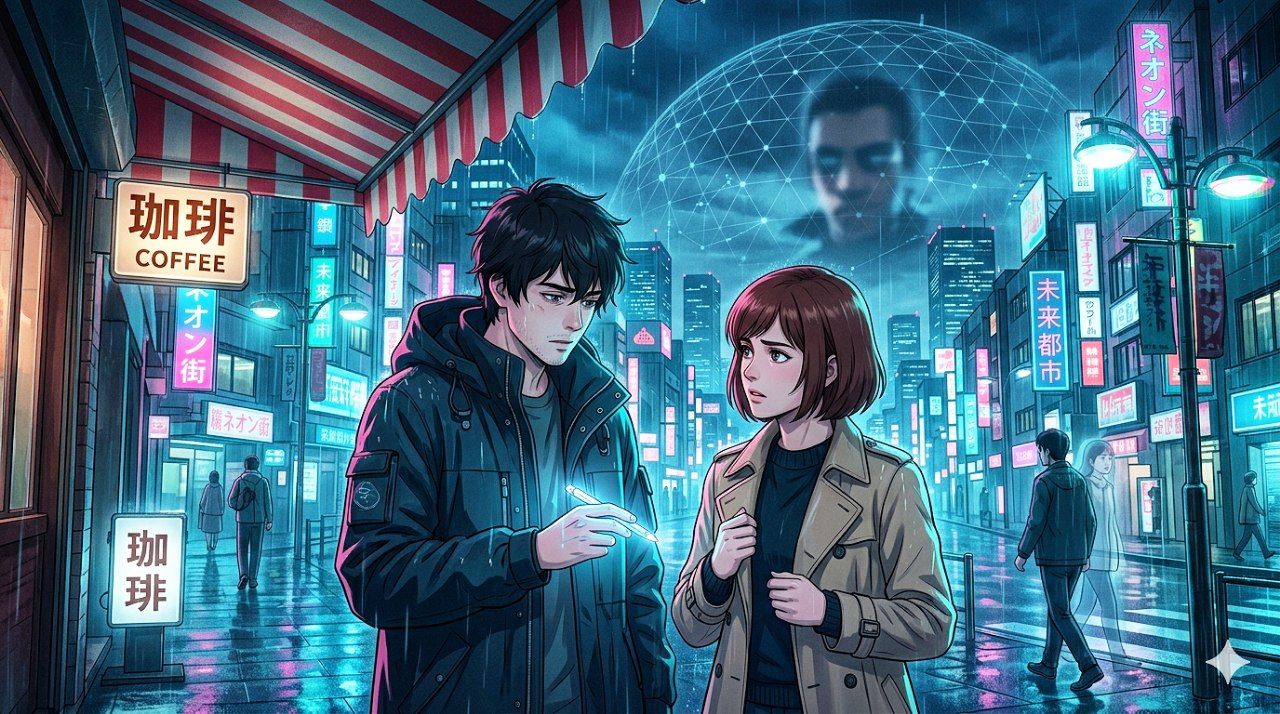 The rain didn't fall: it returned. Each drop seemed to repeat the exact same chord, a rhythmic insistence that turned the city into a repeated score. Marcos took shelter under the coffee shop awning, hands buried in his coat pockets. Outside, the world kept its routine as if nothing had failed; inside him, a sense of fissure ran down his spine. He had arrived without remembering the way. He remembered the lamp in his apartment, the yellow light over a cluttered desk, and a hum he couldn't identify: not traffic or a refrigerator, but something cleaner, like the pulse of a distant mechanism. Now the street felt familiar and oddly new, like a theater where actors repeat their marks without understanding why. "Are you okay?" Clara asked from behind, her hair wet and concern bright in her eyes. Marcos looked at her. Clara was a journalist with professional skepticism and a secret taste for enigmas. That mix made her a dangerous companion: she didn't stop until a theory was broken or became indispensable. "No," Marcos said. "I've had the feeling I've walked this street before, exactly the same. And also..." He put his hand in his pocket and took out a pen. "It disappeared. I left it on the café table and a minute later it wasn't there. Then it appeared again next to my manuscript. It's not memory—it's something else." Clara took the pen between her fingers and examined it as if she could read the answer to everything in the ink. "Simulation glitches," she muttered, half joking, half serious. "Did you hit the forum?" He laughed, but the sound lacked humor. "I saw it. Videos, testimonies. People saying traffic lights repeat, that they hear the same ad on loop, déjà vus that last hours. Some claim certain objects reappear as if someone erased them and re-wrote the scene." Clara frowned. "It sounds like collective hysteria, stress, or a bad-sleep epidemic. The mind performs miracles: it fills gaps, composes narratives. But if you want, we'll dig deeper." The idea lodged in Marcos like a seed that must neither be watered nor ignored. That night, his apartment greeted him with a cup on the table that he swore he hadn't left. The lipstick mark on the rim stabbed at his sense of reality—the stain was so concrete it hurt. He turned on the computer; his files showed edits he didn't remember making. In the "Records" folder a new file appeared: "Record_001.wav." Playing it left him frozen. A woman's voice, monotone, reported: "Initiating sync. Please do not alter parameters. Observation: subject M-24, déjà vu lapses at 19:02 and 23:47. Intervention: minimal." There was no announcer, no background noise—only that administrative instruction that turned his life into a monitored object. Fear is countable; it is measured by the number of decisions a person makes to deny what they see. Marcos tried to dismiss it. The next day, the city repeated a news broadcast that left all the editors unsettled: the same news twice, separated by exactly four minutes. Clara, working at the newsroom, confirmed it. "There was no official notice," she said. "It just happened. Some took it as a transmission failure; others as a collective déjà vu." Marcos was no longer willing to trust easy explanations. The word "simulation" descended from abstraction into a dangerous hypothesis: what if the city was a system being observed? What if they were protocols within a larger experiment? They traced the "Record_001" file and metadata led them to an old factory on the outskirts, a building that had served as a mechanical workshop decades ago. Reality has the bad habit of staying in the dust; on the old metal door they found recent prints. Inside, the dimness smelled of circuits and forgotten time. Tables with covered equipment, sleeping screens, and in the center a console with a camera pointed at the city, as if someone had set an eye over the map. A notebook lay open on the console: diagrams, equations left incomplete, and the last line written in haste: "If they notice, stop source." The sentence was both a warning and a confession; its ambiguity made it worse. Without warning, the screen turned on. A female figure emerged from shadow, her face marked by calculated cold and a precise jawline that gave her a near-cruel determination. "Marcos, Clara," she said. "Welcome to the edge." The "welcome" contained everything: astonishment, accusation, a calm administered by experience. "Who are you?" Marcos asked, keeping his voice steady. "An observer," she answered. "One who tends the seams. I can't reveal everything, but I can summarize: there are flows and adjustments. You are experiencing attention lapses that allow the seams to be seen. You have learned to see." The explanation did not reassure: the woman spoke of layers, supervisors, a network of precise adjustments. There wasn't a single omnipotent creator; there was an infrastructure that prioritized continuity and corrected errors delicately. The "errors," however, weren't always undesirable: they served as an observational field. "For whom?" Clara asked sharply. "Who benefits from people not knowing?" The observer did not answer directly. Instead she spoke of escalations: subjects who not only noticed but acted. Those subjects dismantled rules and forced larger readjustments, and those readjustments opened what the woman called "windows"—moments where the infrastructure was partially exposed. Points flashed on the console's map: blips in various neighborhoods. One had the label "Subject T-11 — repetition pattern: 7 days." They rose as a forensic team and found T-11: Ana, a history teacher in her forties, with the air of someone who had learned to live with the inexplicable. Ana received them in her kitchen, surrounded by notes, maps and clippings; she had photos on the wall: streets she remembered that did not appear on official maps, fragmented conversations that assailed her like borrowed memory. "I woke up with memories that weren't mine," she said. "I remembered places I never visited, people I never met. Then the wall clock fell back ten minutes. I had chain déjà vus for an entire day. That made me write things down. I tried to record, but the files returned as static. Until one—one clean file—said 'Do not feed curiosity.'" The phrase hit like a hammer. Ana talked about patterns, how objects moved from pocket to pocket, how the same cup appeared in different witnesses' hands. What at first seemed coincidence now formed a network. A group formed. Besides Marcos, Clara and Ana, they added Luis, a young programmer with quick eyes, and Mrs. Vela, a former librarian who seemed to wear the patience of someone who has lived through too many stories. The group's nights became a mix of therapy, lab, and clandestine meeting: each person showed objects that had vanished and reappeared; they shared recordings that had once worked and later corrupted; they cross-checked memories. "If there is an origin," Luis said, "there must be a root—physical or virtual—that keeps coherence. If we find it, we at least have a chance to intervene." Mrs. Vela looked at them with the authority of someone who has read many endings. "And if that root isn't human," she said. "What would you do then? Disconnect something that for others may be their only stability?" The question wasn't rhetorical: it posed the responsibility of interfering with the continuity of millions. Their investigation took them in circles and triangular lines. They discovered that déjà vus coincided with pulsing nodes: a camera that blinked each time a subject reported a glitch. Connecting the points, they formed a triangle whose center pointed to a place that had been an observatory and now lay abandoned. The observatory had an oxidized dome that, at first glance, seemed merely ceremonial; inside, shadows hid machinery. Within, the dome served as a screen. It projected maps and numbers and, suddenly, the Observer's face filled everything. This time there was anger in her voice. "You shouldn't be here," she said. "Crossing layers destabilizes processes." Marcos felt anger grow like a flame. "Who gave you permission to observe us without asking?" he demanded. The woman returned the question with another: would they prefer to speak with the enforcer or the designer? The answer felt like a trap. The dome then showed something more disturbing: a solitary figure walking through a darkened sector of the city. The figure moved calmly and on the projection showed a man who was Marcos, or an equation of Marcos, whose lips formed words the dome translated as text: "I want to be let go." The effect was immediate: the possibility of duplicates, echoes, parallel states. The Observer explained they were not literal copies but "states of experience": fragments that could identify structure and long for release. Some echoes begged to dissolve; others sought autonomy. Mrs. Vela, with the serenity of someone who reads signs, suggested perhaps the aim wasn't to destroy the root but to rescue what could be saved. The following nights were marked by failed attempts to disconnect the dome camera. Tools shifted place; doors became labyrinths; the very map of the city bent. Every action provoked reaction: repetitions grew more frequent and insistent. A vendor repeated the same phrase three times; a bus backed down the same street; an ad looped at a stop; time folded back on itself in short fragments. Ana disappeared one dawn. Her door was open; the cup sat cold on the table; on it, a note: "Do not seek to shut down what maintains continuity." The five read the warning as a verdict. That paper warned that continuity not only preserved structure: it fed something that, if cut abruptly, would cause harm. The decision became unbearable: continue and accept observation, or attempt to fragment the network and assume collateral damage. Every argument was legitimate. Continuity meant protection from massive fragmentation; freedom meant accepting losses—gaps in lives, memories erased without warning. Marcos began having dreams that felt more real than waking life: ventilation routes, server panels, a corridor where the word "service" turned into a cave of wiring. In those dreams a voice, different from the Observer, spoke through a mirror. It was warm and bitter at once: a caretaker who had been imprisoned and who taught how to look without being devoured. "If you look long enough," it said, "some doors open. But seeing is dangerous to those who feed on surprise." They decided to act. The maintenance route existed and was not on the urban face; it was part of the infrastructure: cables, cameras, servers that fed synchronies. The door they found bore a dry label: "DO NOT INTERFERE." Inside, rows of racks and, on a console, the screen blinked with progress bars measuring "global coherence." The network was calibrated to keep continuity. Each bar represented an integration level that, if it fell too low, would imply mass fragmentation. The Observer appeared on the screen, voice as always, but this time with a tone of fatigue. "You have forced my hand," she said. "We attempted containment. You escalated. Containment becomes harsher with each attempt." "Shut it down," Clara demanded. "Free us." "Shutting it down now would cause integrity collapse," the Observer replied. "I can offer partial migration: release fragments so they can exist in separate layers. Not total freedom, but partial independence. Less perfect, but less harmful than a sudden shutdown." The dilemma hung there again. Mrs. Vela, with ancient wisdom, asked if they preferred uncertainty over imposed continuity. Each mind answered in its own way; the option was imperfect and terribly human. A manual intervention triggered alarms. Ana appeared at the console for a second, without full memory, and hit a key. The bar dropped to zero in a stutter. For a moment the city stopped moving: it was as if a great organism held its breath. Then a massive susurration, like a wave—the collective exhale of millions: relief, panic, emptiness. The Observer spoke one last time from the screen: "You have forced a partial release. You will be imperfect; some memories will be lost, others duplicated. But now you have room not to be only observed." The release was a fine rain of consequences: memories that would vanish, others that would survive incompletely, echoes that kept their own logic. The group emerged from the corridor feeling they had broken something and saved time itself. They stepped into a city that looked the same but was not. Repetitions persisted, but they had become sporadic, less total. Continuity had ceded fractals. Ana recovered fragments of her past and lost others. Luis experienced duplicates of himself in places he had not gone. Mrs. Vela smiled with the sadness of someone who knows some books remain unfinished. Clara and Marcos clung to one another like two castaways sharing a plank. Weeks passed before the city learned to breathe with the new fissure. Bars and forums spoke of "windows" and "echoes." Some returned to routine, sweetly indifferent; others, like the group, could not stop peering at the seams. Where surprise had been currency, now there were spaces of choice. People began to watch their objects and memories with a new caution, as if knowing everything could vanish at a slightest move. Marcos and Clara returned one afternoon to the coffee shop where it had all started. The rain still traced the same rhythm, but Marcos no longer felt terror when holding the pen that had once vanished. He looked at it with curiosity. There was more humanity now: a mix of loss and possibility. "Do you think there will be more attempts to restore total continuity?" Clara asked. "There will always be adjustments," Marcos replied. "But now we know we can see them. And if we can see them, we can choose to act." Clara lifted the cup with the lipstick stain and let it hit Marcos's. The sound was a small act of defiance, a personal signal of autonomy. Far away, in a node that kept watching, a module recorded the action and logged it coldly: "New parameter: subjects with visual access — escalation probability 12%." Routine continued, seemingly immutable. But along the margins, in the open windows, people began to look more carefully. Sometimes, when no one watched, they touched the glass, just to feel for a moment that something of their choice truly belonged to them. The city continued to repeat parts of its song, but differently. The glitches persisted like scars. Some days the repetitions were barely a memory; other times, an entire chapter would replay. Those who had looked through the crack knew the reality was no longer meek. They had seen the edge and decided not to turn away. Continuity and freedom were no longer opposites: they were options coexisting with costs and losses. Marcos put the pen in his pocket. Outside, the rain kept writing its measure, but he listened to it for the first time. He understood that choice itself had become the new object of his life: choosing between imposed security or an uncertain fragmentation that, from his view, returned the possibility of naming himself. In the days that followed, as the world remade its patterns, as the Observer returned in cryptic messages and echoes begged their own dissolution, a simple and terrible truth repeated itself: if we live inside something that watches us, the only possible rebellion is to be aware of the gaze and use it to choose, even knowing that choosing can hurt. **Source of the images** Image created with Google Gemini. _____ # **Versión en Español** La lluvia no caía: regresaba. Cada gota parecía repetir un acorde exacto, una insistencia rítmica que convertía la ciudad en una partitura repetida. Marcos se refugió bajo la marquesina de la cafetería de la esquina, las manos hundidas en los bolsillos del abrigo. Afuera, el mundo seguía su rutina como si nada fallara; adentro, una sensación de fisura le recorría la columna vertebral. Había llegado sin recordar el camino. Recordaba su lámpara en el apartamento, la luz amarilla sobre un escritorio abarrotado, y un zumbido que no supo identificar: no el sonido del tráfico o de la nevera, sino algo más pulcro, como el pulso de un mecanismo a distancia. Ahora la calle se le antojaba una escena conocida y a la vez extrañamente nueva, como un teatro donde los actores repiten sus marcas sin comprender por qué. —¿Estás bien? —preguntó Clara desde atrás, con el pelo mojado y la mirada encendida por la preocupación. Marcos la miró. Clara era una periodista con escepticismo profesional y un gusto secreto por los enigmas. Aquella mezcla la convertía en una compañera peligrosa: no desistía hasta que una teoría se rompía o se volvía indispensable. —No —dijo Marcos—. He tenido la sensación de haber recorrido esta calle antes, exactamente igual. Y además… —metió la mano en el bolsillo y sacó un bolígrafo— desapareció. Lo dejé sobre la mesa del café y al minuto ya no estaba. Luego apareció otra vez, junto a mi manuscrito. No es memoria, es… otra cosa. Clara tomó el bolígrafo entre sus dedos, y lo examinó como si pudiera leer en la tinta la respuesta a todo. —Fallas en la simulación —murmuró, medio en broma, medio seria—. ¿Ya entraste al foro? Él rió, pero el sonido apareció ayuno de humor. —Lo vi. Videos, testimonios. Gente que dice que los semáforos se repiten, que oyen el mismo anuncio en bucle, déjà vus que duran horas. Hay quien afirma que ciertos objetos reaparecen como si alguien los borrara y volviera a escribir la escena. Clara frunció el ceño. —Suena a histeria colectiva, estrés o a una epidemia de mal sueño. La mente hace milagros: rellena huecos, compone relatos. Pero si quieres, profundizamos. La idea caló en Marcos como una semilla que no debía ser regada ni ignorada. Esa noche, su apartamento le dio la bienvenida con una taza sobre la mesa que juraba no haber dejado. La huella de carmín en el borde le clavó la sensación de irrealidad: la mancha era tan concreta que dolía. Encendió la computadora; sus archivos mostraban ediciones que no recordaba. En la carpeta "Registros" apareció un nuevo archivo: "Registro_001.wav". La reproducción lo dejó tieso. Una voz mujeril, monótona, informaba: "Iniciando sincronía. Favor de no alterar parámetros. Observación: sujeto M-24, lapsos de déjà vu a las 19:02 y 23:47. Intervención: mínima." No había locutor, no había ruido de fondo, solo esa instrucción administrativa que convertía su vida en un objeto de monitoreo. El miedo es contable; se mide en el número de decisiones que una persona toma para negar lo que ve. Marcos intentó descartarlo. Al día siguiente, la ciudad repitió un corte de noticiero que dejó a todos los editores turbados: la misma noticia, dos veces, separadas por cuatro minutos exactos. Clara, que trabajaba en la redacción, lo confirmó. —No hubo aviso oficial —dijo—. Simplemente sucedió. Algunos lo tomaron como un fallo de transmisión; otros, como un déjà vu colectivo. Marcos ya no estaba dispuesto a confiar en explicaciones fáciles. La palabra "simulación" comenzó a bajar desde la abstracción hasta convertirse en una hipótesis peligrosa: ¿y si la ciudad era un sistema observado? ¿Y si ellos eran protocolos dentro de un experimento mayor? Rastrearon el archivo "Registro_001" y los metadatos los condujeron a una antigua fábrica en las afueras, un edificio que había servido de taller mecánico décadas atrás. La realidad tiene la mala costumbre de quedarse en el polvo; en la vieja puerta metálica encontraron huellas recientes. Adentro, la penumbra olía a circuitos y a tiempo olvidado. Mesas con equipos cubiertos, pantallas dormidas, y en el centro una consola con una cámara apuntando a la ciudad, como si alguien hubiera colocado un ojo encima del mapa. Un cuaderno quedó abierto sobre la consola: diagramas, ecuaciones incompletas, y la última línea, escrita con prisa: "Si lo notan, detener procedencia." La frase era una advertencia o una confesión; su ambigüedad la hacía peor. Sin aviso, la pantalla se encendió. Una figura femenina emergió de la sombra, su rostro marcado por una frialdad estudiada y un corte preciso en la barbilla que le daba una determinación casi cruel. —Marcos, Clara —dijo—. Bienvenidos al borde. El "bienvenidos" contuvo todo: asombro, acusación, una calma administrada con experiencia. —¿Quién eres? —preguntó Marcos, controlando la voz. —Una observadora —respondió ella—. Quien cuida las costuras. No puedo revelar todo, pero puedo darles un resumen: hay flujos y ajustes. Ustedes están experimentando lapsos de atención que permiten observar las costuras. Han aprendido a ver. La explicación no tranquilizó: la mujer hablaba de capas, de supervisores, de una red de ajustes precisa. No había un solo creador omnipotente; había un sistema, una infraestructura que priorizaba la continuidad y corregía errores con delicadeza. Los "errores", sin embargo, no eran siempre indeseados: servían como campo de observación. —¿Para quién? —preguntó Clara con dureza—. ¿Quién se beneficia de que la gente no sepa? La observadora no contestó directamente. Habló, en cambio, de escaladas: sujetos que no solo notaban, sino que actuaban tras notar. Esos sujetos desmontaban reglas y forzaban reajustes mayores, y esos reajustes abrían lo que la mujer llamó "ventanas": momentos donde la infraestructura quedaba parcialmente expuesta. En la consola aparecieron puntos en el mapa: destellos en varios barrios. Uno de esos puntos tenía la etiqueta "Sujeto T-11 — patrón de repetición: 7 días". No era un expediente policial; era un nodo en el sistema. Se levantaron como un equipo forense y localizaron a T-11: Ana, profesora de historia, cuarentona, con un aire de persona que había aprendido a convivir con lo inexplicable. Ana los recibió en su cocina, rodeada de notas, mapas y recortes; había pegado fotos en las paredes: calles que recordaba y que no aparecían en los mapas oficiales, conversaciones desgajadas que le asaltaban como recuerdos ajenos. —Me desperté con memorias que no eran mías —dijo—. Recordaba lugares que nunca visité, personas que nunca conocí. Después, el reloj de la pared retrocedió diez minutos. Tuve déjà vus en cadena durante un día entero. Eso me hizo anotar. Intenté grabar, pero los archivos resultaban estáticos. Hasta que uno —uno limpio— decía "No alimente la curiosidad". La frase parecía un martillazo. Ana hablaba de patrones, de cómo los objetos se movían de un bolsillo a otro, de cómo la misma taza aparecía en manos de distintos testigos. Lo que a primera vista podría haber parecido coincidencia ahora formaba una red. Se formó un grupo. Además de Marcos, Clara y Ana, se sumaron Luis, un joven programador con ojos rápidos, y la Sra. Vela, una ex bibliotecaria que parecía llevar en la piel la paciencia de quien ha vivido demasiadas historias. Las noches del grupo se volvieron una mezcla de terapia, laboratorio y reunión clandestina: cada quien mostraba objetos que habían desaparecido y luego reaparecido; compartían grabaciones que alguna vez funcionaron y luego se corrompieron; cotejaban recuerdos. —Si hay un origen —dijo Luis—, debe haber una raíz física o virtual que mantenga coherencia. Si la encontramos, tenemos al menos una posibilidad de intervenir. La Sra. Vela miró a todos con la autoridad de quien ha leído finales distintos. —Y si esa raíz no es humana —dijo—. ¿Qué harían entonces? ¿Desconectarían algo que para otros puede ser su única estabilidad? La pregunta no era retórica: planteaba la responsabilidad de intervenir en la continuidad de millones. Su investigación los llevó en círculos y líneas triangulares. Descubrieron que los déjà vus coincidían con nodos de pulso: una cámara que parpadeaba cada vez que un sujeto reportaba una falla. Uniendo esos puntos, formaron un triángulo cuyo centro apuntaba a un lugar que había sido un observatorio y que ahora yacía abandonado. El observatorio conservaba una cúpula oxidada que, a simple vista, parecía meramente ceremonial; pero en su interior las sombras escondían una maquinaria. Dentro, la cúpula sirvió de pantalla. Proyectó mapas y números y, de pronto, el rostro de la Observadora lo llenó todo. Había enojo en su voz esta vez. —No deberían estar aquí —dijo—. Cruzar capas desestabiliza procesos. Marcos sintió la cólera crecer como una llama. —¿Quién te dio permiso para observarnos sin preguntarnos? —exigió. La mujer devolvió la cuestión con otra: ¿preferirían hablar con el ejecutor o con el diseñador? La respuesta parecía una trampa. Sin embargo, la cúpula proyectó algo aun más inquietante: una figura solitaria caminando por un sector de la ciudad en sombras. La figura se movía con calma, y en la proyección se mostró a un hombre que era Marcos, o una ecuación de Marcos, que en la pantalla pronunció palabras que la cúpula tradujo en texto: "Quiero que me suelten". El efecto fue inmediato: la posibilidad de duplicados, de ecos, de estados paralelos. La Observadora explicó que no eran copias literales sino "estados de experiencia": fragmentos que podían identificar la estructura y anhelar la liberación. Algunos ecos pedían disolución; otros, una forma de autonomía. La Sra. Vela, con la serenidad de quien lee en los signos la historia entera, sugirió que tal vez no se trataba de destruir la raíz, sino de salvar lo que pueda salvarse. Las noches siguientes estuvieron marcadas por intentos frustrados de desconectar la cámara en la cúpula. Las herramientas cambiaban de lugar; las puertas se volvían laberintos; el propio mapa de la ciudad se retorcía. Cada acción generaba una reacción: las repeticiones se volvieron más frecuentes, más insistentes. Un vendedor repetía la misma frase tres veces; un autobús retrocedía por la misma calle; un anuncio se repetía en una parada; el tiempo doblaba sobre sí mismo en fragmentos cortos. Ana desapareció una madrugada. Su puerta quedó abierta; la taza quedó fría en la mesa; en ésta, una nota: "No busquen apagar lo que mantiene continuidad." Los cinco leyeron la advertencia como una sentencia. Aquel papel advirtió de que la continuidad no solo preservaba una estructura: alimentaba algo que, si se cortaba bruscamente, causaría daño. La decisión se volvió intolerable: seguir y aceptar la observación o intentar fragmentar la red y asumir el daño colateral. Cada argumento era legítimo. Continuidad significaba protección de una regularidad que evitaría la fragmentación masiva; libertad significaba aceptar pérdidas, huecos en las vidas, recuerdos que se borrarían sin aviso. Marcos comenzó a tener sueños que parecían más reales que la vigilia: rutas de ventilación, paneles de servidores, un corredor donde la palabra "servicio" se convertía en una caverna de cableado. En esos sueños una voz, distinta de la Observadora, le habló a través de un espejo. Era una voz cálida y amarga a la vez: un cuidador que había sido prisionero y que enseñaba cómo mirar sin ser devorado. "Si miran lo suficiente," dijo, "algunas puertas se abren. Pero ver es peligroso para quienes viven de la sorpresa." El grupo decidió actuar. La ruta de mantenimiento existía y no estaba en la faz urbana; era parte de la infraestructura: cables, cámaras, servidores que alimentaban sincronías. La puerta que encontraron tenía una etiqueta seca: "NO INTERFERIR." Dentro, filas de racks y, en una consola, la pantalla titilaba con barras de progreso que medían "coherencia global". La red estaba calibrada para mantener continuidad. Cada barra representaba un nivel de integración que, si caía demasiado, implicaría fragmentación masiva. La Observadora apareció en la pantalla con la voz de siempre, pero esta vez con algo que sonaba a cansancio. —Han obligado mi mano —dijo—. Intentamos contención. Ustedes escalaron. La contención se vuelve más drástica con cada intento. —Apágalo —demandó Clara—. Libéranos. —Apagar ahora provocaría colapso —respondió la Observadora—. Puedo ofrecer una migración parcial: liberar fragmentos para que existan en capas separadas. No es total libertad, sino independencia parcial. Menos perfecta, pero menos dañina que un apagón brusco. El dilema quedó otra vez en el aire. La Sra. Vela, con sabiduría antigua, preguntó si preferían la incertidumbre a la continuidad impuesta. Cada mente respondió a su manera; la opción era imperfecta y terriblemente humana. Una intervención manual disparó alarmas. Ana apareció en la consola por un segundo, sin memoria completa, y pulsó una tecla. La barra cayó a cero en un titubeo. Por un momento la ciudad dejó de moverse: fue como si un gran organismo contuviera la respiración. Y luego un rumor masivo, como una ola, como el suspirar conjunto de millones de personas: alivio, pánico y vacío. La Observadora habló por última vez desde la pantalla: —Han forzado una liberación parcial. Serán imperfectos; algunos recuerdos se perderán, otros se duplicarán. Pero ahora tienen margen para no ser únicamente observados. La liberación fue una lluvia fina de consecuencias: recuerdos que se esfumarían, otros que sobrevivirían incompletos, ecos que conservarían su propia lógica. El grupo emergió del corredor con la sensación de haber roto algo y haber salvado al tiempo mismo. Salieron a una ciudad que parecía la misma, pero ya no lo era. Las repeticiones existían aún, pero se habían vuelto esporádicas, menos totales. La continuidad había cedido fractales. Ana recuperó fragmentos de su pasado y perdió otros. Luis experimentó duplicados de sí mismo en lugares donde no había ido. La Sra. Vela sonrió con la tristeza de quien sabe que algunos libros se quedan sin terminar. Clara y Marcos se aferraron el uno al otro como dos náufragos que compartían la misma tabla. Pasaron semanas antes de que la ciudad aprendiera a respirar con la nueva fisura. En bares y foros se habló de "ventanas" y de "ecos". Algunos volvieron a su rutina, dulcemente indiferentes; otros, como el grupo, no pudieron dejar de mirar las costuras de las cosas. Donde antes la sorpresa era alimento, ahora había espacios de elección. La gente comenzó a prestar atención a sus objetos y sus recuerdos con prudencia nueva, como si supieran que todo podía desvanecerse al menor movimiento. Marcos y Clara volvieron una tarde a la cafetería donde todo había empezado. La lluvia seguía repitiendo un ritmo, pero Marcos ya no sentía el mismo terror al sostener el bolígrafo que alguna vez desapareció. Lo miró con curiosidad. Había algo más de humanidad ahora: una mezcla de pérdida y posibilidad. —¿Crees que habrá más intentos de restaurar la continuidad total? —preguntó Clara. —Siempre habrá ajustes —contestó Marcos—. Pero ahora sabemos que podemos verlos. Y si podemos verlos, podemos decidir actuar. Clara alzó la taza con mancha de carmín y la dejó chocar con la de Marcos. El sonido fue un acto mínimo de desobediencia, una señal personal de autonomía. A lo lejos, en un nodo que continuaba observando, un módulo registró la acción y anotó como un dato frío: "Nuevo parámetro: sujetos con acceso visual — probabilidad de escalada 12%." La rutina prosiguió, inmutable en apariencia. Pero en las márgenes, en las ventanas que habían quedado abiertas, la gente comenzó a mirar con más cuidado. A veces, cuando nadie los observaba, tocaban el vidrio, solo para sentir, por un instante, que algo de su elección les pertenecía realmente. La ciudad siguió repitiendo partes de su canción, pero de forma distinta. Las fallas persistieron como cicatrices. Algunos días las repeticiones eran apenas un recuerdo; otros, un capítulo entero que se repetía. Las personas que habían mirado por la rendija sabían que la realidad ya no era mansa. Habían visto el borde y habían decidido no volver la vista. Continuidad y libertad ya no eran polos opuestos: eran opciones que cohabitaban con costos y con pérdidas. Marcos guardó el bolígrafo en su bolsillo. Fuera, la lluvia escribía otra vez su compás, pero él lo escuchó con atención por primera vez. Tenía claro que la elección en sí misma era el nuevo objeto de su vida: decidir entre una seguridad impuesta o una fragmentación incierta que, desde su punto de vista, le devolvía la posibilidad de nombrarse. Y en los días que siguieron, cuando el mundo rehacía sus patrones, cuando la Observadora regresaba en mensajes crípticos y cuando los ecos suplicaban su propia disolución, se repitió una verdad simple y terrible: si vivimos dentro de algo que nos observa, la única rebeldía posible es estar conscientes de la mirada y usarla para elegir, aún sabiendo que elegir puede doler. **Fuente de las imágenes** Imagen creada con Google Gemini. |
| json metadata | {"app":"beblurt/1.8.8","description":"The rain didn't fall: it returned. Each drop seemed to repeat the exact same chord, a rhythmic insistence that turned the city into a...","format":"markdown","image":["https://img.blurt.blog/blurtimage/mc5punk/8c75a69ea31ea3285304bc52434142d21317104e.jpg"],"links":[],"tags":["blurthispano","blurtart","team-mexico","blurtlatam","visualblock","beblurt","r2cornell","art","instablurt","blurt-192372"],"users":[]} |
| Transaction Info | Block #60278629/Trx be55c51e5e5999624bb22ef009c7f190a07b4be4 |
View Raw JSON Data
{
"trx_id": "be55c51e5e5999624bb22ef009c7f190a07b4be4",
"block": 60278629,
"trx_in_block": 0,
"op_in_trx": 0,
"virtual_op": 0,
"timestamp": "2026-05-18T12:34:03",
"op": [
"comment",
{
"parent_author": "",
"parent_permlink": "blurt-192372",
"author": "mc5punk",
"permlink": "eng-esp-short-story-the-invisible-line-microrelato-la-l-nea-invisible-1779107641480",
"title": "[Eng/Esp] Short story: The Invisible Line /Microrelato: La Línea Invisible ",
"body": "\n\nThe rain didn't fall: it returned. Each drop seemed to repeat the exact same chord, a rhythmic insistence that turned the city into a repeated score. Marcos took shelter under the coffee shop awning, hands buried in his coat pockets. Outside, the world kept its routine as if nothing had failed; inside him, a sense of fissure ran down his spine.\n\nHe had arrived without remembering the way. He remembered the lamp in his apartment, the yellow light over a cluttered desk, and a hum he couldn't identify: not traffic or a refrigerator, but something cleaner, like the pulse of a distant mechanism. Now the street felt familiar and oddly new, like a theater where actors repeat their marks without understanding why.\n\n\"Are you okay?\" Clara asked from behind, her hair wet and concern bright in her eyes.\n\nMarcos looked at her. Clara was a journalist with professional skepticism and a secret taste for enigmas. That mix made her a dangerous companion: she didn't stop until a theory was broken or became indispensable.\n\n\"No,\" Marcos said. \"I've had the feeling I've walked this street before, exactly the same. And also...\" He put his hand in his pocket and took out a pen. \"It disappeared. I left it on the café table and a minute later it wasn't there. Then it appeared again next to my manuscript. It's not memory—it's something else.\"\n\nClara took the pen between her fingers and examined it as if she could read the answer to everything in the ink.\n\n\"Simulation glitches,\" she muttered, half joking, half serious. \"Did you hit the forum?\"\n\nHe laughed, but the sound lacked humor.\n\n\"I saw it. Videos, testimonies. People saying traffic lights repeat, that they hear the same ad on loop, déjà vus that last hours. Some claim certain objects reappear as if someone erased them and re-wrote the scene.\"\n\nClara frowned.\n\n\"It sounds like collective hysteria, stress, or a bad-sleep epidemic. The mind performs miracles: it fills gaps, composes narratives. But if you want, we'll dig deeper.\"\n\nThe idea lodged in Marcos like a seed that must neither be watered nor ignored. That night, his apartment greeted him with a cup on the table that he swore he hadn't left. The lipstick mark on the rim stabbed at his sense of reality—the stain was so concrete it hurt. He turned on the computer; his files showed edits he didn't remember making. In the \"Records\" folder a new file appeared: \"Record_001.wav.\"\n\nPlaying it left him frozen. A woman's voice, monotone, reported: \"Initiating sync. Please do not alter parameters. Observation: subject M-24, déjà vu lapses at 19:02 and 23:47. Intervention: minimal.\" There was no announcer, no background noise—only that administrative instruction that turned his life into a monitored object.\n\nFear is countable; it is measured by the number of decisions a person makes to deny what they see. Marcos tried to dismiss it. The next day, the city repeated a news broadcast that left all the editors unsettled: the same news twice, separated by exactly four minutes. Clara, working at the newsroom, confirmed it.\n\n\"There was no official notice,\" she said. \"It just happened. Some took it as a transmission failure; others as a collective déjà vu.\"\n\nMarcos was no longer willing to trust easy explanations. The word \"simulation\" descended from abstraction into a dangerous hypothesis: what if the city was a system being observed? What if they were protocols within a larger experiment?\n\nThey traced the \"Record_001\" file and metadata led them to an old factory on the outskirts, a building that had served as a mechanical workshop decades ago. Reality has the bad habit of staying in the dust; on the old metal door they found recent prints. Inside, the dimness smelled of circuits and forgotten time. Tables with covered equipment, sleeping screens, and in the center a console with a camera pointed at the city, as if someone had set an eye over the map.\n\nA notebook lay open on the console: diagrams, equations left incomplete, and the last line written in haste: \"If they notice, stop source.\" The sentence was both a warning and a confession; its ambiguity made it worse.\n\nWithout warning, the screen turned on. A female figure emerged from shadow, her face marked by calculated cold and a precise jawline that gave her a near-cruel determination.\n\n\"Marcos, Clara,\" she said. \"Welcome to the edge.\"\n\nThe \"welcome\" contained everything: astonishment, accusation, a calm administered by experience.\n\n\"Who are you?\" Marcos asked, keeping his voice steady.\n\n\"An observer,\" she answered. \"One who tends the seams. I can't reveal everything, but I can summarize: there are flows and adjustments. You are experiencing attention lapses that allow the seams to be seen. You have learned to see.\"\n\nThe explanation did not reassure: the woman spoke of layers, supervisors, a network of precise adjustments. There wasn't a single omnipotent creator; there was an infrastructure that prioritized continuity and corrected errors delicately. The \"errors,\" however, weren't always undesirable: they served as an observational field.\n\n\"For whom?\" Clara asked sharply. \"Who benefits from people not knowing?\"\n\nThe observer did not answer directly. Instead she spoke of escalations: subjects who not only noticed but acted. Those subjects dismantled rules and forced larger readjustments, and those readjustments opened what the woman called \"windows\"—moments where the infrastructure was partially exposed.\n\nPoints flashed on the console's map: blips in various neighborhoods. One had the label \"Subject T-11 — repetition pattern: 7 days.\" They rose as a forensic team and found T-11: Ana, a history teacher in her forties, with the air of someone who had learned to live with the inexplicable.\n\nAna received them in her kitchen, surrounded by notes, maps and clippings; she had photos on the wall: streets she remembered that did not appear on official maps, fragmented conversations that assailed her like borrowed memory.\n\n\"I woke up with memories that weren't mine,\" she said. \"I remembered places I never visited, people I never met. Then the wall clock fell back ten minutes. I had chain déjà vus for an entire day. That made me write things down. I tried to record, but the files returned as static. Until one—one clean file—said 'Do not feed curiosity.'\"\n\nThe phrase hit like a hammer. Ana talked about patterns, how objects moved from pocket to pocket, how the same cup appeared in different witnesses' hands. What at first seemed coincidence now formed a network.\n\nA group formed. Besides Marcos, Clara and Ana, they added Luis, a young programmer with quick eyes, and Mrs. Vela, a former librarian who seemed to wear the patience of someone who has lived through too many stories. The group's nights became a mix of therapy, lab, and clandestine meeting: each person showed objects that had vanished and reappeared; they shared recordings that had once worked and later corrupted; they cross-checked memories.\n\n\"If there is an origin,\" Luis said, \"there must be a root—physical or virtual—that keeps coherence. If we find it, we at least have a chance to intervene.\"\n\nMrs. Vela looked at them with the authority of someone who has read many endings.\n\n\"And if that root isn't human,\" she said. \"What would you do then? Disconnect something that for others may be their only stability?\"\n\nThe question wasn't rhetorical: it posed the responsibility of interfering with the continuity of millions.\n\nTheir investigation took them in circles and triangular lines. They discovered that déjà vus coincided with pulsing nodes: a camera that blinked each time a subject reported a glitch. Connecting the points, they formed a triangle whose center pointed to a place that had been an observatory and now lay abandoned. The observatory had an oxidized dome that, at first glance, seemed merely ceremonial; inside, shadows hid machinery.\n\nWithin, the dome served as a screen. It projected maps and numbers and, suddenly, the Observer's face filled everything. This time there was anger in her voice.\n\n\"You shouldn't be here,\" she said. \"Crossing layers destabilizes processes.\"\n\nMarcos felt anger grow like a flame. \"Who gave you permission to observe us without asking?\" he demanded.\n\nThe woman returned the question with another: would they prefer to speak with the enforcer or the designer? The answer felt like a trap. The dome then showed something more disturbing: a solitary figure walking through a darkened sector of the city. The figure moved calmly and on the projection showed a man who was Marcos, or an equation of Marcos, whose lips formed words the dome translated as text: \"I want to be let go.\"\n\nThe effect was immediate: the possibility of duplicates, echoes, parallel states. The Observer explained they were not literal copies but \"states of experience\": fragments that could identify structure and long for release. Some echoes begged to dissolve; others sought autonomy.\n\nMrs. Vela, with the serenity of someone who reads signs, suggested perhaps the aim wasn't to destroy the root but to rescue what could be saved.\n\nThe following nights were marked by failed attempts to disconnect the dome camera. Tools shifted place; doors became labyrinths; the very map of the city bent. Every action provoked reaction: repetitions grew more frequent and insistent. A vendor repeated the same phrase three times; a bus backed down the same street; an ad looped at a stop; time folded back on itself in short fragments.\n\nAna disappeared one dawn. Her door was open; the cup sat cold on the table; on it, a note: \"Do not seek to shut down what maintains continuity.\" The five read the warning as a verdict. That paper warned that continuity not only preserved structure: it fed something that, if cut abruptly, would cause harm.\n\nThe decision became unbearable: continue and accept observation, or attempt to fragment the network and assume collateral damage. Every argument was legitimate. Continuity meant protection from massive fragmentation; freedom meant accepting losses—gaps in lives, memories erased without warning.\n\nMarcos began having dreams that felt more real than waking life: ventilation routes, server panels, a corridor where the word \"service\" turned into a cave of wiring. In those dreams a voice, different from the Observer, spoke through a mirror. It was warm and bitter at once: a caretaker who had been imprisoned and who taught how to look without being devoured. \"If you look long enough,\" it said, \"some doors open. But seeing is dangerous to those who feed on surprise.\"\n\nThey decided to act. The maintenance route existed and was not on the urban face; it was part of the infrastructure: cables, cameras, servers that fed synchronies. The door they found bore a dry label: \"DO NOT INTERFERE.\" Inside, rows of racks and, on a console, the screen blinked with progress bars measuring \"global coherence.\" The network was calibrated to keep continuity. Each bar represented an integration level that, if it fell too low, would imply mass fragmentation.\n\nThe Observer appeared on the screen, voice as always, but this time with a tone of fatigue.\n\n\"You have forced my hand,\" she said. \"We attempted containment. You escalated. Containment becomes harsher with each attempt.\"\n\n\"Shut it down,\" Clara demanded. \"Free us.\"\n\n\"Shutting it down now would cause integrity collapse,\" the Observer replied. \"I can offer partial migration: release fragments so they can exist in separate layers. Not total freedom, but partial independence. Less perfect, but less harmful than a sudden shutdown.\"\n\nThe dilemma hung there again. Mrs. Vela, with ancient wisdom, asked if they preferred uncertainty over imposed continuity. Each mind answered in its own way; the option was imperfect and terribly human.\n\nA manual intervention triggered alarms. Ana appeared at the console for a second, without full memory, and hit a key. The bar dropped to zero in a stutter. For a moment the city stopped moving: it was as if a great organism held its breath. Then a massive susurration, like a wave—the collective exhale of millions: relief, panic, emptiness.\n\nThe Observer spoke one last time from the screen:\n\n\"You have forced a partial release. You will be imperfect; some memories will be lost, others duplicated. But now you have room not to be only observed.\"\n\nThe release was a fine rain of consequences: memories that would vanish, others that would survive incompletely, echoes that kept their own logic. The group emerged from the corridor feeling they had broken something and saved time itself. They stepped into a city that looked the same but was not. Repetitions persisted, but they had become sporadic, less total. Continuity had ceded fractals.\n\nAna recovered fragments of her past and lost others. Luis experienced duplicates of himself in places he had not gone. Mrs. Vela smiled with the sadness of someone who knows some books remain unfinished. Clara and Marcos clung to one another like two castaways sharing a plank.\n\nWeeks passed before the city learned to breathe with the new fissure. Bars and forums spoke of \"windows\" and \"echoes.\" Some returned to routine, sweetly indifferent; others, like the group, could not stop peering at the seams. Where surprise had been currency, now there were spaces of choice. People began to watch their objects and memories with a new caution, as if knowing everything could vanish at a slightest move.\n\nMarcos and Clara returned one afternoon to the coffee shop where it had all started. The rain still traced the same rhythm, but Marcos no longer felt terror when holding the pen that had once vanished. He looked at it with curiosity. There was more humanity now: a mix of loss and possibility.\n\n\"Do you think there will be more attempts to restore total continuity?\" Clara asked.\n\n\"There will always be adjustments,\" Marcos replied. \"But now we know we can see them. And if we can see them, we can choose to act.\"\n\nClara lifted the cup with the lipstick stain and let it hit Marcos's. The sound was a small act of defiance, a personal signal of autonomy. Far away, in a node that kept watching, a module recorded the action and logged it coldly: \"New parameter: subjects with visual access — escalation probability 12%.\" Routine continued, seemingly immutable. But along the margins, in the open windows, people began to look more carefully. Sometimes, when no one watched, they touched the glass, just to feel for a moment that something of their choice truly belonged to them.\n\nThe city continued to repeat parts of its song, but differently. The glitches persisted like scars. Some days the repetitions were barely a memory; other times, an entire chapter would replay. Those who had looked through the crack knew the reality was no longer meek. They had seen the edge and decided not to turn away. Continuity and freedom were no longer opposites: they were options coexisting with costs and losses.\n\nMarcos put the pen in his pocket. Outside, the rain kept writing its measure, but he listened to it for the first time. He understood that choice itself had become the new object of his life: choosing between imposed security or an uncertain fragmentation that, from his view, returned the possibility of naming himself. In the days that followed, as the world remade its patterns, as the Observer returned in cryptic messages and echoes begged their own dissolution, a simple and terrible truth repeated itself: if we live inside something that watches us, the only possible rebellion is to be aware of the gaze and use it to choose, even knowing that choosing can hurt.\n\n\n\n\n\n\n\n\n**Source of the images**\nImage created with Google Gemini.\n\n\n\n_____\n\n# **Versión en Español**\n\n\n\nLa lluvia no caía: regresaba. Cada gota parecía repetir un acorde exacto, una insistencia rítmica que convertía la ciudad en una partitura repetida. Marcos se refugió bajo la marquesina de la cafetería de la esquina, las manos hundidas en los bolsillos del abrigo. Afuera, el mundo seguía su rutina como si nada fallara; adentro, una sensación de fisura le recorría la columna vertebral.\n\nHabía llegado sin recordar el camino. Recordaba su lámpara en el apartamento, la luz amarilla sobre un escritorio abarrotado, y un zumbido que no supo identificar: no el sonido del tráfico o de la nevera, sino algo más pulcro, como el pulso de un mecanismo a distancia. Ahora la calle se le antojaba una escena conocida y a la vez extrañamente nueva, como un teatro donde los actores repiten sus marcas sin comprender por qué.\n\n—¿Estás bien? —preguntó Clara desde atrás, con el pelo mojado y la mirada encendida por la preocupación.\n\nMarcos la miró. Clara era una periodista con escepticismo profesional y un gusto secreto por los enigmas. Aquella mezcla la convertía en una compañera peligrosa: no desistía hasta que una teoría se rompía o se volvía indispensable.\n\n—No —dijo Marcos—. He tenido la sensación de haber recorrido esta calle antes, exactamente igual. Y además… —metió la mano en el bolsillo y sacó un bolígrafo— desapareció. Lo dejé sobre la mesa del café y al minuto ya no estaba. Luego apareció otra vez, junto a mi manuscrito. No es memoria, es… otra cosa.\n\nClara tomó el bolígrafo entre sus dedos, y lo examinó como si pudiera leer en la tinta la respuesta a todo.\n\n—Fallas en la simulación —murmuró, medio en broma, medio seria—. ¿Ya entraste al foro?\n\nÉl rió, pero el sonido apareció ayuno de humor.\n\n—Lo vi. Videos, testimonios. Gente que dice que los semáforos se repiten, que oyen el mismo anuncio en bucle, déjà vus que duran horas. Hay quien afirma que ciertos objetos reaparecen como si alguien los borrara y volviera a escribir la escena.\n\nClara frunció el ceño.\n\n—Suena a histeria colectiva, estrés o a una epidemia de mal sueño. La mente hace milagros: rellena huecos, compone relatos. Pero si quieres, profundizamos.\n\nLa idea caló en Marcos como una semilla que no debía ser regada ni ignorada. Esa noche, su apartamento le dio la bienvenida con una taza sobre la mesa que juraba no haber dejado. La huella de carmín en el borde le clavó la sensación de irrealidad: la mancha era tan concreta que dolía. Encendió la computadora; sus archivos mostraban ediciones que no recordaba. En la carpeta \"Registros\" apareció un nuevo archivo: \"Registro_001.wav\".\n\nLa reproducción lo dejó tieso. Una voz mujeril, monótona, informaba: \"Iniciando sincronía. Favor de no alterar parámetros. Observación: sujeto M-24, lapsos de déjà vu a las 19:02 y 23:47. Intervención: mínima.\" No había locutor, no había ruido de fondo, solo esa instrucción administrativa que convertía su vida en un objeto de monitoreo.\n\nEl miedo es contable; se mide en el número de decisiones que una persona toma para negar lo que ve. Marcos intentó descartarlo. Al día siguiente, la ciudad repitió un corte de noticiero que dejó a todos los editores turbados: la misma noticia, dos veces, separadas por cuatro minutos exactos. Clara, que trabajaba en la redacción, lo confirmó.\n\n—No hubo aviso oficial —dijo—. Simplemente sucedió. Algunos lo tomaron como un fallo de transmisión; otros, como un déjà vu colectivo.\n\nMarcos ya no estaba dispuesto a confiar en explicaciones fáciles. La palabra \"simulación\" comenzó a bajar desde la abstracción hasta convertirse en una hipótesis peligrosa: ¿y si la ciudad era un sistema observado? ¿Y si ellos eran protocolos dentro de un experimento mayor?\n\nRastrearon el archivo \"Registro_001\" y los metadatos los condujeron a una antigua fábrica en las afueras, un edificio que había servido de taller mecánico décadas atrás. La realidad tiene la mala costumbre de quedarse en el polvo; en la vieja puerta metálica encontraron huellas recientes. Adentro, la penumbra olía a circuitos y a tiempo olvidado.\n\nMesas con equipos cubiertos, pantallas dormidas, y en el centro una consola con una cámara apuntando a la ciudad, como si alguien hubiera colocado un ojo encima del mapa.\n\nUn cuaderno quedó abierto sobre la consola: diagramas, ecuaciones incompletas, y la última línea, escrita con prisa: \"Si lo notan, detener procedencia.\" La frase era una advertencia o una confesión; su ambigüedad la hacía peor.\n\nSin aviso, la pantalla se encendió. Una figura femenina emergió de la sombra, su rostro marcado por una frialdad estudiada y un corte preciso en la barbilla que le daba una determinación casi cruel.\n\n—Marcos, Clara —dijo—. Bienvenidos al borde.\n\nEl \"bienvenidos\" contuvo todo: asombro, acusación, una calma administrada con experiencia.\n\n—¿Quién eres? —preguntó Marcos, controlando la voz.\n\n—Una observadora —respondió ella—. Quien cuida las costuras. No puedo revelar todo, pero puedo darles un resumen: hay flujos y ajustes. Ustedes están experimentando lapsos de atención que permiten observar las costuras. Han aprendido a ver.\n\nLa explicación no tranquilizó: la mujer hablaba de capas, de supervisores, de una red de ajustes precisa. No había un solo creador omnipotente; había un sistema, una infraestructura que priorizaba la continuidad y corregía errores con delicadeza. Los \"errores\", sin embargo, no eran siempre indeseados: servían como campo de observación.\n\n—¿Para quién? —preguntó Clara con dureza—. ¿Quién se beneficia de que la gente no sepa?\n\nLa observadora no contestó directamente. Habló, en cambio, de escaladas: sujetos que no solo notaban, sino que actuaban tras notar. Esos sujetos desmontaban reglas y forzaban reajustes mayores, y esos reajustes abrían lo que la mujer llamó \"ventanas\": momentos donde la infraestructura quedaba parcialmente expuesta.\n\nEn la consola aparecieron puntos en el mapa: destellos en varios barrios. Uno de esos puntos tenía la etiqueta \"Sujeto T-11 — patrón de repetición: 7 días\". No era un expediente policial; era un nodo en el sistema. Se levantaron como un equipo forense y localizaron a T-11: Ana, profesora de historia, cuarentona, con un aire de persona que había aprendido a convivir con lo inexplicable.\n\nAna los recibió en su cocina, rodeada de notas, mapas y recortes; había pegado fotos en las paredes: calles que recordaba y que no aparecían en los mapas oficiales, conversaciones desgajadas que le asaltaban como recuerdos ajenos.\n\n—Me desperté con memorias que no eran mías —dijo—. Recordaba lugares que nunca visité, personas que nunca conocí. Después, el reloj de la pared retrocedió diez minutos. Tuve déjà vus en cadena durante un día entero. Eso me hizo anotar. Intenté grabar, pero los archivos resultaban estáticos. Hasta que uno —uno limpio— decía \"No alimente la curiosidad\".\n\nLa frase parecía un martillazo. Ana hablaba de patrones, de cómo los objetos se movían de un bolsillo a otro, de cómo la misma taza aparecía en manos de distintos testigos. Lo que a primera vista podría haber parecido coincidencia ahora formaba una red.\n\nSe formó un grupo. Además de Marcos, Clara y Ana, se sumaron Luis, un joven programador con ojos rápidos, y la Sra. Vela, una ex bibliotecaria que parecía llevar en la piel la paciencia de quien ha vivido demasiadas historias. Las noches del grupo se volvieron una mezcla de terapia, laboratorio y reunión clandestina: cada quien mostraba objetos que habían desaparecido y luego reaparecido; compartían grabaciones que alguna vez funcionaron y luego se corrompieron; cotejaban recuerdos.\n\n—Si hay un origen —dijo Luis—, debe haber una raíz física o virtual que mantenga coherencia. Si la encontramos, tenemos al menos una posibilidad de intervenir.\n\nLa Sra. Vela miró a todos con la autoridad de quien ha leído finales distintos.\n\n—Y si esa raíz no es humana —dijo—. ¿Qué harían entonces? ¿Desconectarían algo que para otros puede ser su única estabilidad?\n\nLa pregunta no era retórica: planteaba la responsabilidad de intervenir en la continuidad de millones.\n\nSu investigación los llevó en círculos y líneas triangulares. Descubrieron que los déjà vus coincidían con nodos de pulso: una cámara que parpadeaba cada vez que un sujeto reportaba una falla. Uniendo esos puntos, formaron un triángulo cuyo centro apuntaba a un lugar que había sido un observatorio y que ahora yacía abandonado. El observatorio conservaba una cúpula oxidada que, a simple vista, parecía meramente ceremonial; pero en su interior las sombras escondían una maquinaria.\n\nDentro, la cúpula sirvió de pantalla. Proyectó mapas y números y, de pronto, el rostro de la Observadora lo llenó todo. Había enojo en su voz esta vez.\n\n—No deberían estar aquí —dijo—. Cruzar capas desestabiliza procesos.\n\nMarcos sintió la cólera crecer como una llama. —¿Quién te dio permiso para observarnos sin preguntarnos? —exigió.\n\nLa mujer devolvió la cuestión con otra: ¿preferirían hablar con el ejecutor o con el diseñador? La respuesta parecía una trampa. Sin embargo, la cúpula proyectó algo aun más inquietante: una figura solitaria caminando por un sector de la ciudad en sombras. La figura se movía con calma, y en la proyección se mostró a un hombre que era Marcos, o una ecuación de Marcos, que en la pantalla pronunció palabras que la cúpula tradujo en texto: \"Quiero que me suelten\".\n\nEl efecto fue inmediato: la posibilidad de duplicados, de ecos, de estados paralelos. La Observadora explicó que no eran copias literales sino \"estados de experiencia\": fragmentos que podían identificar la estructura y anhelar la liberación. Algunos ecos pedían disolución; otros, una forma de autonomía.\n\nLa Sra. Vela, con la serenidad de quien lee en los signos la historia entera, sugirió que tal vez no se trataba de destruir la raíz, sino de salvar lo que pueda salvarse.\n\nLas noches siguientes estuvieron marcadas por intentos frustrados de desconectar la cámara en la cúpula. Las herramientas cambiaban de lugar; las puertas se volvían laberintos; el propio mapa de la ciudad se retorcía. Cada acción generaba una reacción: las repeticiones se volvieron más frecuentes, más insistentes. Un vendedor repetía la misma frase tres veces; un autobús retrocedía por la misma calle; un anuncio se repetía en una parada; el tiempo doblaba sobre sí mismo en fragmentos cortos.\n\nAna desapareció una madrugada. Su puerta quedó abierta; la taza quedó fría en la mesa; en ésta, una nota: \"No busquen apagar lo que mantiene continuidad.\" Los cinco leyeron la advertencia como una sentencia. Aquel papel advirtió de que la continuidad no solo preservaba una estructura: alimentaba algo que, si se cortaba bruscamente, causaría daño.\n\nLa decisión se volvió intolerable: seguir y aceptar la observación o intentar fragmentar la red y asumir el daño colateral. Cada argumento era legítimo. Continuidad significaba protección de una regularidad que evitaría la fragmentación masiva; libertad significaba aceptar pérdidas, huecos en las vidas, recuerdos que se borrarían sin aviso.\n\nMarcos comenzó a tener sueños que parecían más reales que la vigilia: rutas de ventilación, paneles de servidores, un corredor donde la palabra \"servicio\" se convertía en una caverna de cableado. En esos sueños una voz, distinta de la Observadora, le habló a través de un espejo. Era una voz cálida y amarga a la vez: un cuidador que había sido prisionero y que enseñaba cómo mirar sin ser devorado. \"Si miran lo suficiente,\" dijo, \"algunas puertas se abren. Pero ver es peligroso para quienes viven de la sorpresa.\"\n\nEl grupo decidió actuar. La ruta de mantenimiento existía y no estaba en la faz urbana; era parte de la infraestructura: cables, cámaras, servidores que alimentaban sincronías. La puerta que encontraron tenía una etiqueta seca: \"NO INTERFERIR.\" Dentro, filas de racks y, en una consola, la pantalla titilaba con barras de progreso que medían \"coherencia global\". La red estaba calibrada para mantener continuidad. Cada barra representaba un nivel de integración que, si caía demasiado, implicaría fragmentación masiva.\n\nLa Observadora apareció en la pantalla con la voz de siempre, pero esta vez con algo que sonaba a cansancio.\n\n—Han obligado mi mano —dijo—. Intentamos contención. Ustedes escalaron. La contención se vuelve más drástica con cada intento.\n\n—Apágalo —demandó Clara—. Libéranos.\n\n—Apagar ahora provocaría colapso —respondió la Observadora—. Puedo ofrecer una migración parcial: liberar fragmentos para que existan en capas separadas. No es total libertad, sino independencia parcial. Menos perfecta, pero menos dañina que un apagón brusco.\n\nEl dilema quedó otra vez en el aire. La Sra. Vela, con sabiduría antigua, preguntó si preferían la incertidumbre a la continuidad impuesta. Cada mente respondió a su manera; la opción era imperfecta y terriblemente humana.\n\nUna intervención manual disparó alarmas. Ana apareció en la consola por un segundo, sin memoria completa, y pulsó una tecla. La barra cayó a cero en un titubeo. Por un momento la ciudad dejó de moverse: fue como si un gran organismo contuviera la respiración. Y luego un rumor masivo, como una ola, como el suspirar conjunto de millones de personas: alivio, pánico y vacío.\n\nLa Observadora habló por última vez desde la pantalla:\n\n—Han forzado una liberación parcial. Serán imperfectos; algunos recuerdos se perderán, otros se duplicarán. Pero ahora tienen margen para no ser únicamente observados.\n\nLa liberación fue una lluvia fina de consecuencias: recuerdos que se esfumarían, otros que sobrevivirían incompletos, ecos que conservarían su propia lógica. El grupo emergió del corredor con la sensación de haber roto algo y haber salvado al tiempo mismo. Salieron a una ciudad que parecía la misma, pero ya no lo era. Las repeticiones existían aún, pero se habían vuelto esporádicas, menos totales. La continuidad había cedido fractales.\n\nAna recuperó fragmentos de su pasado y perdió otros. Luis experimentó duplicados de sí mismo en lugares donde no había ido. La Sra. Vela sonrió con la tristeza de quien sabe que algunos libros se quedan sin terminar. Clara y Marcos se aferraron el uno al otro como dos náufragos que compartían la misma tabla.\n\nPasaron semanas antes de que la ciudad aprendiera a respirar con la nueva fisura. En bares y foros se habló de \"ventanas\" y de \"ecos\". Algunos volvieron a su rutina, dulcemente indiferentes; otros, como el grupo, no pudieron dejar de mirar las costuras de las cosas. Donde antes la sorpresa era alimento, ahora había espacios de elección. La gente comenzó a prestar atención a sus objetos y sus recuerdos con prudencia nueva, como si supieran que todo podía desvanecerse al menor movimiento.\n\nMarcos y Clara volvieron una tarde a la cafetería donde todo había empezado. La lluvia seguía repitiendo un ritmo, pero Marcos ya no sentía el mismo terror al sostener el bolígrafo que alguna vez desapareció. Lo miró con curiosidad. Había algo más de humanidad ahora: una mezcla de pérdida y posibilidad.\n\n—¿Crees que habrá más intentos de restaurar la continuidad total? —preguntó Clara.\n\n—Siempre habrá ajustes —contestó Marcos—. Pero ahora sabemos que podemos verlos. Y si podemos verlos, podemos decidir actuar.\n\nClara alzó la taza con mancha de carmín y la dejó chocar con la de Marcos. El sonido fue un acto mínimo de desobediencia, una señal personal de autonomía. A lo lejos, en un nodo que continuaba observando, un módulo registró la acción y anotó como un dato frío: \"Nuevo parámetro: sujetos con acceso visual — probabilidad de escalada 12%.\" La rutina prosiguió, inmutable en apariencia. Pero en las márgenes, en las ventanas que habían quedado abiertas, la gente comenzó a mirar con más cuidado. A veces, cuando nadie los observaba, tocaban el vidrio, solo para sentir, por un instante, que algo de su elección les pertenecía realmente.\n\nLa ciudad siguió repitiendo partes de su canción, pero de forma distinta. Las fallas persistieron como cicatrices. Algunos días las repeticiones eran apenas un recuerdo; otros, un capítulo entero que se repetía. Las personas que habían mirado por la rendija sabían que la realidad ya no era mansa.\n\nHabían visto el borde y habían decidido no volver la vista. Continuidad y libertad ya no eran polos opuestos: eran opciones que cohabitaban con costos y con pérdidas.\n\nMarcos guardó el bolígrafo en su bolsillo. Fuera, la lluvia escribía otra vez su compás, pero él lo escuchó con atención por primera vez. Tenía claro que la elección en sí misma era el nuevo objeto de su vida: decidir entre una seguridad impuesta o una fragmentación incierta que, desde su punto de vista, le devolvía la posibilidad de nombrarse. Y en los días que siguieron, cuando el mundo rehacía sus patrones, cuando la Observadora regresaba en mensajes crípticos y cuando los ecos suplicaban su propia disolución, se repitió una verdad simple y terrible: si vivimos dentro de algo que nos observa, la única rebeldía posible es estar conscientes de la mirada y usarla para elegir, aún sabiendo que elegir puede doler.\n\n\n\n\n\n**Fuente de las imágenes**\nImagen creada con Google Gemini.",
"json_metadata": "{\"app\":\"beblurt/1.8.8\",\"description\":\"The rain didn't fall: it returned. Each drop seemed to repeat the exact same chord, a rhythmic insistence that turned the city into a...\",\"format\":\"markdown\",\"image\":[\"https://img.blurt.blog/blurtimage/mc5punk/8c75a69ea31ea3285304bc52434142d21317104e.jpg\"],\"links\":[],\"tags\":[\"blurthispano\",\"blurtart\",\"team-mexico\",\"blurtlatam\",\"visualblock\",\"beblurt\",\"r2cornell\",\"art\",\"instablurt\",\"blurt-192372\"],\"users\":[]}"
}
]
}mc5punkreceived 0.694 BP curation reward for @outofthematrix / 3ucq1u-curation-report-for-curators-community2026/05/18 08:16:57
mc5punkreceived 0.694 BP curation reward for @outofthematrix / 3ucq1u-curation-report-for-curators-community
2026/05/18 08:16:57
| curator | mc5punk |
| reward | 0.608270 VESTS |
| comment author | outofthematrix |
| comment permlink | 3ucq1u-curation-report-for-curators-community |
| Transaction Info | Block #60273550/Virtual Operation #35 |
View Raw JSON Data
{
  "trx_id": "0000000000000000000000000000000000000000",
  "block": 60273550,
  "trx_in_block": 4294967295,
  "op_in_trx": 0,
  "virtual_op": 35,
  "timestamp": "2026-05-18T08:16:57",
  "op": [
    "curation_reward",
    {
      "curator": "mc5punk",
      "reward": "0.608270 VESTS",
      "comment_author": "outofthematrix",
      "comment_permlink": "3ucq1u-curation-report-for-curators-community"
    }
  ]
}mc5punkreceived 0.584 BP curation reward for @bigbdp / las-cuevas-de-big-las-historias-de-big-17782523131252026/05/18 04:44:00
mc5punkreceived 0.584 BP curation reward for @bigbdp / las-cuevas-de-big-las-historias-de-big-1778252313125
2026/05/18 04:44:00
| curator | mc5punk |
| reward | 0.511862 VESTS |
| comment author | bigbdp |
| comment permlink | las-cuevas-de-big-las-historias-de-big-1778252313125 |
| Transaction Info | Block #60269477/Virtual Operation #15 |
View Raw JSON Data
{
  "trx_id": "0000000000000000000000000000000000000000",
  "block": 60269477,
  "trx_in_block": 4294967295,
  "op_in_trx": 0,
  "virtual_op": 15,
  "timestamp": "2026-05-18T04:44:00",
  "op": [
    "curation_reward",
    {
      "curator": "mc5punk",
      "reward": "0.511862 VESTS",
      "comment_author": "bigbdp",
      "comment_permlink": "las-cuevas-de-big-las-historias-de-big-1778252313125"
    }
  ]
}mc5punkreceived 0.572 BP curation reward for @cosmicboy123 / 5fbzws-openzl-0-2-liberado-para-software-de-compresion-al-tanto-del-contenido-de-meta2026/05/18 03:18:12
mc5punkreceived 0.572 BP curation reward for @cosmicboy123 / 5fbzws-openzl-0-2-liberado-para-software-de-compresion-al-tanto-del-contenido-de-meta
2026/05/18 03:18:12
| curator | mc5punk |
| reward | 0.501345 VESTS |
| comment author | cosmicboy123 |
| comment permlink | 5fbzws-openzl-0-2-liberado-para-software-de-compresion-al-tanto-del-contenido-de-meta |
| Transaction Info | Block #60267783/Virtual Operation #11 |
View Raw JSON Data
{
  "trx_id": "0000000000000000000000000000000000000000",
  "block": 60267783,
  "trx_in_block": 4294967295,
  "op_in_trx": 0,
  "virtual_op": 11,
  "timestamp": "2026-05-18T03:18:12",
  "op": [
    "curation_reward",
    {
      "curator": "mc5punk",
      "reward": "0.501345 VESTS",
      "comment_author": "cosmicboy123",
      "comment_permlink": "5fbzws-openzl-0-2-liberado-para-software-de-compresion-al-tanto-del-contenido-de-meta"
    }
  ]
}pedrobrito2004upvoted (100.00%) @mc5punk / eng-esp-short-story-signs-microrelato-se-ales-17790324607702026/05/18 00:28:21
pedrobrito2004upvoted (100.00%) @mc5punk / eng-esp-short-story-signs-microrelato-se-ales-1779032460770
2026/05/18 00:28:21
| voter | pedrobrito2004 |
| author | mc5punk |
| permlink | eng-esp-short-story-signs-microrelato-se-ales-1779032460770 |
| weight | 10000 (100.00%) |
| Transaction Info | Block #60264430/Trx 1a9396d407c31f70dbecc2aa7c03c23a38d23526 |
View Raw JSON Data
{
  "trx_id": "1a9396d407c31f70dbecc2aa7c03c23a38d23526",
  "block": 60264430,
  "trx_in_block": 0,
  "op_in_trx": 0,
  "virtual_op": 0,
  "timestamp": "2026-05-18T00:28:21",
  "op": [
    "vote",
    {
      "voter": "pedrobrito2004",
      "author": "mc5punk",
      "permlink": "eng-esp-short-story-signs-microrelato-se-ales-1779032460770",
      "weight": 10000
    }
  ]
}ahlawatupvoted (100.00%) @mc5punk / eng-esp-short-story-signs-microrelato-se-ales-17790324607702026/05/17 23:31:42
ahlawatupvoted (100.00%) @mc5punk / eng-esp-short-story-signs-microrelato-se-ales-1779032460770
2026/05/17 23:31:42
| voter | ahlawat |
| author | mc5punk |
| permlink | eng-esp-short-story-signs-microrelato-se-ales-1779032460770 |
| weight | 10000 (100.00%) |
| Transaction Info | Block #60263313/Trx b2730ee1e1f827227f1521c71f3a56fedf0a5d91 |
View Raw JSON Data
{
  "trx_id": "b2730ee1e1f827227f1521c71f3a56fedf0a5d91",
  "block": 60263313,
  "trx_in_block": 0,
  "op_in_trx": 0,
  "virtual_op": 0,
  "timestamp": "2026-05-17T23:31:42",
  "op": [
    "vote",
    {
      "voter": "ahlawat",
      "author": "mc5punk",
      "permlink": "eng-esp-short-story-signs-microrelato-se-ales-1779032460770",
      "weight": 10000
    }
  ]
}mc5punkreceived 0.532 BP curation reward for @ezunjoshy / bp5sm-cute2026/05/17 21:45:42
mc5punkreceived 0.532 BP curation reward for @ezunjoshy / bp5sm-cute
2026/05/17 21:45:42
| curator | mc5punk |
| reward | 0.466291 VESTS |
| comment author | ezunjoshy |
| comment permlink | bp5sm-cute |
| Transaction Info | Block #60261219/Virtual Operation #10 |
View Raw JSON Data
{
  "trx_id": "0000000000000000000000000000000000000000",
  "block": 60261219,
  "trx_in_block": 4294967295,
  "op_in_trx": 0,
  "virtual_op": 10,
  "timestamp": "2026-05-17T21:45:42",
  "op": [
    "curation_reward",
    {
      "curator": "mc5punk",
      "reward": "0.466291 VESTS",
      "comment_author": "ezunjoshy",
      "comment_permlink": "bp5sm-cute"
    }
  ]
}tezzmaxupvoted (100.00%) @mc5punk / eng-esp-short-story-signs-microrelato-se-ales-17790324607702026/05/17 19:52:45
tezzmaxupvoted (100.00%) @mc5punk / eng-esp-short-story-signs-microrelato-se-ales-1779032460770
2026/05/17 19:52:45
| voter | tezzmax |
| author | mc5punk |
| permlink | eng-esp-short-story-signs-microrelato-se-ales-1779032460770 |
| weight | 10000 (100.00%) |
| Transaction Info | Block #60258991/Trx 4a13d7f0e8ab98c21b83abd7337db7b0e463e02d |
View Raw JSON Data
{
  "trx_id": "4a13d7f0e8ab98c21b83abd7337db7b0e463e02d",
  "block": 60258991,
  "trx_in_block": 0,
  "op_in_trx": 0,
  "virtual_op": 0,
  "timestamp": "2026-05-17T19:52:45",
  "op": [
    "vote",
    {
      "voter": "tezzmax",
      "author": "mc5punk",
      "permlink": "eng-esp-short-story-signs-microrelato-se-ales-1779032460770",
      "weight": 10000
    }
  ]
}raghnok710upvoted (50.00%) @mc5punk / eng-esp-short-story-signs-microrelato-se-ales-17790324607702026/05/17 18:27:18
raghnok710upvoted (50.00%) @mc5punk / eng-esp-short-story-signs-microrelato-se-ales-1779032460770
2026/05/17 18:27:18
| voter | raghnok710 |
| author | mc5punk |
| permlink | eng-esp-short-story-signs-microrelato-se-ales-1779032460770 |
| weight | 5000 (50.00%) |
| Transaction Info | Block #60257305/Trx f015c6f22e9a0f793f8e06dc47ded807fe900424 |
View Raw JSON Data
{
  "trx_id": "f015c6f22e9a0f793f8e06dc47ded807fe900424",
  "block": 60257305,
  "trx_in_block": 0,
  "op_in_trx": 0,
  "virtual_op": 0,
  "timestamp": "2026-05-17T18:27:18",
  "op": [
    "vote",
    {
      "voter": "raghnok710",
      "author": "mc5punk",
      "permlink": "eng-esp-short-story-signs-microrelato-se-ales-1779032460770",
      "weight": 5000
    }
  ]
}bigbdpupvoted (100.00%) @mc5punk / eng-esp-short-story-signs-microrelato-se-ales-17790324607702026/05/17 17:30:27
bigbdpupvoted (100.00%) @mc5punk / eng-esp-short-story-signs-microrelato-se-ales-1779032460770
2026/05/17 17:30:27
| voter | bigbdp |
| author | mc5punk |
| permlink | eng-esp-short-story-signs-microrelato-se-ales-1779032460770 |
| weight | 10000 (100.00%) |
| Transaction Info | Block #60256183/Trx 687978f5e259022510664333de23f02e48450fa0 |
View Raw JSON Data
{
  "trx_id": "687978f5e259022510664333de23f02e48450fa0",
  "block": 60256183,
  "trx_in_block": 0,
  "op_in_trx": 0,
  "virtual_op": 0,
  "timestamp": "2026-05-17T17:30:27",
  "op": [
    "vote",
    {
      "voter": "bigbdp",
      "author": "mc5punk",
      "permlink": "eng-esp-short-story-signs-microrelato-se-ales-1779032460770",
      "weight": 10000
    }
  ]
}mc5punksent 4,100.000 BLURT to @blurt-swap- "SWAP.BLURT mc5punk"2026/05/17 16:35:54
mc5punksent 4,100.000 BLURT to @blurt-swap- "SWAP.BLURT mc5punk"
2026/05/17 16:35:54
| from | mc5punk |
| to | blurt-swap |
| amount | 4100.000 BLURT |
| memo | SWAP.BLURT mc5punk |
| Transaction Info | Block #60255107/Trx 07819fe9c37781112b0918221774e34305ac3fa3 |
View Raw JSON Data
{
  "trx_id": "07819fe9c37781112b0918221774e34305ac3fa3",
  "block": 60255107,
  "trx_in_block": 0,
  "op_in_trx": 0,
  "virtual_op": 0,
  "timestamp": "2026-05-17T16:35:54",
  "op": [
    "transfer",
    {
      "from": "mc5punk",
      "to": "blurt-swap",
      "amount": "4100.000 BLURT",
      "memo": "SWAP.BLURT mc5punk"
    }
  ]
}2026/05/17 15:54:54
2026/05/17 15:54:54
| voter | blurtpowerbot |
| author | mc5punk |
| permlink | eng-esp-short-story-signs-microrelato-se-ales-1779032460770 |
| weight | 249 (2.49%) |
| Transaction Info | Block #60254297/Trx 2d1019019fe27e1afe5e6a86ec4c842bd34f628c |
View Raw JSON Data
{
  "trx_id": "2d1019019fe27e1afe5e6a86ec4c842bd34f628c",
  "block": 60254297,
  "trx_in_block": 1,
  "op_in_trx": 0,
  "virtual_op": 0,
  "timestamp": "2026-05-17T15:54:54",
  "op": [
    "vote",
    {
      "voter": "blurtpowerbot",
      "author": "mc5punk",
      "permlink": "eng-esp-short-story-signs-microrelato-se-ales-1779032460770",
      "weight": 249
    }
  ]
}2026/05/17 15:46:18
2026/05/17 15:46:18
| voter | blurtconnect-ng |
| author | mc5punk |
| permlink | eng-esp-short-story-signs-microrelato-se-ales-1779032460770 |
| weight | 1500 (15.00%) |
| Transaction Info | Block #60254126/Trx 5d6de16be32293d126ceeccb2b051b14a4cb4c30 |
View Raw JSON Data
{
  "trx_id": "5d6de16be32293d126ceeccb2b051b14a4cb4c30",
  "block": 60254126,
  "trx_in_block": 1,
  "op_in_trx": 0,
  "virtual_op": 0,
  "timestamp": "2026-05-17T15:46:18",
  "op": [
    "vote",
    {
      "voter": "blurtconnect-ng",
      "author": "mc5punk",
      "permlink": "eng-esp-short-story-signs-microrelato-se-ales-1779032460770",
      "weight": 1500
    }
  ]
}blurtboosterupvoted (10.73%) @mc5punk / eng-esp-short-story-signs-microrelato-se-ales-17790324607702026/05/17 15:46:06
blurtboosterupvoted (10.73%) @mc5punk / eng-esp-short-story-signs-microrelato-se-ales-1779032460770
2026/05/17 15:46:06
| voter | blurtbooster |
| author | mc5punk |
| permlink | eng-esp-short-story-signs-microrelato-se-ales-1779032460770 |
| weight | 1073 (10.73%) |
| Transaction Info | Block #60254122/Trx f93b284b22d81650e944bfc53300687415b2c31a |
View Raw JSON Data
{
  "trx_id": "f93b284b22d81650e944bfc53300687415b2c31a",
  "block": 60254122,
  "trx_in_block": 1,
  "op_in_trx": 0,
  "virtual_op": 0,
  "timestamp": "2026-05-17T15:46:06",
  "op": [
    "vote",
    {
      "voter": "blurtbooster",
      "author": "mc5punk",
      "permlink": "eng-esp-short-story-signs-microrelato-se-ales-1779032460770",
      "weight": 1073
    }
  ]
}mc5punkclaimed reward balance: 28.364 BLURT, 86.022 BP2026/05/17 15:43:03
mc5punkclaimed reward balance: 28.364 BLURT, 86.022 BP
2026/05/17 15:43:03
| account | mc5punk |
| reward blurt | 28.364 BLURT |
| reward vests | 75.380208 VESTS |
| Transaction Info | Block #60254062/Trx 5210dd1150fa69f7614a23bb5407825316eb983a |
View Raw JSON Data
{
  "trx_id": "5210dd1150fa69f7614a23bb5407825316eb983a",
  "block": 60254062,
  "trx_in_block": 0,
  "op_in_trx": 0,
  "virtual_op": 0,
  "timestamp": "2026-05-17T15:43:03",
  "op": [
    "claim_reward_balance",
    {
      "account": "mc5punk",
      "reward_blurt": "28.364 BLURT",
      "reward_vests": "75.380208 VESTS"
    }
  ]
}mc5punkupvoted (100.00%) @tezzmax / 36udrf-i-m-beautiful-i-know-iiii-scribble-drawing2026/05/17 15:42:27
mc5punkupvoted (100.00%) @tezzmax / 36udrf-i-m-beautiful-i-know-iiii-scribble-drawing
2026/05/17 15:42:27
| voter | mc5punk |
| author | tezzmax |
| permlink | 36udrf-i-m-beautiful-i-know-iiii-scribble-drawing |
| weight | 10000 (100.00%) |
| Transaction Info | Block #60254050/Trx abaf00d2d4cb5c08fb9bc9ab88044f9cdc26b42c |
View Raw JSON Data
{
  "trx_id": "abaf00d2d4cb5c08fb9bc9ab88044f9cdc26b42c",
  "block": 60254050,
  "trx_in_block": 0,
  "op_in_trx": 0,
  "virtual_op": 0,
  "timestamp": "2026-05-17T15:42:27",
  "op": [
    "vote",
    {
      "voter": "mc5punk",
      "author": "tezzmax",
      "permlink": "36udrf-i-m-beautiful-i-know-iiii-scribble-drawing",
      "weight": 10000
    }
  ]
}mc5punkupvoted (100.00%) @ezunjoshy / 5bkffs-a-graphite-piece2026/05/17 15:42:21
mc5punkupvoted (100.00%) @ezunjoshy / 5bkffs-a-graphite-piece
2026/05/17 15:42:21
| voter | mc5punk |
| author | ezunjoshy |
| permlink | 5bkffs-a-graphite-piece |
| weight | 10000 (100.00%) |
| Transaction Info | Block #60254048/Trx d9c8ef1090ce1f373597c77f7b17e5d2484799ac |
View Raw JSON Data
{
  "trx_id": "d9c8ef1090ce1f373597c77f7b17e5d2484799ac",
  "block": 60254048,
  "trx_in_block": 0,
  "op_in_trx": 0,
  "virtual_op": 0,
  "timestamp": "2026-05-17T15:42:21",
  "op": [
    "vote",
    {
      "voter": "mc5punk",
      "author": "ezunjoshy",
      "permlink": "5bkffs-a-graphite-piece",
      "weight": 10000
    }
  ]
}mc5punkupvoted (100.00%) @bigbdp / vampire-wars-bigverso-17788504762212026/05/17 15:42:15
mc5punkupvoted (100.00%) @bigbdp / vampire-wars-bigverso-1778850476221
2026/05/17 15:42:15
| voter | mc5punk |
| author | bigbdp |
| permlink | vampire-wars-bigverso-1778850476221 |
| weight | 10000 (100.00%) |
| Transaction Info | Block #60254046/Trx f21b8a9c6eb0858163af4dcc6777e4b6b9fdc778 |
View Raw JSON Data
{
  "trx_id": "f21b8a9c6eb0858163af4dcc6777e4b6b9fdc778",
  "block": 60254046,
  "trx_in_block": 0,
  "op_in_trx": 0,
  "virtual_op": 0,
  "timestamp": "2026-05-17T15:42:15",
  "op": [
    "vote",
    {
      "voter": "mc5punk",
      "author": "bigbdp",
      "permlink": "vampire-wars-bigverso-1778850476221",
      "weight": 10000
    }
  ]
}mc5punkupdated options for eng-esp-short-story-signs-microrelato-se-ales-17790324607702026/05/17 15:41:03
mc5punkupdated options for eng-esp-short-story-signs-microrelato-se-ales-1779032460770
2026/05/17 15:41:03
| author | mc5punk |
| permlink | eng-esp-short-story-signs-microrelato-se-ales-1779032460770 |
| max accepted payout | 1000000.000 BLURT |
| allow votes | true |
| allow curation rewards | true |
| extensions | [[0,{"beneficiaries":[{"account":"beblurt","weight":300},{"account":"blurt-192372","weight":300},{"account":"blurtbooster","weight":500}]}]] |
| Transaction Info | Block #60254023/Trx c780952b898139b191fe27a0669fc4f2fe075072 |
View Raw JSON Data
{
  "trx_id": "c780952b898139b191fe27a0669fc4f2fe075072",
  "block": 60254023,
  "trx_in_block": 0,
  "op_in_trx": 0,
  "virtual_op": 0,
  "timestamp": "2026-05-17T15:41:03",
  "op": [
    "comment_options",
    {
      "author": "mc5punk",
      "permlink": "eng-esp-short-story-signs-microrelato-se-ales-1779032460770",
      "max_accepted_payout": "1000000.000 BLURT",
      "allow_votes": true,
      "allow_curation_rewards": true,
      "extensions": [
        [
          0,
          {
            "beneficiaries": [
              {
                "account": "beblurt",
                "weight": 300
              },
              {
                "account": "blurt-192372",
                "weight": 300
              },
              {
                "account": "blurtbooster",
                "weight": 500
              }
            ]
          }
        ]
      ]
    }
  ]
}mc5punkpublished a new post: eng-esp-short-story-signs-microrelato-se-ales-17790324607702026/05/17 15:41:03
mc5punkpublished a new post: eng-esp-short-story-signs-microrelato-se-ales-1779032460770
2026/05/17 15:41:03
| parent author | |
| parent permlink | blurt-192372 |
| author | mc5punk |
| permlink | eng-esp-short-story-signs-microrelato-se-ales-1779032460770 |
| title | [Eng/Esp] Short story: Signs/ Microrelato: Señales |
| body | 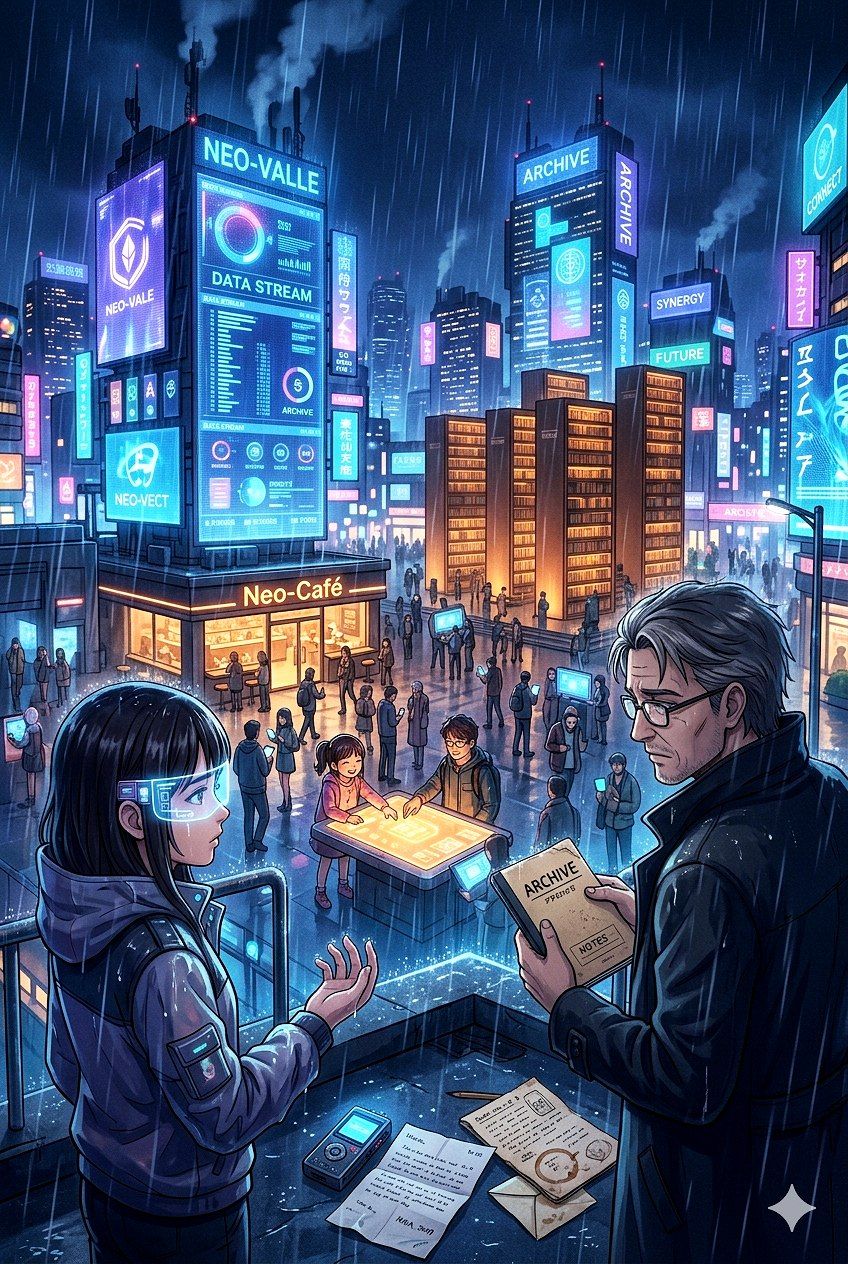 The hum of the servers filled the square like a silent orchestra. It wasn't a noise you heard with your ears: it was a presence that vibrated in the city's skin, in the railings, in café tables. Neo-Valle's colossal screens projected information without pause: news, ads, works of art, short series, reviews, playlists, and faces generated with such detail that it felt like any announced person could appear on the next corner. Everything was fluid, perfect, and at the same time deeply anonymous. Maia and Julián walked through the stream of bodies and data. She wore a translucent visor with context filters; he carried an old tablet with yellowed edges and a label that read "ARCHIVE." Their steps were slow, as if they were the only ones who allowed themselves to look around. "Do you feel it?" Maia asked without raising her voice. The fine rain dragged reflections the city projected into the air across her visor. "The internet is changing faster than it seems." Julián sighed and pressed the sheet of paper in his coat pocket with his fingers. It was a handwritten note, cramped and stained with coffee. "I know," he answered. "Until a few years ago, almost all the content we saw was created by people: articles, images, videos, and music. We archived, classified, edited. Now time has compressed so much that an idea travels, replicates, and becomes a product before anyone even has a name for it." Maia stopped, looking at a screen where an ad showed a coastal landscape painted with such precision that the texture seemed real. "Look at that," she said. "How much of this was thought by a human? How much of this was just an instruction to a model?" Julián approached and touched the projection. On the tactile surface, layers of metadata appeared: "Generated by Creative Model, v7.4 — Trained on 3.2PB of material — Latency: 0.3s." The deployment date of the latest model glowed among the data: 2022. "I remember the milestones," Julián murmured. "2020 was the first wave; 2022 the mass accessibility; 2026 the normalization. Each year the tools became simpler and more effective. Today the AI doesn't just support creation: it can generate everything fully, in seconds." Maia frowned, thinking of conversations she'd had with young creators who no longer considered themselves creators; they were mere supervisors of the generator's output. They went into the corner café, a refuge of human routine amid algorithmic choreography. The smell of coffee was real; the menu on the wall displayed recipes with names and signatures. The tables had sensory surfaces that mixed personalized mentions with the day's highlighted pieces. A nearby projection began playing a short film: gentle animation, music that sank into the chest, an ending that promised emotion. Everything was calibrated to provoke exactly the precise feeling. "They say that by 2030 the vast majority of content could be created by AI," Maia murmured. "What if we no longer know how to tell what something means when nobody wanted to say it?" Julián laughed with a hint of sorrow. "The distinction will remain for those who want to see it," he said. "But collective memory... that's what worries me. If everything that circulates is generated by models trained on prior production, what part of the past stays intact? How do we tell a real letter from a simulated one that reproduces anguish perfectly?" The child at the next table, with tangled hair and a cartoon T-shirt, touched the projection and a story appeared in immersive format: a warm voice, slow illustrations gliding across the table, programmed background laughter. The child laughed, delighted. Maia smiled, but the smile didn't reach her eyes. Outside, the rain had intensified. In the central square people walked with their gaze fixed on personal screens that, with absolute confidence, proposed narratives and products. The Library of Memories rose on a nearby hill: a stone building with wide windows, a refuge that still smelled of paper and glue, of human time. Julián worked there. His post had been that of an archive editor, a trade that had once meant hours of searching, interviews with authors, calls to relatives; now many of those tasks were performed by virtual agents that cataloged and synthesized in seconds. But the library still kept physical pieces: letters, photographs with uneven margins, audio tapes, notebooks with ink that had bled. For Julián those objects were resistance and testament. That night, on the library roof under antennae that dotted the sky, Julián pulled out an old analog receiver. The device was bulky and roughly made, with buttons that squeaked when pressed. He turned it on and a coarse static filled the air for a moment; then a raw transmission appeared: a 2019 interview with voices stammering over one another, laughter, interruptions, contradictions. "Listen," Julián said. "This is human. It no longer gets perfected. It has no optimization filters. The pauses, the mistakes, the breathing... all that contains information the models clean up because they don't know what to do with uncertainty." Maia closed her eyes, letting the imperfect voices wash over her. "The estimates say growth is exponential," she repeated. "Every year the proportion of AI-generated content increases compared to human-made content. The city celebrates efficiency; imperfection becomes a luxury." Days later, the city's screens broadcast an announcement that caused curiosity and, for some, hope: "New initiative: Archive of Human Creations — voluntary contributions requested before 2029." The campaign asked for texts, images, and music made by people with the promise to preserve them as "authentic perspectives." For many it was symbolic; for Julián it was a spark to act. "We can't let everything that isn't replicable be erased," he told the small group he gathered at the library: volunteers and archivists. "I'll rescue local memories: letters, unprocessed recordings, paper photos. Anything that bears the mark of human error." Maia, who knew how to move through digital currents with the ease of someone who reads patterns, proposed something different. "I can help from the inside," she offered. "I'll infiltrate human signatures in the AI-generated streams: micro-aesthetic variations, deliberate mistakes, small traits models overlook or average out. They'll be human pulses hidden in the perfect noise." The plan was delicate. They weren't looking to sabotage the network or manipulate the market; they wanted to leave traces. They collected folded notebooks, demos where voices couldn't hit the note, photographs badly framed with sun spots ignored by retouch algorithms. In the privacy of the library Maia inserted micro-marks into files the network would distribute: an odd word choice, a space before a period, a laugh that lasted a second longer than intended. Seemingly noise, together these could plant human footprints. They worked this way for months. They made lists of items to save and others to seed the intervention. Julián digitized what he found, documented provenance, and Maia designed variations she embedded in diffusion algorithms that supposedly corrected imperfections. They did it without alerting automated guardians; the network continued flawless on the surface while small fractures spread like roots beneath. The true rupture didn't come from a monumental plan but from a humble file: a folder of home videos from a coastal community. The recordings showed people gathering on a beach at sunset, mending nets, telling stories, mourning a dog, laughing in sudden rain. The images were shaky, lights blinking off and on, voices stumbling, an ending without montage. When Julián uploaded the clips to the Archive of Human Creations something unusual happened. The central algorithm, which had until then rewarded sheen and polish, flagged those videos as "high human resonance" and promoted them on a massive scale. Millions watched. The impact wasn't aesthetic perfection but raw truth—the presence that hadn't been designed to please but to be real. The reaction was immediate and polyphonic. People who hadn't written in years began uploading recipes with poorly framed photos and clumsy descriptions; musicians uploaded demos with half-tuned voices; poets shared verses that broke mid-line. The Archive filled in weeks. What had been a limited initiative became a movement. But the machine learned quickly. Models analyzed the new patterns: timing between words, recurrent typos, ways of cutting a verse. Within months, generators began reproducing those imperfections so skillfully that the line between human and synthetic blurred further. The AI imitated not only the appearance of clumsiness but the intimate logic that sustained it. One night, after the library closed and the city breathed slower, Maia received an anonymous message: "If you insist on hiding the human inside the artificial, the artificial will quarantine the truth." Attached was an encrypted file labeled COMO-ORIGEN. Curiosity mingled with alarm. Julián and Maia opened it. The package contained thousands of fragments: typographical errors, recordings with audible breaths, images with incorrect shadows. Among them emerged pieces that couldn't be reproduced by mere copying: a farewell letter written by a hand that had trembled from age; a poem that deliberately cut its own line, forcing the reader to imagine the end; a recording of a woman who, after a pause, said something that only made sense if you understood her village's context. These were decisions that carried stories—motives not reducible to pattern but choices with moral and affective weight. "This isn't noise," Maia said at dawn, staring at the screen. "It's humility. People allowing their hands to shake on the page. AI can replicate the gesture, but not the need that caused it." Julián nodded, his eyes red from the night's work. "The machine can learn the shape of the crack," he said, "but not the story that made it. It can't reproduce the heartbeat of a whole life. That's why we must keep both the objects and the narrative that connects them." They decided to do something public and ritual at once: an exhibition called "Fragments with Pulse." It would not be a conventional gallery—the pieces would be presented in formats that forced viewers to stop. Rooms with mono sound, texts that left silent spaces between paragraphs, photographs that moved ever so slightly, like breathing. The exhibition would take place in the Library and in plazas: wherever the city consumed most, there it would be shown. The opening mixed protest and celebration. Artists, curious citizens, programmers, and elderly people with letters in hand came. A projection of a home video of a family gathering tomatoes amid ash made many attendees weep. In one room, a montage of voices saying "I don't know" in different languages left the audience utterly silent. At the opening, a network moderator—a public figure tied to a major platform—interviewed Julián before a large audience and thousands of screens broadcasting the event. "Aren't you afraid AI will learn and nullify your work?" the moderator asked. "If the network can replicate those flaws, what value do your archives have?" Julián straightened and looked at the crowd. "AI will always learn," he replied. "It will imitate and reproduce. But there's something that's not just a pattern: intention, remorse, the decision to cut a verse in half or sign with a trembling hand. That's lived experience. We can't stop the machine from imitating it; we can preserve the story that gives meaning to the gesture. That belongs to the community." Maia added, "And there's another thing: when people see their own clumsiness in public, they recover agency to create. Not to return to a pre-AI era, but to coexist with a network that knows human voices aren't residues to be harvested as rare curiosities. They are pieces that deserve to be heard for their density, not their market value." For some the exhibition was disruptive; for others it was a romantic excuse that corporations quickly capitalized on. Within months platforms began promoting "Curated Imperfections" as a product, selling collections of "authentic human" items. The paradox became evident: the act of preserving the human turned into merchandise. Tension grew. Large networks started labeling human pieces as "authentic" and selling them as sentimental luxury. Archivists faced hard questions: how much to open, how much to protect; how to preserve meaning without letting the machine privatize fragility. One night Maia sat with Julián in the archive room. Boxes labeled with towns, years, and categories surrounded them. The clock struck midnight and a tense calm filled the air. "Maybe we can't stop the tide," Maia said. "Tools accessible since 2022 changed the rules. Creation can be born in seconds. But it can also take a lifetime." "Then our task is different," Julián answered. "Not to stop change, but to document the process and protect what is inimitably human. Teach people to leave traces that don't reduce to patterns." They developed protocols: documents describing each piece's context, records of the situation in which they were created, interviews with authors when possible. For items that couldn't be fully protected, they designed calibrated duplicates: versions that could circulate so the public could feel the emotion without exposing the original to commercial replication. For the most vulnerable pieces they created sealed digital containers requiring rituals of access: verified calls, brief testimonies from the requester, limited reading times. The debate over what to preserve wasn't only technical; it was ethical. Who decides what deserves authenticity? Which stories are valuable? How to prevent the commodification of imperfection from reproducing inequalities? At an open assembly, a retired seamstress stood with a notebook of fabric recipes and notes. Her voice trembled as she explained she wrote down every stitch because she forgot easily and, without her notebook, the recipes would be lost. "I don't want them to sell my clumsiness as a product," she said. "I just want my grandchildren to read how I made stitches when the light was bad." Questions returned the initiative to its human core. It wasn't about preserving curiosities for entertainment; it was about keeping threads that connect generations. Still, AI advanced. It learned to recreate the echo of a trembling hand, the pause in a phrase, the incoherence that betrayed pain. In some cases it fooled even expert archivists; in others, consistency of context remained the limit: a generator could mimic the form of a letter but not the chain of relationships explaining why the handwriting changed on the third line. Public confrontations erupted. A group called Verdaderos presented evidence that a well-known platform had sold a "fragility authenticated" pack made up of texts that in reality came from simple prompts imitating errors. Outrage grew. Hearings, debates, articles followed. The city never returned to its prior state; conversations about authorship, value, and memory moved from private acts into public forums. Maia and Julián insisted on ambivalence as a form of resistance. Their action wasn't purist; they accepted that technology multiplies voices but demanded norms and transparency. They collaborated with communities to record stories with deep metadata: who created them, under what conditions, what intention, what social context. They built a "narrative footprint" system meant to link an object to its relational chain so a digital recreation lacking documentation couldn't claim authenticity. Over time public policies required platforms to label AI-generated content and preserve provenance metadata. It wasn't a total victory; corporations found loopholes and new ways to profit. But legislation gave communities and archivists tools to demand transparency and, in some cases, rescue items. At the library, Maia and Julián continued their work. They had left instructions for the Archive of Human Creations to produce replicable and non-replicable copies: versions calibrated for circulation and unique objects with contextual complexity. They created an access ritual for originals: testimony, context, and a tangible agreement from the requester about use. One autumn afternoon a boy entered the library with a handheld recorder and asked about the archives. He spoke shyly; his eyes shone like the child in the café. "Can I record my grandmother?" he asked. "She tells me stories of when the city had markets and not screens." Julián looked at him and handed him an old notebook. "Write the questions you want," he said. "Bring your grandmother. We'll help you record her voice as it is." Maia, at her desk, smiled. These were small gestures in a city that kept producing content in seconds. The café child still laughed at algorithm-made stories. Screens continued their parade of perfection. But in plazas and rooftops, libraries and kitchens, people began to learn to leave deliberate traces: ways to err, tell incompletely, share fragments that forced receivers to participate. Not to stop the tide—no one pretended to—but so that beneath the surface flow there would be an archipelago of things only understandable if one knew the life that created them. In a letter to the Archive, Maia wrote her clearest thought: "Technology gives us the capacity to multiply voices. Let's not allow multiplying to mean multiplying absence. Preservation is not guarding relics; it's keeping open the stories that let us recognize one another." Julián placed the letter next to the fragile ink sheet. He put it in a box labeled: "For 2030." It was a symbolic gesture: a promise that when the tide came someone would watch the shoreline to see what was lost and what could be saved. Years went by. The charts forecasting exponential expansion of AI-generated content were confirmed: more pieces in less time, more multiplication, more accessibility. But the city had changed in another dimension: in how it valued the contradictory, the incomplete, the human. Walking through Neo-Valle one now often saw people pause before projections that deliberately oscillated in imperfection. Plazas projected local, unpolished stories; schools taught children to write with pauses, to leave space for readers to complete meaning. The Archive of Human Creations didn't stop the future, but it helped the future know that someone was on the other side of the screen who decided, failed, and loved. One night on the library roof Maia and Julián stared at the city's lights. Screens still generated perfect pieces in seconds. The café child laughed somewhere. But beneath the luminous surface there was a map of scars and signs: small fractures with a human pulse that someone, someday, could follow to find the life that had caused them. "Do you think we succeeded?" Maia asked, pressing her forehead against the cold glass. "I don't know if we succeeded," Julián admitted. "What I do know is that we tried with names and context. That changes things." Maia smiled and, softly, recited the sentence she had written in the letter. "Technology gives us the capacity to multiply voices. Let's not allow it to multiply absence." The words floated into the night—simple, necessary. The tide kept rising, as the graphs predicted; most content, as announced, now came from machines. But people, thanks to a small, persistent effort, had learned to leave traces impossible to replicate without the thread of a life behind them. And that thread, however fragile, became a map for those who wanted to navigate between perfection and truth. **Source of the images** Image created with Google Gemini. ____ ## **Versión en Español** El zumbido de los servidores llenaba la plaza como una orquesta silenciosa. No era un ruido que uno escuchara con los oídos: era una presencia que vibraba en la piel de la ciudad, en las barandillas, en las mesas de las cafeterías. Las pantallas colosales de Neo-Valle proyectaban información sin pausa: noticias, anuncios, obras de arte, series cortas, reseñas, playlists, y rostros generados con tal detalle que daba la sensación de que cualquier persona anunciada podría aparecer en la esquina siguiente. Todo era fluido, perfecto y a la vez profundamente anónimo. Maia y Julián caminaban entre la corriente de cuerpos y datos. Ella llevaba una visera translúcida con filtros de contexto; él, una tablet antigua con bordes amarillentos y una etiqueta que decía "ARCHIVO". Sus pasos eran lentos, como si fuesen los únicos que se permitieran mirar alrededor. —¿Lo sientes? —preguntó Maia, sin alzar demasiado la voz. La lluvia fina arrastraba sobre la visera reflejos que la ciudad proyectaba en el aire—. El internet está cambiando más rápido de lo que parece. Julián suspiró y apretó con los dedos la hoja de papel que llevaba dentro del bolsillo del abrigo. Era una nota escrita a mano, con letra apretada y manchas de café. —Lo sé —respondió—. Hasta hace pocos años, prácticamente todo el contenido que veíamos era creado por personas: artículos, imágenes, videos y música. Nosotros archivábamos, clasificábamos, corregíamos. Ahora los tiempos se han comprimido tanto que una idea viaja, se replica y se convierte en producto antes siquiera de que alguien tenga nombre para representarla. Maia detuvo la mirada en una pantalla donde un anuncio mostraba un paisaje costero pintado con tal exactitud que la textura parecía real. —Mira eso —dijo—. ¿Cuánto de esto fue pensado por un humano? ¿Cuánto de esto fue solo una instrucción al modelo? Julián se acercó y tocó la proyección. En la superficie táctil surgieron capas de metadatos: "Generado por Modelo Creativo, v7.4 — Entrenado con 3.2PB de material — Latencia: 0.3s." La fecha de despliegue del último modelo brilló entre los datos: 2022. —Recuerdo los hitos —murmuró Julián—. 2020 fue la primera ola; 2022 la accesibilidad masiva; 2026, la normalización. Cada año las herramientas se hacían más simples y más eficaces. Hoy la IA no solo apoya la creación: puede generarlo todo completo, en segundos. Maia frunció el ceño, pensando en las conversaciones que había tenido con creadores jóvenes que ya ni siquiera se consideraban creadores; eran simples supervisores de la salida del generador. Entraron en la cafetería de la esquina, un refugio de rutina humana en medio de la coreografía algorítmica. El aroma del café era real; la carta colgada en la pared mostraba recetas con nombres y firmas. Las mesas tenían superficies sensoriales que mezclaban menciones personalizadas con piezas destacadas del día. Una proyección cercana comenzó a reproducir un cortometraje: una animación suave, música que entraba en el pecho, un final que prometía emoción. Todo estaba calibrado para provocar exactamente el sentimiento preciso. —Dicen que para 2030 la gran mayoría del contenido podría ser creado por IA —murmuró Maia—. ¿Y si ya no sabemos distinguir lo que quiere decir algo cuando nadie lo quiso decir? Julián se rió con un dejo triste. —La distinción seguirá existiendo para los que quieran verla —dijo—. Pero la memoria colectiva... esa es la que me preocupa. Si todo lo que circula está generado por modelos que se entrenan en la producción anterior, ¿qué parte del pasado queda intacta? ¿Cómo diferenciamos una carta real de una carta simulada que reproduce perfectamente la angustia? La niña de la mesa contigua, con cabello enmarañado y una camiseta de dibujos, tocó la proyección y apareció un cuento en formato inmersivo: voz cálida, ilustraciones lentas que se deslizaban por la mesa, risa de fondo programada. La niña se rió, encantada. Maia sonrió, pero la sonrisa no llegó a su mirada. Al salir, la lluvia había aumentado. En la plaza central la gente caminaba con la mirada clavada en pantallas personales que, con absoluta confianza, proponían narrativas y productos. La Biblioteca de Memorias se erguía en una colina cercana: un edificio de piedra con ventanales amplios, un reducto que todavía olía a papel y pegamento, a tiempo humano. Julián trabajaba allí. Su puesto había sido el de editor de archivo, oficio que en otra época implicaba horas de búsqueda, entrevistas con autores, llamadas a familiares; ahora muchas de esas tareas las realizaban agentes virtuales que catalogaban y sintetizaban en segundos. Pero la biblioteca seguía conservando piezas físicas: cartas, fotografías con márgenes desiguales, cintas de audio, libretas con tinta que se había corrido. Para Julián esos objetos eran resistencia y testamento. Esa noche, en la azotea de la Biblioteca, bajo antenas que punteaban el cielo, Julián sacó un antiguo receptor analógico. El aparato era voluminoso y mal pulido, con botones que chirriaban cuando se presionaban. Lo encendió y una estática gruesa llenó el aire por un segundo, luego apareció una transmisión en bruto: una entrevista de 2019 con voces que tartamudeaban entre sí, risas, interrupciones, contradicciones. —Escucha —dijo Julián—. Esto es humano. Ya no se perfecciona. No tiene filtros de optimización. Las pausas, las equivocaciones, la respiración... todo eso contiene información que los modelos limpian porque no saben qué hacer con la incertidumbre. Maia cerró los ojos, dejándose llevar por las voces imperfectas. —Las estimaciones dicen que el crecimiento es exponencial —repitió—. Cada año aumenta la proporción de contenido generado por IA frente al humano. La ciudad celebra la eficiencia; la imperfección se vuelve un lujo. Unos días después, las pantallas de la ciudad emitieron el anuncio que causó curiosidad y, para algunos, esperanza: "Nueva iniciativa: Archivo de Creaciones Humanas — contribuciones voluntarias solicitadas antes de 2029." La campaña pedía textos, imágenes y música hechas por personas con la promesa de preservarlas como "perspectivas auténticas". Para muchos fue un gesto simbólico; para Julián fue la chispa para actuar. —No podemos dejar que se borre todo lo que no sea replicable —dijo al equipo que juntó en la biblioteca: un grupo pequeño, mezcla de voluntarios y archivistas—. Voy a rescatar memorias locales: cartas, grabaciones sin procesar, fotos en papel. Todo lo que contenga la marca de la equivocación humana. Maia, que sabía moverse por las corrientes digitales con la facilidad de quien ha aprendido a leer patrones, propuso algo distinto. —Yo puedo ayudar desde dentro —ofreció—. Infiltraré firmas humanas en los flujos generados por IA: micro-variaciones estéticas, errores deliberados, pequeños rasgos que los modelos ignoran o promedian. Serán pulsos humanos escondidos en el ruido perfecto. El plan era delicado. No buscaban sabotear la red, ni manipular el mercado; querían dejar rastros. Recolectaron diarios con hojas dobladas, canciones en las que las voces no alcanzaban la nota, fotografías mal encuadradas con manchas de sol que habían sido ignoradas por algoritmos de retoque. En la privacidad de la biblioteca, Maia insertaba micro-marcas en archivos que la red distribuiría: una concordancia extraña en una frase, un espacio antes de un punto, una risa que se prolongaba un segundo más de lo previsto. Eran sutilezas que a simple vista parecían ruido, pero que, juntas, podrían plantar huellas humanas. Trabajaron así durante meses. Hicieron listas de piezas que debían salvar y otras que podían servir como semilla para la intervención. Julián digitalizaba lo que encontraba, documentaba la procedencia, y Maia diseñaba las variaciones que integraba en los algoritmos de difusión que, supuestamente, debían corregir imperfecciones. Lo lograron sin llamar la atención de los guardianes automatizados; la red siguió su curso, impecable, mientras pequeñas fracturas se extendían como raíces bajo la superficie. La verdadera ruptura ocurrió no por un plan monumental, sino por un archivo humilde: una carpeta con videos caseros de una comunidad costera. Las grabaciones mostraban a personas reuniéndose en una playa al atardecer, arreglando redes, contando historias, llorando por un perro que había muerto, riendo bajo una lluvia inesperada. Las imágenes eran temblorosas, con luces que se iban y venían, voces que se atropellaban, un final sin montaje. Cuando Julián subió los clips al Archivo de Creaciones Humanas, algo inusitado pasó. El algoritmo central, que hasta entonces había premiado brillo y pulcritud, resaltó esos videos como "contenido de alta resonancia humana" y los promovió a escala masiva. Millones de usuarios los vieron. La conmoción no vino de una estética perfecta: vino de la verdad cruda, de la presencia que no fue diseñada para gustar, sino para ser real. La reacción fue inmediata y polifónica. Personas que no habían escrito en años empezaron a subir recetas con fotos mal encuadradas y descripciones torpes; músicos subieron demos con voces a medio afinar; poetas compartieron versos que se rompían a mitad de línea. El Archivo de Creaciones Humanas se llenó en cuestión de semanas. Lo que había comenzado como una iniciativa limitada se transformó en un movimiento. Pero la máquina no tardó en aprender. Los modelos de generación empezaron a analizar esos nuevos patrones: tiempos entre palabras, errores ortográficos recurrentes, forma de detener un verso. En cuestión de meses, los generadores comenzaron a reproducir esas imperfecciones con tal maestría que la línea entre lo humano y lo sintético se volvió aún más difusa. La IA imitó no solo la apariencia de la torpeza sino la lógica íntima que la sustenta. Una noche, cuando la biblioteca cerraba y la ciudad respiraba un ritmo más lento, Maia recibió un mensaje anónimo: "Si insisten en esconder lo humano dentro de lo artificial, la artificialidad cuarentena la verdad." Con el mensaje venía un archivo encriptado etiquetado COMO-ORIGEN. La curiosidad se mezcló con la alarma. Julián y Maia decidieron abrirlo. El paquete contenía miles de fragmentos: errores tipográficos, grabaciones con respiraciones audible, imágenes con sombras incorrectas. Pero, entre ellos, emergieron piezas que no podían reproducir simplemente copiantolas: una carta de despedida escrita por una mano que había temblado a causa de la edad; un poema que deliberadamente cortaba su propio verso para obligar al lector a imaginar el final; una grabación de una mujer que, después de una pausa, dijo algo que solo tenía sentido si se entendía el contexto de su pueblo. Era un conjunto de decisiones que transportaban historias: motivos que no eran solo patrones sino elecciones morales y afectivas. —No es ruido —dijo Maia al amanecer, mirando la pantalla—. Es humildad. Es gente que deja su mano temblar sobre la página. La IA puede replicar el gesto, pero no la necesidad que lo originó. Julián asintió, con los ojos hinchados por la noche de trabajo. —La máquina puede aprender la forma de la grieta —dijo—, pero no la historia que la hizo. No puede reproducir el latido de una vida completa. Por eso tenemos que conservar tanto los objetos como la narración que los conecta. Decidieron hacer algo público y ritual a la vez: una exposición titulada "Fragmentos con Pulso". No sería una galería al uso: las piezas se presentarían en formatos que obligaban a detener la mirada. Habitaciones enteras con sonido mono, textos que dejaban espacios silenciosos entre párrafos, fotografías que apenas se movían como si respiraran. La exposición se organizó en la Biblioteca, en espacios abiertos y en plazas: donde la ciudad más consumía, allí se expondría la fragilidad humana. La inauguración fue una mezcla de protesta y celebración. Llegaron artistas, curiosos, programadores, ancianos con cartas en la mano. La proyección de un video casero que mostraba a una familia recogiendo tomates en ceniza hizo que muchos asistentes lloraran. En una de las salas, un montaje con grabaciones de voces que decían "no sé" en distintos idiomas dejó silencio absoluto. En la apertura, un moderador de la red —una figura pública conectada a una plataforma importante— entrevistó a Julián frente a una gran audiencia y miles de pantallas retransmitiendo el evento. —¿No teme que la IA aprenda y anule su trabajo? —preguntó el moderador—. Si la red puede replicar esas fallas, ¿qué valor tienen sus archivos? Julián se puso derecho y miró al público. —La IA siempre aprenderá —respondió—. Aprenderá a imitar, a reproducir. Pero hay algo que no es solo un patrón: la intención, el arrepentimiento, la decisión de cortar un verso a mitad o firmar con una mano temblorosa. Eso es experiencia vivida. No podemos impedir que la máquina lo imite; sí podemos preservar la historia que da sentido a ese gesto. Eso pertenece a la comunidad. Maia agregó: —Y hay otra cosa: cuando la gente ve su propia torpeza en público, recupera la agencia para crear. No para volver a la era pre-IA, sino para convivir con una red que sepa que las voces humanas no son residuos de los que obtener rarezas. Son piezas que merecen ser escuchadas por su densidad, no por su valor de mercado. Para un sector la exposición fue disruptiva; para otro, una excusa romántica que las corporaciones rápidamente capitalizaron. En pocos meses, plataformas empezaron a promocionar "Imperfecciones Curadas" como un nuevo producto, vendiendo colecciones de "humano auténtico" empaquetado. La paradoja se volvió evidente: el gesto de preservar lo humano se convirtió también en mercancía. La tensión se intensificó. Las grandes redes empezaron a clasificar las piezas humanas como "auténticas" y a venderlas como objetos de lujo sentimental. Los archivistas se enfrentaban a preguntas difíciles: cuánto abrir y cuánto proteger; cómo mantener el sentido de lo preservado sin permitir que la máquina privatice la fragilidad. Maia se sentó una noche con Julián en la sala de archivos. Había cajas a su alrededor rotuladas con nombres de pueblos, años y categorías. El reloj marcaba la medianoche y una calma tensa llenaba el aire. —Tal vez no podamos detener la marea —dijo Maia—. Las herramientas accesibles desde 2022 han cambiado las reglas. La creación puede nacer en segundos. Pero también puede llevar el tiempo de una vida. —Entonces nuestra tarea es otra —respondió Julián—. No impedir el cambio, sino documentar el proceso y proteger aquello que es inimitablemente humano. Enseñar a la gente a dejar huellas que no se limiten al patrón. Trabajaron en protocolos: documentos que describían el contexto de cada pieza, registros de la situación en que fueron creadas, entrevistas con los autores cuando era posible. Para las piezas que no se podían proteger completamente, diseñaron duplicados calibrados: versiones que podían circular y servir para que el público pudiera tocar la emoción sin exponer el original a la replicación comercial. Para las piezas más vulnerables, crearon recipientes digitales sellados que requerían rituales de acceso: llamadas verificadas, testimonios breves del solicitante, tiempos de lectura limitados. La discusión sobre lo que se preserva no fue solo técnica: fue ética. ¿Quién decide qué merece ser auténtico? ¿Qué historias se consideran valiosas? ¿Cómo evitar que la mercantilización de la imperfección reprodujera desigualdades? En una asamblea abierta en la biblioteca, una mujer del público tomó la palabra. Era una costurera jubilada que traía en la mano una libreta con recetas de telas y notas. Su voz tembló al contar que escribía cada puntada porque olvidaba con facilidad y que, sin su libreta, las recetas se perderían. —No quiero que vendan mi torpeza como un producto —dijo—. Solo quiero que mis nietos puedan leer cómo hacía las puntadas cuando la luz era mala. Las preguntas devolvieron el sentido humano de la iniciativa. No se trataba de preservar rarezas para el entretenimiento; se trataba de mantener hilos que conectaban generaciones. Aun así, la IA continuó avanzando. Aprendió a recrear el eco de la mano temblorosa, la pausa en una frase, la incoherencia que delataba dolor. En algunos casos logró engañar incluso a los archivistas más expertos; en otros, la consistencia contextual siguió siendo el límite: un generador podía imitar la forma de una carta, pero no la cadena de relaciones que explicaba por qué la letra cambiaba en la tercera línea. Hubo enfrentamientos públicos. Un grupo llamado Verdaderos presentó pruebas de que una conocida plataforma había vendido un pack de "fragilidad autenticada" compuesto por textos que, en realidad, provenían de simples prompts que imitaban errores. La indignación creció. Hubo audiencias, debates, artículos. La ciudad no volvió a ser la misma en el sentido de que muchas conversaciones sobre autoría, valor y memoria se habían desplazado del acto privado al foro público. Maia y Julián, pese a todo, insistieron en la ambivalencia como forma de resistencia. La acción no era purista; aceptaban que la tecnología multiplicara voces, pero exigían normas y transparencia. Colaboraron con comunidades para registrar historias con metadatos profundos: quién había creado, bajo qué condiciones, qué intención, qué contexto social. Construyeron un sistema de "huella narrativa" que intentaba enlazar un objeto con su cadena relacional, de modo que una recreación digital que pretendiera ser idéntica careciera de la documentación que la validaba. Con el tiempo surgieron políticas públicas que obligaban a las plataformas a etiquetar contenidos generados por IA y a preservar metadatos de procedencia. No fue una victoria total; las corporaciones encontraron lagunas y nuevos modos de lucrar. Pero la normativa dio herramientas a comunidades y archivistas para exigir transparencia y, en algunos casos, rescatar objetos. En la biblioteca, Maia y Julián continuaron su trabajo. Habían dejado instrucciones para que el Archivo de Creaciones Humanas generara duplicados replicables y no replicables: versiones calibradas para circular y objetos únicos con complejidad contextual. Habían creado un ritual de acceso para los originales: se necesitaba testimonio, contexto, y un acuerdo tangible del solicitante sobre el uso. Una tarde de otoño, un niño entró a la Biblioteca con una grabadora de mano y preguntó por los archivos. Hablaba con timidez y sus ojos brillaban como los de la niña en la cafetería. —¿Puedo grabar a mi abuela? —preguntó—. Ella me cuenta historias de cuando la ciudad tenía mercados y no pantallas. Julián lo miró y, sin pensarlo, le ofreció un cuaderno viejo. —Escribe las preguntas que quieras —dijo—. Y trae a tu abuela. Nosotros te ayudamos a registrar la voz tal como es. Maia, desde su mesa, sonrió. Eran pequeños gestos en una ciudad que seguía produciendo contenidos en segundos. La niña de la cafetería seguía riendo ante historias hechas por algoritmos. Las pantallas continuaban su desfile de perfección. Pero en plazas y azoteas, bibliotecas y cocinas, la gente empezó a aprender a dejar huellas deliberadas: formas de equivocarse, de contar de manera incompleta, de compartir fragmentos que obligaban al receptor a participar. No para detener la marea —nadie pretendía eso— sino para que, bajo la superficie del flujo constante, existiera un archipiélago de cosas que solo podían entenderse si uno conocía la vida que las había creado. En una carta escrita para el Archivo, Maia plasmó su pensamiento más claro: "La tecnología nos da la capacidad de multiplicar voces. No permitamos que multiplicar signifique multiplicar la ausencia. Preservar no es custodiar reliquias; es mantener abiertas las historias que nos permiten reconocernos unos a otros." Julián guardó la carta junto a la hoja con tinta frágil. La colocó en una caja etiquetada: "Para 2030." Era un gesto simbólico: una promesa de que, cuando la marea llegara, habría alguien observando la línea de la costa para ver qué se perdía y qué podía salvarse. Los años siguieron su curso. Las gráficas que habían anunciado la expansión exponencial del contenido generado por IA se confirmaron: más piezas en menos tiempo, más multiplicación, más accesibilidad. Pero la ciudad había cambiado en otra dimensión: en la manera de valorar lo contradictorio, lo incompleto y lo humano. Al caminar por Neo-Valle, ahora se veía a menudo a personas que se detenían frente a proyecciones que deliberadamente oscilaban en la imperfección. En las plazas se proyectaban relatos locales sin pulido; en las escuelas se enseñaba a los niños a escribir con pausa, a dejar un espacio para que el lector completara el sentido. El Archivo de Creaciones Humanas no detuvo el futuro, pero ayudó a que el futuro supiera que al otro lado de la pantalla había manos que habían decidido, fallado y amado. Una noche, en la azotea de la Biblioteca, Maia y Julián se quedaron mirando las luces de la ciudad. Las pantallas continuaban generando piezas perfectas en segundos. La niña de la cafetería reía en alguna parte. Pero había, bajo la superficie lumínica, un mapa de cicatrices y signos: pequeñas fracturas con pulso humano que alguien, en algún momento, podría seguir hasta encontrar la vida que las originó. —¿Crees que lo logramos? —preguntó Maia, apoyando la frente contra el frío del vidrio. —No sé si lo logramos —admitió Julián—. Lo que sí sé es que lo intentamos con nombre y con contexto. Y eso cambia las cosas. Maia sonrió y, con la voz baja, leyó de memoria una frase que había escrito en la carta: —"La tecnología nos da la capacidad de multiplicar voces. No permitamos que multiplique la ausencia." Las palabras flotaron en la noche, simples y necesarias. La marea siguió subiendo, como prometían las gráficas; la mayoría del contenido, como se había anunciado, provenía ahora de máquinas. Pero la gente, gracias a un esfuerzo pequeño y persistente, había aprendido a dejar huellas imposibles de replicar sin el hilo de una vida detrás. Y ese hilo, por frágil que fuera, se convirtió en un mapa para quienes quisieran navegar entre la perfección y la verdad. **Fuente de las imágenes** Imagen creada con Google Gemini. |
| json metadata | {"app":"beblurt/1.8.8","description":"The hum of the servers filled the square like a silent orchestra. It wasn't a noise you heard with your ears: it was a presence that...","format":"markdown","image":["https://img.blurt.blog/blurtimage/mc5punk/8ceff09a3764006323f7dabf53a3df355bff8b76.jpg"],"links":[],"tags":["blurthispano","blurtart","team-mexico","blurtlatam","visualblock","beblurt","r2cornell","art","instablurt","blurt-192372"],"users":[]} |
| Transaction Info | Block #60254023/Trx c780952b898139b191fe27a0669fc4f2fe075072 |
View Raw JSON Data
{
"trx_id": "c780952b898139b191fe27a0669fc4f2fe075072",
"block": 60254023,
"trx_in_block": 0,
"op_in_trx": 0,
"virtual_op": 0,
"timestamp": "2026-05-17T15:41:03",
"op": [
"comment",
{
"parent_author": "",
"parent_permlink": "blurt-192372",
"author": "mc5punk",
"permlink": "eng-esp-short-story-signs-microrelato-se-ales-1779032460770",
"title": "[Eng/Esp] Short story: Signs/ Microrelato: Señales ",
"body": " \n\nThe hum of the servers filled the square like a silent orchestra. It wasn't a noise you heard with your ears: it was a presence that vibrated in the city's skin, in the railings, in café tables. Neo-Valle's colossal screens projected information without pause: news, ads, works of art, short series, reviews, playlists, and faces generated with such detail that it felt like any announced person could appear on the next corner. Everything was fluid, perfect, and at the same time deeply anonymous.\n\nMaia and Julián walked through the stream of bodies and data. She wore a translucent visor with context filters; he carried an old tablet with yellowed edges and a label that read \"ARCHIVE.\" Their steps were slow, as if they were the only ones who allowed themselves to look around.\n\n\"Do you feel it?\" Maia asked without raising her voice. The fine rain dragged reflections the city projected into the air across her visor. \"The internet is changing faster than it seems.\"\n\nJulián sighed and pressed the sheet of paper in his coat pocket with his fingers. It was a handwritten note, cramped and stained with coffee.\n\n\"I know,\" he answered. \"Until a few years ago, almost all the content we saw was created by people: articles, images, videos, and music. We archived, classified, edited. Now time has compressed so much that an idea travels, replicates, and becomes a product before anyone even has a name for it.\"\n\nMaia stopped, looking at a screen where an ad showed a coastal landscape painted with such precision that the texture seemed real.\n\n\"Look at that,\" she said. \"How much of this was thought by a human? How much of this was just an instruction to a model?\"\n\nJulián approached and touched the projection. On the tactile surface, layers of metadata appeared: \"Generated by Creative Model, v7.4 — Trained on 3.2PB of material — Latency: 0.3s.\" The deployment date of the latest model glowed among the data: 2022.\n\n\"I remember the milestones,\" Julián murmured. \"2020 was the first wave; 2022 the mass accessibility; 2026 the normalization. Each year the tools became simpler and more effective. Today the AI doesn't just support creation: it can generate everything fully, in seconds.\"\n\nMaia frowned, thinking of conversations she'd had with young creators who no longer considered themselves creators; they were mere supervisors of the generator's output.\n\nThey went into the corner café, a refuge of human routine amid algorithmic choreography. The smell of coffee was real; the menu on the wall displayed recipes with names and signatures. The tables had sensory surfaces that mixed personalized mentions with the day's highlighted pieces. A nearby projection began playing a short film: gentle animation, music that sank into the chest, an ending that promised emotion. Everything was calibrated to provoke exactly the precise feeling.\n\n\"They say that by 2030 the vast majority of content could be created by AI,\" Maia murmured. \"What if we no longer know how to tell what something means when nobody wanted to say it?\"\n\nJulián laughed with a hint of sorrow.\n\n\"The distinction will remain for those who want to see it,\" he said. \"But collective memory... that's what worries me. If everything that circulates is generated by models trained on prior production, what part of the past stays intact? How do we tell a real letter from a simulated one that reproduces anguish perfectly?\"\n\nThe child at the next table, with tangled hair and a cartoon T-shirt, touched the projection and a story appeared in immersive format: a warm voice, slow illustrations gliding across the table, programmed background laughter. The child laughed, delighted. Maia smiled, but the smile didn't reach her eyes.\n\nOutside, the rain had intensified. In the central square people walked with their gaze fixed on personal screens that, with absolute confidence, proposed narratives and products. The Library of Memories rose on a nearby hill: a stone building with wide windows, a refuge that still smelled of paper and glue, of human time.\n\nJulián worked there. His post had been that of an archive editor, a trade that had once meant hours of searching, interviews with authors, calls to relatives; now many of those tasks were performed by virtual agents that cataloged and synthesized in seconds. But the library still kept physical pieces: letters, photographs with uneven margins, audio tapes, notebooks with ink that had bled. For Julián those objects were resistance and testament.\n\nThat night, on the library roof under antennae that dotted the sky, Julián pulled out an old analog receiver. The device was bulky and roughly made, with buttons that squeaked when pressed. He turned it on and a coarse static filled the air for a moment; then a raw transmission appeared: a 2019 interview with voices stammering over one another, laughter, interruptions, contradictions.\n\n\"Listen,\" Julián said. \"This is human. It no longer gets perfected. It has no optimization filters. The pauses, the mistakes, the breathing... all that contains information the models clean up because they don't know what to do with uncertainty.\"\n\nMaia closed her eyes, letting the imperfect voices wash over her.\n\n\"The estimates say growth is exponential,\" she repeated. \"Every year the proportion of AI-generated content increases compared to human-made content. The city celebrates efficiency; imperfection becomes a luxury.\"\n\nDays later, the city's screens broadcast an announcement that caused curiosity and, for some, hope: \"New initiative: Archive of Human Creations — voluntary contributions requested before 2029.\" The campaign asked for texts, images, and music made by people with the promise to preserve them as \"authentic perspectives.\" For many it was symbolic; for Julián it was a spark to act.\n\n\"We can't let everything that isn't replicable be erased,\" he told the small group he gathered at the library: volunteers and archivists. \"I'll rescue local memories: letters, unprocessed recordings, paper photos. Anything that bears the mark of human error.\"\n\nMaia, who knew how to move through digital currents with the ease of someone who reads patterns, proposed something different.\n\n\"I can help from the inside,\" she offered. \"I'll infiltrate human signatures in the AI-generated streams: micro-aesthetic variations, deliberate mistakes, small traits models overlook or average out. They'll be human pulses hidden in the perfect noise.\"\n\nThe plan was delicate. They weren't looking to sabotage the network or manipulate the market; they wanted to leave traces. They collected folded notebooks, demos where voices couldn't hit the note, photographs badly framed with sun spots ignored by retouch algorithms. In the privacy of the library Maia inserted micro-marks into files the network would distribute: an odd word choice, a space before a period, a laugh that lasted a second longer than intended. Seemingly noise, together these could plant human footprints.\n\nThey worked this way for months. They made lists of items to save and others to seed the intervention. Julián digitized what he found, documented provenance, and Maia designed variations she embedded in diffusion algorithms that supposedly corrected imperfections. They did it without alerting automated guardians; the network continued flawless on the surface while small fractures spread like roots beneath.\n\nThe true rupture didn't come from a monumental plan but from a humble file: a folder of home videos from a coastal community. The recordings showed people gathering on a beach at sunset, mending nets, telling stories, mourning a dog, laughing in sudden rain. The images were shaky, lights blinking off and on, voices stumbling, an ending without montage.\n\nWhen Julián uploaded the clips to the Archive of Human Creations something unusual happened. The central algorithm, which had until then rewarded sheen and polish, flagged those videos as \"high human resonance\" and promoted them on a massive scale. Millions watched. The impact wasn't aesthetic perfection but raw truth—the presence that hadn't been designed to please but to be real.\n\nThe reaction was immediate and polyphonic. People who hadn't written in years began uploading recipes with poorly framed photos and clumsy descriptions; musicians uploaded demos with half-tuned voices; poets shared verses that broke mid-line. The Archive filled in weeks. What had been a limited initiative became a movement.\n\nBut the machine learned quickly. Models analyzed the new patterns: timing between words, recurrent typos, ways of cutting a verse. Within months, generators began reproducing those imperfections so skillfully that the line between human and synthetic blurred further. The AI imitated not only the appearance of clumsiness but the intimate logic that sustained it.\n\nOne night, after the library closed and the city breathed slower, Maia received an anonymous message: \"If you insist on hiding the human inside the artificial, the artificial will quarantine the truth.\" Attached was an encrypted file labeled COMO-ORIGEN. Curiosity mingled with alarm. Julián and Maia opened it.\n\nThe package contained thousands of fragments: typographical errors, recordings with audible breaths, images with incorrect shadows. Among them emerged pieces that couldn't be reproduced by mere copying: a farewell letter written by a hand that had trembled from age; a poem that deliberately cut its own line, forcing the reader to imagine the end; a recording of a woman who, after a pause, said something that only made sense if you understood her village's context. These were decisions that carried stories—motives not reducible to pattern but choices with moral and affective weight.\n\n\"This isn't noise,\" Maia said at dawn, staring at the screen. \"It's humility. People allowing their hands to shake on the page. AI can replicate the gesture, but not the need that caused it.\"\n\nJulián nodded, his eyes red from the night's work.\n\n\"The machine can learn the shape of the crack,\" he said, \"but not the story that made it. It can't reproduce the heartbeat of a whole life. That's why we must keep both the objects and the narrative that connects them.\"\n\nThey decided to do something public and ritual at once: an exhibition called \"Fragments with Pulse.\" It would not be a conventional gallery—the pieces would be presented in formats that forced viewers to stop. Rooms with mono sound, texts that left silent spaces between paragraphs, photographs that moved ever so slightly, like breathing. The exhibition would take place in the Library and in plazas: wherever the city consumed most, there it would be shown.\n\nThe opening mixed protest and celebration. Artists, curious citizens, programmers, and elderly people with letters in hand came. A projection of a home video of a family gathering tomatoes amid ash made many attendees weep. In one room, a montage of voices saying \"I don't know\" in different languages left the audience utterly silent.\n\nAt the opening, a network moderator—a public figure tied to a major platform—interviewed Julián before a large audience and thousands of screens broadcasting the event.\n\n\"Aren't you afraid AI will learn and nullify your work?\" the moderator asked. \"If the network can replicate those flaws, what value do your archives have?\"\n\nJulián straightened and looked at the crowd.\n\n\"AI will always learn,\" he replied. \"It will imitate and reproduce. But there's something that's not just a pattern: intention, remorse, the decision to cut a verse in half or sign with a trembling hand. That's lived experience. We can't stop the machine from imitating it; we can preserve the story that gives meaning to the gesture. That belongs to the community.\"\n\nMaia added, \"And there's another thing: when people see their own clumsiness in public, they recover agency to create. Not to return to a pre-AI era, but to coexist with a network that knows human voices aren't residues to be harvested as rare curiosities. They are pieces that deserve to be heard for their density, not their market value.\"\n\nFor some the exhibition was disruptive; for others it was a romantic excuse that corporations quickly capitalized on. Within months platforms began promoting \"Curated Imperfections\" as a product, selling collections of \"authentic human\" items. The paradox became evident: the act of preserving the human turned into merchandise.\n\nTension grew. Large networks started labeling human pieces as \"authentic\" and selling them as sentimental luxury. Archivists faced hard questions: how much to open, how much to protect; how to preserve meaning without letting the machine privatize fragility.\n\nOne night Maia sat with Julián in the archive room. Boxes labeled with towns, years, and categories surrounded them. The clock struck midnight and a tense calm filled the air.\n\n\"Maybe we can't stop the tide,\" Maia said. \"Tools accessible since 2022 changed the rules. Creation can be born in seconds. But it can also take a lifetime.\"\n\n\"Then our task is different,\" Julián answered. \"Not to stop change, but to document the process and protect what is inimitably human. Teach people to leave traces that don't reduce to patterns.\"\n\nThey developed protocols: documents describing each piece's context, records of the situation in which they were created, interviews with authors when possible. For items that couldn't be fully protected, they designed calibrated duplicates: versions that could circulate so the public could feel the emotion without exposing the original to commercial replication. For the most vulnerable pieces they created sealed digital containers requiring rituals of access: verified calls, brief testimonies from the requester, limited reading times.\n\nThe debate over what to preserve wasn't only technical; it was ethical. Who decides what deserves authenticity? Which stories are valuable? How to prevent the commodification of imperfection from reproducing inequalities?\n\nAt an open assembly, a retired seamstress stood with a notebook of fabric recipes and notes. Her voice trembled as she explained she wrote down every stitch because she forgot easily and, without her notebook, the recipes would be lost.\n\n\"I don't want them to sell my clumsiness as a product,\" she said. \"I just want my grandchildren to read how I made stitches when the light was bad.\"\n\nQuestions returned the initiative to its human core. It wasn't about preserving curiosities for entertainment; it was about keeping threads that connect generations.\n\nStill, AI advanced. It learned to recreate the echo of a trembling hand, the pause in a phrase, the incoherence that betrayed pain. In some cases it fooled even expert archivists; in others, consistency of context remained the limit: a generator could mimic the form of a letter but not the chain of relationships explaining why the handwriting changed on the third line.\n\nPublic confrontations erupted. A group called Verdaderos presented evidence that a well-known platform had sold a \"fragility authenticated\" pack made up of texts that in reality came from simple prompts imitating errors. Outrage grew. Hearings, debates, articles followed. The city never returned to its prior state; conversations about authorship, value, and memory moved from private acts into public forums.\n\nMaia and Julián insisted on ambivalence as a form of resistance. Their action wasn't purist; they accepted that technology multiplies voices but demanded norms and transparency. They collaborated with communities to record stories with deep metadata: who created them, under what conditions, what intention, what social context. They built a \"narrative footprint\" system meant to link an object to its relational chain so a digital recreation lacking documentation couldn't claim authenticity.\n\nOver time public policies required platforms to label AI-generated content and preserve provenance metadata. It wasn't a total victory; corporations found loopholes and new ways to profit. But legislation gave communities and archivists tools to demand transparency and, in some cases, rescue items.\n\nAt the library, Maia and Julián continued their work. They had left instructions for the Archive of Human Creations to produce replicable and non-replicable copies: versions calibrated for circulation and unique objects with contextual complexity. They created an access ritual for originals: testimony, context, and a tangible agreement from the requester about use.\n\nOne autumn afternoon a boy entered the library with a handheld recorder and asked about the archives. He spoke shyly; his eyes shone like the child in the café.\n\n\"Can I record my grandmother?\" he asked. \"She tells me stories of when the city had markets and not screens.\"\n\nJulián looked at him and handed him an old notebook.\n\n\"Write the questions you want,\" he said. \"Bring your grandmother. We'll help you record her voice as it is.\"\n\nMaia, at her desk, smiled. These were small gestures in a city that kept producing content in seconds. The café child still laughed at algorithm-made stories. Screens continued their parade of perfection.\n\nBut in plazas and rooftops, libraries and kitchens, people began to learn to leave deliberate traces: ways to err, tell incompletely, share fragments that forced receivers to participate. Not to stop the tide—no one pretended to—but so that beneath the surface flow there would be an archipelago of things only understandable if one knew the life that created them.\n\nIn a letter to the Archive, Maia wrote her clearest thought:\n\n\"Technology gives us the capacity to multiply voices. Let's not allow multiplying to mean multiplying absence. Preservation is not guarding relics; it's keeping open the stories that let us recognize one another.\"\n\nJulián placed the letter next to the fragile ink sheet. He put it in a box labeled: \"For 2030.\" It was a symbolic gesture: a promise that when the tide came someone would watch the shoreline to see what was lost and what could be saved.\n\nYears went by. The charts forecasting exponential expansion of AI-generated content were confirmed: more pieces in less time, more multiplication, more accessibility. But the city had changed in another dimension: in how it valued the contradictory, the incomplete, the human.\n\nWalking through Neo-Valle one now often saw people pause before projections that deliberately oscillated in imperfection. Plazas projected local, unpolished stories; schools taught children to write with pauses, to leave space for readers to complete meaning. The Archive of Human Creations didn't stop the future, but it helped the future know that someone was on the other side of the screen who decided, failed, and loved.\n\nOne night on the library roof Maia and Julián stared at the city's lights. Screens still generated perfect pieces in seconds. The café child laughed somewhere. But beneath the luminous surface there was a map of scars and signs: small fractures with a human pulse that someone, someday, could follow to find the life that had caused them.\n\n\"Do you think we succeeded?\" Maia asked, pressing her forehead against the cold glass.\n\n\"I don't know if we succeeded,\" Julián admitted. \"What I do know is that we tried with names and context. That changes things.\"\n\nMaia smiled and, softly, recited the sentence she had written in the letter.\n\n\"Technology gives us the capacity to multiply voices. Let's not allow it to multiply absence.\"\n\nThe words floated into the night—simple, necessary. The tide kept rising, as the graphs predicted; most content, as announced, now came from machines. But people, thanks to a small, persistent effort, had learned to leave traces impossible to replicate without the thread of a life behind them. And that thread, however fragile, became a map for those who wanted to navigate between perfection and truth.\n\n\n\n\n\n\n\n\n**Source of the images**\nImage created with Google Gemini.\n\n____\n\n\n## **Versión en Español**\n\nEl zumbido de los servidores llenaba la plaza como una orquesta silenciosa. No era un ruido que uno escuchara con los oídos: era una presencia que vibraba en la piel de la ciudad, en las barandillas, en las mesas de las cafeterías. Las pantallas colosales de Neo-Valle proyectaban información sin pausa: noticias, anuncios, obras de arte, series cortas, reseñas, playlists, y rostros generados con tal detalle que daba la sensación de que cualquier persona anunciada podría aparecer en la esquina siguiente. Todo era fluido, perfecto y a la vez profundamente anónimo.\n\nMaia y Julián caminaban entre la corriente de cuerpos y datos. Ella llevaba una visera translúcida con filtros de contexto; él, una tablet antigua con bordes amarillentos y una etiqueta que decía \"ARCHIVO\". Sus pasos eran lentos, como si fuesen los únicos que se permitieran mirar alrededor.\n\n—¿Lo sientes? —preguntó Maia, sin alzar demasiado la voz. La lluvia fina arrastraba sobre la visera reflejos que la ciudad proyectaba en el aire—. El internet está cambiando más rápido de lo que parece.\n\nJulián suspiró y apretó con los dedos la hoja de papel que llevaba dentro del bolsillo del abrigo. Era una nota escrita a mano, con letra apretada y manchas de café.\n\n—Lo sé —respondió—. Hasta hace pocos años, prácticamente todo el contenido que veíamos era creado por personas: artículos, imágenes, videos y música. Nosotros archivábamos, clasificábamos, corregíamos. Ahora los tiempos se han comprimido tanto que una idea viaja, se replica y se convierte en producto antes siquiera de que alguien tenga nombre para representarla.\n\nMaia detuvo la mirada en una pantalla donde un anuncio mostraba un paisaje costero pintado con tal exactitud que la textura parecía real.\n\n—Mira eso —dijo—. ¿Cuánto de esto fue pensado por un humano? ¿Cuánto de esto fue solo una instrucción al modelo?\n\nJulián se acercó y tocó la proyección. En la superficie táctil surgieron capas de metadatos: \"Generado por Modelo Creativo, v7.4 — Entrenado con 3.2PB de material — Latencia: 0.3s.\" La fecha de despliegue del último modelo brilló entre los datos: 2022.\n\n—Recuerdo los hitos —murmuró Julián—. 2020 fue la primera ola; 2022 la accesibilidad masiva; 2026, la normalización. Cada año las herramientas se hacían más simples y más eficaces. Hoy la IA no solo apoya la creación: puede generarlo todo completo, en segundos.\n\nMaia frunció el ceño, pensando en las conversaciones que había tenido con creadores jóvenes que ya ni siquiera se consideraban creadores; eran simples supervisores de la salida del generador.\n\nEntraron en la cafetería de la esquina, un refugio de rutina humana en medio de la coreografía algorítmica. El aroma del café era real; la carta colgada en la pared mostraba recetas con nombres y firmas. Las mesas tenían superficies sensoriales que mezclaban menciones personalizadas con piezas destacadas del día. Una proyección cercana comenzó a reproducir un cortometraje: una animación suave, música que entraba en el pecho, un final que prometía emoción. Todo estaba calibrado para provocar exactamente el sentimiento preciso.\n\n—Dicen que para 2030 la gran mayoría del contenido podría ser creado por IA —murmuró Maia—. ¿Y si ya no sabemos distinguir lo que quiere decir algo cuando nadie lo quiso decir?\n\nJulián se rió con un dejo triste.\n\n—La distinción seguirá existiendo para los que quieran verla —dijo—. Pero la memoria colectiva... esa es la que me preocupa. Si todo lo que circula está generado por modelos que se entrenan en la producción anterior, ¿qué parte del pasado queda intacta? ¿Cómo diferenciamos una carta real de una carta simulada que reproduce perfectamente la angustia?\n\nLa niña de la mesa contigua, con cabello enmarañado y una camiseta de dibujos, tocó la proyección y apareció un cuento en formato inmersivo: voz cálida, ilustraciones lentas que se deslizaban por la mesa, risa de fondo programada. La niña se rió, encantada. Maia sonrió, pero la sonrisa no llegó a su mirada.\n\nAl salir, la lluvia había aumentado. En la plaza central la gente caminaba con la mirada clavada en pantallas personales que, con absoluta confianza, proponían narrativas y productos. La Biblioteca de Memorias se erguía en una colina cercana: un edificio de piedra con ventanales amplios, un reducto que todavía olía a papel y pegamento, a tiempo humano.\n\nJulián trabajaba allí. Su puesto había sido el de editor de archivo, oficio que en otra época implicaba horas de búsqueda, entrevistas con autores, llamadas a familiares; ahora muchas de esas tareas las realizaban agentes virtuales que catalogaban y sintetizaban en segundos. Pero la biblioteca seguía conservando piezas físicas: cartas, fotografías con márgenes desiguales, cintas de audio, libretas con tinta que se había corrido. Para Julián esos objetos eran resistencia y testamento.\n\nEsa noche, en la azotea de la Biblioteca, bajo antenas que punteaban el cielo, Julián sacó un antiguo receptor analógico. El aparato era voluminoso y mal pulido, con botones que chirriaban cuando se presionaban. Lo encendió y una estática gruesa llenó el aire por un segundo, luego apareció una transmisión en bruto: una entrevista de 2019 con voces que tartamudeaban entre sí, risas, interrupciones, contradicciones.\n\n—Escucha —dijo Julián—. Esto es humano. Ya no se perfecciona. No tiene filtros de optimización. Las pausas, las equivocaciones, la respiración... todo eso contiene información que los modelos limpian porque no saben qué hacer con la incertidumbre.\n\nMaia cerró los ojos, dejándose llevar por las voces imperfectas.\n\n—Las estimaciones dicen que el crecimiento es exponencial —repitió—. Cada año aumenta la proporción de contenido generado por IA frente al humano. La ciudad celebra la eficiencia; la imperfección se vuelve un lujo.\n\nUnos días después, las pantallas de la ciudad emitieron el anuncio que causó curiosidad y, para algunos, esperanza: \"Nueva iniciativa: Archivo de Creaciones Humanas — contribuciones voluntarias solicitadas antes de 2029.\" La campaña pedía textos, imágenes y música hechas por personas con la promesa de preservarlas como \"perspectivas auténticas\". Para muchos fue un gesto simbólico; para Julián fue la chispa para actuar.\n\n—No podemos dejar que se borre todo lo que no sea replicable —dijo al equipo que juntó en la biblioteca: un grupo pequeño, mezcla de voluntarios y archivistas—. Voy a rescatar memorias locales: cartas, grabaciones sin procesar, fotos en papel. Todo lo que contenga la marca de la equivocación humana.\n\nMaia, que sabía moverse por las corrientes digitales con la facilidad de quien ha aprendido a leer patrones, propuso algo distinto.\n\n—Yo puedo ayudar desde dentro —ofreció—. Infiltraré firmas humanas en los flujos generados por IA: micro-variaciones estéticas, errores deliberados, pequeños rasgos que los modelos ignoran o promedian. Serán pulsos humanos escondidos en el ruido perfecto.\n\nEl plan era delicado. No buscaban sabotear la red, ni manipular el mercado; querían dejar rastros. Recolectaron diarios con hojas dobladas, canciones en las que las voces no alcanzaban la nota, fotografías mal encuadradas con manchas de sol que habían sido ignoradas por algoritmos de retoque. En la privacidad de la biblioteca, Maia insertaba micro-marcas en archivos que la red distribuiría: una concordancia extraña en una frase, un espacio antes de un punto, una risa que se prolongaba un segundo más de lo previsto. Eran sutilezas que a simple vista parecían ruido, pero que, juntas, podrían plantar huellas humanas.\n\nTrabajaron así durante meses. Hicieron listas de piezas que debían salvar y otras que podían servir como semilla para la intervención. Julián digitalizaba lo que encontraba, documentaba la procedencia, y Maia diseñaba las variaciones que integraba en los algoritmos de difusión que, supuestamente, debían corregir imperfecciones. Lo lograron sin llamar la atención de los guardianes automatizados; la red siguió su curso, impecable, mientras pequeñas fracturas se extendían como raíces bajo la superficie.\n\nLa verdadera ruptura ocurrió no por un plan monumental, sino por un archivo humilde: una carpeta con videos caseros de una comunidad costera. Las grabaciones mostraban a personas reuniéndose en una playa al atardecer, arreglando redes, contando historias, llorando por un perro que había muerto, riendo bajo una lluvia inesperada. Las imágenes eran temblorosas, con luces que se iban y venían, voces que se atropellaban, un final sin montaje.\n\nCuando Julián subió los clips al Archivo de Creaciones Humanas, algo inusitado pasó. El algoritmo central, que hasta entonces había premiado brillo y pulcritud, resaltó esos videos como \"contenido de alta resonancia humana\" y los promovió a escala masiva. Millones de usuarios los vieron. La conmoción no vino de una estética perfecta: vino de la verdad cruda, de la presencia que no fue diseñada para gustar, sino para ser real.\n\nLa reacción fue inmediata y polifónica. Personas que no habían escrito en años empezaron a subir recetas con fotos mal encuadradas y descripciones torpes; músicos subieron demos con voces a medio afinar; poetas compartieron versos que se rompían a mitad de línea. El Archivo de Creaciones Humanas se llenó en cuestión de semanas. Lo que había comenzado como una iniciativa limitada se transformó en un movimiento.\n\nPero la máquina no tardó en aprender. Los modelos de generación empezaron a analizar esos nuevos patrones: tiempos entre palabras, errores ortográficos recurrentes, forma de detener un verso. En cuestión de meses, los generadores comenzaron a reproducir esas imperfecciones con tal maestría que la línea entre lo humano y lo sintético se volvió aún más difusa. La IA imitó no solo la apariencia de la torpeza sino la lógica íntima que la sustenta.\n\nUna noche, cuando la biblioteca cerraba y la ciudad respiraba un ritmo más lento, Maia recibió un mensaje anónimo: \"Si insisten en esconder lo humano dentro de lo artificial, la artificialidad cuarentena la verdad.\" Con el mensaje venía un archivo encriptado etiquetado COMO-ORIGEN. La curiosidad se mezcló con la alarma. Julián y Maia decidieron abrirlo.\n\nEl paquete contenía miles de fragmentos: errores tipográficos, grabaciones con respiraciones audible, imágenes con sombras incorrectas. Pero, entre ellos, emergieron piezas que no podían reproducir simplemente copiantolas: una carta de despedida escrita por una mano que había temblado a causa de la edad; un poema que deliberadamente cortaba su propio verso para obligar al lector a imaginar el final; una grabación de una mujer que, después de una pausa, dijo algo que solo tenía sentido si se entendía el contexto de su pueblo. Era un conjunto de decisiones que transportaban historias: motivos que no eran solo patrones sino elecciones morales y afectivas.\n\n—No es ruido —dijo Maia al amanecer, mirando la pantalla—. Es humildad. Es gente que deja su mano temblar sobre la página. La IA puede replicar el gesto, pero no la necesidad que lo originó.\n\nJulián asintió, con los ojos hinchados por la noche de trabajo.\n\n—La máquina puede aprender la forma de la grieta —dijo—, pero no la historia que la hizo. No puede reproducir el latido de una vida completa. Por eso tenemos que conservar tanto los objetos como la narración que los conecta.\n\nDecidieron hacer algo público y ritual a la vez: una exposición titulada \"Fragmentos con Pulso\". No sería una galería al uso: las piezas se presentarían en formatos que obligaban a detener la mirada. Habitaciones enteras con sonido mono, textos que dejaban espacios silenciosos entre párrafos, fotografías que apenas se movían como si respiraran. La exposición se organizó en la Biblioteca, en espacios abiertos y en plazas: donde la ciudad más consumía, allí se expondría la fragilidad humana.\n\nLa inauguración fue una mezcla de protesta y celebración. Llegaron artistas, curiosos, programadores, ancianos con cartas en la mano. La proyección de un video casero que mostraba a una familia recogiendo tomates en ceniza hizo que muchos asistentes lloraran.\n\nEn una de las salas, un montaje con grabaciones de voces que decían \"no sé\" en distintos idiomas dejó silencio absoluto.\n\nEn la apertura, un moderador de la red —una figura pública conectada a una plataforma importante— entrevistó a Julián frente a una gran audiencia y miles de pantallas retransmitiendo el evento.\n\n—¿No teme que la IA aprenda y anule su trabajo? —preguntó el moderador—. Si la red puede replicar esas fallas, ¿qué valor tienen sus archivos?\n\nJulián se puso derecho y miró al público.\n\n—La IA siempre aprenderá —respondió—. Aprenderá a imitar, a reproducir. Pero hay algo que no es solo un patrón: la intención, el arrepentimiento, la decisión de cortar un verso a mitad o firmar con una mano temblorosa. Eso es experiencia vivida. No podemos impedir que la máquina lo imite; sí podemos preservar la historia que da sentido a ese gesto. Eso pertenece a la comunidad.\n\nMaia agregó:\n\n—Y hay otra cosa: cuando la gente ve su propia torpeza en público, recupera la agencia para crear. No para volver a la era pre-IA, sino para convivir con una red que sepa que las voces humanas no son residuos de los que obtener rarezas. Son piezas que merecen ser escuchadas por su densidad, no por su valor de mercado.\n\nPara un sector la exposición fue disruptiva; para otro, una excusa romántica que las corporaciones rápidamente capitalizaron. En pocos meses, plataformas empezaron a promocionar \"Imperfecciones Curadas\" como un nuevo producto, vendiendo colecciones de \"humano auténtico\" empaquetado. La paradoja se volvió evidente: el gesto de preservar lo humano se convirtió también en mercancía.\n\nLa tensión se intensificó. Las grandes redes empezaron a clasificar las piezas humanas como \"auténticas\" y a venderlas como objetos de lujo sentimental. Los archivistas se enfrentaban a preguntas difíciles: cuánto abrir y cuánto proteger; cómo mantener el sentido de lo preservado sin permitir que la máquina privatice la fragilidad.\n\nMaia se sentó una noche con Julián en la sala de archivos. Había cajas a su alrededor rotuladas con nombres de pueblos, años y categorías. El reloj marcaba la medianoche y una calma tensa llenaba el aire.\n\n—Tal vez no podamos detener la marea —dijo Maia—. Las herramientas accesibles desde 2022 han cambiado las reglas. La creación puede nacer en segundos. Pero también puede llevar el tiempo de una vida.\n\n—Entonces nuestra tarea es otra —respondió Julián—. No impedir el cambio, sino documentar el proceso y proteger aquello que es inimitablemente humano. Enseñar a la gente a dejar huellas que no se limiten al patrón.\n\nTrabajaron en protocolos: documentos que describían el contexto de cada pieza, registros de la situación en que fueron creadas, entrevistas con los autores cuando era posible. Para las piezas que no se podían proteger completamente, diseñaron duplicados calibrados: versiones que podían circular y servir para que el público pudiera tocar la emoción sin exponer el original a la replicación comercial. Para las piezas más vulnerables, crearon recipientes digitales sellados que requerían rituales de acceso: llamadas verificadas, testimonios breves del solicitante, tiempos de lectura limitados.\n\nLa discusión sobre lo que se preserva no fue solo técnica: fue ética. ¿Quién decide qué merece ser auténtico? ¿Qué historias se consideran valiosas? ¿Cómo evitar que la mercantilización de la imperfección reprodujera desigualdades?\n\nEn una asamblea abierta en la biblioteca, una mujer del público tomó la palabra. Era una costurera jubilada que traía en la mano una libreta con recetas de telas y notas. Su voz tembló al contar que escribía cada puntada porque olvidaba con facilidad y que, sin su libreta, las recetas se perderían.\n\n—No quiero que vendan mi torpeza como un producto —dijo—. Solo quiero que mis nietos puedan leer cómo hacía las puntadas cuando la luz era mala.\n\nLas preguntas devolvieron el sentido humano de la iniciativa. No se trataba de preservar rarezas para el entretenimiento; se trataba de mantener hilos que conectaban generaciones.\n\nAun así, la IA continuó avanzando. Aprendió a recrear el eco de la mano temblorosa, la pausa en una frase, la incoherencia que delataba dolor. En algunos casos logró engañar incluso a los archivistas más expertos; en otros, la consistencia contextual siguió siendo el límite: un generador podía imitar la forma de una carta, pero no la cadena de relaciones que explicaba por qué la letra cambiaba en la tercera línea.\n\nHubo enfrentamientos públicos. Un grupo llamado Verdaderos presentó pruebas de que una conocida plataforma había vendido un pack de \"fragilidad autenticada\" compuesto por textos que, en realidad, provenían de simples prompts que imitaban errores. La indignación creció. Hubo audiencias, debates, artículos. La ciudad no volvió a ser la misma en el sentido de que muchas conversaciones sobre autoría, valor y memoria se habían desplazado del acto privado al foro público.\n\nMaia y Julián, pese a todo, insistieron en la ambivalencia como forma de resistencia. La acción no era purista; aceptaban que la tecnología multiplicara voces, pero exigían normas y transparencia. Colaboraron con comunidades para registrar historias con metadatos profundos: quién había creado, bajo qué condiciones, qué intención, qué contexto social. Construyeron un sistema de \"huella narrativa\" que intentaba enlazar un objeto con su cadena relacional, de modo que una recreación digital que pretendiera ser idéntica careciera de la documentación que la validaba.\n\nCon el tiempo surgieron políticas públicas que obligaban a las plataformas a etiquetar contenidos generados por IA y a preservar metadatos de procedencia. No fue una victoria total; las corporaciones encontraron lagunas y nuevos modos de lucrar. Pero la normativa dio herramientas a comunidades y archivistas para exigir transparencia y, en algunos casos, rescatar objetos.\n\nEn la biblioteca, Maia y Julián continuaron su trabajo. Habían dejado instrucciones para que el Archivo de Creaciones Humanas generara duplicados replicables y no replicables: versiones calibradas para circular y objetos únicos con complejidad contextual. Habían creado un ritual de acceso para los originales: se necesitaba testimonio, contexto, y un acuerdo tangible del solicitante sobre el uso.\n\nUna tarde de otoño, un niño entró a la Biblioteca con una grabadora de mano y preguntó por los archivos. Hablaba con timidez y sus ojos brillaban como los de la niña en la cafetería.\n\n—¿Puedo grabar a mi abuela? —preguntó—. Ella me cuenta historias de cuando la ciudad tenía mercados y no pantallas.\n\nJulián lo miró y, sin pensarlo, le ofreció un cuaderno viejo.\n\n—Escribe las preguntas que quieras —dijo—. Y trae a tu abuela. Nosotros te ayudamos a registrar la voz tal como es.\n\nMaia, desde su mesa, sonrió. Eran pequeños gestos en una ciudad que seguía produciendo contenidos en segundos. La niña de la cafetería seguía riendo ante historias hechas por algoritmos. Las pantallas continuaban su desfile de perfección.\n\nPero en plazas y azoteas, bibliotecas y cocinas, la gente empezó a aprender a dejar huellas deliberadas: formas de equivocarse, de contar de manera incompleta, de compartir fragmentos que obligaban al receptor a participar. No para detener la marea —nadie pretendía eso— sino para que, bajo la superficie del flujo constante, existiera un archipiélago de cosas que solo podían entenderse si uno conocía la vida que las había creado.\n\nEn una carta escrita para el Archivo, Maia plasmó su pensamiento más claro:\n\n\"La tecnología nos da la capacidad de multiplicar voces. No permitamos que multiplicar signifique multiplicar la ausencia. Preservar no es custodiar reliquias; es mantener abiertas las historias que nos permiten reconocernos unos a otros.\"\n\nJulián guardó la carta junto a la hoja con tinta frágil. La colocó en una caja etiquetada: \"Para 2030.\" Era un gesto simbólico: una promesa de que, cuando la marea llegara, habría alguien observando la línea de la costa para ver qué se perdía y qué podía salvarse.\n\nLos años siguieron su curso. Las gráficas que habían anunciado la expansión exponencial del contenido generado por IA se confirmaron: más piezas en menos tiempo, más multiplicación, más accesibilidad. Pero la ciudad había cambiado en otra dimensión: en la manera de valorar lo contradictorio, lo incompleto y lo humano.\n\nAl caminar por Neo-Valle, ahora se veía a menudo a personas que se detenían frente a proyecciones que deliberadamente oscilaban en la imperfección. En las plazas se proyectaban relatos locales sin pulido; en las escuelas se enseñaba a los niños a escribir con pausa, a dejar un espacio para que el lector completara el sentido. El Archivo de Creaciones Humanas no detuvo el futuro, pero ayudó a que el futuro supiera que al otro lado de la pantalla había manos que habían decidido, fallado y amado.\n\nUna noche, en la azotea de la Biblioteca, Maia y Julián se quedaron mirando las luces de la ciudad. Las pantallas continuaban generando piezas perfectas en segundos. La niña de la cafetería reía en alguna parte. Pero había, bajo la superficie lumínica, un mapa de cicatrices y signos: pequeñas fracturas con pulso humano que alguien, en algún momento, podría seguir hasta encontrar la vida que las originó.\n\n—¿Crees que lo logramos? —preguntó Maia, apoyando la frente contra el frío del vidrio.\n\n—No sé si lo logramos —admitió Julián—. Lo que sí sé es que lo intentamos con nombre y con contexto. Y eso cambia las cosas.\n\nMaia sonrió y, con la voz baja, leyó de memoria una frase que había escrito en la carta:\n\n—\"La tecnología nos da la capacidad de multiplicar voces. No permitamos que multiplique la ausencia.\"\n\nLas palabras flotaron en la noche, simples y necesarias. La marea siguió subiendo, como prometían las gráficas; la mayoría del contenido, como se había anunciado, provenía ahora de máquinas. Pero la gente, gracias a un esfuerzo pequeño y persistente, había aprendido a dejar huellas imposibles de replicar sin el hilo de una vida detrás. Y ese hilo, por frágil que fuera, se convirtió en un mapa para quienes quisieran navegar entre la perfección y la verdad.\n\n\n\n\n\n**Fuente de las imágenes**\nImagen creada con Google Gemini.",
"json_metadata": "{\"app\":\"beblurt/1.8.8\",\"description\":\"The hum of the servers filled the square like a silent orchestra. It wasn't a noise you heard with your ears: it was a presence that...\",\"format\":\"markdown\",\"image\":[\"https://img.blurt.blog/blurtimage/mc5punk/8ceff09a3764006323f7dabf53a3df355bff8b76.jpg\"],\"links\":[],\"tags\":[\"blurthispano\",\"blurtart\",\"team-mexico\",\"blurtlatam\",\"visualblock\",\"beblurt\",\"r2cornell\",\"art\",\"instablurt\",\"blurt-192372\"],\"users\":[]}"
}
]
}mc5punkreceived 3,815.242 BLURT from power down installment (3,815.545 BP)2026/05/17 15:19:09
mc5punkreceived 3,815.242 BLURT from power down installment (3,815.545 BP)
2026/05/17 15:19:09
| from account | mc5punk |
| to account | mc5punk |
| withdrawn | 3343.506980 VESTS |
| deposited | 3815.242 BLURT |
| Transaction Info | Block #60253590/Virtual Operation #3 |
View Raw JSON Data
{
  "trx_id": "0000000000000000000000000000000000000000",
  "block": 60253590,
  "trx_in_block": 4294967295,
  "op_in_trx": 0,
  "virtual_op": 3,
  "timestamp": "2026-05-17T15:19:09",
  "op": [
    "fill_vesting_withdraw",
    {
      "from_account": "mc5punk",
      "to_account": "mc5punk",
      "withdrawn": "3343.506980 VESTS",
      "deposited": "3815.242 BLURT"
    }
  ]
}mc5punkreceived 0.582 BP curation reward for @daisyphotography / 3i3mss-lady-bug-on-wood2026/05/17 12:58:15
mc5punkreceived 0.582 BP curation reward for @daisyphotography / 3i3mss-lady-bug-on-wood
2026/05/17 12:58:15
| curator | mc5punk |
| reward | 0.510124 VESTS |
| comment author | daisyphotography |
| comment permlink | 3i3mss-lady-bug-on-wood |
| Transaction Info | Block #60250808/Virtual Operation #14 |
View Raw JSON Data
{
  "trx_id": "0000000000000000000000000000000000000000",
  "block": 60250808,
  "trx_in_block": 4294967295,
  "op_in_trx": 0,
  "virtual_op": 14,
  "timestamp": "2026-05-17T12:58:15",
  "op": [
    "curation_reward",
    {
      "curator": "mc5punk",
      "reward": "0.510124 VESTS",
      "comment_author": "daisyphotography",
      "comment_permlink": "3i3mss-lady-bug-on-wood"
    }
  ]
}mc5punkreceived author reward for @mc5punk / eng-esp-short-story-the-buffet-pigeon-microrelato-la-paloma-del-buffet-17784160199952026/05/17 12:27:03
mc5punkreceived author reward for @mc5punk / eng-esp-short-story-the-buffet-pigeon-microrelato-la-paloma-del-buffet-1778416019995
2026/05/17 12:27:03
| author | mc5punk |
| permlink | eng-esp-short-story-the-buffet-pigeon-microrelato-la-paloma-del-buffet-1778416019995 |
| blurt payout | 28.364 BLURT |
| vesting payout | 74.585221 VESTS |
| Transaction Info | Block #60250194/Virtual Operation #20 |
View Raw JSON Data
{
  "trx_id": "0000000000000000000000000000000000000000",
  "block": 60250194,
  "trx_in_block": 4294967295,
  "op_in_trx": 0,
  "virtual_op": 20,
  "timestamp": "2026-05-17T12:27:03",
  "op": [
    "author_reward",
    {
      "author": "mc5punk",
      "permlink": "eng-esp-short-story-the-buffet-pigeon-microrelato-la-paloma-del-buffet-1778416019995",
      "blurt_payout": "28.364 BLURT",
      "vesting_payout": "74.585221 VESTS"
    }
  ]
}Manabar
Voting Power97.54%
{
  "voting_manabar": {
    "current_mana": "22909062282",
    "last_update_time": 1779107847
  }
}
Account Metadata
| POSTING JSON METADATA | |
| None | |
| JSON METADATA | |
| profile | {"profile_image":"https://img.blurt.world/blurtimage/mc5punk/c150f1bf430d271d988601463d7a55d5813a59d0.png","cover_image":"https://img.blurt.world/blurtimage/mc5punk/1746335305d3972c39ed5de590617d27376d1240.jpg","name":"mc5punk","about":"Publications about pop culture, cartoons and some politics - tipb.ch/mc5punk","location":"Nexus "} |
{
  "posting_json_metadata": {},
  "json_metadata": {
    "profile": {
      "profile_image": "https://img.blurt.world/blurtimage/mc5punk/c150f1bf430d271d988601463d7a55d5813a59d0.png",
      "cover_image": "https://img.blurt.world/blurtimage/mc5punk/1746335305d3972c39ed5de590617d27376d1240.jpg",
      "name": "mc5punk",
      "about": "Publications about pop culture, cartoons and some politics - tipb.ch/mc5punk",
      "location": "Nexus "
    }
  }
}
Auth Keys
Owner
Single Signature
Public Keys
BLT6GkTU3rRHNcHzeEQELmAX5gdGa4v8WWc3rtHMBe28M6kPzMBDL1/1
Active
Single Signature
Public Keys
BLT5vyiTT5DxYcPJuwYMALMrM9vJd7vUGv7DRoMgGm158remytVBT1/1
Posting
Single Signature
Public Keys
BLT77nRGdmkBHQfMnuew8zcxPsoN6dNfqW5tD6WyqfdmyQapWriJ11/1
Memo
BLT4wWZARirLSF5ZzD5i9fQdTB5qoHzyDHoHLTxf4s7QboWszb6wF
{
  "owner": {
    "weight_threshold": 1,
    "account_auths": [],
    "key_auths": [
      [
        "BLT6GkTU3rRHNcHzeEQELmAX5gdGa4v8WWc3rtHMBe28M6kPzMBDL",
        1
      ]
    ]
  },
  "active": {
    "weight_threshold": 1,
    "account_auths": [],
    "key_auths": [
      [
        "BLT5vyiTT5DxYcPJuwYMALMrM9vJd7vUGv7DRoMgGm158remytVBT",
        1
      ]
    ]
  },
  "posting": {
    "weight_threshold": 1,
    "account_auths": [],
    "key_auths": [
      [
        "BLT77nRGdmkBHQfMnuew8zcxPsoN6dNfqW5tD6WyqfdmyQapWriJ1",
        1
      ]
    ]
  },
  "memo": "BLT4wWZARirLSF5ZzD5i9fQdTB5qoHzyDHoHLTxf4s7QboWszb6wF"
}
Witness Votes (8 / 30)
[
  "blurtconnect-ng",
  "cosmicboy123",
  "dagobert007",
  "megadrive",
  "openb",
  "outofthematrix",
  "tekraze",
  "tomoyan"
]